
Photos and text (c) Mark Hertzberg (2018)
The Imperial Hotel comes to mind for many people when they think of Frank Lloyd Wright’s work in Japan, particularly in Tokyo. But the hotel is no more. It was demolished in 1968. Only the lobby and entry way were saved, reconstructed closer to Kyoto than to Tokyo, in the Meiji Mura architectural theme park (see photos on the preceding post on this website). Although the hotel is gone, visitors to Tokyo still have a Wright masterpiece to see in a quiet residential neighborhood, just a short walk from the bustling Ikebukuro subway station.
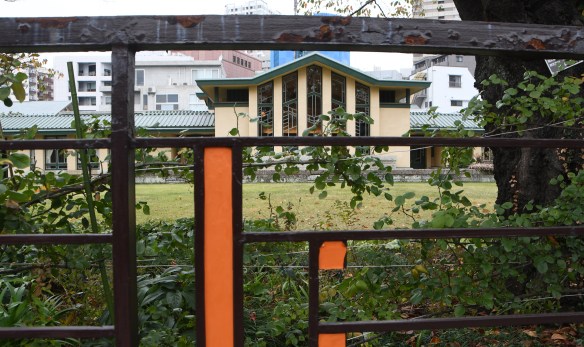
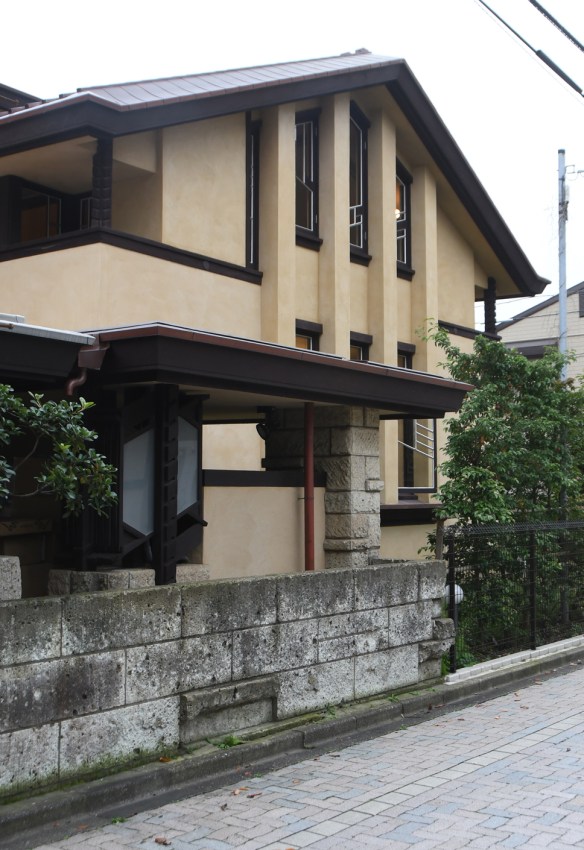
Wright designed the Jiyu Gakuen School of the Free Spirit in 1921. Now known as Jiyu Gakuen Myonichikan (Myonichikan means “Hall of Tomorrow,” Japanese Wright scholar Karen Severns explains) it fortunately still survives even though the school moved to a new campus in 1934, just 10 years after the school opened. While the school community still used the building for different functions, it deteriorated physically and was threatened with demolition. In 1997 it was deemed an “Important Cultural Property.” Restoration began in 1999 and was completed by early 2002.
Come in the gate with me, and explore this lovely building, whose interior details sometimes reminded me of details in Wright’s Thomas P. Hardy House in Racine (1904/1905).
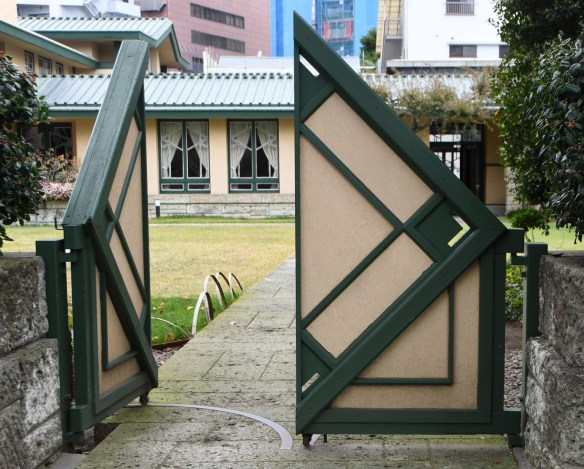
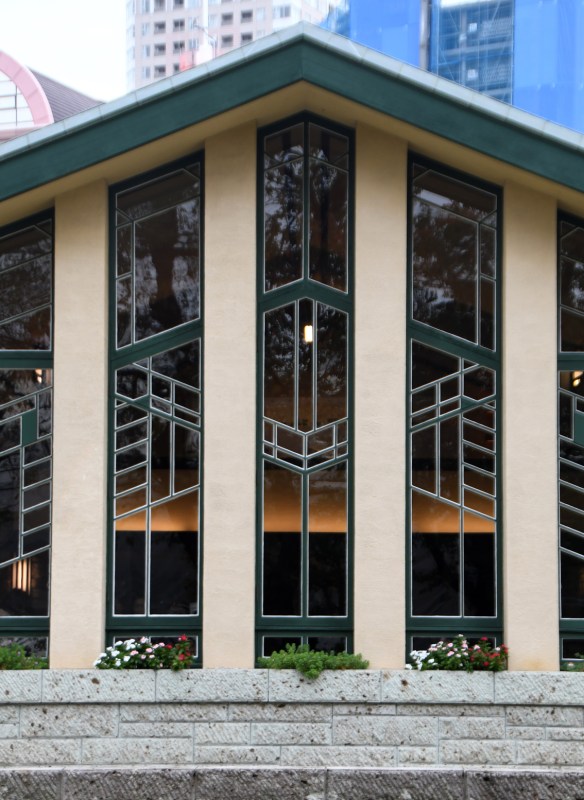
Two classroom wings flank the central part of the school. The leaded glass centerpiece of the school is in front of the two-story lounge hall and dining hall.


One of the classrooms in the east wing:
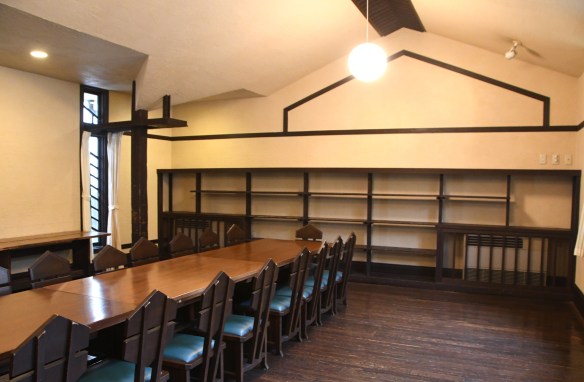
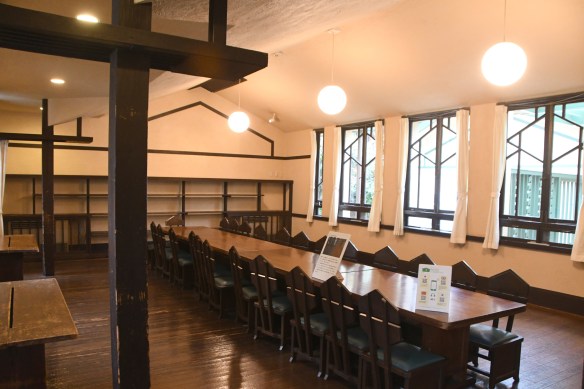
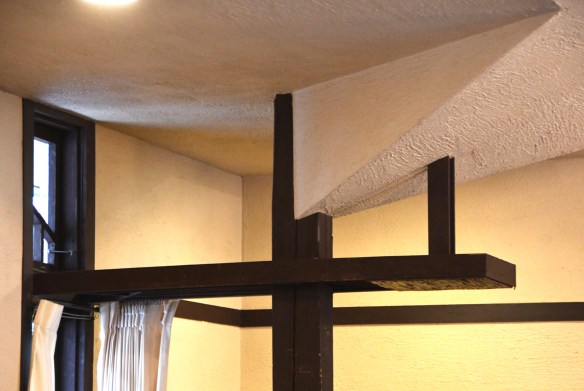
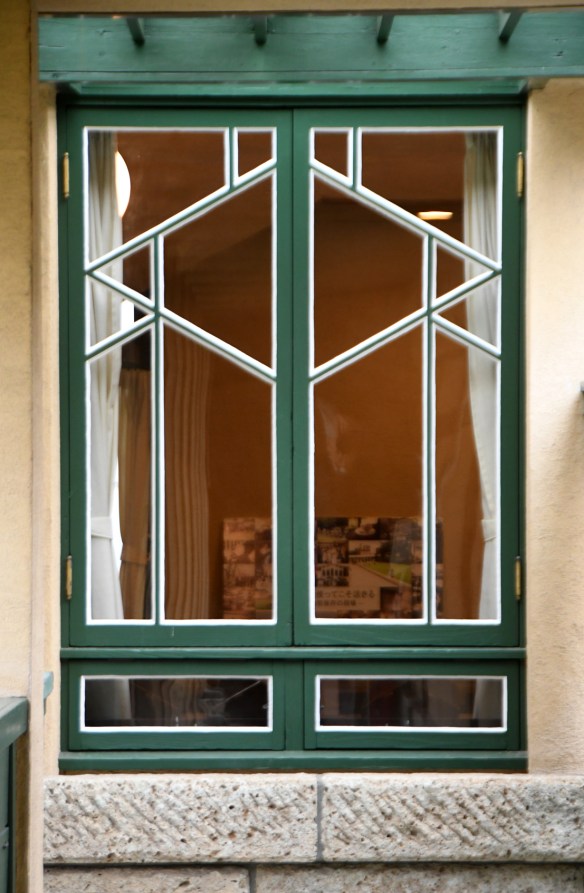

Then we approach the stairs to the dining room.
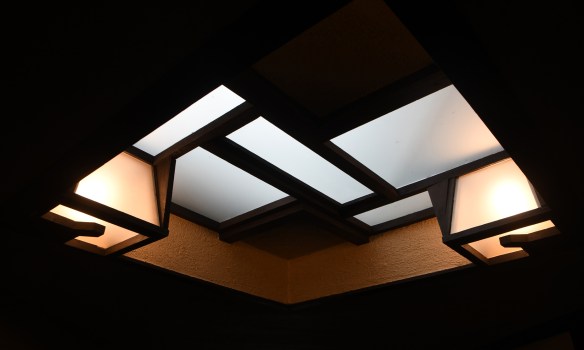

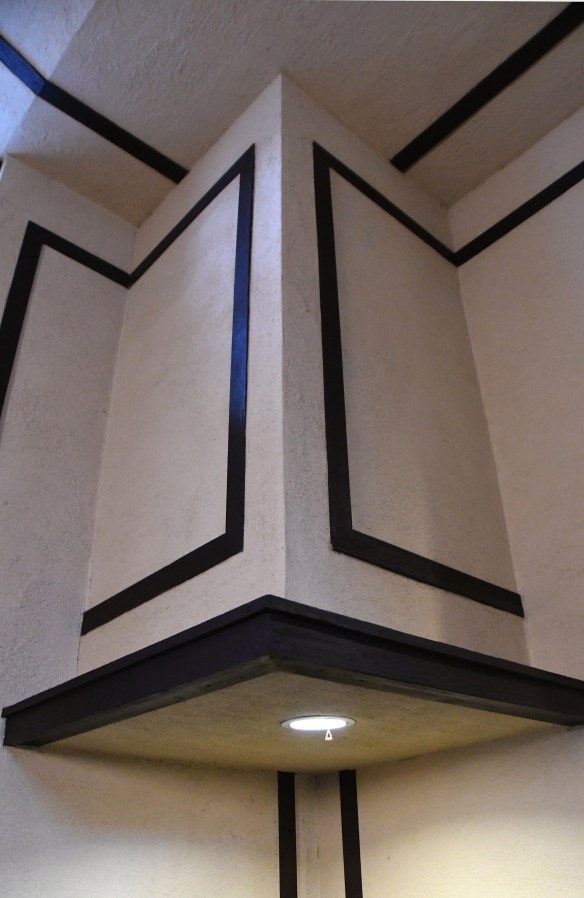


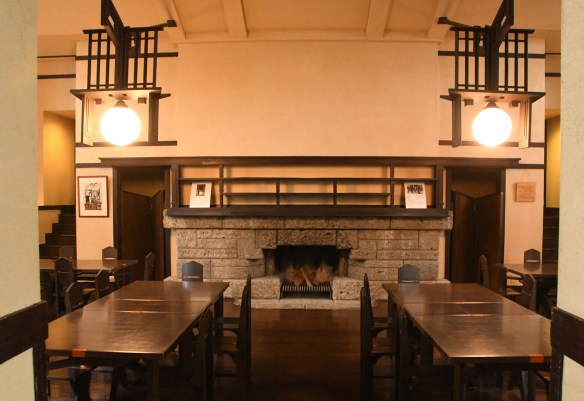
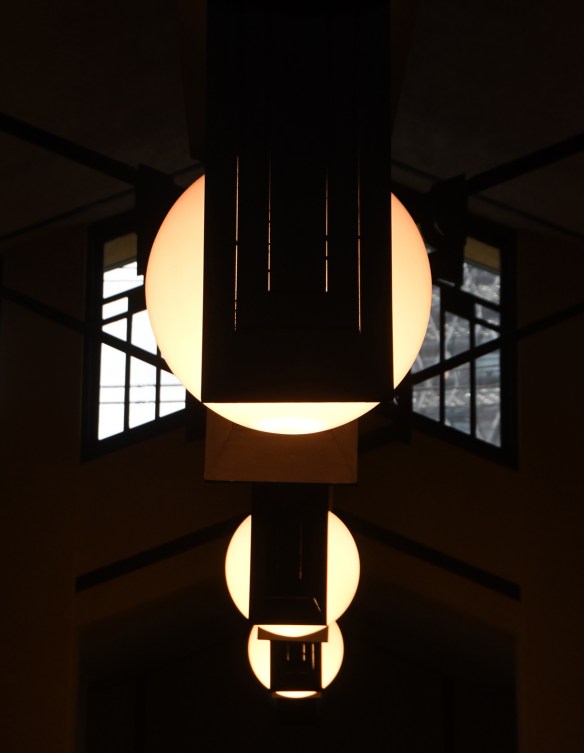
I was particularly enchanted by the ceiling light fixtures in the dining room:
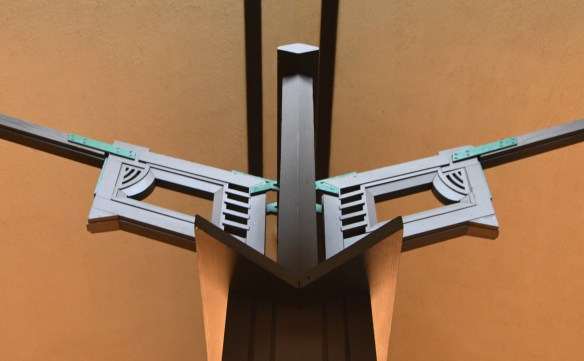
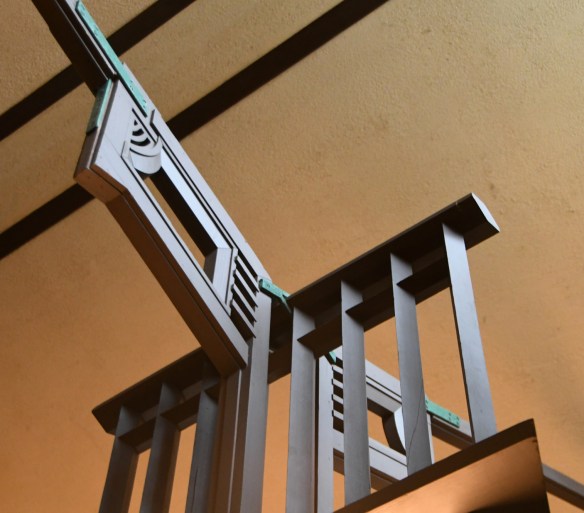
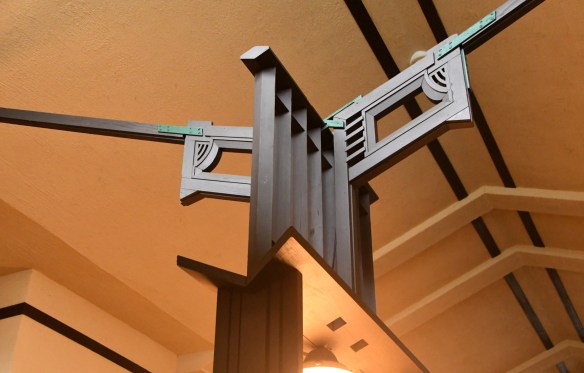

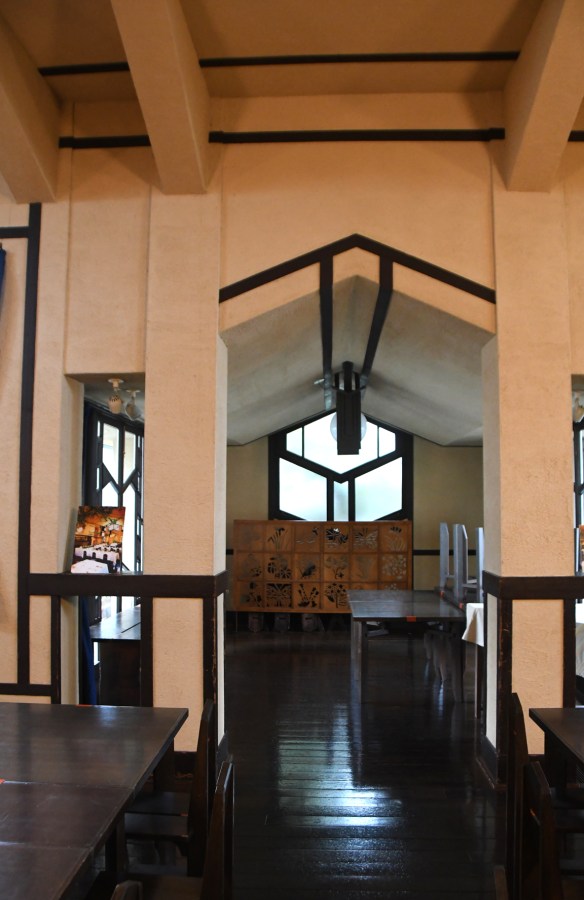
Wright left Japan before the east classroom building was completed (the right-hand wing, as one faces the school). Arata Endo finished it, using Wright’s plan for the west wing. Endo also designed the two smaller dining areas which flank the main dining room:
The lounge hall is on the main floor, just inside the wonderful two-story leaded-glass frontispiece of the school.
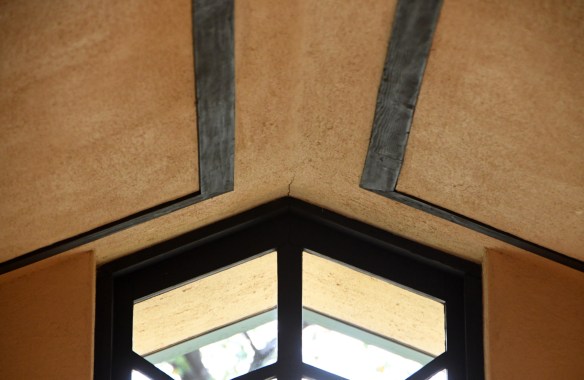

Visitors can enjoy a cup of tea or coffee there:

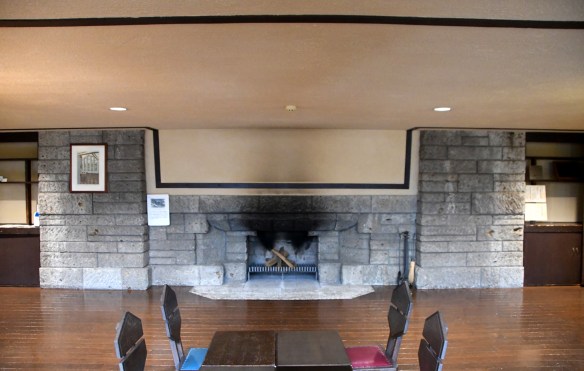
Students had painted a mural of The Exodus on one wall of the room:

The lounge hall was used for many functions until Endo’s Assembly Hall was constructed across the street from the main building:

We were leaving the school when I heard music coming from one of the classrooms. A sign on the classroom door admonished people not to enter during the class. No matter: a photo taken at a distance through a window shows that learning is still going on in Wright’s lovely little school building in busy Tokyo:

I recommend Severns’ and Koichi Mori’s “Magnificent Obsession: Frank Lloyd Wright’s Buildings and Legacy in Japan” DVD for an in-depth study of Wright’s built and unbuilt work in Japan. “Frank Lloyd Wright’s Fifty Views of Japan: The 1905 Photo Album” was published by Pomegranate for the Frank Lloyd Wright Home and Studio Foundation in 1996. Julia Meech’s 2001 book “Frank Lloyd Wright and the Art of Japan: The Architect’s Other Passion” (Harry S. Abrams, publisher) is about Wright as a collector of, and dealer in, Japanese woodblock prints.
 Wright in Racine
Mark, what an excellent story on the School, and beautiful pictures. It was much needed because I think not too many people are aware of the building and I have never seen such marvelous pictures of it. So thank you thank you.
Best wishes to you and Cindy,
MM
>
Thank you, Minerva! All the best from from both of us!