© Mark Hertzberg (2025)
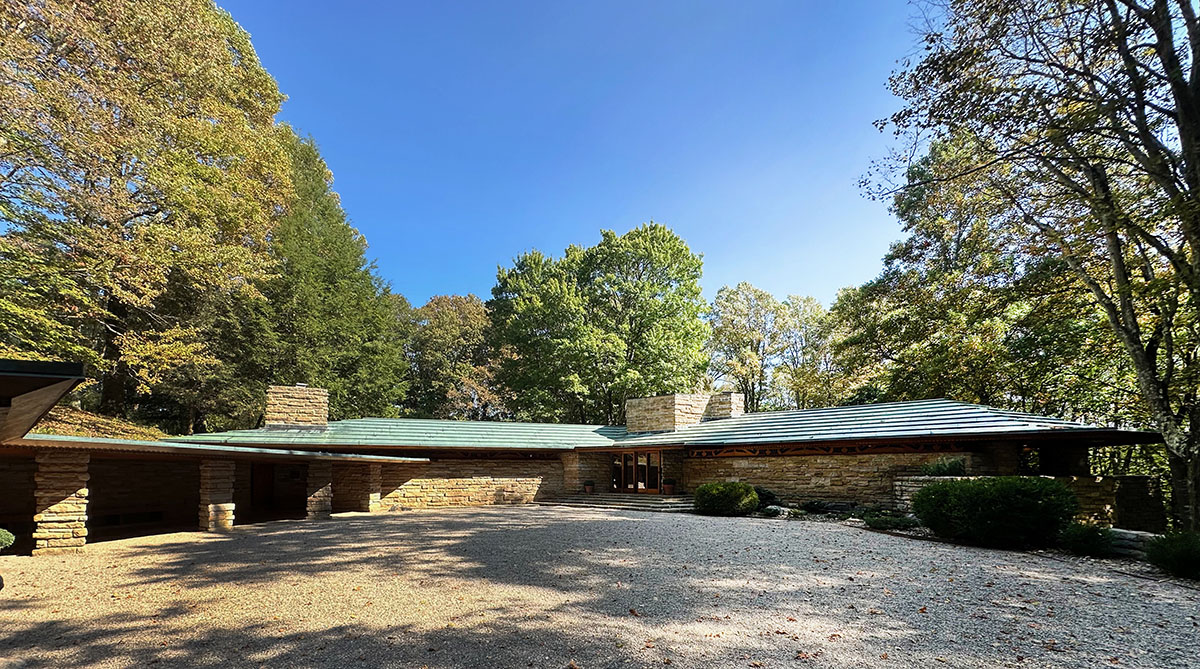
This essay begins with a confession. In 1999 Cindy and I went to Fallingwater. I was interested in Frank Lloyd Wright’s work, but I had not done any research about it. I had photographed his work in Racine, Wisconsin, where we live, and I had, of course, heard about Fallingwater. So, why not a road trip there? We saw a brochure for something called “Kentuck Knob” but didn’t pay any attention to it. Neither our docent or ticket – seller at Fallingwater asked if we knew that there is another house by Wright in the neighborhood. And so it was until our next visit to Fallingwater in March 2010 that we knew I blew it in 1999 by not picking up that Kentuck Knob brochure from one of those ubiquitous racks with myriad travel brochures that I tend to just walk past at highway rest stops and in hotel lobbies.
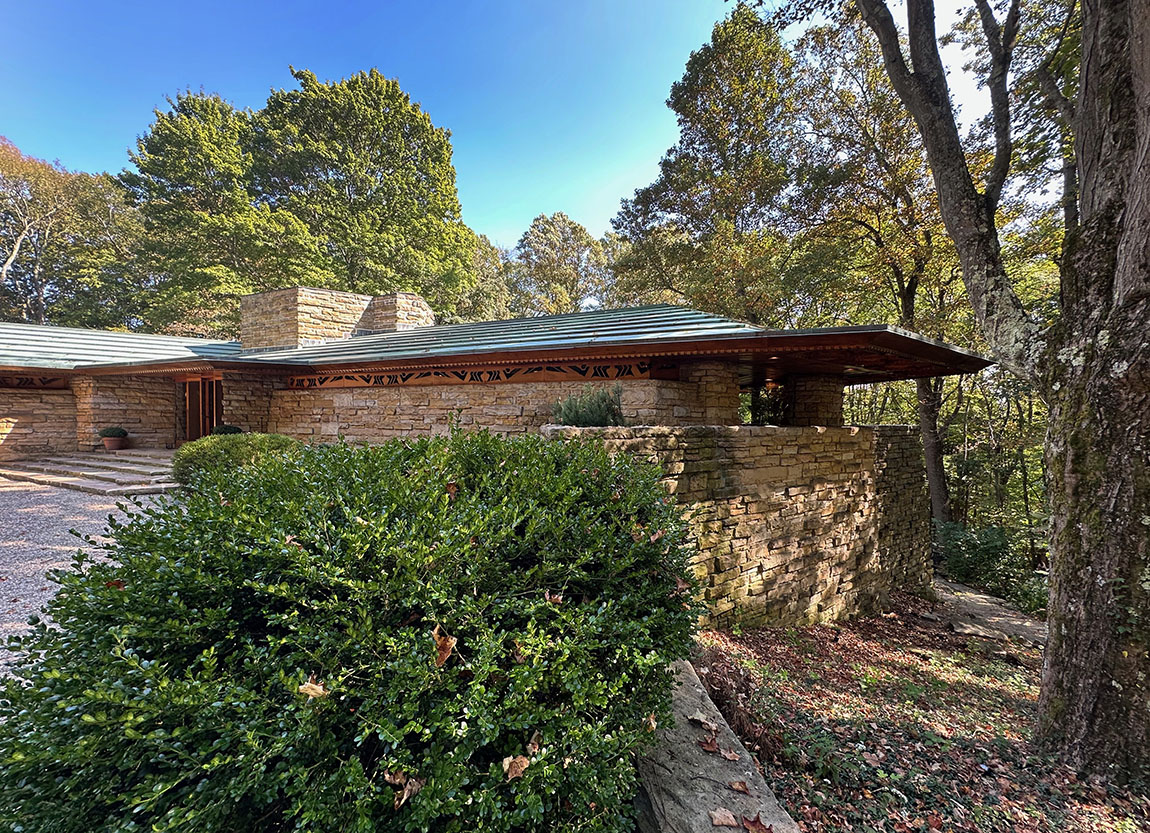
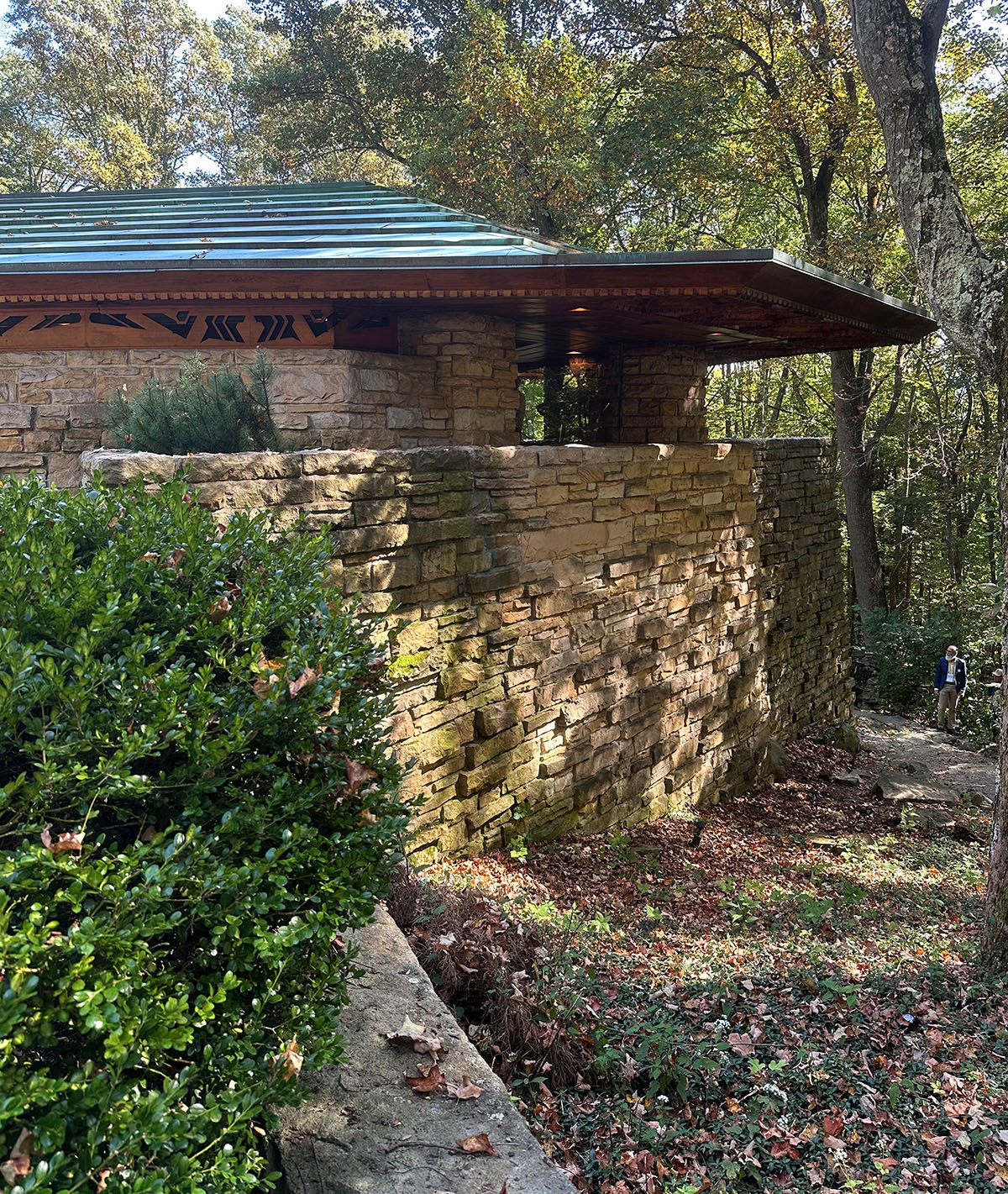
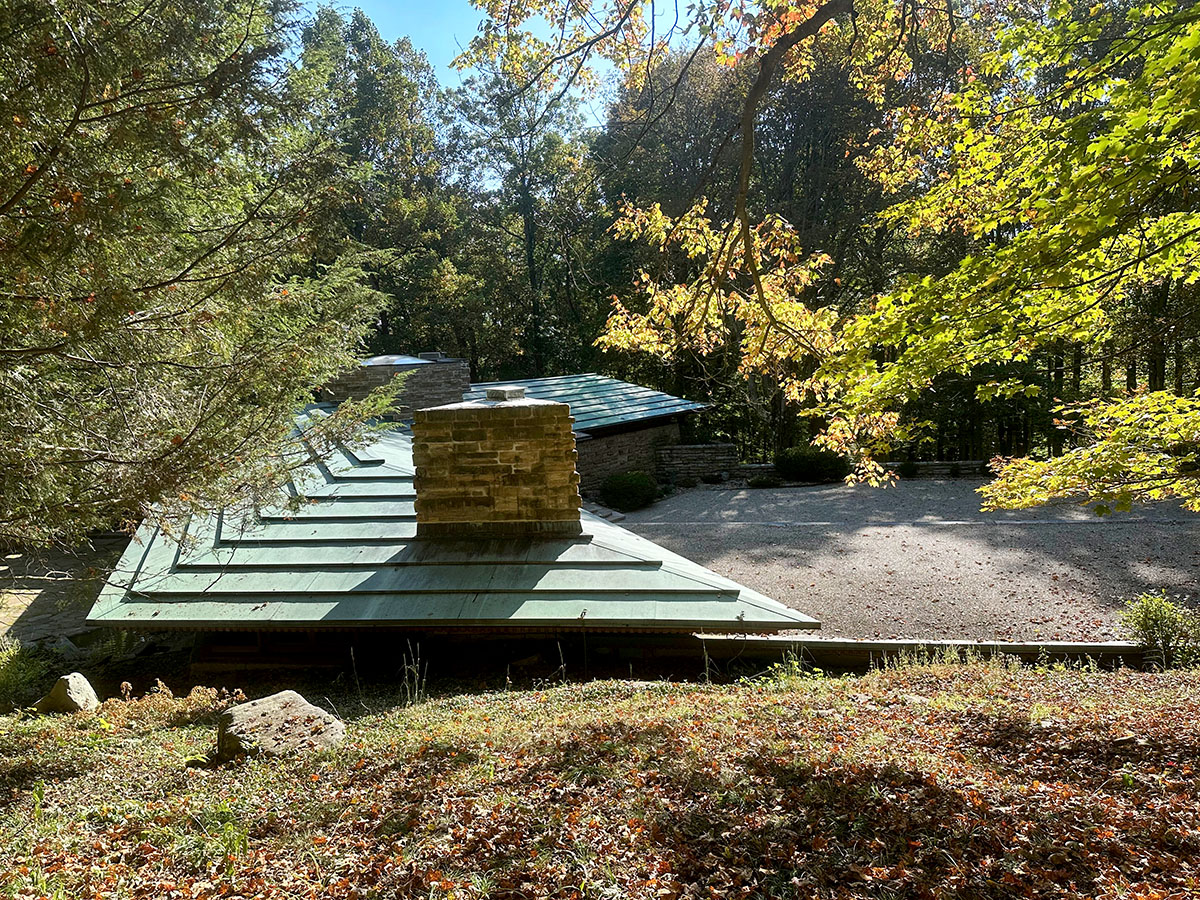
I had the pleasure of an in-depth tour of Kentuck Knob this fall during the Frank Lloyd Wright Building Conservancy’s annual conference which was based in Pittsburgh. It is a special place. Here, then, is my photographic interpretation of what is formally known as Wright’s Isaac Newton and Bernardine Hagan House. The photos start with literal photos of the exterior (interior photos were not permitted), the fun stuff comes further down the page.
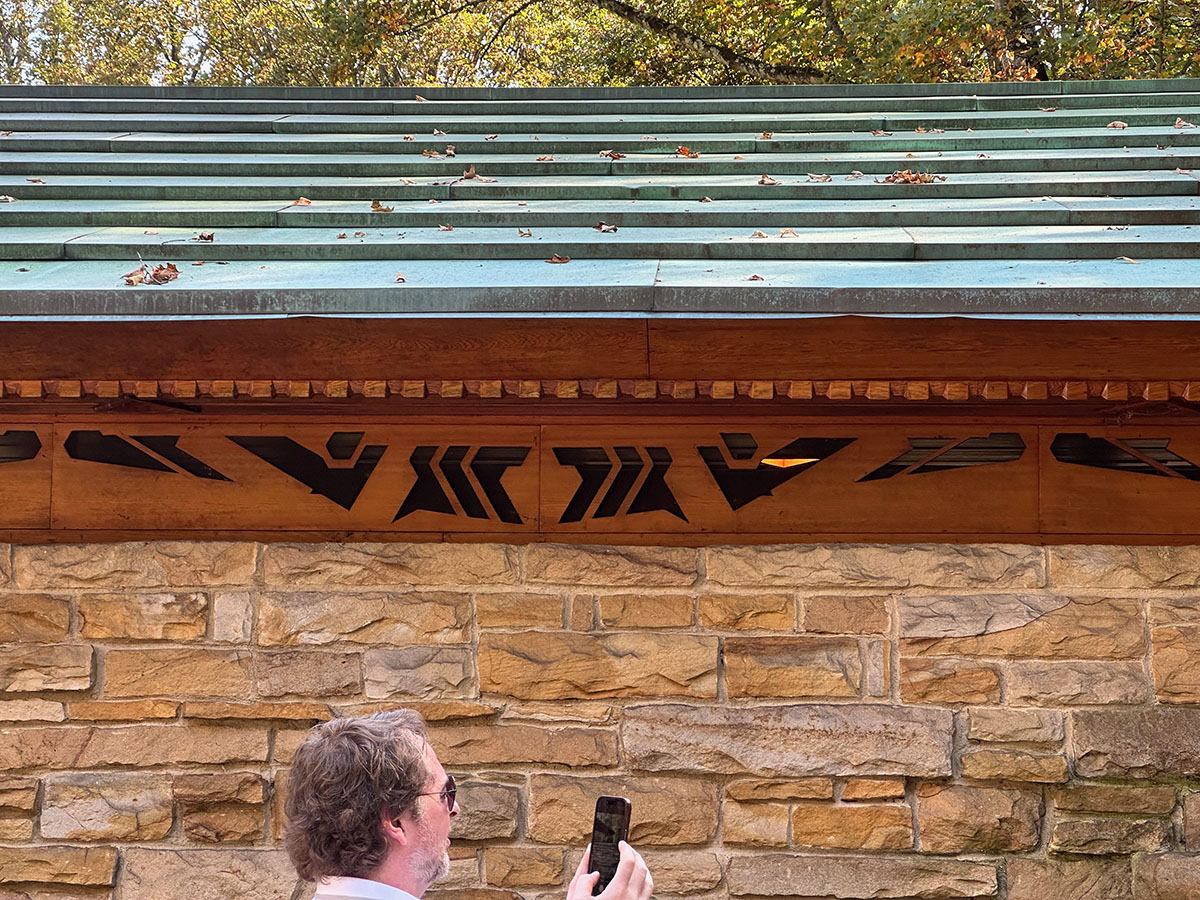 Ken Dahlin of Genesis Architecture photographs the house.
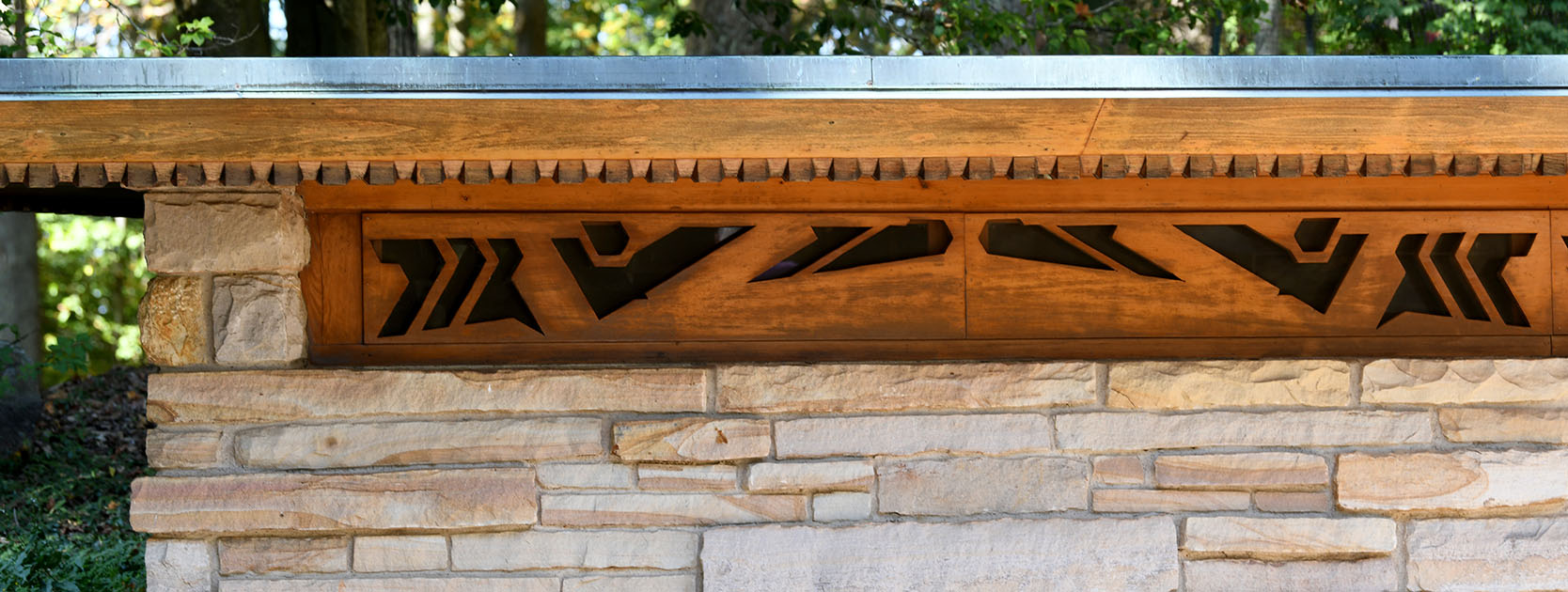
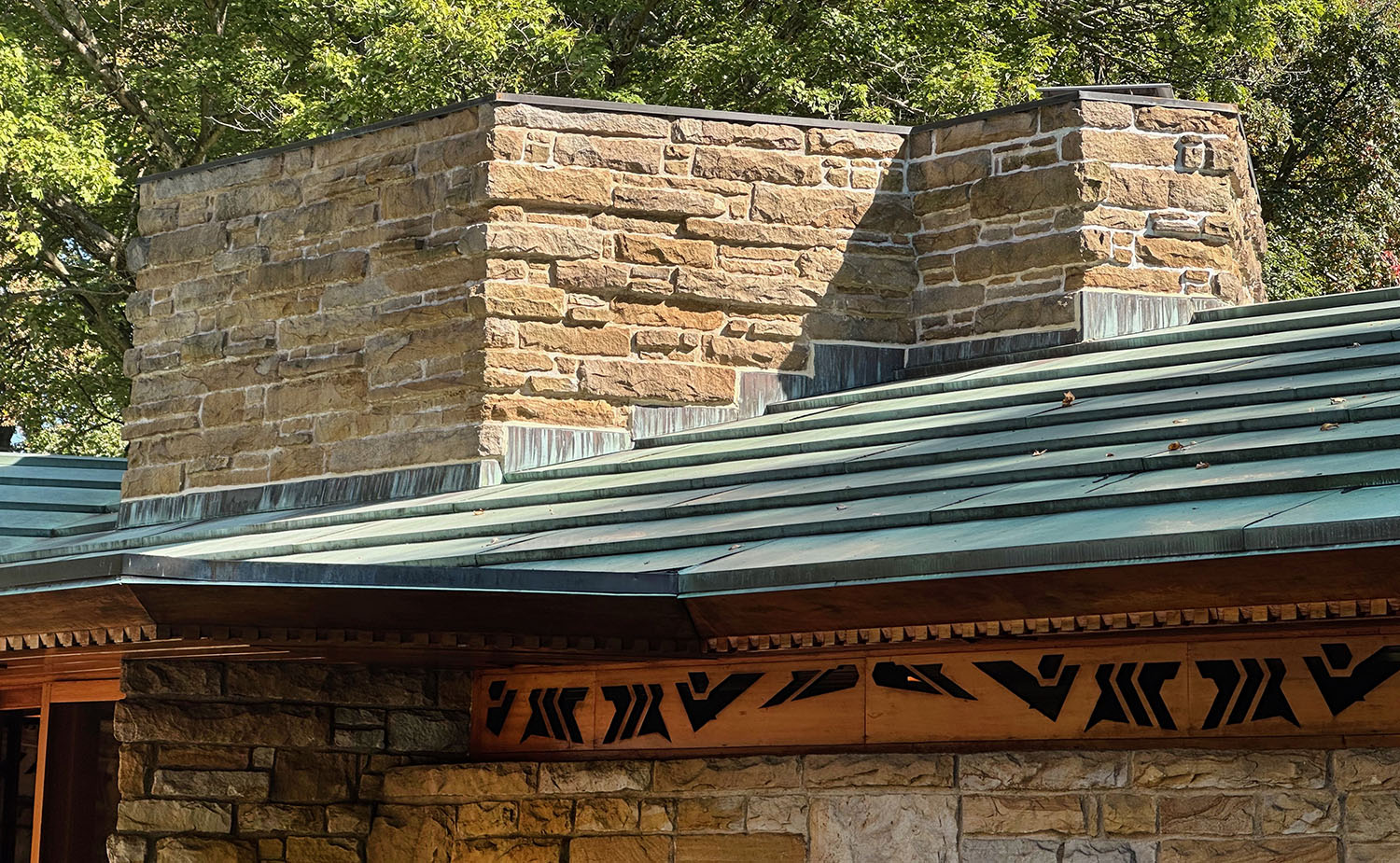
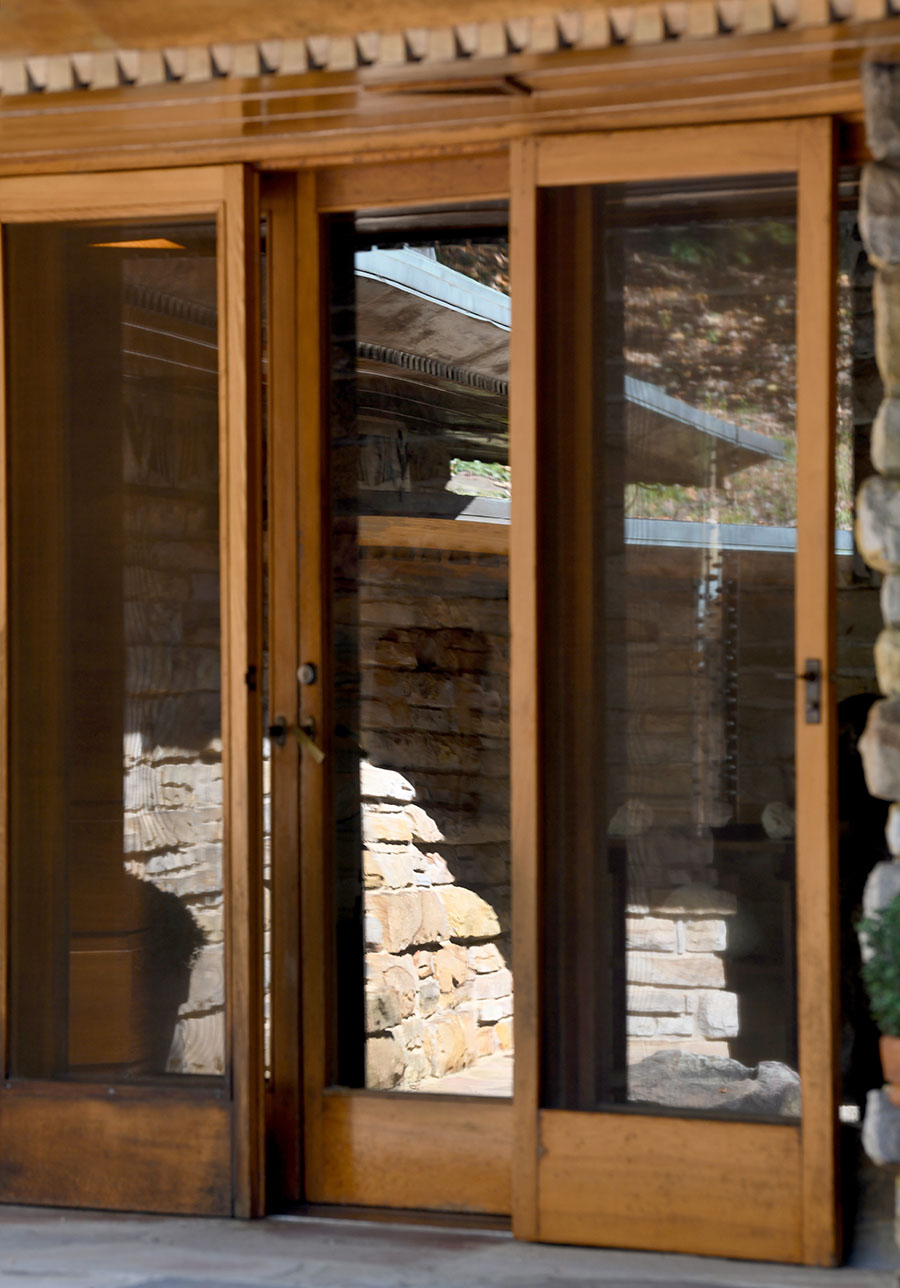
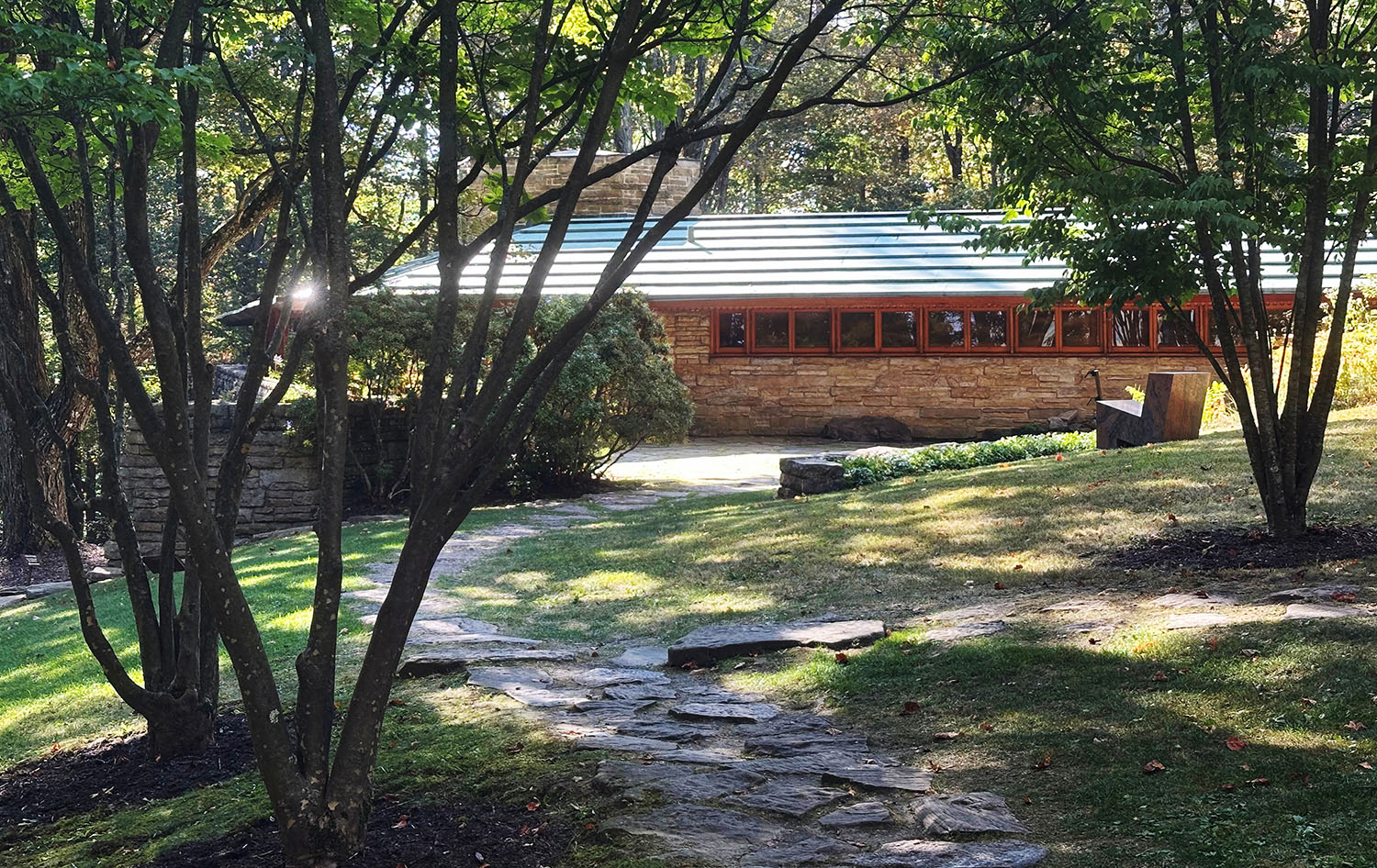
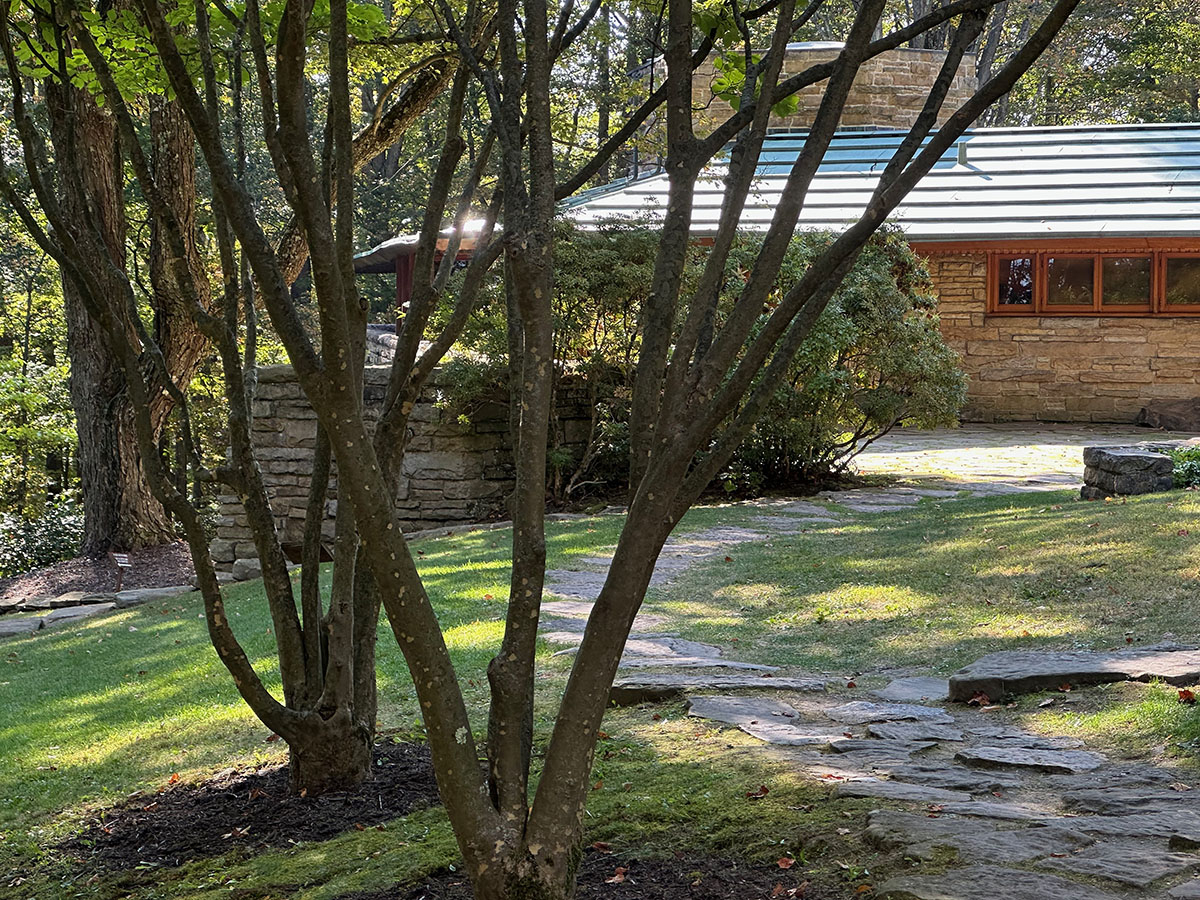
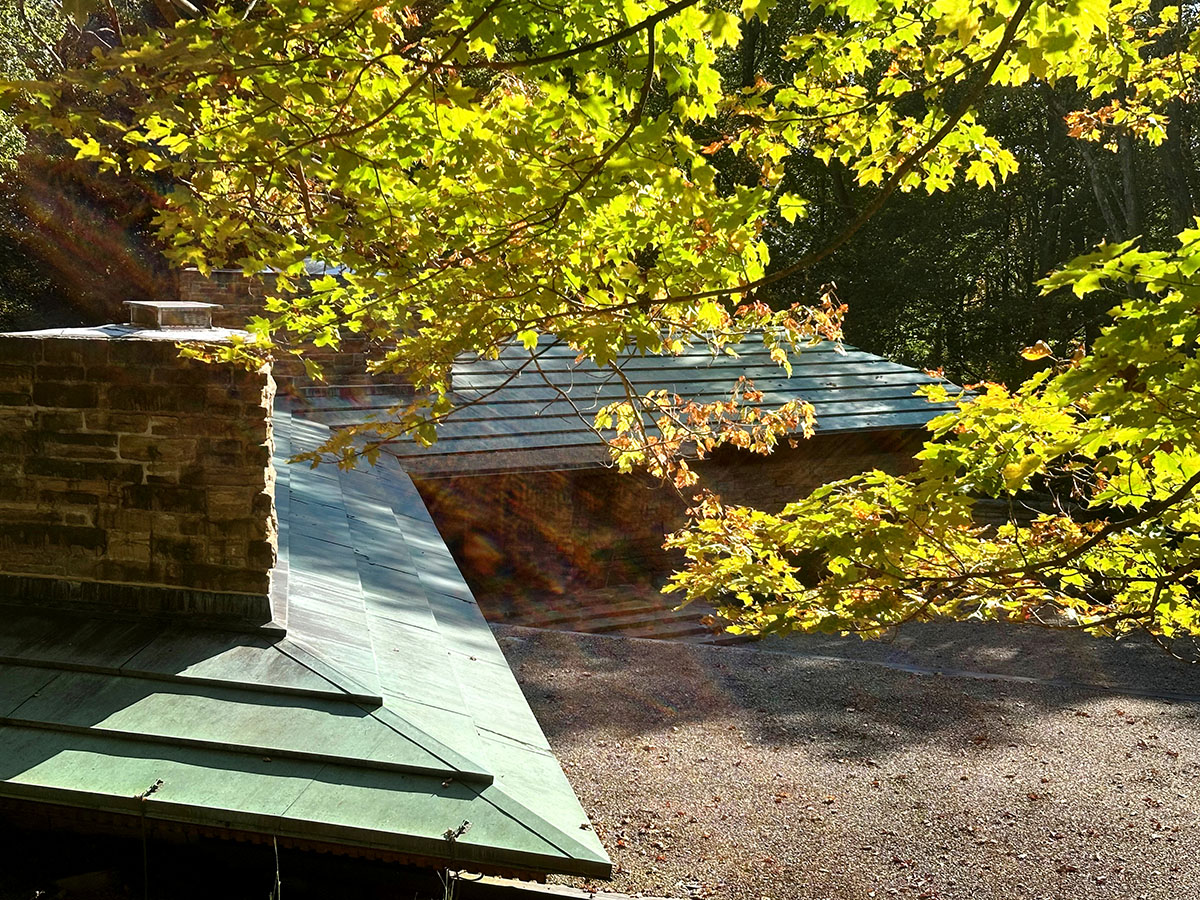
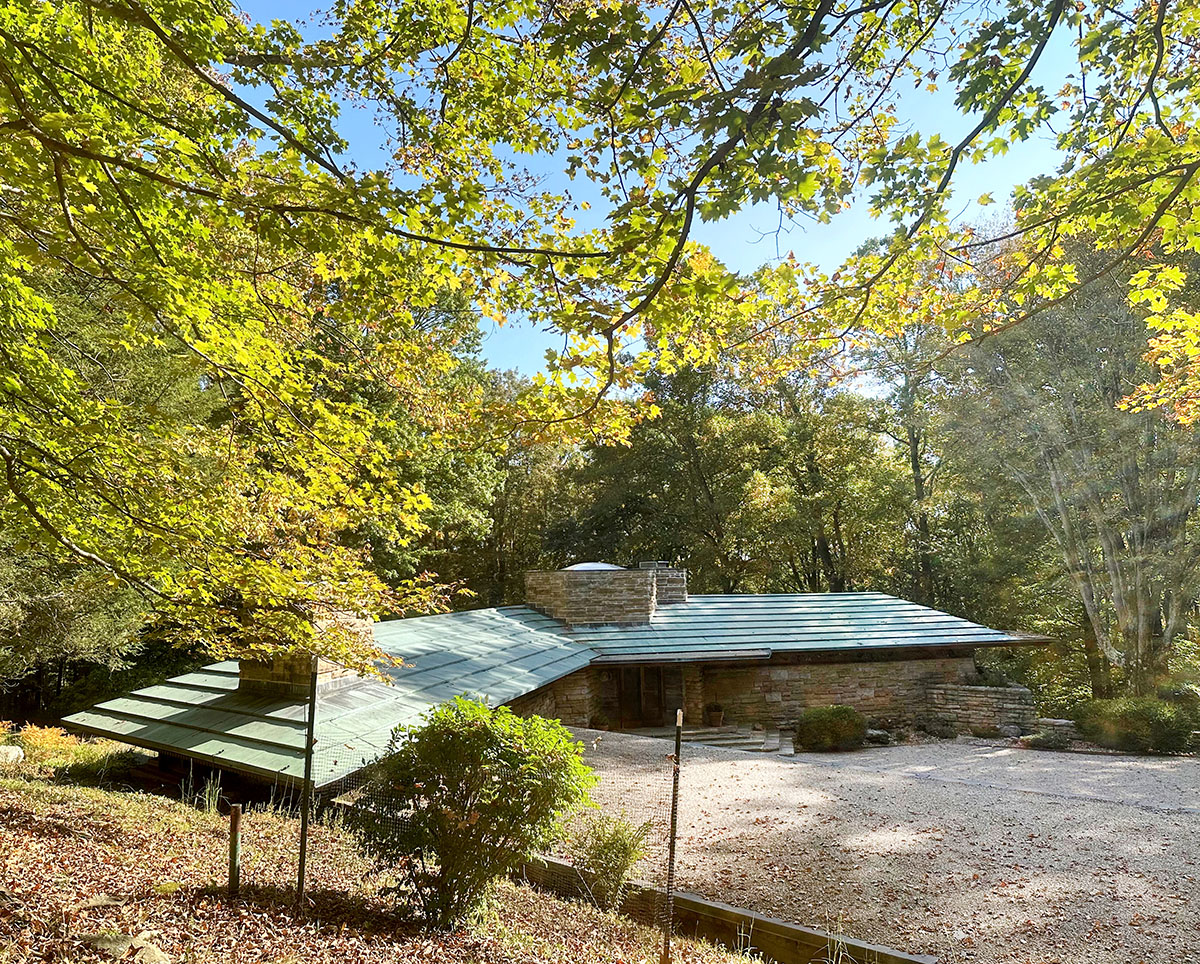

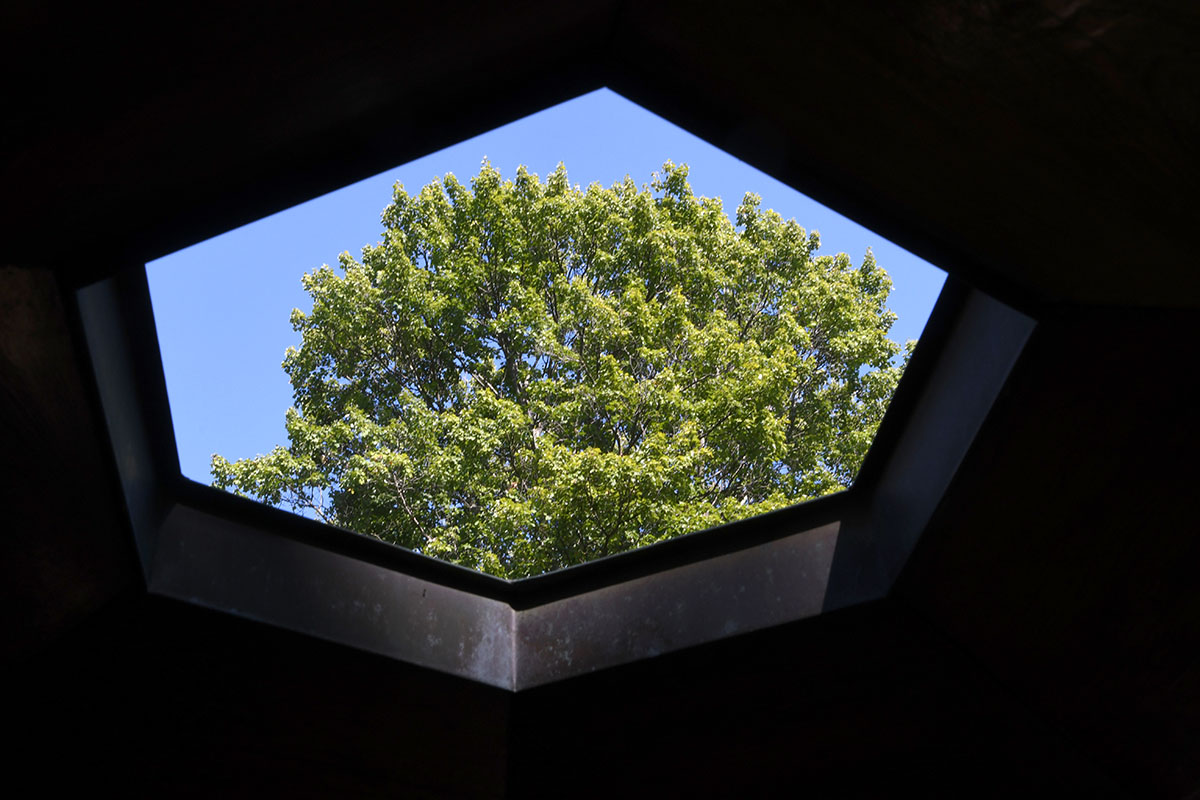
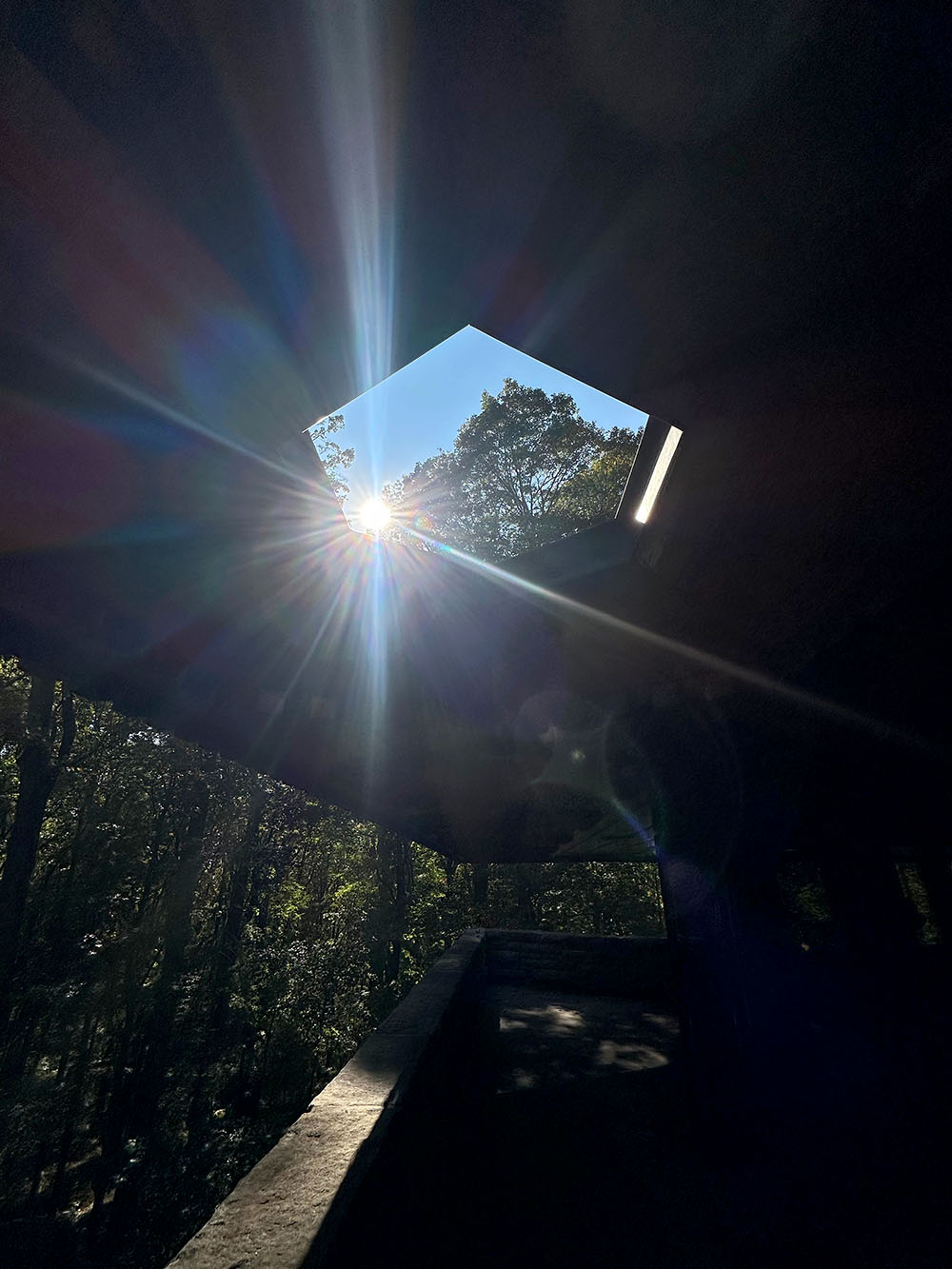
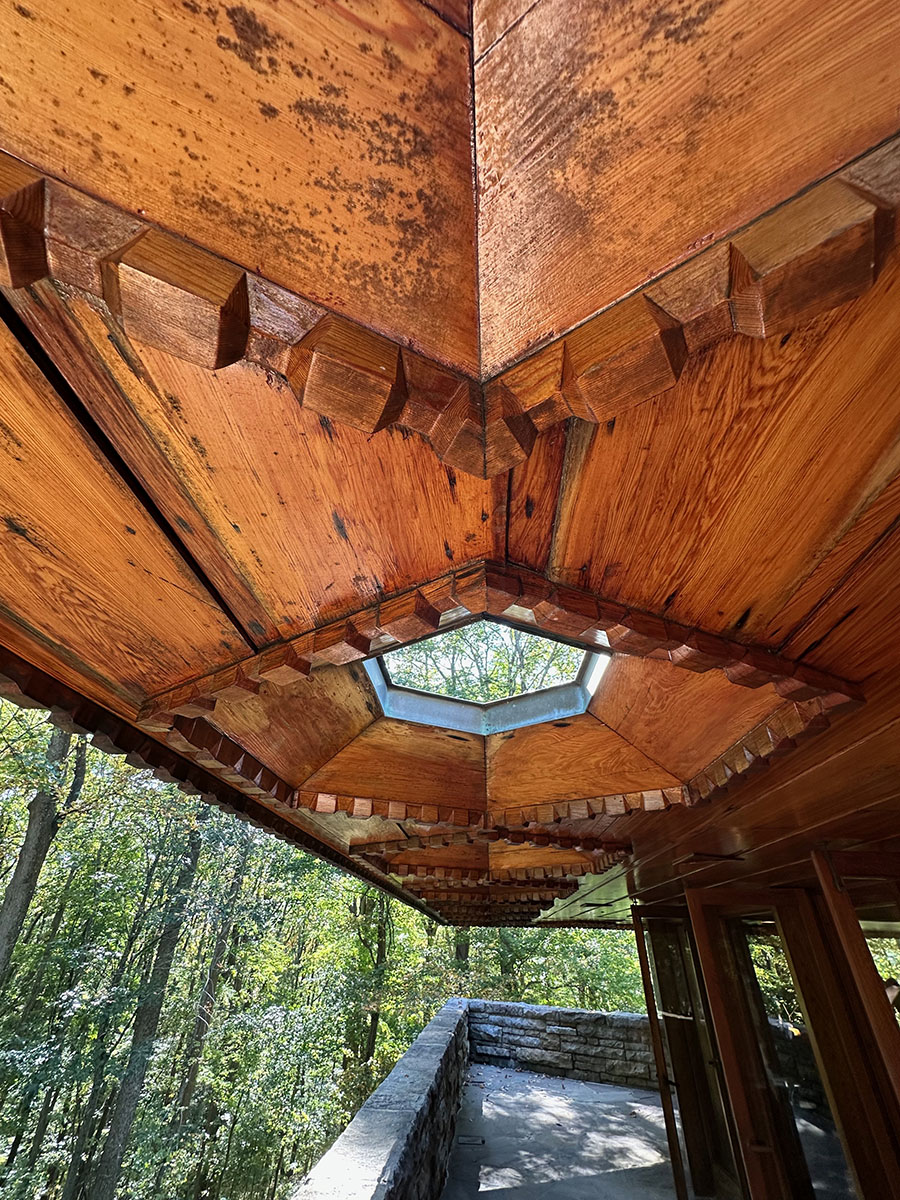
I wondered what I could do with the hexagons in the terrace roof:

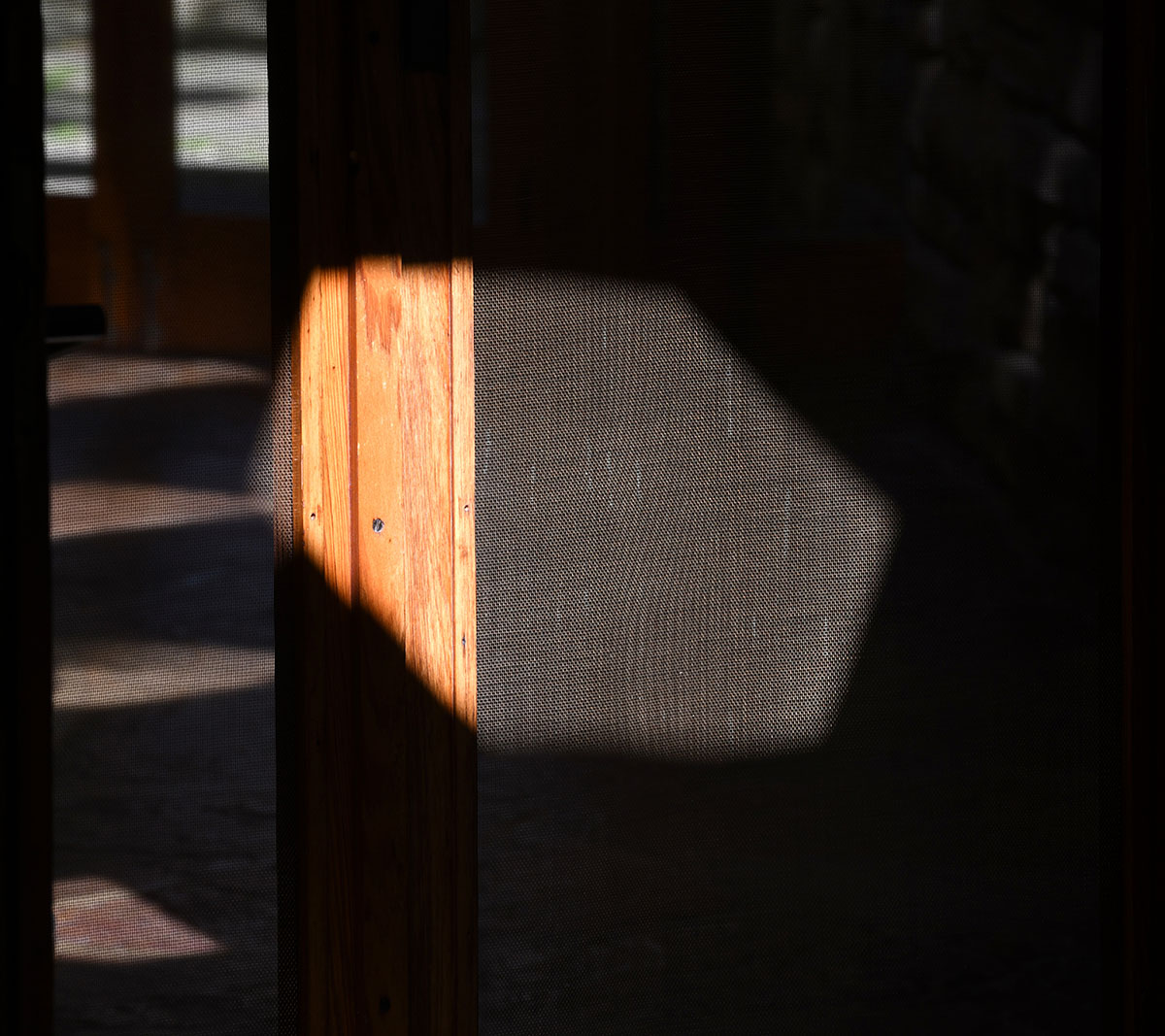
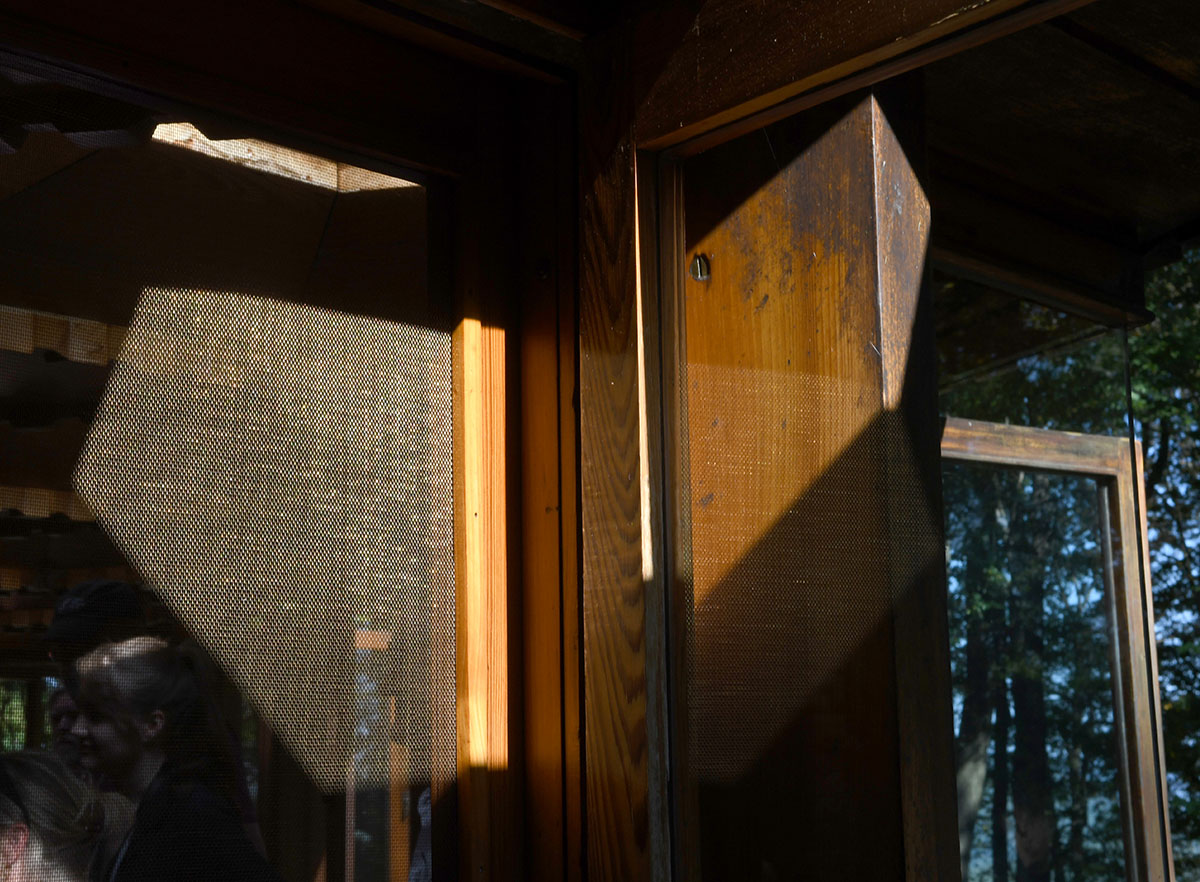
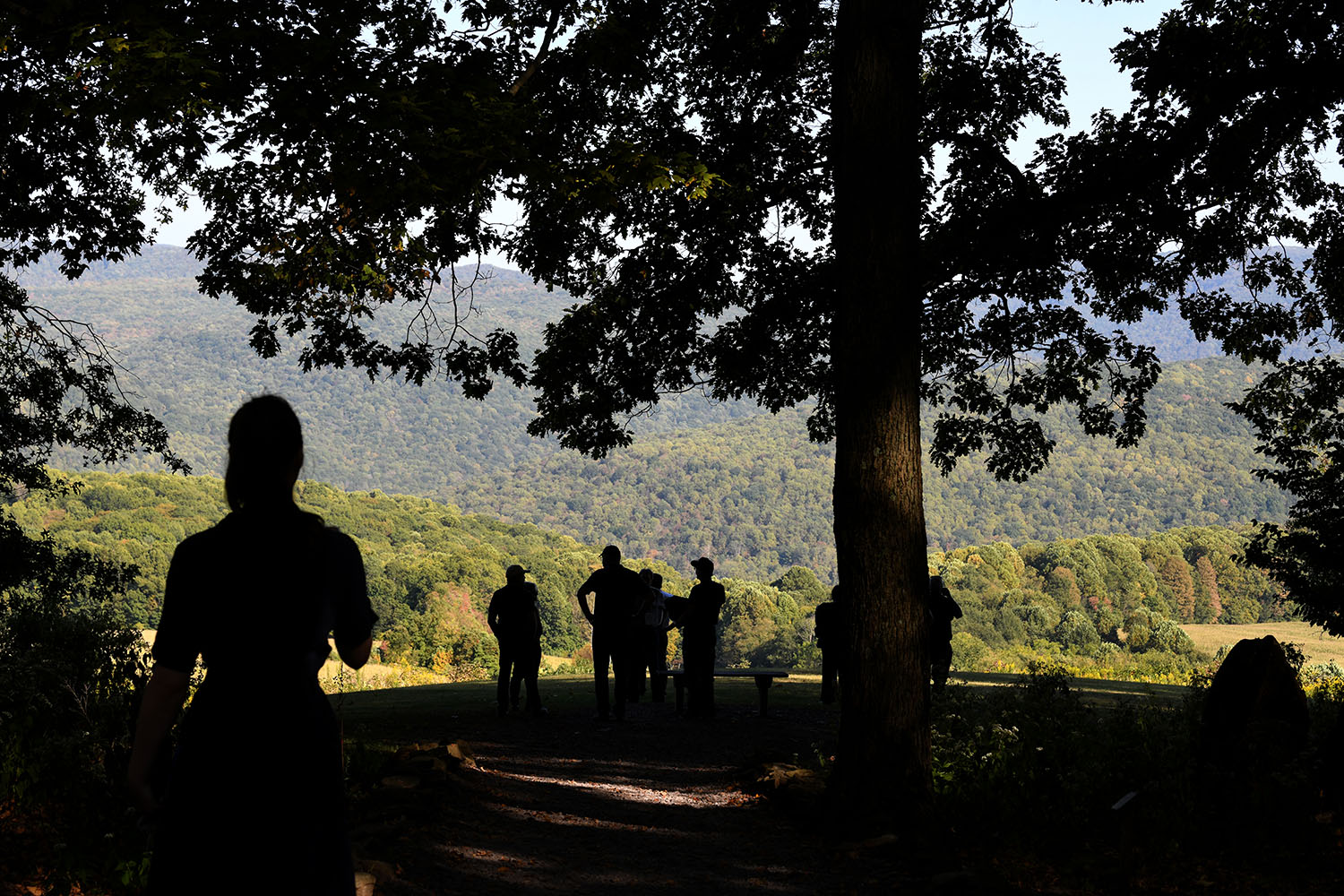
After the tour we wandered through the knob to gaze at the Laurel Highlands:
Michael Desmond, one of my dear friends lingered on a bench, not knowing that I was taking his picture:
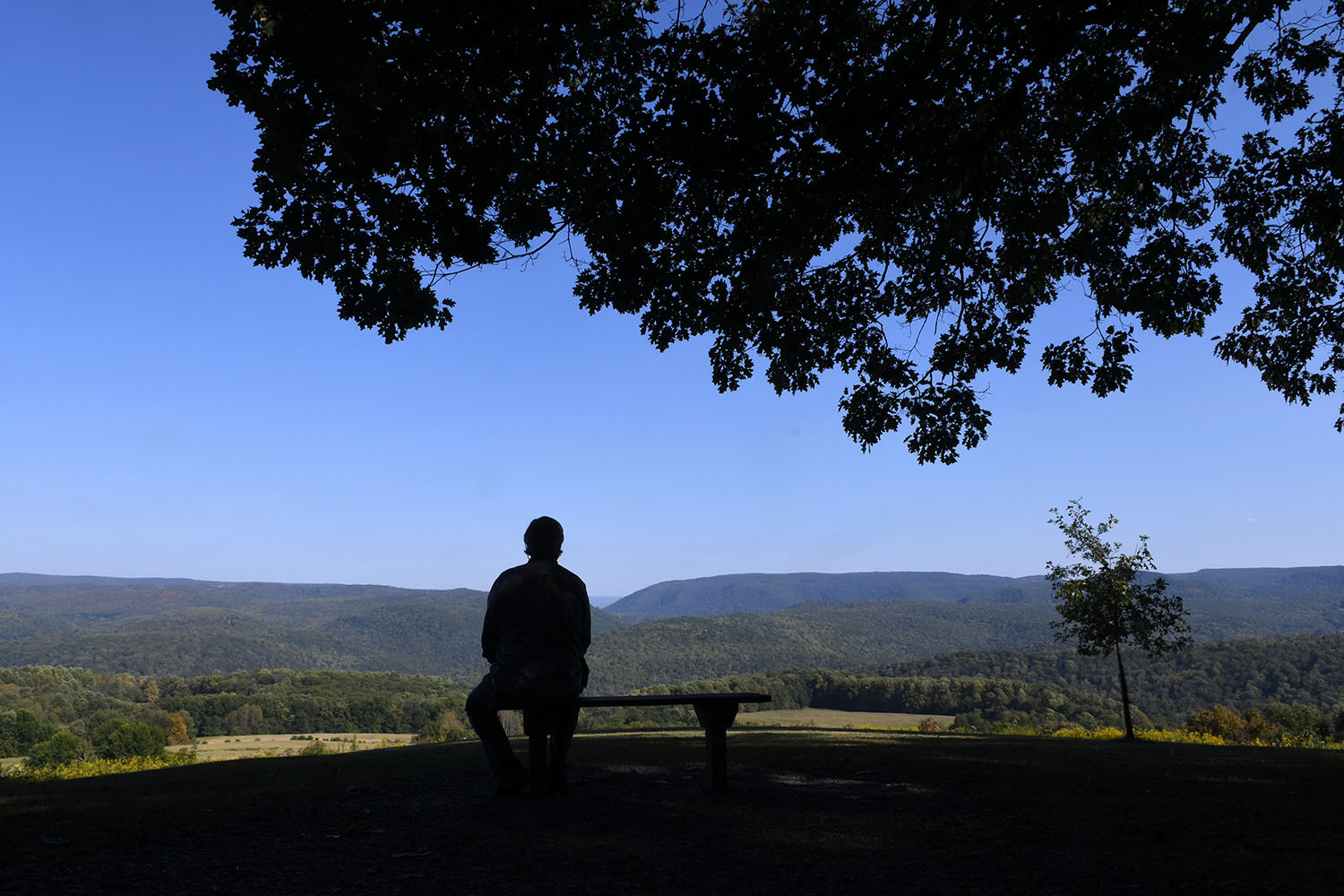
Regrets in life: Not having been able to take a class of his at Louisiana State University. I have tried to make up for it in conversations as we are usually bus seat mates during Building Conservancy conferences. I think this portrait embodies what must have attracted the Hagans to ask Frank Lloyd Wright to build them a house on Kentuck Knob.
As for the name I had blown off in 1999, it is thought that David Askins, an eighteenth century settler, named this knob in Pennsylvania’s Laurel Highlands “Kentuck” in honor of Kentucky which he had considered moving to.
Postscript:
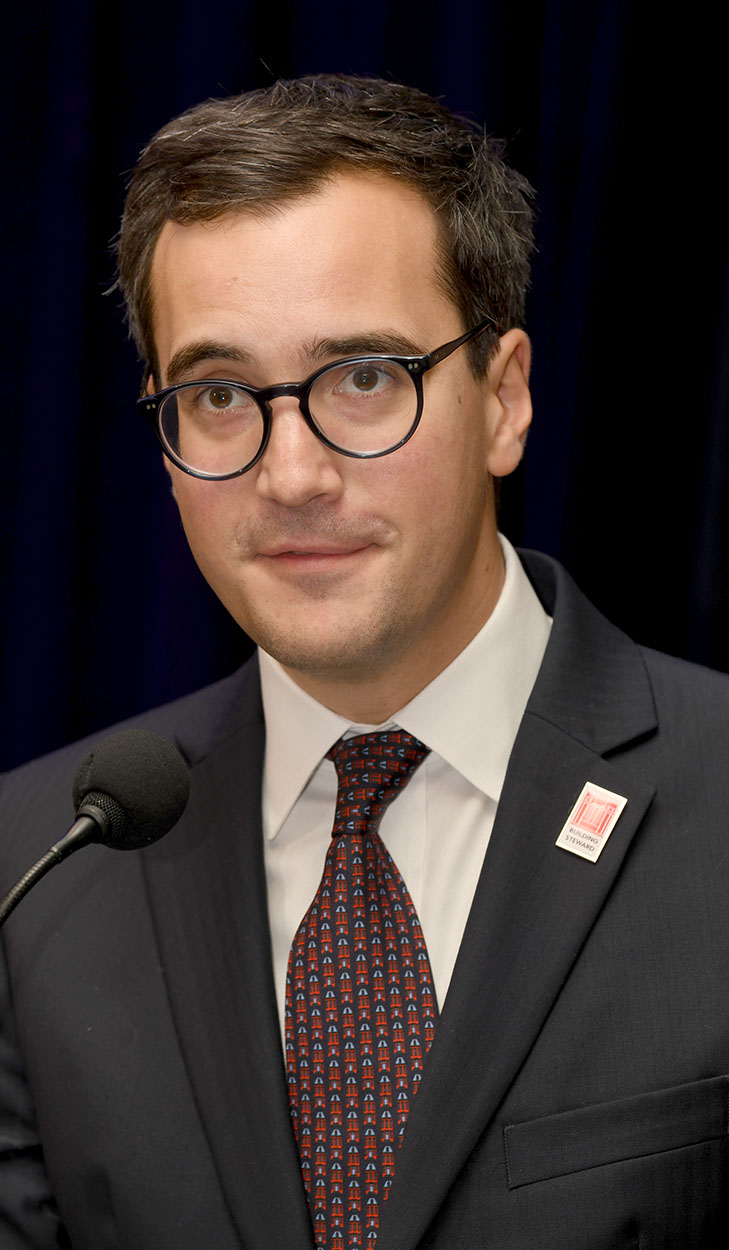
Lord Peter Palumbo became the second steward of Kentuck Knob in 1985 and opened it to the public in 1997. A link to a summary of his distinguished background in architecture and the arts – including once having been steward of Mies van der Rohe’s Farnsworth House – is below. His son Philip Palumbo accepted the Building Conservancy’s prestigious Wright Spirit Award given to Lord and Lady Palumbo at the Pittsburgh conference. Philip is director of Kentuck Knob.
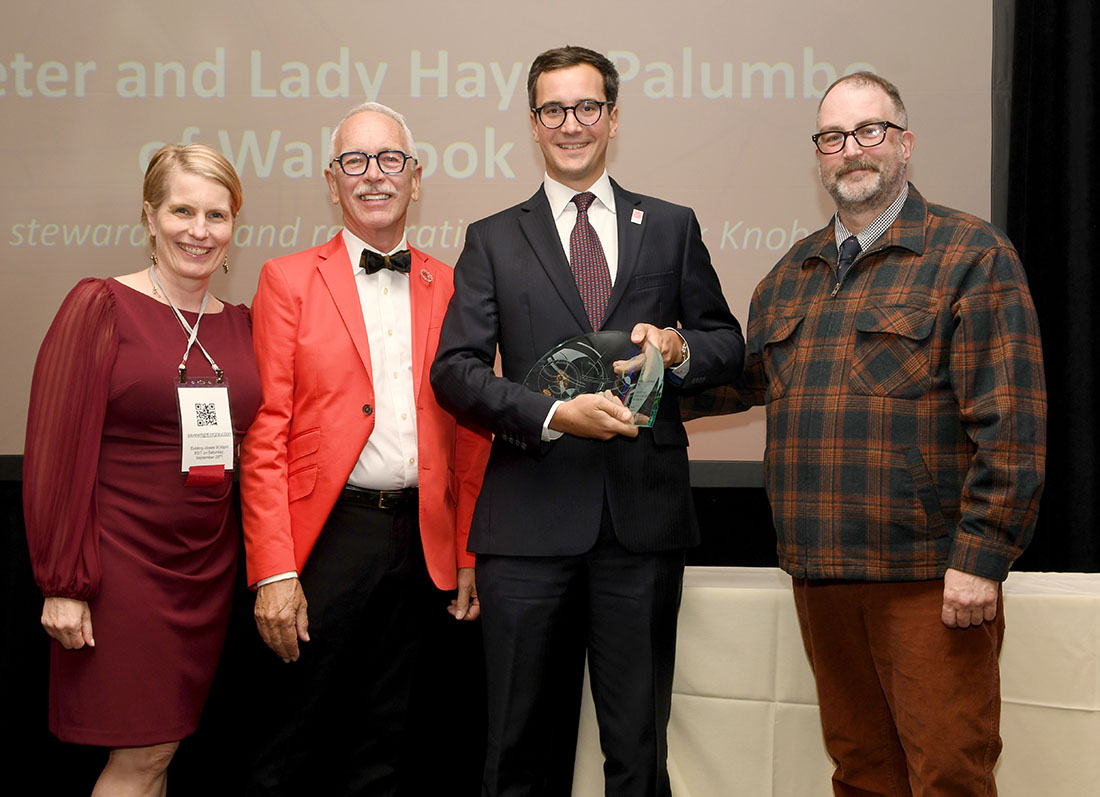 Barbara Gordon, Jeffrey Herr, and Scott Perkins present the Wright Spirit Award to Philip Palumbo, on behalf of his parents.
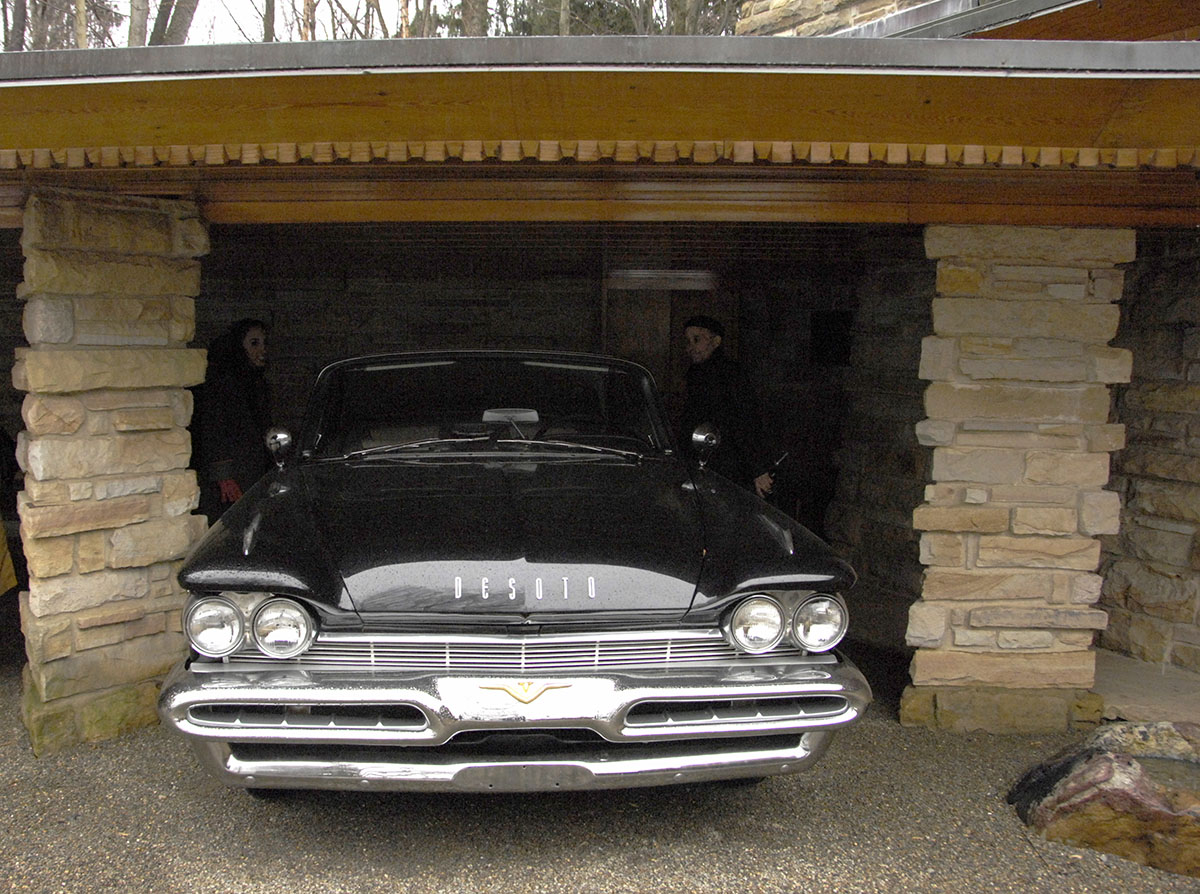
I am a bit of a mid-century car enthusiast so I was interested to read in the Pittsburgh Post-Gazette article linked to below that the Palumbos are considering having a transportation museum on the grounds of Kentuck Knob. Therefore I will close with a photo I took of Lord Palumbo’s 1959 DeSoto in the carport in 2010. Wright was a lover of fine automobiles…the DeSoto’s liberal use of chrome, as was the trend in the 1950s, may have been over the top for Wright:
Links:
Kentuck Knob:
https://franklloydwright.org/site/kentuck-knob/
Lord Peter Palumbo:
http://lordpeterpalumbo.com/biography.html
Pittsburgh Post-Gazette tour of Kentuck Knob with Philip Palumbo:
Frank Lloyd Wright Building Conservancy:
Ken Dahlin and Genesis Architecture:
https://www.genesisarchitecture.com
Please scroll down for earlier articles on this website.
 Wright in Racine
My wife and I made our first visit to Fallingwater also in 2010. Fortunately, we did pick up the brochure about Kentuck Knob. We, too, had not heard of it, but the brochure resulted in a most serendipitous visit. We scheduled a tour, and it turned out that it was only us, one other quite knowledgeable couple, and a wonderful docent. The docent sensed that the four of us were not just tourists, but were responsible people with a true interest in the property and respectful of it. Thus, she allowed us a bit more latitude in our explorations. We appreciated that and respected her trust. But then we were exposed to a wonderful discovery. The other couple noted some artworks on the property and asked if they were original Harry Bertoia sonambient sculptures. They were! (And who, we wondered, was Harry Bertoia and what was sonambient. I shall leave you to research those questions if you wish.) Apparently sensing that we were responsible persons, the docent commented that she was going to check something in the house and would leave us with the Bertoia’s. Understanding her, our tour companion very gently and respectfully stroked the sculptures, releasing their magnificent tones. Magic!! Needless to say, we have tried to learn more about Harry Bertoia and acquired some recordings of his sonambient sculptures. It was the kind of magical experience which we will never forget.
We later learned that the Milwaukee Art Museum has several Bertoia sculptures in its collection. We visited them, and knowing that stroking them, as they were intended to be, would not be permitted, we tried to blow on them attempting to produce some of their beautiful sounds. Naturally, our efforts were brought to an end by a security person who directed us to stop. We later communicated with the MAM to attempt to explain that these sculptures were meant to be heard, not just viewed. All we got was a response asking why we were interested in them.
Thank you for this!