Penwern – Wright’s Porch Design is Built

Text and photos (c) 2015 Mark Hertzberg, unless noted.

Frank Lloyd Wright designed semi-circular outer porch walls for Penwern, the Fred B. Jones House on Delavan Lake, Wisconsin (1900-1903), but the walls were either built straight or modified from his plans early in the life of the house. Jones is shown near the straight east porch wall in an undated photograph. The house was completed in 1901; he died in 1933.
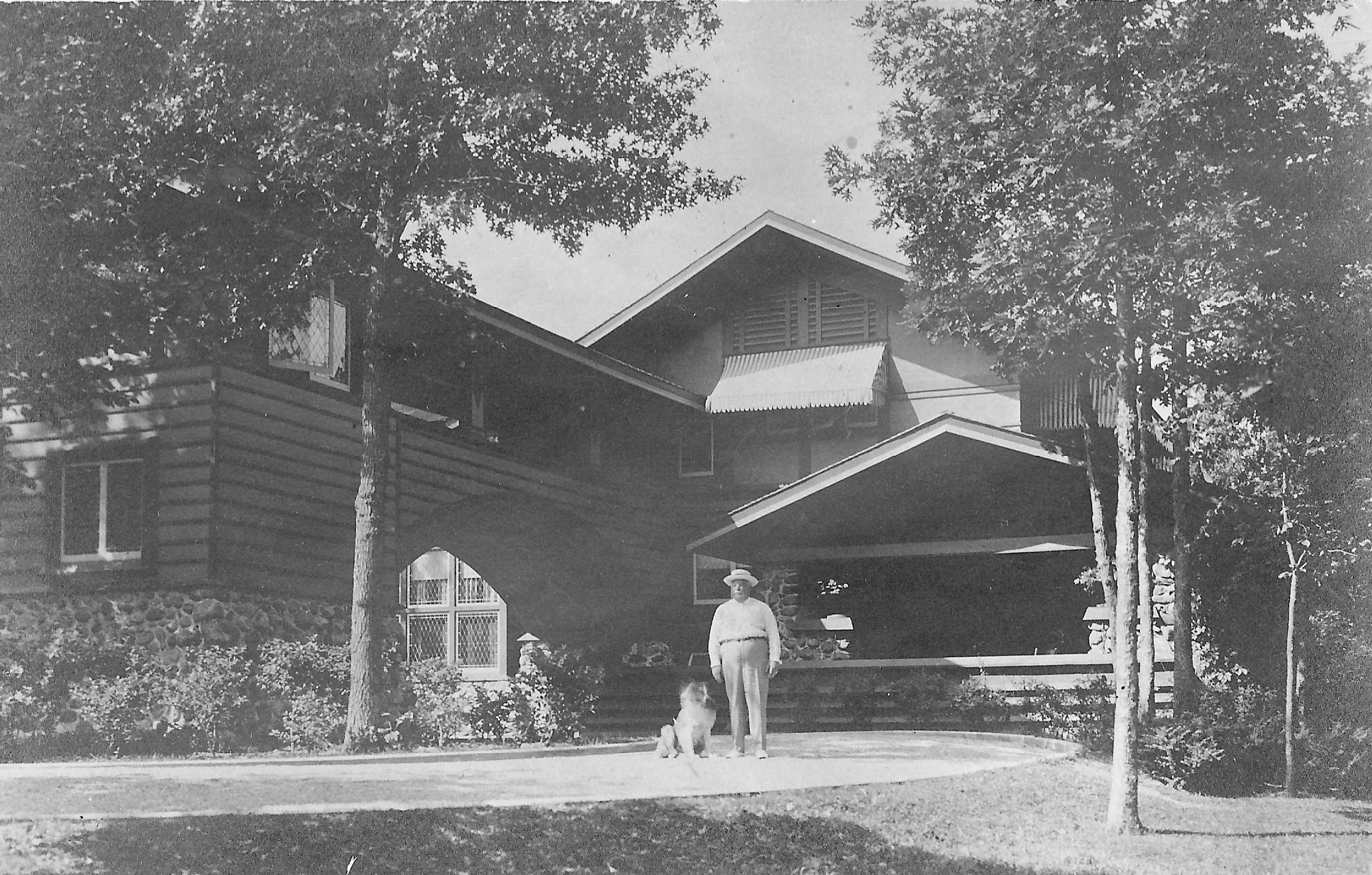
FBJ @ Penwern 1

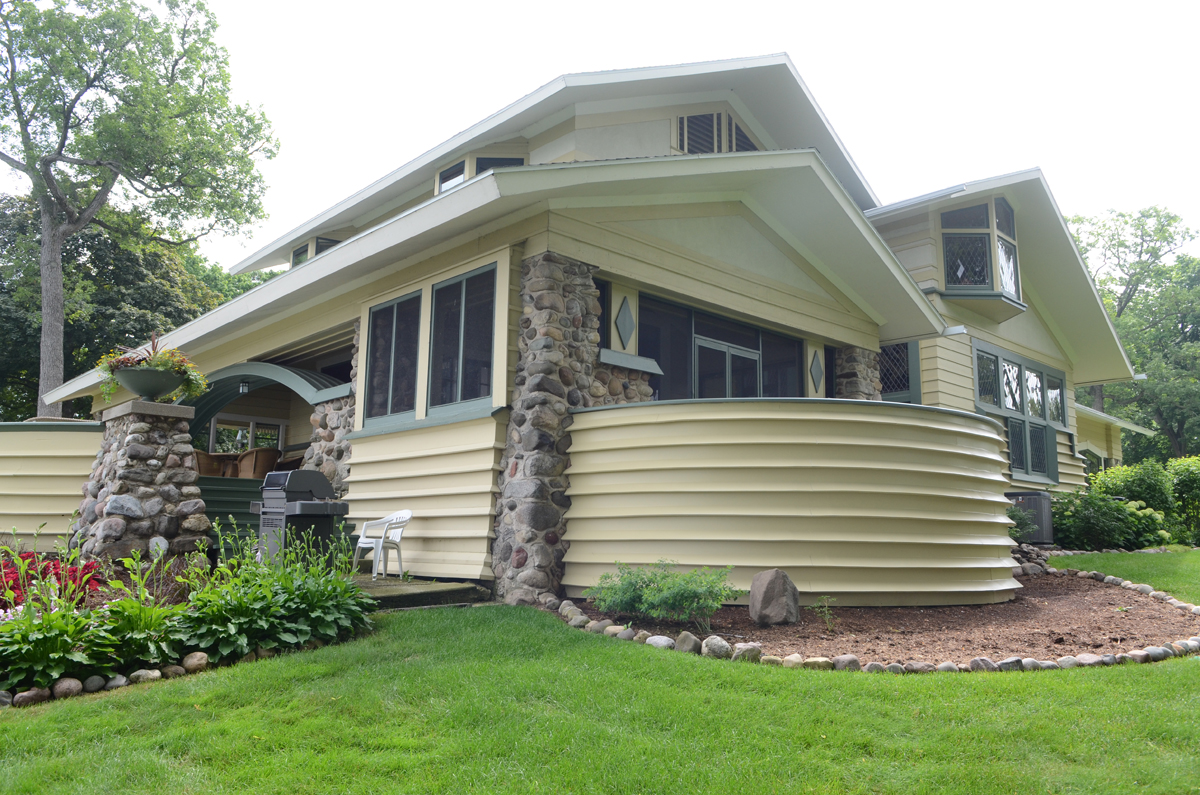
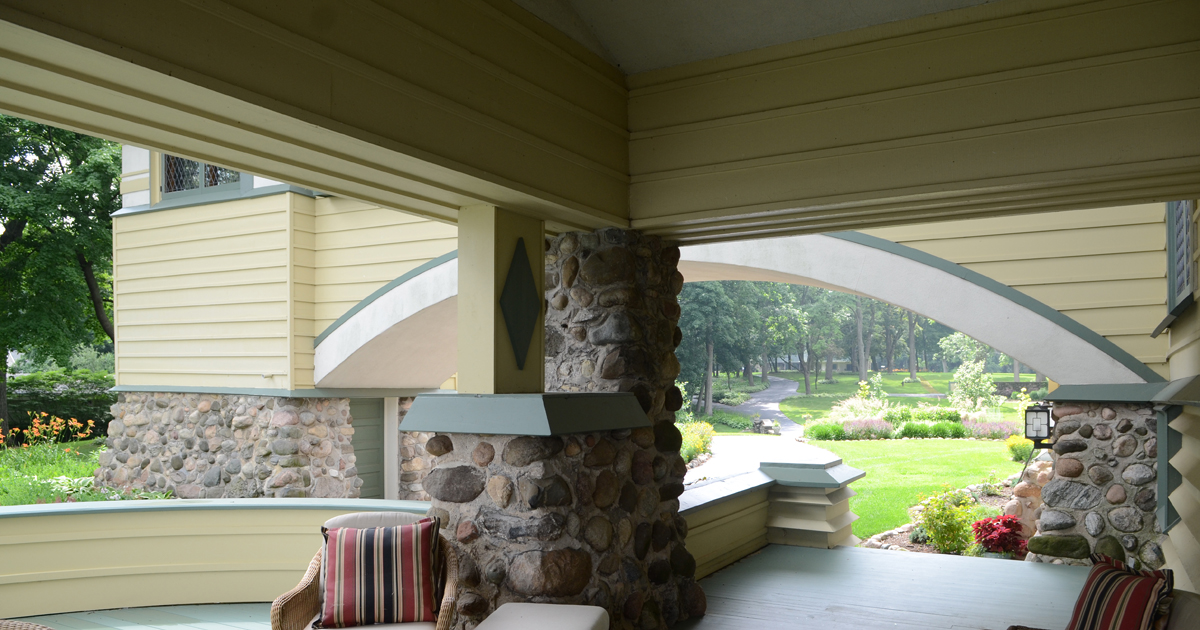
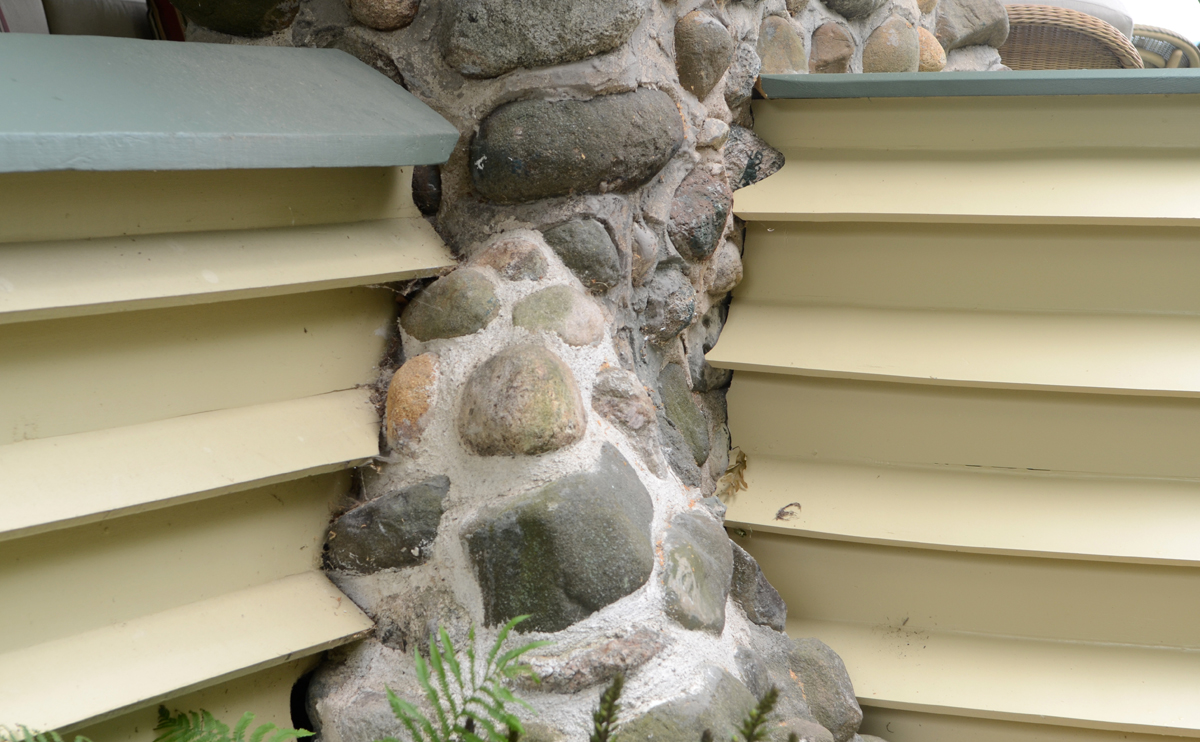
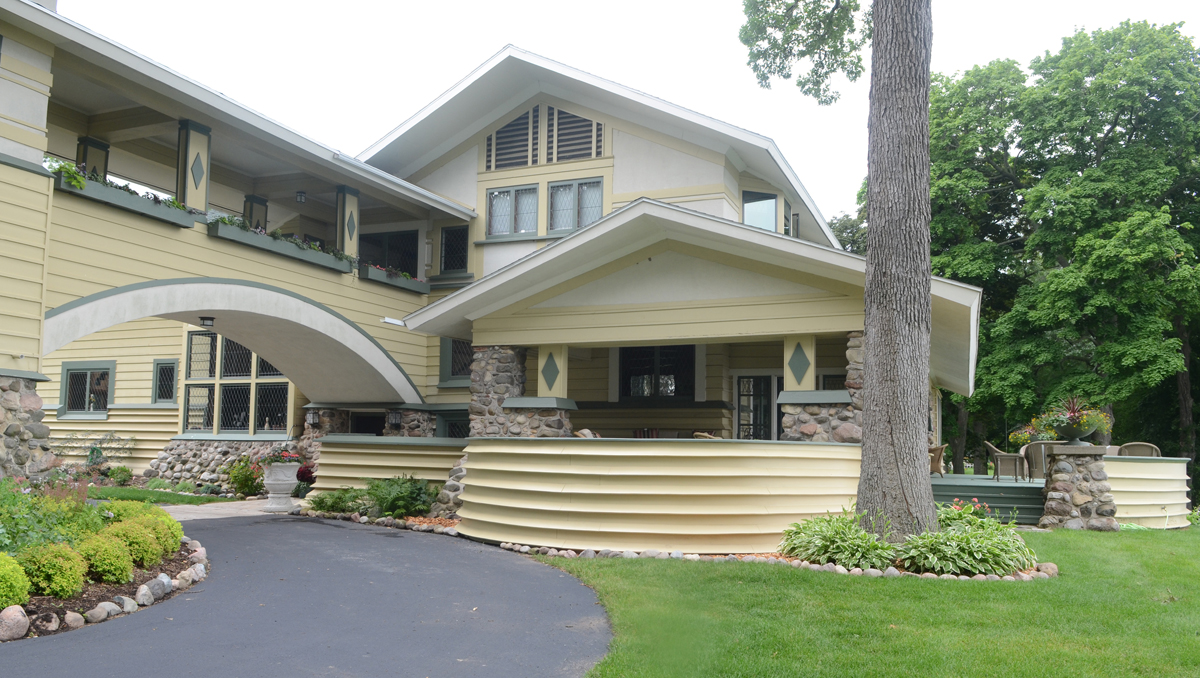
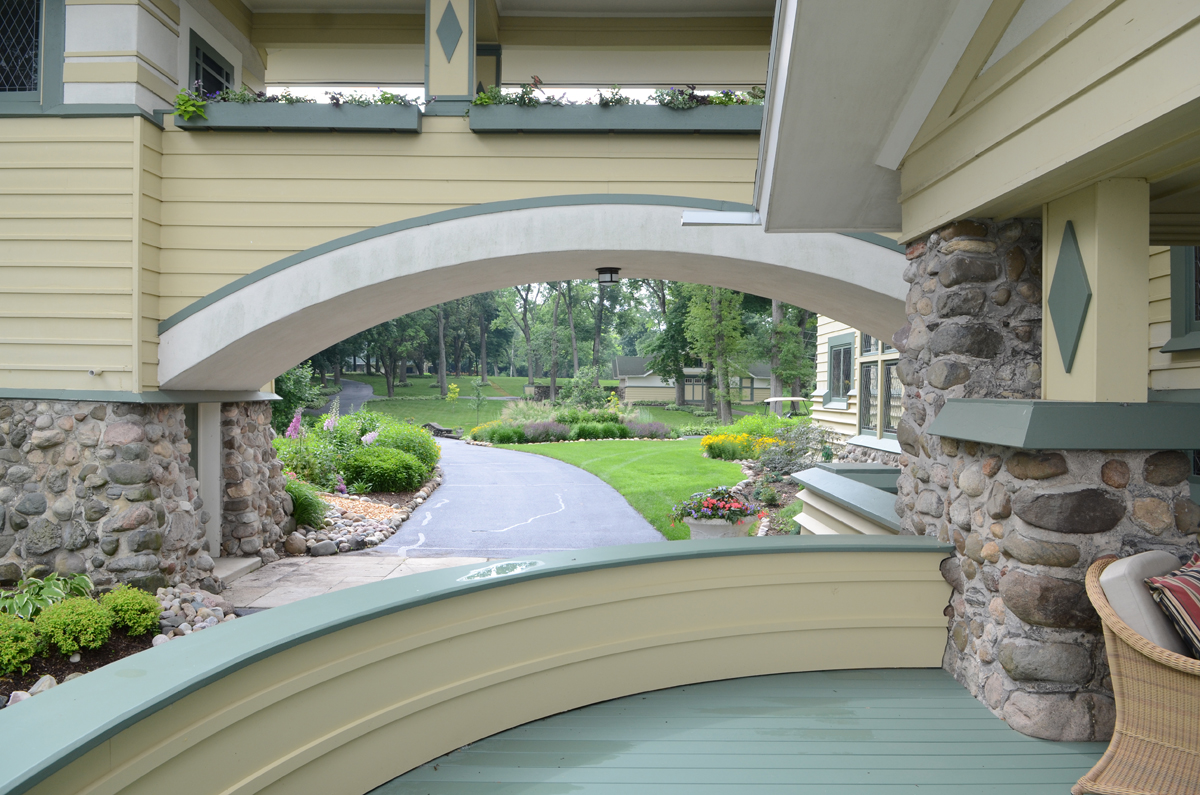
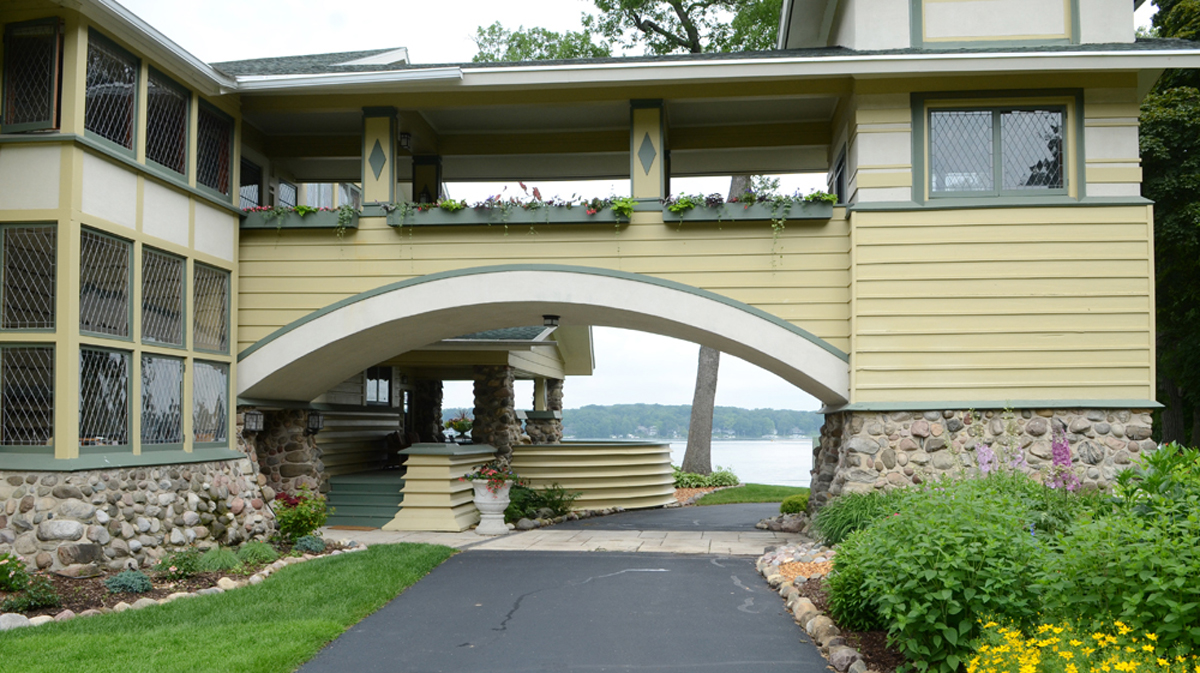
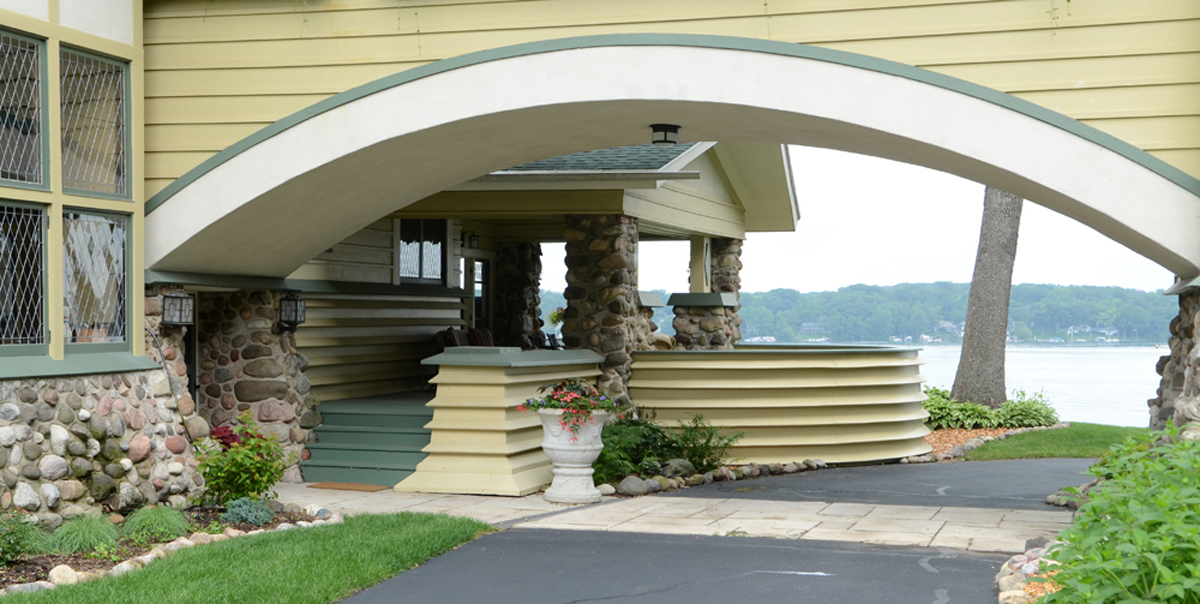
The east and west (side) porches now have semi-circular outer walls, as indicated on Wright’s drawings for the house. (The drawings can be viewed on Penwern’s magnificent website, www.penwern.com ) Sue and John Major, stewards of Penwern since 1994, commissioned master builder Bill Orkild to rebuild the side porches to Wright’s plan this spring. The work was completed just a week ago. The outer wall of the front porch, facing the lake, was changed from straight to semi-circular by John O’Shea, the fourth owner of the house, between 1989 and 1994. The front porch is on the right side of the first photo below:
Penwern Porches

The semi-circular design brings a unified design element back to the house because it echoes the dramatic arch over the front porch and the arched porte-cochere.
Penwern Porches

Penwern Porches

Penwern Porches

Penwern Porches

Penwern Porches

Orkild photographed the east porch during reconstruction:
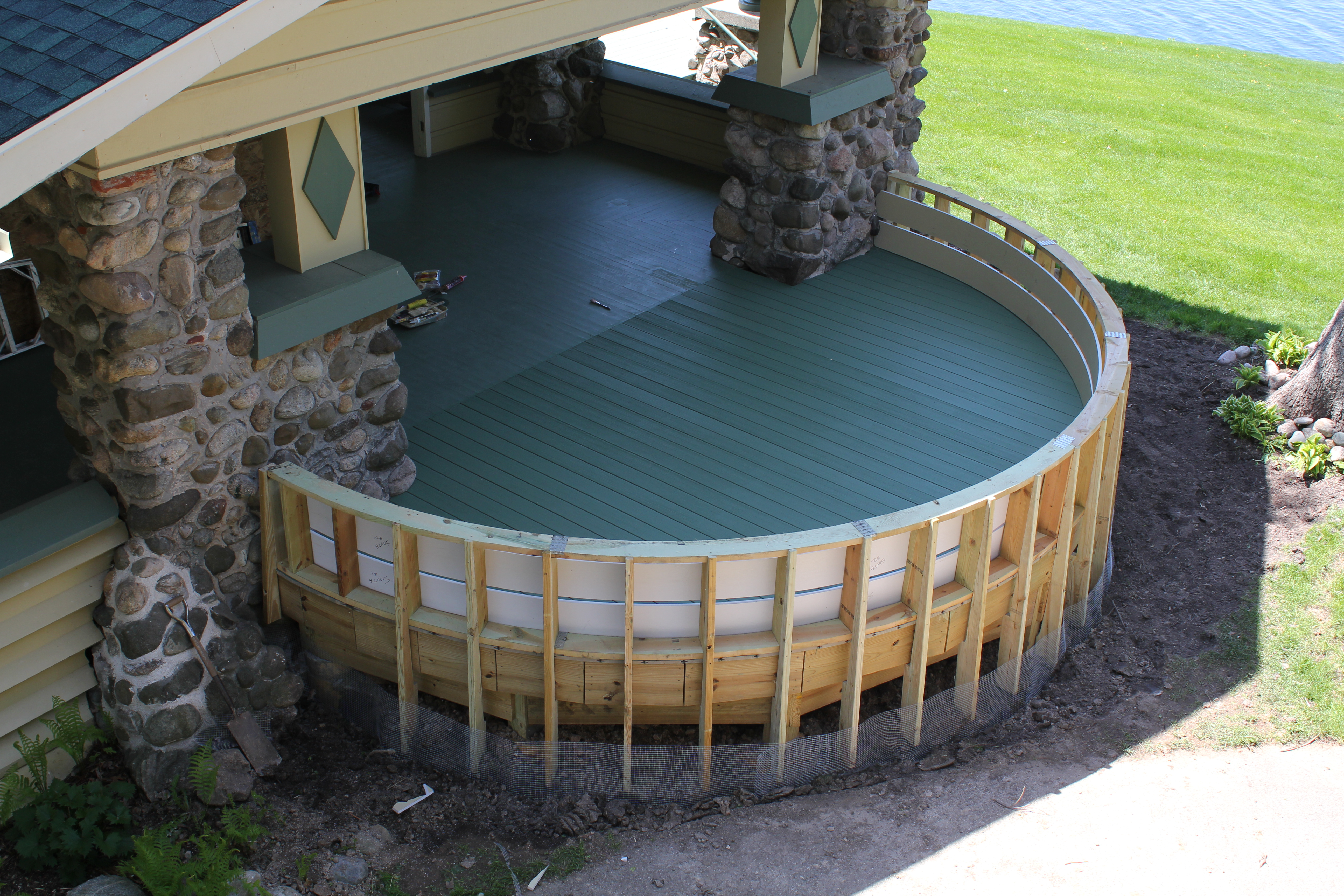
porch wall 015

He also fashioned the diamond-shape accents shown on Wright’s drawings. Penwern Porches

Penwern Porches

Penwern Porches

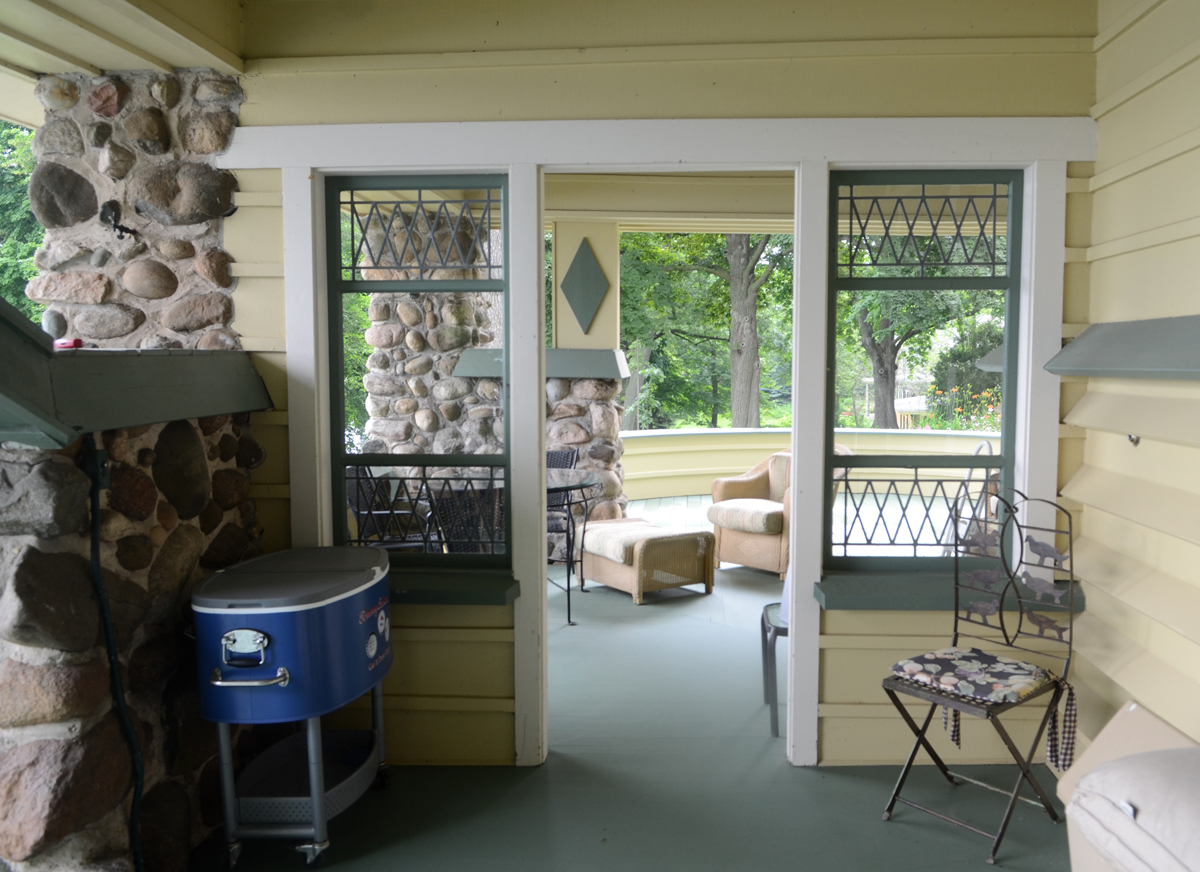
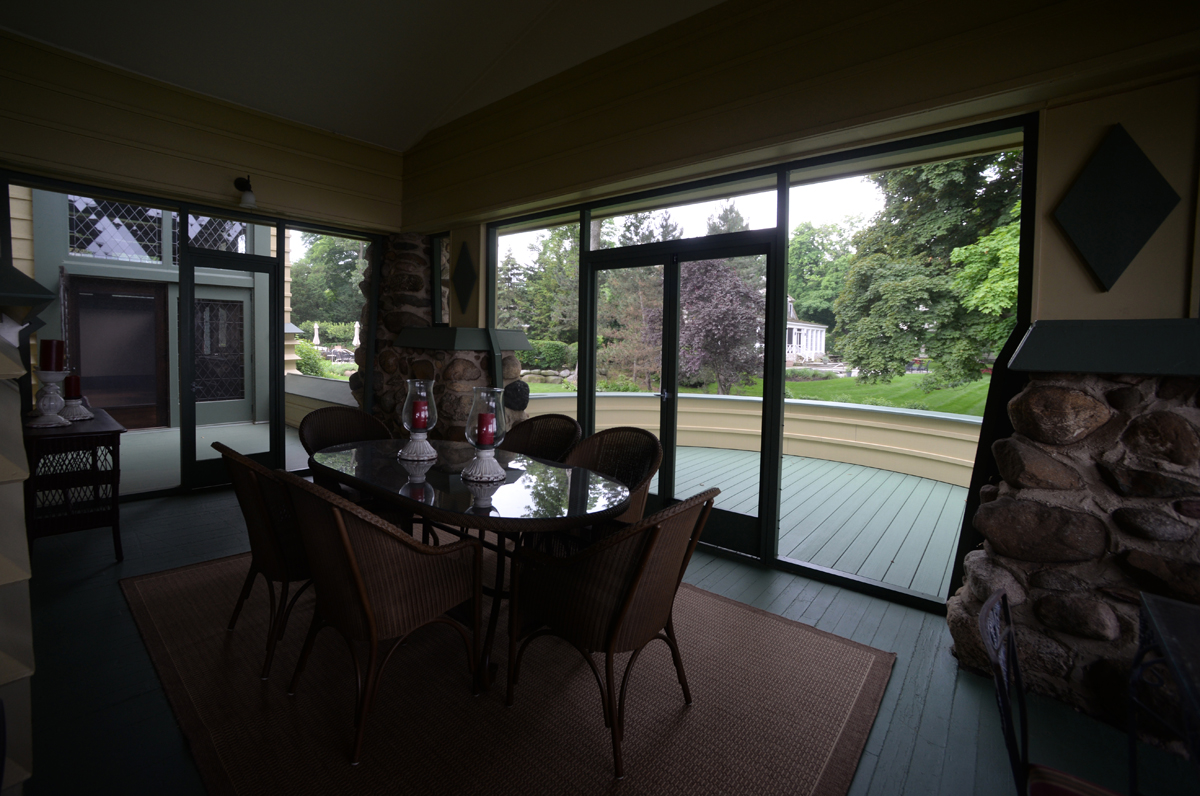
The next question for the Majors to ponder with Orkild is whether the walls on the insides of the porch are load-bearing. The walls are not shown on Wright’s plans. Removing them would allow for more dramatic vistas to the east and west from the front porch. It is possible that the porches were screened in with these walls after Jones lived in the house to shelter himself and his visitors from mosquitoes.
Penwern Porches

Penwern Porches

Celebrating Wright’s Birthday

Photos and text (c) Mark Hertzberg

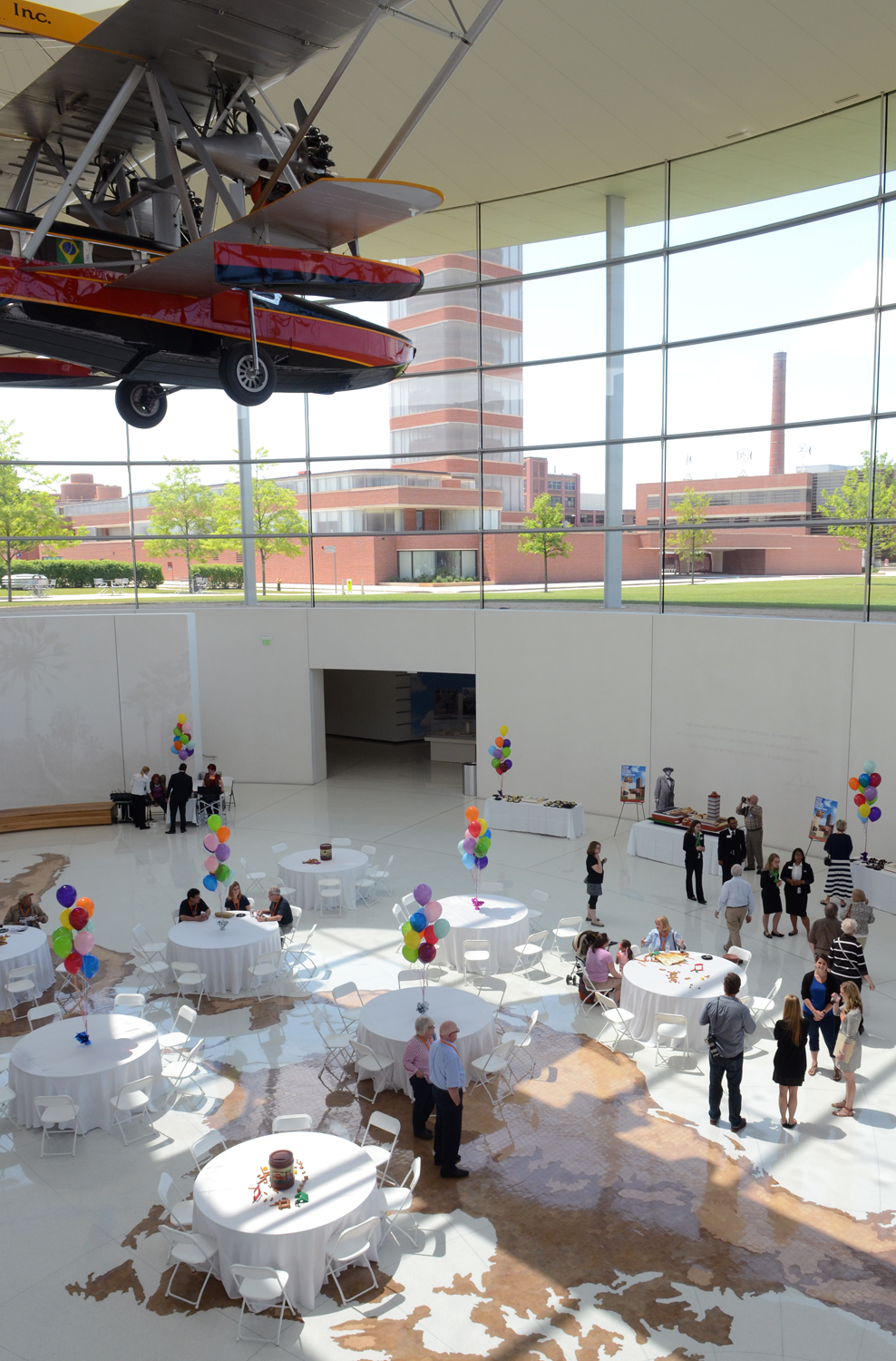
Frank Lloyd Wright’s 148th birthday was celebrated at a traditional gathering at Taliesin Saturday June 6 and a day later at SC Johnson in Racine, Wisconsin. Wright designed the company’s Administration Building in 1936 and Research Tower in 1943/44.

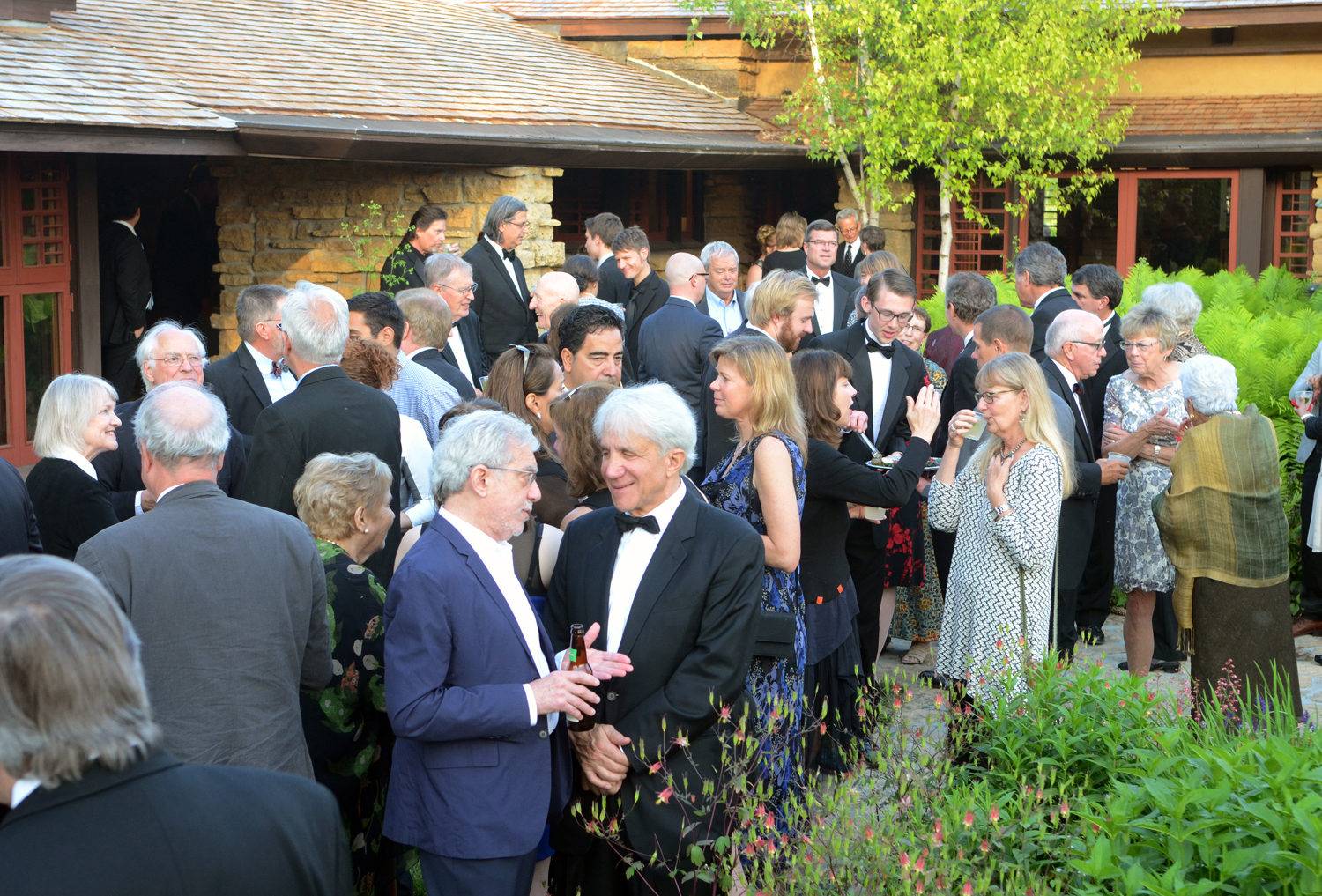
Frank Lloyd Wright birthday celebration at Taliesin and Hillside School, Spring Green, Wis., Saturday June 6, 2015.  /  (c) Mark HertzbergSean Malone chats with Minerva Montooth during the reception at Taliesin.

Frank Lloyd Wright birthday celebration at Taliesin and Hillside School, Spring Green, Wis., Saturday June 6, 2015.  /  (c) Mark Hertzberg

Frank Lloyd Wright birthday celebration at Taliesin and Hillside School, Spring Green, Wis., Saturday June 6, 2015.  /  (c) Mark Hertzberg

Ron McCrea enjoys playing the living room piano when he visits Taliesin.

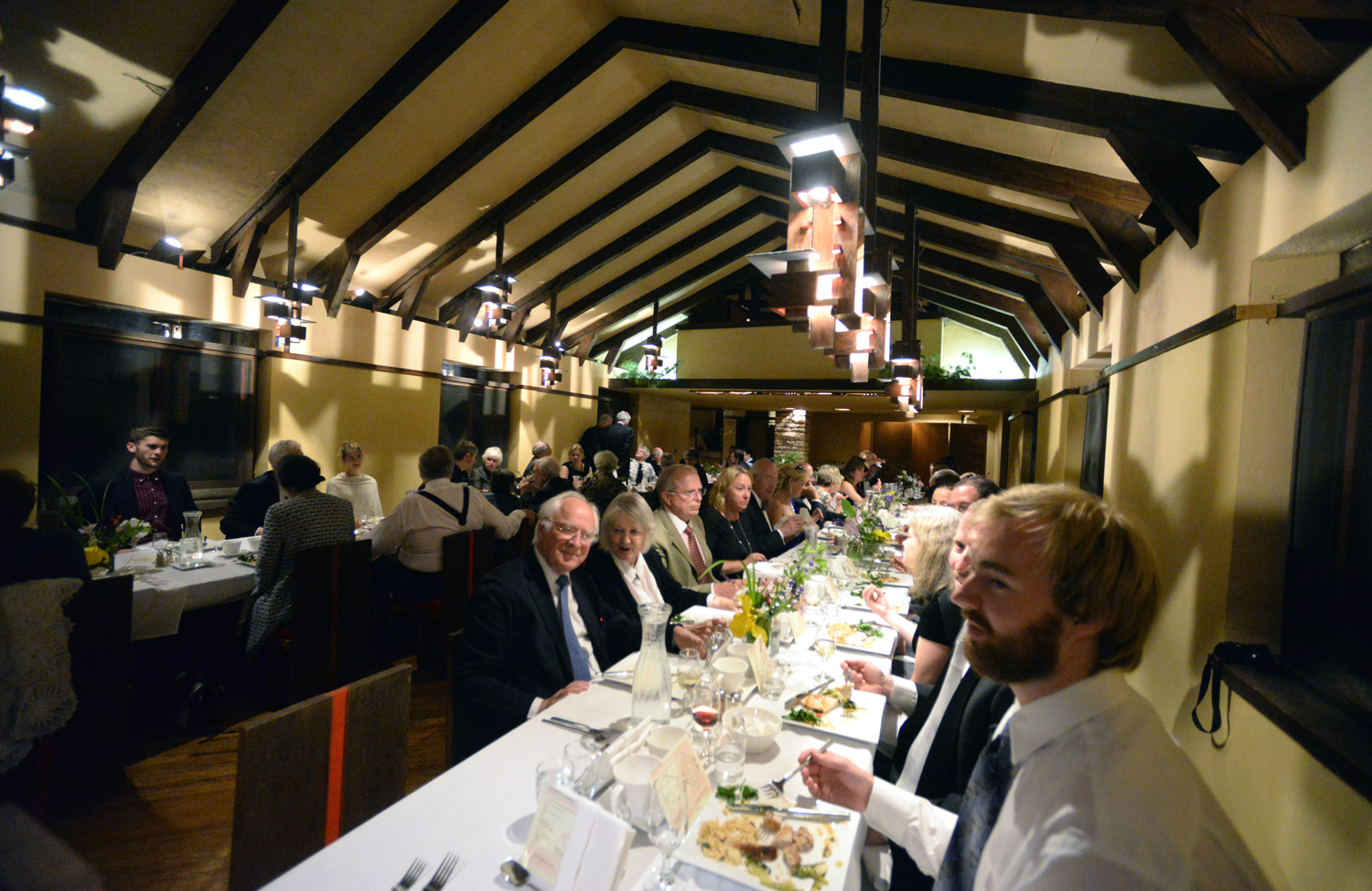
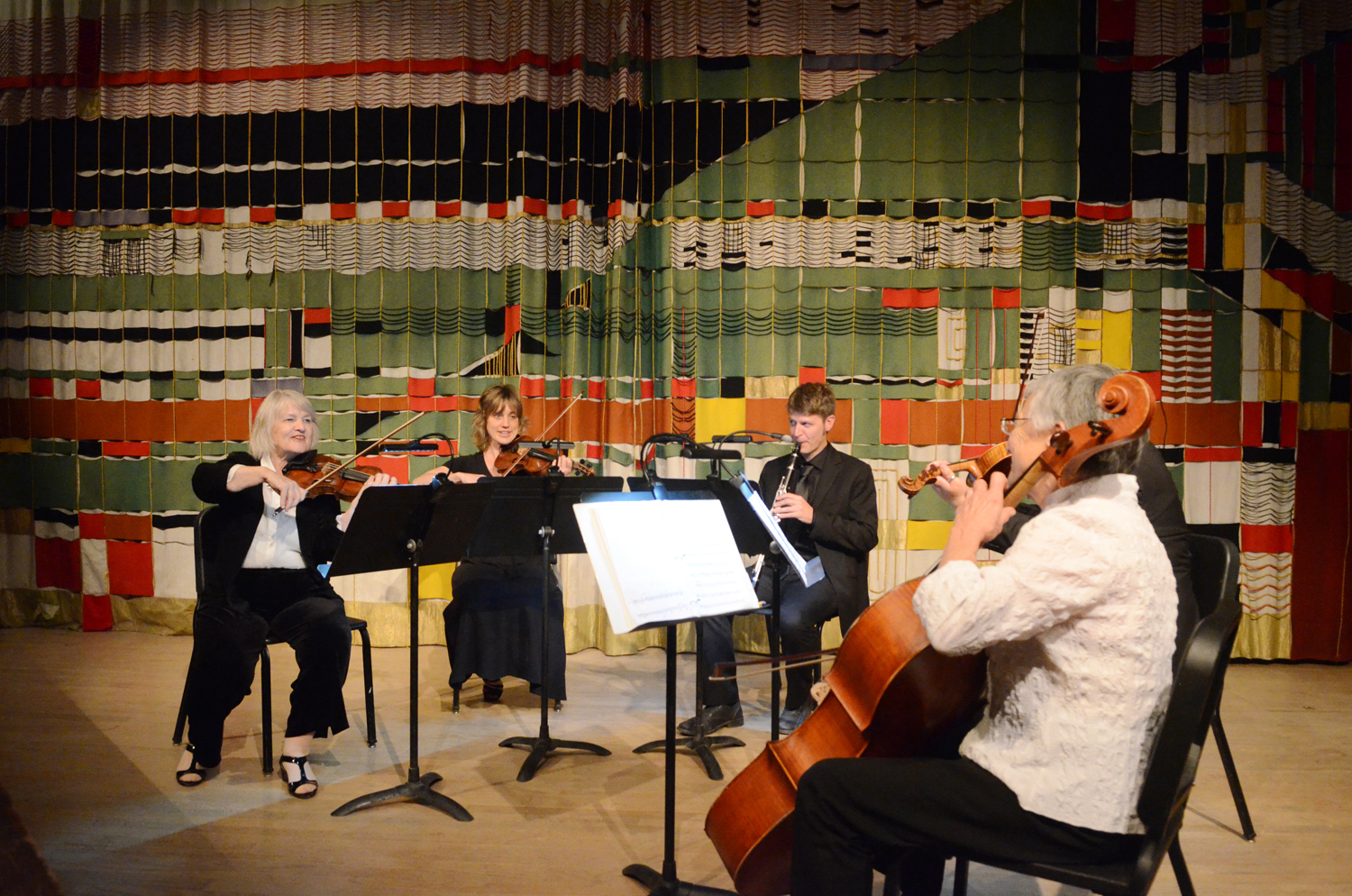
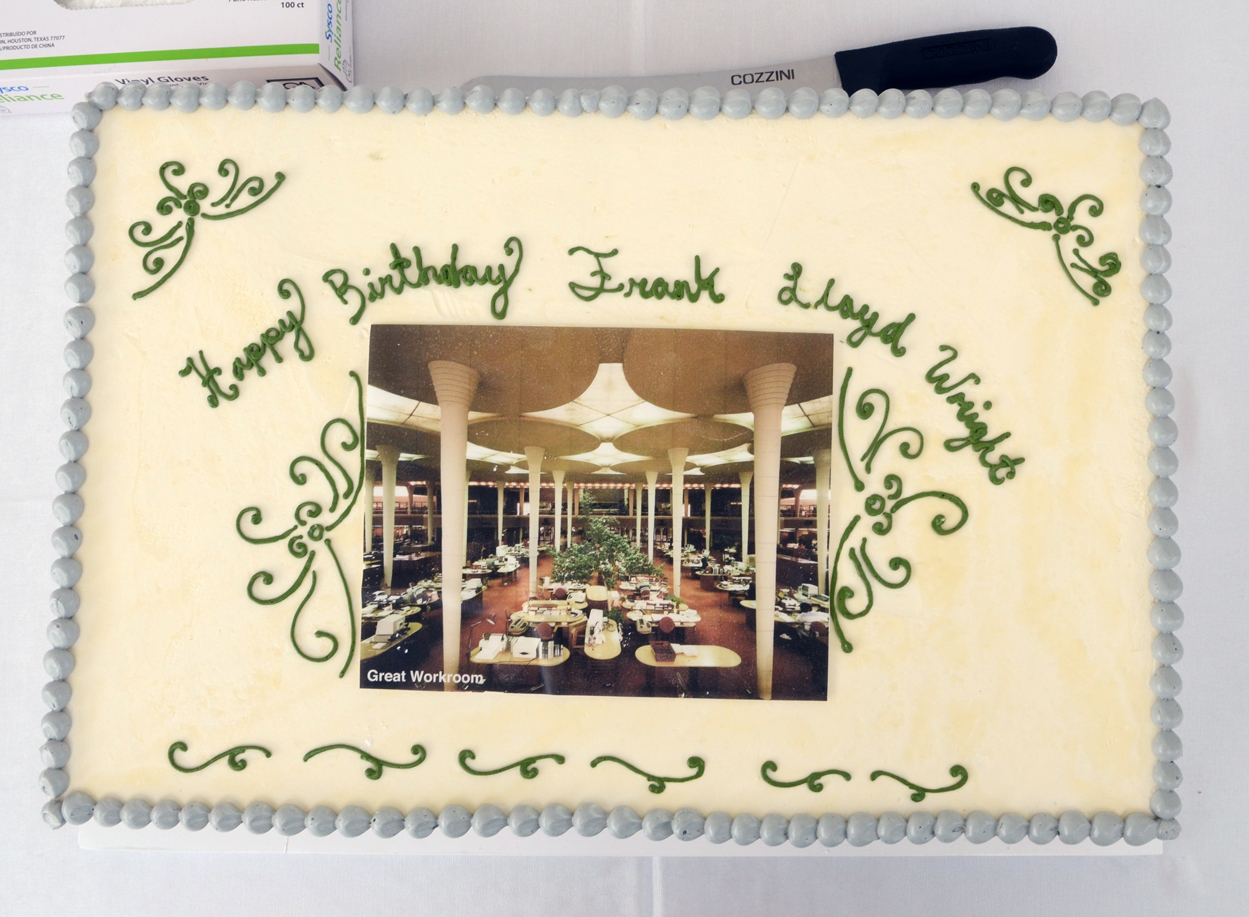
The reception at Taliesin was followed by dinner – including a birthday cake – and music at Hillside School:

Frank Lloyd Wright birthday celebration at Taliesin and Hillside School, Spring Green, Wis., Saturday June 6, 2015.  /  (c) Mark Hertzberg

Frank Lloyd Wright birthday celebration at Taliesin and Hillside School, Spring Green, Wis., Saturday June 6, 2015.  /  (c) Mark Hertzberg

Frank Lloyd Wright birthday celebration at Taliesin and Hillside School, Spring Green, Wis., Saturday June 6, 2015.  /  (c) Mark Hertzberg

Frank Lloyd Wright birthday celebration at Taliesin and Hillside School, Spring Green, Wis., Saturday June 6, 2015.  /  (c) Mark Hertzberg

Prairie 50th Graduation

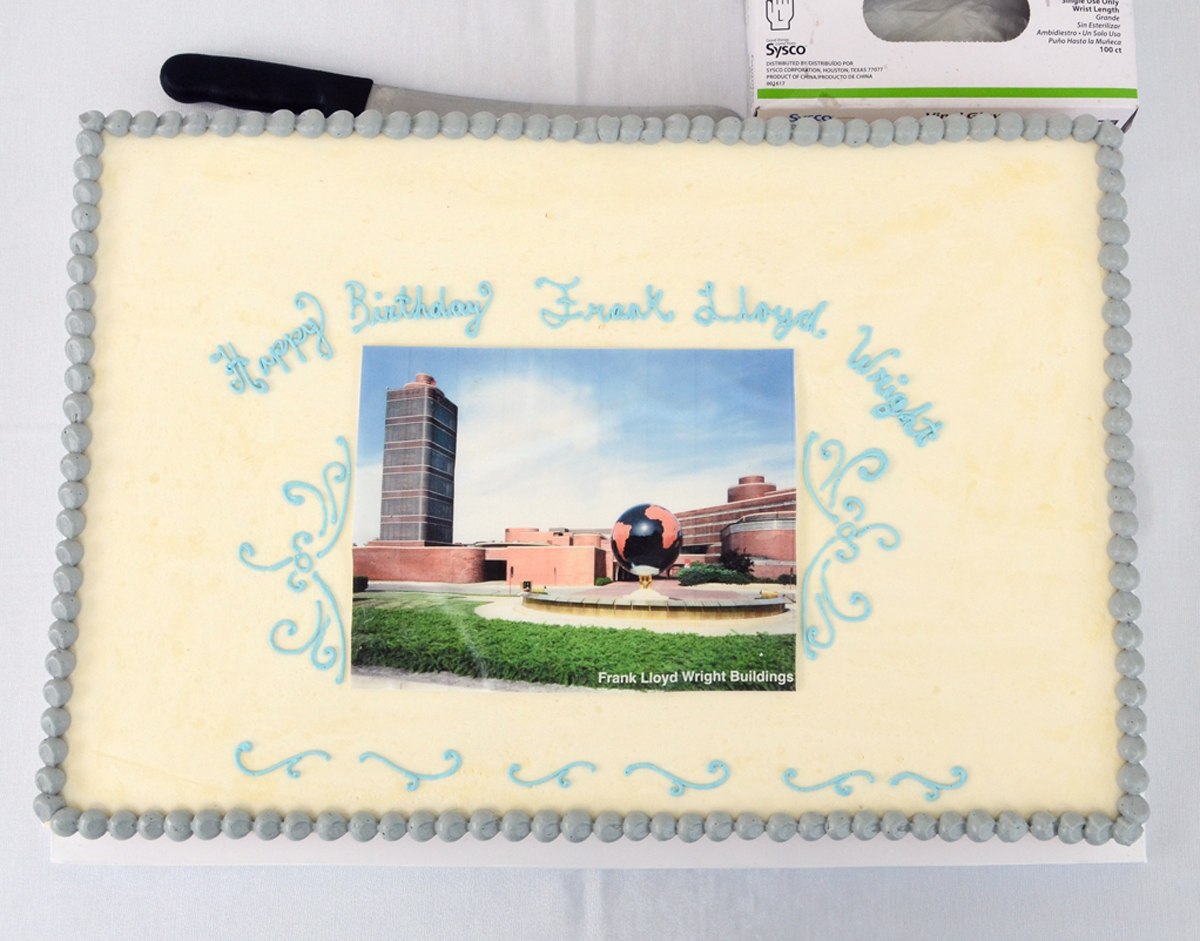
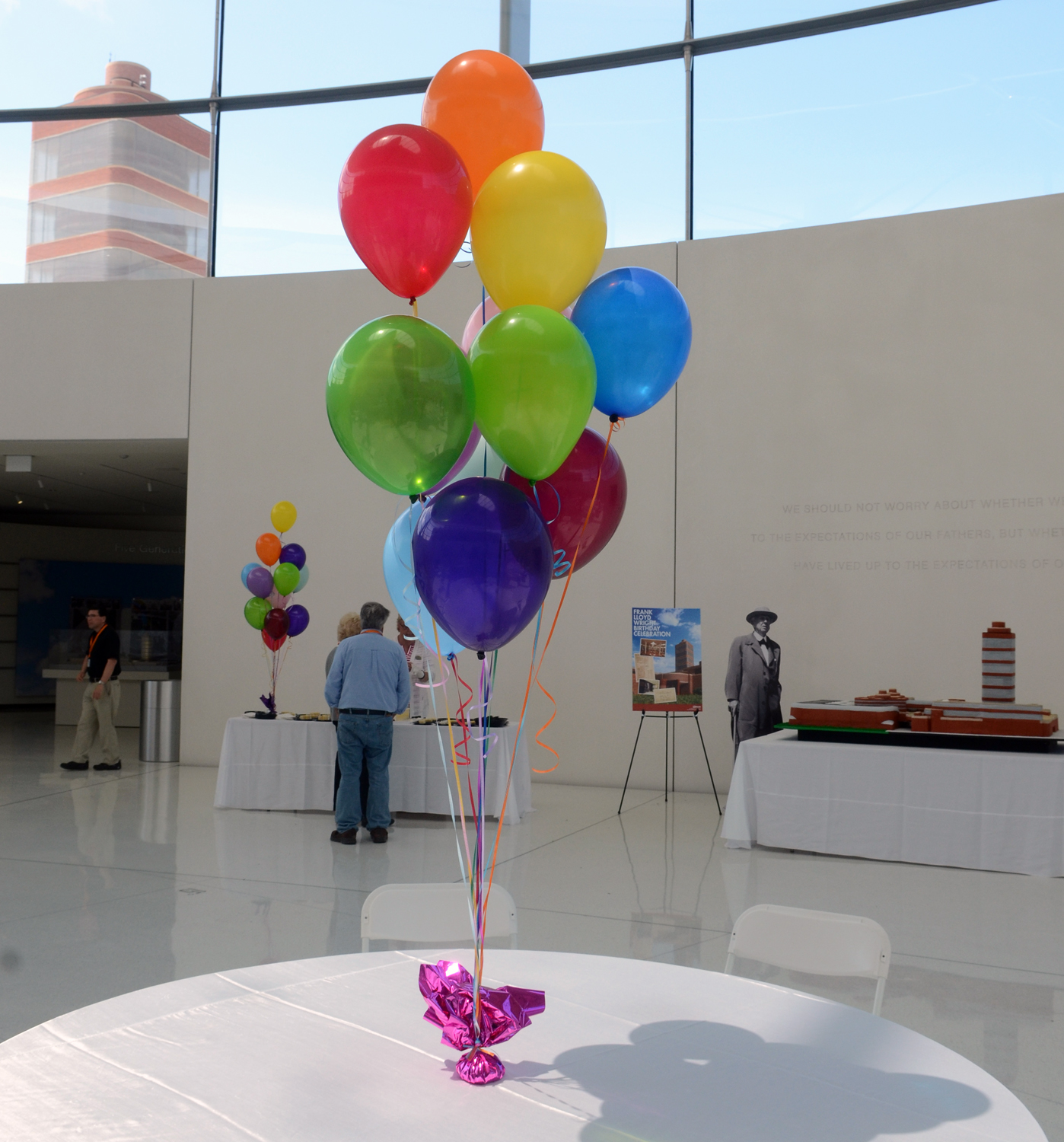
SC Johnson’s celebration was held in Fortaleza Hall, designed by Lord Norman Foster and partners. There were two sheet cakes and a large cake modeled after Wright’s buildings. The base below the model building was made from compressed Rice Krispie treats and chocolate mix.

Children played with Lincoln Logs, a toy invented by John Lloyd Wright

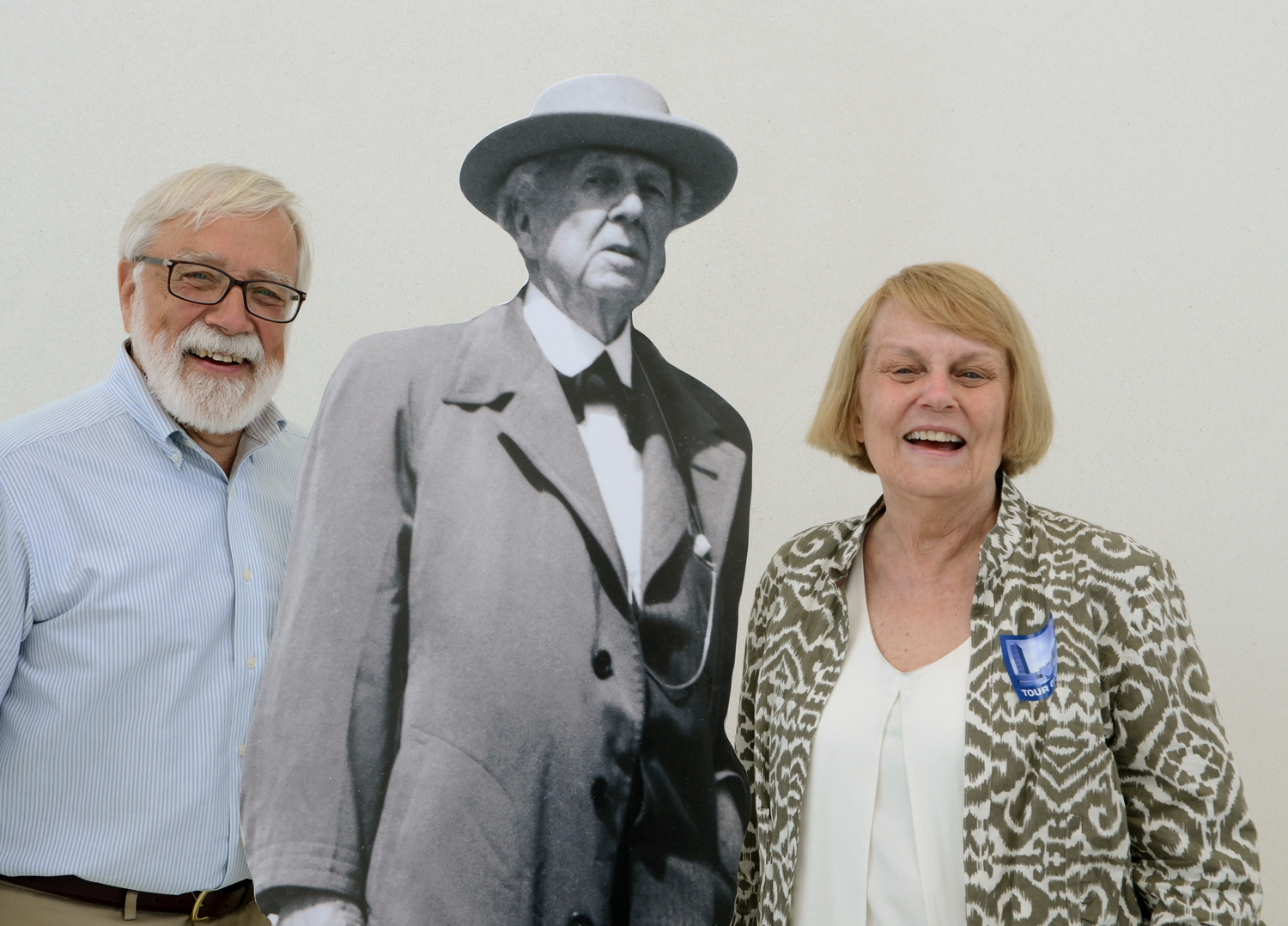
Bob and Jeanne Maushammer wanted their picture taken with a life-size cutout photo of Wright. The Maushammers, who have seen several hundred of Wright’s buildings, were in their hometown of Racine to celebrate their 50th wedding anniversary.

Newly Discovered Wright Home Near Milwaukee

Story and photos (c) Mark Hertzberg

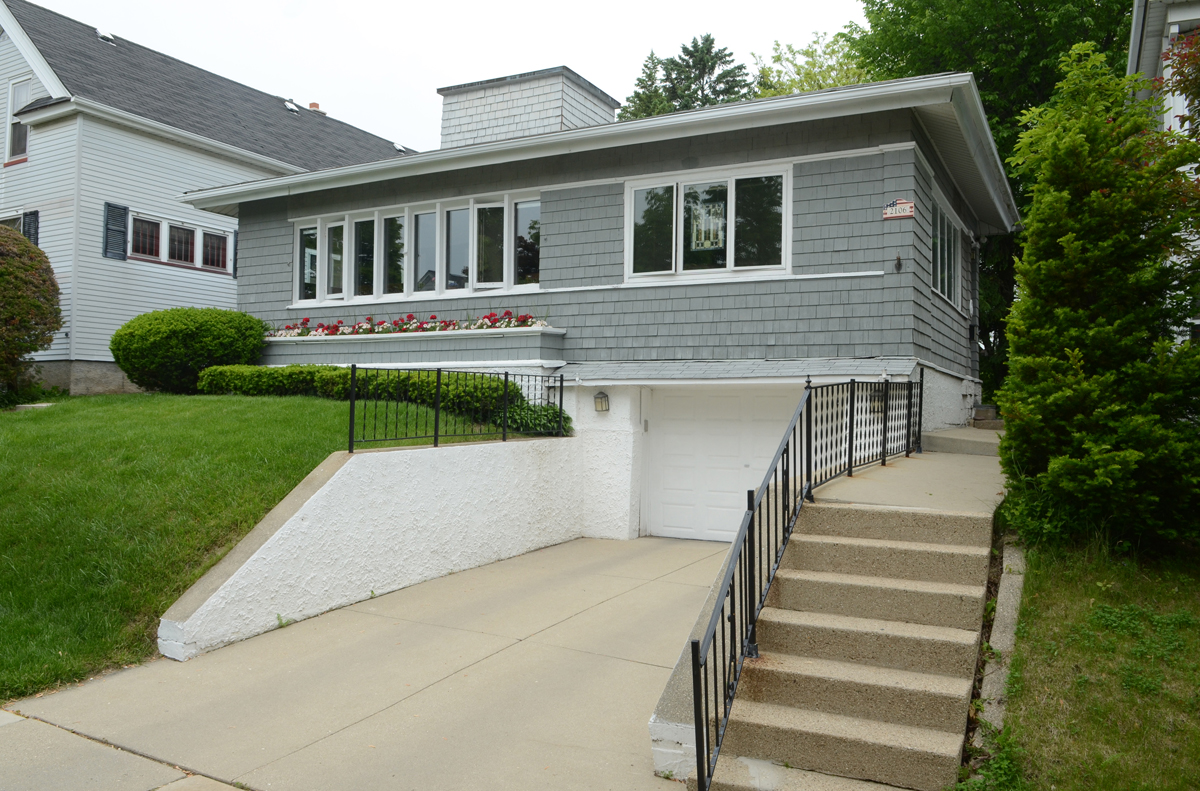
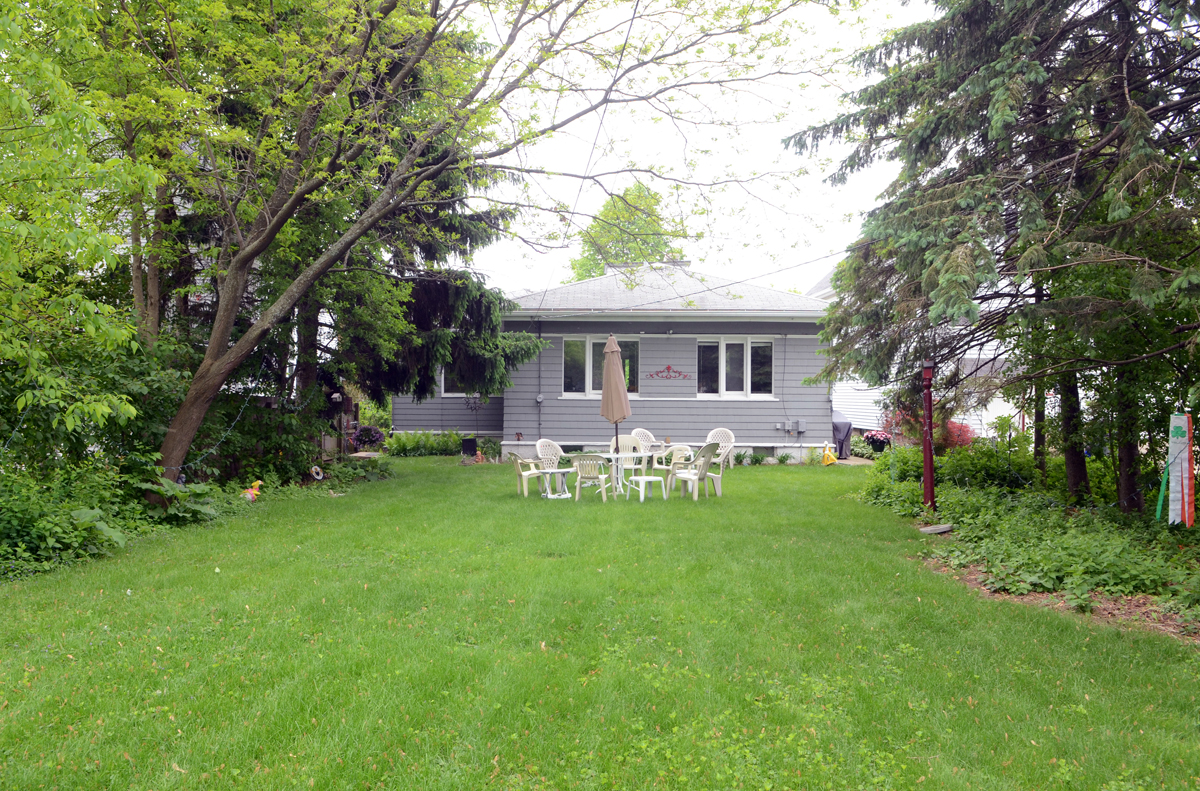
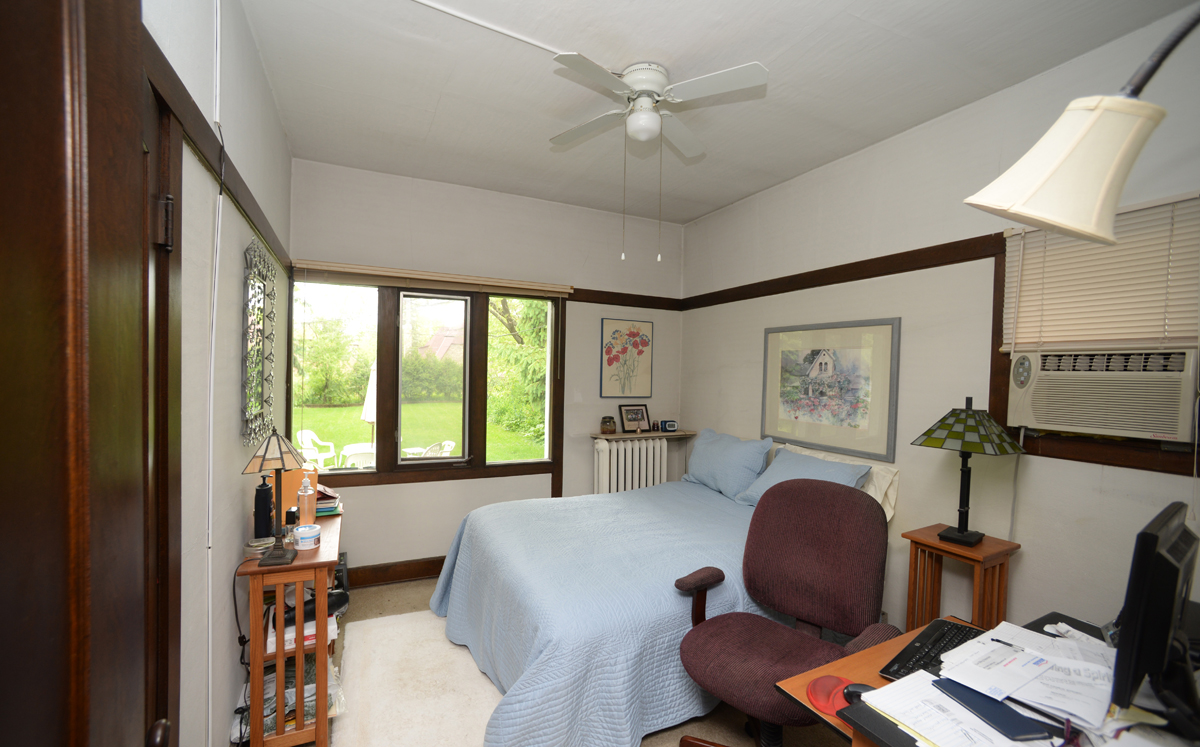
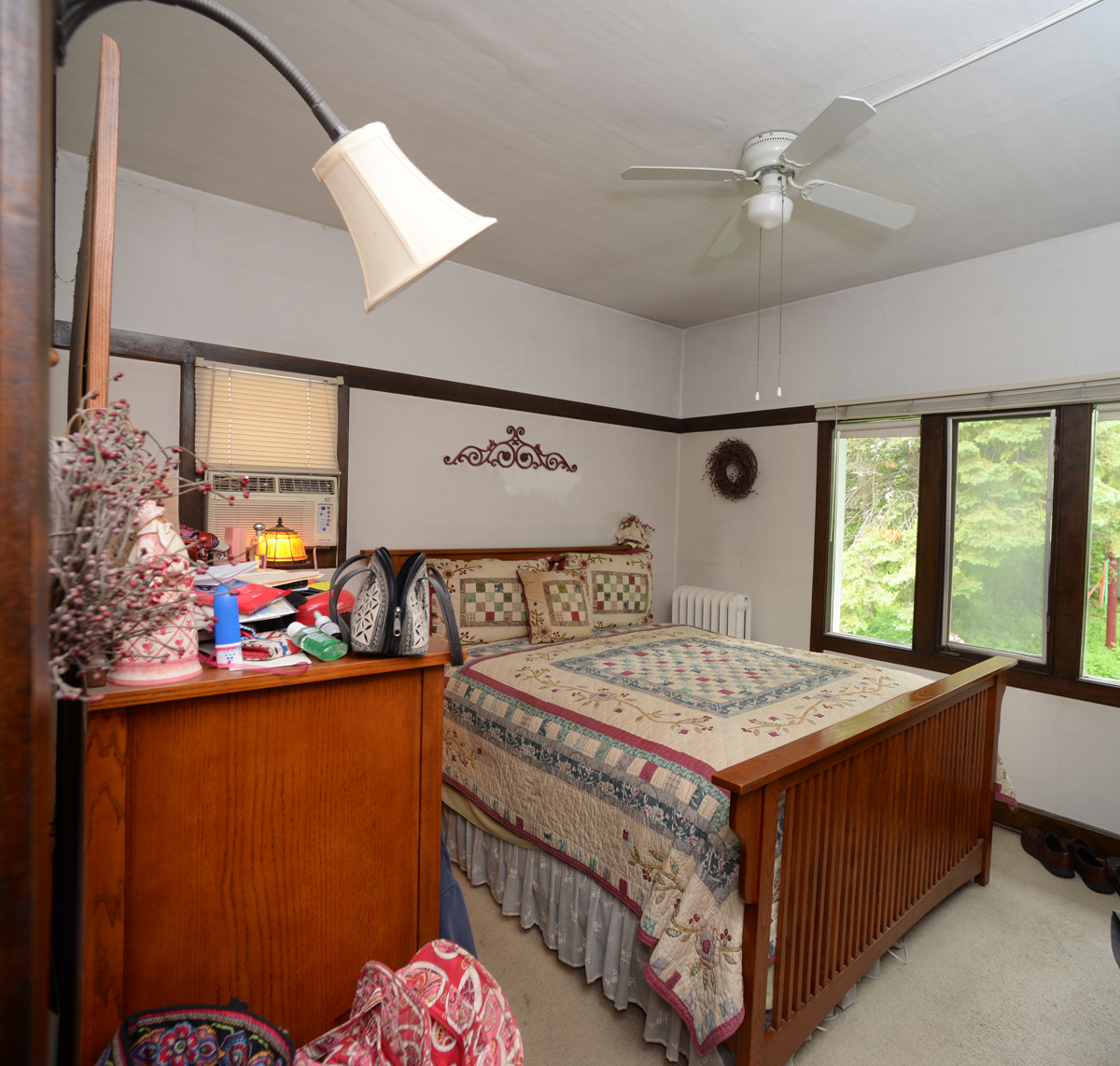
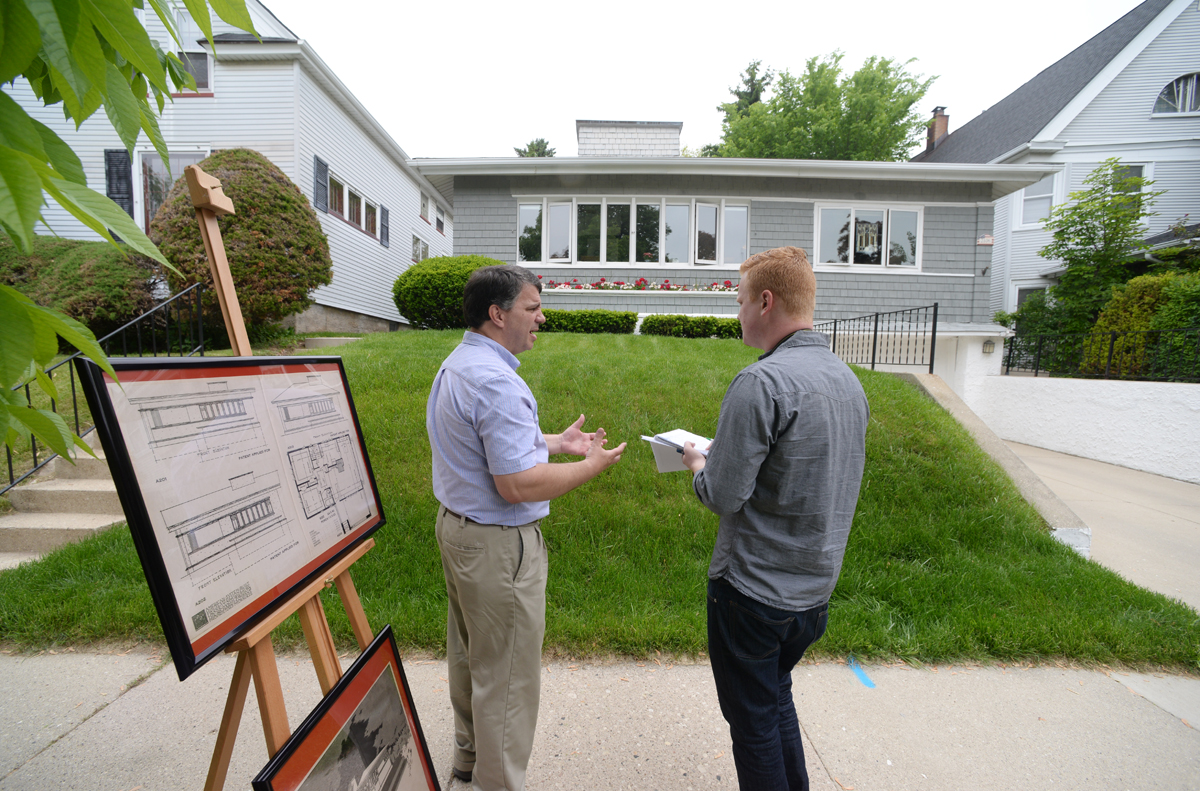
The 2100 block of Newton Avenue in Shorewood, Wis., will no longer be a quiet street, as word spreads of the documentation there of a previously unidentified house designed by Frank Lloyd Wright. The home at 2106 Newton may not look like a Wright home at first glance, but underneath the modern siding, and above the garage which was added in 1976, is one of Wright’s stucco American System-Built homes.

The documentation of Frank Lloyd Wright as the architect of the home at 2106 Newton Avenue, Shorewood, Wis., was announced Friday June 5, 2015. The home, which dates to 1917, is one of Wright's American System-Built homes. It has   /  (c) Mark Hertzberg

The documentation of Frank Lloyd Wright as the architect of the home at 2106 Newton Avenue, Shorewood, Wis., was announced Friday June 5, 2015. The home, which dates to 1917, is one of Wright's American System-Built homes. It has   /  (c) Mark Hertzberg

The documentation of Frank Lloyd Wright as the architect of the home at 2106 Newton Avenue, Shorewood, Wis., was announced Friday June 5, 2015. The home, which dates to 1917, is one of Wright's American System-Built homes. It has   /  (c) Mark Hertzberg

Many people think Wright designed homes only for wealthy clients, but he was keenly interested in affordable housing for the middle class. The American System-Built homes, designed as affordable housing, could be selected from a myriad of designs. The entrance to the house is on the right side (as one faces the house). The original open porch at the entrance was enclosed at an unknown date. It still has the original stucco finish and the leaded glass windows which apparently were the front windows of the house.

The documentation of Frank Lloyd Wright as the architect of the home at 2106 Newton Avenue, Shorewood, Wis., was announced Friday June 5, 2015. The home, which dates to 1917, is one of Wright's American System-Built homes. It has   /  (c) Mark Hertzberg

The documentation of Frank Lloyd Wright as the architect of the home at 2106 Newton Avenue, Shorewood, Wis., was announced Friday June 5, 2015. The home, which dates to 1917, is one of Wright's American System-Built homes. It has   /  (c) Mark Hertzberg

The documentation of Frank Lloyd Wright as the architect of the home at 2106 Newton Avenue, Shorewood, Wis., was announced Friday June 5, 2015. The home, which dates to 1917, is one of Wright's American System-Built homes. It has   /  (c) Mark Hertzberg

The Newton Avenue house, built in 1917, joins six homes in the 2700 block of W. Burnham St. (two single-family homes and four duplexes) as examples of Wright’s American System-Built homes in the Milwaukee area. The two-bedroom Shorewood house is a Model A203. Four other Milwaukee American System-Built duplexes, the Arthur R. Munkwitz Duplex Apartments, were demolished in 1973 to widen a street.

The documentation of Frank Lloyd Wright as the architect of the home at 2106 Newton Avenue, Shorewood, Wis., was announced Friday June 5, 2015. The home, which dates to 1917, is one of Wright's American System-Built homes. It has   /  (c) Mark Hertzberg

The documentation of Frank Lloyd Wright as the architect of the home at 2106 Newton Avenue, Shorewood, Wis., was announced Friday June 5, 2015. The home, which dates to 1917, is one of Wright's American System-Built homes. It has   /  (c) Mark Hertzberg

The documentation of Frank Lloyd Wright as the architect of the home at 2106 Newton Avenue, Shorewood, Wis., was announced Friday June 5, 2015. The home, which dates to 1917, is one of Wright's American System-Built homes. It has   /  (c) Mark Hertzberg

The documentation of Frank Lloyd Wright as the architect of the home at 2106 Newton Avenue, Shorewood, Wis., was announced Friday June 5, 2015. The home, which dates to 1917, is one of Wright's American System-Built homes. It has   /  (c) Mark Hertzberg

The documentation of Frank Lloyd Wright as the architect of the home at 2106 Newton Avenue, Shorewood, Wis., was announced Friday June 5, 2015. The home, which dates to 1917, is one of Wright's American System-Built homes. It has   /  (c) Mark Hertzberg

The documentation of Frank Lloyd Wright as the architect of the home at 2106 Newton Avenue, Shorewood, Wis., was announced Friday June 5, 2015. The home, which dates to 1917, is one of Wright's American System-Built homes. It has   /  (c) Mark Hertzberg

The first person to tell owners Roger and Pat Wisialowski that they may be living in a Wright home was the late Richard Johnson of Evanston, Illinois. Johnson had a passion for searching for previously unknown Wright works. However, none of the ones he believed Wright designed were documented and authenticated as Wright’s, until Mike Lilek researched the little house on Newton Avenue over the last year and found proof that it is, indeed, a Wright home. Lilek is nationally recognized as an expert on the subject of Wright’s American System-Built homes.

The documentation of Frank Lloyd Wright as the architect of the home at 2106 Newton Avenue, Shorewood, Wis., was announced Friday June 5, 2015. The home, which dates to 1917, is one of Wright's American System-Built homes. It has   /  (c) Mark Hertzberg

Lilek, left, is interviewed by Jeff Rummage of the “Shorewood Now news site.

He has spearheaded the restoration of two of the Burnham Street houses for Frank Lloyd Wright Wisconsin. He extensively researched the Newton Avenue house and has presented his findings to the Frank Lloyd Wright Foundation, the organization which oversees all things Wright and was the former home of Wright’s archive. He announced his findings June 5, 2015 at a press event in front of the house. He has been transparent about his research, and has posted a link to it:

www.wrightinwisconsin.org

Link toMary Louise Schumacher’s feature story in the Milwaukee Journal Sentinel:

http://www.jsonline.com/entertainment/sleuthing-reveals-shorewood-home-was-

designed-by-frank-lloyd-wright-b99513440z1-306231261.html