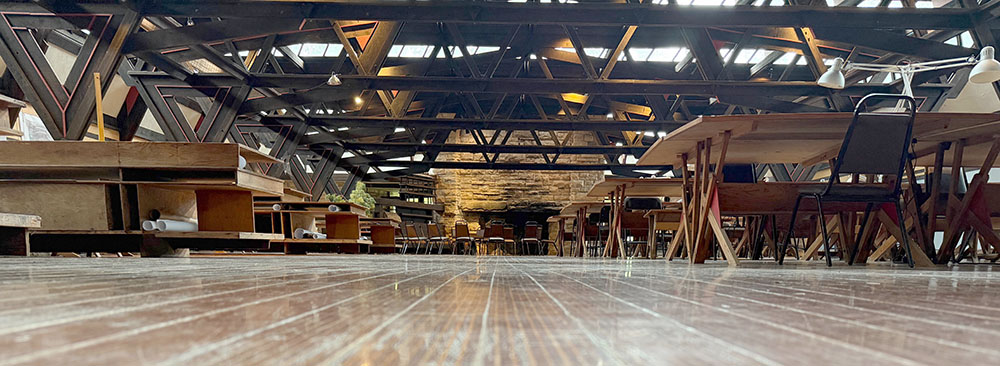
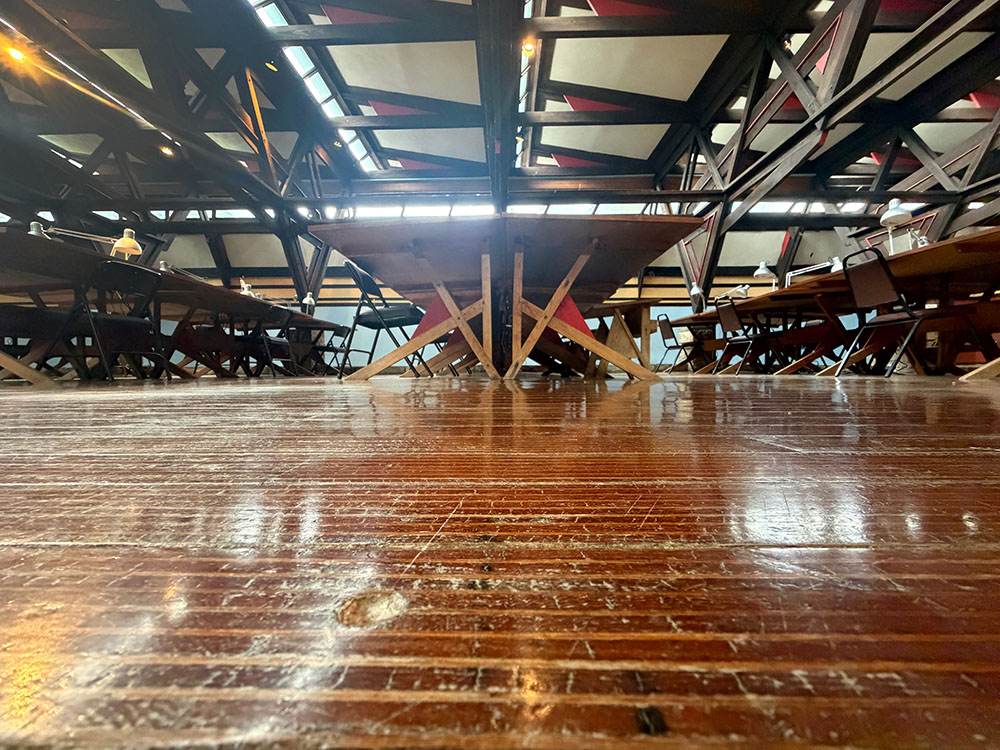
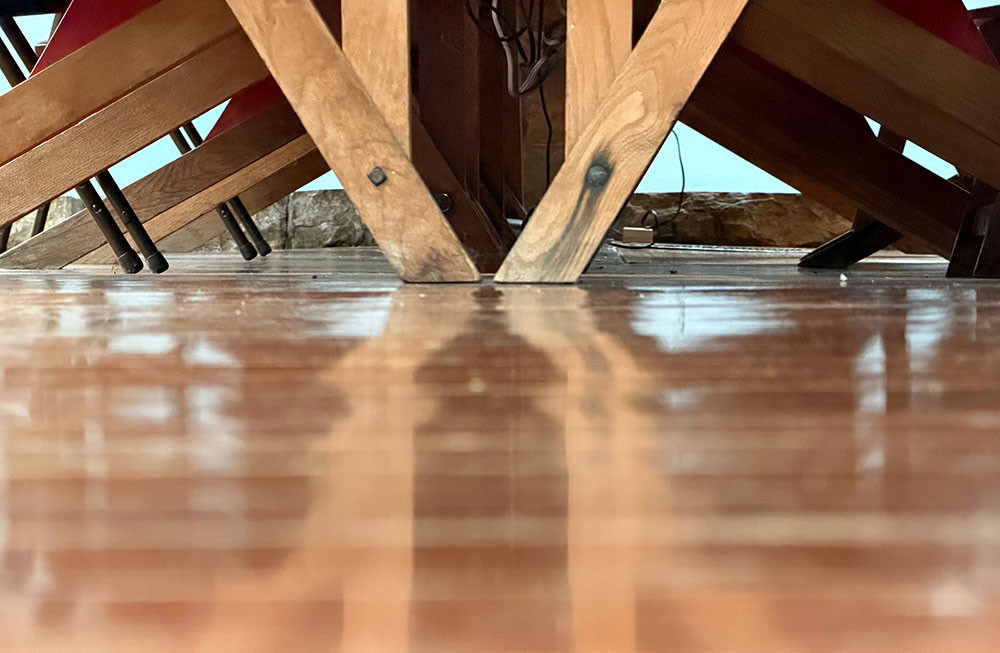
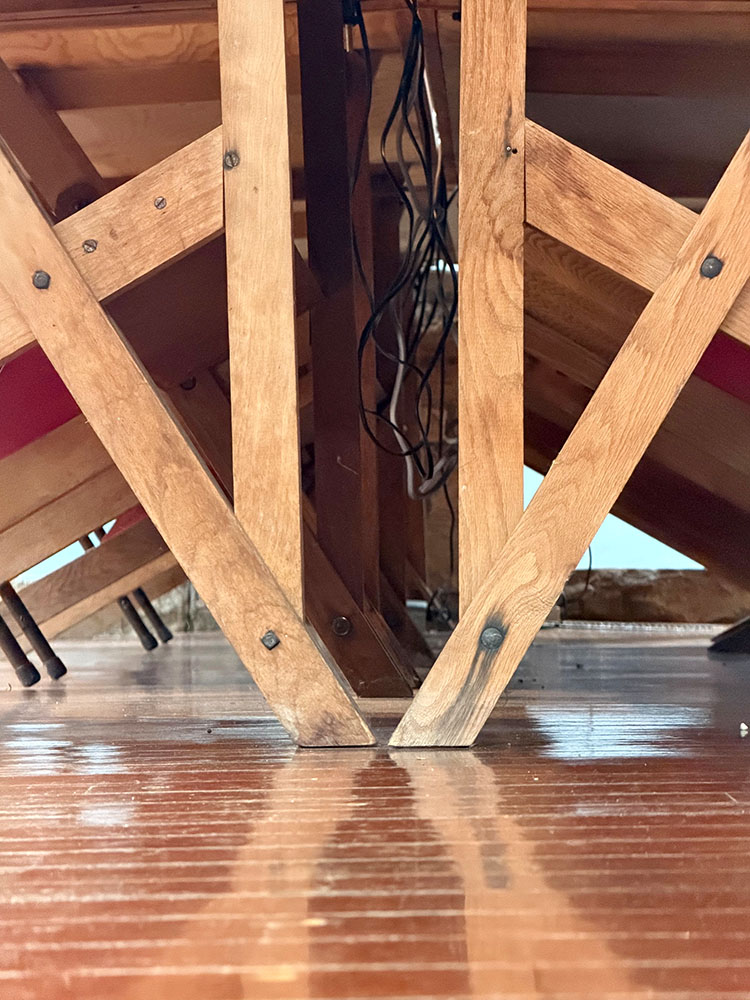
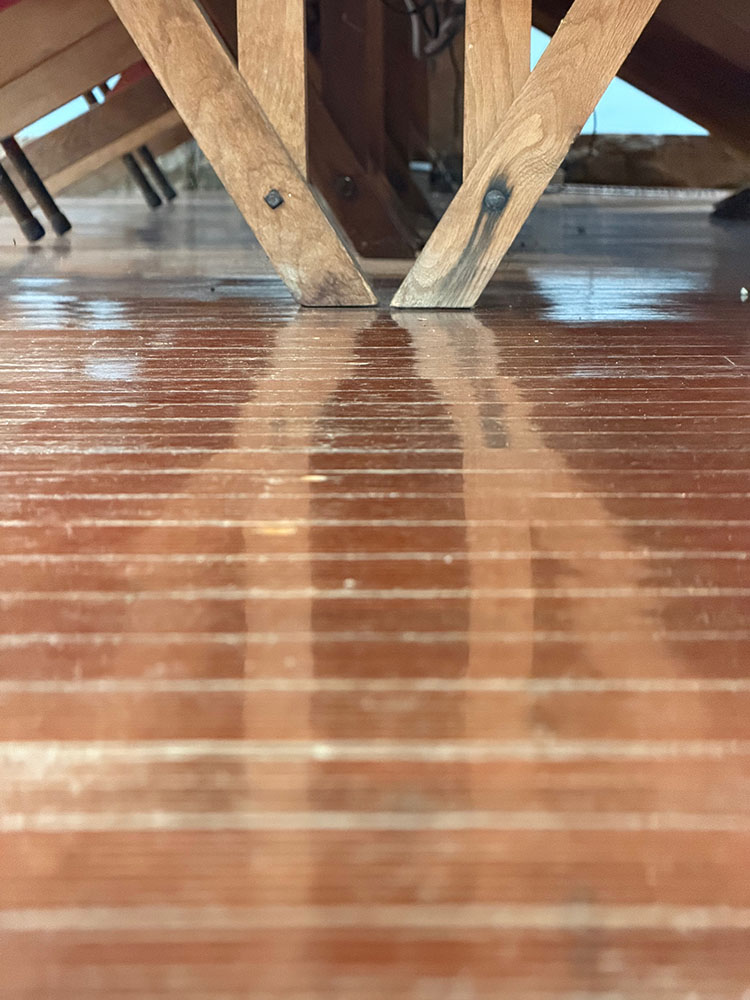
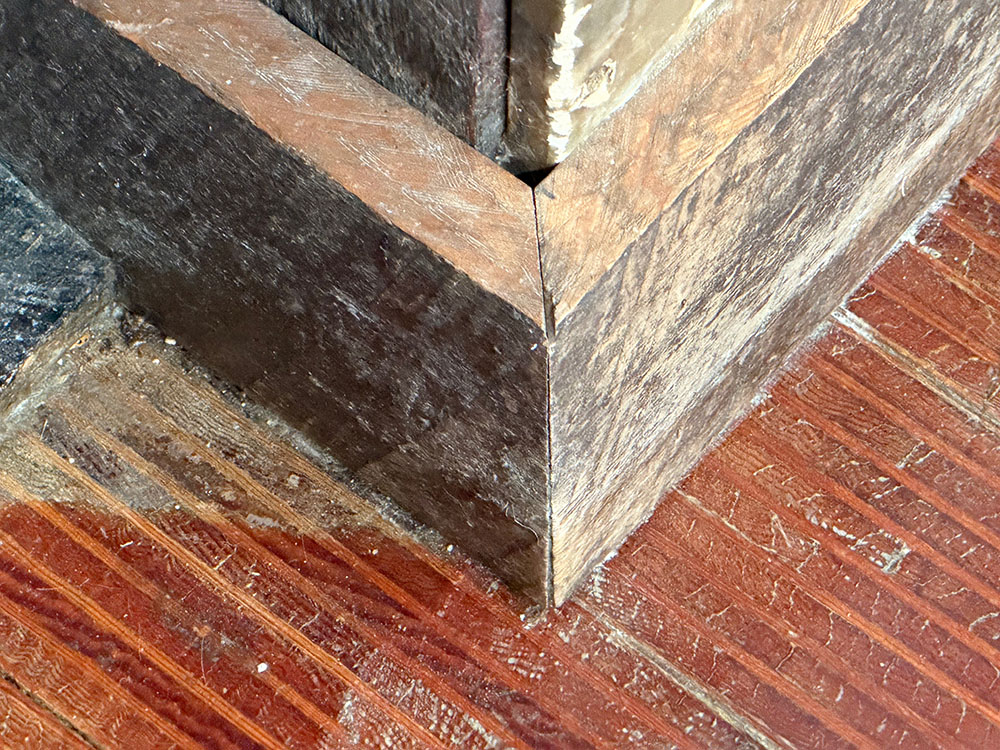
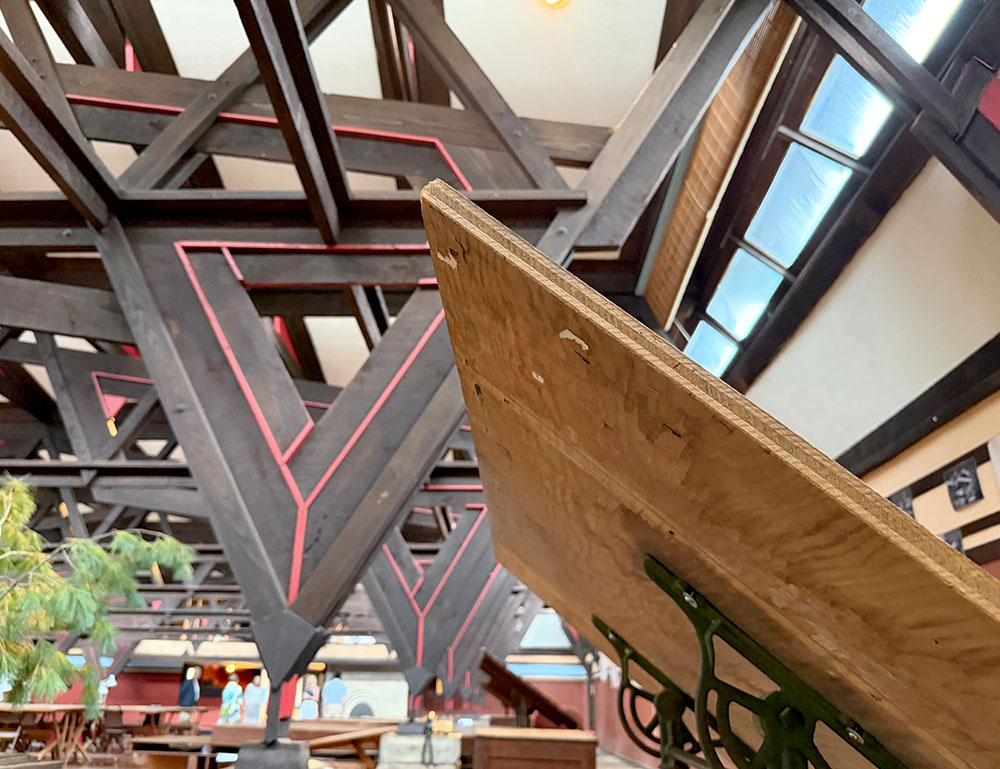
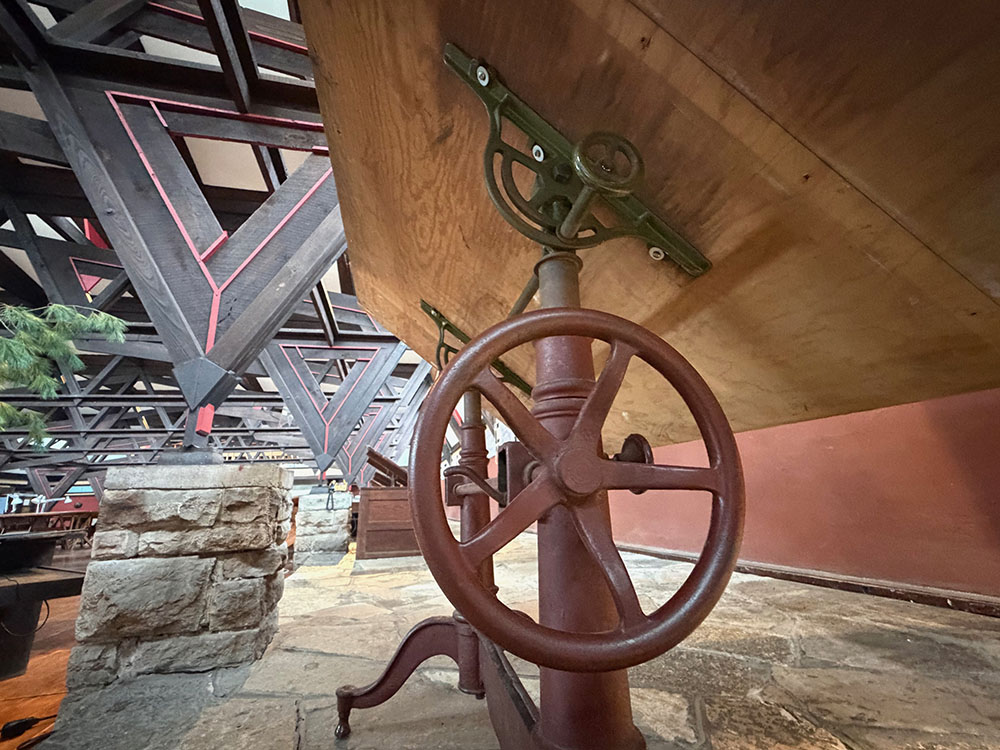
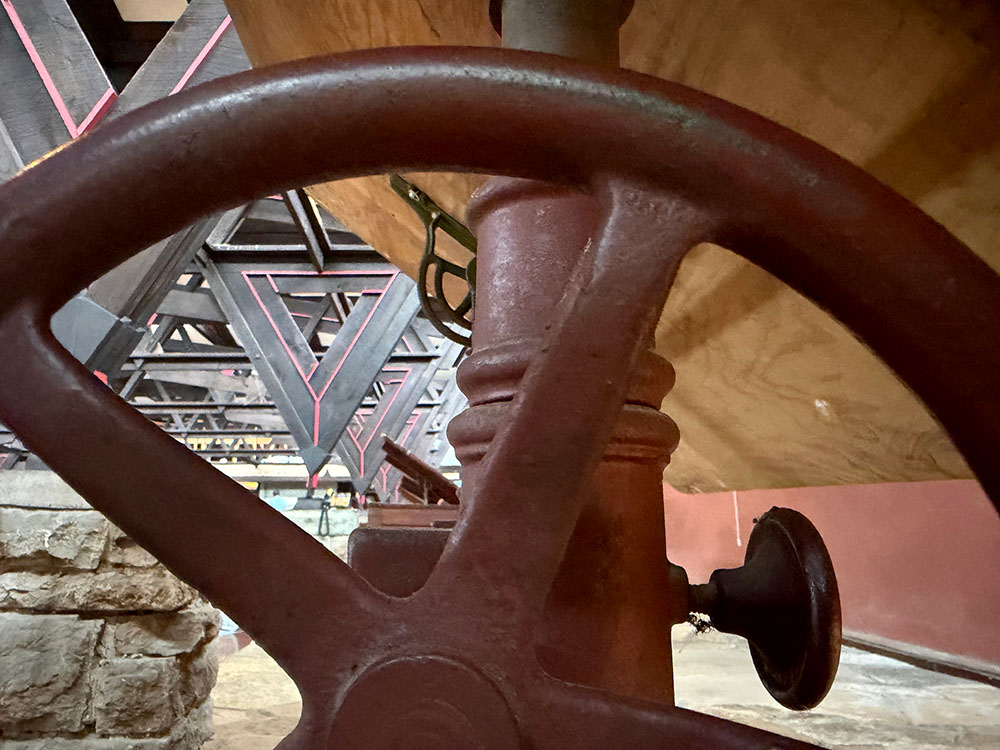
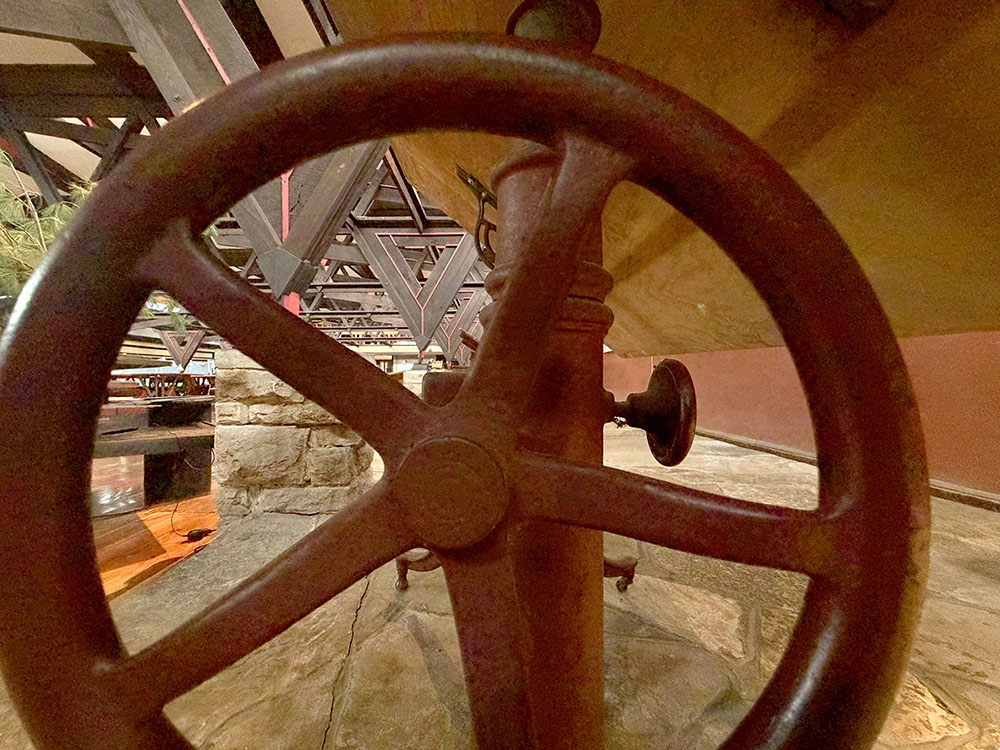
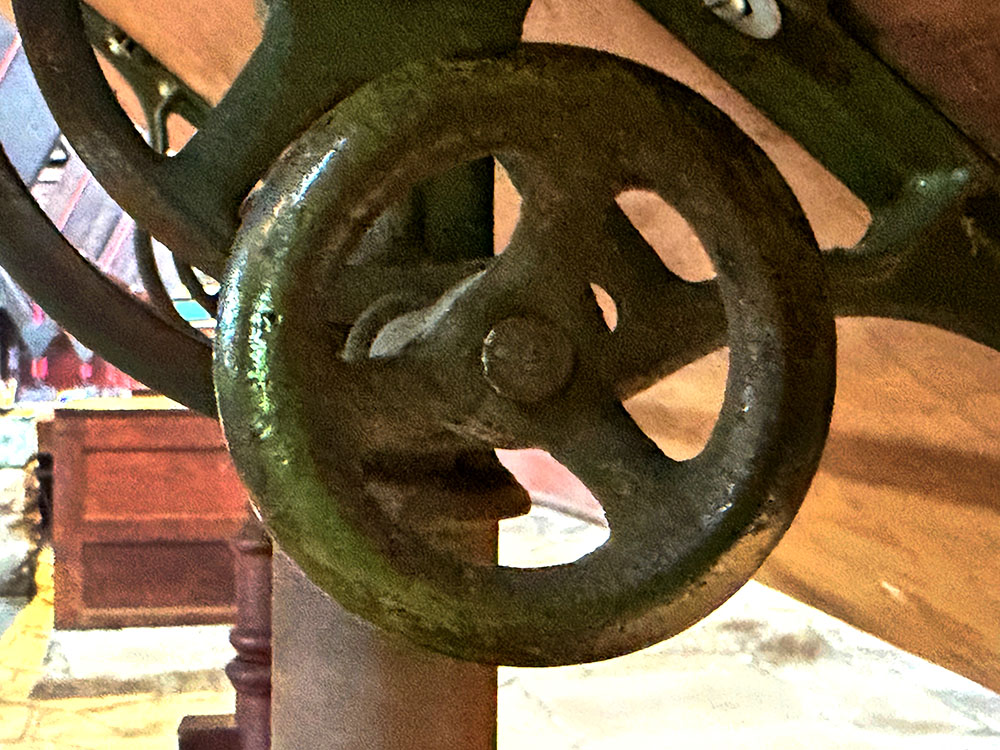
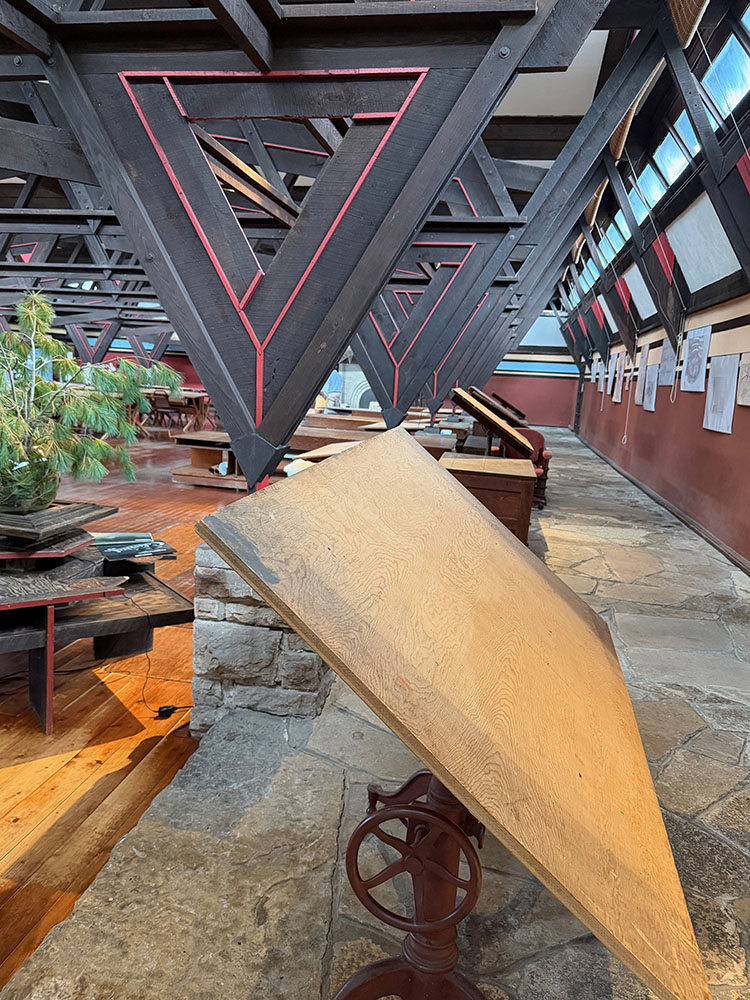
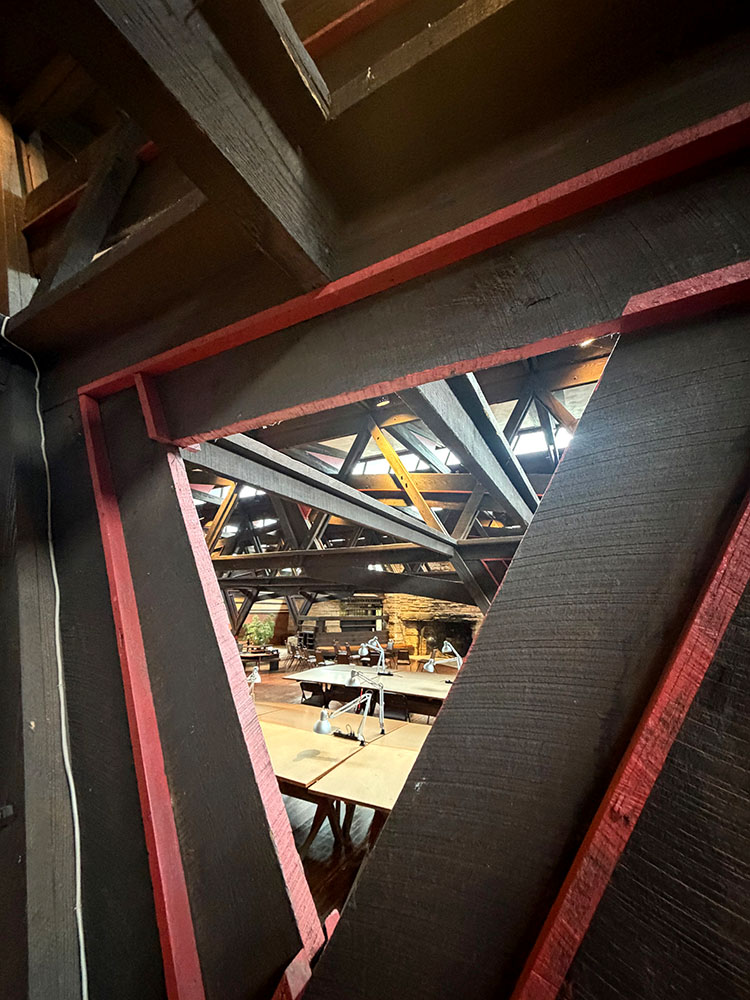
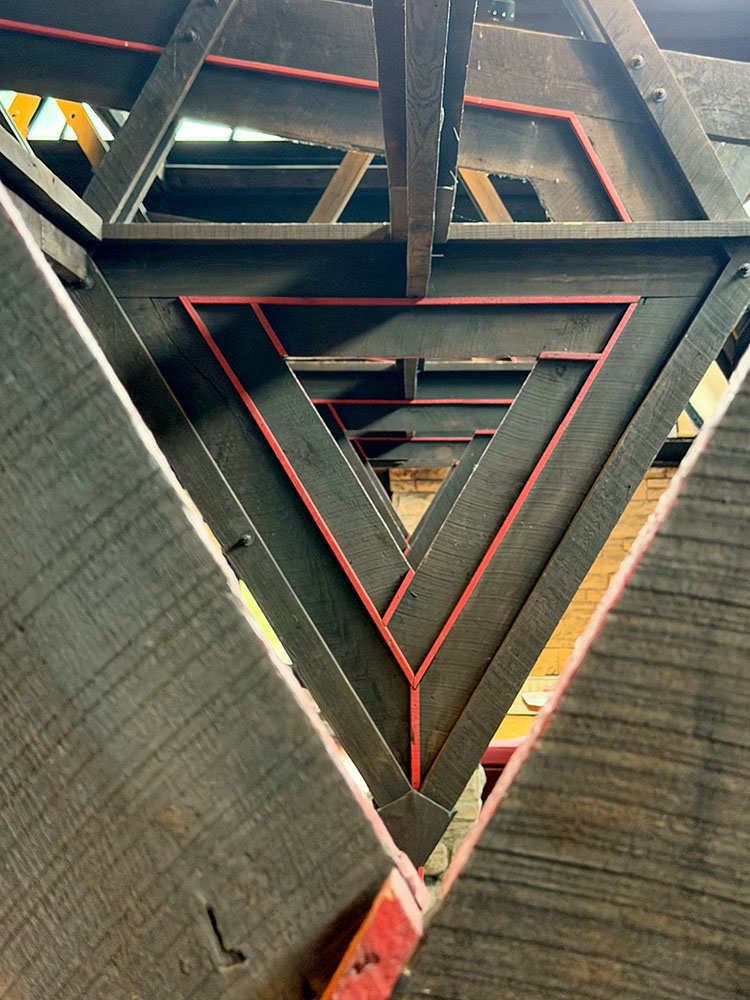
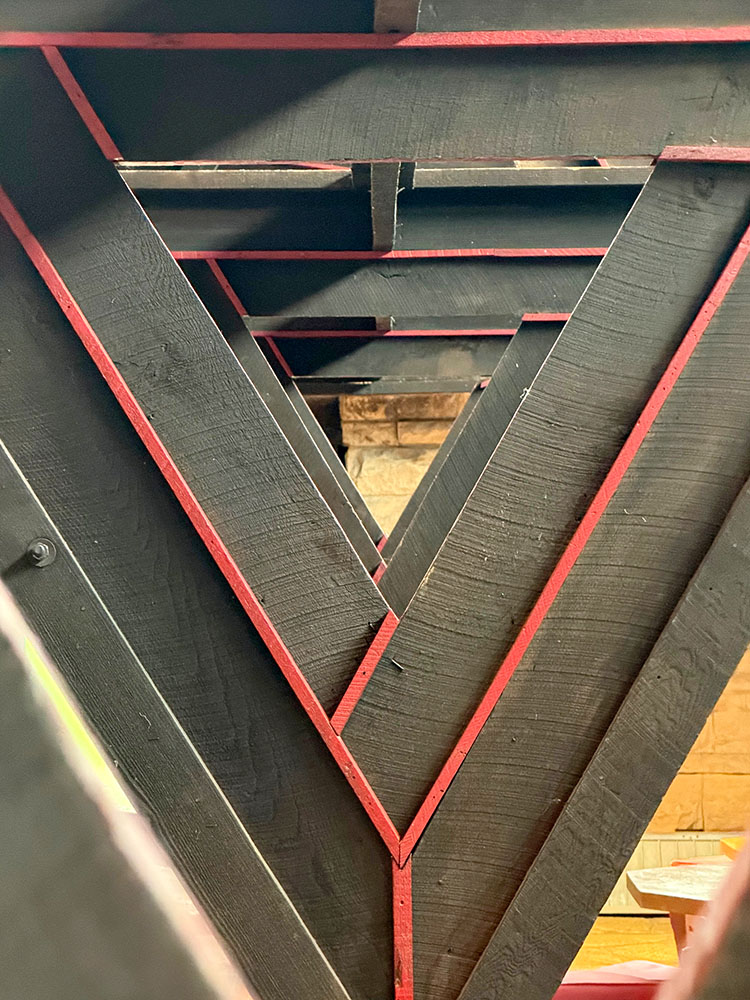
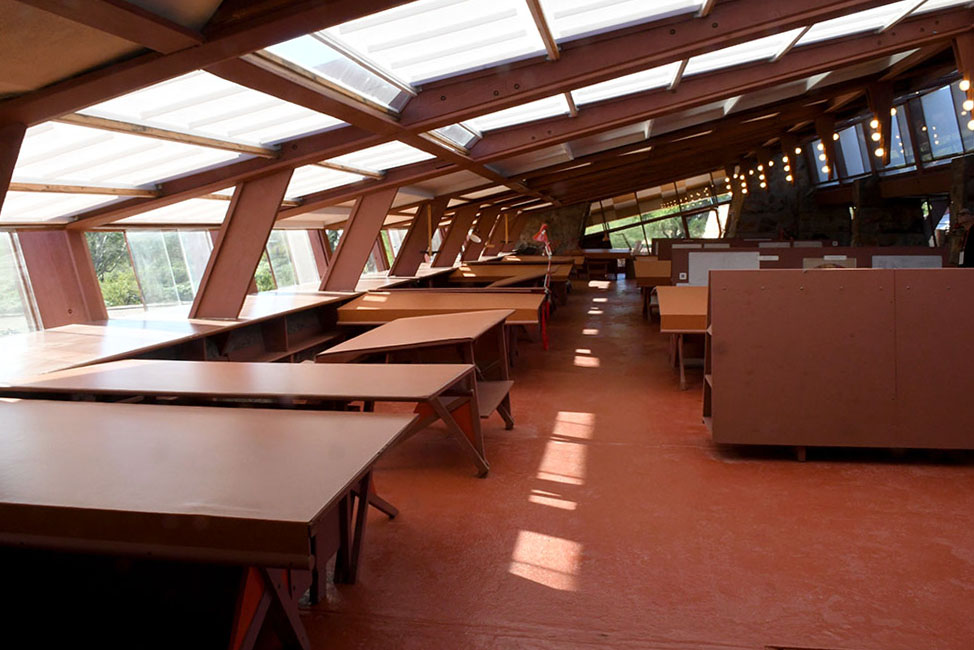
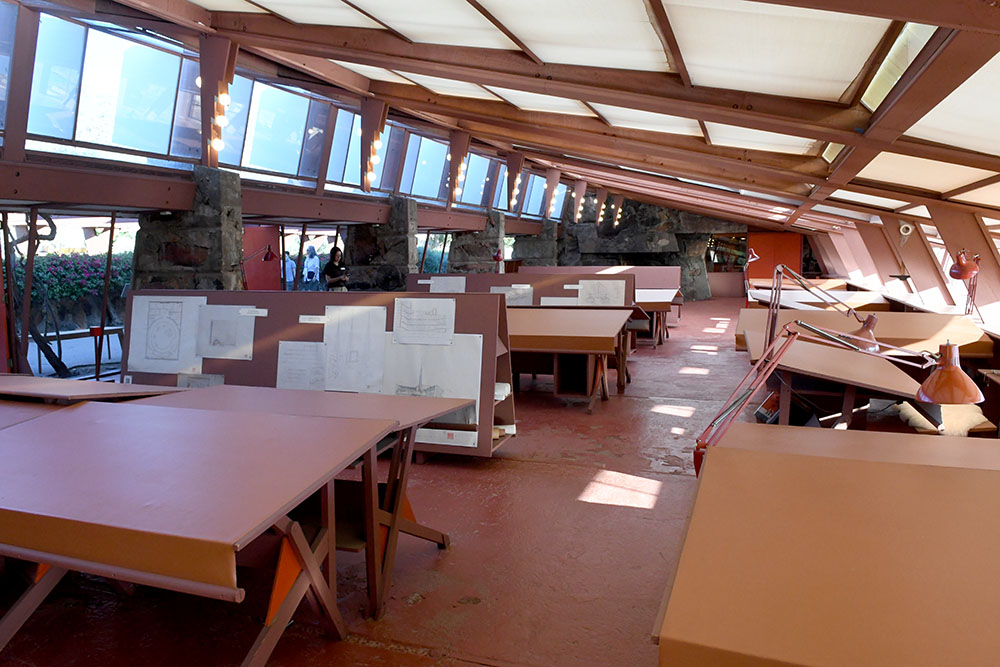
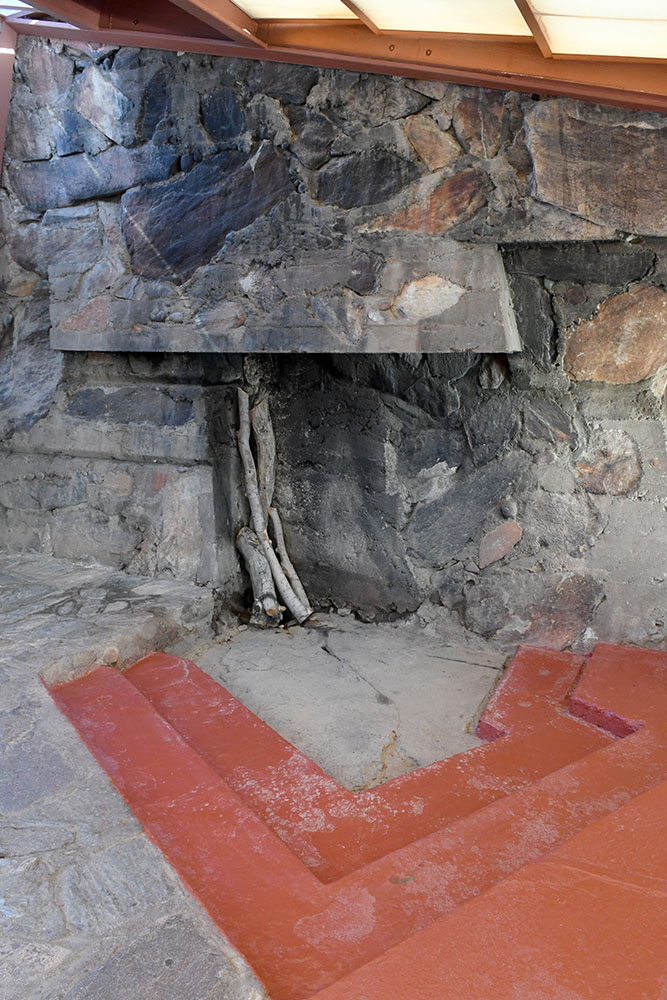
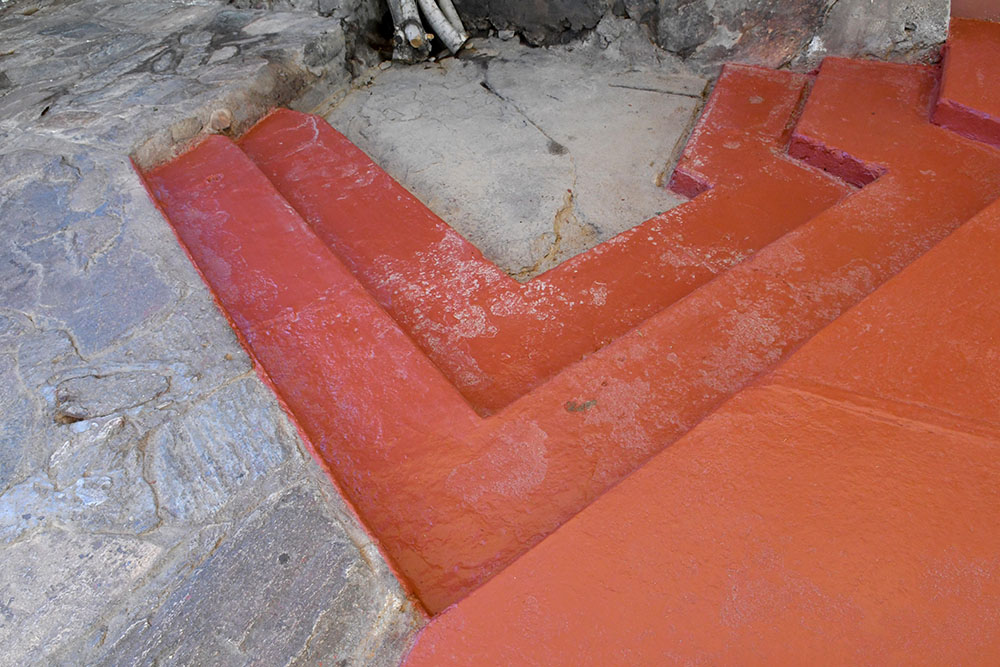
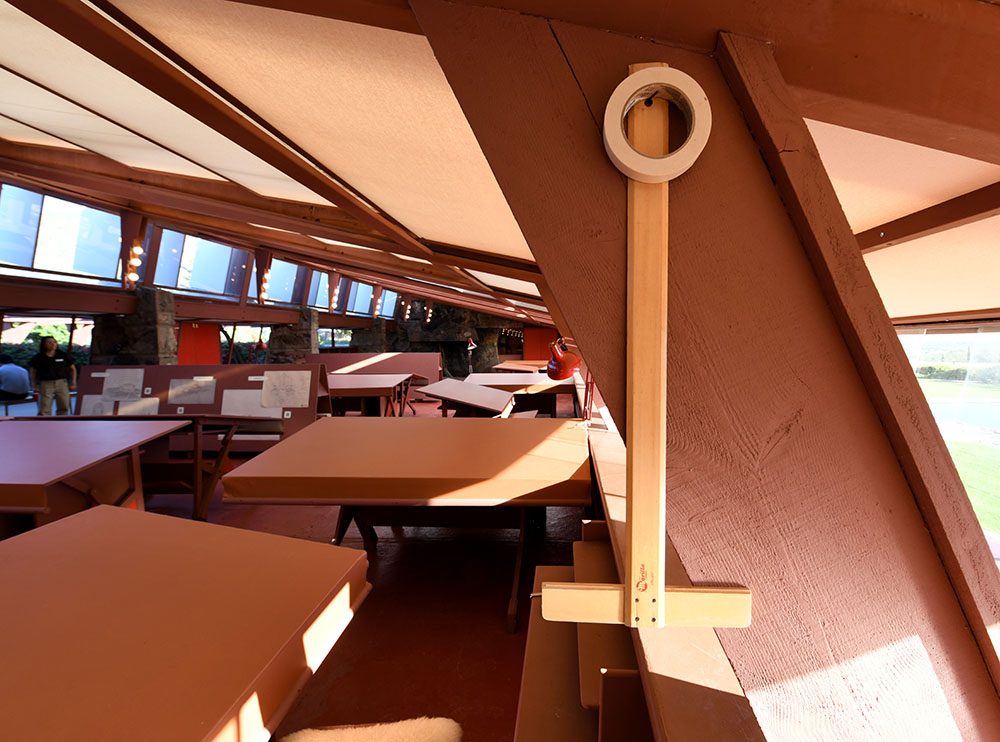
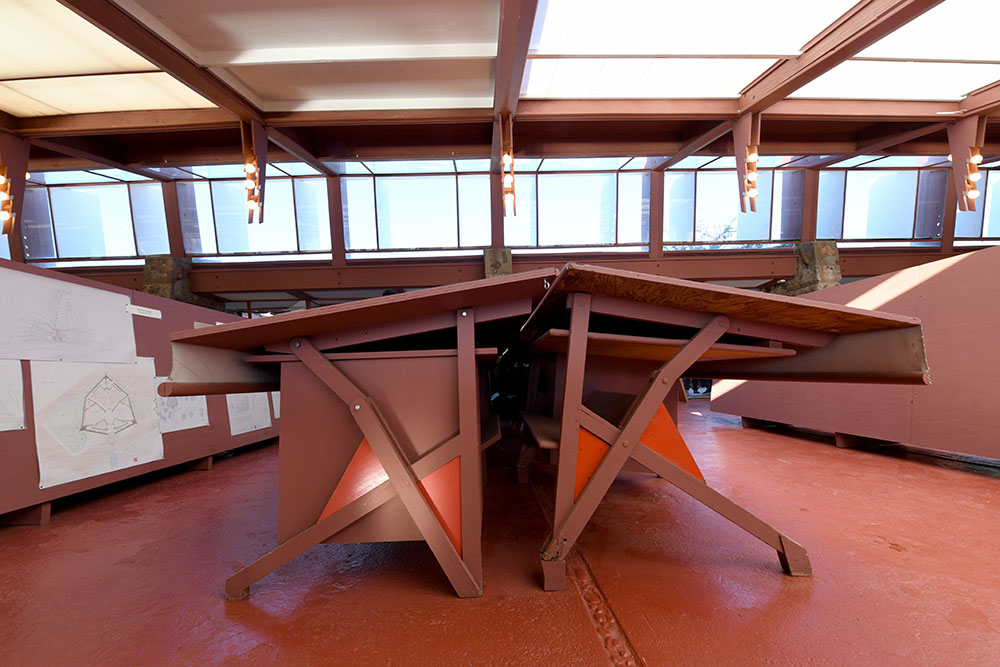
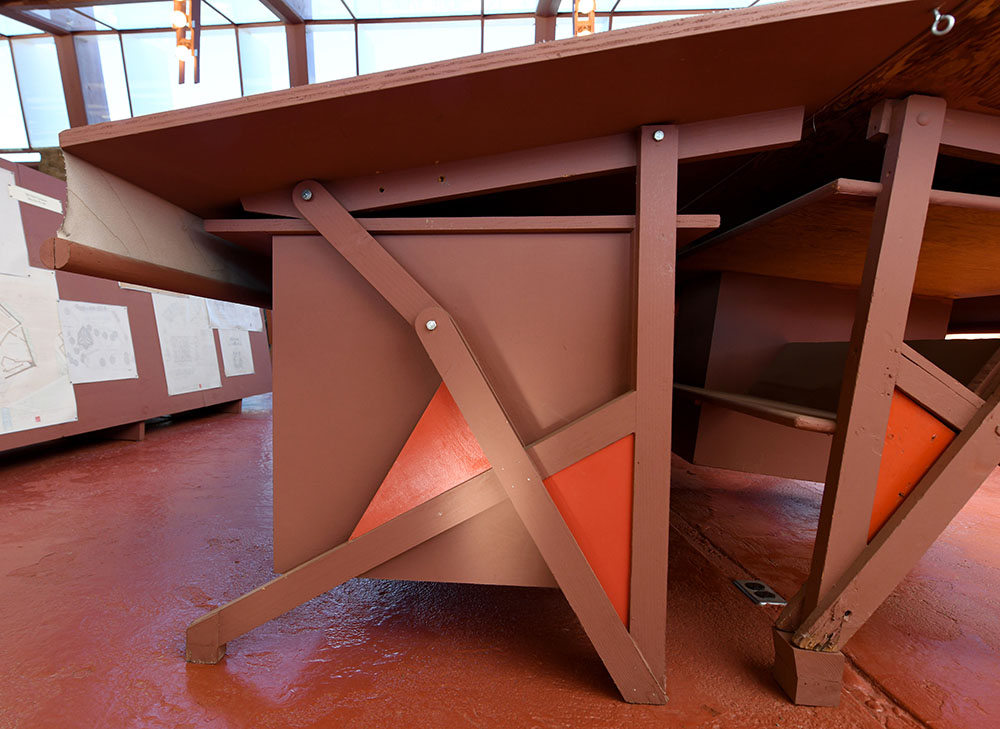
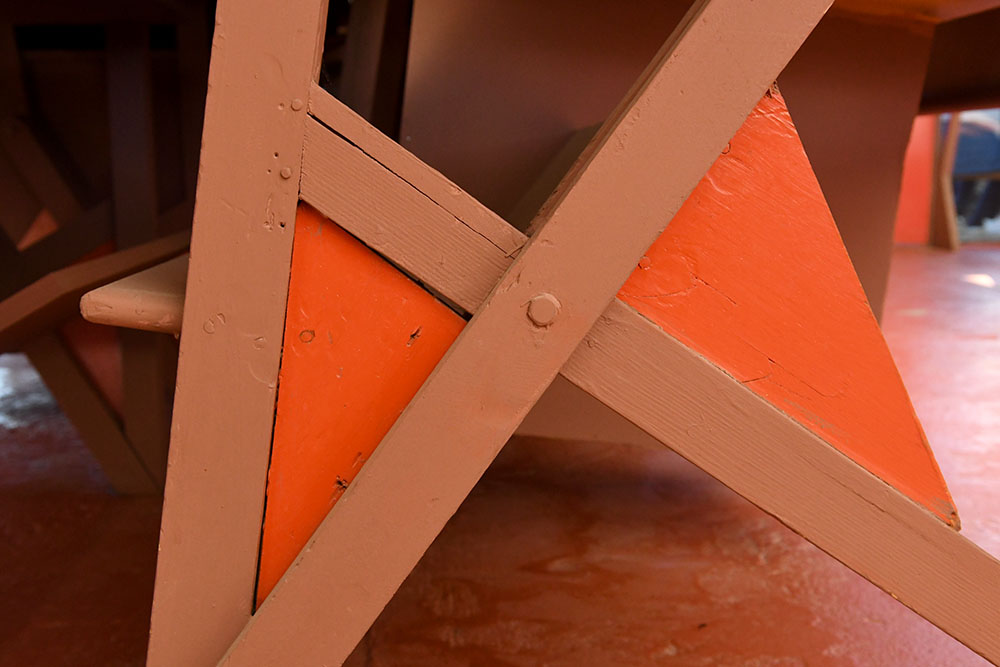
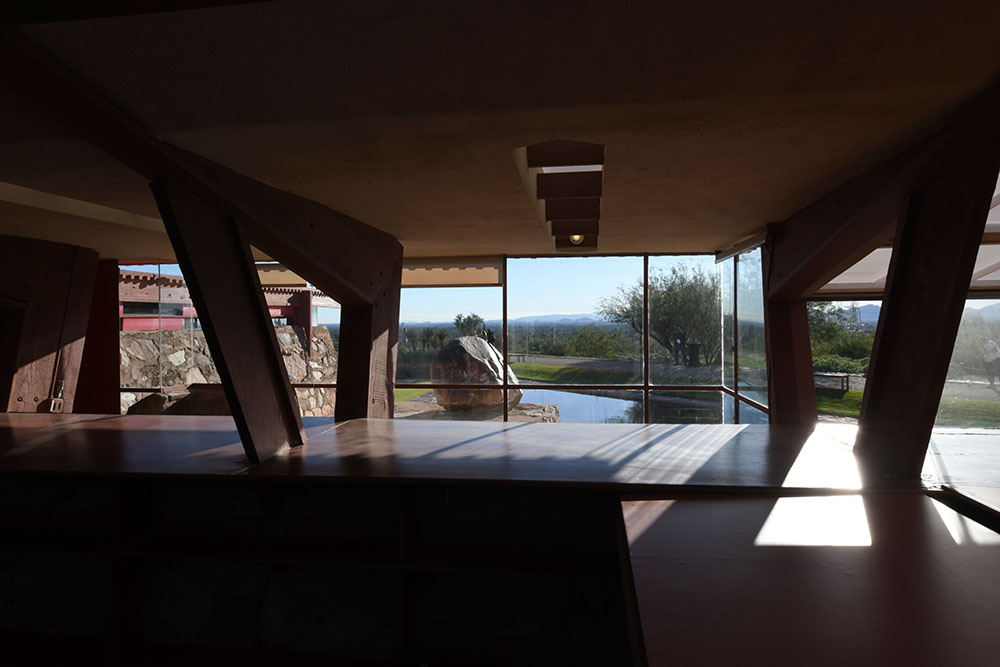
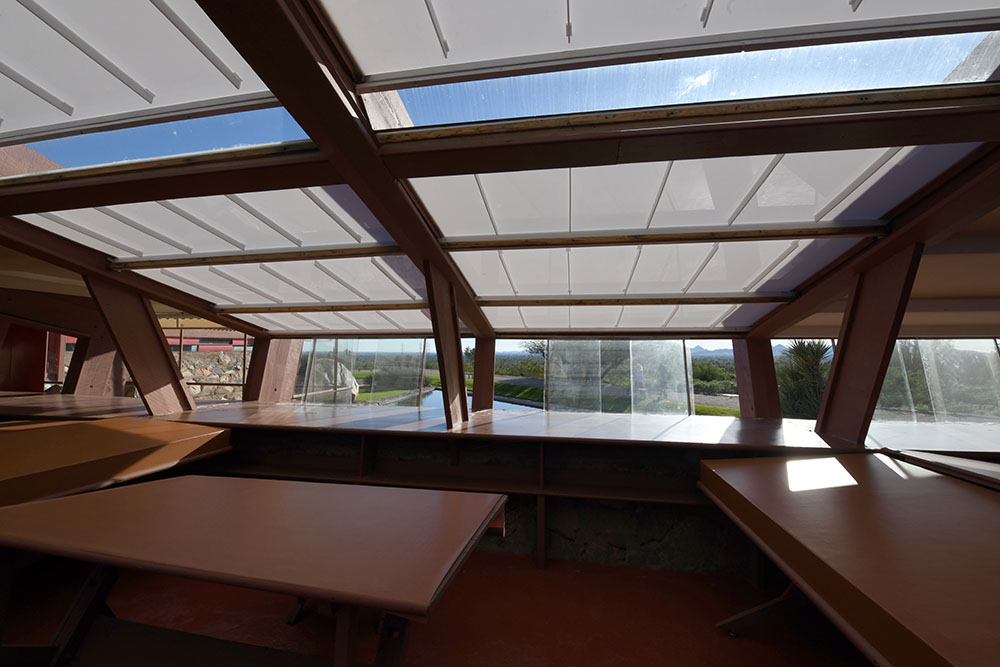
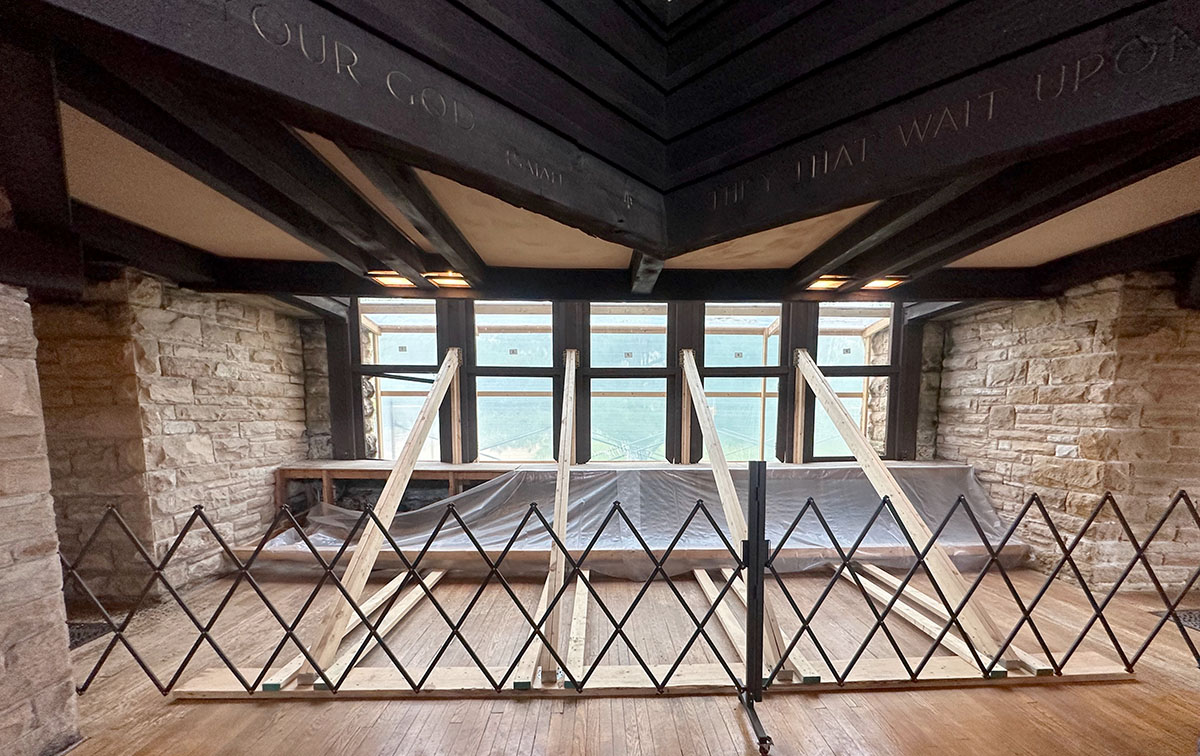
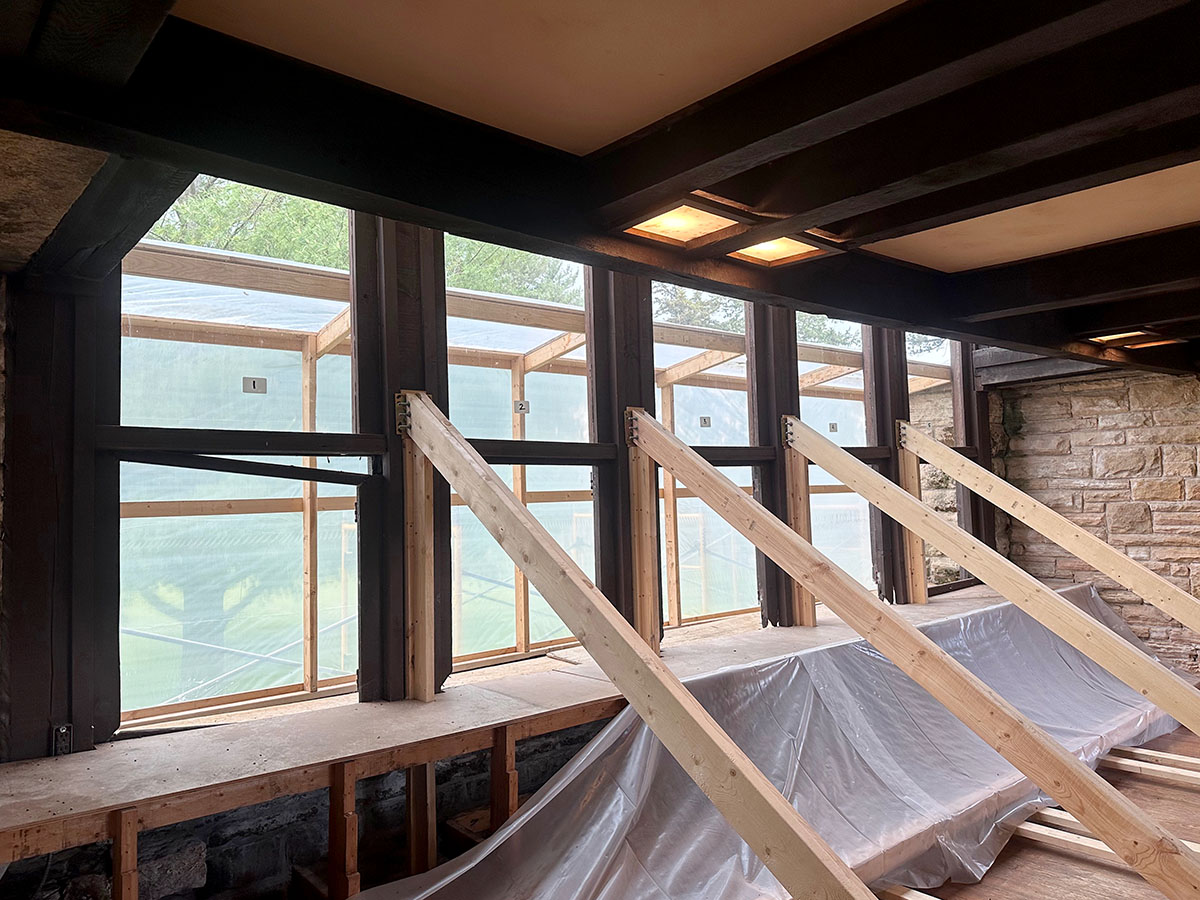
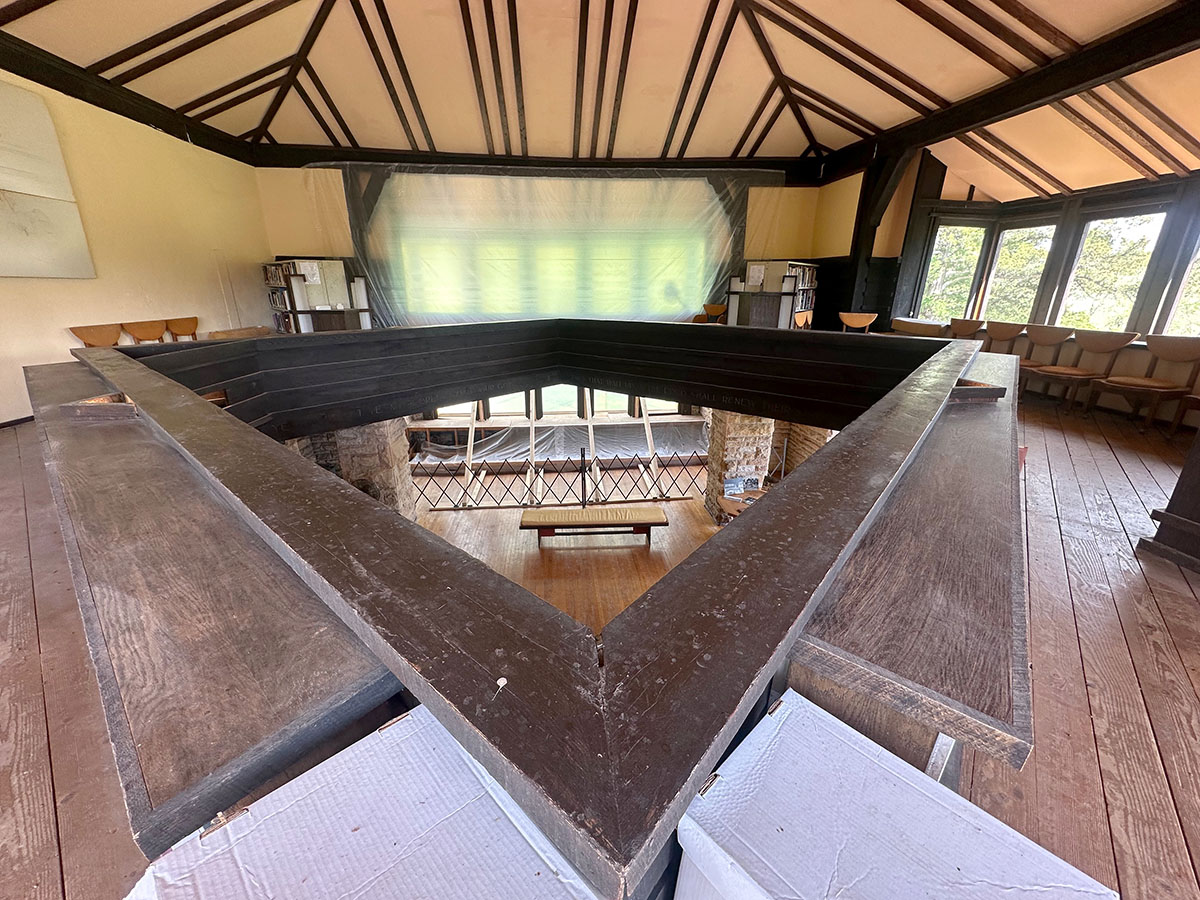
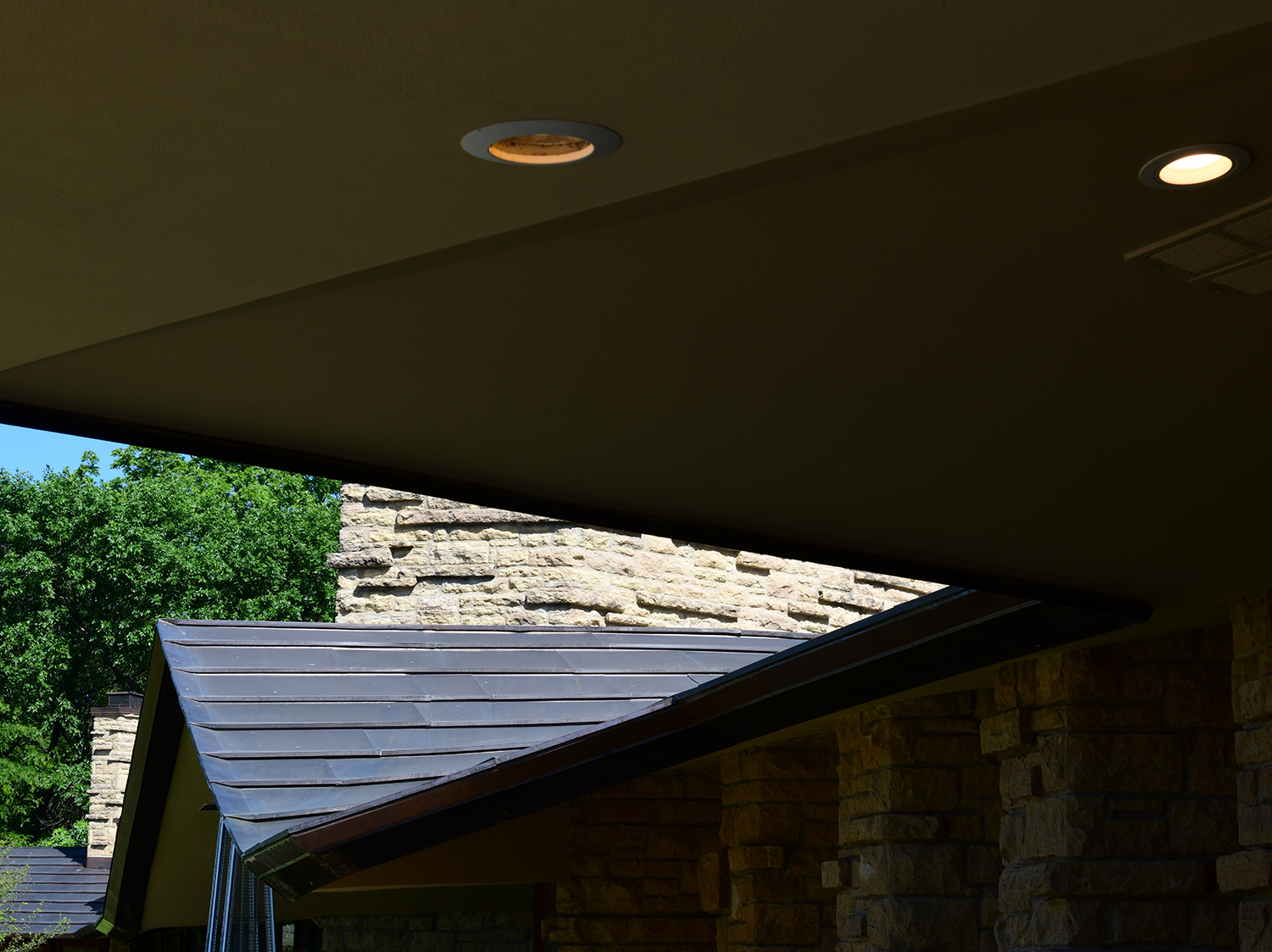
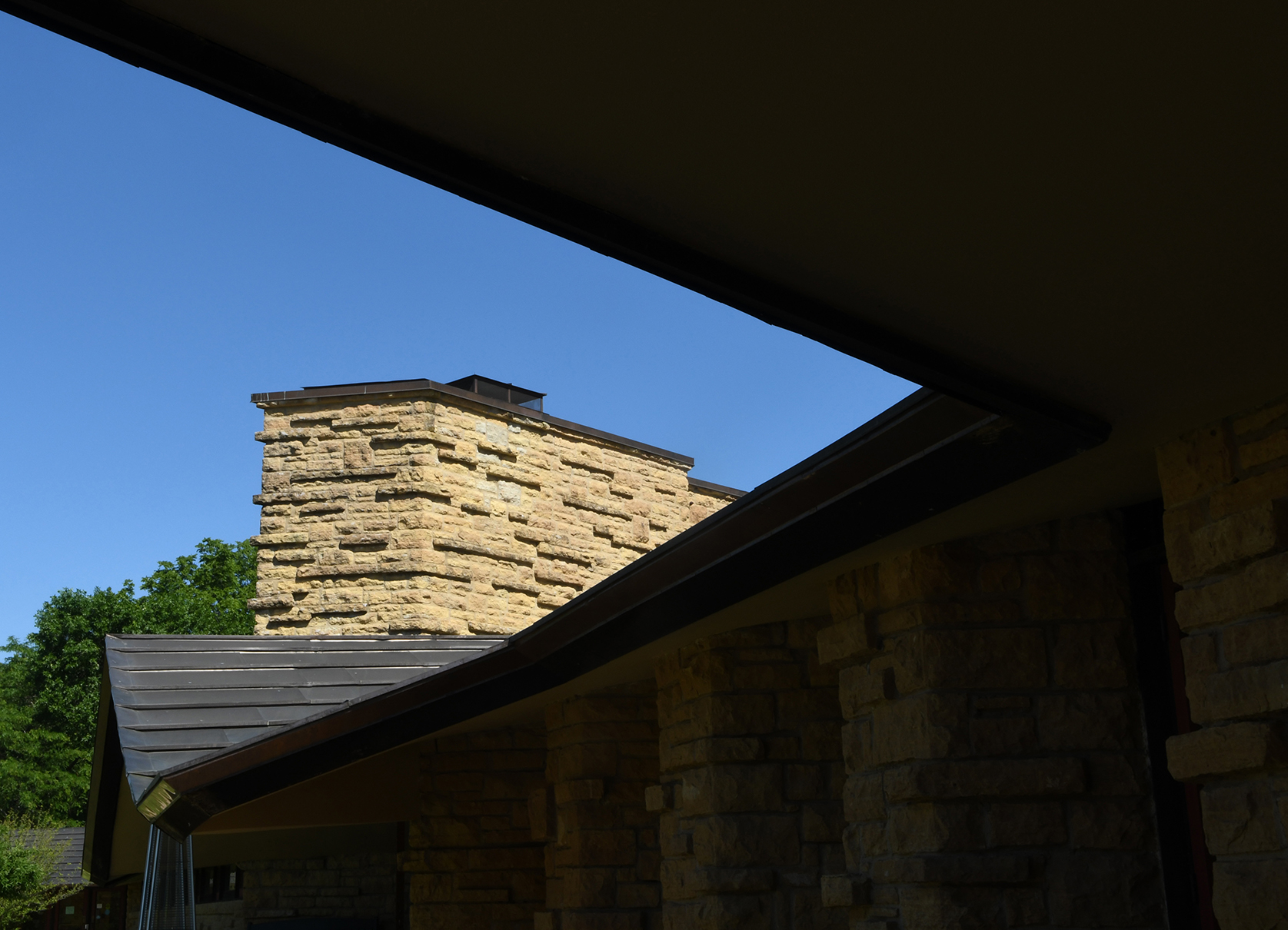
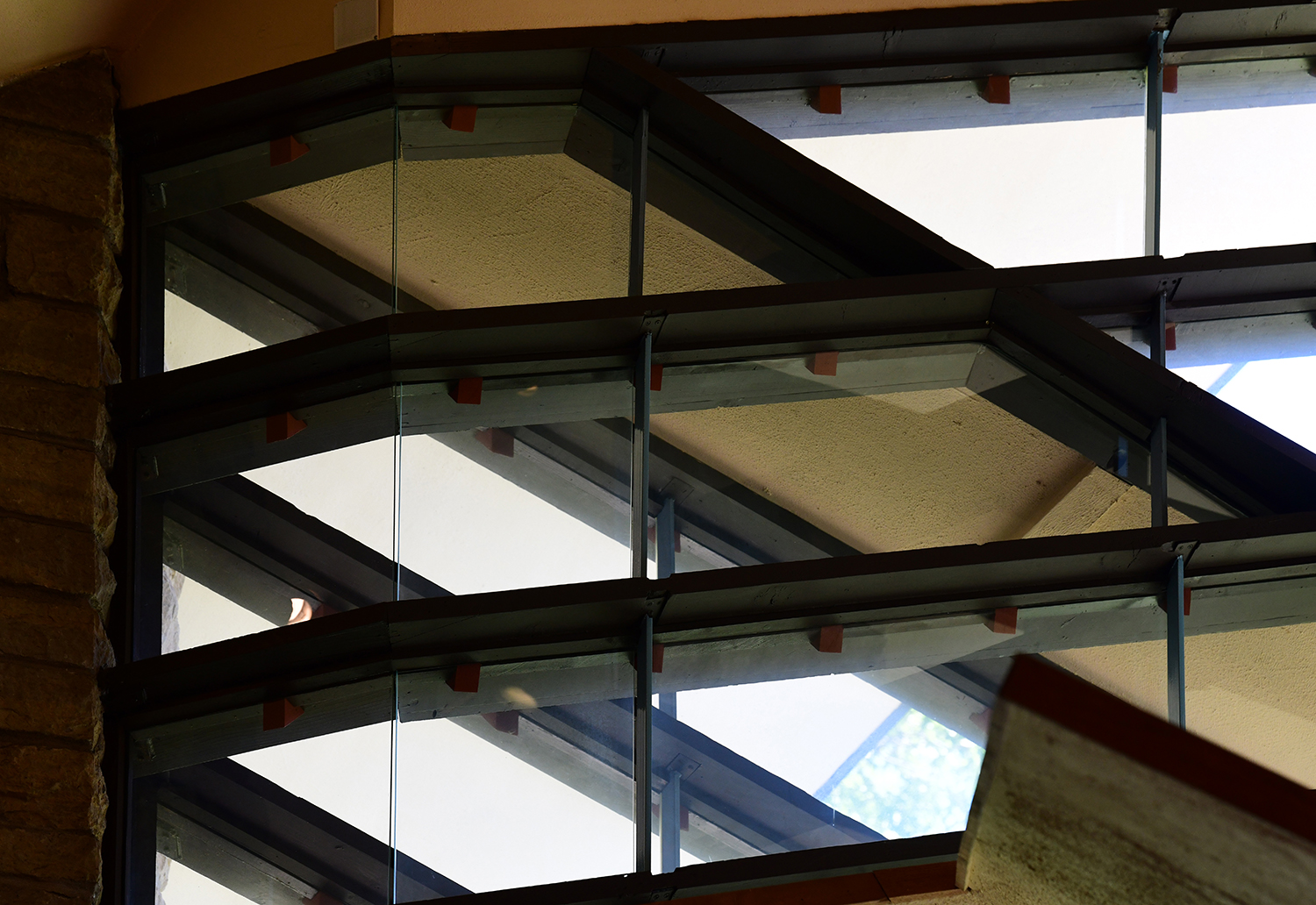
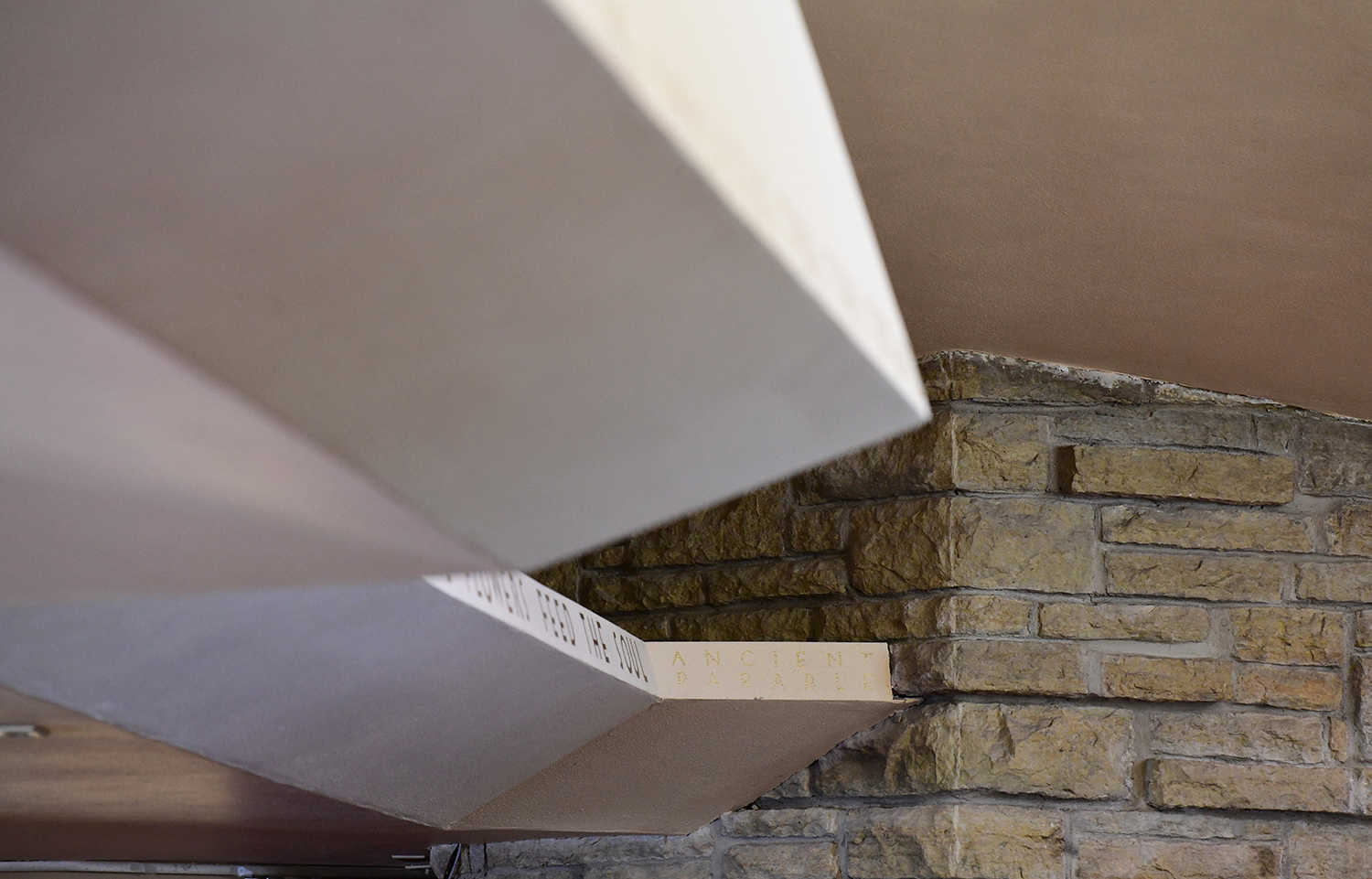
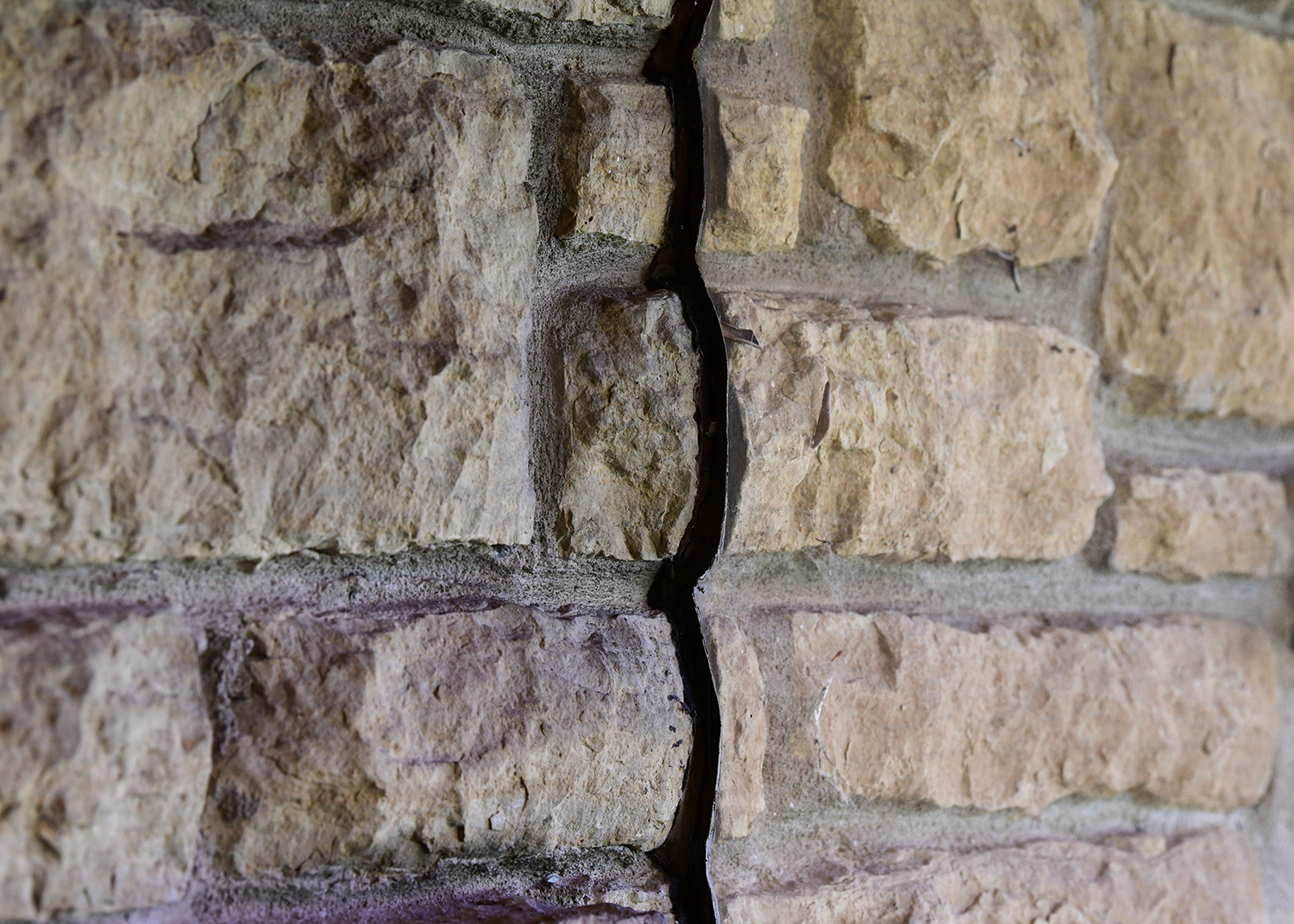
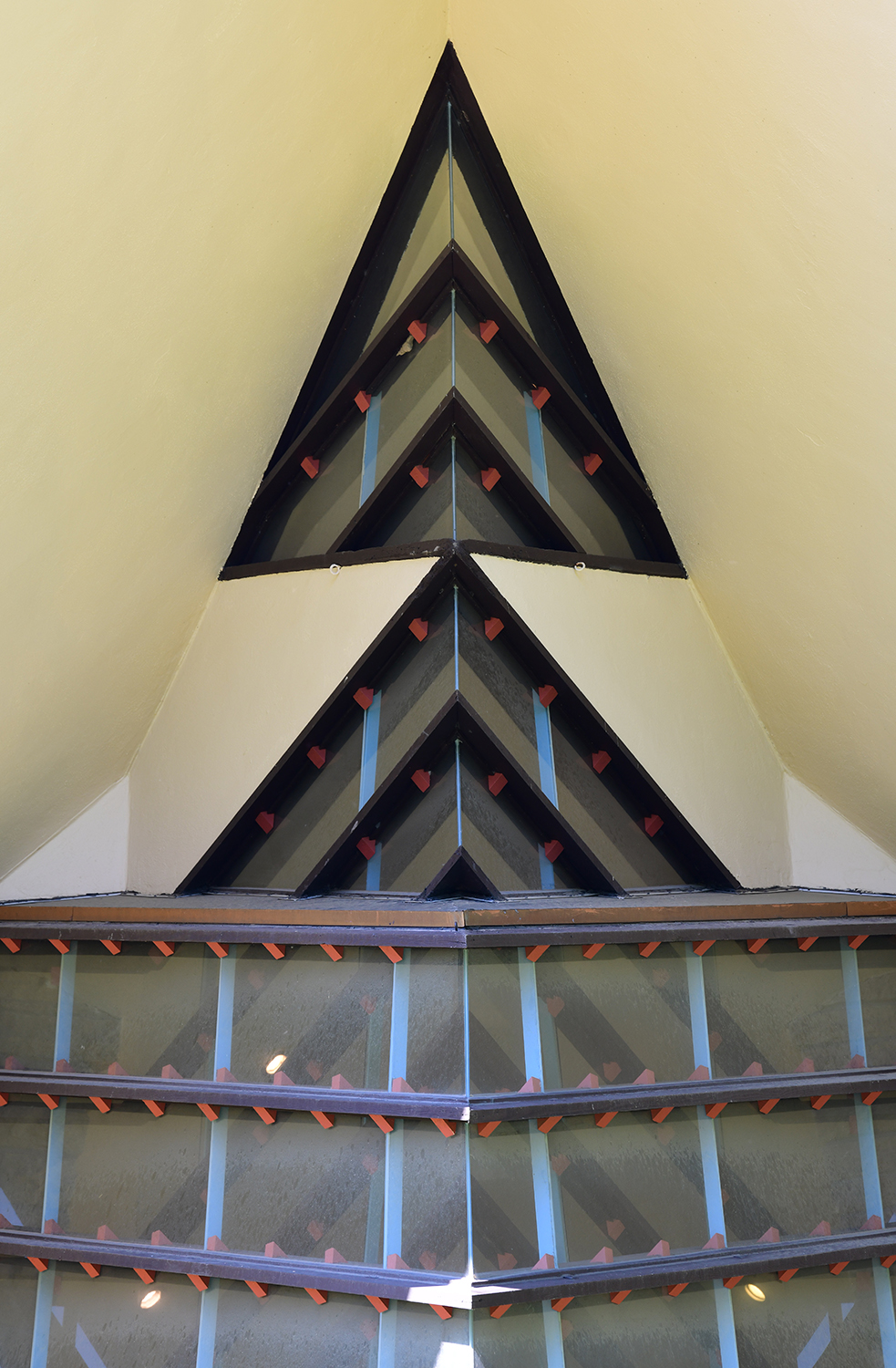
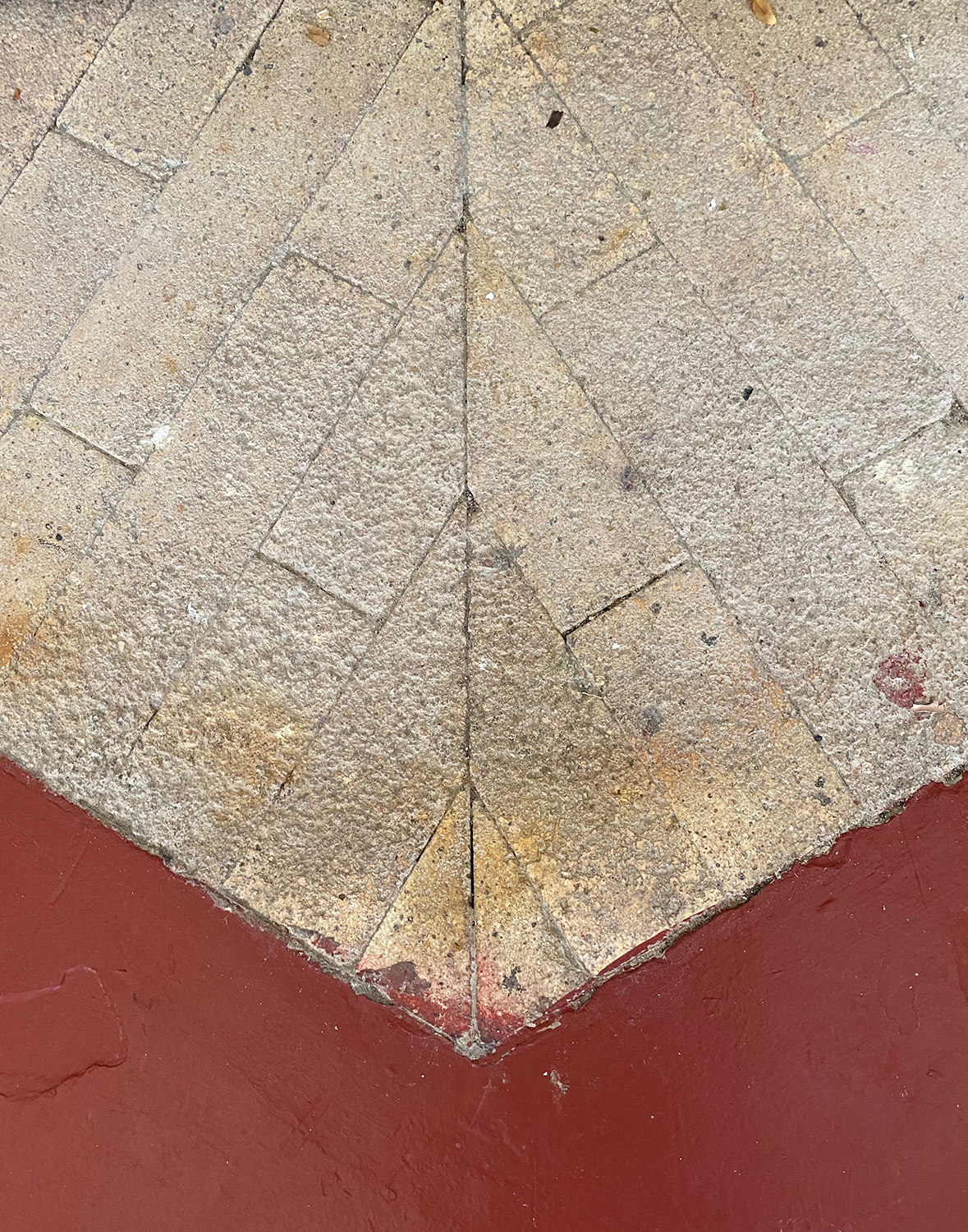
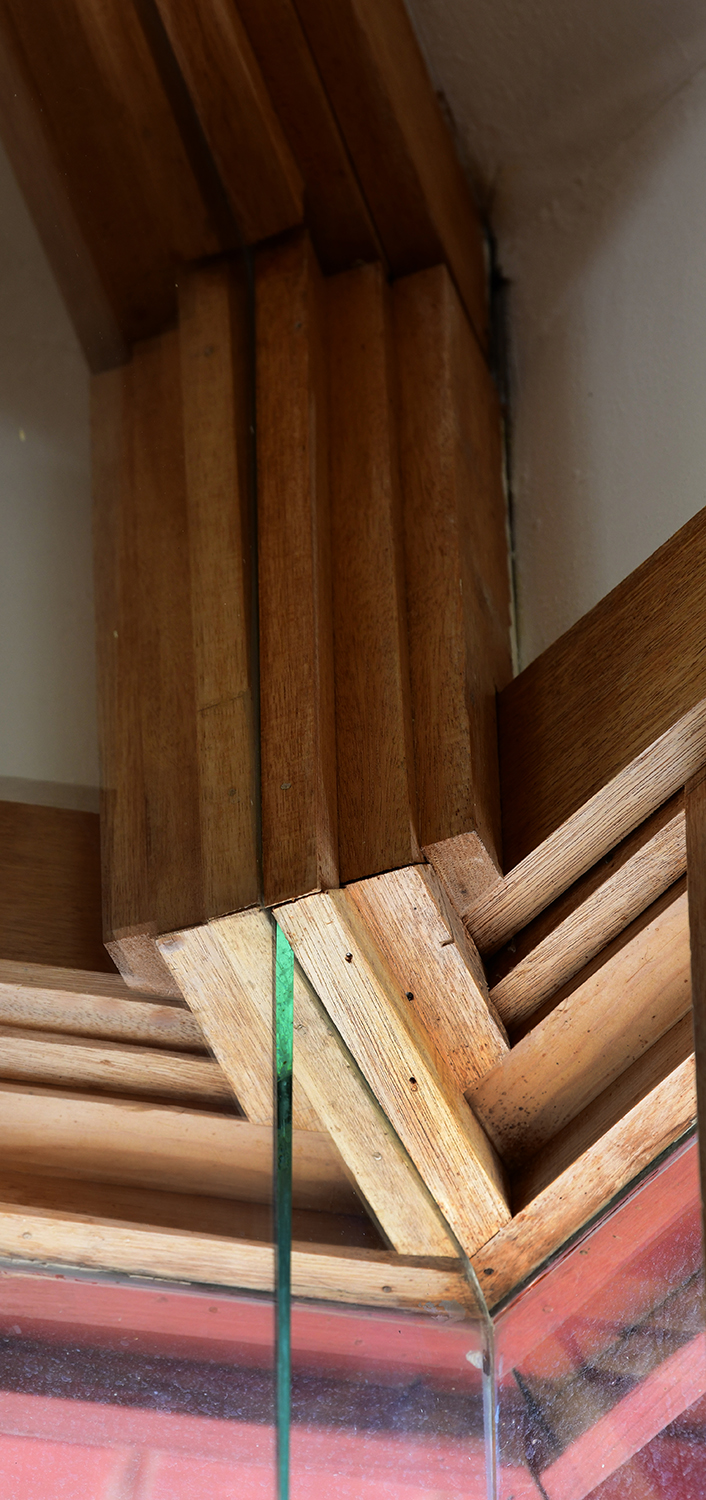
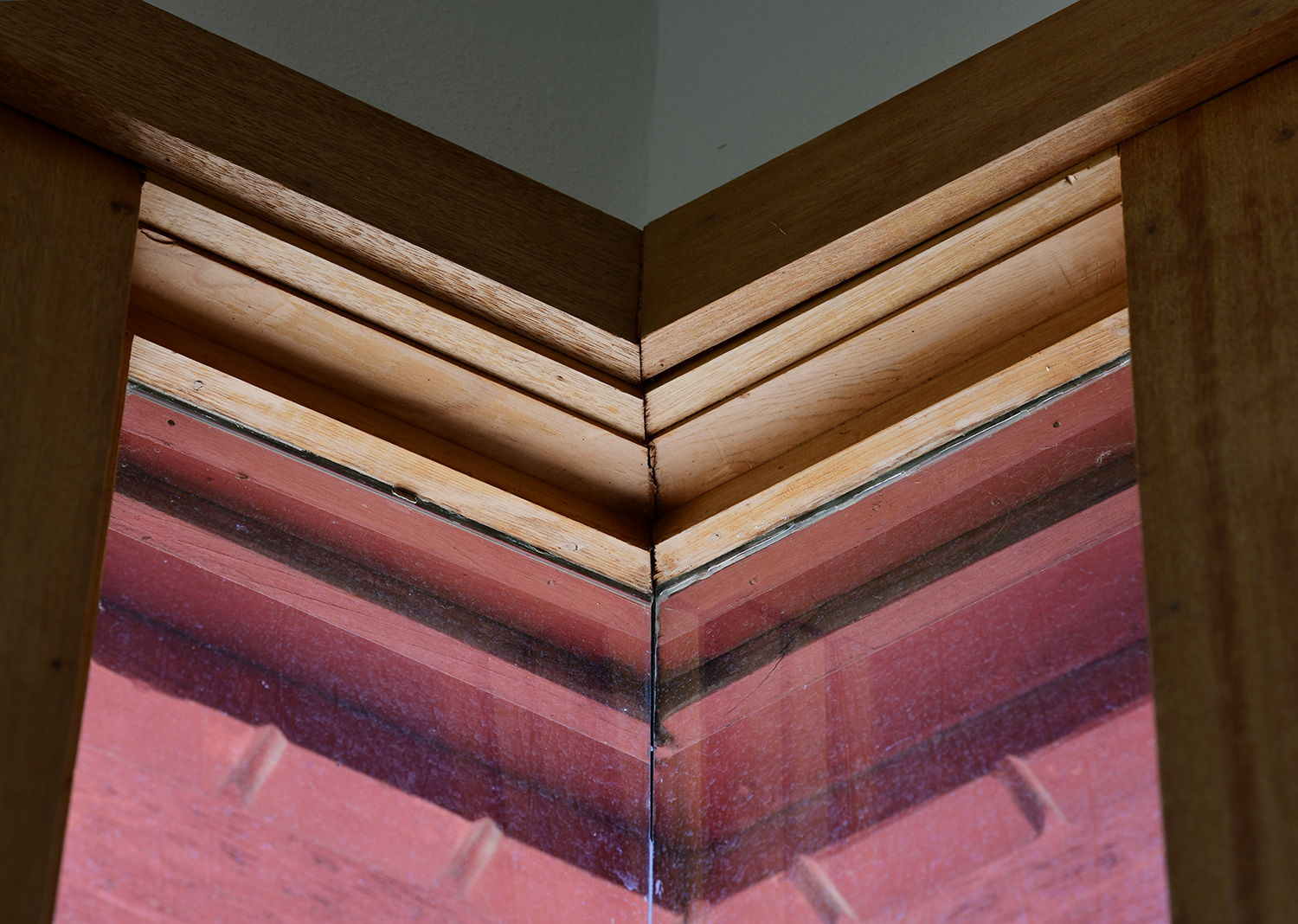
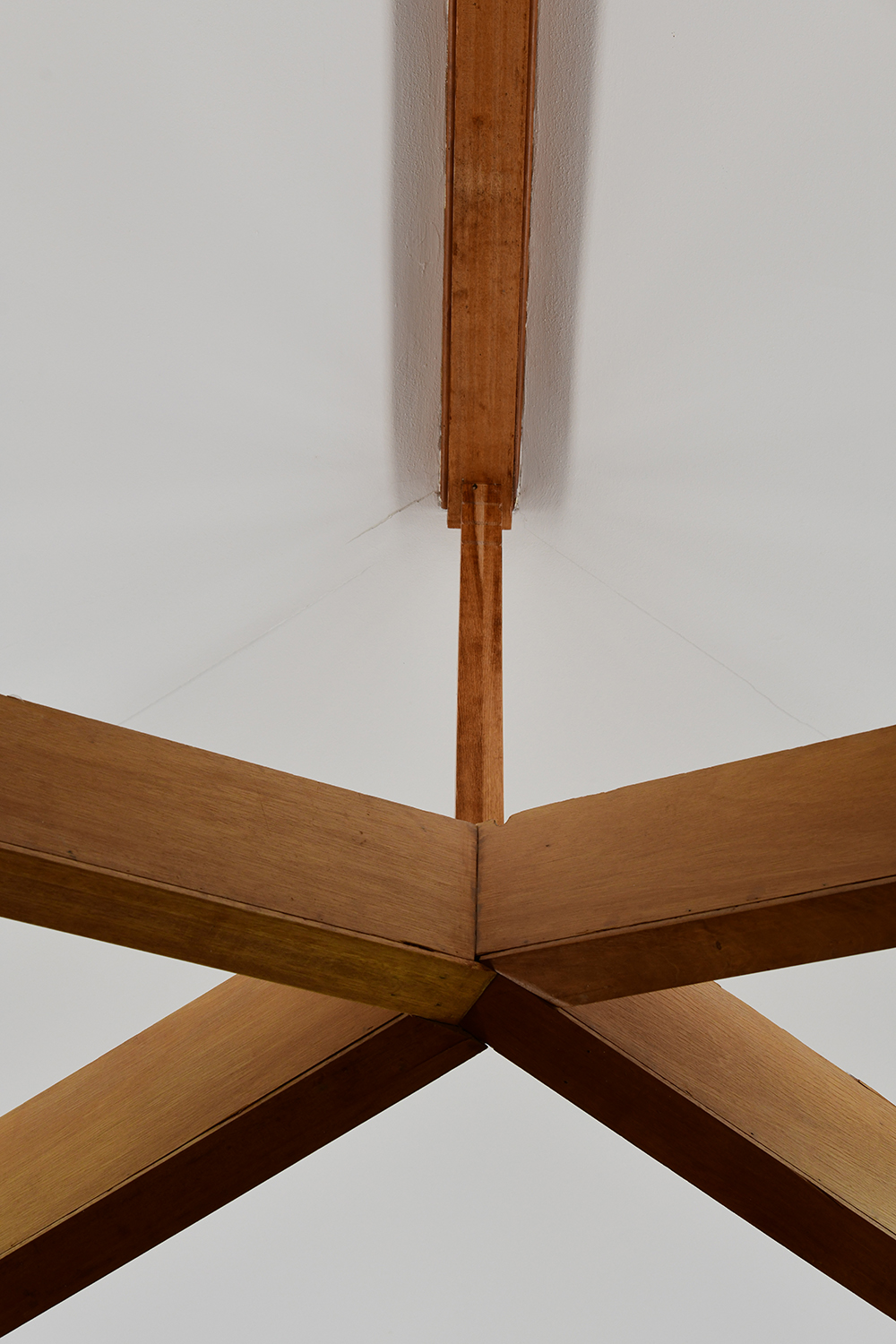
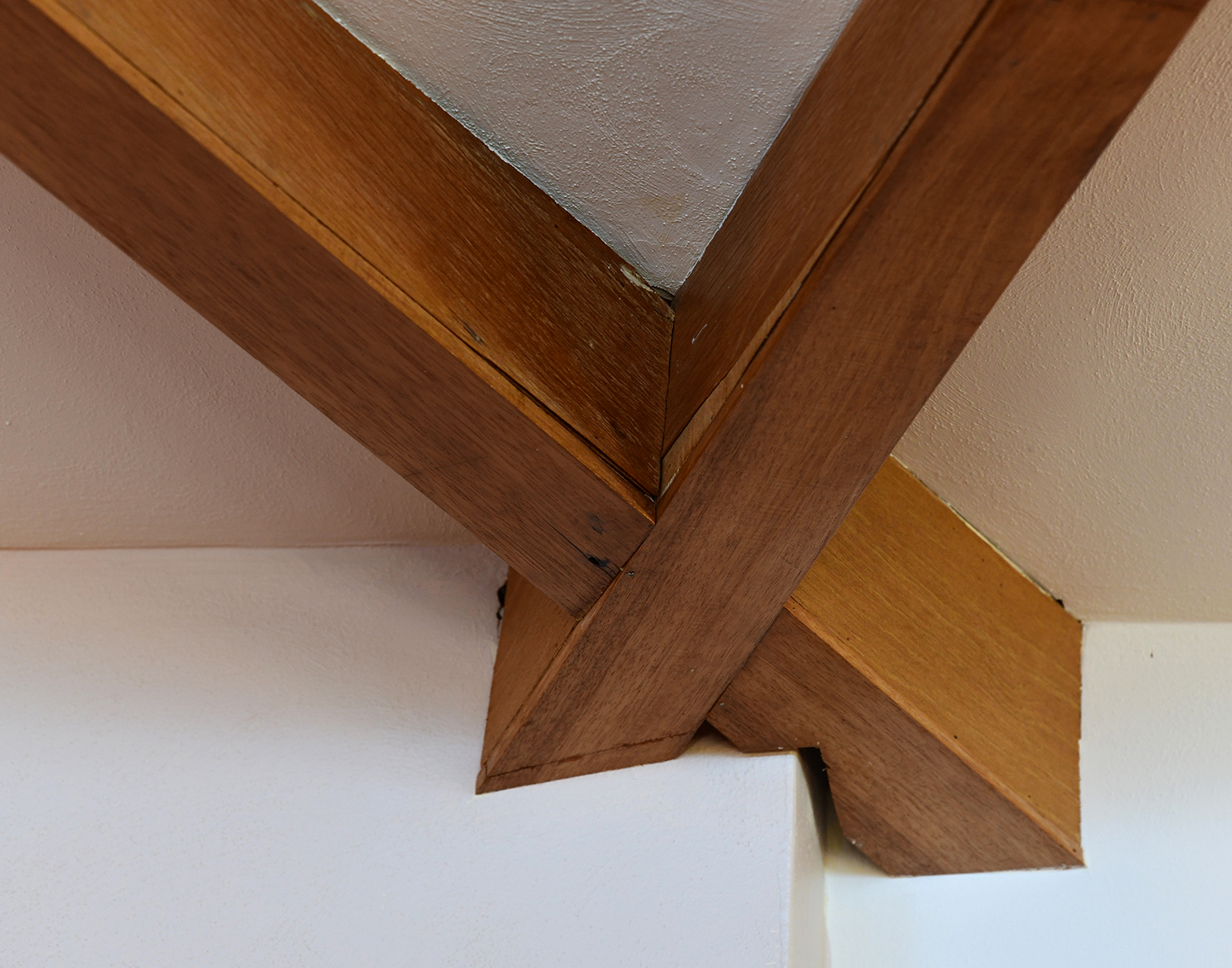
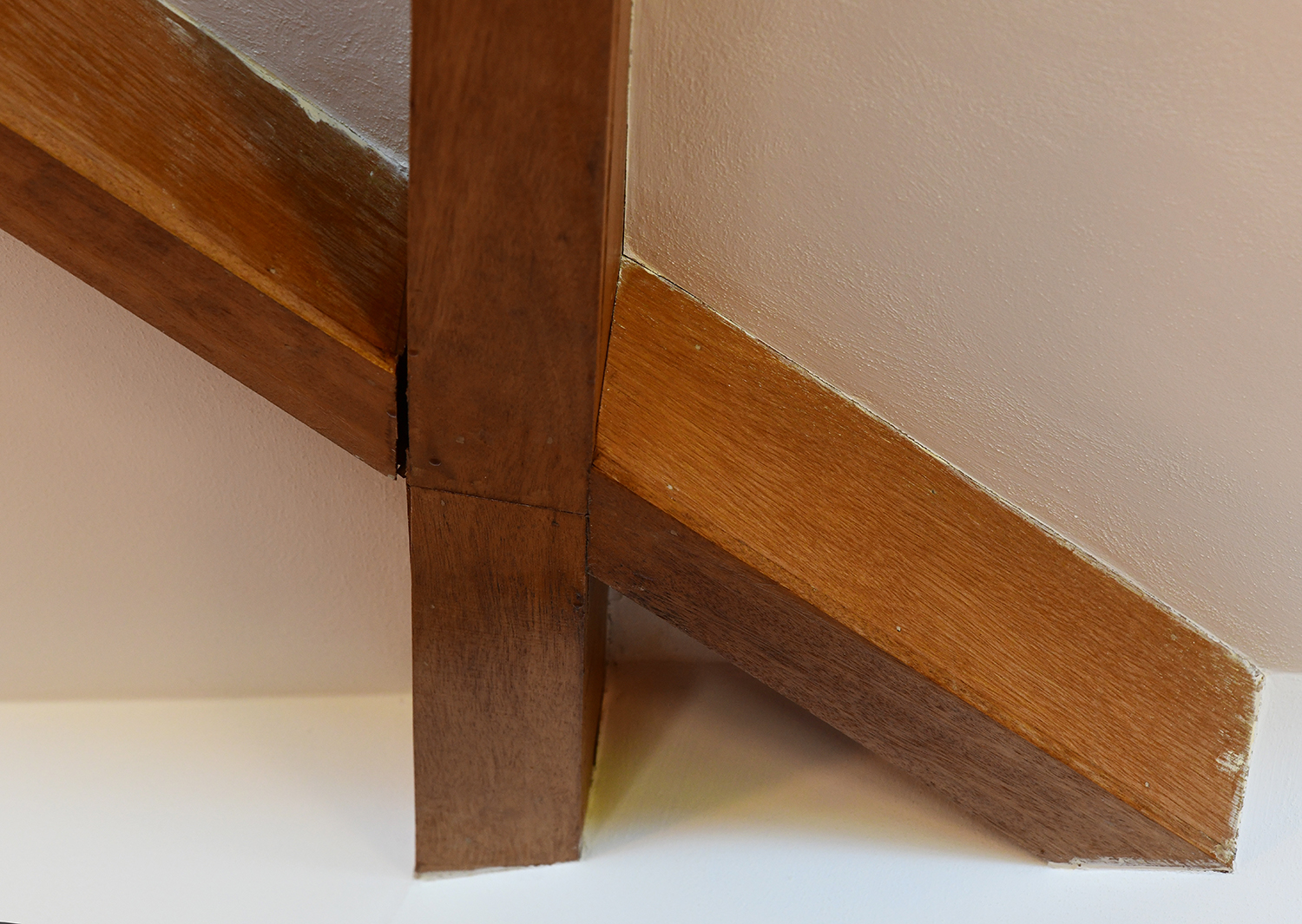
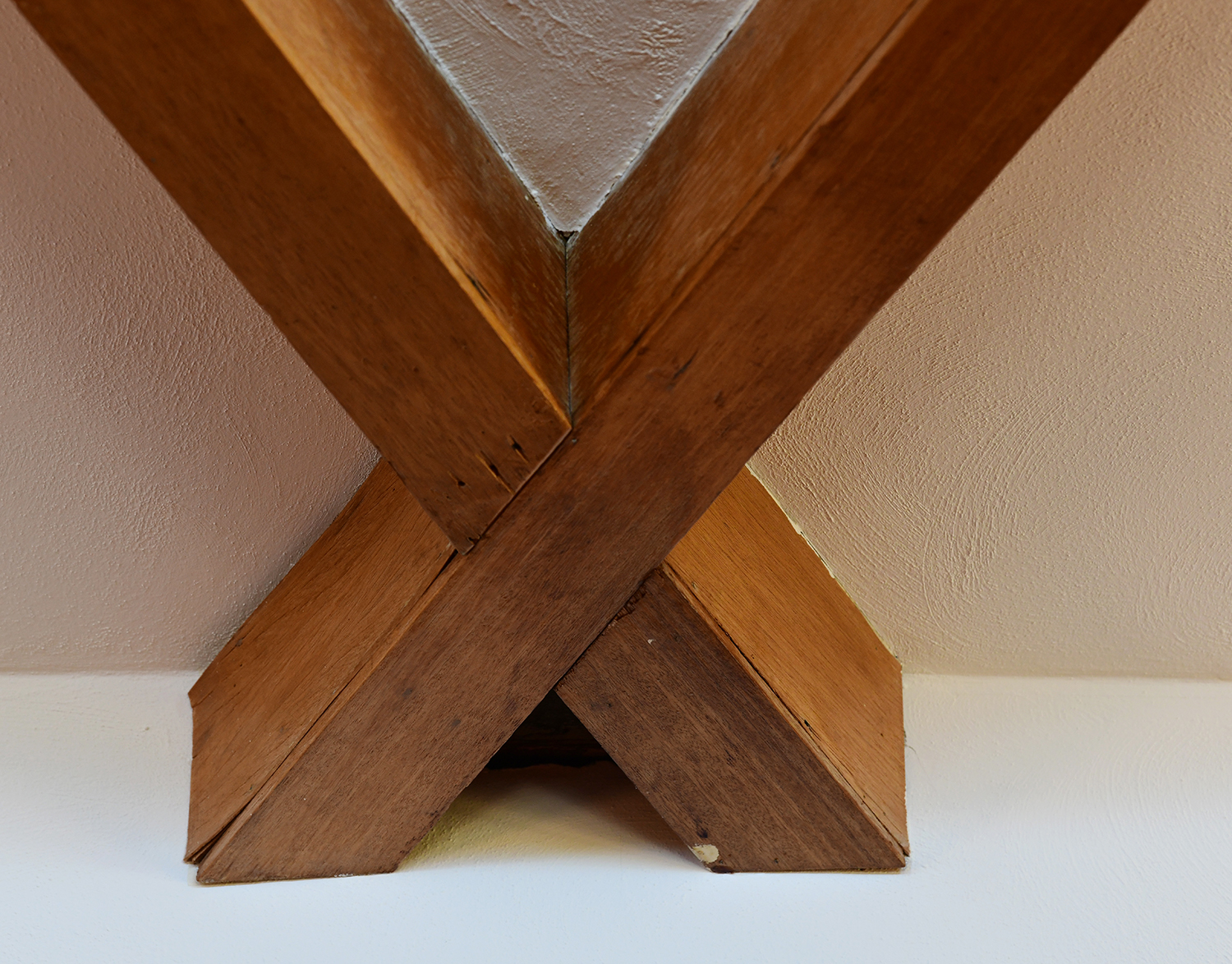
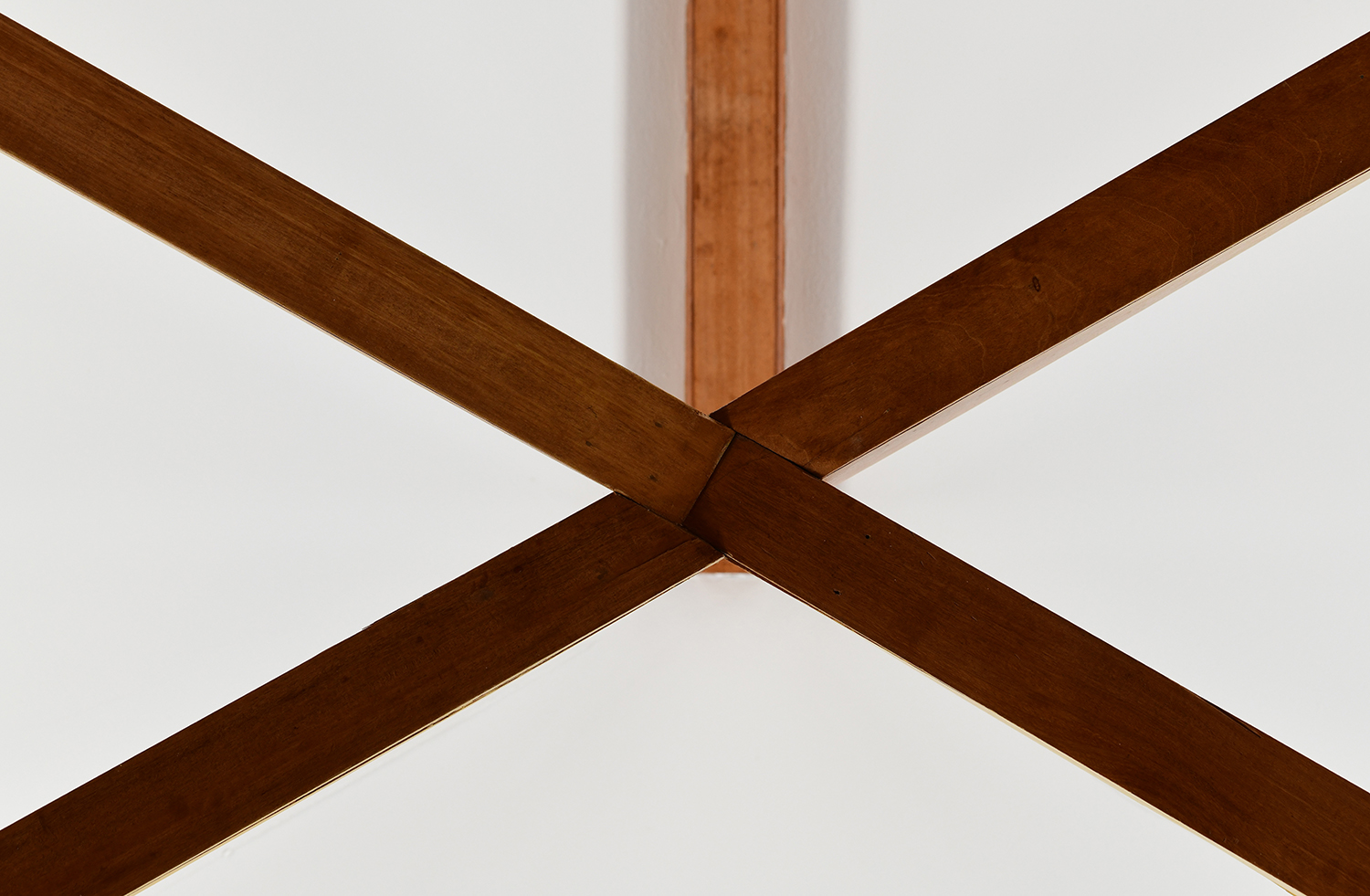
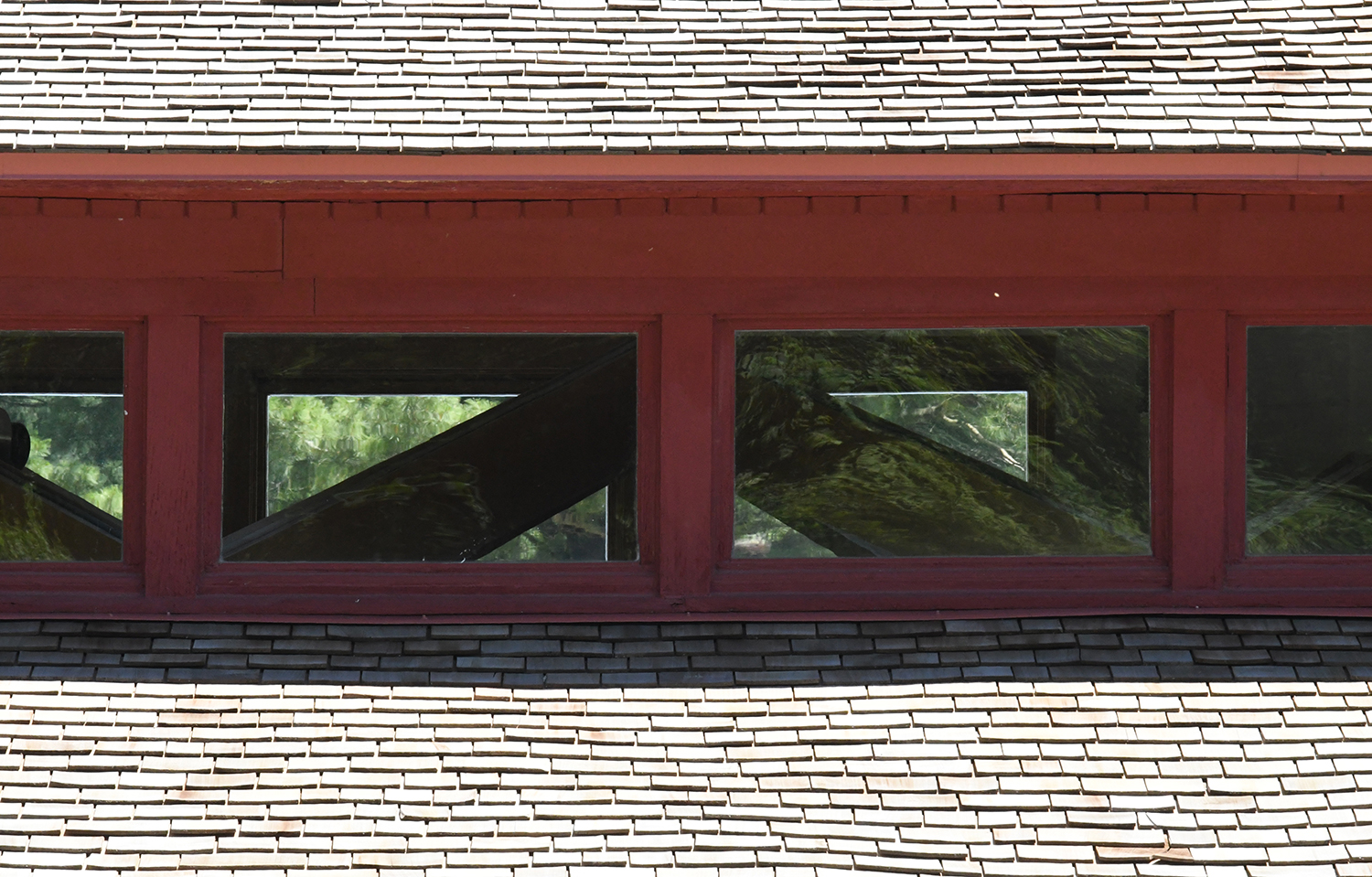
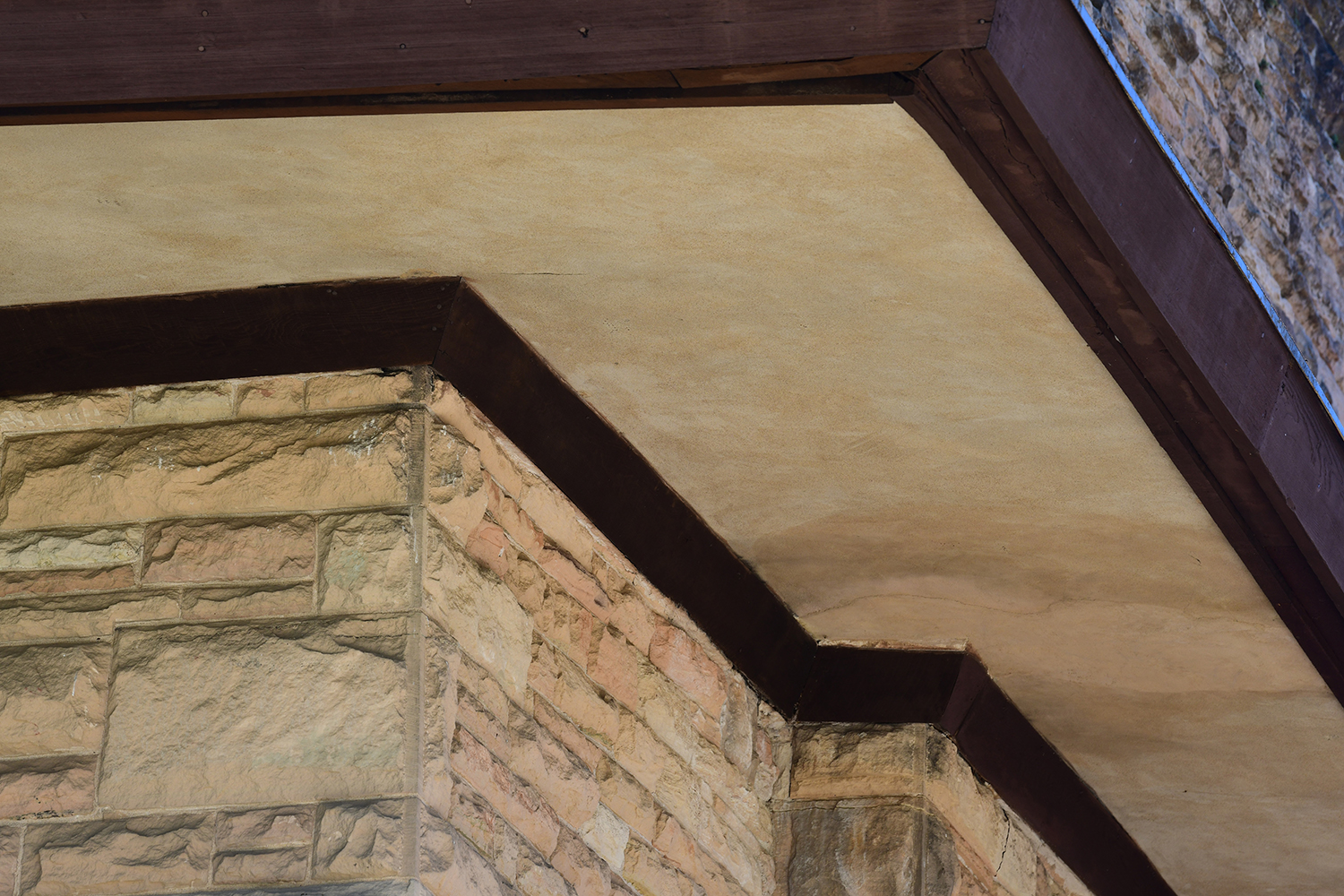
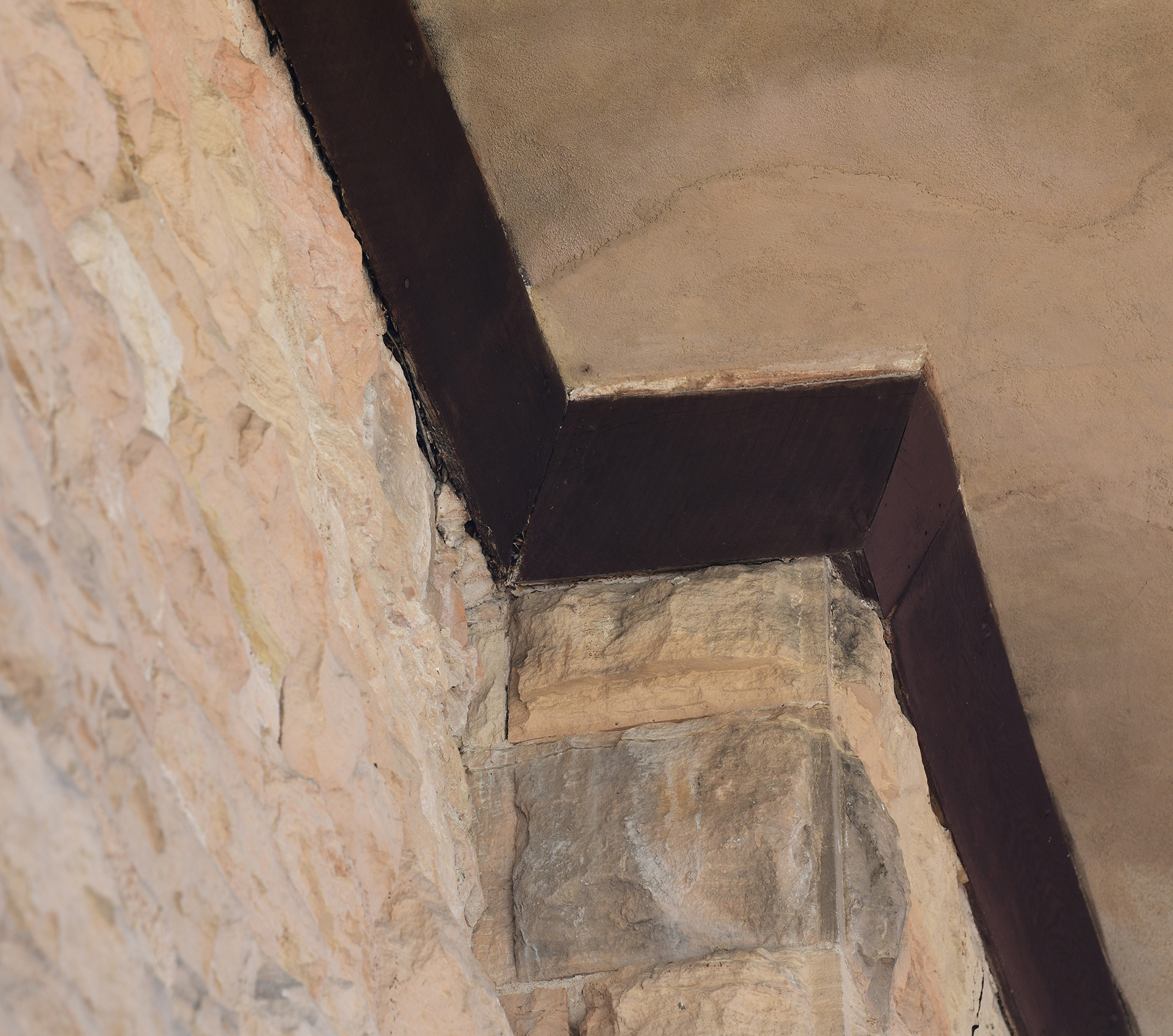
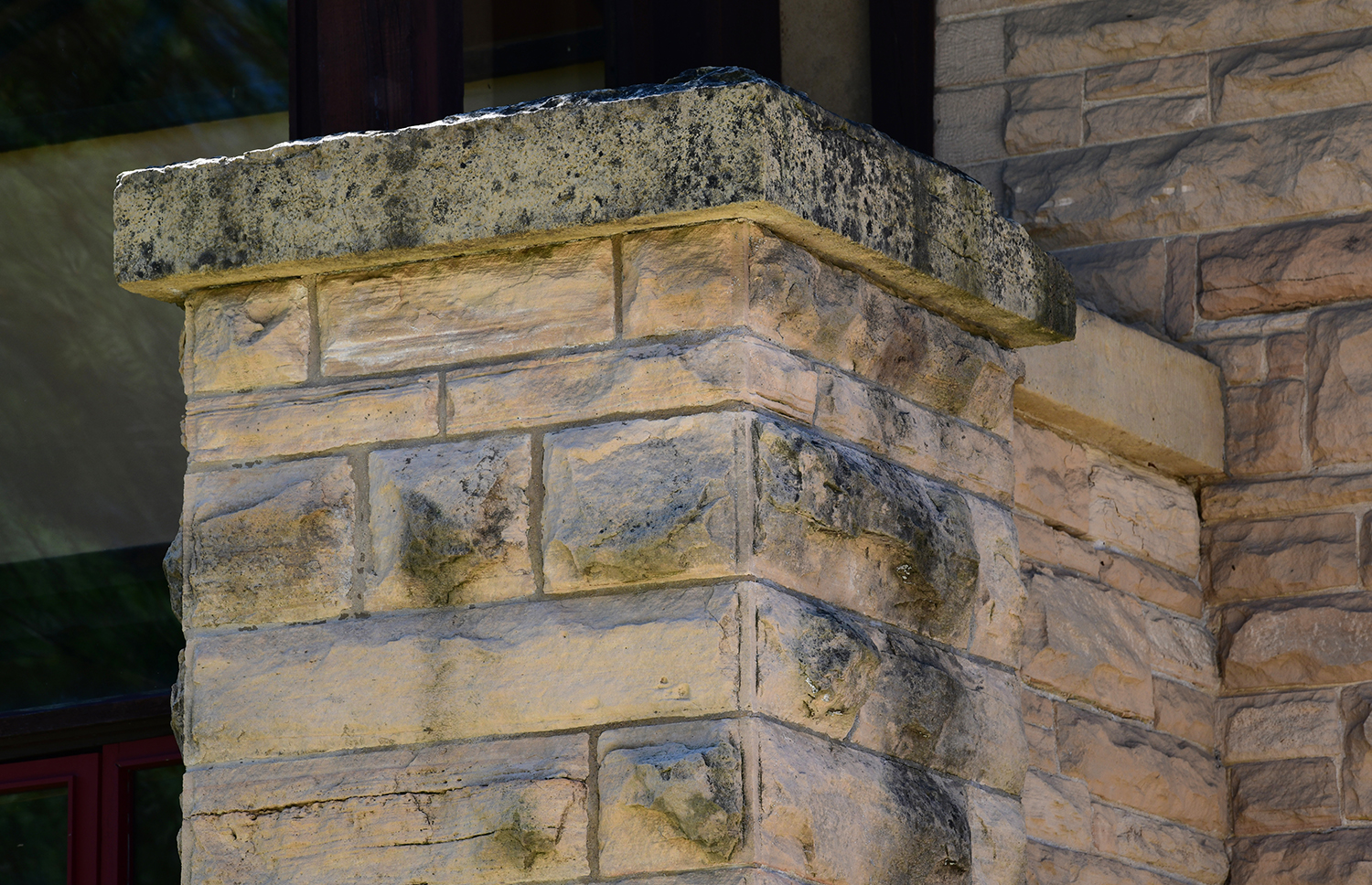
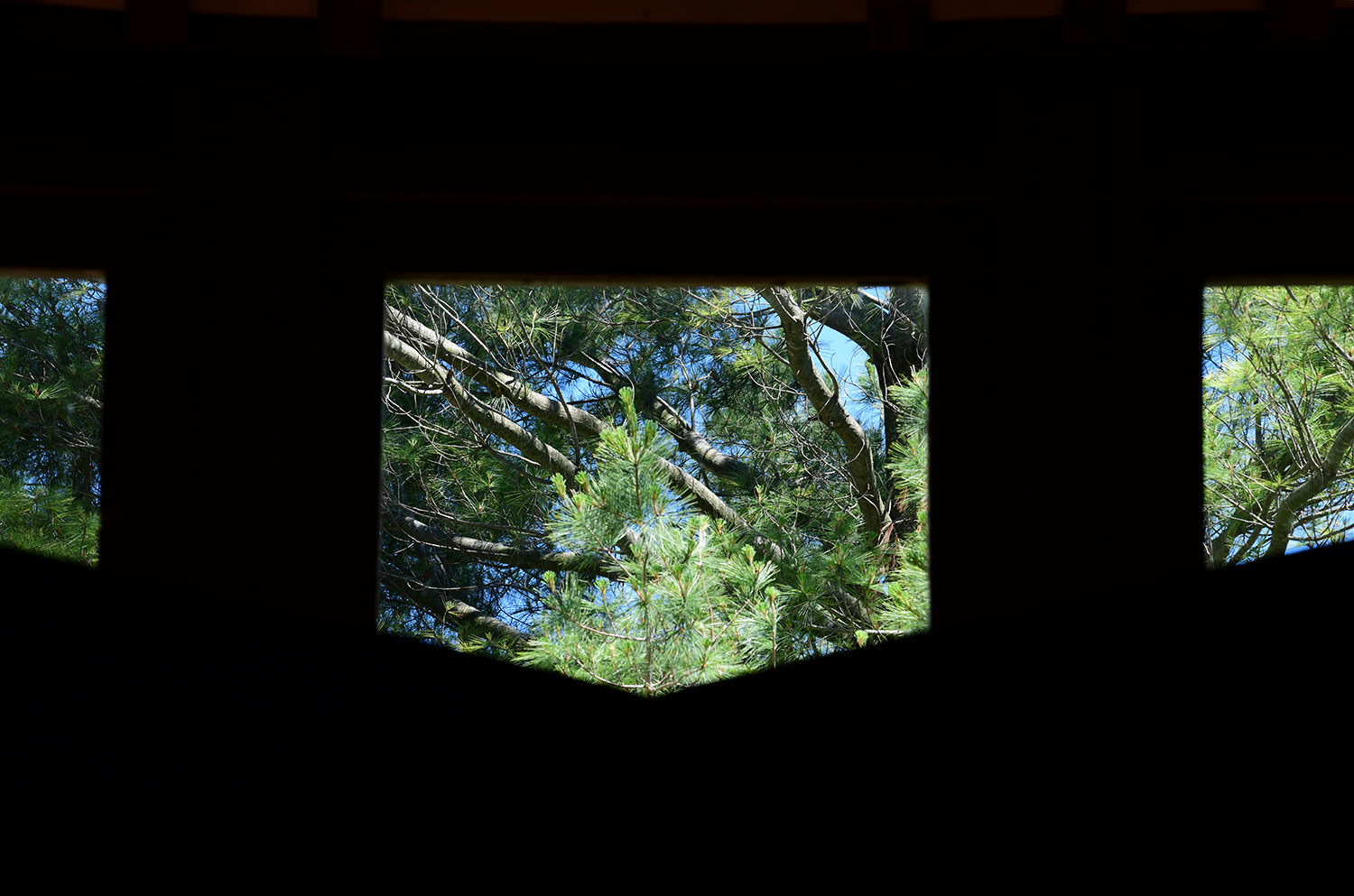
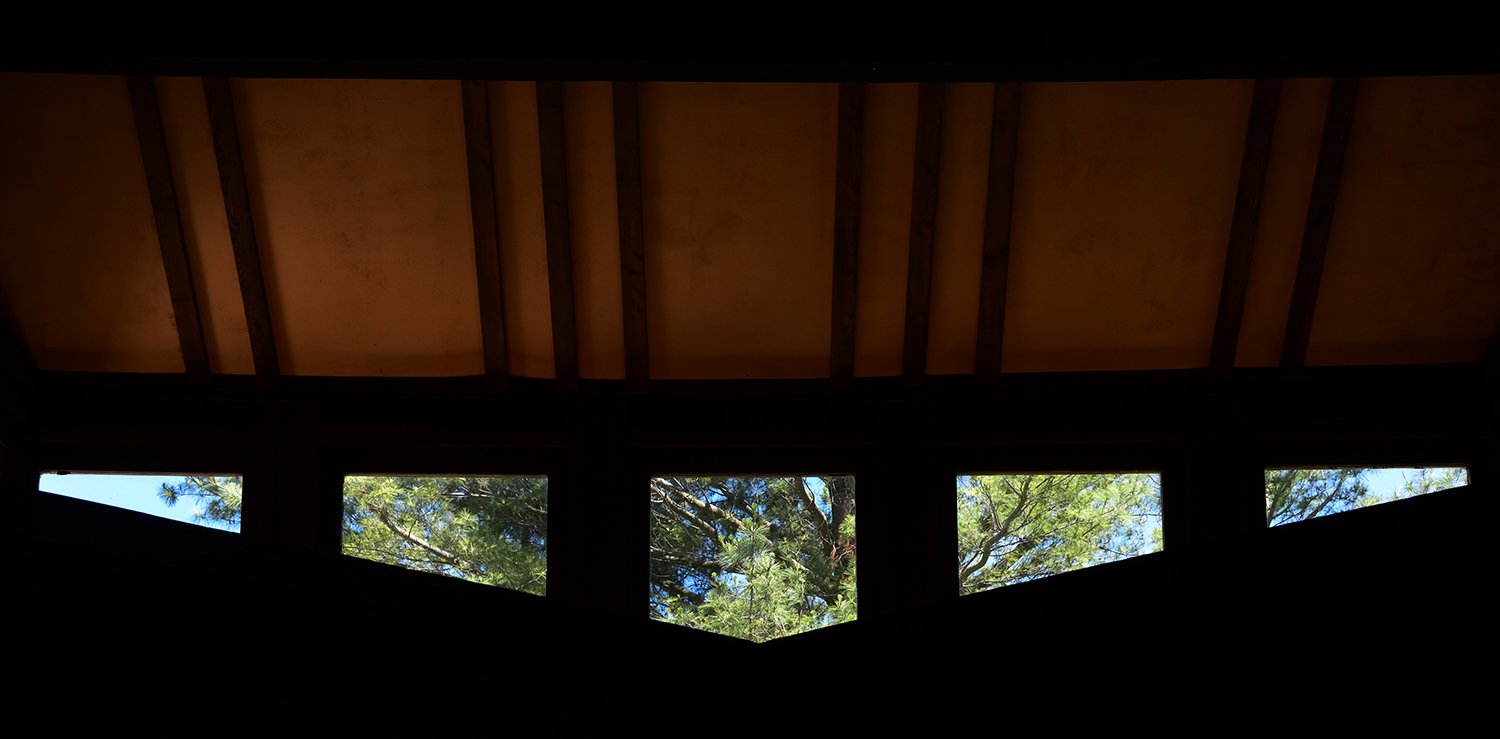
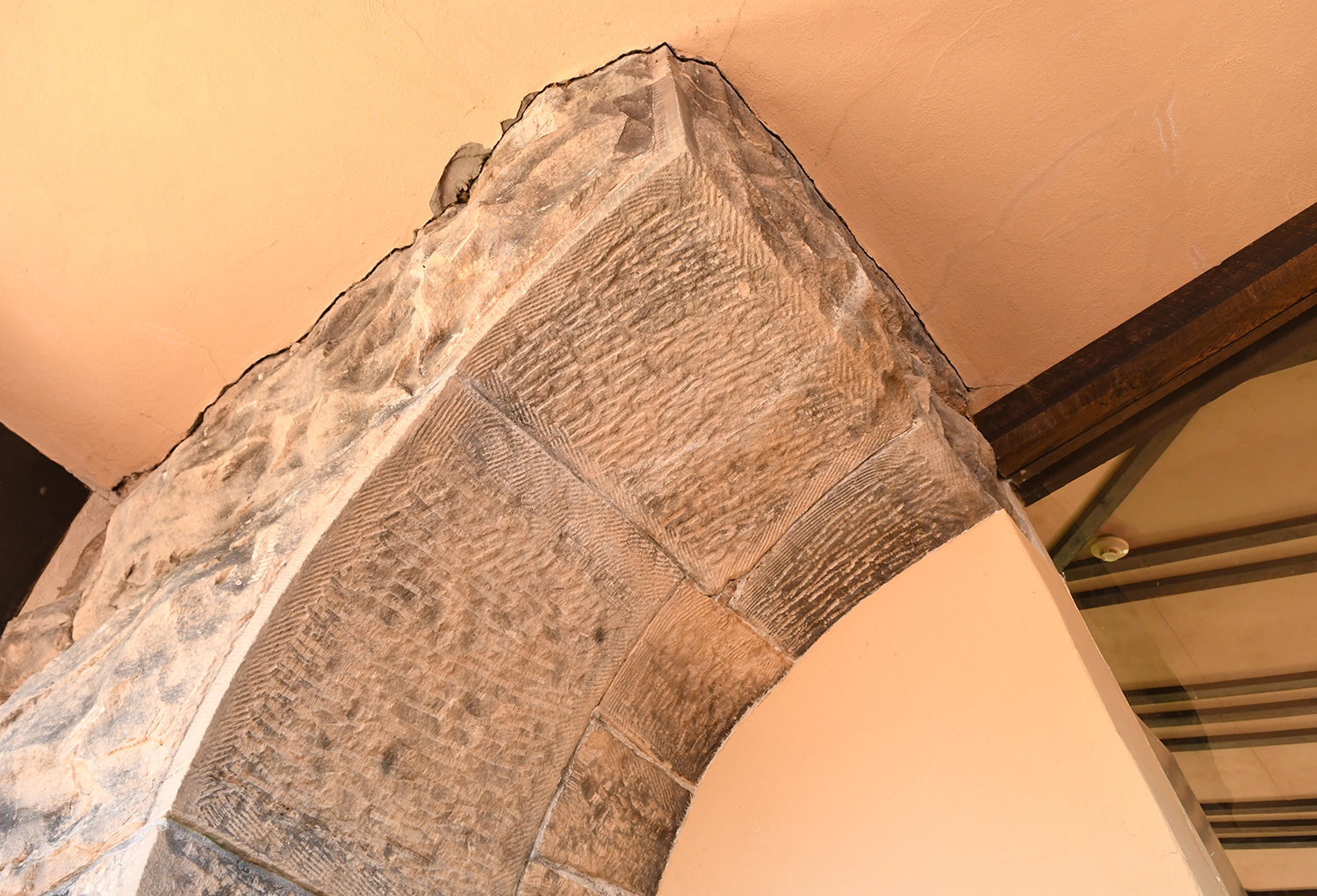
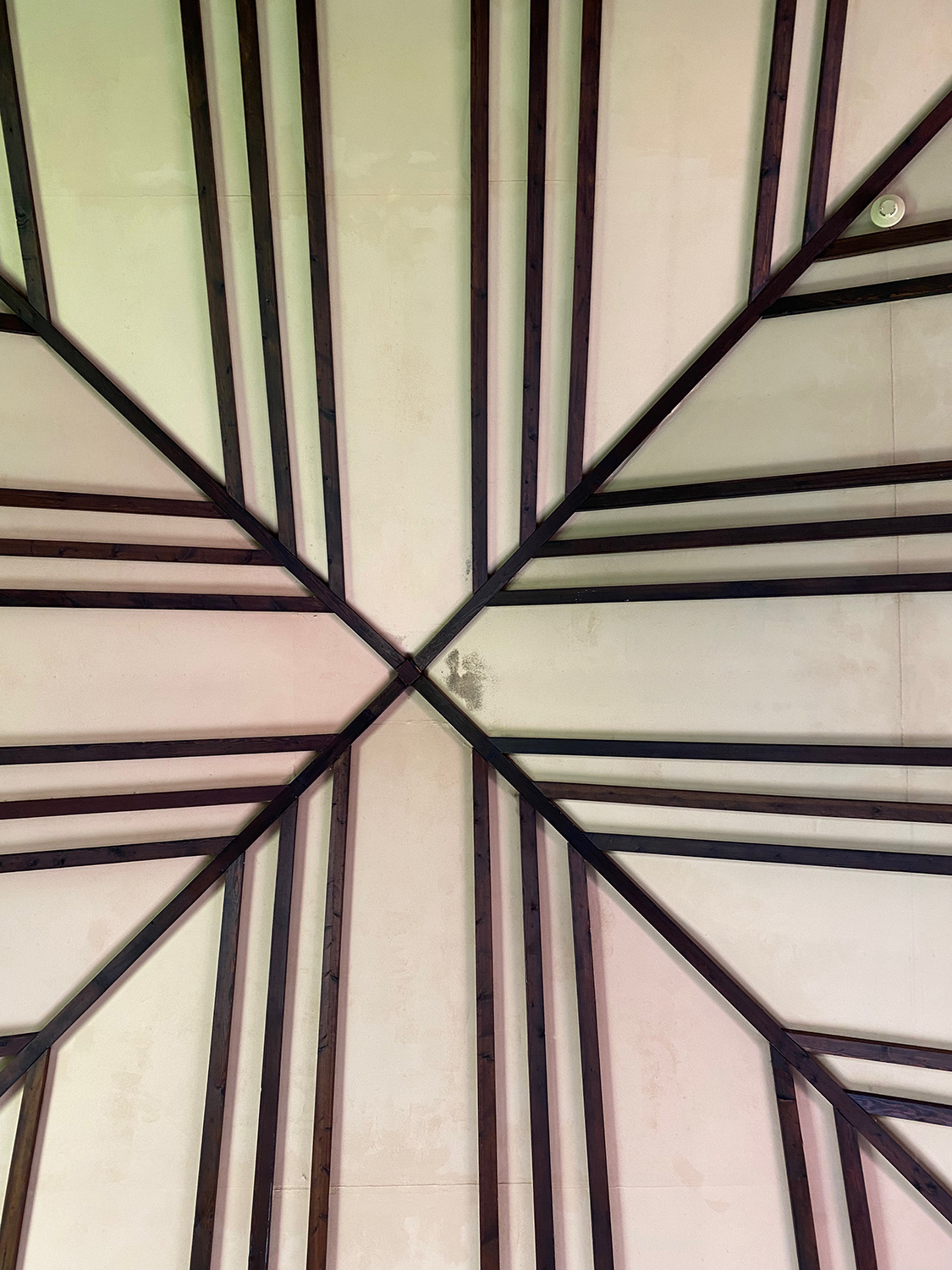
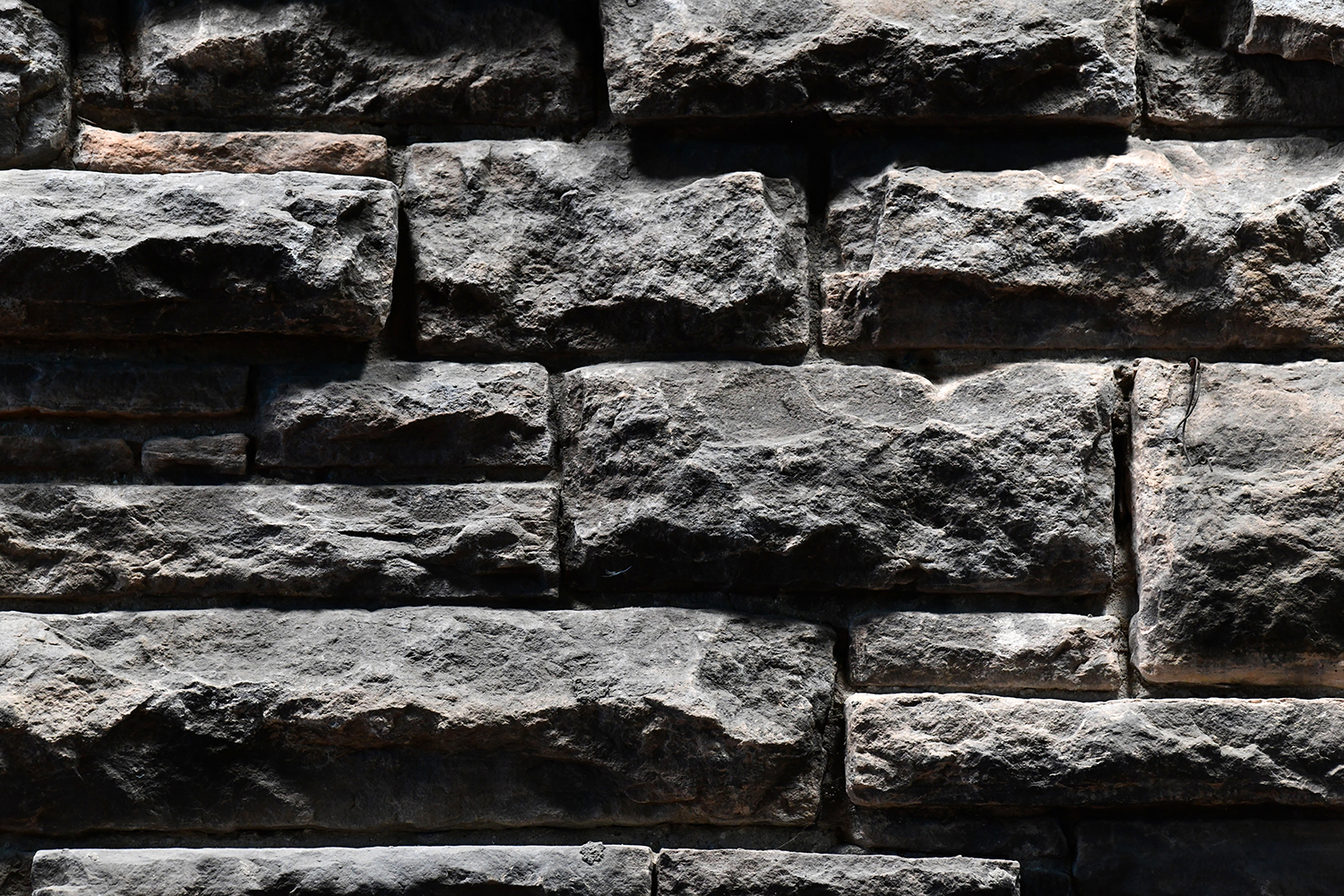
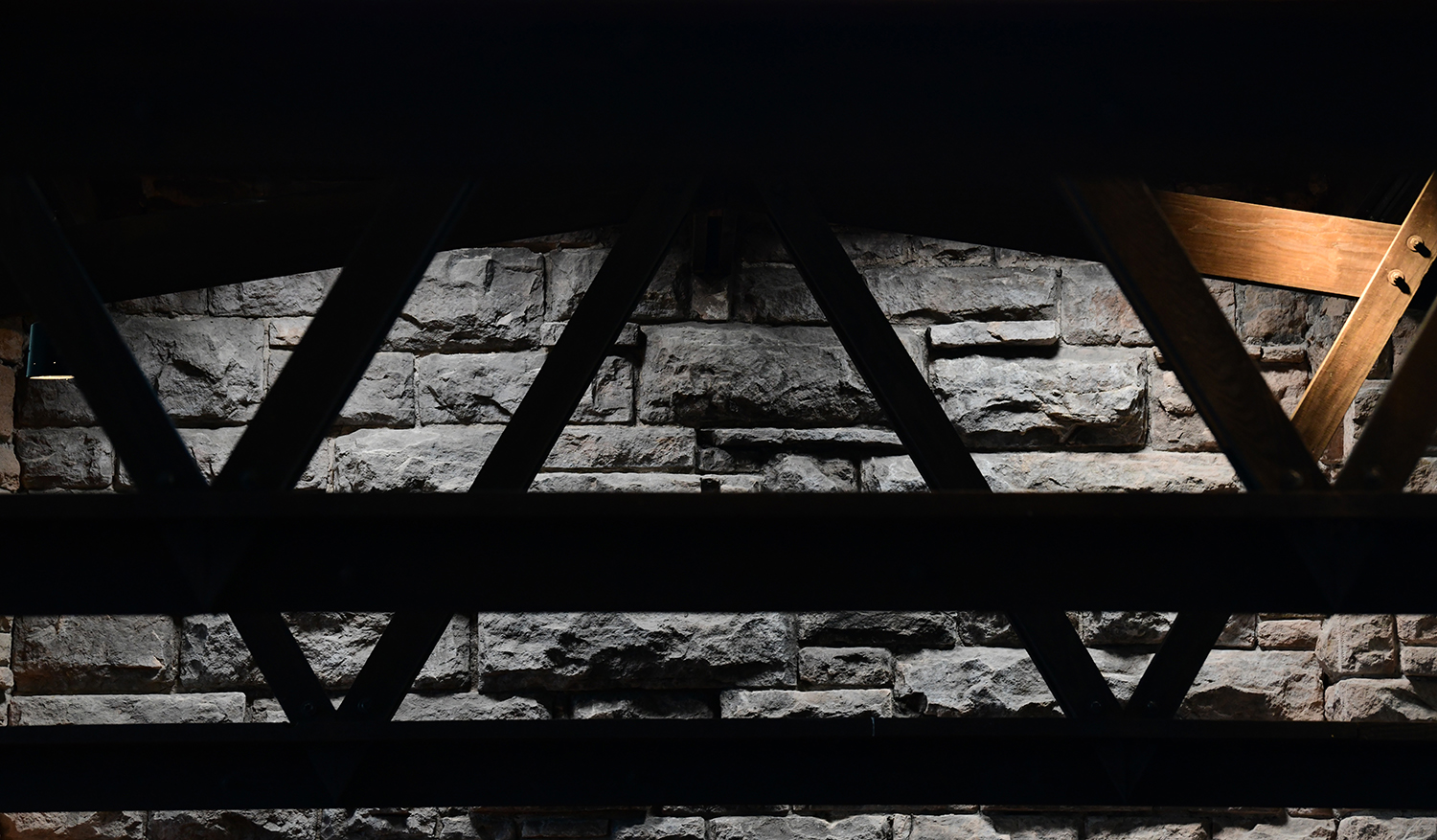
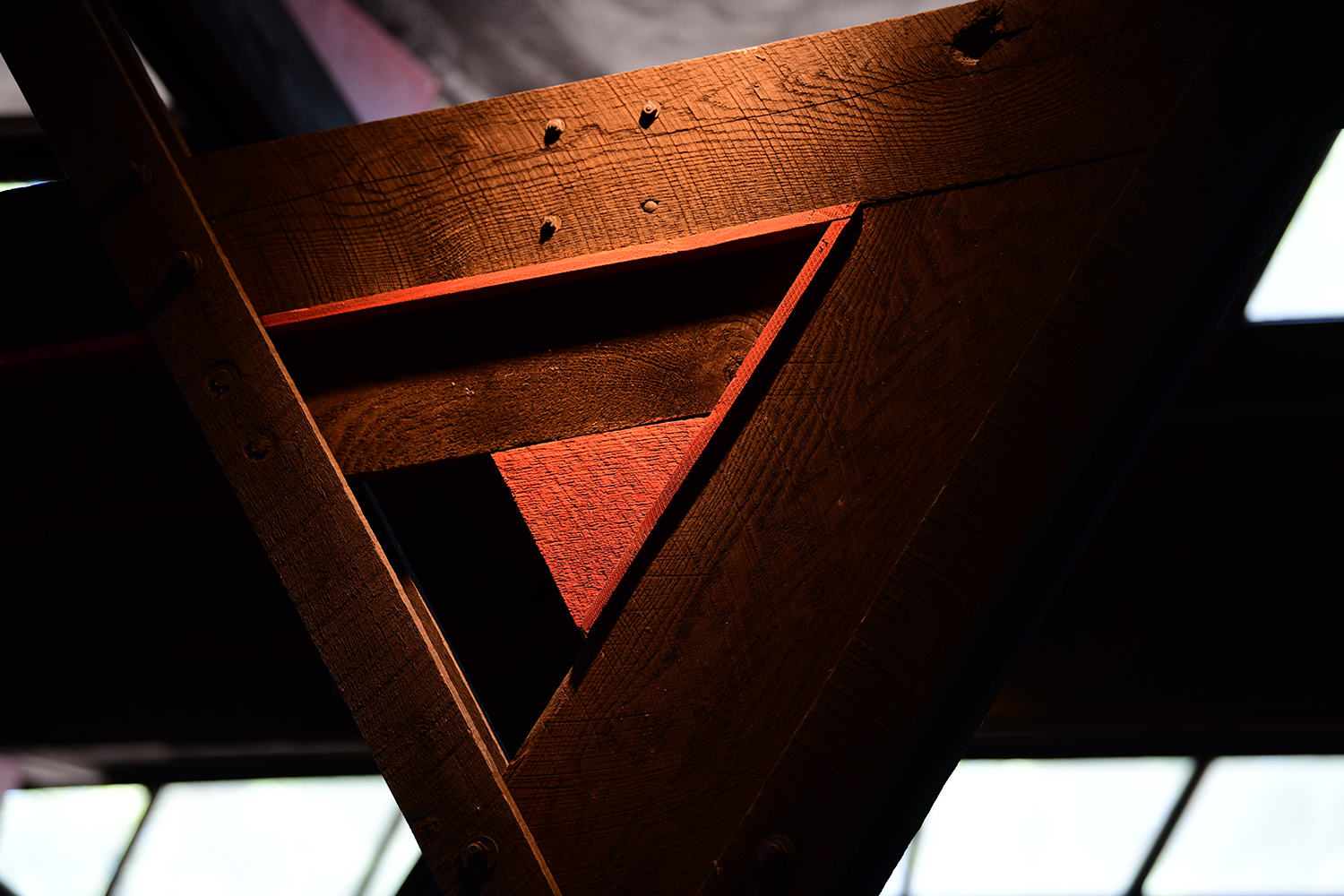
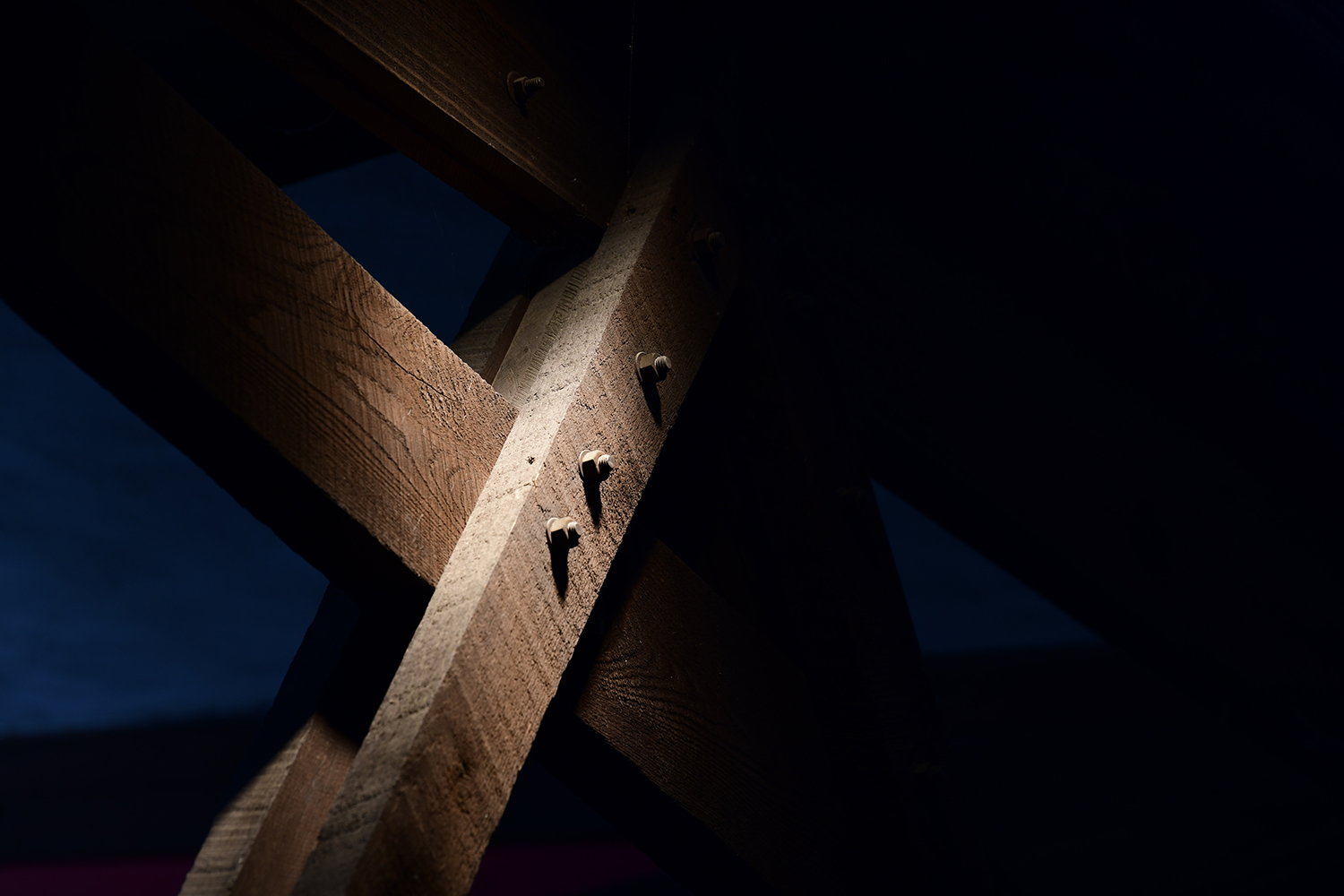
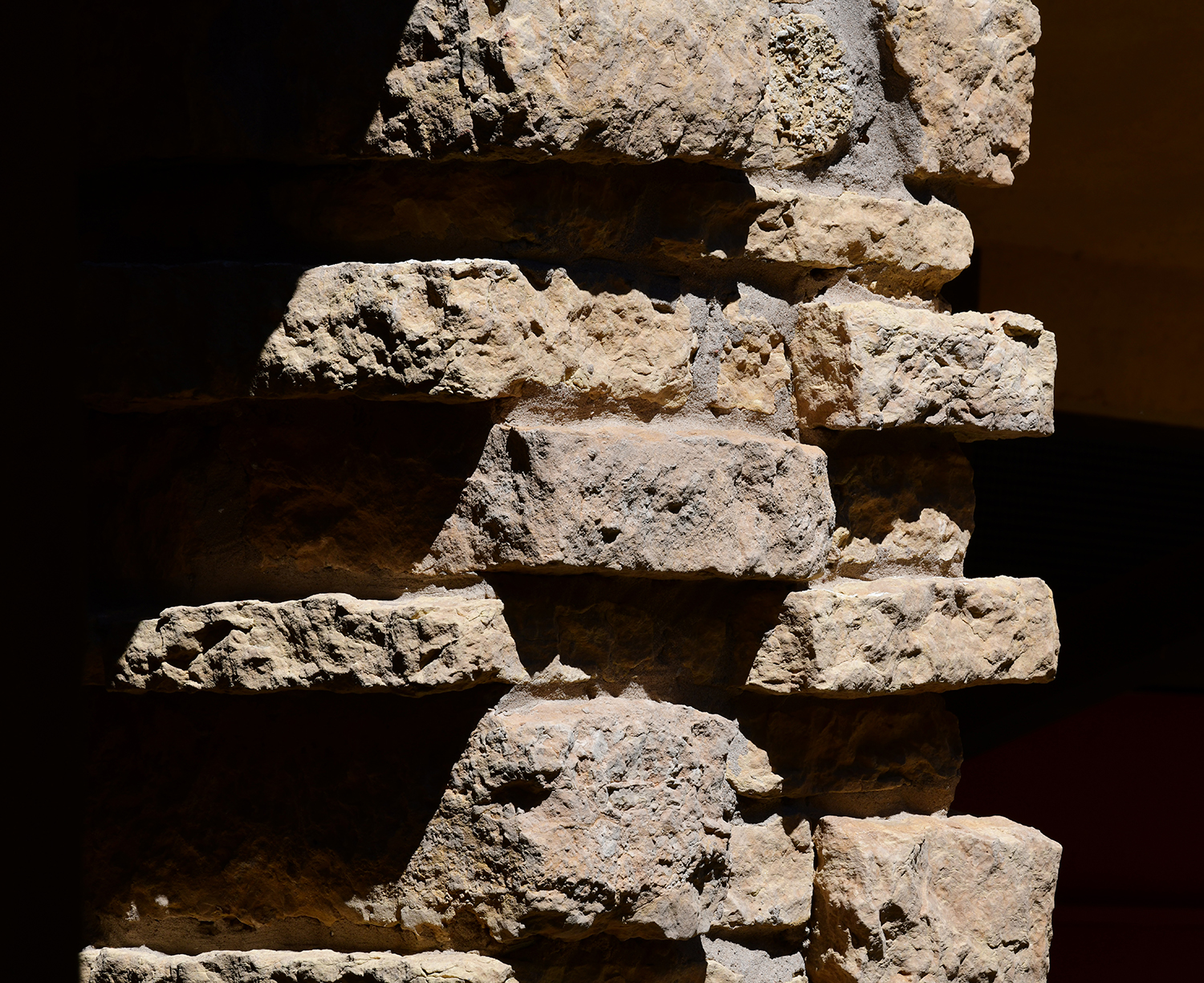
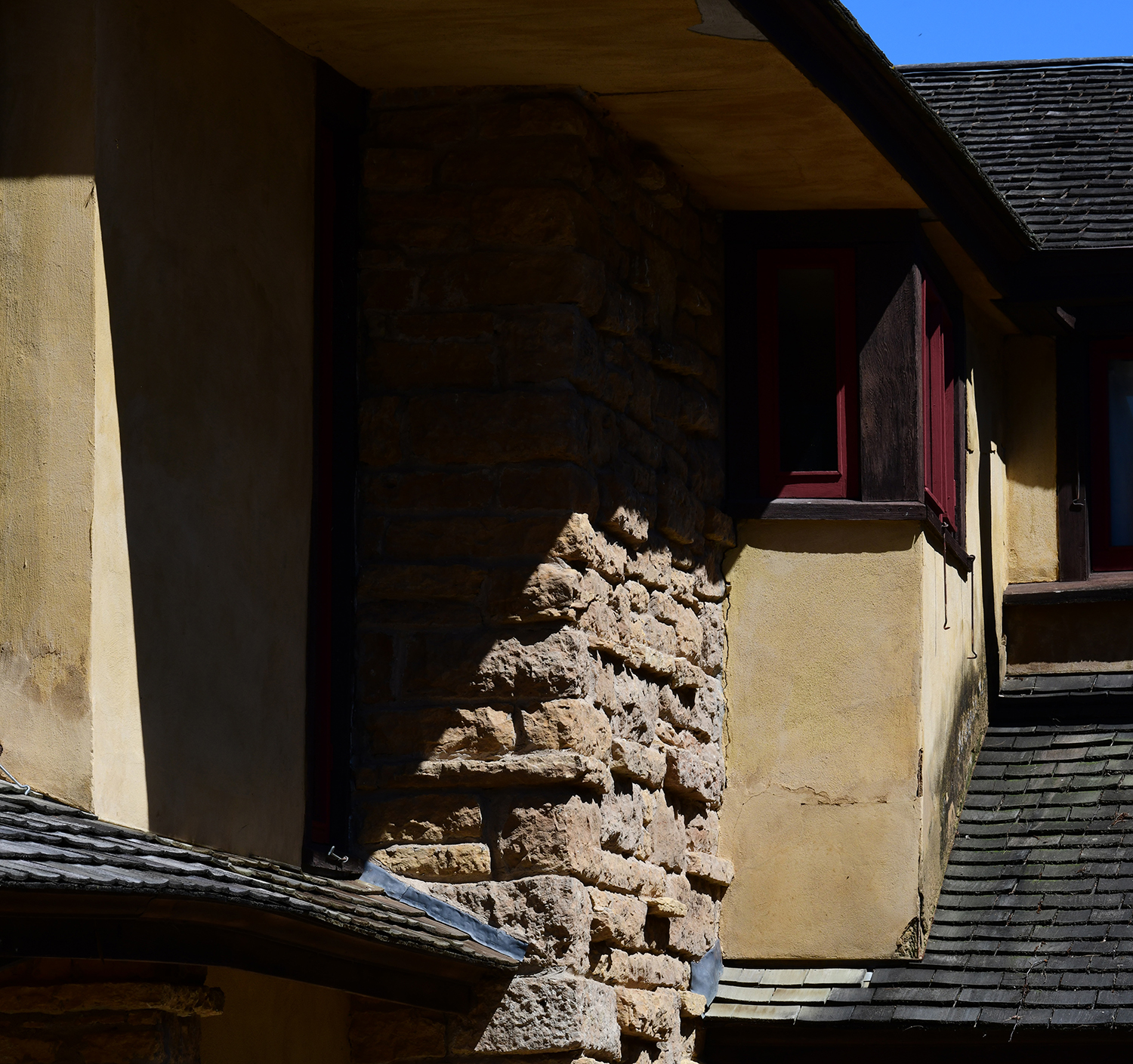
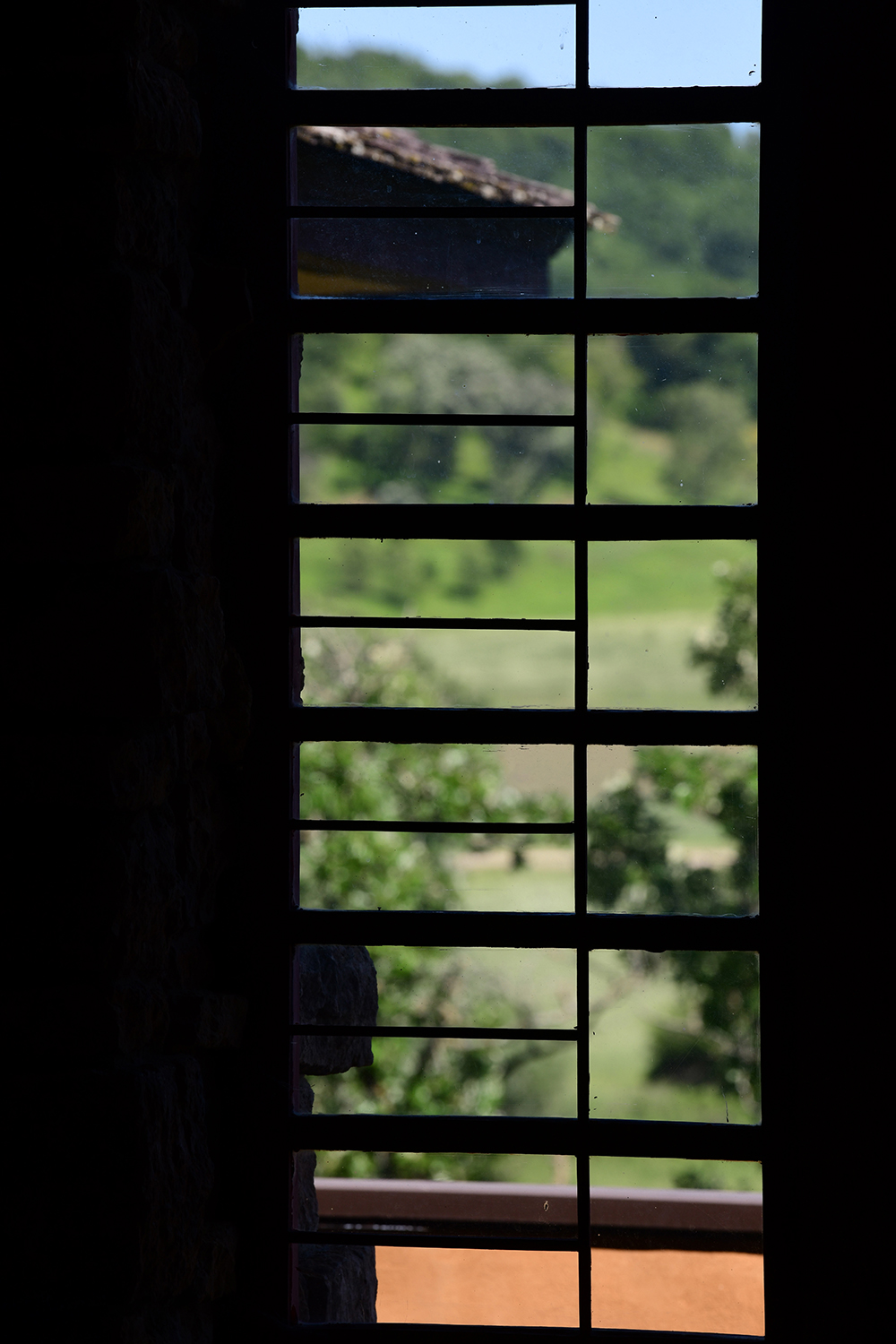
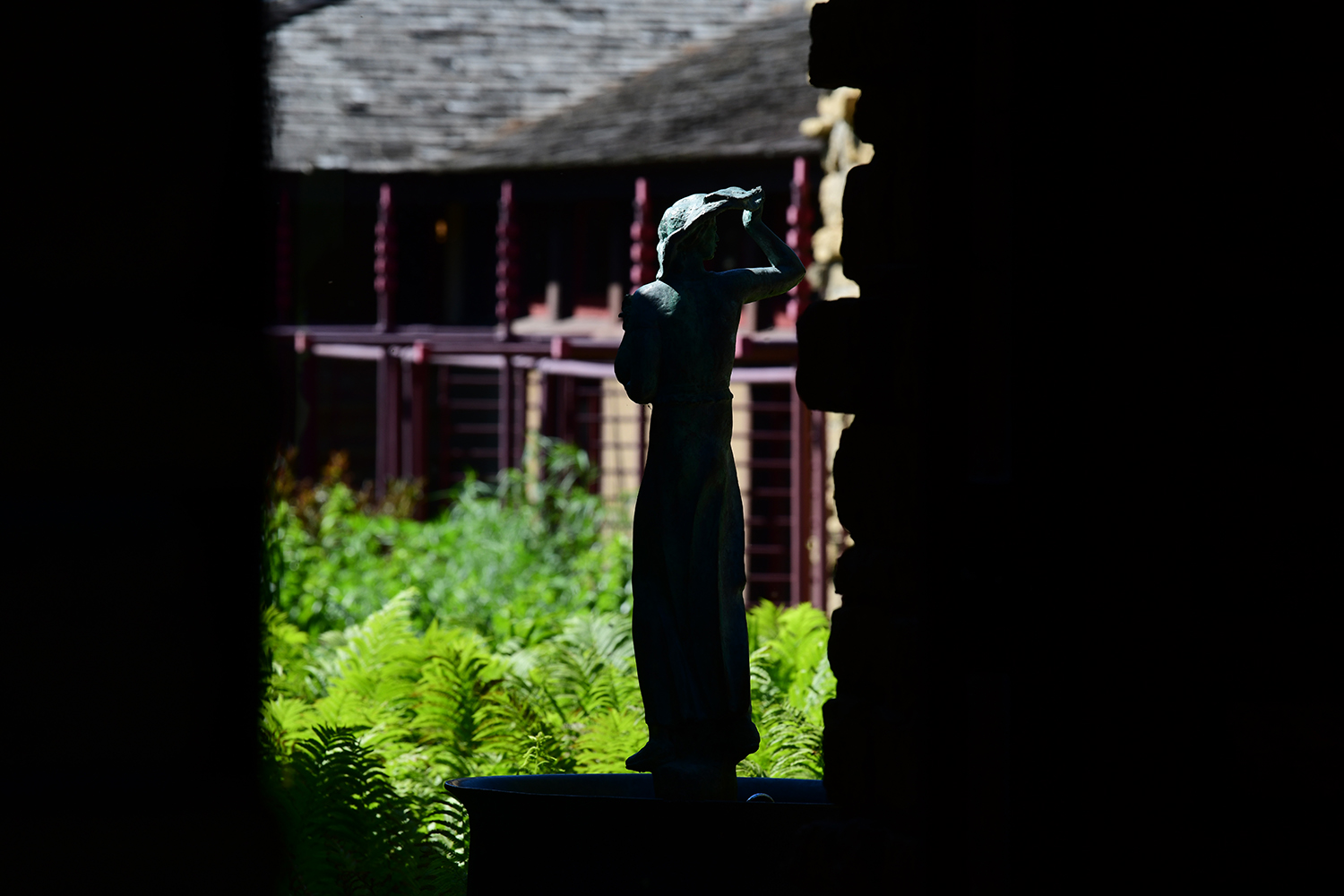
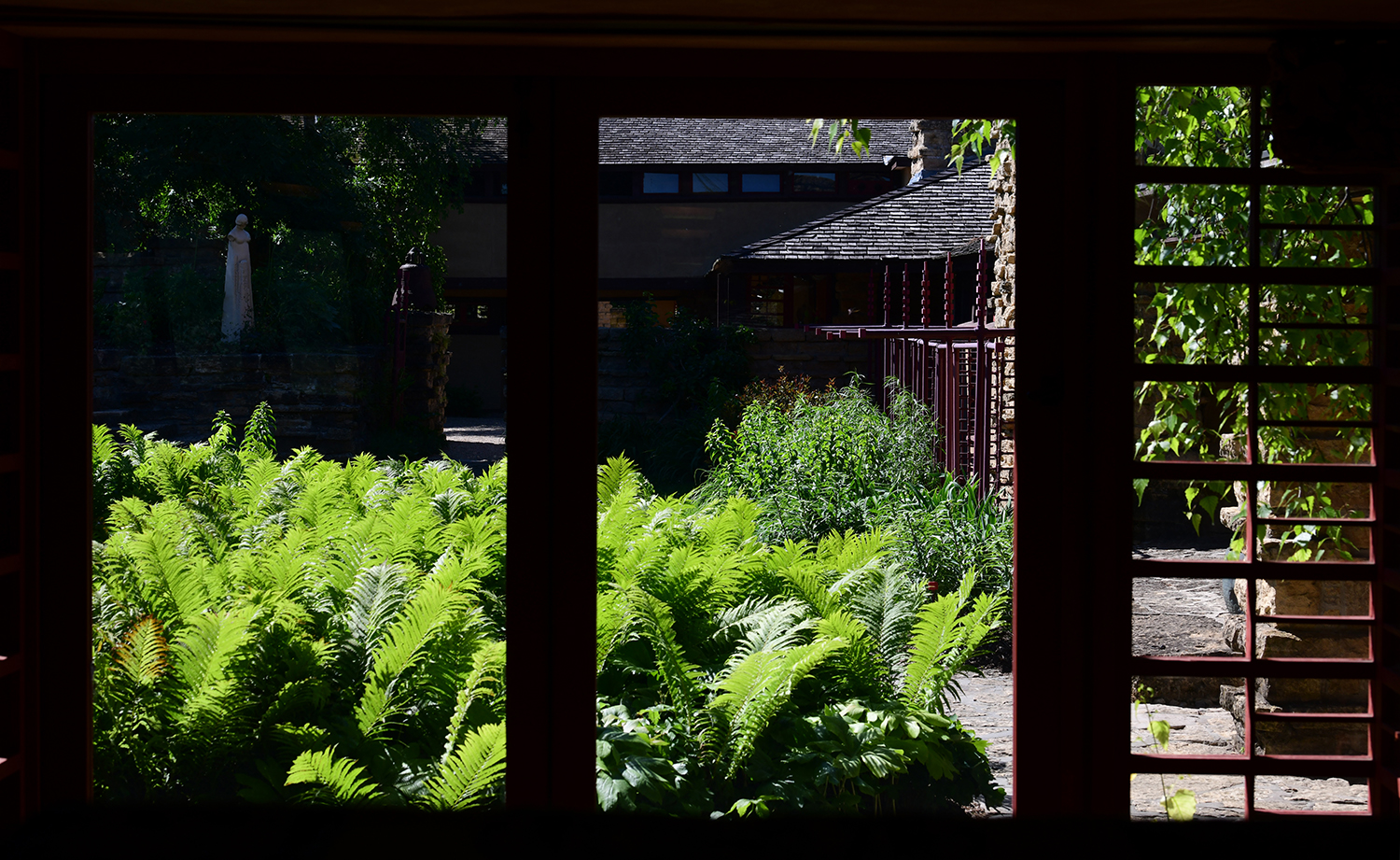
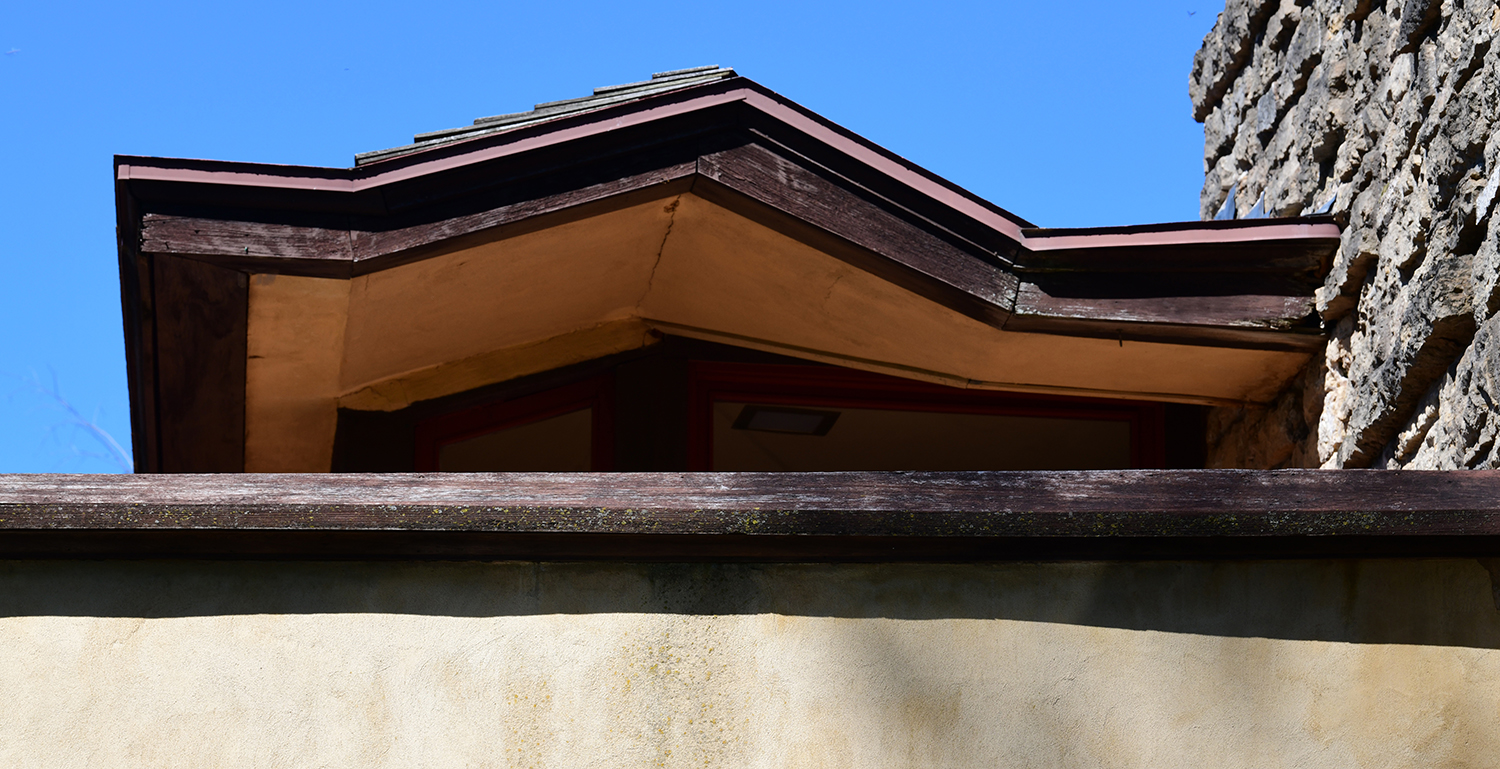
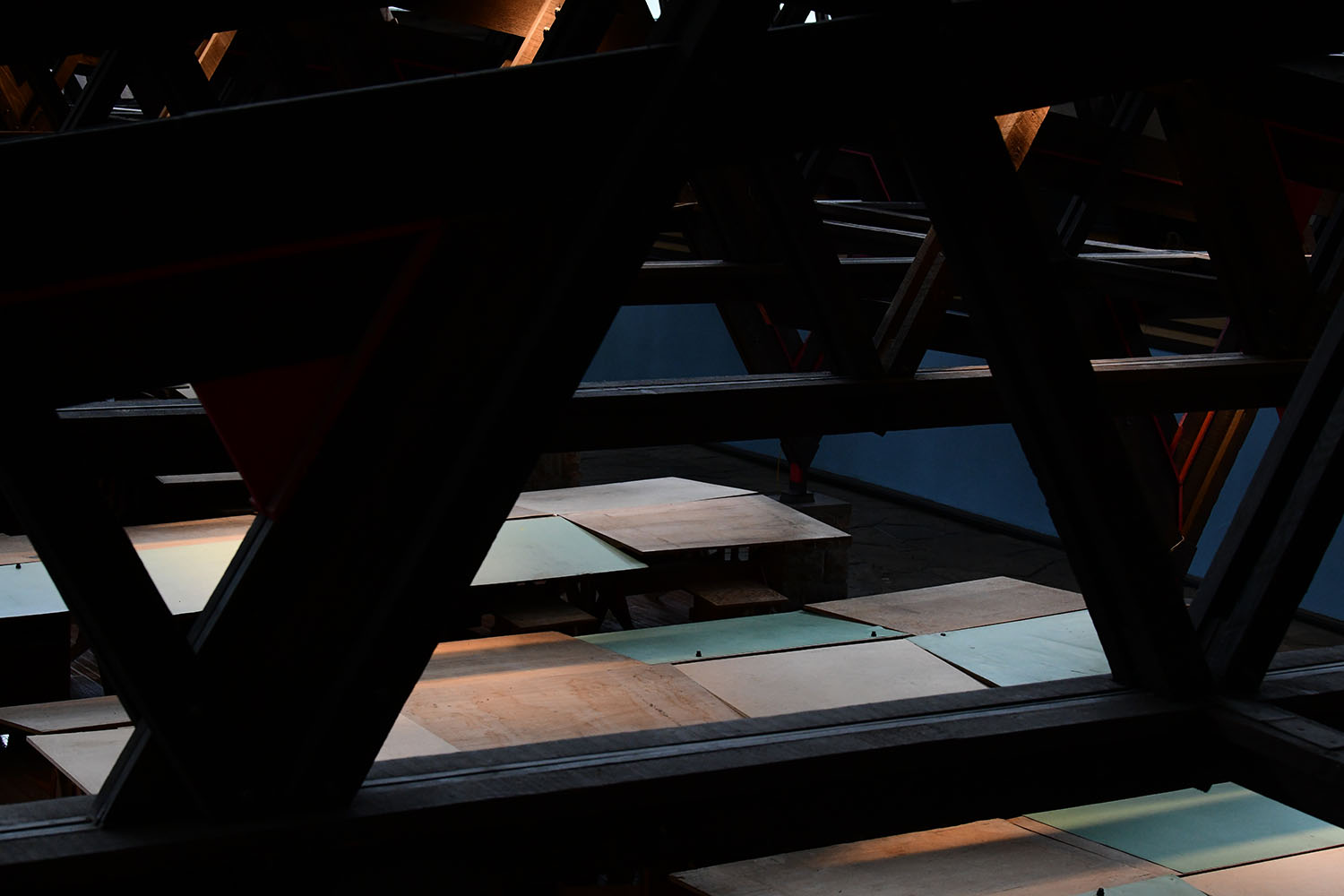
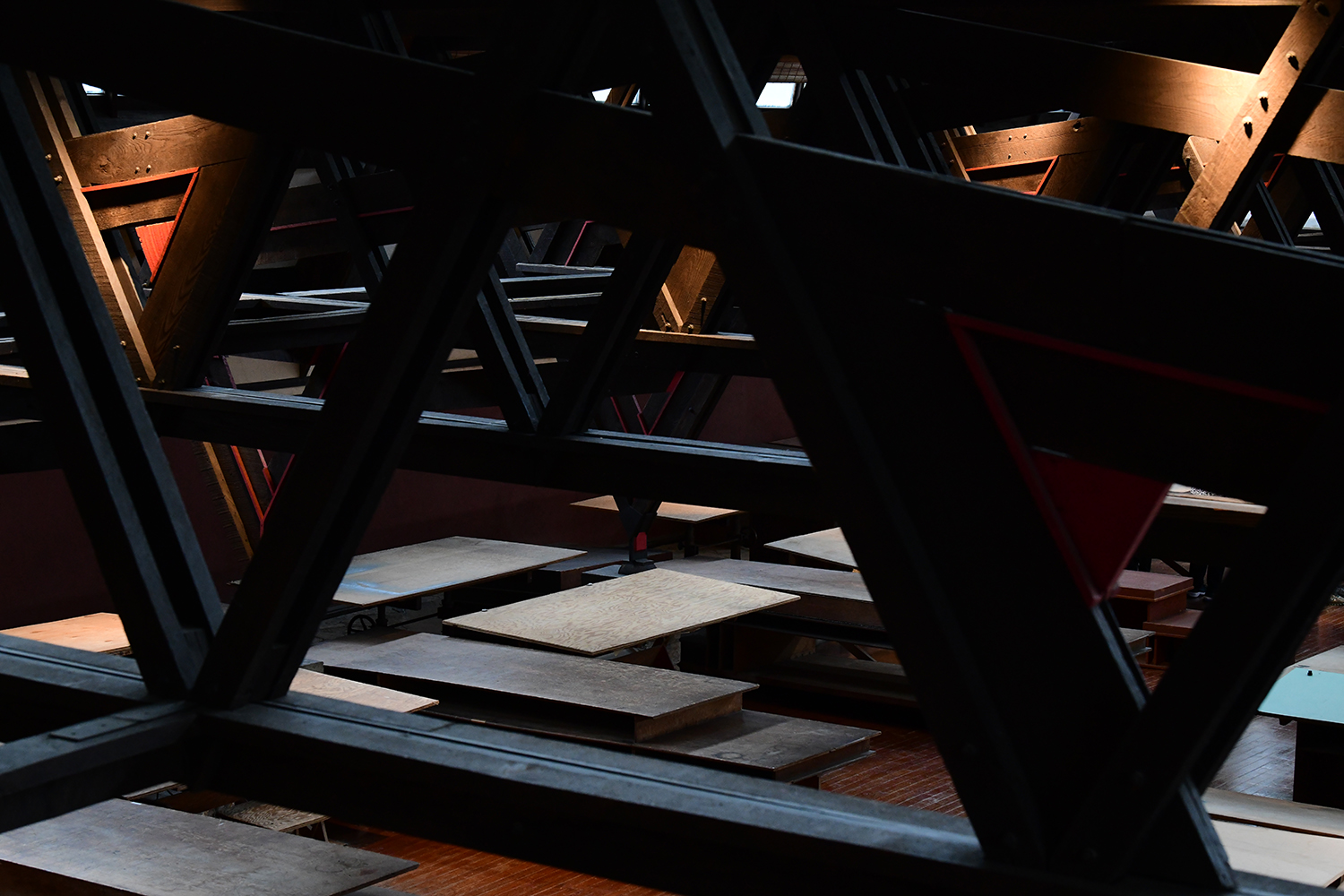
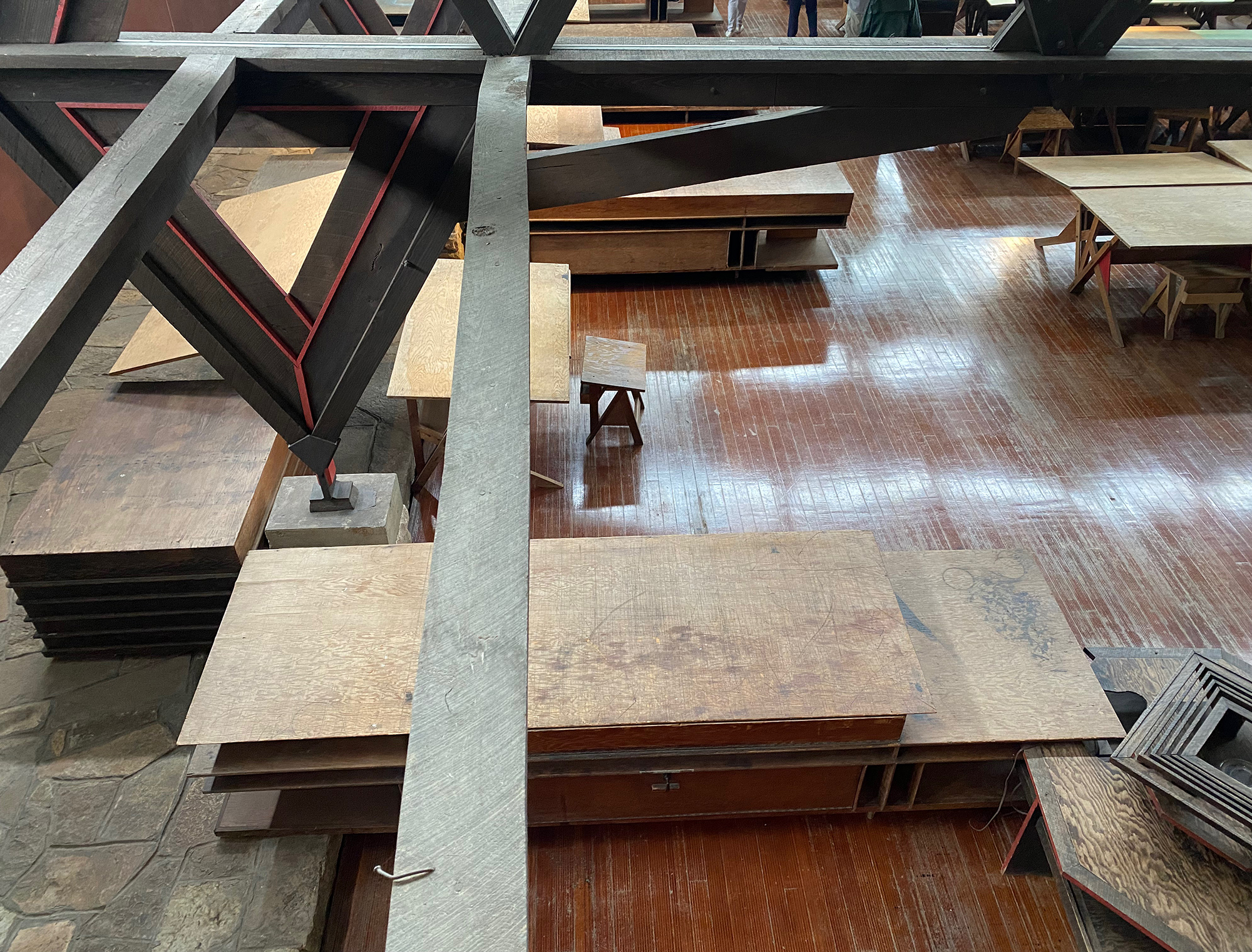
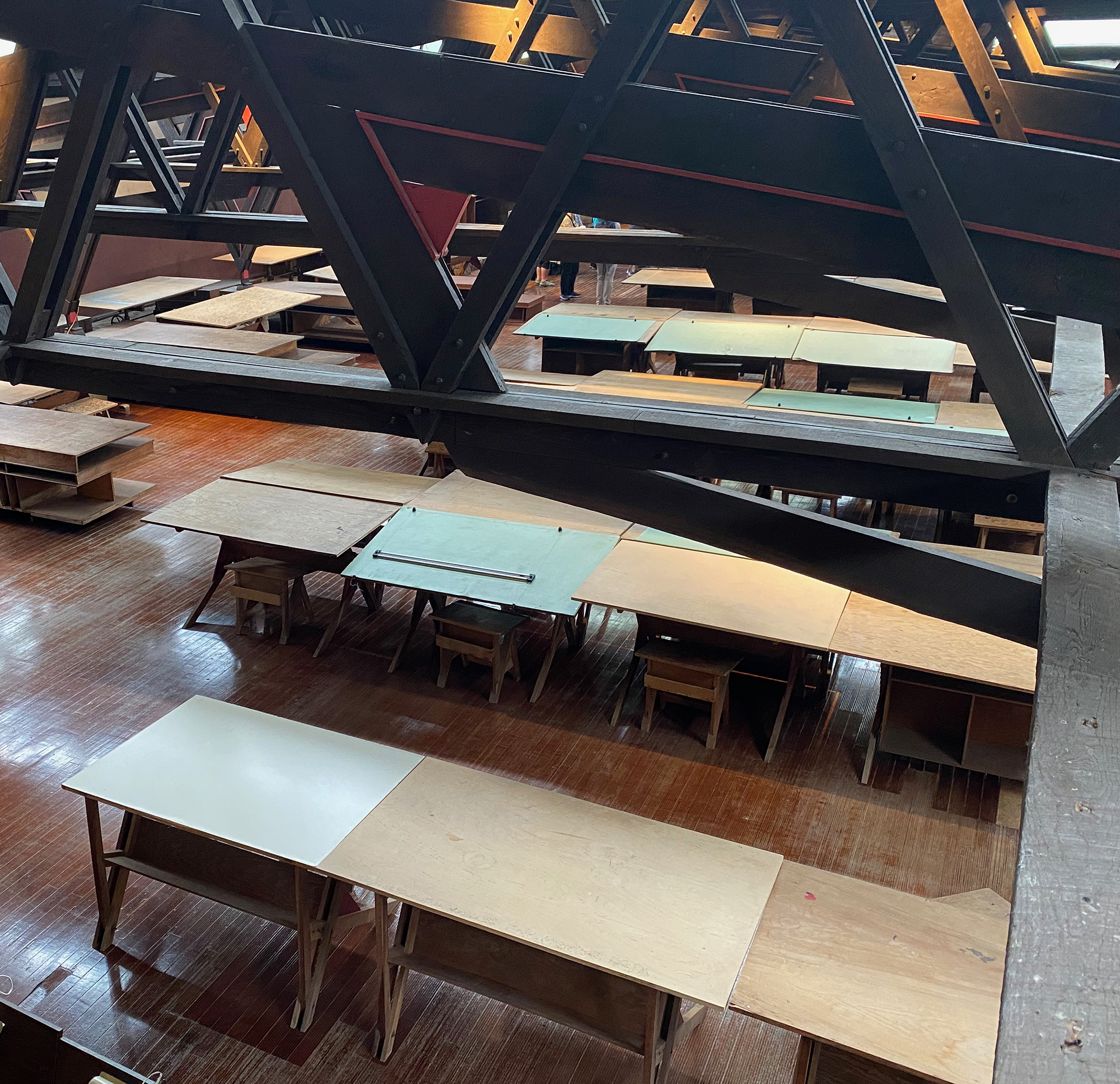
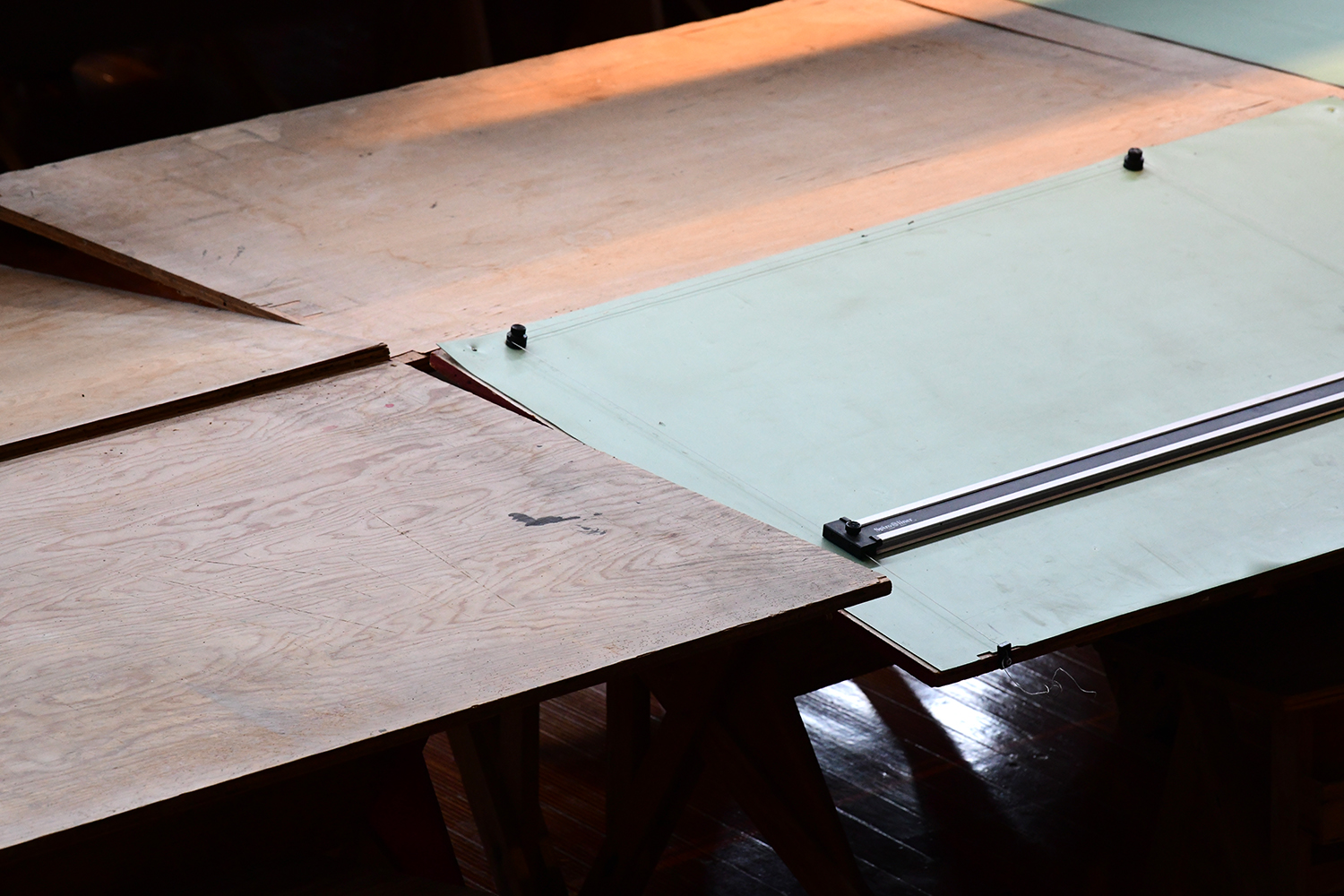
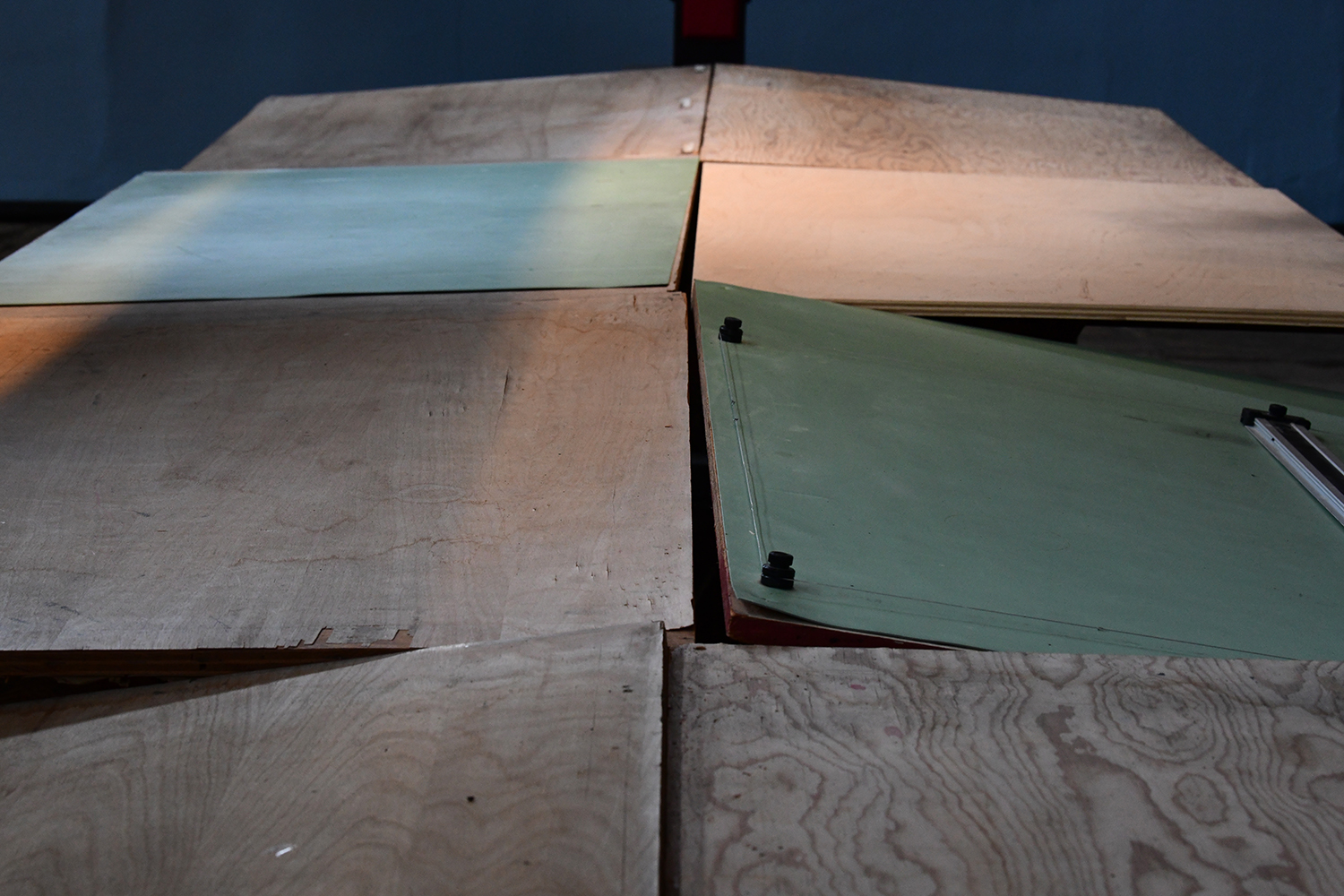
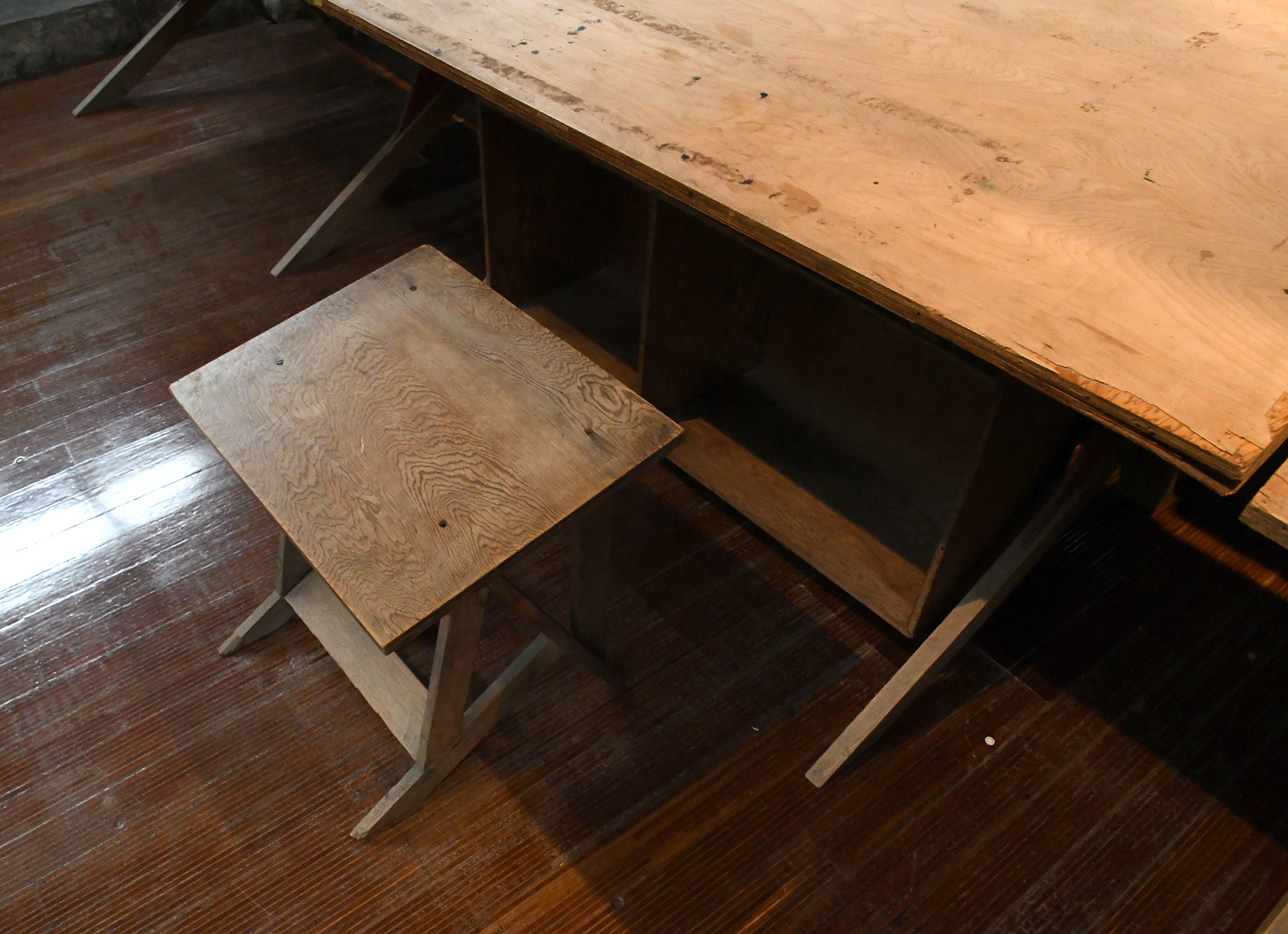
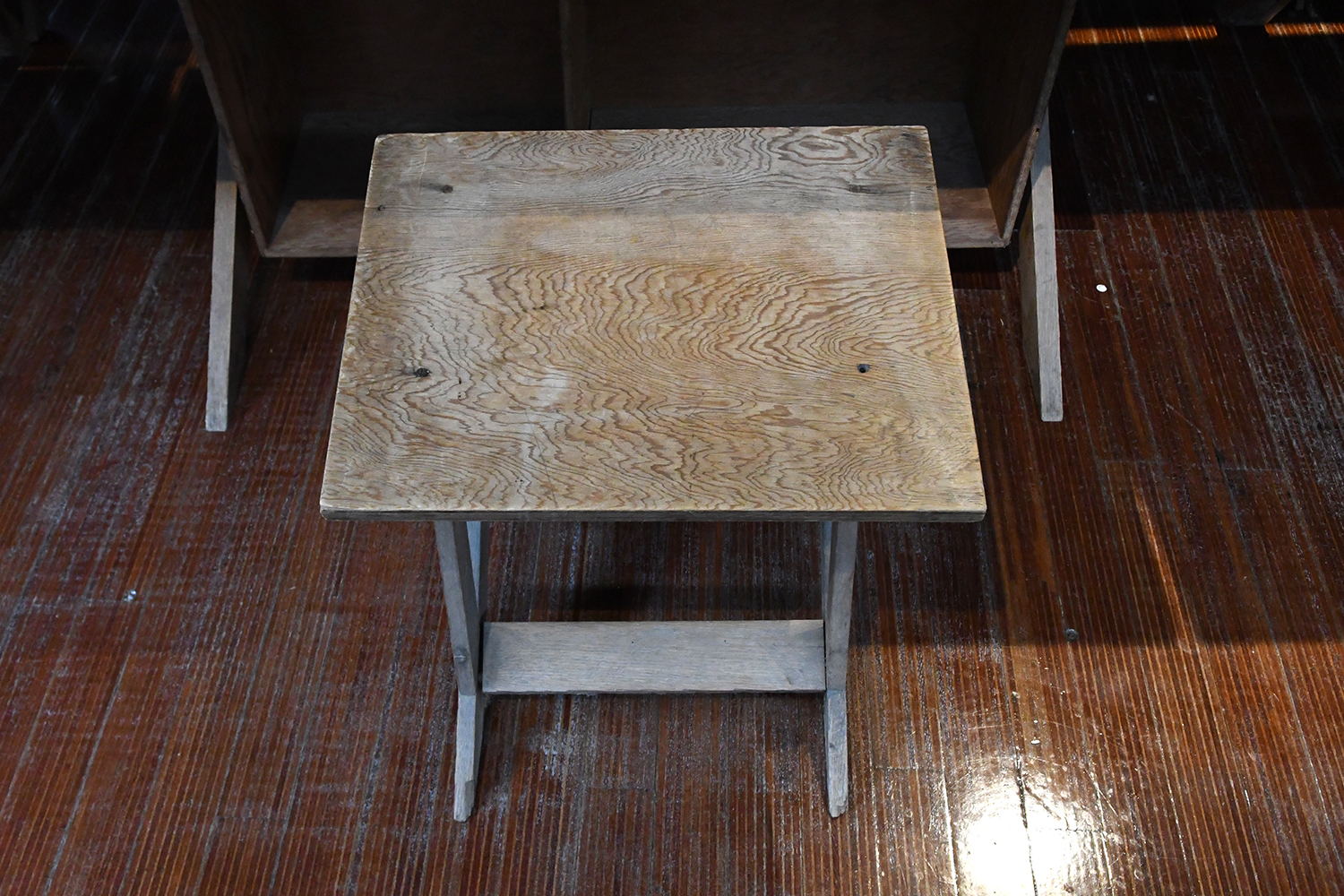
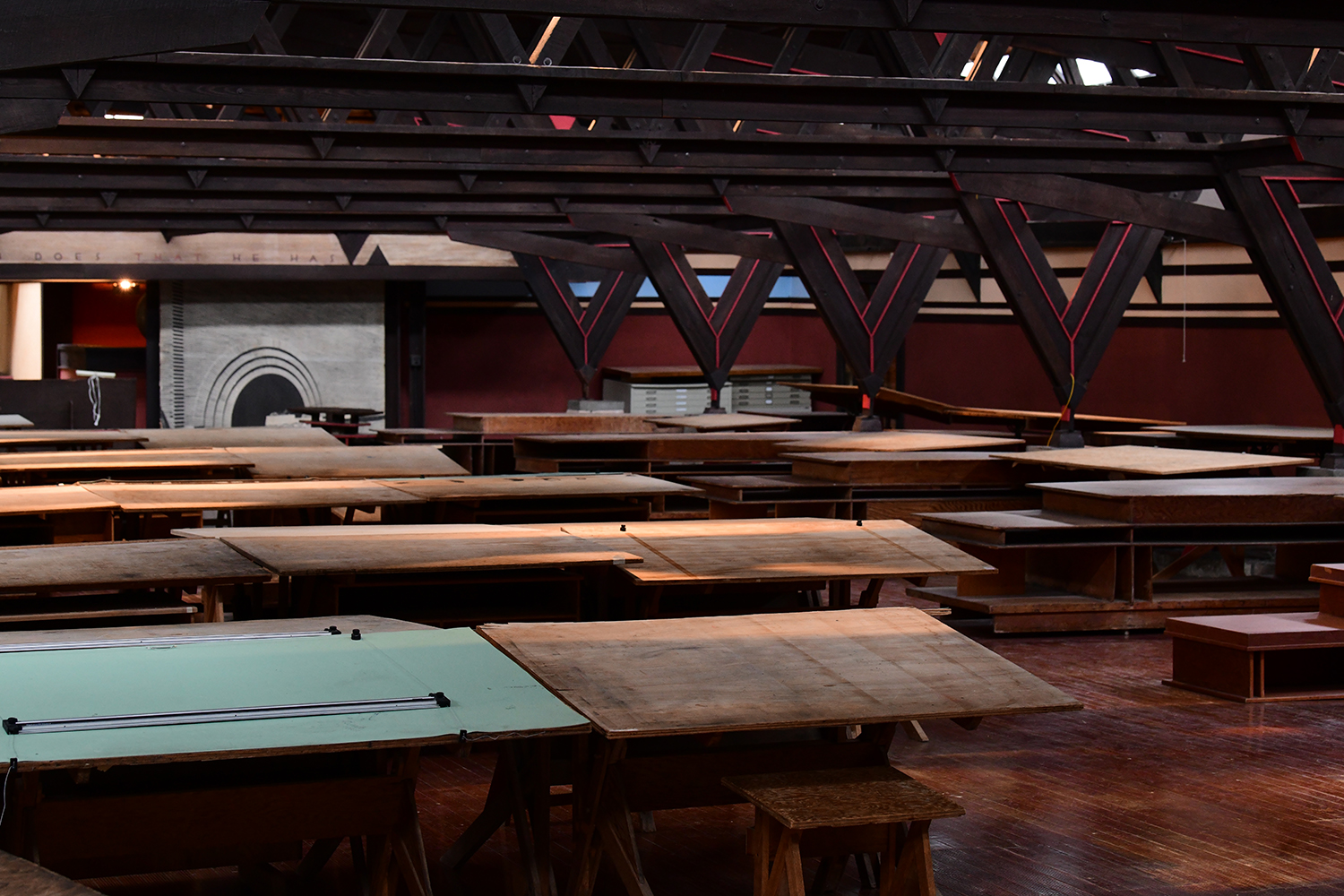
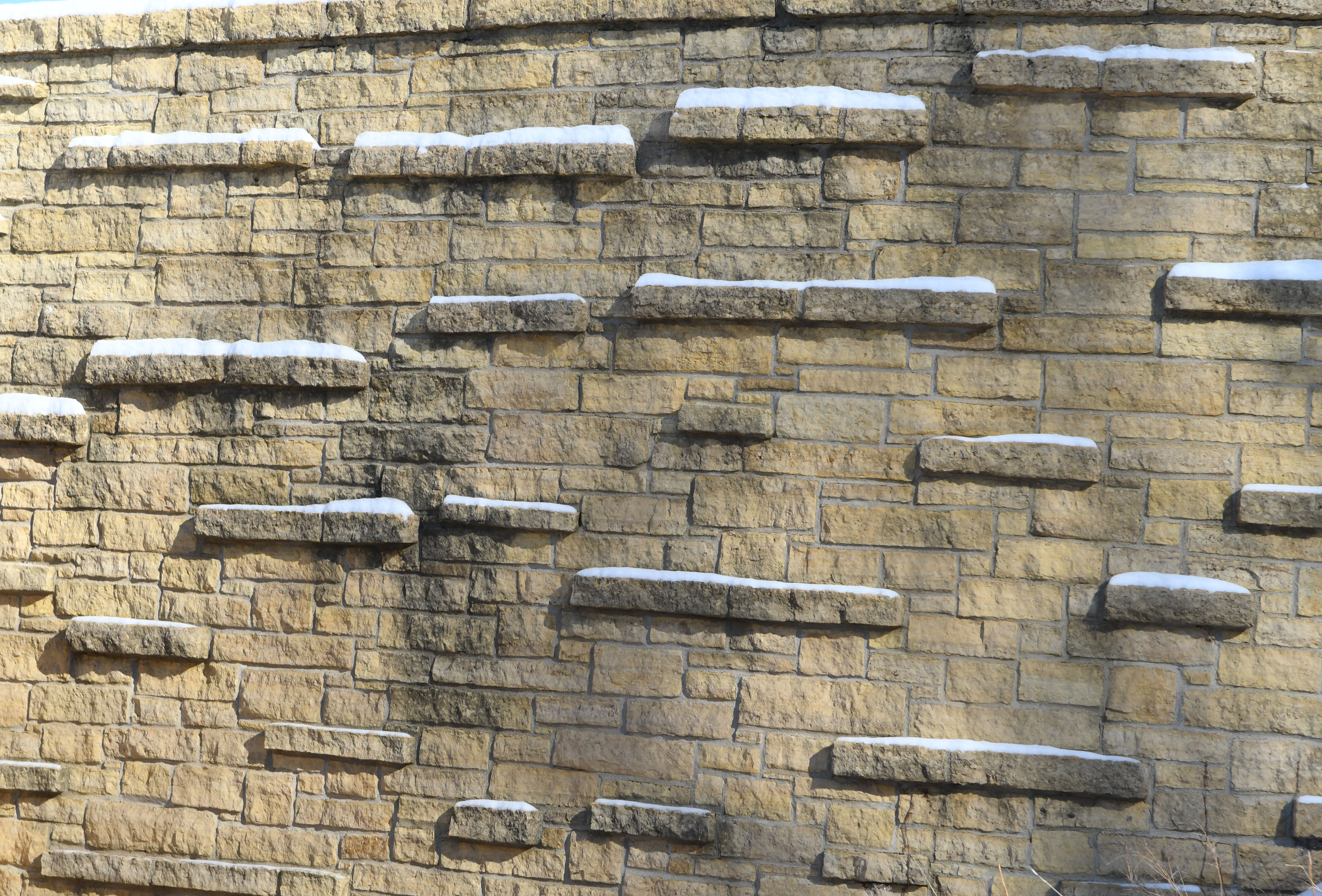
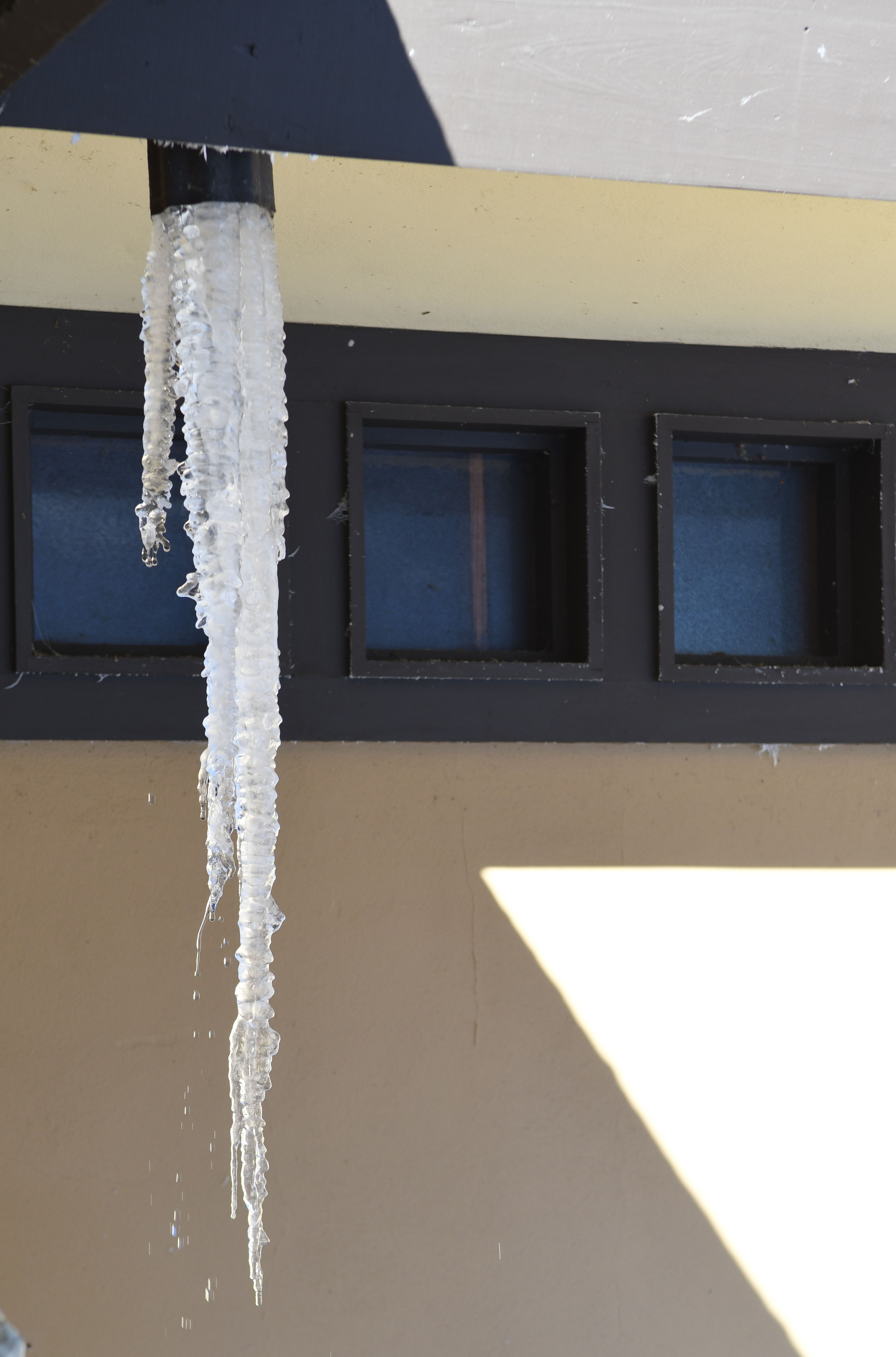
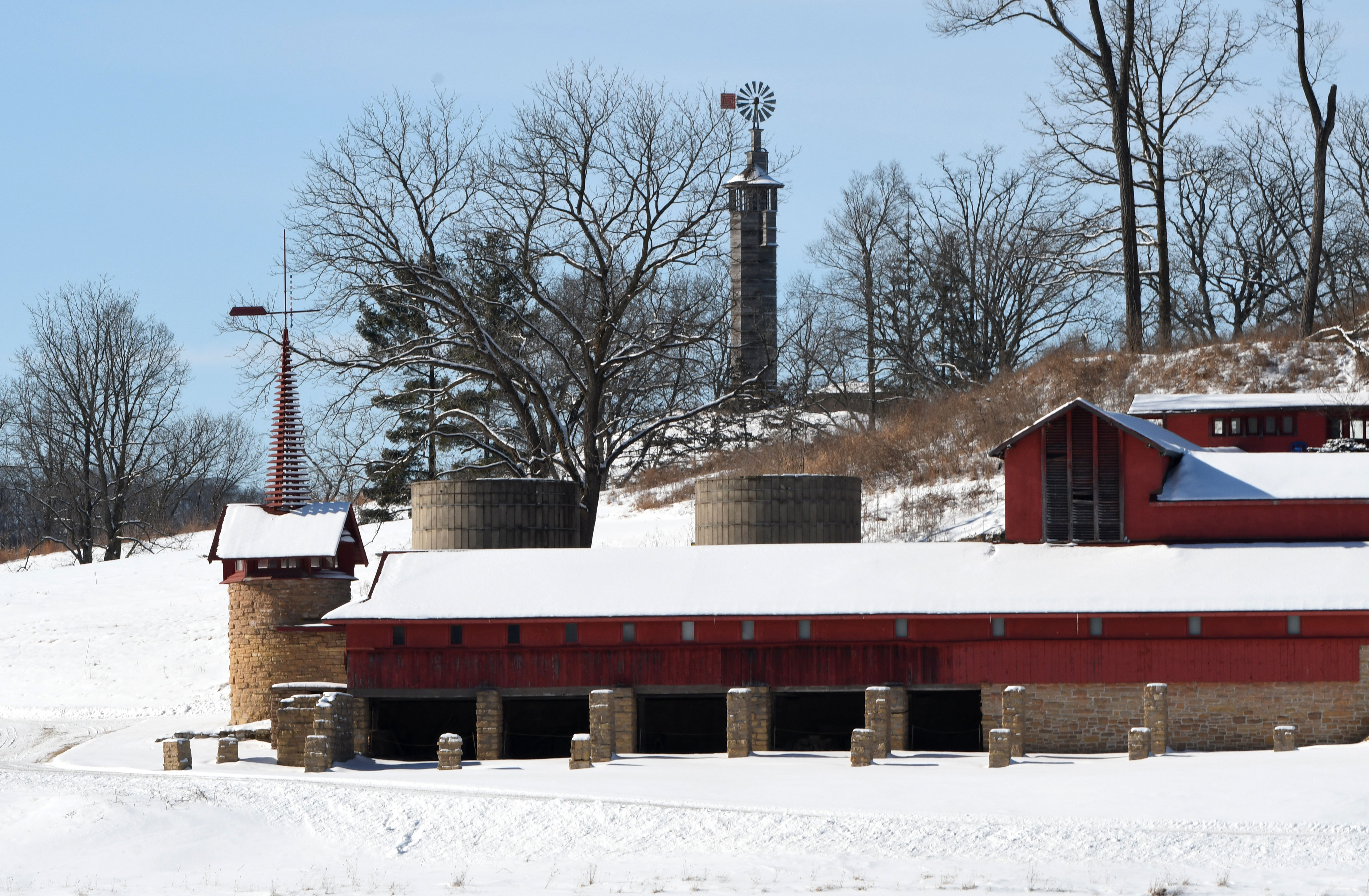
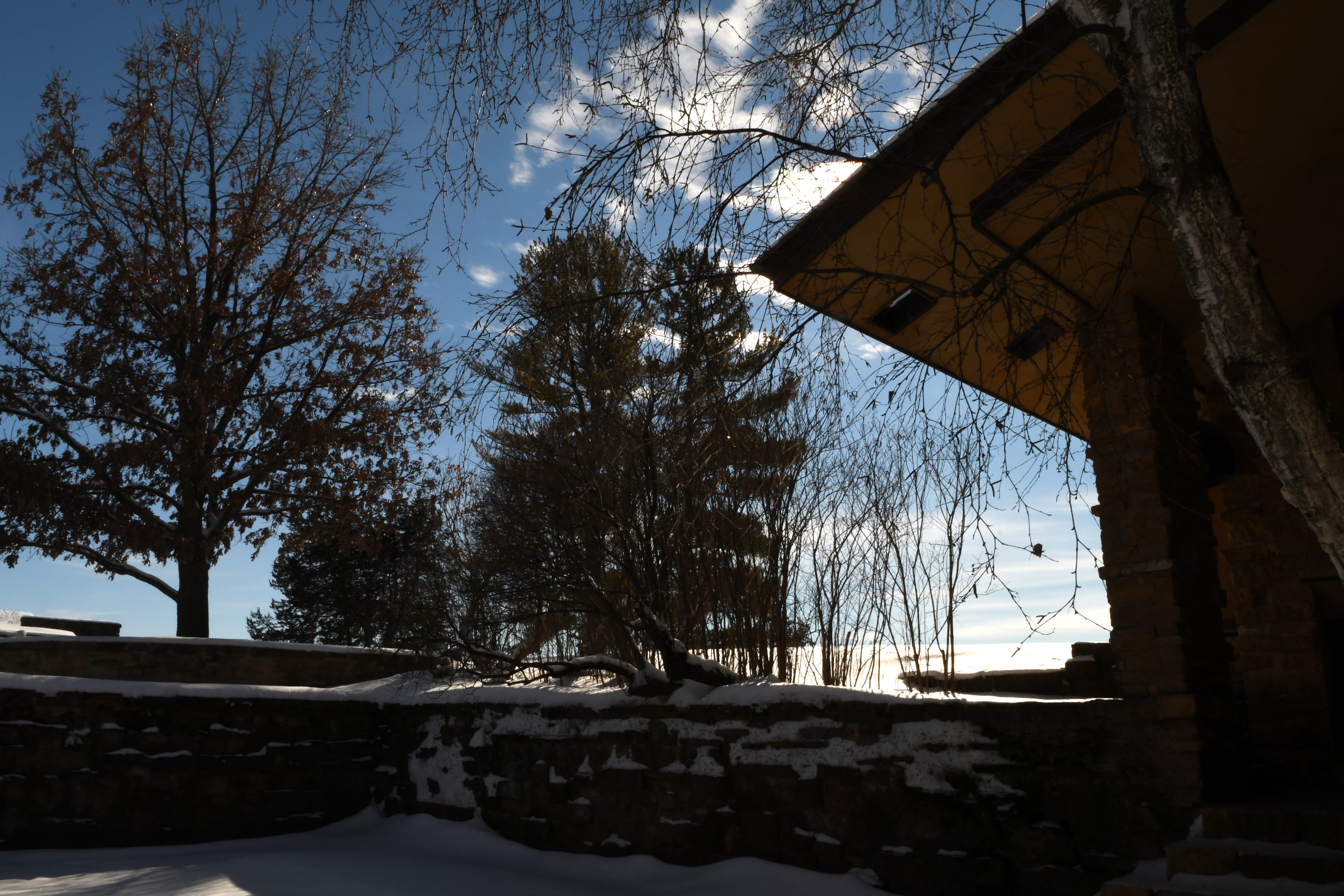
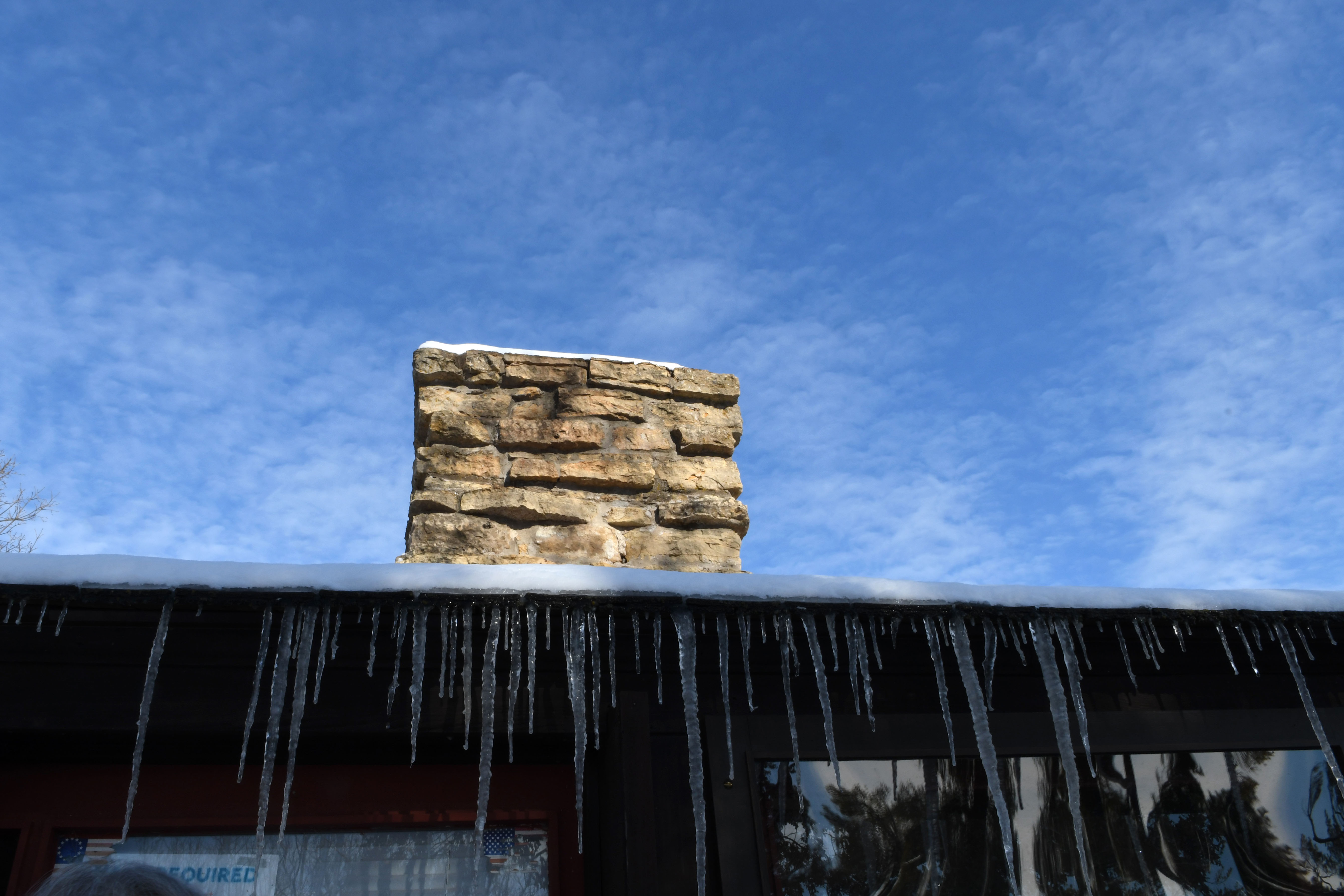
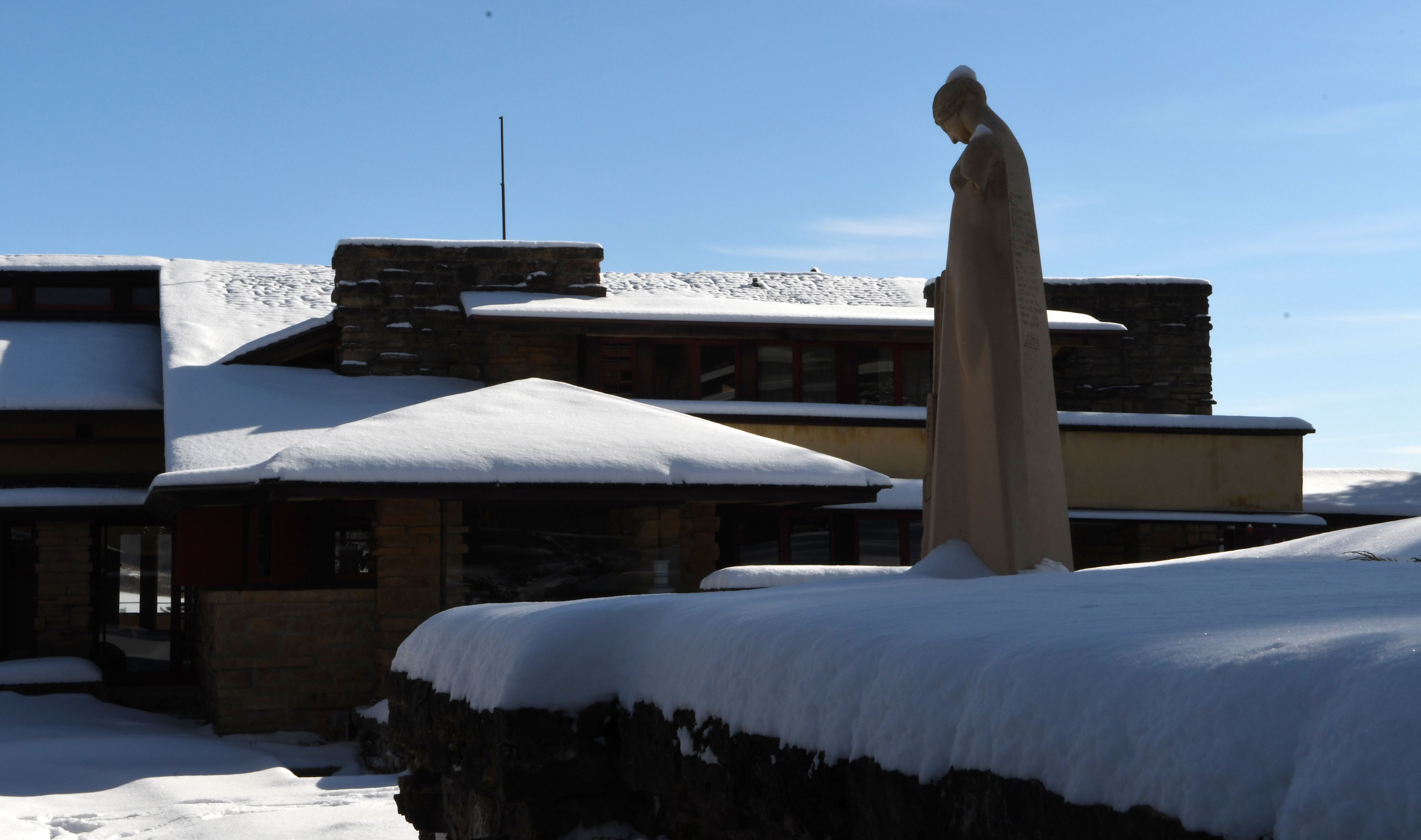
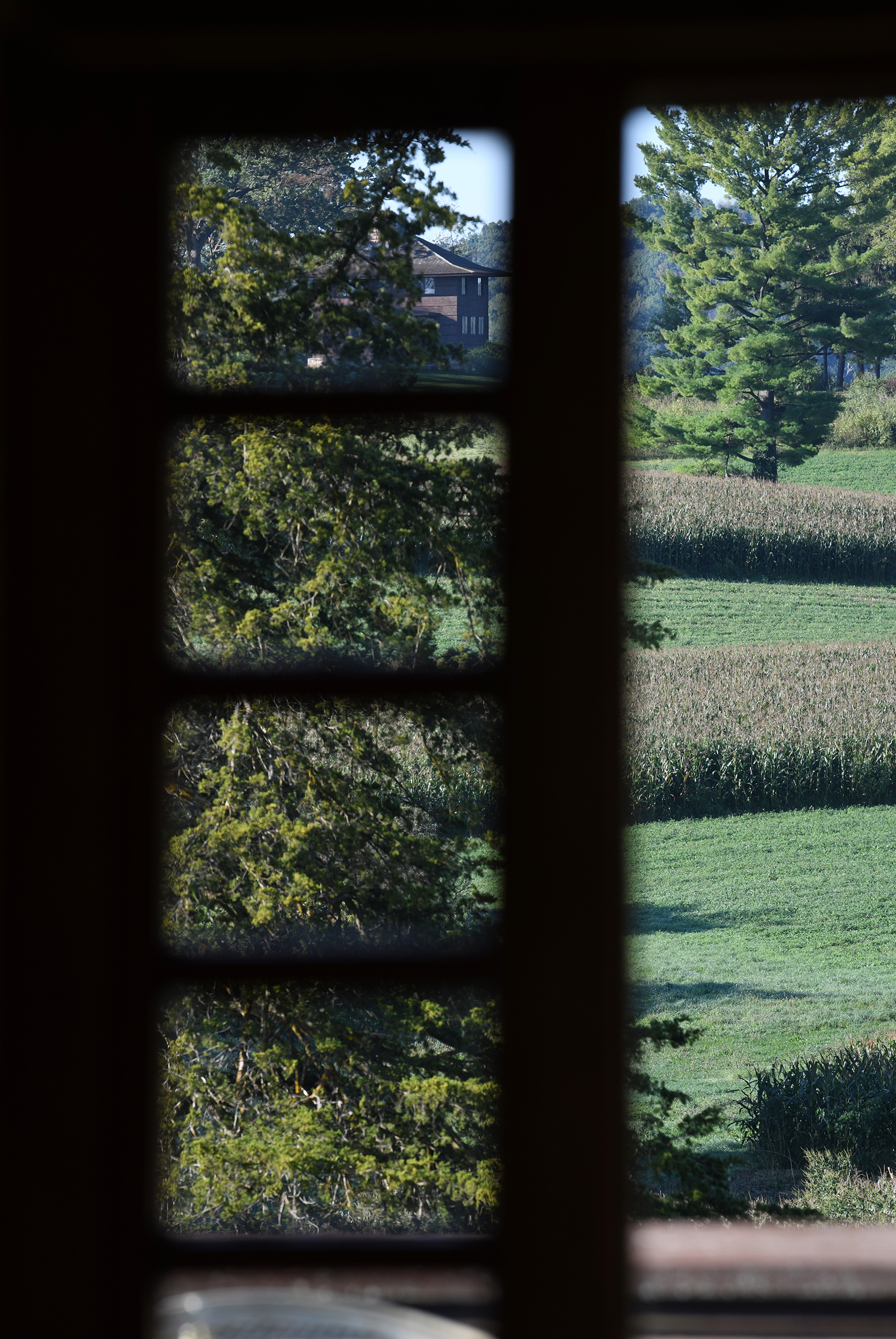
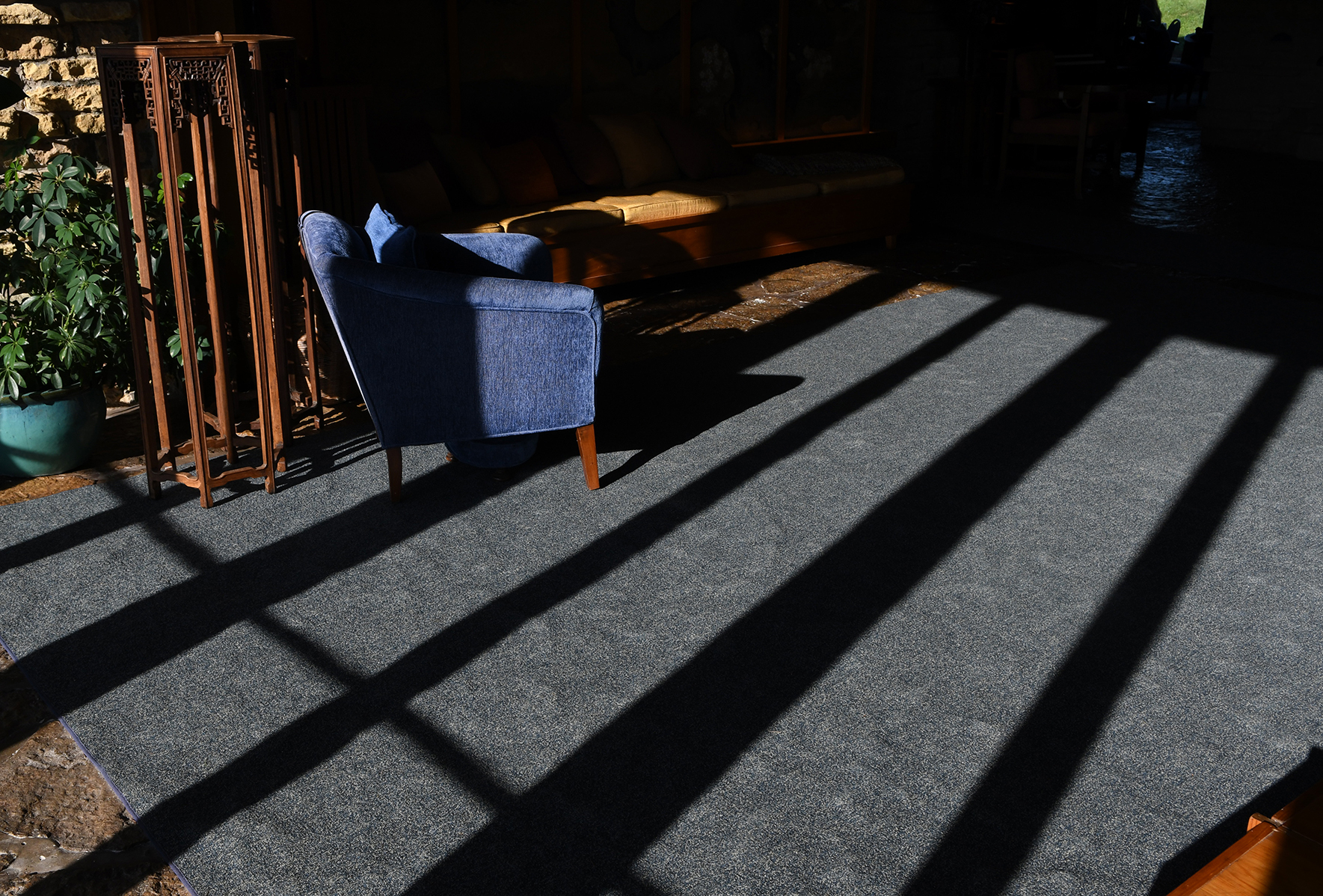
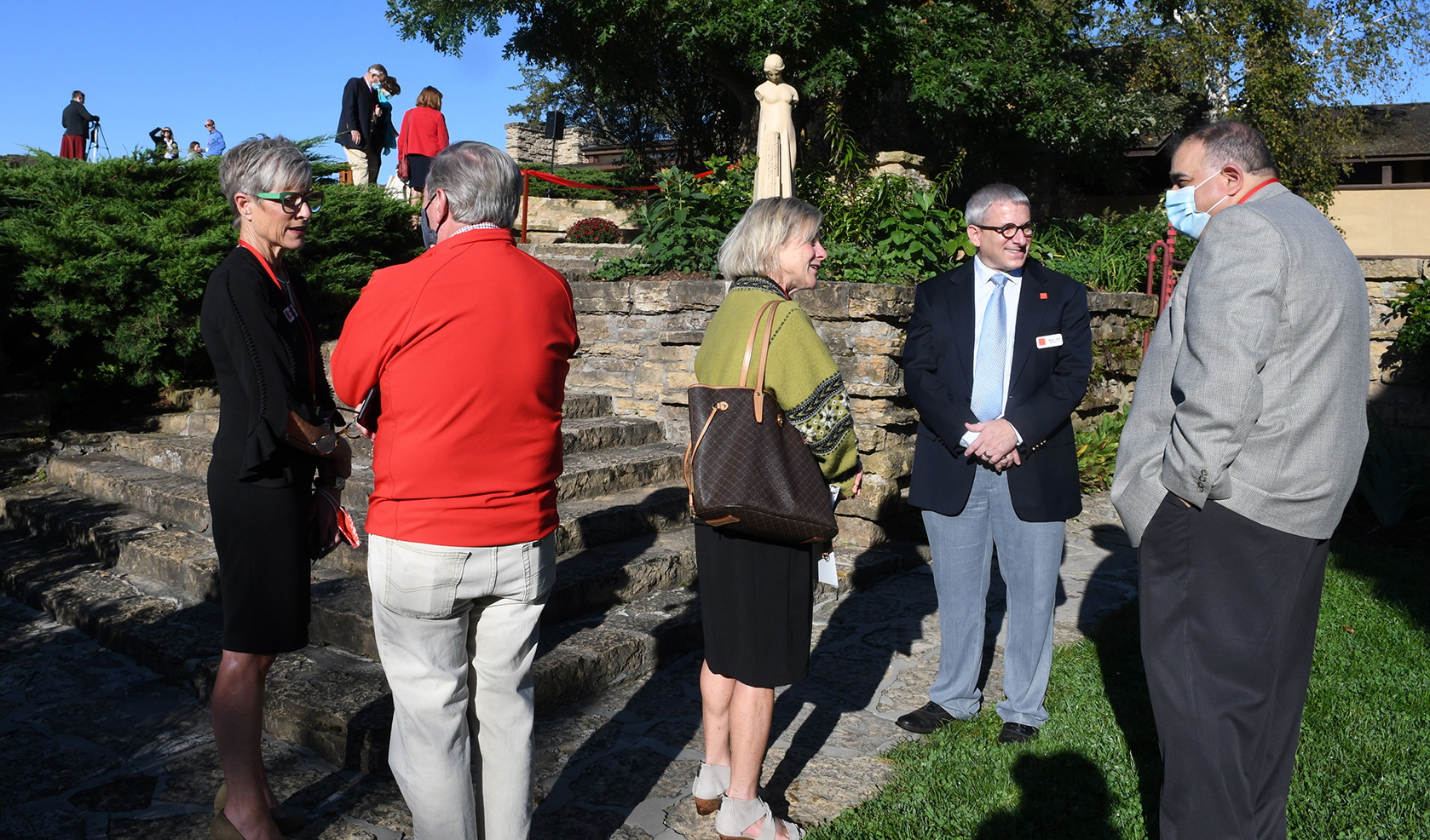
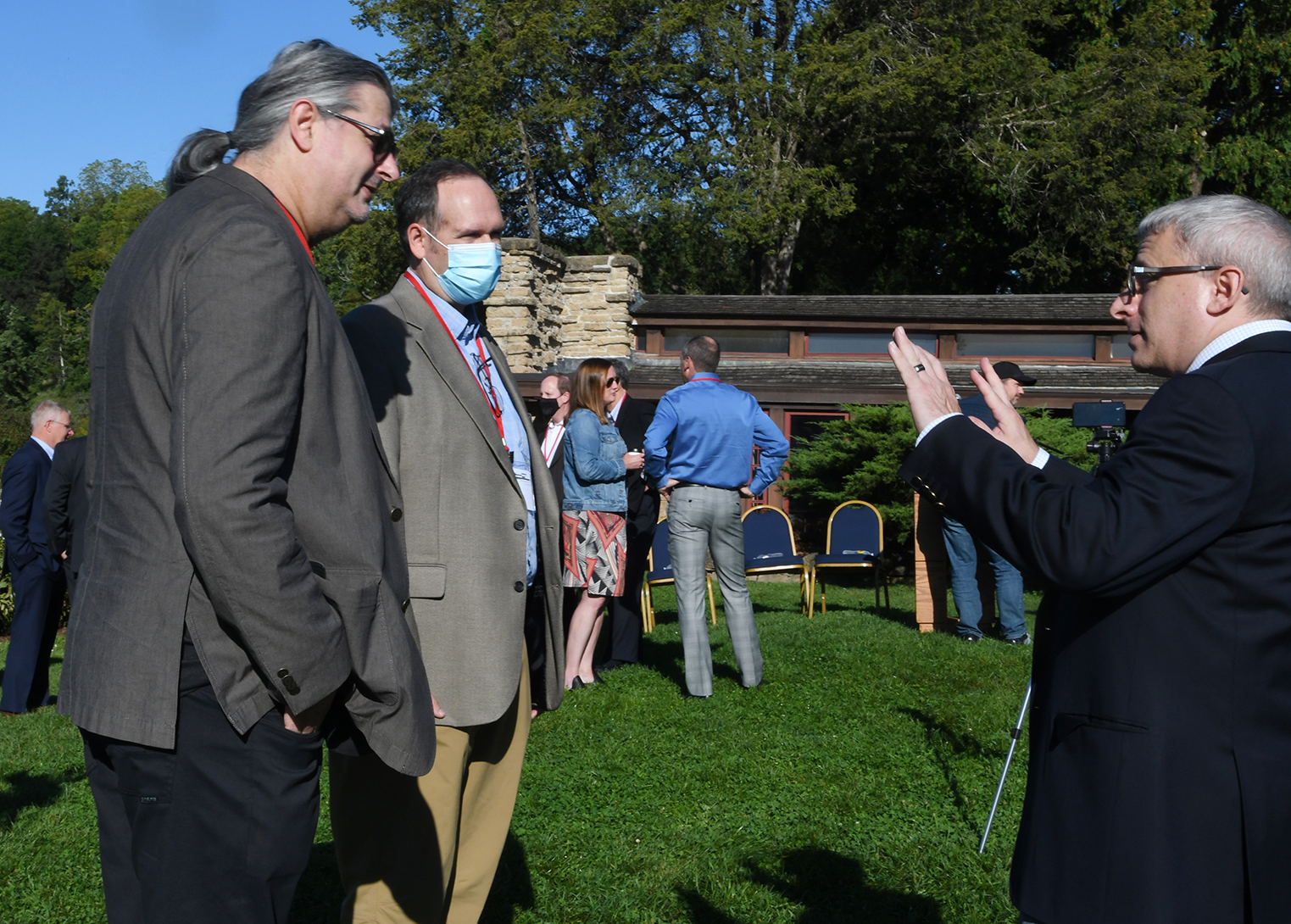
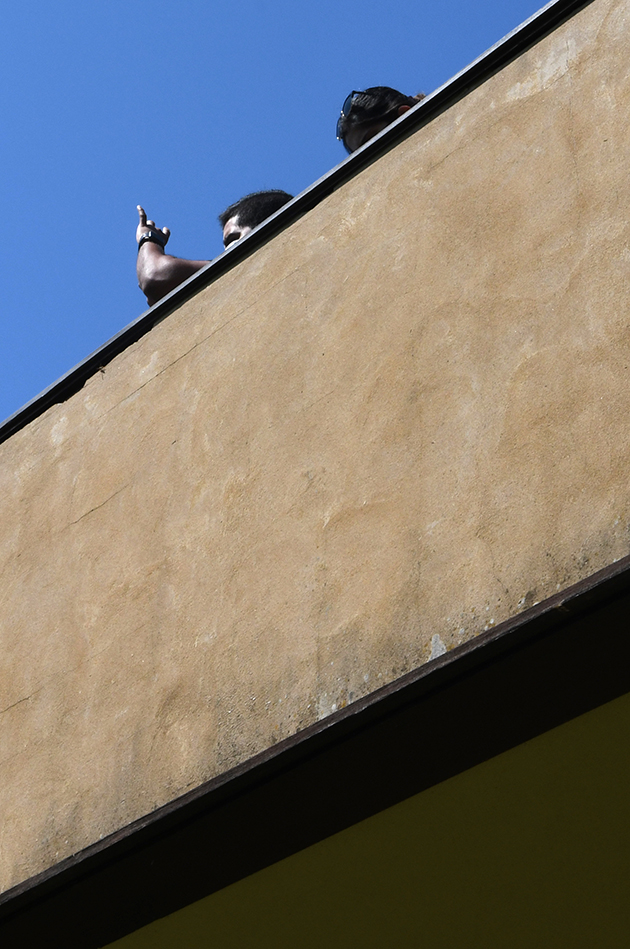
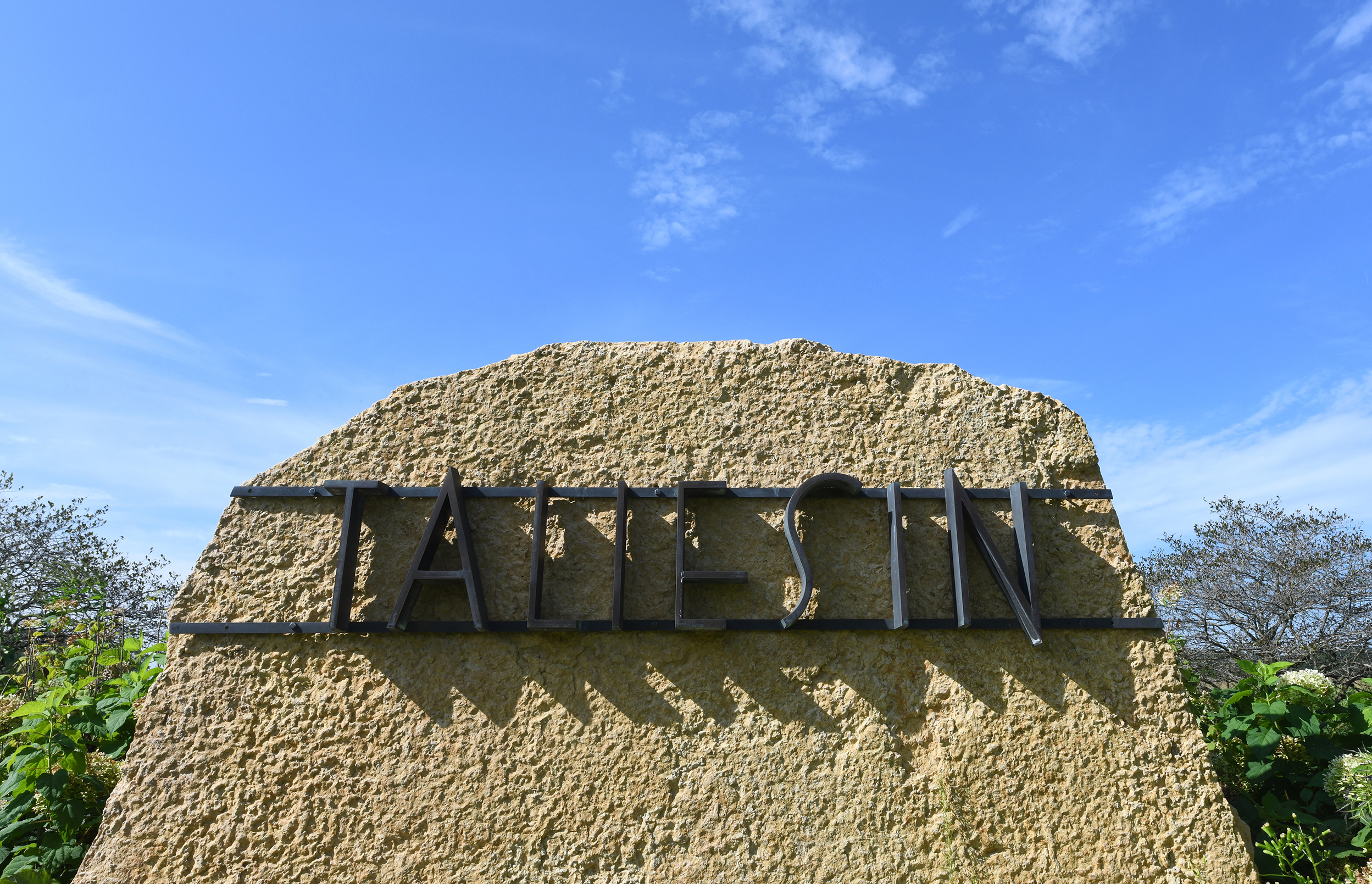
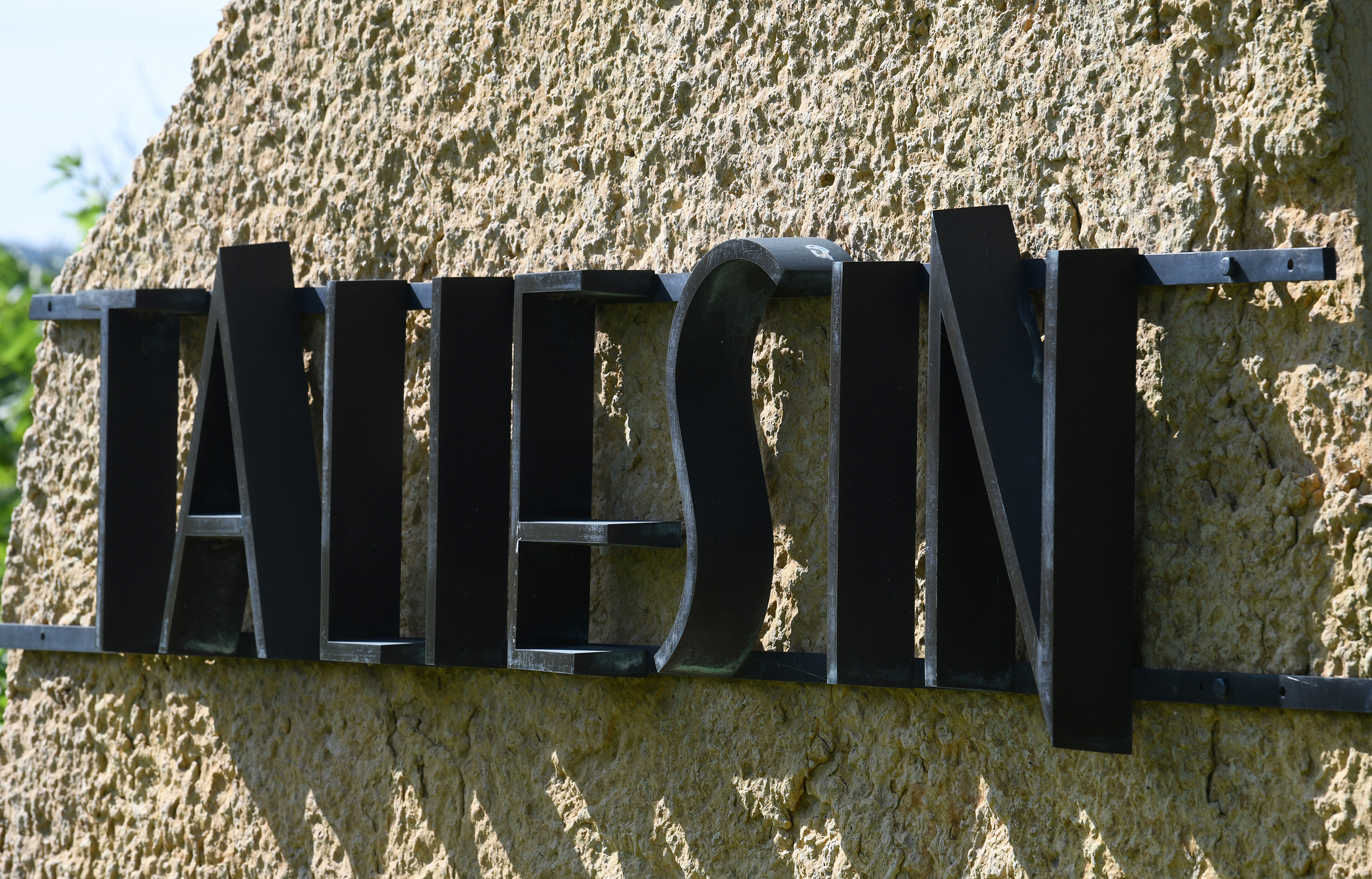
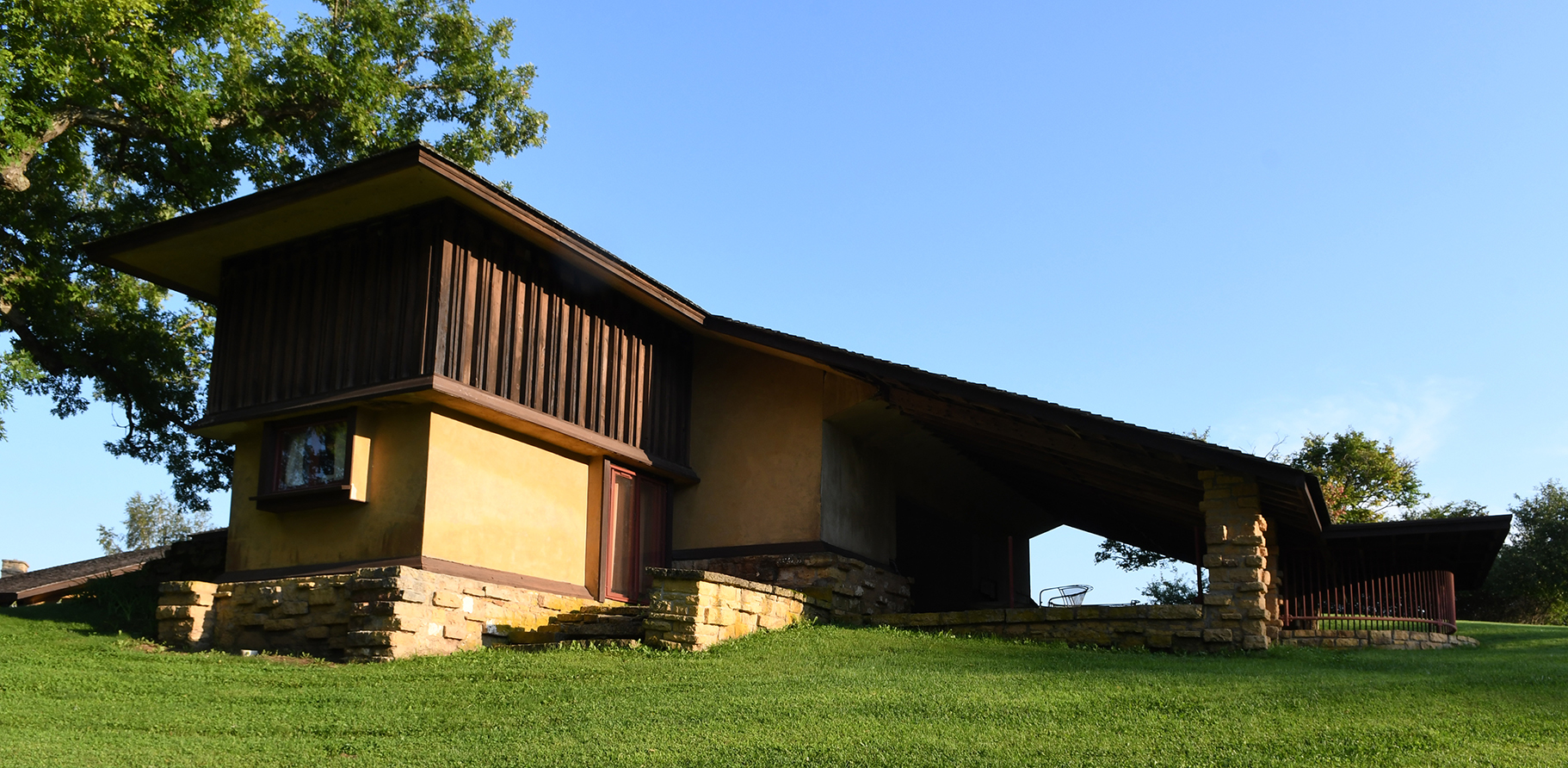
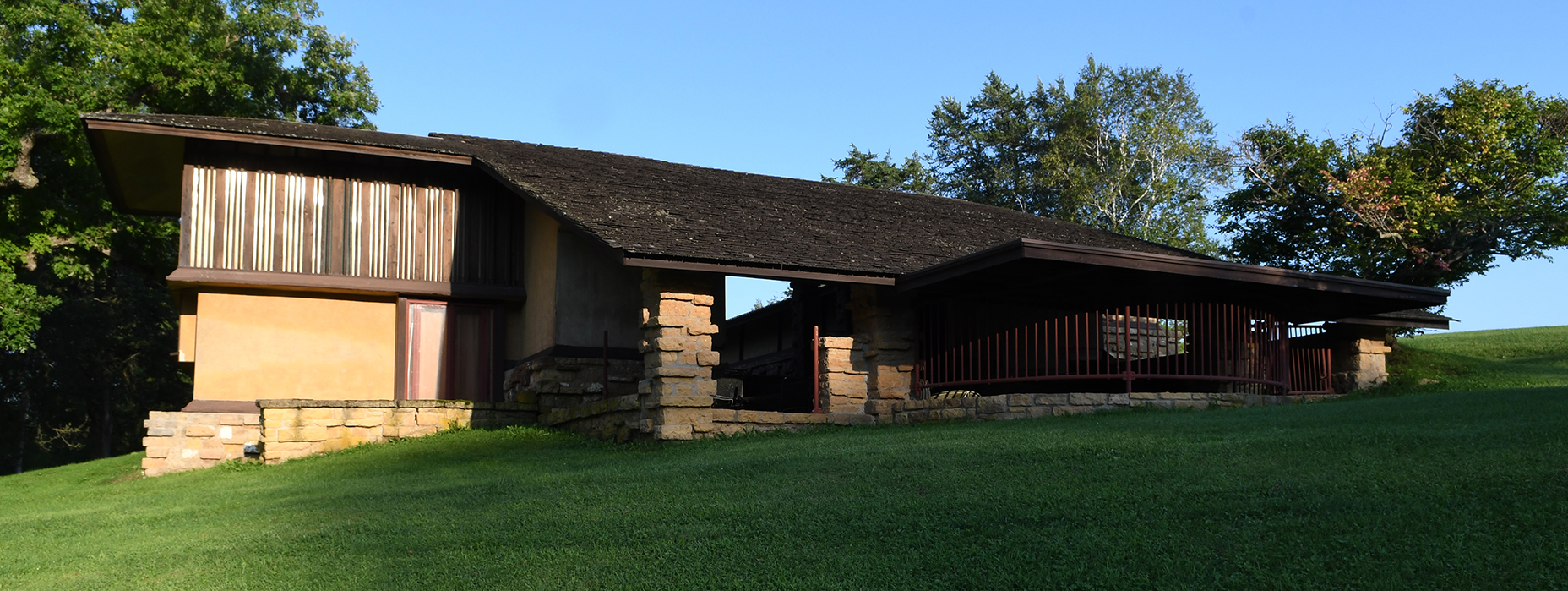
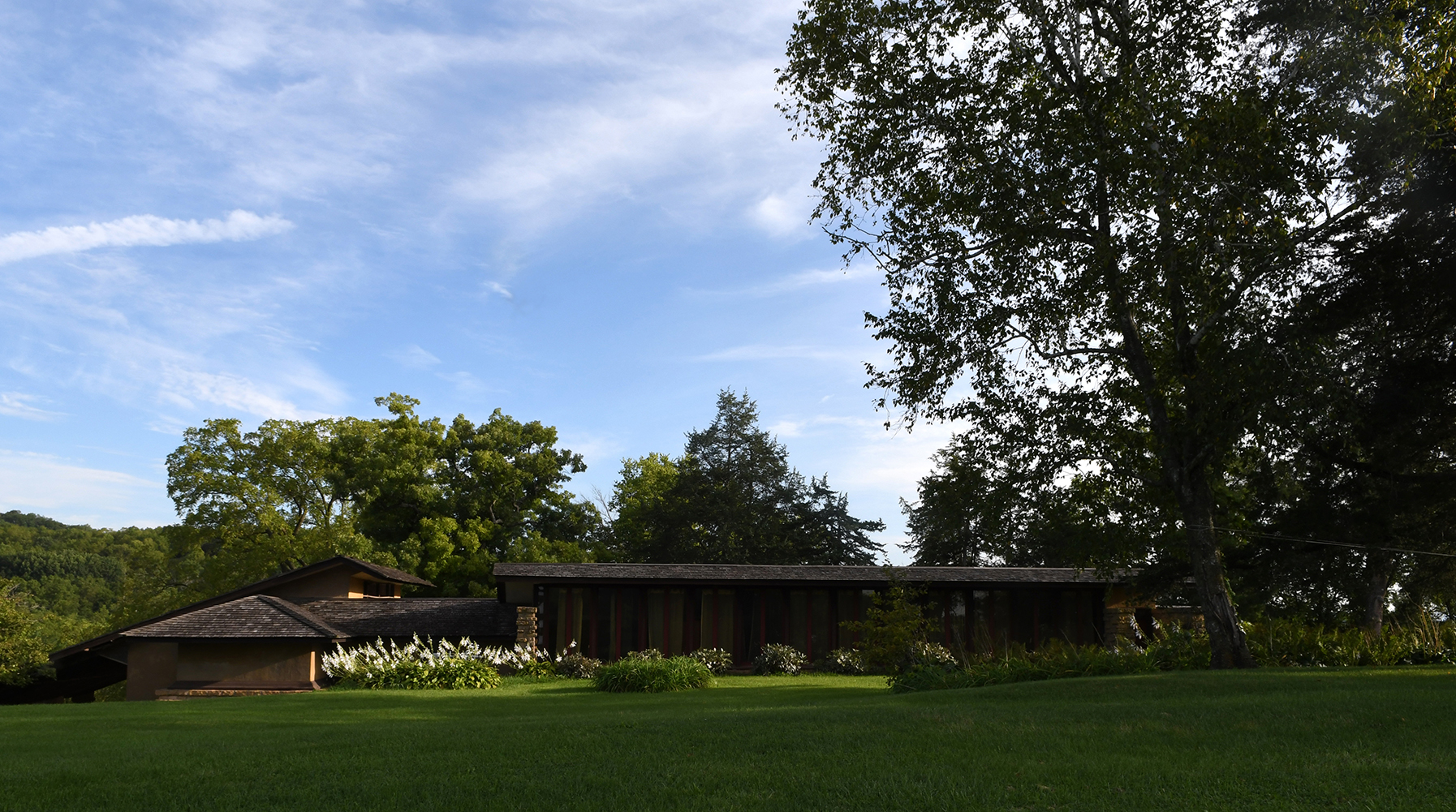
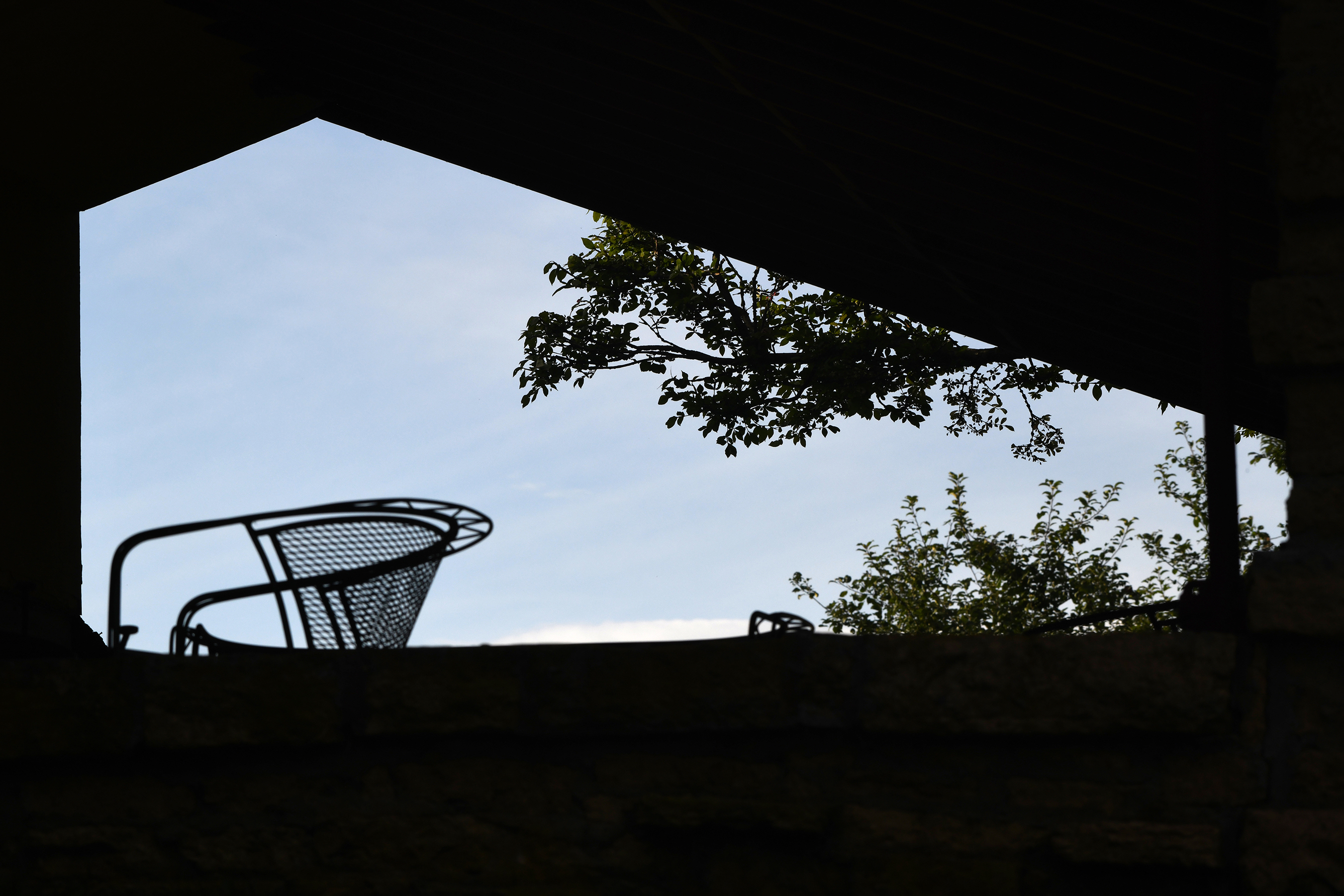
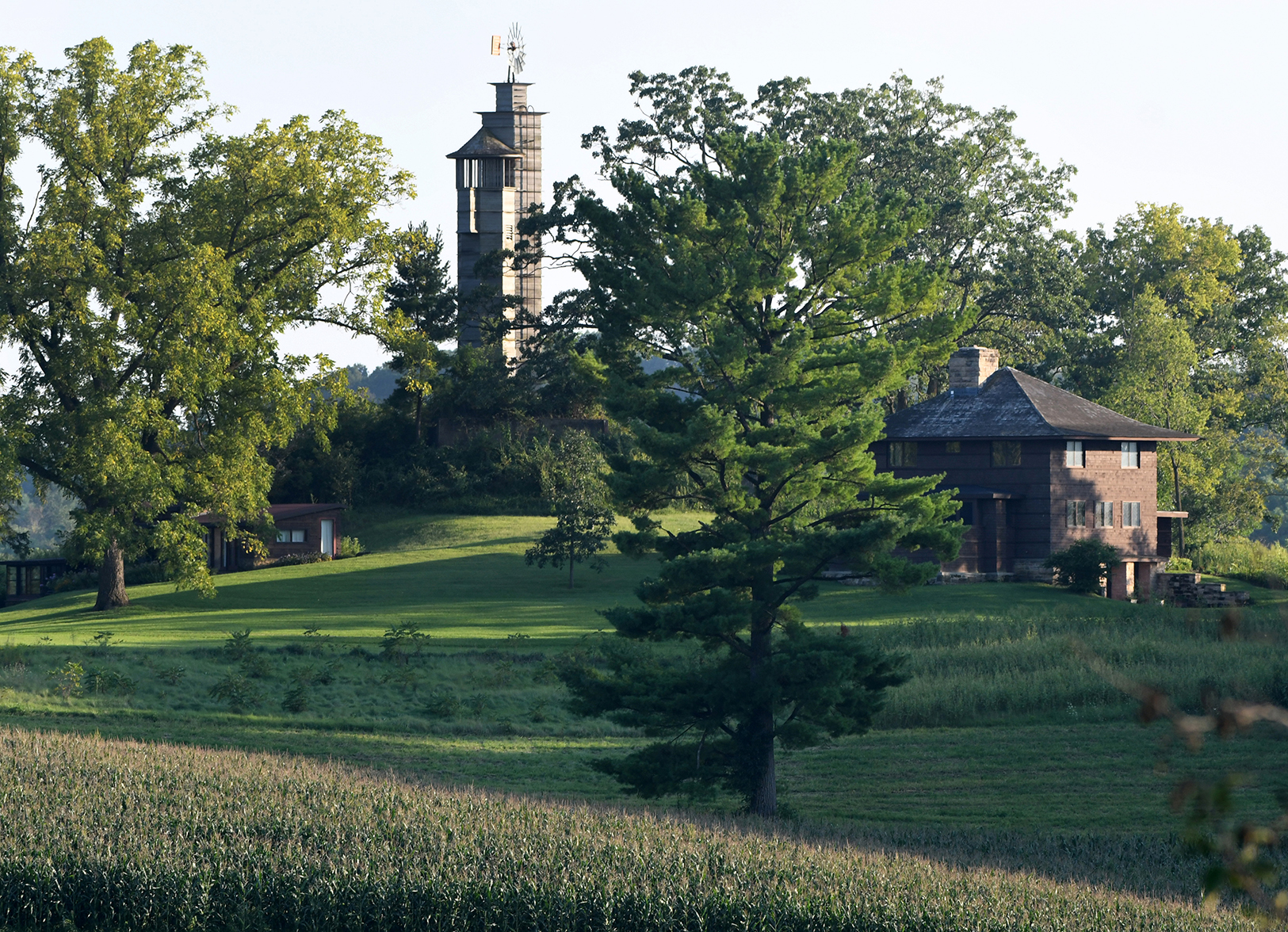
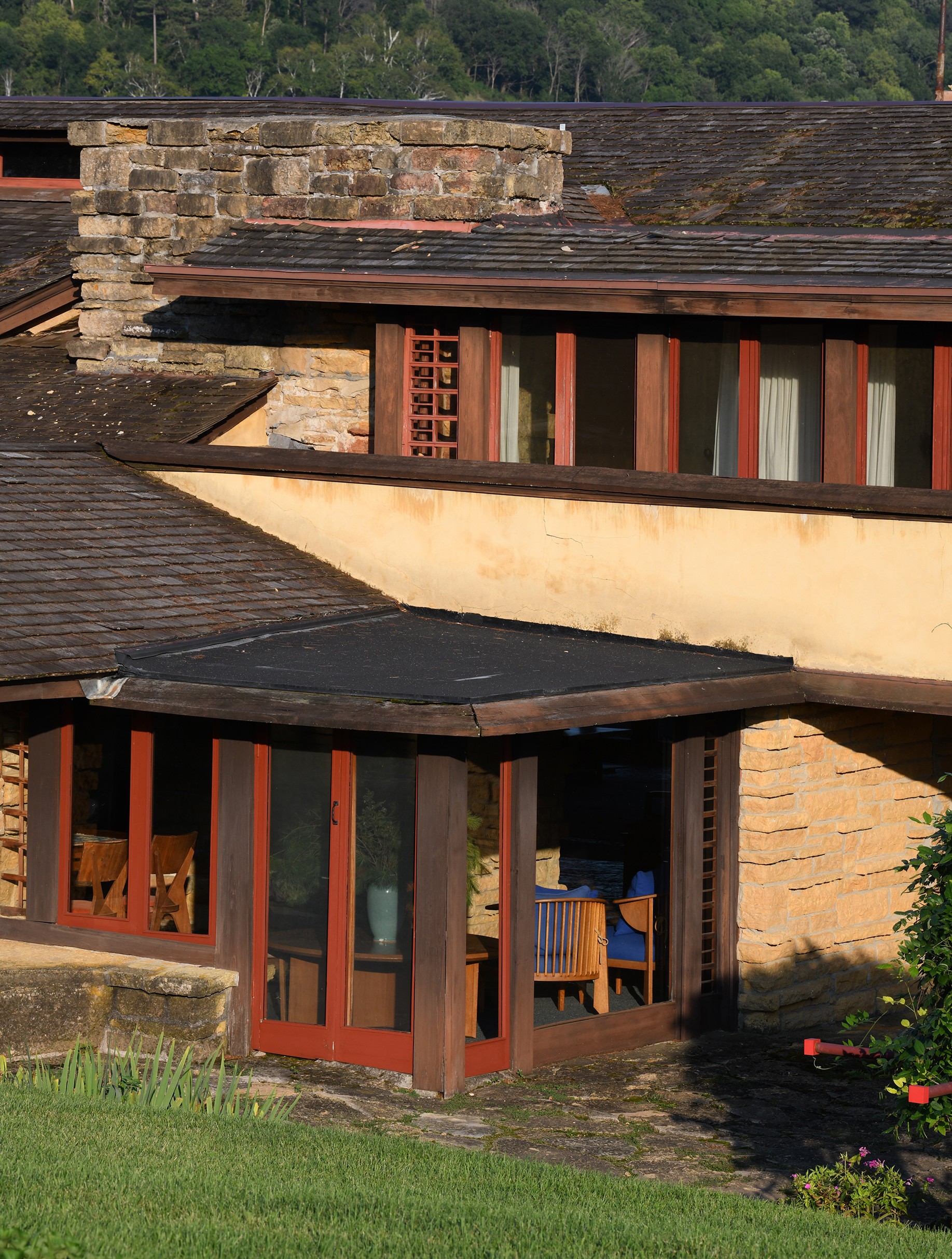
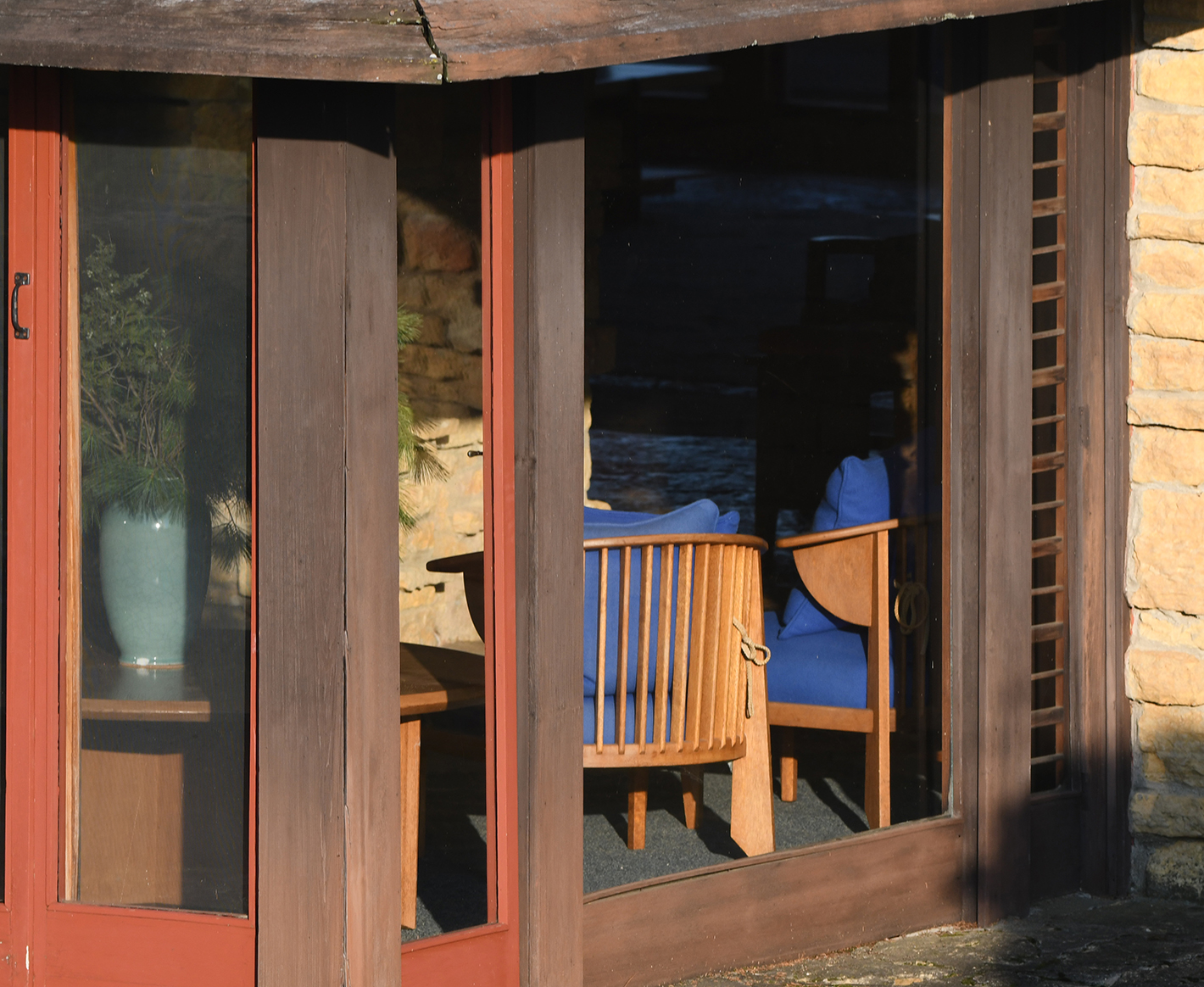
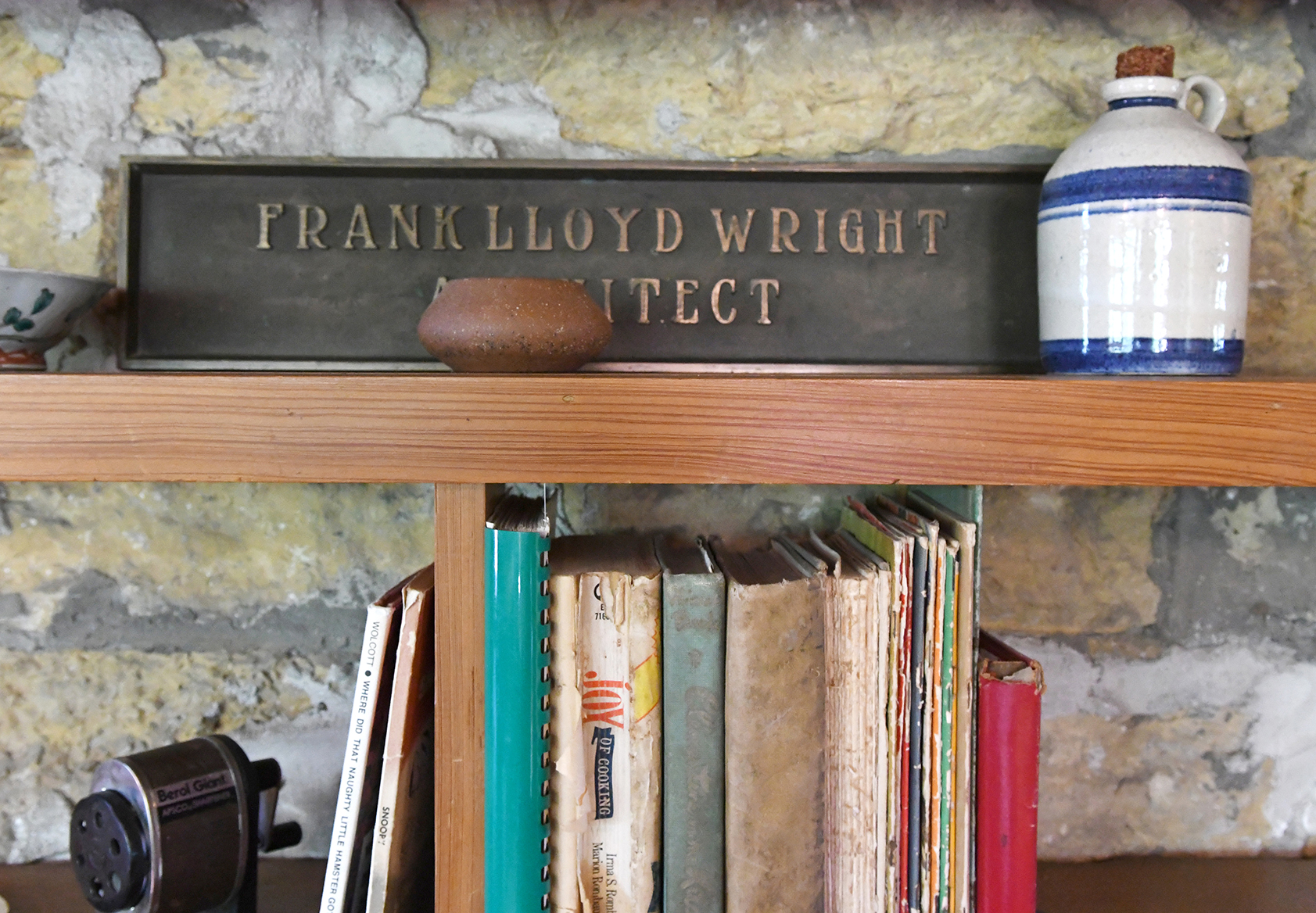
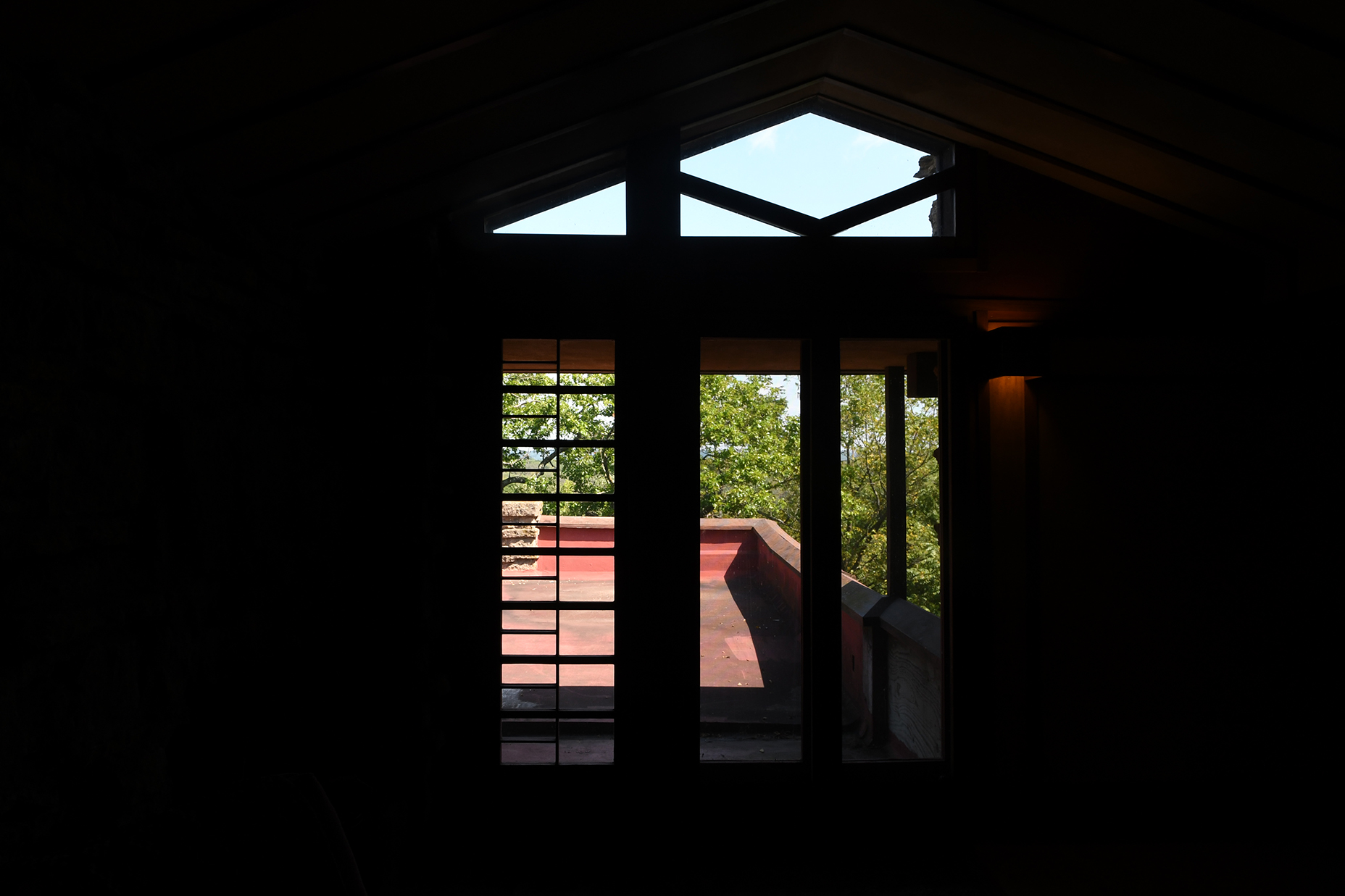
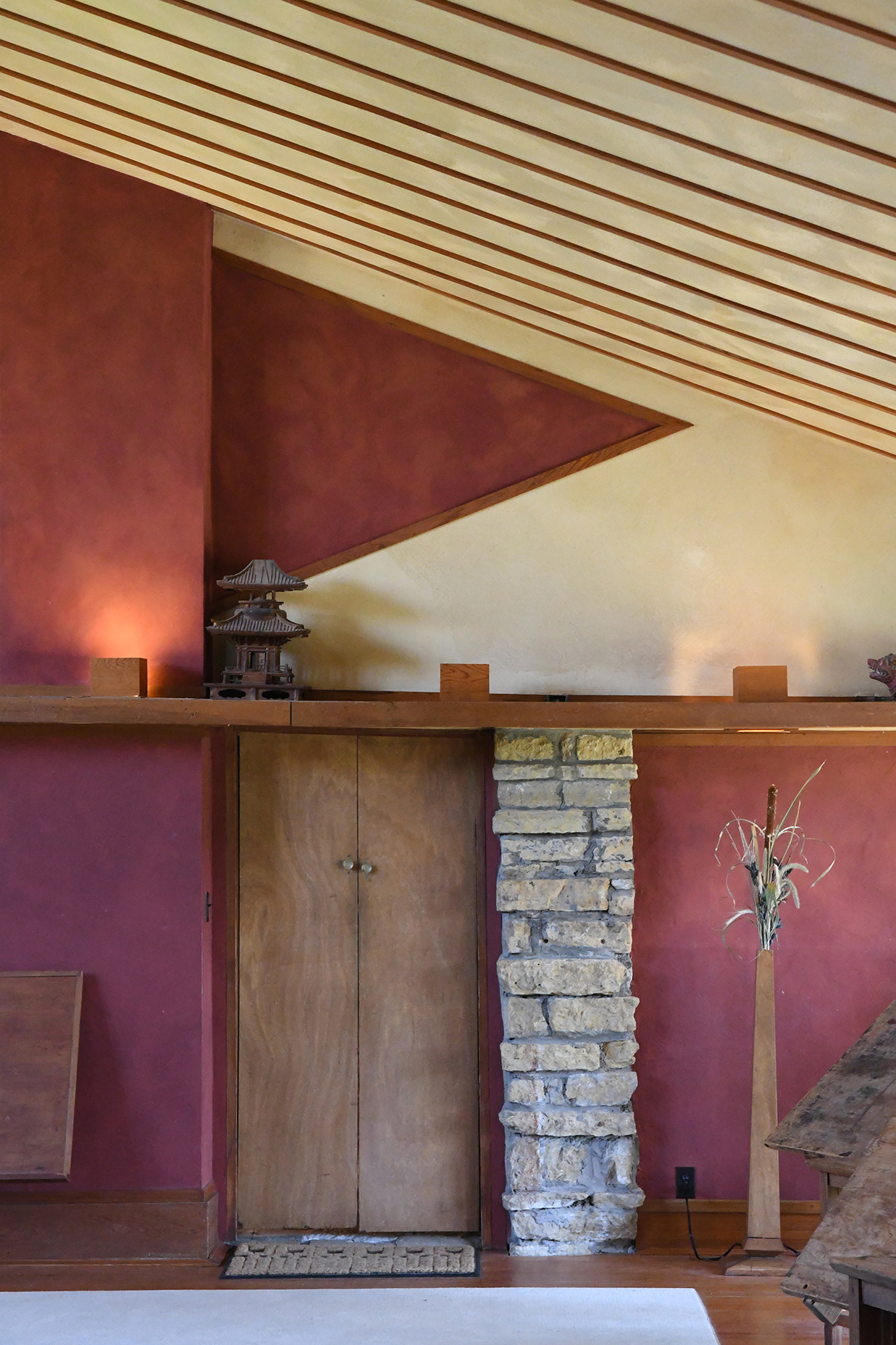
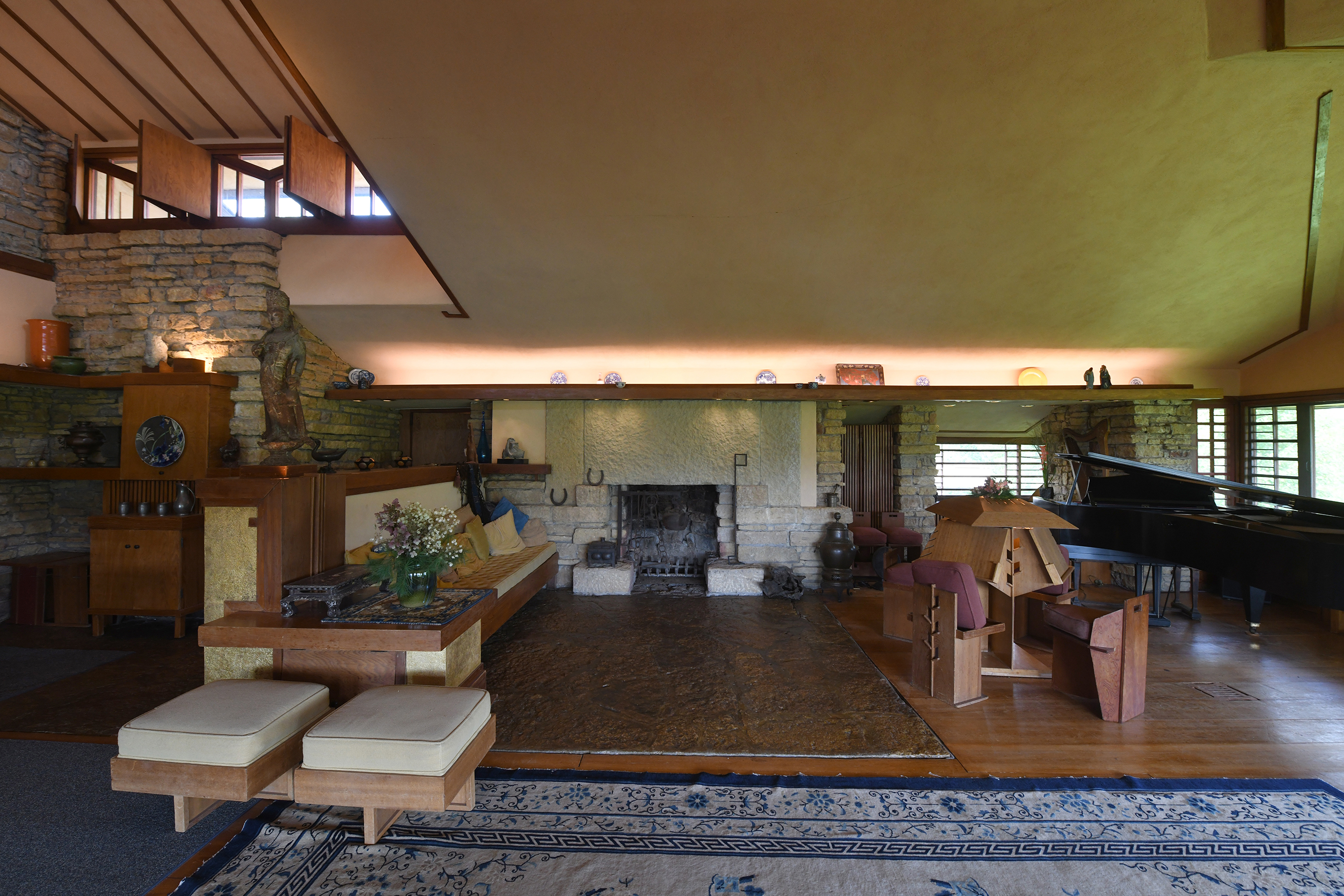
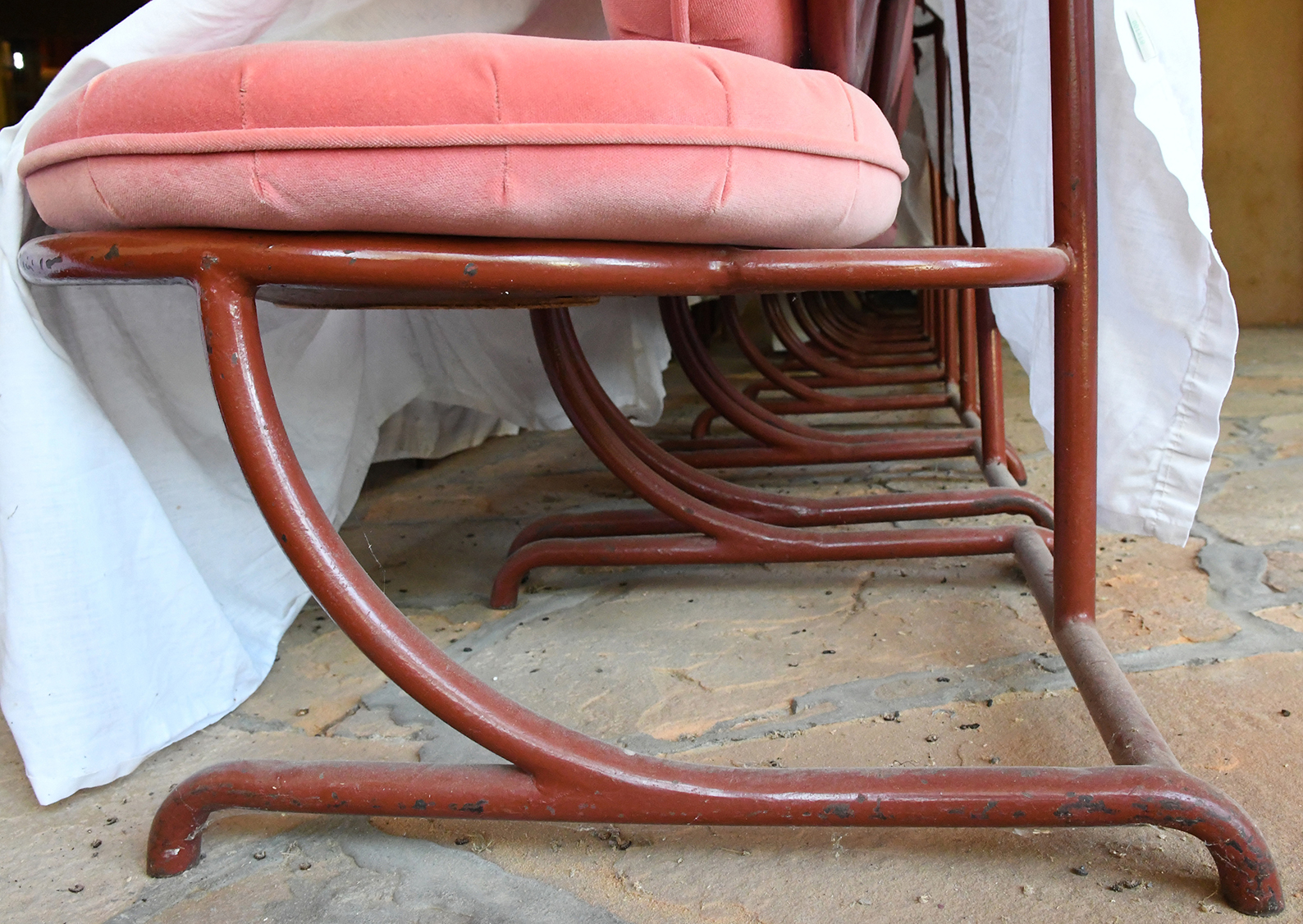
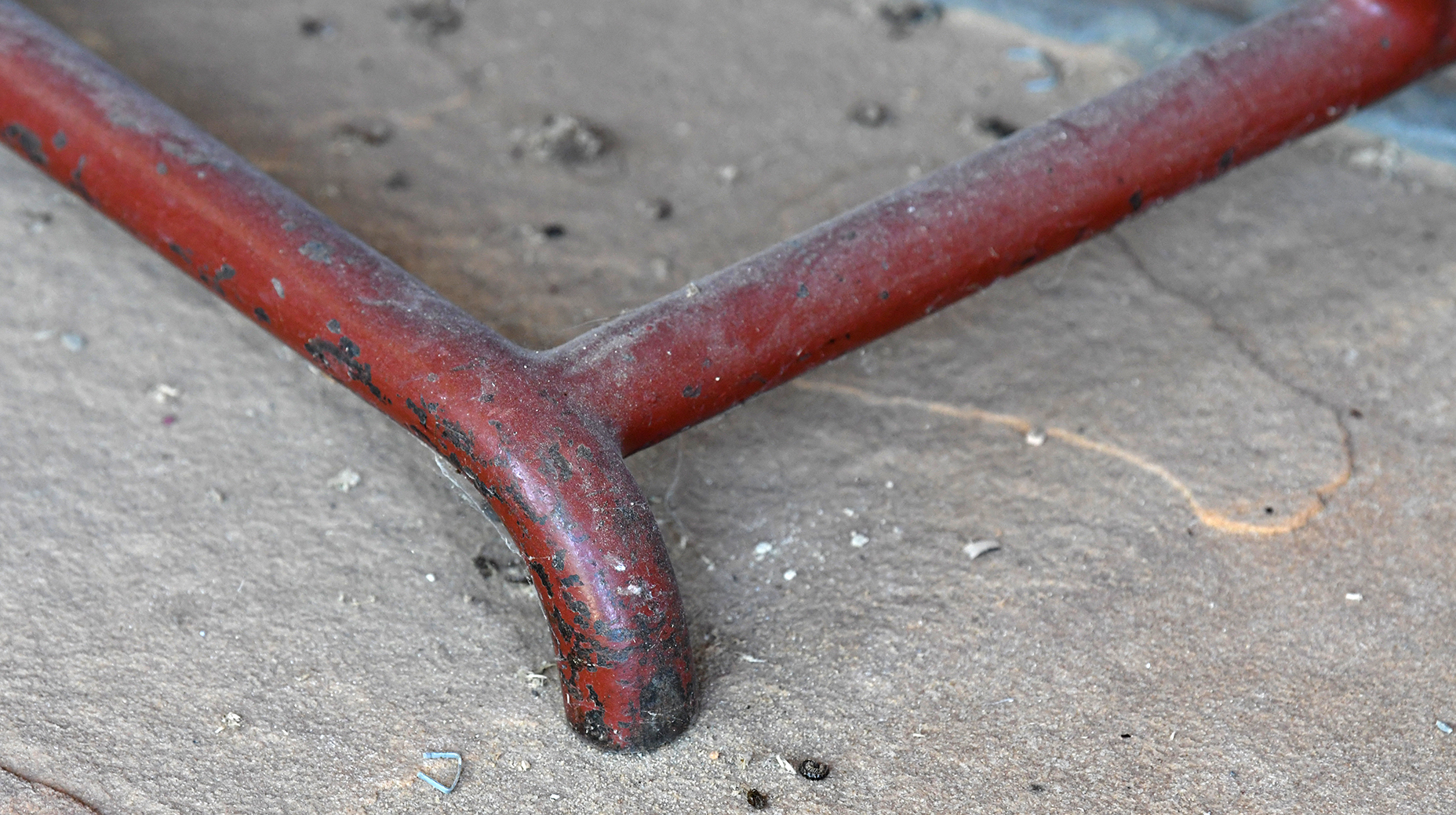
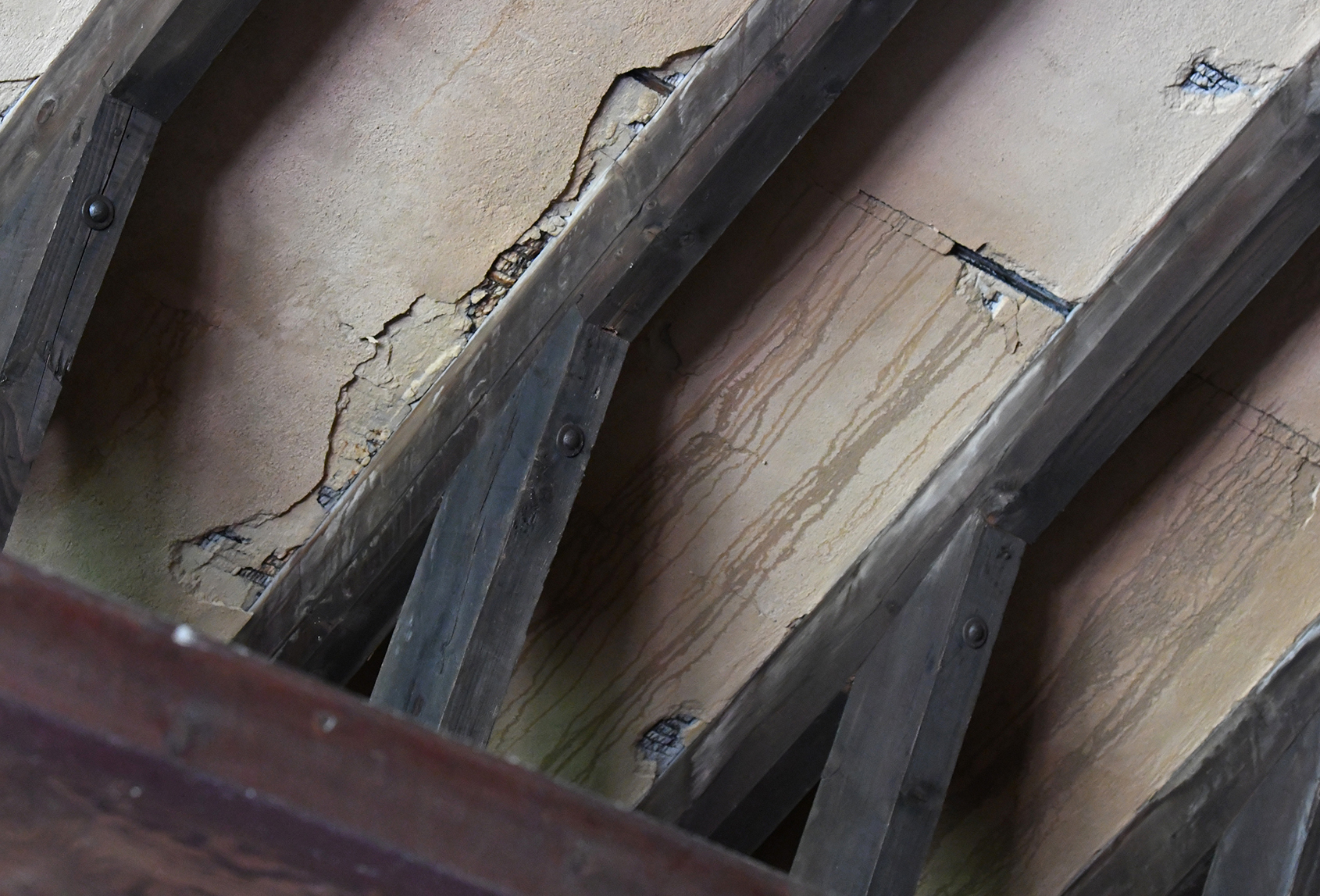
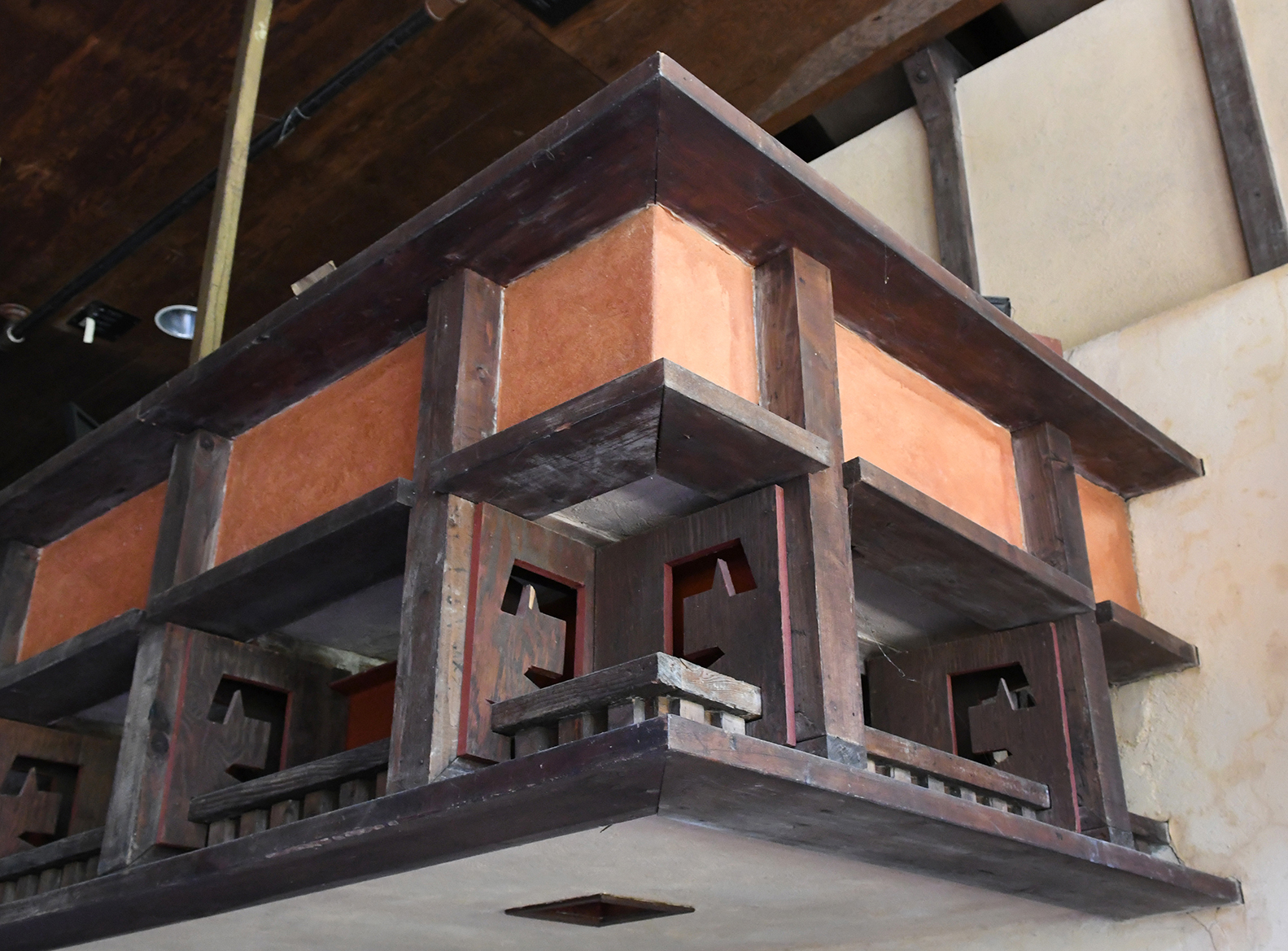
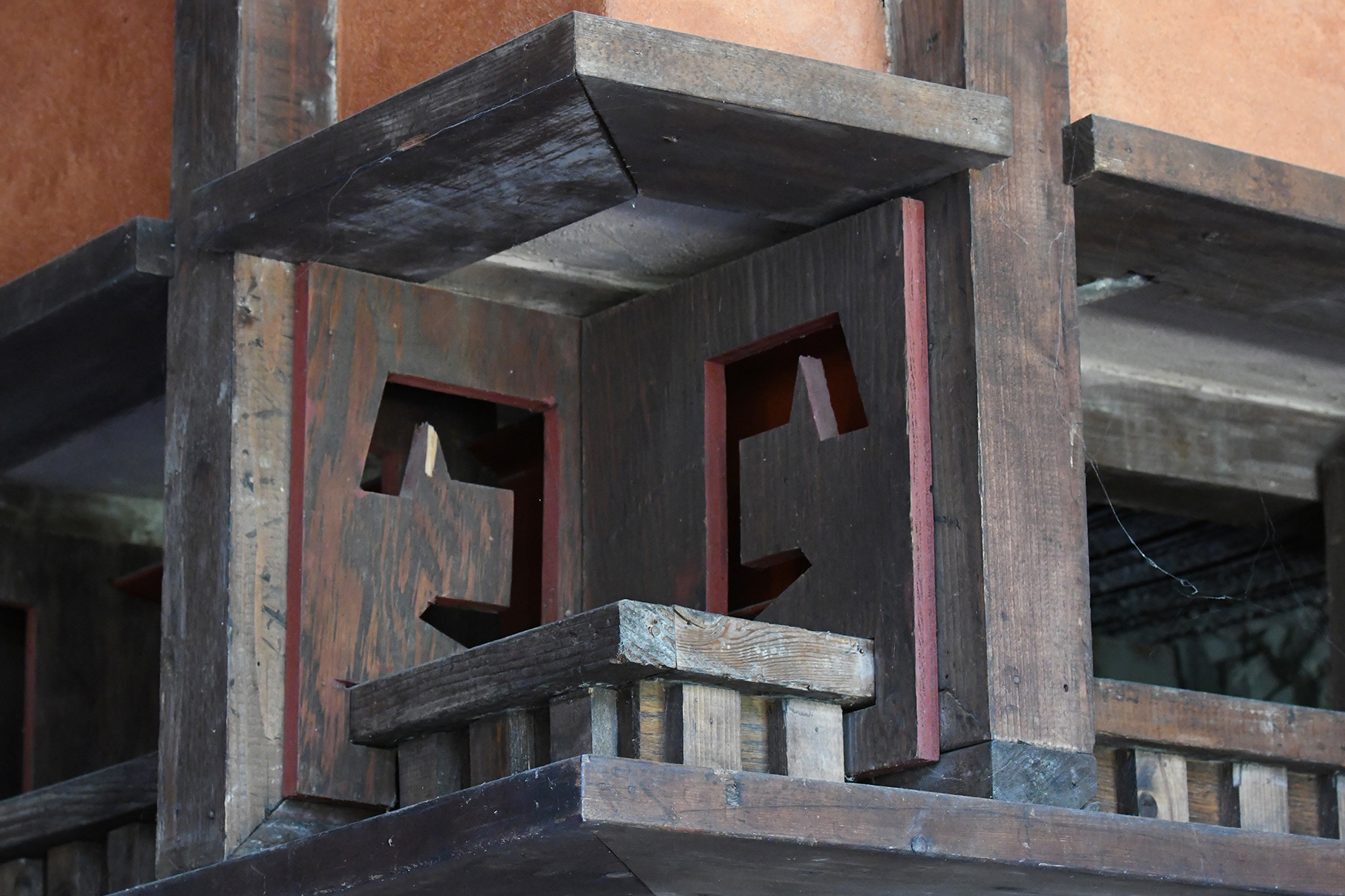
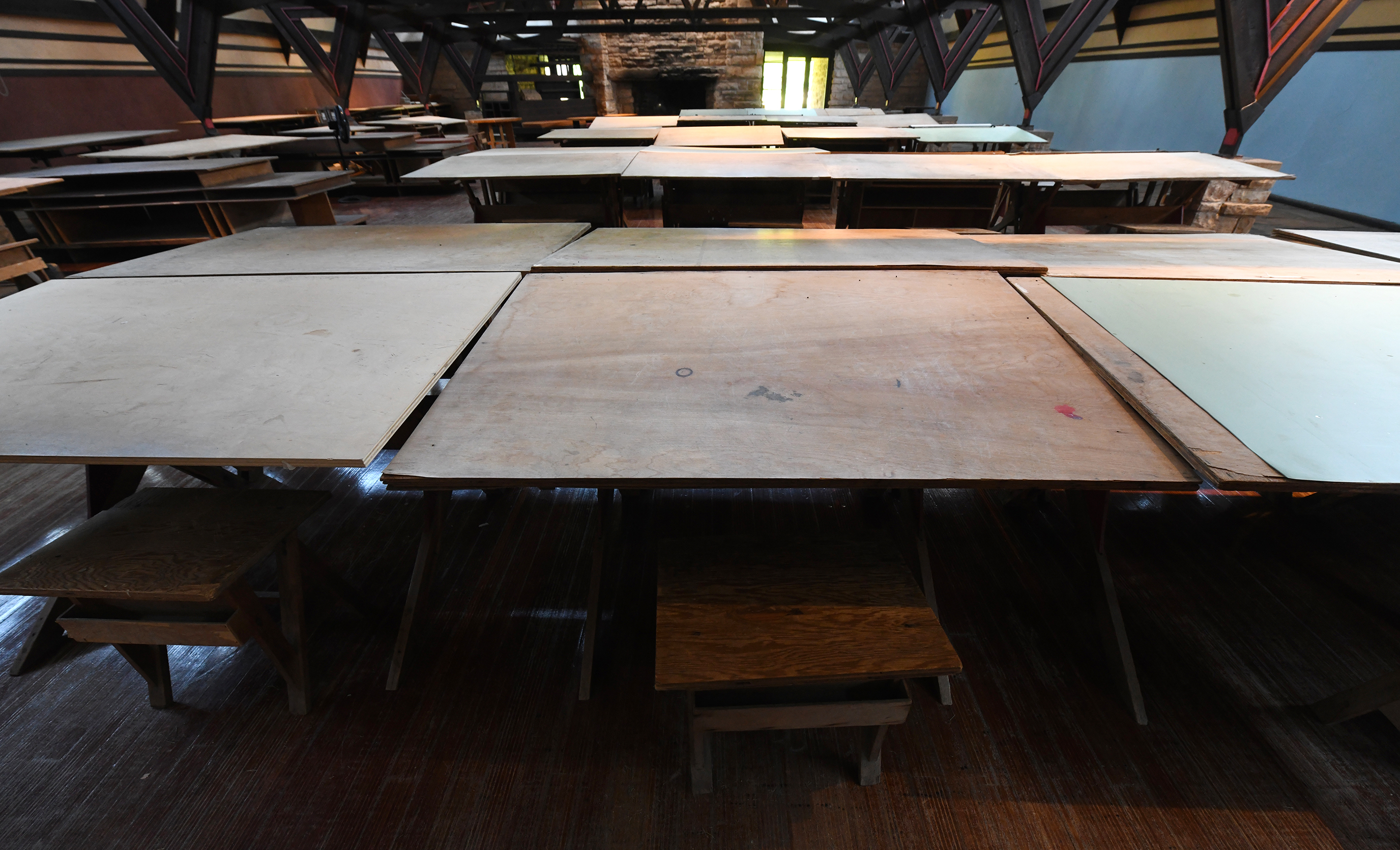
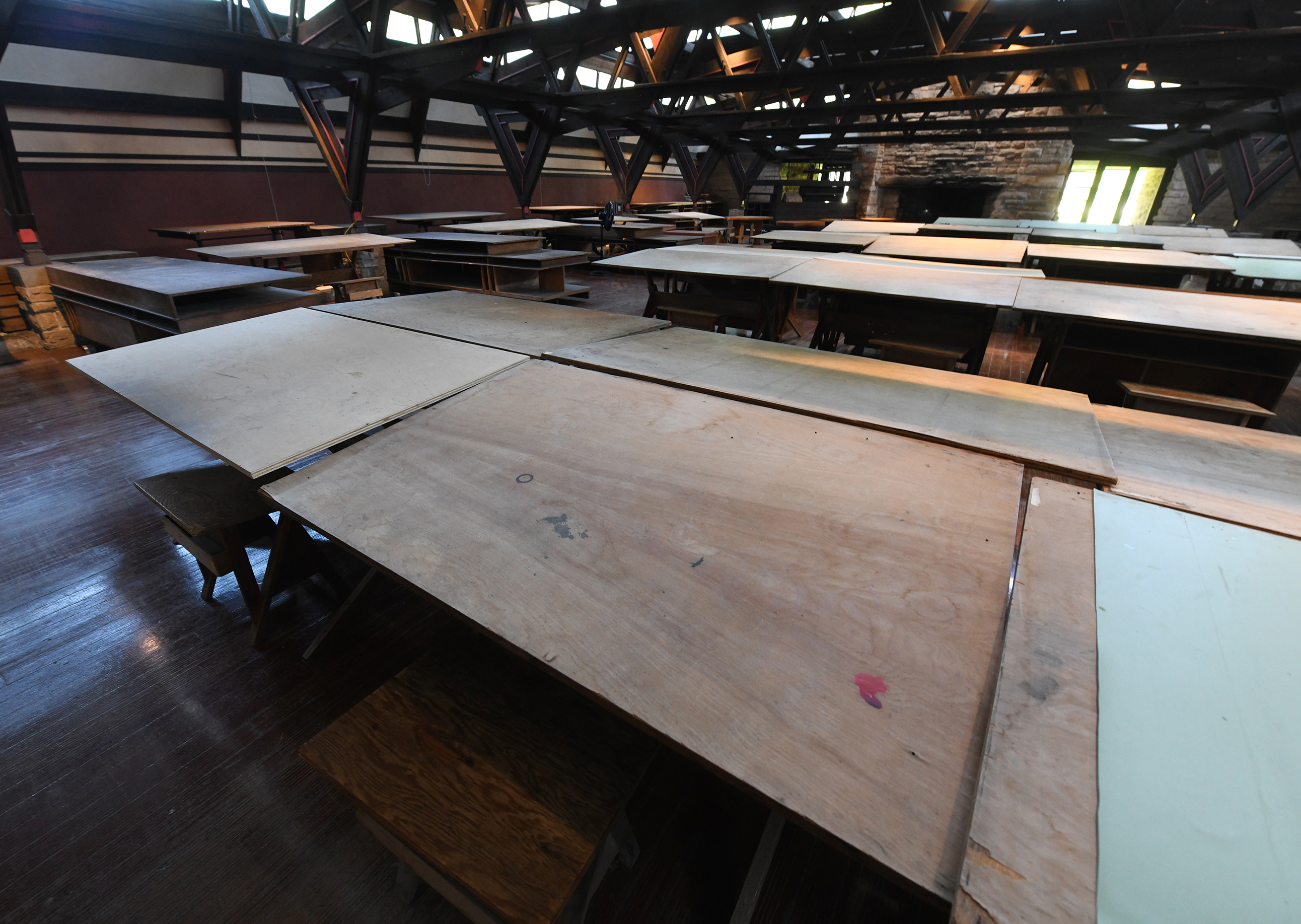
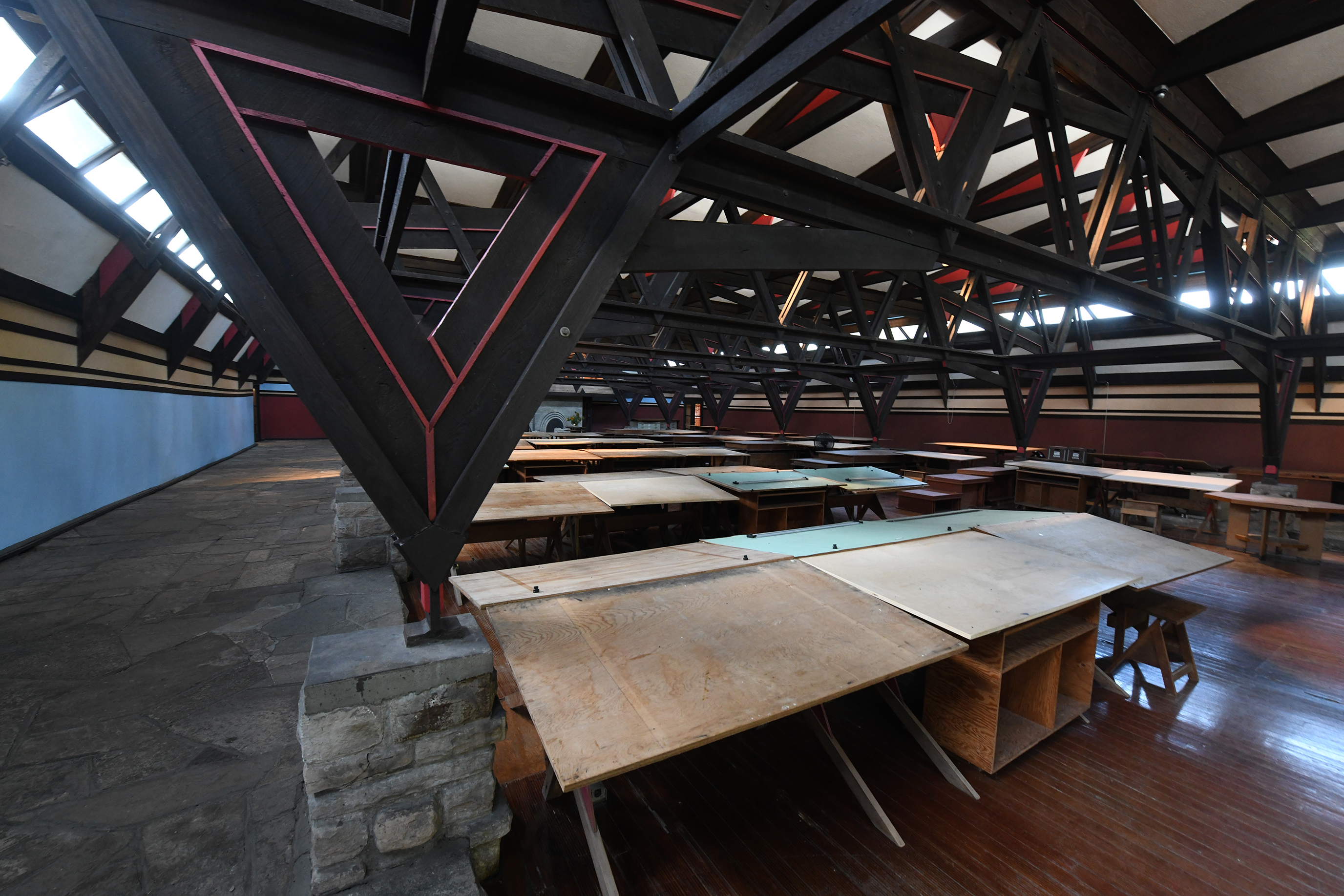
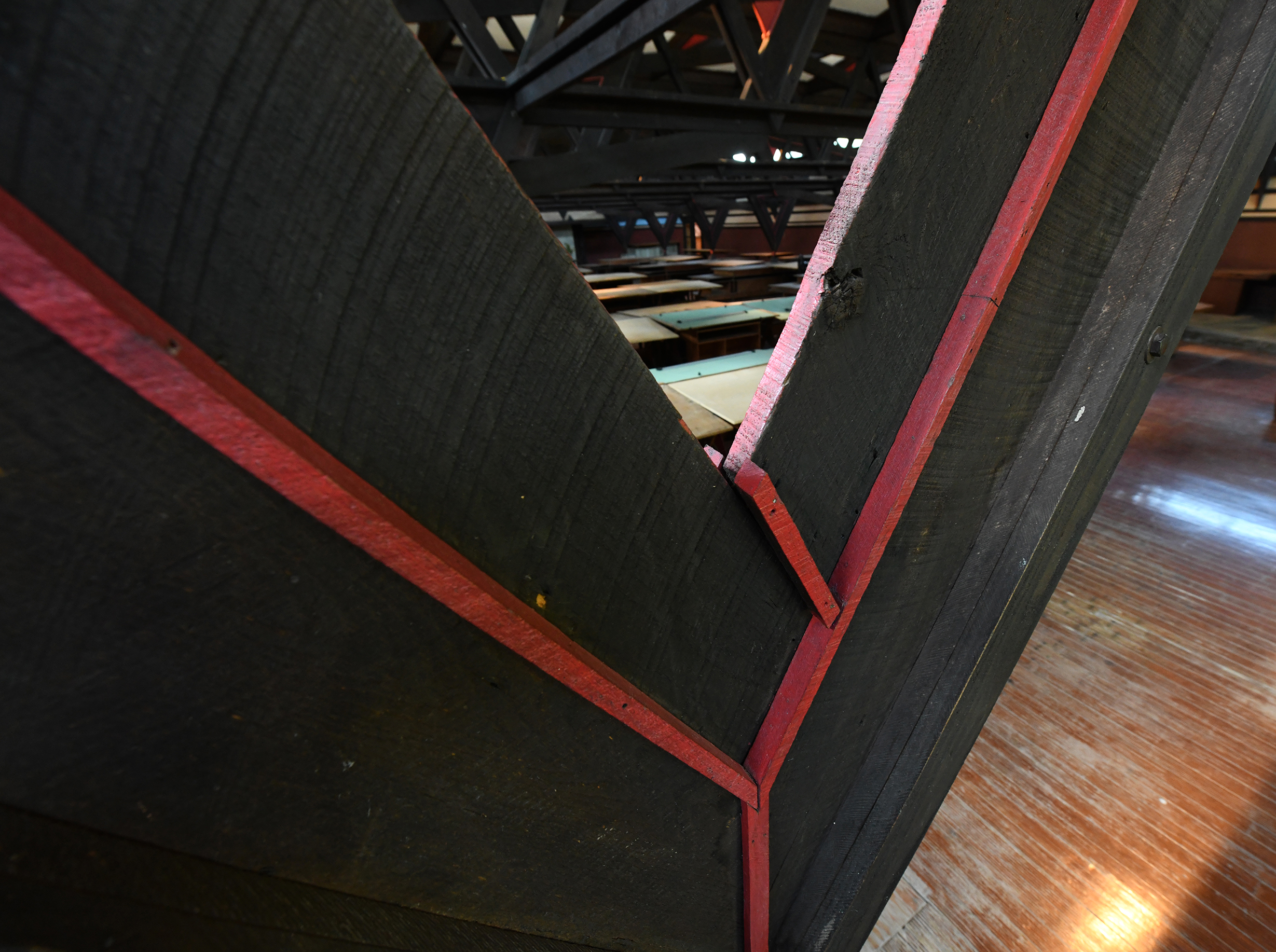
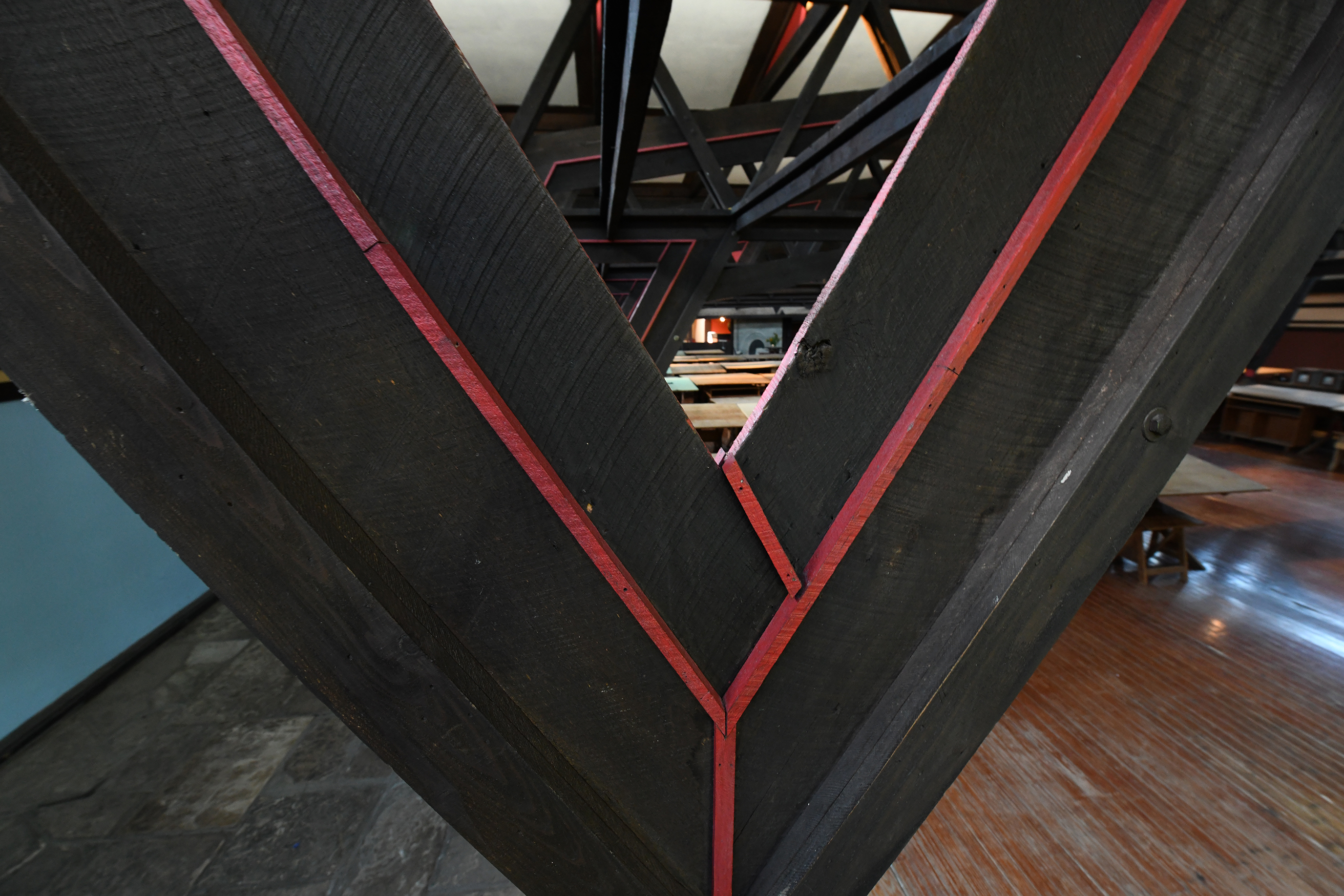
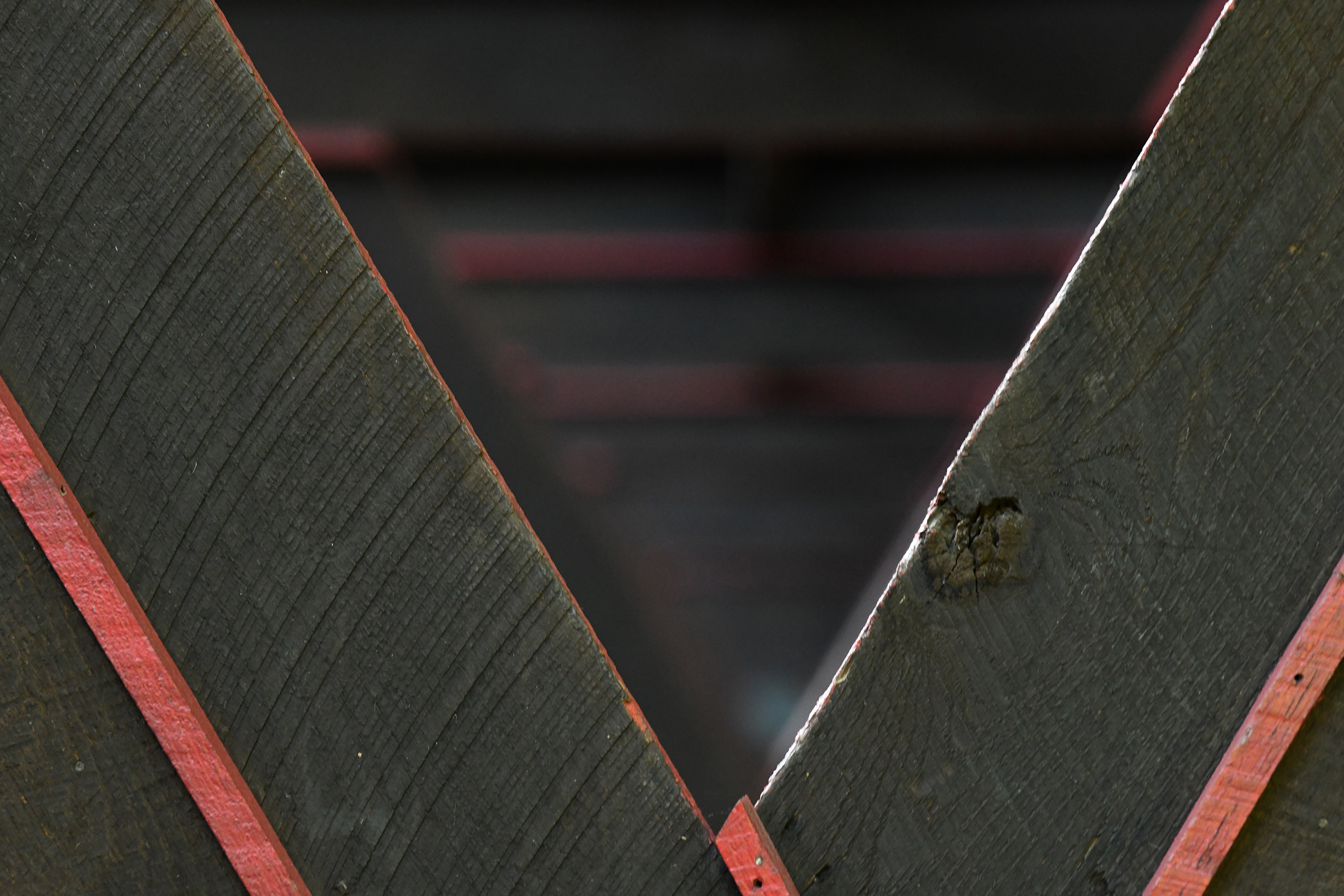
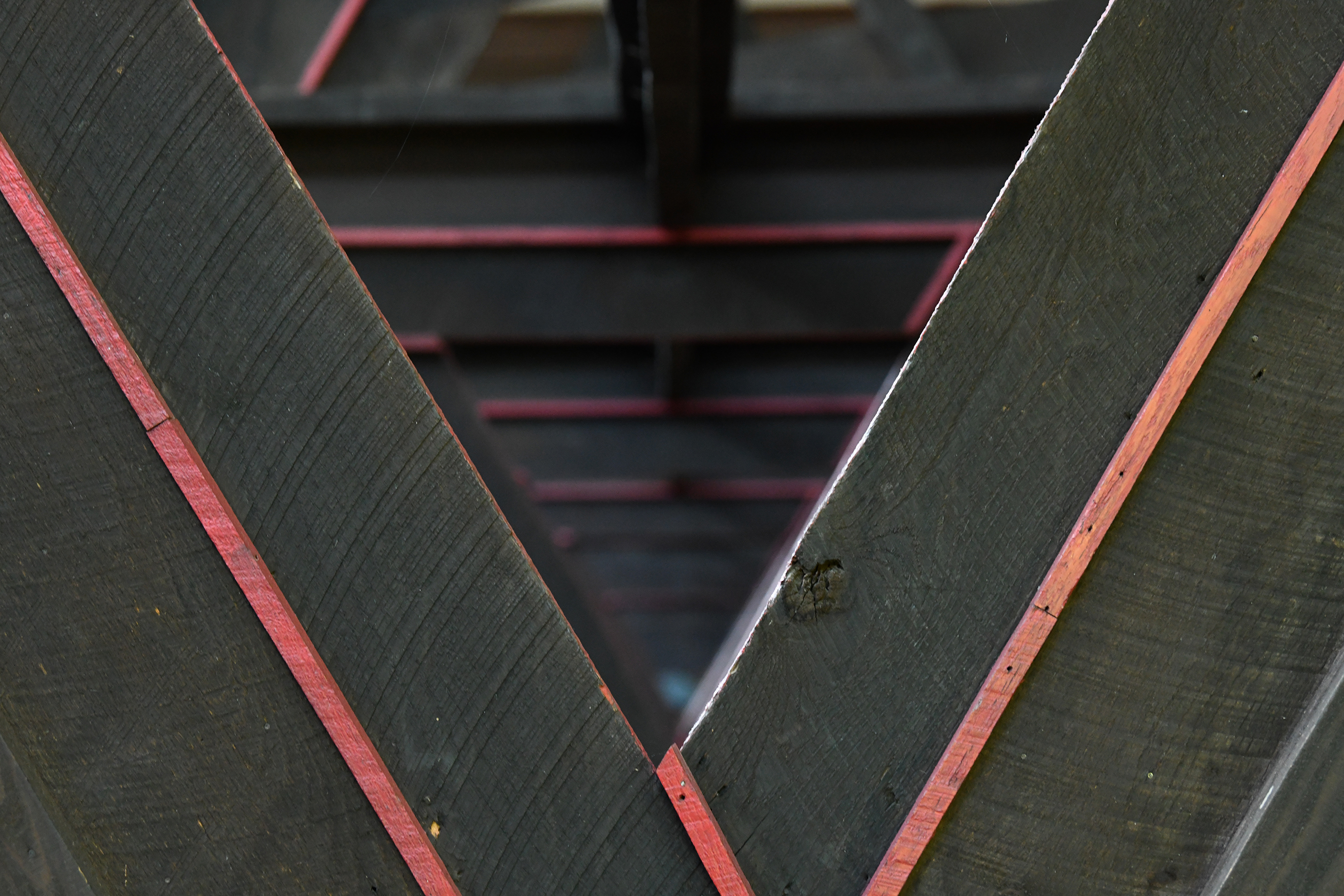
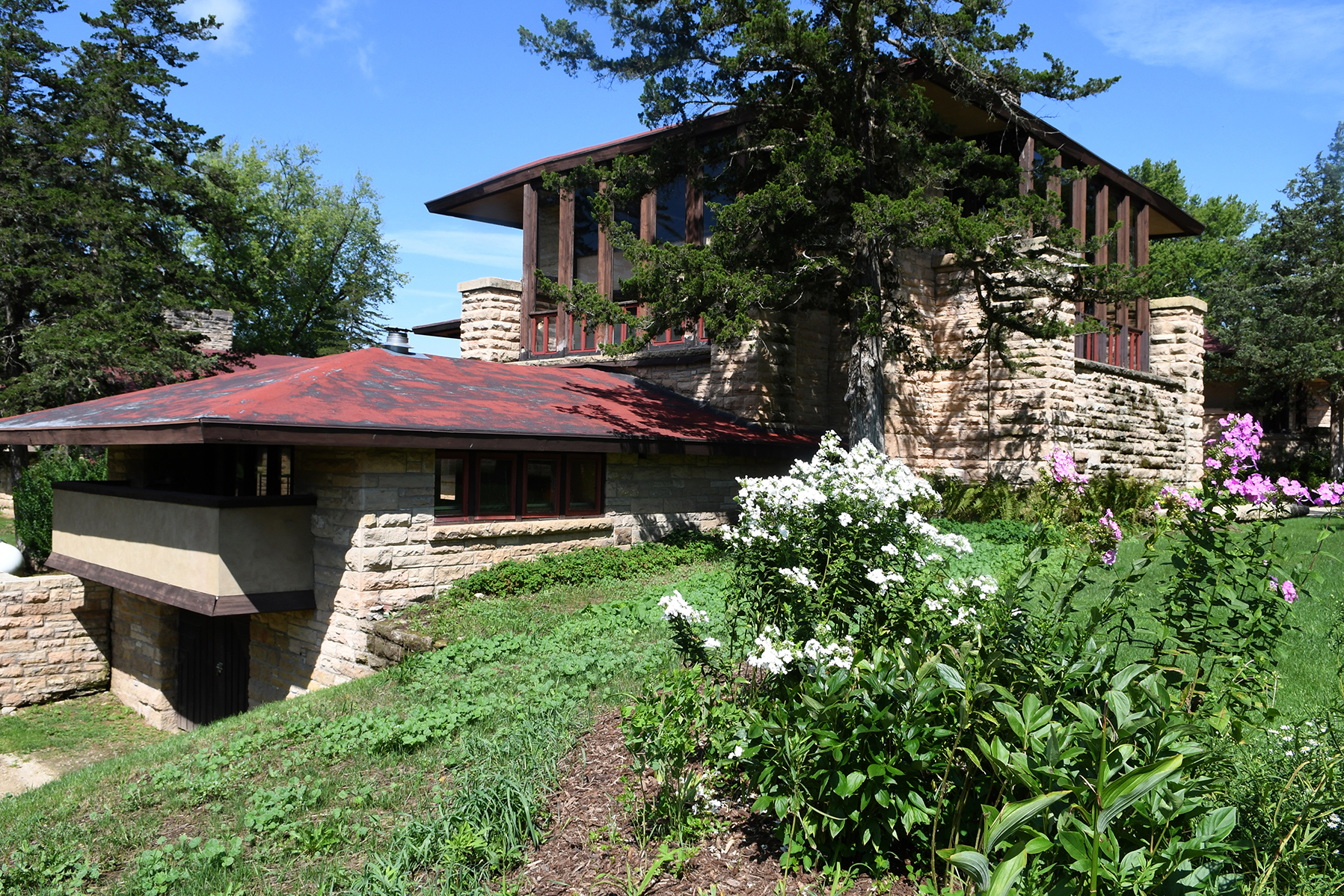
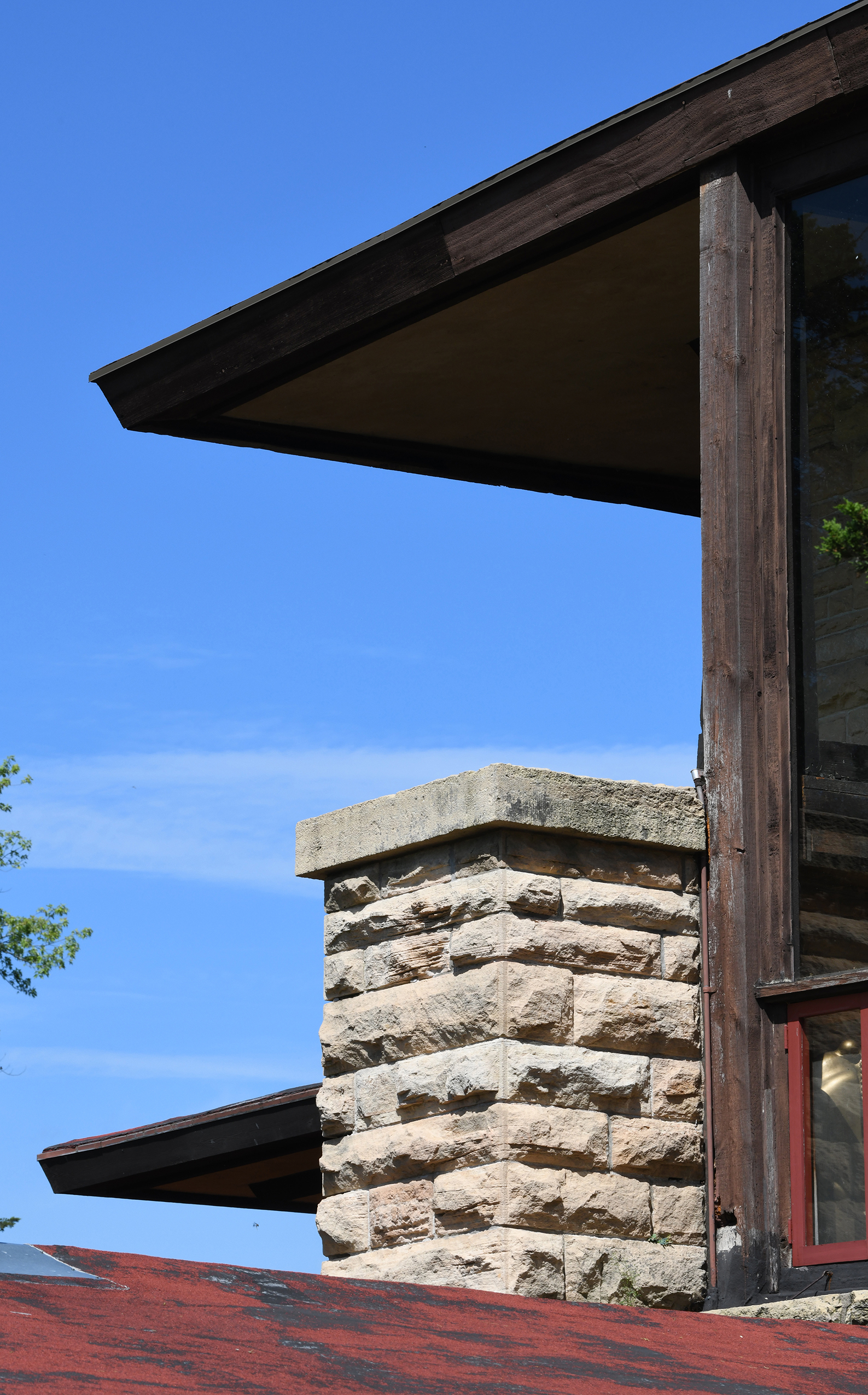
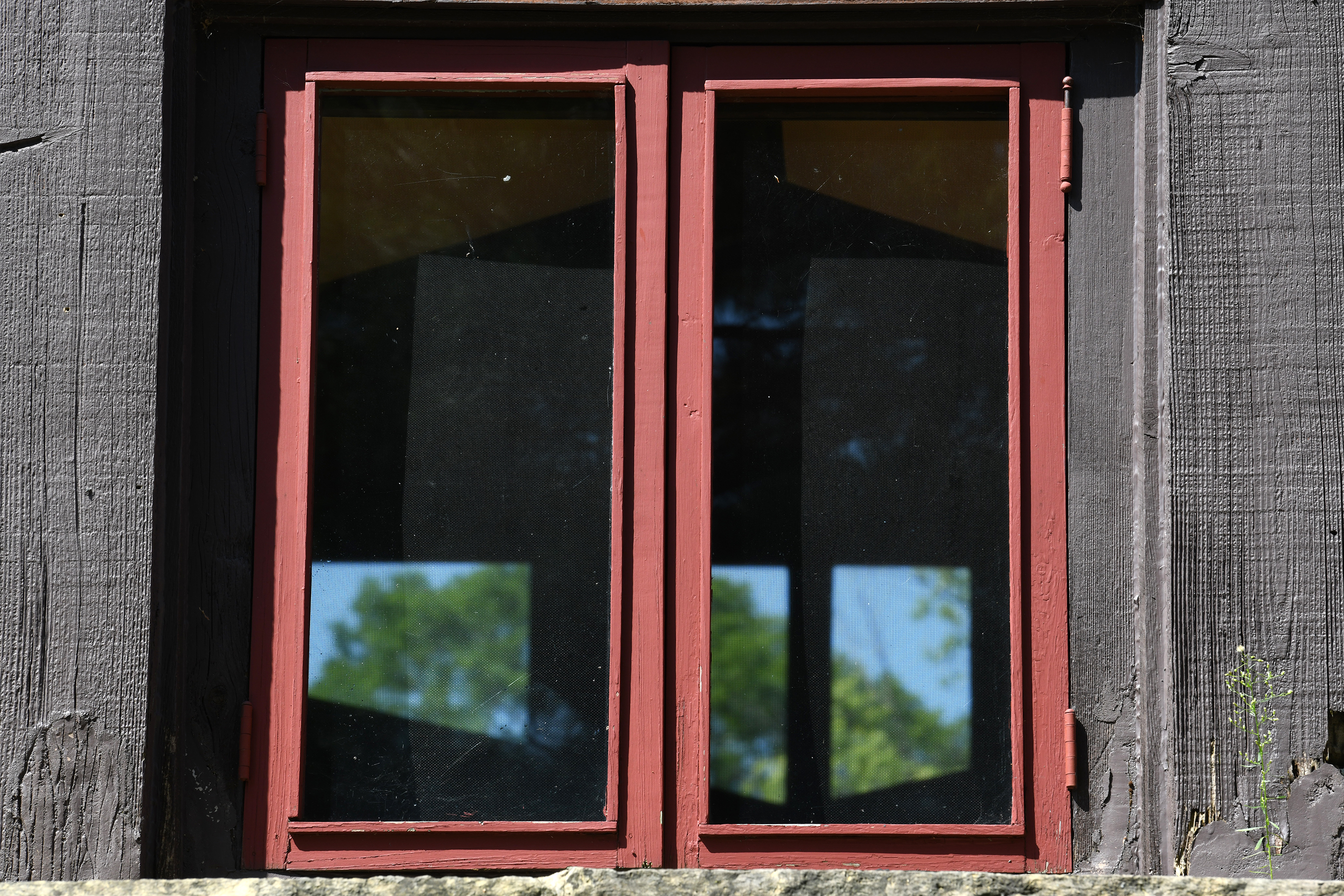
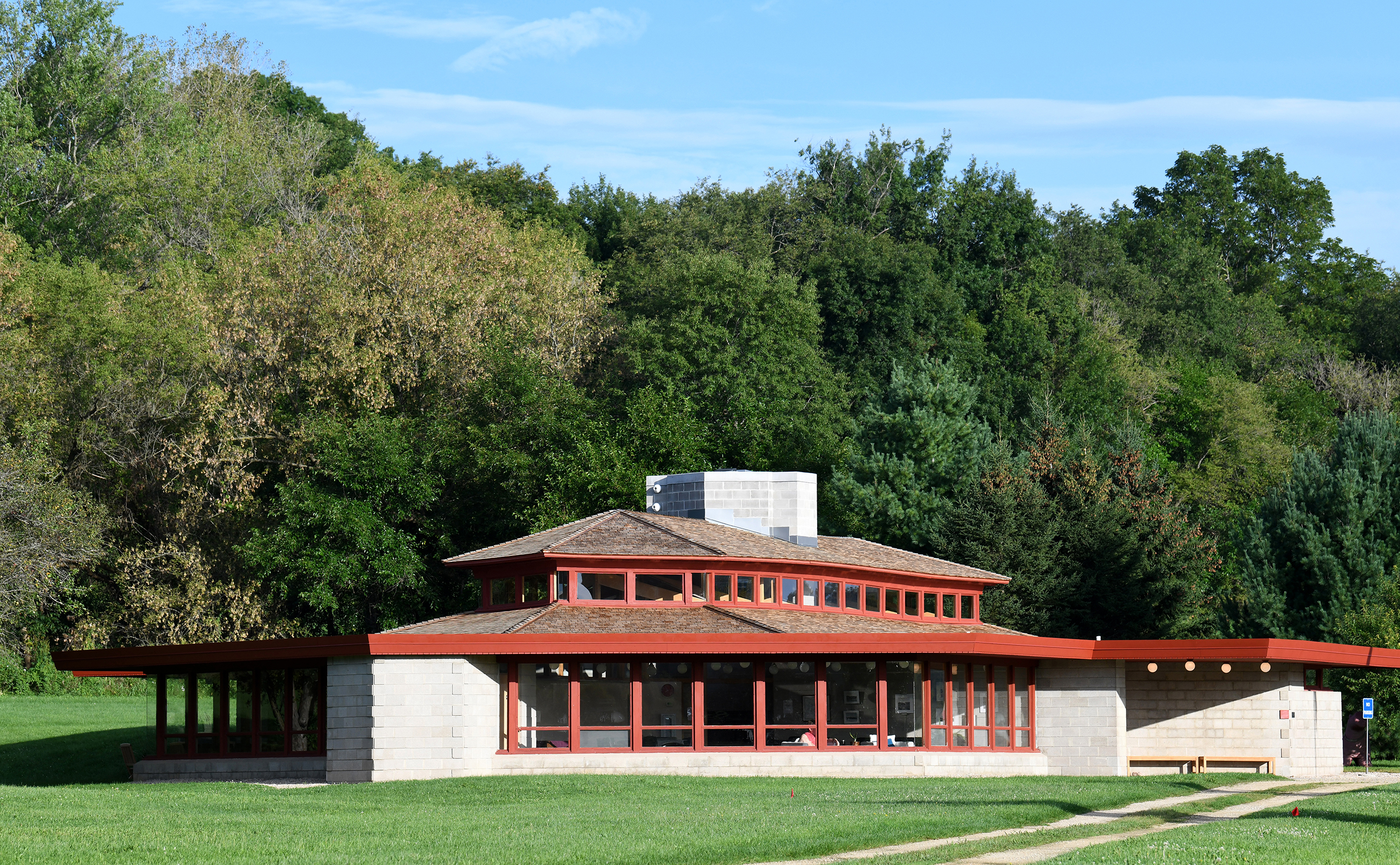
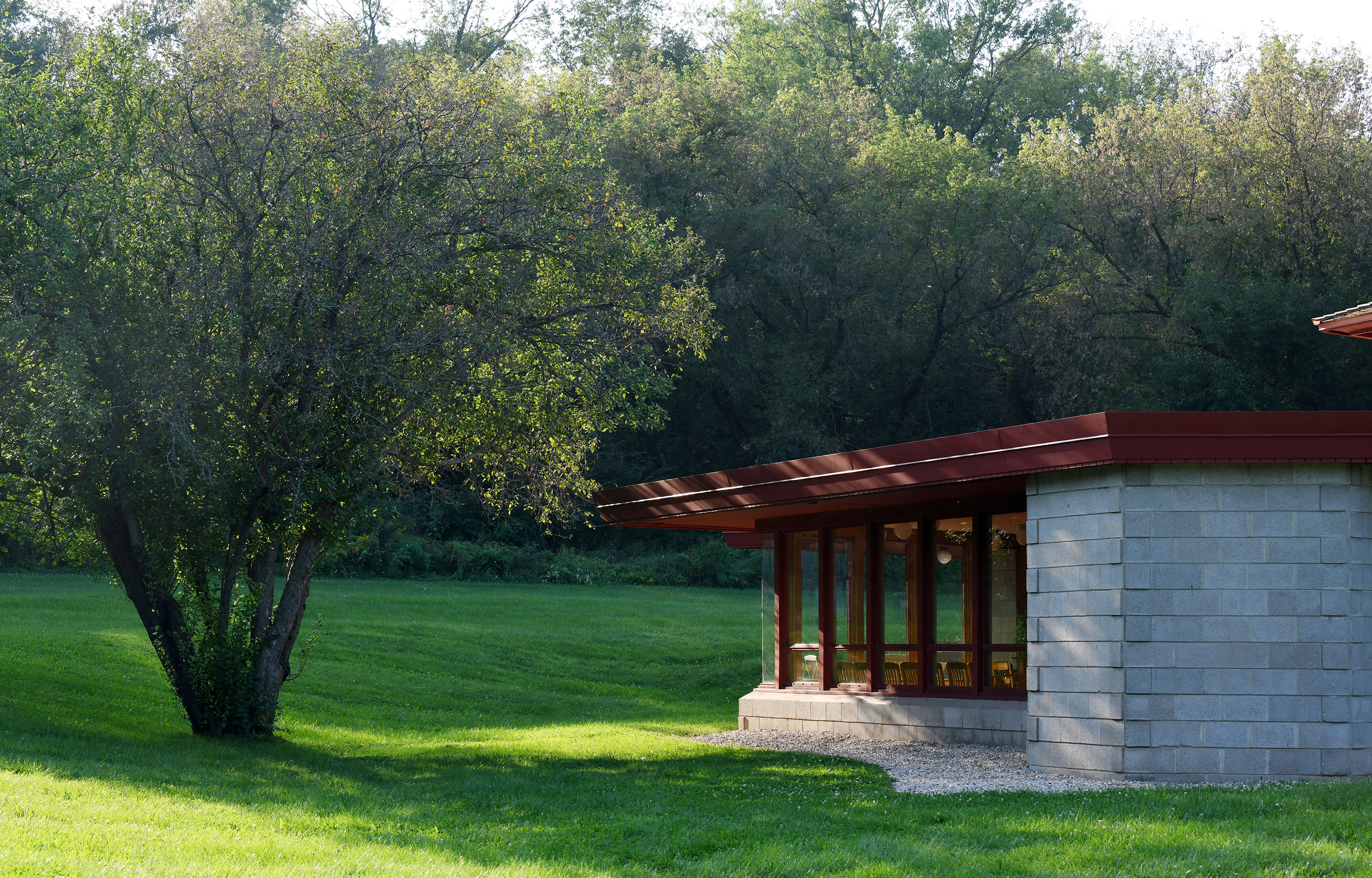
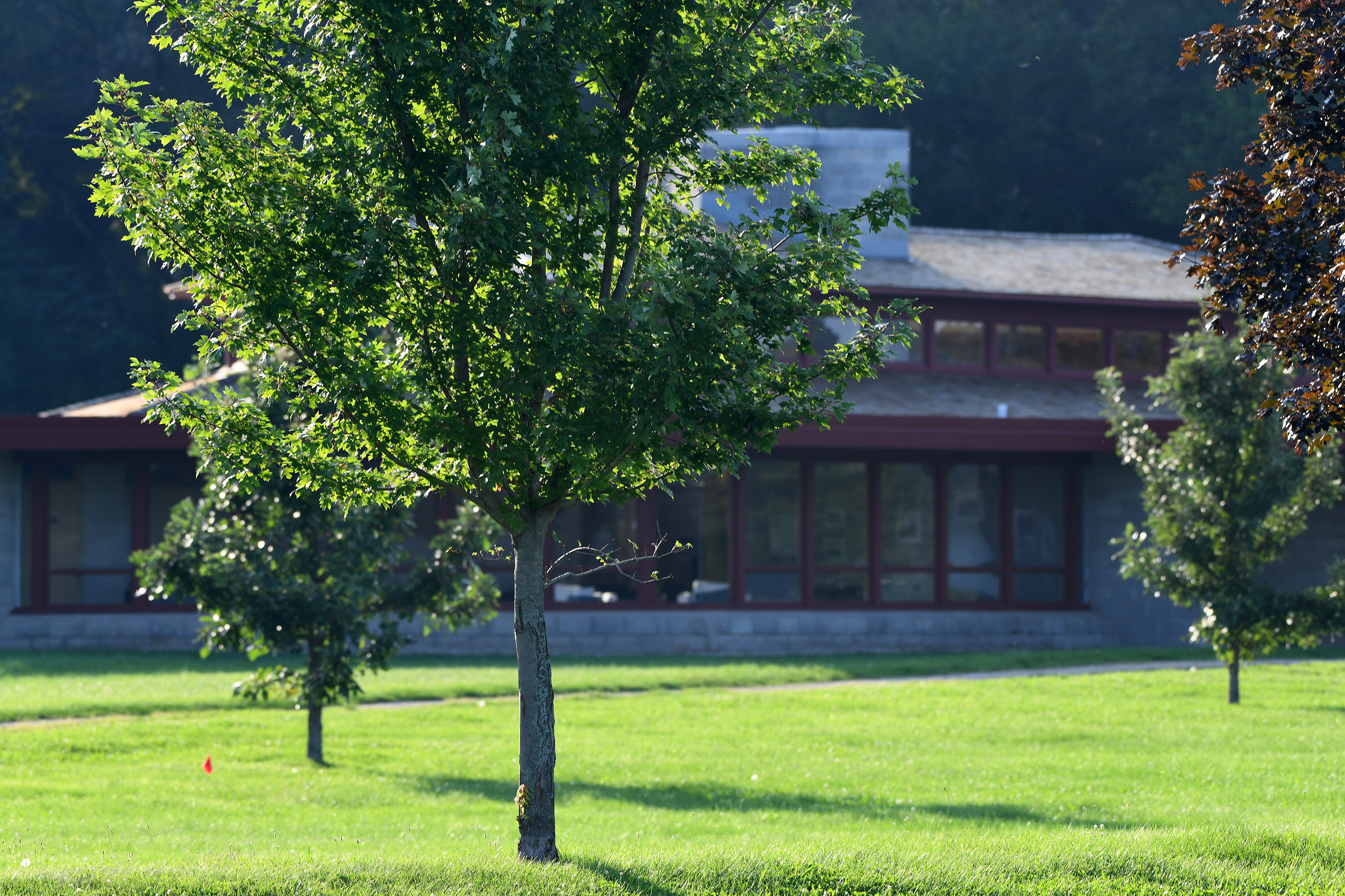
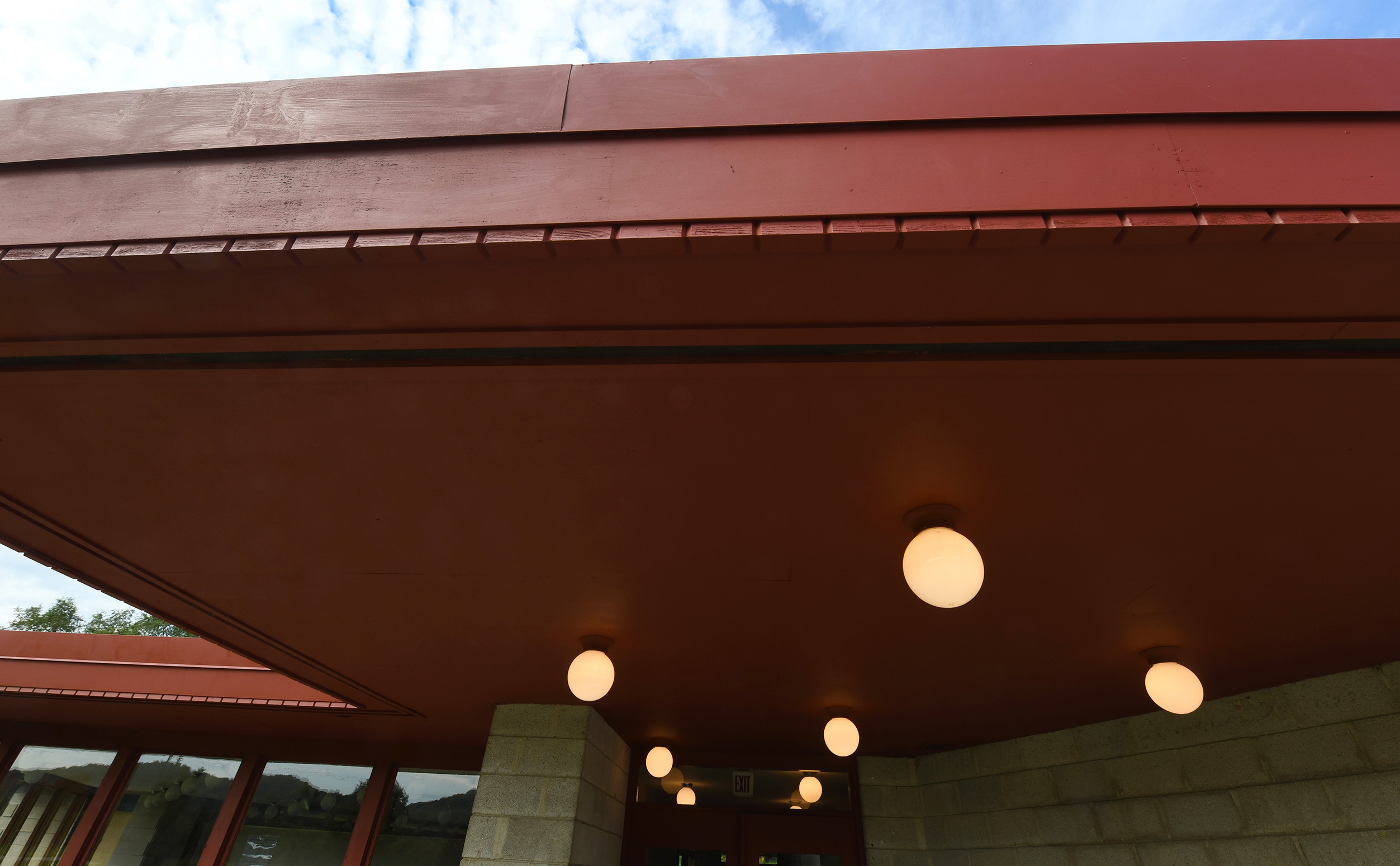
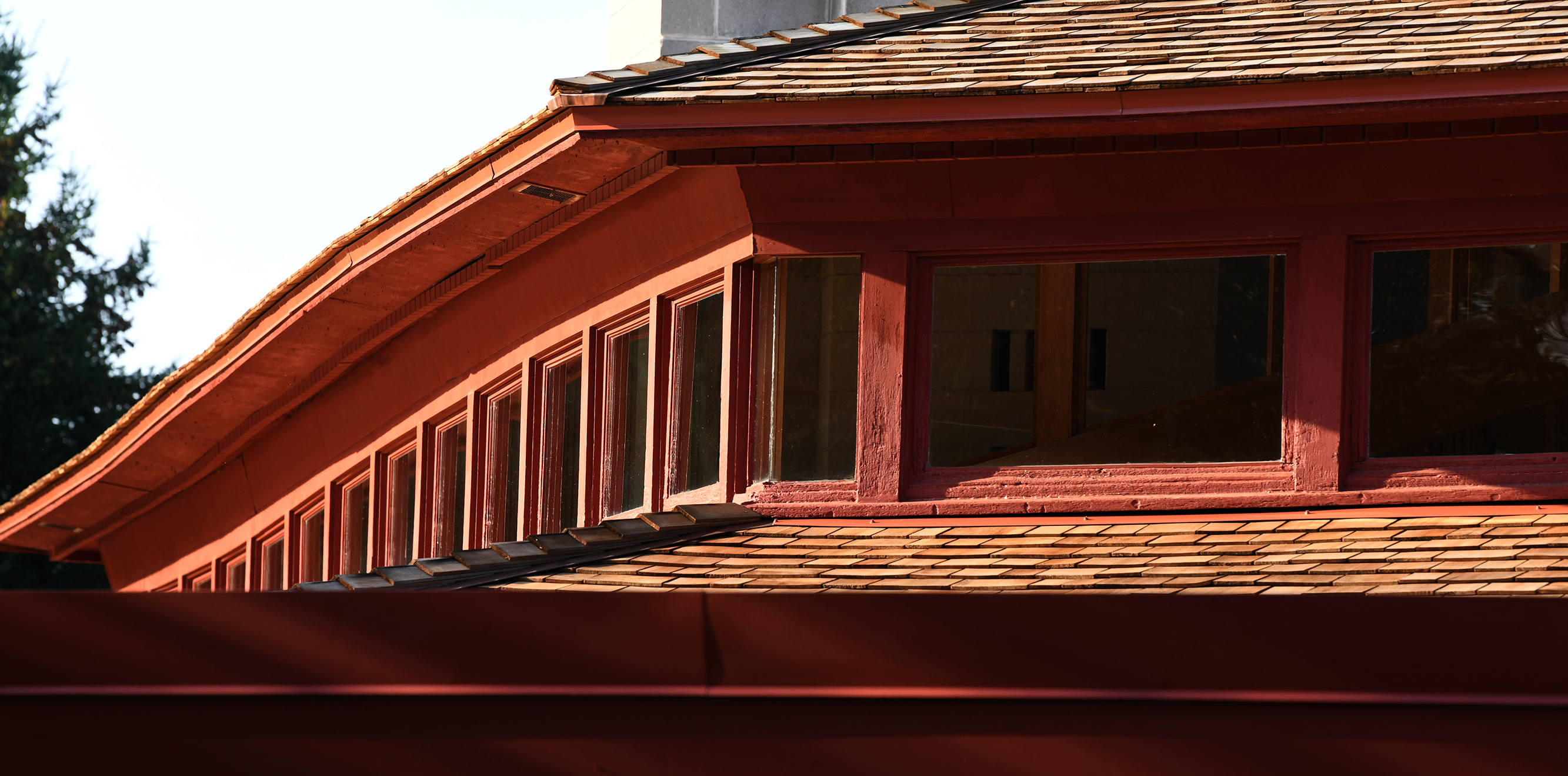
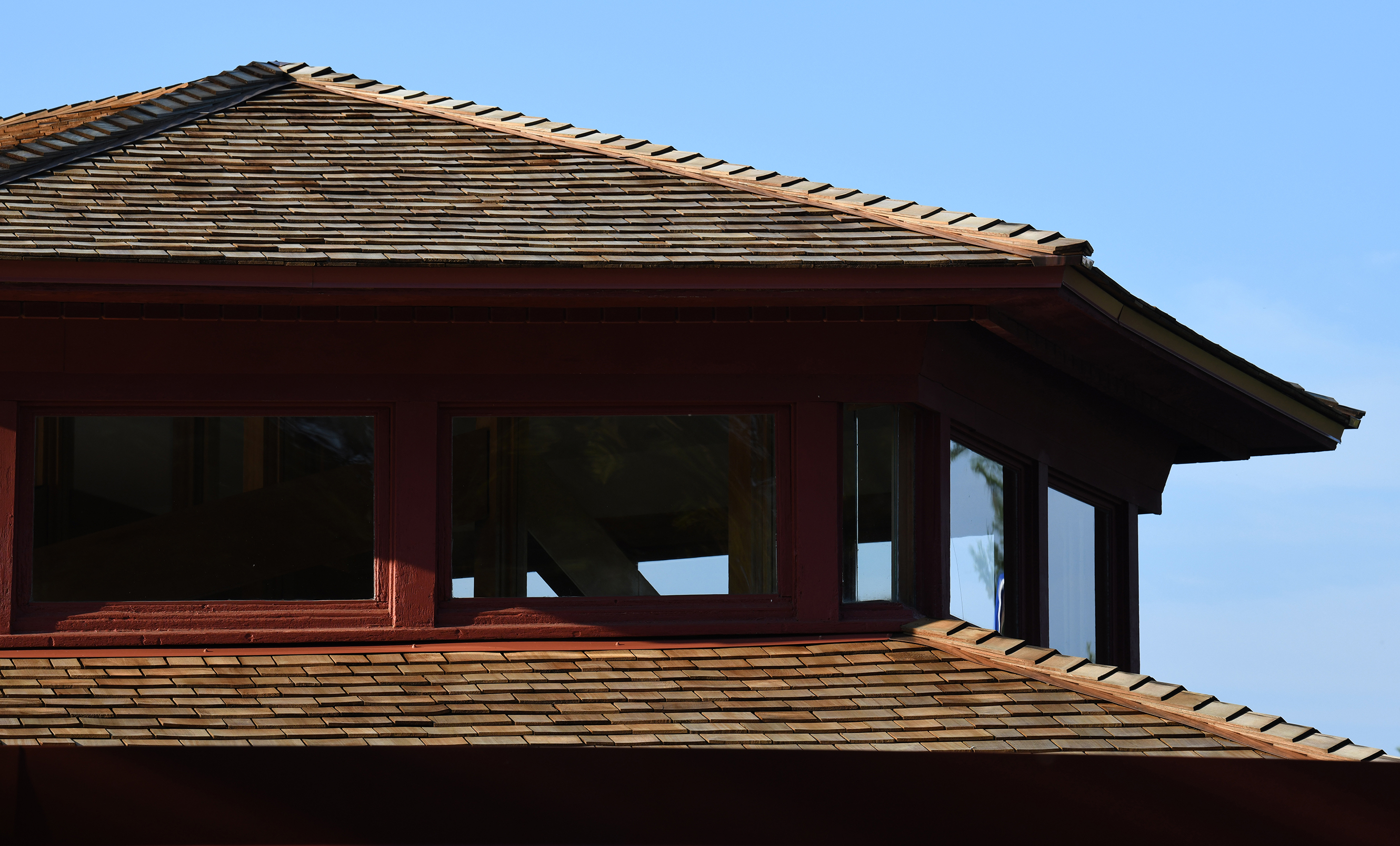
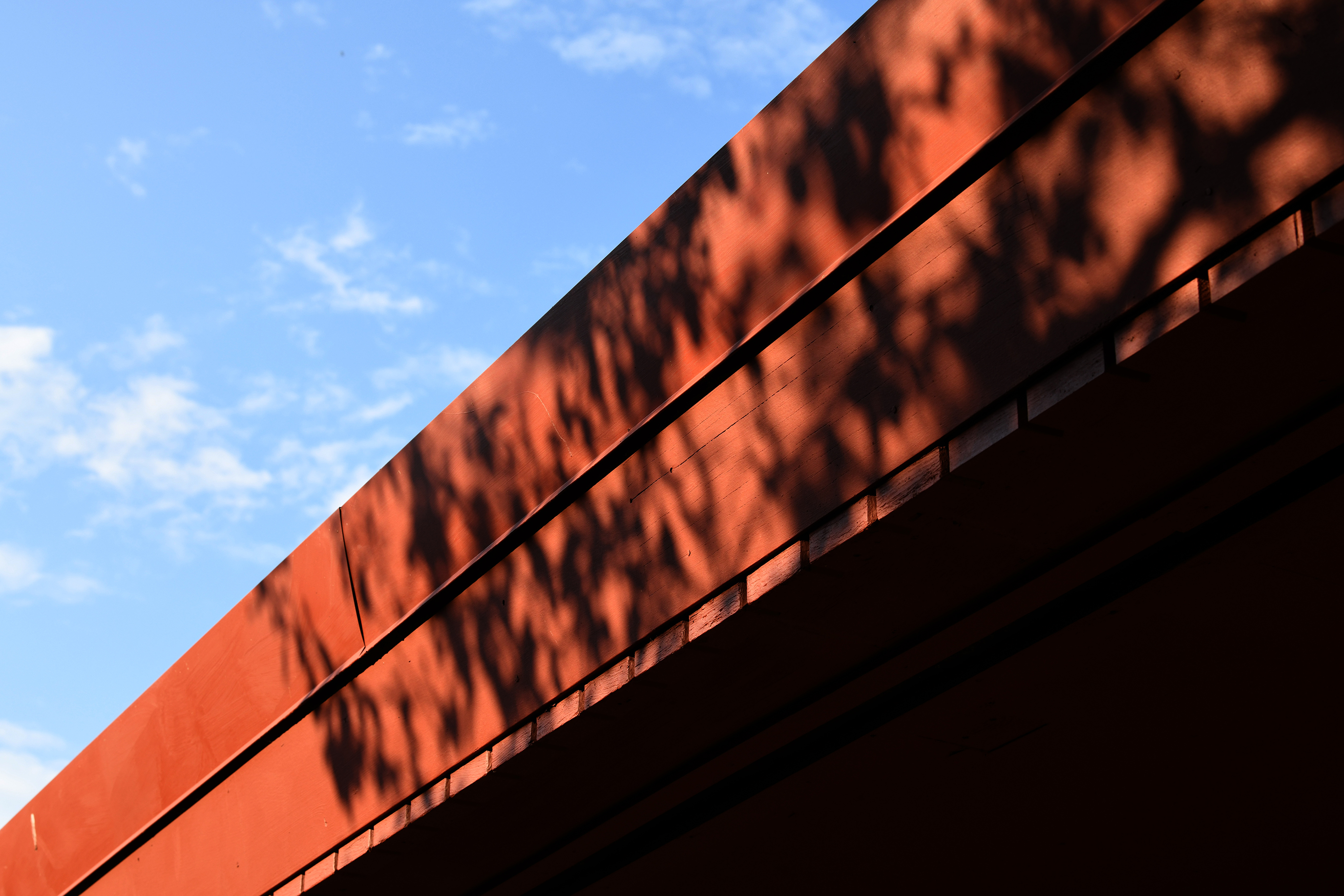
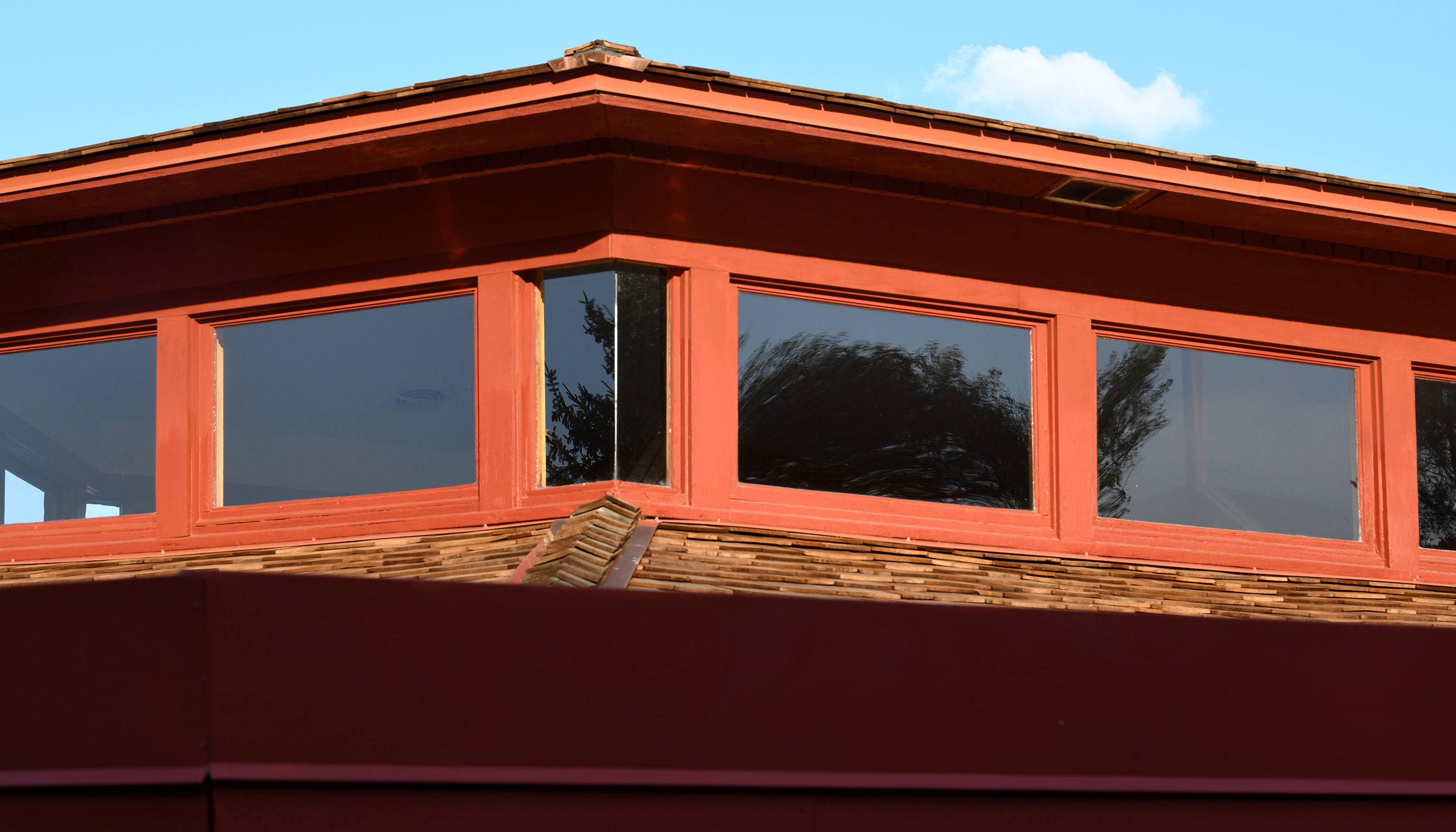
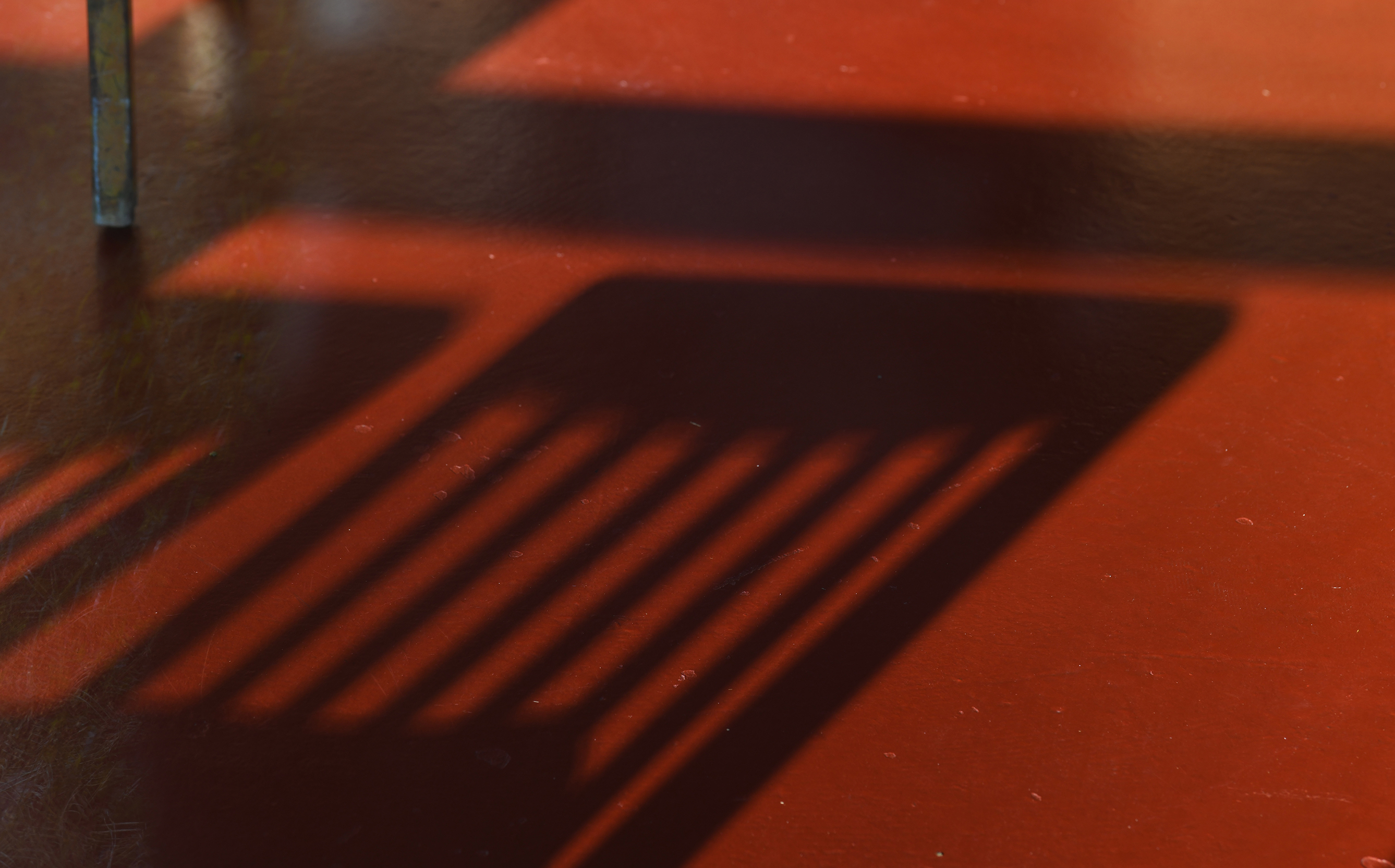
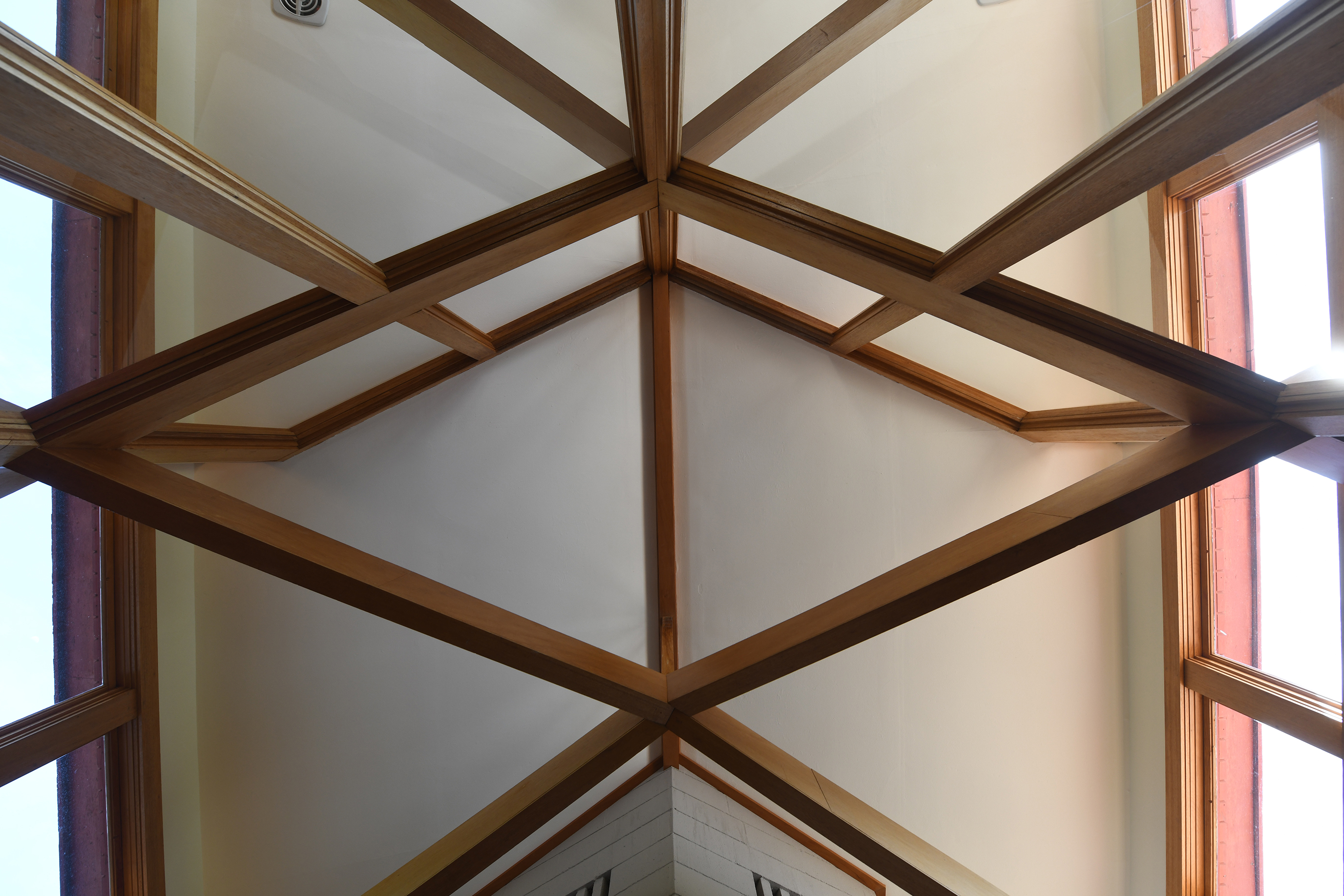
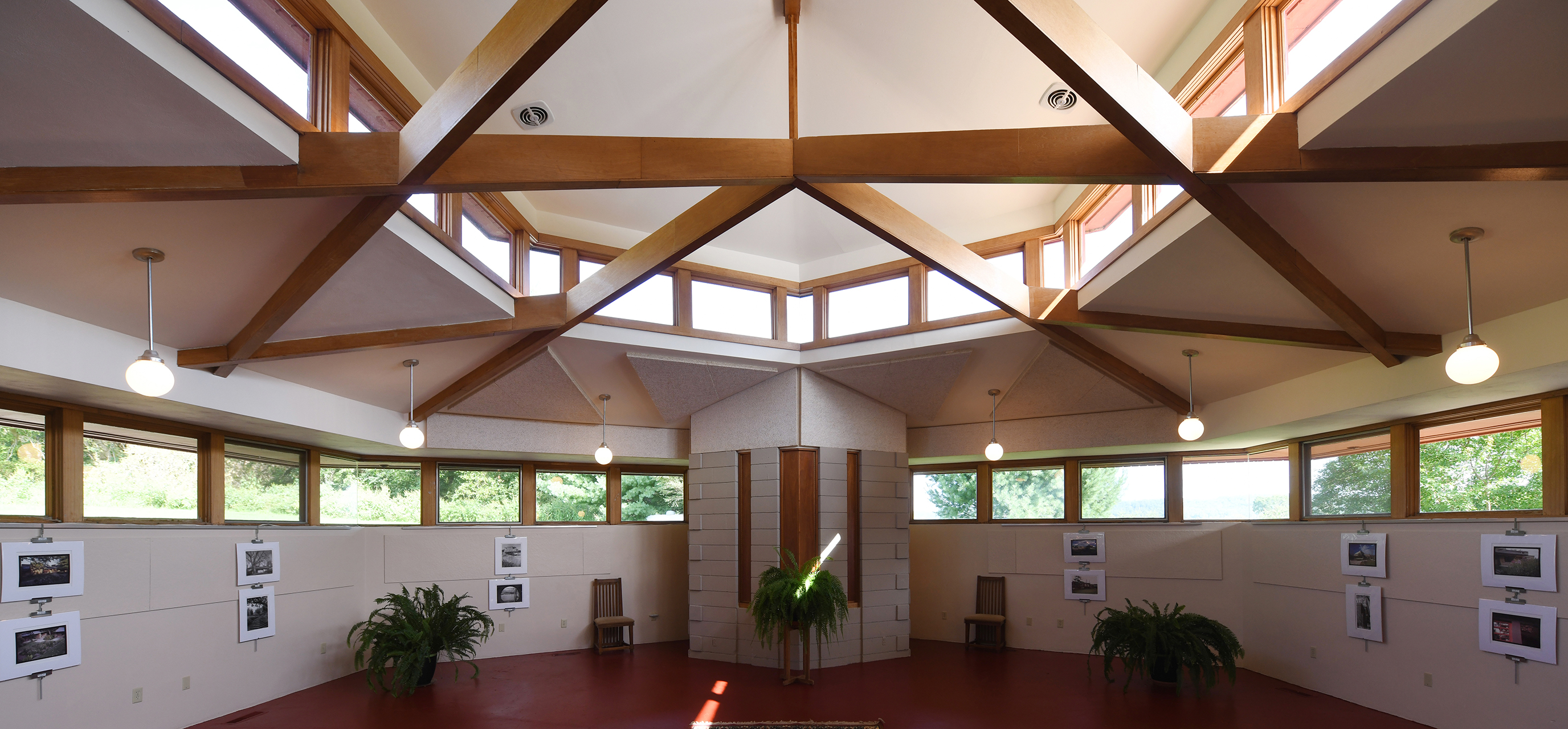
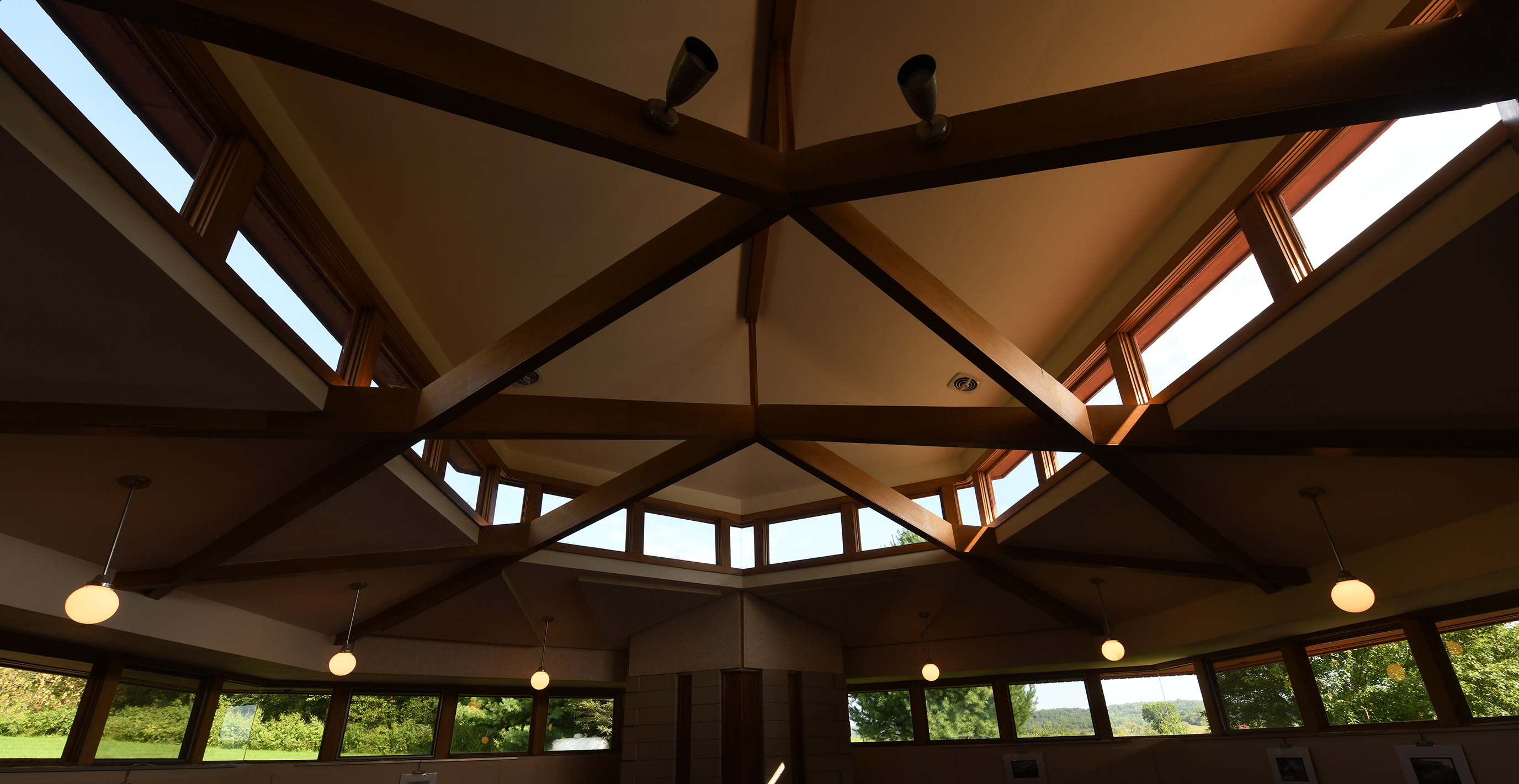
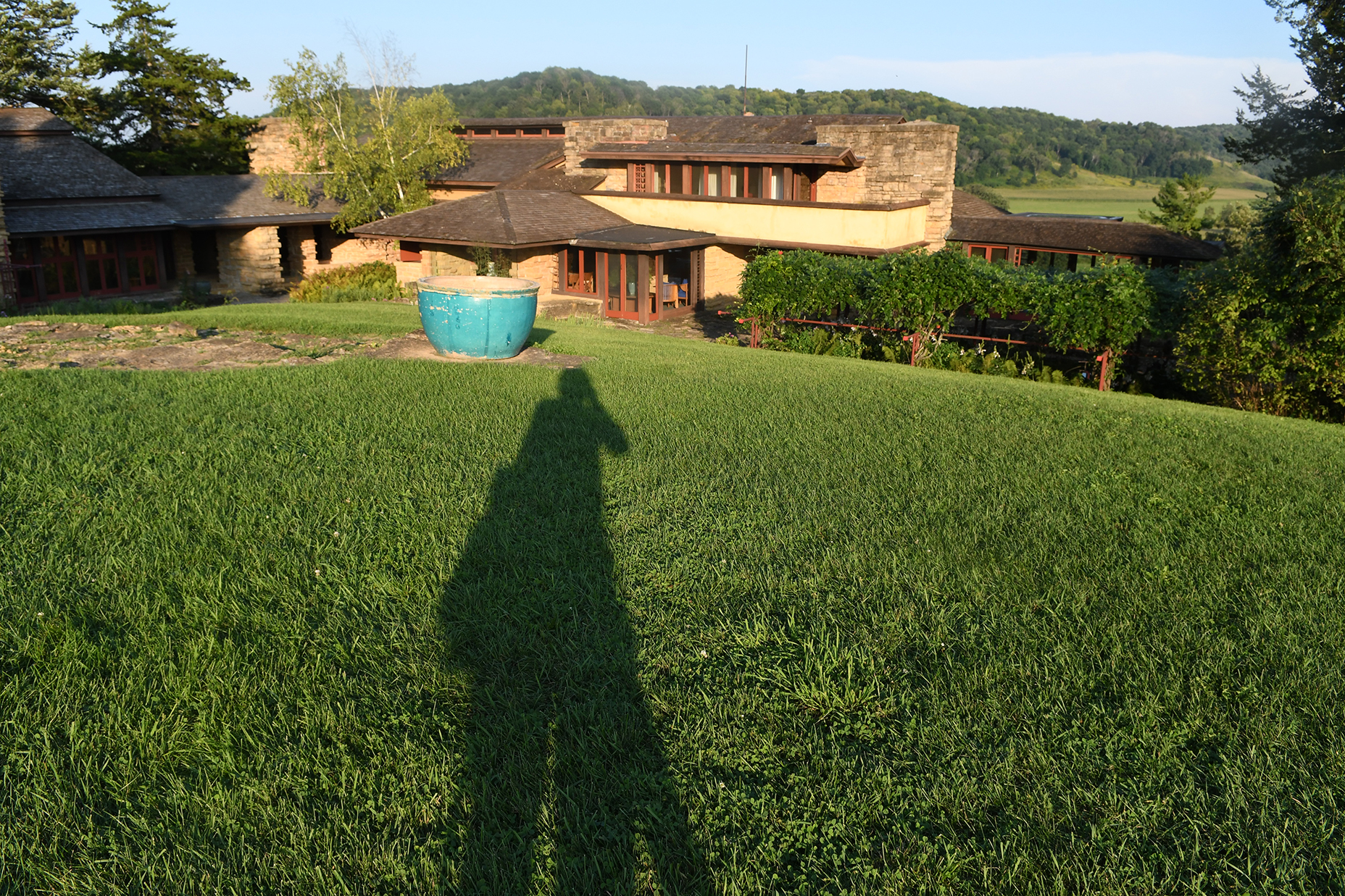
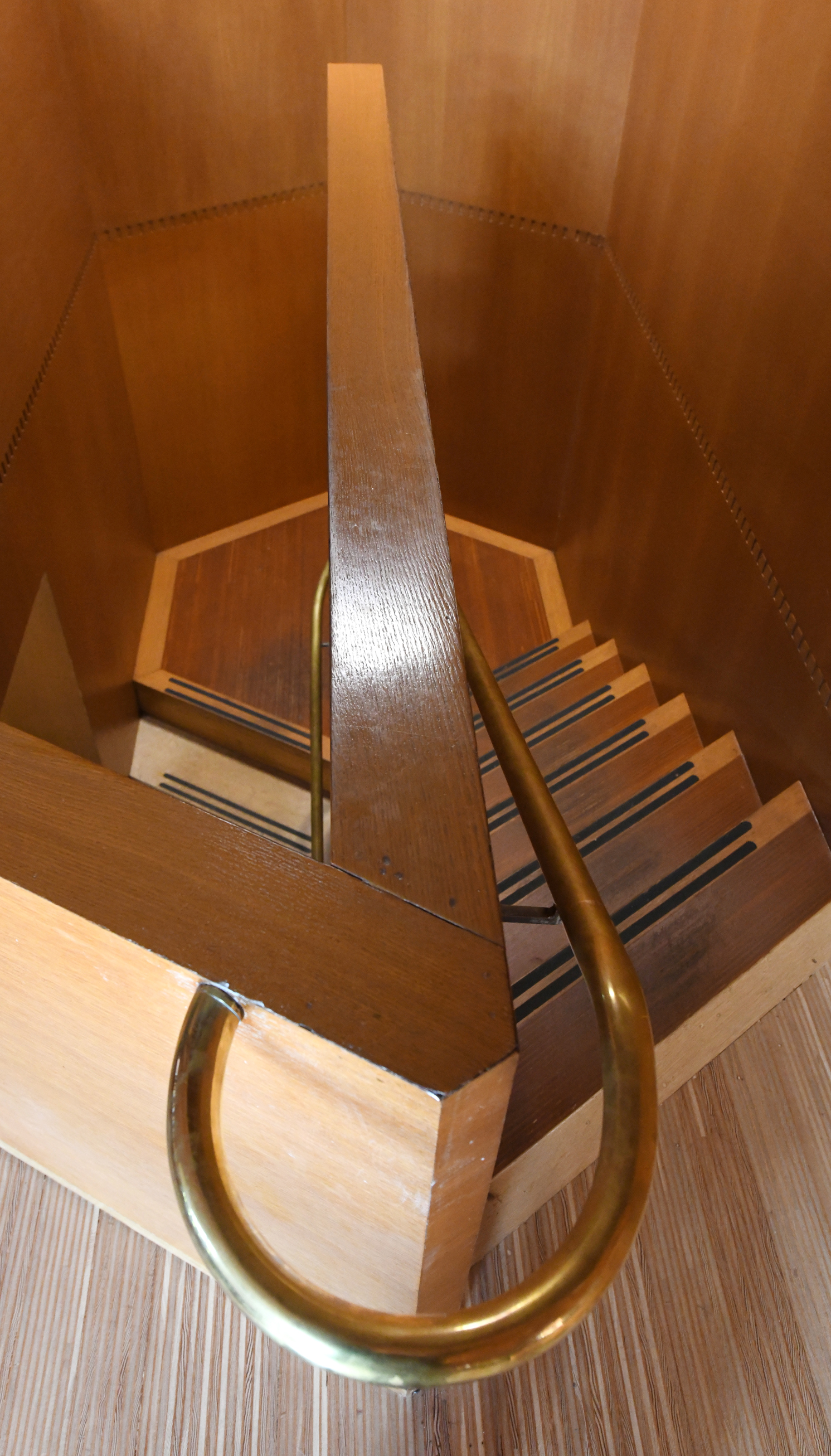
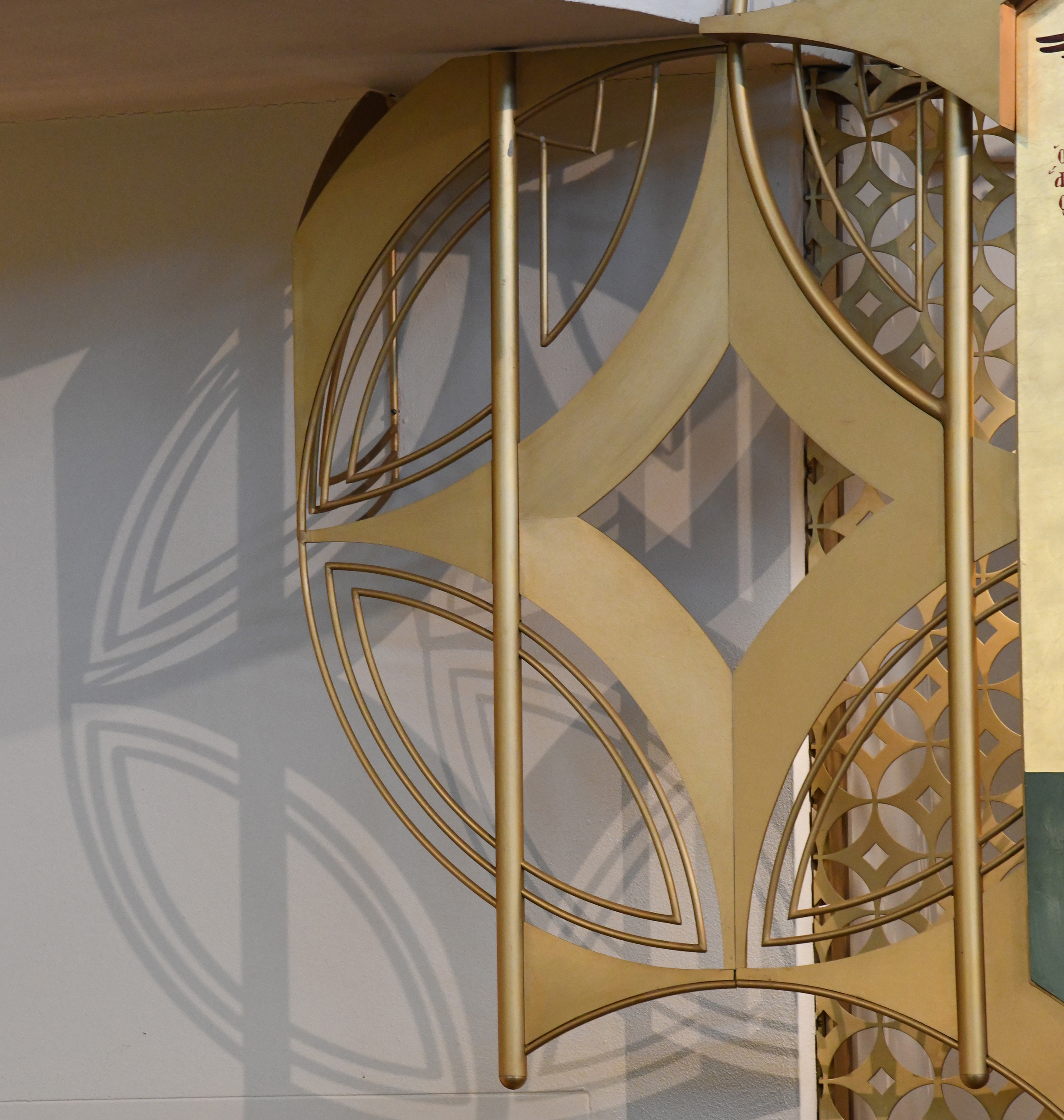
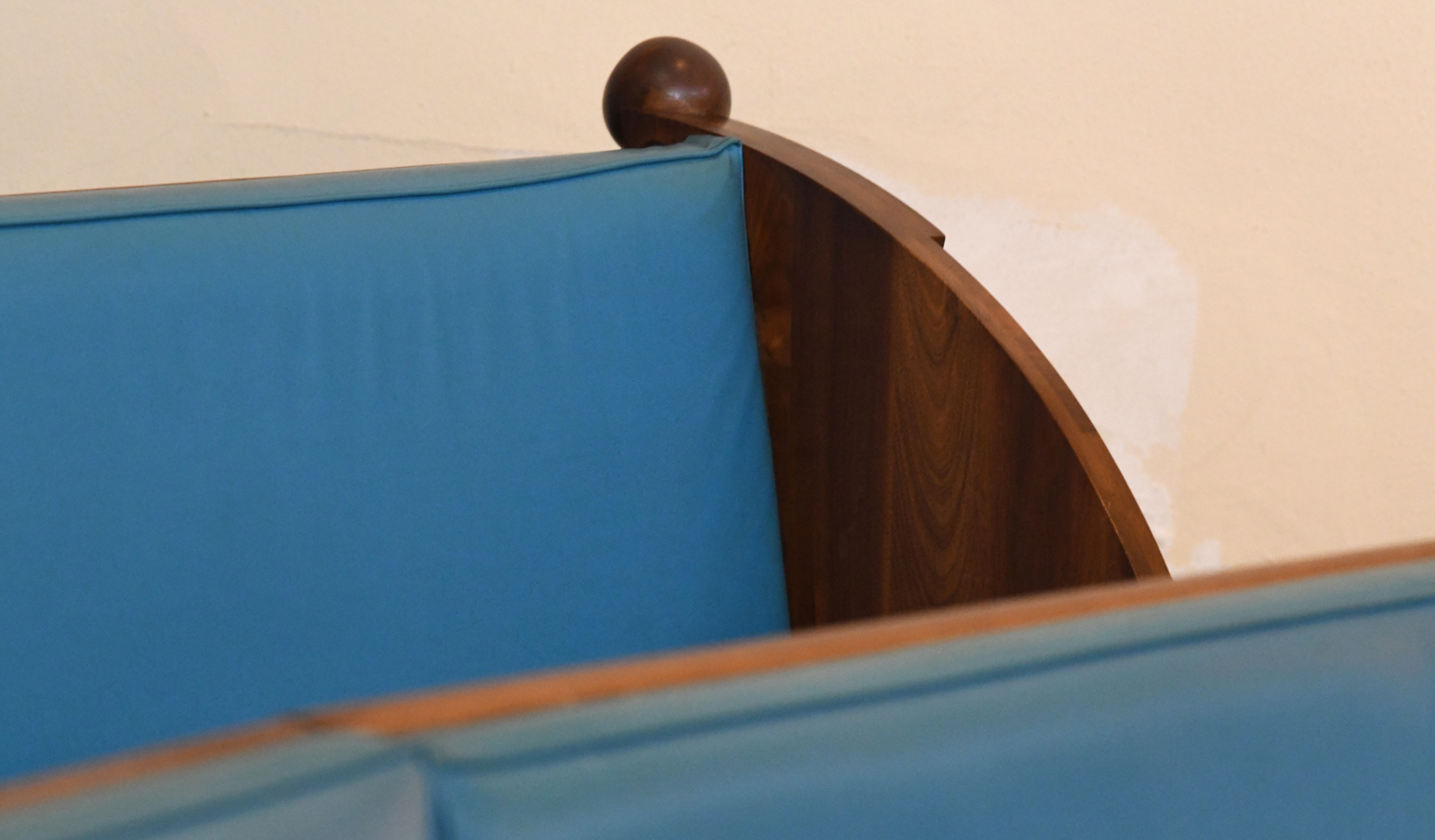
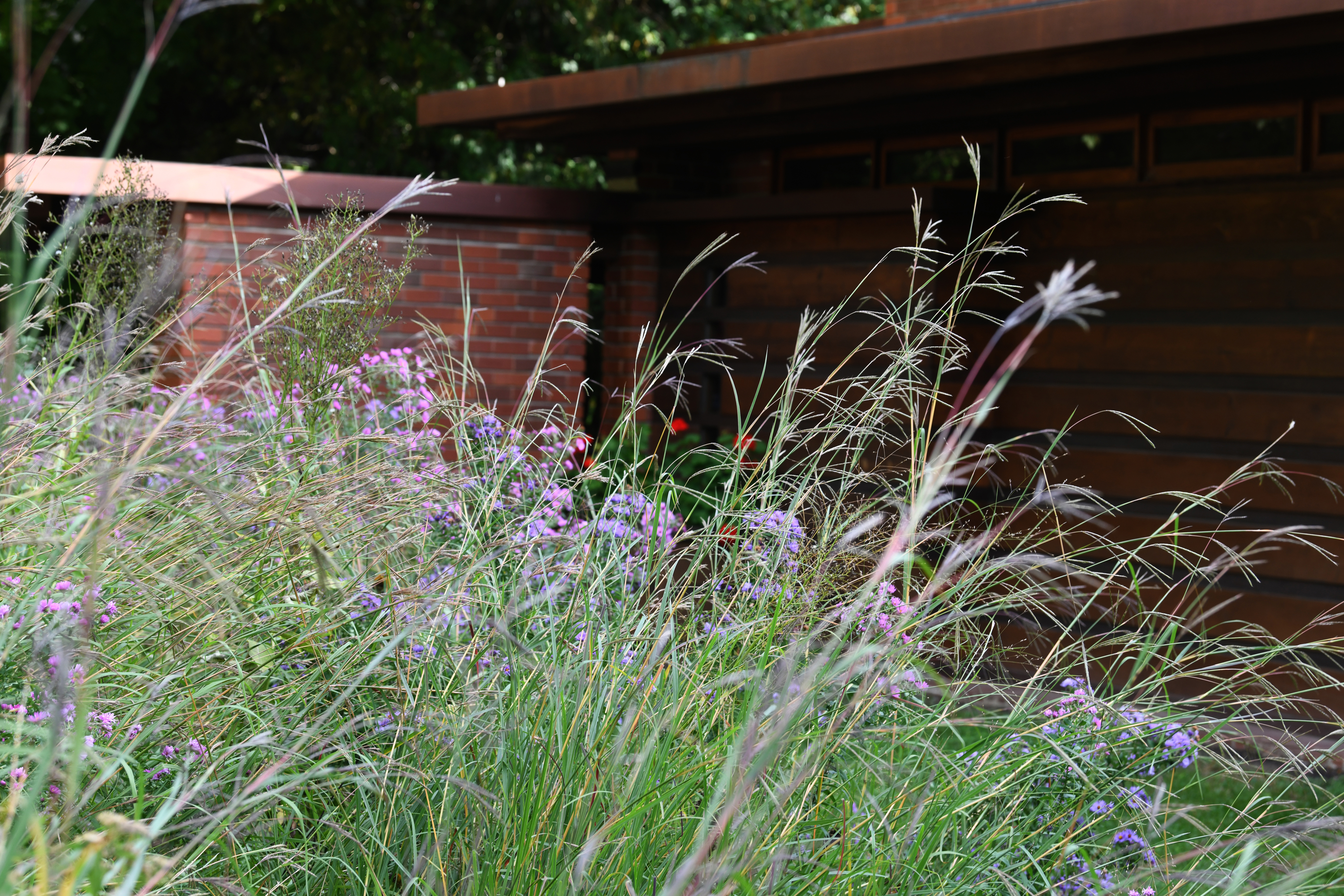
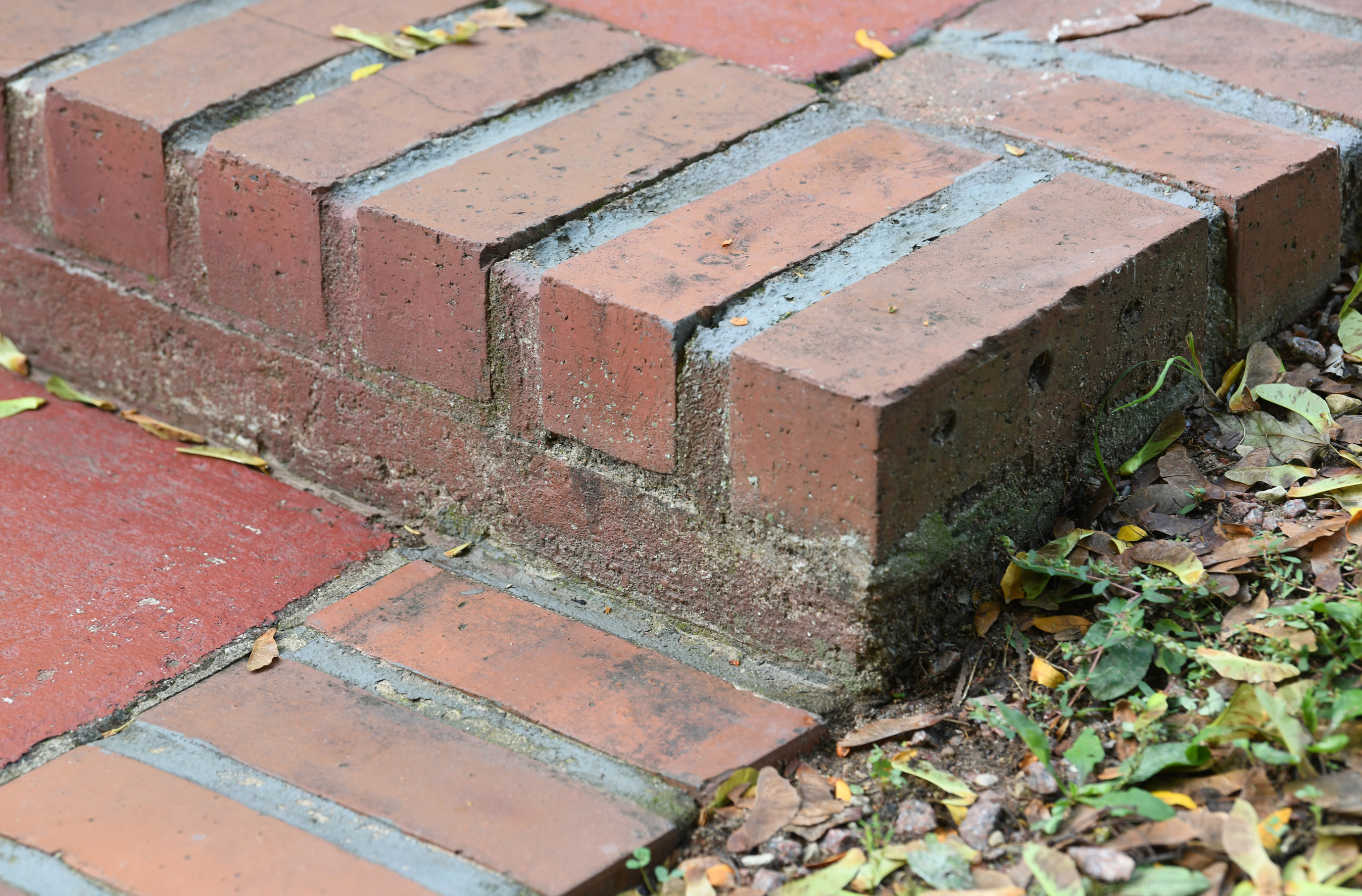
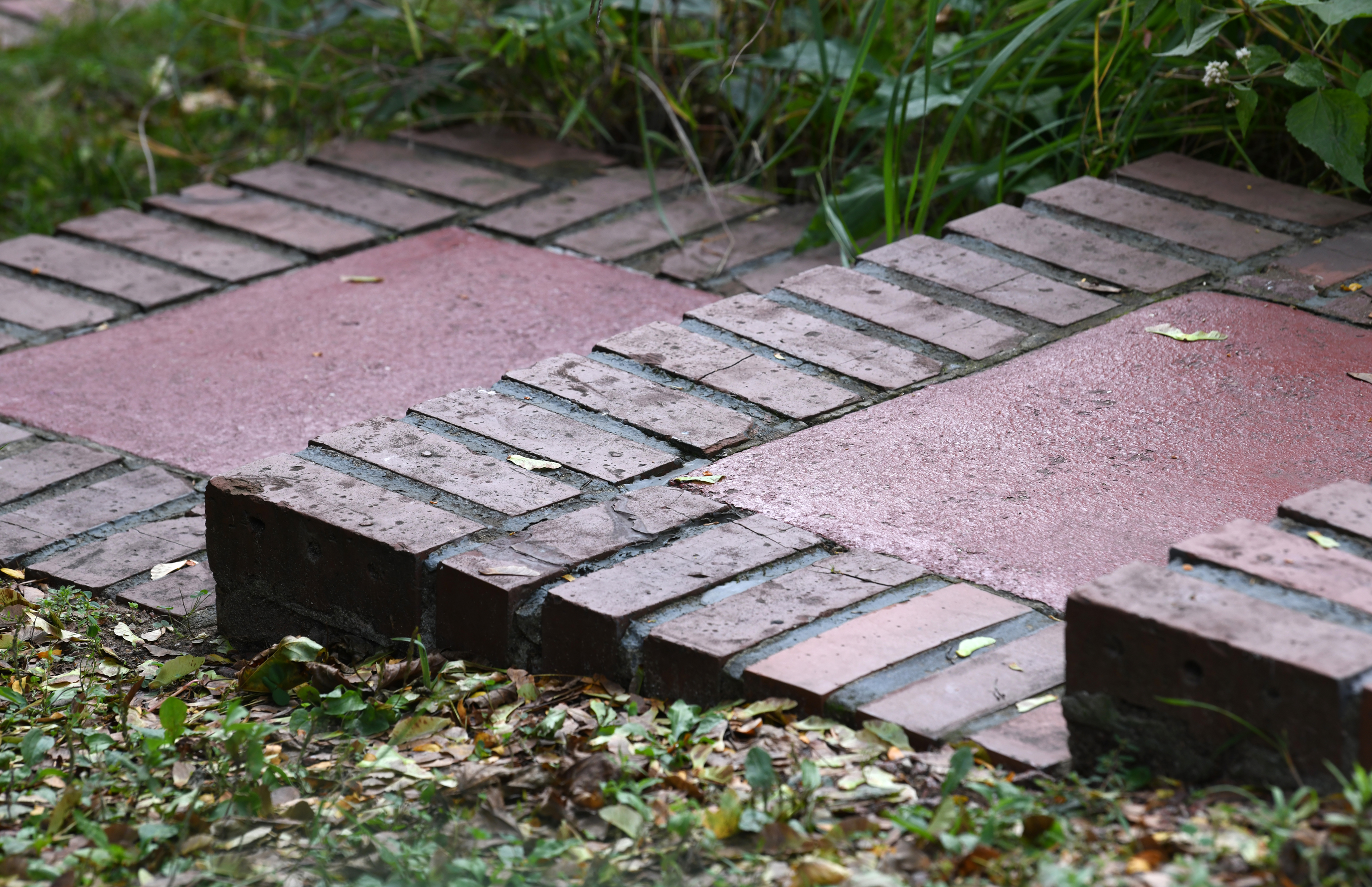
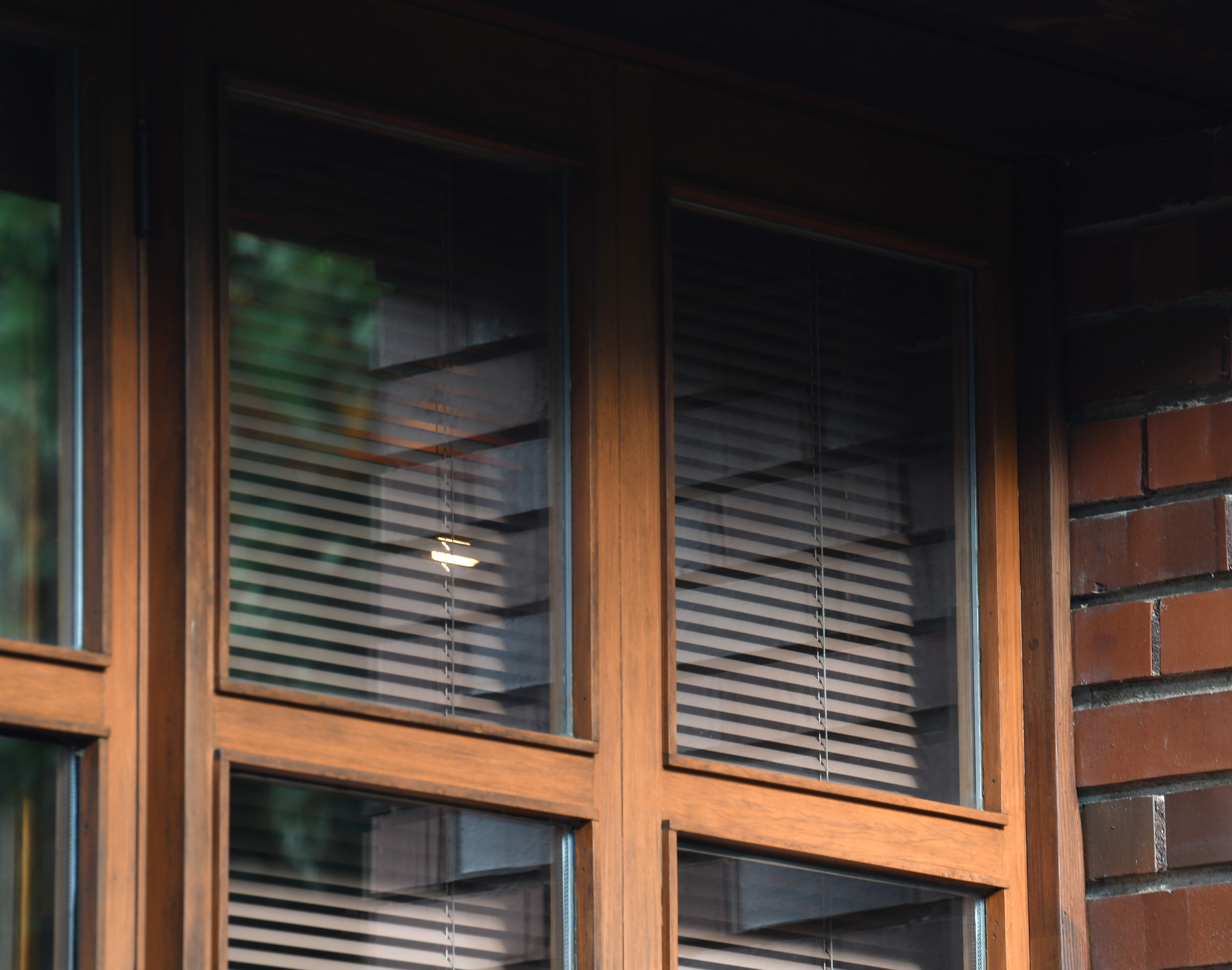
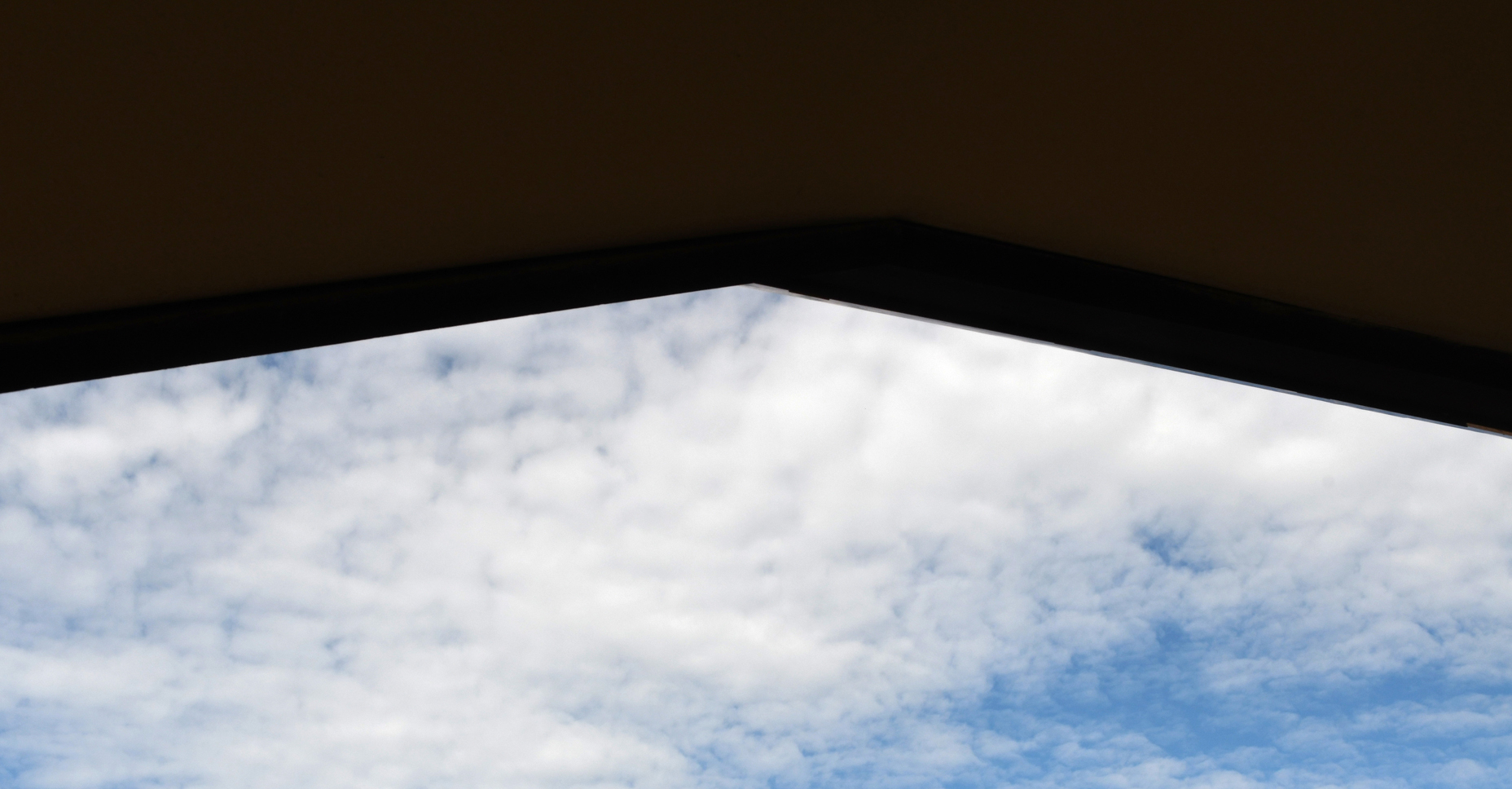
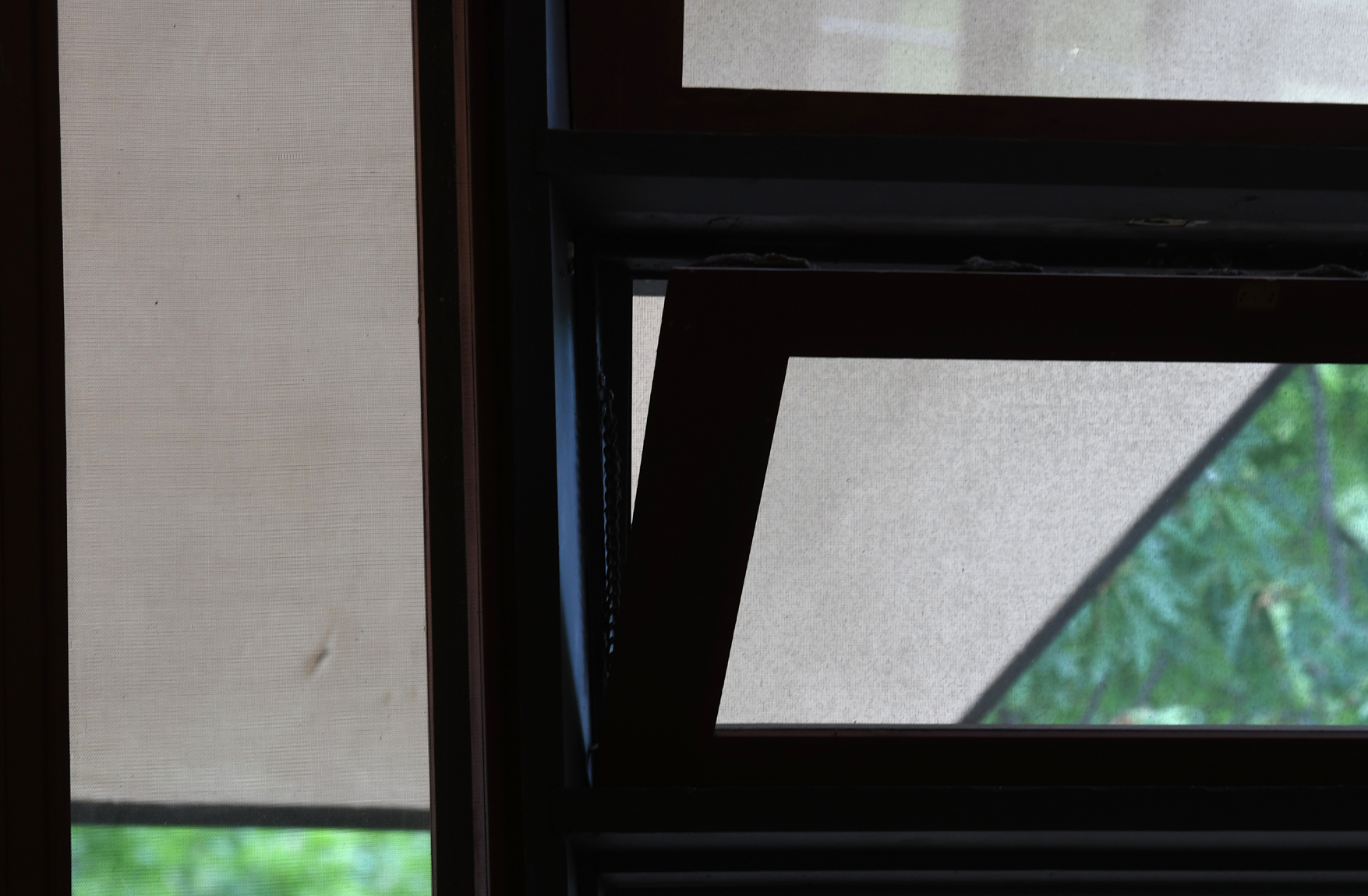
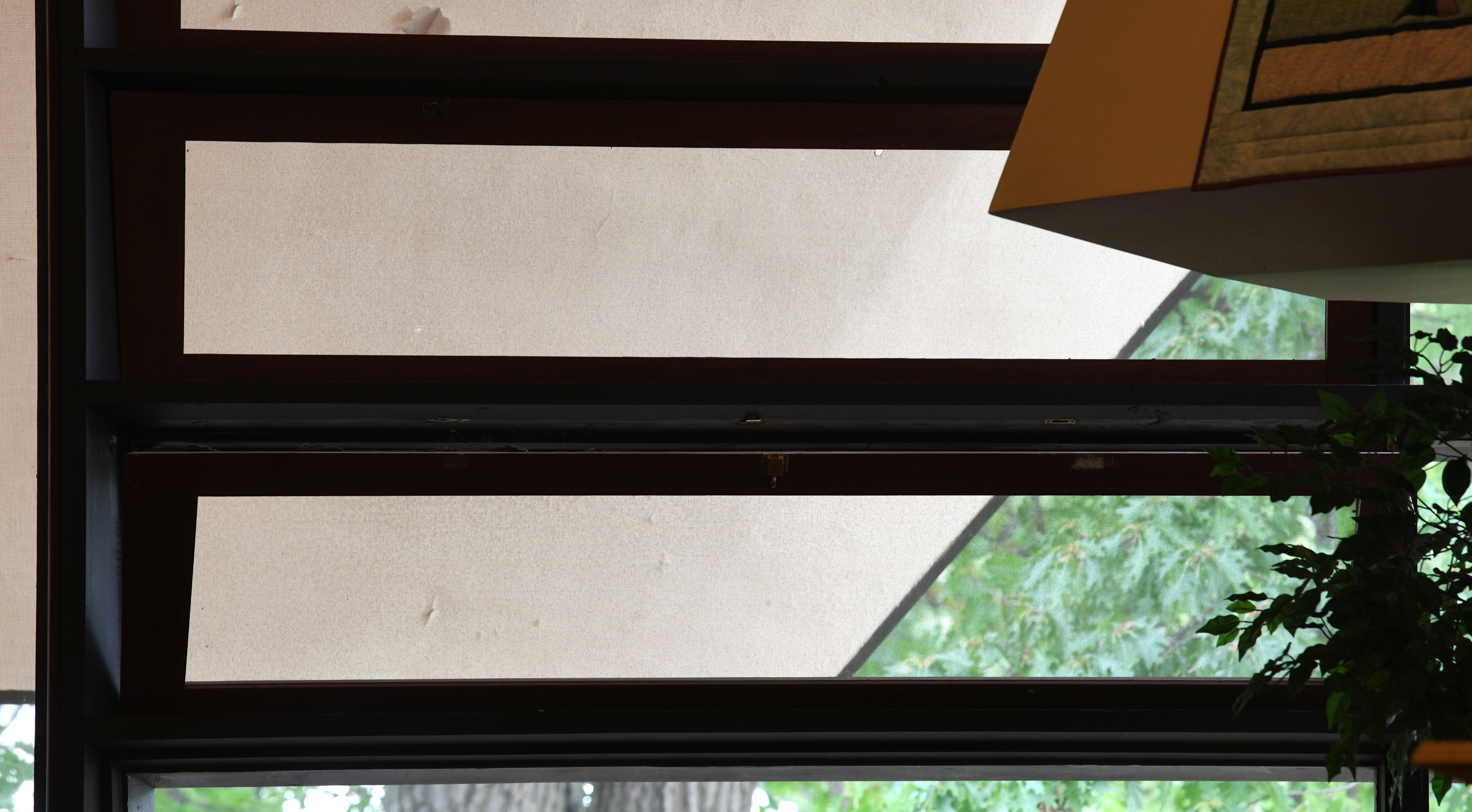
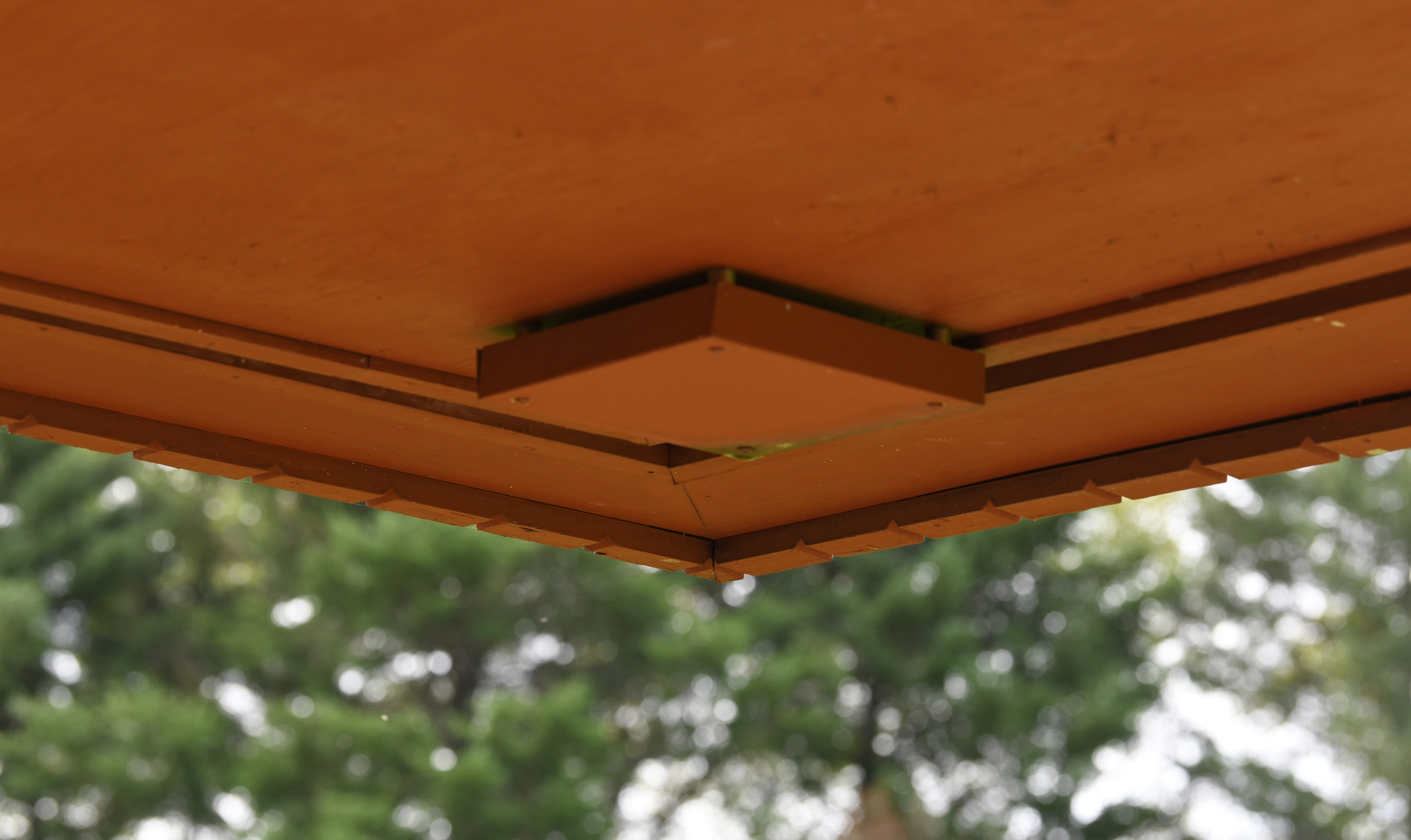
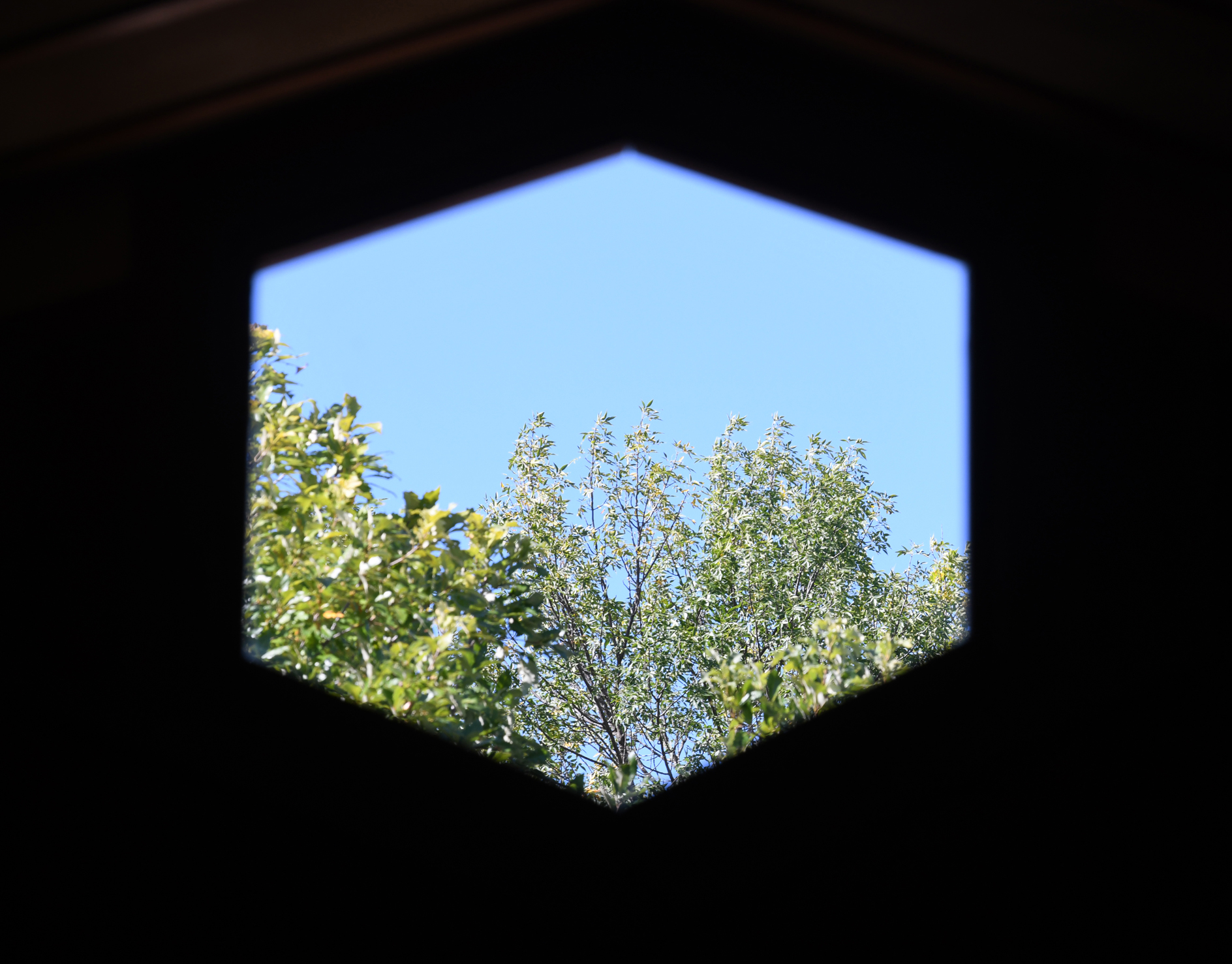
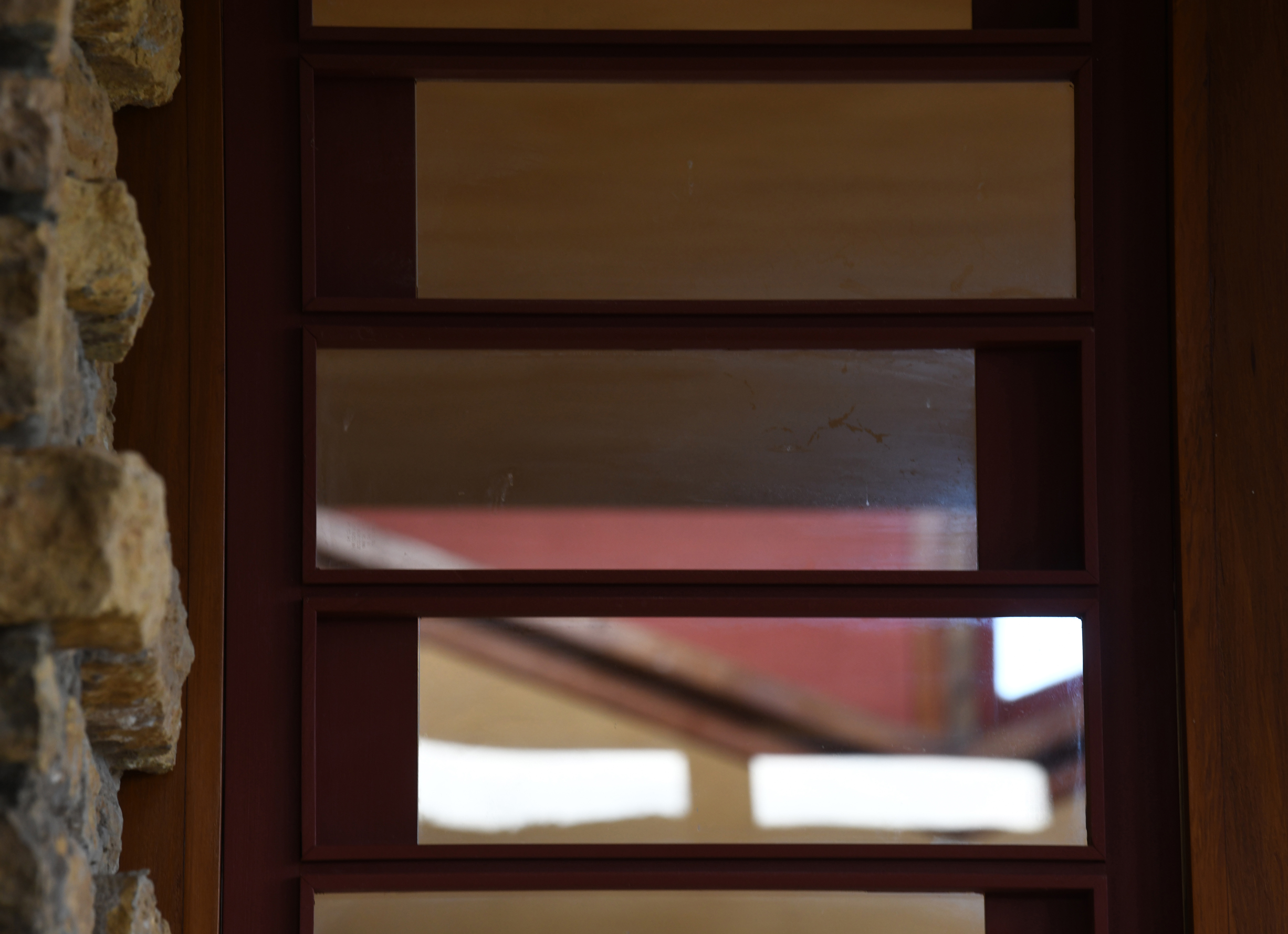
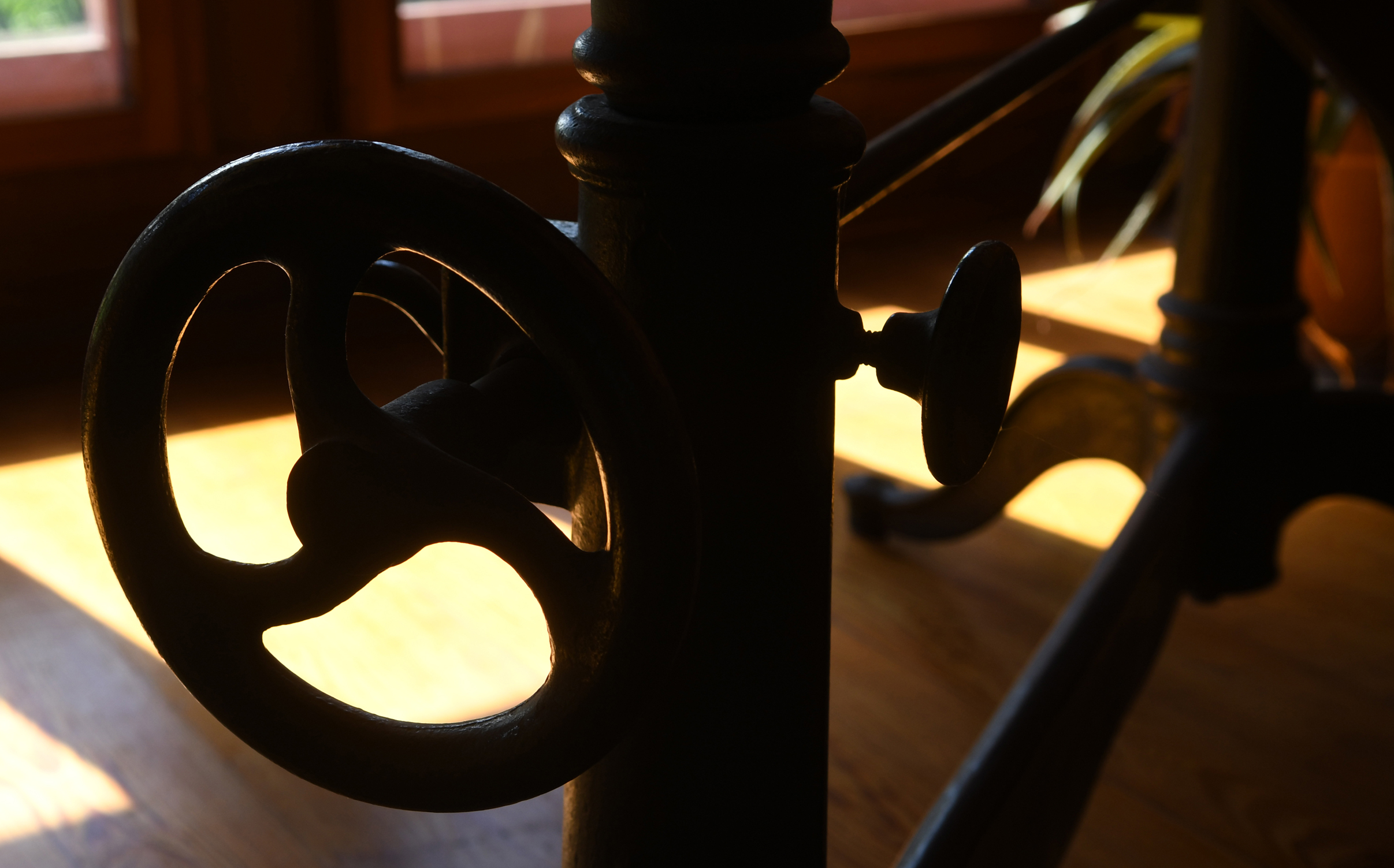
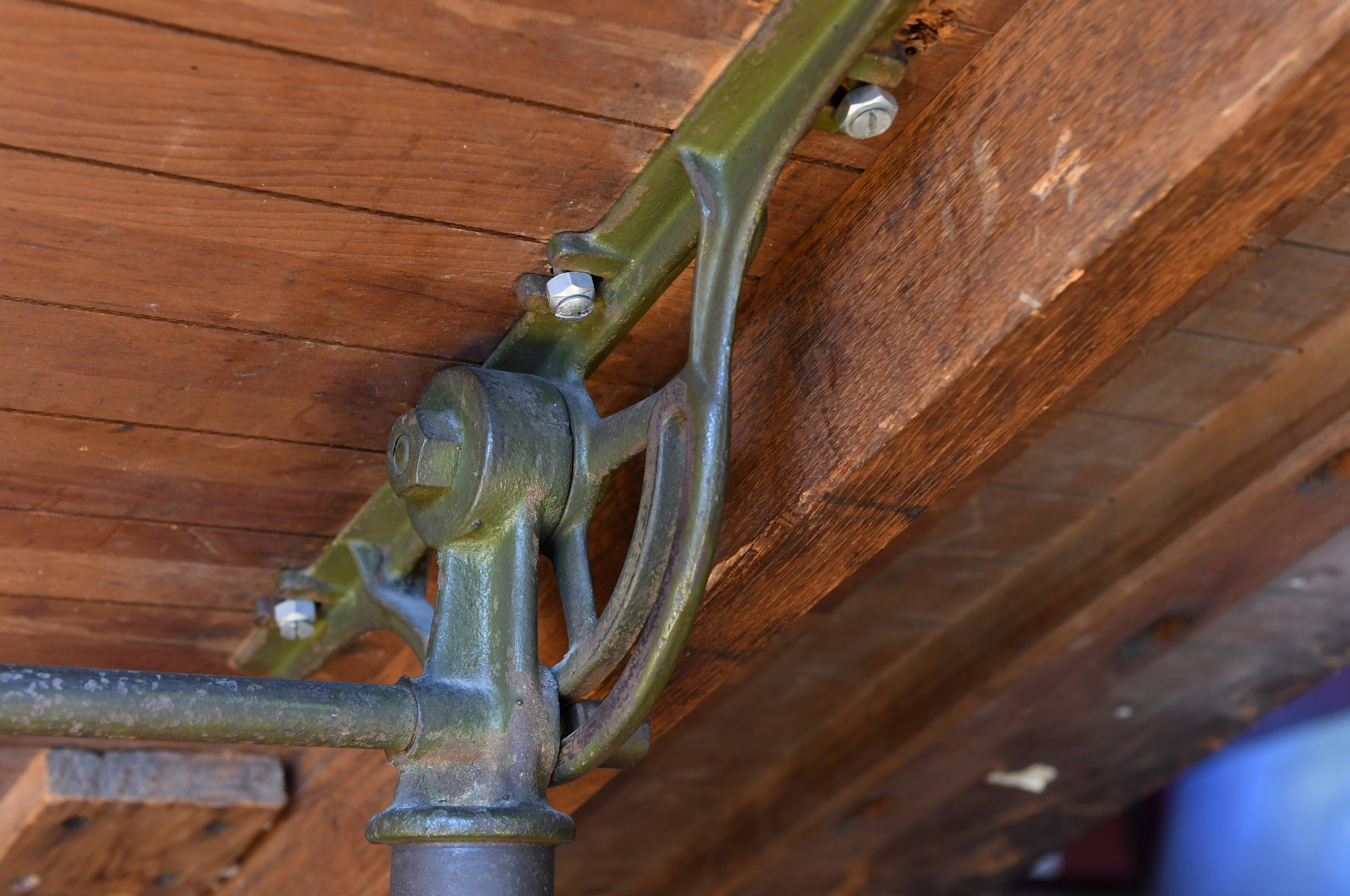
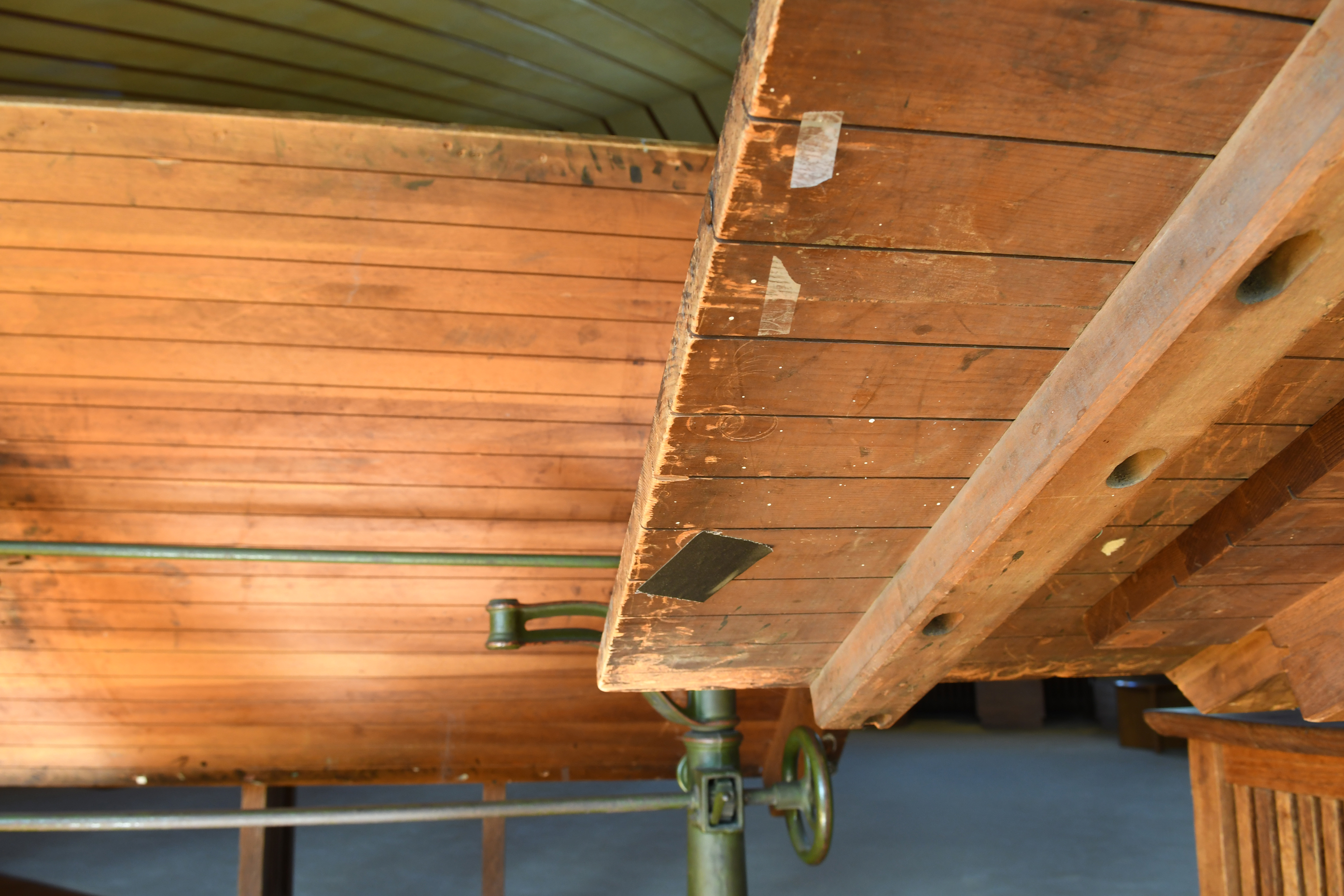
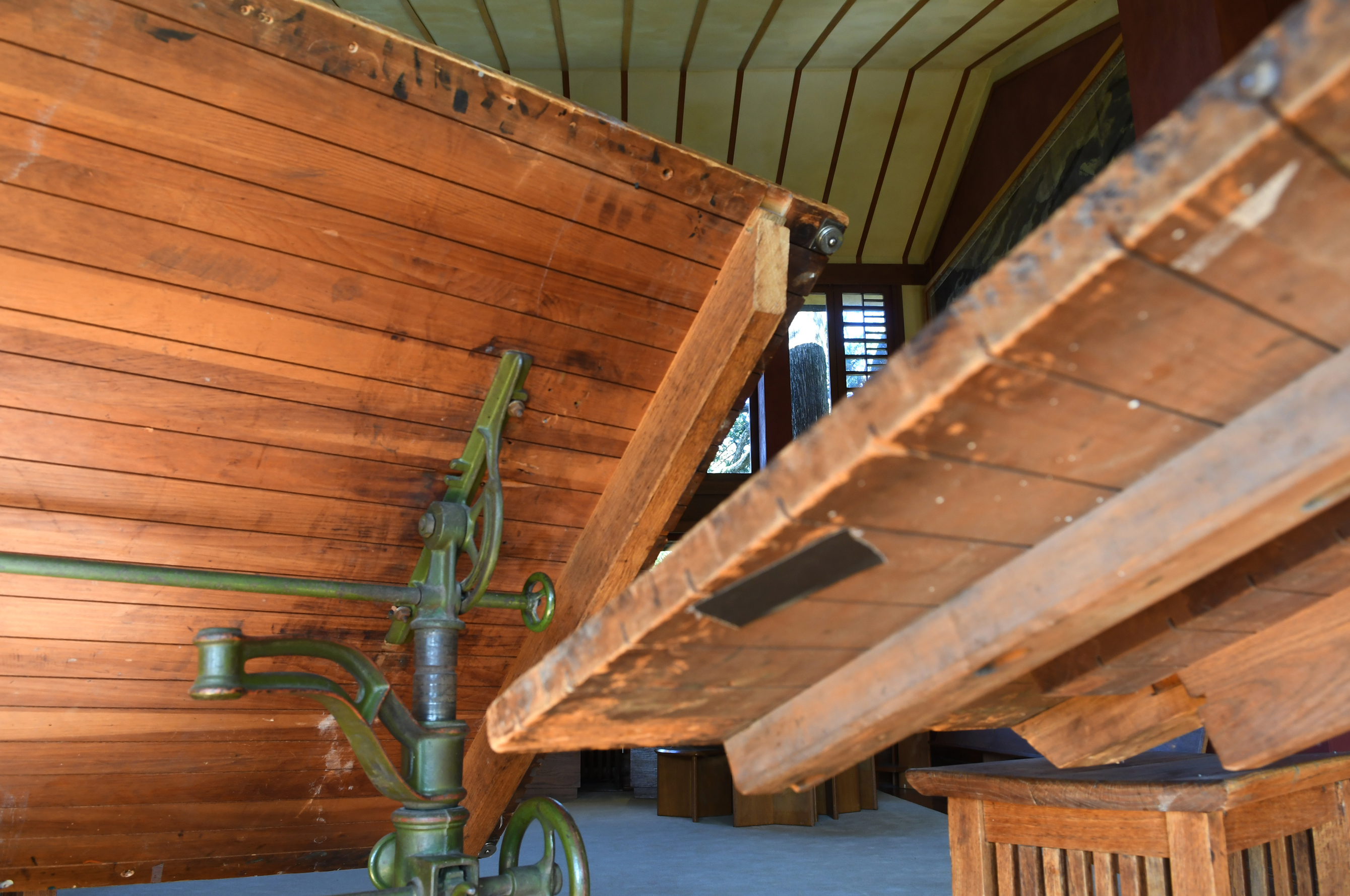
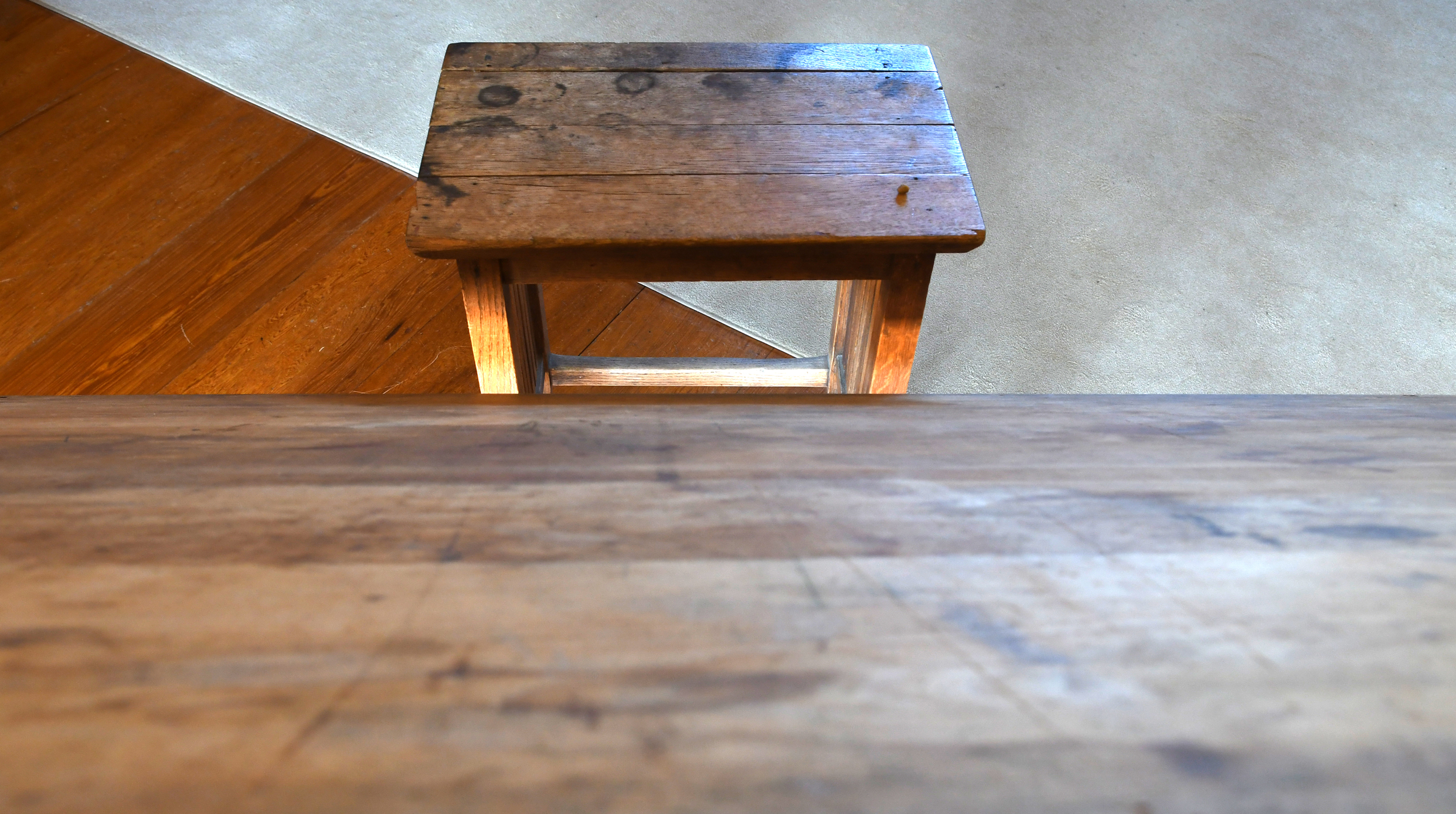
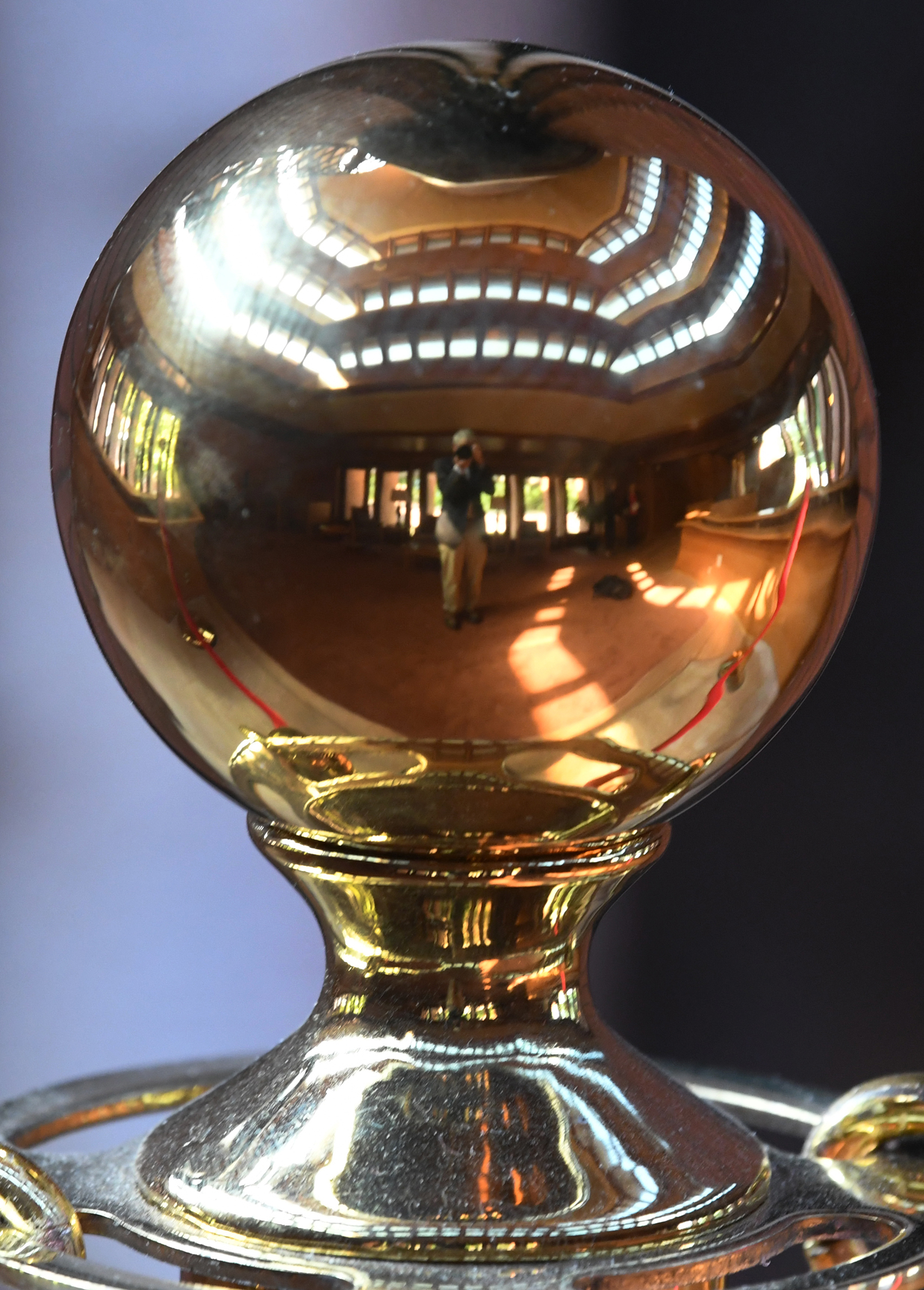
I had an opportunity to crawl around the drafting studio at Frank Lloyd Wright’s Hillside at Taliesin in August, during an event sponsored by the Frank Lloyd Wright Foundation.
Hillside on my Belly:
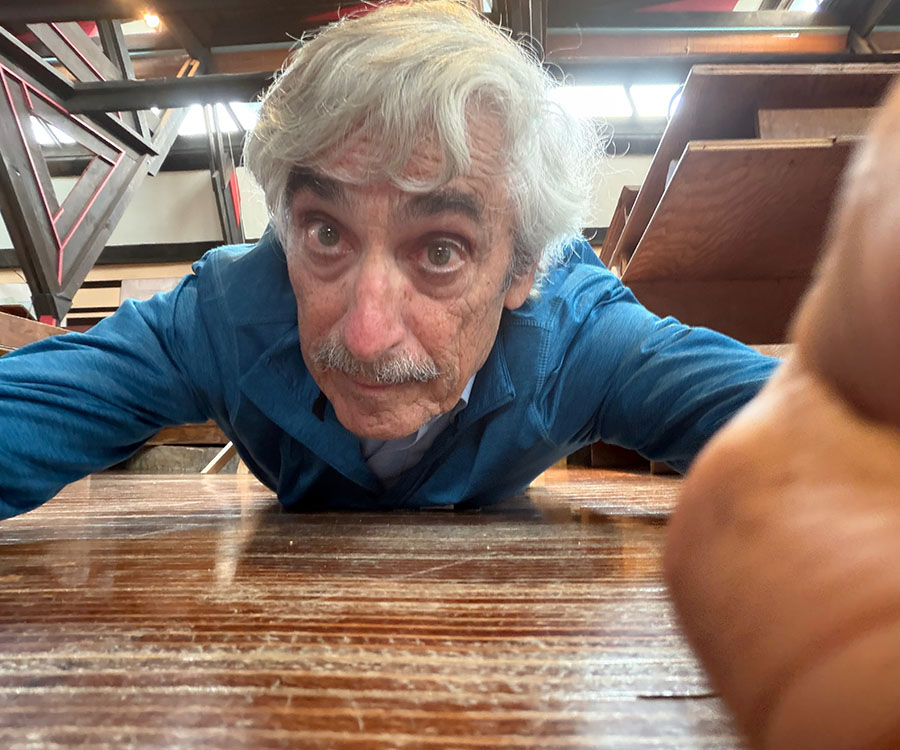
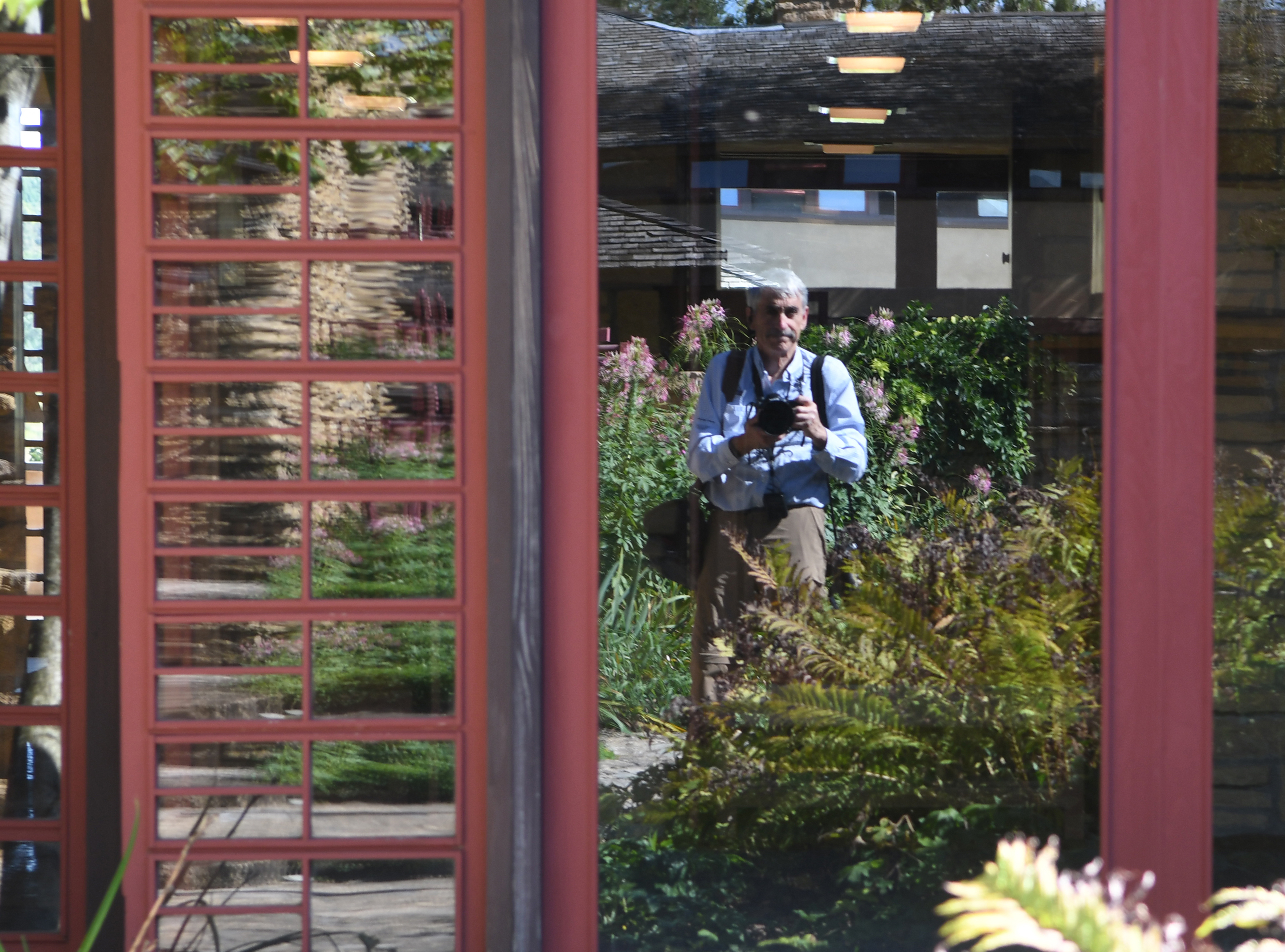
Some guy took a selfie while on the floor
Three weeks ago I had the opportunity to photograph its counterpart at Taliesin West during the Frank Lloyd Wright Building Conservancy’a annual conference:
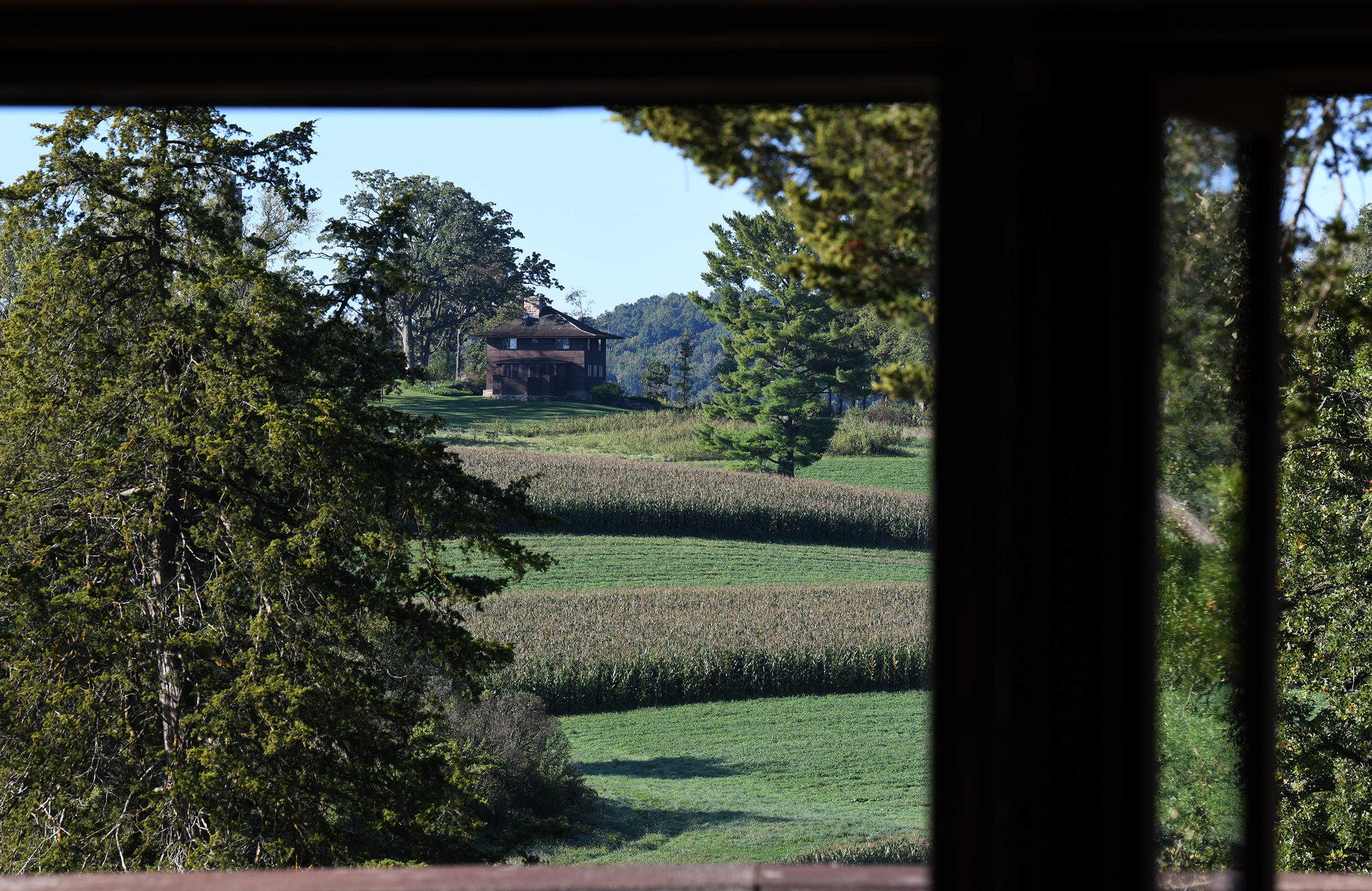
Jeff Goodman pointed out that the view out the windows is completely different and more enticing when one is seated at the drafting table as opposed to when looking out the window from a standing position:
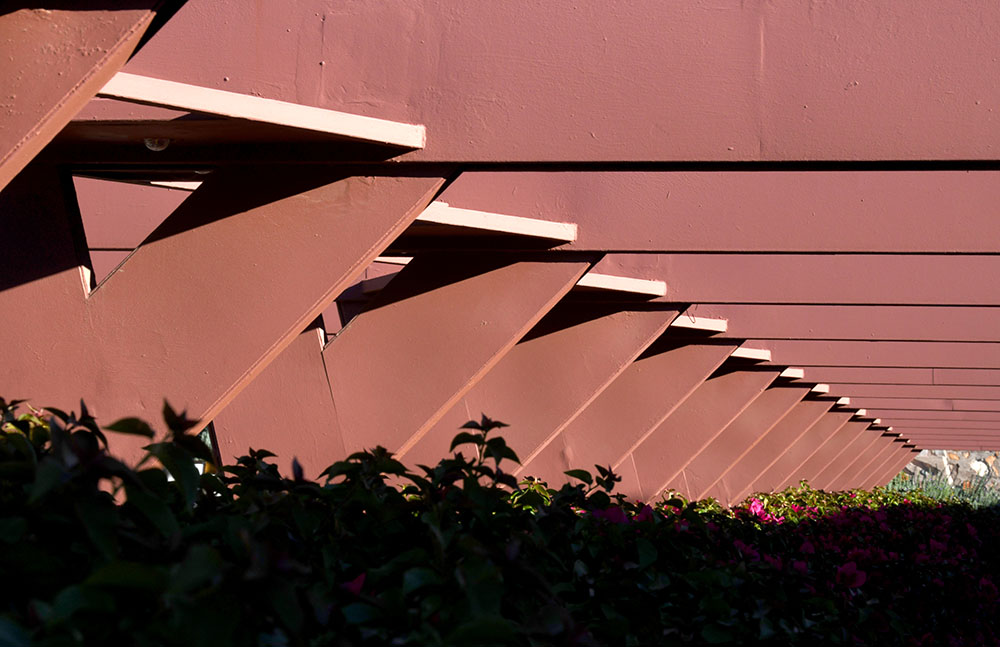
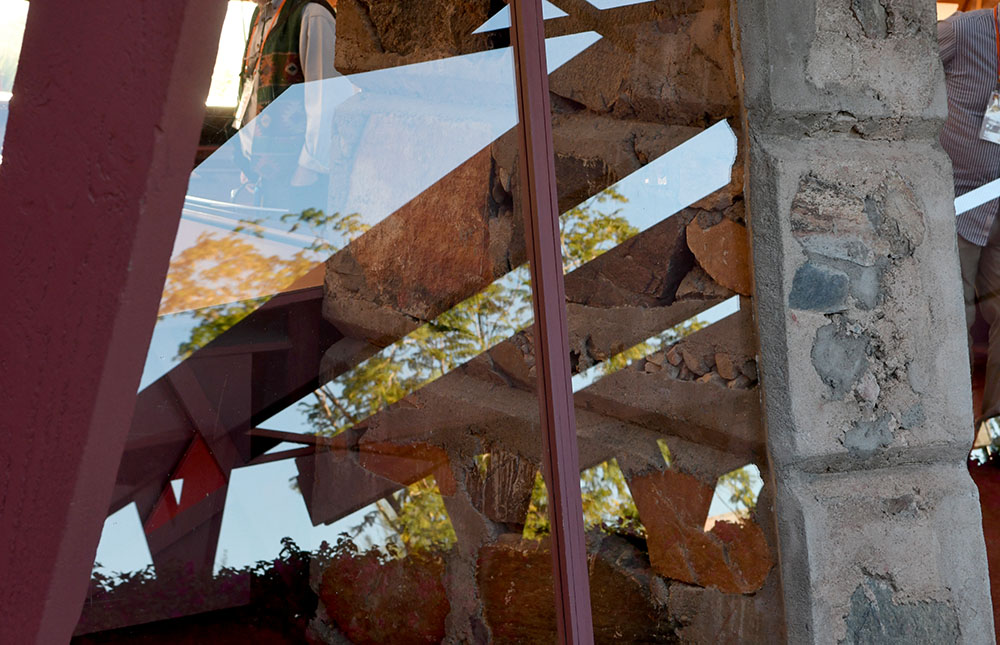
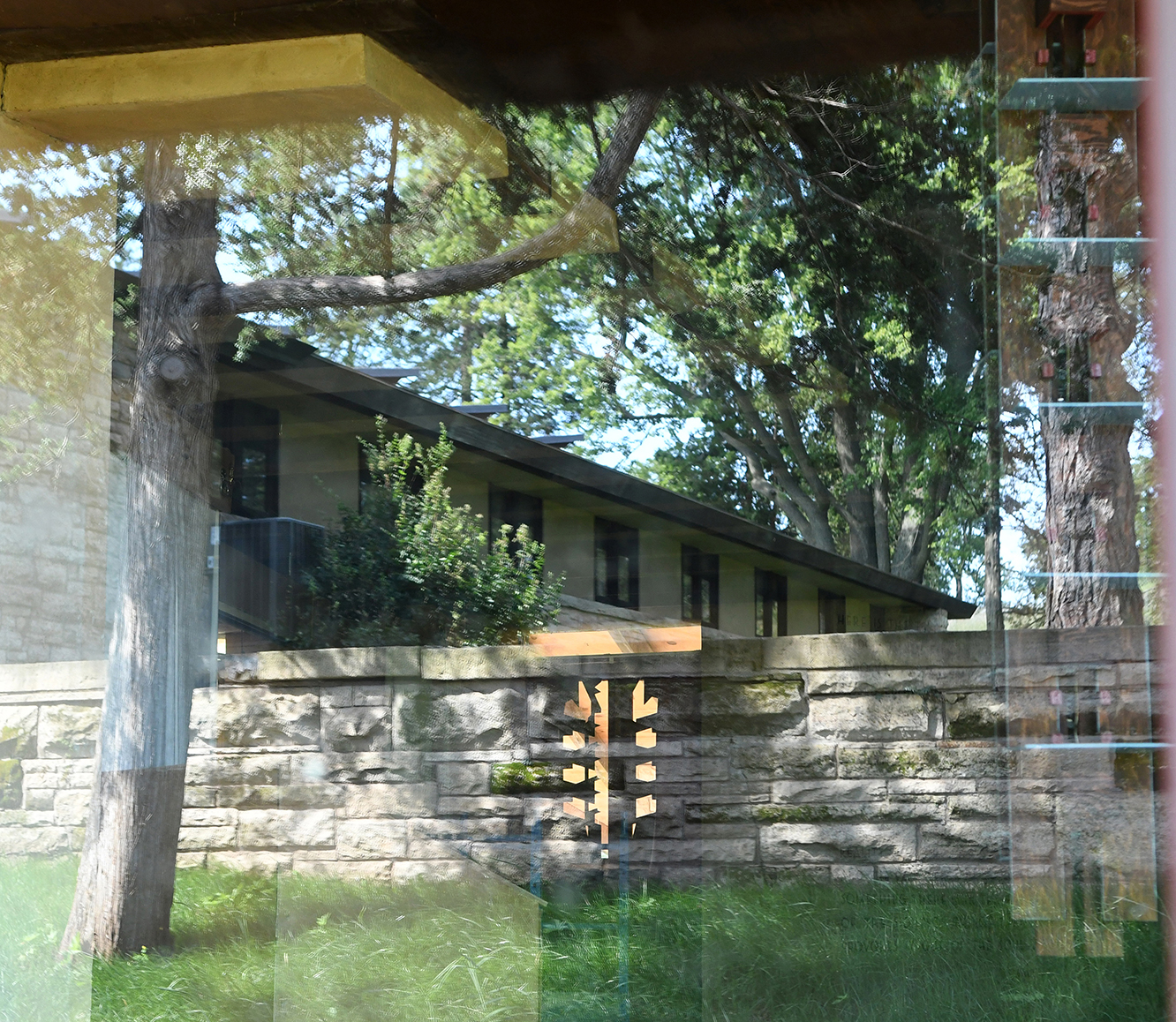
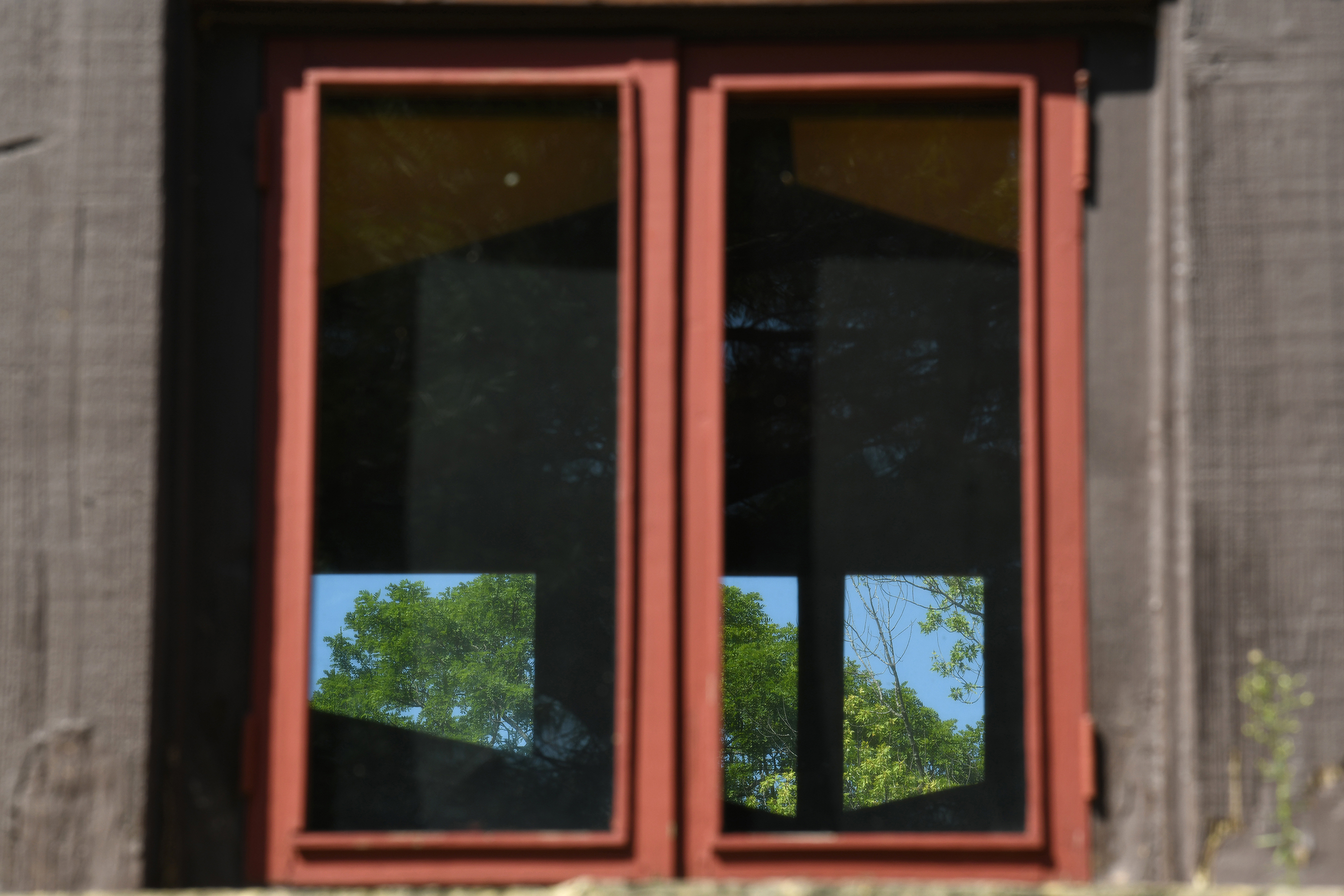
The pergola outside the Drafting StudioThe Pergola is reflected in the windows of the Drafting Studio.
Links (and they could all use your financial support!):
Much of what is known about Taliesin resides not far from Frank Lloyd Wright’s fabled home, in a small white house in Spring Green, in the person of Keiran Murphy.
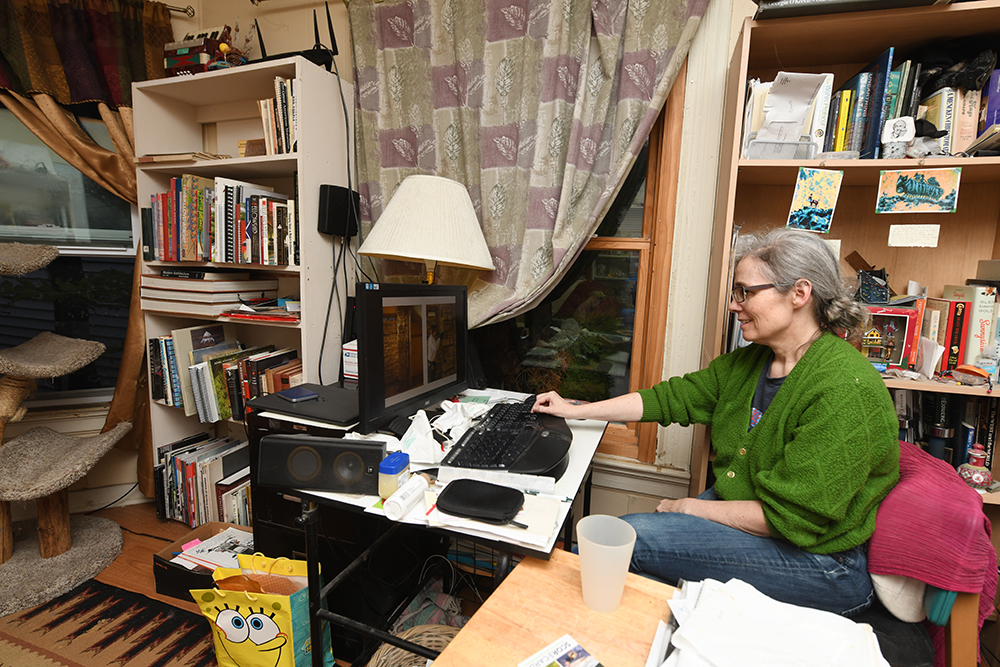
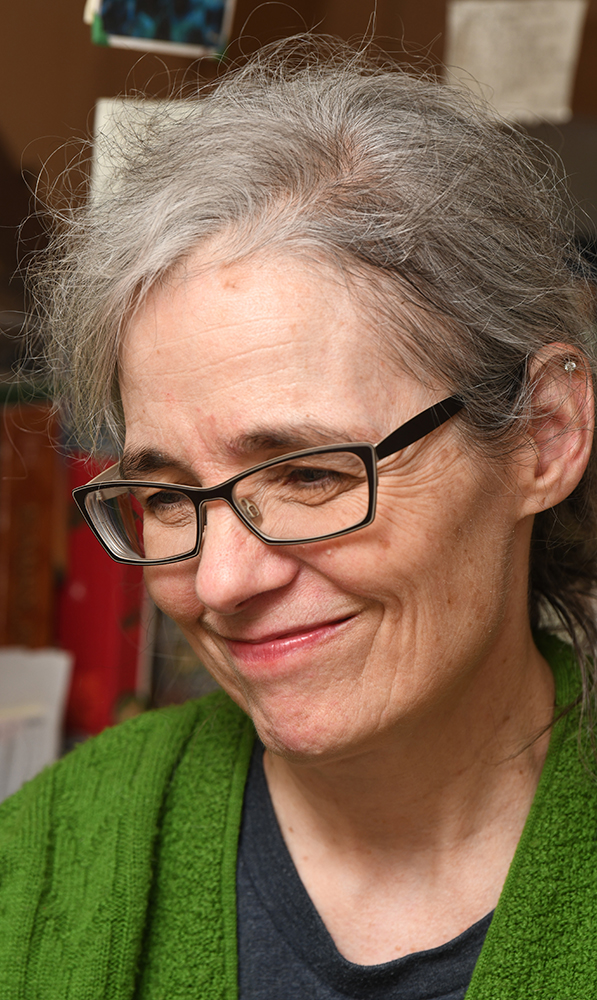
Taliesin scholar Keiran Murphy works in her home office in her living room in Spring Green in 2021.
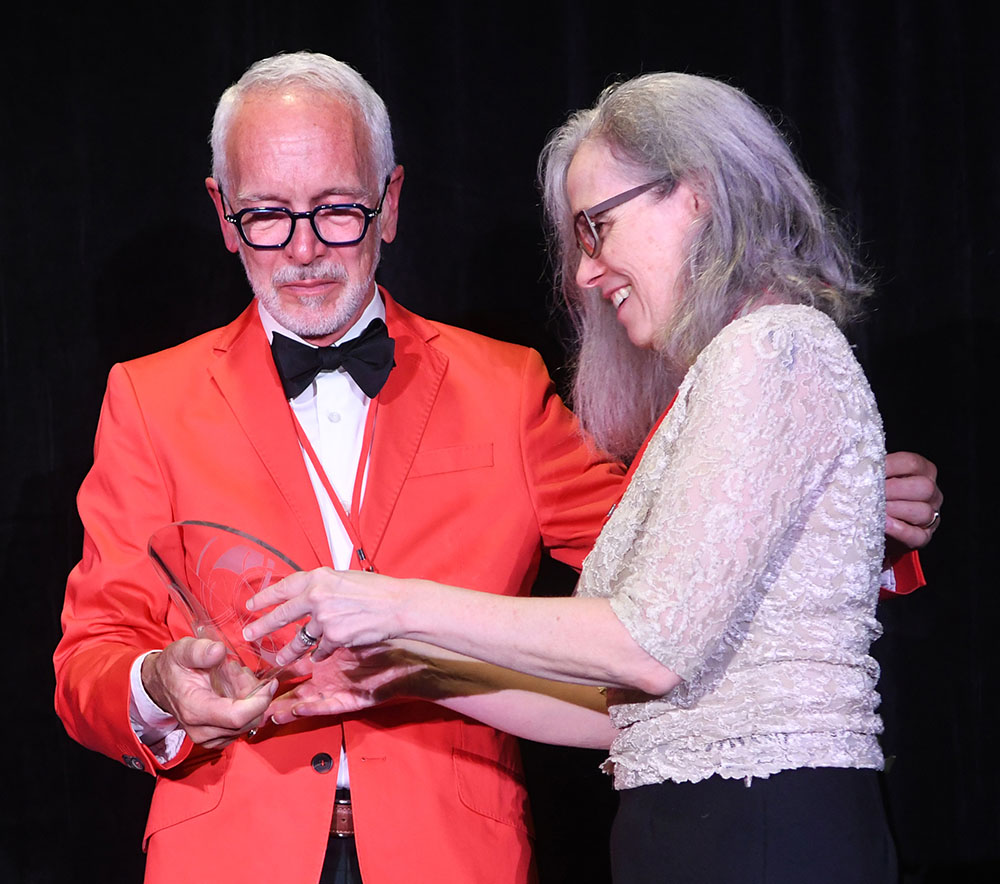
Murphy, first a tour guide, then the Historian, and later the Cultural Historian, at Taliesin from 1994 – 2020, was honored with a prestigious Wright Spirit Award at the 2023 Frank Lloyd Wright Building Conservancy conference in Minneapolis. The award was “For her in-depth research on the work of Frank Lloyd Wright.” Why? Well, simply because the automatic answer for many questions about Taliesin is, “Ask Keiran. She would know.”
Jeffrey Herr presents Murphy with her Wright Spirit Award at the Frank Lloyd Wright Building Conservancy Conference Gala dinner, Saturday September 30, 2023 in Minneapolis.
She says she had an “Aha!” moment during her first visit to the Wright archives, then at Taliesin West, in 2007. She had spent money from a raise to go to the archives for a week. It was only then that she realized how much she knew about Taliesin “It was overwhelming. It almost made me hyperventilate. I was almost laughing and crying. It was this huge realization.”
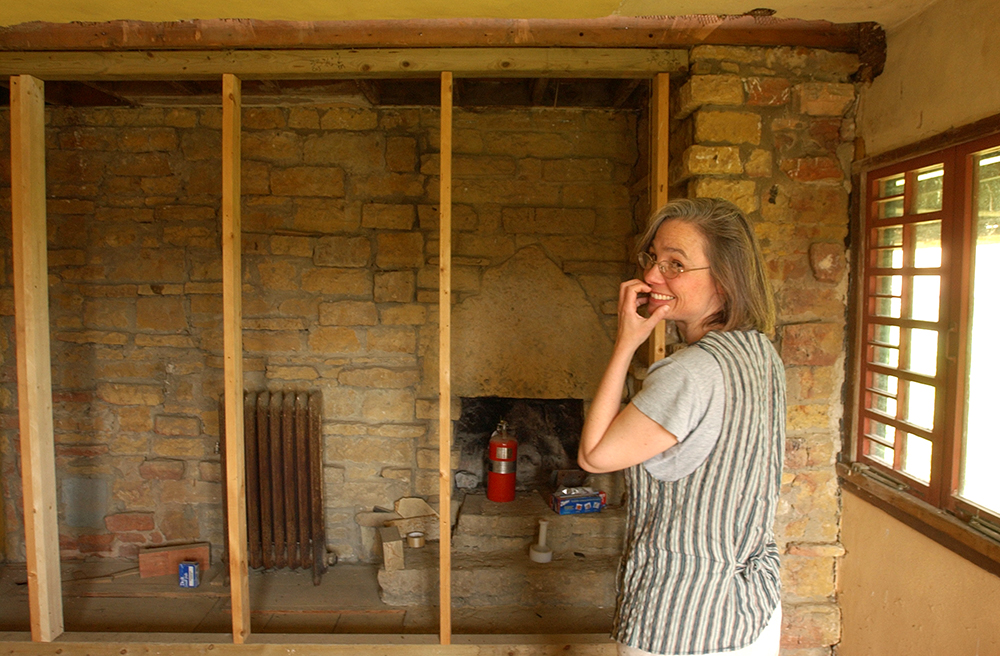
Murphy was a graduate student in Art History at the University of Wisconsin in 1994 with a job working in the slide library when she casually asked a colleague what kind of summer job she should look for. That casual remark set in motion her career in the World of Wright because Jim Dennis, a Professor of Art History and steward of Wright’s Herbert and Katherine Jacobs 1 House in Madison, was nearby. “Jim, around the corner, said, ‘They are hiring at Taliesin.’”
She recalls that she was not “completely aware of what Taliesin was” although she had taken a Hillside tour the year before with her mother. Jim told her to call Craig Jacobsen, the Senior Guide at Taliesin. Her knowledge of Taliesin does not square with her first impression of the estate when Jacobsen drove her around on a breezy and gray day, because they did not go into Taliesin. “I wasn’t impressed. It was a drizzly day, I wasn’t interested in architecture particularly. I knew myself well enough that I would like any art you put me around eventually [but] it wasn’t mind blowing.”
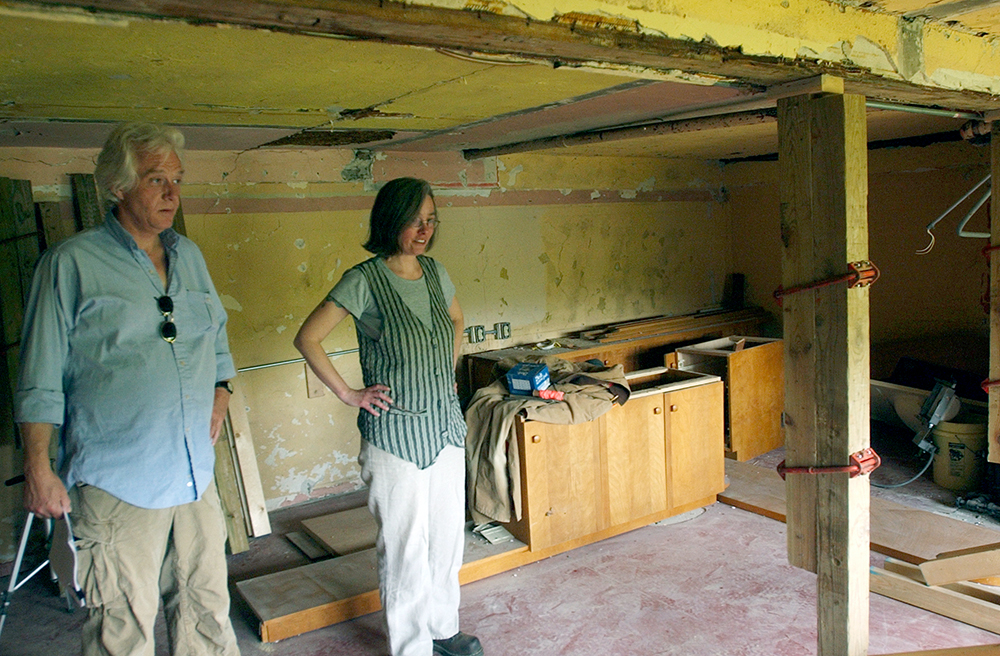
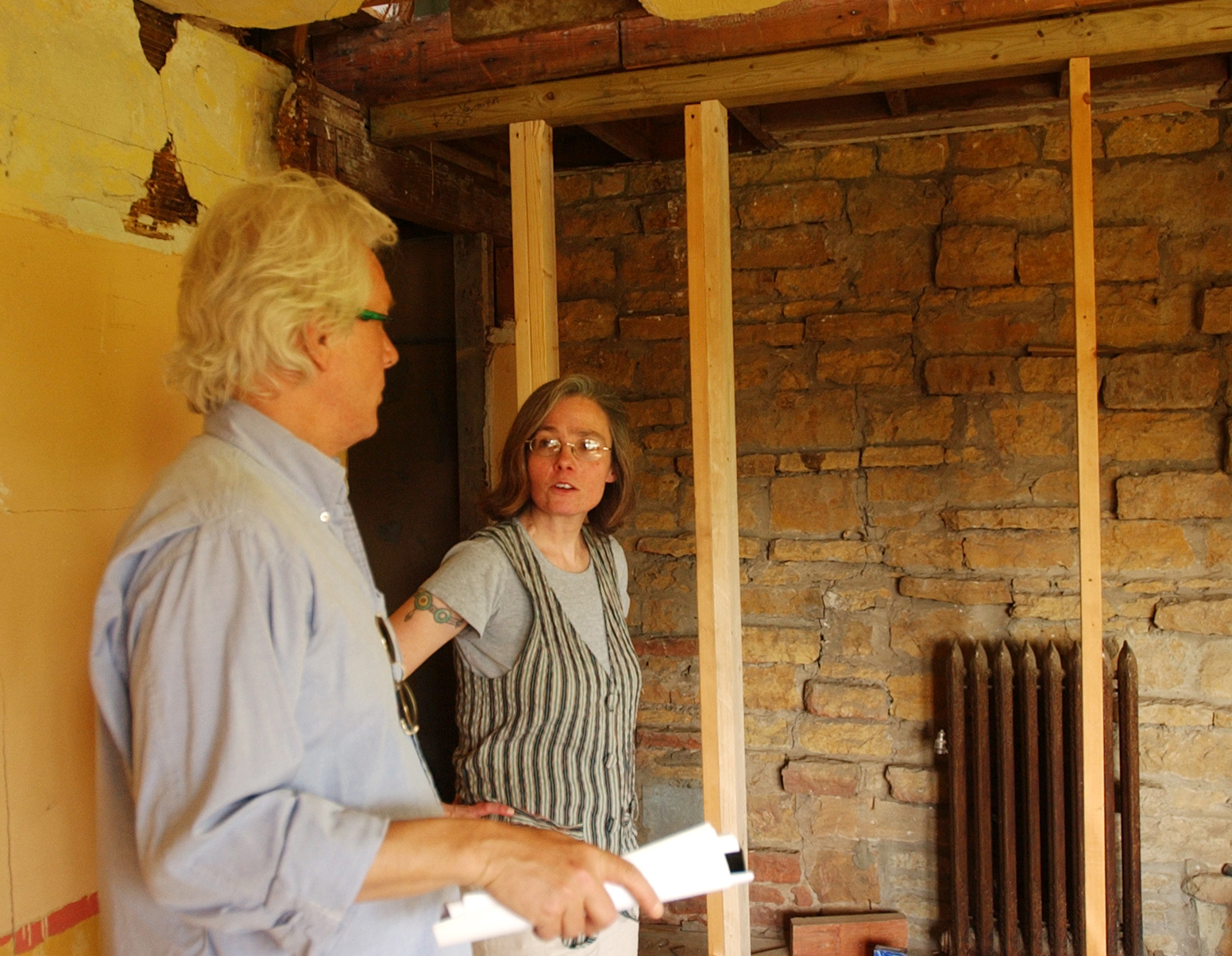
Murphy and Craig Jacobsen discusses work that needs to be done on the lower level of Taliesin in 2002
Nevertheless, she took that summer job as a tour guide. It was only after she trained with Jacobsen for a week that Taliesin impressed her. Was she nervous before her first tour? “Gosh yes! I have a memory of the night before I gave my first tours of giving the first tour continuously in my head while I was trying to sleep.”
Tour training was rigorous. It included understanding Taliesin, Taliesin Preservation, Hillside, and the Taliesin Fellowship. Trainees went on tours to listen and observe. “You were scheduled to go on tour after tour after tour. You went on all these peoples’ tours until you almost went insane.” There were two house tours a day and tours of Hillside every hour, from 9 a.m. to 4 p.m. Hillside was still a working drafting studio for the members of Taliesin Associated Architects.
Many people have dreams about work, and Murphy was no exception. “My tour dream is always that I am late, that I am running really late or that people on my tour are doing things they should not be doing, going places we ask them not to go to (upstairs, loggia, and don’t walk on the rug) I had a dream where I saw that people were literally laying on the rug on the Loggia. We used to bring people out on the Bird Walk, and I had a dream that people were bouncing on the Bird Walk.”
She gave tours for eight summers before transitioning to her role as Historian in 2002 as Taliesin Preservation was preparing for a Save America’s Treasures grant. She had begun doing some historic research in 1997. Carol Johnson, then the Executive Director of Taliesin Preservation, and Estate Manager Jim Erickson were puzzling over the source of some information. Murphy readily knew that it had come from Taliesin apprentice Curtis Besinger’s book Working with Mr. Wright. “I flipped forward to the page. I remember Jim and Carol were both like, ‘Wait a minute, this woman makes $10 an hour and she knows more than this firm we are working with now to figure out the history of Taliesin. Keiran do you want to do some writing and figure out the history of Taliesin?’ I was, ‘Yes, of course, where do I go, where do I sign?’ It’s when they realized that I knew more than (many) people from the outside, and I was right there.”
What was it like realizing that she knows more than some of what she refers to as “the legends?” “They were very accepting of me and I remember the realization that I was just going for information, not coming to the archives to take things from them and publish.” She says that she made several discoveries through photographs that helped in the restoration of Taliesin. One discovery changed the restoration of the Blue Room.
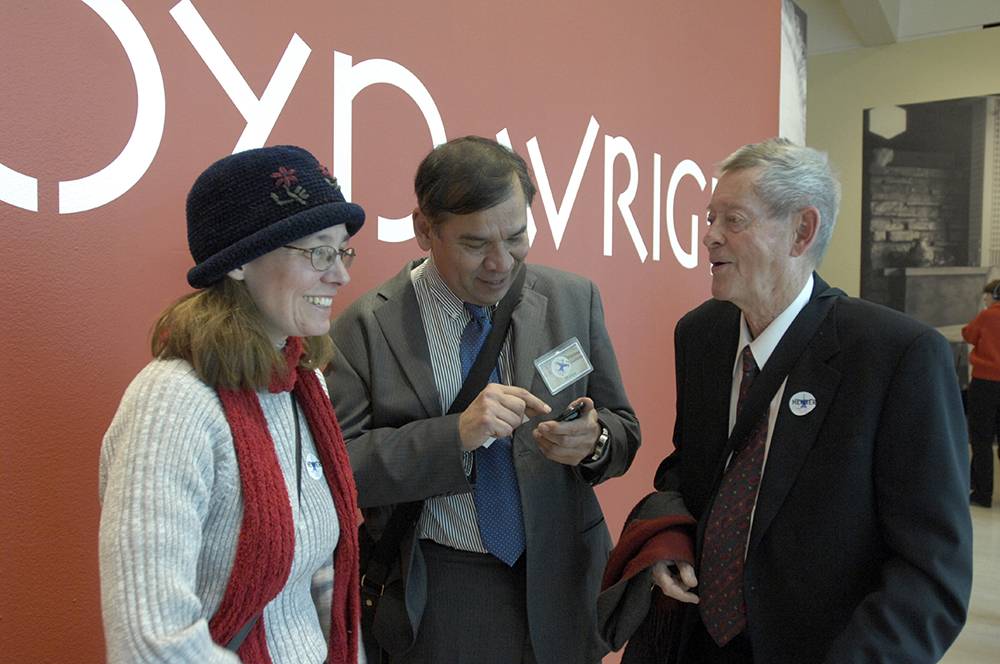
Murphy, left, OsKar Munoz, and Bruce Brooks Pfeiffer at the members’ opening of “Frank Lloyd Wright: Organic Architecture for the 21st Century,” at the Milwaukee Art Museum, February 10, 2011.
She says she continuously worked to enhance the knowledge of the tour guides. “In 2002 we started something called ‘Hey Keiran!,’ a weekly sheet with answers to questions asked by tour guides. “There were hundreds and hundreds of questions. I tried to give guides as much as I knew. ‘Hey Keiran’ was in part started by Craig Jacobsen as a way to get tour guides and staff to make sure to pick up their weekly schedules. One side would have schedules and the other side ‘Hey Keiran!’. I never stopped, even after we went to email.”
A portion of Murphy’s library in her home office in her living room in Spring Green
Murphy has worked independently of Taliesin Preservation since 2020. She still has access to the archives at the Avery and the Getty and has served on an advisory committee for Frank Lloyd Wright Building Conservancy publications. She lectures and shares her knowledge on her website, www.keiranmurphy.com
Murphy in her home office in her living room in Spring Green, Wisconsin
The paragraph above was going to be the end of this profile. But I am reminded of the end of my friend Paul Hendrickson’s important book Plagued by Fire. He and Murphy were standing with their back to the house, looking over the valley, unintentionally and coincidentally, a day before the 100th anniversary of Julian Carlton’s arson and butchery:
“I didn’t have my notebook with me, so this will be a reconstruction of our conversation. I said something to the effect of: I’m in as much doubt as I ever was, maybe more, about why he did it. And she said something to the effect of: Isn’t it almost better that way? And I replied: You mean the mystery itself is the more powerful thing? And she said: Yes, just like Wright himself. Who would ever really want to get to the bottom of the mystery of Frank Lloyd Wright? If you did that, you might not have a need to come back.” Indeed, Keiran Murphy, indeed.
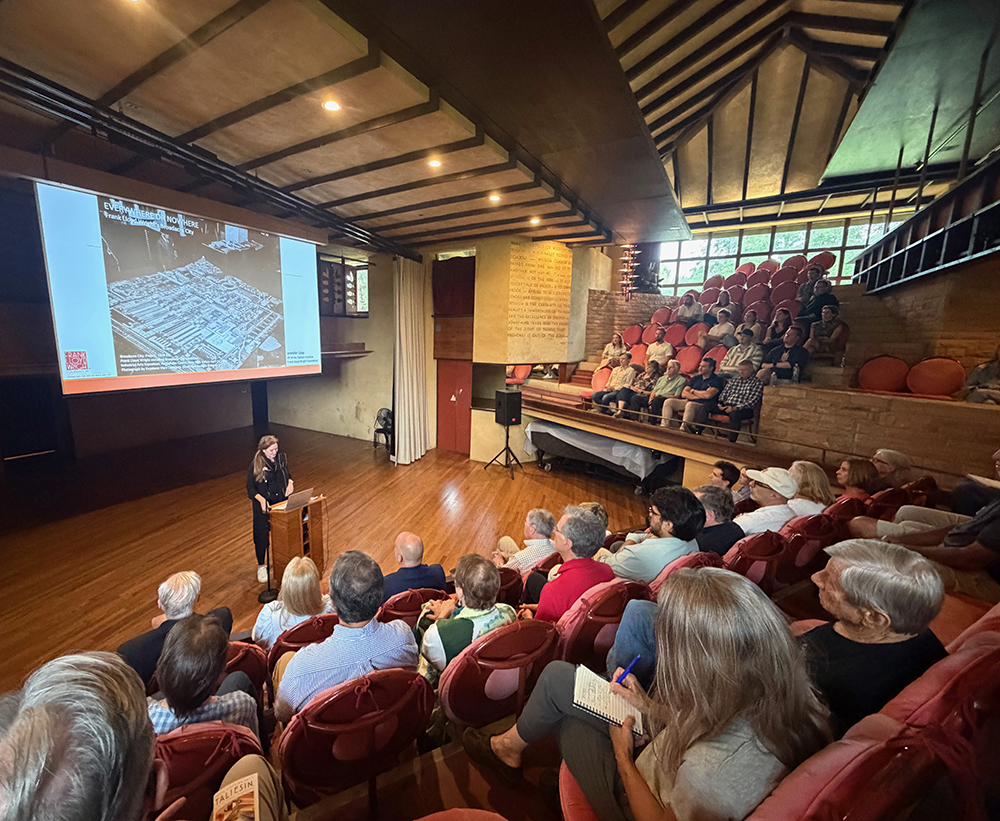
Murphy takes notes during Dr. Jennifer Gray’s talk about Broadacre City in the Hillside Theatre at Taliesin August 15, 2026.
Today’s joy in the World of Wright is to wish Roland Reisley a happy 101st birthday! He and I were walking into Monona Terrace during the 2018 Frank Lloyd Wright Building Conservancy conference in Madison when we passed this photograph and he exclaimed, “This is a photo of me working with Mr. Wright (and with David Henken, as Usonia was taking shape)!” He let me photograph him with the Pedro Guerrero photo:
This is a link to the tribute I posted a year ago to mark his 100th birthday:
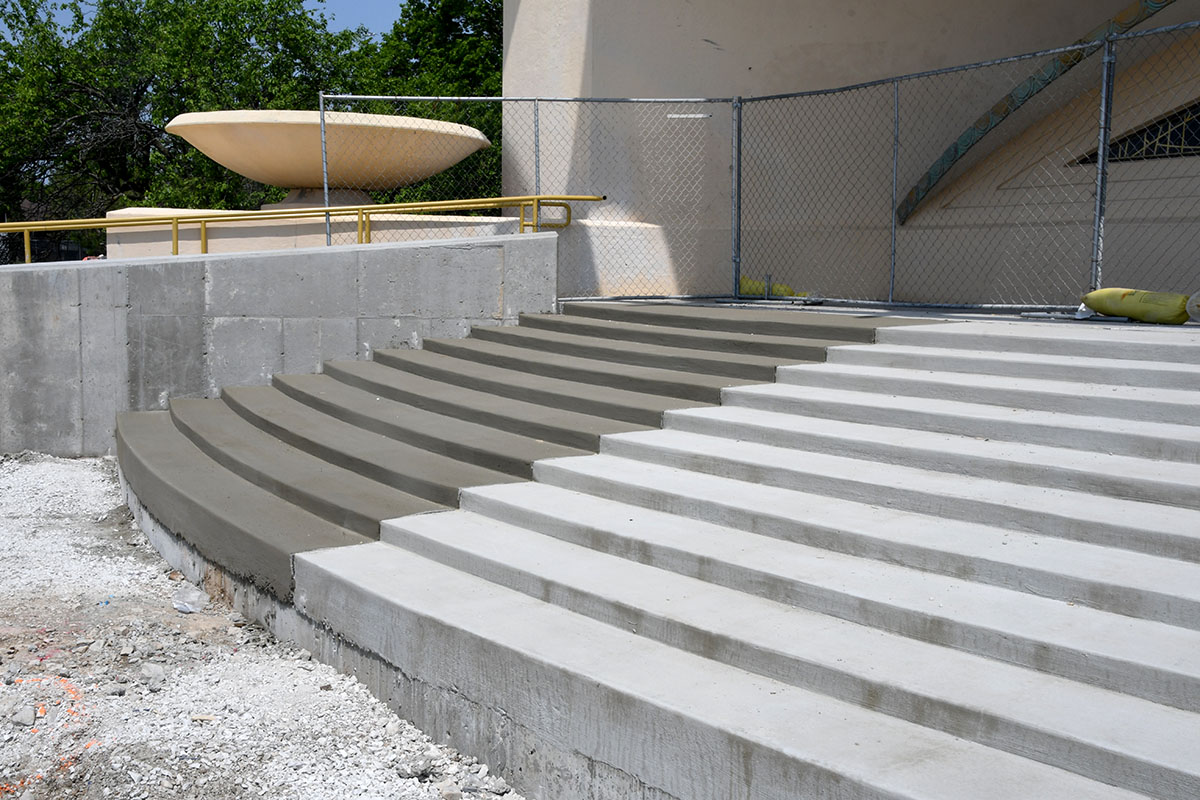
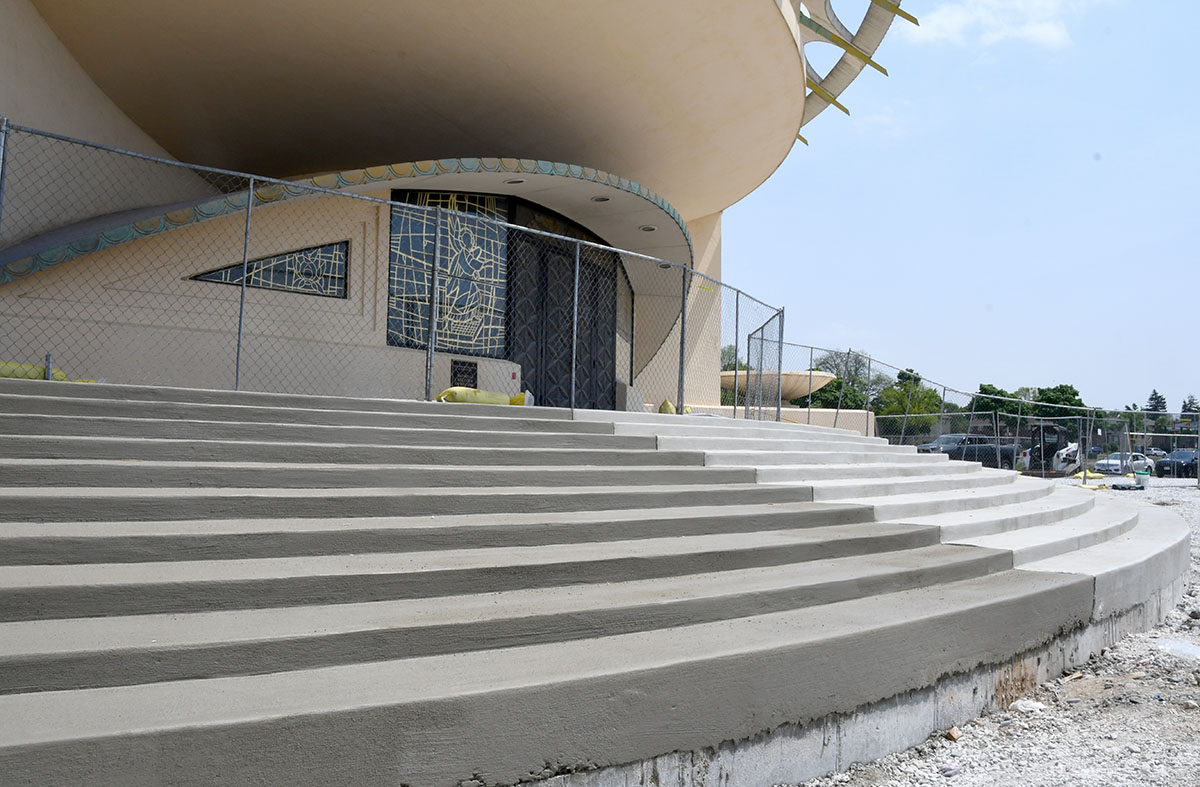
When I visited last week, leading a Road Scholar tour, work had just finished pouring new concrete for the front steps. When outside work is finished, attention will shift inside, under the dome, as the carpet and pew cushions are replaced, and the pews are refinished.
Taliesin News:
Taliesin Preservation (TPI) is advertising that they are hiring seasonal workers, with signs below Riverview Terrace, the Frank Lloyd Wright Visitors Center:
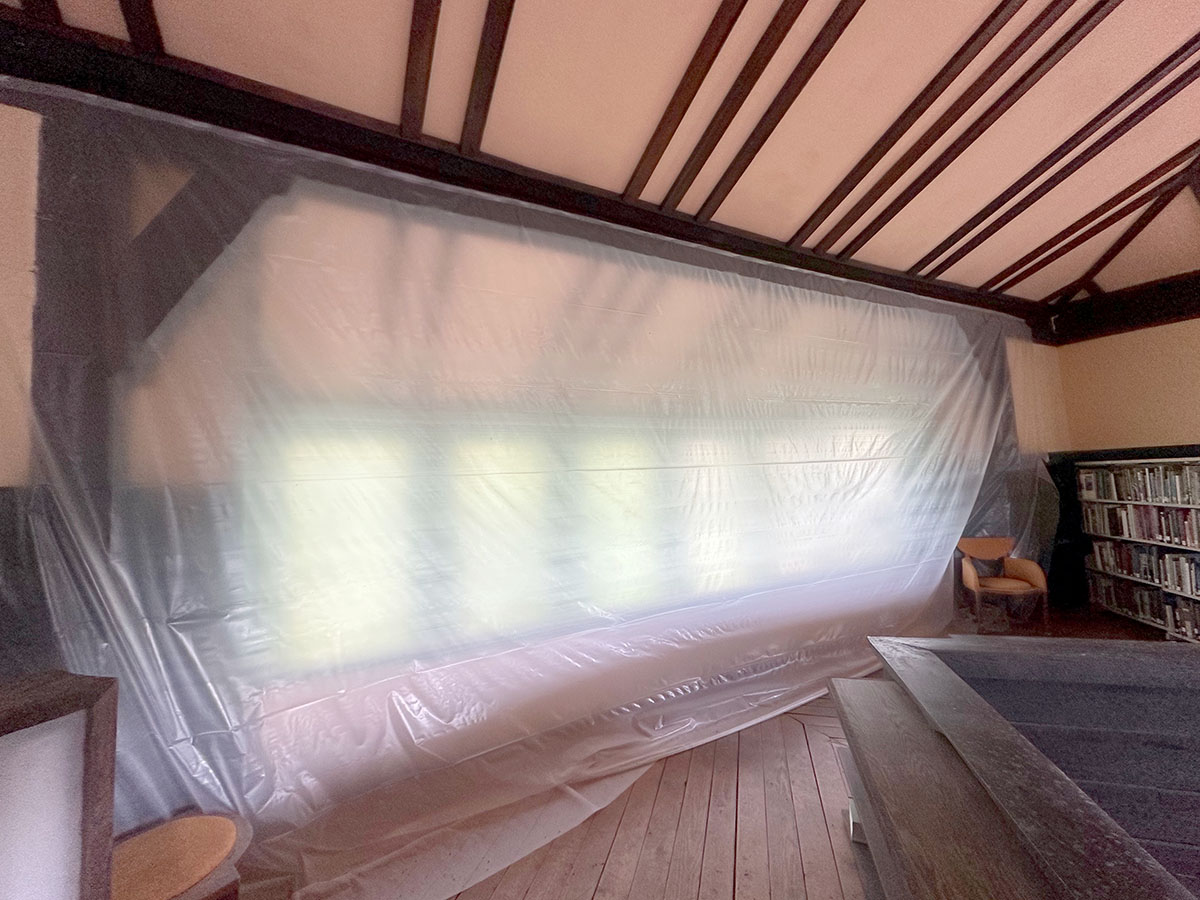
The most dramatic work on campus is evidenced by the scaffolding and plastic covering at the Assembly Hall at Hillside Home School because of water incursion. Repairs will be ongoing.
TPI has launched a new “Frank Lloyd Wright in Madison” experience in partnership with Destination Madison and the Frank Lloyd Wright Foundation. Details are at:
My wife and I will be traveling to Banff National Park in Alberta later this spring. Wright’s 1911 Banff National Park Pavilion was demolished ca. 1938, but we have connected with someone who will show us where it stood. I will post after our trip. Here are two links for more information about the ill-fated Pavilion:
This is the last day of the Road Scholar Frank Lloyd Wright trip which I am accompanying. Today I found myself looking at shapes in the six Wright sites we visited. I relied on memory to try to not repeat photos I have taken in the past. I was challenged to turn this post into a “Where Was I When I Took This Photo?” game rather than caption photos as I normally would. The photos are presented in the order in which we visited the sites. The answers are at the bottom.
Site A:
Site B:
Site C:
Site D:
Site E:
Site F:
Answers:
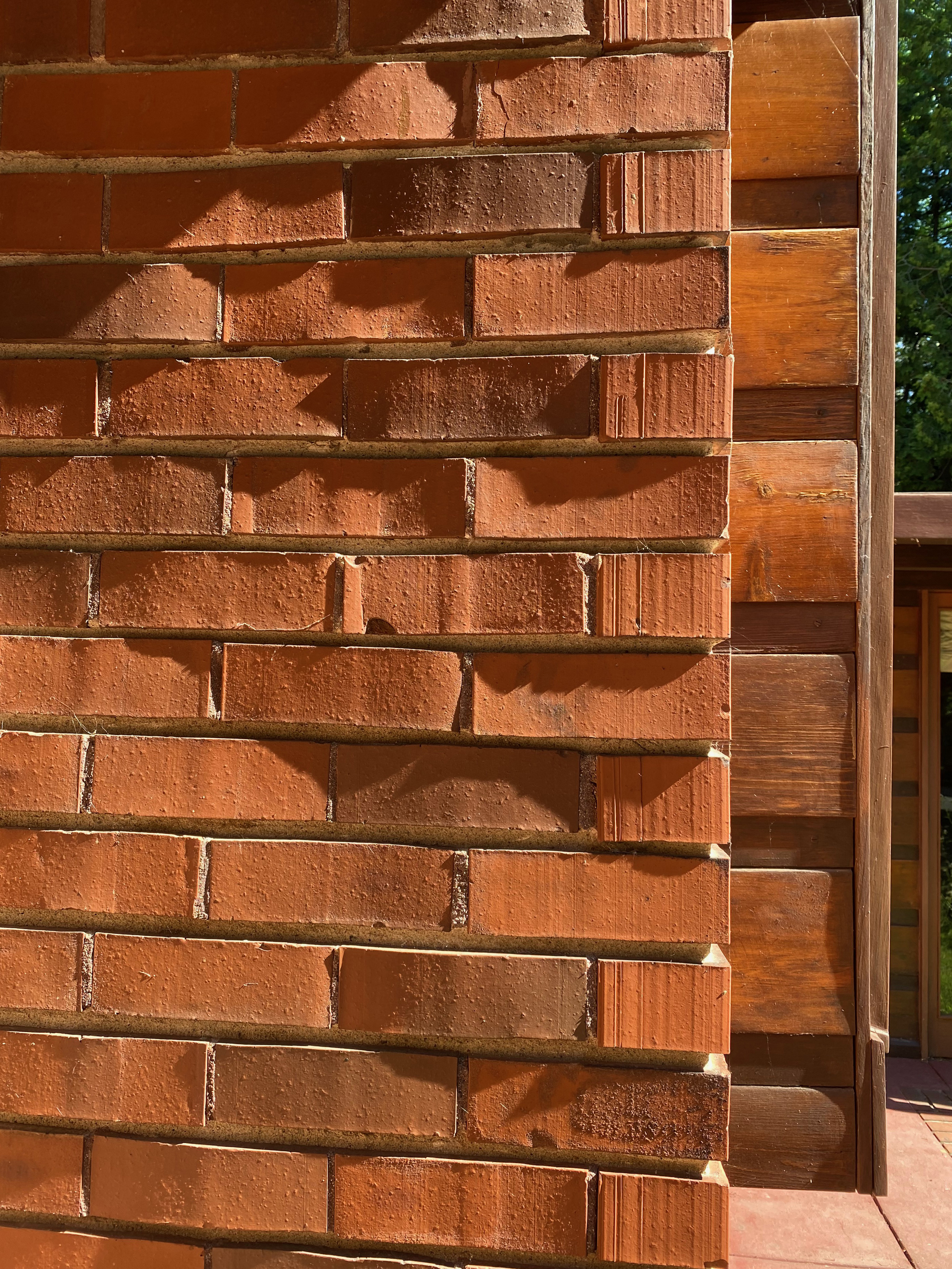
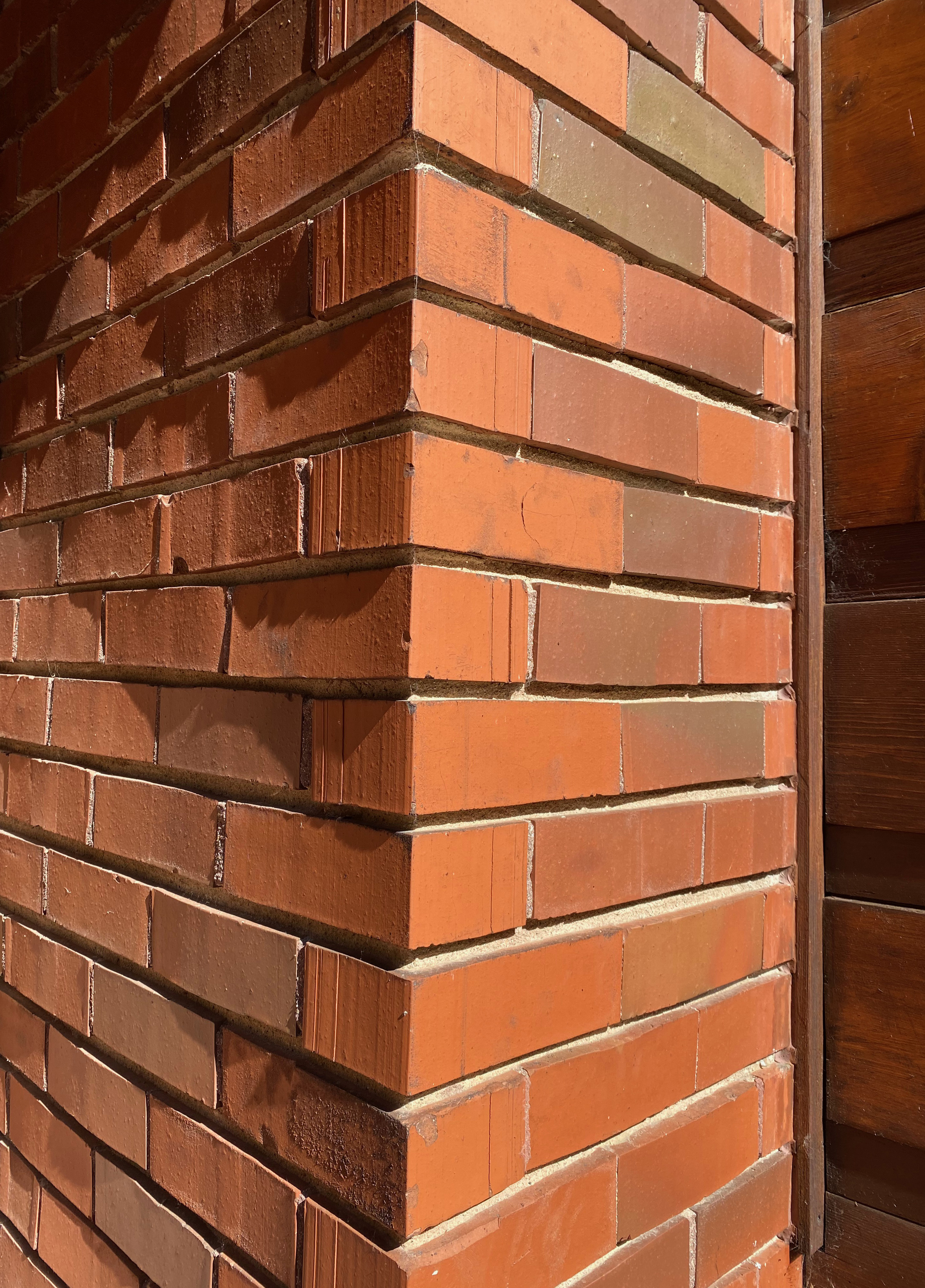
A: Jacobs 1 House – The odd shaped bricks are attributed to Wright reportedly having his apprentices use bricks taken from the SC Johnson Administration Building. There are 200 shapes of bricks in the Administration Building. B: Unitarian Meeting House C: Wyoming Valley School D: Hillside School E: Hillside Drafting Room F: Taliesin
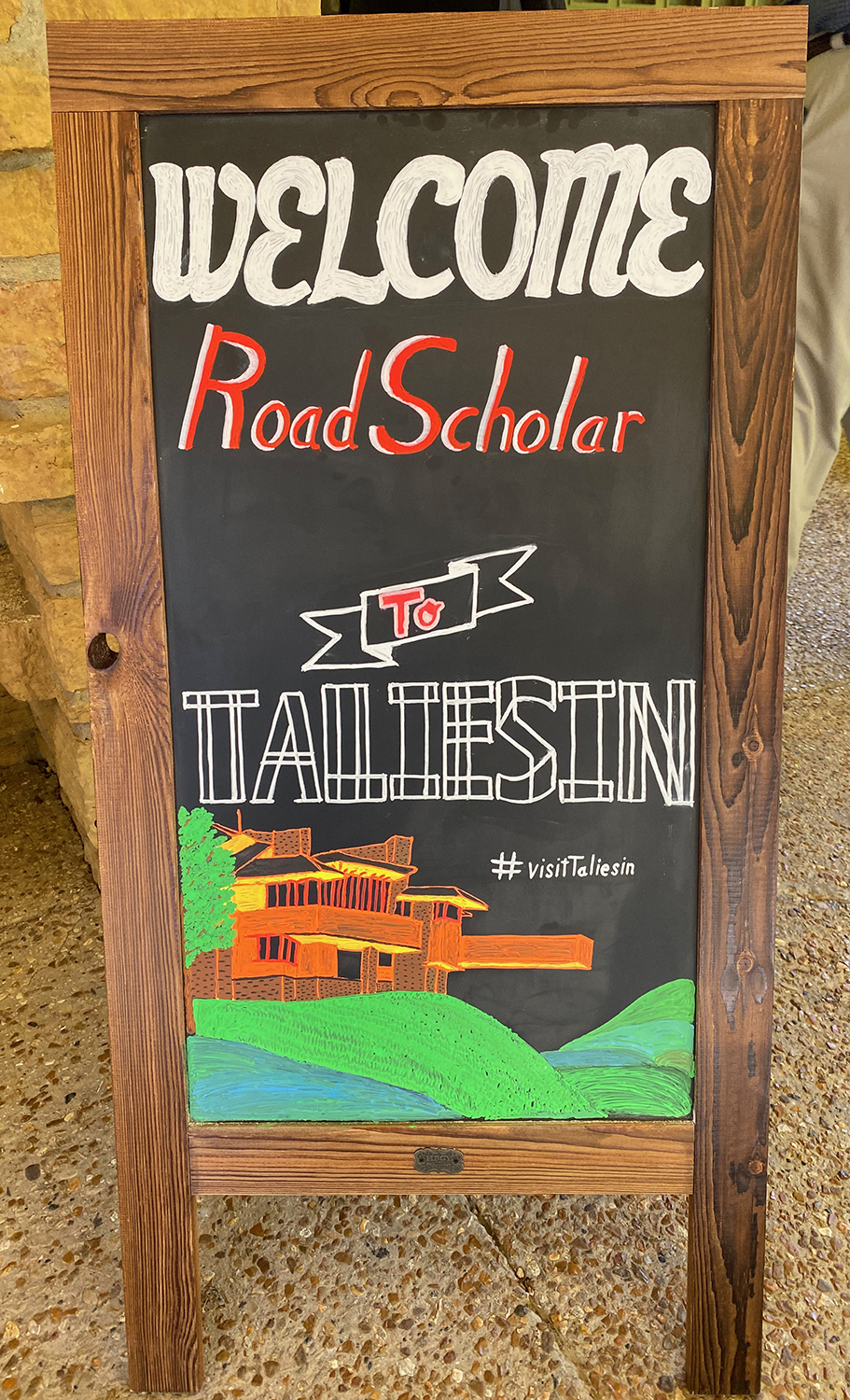
Thank you to Taliesin Preservation for greeting us at the Visitors Center with this sign:
Scroll down to see yesterday’s “Writing Wright with Light” post, and previous blog articles.
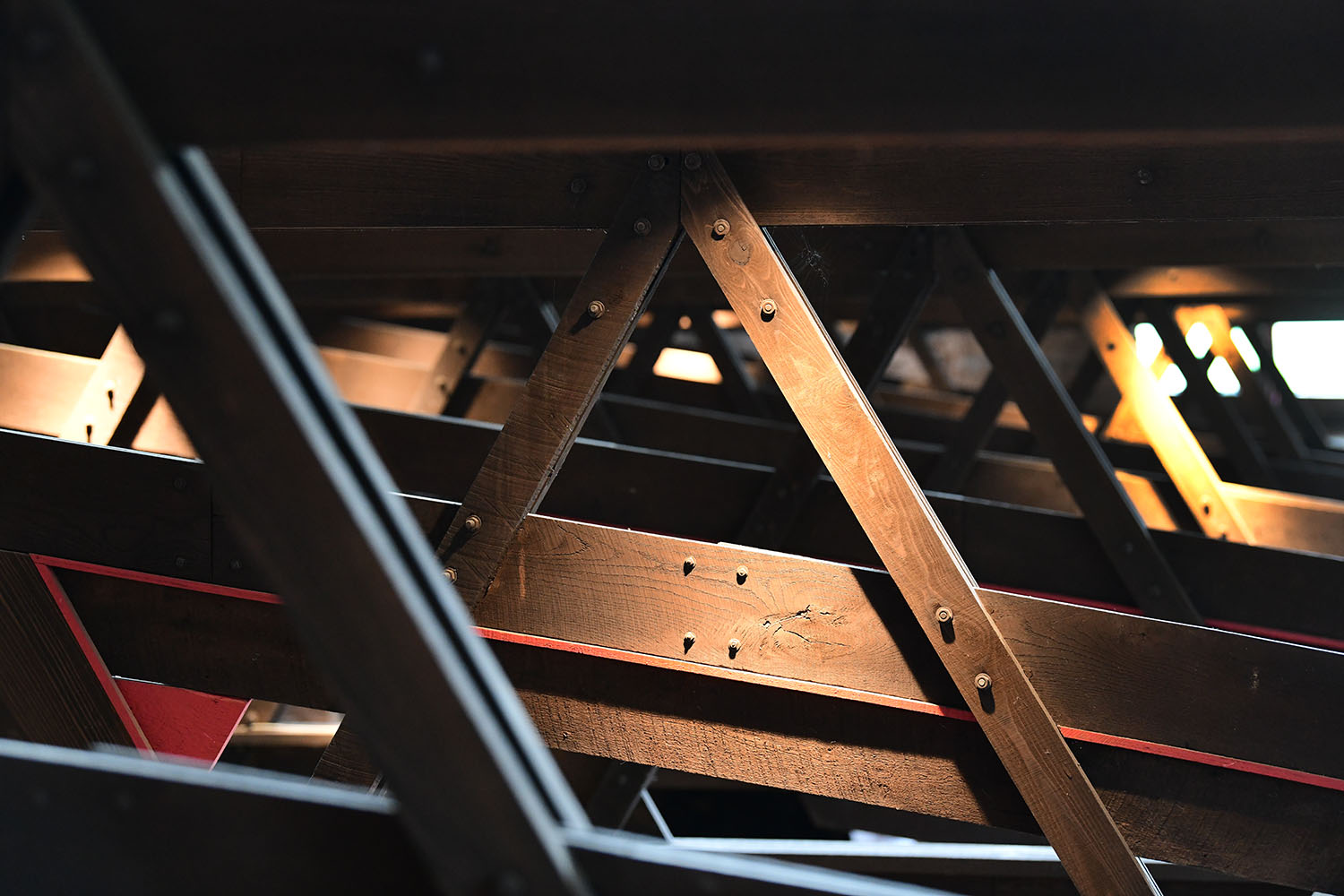
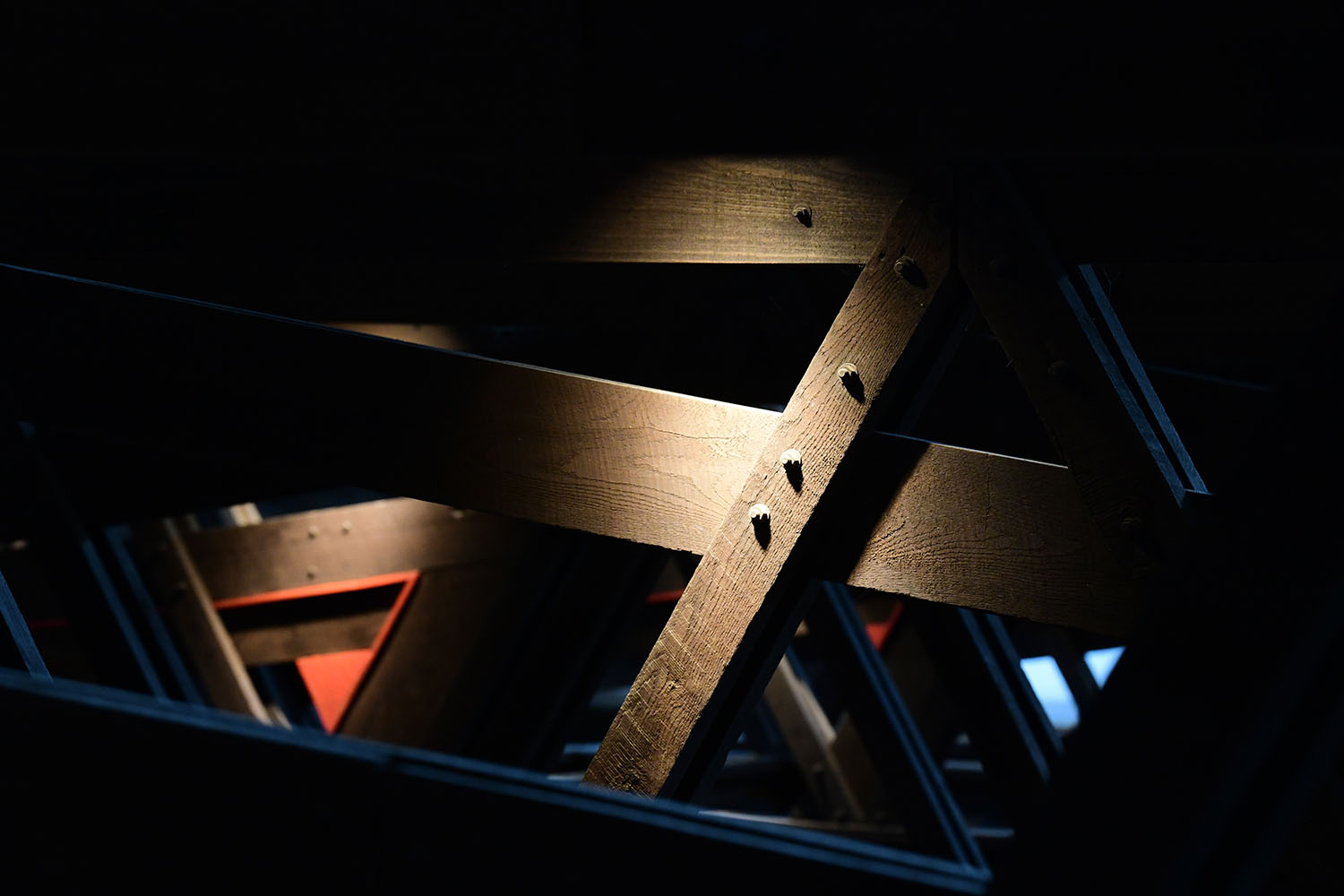
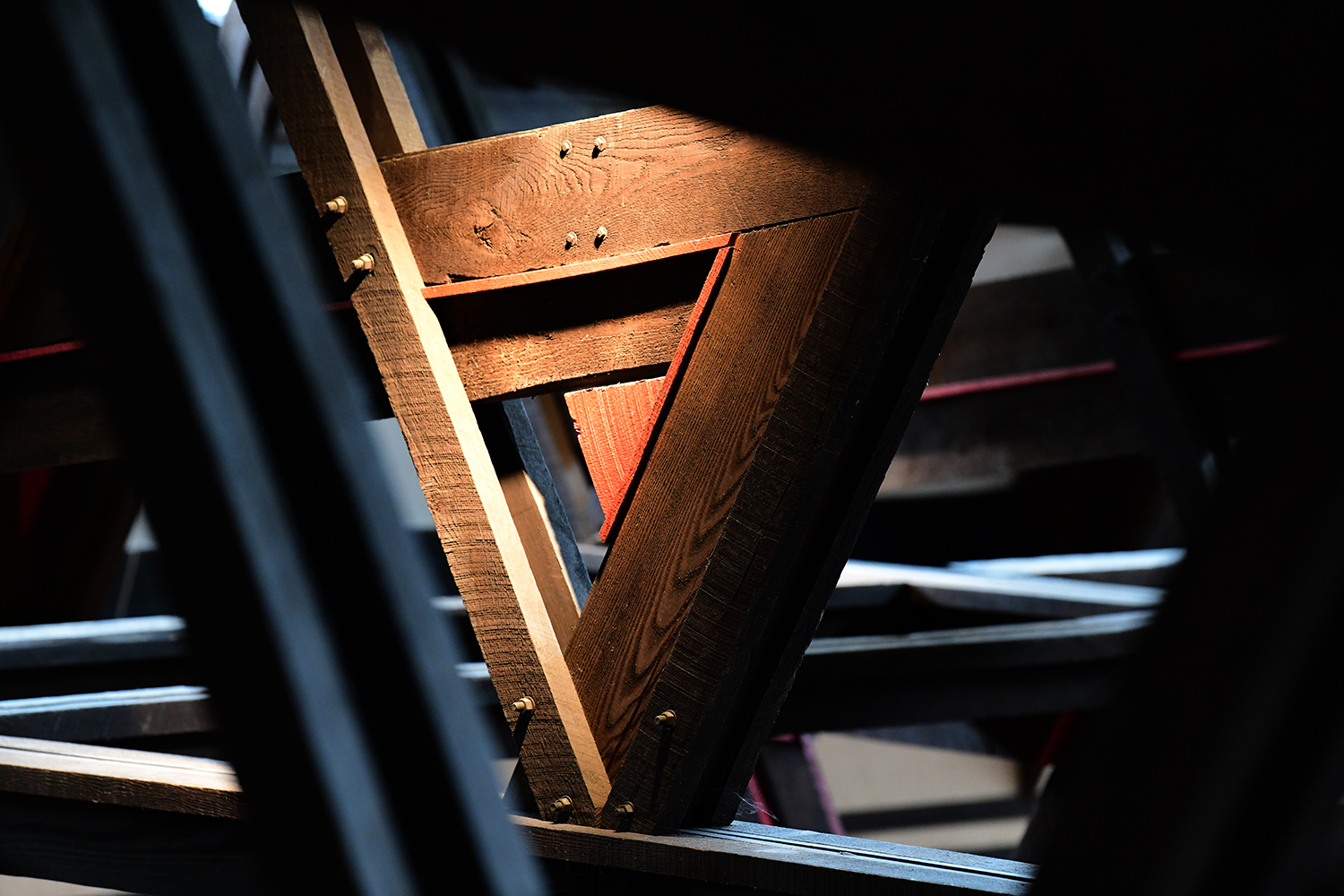
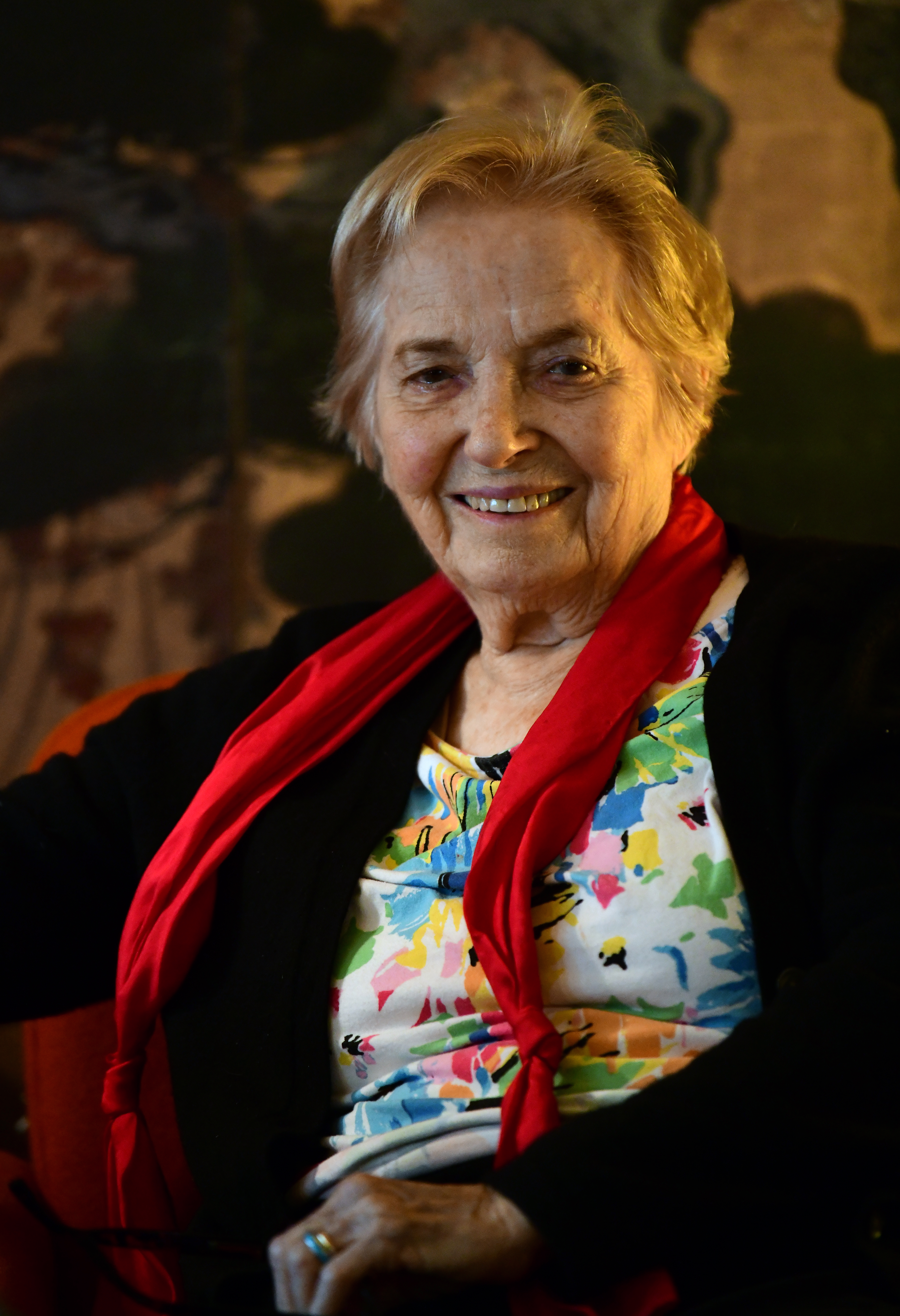
My cameras and I have been to Taliesin many times. My challenge at any Wright site is to photograph it with a fresh eye each visit. I was able to interpret the geometry of Wright’s “forest” in the drafting room at Hillside from a new perspective recently. I welcome your comments, unless they reopen the debate about the Foundation and the School. The treat at the end of this blog entry is my latest portrait of our dear friend Minerva, also taken Friday May 20.
As we look at the drafting tables below, the unknowns, of course, are what renderings and plans were drawn at which table, and by whom. Among countless others, one of the architects (and students) who counted this as their office was Charles Montooth, Minerva’s late husband.
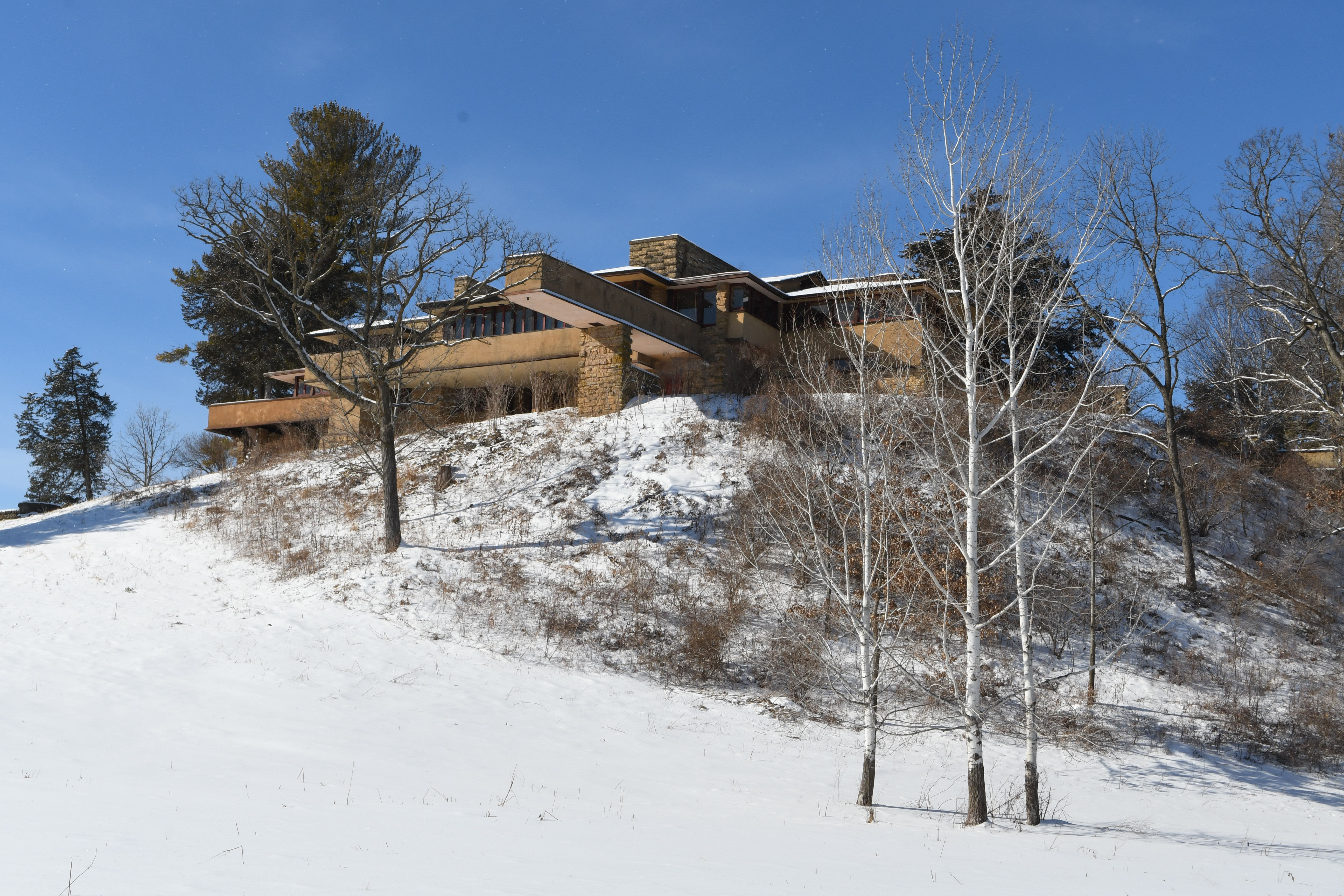
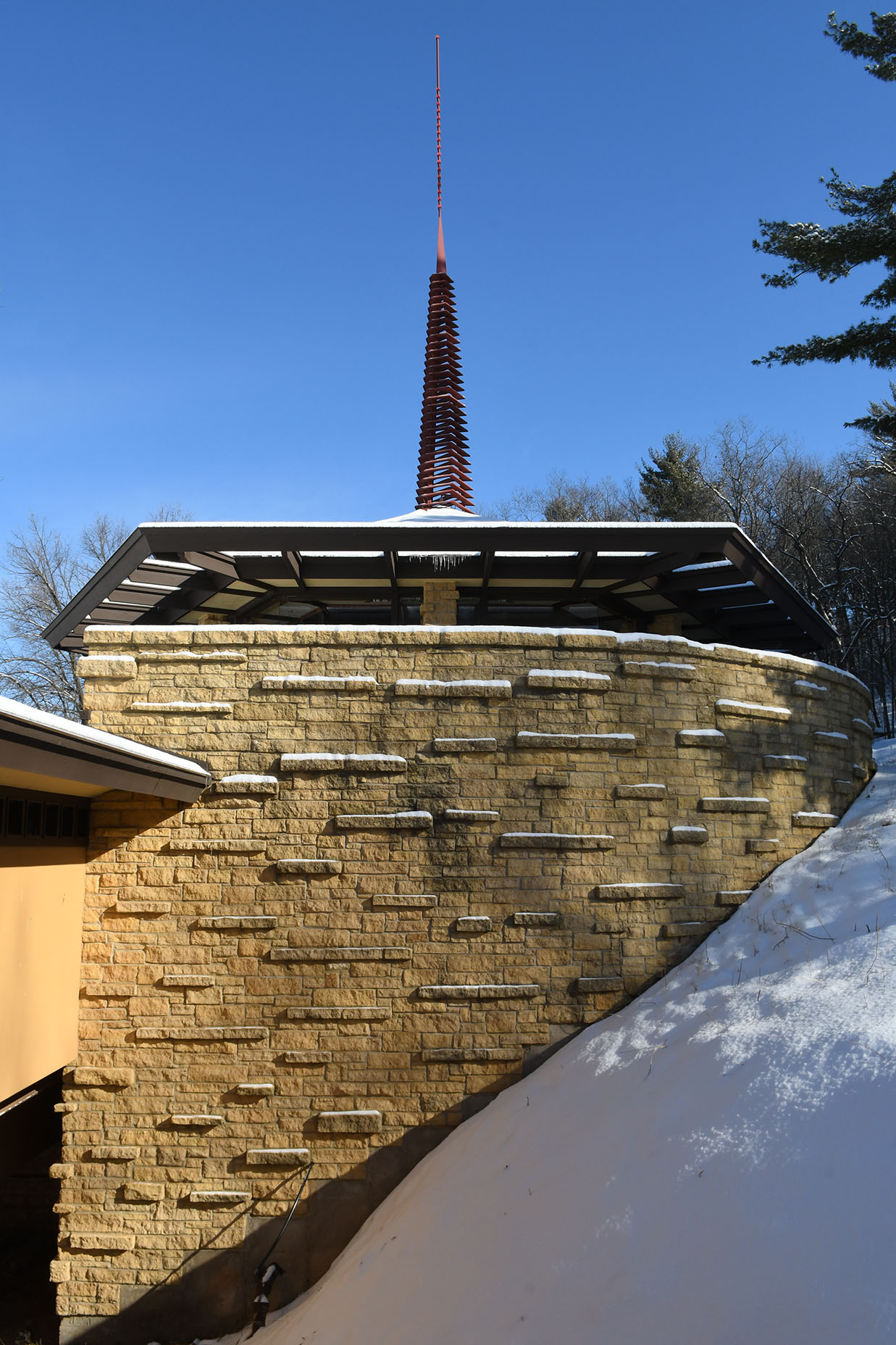
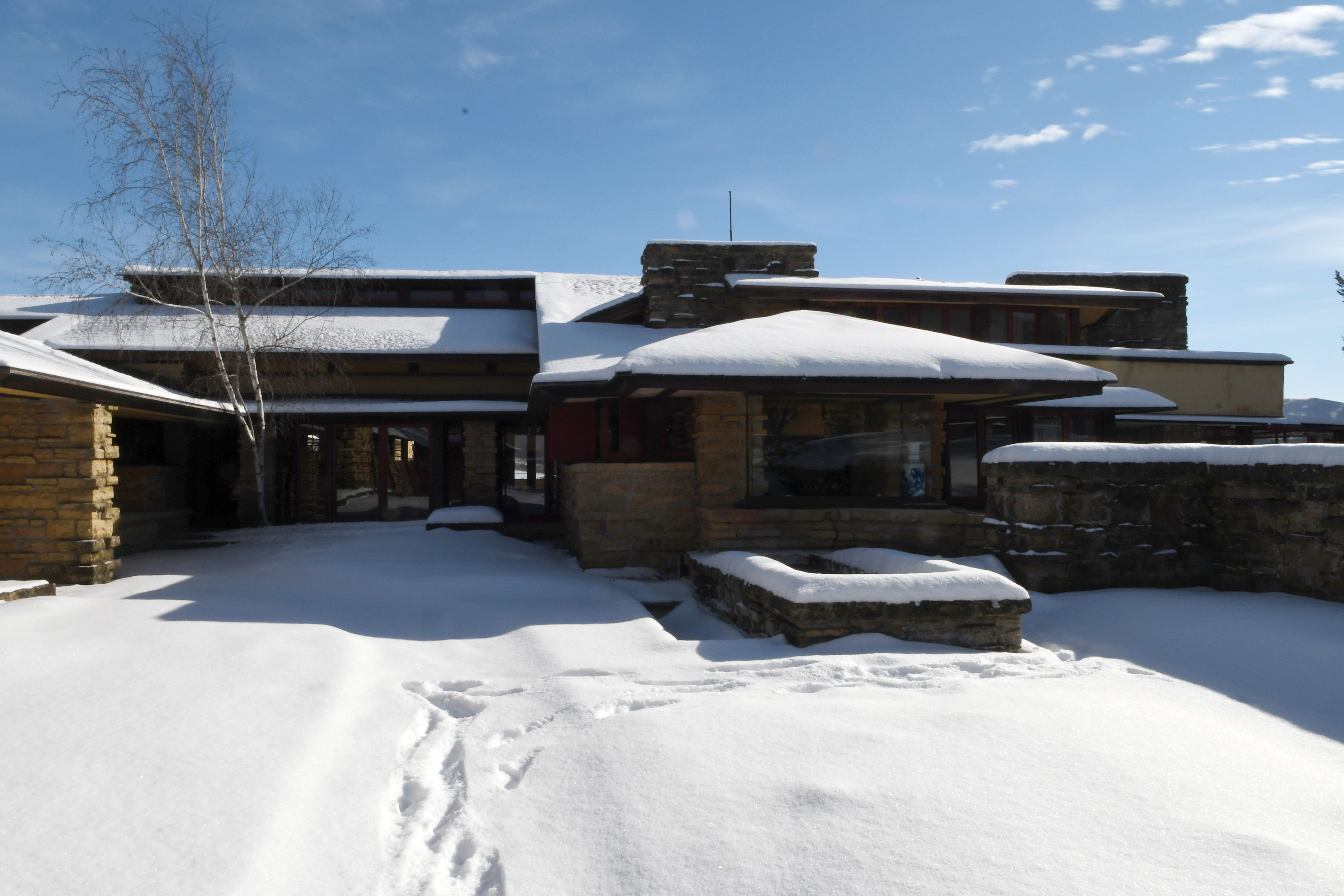
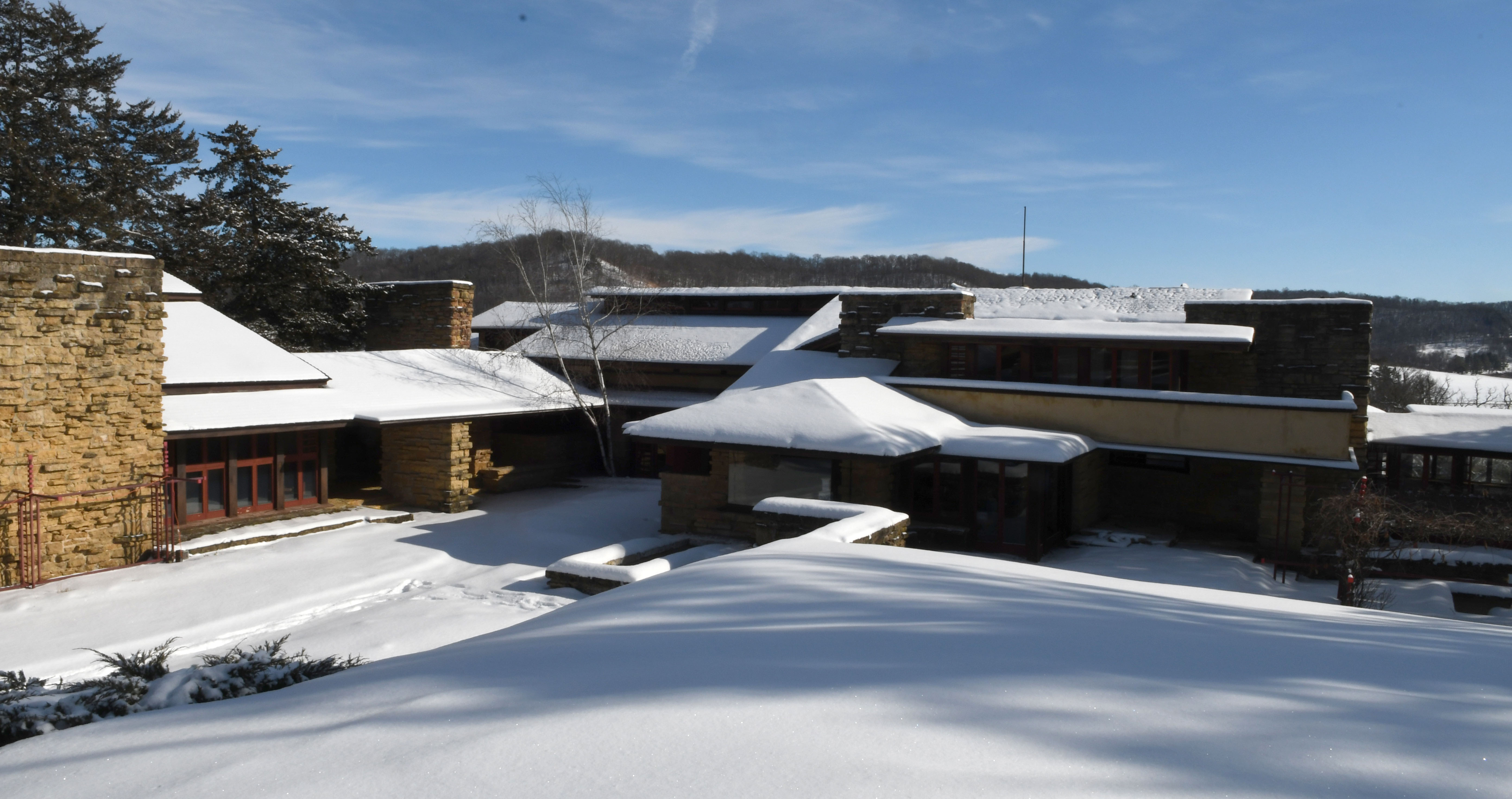
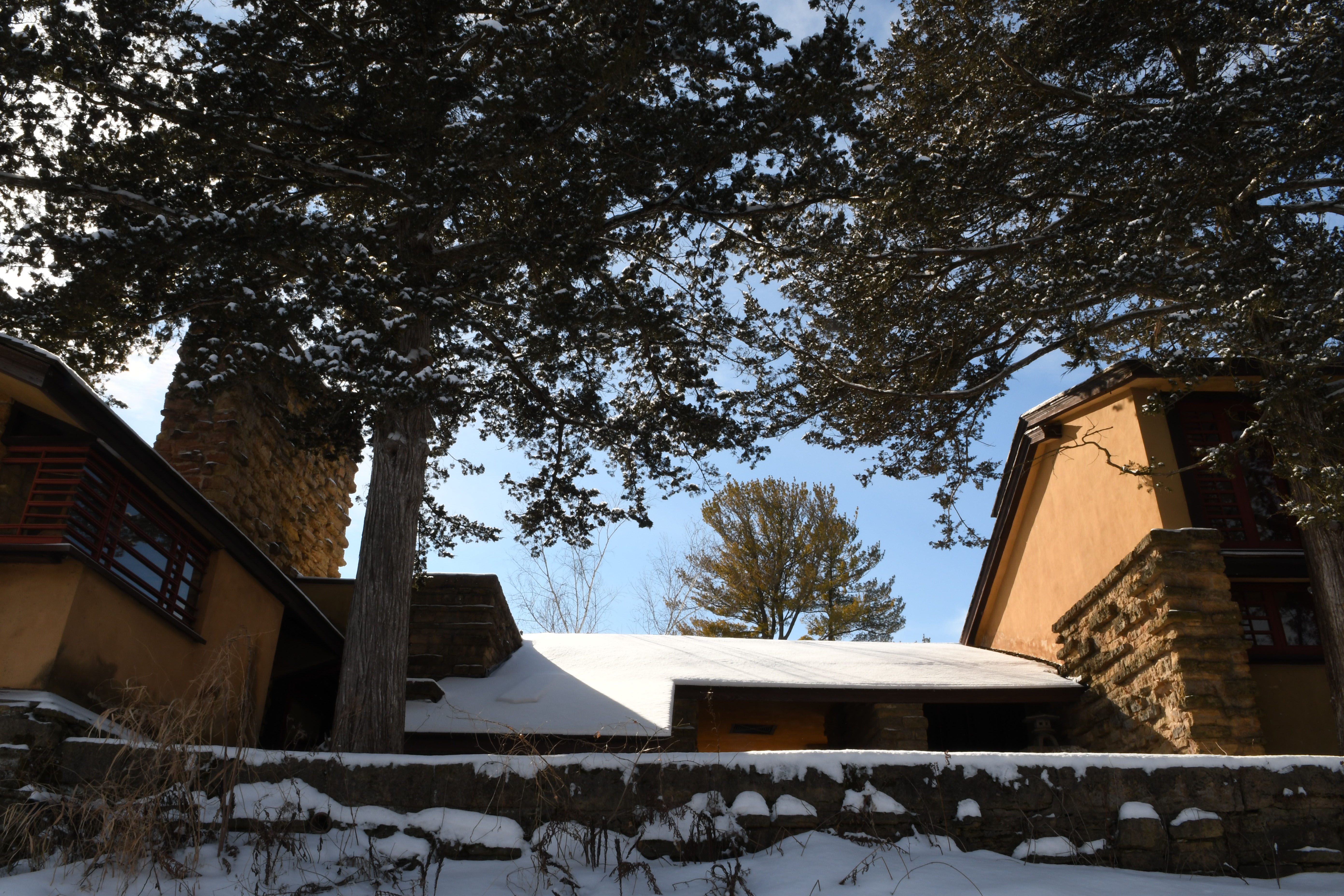
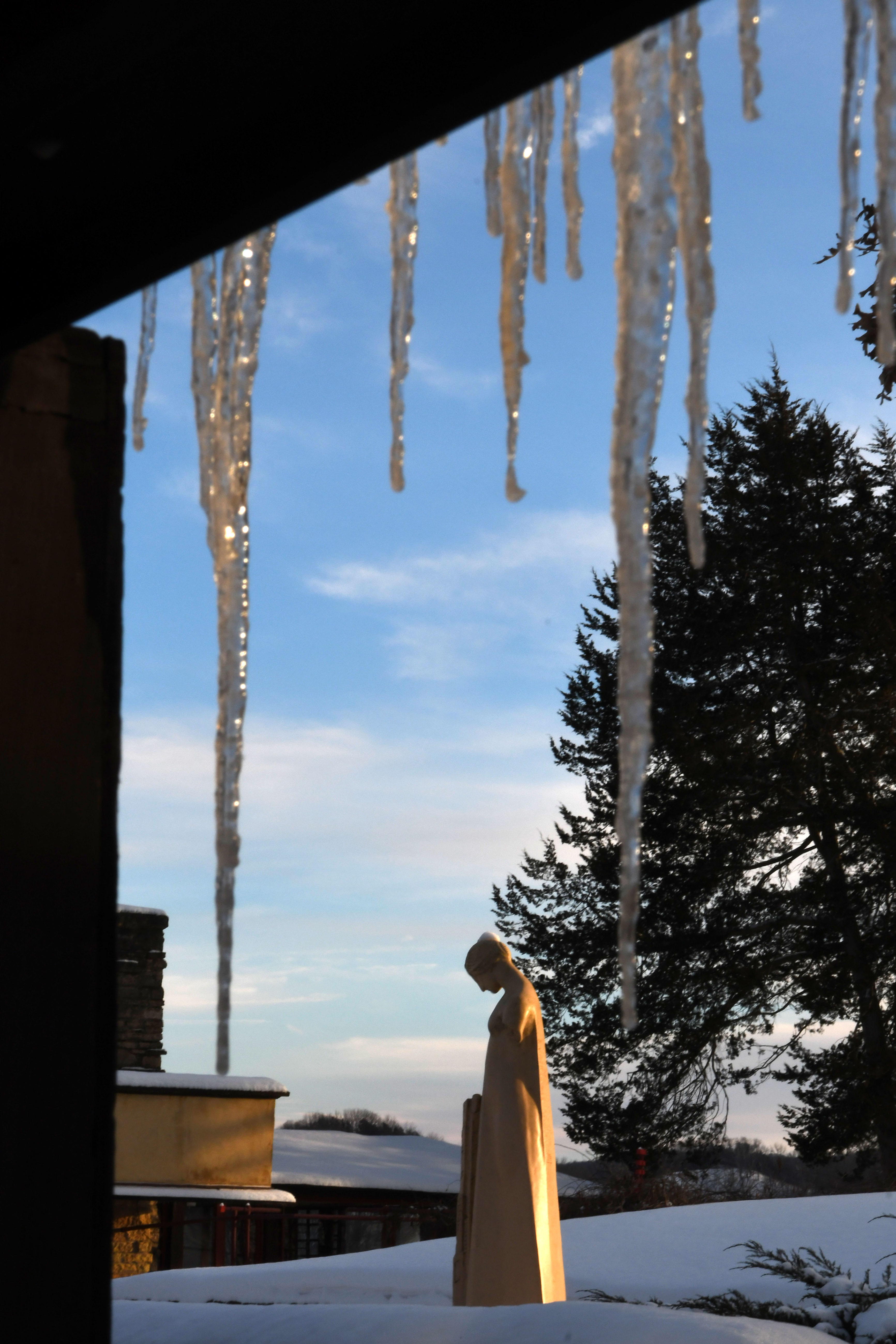
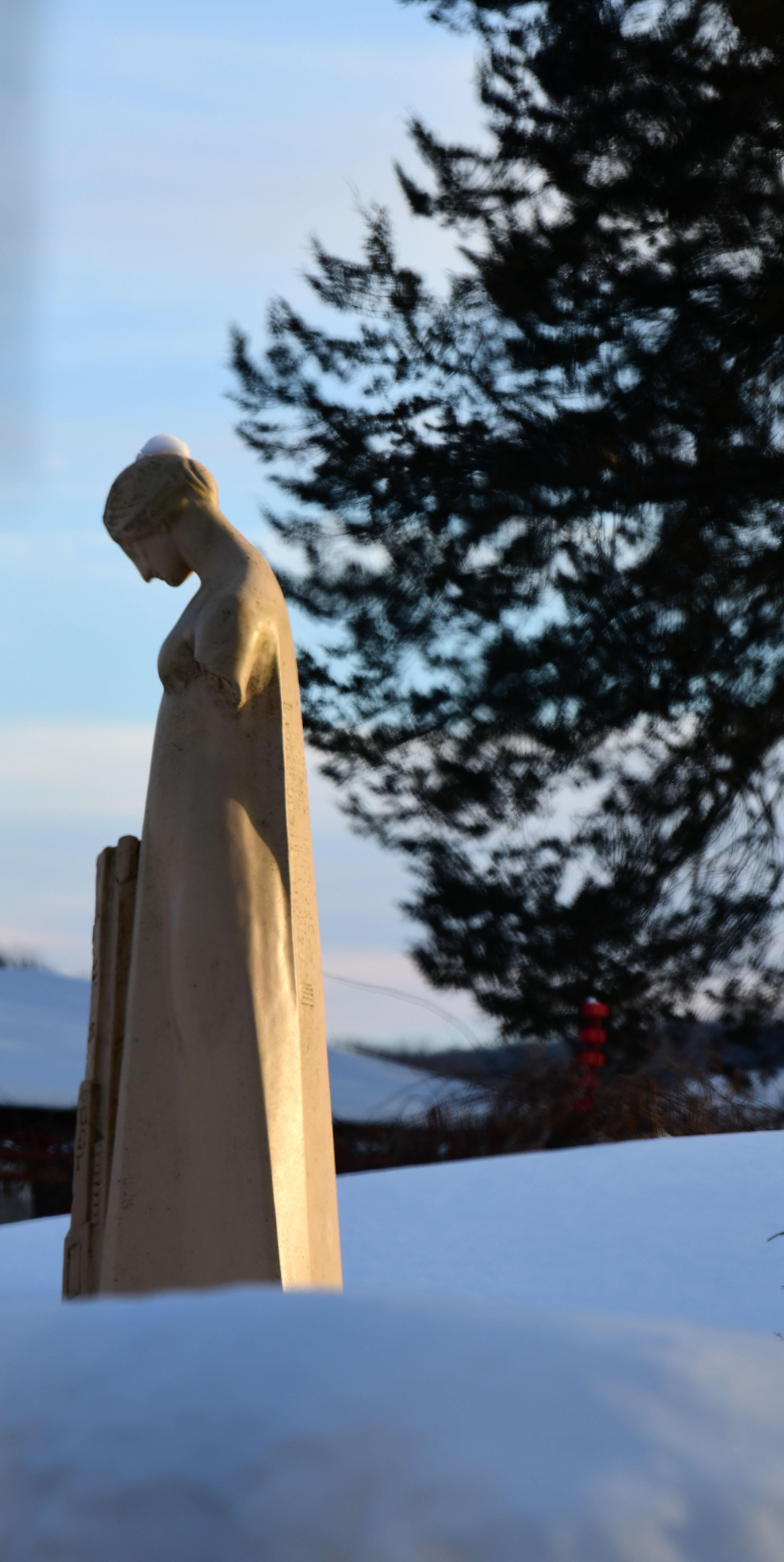
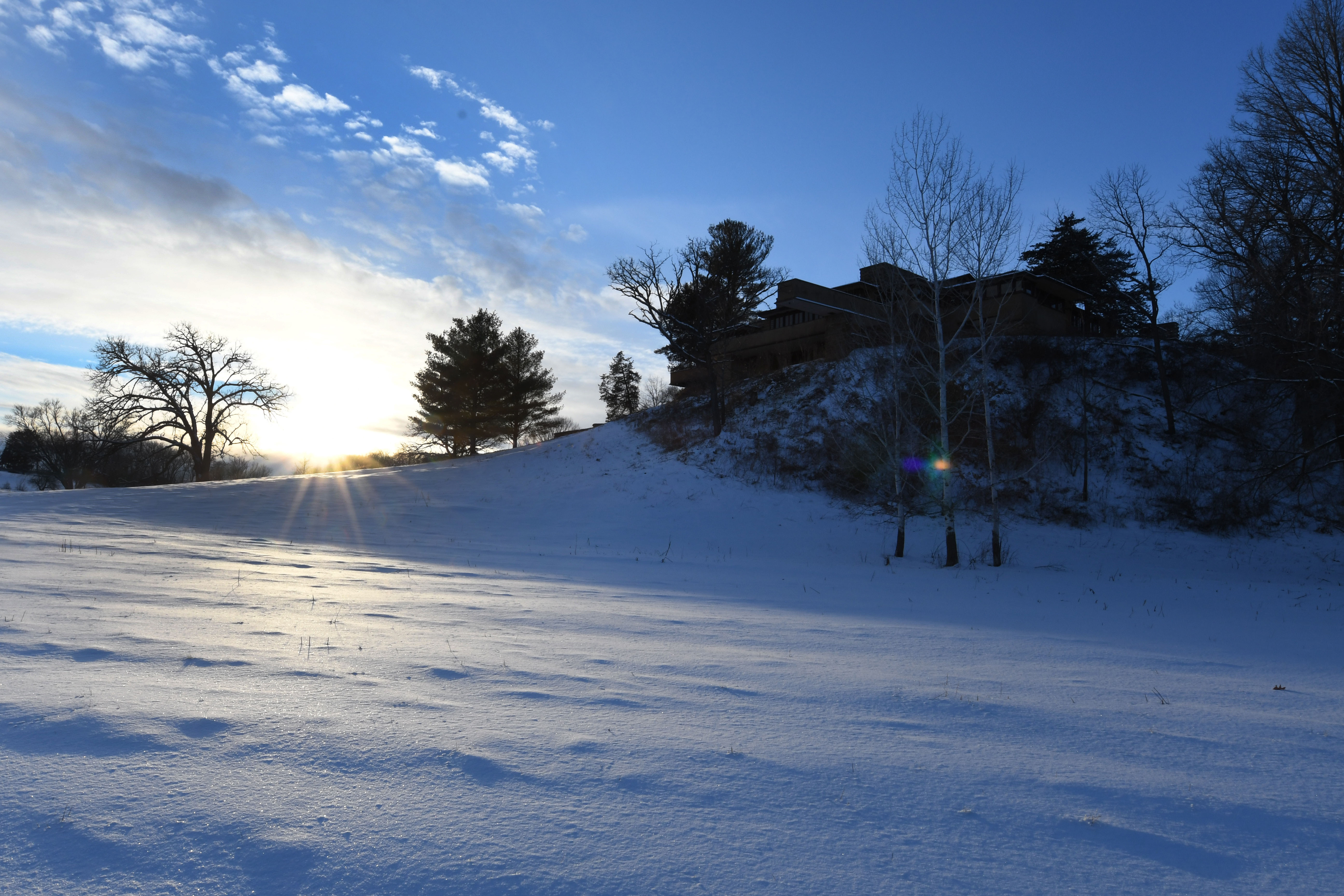
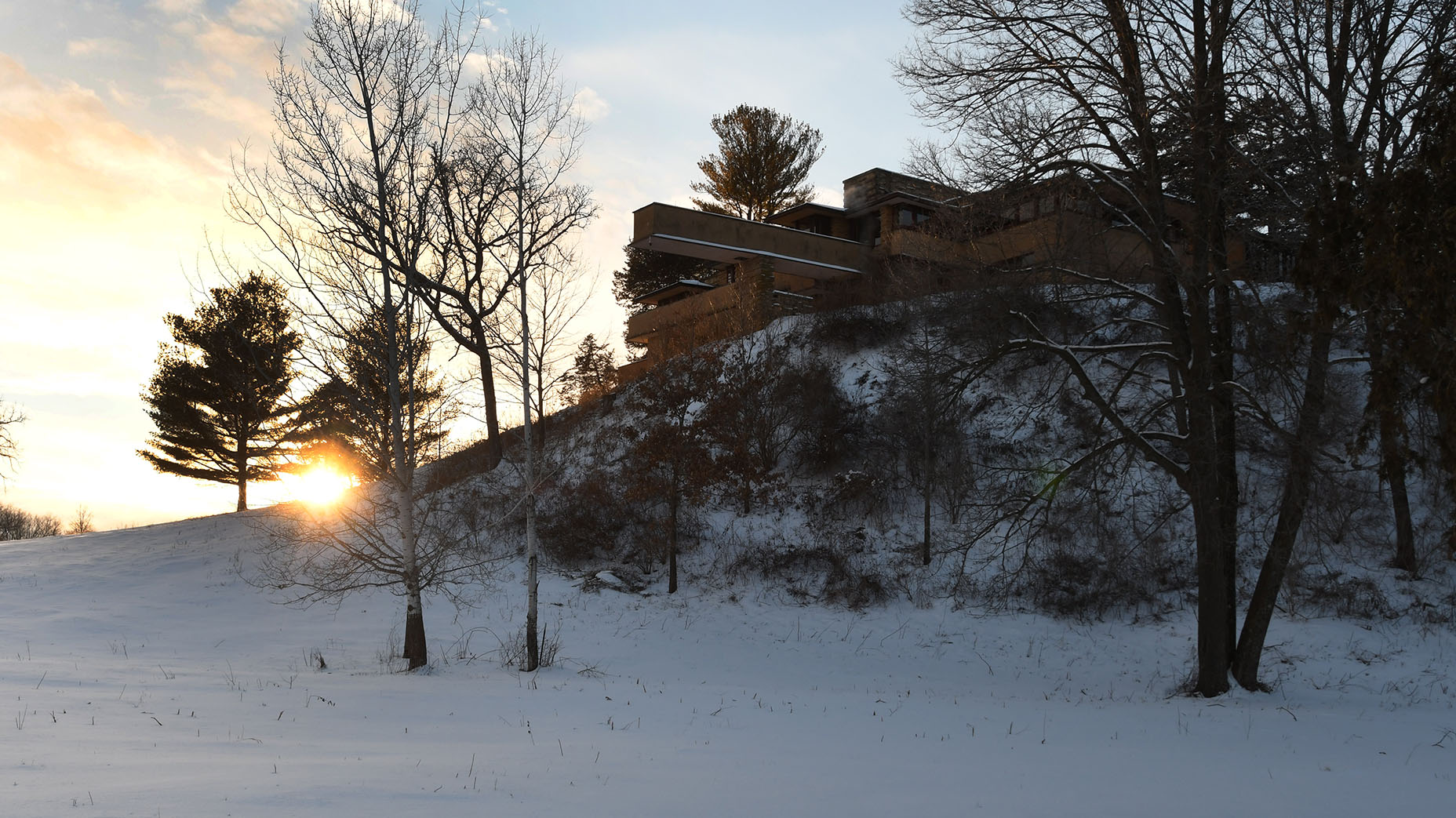
I have been to Taliesin countless times, but never in winter, until Sunday when we had a lunch date with our friend, Minerva Montooth. It had snowed overnight. We would not be able to get to Spring Green until Noon, so there would be no photos in the morning’s “golden light.” I fared better in that respect in the late afternoon. But in between, at Noon, there was a rich, rich blue sky.
Except for this first photo, I am taking you on a tour of Taliesin in the order I photographed the estate. Get comfortable, there are lots of photos. and you will see how my day’s take evolved. The first stop was a drive through the Visitor’s Center or Riverview Terrace. First, this establishing shot, and then a few details that caught my eye:
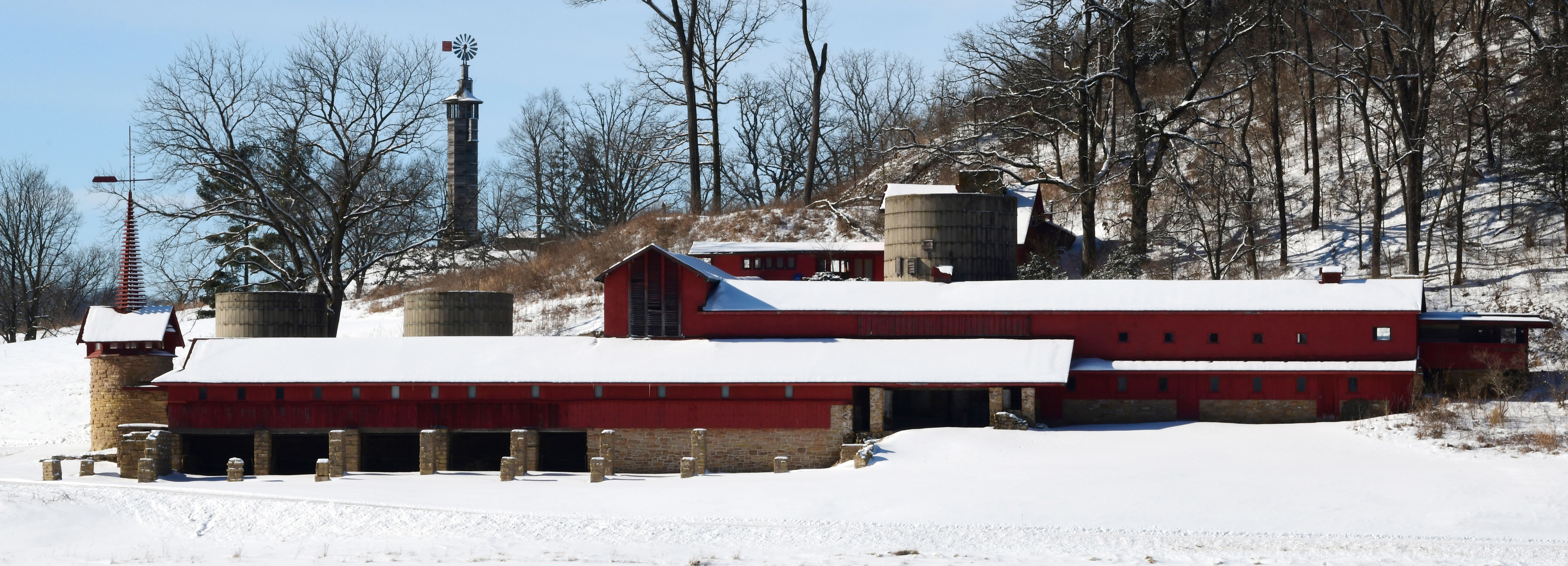
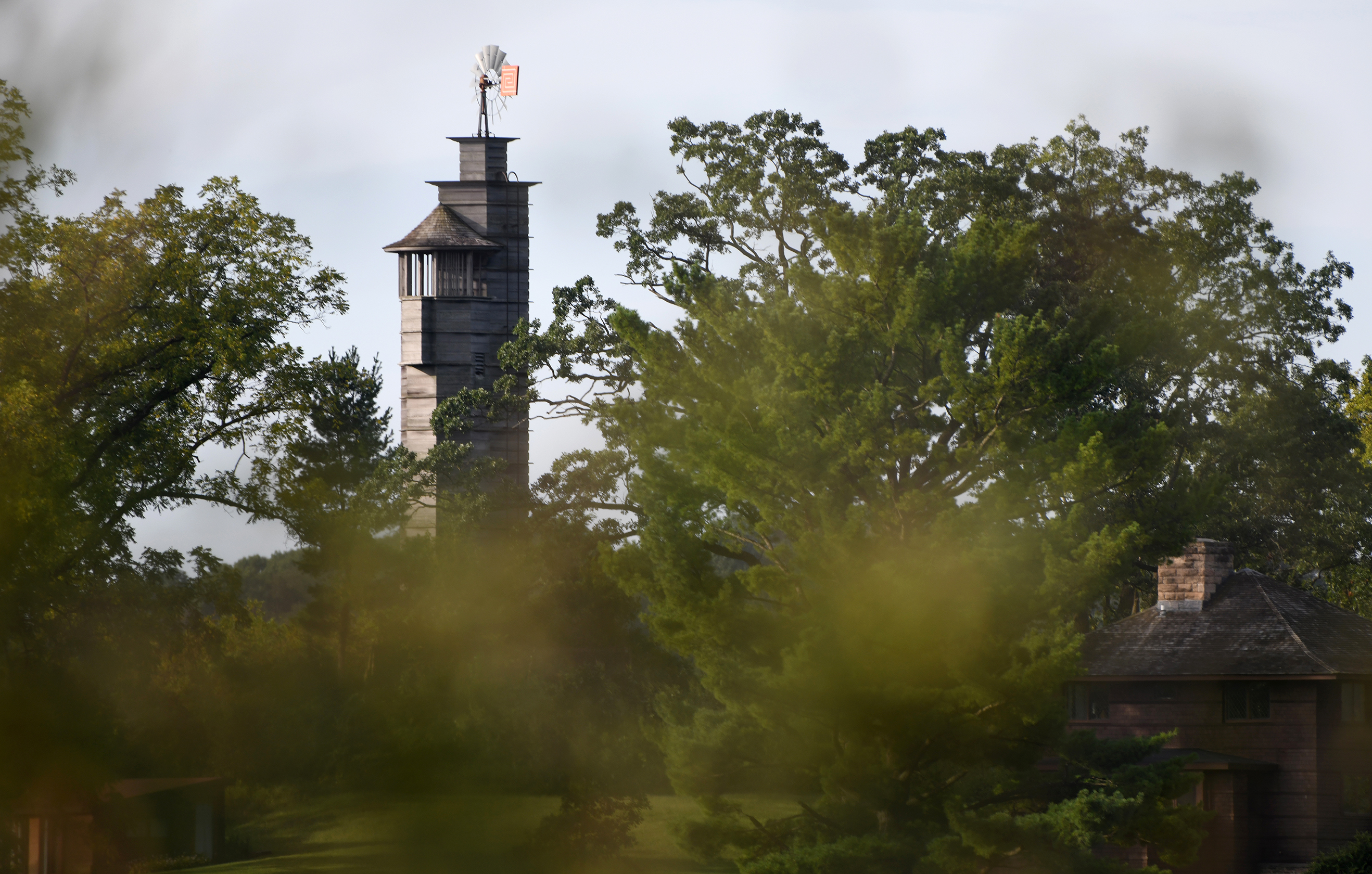
Then onto Hillside, to enter the estate from that end…but I found that the driveway is closed for winter. No matter. I saw these views of Midway Barn and Romeo and Juliet windmill on the road to Hillside. The towers are vertical punctuation marks to the horizontal composition of Midway:
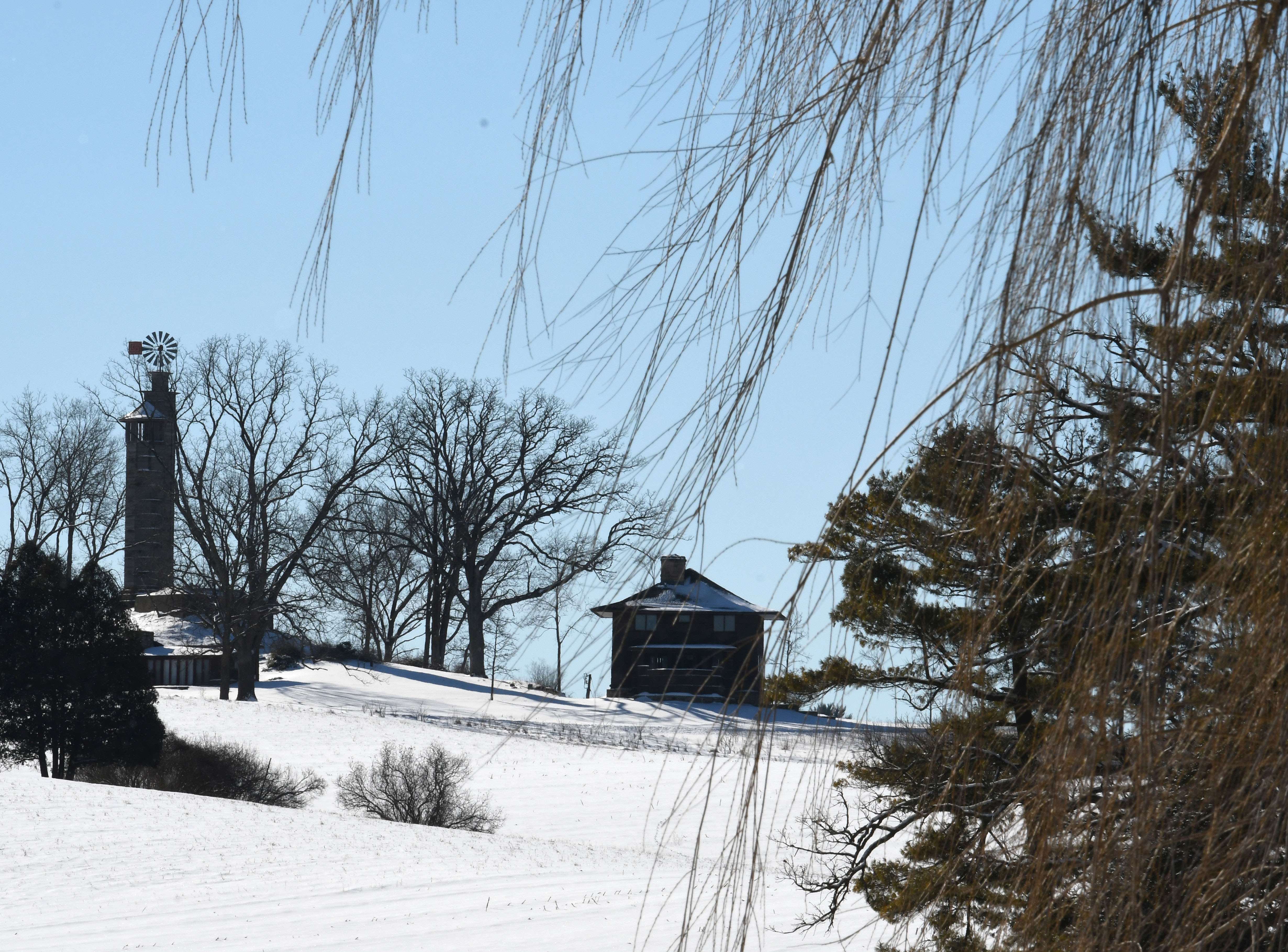
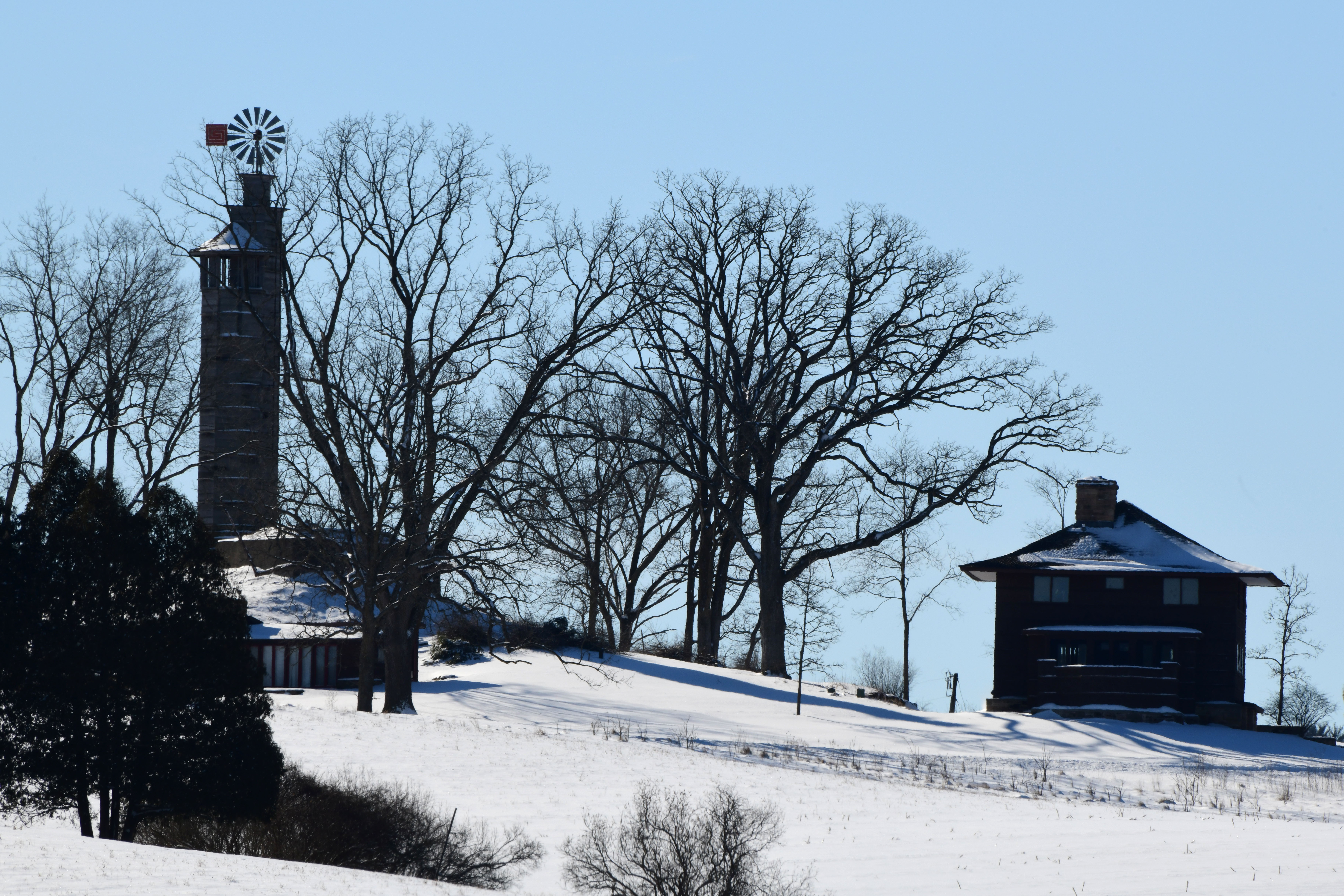
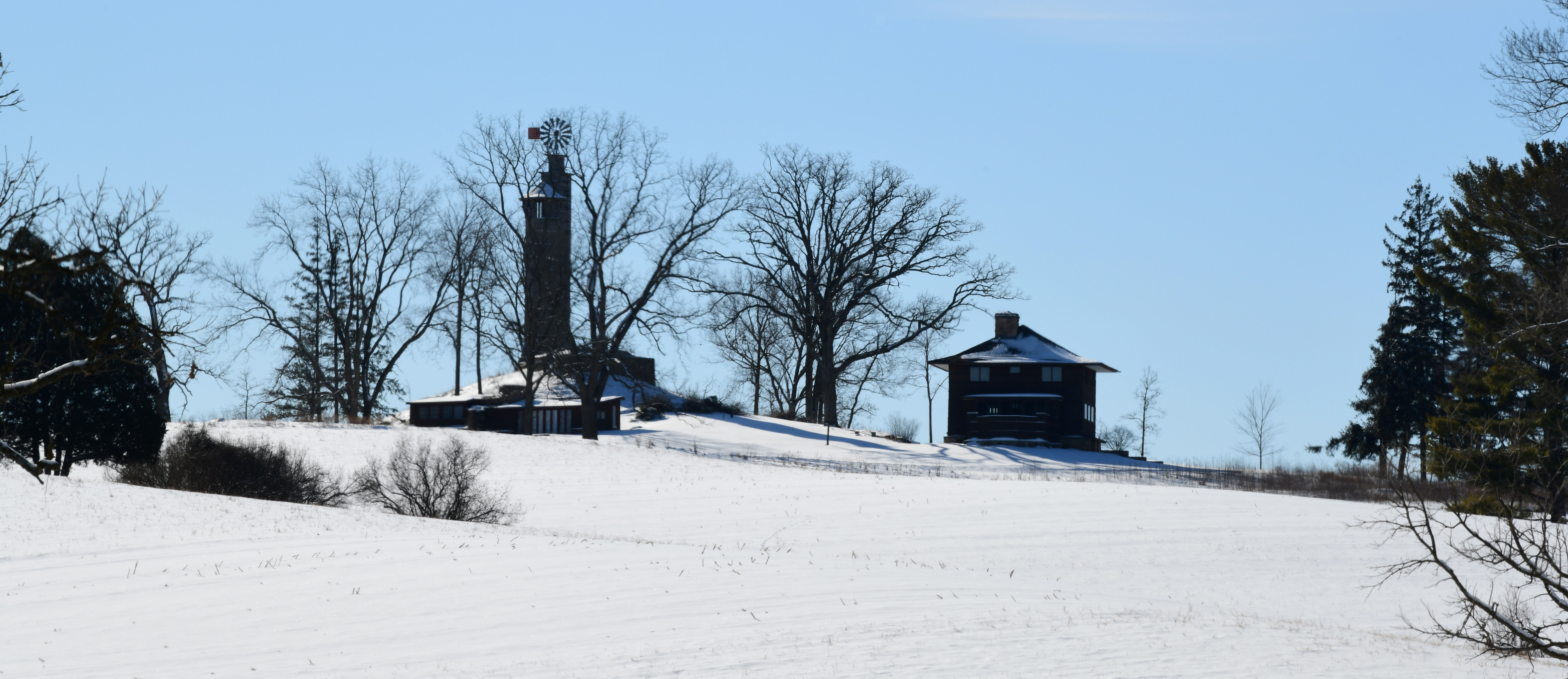
I played with different ways to photograph Romeo and Juliet and Tan-y-Deri as we approached the driveway to Taliesin:
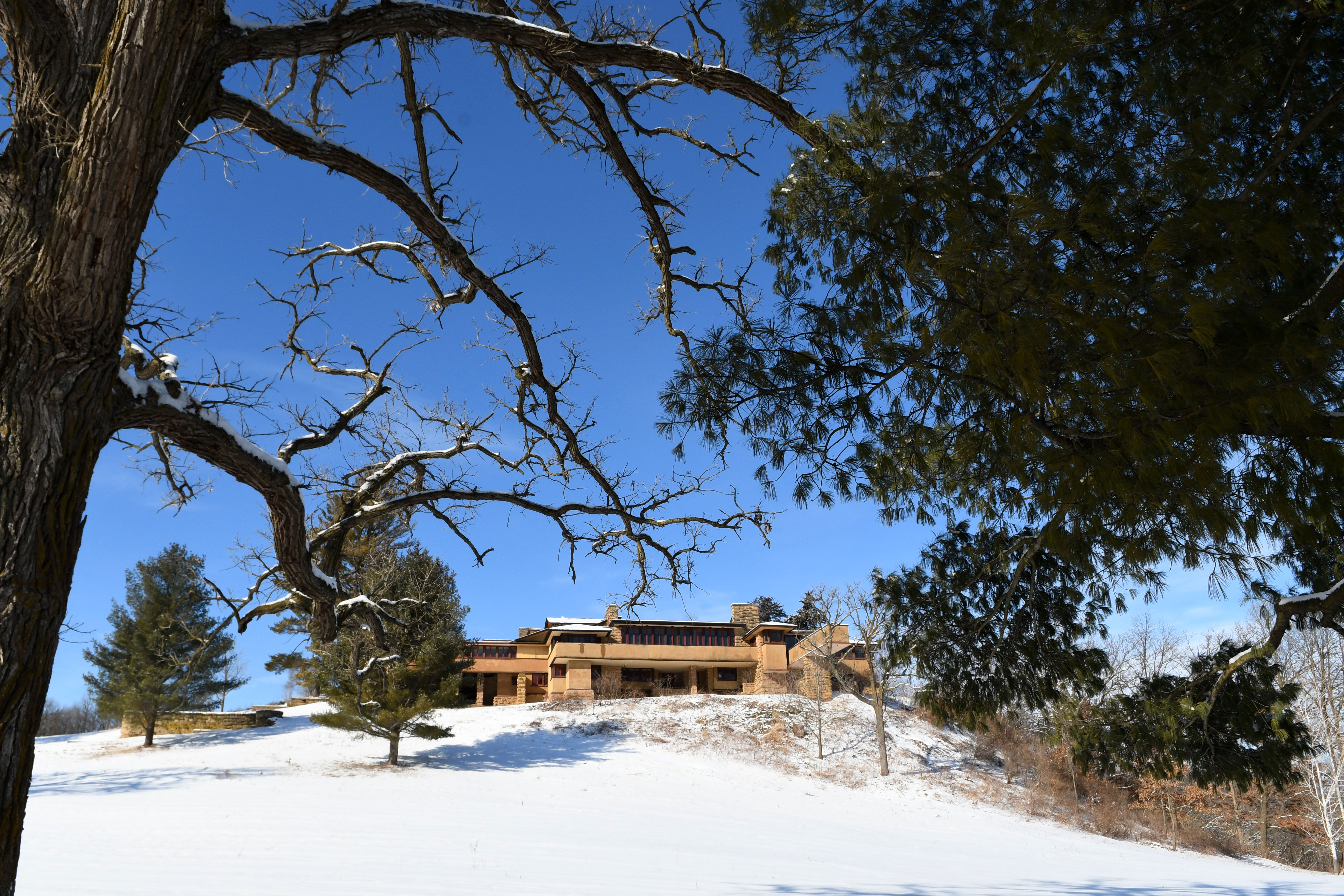
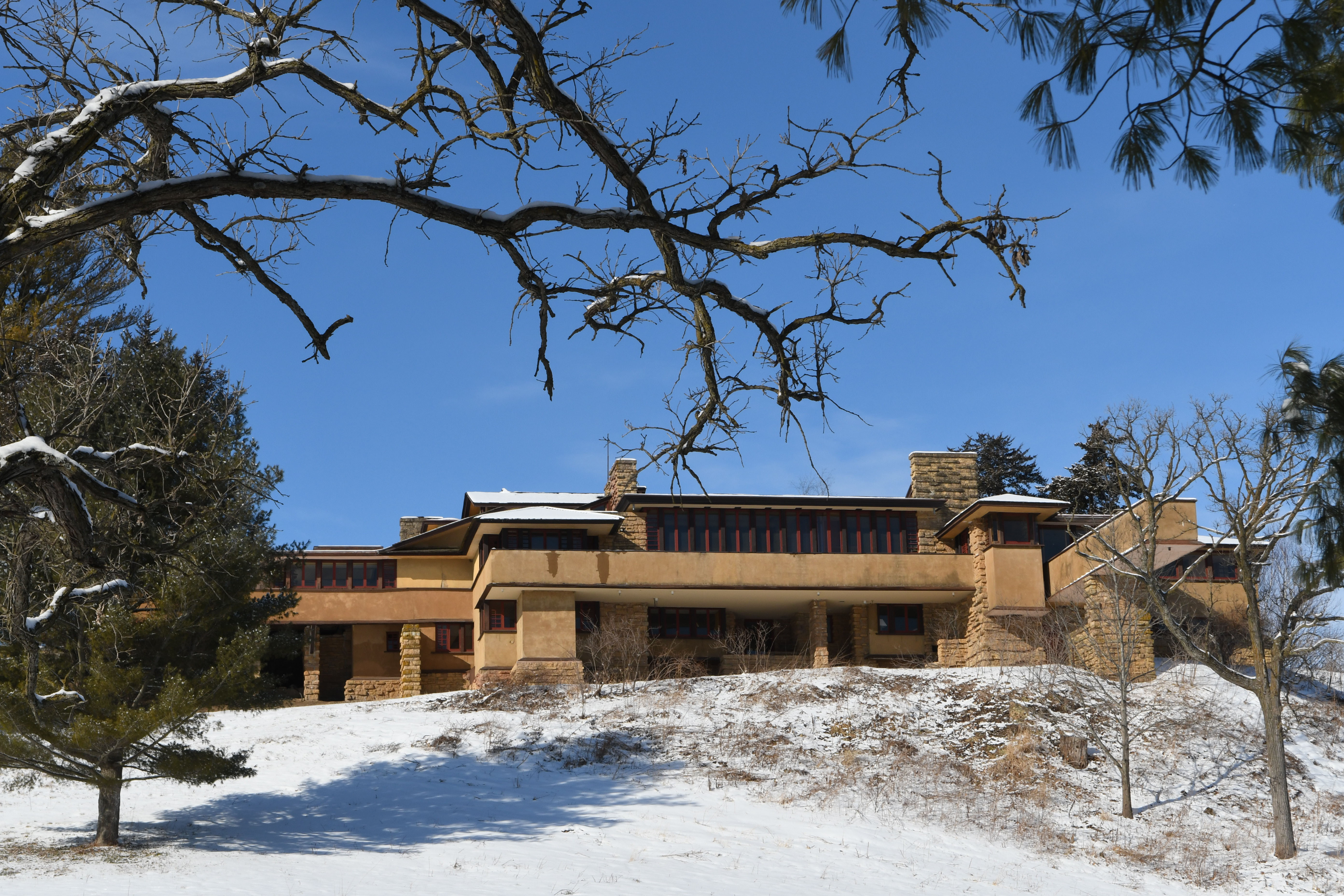
The house as seen from the approach did not photograph well at midday, but I took record shots. I wish there was more snow on the hill below the birdwalk:
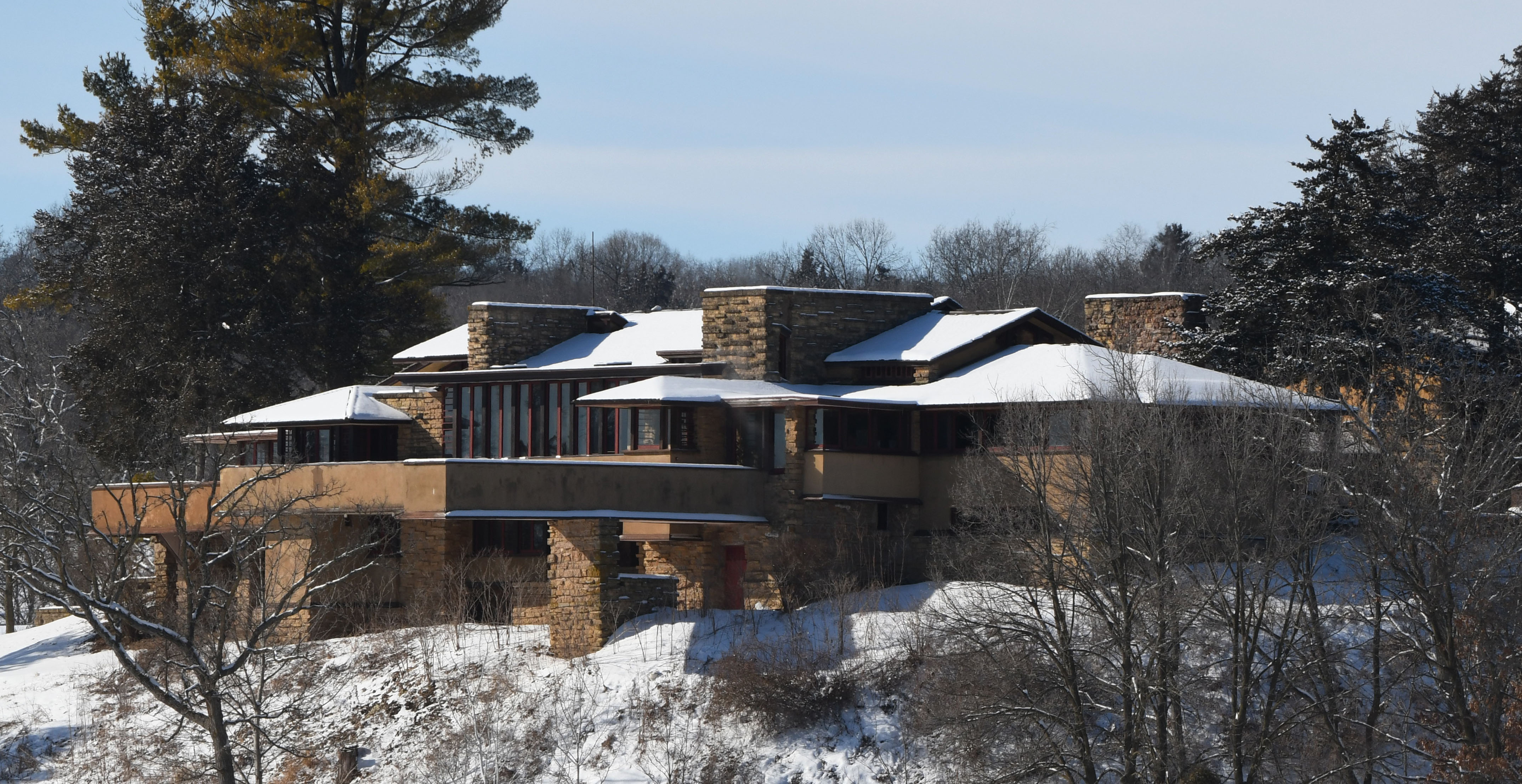
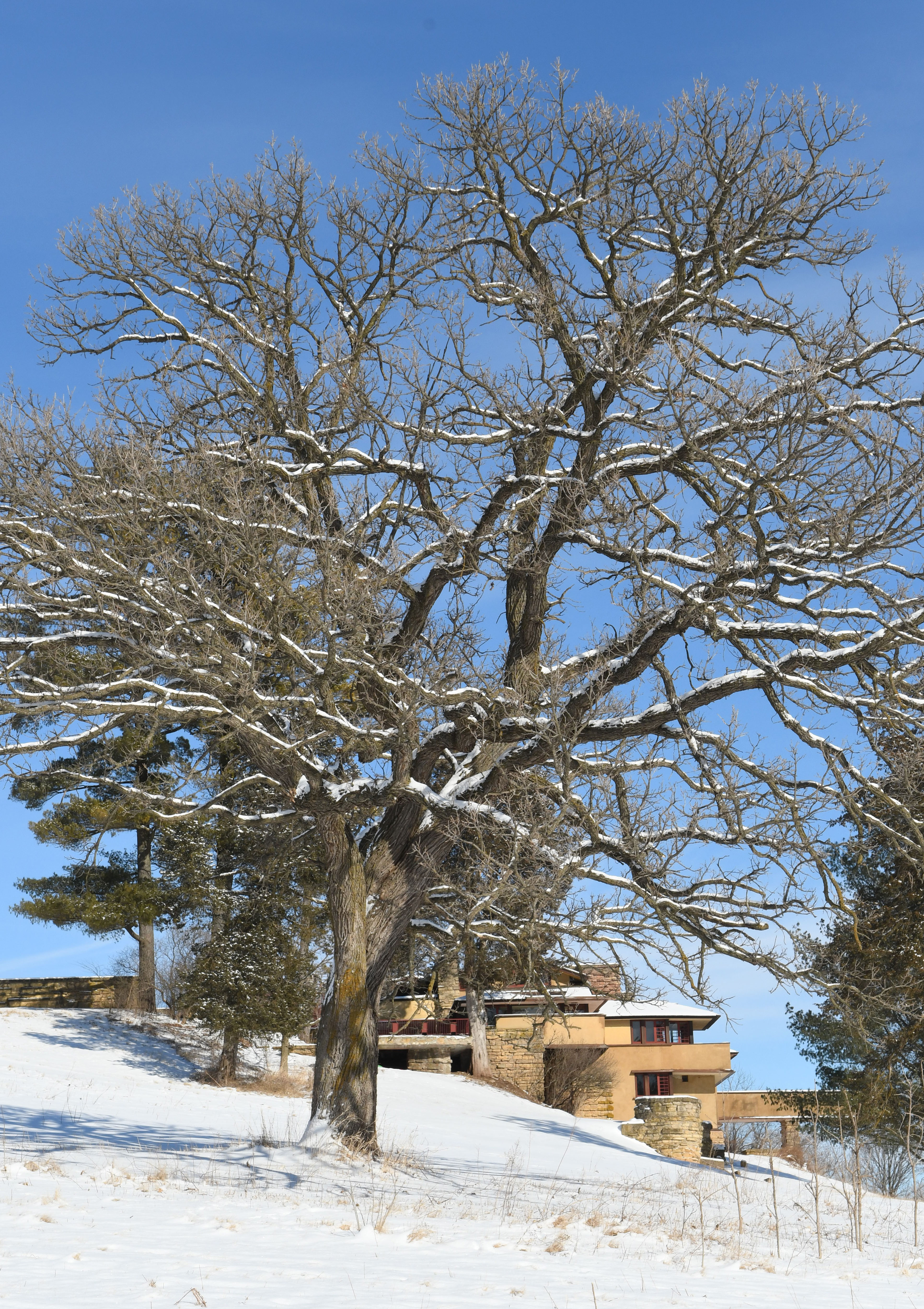
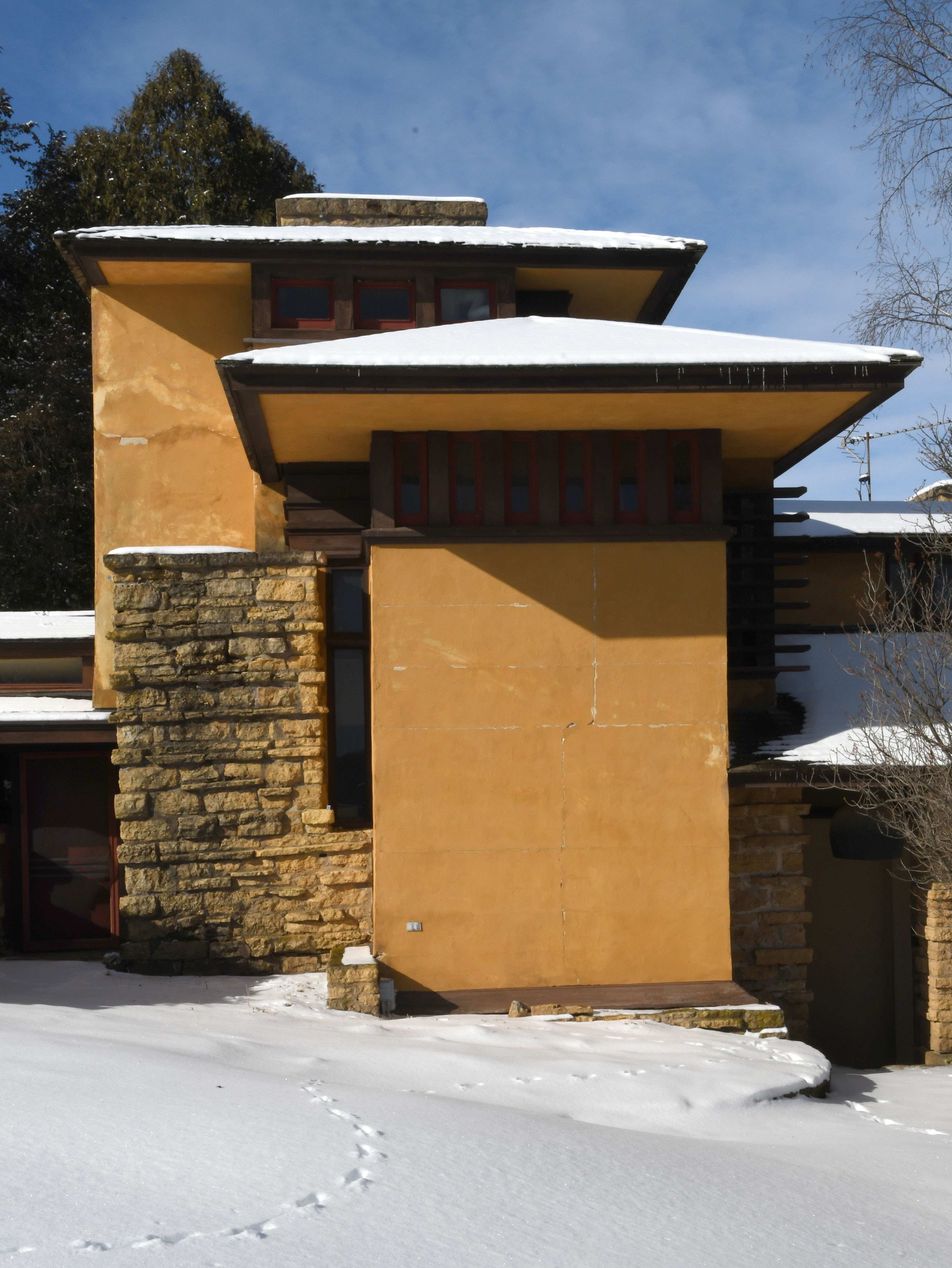
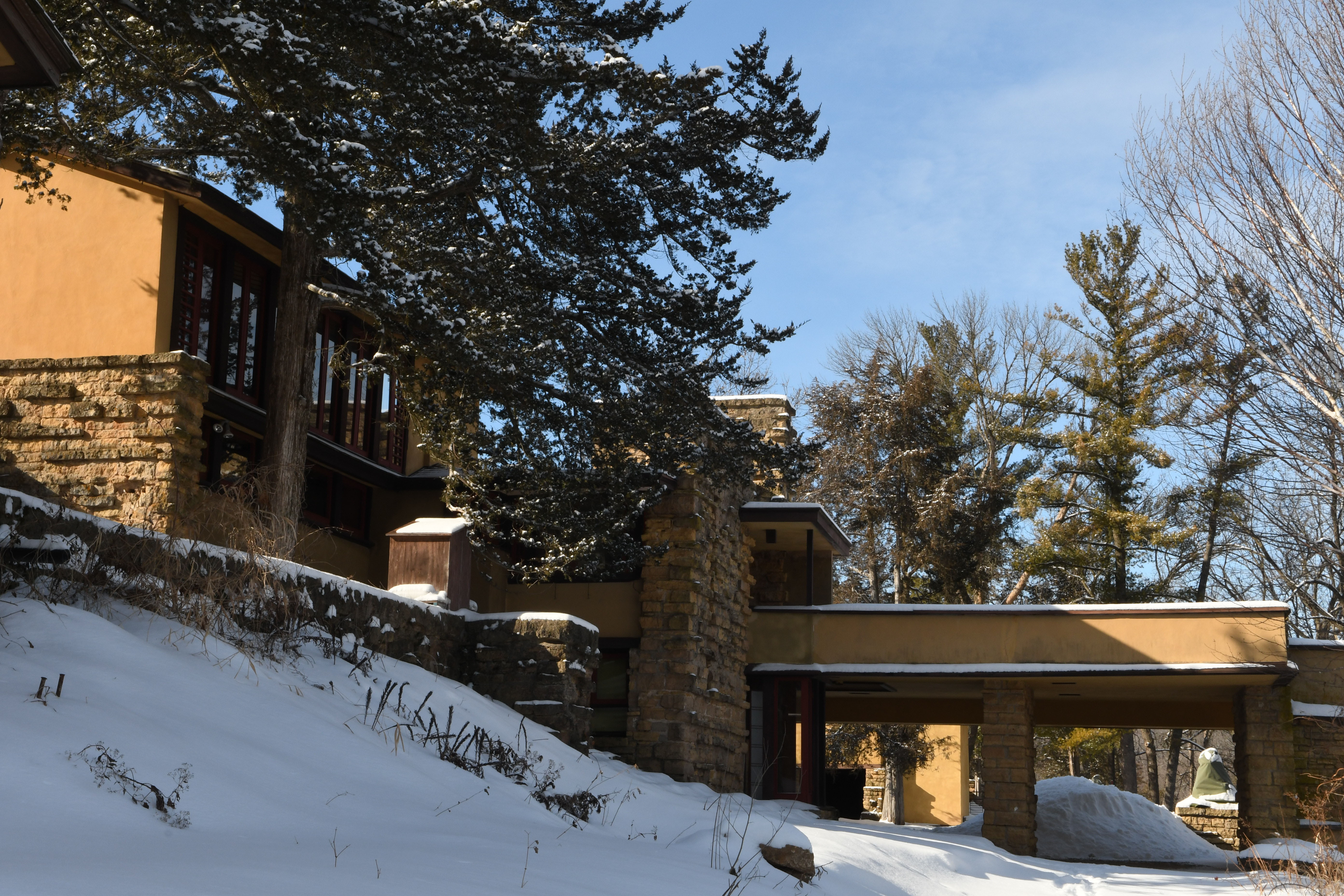
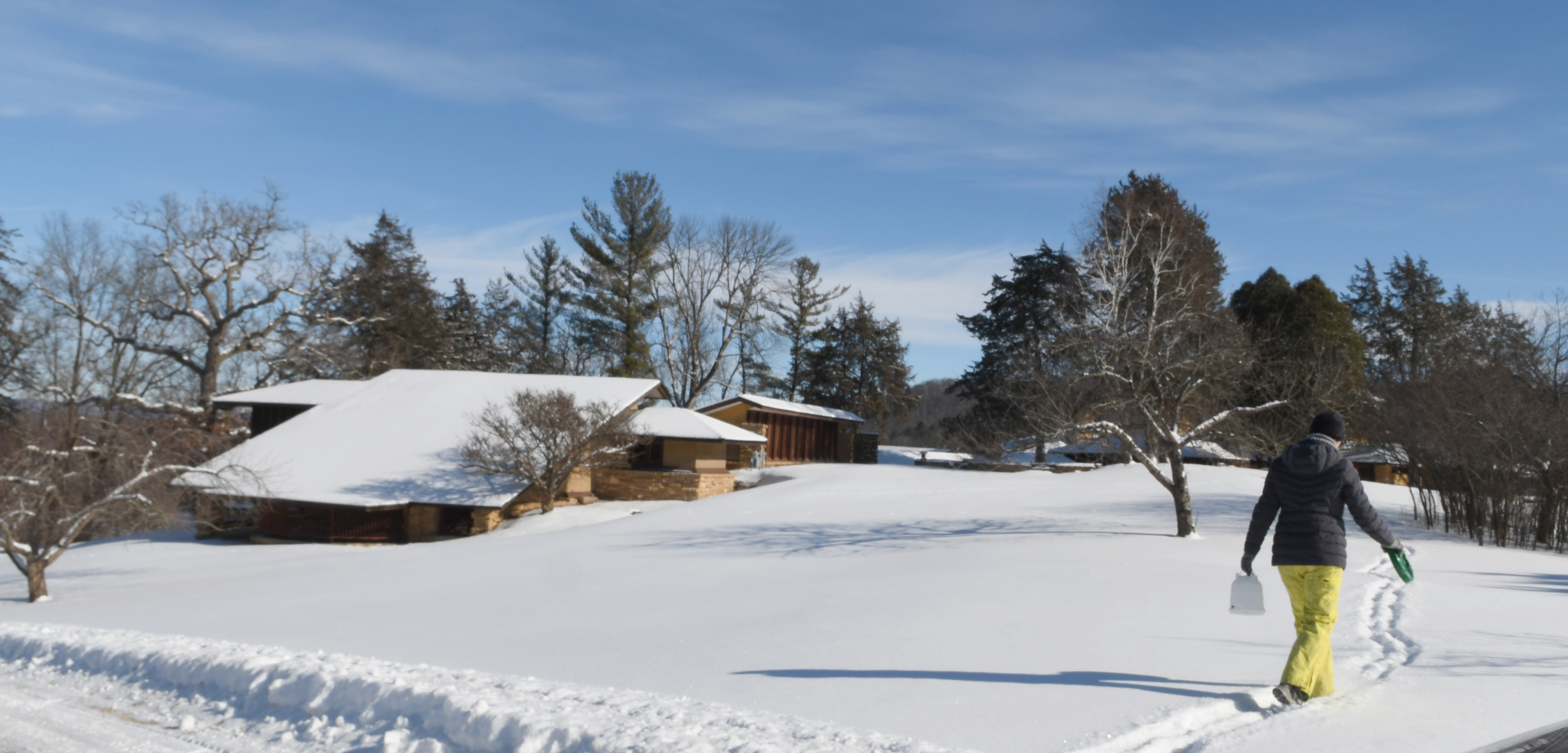
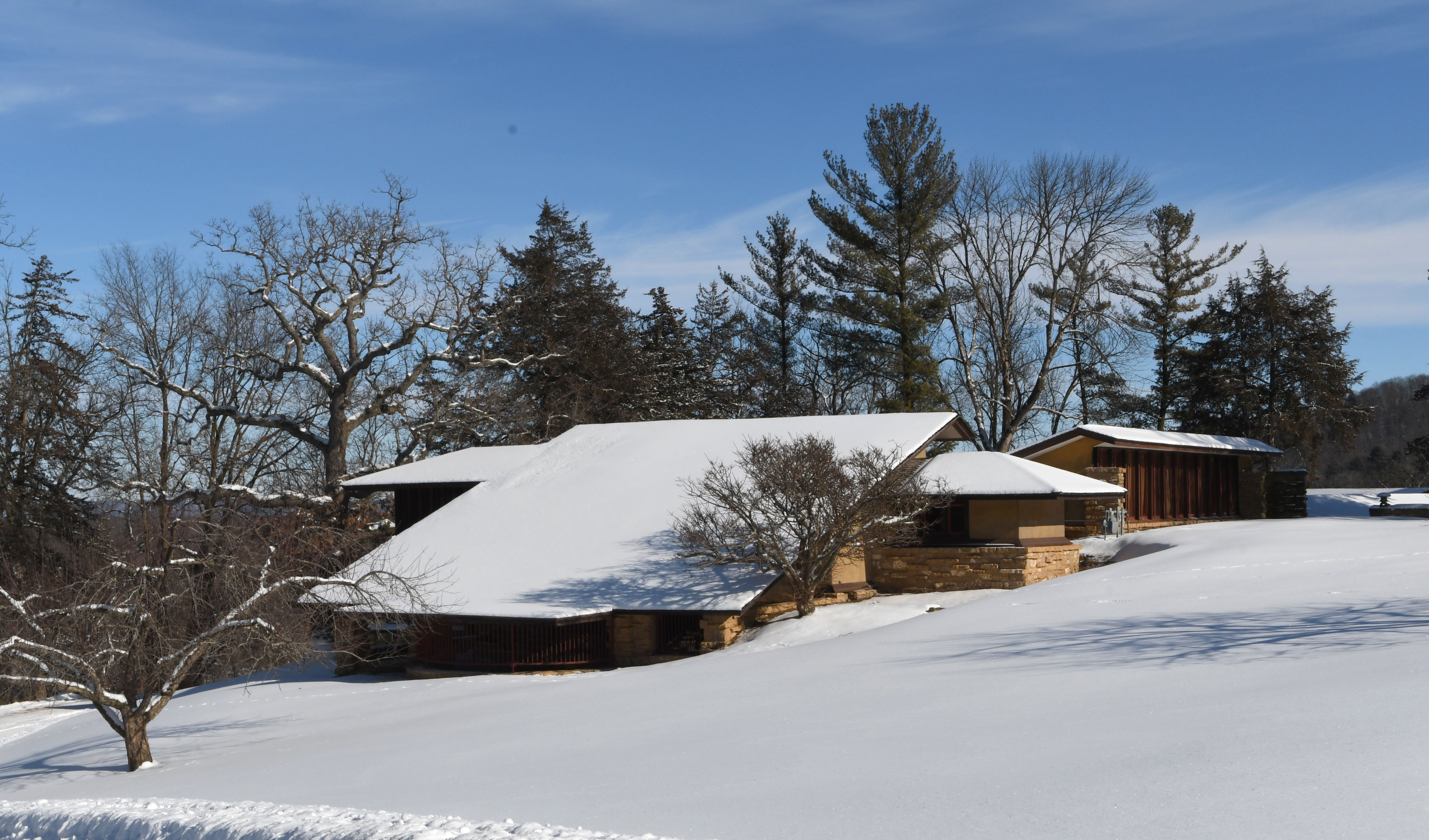
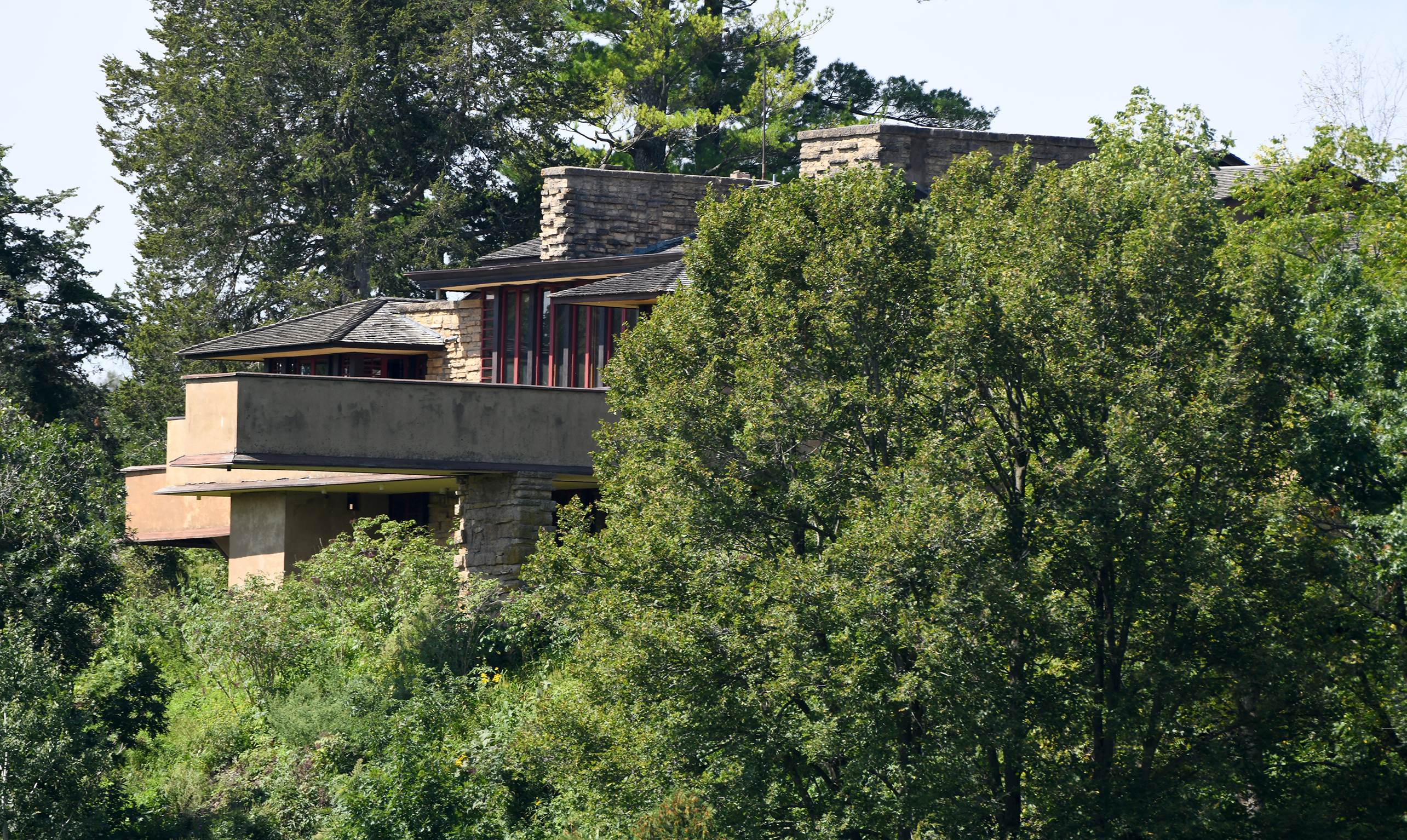
I was happier with what I saw from below the house, starting with the lead photo in this piece.
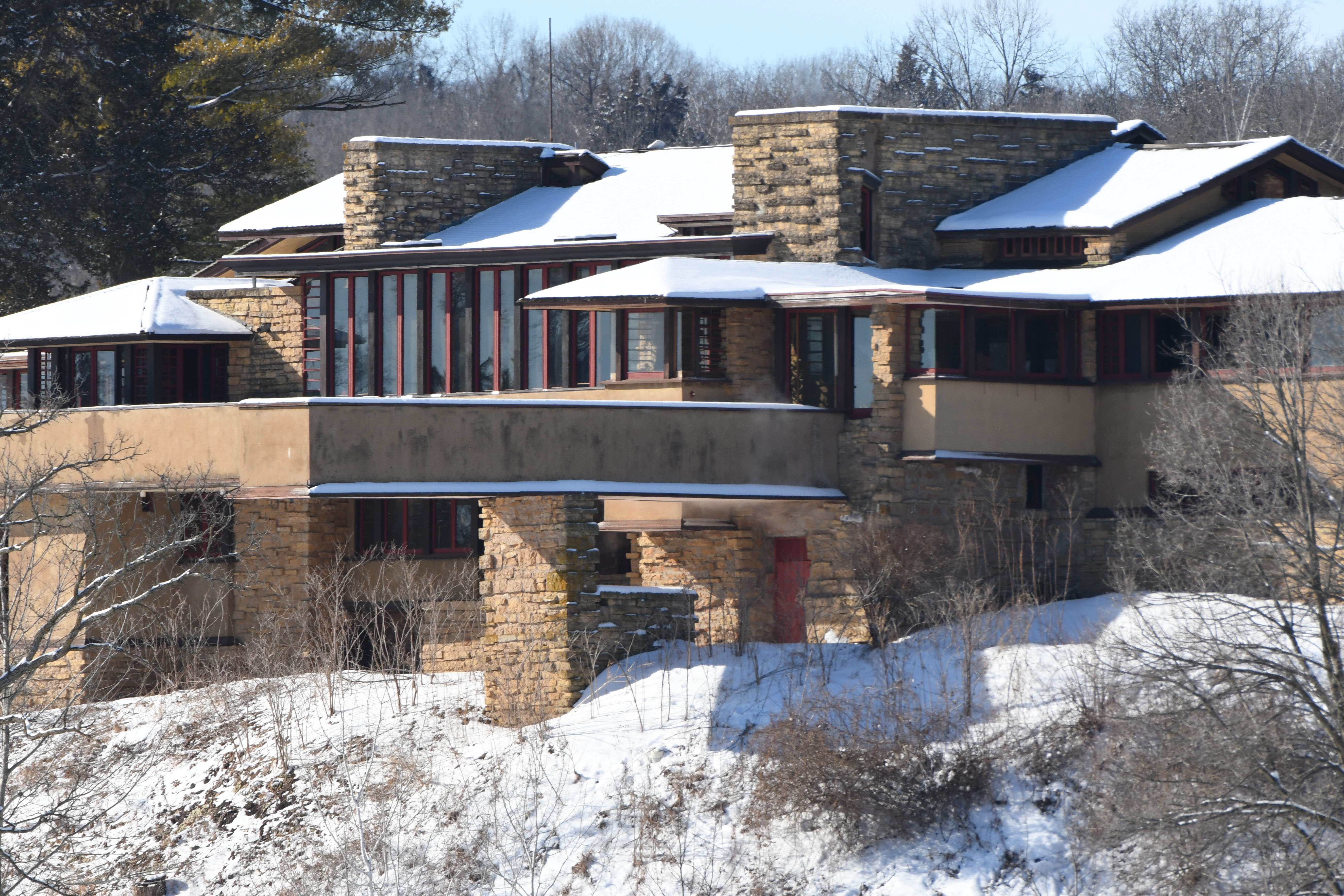
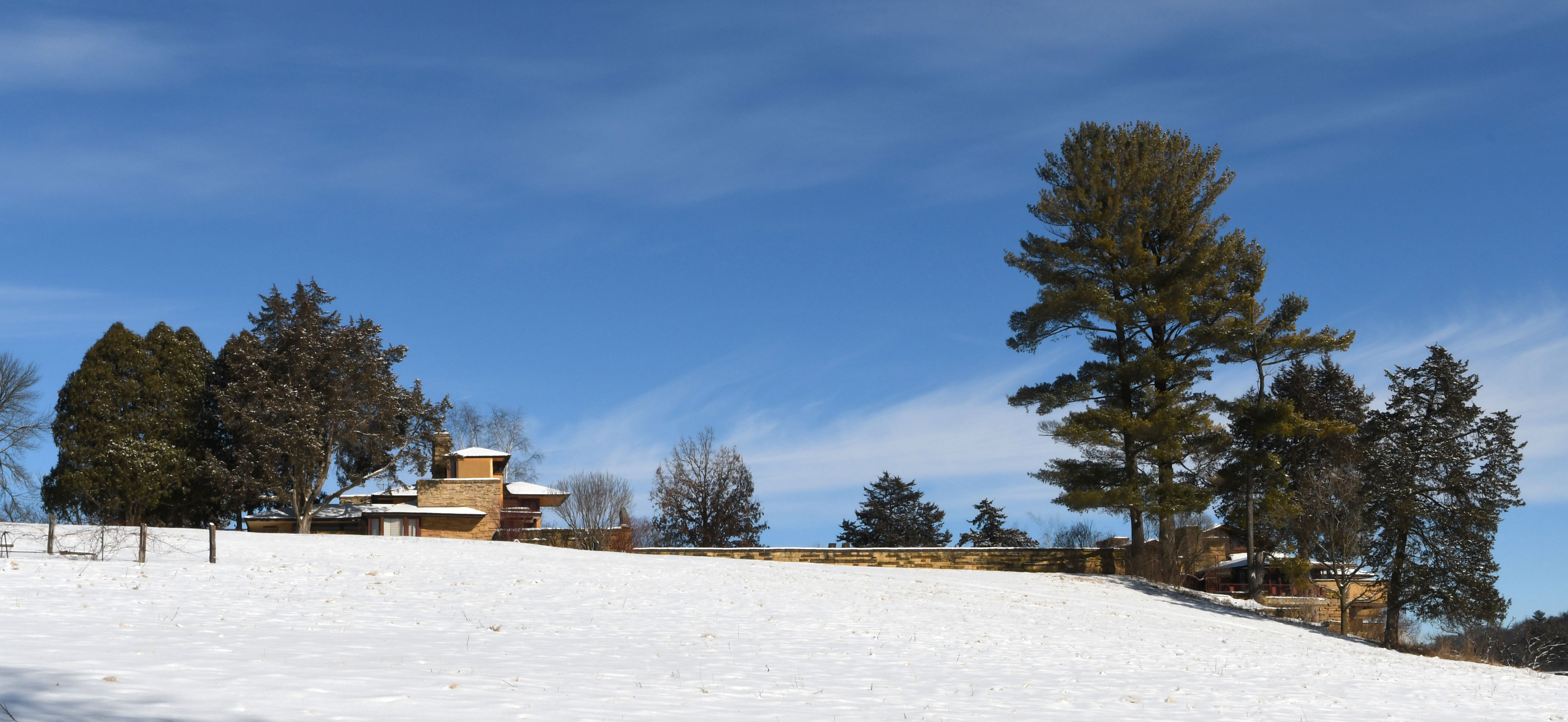
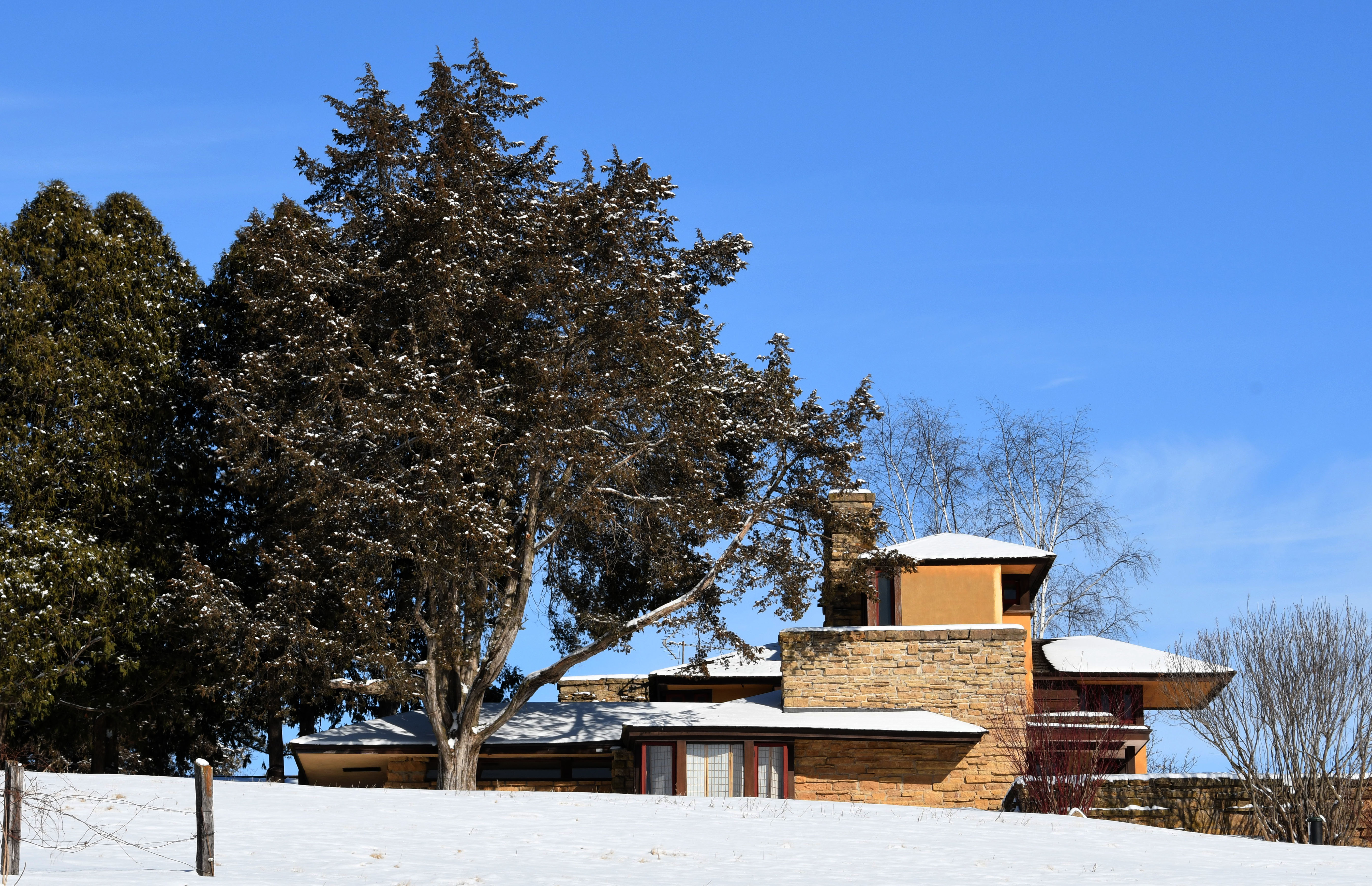
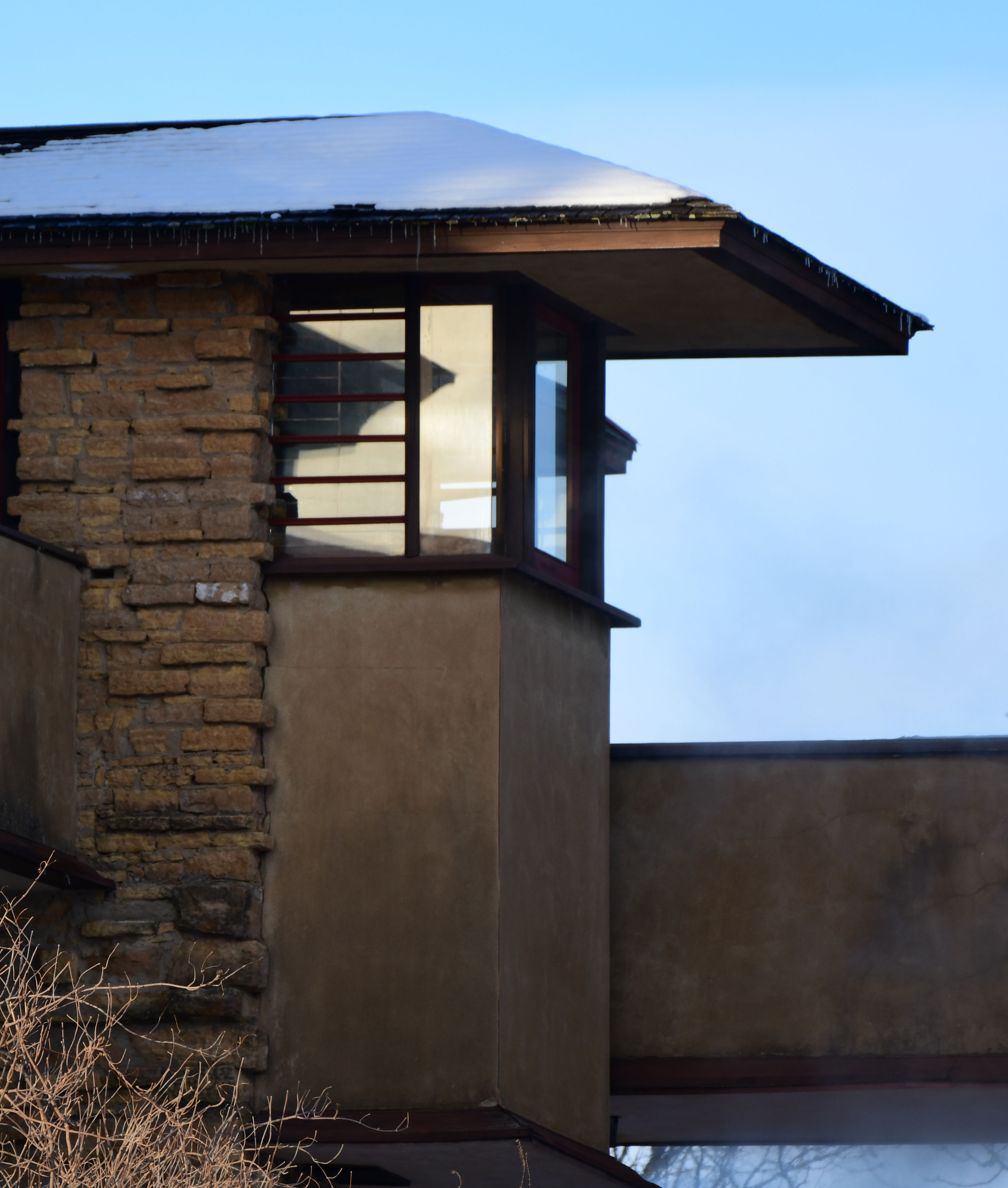
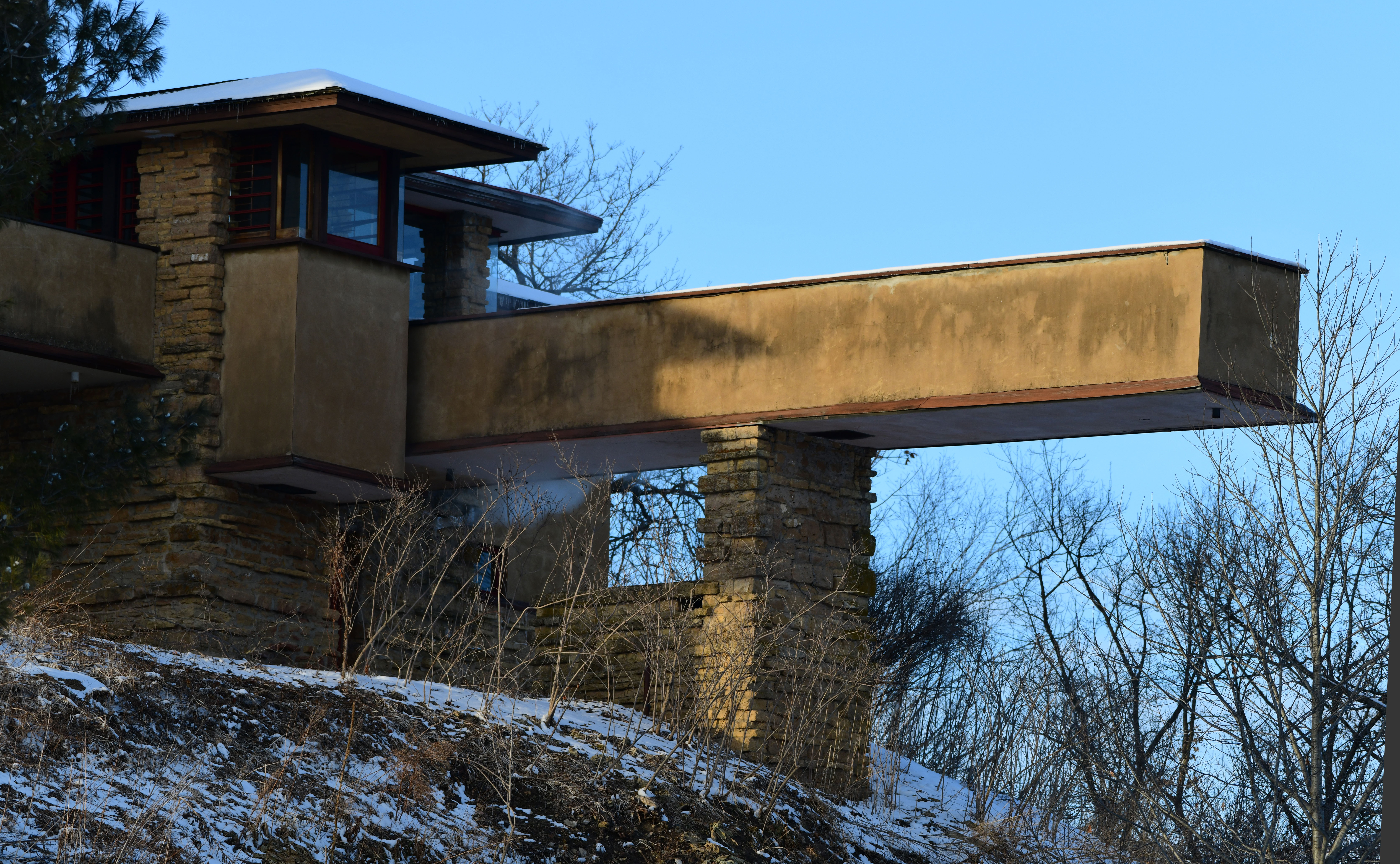
I am a photojournalist. As we say in our circles, after you find a photo, you “work it.” I have to thank John Clouse again for offering to sell me his 200-500mm lens at a good price last summer. While a newspaper colleague of mine in the early 1980s – before today’s fine zoom lenses – once said that “The best telephoto lens is your feet,” (i.e., walk toward and away from your subject rather than rely on the lens), this lens was especially welcome on a cold day after a fresh snowfall. I thought of the countless treks through the estate that the incomparable Pedro Guerrero made when he took his many memorable black and white winter photographs of Taliesin. What would he have done in color, or would he have stayed with black and white, which he printed so beautifully?
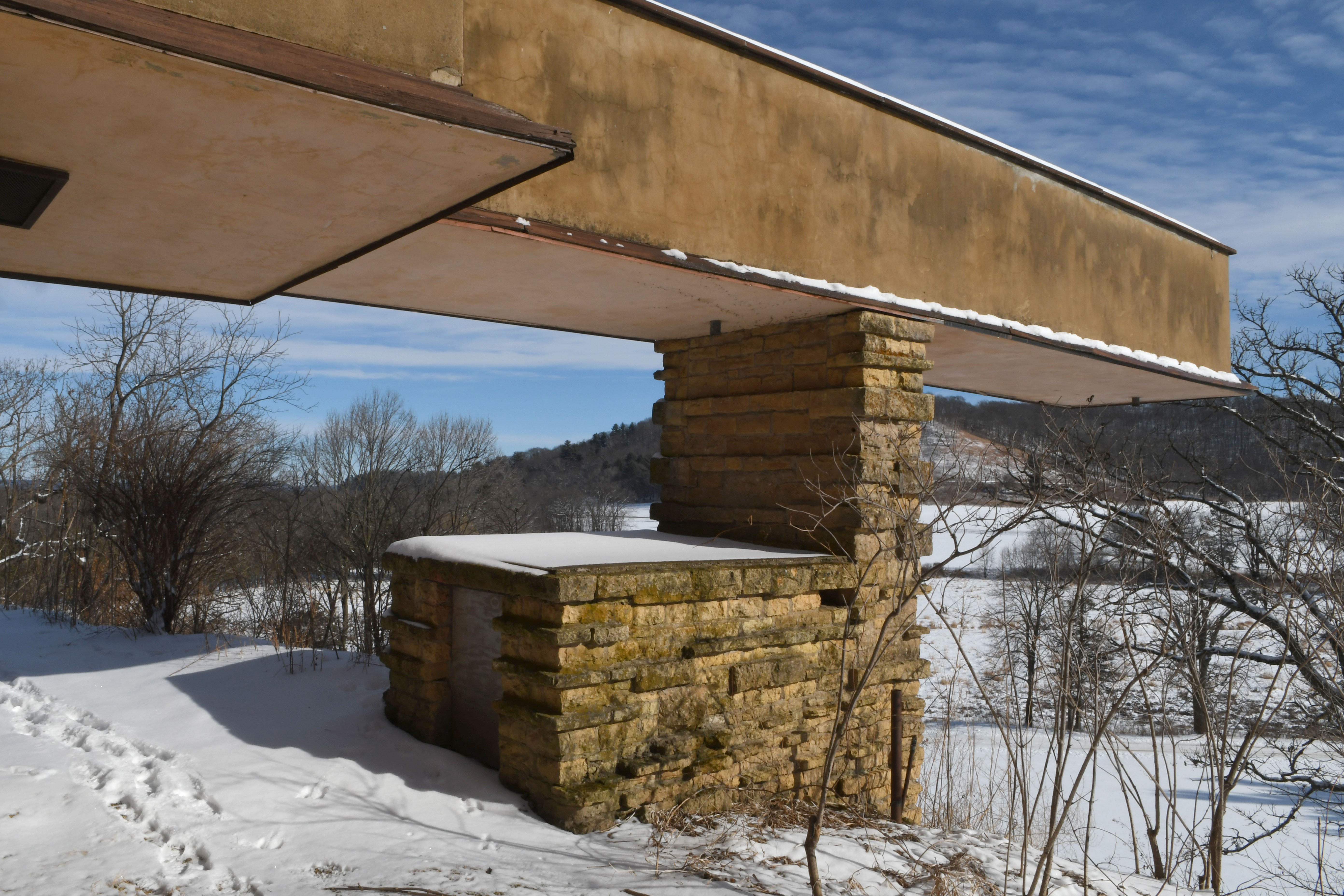
The bird walk is an extraordinary cantilever:
Caroline Hamblen was returning from feeding her chickens in the apple orchard as I crested the hill:
Then it was time to park and explore on foot:
The next photo is at Minerva’s front door:
I saw this on my way in:
I saw this on my way out after lunch and lively conversation:
Then, one more swing through the estate with magic light at the “golden hour”:
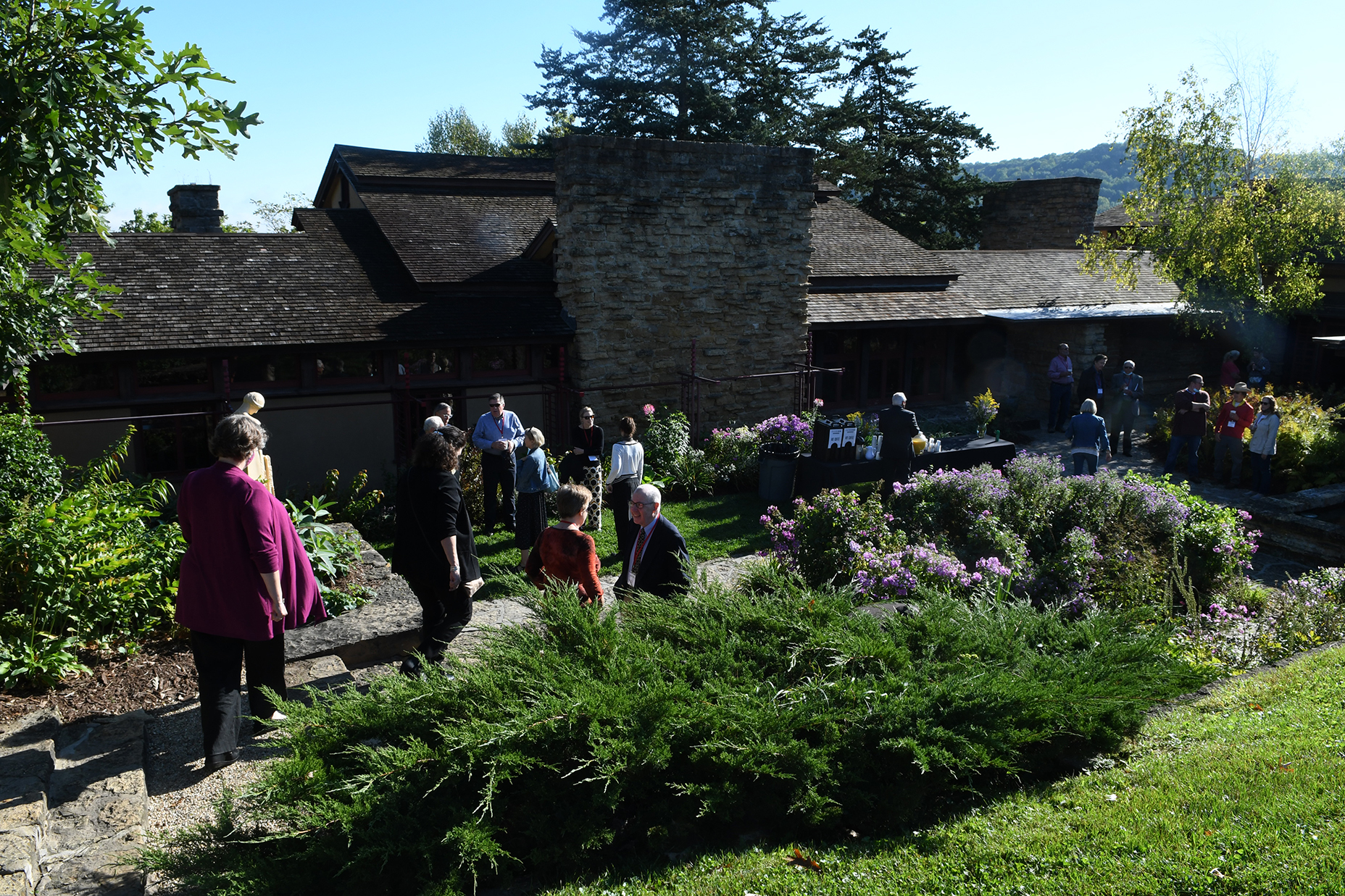
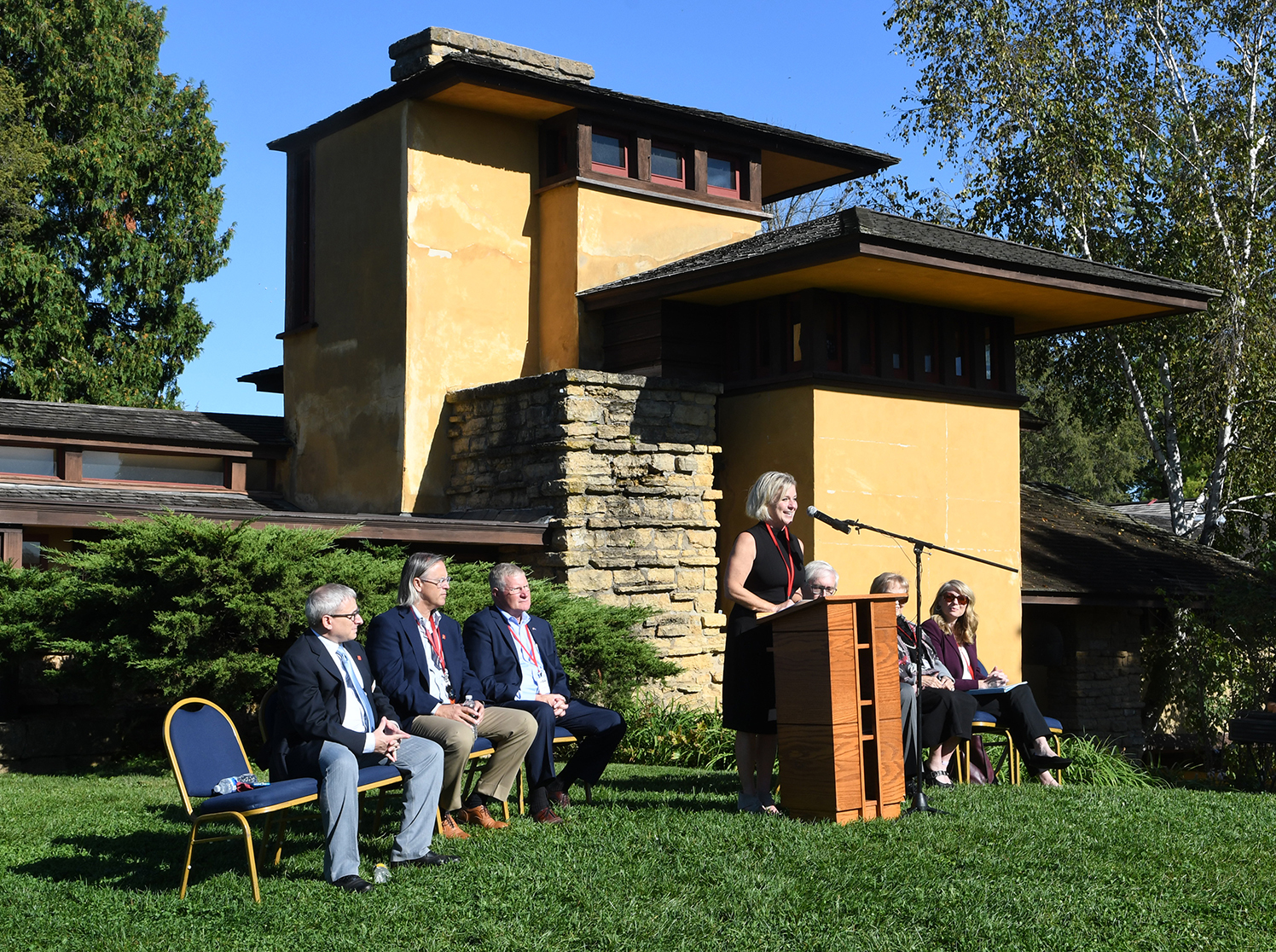
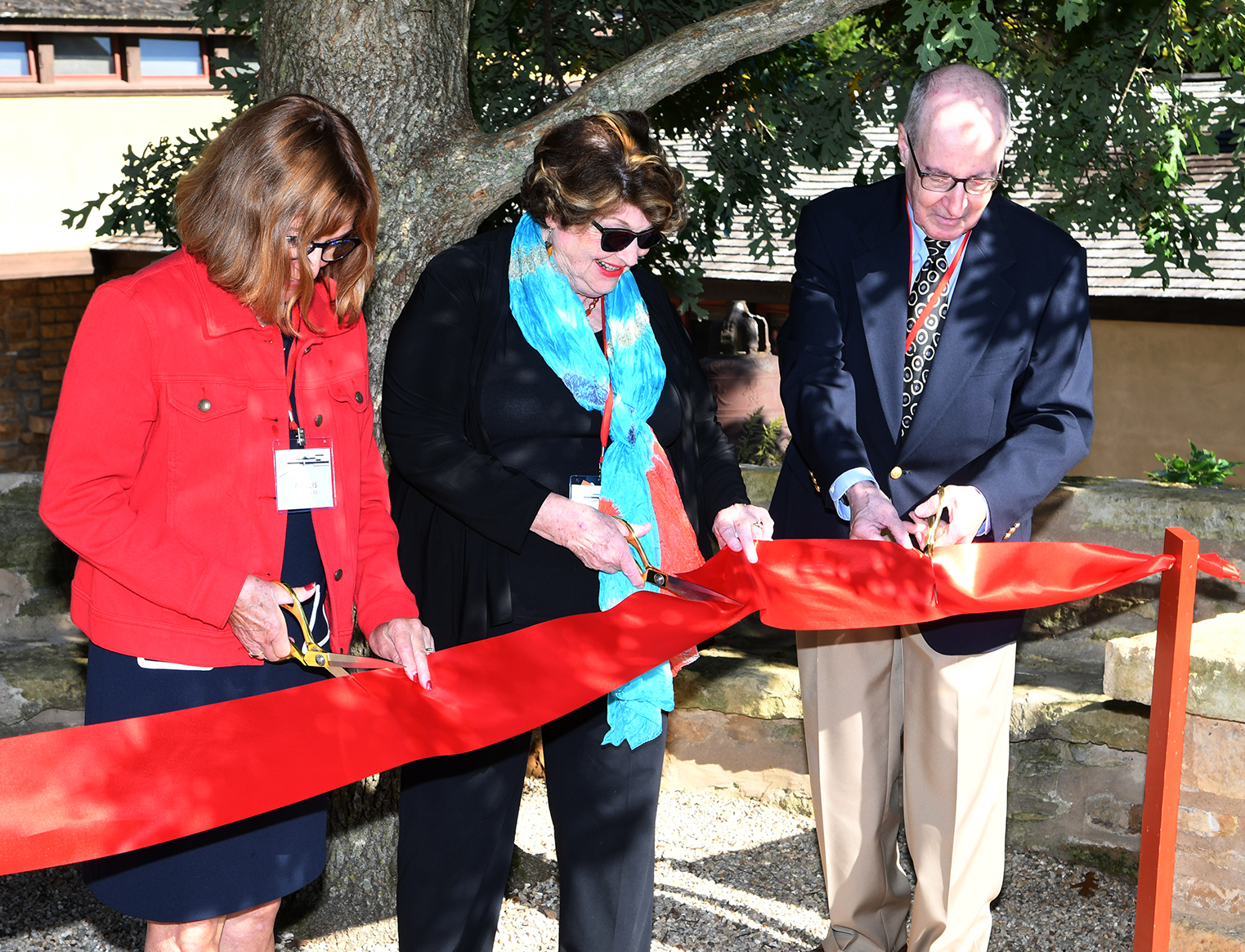
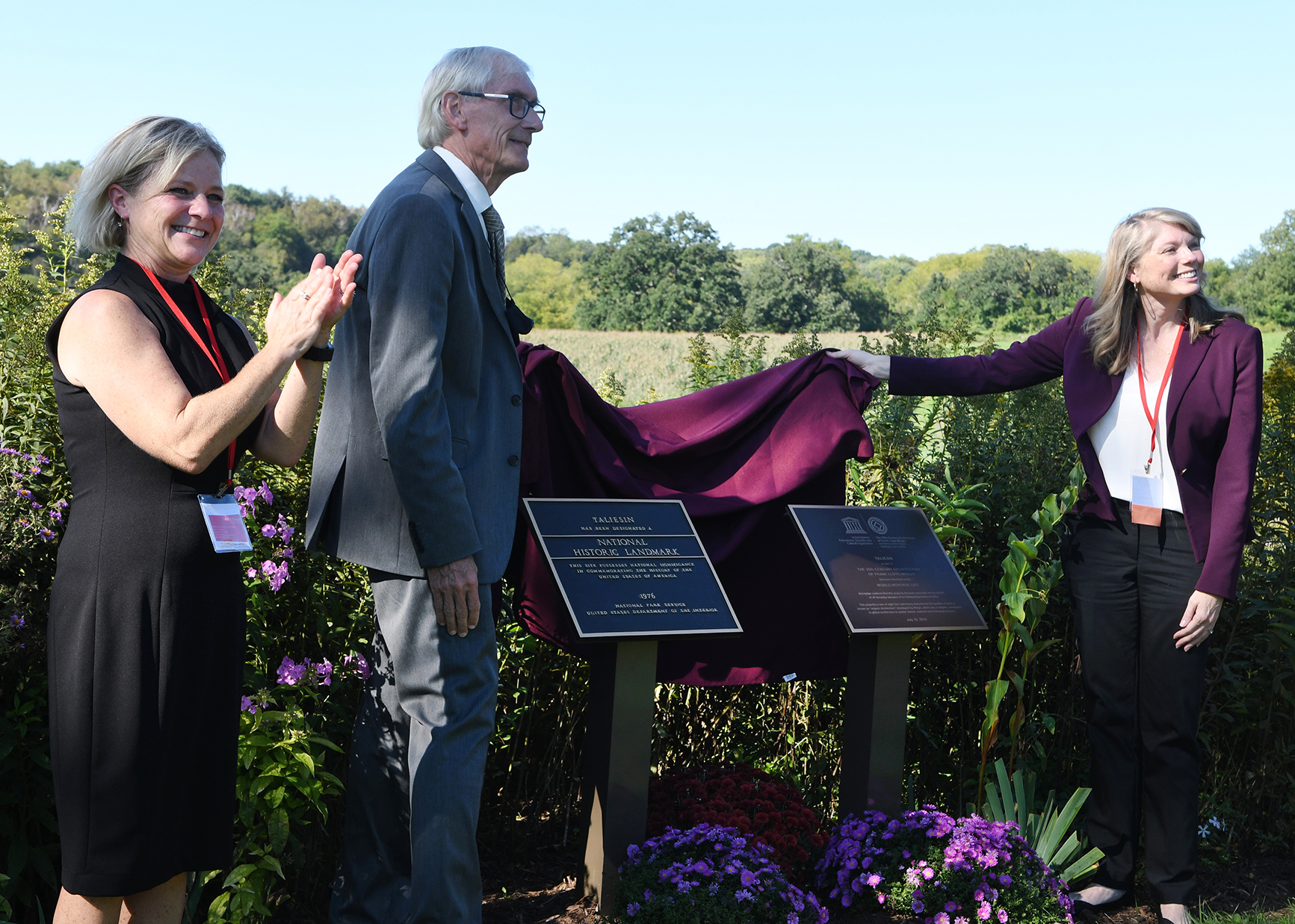
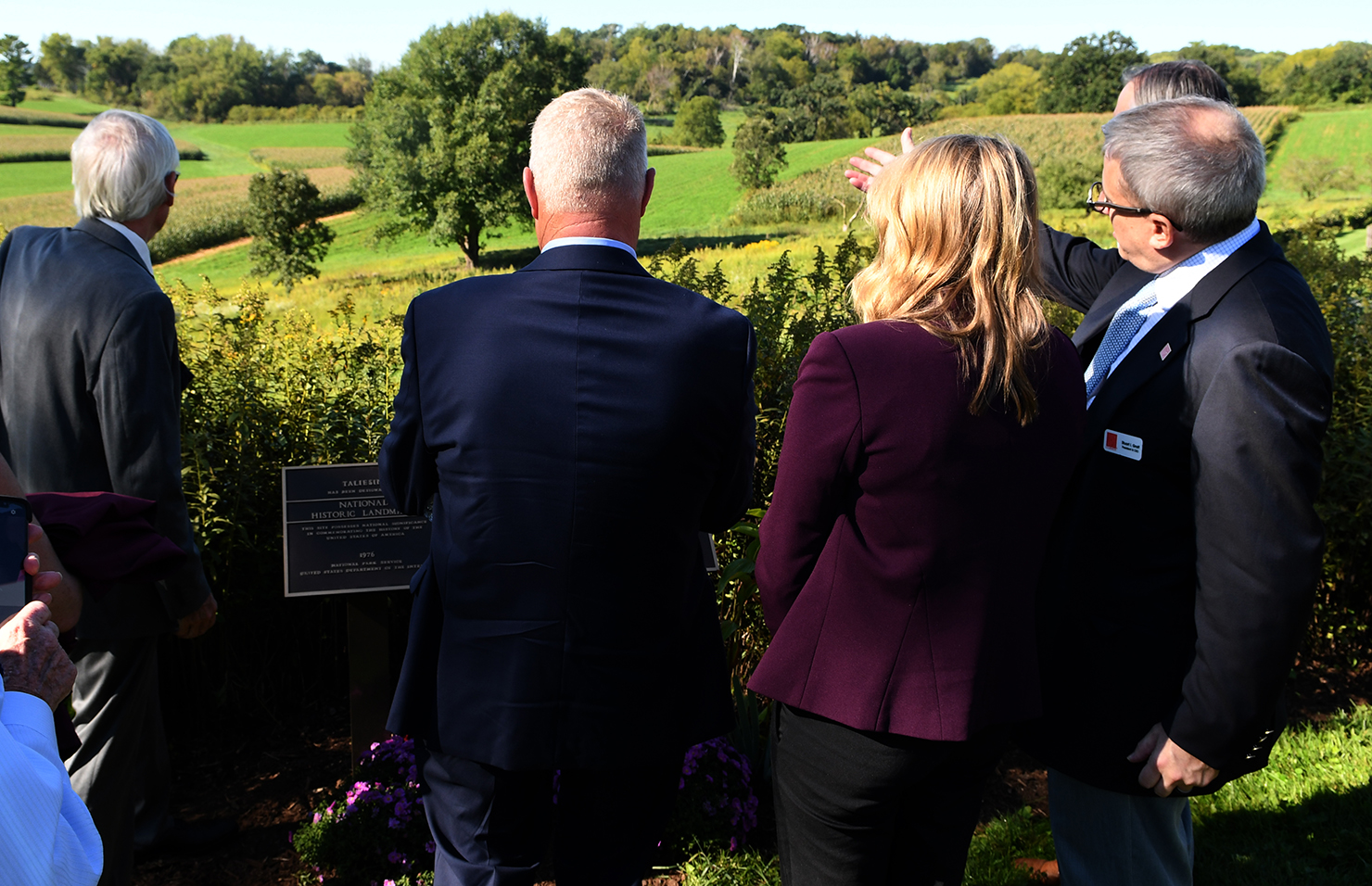
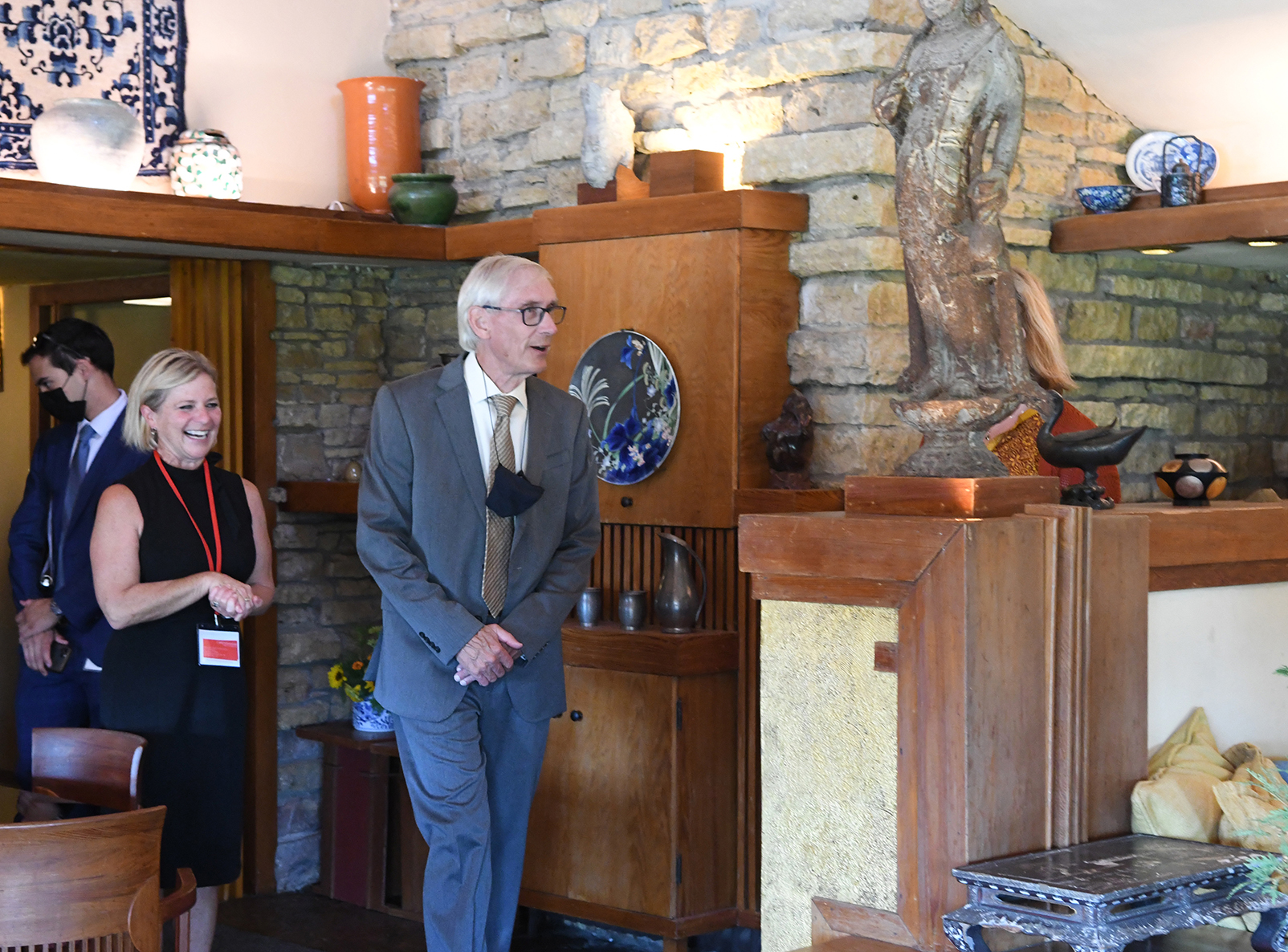
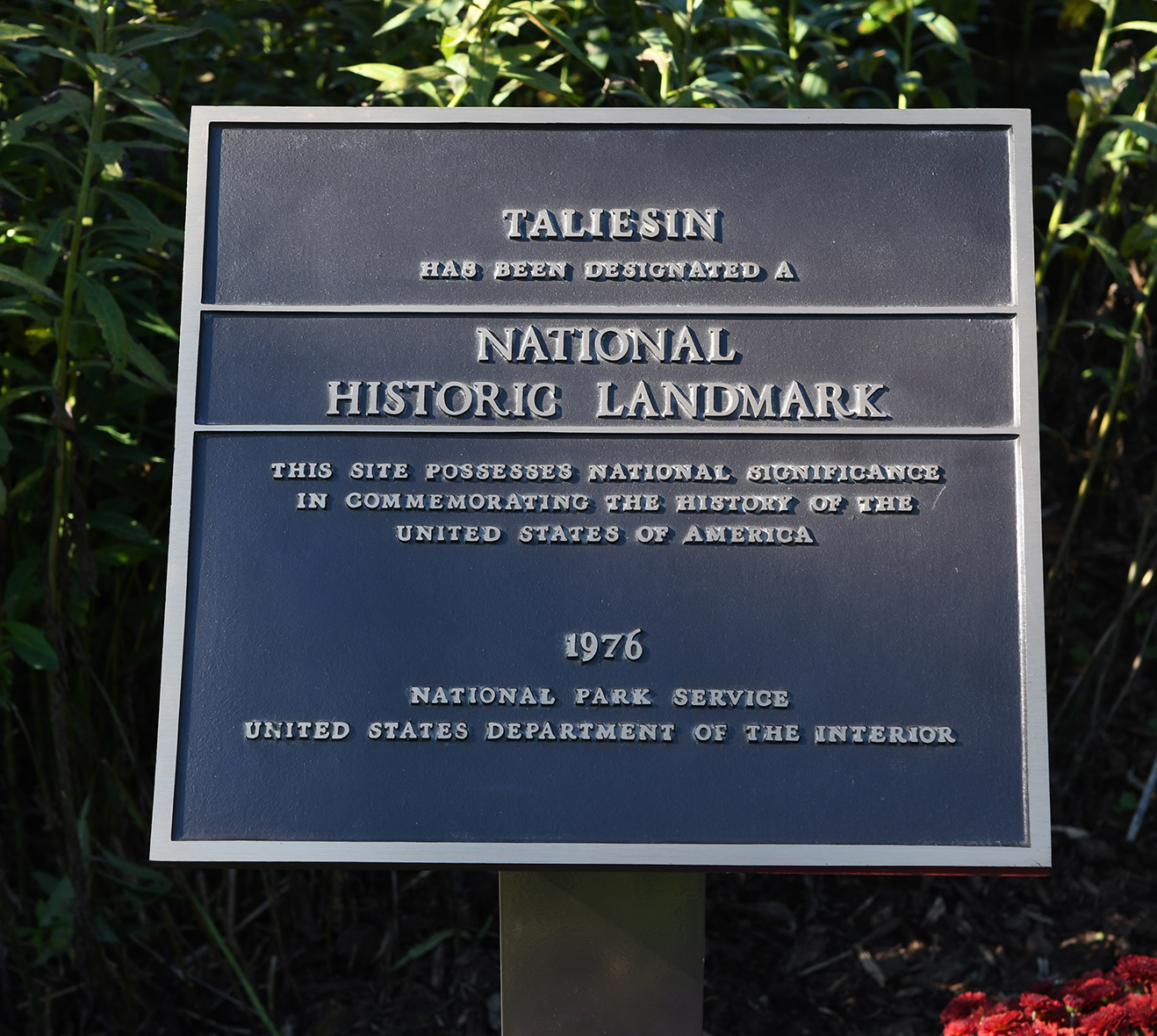
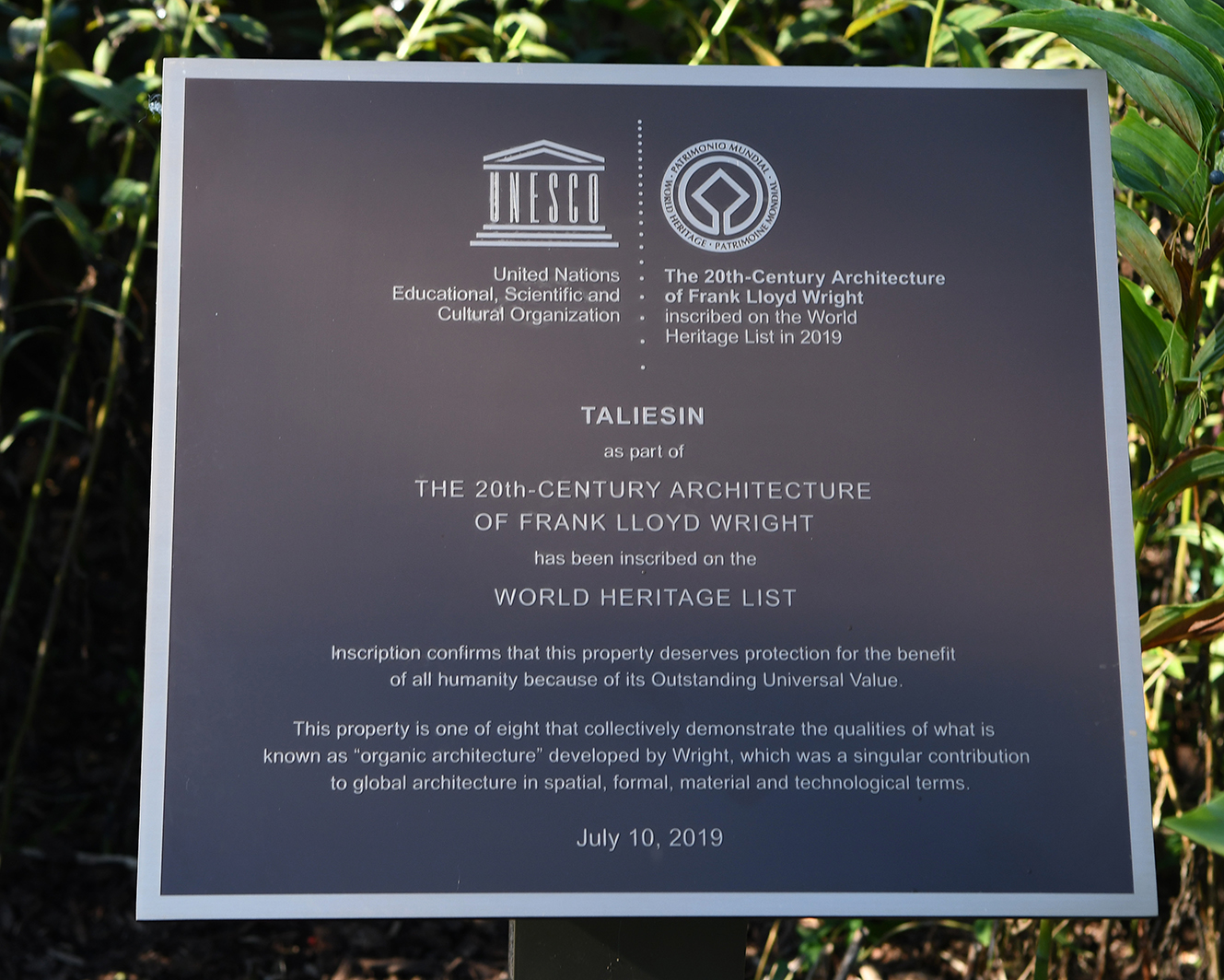
The early morning fog burned off in time for two ceremonies at Taliesin Wednesday September 15, one to cut a ribbon for the restored Tea Circle, the other to unveil two plaques marking Taliesin’s place in architectural history. One plaque notes Taliesin’s designation as a National Historic Landmark in 1976, the other notes it as one of eight Wright sites collectively named UNESCO World Heritage Sites in 2019. The latter marked years of effort by many people with the Frank Lloyd Wright Foundation and the Frank Lloyd Wright Building Conservancy in particular. Wisconsin Gov. Tony Evers and Anne Sayers, Wisconsin’s Secretary of Tourism headlined the event.
First, I will show you two photos I took wandering through Taliesin before the event, showing the view of Tan-y-deri from Mr. Wright’s bedroom and studio and one I took in the Blue Loggia:
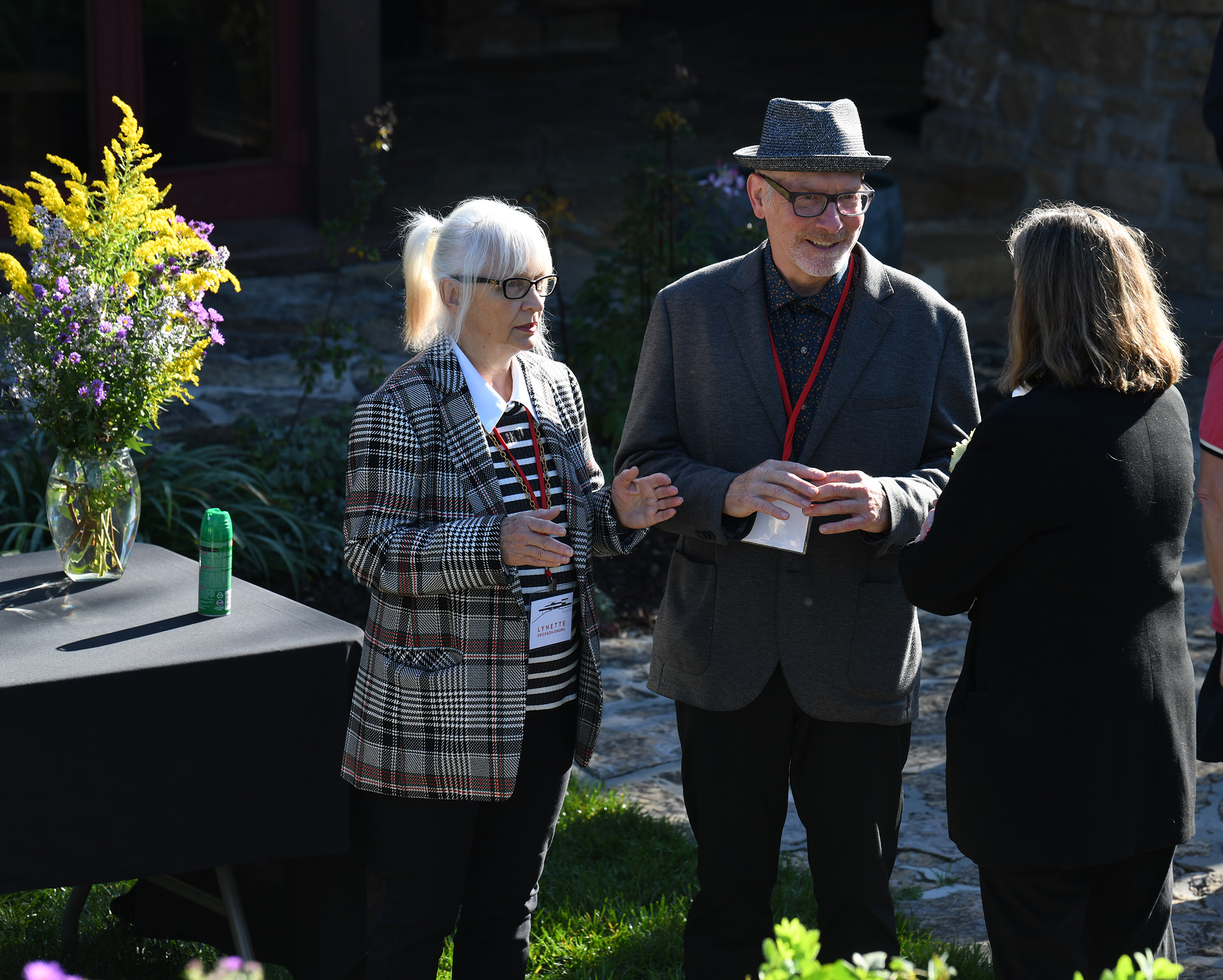
Kimberley Valentine, left, Carrie Rodamaker and Stuart Graff, center, greet guests before the ceremony:
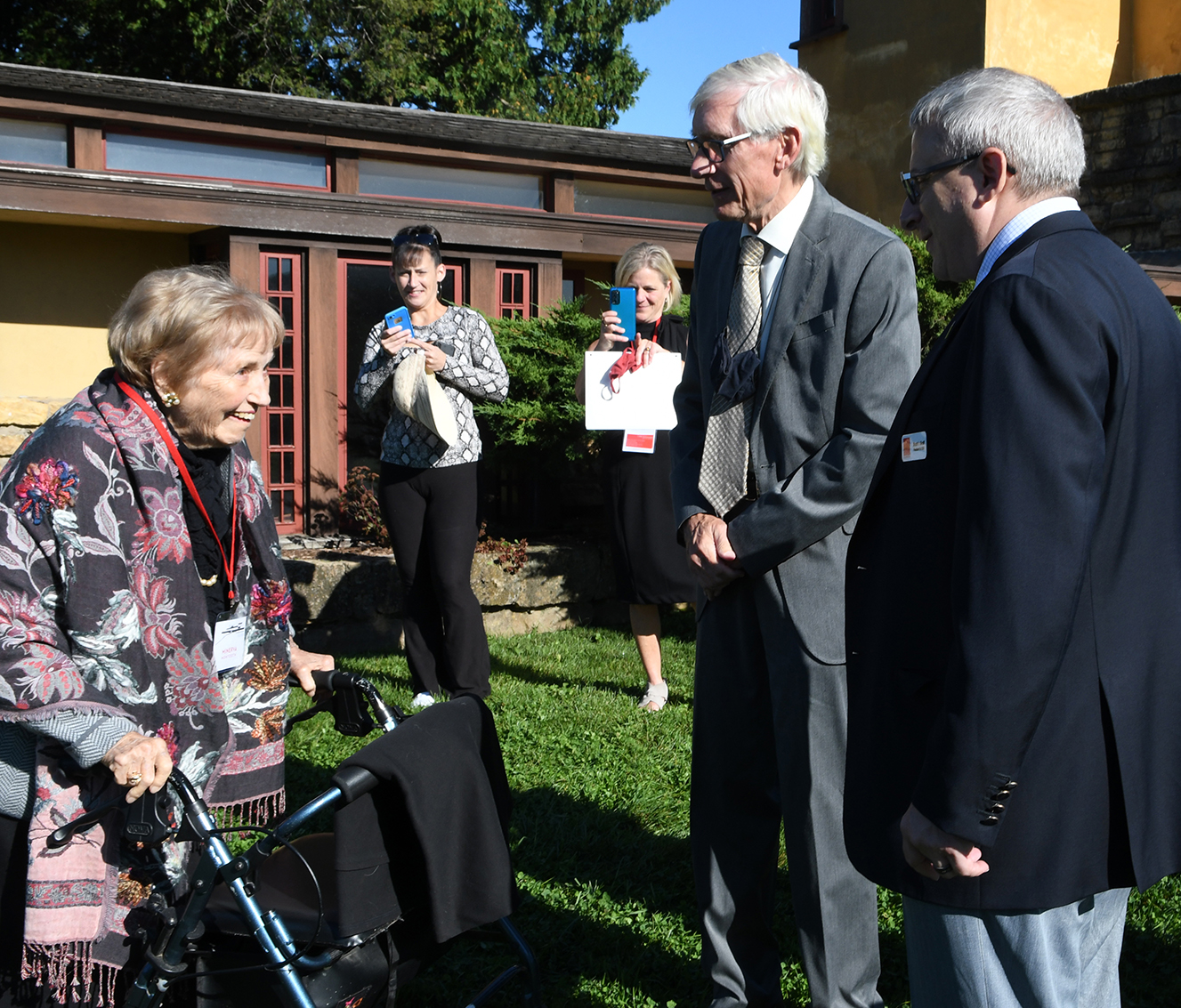
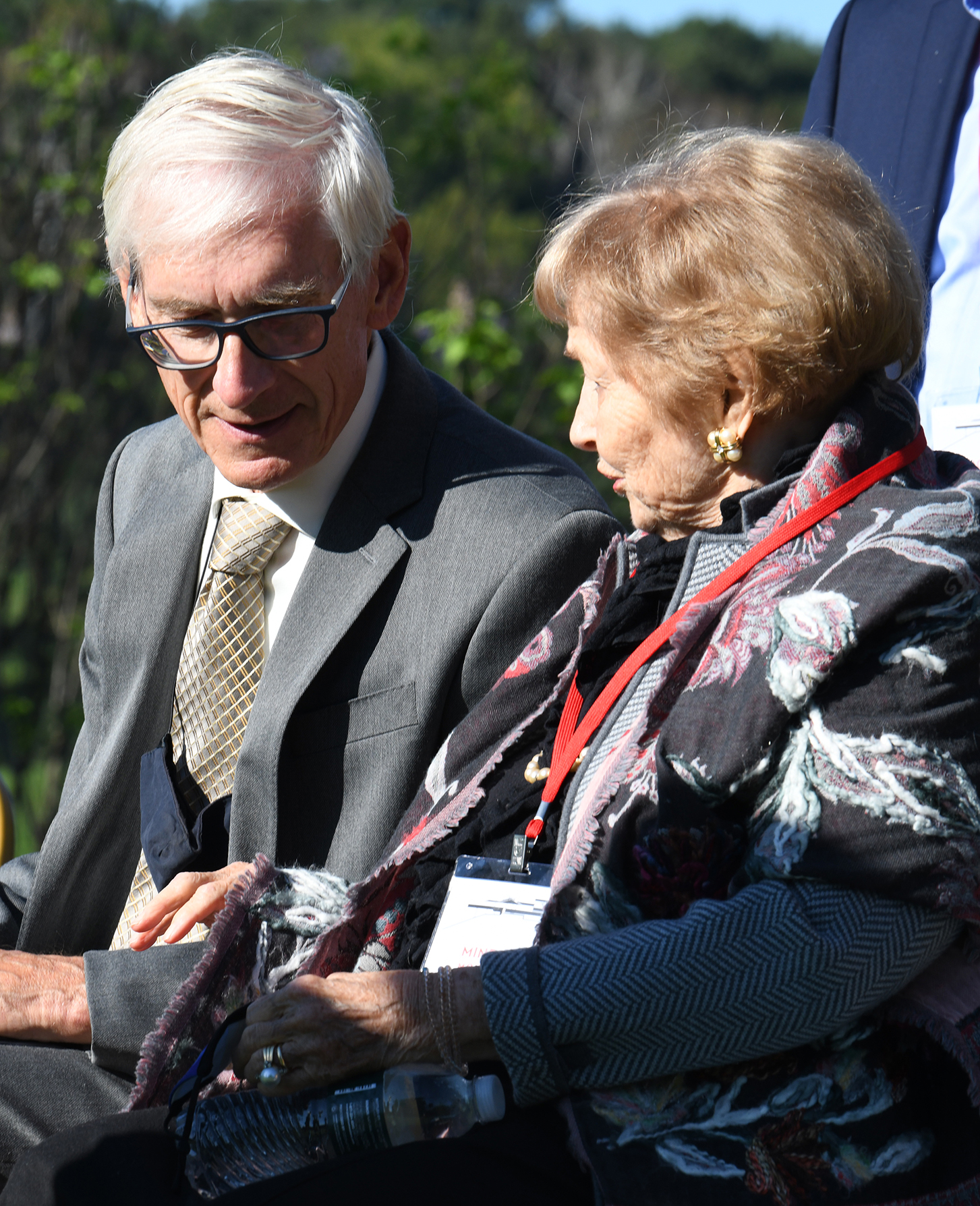
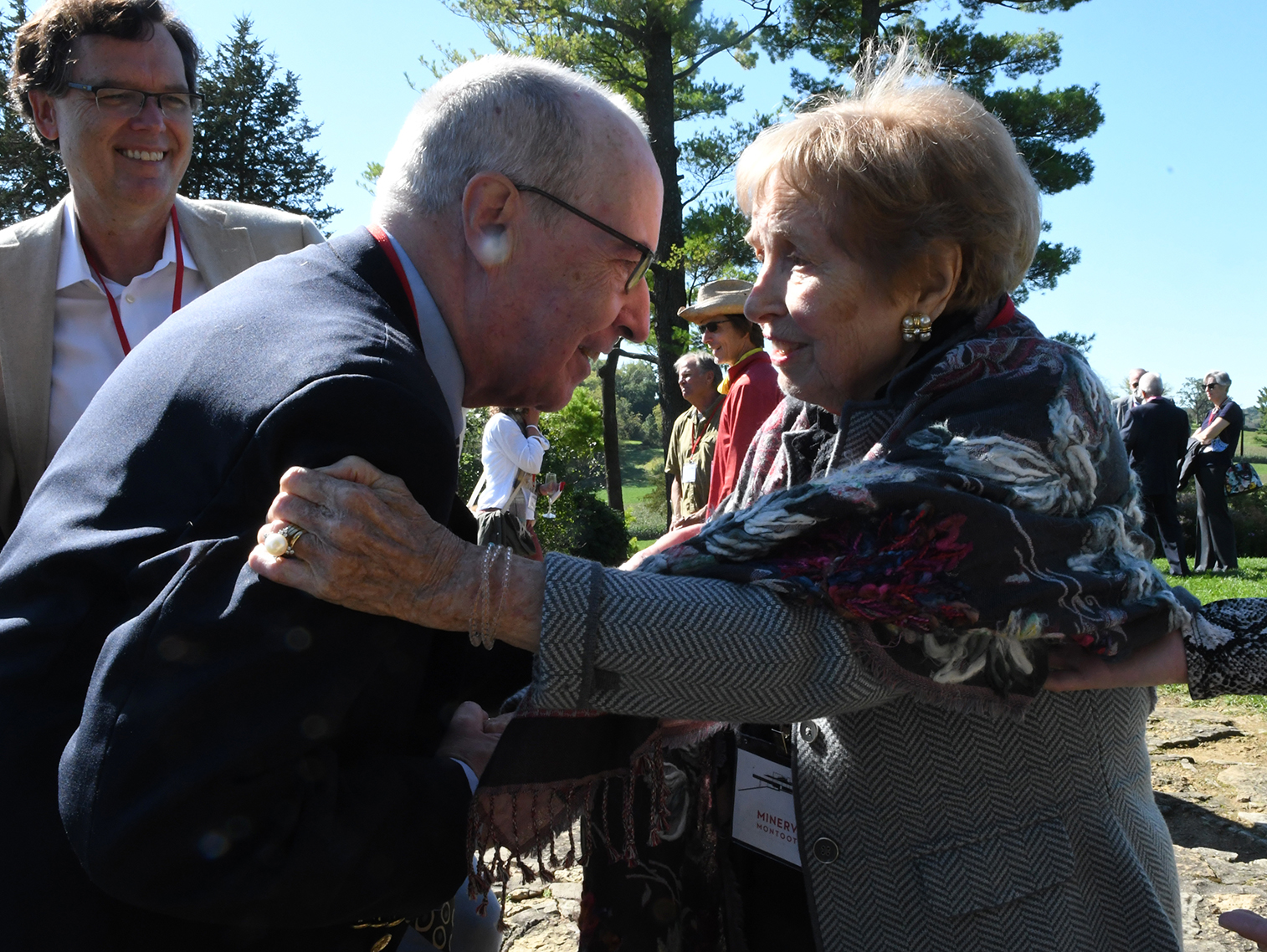
Gov. Evers was introduced to Minerva Montooth shortly after his arrival (look for a profile story about Minerva and my history of photographs of her on this website soon):
Carrie Rodamaker, CEO of Taliesin Preservation, led the ceremonies in front of the Belvedere:
There was a break in the middle of the speeches for Phillis Schippers, left, Gail Fox, and Sid Robinson to cut a red ribbon at the Tea Circle:
Then the two plaques on the crest of the hill were unveiled:
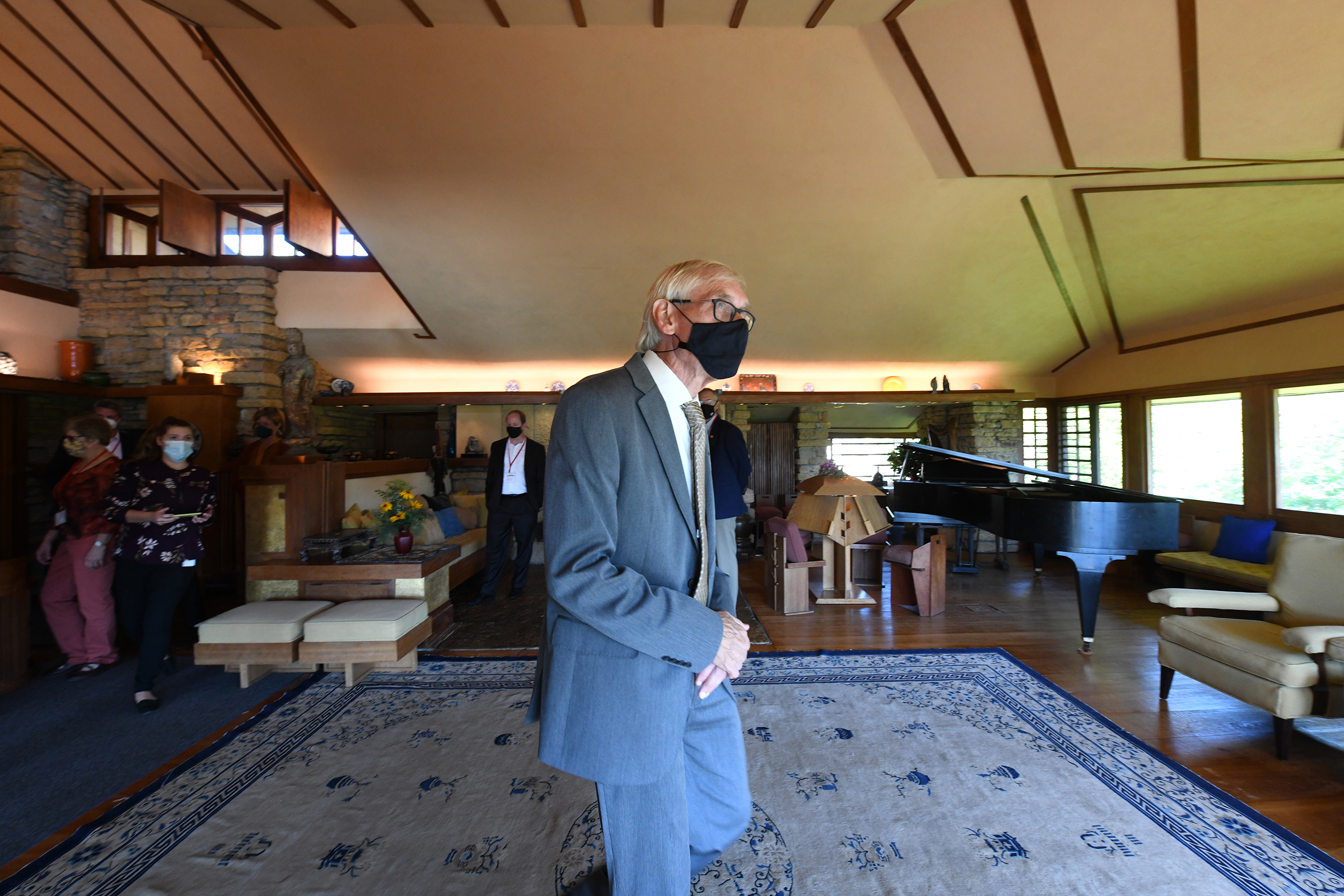
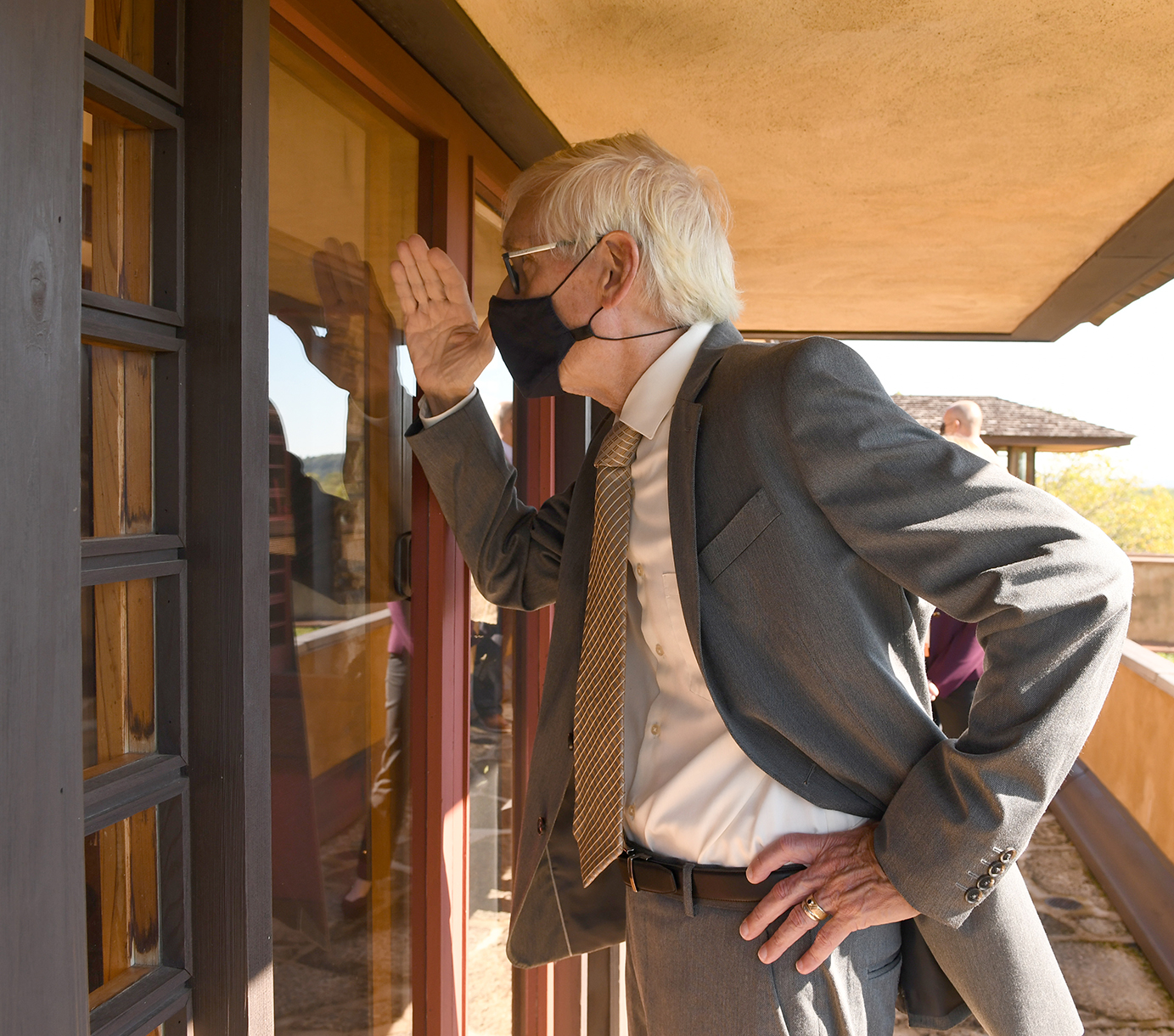
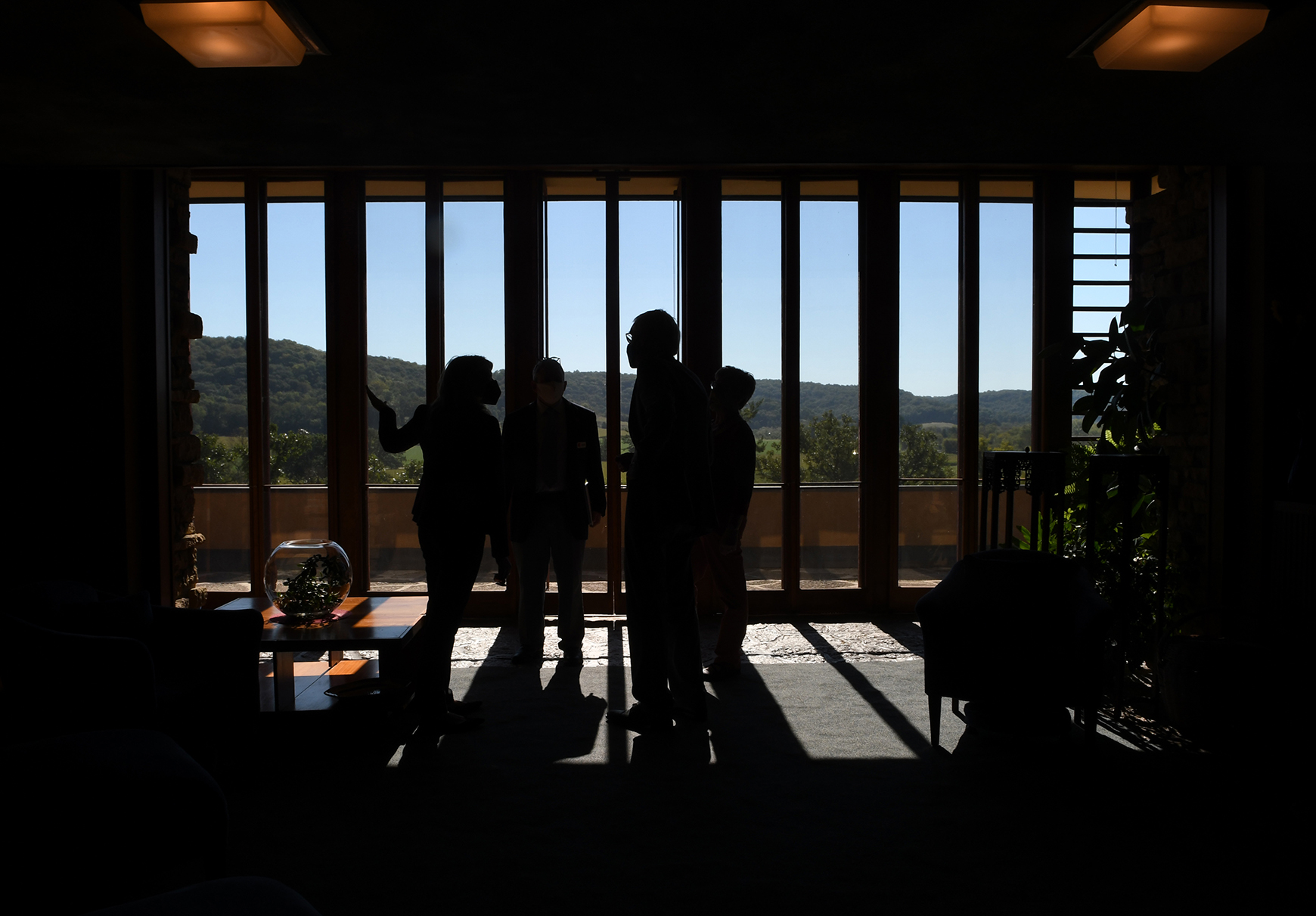
Gov. Evers and Secretary Sayers then toured Taliesin:
I had not been to many Frank Lloyd Wright sites outside of Racine in more than two years until a week ago. I had a gracious lunch invitation from Minerva Montooth for Sunday, and a last-minute photo assignment in Sparta, Wisconsin (west of Spring Green) Saturday, so I overnighted in Spring Green. I have always enjoyed challenging myself to see new things at familiar Wright sites on return visits. These are some of the many fruits of last week’s visit.
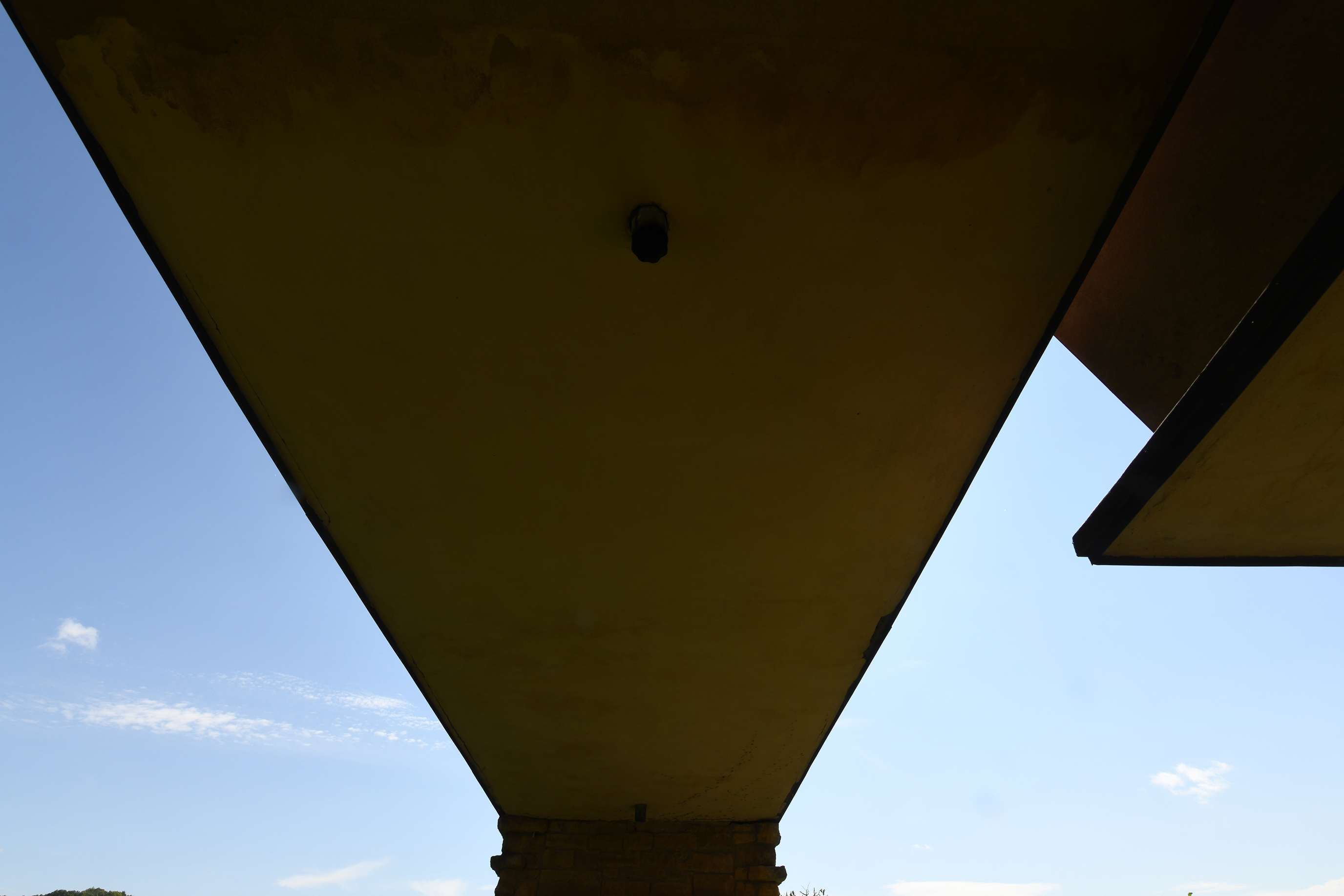
I photographed at the famous cantilevered Birdwalk terrace from below:
I noticed visitors taking pictures above me while photographing the Birdwalk:
I do not plan my photo visits for a particular time of day / lighting…I shoot what is there when I am there. I explored Taliesin and the grounds of the newly-restored Wyoming Valley School Cultural Arts Center in wonderful evening light Saturday, before dinner with Keiran Murphy and “Mr. Keiran.” I visited both again in Sunday’s morning light. I saw the familiar sign for Taliesin in a different way, thanks to the sharp angle of the morning light:
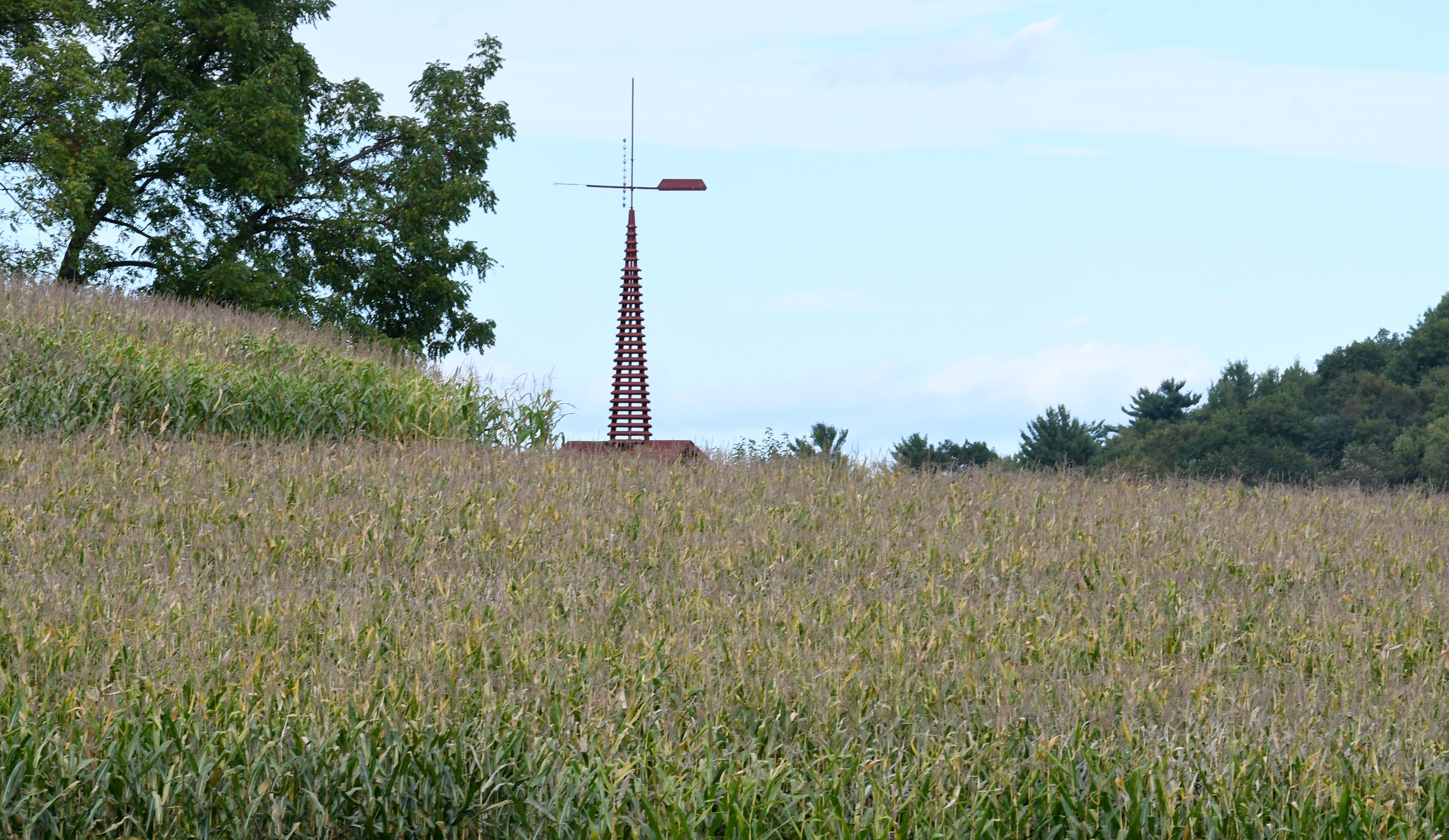
The first thing I saw at Taliesin Saturday as I drove onto the grounds was the corn crib, dramatically lit by evening light:
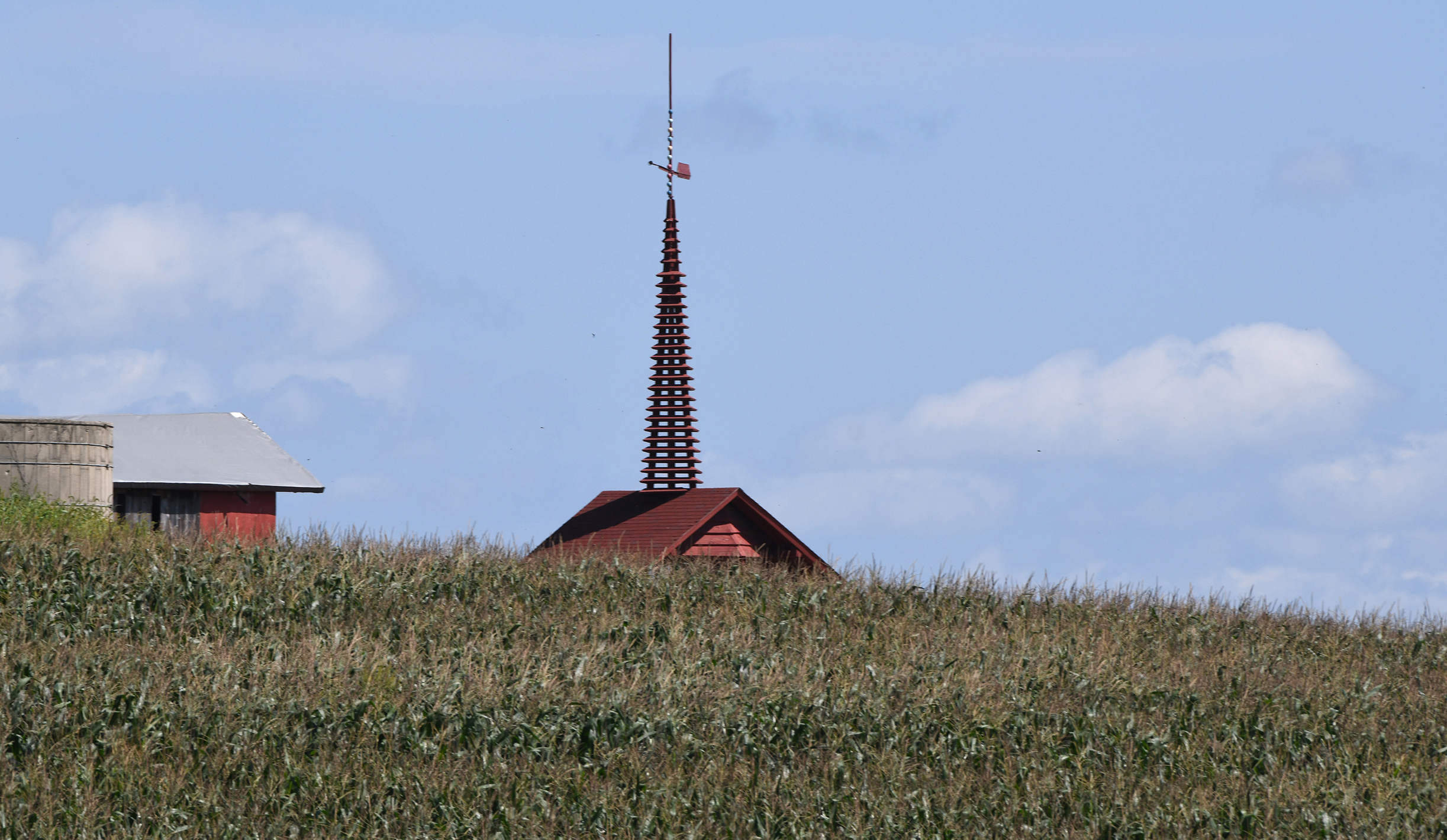
Sunday morning I saw something different with a long lens as I drove up:
I used a powerful zoom lens to photograph Romeo and Juliet and Tan-y-deri from a distance both days:
I continued to explore with the long lens:
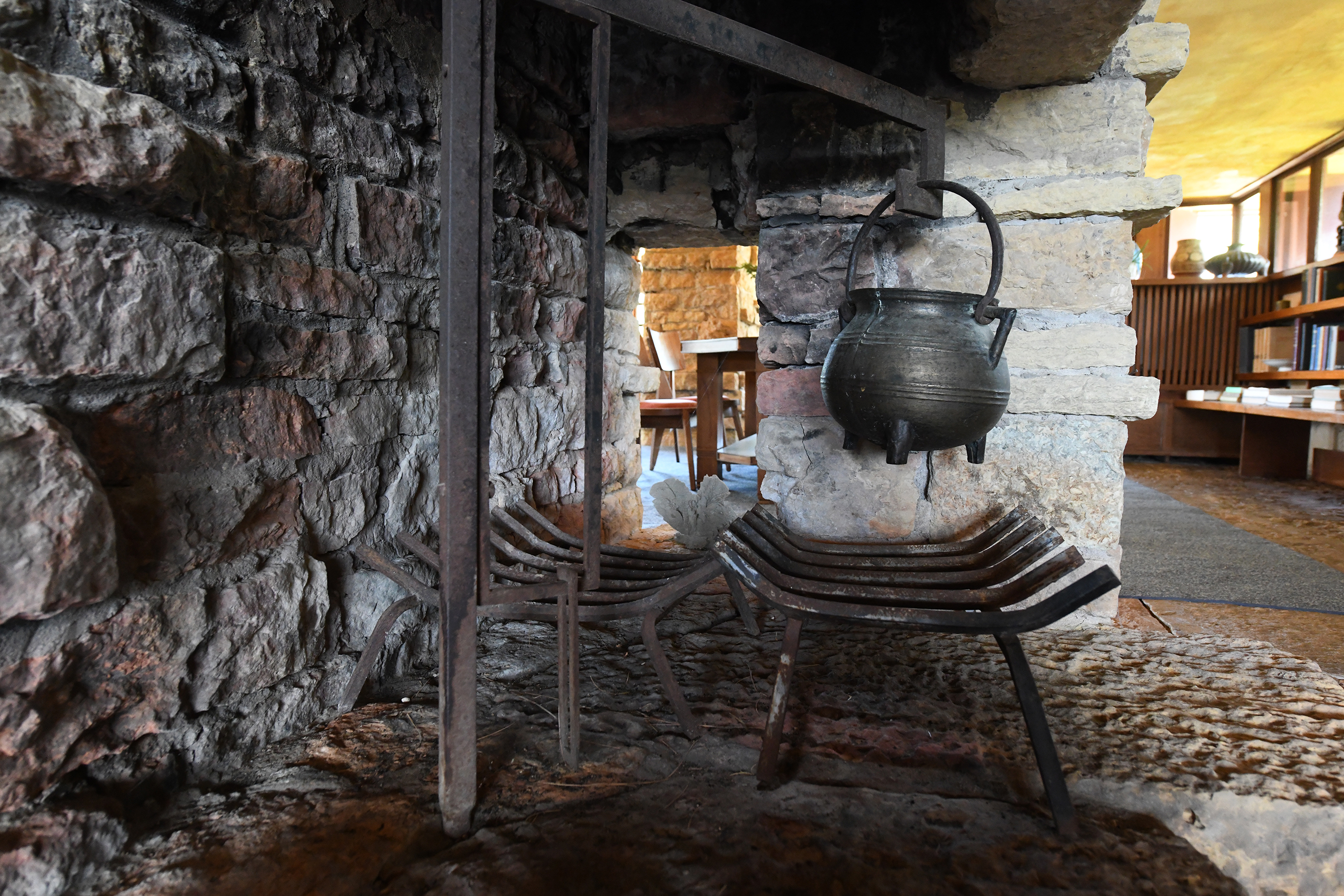
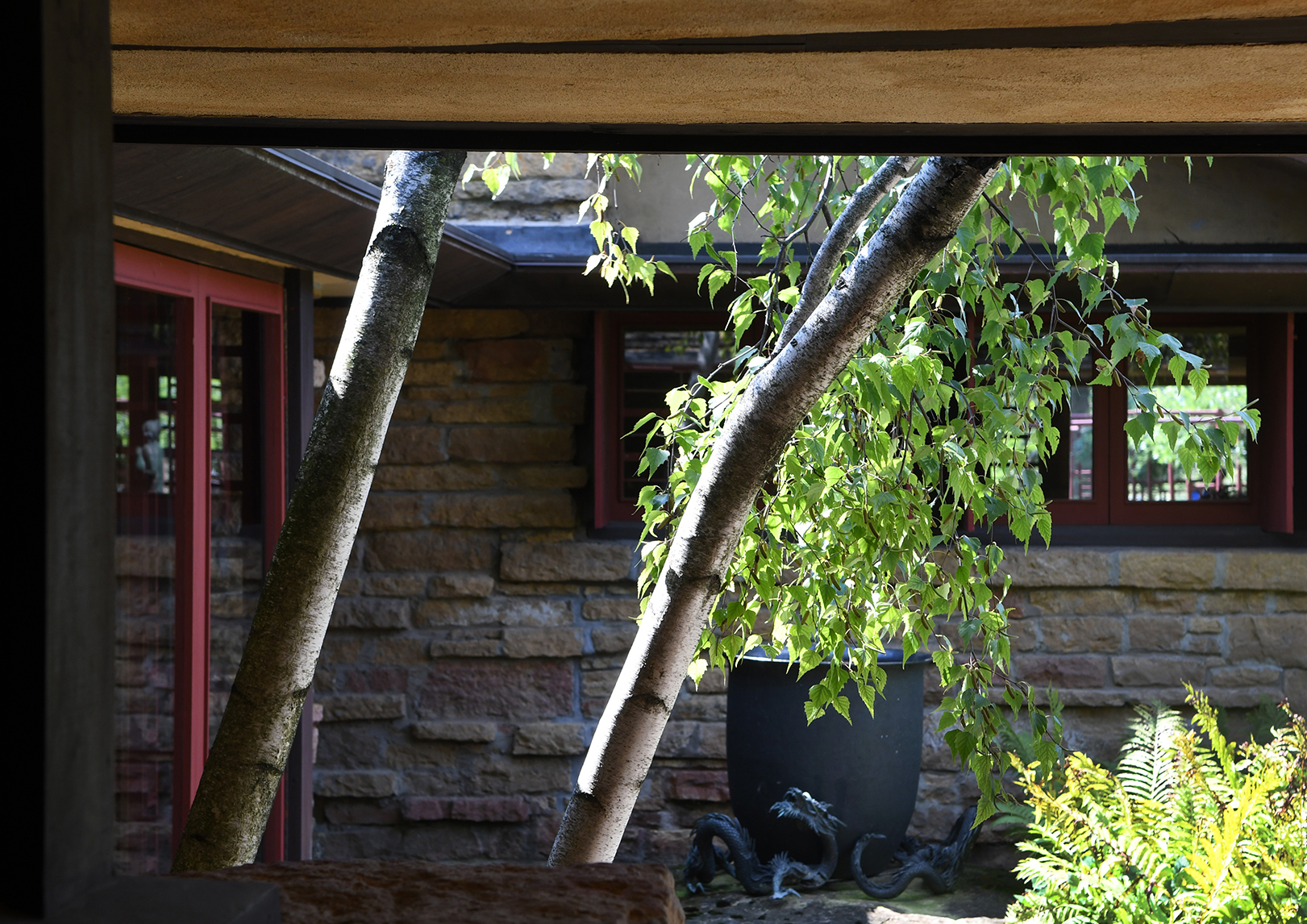
I sat on the floor to photograph through one of the fireplaces inside Taliesin:
I explored Wright’s office – with its own cantilevered balcony – and the original drafting room:
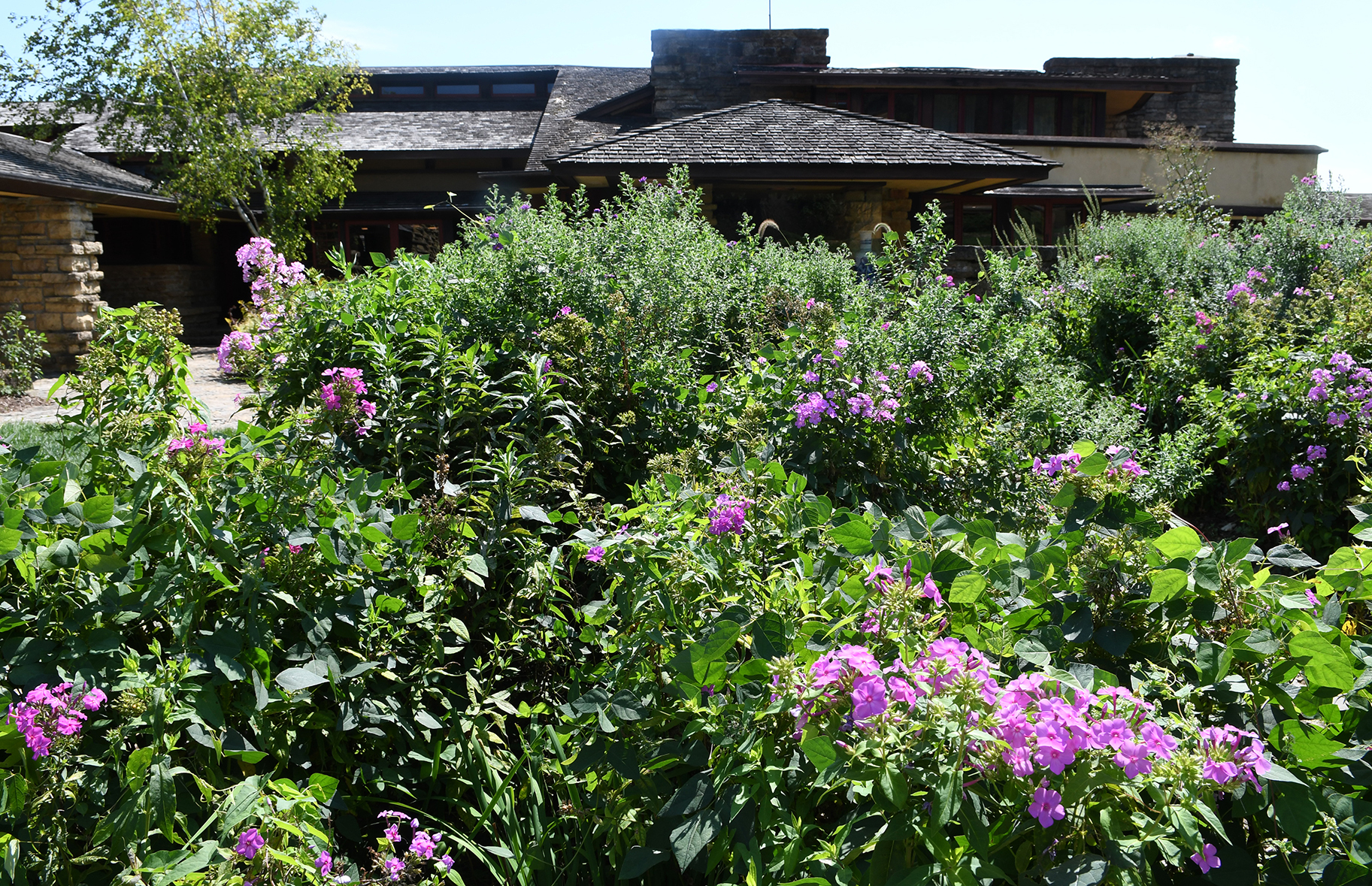
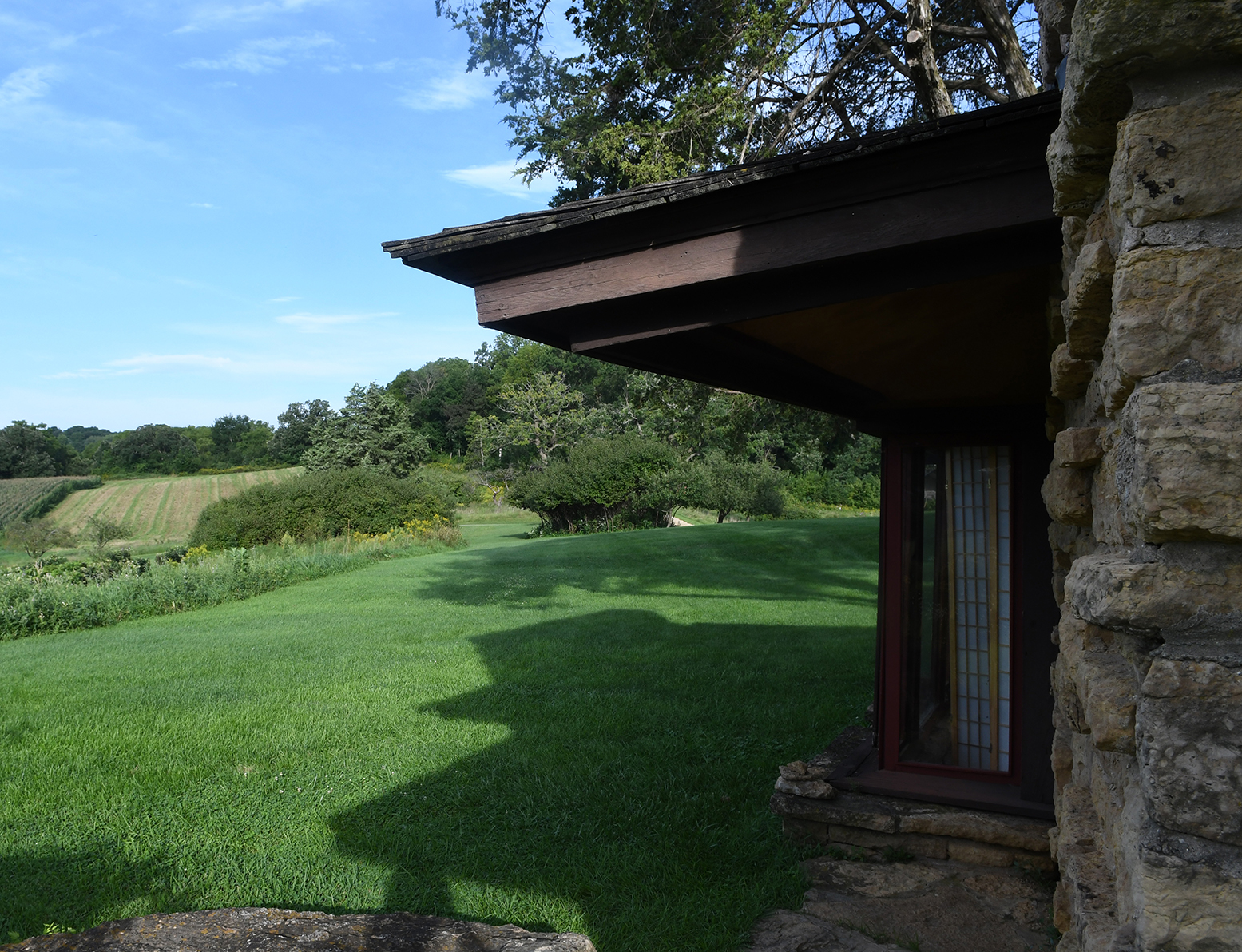
I photographed Taliesin itself with long and short lenses:
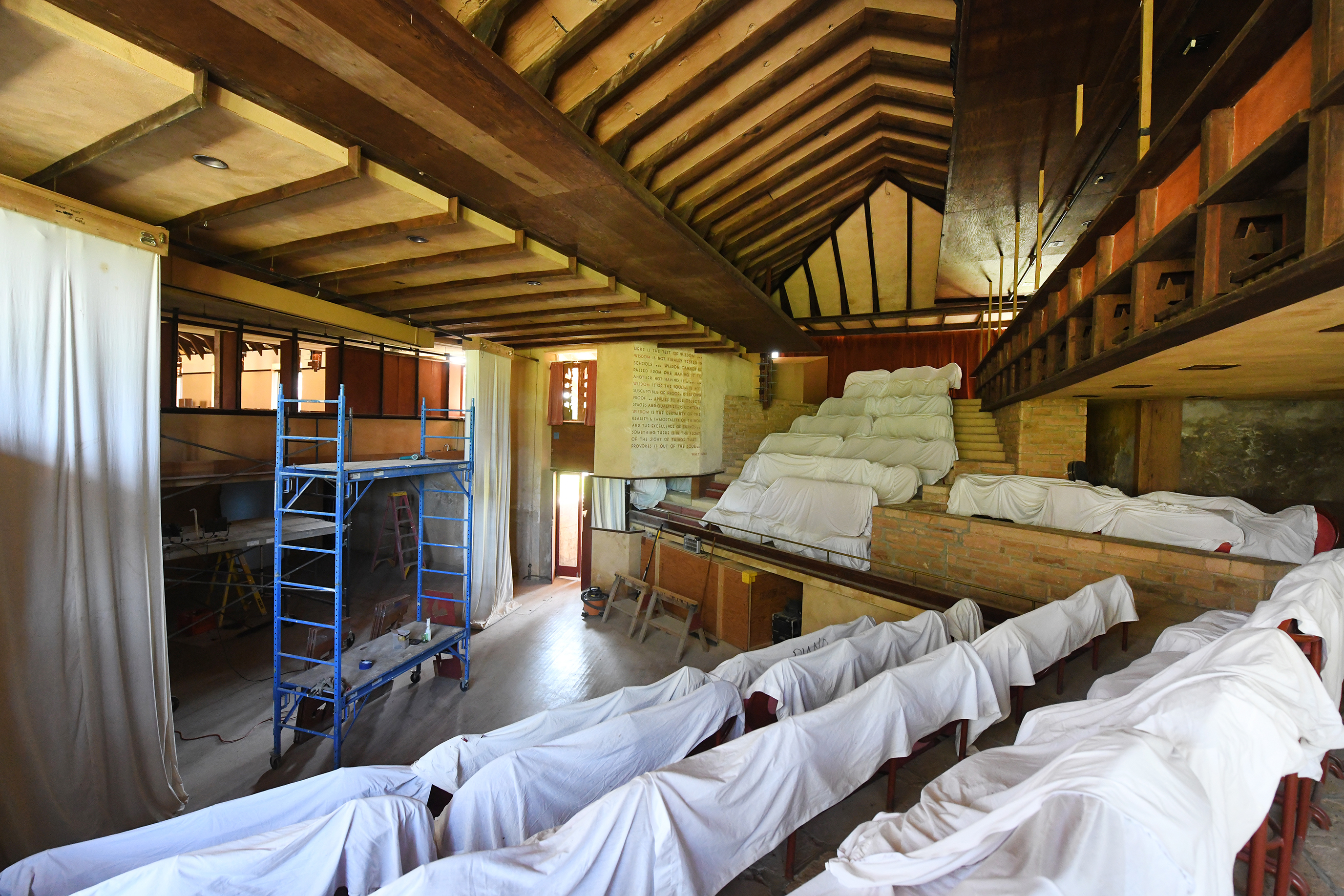
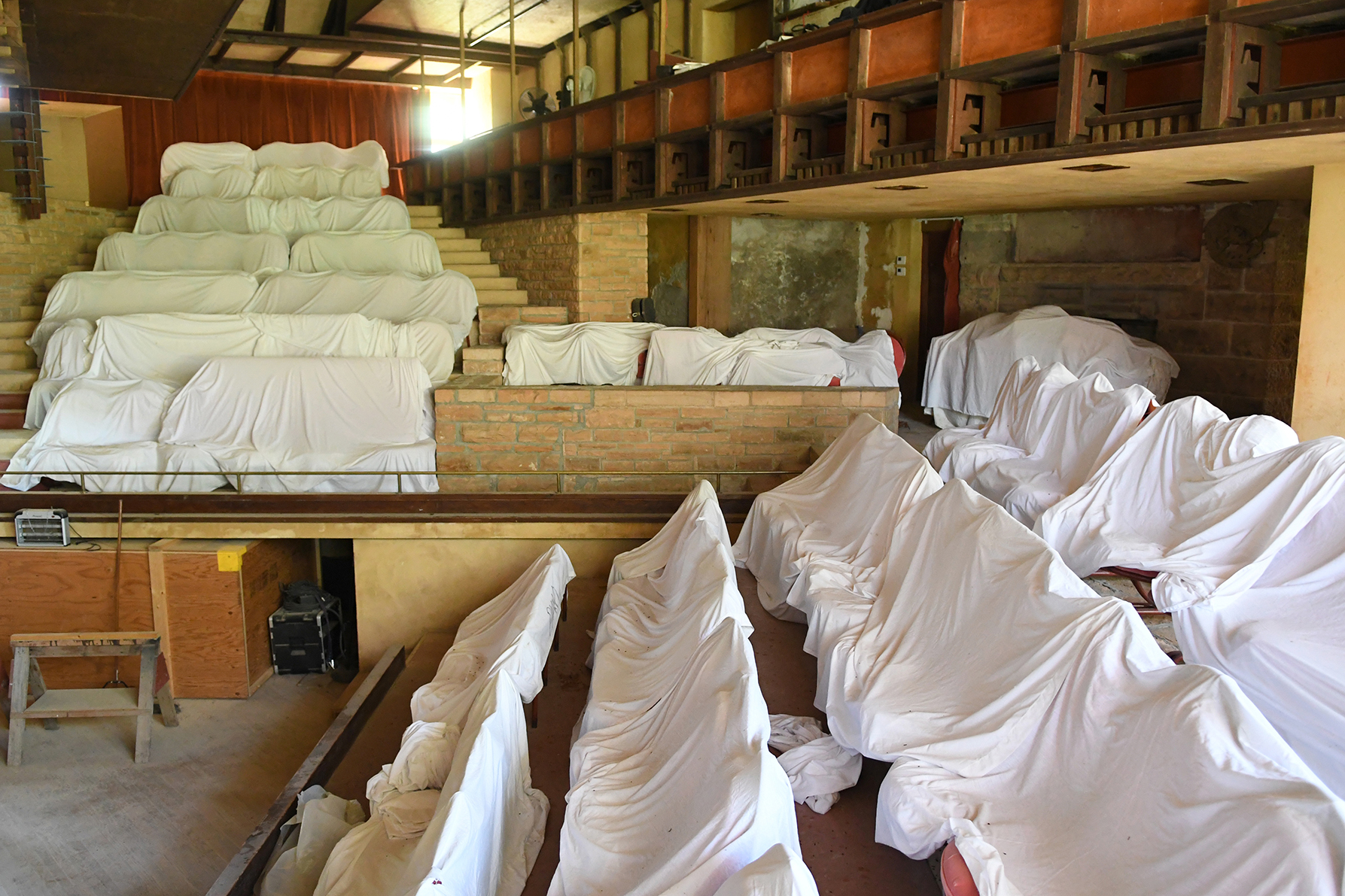
Going to Taliesin means also exploring Hillside Theatre and the drafting room. The theatre is currently being restored.
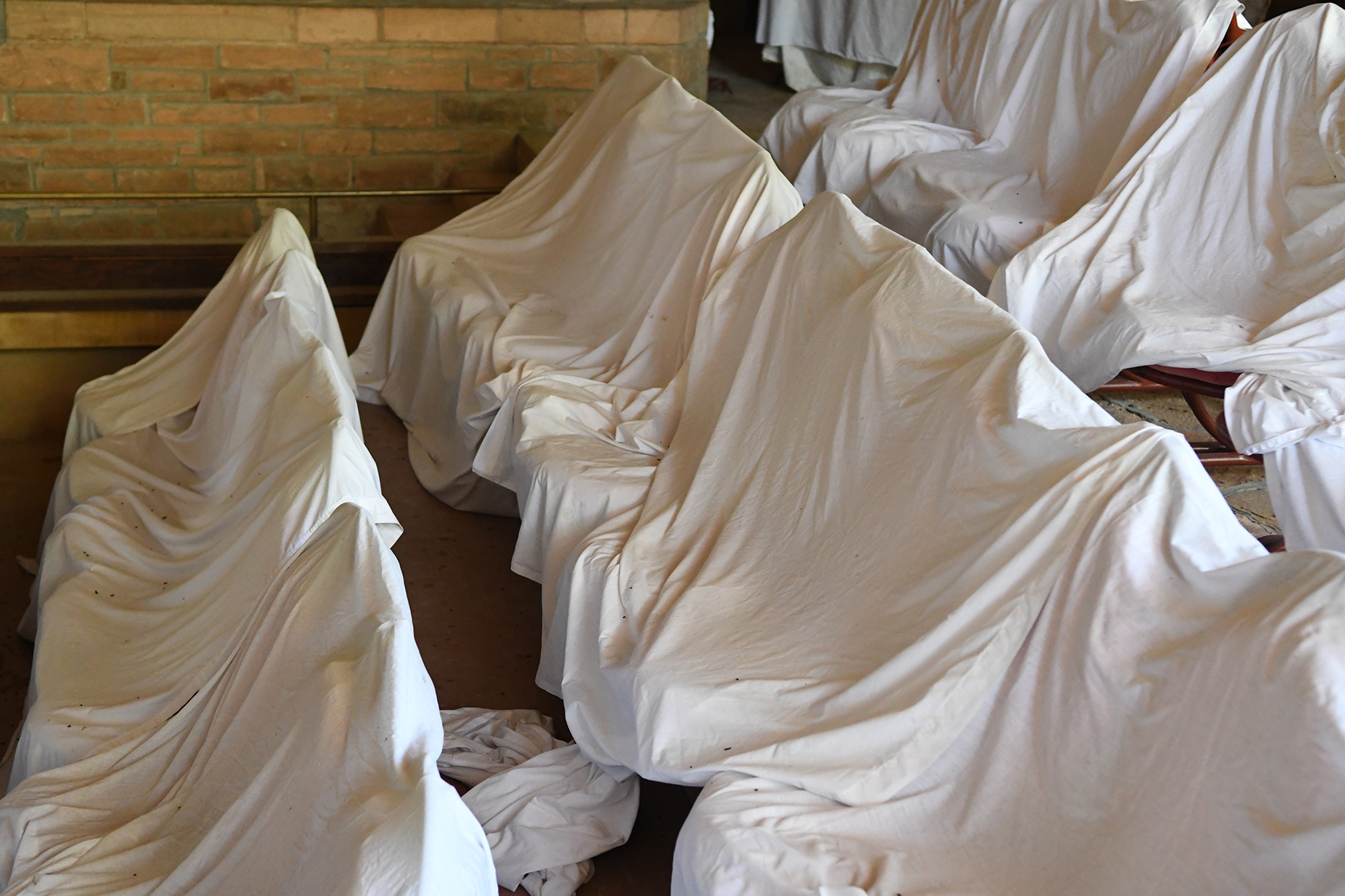
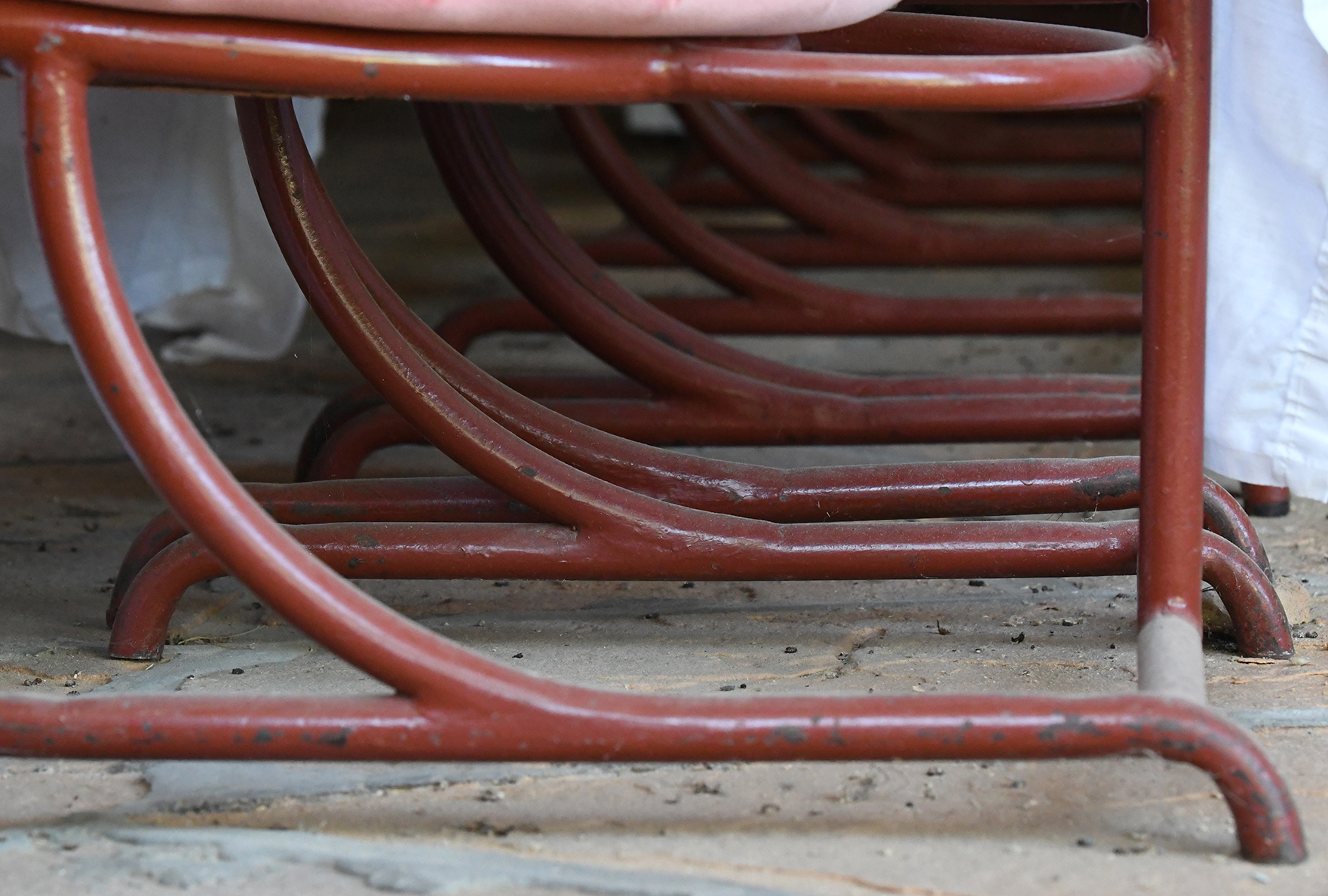
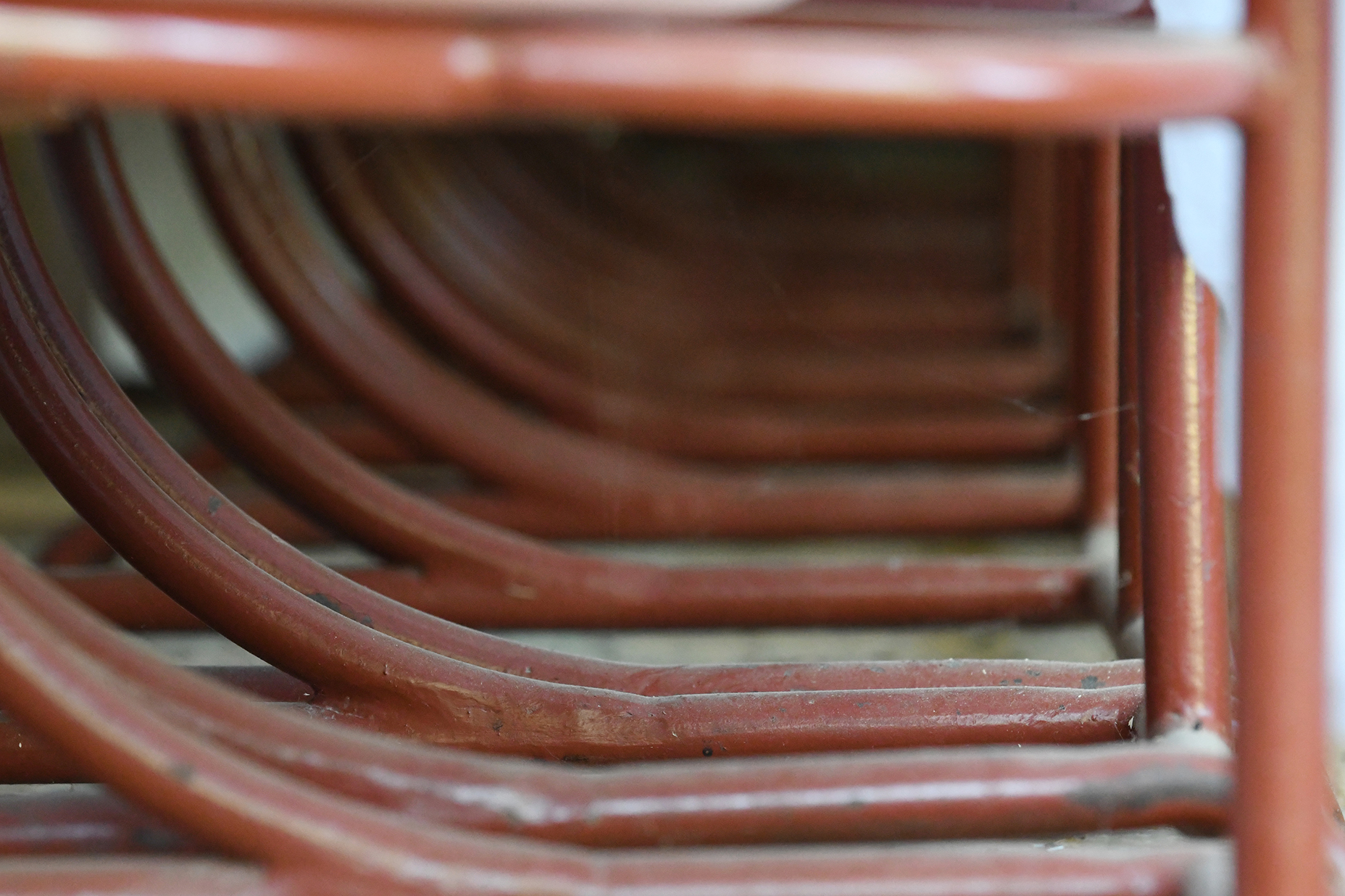
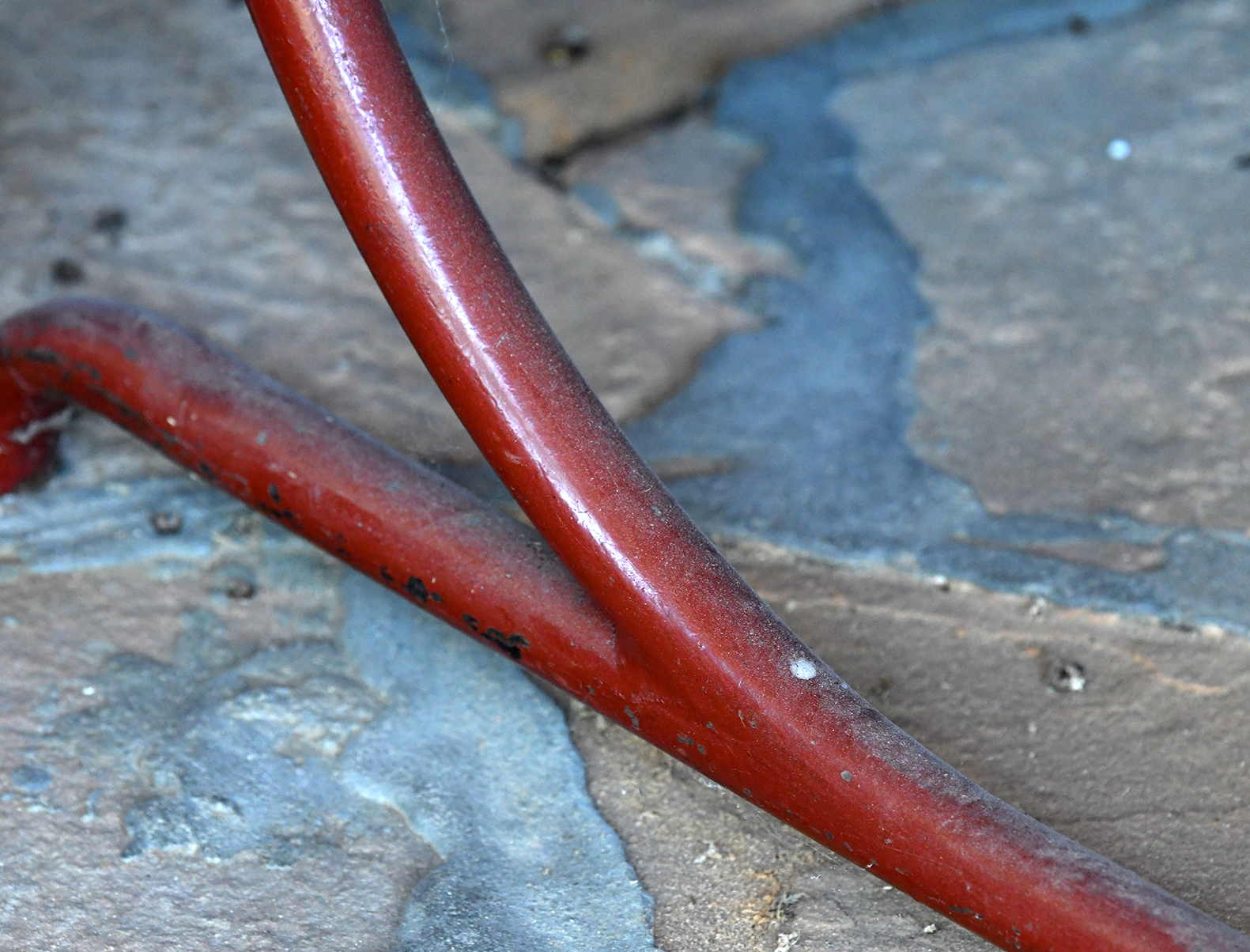
After photographing the ghost-like seats with the sheets covering them I looked for photos under the seats:
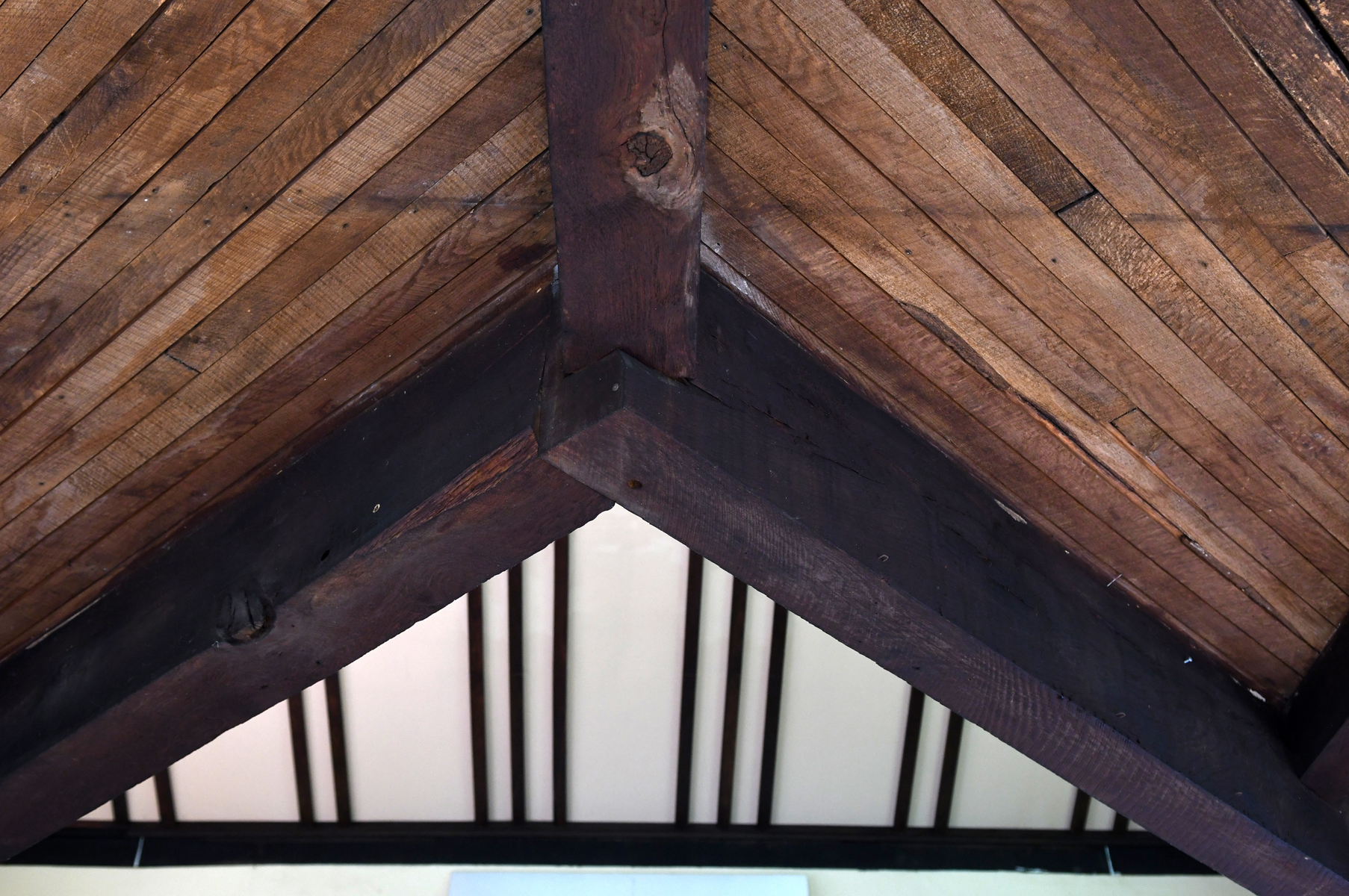
I also looked up:
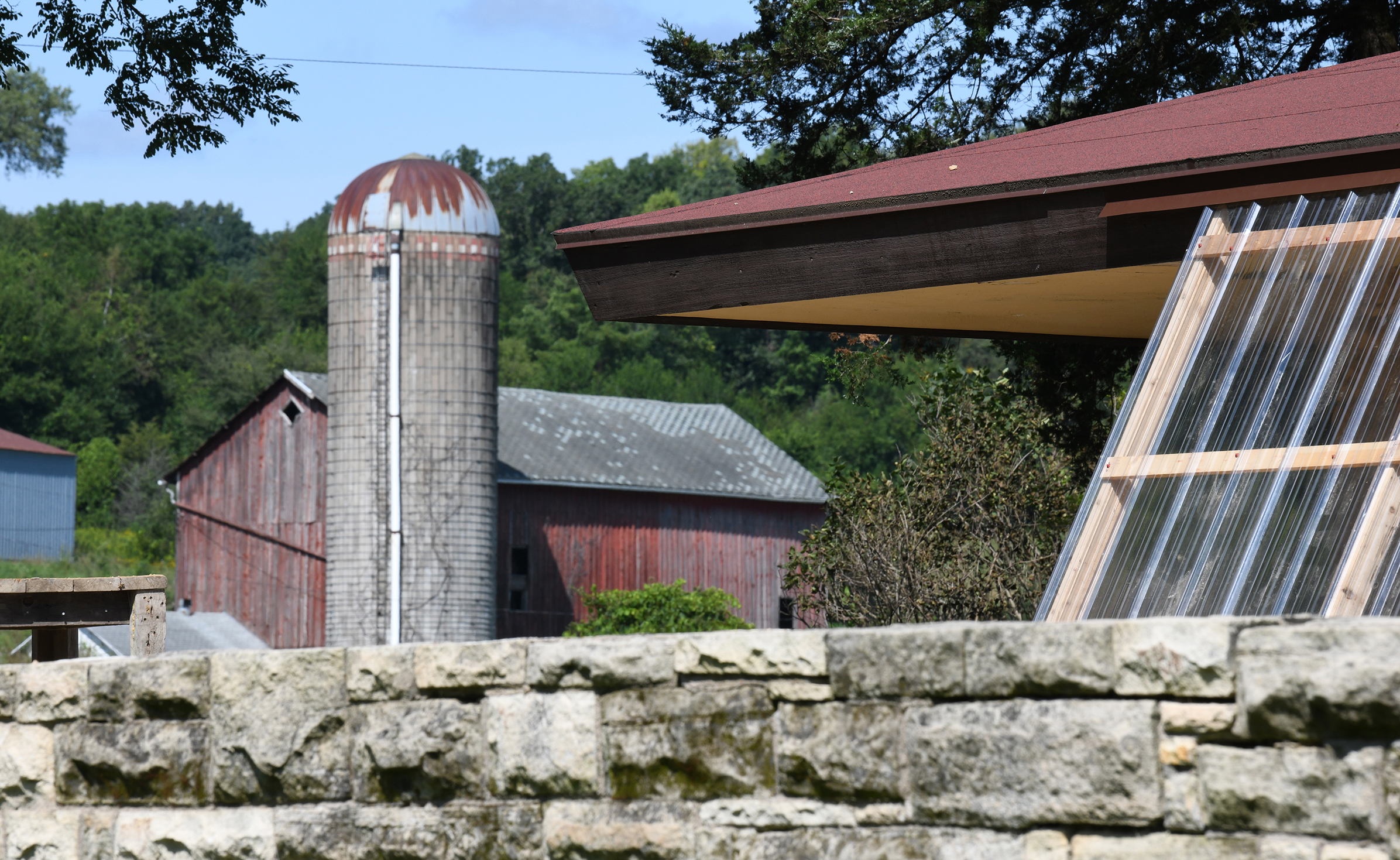
Outside is a view of the theatre and nearby farm:
Then I went to explore the silent drafting room, first reflected in the theatre’s windows:
And, Hillside itself:
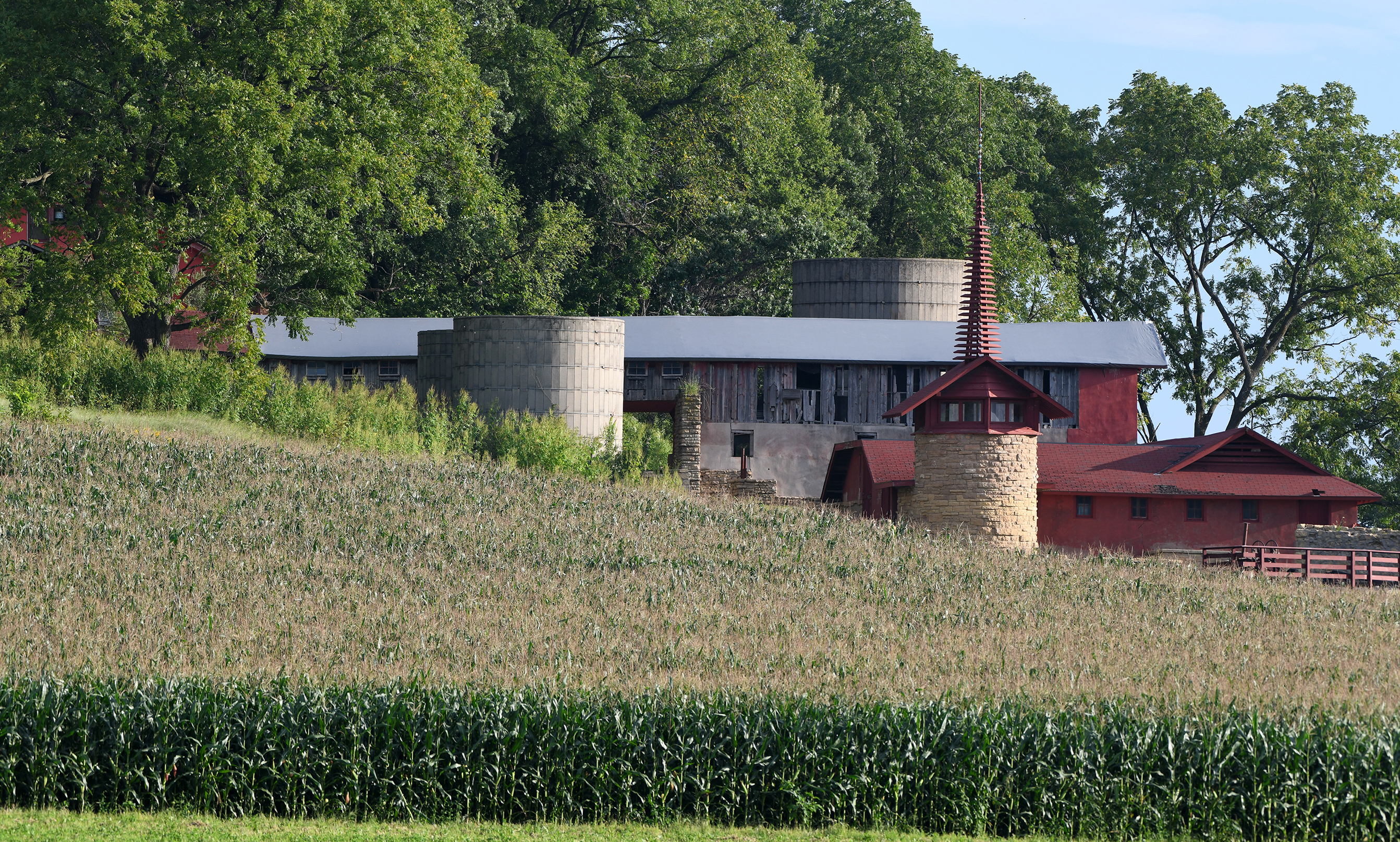
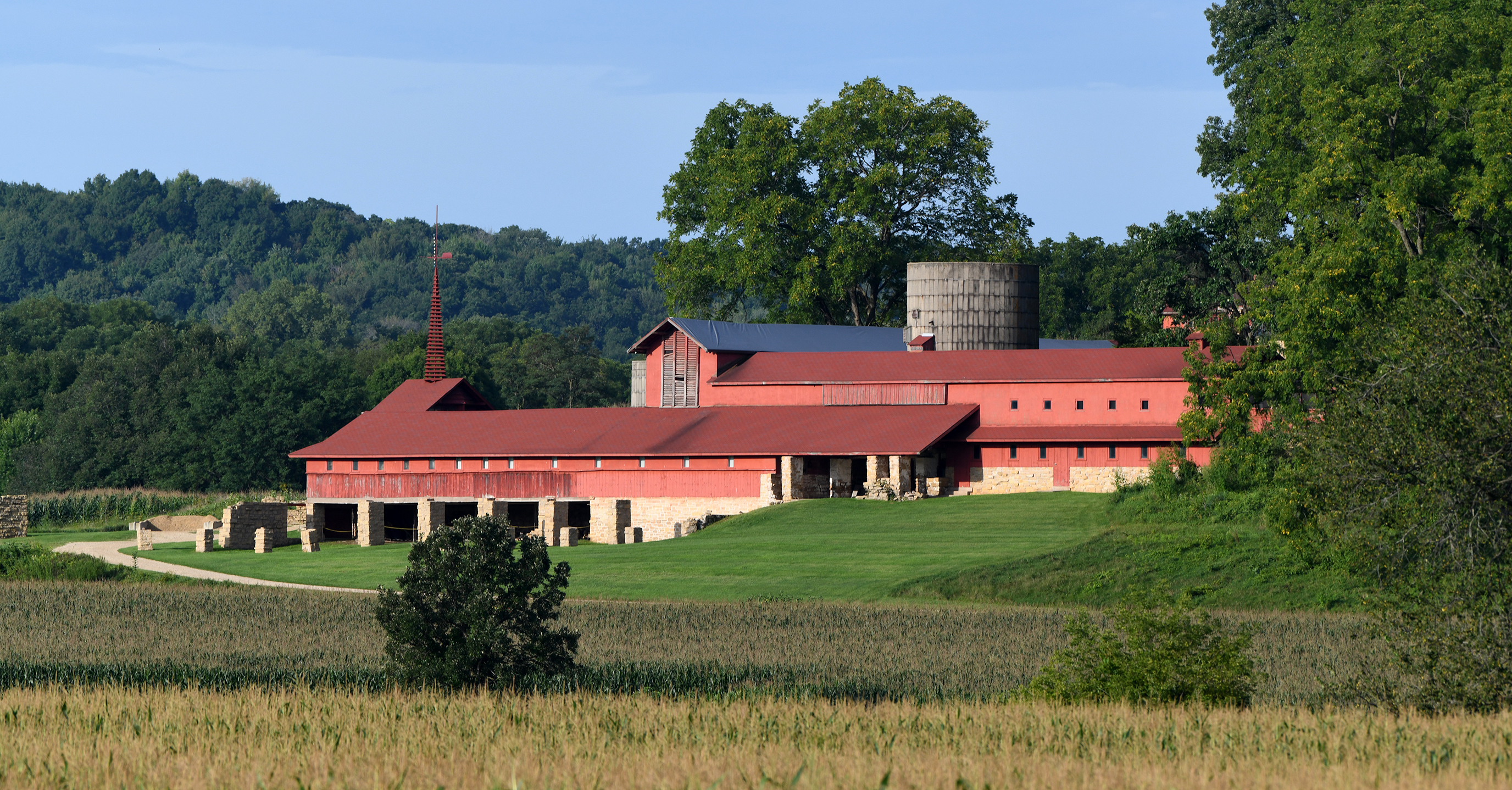
I photographed Midway Barn from the road, on my trips between Taliesin and Wyoming Valley School and once from Hillside:
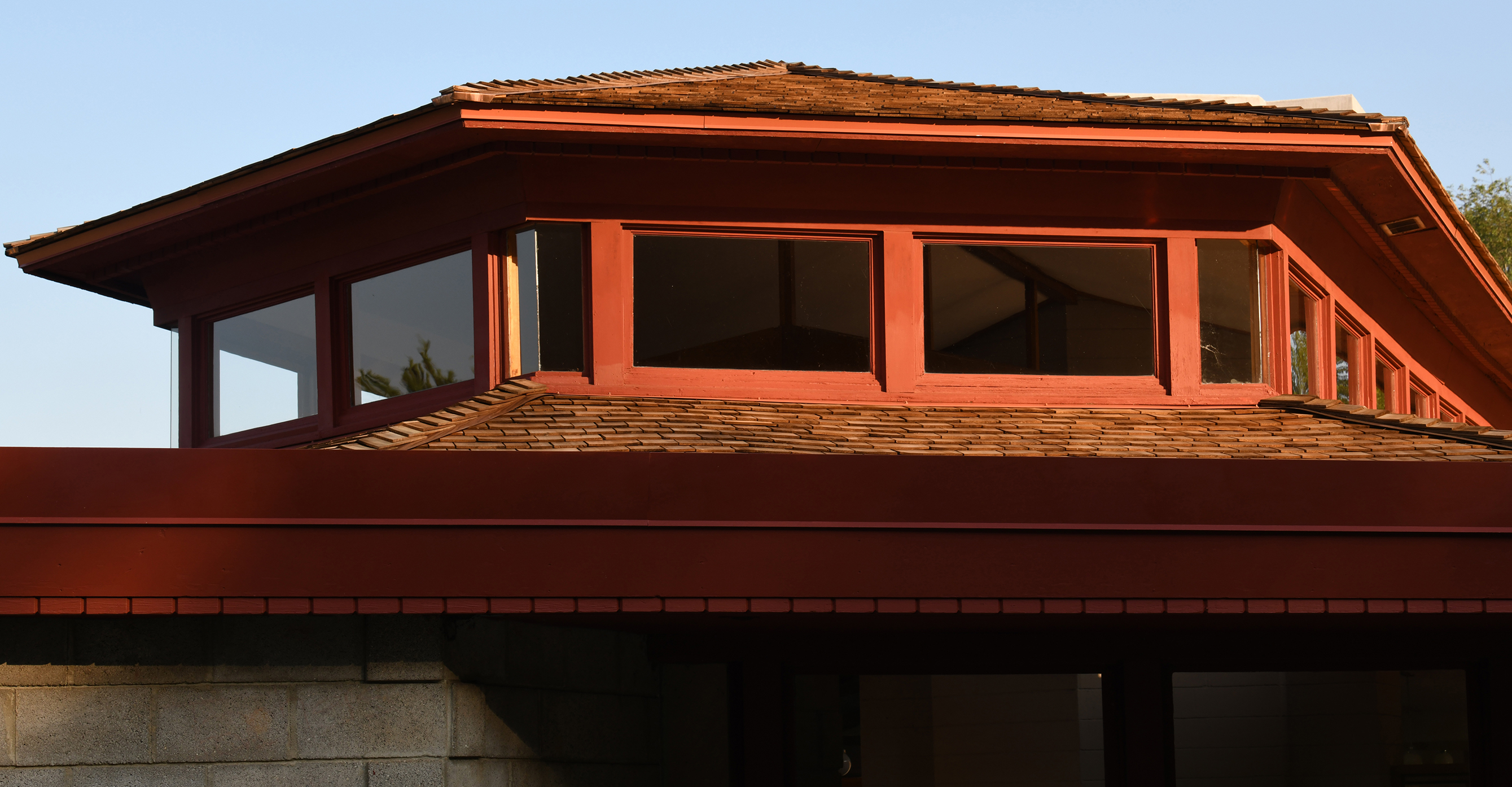
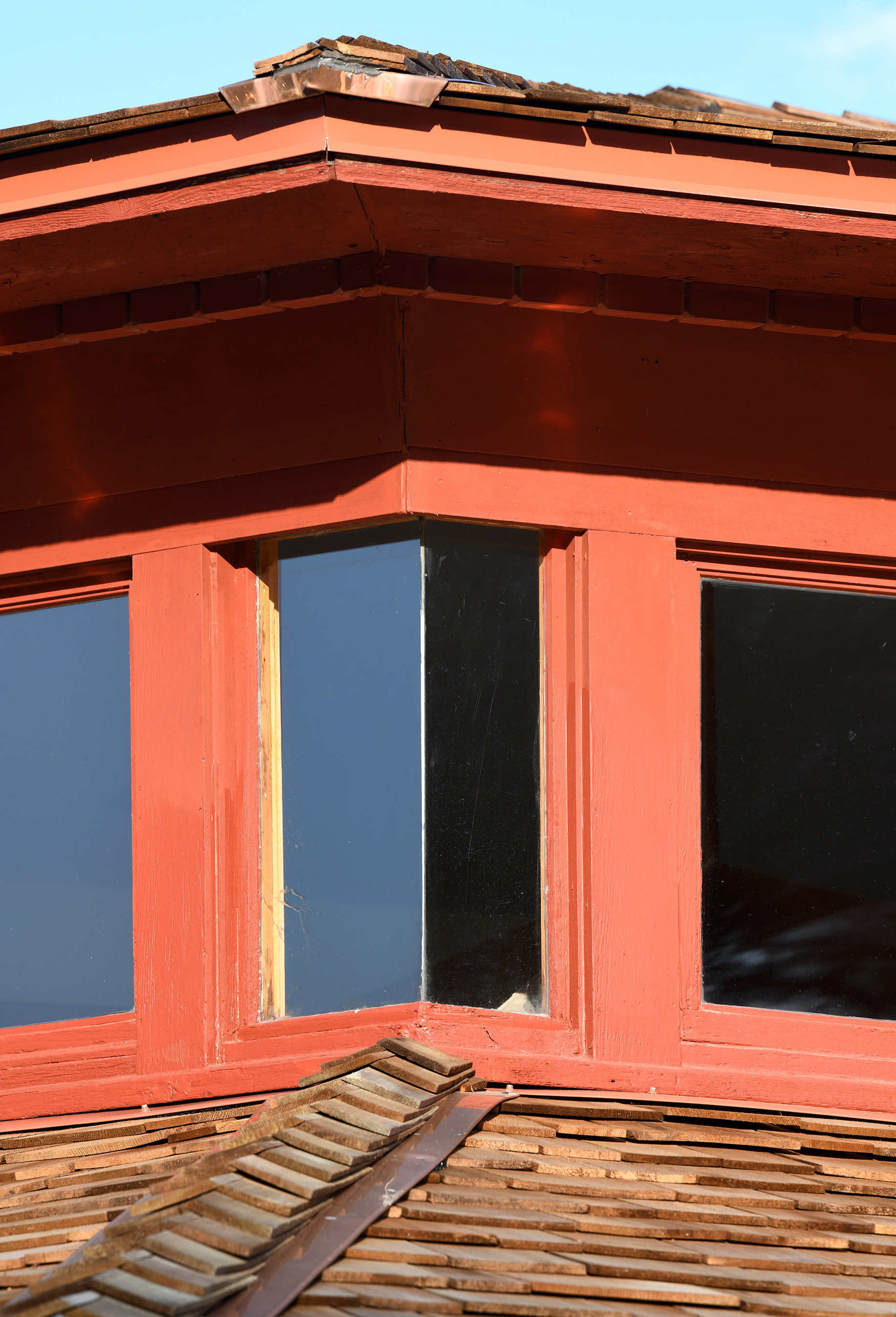
The last set of photos is of the Wyoming Valley School, now known as the Wyoming Valley School Cultural Arts Center. One of the only upsides of the pandemic is that the restoration of the school was able to proceed without having to work around visitors. Many of the changes are structural and not visible. Perhaps the most visible change is that the bricks inside now approximate their original natural color…the yellow of recent years was painted over with a grayish tone.
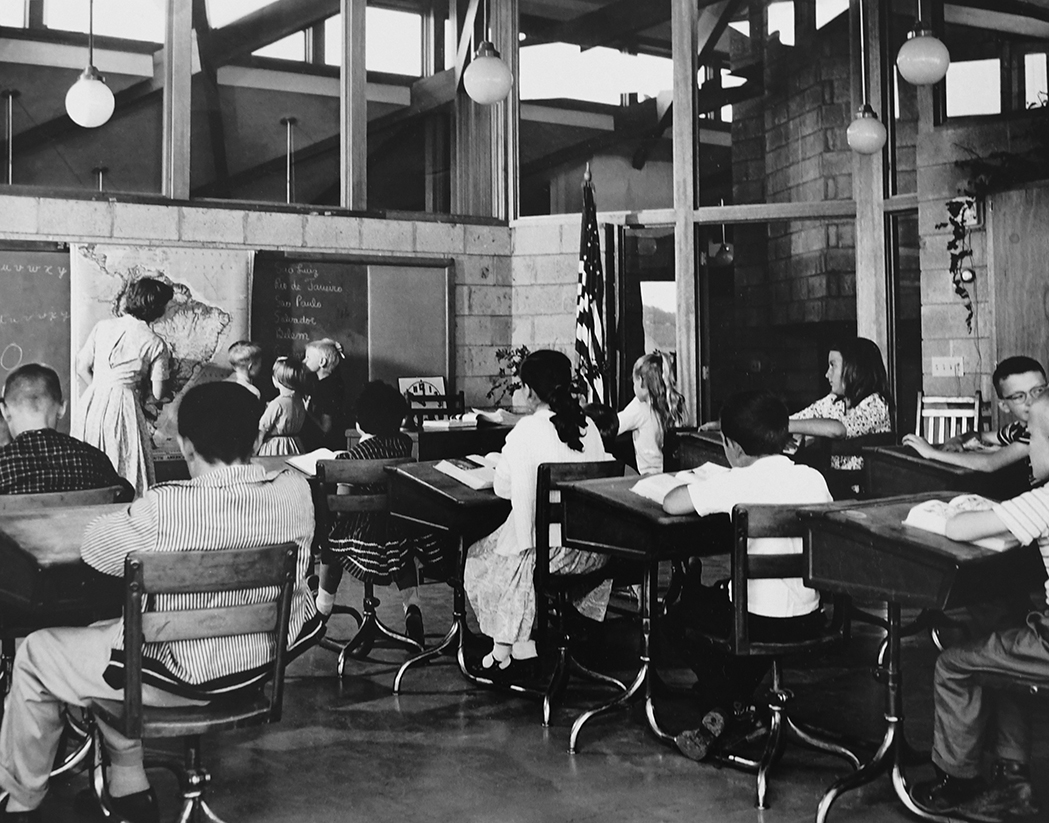
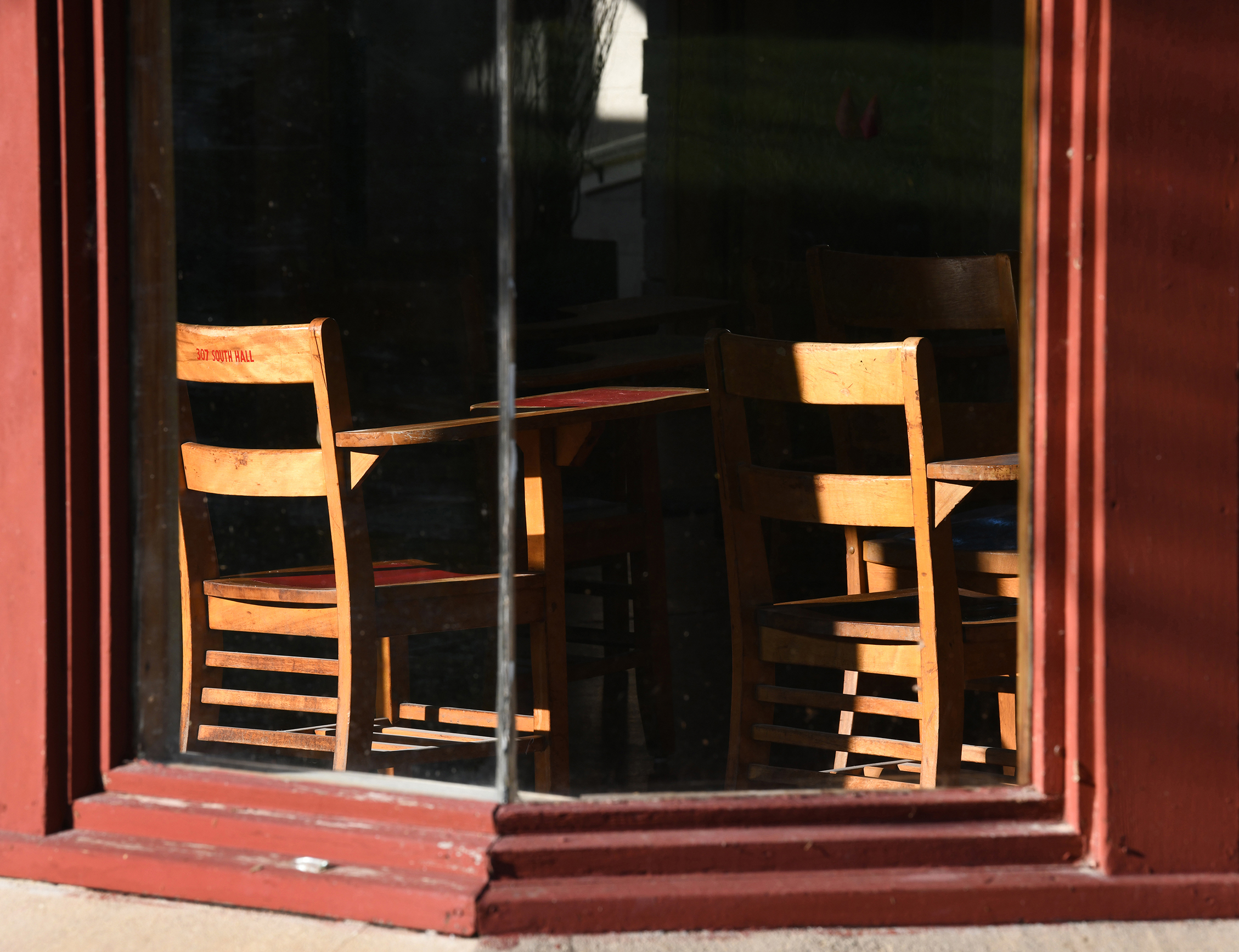
The desks in the classroom today are not original, but I enjoyed photographing them through the mitered glass in the evening light nonetheless. This historic black and white photo shows the original desks.
Robert Hartmann’s wonderful 1960s black and white photos of Taliesin and the school still hang on the walls. His photos documenting the construction of Riverview Terrace are in the rear of the dining room at the Visitors Center.
I leave you with a photo of the Marvelous Minerva Montooth and my Taliesin selfie. Technical notes: I do no “post processing” on my photos…I do not sharpen them or increase the color saturation. What I shoot is what I get. I sometimes open the midtones a bit and do a bit of dodging and burning in…nothing that could not be done in a traditional chemical darkroom. I use two camera bodies, one has a DX or crop frame sensor, the other is FX or full frame (equivalent to what would be recorded on a 35mm piece of film). The lenses used are: 14-24mm (used on the FX body); 17-35mm (on the DX body); a 70-200mm on the FX body, and a 200-500mm, used on both bodies. When the 200-500 is on the DX body, it is approximately the equivalent in 35mm terms of a 350-750mm lens. I thank John Clouse for selling me that lens recently…I had a wonderful time exploring Taliesin and Wyoming Valley School with it!
Note: My photos of Minerva and Charles Montooth are the post below this one.
This is the final installment of my 2019 quest to find new photos as I visit buildings designed by Frank Lloyd Wright that are familiar to me. I visited them five times accompanying Road Scholar trips this year:
I have posted earlier photos on the website since May. Have a look, and let me know what you think!!! The photos are in the order in which we visited these sites…not all the sites visited are represented on this post.
Wingspread, Wind Point (Racine):
Annunciation Greek Orthodox Church in Wauwatosa:
Jacobs 1, Madison:
The Unitarian Meeting House, Madison:
Wyoming Valley School, Spring Green:
Taliesin 3:
The original drafting studio at Taliesin:
Midway Barns:
Hillside Home and School:
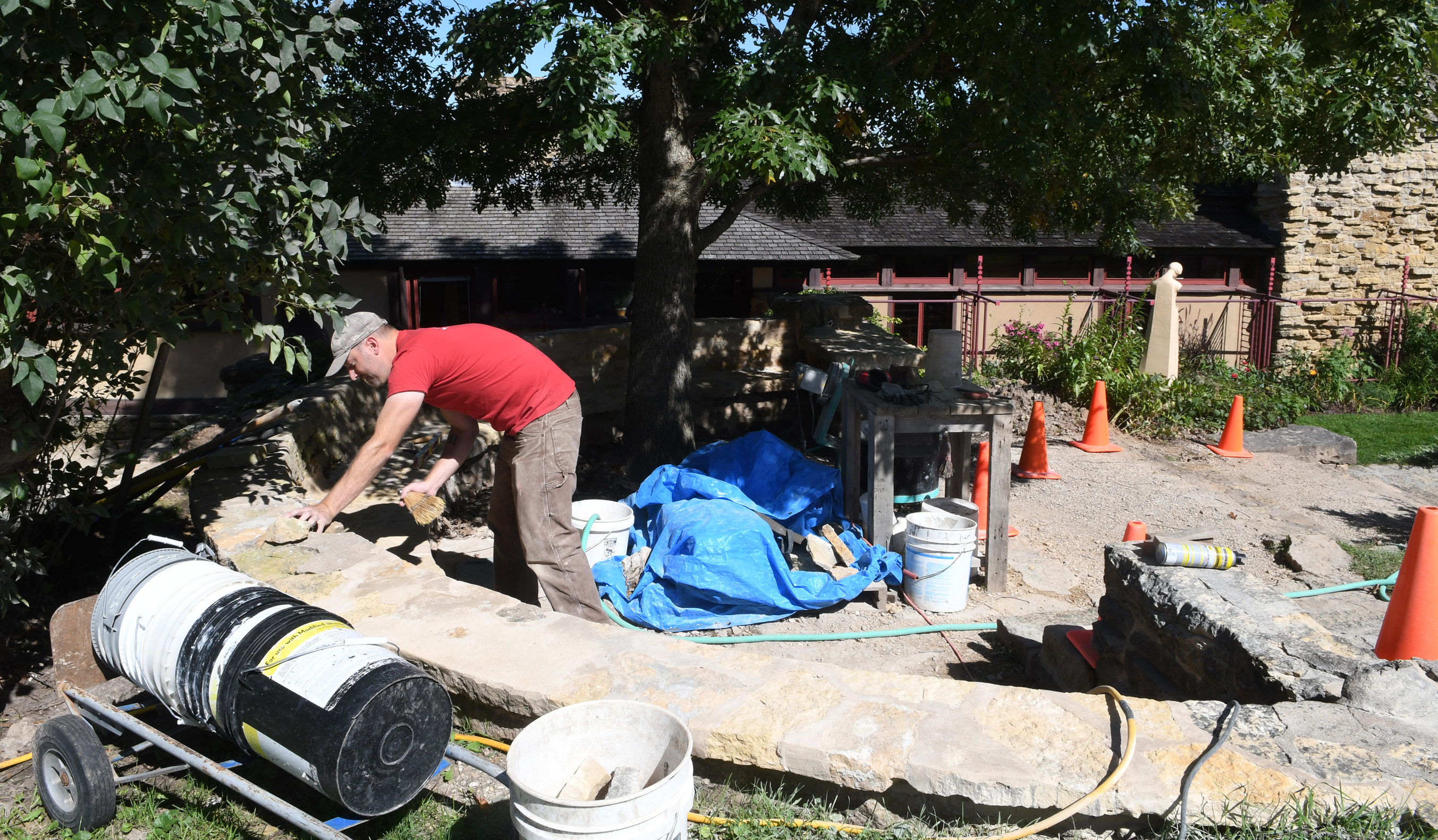
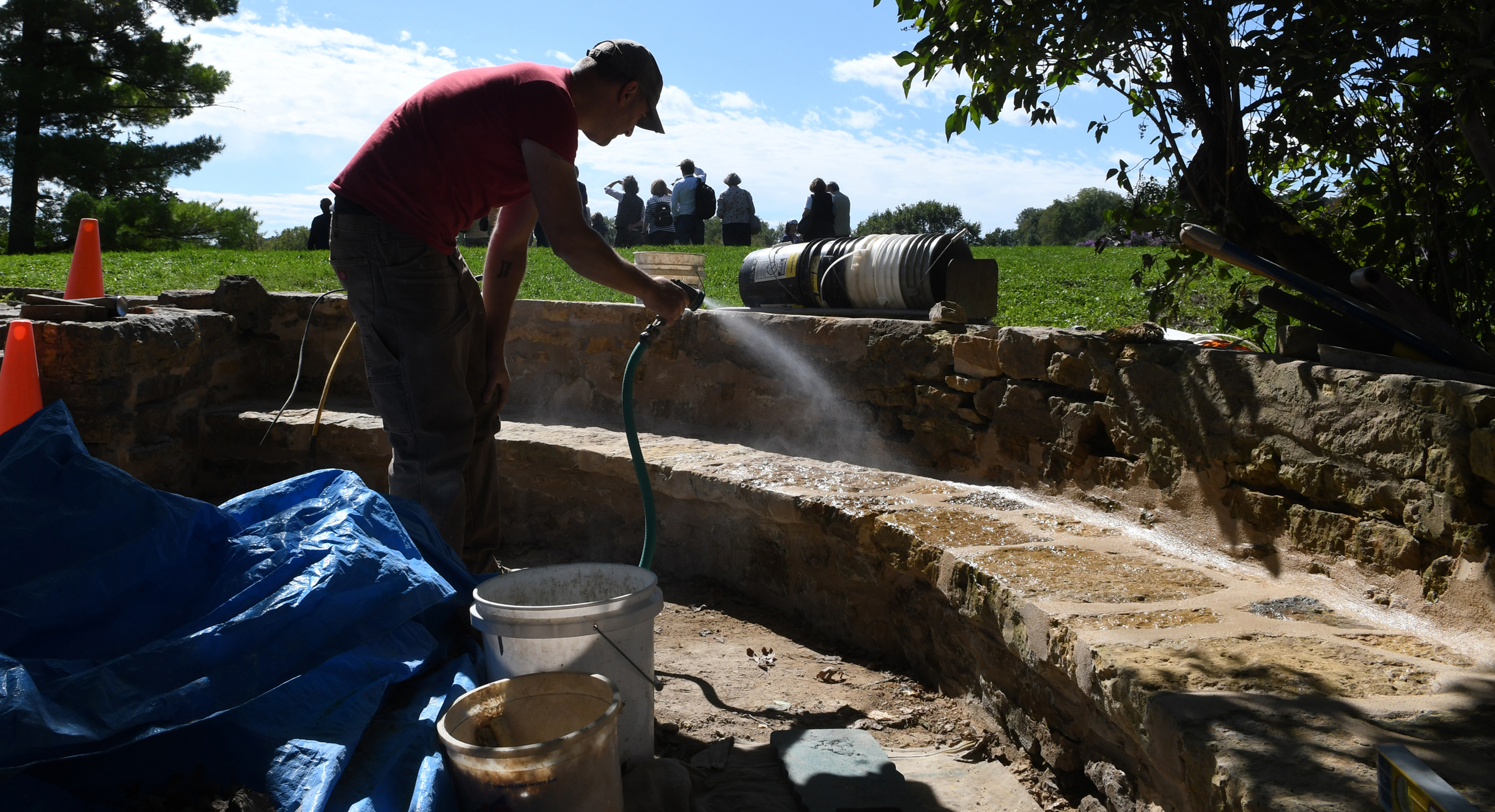
Michael DiPadova continues reconstruction of the Tea Circle:
And, finally, my friends, I leave you with two more “selfies,” one at Wingspread and one at Taliesin!
Olgivanna Wright could not have picked a better and more congenial assistant for 25 years than Minerva Montooth, who I am privileged to call a friend. Make that “Friend” with a Capital F. We have been privileged to know Minerva Montooth since May 2003 when her late husband Charles invited me to give my “Wright in Racine” presentation in the theater at Hillside Home and School (that was indeed a heady invitation for a burgeoning journalist-student of Wright’s work!). Minerva has kindly invited us to the annual celebration of Frank Lloyd Wright’s birthday at Taliesin every year since then.
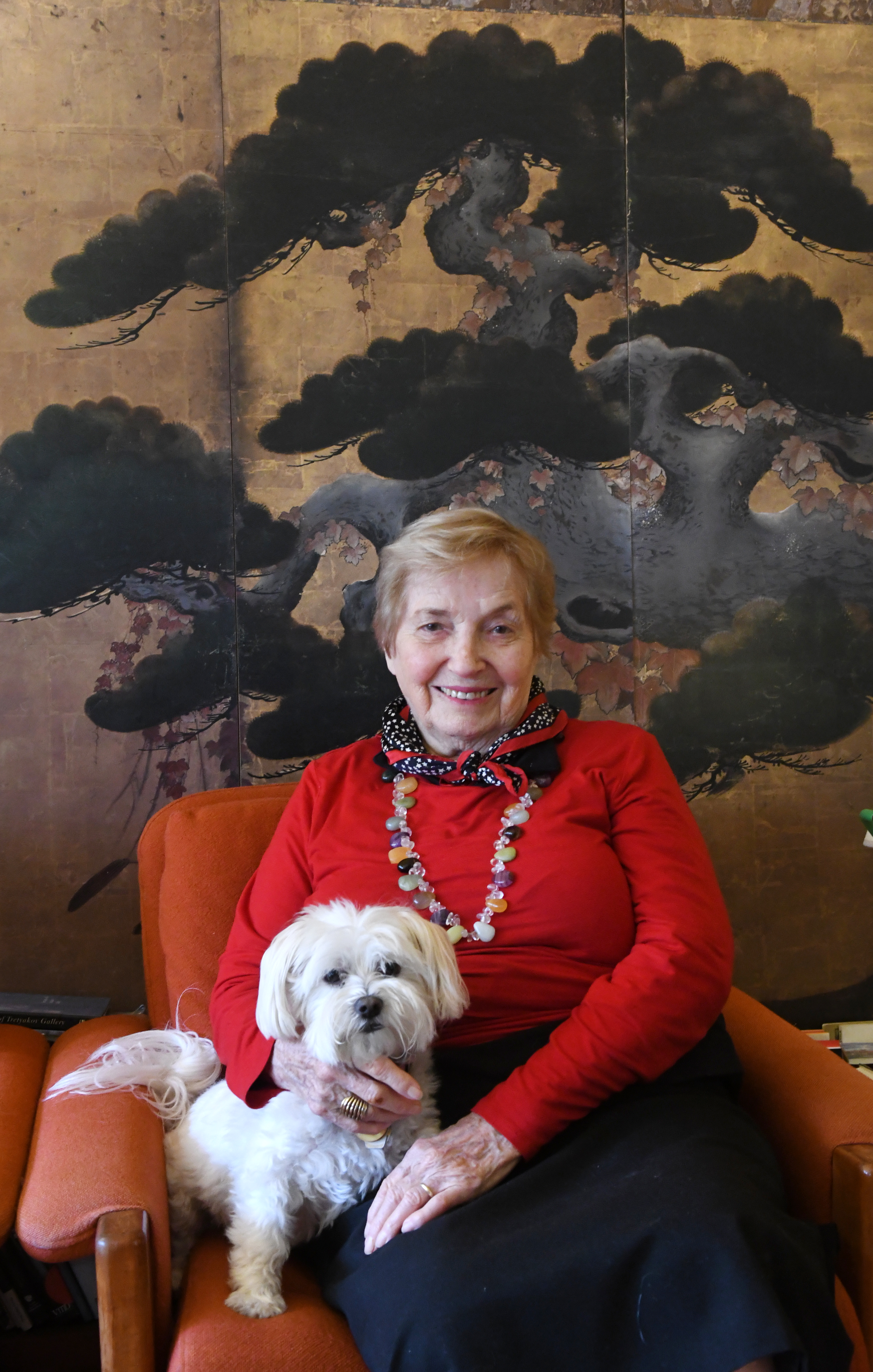
Last week Minerva told me how she came to join the Wright community at Taliesin West in 1952 (gosh, I was only 18 months old!). She has a keen photographic eye. I admired the magnificent lighting of a photo of Charles, who died in December 2014, in her living room, not knowing that she was the photographer. When it was time for me to leave, I couldn’t just leave; after all my camera first had to photograph Minerva and Fifi:
Below are some of my earlier photos of Charles and Minerva:
Charles on the “Birdwalk” at Taliesin, Wright birthday celebration, 2004.
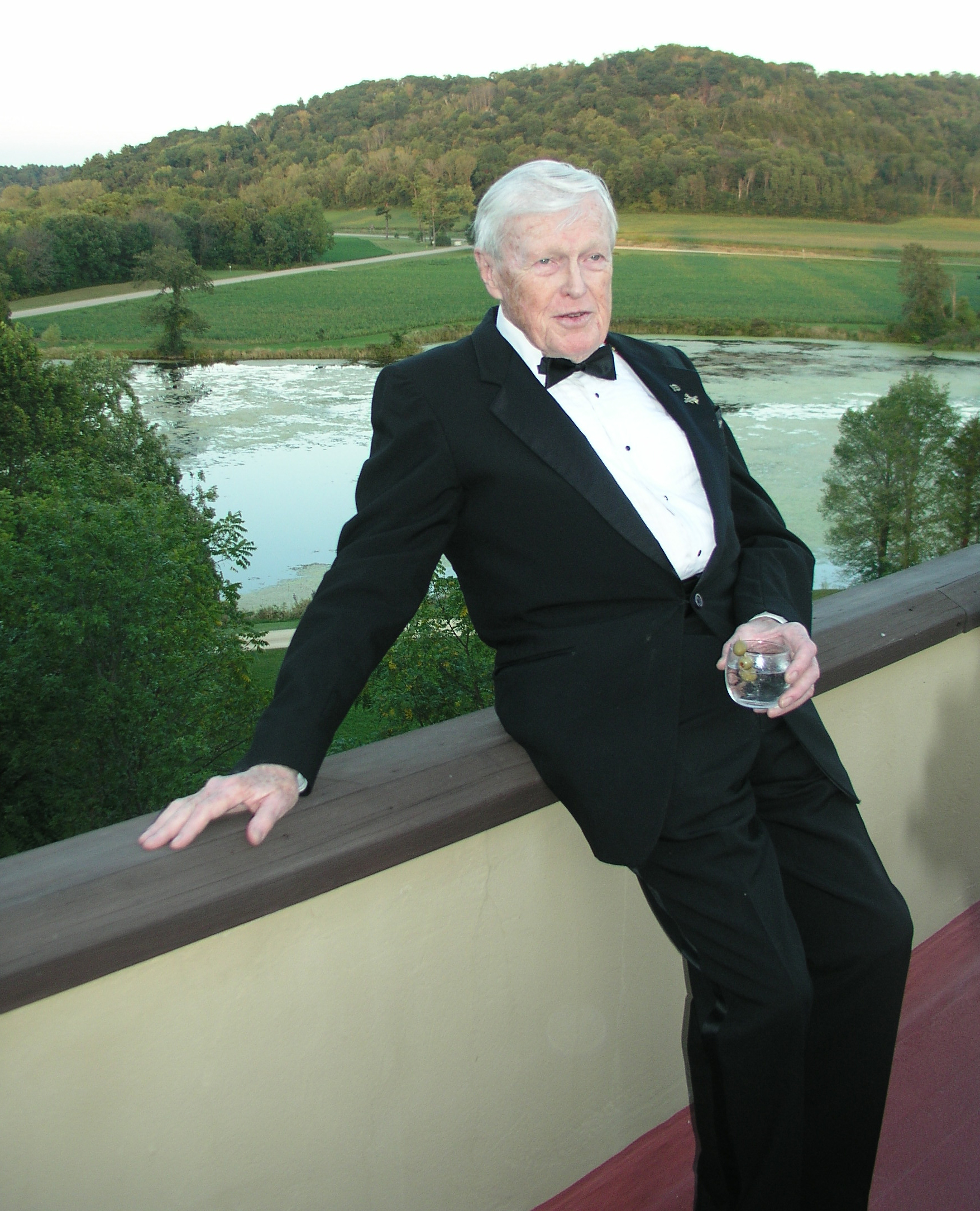
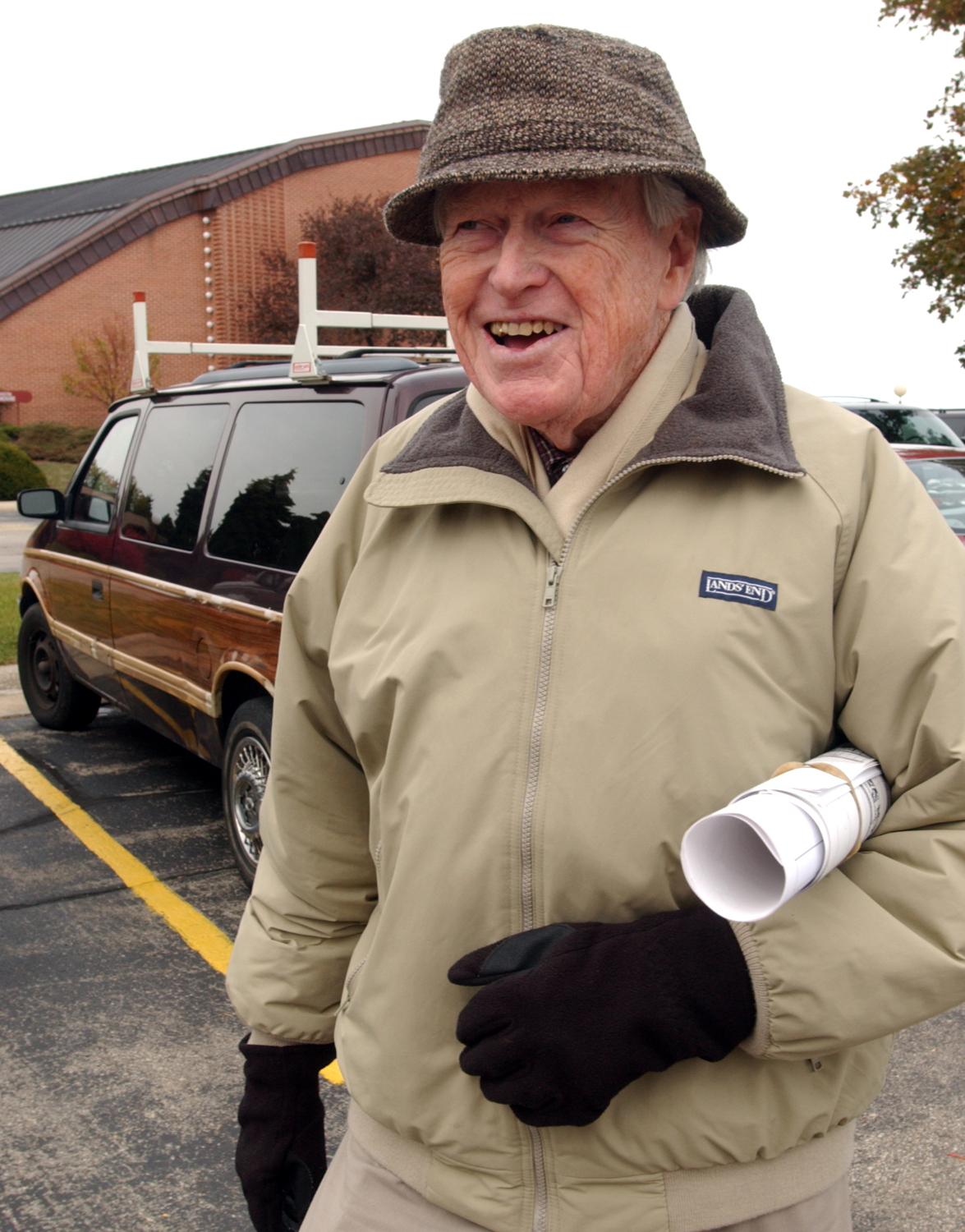
Charles at The Prairie School in Wind Point (Racine), October 2003, with plans for the addition to the athletic center. Charles designed the original school building and each subsequent addition. He worked with Floyd Hamblen on the addition.
Minerva and Charles at the dedication of the new facility, January 2005.
Charles accepts accolades at the dedication.
By the way, if you email Minerva or write her something on Facebook, don’t expect a reply during your normal business hours: she is a confirmed computer night owl…1 a.m. is not an unusual time stamp for her.