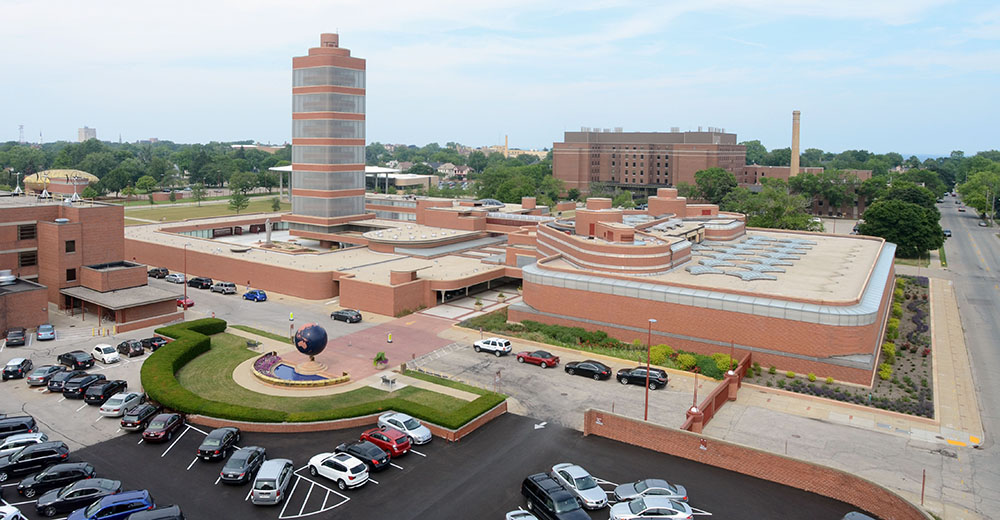
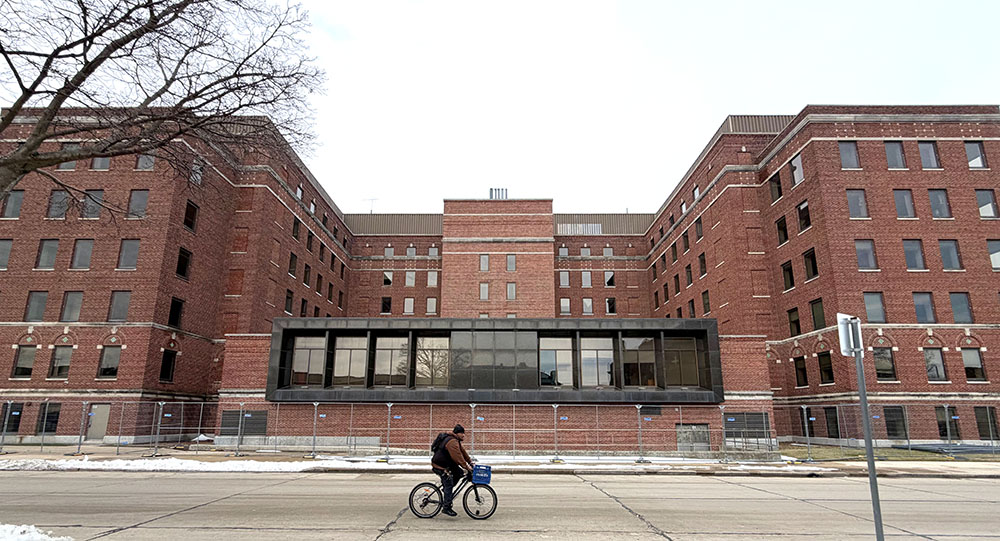
SC Johnson is almost finished demolishing the former St. Mary’s Hospital building (1933) on their campus in Racine. Why take up space on a Frank Lloyd Wright site about the demolition of a building that Wright had absolutely nothing to do with?
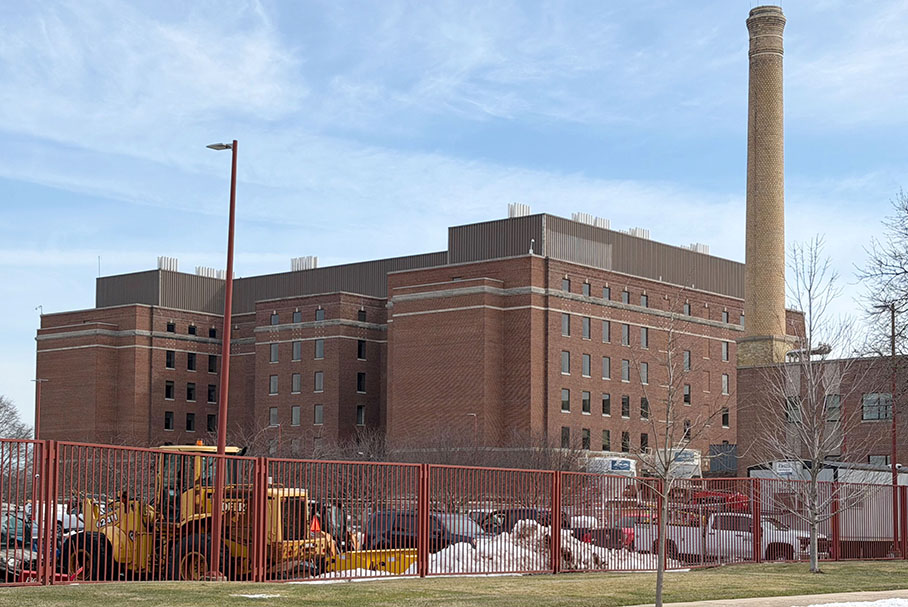
The former St. Mary’s Hospital building, repurposed as SC Johnson’s Louis Laboratories, on the east edge of the company campus, next to the smokestack, Tuesday July 28, 2015.
The answer is that there is a direct connection between the hospital building and Wright’s SC Johnson Research Tower, which was designed in 1943/44 and opened in November 1950.
When Dr. J.V. Steinle, the company’s research and development director proposed in 1943 that the company build a new R&D facility after the war, his site sketch included dotted lines marked “Future Expansion.” H.F. Johnson Jr. balked at giving Wright the commission even though it would be next to Wright’s landmark SC Johnson Administration Building. Wright eventually won Johnson over (the story of the commission is in both Jonathan Lipman’s book “Frank Lloyd Wright and the Johnson Wax Buildings” and my “Frank Lloyd Wright’s SC Johnson Research Tower.”). Wright’s dramatic design lacked that critical room for “Future Expansion” and was designed for only 50 chemists. The company began to outgrow it by 1957 and opened “carport labs” below the soaring structure. St. Mary’s sold the hospital building to SC Johnson in 1977 after moving to a new campus on the west side of Racine. SC Johnson repurposed the old hospital as their new R&D facility and closed the Research Tower in 1981. The new labs bore the name of the Louis Laboratories.
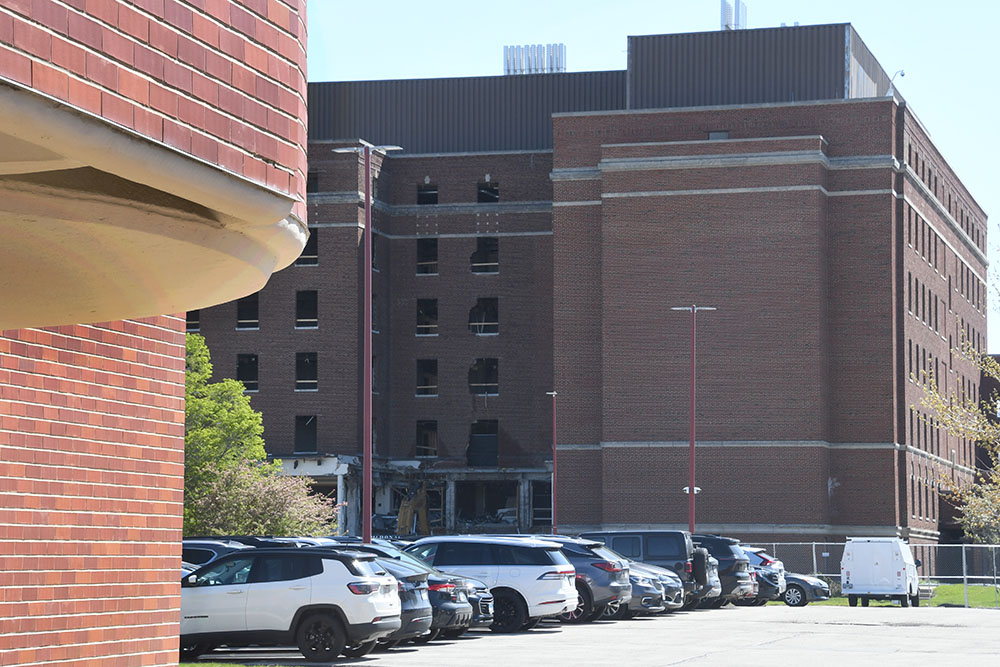
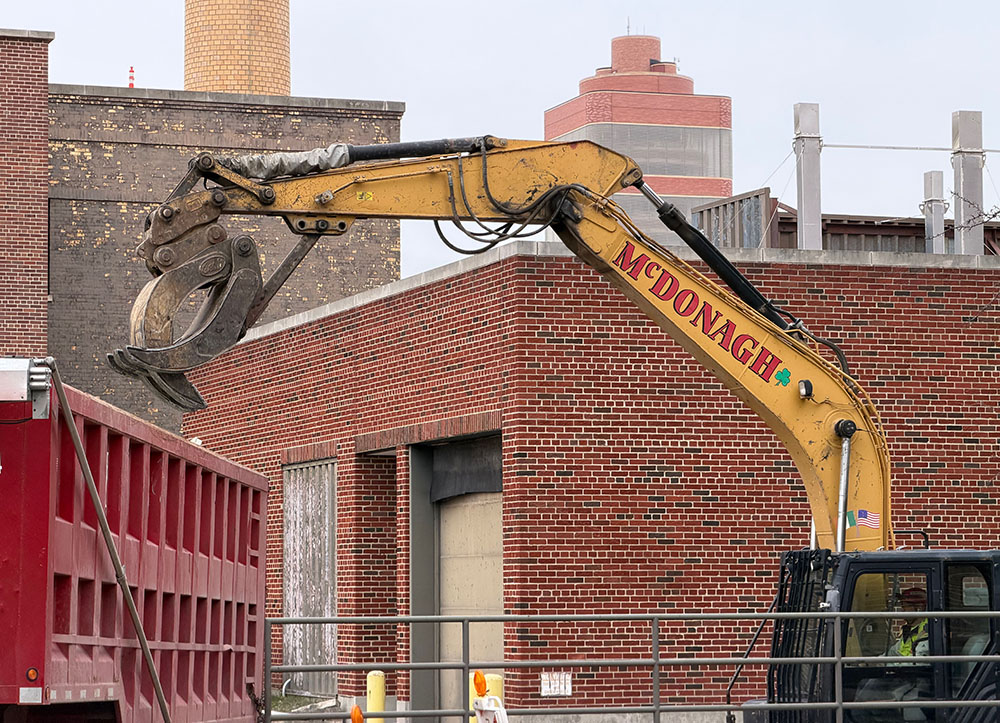
The Tower stood unused until 2014 when two floors were restored after the company got permission to bring tours there. Fortunately the company is privately held, because one can imagine how many publicly held companies would have demolished an unused building in spite of its architectural significance and its place in the company’s DNA as a symbol of creativity. By 2019 another company building close to Waxdale, the company’s manufacturing complex west of town became their new R&D facility, and it was St. Mary’s turn to stand empty. With high costs to maintain the empty building which had no foreseeable use to the company, demolition began in March.
There are no immediate plans for the site.
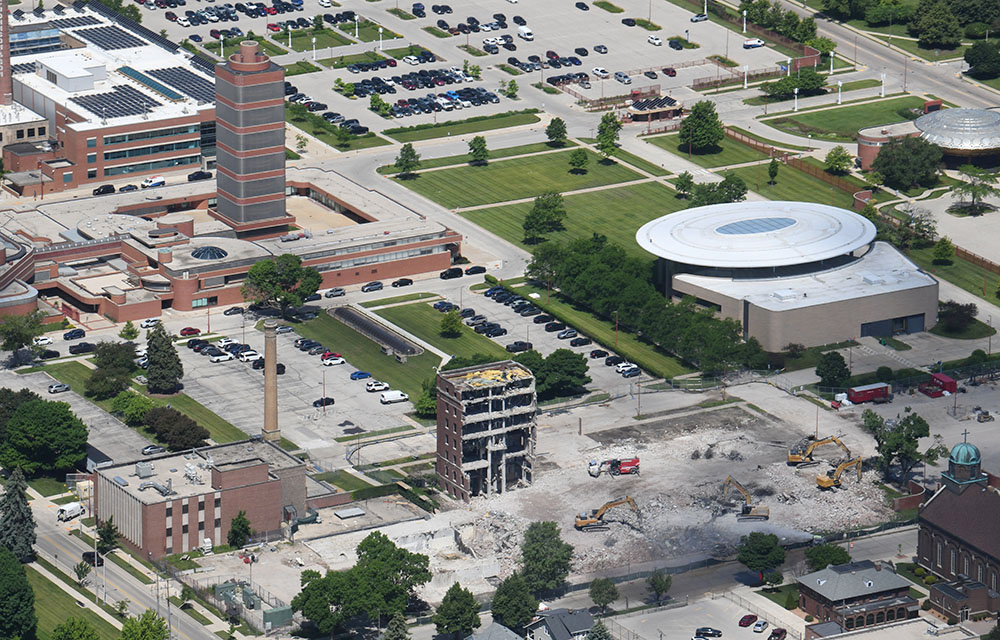
The former St. Mary’s Hospital building is almost completely reduced to rubble in this photo taken June 19.
As a sidelight, some years ago I profiled Ken Dahlin, a well-known contemporary architect (Genesis Architecture). I wrote that he must have been pre-destined in his career because he was born in the old hospital, overlooking Wright’s landmark buildings.
Please scroll down to read earlier posts on this website.
A quick test: think “Frank Lloyd Wright.” Chances are that images of Fallingwater, the Robie House, the SC Johnson Administration Building or other structures came to mind. It is a safe bet that you did not visualize any of his furniture. It has oft been written that Wright was concerned about the whole of his commissions…designing furnishings (and sometimes even clothing) for his clients, rather than only their home or public building. Yet, relatively scant attention has focused on his furniture en toto.
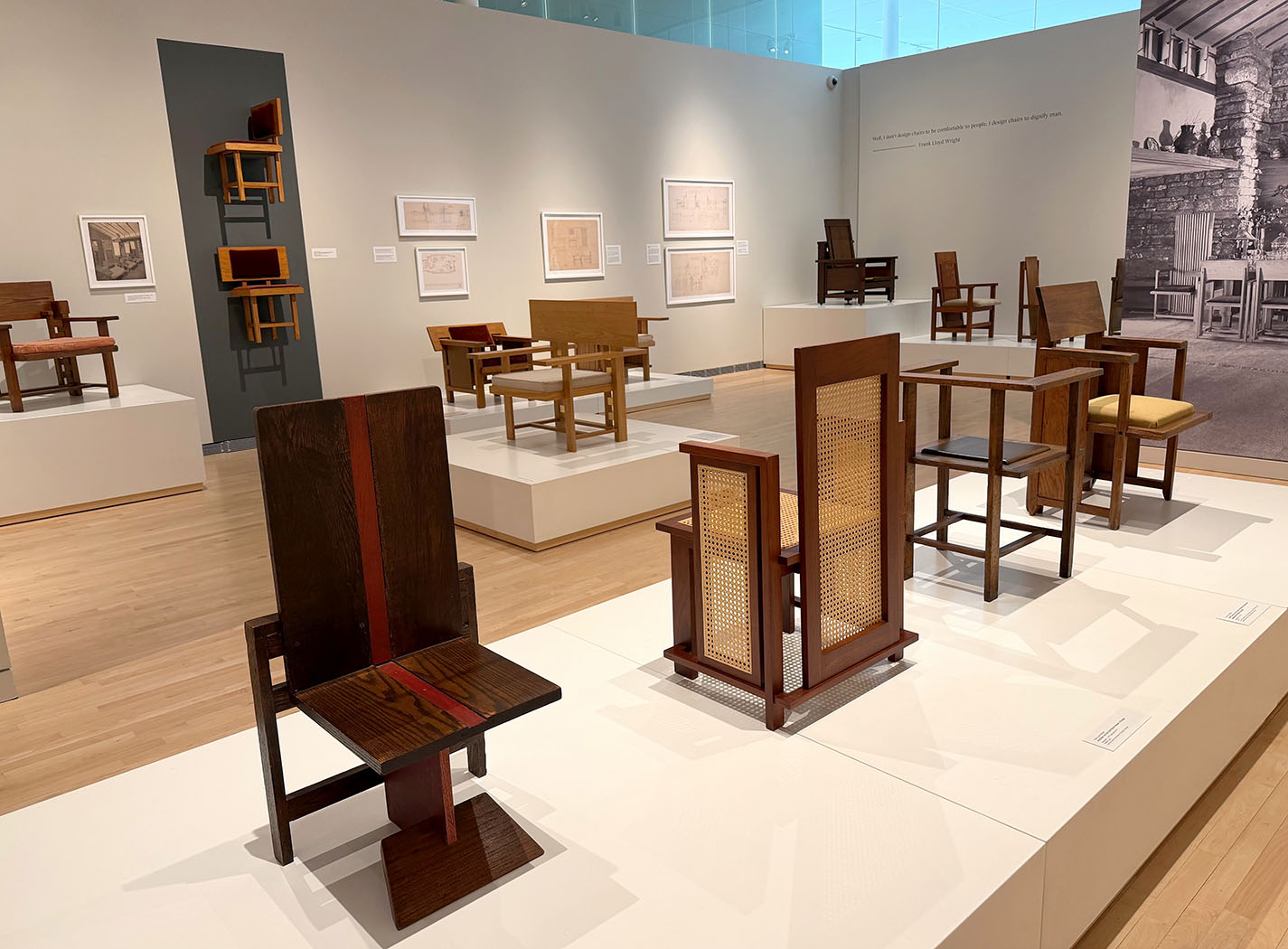
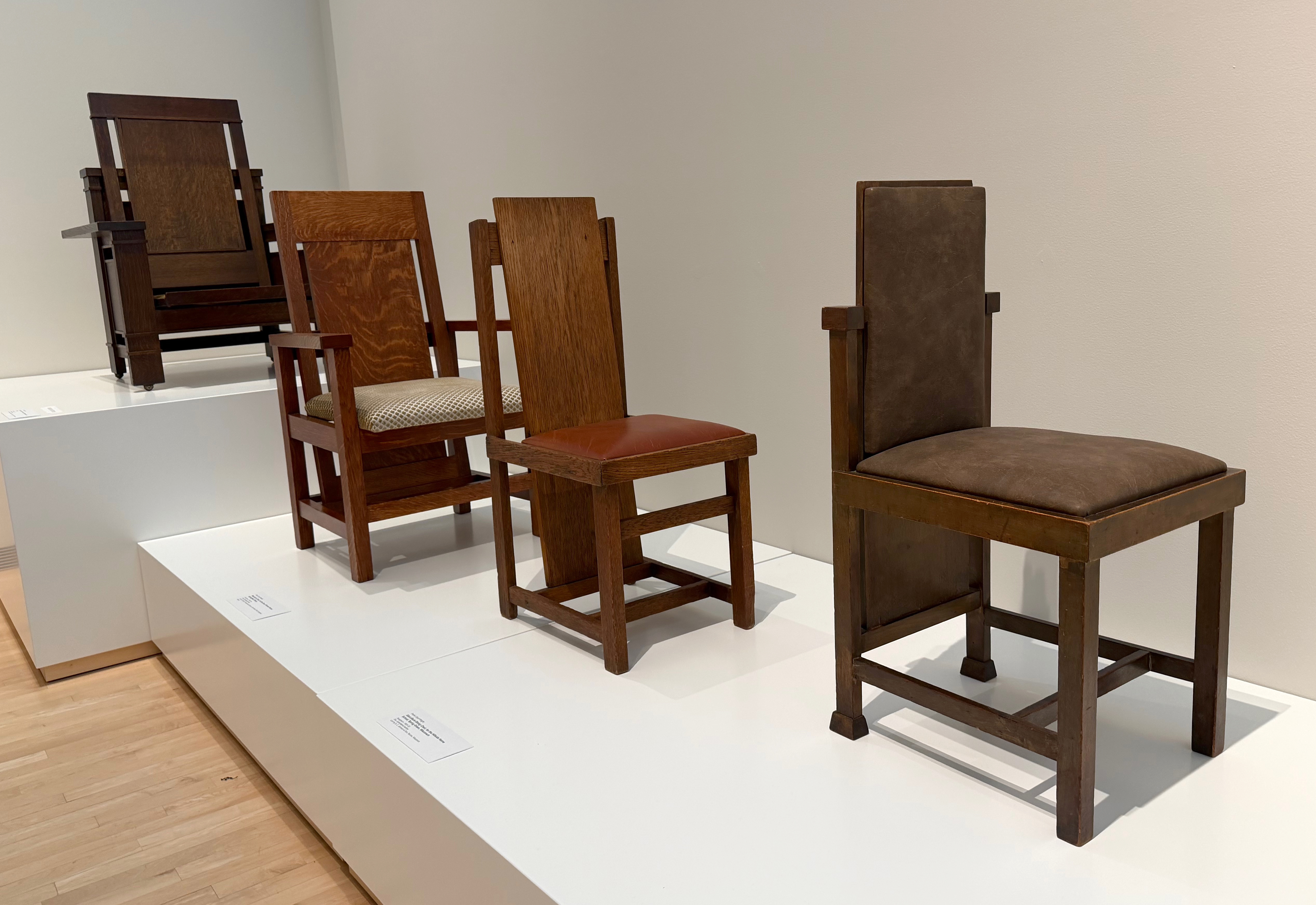
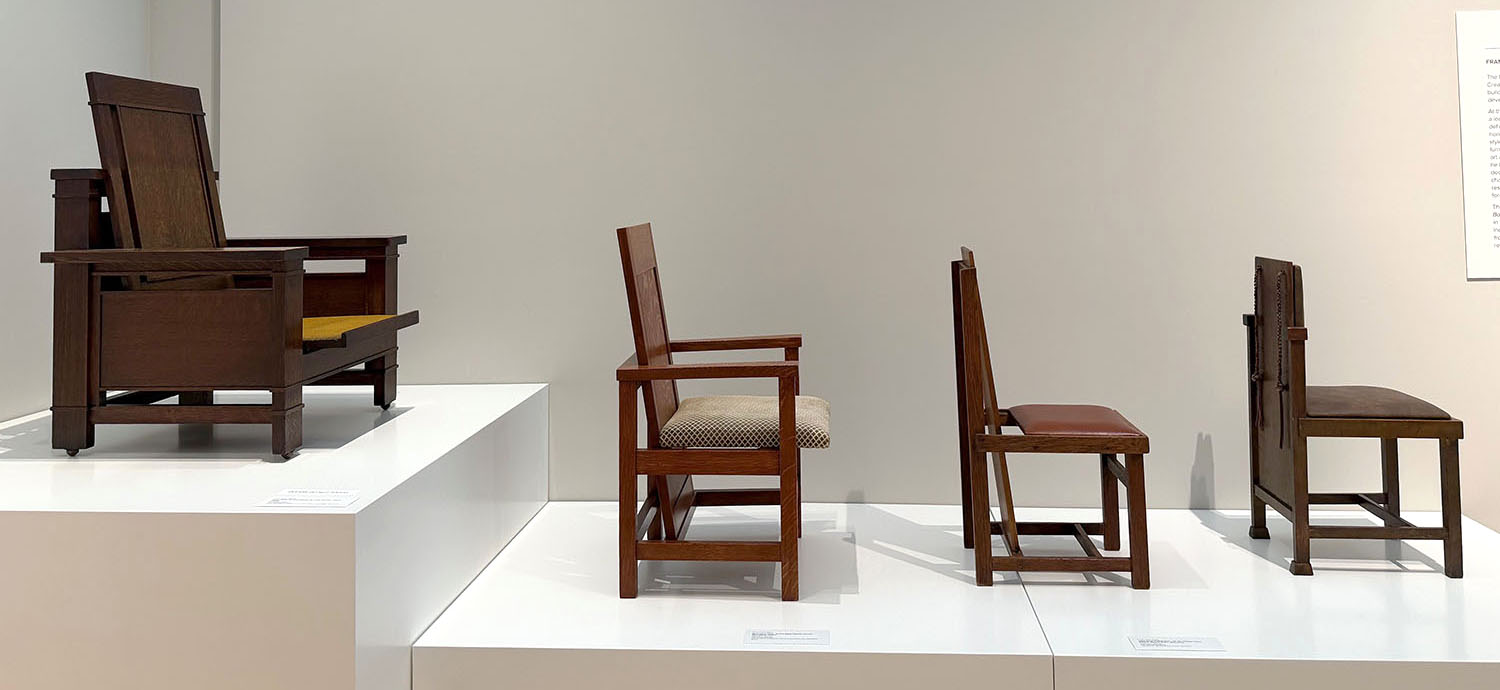
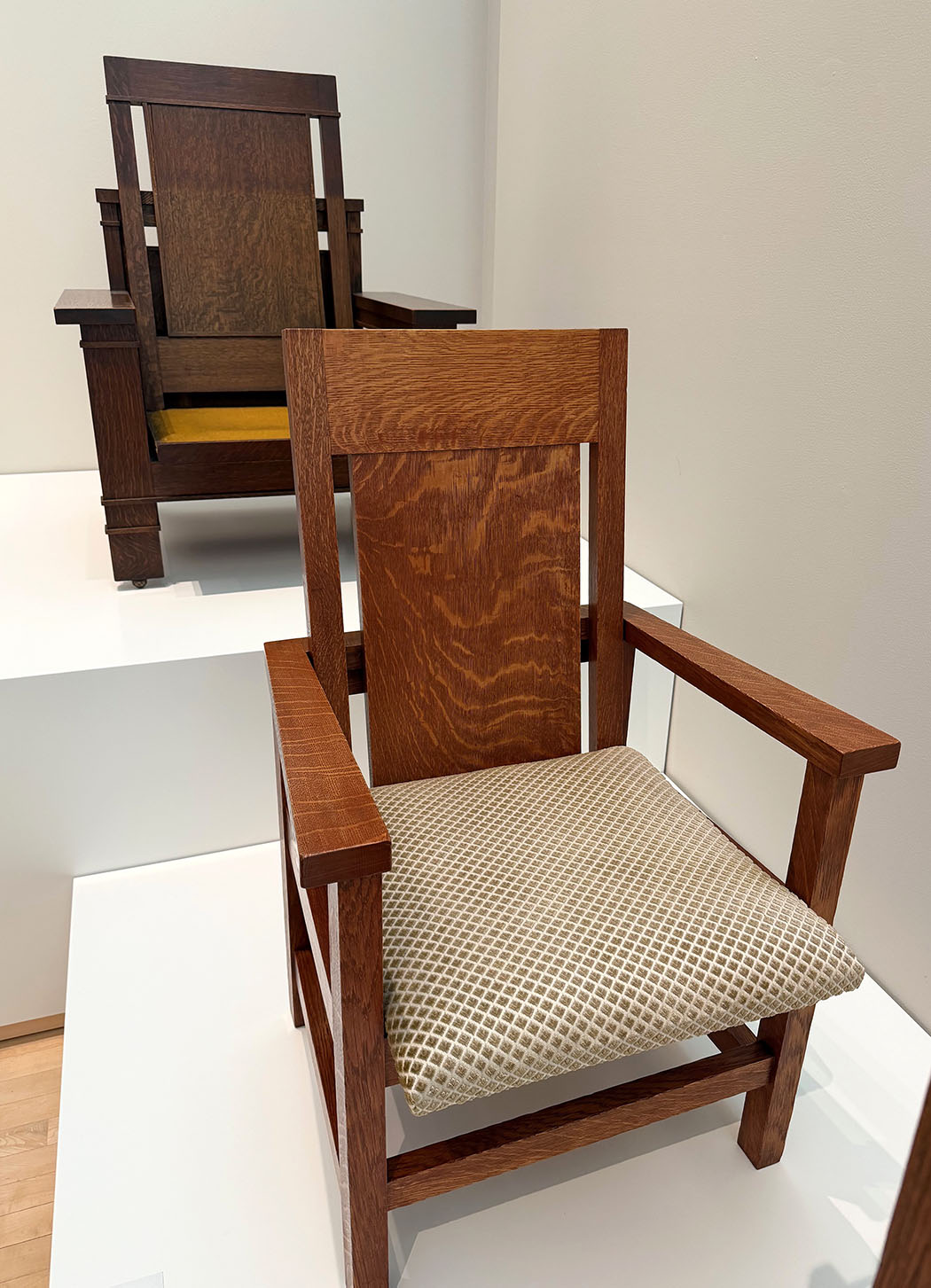
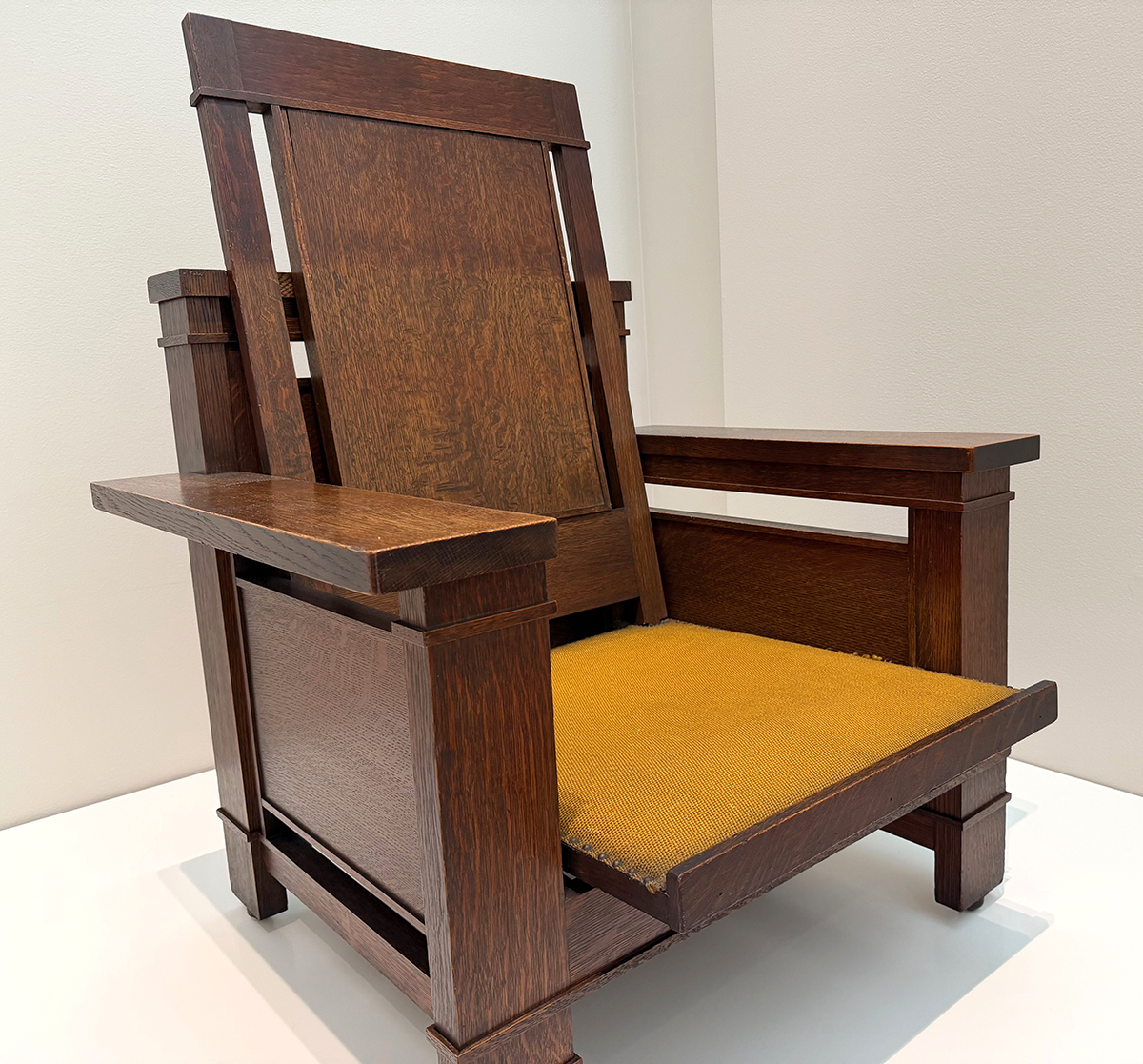
The four pieces at the entry to the show below the quotation from Wright are, from left to right: Easy Chair for Francis W. Little House, Peoria, c. 1903; Musician’s Chair for the Dana-Thomas House, Springfield, c. 1903-1904; Slant Back Chair for the Hillside Home School, Spring Green, c. 1902-1903; and Side Chair for the Avery Coonley Playhouse, Riverside, c. 1912.
There have been only three research-based books on the subject – three out of how many hundred books about Wright? That was the impetus for the “Frank Lloyd Wright- Modern Chair Design” exhibition at the Museum of Wisconsin art (MOWA) in West Bend, Wisconsin. The exhibit ran from October – January.
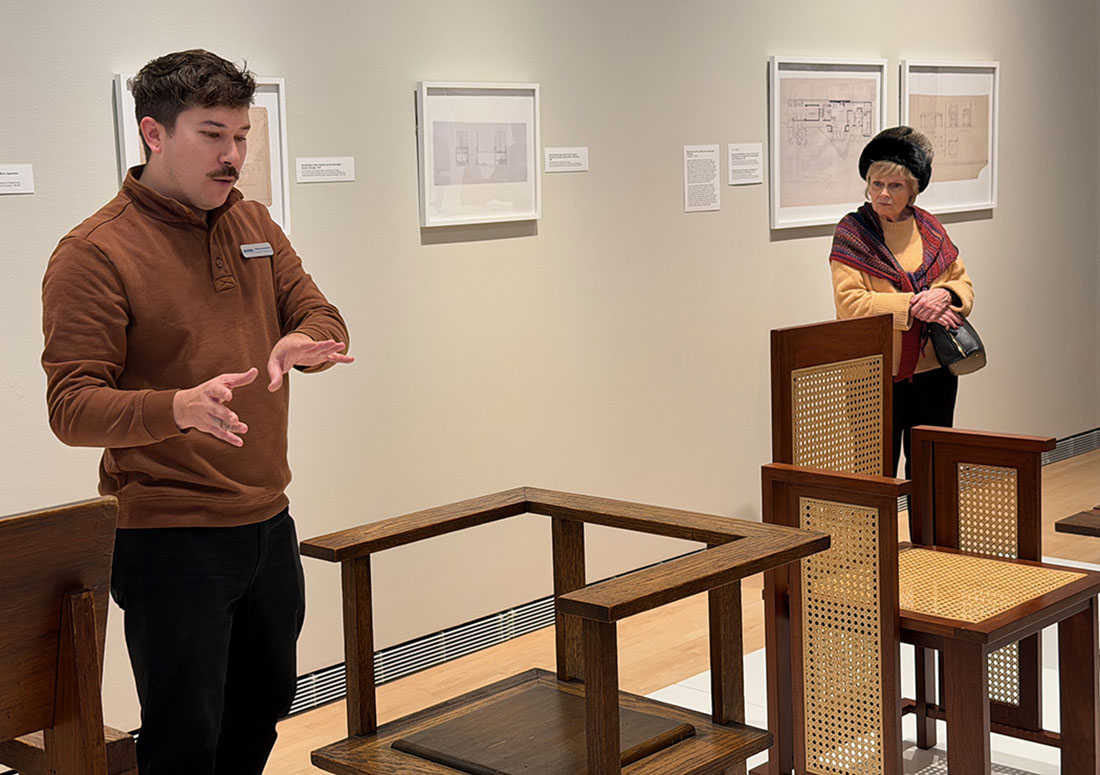
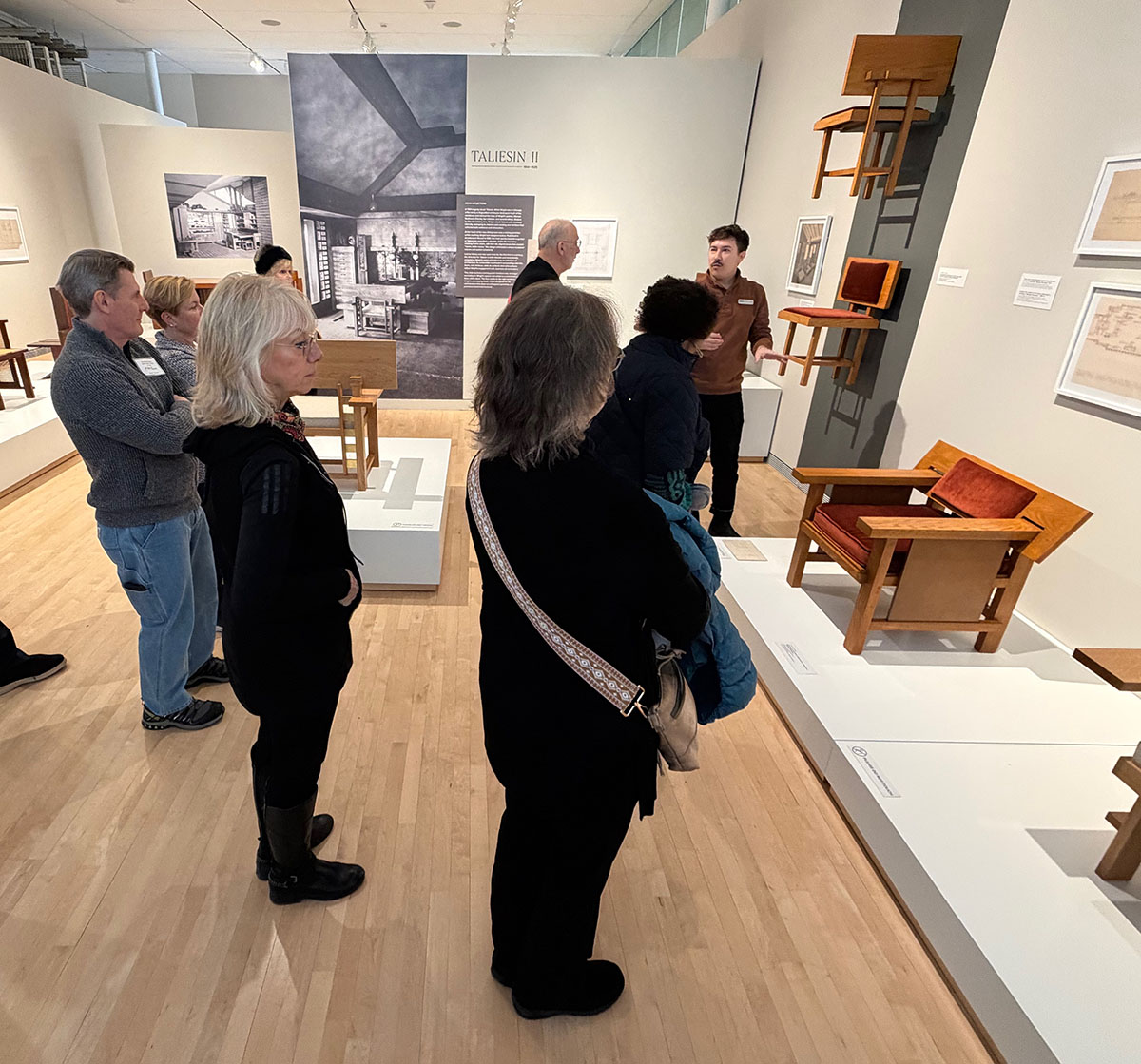
Thomas Szolwinski, MOWA’s Curator of Architecture and Design told guests during a curated tour in January that Wright designed more than 800 pieces of furniture. Some clients elected not to have the furniture built, and some pieces no longer exist. Wright designed “different chairs for different purposes,” noted co-curator Eric Vogel. “Wright was dismissive of his furniture,” and “Wasmuth was not interested in his interiors” for the famous portfolio.
Vogel has examined every one of the Wright furniture drawings. Vogel and Szowinski selected 42 pieces to exhibit. Thirty were located and lent to MOWA. The other dozen were built for the exhibition, meticulously following Wright’s drawings by Current Projects, by Wright’s great grandson S. Lloyd Natof, and by Stafford Norris III, whose mother and step-father are stewards of Wright’s Malcolm and Nancy Willey House in Minneapolis. They used the drawings to make computer models before making wood models of the pieces. The upholsterer was Chad Alexander Matha. The spun aluminum pieces designed for the Guggenheim Museum were fabricated by Butler Metal Spinning Corp.
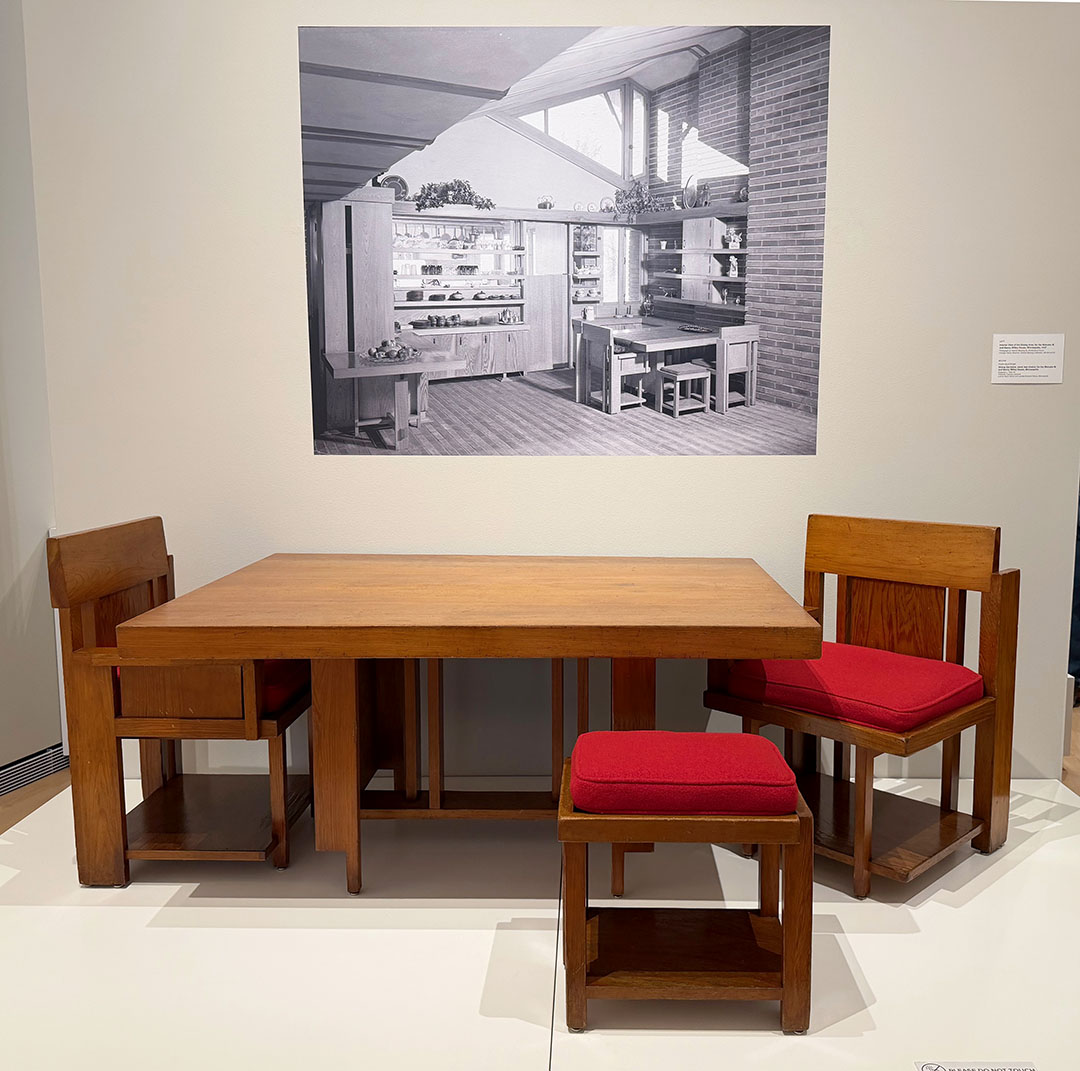
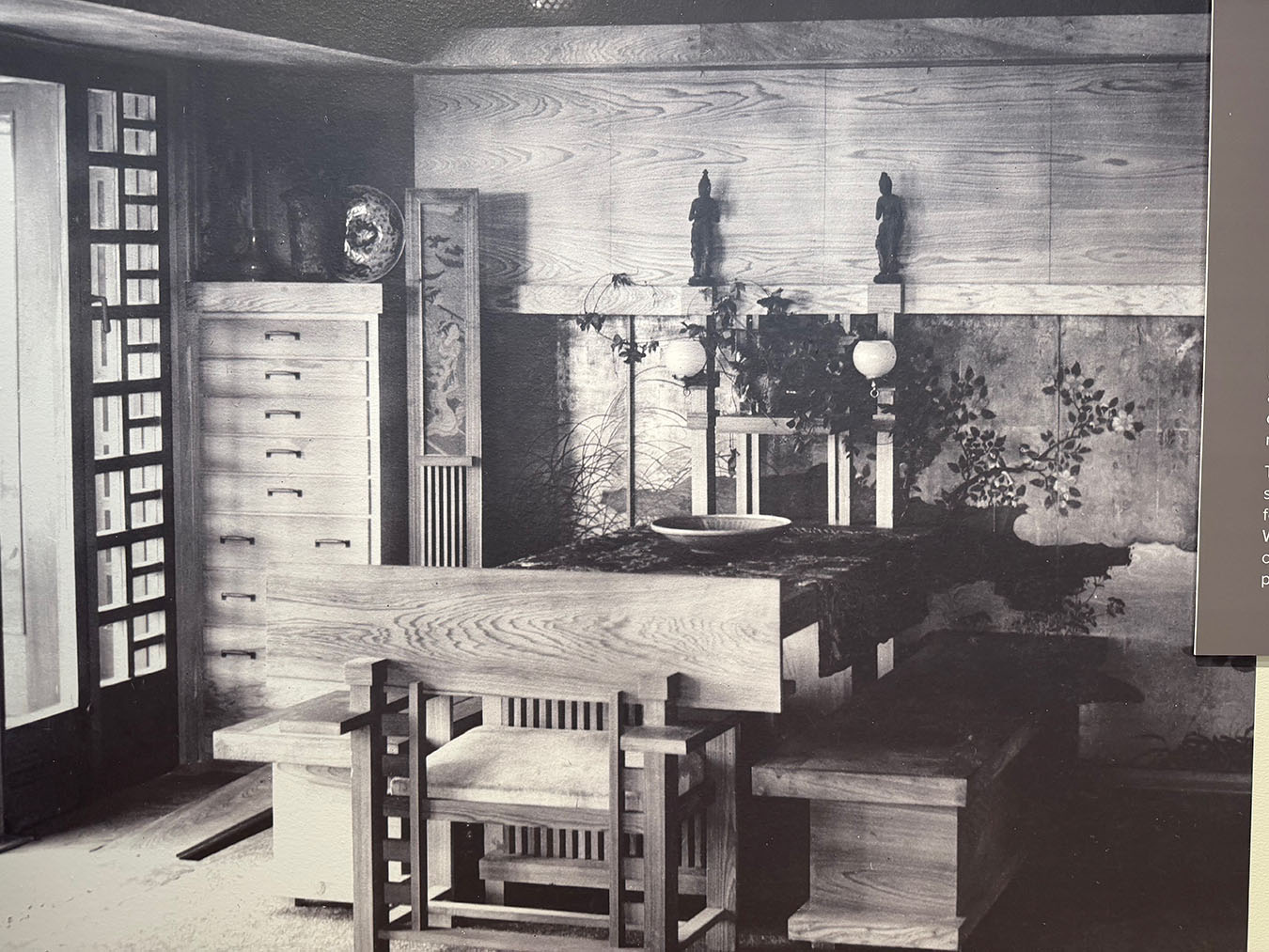
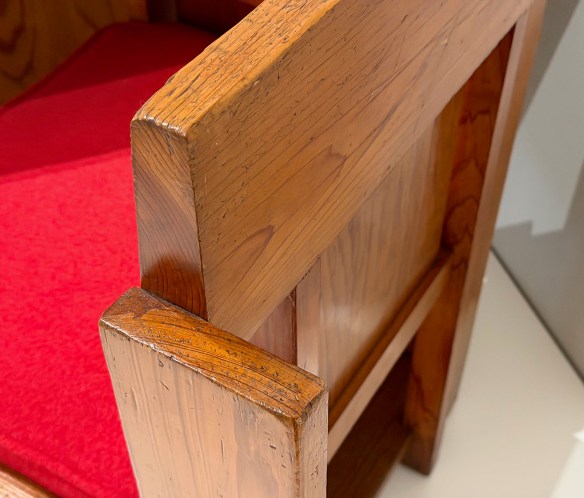
The dining room set from the Malcolm and Nancy Willey House in Minneapolis
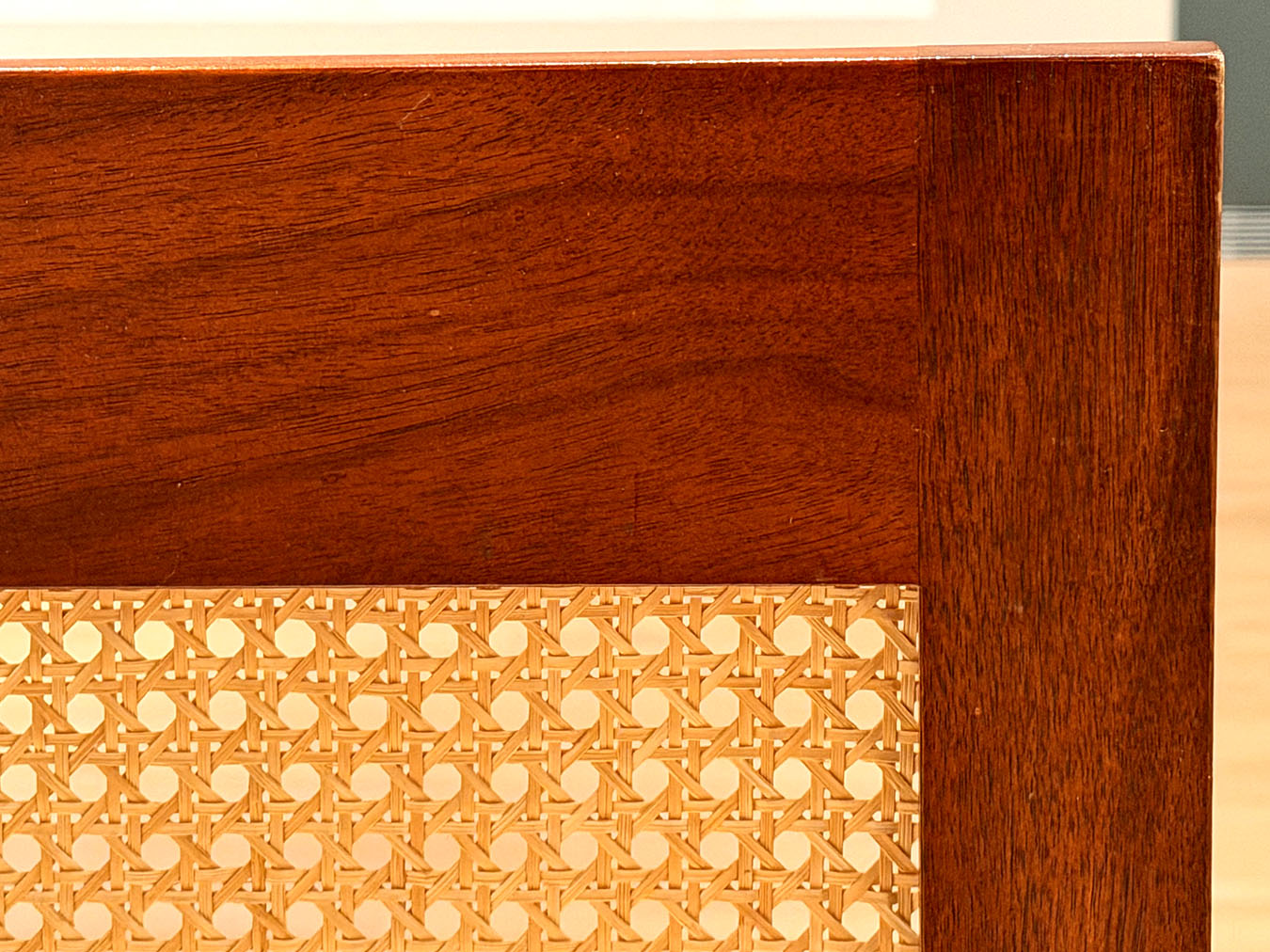
Above: Dining Chair for the Emil Bach House, Chicago, c. 1913
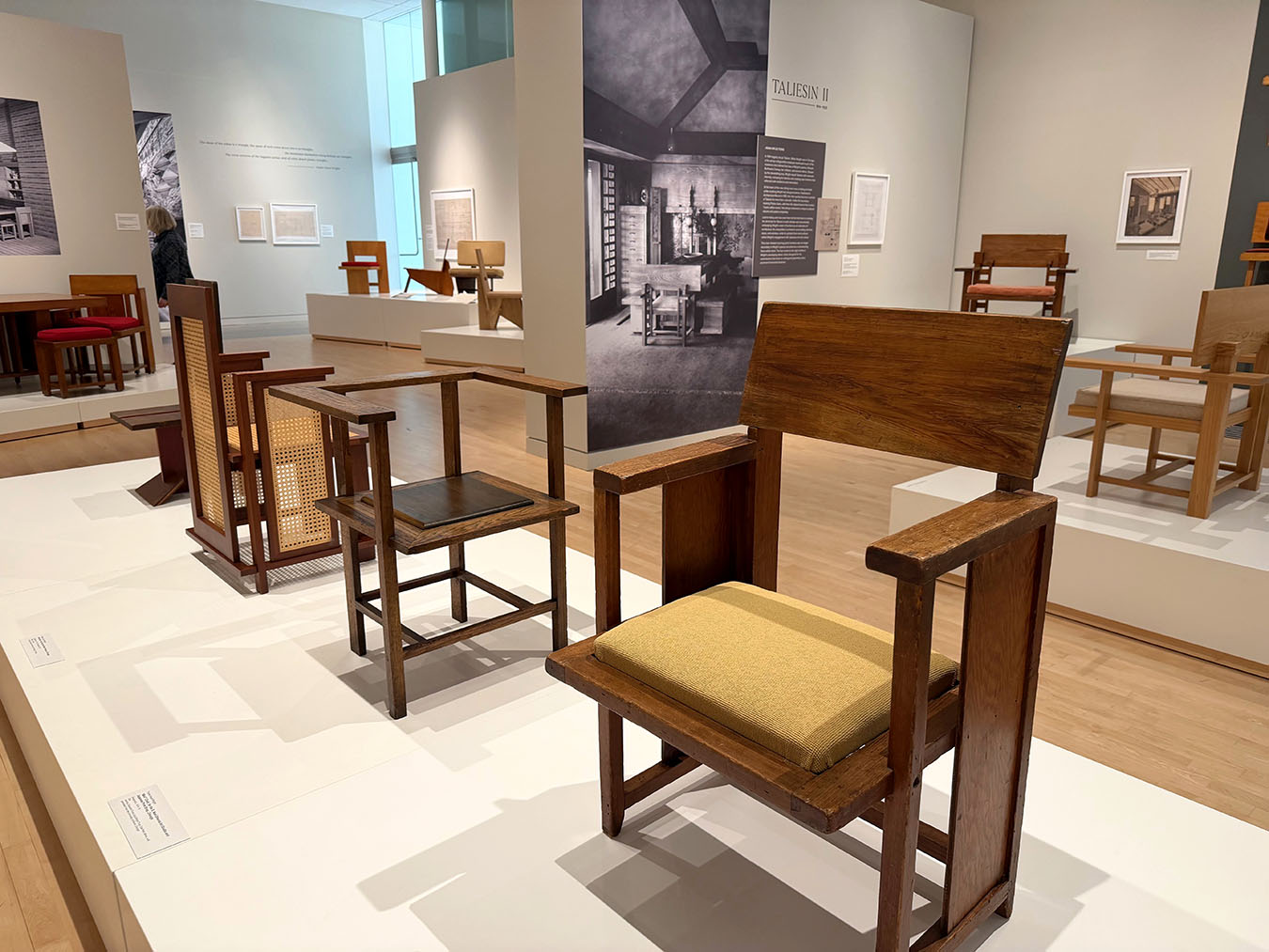
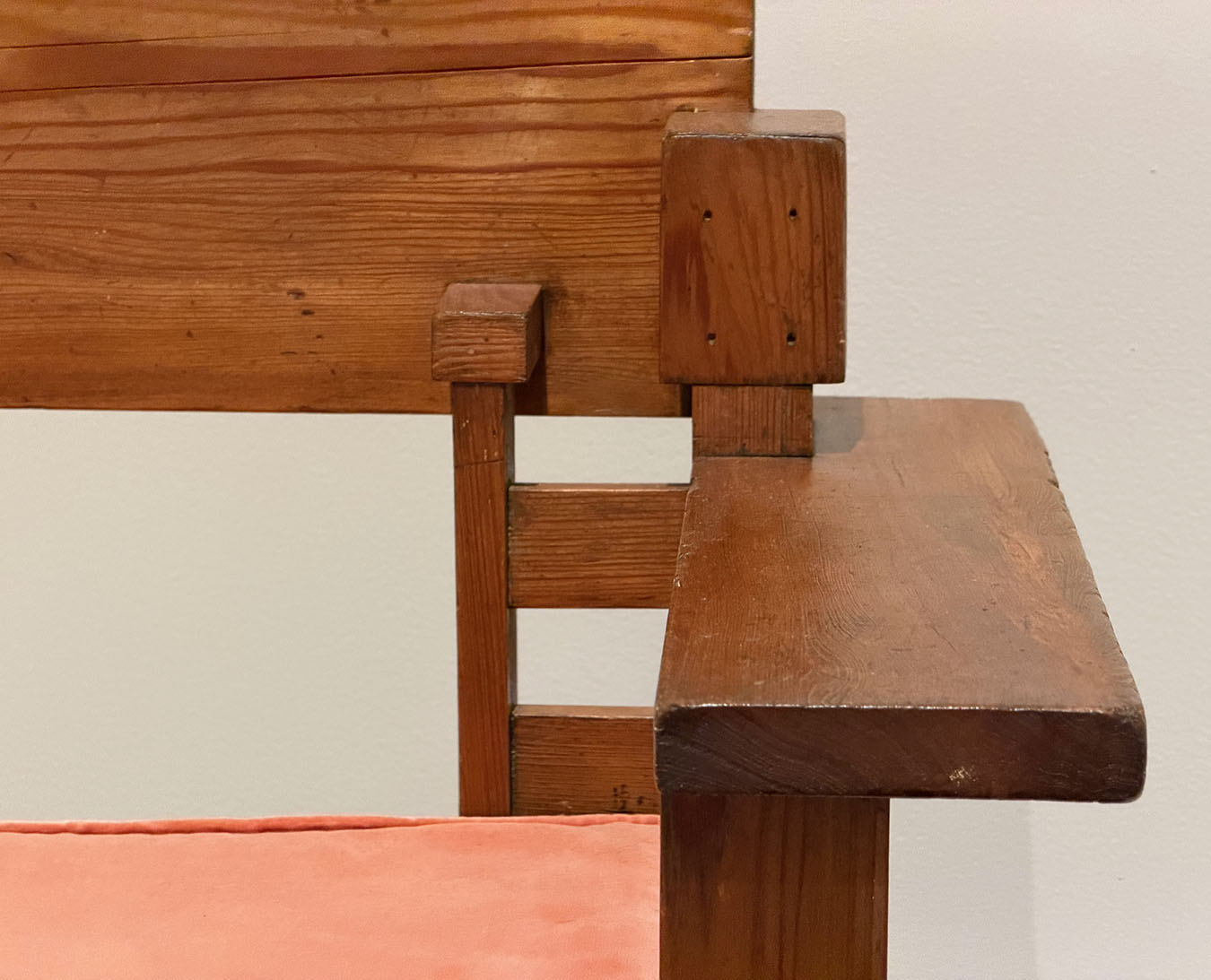
Right: Armchair for Taliesin, Spring Green, designed c. 1929, and second from right, and below, “Mori” Chair for the S. Mori OrientalArt Studio and Japanese Print Shop, Chicago, designed c. 1914
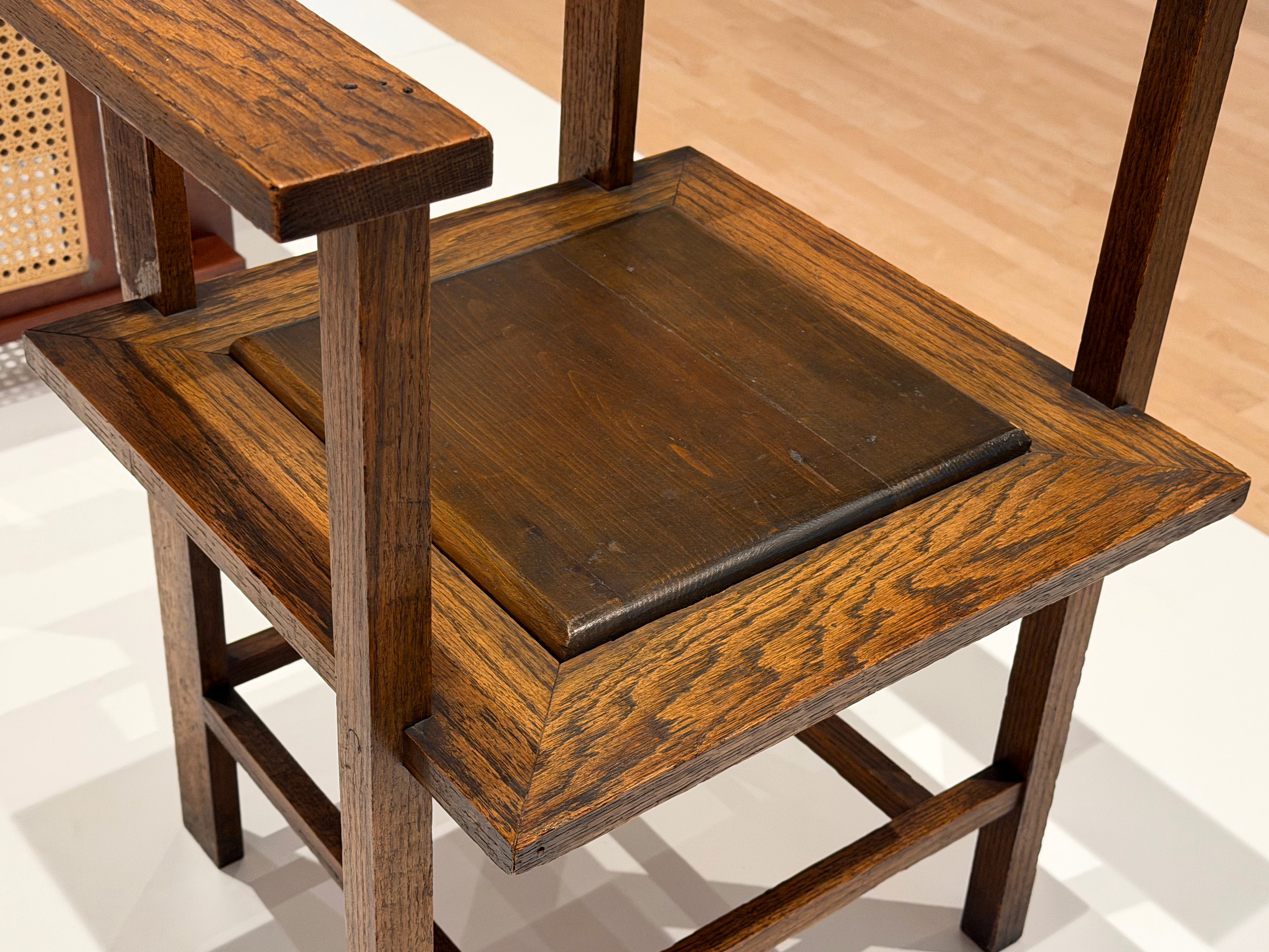
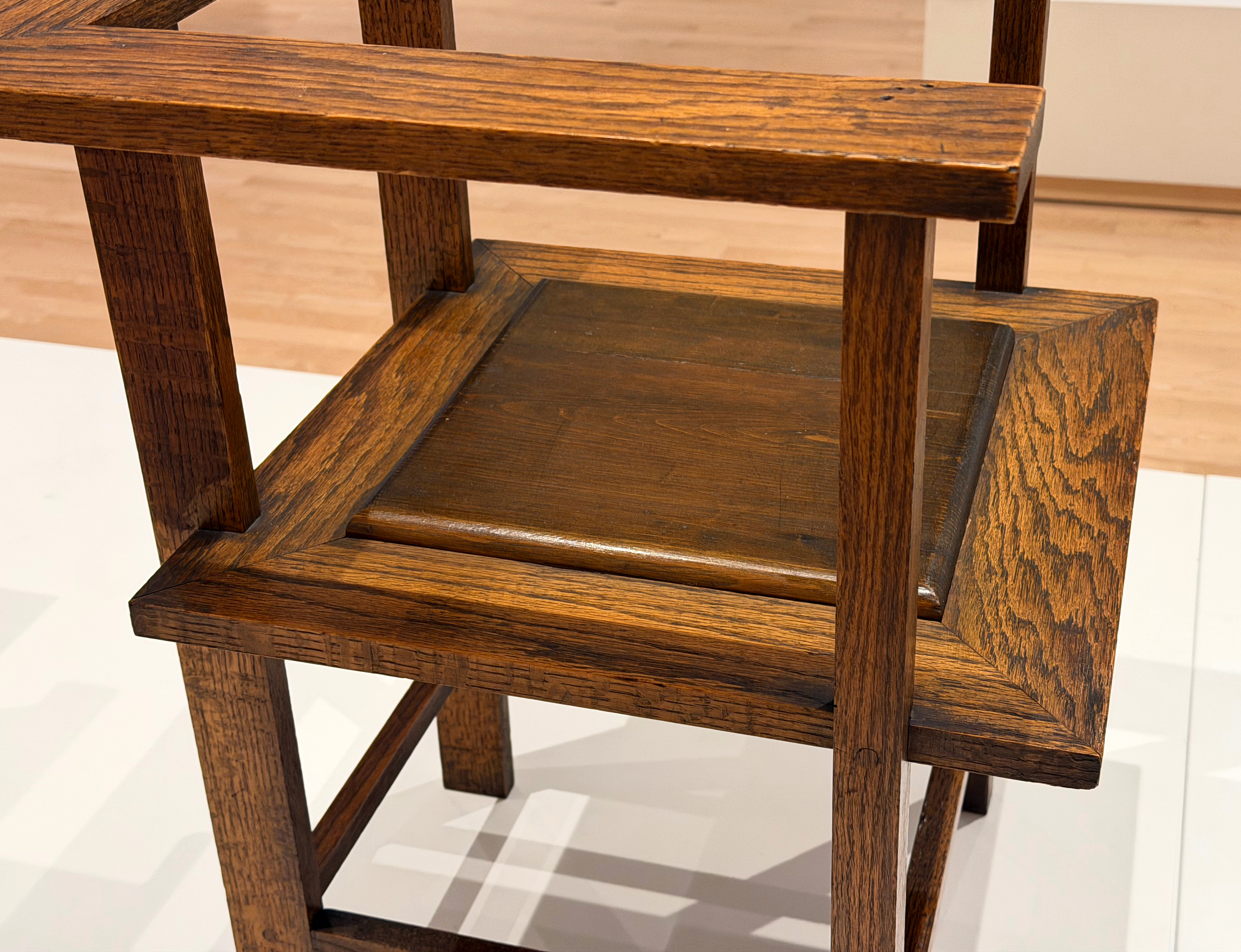
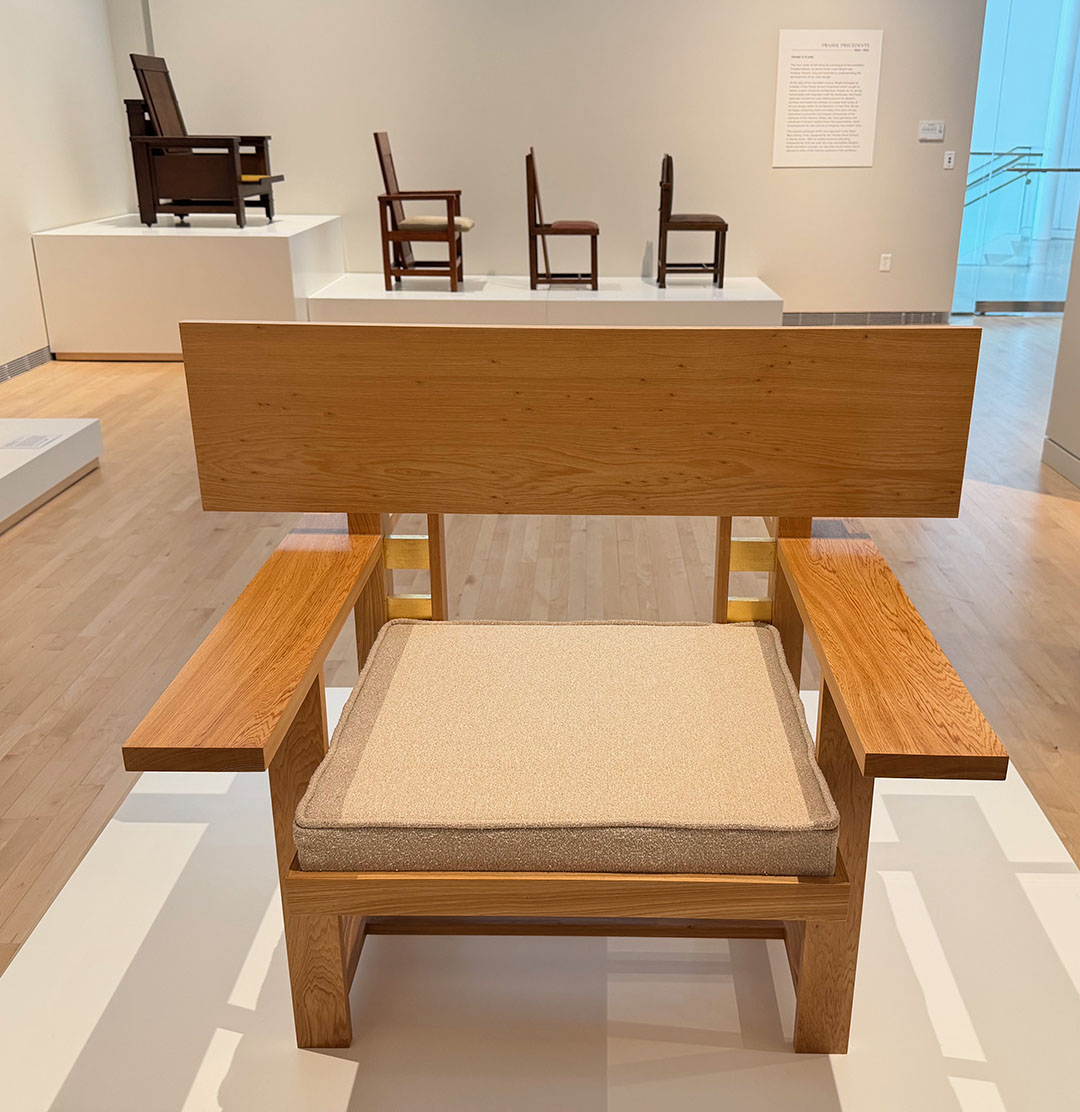
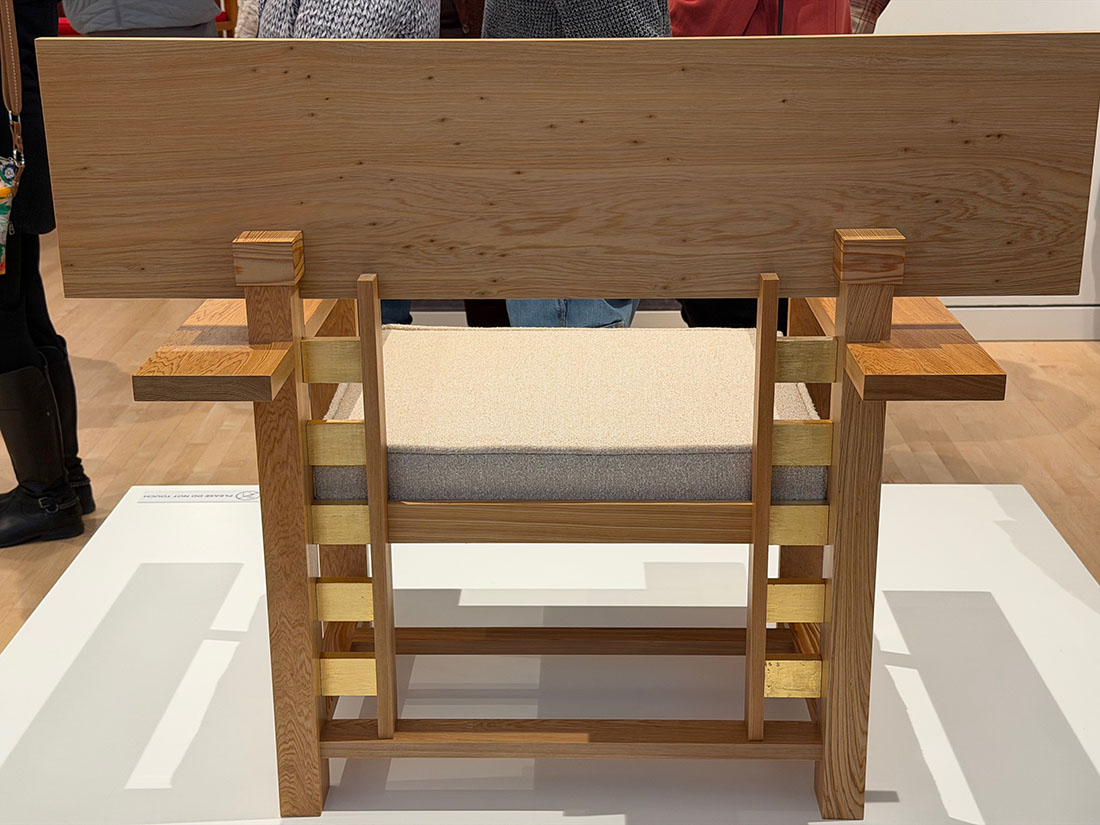
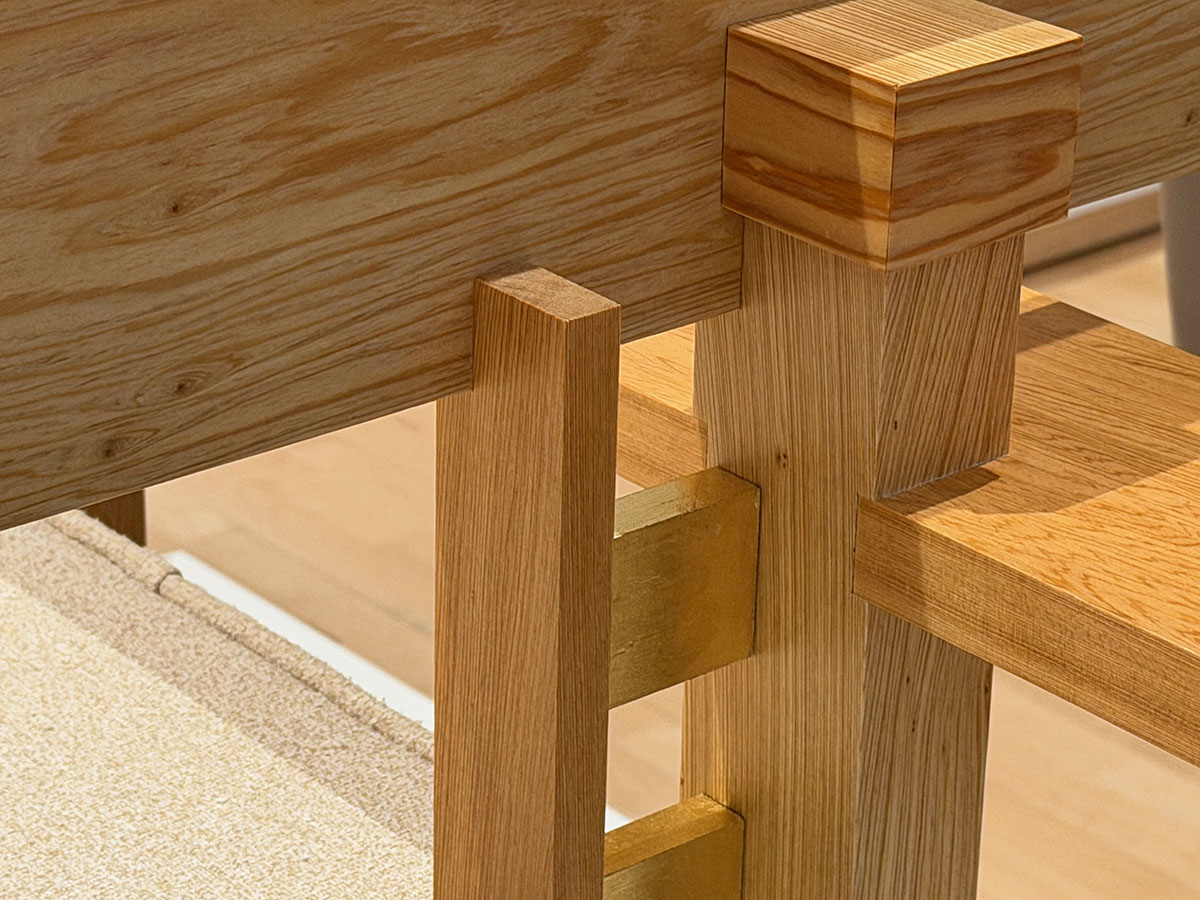
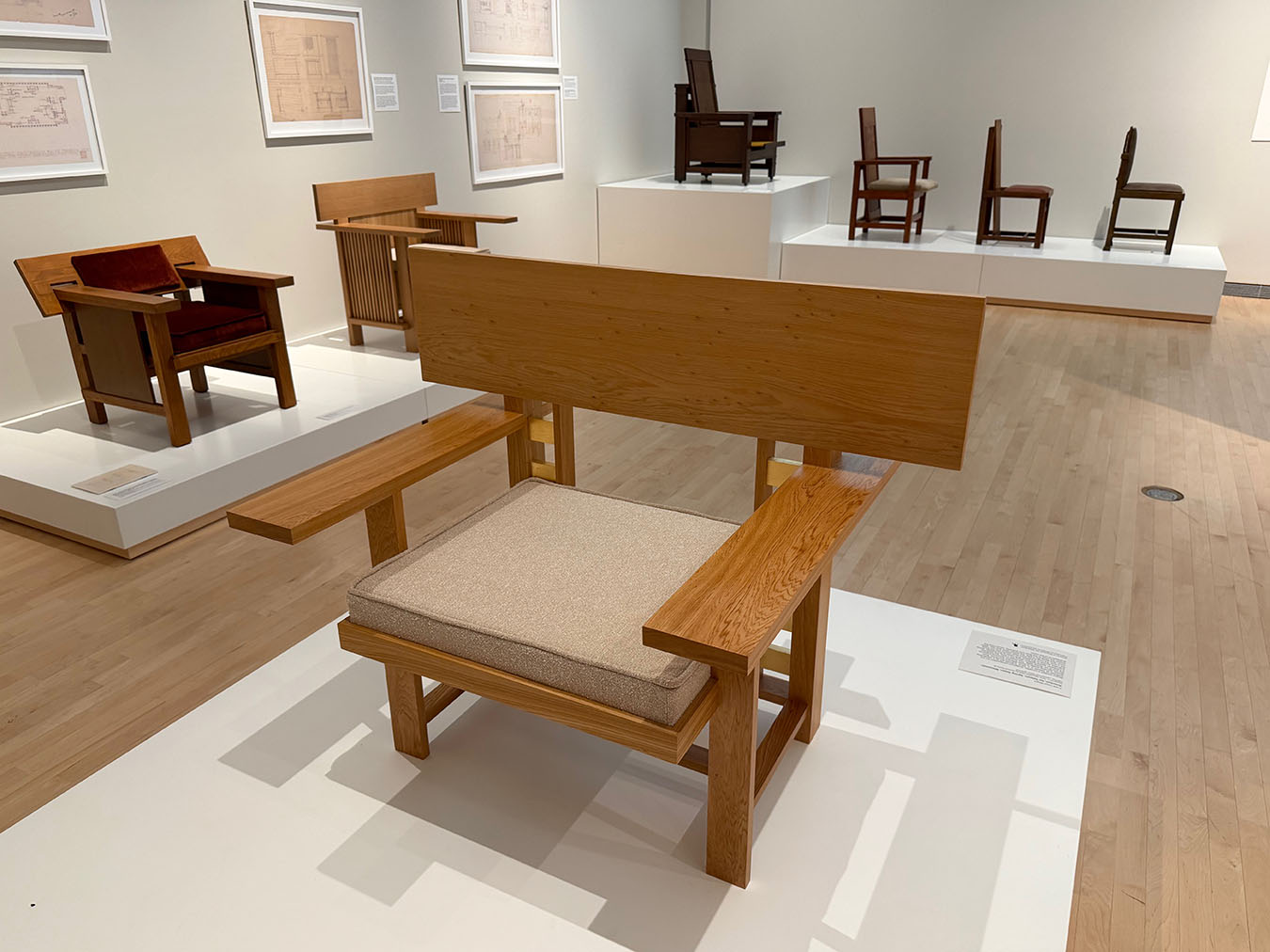
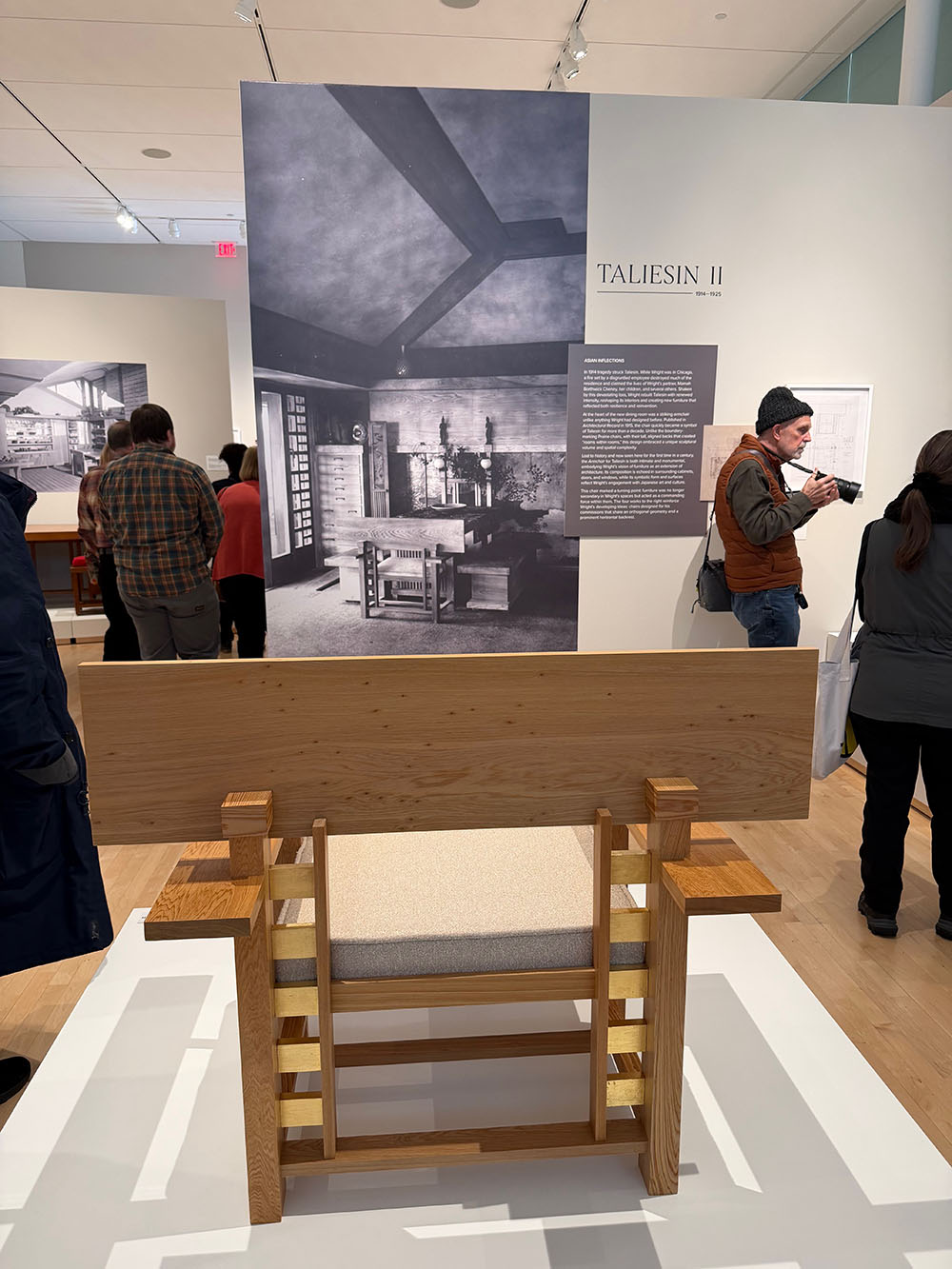
Above and below: Armchair for Taliesin, designed c. 1914; fabricated 2025 by Stafford Norris III
Szolwinski noted how details of the chair echoed the windows at left.
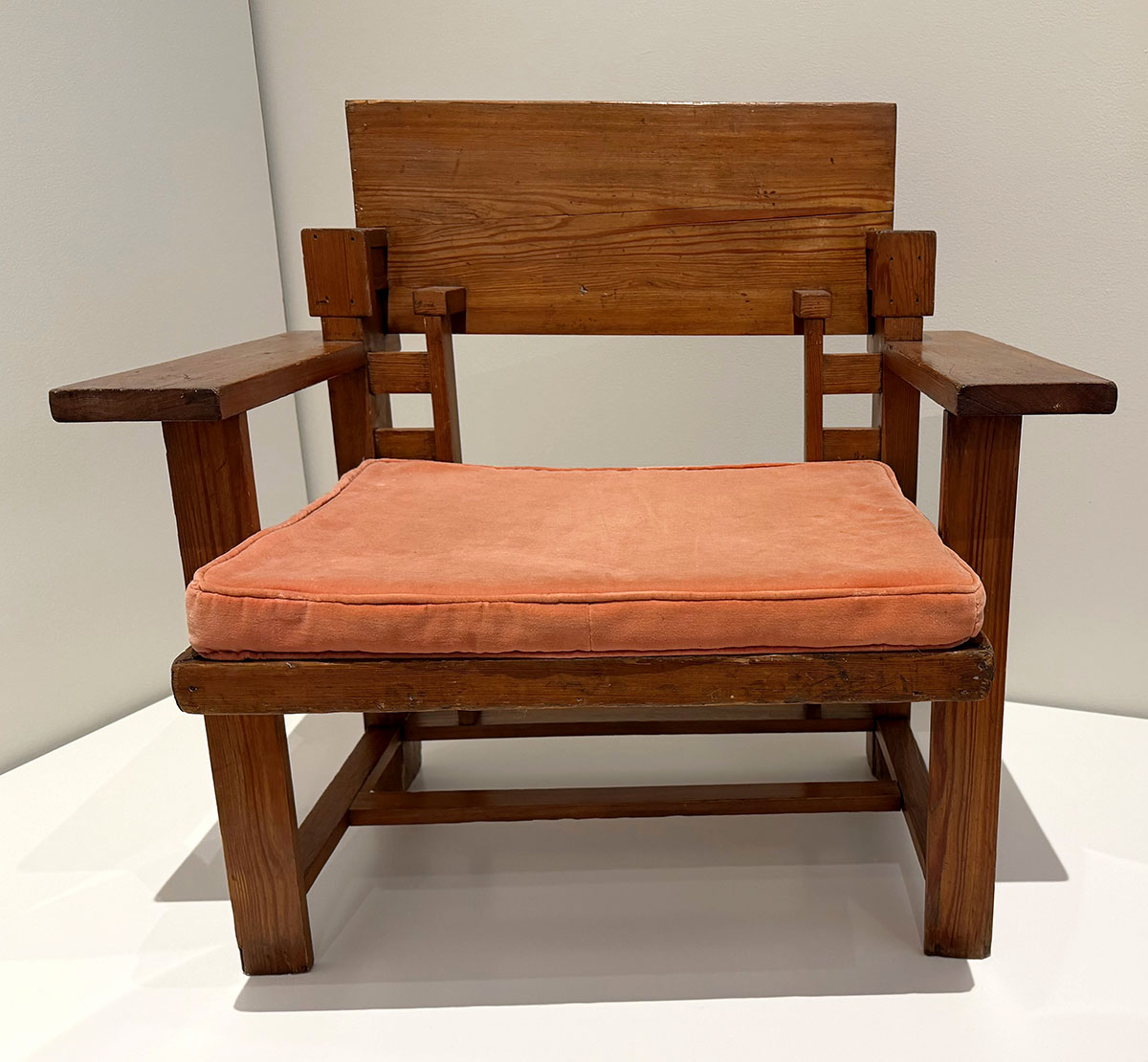
Above: Armchair for Taliesin, designed 1914
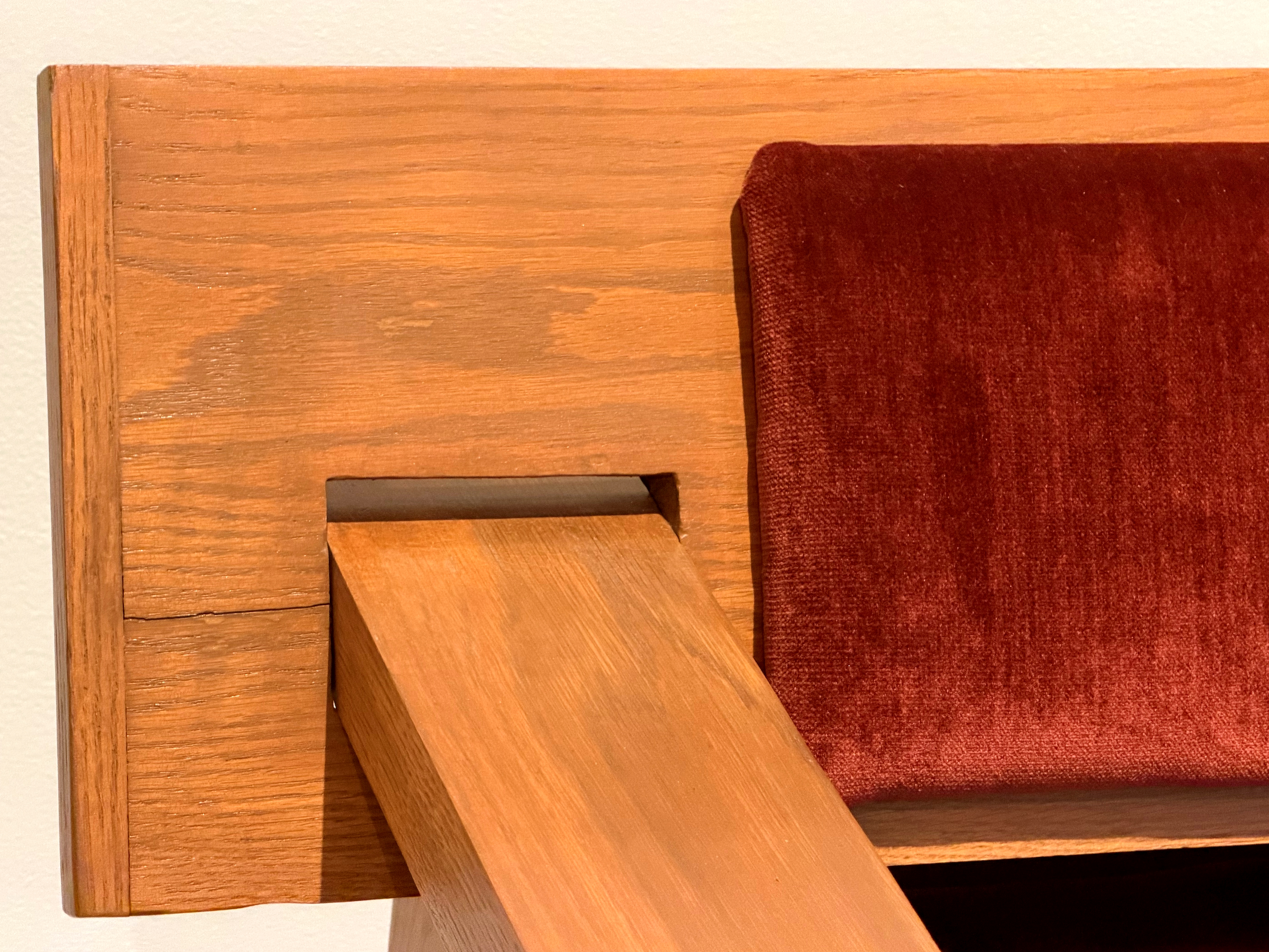
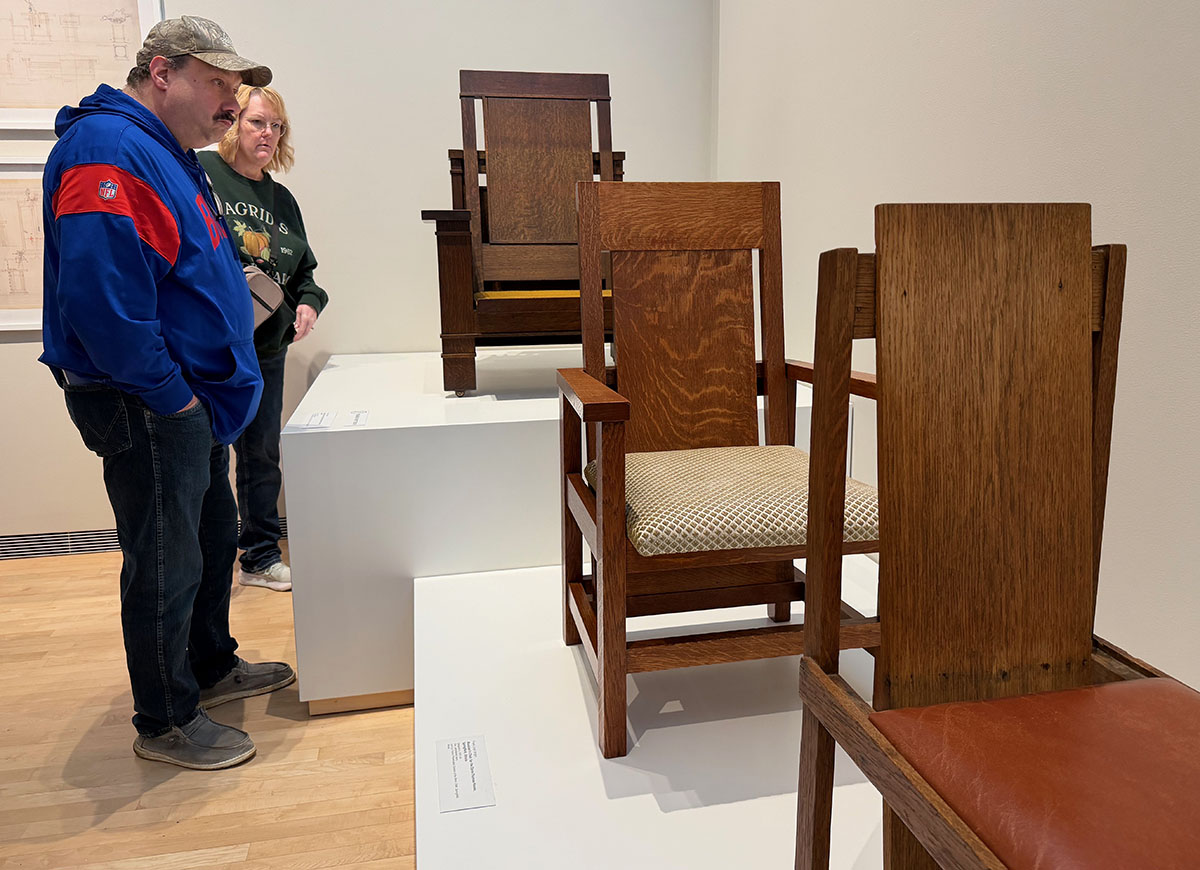
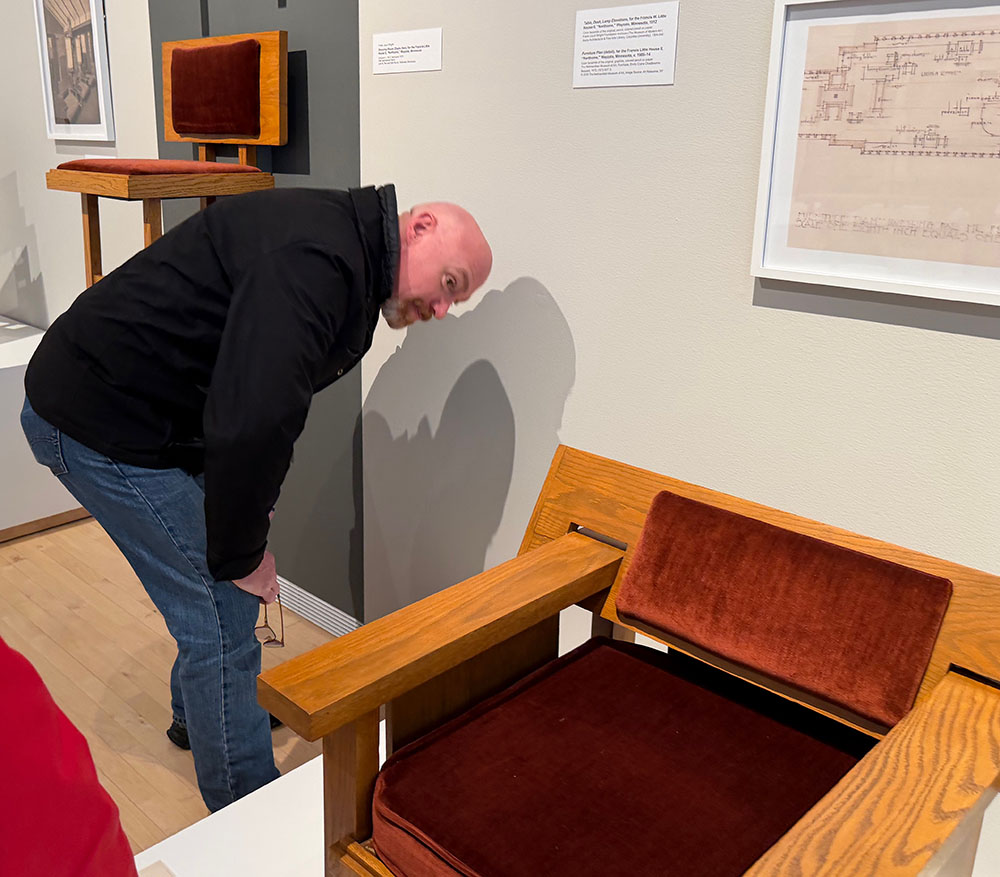
Above: Armchair for the Francis Little House II, “Northome,” Wayzata, Minnesota, designed c. 1913; fabricated 1970
Chair for the A. D. German Warehouse, Richland Center, Wisconsin, designed c. 1935; fabricated 2025 by Current Projects
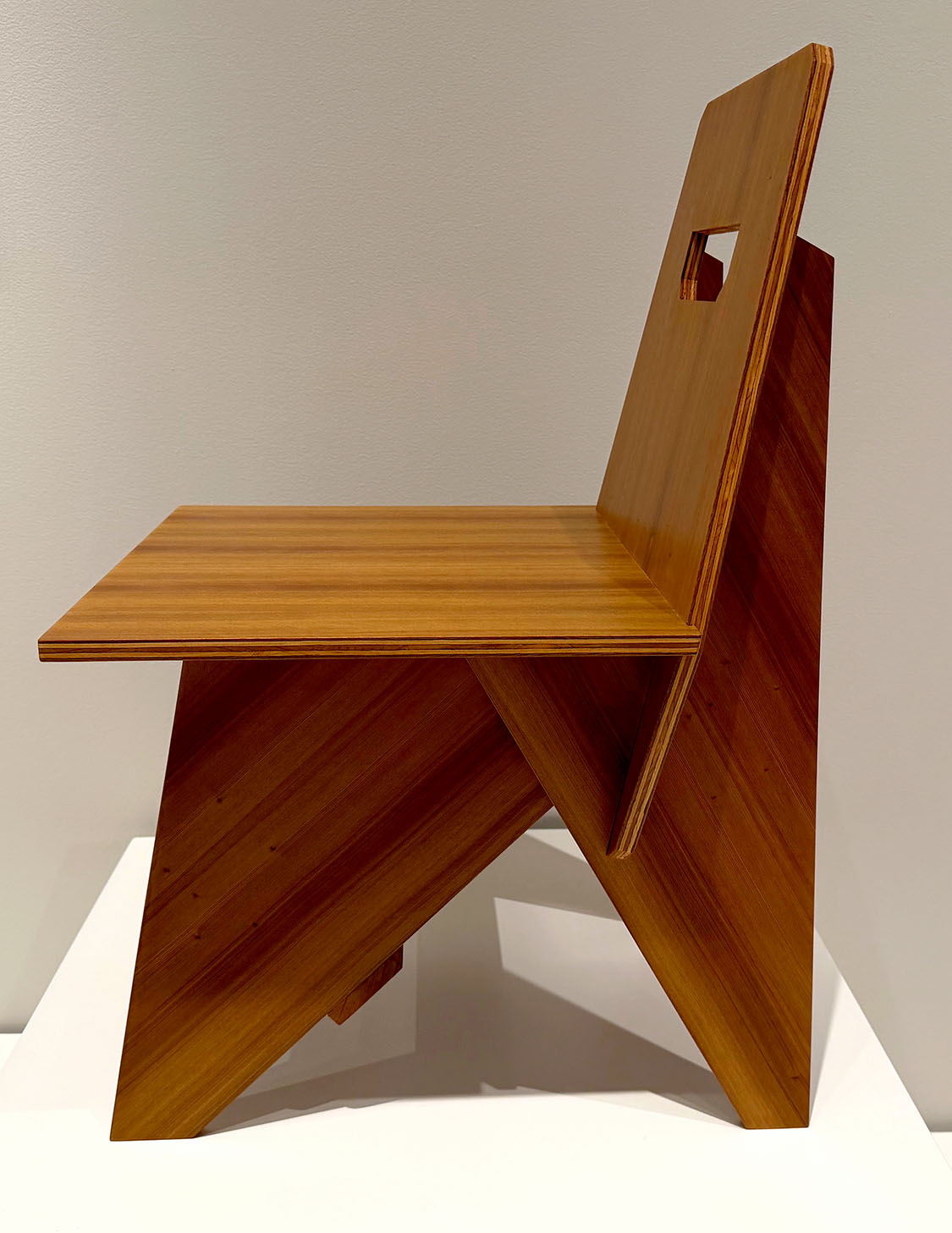
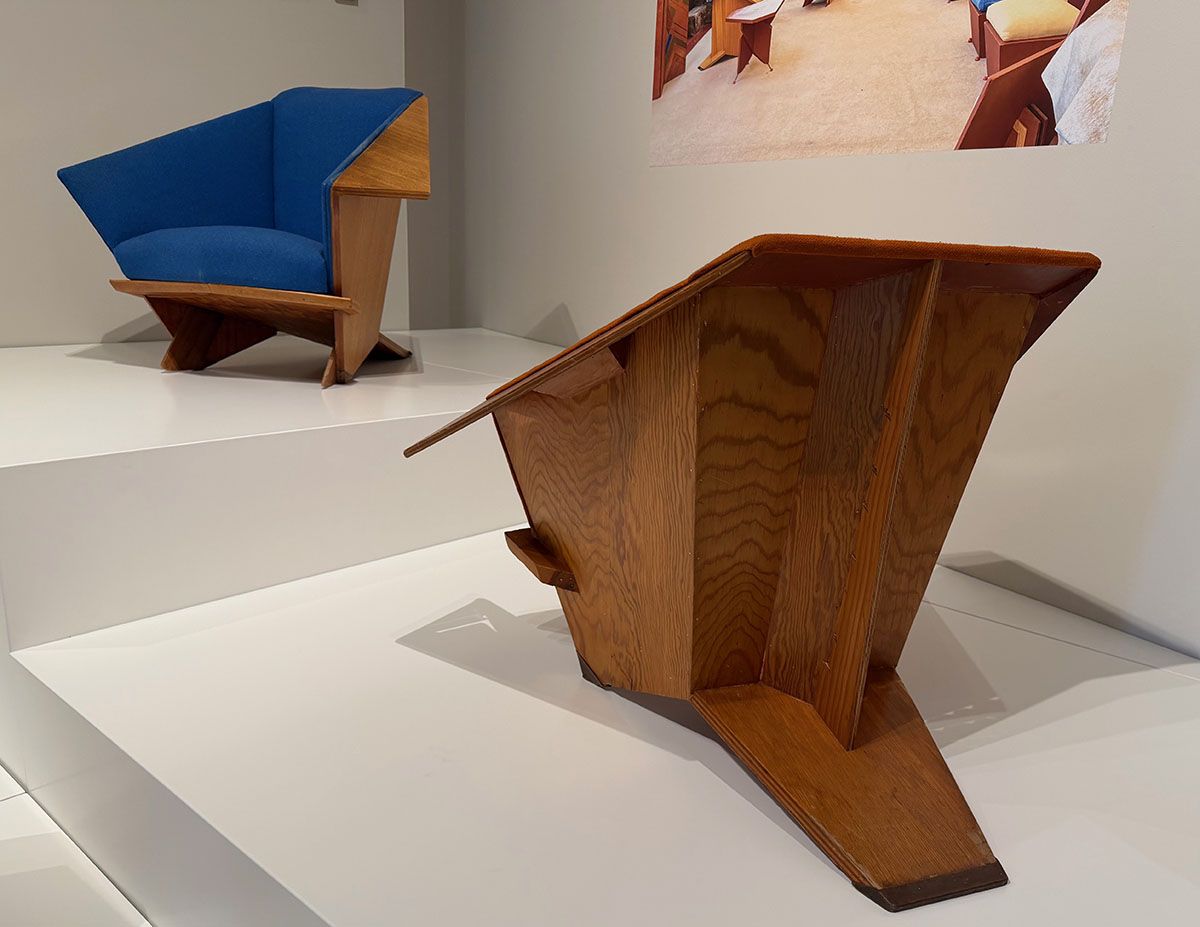
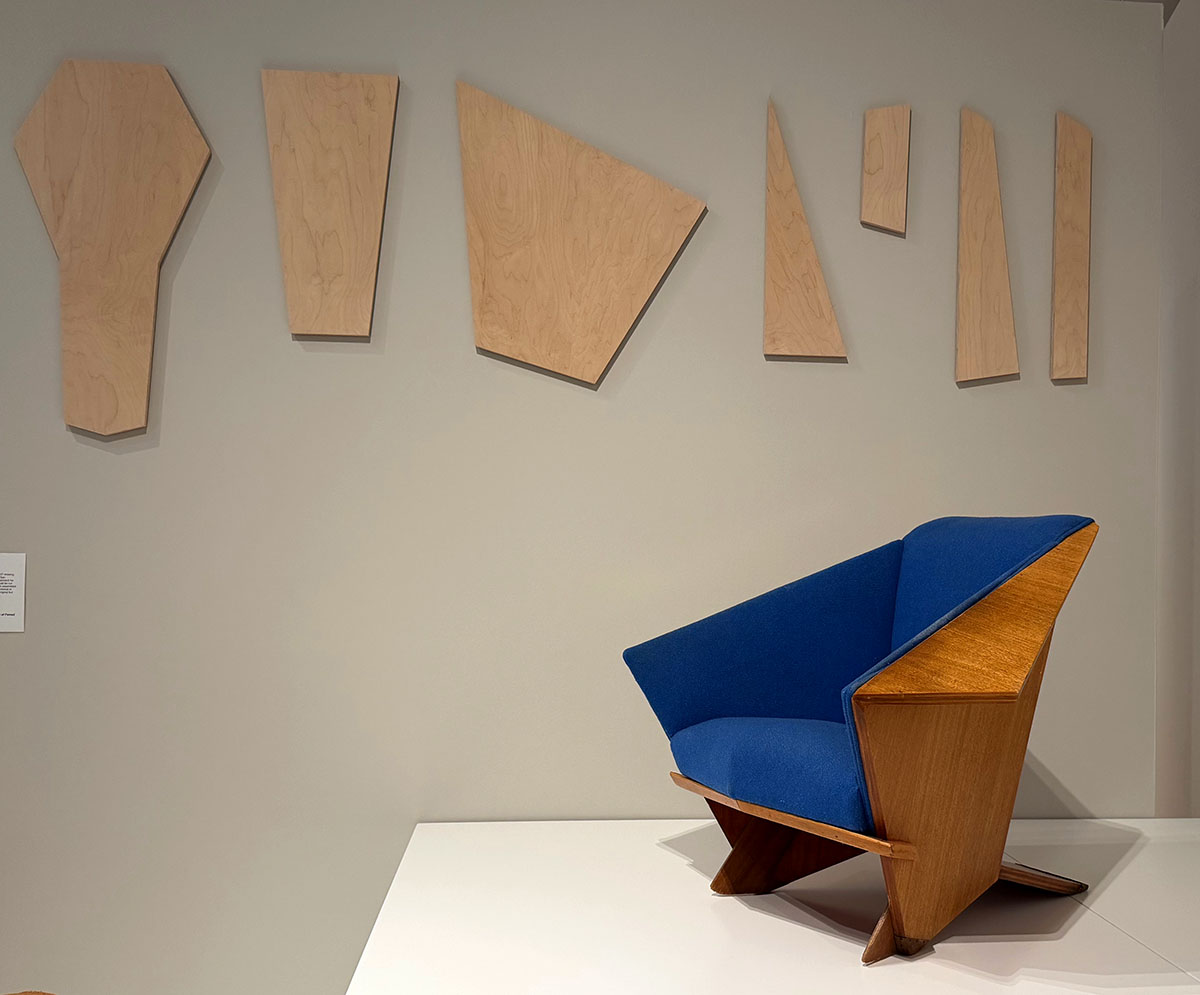
Above, Ten pieces make up the famous “Origami” Armchair for Taliesin West, Scottsdale, Arizona, designed 1946
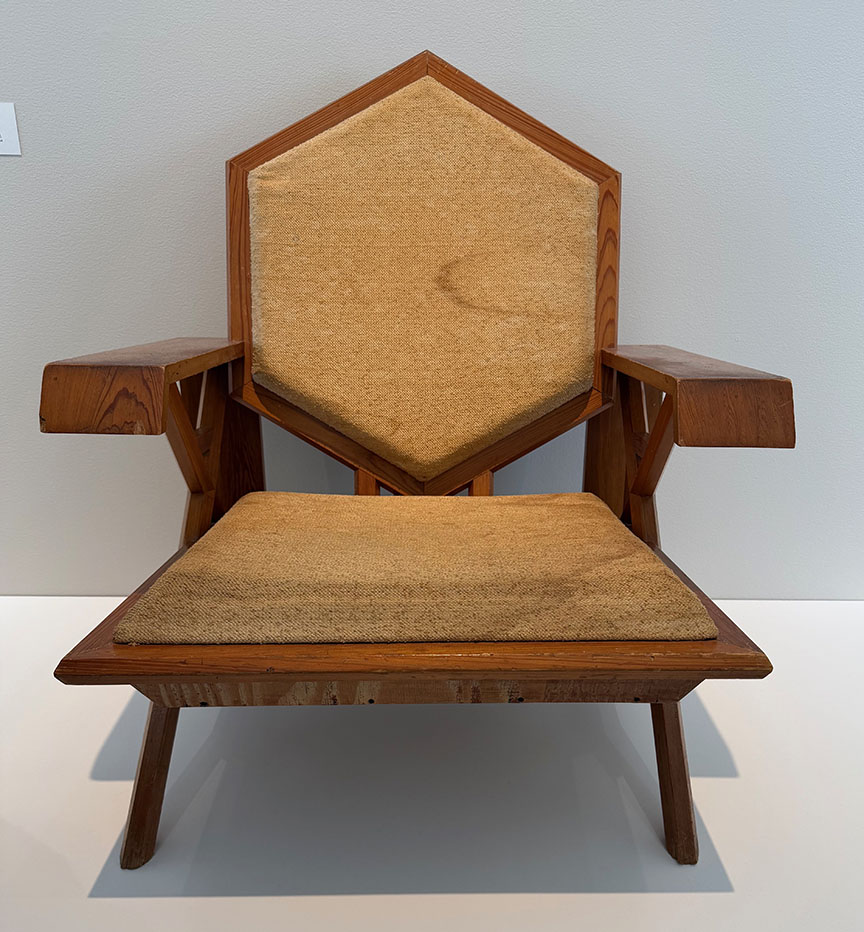
Honeycomb Lounge Chair, Prototype for Heritage–Henredon, Henredon Furniture Co., Morganton, North Carolina, designed c. 1955
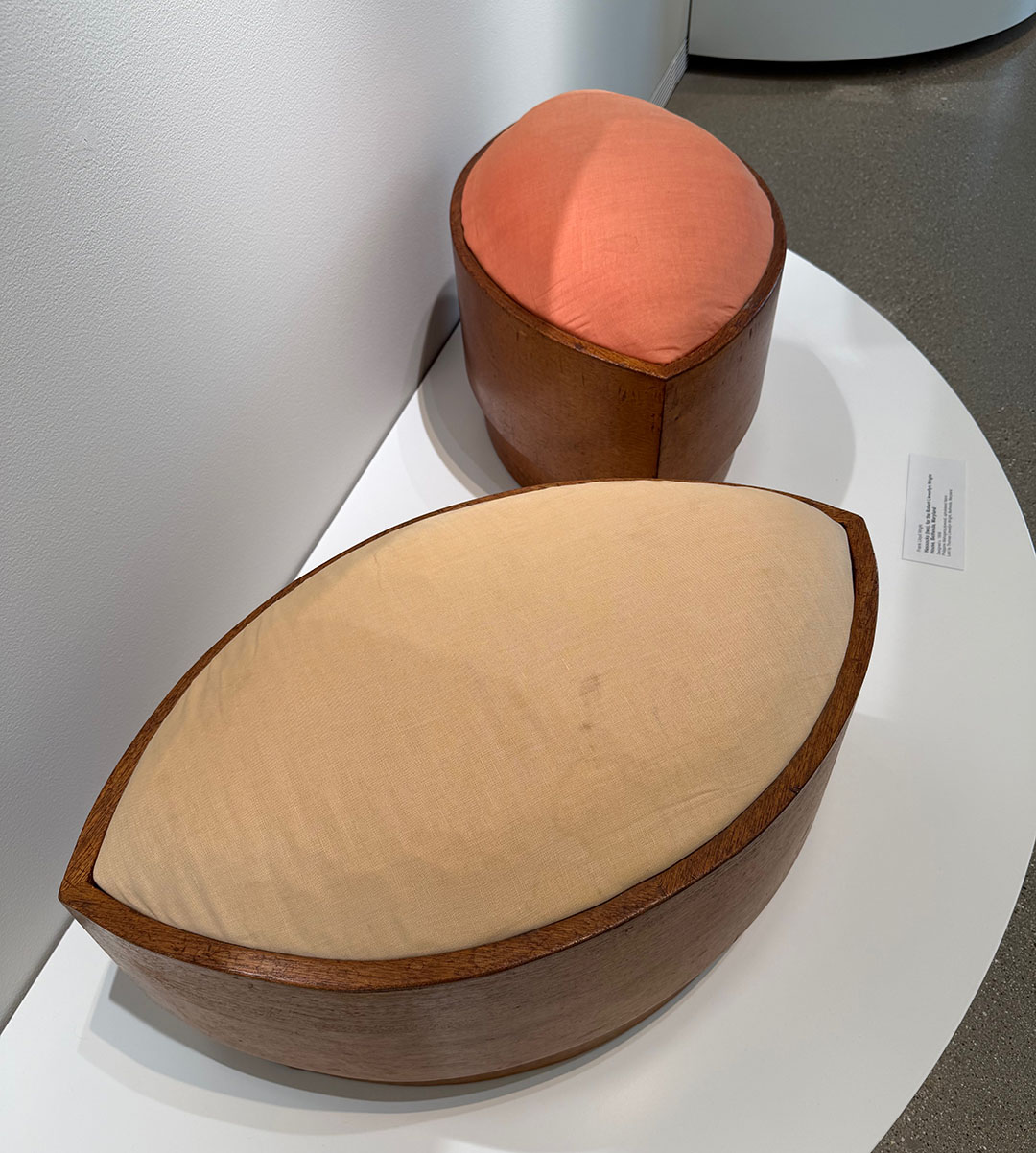
Again, furniture echoes the design of the house…here are hassocks for the Robert Llewellyn Wright House, Bethesda, Maryland, designed c. 1957–58
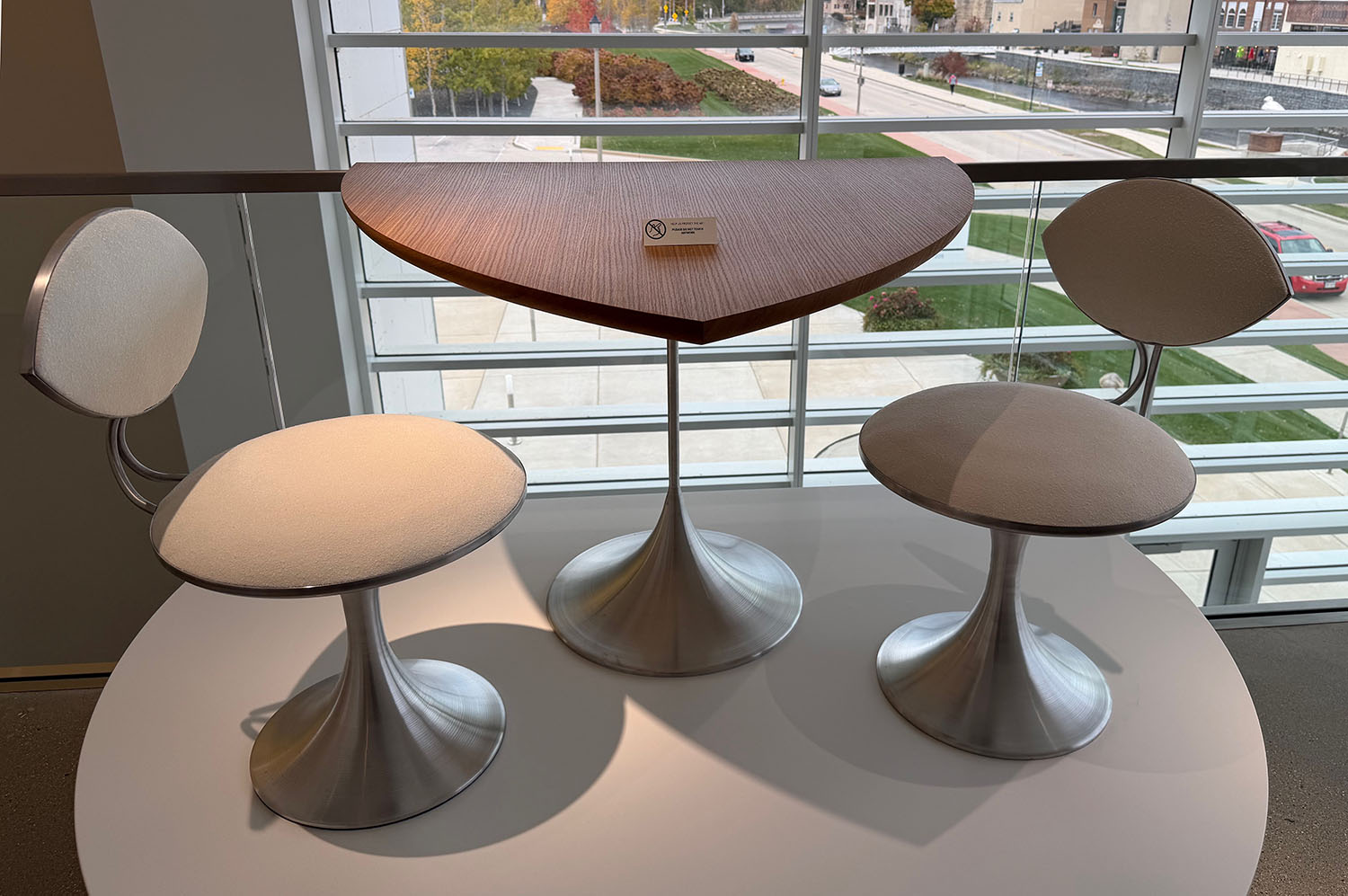
Café Chairs and table for the Solomon R. Guggenheim Museum, New York, designed c. 1957; fabricated 2025 by Butler Metal Spinning Corp.
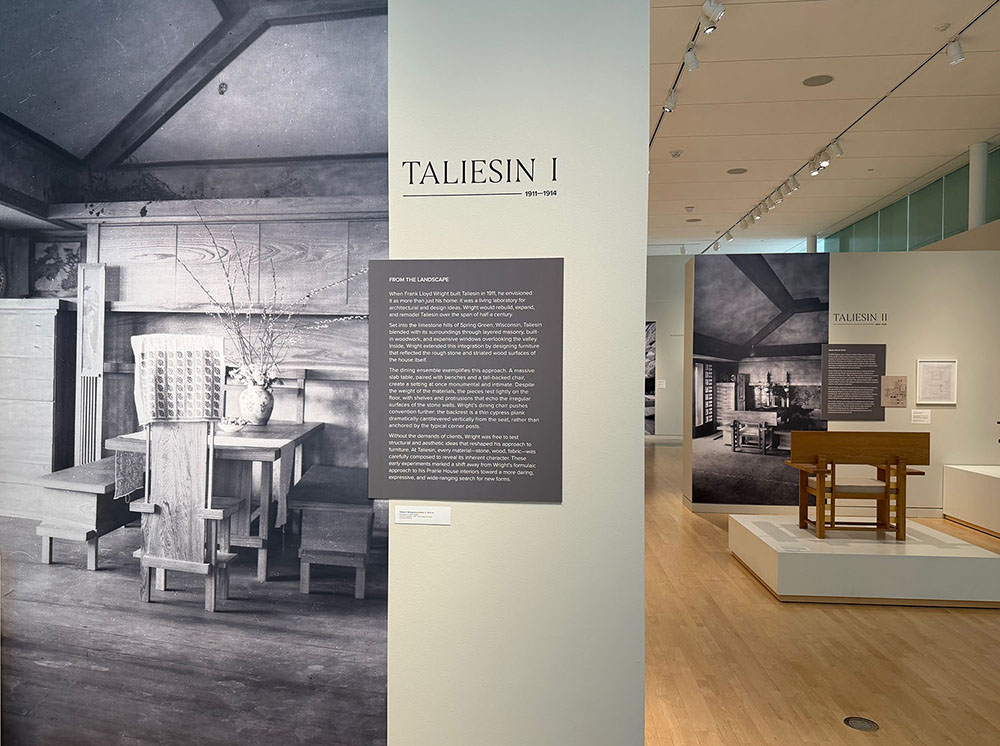
The museum partnered with the Frank Lloyd Wright Foundation to develop the exhibition. The 30 extant pieces were lent by 15 institutions and homeowners, integrating Wright’s furniture with his architecture. Szolwinski said there were three obstacles faced by the curators, “Time, money, and space.” The fabricators of the new pieces were sometimes challenged by ambiguities in the drawings. Using Taliesin as “a lens to see what [Wright] did” the curators looked for lesser known designs, eschewing, for example, the well known pieces designed for the Larkin Building and the SC Johnson Administration Building. Wright designed more flexible furniture beginning in the 1930s, as his house designs became smaller with the leap from Prairie-style to the Usonian designs. This was also some of the earliest use of construction plywood, “It was thin, but strong, and affordable.”
Further reading: I have presented only an overview of this important exhibition. I highly recommend the exhibition book published by MOWA. It is written by Szolwinski and Vogel, with the assistance of Jennifer Gray of the Frank Lloyd Wright Foundation. She is Vice President of the Foundation and Director of the Taliesin Institute:
The Winter 2025 issue of the Frank Lloyd Wright Quarterly is devoted to “The Evolution of Frank Lloyd Wright’s Furniture: and has four important articles. The Quarterly is available only to members of the Frank Lloyd Wright Foundation. Follow this link to join: https://franklloydwright.org
Please scroll down for earlier posts on this website.





 The dining room set from the Malcolm and Nancy Willey House in Minneapolis