© Mark Hertzberg (2026)
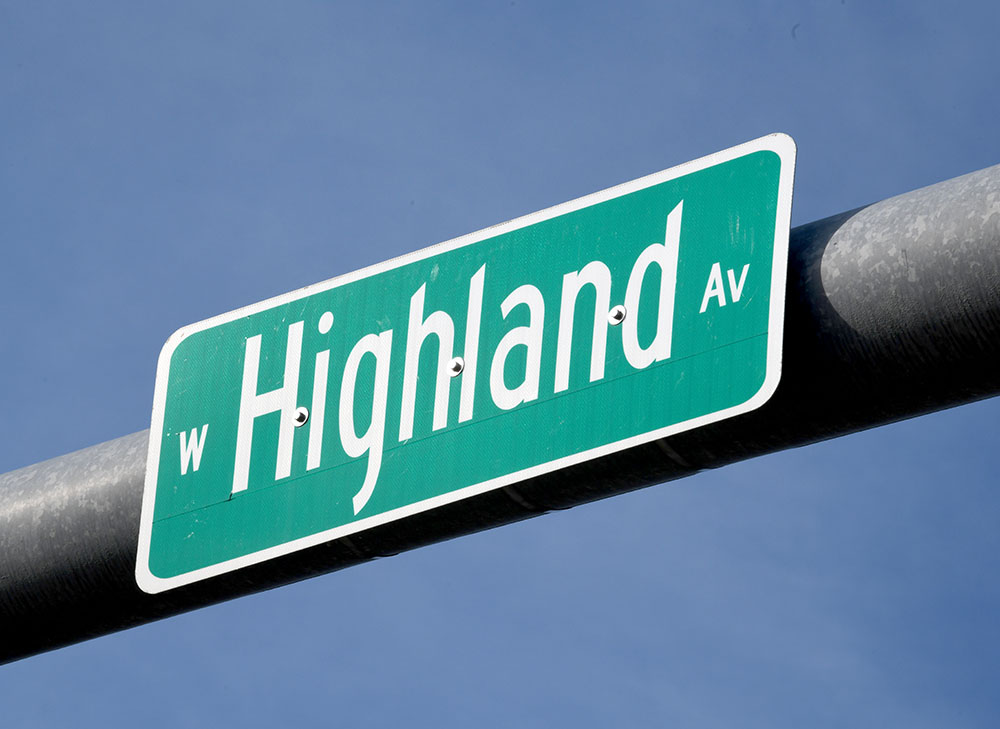
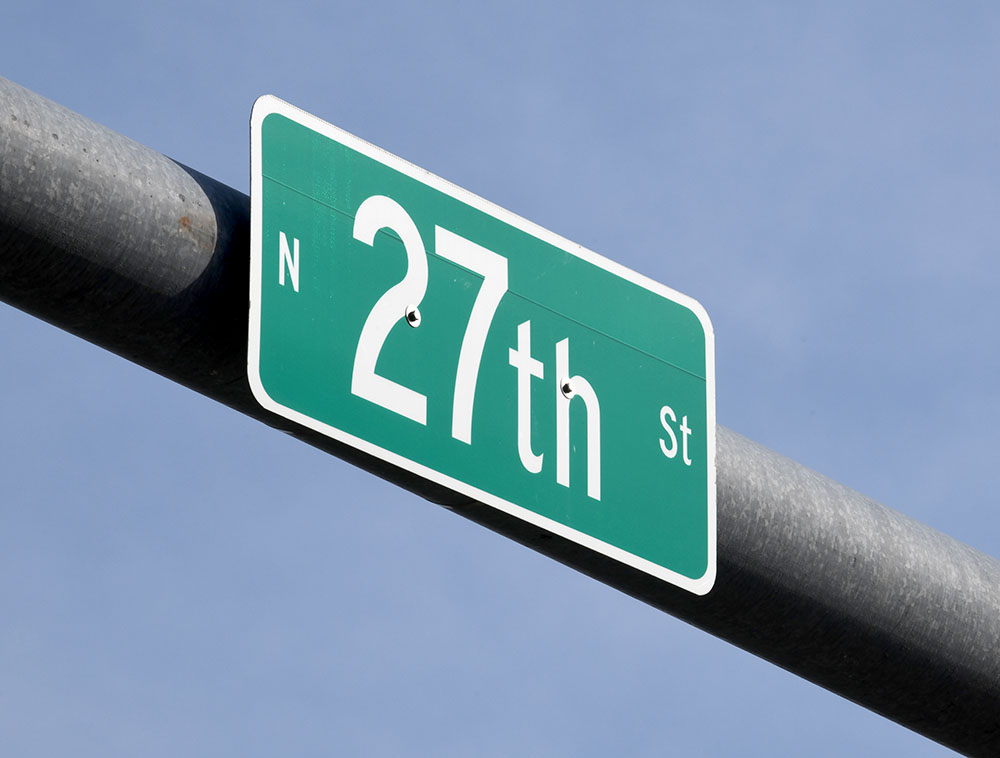
CLICK! Robert Hartmann stood on the northwest corner of W. Highland Avenue and N. 27th Street in Milwaukee and wound his Minolta Autocord twin lens reflex camera to take a second picture. CLICK! Two photos and he was done. Hartmann, who was working for the Chief Designer of a local architectural firm, was unknowingly recording history that day, sometime between 1968 and 1972.
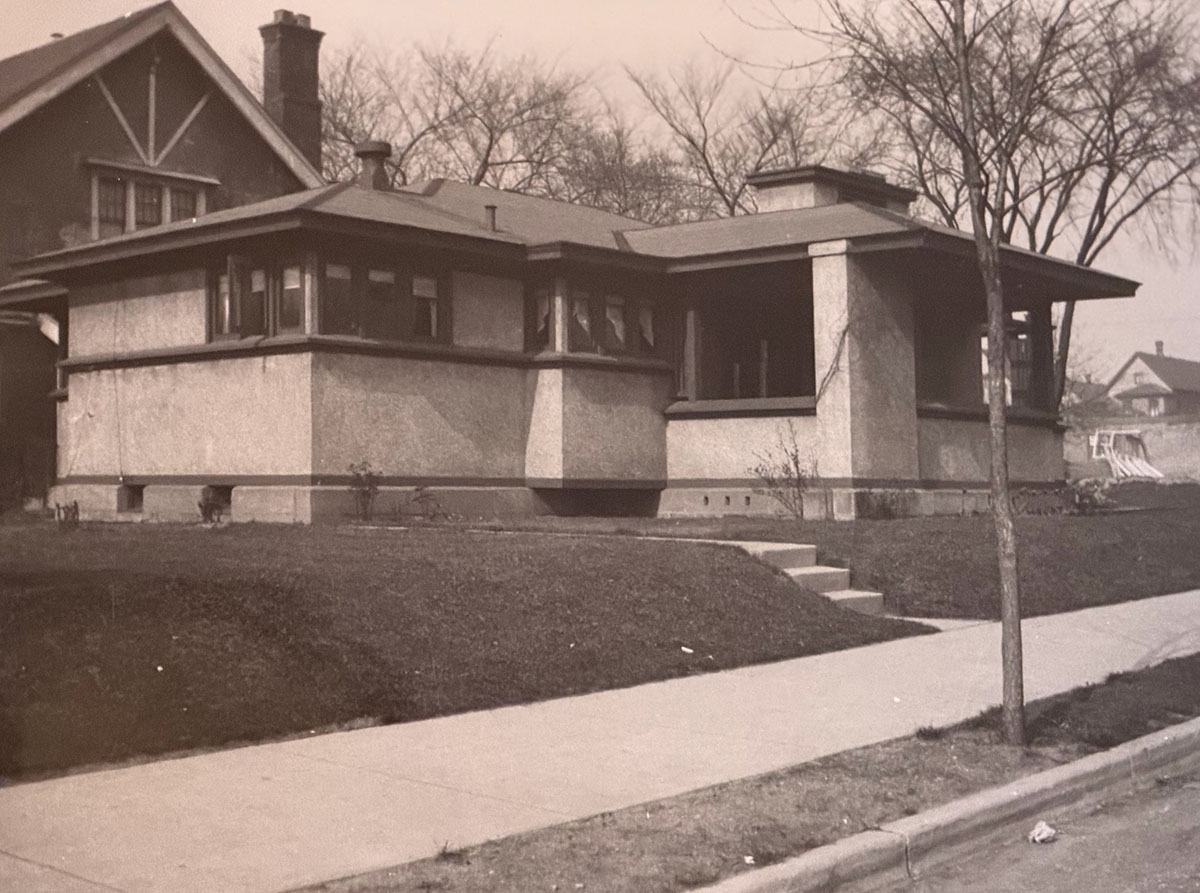
Those two photographs, on Kodak’s Verichrome Pan black and white film, are almost the only graphic evidence that remains of Frank Lloyd Wright’s Arthur Munkwitz Apartments which were demolished in 1973 or 1974 (there are conflicting published reports about the year).
They were demolished in the proverbial name of Progress, so the City of Milwaukee could make a new right turn lane from westbound Highland onto 27th Street.
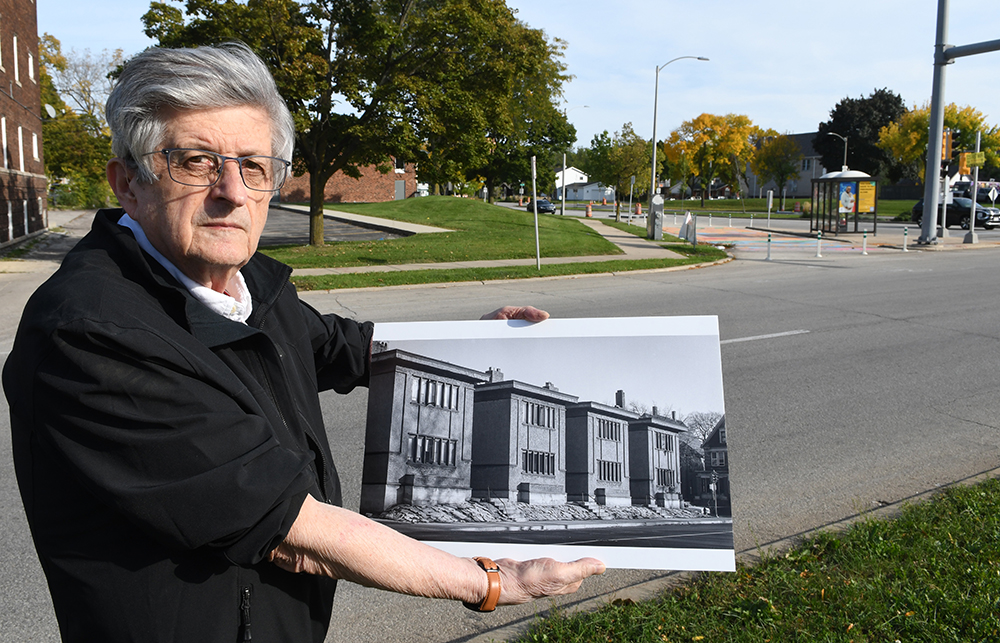
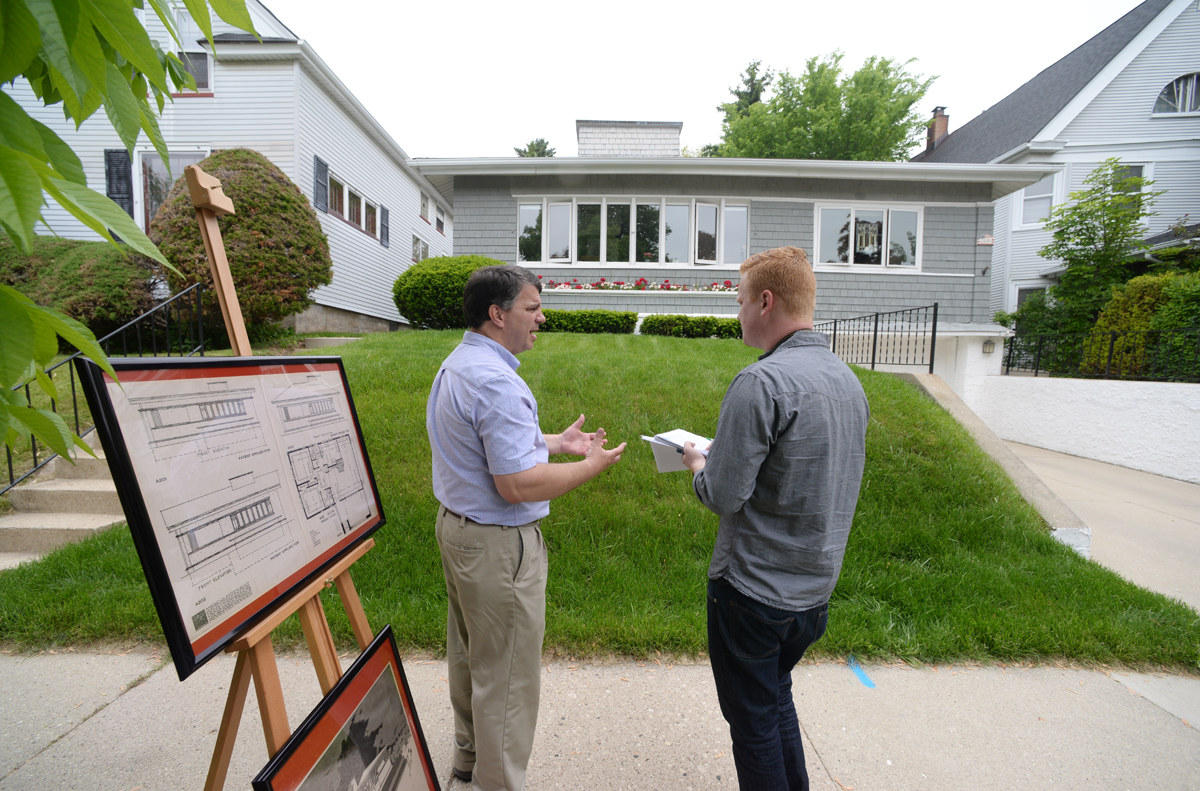
Hartmann recently returned to the very spot where he had taken those photos, with an enlargement of one of them. Behind him, across the street, is the empty lot where the Munkwitz Apartments once stood.
The Munkwitz Apartments were two separate buildings, with four apartments each. They were part of the American System-Built partnership between Wright and Arthur Richards. (See previous posts on this site about the American System-Built homes on the “Burnham Block” elsewhere in Milwaukee: https://wrightinracine.net/2026/10/15/progress-on-the-burnham-block-chapter-5-october-15-2026/
According to an article in the May 14, 1972 Milwaukee Journal “The site is needed for a right turn lane to bypass a traffic signal so cars can turn more quickly from Highland onto 27th…State highway officials and city engineers, who designed the proposed intersection, say it is necessary to handle increased traffic flow.” Even if the new turn lane were not built, the “site would be needed to rectify the misalignment of Highland at 27th.”
Opinions were mixed as to whether the Wright buildings should be saved or not. Richard W. E. Perrin, historic buildings preservation officer for the Wisconsin Chapter of the American Institute of Architects and a city development commissioner when the new intersection was designed, was not in favor of saving the buildings. “The mere fact that Wright designed it doesn’t throw a halo over it. He, as any other architect, is capable of certain mediocrities and this is one of them. Even though tearing it down would be regrettable, I would not regard it as an irreplaceable loss.” Other members of the AIA chapter, notably the late Brian A, Spencer, tried to save the buildings. He even suggested that the apartments could be moved. Hartmann thinks the apartments would have been wonderful student housing for Marquette University, just a mile away.
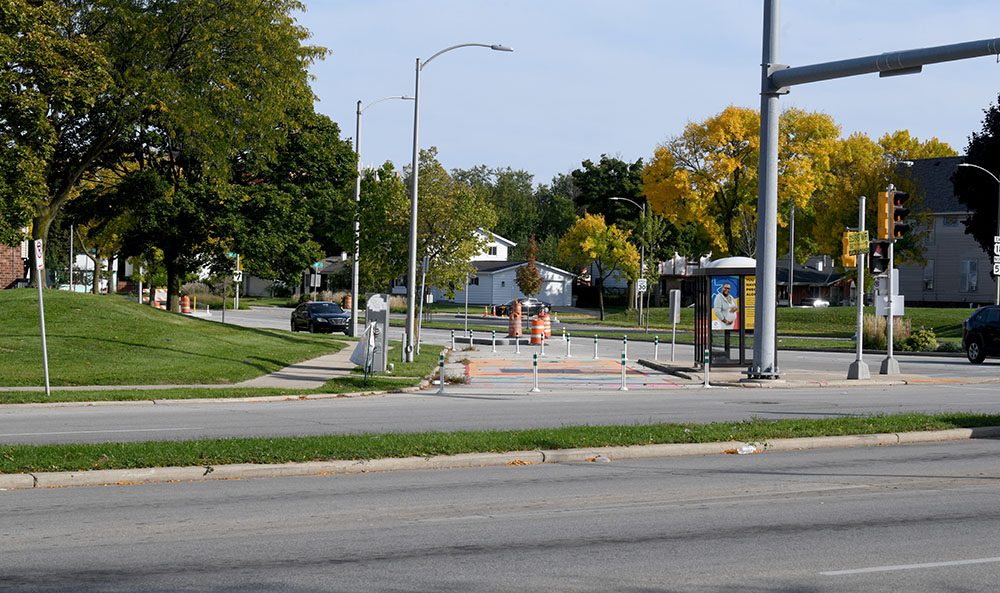
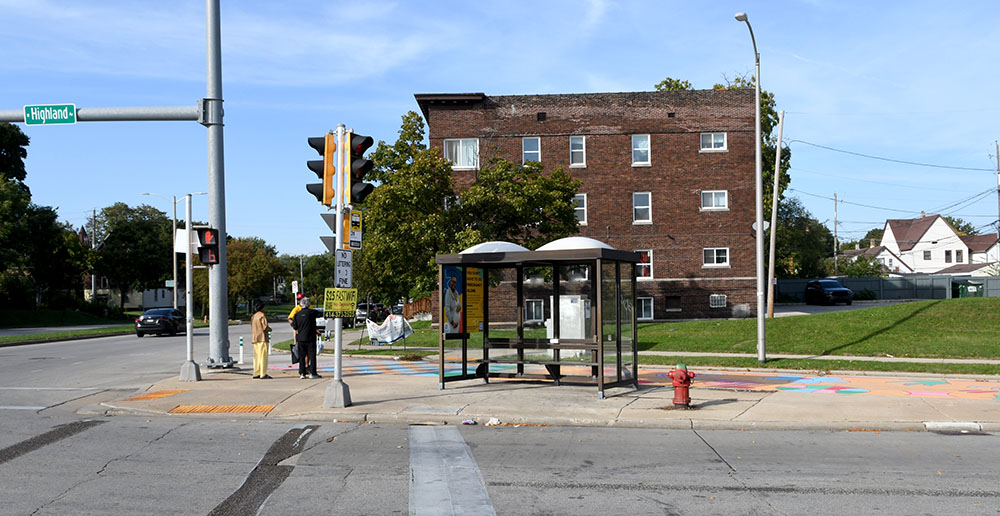
The right turn lane? “Oh, never mind, sorry Mr. Wright, but our thinking about the need to move traffic quickly has changed. We are now interested in traffic calming.” The right turn lane was blocked off in 2024 as part of the city’s 45 traffic calming measures to deter an epidemic of speeding, measures supported by neighborhood residents:
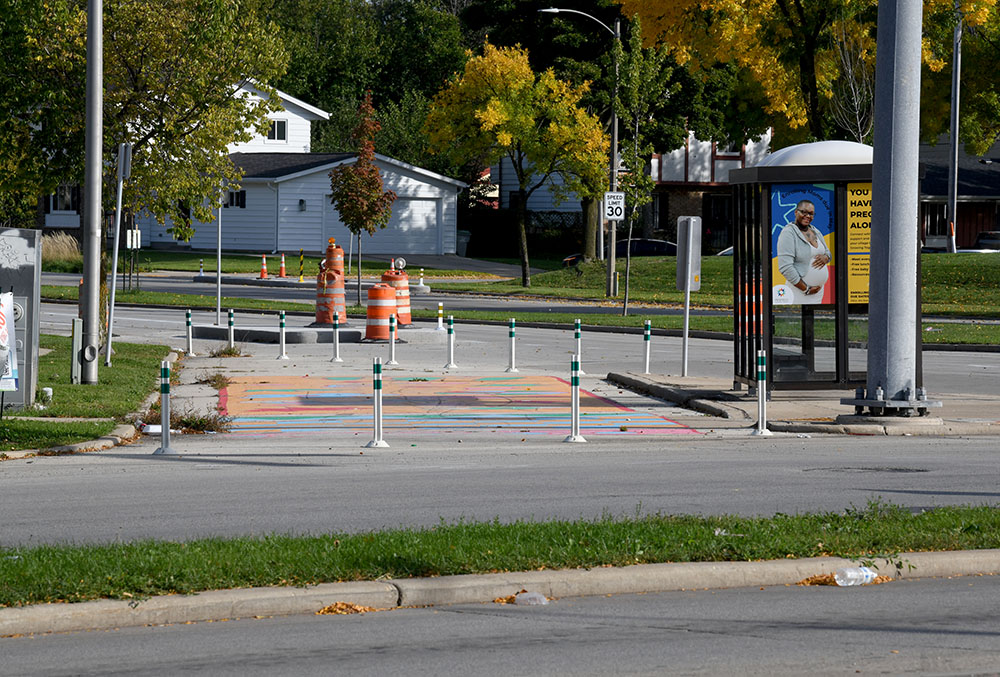
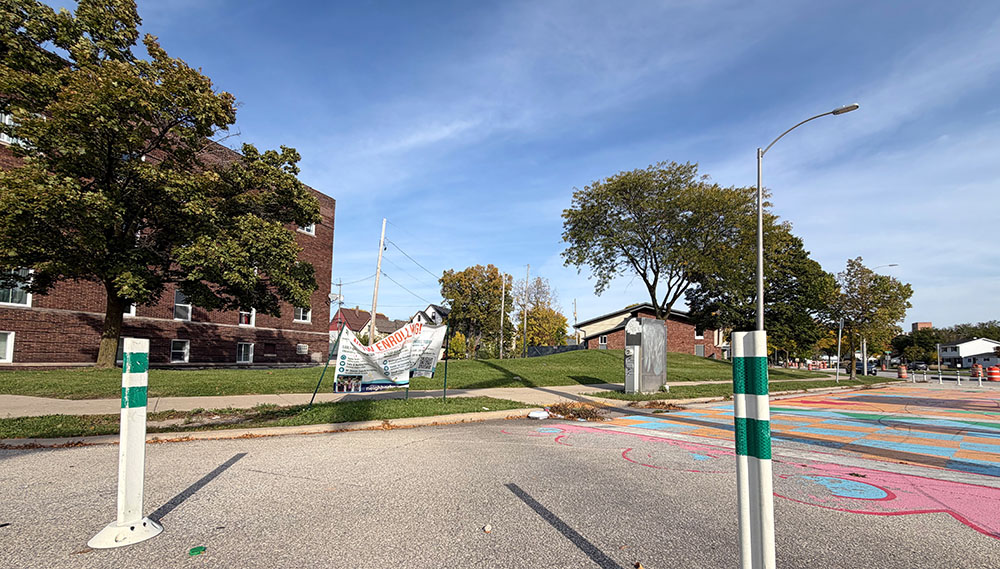
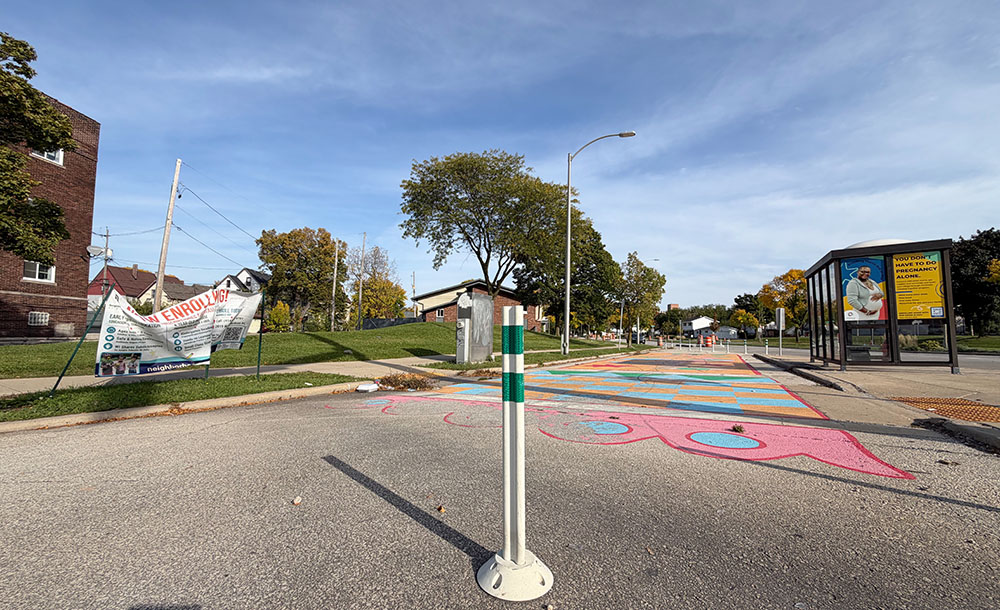
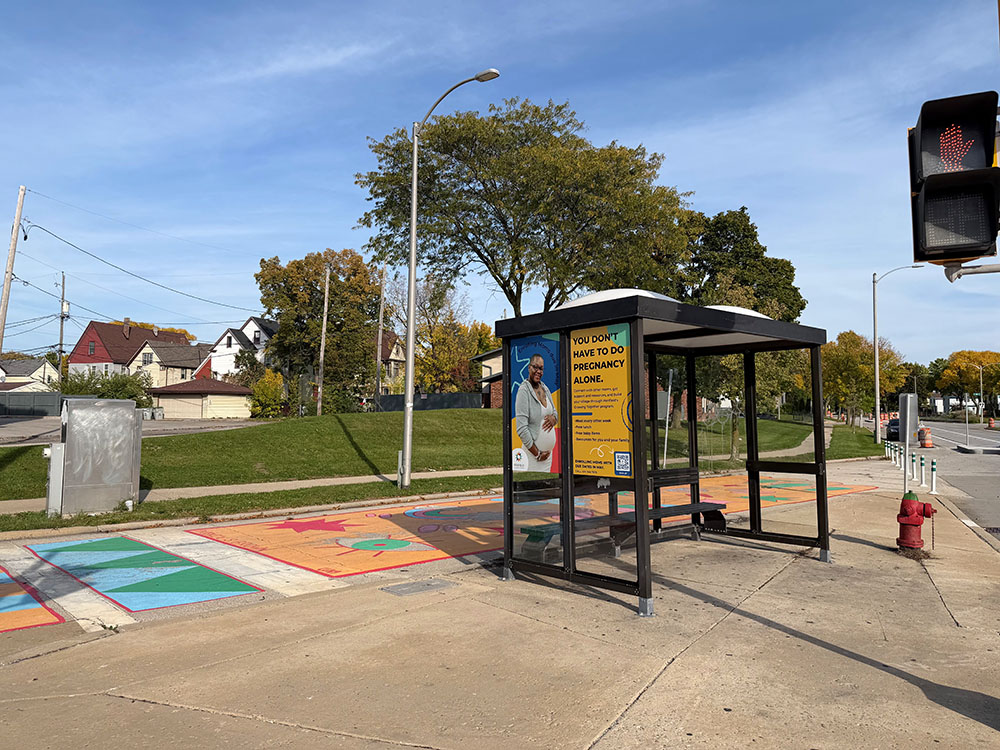
A grant helped make possible a colorful mural in the former turn lane:
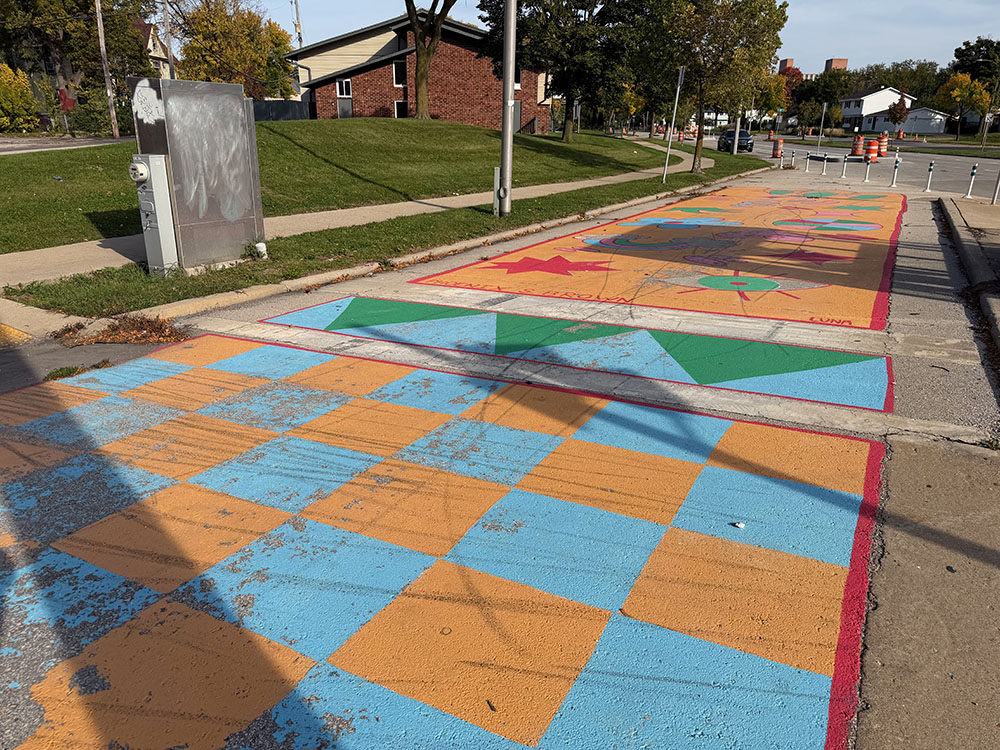
It is impossible to undo the damage done to this example of Wright’s commitment to affordable housing 50 years ago, but it would behoove the City of Milwaukee to put a historic marker sign with one of Hartmann’s photos on the site, lest no one remember. The city got a grant for the mural. Surely there is one for a proper marker.
Hartmann, who drove his blue and white Citroen DS19 to the site, was working for Mark Pfaller and Associates in suburban Wauwatosa when he took his photographs of the Munkwitz Apartments. “I knew it was there and a Frank Lloyd Wright… and my father would point it out to me. There were then rumors about possible loss of the building so I made a serious effort to get over there.” Why should you care about where he worked? Well, Pfaller and Associates was ready to design the new Annunciation Greek Orthodox Church in Wauwatosa when Christ Seraphim, a board member, wondered why Frank Lloyd Wright had not been considered. The board met with Wright. At one of their meetings he took the saucer from under his coffee cup, turned it upside down, and placed it over the cup, “This is your church.” Pfaller lost the commission to Wright.
Links:
For more about Robert Hartmann:
https://wrightinracine.net/2026/07/26/racines-secret-is-revealed/
For more about Frank Lloyd Wright’s Burnham Block:
http://www.wrightinmilwaukee.org
Please scroll down for previous posts on this site.
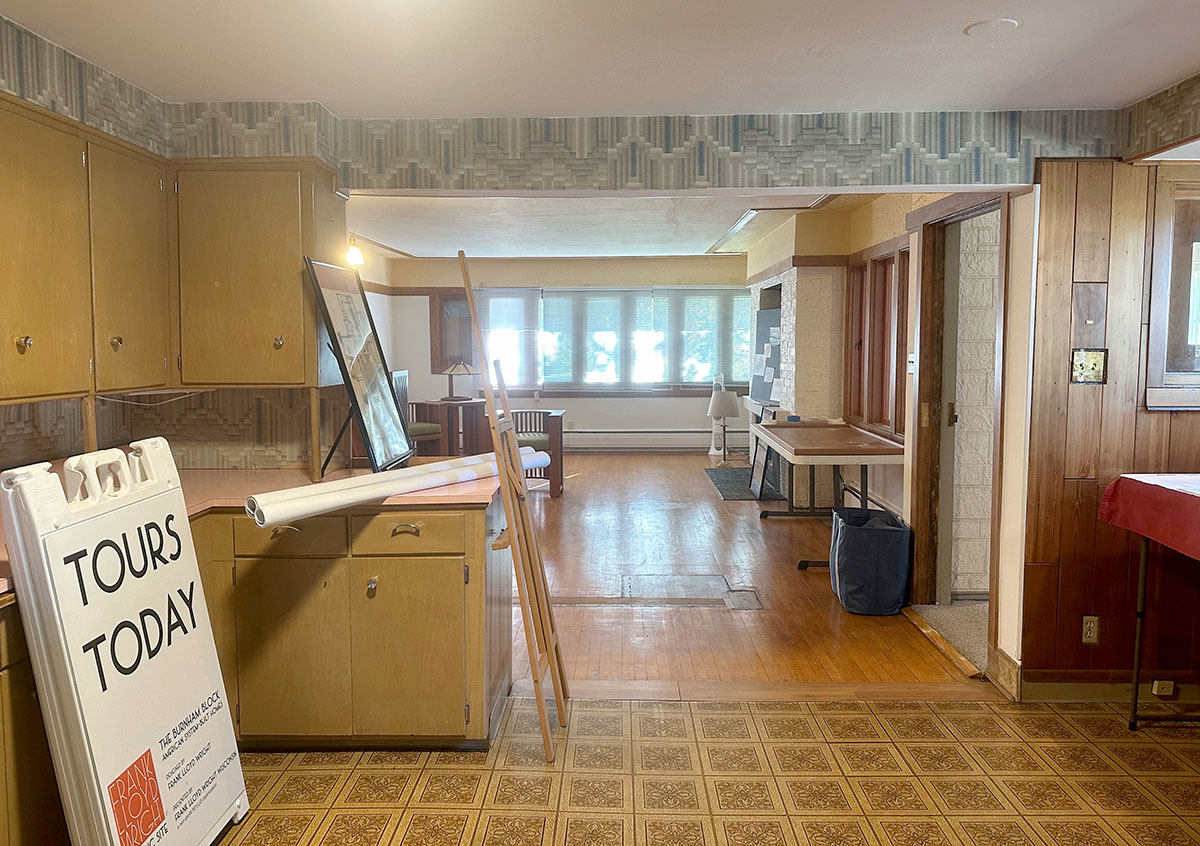
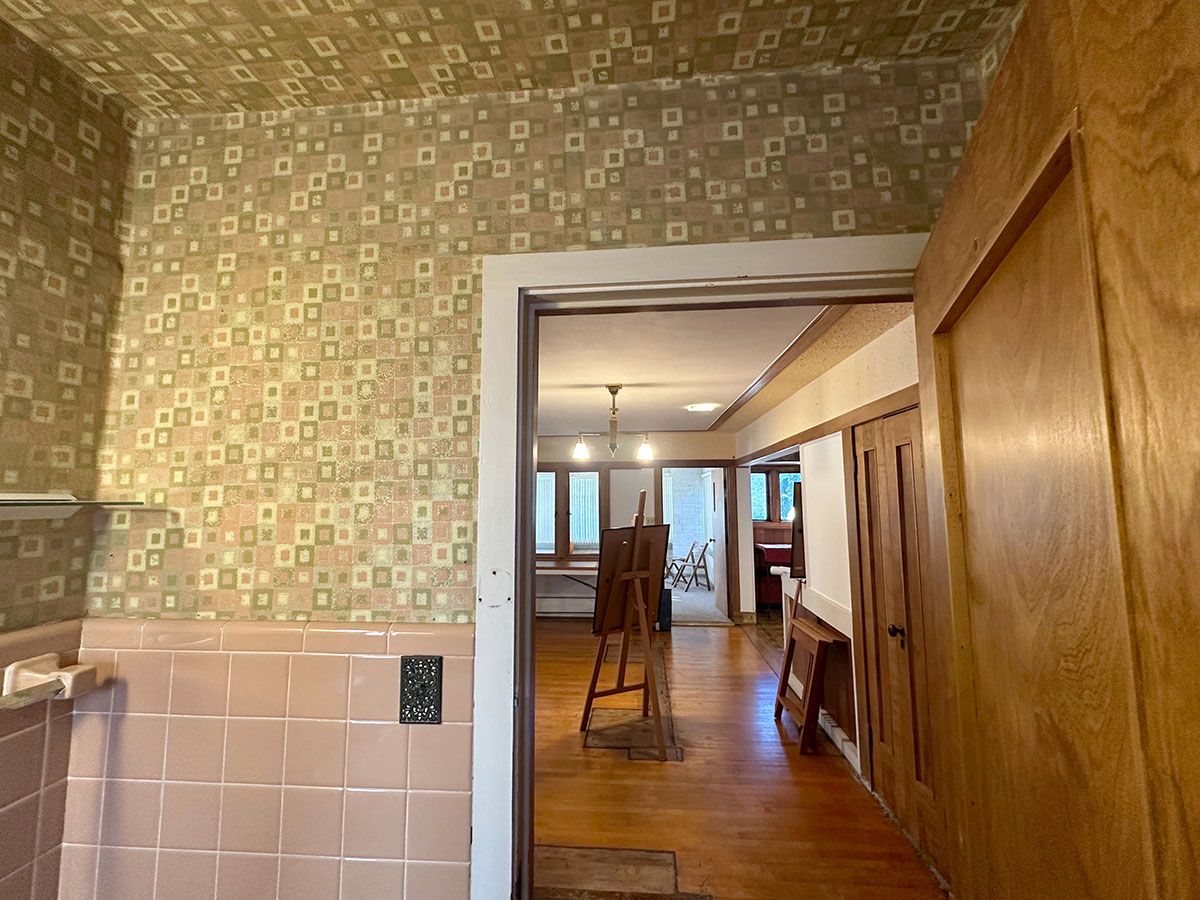
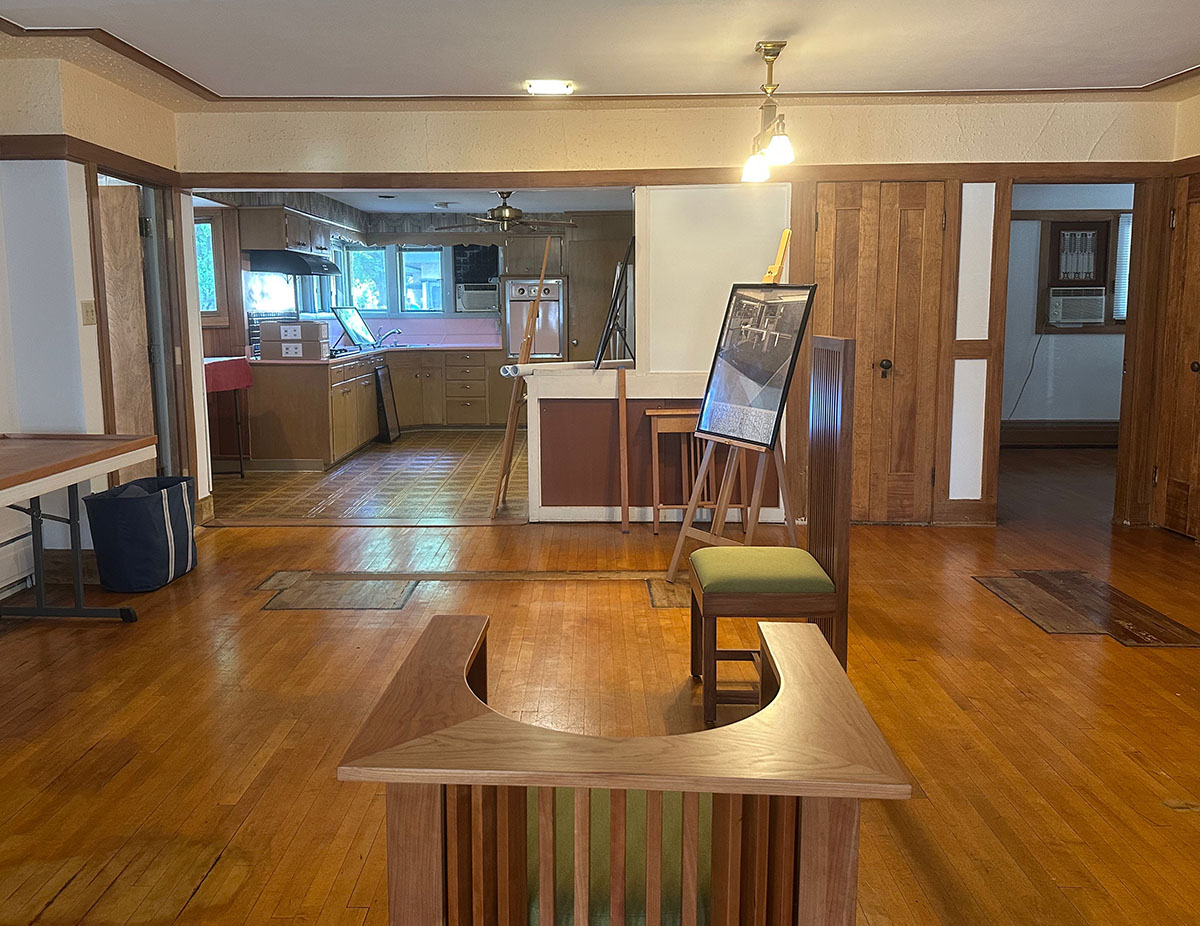
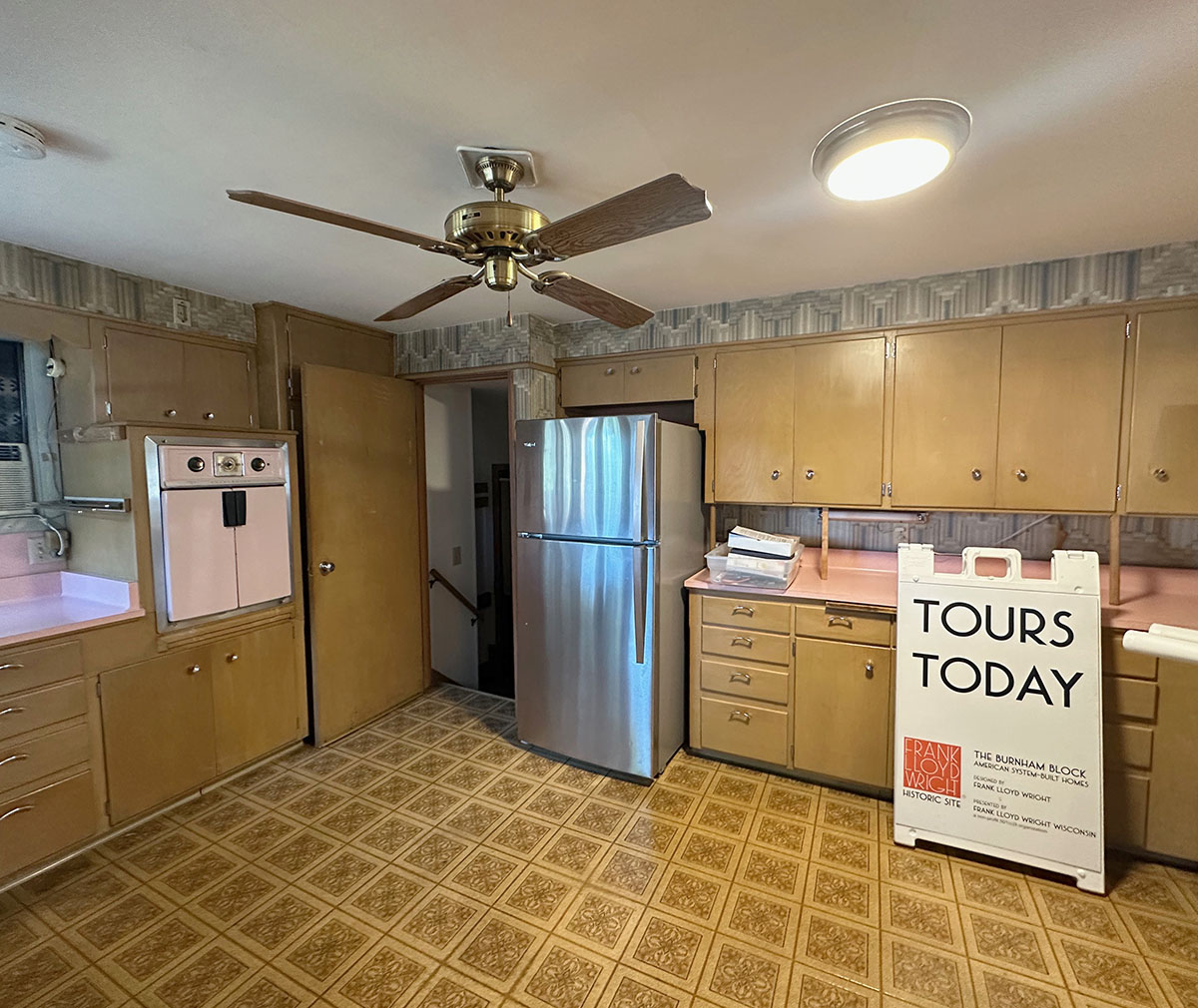
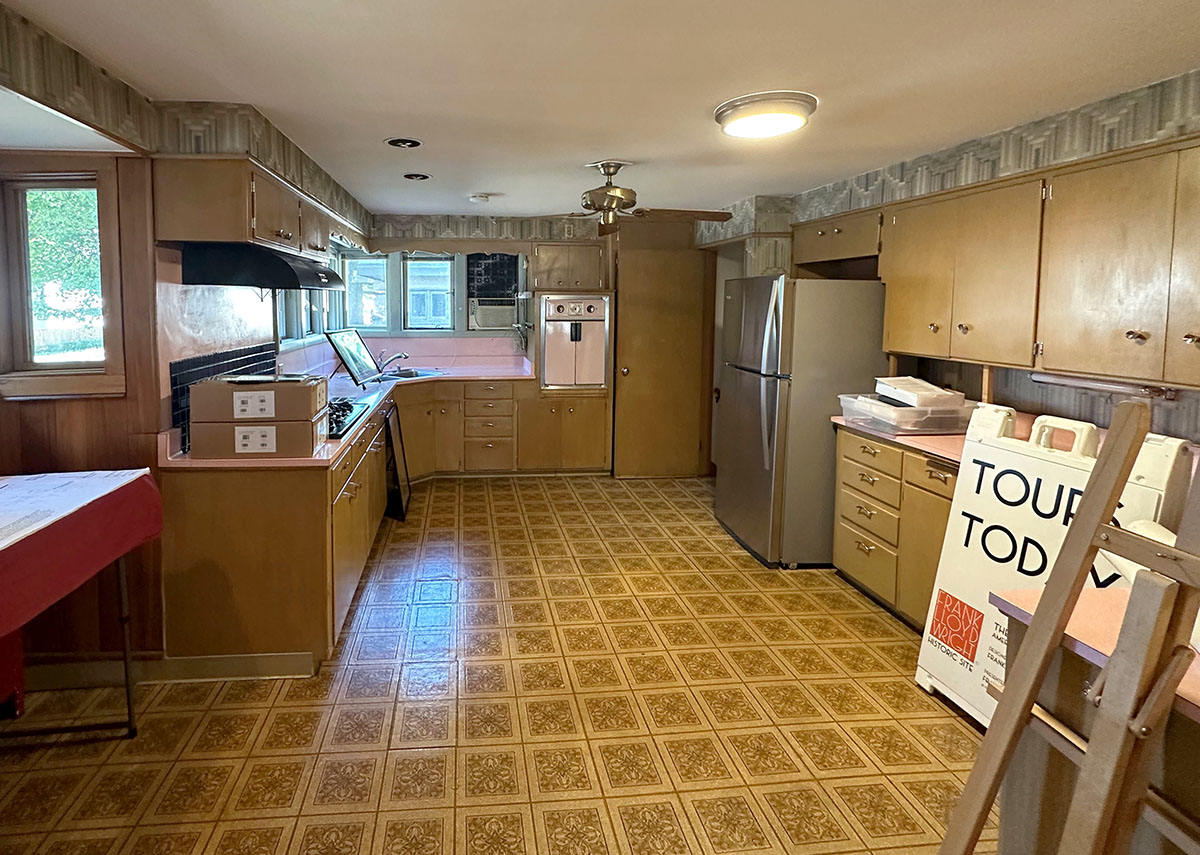
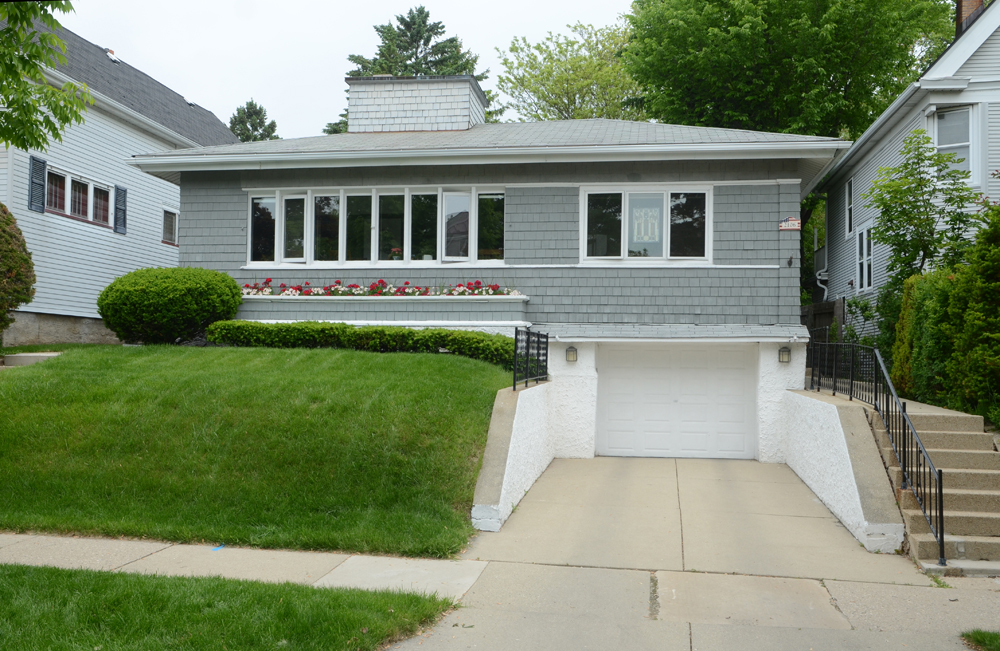
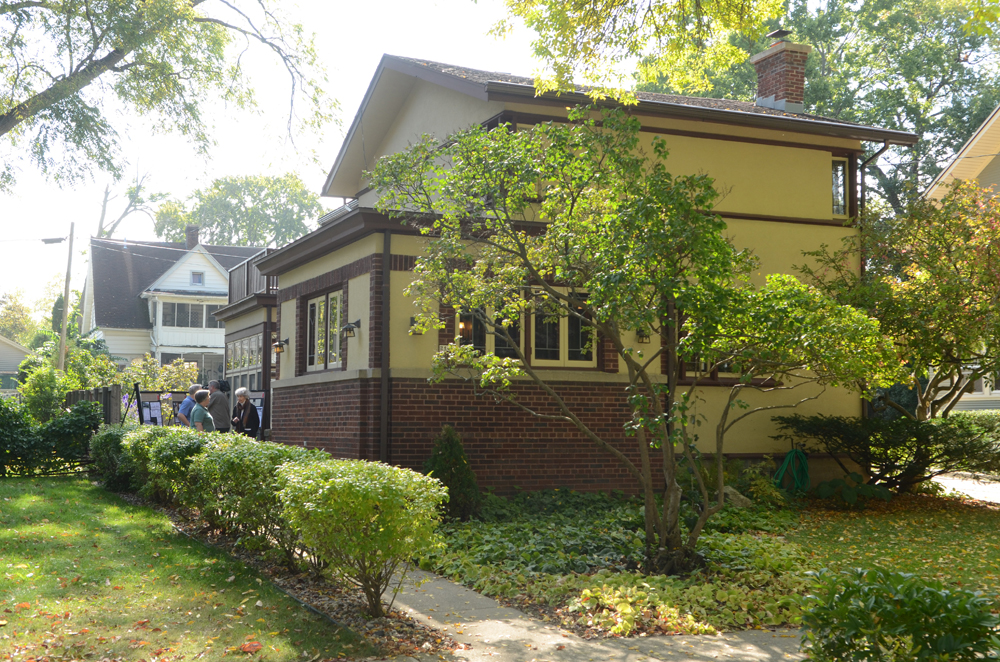
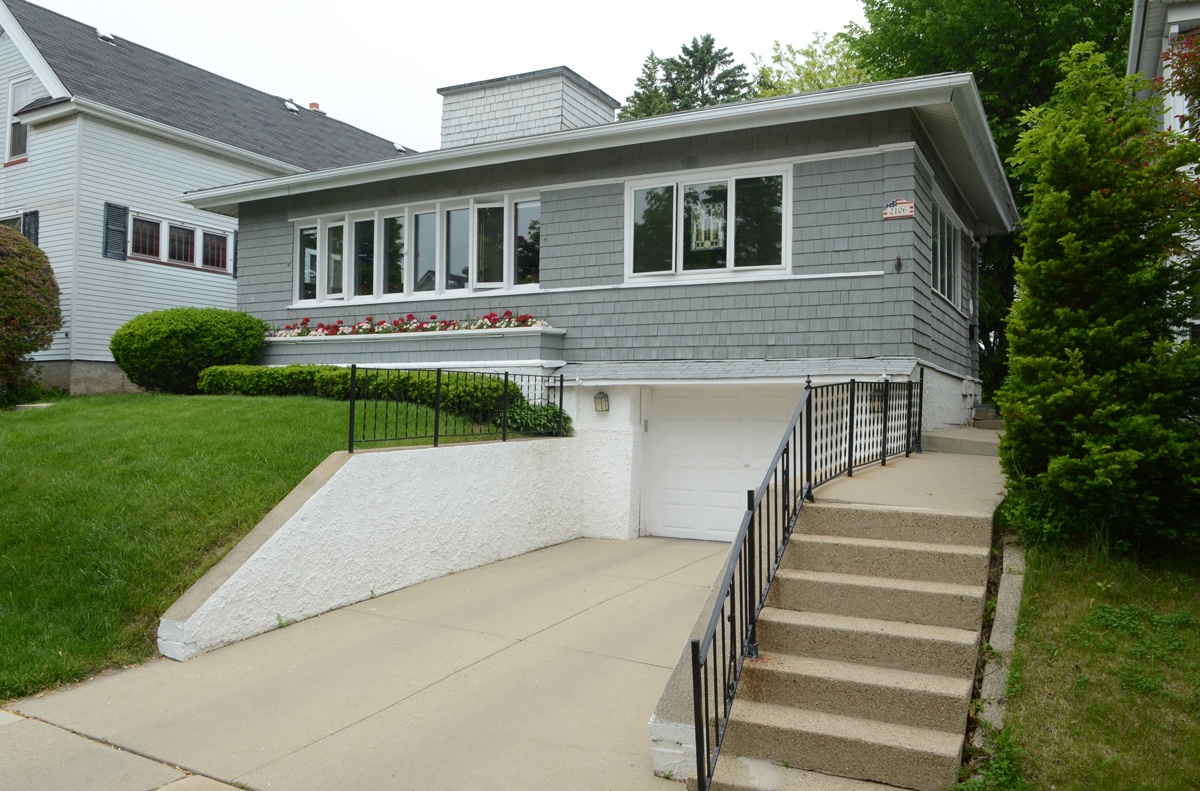
 This photograph shows one of the two single family homes (the Model B1) and the four duplexes. The Model C3 single family home, below, sits to the right of the B1.
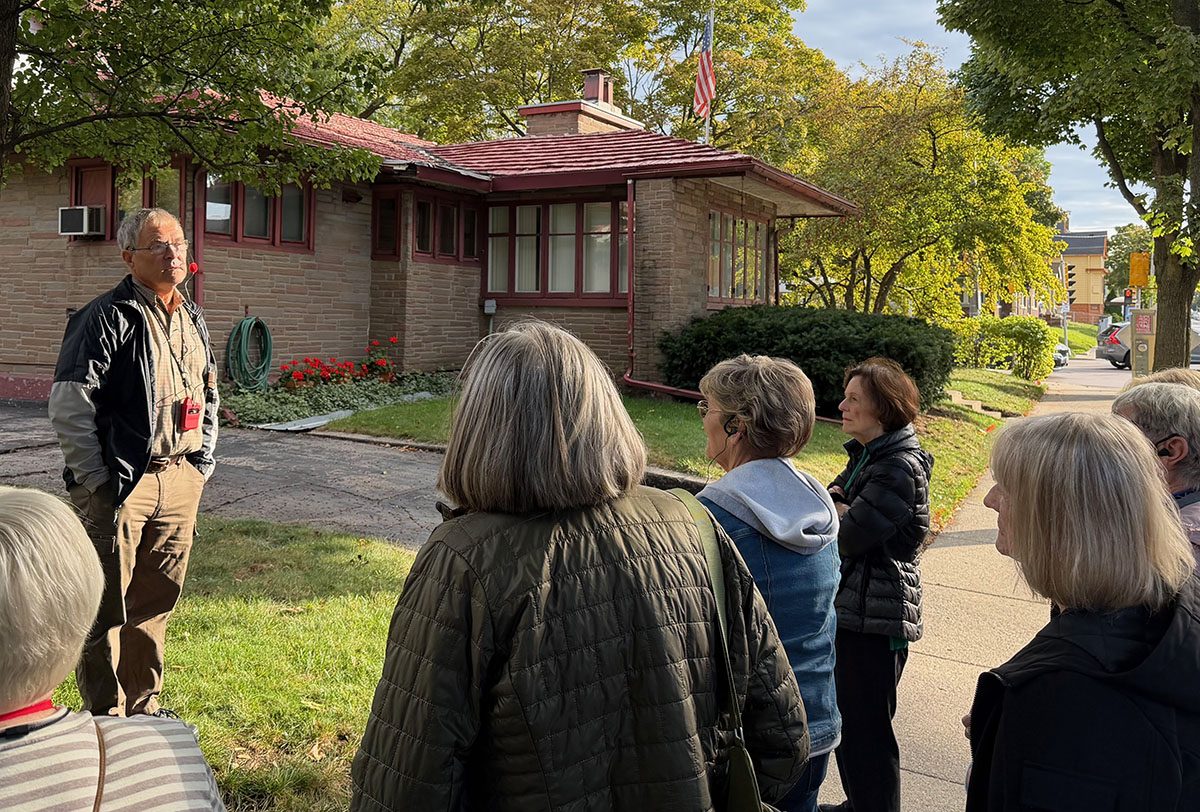 Docent Bill Schumacher leads a tour of the Burnham Block, including the C3
 Wright in Wisconsin board members discuss their purchase of the B1 in April 2005. Mike Lilek, the driving force behind the Burnham projects, is left. Barbara Meyer Elsner is third from right.

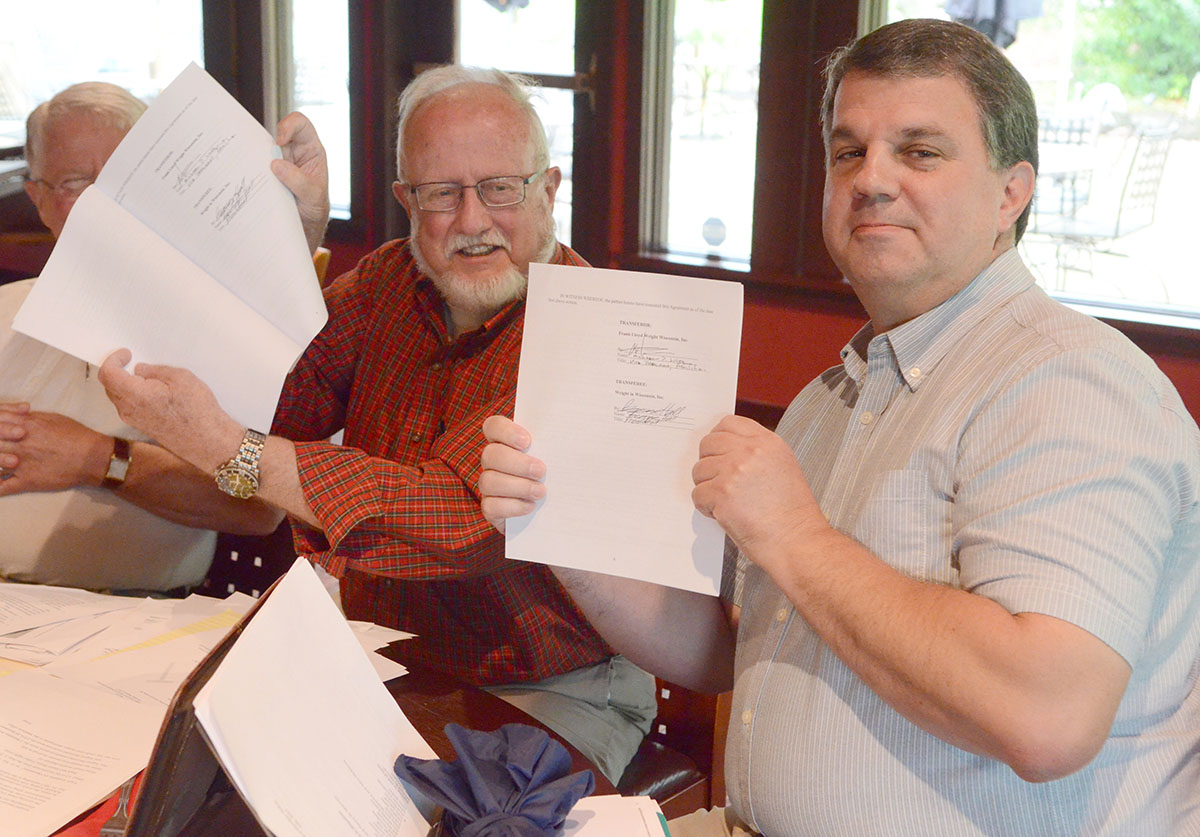 George Hall, left, and Mike Lilek sign the reorganization papers August 3, 2017.