Bob McCoy – Giant of Wright in Mason City, with Addendum

© Mark Hertzberg (2021)

Dr. Robert McCoy, Bob to all of us in the World of Wright, died Sunday in Mason City, Iowa, his adopted hometown. He was 93. If you have visited the Frank Lloyd Wright – designed Historic Park Inn Hotel and City National Bank building in Mason City, Bob is one of the people to thank for it not having been demolished. If you have visited Wright’s Stockman House in Mason City, Bob is one of the people to thank for it not having been demolished. If… well, now you get an idea of why the architectural interpretive center near the Stockman House and the historic Rock Glen neighborhood was named in his honor.
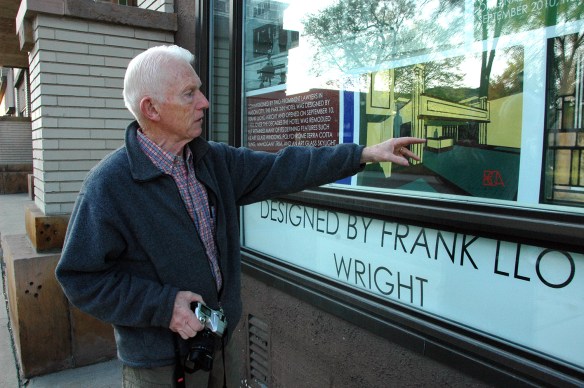
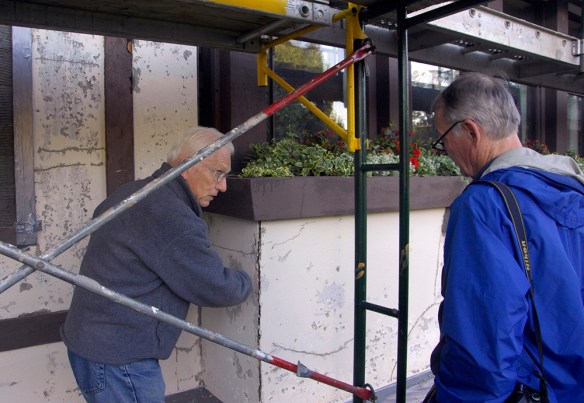
Park Inn McCoy 08 002.jpgMay 16, 2008, Park Inn Hotel

Bob came to Mason City to join an orthopedic practice after school at Northwestern University in the 1950s. I do not recall what spurred his interest in architecture, but in 1968 he published a landmark history of Wright and Walter Burley Griffin’s work in Mason city in The Prairie School Review. Jonathan Lipman, an architect, Wright scholar, and a past board member of the Frank Lloyd Wright Building Conservancy, emailed me, “He was a wonderful man, Utterly humble, very smart, and dedicated.” And of the Prairie School Review manuscript, “It was a work of enormous research from primary sources, including an interview with Barry Byrne and others who were still living. Thorough, readable, and full of surprises. The book simply could not have been written as completely had it been written years later. And at the time that he wrote it, the subject was not of interest to the world. Wholly a work of one man’s passion.” Pat Mahoney, an architect, Wright scholar from Buffalo, and Building Conservancy board member, wrote this about the article, on the Building Conservancy’s “Wright Chat” site overnight: “I have found Bob’s 1968 article to still be one of the most informative pieces written about Mason City architecture.”

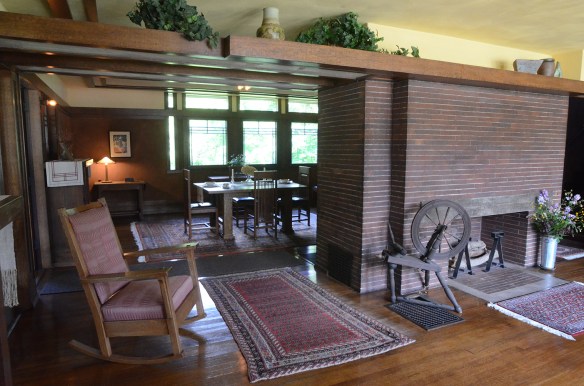
The Stockman House (1908) faced demolition in 1987 when the First United Methodist Church wanted the land it was built on for a parking lot. The River City Society for Historic Preservation was formed, and was able to purchase and move the house to its present location near Rock Glen. The New York Times ran a full picture page of the house move across town. It was restored and is now a house museum:
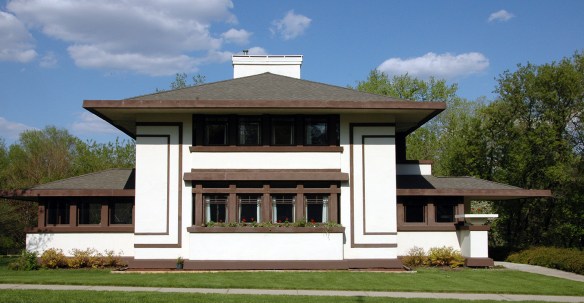
Stockman House 050.jpg

Stockman House 007.jpg

Stockman House 2010 017.jpgBob at the Stockman House, September 11, 2010.

https://www.stockmanhouse.org/robert-e-mccoy

I met Bob in 2004 at the Frank Lloyd Wright Building Conservancy conference in Madison, his camera in hand, as usual.
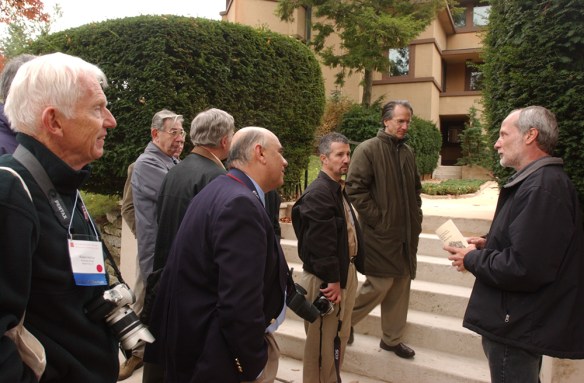
Conservancy Madison004.jpgBob, left, October 13, 2004, at the Gilmore House, Madison

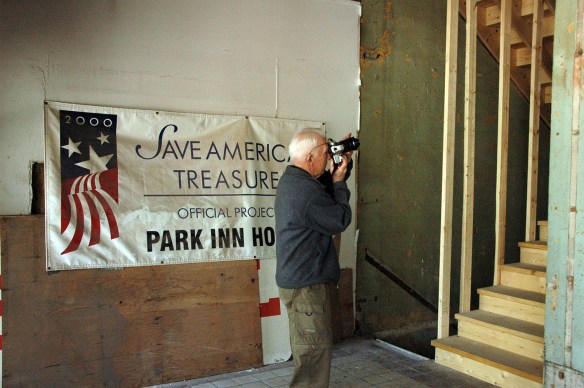
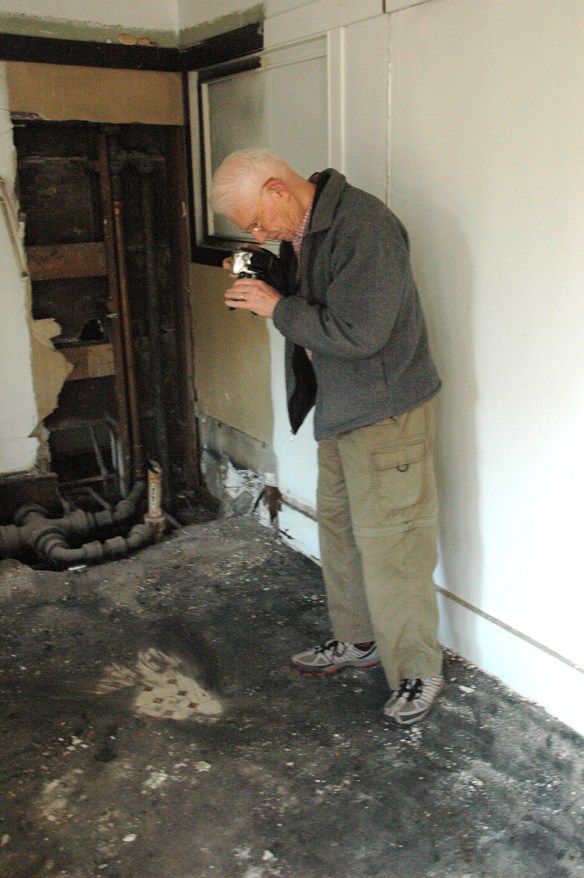
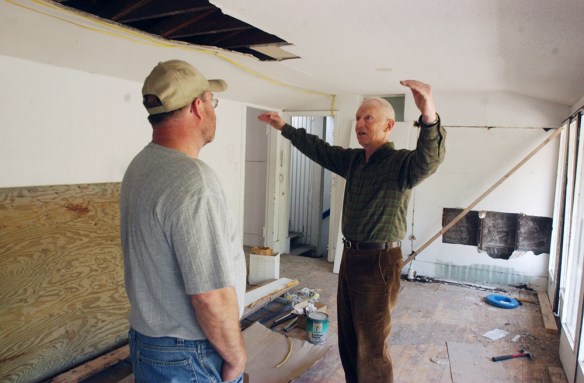
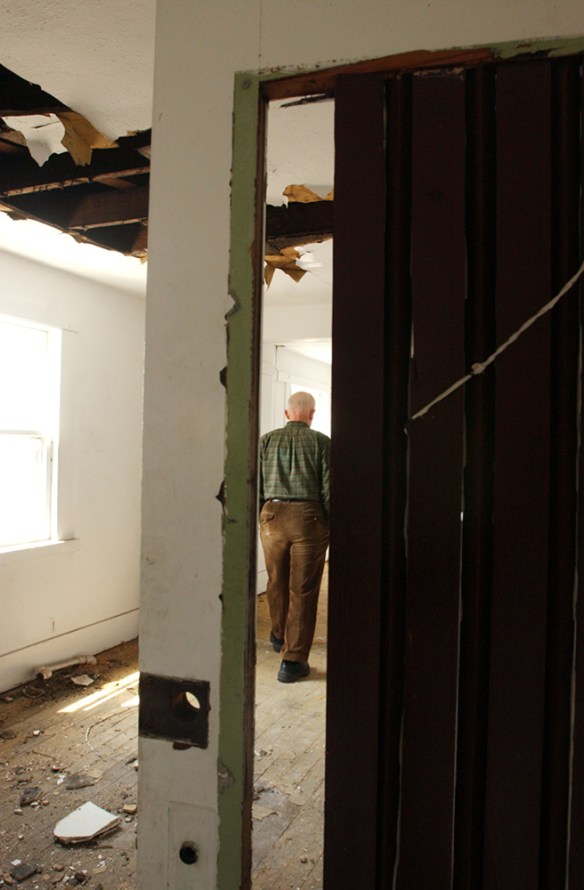
A year later Bob kindly extended an invitation to me to speak in Mason City after my first book, “Wright in Racine,” was published. The derelict City National Bank and Park Inn Hotel buildings were ripe for demolition. How ripe for demolition? The city of Mason City had put them up for sale on eBay a few years earlier. Bob was part of the against-all-odds civic effort to led to their being saved and rehabilitated. He took me through the hotel and bank buildings, at the beginning of their rehabilitation:
Park Inn 2005 009.jpg

Park Inn 2005 018.jpg

Park Inn 2005 020.jpg

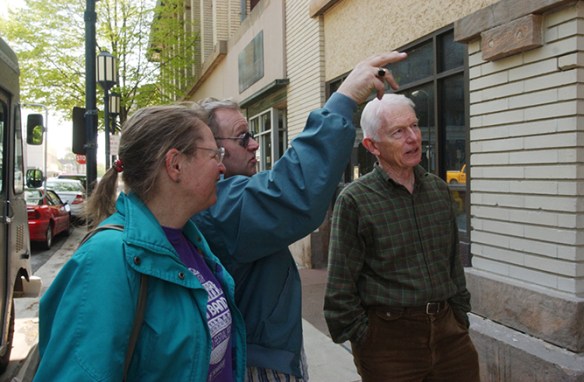
Park Inn 2005 022.jpgBob chats with passersby outside the hotel, May 5, 2005.

My “digs” for my overnight stay? Bob and Bonnie McCoy’s home, the historic James Blythe House (Walter Burley Griffin, 1913) in Rock Glen. Blythe was one of the two men who commissioned Wright to design the hotel and bank buildings in 1908. One of the skylights from the hotel was in the house…unknown until Jonathan Lipman noticed it while staying in the house as a guest of the McCoys. The McCoys made sure it was returned to the hotel.
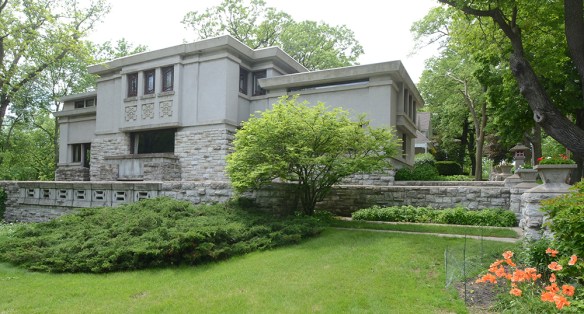
Rock Glen 013.jpgJames Blythe House, June 3, 2013.

Bob extended another invitation to me to speak in Mason city in 2008. This time we were joined on our tour of the hotel and bank building by Ann MacGregor, another important citizen in the grass roots effort to save the buildings. She was later the director of Wright on the Park, the organization which oversees the buildings:
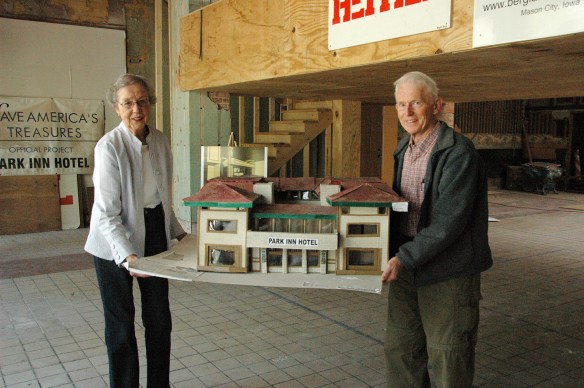
MacGregor McCoy 08 004.jpgAnn and Bob in the lobby of the hotel, May 16, 2008.

MacGregor McCoy 08 009.jpg

Park Inn McCoy 08 005.jpg

No detail escaped Bob’s camera:

Park Inn McCoy 08 001.jpg

Park Inn 08 078.jpg

Park Inn 08 076.jpg

Ann and Bob were honored with prestigious Wright Spirit Awards by the Frank Lloyd Wright Building Conservancy at its annual conference, in Mason City, October 13, 2012:
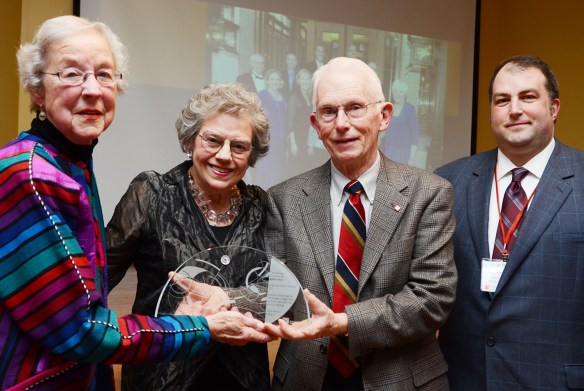
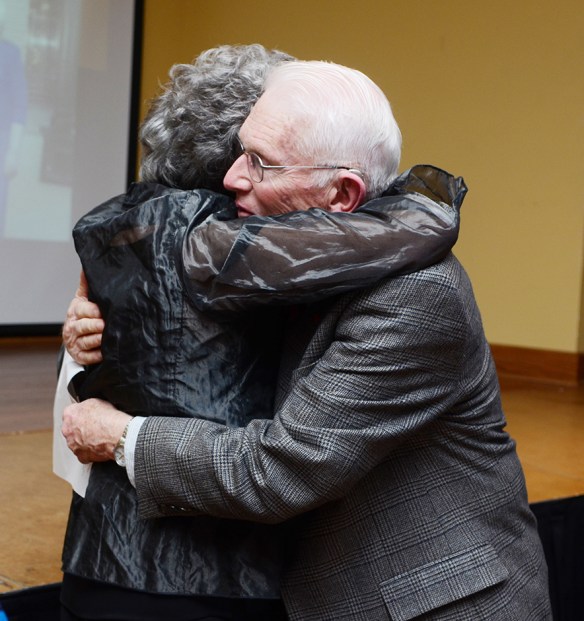
Wright Spirit Awards 013.jpg

Wright Spirit Awards 011.jpg

Wright Spirit Awards 014.jpg

Wright Spirit Awards 020.jpg

Bob, and Ann, thank you to your gifts to the World of Wright and to Mason City:
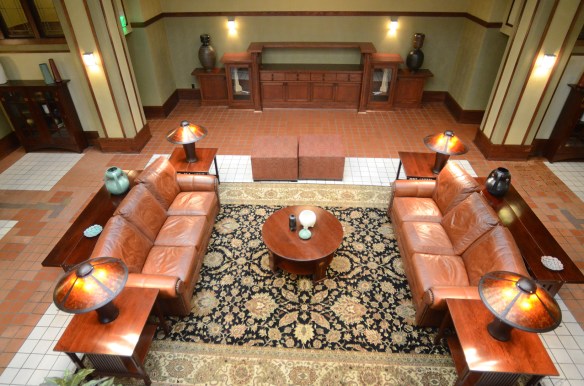
Historic Park Inn 021.jpg

Historic Park Inn 082.jpg

Bob’s beloved wife, Bonnie, died in 2016:

https://wrightinracine.wordpress.com/tag/mason-city/

Since this piece was published I have gotten more information about Bob:

His obituary in the Mason City Globe Gazette is at this link:

https://www.legacy.com/us/obituaries/globegazette/name/robert-mccoy-obituary?id=31119672

And, Wright on the Park, sent this:

Shortly after Mason City hosted the 1993 Frank Lloyd Wright Building Conservancy annual conference, Dr. Robert McCoy, who had chaired that event to highlight the restoration of the Stockman House, was appointed to their Board of Directors. Their mission is to “facilitate the preservation and stewardship of the remaining built works designed by Frank Lloyd Wright through advocacy, education and technical services”. Bob was assigned the task to save the City National Bank and Park Inn Hotel from being demolished. Their hope was that the structure would be restored. Once assigned this task, Bob was diligent in working on solutions to save this structure. He was one of the founding Directors of Wright on the Park. It wasn’t until the Vision Iowa opportunity was presented that the combined resources from our community, state and federal levels made this dream became a reality. Bob would be the first to say he did not do this alone but certainly he was the leader of the effort to restore the Historic Park Inn Hotel. Written by Peggy Bang (Founding Board Member of Wright on the Park, past WOTP Board President, and current Board Member of WOTP) 



Where Famous Feet Did Tread

Photo and text © Mark Hertzberg (2021)

Procrastination sometimes pays off.

LR Hillside Drafting Room Aug 2021 004.jpg

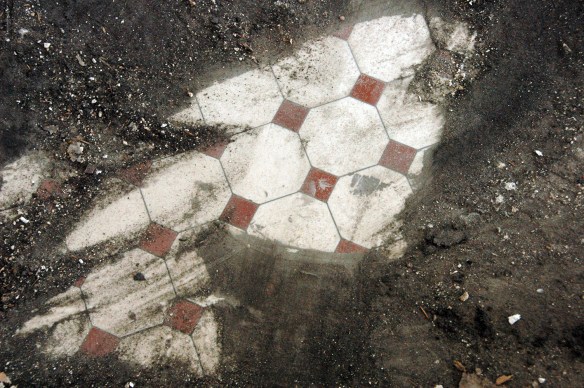
I took this photograph August 29, on a photo exploration of the Hillside Drafting Room. It’s a single frame, in a folder of 18 photos. While I was concentrating on other aspects of the drafting room, I glanced at the floor and wondered what famous people have walked on it since it was installed in late 1938. Frank Lloyd Wright was obviously one of them, but who else?

I posted other photos of the drafting room soon after (they are toward the end of the link below), but I sat on this one, intending to one day write a “who walked here” post:

https://wrightinracine.wordpress.com/2021/09/06/wright-through-the-lens/

It is fortunate that I held off because last week I read a new post from Keiran Murphy which tells the story of the floor, a backstory I never would have guessed. The floor is like a wafer cookie, and it has a relationship to the floor at Wingspread. That’s all I will tell you. Here is a link to Keiran’s post:

https://www.keiranmurphy.com/hillside-drafting-studio-flooring/?fbclid=IwAR3SSC_CAVWs7yuVtk-ah51JlWW535FWEgOXCJAwTfLX8NOxzLri9ggJ1rk

Julian Carlton in Black and White

© Mark Hertzberg (2021)

Carlton.jpg

Some Black guy from Barbados went berserk, setting fire to a house before slaying seven people with a roofing hatchet as they tried to flee the blaze. He never came to trial because he died from having ingested muriatic acid while hiding from authorities. That’s the story we have accepted for 107 years about what happened at Taliesin on August 15, 1914 when Wright’s partner, Mamah Borthwick, her two children, and four of Wright’s workers died a horrific death. 

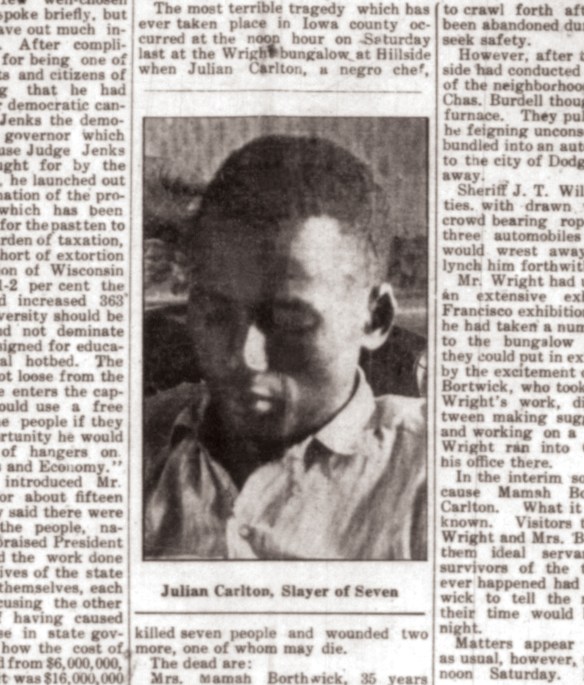
Although Julian Carlton was the slayer, he was not legally guilty of the murders because he was never tried. There is only one known photo of him. It was taken in court and appeared in  a local newspaper six days later. I wrote about the photograph almost two years ago:

https://wrightinracine.wordpress.com/2020/01/19/reading-the-only-known-photograph-of-julian-carlton/

A comment about this article was posted on the website a few weeks ago by “whatever74,” an on-line email pseudonym. The comment gave me pause:

The account of this murder to me is very suspicious. So many things just dont add up. I dont think we have anywhere near the truth. Life for black people back then was so unfair, so hidden, so corrupted, we really have no clue what transpired. He sure doesnt look insane in this photo. He looks resigned to a fate determined by people in power that couldnt care less about anything except maintaining that power. Who dies of starvation while in prison? How does that even happen? And look at him in this courtroom shot. Does he look like someone that cant consume food? He looks perfectly healthy, hardly someone that is wasting away from lack of food.

It just shows you how dangerous it is when one group gets a lot of power. And it happens all over the world. We fear what we could lose and tend to do irrational things to protect against that loss.

I thought that the commenter is likely African-American, suspicious of a white narrative of the crime. It would be easy to dismiss the comment but we should not, especially with the awakening many people who are not of color have had since the murder of George Floyd. Why not believe the initial explanation of the Minneapolis Police Department that Floyd died after some sort of medical incident. Isnt law enforcement trustworthy?

Man Dies After Medical Incident During Police Interaction:…Two officers arrived and located the suspect, a male believed to be in his 40s, in his car. He was ordered to step from his car. After he got out, he physically resisted officers. Officers were able to get the suspect into handcuffs and noted he appeared to be suffering medical distress. Officers called for an ambulance. He was transported to Hennepin County Medical Center by ambulance where he died a short time later…”

The phone video that Darnella Frazier showed us otherwise. That kind of gulf between fact and fiction is not limited to George Floyd’s murder at the hand of police in Minneapolis.

I believe that what we generally know about the massacre at Taliesin is true, but we need to be careful about some of the nuances. It took more than 100 years, until Paul Hendrickson wore out the soles of his shoes with his gumshoe detective work and wrote Plagued by Fire in 2019 in which he established conclusively that Carlton was a native of Alabama, not Barbados. That undid a century-old “fact” about the killings.

Did it matter for some people that this crazed Negro (I am purposely using pejoratives) was, you know, from down there, from the West Indies? Wright described Carlton as “a thin-lipped Barbados negro.” The lead of the next day’s Chicago Sunday Tribune story was “A Barbados negro with a handax yesterday…” Maybe as a West Indian Carlton didn’t understand how “house Negroes” should do things in America. Conversely, Hendrickson wonders if Carlton wanted people to think that he was from Barbados and thus think that he wasn’t just a plain-old American Negro or N-word, with every connotation that came with such a description.

Hendrickson writes that race was an important identifier in describing Carlton: “The black butcher.” “The black beast.” “The Negro fiend.” “And,” writes Hendrickson, “in a few places worse than that.” Indeed, one of the witnesses to the massacre quotes the father of one the victims as saying, “That [N-word] up there. He killed my boy.” The late Ron McCrea makes a similar point in his 2012 book Building Taliesin.  He quotes Ernest Wittwer who was just four years old when his father took him to the jail in Dodgeville to look at Carlton. “He held me up so I could see him through the window. I had never seen a black man before. I never felt the same about black people after that.”

Hendrickson posits that Carlton’s race may have influenced how Richard Lloyd Jones, Wright’s cousin, may have skewed editorial coverage in his newspaper, the Tulsa Tribune, in 1921 and helped fuel the Tulsa Race Massacre.

I shared “whatever 74’s” comments with a handful of Wright scholars. One wrote:

“whatever74” brings an interesting and plausible perspective (albeit clearly unsubstantiated by any evidence or proof) to the final days of JC placed in the larger context of American culture and society in 1914…PS:  it certainly makes you think . . .

I emailed “whatever 74” and asked what prompted his comment. He replied: I was just reading about FLW.  As I reread my comment now I wish there was an edit option.  If he had swallowed that acid that made it impossible for him to eat he could have looked just fine and healthy for weeks depending on his condition when he swallowed it.  I’ve water fasted for weeks and its surprising how healthy you look when you don’t eat…I suppose is pointless to even discuss an event where we have no idea what really happened.  I’ve seen so much prejudice in my life I guess I’m hypersensitive to it.  Videos today just showcase how often people in authority misuse that authority to maintain their position of power.  I can’t imagine what transpired back then when so many people got away with so much behind closed doors.

Then came another email from “whatever 74”: Just a white guy that has spent quite a bit of time in black culture.

Just what I’ve seen and experienced.

But as we really don’t know what happened and can’t possibly ascertain

what really happened, its probably better to focus on what is happening

today.

Keiran Murphy, the esteemed Taliesin historian, has an unpublished nine page manuscript entitled “The human toll taken by madness:  Truth and Myth Surrounding the 1914 Murders at Frank Lloyd Wrights Taliesin.” It cites numerous inaccurate contemporary accounts, including in The New York Times, which many people consider “the paper of record.” The Times wrote that Carlton was arrested 16 miles away from Taliesin after being tracked down by bloodhounds. In fact, he was hiding in a boiler at Taliesin. 

Since 2007 many people have asked on social media what kind of soup was being served for lunch that day. The first mention of any soup (on an August day!) is in William Drennan’s woefully inaccurate 2007 book Death in a Prairie House. There is no documentation for his assertion that soup was on the luncheon menu that August day. And so the myths are created even the century after the events of that summer day at Taliesin.

There has been much speculation about whether Borthwick was the intended victim, or was it Emil Brodelle, a draftsman who had allegedly racially insulted Carlton, or was it indirectly Wright himself by killing his lover?  Was Carlton upset at being fired by Wright? Murphy sets the record straight that Carlton’s departure from Taliesin was quite possibly voluntary, and that he had told Wright some time before that he would be returning to Chicago.

I talked to a friend who is the steward of a Wright home, and who was recently asked to review an unpublished, but thoroughly documented Wright manuscript. One of the things that struck him was the description of Borthwick as a person of privilege, who, he thought, seemed to not be above using that privilege when addressing servants. Wright, according to the manuscript, was not above using the N-word. Last night, as I finish this article, a Wright scholar told me of a second-hand account from the son of one of the workers at Taliesin that another worker may have been sexually harassing Carlton’s wife. 

I appreciate whatever74 giving us something to ponder, although he undid much of the good in his questions with some things he later wrote that I think are gross negative generalizations about African-Americans who, he feels, have not reached their potential.

I do not doubt the general outline of what we have read and believed to be true about the events of August 15, 1914 at Taliesin. But whatever74’s initial comments and Daniella Frazier’s video are stark reminders for us to think twice before accepting a narrative involving race, even from “authorities,” as the unvarnished truth. Carltons motive is secondary to my point.

There have been discussions about whether or not Frank Lloyd Wright was racist. Some people dismiss his use of the N-word as a norm 100 years ago, and not perceived by whites as racially insensitive as it would be today. 

This is 2021, not 1914 and I daresay that your initial reaction about the veracity of “Some Black guy from Barbados went berserk, setting fire to a house before slaying seven people with a roofing hatchet as they tried to flee the blaze. He never came to trial because he died from having ingested muriatic acid while hiding from authorities.” would reasonably be different depending on whether you are white or Black. I welcome your comments.

–30–