Photos (c) Mark Hertzberg
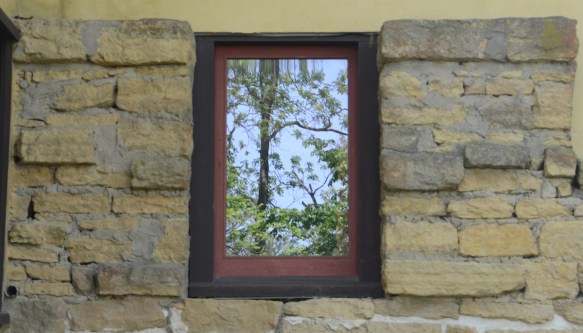
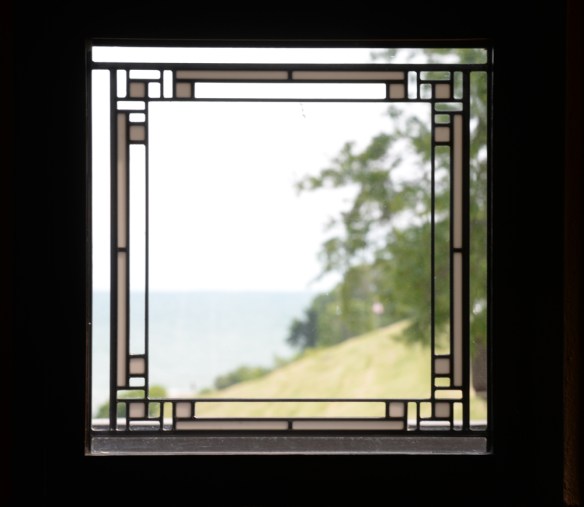
These are three recent photos of windows at Wingspread, Taliesin, and the Hardy House. 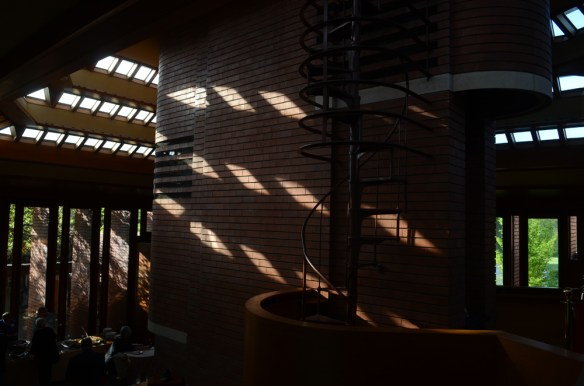

Photos (c) Mark Hertzberg
These are three recent photos of windows at Wingspread, Taliesin, and the Hardy House.
(c) Mark Hertzberg

A crisp blue sky greeted guests at the annual Taliesin celebration of Frank Lloyd Wright’s birthday Saturday June 11. Wright was born June 8, 1867.
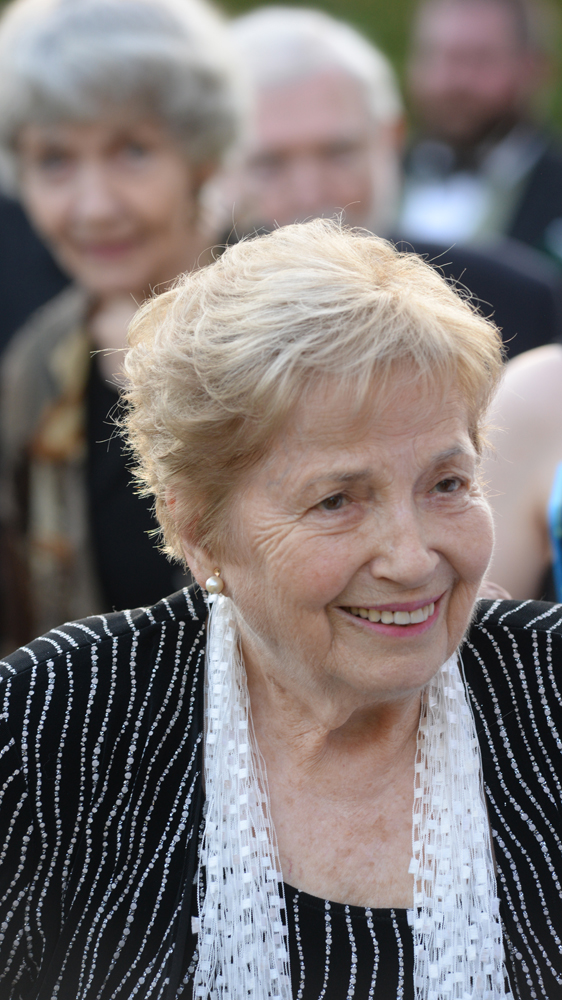
Minerva Montooth, who was an assistant to Olgivanna Wright, and whose late husband, Charles, was also a member of the Taliesin Fellowship, greeted guests, as is her custom at the celebration. Minerva lives at Taliesin. Mary Jane Hamilton, a Wright scholar from Madison, is behind her in the photo.
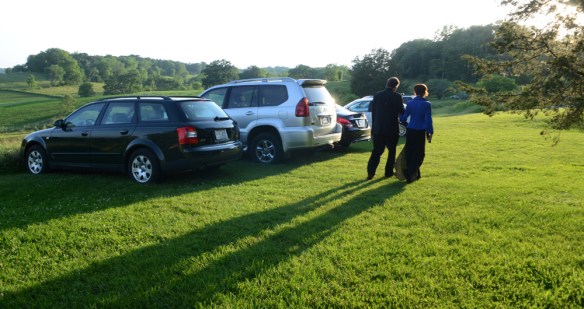
Fewer guests than usual gathered outside because it was so warm and humid, even at 6:30 p.m.
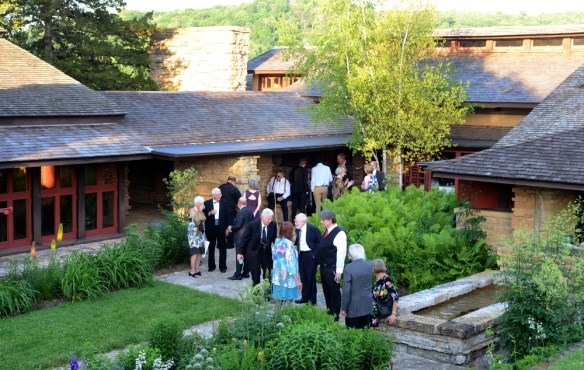
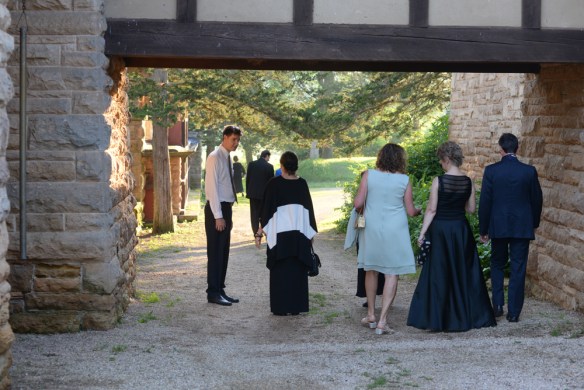
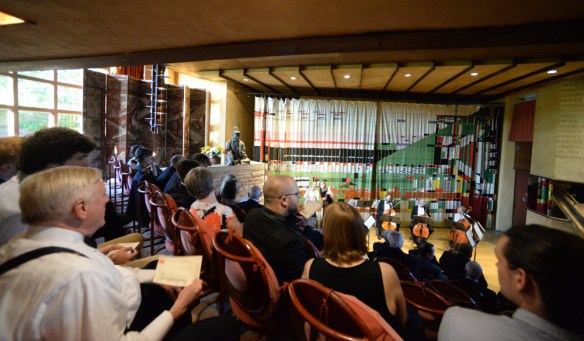
Lovely evening light set the scene as guests made their way to Hillside School where Jason Silverman, residence life manager of the Frank Lloyd Wright School of Architecture directed them to the theater for the evening program.

Stuart Graff, center, CEO of the Frank Lloyd Wright Foundation, introduced Aaron Betsky, Dean of the School of Architecture, and Eric O’Malley, right, of OAD (the Organic Architecture and Design archives) and the PrairieMod website.
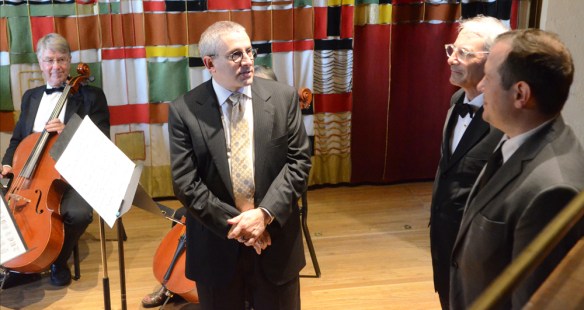
O’Malley told the guests how moved he was seeing the original model of Wright’s San Francisco Call newspaper building when he visited Taliesin young. The model has been moved to the Museum of Modern Art, so OAD commissioned Stafford Norris to build this replica to be displayed at Hillside where the original model stood for years. Architect Randolph C. Henning was also present. Henning, O’Malley, and William Blair Scott are the three partners in OAD.

The musical selection was Bach’s Brandenburg Concerto No. 3:

Dinner featured braised beef short rib with greens grown at Taliesin, topped off by the traditional homemade birthday cake.
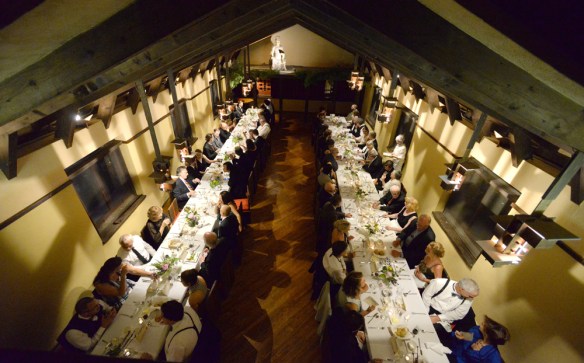
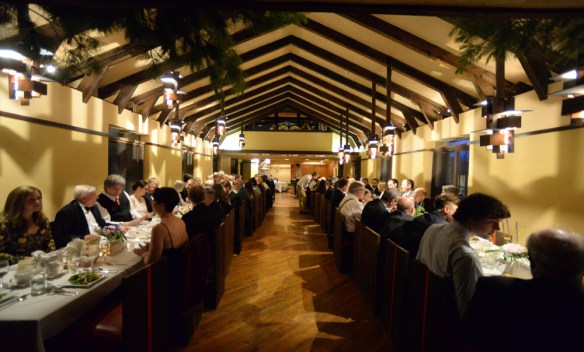
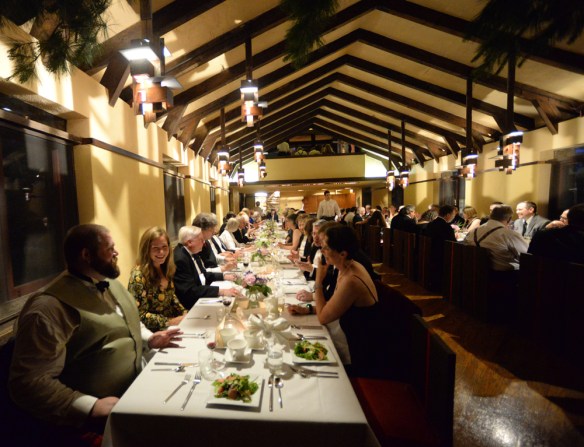
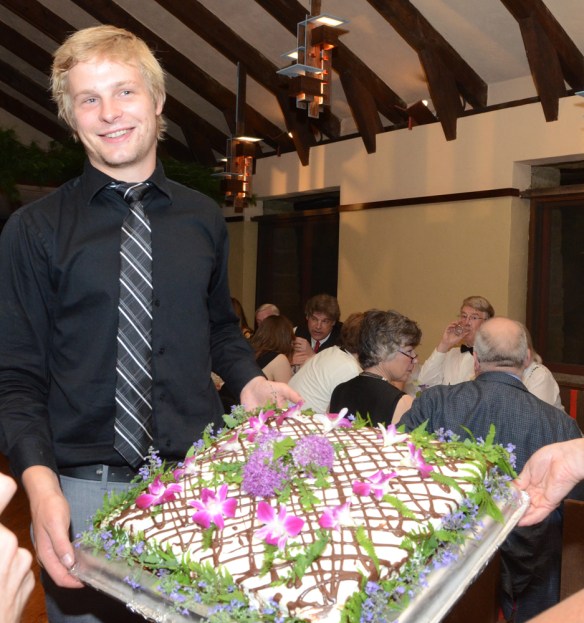
Next year’s commemoration of the 150th anniversary of Wright’s birth will be marked by many special events, including a just-announced major exhibition at the Museum of Modern Art.
(c) Mark Hertzberg
More than 400 people from across the country came to Racine a week ago for Frank Lloyd Wright Wisconsin’s annual Wright and Like tour. Ten sites were featured. Their architects included Wright, Edgar Tafel, Charles Montooth, John Randal McDonald, Hans Geyer, and Helmut Ajango.
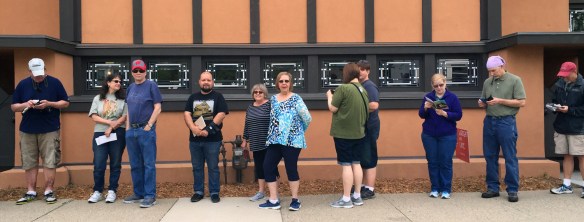
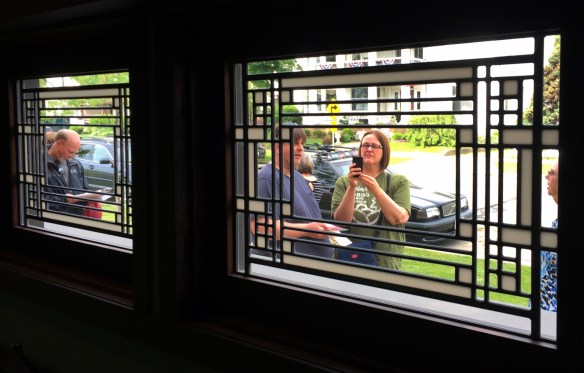
Generally people who think of architecture in Racine tend to focus on Wright, Montooth, Tafel, and McDonald. But there is much more to Racine’s rich architectural heritage. Friday evening’s special presentation at Wingspread was the premiere presentation of an audio visual review of some twenty significant architects whose work is in Racine. Future presentations of the program will add Holabird and Root, Howard van Doren Shaw, and McKim, Mead, and White to the mix. These two photos show the line of people waiting to see Wright’s Thomas P. Hardy House before the tour opened.
Next year’s Wright and Like will be Saturday June 3 in Milwaukee.
(c) Mark Hertzberg
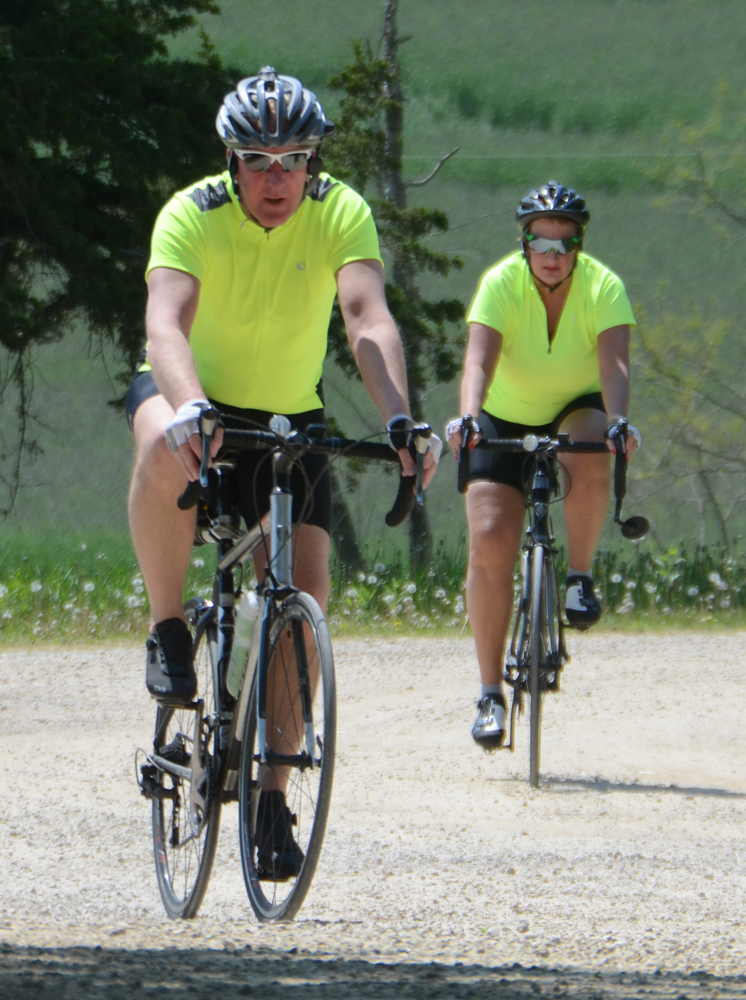
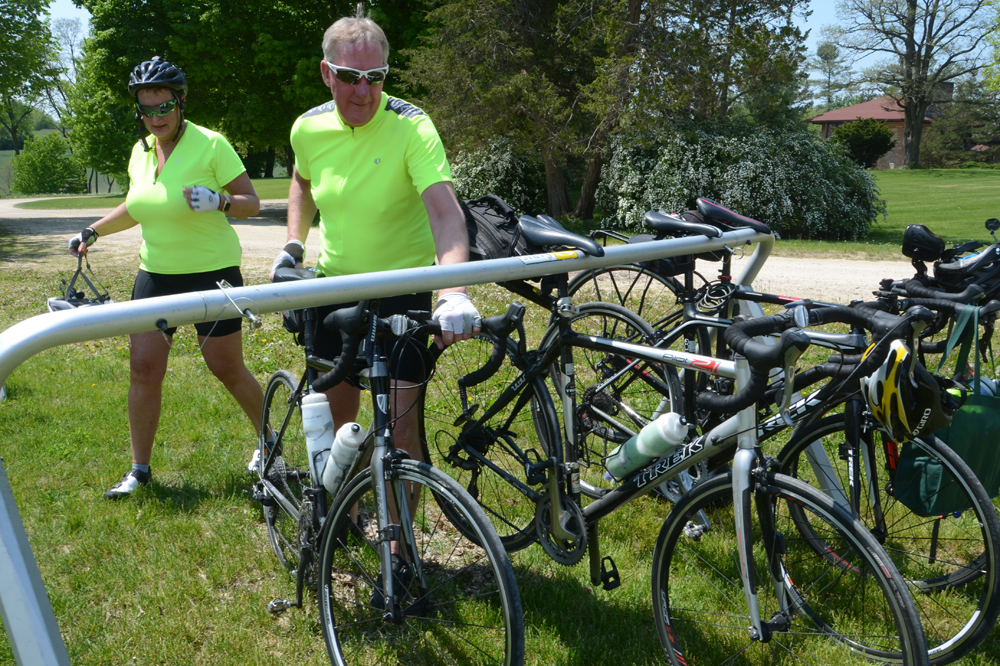
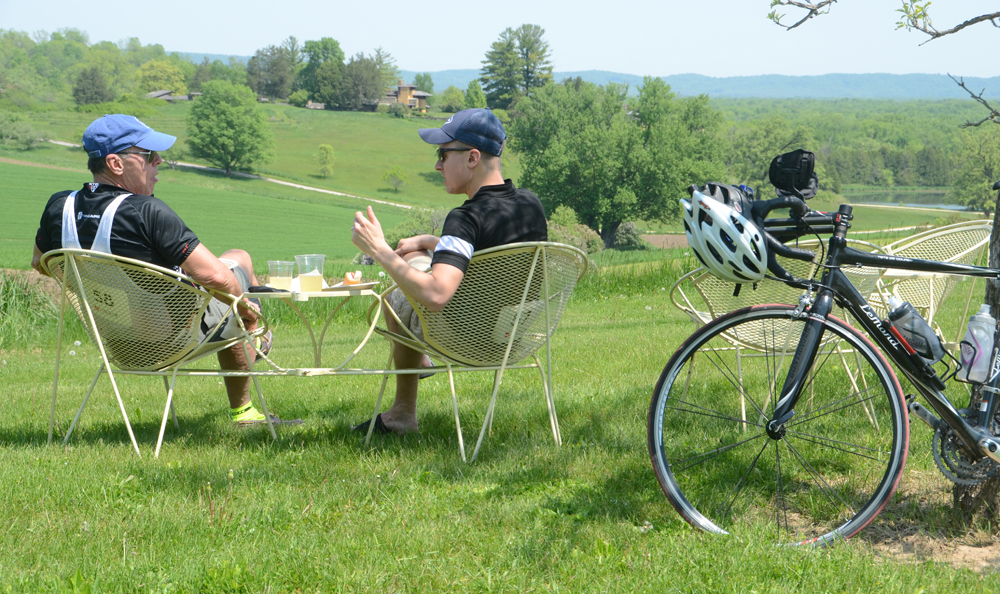
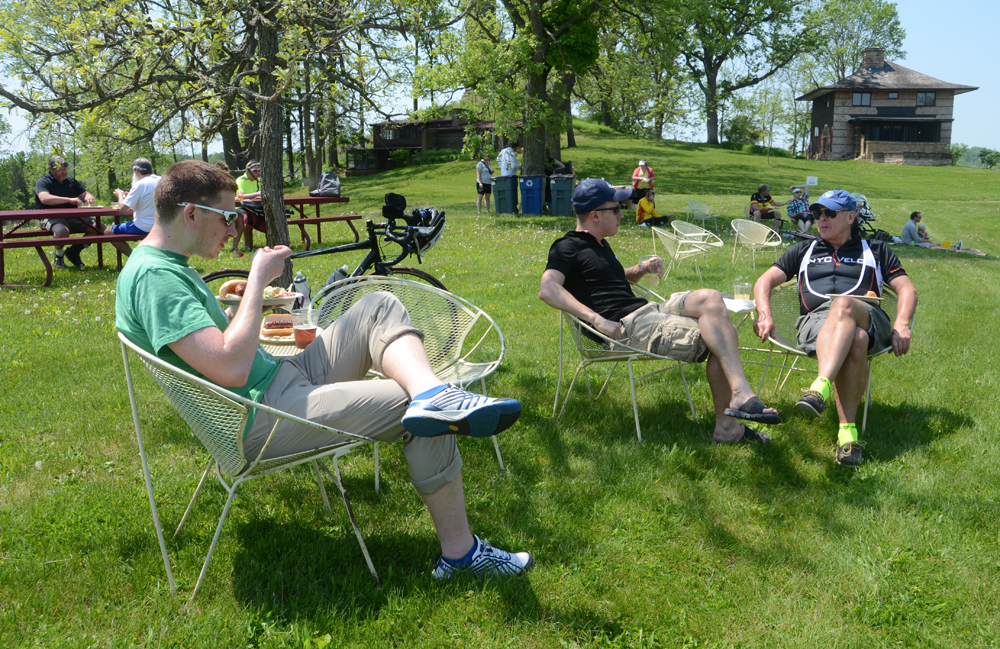
About 50 bicyclists chose between 38 and 100 mile routes Sunday May 22 during the first Tour du Taliesin bicycle ride. The fund-raiser began at the Visitors Center and ended with a cookout below Tan-y-deri, across from Taliesin.
Robert and Donna from West Bend finish their ride:
 Michael and Aaron Collins from Madison relax across from Taliesin:
 A distinctive logo was designed for the ride that benefitted Taliesin Preservation, Inc.:

(c) Mark Hertzberg
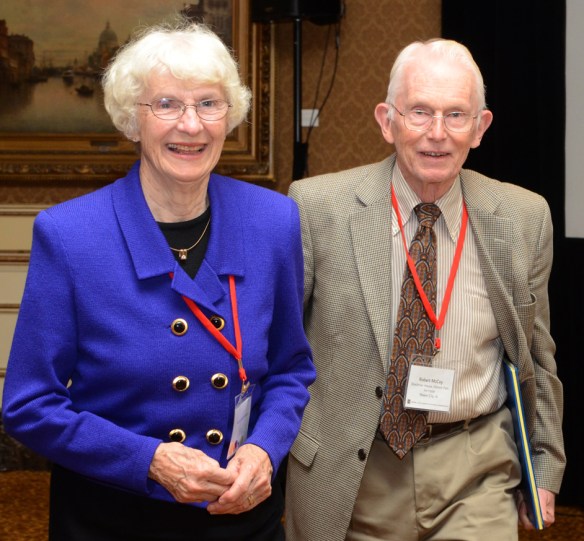
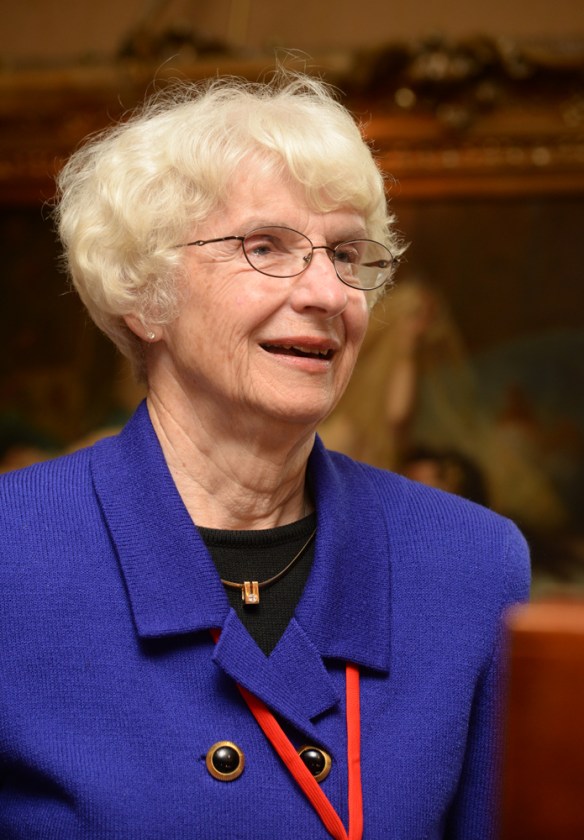
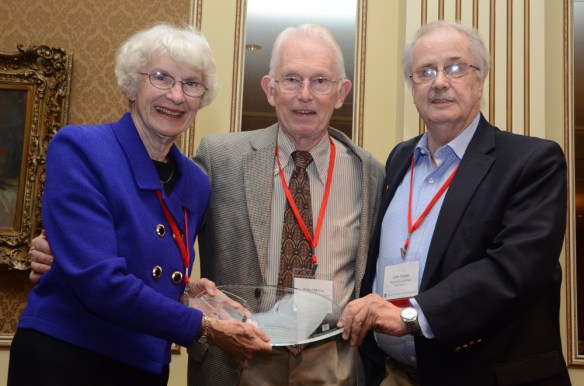
Bonnie E. McCoy of Mason City, Iowa died May 14. She and her husband, Bob, are well known as being instrumental in Mason City’s architectural preservation. Their home, Walter Burley Griffin’s Blythe House, is in the Rock Crest, Rock Glen development, near Frank Lloyd Wright’s Stockman House and the Architectural Interpretive Center named for Bob. These photos of Bonnie and Bob were taken when they received the Frank Lloyd Wright Building Conservancy’s Wright Spirit Award last October 3 at the Pfister Hotel in Milwaukee. The last photo shows them with the Building Conservancy’s late John Thorpe.
Photos (c) Mark Hertzberg for SC Johnson
SC Johnson announces “Building Relationships: Wright, Johnson, and the SC Johnson Campus,” the fifth iteration of its Frank Lloyd Wright at Home exhibit in Fortaleza Hall on the company campus in Racine, Wis. The exhibit opens Friday May 6. The exhibit traces the design of the Administration Building (1936) and the Research Tower (1944) as well as touching on Wright’s influence on Norman Foster’s design of Fortaleza Hall on the company campus, and Santiago Calatrava’s Quadracci Pavilion at the Milwaukee Art Museum.
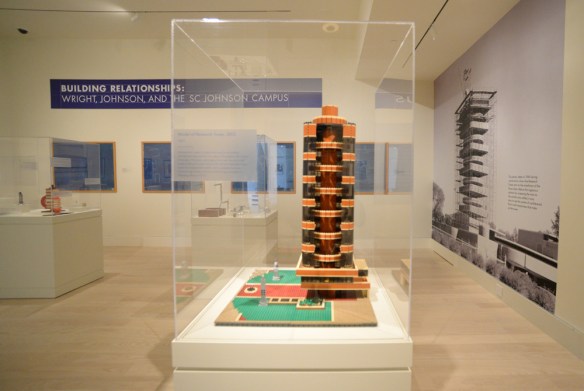 Chris Eyerly’s cutaway LEGO model of the Research Tower is one of the first exhibits.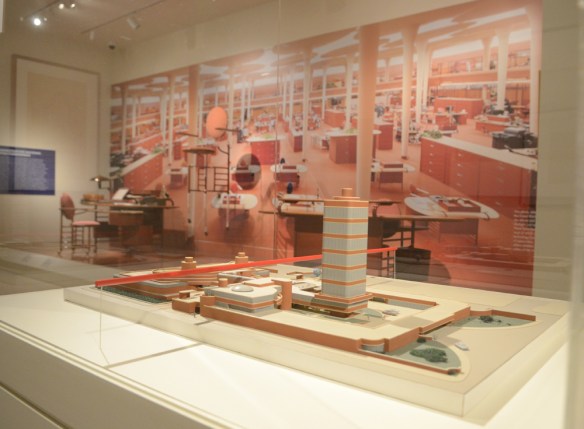
A mural of the Great Workroom is the backdrop to selected pieces of office furniture that Wright designed for the Administration Building. The American Metal Furniture Co., later Steelcase, was commissioned to build the furniture. Steelcase bought and restored Wright’s Meyer May House in the 1980s as a “thank you” to Wright for giving them the commission during the Great Depression. The highlight of that portion of the exhibit is a suspended or “exploded” desk chair, enabling viewers to see each element of Wright’s design.

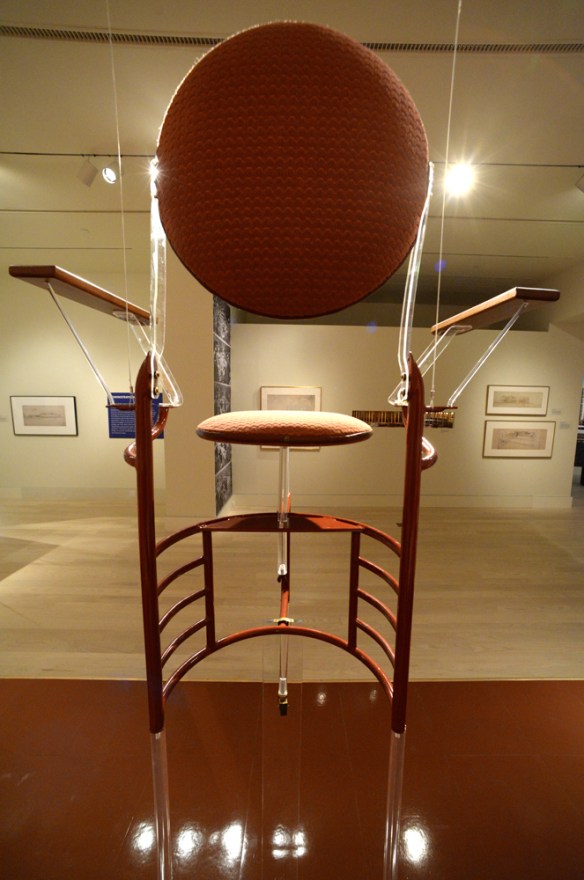

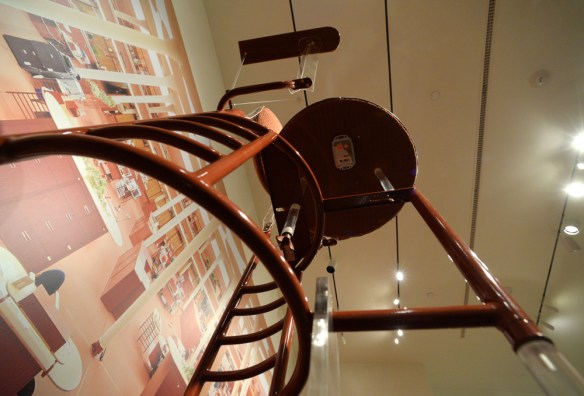
The Norman Foster building and Calatrava’s museum addition are in the last salon of the exhibit, near a video which tells three stories in succession: historic footage of the famous column test at the Administration Building in June, 1937 and time lapse videos of Fortaleza Hall’s and the museum’s construction. Foster’s challenge was to build an inspiring building in the shadows of Wright’s two landmark buildings on the SCJ campus. Calatrava visited the campus as he was designing the museum addition. Wright’s organic architecture is said to have inspired the way he linked downtown Milwaukee to the lakefront museum addition to the original Eero Saarinen building (and its first addition).
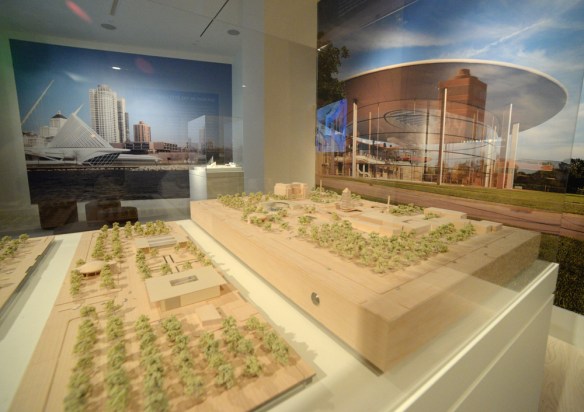
Reservations for free tours of the exhibit, Wright buildings, and Wingspread can be made at: www.scjohnson.com/visit
Clarifying the developments…The Department of Tourism was allocated $500,000 in the biennial budget. This bill allocated $50,000 to the Department of Transportation for the signage. Tourism is required to spend $450,000 on non-signage Wright marketing and must report to the legislative standing committee on tourism how they spend the money at the end of the biennium.
Photos (c) Mark Hertzberg 2016

Commemorative pens that Wisconsin Gov. Scott Walker will use to sign the bipartisan bill to fund a Frank Lloyd Wright Trail between Racine and Richland Center, are on Wright’s table in his drafting room at Taliesin, his home in Spring Green, Monday March 21, 2016. / (c) Mark Hertzberg
The law provides $50,000 funding for highway signs and other marketing to promote Wright’s work in Wisconsin, from the Illinois/Wisconsin state line on I-94 through Racine, Madison, and Spring Green, and ending at the A.D. German Warehouse in Richland Center. Milwaukee is not included in the signage because Wright sites they are not open enough hours and it was thought it best not to divert travelers to sites they might find closed. Three sites in Racine will be included: the SC Johnson Administration Building, the SC Johnson Research Tower, and Wingspread.
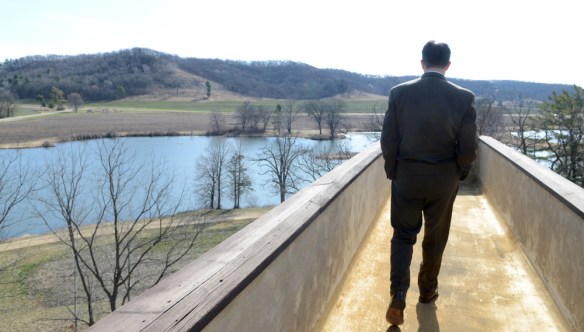
Wisconsin Gov. Scott Walker walks out on the cantilevered balcony outside the living room at Taliesin before he signs the bipartisan bill to fund the Frank Lloyd Wright Trail, Monday March 21, 2016. / (c) Mark Hertzberg

Wisconsin Gov. Scott Walker, center, chats with the bill’s sponsors on the cantilevered balcony outside the living room at Taliesin before he signs the bipartisan bill to fund the Frank Lloyd Wright Trail, Monday March 21, 2016. / (c) Mark Hertzberg
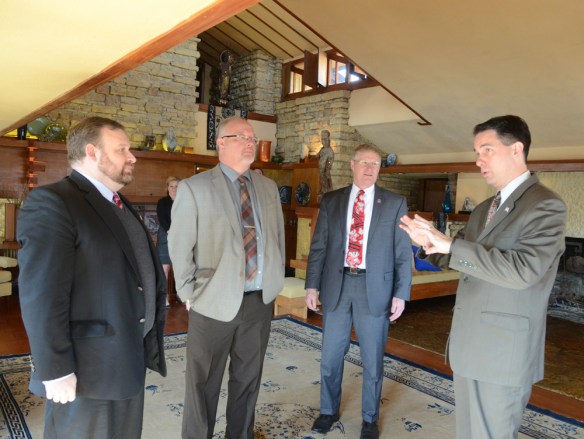
Wisconsin Gov. Scott Walker, right, chats with state representatives Cory Mason (D-Racine) and Todd Novak (R-Dodgeville) and State Sen. Howard Marklein (R- Spring Green), the sponsors of Assembly Bill 512, the bipartisan bill to fund a Frank Lloyd Wright Trail between Racine and Richland Center, in the living room at Taliesin, Wright’s home in Spring Green, Monday March 21, 2016. / (c) Mark Hertzberg
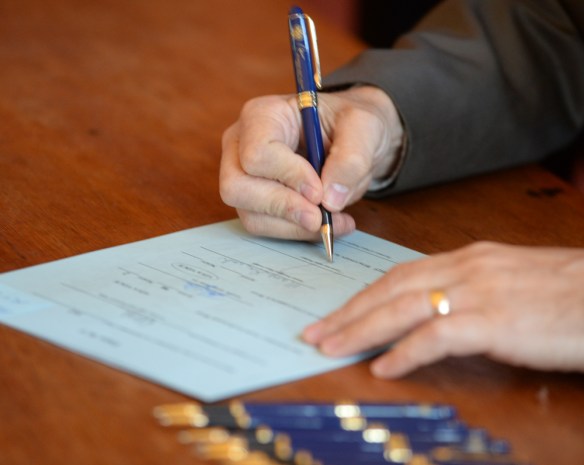
Wisconsin Gov. Scott Walker signs the bill to fund the Frank Lloyd Wright Trail between Racine and Richland Center, in Wright’s drafting room at Taliesin, his home in Spring Green, Monday March 21, 2016. / (c) Mark Hertzberg

Wisconsin Gov. Scott Walker is applauded after he signs the bipartisan bill to fund a Frank Lloyd Wright Trail between Racine and Richland Center, in Wright’s drafting room at Taliesin, his home in Spring Green, Monday March 21, 2016. Looking on are Rep. Cory Mason (D-Racine), left, Sen. Howard Marklein (R- Spring Green), Rep. Todd Novak (R-Dodgeville), who introduced the bill, and State Sen. Van Wanggaard (R-Racine), a co-sponsor / (c) Mark Hertzberg
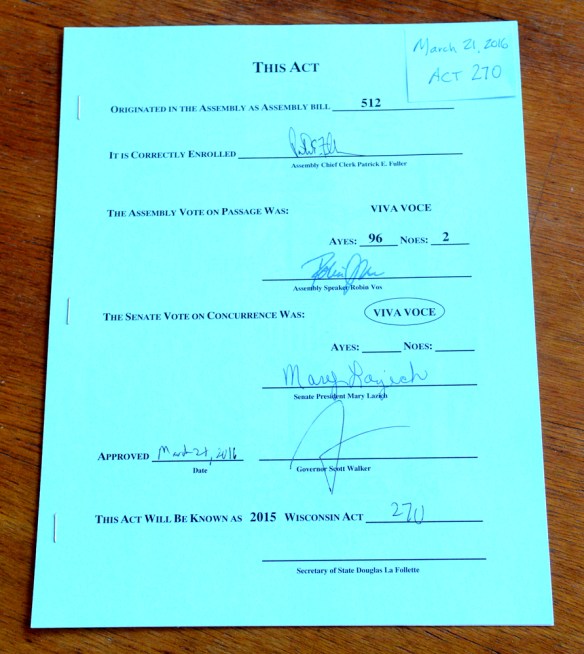
Wisconsin Gov. Scott Walker signed the bipartisan bill to fund a Frank Lloyd Wright Trail between Racine and Richland Center, in Wright’s drafting room at Taliesin, his home in Spring Green, Monday March 21, 2016. / (c) Mark Hertzberg
(c) Mark Hertzberg
An estimated 200 people gathered to honor John in Oak Park Saturday at George Washington Maher’s Pleasant Home. A selection of photos follows:
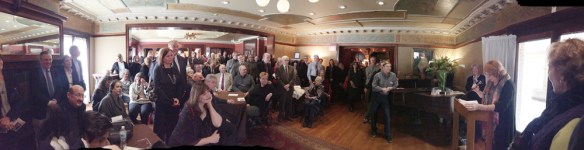
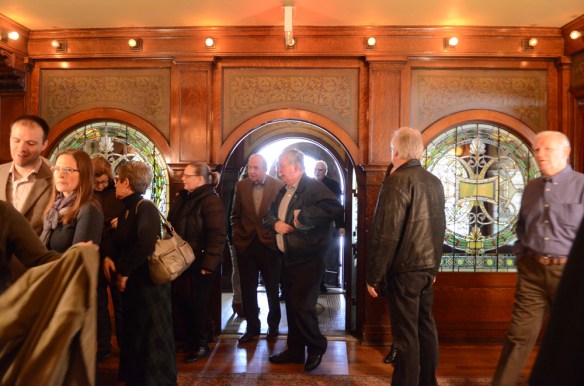
Memorial gathering for John G. Thorpe at Pleasant Home, Oak Park, Illinois, Saturday January 30, 2016. / (c) Mark Hertzberg

John’s twin brother,Tom at the memorial gathering at Pleasant Home, Oak Park, Illinois, Saturday January 30, 2016. / (c) Mark Hertzberg
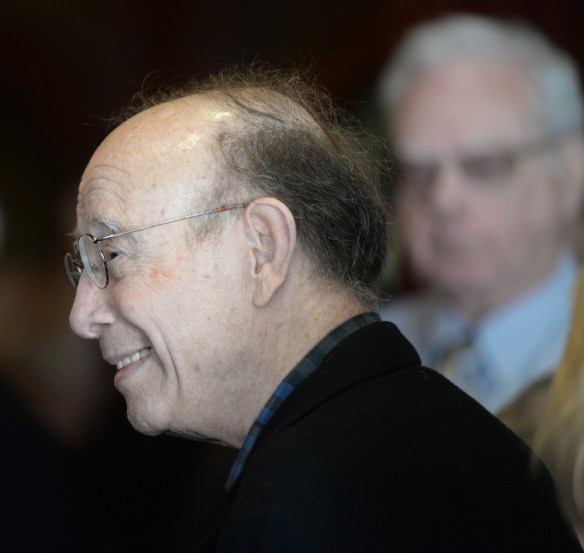
Don Kalec at the memorial gathering for John, Saturday January 30, 2016. / (c) Mark Hertzberg

The majestic leaded glass windows in the entry way of Pleasant Home, Oak Park, Illinois, Saturday January 30, 2016. / (c) Mark Hertzberg
 Wright in Racine