Reimagining Wingspread in 50,000 LEGO bricks

(c) Mark Hertzberg

LEGO Wingspread

LEGO Wingspread

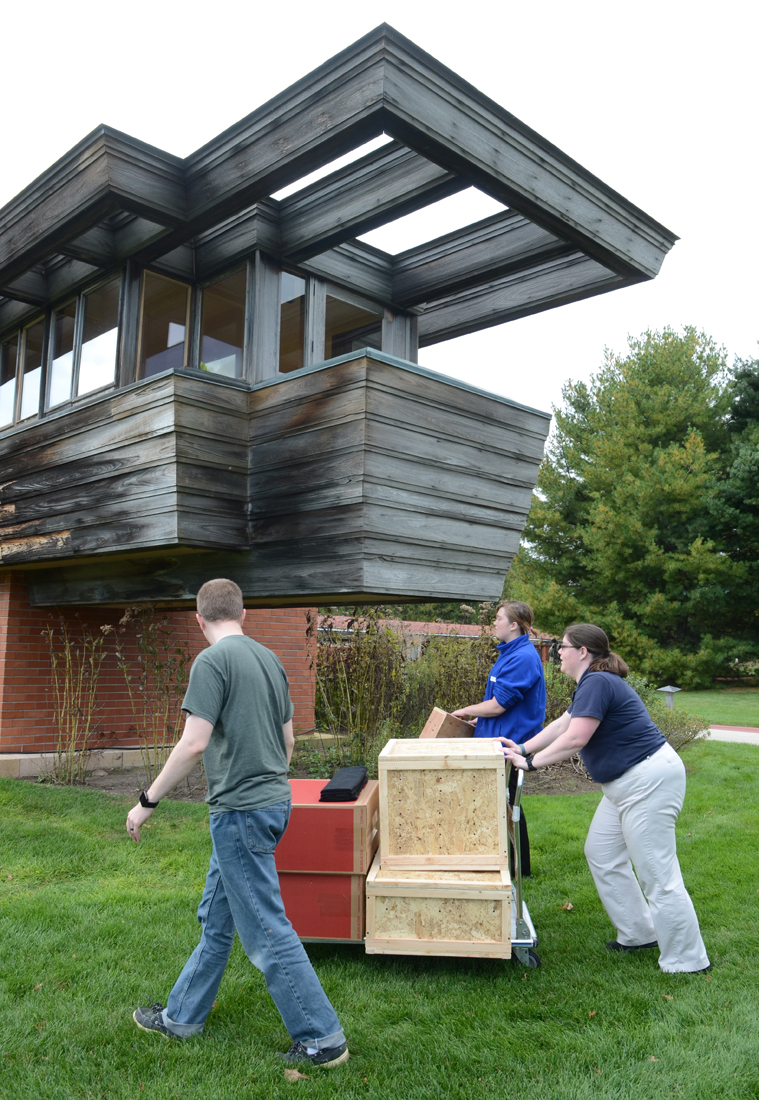
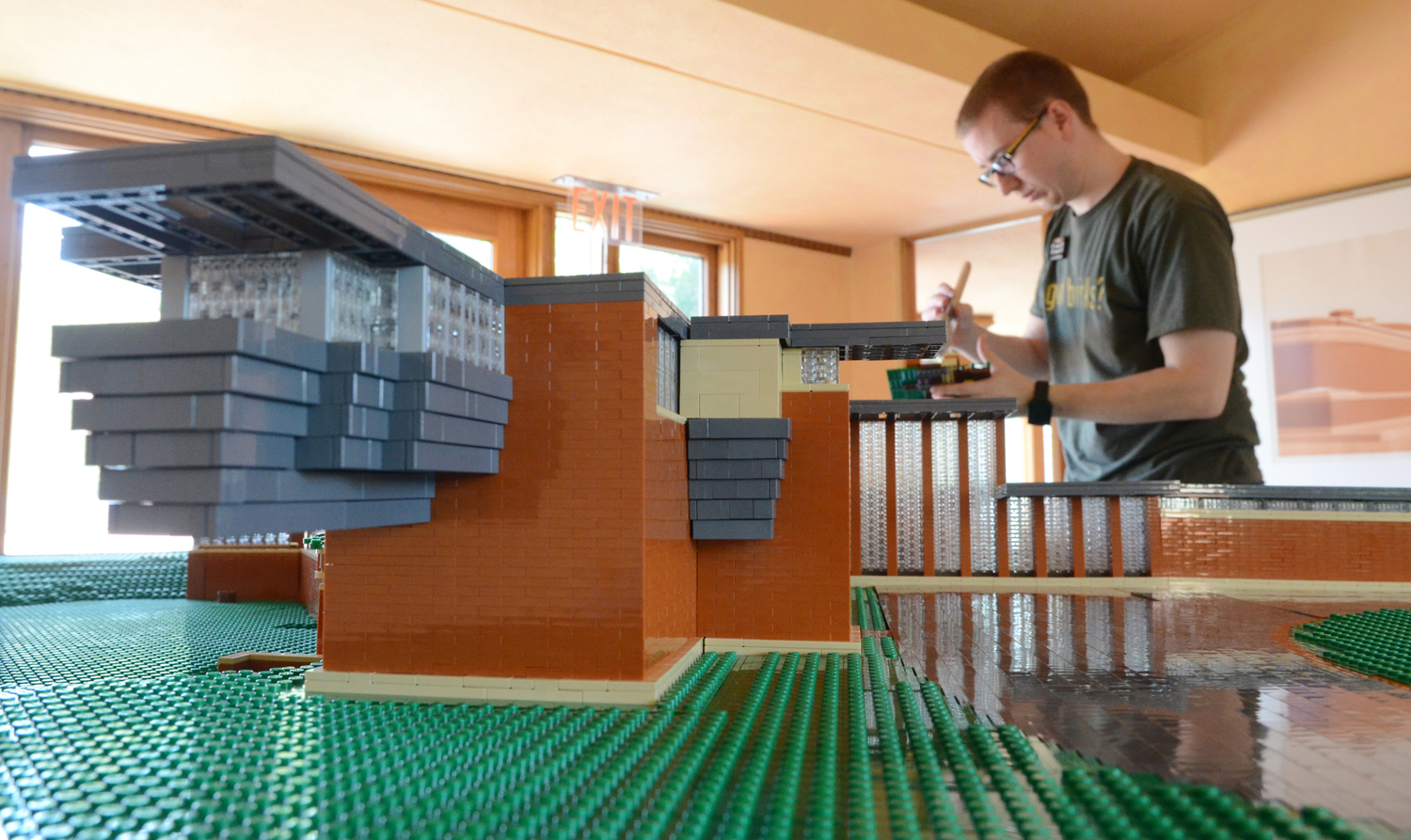
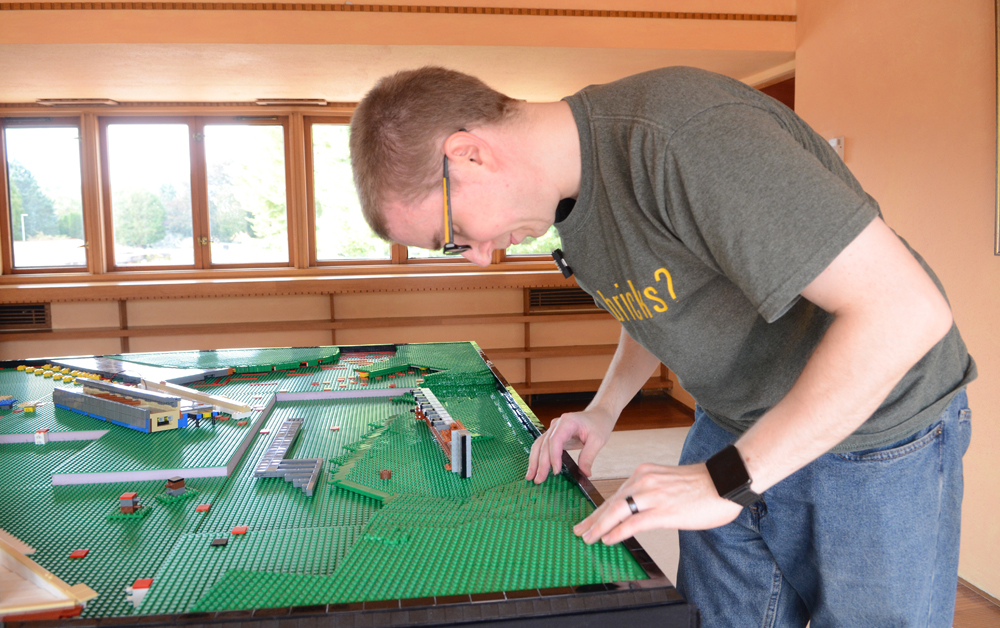
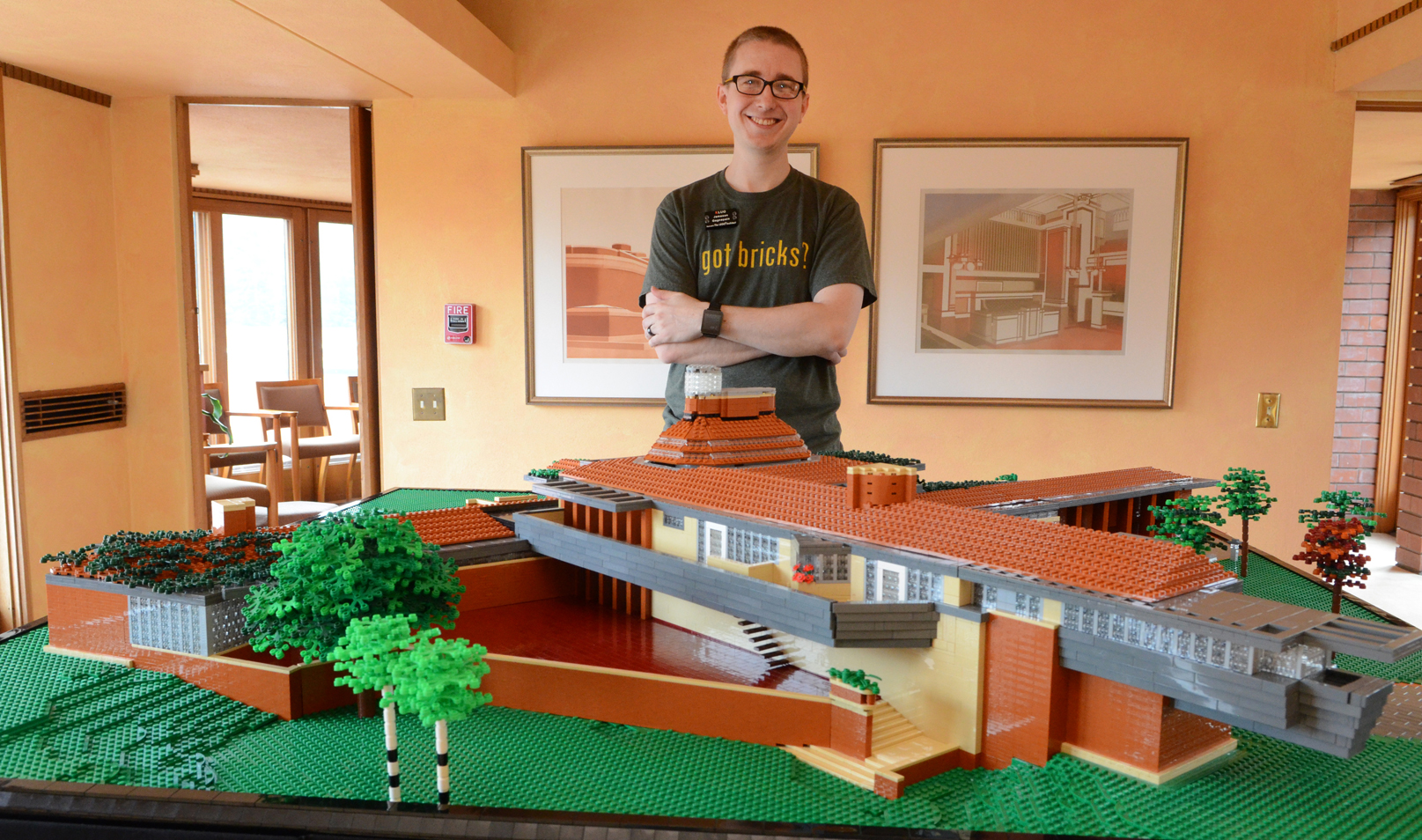
This is how Jameson Gagnepain’s adventure at Wingspread starts: unloading two custom-built wood crates and four cardboard boxes, all stuffed with about 50,000 LEGO bricks. In two hours the bricks will have been reassembled into a model of Frank Lloyd Wright’s 14,000 sq. ft. home for Herbert F. Johnson, Jr., which will be displayed on the second floor of Wingspread probably into December.

The model is stunning in its detail, the statistics -at the end of the story- are staggering.

LEGO WingspreadWingspread wide LR

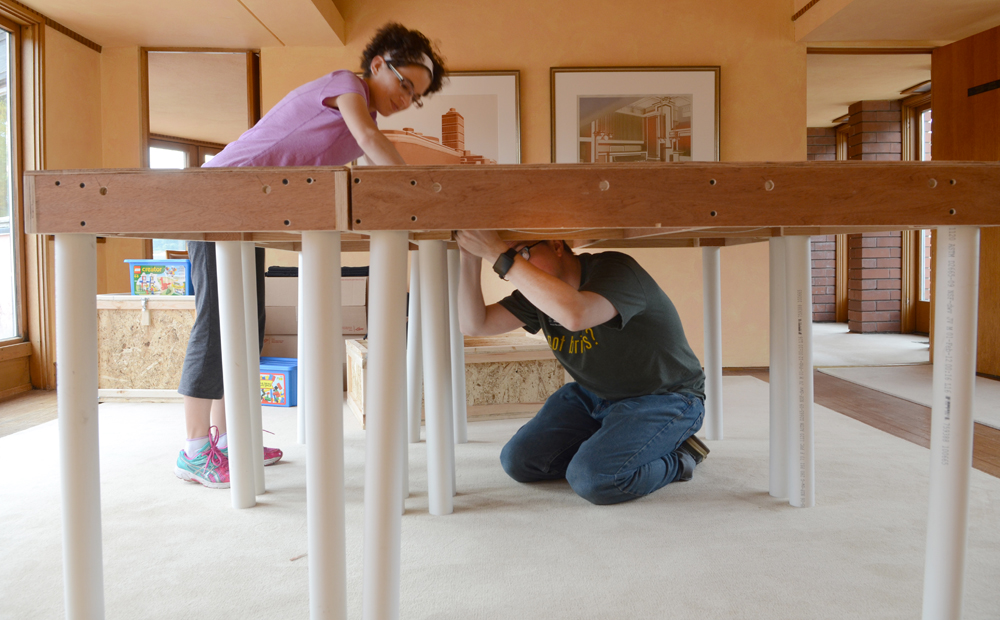
First, Gagnepain and his wife, Amy, assemble the five-foot square table the model will sit on.

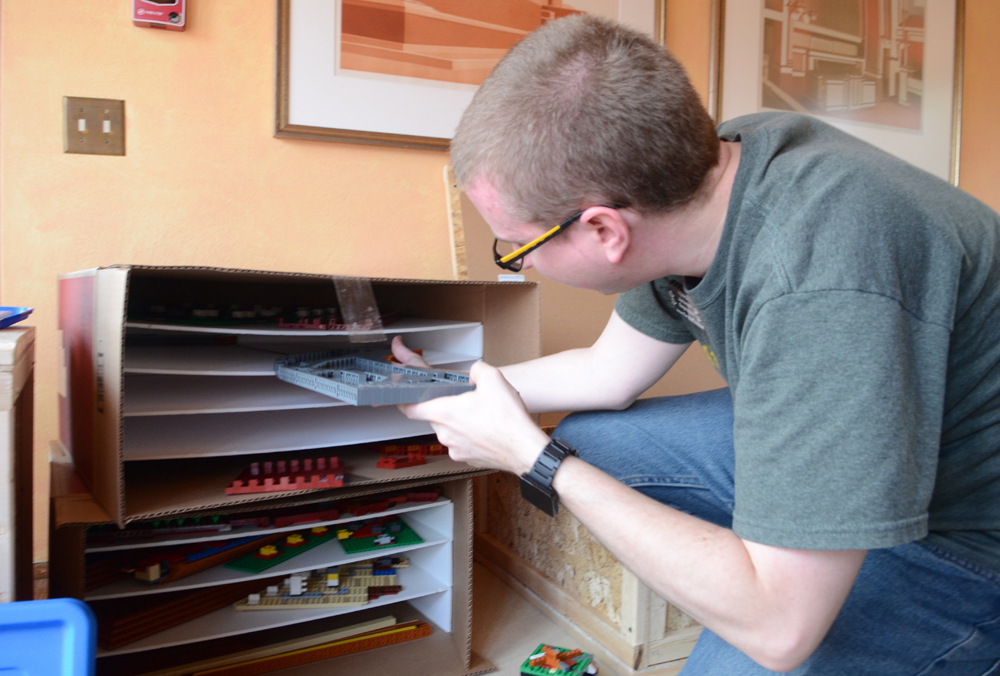
Each storage box is carefully thought out, explains Gagnepain, “I pack everything as tightly as I can… It’s a little like Russian nesting dolls in there. Lots of sections fitting inside other sections, and every box has shelves in it to make good use of space.”

LEGO Wingspread

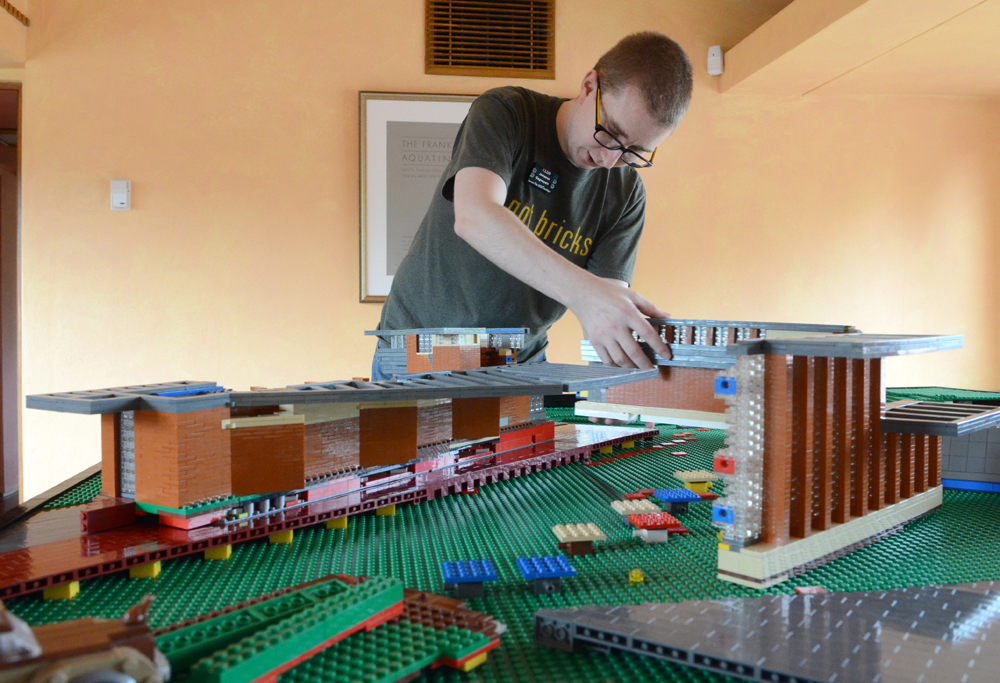
Gagnepain starts with a blank “canvas,” if you will, a broad expanse of green LEGOs representing the landscape around the house. There is no hesitation as he spends the next two hours assembling the model of the house.

LEGO Wingspread

He works in IT for a medical supplies company, but LEGOs have been his passion since he was young. The colorful plastic bricks were his expected presents for as long as he can remember. Amy is so understanding, he says, that she suggested their wedding have a LEGO theme.

LEGO Wingspread

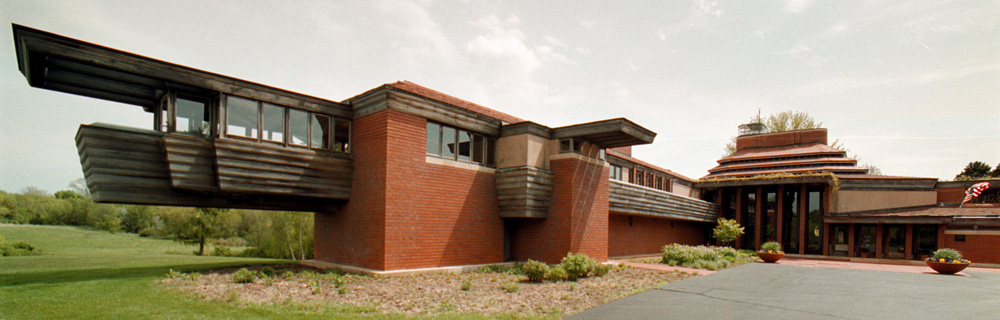
Gagnepain scoured the Internet for photos of what the house looked like when it was built, and then took notes during a visit to Wingspread. His biggest challenge was in fashioning daughter Karen Johnson’s cantilevered balcony at the north end of the house. “It took me ages to get right, getting the wood texture right. I built it three or four different ways. I got it right then dropped it and had to start over.” He says the playroom at the east end was another challenge because of the dearth of photos of what it originally looked like.

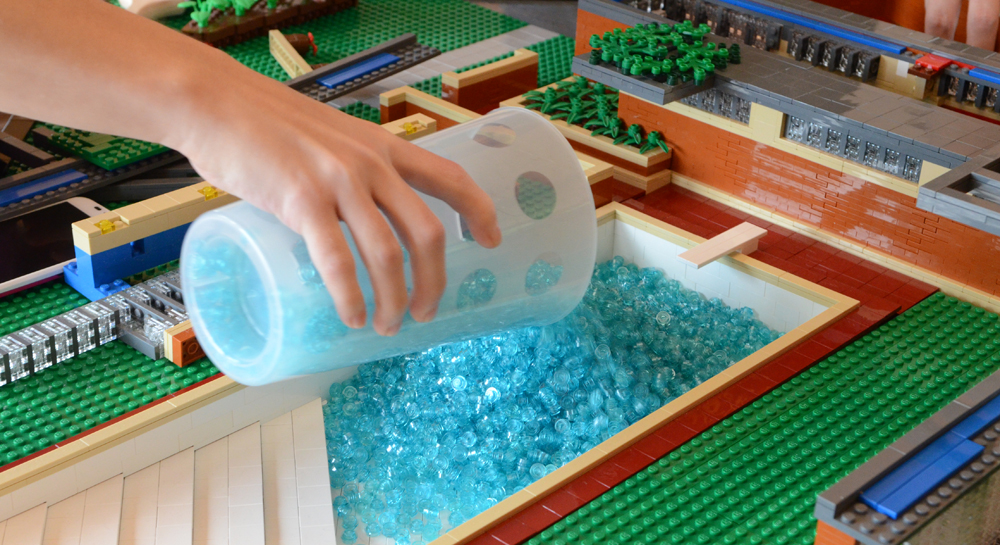
Amy pours tiny blue bricks into the swimming pool to simulate water. Gagnepain was careful to even show the different levels in the swimming pool.

LEGO Wingspread

A LEGO car, which brings to mind a Mercedes sedan that Wright owned, is parked at the front door.

LEGO Wingspread

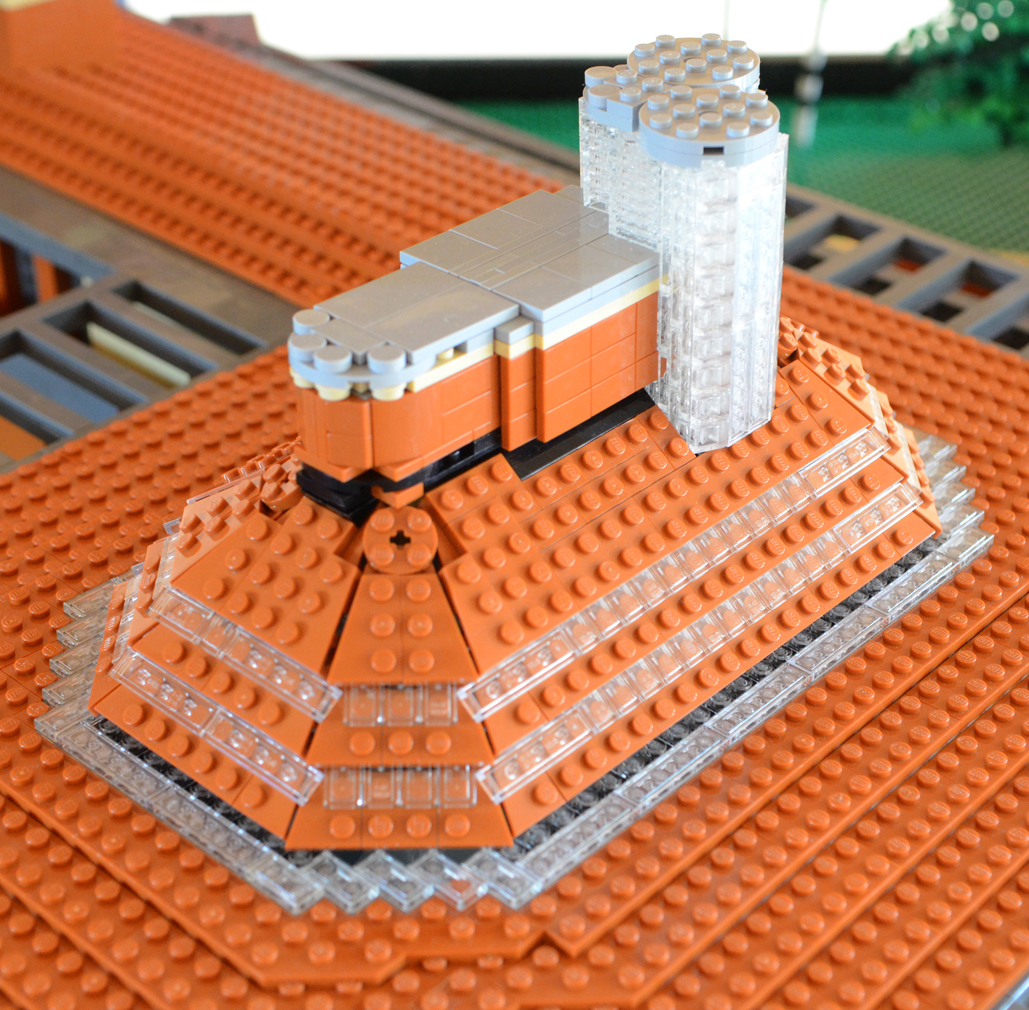
The crown of the model is the roof over the Great Room, with its Crow’s Nest:

LEGO Wingspread

If the model is too detailed for some people, they can enjoy the bare-bones LEGO Wingspread he fashioned, as well:

There is even a red Wright “signature tile.” As for the lack of a Frank Lloyd Wright figure, Gagnepain says he will make one as soon as there is a LEGO porkpie hat.

LEGO Wingspread

LEGO Wingspread

Gagnepain and the model are feature in Tom Alphin’s newly released book The LEGO Architect.

LEGO Wingspread by the numbers:

Construction took 500 hours over six months (“Too long,” jokes Amy)

There are an estimated 50,000 LEGO bricks in an estimated 100 different shaped bricks. There are seven color in the building. Most of the home’s Cherokee red bricks are represented by about 10,000 “1×2 plate in Dark Orange” bricks. The grounds and foliage use the seven colors from the building as well as an additional eight colors.

Newly Documented Wright ASBH in Madison

Photos and text (c) Mark Hertzberg 2015

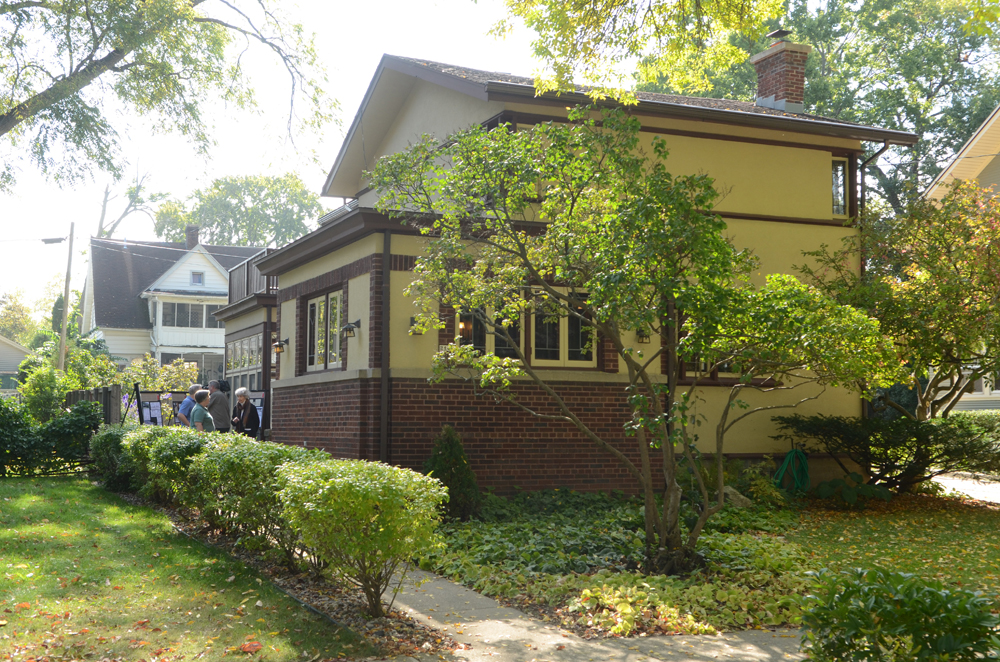
A press event Tuesday October 6, 2015 sponsored by Frank Lloyd Wright Wisconsin announces the documentation of the house at 2107 West Lawn Avenue in Madison as another one of Wright’s American System-Built houses. This is the second discovery of a newly documented Wright ASBH home this year. The other is in Shorewood, a suburb of Milwaukee. The house is an ASBH Series AA model.

A press event introduces Frank Lloyd Wright's newly documented American System-Built House by Frank Lloyd Wright at 2107 West Lawn Ave. Madison, Wisconsin, Tuesday October 6, 2015. The house was built in 1917 and has two non-Wright additions, one from 1924 and the other from 1927. (c) Mark Hertzberg

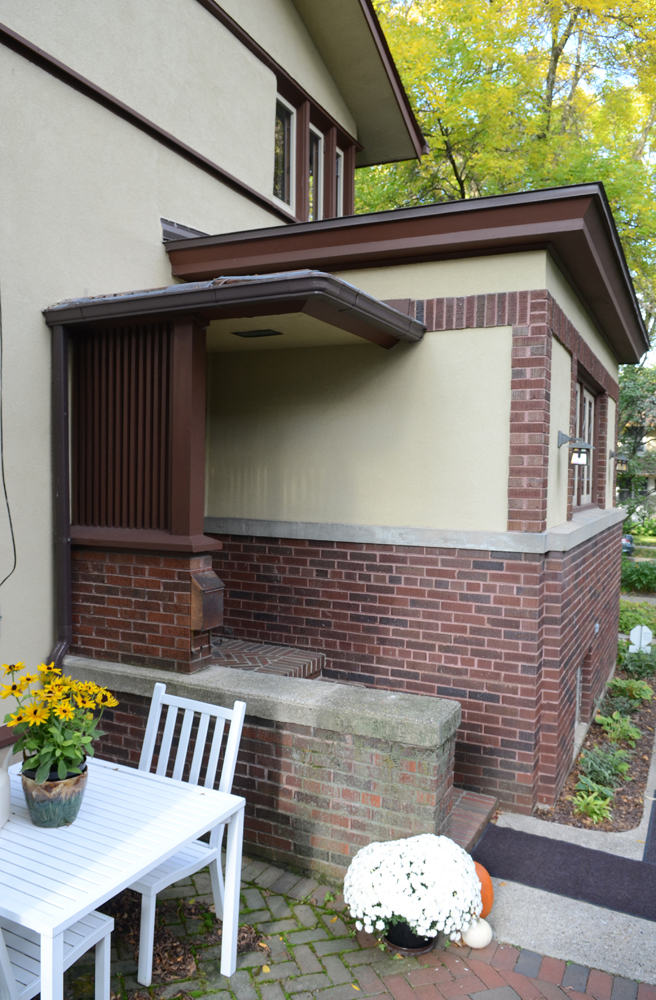
Linda McQuillen purchased the house in 1989. The entry is on the left side, as visitors approach the house. The porch to the left and the room to the right (built as an open porch, enclosed by a subsequent owner) are 1924 and 1927 non-Wright additions. The house was painstakingly documented by Madison-based Wright scholar Mary Jane Hamilton over two decades with assistance from many sources, including Mike Lilek. Lilek has overseen the restoration of Wright in Wisconsin’s ASBH properties on W. Burnham Street in Milwaukee and led the documentation of the Shorewood house with the assistance of other Wright scholars.

ASBH 2107 West Lawn Ave. Madison

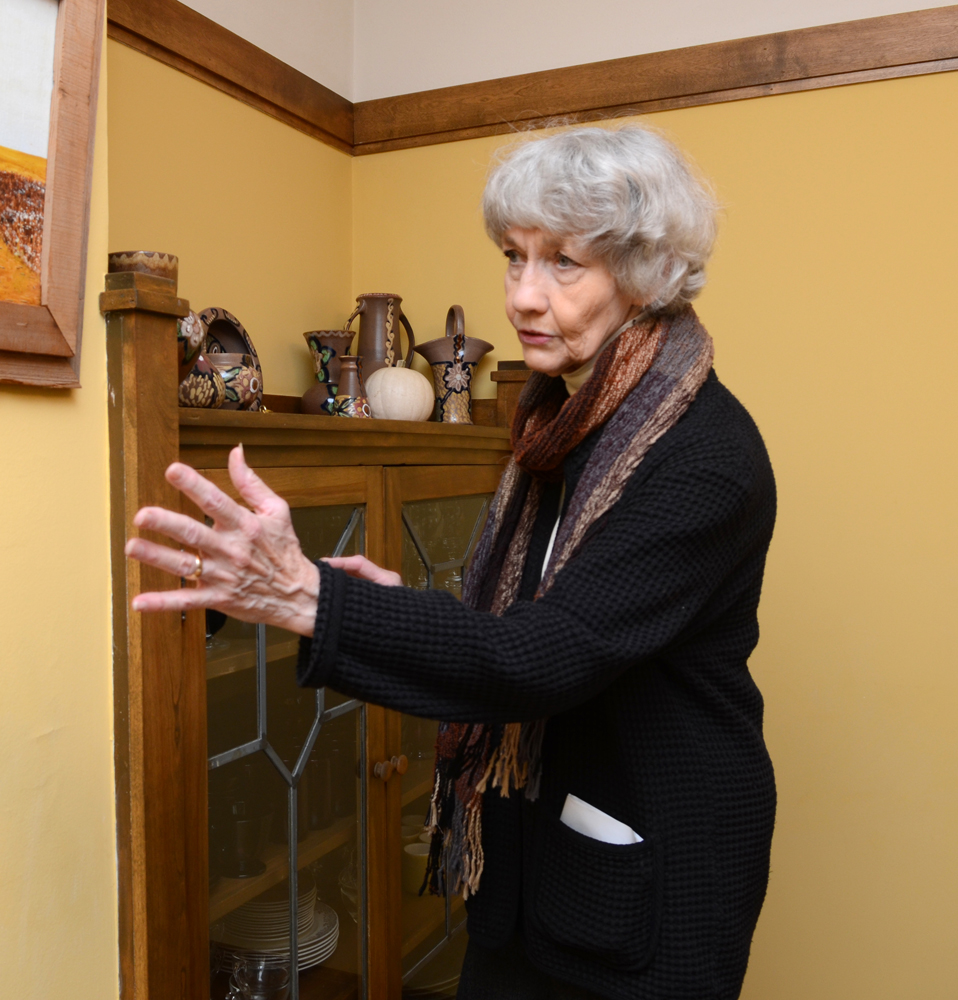
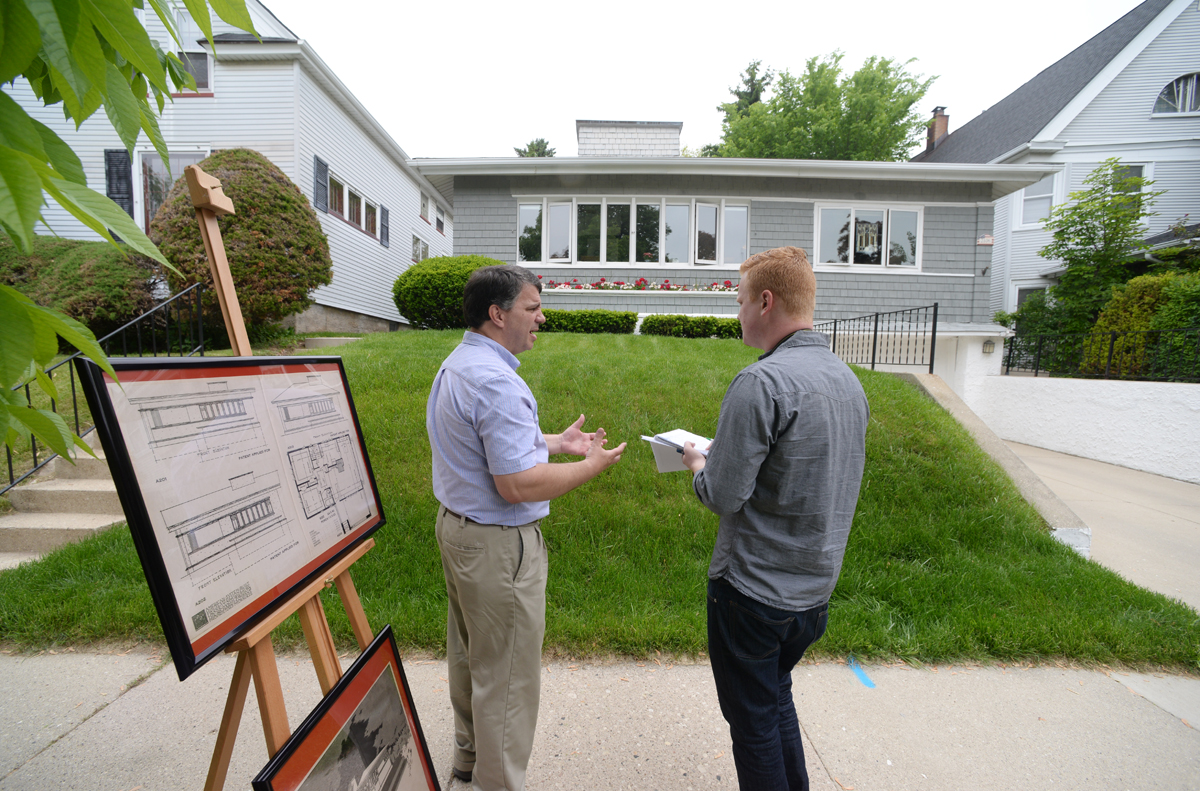
Hamilton chats with Nathan McQuillen, who grew up in the house. Her meticulous documentation was displayed on four poster boards on easels. ASBH 2107 West Lawn Ave. Madison

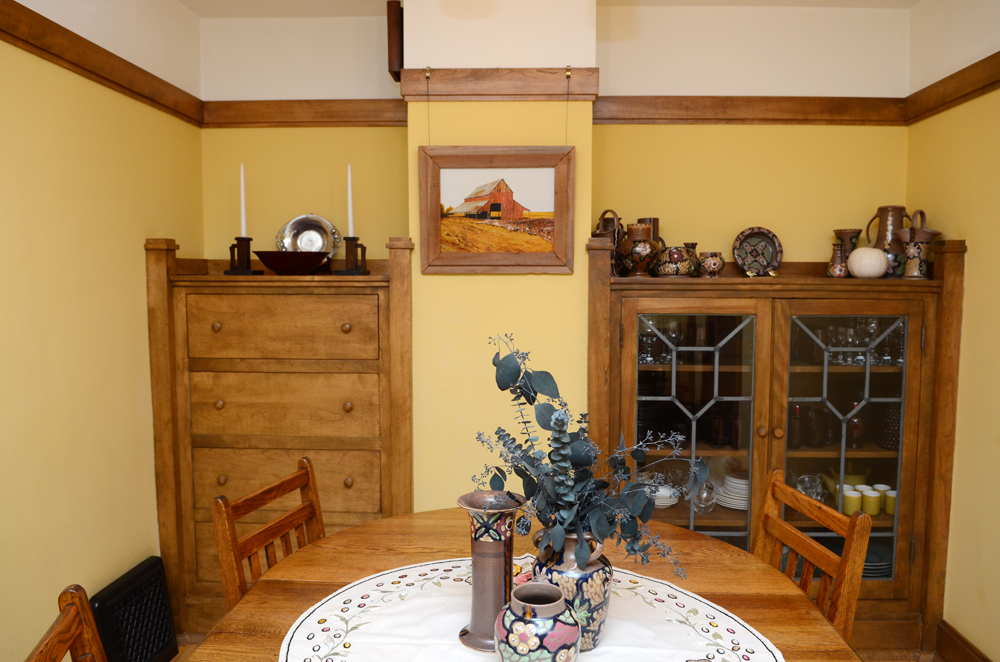
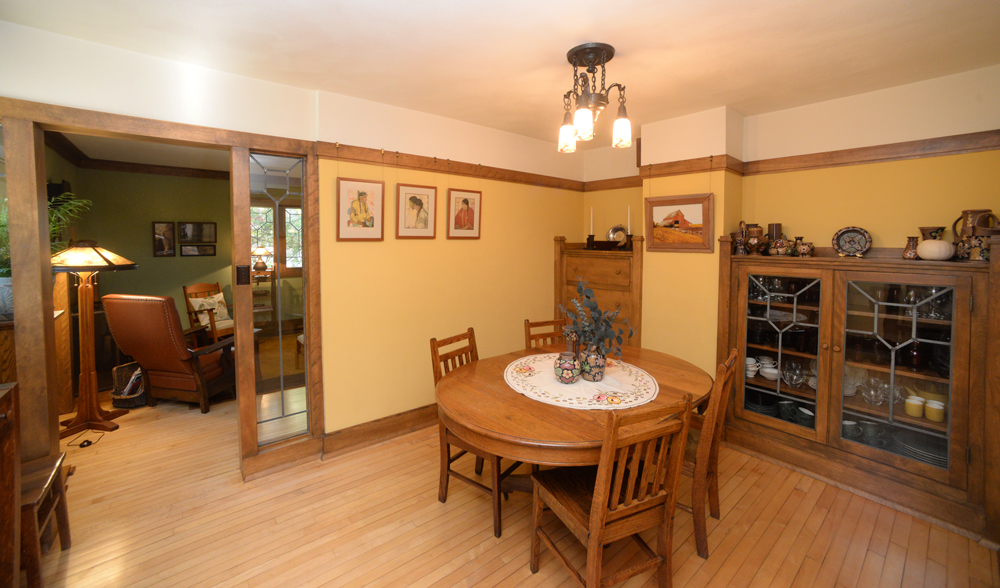
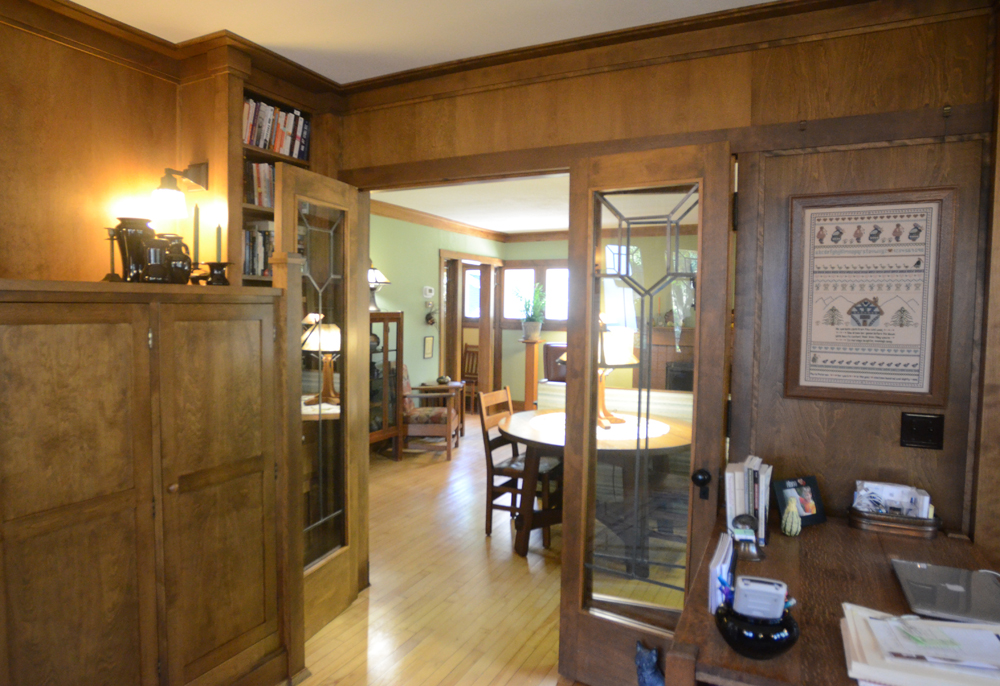
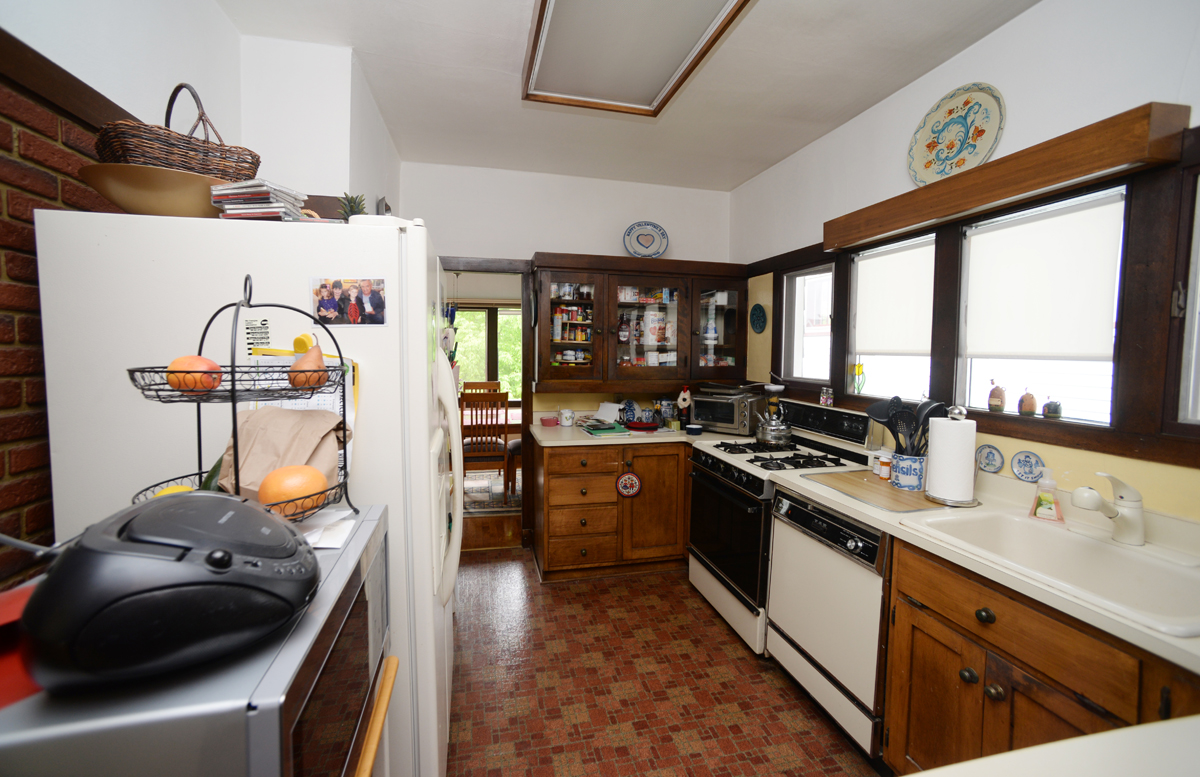
Hamilton explains that only the right hand built-in hutch in the diminutive dining room is original. The room was originally the kitchen. The hutch at left is in place of an original door.

ASBH 2107 West Lawn Ave. Madison

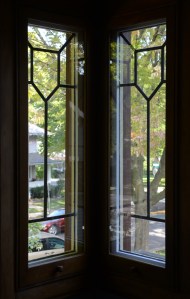
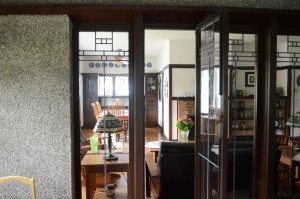
The original hutch has doors with the same leaded-glass pentagon seen in many windows of the house.

ASBH 2107 West Lawn Ave. Madison

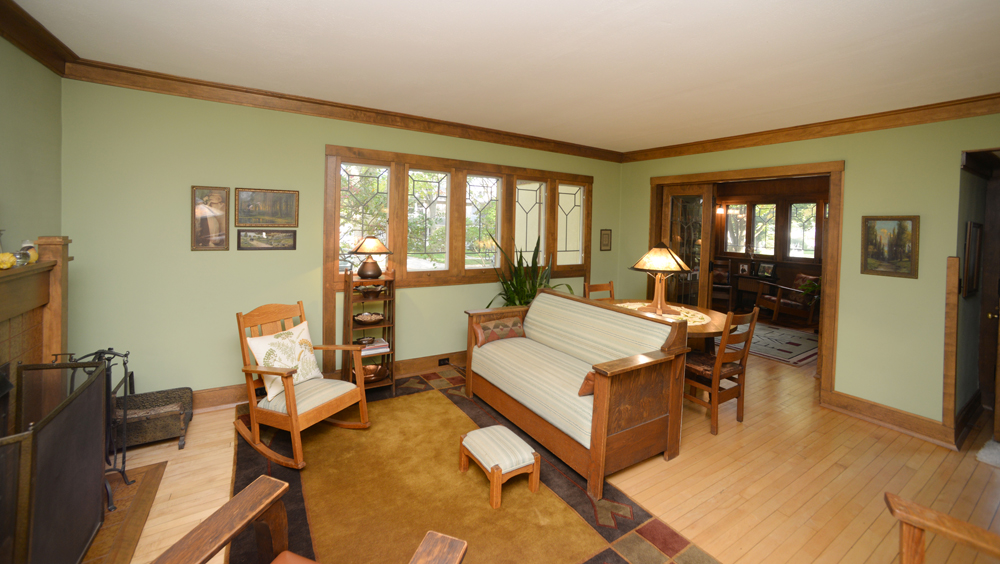
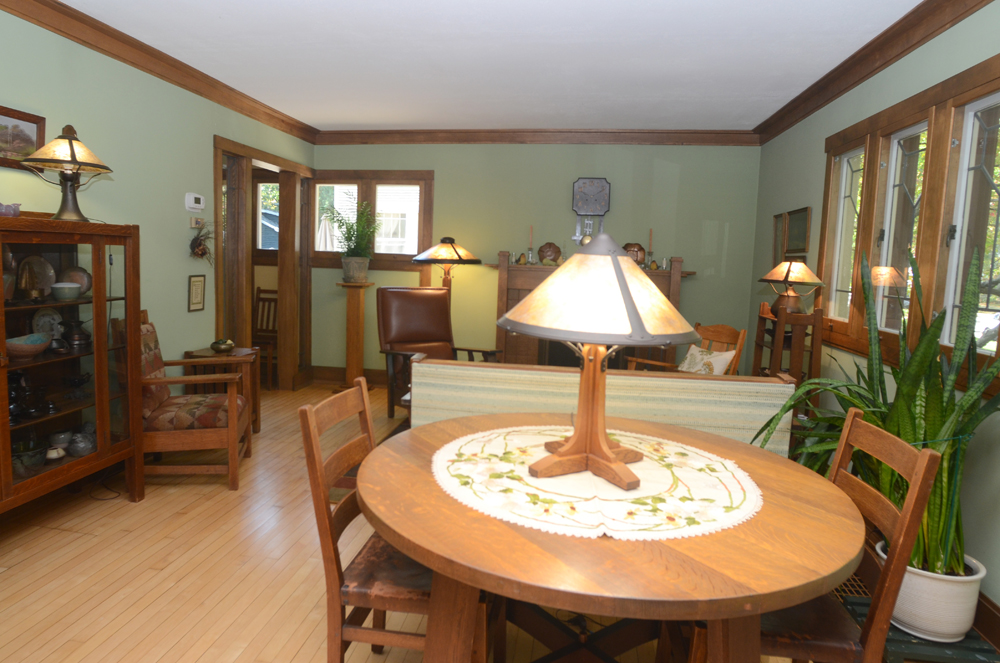
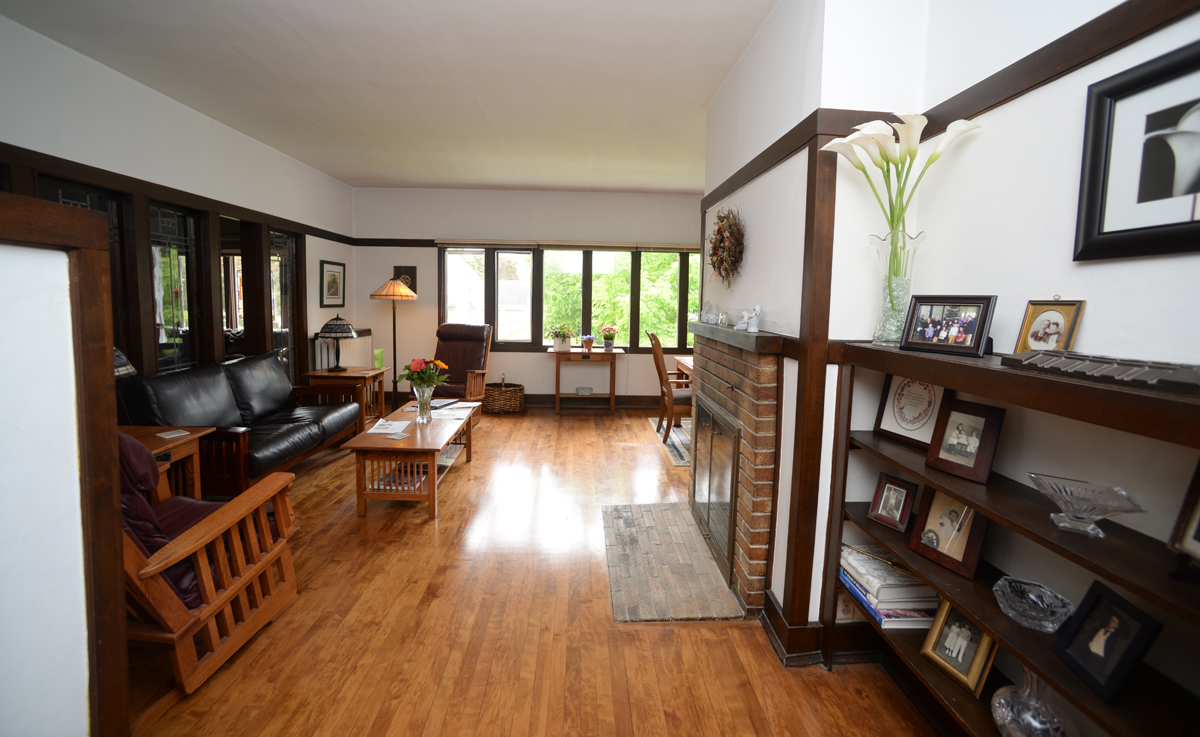
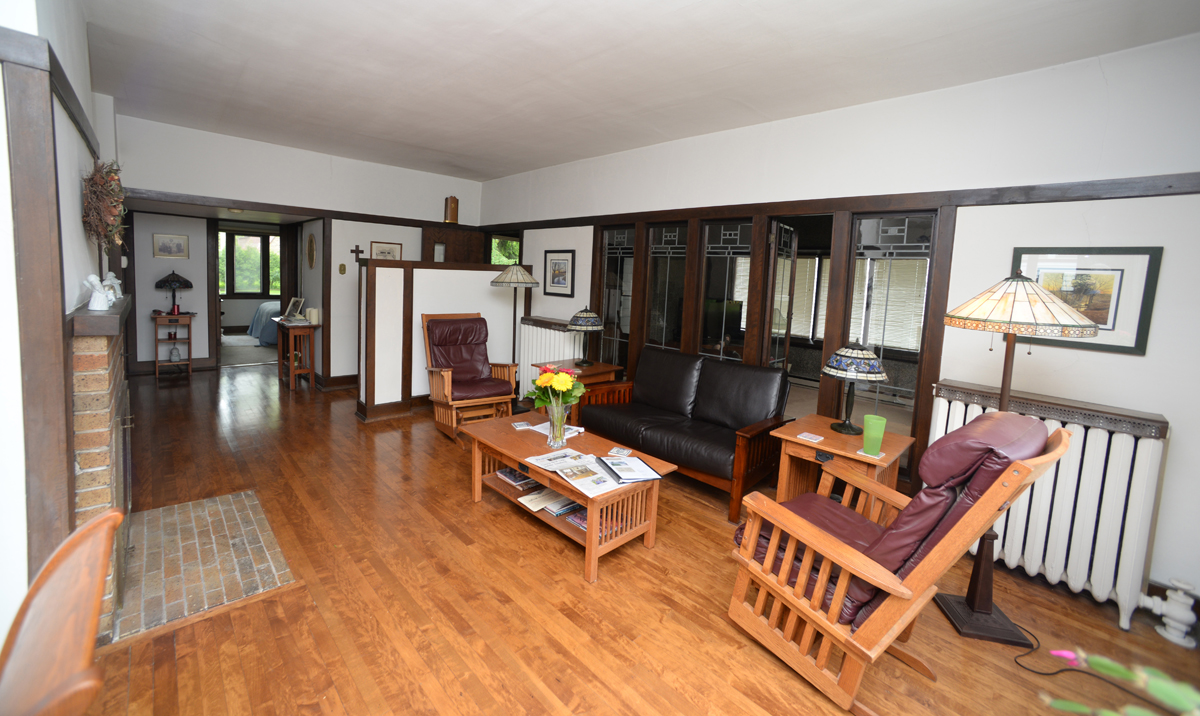
The dining room leads to the living room. The fireplace at the left side of the living room is not original.

ASBH 2107 West Lawn Ave. Madison

ASBH 2107 West Lawn Ave. Madison

ASBH 2107 West Lawn Ave. Madison

The sun room from one of the 1920s additions is now an office, south of the living room.

ASBH 2107 West Lawn Ave. Madison

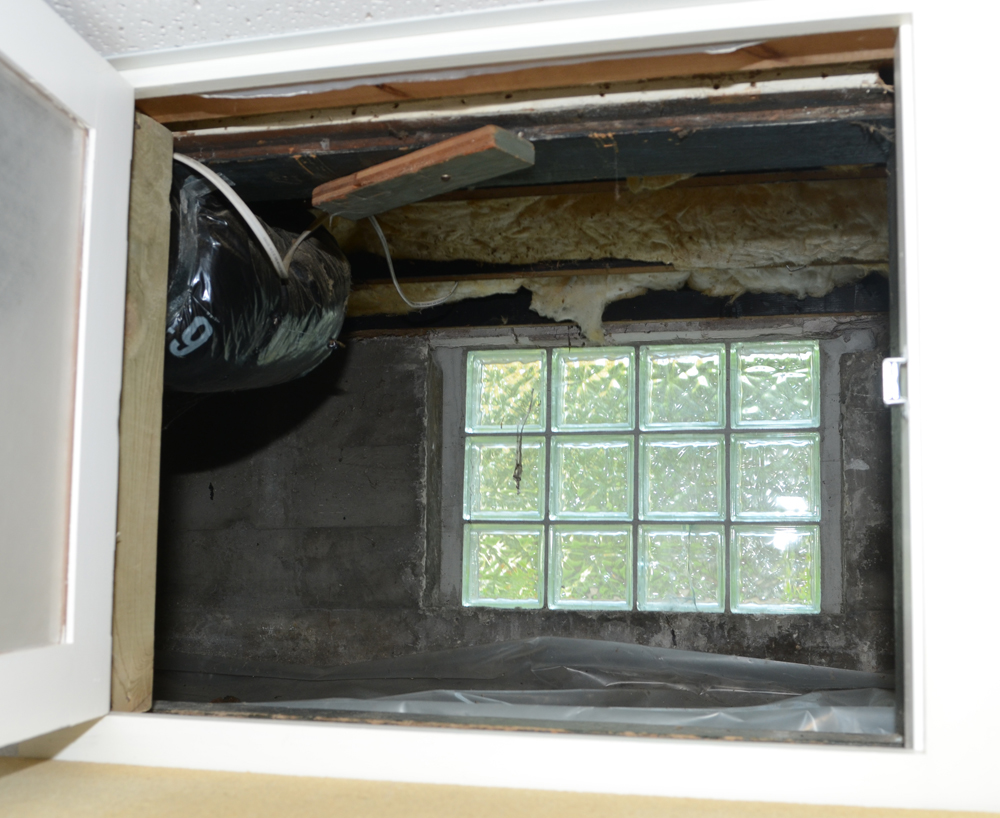
A basement crawl space below the addition shows the original and added foundation walls.

ASBH 2107 West Lawn Ave. Madison

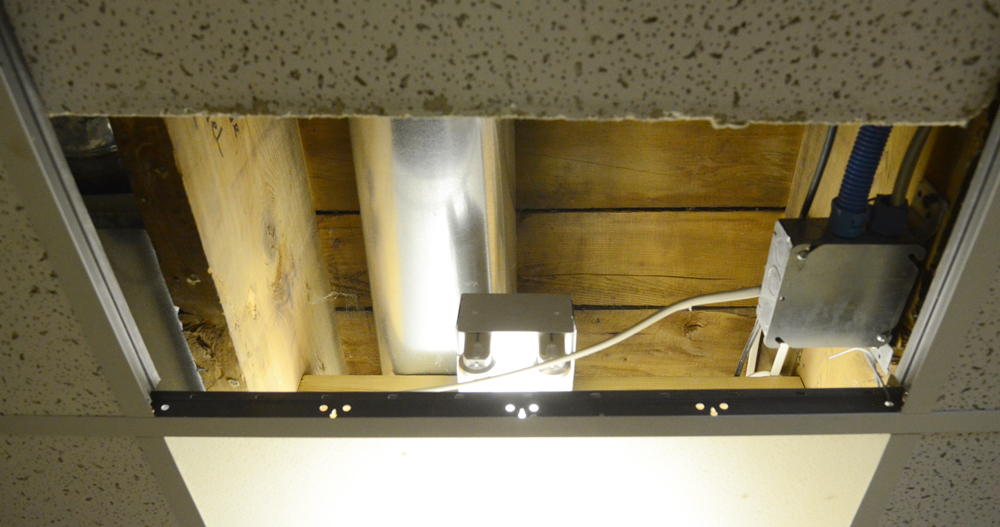
Part of the authentication of the house as ASBH comes from the joists being 24″ apart, as was customary in the ASBH homes, as opposed the conventional 16″ measurement.

ASBH 2107 West Lawn Ave. Madison

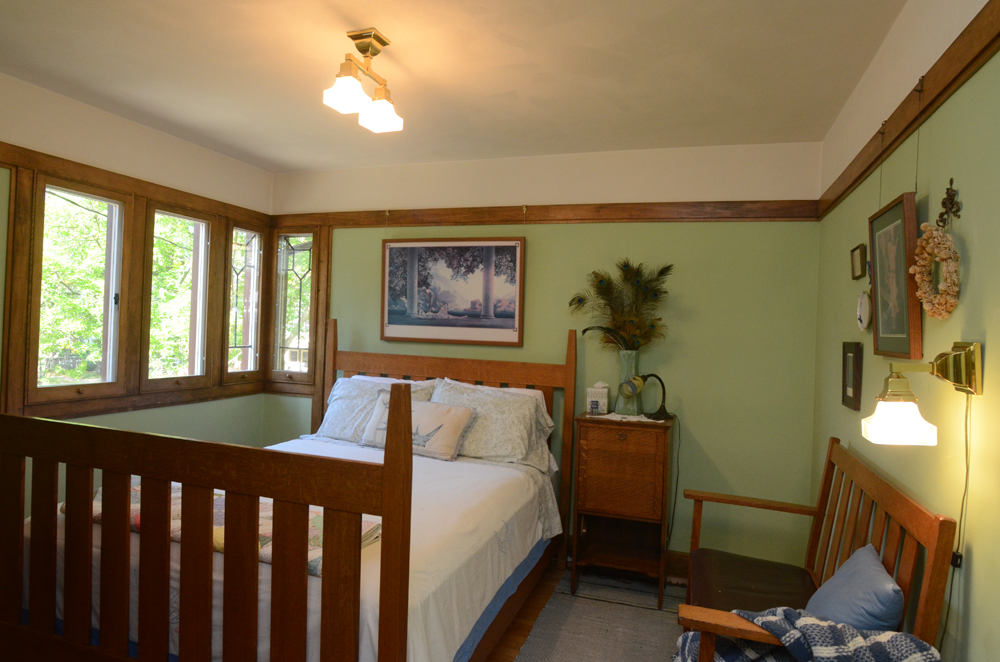
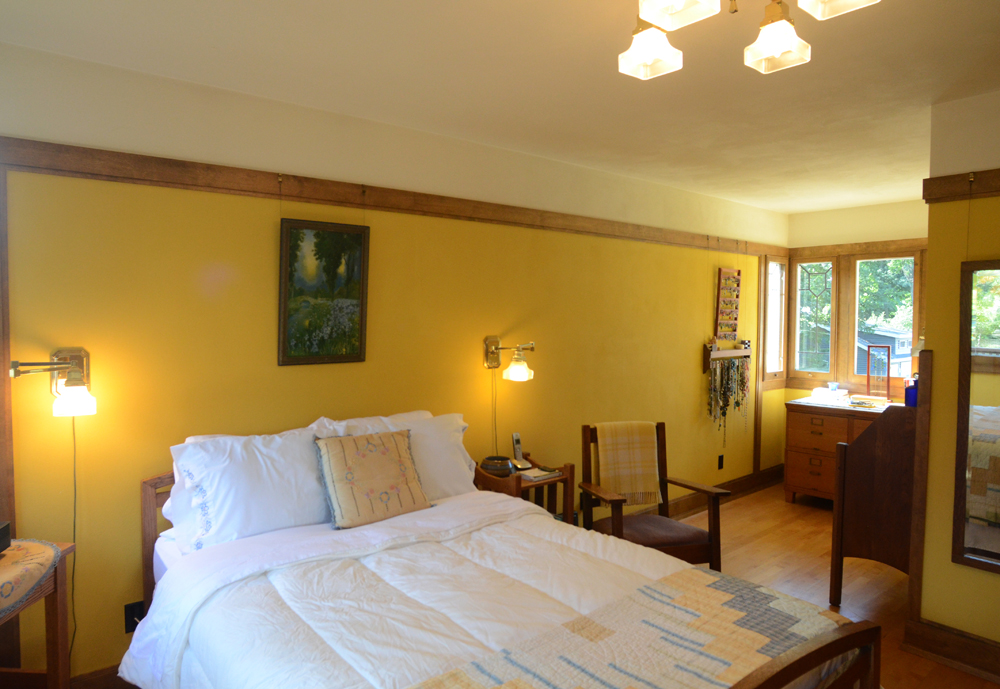
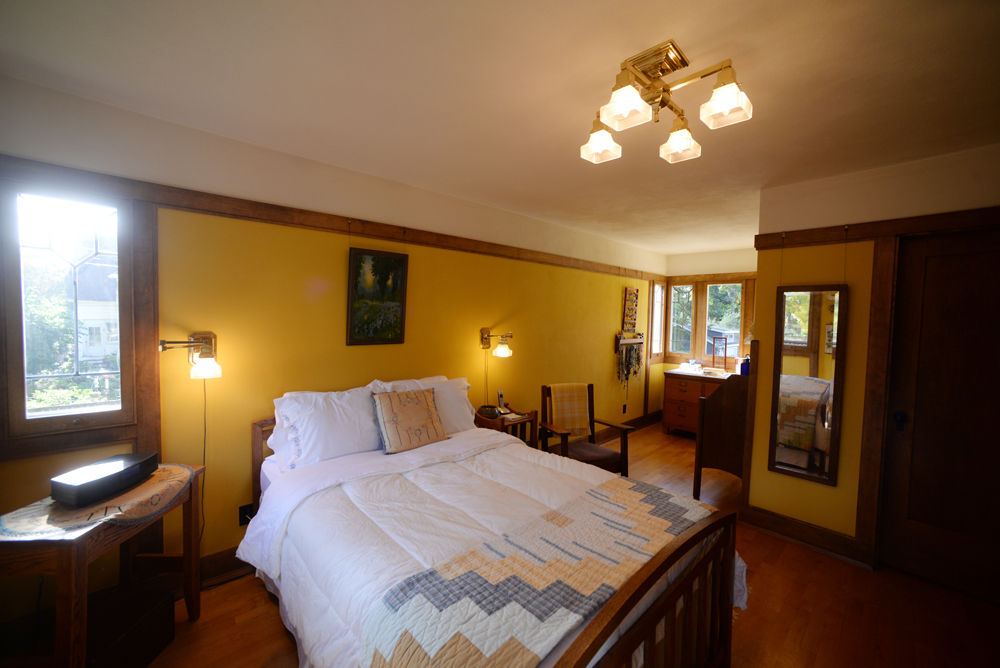
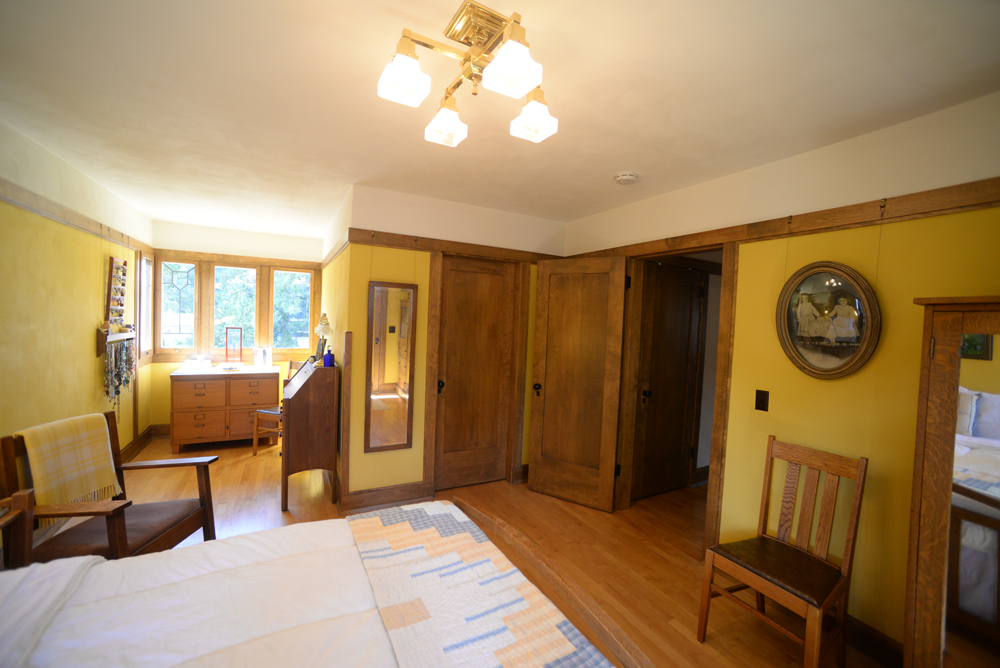
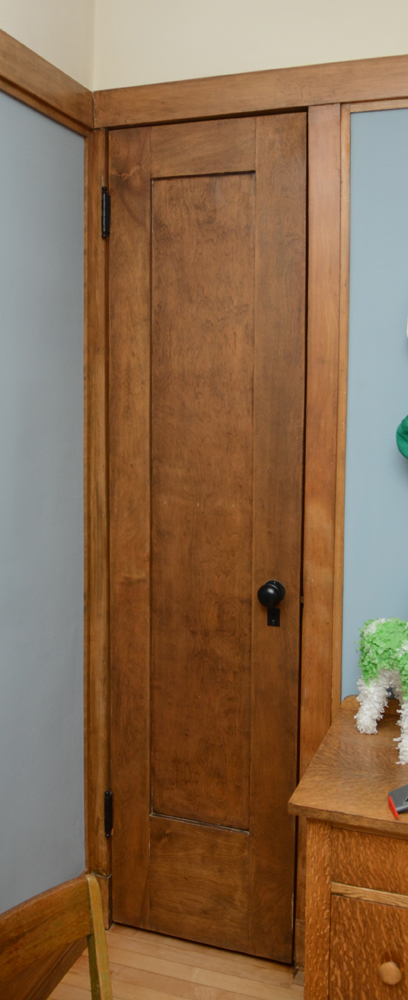
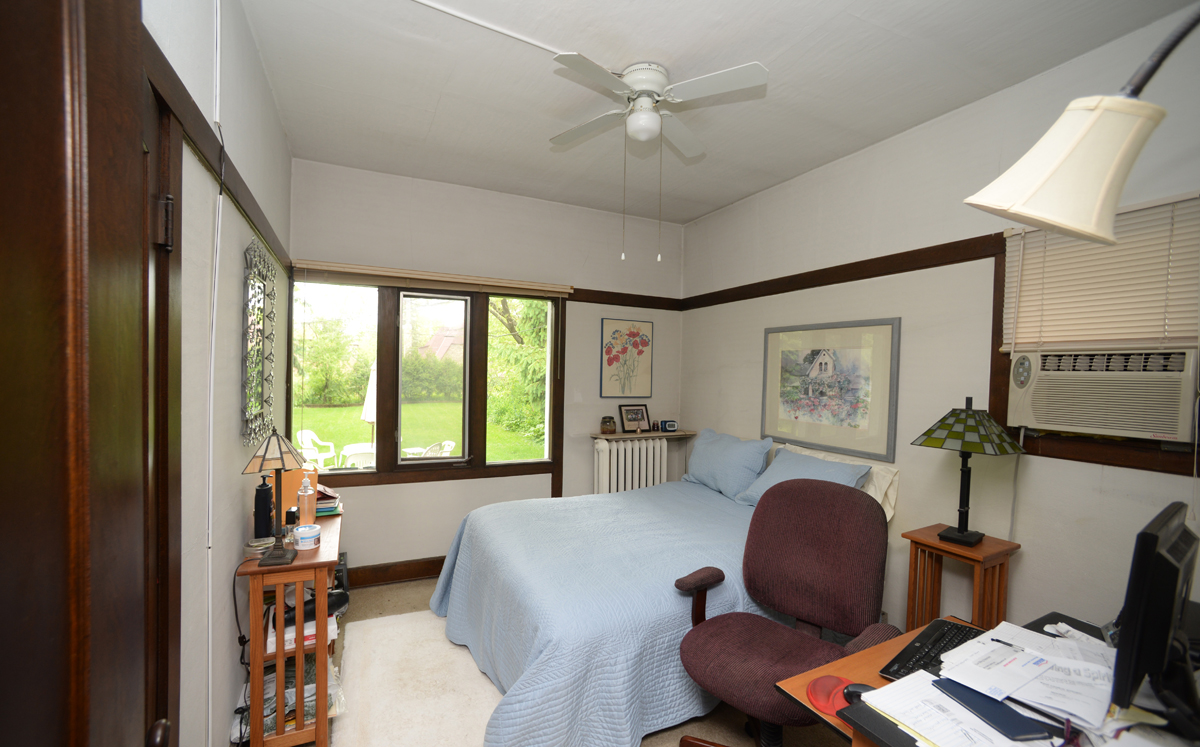
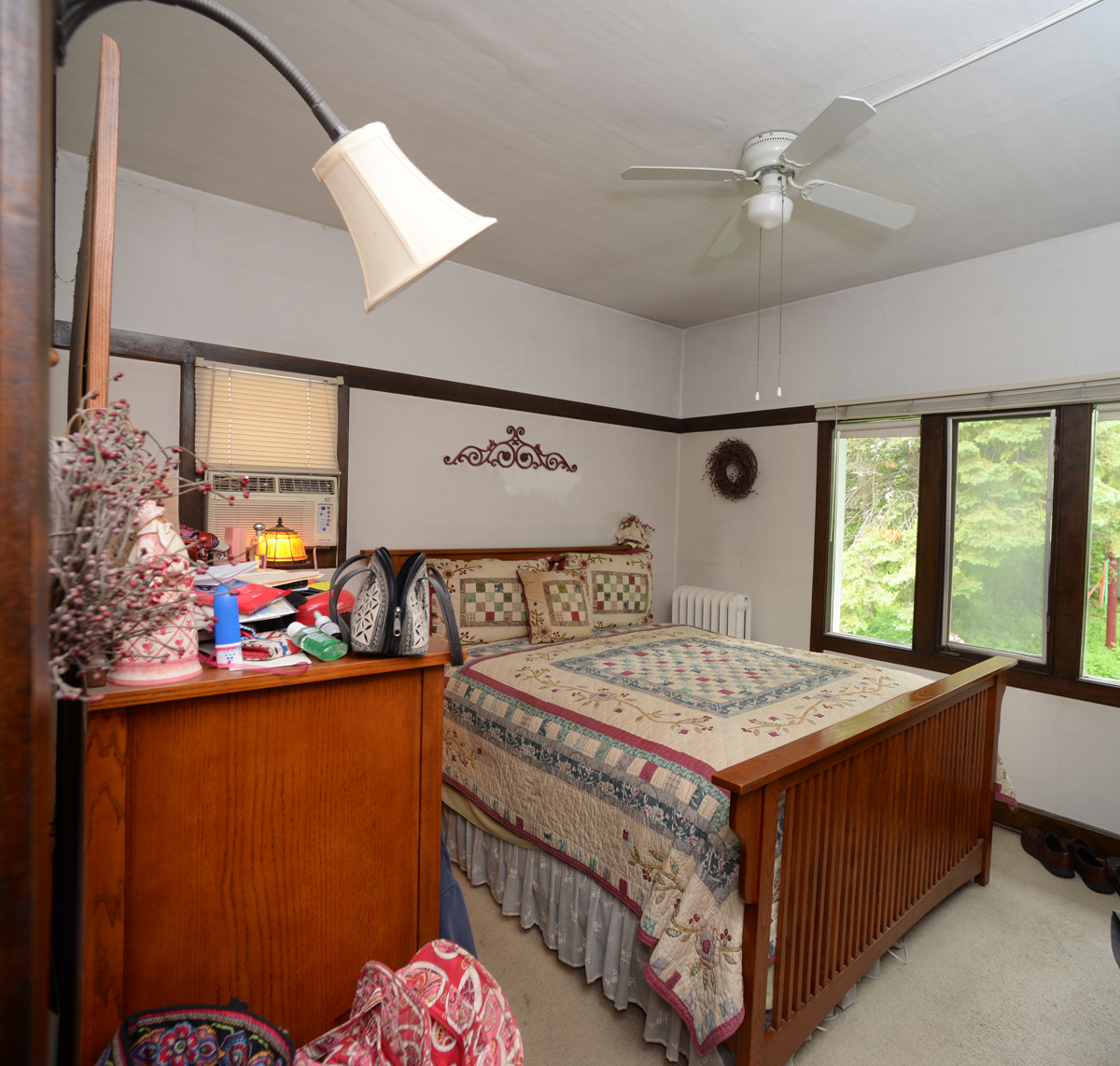
There are three bedrooms upstairs. Two are shown in their entirety, the third is depicted by the narrow broom closet.

ASBH 2107 West Lawn Ave. Madison

ASBH 2107 West Lawn Ave. Madison

ASBH 2107 West Lawn Ave. Madison

ASBH 2107 West Lawn Ave. Madison

ASBH 2107 West Lawn Ave. Madison

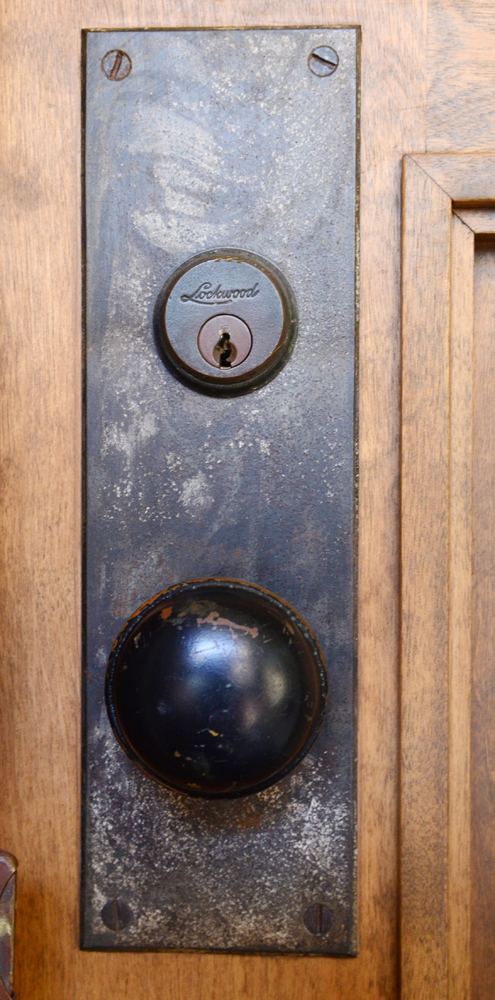
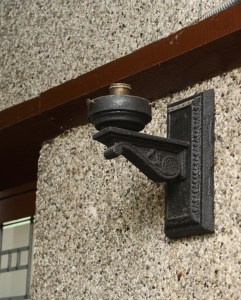
The entrance to the house, on the south side, away from the street, has one of Wright’s characteristic wood screens outside the door. The front door knob and lock are original to the house.

ASBH 2107 West Lawn Ave. Madison

ASBH 2107 West Lawn Ave. Madison

ASBH 2107 West Lawn Ave. Madison

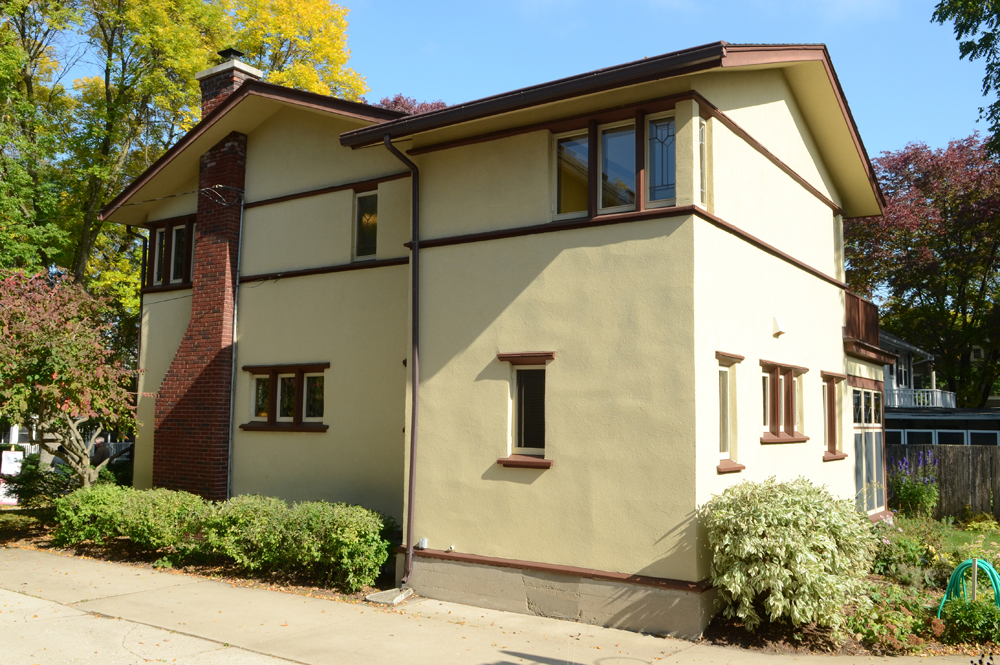
The north (left) and east sides of the house. The fireplace is a recent addition. The street is to the left.ASBH 2107 West Lawn Ave. Madison

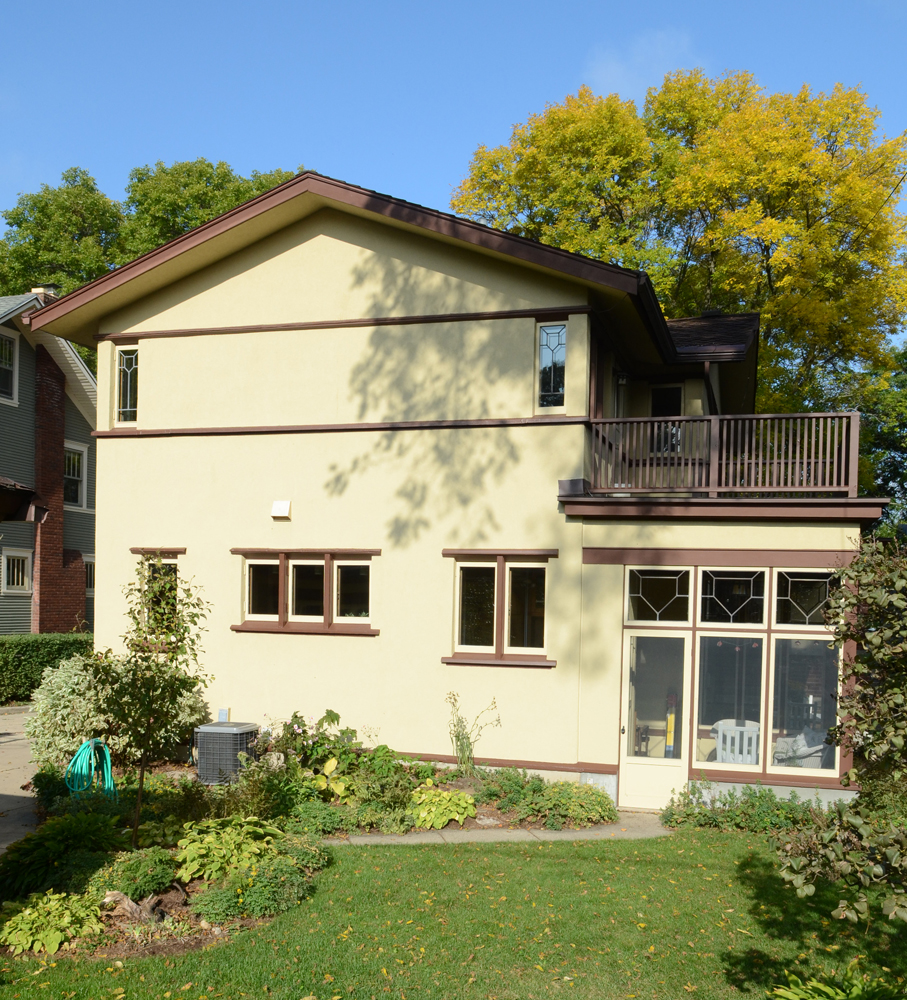
The east side, with its 1920s porch addition, off the master bedroom:

ASBH 2107 West Lawn Ave. Madison

This is a view of the house from the street. the door is on the left or south side:

ASBH 2107 West Lawn Ave. Madison

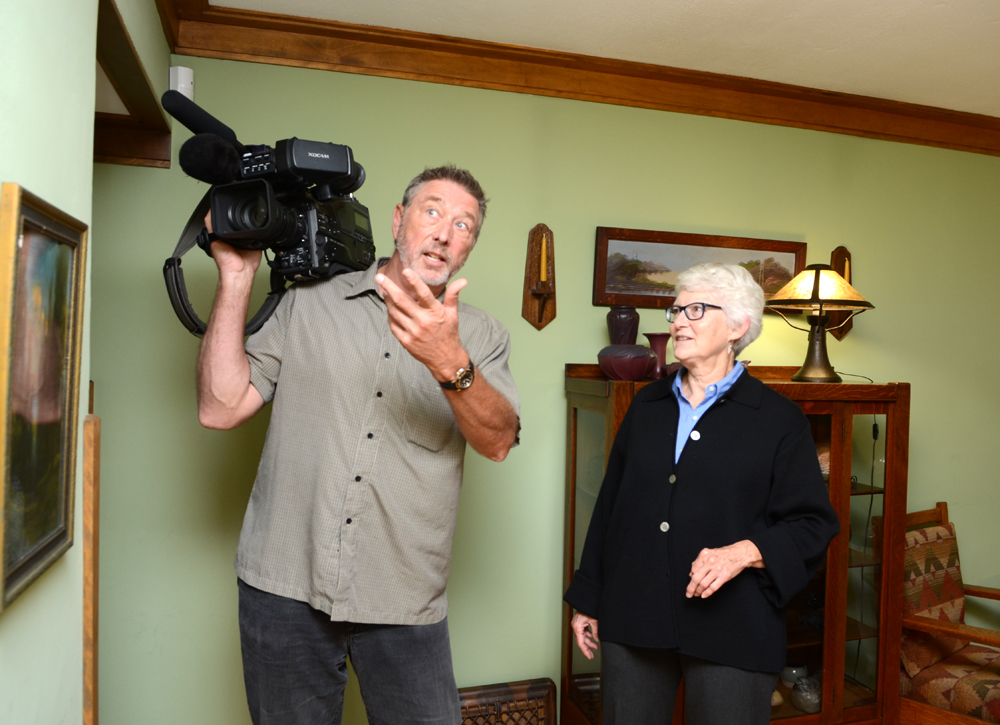
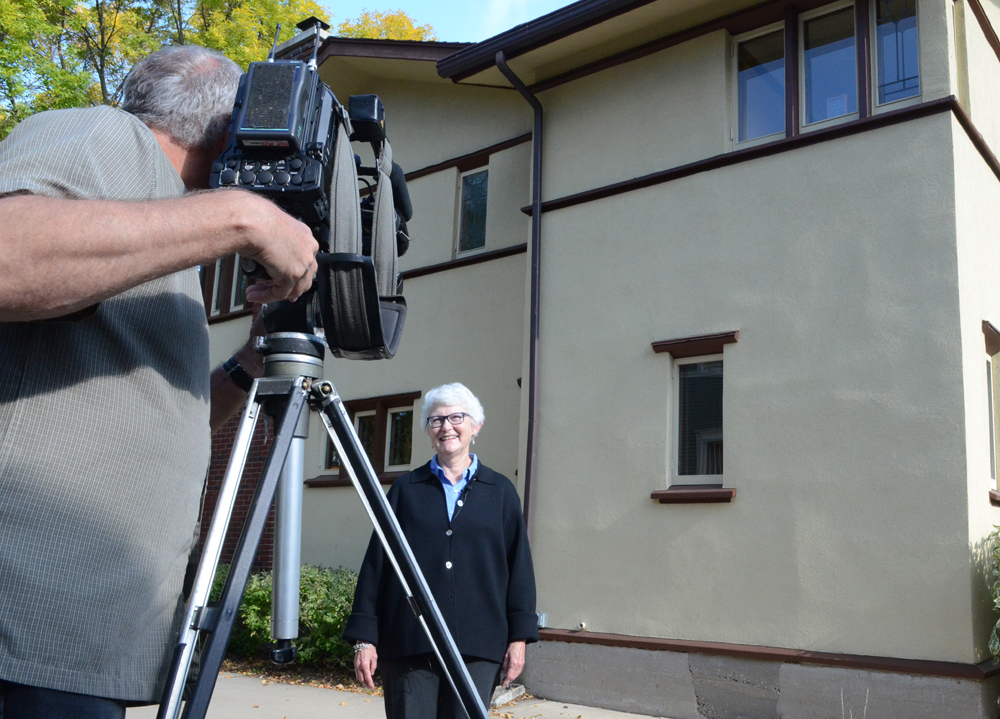
McQuillen is interviewed by journalist Doug Wahl of Madison’s Channel 3 television station.

ASBH 2107 West Lawn Ave. Madison

ASBH 2107 West Lawn Ave. Madison

Preview Screening: Pedro E. Guerrero on PBS American Masters

(c) Mark Hertzberg 2015

Screening at Monona Terrace in Madison, Wisconsin, of the PBS

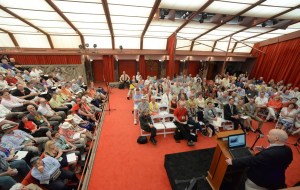
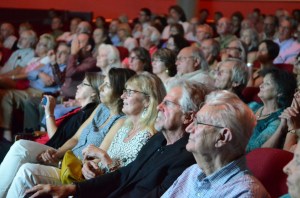
Dixie Legler Guerrero remarked “Everyone I know in Wisconsin is here!” as she surveyed the auditorium at Monona Terrace in Madison Tuesday evening September 1 for the premiere Wisconsin screening of “Pedro E. Guerrero: A Photographer’s Journey.” Guerrero (1917-2012) was Wright’s favorite photographer. The auditorium was filled for the screening which was part of Monona Terrace’s Wright Design lecture series. The screening was also sponsored by Frank Lloyd Wright Wisconsin wrightinwisconsin.org

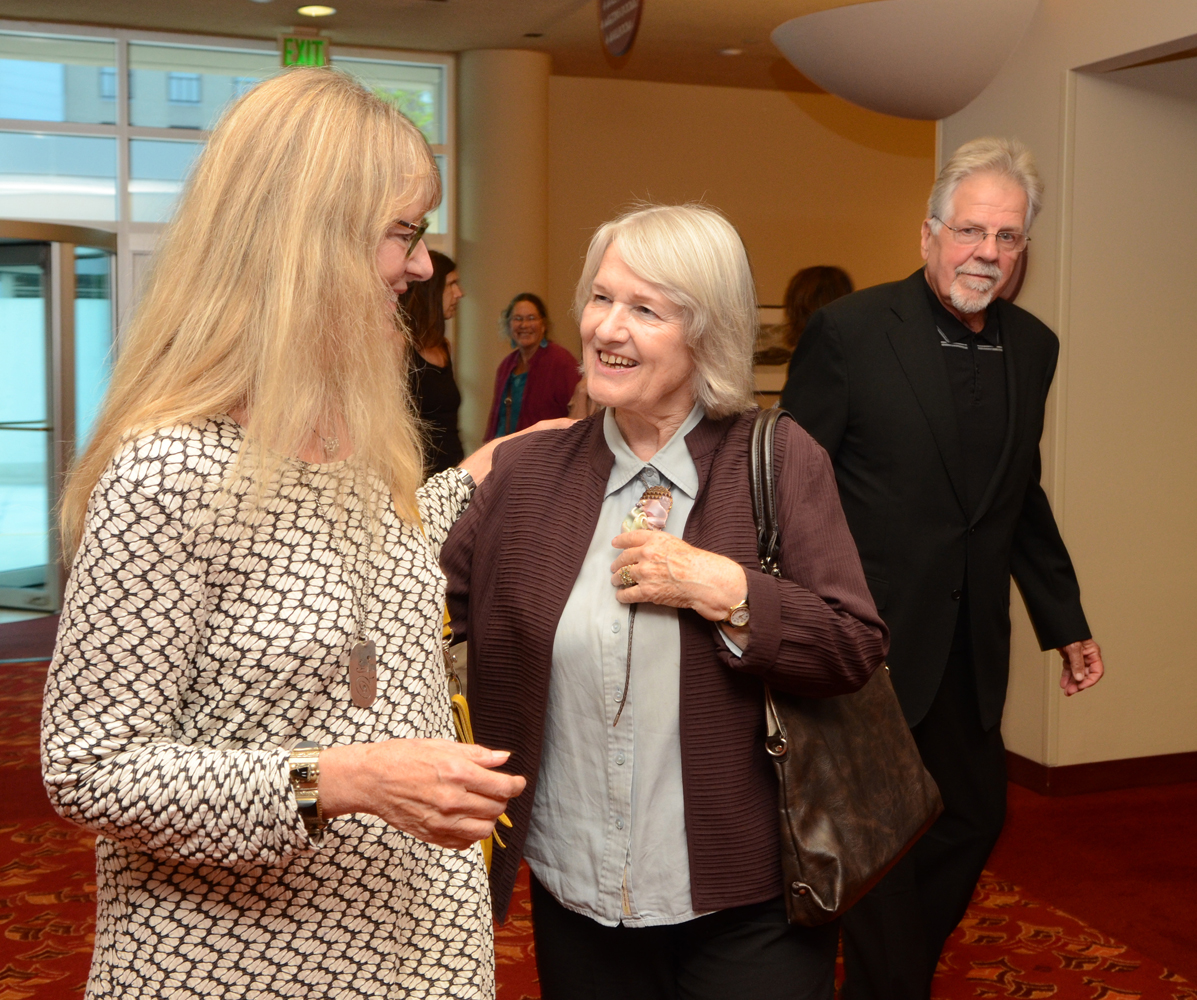
Dixie Legler Guerrero, left, greets Effi Casey. Tim Wright, Frank Lloyd Wright's grandson, is at right.

Dixie Legler Guerrero, left, greets Effi Casey before the screening. Tim Wright, Frank Lloyd Wright’s grandson, is at right.

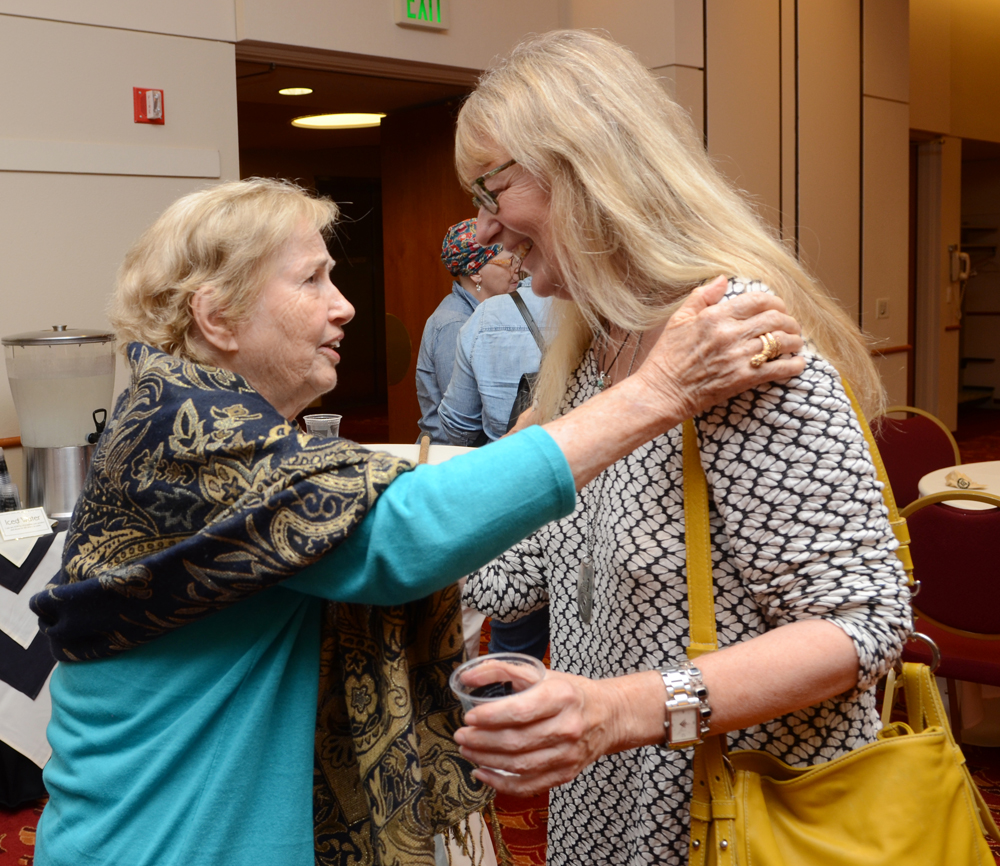
Minerva Montooth, left, and Dixie Legler Guerrero chat at the reception after the screening.

Minerva Montooth, left, and Dixie Legler Guerrero chat at the reception after the screening.

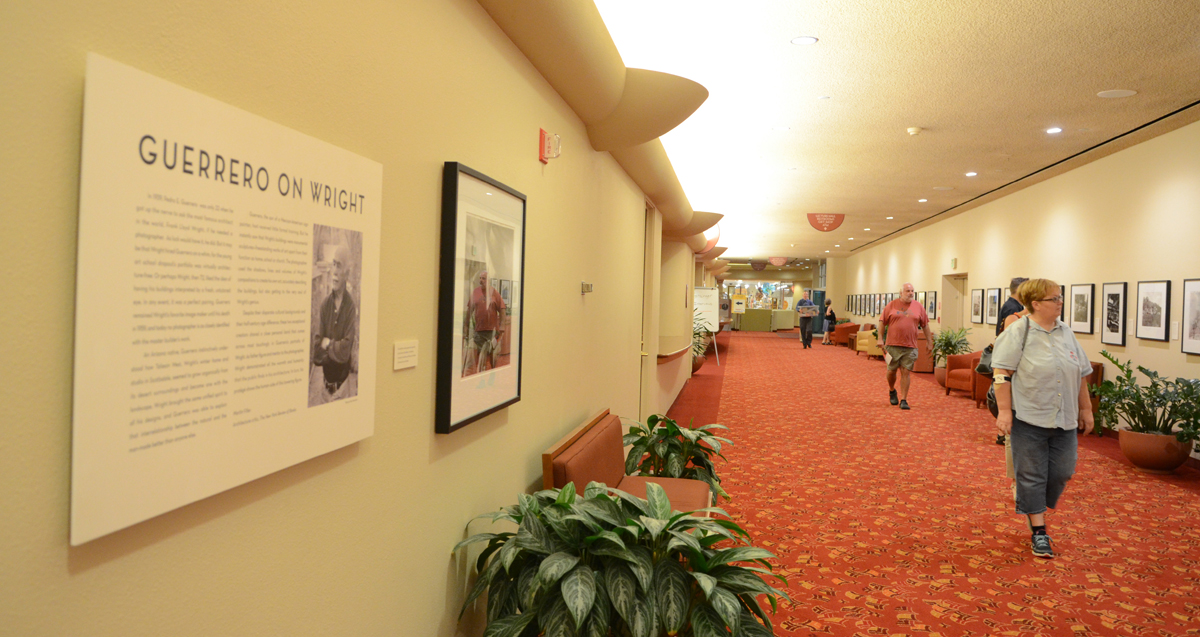
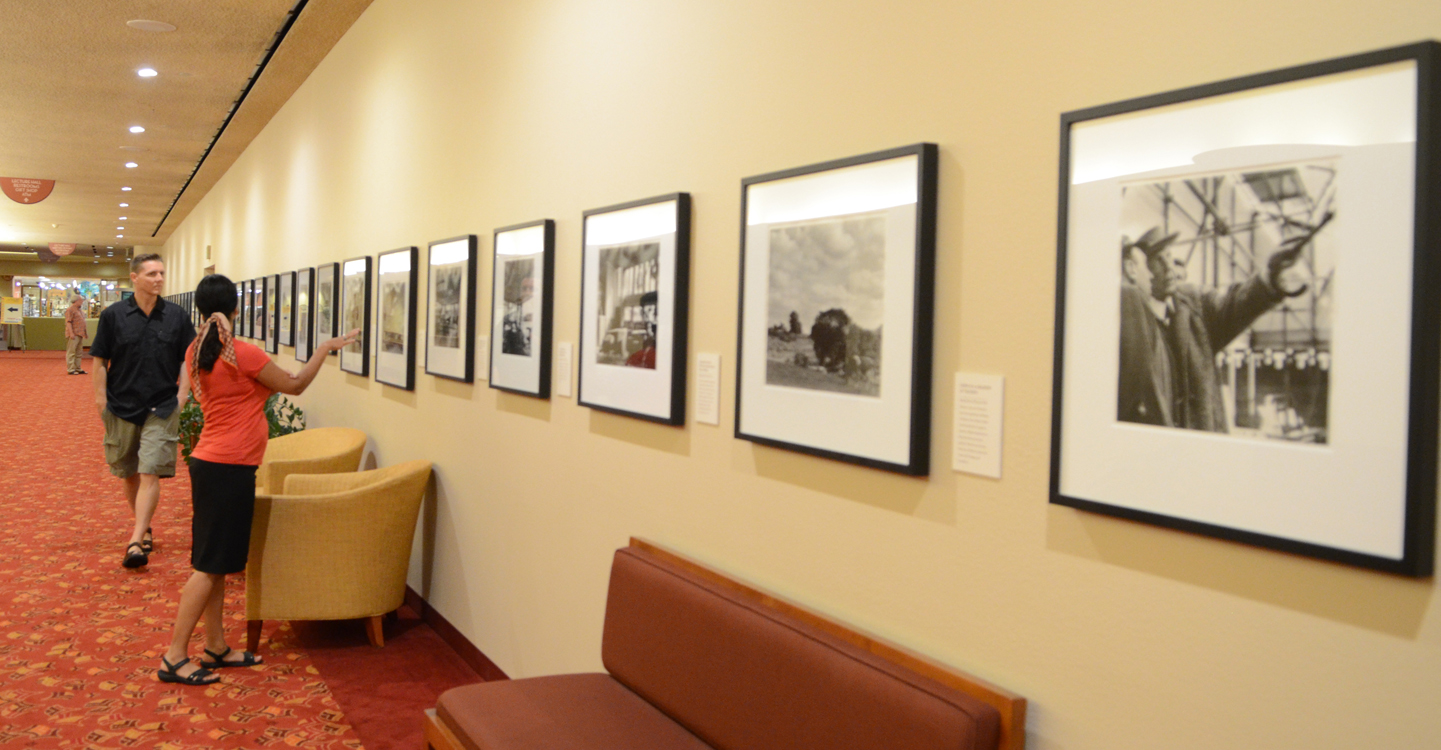
Guerrero’s work is on permanent display at Monona Terrace:

Guerrero PBS Screening

Guerrero PBS Screening

Guerrero and Dixie Legler Guerrero at the annual Wright birthday dinner at Taliesin in 2011 and 2012:

Birthday Dinner

Pedro Guerrero

Pedro Guerrero

The show, part of PBS’ American Masters series, airs Friday September 18 nationwide.

Wright Honors Family with “Penwern” Name on Delavan Lake

Penwern

(c) 2015: Mark Hertzberg, Georgia Lloyd Jones Snoke, Kenneth Snoke, Unity Chapel, and Thomas A. Heinz, A.I.A. 

There has been much speculation about the origin of “Penwern,” the name given to Frank Lloyd Wright’s Fred B. Jones house and estate on Delavan Lake, Wisconsin (1900-1903). The most popular thought, that “penwern” is Gaelic for “great house” is erroneous. The word is Welsh or Cornish, and does not mean “great house.” It can mean “at the head of the field” or “at the head of the alder tree.” But it is more likely, as Wright scholar John (Jack) Holzhueter points out, that Wright took the opportunity of having designed a home for an American client named Jones to honor his mother’s family, also named Jones, although not related to Fred B. Jones. Georgia Lloyd Jones Snoke, Wright’s first cousin, twice-removed, visited the (Wright) Jones family Pen-y-wern near Llandysul, Wales in 2004. She offers this lovely perspective on the connection between the two Penwerns. Many thanks to John (Jack) Holzhueter for the introduction to Mrs. Snoke.

Pen-y-wern  Llandysul, Wales-1.jp2

By Georgia Lloyd Jones Snoke, descended from Richard and Mallie’s seventh child, Jenkin.

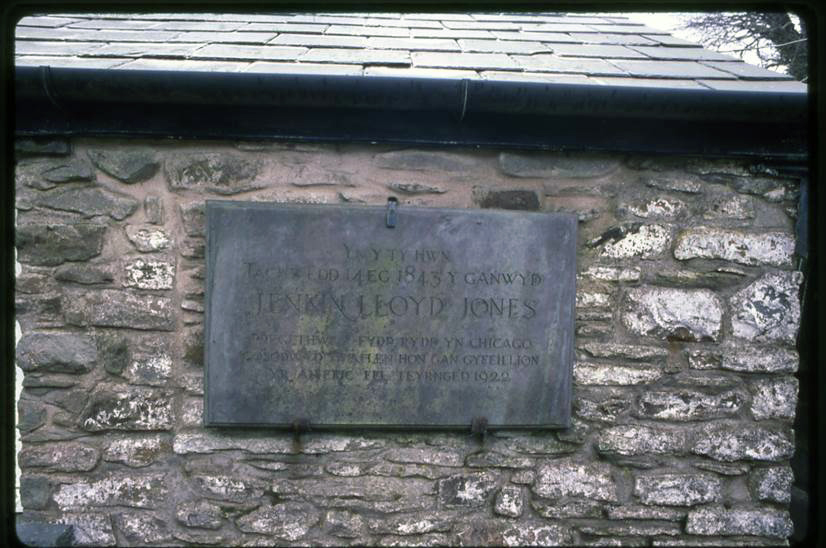
Photos by Kenneth Snoke (Penwern – Wales cottage), Thomas A. Heinz, A.I.A. (plaque, courtesy of Unity Chapel (family portraits) and Mark Hertzberg (Penwern – Delavan Lake)

There is a “Penwern” on Lake Delavan in Wisconsin.  Elegant.  Exquisite.  Unmistakably luxurious.

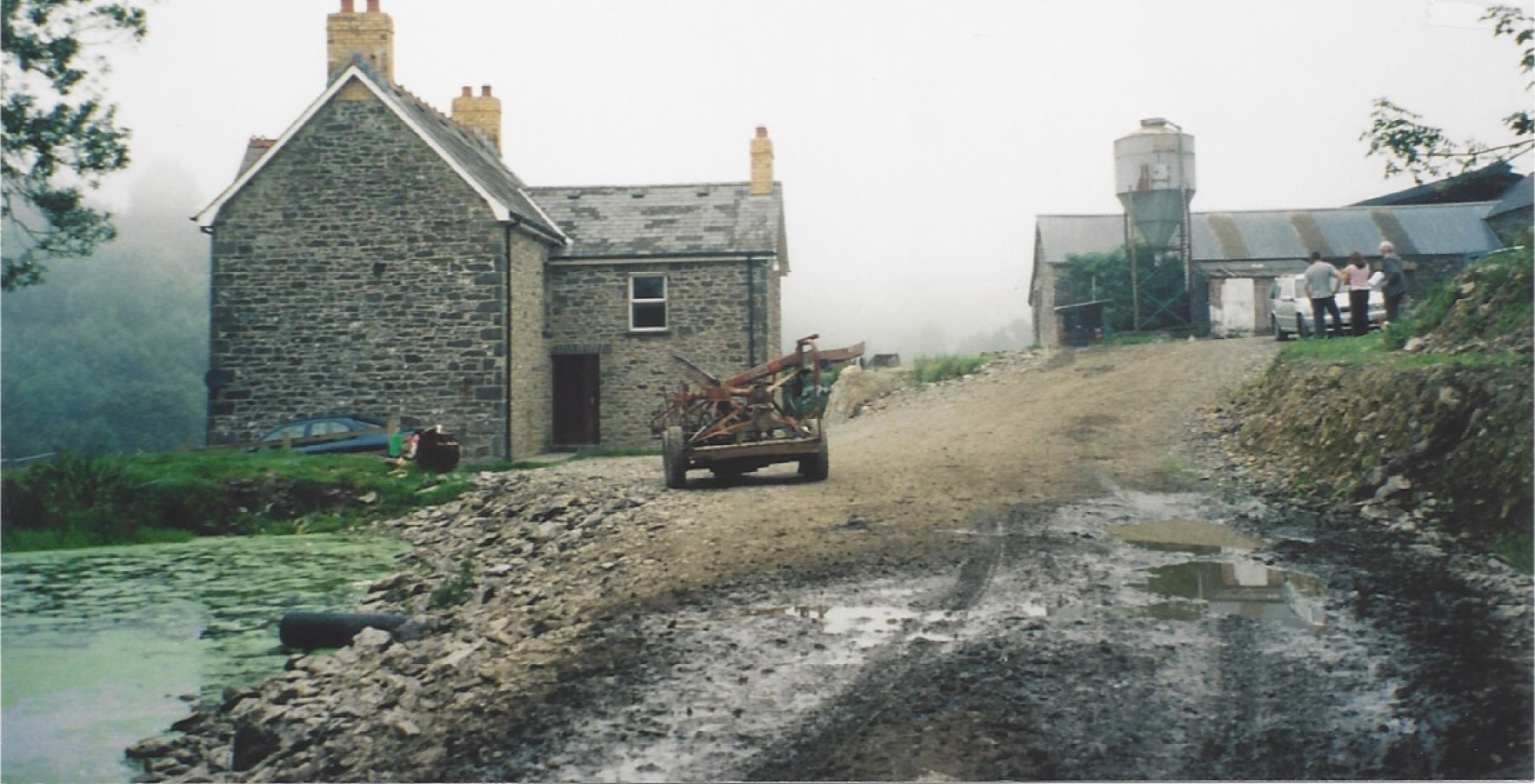
There is a “Penwern” in Wales.  Sturdy.  Spare.  Uncompromisingly protective against time, the elements, the poverty of place.

Pen-y-wern  Llandysul, Wales-2.jp2

Could these two be connected by a grandson’s filial nod to a grandmother he barely remembered but whose impact he witnessed lifelong?

Plaque

The grandson was Frank Lloyd Wright, one of the greatest architects known to man.

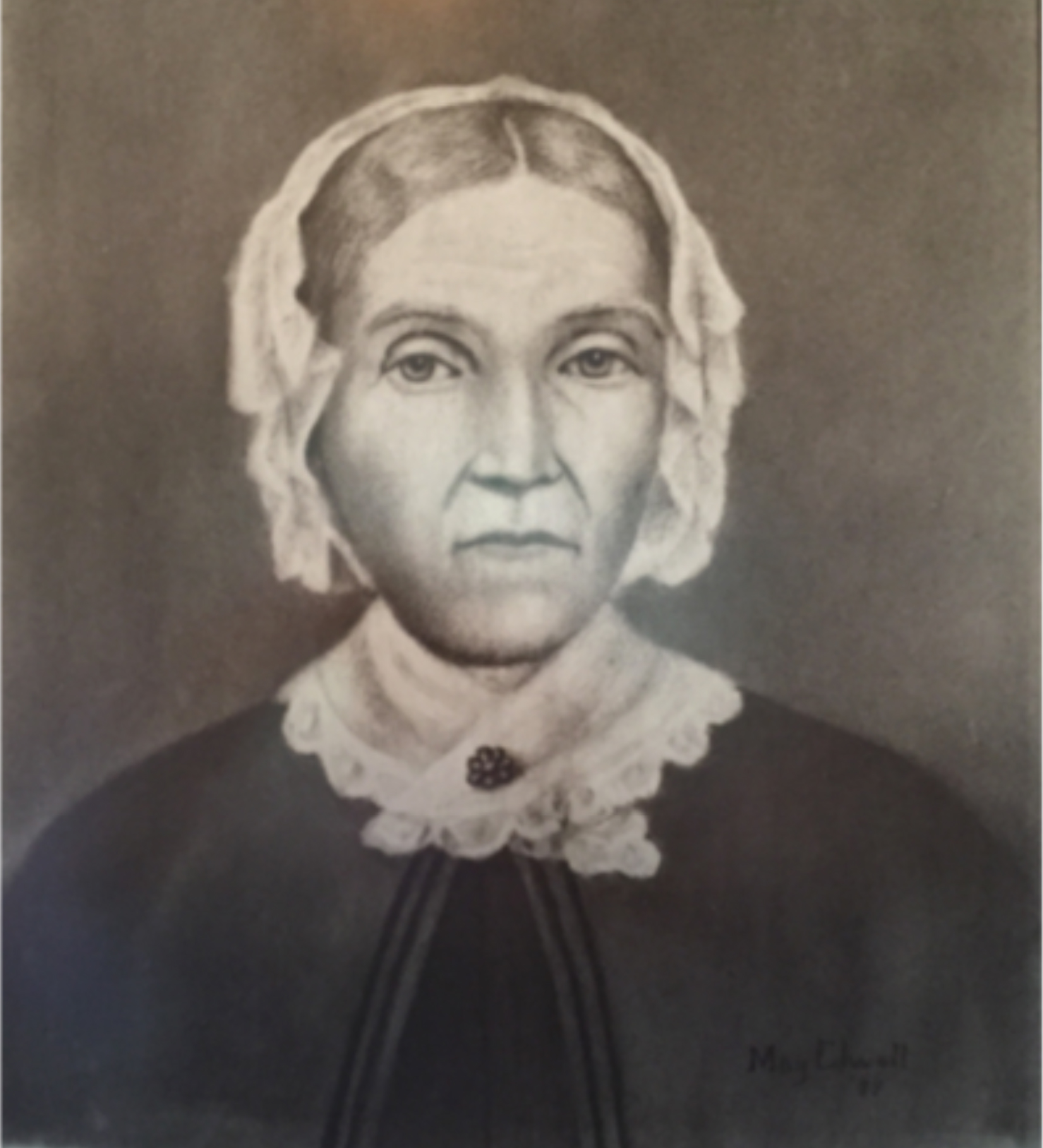
The grandmother, was Mary (Mallie) Thomas James, born in 1807 at Penwern, Llandysul, Wales.  She lived at Penwern until her marriage to farmer, hatter, dreamer, dare-er Richard Jones.

Mary (Mallie) Thomas

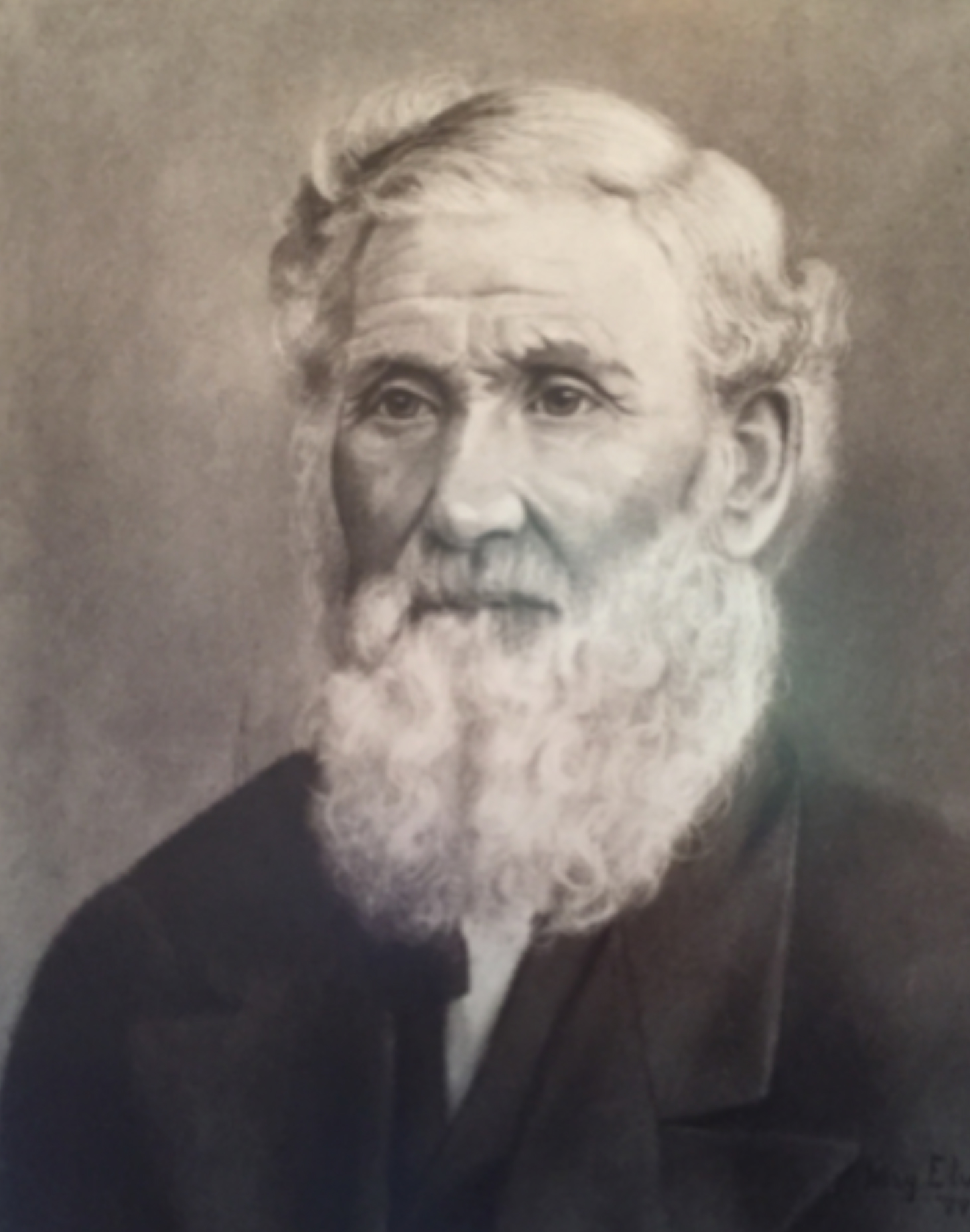
Richard Lloyd Jones (Patriarch)

The young girl who grew up in Penwern lived a life with few options.  She was a farmer’s daughter, a Unitarian within the small circle of Unitarians that was known to the rest of Wales as “the Black Spot” of heresy.  On an adjacent farm a young man with a parallel upbringing cast his eye on the growing girl.  It was a surprise to no one when they wed, set up house together, became parents to an increasing brood of hungry children.

Times were hard.  Food was scarce.  Opportunities were limited.  In a far away land called America it seemed that things might be better—if not for them, then for their children.

Richard was in his mid-40’s and they were already parents of seven children, the last a babe in arms, when Richard decided to brave the waves and emigrate to America.  It was to be a total break.  There would be no return trip.  Their good-byes were forever.  Their future unknown.

Other siblings had gone before.  After a hazardous journey and the loss of one child to diphtheria, Richard’s bereaved family and his brother Jenkin were reunited in Wisconsin.  A year later, Jenkin died of malaria, leaving Richard’s family distraught and destitute, but in the America they had sought, an America where four more children were born and the family slowly, with great effort, endured, survived, and began in a small way to prosper.

Some 150 years later, on a gray rain-threatened day in Wales, my ankles deep in the muck of a cow path, I looked at the cold stone building before me, the Welsh Penwern of now, and imagined the emotions my great great grandmother “Mallie” must have felt, looking upon her ancestral home for the last time.

What courage it must have taken to leave the world and people she knew—no matter how hard the life—to embark on a journey into the unknown.

The story is told that their last evening at home Mallie went out and gathered flower seedlings.  When they settled in Wisconsin, the seeds were planted and, with each subsequent move, the progeny of those seeds moved with them.

It was from the gentle Mallie that the stories of Wales were imprinted on the children and grandchildren. There were the tales of the two oldest boys, then but small children, sent out to watch the flocks of sheep and protect them from the wolves that prowled the hillsides, and of Richard, the hat maker, whose production of the tall conical hats worn by Welsh women augmented their meager farming funds.

For the remainder of her life, Mallie spoke only Welsh.  She was illiterate in writing—signing her marriage certificate with an “x”—and yet on her death bed she recited from memory her grandfather’s translation of Gray’s Elegy.

She, far more than Richard, kept the stream of “cumry” (cousinship) alive in the children’s minds—so much so that at least four of them made trips to Wales during their lifetimes.

Why did Frank Lloyd Wright suggest the name of Penwern for a Wisconsin home so elegant, so lavish, so unlike its Welsh predecessor?  I can only guess it was to honor his grandmother. He was but a toddler when Mallie died (1870) but throughout his growing years he would have heard her stories, lauded the bravery that brought her to these shores, witnessed the loving, aching sense of loss from those she left behind.

Had Mallie stayed in Wales, insisted on the known over the unknown, fled from the hardships she knew were ahead of her how different would have been the lives of those generations yet to come.  Would there, could there have been an architect, Frank Lloyd Wright, without her brave plunge into the future?  Instead, her legacy lives on in the lives of her American descendants and in the opportunities her sacrifices provided for those willing to experiment, dream, dare, create anew.  I like to think that the name “Penwern”, superimposed on an extraordinary American estate, is a bow of homage from a grateful grandson.

Sean Malone: A Retrospective

Photos and text (c) Mark Hertzberg

Sean Malone, the president and chief executive officer of the Frank Lloyd Wright Foundation, will leave his position in February, after four years. He had been at least the sixth CEO in a decade when he began his tenure in 2012. His departure came as a surprise to outsiders.

Wright Birthday 2015

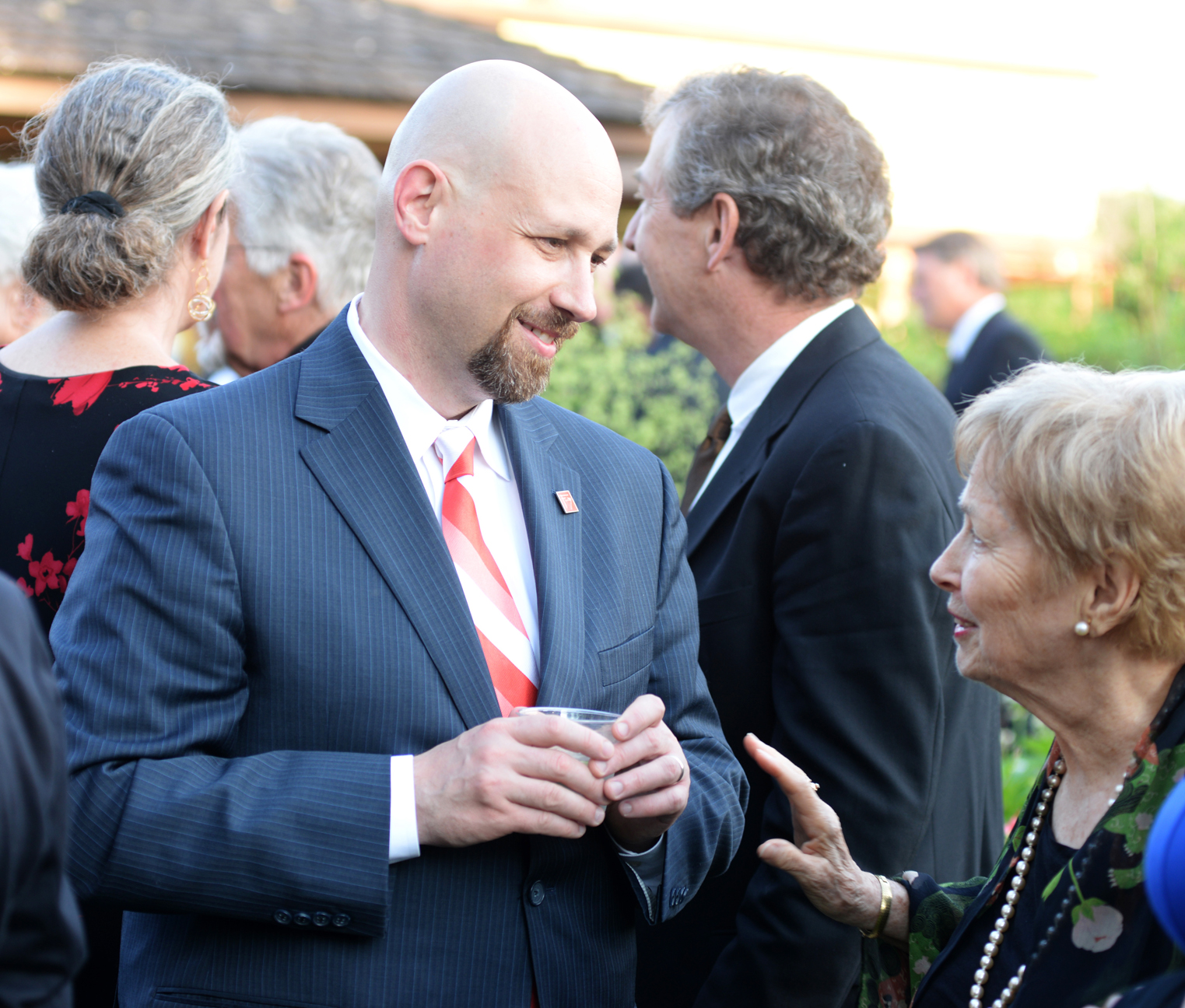
Malone at the annual Wright birthday dinner at Taliesin, June 6, 2012

     Malone and the Foundation said in a press release that the position requires someone at Taliesin West in Scottsdale full-time. Malone has been dividing his time between Scottsdale and his home near Milwaukee, and wants to stay in Wisconsin for family reasons. He told me in 2012 that he did not foresee problems operating from Milwaukee because he would be traveling widely raising money for the Foundation, something he could easily do from Milwaukee.

There are three parts to this retrospective: My photo history of Sean during his tenure, my April, 2012 profile of him, written as he began his stewardship of the Foundation, and then, after you read the profile, highlights of our conversation July 13, 2015 when I asked him to reflect on his stewardship of the Foundation. I chose to let his 2015 words speak for themselves, rather than interpret them. He used one phrase repeatedly during our conversation, that looking back at his stewardship was taking a view “from 30,000 feet.”

Sean Malone

Malone tours the Thomas P. Hardy House in Racine, March 21, 2012 before our conversation which led to this profile of him when he began working at the Foundation:

The black Toyota Prius quietly rolls to a stop. Sean Malone, 42, steps out, a white straw hat on his head, an iPhone in his hand. Meet the new president and CEO of the Frank Lloyd Wright Foundation.

Sean Malone, president and CEO of the Frank Lloyd Wright Foundation, Wednesday March 21, 2012 in the Thomas P. Hardy House in Racine Wis. / (c) Mark Hertzberg

Malone, who comes from Ten Chimneys Foundation in Genesee Depot, Wisconsin, breaks the mold of what many people may have expected in the new head of the Foundation.

Architect? No. Professor of architecture of art history? No. Seen many Wright buildings before taking the position? No. Steeped in years of Frank Lloyd Wright? No. Lives at or near Taliesin? No. Lives at or near Taliesin West? No.

Bright? Yes. Affable? Yes. Thoughtful? Yes. Articulate? Yes. Successful record with Ten Chimneys? Yes. Enthusiastic about his new job? Yes. Confident that he is the right person to help the Foundation overcome its challenges and negative publicity? Yes.

It is clear why T-West would want Malone: he has a stellar record as a director of a non-profit organization. On the other hand, one might wonder why someone with no traditional background in the World of Wright would want to step into what has been somewhat of a revolving door at Taliesin West.

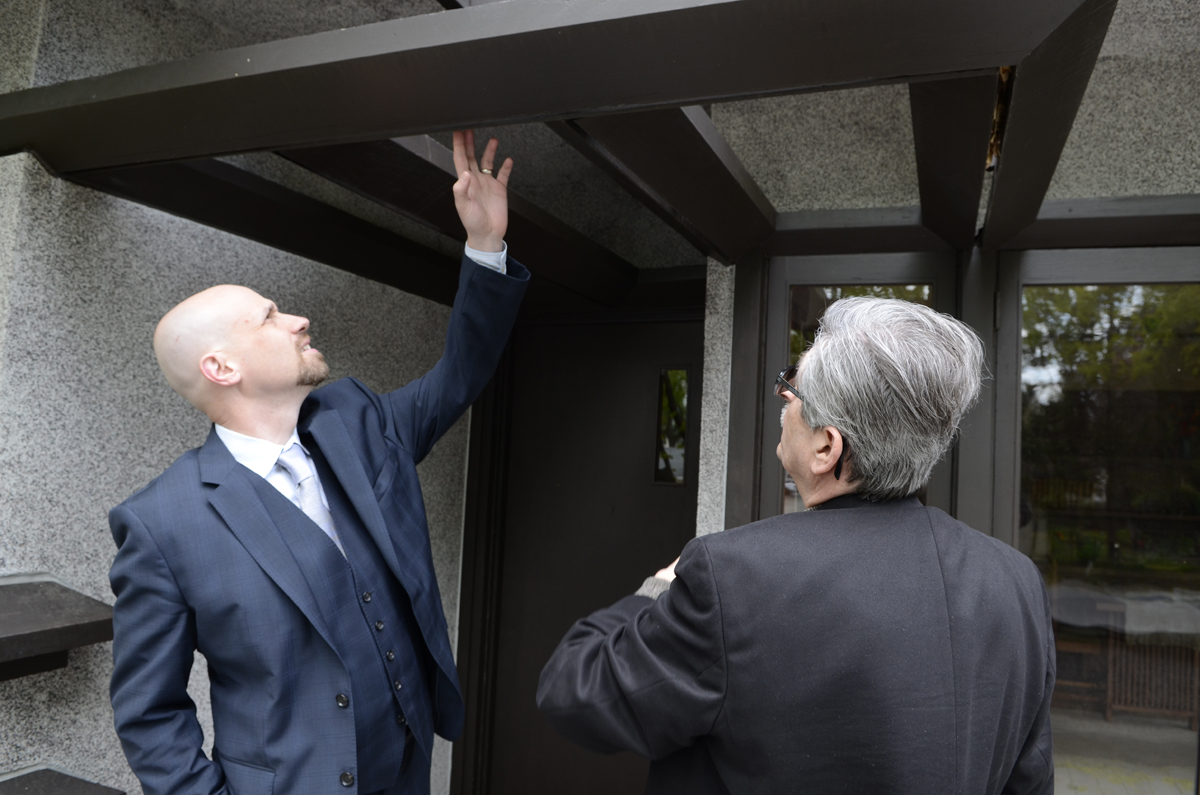
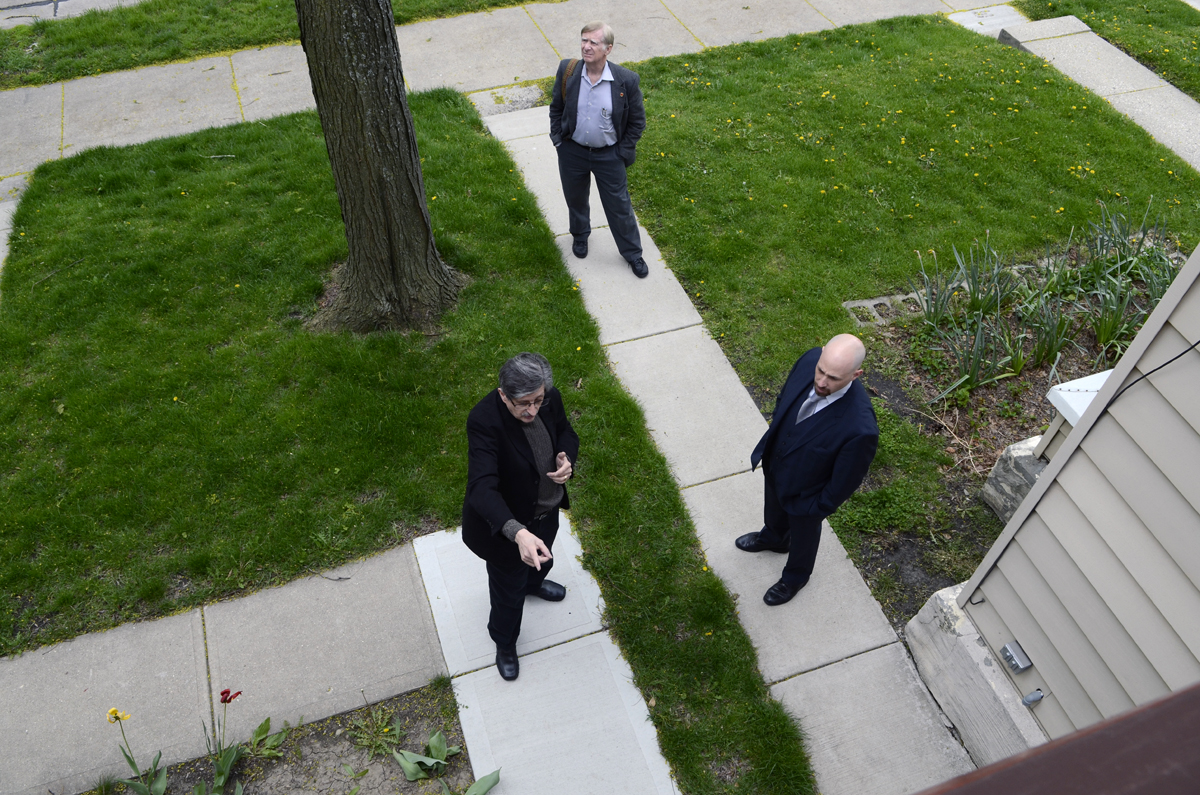
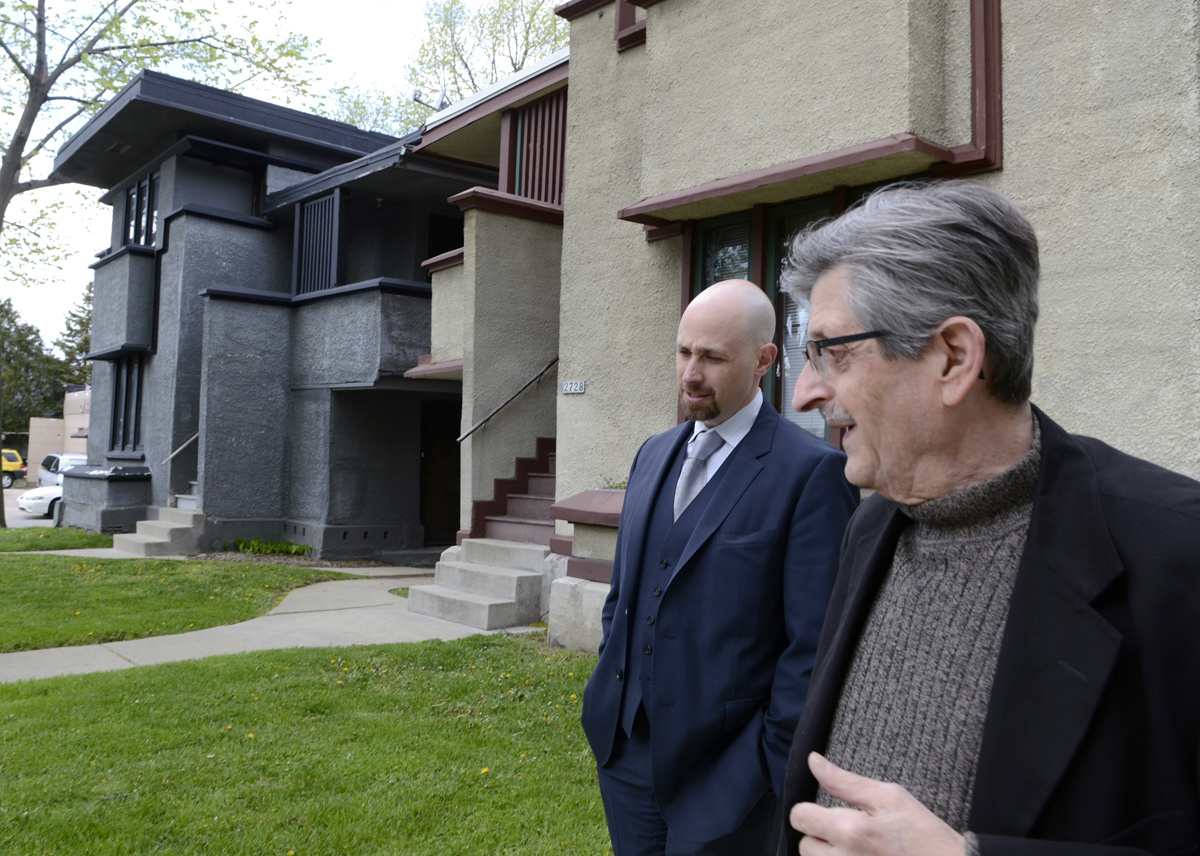
Malone tours Wright’s American System-Built homes on W. Burnham Street in Milwaukee with Robert Hartmann, then-president of Frank Lloyd Wright Wisconsin and board member Ron Scherubel April 18, 2012:

Malone Burnham Street

Malone Burnham Street

Malone Burnham Street

Sean Malone, CEO of the Frank Lloyd Wright Foundation, left, tours Frank Lloyd Wright in Wisconsin's Burnham Street project, Wednesday April 18, 2012 with Robert Hartmann, president of the organization.  / © Mark Hertzberg

Malone talks about his interest in Wright, “I have always been moved by his body of work. Because I am not an architect, I was not in a position that I could explain what it was that moved me. I found it invigorating. It’s just beautiful, balanced, intentional work, and so I started from a point of engagement with his art. The other piece that really excited me and brought me into the organization was the potential for the body of work and the philosophy of Frank Lloyd Wright to inspire me.”

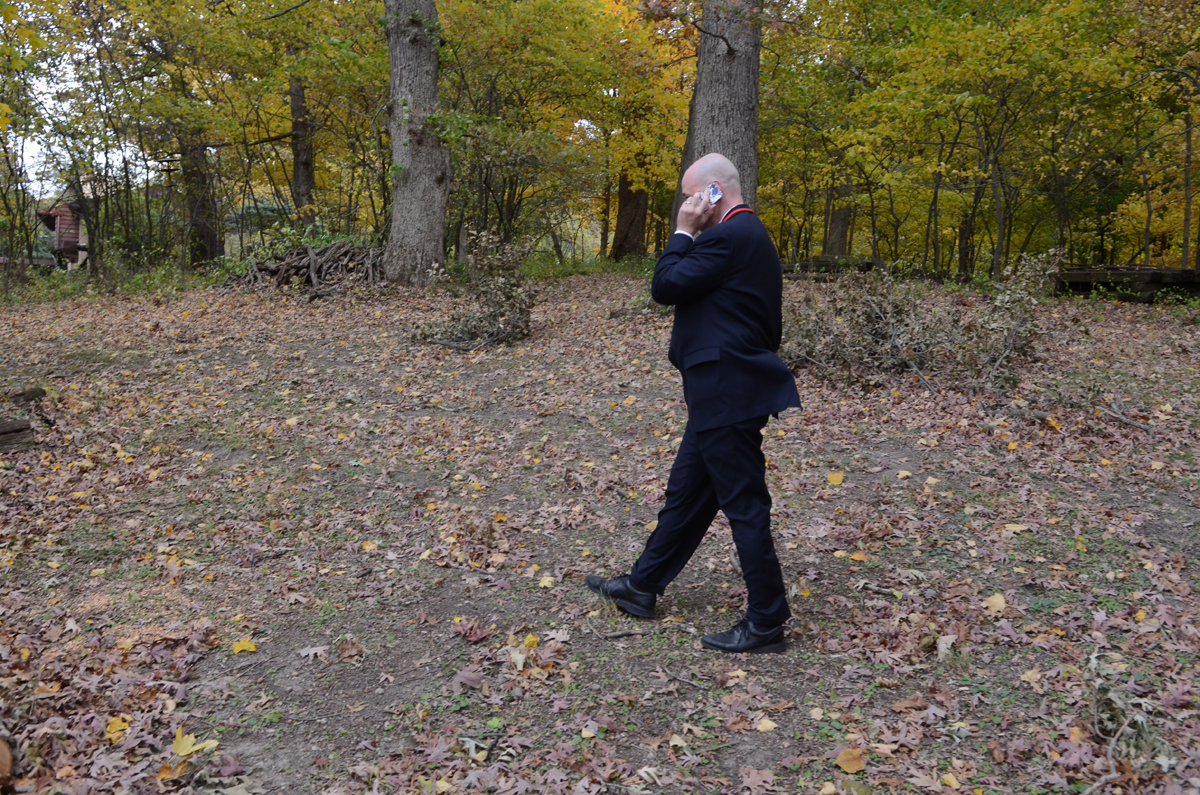
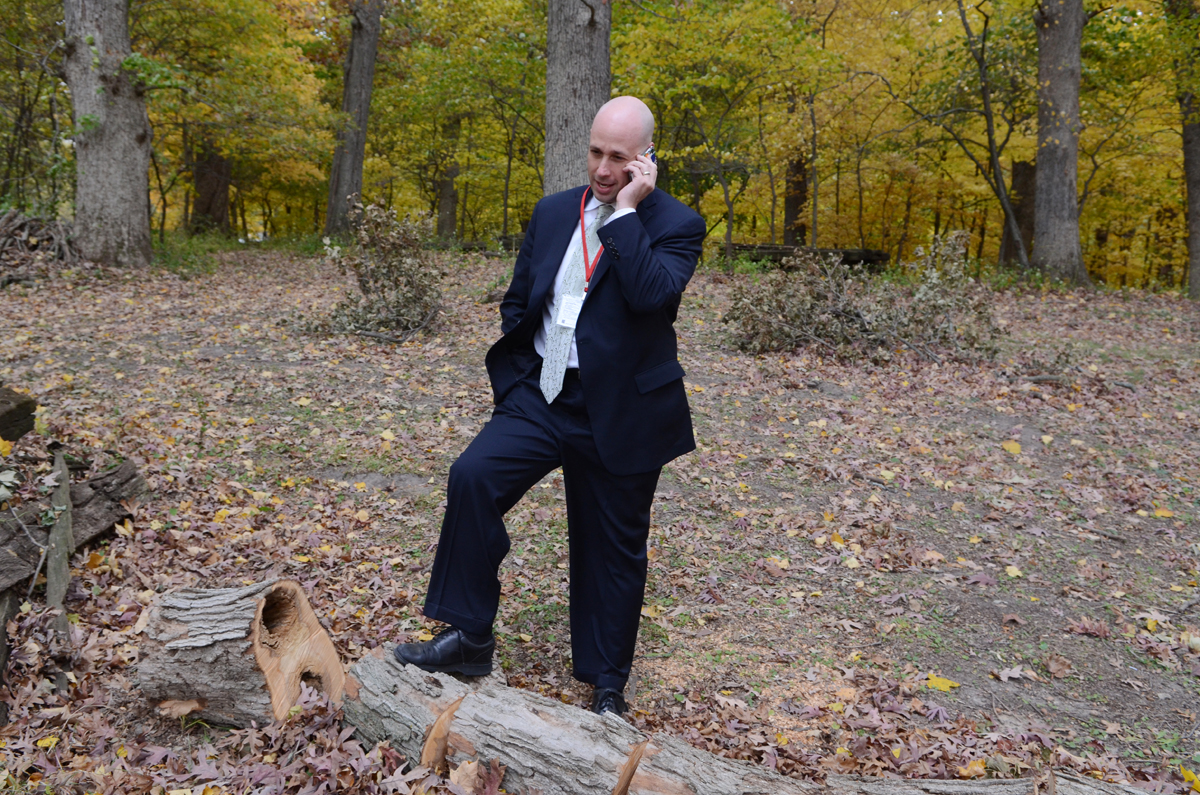
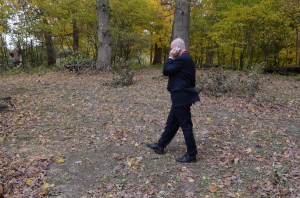
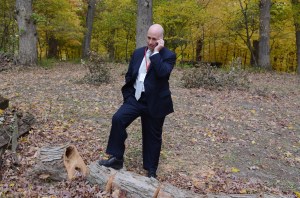
Malone’s tour of the Grant House in Iowa during the 2012 Frank Lloyd Wright Building Conservancy tour is interrupted by a phone call:
Malone Iowa

Malone Iowa

      There is much more substance to his vision about his new role than what some may fancy for him. His responsibilities are more than overseeing the preservation of Taliesin and Taliesin West, overseeing the Foundation’s architecture school, and racking in big bucks in donations, grants, and souvenir sales to fund the whole kit and caboodle.

Malone says that the Foundation’s “biggest challenge” is “to decide what the next decade or two will be about.” That is not a particularly startling answer. What is more interesting is the next series of questions he poses, and the way he answers those questions.

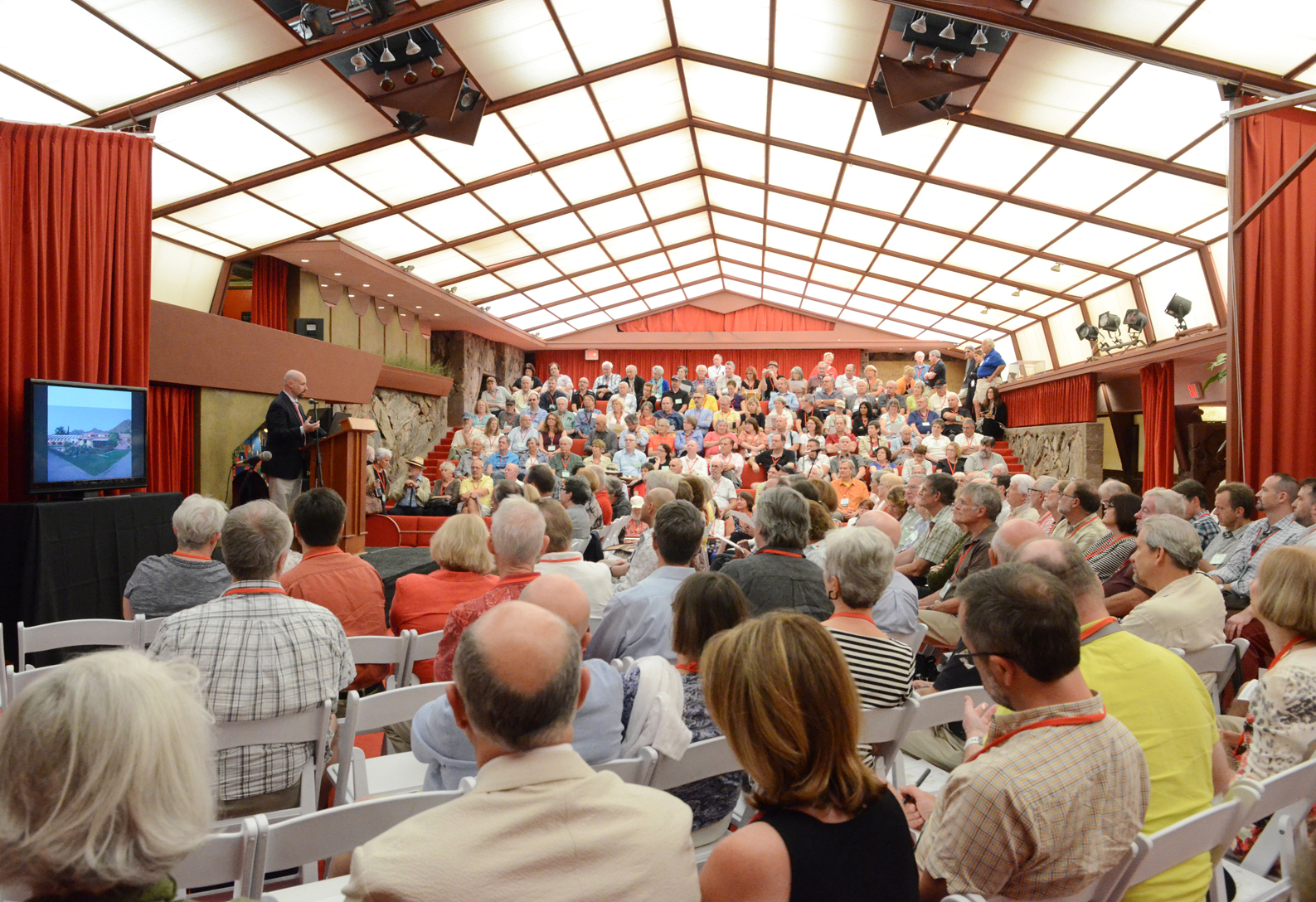
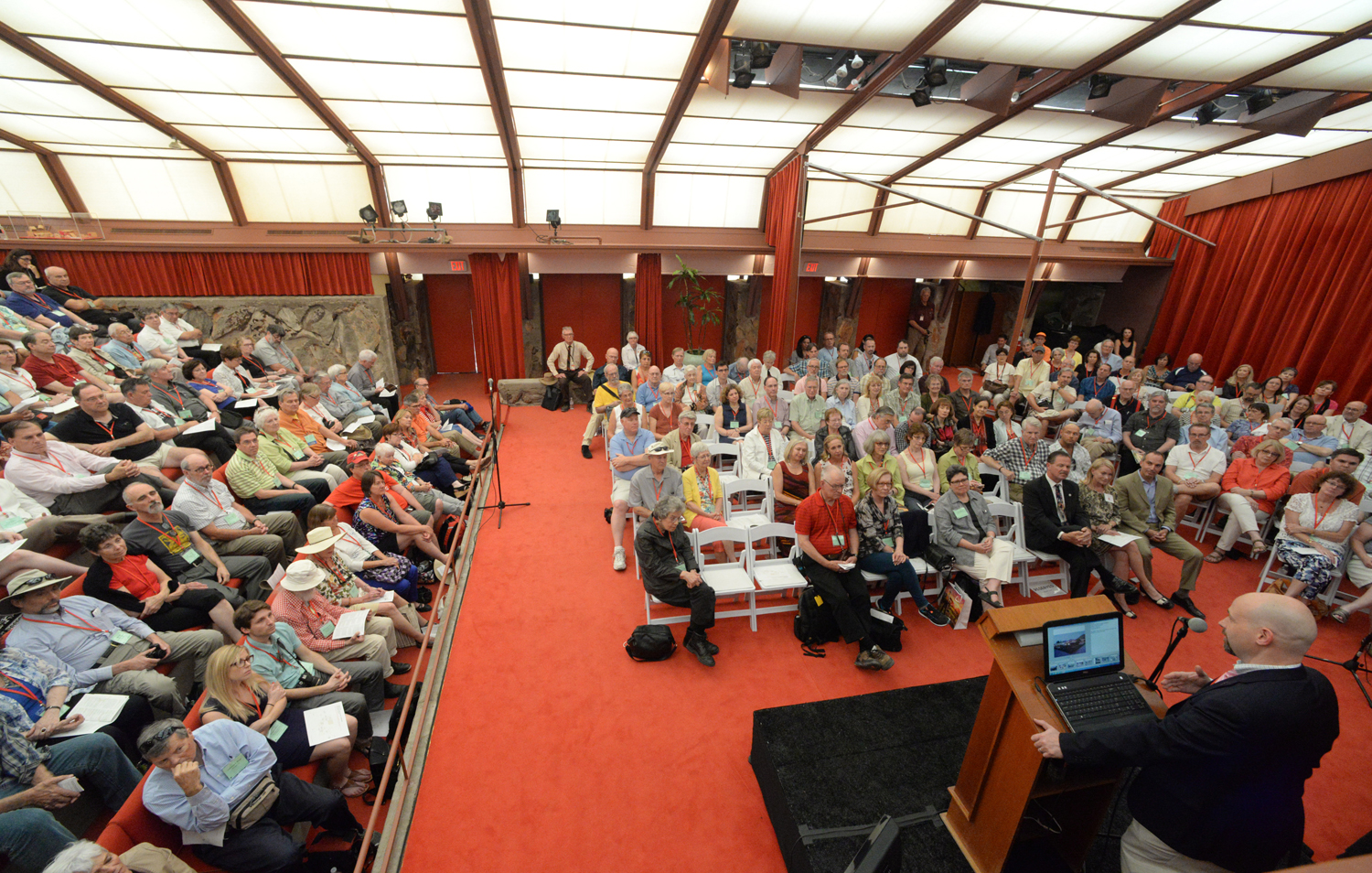
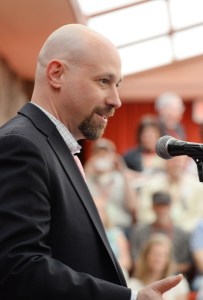
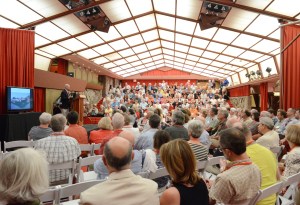
Malone welcomes conferees to Taliesin West October 29, 2014 during the Frank Lloyd Wright Building Conservancy annual conference:
Malone BC 2014

\

Malone BC 2014

      First, he asks, “Who do we exist to serve? That is a loaded question. It underlines my opinion that we exist to serve…it is something I believe all non-profits should do. That is what attracted me to the Foundation.

“Who do we serve directly? People who visit the two national landmarks we own, our publications…but also the people we exist to serve through indirect means. If we are inspiring people who are professionals who are part of the built environment, more than just architecture, our ability to inspire them, is not just about them, it is about what they then go and do.

“I am a real believer in both direct impact and indirect impact. Directly, I want to inspire architects and student architects, all people involved with the built environment (including writers, photographers, and city planners). All of them, if we inspire them, change peoples’ lives. If you take a look at the direct and indirect impact (of the Foundation on people), it’s global.

Then Malone asks, “What are the deep meaningful needs of those individuals and communities? Once we define who we exist to serve, what are their needs? Sometimes it is things they do not know they want yet. It is about needs, not wants. It has to be (something) unmet. If someone is doing it adequately, I don’t want to do it.”

Finally, Malone says he want to know, “Which of those needs do we agree we are uniquely positioned to meet, better than anyone in the world or that no one in the world can do at all?”

Malone signs the guest book at Burnham Street:Malone Burnham Street

Asking those questions, having “conversations” with people, is key to Malone’s approach to his new position. “That is the lens through which I look at the role of a non-profit. I don’t think that articulation is completely new or earth-shattering.”

While most non-profits might end up with a list of only two or three challenges that answer those questions, Malone has no illusion that there will not be many “opportunities” that the Foundation could take on. He has no doubt that there could be a daunting list of goals that some may offer as priorities. Malone wants to pare such a list down. “What is particularly exciting for the Frank Lloyd Wright Foundation…that is a big part of why I wanted to make this move and a big part of why I am so energized about the work that we are going to accomplish in the coming years.

Malone asks more questions. “Why do you think of his body of work and philosophies? Why do you think it is going to be relevant ten years from now. Why do you think it is going to be relevant a hundred years from now. Those are the questions I am asking people.”

He has a degree in business from the University of Wisconsin, but Malone sees his work as being more than just a dollars-and-cents guy charged with keeping the troubled Foundation solvent. “The idea of how we live our lives has been an important part of my career, because I think it matters. i think people find it relevant, and that we as humans have the opportunity to make that a decision…I think his (Wright’s) work has something very meaningful to say about our ability to choose the life we are going to live, to live an intentionally lived life, and that is a powerful thing. That is one of the handful of truly universal challenges…the sense that we don’t have to choose between being great one thing or another. We don’t have to choose between deep relationships with family and friends and connections with the nature around us. You can live an integrated life.”

Malone believes that one must do more than just read the plethora of biographies of Frank Lloyd Wright to understand him. One has to experience his work. “To get a sense of the universal truths, you don’t read a biography of Shakespeare, you read Shakespeare, and that is what draws me to the body of work of Frank Lloyd Wright. That is his legacy.”

It is surprising to some that Malone continues to live in Wauwatosa, a suburb of Milwaukee, rather than move to Scottsdale or even to Spring Green. “I think that it is reflective of an organization that is no longer Arizona-centric.” He has full confidence in the people who oversee Taliesin and Taliesin West, without feeling the need to be on site full-time.

“My job is to make sure that both are able to be successful in their day-to-day operations, both in public programs, like the tours, and in education, like the school of architecture, but the mission of the organization is, at the very least, national, so I think it makes sense that the CEO isn’t the on-site person at either place. We have very talented staff members. We didn’t need another COO in Scottsdale.”

He spends a bit more than half his time traveling. He anticipates that he will be traveling less frequently to Taliesin West as time goes on, instead traveling more across the country to raise money for the Foundation, “Great things cost money, part of my job is to connect people with those activities. It’s the donors who make it really happen. It’s my job to steward that investment. It’s my job to make sure their donation is well spent and makes an impact.”

Malone finishes the interview with a reminder of who he believes the Foundation must not lose sight of,  “We exist to serve, and only succeed because of the public.” Some people will certainly deem Sean Malone’s tenure a success if he retains his position – he is at least the sixth CEO in a decade. Others will consider his tenure a success if the Foundation’s finances are stabilized. Malone himself has a broader goal. He drives a Prius. It is reasonable to think that he will be satisfied only with results that will be harder to measure: that he is able to bring stability to the Foundation so that Wright’s work can continue to influence people to live Wright’s architecture, to better their lives and their communities.

Malone and Minerva Montooth at the 2015 Wright birthday dinner at Taliesin:Wright Birthday 2015
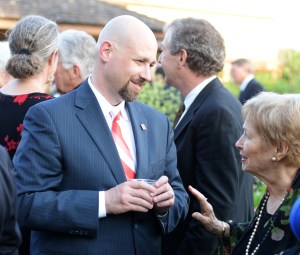
Malone Reflects On His Stewardship, July 13, 2015:

A collaborative effort: I am extremely proud of what the Foundation has accomplished in this time. It’s the Foundation that has accomplished it. All great things happen because groups of civic volunteers and advocates get together and make it happen.

The very significant increase in contributions comes from people coming together with clarity about the mission. This is something that is very exciting to me. I hope everybody connected with the Foundation is proud of it. It is something in which I take great pride.

I asked him if there was anything he feels has been left undone: I don’t look at it that way.

This organization has grown in capacity and reach, and the number and quality of its advocates to be able to continue moving forward. What’s exciting when you look at it from 30,000 feet, the organization is going in a great direction in multiple fronts, in every aspect of what its supposed to do.

On the “uncertainty” about the future of the School of Architecture: I feel like we have multiple constituencies working together …

On the preservation of both Taliesin and Taliesin West:  We just competed the first ever in-depth comprehensive preservation master plan that talks about what needs to be restored, at what level, and why. That’s not easy…Sixteen months of impressive research (about Taliesin West) thoughtfully put together…the cornerstone is done and that’s very exciting. Similarly good, last year we spend three times as much on the preservation of the two Taliesins as the year before I came. We went from about $1million to $3 million, and that’s not because the needs went up, but because there was a real investment in making this happen. That’s the 30,000 foot view of preservation. This organization embracing its responsibility to preserve the two Taliesins for generations to come.

On the sale of the archives to the Avery Library and to the Museum of Modern Art: That collaboration has been extraordinarily successful. We are already seeing everything affiliated with those archives taking the next step in terms of the preservation of those archives, the access to scholars, the quality of digital capture and in terms of public access, not just scholarly access. There was a remarkably well received exhibit at MOMA in 2014 and in 2017 there will be a very large exhibition as part of a celebration of Wright’s sesquicentennial; that’s another bright spot.

On public tours of Taliesin West: We’ve really overhauled and significantly increased visitor satisfaction of that tour, reducing tour size, continuing education with docents, and the opportunity to purchase tickets in advance (Before) you would come and sit and hope you got in eventually. Now 50-90% of tours are purchased in advance, depending on the week.

We are also in the process of doing a comprehensive evaluation of the tours and interpretive planning projects. What people expect and what they are going away with. What is it we want people to take away with them?

If you have 100,000 people touring, it’s not having a cash cow, but an obligation, an opportunity to inspire. How are we connecting this experience to peoples’ lives?

Programmatically, those are the bright spots from 30,000 feet.

The organization: Then there is the capacity, the institutional side of things. I am proud of the board, staff, and donors about  the evolution of the Foundation as an increasingly world class non-profit.

It was a family business when it started…the Fellowship, him and his wife. It had its era, but the organization is really focused on what is its impact. It is focused on being a professional. organization, that we have the discipline to make sure that when donors contribute that their philanthropic investment yields the best public impact.

In Arizona it is rewarding to see the development of the Taliesin Board of Stewards, local leaders embracing the critical importance and impact of Taliesin West in a way that we’ve never had that community engagement. That’s certainly important in terms of contributions and support, but it’s also the best opportunity for us to make sure we are serving our community. Having this group of Arizona leaders talk to us about the needs of tourism and residents, and connecting this international icon to an understanding of what Phoenix and the Greater Valley community is…It’s very much a symbiotic relationship. We can’t accomplish what they point us toward without support.

He is excited about the solar energy at Taliesin West, but does not take credit for it: The ball started before I came in.

On fund raising: We are changing the philosophy of the gifts program, making sure we are interacting with donors the way they want to be interacted with. Donors don’t want perks, they believe in the organization in which (they are investing). Instead of you get this many mugs, tickets, t-shirts…it’s all about engagement…here are ways for you to have more insider opportunities…not us taking a chunk of the money you gave and giving you trinkets. We have had an increase in people giving and in the average. gift size. We nearly tripled annual giving. That is really powerful and really rewarding. I certainly believe that is not about me, that is about the importance of this organization and the mission. Nobody gives to something they don’t believe in. I am very proud of the increased level of giving. It speaks to the promising future of the organization. Our preservation needs are significant. There is more work to do, it is critical work…it is exciting work and rewarding work.

In closing: I will continue to be a huge advocate for and fan of this organization, and working toward its success.


Sun and Shadows at the Hardy House

(c) Mark Hertzberg

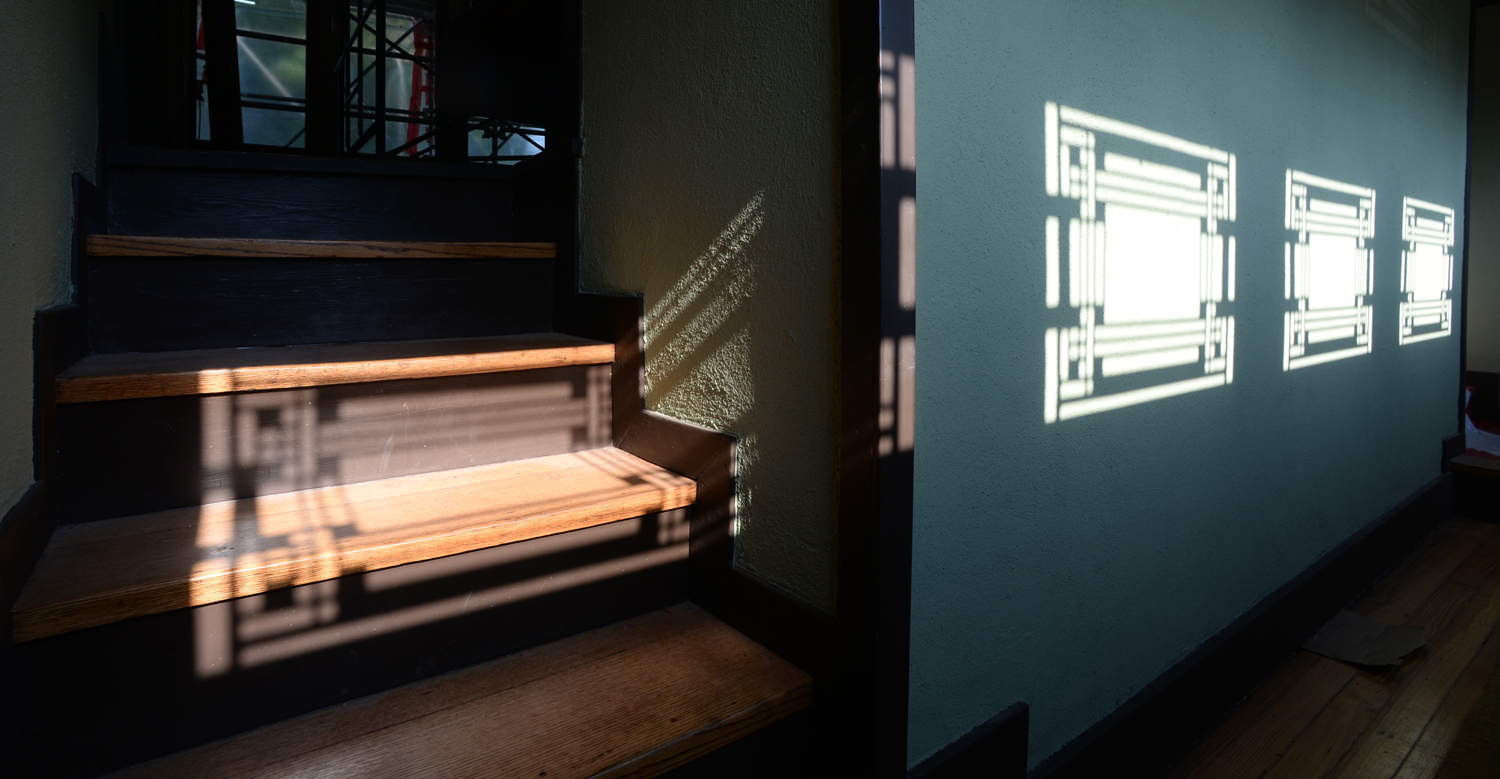
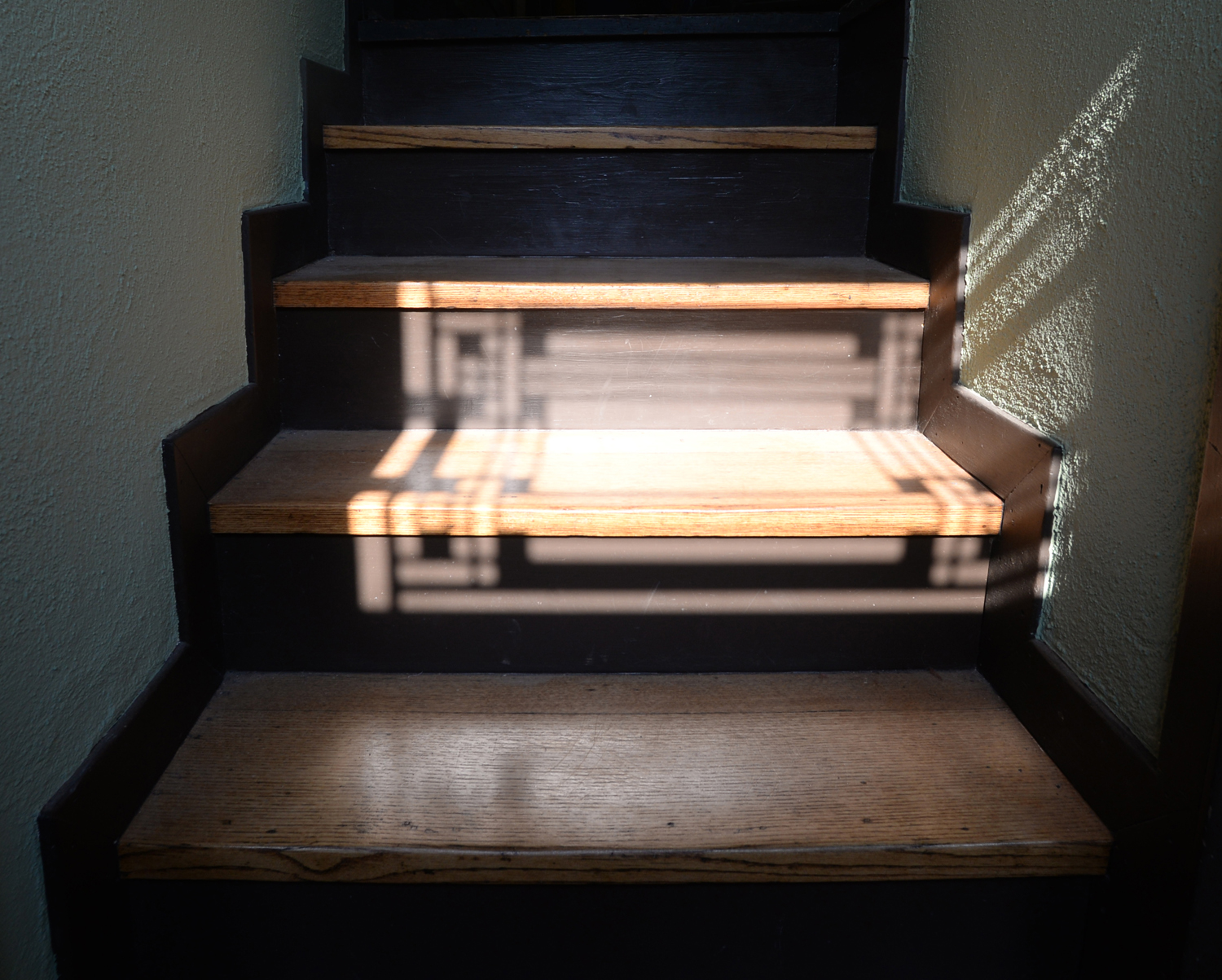
When I talk to school children about Frank Lloyd Wright’s work I sometimes tell them that the only “computer” he had to work with was the one between his ears. I try to explain that he had a gift for knowing what light would do at different times of the day and of the year to illuminate and help keep a room warm before the days of electricity as we know it.

Hardy Shadows

I stopped at the Hardy House late this afternoon and again saw his intuition projected on the stairs and entryway wall. The patterns are from the seven windows in the entryway. I credit Robert McCarter for pointing out that the floor plan of the house is articulated in these windows: the public spaces (two-story living room and the dining room below) are the square in the middle…bisected by a rectangle that includes the bedrooms at each end of the house (at left and right). He makes this point in “Frank Lloyd Wright” London: Phaidon Press, Ltd., 1997.

Hardy Shadows

Hardy Shadows

Genius, indeed!

Penwern – Wright’s Porch Design is Built

Text and photos (c) 2015 Mark Hertzberg, unless noted.

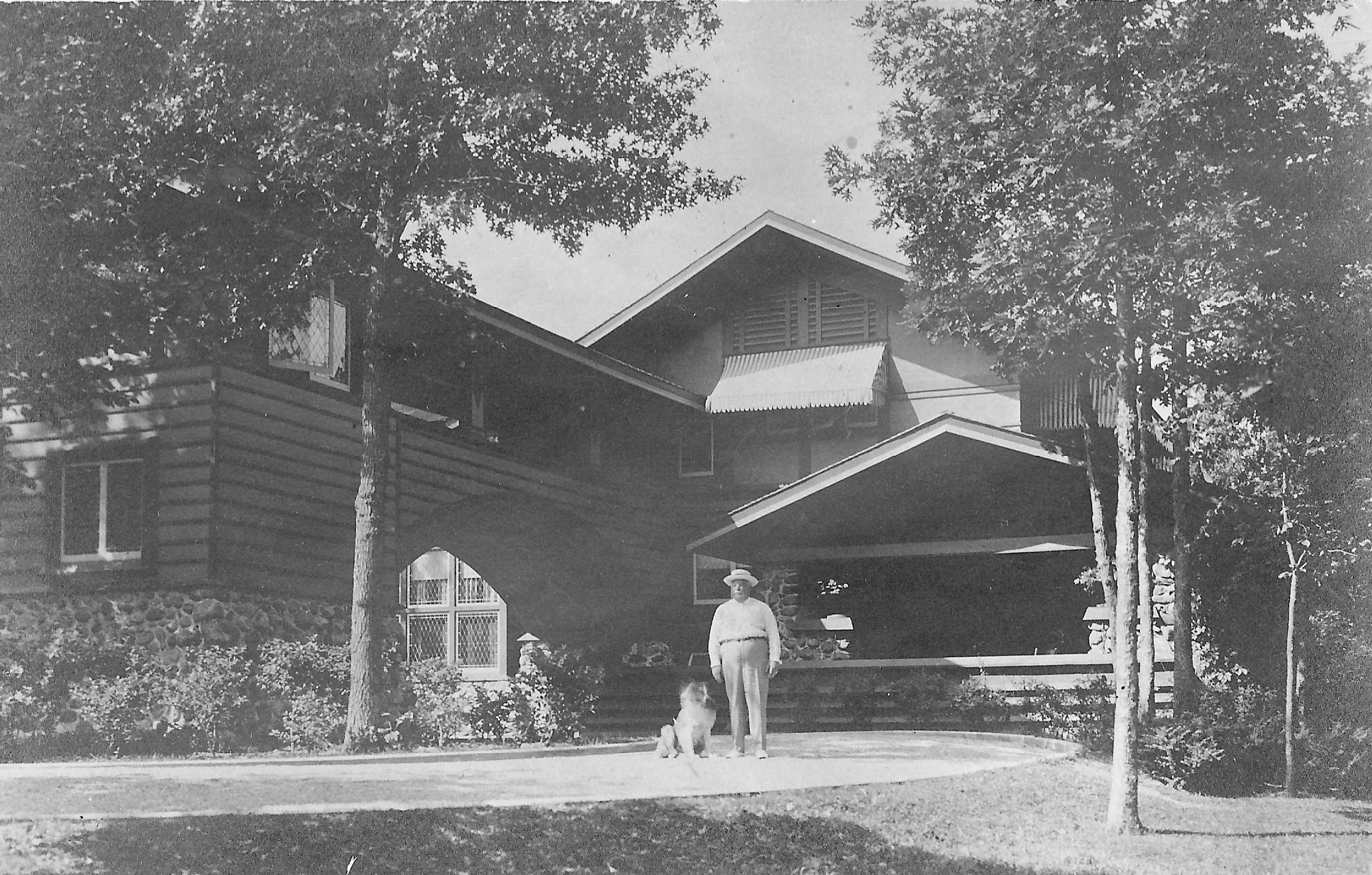
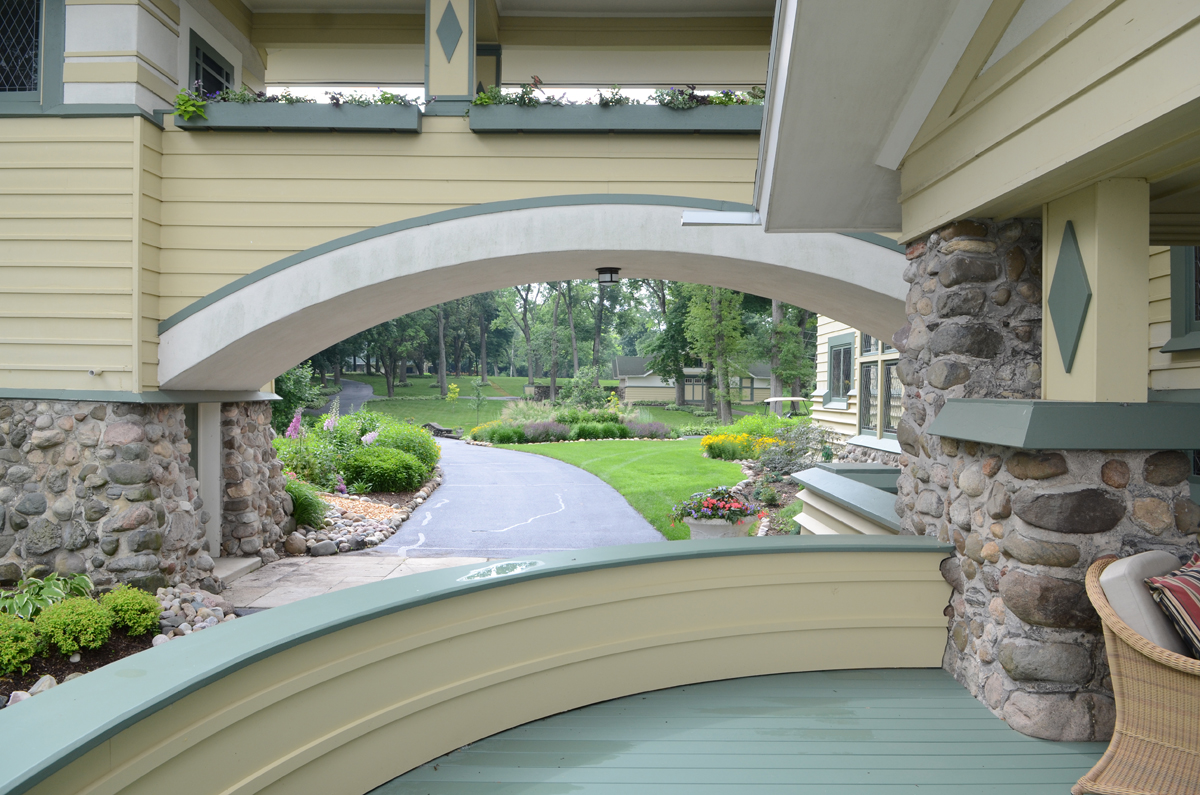
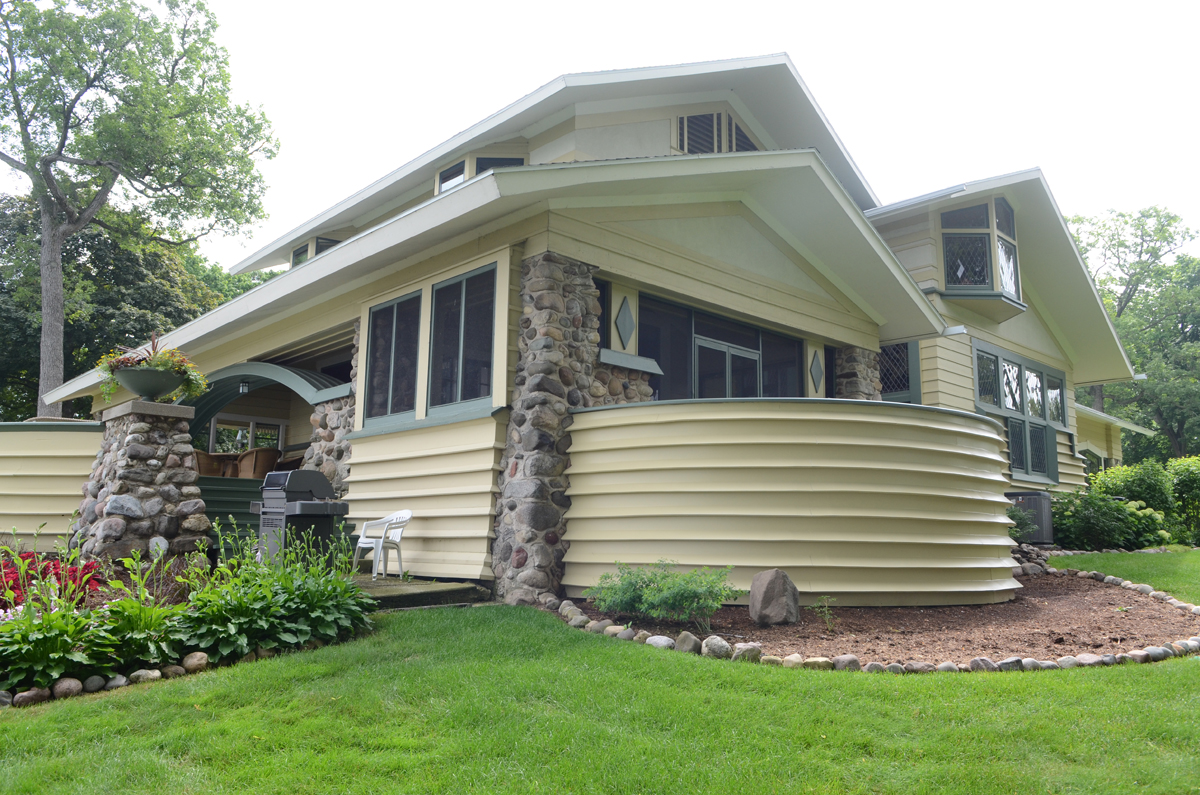
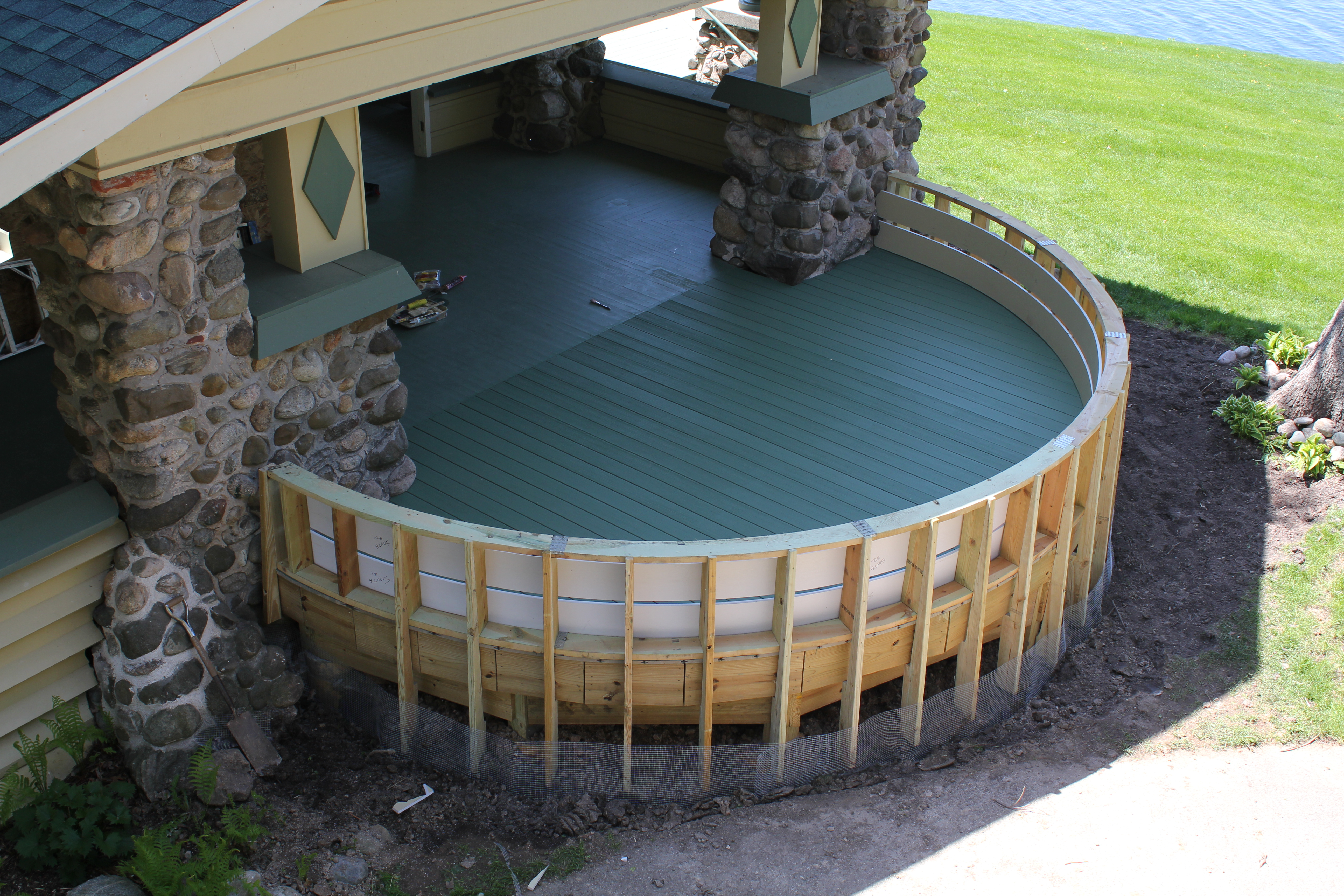
Frank Lloyd Wright designed semi-circular outer porch walls for Penwern, the Fred B. Jones House on Delavan Lake, Wisconsin (1900-1903), but the walls were either built straight or modified from his plans early in the life of the house. Jones is shown near the straight east porch wall in an undated photograph. The house was completed in 1901; he died in 1933.

FBJ @ Penwern 1

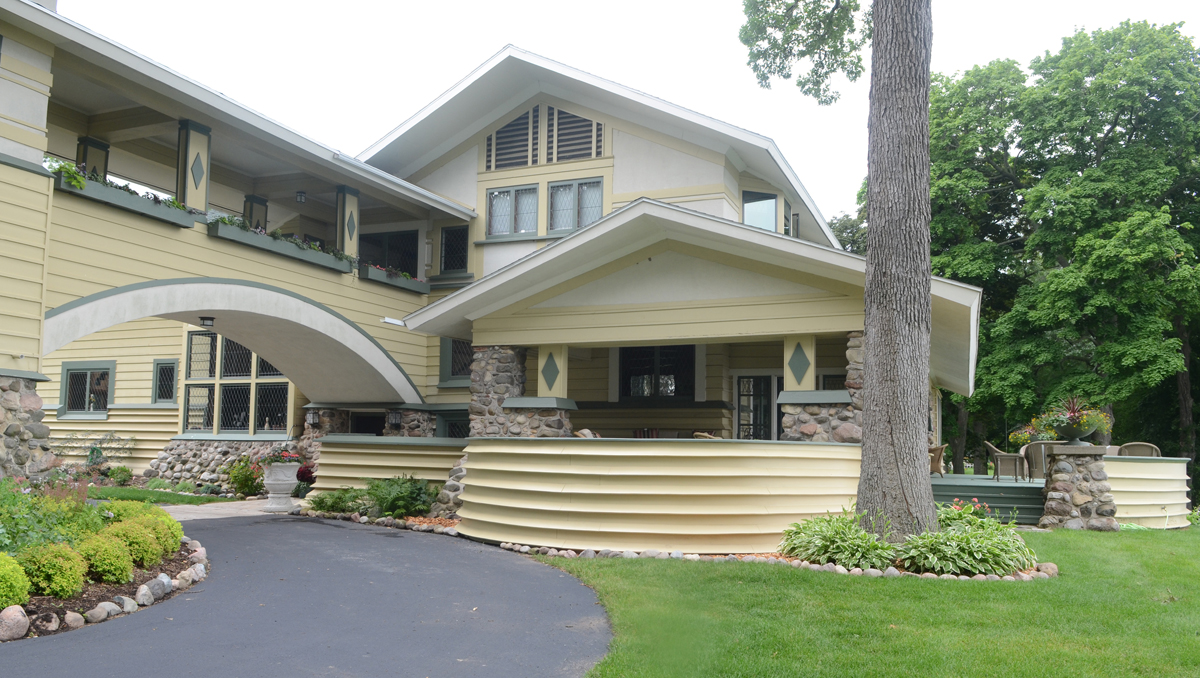
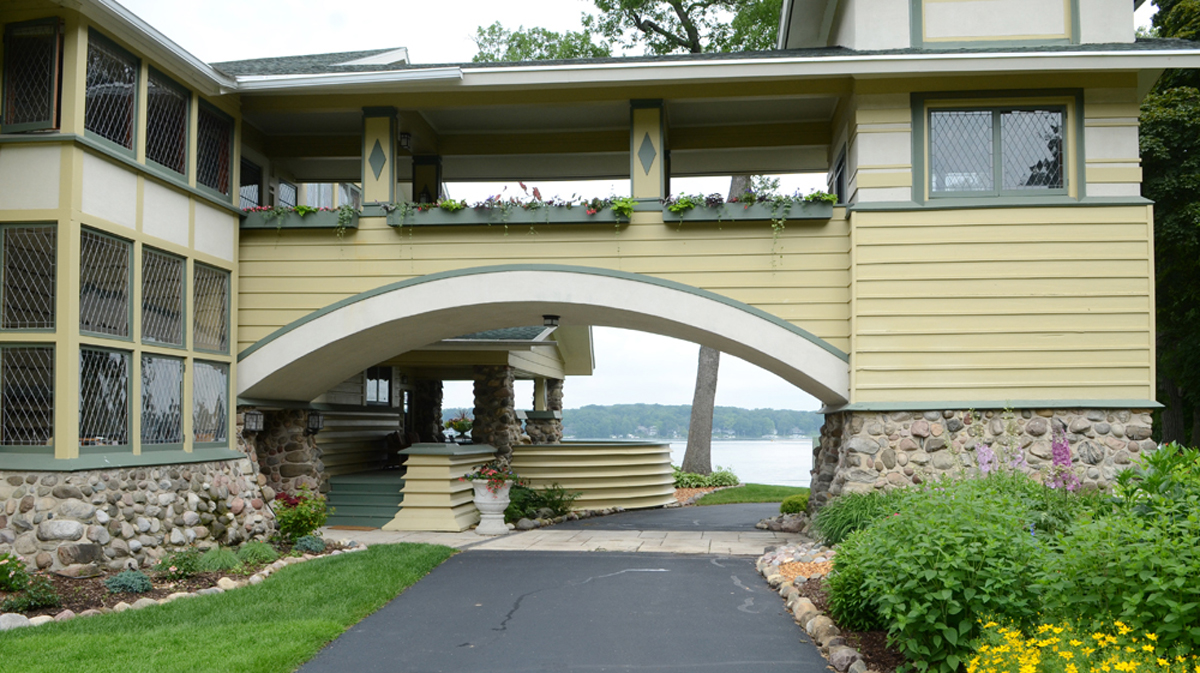
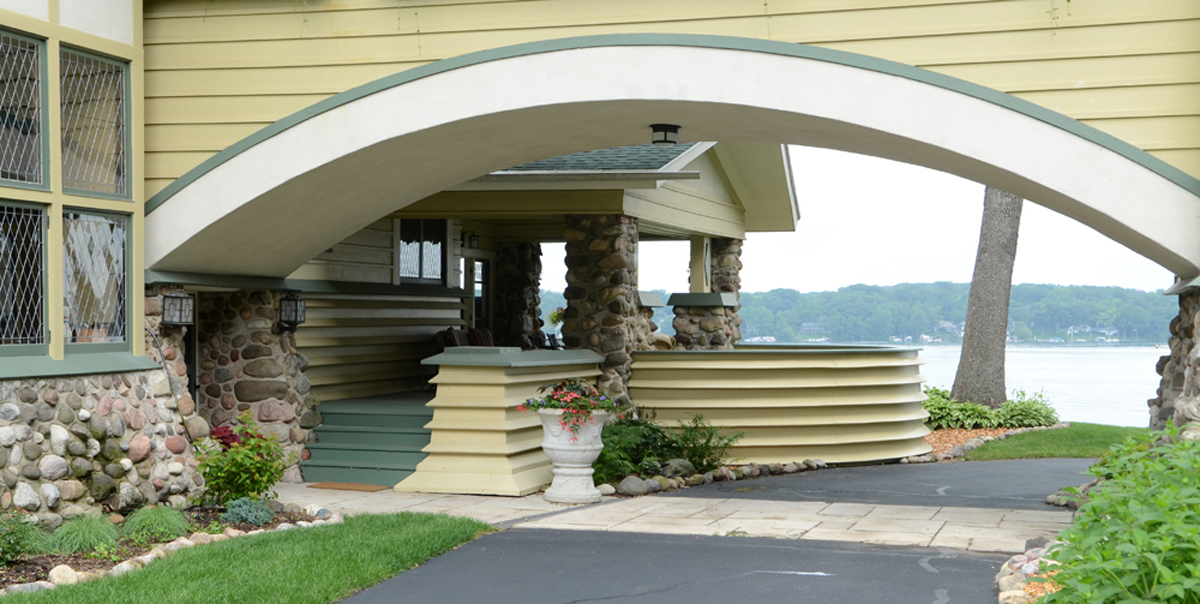
The east and west (side) porches now have semi-circular outer walls, as indicated on Wright’s drawings for the house. (The drawings can be viewed on Penwern’s magnificent website, www.penwern.com ) Sue and John Major, stewards of Penwern since 1994, commissioned master builder Bill Orkild to rebuild the side porches to Wright’s plan this spring. The work was completed just a week ago. The outer wall of the front porch, facing the lake, was changed from straight to semi-circular by John O’Shea, the fourth owner of the house, between 1989 and 1994. The front porch is on the right side of the first photo below:

Penwern Porches

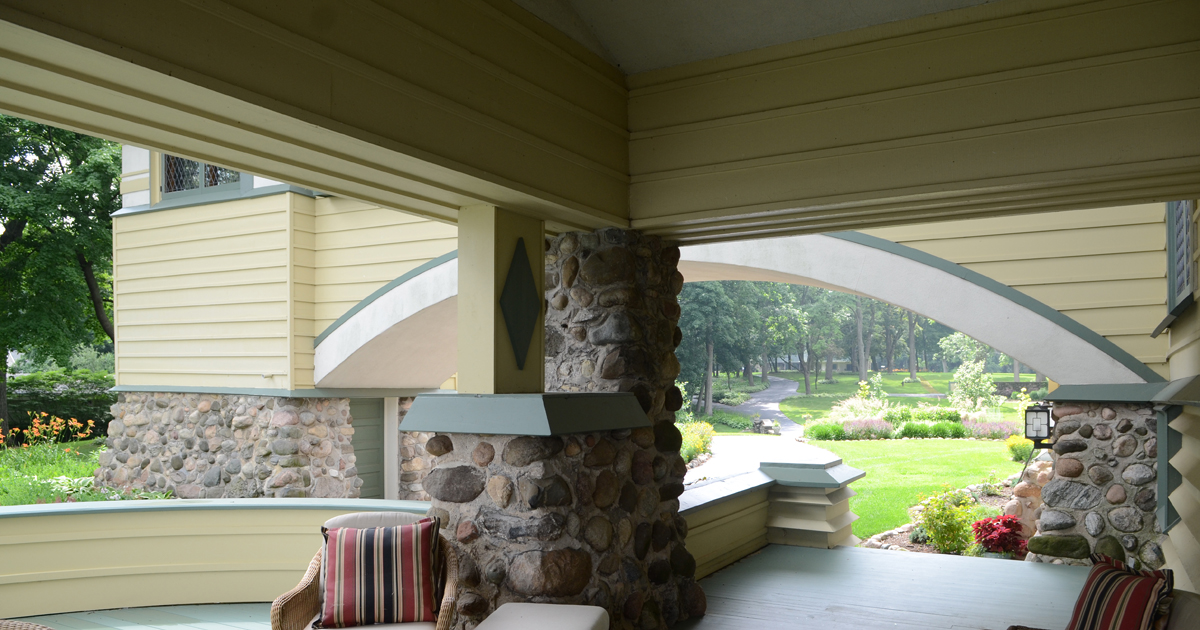
The semi-circular design brings a unified design element back to the house because it echoes the dramatic arch over the front porch and the arched porte-cochere.

Penwern Porches

Penwern Porches

Penwern Porches

Penwern Porches

Penwern Porches

Orkild photographed the east porch during reconstruction:

porch wall 015

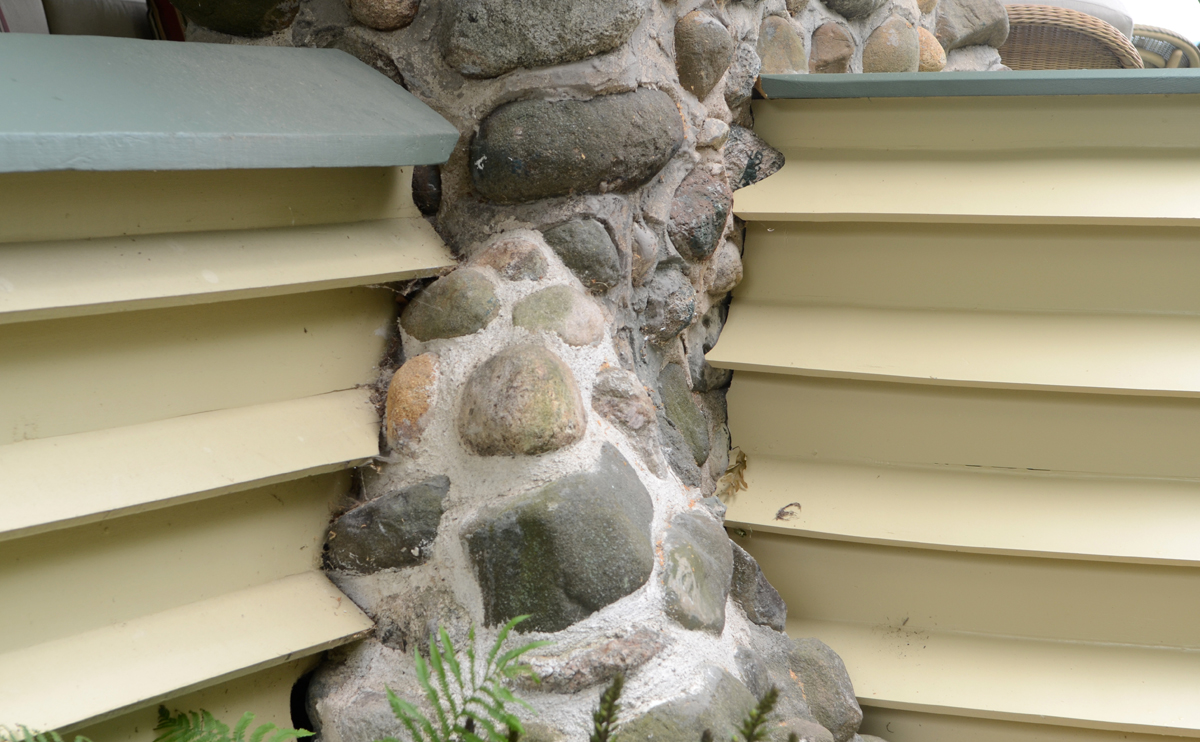
He also fashioned the diamond-shape accents shown on Wright’s drawings. Penwern Porches

Penwern Porches

Penwern Porches

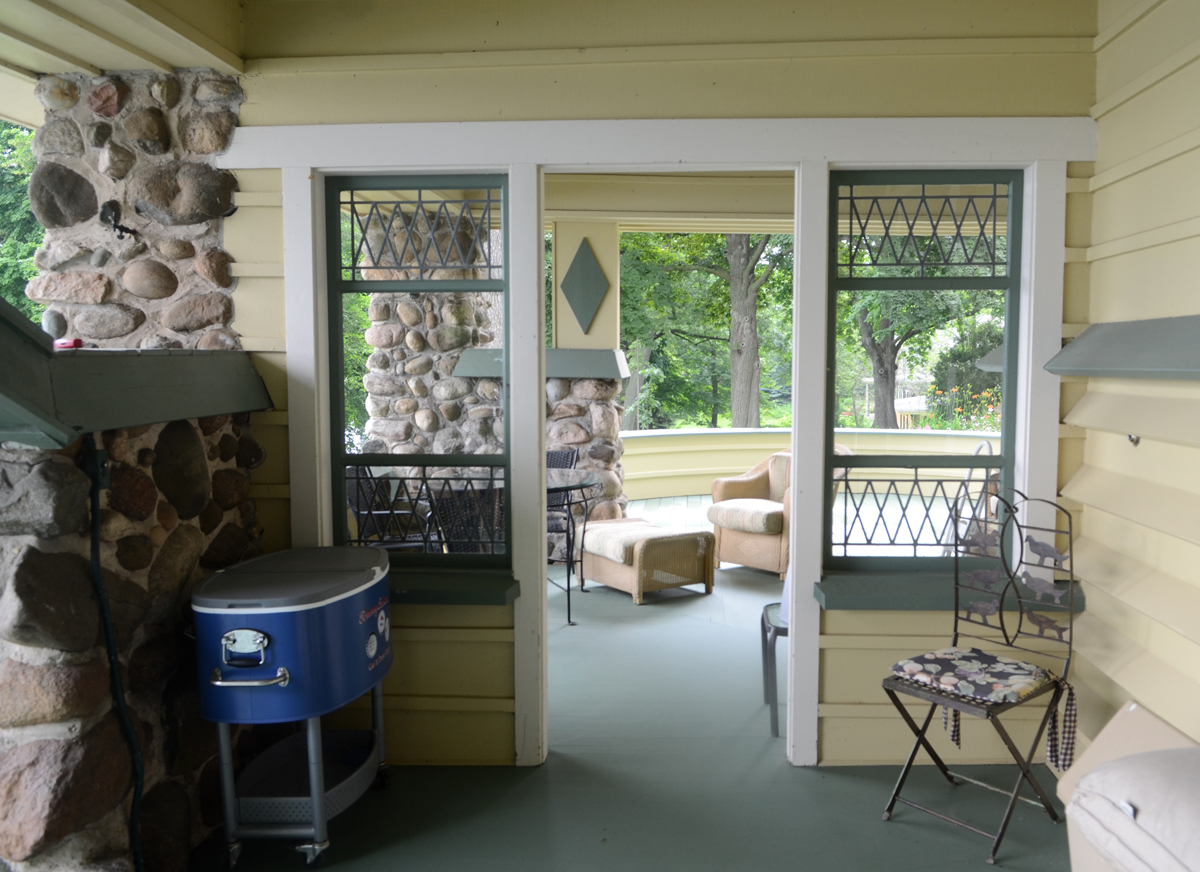
The next question for the Majors to ponder with Orkild is whether the walls on the insides of the porch are load-bearing. The walls are not shown on Wright’s plans. Removing them would allow for more dramatic vistas to the east and west from the front porch. It is possible that the porches were screened in with these walls after Jones lived in the house to shelter himself and his visitors from mosquitoes.

Penwern Porches

Penwern Porches

Celebrating Wright’s Birthday

Photos and text (c) Mark Hertzberg

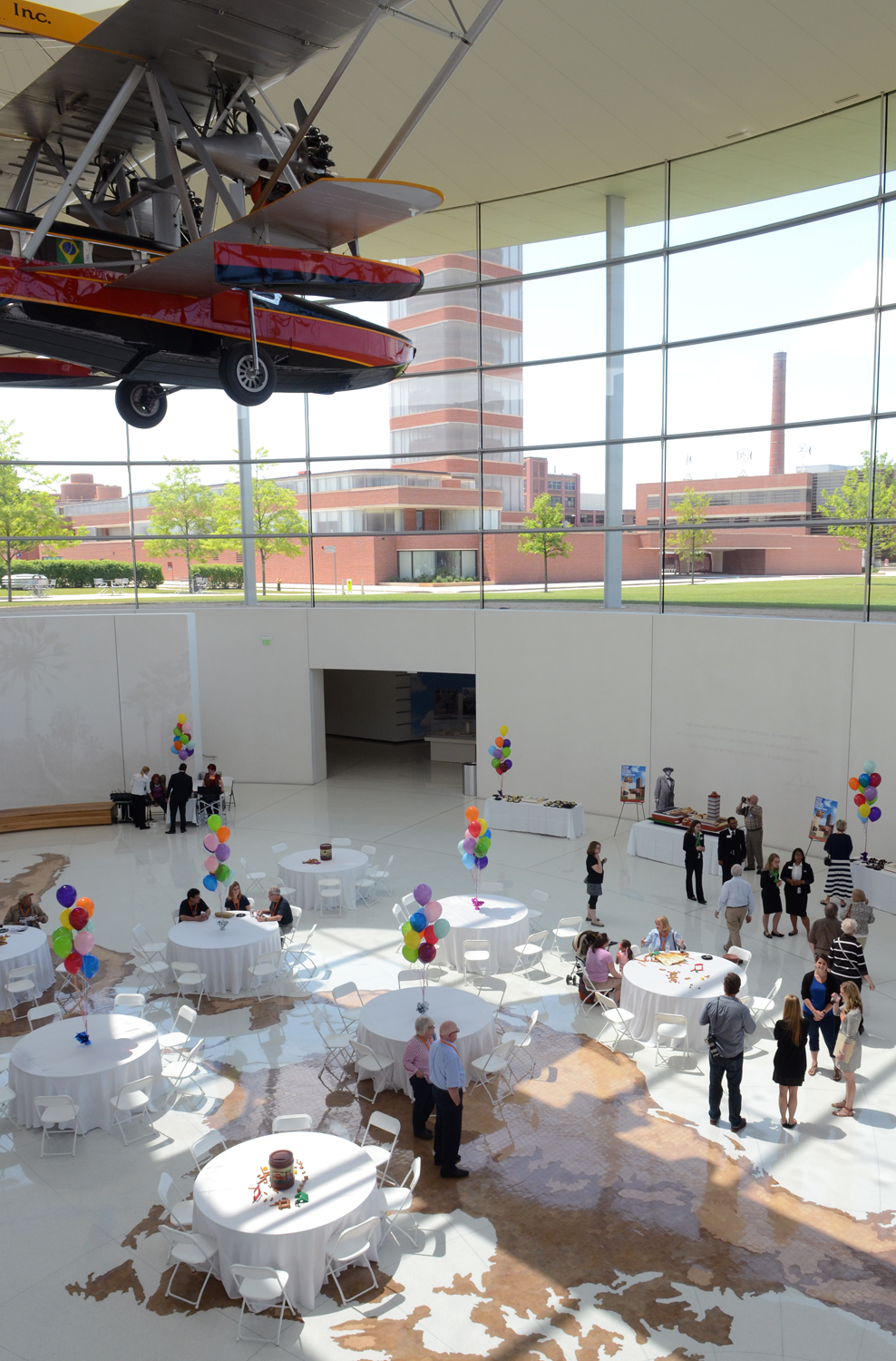
Frank Lloyd Wright’s 148th birthday was celebrated at a traditional gathering at Taliesin Saturday June 6 and a day later at SC Johnson in Racine, Wisconsin. Wright designed the company’s Administration Building in 1936 and Research Tower in 1943/44.

Frank Lloyd Wright birthday celebration at Taliesin and Hillside School, Spring Green, Wis., Saturday June 6, 2015.  /  (c) Mark HertzbergSean Malone chats with Minerva Montooth during the reception at Taliesin.

Frank Lloyd Wright birthday celebration at Taliesin and Hillside School, Spring Green, Wis., Saturday June 6, 2015.  /  (c) Mark Hertzberg

Frank Lloyd Wright birthday celebration at Taliesin and Hillside School, Spring Green, Wis., Saturday June 6, 2015.  /  (c) Mark Hertzberg

Ron McCrea enjoys playing the living room piano when he visits Taliesin.

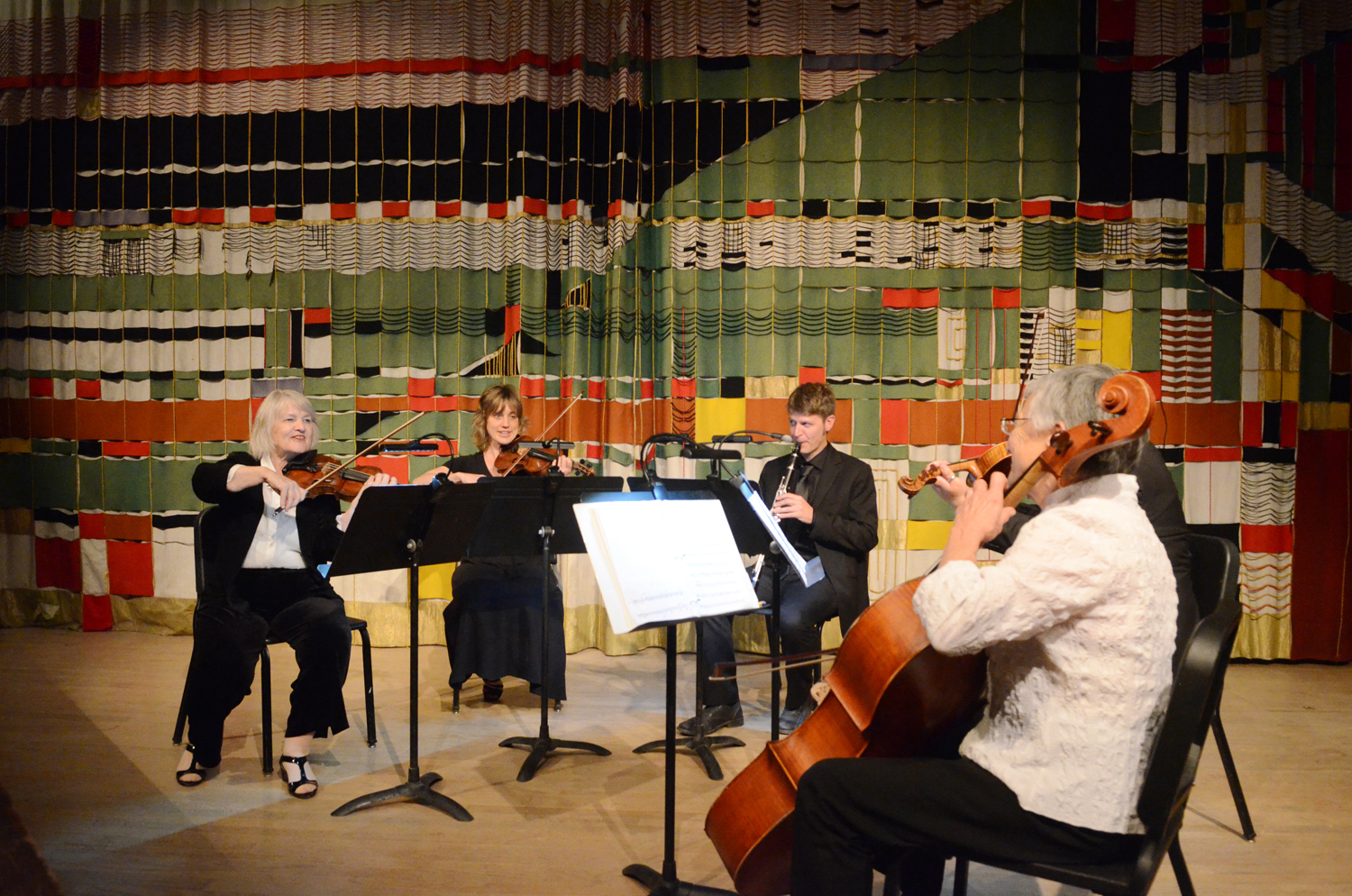
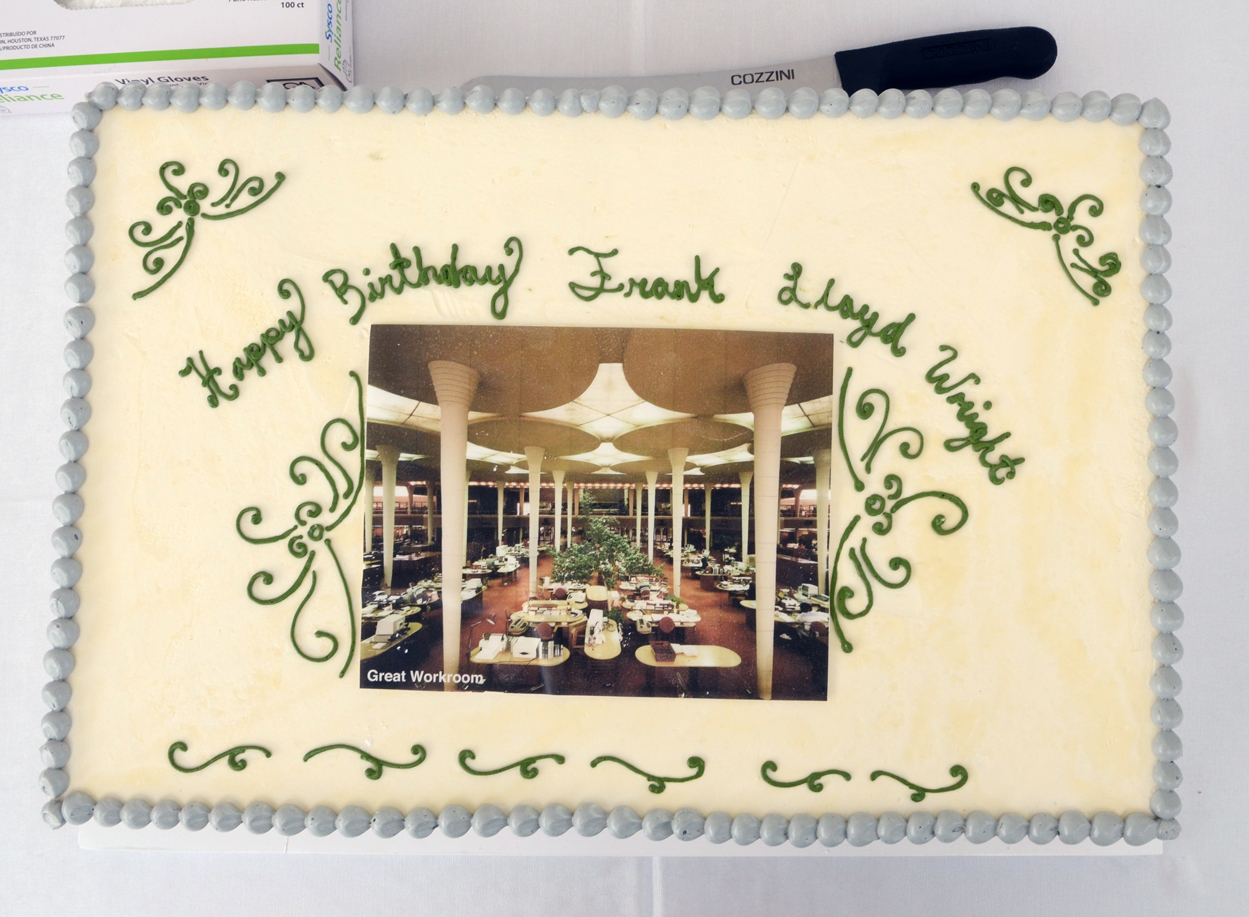
The reception at Taliesin was followed by dinner – including a birthday cake – and music at Hillside School:

Frank Lloyd Wright birthday celebration at Taliesin and Hillside School, Spring Green, Wis., Saturday June 6, 2015.  /  (c) Mark Hertzberg

Frank Lloyd Wright birthday celebration at Taliesin and Hillside School, Spring Green, Wis., Saturday June 6, 2015.  /  (c) Mark Hertzberg

Frank Lloyd Wright birthday celebration at Taliesin and Hillside School, Spring Green, Wis., Saturday June 6, 2015.  /  (c) Mark Hertzberg

Frank Lloyd Wright birthday celebration at Taliesin and Hillside School, Spring Green, Wis., Saturday June 6, 2015.  /  (c) Mark Hertzberg

Prairie 50th Graduation

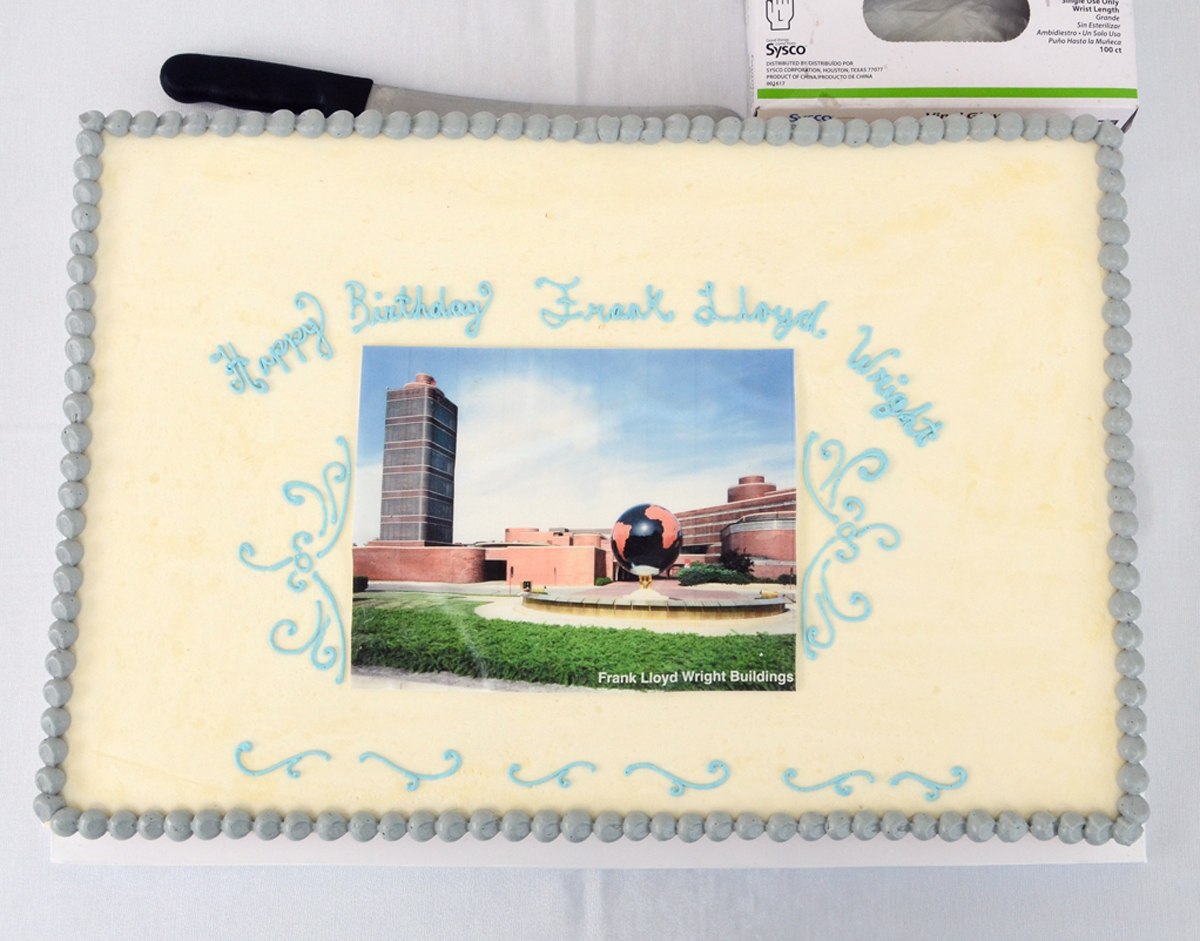
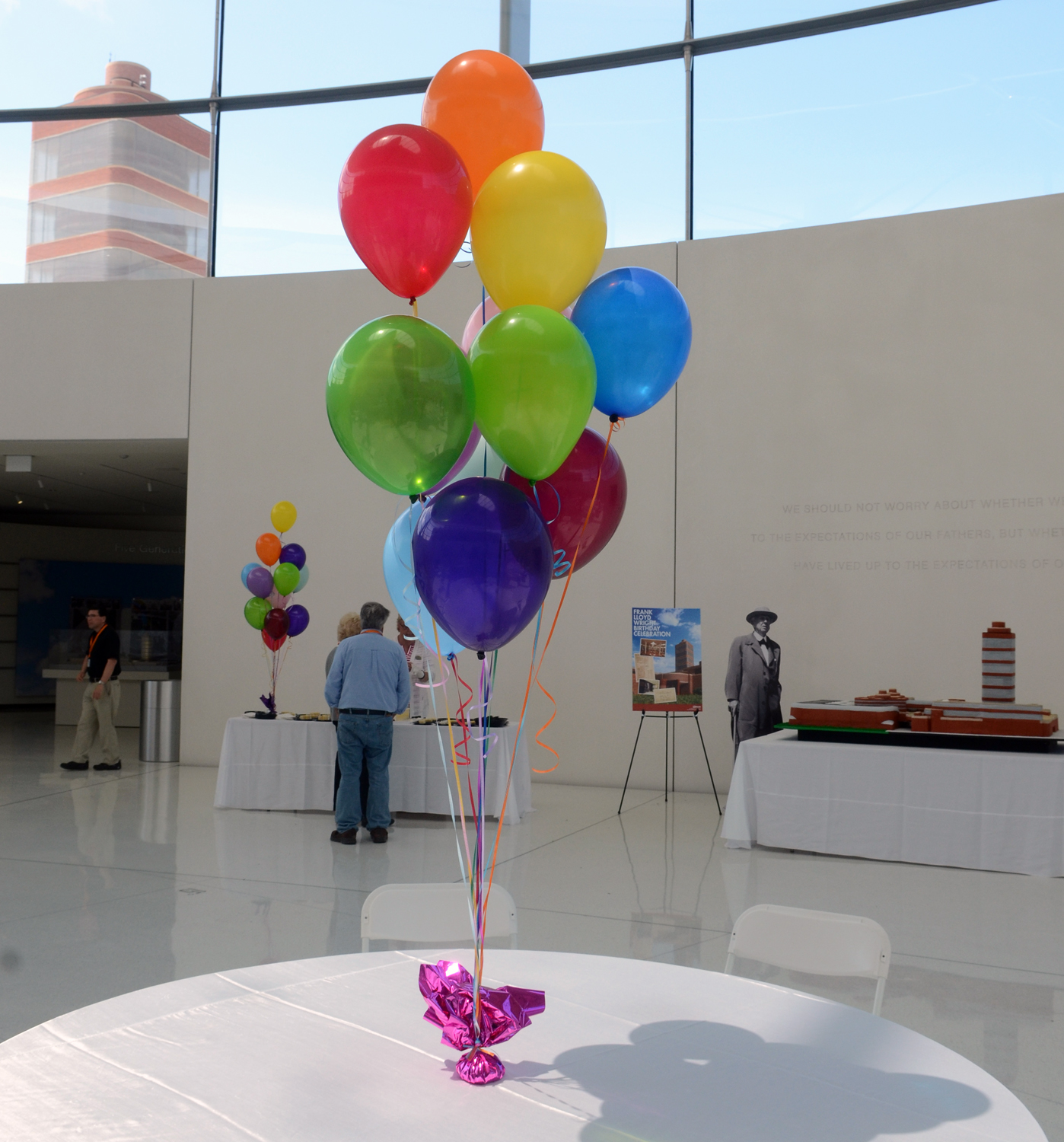
SC Johnson’s celebration was held in Fortaleza Hall, designed by Lord Norman Foster and partners. There were two sheet cakes and a large cake modeled after Wright’s buildings. The base below the model building was made from compressed Rice Krispie treats and chocolate mix.

Children played with Lincoln Logs, a toy invented by John Lloyd Wright

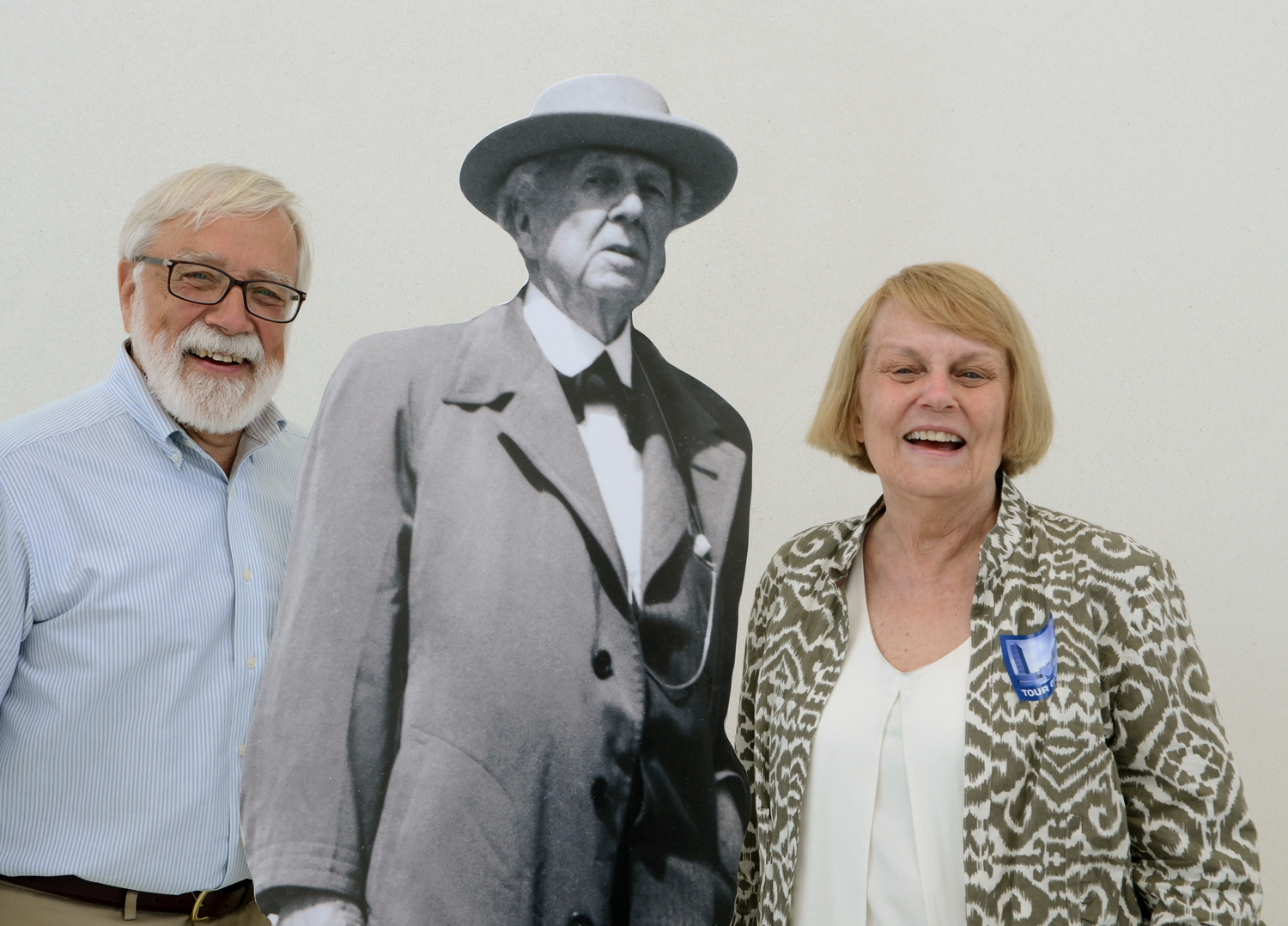
Bob and Jeanne Maushammer wanted their picture taken with a life-size cutout photo of Wright. The Maushammers, who have seen several hundred of Wright’s buildings, were in their hometown of Racine to celebrate their 50th wedding anniversary.

Newly Discovered Wright Home Near Milwaukee

Story and photos (c) Mark Hertzberg

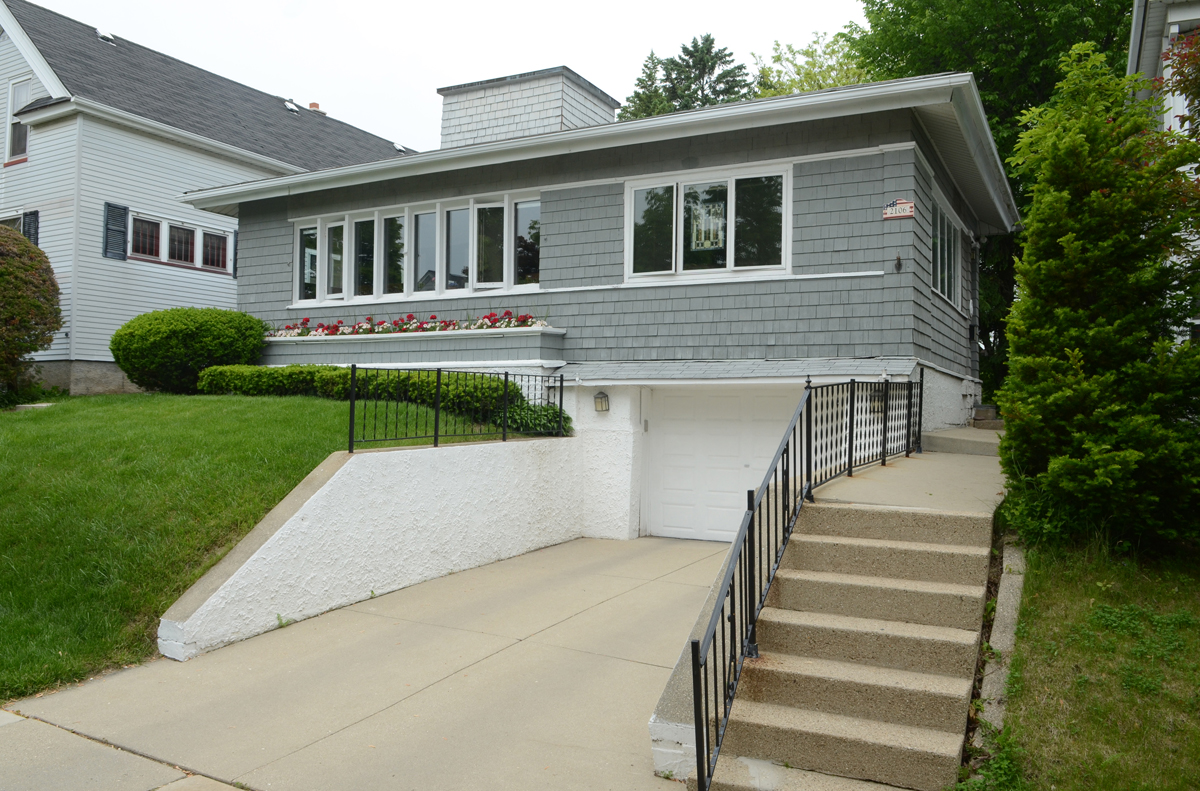
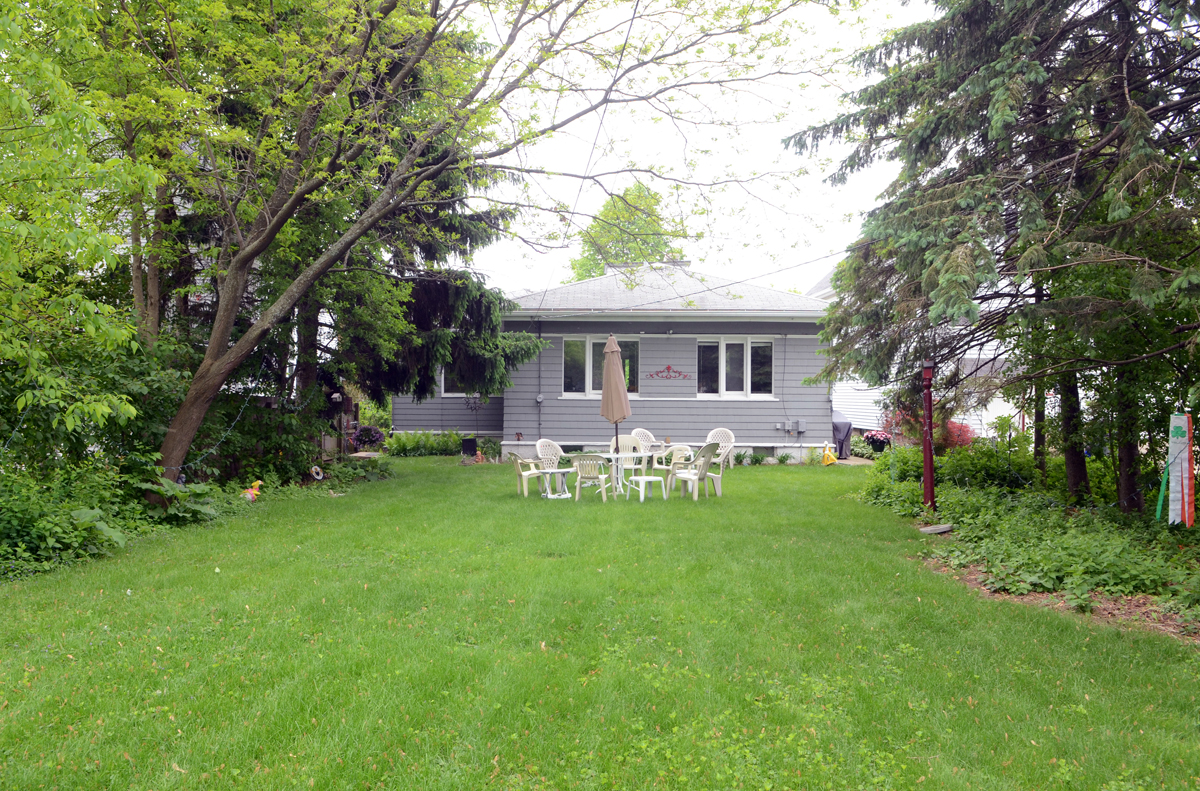
The 2100 block of Newton Avenue in Shorewood, Wis., will no longer be a quiet street, as word spreads of the documentation there of a previously unidentified house designed by Frank Lloyd Wright. The home at 2106 Newton may not look like a Wright home at first glance, but underneath the modern siding, and above the garage which was added in 1976, is one of Wright’s stucco American System-Built homes.

The documentation of Frank Lloyd Wright as the architect of the home at 2106 Newton Avenue, Shorewood, Wis., was announced Friday June 5, 2015. The home, which dates to 1917, is one of Wright's American System-Built homes. It has   /  (c) Mark Hertzberg

The documentation of Frank Lloyd Wright as the architect of the home at 2106 Newton Avenue, Shorewood, Wis., was announced Friday June 5, 2015. The home, which dates to 1917, is one of Wright's American System-Built homes. It has   /  (c) Mark Hertzberg

The documentation of Frank Lloyd Wright as the architect of the home at 2106 Newton Avenue, Shorewood, Wis., was announced Friday June 5, 2015. The home, which dates to 1917, is one of Wright's American System-Built homes. It has   /  (c) Mark Hertzberg

Many people think Wright designed homes only for wealthy clients, but he was keenly interested in affordable housing for the middle class. The American System-Built homes, designed as affordable housing, could be selected from a myriad of designs. The entrance to the house is on the right side (as one faces the house). The original open porch at the entrance was enclosed at an unknown date. It still has the original stucco finish and the leaded glass windows which apparently were the front windows of the house.
The documentation of Frank Lloyd Wright as the architect of the home at 2106 Newton Avenue, Shorewood, Wis., was announced Friday June 5, 2015. The home, which dates to 1917, is one of Wright's American System-Built homes. It has   /  (c) Mark Hertzberg
The documentation of Frank Lloyd Wright as the architect of the home at 2106 Newton Avenue, Shorewood, Wis., was announced Friday June 5, 2015. The home, which dates to 1917, is one of Wright's American System-Built homes. It has   /  (c) Mark Hertzberg

The documentation of Frank Lloyd Wright as the architect of the home at 2106 Newton Avenue, Shorewood, Wis., was announced Friday June 5, 2015. The home, which dates to 1917, is one of Wright's American System-Built homes. It has   /  (c) Mark Hertzberg

The Newton Avenue house, built in 1917, joins six homes in the 2700 block of W. Burnham St. (two single-family homes and four duplexes) as examples of Wright’s American System-Built homes in the Milwaukee area. The two-bedroom Shorewood house is a Model A203. Four other Milwaukee American System-Built duplexes, the Arthur R. Munkwitz Duplex Apartments, were demolished in 1973 to widen a street.

The documentation of Frank Lloyd Wright as the architect of the home at 2106 Newton Avenue, Shorewood, Wis., was announced Friday June 5, 2015. The home, which dates to 1917, is one of Wright's American System-Built homes. It has   /  (c) Mark Hertzberg

The documentation of Frank Lloyd Wright as the architect of the home at 2106 Newton Avenue, Shorewood, Wis., was announced Friday June 5, 2015. The home, which dates to 1917, is one of Wright's American System-Built homes. It has   /  (c) Mark Hertzberg

The documentation of Frank Lloyd Wright as the architect of the home at 2106 Newton Avenue, Shorewood, Wis., was announced Friday June 5, 2015. The home, which dates to 1917, is one of Wright's American System-Built homes. It has   /  (c) Mark Hertzberg

The documentation of Frank Lloyd Wright as the architect of the home at 2106 Newton Avenue, Shorewood, Wis., was announced Friday June 5, 2015. The home, which dates to 1917, is one of Wright's American System-Built homes. It has   /  (c) Mark Hertzberg

The documentation of Frank Lloyd Wright as the architect of the home at 2106 Newton Avenue, Shorewood, Wis., was announced Friday June 5, 2015. The home, which dates to 1917, is one of Wright's American System-Built homes. It has   /  (c) Mark Hertzberg

The documentation of Frank Lloyd Wright as the architect of the home at 2106 Newton Avenue, Shorewood, Wis., was announced Friday June 5, 2015. The home, which dates to 1917, is one of Wright's American System-Built homes. It has   /  (c) Mark Hertzberg

The first person to tell owners Roger and Pat Wisialowski that they may be living in a Wright home was the late Richard Johnson of Evanston, Illinois. Johnson had a passion for searching for previously unknown Wright works. However, none of the ones he believed Wright designed were documented and authenticated as Wright’s, until Mike Lilek researched the little house on Newton Avenue over the last year and found proof that it is, indeed, a Wright home. Lilek is nationally recognized as an expert on the subject of Wright’s American System-Built homes.

The documentation of Frank Lloyd Wright as the architect of the home at 2106 Newton Avenue, Shorewood, Wis., was announced Friday June 5, 2015. The home, which dates to 1917, is one of Wright's American System-Built homes. It has   /  (c) Mark Hertzberg

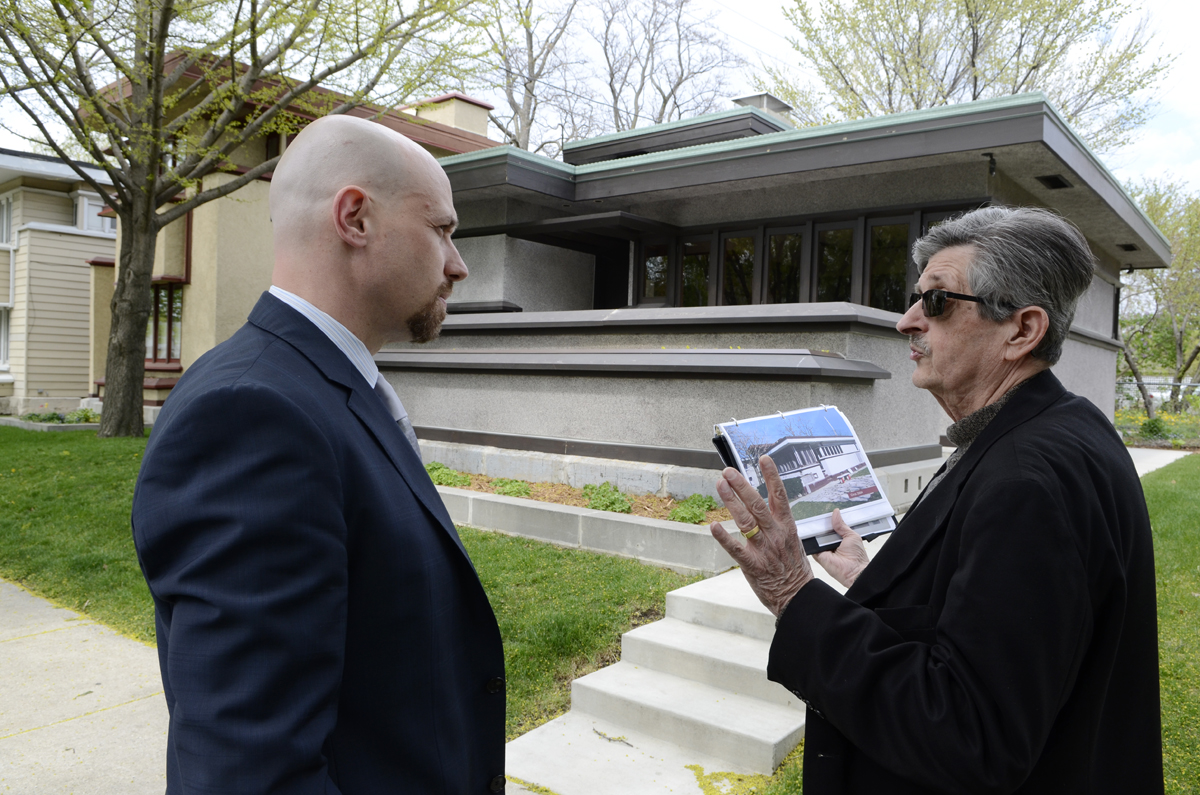
Lilek, left, is interviewed by Jeff Rummage of the “Shorewood Now news site.

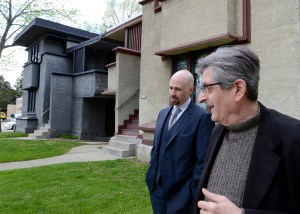
He has spearheaded the restoration of two of the Burnham Street houses for Frank Lloyd Wright Wisconsin. He extensively researched the Newton Avenue house and has presented his findings to the Frank Lloyd Wright Foundation, the organization which oversees all things Wright and was the former home of Wright’s archive. He announced his findings June 5, 2015 at a press event in front of the house. He has been transparent about his research, and has posted a link to it:

www.wrightinwisconsin.org

Link toMary Louise Schumacher’s feature story in the Milwaukee Journal Sentinel:

http://www.jsonline.com/entertainment/sleuthing-reveals-shorewood-home-was-

designed-by-frank-lloyd-wright-b99513440z1-306231261.html

Tafels’ Albert House Inches Along to Completion; Court Imposes Fine

Photos and story (c) Mark Hertzberg

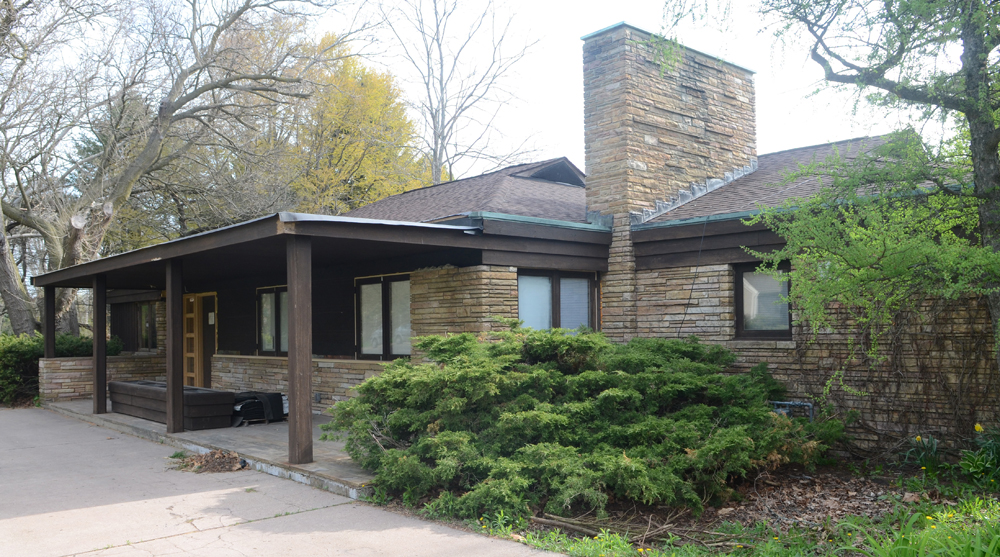
Edgar Tafel's Carl and Marie Albert House, 4945 N. Main Street, Wind Point, Wisconsin, Friday May 8, 2015.  /  (c) Mark Hertzberg

A $25 per day fine levied by Racine County Circuit Court Judge Faye Flancher on May 8 against the owners of Edgar Tafel’s Carl and Marie Albert House (1948) in Wind Point, Wisconsin, may spur them to quickly complete restoration of the house, thereby ending a legal battle that is more than three years old. The exterior of the house, above, is largely repaired, but not enough interior work has been done to allow the village to issue an occupancy permit.

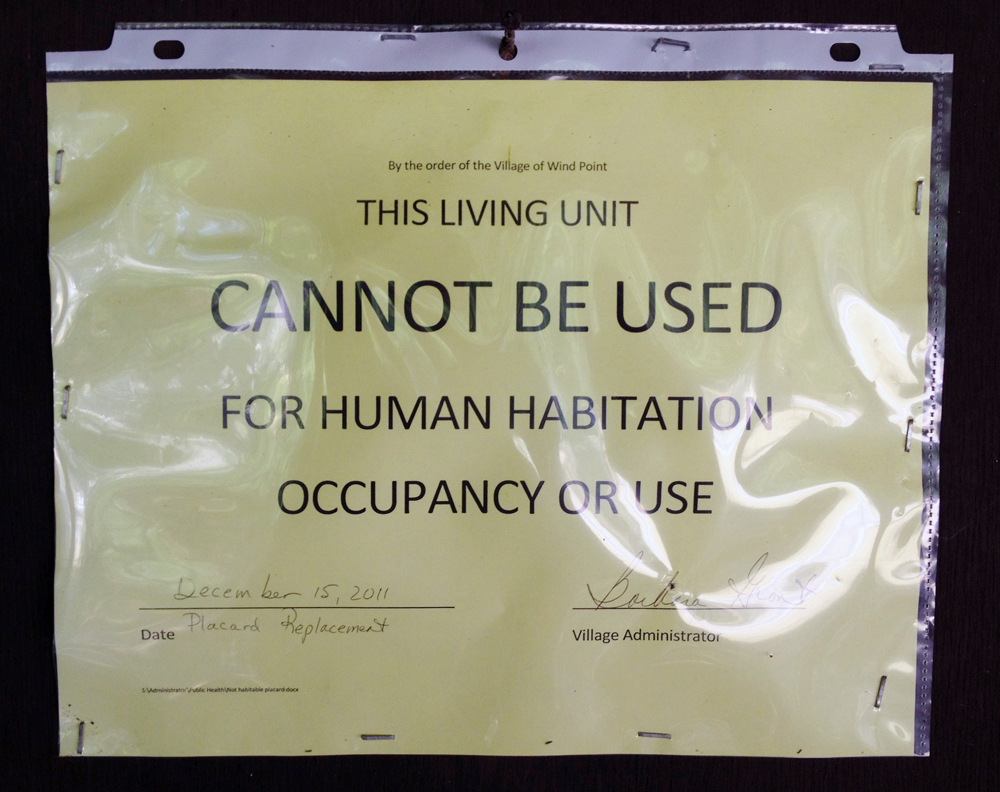
The house was deemed uninhabitable in December, 2011.

The house was deemed uninhabitable in December, 2011.

The house, at 4945 N. Main Street, is on a prominent intersection in the wealthy suburb of Racine. Its location at the corner of N. Main Street and Four Mile Road has likely spurred greater concern on the part of the village than if it were in a less visible location.

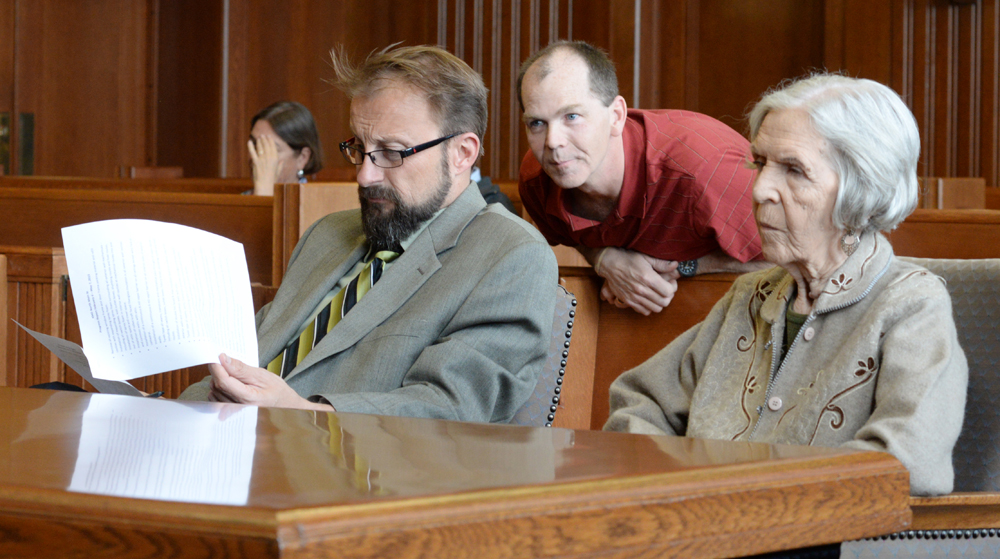
Court hearing for Edgar Tafel's Carl and Marie Albert House, 4945 N. Main Street, Wind Point, Wisconsin, Friday May 8, 2015.  /  (c) Mark Hertzberg

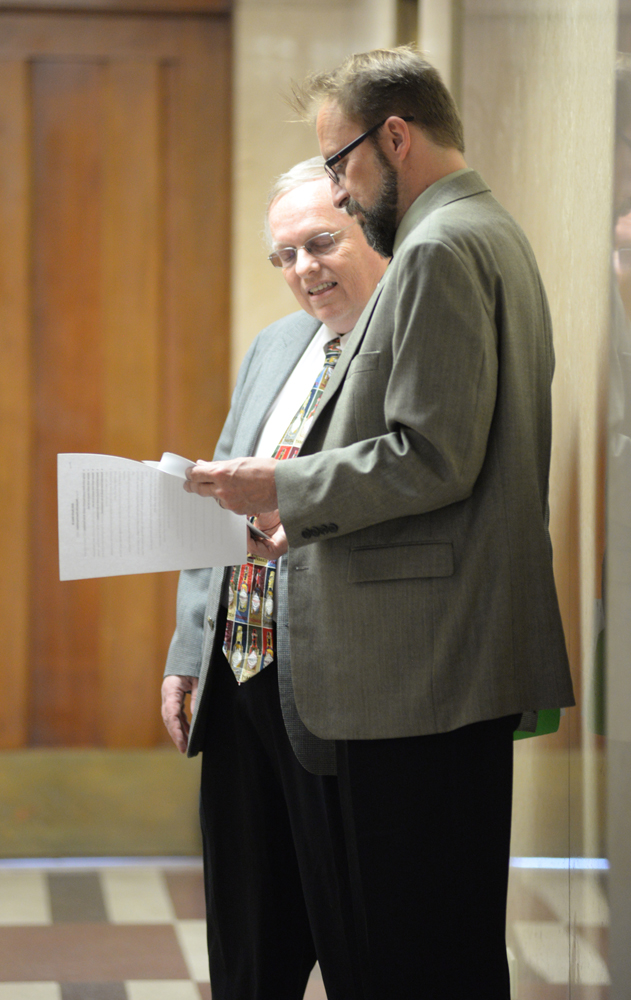
Village attorney Ed Bruner, left, and Peter Ludwig, the Schulz’s attorney, confer before the hearing.

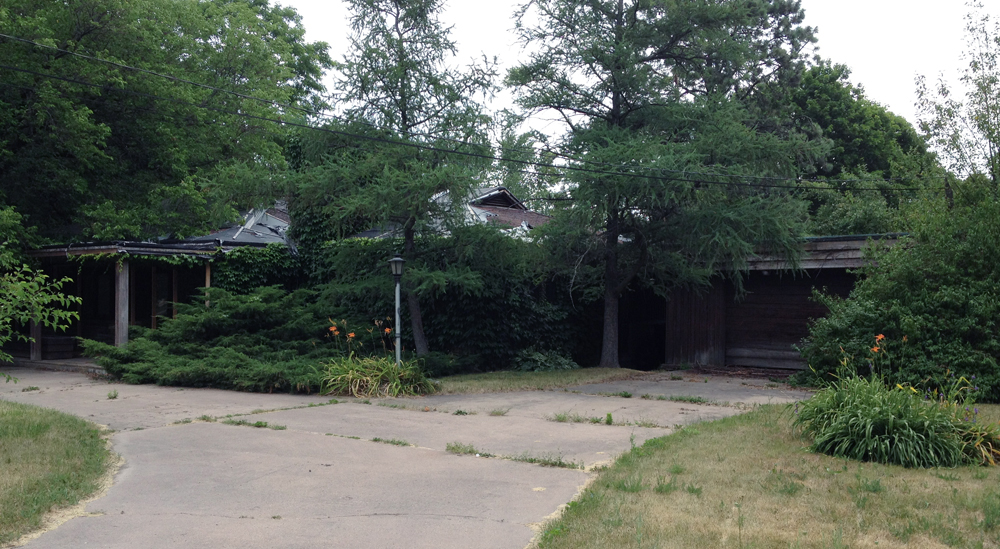
The house fell into disrepair after Joan Shulz, who bought it in 1972 with her late husband, Dr. Gilbert Schulz, walked away from it more than seven years ago to care for an ill relative. The roof leaked and interior walls were covered with mold. A tarp covered the roof for a long time.

June 30, 2012: A tarp covers the roof and the front of the house is overgrown.

June 30, 2012: A tarp covers the roof and the front of the house is overgrown.

Court hearing for Edgar Tafel's Carl and Marie Albert House, 4945 N. Main Street, Wind Point, Wisconsin, Friday May 8, 2015.  /  (c) Mark Hertzberg

Linden Schulz leans forward to confer with Ludwig while Joan Schulz, right, listens to Bruner’s arguments on behalf of the village.

The house was deemed uninhabitable, and village sought a raze order in 2013. While the house was architecturally significant — Tafel was one of Frank Lloyd Wright’s original Taliesin Fellowship apprentices from 1932-1941 — the village considered it an “eyesore,” according to Todd Terry, the Schulz’s former attorney.

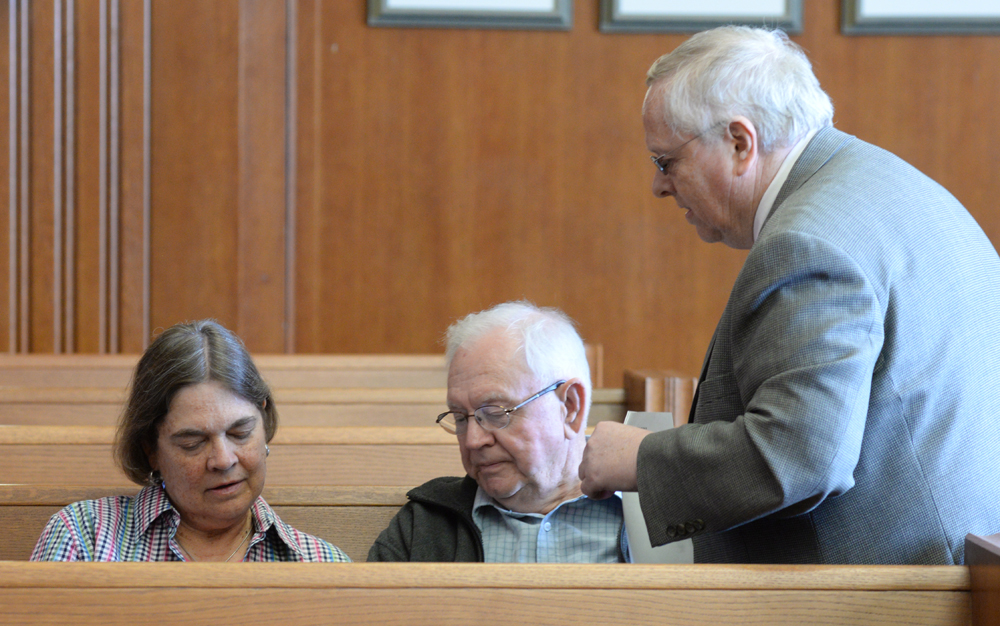
Bruner confers with village board member Karen Van Lone. Her husband, Richard Britton, is with her.

Bruner confers with village board member Karen Van Lone. Her husband, Richard Britton, is with her.

Mrs. Schulz paid $11,200 in ordinance fines in November, 2012 rather than demolish the house. The village had run out of patience in early 2013 according to its attorney, Ed Bruner, “There’s been a determination made by the building inspector that the cost to repair the house far exceeds 50% of its value, so that’s the problem.”

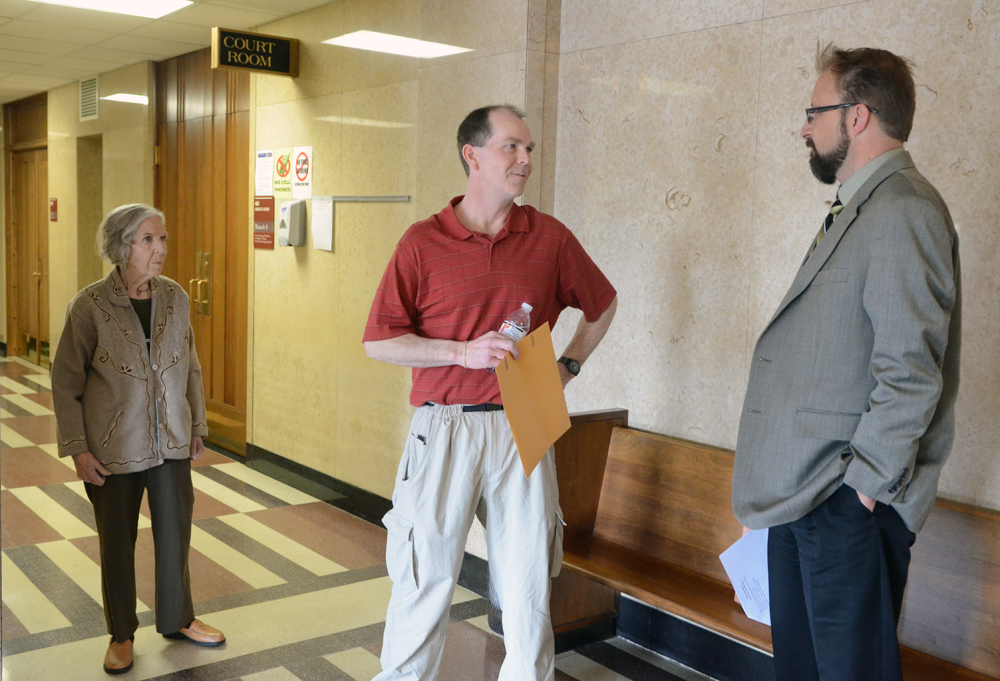
The Schulzes confer with attorney Ludwig after the hearing.

The Schulzes confer with attorney Ludwig after the hearing.

The house is eligible for nomination to the National Register of Historic Places. Recognizing its architectural significance, Judge John Jude, who originally heard the case, gave Schulz and her son Linden, who was going to do most of the restoration work, consideration rather than order the house razed. Although Schulz missed several court-imposed deadlines, he slowly made enough progress to get extensions from Jude.

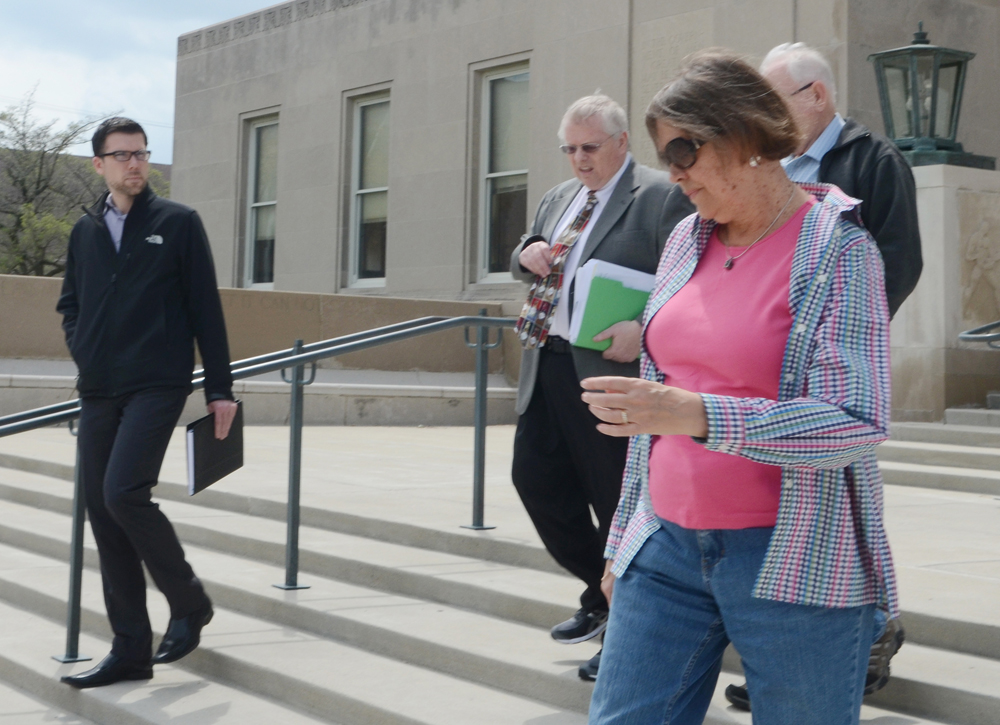
Village Administrator Michael Hawes, Bruner, Van Lone, and Britton leave the courthouse after the hearing.

Village Administrator Michael Hawes, Bruner, Van Lone, and Britton leave the courthouse after the hearing.

The Schulz family was told in February that fines might be imposed at the May 8 hearing if there was no occupancy permit by then. While acknowledging that progress has been made, the house is unfinished inside, and Flancher granted the village’s request for fines to push the work to completion.

“This has gone on way too long,” argued Ed Bruner, the village attorney. Referring to the first court hearing in May, 2013, he added, “Several new homes could have been built (in the time it has taken to repair the Albert House).”

Michael Hawes, the village administrator, acknowledges “What’s going on now is better than where we were,” with respect to the condition of the house, but says the village wants the property to be able to pass inspection and have an occupancy permit issued. “It’s not just that it’s a matter of it being part of the community as an occupied home with people living there and people caring for the property, but also so this doesn’t happen again in the future.” The village also wants to be able to assess the house as a habitable property.

The Schulz’s attorney, Peter Ludwig, blamed an electrical contractor for the latest delay, asserting that he is three weeks late returning to the job. Final drywalling, insulation, flooring, and plumbing work will quickly follow, he said, then “it could be a matter of days.”