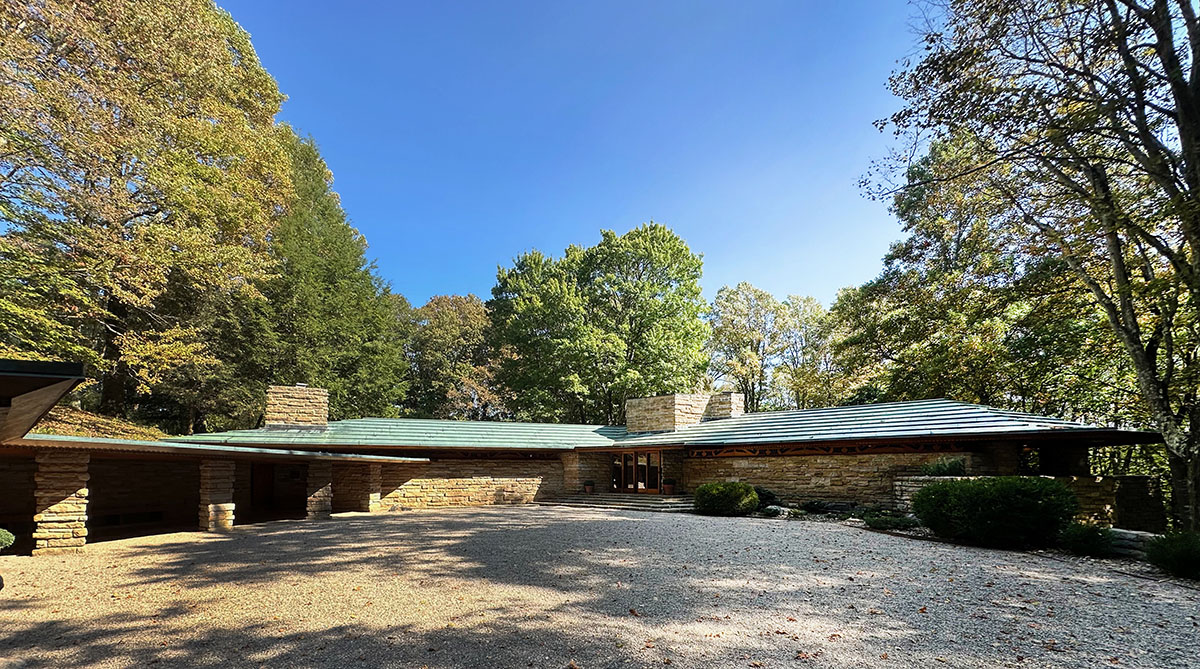
Kentuck Knob-The Wright House “near Fallingwater”

© Mark Hertzberg (2025)

LR Kentuck Knob 9.18.25 001.jpg

This essay begins with a confession. In 1999 Cindy and I went to Fallingwater. I was interested in Frank Lloyd Wright’s work, but I had not done any research about it. I had photographed his work in Racine, Wisconsin, where we live, and I had, of course, heard about Fallingwater. So, why not a road trip there? We saw a brochure for something called “Kentuck Knob” but didn’t pay any attention to it. Neither our docent or ticket – seller at Fallingwater asked if we knew that there is another house by Wright in the neighborhood. And so it was until our next visit to Fallingwater in March 2010 that we knew I blew it in 1999 by not picking up that Kentuck Knob brochure from one of those ubiquitous racks with myriad travel brochures that I tend to just walk past at highway rest stops and in hotel lobbies.

LR Kentuck Knob 9.18.25 006.jpg

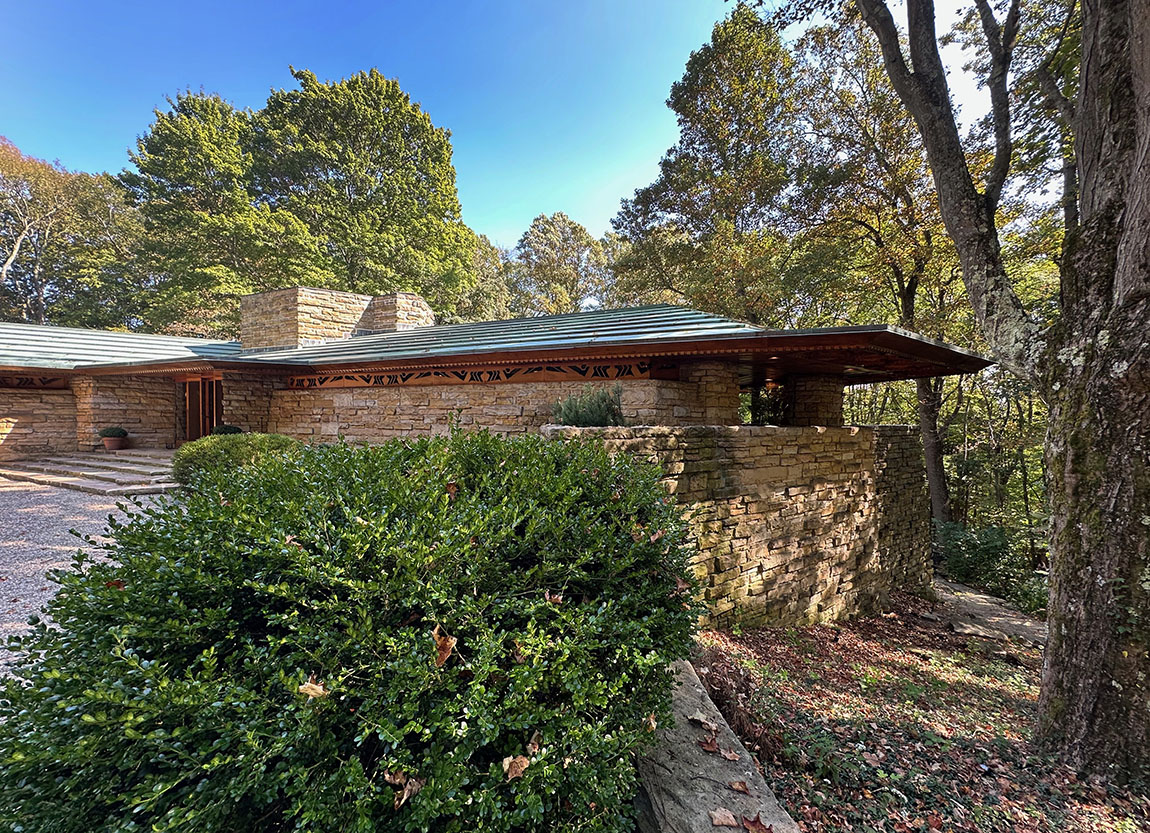
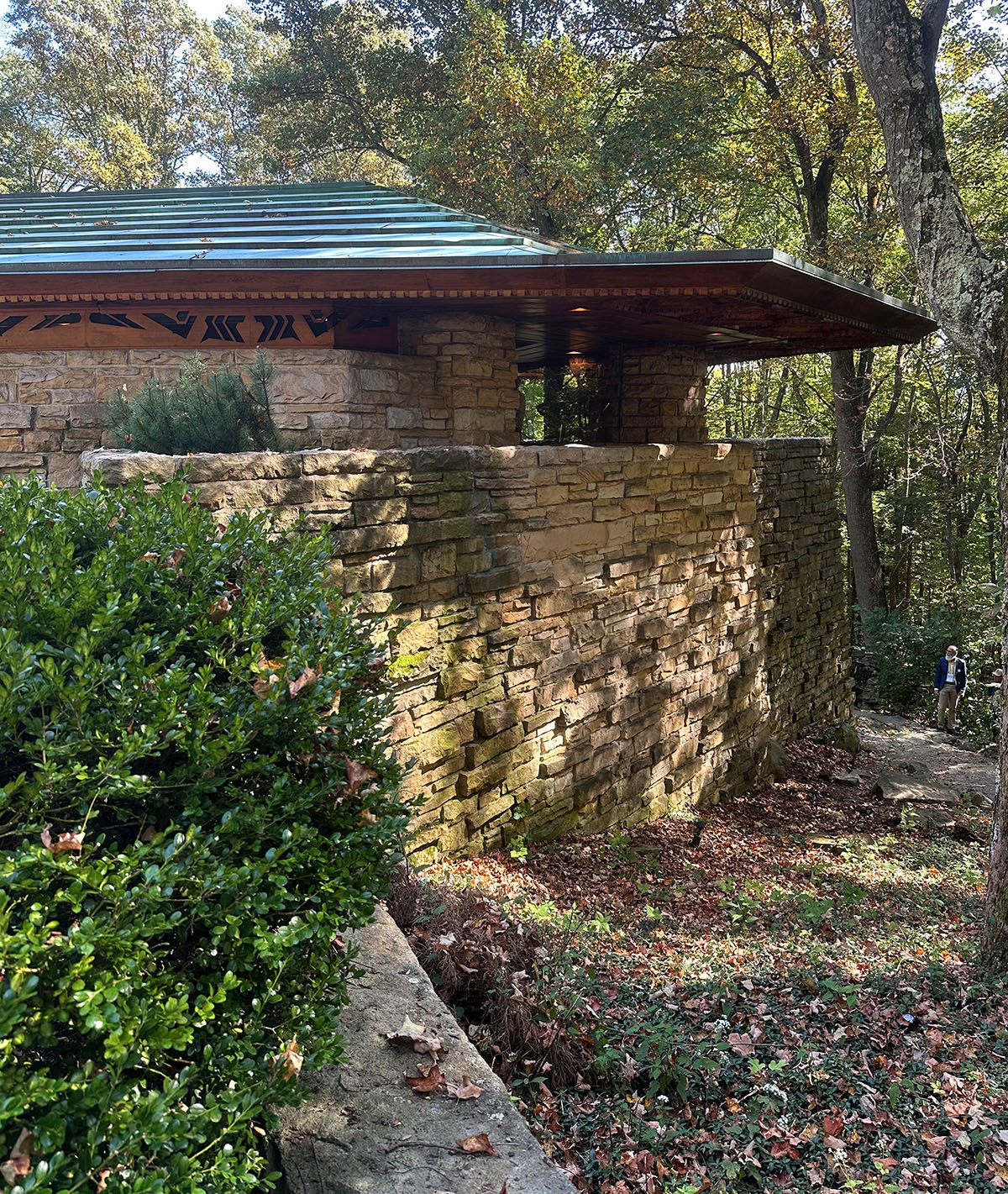
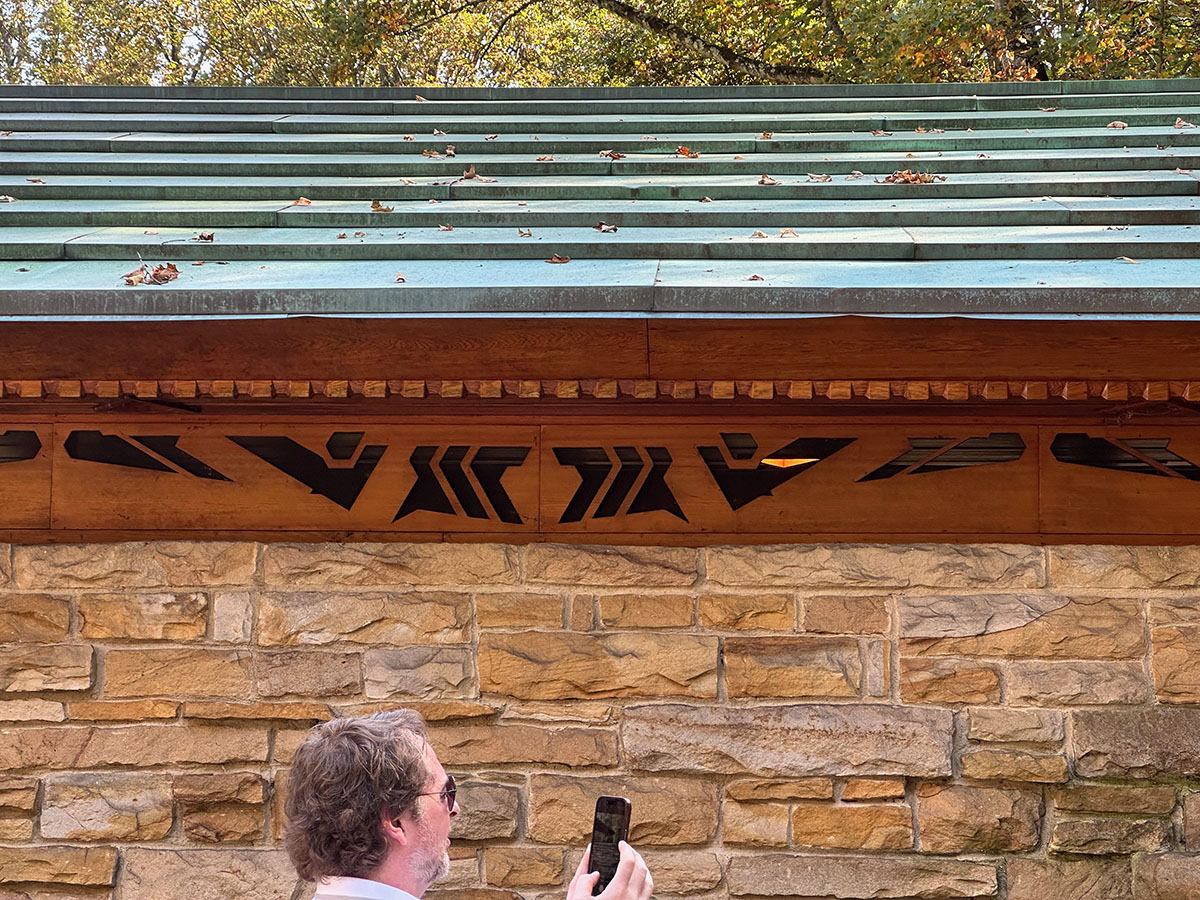
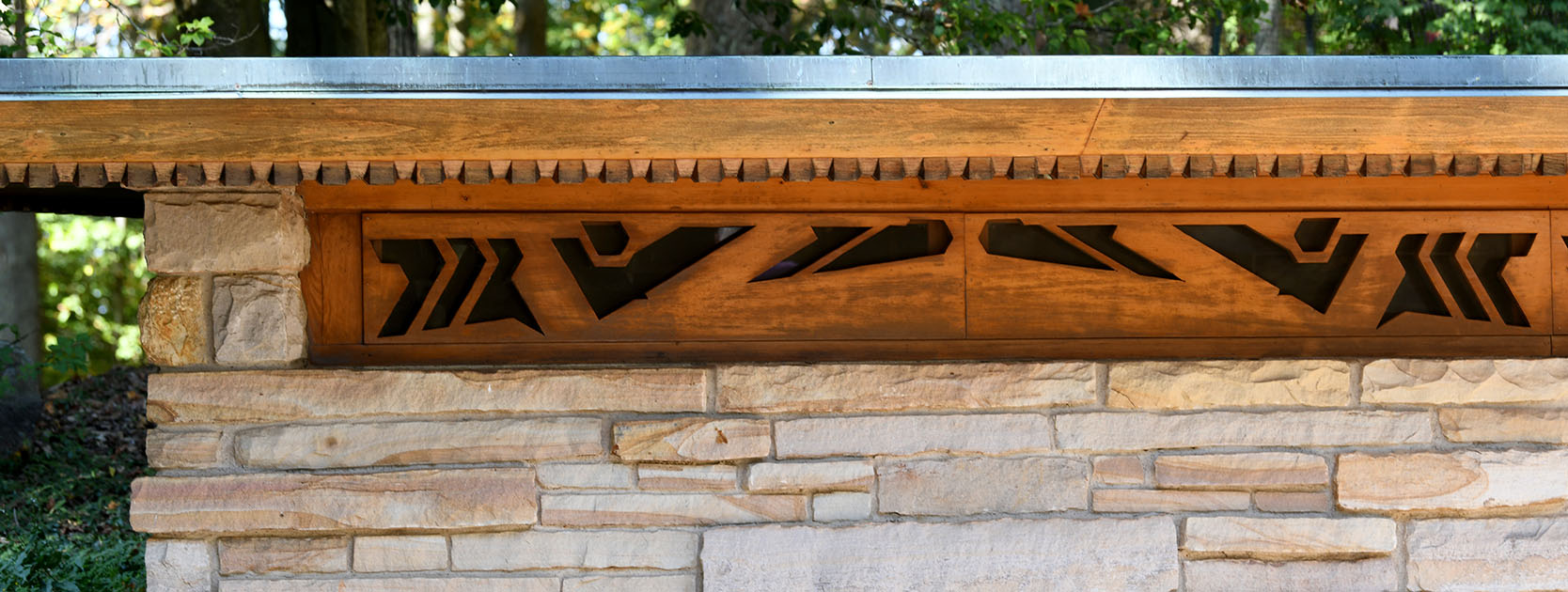
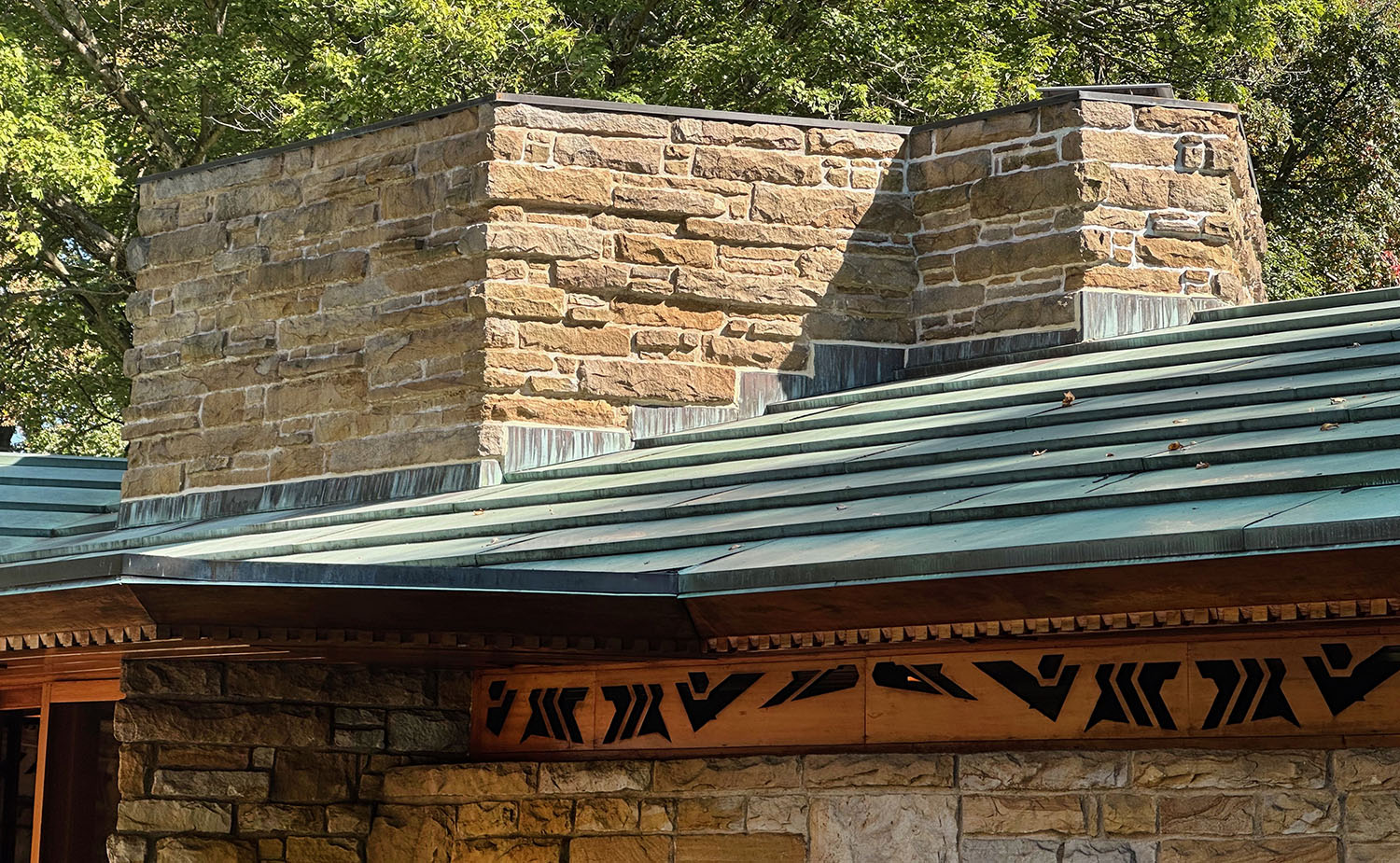
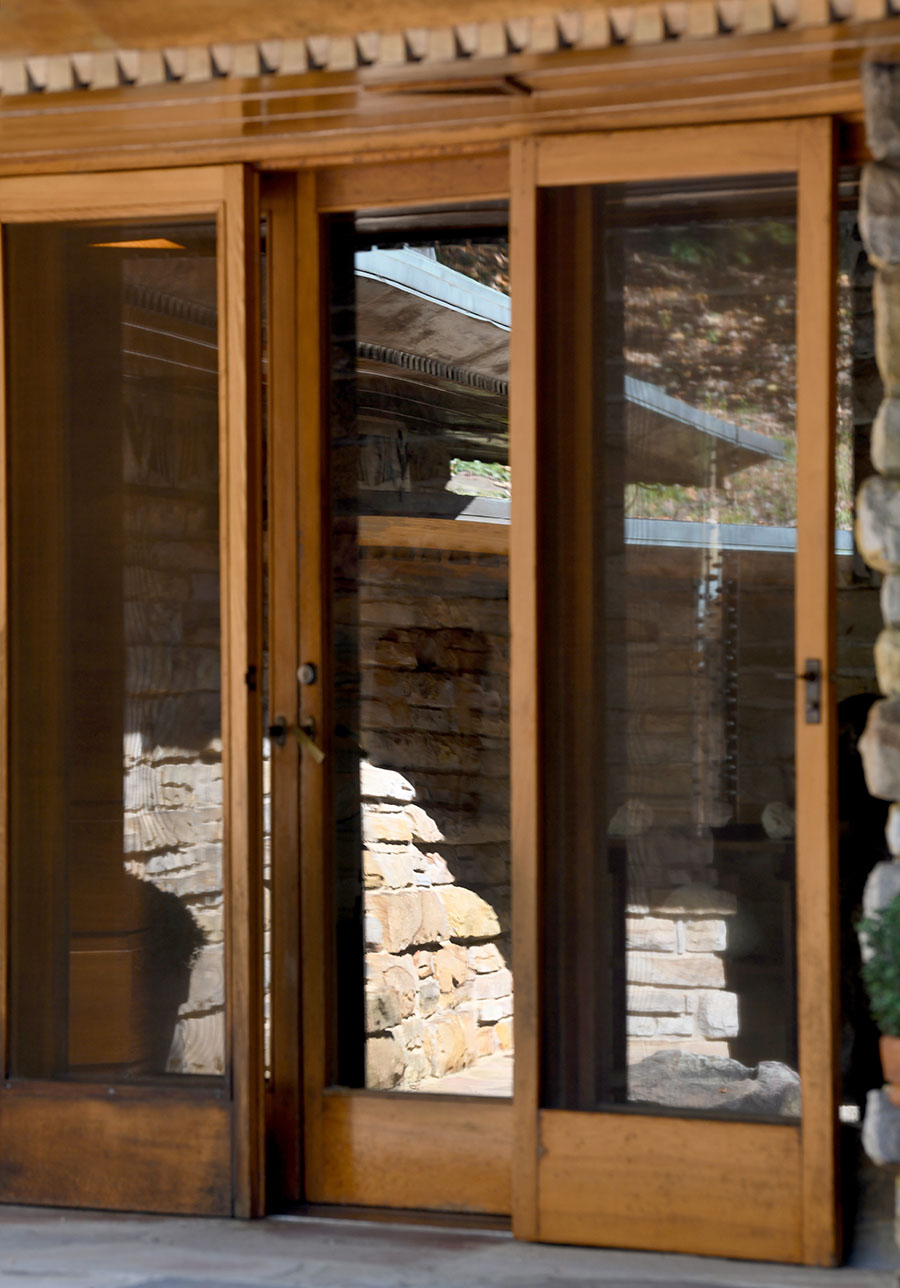
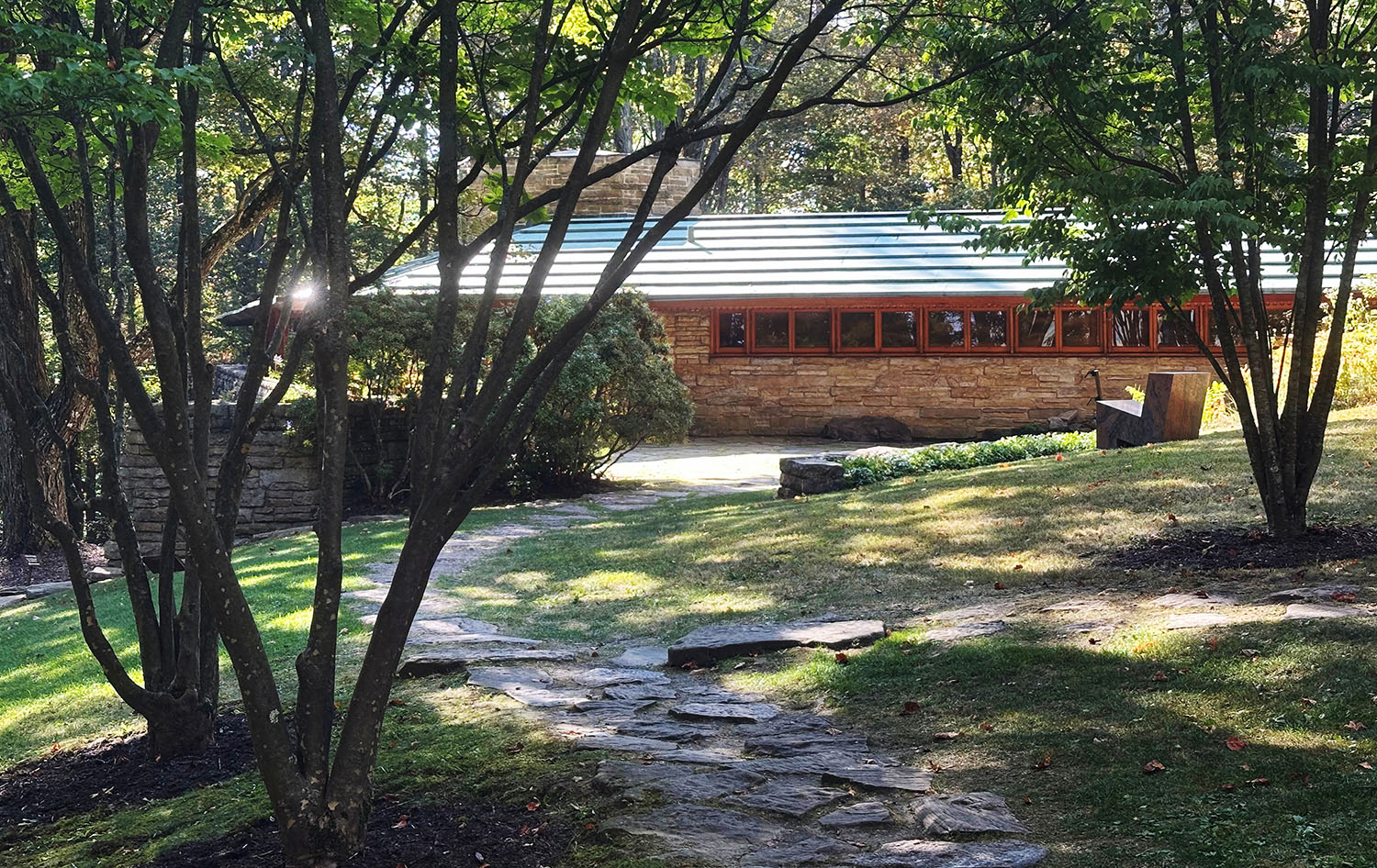
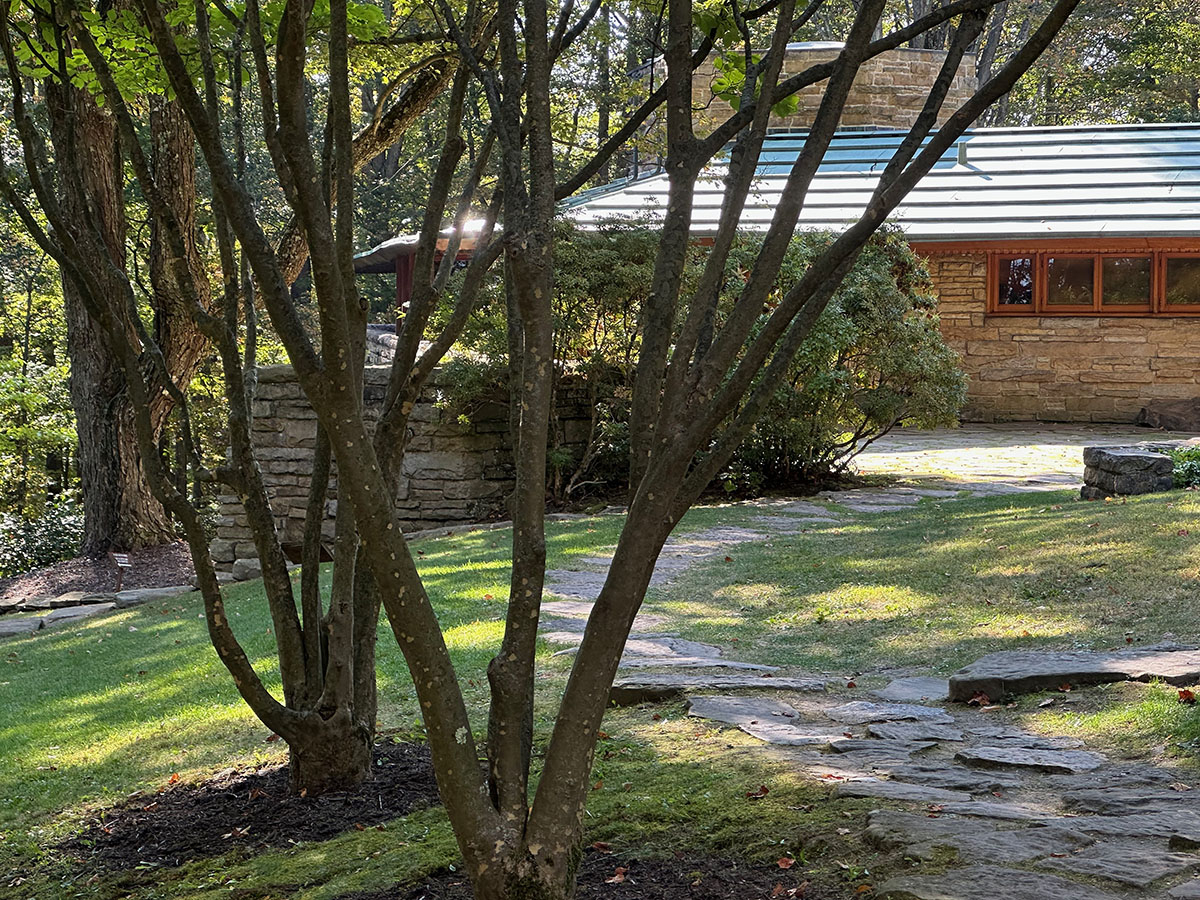
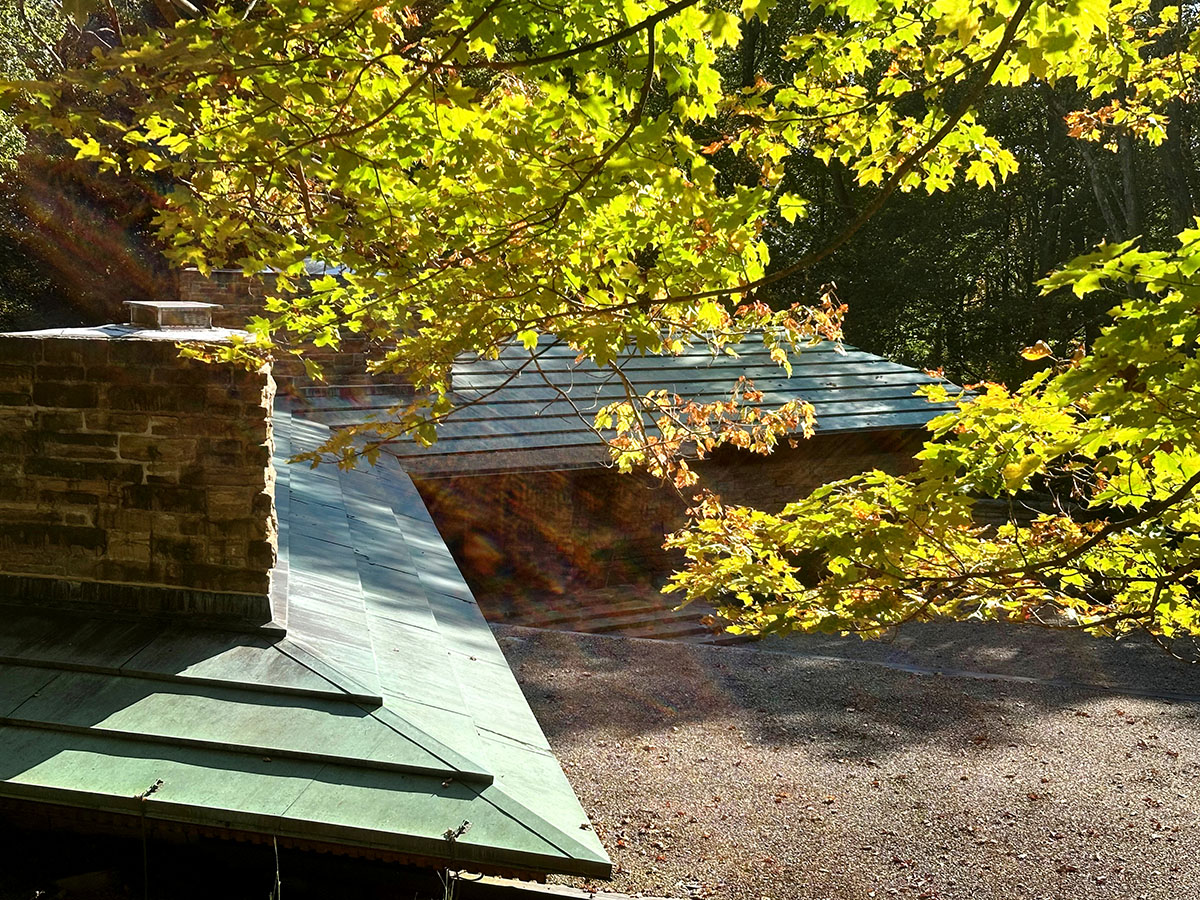
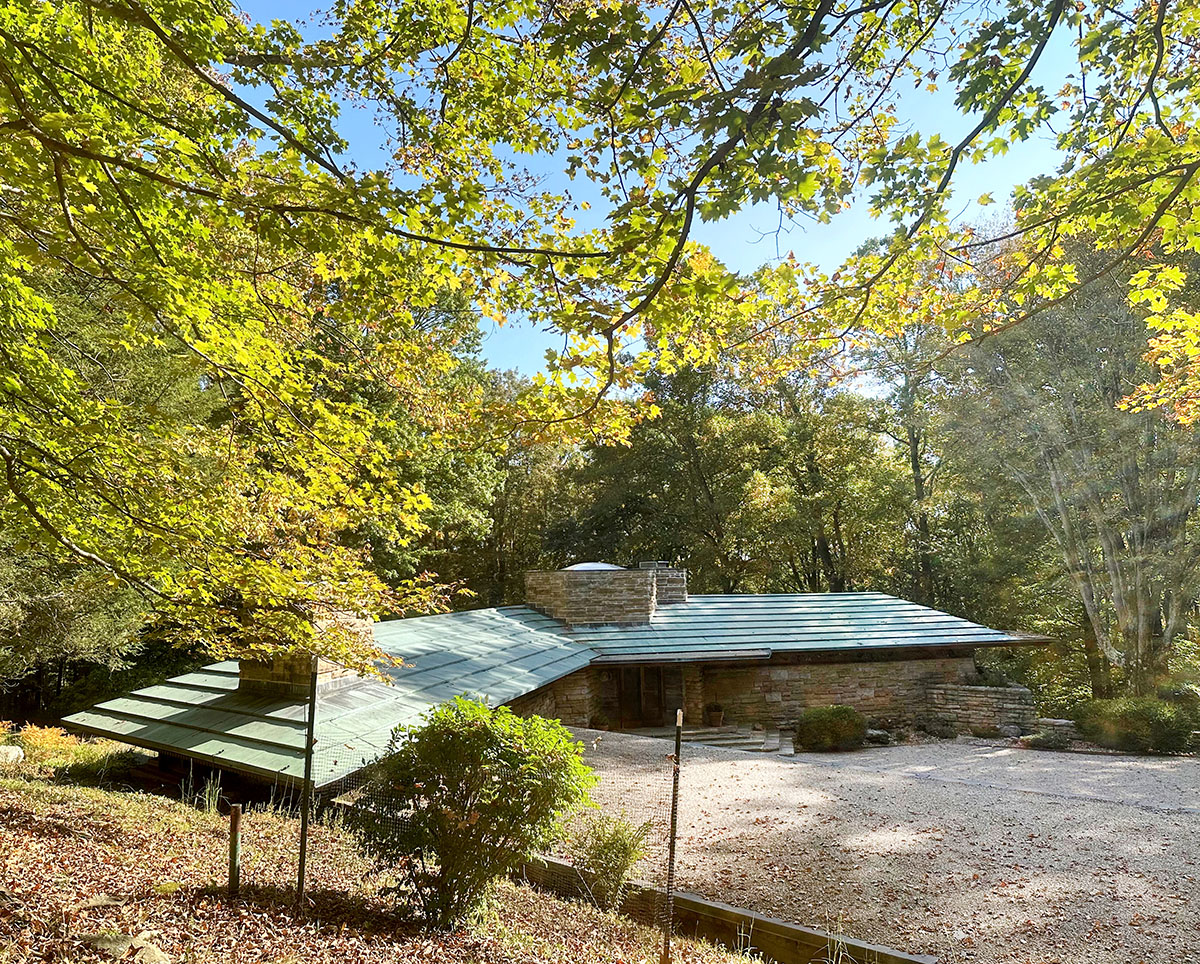
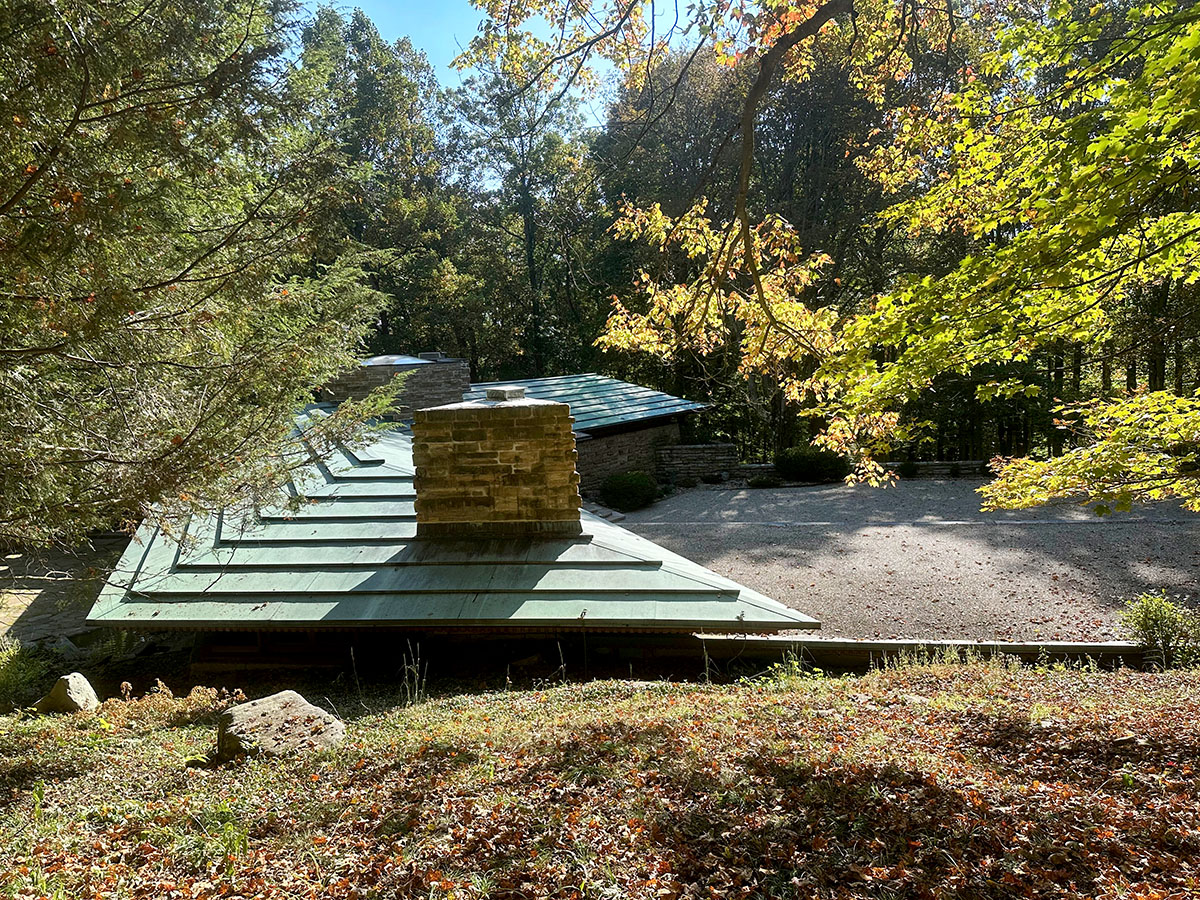
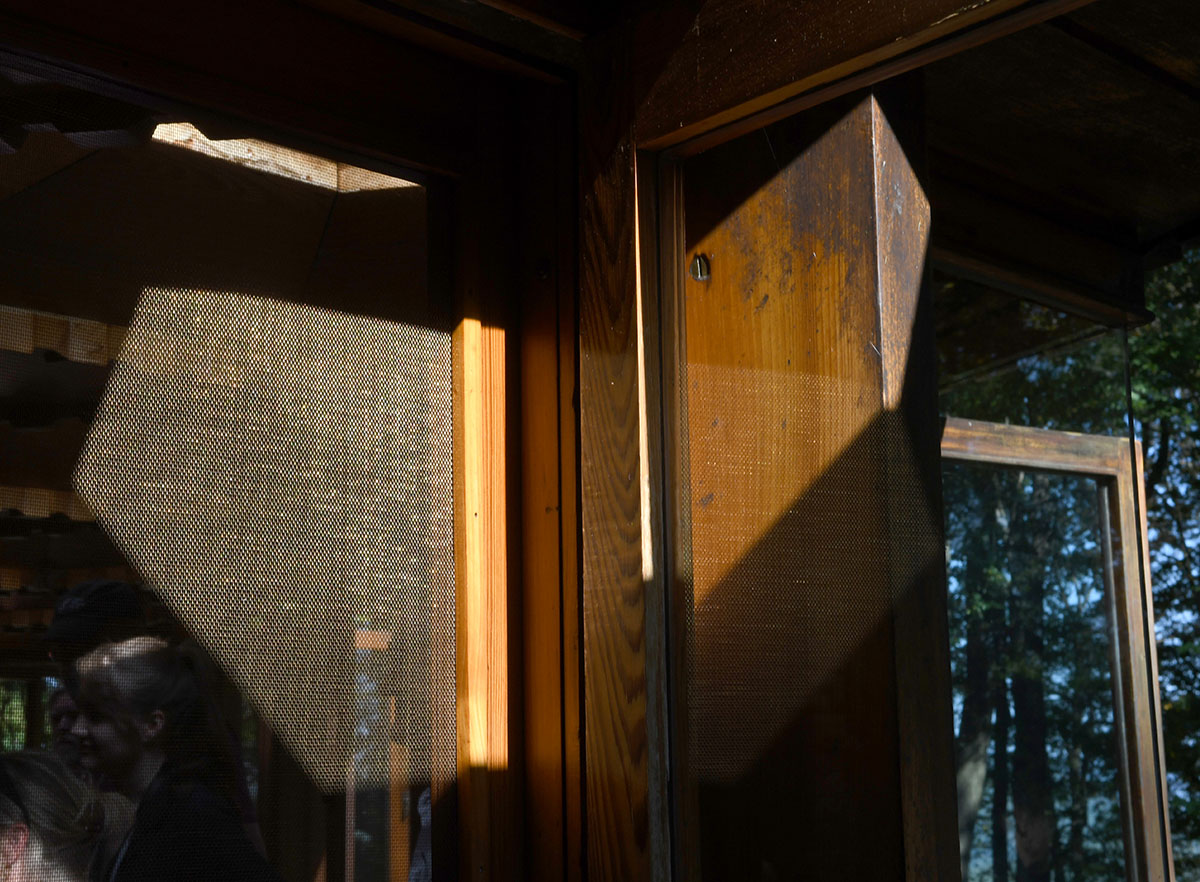
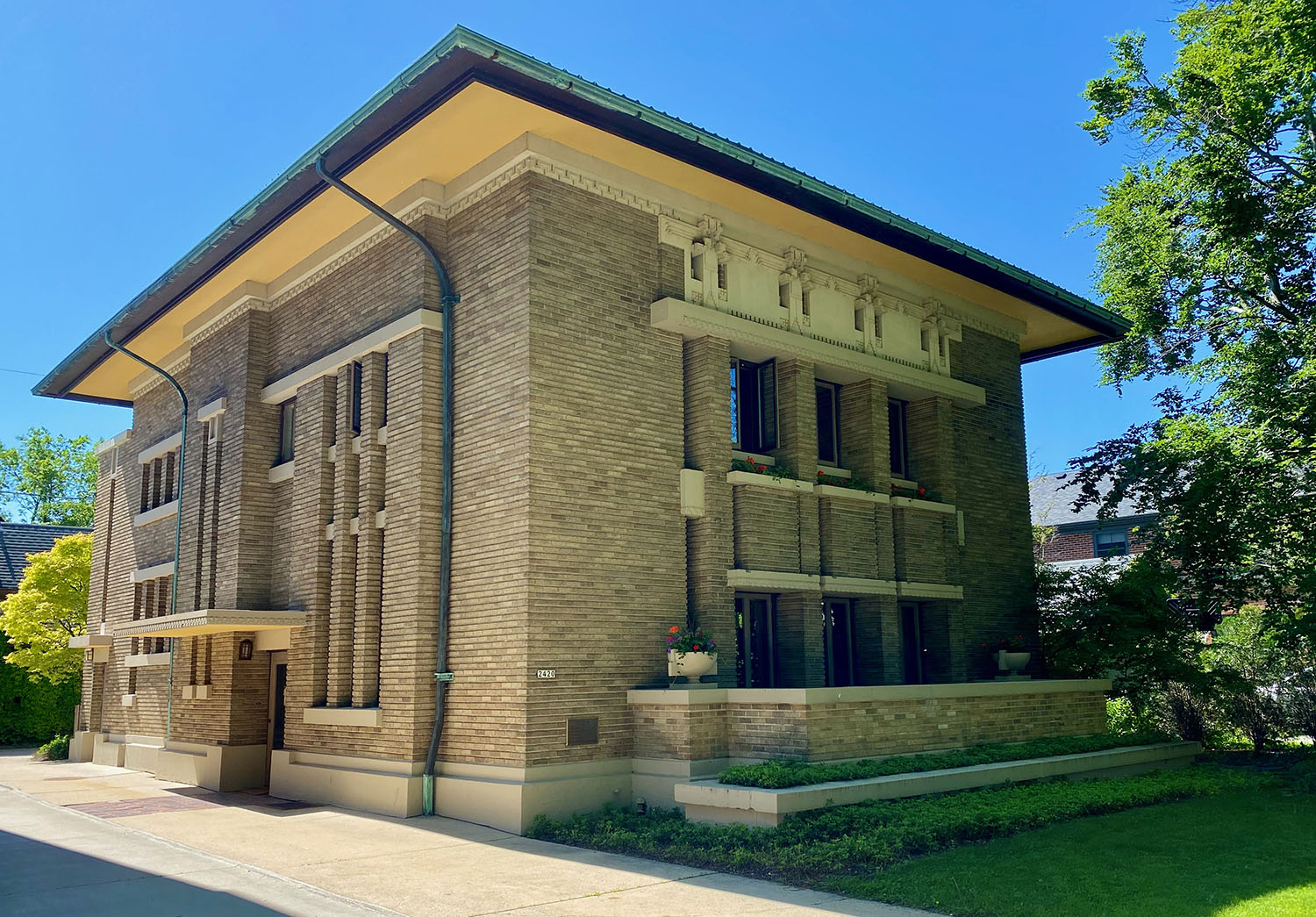
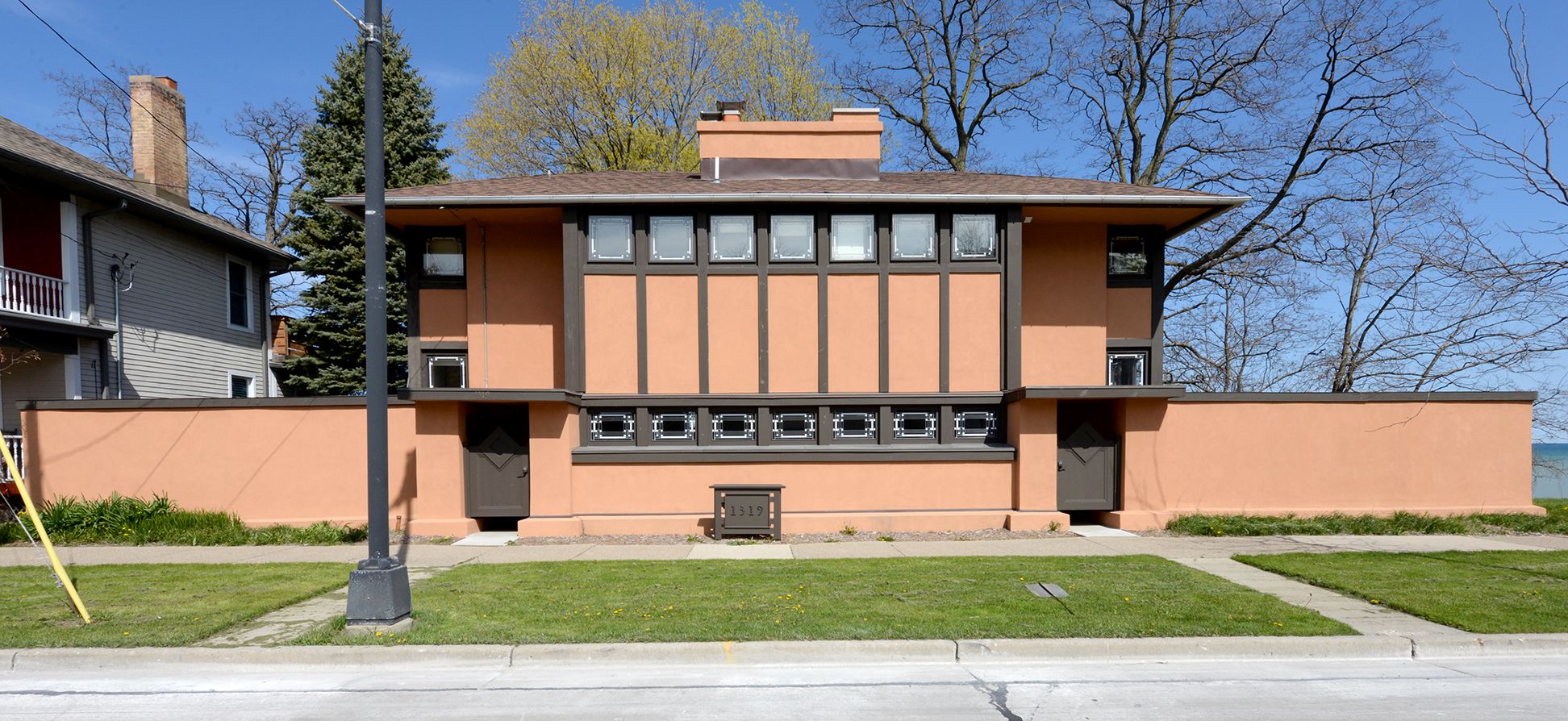
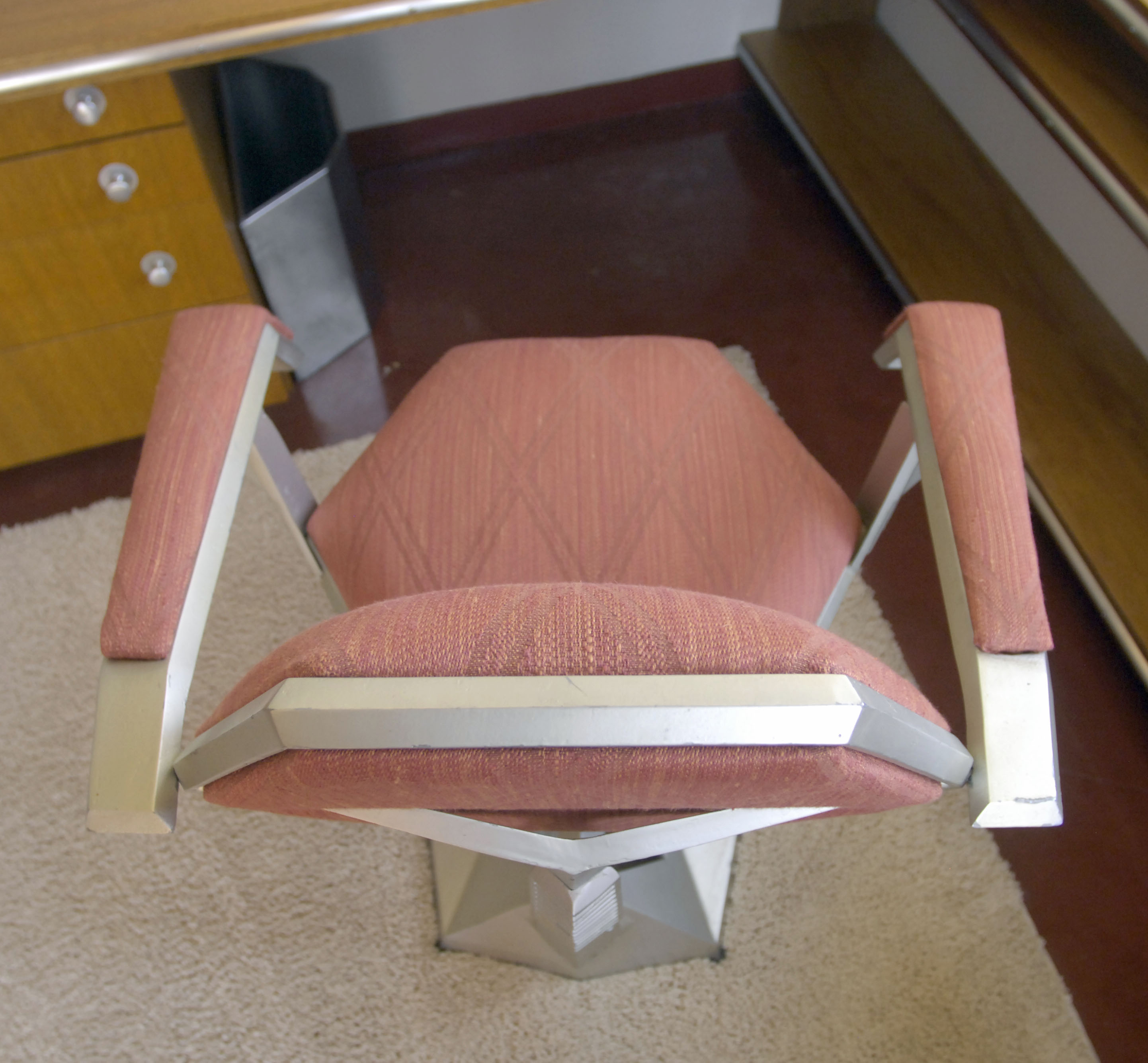
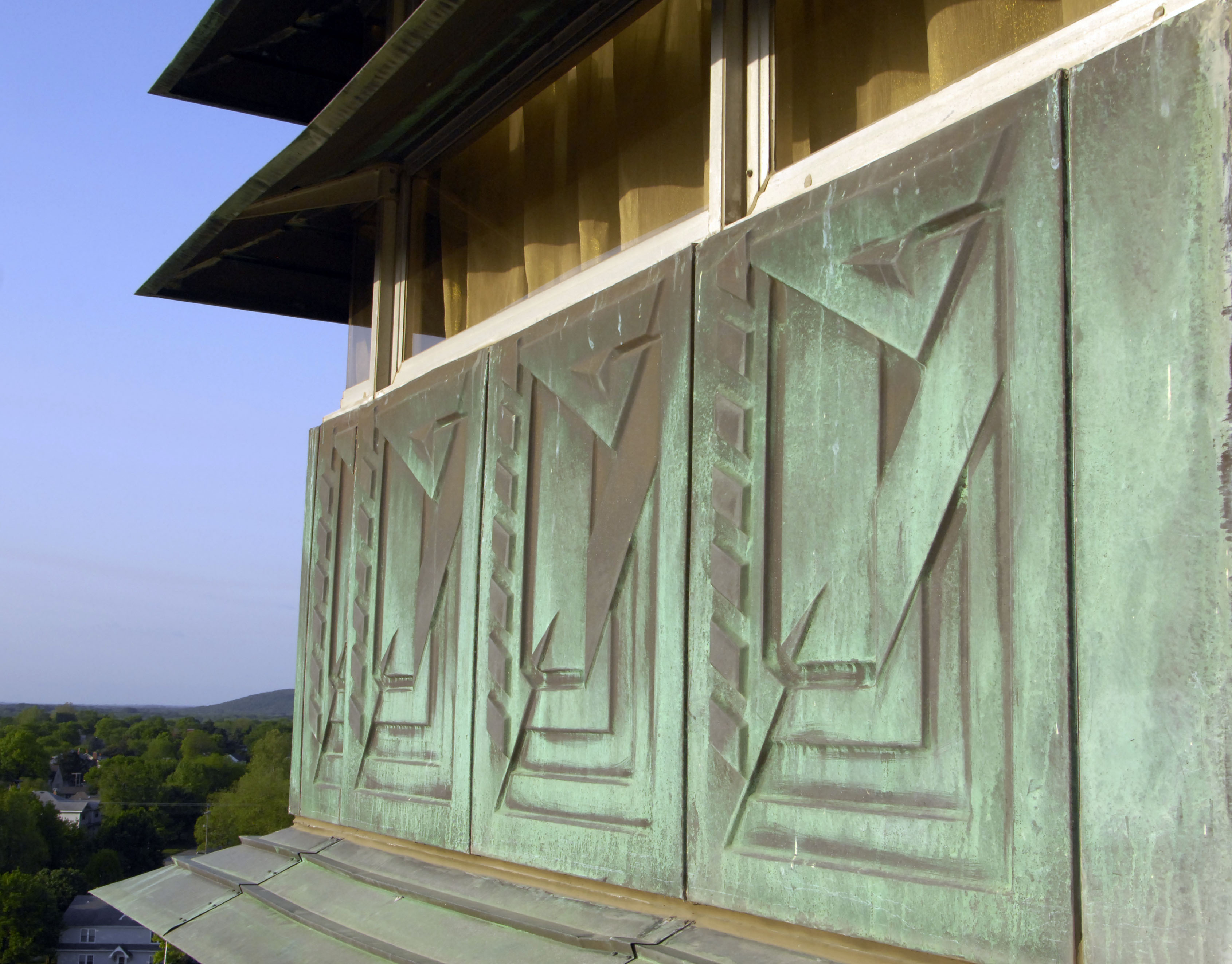
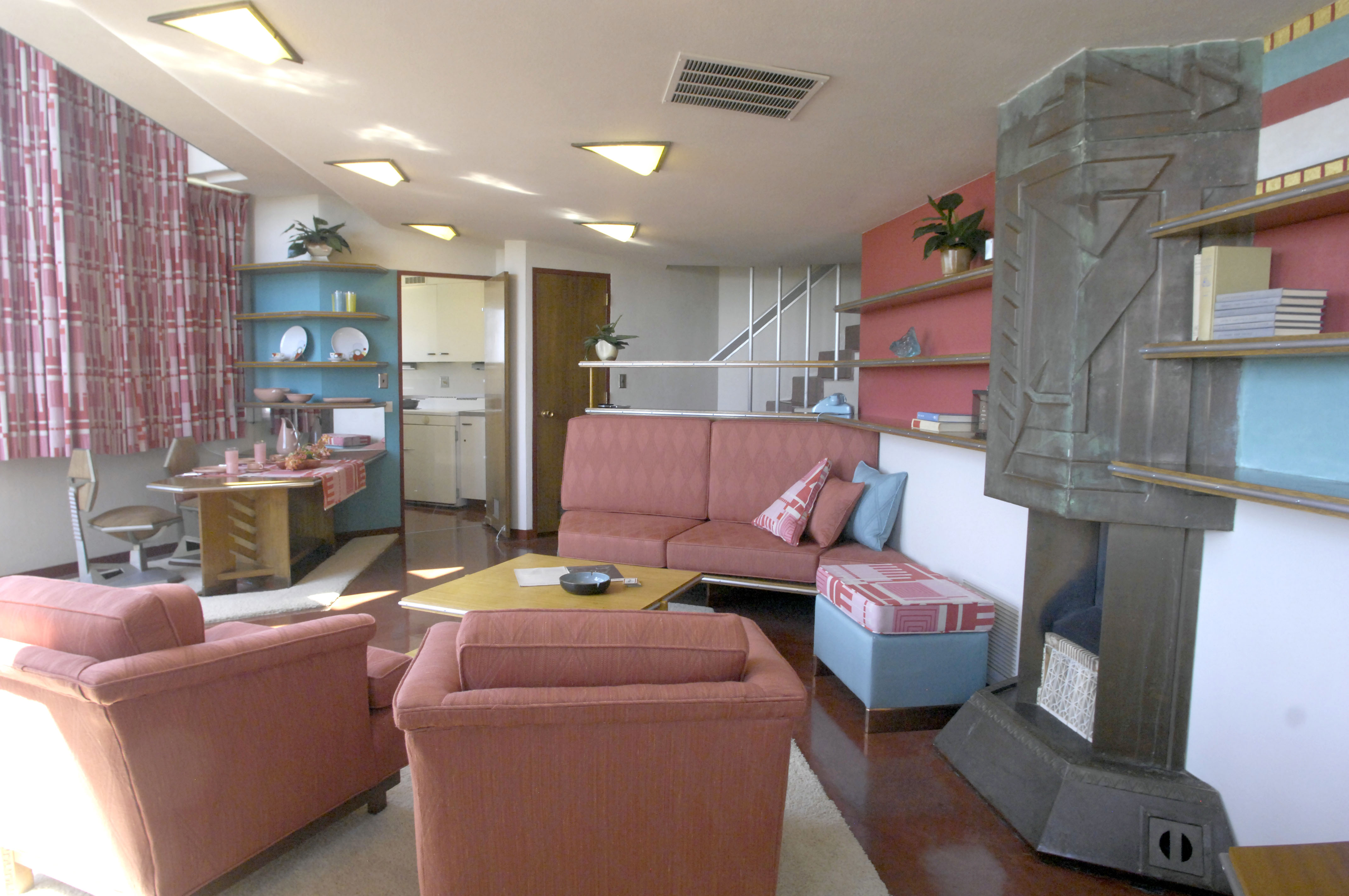
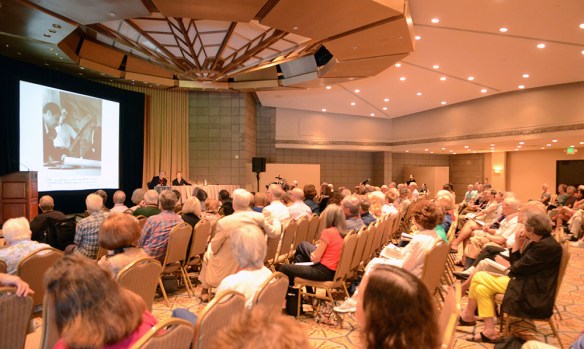
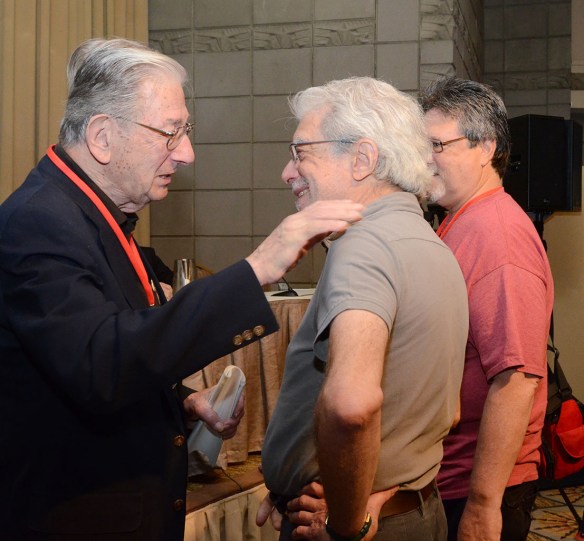
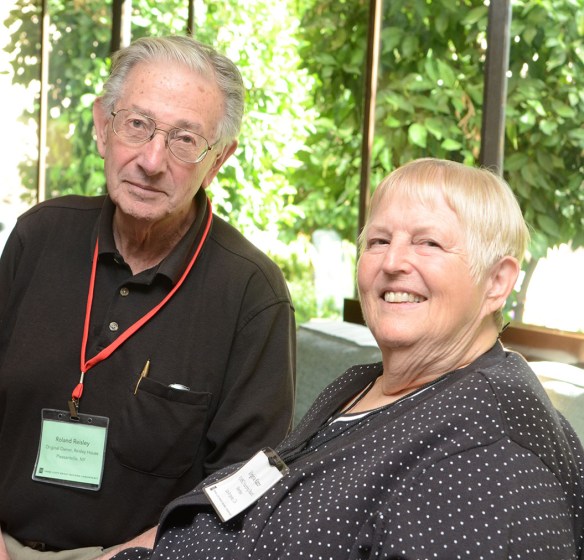
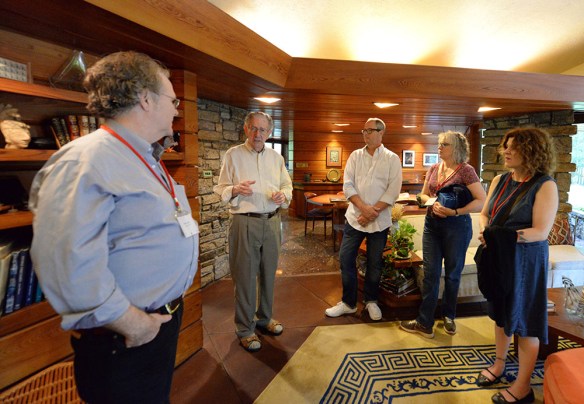
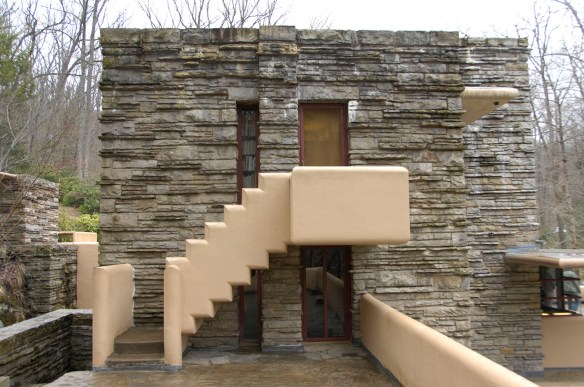
I had the pleasure of an in-depth tour of Kentuck Knob this fall during the Frank Lloyd Wright Building Conservancy’s annual conference which was based in Pittsburgh. It is a special place. Here, then, is my photographic interpretation of what is formally known as Wright’s Isaac Newton and Bernardine Hagan House. The photos start with literal photos of the exterior (interior photos were not permitted), the fun stuff comes further down the page.

LR Kentuck Knob 9.18.25 003.jpg

LR Kentuck Knob 9.18.25 007.jpgKen Dahlin of Genesis Architecture photographs the house.

LR Kentuck Knob 9.18.25 008.jpg

LR Kentuck Knob 9.18.25 011.jpg

LR Kentuck Knob 9.18.25 010.jpg

LR Kentuck Knob 9.18.25 013.jpg

LR Kentuck Knob 9.18.25 014.jpg

LR Kentuck Knob 9.18.25 031.jpg

LR Kentuck Knob 9.18.25 034.jpg

LR Kentuck Knob 9.18.25 029.jpg

LR Kentuck Knob 9.18.25 036.jpg

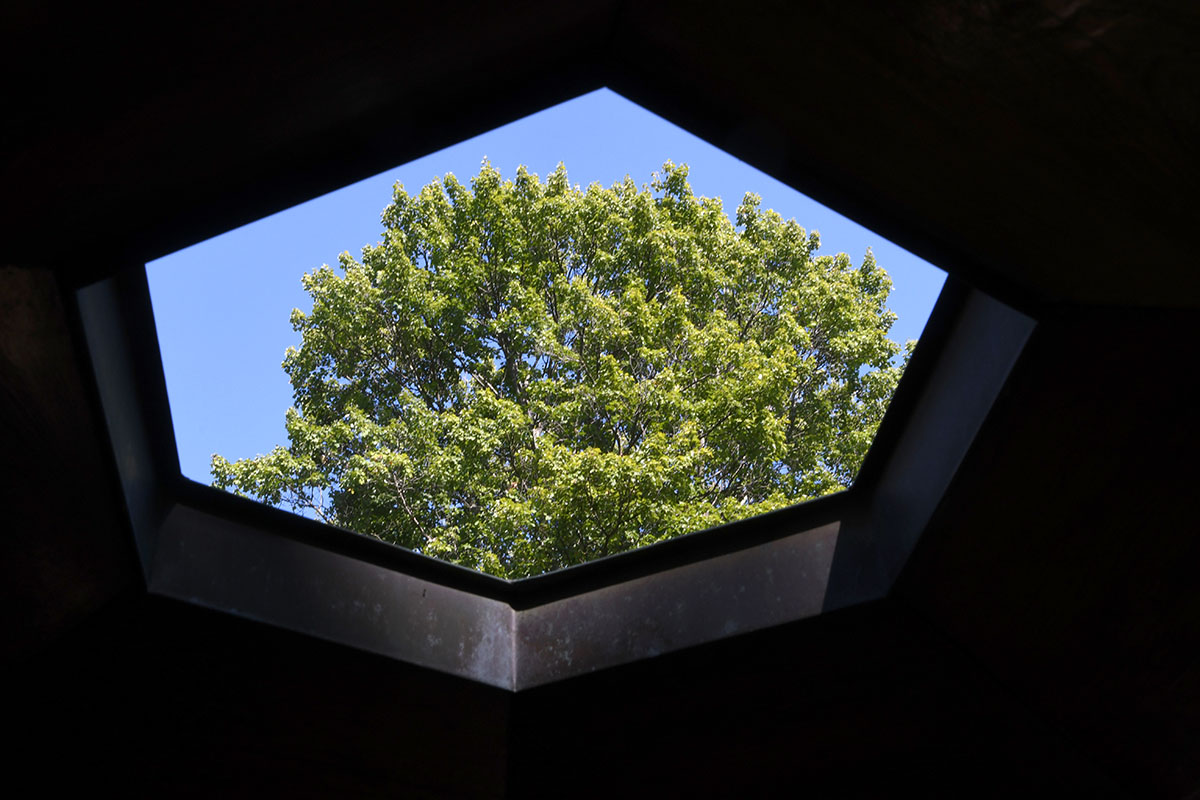
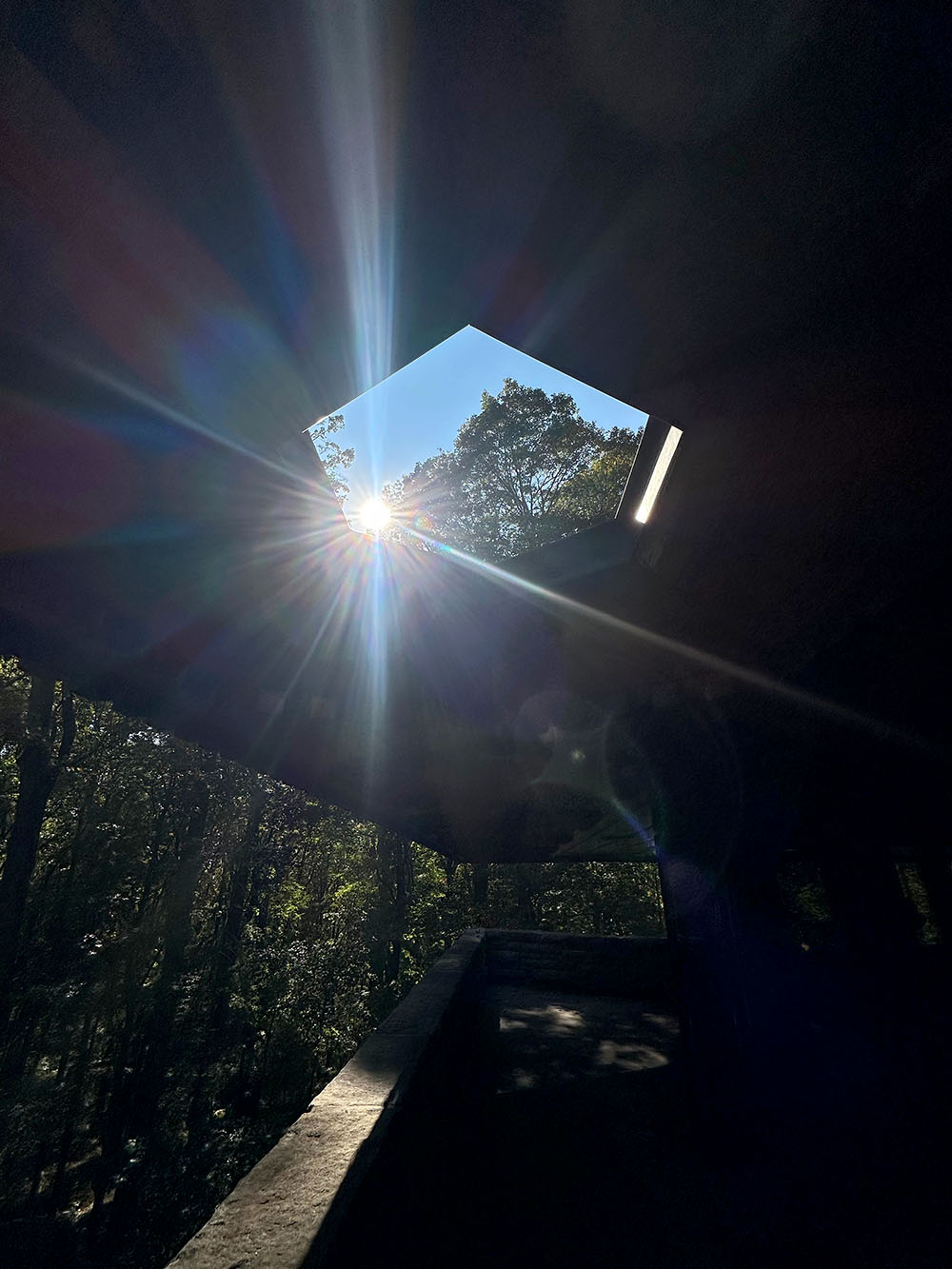
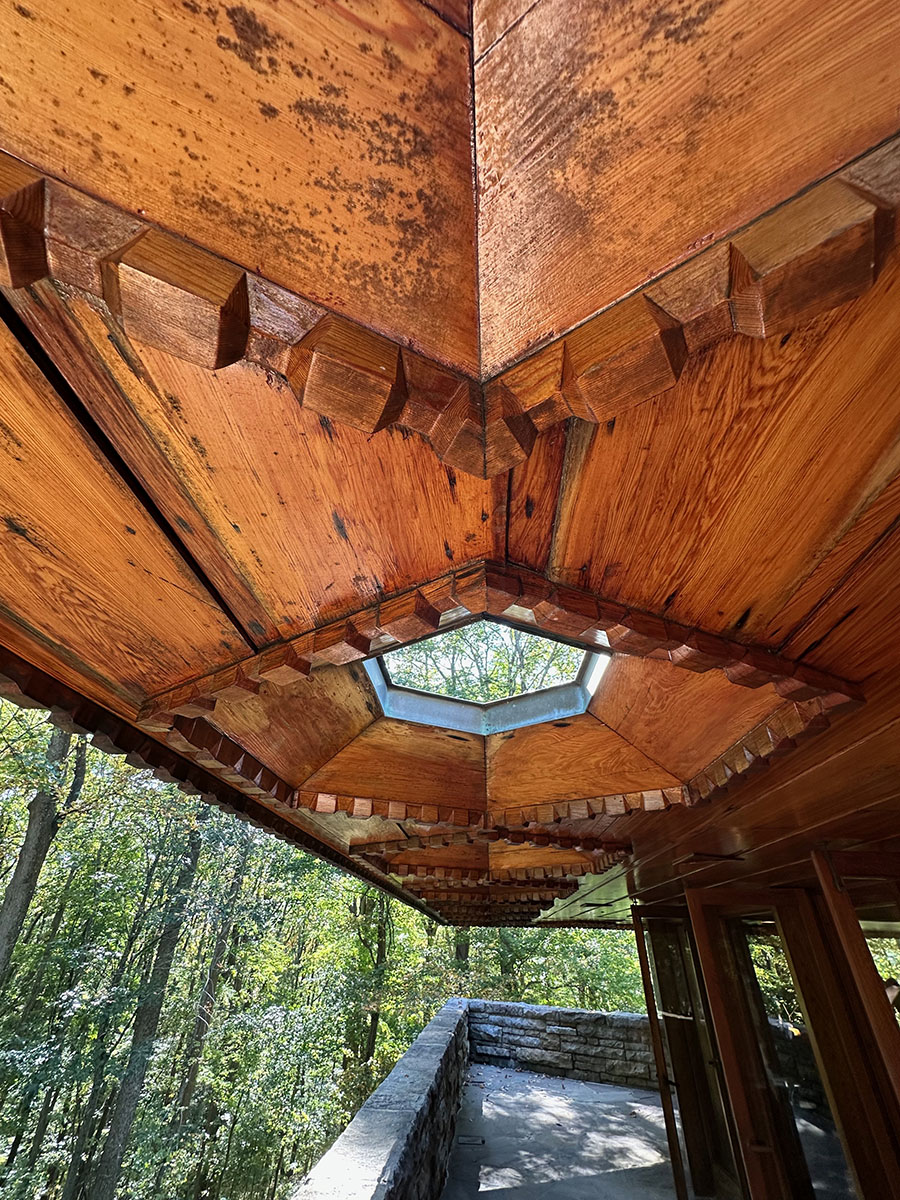
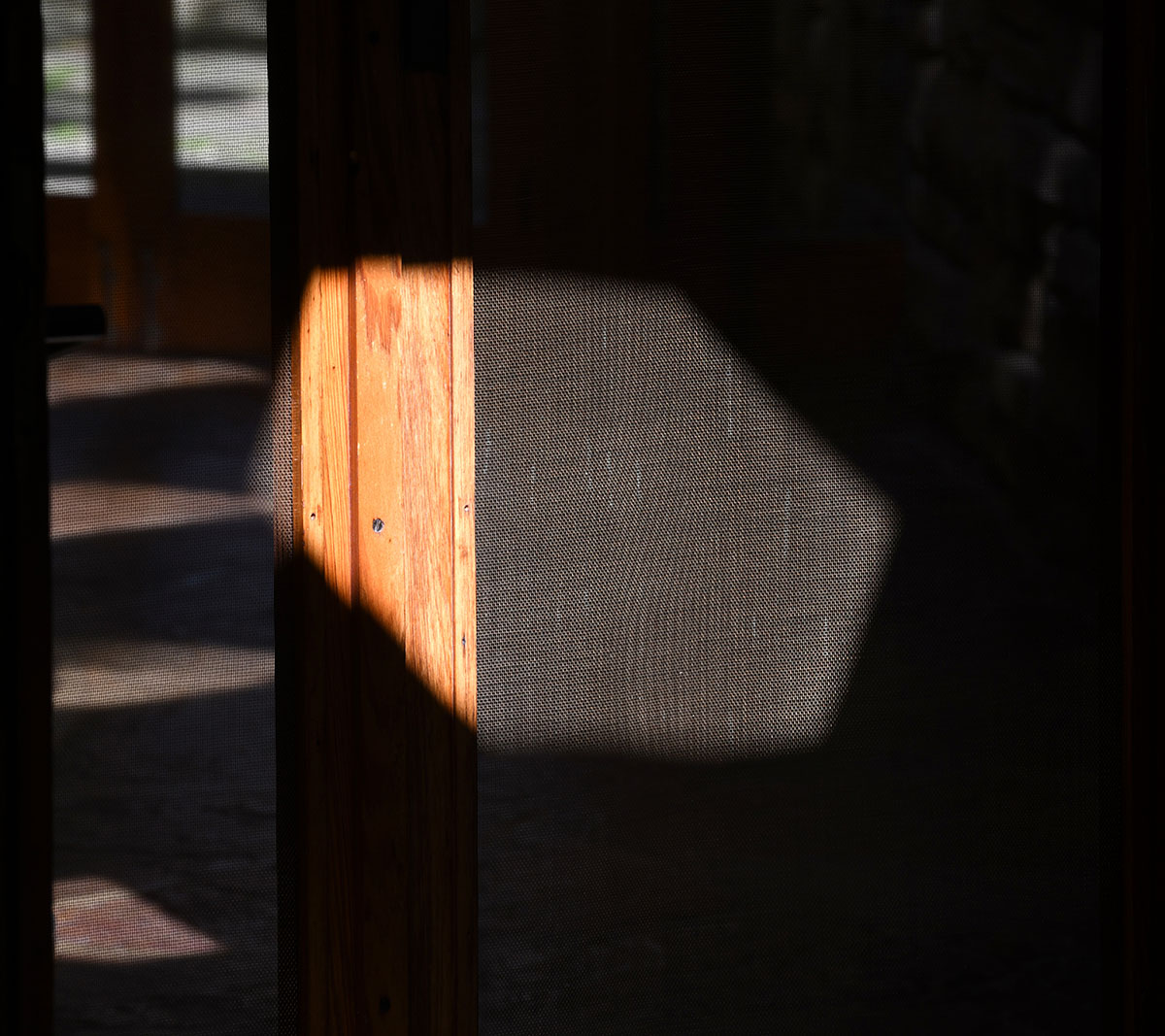
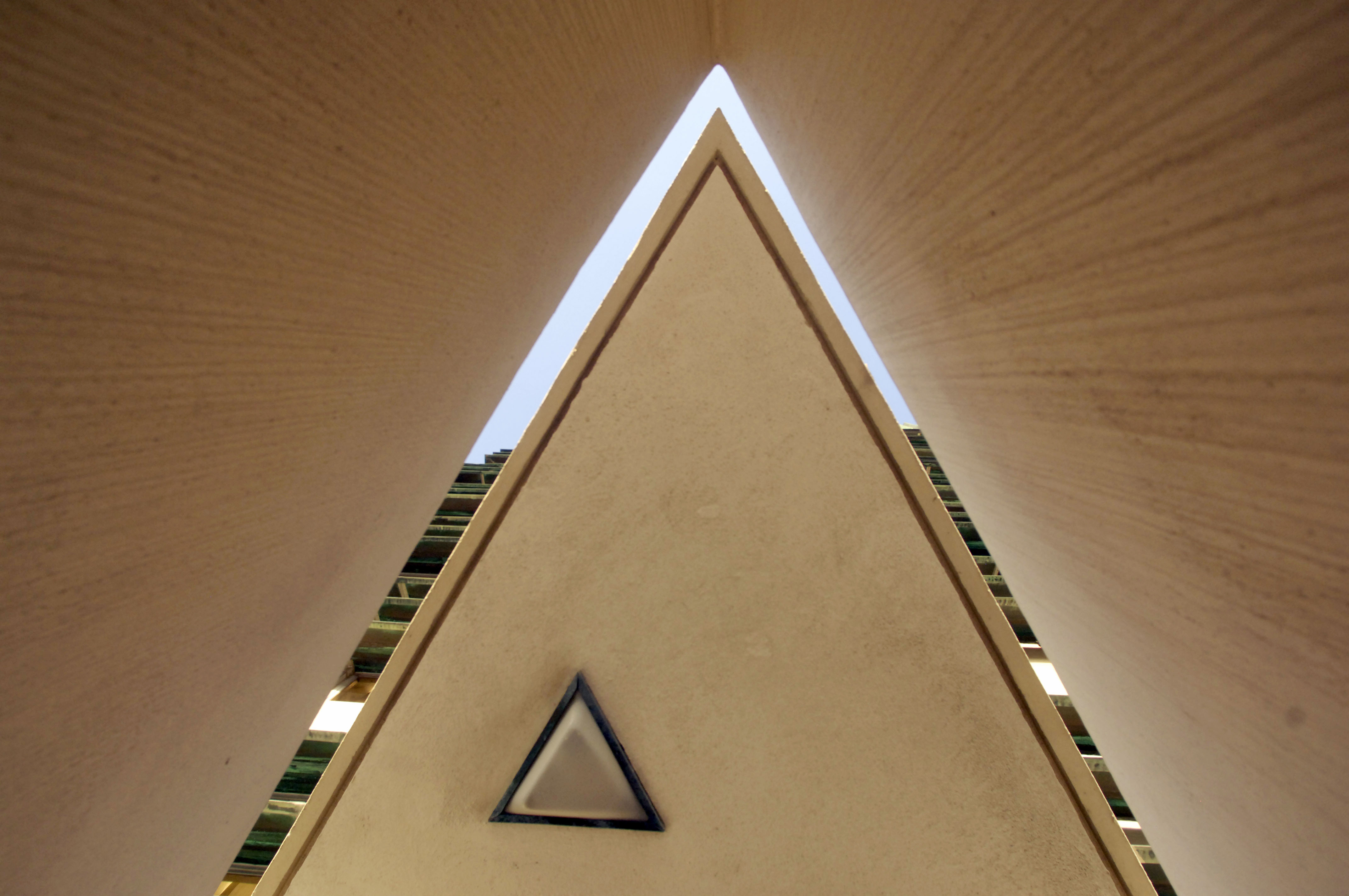
I wondered what I could do with the hexagons in the terrace roof:

LR Kentuck Knob 9.18.25 027.jpg

LR Kentuck Knob 9.18.25 019.jpg

LR Kentuck Knob 9.18.25 017.jpg

LR Kentuck Knob 9.18.25 021.jpg

LR Kentuck Knob 9.18.25 026.jpg

LR Kentuck Knob 9.18.25 025.jpg

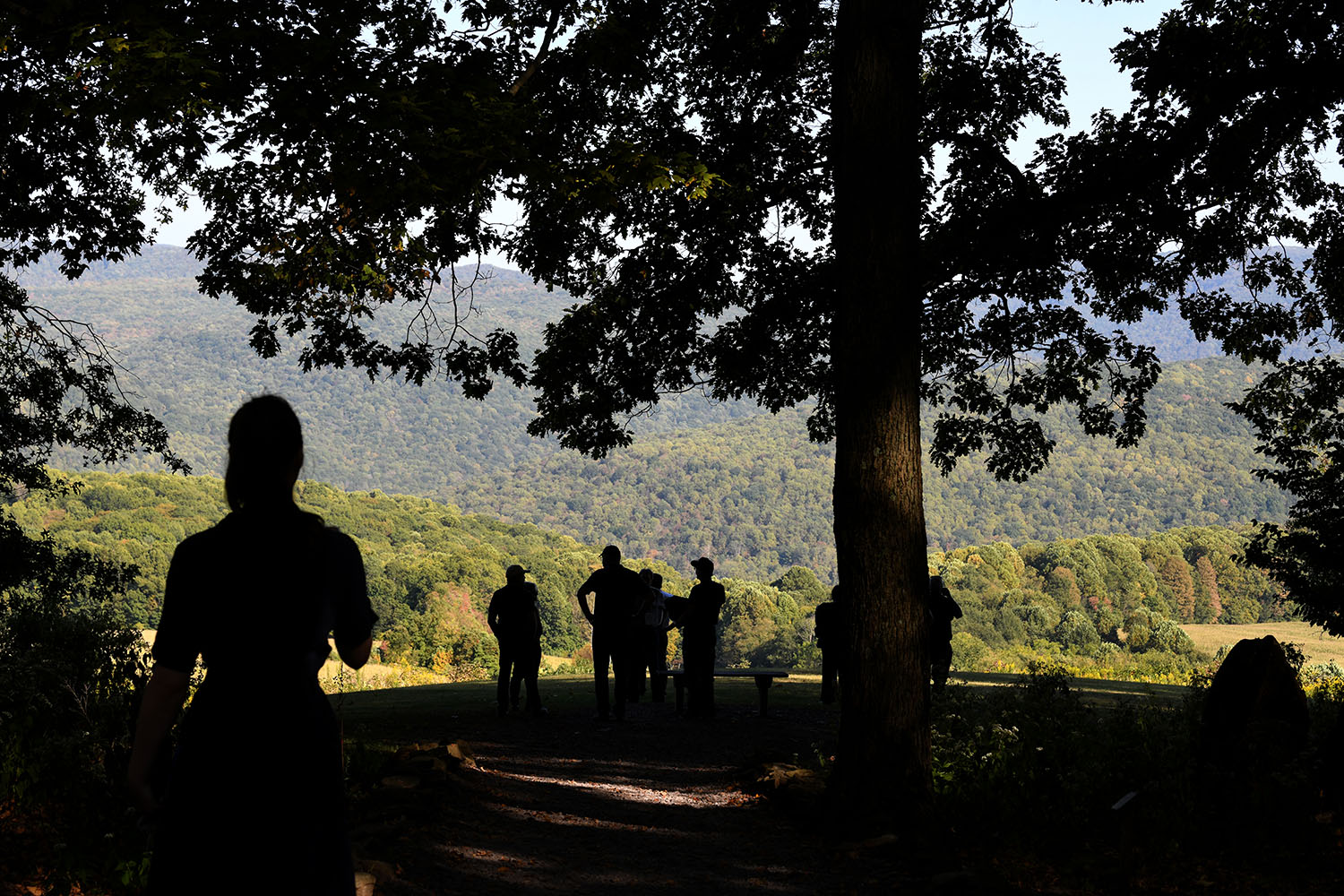
After the tour we wandered through the knob to gaze at the Laurel Highlands:

LR Kentuck Knob 9.18.25 037.jpg

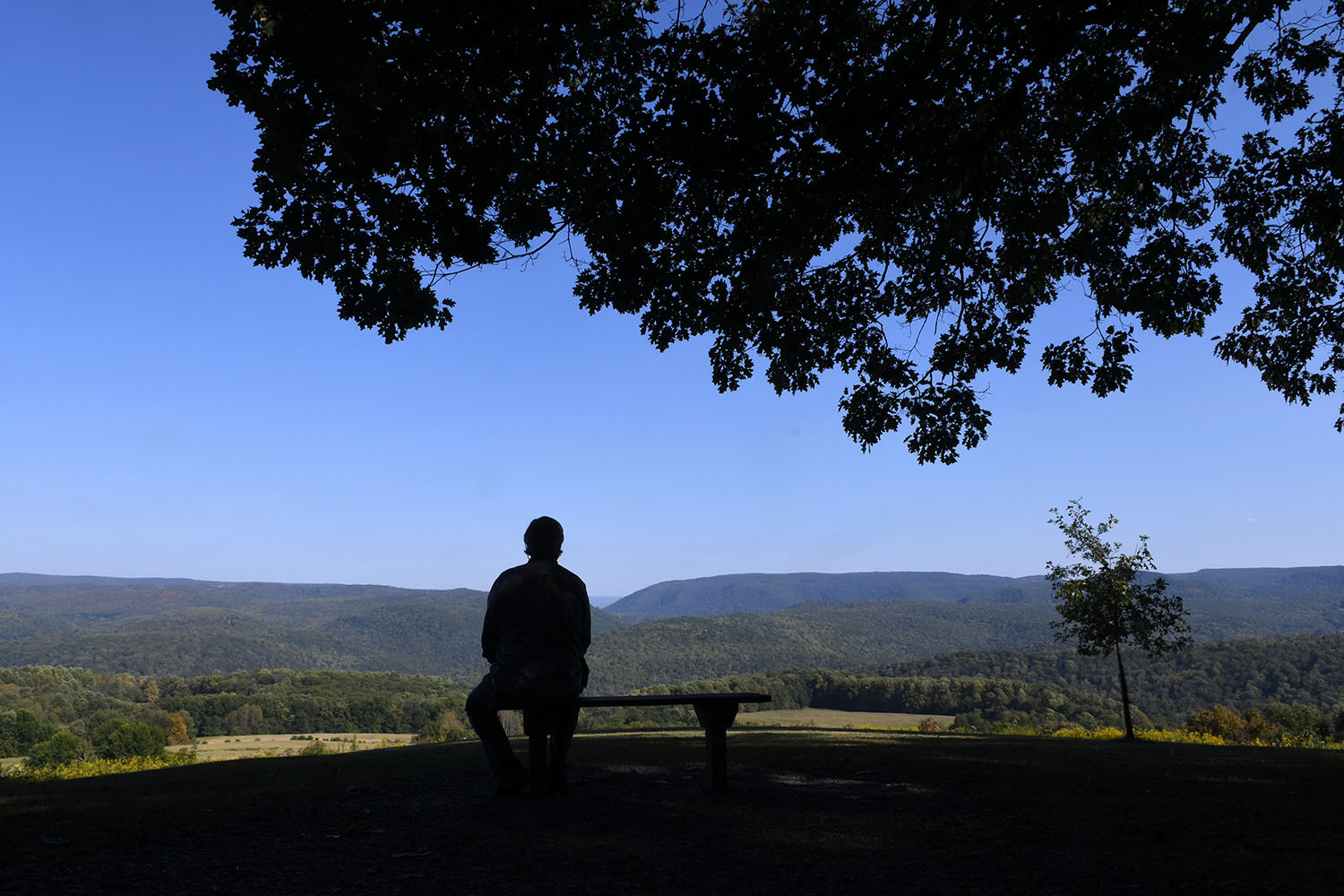
Michael Desmond, one of my dear friends lingered on a bench, not knowing that I was taking his picture:

LR Kentuck Knob 9.18.25 038.jpg

Regrets in life: Not having been able to take a class of his at Louisiana State University. I have tried to make up for it in conversations as we are usually bus seat mates during  Building Conservancy conferences. I think this portrait embodies what must have attracted the Hagans to ask Frank Lloyd Wright to build them a house on Kentuck Knob.

As for the name I had blown off in 1999, it is thought that David Askins, an eighteenth century settler, named this knob in Pennsylvania’s Laurel Highlands “Kentuck” in honor of Kentucky which he had considered moving to.

Postscript:

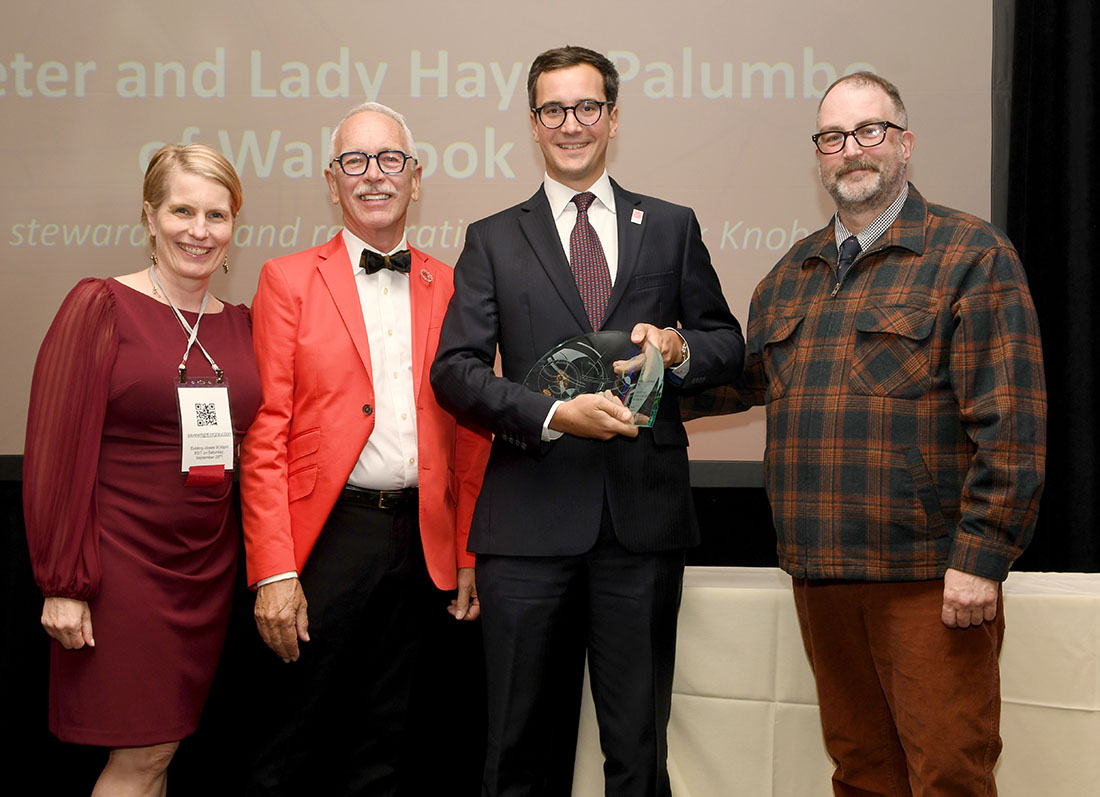
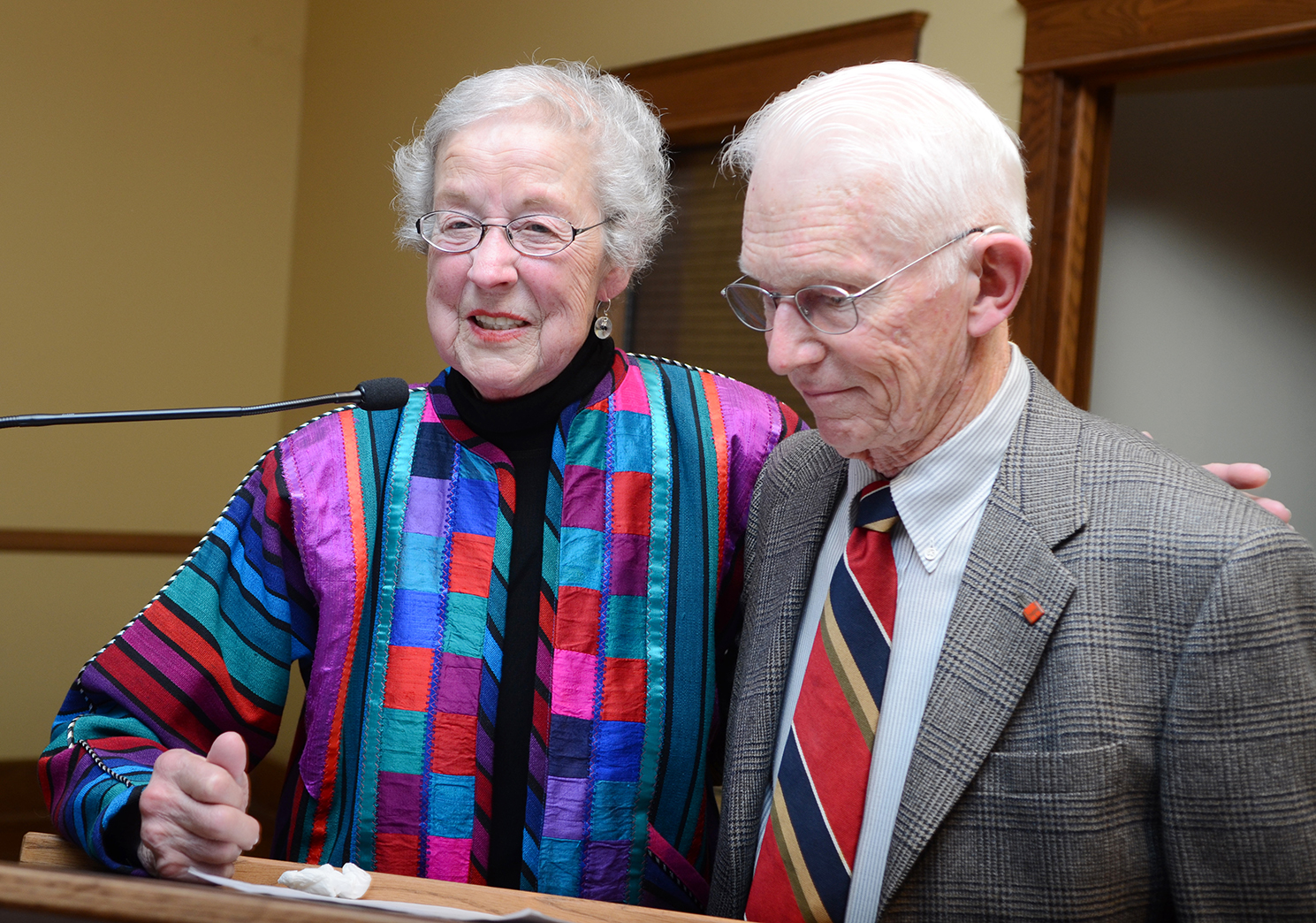
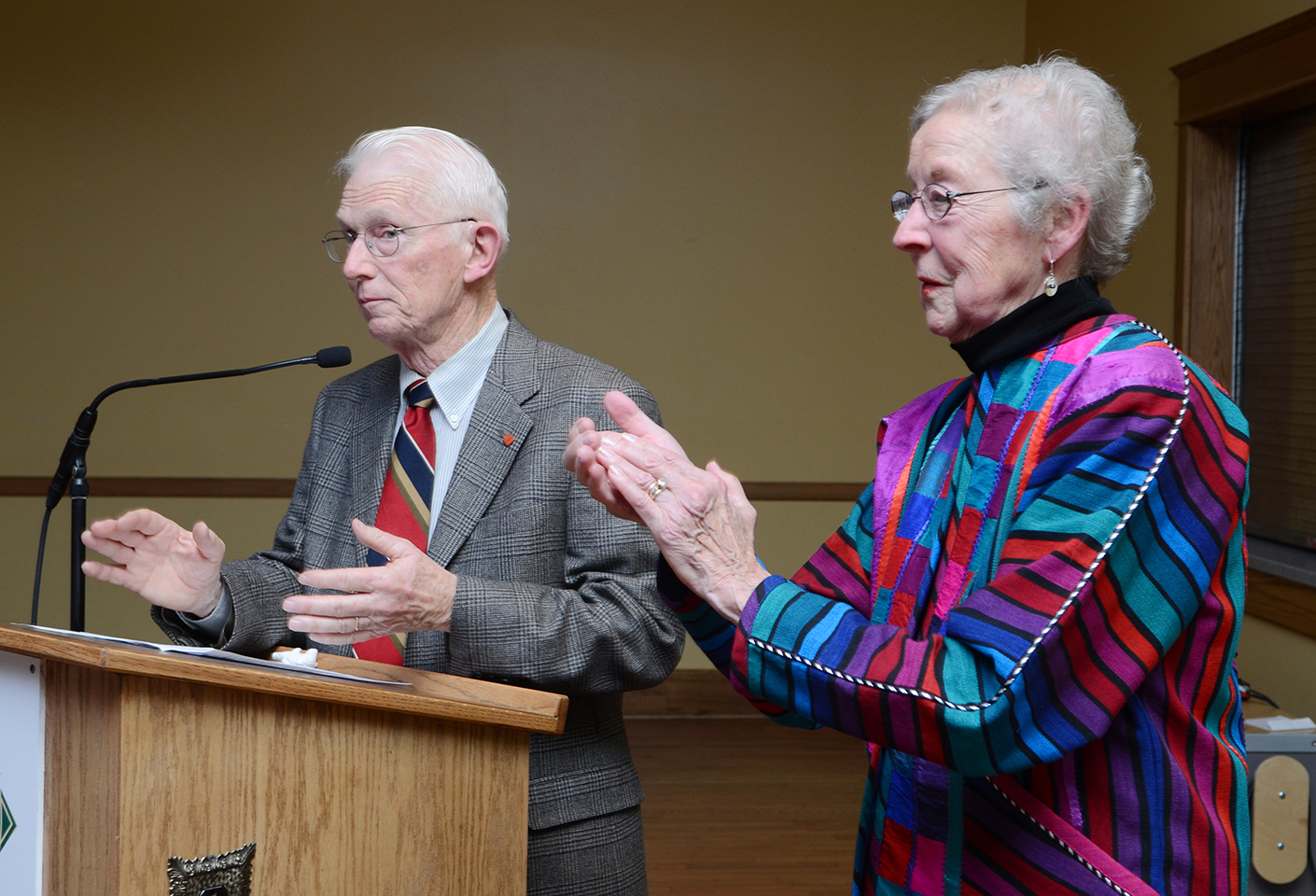
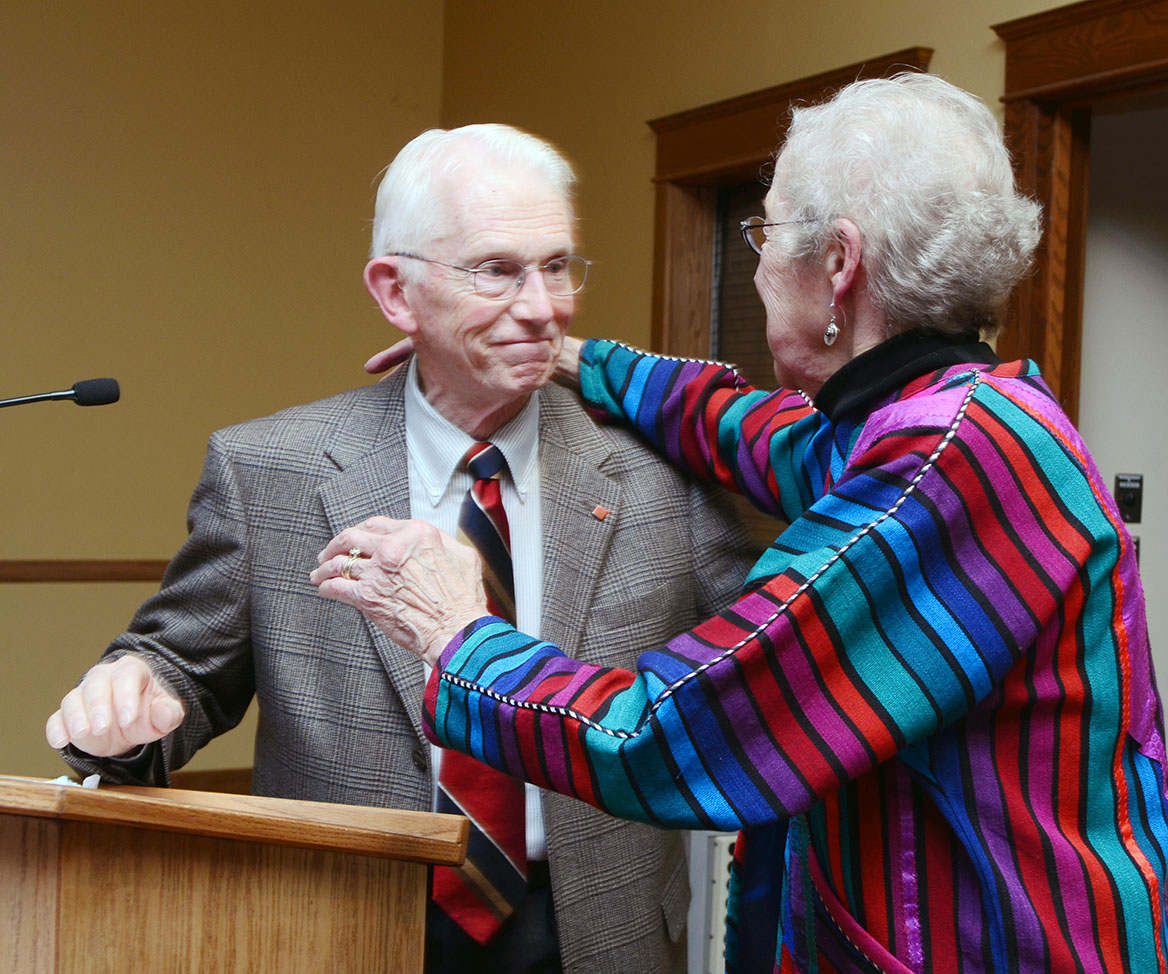
Lord Peter Palumbo became the second steward of Kentuck Knob in 1985 and opened it to the public in 1997. A link to a summary of his distinguished background in architecture and the arts – including once having been steward of Mies van der Rohe’s Farnsworth House – is below. His son Philip Palumbo accepted the Building Conservancy’s prestigious Wright Spirit Award given to Lord and Lady Palumbo at the Pittsburgh conference. Philip is director of Kentuck Knob.

LR 2025 WSA & Auction 017.jpgBarbara Gordon, Jeffrey Herr, and Scott Perkins present the Wright Spirit Award to Philip Palumbo, on behalf of his parents.

LR 2025 WSA & Auction 019.jpg

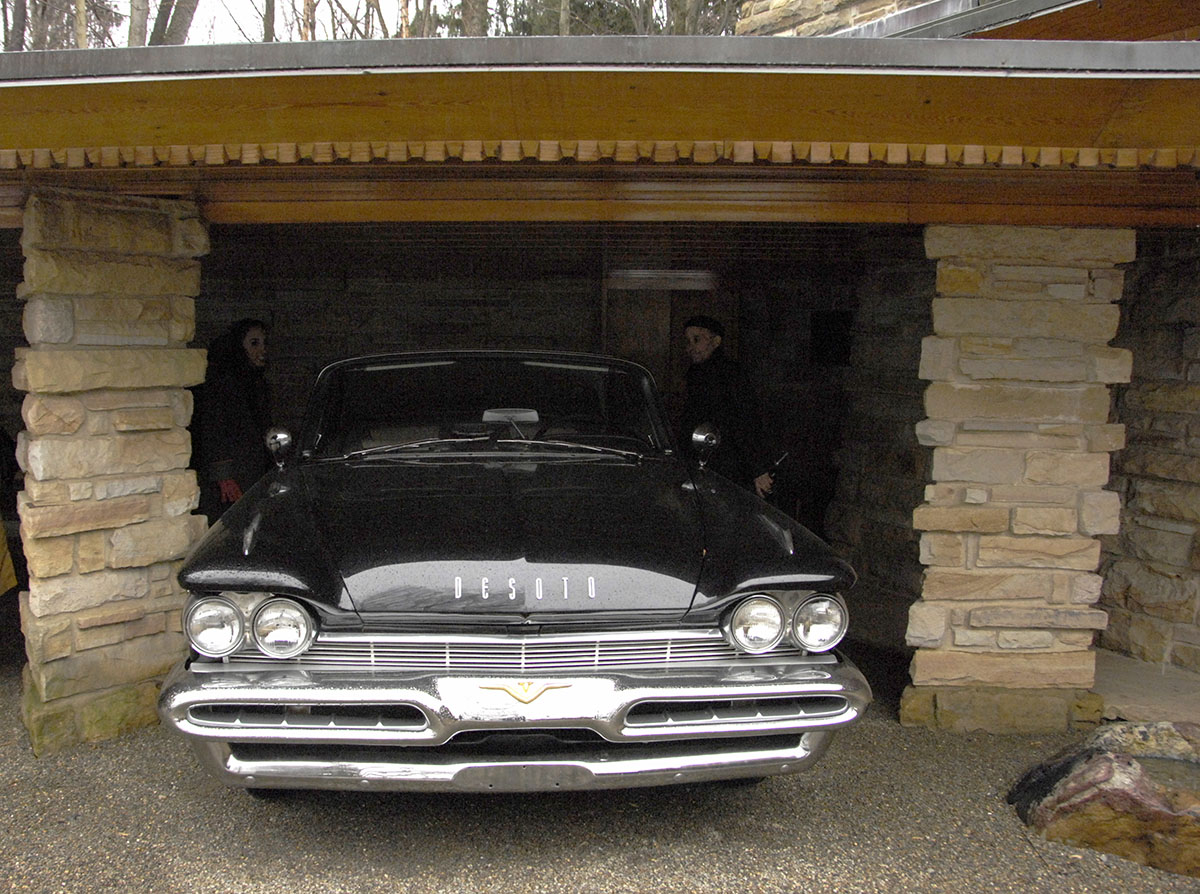
I am a bit of a mid-century car enthusiast so I was interested to read in the Pittsburgh Post-Gazette article linked to below that the Palumbos are considering having a transportation museum on the grounds of Kentuck Knob. Therefore I will close with a photo I took of Lord Palumbo’s 1959 DeSoto in the carport in  2010. Wright was a lover of fine automobiles…the DeSoto’s liberal use of chrome, as was the trend in the 1950s, may have been over the top for Wright:

LR Kentuck Knob 009.jpg

Links:

Kentuck Knob:

https://franklloydwright.org/site/kentuck-knob/

Lord Peter Palumbo:

http://lordpeterpalumbo.com/biography.html

Pittsburgh Post-Gazette tour of Kentuck Knob with Philip Palumbo:

https://www.post-gazette.com/life/goodness/2025/10/09/palumbo-kentuck-knob-pittsburgh-frank-lloyd-wright/stories/202510060072

Frank Lloyd Wright Building Conservancy:

https://savewright.org

Ken Dahlin and Genesis Architecture:

https://www.genesisarchitecture.com

Please scroll down for earlier articles on this website.

Remembering Barbara Elsner

Photos © Mark Hertzberg

Barbara Elsner, a tour de force in the preservation of Frank Lloyd Wright’s architecture in Wisconsin – particularly in Milwaukee – died August 25. She was 99.

LR BC 2015 Elsner .jpgBarbara Elsner – 2015: At the Frank Lloyd Wright Building Conservancy annual conference in Milwaukee, her hometown 

I got to know Elsner when I served on the board of the  Frank Lloyd Wright’s Wisconsin Tourism Heritage Program (“Wright in Wisconsin”) from 2004 – 2020. She was a founding member of the organization. Our board was in discussions about whether or not to purchase Wright’s American System-Built Model B1 at 2714 W. Burnham Street in Milwaukee as early as a strategic planning session at Wingspread in 2002. Some of the board discussions were heated. Were we only about promoting Wright tourism (a founding principle) or should we become property owners as a means of furthering our mission of promoting Wright’s architecture in our state? Elsner was a strong advocate of expanding the mission to include “bricks and mortar.”

LR Burnham WiW Board 4.16.05.jpgMike Lilek, left, and Barbara Elsner, third from right, at a Wright in Wisconsin board meeting at the newly-purchased Model B1, April 2005. Lilek would oversee our stewardship of the Burnham Block properties.

We bought the house and restored it, with support from the Barbara Meyer Elsner Foundation and a Save Americas Treasures grant. There were 28 major gifts in all. We gradually added more of the AS-B properties to our portfolio, not always without dissension. In August 2017, we reorganized into two organizations: Frank Lloyd Wright’s Burnham Block (focused on the Burnham Block) and Wright In Wisconsin (focused on the longstanding mission to promote Wright tourism). Mike Lilek, who had shepherded our work on the Burnham properties became president of the new organization. He was Elsner’s son-in-law. The Burnham Block now owns five of the six homes (three of the four duplexes and both single family homes; the fourth duplex remains in private hands and operates as an overnight rental property).

I leave it to Lilek to tell you about Elsner’s extraordinary legacy. Below is the email he sent out, announcing her passing:

Dear Fellow Board Members and Friends,

It is with sadness that I share the news of the passing of Barbara Meyer Elsner, an esteemed member of our Advisory Board and a long-time member of our Board of Directors. She passed away peacefully on Monday, August 25th, 2025, surrounded by family. She was 99 years old.

Barbara leaves behind a towering legacy of dedication, leadership, and service to Frank Lloyd Wright’s Burnham Block and its predecessor, Frank Lloyd Wright Wisconsin.

She was a founding member of Frank Lloyd Wright Wisconsin and served as president.

She was a founding member and past Member of the Board of Directors of the Frank Lloyd Wright Building Conservancy, based in Chicago, IL.

She served on the Wisconsin Governor’s Commission on the preservation of Frank Lloyd Wright’s Taliesin. She has generously donated her time and financial support to various Wright projects, including the restoration of the Romeo and Juliet Windmill at Taliesin and the Seth Peterson Cottage on Mirror Lake.

She was a strong advocate for acquiring and restoring the Burnham Block homes. She partnered with Kathleen Brady to lead the primary fundraising effort for the restoration of Models B1 and D4. Her Barbara Meyer Elsner Foundation also provided the Burnham Block with significant financial support, including a major contribution toward the current restoration of the Model C3. Even after retiring from active board service, she continued to be a valued advisor and supporter of our mission. She was a long-serving member of our Interiors Committee.

She also played a major role in the preservation and restoration of the Pabst Mansion, serving as president of the mansion’s Board of Directors and as Executive Director for two years.

Barbara has led many grassroots efforts.  Notable among them was the effort to protect the North Point Historic District from planned institutional expansion. She is also a founding member of the Water Tower Landmark Trust and a board member of Preserve Our Parks. She played a role in organizing the Penfield Children’s Center. She was a founding member of the American Heritage Society of the Milwaukee Art Museum. She helped bring ballet to Milwaukee.

Robert and Barbara Elsner purchased the Bogk House in 1955.  Under Barbara’s care and guidance, the home was meticulously maintained. Barbara generously opened the Bogk House to visiting architectural scholars and students from around the world. Spanish architect Santiago Calatrava noted that the Bogk House was one of his two “must-see” buildings in Milwaukee.

LR Bogk 2022.jpgThe Bogk House

Barbara has played a major role in raising the awareness of Frank Lloyd Wright on the Burnham Block, in Wisconsin, and far beyond.  Her generosity, extraordinary spirit, and tireless energy have been a benefit to all of us. Barbara will be deeply missed.

She made a huge impact on the world we live in. A celebration of life will be held in the coming weeks; details will follow.

Sincerely,
Michael P. Lilek, President Frank Lloyd Wright’s Burnham Block

LR Elsner SCJ 2010.jpg

Elsner in the Wright research library at SC Johnson

LR Burnham 2022 001.jpg

Links:

YouTube interview with Barbara Elsner, and history of the Bogk House:

https://www.youtube.com/watch?v=IZjJAi-c23I

Frank Lloyd Wright’s Burnham Block:

https://savewright.org

Wright in Wisconsin:

https://wrightinwisconsin.org

Frank Lloyd Wright Building Conservancy:

https://savewright.org

Please scroll down for previous articles on this website

Updates: Tower Tumult; Ann MacGregor

© Mark Hertzberg (2025)

Tower Tumult: On August 14 I posted about the critical situation facing Frank Lloyd Wright’s Price Tower in Bartlesville, Oklahoma (I do not know why the URL mentions the unrelated SC Johnson Research Tower). The post includes a variety of photos of Price Tower:

https://wrightinracine.net/tag/sc-johnson-research-tower/

Oklahoma Frank Lloyd Wright Price Tower 002.jpg

On January 16 a judge ordered that utilities (heat) be restored to the building. On January 21 he ordered the sale to a responsible party from Tulsa that is known for their restoration of an historic hotel there. On January 22 the current owners filed for bankruptcy. They have still not turned the utilities back on, and so this saga drags on. The question of Wright artifacts from the building that were given to an auction house in Dallas, in spite of an easement prohibiting that has not been resolved, either. Among the heroes in this story are the staff and legal counsel of the Frank Lloyd Wright Building Conservancy. Their continuing updates on the story are at:

https://savewright.org/endangered-price-tower-in-bartlesville-oklahoma/

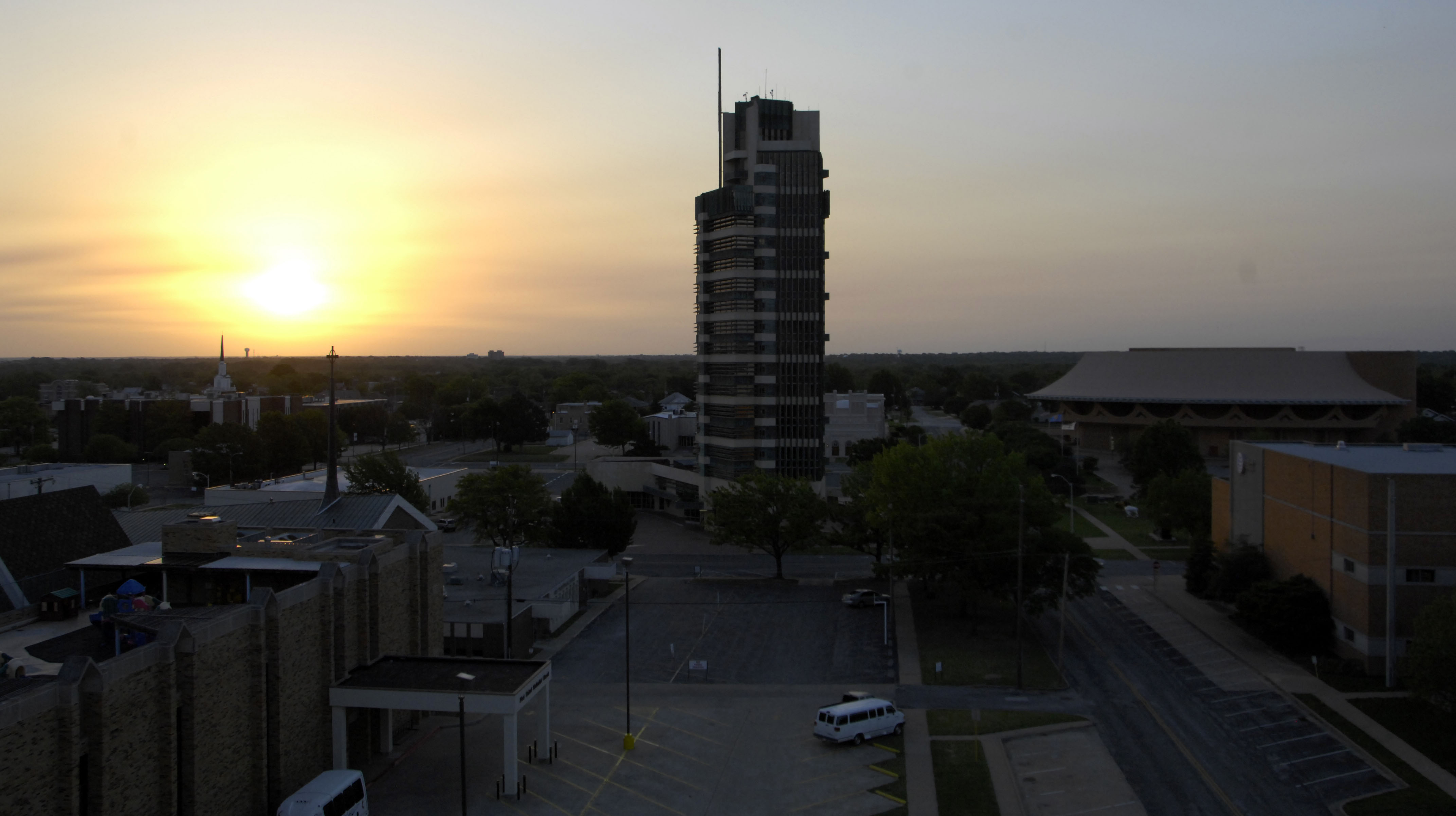
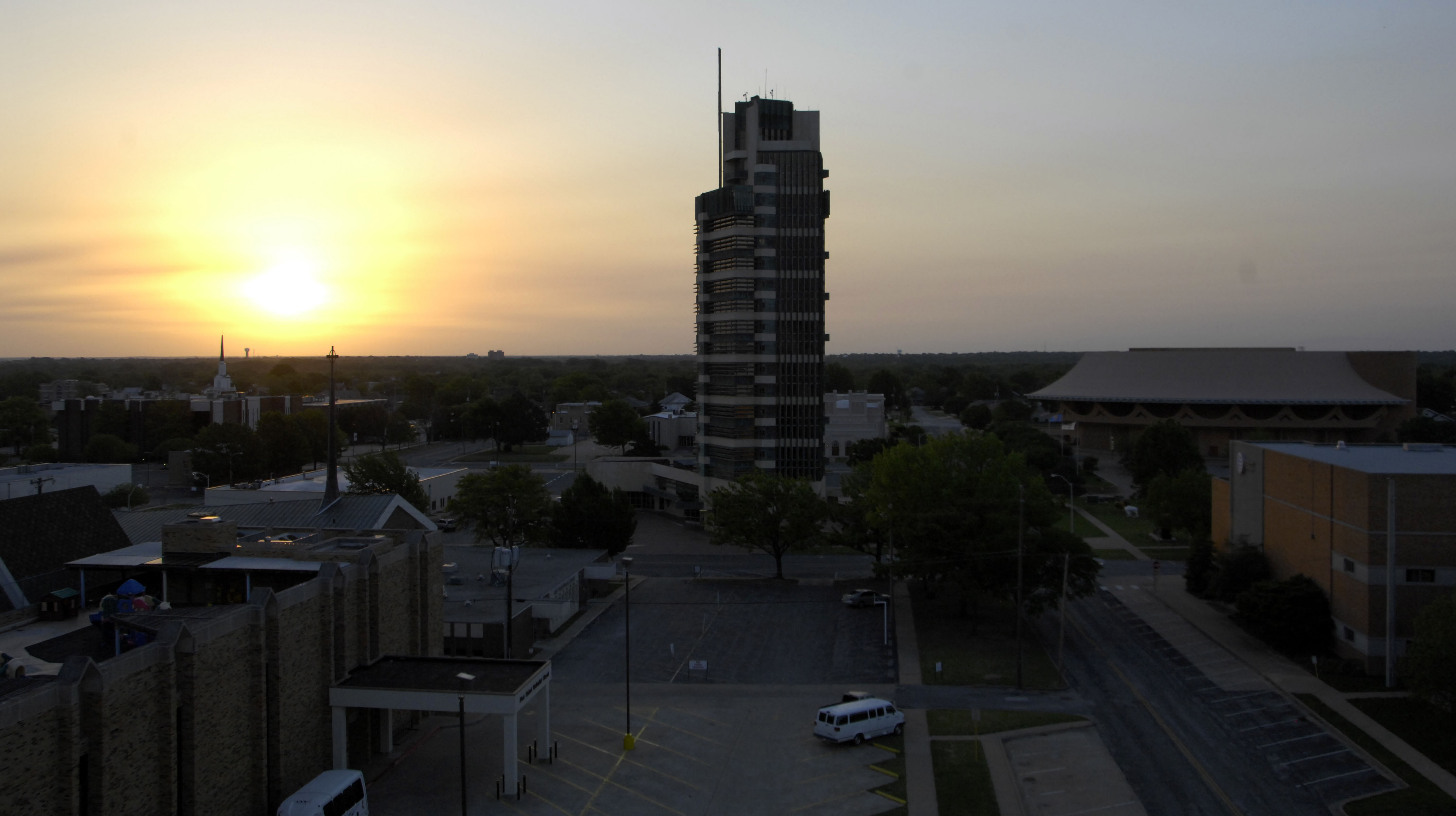
The Building Conservancy is going deep, deep into their funds set aside for legal work as the battle to save the building drags on. Please don’t let the sunset on the building, as I literally did when I took this photograph in 2014. Hint: they would welcome your financial support at:

https://savewright.org/give/

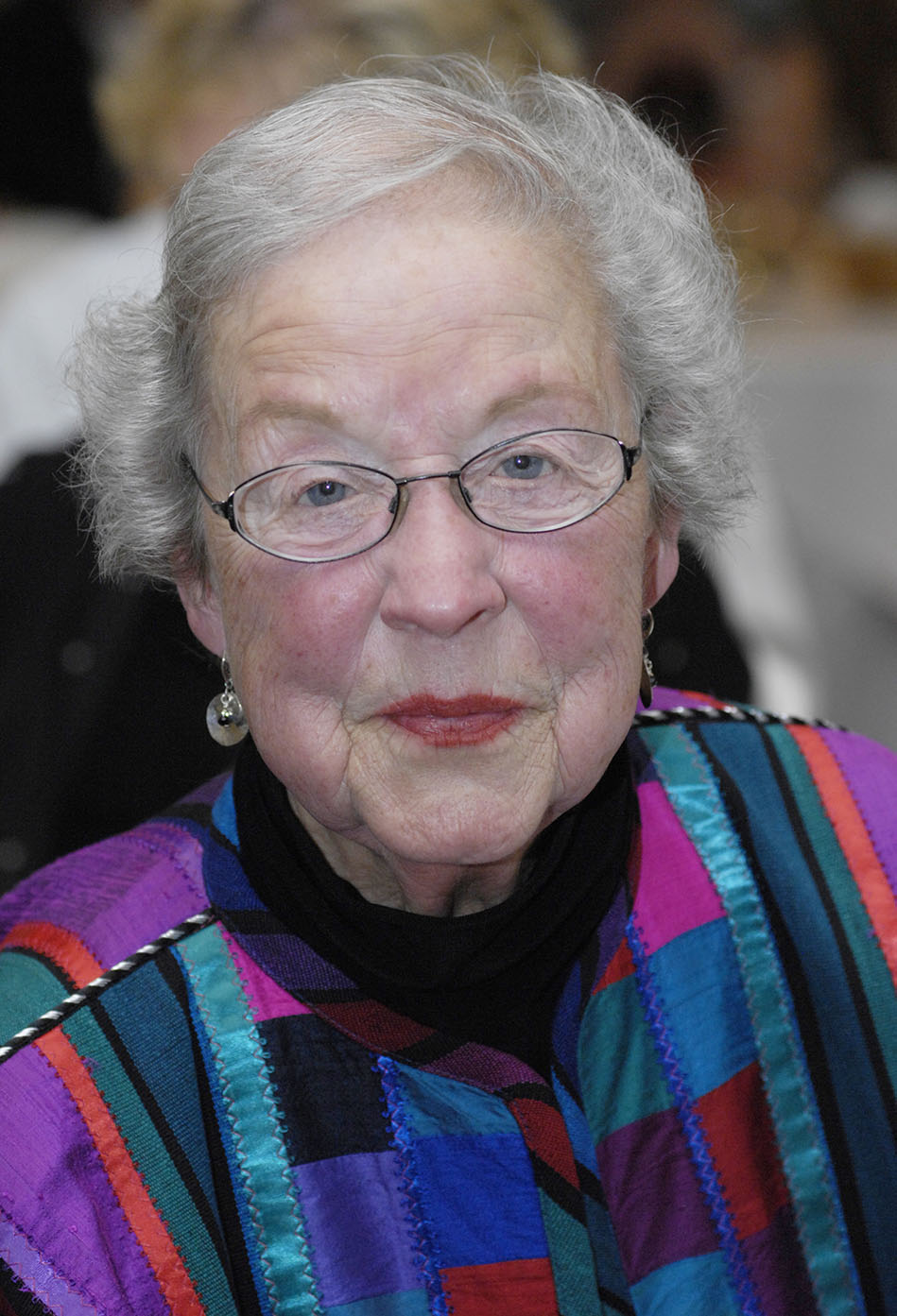
Remembering Ann MacGregor: On November 23 I posted a tribute to the late Ann MacGregor, one of the heroes in Mason City, Iowa’s successful quest to save Wright’s only extant hotel commission, the then-dilapidated Park Inn Hotel and adjoining City National Bank building. The hotel is now a successful boutique hotel:

https://wrightinracine.net/2024/11/23/remembering-ann-macgregor/

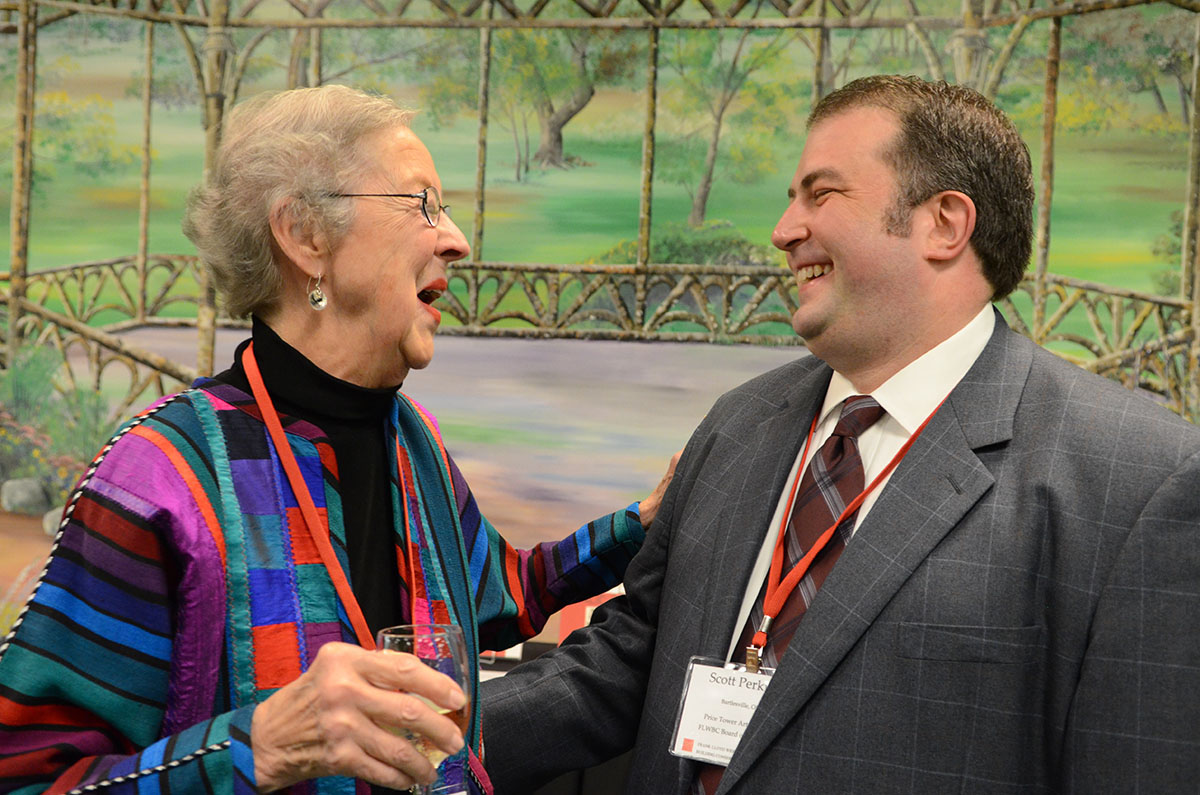
LR Pre-dinner 012.jpgAnn MacGregor with Scott Perkins of the Frank Lloyd Wright Building Conservancy, 2012

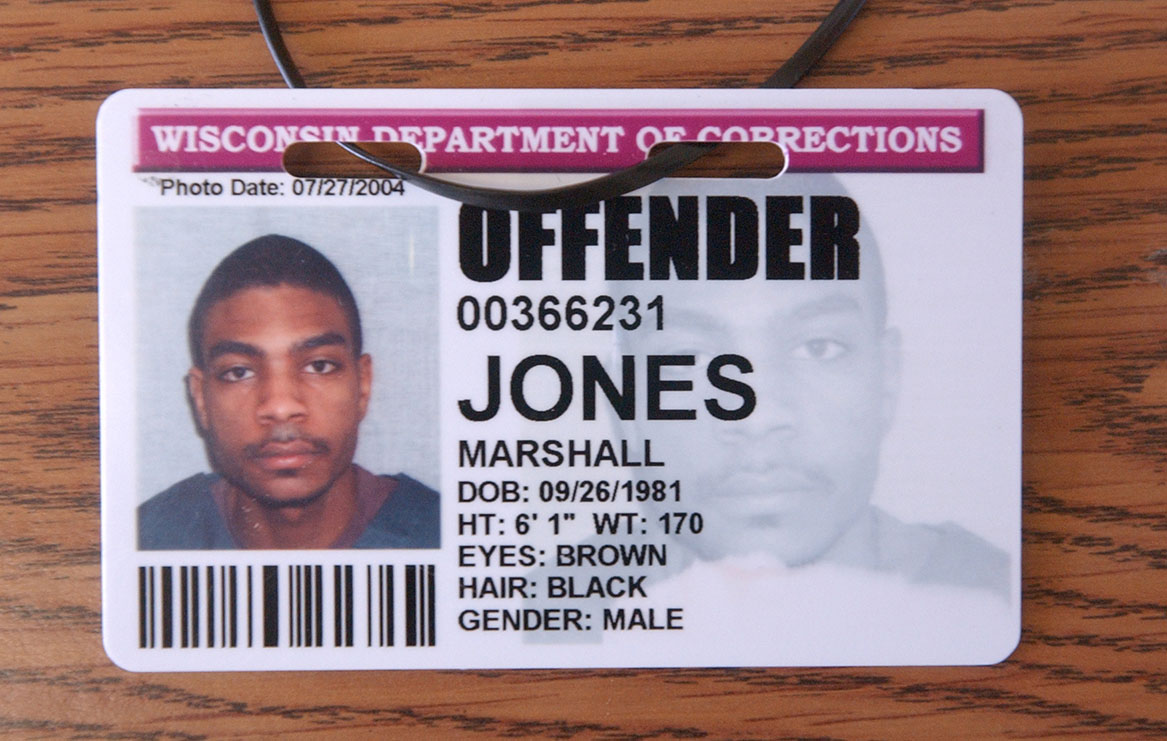
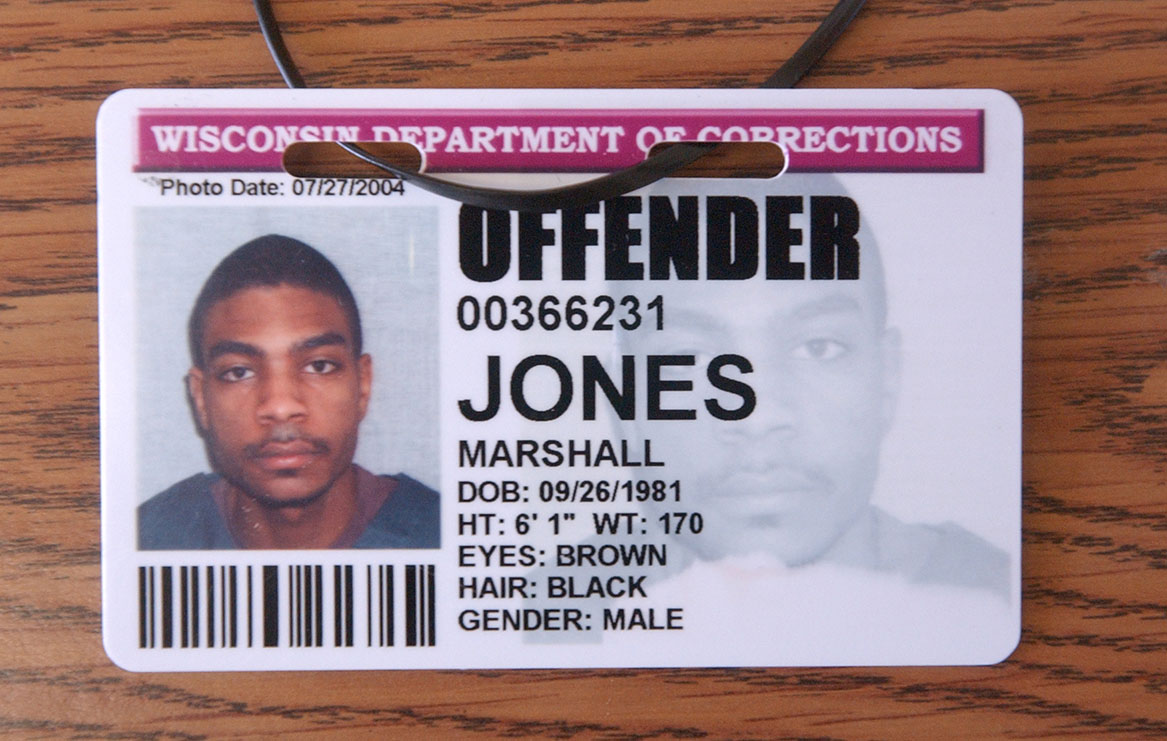
My tribute to Ann mentioned her long-term correspondence with Marshall Jones, a friend of mine, who is serving two consecutive life terms for homicide in Wisconsin. He became interested in Wright after I interviewed him for a project about the criminal justice system.

LR Marshall Jones Waupun 014.jpg

I wrote Marshall to tell him about Ann’s passing, and sent him a copy of my story. He wrote me back last week (mail to the prison system faces interminable delays while it is sent to a place in Maryland that copies incoming letters and then sends the copies to inmates) with his own tribute to Ann:

“I appreciate you for sending me the news of Ann’s passing. A part of me was deeply saddened, but another part of me was greatly appreciative that I had the privilege of being considered her friend, She was so much more than someone that I corresponded with. She was someone who brought unconditional love, unconditional positive regard, she allowed me to peer into her beautiful family, and she gave me priceless guidance. She didn’t see me by my conviction, nor did she allow me to accept my worst decision as the resounding theme for my life. She was ruthless when it came to goals, and when you said that you wanted to accomplish something, she pressed you until it was done. She was amazingly supportive and she encouraged me with gentleness and love. You knew that Ann had your back. We talked about Mr. Wright, religion (we were both Christians), politics, family, and life. Her disposition increased in positivism even in the face of diminishing health. So, I am grateful for her life, and for her presence in my life. I was so blessed by her, and I am better because of her friendship. It was much deeper than correspondence. With Ann and Bruce (Bruce Brooks Pfeiffer also corresponded with Marshall), I was family. I now carry her with me everywhere I go.”

Well, Marshall, my story was more of the nuts and bolts of her life, as we used to say in the newsroom. You captured her essence. Thank you.

Remembering Ann MacGregor

Photos and text © Mark Hertzberg (2024)

Ann MacGregor one of Mason City, Iowa’s heroes in helping save Frank Lloyd Wright’s last surviving hotel, the Park Inn, and the adjacent City National Bank, died peacefully October 2, it was announced today.

LR Wright Spirit Awards 028.jpg

The hotel and bank buildings, which opened in 1910, had deteriorated so badly that the city had put them up for sale on eBay in the late 1990s or early 2000s. Mason City rallied to save the buildings. Ann served as Executive Director of the newly formed Wright on the Park. Today the Historic Park Inn Hotel is a popular boutique hotel for visitors to Mason City, whether or not they are there on a Wright pilgrimage.

Ann was a genial, giving person. Her obituary outlines her life of service, including as a nurse on the medical ship SS HOPE and as a public health nurse for the Migrant Action Program in the late 1960s in Mason City.

https://www.bratleyfamilyfuneralhomes.com/obituary/ann-macgregor

In 2013 she published a book about her six years service around the world on the HOPE, beginning in 1958 [it is no longer in print]:

Screenshot 2024-11-23 at 4.06.54 PM.png

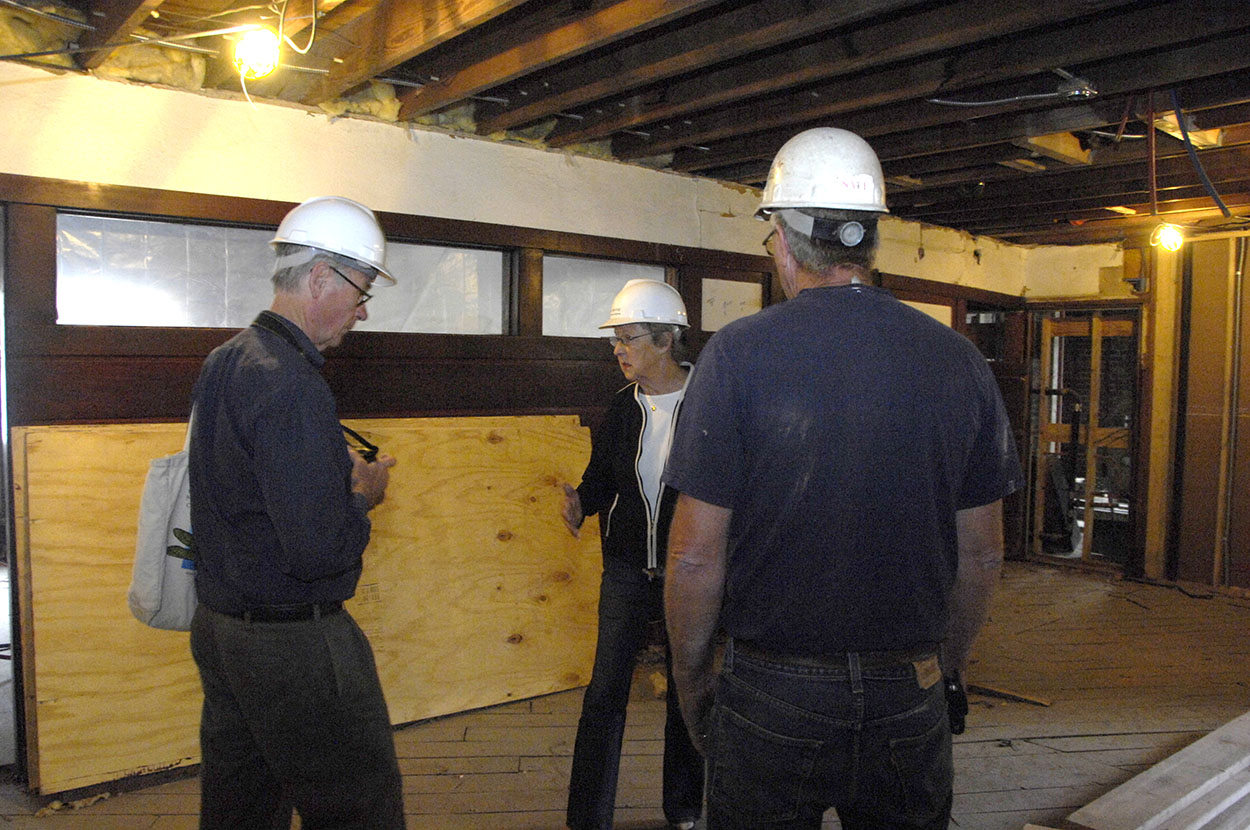
I met Ann in May 2005 when the late Bob (Dr. Robert) McCoy, another one of Mason City’s heroes in saving the hotel and bank building, invited me there to give a talk, and I began photographing the buildings. They were still in a raw state. Ann and I connected in two other ways, one as passionate bicyclists.

The other story tells you quite a bit more about Ann. She began corresponding with Marshall Jones after I told her about his insights into Wright’s work. Jones is serving two consecutive life terms in a Wisconsin prison for a double murder.

LR Marshall Jones Waupun 014.jpg

When I interviewed Jones in 2008 for a project about the criminal justice system he told me how much he enjoys reading “anything I can get.” I sent him my Wright in Racine book. He quickly sent me an incisive review back. We began corresponding, in large part about Wright. How much does Jones understand Wright? In addition to Ann being impressed by his insights, the late Bruce Brooks Pfeiffer corresponded with Jones, as well, after I sent Pfeiffer some of Jones’s letters about Wright’s work. When I sent the late Ron McCrea Jones’s review of his Building Taliesin, McCrea wrote me that Jones picked up on a point that no one else had, and he was going to quote him in a talk at Taliesin West. Ann corresponded with Jones for many years, and Jones often wrote me how much he appreciated her letters and friendship. Now I must write him about Ann’s passing.

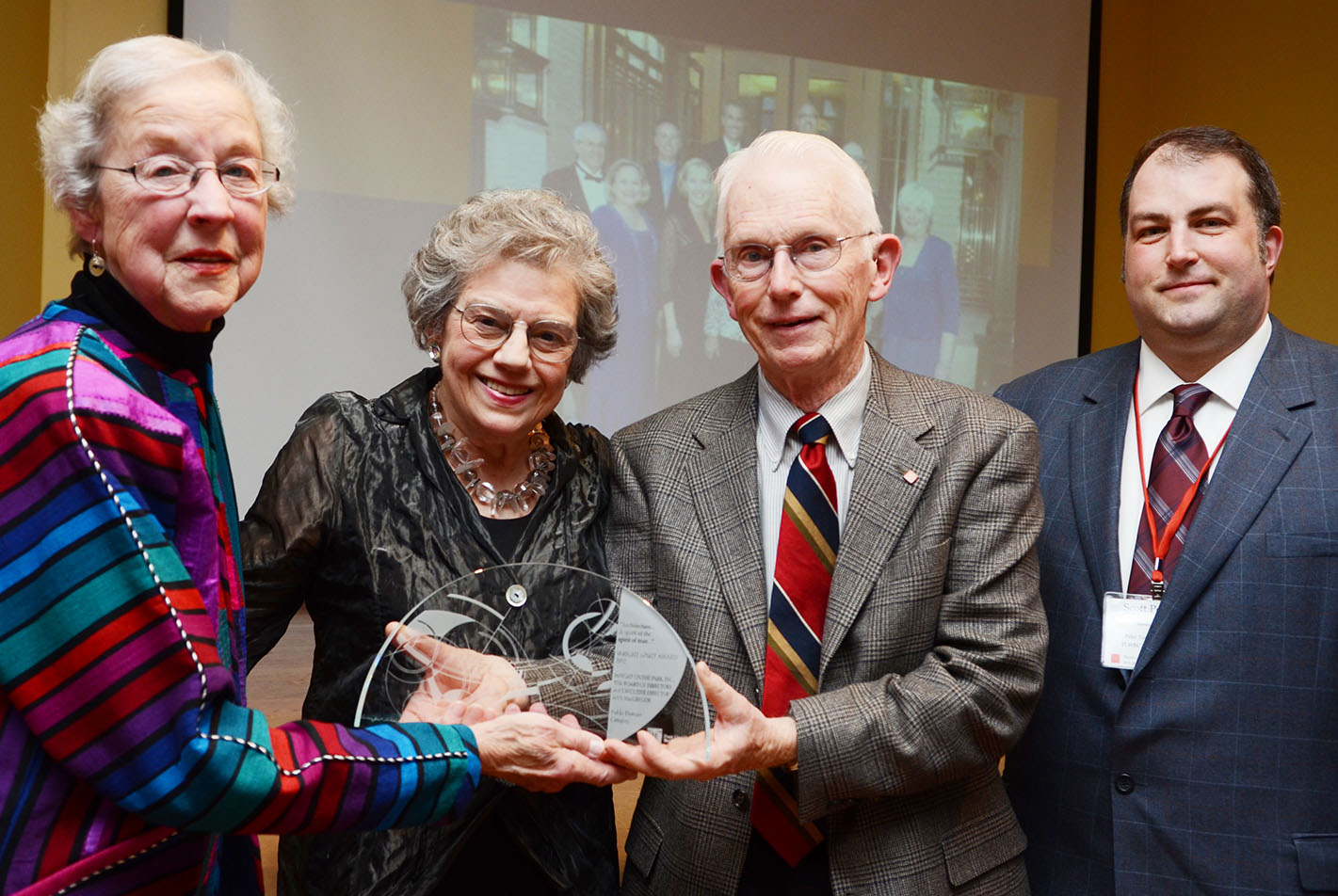
Ann’s memorial service will be Saturday November 30, as noted in the obituary. I will leave you with a photo of Ann in the bank building in 2010, and of Ann and Bob McCoy she and Wright on the Park were honored with the Frank Lloyd Wright Building Conservancy’s prestigious Wright Spirit Award on October 13, 2012, during the group’s annual conference:

LR City Natl. Bank 2010 001.jpg

LR Pre-dinner 012.jpg

LR Wright Spirit Awards 013.jpg

LR Wright Spirit Awards 014.jpg

LR Wright Spirit Awards 019.jpg

LR Wright Spirit Awards 020.jpg

LR Wright Spirit Awards 022.jpg

Thank you, Ann, for your friendship and service.

(My remembrance of Bob McCoy is at:

https://wrightinracine.net/tag/bob-mccoy/

Please scroll down for previous posts on this website.

The Coda to Hardy House Rehabilitation

© Mark Hertzberg (2024)

Hardy Exteriors Post-Restoration 079.jpg

When the late Eugene (Gene) Szymczak considered buying Frank Lloyd Wright’s Thomas P. Hardy House in Racine, Wisconsin in 2012 he told me, “I don’t have children. This is something [save the house] I could do for Racine.” Indeed he did. He undertook a heroic rehabilitation and stabilization of the house.* Gene, left of center in the photo below, was awarded the prestigious Wright Spirit Award by the Frank Lloyd Wright Building Conservancy  for his work on the house in 2015. He died unexpectedly a year later after an illness.

BC 2015 WSA All 003.jpg

The house stayed in the family after Gene’s death. Tom Szymczak is one of Gene’s brothers. Tom recently completed a project which, he told me, was the last thing Gene wanted to accomplish at the house. The house was built with two pocket doors. They were replaced by conventional, hinged plain wood doors by the third stewards of the house, David and Mary Archer, between 1947 and 1957:

South door 003.jpg

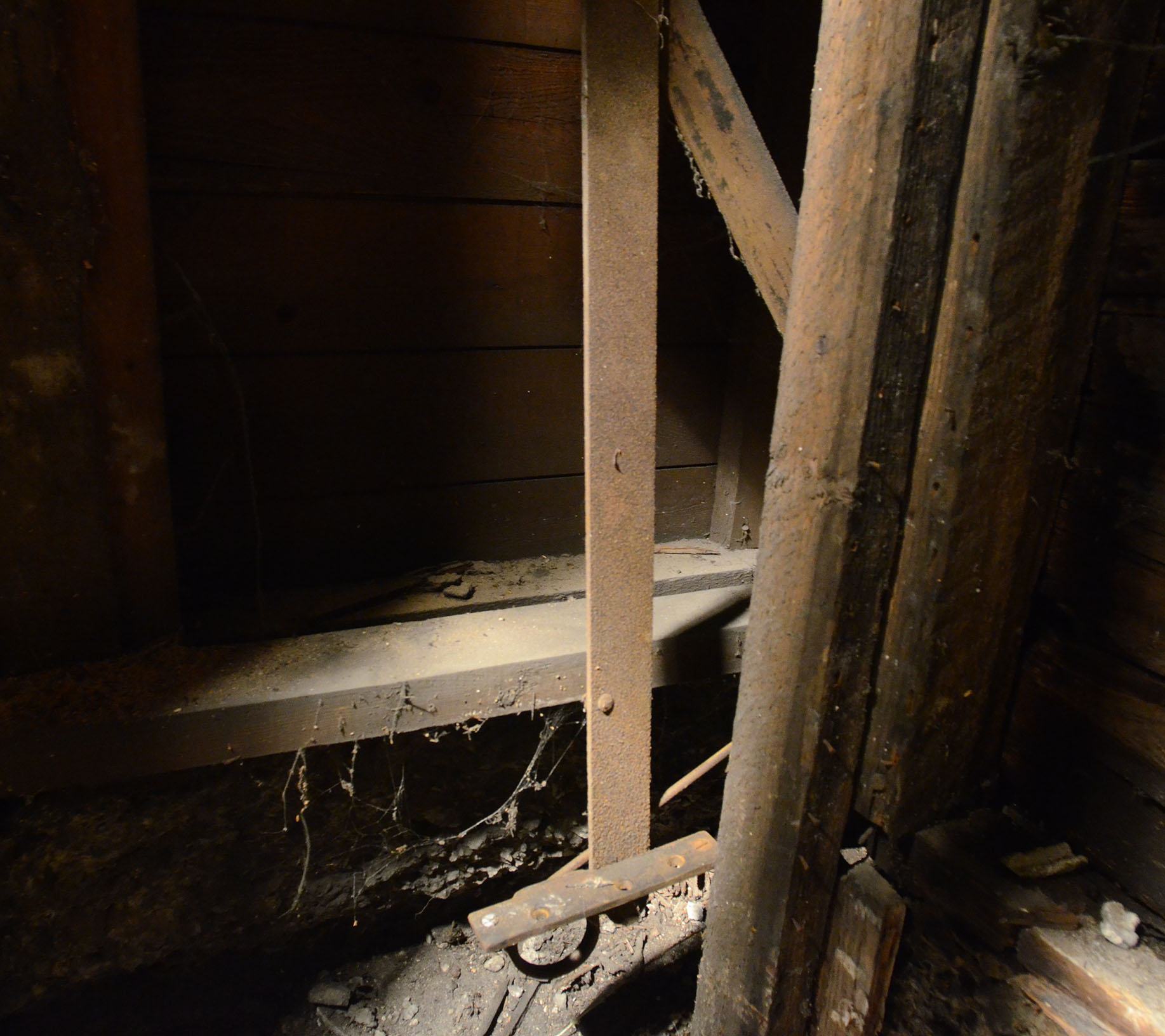
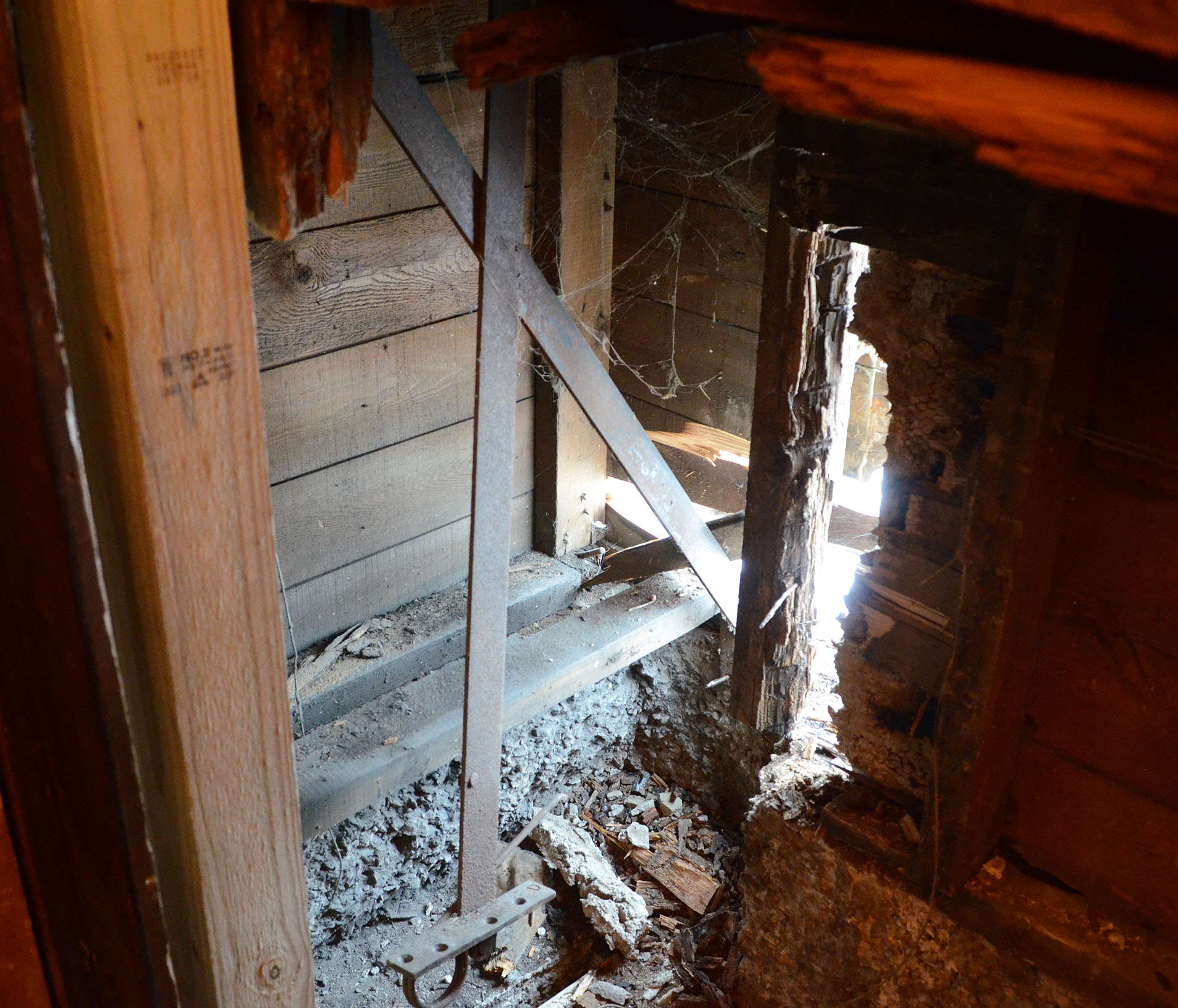
Gene decided to put pocket doors back in the house in 2013. He chose sliding glass patio-style doors so he could look into the two courtyards from the entry hall. The heavy metal arms that opened and closed the pocket doors were left in place, and were found in 2013:

Pocket Doors 010.jpg

Pocket Doors 004.jpg

Pocket Doors 014.jpg

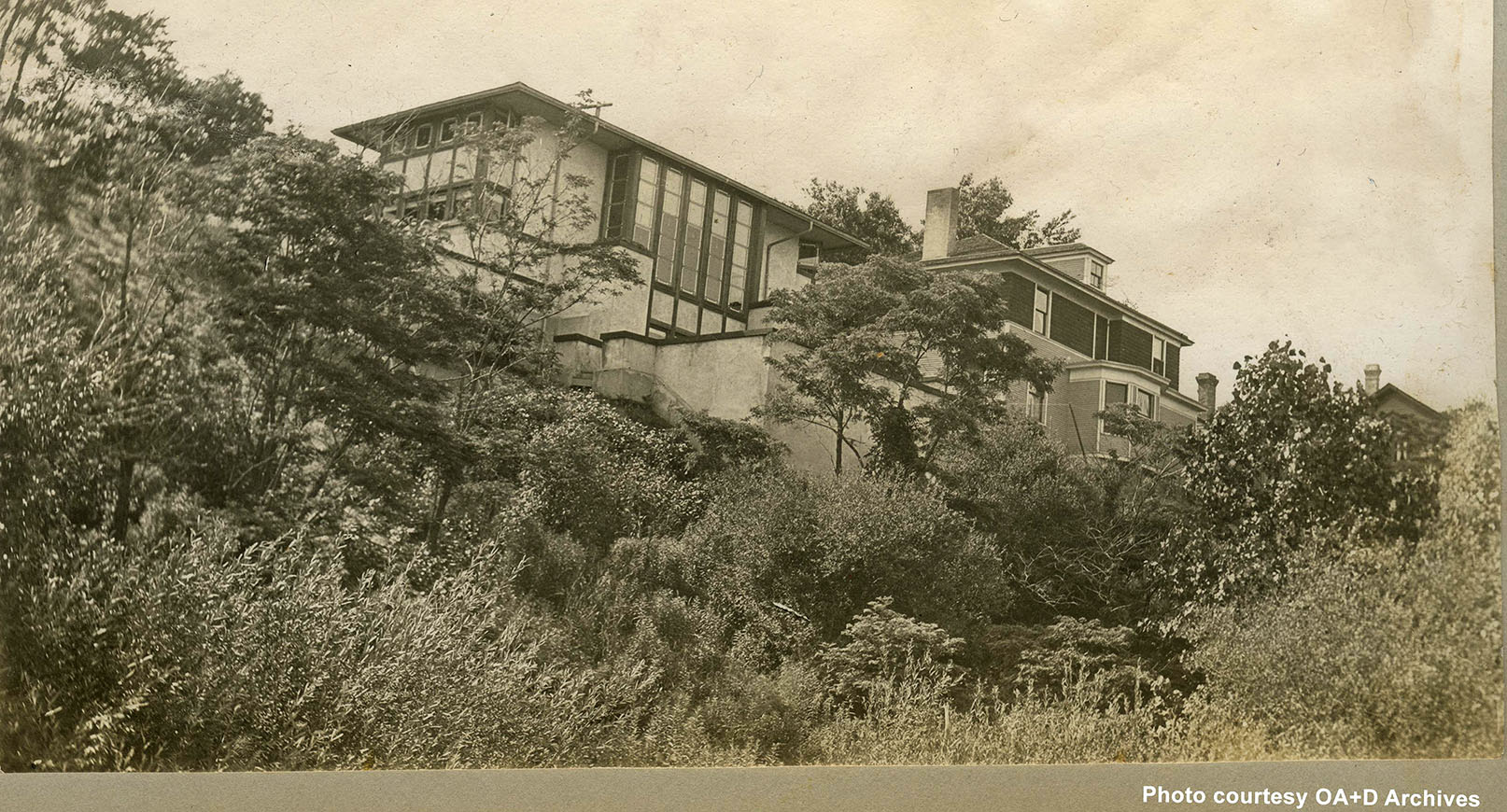
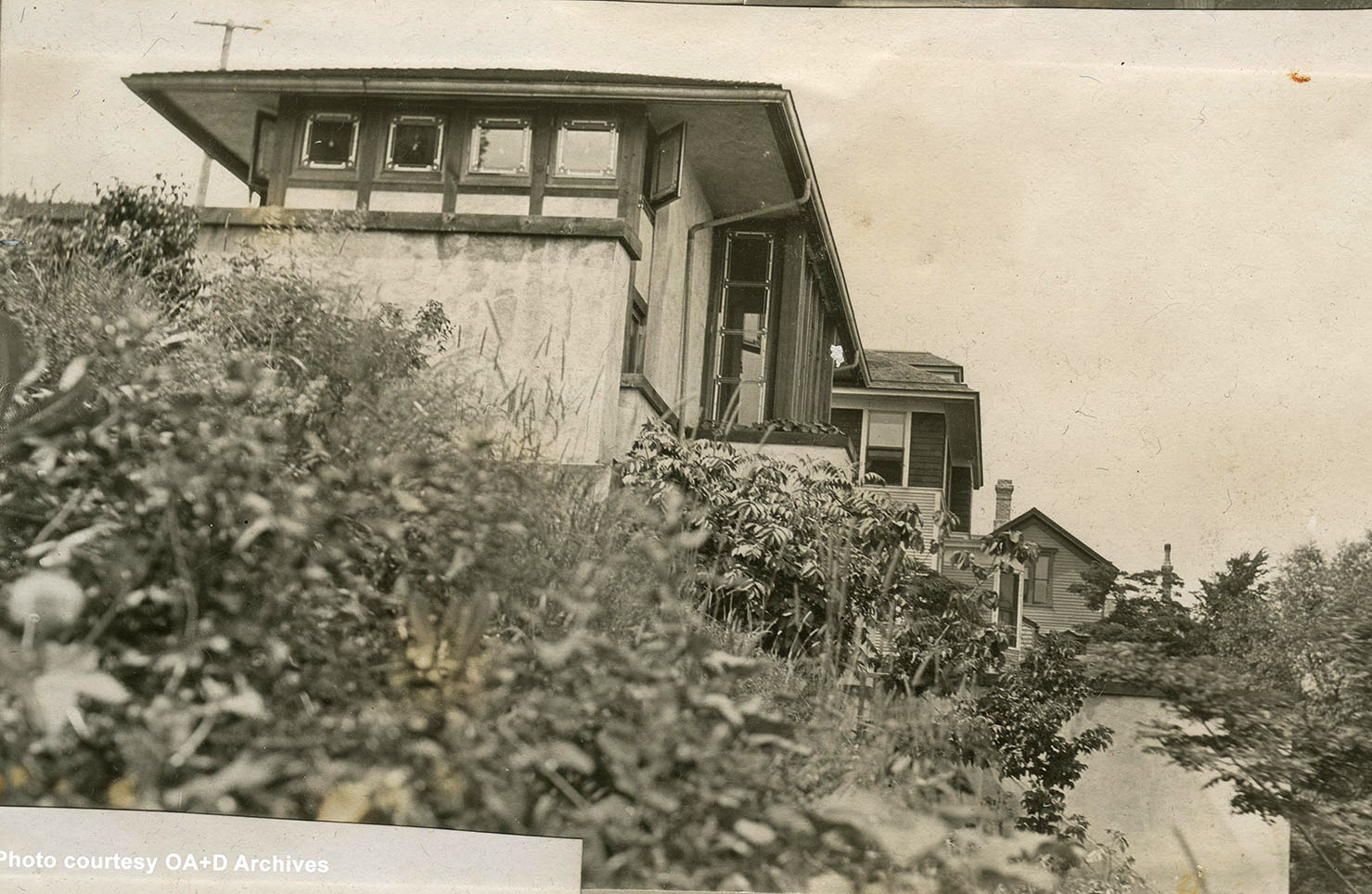
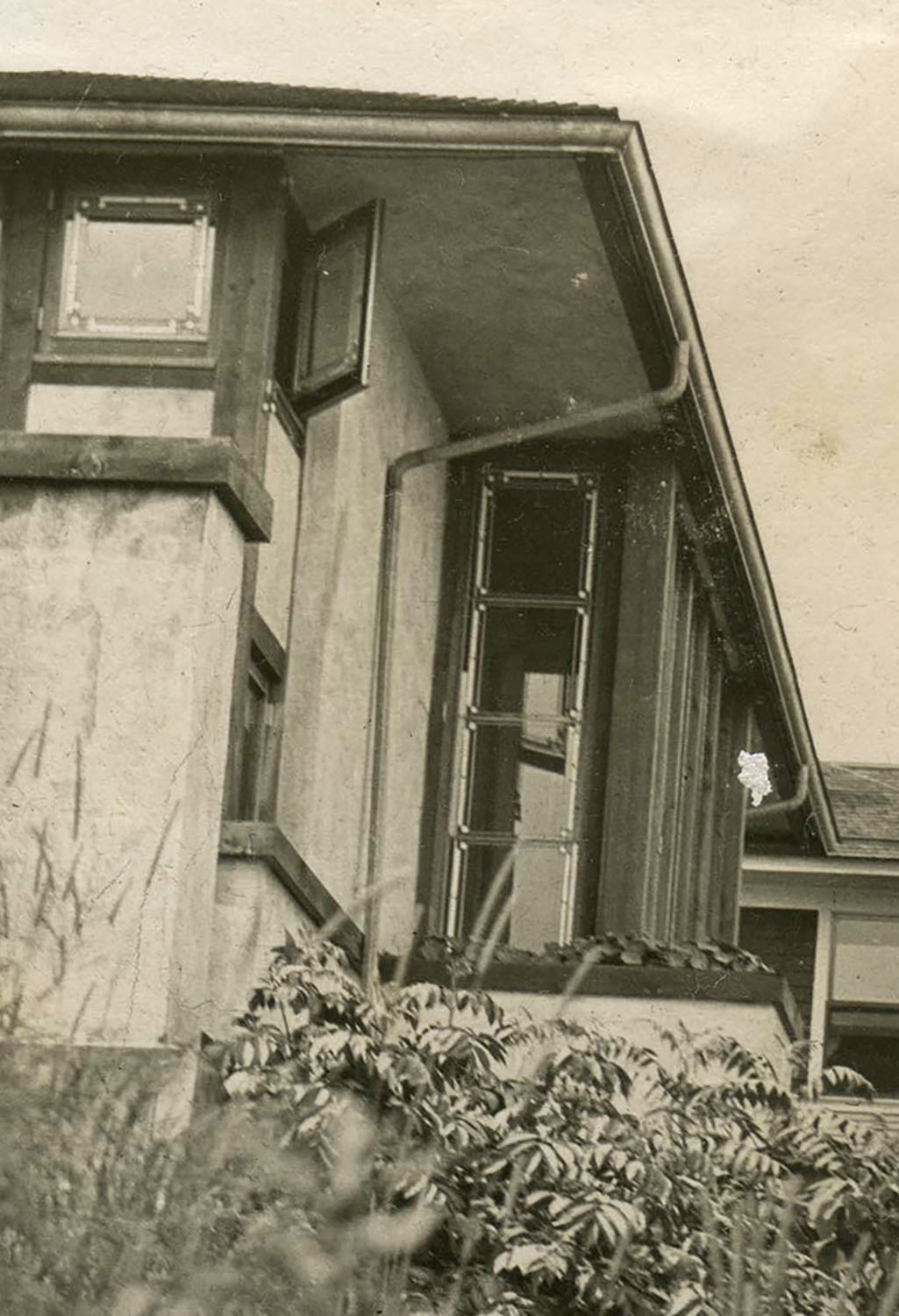
The house was built with leaded glass windows throughout, including in the dramatic two-story living room overlooking Lake Michigan. Anne Ruetz, whose parents were second stewards of the house (1938 – 1947) told me her parents replaced the windows with plain glass ones because the original ones leaked. When Gene put in energy efficient windows he jokingly told me that the next owners of the house could bear the expense of replicating Wright’s window design. Little did he know, of course, that he would be shifting the burden to his brother. 1908 photographs, which are used courtesy of the OA + D Archives, show the original leaded glass living room windows:

LR 1908 Hardy HIll Crop.jpg

LR 1908 Hardy HIll.jpg

LR 1908 Hardy Side.jpg

LR 1908 Hardy Side Crop.jpg

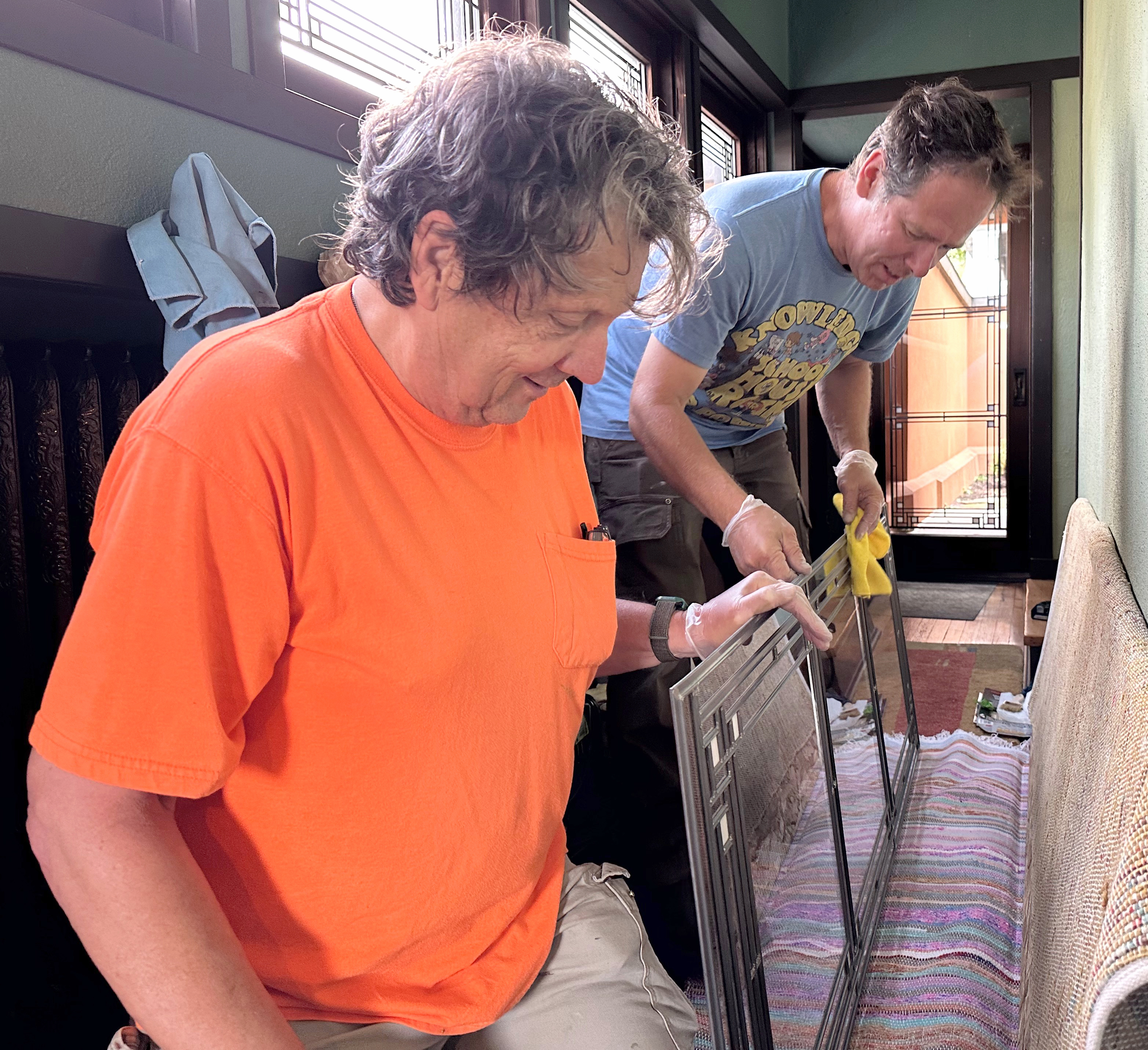
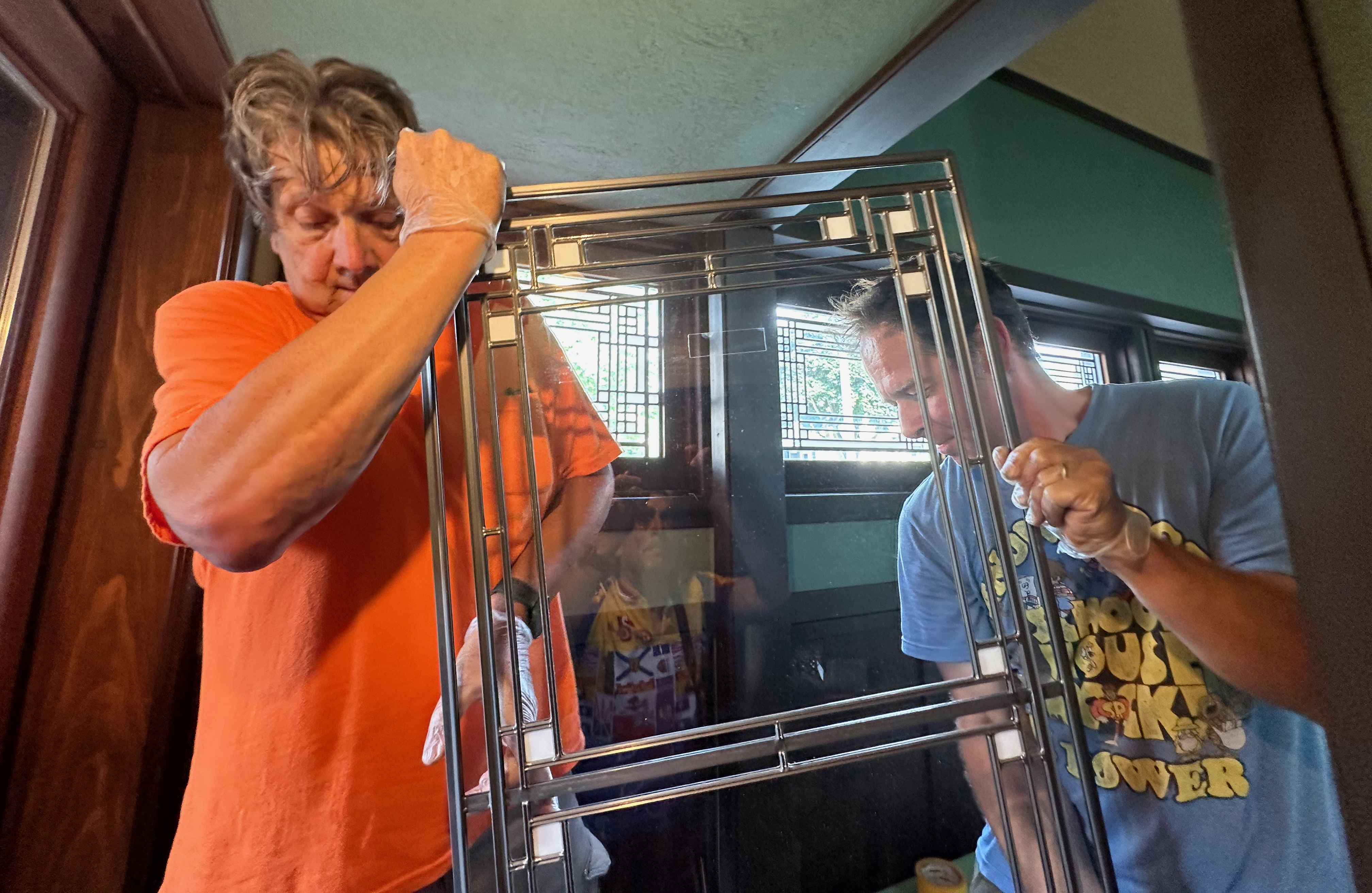
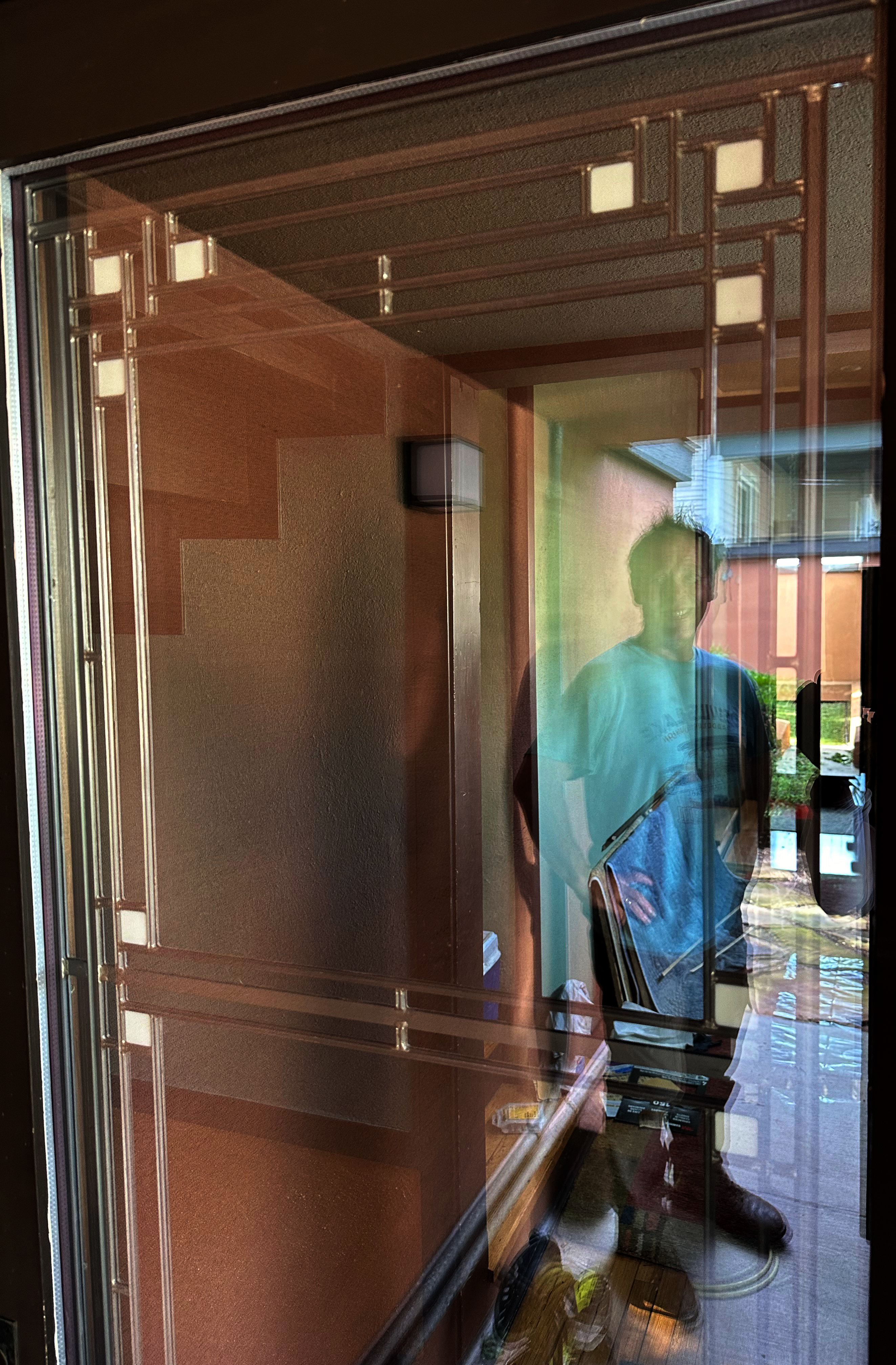
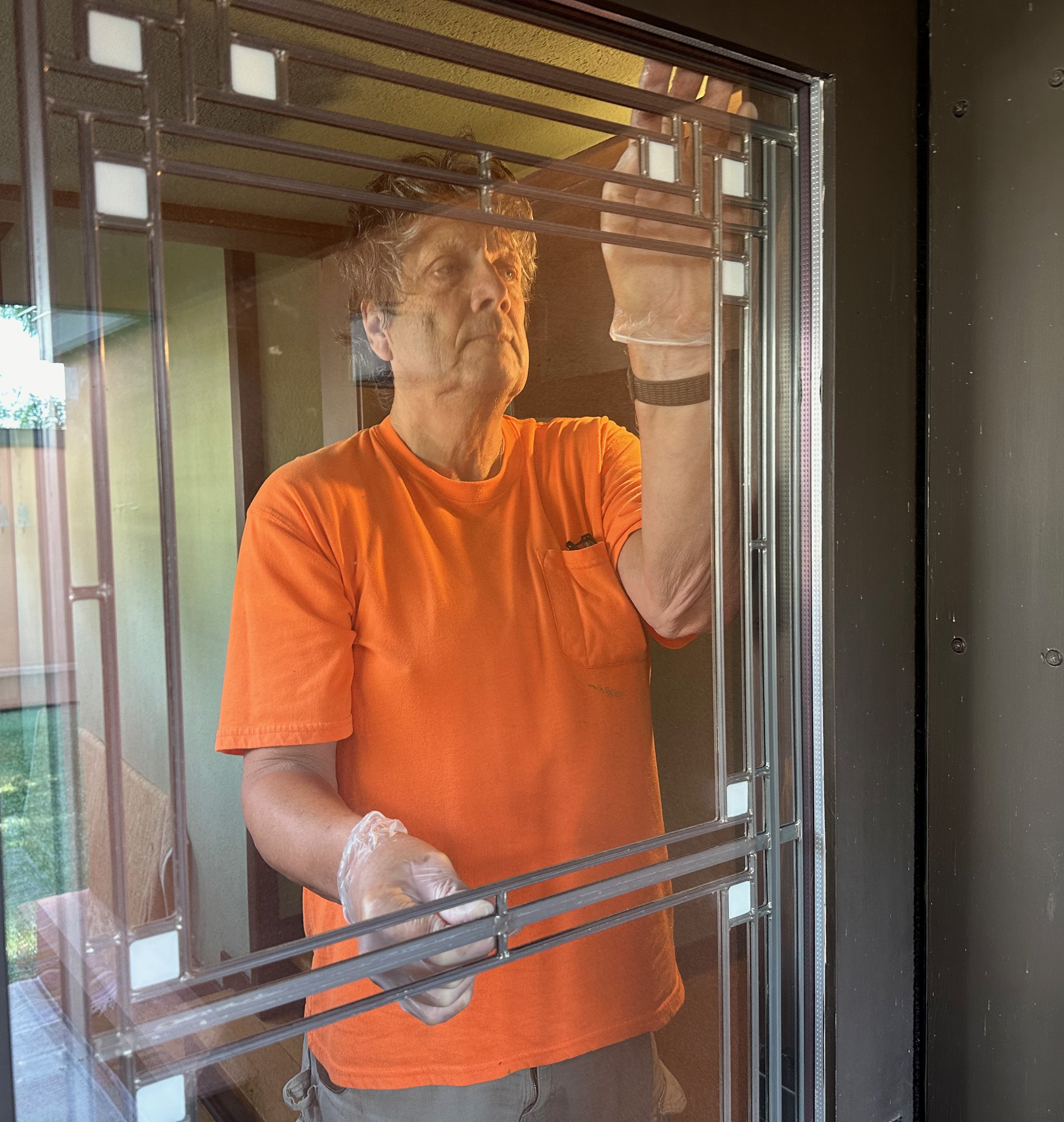
Instead of replicating the design in the living room, Gene intended to have the design fashioned for the pocket doors. The work was completed earlier this month, with window inserts made by Oakbrook Esser of Oconomowoc, Wisconsin. The installation photos show Tom Szymczak, left, and master craftsman Chad Nichols:

IMG_8036.jpeg

IMG_8039.jpeg

IMG_8030.jpeg

DSC_0043.JPG

DSC_0035.JPG

IMG_8025.jpeg

IMG_8041.jpeg

DSC_0017.JPG

DSC_0021.JPG

Thank you, Gene, for your gift to our community and to the World of Wright!

BC 2015 WSA Szymczak.jpg

The first people outside of family and friends to see the new windows will be 17 members of a Road Scholar Wright tour next Wednesday. They will be followed by several hundred people attending Wright in Wisconsin’s “Wright and Like” tour Saturday September 7.

*The term “rehabilitation” is appropriate, rather than “restoration,” because there were some changes to the house. “Restoration” would infer house museum status, accurate to either the day Hardy moved into the house (1906) or left it (in 1938) after losing it at sheriff’s auction because of monies owed on the house.

Links:

Frank Lloyd Wright Building Conservancy:

www.savewright.org

Wright and Like Tour:

https://wrightinwisconsin.org/wright-and-2024

Road Scholar Architectural Masterworks of Frank Lloyd Wright Tour (run 4 or 5 a year)

https://www.roadscholar.org/find-an-adventure/22976/Architectural-Masterworks-of-Frank-Lloyd-Wright

Please scroll down to read previous posts

Tower Tumult in Bartlesville

© Mark Hertzberg (2024)

Oklahoma Frank Lloyd Wright Price Tower 001.JPG

The future of Frank Lloyd Wright’s landmark Price Tower in Bartlesville, Oklahoma is uncertain. The Frank Lloyd Wright Building Conservancy has initiated legal proceedings against Cynthia Blanchard, the owner of the building, over her sale of Wright artifacts from the building, including one of the office chairs Wright designed, to a mid-century design dealer in Dallas. The Building Conservancy has an easement on the property, which, it says, prohibits the sale of any of the artifacts.

Oklahoma Frank Lloyd Wright Price Tower 022.JPG

Oklahoma Frank Lloyd Wright Price Tower 020.JPG

Wright designed the tower in 1952 as a combination office and apartment building, and it opened in 1956. The exterior and two-story pinwheel floor plan are derived from Wright’s unrealized design for the St. Mark’s-in-the-Bowery apartment buildings in New York City (1927-1929).*

Oklahoma Frank Lloyd Wright Price Tower 011.JPG

Oklahoma Frank Lloyd Wright Price Tower 009.JPG

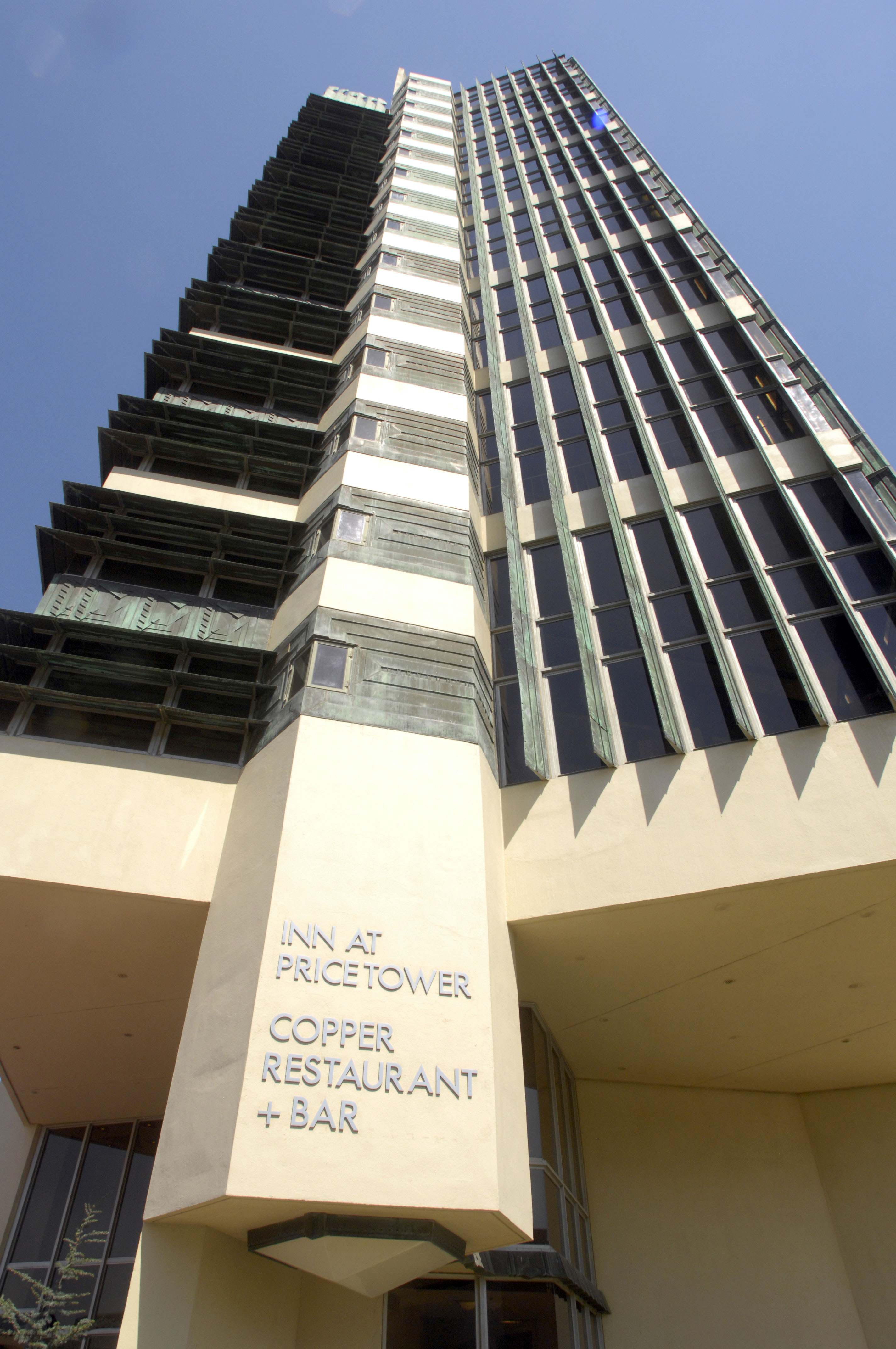
The Inn at Price Tower hotel opened in 2003. Blanchard said in a television interview that it was no longer profitable to operate the hotel and its Copper Bar and Restaurant. She announced the closure August 9. Hotel and restaurant employees were laid off and tenants of the building were given notice to move out within 30 days. She said in an interview that the closure is not necessarily permanent, and that she hopes to find a buyer for the building which, she says, is no longer profitable for her to operate.

The photographs are from our stay at the hotel in April 2011. Scott Perkins, who was the Curator of Collections and Exhibitions and at the Price Tower Arts Center, was our host, graciously allowed me to photograph every nook and cranny of the building (he is now Fallingwater’s senior Director of Preservation and Collections).

Oklahoma Frank Lloyd Wright Price Tower 014.JPGThis photograph and the one below were taken looking up on the external staircase.

Oklahoma Frank Lloyd Wright Price Tower 013.JPG

Oklahoma Frank Lloyd Wright Price Tower 010.JPGPrice Tower reflected in a nearby building

Oklahoma Frank Lloyd Wright Price Tower 019.JPGThe living room of one of the original apartments

Oklahoma Frank Lloyd Wright Price Tower 018.JPGThe sitting room on the lower floor of one of the two-story hotel rooms

One can only hope that my sunset photo of Price Tower was not a harbinger of things to come.

Oklahoma Frank Lloyd Wright Price Tower 002.JPG

Oklahoma Frank Lloyd Wright Price Tower 017.JPG

Oklahoma Frank Lloyd Wright Price Tower 012.JPG

*While Price Tower was designed around Wright’s idea of a taproot tower, the late Bruce Brooks Pfeiffer told me that it is not a taproot tower because it is tied into the foundation of the adjoining two-story office building. He told me that the SC Johnson Research Tower in Racine is Wright’s only realized taproot tower.

Author’s note: Thank you to the Frank Lloyd Wright Building Conservancy for their attention to the tower, and to the Building Conservancy’s John Waters for his editing notes on this article.

Please scroll down for previous posts on this site.

Links:

Frank Lloyd Wright Building Conservancy coverage:

https://savewright.org/endangered-price-tower-in-bartlesville-oklahoma/

Local television coverage:

https://www.newson6.com/story/66b6bcf3e64a7a286feca72e/price-tower-in-bartlesville-closes-due-to-financial-struggles-future-uncertain

Happy 100th Roland Reisley Day!

© Mark Hertzberg (2024)

Roland Reisley 2017 024.jpg

The Wright World – particularly the Frank Lloyd Wright Building Conservancy – celebrates Roland Reisley’s 100th birthday Monday May 20. Reisley still lives in the house that Wright designed for Roland and his late wife, Ronny, in 1951 in “Usonia,” in Pleasantville, New York. He is the only original Wright client still living in his Wright home.

Roland Reisley 2017 017.jpgRoland and Ronny working with Wright on the design of their Wright home

Reisley Longstreth BC 2014 003.jpgRoland was honored as a founding member of the Frank Lloyd Wright Building Conservancy by Janet Halstead and Richard Longstreth at the 2014 conference in Phoenix.

Reisley BC 2014 008.jpgThe Reisley House was the topic of a discussion at the 2014 conference. Susan Jacobs Lockhart moderated.

Reisley BC 2014 015.jpg

Reisley BC 2014 014.jpg

Reisley Levine BC 2014 005.jpgRoland and Neil Levine chat at the conference.

Reisley Kazor BC 2014 002.jpgRoland and Ginny Kazor at the Phoenix conference.

Roland Reisley 2017 010.jpgRoland greets conference attendees in his living room during the 2017 conference.

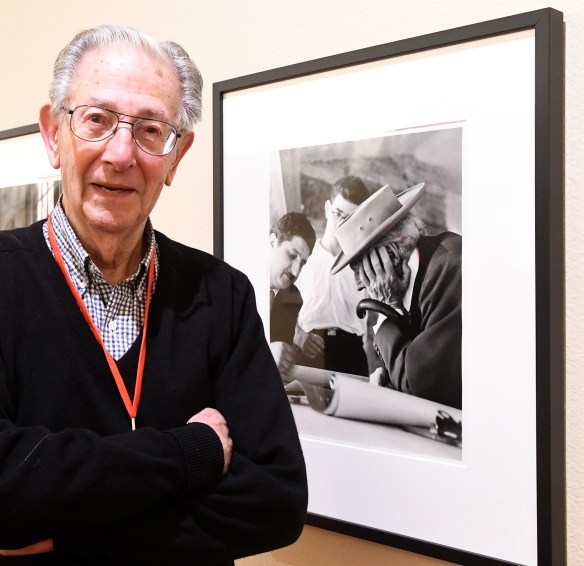
I happened to walk to the 2018 conference meetings at Monona Terrace in Madison from the hotel with Roland one morning. The hallways in Monona Terrace are lined with photographs by Pedro Guerrero, including this one of David Henken, Rolland, and Wright. He pointed the photo out to me and graciously posed for me next to it:

LR Roland and Mr. Wright.jpg

Thank you, Roland, for your friendship, your grace, and your contributions to the Building Conservancy. You have often told people that Wright was not the ogre some people describe him as. You explain that he was very accommodating to you and to Ronny when he was designing your home. My family and I had the privilege of dinner at the house with you and Barbara Coates, thanks to your auctioning such an evening at the Building Conservancy’s annual silent auction.

Barbara and Roland 001.jpgBarbara and Roland, 2011

Happy birthday, my friend…our friend!

On-line celebration with the Frank Lloyd Wright Building Conservancy:

https://savewright.org/happy-100th-birthday-roland-reisley/

Please scroll down for previous posts on the website including, most recently, photos of the newly restored Hillside Theater.


The Laurent House’s Second Steward: Jerry Heinzeroth (1942 – 2024)

Text and contemporary photos © Mark Hertzberg 2024
Laurent House 10.30.21 005.jpg

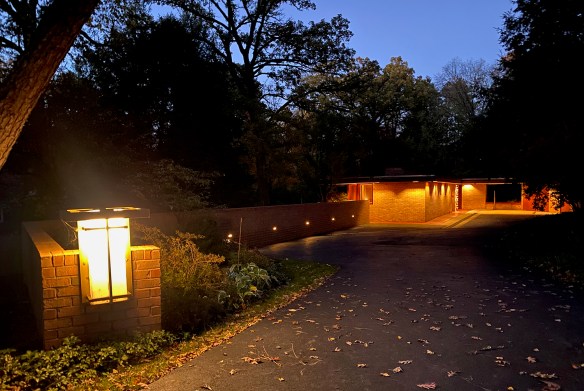
Frank Lloyd Wright’s Phyllis and Kenneth Laurent House in Rockford, Illinois (1948) and Jerry Heinzeroth are inexorably linked. We might not still have the Laurent House, Wright’s only commission designed expressly for a disabled client, if not for Heinzeroth’s persistence. It is now his legacy: Heinzeroth died unexpectedly January 19 at home. He was 81.

Jerry - credit NW Quarterly Magazine.jpgJerry Heinzeroth in the Laurent House – Photo by Samantha Ryan / The Northwest Quarterly

Heinzeroth broached the idea of my writing a book about the house in 2014 when he gave me a private tour of the house when I was in Rockford for a colleague’s funeral. We had met at many Frank Lloyd Wright Building Conservancy conferences, and he told me he liked my three books about Wright’s work in Racine. I demurred because I was well into my commission to write and photograph a book about Penwern, Wright’s Fred B. Jones estate in Wisconsin.

Mary Beth Peterson, Executive Director of the Laurent House Foundation, raised the idea again when I toured the house in 2021 with friends who had won a private tour in a silent auction. “You are the one Jerry wants to write a book about the house.” Again, I demurred. The Penwern book had taken five years to research and write and I was not eager to start another big research project. Neither she nor Heinzeroth gave up, and Peterson called me in spring 2023. I agreed to at least interview Heinzeroth and record his history with the house and possibly do a book. My wife and I spent a delightful morning with him in the living room. I titled this possible chapter for a possible book “Transition.” There is no book at this point, but “Transition” is below, in recognition of the gentle man who saved the Laurent House.

Transition

Jerry and Barb Heinzeroths challenge was not unique in the World of Wright: how to gain entry to a Wright house and meet the clients who commissioned it. It took about 20 years, but a bottle of red wine and the promise of a lasagna dinner finally opened the front door of the Laurent House for them in 2004. Today, well, Jerry has the front door key in his pocket.
Laurent House 10.30.21 023.jpg

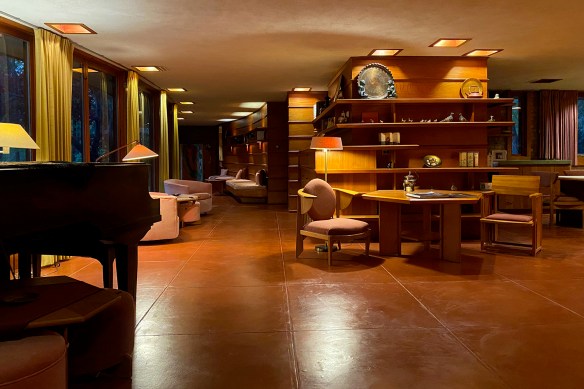
The clients, who were still living in the house, were Phyllis and Ken Laurent. The house, commissioned in 1948 and finished in 1952, was the only one Wright designed for a disabled client (Ken used a wheelchair after being paralyzed during back surgery for a large spinal cord tumor, Memorial Day weekend in 1946). That dinner sparked an adventure that continues to this day, with Jerry the president of the Laurent House Foundation since it was founded in 2011.

The Heinzeroths had toured the house with the Frank Lloyd Wright Trust in the mid-1980s. “Ken and Phyllis had met us (40 people on tour) and had refreshments. They were the most engaging, genuine couple Barb and I had ever met,” Jerry recalls. “Now that I’ve met them, I had an in.” The Heinzeroths wrote the Laurents a long letter about how much they had appreciated the tour, and that they would welcome the opportunity to come back and talk about the house and about Wright. “I thought I had done a masterful job.” Perhaps he had, indeed, done a masterful job, but the Laurents did not reply.

Heinzeroth, who grew up and still lived in Rockford, had driven by the house many times, but respected the Laurents’ privacy. “I wasn’t raised to ring a doorbell and say, ‘Can I see your house?’” He had long been attracted to Wright’s work, even once considering joining the Taliesin Fellowship. His plans changed after he and Barb married. His father told him he couldn’t make a living in “art,” so he studied engineering and began a career designing machine tools in his hometown.

The lasagna dinner – which would end up ensuring the preservation of the Laurent House – came about when John Cook, the Laurents’ landscape architect and a friend of the Heinzeroths, told Jerry that he had to deliver an invoice to the Laurents. Jerry and Barb were gourmet cooks. They had cooked together their entire married life. Jerry asked Cook to tell the Laurents that they would love to cook dinner for the six of them. This time the Laurents agreed to meet them. Cook later recalled the dinner to Jerry, “We had a nice dinner together for half an hour, then you and Ken disappeared and we didn’t see you the rest of the night.”

Jerry says that evening forged a friendship that lasted until 2012, when the Laurents died. “About once a month we would bring dinner and a bottle of wine, then dinner and two bottles of wine! They were like second parents to us”
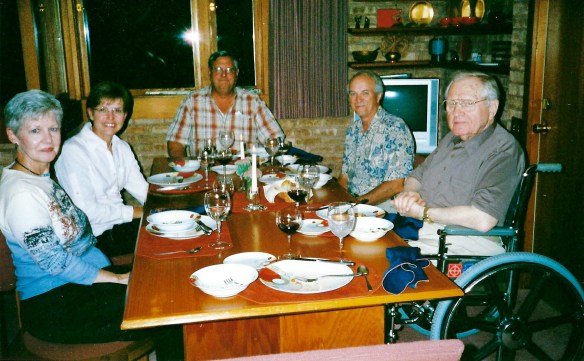
Jerry and Barb Heinzeroth having dinner with Ken Laurent.jpgDinner at the Laurent House: Barb Heinzeroth, left, Marcia Cook, John Cook, Jerry Heinzeroth, and Kenneth Laurent. Phyllis Laurent took the photo.

Two years later, in 2006, Ken and Jerry started talking about whether Ken would need to look at moving into an assisted living facility. Ken needed the equity in the house to move and to give him an estate to pass on to their children, Jean and Mark, and grandchildren. Ken and Jerry talked about the house becoming a museum to Wright and a museum for disability run by the Friends of Laurent. They called a neighborhood meeting and pledged that if there were a single objection to the idea of a public museum, they would cease their planning. Neighborhood support was unanimous. The Laurents wanted to sell the house for $1.2 million, but said they would sell it to Heinzeroth for $750,000. Jerry’s challenge, then, was to figure out a way to raise money to buy the house.

He cold-called Lynda Waggoner, then executive director at Fallingwater, and asked her to come to Rockford. “I considered Lynda the pre-eminent authority on the relevance of an FLW property. I asked that if we paid her expenses would she come to see the Laurent house and give her opinion on its importance. We had agreed that if she found it unremarkable we would suspend our efforts to raise the money required to continue the effort.” She was reticent, but agreed to come.

Waggoner recalls her visit, “This group of people was beyond enthusiastic. They were in love with the house and in love with Mr. Laurent.” She thought the home’s greatest significance, beyond being a Wright design, was that it was such an early design by any architect for a person with a mobility disability. “I thought if they could really highlight the accessibility nature of the house made it so much more interesting as a building. It was prescient what Wright was doing there. The house is a great rejoinder to those who say Wright did what he wanted. He carefully thought about that client, to do something that would be improve his life.” [Waggoner emailed me after learning of Heinzeroth’s death, “He was such a lovely person and his passion for the Laurent House was an inspiration to us all.” There will be countless more tributes after word of his death spreads through the Wright world]

Its location in comfortable neighborhood could be “problematic” in terms of reimagining it as a house museum. There would likely be objections to several thousand people a year descending on an otherwise quiet area.

Heinzeroth asked her not to be negative when he talked to the Friends board. I was cautious to present it as something that would be a challenge and certainly difficult, but should be preserved.” Waggoner told them that most Wright houses get perhaps 5,000 visitors annually, not enough to sustain them. The Friends had little money. There would have to be non-stop fundraising. She suggested that they consider working with a local ADA-focused foundation. Such a foundation could have its office in the Laurent House and open the house for Wright-focused tours on occasion.

The timing was terrible because it was 2008 and the economy had collapsed. Jerry had raised just $5,000…a mere $745,000 short of what Ken said the Laurents would sell him the house for. And, now, looking back at her visit with the Friends, 15 years later, “I didn’t see how their business plan could work, but they pulled it off.”

Ken and Jerry talked almost weekly. One of those talks, in the fall of 2011 bore unexpected bad news. “I called him one day, and he said, ‘By the way, Jerry, Im going to put the house up for auction at the Wright Auction House in Chicago (no relation to the architect). Ive given five years of my life for this. Weve reached a point where we have to do something. The auction house has assured me they can get top dollar, $800,000-850,000.” The auction date was set for just five weeks away, around Thanksgiving.

The Rockford community kicked into high gear at Jerry’s behest. A member of the Friends wrote an op-ed piece for the Rockford Register-Star newspaper about the house, about Ken’s condition, and about plans for the house museum. A local developer, Sunil Puri, whose CFO was paralyzed from the waist down after a diving accident, was particularly touched and called. He said he was close to then-Gov. Pat Quinn. “I am going to see the governor tomorrow, and will see what I can do.” He secured a matching grant from the state for $500,000. The Friends raised another $500,000 in those five weeks before the auction.

The auction was being streamed live on YouTube and on WNIJ radio. The only other bidder backed out. The Friends were invited to the auction floor. “I brought my auction paddle. Off to the side to observe were the couple that backed out of the bidding after learning the Foundation planned to make the house a public museum. I was the only person on the auction floor in person. The auctioneer never got up. We didn’t know it, but the livestream had gone black. The auctioneer tapped us and said to come down to the conference room. Then we knew for certain we were the only bidder.

The Friends were told, “You are the only people who are bidding. If you want it for the reserve price…I said ‘So, if I raise my paddle and say Sold!,’ then it’s sold to us? We had the house for $480,000!”

Their rejoicing was short-lived when the owner of the auction house tapped on the window and talked to the auctioneer who then said, “I’m sorry have to report, it looks like there is another bidder.” I replied, “You told me the house is ours. I’m sorry. We’re leaving. Wright’s principles are what drew me to him. My word is my bond. When I tell someone something, it’s going to happen.”

We all started walking toward the door. “No, come back, come back, it’s your house!” John Cook said, “I never met anyone with the balls you have.” I replied,  “John, if you can’t honor your word, you are nothing.”

The auction house told the Laurents to expect at least $800,000. The Friends offered them $650,000 to not go to auction, but the Laurents did not accept the offer. The Friends ended up buying the house for $578,500 with all the fees included.

The closing was set for April. and Barb and Jerry left for a “well-earned” vacation in Florida. “For a precious 15 years we had given up our vacations, given up everything. Then Ken became ill and was taken to the hospital. He said. ‘When Mr. Wright was asked how he was able to play the piano so well, he said, ‘I don’t know if I am playing the piano or it is playing me.’ I don’t know if I am living for this house or it is living for me.”

Phyllis Laurent was now living in the house alone. The Friends reassured her, “We don’t need the house. You are to stay in this house for as long as you need to. The sale closed in April. She moved into assisted living at the end of the month. “Then we took over the house.”

One wall of her apartment was a four by eight foot mural photo looking down the hallway of the house. She also kept one of the barrel chairs on which Ken had hung his sports coat ever evening after coming home from work…with one of his sports coats hanging on it. She told Jerry, “It’s like Im still living in my house.”

The grand opening of Laurent was scheduled for April 2013 but there were “horrific” snowstorms in March. The Heinzeroths repeatedly checked on the house. One fateful Friday they found water dripping in four places from the bedroom ceiling, two places in the entry way, and a leak in the dining room. They brought buckets in and moved the furniture out of the path of the water. By the time they returned Saturday, large portions of the bedroom ceiling had caved in. They spent 16 – 18 hours each of the next two days bubble-wrapping the furniture and getting it out of harm’s way.

The opening was pushed back a year because the restoration they had planned to do over five or six years, had to be done immediately. The Friends had no money, but a bank gave them a bridge home equity loan of $480,000. They hired John Eifler, an experienced Wright restoration architect, whose credits at the time included the Seth Peterson Cottage and Herbert and Katherine Jacobs’s “Jacobs 1” house.

Stewards of Wright properties have to decide what time period to represent: should the house reflect what it looked like when the Laurents moved in, or when they left the house. The Foundation decided on 1952, the former, “at the time Wright last had his hands on it,” says Jerry. The restoration was a daunting challenge because Wright reportedly told the Laurents that it was probably the best construction job he had seen of any of his houses, including the finest millwork. The Foundation’s work was guided by the “meticulous records” that Ken, a statistician kept. “He had receipts for everything.”

The sale included the house and furniture. That was not sufficient for the plans to have a house museum. The foundation bought 22 original letters from Taliesin to the Laurents from Jeanne, the Laurent’s daughter, and got copies of the Laurents’ letters to Wright from the Taliesin archives. They also bought all of the Laurents’ personal effects, down to Ken’s socks and three books that Wright had signed for the couple. “We have everything that was in the house.”
Laurent House 10.30.21 019.jpg

The Foundation had the house, but not a home for themselves. They rented office space at a nearby church. In 2021 they jumped on the opportunity to buy a 1927 house on two lots across the street from the Laurent house. It is now the Foundation’s headquarters, their archives, a gift shop, and restrooms and parking for tour guests.
Laurent House 10.30.21 122.jpg

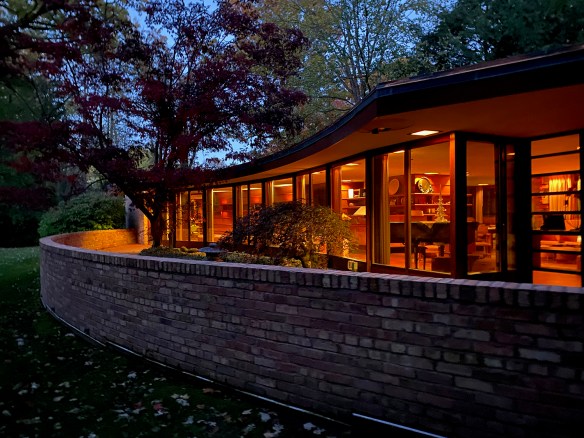
Every Christmas the house is decorated as if the Laurents were still living there, even using their Christmas ornaments on an artificial tree. There are still parts of the Laurents’ voluminous archives yet to unpack. “At some point it will be exactly how the Laurents had it with their personal decorations,” says Jerry.

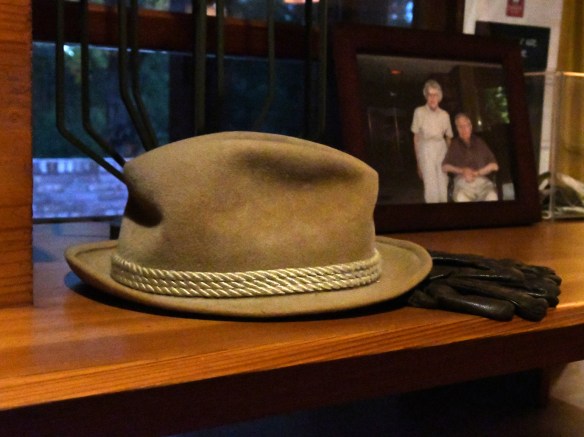
Barb died in early 2023, and Jerry carries on, with dedicated volunteers from the Foundation. Laurent House is now a house museum, meticulously presented as it was when the Laurents lived there. Ken’s hat and gloves are on a shelf in the entry way, as if he had just come home from the office. His wheelchair is pulled up to the desk with his typewriter sitting on it. Another wheelchair lets visitors experience the house as he would have, rolling from room to room, to see his perspective seated. Heinzeroth says, “The thing about this house and why we present it the way we are, why I am so adamantly meticulously about how we present it, is that he would not even let me come into the house if the house was not perfect. That was depth of respect he had for Wright. If you said something disparaging about Wright in this house, he would ask you to leave.”

Laurent WSA 2022.jpgJerry accepts the Wright Spirit Award to the Laurent House Foundation from Chuck Henderson and Barbara Gordon of the Frank Lloyd Wright Building Conservancy at the Palmer House during the 2022 annual conference in Chicago. / Photo by Anne Evans for the Building Conservancy

Postscript:

“He was my dear friend and constant mentor of all things Laurent House for nearly a decade. I am at a huge loss for that sounding board and also extremely honored that he selected me to be the one to carry on his vision and passion for the Laurent House.”

-Mary Beth Peterson, Executive Director, Laurent House Foundation

“Jerry was well-respected in the Wright community for his tireless efforts to make the Laurent House publicly accessible. Under his leadership, he inspired volunteers and supporters to raise significant dollars to acquire and restore the house, and to develop a visitors center. The Frank Lloyd Wright Building Conservancy awarded the Laurent House Foundation a Wright Spirit Award in 2022 to honor their preservation success. That would not have been a reality without the vision of Barbara and Jerry. Their memory will now live on in that house, which has such an important story to tell future generations.”

-Barbara Gordon, Executive Director, Frank Lloyd Wright Building Conservancy  

Laurent House Awards and Recognition

2015: Richard H. Driehaus Foundation Preservation Award in Advocacy from Landmarks Illinois

2015: Americans with Disabilities Act (ADA) 25th anniversary award for best restoration of an accessible house.

2022: Wright Spirit Award from the Frank Lloyd Wright Building Conservancy “For its commitment to preserving and sharing the legacy of Frank Lloyd Wright and Kenneth and Phyllis Laurent.”

Links:

Jerry Heinzeroth Newspaper Obituary:

https://www.rrstar.com/obituaries/pils0706577

The Laurent House:

https://laurenthouse.com/

Frank Lloyd Wright Building Conservancy:

https://savewright.org/

Wright’s “Little Gem” in Rockford, my 2021 history and photo tour of the house:

https://wrightinracine.wordpress.com/2021/12/04/wrights-little-gem-in-rockford/

Please scroll down on wrightinracine.com to read previous posts
Upstairs, Downstairs with Wright

Photos © Mark Hertzberg

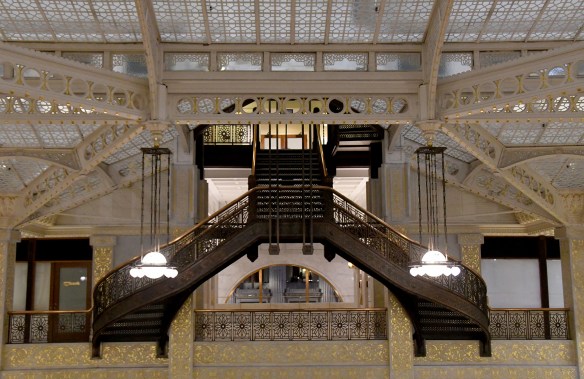
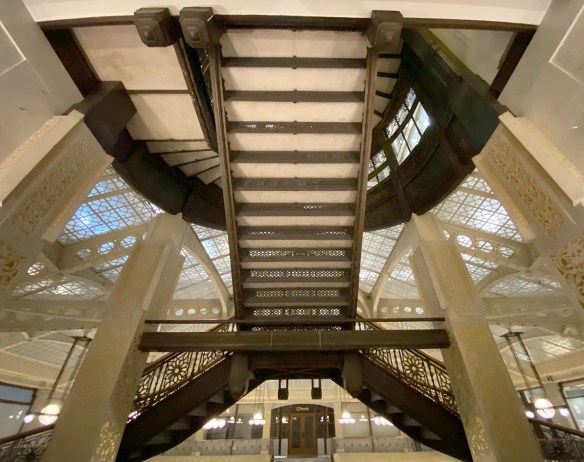
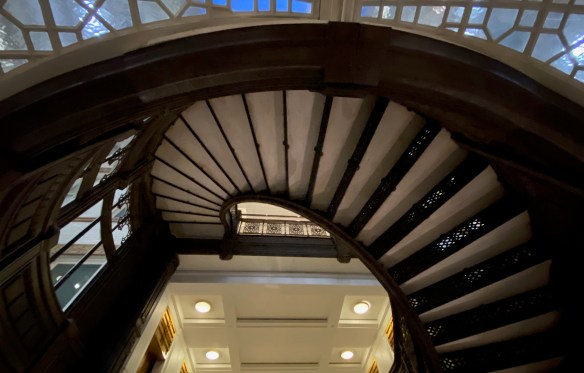
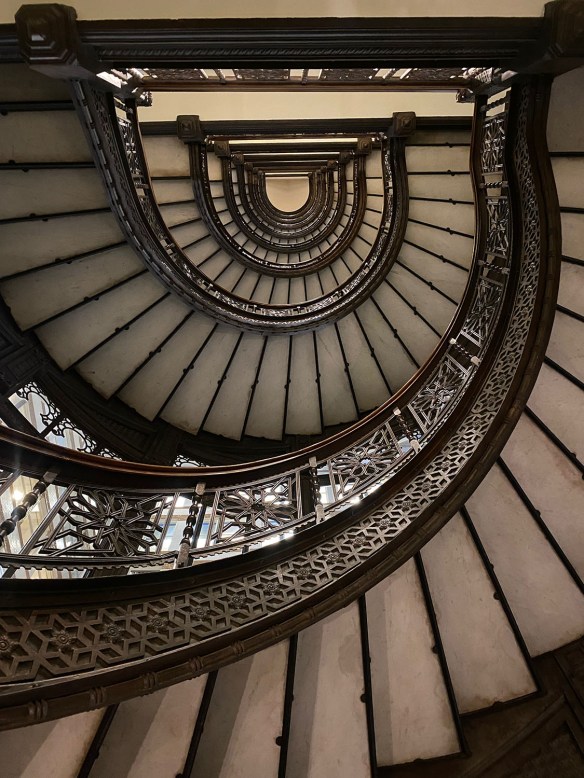
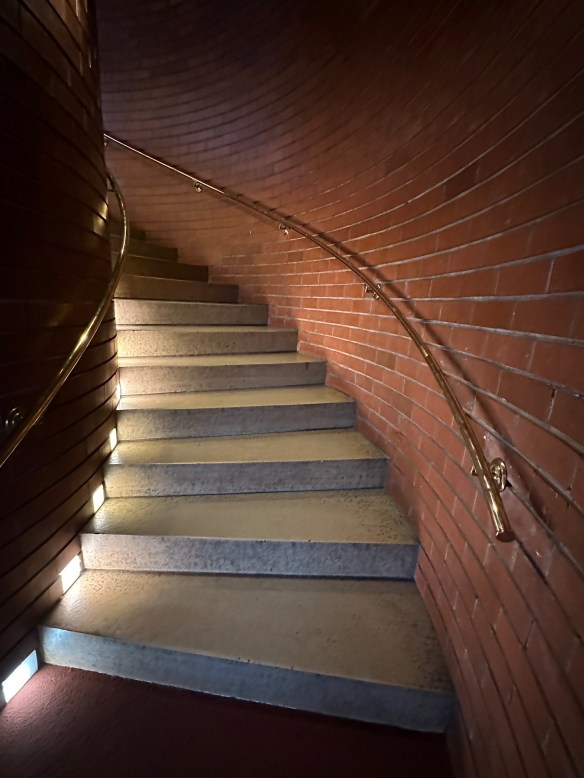
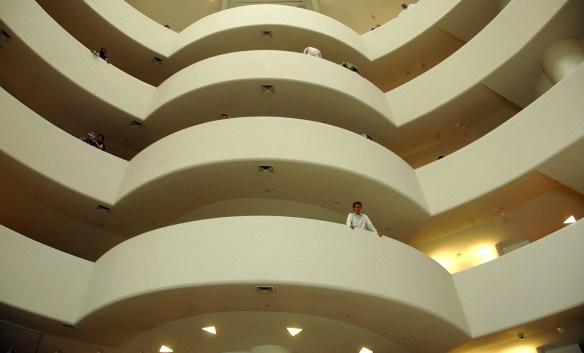
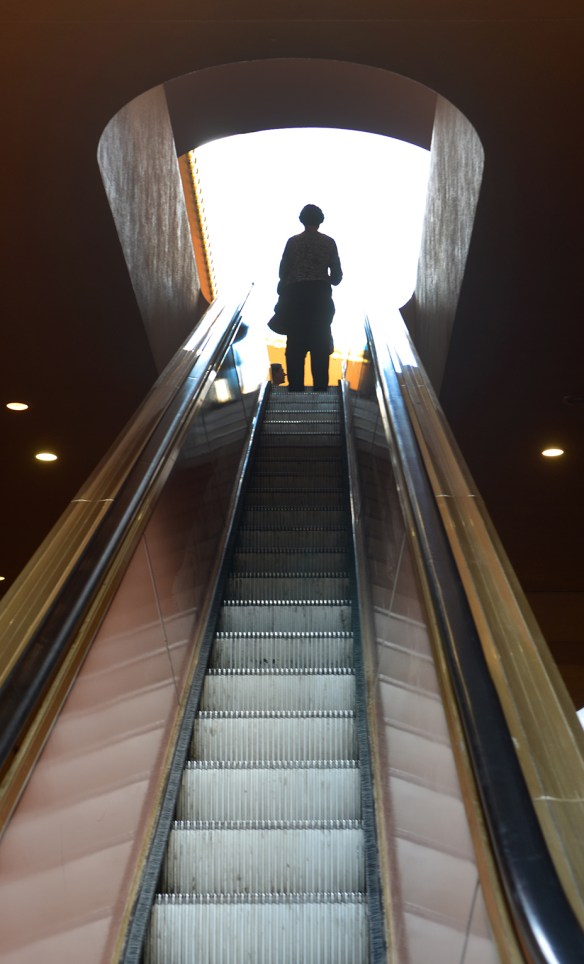
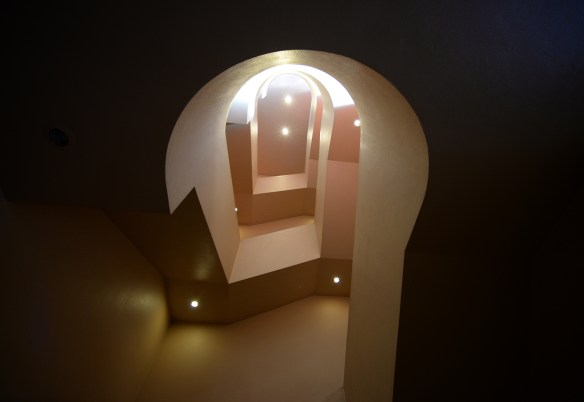
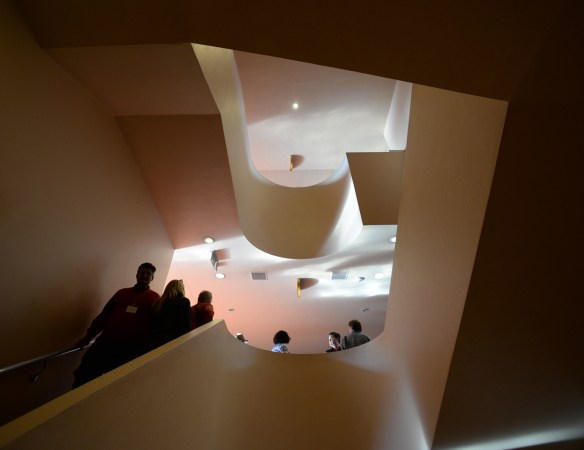
I may have stumbled on one of the only aspects of Frank Lloyd Wright’s work that has not been mulled over (and over and over) when I was editing pictures I had taken in October during the Frank Lloyd Wright Building Conservancy Conference in Chicago. Taking pictures in the lobby of The Rookery Building on LaSalle Street was a bit like the proverbial “shooting fish in a barrel.” You couldn’t miss. I started digging in my files to see what other photos I had that show how Wright moved people up and down in his buildings. Some ideas are repeated. The photos are presented in chronological order of design:

Charnley House, Chicago (1891):

Charnley House 026.jpg

Charnley House 029.jpg

Charnley House 033.jpg

Penwern (Fred B. Jones Estate), Delavan Lake, Wisconsin (1900-1903):

Penwern Living Room 022.JPG

Thomas P. Hardy House, Racine (1904/05):

Hardy House 001.JPG

Hardy House 002.JPG

The Rookery Building, Chicago (1905)

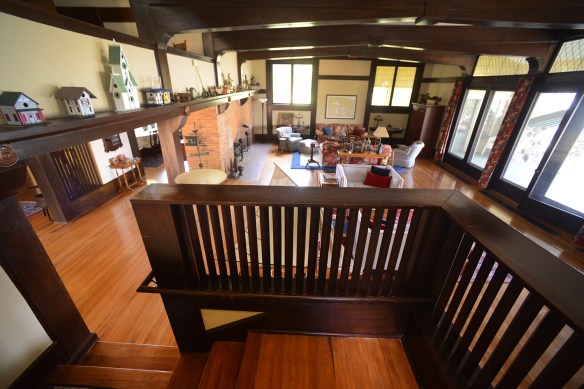
LR The Rookery 10.19.22 002.jpg

The Rookery 10.19.22 007.jpg

The Rookery 10.19.22 012.JPEG

The Rookery 10.19.22 015.jpg

The Rookery 10.19.22 018.jpg

Avery Coonley Estate, Riverside, Illinois (1908):

Coonley Estate 10.20.22 026.jpg

American System-Built Duplex in the Burnham Block, Milwaukee (1916):

Burnham 2022 061.jpg

Burnham 2022 062.jpg

Fallingwater, Mill Run, Pennsylvania (1935):

Fallingwater 078.jpg

Fallingwater 079.jpg

Fallingwater 076.jpg

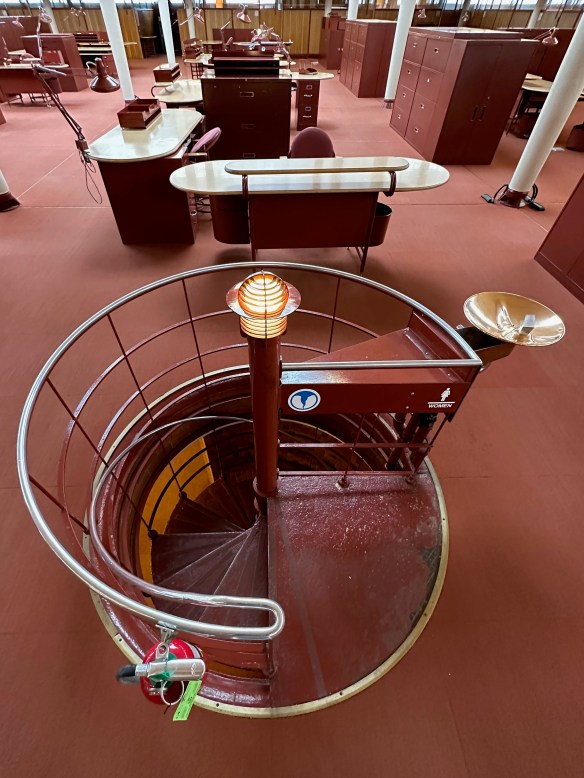
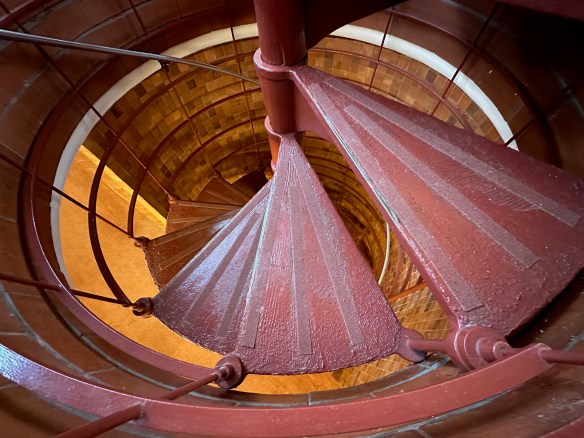
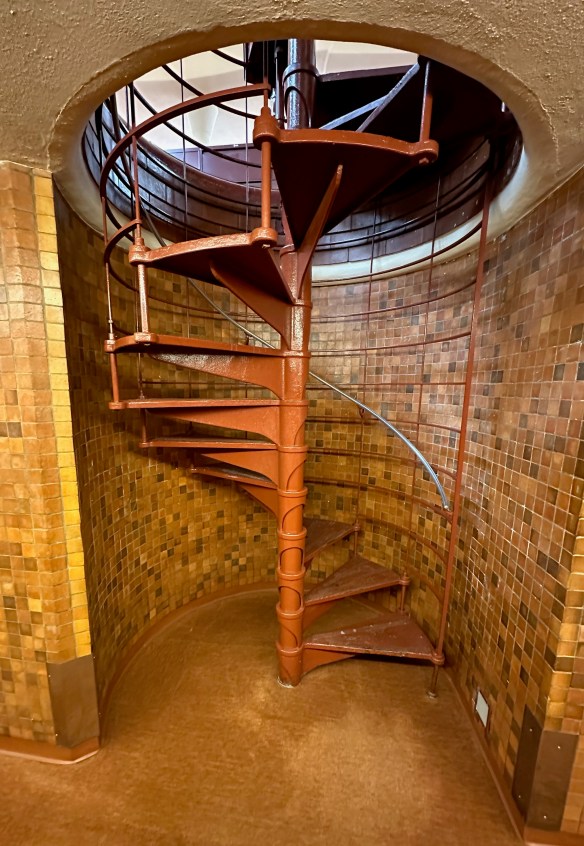
SC Johnson Administration Building, Racine, Wisconsin (1936)…stairs from the Great Workroom down to the women’s lounge:

SCJ Stairs 12.2.22 002.JPEG

SCJ Stairs 12.2.22 003.JPEG

SCJ Stairs 12.2.22 004.JPEG

SCJ Stairs 12.2.22 005.JPEG

SCJ Stairs 12.2.22 006.JPEG

SCJ Stairs 12.2.22 011.JPEG

SCJ Stairs 12.2.22 010.JPEG

SCJ Stairs 12.2.22 007.JPEG

SCJ Stairs 12.2.22 008.JPEG

SCJ Stairs 12.2.22 009.JPEG

Stairs from The Great Workroom up to the Mezzanine:

SCJ Stairs 12.2.22 012.JPEG

SCJ Stairs 12.2.22 014.JPEG

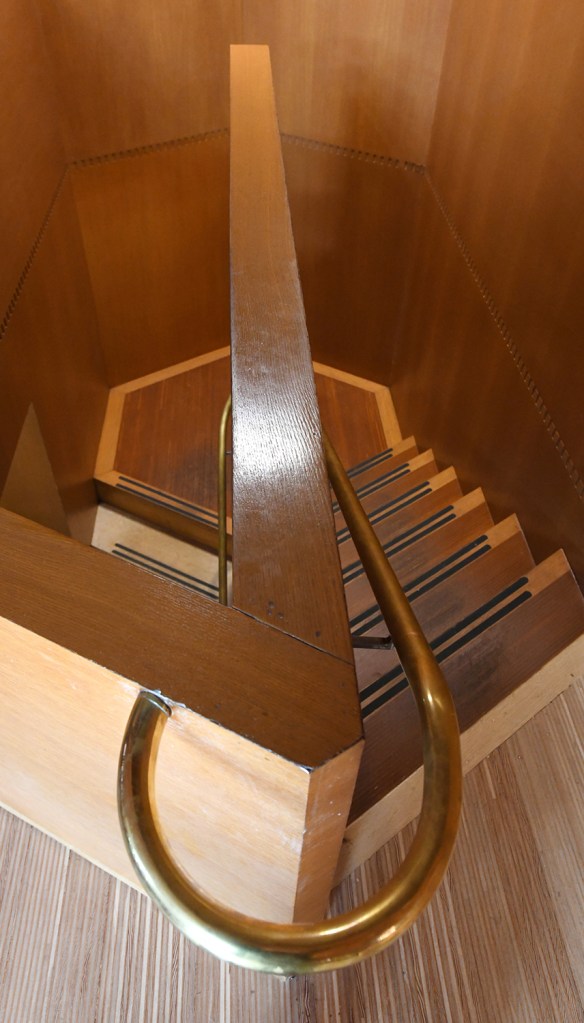
Wingspread (Herbert Johnson House), Wind Point, Wisconsin (1937)…stairs to the second floor:

Wingspread.jpg

Stairs to the Crow’s Nest lookout tower (these look like the one’s to the women’s lounge at the Administration Building designed the previous year):

Wingspread 4.17.21 010.jpg

SC Johnson Research Tower, Racine, Wisconsin (1943/44):SCJ Tower 4.14.14 062.JPG

Annunciation Greek Orthodox Church, Wauwatosa, Wisconsin (1956):

AGOC 2018 007.jpg

Guggenheim Museum, New York City (1956):

Guggenheim Museum 2017 031.jpg

Guggenheim Museum 09 027a.jpg

Marin County Civic Center, San Rafael, California (1957):

Marin County 2015 008.jpg

Marin County 2015 014.jpg

Marin County 2015 016.jpg

My thanks to SC  Johnson for giving me access to photograph their stairs today for this blog post.

Scroll down for earlier posts, including the recent “Frank Lloyd Wright in the Abstract.”


Hardy House: Gene Szymczak + 10

© Mark Hertzberg (2022)

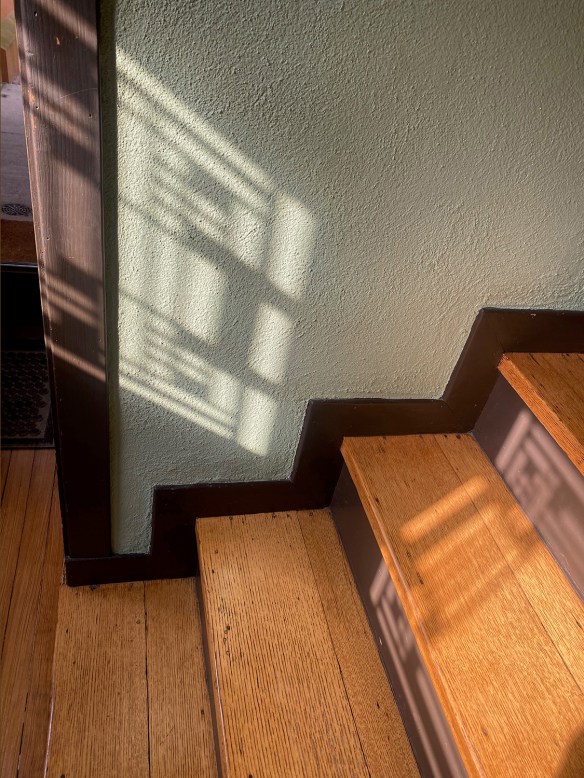
1319 Gene + 10 006.jpgSaturday’s afternoon sun projected the pattern of the entry hall windows onto the walls. Robert McCarter writes that the floor plan of the house is articulated in the windows.
Yesterday, September 17, marked the 10th anniversary of Eugene (Gene) Szymczak becoming the seventh steward of Frank Lloyd Wright’s Thomas P. Hardy House (1904-05) in Racine, Wisconsin. Gene fell ill and died December 3, 2016 after undertaking an extensive rehabilitation of the house. Its new stewards are Tom (one of Gene’s two brothers) and Joan Szymczak. Tom and Joan invited family to a low-key celebration of the anniversary on the dining room terrace yesterday. Anne Sporer Ruetz, who grew up in the house from 1938 – 1947 and two non-family couples were also invited.

Hardy Sale 022a.jpgGene signs papers transferring stewardship of the house to him, September 17, 2012.

I took Gene through the house, which was challenged, when he was considering buying it in 2012. As we left, he said to me, “I don’t have children. This is something I could do for Racine.” The late John G. Thorpe of the Frank Lloyd Wright Building Conservancy advised me to step back and let professional appraisers and others take over. I understood, but I wanted Jim and Margaret Yoghourtjian, the longtime stewards of the house to first meet Gene. I told Gene what kind of pastry to bring Margaret (chocolate-covered marzipan loaves). He also brought them a Japanese print reminsicent of a famous drawing by Marion Mahony of their house. We were having lemonade and cashews in their new apartment when Gene surprised us and made them an offer for the house. There was a glitch though, or so I thought, when the week before the closing Gene emailed me that he was having second thoughts…it would make a good teardown and he could build something with a three car garage underneath. I held off calling the Yoghourtjians to cancel the sale so I could get hold of Gene. It was two days before he called me back, from Baltimore Washington Airport, on his way to visit Fallingwater, “Just kidding!”

Anne has often told me that it was like watching movies when the pattern of the leaded glass windows was projected onto her bedroom ceiling and walls by the headlights of passing cars at night. She was delighted that the “movies” were playing in full force in the entry way as we arrived at the celebration yesterday:

1319 Gene + 10 002.jpg

1319 Gene + 10 004.jpg

1319 Gene + 10 007.jpg

Anne was a celebrity yesterday: one of the guests had brought a copy of my book about the Hardy House (Frank Lloyd Wright’s Hardy House, Pomegranate: 2006) and asked her to sign two pages with photos related to her:

1319 Gene + 10 019.jpg

1319 Gene + 10 020.jpgThis photo of Anne’s 14th birthday party at the Frank Lloyd Wright-designed dining room ensemble (which was lost after her parents sold the house) was in the Racine newspaper in 1946. She is holding the cake at the head of the table.
Coincidental with the celebration, a new Wright website, which I was not familiar with, pinged this morning to a piece I posted in 2014 about Gene’s work at the house:

https://wrightinracine.wordpress.com/2014/02/17/hardy-house-restoration/

The new website is:

https://franklloydwrightsites.com/hardyhouse/

Gene was honored with a Wright Spirit Award from the Building Conservancy in 2015, and the Kristin Visser Award for Historic Preservation in 2017.

I posted this piece a year ago when Anne and David Archer, who grew up in the house between 1947 – 1957 were reunited at the house:

https://wrightinracine.wordpress.com/2021/06/13/hardy-homecomings/

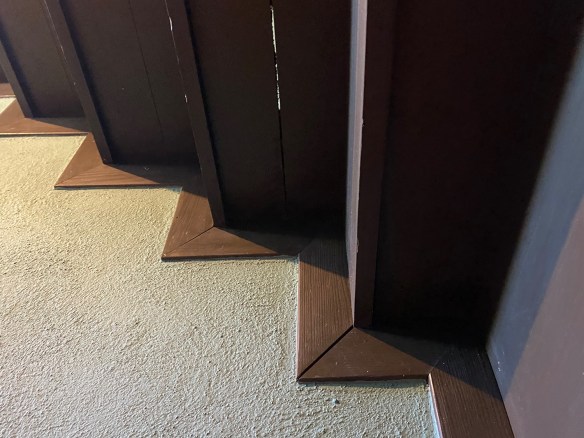
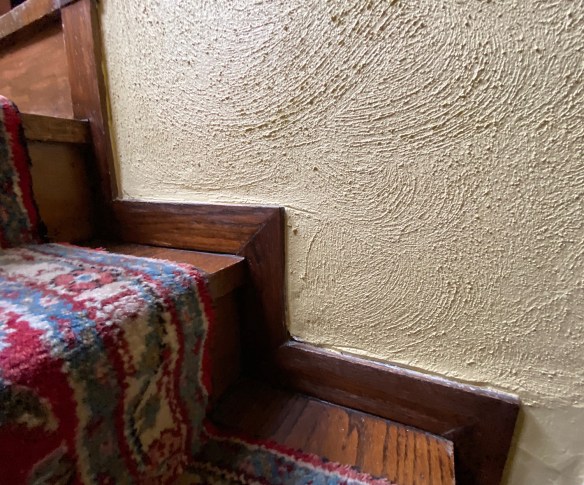
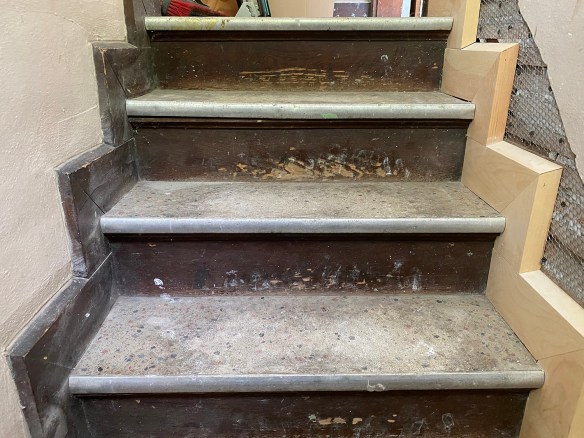
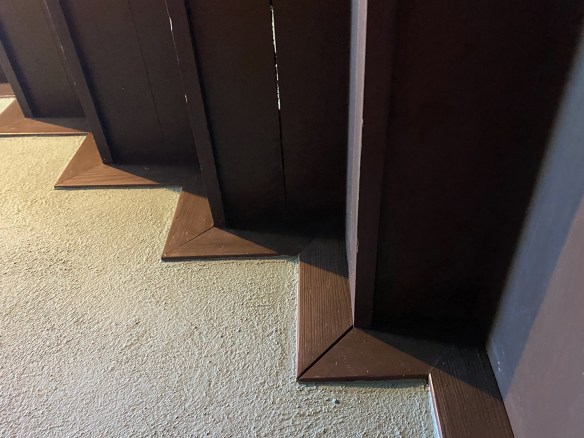
I challenge myself each time I visit a familiar Wright site to find something new to photograph. A week ago, before I was escorting my fourth Road Scholar tour of the summer, I told my wife that I was having trouble seeing anything new the first three tours of this year and was almost considering not even bringing a camera with me (these were my 10th – 13th tour with the same itinerary since 2017). I looked up as I was bringing our guests down to the dining room and looked at the bottom of the stairs to the living room for the first time. Out came the phone camera:

Hardy House Stairs 001.jpg

The Road Scholar “Architectural Masterworks of Frank Lloyd Wright” tour is a week-long and begins in Chicago:

https://www.roadscholar.org/find-an-adventure/22976/architectural-masterworks-of-frank-lloyd-wright