A Spring Evening at Penwern

© Mark Hertzberg

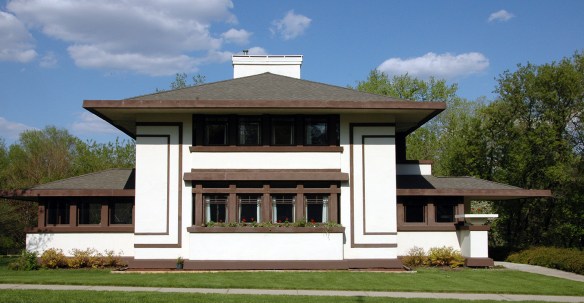
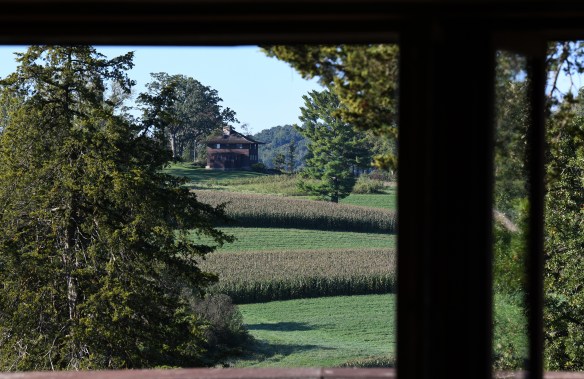
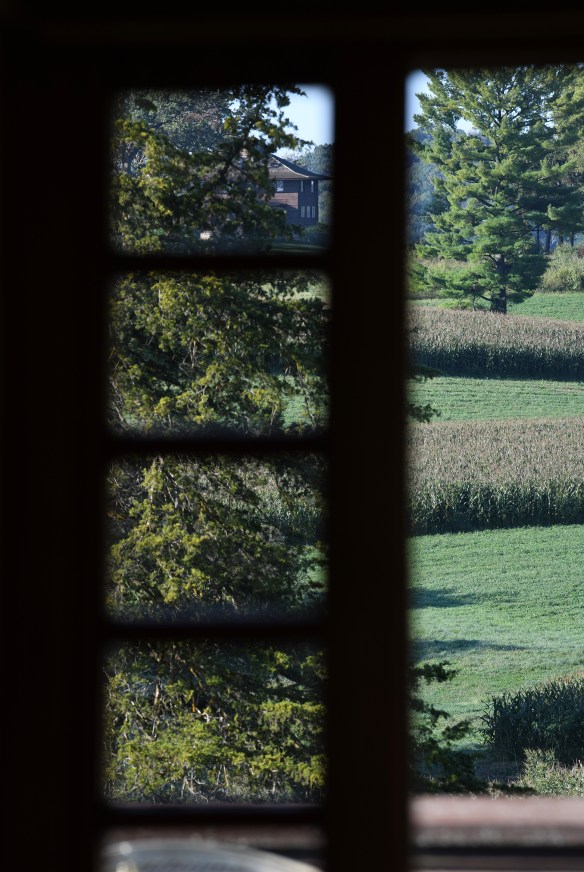
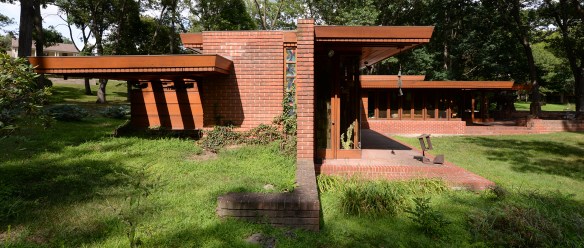
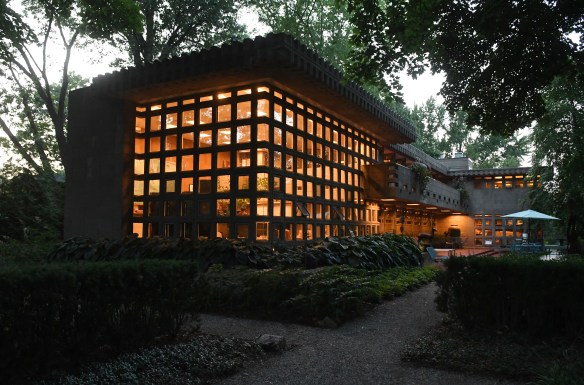
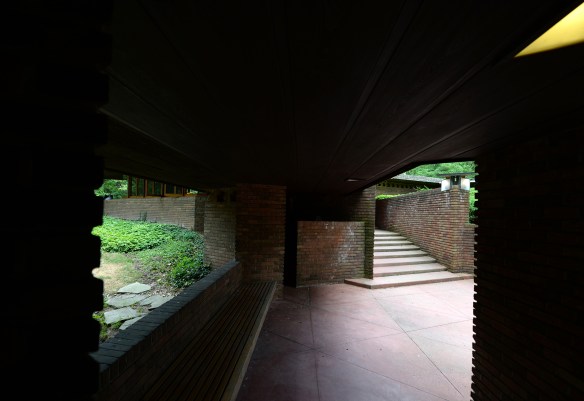
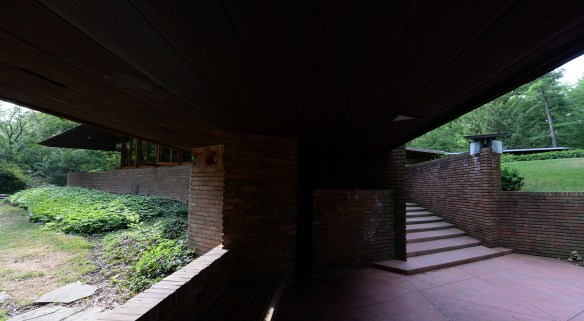
Fred B. Jones commissioned Frank Lloyd Wright to design Penwern, a magnificent estate on the South Shore of Delavan Lake, Wisconsin in 1900-1903. Wright designed five homes and a yacht club on the lake, but Penwern was his most expansive commission there: Wright designed not only the “cottage” (the main house), but also a boathouse, stable, and gate lodge.
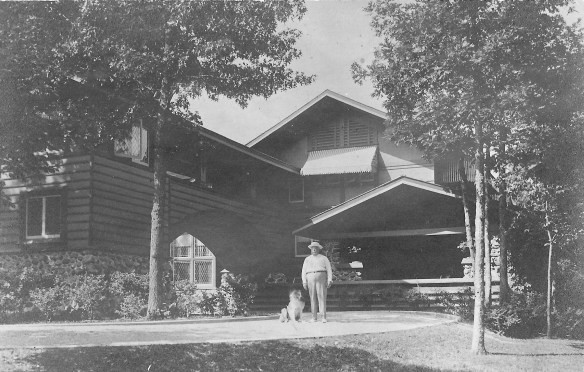
FBJ @ Penwern 1.jpegThis is the only known photo of Jones at Penwern. He is thought to be about 65 years old when it was taken, around 1923. Courtesy Sue and John Major

Entertaining friends is the theme that unites all of Penwern’s stewards. Jones was a Chicago business executive. He enjoyed entertaining at his summer home until he died in 1933 at age 75. Boating is an obvious form of recreation, but one of the signature features of Penwern is the tower at one end of the porte-cochère. The room at the end of the walkway from the main house, a walkway above the porte-cochère, was the room where Jones and friends played poker.
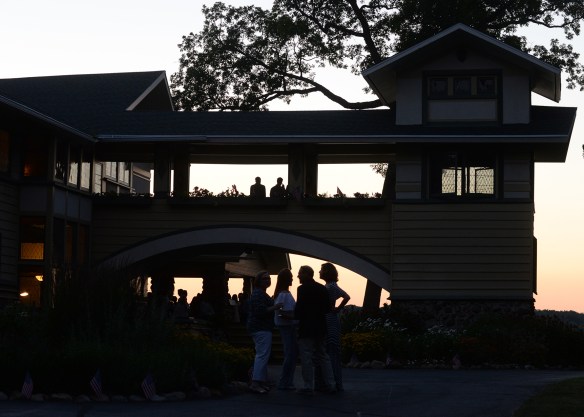
Enertaining Main House Major 014.jpgSue and John Major host a party every July 4.

Entertaining Burr R white coat 002.jpgBurr Robbins, in white suit, often hosted business clients. He and his wife, Peg, became the second stewards of Penwern in 1939. Courtesy Ross Robbins
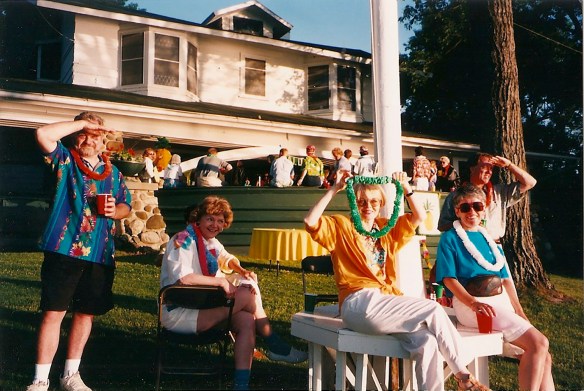
O'Shea Luau Party 1.jpgJohn O’Shea hosted an “Aloha! Party” in 1994 when he sold Penwern to the Majors. Photo courtesy of John O’Shea.

Sue and John Major became the stewards of Penwern in 1994. Their rehabilitation of the estate is well known in Wright circles: they removed the two unsightly 1909 and 1910 non-Wright additions that Jones commissioned; in 2005 they rebuilt the boathouse which had burned down in 1978 in an arson fire, working from a single sheet of Wright’s plans; they finished John O’Shea’s project to have the three main porches have round outer walls, per Wright’s plans; they overhauled the stable and gate lodge…and anything else dilapidated or altered. Let’s consider the boathouse:
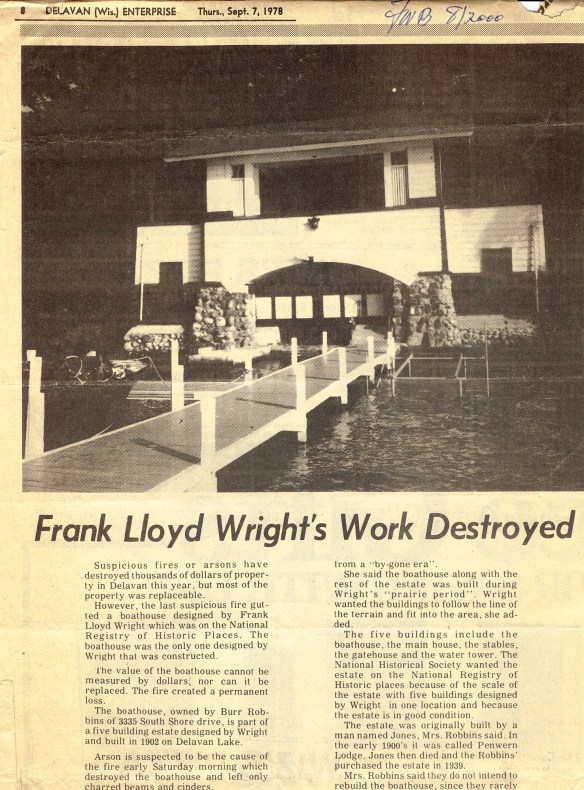
Boathouse Fire Newspaper.jpg

Boathouse ruins 4.15.jpgThis is how the foundation of the boathouse looked until 2005. Courtesy Bill Orkild
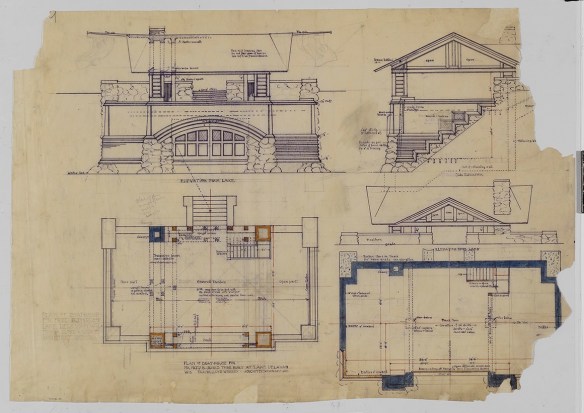
Boathouse.jpgThis is the sheet of drawings that Bill Orkild and architects had to work from. © 2022 Frank Lloyd Wright Foundation, Scottsdale, AZ. The Frank Lloyd Wright Foundation Archives (The Museum of Modern Art / Avery Architectural & Fine Arts Library, Columbia University, New York)
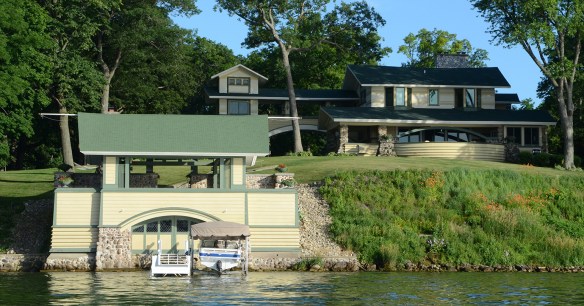
Boathouse & Penwern 011.jpg

When wizard contractor Bill Orkild was asked by the Majors to look at a small project shortly after they bought Penwern, he says, his father warned him that this small project might become a full time career. His father was prescient. As if the work outlined above weren’t accomplishments enough, and as if routine maintenance of the estate isn’t enough, the Majors came up with yet another restoration challenge in 2020, which brings us to a spring evening at Penwern in 2022. Jones loved growing roses, and Wright gave him a commercially-built greenhouse attached to the gate lodge water tower, right:
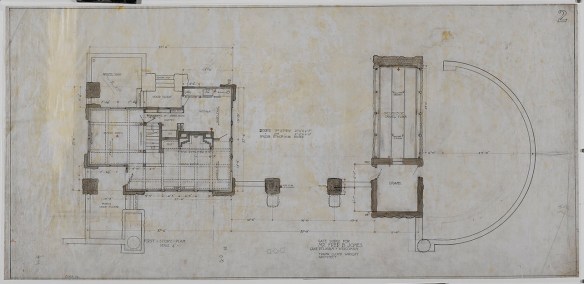
Gate Lodge 1st floor, Greenhouse, Curved Wall.jpg© 2022 Frank Lloyd Wright Foundation, Scottsdale, AZ. The Frank Lloyd Wright Foundation Archives (The Museum of Modern Art / Avery Architectural & Fine Arts Library, Columbia University, New York)
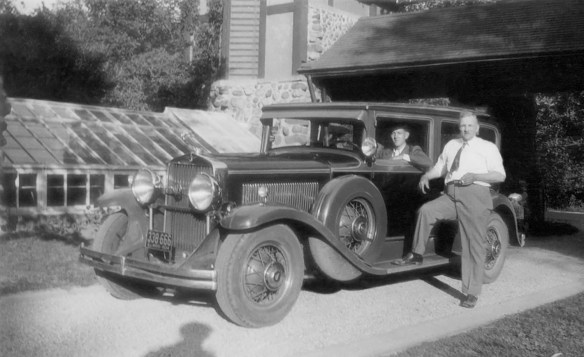
Historic_Scan_10aa.jpgMembers of the caretakers’ family are shown near the greenhouse, in a photo taken ca. 1935. Photo courtesy of Betty Schacht.

The greenhouse had deteriorated by the 1970s and was replaced with a carport by Terry Canty, the Robbins’ daughter:
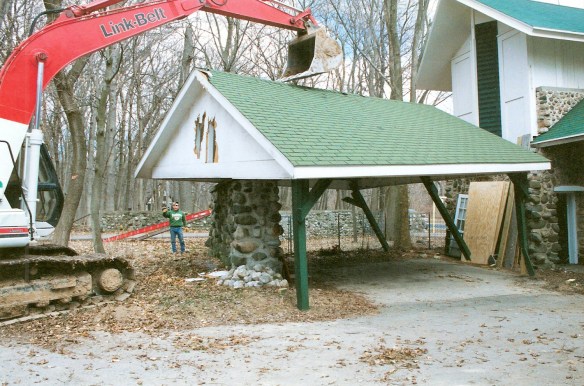
Canty Carport removal.jpgPhoto courtesy of Bill Orkild

The Majors had Orkild remove the carport, but for years the space looked like a Jack o-lantern with a missing tooth:
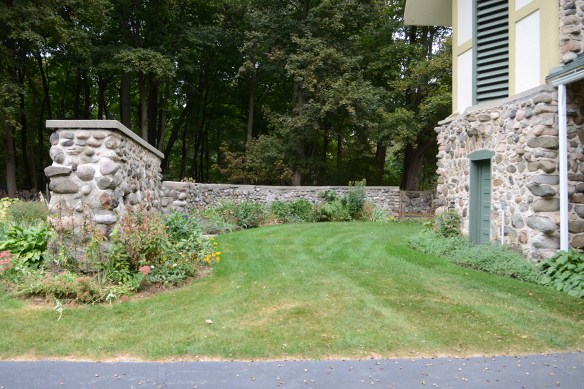
Gate Lodge Greenhouse 001.jpg

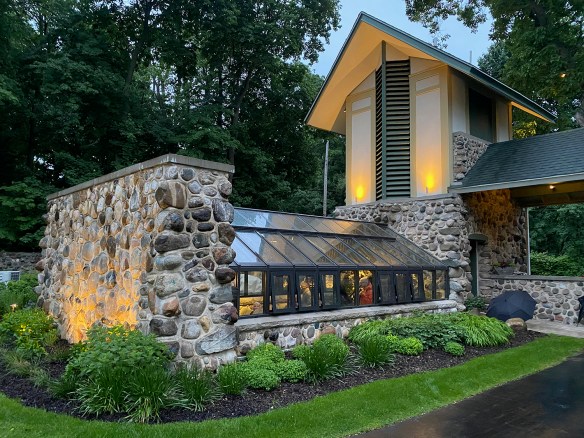
There was, of course, only one Major / Orkild solution, and that was to rebuild the greenhouse in 2020. Plans were drawn by DePietro Associates:

DePietro Greenhouse 1 Side Elevation.jpg

Greenhouse Wall Rebuild 037.jpg

Greenhouse Wall Rebuild 042.jpg

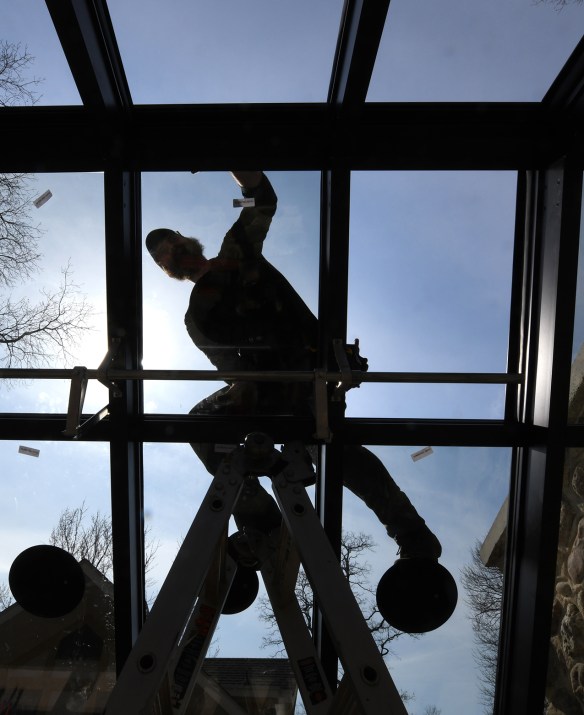
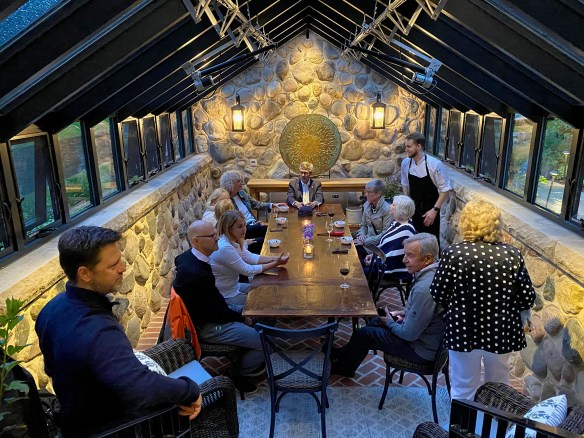
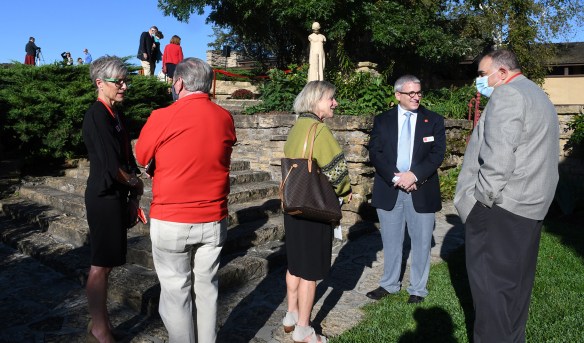
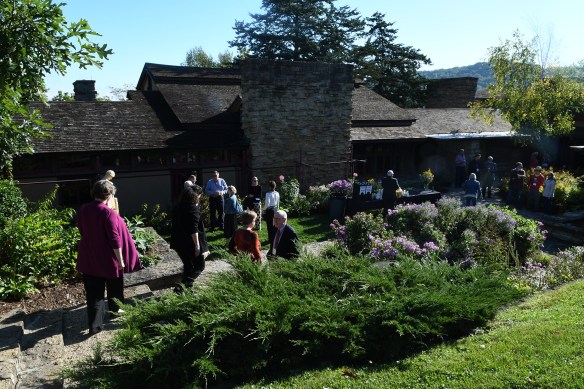
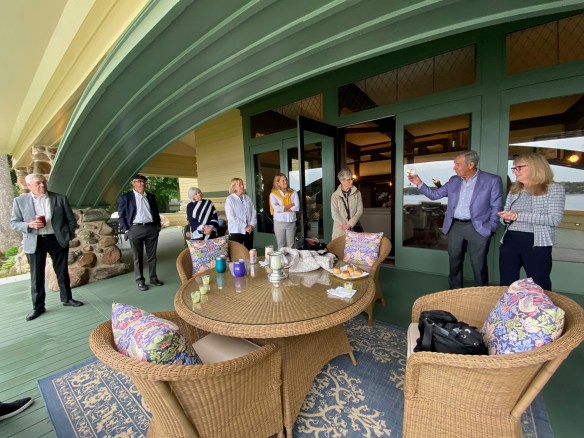
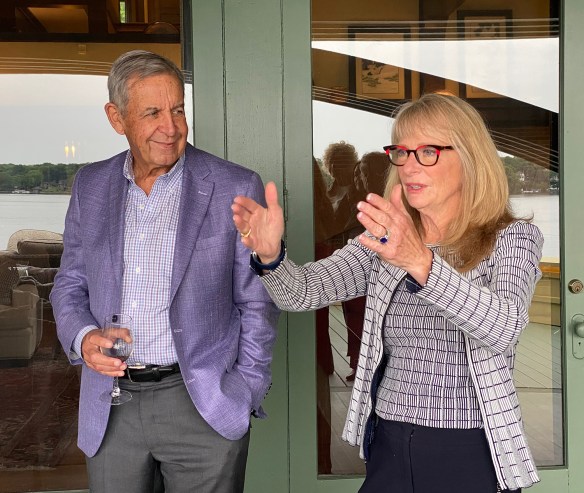
The Majors made one significant change. Rather than use the greenhouse as, literally, a greenhouse, it would be a place to entertain friends. Work started before, and continued through the early days of the Pandemic. Finally, in 2022 it was time for the new greenhouse to shine, and shine it did on June 4 when the Majors hosted a benefit evening for the Frank Lloyd Wright Building Conservancy:
Greenhouse Rebuild 062.jpg

Majors 002.jpgMajors 001.jpg

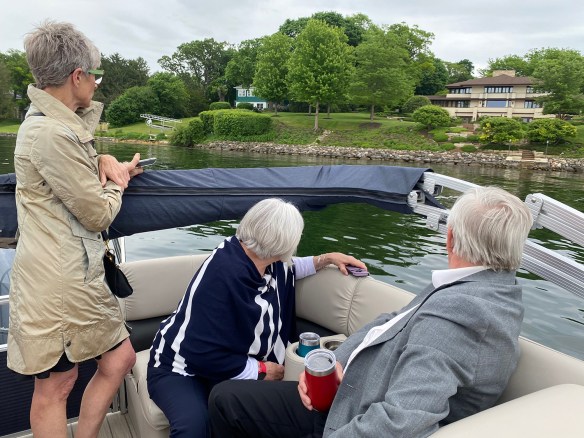
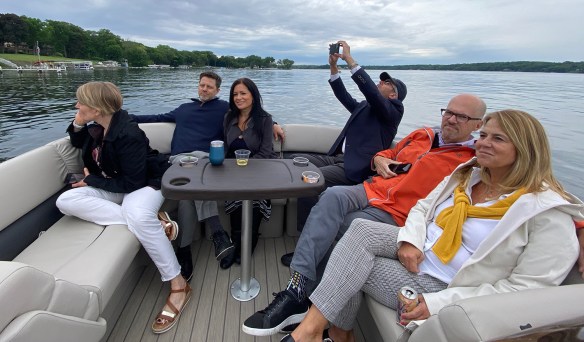
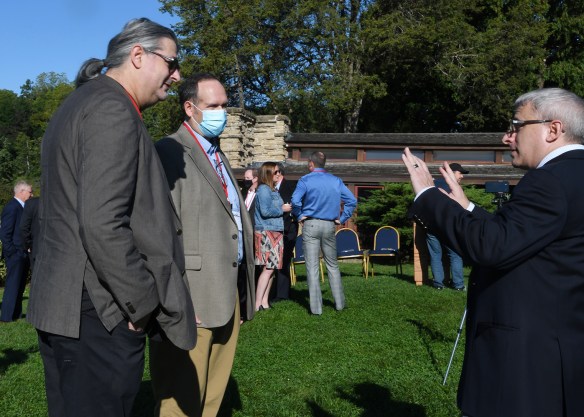
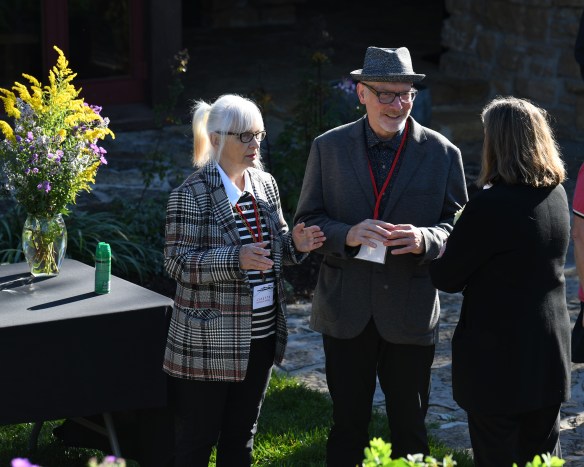
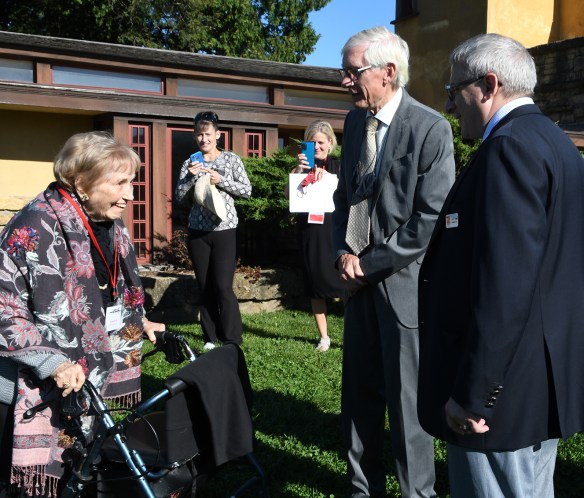
Guests at the benefit came from across the country. The evening started with a boat tour on the lake, giving guests a lake-side view of the five Wright homes including the A.P. Johnson House:

Penwern Party 2022 012.jpgKimberly Valentine, Frank Lloyd Wright Foundation, left; Debi and Ted Muntz, Loveness House, Stillwater, Minnesota.

Penwern Party 2022 011.jpgBarbara Gordon, Executive Director, Frank Lloyd Wright Building Conservancy, left; Paul May and Heidi Ruehle (Ruehle is Executive Director Unity Temple Restoration Foundation); Chuck Henderson, Walker House, Carmel-by-the-Sea, California; Steve and Debra Poe, William E. Martin House, Oak Park.

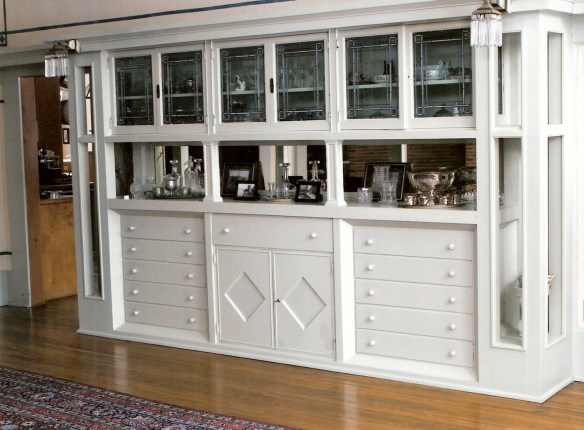
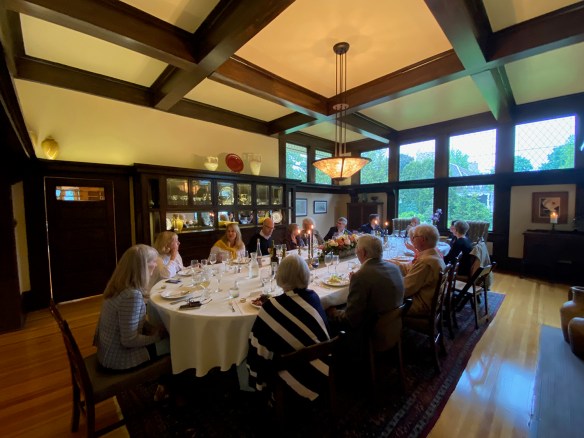
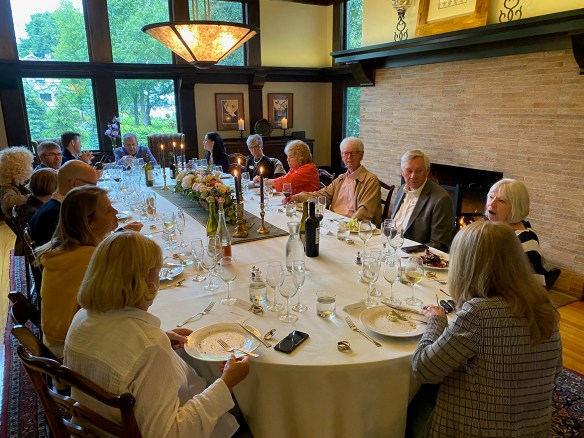
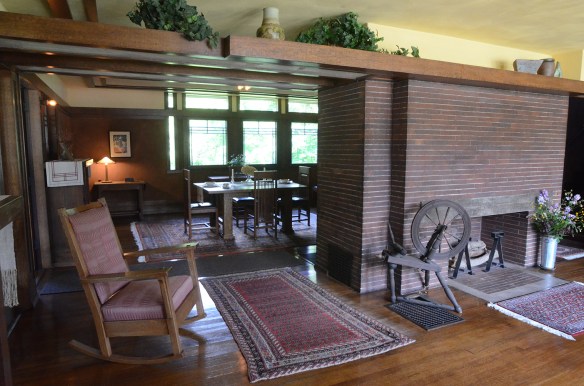
The boat tour was followed by an elegant gourmet dinner in the dining room. Note the dining room sideboard which was painted white, as was all the dining room trim, in the photo of Burr Robbins. Orkild restored it:

DR Hutch Before .jpgCourtesy Bill Orkild

DR Hutch During.jpgCourtesy Bill Orkild

Penwern Party 2022 007.jpg

Penwern Party 2022 006.jpg

Penwern Party 2022 005.jpg

Then it was off to the greenhouse for dessert:

Greenhouse Rebuild 063.jpg

And so, through the Majors generous gesture for the Frank Lloyd Wright Building Conservancy, ended another evening as Jones envisioned Penwern, friends gathered together on the shore of his beloved Delavan Lake.

Links:

Frank Lloyd Wright Building Conservancy:
https://savewright.org

Penwern website:

https://penwern.com

Continue to scroll down to read previous articles on http://www.wrightinracine.com


A chair and a desk: A legacy design

Photos ©Mark Hertzberg 2022

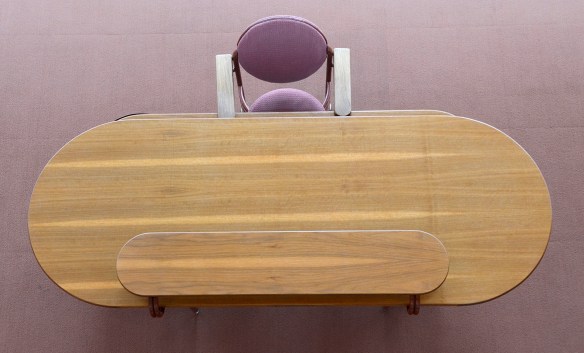
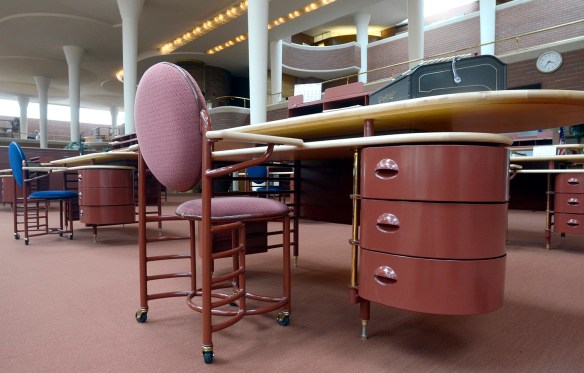
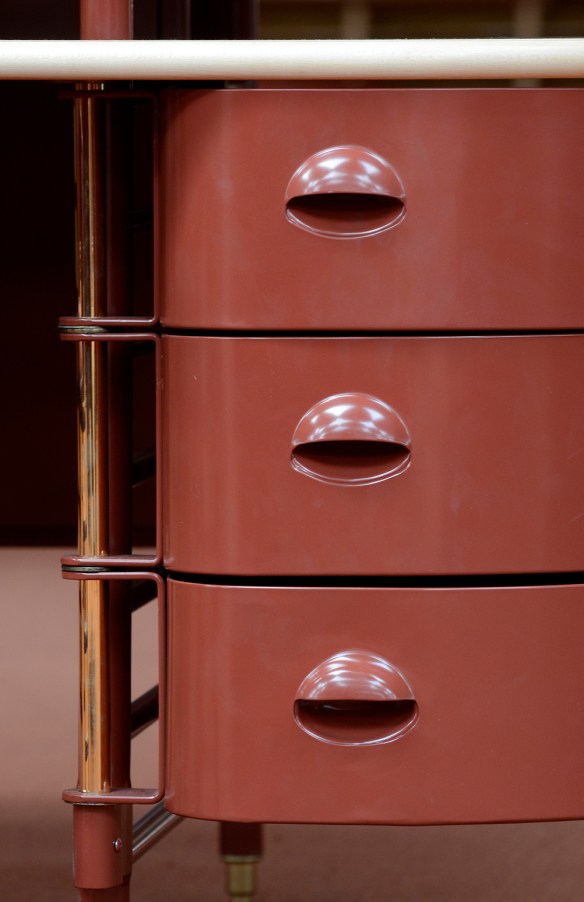
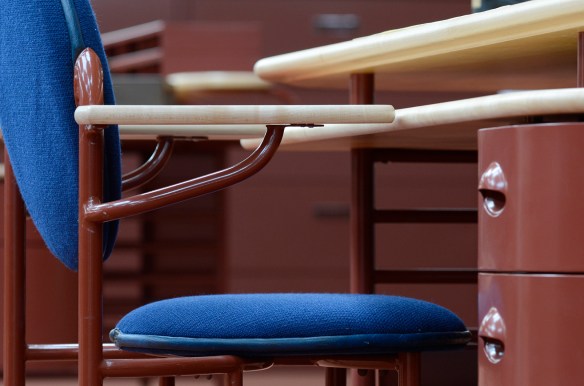
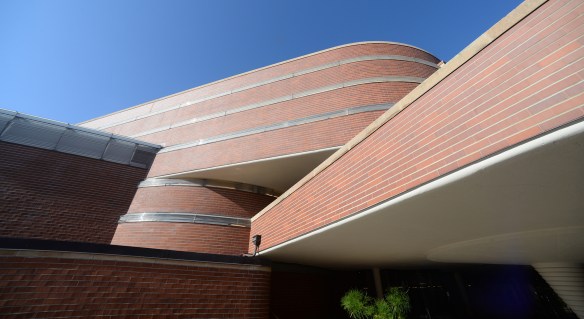
Steelcase and the Frank Lloyd Wright Foundation announced a new collaboration a week ago, in advance of Wright’s 155th birthday (June 8). The famous desk and desk chairs that Wright designed for the SC Johnson Administration Building (1936) in Racine, Wisconsin will get new life as Steelcase will “revisit, reinterpret, and reintroduce Wright’s designs, as well as co-create novel concepts rooted in his principles to provide products that enhance how we live and work today.”

The desks evoke the streamlined building itself:

LR SCJ Admin. Building 2015 028.jpg

LR Adm. Bldg. Furniture  Jun 2012 027a.jpg

LR Adm. Bldg. Furniture  Jun 2012 008a.jpg

LR Adm. Bldg. Furniture  Jun 2012 010.jpg

LR Adm. Bldg. Furniture  Jun 2012 016.jpg

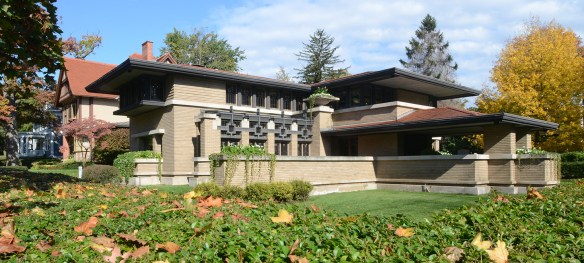
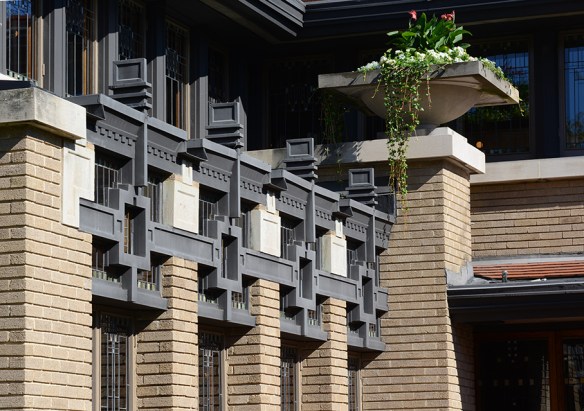
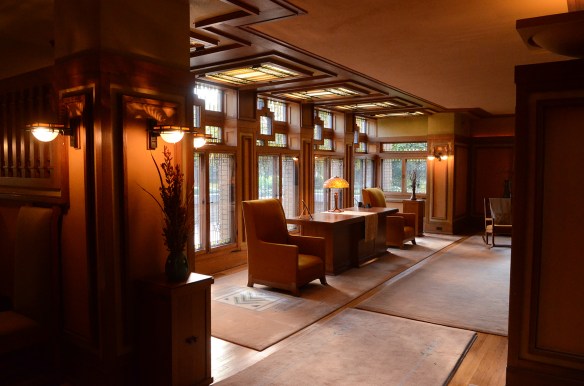
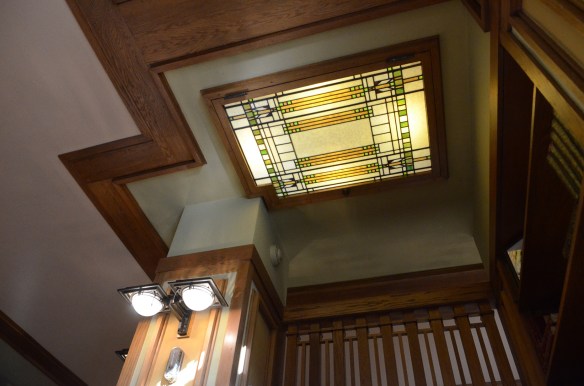
Steelcase showed its appreciation for Wright giving them this commission during the Great Depression, when they were known as the American Metal Furniture Company, by purchasing and fully restoring Wright’s Meyer May House (1908) near their company headquarters in Grand Rapids, Michigan. The restoration, under the direction of Carla Lind, took from 1985-1987. Steelcase also bought the house next door and made it into the visitors’ center for the Meyer May House:

LR Meyer May House 008.jpg

LR Meyer May House 003.jpg

LR Meyer May House 020.jpg

LR Meyer May House 054.jpg

LR Meyer May House 062.jpg

LR Meyer May House 106.jpg

LR Meyer May House 107.jpg

LR Meyer May House 109.jpg

LR Meyer May House 082.jpg

I thank Don Dekker of the Meyer May House for allowing Patrick Mahoney and me to photograph the house without other guests in it, during the Frank Lloyd Wright Building Conservancy conference in Grand Rapids in 2013.

The announcement about the collaboration between Steelcase and the Foundation:

https://www.prnewswire.com/news-releases/steelcase-and-frank-lloyd-wright-foundation-announce-new-creative-collaboration-301558528.html?utm_campaign=Wright%2BSociety&utm_medium=email&utm_source=Wright_Society_309

Meyer May House:

https://meyermayhouse.steelcase.com

Scroll down to see earlier blog posts or articles…

These Insects are Welcome

© Mark Hertzberg (2022)

If you thought that Taliesin wraps up your Frank Lloyd Wright and Spring Green experience, then you are missing a gem, just four miles on State Highway 23 from Taliesin.

LR Wyoming Valley School Aug 2021 020.jpg

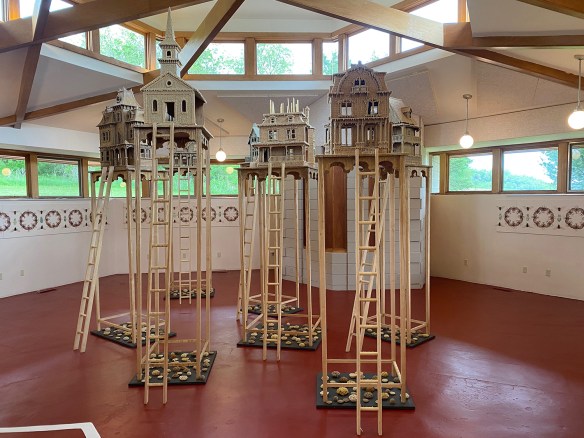
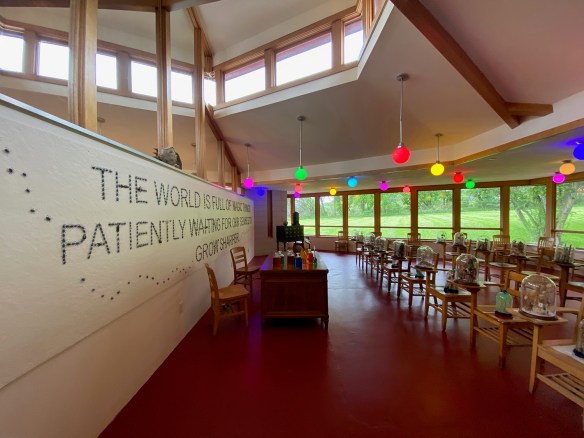
One of Wright’s last commissions, the Wyoming Valley School (1957) has vibrant new life under the leadership of David Zaleski, its new Executive Director. Rebranded as the Wyoming Valley Cultural Arts Center, there is just one more week to view “A is for Apple, B is for Bug, and C is for Cicada,” an art installation by Jennifer Angus.

Peter Rott, the principal at Isthmus Architects of Madison, shepherded an extensive restoration of the two-room schoolhouse. Significant work was done, most of it not visible. The obvious change is that the concrete blocks inside are no longer yellow, but, rather, a more natural color.

LR Wyoming Valley School Aug 2021 031.jpg

LR Wyoming Valley School 5.20.22 004.jpg

Now, onto the fun…Angus’ art installation:

LR Wyoming Valley School 5.20.22 006.jpg

LR Wyoming Valley School 5.20.22 007.jpg

LR Wyoming Valley School 5.20.22 011.jpg

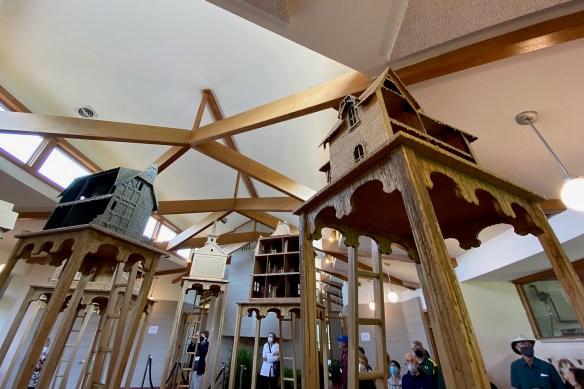
In the Assembly Room, dollhouses covered in beeswax are elevated to simulate how an insect might view them:

LR Wyoming Valley School 5.20.22 013.jpg

LR Wyoming Valley School 5.20.22 015.jpg

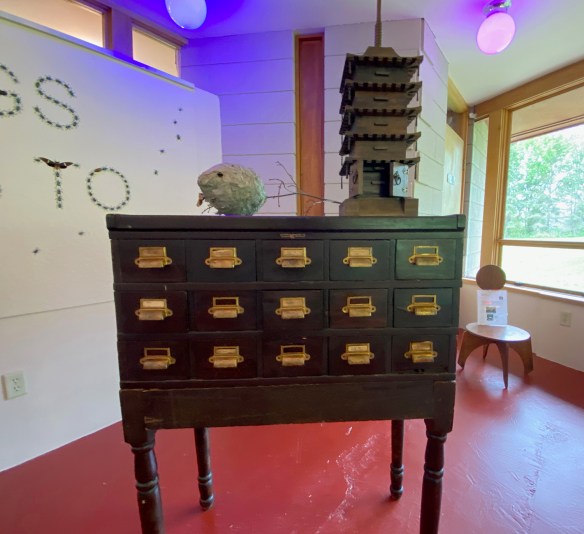
LR Wyoming Valley School 5.20.22 012.jpgRott found an old card catalogue cabinet.

The exhibit ends June 12, 2022, but it is a sign of the fun things that Zaleski will be doing in the school building. I am not a fan of people speculating what Wright might have thought, said, or done in a given situation, but I will take the liberty of thinking he would have been pleased with the school’s incarnation as a cultural center.

LR Wright Spirit Awards 2013 040.jpgRott has been honored in a number of Wright-related projects. He was honored with a Wright Spirit Award from the Frank Lloyd Wright Building Conservancy at its 2013 conference in Grand Rapids, Michigan.

http://www.wyomingvalleyschool.org

Rott and his Wright-related projects:

http://www.is-arch.com/projects/

Screen Shot 2022-06-05 at 5.32.19 PM.png

Go to www.wrightinracine.com and keep scrolling down to see previous posts on this website…
 

I want to book a tour…

© Mark Hertzberg (2022)

You plan your Frank Lloyd Wright tour. You reserve tickets on-line. You tour. You shop for souvenirs in the gift shop. You post to social media. You go home. Then it’s on to planning the next Wright visit.

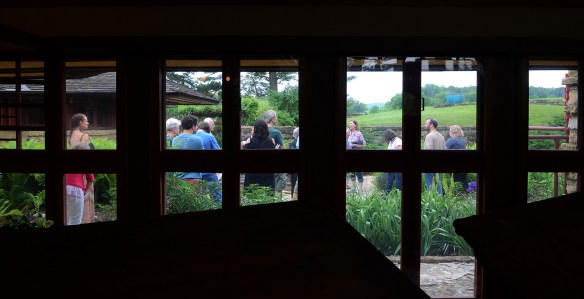
LR Touring Taliesin 001.jpgVisitors to Taliesin framed by the windows of the original drafting studio, 2018.
But a lot of strategizing and work behind the scenes went into your one or two-hour visit. It takes a lot of planning and, of course, money, to steward a public Wright site. Wright tourism has been redefined in the two years since the world and the World of Wright were enveloped by the pandemic. Virtual visits, something almost unheard of two years ago, are now common.

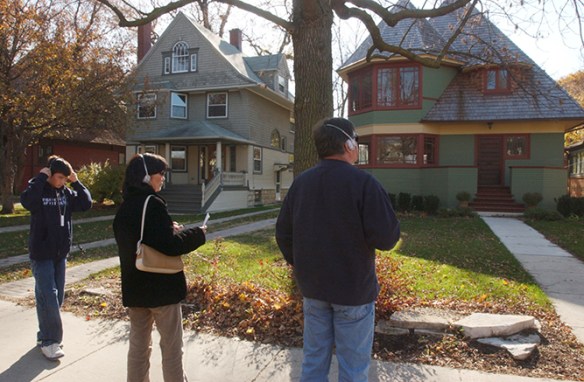
LR Wright tourists 006.jpgWright tourists are on a self-guided audio tour in Oak Park in 2005.

Are tours being monetized to pay staff and help maintain the property? What is the best way to enhance the visitors’ experiences while maintaining the integrity of the site? Is the site accessible to people with disabilities? If not, how can that be accomplished? What needs to done, now, to offer remote access to Wright sites?

LR Wright Tourism 014.jpgThe Hardy House, Racine, in 2013: weather can always be a wrinkle in travel plans.
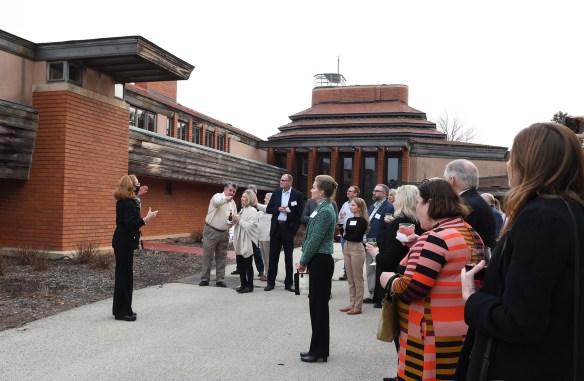
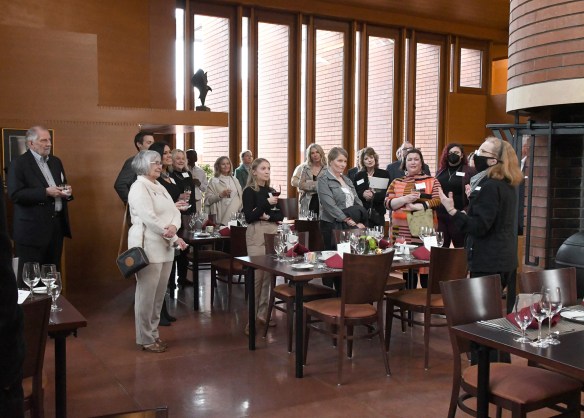
The biennial Wright Sites Directors’ Summit co-sponsored by the Johnson Foundation at Wingspread, the Frank Lloyd Wright Foundation, and the Frank Lloyd Wright Building Conservancy addresses questions like that. The 2020 meeting was to be held at Wingspread March 16, just as the world shut down. It was, of course, canceled. The event returned to Wingspread on March 14 this year, with 32 organizations and sites represented in person, and two remotely. The theme was Building On Our Strengths(One of the participating organizations was the National Endowment for the Arts, founded at a Johnson Foundation conference at Wingspread).

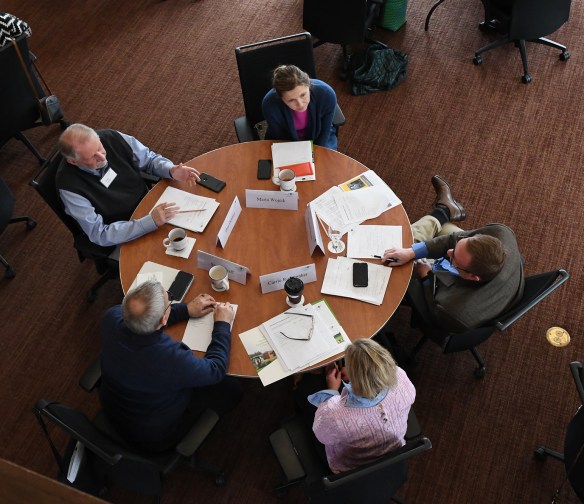
This was the first Summit that Mary Beth Peterson, Board Vice President and Director of Tours and Volunteers at the Laurent House in Rockford, Illinois has attended in person. I asked her for her thoughts about the conference. Her enthusiastic review follows these photographs of one of the work sessions.


LR 2022 Wright Sites Directors Conference 002.jpg

Amanda Thurmann-Ward gives conferees a tour of Wingspread.

LR 2022 Wright Sites Directors Conference 005.jpg

LR 2022 Wright Sites Directors Conference 010.jpgAnna Kaplan, Graycliff, Derby (Buffalo), N.Y.
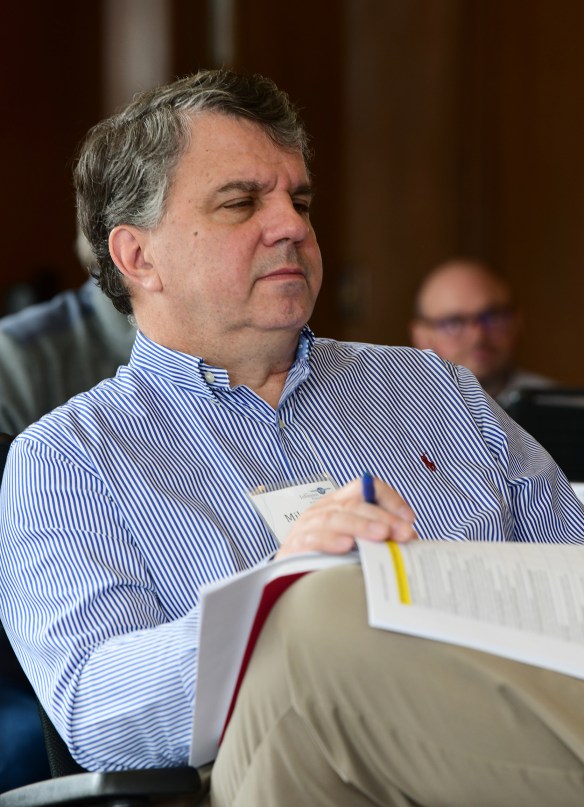
LR 2022 Wright Sites Directors Conference 013.jpgMike Lilek, Frank Lloyd Wright’s Burnham Block, Milwaukee
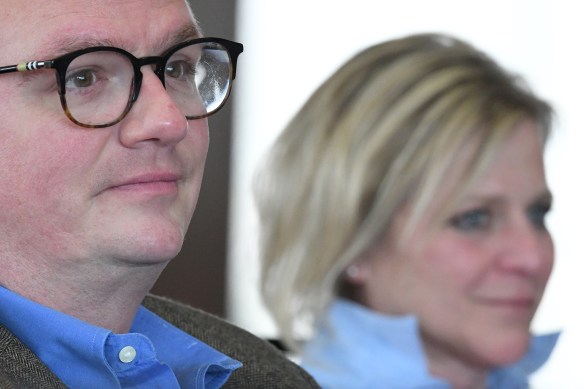
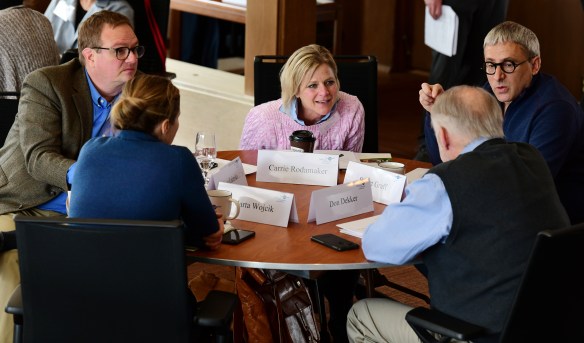
LR 2022 Wright Sites Directors Conference 015.jpgDave Zaleski, Wyoming Valley School Cultural Center; Carrie Rodamaker, Taliesin

LR 2022 Wright Sites Directors Conference 016.jpgGregory Wittkopp from Cranbrook (Smith House), Bloomfield Hills, Michigan
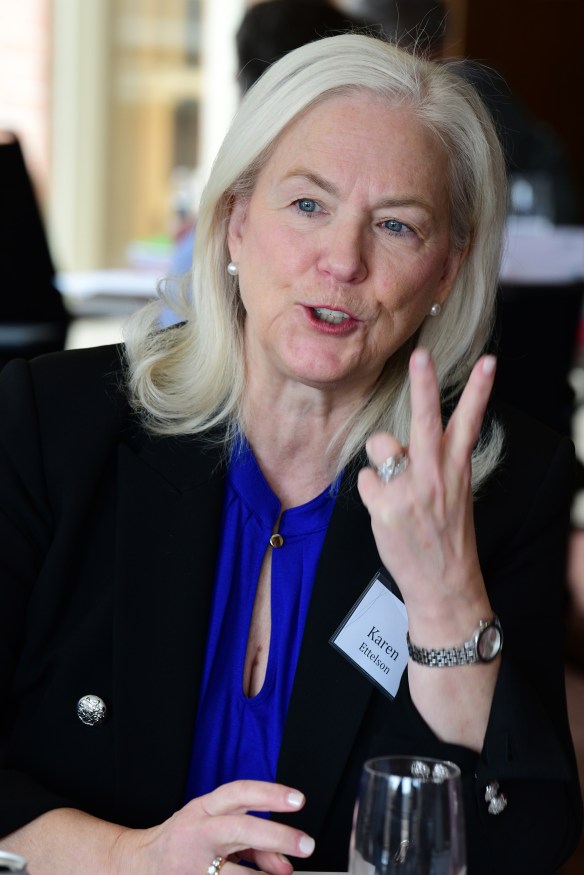
LR 2022 Wright Sites Directors Conference 018.jpgKaren Ettelson, Glencoe, Illinois Historical Society (Sherman Booth Cottage)
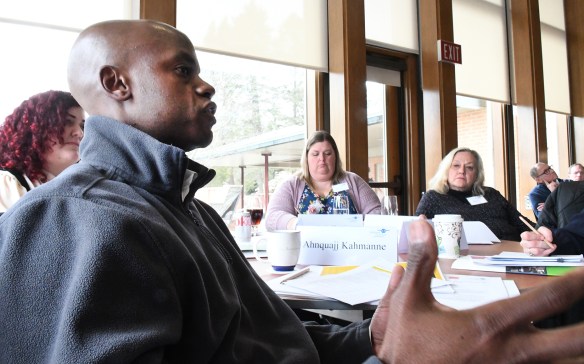
LR 2022 Wright Sites Directors Conference 019.jpgAhnquajj Kahmanne, Frank Lloyd Wright Trust (Chicago, Oak Park)
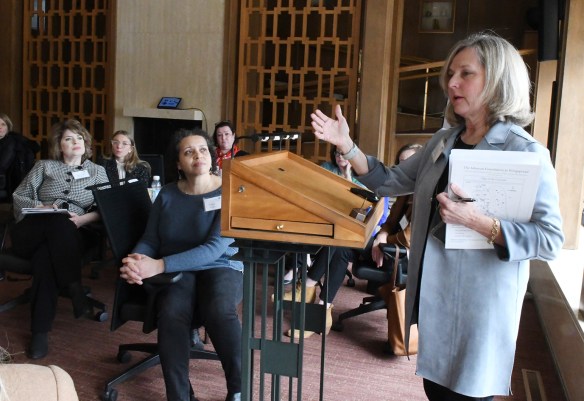
LR 2022 Wright Sites Directors Conference 024.jpgLibby Jordan, Rosenbaum House, Florence, Alabama

LR 2022 Wright Sites Directors Conference 025.jpgMary Beth Peterson, Laurent House, Rockford, left; Libby Garrison, Marin County Civic Center; and Tami Stanko, Affleck House, Bloomfield Hills, Michigan

LR 2022 Wright Sites Directors Conference 031.jpgKathryn Hund, Cedar Rock State Park, Lowell and Agnes Walter Estate, Quasqueton, Iowa, left; Peggy Bang, Wright on the Park, Mason City, Iowa; and Heidi Ruehle, Unity Temple Restoration Foundation, Oak Park
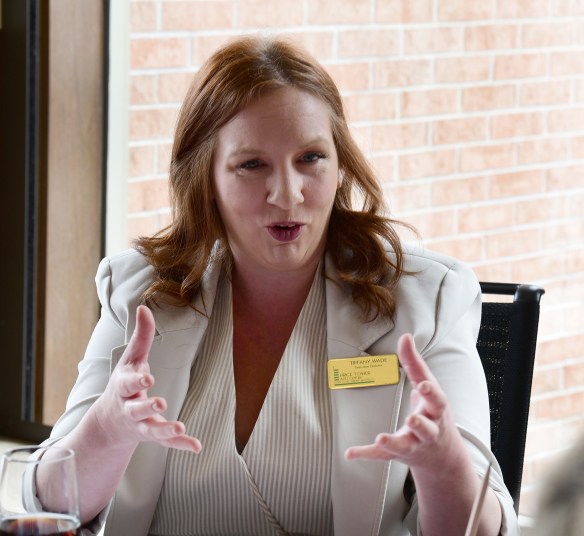
LR 2022 Wright Sites Directors Conference 036.jpgTiffany Wade, Price Tower, Bartlesville, Oklahoma

LR 2022 Wright Sites Directors Conference 041.jpgVivien Lasken from Fabyan Villa, Geneva, Illinois, left; Tiffany Wade, Price Tower; Kathryn Hund, Cedar Rock State Park, Lowell and Agnes Walter Estate, Quasqueton and, foreground, Ahnquajj Kahmanne, Frank Lloyd Wright Trust

LR 2022 Wright Sites Directors Conference 043.jpgStuart Graff, President and CEO, Frank Lloyd Wright Foundation
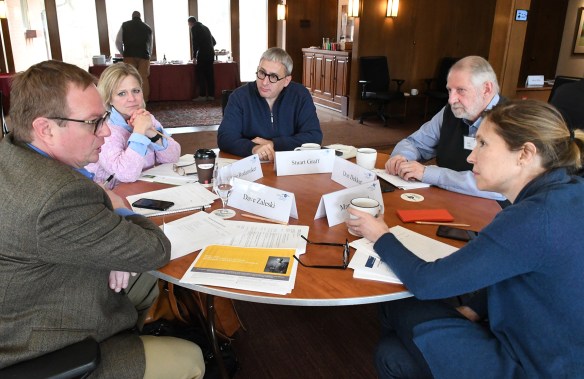
LR 2022 Wright Sites Directors Conference 046.jpgZaleski, left; Rodamaker; Graff; Don Dekker, Meyer May House, Grand Rapids, Michigan; and Marta Wojcik, Westcott House, Springfield, Ohio
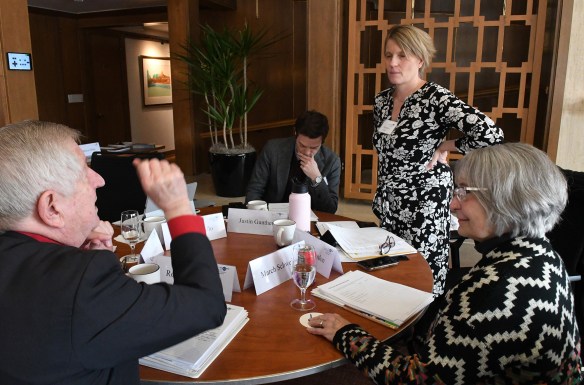
LR 2022 Wright Sites Directors Conference 050.jpg

LR 2022 Wright Sites Directors Conference 056.jpg

LR 2022 Wright Sites Directors Conference 051.jpgBob Bohlmann, Bradley House, Kankakee, Illinois, left; Justin Gunther, Fallingwater; Barbara Gordon, Executive Director, Frank Lloyd Wright Building Conservancy; and March Schweitzer, Unitarian Meeting House, Madison
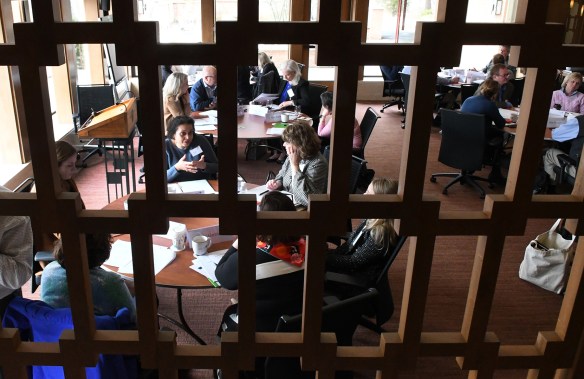
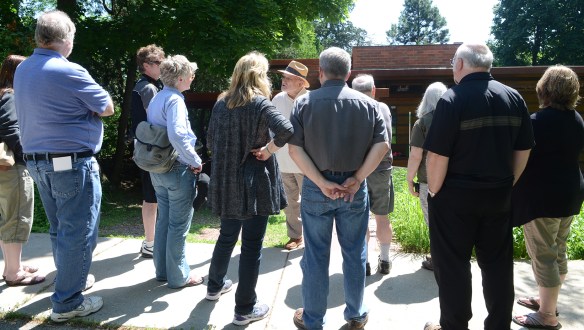
LR 2022 Wright Sites Directors Conference 052.jpg

LR W & L Jacobs 1 002.jpgVolunteer docent James Wardrip, center, tells visitors about Jacobs 1 in Madison.
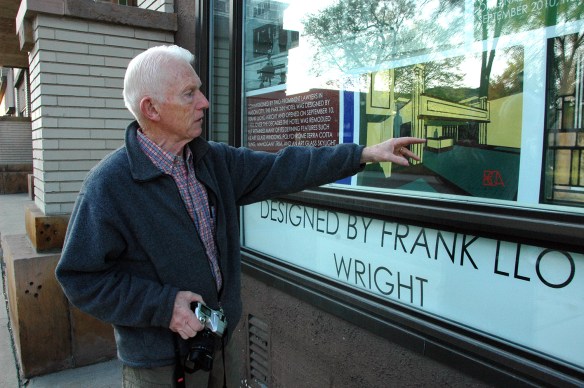
Links for the sponsors of the Summit:

https://www.johnsonfdn.org

https://franklloydwright.org

https://savewright.org

This year was my first year to attend – in person – the Wright Site Directors Summit Meeting at Wingspread. I did have the opportunity to attend virtually in 2021. The meeting far exceeded my expectations on all accounts. It was my first time to stay at the retreat center at Wingspread. From the moment I arrived, I felt that I was at a 5-star resort. The rooms were large with a breathtaking view of the landscape, a comfy bed with the finest of linens, and a spotless bathroom filled with spa-like bath products. The staff were all friendly and accommodating and everywhere I looked I was greeted with surprising amenities such as a kitchenette full of complementary drinks and snacks of all kinds – yes to Oreos as a bedtime snack! The living room area of the retreat center offered a large fireplace with an evening fire, books of all genres to enjoy – if only there had been more time – a bar for evening socialization with new friends, and a beautiful eating area with three walls of windows looking out onto the serene landscape at Wingspread. This meeting was my first time to tour Wingspread and the opportunity to enjoy fine dining in its Great Hall each evening was a particular highlight of my stay with each meal being my favorite meal. For all these reasons, I left wishing for one more day to relax and enjoy it all.

Of course, the real reason I was there was to learn and to connect with others in the Frank Lloyd Wright world of public sites. This, too, exceeded my expectations. The theme of the Summit Meeting, “Building on Our Strengths,” offered in-depth presentations on board governance, fundraising, identifying government opportunities, programming, and preservation documentation. These are all topics of extreme interest and importance to all of us working as executive directors or lead volunteers for our own Frank Lloyd Wright public site. The material for each session was informative and well presented. In addition to all I learned, I enjoyed connecting in person with so many whom I had only met virtually during the pandemic in 2020 and 2021. I immediately felt welcome and at home with these new friends.

As I left the Summit Meeting, I felt extreme gratitude for the opportunity to be there as a representative for the Laurent House and for the time I spent with other like-minded site leaders and friends. I also left in awe of the extreme generosity and hospitality of the Johnson Foundation in offering this tranquil place to the Frank Lloyd Wright public sites community for no cost. My only regret is that I must wait two years to do this again.

Mary Beth Peterson, Board Vice President and Director of Tours and Volunteers,

Laurent House – Rockford, IL


Bob McCoy – Giant of Wright in Mason City, with Addendum

© Mark Hertzberg (2021)

Dr. Robert McCoy, Bob to all of us in the World of Wright, died Sunday in Mason City, Iowa, his adopted hometown. He was 93. If you have visited the Frank Lloyd Wright – designed Historic Park Inn Hotel and City National Bank building in Mason City, Bob is one of the people to thank for it not having been demolished. If you have visited Wright’s Stockman House in Mason City, Bob is one of the people to thank for it not having been demolished. If… well, now you get an idea of why the architectural interpretive center near the Stockman House and the historic Rock Glen neighborhood was named in his honor.

Park Inn McCoy 08 002.jpgMay 16, 2008, Park Inn Hotel

Bob came to Mason City to join an orthopedic practice after school at Northwestern University in the 1950s. I do not recall what spurred his interest in architecture, but in 1968 he published a landmark history of Wright and Walter Burley Griffin’s work in Mason city in The Prairie School Review. Jonathan Lipman, an architect, Wright scholar, and a past board member of the Frank Lloyd Wright Building Conservancy, emailed me, “He was a wonderful man, Utterly humble, very smart, and dedicated.” And of the Prairie School Review manuscript, “It was a work of enormous research from primary sources, including an interview with Barry Byrne and others who were still living. Thorough, readable, and full of surprises. The book simply could not have been written as completely had it been written years later. And at the time that he wrote it, the subject was not of interest to the world. Wholly a work of one man’s passion.” Pat Mahoney, an architect, Wright scholar from Buffalo, and Building Conservancy board member, wrote this about the article, on the Building Conservancy’s “Wright Chat” site overnight: “I have found Bob’s 1968 article to still be one of the most informative pieces written about Mason City architecture.”

The Stockman House (1908) faced demolition in 1987 when the First United Methodist Church wanted the land it was built on for a parking lot. The River City Society for Historic Preservation was formed, and was able to purchase and move the house to its present location near Rock Glen. The New York Times ran a full picture page of the house move across town. It was restored and is now a house museum:

Stockman House 050.jpg

Stockman House 007.jpg

Stockman House 2010 017.jpgBob at the Stockman House, September 11, 2010.
https://www.stockmanhouse.org/robert-e-mccoy

I met Bob in 2004 at the Frank Lloyd Wright Building Conservancy conference in Madison, his camera in hand, as usual.

Conservancy Madison004.jpgBob, left, October 13, 2004, at the Gilmore House, Madison
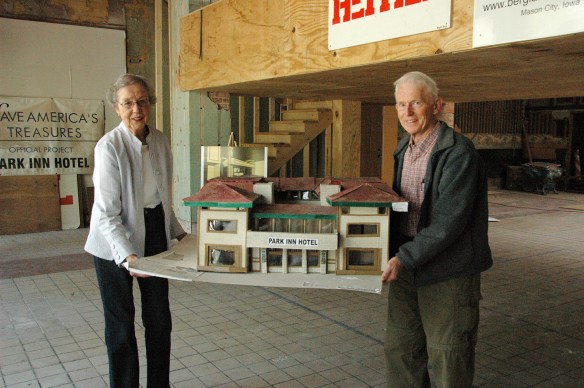
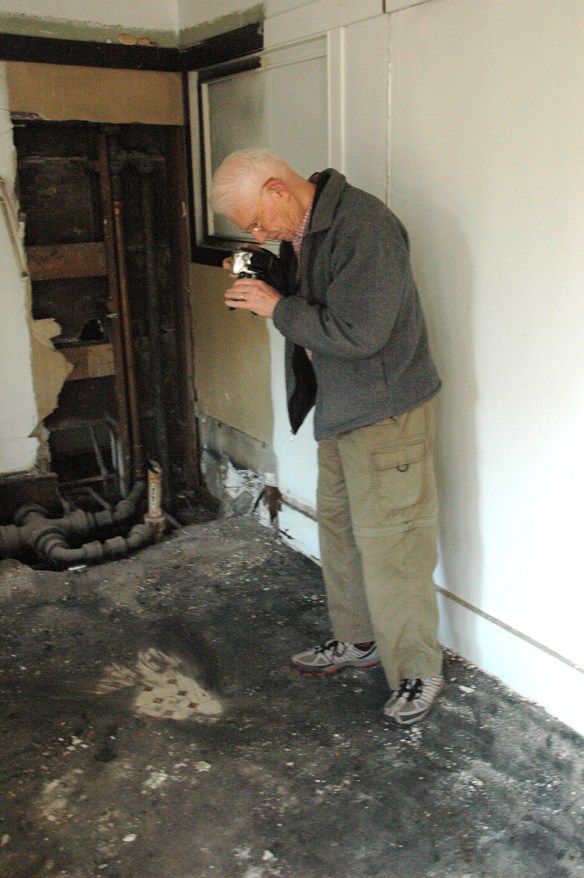
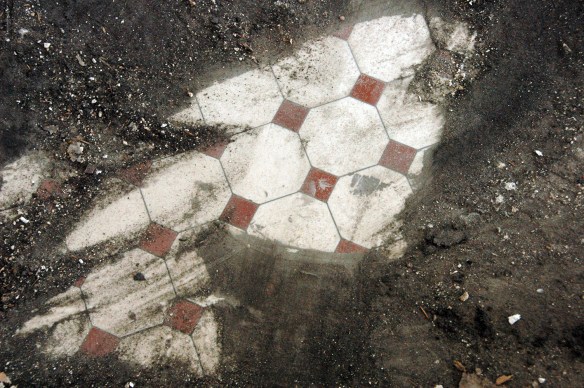
A year later Bob kindly extended an invitation to me to speak in Mason City after my first book, “Wright in Racine,” was published. The derelict City National Bank and Park Inn Hotel buildings were ripe for demolition. How ripe for demolition? The city of Mason City had put them up for sale on eBay a few years earlier. Bob was part of the against-all-odds civic effort to led to their being saved and rehabilitated. He took me through the hotel and bank buildings, at the beginning of their rehabilitation:

Park Inn 2005 009.jpg

Park Inn 2005 018.jpg

Park Inn 2005 020.jpg

Park Inn 2005 022.jpgBob chats with passersby outside the hotel, May 5, 2005.
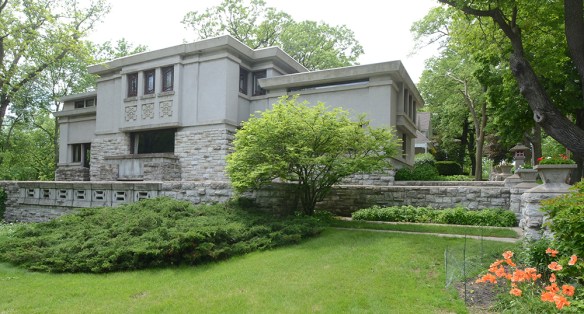
My “digs” for my overnight stay? Bob and Bonnie McCoy’s home, the historic James Blythe House (Walter Burley Griffin, 1913) in Rock Glen. Blythe was one of the two men who commissioned Wright to design the hotel and bank buildings in 1908. One of the skylights from the hotel was in the house…unknown until Jonathan Lipman noticed it while staying in the house as a guest of the McCoys. The McCoys made sure it was returned to the hotel.

Rock Glen 013.jpgJames Blythe House, June 3, 2013.

Bob extended another invitation to me to speak in Mason city in 2008. This time we were joined on our tour of the hotel and bank building by Ann MacGregor, another important citizen in the grass roots effort to save the buildings. She was later the director of Wright on the Park, the organization which oversees the buildings:

MacGregor McCoy 08 004.jpgAnn and Bob in the lobby of the hotel, May 16, 2008.
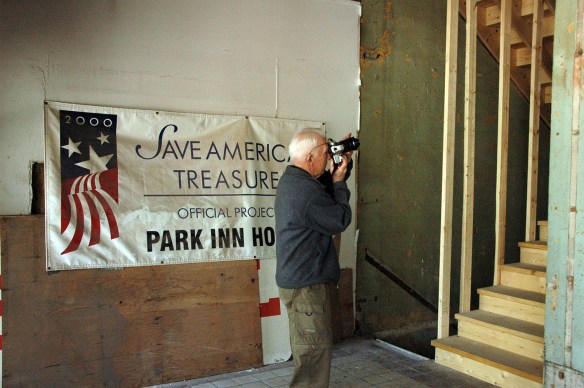
MacGregor McCoy 08 009.jpg

Park Inn McCoy 08 005.jpg

No detail escaped Bob’s camera:

Park Inn McCoy 08 001.jpg

Park Inn 08 078.jpg

Park Inn 08 076.jpg

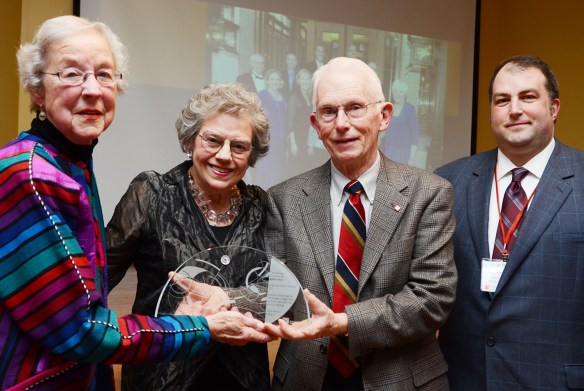
Ann and Bob were honored with prestigious Wright Spirit Awards by the Frank Lloyd Wright Building Conservancy at its annual conference, in Mason City, October 13, 2012:

Wright Spirit Awards 013.jpg

Wright Spirit Awards 011.jpg

Wright Spirit Awards 014.jpg

Wright Spirit Awards 020.jpg

Bob, and Ann, thank you to your gifts to the World of Wright and to Mason City:

Historic Park Inn 021.jpg

Historic Park Inn 082.jpg

Bob’s beloved wife, Bonnie, died in 2016:

https://wrightinracine.wordpress.com/tag/mason-city/

Since this piece was published I have gotten more information about Bob:

His obituary in the Mason City Globe Gazette is at this link:

https://www.legacy.com/us/obituaries/globegazette/name/robert-mccoy-obituary?id=31119672

And, Wright on the Park, sent this:

Shortly after Mason City hosted the 1993 Frank Lloyd Wright Building Conservancy annual conference, Dr. Robert McCoy, who had chaired that event to highlight the restoration of the Stockman House, was appointed to their Board of Directors. Their mission is to “facilitate the preservation and stewardship of the remaining built works designed by Frank Lloyd Wright through advocacy, education and technical services”. Bob was assigned the task to save the City National Bank and Park Inn Hotel from being demolished. Their hope was that the structure would be restored. Once assigned this task, Bob was diligent in working on solutions to save this structure. He was one of the founding Directors of Wright on the Park. It wasn’t until the Vision Iowa opportunity was presented that the combined resources from our community, state and federal levels made this dream became a reality. Bob would be the first to say he did not do this alone but certainly he was the leader of the effort to restore the Historic Park Inn Hotel. Written by Peggy Bang (Founding Board Member of Wright on the Park, past WOTP Board President, and current Board Member of WOTP) 


UNESCO Plaque Celebration

© Mark Hertzberg (2021)

Taliesin UNESCO World Heritage Site 002.jpg

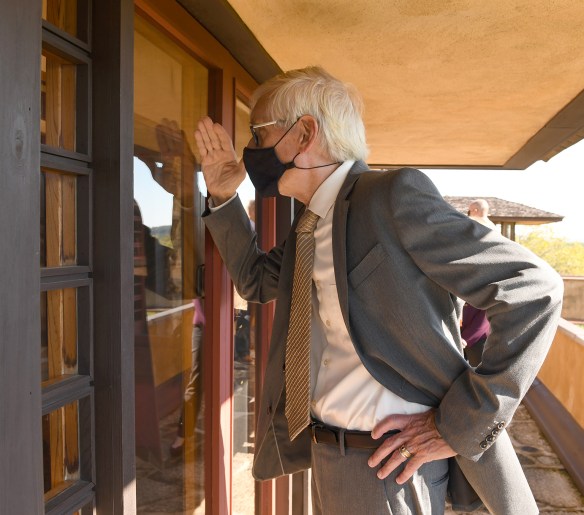
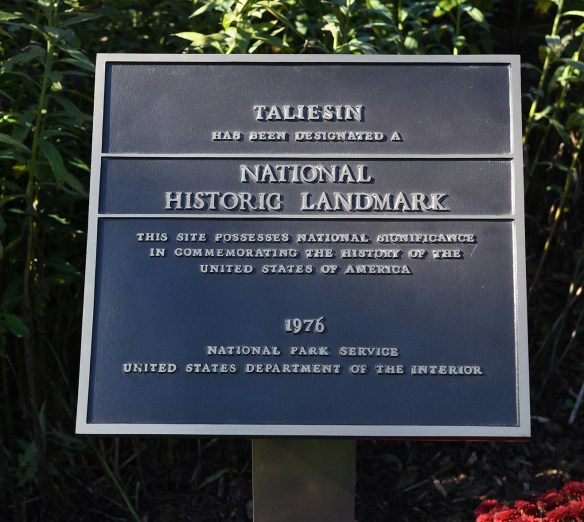
The early morning fog burned off in time for two ceremonies at Taliesin Wednesday September 15, one to cut a ribbon for the restored Tea Circle, the other to unveil two plaques marking Taliesin’s place in architectural history. One plaque notes Taliesin’s designation as a National Historic Landmark in 1976, the other notes it as one of eight Wright sites collectively named UNESCO World Heritage Sites in 2019. The latter marked years of effort by many people with the Frank Lloyd Wright Foundation and the Frank Lloyd Wright Building Conservancy in particular. Wisconsin Gov. Tony Evers and Anne Sayers, Wisconsin’s Secretary of Tourism headlined the event.

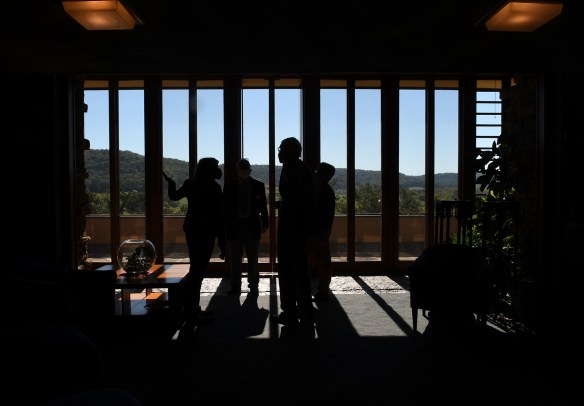
First, I will show you two photos I took wandering through Taliesin before the event, showing the view of Tan-y-deri from Mr. Wright’s bedroom and studio and one I took in the Blue Loggia:

Taliesin UNESCO World Heritage Site 013.jpg

Taliesin UNESCO World Heritage Site 019.jpg

Taliesin UNESCO World Heritage Site 021.jpg

Kimberley Valentine, left, Carrie Rodamaker and Stuart Graff, center, greet guests before the ceremony:

Taliesin UNESCO World Heritage Site 012.jpg

Taliesin UNESCO World Heritage Site 032.jpg

Taliesin UNESCO World Heritage Site 046.jpg

Taliesin UNESCO World Heritage Site 049.jpg

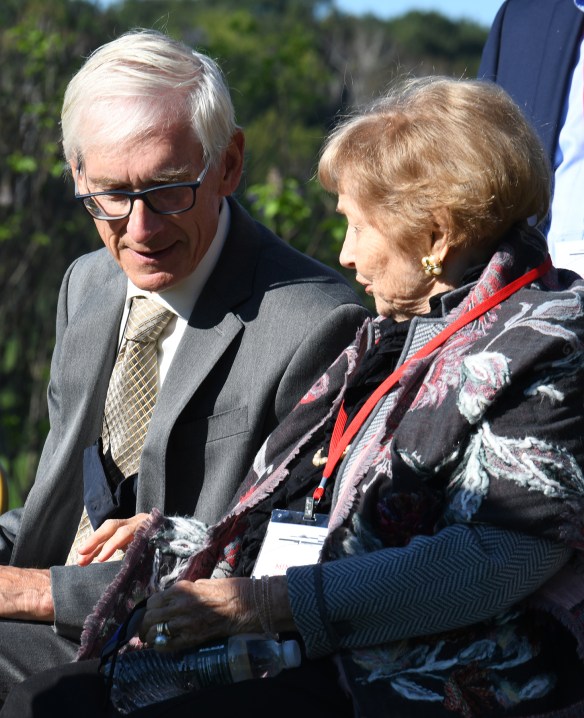
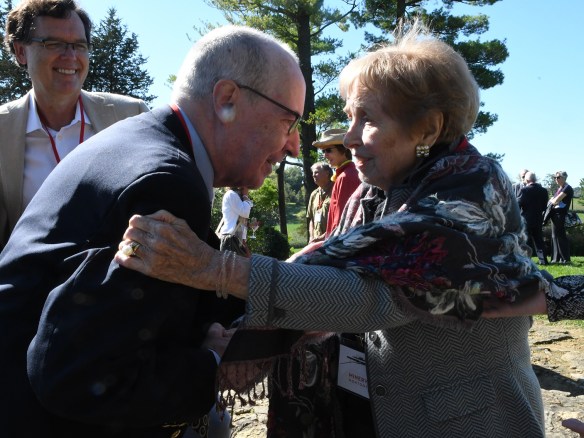
Gov. Evers was introduced to Minerva Montooth shortly after his arrival (look for a profile story about Minerva and my history of photographs of her on this website soon):

Taliesin UNESCO World Heritage Site 081.jpg

Taliesin UNESCO World Heritage Site 083.jpg

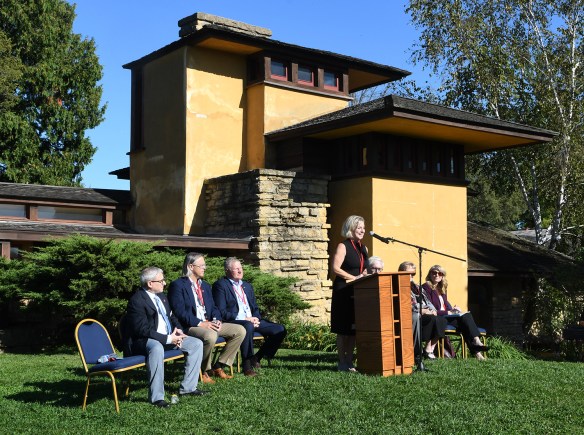
Carrie Rodamaker, CEO of Taliesin Preservation, led the ceremonies in front of the Belvedere:

Taliesin UNESCO World Heritage Site 100.jpg

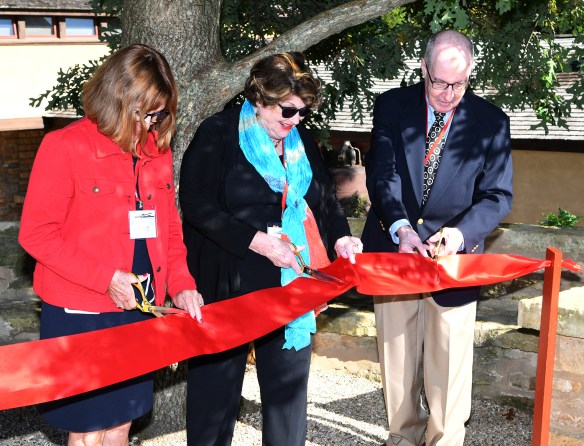
There was a break in the middle of the speeches for Phillis Schippers, left, Gail Fox, and Sid Robinson to cut a red ribbon at the Tea Circle:

Taliesin UNESCO World Heritage Site 104.jpg

Then the two plaques on the crest of the hill were unveiled:

Taliesin UNESCO World Heritage Site 160.jpg

Taliesin UNESCO World Heritage Site 162.jpg

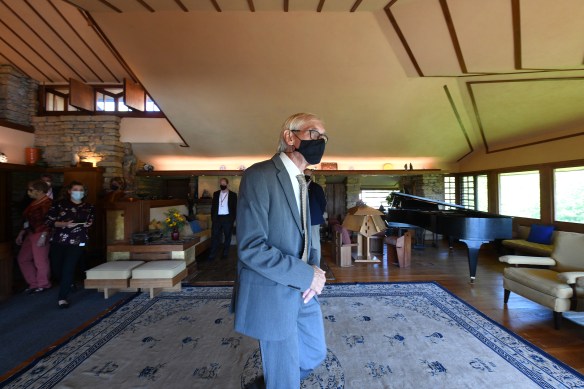
Gov. Evers and Secretary Sayers then toured Taliesin:

Taliesin UNESCO World Heritage Site 193.jpg

Taliesin UNESCO World Heritage Site 175.jpg

Taliesin UNESCO World Heritage Site 215.jpg

Taliesin UNESCO World Heritage Site 229.jpg

Sid Robinson and Minerva greeted each other:

Taliesin UNESCO World Heritage Site 242.jpg

Taliesin UNESCO World Heritage Site 172.jpg

Taliesin UNESCO World Heritage Site 173.jpg

— 30 —


Taliesin West, Revisited

Photos © Mark Hertzberg 2021

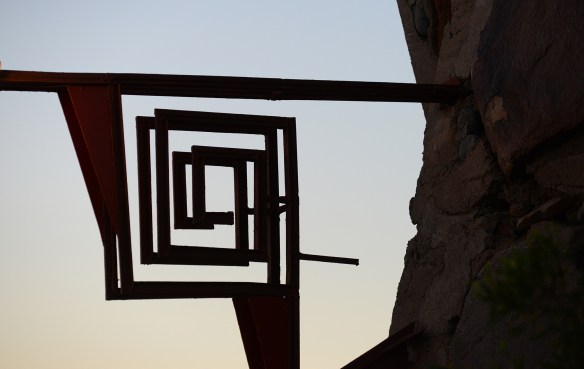
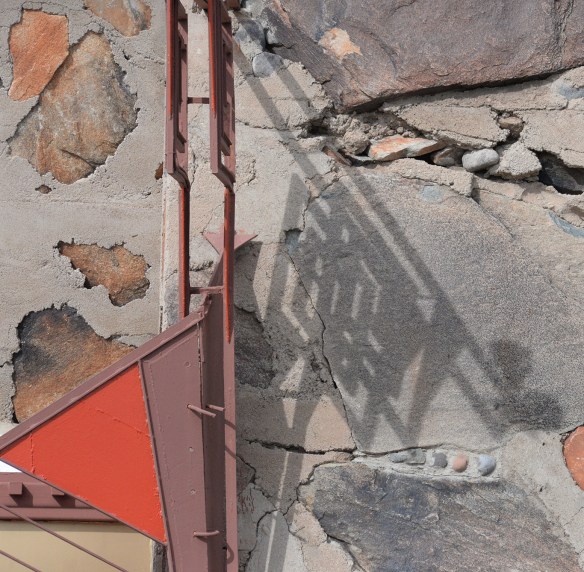
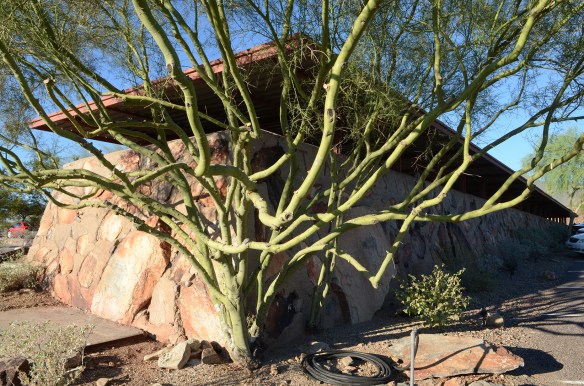
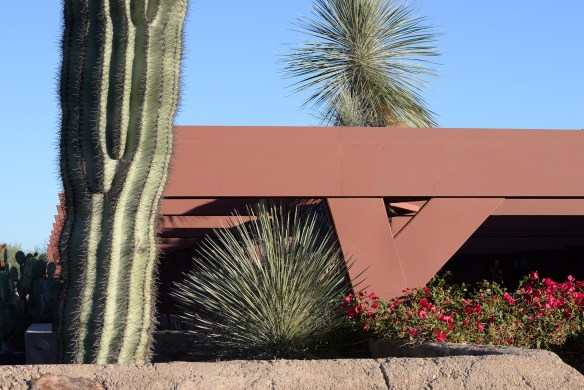
Readers of “The Wright Attitude” Facebook group were challenged to post their favorite photographs of Frank Lloyd Wright’s Taliesin West earlier this year. I posted some of the photographs I took in October 2014 during the Frank Lloyd Wright Building Conservancy annual conference.

I have visited Taliesin in Spring Green countless times, but this was only my second visit to “T-West,” the first in 1992 before I became immersed in the World of Wright. I chose more abstract photos to post during the challenge rather than literal photos of buildings and the spaces therein. My personal Wright photo challenge is to find new photos on each visit. What will I see on my next visit to Scottsdale?

Taliesin West 135.jpg

Taliesin West 140.jpg

Taliesin West 001.jpg

Taliesin West 014.jpg

Taliesin West 056.jpg

Taliesin West 061.jpg

Taliesin West 092.jpg

Taliesin West 100.jpg

Taliesin West 165.jpg

Taliesin West 171.jpg

Taliesin West 173.jpg

Taliesin West 194.jpg

Taliesin West 198.jpg

Taliesin West 226.jpg

Taliesin West 228.jpg


Further Diminished: The Wright World, Journalism, and Chicago

(c) Mark Hertzberg

Yesterday Blair Kamin, the distinguished architecture critic of The Chicago Tribune, announced on Facebook that he is taking a buyout from the newspaper. This is a triple loss. First, let me copy his post:

“After 33 years at the Chicago Tribune, 28 as architecture critic, I’m taking a buyout and leaving the newspaper. It’s been an honor to cover and critique designs in the first city of American architecture and to continue the tradition begun by Paul Gapp, my Pulitzer Prize-winning predecessor.During these 28 years, I have chronicled an astonishing time of change, both in Chicago and around the world. From the horrors of 9/11 to the joy of Millennium Park, and from Frank Gehry to Jeanne Gang, I have never lacked for gripping subject matter. Whether or not you agreed with what I wrote was never the point. My aim was to open your eyes to, and raise your expectations for, the inescapable art of architecture, which does more than any other art to shape how we live.So I treated buildings not simply as architectural objects or technological marvels, but also as vessels of human possibility. Above all, my role was to serve as a watchdog, unafraid to bark — and, if necessary, bite — when developers and architects schemed to wreak havoc on the cityscape. I am deeply grateful to my newspaper, which has never asked me to pull punches. I have been incredibly fortunate to work with talented editors, reporters, photographers and graphic designers. They have been a huge help. Journalism, like architecture, is a team enterprise. What will I do next? I have no idea. After decades of stressful deadlines and rewriting paragraphs in my head at midnight, I’m ready for an extended break — and many long bike rides along Chicago’s lakefront.It’s essential that a new critic, with a fresh set of ideas, take up where Paul Gapp and I left off. Imagine Chicago without a full-time architecture critic. Schlock developers and hack architects would welcome the lack of scrutiny. -30-“

This is a Wright website, so I will first touch on that aspect of his announcement. Kamin mentioned that his predecessor was a Pulitzer Prize-winner. He did not mention his own Pulitzer, awarded in 1999. He has written distinguished commentary about architecture and development for 28 of his 33 years at the Trib. He often wrote about the World of Wright. He was dispassionate about the topic which so many Wrightians are emotional about. Indeed, at the 2007 annual conference of the Frank Lloyd Wright Building Conservancy in Northbrook, Illinois, he referred to those “who drink the Cherokee red Kool-Aid.”

I sometimes emailed and talked with Kamin as I worked on my Wright projects. I was flattered in 2006 when he included my book about Wright’s Thomas P. Hardy House as one to put on holiday shopping lists. In 2008 when there was a controversy over the assertion that several dozen undocumented Wright homes had been found in River Forest, he quoted my on-line rebuttal in a follow-up news article.

He was an invaluable resource for many in the Wright community, including the Building Conservancy. We will miss his insight and thoughtful writing about all things Wright.

As a journalist, I understand Kamin’s decision to take a buyout. Alden Capital, a hedge fund company that has a reputation for buying newspapers and stripping them of staff and quality, is making a move to acquire Tribune Newspapers. I also worked for a chain of newspapers. The thought of our being acquired was an ugly monster constantly looking over our shoulders. In our case in Racine before I took my buyout in 2012, we worried about being swallowed up and decimated by the Gannett behemoth or by the Milwaukee newspaper (which is now part of Gannett). Many newspapers – including Milwaukee – have eliminated their critics’ jobs. The Tribune has shed job after job after job in the last 10 years. so I have remained pleased (yet frankly surprised) that Kamin still appeared in my daily Trib news feed and Sunday print edition this long. It is hard working while waiting for the proverbial other shoe to drop. You fear what the next call to see your editor (or someone in human resources) will mean. There comes a time when enough is enough.

Chicago will be diminished as developers and members of the City Council will no longer have Kamin looking over their shoulders. Daniel Burnham famously said, “Make no little plans; they have no magic to stir men’s blood and probably themselves will not be realized. Make big plans; aim high in hope and work, remembering that a noble, logical diagram once recorded will never die, but long after we are gone be a living thing, asserting itself with ever-growing insistency.” There have been many “big plans” announced in recent Chicago history, but they were not necessarily the best plans. Kamin’s columns were Chicago’s conscience to praise worthy ones, and try to hold others in check.

Kamin ended his post with “-30-” which was the traditional symbol at the end of a newspaper story (submitted to the city desk on paper!) that the editor now had the whole piece to look at.

Thank you, Blair, for your service to architecture, to journalism, and to your community.

-30-

Wright on the Move, The Finale

All photos (c) Mark Hertzberg (2020)

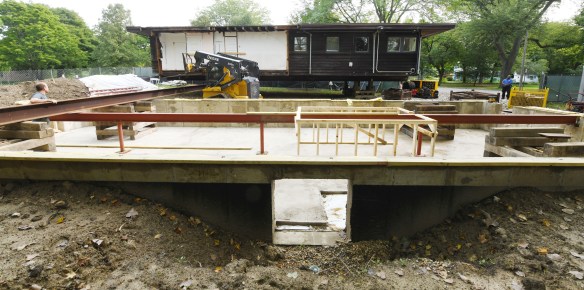
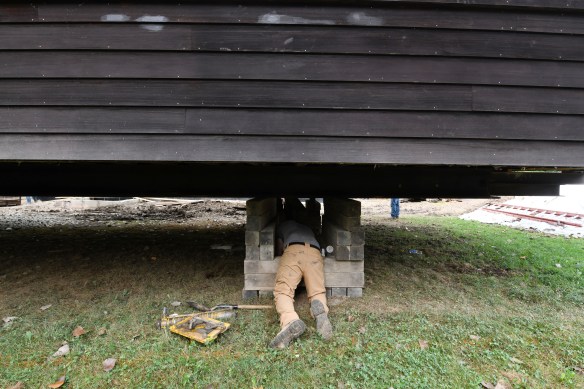
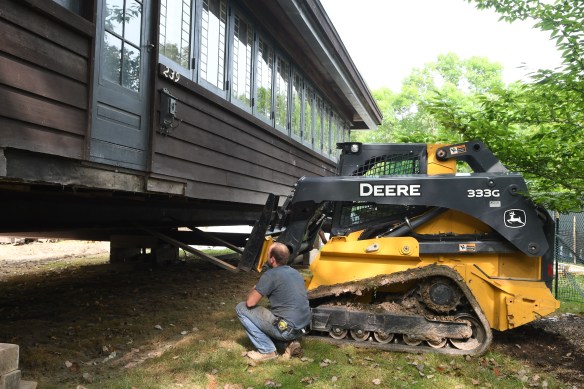
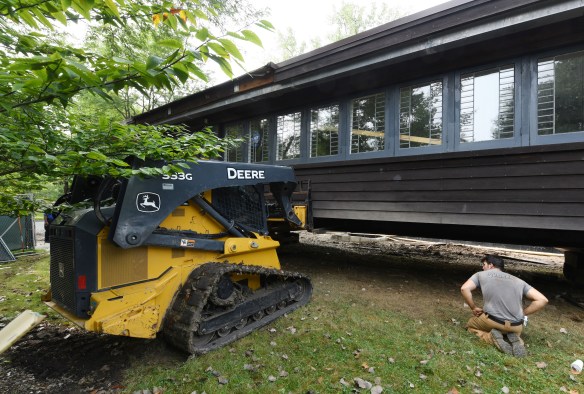
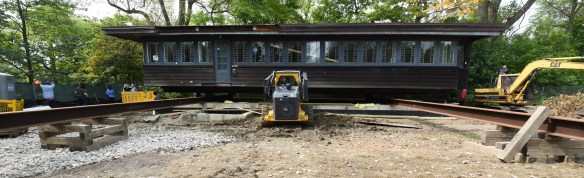
Today was moving day – again – for Frank Lloyd Wright’s diminutive Sherman Booth Cottage (1913) in Glencoe, Illinois. The house was moved a tenth of a mile to its new site on July 21, and placed on a temporary foundation. Now it was time to nudge it onto its permanent foundation.

Sherman Booth Cottage Moved 056A.jpg

The cottage was threatened with demolition by the new owners of the lot it had stood on since 1916. With the help of the Frank Lloyd Wright Building Conservancy, the nonprofit Glencoe Historical Society acquired the home to remodel it and turn it into a museum and research center. The diminutive home, built for Wright’s attorney Sherman Booth while his larger Wright home was being built nearby, is said by some Wright aficionados to be a precursor to his post-1936 Usonian home designs. Wright scholar William Allin Storrer believes the house was actually designed by Lloyd Wright. Whoever designed, it is a historical structure and it was imporatnt to save it.

Sherman Booth Cottage Moved 061A.jpg

Sherman Booth Cottage Moved 064.jpg

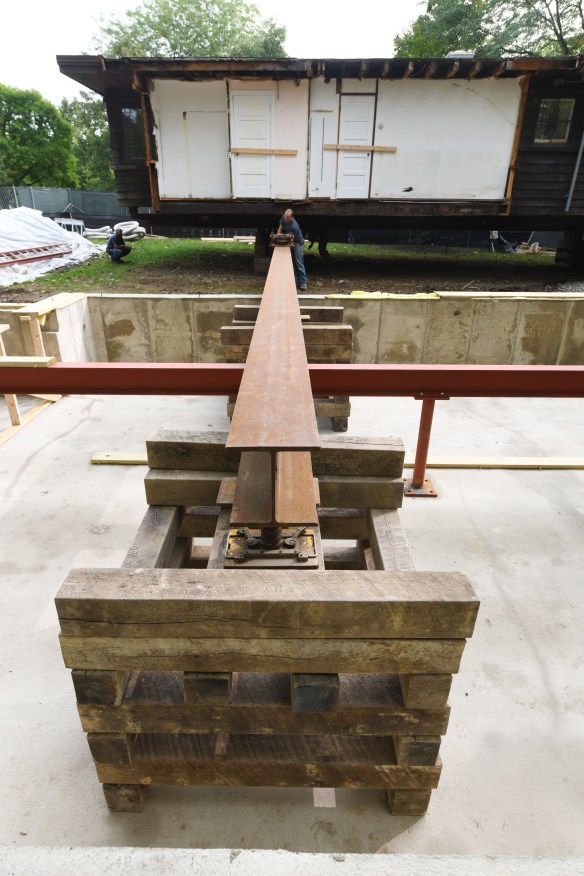
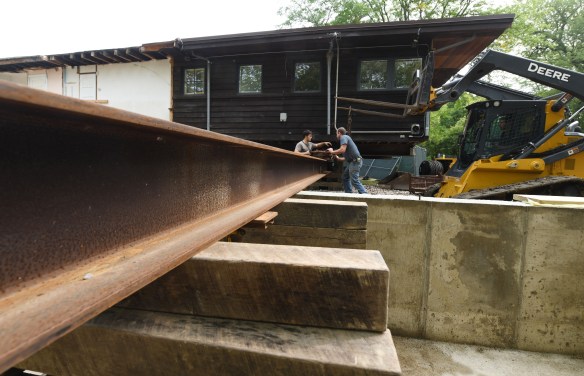
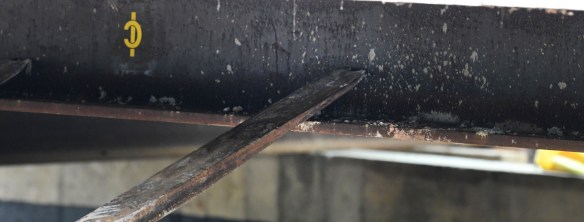
Sherman Booth Cottage Moved 066.jpgThe house was nudged by the forks of a John Deere track loader on these rollers on 50′ long steel girders.

Sherman Booth Cottage Moved 067.jpg

Sherman Booth Cottage Moved 078.jpg

Sherman Booth Cottage Moved 083.jpg

Sherman Booth Cottage Moved 089.jpg

Sherman Booth Cottage Moved 090.jpg

Sherman Booth Cottage Moved 100.jpg

Sherman Booth Cottage Moved 109.jpgAn overhanging tree limb unexpectedly had to be cut down.

Sherman Booth Cottage Moved 117.jpg

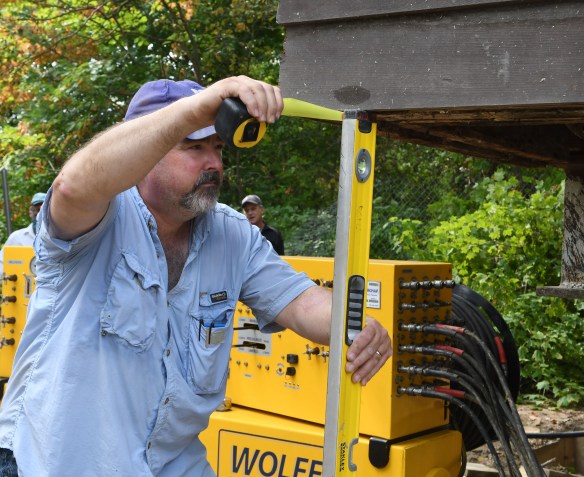
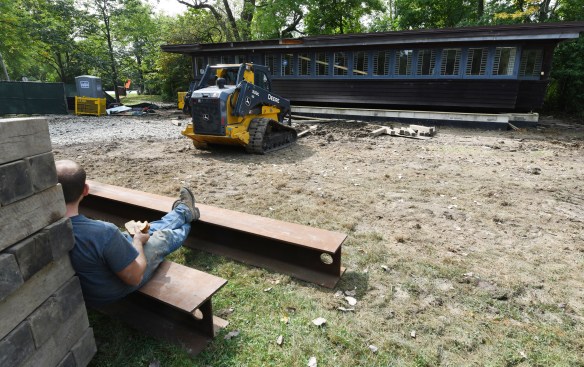
Sherman Booth Cottage Moved 121.jpgMeasurements were taken throughout the morning…then it was time for a lunch break:Sherman Booth Cottage Moved 130.jpg

Sherman Booth Cottage Moved 131.jpg

Sherman Booth Cottage Moved 136.jpgThe house is finally in place and finish work is underway.

Sherman Booth Cottage Moved 103.jpgRon Scherubel, former executive director of the Frank Lloyd Wright Building Conservancy, has documented the entire project. He showed me a fire pit designed by Jens Jensen, just outside the fence line:

Sherman Booth Cottage Moved 087.jpg

Sherman Booth Cottage Moved 070.jpg

While the July move – documented in an earlier post on this website – attracted dozens of media outlets, none came today. https://wrightinracine.wordpress.com/?s=on+the+move

Oh, and as for the owners of the cottage who wanted to demolish it when they bought the former site, they have not had any work done there since the cottage was moved off their property July 21:

Sherman Booth Cottage Moved 073.jpg

Sherman Booth Cottage Moved 074.jpg

Sherman Booth Cottage Moved 076.jpg


Rainy Day Post #3 – A Wright Potpourri

Photos (c) Mark Hertzberg (2020)

I have promised you one more “rainy day post,” cleaning up pictures that have been waiting on my desktop for the right context to post them in. This is a smattering of photos of Frank Lloyd Wright sites I have visited in one context or another since July 2018. While I shoot literal photos of Wright buildings (“head shots” we called them in the newsroom), I also look for photos of details of Wright’s designs. I am generally not sharing interior photos of private homes. I try to avoid looking at other photographers’ interpretations of Wright buildings before I visit them so that I see the structures through my own eye and lens, rather than possibly copy another photographer’s vision.
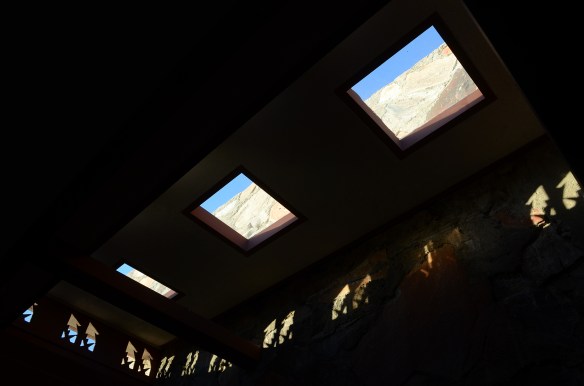
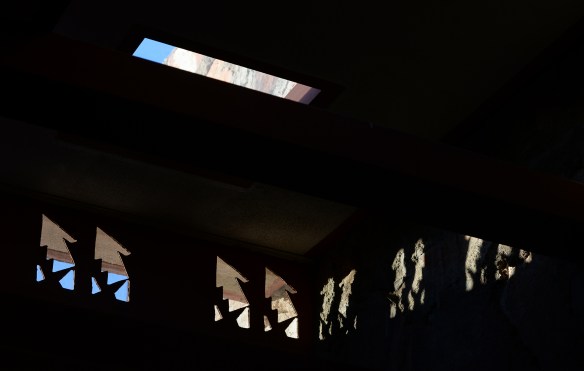
The photos are in chronological order, beginning with a wonderful trip to the Detroit area that July two years ago. We were with our good friends Bob and Jeanne Maushammer from Virginia. Jeanne’s exposure to Wright began when she was a teenager, hired to babysit at the Thomas P. Hardy House in Racine for Schuyler and Peterkin Seward, stewards of the house between 1957 – 1963. The Maushammers dutifully chronicle their Wright adventures in a well worn copy of William Allin Storrer’s The Architecture of Frank Lloyd Wright. I will copy and paste Jeanne’s recollections of the Hardy House from my 2006 book about the house at the end of this blog post.

Our first stop was at the Affleck House in Bloomfield Hills, where Dale Gyure graciously gave us a private tour:

Affleck House 009.jpg

Affleck House 018.jpg

Affleck House 026.jpg

Affleck House 029.jpg

Affleck House 032.jpg

We were fortunate to next get a private tour of the Melvin Smith House. The light was not as subtle as the architecture in the early afternoon:

Smith House 014a.jpg

Smith House 020.jpg

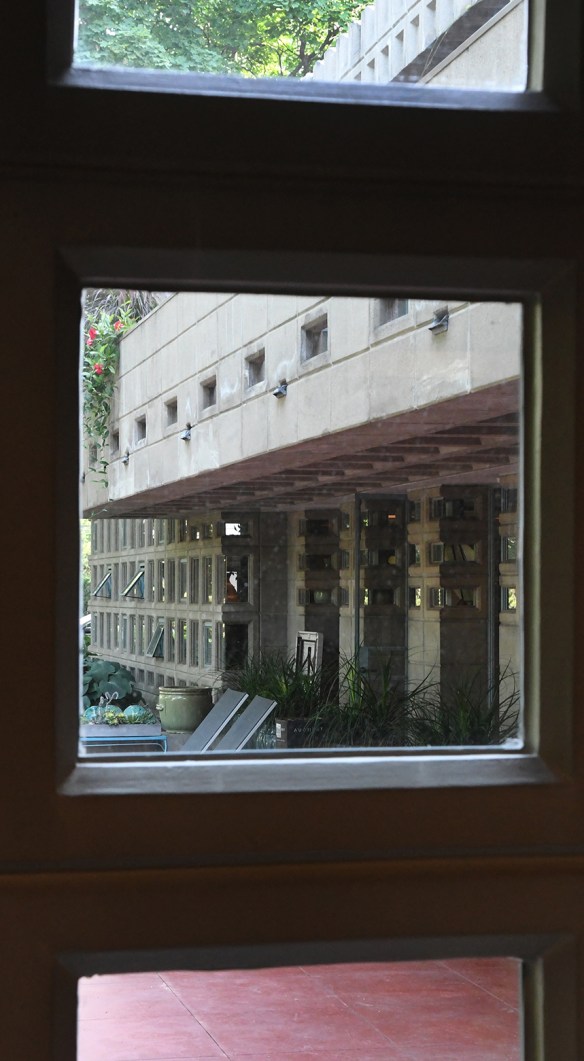
Then we were off to the Turkel House, lovingly restored by our good friends Norm Silk and Dale Morgan. Jeanne has wonderful stories of having seen the then-distressed house ca. 2004 right after a questionable tenant had been evicted. We had bid on a dinner at the house, to benefit the Frank Lloyd Wright Building Conservancy. Norm went above and beyond shopping for us in a Middle Eastern market, and we had a lovely meal in the garden. The Maushammers, Cindy (Hertzberg), and Norm:

Turkel House Dinner 010.jpgWe planned to stay only a couple of hours and not overstay our welcome, but we were like family enjoying the house in the living room after dinner until past 11 p.m.! The light was harsh when we arrived at 5 p.m., and I wondered how it would change through the evening:
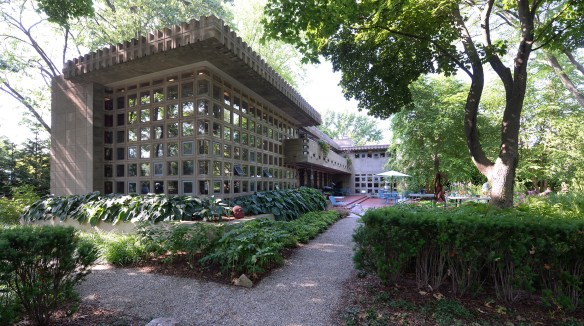
Turkel House 001.jpg

Turkel House 032.jpg

Turkel House 044.jpg

Turkel House 046.jpg

Turkel House 011.jpg

Turkel House 016.jpg

Our next adventure was when Bob and Jeanne treated us to a stay at the Palmer House in Ann Arbor:

Palmer House 031.jpg

Palmer House 034.jpg

Palmer House 042.jpg

Palmer House 037.jpg

Palmer House 082.jpg

Palmer House 068.jpg

I was then on tour in familiar territory in Wisconsin, helping lead tours for Road Scholar, first in Racine at SC Johnson and at Wingspread. I have visited and photographed these wonderful spaces umpteen times, and always look for a fresh way to see them:

SCJ Carport 2018 003.jpg

SCJ Carport 2018 004.jpg

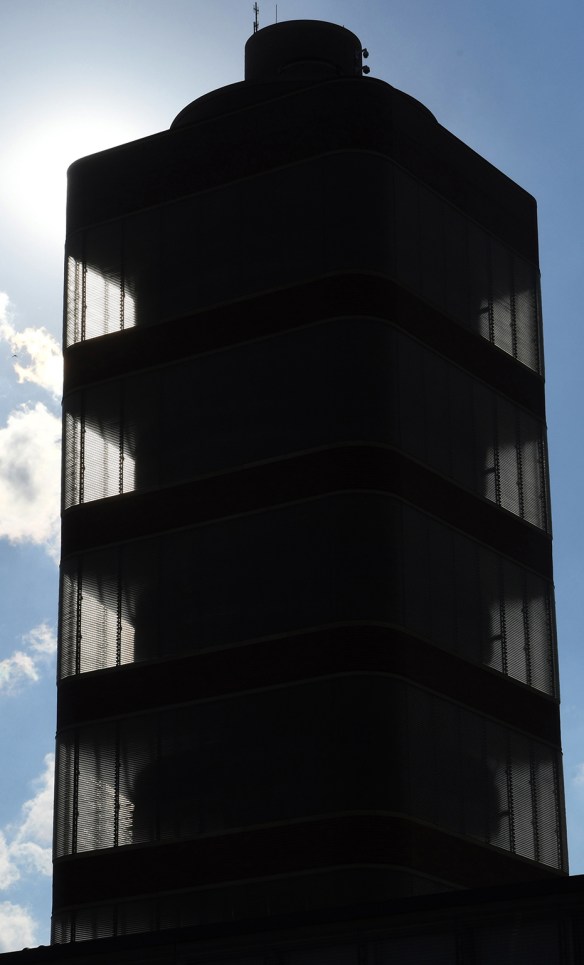
SCJ Research Tower 2018 .jpg

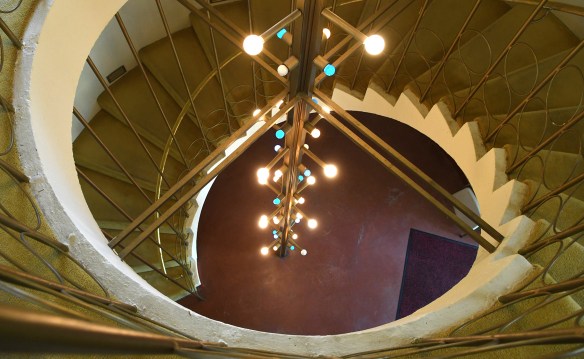
I climbed these stairs at Wingspread countless times before seeing this photo:

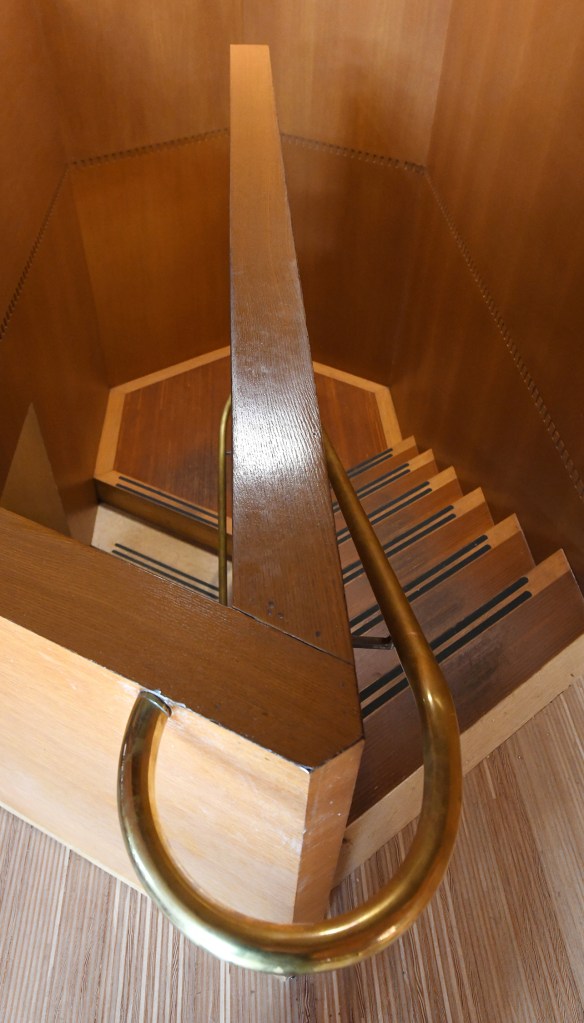
Wingspread Stairs 9.23.19.jpg

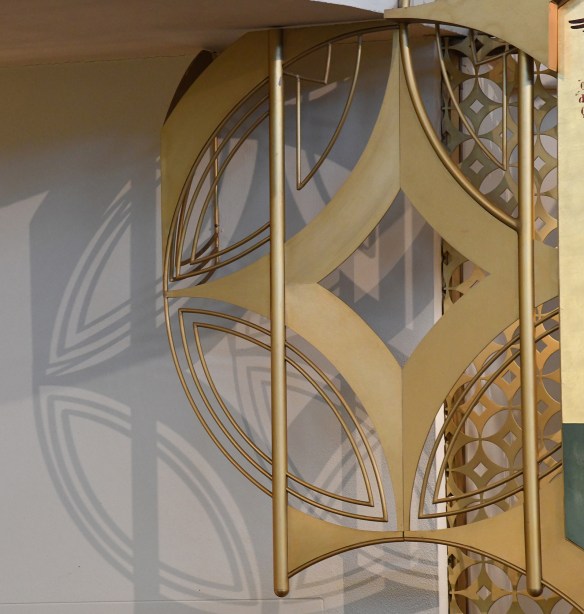
I was then taken, again, by the fixtures at the Annunication Greek Orthodox Church in Wauwatosa (suburban Milwaukee):

AGOC 2018 002.jpg

AGOC 2018 004.jpg

AGOC 2018 007.jpg

AGOC Interior 9.24.19 002.jpg

AGOC Interior 9.24.19 001.jpg

Annunciation GOC002 9.6.18.jpg

After touring Racine and Milwaukee, we take our Road Scholar guests to Madison and Spring Green. First, a detail of the ceiling of Jacobs 1:

Jacobs 1 9.7.18 009.jpg

Then, a light well in Anthony Puttnam’s interpretation of Monona Terrace:

Monona Terrace.jpg

The trip culminates at Taliesin – of course – after seeing the Unitarian Meeting House in Madison and Wyoming Valley School, with lunch at Riverview Terrace. Our introduction to Taliesin is a pause at the dam:

Taliesen Dam 2.jpg

Taliesin.jpg

Taliesin 9.7.19 002.jpg

I finish with Jeanne’s recollection of babysitting at the Hardy House and a “selfie” there:

(From “Frank Lloyd Wright’s Thomas P. Hardy House,” written and photographed by Mark Hertzberg, Pomegranate: 2006):

Jeanne (Weins) Maushammer, who baby-sat for the Sewards, recalls growing up nearby. “The house was well-known to everyone in the neighborhood.  People would go to the 14th Street public beach there and see the house just a short distance away.  It did not look like a private residence.  Visitors from outside the area – even across town – would see two openings that could easily be mistaken for bath house entrances, and try to go in to change their clothes.

“Sometimes when you were driving around with out-of-town folks, they would ask ‘What is that?’  They did not recognize it as a house, because it was so different from the other homes around it, and because it was next to the beach.  Neighbors knew what it really was.  The Johnson Wax complex was down the street from us, so the Hardy House seemed to be appropriate.  My folks often told me of their witnessing the construction of the Administration Building and of seeing Frank Lloyd Wright.  The Johnson buildings were understood and accepted by visitors, but not the ‘beach house.’

“My friends and I used to go down to the beach all the time.  We could not get close enough to the property to get a good look at it.  We always had to look through the trees.  We could not see how it blended into the hill side.  That added to the mystery of it.  From the street, all that people could see was just that box.

“I knew it was a Frank Lloyd Wright house before I first went inside.  What I did not realize was how he proportioned houses to his small frame.  I remember thinking when inside for the first time:  ‘I am 5’4” but wow, these doorways are low.’  It was dark and raining that particular day, so I did not get to appreciate the house’s real beauty.  After I had been there several times and had a chance to explore it, to stand in that living room and on the balcony, and to take in the view, I realized it was incredible.

“My husband has never seen the inside of the house, except in photos, but in our wildest dreams we would like to buy it and come back to Racine.”

Hardy Selfie 9.23.18.jpg