Progress on the Burnham Block

© Mark Hertzberg (2025)

Bit by bit, parcel by parcel, the American System-Built homes in the 2700 block of W. Burnham Street in Milwaukee are coming together for their parent organization, Frank Lloyd Wright’s Burnham Block. Burnham Block is steward of five of the six structures: the two single family homes, and three of the four duplexes.

On November 3 the City of Milwaukee’s Historic Preservation Committee unanimously approved plans for restoration of the Model C3 at 1835 N. Layton (at the corner with Burnham Street), and demolition of a shed that was built on the property in 1977. Burnham had already received its third (!) Save America’s Treasures (SAT) grant from the National Park Service in the amount of $407,000 for the work. A matching amount has to be raised from donors for the entire amount to be released.

LR 2714, Duplexes 2017 .jpgThis photograph shows one of the two single family homes (the Model B1) and the four duplexes. The Model C3 single family home, below, sits to the right of the B1.
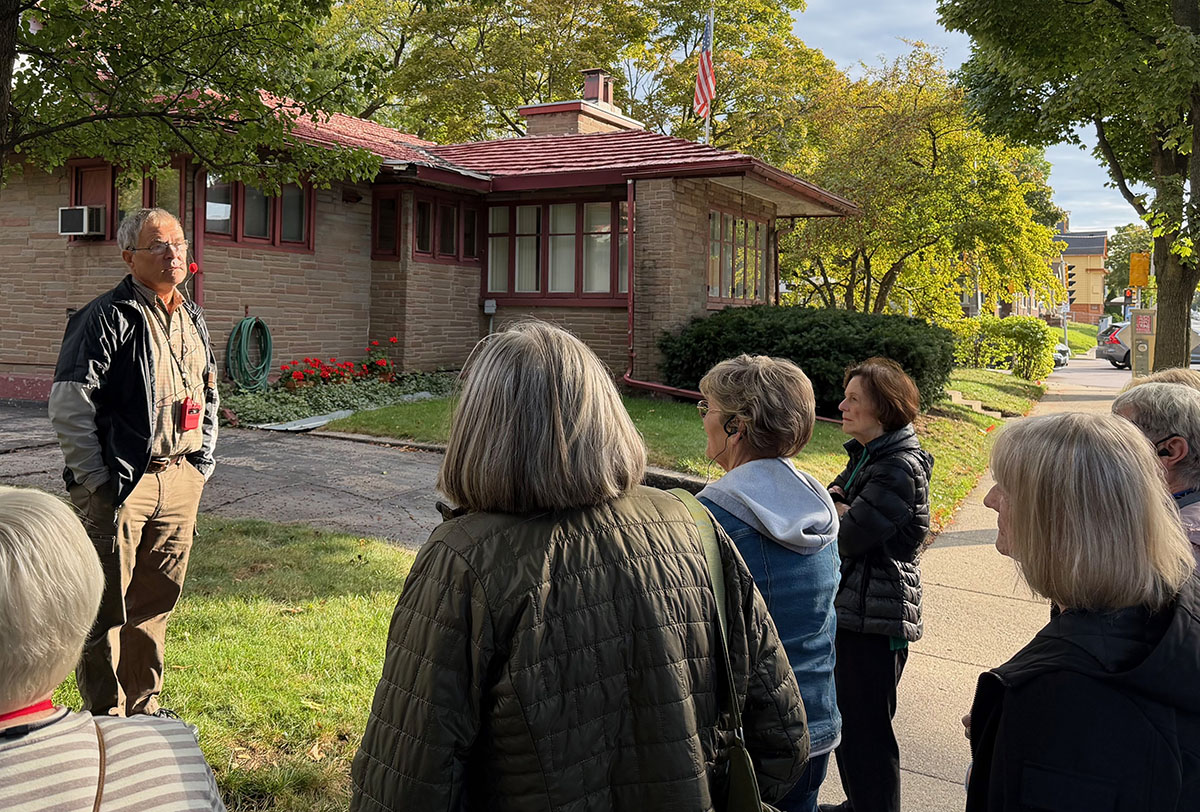
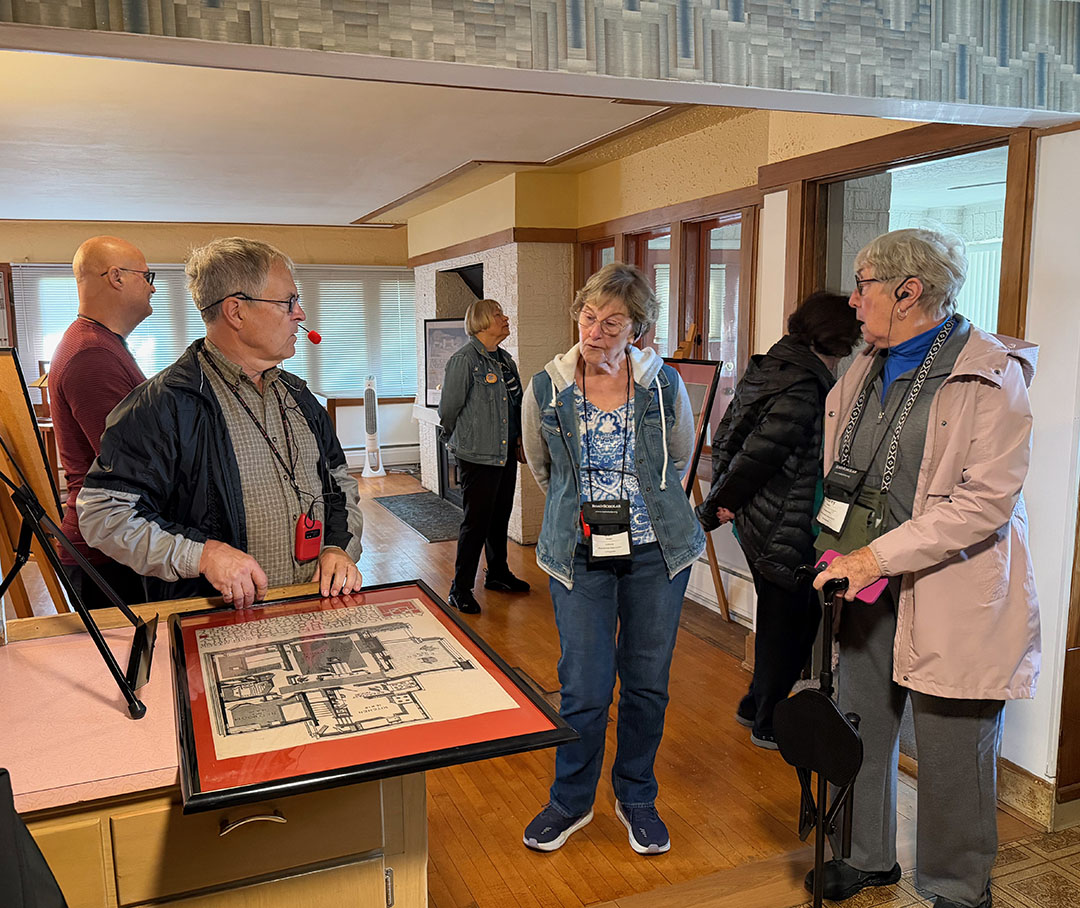
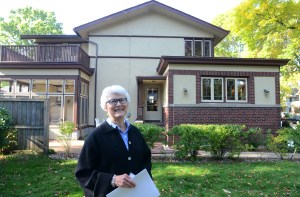
LR 1835 N. Layton 10.16.25 002.jpgDocent Bill Schumacher leads a tour of the Burnham Block, including the C3

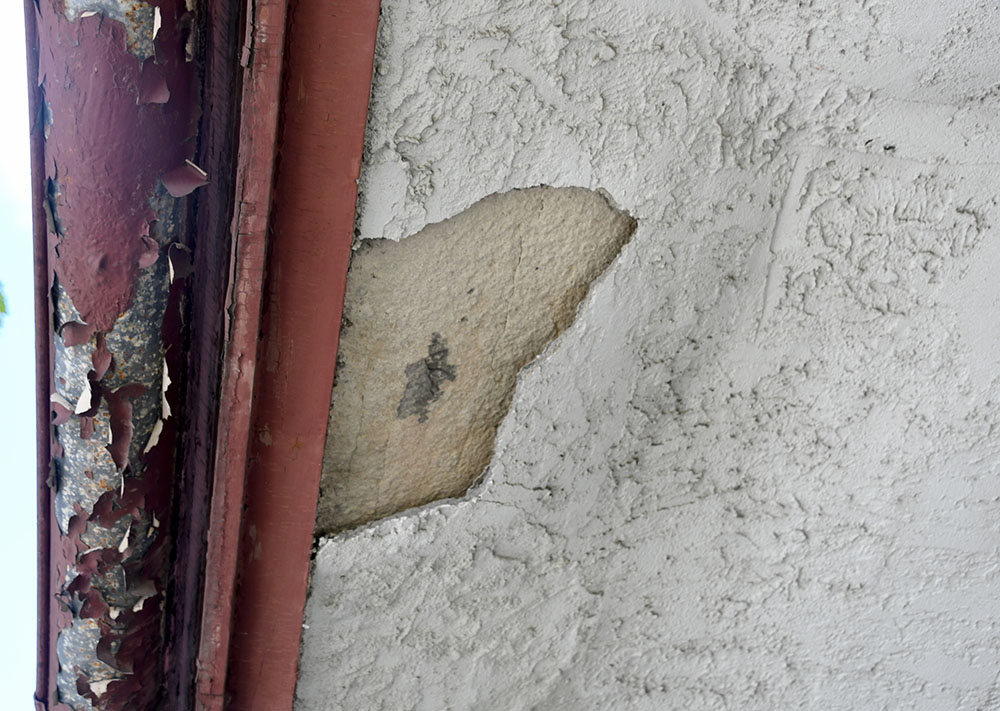
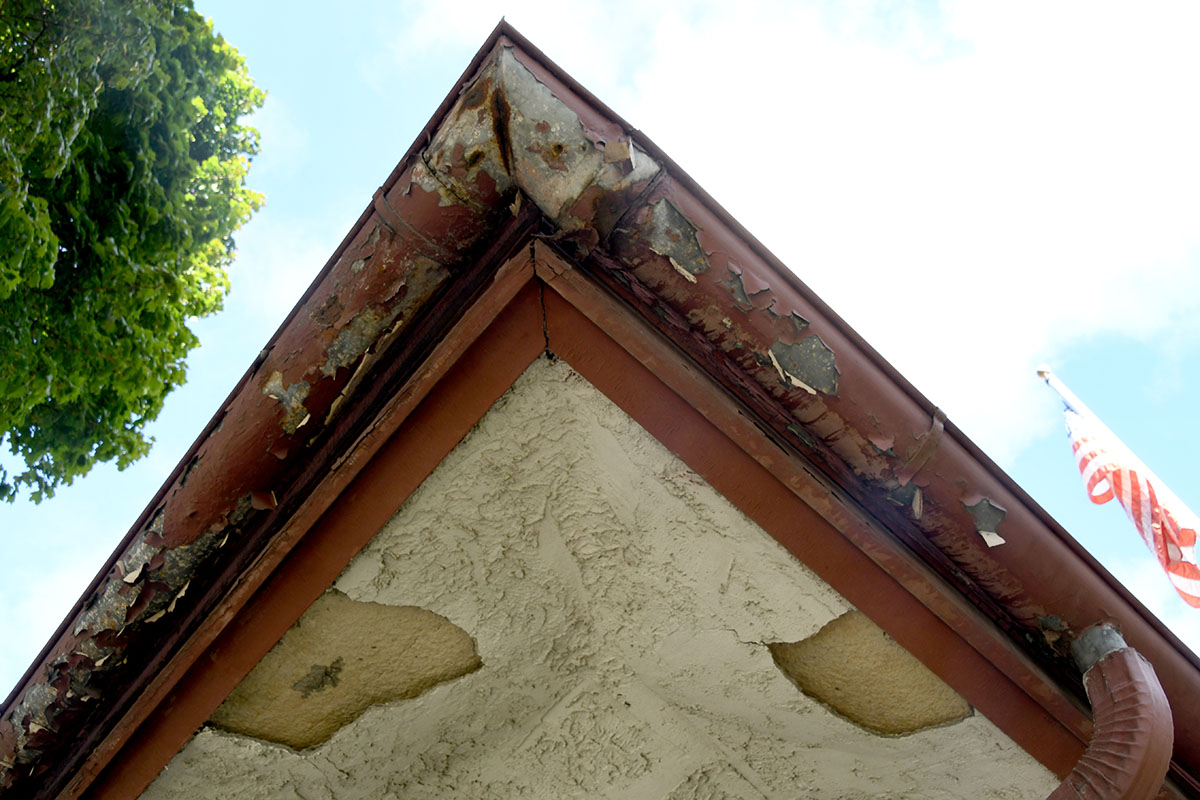
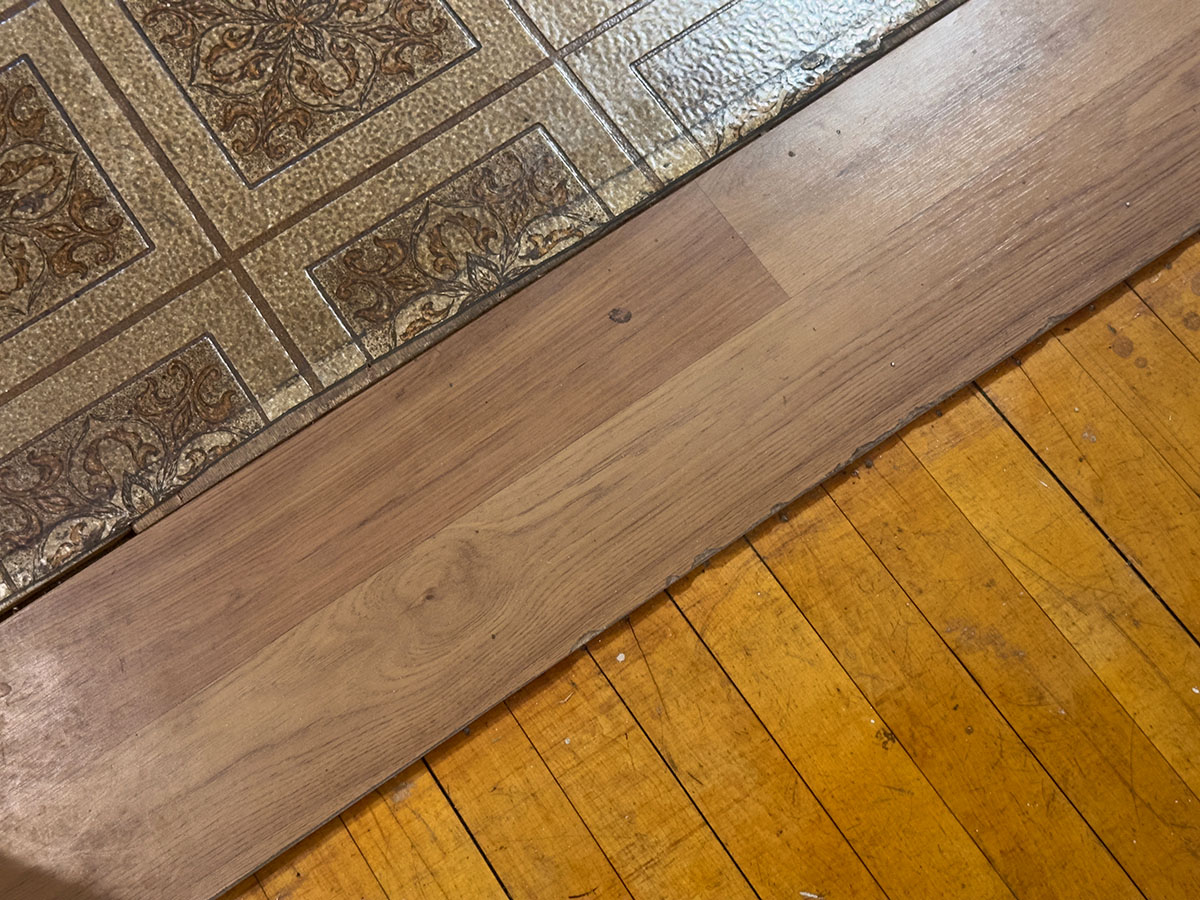
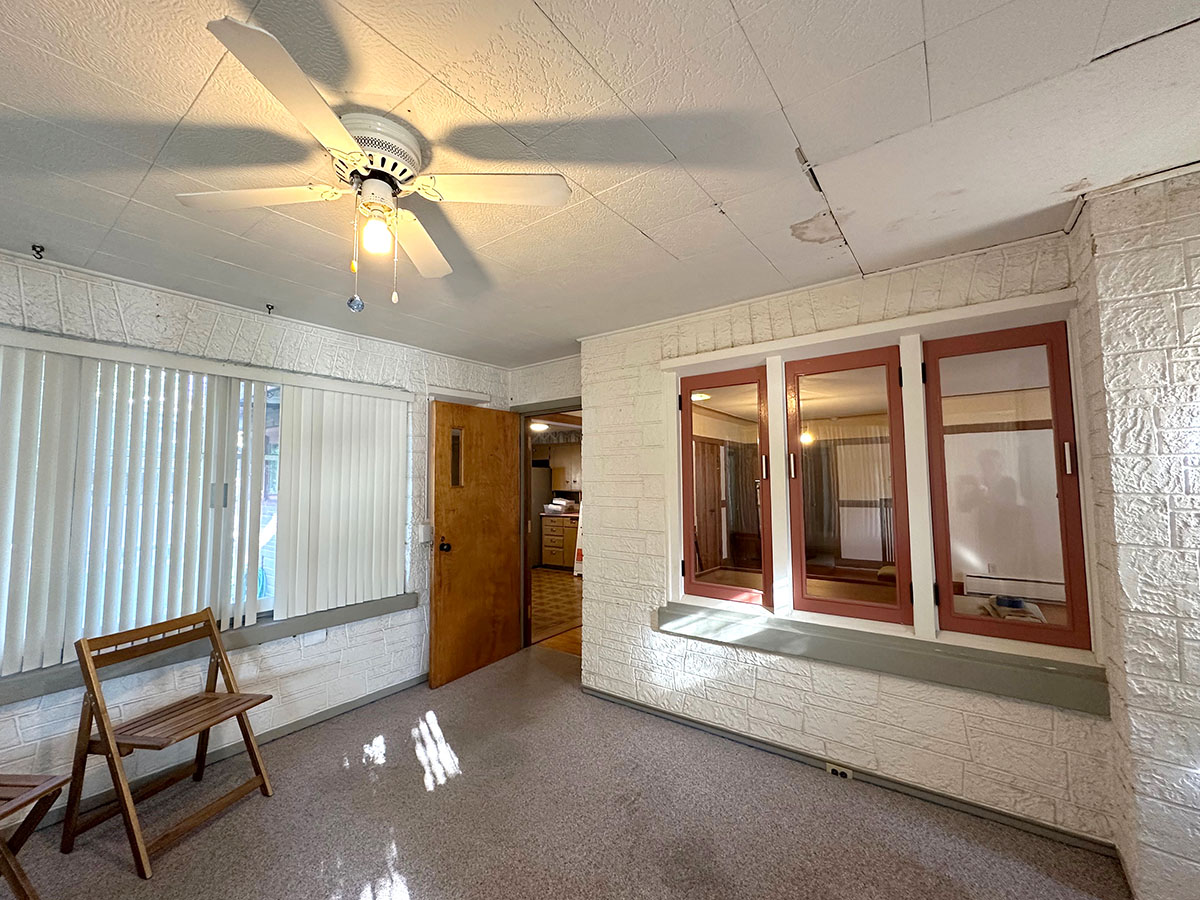
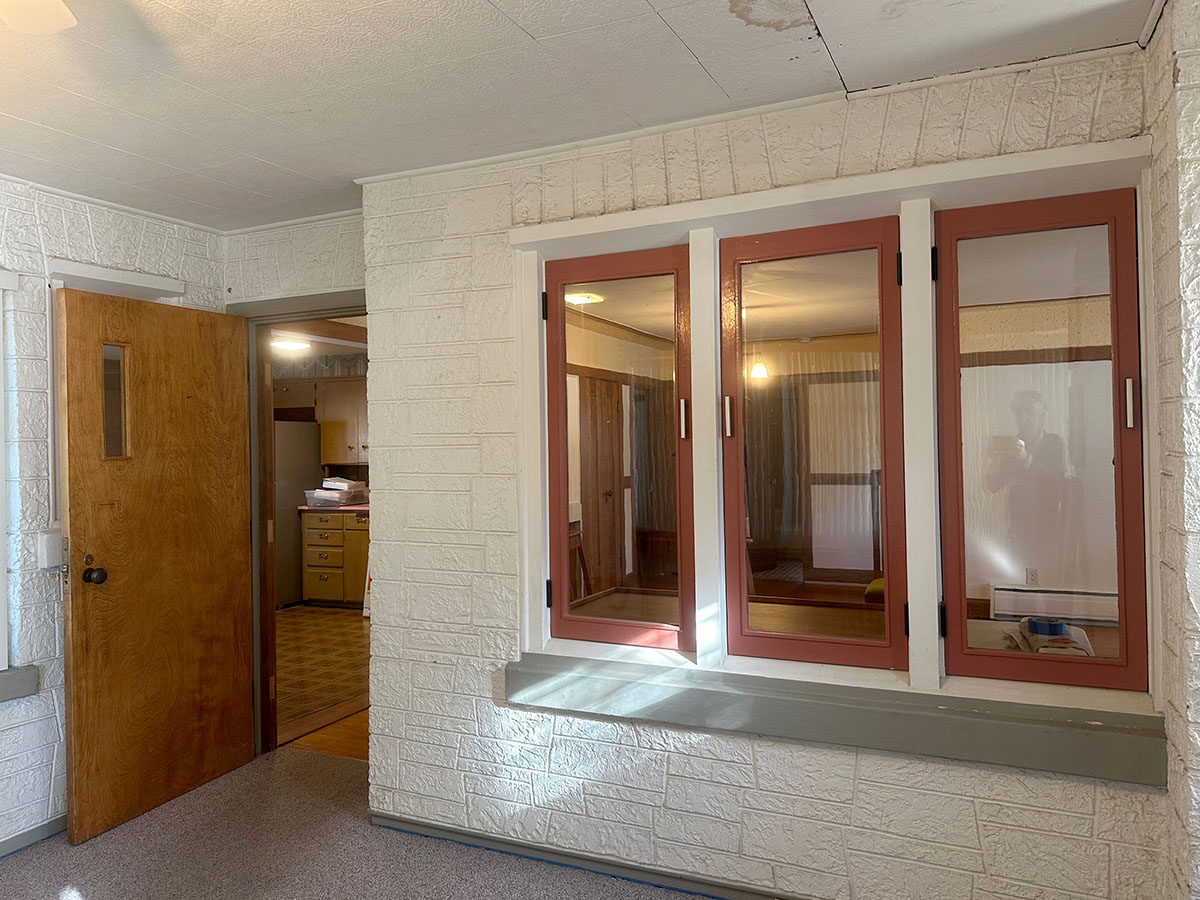
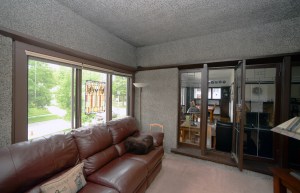
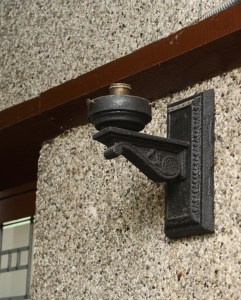
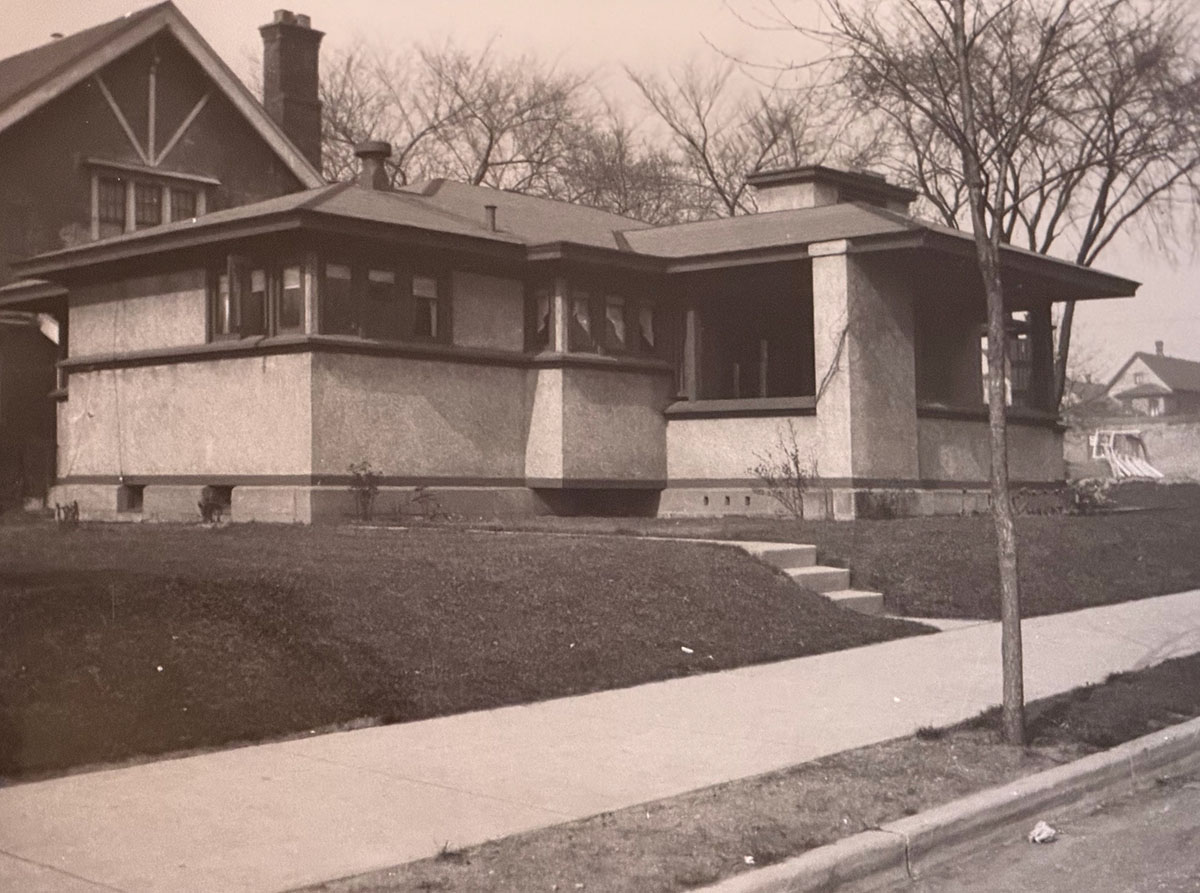
The C3 is sometimes referred to as the “Pizza Hut” house because of the mansard roof which came from two Pizza Hut restaurants in the 1970s. Its stucco was covered with a “Perma-Stone” veneer in 1958, and the open porch was enclosed.
LR 1835 N. Layton 10.16.25 001.jpg

The Burnham Block adventure started in 2005 with the purchase of the Model B1 at 2714  W. Burnham by the Frank Lloyd Wright in Wisconsin Tourism Heritage organization. A Save America’s Treasures grant and 28 major gifts including support from the Barbara Meyer Elsner Foundation enabled its restoration as a house museum.

LR Burnham WiW Board 4.16.05.jpgWright in Wisconsin board members discuss their purchase of the B1 in April 2005. Mike Lilek, the driving force behind the Burnham projects, is left. Barbara Meyer Elsner is third from right.

There were many difficult discussions at board meetings about what it would mean for the organization to become a steward of a Wright property rather than only fulfilling its founding mission of promoting Wright tourism and awareness and education about Wright’s work in Wisconsin. Then came the purchase of the Two Family Flat C duplex at the end of the block. And then came the purchases of two more of the duplexes (one of which is the world’s only aluminum sided Frank Lloyd Wright structure…the siding was added in 1968). The fourth duplex is independently owned. It was converted into a single family home in the 1980s and is available for overnight rentals through Vrbo.

Lilek reflects on the discussions at board meetings, “The board meetings became increasingly focused on the Burnham Block, to the detriment of the organization. Then-president George Hall likened it to ‘Your teenager growing up and needing their own space.'”

He recalls, “In 2017 Frank Lloyd Wright Wisconsin was reorganized to better support two distinguished missions. Out of the reorganization came Wright in Wisconsin, Inc. to carry forward the original focus on Frank Lloyd Wright tourism and Frank Lloyd Wright’s Burnham Block to focus exclusively on on the Burnham Block historic site in Milwaukee.”

LR WiW Reorganization 005.jpg

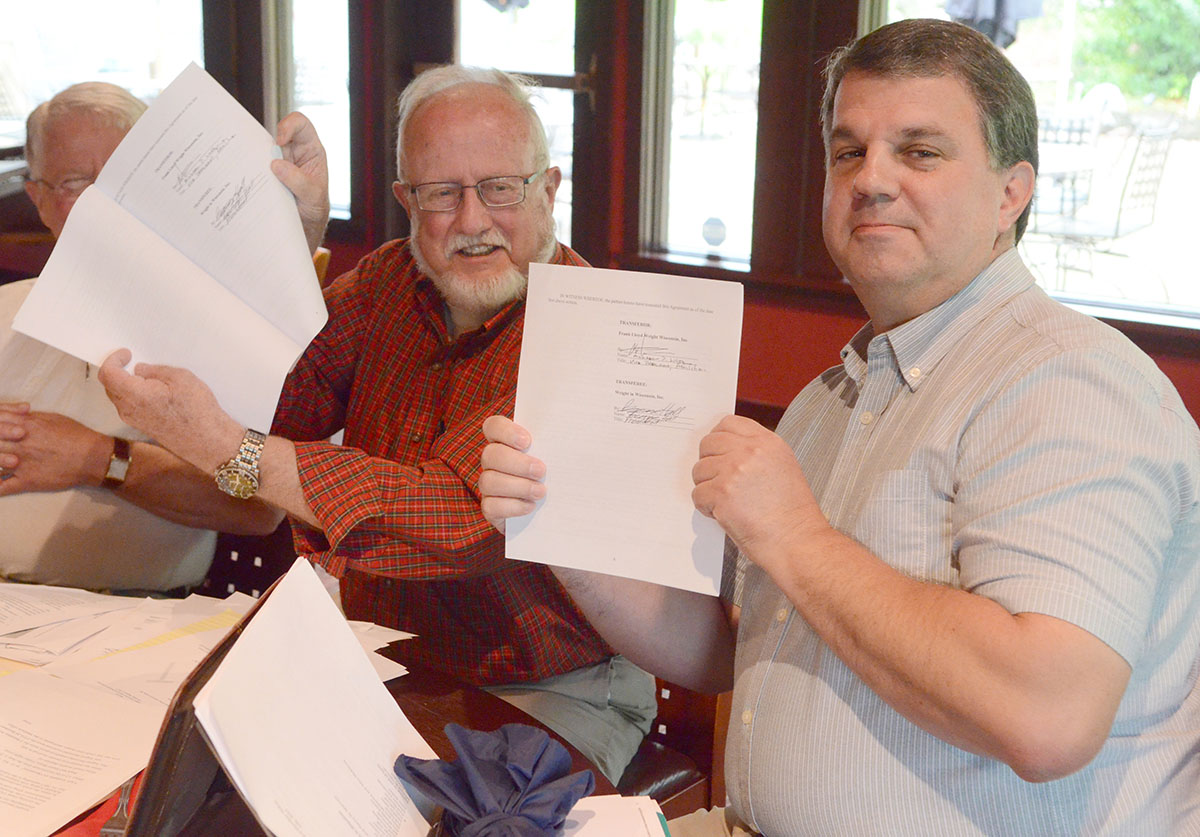
LR WiW Reorganization 006.jpgGeorge Hall, left, and Mike Lilek sign the reorganization papers August 3, 2017.

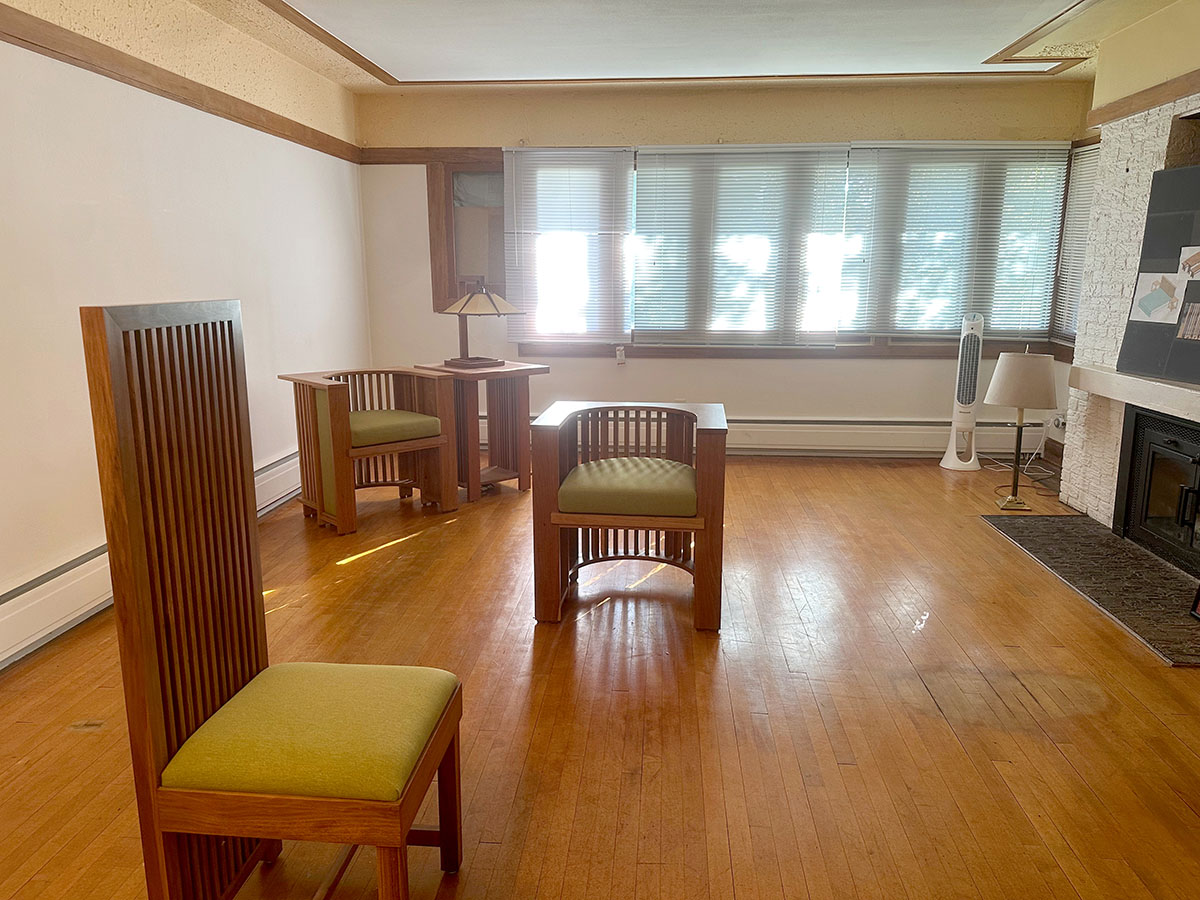
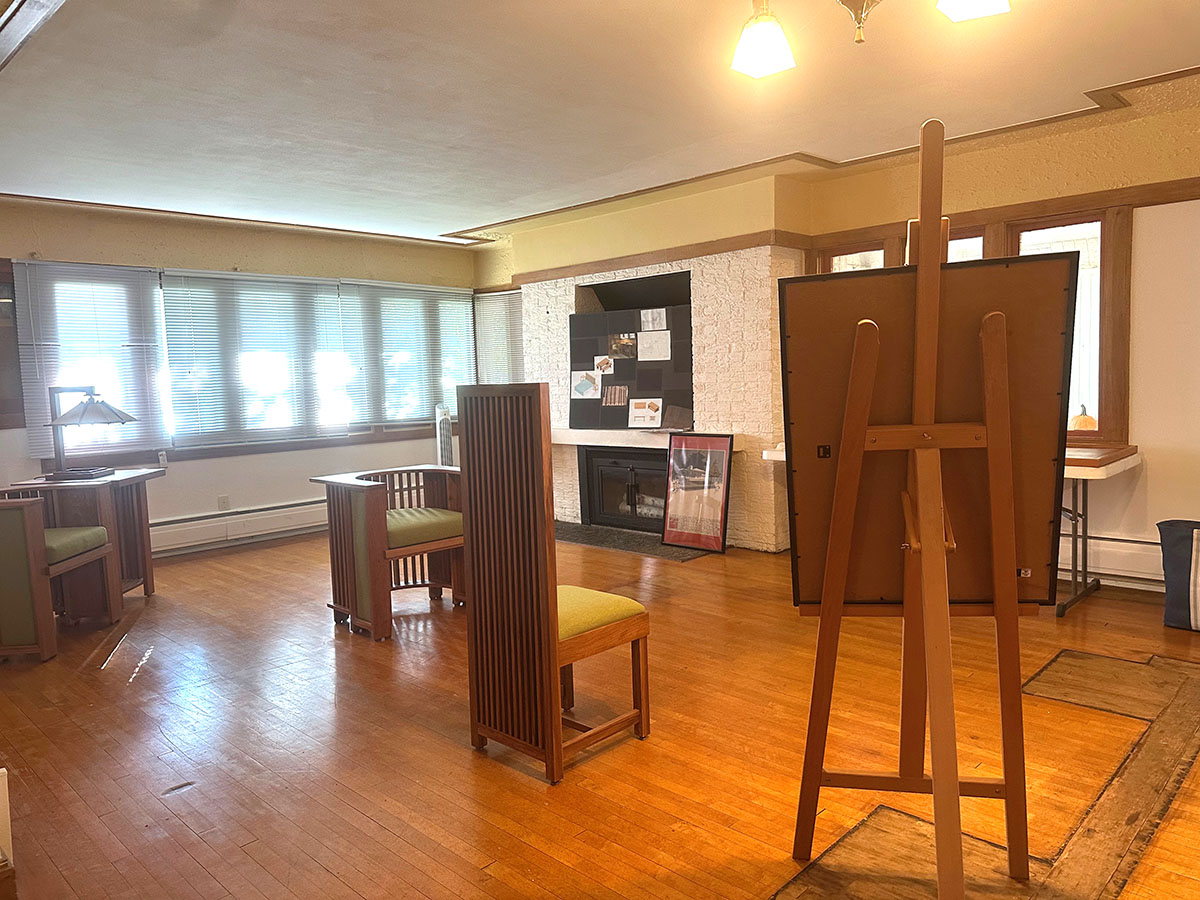
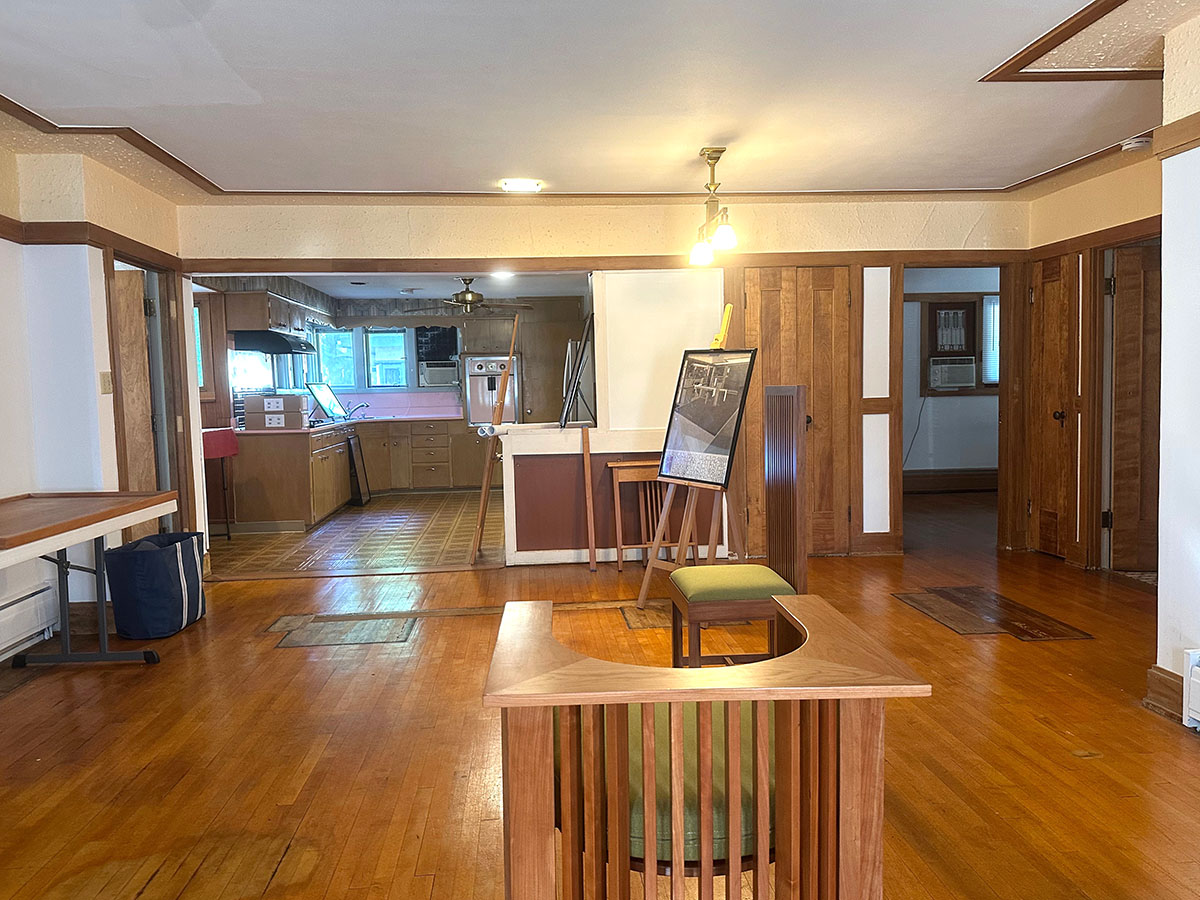
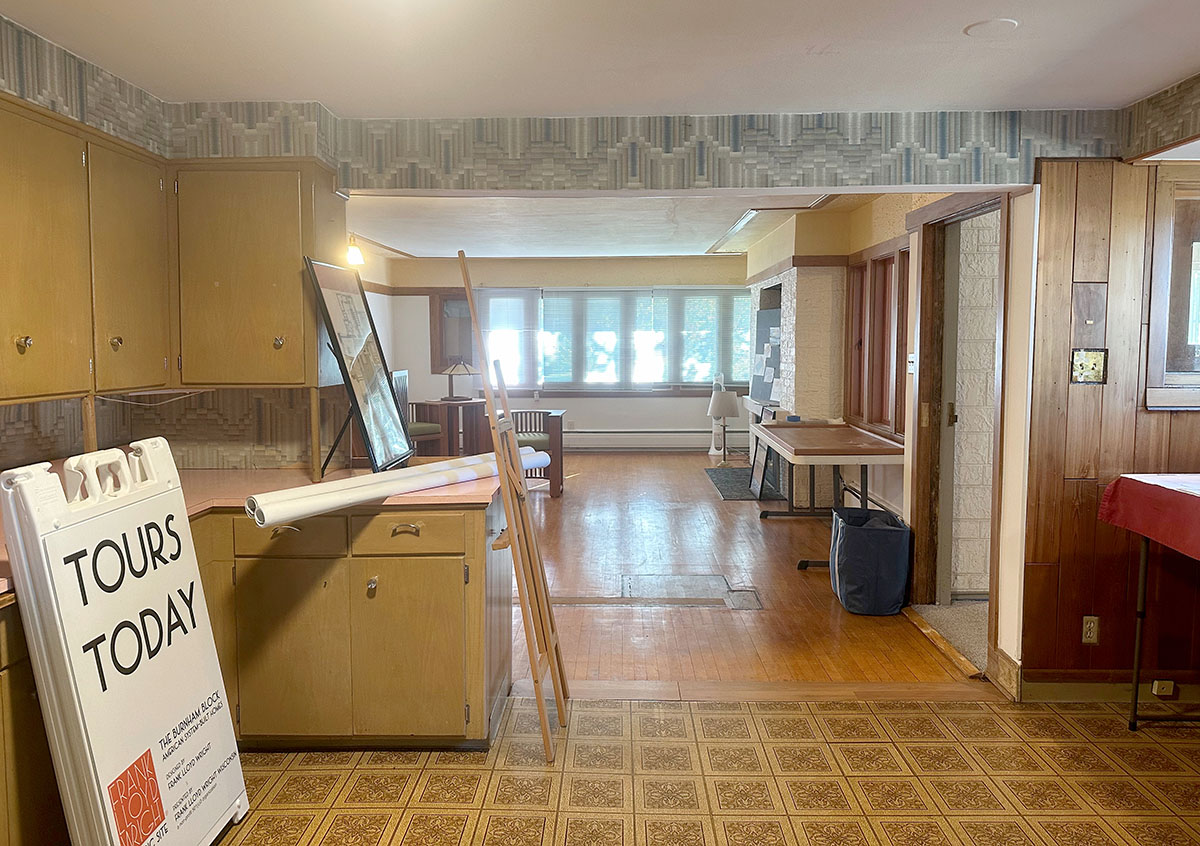
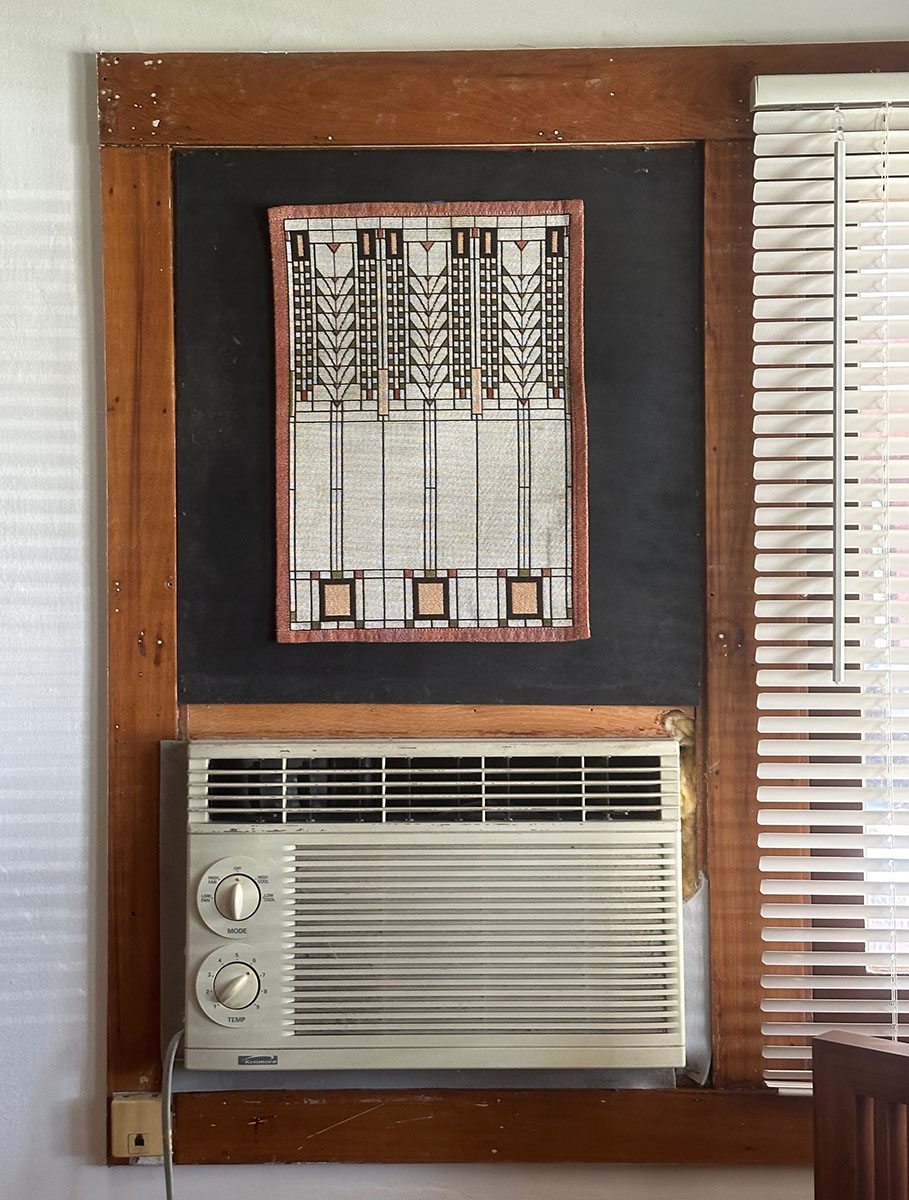
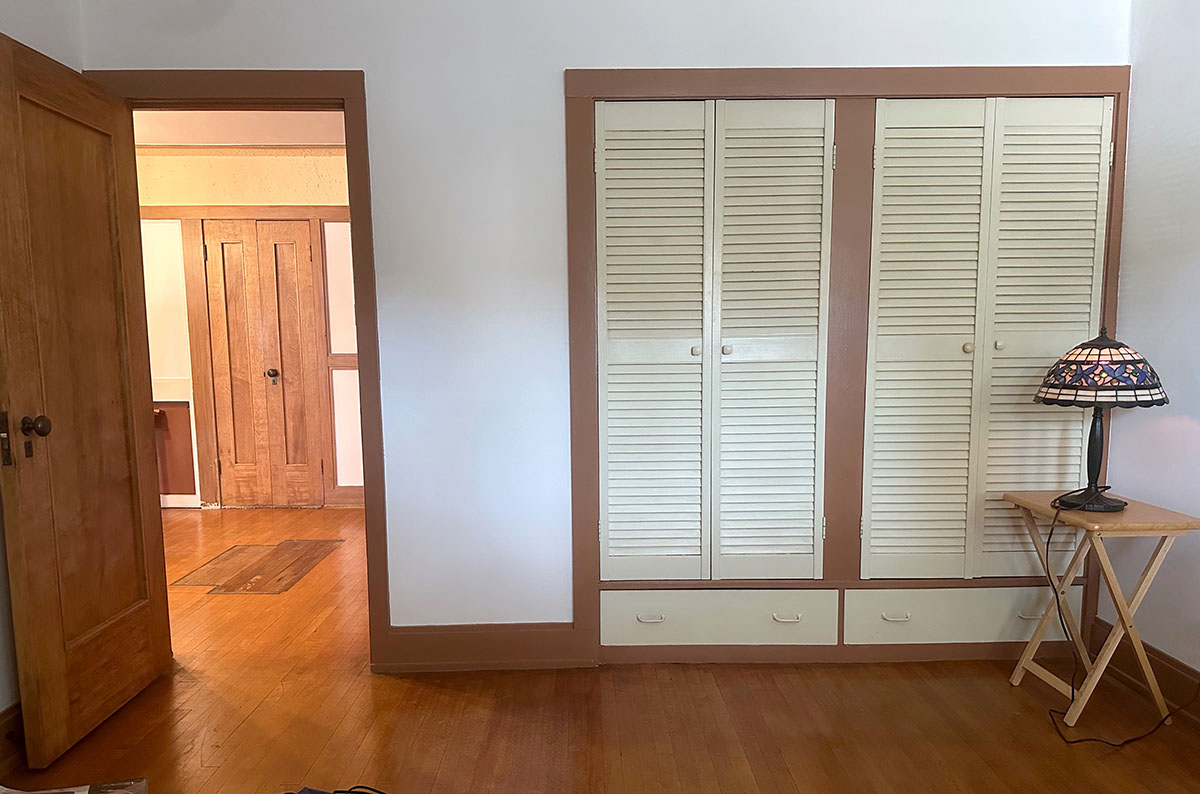
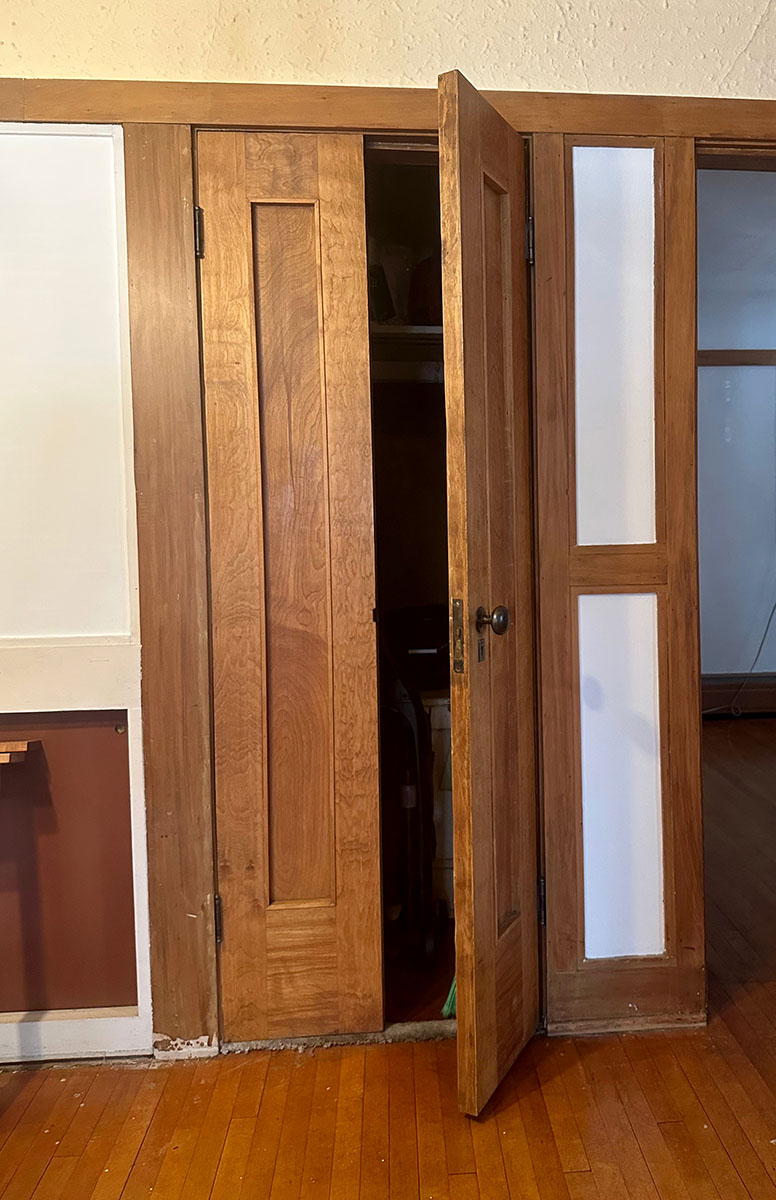
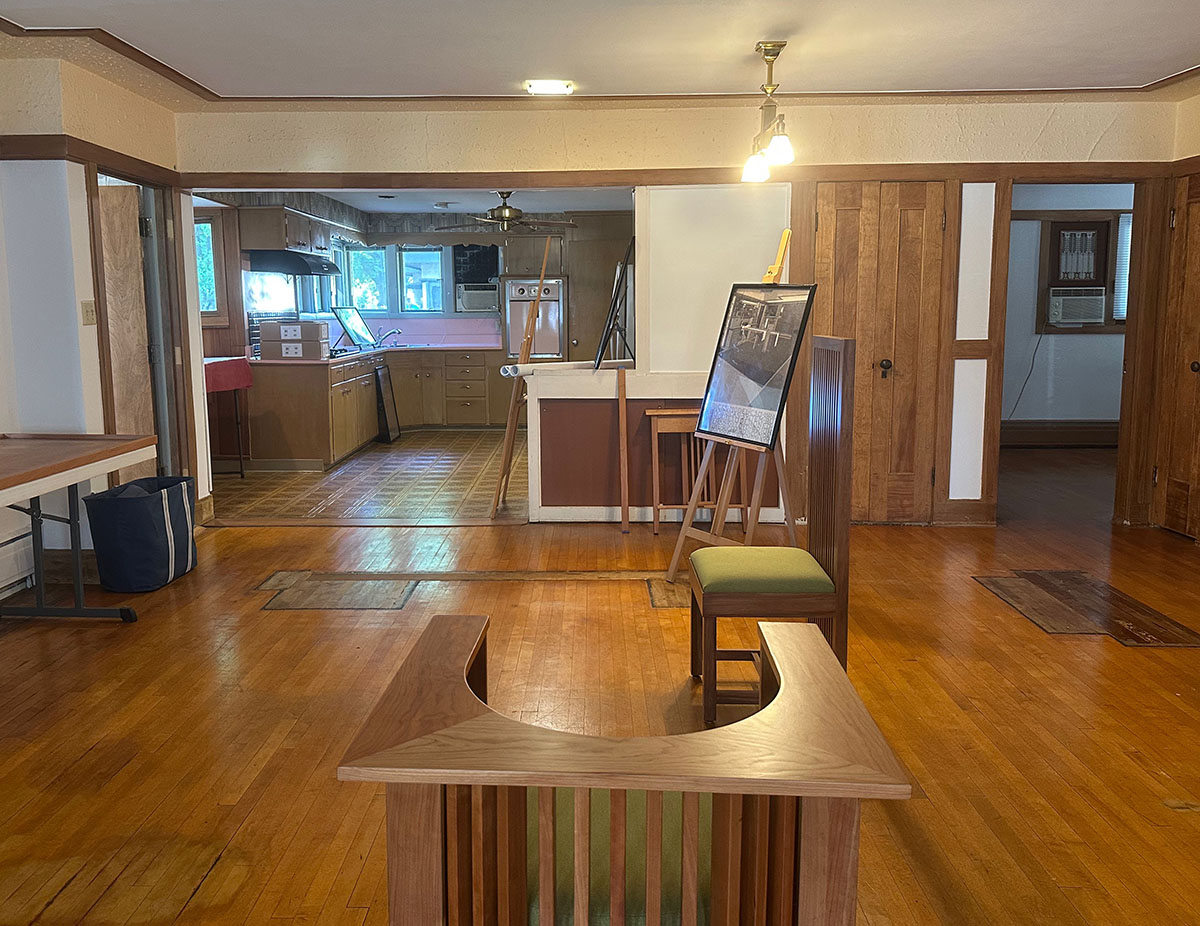
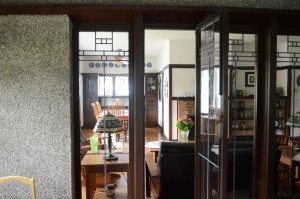
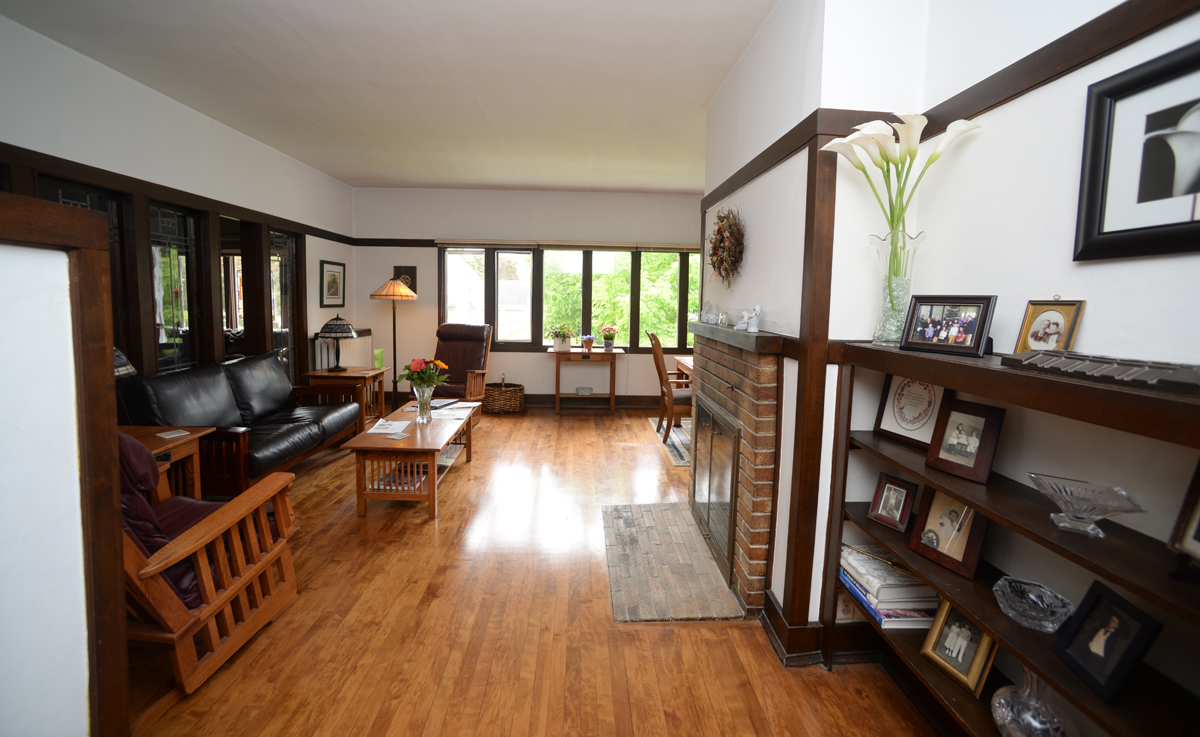
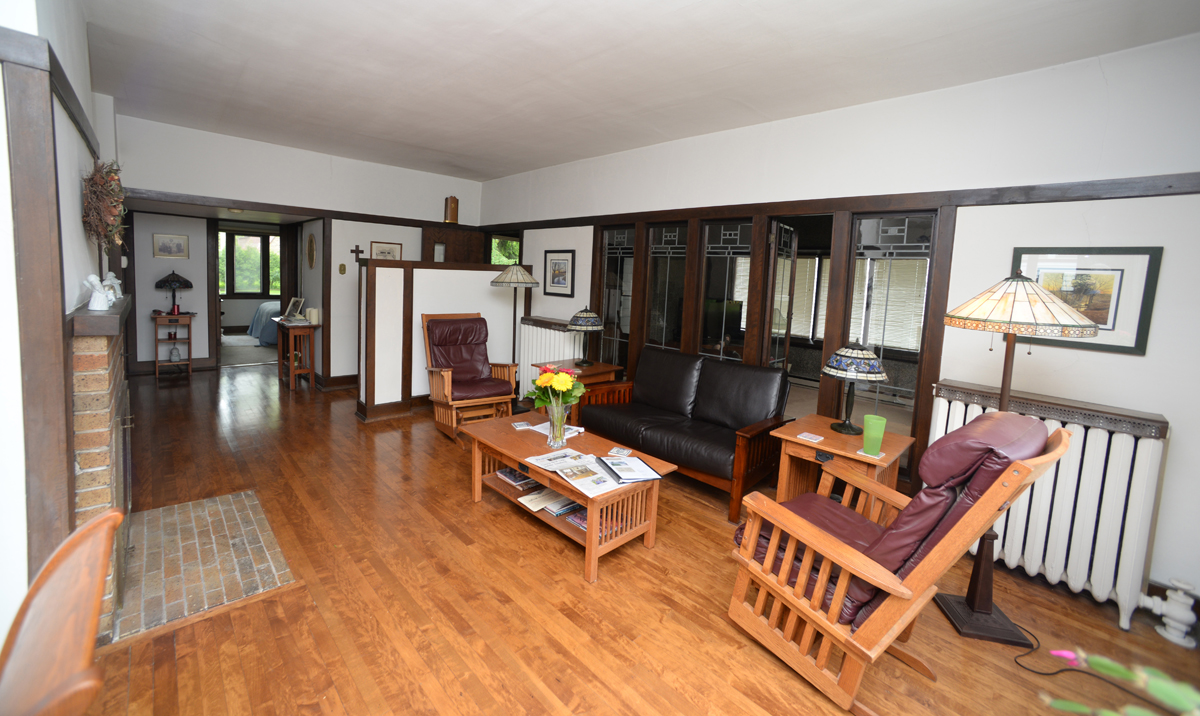
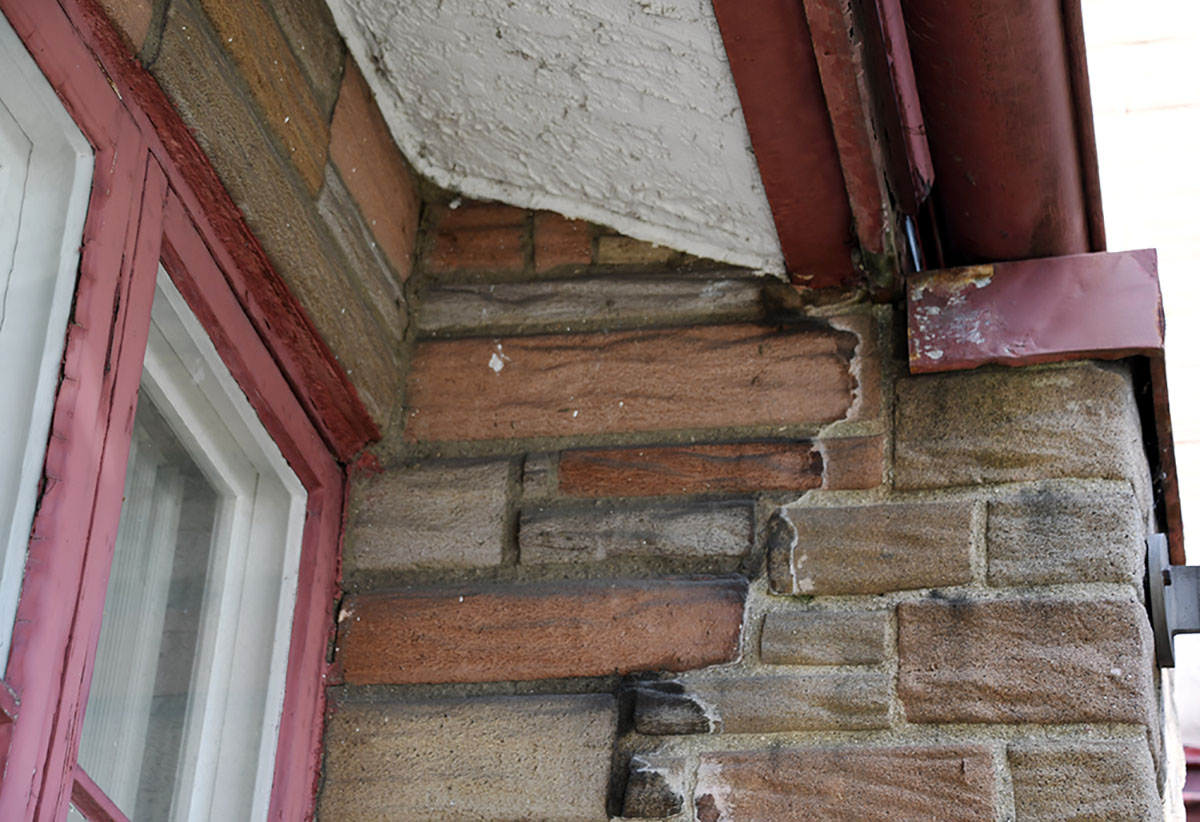
Below are period advertisements of the 1835 N. Layton house and photographs of what the house looks like today:

LR 1835 N. Layton 9.25.25 004.jpg

LR 1835 N. Layton 9.25.25 010.jpg

LR 1835 N. Layton 9.25.25 011.jpg

LR 1835 N. Layton 9.25.25 012.jpg

LR 1835 N. Layton 9.25.25 022.jpg

LR IMG_2743.jpg

LR 1835 N. Layton 10.16.25 003.jpg

LR 1835 N. Layton 9.25.25 013.jpg

LR 1835 N. Layton 9.25.25 017.jpg

LR 1835 N. Layton 9.25.25 018.jpg

LR 1835 N. Layton 9.25.25 019.jpg

LR 1835 N. Layton 9.25.25 019A.jpg

LR 1835 N. Layton 9.25.25 015.jpg

LR 1835 N. Layton 9.25.25 016.jpg

LR 1835 N. Layton 9.25.25 020.jpg

LR 1835 N. Layton 9.25.25 021.jpg

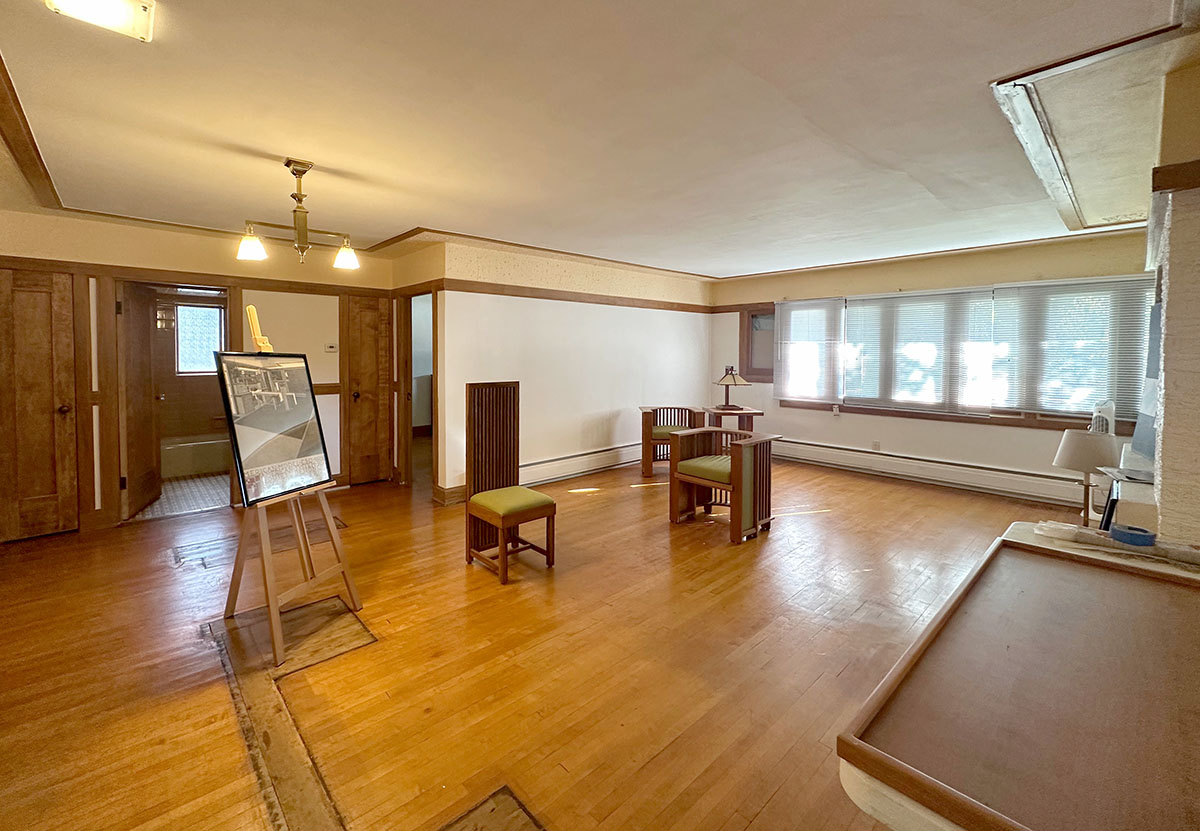
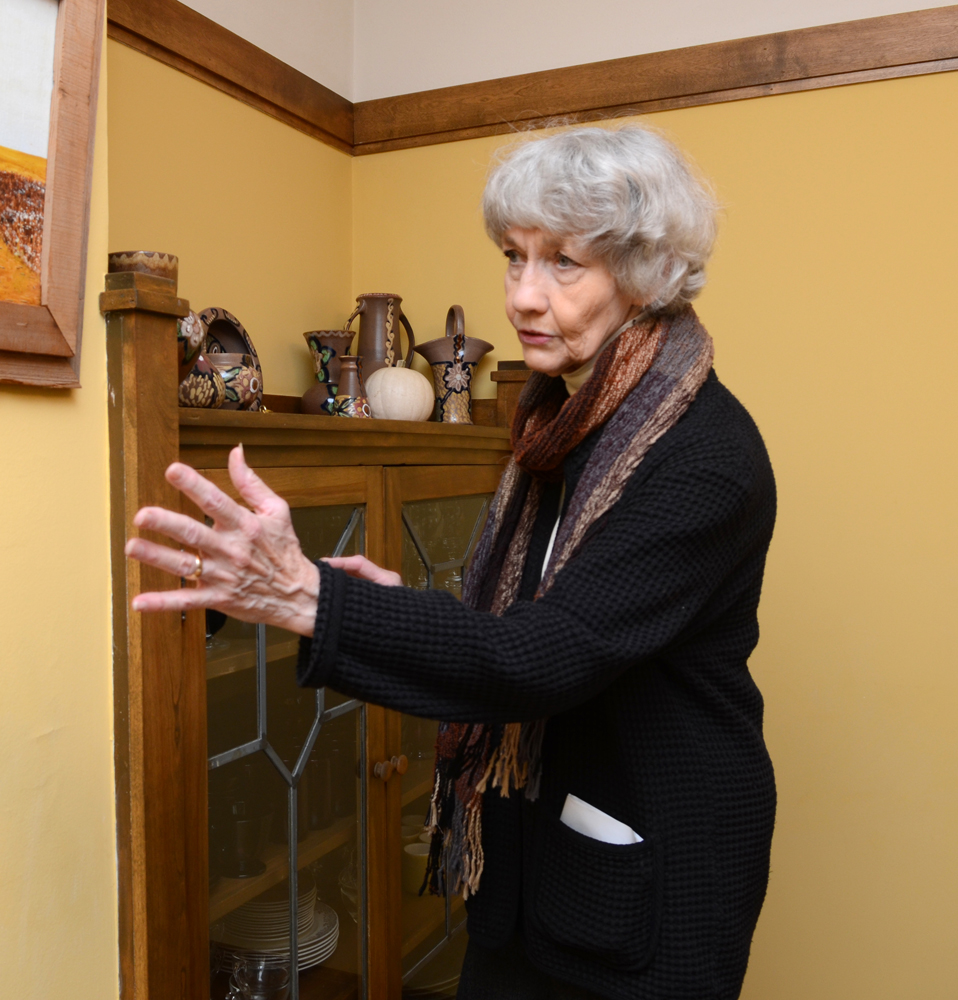
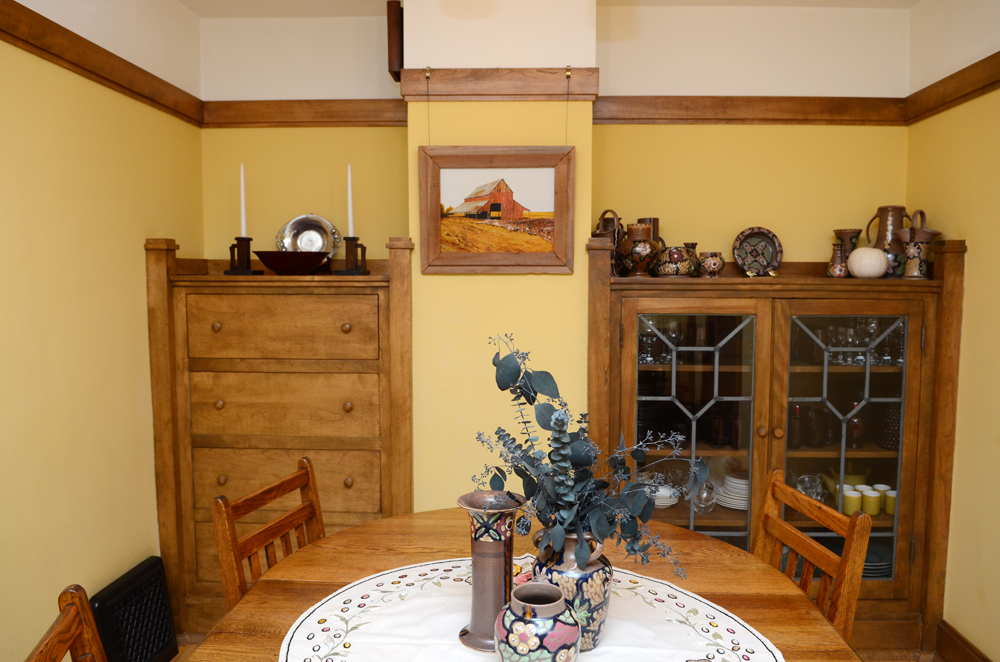
The next three photos show where some of the original furnishings – seen in the drawing above – were originally placed. It is not known when they were removed, or where they ended up.

LR 1835 N. Layton 9.25.25 024.jpg

LR 1835 N. Layton 9.25.25 025.jpg

LR 1835 N. Layton 9.25.25 027.jpg

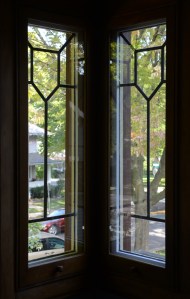
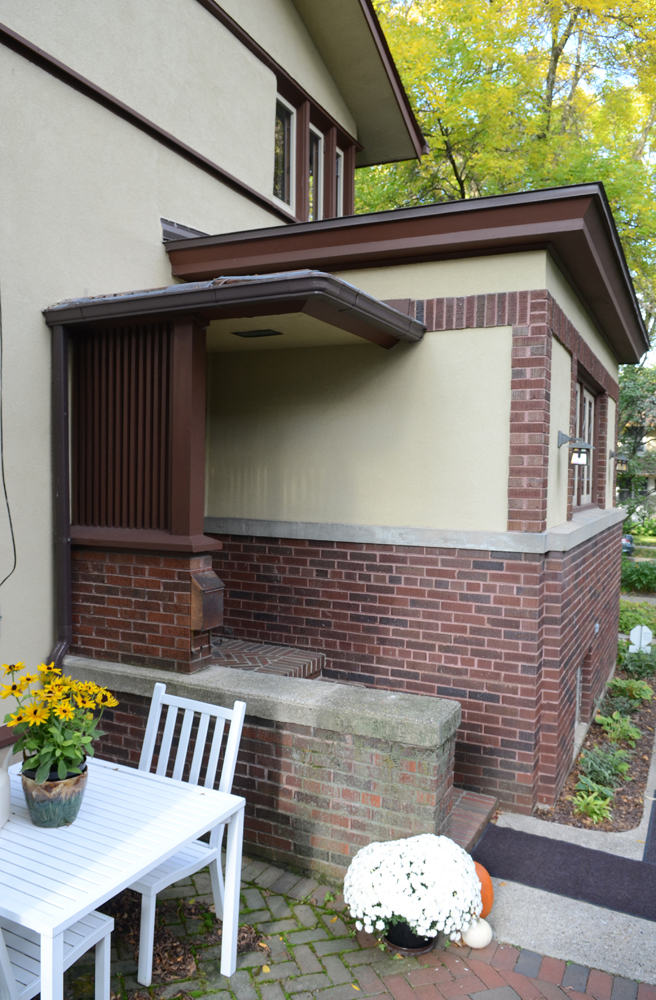
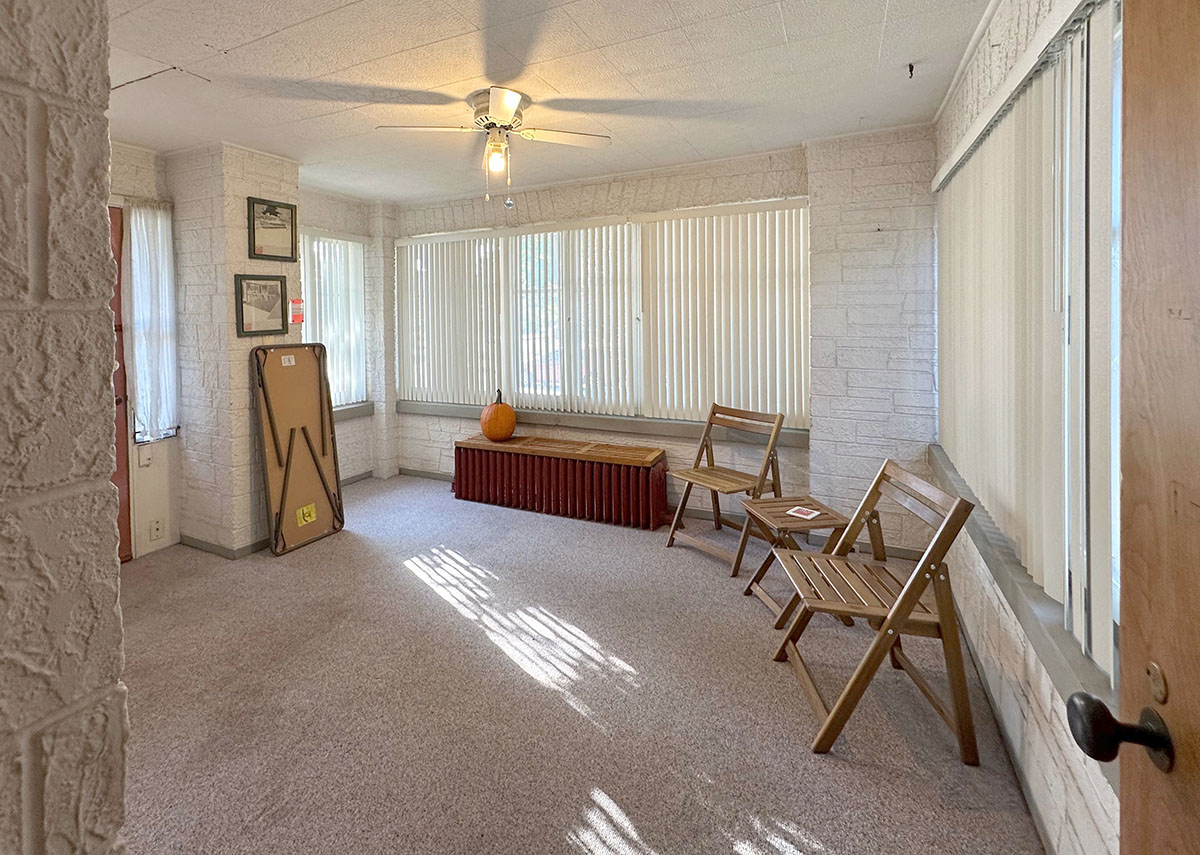
The original open porch was enclosed, possibly when then exterior veneer was added:
LR 1835 N. Layton 9.25.25 028.jpg

LR 1835 N. Layton 9.25.25 029.jpg

LR 1835 N. Layton 9.25.25 030.jpg

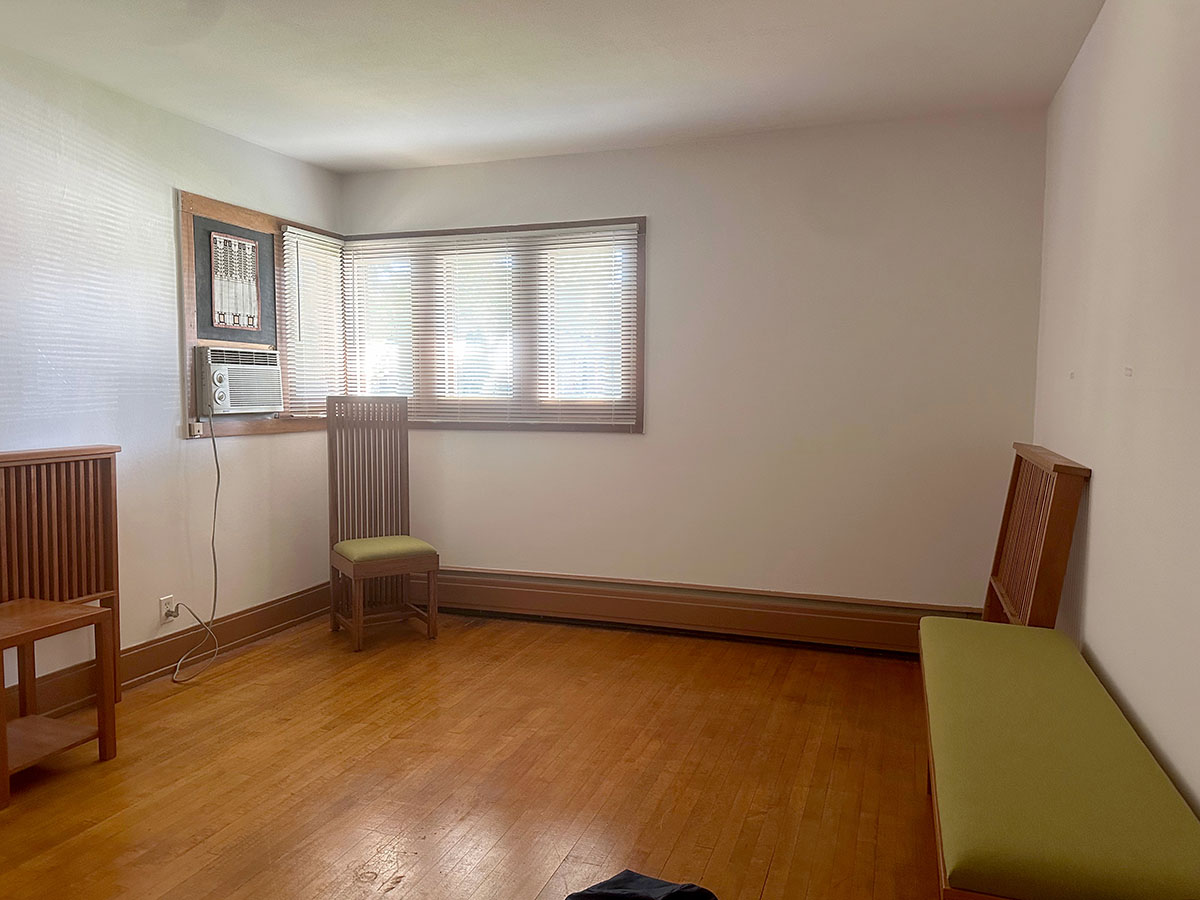
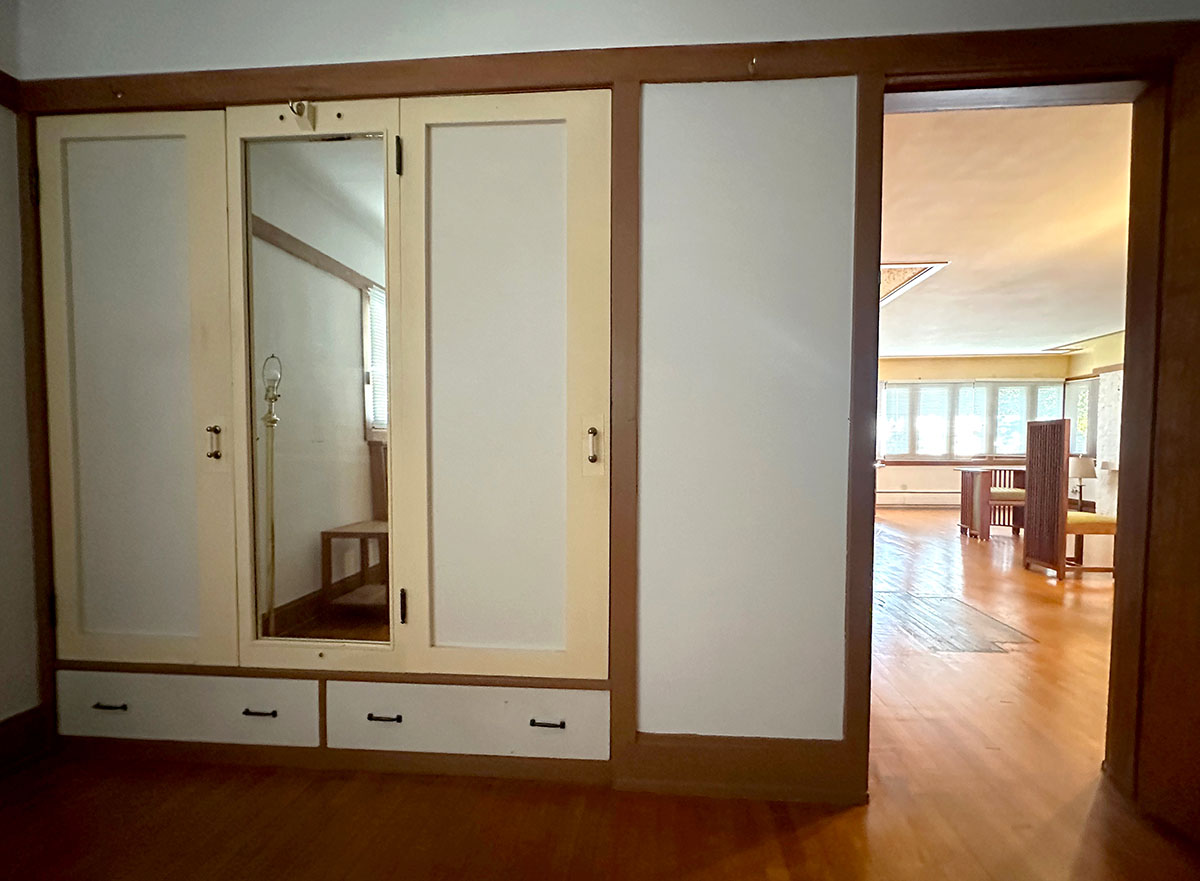
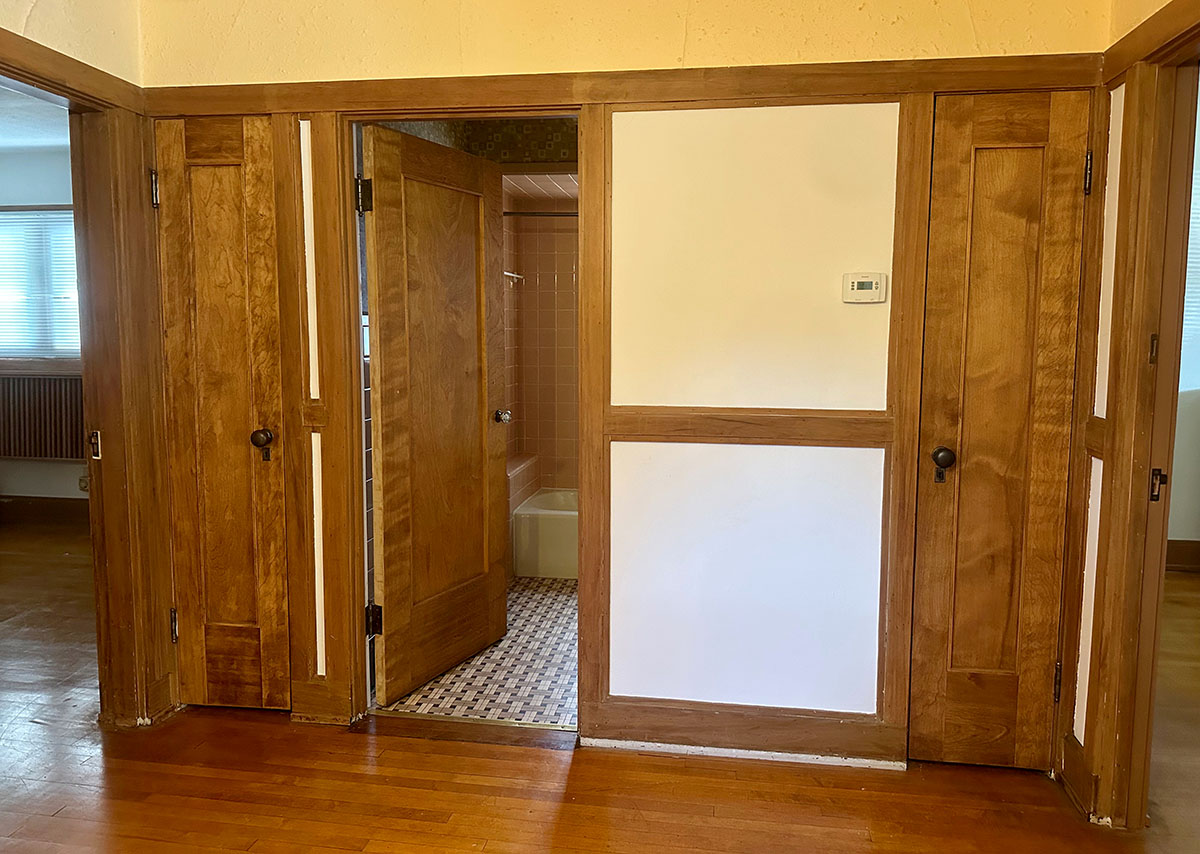
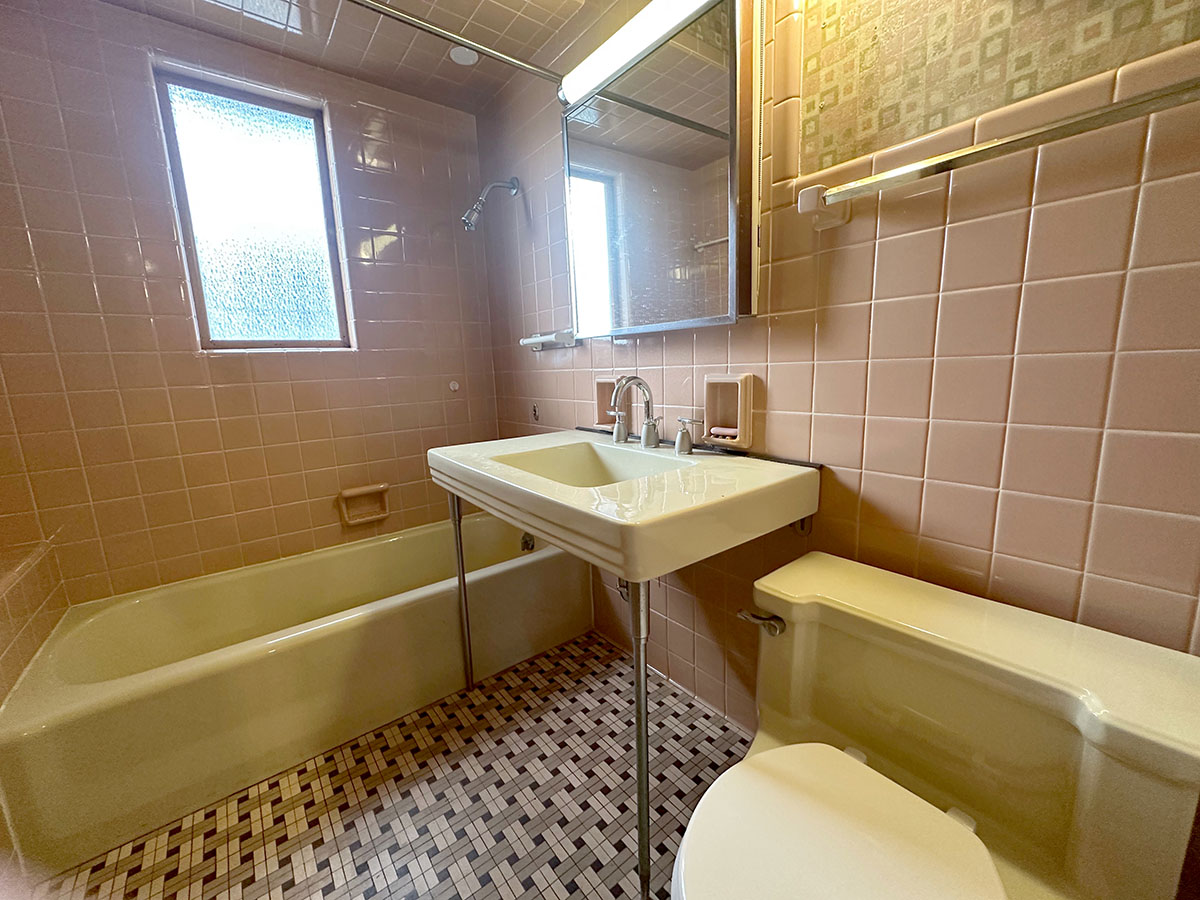
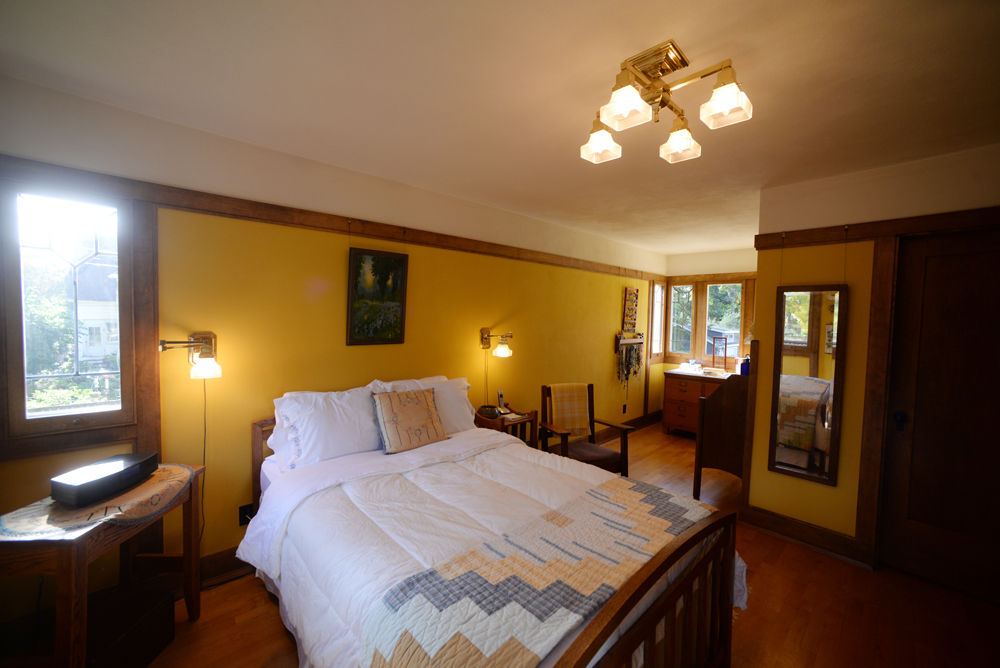
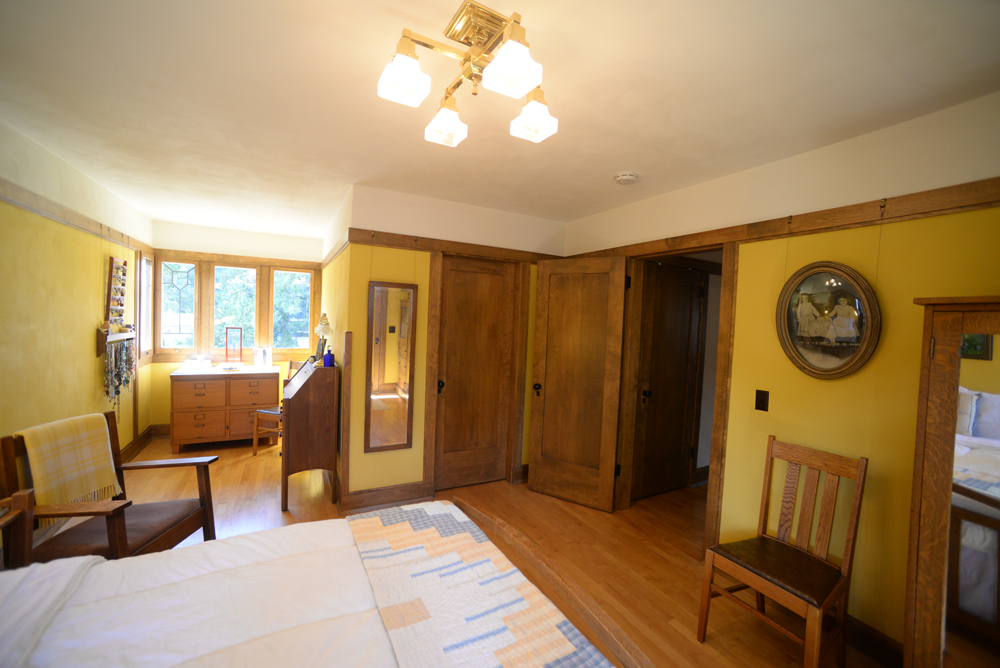
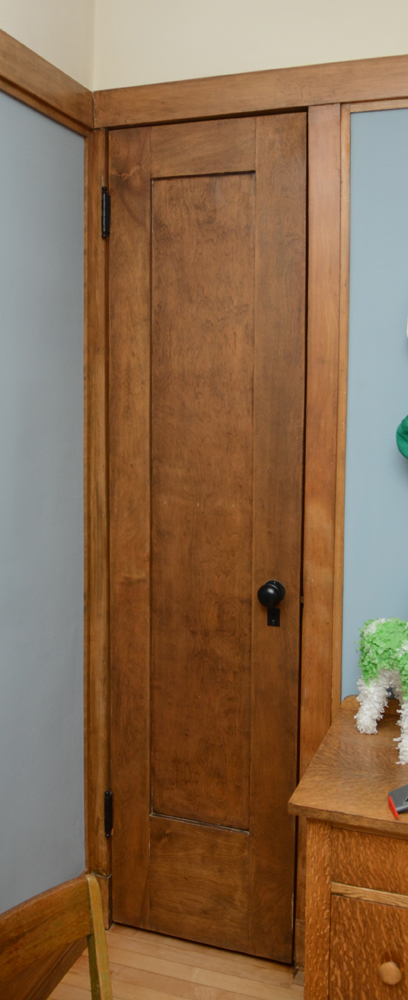
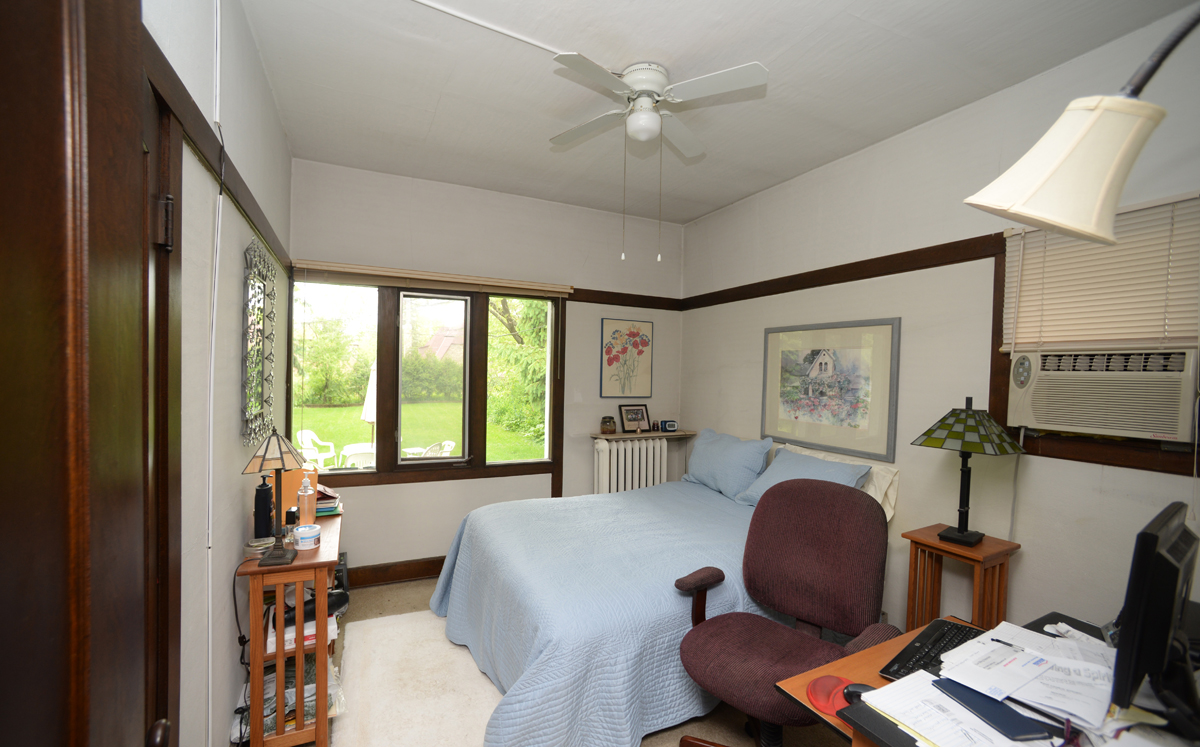
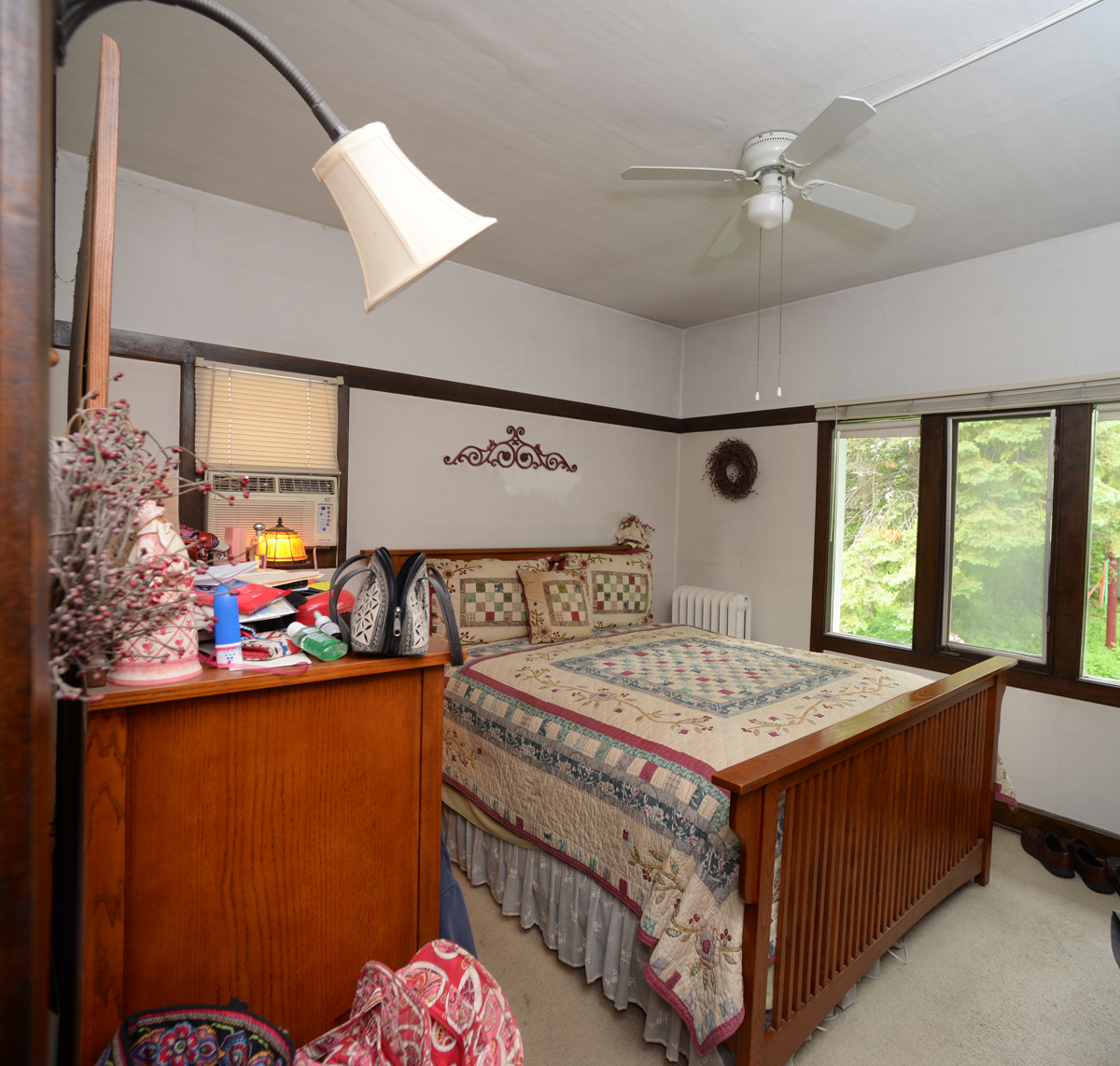
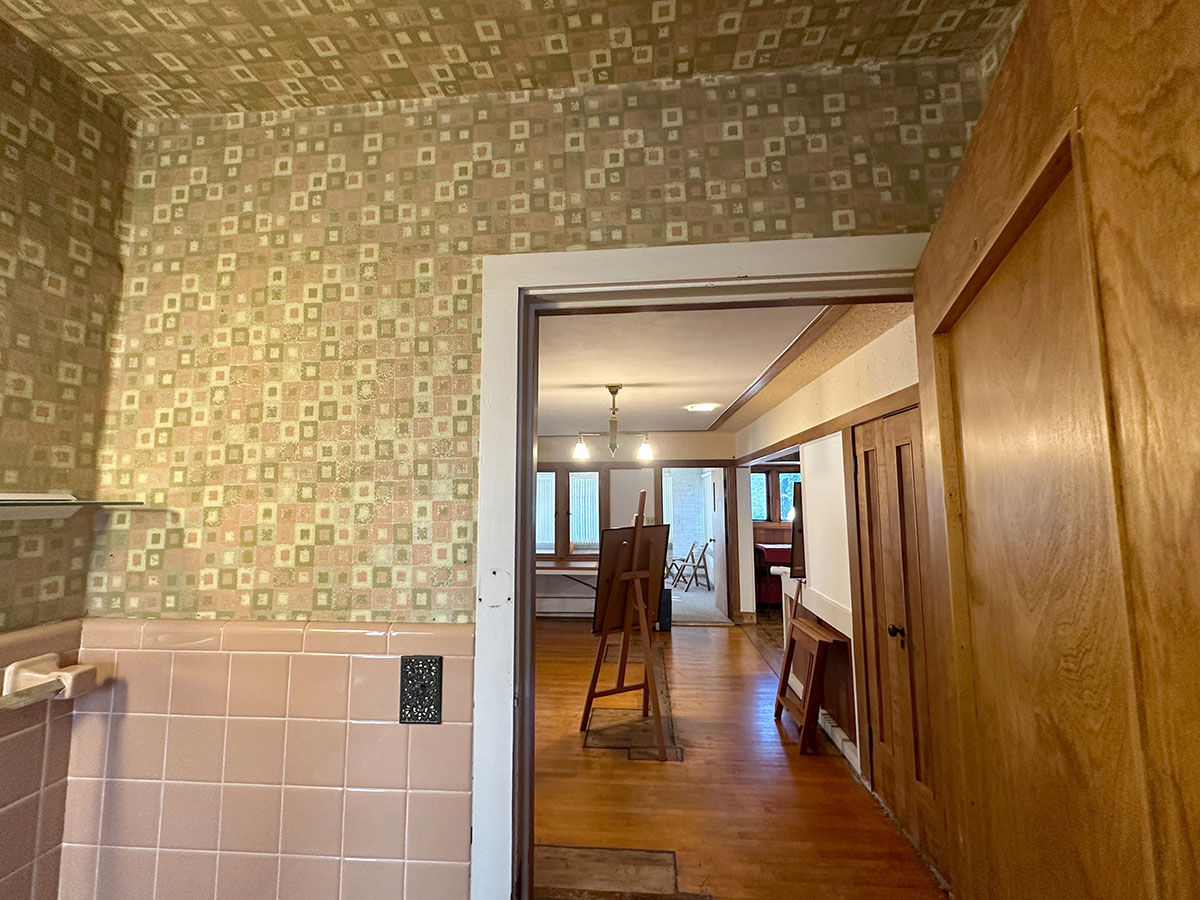
Bedroom and bathroom photos:
LR 1835 N. Layton 9.25.25 031.jpg

LR 1835 N. Layton 9.25.25 033.jpg

LR 1835 N. Layton 9.25.25 034.jpg

LR 1835 N. Layton 9.25.25 035.jpg

LR 1835 N. Layton 9.25.25 036.jpg

LR 1835 N. Layton 9.25.25 037.jpg

LR 1835 N. Layton 9.25.25 044.jpg

LR 1835 N. Layton 9.25.25 042.jpg

LR 1835 N. Layton 9.25.25 043.jpg

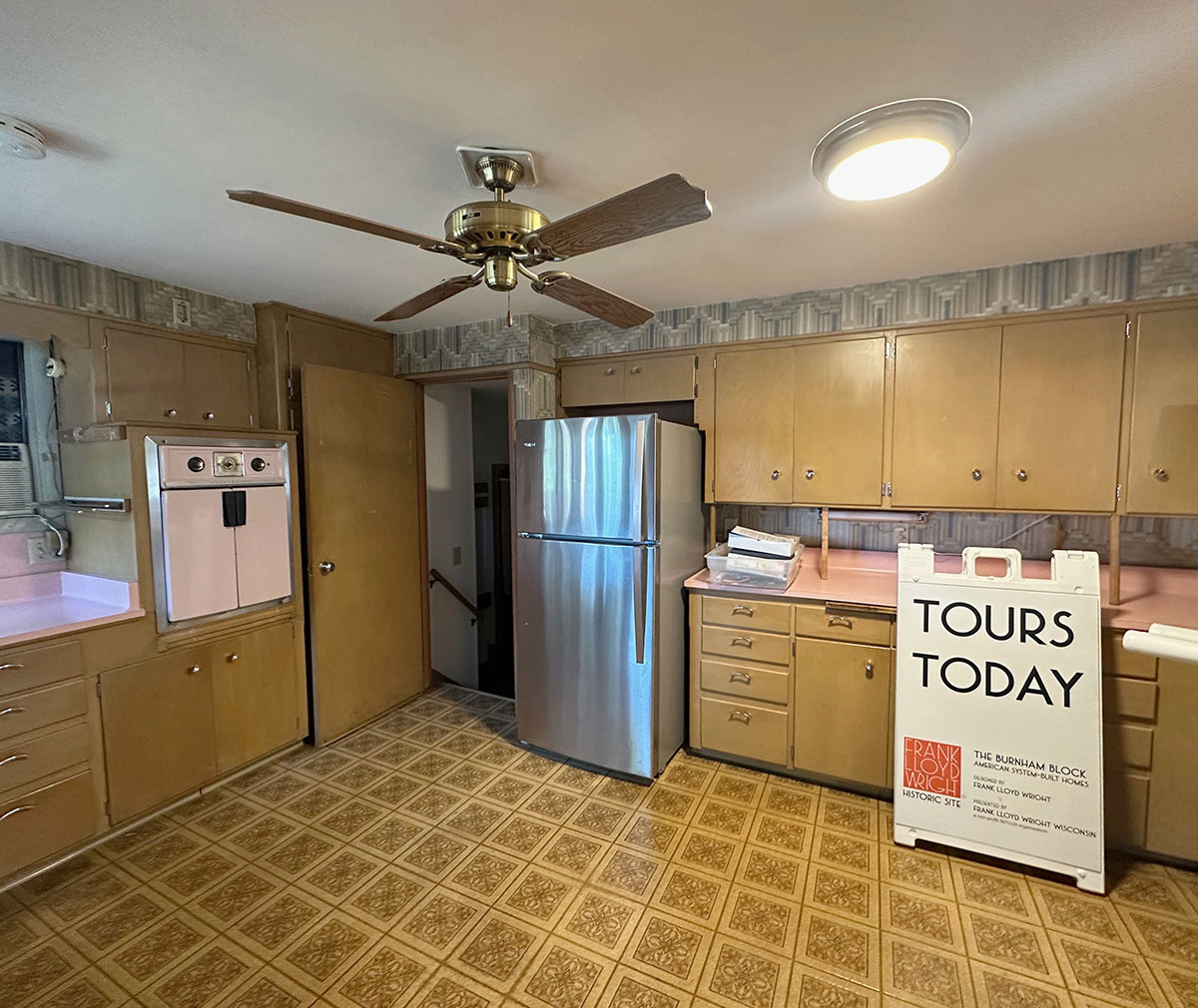
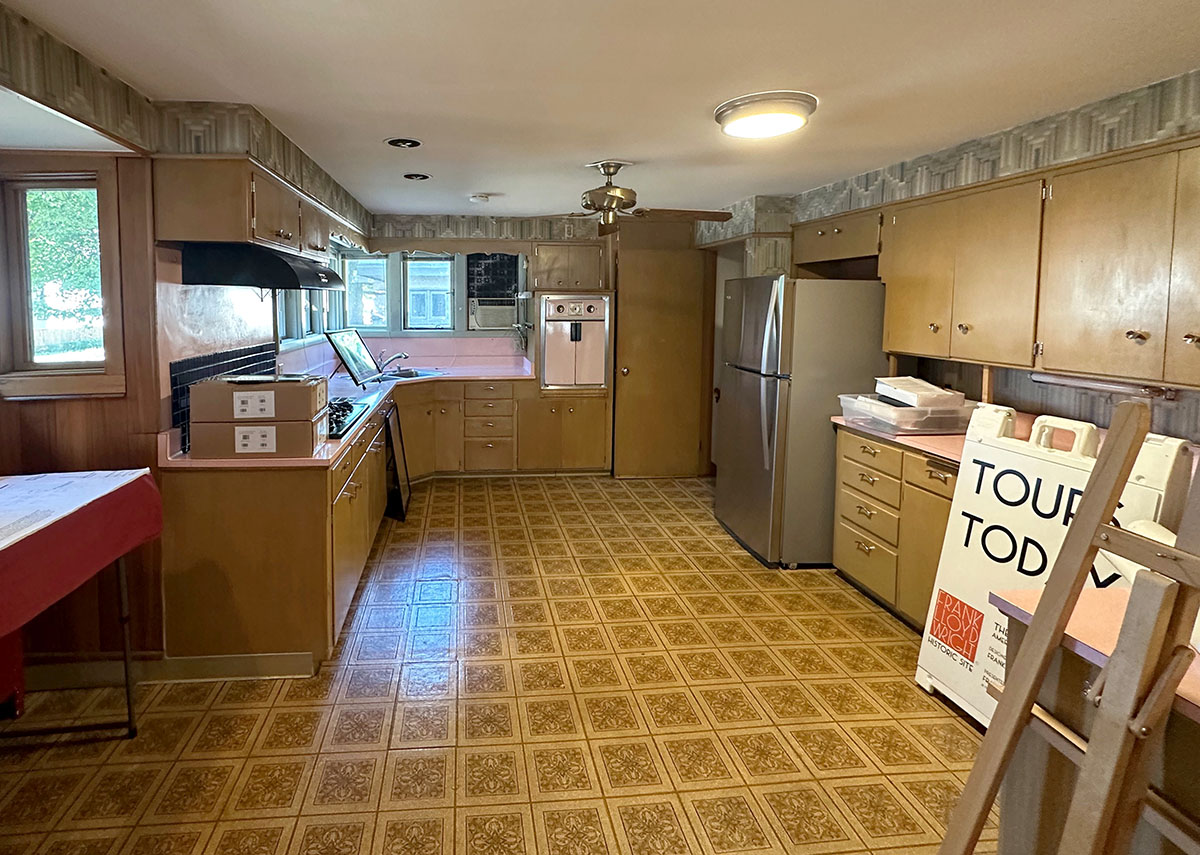
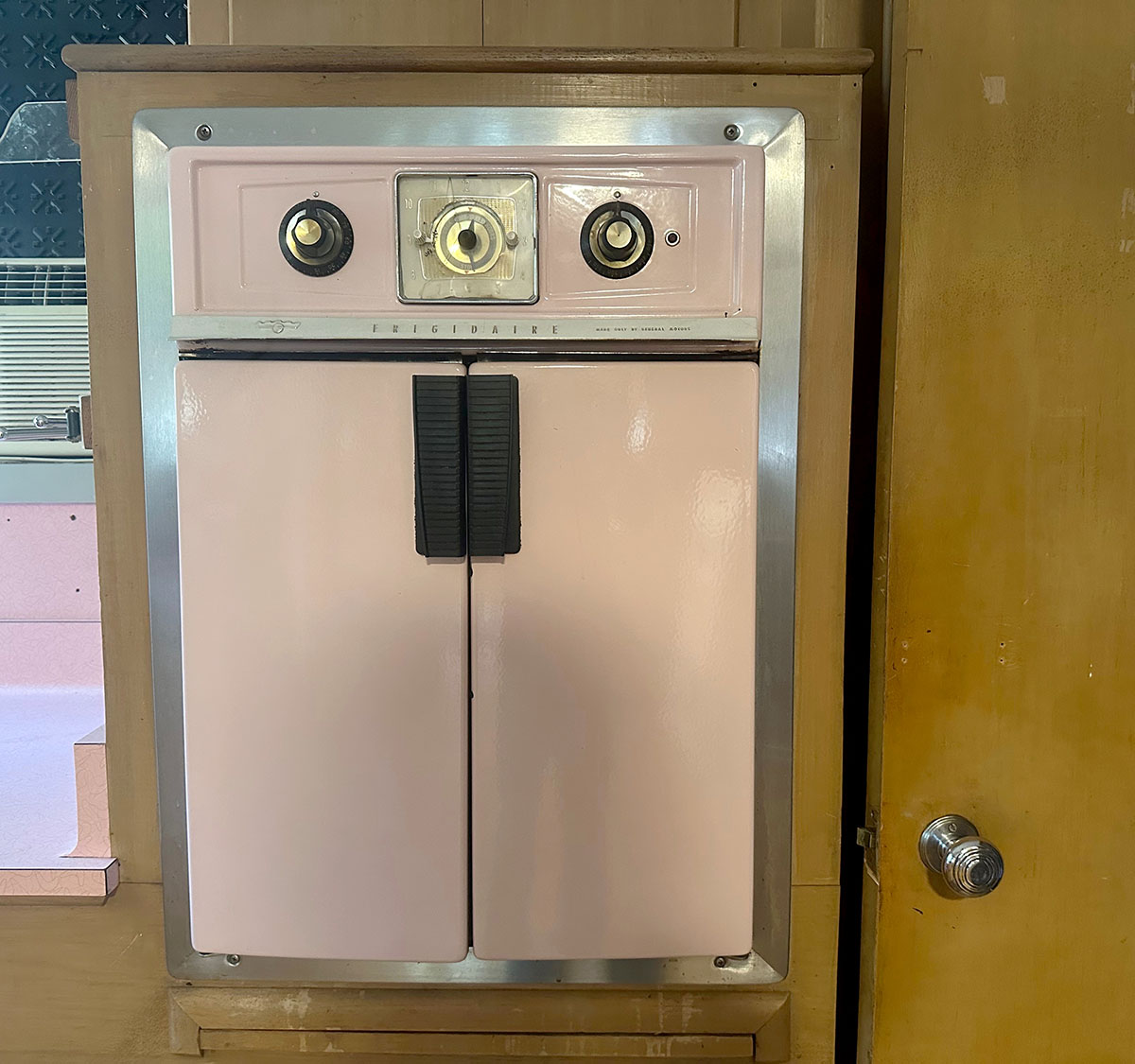
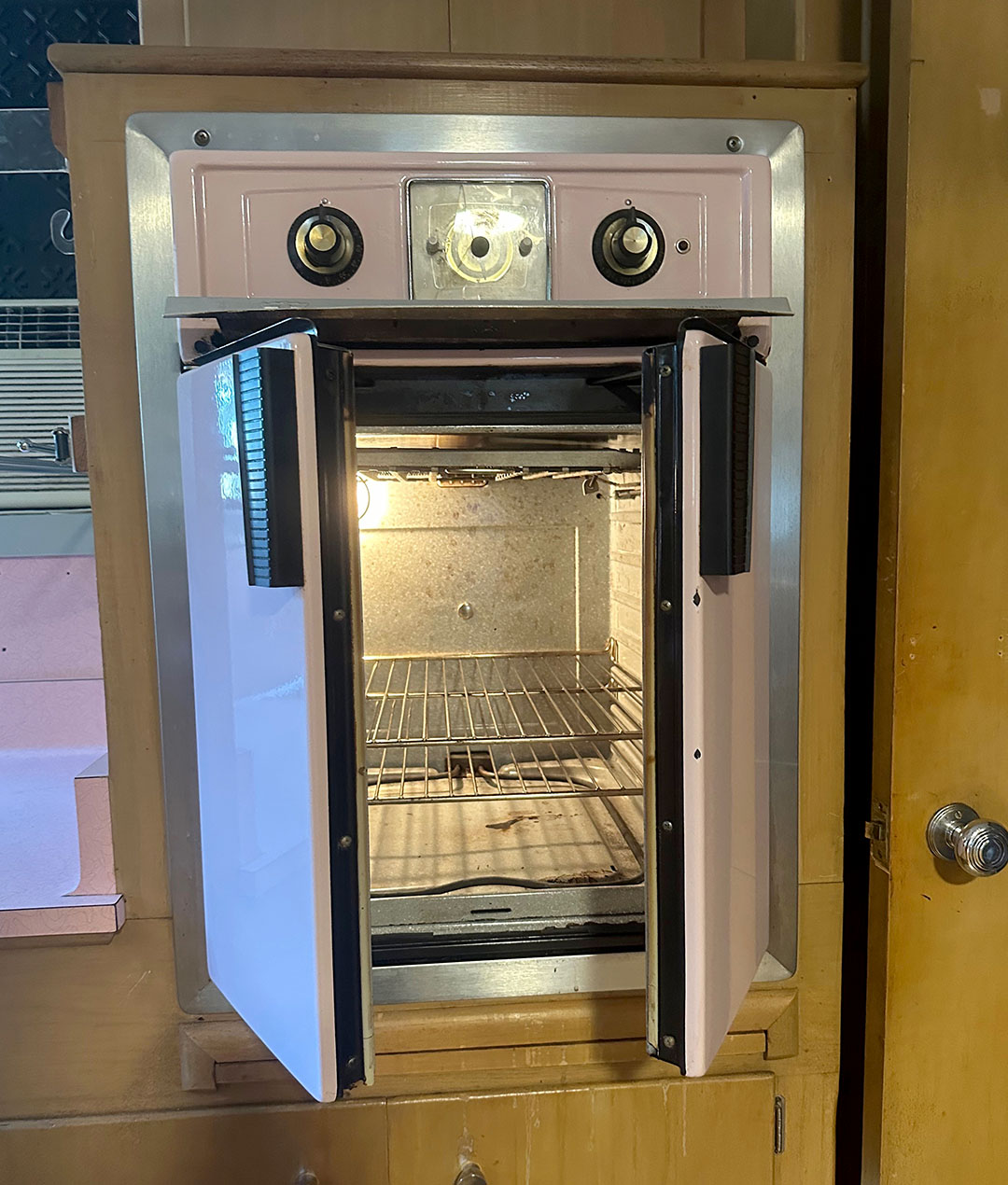
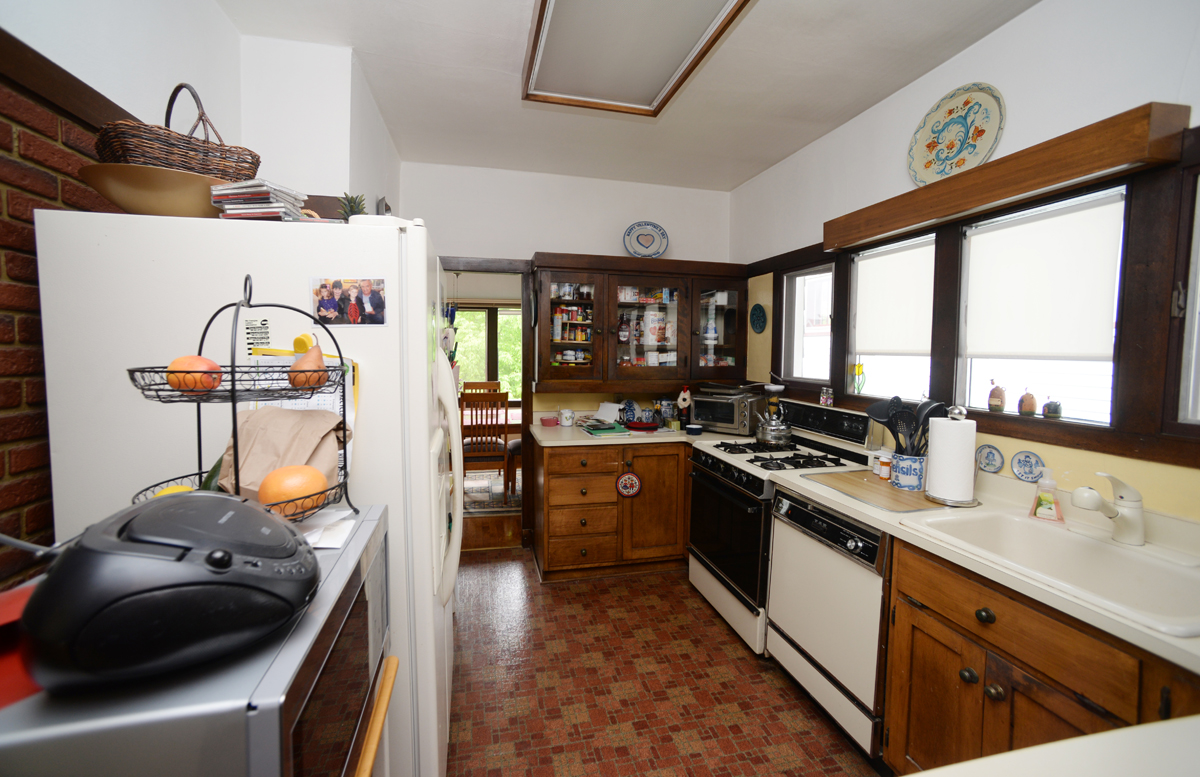
The kitchen:

LR 1835 N. Layton 9.25.25 038.jpg


LR 1835 N. Layton 9.25.25 039B.jpg

LR 1835 N. Layton 9.25.25 039A.jpg

LR 1835 N. Layton 9.25.25 040.jpg

LR 1835 N. Layton 9.25.25 041.jpg

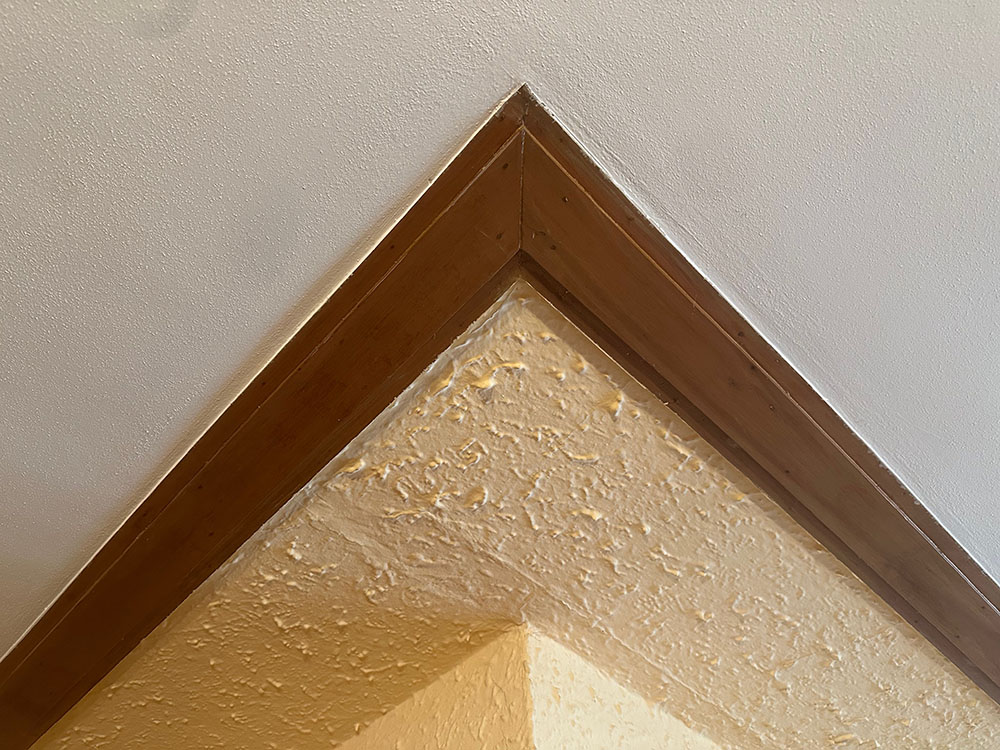
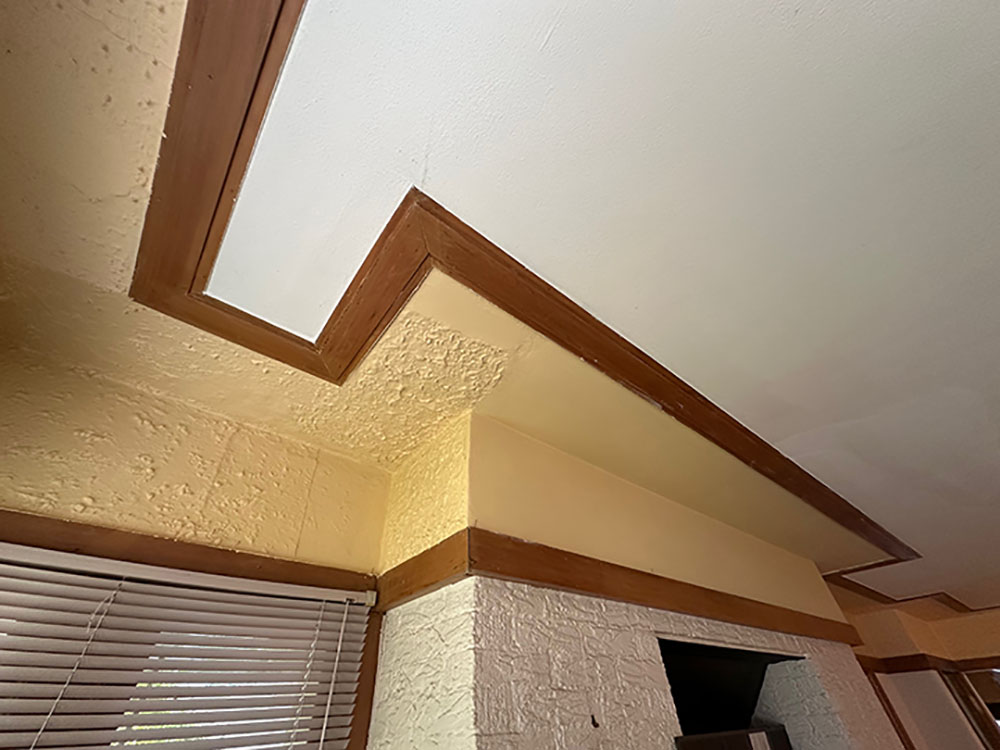
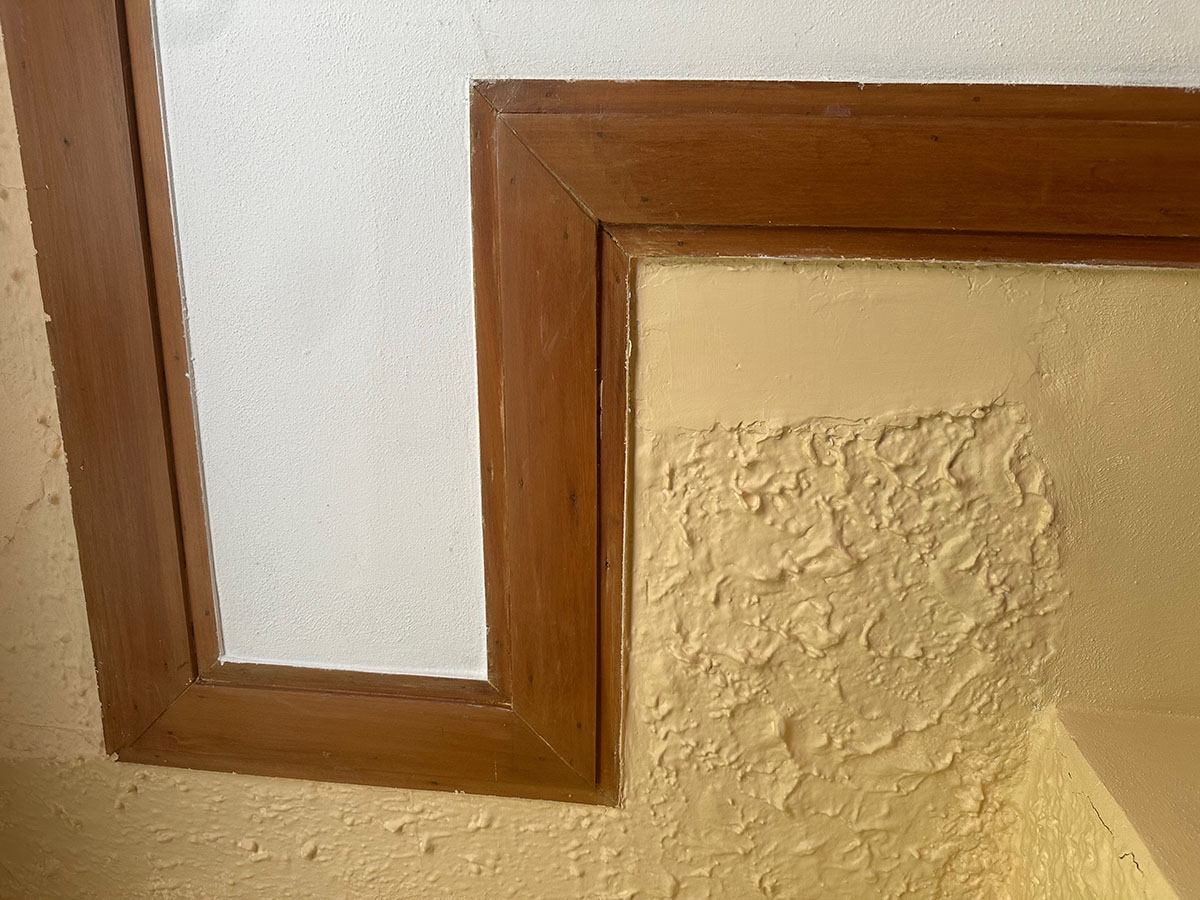
The ceiling trim:

LR 1835 N. Layton 9.25.25 045.jpg

LR 1835 N. Layton 9.25.25 047.jpg

LR 1835 N. Layton 9.25.25 048.jpg

The Burnham Block is working with Ramlow / Stein Architecture and Interiors on the restoration. The National Park Service and the Wisconsin State Historic Preservation Officer have already signed off on the restoration project. Now that the city has given its approval, contractors are being interviewed, and it is hoped that work will begin “soon,” according to Lilek. Contributions are welcome to match the SAT grant.
LR 1835 N. Layton 9.25.25 005.jpg

Links:

Frank Lloyd Wright’s Burnham Block:

http://wrightinmilwaukee.org

Ramlow / Stein:

https://www.ramlowstein.com

Wright in Wisconsin:

https://wrightinwisconsin.org

Vrbo rental link:

https://www.vrbo.com/434063

Please scroll down for previous articles on this website.



Remembering Barbara Elsner

Photos © Mark Hertzberg

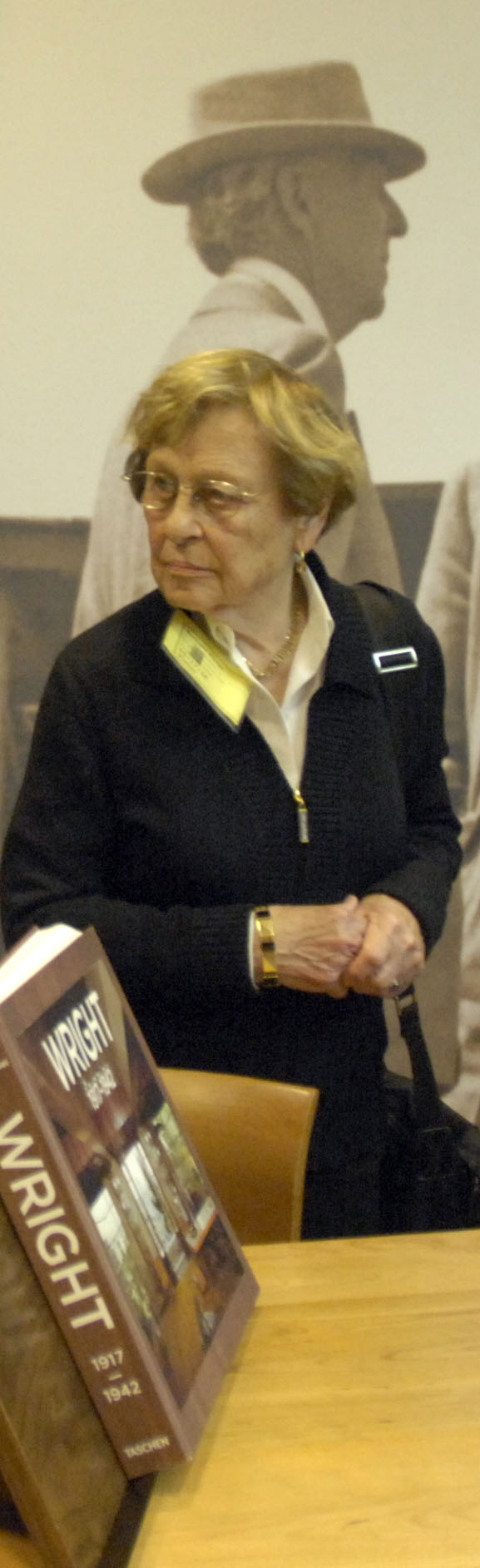
Barbara Elsner, a tour de force in the preservation of Frank Lloyd Wright’s architecture in Wisconsin – particularly in Milwaukee – died August 25. She was 99.

LR BC 2015 Elsner .jpgBarbara Elsner – 2015: At the Frank Lloyd Wright Building Conservancy annual conference in Milwaukee, her hometown 

I got to know Elsner when I served on the board of the  Frank Lloyd Wright’s Wisconsin Tourism Heritage Program (“Wright in Wisconsin”) from 2004 – 2020. She was a founding member of the organization. Our board was in discussions about whether or not to purchase Wright’s American System-Built Model B1 at 2714 W. Burnham Street in Milwaukee as early as a strategic planning session at Wingspread in 2002. Some of the board discussions were heated. Were we only about promoting Wright tourism (a founding principle) or should we become property owners as a means of furthering our mission of promoting Wright’s architecture in our state? Elsner was a strong advocate of expanding the mission to include “bricks and mortar.”

LR Burnham WiW Board 4.16.05.jpgMike Lilek, left, and Barbara Elsner, third from right, at a Wright in Wisconsin board meeting at the newly-purchased Model B1, April 2005. Lilek would oversee our stewardship of the Burnham Block properties.
We bought the house and restored it, with support from the Barbara Meyer Elsner Foundation and a Save Americas Treasures grant. There were 28 major gifts in all. We gradually added more of the AS-B properties to our portfolio, not always without dissension. In August 2017, we reorganized into two organizations: Frank Lloyd Wright’s Burnham Block (focused on the Burnham Block) and Wright In Wisconsin (focused on the longstanding mission to promote Wright tourism). Mike Lilek, who had shepherded our work on the Burnham properties became president of the new organization. He was Elsner’s son-in-law. The Burnham Block now owns five of the six homes (three of the four duplexes and both single family homes; the fourth duplex remains in private hands and operates as an overnight rental property).

I leave it to Lilek to tell you about Elsner’s extraordinary legacy. Below is the email he sent out, announcing her passing:

Dear Fellow Board Members and Friends,

It is with sadness that I share the news of the passing of Barbara Meyer Elsner, an esteemed member of our Advisory Board and a long-time member of our Board of Directors. She passed away peacefully on Monday, August 25th, 2025, surrounded by family. She was 99 years old.

Barbara leaves behind a towering legacy of dedication, leadership, and service to Frank Lloyd Wright’s Burnham Block and its predecessor, Frank Lloyd Wright Wisconsin.

She was a founding member of Frank Lloyd Wright Wisconsin and served as president.

She was a founding member and past Member of the Board of Directors of the Frank Lloyd Wright Building Conservancy, based in Chicago, IL.

She served on the Wisconsin Governor’s Commission on the preservation of Frank Lloyd Wright’s Taliesin. She has generously donated her time and financial support to various Wright projects, including the restoration of the Romeo and Juliet Windmill at Taliesin and the Seth Peterson Cottage on Mirror Lake.

She was a strong advocate for acquiring and restoring the Burnham Block homes. She partnered with Kathleen Brady to lead the primary fundraising effort for the restoration of Models B1 and D4. Her Barbara Meyer Elsner Foundation also provided the Burnham Block with significant financial support, including a major contribution toward the current restoration of the Model C3. Even after retiring from active board service, she continued to be a valued advisor and supporter of our mission. She was a long-serving member of our Interiors Committee.

She also played a major role in the preservation and restoration of the Pabst Mansion, serving as president of the mansion’s Board of Directors and as Executive Director for two years.

Barbara has led many grassroots efforts.  Notable among them was the effort to protect the North Point Historic District from planned institutional expansion. She is also a founding member of the Water Tower Landmark Trust and a board member of Preserve Our Parks. She played a role in organizing the Penfield Children’s Center. She was a founding member of the American Heritage Society of the Milwaukee Art Museum. She helped bring ballet to Milwaukee.

Robert and Barbara Elsner purchased the Bogk House in 1955.  Under Barbara’s care and guidance, the home was meticulously maintained. Barbara generously opened the Bogk House to visiting architectural scholars and students from around the world. Spanish architect Santiago Calatrava noted that the Bogk House was one of his two “must-see” buildings in Milwaukee.

LR Bogk 2022.jpgThe Bogk House

Barbara has played a major role in raising the awareness of Frank Lloyd Wright on the Burnham Block, in Wisconsin, and far beyond.  Her generosity, extraordinary spirit, and tireless energy have been a benefit to all of us. Barbara will be deeply missed.

She made a huge impact on the world we live in. A celebration of life will be held in the coming weeks; details will follow.

Sincerely,
Michael P. Lilek, President Frank Lloyd Wright’s Burnham Block

LR Elsner SCJ 2010.jpg

Elsner in the Wright research library at SC Johnson

LR Burnham 2022 001.jpg

Links:

YouTube interview with Barbara Elsner, and history of the Bogk House:

https://www.youtube.com/watch?v=IZjJAi-c23I

Frank Lloyd Wright’s Burnham Block:

https://savewright.org

Wright in Wisconsin:

https://wrightinwisconsin.org

Frank Lloyd Wright Building Conservancy:

https://savewright.org

Please scroll down for previous articles on this website

Reflecting on Wright at Taliesin

Photos (c) Mark Hertzberg 2018

LR Wright Birthday 2018 001.jpg

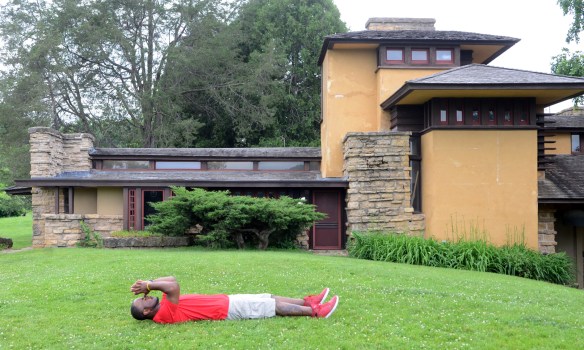
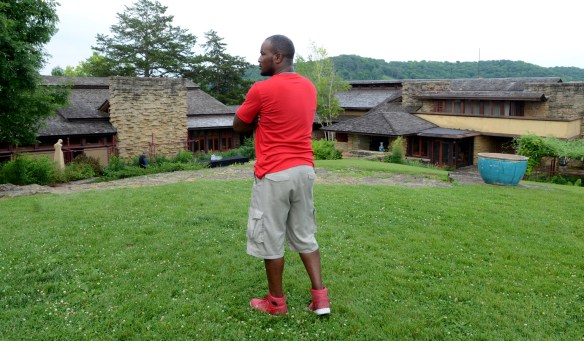
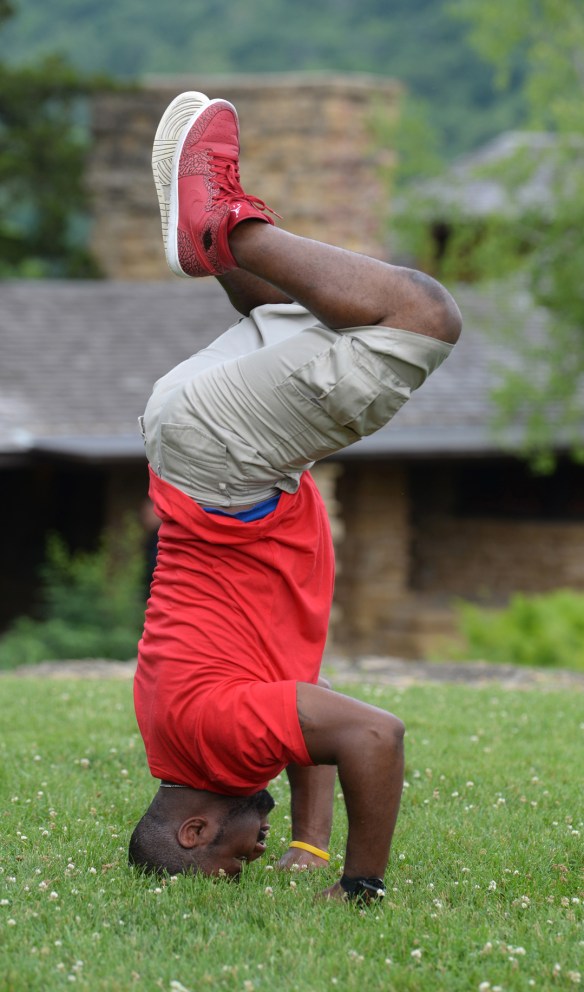
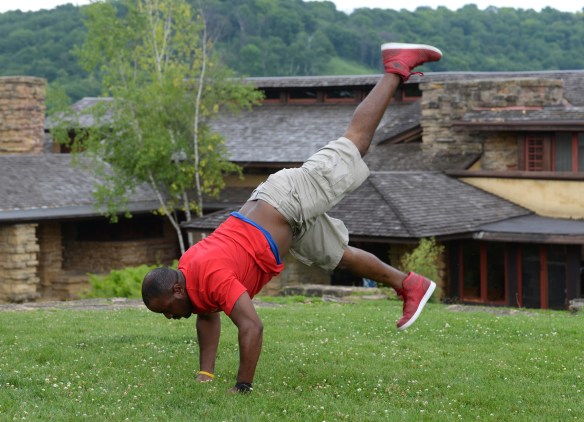
Much has been written about Frank Lloyd Wright’s reasons for building Taliesin after his return from Europe with Mamah Borthwick (Cheney). Perhaps Jamaal Allmond summed it up succinctly – without necessarily knowing the details of the turmoil in Wright’s life in 1911 – when I saw him at Taliesin Saturday several hours before the annual Wright birthday celebration. His answer when I asked him what I had just photographed him doing: “I was relaxing my soul.” Allmond, a first time visitor to Taliesin, is from Scottsdale, Arizona. He was visiting friends who are at Taliesin.

LR Wright Birthday 2018 004.jpg

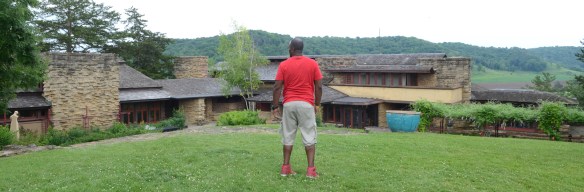
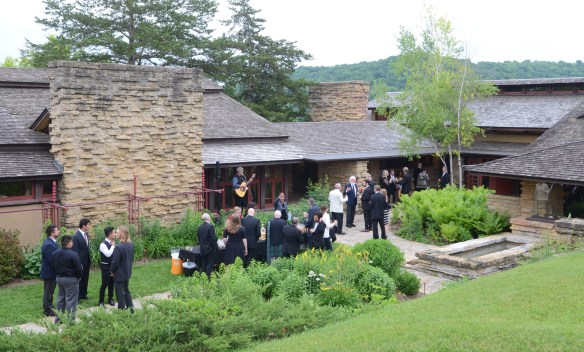
Now, onto the annual celebration of Wright’s birthday at Taliesin, hosted by the Frank Lloyd Wright Foundation, the School of Architecture at Taliesin, and Taliesin Preservation. Our hosts were the ever-ebuillent Minerva Montooth, Carrie Rodamaker, and Stuart Graff. There are more photos of Allmond “relaxing his soul” at the end of this post.

LR Wright Birthday 2018 017.jpg

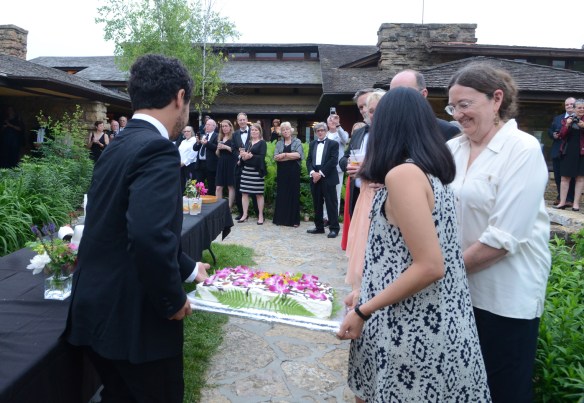
LR Wright Birthday 2018 048.jpgThe birthday cake is presented.

LR Wright Birthday 2018 018.jpgMinerva Montooth greets guests at her home…Taliesin.
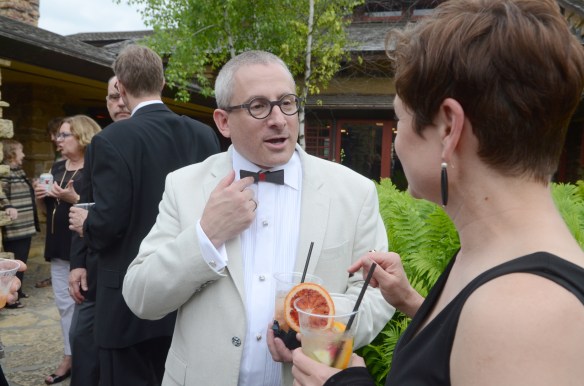
LR Wright Birthday 2018 026.jpgStuart Graff, president and CEO of the Frank Lloyd Wright Foundation, describes his concrete (really!) bowtie to guests.Wright Birthday 2018 024.jpgJack Holzhueter, left, Mike Lilek (Frank Lloyd Wright’s Burnham Block, Inc.,) and Steve Sikora (Malcolm Willey House)
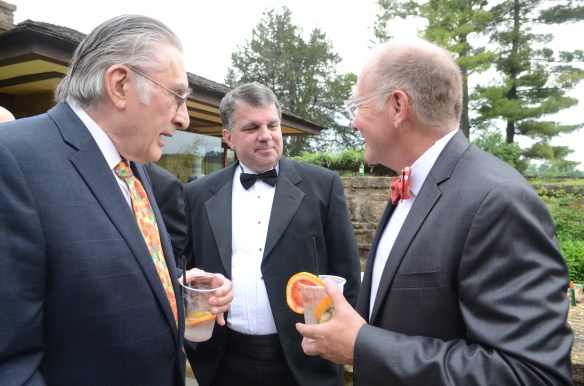

LR Wright Birthday 2018 035.jpgThe tables are turned on the photographer.
LR Wright Birthday 2018 003.jpg

LR Wright Birthday 2018 012.jpg

LR Wright Birthday 2018 008.jpg

Wright Sites Meeting at Wingspread

Photos (c) Mark Hertzberg, 2018

LR BC Wright Sites 021.jpg

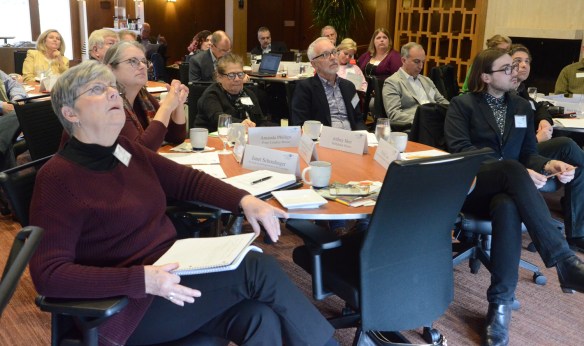
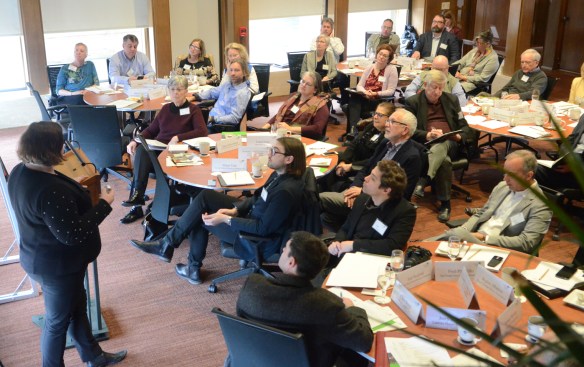
Three dozen representatives of Wright sites, the Frank Lloyd Wright Foundation and the Frank Lloyd Wright Building Conservancy, met at the Johnson Foundation at Wingspread in late March for a “Wright Site Directors Summit.” Topics included creating Wright mobile apps, presenting sites in 3-D on tablets, strategies for innovative branding and marketing, and accommodating guests with disabilities. The three-day meeting was sponsored by the two foundations and the Building Conservancy.LR BC Wright Sites 024.jpgLibby Garrison of the Marin County Civic Center tells how their mobile app was created.
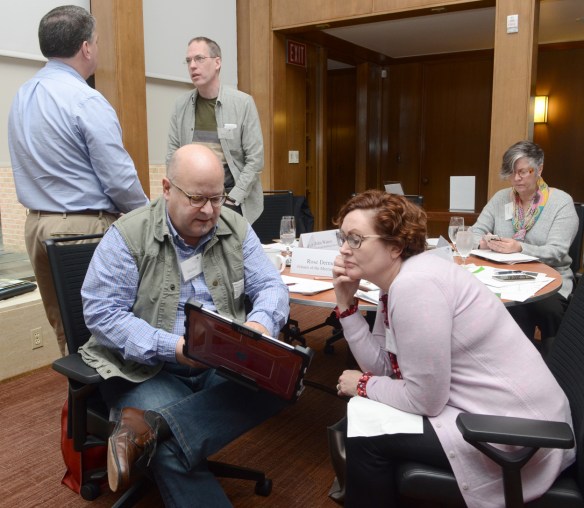
LR BC Wright Sites 003.jpgMichael Ditmer (Still Bend) and Heather Sabin (Monona Terrace) confer. Ditmer is the new president of Wright in Wisconsin. Mike Lilek, left rear, of Frank Lloyd Wright’s Burnham Block talks with John Waters Preservation Programs Manager of the Building Conservancy. Kathryn Burton (Gordon House) is also at the table.

LR BC Wright Sites 011.jpgStuart Graff, President and CEO of the Frank Lloyd Wright Foundation, contributes to the discussion after a presentation. Jim Ladwig, center, (SC Johnson and Son) and Don Dekker (Meyer May House) take notes and listen.

LR BC Wright Sites 015.jpgJeffrey Herr (Hollyhock House) and Carrie Rodamaker (Taliesin Preservation)

LR BC Wright Sites 037.jpgMike Lilek of Frank Lloyd Wright’s Burnham Block in Milwaukee.
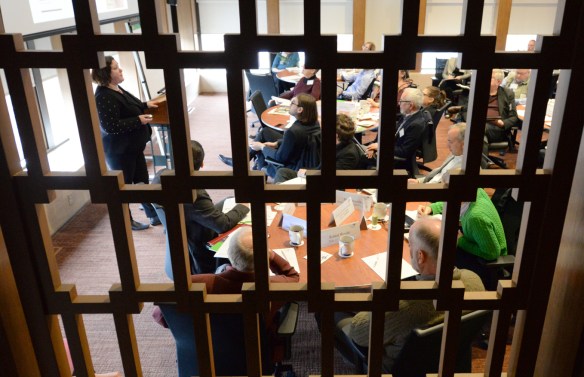
LR BC Wright Sites 040.jpg“The House,” built in the mid-1950s adjacent to Wingspread, became the home of Mr. and Mrs. H.F. Johnson Jr. before they donated Wingspread itself to the newly-created Johnson Foundation in 1959. It has more space for conferences than the Wright-designed Wingspread. It has been said that Mrs. (Irene Purcell) Johnson was never comfortable in Wingspread because it was designed for another woman…Johnson’s wife who died during construction. National Public Radio, the National Endowment for the Arts, the International Court of Justice – and the Frank Lloyd Wright Building Conservancy – are among the entities that evolved from Johnson Foundation conferences. 
A New Day for Wright in Wisconsin and for the Burnham Block in Milwaukee

(c) Mark Hertzberg 2017

s

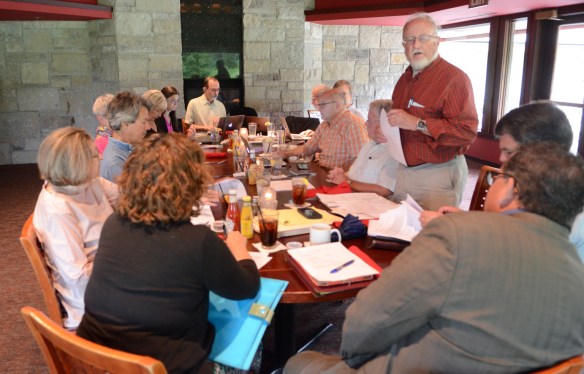
The board of directors of Frank Lloyd Wright Wisconsin (the only statewide Wright group in existence) voted unanimously last week to reorganize, spinning off ownership of the four American System-Built homes it owned in Milwaukee into a separate, self-standing organization. The reorganization was formalized today in a joint announcement. Frank Lloyd Wright Wisconsin is now rebranded as Wright in Wisconsin. George Hall remains president of the organization which is dedicated to preserving Wright’s legacy, education about Wright and promoting Wright tourism in Wisconsin. Mike Lilek, who has spearheaded the restoration of two of the four Burnham block homes, will be head of the new Frank Lloyd Wright’s Burnham Block, Inc.LR WiW Reorganization 001.jpgGeorge Hall, president of Frank Lloyd Wright Wisconsin, leads the group’s final board meeting prior to the vote to reorganize, Thursday August 3, 2017. 
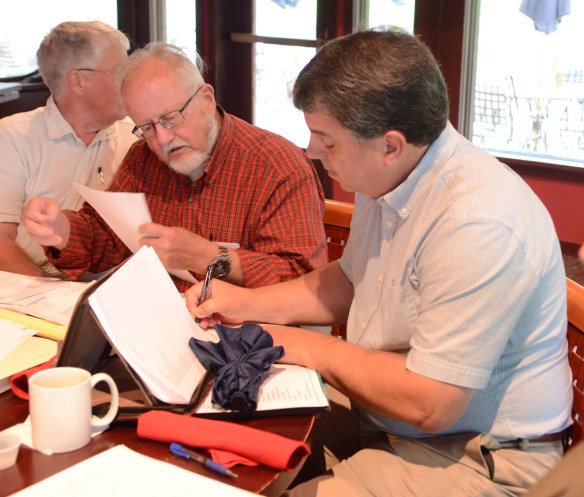
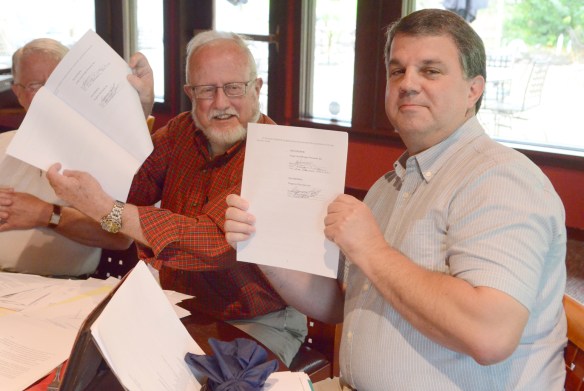
LR WiW Reorganization 003.jpgHall, left, and Lilek sign documents formalizing the reorganization.

Hall commented, “With the recent creation of the Frank Lloyd Wright state trail, and the celebration of the 150th anniversary of his birth this year, Wright’s legacy has never been stronger in Wisconsin.”

Lilek, former Vice President of Facilities for the former organization, looks forward to the possibilities for growing the legacy of the American System-Built homes which represent Wright’s commitment to affordable housing. “This reorganization creates a group now singularly set on restoring the historic Burnham Block site and welcoming visitors to experience Wright’s broadest gesture to a wide American audience.”  . Constructed between 1915-1916, the Burnham Block site consists six homes that symbolize the challenge faced by Wright to create beautiful and affordable spaces. The site was added to the National Register of Historic Places in 1985 and welcomes thousands of visitors each year from across the United States and more than 33 countries.

LR 2714 & Duplexes 4.10.15 001.jpgThe Burnham Block organization is the new owner of the first and third ASB duplexes from the left, as well as the 2714 W. Burnham Street single family home, right, and 1835 S. Layton next door to it). 2714 has been restored to house museum status and is open for tours. The duplex at far left, 2732-34 W. Burnham Street, is undergoing restoration.
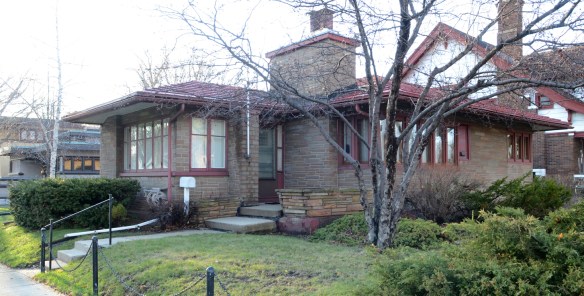
LR 1835 S. Layton 4.10.15 003.jpgWright’s second single family American System-Built house on the block, at 1835 S. Layton, was significantly altered more than 50 years ago, and is less recognizable as a Wright design.
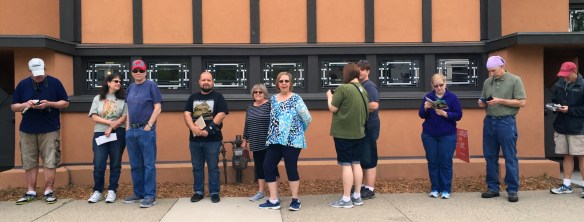
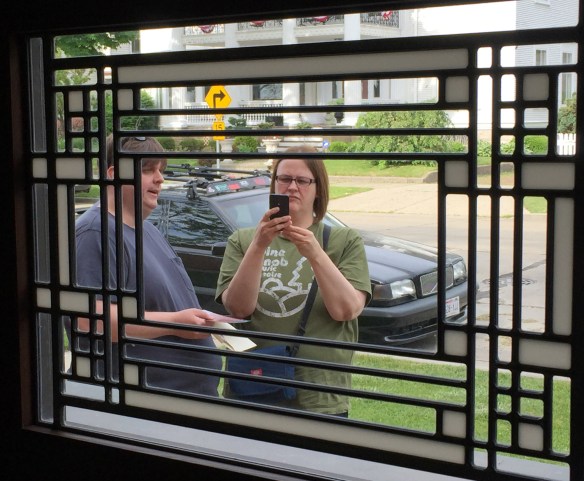
Along with expanded educational opportunities for adults, and publishing the quarterly newsletter, Wright in Wisconsin will continue to offer the annual Wright & Like Tour to provide the public with a rare opportunity to experience private homes and public buildings designed by Wright, his apprentices, and related architects. In the past, the tour was held in Milwaukee, Racine, Madison, Delavan Lake, Wausau, and central Wisconsin. In June of 2018, the tour will focus on the Spring Green area in collaboration with Taliesin Preservation.

LR 2016 W & L Hardy 001 .jpg

LR 2016 W & L Hardy 003 .jpgGuests wait to tour Wright’s Thomas P. Hardy House in Racine during the 2016 Wright & Like tour.
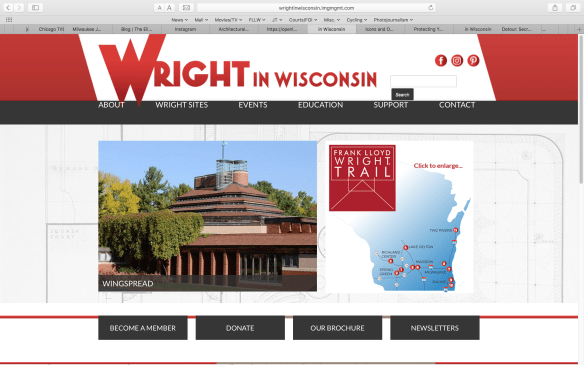
The changes for Wright in Wisconsin include a new website which will be dynamic and updated significantly more frequently than the current one. Screen Shot 2017-08-08 at 3.52.44 PM.pngThis is a screen shot of the new look for the Wright in Wisconsin website, which will launch in the near future. The redesigned website was made possible through a generous grant from SC Johnson. The URL will remain: www.wrightinwisconsin.org
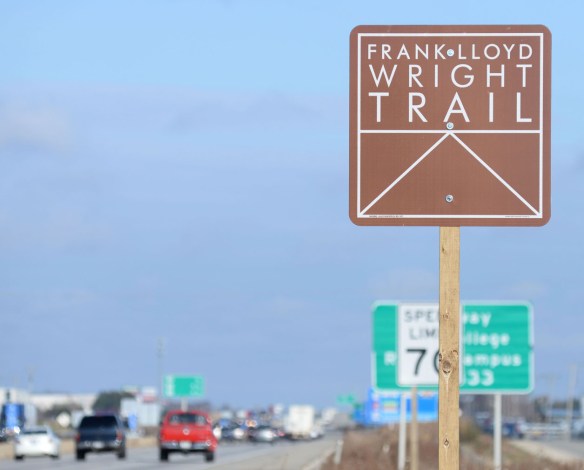
The not-for-profit organization was created in 1991 with the assistance of the National Trust for Historic Preservation and the State of Wisconsin Department of Tourism. Historic Wright sites across Wisconsin applauded the creation of a Frank Lloyd Wright Trail by the state legislature last year, including co-sponsorship of 38 legislators from both parties. Running from Racine to Spring Green, and including Wright’s birthplace of Richland Center, this route links together Wright buildings across Wisconsin, including Burnham Block.

LR FLW Heritage Trail Signs 003.jpg

“Wright in Wisconsin is committed to promoting the success of Burnham Block, as well as increasing attendance to all public Wright sites across the state,” said Andrew Gussert, Treasurer of Wright in Wisconsin.

This year marks the celebration of Frank Lloyd Wright’s 150th birthday (1867-1959). Born in Richland Center, Frank Lloyd Wright is considered to be one of the most important architects of the century. With over fifty separate buildings, and a dozen sites open to the public, Wisconsin includes work from every decade of Wright’s body of work. The state served as the backyard laboratory for his architectural experimentation, making it a unique destination for those who want to understand Wright’s organic style of architecture.

LR WiW Reorganization 006.jpg

Contact information for the two organizations is below:
Wright In Wisconsin, Andrew Gussert, Treasurer Email: agussert@gmail.com

Wright in Wisconsin, P.O. Box 6339, Madison, WI 53716

Phone (608) 287-0339 ~ www.WrightInWisconsin.com

Frank Lloyd Wright Burnham Block, Inc., Mike Lilek, Telephone: (414) 368-0060Email:

mlilek@WrightInMilwaukee.org 

Website: www.wrightinmilwaukee.org


Newly Documented Wright ASBH in Madison

Photos and text (c) Mark Hertzberg 2015

A press event Tuesday October 6, 2015 sponsored by Frank Lloyd Wright Wisconsin announces the documentation of the house at 2107 West Lawn Avenue in Madison as another one of Wright’s American System-Built houses. This is the second discovery of a newly documented Wright ASBH home this year. The other is in Shorewood, a suburb of Milwaukee. The house is an ASBH Series AA model.

A press event introduces Frank Lloyd Wright's newly documented American System-Built House by Frank Lloyd Wright at 2107 West Lawn Ave. Madison, Wisconsin, Tuesday October 6, 2015. The house was built in 1917 and has two non-Wright additions, one from 1924 and the other from 1927. (c) Mark Hertzberg

Linda McQuillen purchased the house in 1989. The entry is on the left side, as visitors approach the house. The porch to the left and the room to the right (built as an open porch, enclosed by a subsequent owner) are 1924 and 1927 non-Wright additions. The house was painstakingly documented by Madison-based Wright scholar Mary Jane Hamilton over two decades with assistance from many sources, including Mike Lilek. Lilek has overseen the restoration of Wright in Wisconsin’s ASBH properties on W. Burnham Street in Milwaukee and led the documentation of the Shorewood house with the assistance of other Wright scholars.

ASBH 2107 West Lawn Ave. Madison

Hamilton chats with Nathan McQuillen, who grew up in the house. Her meticulous documentation was displayed on four poster boards on easels. ASBH 2107 West Lawn Ave. Madison

Hamilton explains that only the right hand built-in hutch in the diminutive dining room is original. The room was originally the kitchen. The hutch at left is in place of an original door.

ASBH 2107 West Lawn Ave. Madison

The original hutch has doors with the same leaded-glass pentagon seen in many windows of the house.

ASBH 2107 West Lawn Ave. Madison

The dining room leads to the living room. The fireplace at the left side of the living room is not original.

ASBH 2107 West Lawn Ave. Madison

ASBH 2107 West Lawn Ave. Madison

ASBH 2107 West Lawn Ave. Madison

The sun room from one of the 1920s additions is now an office, south of the living room.

ASBH 2107 West Lawn Ave. Madison

A basement crawl space below the addition shows the original and added foundation walls.

ASBH 2107 West Lawn Ave. Madison

Part of the authentication of the house as ASBH comes from the joists being 24″ apart, as was customary in the ASBH homes, as opposed the conventional 16″ measurement.

ASBH 2107 West Lawn Ave. Madison

There are three bedrooms upstairs. Two are shown in their entirety, the third is depicted by the narrow broom closet.

ASBH 2107 West Lawn Ave. Madison

ASBH 2107 West Lawn Ave. Madison

ASBH 2107 West Lawn Ave. Madison

ASBH 2107 West Lawn Ave. Madison

ASBH 2107 West Lawn Ave. Madison

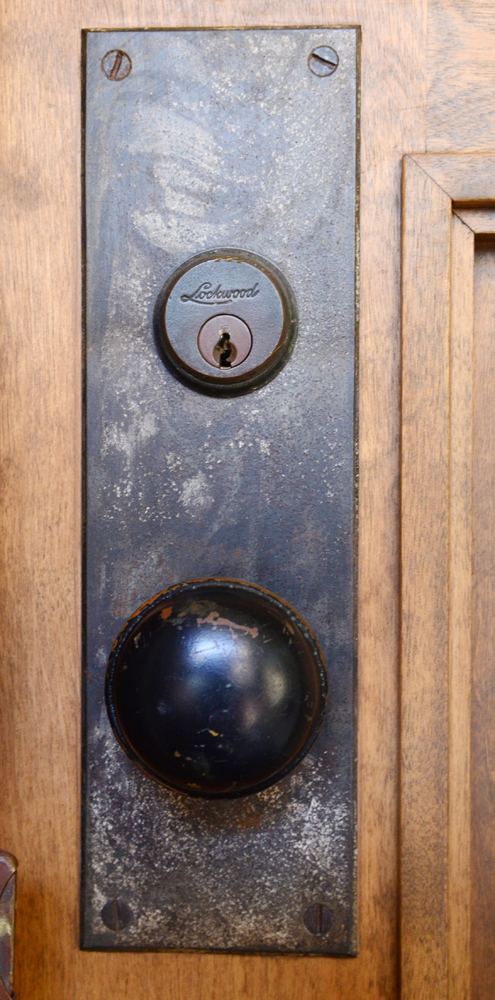
The entrance to the house, on the south side, away from the street, has one of Wright’s characteristic wood screens outside the door. The front door knob and lock are original to the house.

ASBH 2107 West Lawn Ave. Madison

ASBH 2107 West Lawn Ave. Madison

ASBH 2107 West Lawn Ave. Madison

The north (left) and east sides of the house. The fireplace is a recent addition. The street is to the left.ASBH 2107 West Lawn Ave. Madison

The east side, with its 1920s porch addition, off the master bedroom:

ASBH 2107 West Lawn Ave. Madison

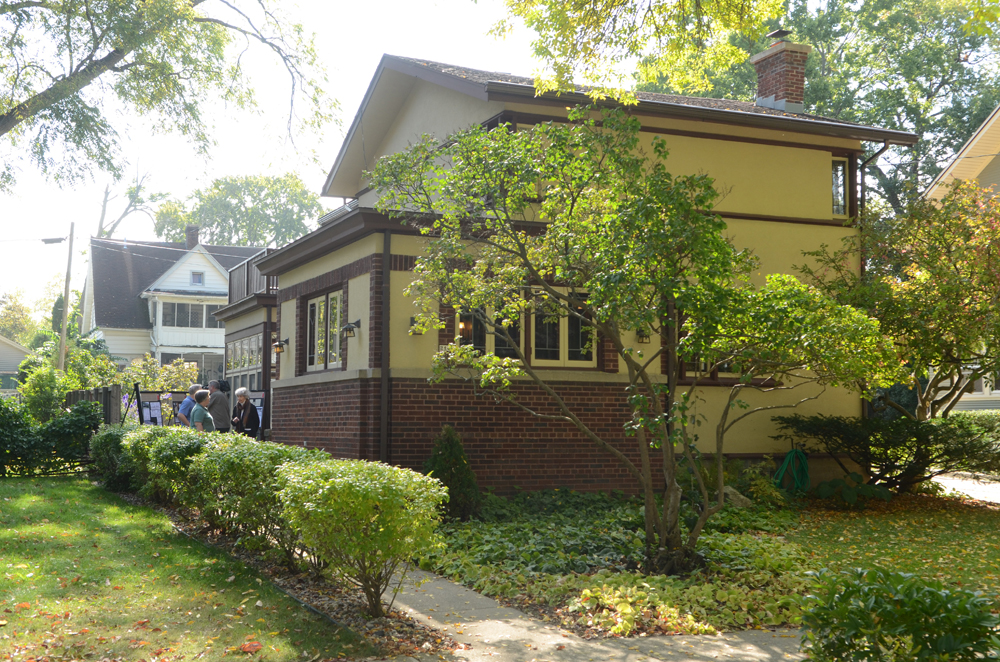
This is a view of the house from the street. the door is on the left or south side:

ASBH 2107 West Lawn Ave. Madison

McQuillen is interviewed by journalist Doug Wahl of Madison’s Channel 3 television station.

ASBH 2107 West Lawn Ave. Madison

ASBH 2107 West Lawn Ave. Madison

Newly Discovered Wright Home Near Milwaukee

Story and photos (c) Mark Hertzberg

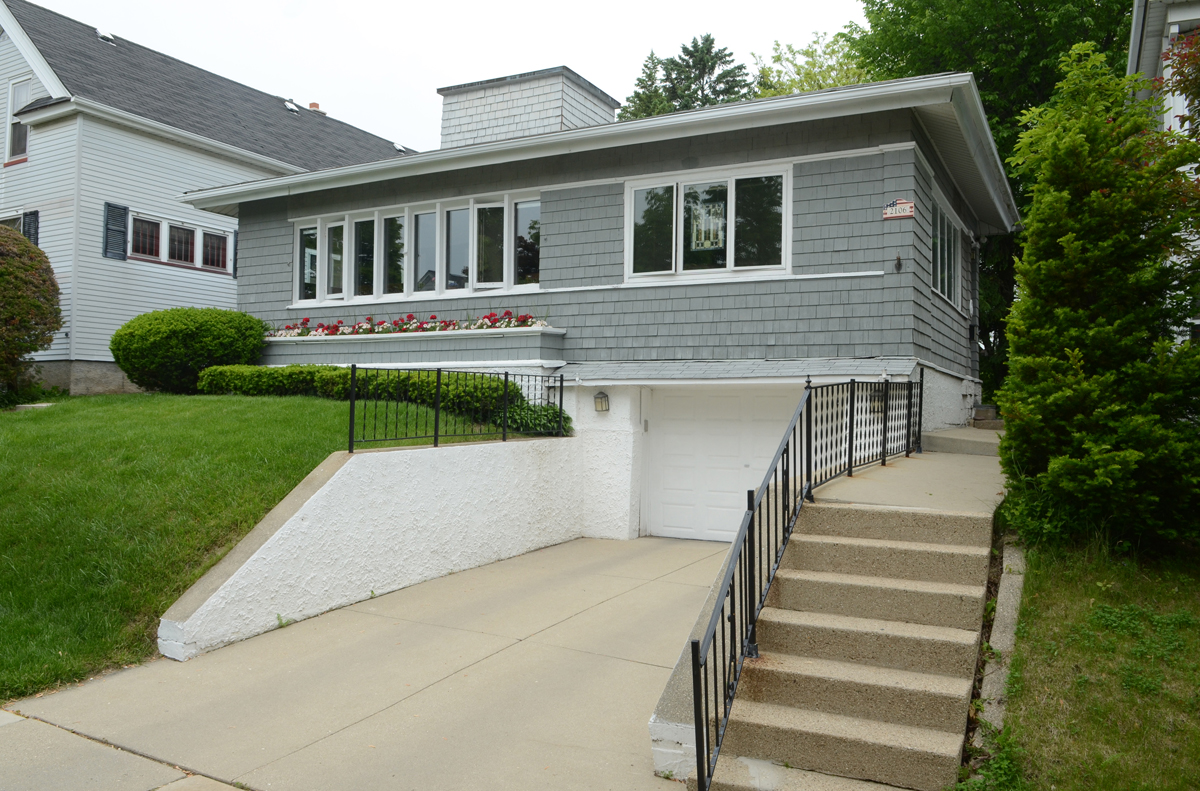
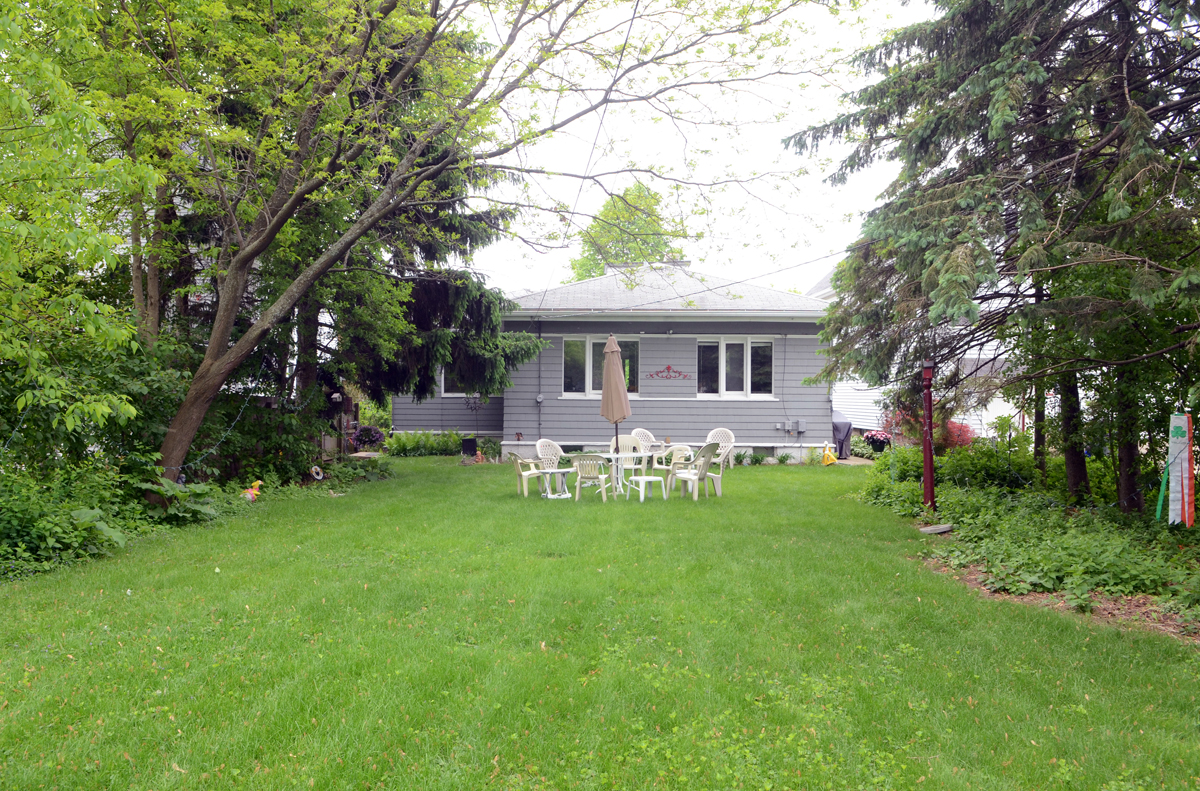
The 2100 block of Newton Avenue in Shorewood, Wis., will no longer be a quiet street, as word spreads of the documentation there of a previously unidentified house designed by Frank Lloyd Wright. The home at 2106 Newton may not look like a Wright home at first glance, but underneath the modern siding, and above the garage which was added in 1976, is one of Wright’s stucco American System-Built homes.

The documentation of Frank Lloyd Wright as the architect of the home at 2106 Newton Avenue, Shorewood, Wis., was announced Friday June 5, 2015. The home, which dates to 1917, is one of Wright's American System-Built homes. It has   /  (c) Mark Hertzberg

The documentation of Frank Lloyd Wright as the architect of the home at 2106 Newton Avenue, Shorewood, Wis., was announced Friday June 5, 2015. The home, which dates to 1917, is one of Wright's American System-Built homes. It has   /  (c) Mark Hertzberg

The documentation of Frank Lloyd Wright as the architect of the home at 2106 Newton Avenue, Shorewood, Wis., was announced Friday June 5, 2015. The home, which dates to 1917, is one of Wright's American System-Built homes. It has   /  (c) Mark Hertzberg

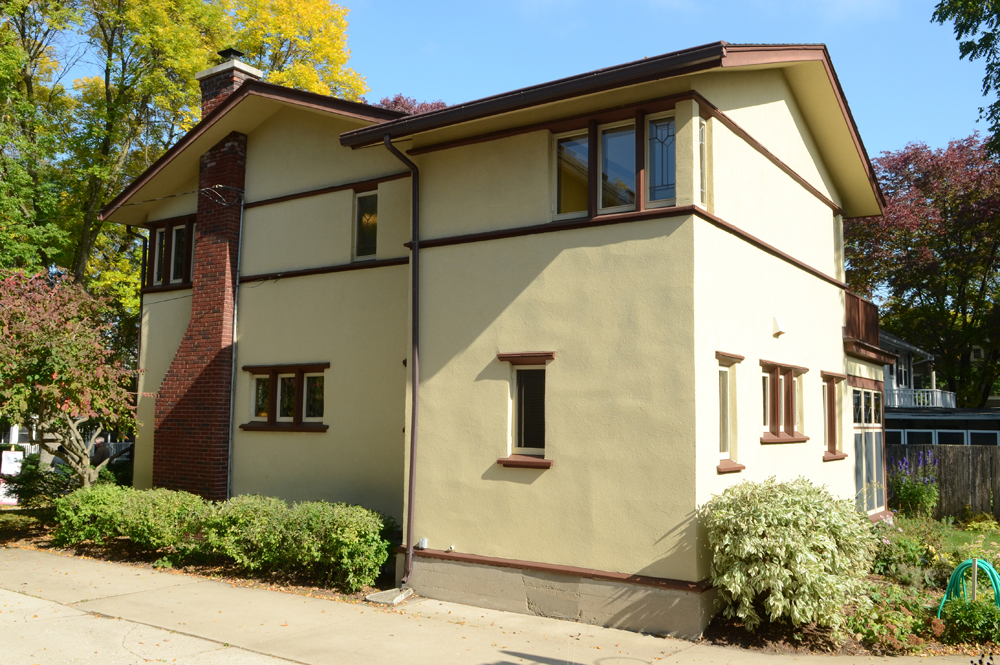
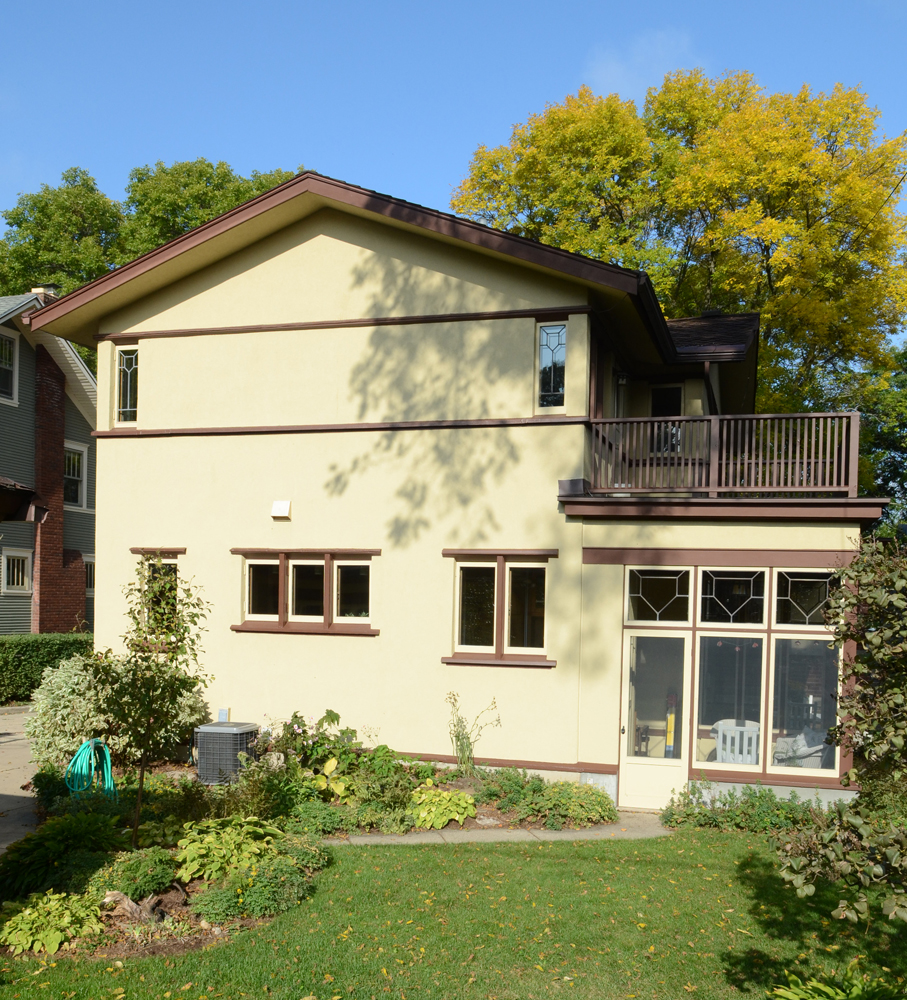
Many people think Wright designed homes only for wealthy clients, but he was keenly interested in affordable housing for the middle class. The American System-Built homes, designed as affordable housing, could be selected from a myriad of designs. The entrance to the house is on the right side (as one faces the house). The original open porch at the entrance was enclosed at an unknown date. It still has the original stucco finish and the leaded glass windows which apparently were the front windows of the house.

The documentation of Frank Lloyd Wright as the architect of the home at 2106 Newton Avenue, Shorewood, Wis., was announced Friday June 5, 2015. The home, which dates to 1917, is one of Wright's American System-Built homes. It has   /  (c) Mark Hertzberg

The documentation of Frank Lloyd Wright as the architect of the home at 2106 Newton Avenue, Shorewood, Wis., was announced Friday June 5, 2015. The home, which dates to 1917, is one of Wright's American System-Built homes. It has   /  (c) Mark Hertzberg

The documentation of Frank Lloyd Wright as the architect of the home at 2106 Newton Avenue, Shorewood, Wis., was announced Friday June 5, 2015. The home, which dates to 1917, is one of Wright's American System-Built homes. It has   /  (c) Mark Hertzberg

The Newton Avenue house, built in 1917, joins six homes in the 2700 block of W. Burnham St. (two single-family homes and four duplexes) as examples of Wright’s American System-Built homes in the Milwaukee area. The two-bedroom Shorewood house is a Model A203. Four other Milwaukee American System-Built duplexes, the Arthur R. Munkwitz Duplex Apartments, were demolished in 1973 to widen a street.

The documentation of Frank Lloyd Wright as the architect of the home at 2106 Newton Avenue, Shorewood, Wis., was announced Friday June 5, 2015. The home, which dates to 1917, is one of Wright's American System-Built homes. It has   /  (c) Mark Hertzberg

The documentation of Frank Lloyd Wright as the architect of the home at 2106 Newton Avenue, Shorewood, Wis., was announced Friday June 5, 2015. The home, which dates to 1917, is one of Wright's American System-Built homes. It has   /  (c) Mark Hertzberg

The documentation of Frank Lloyd Wright as the architect of the home at 2106 Newton Avenue, Shorewood, Wis., was announced Friday June 5, 2015. The home, which dates to 1917, is one of Wright's American System-Built homes. It has   /  (c) Mark Hertzberg

The documentation of Frank Lloyd Wright as the architect of the home at 2106 Newton Avenue, Shorewood, Wis., was announced Friday June 5, 2015. The home, which dates to 1917, is one of Wright's American System-Built homes. It has   /  (c) Mark Hertzberg

The documentation of Frank Lloyd Wright as the architect of the home at 2106 Newton Avenue, Shorewood, Wis., was announced Friday June 5, 2015. The home, which dates to 1917, is one of Wright's American System-Built homes. It has   /  (c) Mark Hertzberg

The documentation of Frank Lloyd Wright as the architect of the home at 2106 Newton Avenue, Shorewood, Wis., was announced Friday June 5, 2015. The home, which dates to 1917, is one of Wright's American System-Built homes. It has   /  (c) Mark Hertzberg

The first person to tell owners Roger and Pat Wisialowski that they may be living in a Wright home was the late Richard Johnson of Evanston, Illinois. Johnson had a passion for searching for previously unknown Wright works. However, none of the ones he believed Wright designed were documented and authenticated as Wright’s, until Mike Lilek researched the little house on Newton Avenue over the last year and found proof that it is, indeed, a Wright home. Lilek is nationally recognized as an expert on the subject of Wright’s American System-Built homes.

The documentation of Frank Lloyd Wright as the architect of the home at 2106 Newton Avenue, Shorewood, Wis., was announced Friday June 5, 2015. The home, which dates to 1917, is one of Wright's American System-Built homes. It has   /  (c) Mark Hertzberg

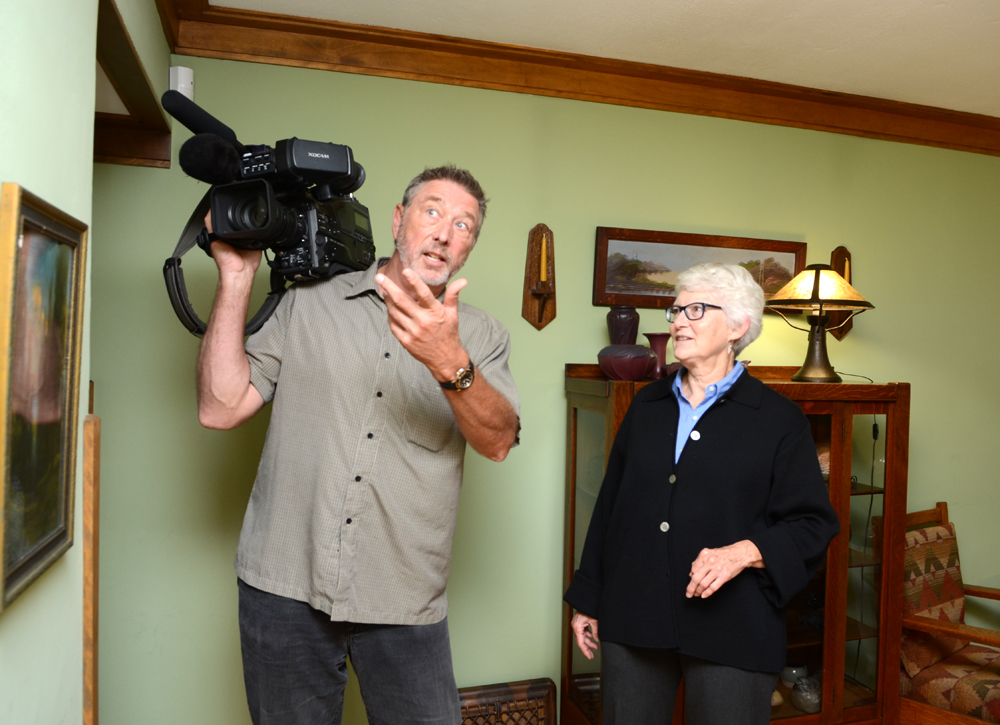
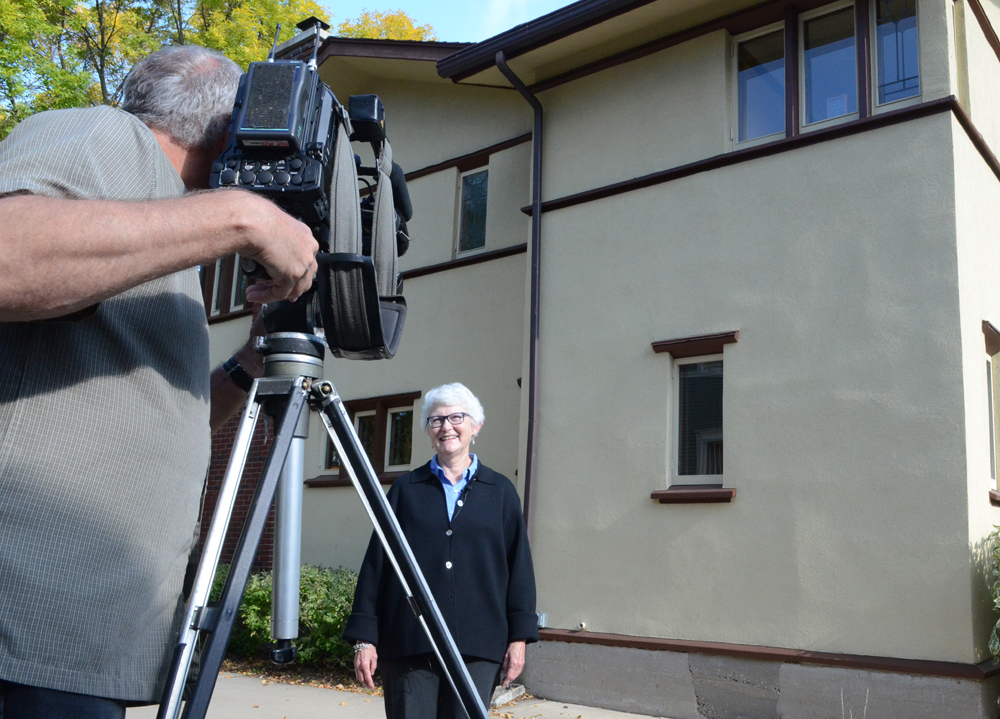
Lilek, left, is interviewed by Jeff Rummage of the “Shorewood Now news site.

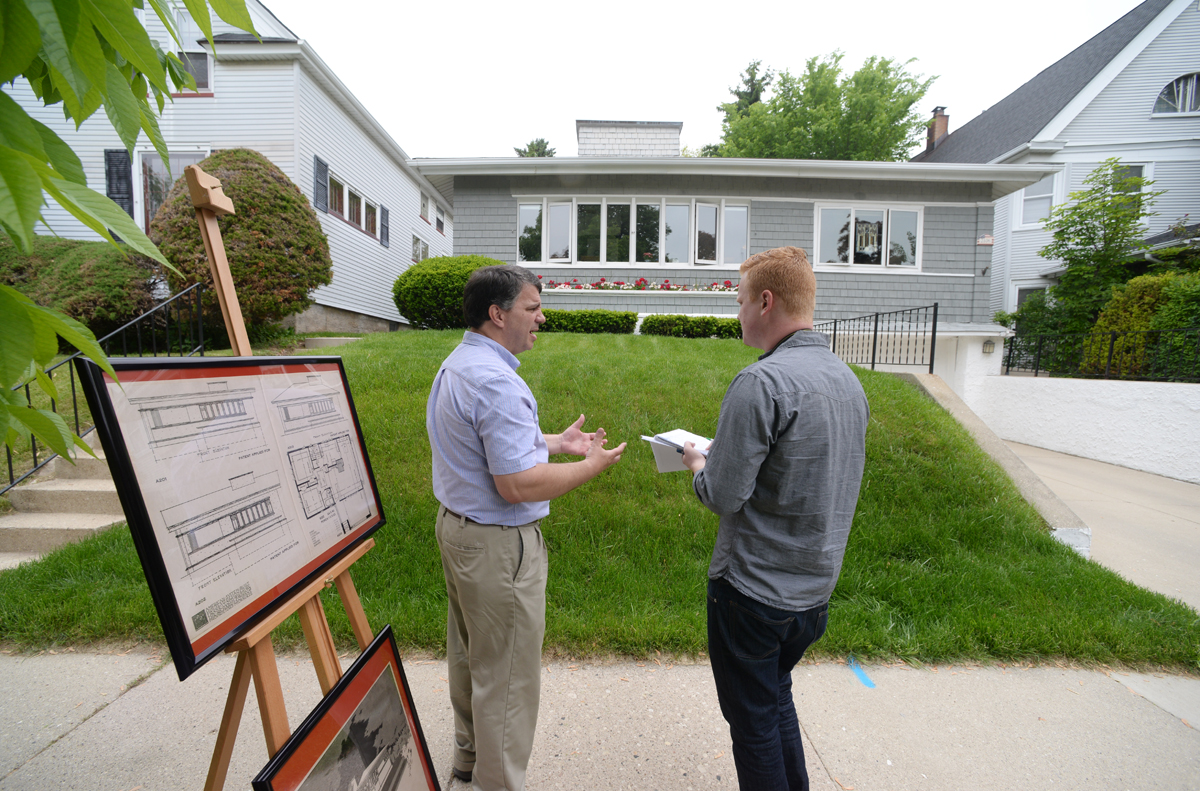
He has spearheaded the restoration of two of the Burnham Street houses for Frank Lloyd Wright Wisconsin. He extensively researched the Newton Avenue house and has presented his findings to the Frank Lloyd Wright Foundation, the organization which oversees all things Wright and was the former home of Wright’s archive. He announced his findings June 5, 2015 at a press event in front of the house. He has been transparent about his research, and has posted a link to it:

www.wrightinwisconsin.org

Link toMary Louise Schumacher’s feature story in the Milwaukee Journal Sentinel:

http://www.jsonline.com/entertainment/sleuthing-reveals-shorewood-home-was-

designed-by-frank-lloyd-wright-b99513440z1-306231261.html