New SCJ Wright Exhibition: “Usonia”

Photos by Mark Hertzberg for SC Johnson, and used with permission

Image

     There are two well-known aspects to the SC Johnson company in Racine, Wisconsin: manufacturer of household products and stewards of the company’s Wright-designed Administration Building (1936) and Research Tower (1943/44). The company celebrates Wright’s influence on the American home in “At Home with Frank Lloyd Wright,” the permanent Wright exhibition in Fortaleza Hall (designed by Lord Norman Foster and Partners; opened in 2010) on the company campus.

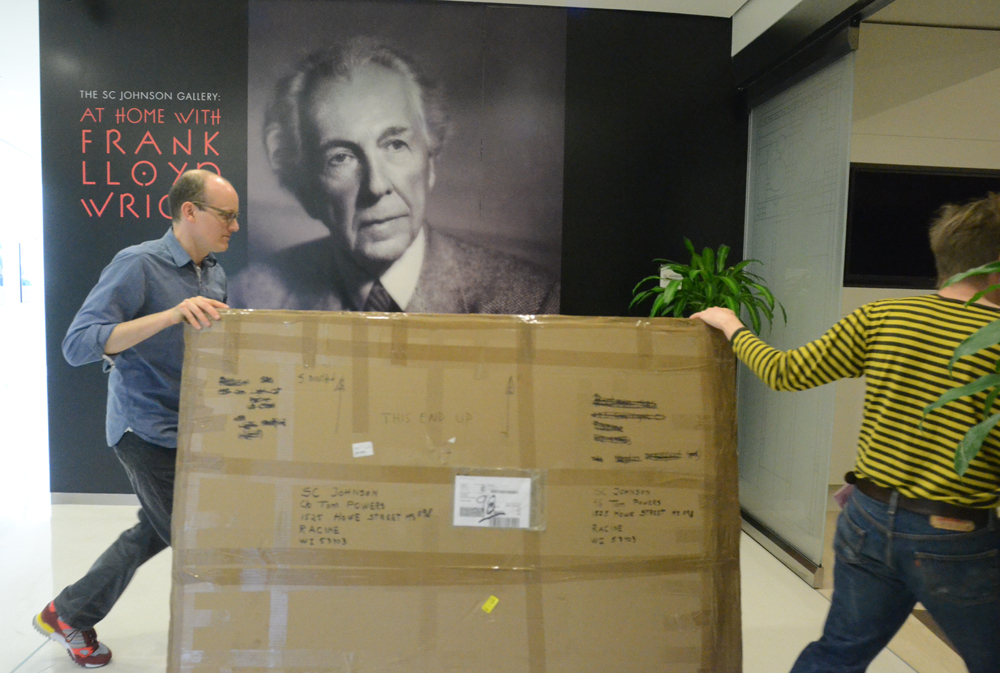
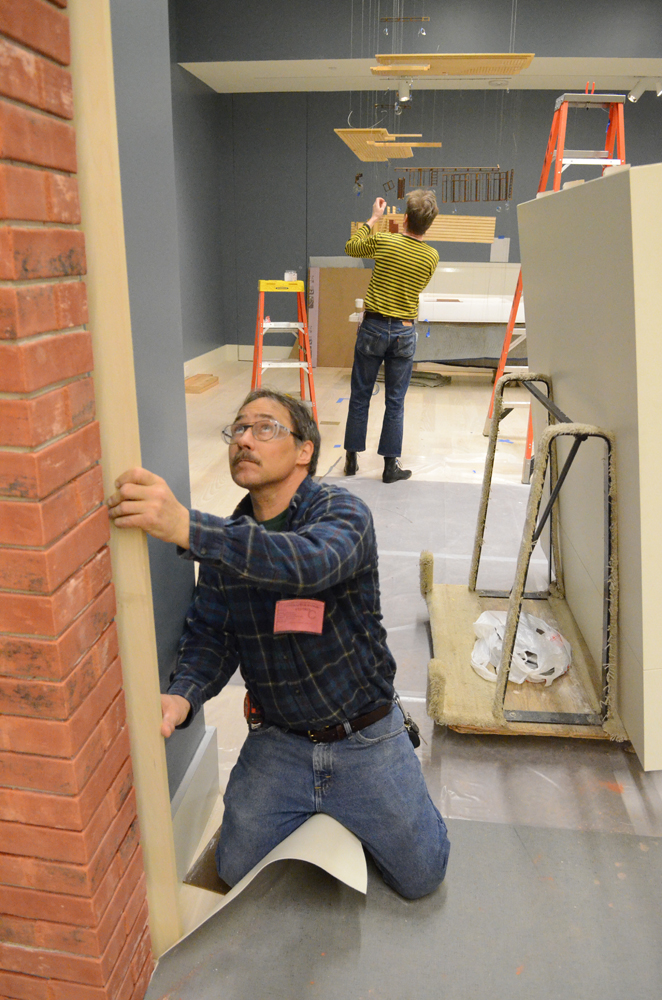
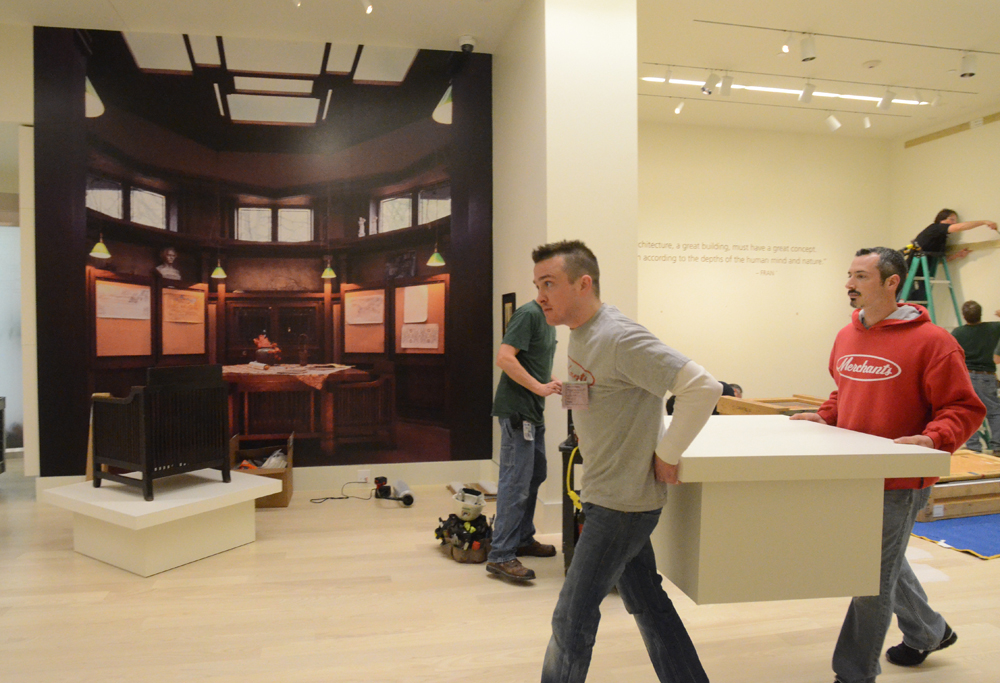
      The first phase of the exhibition opened in June. It focused on Wright’s Prairie-style homes. The second iteration of the exhibition, “Usonia,” opens to the public May 3. It is being installed this week.

Image

While many people think that Wright designed homes only for wealthy clients, he was very interested in designing affordable housing. His Usonian homes were designed so that the client could help build them.

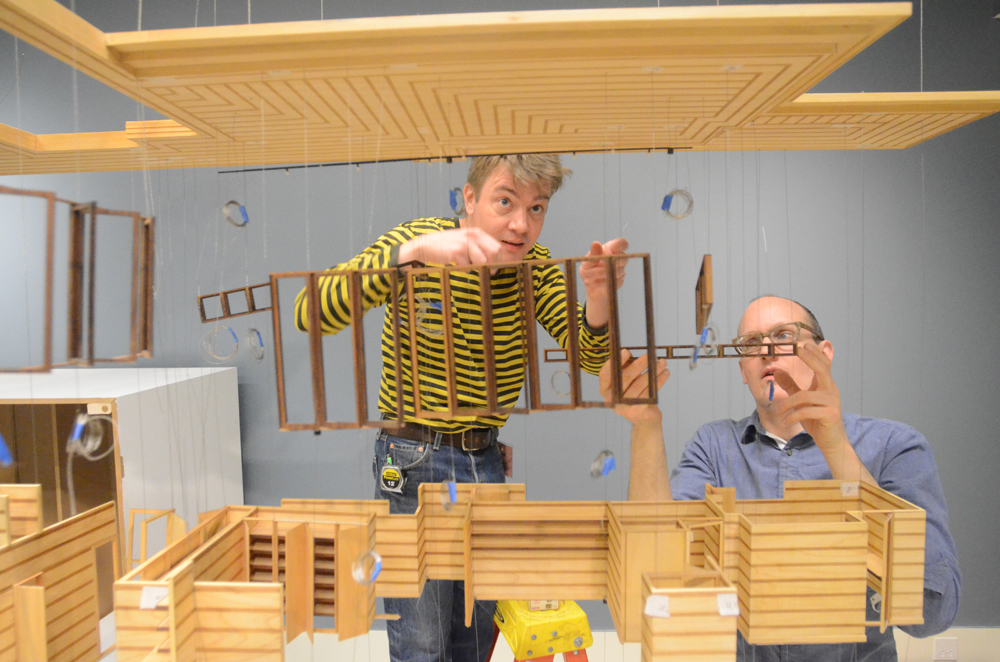
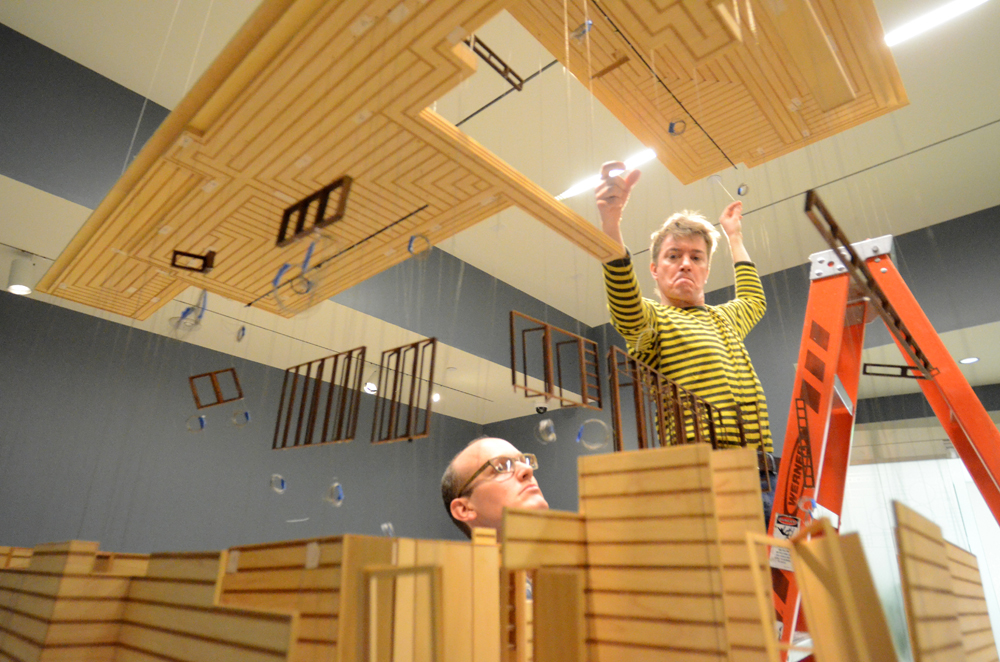
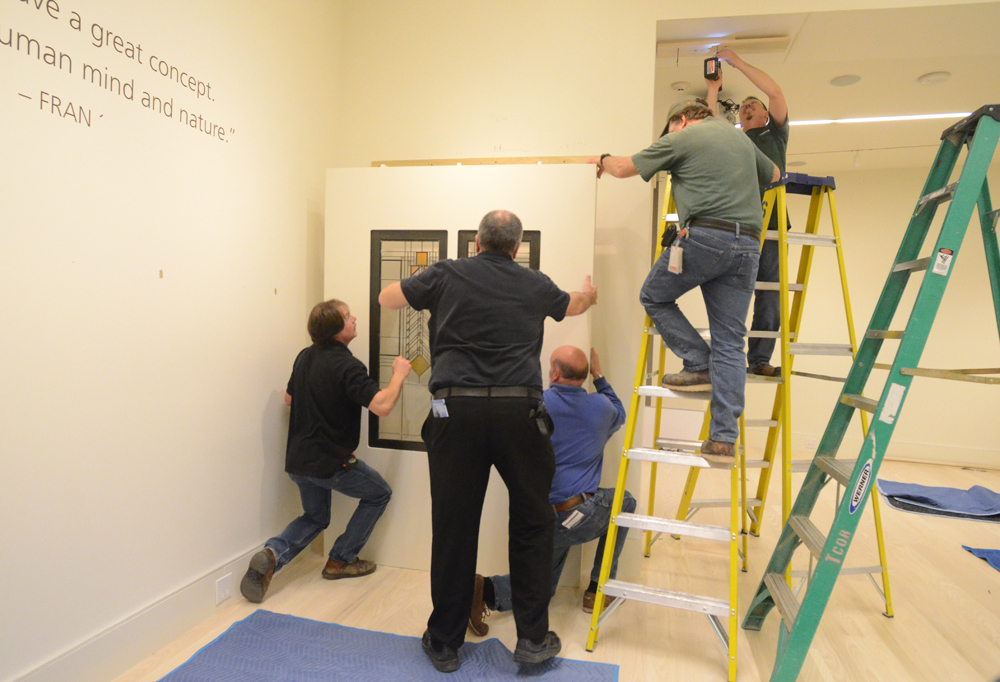
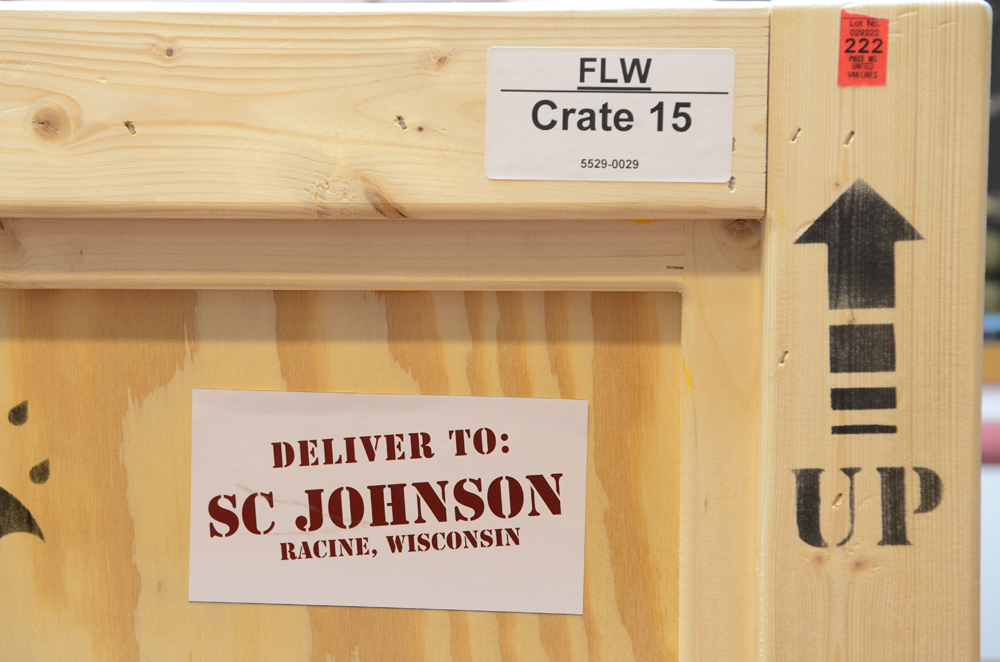
      The exhibition includes an “exploded” model of Jacobs 1 (1936), the Madison house widely considered to be Wright’s first Usonian home,  which the home owners helped build. The model, which is on loan from the Milwaukee Art Museum, was assembled Monday by workers who looked as if they were carefully positioning marionettes:

ImageImage

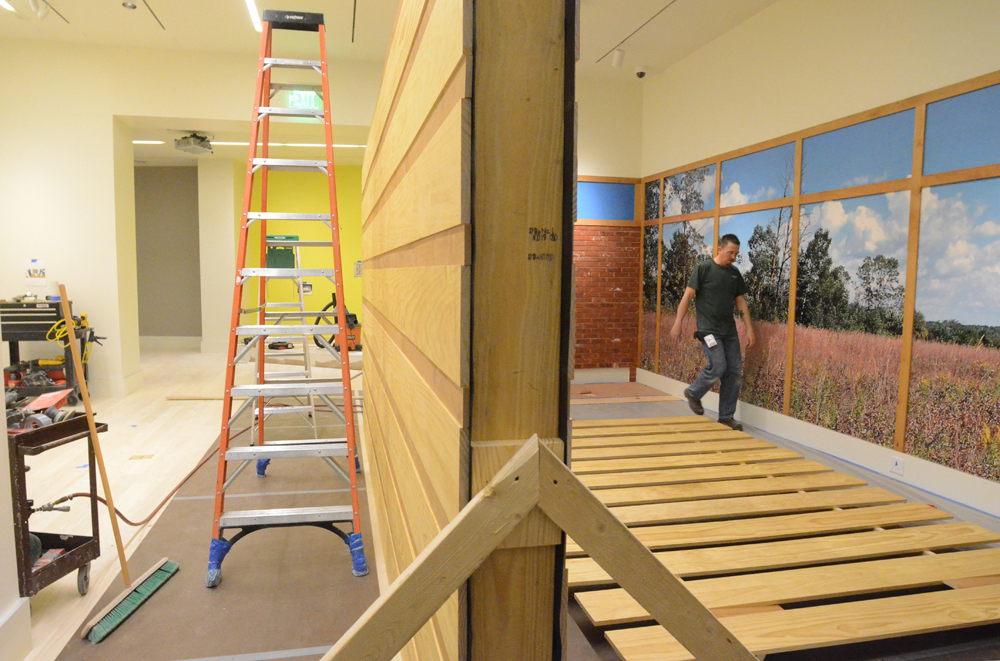
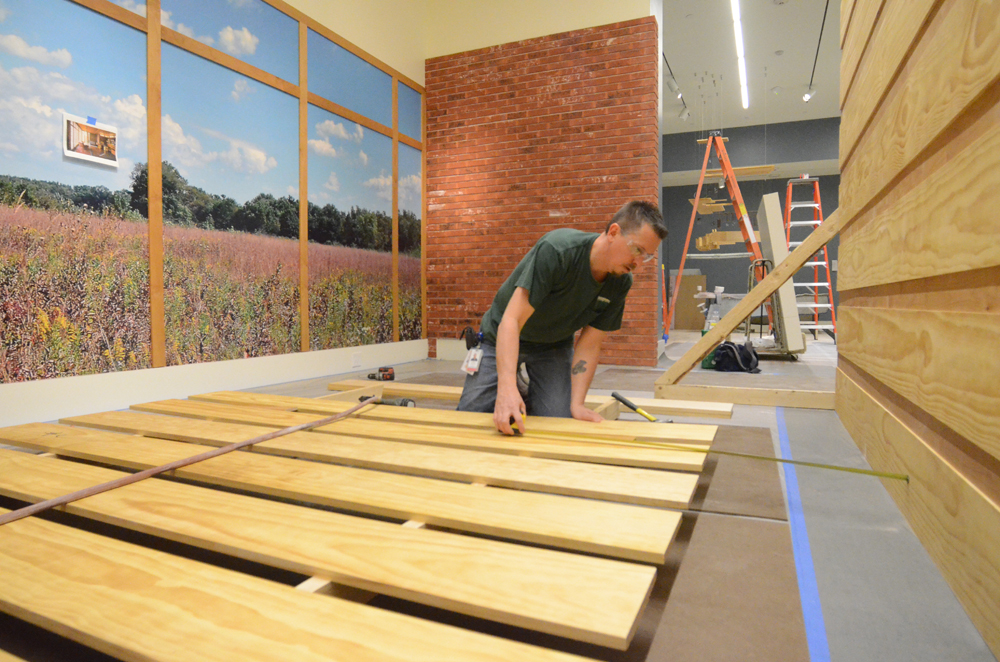
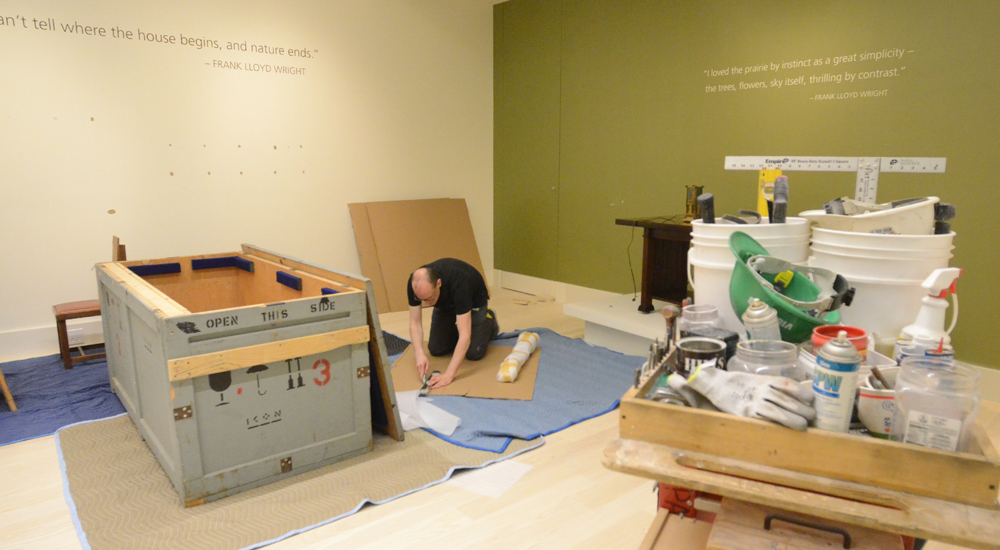
      The exhibition also includes a masonry wall, in Wright’s signature Cherokee red brick, a board and batten panel built like the outside of Jacobs 1 (and other Usonian homes), and a photo mural that shows the view one might see from the living room of a Usonian home. These photographs were taken Monday. Installation continues until the exhibition opens:

Image

Image

Image

Image

April 5 update: Hardy House Restoration

Photos and text (c) Mark Hertzberg

Image

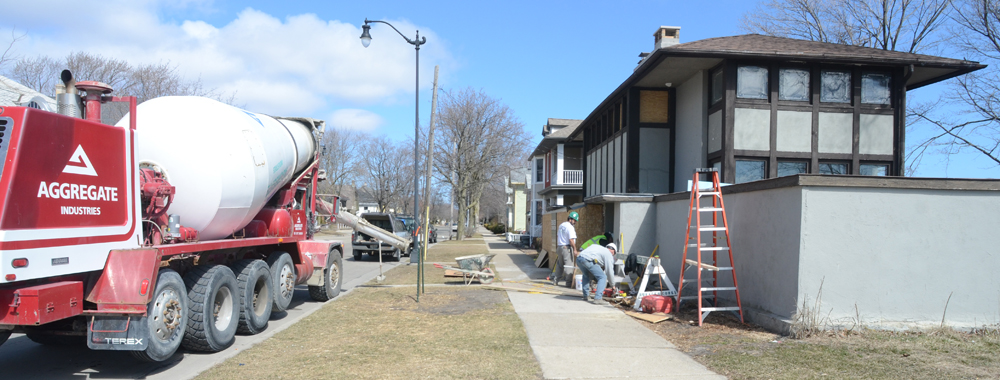
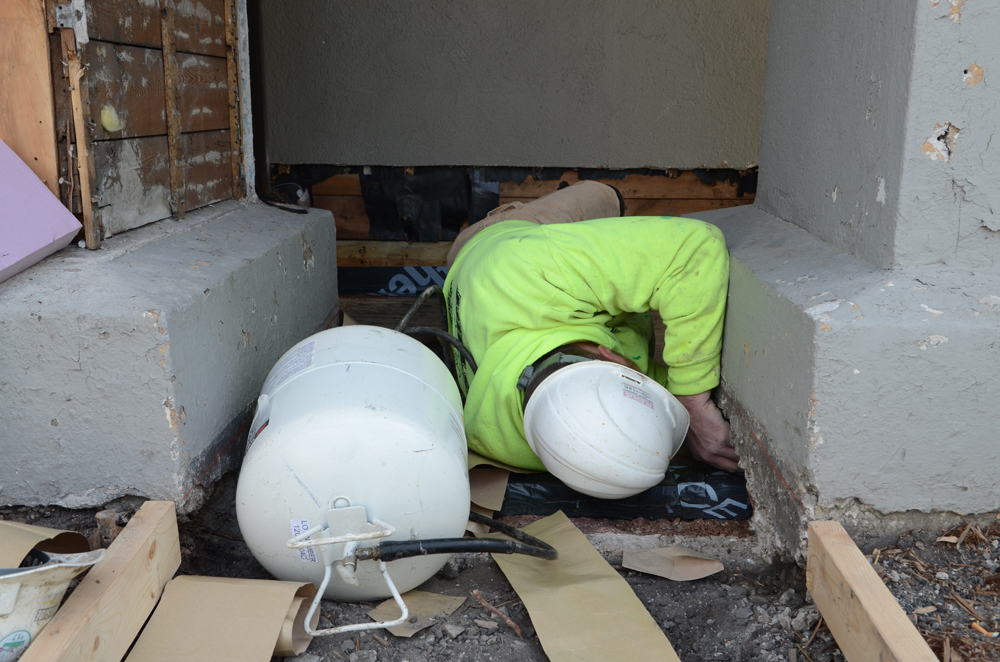
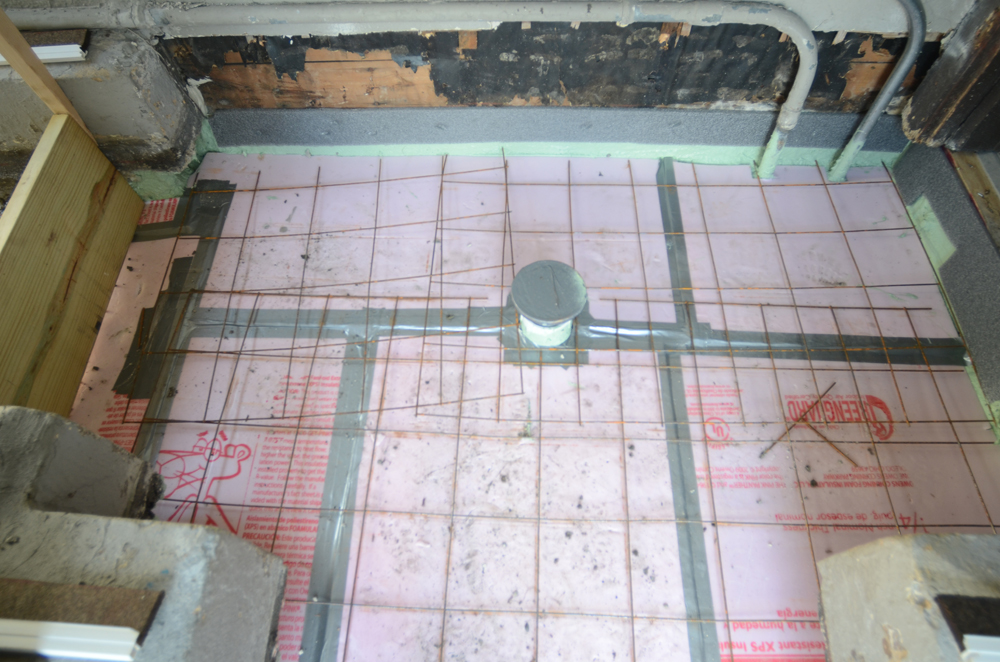
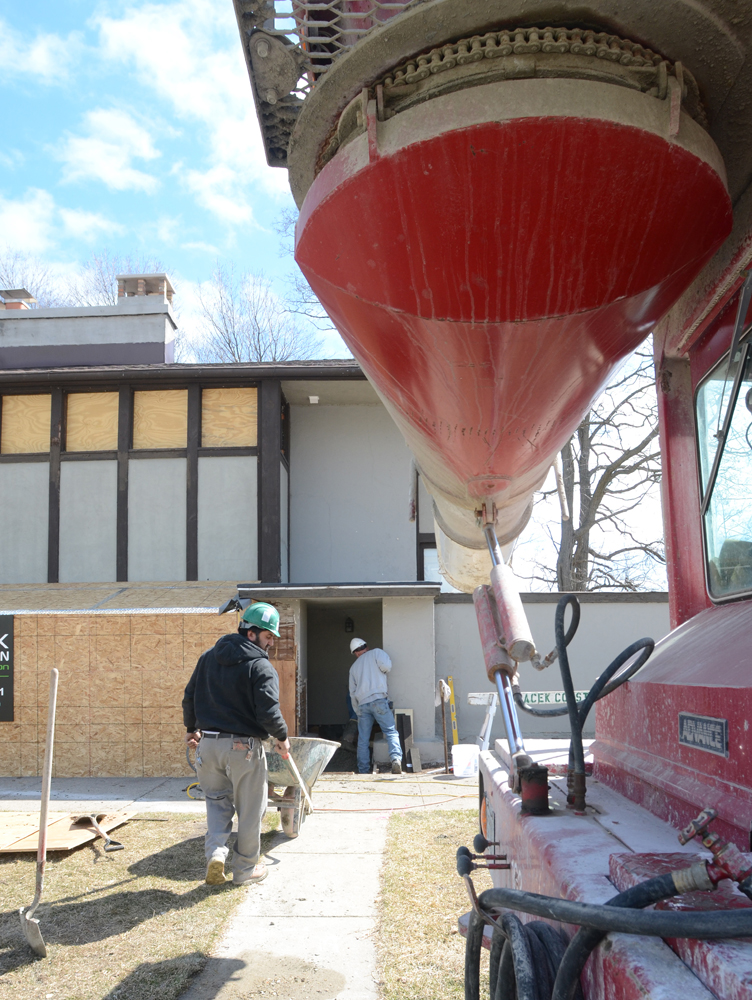
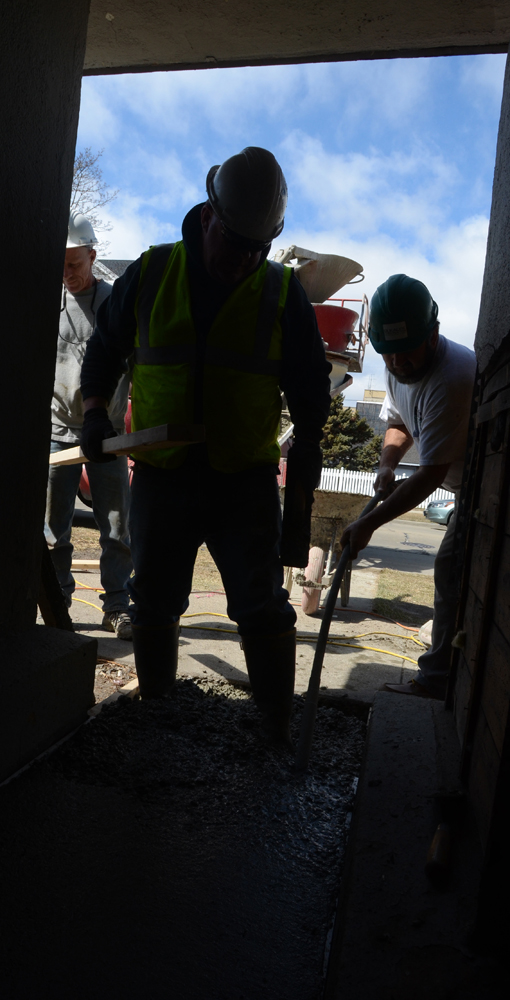
Restoration of the Thomas P. Hardy House continues at a fast pace with 90 visitors expected to tour the house April 27 (see previous post and http://www.wrightinwisconsin.org – reservations still available). Concrete was poured today at the north and south entry ways. The cantilevered concrete slab at the south door had caved in (photos in previous updates show daylight in the view looking up from the basement) so both the south and north entry slabs were replaced today.

Image

Image

Image

Image

Image

Image

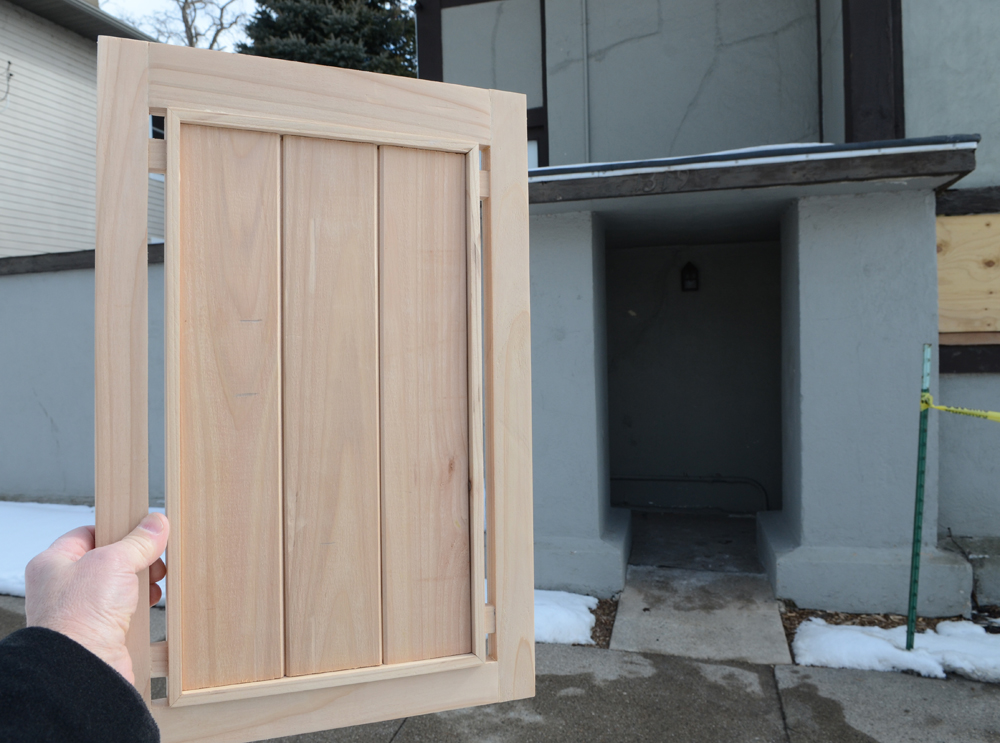
Construction of cedar gates, replicating the ones Mr. Wright put across the north and south entry ways when the house was built in 1906, is expected to begin soon. The original gates were removed by the third owners of the house (1947-1957). This is a model that Chad and Homer Nichols made of the gates they will build:

Image

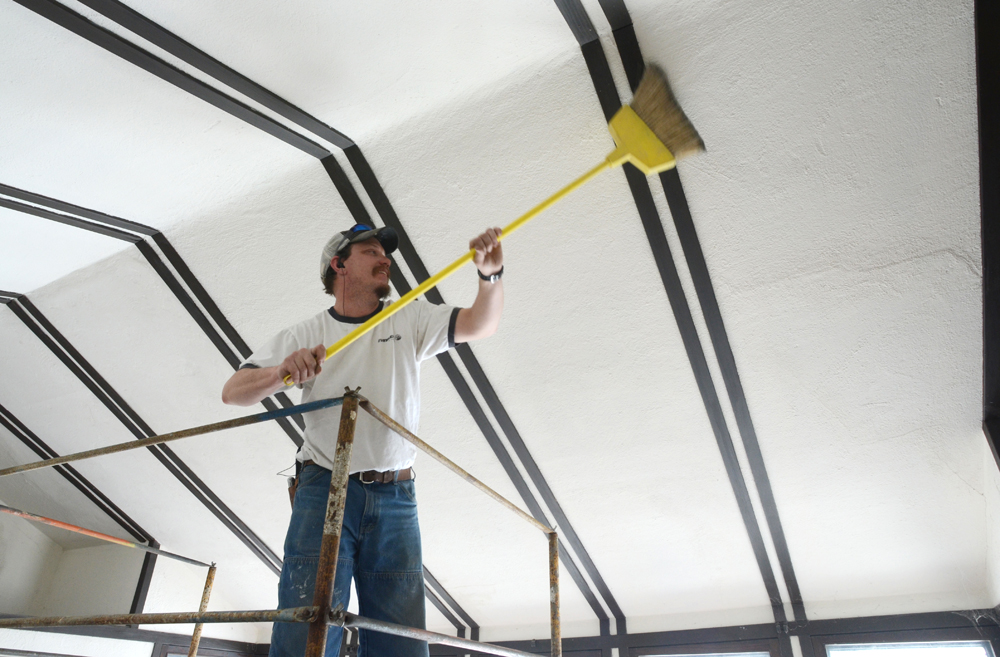
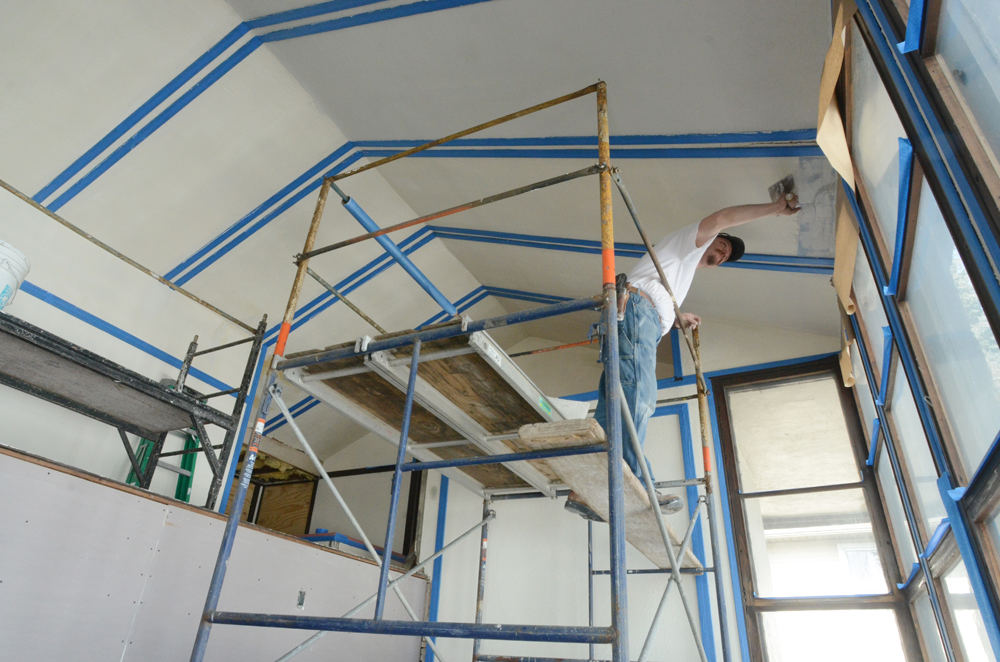
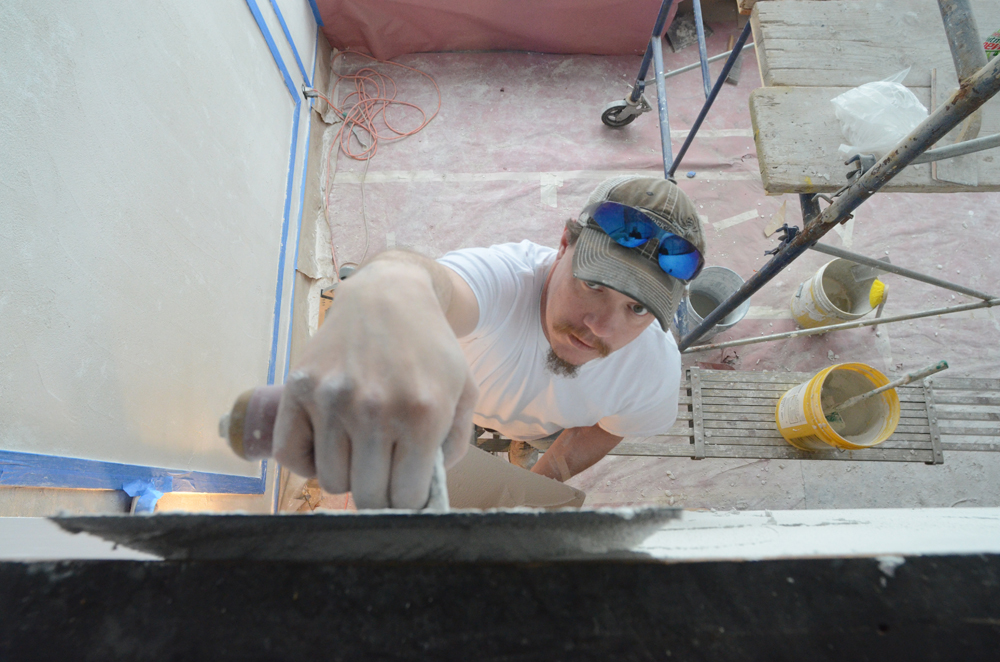
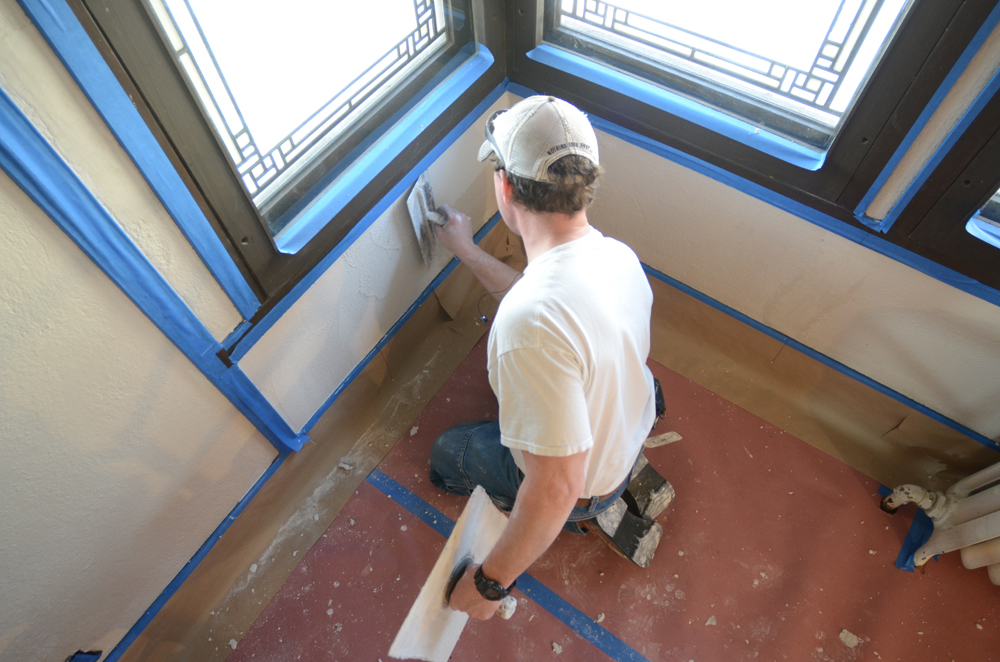
Paul Lemke, the plasterer, had a challenge building the scaffolding to work in the living room. It also took him several days to cover the cedar trim with blue masking tape…after he swept the cobwebs off the ceiling.

Image

Image

Image

Image

Image

Image

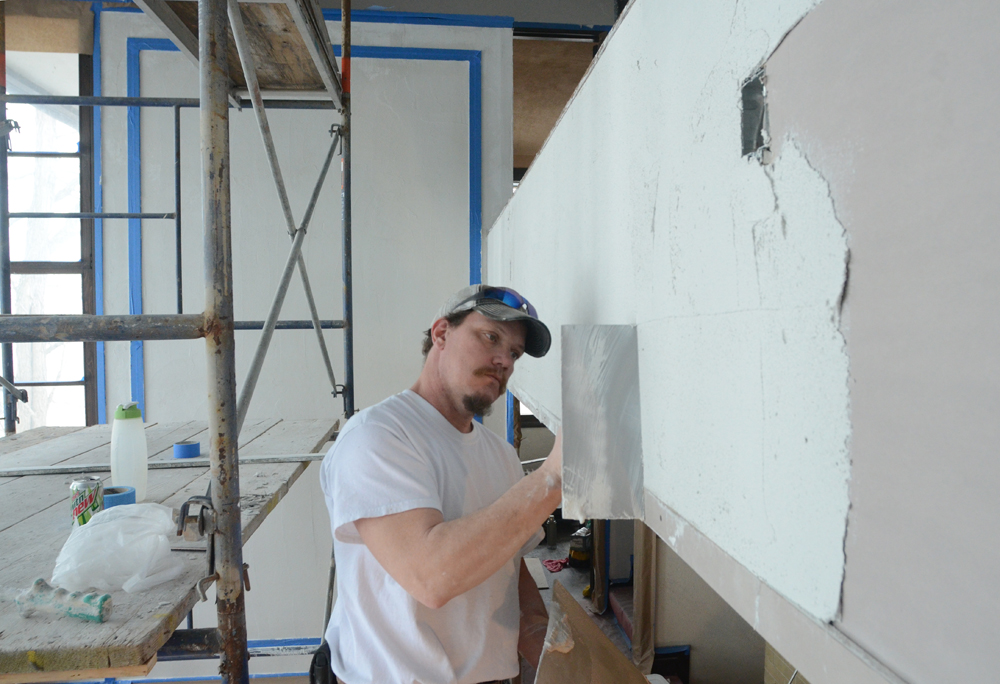
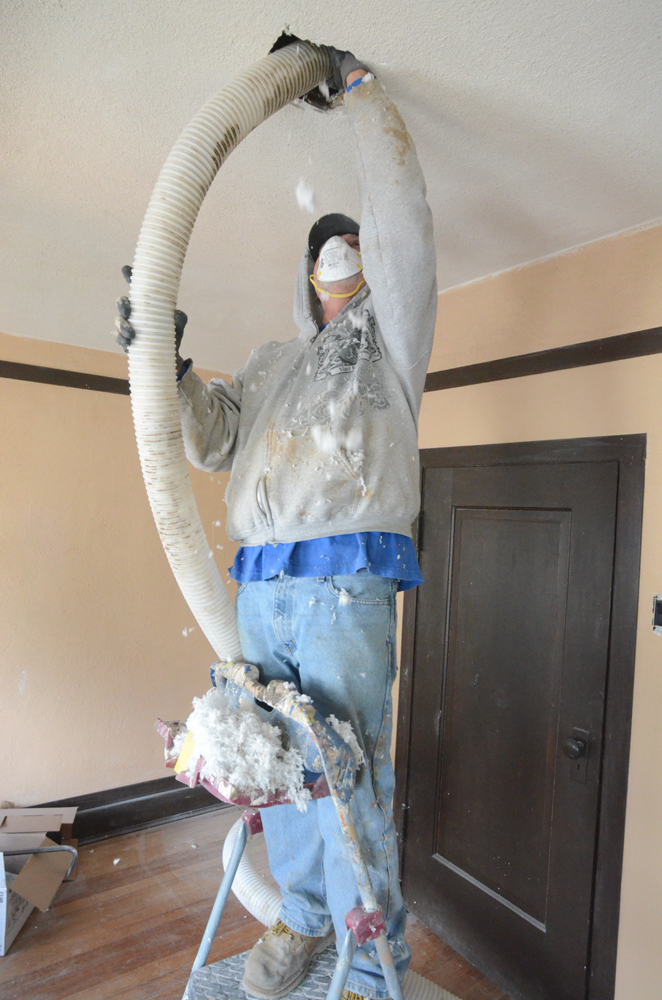
Paul thought he had finished the upstairs bedrooms several months ago…but then the insulation crew arrived a week ago and put holes in the ceilings. Paul will need to redo the ceilings.

Image

Image

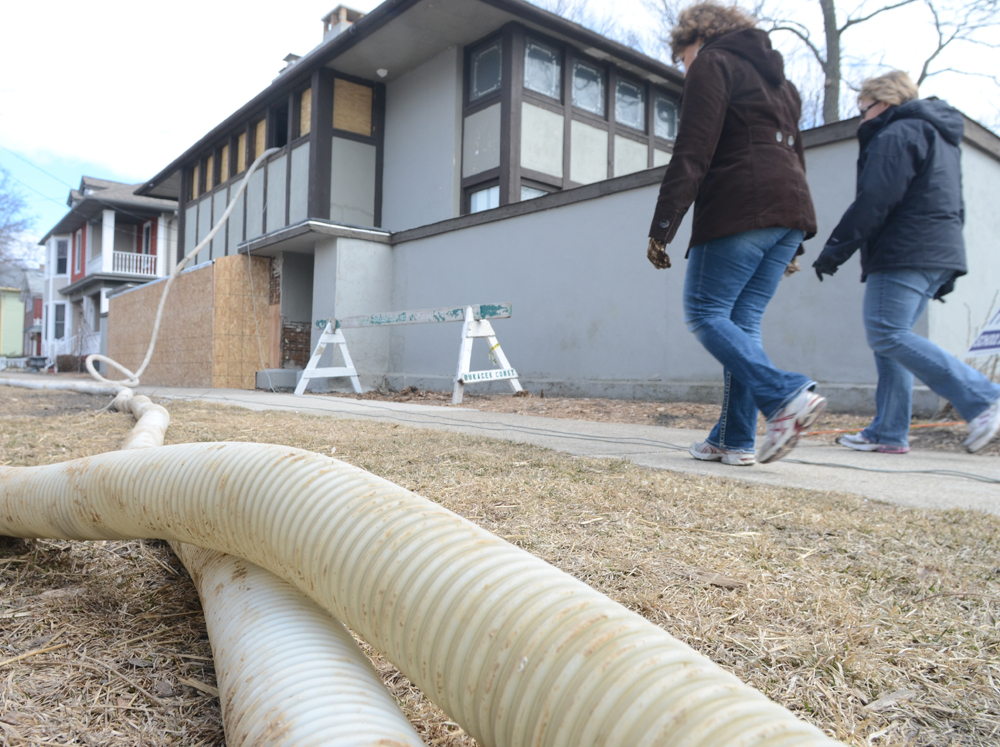
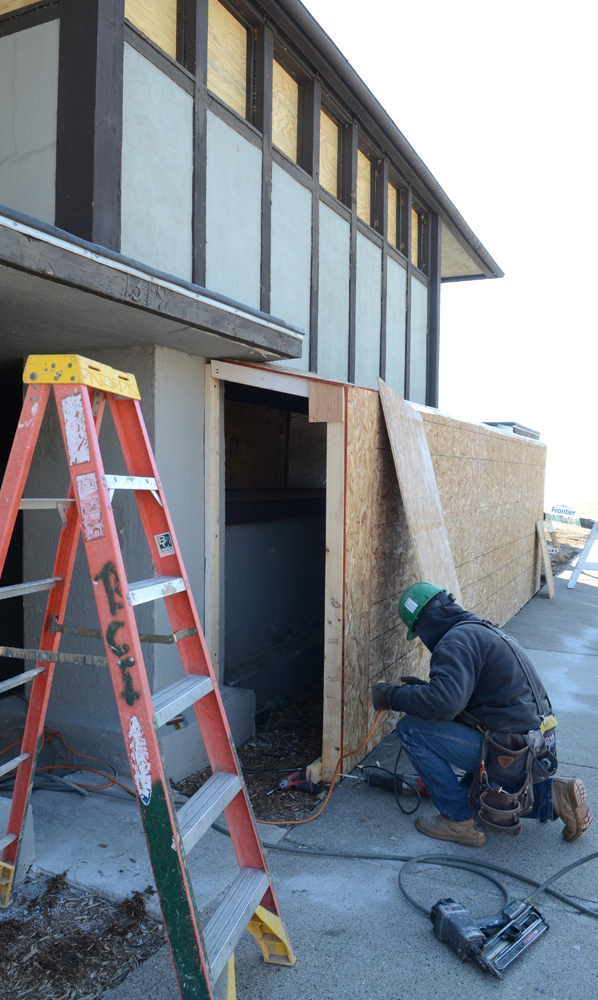
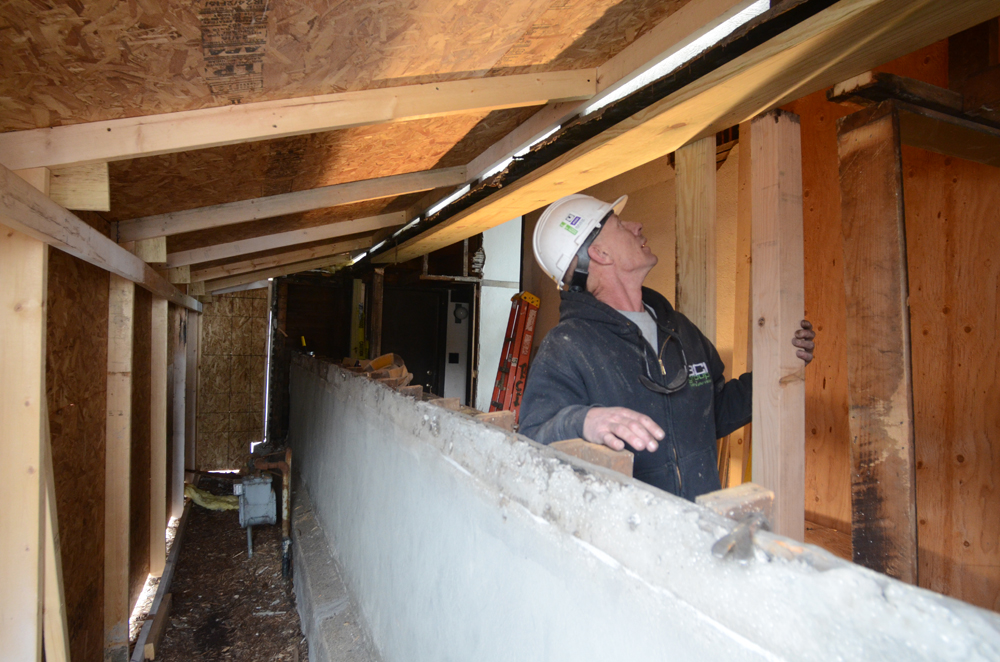
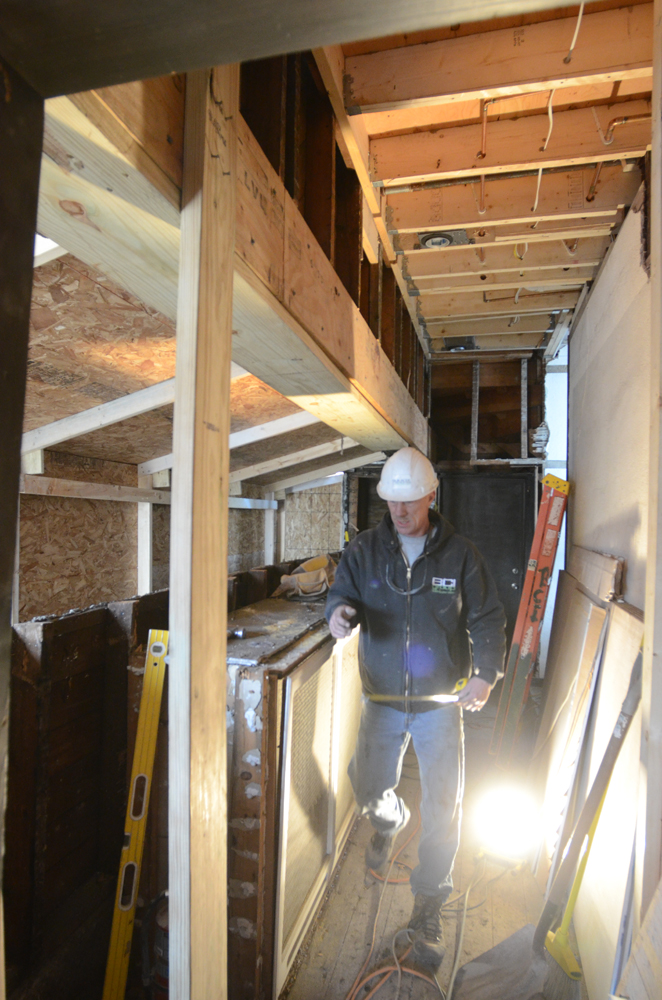
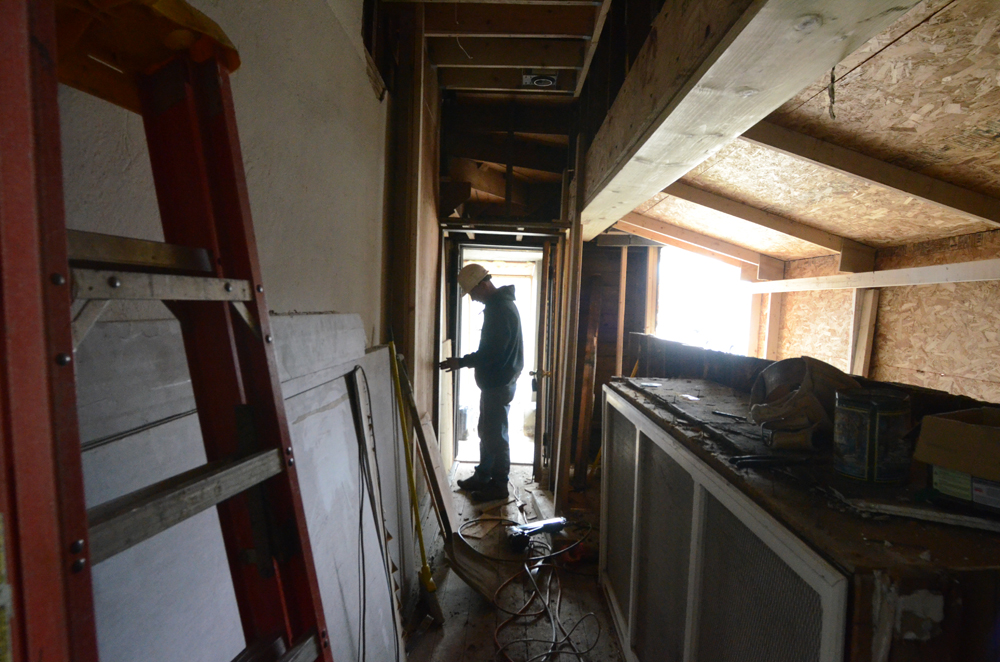
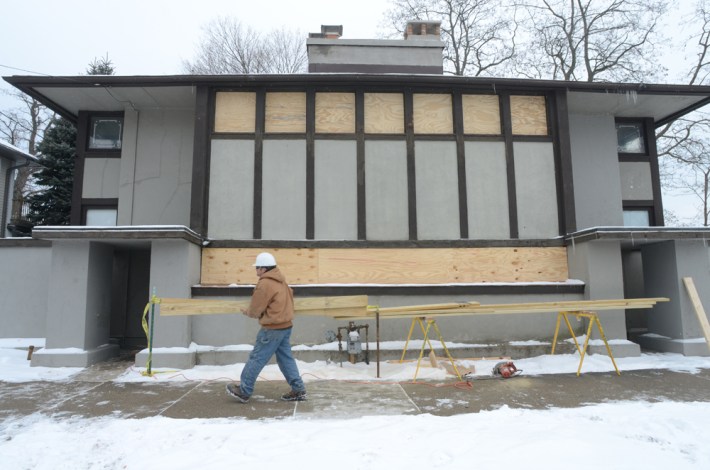
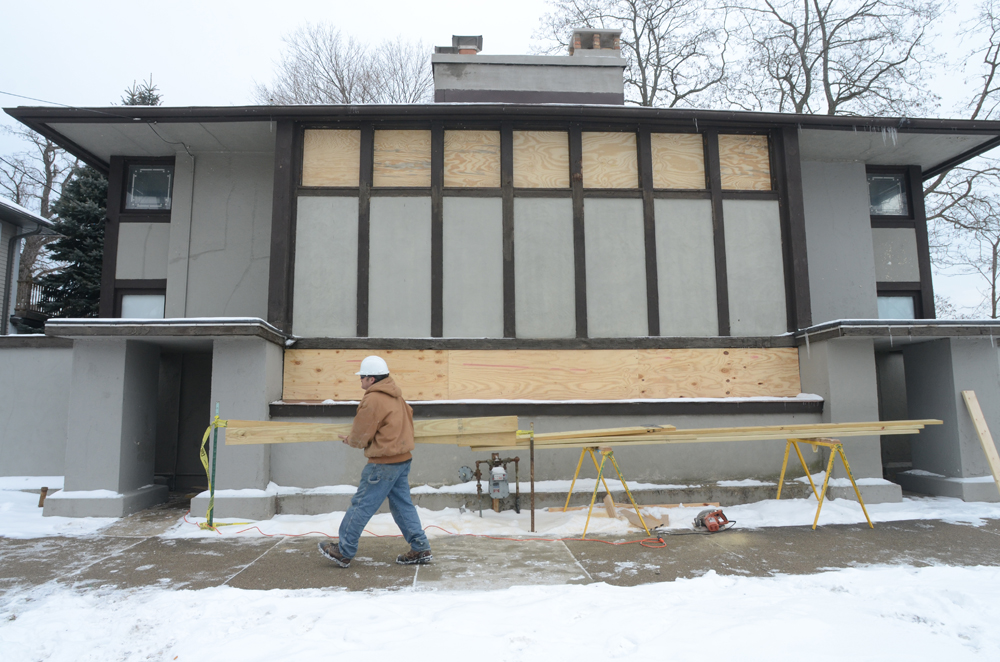
The most dramatic change in the exterior appearance of the house is the plywood shelter built around the entry hallway a few weeks ago. Gordon Hudson and Kevin Grant built the shelter before removing the upper portion of the exterior hallway wall. They will use photos taken of the hallway before restoration began in September to guide them as they rebuild the wall to make sure it will last another 100 years.

Image

Image

Image

Image

We look forward to seeing many of you at the April 27 tour, which benefits Frank Lloyd Wright Wisconsin. Tours are limited to 90 people, by reservation for specific time slots between 9:30 and 2:30 p.m. Reservations are accepted by telephone only, at 608-287-0339. (I am on the board of the organization, and I will be leading the tours.)

New Wright exhibition coming to SCJ

(c) Mark Hertzberg

The Frank Lloyd Wright At Home exhibition in Fortaleza Hall on the SC Johnson campus in Racine is expected to reopen the first weekend in May. The first year’s exhibit, about his Prairie-style work, was dismantled a few weeks ago. It had opened last June. The second phase of the exhibition is about his Usonian homes. It will be up for about 10 months until the changeover for a still-to-be determined third  phase of the exhibition.

The photos below are of workers from the joint curators, SC Johnson and the Milwaukee Art Museum, and from Merchants Moving and Storage in Racine, taking down the Prairie-style artifacts. Many of the artifacts are on loan to SCJ under a unique 99-year loan from the Frank Lloyd Wright Foundation. I expect to preview the Usonian exhibition for you in a few weeks.

Image

ImageImageImageImageImage

Open House at the Hardy House on April 27!!!

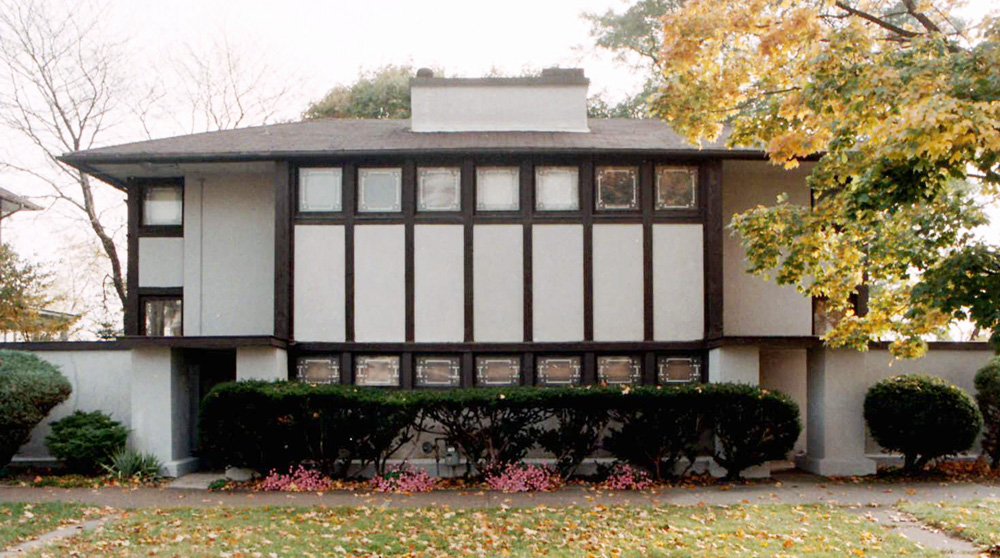
The first tours of Frank Lloyd Wright’s Thomas P. Hardy House in decades will be held Saturday April 27. The house, which is perched on a bluff above Lake Michigan in Racine, Wisconsin, has been undergoing significant restoration since Eugene Szymczak bought it in September (photos of the restoration are in two previous posts, below).

The tours benefit Frank Lloyd Wright Wisconsin (www.wrightinwisconsin.org), thanks to Szymczak’s generous offer to open his house to the organization for this fund-raiser (Note: I am a board member of the group). The cost is $100 for members, $140 for non-member guests. I will lead the tours, which last a half hour. I am the author and photographer of Frank Lloyd Wright’s Hardy House (Pomegranate, 2006). The Racine Art Museum will be selling copies of the book and my Wright in Racine at the event.

Tours are for specific time slots between 9:30 and 2:30 p.m. Reservations are accepted by telephone only, at 608-287-0339. If you want to add to your Frank Lloyd Wright Racine experience, consider also making a reservation to see Wright’s SC Johnson Administration Building five blocks away, and visit the permanent Wright exhibition in Fortaleza Hall on the SC Johnson campus: http://www.scjohnson.com/en/company/visiting.aspx

Ruetz Hardy photos

Sub basement</p>
<p>10/19/2012</p>
<p>Contact:  Erin Mirabella

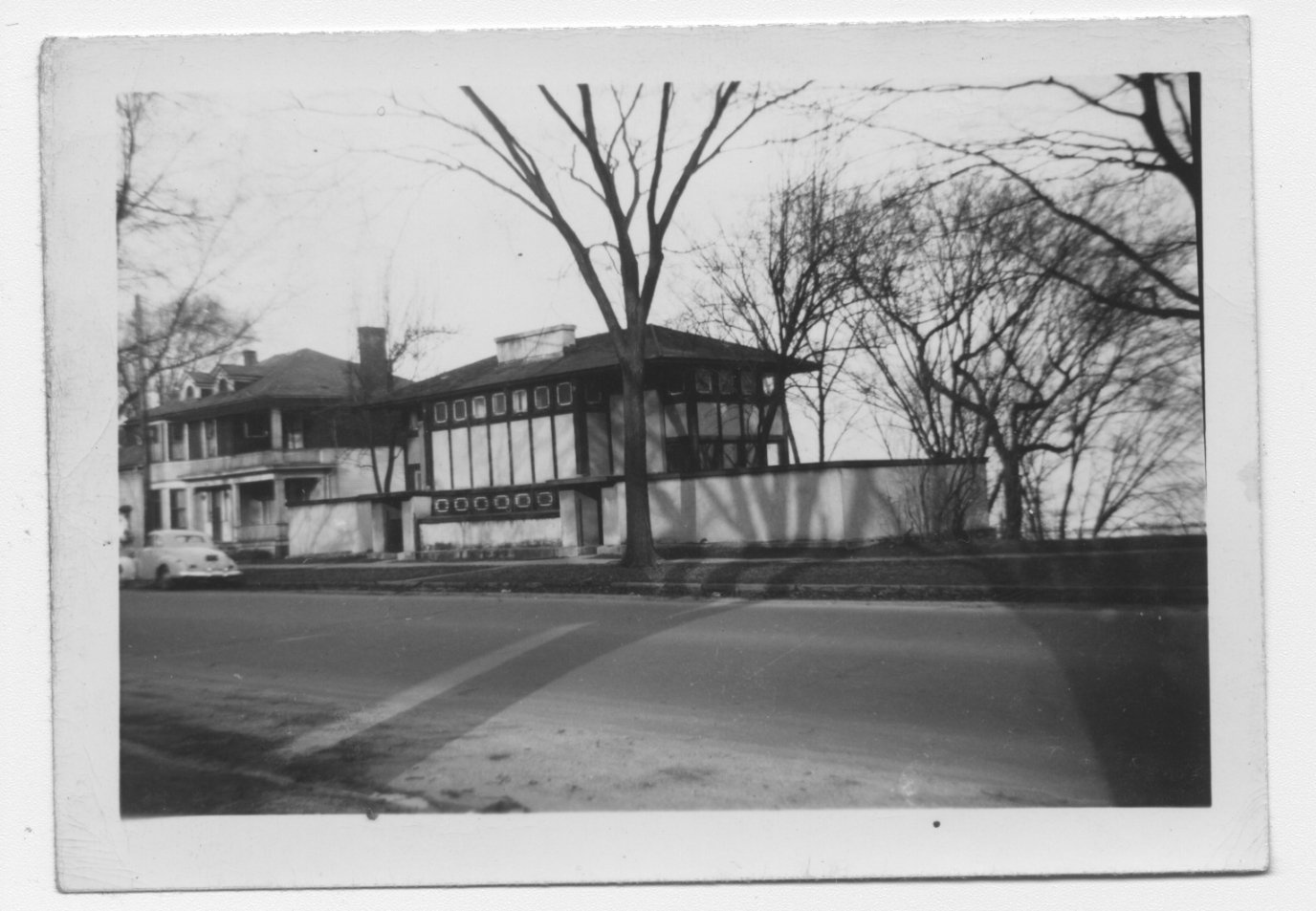
(c) Mark Hertzberg with photo above by Anne Sporer Ruetz (1940s)

Hardy House update

Photos and text (c) Mark Hertzberg

Step inside Frank Lloyd Wright’s Thomas P. Hardy House in Racine with me to get an overview of the restoration project, since our last visit to the house in November…
Image

Image

Gene Szymczak become the seventh steward of the house in September. He is tackling the restoration from the inside first. Some work is the fun arguably cosmetic stuff, other work is the serious task of addressing some structural issues. Let’s look at the fun stuff first.

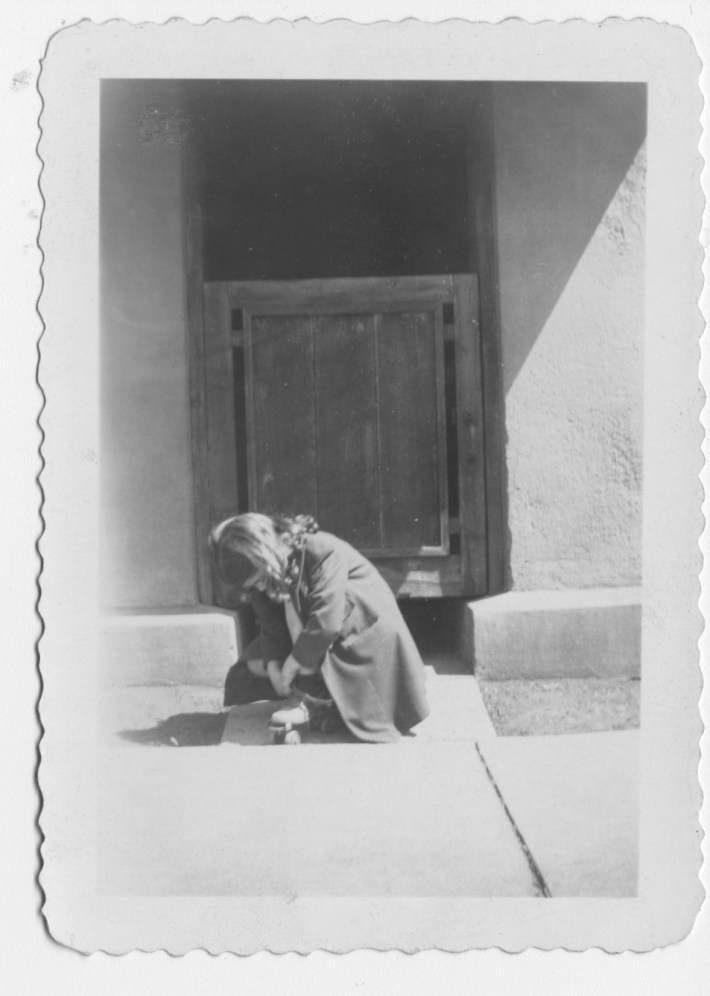
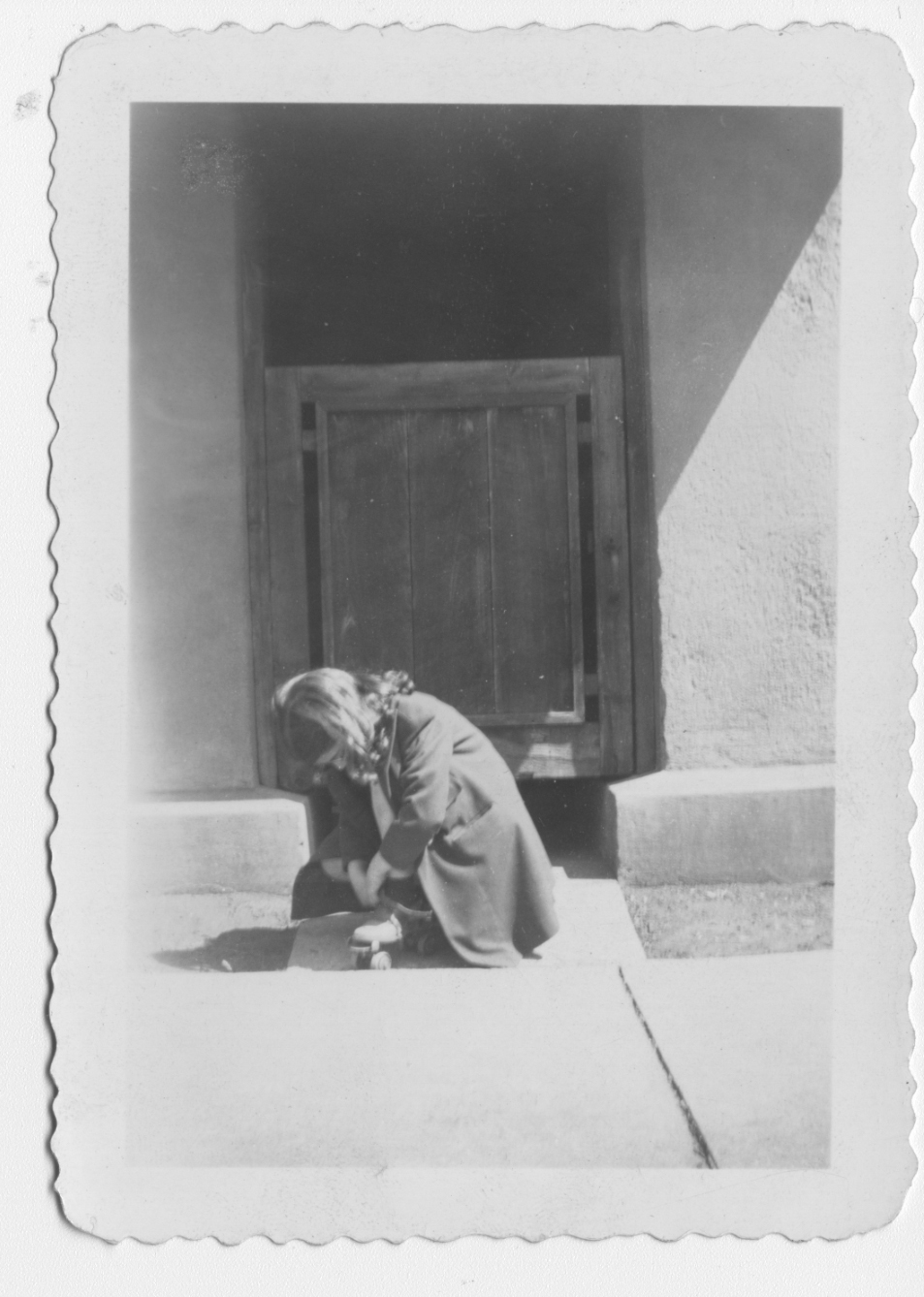
The house originally had two pocket (sliding doors), on either side of the entry hall. The entry ways to the doors had wood gates across them. The third owners of the house (1947-1957) took out the pocket doors because they would ice up. We do not know who removed the gates. Anne Sporer Ruetz, whose parents bought the house in 1938, took this picture of her friend Mary Hill putting on her roller skates in front of one of the gates:
Image

Chad Nichols, a local master carpenter, has measured the entry ways and will use Anne’s photos to help him recreate the gates for Gene.

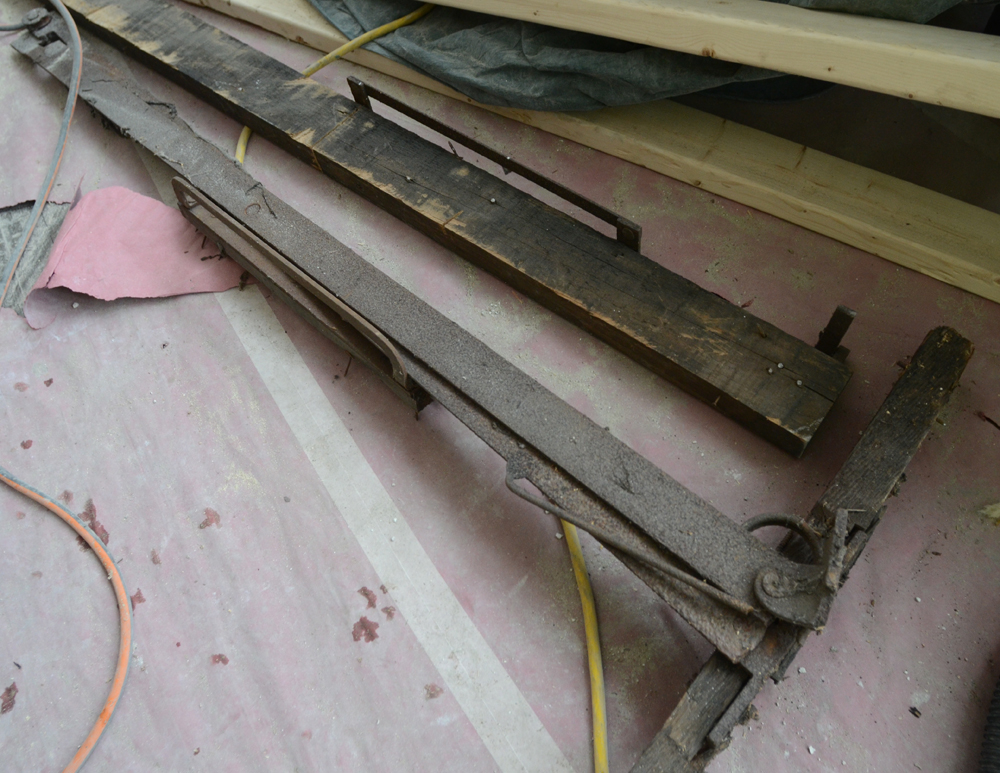
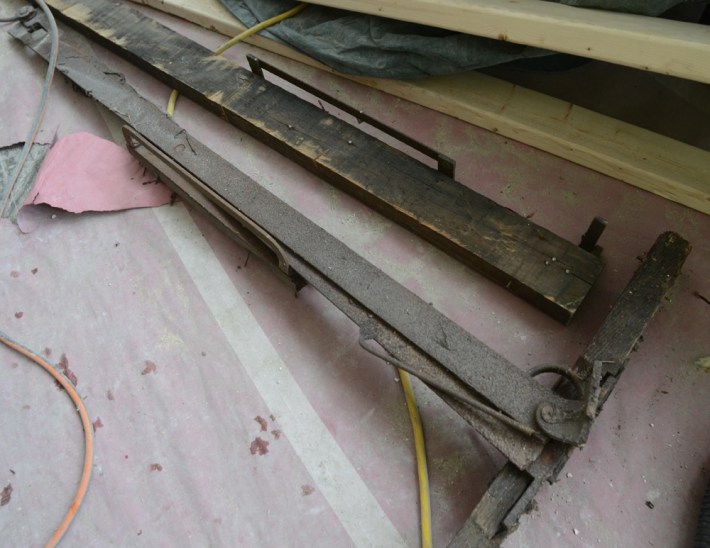
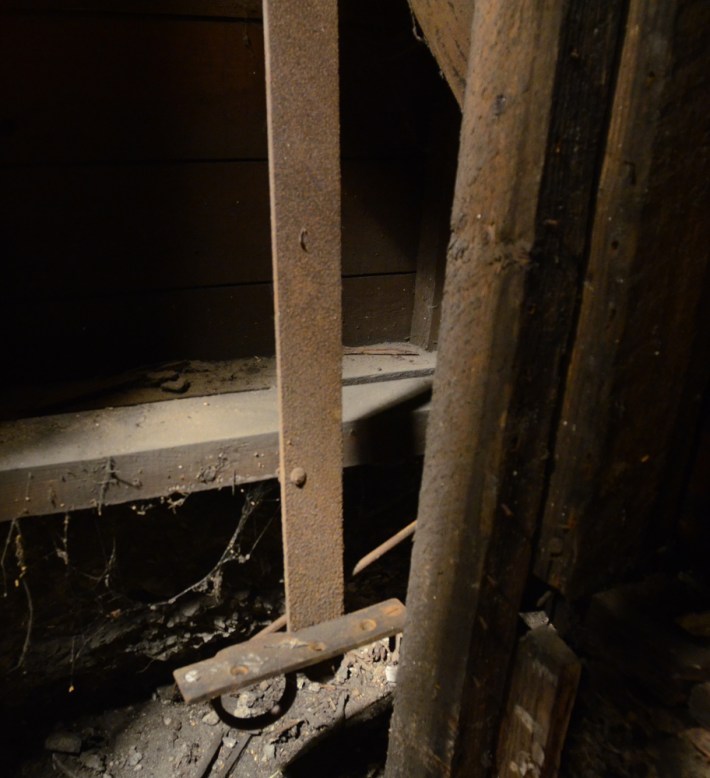
ImageThe pocket doors will be trickier, but the original mechanisms were found two weeks ago. The hardware for the north door is now on the living room floor, the hardware for the south door is still mostly in concrete in the doorway (although it is hanging down):
ImageImage

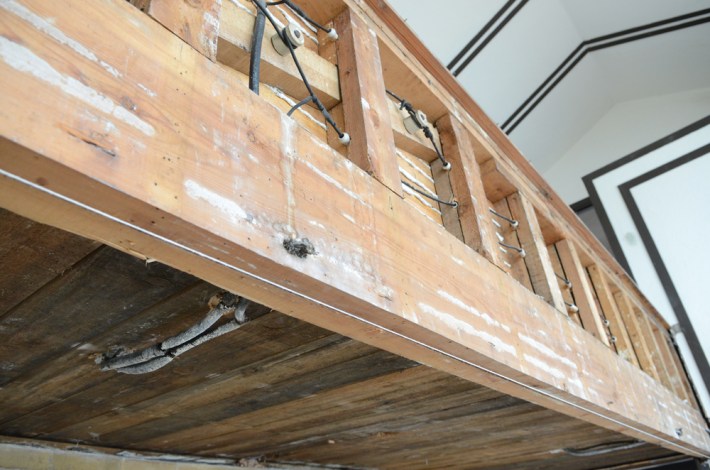
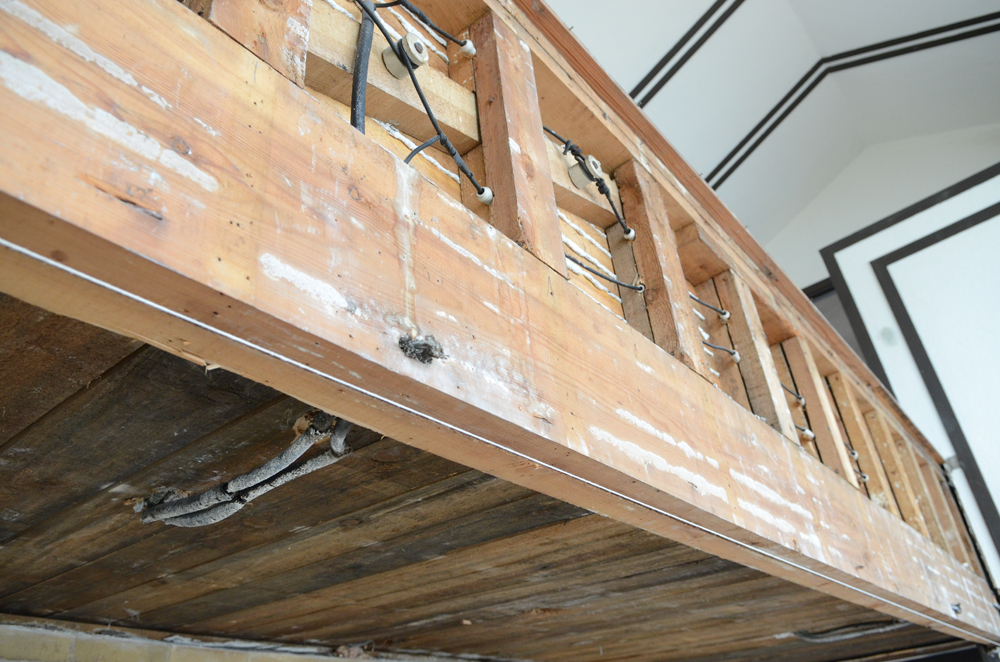
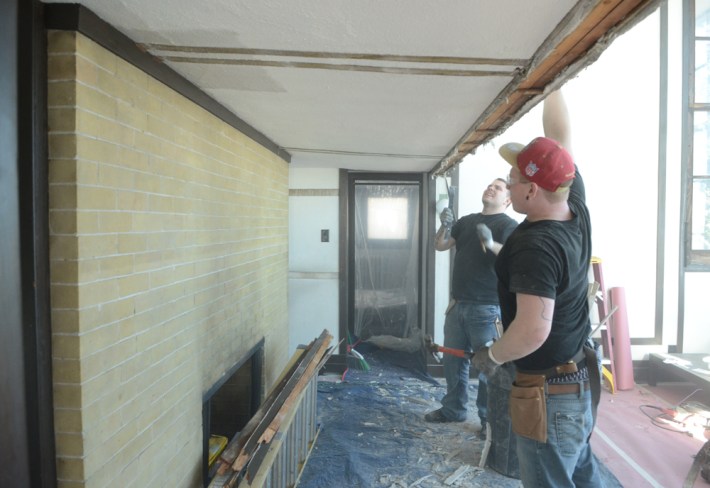
The living room balcony was deflected. The plaster face was removed so the balcony could be leveled. Electric wiring found on the face of the balcony tells us that there may once have been two light fixtures on it. Anne Sporer Ruetz and Mary Hill, who often played in the house, have good memories for details, but they do not recall the lights. We surmise that Mr. Hardy removed them at some point, or else while they were wired, they were never installed.

Wil and Eddie Sunderland remove trim from the balcony:
Image

Image

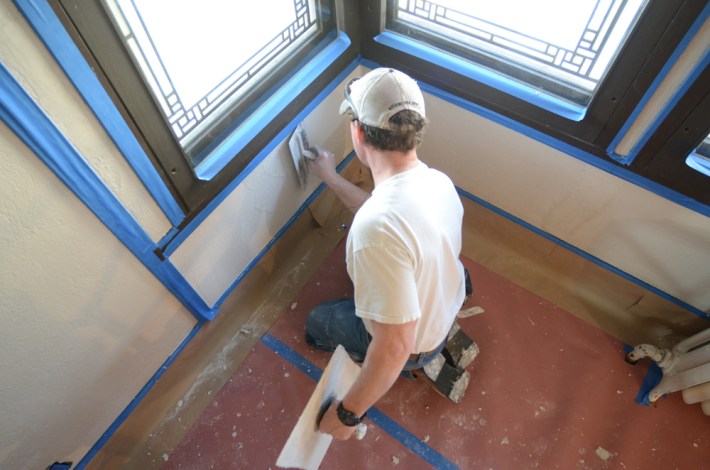
Paul Lemke does magnificent plaster work. He has been working in the bedrooms. He will replaster the balcony, front hallway, and the two-story living room.
Image

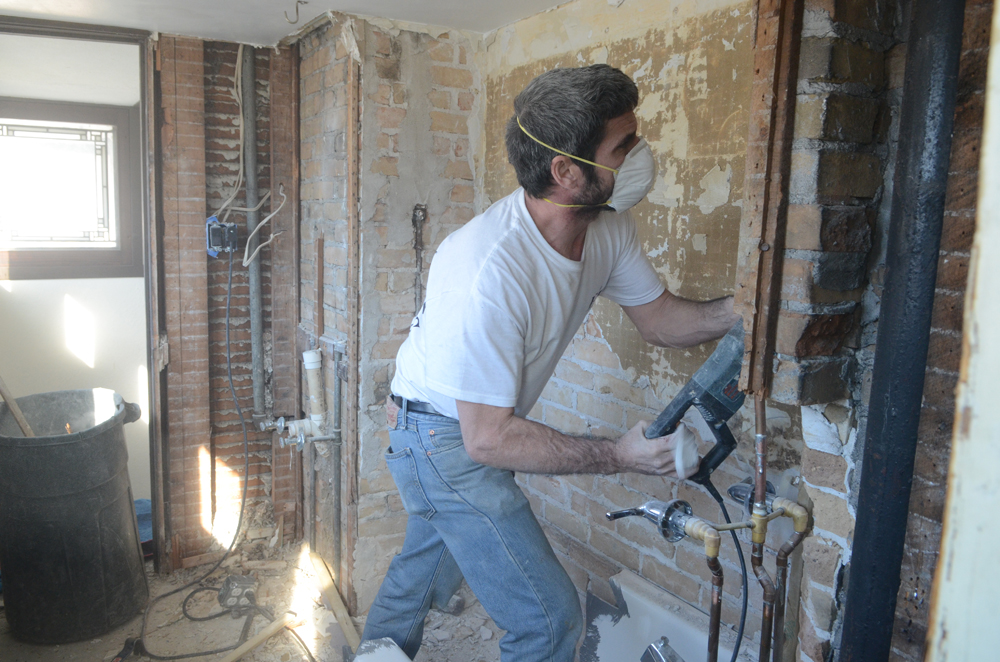
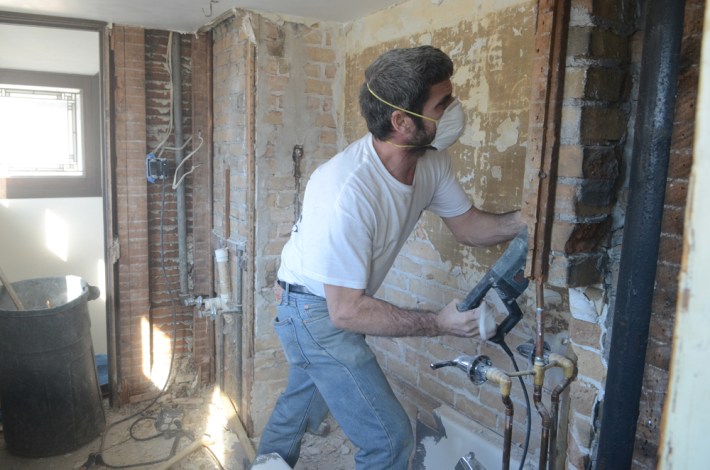
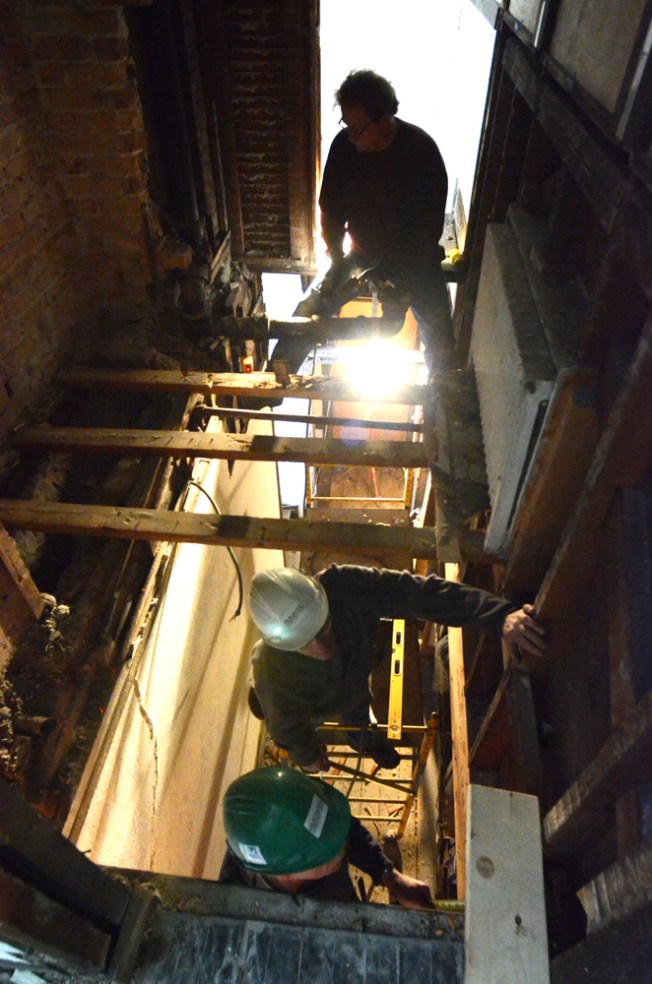
The bathroom originally had doors at both the south and north ends. The south door was walled over when the bathroom was remodeled in the late 1940s (the tub had 1949 stamped in the bottom). Gene wants that door replaced so that people can look out Mr. Wright’s leaded glass windows as they exit the bathroom from either end. The bathroom is getting a complete makeover. First we see Ed Sunderland taking it down to brick, then we see plumber Mark Derouin working in the space to remove cast iron pipes as workers Kevin Grant and Gordon Hudson work below him framing for a new bathroom floor, above the entry hallway:
Image

Image

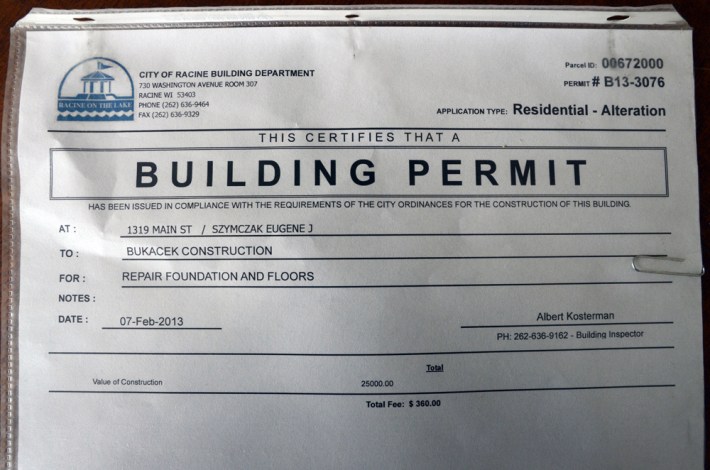
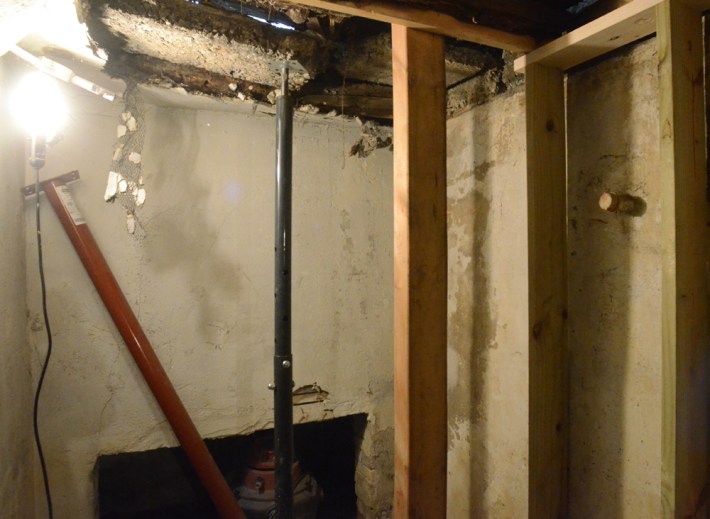
The house has some structural challenges. They are not where they might be expected, on the lake side of the house. There is no evidence of the house being unstable as it sits on the bluff above the lake. Rather, there are problems on the west or Main Street side of the house. Some of the concrete by the entry ways is cantilevered and has no support in the basement. Daylight is visible from the basement as one looks up at the concrete pad by the south door. Some wood in the basement has rotted, further eroding support for other concrete. Four permanent metal posts are being put in the hallway below the kitchen, a space which Mr. Wright called the Heater Room, to help stabilize the west side of the house. The post shown is a temporary one, but this photo illustrates the problem.
Image

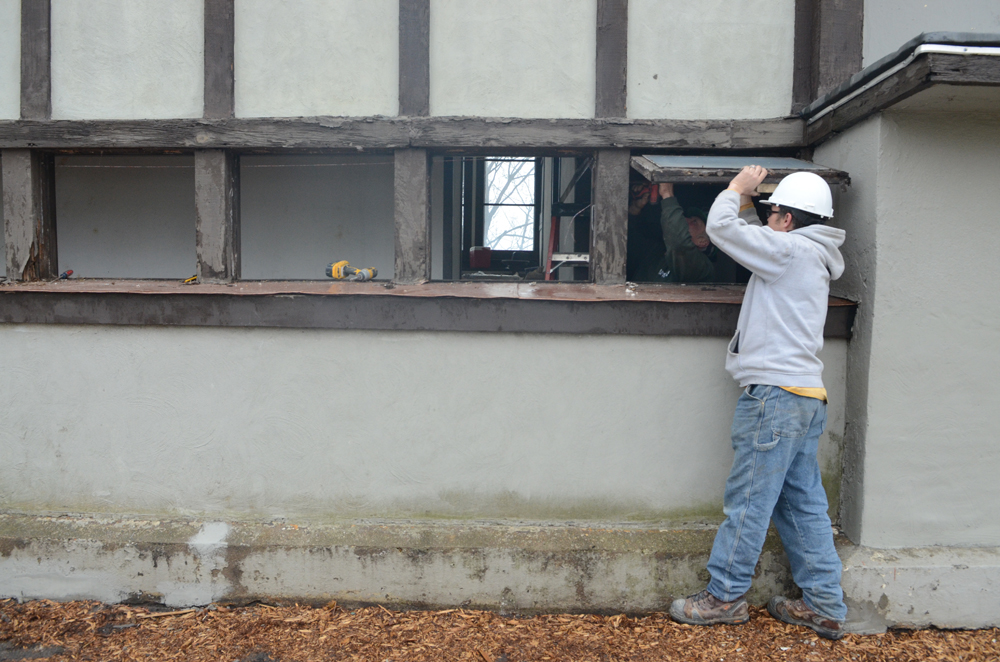
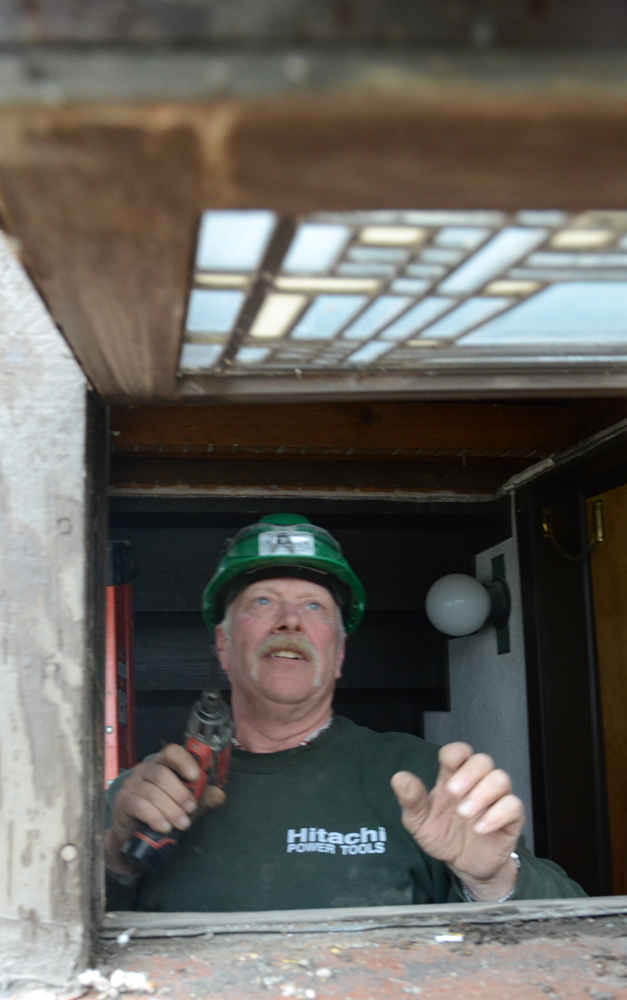
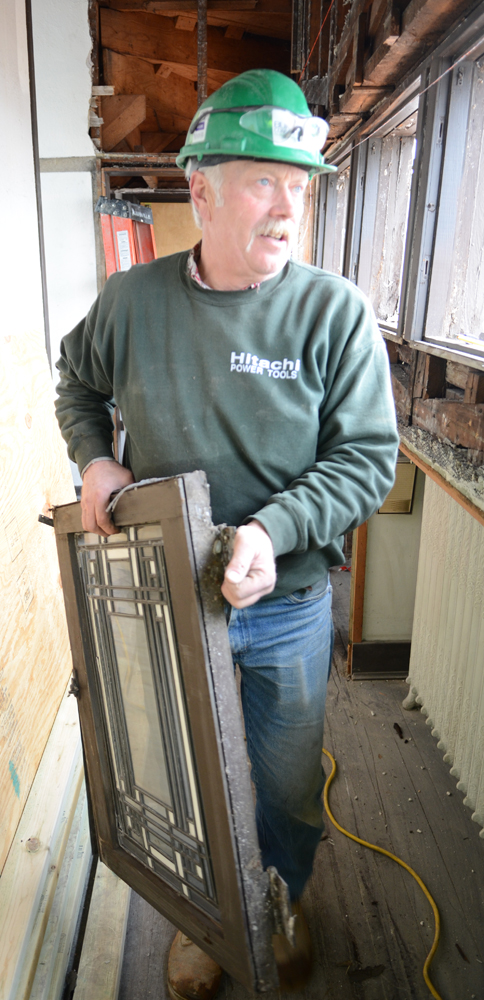
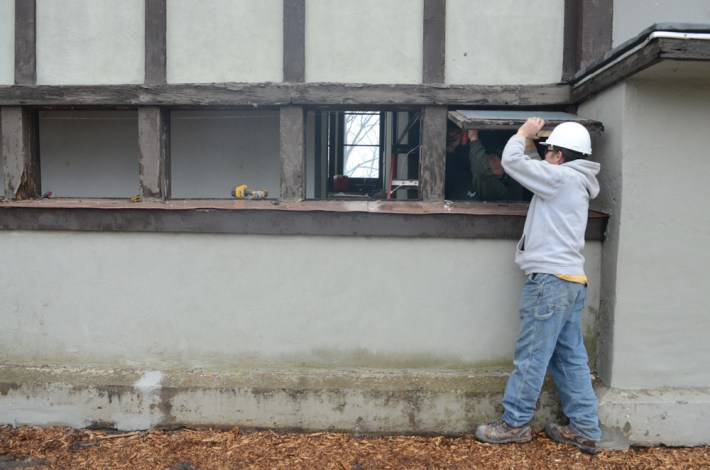
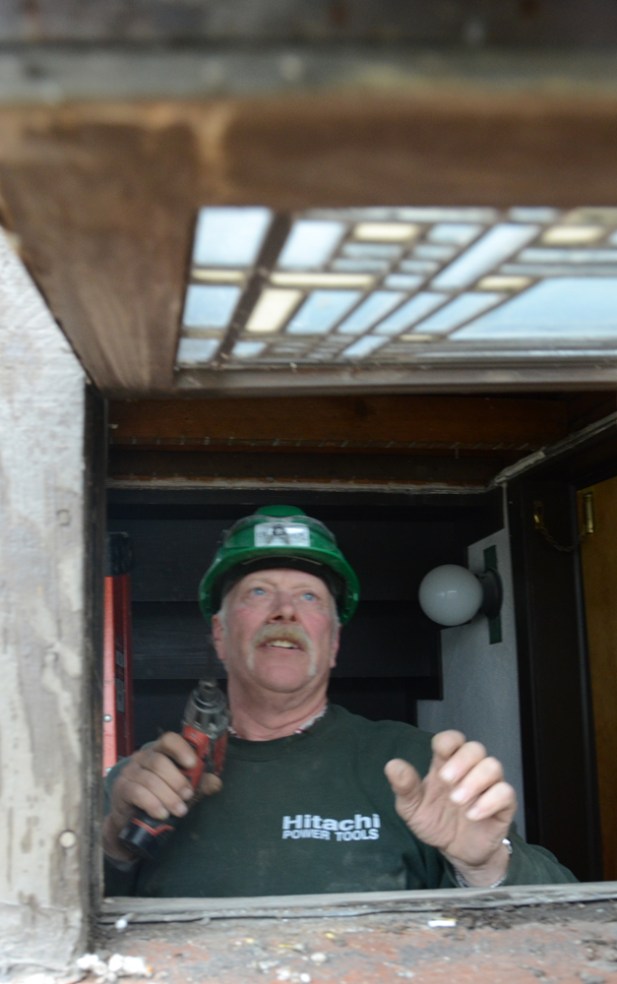
The leaded glass windows on the Main Street elevation of the house were removed by Grant and Paul Harvey to ensure that they did not crack when the jacks in the Heater Room were tightened during the stabilization of the Main Street elevation:
ImageImageImage

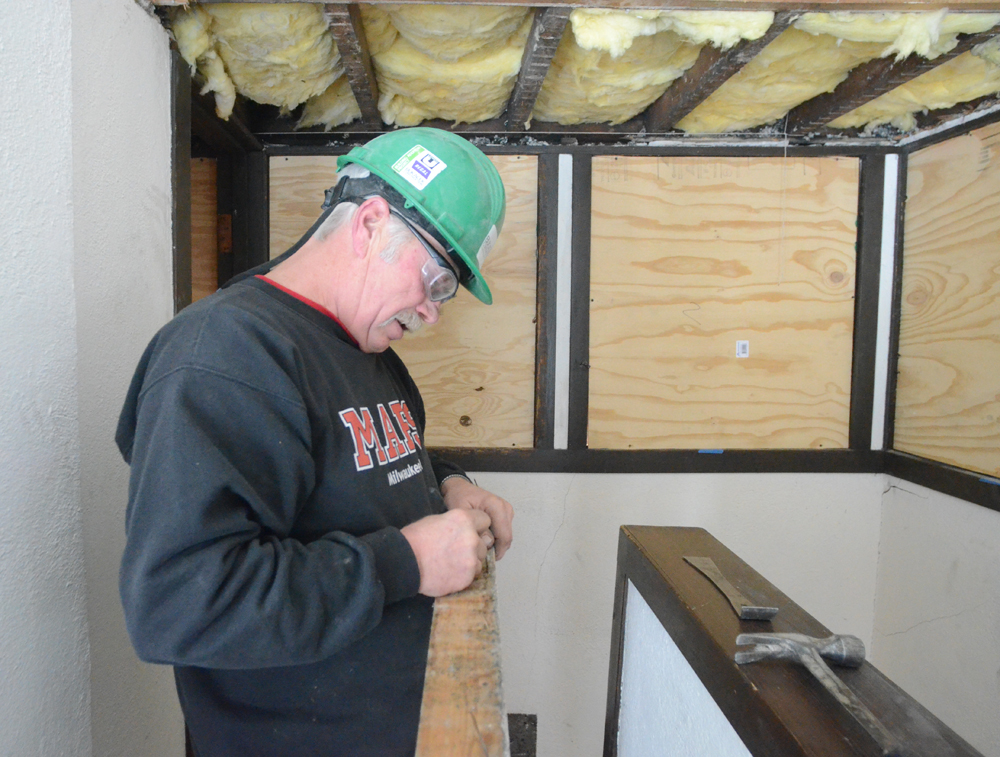
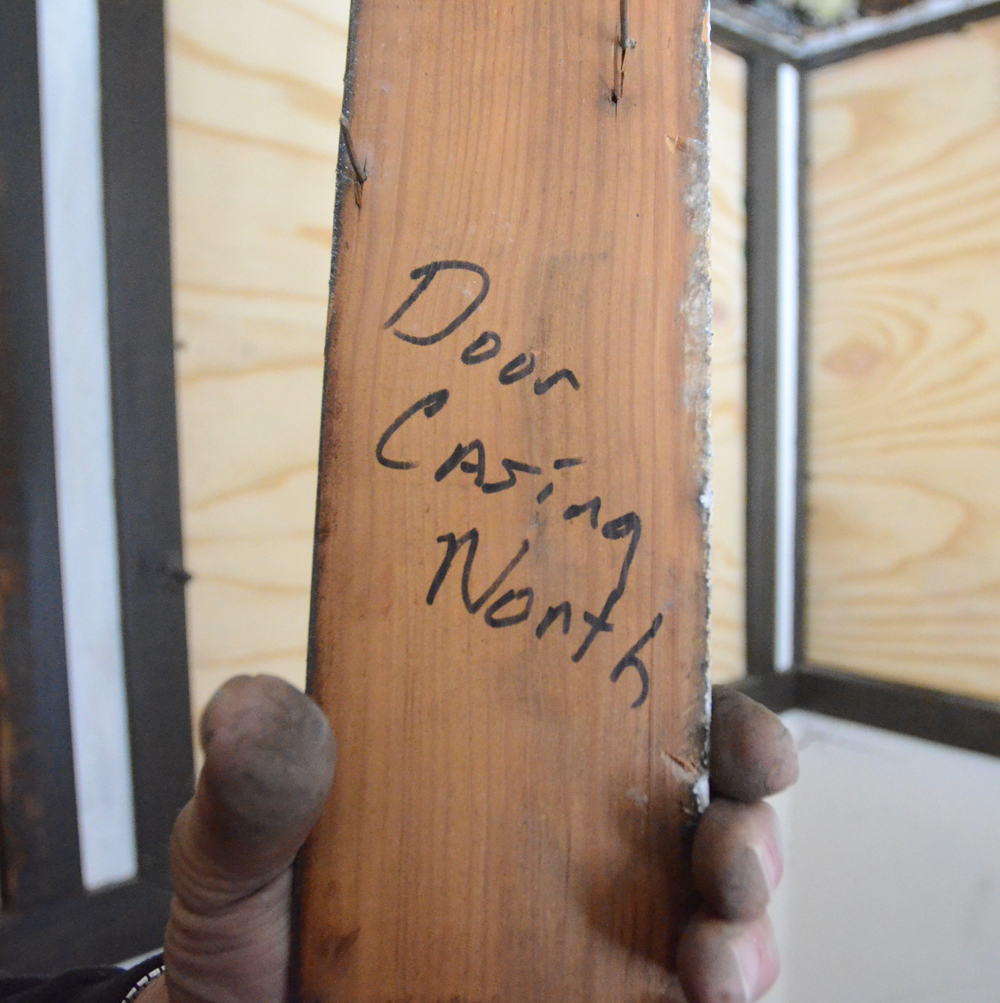
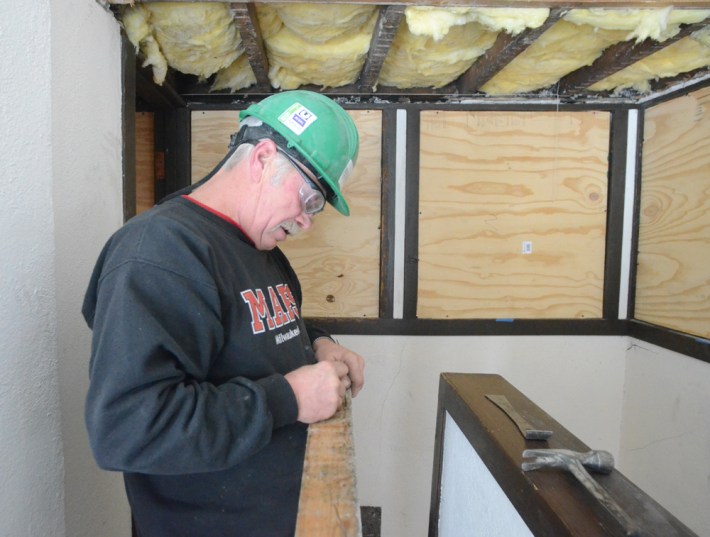
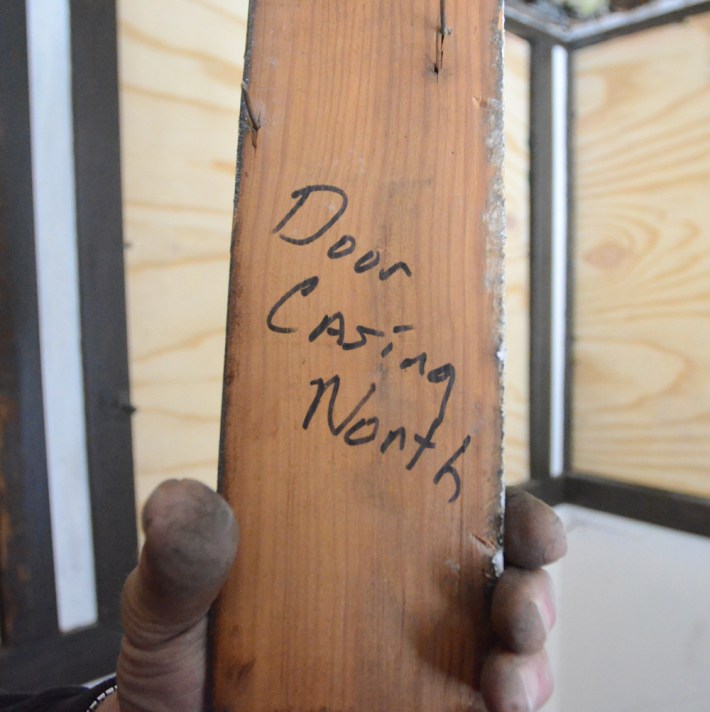
Grant marked pieces of trim as he removed them from the upstairs hallway so they can be replaced properly:
ImageImage

Sometimes there seem to be some steps back that offset the steps forward, other times there is a burst of steps forward. Gene has undertaken a project that is not easy, but the house is in good hands, both in terms of him and the people restoring it. There is no timetable for completion of the work, because that would be realistic. Substantial exterior work, like the stucco and replacing wood trim will wait until after the interior work is finished.

This will be Gene’s home. It is not a public building that must be completed by a certain deadline. Most of the house will be put back together they way Gene bought it, once repairs are completed. The kitchen and bathroom will be more contemporary, to reflect that 1319 Main Street will be his home, not a house museum.
What's Next? Meeting<br /><br /><br /><br />
FOR IMMEDIATE RELEASE</p><br /><br /><br />
<p>10/19/2012</p><br /><br /><br />
<p>Contact:

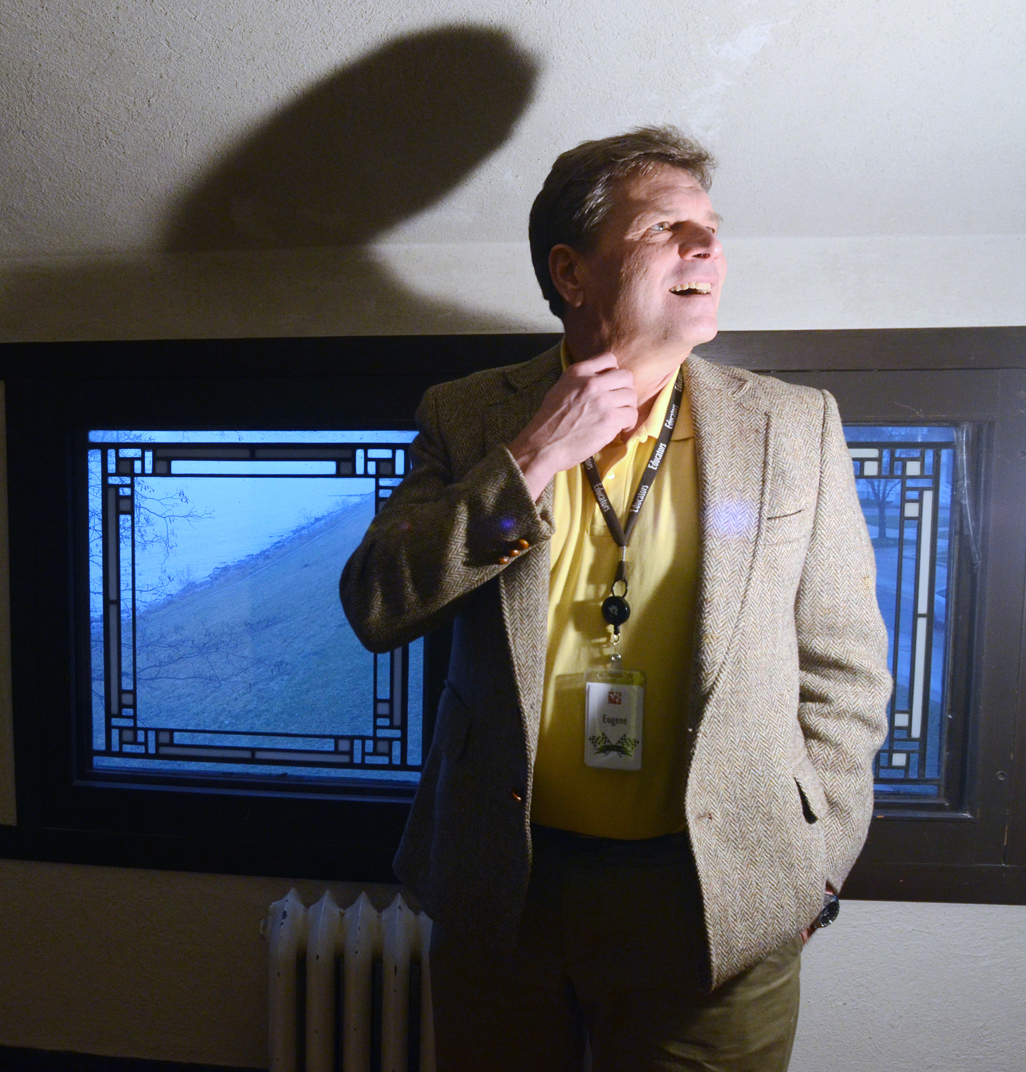
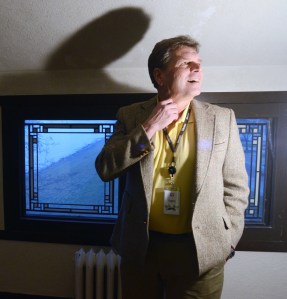
I leave you with this picture of Gene smiling as he gets his first look at Paul Lemke’s plaster work in the south upstairs bedroom in January, before a work meeting to plan the next stages of the restoration.

 

Hardy House progress report

Photos and text (c) Mark Hertzberg

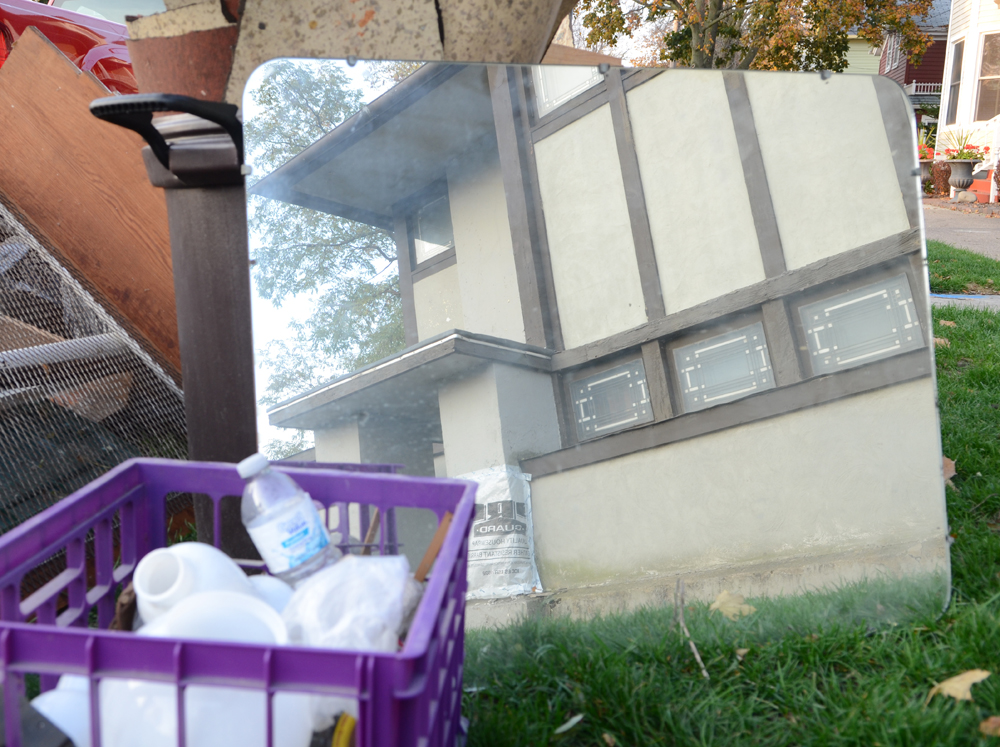
        The Hardy House is reflected in a mirror left curbside with other items being thrown away during restoration of the house:

Image

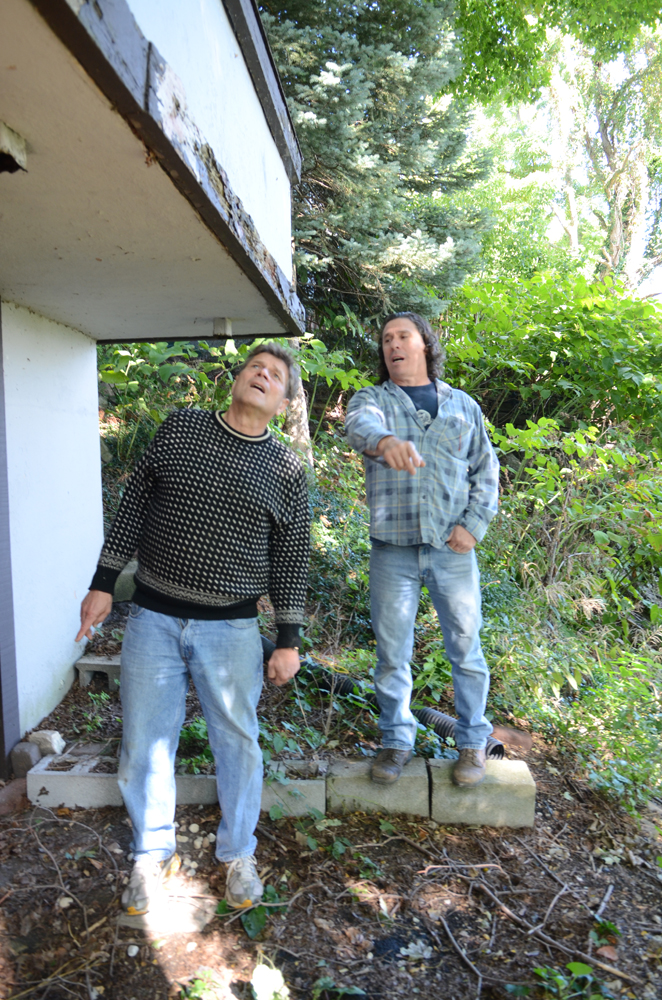
Gene Szymczak, below, center, became the new steward of Frank Lloyd Wright’s Thomas P. Hardy House in Racine in September. The responsibility of owning the house, and enjoying the restoration process, sometimes includes discovery of unexpected repair challenges.

Image

     Szymczak inspected the house a few days after the purchase with Chris Sunderland, who would do much of the repair and restoration work.

Image

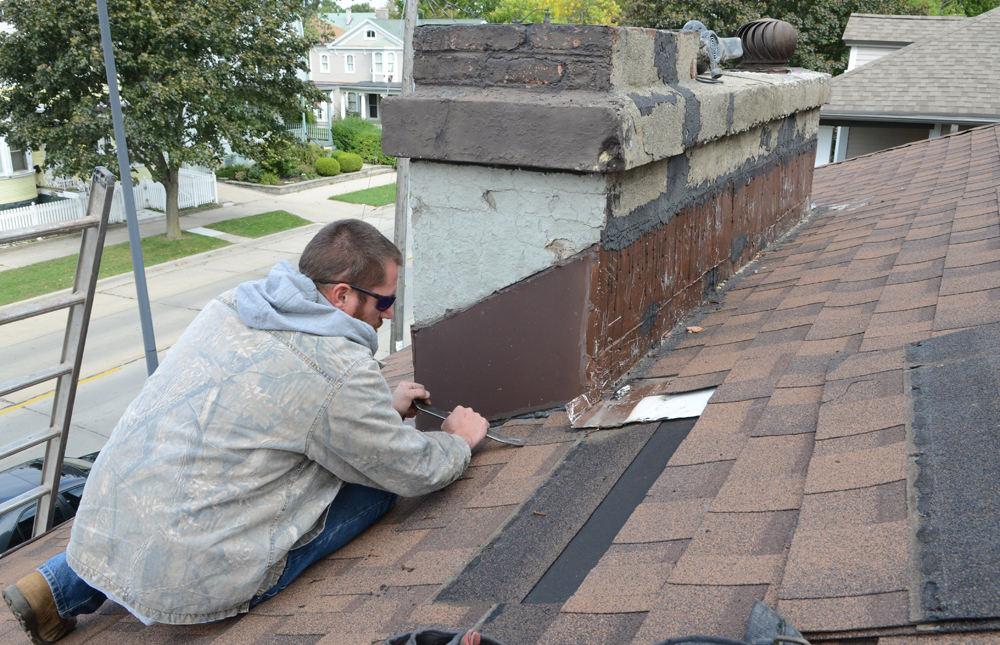
      Restoration began almost immediately when the chimney flashing was replaced

to stem leaking from the roof.

Image

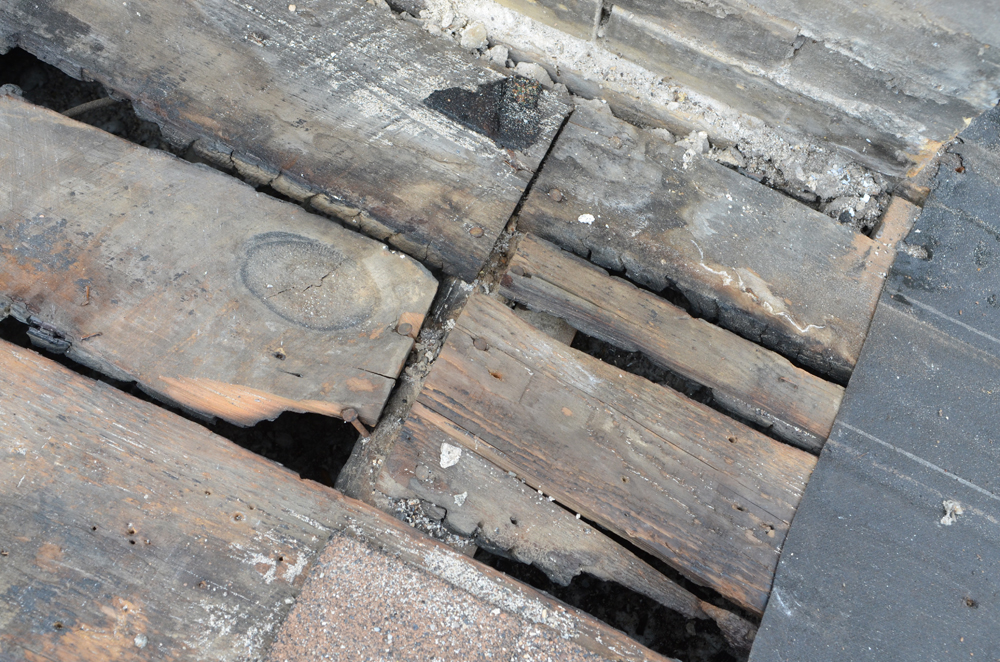
     The roofers found charred beams, which were evidence of a previously undocumented fire.

Image

     A search of old records by the fire department produced a report of a chimney fire in May, 1932. It had been put out with one three-gallon fire extinguisher.

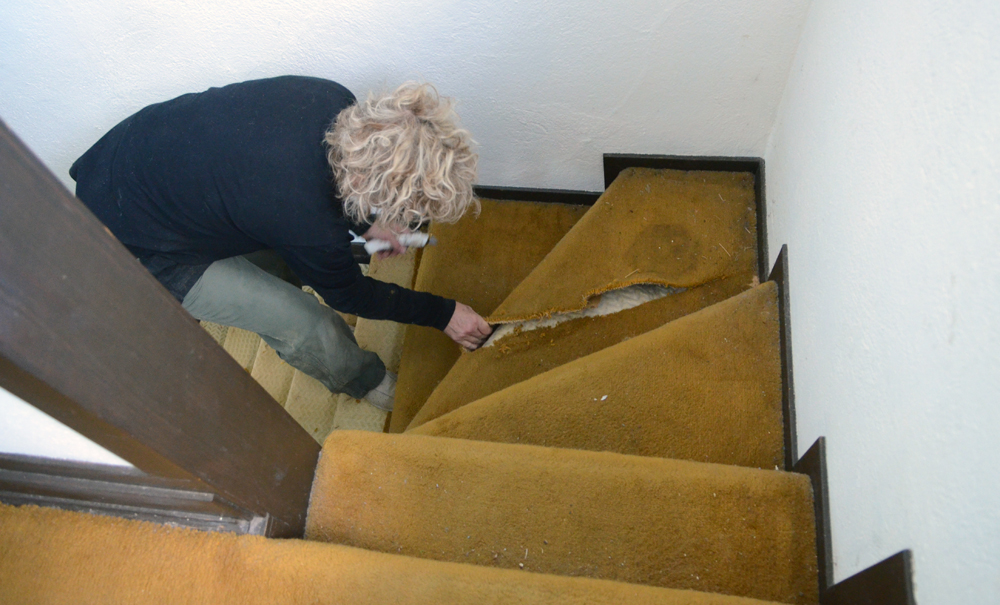
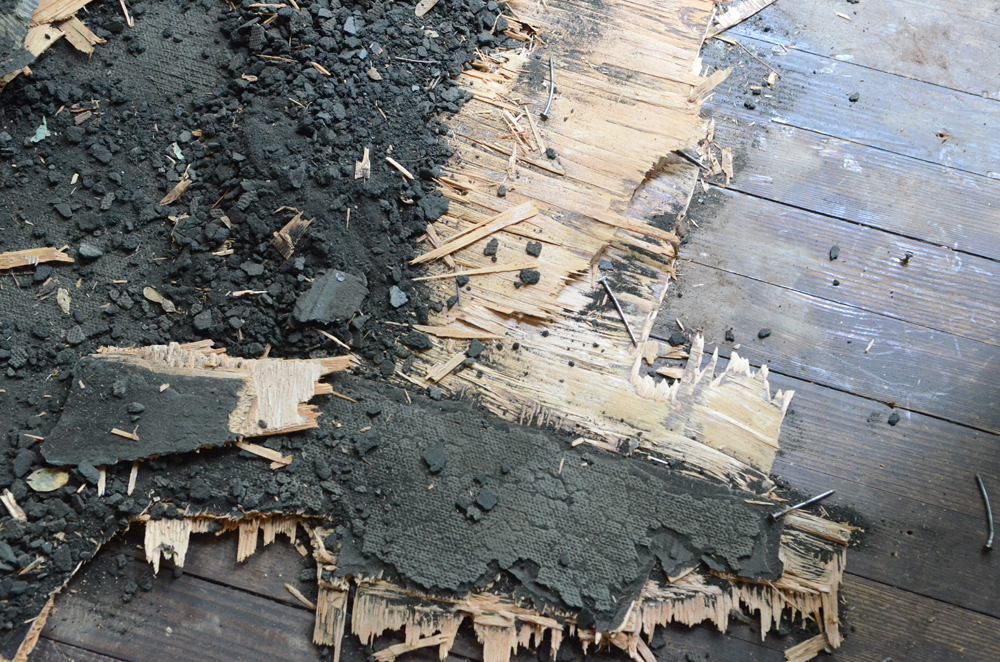
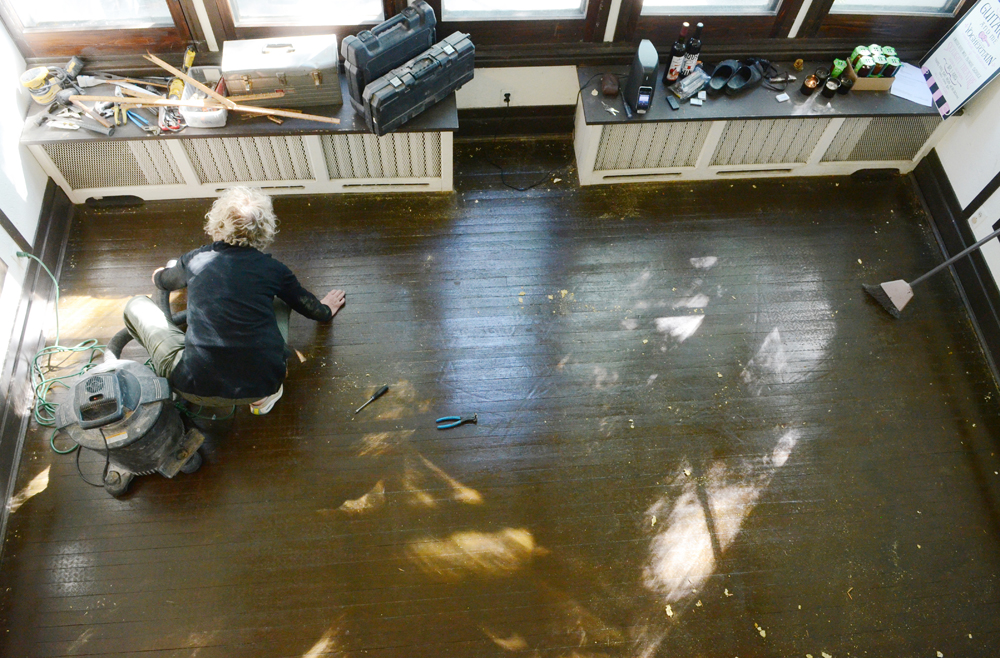
     Hardwood floors were revealed for the first time in many years when carpeting was removed that first week, as well.

Image

Image

Image

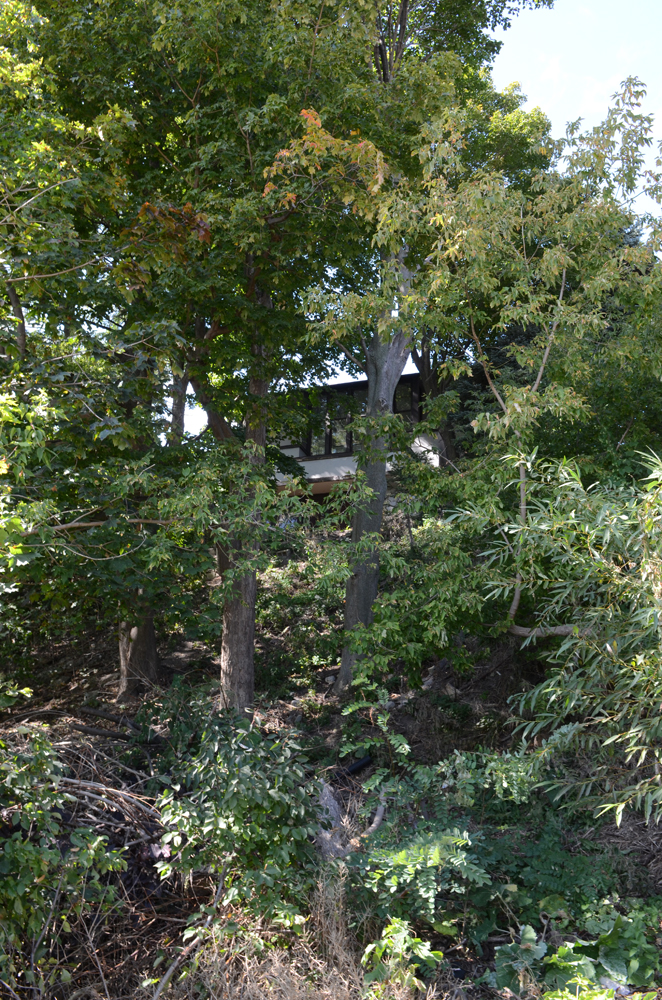
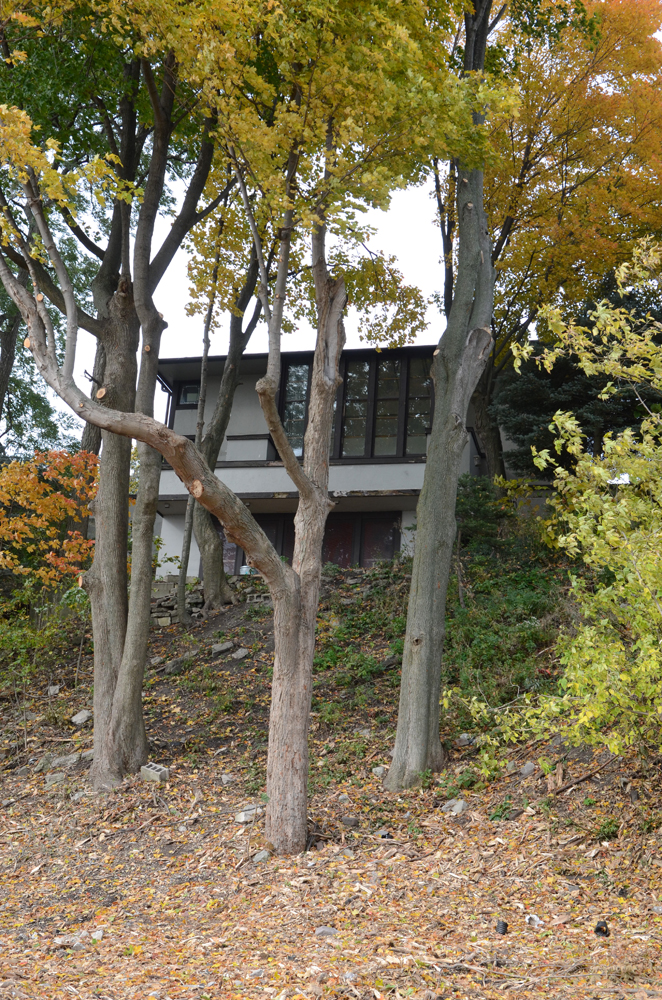
      The previous owners of the house let the trees and bushes on the hill between the house and Lake Michigan grow wild to protect their privacy. Chain saws cleared the hill a month after Szymczak became the home’s steward.

Image

Image

Image

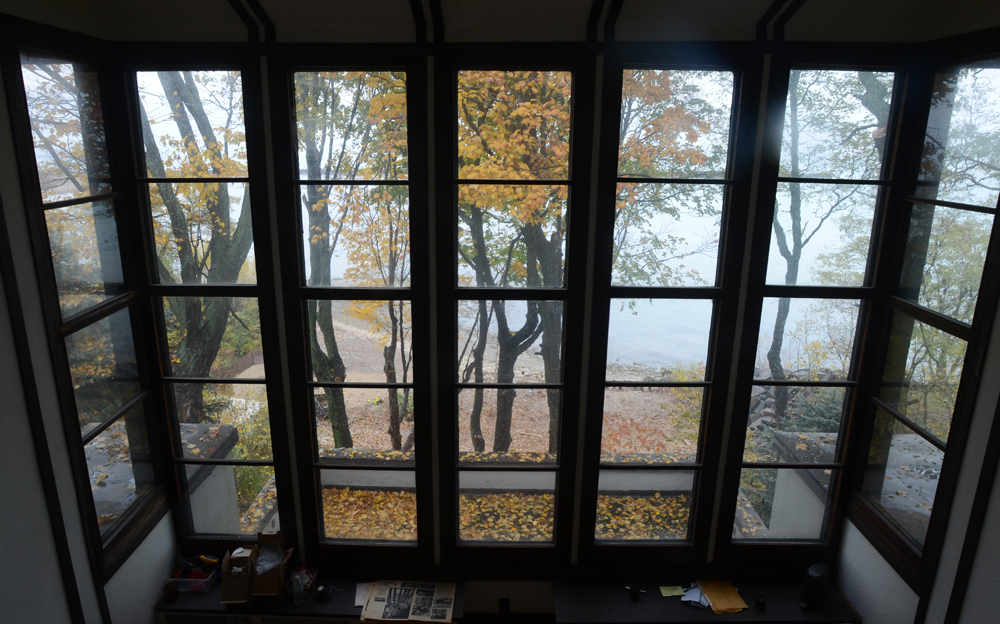
       The view from the living room balcony is now likely similar to what Hardy saw a century ago.

Image

      Below, Sunderland works in a basement crawl space to shore up the sagging floor of the servant’s bedroom above him. That room is on the south side of the dining room, opposite from the kitchen.

Image

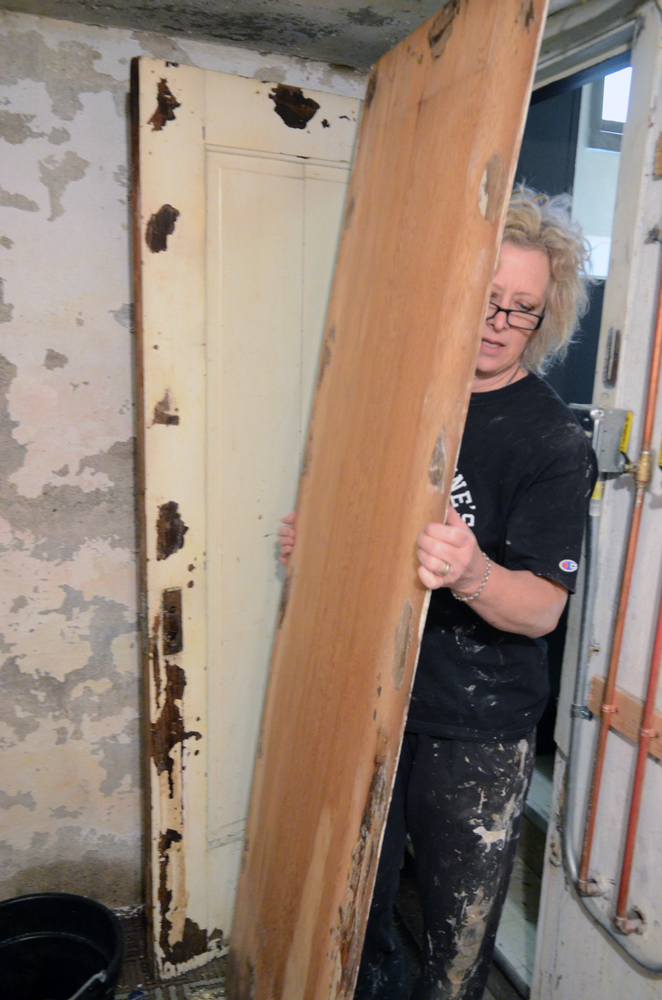
       It had been suggested that the door from the kitchen leading to the basement be replaced because it seemed to be a newer laminated door…but the laminate came off, revealing what is evidently one of the original doors of the house.

Image

       The most visible exterior change, for people passing by on Main Street, is the removal of the bushes in front of the house. Work will continue through the winter, inside the house, out of sight of passers-by. 

Image

Image

New steward of the Hardy House

Image

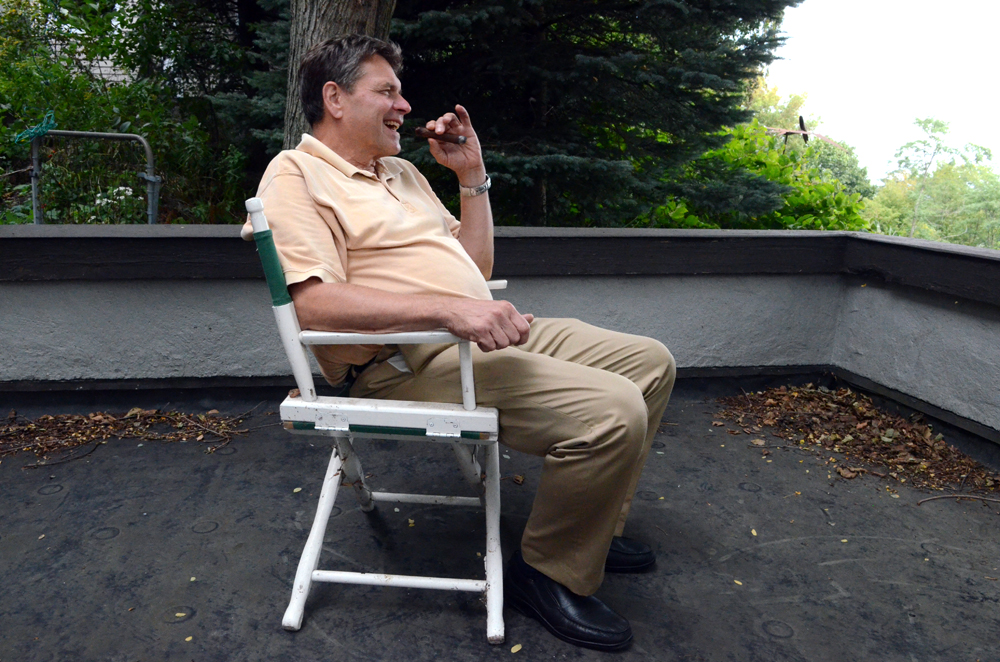
Gene Szymczak (pronounced Shimshack) lit a cigar and relaxed on the dining room terrace of his new home. He hoped the storm clouds passing overhead were not an omen.

 He had treated himself to a new camera about 40 years ago. He used his new Leica CL  to photograph his parents, Lake Michigan, and Frank Lloyd Wright’s Hardy House, “To me, significant things.” He returned the camera to the store because he felt it was an extravagance, but he still has the 4×5 black and white prints of the house

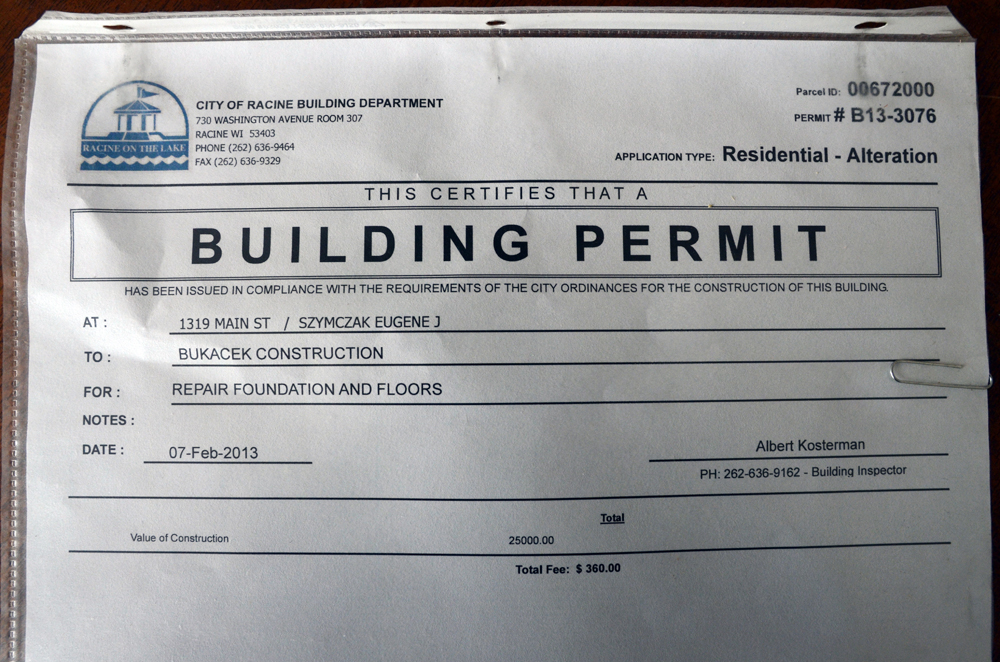
Today he became the seventh owner or steward of the house, which sits on a bluff above the lake, south of downtown Racine. Szymczak, who is president of Educators Credit Union in Racine, bought the home Monday September 17 from Jim and Margaret Yoghourtjian, who had owned it since 1968. The house had been for sale, by local word of mouth only, for nine months.

 There has been concern about the future of the house for many years. Szymczak has hired a restoration architect who will not see the house until Thursday, but he started tearing out carpets this afternoon. Last week he wrote me, “The Yoghourtjians have been good stewards for more than forty years. It’s my turn to take care of the Hardy house. It is a Racine and even a world landmark.”
After I gave Szymczak his first tour of the house, as a prospective buyer, he told me, “This would be a way I could give back to the community.”

 He was born and raised in Racine, in a working class family. He has a strong sense of altruism, “Racine has a reputation in history for doing the right thing.  It could be from fighting against slavery to having the first high school in the state to trying to rejuvenate River Bend (nature center). We do the right thing. We put others first and give back.  I am part of that heritage.”

 Szymczak has long been interested in Wright’s architecture and related architecture. He just sold the third John Randal McDonald-designed home he has lived in. “The Hardy House is a home that most Racinians would recognize.  It evokes different reactions.  In 1905 it was called “kooky”.  To me it’s a song.  Wright was a middleman between humans and nature. He asks us where to we fit in nature?  How do we interact with living creatures?  What can we learn?  Do we enhance one another’s lives and the landscape?
 “I find that Wright looks a little deeper into life and introduces more questions than answers.  A little more understanding than strong judgement calls.  God (being Nature), has all the answers to what being here is all about.  To me he says be part of it all and share it unselfishly.”

 I have known Szymczak for years, but did not realize he has an impish streak. He gave me heartburn Friday when he wrote in an email, “Could you put in the article that I am open to talk to developers?  It’s the perfect place for a mc mansion with a three car garage on street level with living quarters above.  Possibility for 5000 or more square feet.” His comment underscores Racine’s preservation ordinance which might not have protected the house from the fate that hangs over the David Wright House. I was going to tell the Yoghourtjians to put the pending sale on hold, until I got hold of Gene again and he assured me that he was kidding. Our Thursday appointment with the architect is still on.

Szymczak thought about the house in 1906 when the house was a century old. “I thought it would have been nice to celebrate the house a little bit more on its 100th.” He was excited when he woke up this morning, unable to sleep well last night, he says. He realizes the legacy he is now the steward of, “I feel just an enormous amount of pride in the house. I feel humble, like you don’t deserve it.” He does deserve it. The Hardy House could not have a more thoughtful new steward.