“Photographing Wright” in Chicago

Text and photos © Mark Hertzberg (2024)
LR IMG_9027.jpg

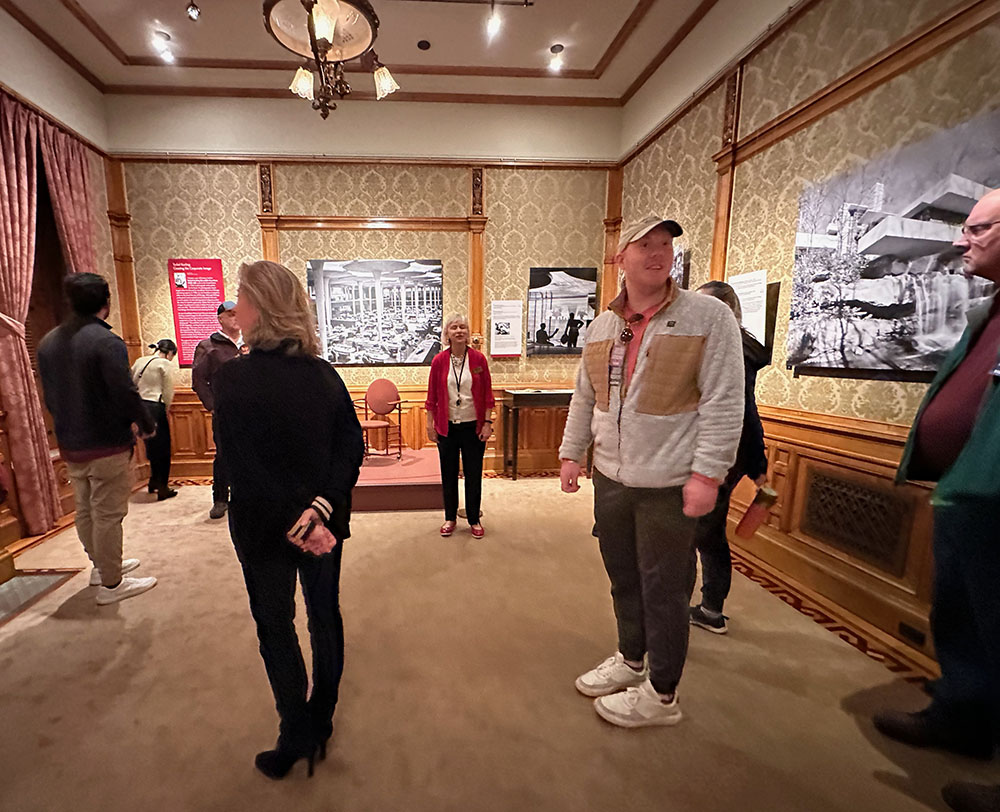
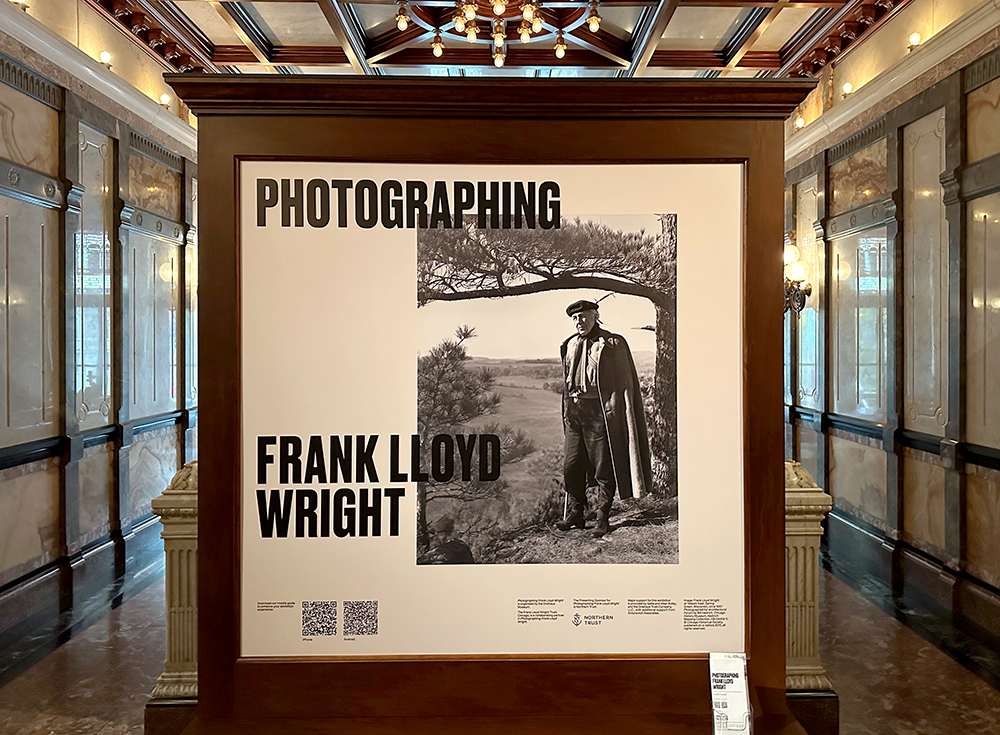
A new exhibit related to Frank Lloyd Wright opened two weeks ago at the Driehaus Museum in Chicago. The museum is in the former Gilded Age Nickerson Mansion (1883) on Chicago’s Near North Side, at 50 East Erie Street.
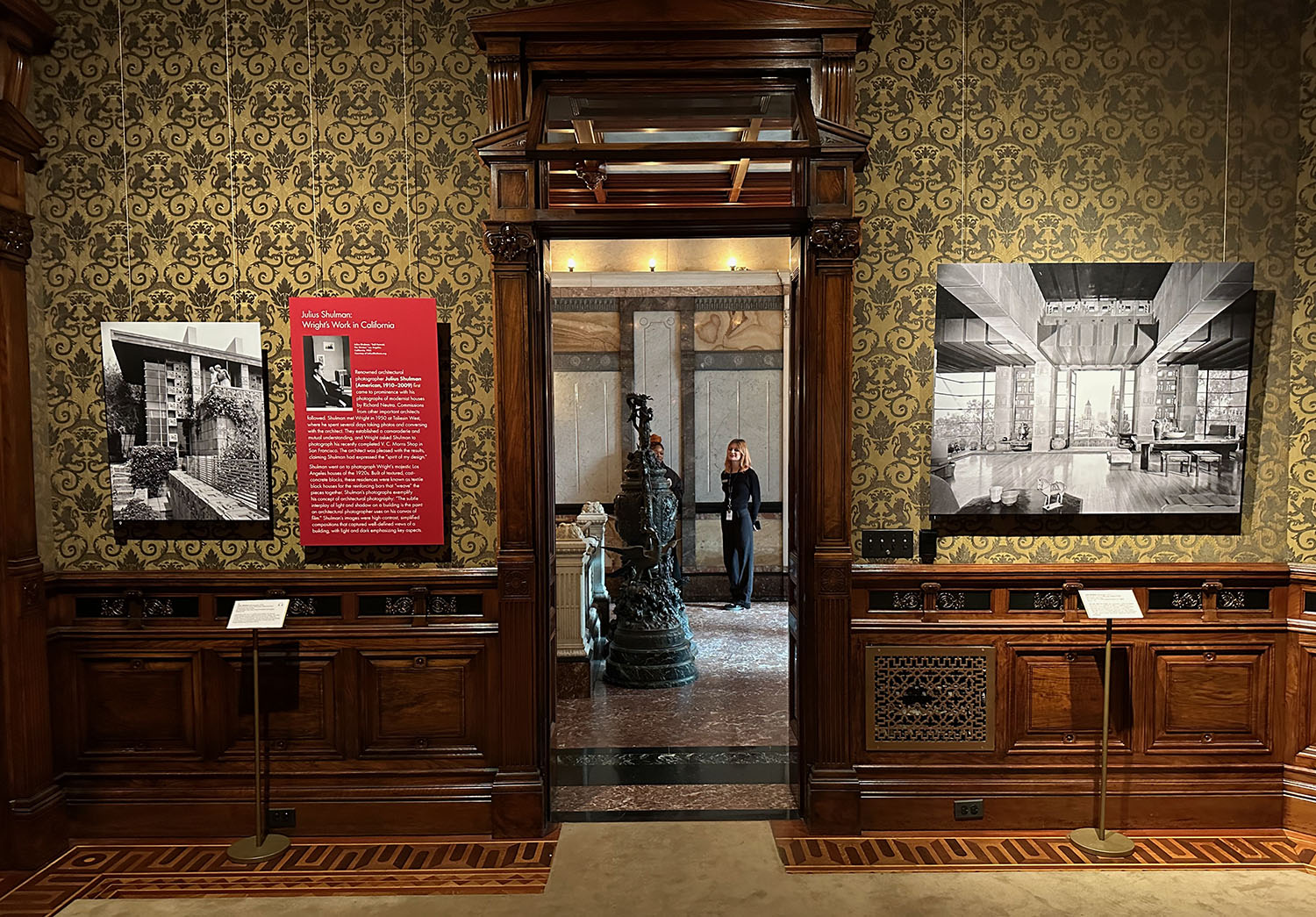
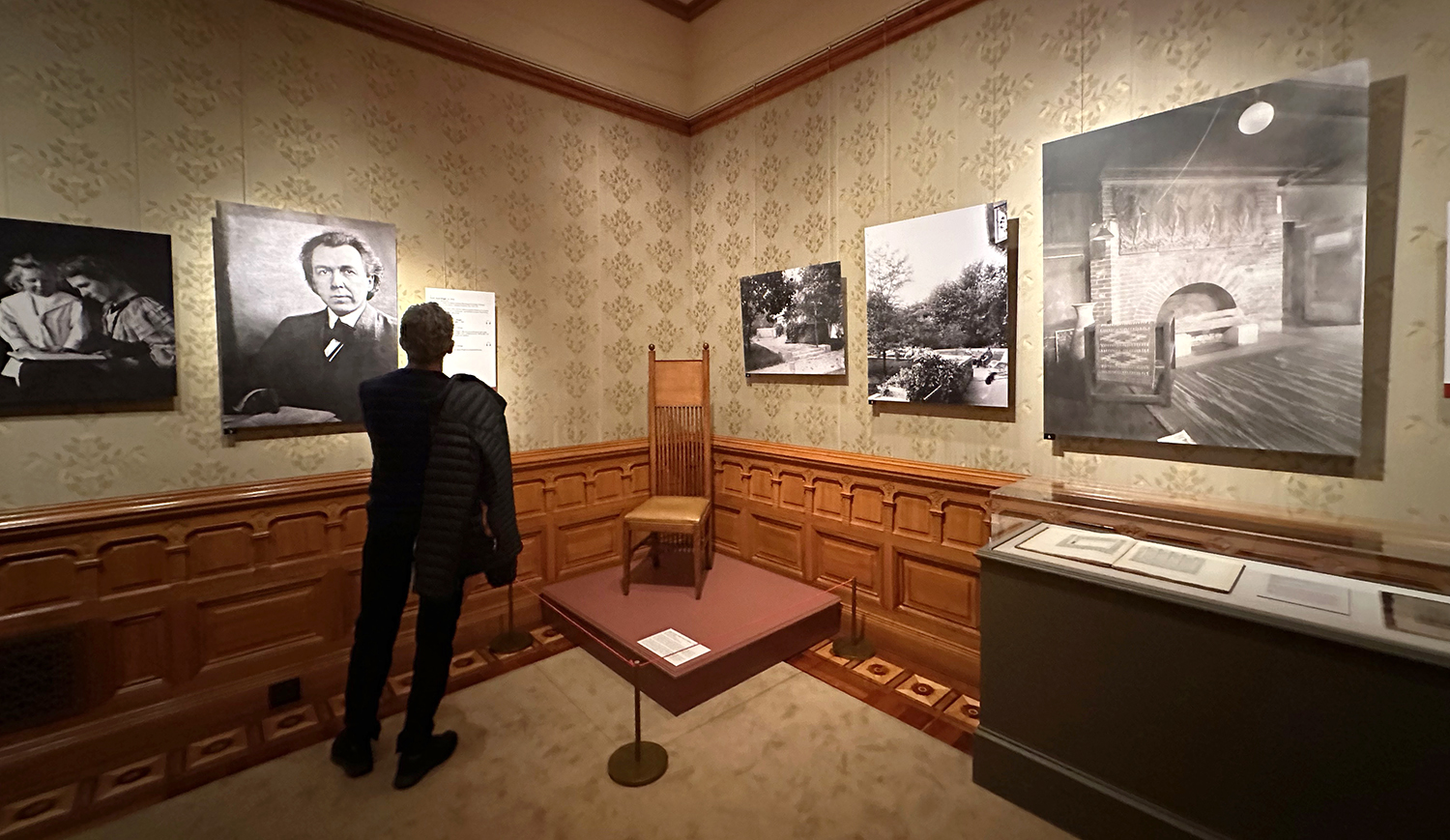
LR IMG_9023.jpg“Photographing Frank Lloyd Wright” is not just another exhibit of Wright’s designs and the stories behind them. Although the Frank Lloyd Wright Home and Studio Foundation published “Frank Lloyd Wright’s Fifty Views of Japan” in 1996, it may not be well known that Wright was an avid photographer early in his career. He had a darkroom at his Home and Studio.

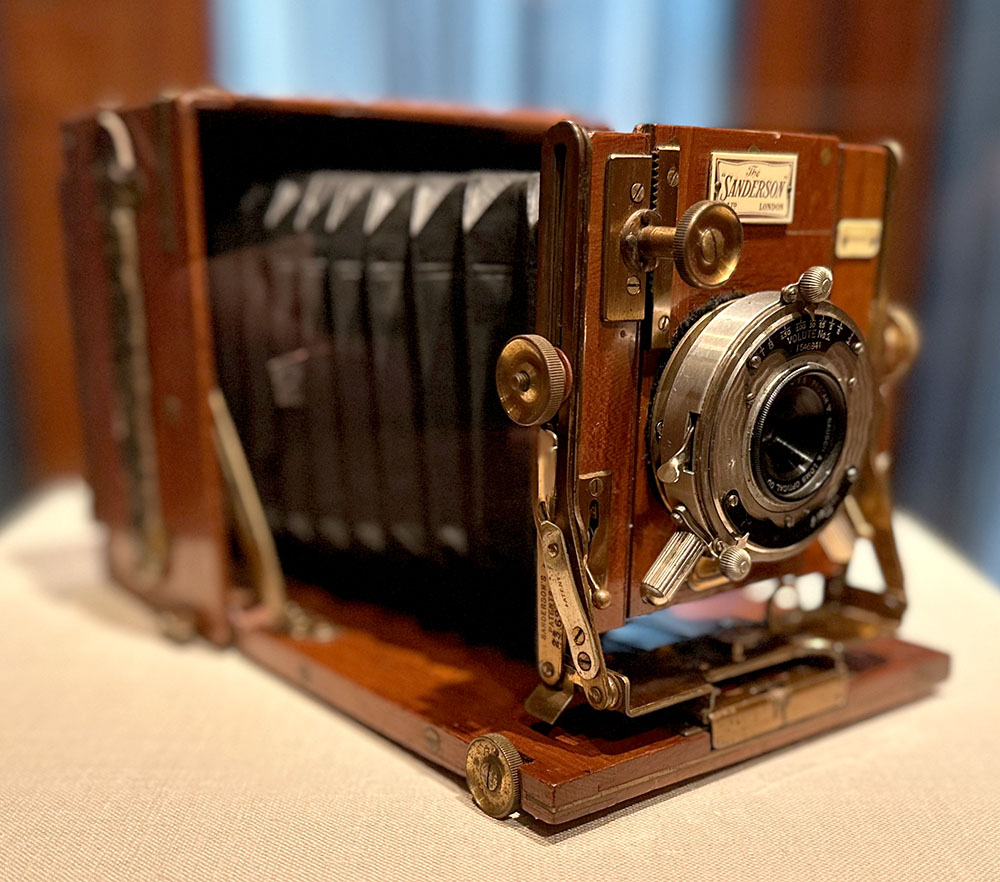
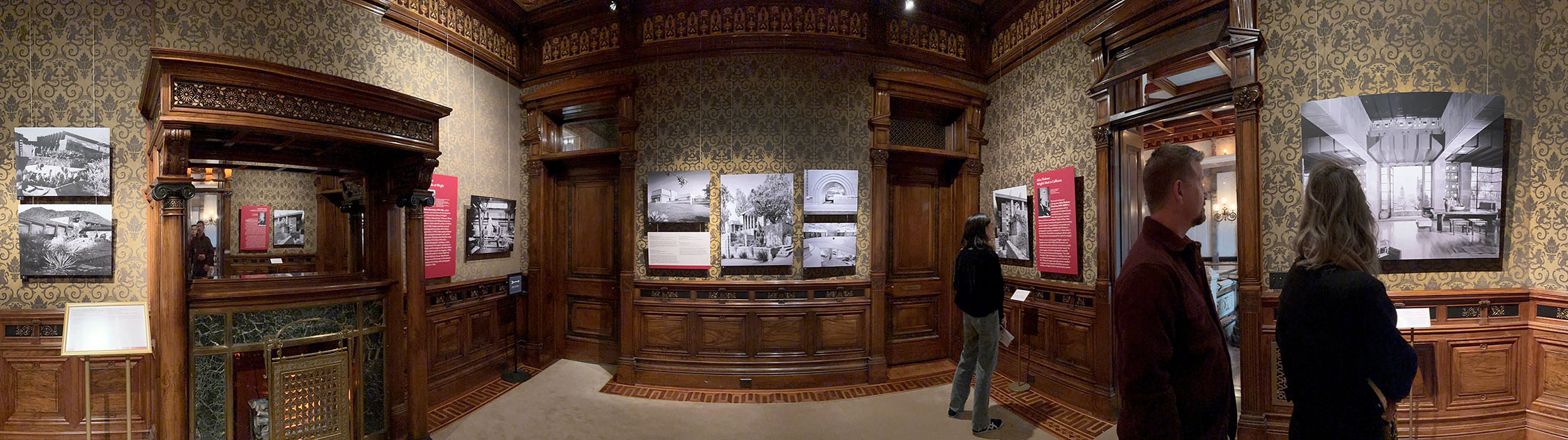
The exhibit features some of his photography, including self portraits, photographs of Hillside Home School, photos of the Home and Studio, and some of the photographs he took in Japan in 1905. There is even one he took of his first wife, Catherine Tobin Wright, reading to one of their sons. The balance of the exhibit on the museum’s second and third floors shows how a variety of noted photographers of his work interpreted his buildings. The photographers featured are Henry Fuermann & Sons,  Hedrich-Blessing, Pedro Guerrero, Torkel Korling, Julius Shulman, Ezra Stoller, and Edmund Teske. Fuermann’s 4×5 camera is shown above.
ILR MG_9024.jpg

Put out of your mind the ease of taking pictures today, and take another look at Fuermann’s camera. It used single sheets of film which had to be taken out of the camera after each photograph was taken (unlike my cameras which can take 10 frames a second). Each photograph would be carefully composed. There was no “chimping” (the term photojournalists use to describe their colleagues who quickly look at the screen on the back of the camera to see if they got the image they wanted), each sheet of film had to be developed in the darkroom. The image was reversed on a negative. Photographers get adept at “reading” negatives, but only after making a print did the photographer know for certain if the exposure was correct, and the composition perfect.
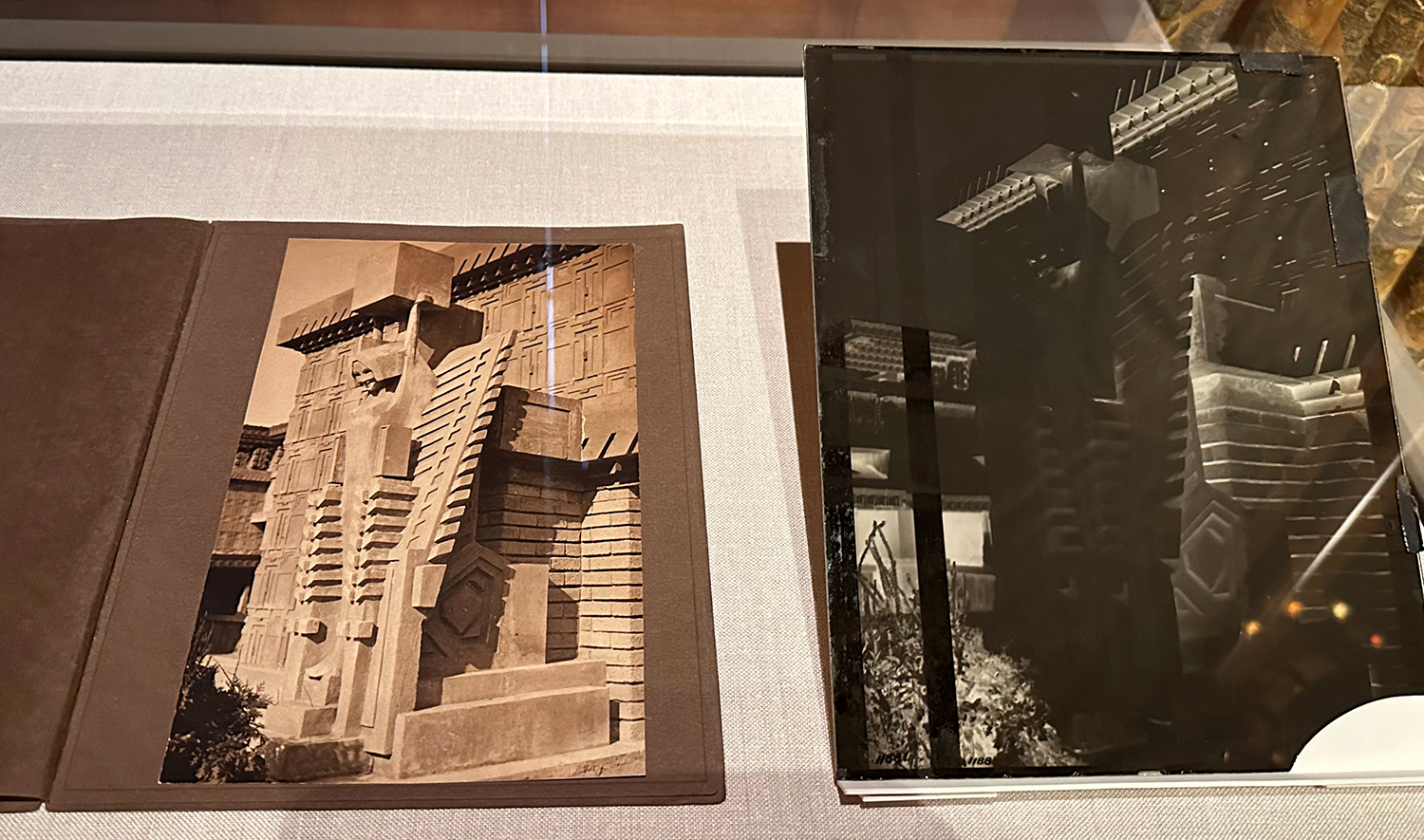
LR IMG_9025.jpgThe print and negative of a Fuermann photo of Midway Gardens

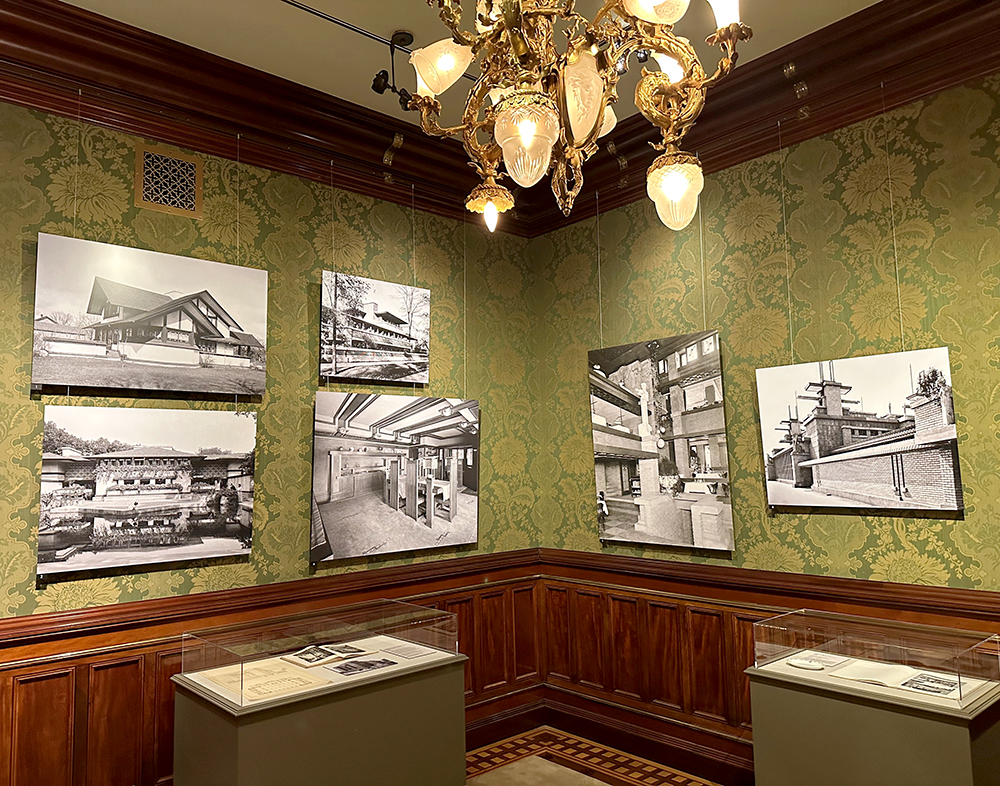
The timeline of the photographs covers Wright’s career, from photos of students at the first Hillside Home School for his aunts, through to the Guggenheim Museum. A number of the exhibit pieces are from Eric O’Malley’s extraordinary collection, and are shown courtesy of the OA+D (Organic Architecture and Design) archives.
LR MG_9030.jpg

LR IMG_9034.jpg

LR IMG_9022.jpg

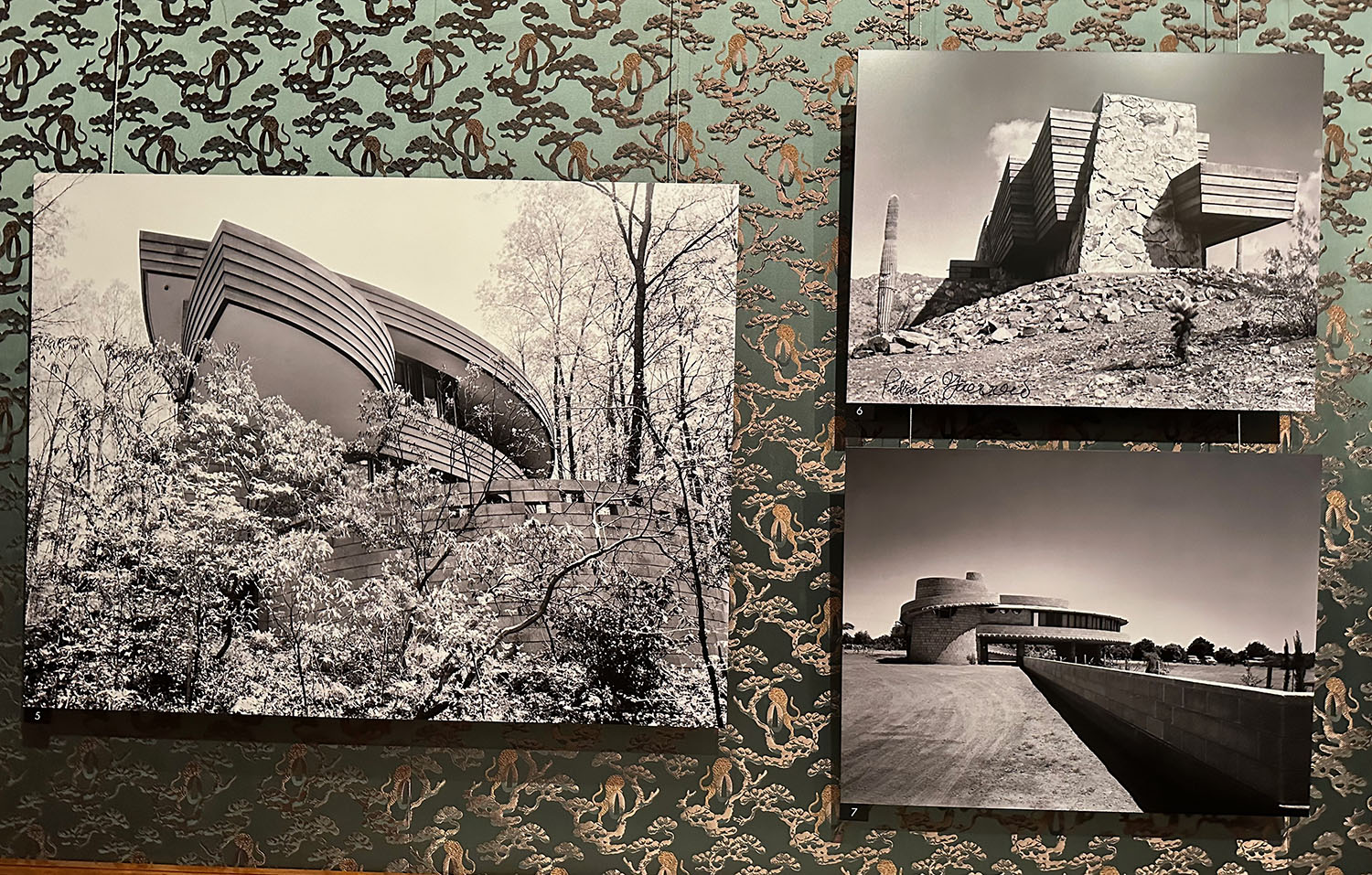
When people ask me what attracts me to Wright’s work I reply that it is the breadth of it, so one of my favorite parts of the exhibit was in the section devoted to Pedro Guerrero’s work. On the left in the photo below we see the Robert Llewellyn House (1953) in Bethesda, Maryland, and upper right is the Rose Pauson House (1940) near Phoenix. Look at these two photographs taken from the same vantage point (below the house, looking up) and look at how the same photographer recorded the same architect’s different interpretations of a client’s needs a decade apart (the third photo is Guerrero’s photo of the David and Gladys Wright House near Phoenix, 1950). Wright’s vocabulary has changed dramatically, to respond to the program on his drawing board.
LR IMG_9036.jpg

The only negative aspect of the exhibit is that I was surprised to find four significant errors in the text panels accompanying the photographs, this two weeks after it opened. The staff responded graciously when I mentioned the errors, and I expect that they will be corrected.

The exhibit runs through January 5, 2025. While any visit to the Driehaus is worthwhile, this one makes it even more so. Two years ago the museum had a wonderful exhibit dedicated to Richard Nickel and Louis Sullivan. The late Richard H. Driehaus, who restored the Nickerson Mansion, is well known to readers of the National Trust for Historic Preservation magazine, Preservation. Admission is free to visitors who have North American Museum Reciprocity passes.
LR IMG_9020.jpg

Links:

Driehaus Museum:

https://driehausmuseum.org/exhibition/photographing-frank-lloyd-wright

OA+D:

https://oadarchives.org

Frank Lloyd Wright Trust:

https://flwright.org

Frank Lloyd Wright Foundation:

https://franklloydwright.org

National Trust for Historic Preservation:

https://savingplaces.org

Please scroll down for earlier posts on this site
Wright Galore in Elmhurst

(c) Mark Hertzberg (2020)

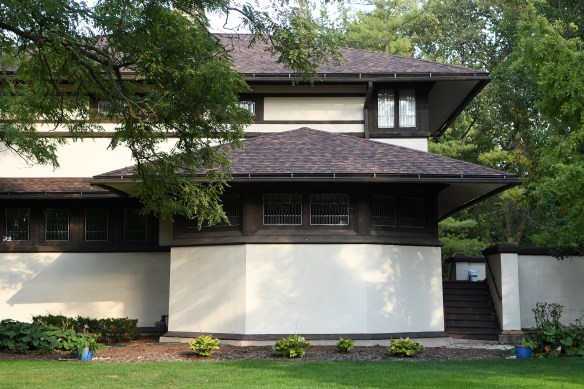
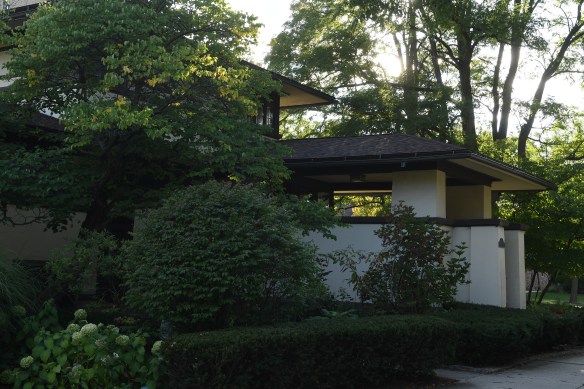
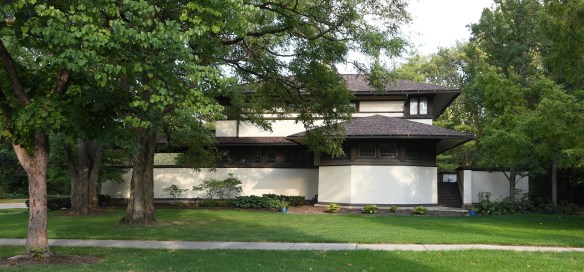
Elmhurst, Illinois is not the first Chicago suburb that comes to mind when devotees of Frank Lloyd Wright play “name that house and location.” It is no Glencoe, Highland Park, Oak Park, or River Forest. After all, it has only (!) one house designed by Wright, the F.B. Henderson House, a fine Prairie-style house designed in 1901. But playing the numbers game is no reason to pass up a visit to the city, west and slightly north of the Big Two, Oak Park and River Forest, especially on October 24.

Let’s start with some photos of the house, which was recently sold to new stewards:

Henderson House 10.4.20 001.jpg

Henderson House 10.4.20 002.jpg

Henderson House 10.4.20 011.jpg

Henderson House 10.4.20 016.jpg

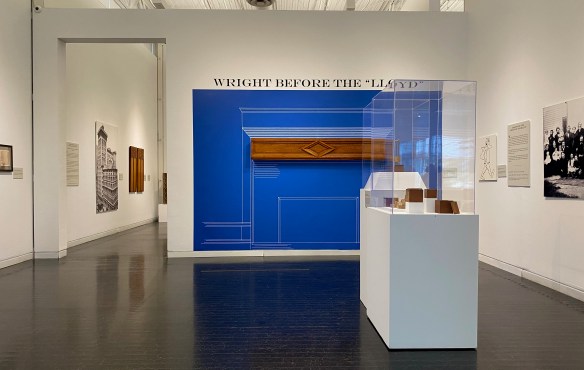
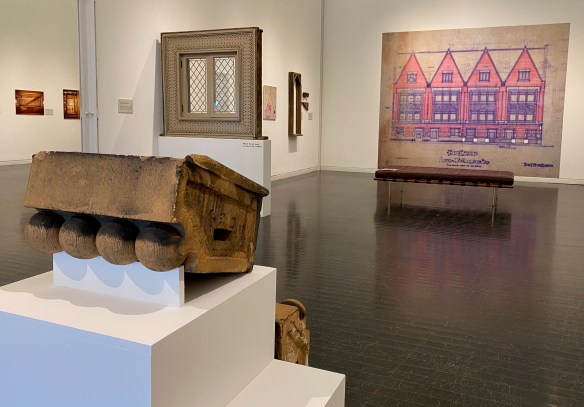
October 24 is designated as “Frank Lloyd Wright Day” in Elmhurst. There will be two concurrent museum exhibitions to see. One, “Wright Before The ‘Lloyd,” opened at the Elmhurst Art Museum in September, and runs until February 14. It is curated by the incomparable source of Chicago architectural knowledge and artifacts, Tim Samuelson, the City of Chicago’s Cultural Historian. If the Smithsonian Institute is truly “America’s Attic,” as many people say, then Samuelson’s office and storage spaces are “Chicago’s attic” The second exhibition, “Frank Lloyd Wright: Architecture of the Interior,” opens at the Elmhurst History Museum on October 23, and runs through December 20. This is a national touring exhibition. The history museum showed its Wright-related chops with a fine exhibition, “In Her Own Right: Marion Mahony Griffin,” in 2016-2017.

“Before The ‘Lloyd'” focuses on Wright’s early career, before he formally replaced his given middle name, Lincoln, with “Lloyd,” in honor of his maternal family heritage. The artifacts come from Samuelson’s collection. Some – those from the Adler and Sullivan Schiller Building or Garrick Theater, and Wright’s Harlan House – were salvaged by the late Richard Nickel. [Samuelson asked me to clarify about the name: “There is some dispute about Wright’s middle name initially being “Lincoln”. It all depends on who you talk to.

“By the time of the exhibit’s theme, Wright definitely considered Lloyd his middle name.  There are some very early ink renderings where he signs them “Frank Ll Wright”.

“But when he went into architectural practice, he signed his drawings, press notices, etc. with the prosaic “Frank L. Wright”.  Just the initial. He never started signing drawings, press notices, etc with a full blown “Frank Lloyd Wright” until 1897-98. The exhibit is themed around a more modest period where he just used the initial “L” instead of writing out a more distinctive “Lloyd”.]

IMG_6016.jpeg

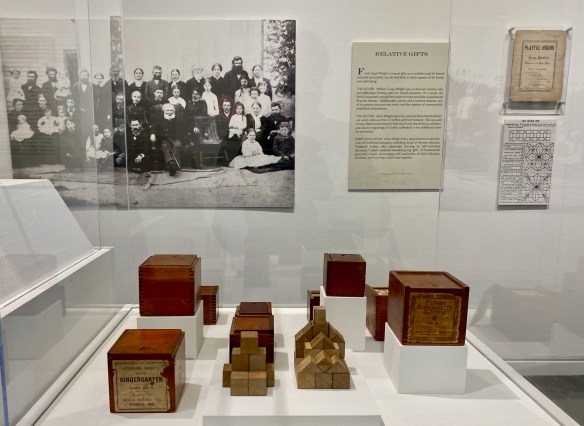
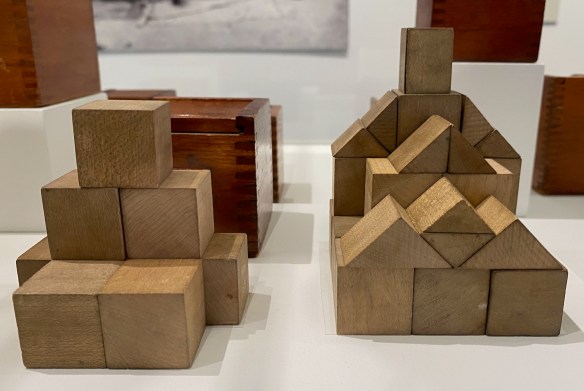
You doubtless have read about the Froebel gifts umpteen times, but you may have never seen them except in illustrations in books. Now you can:

IMG_6010.jpeg

How many of us thought of the game manufacturer Milton Bradley in any context other than “Chutes and Ladders” when we were children? Think again, they introduced the “gifts” to America in 1869.

IMG_6012.jpeg

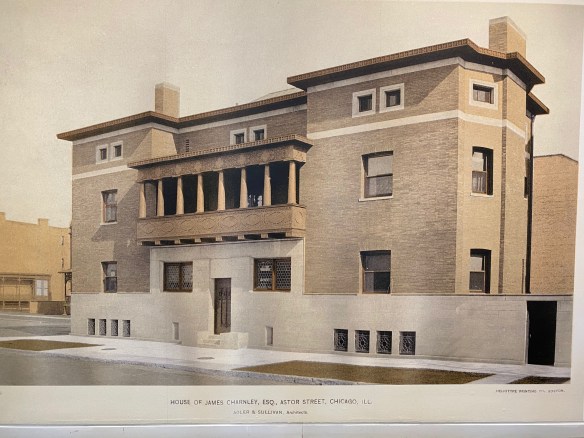
There are artifacts and historic photos of the Charnley House (1891-1892) and the Rolson Rowhouses (1894), among others. I have seen the Charnley House and I have seen many photos of it, but this is the first time that its entrance made me think of Wright’s Winslow House entry (please use the comments link to tell me what you think!).

IMG_6018.jpeg

IMG_6019.jpeg

The floor plan, below, shows the layout of Adler and Sullivan’s offices when Wright worked there, showing how close Wright’s drafting space was to his “Leibermeister’s” office.

IMG_6017.jpeg

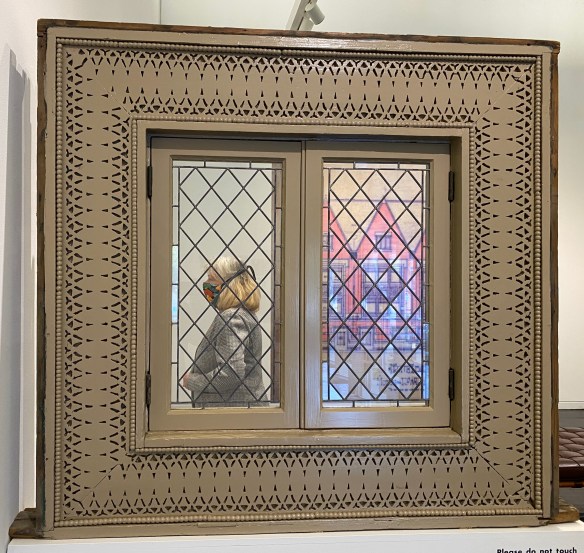
Samuelson is the curator of record, but he refuses to take sole credit for the exhibition’s artifacts. Quoting from an email he wrote me, “But Eric O’Malley has a big presence in the show. His computer and graphic design skills were what created the electronic re-draws of patterns gleaned from burned and shattered original fragments, and putting them in a format to facilitate laser-cut complete patterns as they appeared on the buildings.  Wisconsin wood finish master Stan John Zachara recreated original wood finishes perfectly.

IMG_6023.jpeg

“Much of Wright’s early ornamentation for exteriors was fret sawn wood, which weathers and deteriorated severely if not maintained.  And for those that were maintained with diligent painting have the patterns clogged to the point that it’s often no longer to discern the patterns.

“I chose to remove layered paint that compromised the design – and each piece was returned to its original color and finish.

“I never wanted to restore the pieces too much.  Repairs were made where damage compromised  the design, but I still maintained the effects of damage over time.”

This window is from the Rolson Rowhouses:

IMG_6021.jpeg

The two museums are architectural opposites. The History Museum is in the historic Glos Mansion (1893), designed the year Wright left Adler and Sullivan. The Art Museum is in a contemporary building  (1997) designed by DeStefano + Partners of Chicago. It complements an architectural bonus for visitors to the Wright exhibition, the McCormick House, designed in 1952 by Mies van der Rohe, and later moved to the museum campus.

For more information:

https://www.elmhurstartmuseum.org

https://elmhursthistory.org/