Photos and text (c) Mark Hertzberg
(Portions of this article are reprised from an article posted last summer, but no longer on-line.)
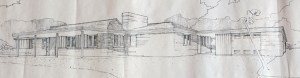
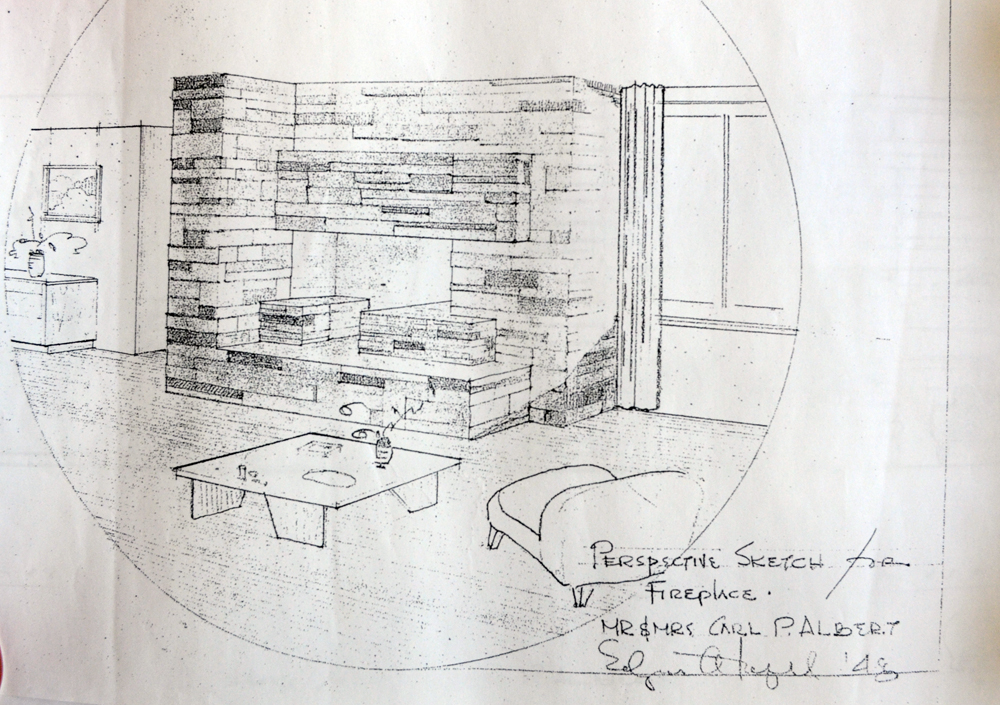
This is one of Edgar Tafel’s drawings of the Carl Albert House
An architectural “Catch-22” sits at 4945 N. Main Street, awaiting a demolition order for February 28.
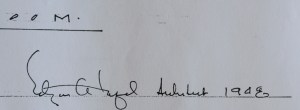
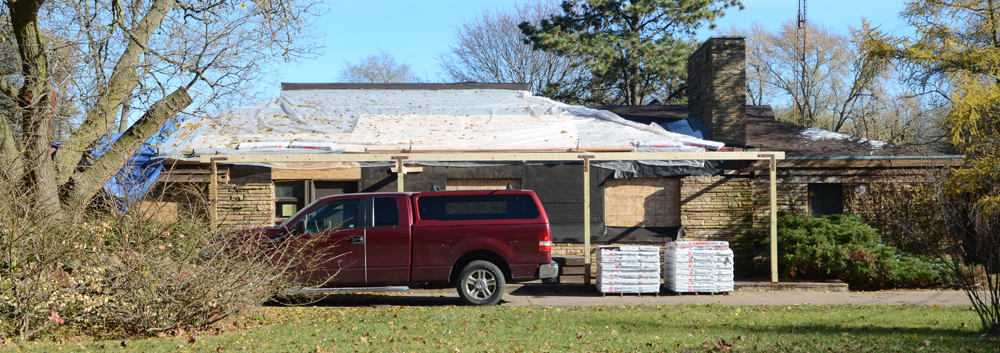
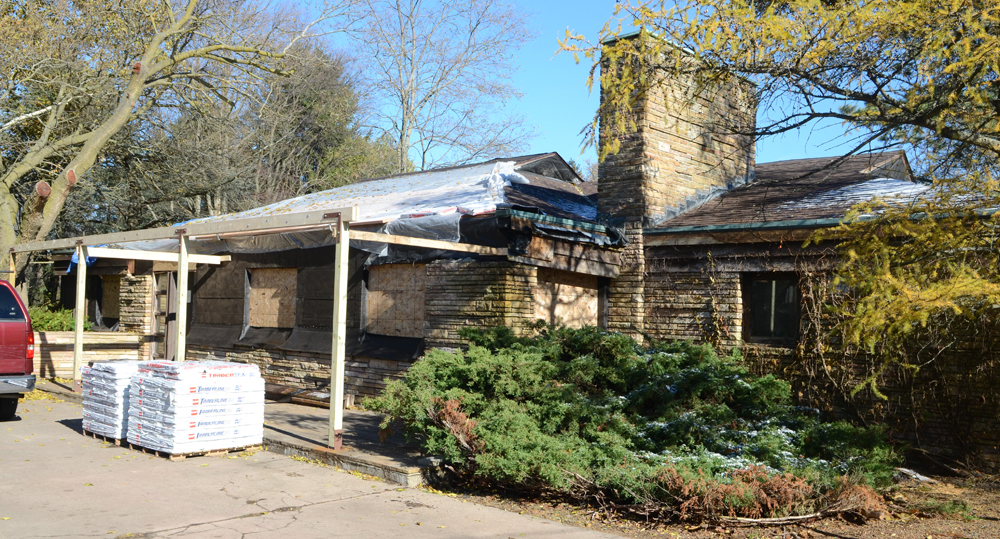
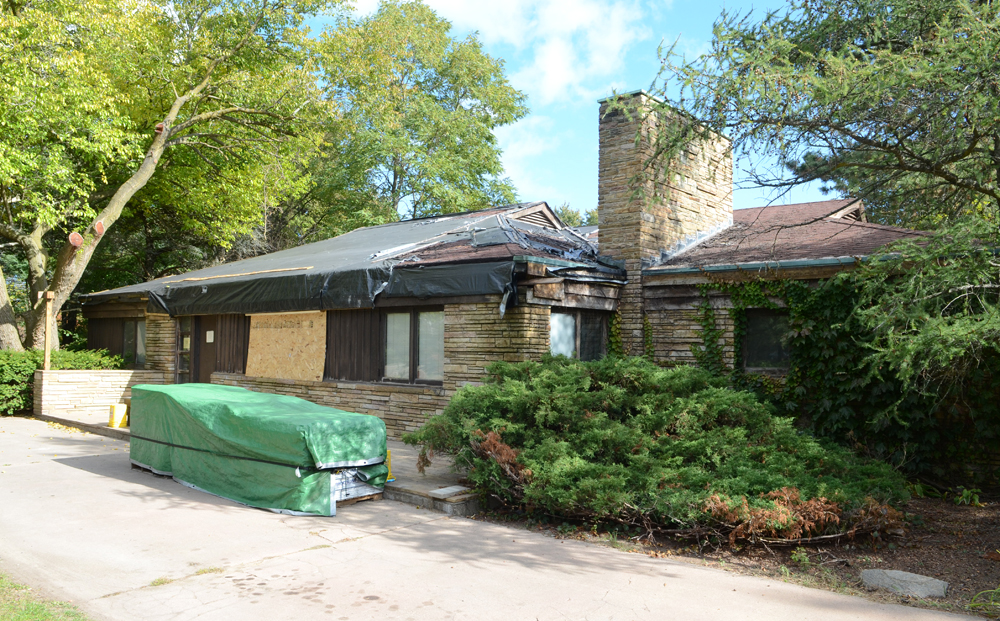
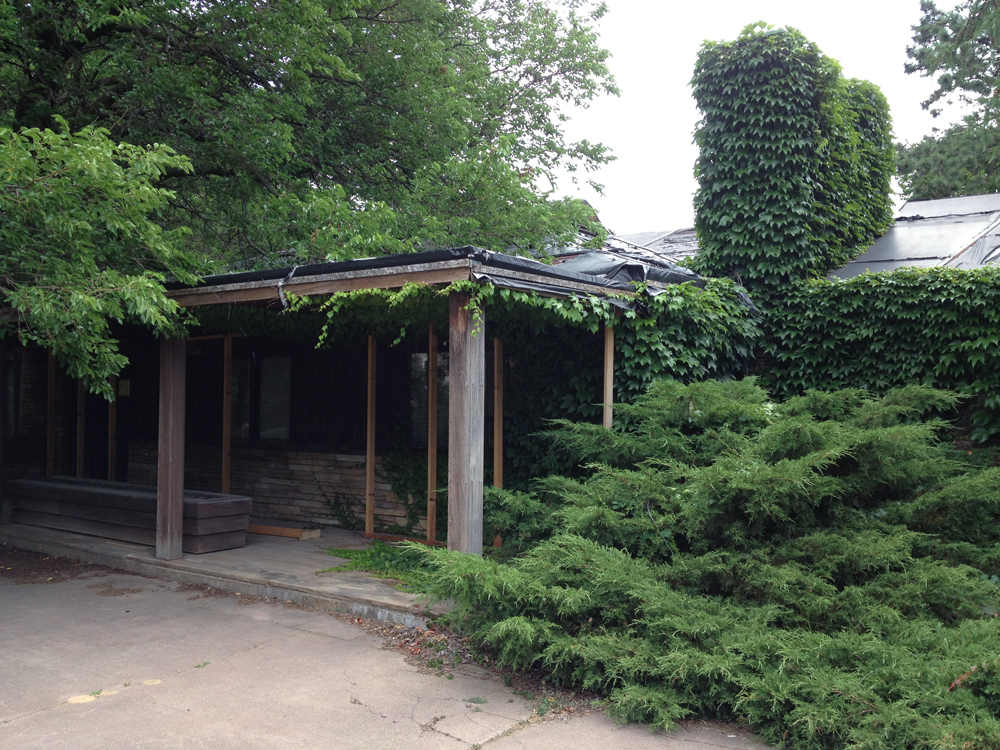
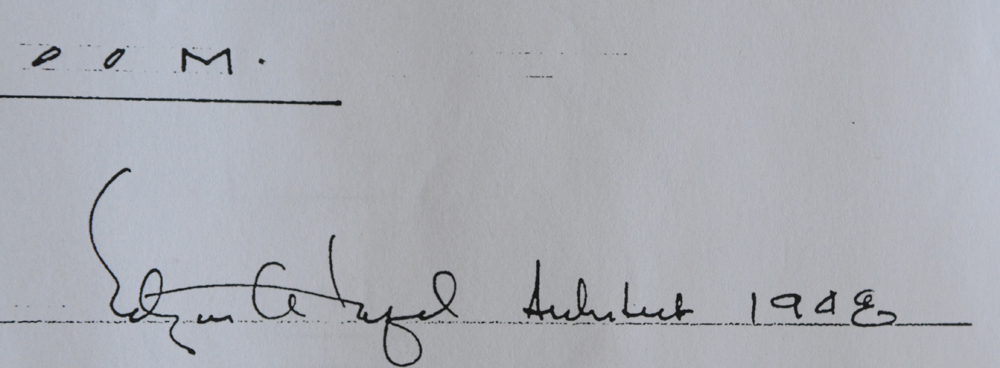
The Carl and Marie Albert House at 4945 N. Main Street, a piece of Racine’s rich architectural history, sits forgotten, in disrepair, and possibly soon to be demolished by the Village of Wind Point. The cypress and limestone house was built by Robert Albert and Edgar Tafel between 1948-1950. Tafel signed most of the architectural drawings. The house is unknown as a Tafel work, overlooked in published inventories of Tafel’s work in Racine.

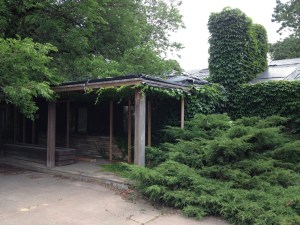


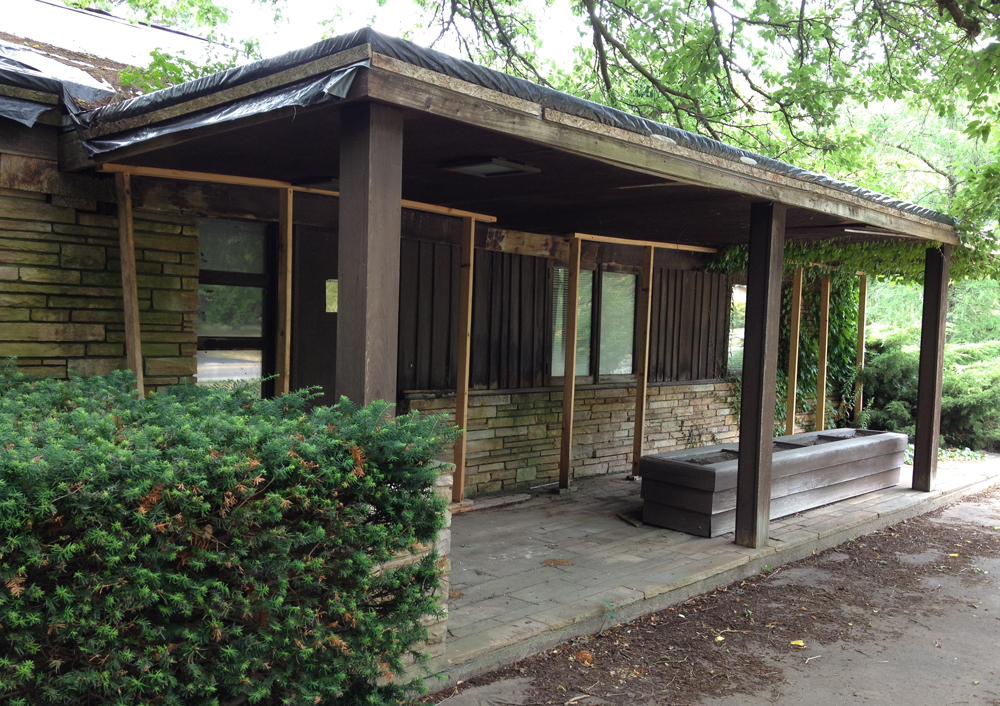
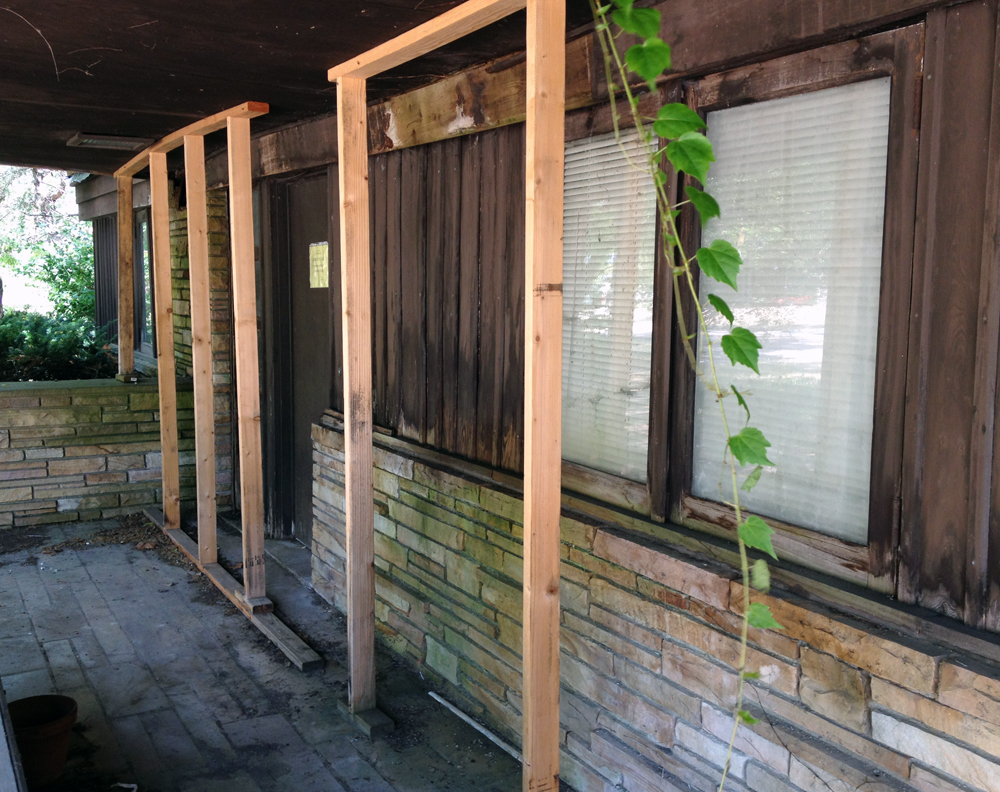
These photos were taken of the front of the house in July.
Tafel was one of Frank Lloyd Wright’s first Taliesin Fellowship apprentices (1932-1941). He designed a half dozen homes in Racine in the late 1940s and early 1950s. He had previously supervised construction of the SC Johnson Administration Building, Wingspread, the Bernard Schwartz House (in Two Rivers) and part of Fallingwater for Wright. He then had a distinguished career as an architect after World War II in his native New York City. He was almost 99 when he died January 18, 2011.
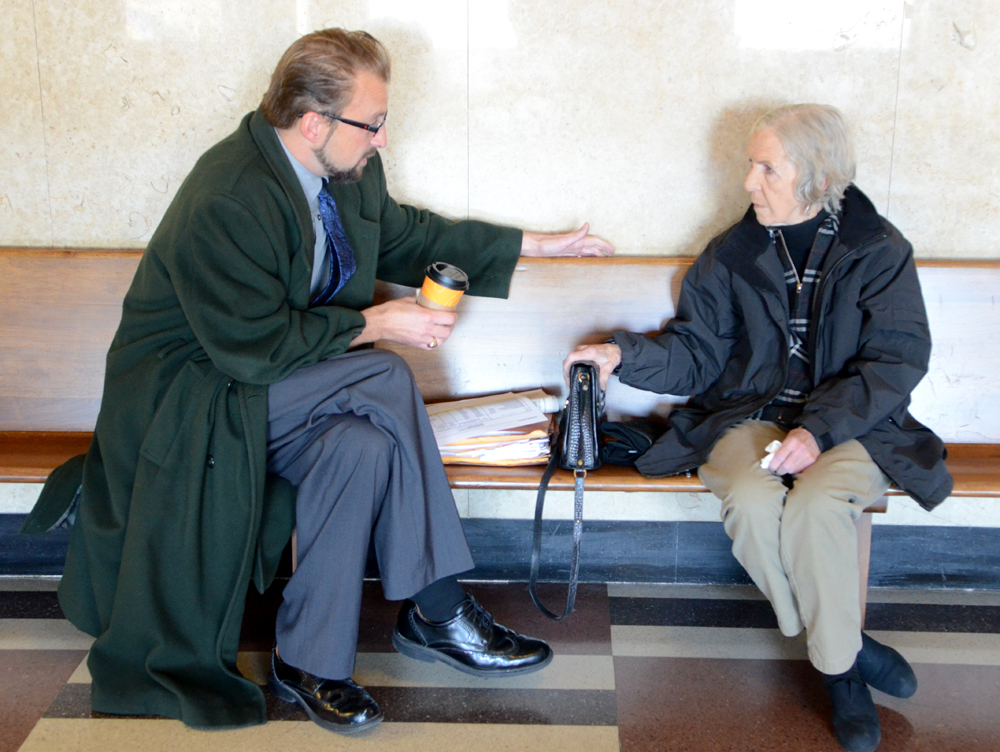
While the house is significant in terms of its architectural heritage, the village regards it as “an eyesore,” according to attorney Todd Terry, who represented Joan Schulz, the homeowner last summer. She dates the home’s problems to about five years ago, when she moved in with her daughter to care for her grandchildren, because her daughter worked a night shift. The house has been vacant since then. Terry said the Schulz family’s aim is simple, “We would like to get it (the house) back where it was.”
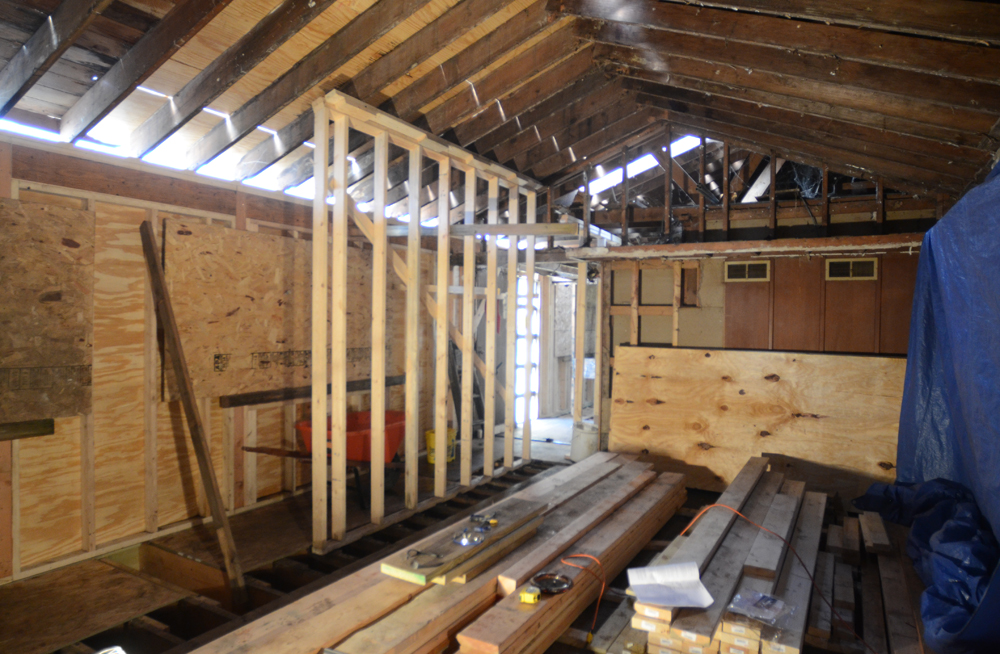
Schulz bought the house in 1972 with her late husband, Dr. Gilbert Schulz. He died just six months later. She hopes to stave off demolition, “First of all I hate to see it destroyed or razed, because of the design of the home, and the home itself.” Problems stemming from the damaged roof include widespread mold on the burlap which originally covered the dry wall, disintegrating dry wall, holes in some walls, and a rotted header. Much of the roof is covered by a black tarpaulin.
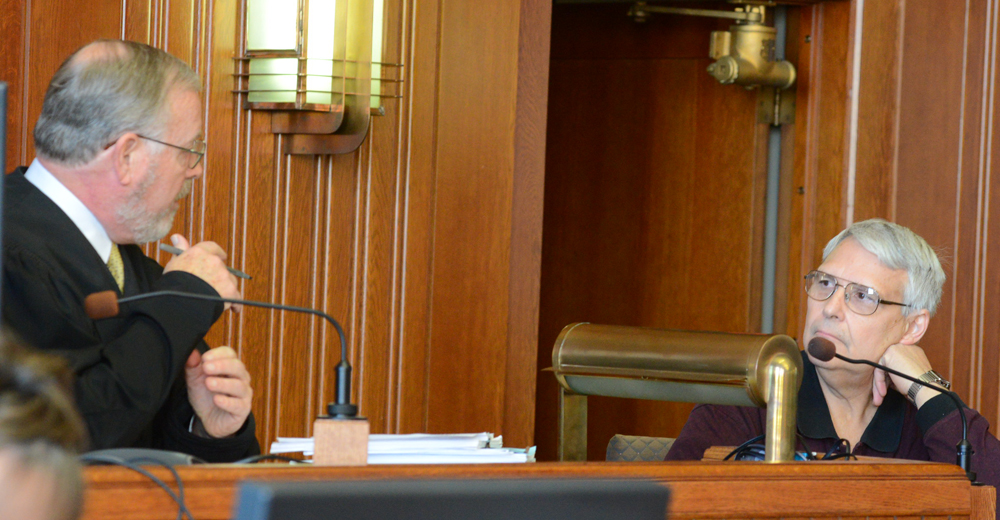
In July Terry said, “We are in municipal court on a nuisance matter, ordinance type of things, on habitability. My speculation is that in the very near future they probably will file with a circuit court judge asking them to allow them to tear it down or raze the property.” Until then, Schulz would be assessed a $50-a-day penalty, dating back to January, 2012.
Schulz paid the $11,200 ordinance fines in November, rather than demolish the house. She disputes the village’s contention that she had agreed to raze the home in November.
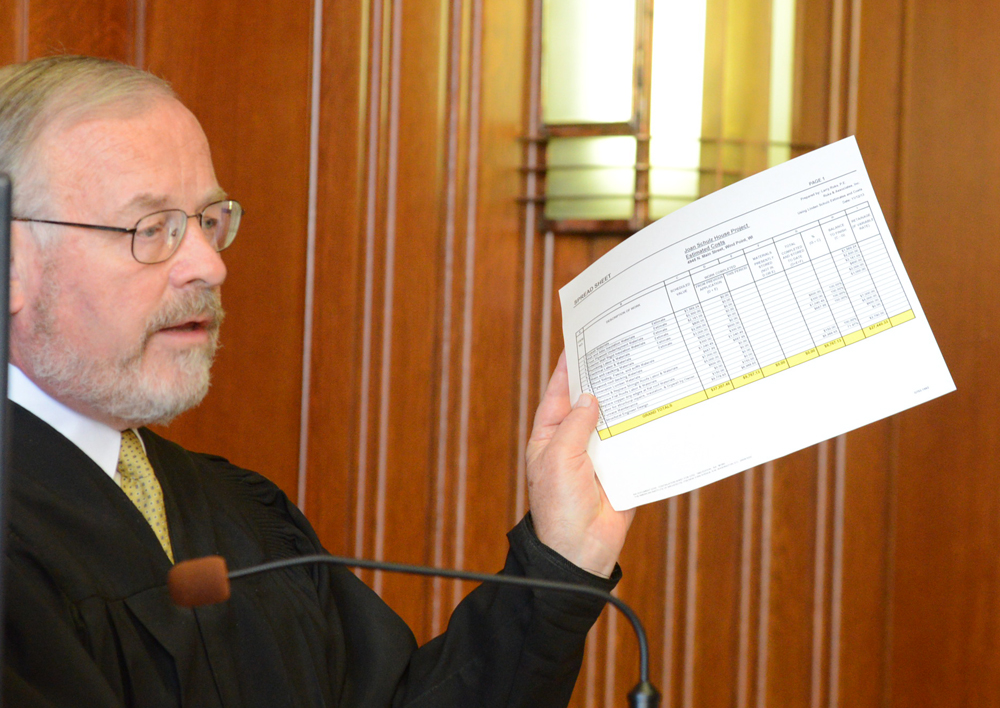
While she still hopes to save the house, the village has run out of patience according to its attorney, Ed Bruner. “There’s been a determination made by the building inspector that the cost to repair the house far exceeds 50% of its value, so that’s the problem.” He could not answer why that should matter if the homeowner was willing to spend the money for repairs.
Nor did he have an answer about Schulz’ “Catch-22”conundrum, that she was told that even though the house needs repairs, no building permits would be issued for those repairs. The village’s appraiser values the house at $25,000. An appraiser hired by Schulz valued the land and house at $115,000. The village would not let her sell the house to an immediate family member, which negated a possible sale to one of her sons, she says. She says she also had an offer to purchase for $61,000, contingent on the buyer getting the building permits that the village will not issue.
“That may have been the case (that the village would not issue the needed building permits)” says Bruner. “Now they (the village board) have made the determination that will not be an option anymore. They want it down. My guess is that it has lasted long enough. I know that there were neighbors complaining and that is what initiated the contact with her. Now they are to the point where it needs to come down.”

Though in disrepair, the home has notable architectural features, says Joshua Drew who lives in a Tafel-designed home at 4001 Haven Ave., “You can see how Edgar merged many of the Usonian details (indirect lighting, built in cabinets, plywood materials, and several of the rooms have shelving identical to my house) with some Prairie-Style details in the ceilings of the main living space. The kitchen…still has the original appliances, metal cabinets, and layout.”

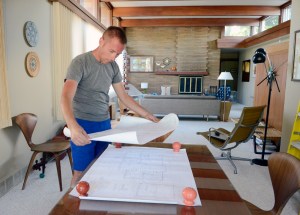
Drew looks at the plans for the Albert House in his own Tafel-designed home.
There is yet another twist to the pedigree of the house, says Drew. “If someone took me into the Carl Albert house and asked me to guess the architect I would have initially have said John Randal McDonald. Some of the stone work details, stone shelves, and the art glass inserts in the stone work are almost identical to the JRMcD-2 house at 1001 Russet St. However, the den has shelving EXACTLY like the ones in my [Tafel] house.”
McDonald, who was sometimes referred to as “the poor man’s Frank Lloyd Wright, designed 20 homes in Racine. He died in 2003. There is no documented record of collaboration between McDonald and Tafel, and Tafel expressed disdain for McDonald to me during a visit to Racine 10 years ago.
Bruner is clear about the village’s options, “If she does not comply with the raze order then the statute gives me two options: take the house down and put the cost on the tax roll, or take it to circuit court and get a court order which orders her to do that.”
Schulz acknowledges that the house is in disrepair, “I know we haven’t really done any work on it other than originally cleaning up the yard but we haven’t done anything to the building, because right from the beginning, village attorney Ed Bruner stated that no permits would be issued.” She quietly and sadly says she has one more hope, “I was thinking or hoping to take it into court to get a stay of that raze order.”
It seems that even if she gets a stay, the stand-off between Schulz and the village will continue: the house needs repairs, but no building permits will be issued. Demolition of the house seems inevitable.















 Wright in Racine