Remembering Barbara Elsner

Photos © Mark Hertzberg

Barbara Elsner, a tour de force in the preservation of Frank Lloyd Wright’s architecture in Wisconsin – particularly in Milwaukee – died August 25. She was 99.

LR BC 2015 Elsner .jpgBarbara Elsner – 2015: At the Frank Lloyd Wright Building Conservancy annual conference in Milwaukee, her hometown 

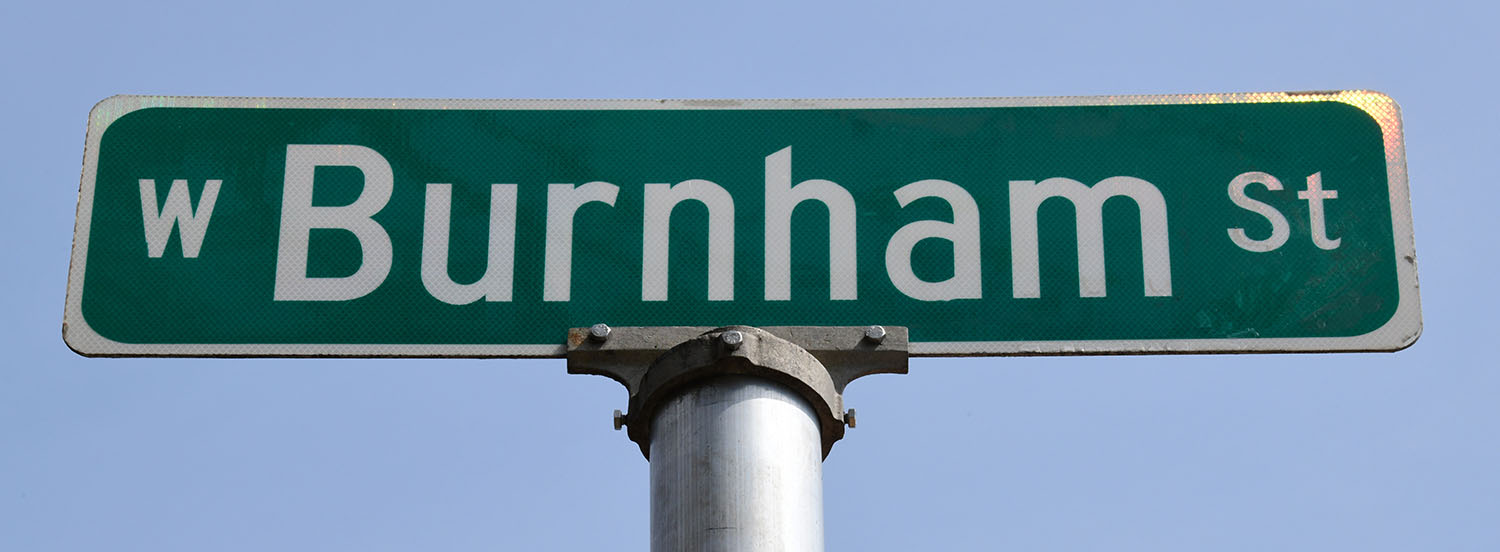
I got to know Elsner when I served on the board of the  Frank Lloyd Wright’s Wisconsin Tourism Heritage Program (“Wright in Wisconsin”) from 2004 – 2020. She was a founding member of the organization. Our board was in discussions about whether or not to purchase Wright’s American System-Built Model B1 at 2714 W. Burnham Street in Milwaukee as early as a strategic planning session at Wingspread in 2002. Some of the board discussions were heated. Were we only about promoting Wright tourism (a founding principle) or should we become property owners as a means of furthering our mission of promoting Wright’s architecture in our state? Elsner was a strong advocate of expanding the mission to include “bricks and mortar.”

LR Burnham WiW Board 4.16.05.jpgMike Lilek, left, and Barbara Elsner, third from right, at a Wright in Wisconsin board meeting at the newly-purchased Model B1, April 2005. Lilek would oversee our stewardship of the Burnham Block properties.

We bought the house and restored it, with support from the Barbara Meyer Elsner Foundation and a Save Americas Treasures grant. There were 28 major gifts in all. We gradually added more of the AS-B properties to our portfolio, not always without dissension. In August 2017, we reorganized into two organizations: Frank Lloyd Wright’s Burnham Block (focused on the Burnham Block) and Wright In Wisconsin (focused on the longstanding mission to promote Wright tourism). Mike Lilek, who had shepherded our work on the Burnham properties became president of the new organization. He was Elsner’s son-in-law. The Burnham Block now owns five of the six homes (three of the four duplexes and both single family homes; the fourth duplex remains in private hands and operates as an overnight rental property).

I leave it to Lilek to tell you about Elsner’s extraordinary legacy. Below is the email he sent out, announcing her passing:

Dear Fellow Board Members and Friends,

It is with sadness that I share the news of the passing of Barbara Meyer Elsner, an esteemed member of our Advisory Board and a long-time member of our Board of Directors. She passed away peacefully on Monday, August 25th, 2025, surrounded by family. She was 99 years old.

Barbara leaves behind a towering legacy of dedication, leadership, and service to Frank Lloyd Wright’s Burnham Block and its predecessor, Frank Lloyd Wright Wisconsin.

She was a founding member of Frank Lloyd Wright Wisconsin and served as president.

She was a founding member and past Member of the Board of Directors of the Frank Lloyd Wright Building Conservancy, based in Chicago, IL.

She served on the Wisconsin Governor’s Commission on the preservation of Frank Lloyd Wright’s Taliesin. She has generously donated her time and financial support to various Wright projects, including the restoration of the Romeo and Juliet Windmill at Taliesin and the Seth Peterson Cottage on Mirror Lake.

She was a strong advocate for acquiring and restoring the Burnham Block homes. She partnered with Kathleen Brady to lead the primary fundraising effort for the restoration of Models B1 and D4. Her Barbara Meyer Elsner Foundation also provided the Burnham Block with significant financial support, including a major contribution toward the current restoration of the Model C3. Even after retiring from active board service, she continued to be a valued advisor and supporter of our mission. She was a long-serving member of our Interiors Committee.

She also played a major role in the preservation and restoration of the Pabst Mansion, serving as president of the mansion’s Board of Directors and as Executive Director for two years.

Barbara has led many grassroots efforts.  Notable among them was the effort to protect the North Point Historic District from planned institutional expansion. She is also a founding member of the Water Tower Landmark Trust and a board member of Preserve Our Parks. She played a role in organizing the Penfield Children’s Center. She was a founding member of the American Heritage Society of the Milwaukee Art Museum. She helped bring ballet to Milwaukee.

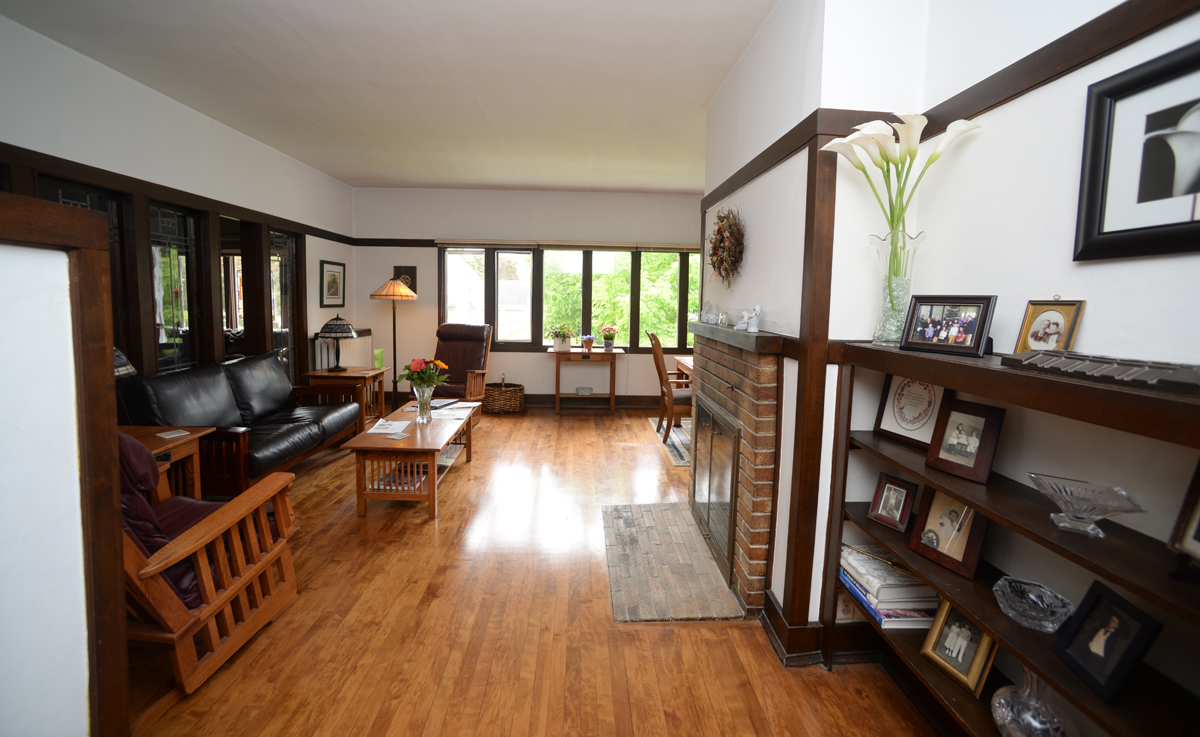
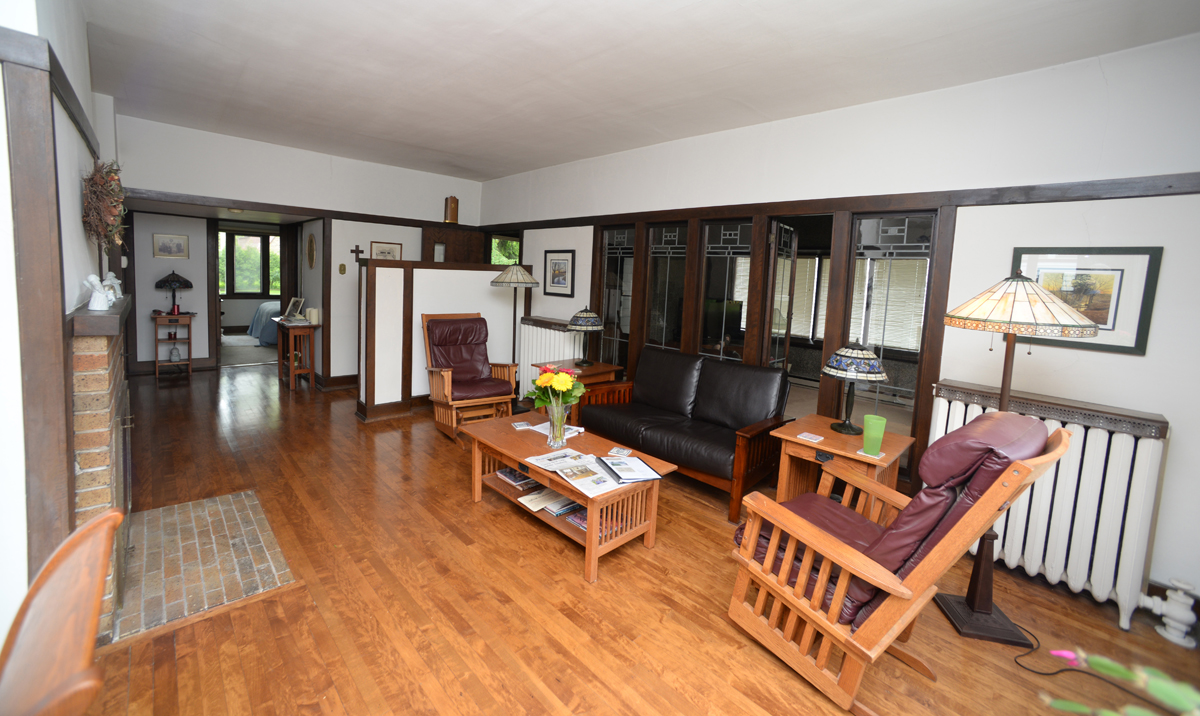
Robert and Barbara Elsner purchased the Bogk House in 1955.  Under Barbara’s care and guidance, the home was meticulously maintained. Barbara generously opened the Bogk House to visiting architectural scholars and students from around the world. Spanish architect Santiago Calatrava noted that the Bogk House was one of his two “must-see” buildings in Milwaukee.
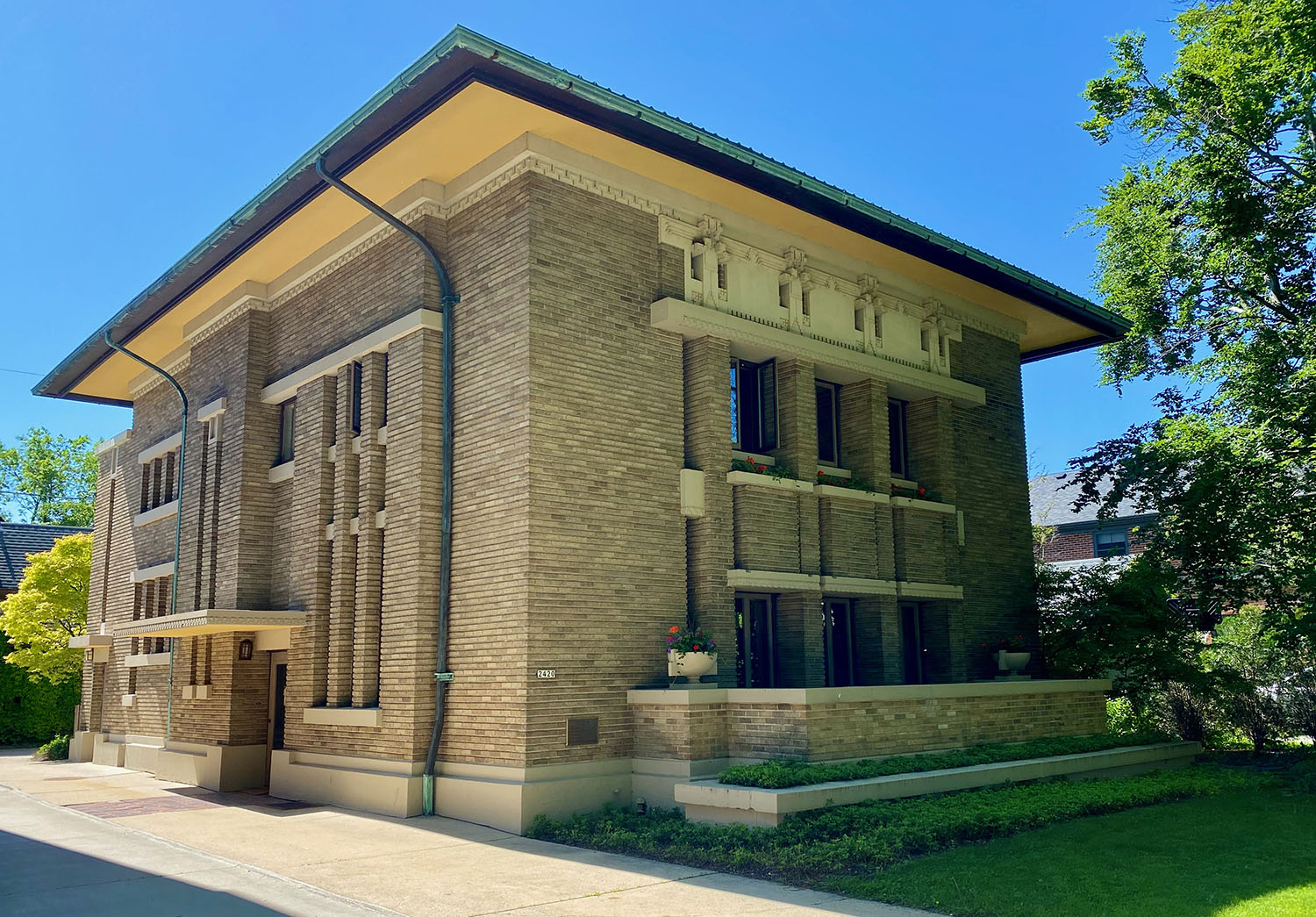
LR Bogk 2022.jpgThe Bogk House

Barbara has played a major role in raising the awareness of Frank Lloyd Wright on the Burnham Block, in Wisconsin, and far beyond.  Her generosity, extraordinary spirit, and tireless energy have been a benefit to all of us. Barbara will be deeply missed.

She made a huge impact on the world we live in. A celebration of life will be held in the coming weeks; details will follow.

Sincerely,
Michael P. Lilek, President Frank Lloyd Wright’s Burnham Block
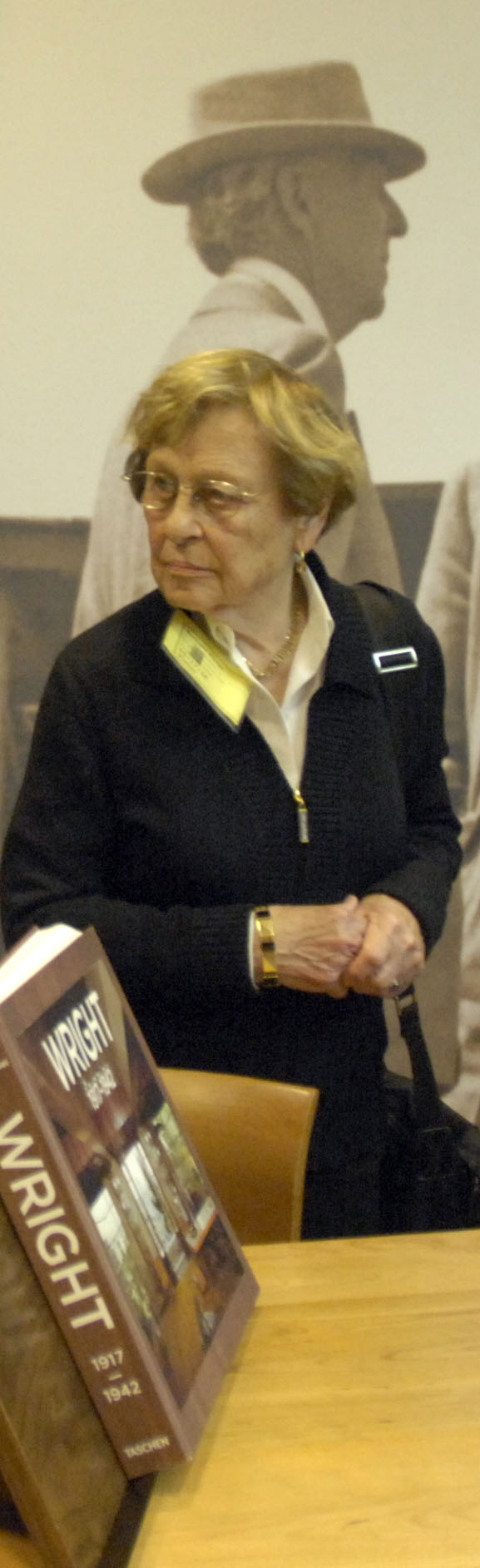
LR Elsner SCJ 2010.jpg

Elsner in the Wright research library at SC Johnson
LR Burnham 2022 001.jpg

Links:

YouTube interview with Barbara Elsner, and history of the Bogk House:

https://www.youtube.com/watch?v=IZjJAi-c23I

Frank Lloyd Wright’s Burnham Block:

https://savewright.org

Wright in Wisconsin:

https://wrightinwisconsin.org

Frank Lloyd Wright Building Conservancy:

https://savewright.org

Please scroll down for previous articles on this website
The Coda to Hardy House Rehabilitation

© Mark Hertzberg (2024)

Hardy Exteriors Post-Restoration 079.jpg

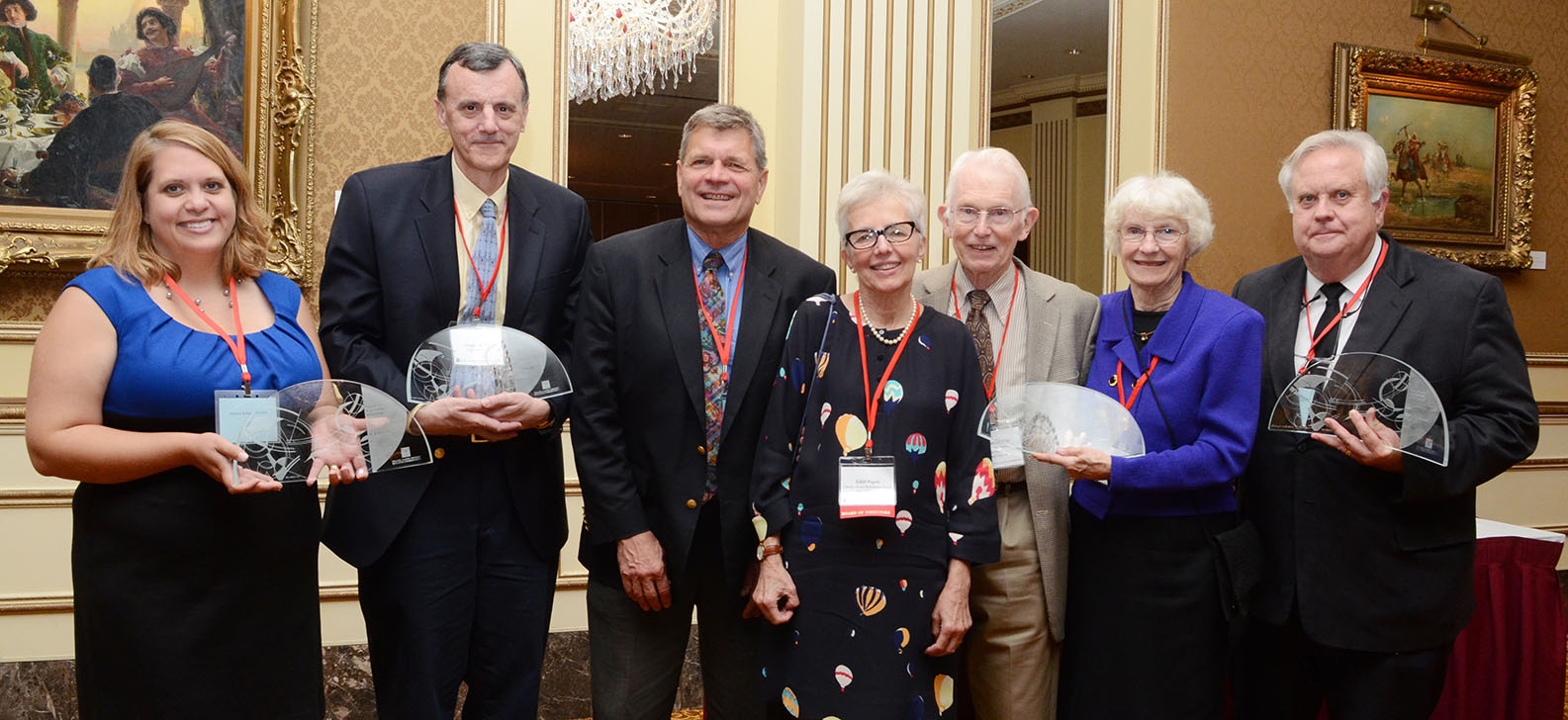
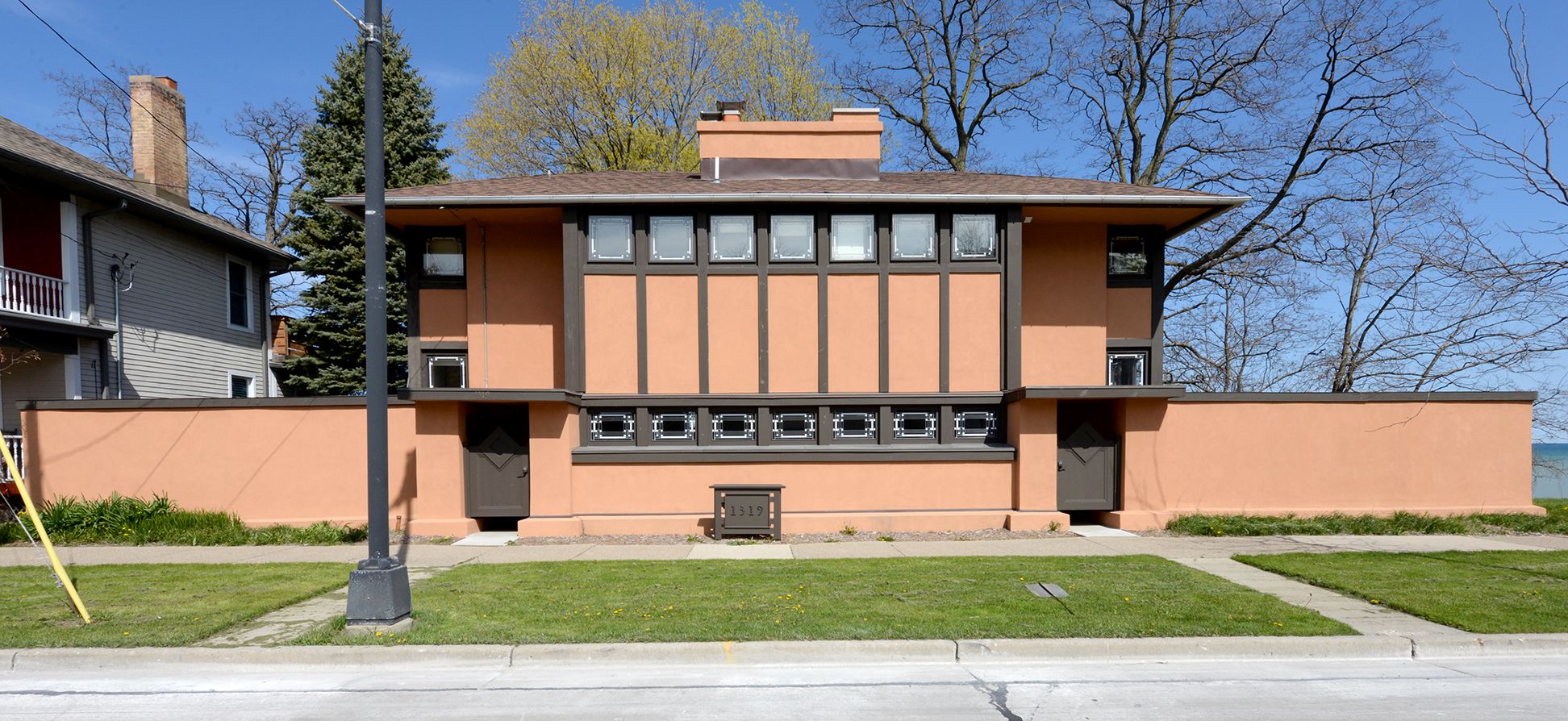
When the late Eugene (Gene) Szymczak considered buying Frank Lloyd Wright’s Thomas P. Hardy House in Racine, Wisconsin in 2012 he told me, “I don’t have children. This is something [save the house] I could do for Racine.” Indeed he did. He undertook a heroic rehabilitation and stabilization of the house.* Gene, left of center in the photo below, was awarded the prestigious Wright Spirit Award by the Frank Lloyd Wright Building Conservancy  for his work on the house in 2015. He died unexpectedly a year later after an illness.

BC 2015 WSA All 003.jpg

The house stayed in the family after Gene’s death. Tom Szymczak is one of Gene’s brothers. Tom recently completed a project which, he told me, was the last thing Gene wanted to accomplish at the house. The house was built with two pocket doors. They were replaced by conventional, hinged plain wood doors by the third stewards of the house, David and Mary Archer, between 1947 and 1957:

South door 003.jpg

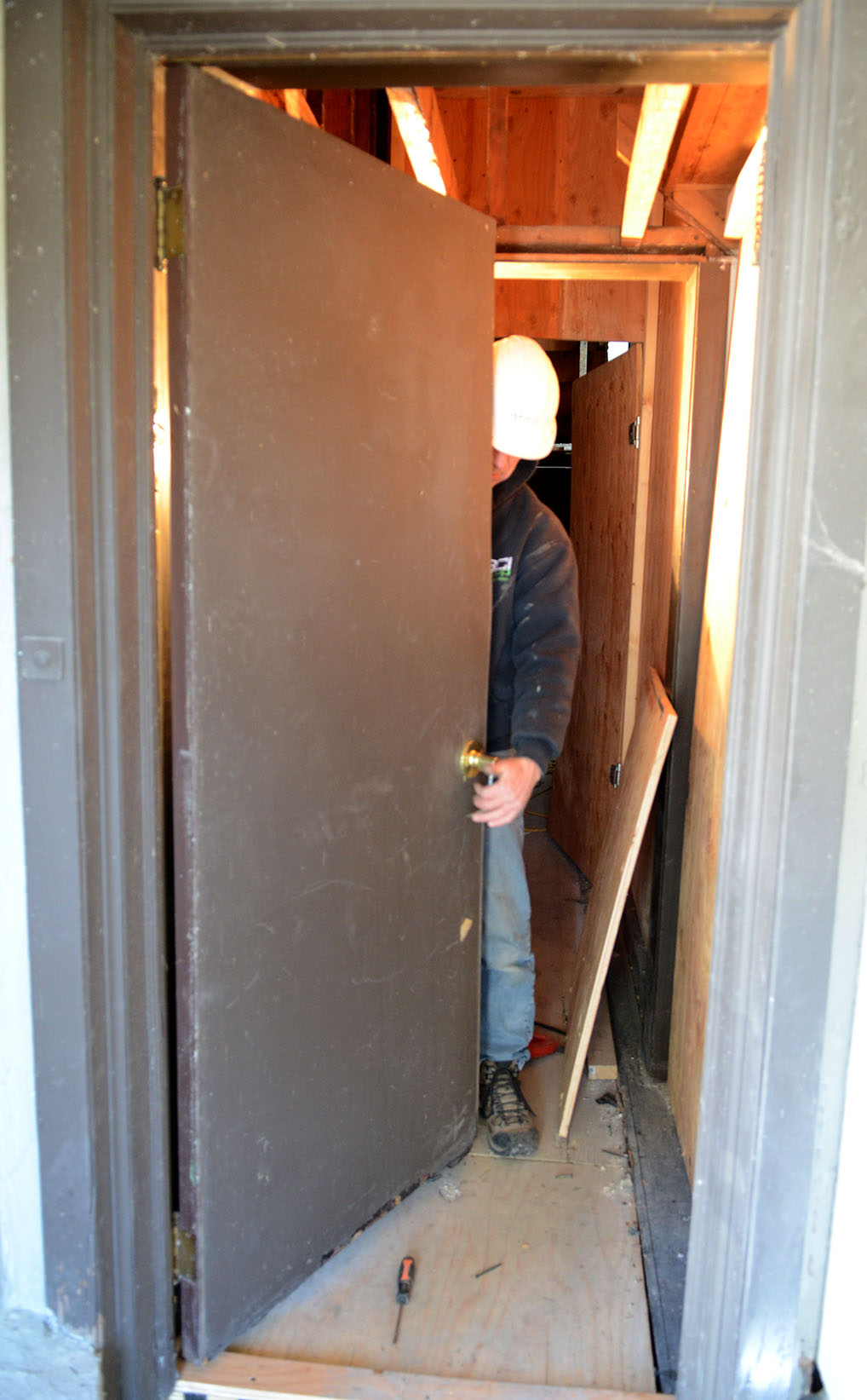
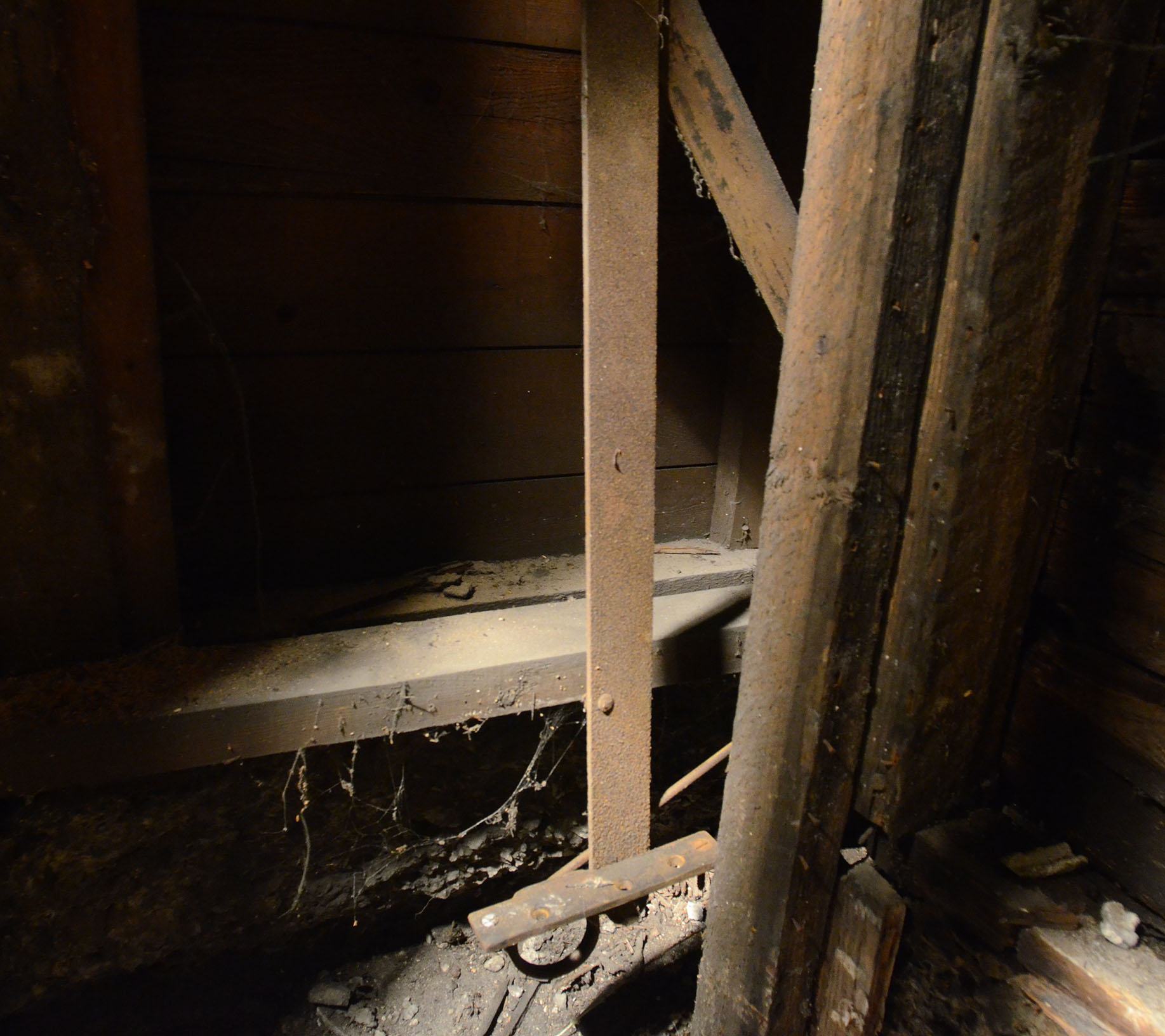
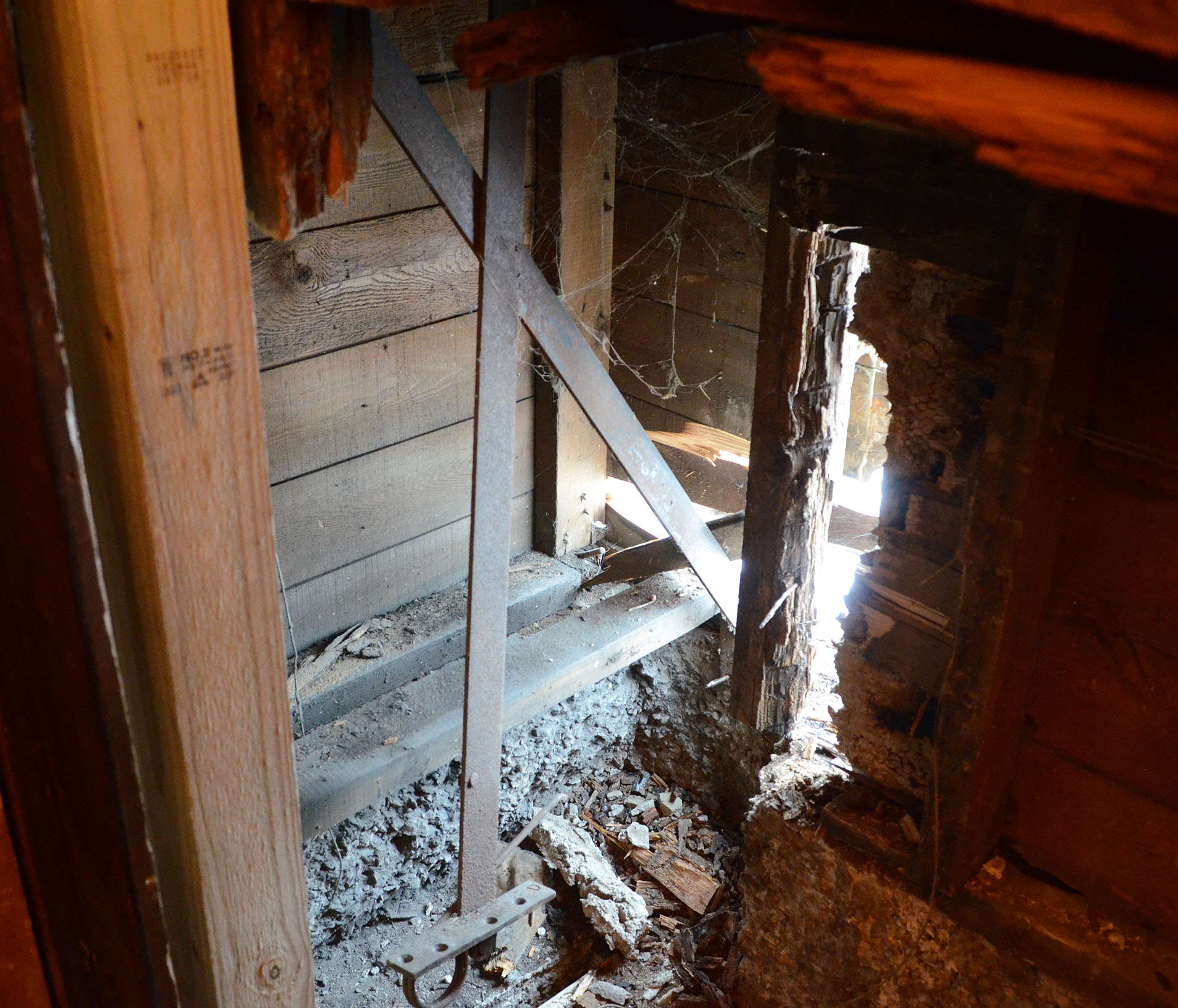
Gene decided to put pocket doors back in the house in 2013. He chose sliding glass patio-style doors so he could look into the two courtyards from the entry hall. The heavy metal arms that opened and closed the pocket doors were left in place, and were found in 2013:

Pocket Doors 010.jpg

Pocket Doors 004.jpg

Pocket Doors 014.jpg

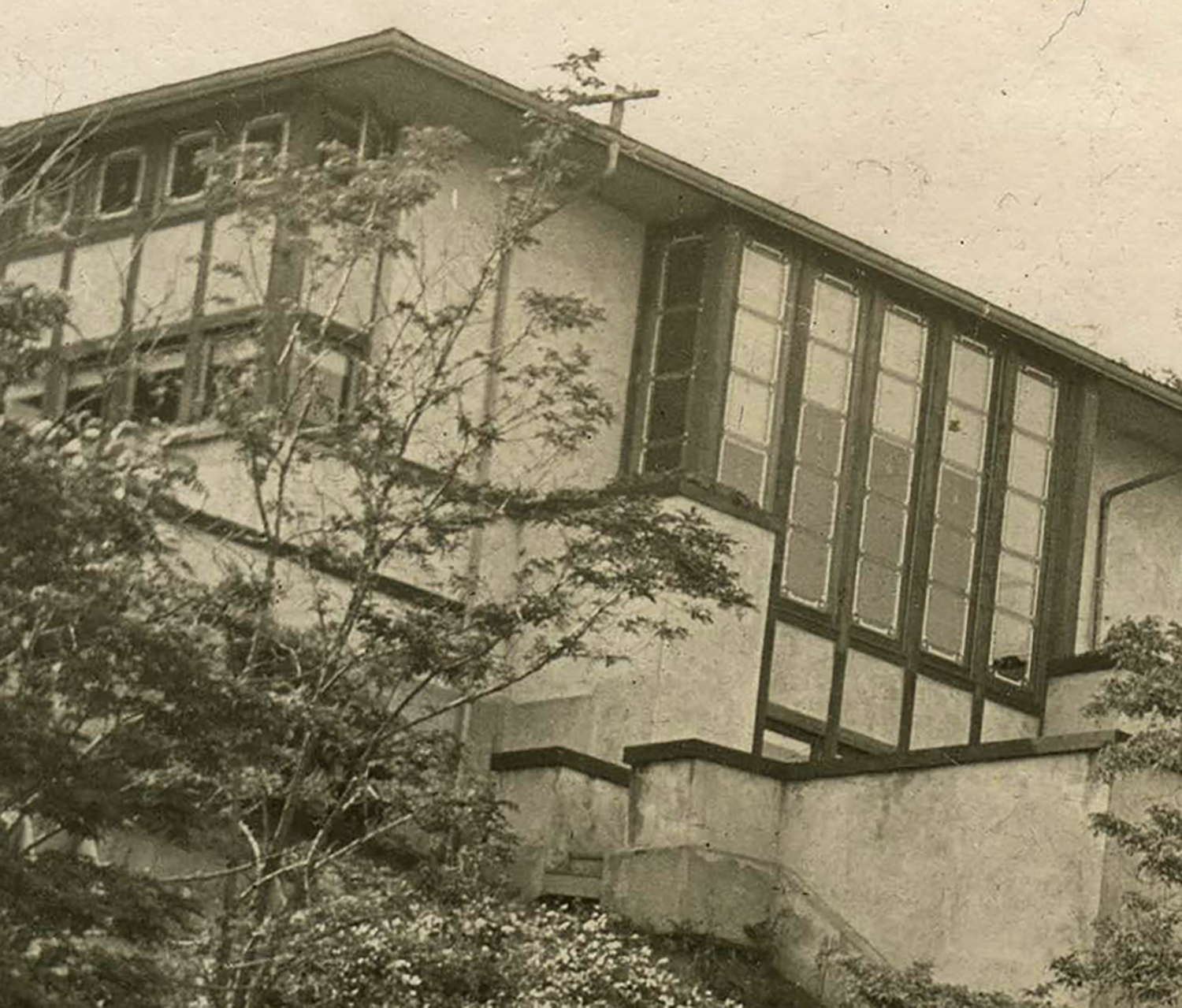
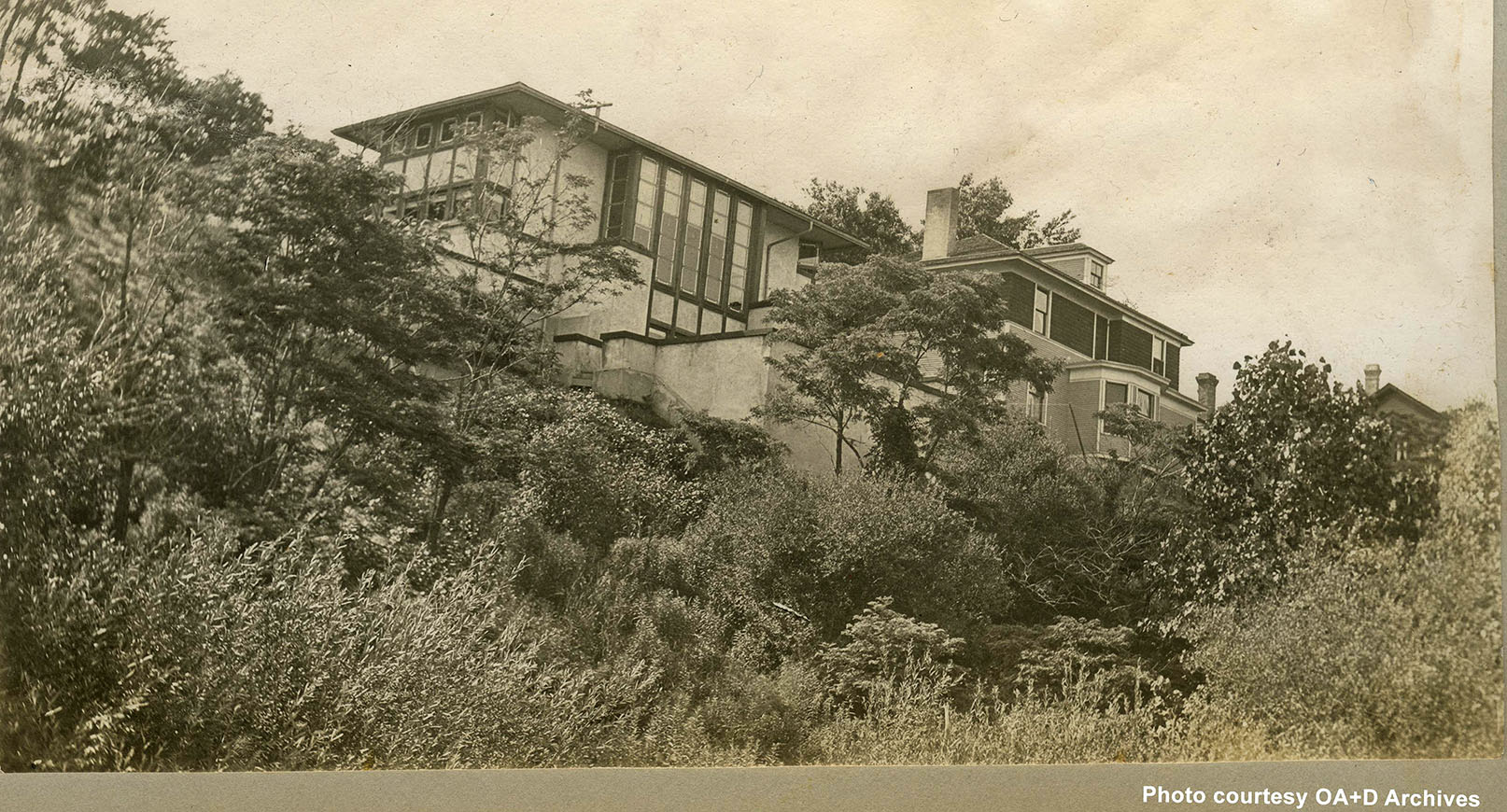
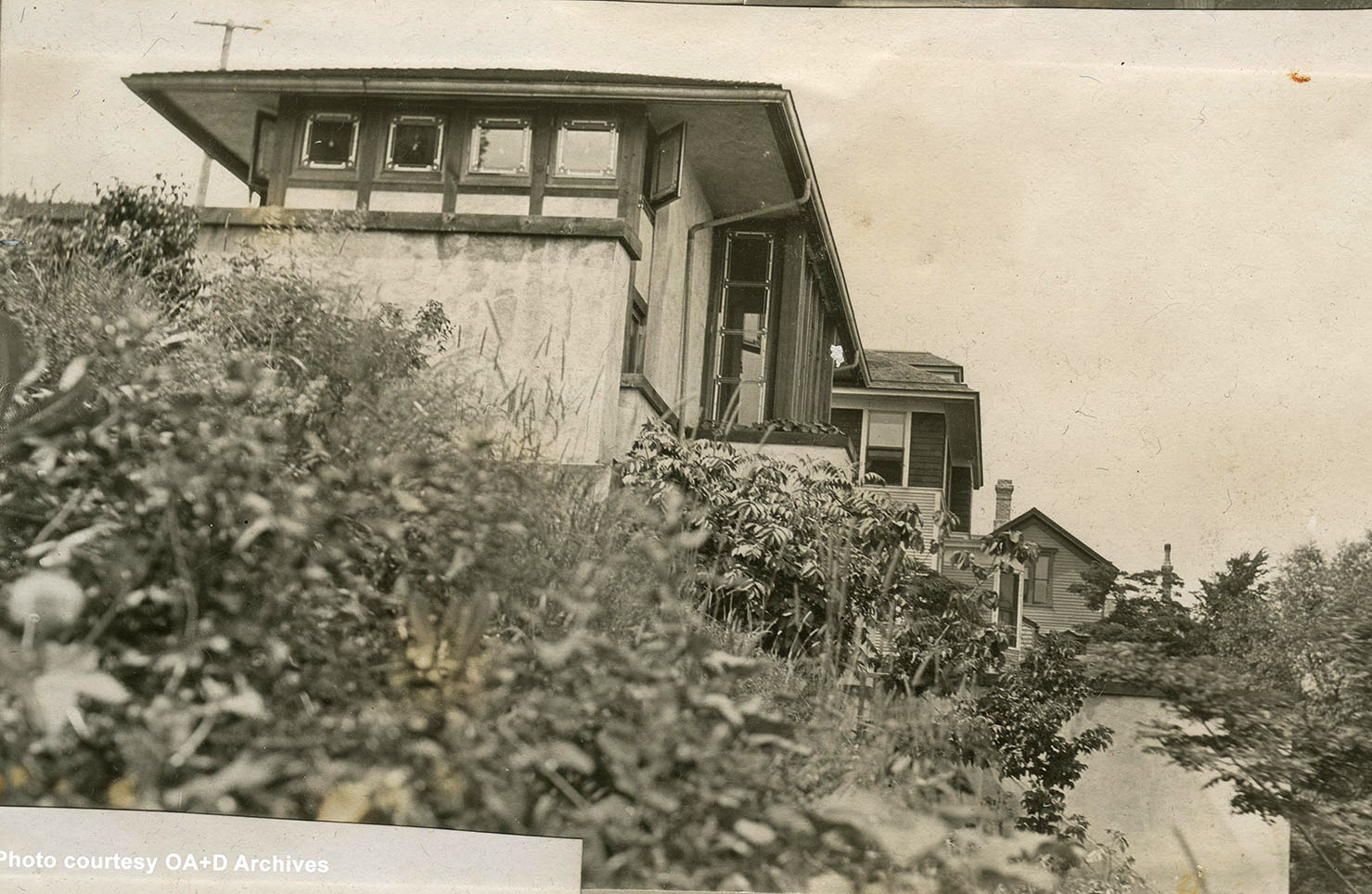
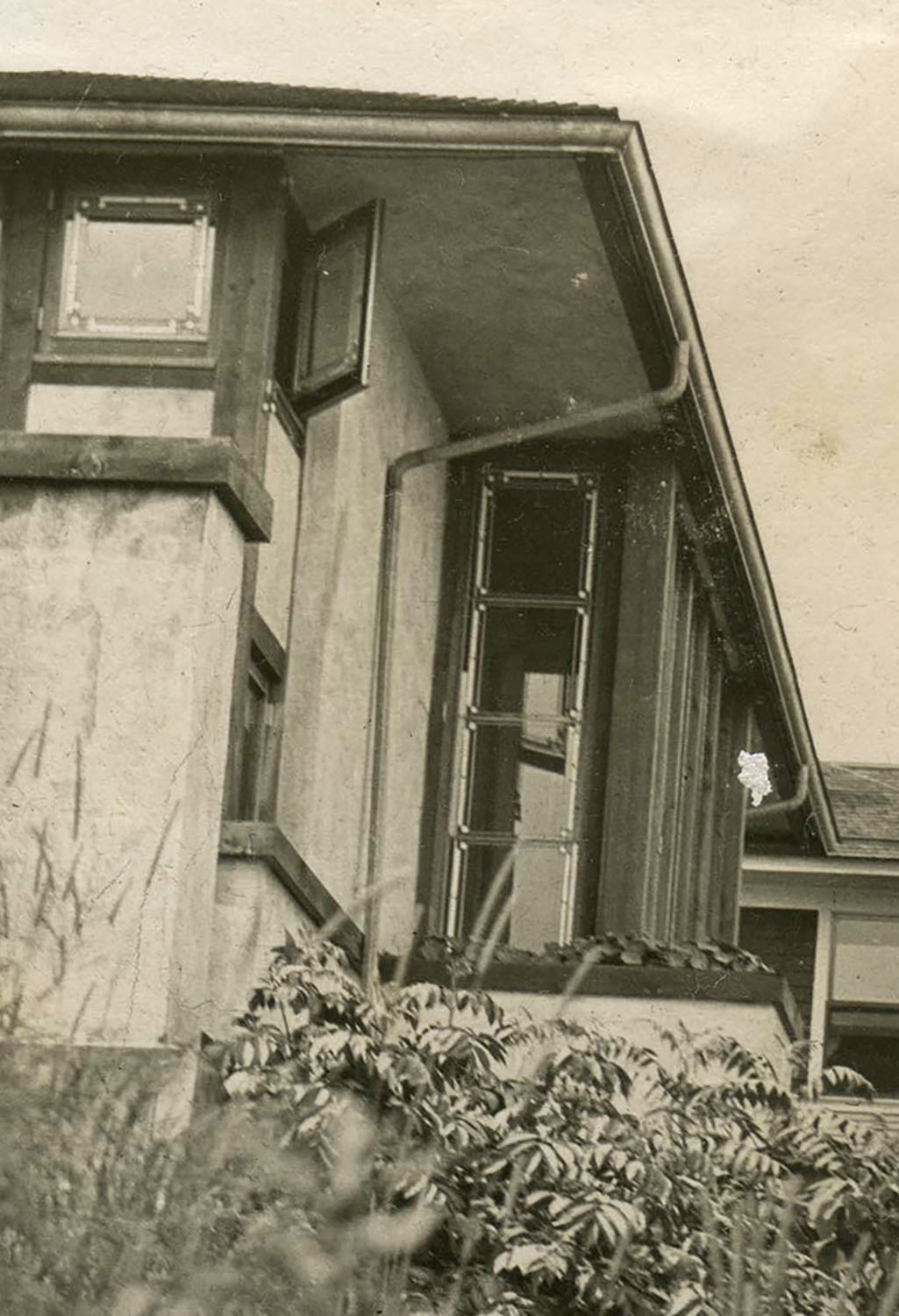
The house was built with leaded glass windows throughout, including in the dramatic two-story living room overlooking Lake Michigan. Anne Ruetz, whose parents were second stewards of the house (1938 – 1947) told me her parents replaced the windows with plain glass ones because the original ones leaked. When Gene put in energy efficient windows he jokingly told me that the next owners of the house could bear the expense of replicating Wright’s window design. Little did he know, of course, that he would be shifting the burden to his brother. 1908 photographs, which are used courtesy of the OA + D Archives, show the original leaded glass living room windows:

LR 1908 Hardy HIll Crop.jpg

LR 1908 Hardy HIll.jpg

LR 1908 Hardy Side.jpg

LR 1908 Hardy Side Crop.jpg

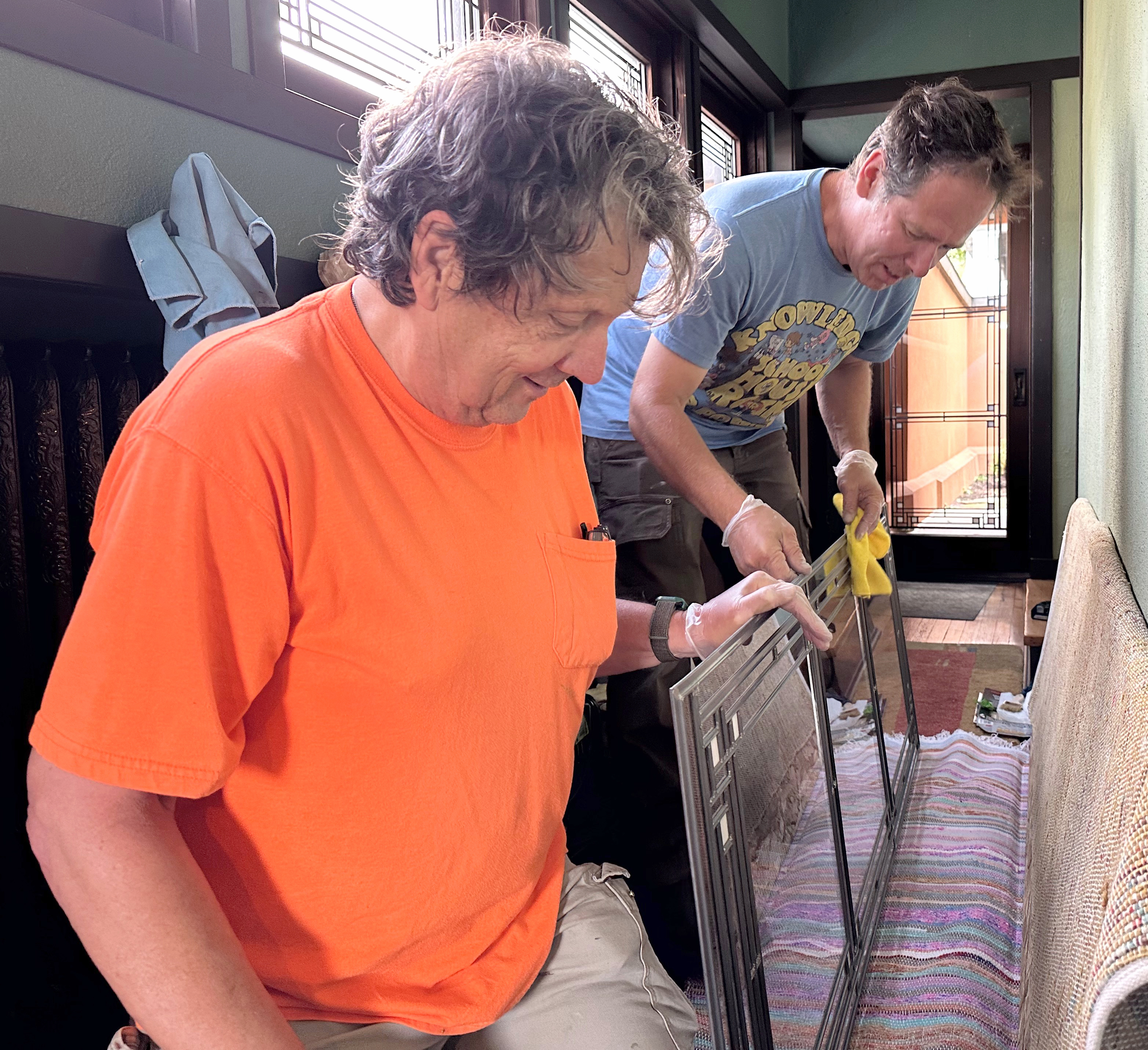
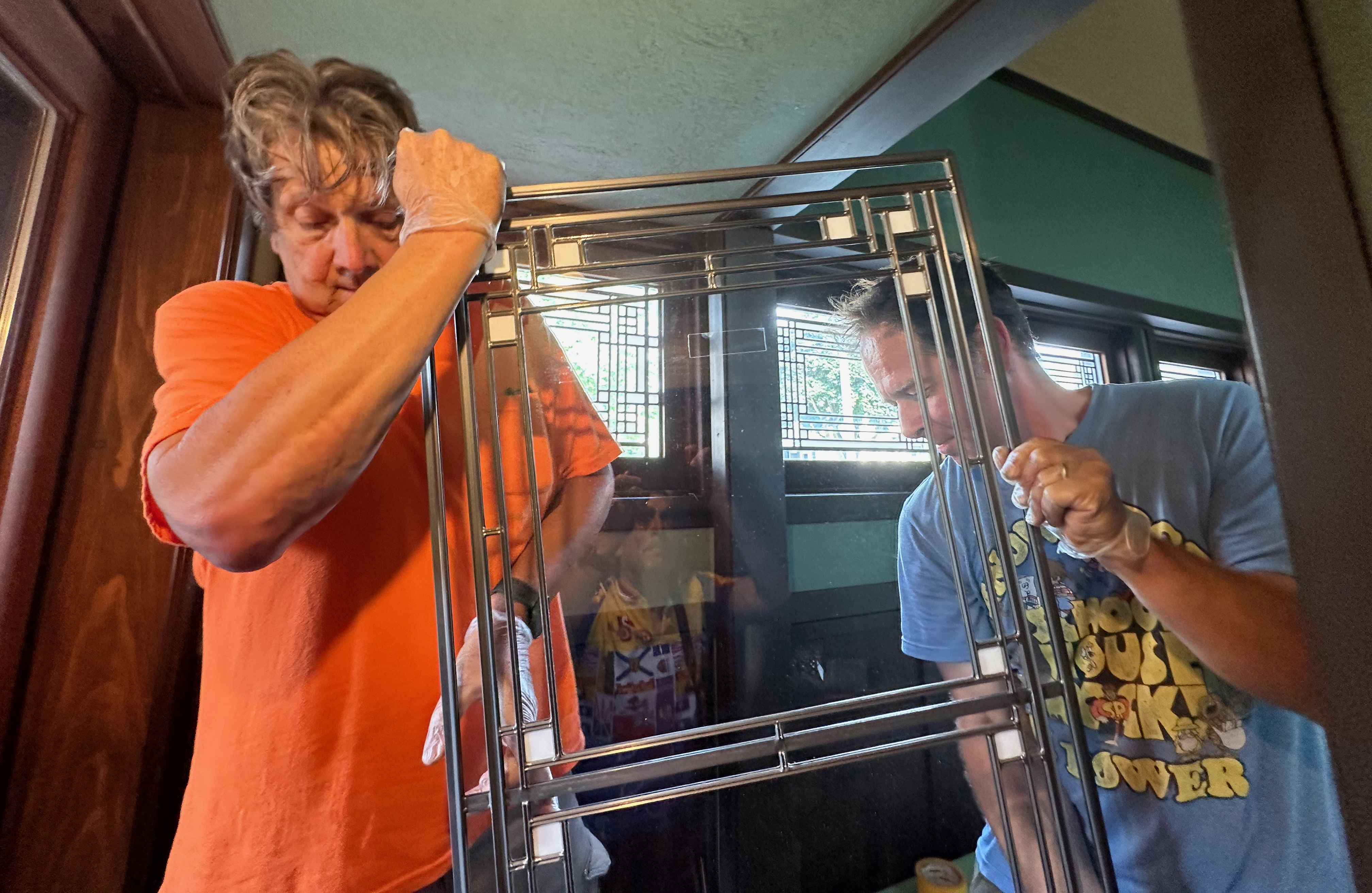
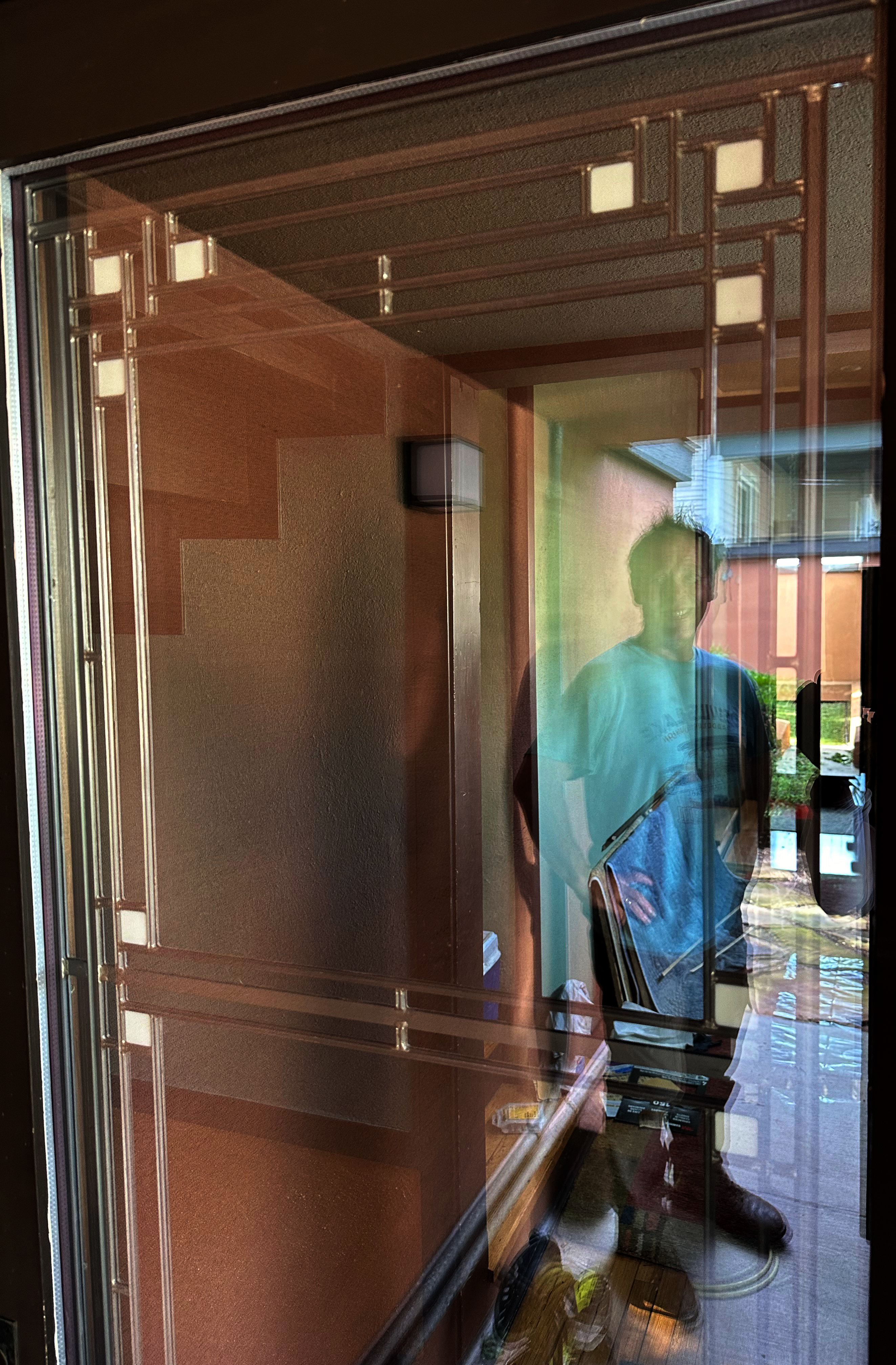
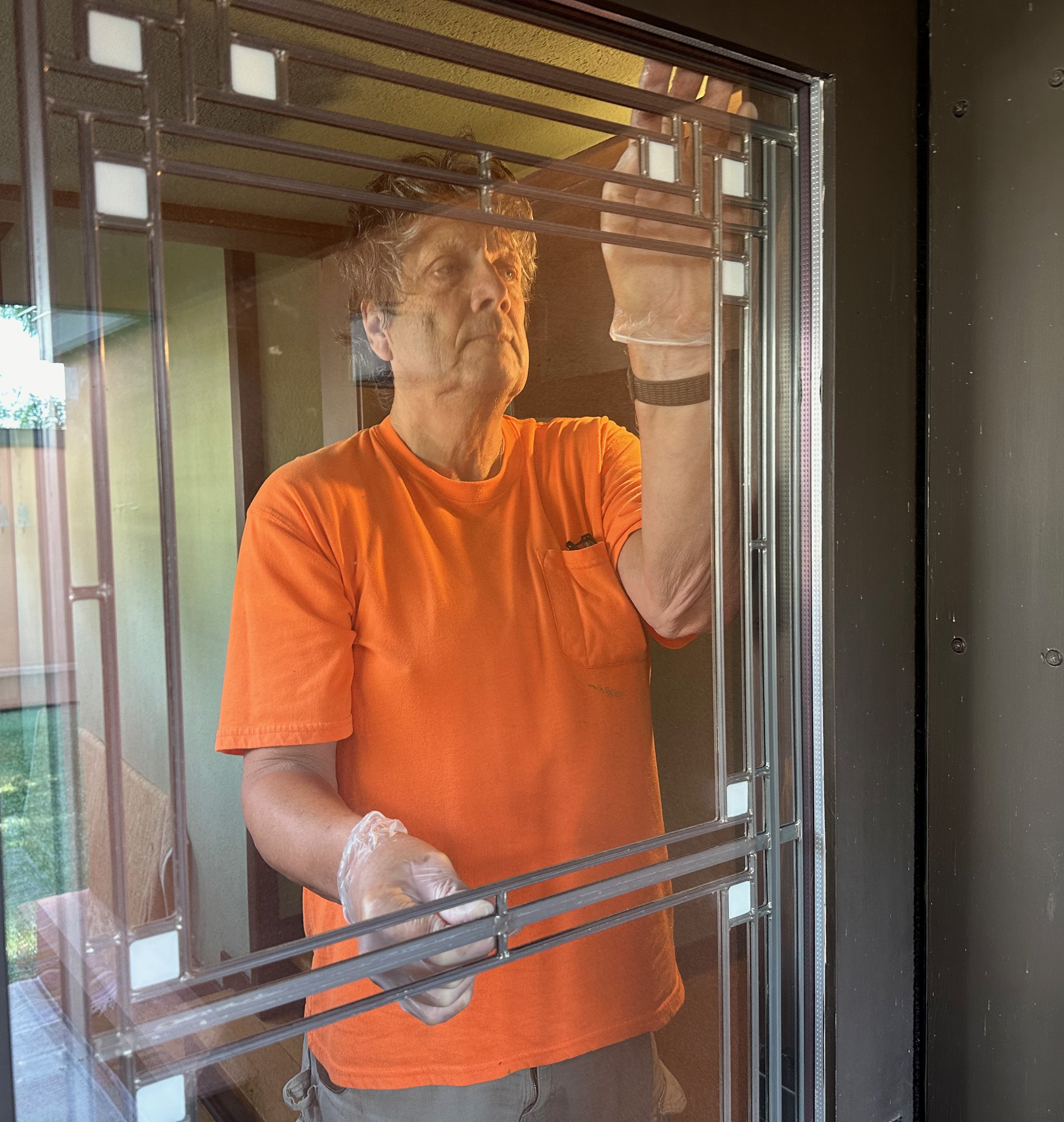
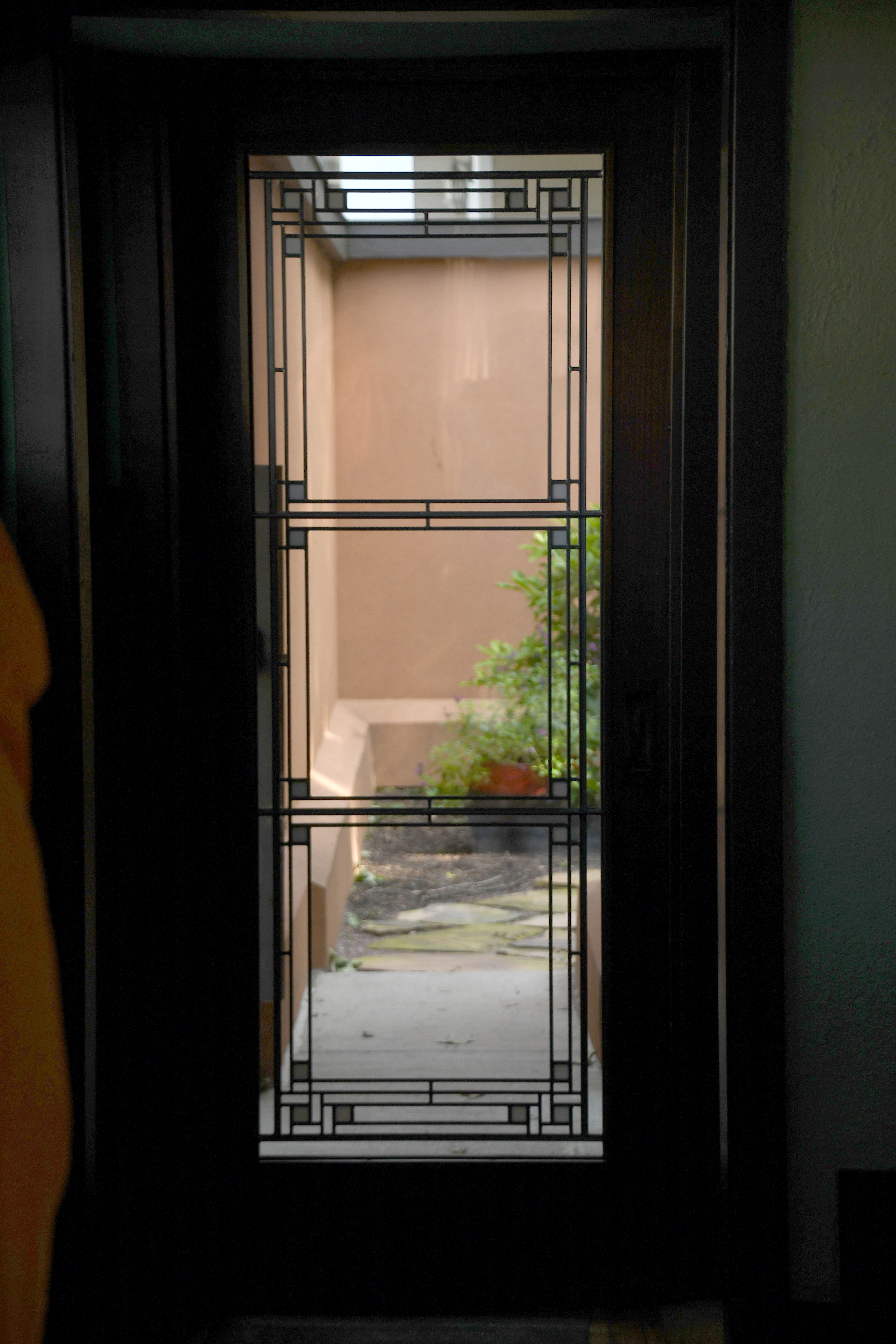
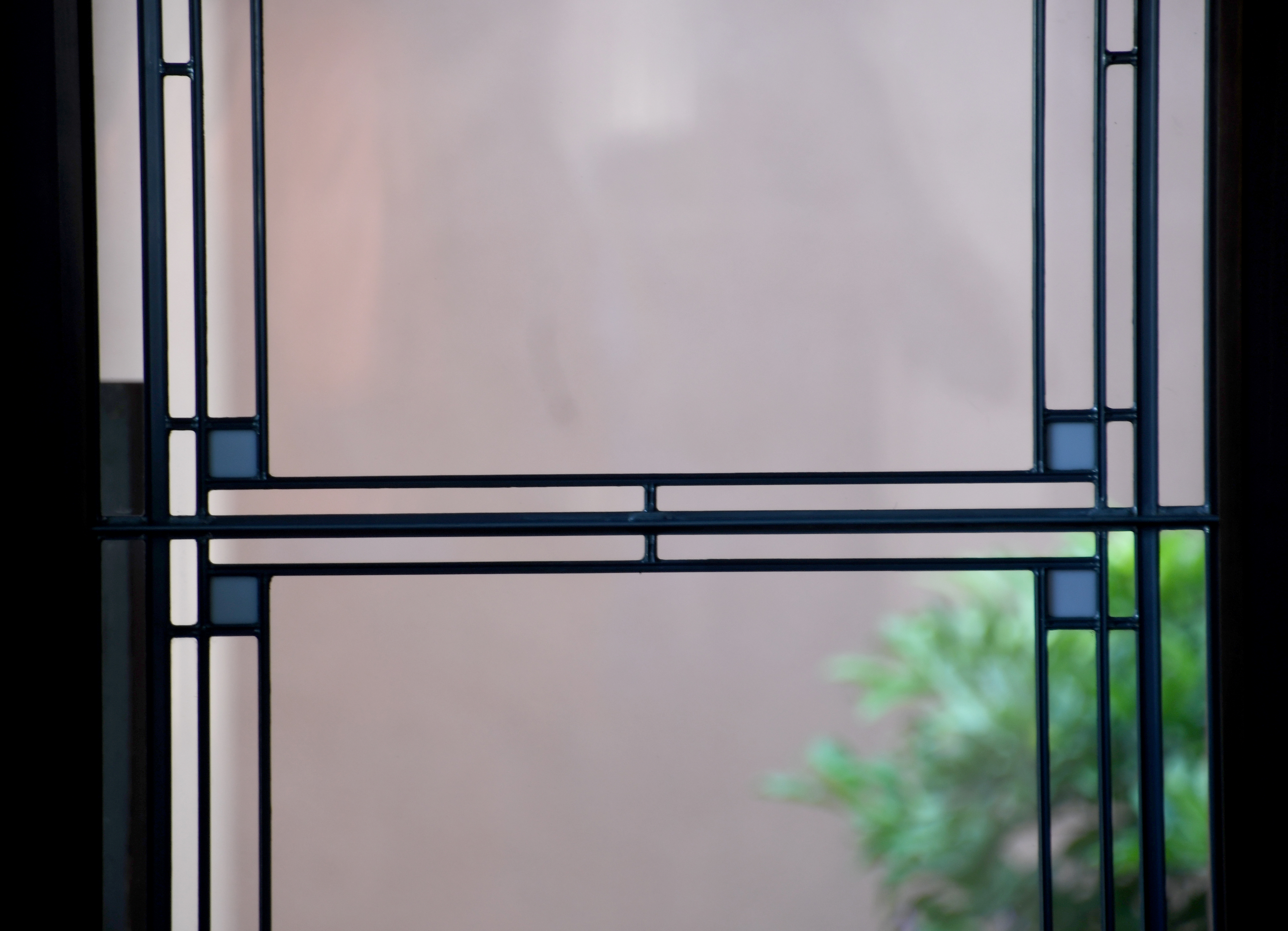
Instead of replicating the design in the living room, Gene intended to have the design fashioned for the pocket doors. The work was completed earlier this month, with window inserts made by Oakbrook Esser of Oconomowoc, Wisconsin. The installation photos show Tom Szymczak, left, and master craftsman Chad Nichols:

IMG_8036.jpeg

IMG_8039.jpeg

IMG_8030.jpeg

DSC_0043.JPG

DSC_0035.JPG

IMG_8025.jpeg

IMG_8041.jpeg

DSC_0017.JPG

DSC_0021.JPG

Thank you, Gene, for your gift to our community and to the World of Wright!

BC 2015 WSA Szymczak.jpg

The first people outside of family and friends to see the new windows will be 17 members of a Road Scholar Wright tour next Wednesday. They will be followed by several hundred people attending Wright in Wisconsin’s “Wright and Like” tour Saturday September 7.

*The term “rehabilitation” is appropriate, rather than “restoration,” because there were some changes to the house. “Restoration” would infer house museum status, accurate to either the day Hardy moved into the house (1906) or left it (in 1938) after losing it at sheriff’s auction because of monies owed on the house.

Links:

Frank Lloyd Wright Building Conservancy:

www.savewright.org

Wright and Like Tour:

https://wrightinwisconsin.org/wright-and-2024

Road Scholar Architectural Masterworks of Frank Lloyd Wright Tour (run 4 or 5 a year)

https://www.roadscholar.org/find-an-adventure/22976/Architectural-Masterworks-of-Frank-Lloyd-Wright

Please scroll down to read previous posts

Wright in Wisconsin Website Redesign

Screen Shot 2017-09-01 at 3.52.56 PM

Wright in Wisconsin (formerly Frank Lloyd Wright Wisconsin and the Frank Lloyd Wright Tourism Heritage Program) is pleased to announce that our revamped website  launched this afternoon at www.wrightinwisconsin.org

We will be able to add more timely news to the site and we have a variety of new features. We still have some work to do, including adding the last few years’ newsletters, but take a look and enjoy the new website! We are indebted to SC Johnson for the generous grant that made the redesign by Image Management of Racine possible. This development follows our reorganization with the Burnham Block becoming its own freestanding organization:

https://wrightinracine.wordpress.com/2017/08/08/a-new-day-for-wright-in-wisconsin-and-for-the-burnham-block-in-milwaukee/

We look forward to your comments!

A New Day for Wright in Wisconsin and for the Burnham Block in Milwaukee

(c) Mark Hertzberg 2017

s

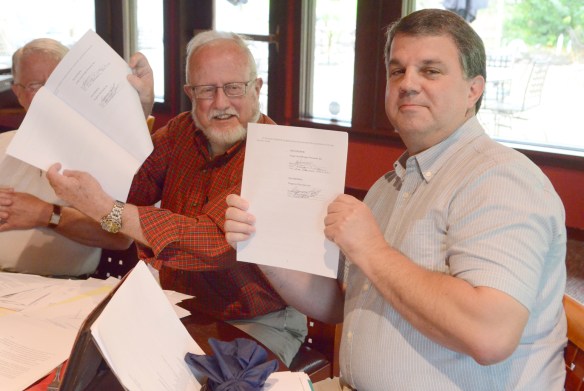
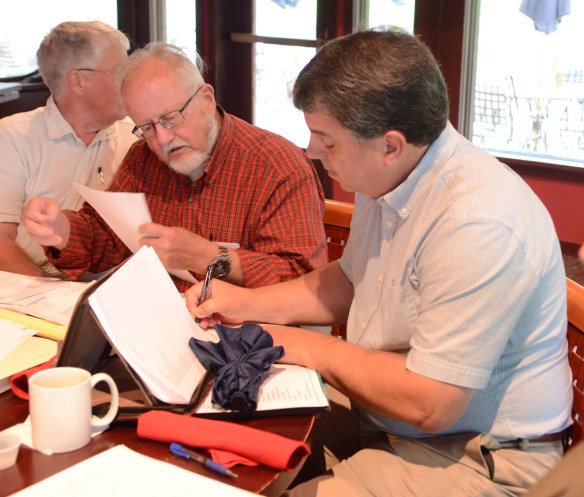
The board of directors of Frank Lloyd Wright Wisconsin (the only statewide Wright group in existence) voted unanimously last week to reorganize, spinning off ownership of the four American System-Built homes it owned in Milwaukee into a separate, self-standing organization. The reorganization was formalized today in a joint announcement. Frank Lloyd Wright Wisconsin is now rebranded as Wright in Wisconsin. George Hall remains president of the organization which is dedicated to preserving Wright’s legacy, education about Wright and promoting Wright tourism in Wisconsin. Mike Lilek, who has spearheaded the restoration of two of the four Burnham block homes, will be head of the new Frank Lloyd Wright’s Burnham Block, Inc.LR WiW Reorganization 001.jpgGeorge Hall, president of Frank Lloyd Wright Wisconsin, leads the group’s final board meeting prior to the vote to reorganize, Thursday August 3, 2017. 
LR WiW Reorganization 003.jpgHall, left, and Lilek sign documents formalizing the reorganization.

Hall commented, “With the recent creation of the Frank Lloyd Wright state trail, and the celebration of the 150th anniversary of his birth this year, Wright’s legacy has never been stronger in Wisconsin.”

Lilek, former Vice President of Facilities for the former organization, looks forward to the possibilities for growing the legacy of the American System-Built homes which represent Wright’s commitment to affordable housing. “This reorganization creates a group now singularly set on restoring the historic Burnham Block site and welcoming visitors to experience Wright’s broadest gesture to a wide American audience.”  . Constructed between 1915-1916, the Burnham Block site consists six homes that symbolize the challenge faced by Wright to create beautiful and affordable spaces. The site was added to the National Register of Historic Places in 1985 and welcomes thousands of visitors each year from across the United States and more than 33 countries.

LR 2714 & Duplexes 4.10.15 001.jpgThe Burnham Block organization is the new owner of the first and third ASB duplexes from the left, as well as the 2714 W. Burnham Street single family home, right, and 1835 S. Layton next door to it). 2714 has been restored to house museum status and is open for tours. The duplex at far left, 2732-34 W. Burnham Street, is undergoing restoration.
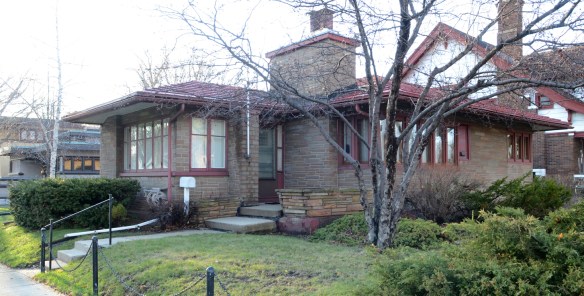
LR 1835 S. Layton 4.10.15 003.jpgWright’s second single family American System-Built house on the block, at 1835 S. Layton, was significantly altered more than 50 years ago, and is less recognizable as a Wright design.
Along with expanded educational opportunities for adults, and publishing the quarterly newsletter, Wright in Wisconsin will continue to offer the annual Wright & Like Tour to provide the public with a rare opportunity to experience private homes and public buildings designed by Wright, his apprentices, and related architects. In the past, the tour was held in Milwaukee, Racine, Madison, Delavan Lake, Wausau, and central Wisconsin. In June of 2018, the tour will focus on the Spring Green area in collaboration with Taliesin Preservation.

LR 2016 W & L Hardy 001 .jpg

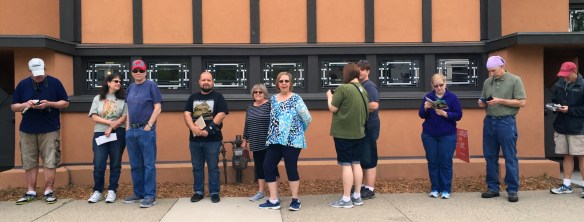
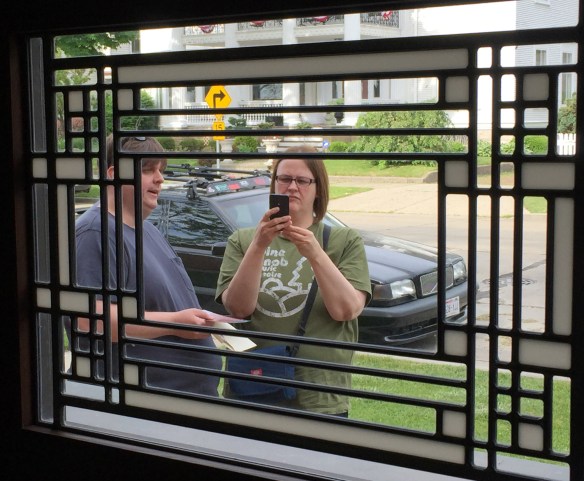
LR 2016 W & L Hardy 003 .jpgGuests wait to tour Wright’s Thomas P. Hardy House in Racine during the 2016 Wright & Like tour.

The changes for Wright in Wisconsin include a new website which will be dynamic and updated significantly more frequently than the current one. Screen Shot 2017-08-08 at 3.52.44 PM.pngThis is a screen shot of the new look for the Wright in Wisconsin website, which will launch in the near future. The redesigned website was made possible through a generous grant from SC Johnson. The URL will remain: www.wrightinwisconsin.org
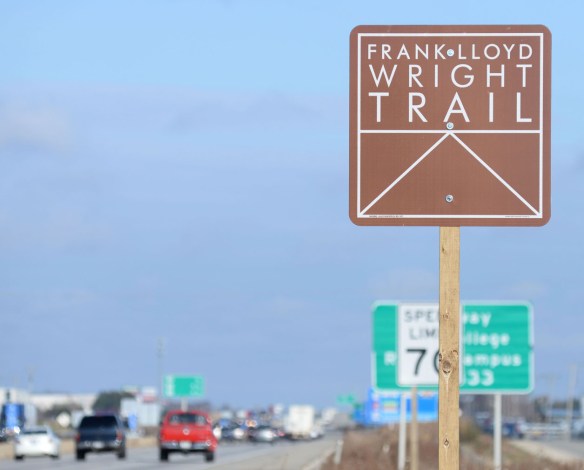
The not-for-profit organization was created in 1991 with the assistance of the National Trust for Historic Preservation and the State of Wisconsin Department of Tourism. Historic Wright sites across Wisconsin applauded the creation of a Frank Lloyd Wright Trail by the state legislature last year, including co-sponsorship of 38 legislators from both parties. Running from Racine to Spring Green, and including Wright’s birthplace of Richland Center, this route links together Wright buildings across Wisconsin, including Burnham Block.

LR FLW Heritage Trail Signs 003.jpg

“Wright in Wisconsin is committed to promoting the success of Burnham Block, as well as increasing attendance to all public Wright sites across the state,” said Andrew Gussert, Treasurer of Wright in Wisconsin.

This year marks the celebration of Frank Lloyd Wright’s 150th birthday (1867-1959). Born in Richland Center, Frank Lloyd Wright is considered to be one of the most important architects of the century. With over fifty separate buildings, and a dozen sites open to the public, Wisconsin includes work from every decade of Wright’s body of work. The state served as the backyard laboratory for his architectural experimentation, making it a unique destination for those who want to understand Wright’s organic style of architecture.

LR WiW Reorganization 006.jpg

Contact information for the two organizations is below:

Wright In Wisconsin, Andrew Gussert, Treasurer Email: agussert@gmail.com

Wright in Wisconsin, P.O. Box 6339, Madison, WI 53716

Phone (608) 287-0339 ~ www.WrightInWisconsin.com

Frank Lloyd Wright Burnham Block, Inc., Mike Lilek, Telephone: (414) 368-0060Email:

mlilek@WrightInMilwaukee.org 

Website: www.wrightinmilwaukee.org


Spring Green Restaurant – Historic Photos

(c) Mark Hertzberg, 2017, with all photos (c) Robert Hartmann, 2017

Robert Hartmann’s passions when he was growing up included Frank Lloyd Wright’s architecture and photography. The result? Thirty historic photos by him of the construction of Wright’s Spring Green Restaurant, the building now known as the Frank Lloyd Wright Visitor Center. It houses the Taliesin Bookstore and Riverview Terrace Cafe. The building also serves as the starting point for all tours of Taliesin.

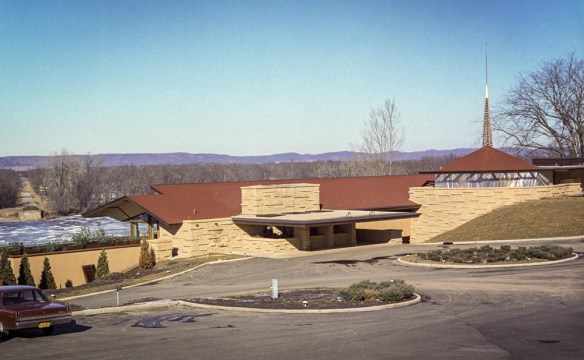
Riverview Terrace-Spring Green restaurant-3-.jpgA vintage color photo from winter, 1967, of the recently completed Spring Green Restaurant. Hartmann notes that the original location of the old Wisconsin River bridge abuttment can be seen in the upper left of the photo. The pavilion which is still wrapped in plastic sheets, right, originally served as the sales and marketing office of the Wisconsin River Development Corporation headed by Racine businessman Willard Keland.

The building overlooks the Wisconsin River. Wright first designed an auto showroom, restaurant and home for Glen and Ruth Richardson for the site in 1943. His next proposal for the site, ten years later, was for a bridge-like restaurant. Construction had started when Wright died in 1959. Taliesin Associated Architects completed his design and construction in 1967 as part of a Wisconsin River Development Corporation plan from the late Willard Keland (of Wright’s Keland House in Racine).

Hartmann became interested in Wright’s work when he was just eight years old and saw Wright’s newly completed SC Johnson Research Tower in Racine in 1950. Six years later he borrowed his father’s Argus model C-3 35mm camera (which he notes, he never returned). He was working on his Master’s degree in Environmental Design at the University of Wisconsin in 1967. It was an opportunity for Hartmann to follow the progress of the construction of a Wright design. He thought, “It appeared that Wright’s Broadacre City was actually being built.”

An accomplished photographer, Hartmann often drove the half hour to Spring Green to document the construction in his compact gray Sunbeam Imp. He recalls, “Getting to The Spring Green Restaurant was as rewarding as reaching my destination. Driving west on Highway 14 took me through the wonderful small towns of Cross Plains, Black Earth, Mazomanie, Arena and Spring Green. These were the places that Wright had passed through so many times in his lifetime and have now become immortalized by way of mention in the many books and articles by and about Wright.”Riverview Terrace-Spring Green restaurant-4-1060899.jpgThis summer 1967 photo,with scaffolding still in place, captures The Spring Green restaurant as windows and exterior trim are nearing completion.
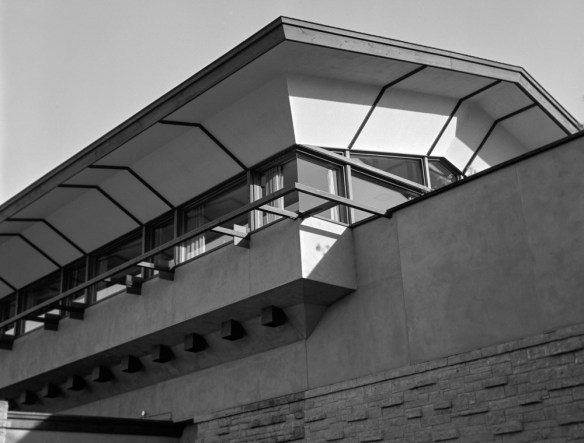
Riverview Terrace-Spring Green restaurant-5-5.jpgThis detail view shows the gable roof and original open terrace shortly after Wright’s building was completed. The open terrace on the right was later enclosed and covered with a flat roof by Taliesin Associated Architects, the successor firm to Frank Lloyd Wright.

The young graduate student – he was 25 –  carefully filed his three dozen color and black and white negatives and Polaroid instant photos of the construction, and moved onto a career as an architectural and industrial designer. He opened his own practice in Racine in 1980. The negatives would remain unprinted until this year.

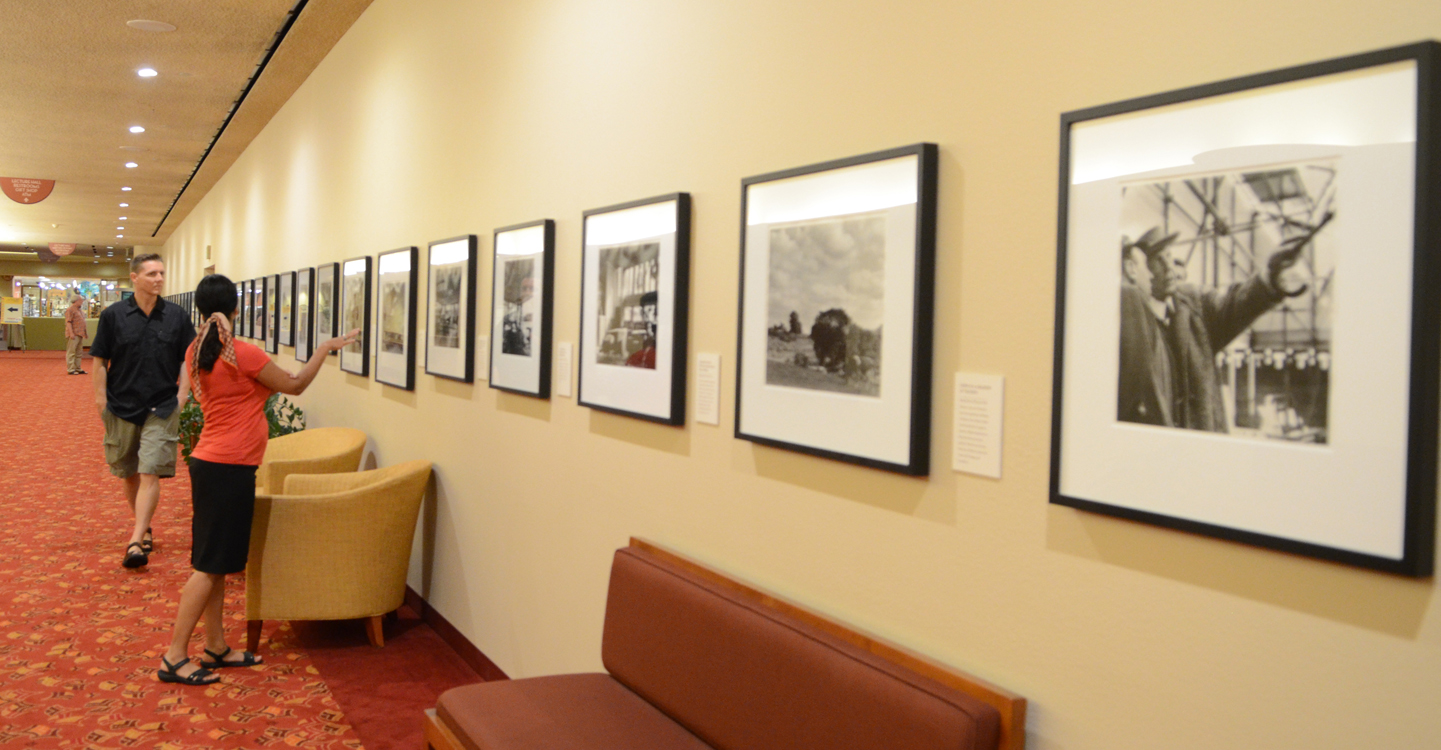
Hartmann never lost his passion for Wright’s work. He is a former board member and past president of Frank Lloyd Wright Wisconsin (Wright in Wisconsin). This past spring Hartmann learned that Erik Flesch, director of development for Taliesin Preservation, Inc., was looking for ways to help celebrate the 50th anniversary of the structure. Turning to the notebook with his negatives, Hartmann told Flesch about his archival photos. They arranged for 24 framed prints of the construction and an early renovation to be exhibited at the visitor center through the end of the year.

Riverview Terrace-Spring Green restaurant-2-22.jpgHartmann is a meticulous craftsman. Although he shot each photo in perhaps 1/125th of a second, he spent an estimated 1200 hours digitizing and making archival ink jet prints for the exhibition. The prints are 11″x14″ matted and framed to 16”x20”.
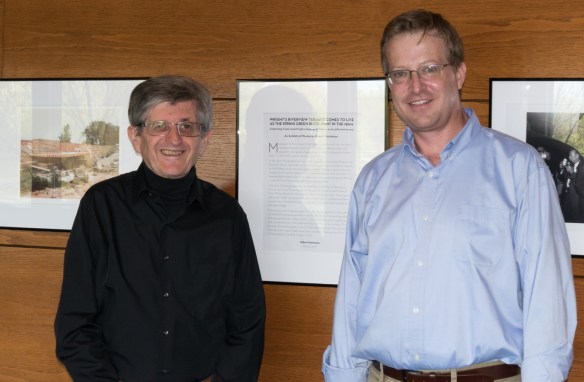
Spring Green Hartmann Flesch LR.jpgHartmann, left, and Flesch review the installation of Hartmann’s photos.
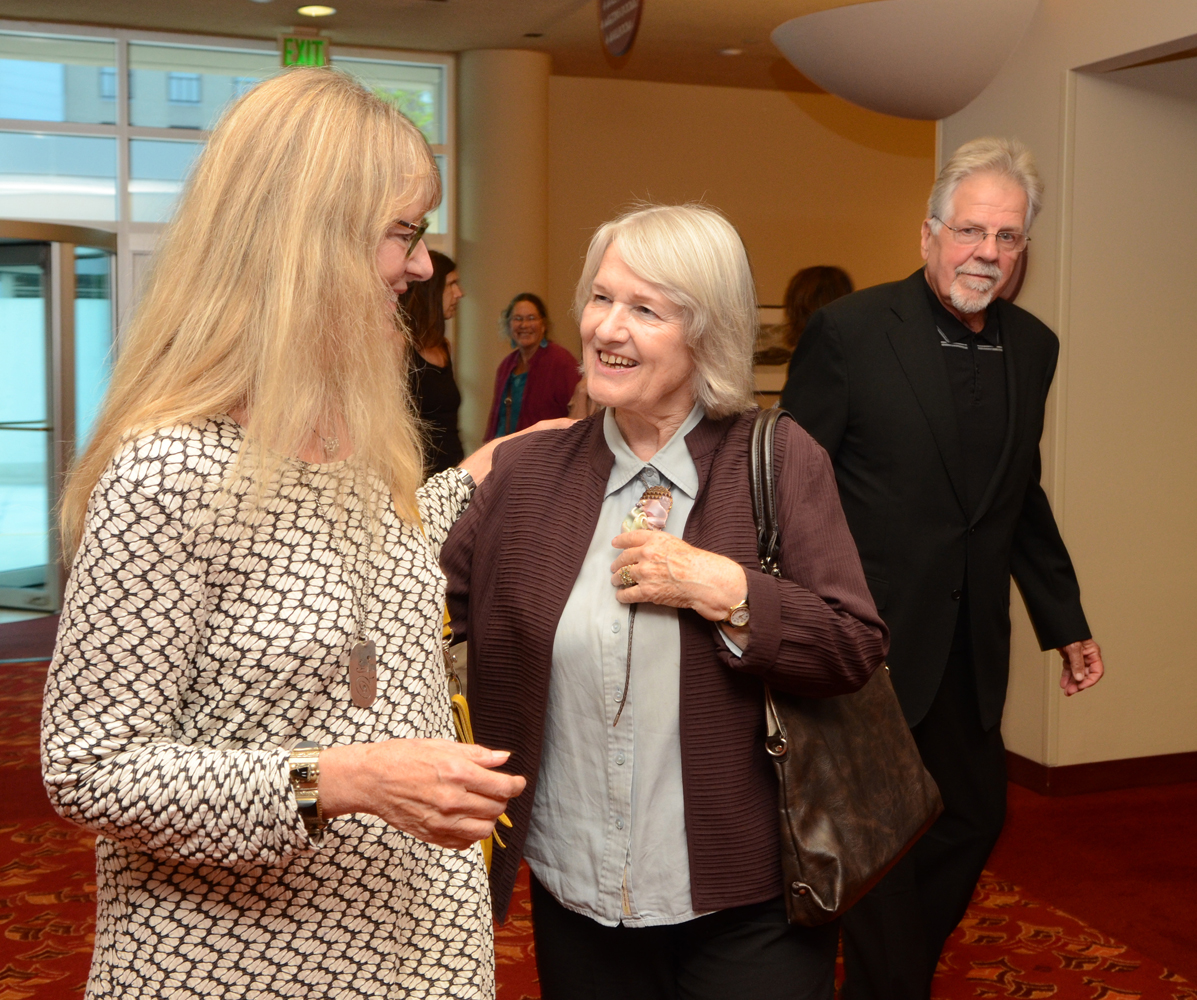
Lady Bird Johnson, President Lyndon B. Johnson’s wife, attended the dedication on September 22, 1967. A free public celebration of the 50th anniversary of the dedication will be held Friday September 22 be from 5:00 to 7:00 p.m. with limited food service and a cash bar. A centerpiece of the anniversary celebration is the on-going exhibit of Hartmann’s photos which he never printed until this year.


Preview Screening: Pedro E. Guerrero on PBS American Masters

(c) Mark Hertzberg 2015

Screening at Monona Terrace in Madison, Wisconsin, of the PBS

Dixie Legler Guerrero remarked “Everyone I know in Wisconsin is here!” as she surveyed the auditorium at Monona Terrace in Madison Tuesday evening September 1 for the premiere Wisconsin screening of “Pedro E. Guerrero: A Photographer’s Journey.” Guerrero (1917-2012) was Wright’s favorite photographer. The auditorium was filled for the screening which was part of Monona Terrace’s Wright Design lecture series. The screening was also sponsored by Frank Lloyd Wright Wisconsin wrightinwisconsin.org

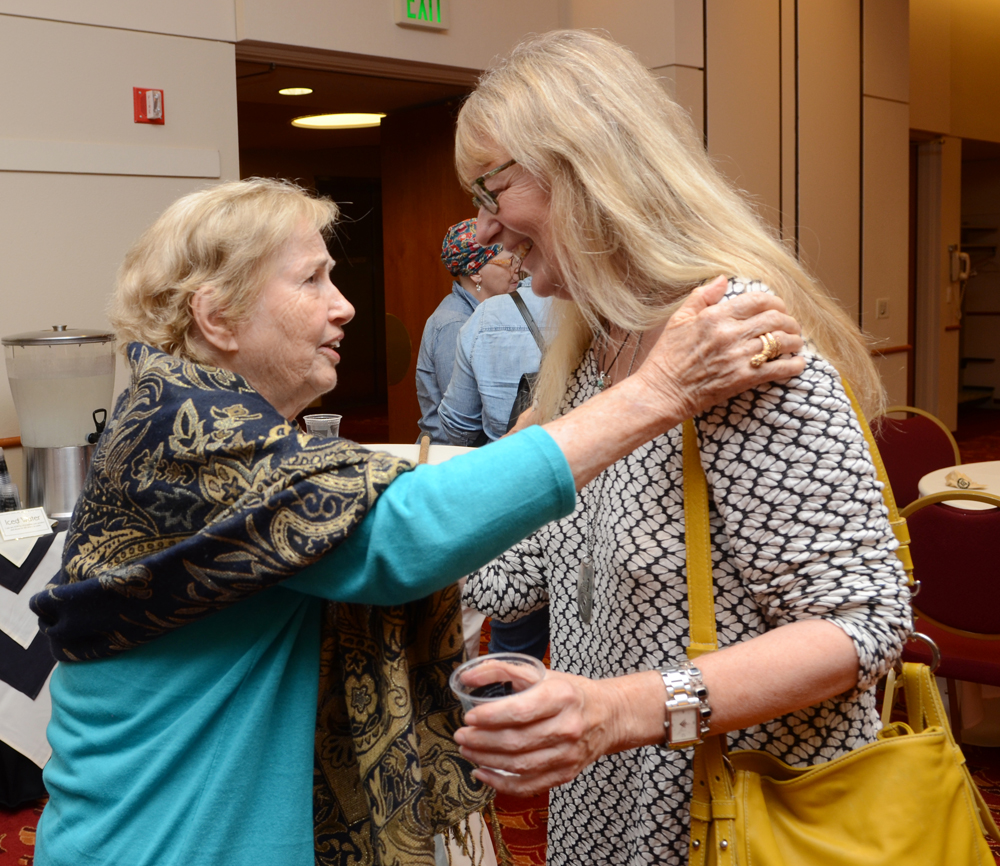
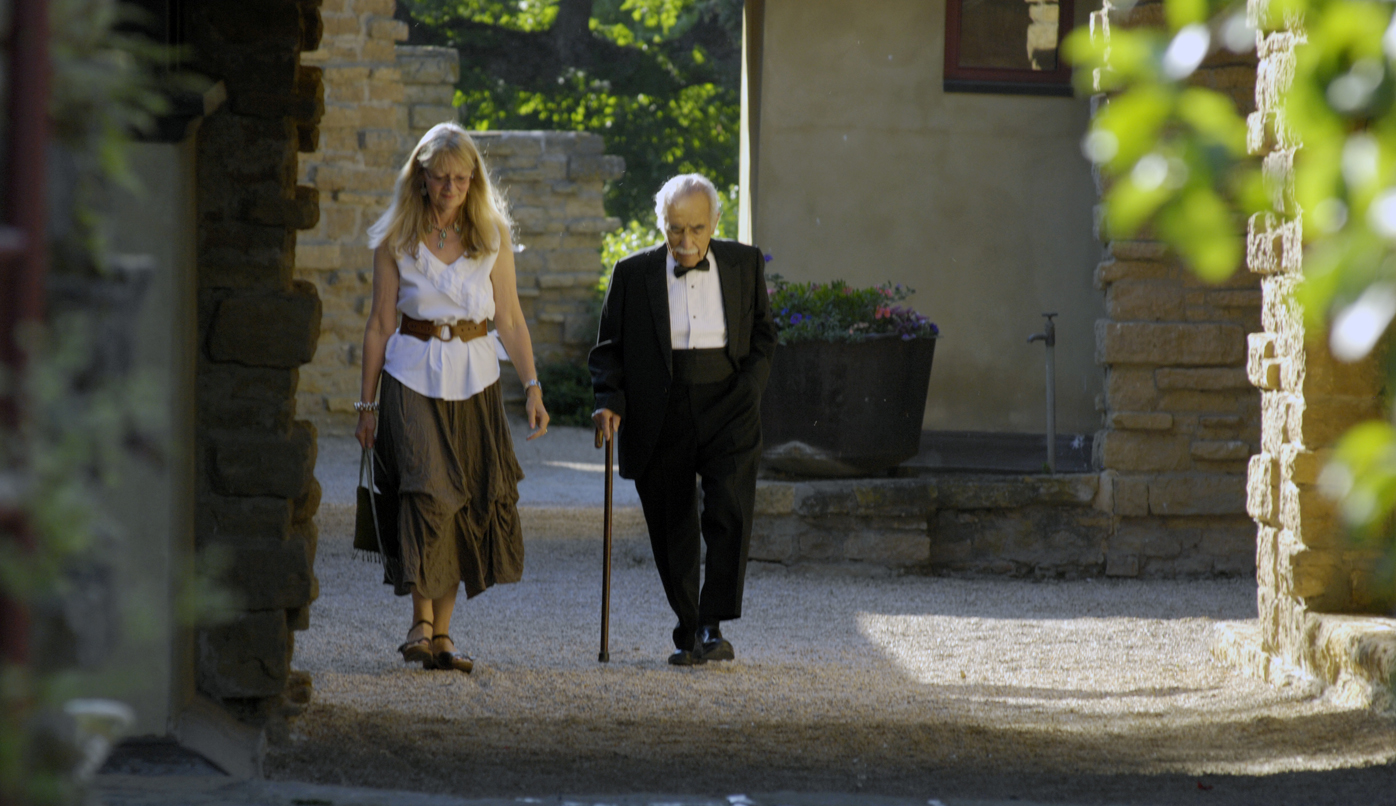
Dixie Legler Guerrero, left, greets Effi Casey. Tim Wright, Frank Lloyd Wright's grandson, is at right.

Dixie Legler Guerrero, left, greets Effi Casey before the screening. Tim Wright, Frank Lloyd Wright’s grandson, is at right.

Minerva Montooth, left, and Dixie Legler Guerrero chat at the reception after the screening.

Minerva Montooth, left, and Dixie Legler Guerrero chat at the reception after the screening.

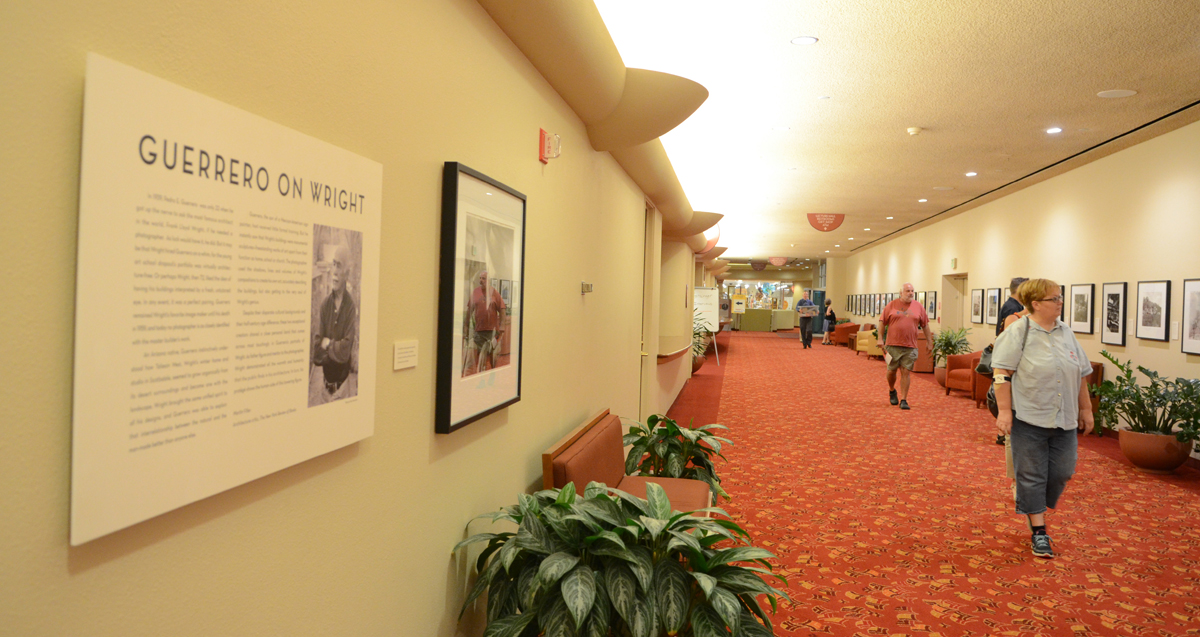
Guerrero’s work is on permanent display at Monona Terrace:

Guerrero PBS Screening

Guerrero PBS Screening

Guerrero and Dixie Legler Guerrero at the annual Wright birthday dinner at Taliesin in 2011 and 2012:

Birthday Dinner

Pedro Guerrero

Pedro Guerrero

The show, part of PBS’ American Masters series, airs Friday September 18 nationwide.

Newly Discovered Wright Home Near Milwaukee

Story and photos (c) Mark Hertzberg

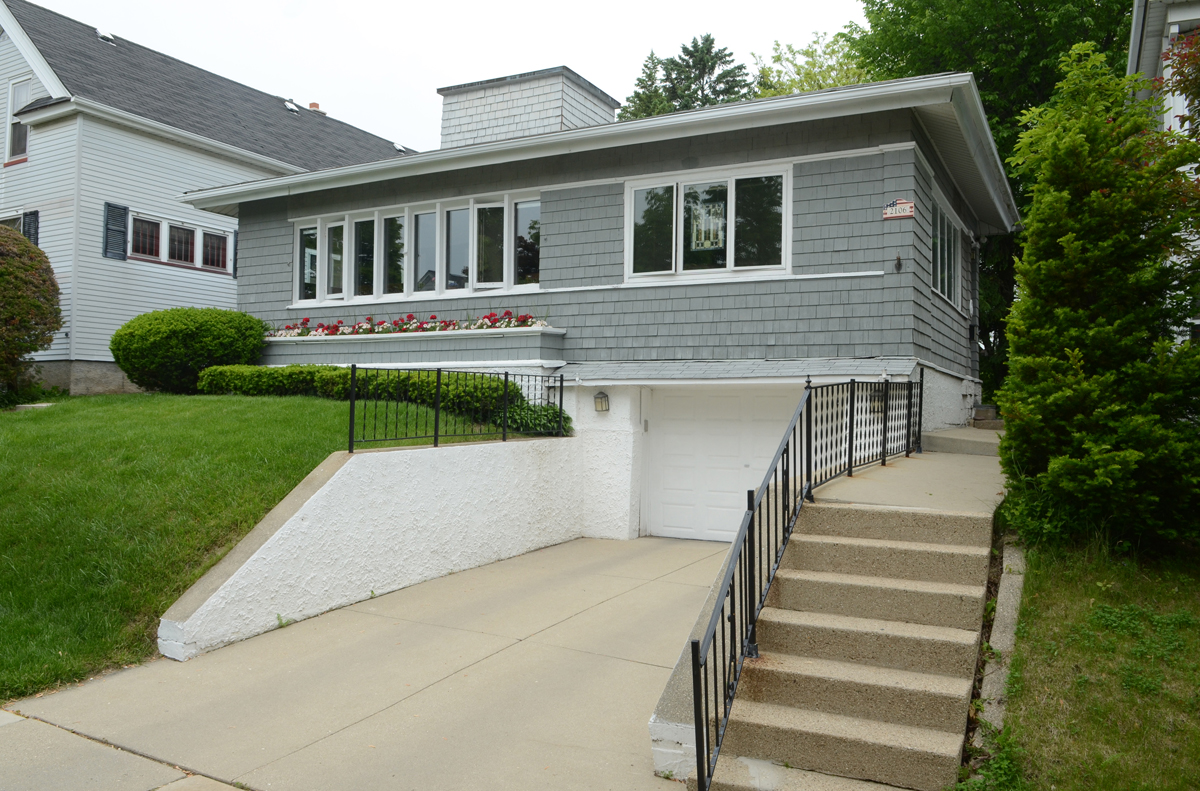
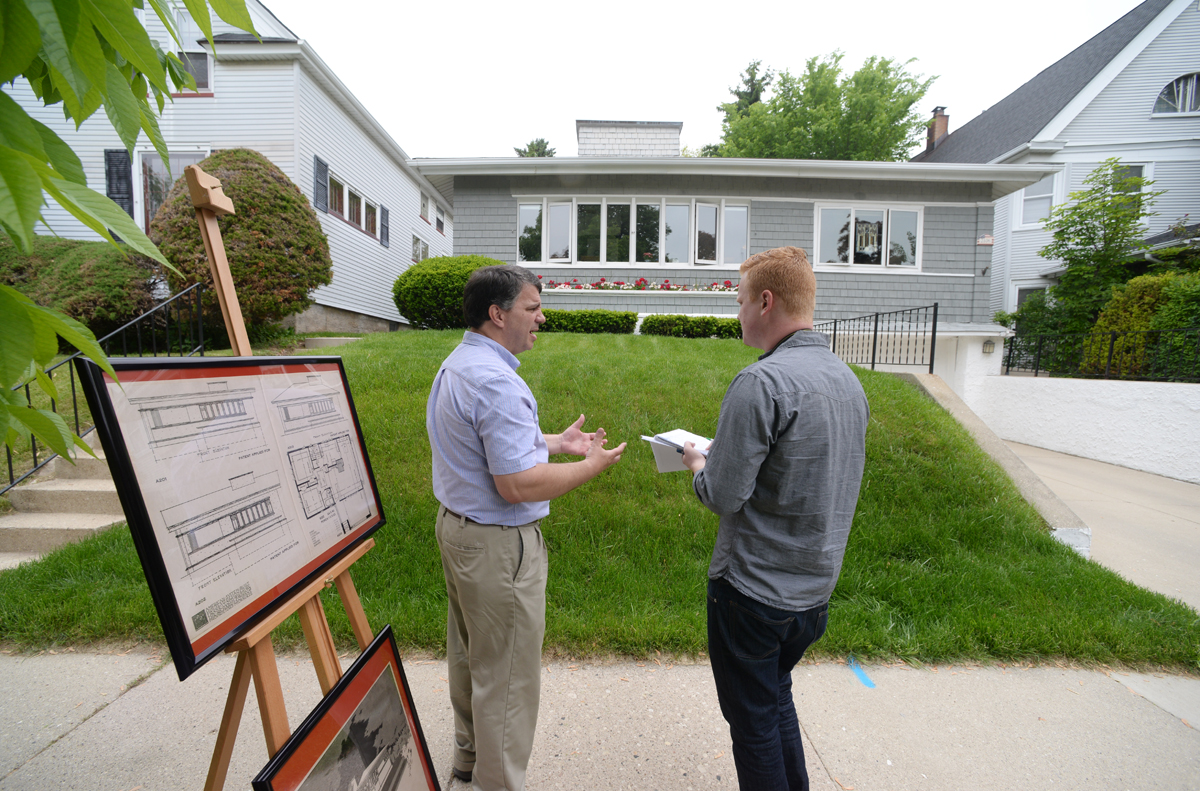
The 2100 block of Newton Avenue in Shorewood, Wis., will no longer be a quiet street, as word spreads of the documentation there of a previously unidentified house designed by Frank Lloyd Wright. The home at 2106 Newton may not look like a Wright home at first glance, but underneath the modern siding, and above the garage which was added in 1976, is one of Wright’s stucco American System-Built homes.

The documentation of Frank Lloyd Wright as the architect of the home at 2106 Newton Avenue, Shorewood, Wis., was announced Friday June 5, 2015. The home, which dates to 1917, is one of Wright's American System-Built homes. It has   /  (c) Mark Hertzberg

The documentation of Frank Lloyd Wright as the architect of the home at 2106 Newton Avenue, Shorewood, Wis., was announced Friday June 5, 2015. The home, which dates to 1917, is one of Wright's American System-Built homes. It has   /  (c) Mark Hertzberg

The documentation of Frank Lloyd Wright as the architect of the home at 2106 Newton Avenue, Shorewood, Wis., was announced Friday June 5, 2015. The home, which dates to 1917, is one of Wright's American System-Built homes. It has   /  (c) Mark Hertzberg

Many people think Wright designed homes only for wealthy clients, but he was keenly interested in affordable housing for the middle class. The American System-Built homes, designed as affordable housing, could be selected from a myriad of designs. The entrance to the house is on the right side (as one faces the house). The original open porch at the entrance was enclosed at an unknown date. It still has the original stucco finish and the leaded glass windows which apparently were the front windows of the house.

The documentation of Frank Lloyd Wright as the architect of the home at 2106 Newton Avenue, Shorewood, Wis., was announced Friday June 5, 2015. The home, which dates to 1917, is one of Wright's American System-Built homes. It has   /  (c) Mark Hertzberg

The documentation of Frank Lloyd Wright as the architect of the home at 2106 Newton Avenue, Shorewood, Wis., was announced Friday June 5, 2015. The home, which dates to 1917, is one of Wright's American System-Built homes. It has   /  (c) Mark Hertzberg

The documentation of Frank Lloyd Wright as the architect of the home at 2106 Newton Avenue, Shorewood, Wis., was announced Friday June 5, 2015. The home, which dates to 1917, is one of Wright's American System-Built homes. It has   /  (c) Mark Hertzberg

The Newton Avenue house, built in 1917, joins six homes in the 2700 block of W. Burnham St. (two single-family homes and four duplexes) as examples of Wright’s American System-Built homes in the Milwaukee area. The two-bedroom Shorewood house is a Model A203. Four other Milwaukee American System-Built duplexes, the Arthur R. Munkwitz Duplex Apartments, were demolished in 1973 to widen a street.

The documentation of Frank Lloyd Wright as the architect of the home at 2106 Newton Avenue, Shorewood, Wis., was announced Friday June 5, 2015. The home, which dates to 1917, is one of Wright's American System-Built homes. It has   /  (c) Mark Hertzberg

The documentation of Frank Lloyd Wright as the architect of the home at 2106 Newton Avenue, Shorewood, Wis., was announced Friday June 5, 2015. The home, which dates to 1917, is one of Wright's American System-Built homes. It has   /  (c) Mark Hertzberg

The documentation of Frank Lloyd Wright as the architect of the home at 2106 Newton Avenue, Shorewood, Wis., was announced Friday June 5, 2015. The home, which dates to 1917, is one of Wright's American System-Built homes. It has   /  (c) Mark Hertzberg

The documentation of Frank Lloyd Wright as the architect of the home at 2106 Newton Avenue, Shorewood, Wis., was announced Friday June 5, 2015. The home, which dates to 1917, is one of Wright's American System-Built homes. It has   /  (c) Mark Hertzberg

The documentation of Frank Lloyd Wright as the architect of the home at 2106 Newton Avenue, Shorewood, Wis., was announced Friday June 5, 2015. The home, which dates to 1917, is one of Wright's American System-Built homes. It has   /  (c) Mark Hertzberg

The documentation of Frank Lloyd Wright as the architect of the home at 2106 Newton Avenue, Shorewood, Wis., was announced Friday June 5, 2015. The home, which dates to 1917, is one of Wright's American System-Built homes. It has   /  (c) Mark Hertzberg

The first person to tell owners Roger and Pat Wisialowski that they may be living in a Wright home was the late Richard Johnson of Evanston, Illinois. Johnson had a passion for searching for previously unknown Wright works. However, none of the ones he believed Wright designed were documented and authenticated as Wright’s, until Mike Lilek researched the little house on Newton Avenue over the last year and found proof that it is, indeed, a Wright home. Lilek is nationally recognized as an expert on the subject of Wright’s American System-Built homes.

The documentation of Frank Lloyd Wright as the architect of the home at 2106 Newton Avenue, Shorewood, Wis., was announced Friday June 5, 2015. The home, which dates to 1917, is one of Wright's American System-Built homes. It has   /  (c) Mark Hertzberg

Lilek, left, is interviewed by Jeff Rummage of the “Shorewood Now news site.

He has spearheaded the restoration of two of the Burnham Street houses for Frank Lloyd Wright Wisconsin. He extensively researched the Newton Avenue house and has presented his findings to the Frank Lloyd Wright Foundation, the organization which oversees all things Wright and was the former home of Wright’s archive. He announced his findings June 5, 2015 at a press event in front of the house. He has been transparent about his research, and has posted a link to it:

www.wrightinwisconsin.org

Link toMary Louise Schumacher’s feature story in the Milwaukee Journal Sentinel:

http://www.jsonline.com/entertainment/sleuthing-reveals-shorewood-home-was-

designed-by-frank-lloyd-wright-b99513440z1-306231261.html