“Two Taliesins” (really three) at SCJ

(c) Text by Mark Hertzberg / Photos by Mark Hertzberg for SC Johnson

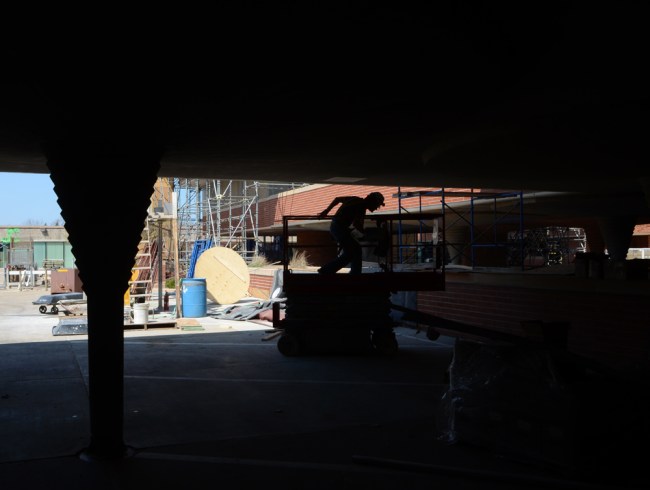
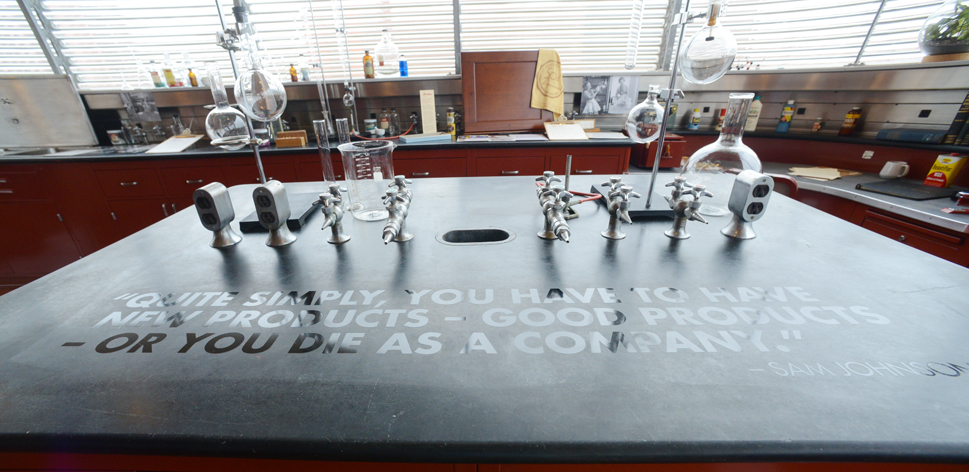
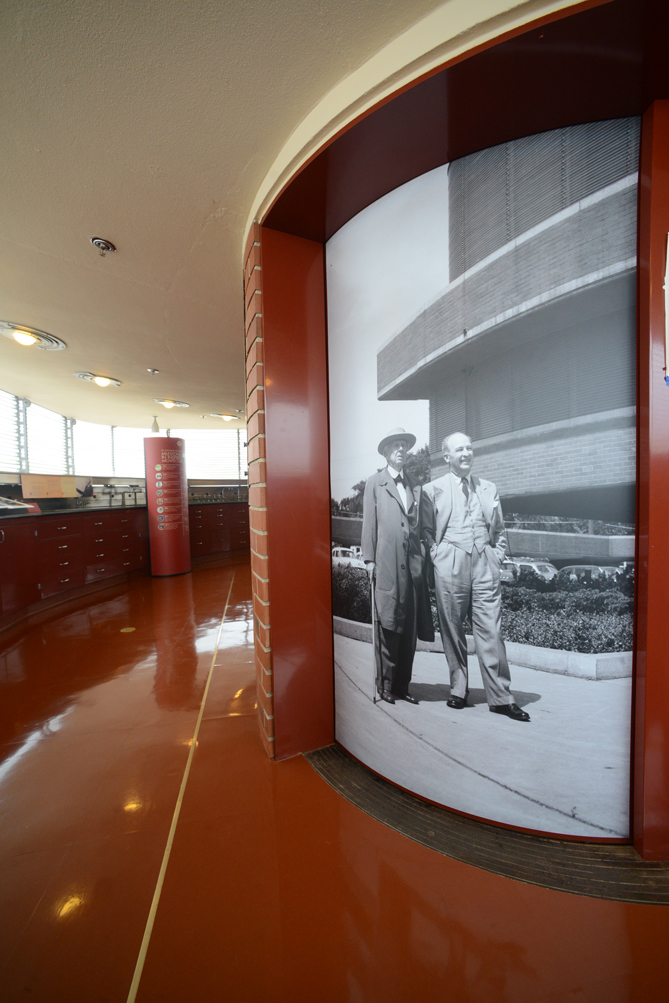
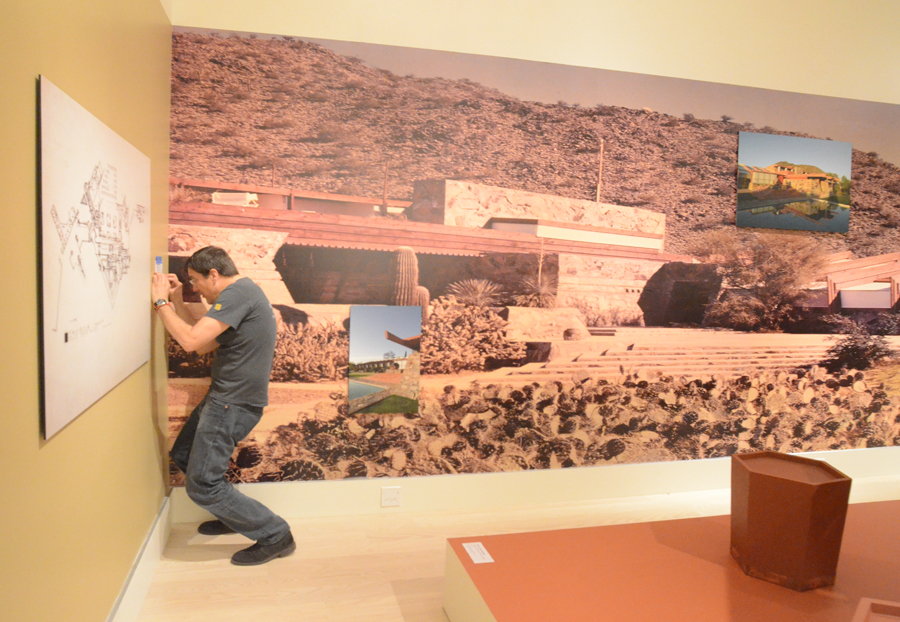
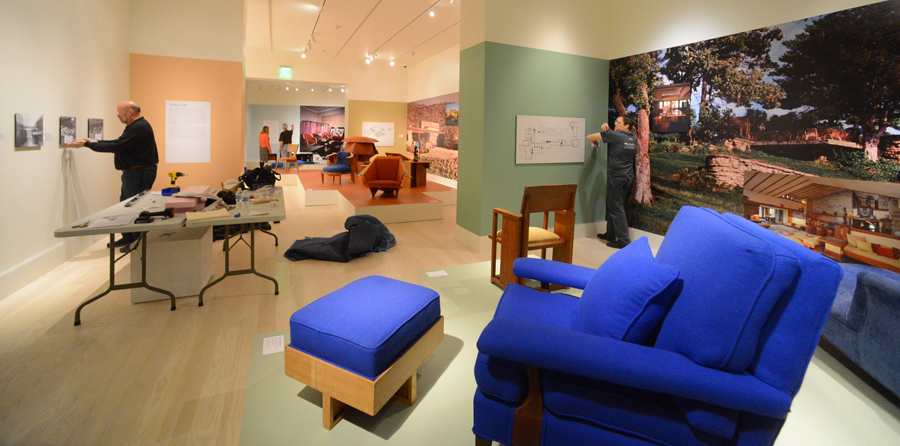
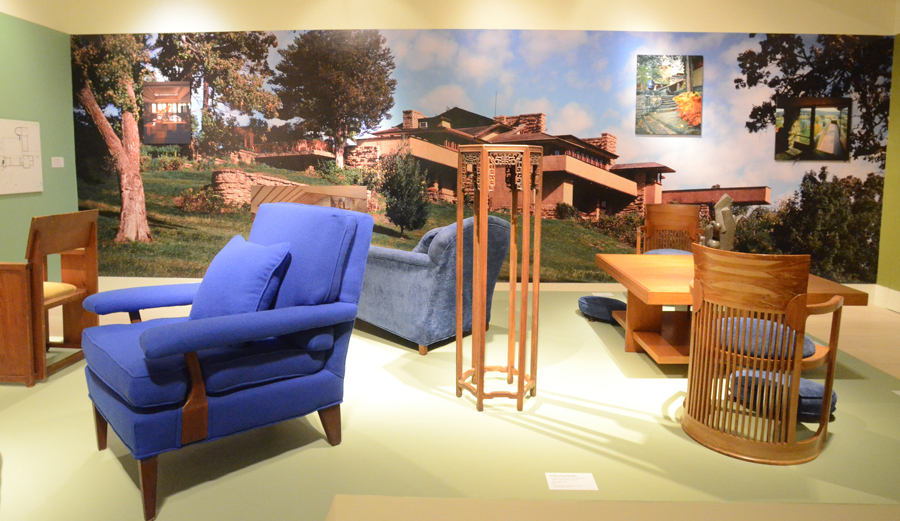
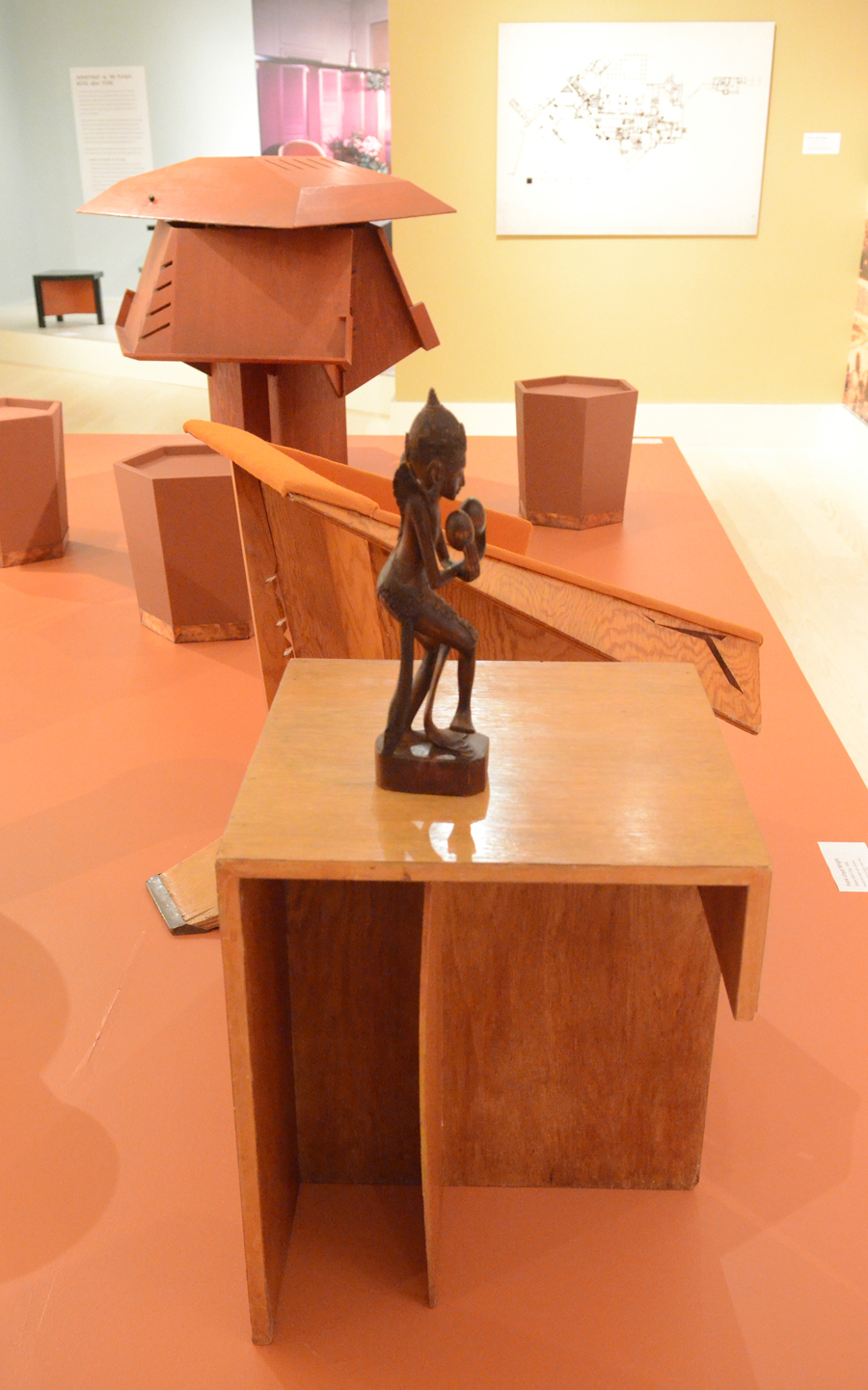
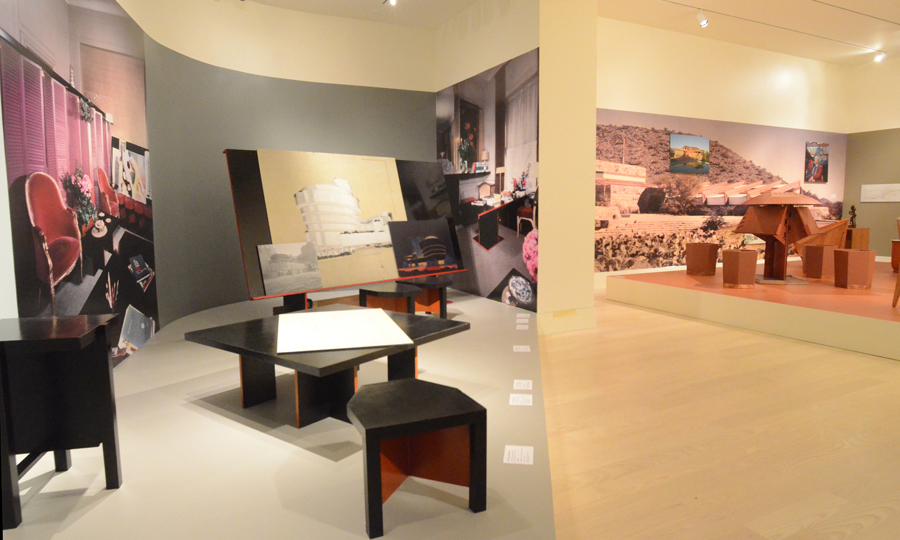
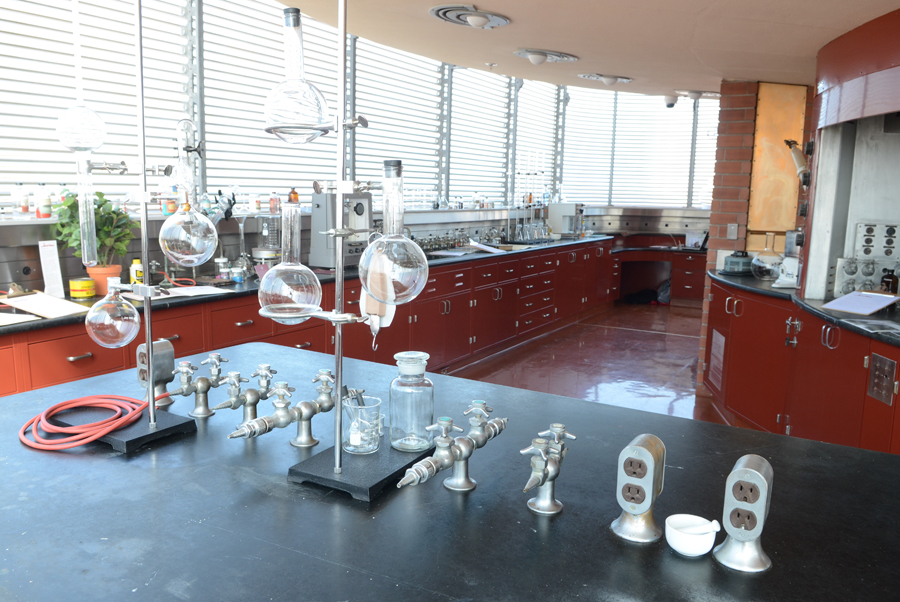
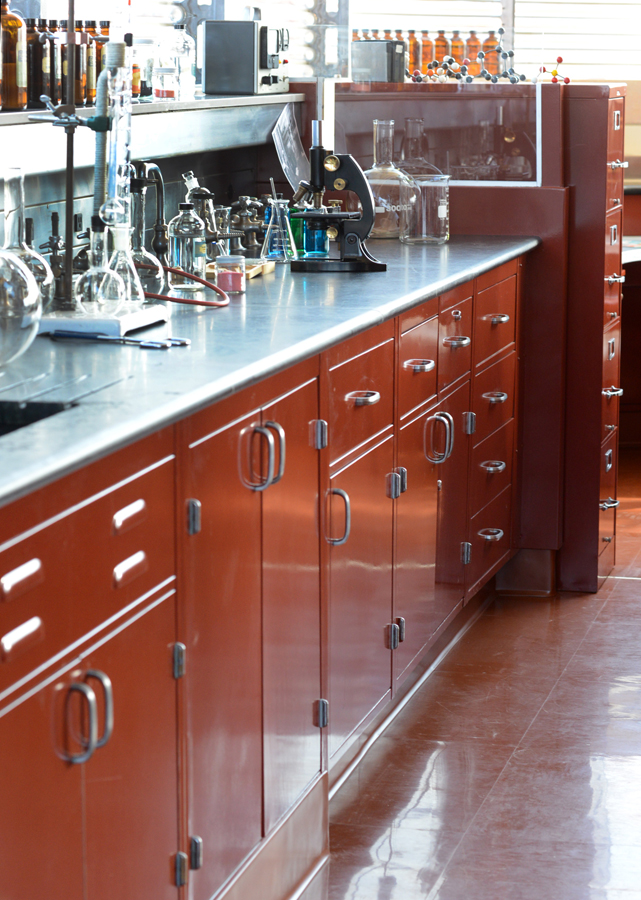
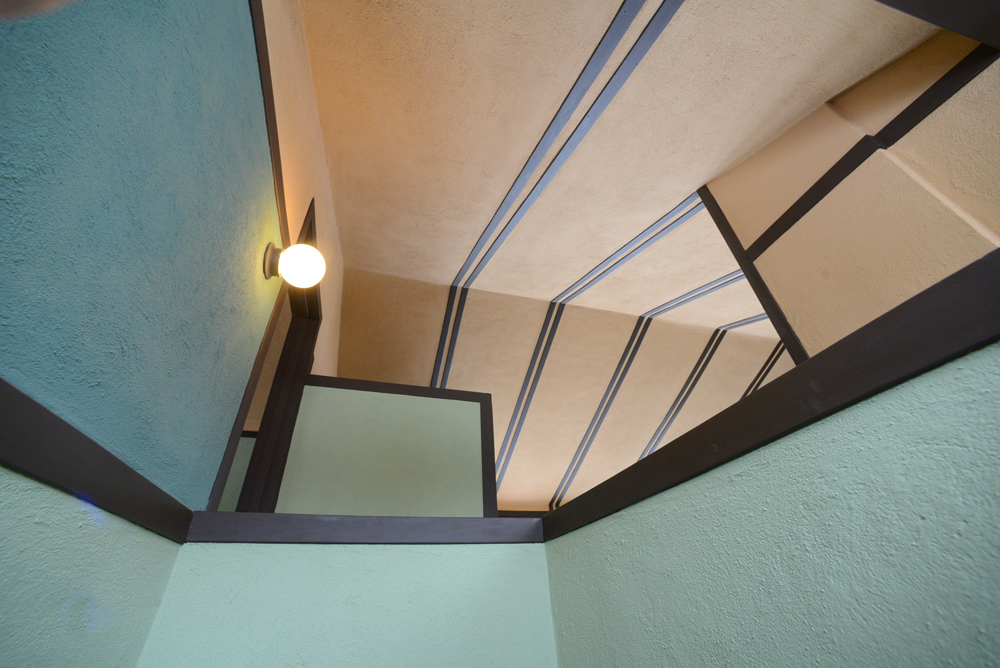
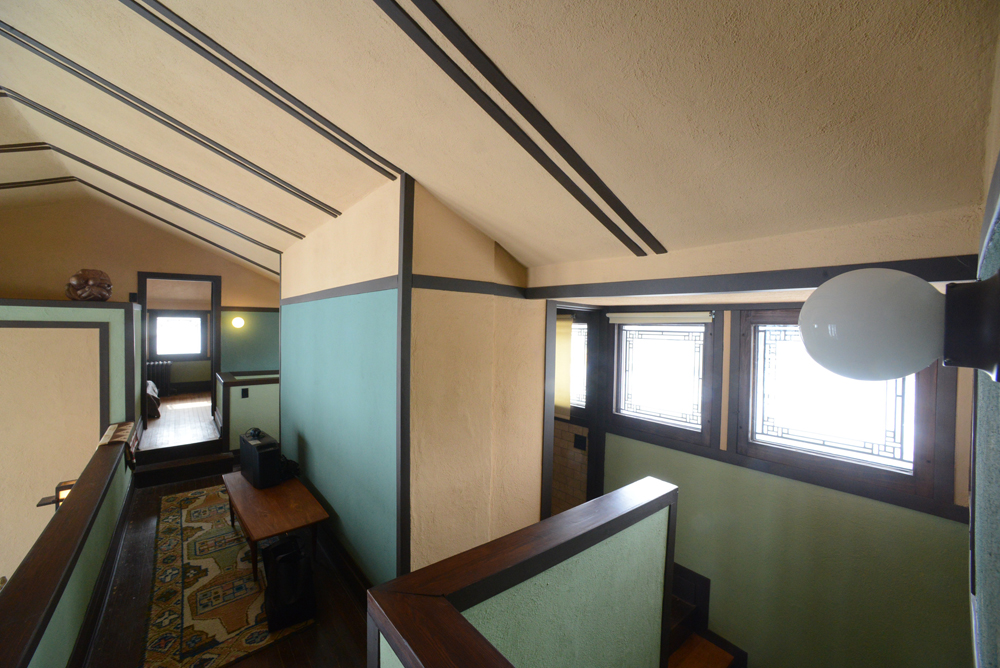
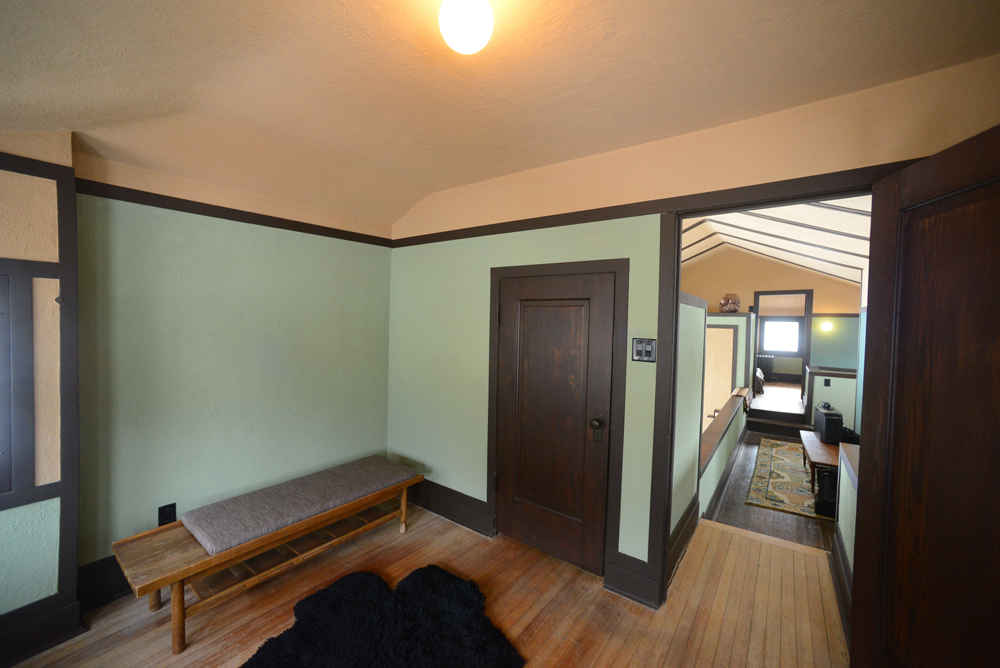
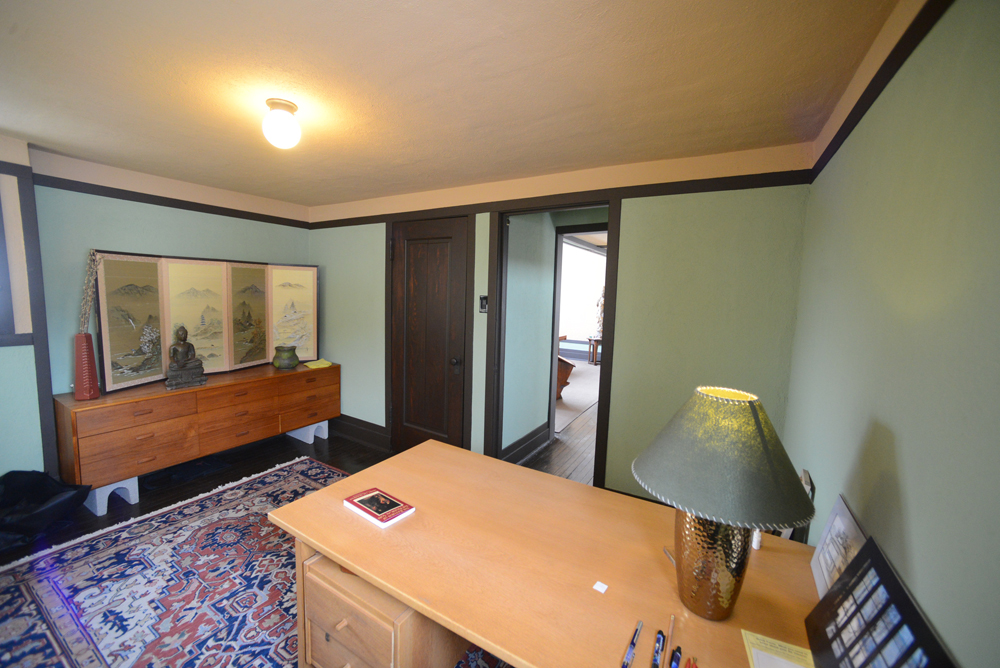
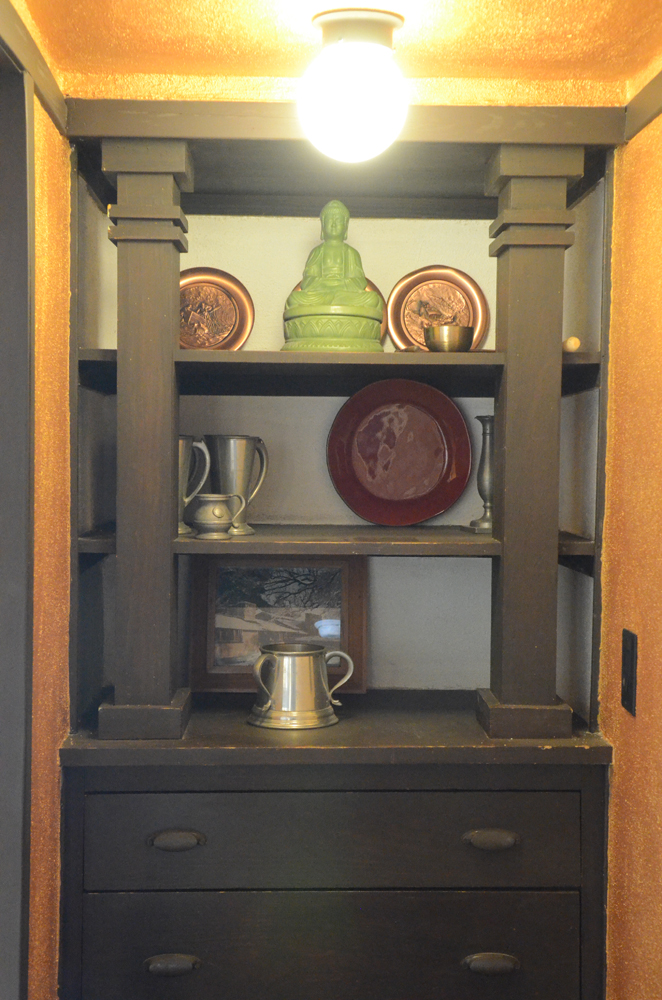
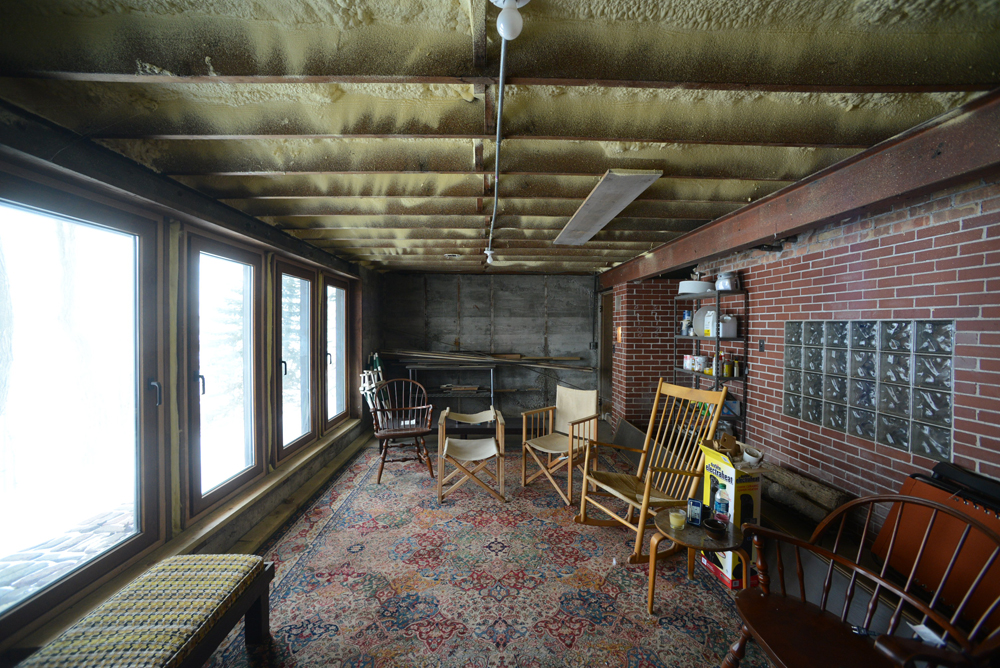
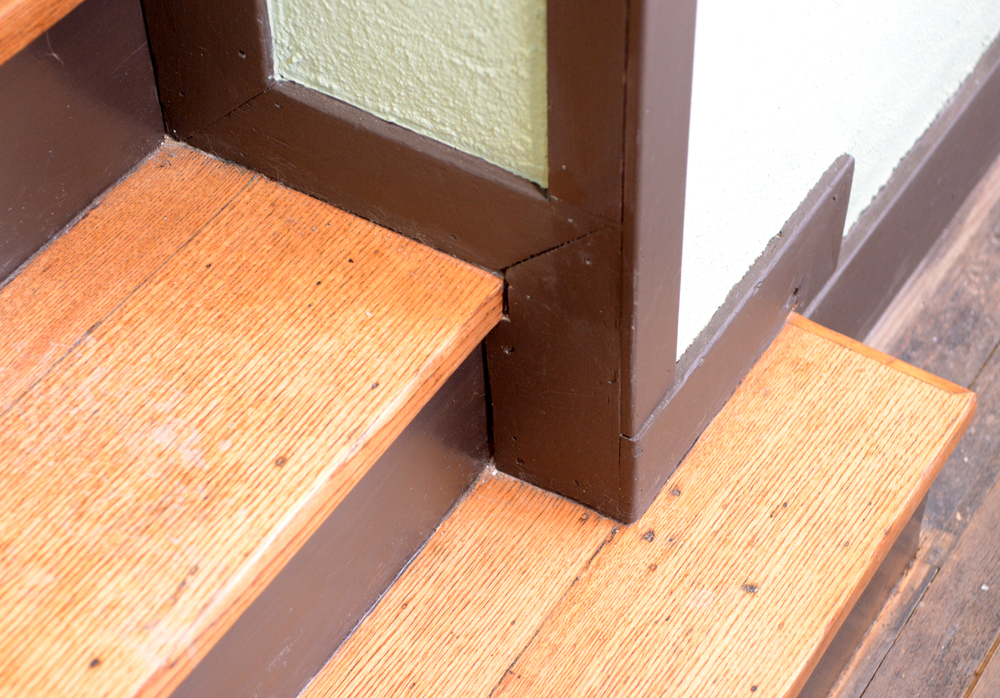
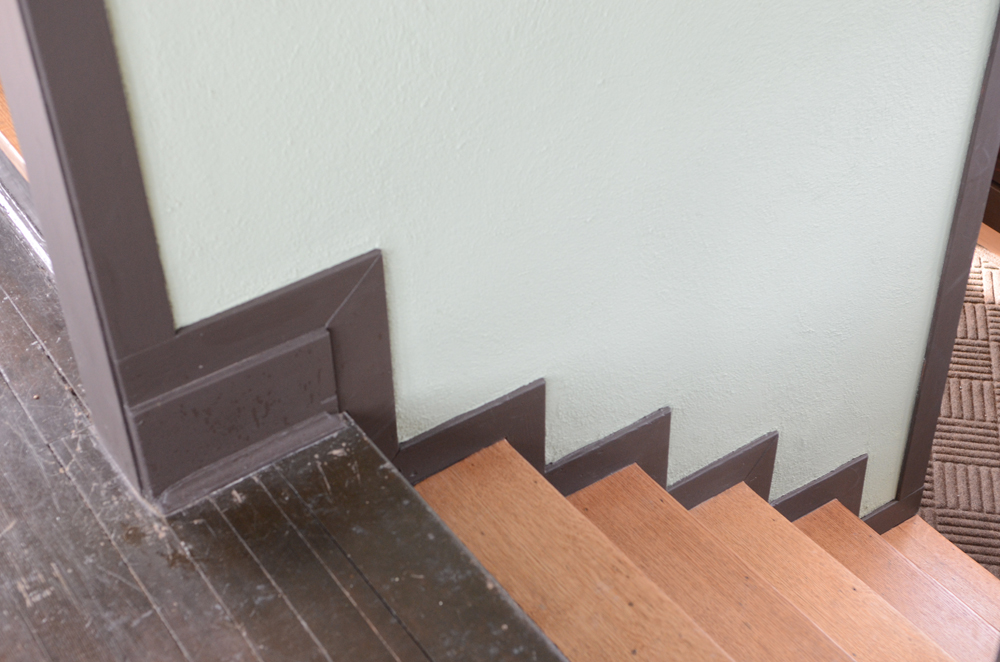
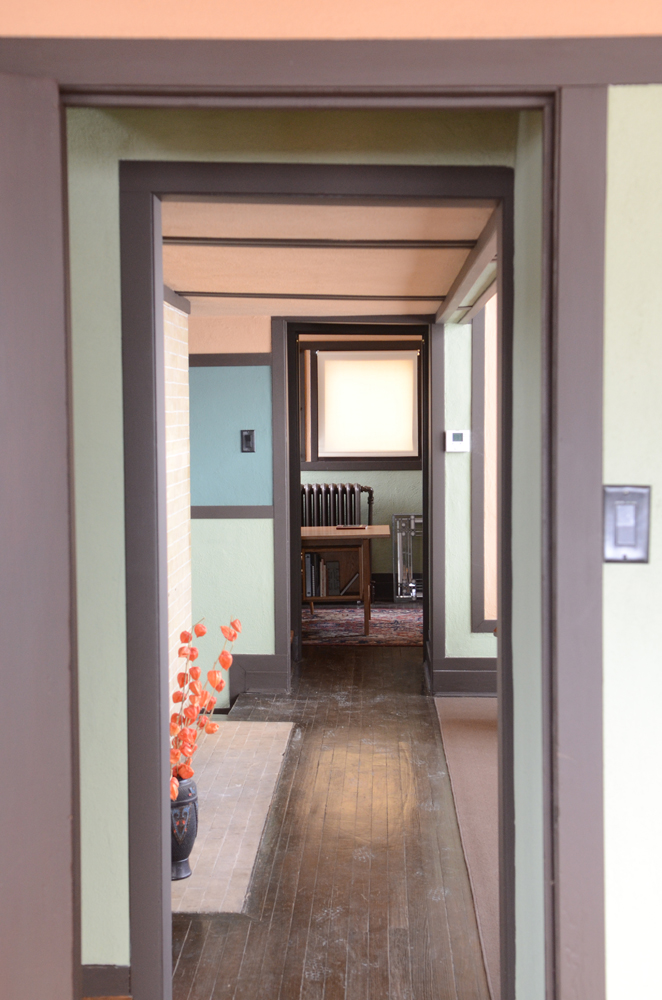
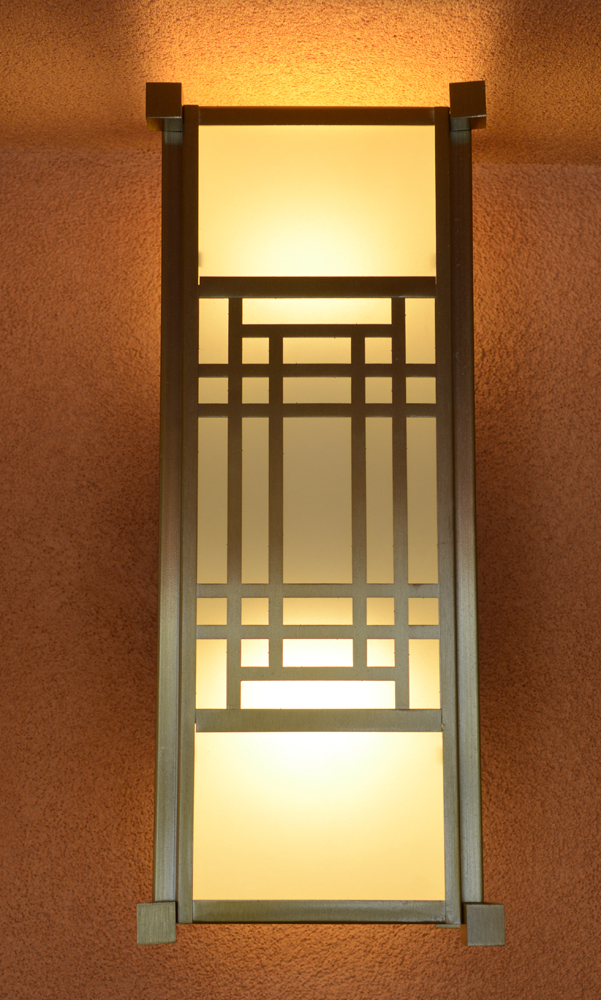
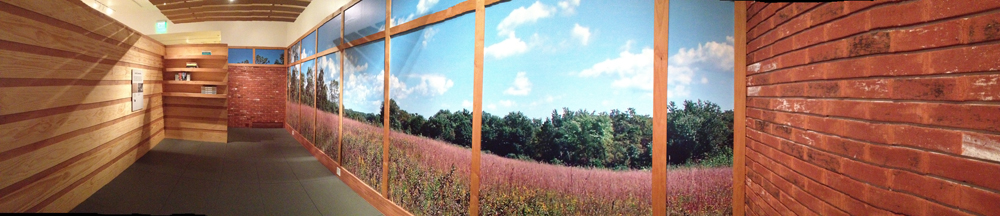
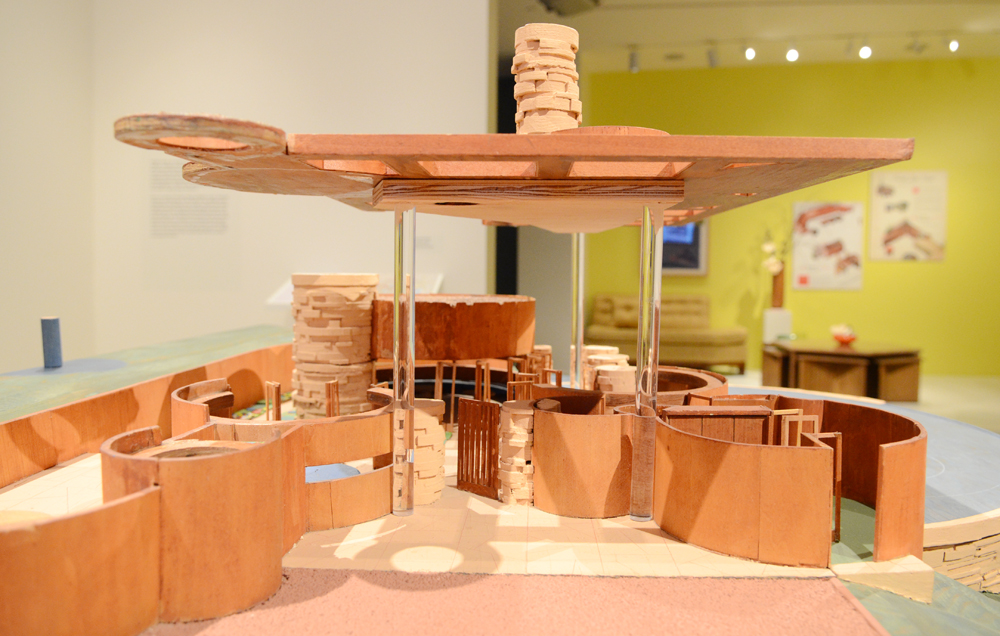
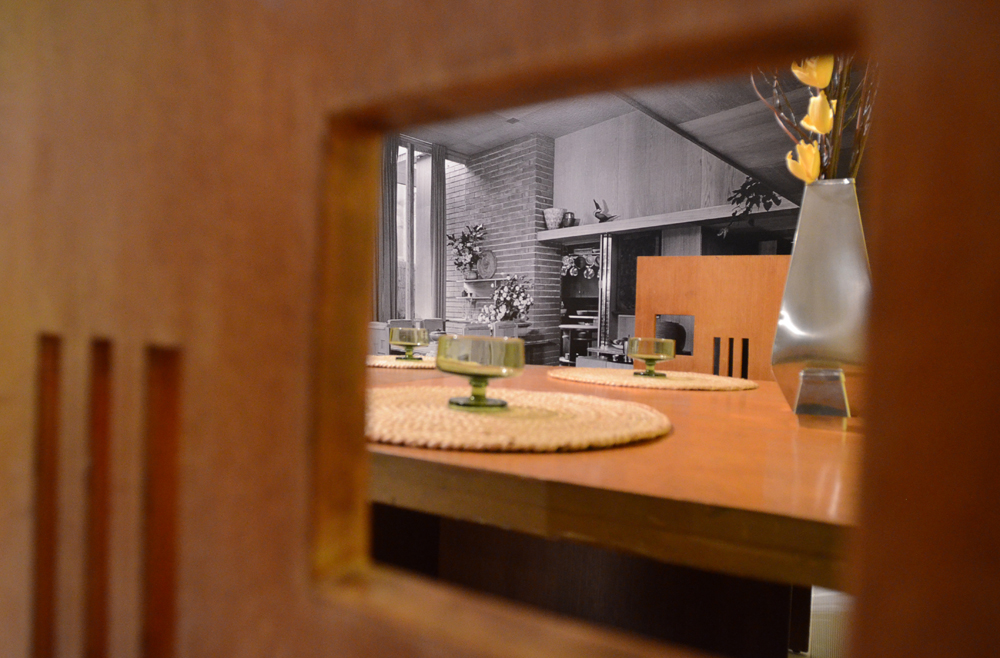
The third iteration of “At Home with Frank Lloyd Wright” opens Friday in Fortaleza Hall on the SC Johnson campus in Racine. The exhibition is entitled “The Two Taliesins,” but in addition to Taliesin and Taliesin West, it also includes what has sometimes been referred to as Taliesin East, Wright’s suite at the Plaza Hotel in New York. Workers were completing the installation when I photographed it last week.

Image

Image

A publicity statement from SC Johnson describes the exhibition: 

‘Wright used both homes as laboratories where he could develop and test his architectural ideas. The exhibit will compare and contrast how Wright incorporated his signature and revolutionary “organic” design concepts into his own homes, each of which reflected the very different landscapes and climates in which they were built.   

‘Artifacts from Wright’s Wisconsin and Arizona homes will be on display that simulate their natural settings and convey their significance to the Taliesin concept. The exhibit will also feature a collection of rare photos and videos that show Wright at home. In addition, visitors will learn about the central role that color played in Wright’s designs of the Taliesins.”

Image

The gallery opened in 2012 with an exhibition devoted to Wright’s Prairie-style homes. His Usonian homes were the theme of the 2013 exhibition in the gallery.

Image

Image

Image

Image

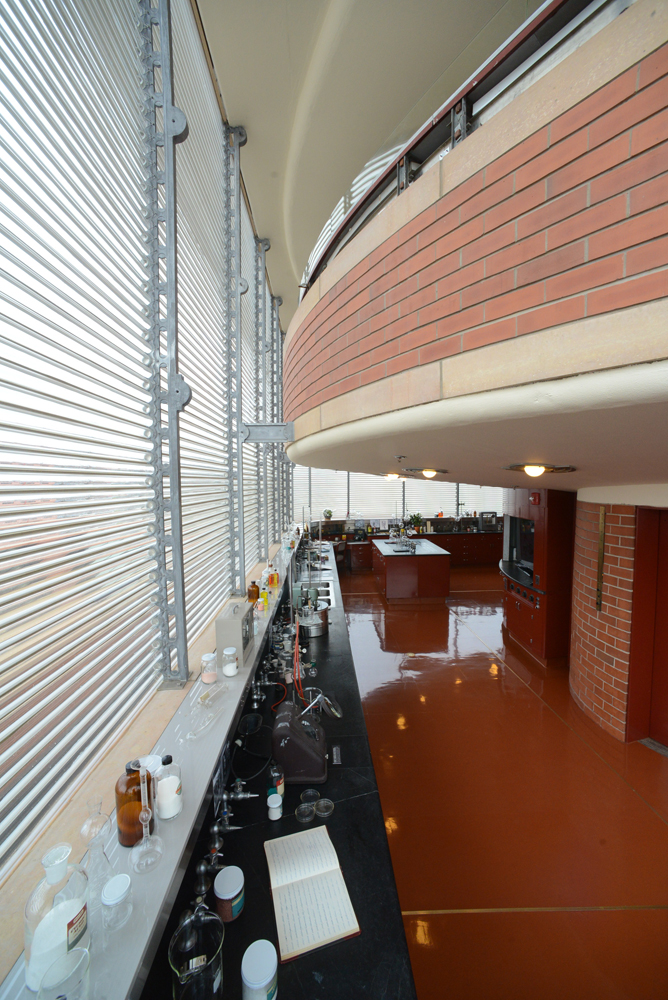
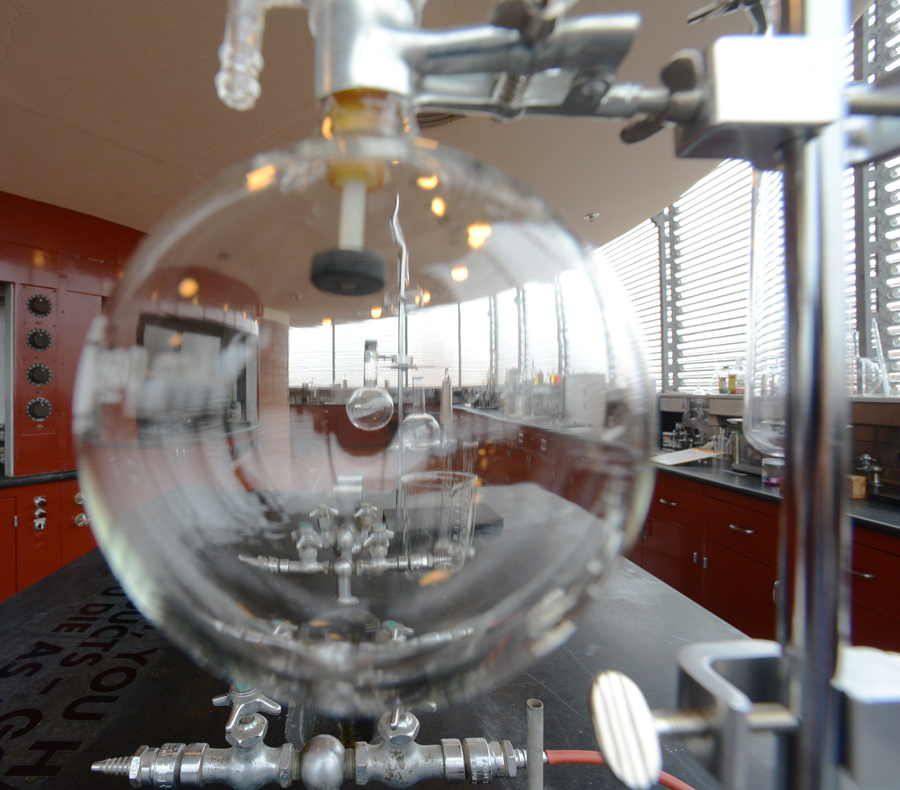
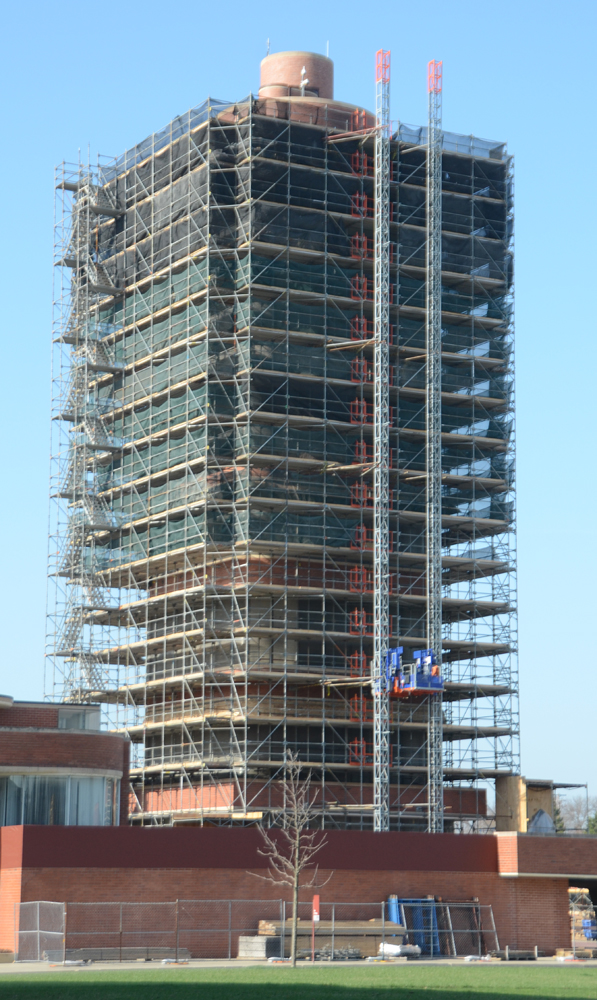
The Wright-designed SC Johnson Research Towers opens for the first public tours ever on Friday, as well. I have had the privilege of photographing several times during the 2013 restoration of the tower and the installation of the exhibits in the Tower over the last few weeks (see previous posts). For information about making reservations for tours, go to: http://www.scjohnson.com/en/company/visiting.aspx

Inside the SC Johnson Research Tower

(c) Mark Hertzberg

Image

The response to the opening of the SC Johnson Research Tower for the first public tours ever has been so strong that Sunday tours will now be available, as well.  http://www.scjohnson.com/en/company/visiting.aspx

Image

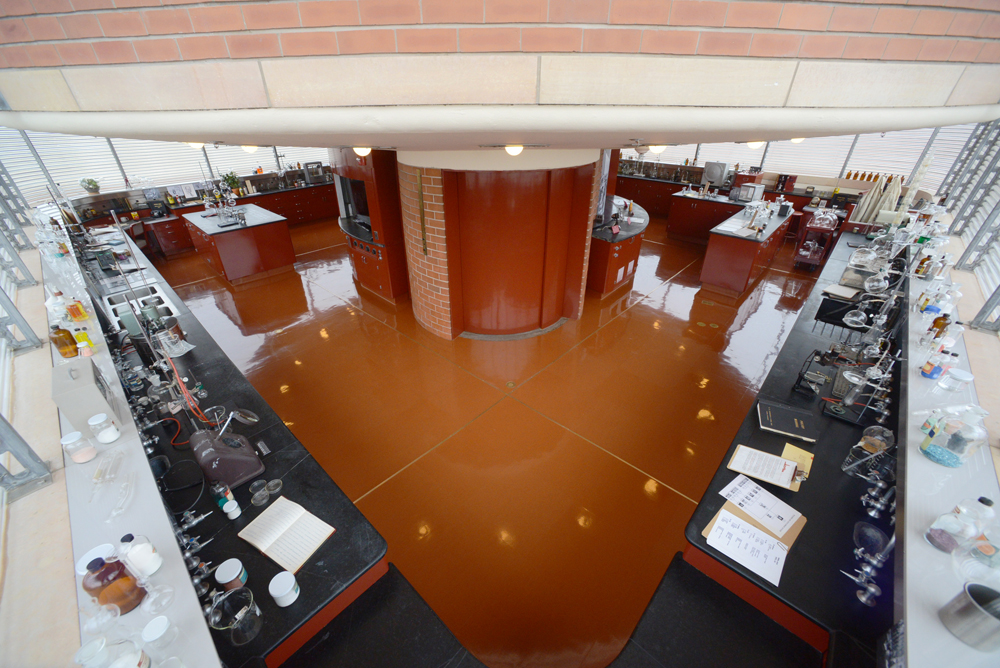
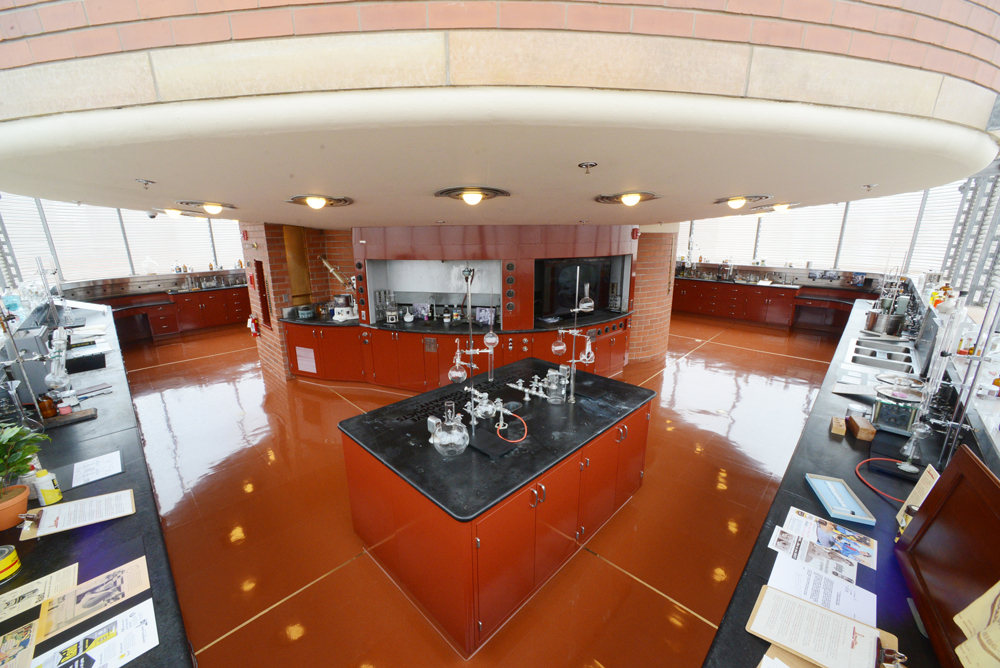
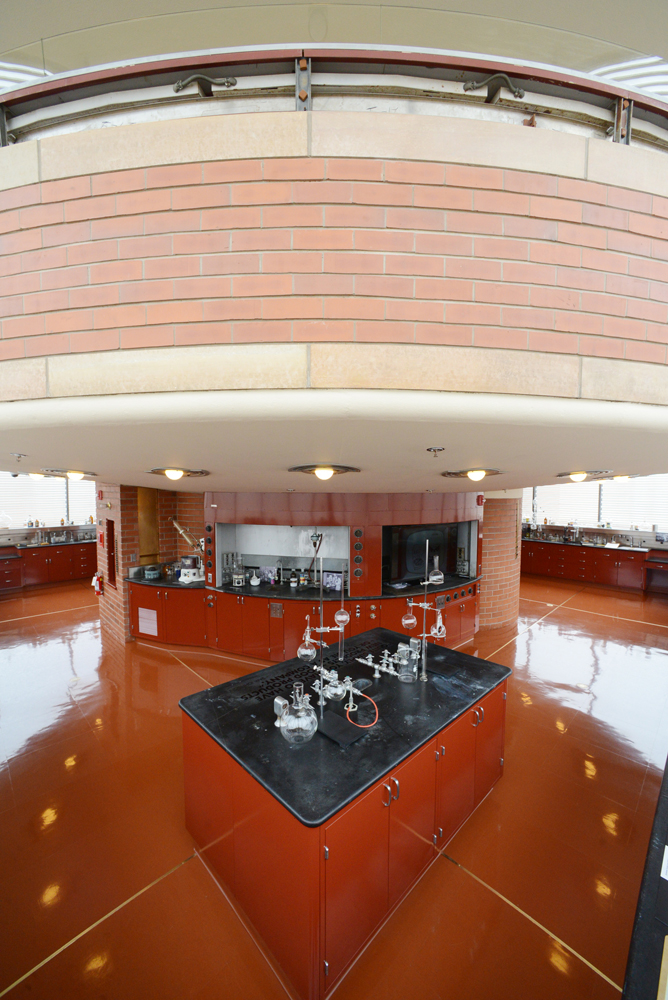
Two floors of the landmark (the “I”word is overused) building have been restored and furnished as they looked in November, 1950 when the building opened. Tours begin May 2. Here is a preview:

Image

Image

ImageImage

Image

Image

Image

Image

ImageImage

Image


Image


Hardy House Rehabilitation

Photos and text (c) Mark Hertzberg

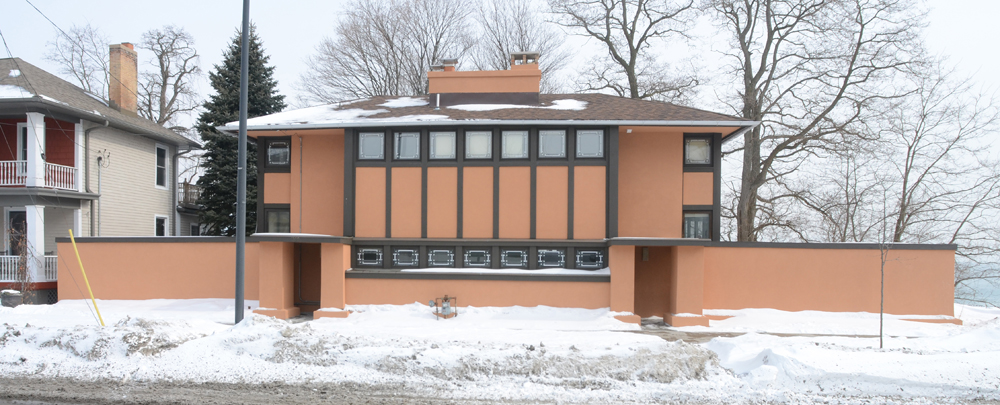
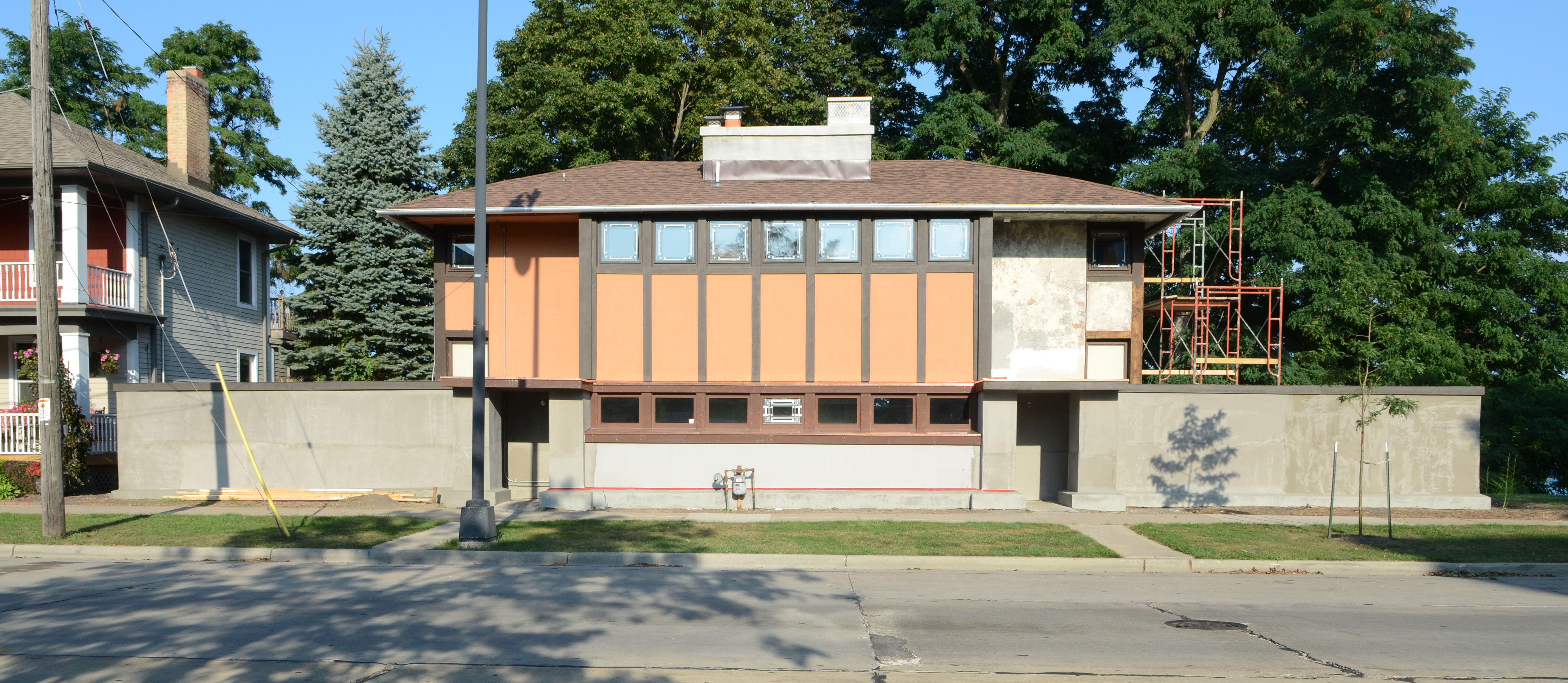
Eugene Szymczak became the seventh steward of Frank Lloyd Wright’s Thomas P. Hardy House in Racine, Wisconsin on September 16, 2012. He undertook a rehabilitation which has literally saved the house. I have posted many photos of the process on this website. Here is your first complete look at the house after the work finished. The photos were shot February 14. Landscaping is not been done yet; that will likely hide the gas meter which is in front of the house. Many people have been startled by Gene’s choice of color: terra cotta. Their anxiety diminishes when they learn that the exterior and interior were restored in what are thought to be the original colors. If you still doubt the choice of exterior color, look at Wright’s Gardener’s Cottage at the Darwin D. Martin House, from the same period.

Image

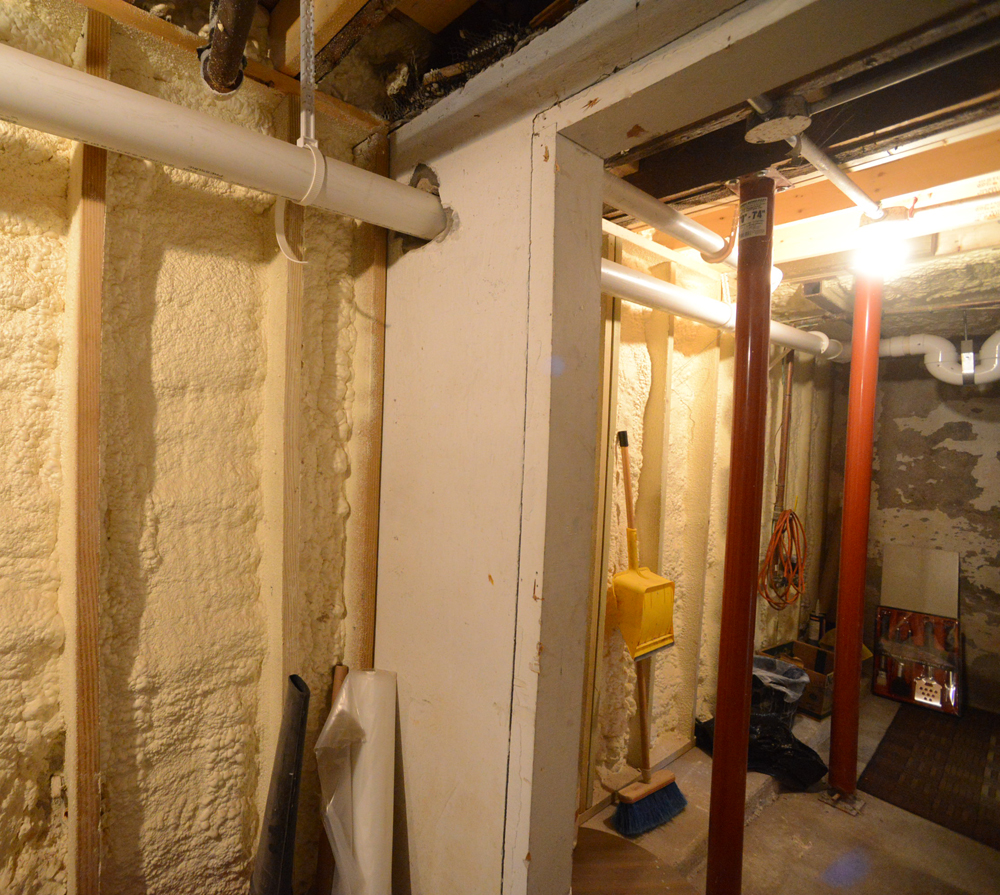
Surprisingly, the biggest challenge to the stability of the structure was the Main Street side rather than the lake side of the house. Daylight was visible in the “heater room” or sub-basement hallway which is below grade, between the two doorways. A concrete slab next to the south (right) door had partially caved in and there was extensive rotting of the wood foundation beams. The house was jacked up, 1/8″ of an inch at a time and four permanent floor-to-ceiling posts were installed. Two of the posts are shown at right, below.

Image

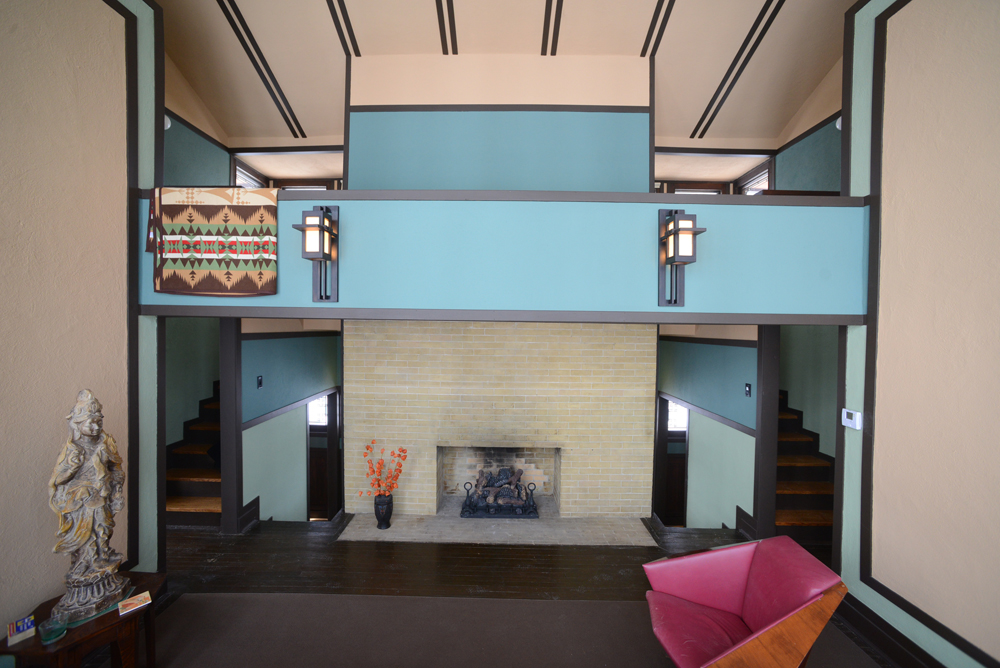
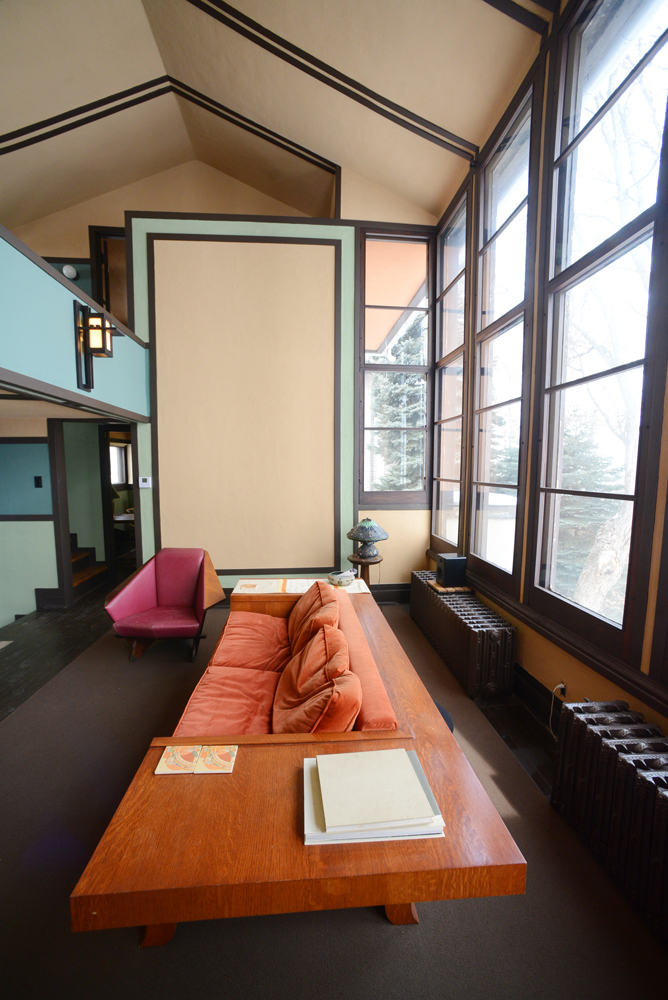
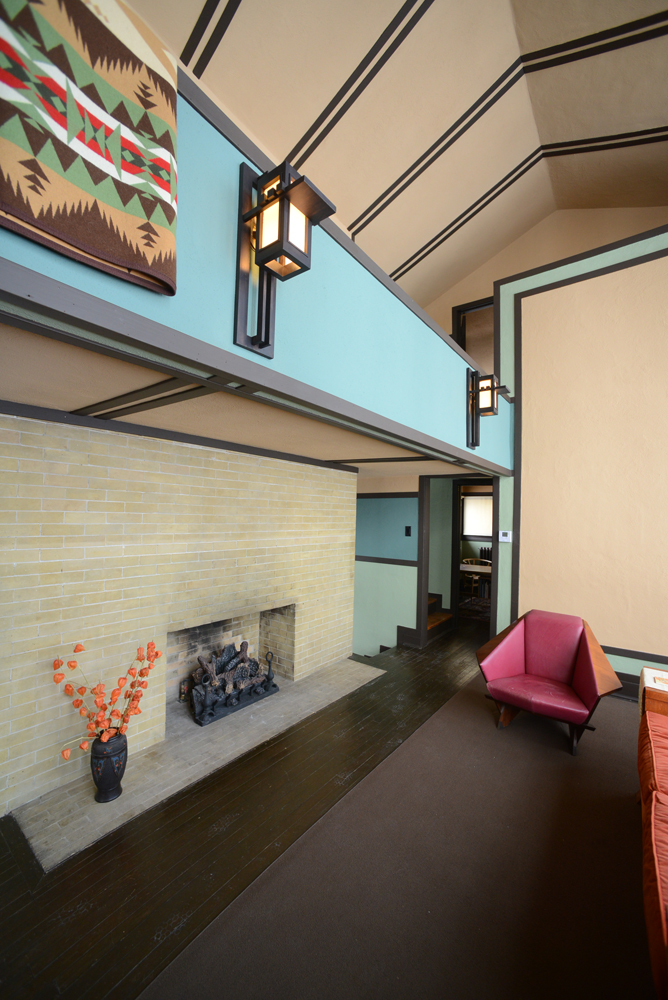
The center of this wonderful house is, of course, the living room. However, as Jonathan Lipman remarked to me, unlike many of Wright’s Prairie-style homes, the fireplace (which is not ornate) is secondary in importance in this living room. One has his or her back to the fireplace when looking out the two-story living room windows at Lake Michigan, below the house. The living room balcony was deflected when Gene moved in. Workers found electric wiring and gas lines for two light fixtures on the face of the balcony when the plaster was removed so it could be repaired. Anne Sporer Ruetz, who grew up in the house after Hardy lost it at sheriff’s auction in 1938, does not remember any lights there. It is possible none were ever installed. Gene had two fixtures made, following the design of lights at the (now-demolished) Little House in Minnesota. Similar wall sconces were made for the dining room.

Image

The dominant vertical space in the middle of the photo below is the back wall of the bedroom closets

Image

Image

This is the view from the living room balcony:

Image

This is a look at the ceiling as one climbs the stairs from the living room to the balcony:

Image

Image

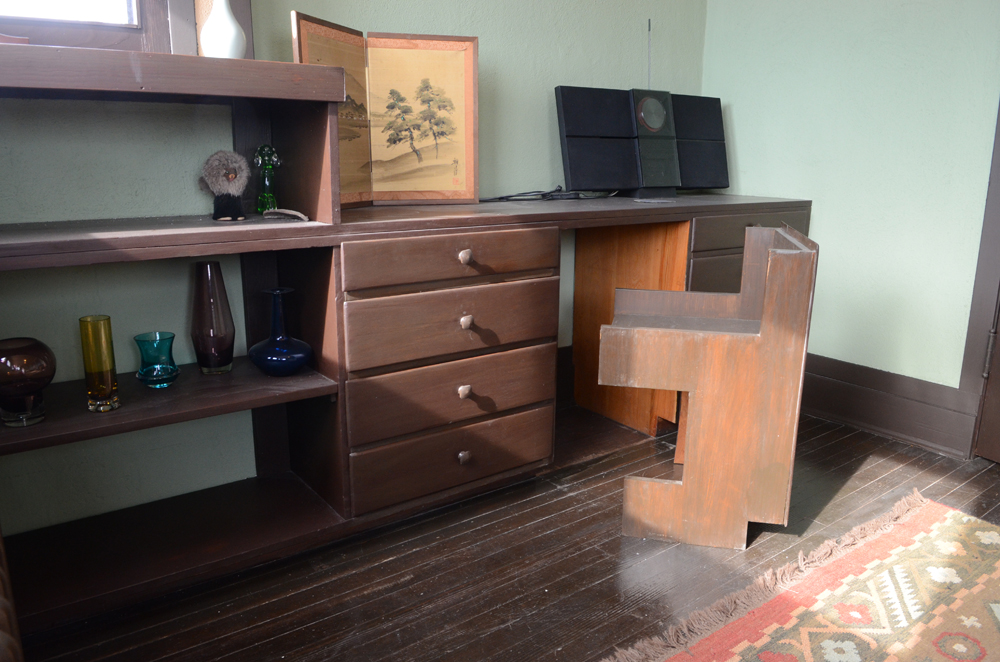
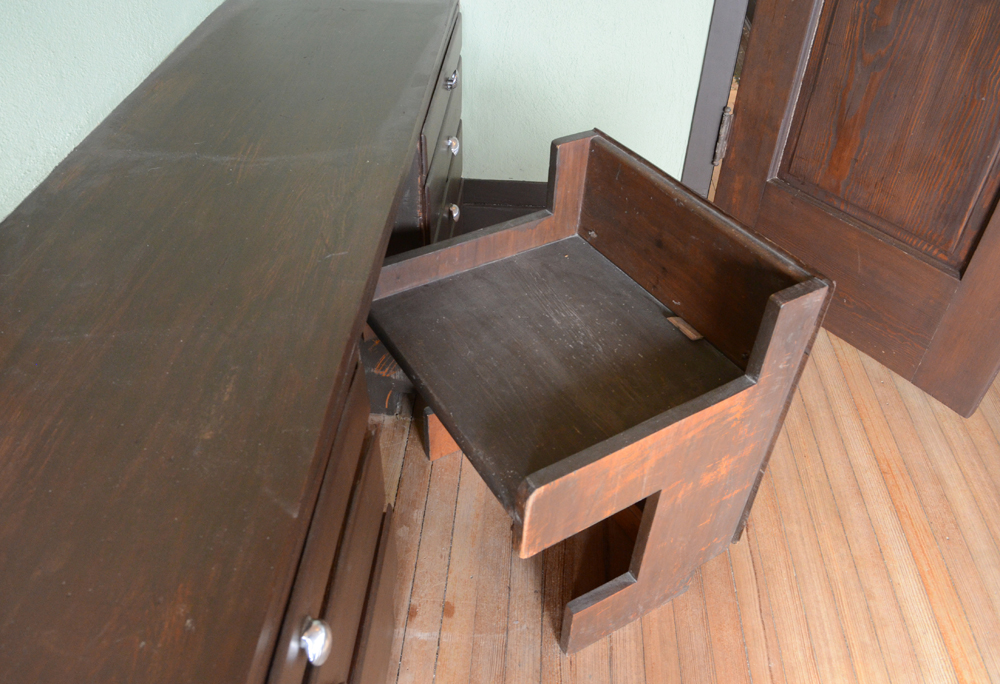
There is a bedroom at each end of the house on the living room and living room balcony levels. The two at the south end of the house have built-ins including these pull-out chairs:

Image

Image

Image

Image

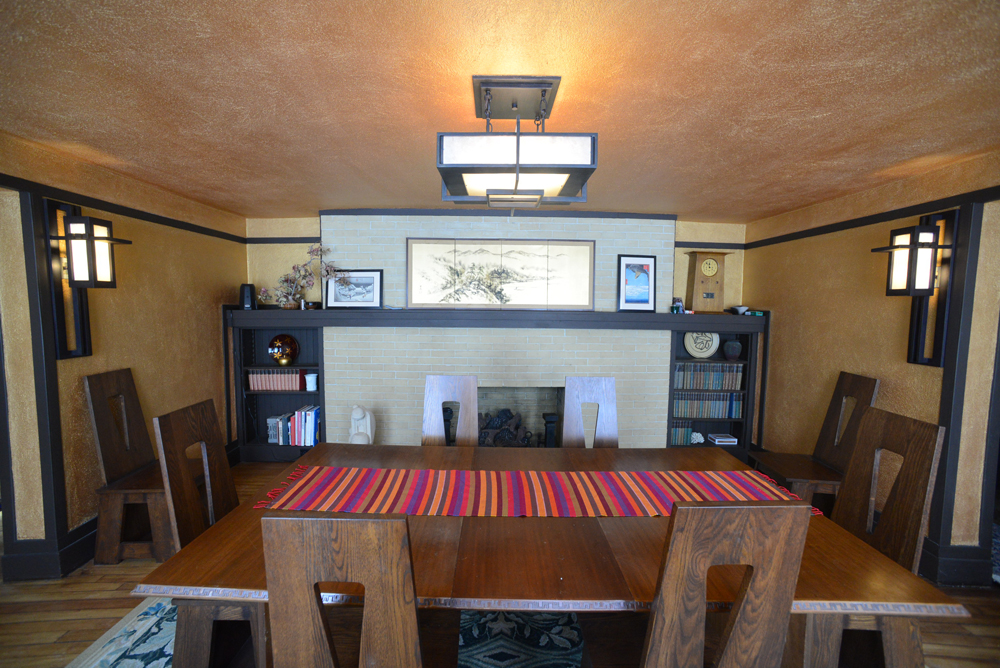
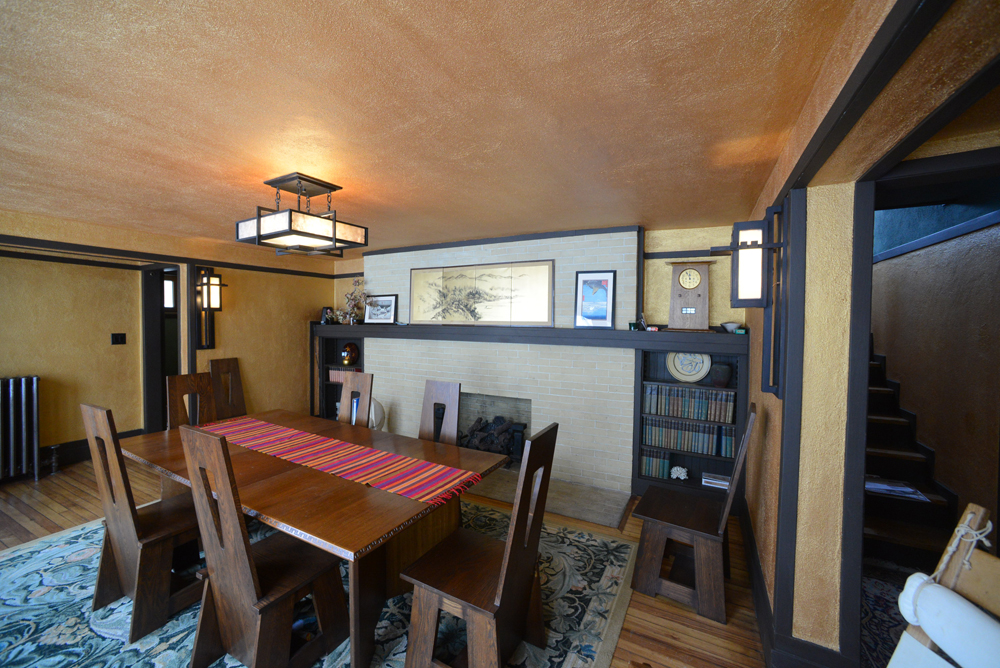
The dining room is one level below the living room. There are built-ins on either side of the fireplace and on either side of the dining room terrace windows and door:

Image

Image

Image

Image

The second owners of the house, the Sporers (1938-1947) had the dining room terrace rebuilt with a recreation room underneath. The room is not finished. The terrace originally ended in a stucco wall. Five floor-to-ceiling windows, with a door in the middle one, became the new terrace wall on the lake bluff, after the remodeling:

Image

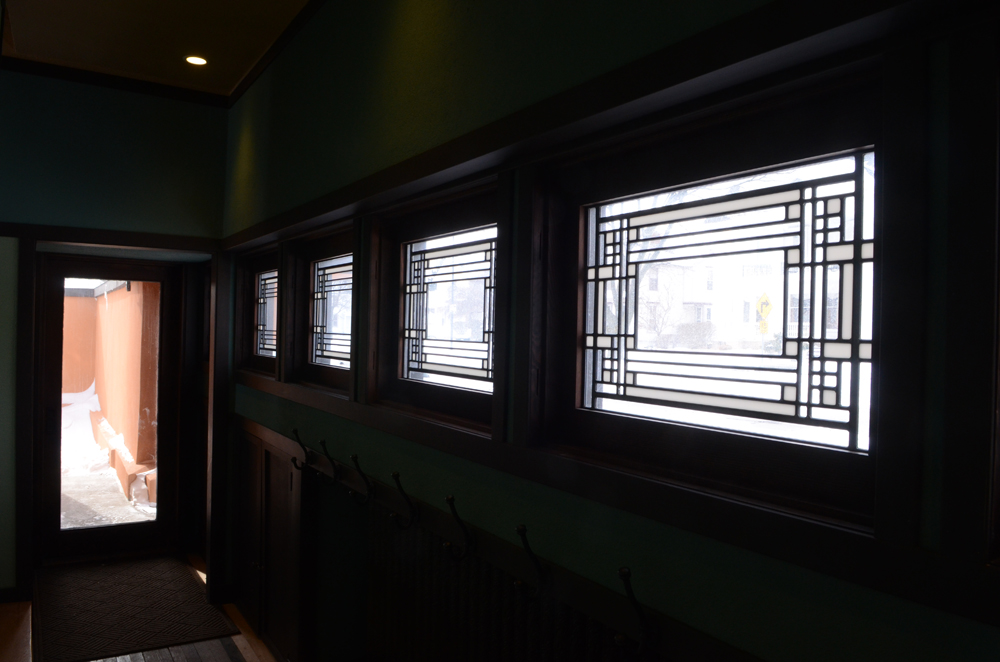
The house was constructed with pocket doors. The Archers, the third owners of the house (1947-1957) replaced them with conventional hinged doors because the pocket doors were difficult to use in icy and snowy conditions. Szymczak put in new pocket doors. He chose doors with glass so one can see into the courtyards from the entry hall, and also to let more light into the hallway:

Image

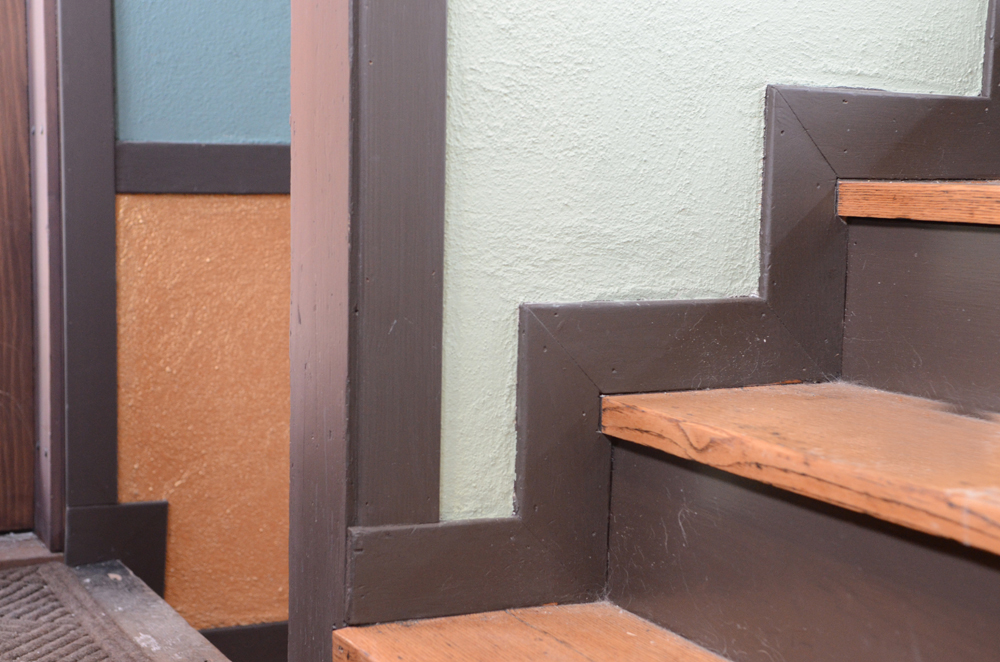
Various design details:

Image

Image

Image

Image

Image

We end your tour with one of the new light sconces Gene had made to guide guests to the doorway, as they come in from Main Street:

Image

SCJ Tower Relit!

Photos by Mark Hertzberg for SC Johnson (c)

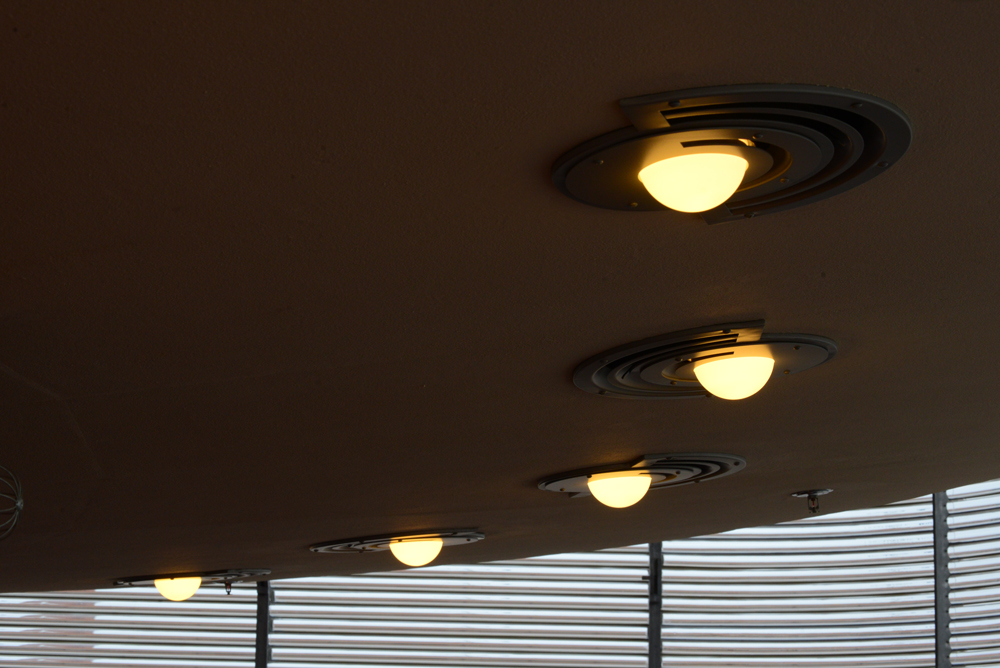
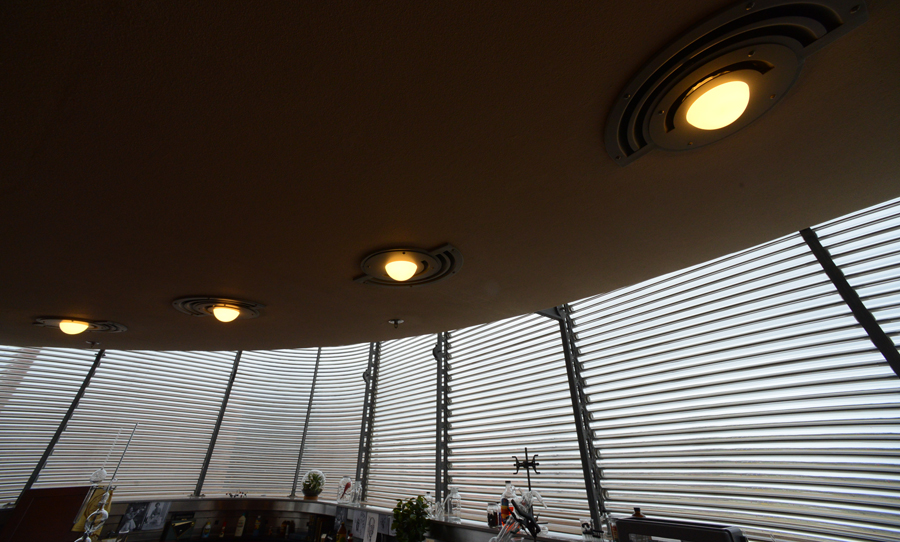
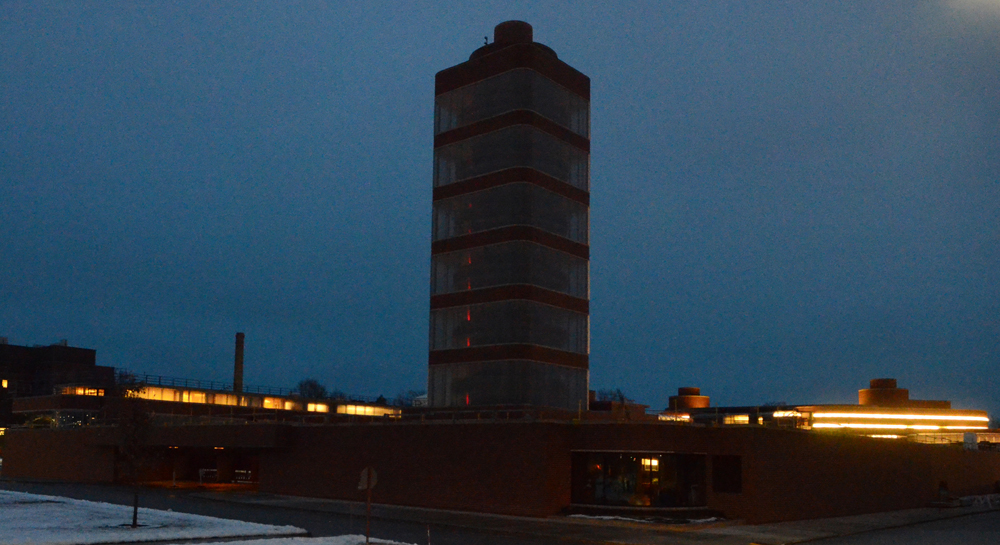
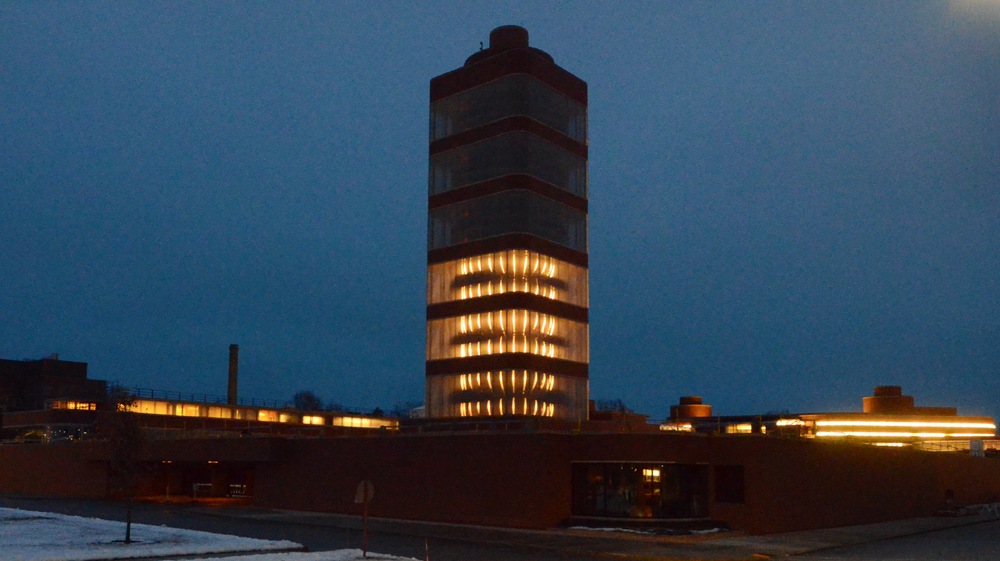
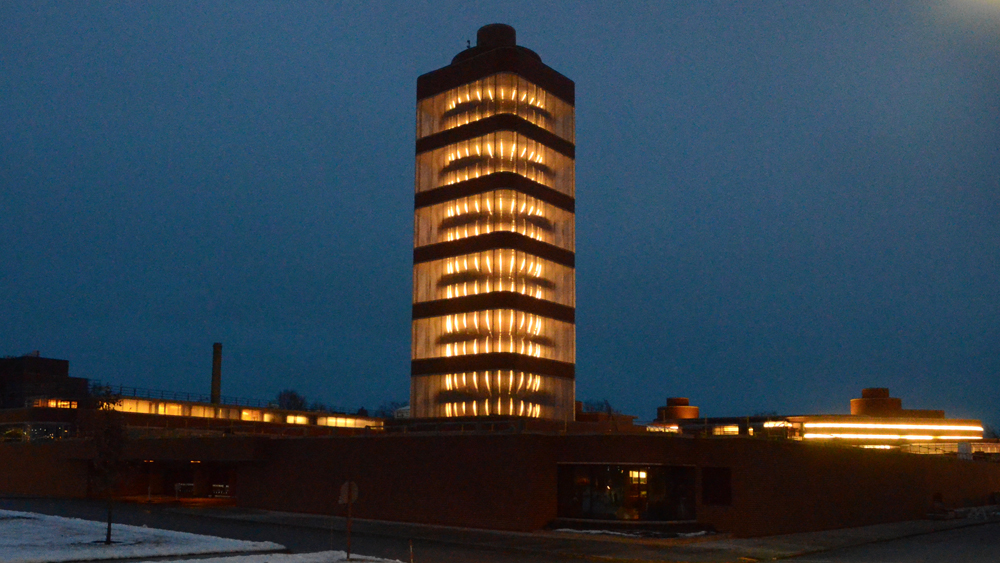
The Frank Lloyd Wright-designed SC Johnson Research Tower in Racine, Wis. is relit Saturday evening December 21, 2013 with Wright’s original interior lighting scheme, to mark Winter Solstice. The Tower, which opened in 1950 and closed in 1982, will reopen for tours of two floors next spring. This marks the first time that Wright’s original interior lighting design – updated with energy efficient lights – has been seen for several decades. The interior will now be lit every evening.

Image

Image

Image

Image

Wright’s furniture at SC Johnson

Image

SC Johnson has filed a federal lawsuit in New York against the famed auction house Sotheby’s and a California man, seeking the return of a Frank Lloyd Wright-designed desk and office chair. Both pieces, valued at a combined estimate of $480,000 to $720,000, were slated for the auction block on Wednesday. But SC Johnson filed suit on Tuesday in U.S. District Court in the Southern District of New York seeking to block those items from being auctioned off to the highest bidder. Instead, according to the lawsuit, the Racine-based company wants the items back, claiming it is the rightful owner of all such furniture. The (Racine) Journal Times asked me to write a story for their readers about the background of the furniture.

Story and photos (c) Mark Hertzberg

Jack Ramsey (general manger of SC Johnson)…called up one day and said “we’ve got this crazy architect over here doing our building…do you want to come over and talk with him about furniture?” – David D. Hunting, founder of Steelcase, Inc.

SC Johnson was weeks away from breaking ground on a new office building by J. Mandor Matson, a Racine architect, in July, 1936 when Ramsey was persuaded to meet with Frank Lloyd Wright. Matson had designed what Wright described as a “fancy crematorium.”

Ramsey penned a memorable note to H.F. Johnson Jr., the company president after the meeting. Wright was the architect who understood what the company wanted in its new offices, “gosh he could tell us what we were after when we couldn’t explain it ourselves.”

Johnson met with Wright. He recalled that they quarreled all day, agreeing only on their choice of car, the streamlined Lincoln Zephyr, but he dismissed Matson the next day.

Buildings had souls for Wright. For SC Johnson, he designed what has been called a “corporate cathedral,” a streamlined building. Wright did not leave the task of furnishing his buildings to what he called “interior desecrators.” He wrote, “It is impossible to consider the building as one thing and the furnishings as another.”

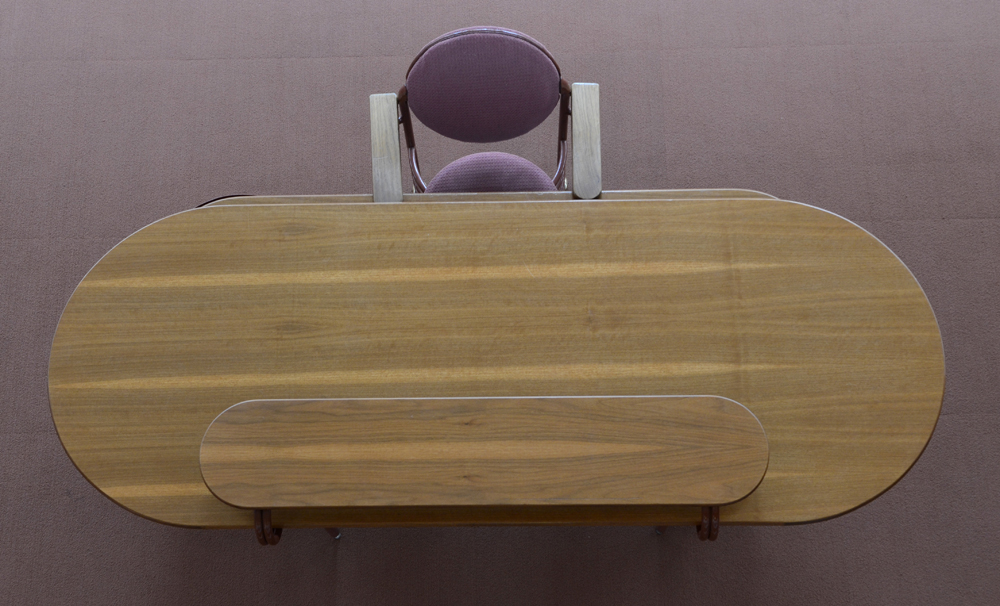
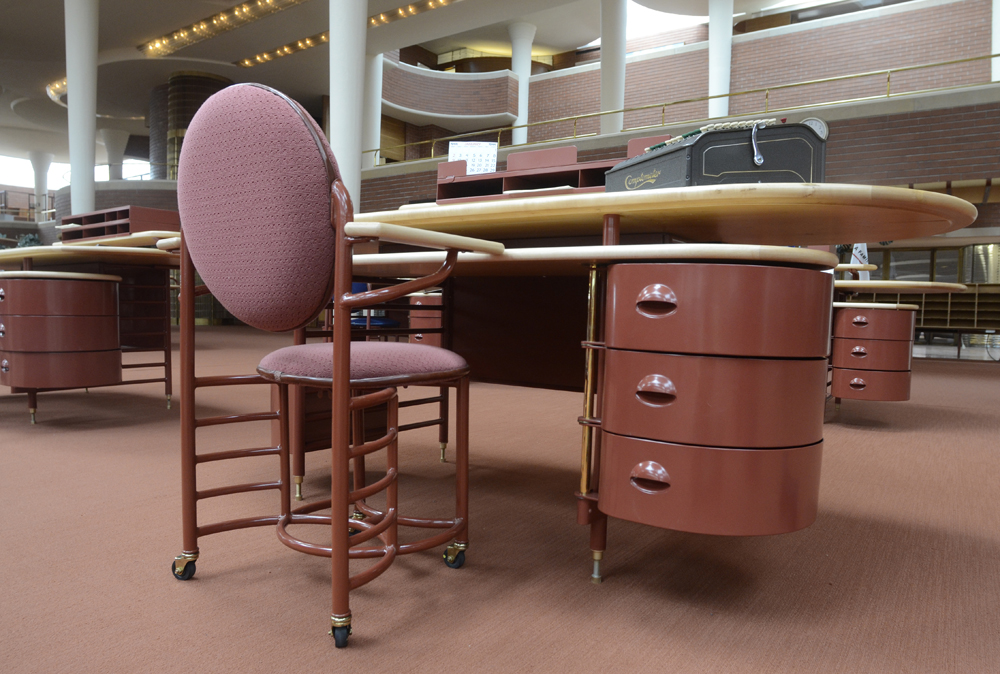
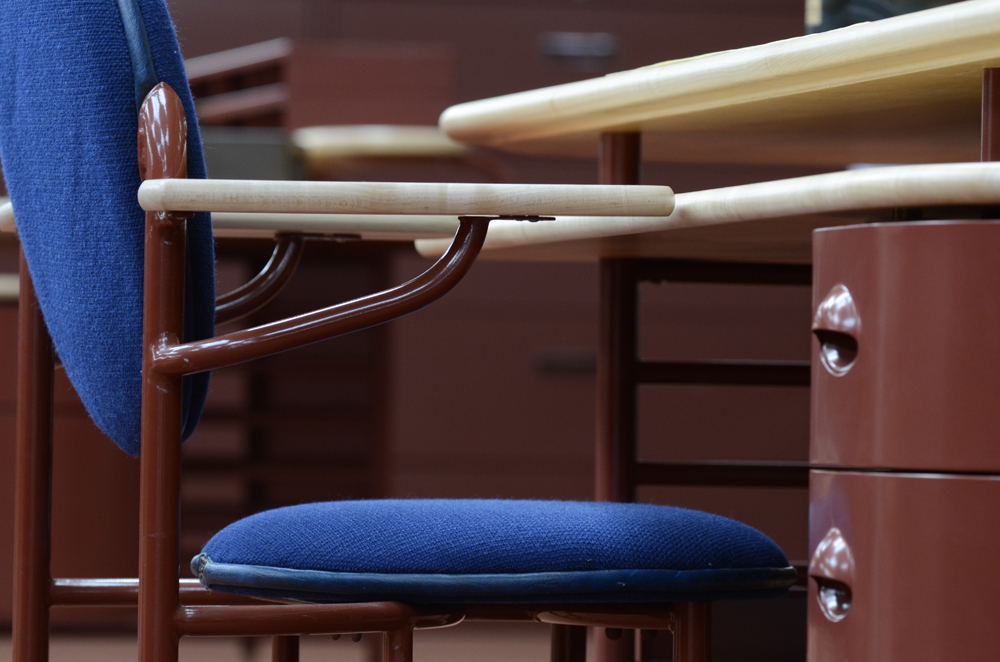
Wright designed forty different pieces of streamlined furniture for the building. Conventional desks were rectangular, but the curves and horizontal planes of the Johnson desks evoke the lines of the building. Drawers swung out, rather than pulling out. The backs of the chairs swiveled for ergonomic comfort. The original chairs famously had three legs. They were rebuilt with four legs after people complained that they tipped over too easily.

Image

 This was not ordinary office furniture. The message was that this was not a place to do ordinary work. Wright’s Johnson office furniture design was so notable that the desks and chairs are now in museum collections.

Calling the furniture “a living artifact,” Kelly Semrau, Senior Vice President at SC Johnson, writes “We share this philosophy (Wright considering the building and furnishings as a whole), and believe it is our responsibility to guard and protect not just the building, but also the furniture…It’s a part of our legacy; our family story.”

Image

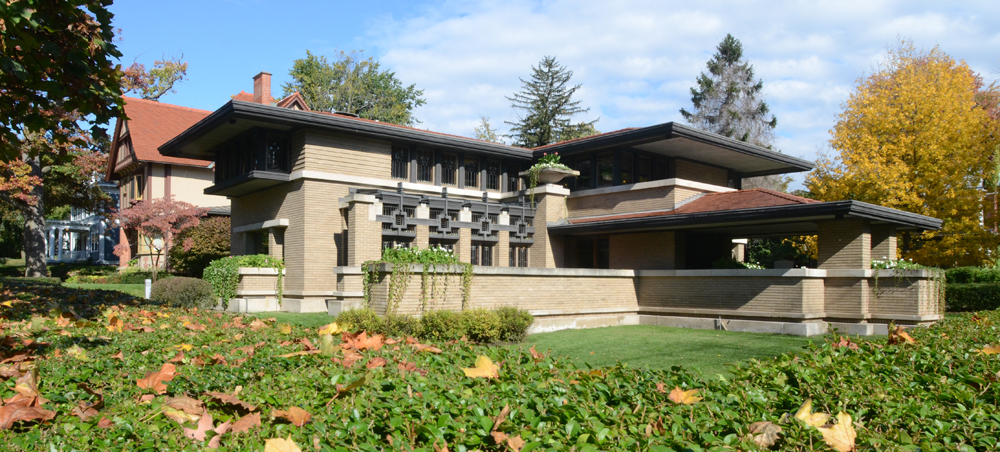
 Steelcase bought and restored the Meyer May House near their headquarters in Grand Rapids, Michigan, as a way to thank Wright for the SC Johnson commission which came during the Great Depression.

Image

Hardy House – New tour, and a look back after a year of restoration

(c) Mark Hertzberg – For The Journal Times

Image

A year is generally not a significant time in the history of a 110-year old house. However, this past year has been perhaps the most important, if not dramatic, year in the history of the Frank Lloyd Wright house at 1319 Main Street. Thomas P. Hardy, a Racine attorney, moved into the house that Wright designed for him, in 1906. Hardy was 73 when he lost his beloved home, first at sheriff’s auction in 1937, and then by order of the Wisconsin Supreme Court in 1938. The house has had six owners since then. The newest steward of the house, Eugene Szymczak, bought it a year ago from Jim and Margaret Yoghourtjian, who owned it since 1968. Szymczak undertook a full restoration of the house. Some of the work, including replacing aging wood and refinishing the house in its original colors inside and out, is relatively routine. Other work required solutions unique to the house. An example was the placement of four floor-to-ceiling columns in the sub-basement to stabilize the Main Street side of the house.

Interest in the house has increased greatly recently, according to the craftsmen working on it, as passersby see the finish color of terra cotta applied. Szymczak reflects on the past year, and says, “I am happy to see that many people enjoy seeing the house come back to its original intent of being part of nature and an inspiration.” The Hardy House will be open for a rare tour during Preservation Racine’s annual fall house tour Sunday September 29. For more information: http://www.preservationracine.org/tour2013.html

Copy and paste to your browser for a link to a photo gallery of the year of restoration:

http://journaltimes.com/photos-hardy-house-restoration/collection_09906d5c-1944-11e3-8732-001a4bcf887a.html#0A

Hardy House finish color revealed

(c) Mark Hertzberg

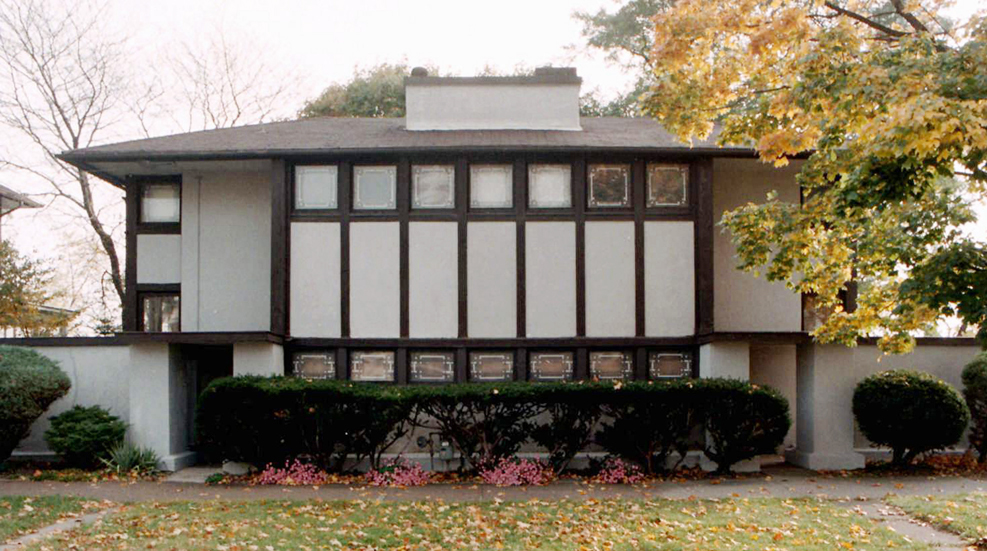
The package is being gift wrapped, if you will, and we now know what color the restored Thomas P. Hardy House will be. The house, which Gene Szymczak bought last September, is being restored. While some aspects of the house have been updated, Gene wanted to find the original color of the house. The stucco was painted gray when Gene bought it, as seen in this photo taken in the mid 1990s:

Image

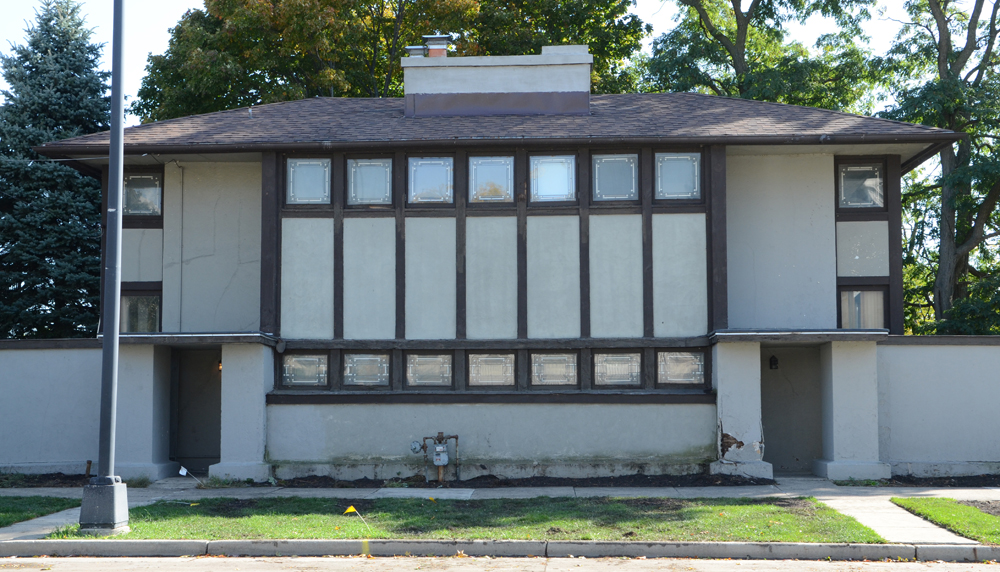
The stucco and wood had weathered and deteriorated since that photo was taken. The next photo shows the house last fall, after the bushes had been removed. The crack in the pillar of the entryway, right, was caused by a worker:

Image

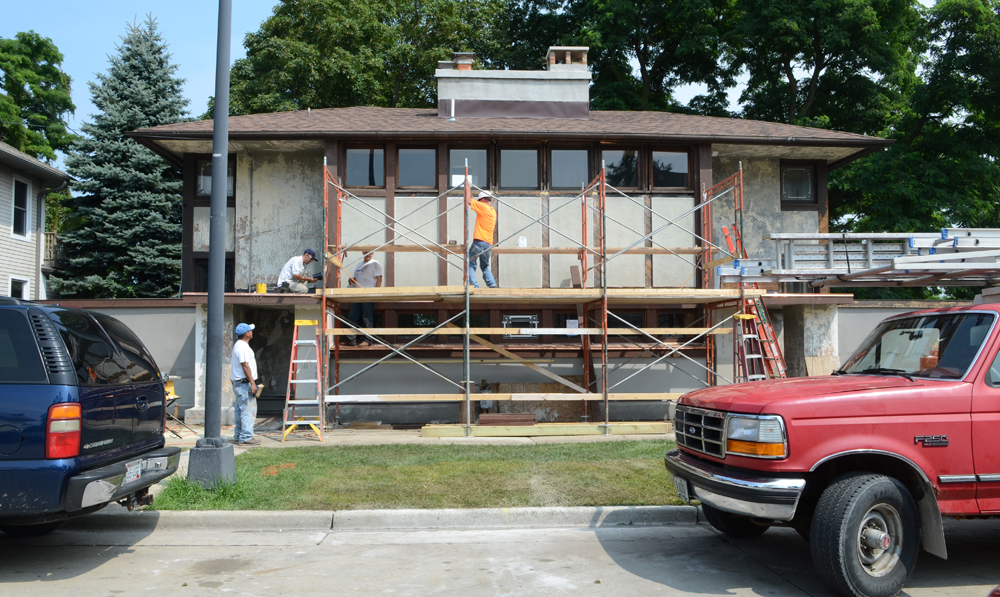
The next picture was taken just 10 days ago:

Image

Next, we see the layers of paint uncovered by painter Dennis Bishop, on the back of the house:

Image

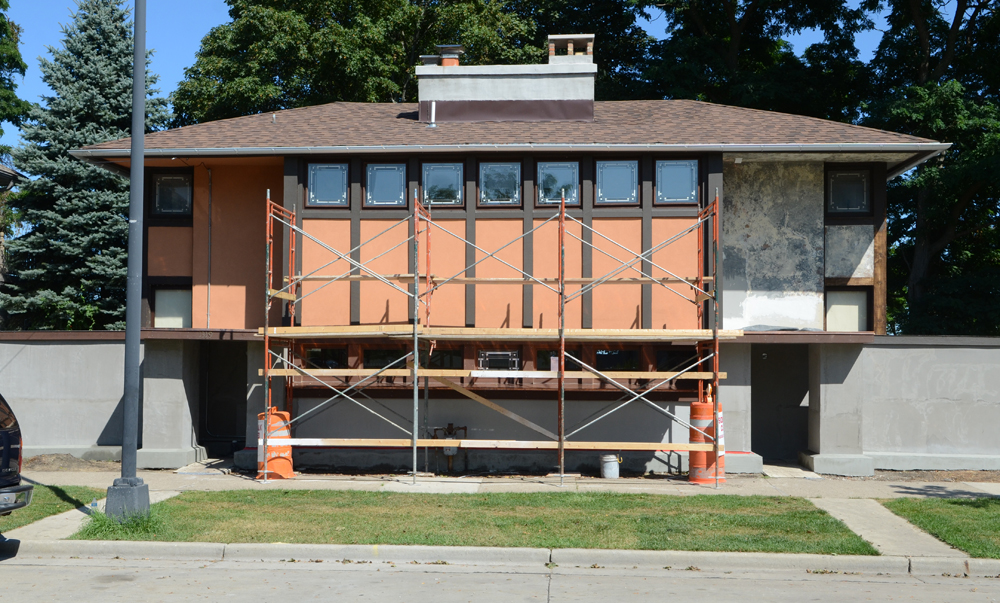
And, the final color…drum roll…terra cotta, like Wright’s Gardener’s Cottage at the Darwin D. Martin House. The color is the final coat of the meticulous stucco repair by Paul Lemke of Top Notch Plastering of Racine, and his nephew, Sean Doyle:

Image

Usonia at SCJ

Photos by Mark Hertzberg for SC Johnson, and used with permission. (c) SC Johnson

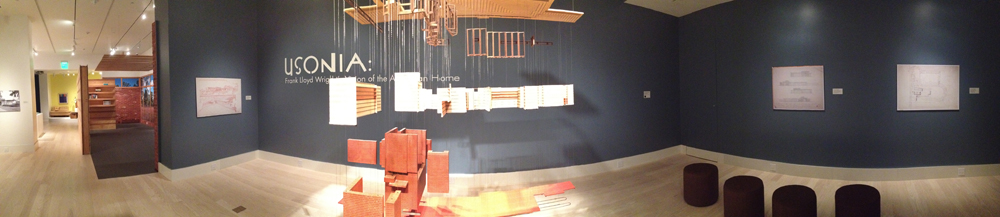
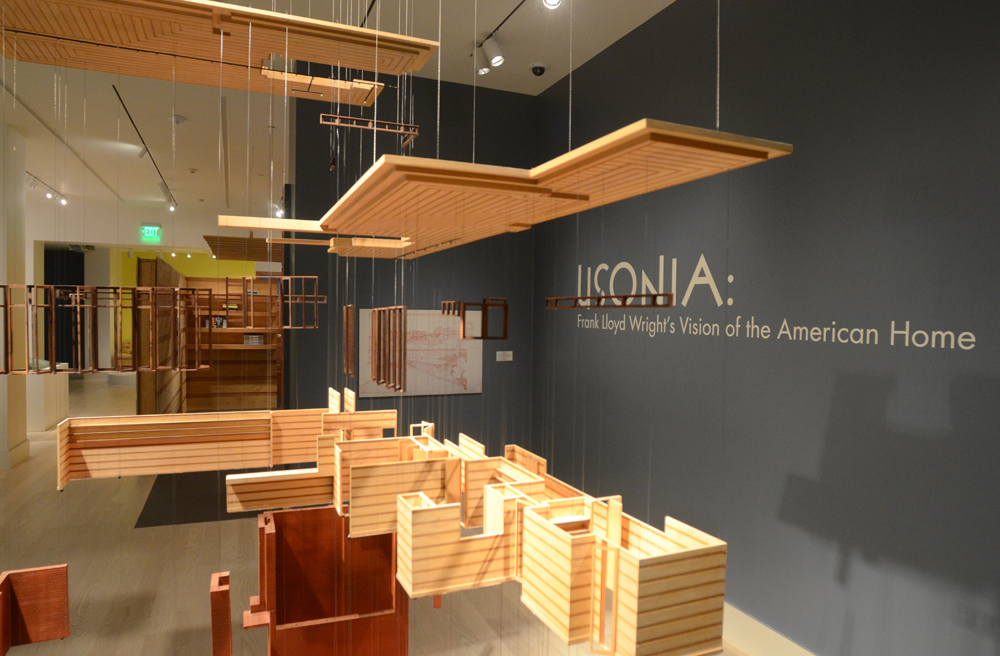
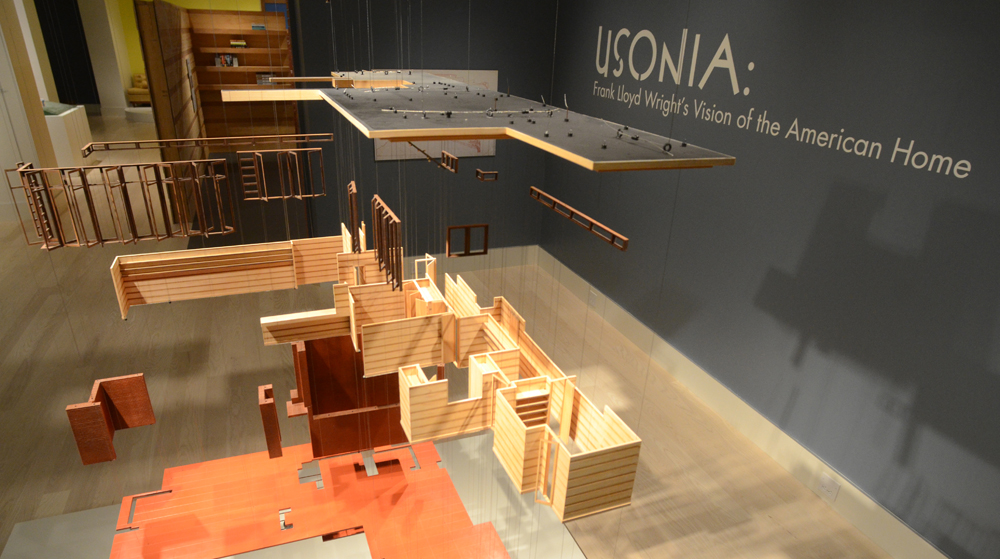
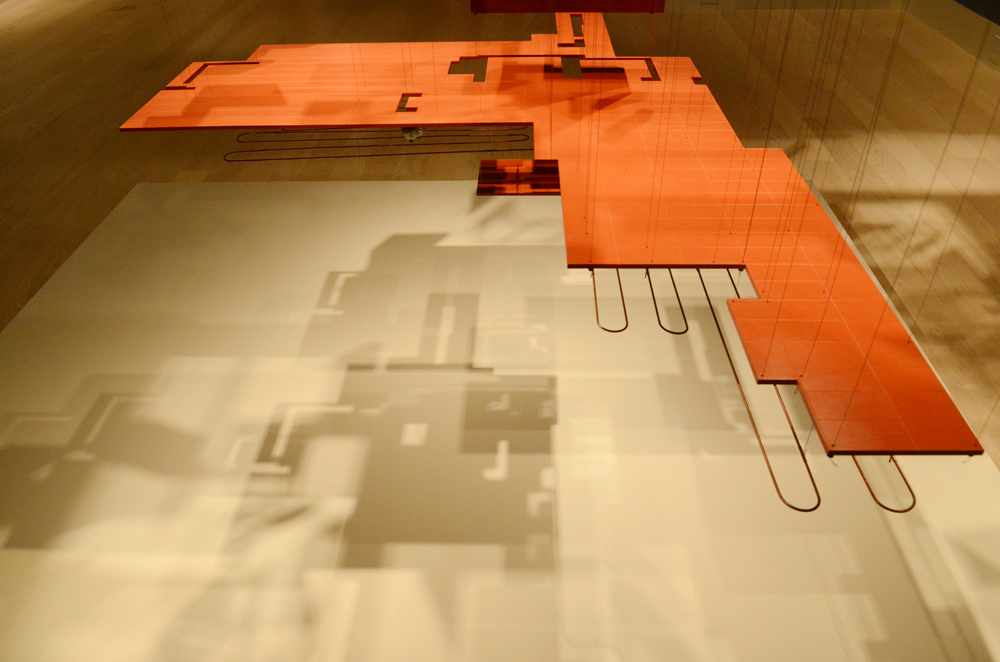
   “Usonia: Frank Lloyd Wright’s Vision of the American Home,” the second iteration of SC Johnson’s permanent exhibition of At Home with Frank Lloyd Wright has opened in Fortaleza Hall on the company campus in Racine.

   We previewed the exhibition here a few weeks ago (see article below). I shot the finished installation today. It centers around Jacobs 1. A selection of photos are below. For hours and reservations go to:

http://www.scjohnson.com/en/company/visiting.aspx

Image

Image

Image

ImageImage

Image

Image

Image

    And, don’t forget that the Research Tower opens to tours next year!


SCJ Tower to open for tours!

Photos and text by Mark Hertzberg; photos for SC Johnson and used with permission.

            For many years there have been two inaccessible Frank Lloyd Wright buildings in Racine. No longer. The Hardy House (1904/05) was open for its first tours in decades a week ago. Next year, the SC Johnson Research Tower (1943/44) will be partially open for tours.
Image

Image

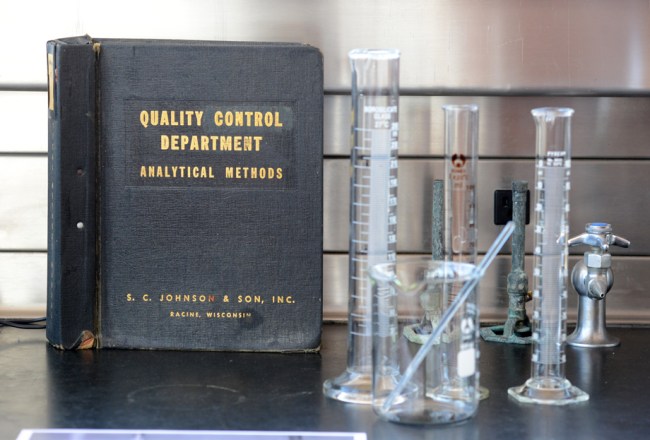
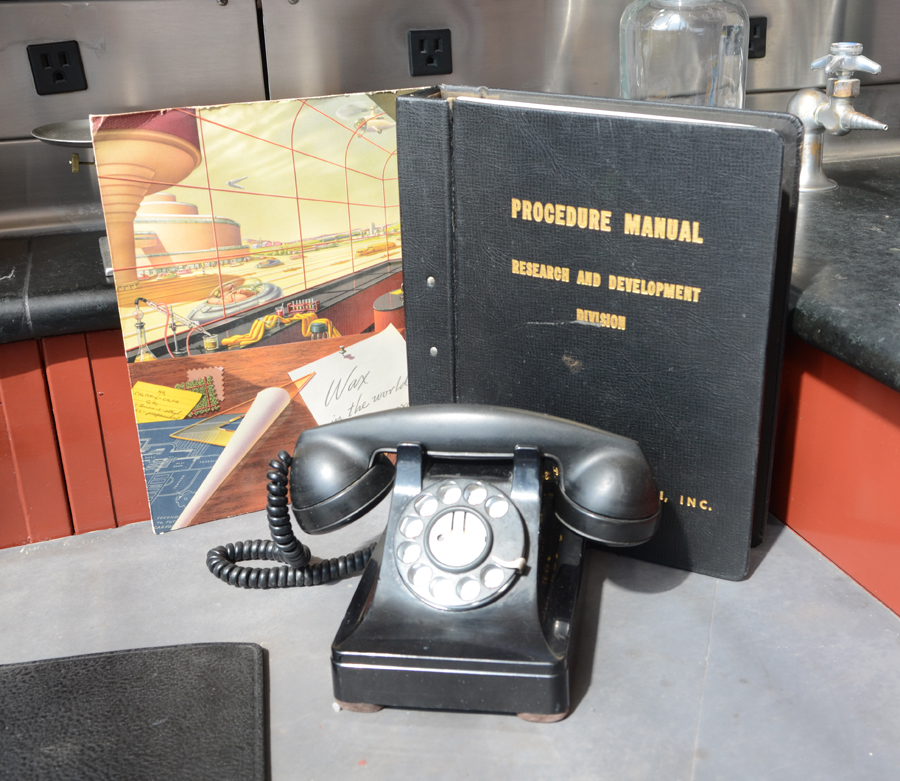
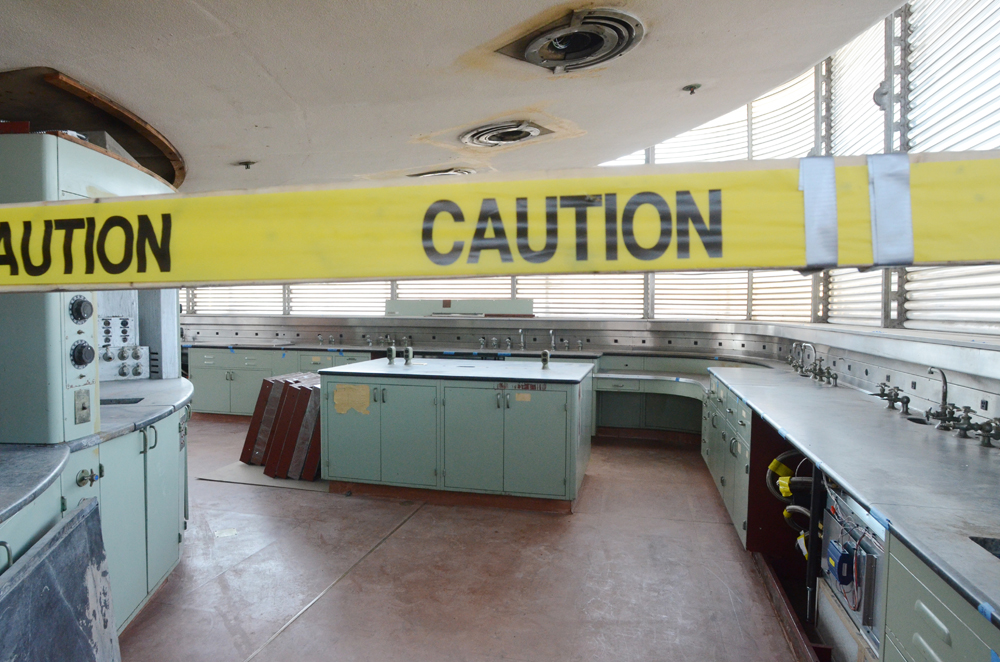
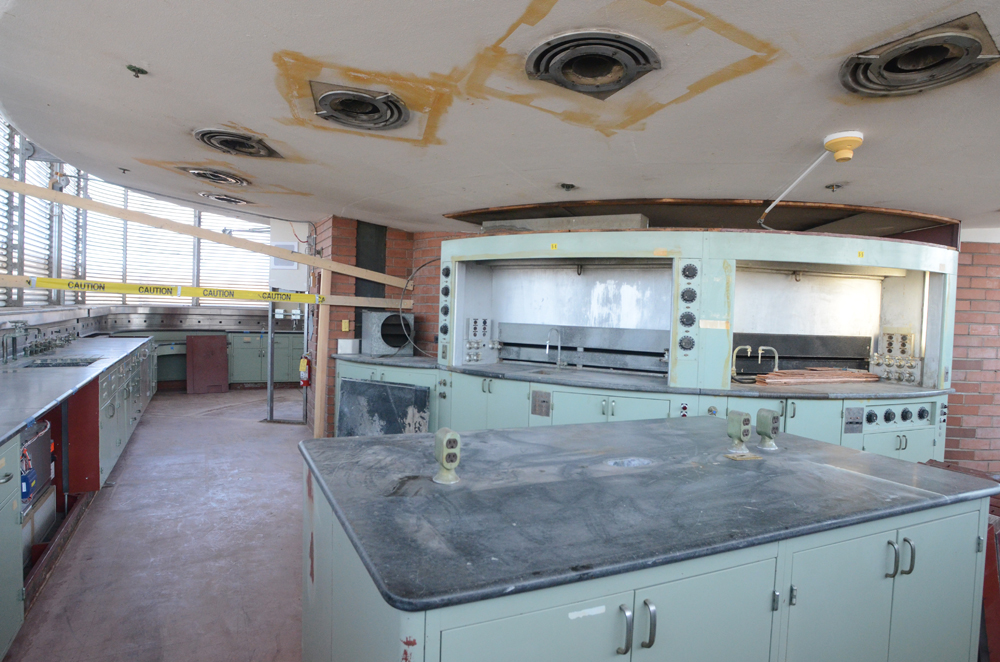
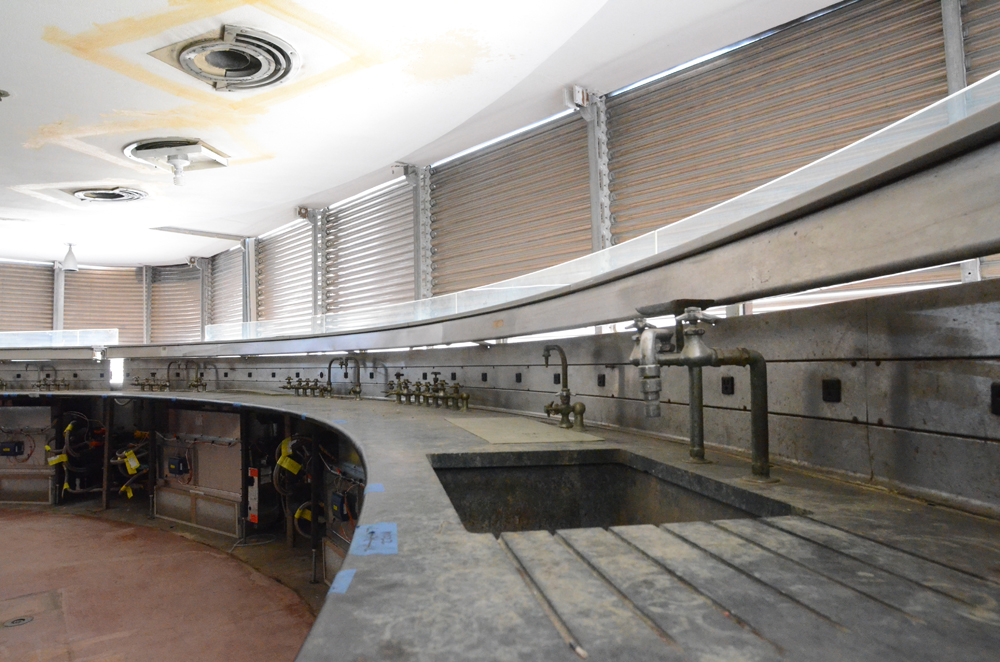
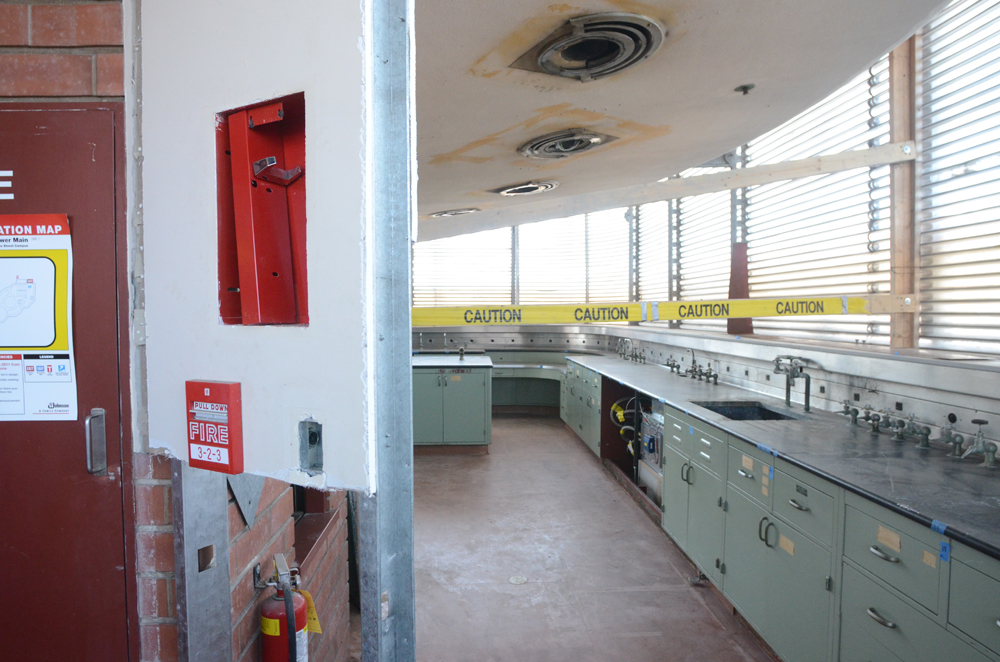
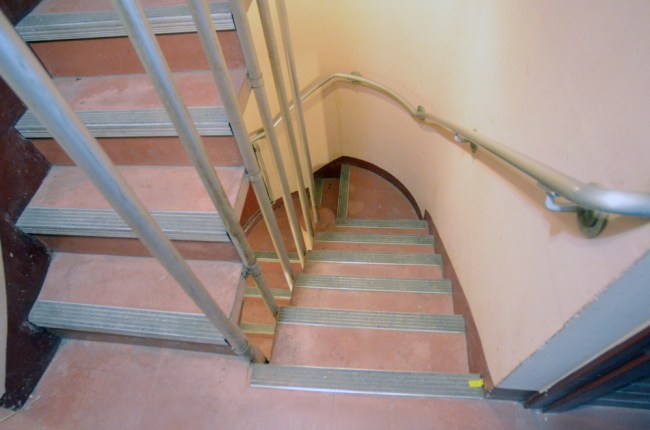
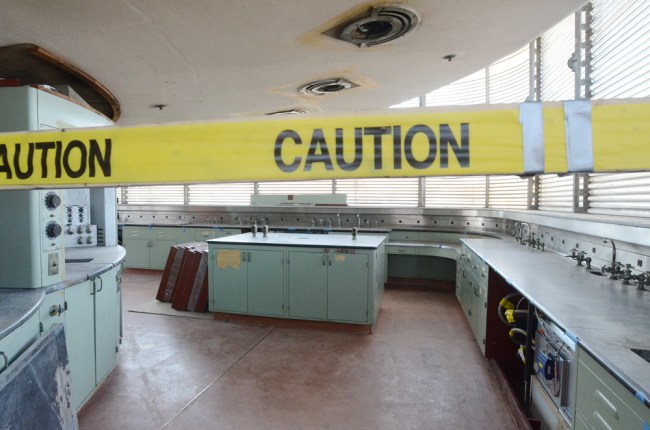
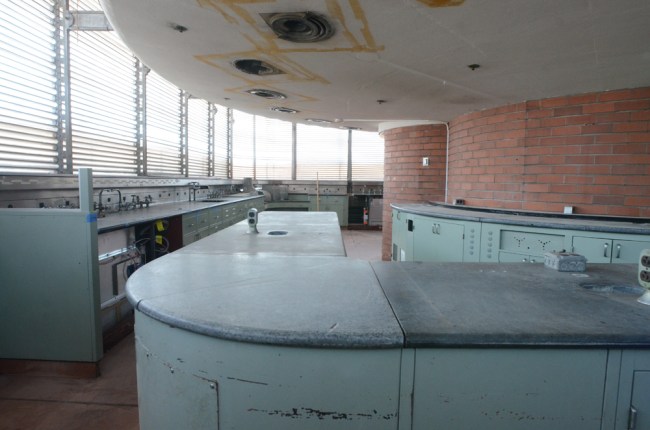
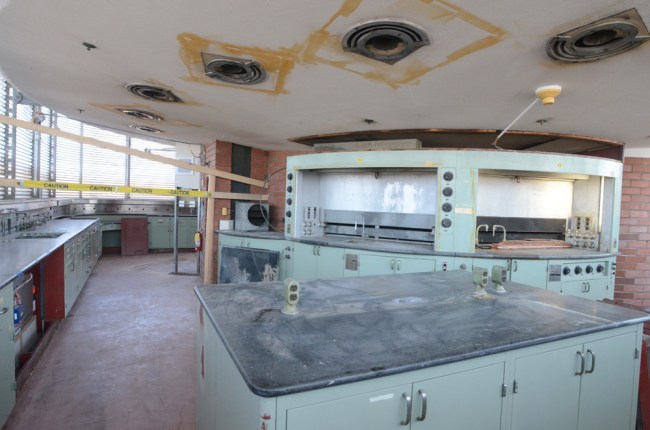
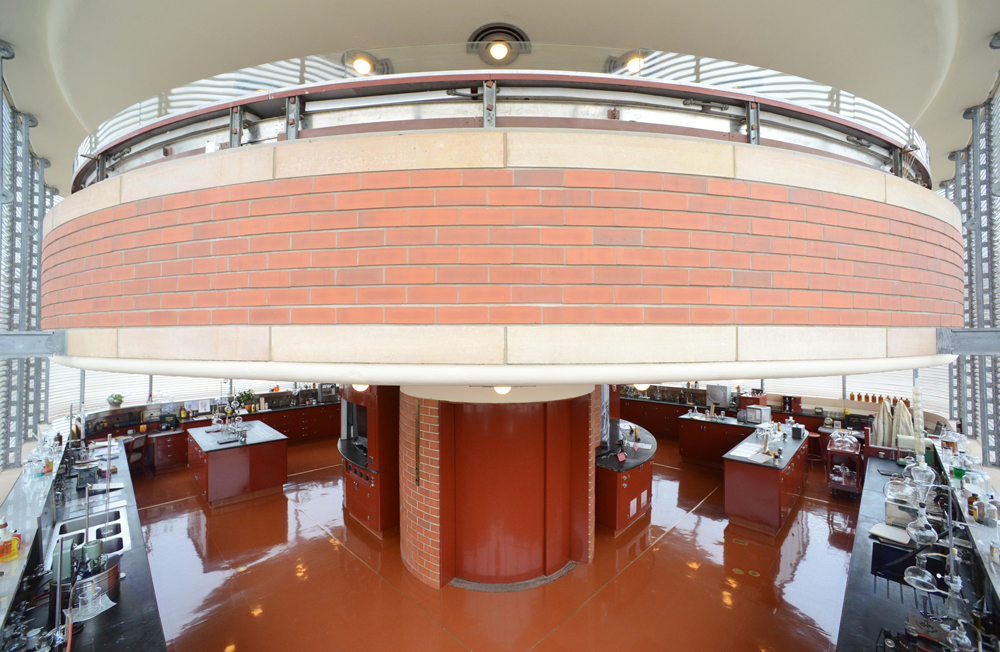
            The treat at the Tower, for fans of Wright’s architecture, will be two and three floors up a narrow staircase.The 30-inch stairs wrap around the core of the building, Wright’s companion to his SC Johnson Administration Building (1936).  Two laboratory floors, 3 Main and 3 Mezz (mezzanine) are being restored for visitors. Those two floors were a pilot lab, the intermediate step between the analytical research laboratory and the manufacturing assembly line, when the Tower was open.
Image

Image

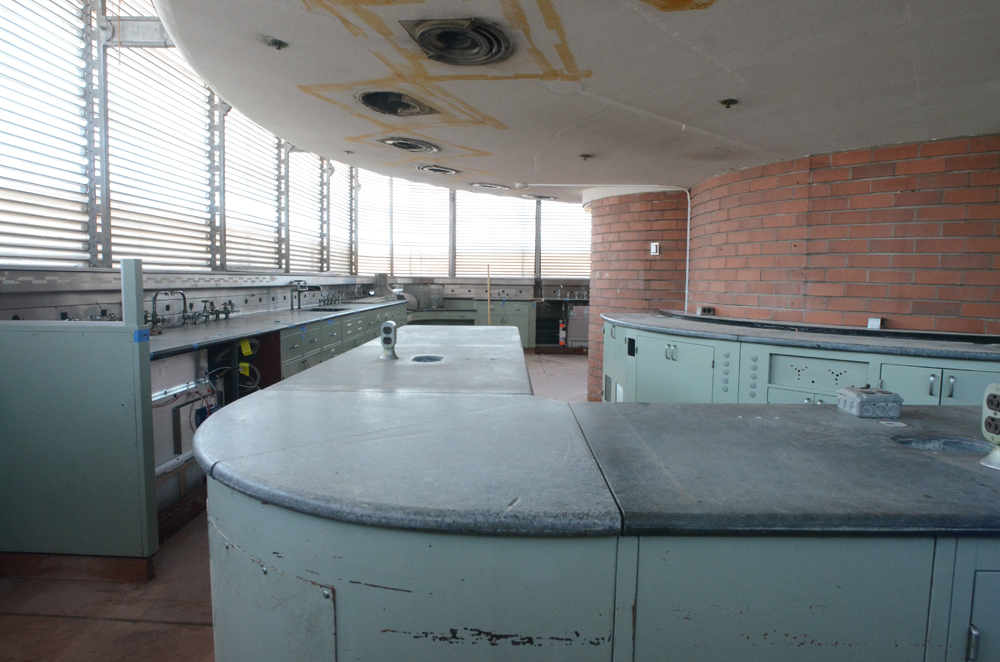
         Wright designed the 15-story tower in pairs of floors above the second floor: there are square floors where one sees brick bands on the tower (termed main floors), alternating with round floors (the mezzanine floors) where one sees the Pyrex-glass tube windows between the bands of Cherokee red bricks.
Image


     The landmark Tower, which was built after World War II, opened in November, 1950. It closed in 1981, when the bulk of Johnson’s research and development was moved into the nearby Louis Laboratories, the former St. Mary’s Hospital building. The Tower closed for two reasons. It could not be expanded to meet the company’s growing research needs. The “carport labs” opened in the courtyard carport in 1957, the first indication that the Tower space was not adequate.
Image

Image


Image


     In addition, there had long been concerns about the building’s safety. While Wright had proposed having two staircases and two elevators, he was overruled, and there is just one of each. The stairs were built a foot narrower than code, thanks to a building code variance. The round elevator is only six feet in diameter. Wright scoffed at the suggestion of fire because, he said, the building was constructed of brick, concrete, and glass. However, no combustible experiments were ever conducted in the Tower.

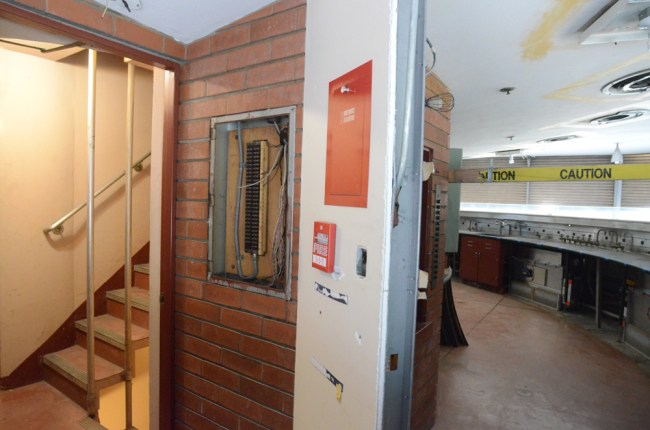
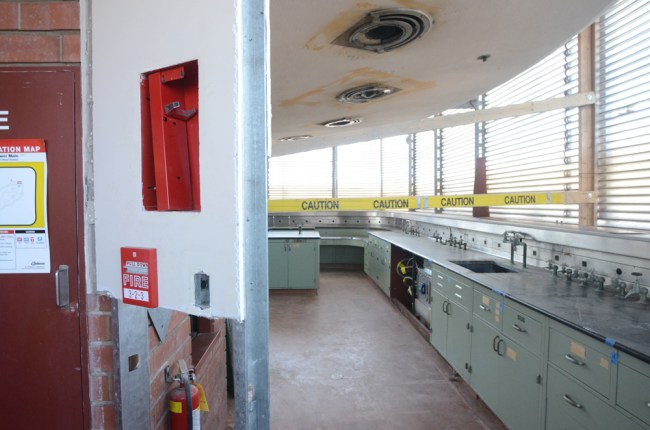
     Firewalls were constructed on each laboratory floor in the early 1970s, after the state expressed concern about the building’s safety. The firewalls marred Wright’s open floor plan, which allowed for uninterrupted circulation or passage around the core on each floor, says Wright scholar Jonathan Lipman, author of Frank Lloyd Wright and the Johnson Wax Buildings. The firewalls on 3 Main and 3 Mezz, left in both photos below, are being removed during the restoration. The dumbwaiters (second photo) will also be restored.
Image

Image

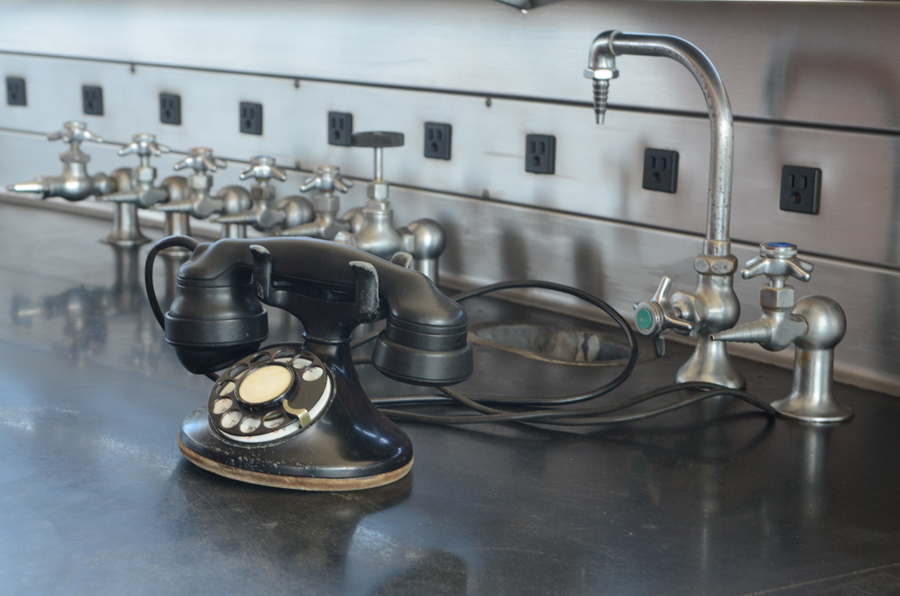
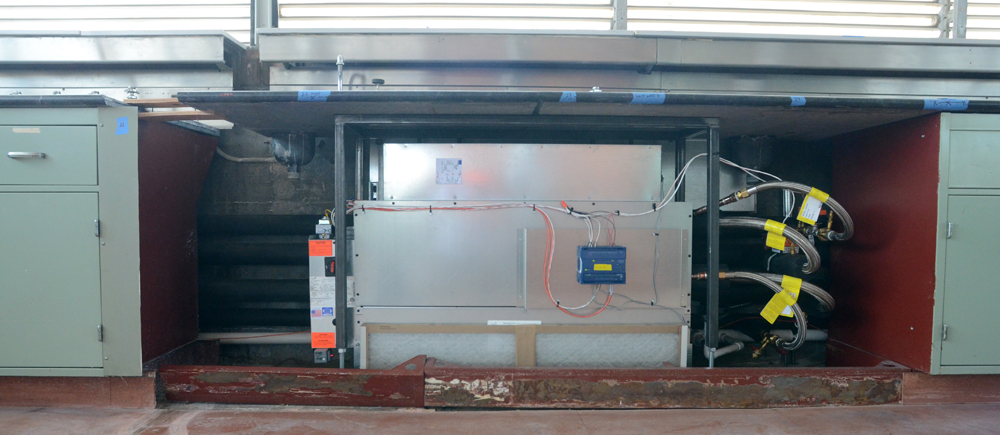
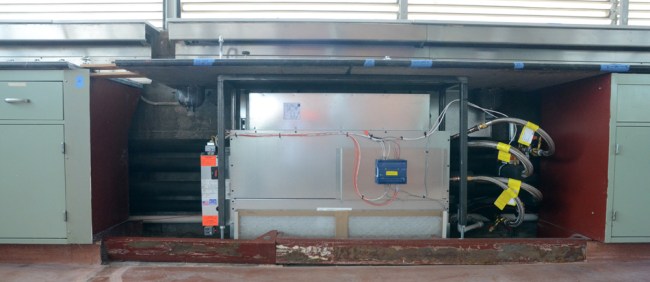
     Chemists complained that it could be very warm or very cold in the Tower. Heating and air conditioning systems are being installed on the two restored floors for the comfort of visitors They are being hidden under the soapstone laboratory counters.
Image

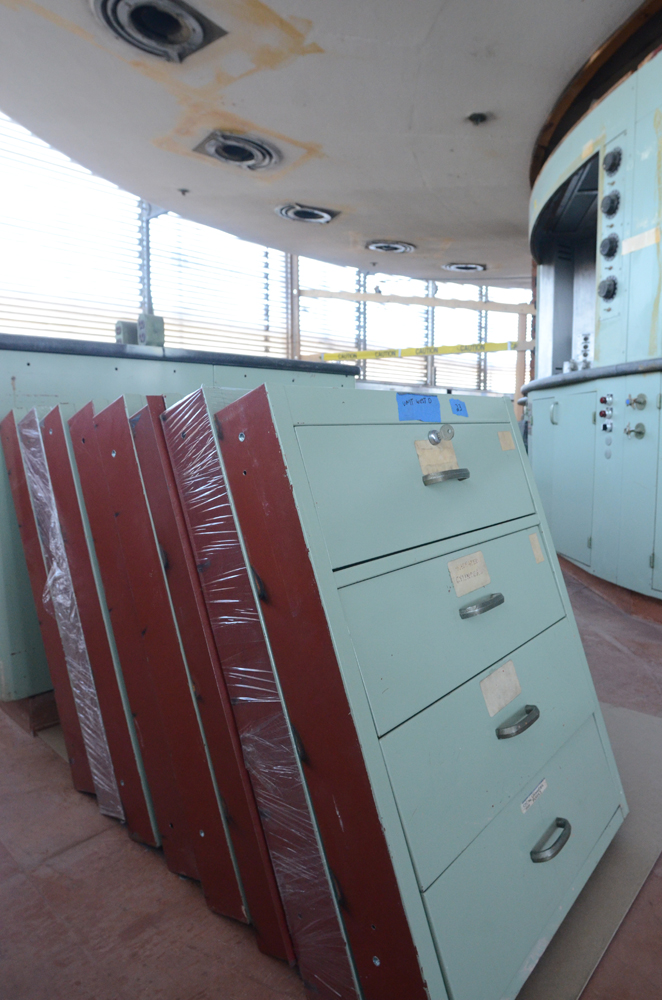
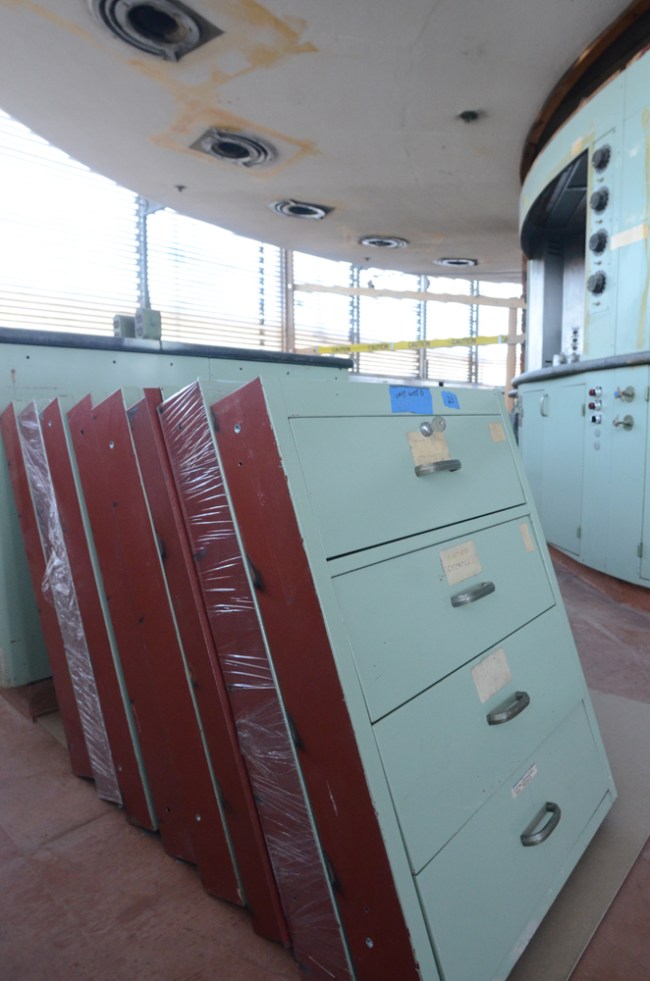
       The face of the cabinets were originally Wright’s favorite color, Cherokee red, but were painted mint green at some point. They will be painted red again.
Image

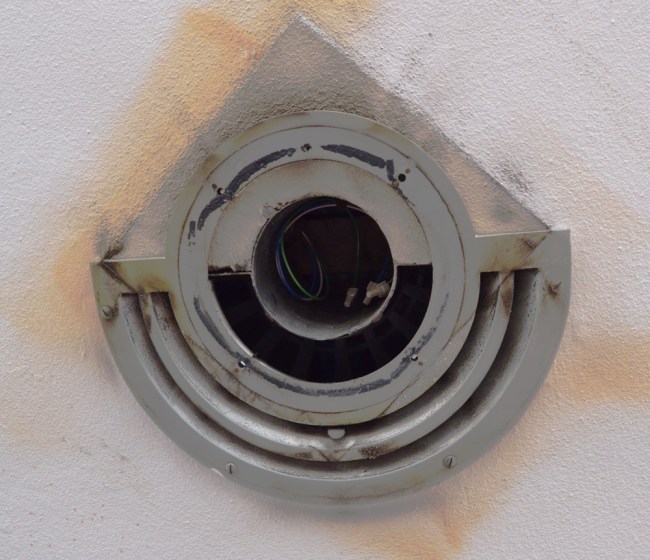
            Although the Tower has been closed for longer than it was open, it has remained lit at night, as a symbol of the company’s commitment to creativity. In recent years the soft lighting has come from a multitude of three-foot fluorescent lights placed on the lab counters, and facing up. Those lights have been removed, and the Tower’s original lighting will be replicated. The new lights will be in the restored ceiling light fixtures:
Image

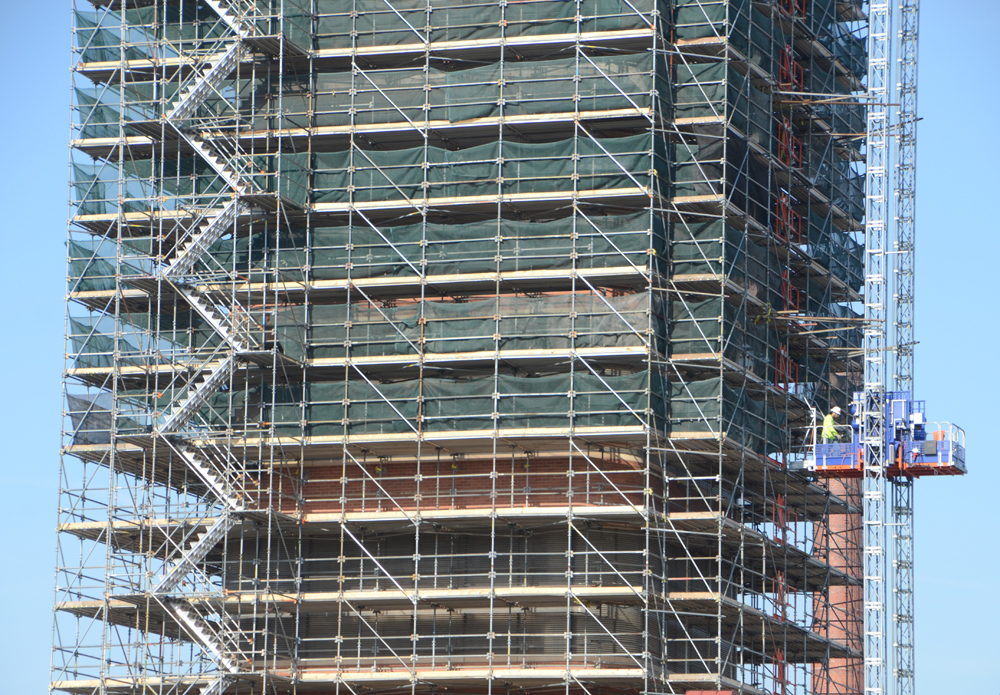
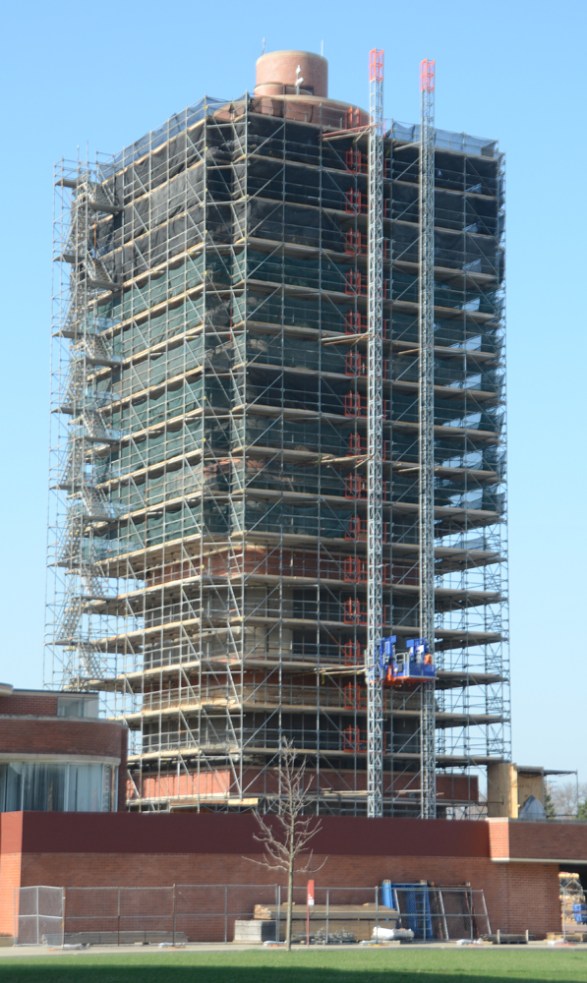
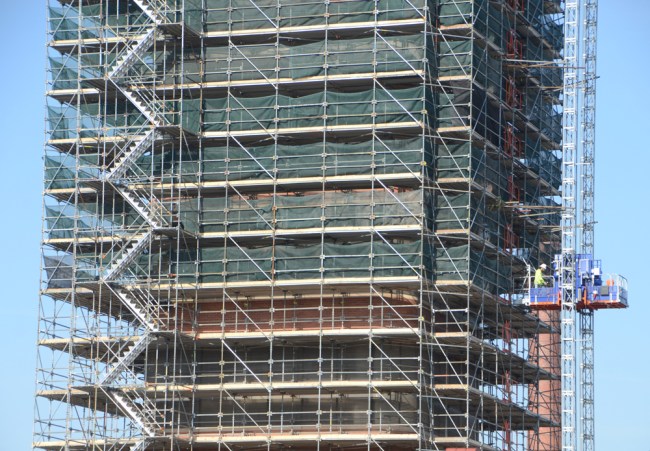
     The Tower is enveloped in scaffolding, as workers tuck point the brickwork and clean the 17.5 miles of glass tube windows in preparation for reopening the building. Windows tubes will be replaced, as necessary. 

Image

Image

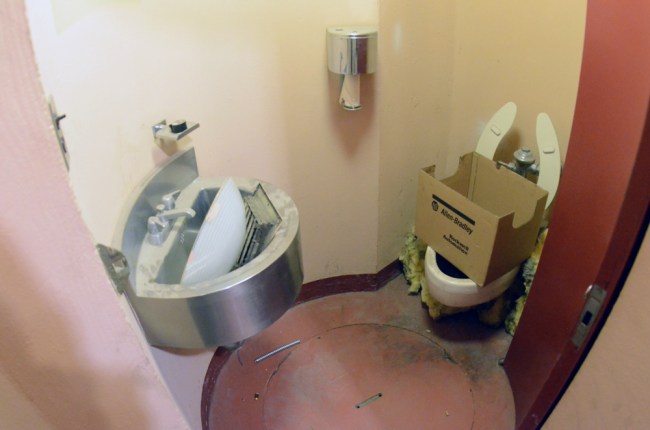
     Even the tiny triangular bathrooms on the core on 3 Main and 3 Mezz will be restored, and open to view by visitors. Their design includes sliding Cherokee red doors.
Image


 The building is Wright’s only executed taproot tower, says Bruce Brooks Pfeiffer. He points out that Price Tower in Bartlesville, Oklahoma, often thought to be a taproot tower, is tied into the foundation of an adjoining building. 

     The late Sam Johnson, chairman emeritus of the company, reflected on its legacy in a conversation we had in 2001. He said that the company’s four most successful products were “hatched up in the Tower.” He continued, “In many ways it was a functioning failure, but it was a spiritual success.”

Image

          The history of the Tower, including how it was designed, interviews with chemists who worked in it, and historic and contemporary photographs of it, are in my book, Frank Lloyd Wright’s SC Johnson Research Tower (Pomegranate, 2010).

     

Good Friday at Annunciation Greek Orthodox Church

Photos and text (c) Mark Hertzberg

       I had the privilege of being invited by Father Angelo Artemas to photograph vespers and evening services yesterday, Good Friday in the Greek Orthodox Church, at Frank Lloyd Wright’s Annunciation Greek Orthodox Church near Milwaukee.

Image

Image

Image

        I came there as an architectural photographer, but photographed as a photojournalist, to show how the building works for its intended purpose, as an ecclesiastical building. I was allowed to shoot from wherever I wanted to go during the services, and was warmly welcomed by the congregation. The photos that follow show the service and rich traditions of the church, as well as the building. They are in order: first, the afternoon vespers service, and then the candlelit evening service, which included a procession around the outside of the church.

Image

Congregants kissed the icon of Jesus Christ before vespers

Image

Father David Hostetler holds the Gospel aloft during a procession around the sanctuary

Image

Image

Much of the liturgy is conducted by the priests behind the screen in front of the sanctuary. This is because the priests lead the congregation in prayer, rather than praying to them. As shown in a previous posting of interior photos of the church (https://wrightinracine.wordpress.com/2013/04/12/annunciation-greek-orthodox-church-2/)

Eugene Masselink’s icons were replaced by icons that are said to better reflect church doctrine. That is why there are no plans to put Masselink’s icons back in the sanctuary. Masselink’s icons are shown in the previous article.

Image

Father Angelo Artemas takes the icon of Christ down from the cross

Image

The shrouded icon (right) is then carried around the church

Image

Image

Image

Image

ImageAt the end of the service congregants, including children, express their reverence as they kiss the Gospel, the cross, and art work of the crucifixion of Christ which are displayed in a flower-decorated symbolic representation of the empty tomb of Christ. The empty tomb is part of the procession outside the church during the evening service, below:

Image


Image

Image

Image

Image

Image


Father David Hostetler lights congregants’ candles

Image

Image

Image


Image

Image

The procession forms to go outside

Image

Image

Image

Image

Image

ImageImage

Image

Father Angelo Artemas gives congregants flowers from the symbolic empty tomb, as they kiss his hand at the end of the evening service.