Happy 100th Roland Reisley Day!

© Mark Hertzberg (2024)

Roland Reisley 2017 024.jpg

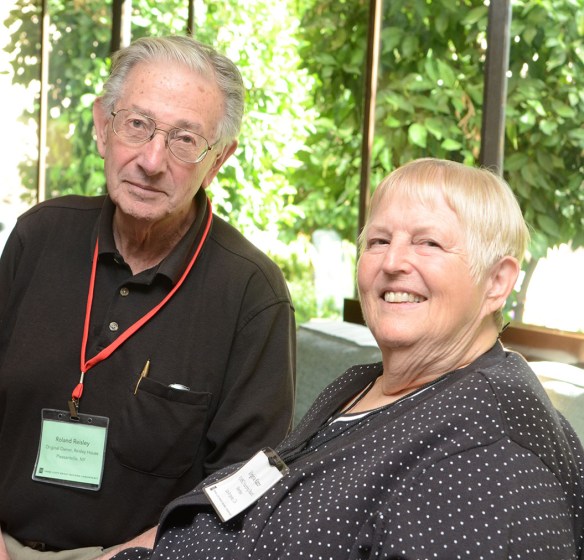
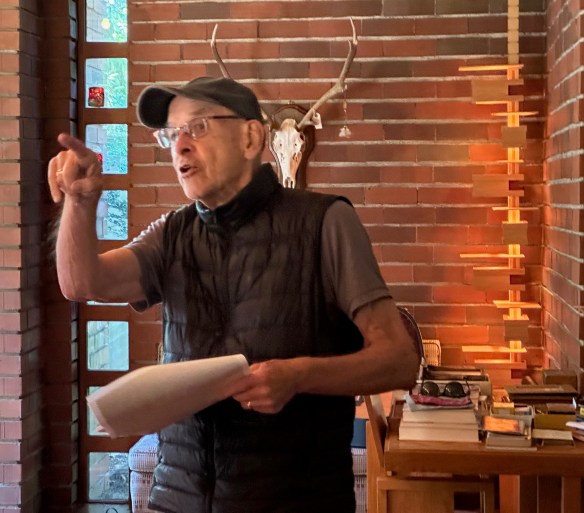
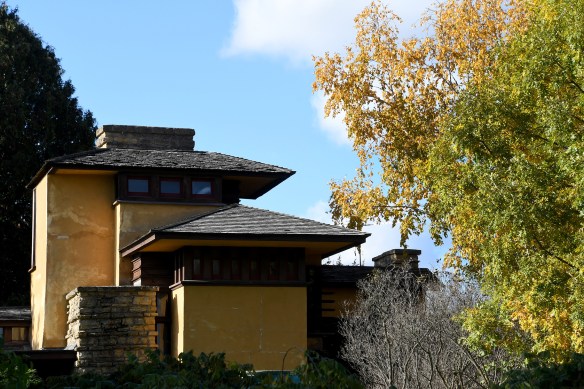
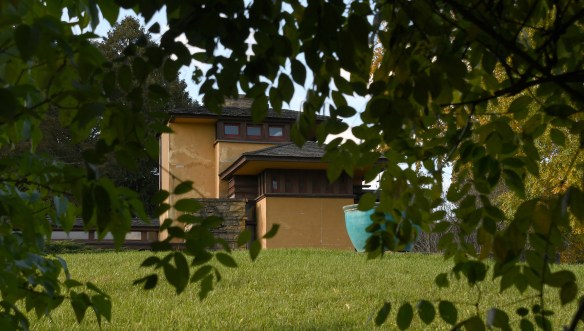
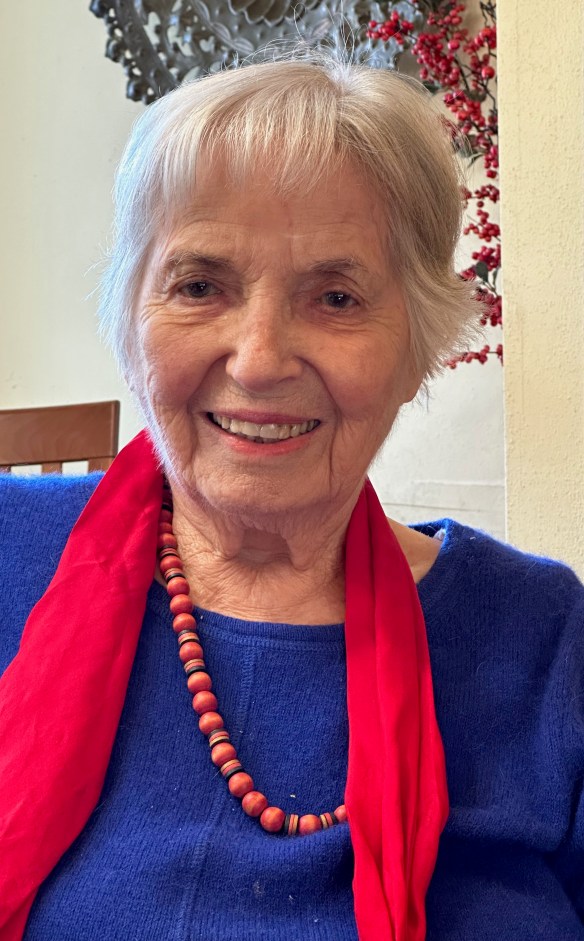
The Wright World – particularly the Frank Lloyd Wright Building Conservancy – celebrates Roland Reisley’s 100th birthday Monday May 20. Reisley still lives in the house that Wright designed for Roland and his late wife, Ronny, in 1951 in “Usonia,” in Pleasantville, New York. He is the only original Wright client still living in his Wright home.

Roland Reisley 2017 017.jpgRoland and Ronny working with Wright on the design of their Wright home

Reisley Longstreth BC 2014 003.jpgRoland was honored as a founding member of the Frank Lloyd Wright Building Conservancy by Janet Halstead and Richard Longstreth at the 2014 conference in Phoenix.

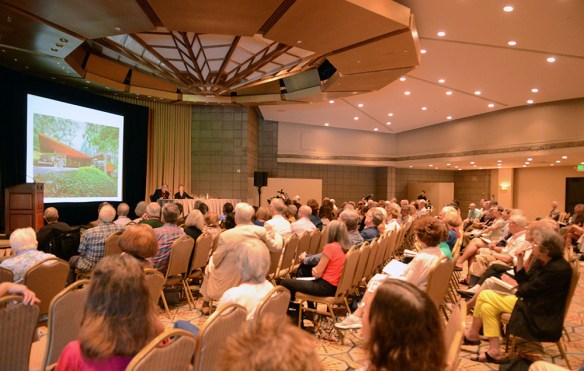
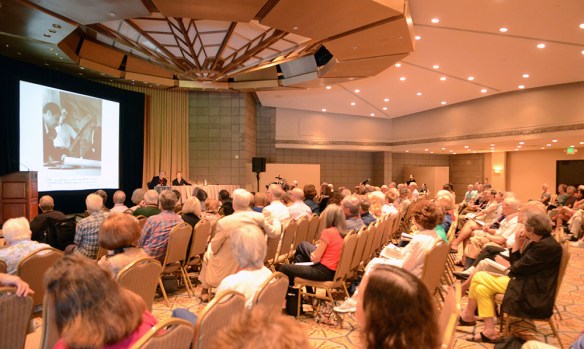
Reisley BC 2014 008.jpgThe Reisley House was the topic of a discussion at the 2014 conference. Susan Jacobs Lockhart moderated.

Reisley BC 2014 015.jpg

Reisley BC 2014 014.jpg

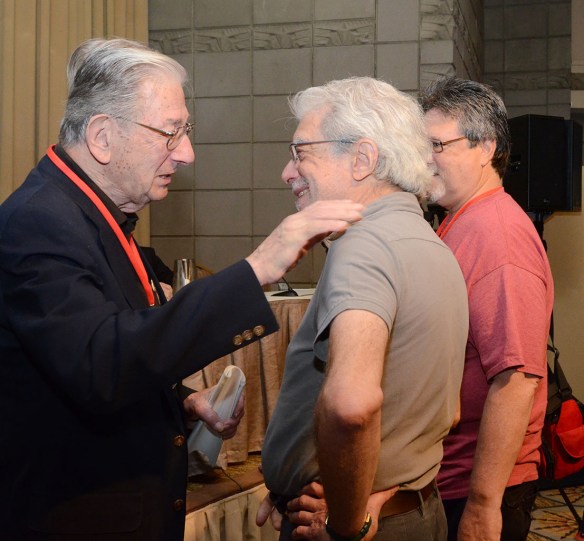
Reisley Levine BC 2014 005.jpgRoland and Neil Levine chat at the conference.

Reisley Kazor BC 2014 002.jpgRoland and Ginny Kazor at the Phoenix conference.

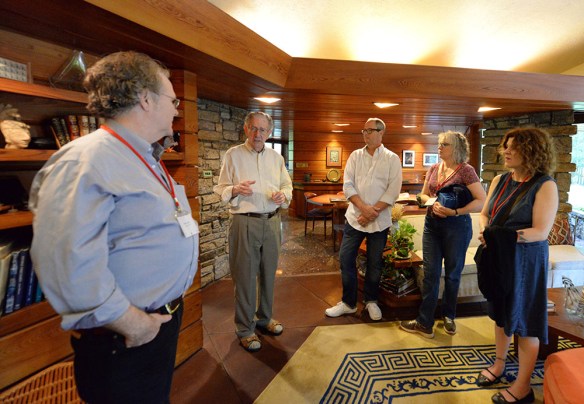
Roland Reisley 2017 010.jpgRoland greets conference attendees in his living room during the 2017 conference.

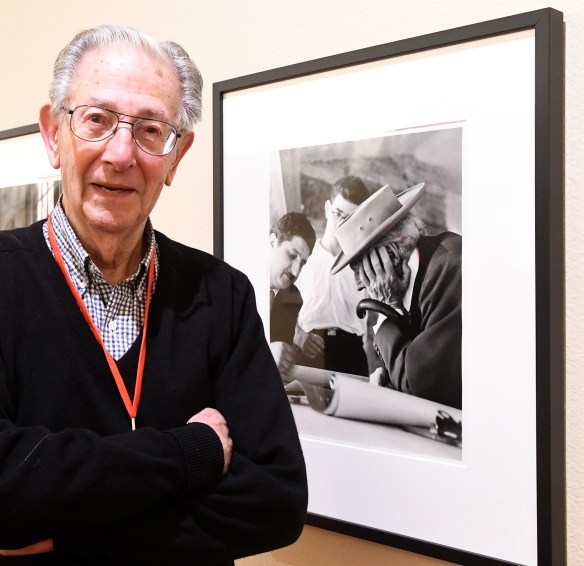
I happened to walk to the 2018 conference meetings at Monona Terrace in Madison from the hotel with Roland one morning. The hallways in Monona Terrace are lined with photographs by Pedro Guerrero, including this one of David Henken, Rolland, and Wright. He pointed the photo out to me and graciously posed for me next to it:

LR Roland and Mr. Wright.jpg

Thank you, Roland, for your friendship, your grace, and your contributions to the Building Conservancy. You have often told people that Wright was not the ogre some people describe him as. You explain that he was very accommodating to you and to Ronny when he was designing your home. My family and I had the privilege of dinner at the house with you and Barbara Coates, thanks to your auctioning such an evening at the Building Conservancy’s annual silent auction.

Barbara and Roland 001.jpgBarbara and Roland, 2011

Happy birthday, my friend…our friend!

On-line celebration with the Frank Lloyd Wright Building Conservancy:

https://savewright.org/happy-100th-birthday-roland-reisley/

Please scroll down for previous posts on the website including, most recently, photos of the newly restored Hillside Theater.


Raising the Curtain on Hillside Theater Restoration

© Mark Hertzberg (2024)

LR Frank Lloyd Wright Hillside Theater Restoration 024.jpg

LR Frank Lloyd Wright Hillside Theater Restoration 001.jpg

The public celebration of the restoration of Hillside Theater at Taliesin will be June 8, Frank Lloyd Wright’s 157th birthday. The event is sponsored by the Frank Lloyd Wright Foundation and Taliesin Preservation, following the multi-year, $867,000 project. Funding was made possible by a Save America’s Treasures grant from the National Park Service and matching funds raised from corporations and donors. According to Taliesin Preservation, “preservation was divided into three phases: elimination of water infiltration, rehabilitation of the basement, and restoration of the Hillside Theater.”

LR Frank Lloyd Wright Hillside Theater Restoration 002.jpg

Frank Lloyd Wright Hillside Theater Restoration 004.jpg

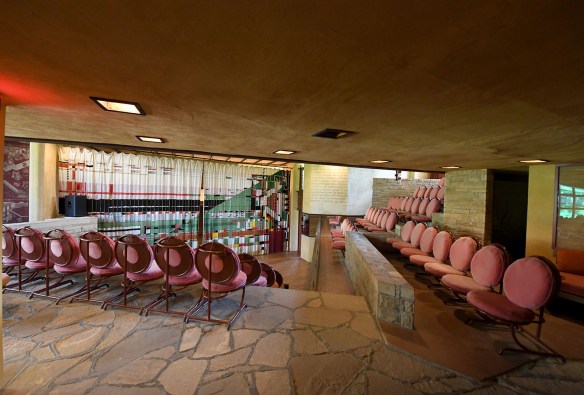
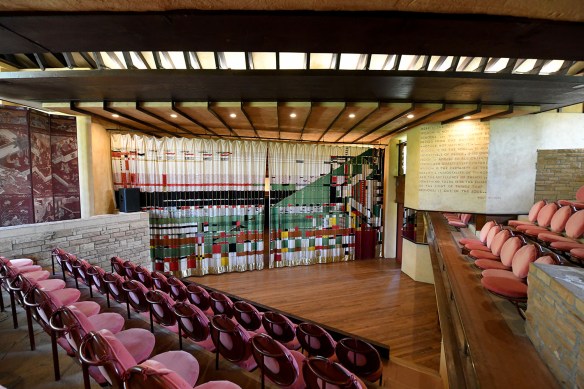
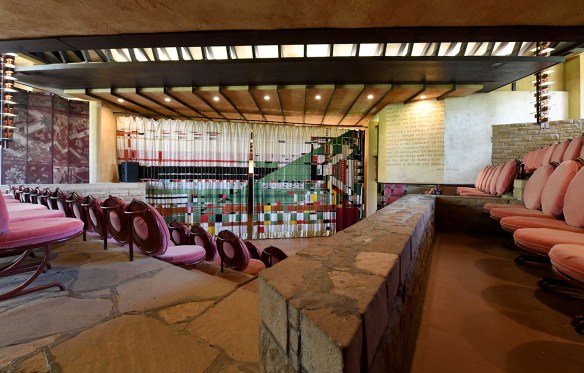
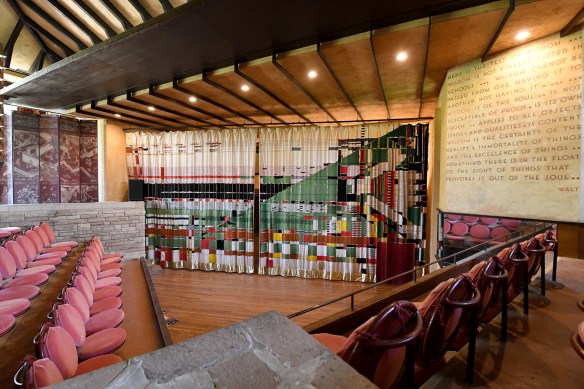
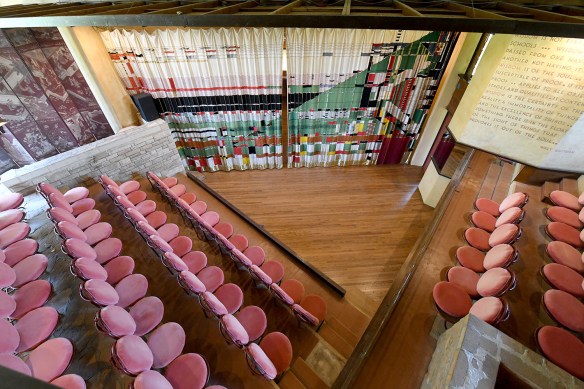
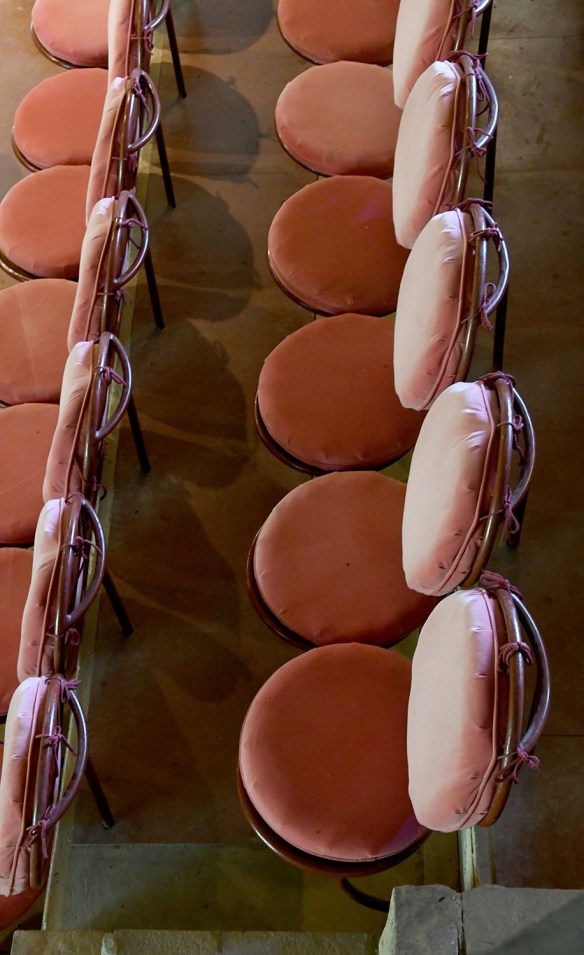
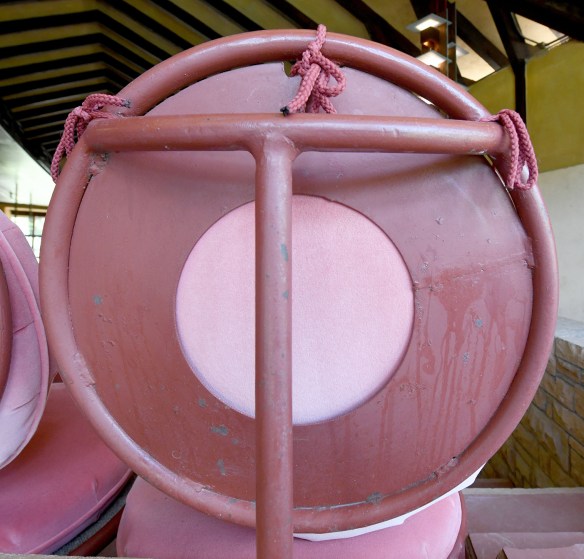
I had the opportunity to photograph the theater in mid May. Let’s open the doors to the theater and take a look.


LR Frank Lloyd Wright Hillside Theater Restoration 068.jpg

Our first impression, of course, is of “compression…”

LR Frank Lloyd Wright Hillside Theater Restoration 007.jpg

LR Frank Lloyd Wright Hillside Theater Restoration 008.jpg

…and then, “release…”

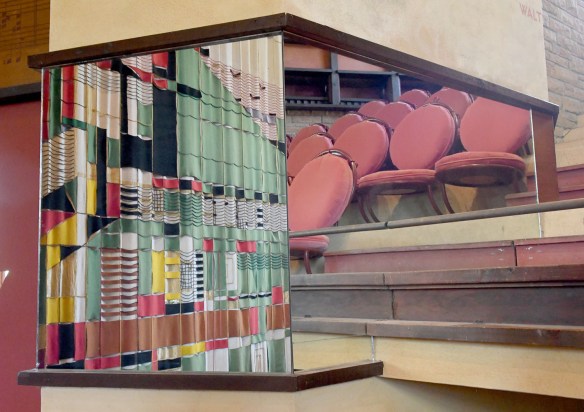
LR Frank Lloyd Wright Hillside Theater Restoration 009.jpgMr. and Mrs. Wright and their guests sat in the seats to the right.

LR Frank Lloyd Wright Hillside Theater Restoration 011.jpg

LR Frank Lloyd Wright Hillside Theater Restoration 016.jpg

LR Frank Lloyd Wright Hillside Theater Restoration 021.jpg

LR Frank Lloyd Wright Hillside Theater Restoration 026.jpg

LR Frank Lloyd Wright Hillside Theater Restoration 027.jpg

LR Frank Lloyd Wright Hillside Theater Restoration 029.jpg

LR Frank Lloyd Wright Hillside Theater Restoration 030.jpgFrom Wright’s “An Autobiography:” When I was a small child I used to lie awake listening to the strains of the Sonata Pathetique—Father playing it on the Steinway square downstairs in the Baptist minister’s house at Weymouth. It takes me back to boyhood again when I hear it now.” [FLLW: Collected Writings, v. 4, p. 147.]

LR Frank Lloyd Wright Hillside Theater Restoration 037.jpg

LR Frank Lloyd Wright Hillside Theater Restoration 043.jpg

LR Frank Lloyd Wright Hillside Theater Restoration 047.jpg

LR Frank Lloyd Wright Hillside Theater Restoration 050.jpg

LR Frank Lloyd Wright Hillside Theater Restoration 056.jpg

LR Frank Lloyd Wright Hillside Theater Restoration 063.jpg

LR Frank Lloyd Wright Hillside Theater Restoration 065.jpg

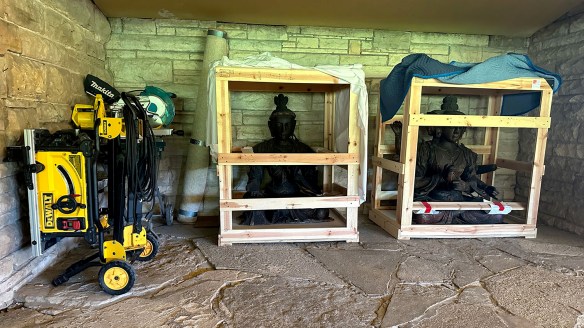
LR Frank Lloyd Wright Hillside Theater Restoration 005.jpgThe Buddha statues will be put back in their original places flanking the stage.

Acknowledgements: Thank you to Taliesin Preservation for facilitating my access to the theater, and to Taliesin historian Keiran Murphy for her explanation of the wood panel with the score from “Pathetique.”

Links:

Taliesin Preservation on the theater restoration:

https://www.taliesinpreservation.org/hillside-theater-preservation/

Keiran Murphy’s website:

https://www.keiranmurphy.com

Please continue to scroll down for previous articles on http://www.wrightinracine.com


My Wright Eye – May 2024

Photos © Mark Hertzberg (2024)

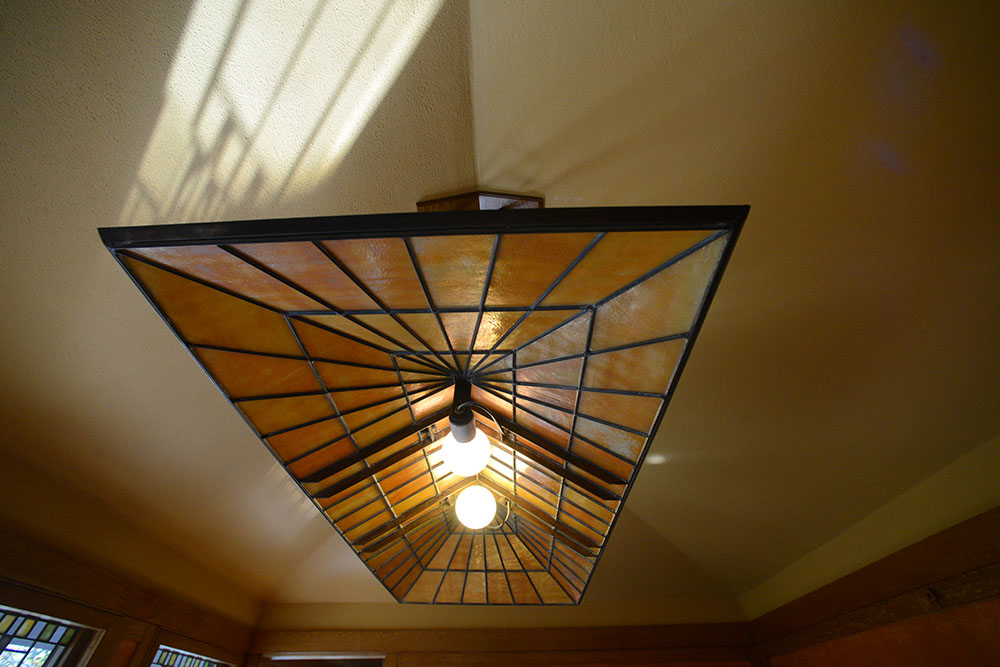
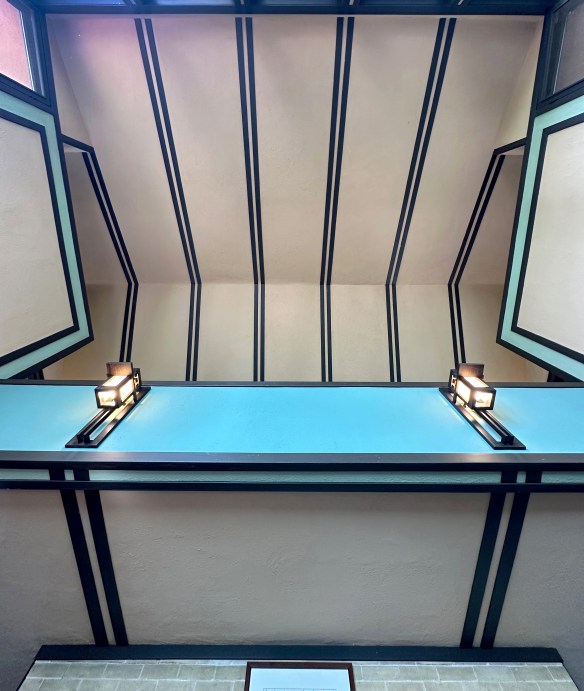
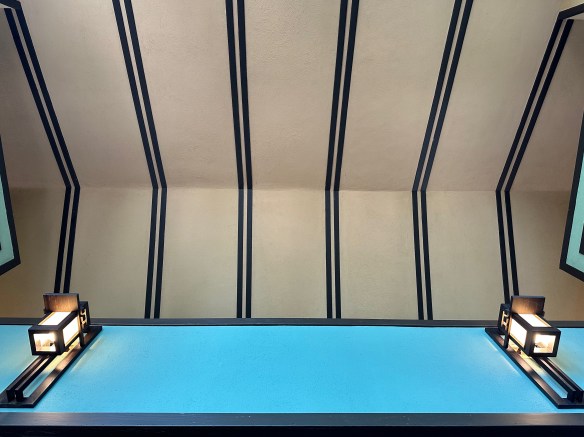
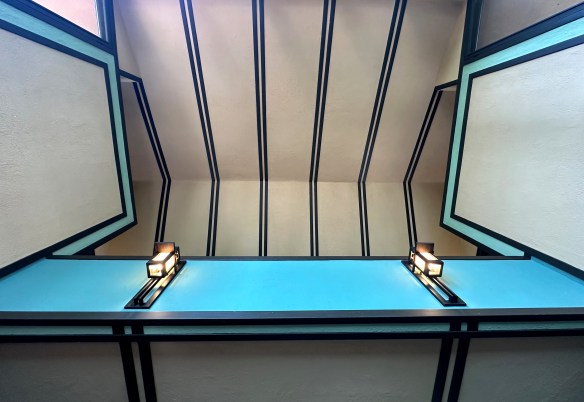
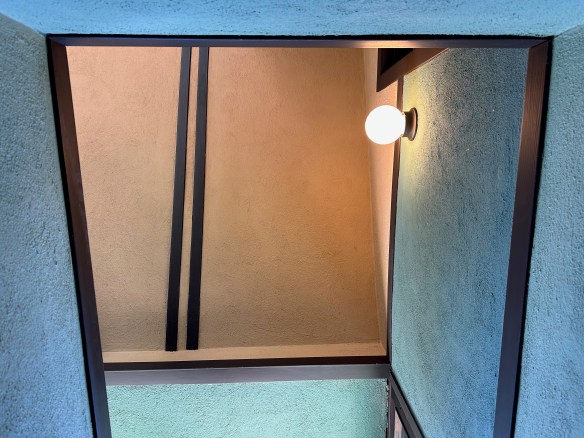
I had a half hour wait before meeting 22 guests coming from coast-to-coast to Frank Lloyd Wright’s Thomas P. Hardy House on their weeklong Road Scholar tour (I am with the group as a Road Scholar guide for three days on these tours, as they travel through Racine, Milwaukee, Madison, and Spring Green). I have been in the house countless times, including leading 14 of these tours. While I try to see something new on every visit to a familiar Wright design, I did not think there was anything new to see in the house.  I had already played Wordle and my other daily games phone games. I had already looked at my emails. I plopped down in a chair in the living room and looked up. I looked up some more and then I knew what I had to do…I had to lie down on the floor and start taking pictures of the ceiling.

IMG_7080.jpeg

IMG_7079.jpeg

IMG_7076.jpeg

Then I walked over to the stairs and looked up at the second floor:

IMG_7087.jpeg

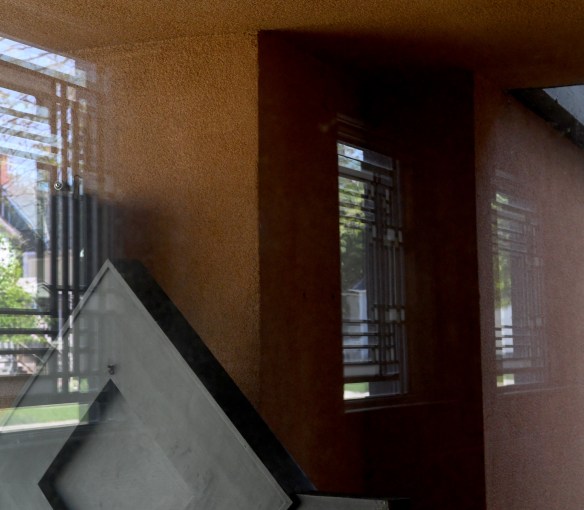
When I then went outside to greet the bus, I saw reflections of Wright’s leaded glass front hallway windows and their reflected images in a new way:

DSC_5985a.jpg

IMG_7083.jpeg

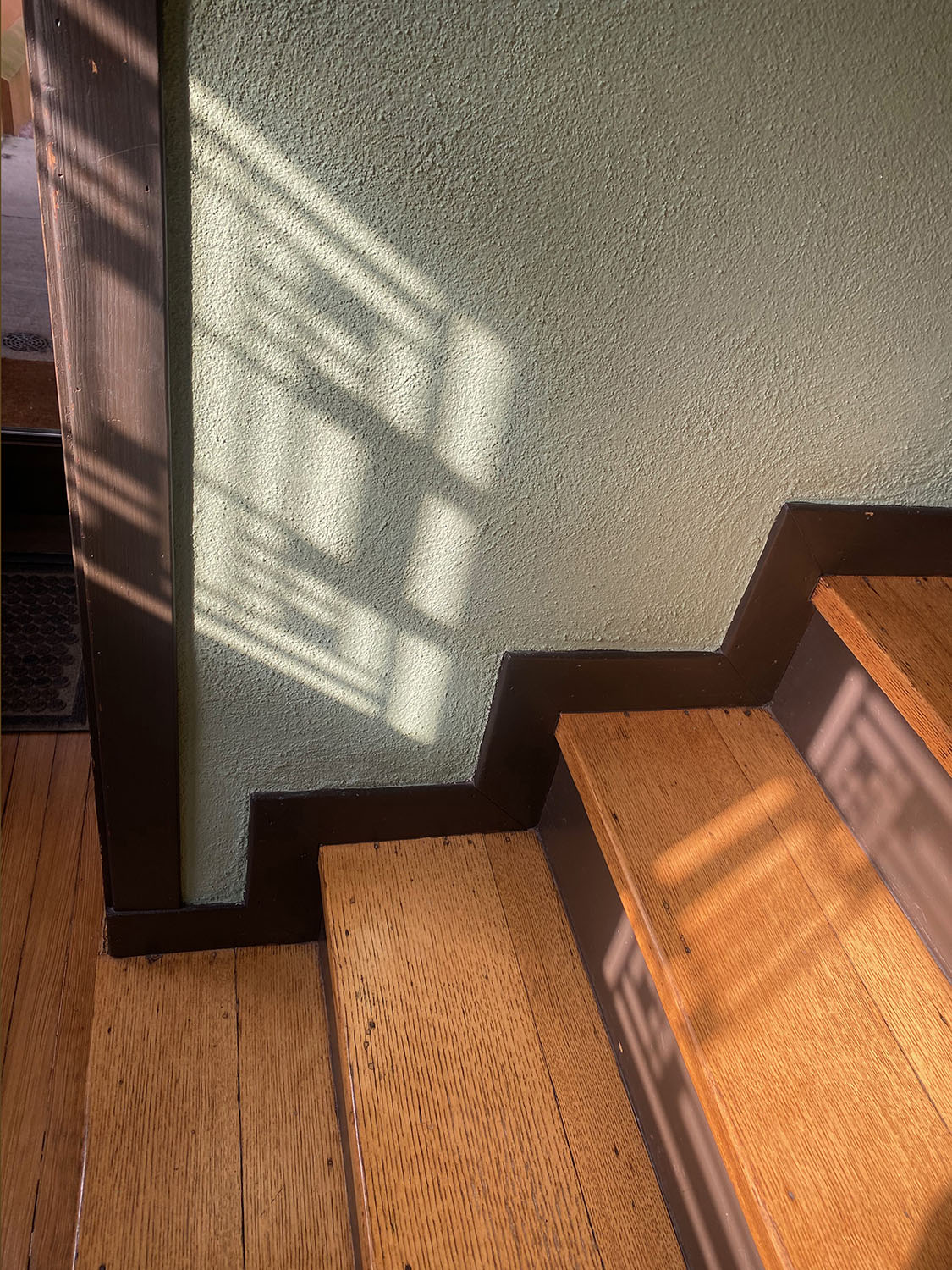
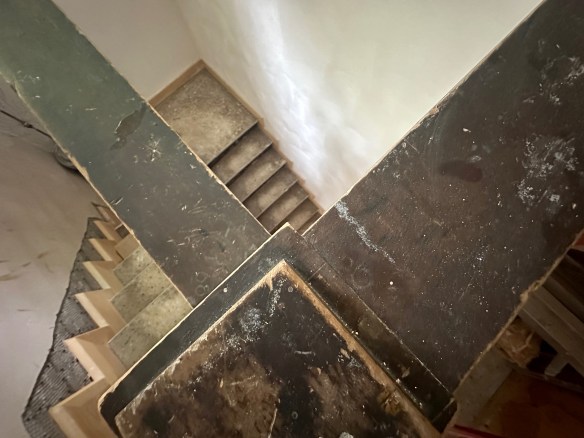
Today, as our guests toured Wright’s American System-Built duplex at 2132/34 W. Burnham Street in Milwaukee, I looked down instead of up. The duplex is being restored with help from a Save Americas Treasures grant. These are the back stairs:

IMG_7103.jpeg

On-line links:

Road Scholar’s “Architectural Masterworks of Frank Lloyd Wright tour:

https://www.roadscholar.org/find-an-adventure/22976/Architectural-Masterworks-of-Frank-Lloyd-Wright

Frank Lloyd Wright’s Burnham Block:

http://wrightinmilwaukee.com

Please continue to scroll down to view and read previous posts

“Furniture Done Wright” Now on Exhibit

© Mark Hertzberg (2024)

LR SCJ Wright Furniture 003.jpg

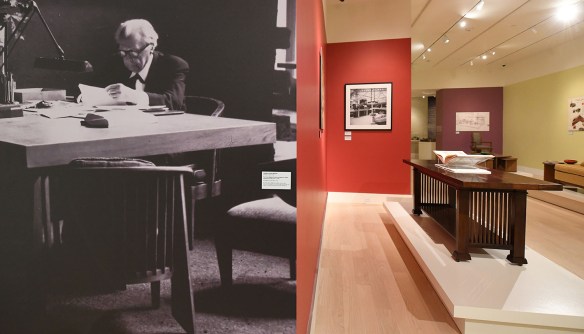
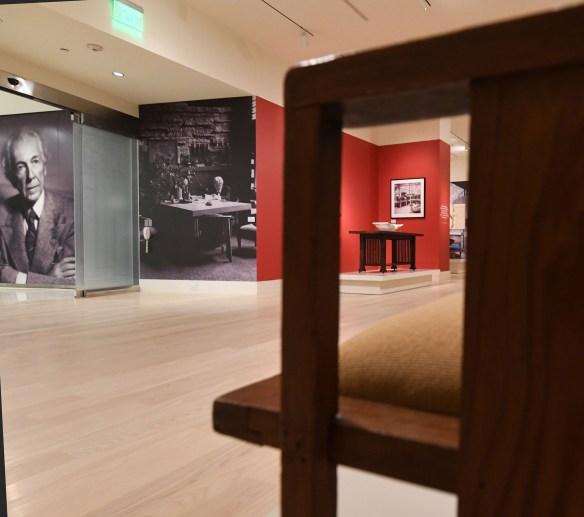
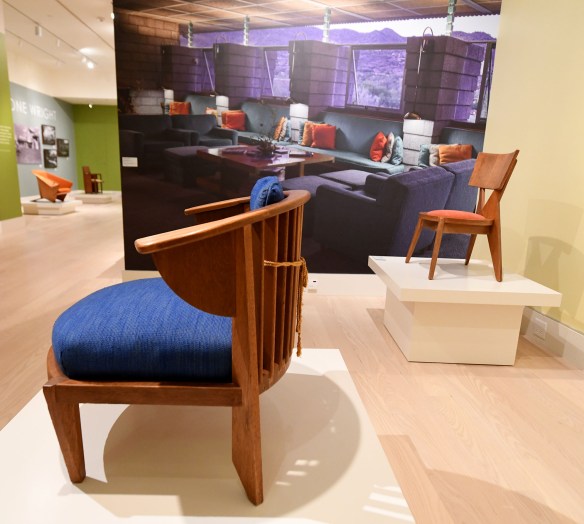
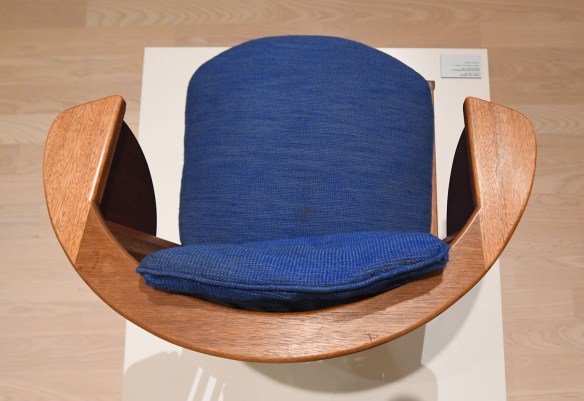
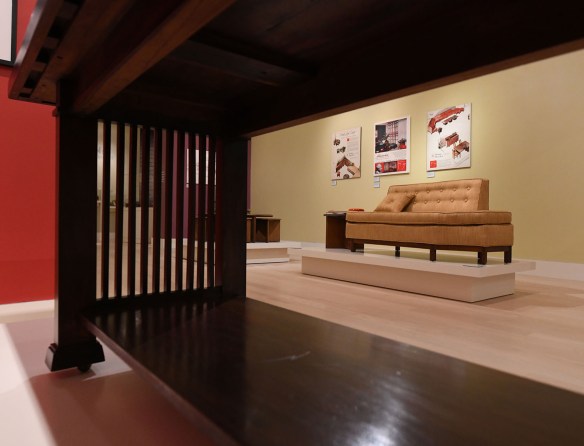
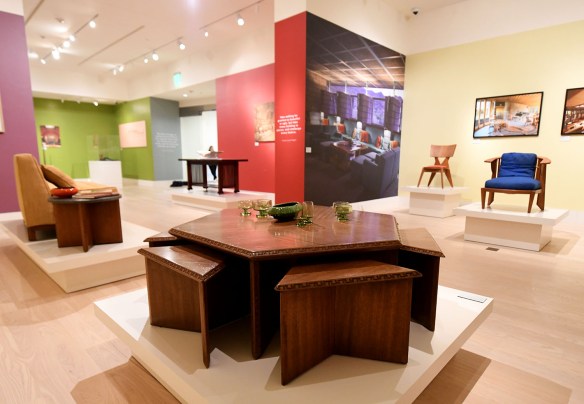
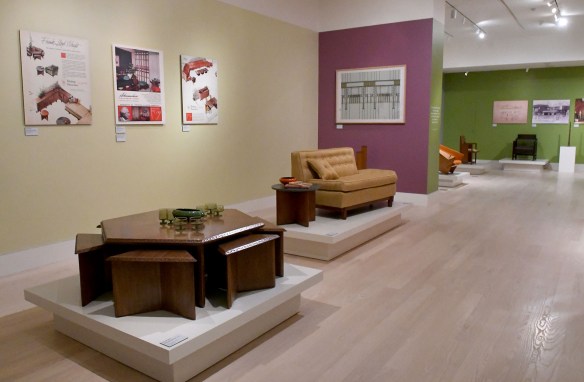
Hiring Frank Lloyd Wright to design a building meant more than just a bricks and mortar job. The entire space – interior as well as exterior – had to be cohesive. His organic designs often included furniture and lighting fixtures he proposed for his clients. Examples of his interior designs are now on display in “Furniture Done Wright” in SC Johnson’s Wright Gallery: At Home with Frank Lloyd Wright in Fortaleza Hall on the company’s campus in Racine, Wisconsin.

LR SCJ Wright Furniture 004.jpg

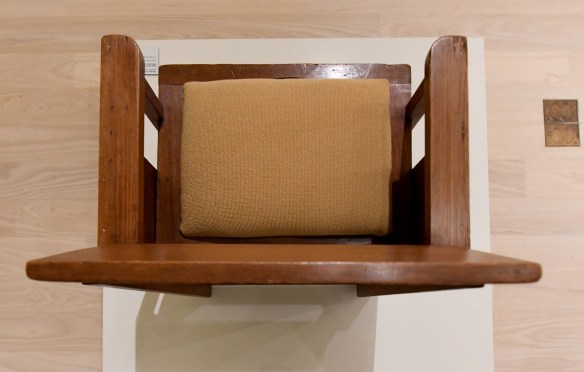
LR SCJ Wright Furniture 007.jpgA dining chair from Taliesin (c. 1925) frames a view of the library table for the Edward C. Waller House Remodeling (1899).

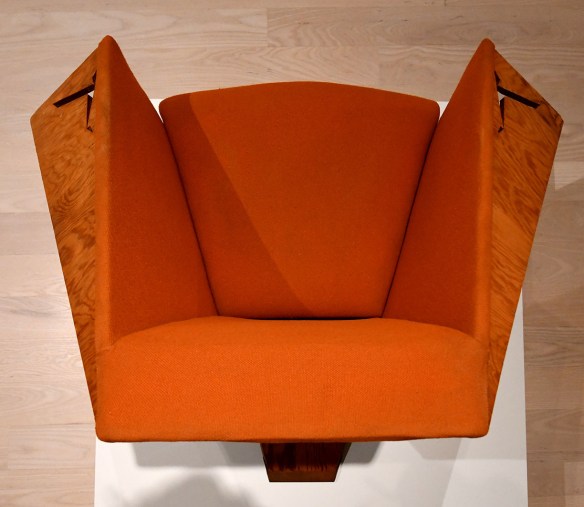
LR SCJ Wright Furniture 016.jpgThe library table, in turn, frames the Taliesin chair and an “origami chair” from Taliesin West (1946).

LR SCJ Wright Furniture 010.jpg


LR SCJ Wright Furniture 012.jpg

Chairs from the David and Gladys Wright House (1950):

LR SCJ Wright Furniture 024.jpg

LR SCJ Wright Furniture 020.jpg

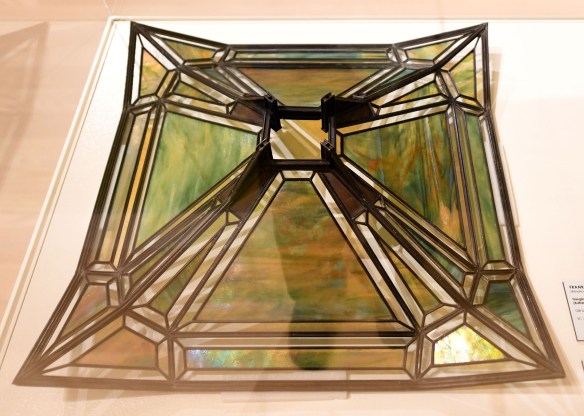
LR SCJ Wright Furniture 031.jpgHanging lamp, William R. Heath House (c. 1905) – the lines are distorted by the camera angle.

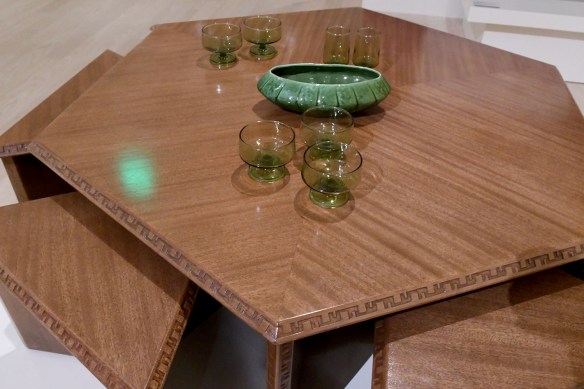
While many of the pieces were designed specifically for his clients, he also designed the “Taliesin Collection” for the Heritage-Henredon company in 1955. A number of those pieces are included in the exhibit:

LR SCJ Wright Furniture 015.jpg

LR SCJ Wright Furniture 018.jpg

LR SCJ Wright Furniture 047.jpg

LR SCJ Wright Furniture 043.jpg

LR SCJ Wright Furniture 039.jpg

LR SCJ Wright Furniture 057.jpg

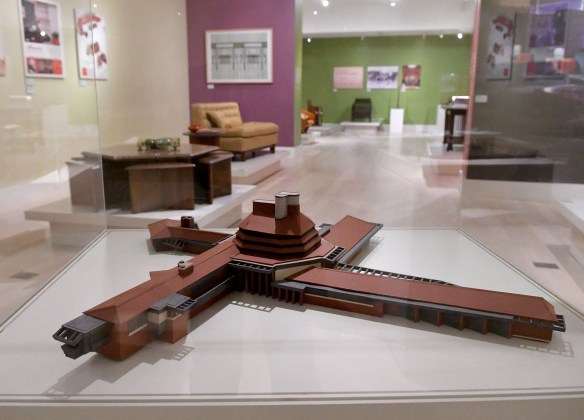
In 2017 SC Johnson acquired a collection of two dozen models of Wright-designed homes by retired architectural draftsman Ron Olsen from Janesville, Wisconsin. The pieces remain on exhibit in the Wright gallery as “Model Citizen: Ron Olsen and Frank Lloyd Wright.”

LR SCJ Wright Furniture 053.jpg

LR SCJ Wright Furniture 055.jpg

The furniture exhibit is on view until spring 2026.

To schedule a visit to the exhibit:

www.scjohnson.com/visit

Ron Olsen’s models, my story from 2017:

https://wrightinracine.wordpress.com/tag/ron-olsen/

Please scroll down in www.wrightinracine.com to read previous articles on the website.

Happy 100th Birthday, Minerva!

© Mark Hertzberg

I have never repeated a post before, but today is a worthwhile day to do that, in honor Minerva Montooth on her 100th birthday! A link to my September 2021 post profiling her and her career in the World of Wright,  “The Marvelous Minerva Montooth,” is below her photo. Happy birthday, dear friend!

2016 Minerva Montooth 6.11.16 003.JPG

https://wrightinracine.wordpress.com/2021/09/29/the-marvelous-minerva-montooth/

Scrolling down brings previous blog posts.

Altruism x 2 at the Bagley House

© Mark Hertzberg (2024)

Bagley House 001.JPEG

Altruism: Unselfish regard for or devotion to the welfare of others: charitable acts motivated purely by altruism – www.merriam-webster.com

Examples: Grace Bagley (1860-1944) and Safina Uberoi and Lukas Ruecker (Contemporary)

Safina t GB exhibit opening wide.jpegSafina Uberoi – photo courtesy of Safina Uberoi

IMG_5557.jpgLukas Ruecker at the Bagley House

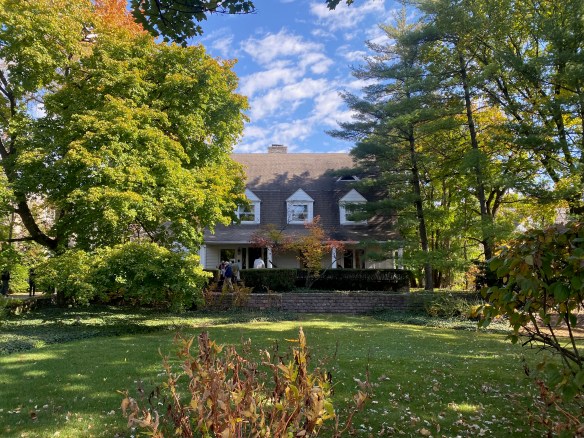
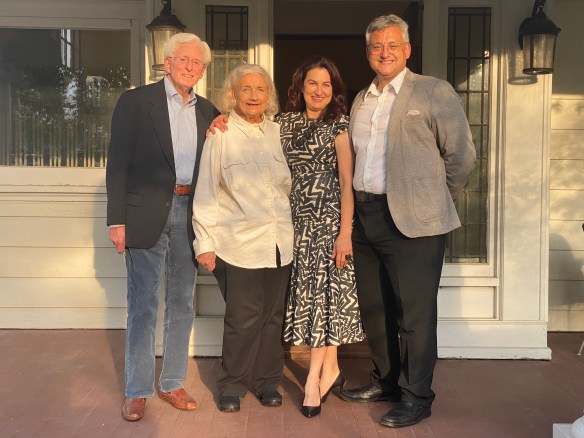
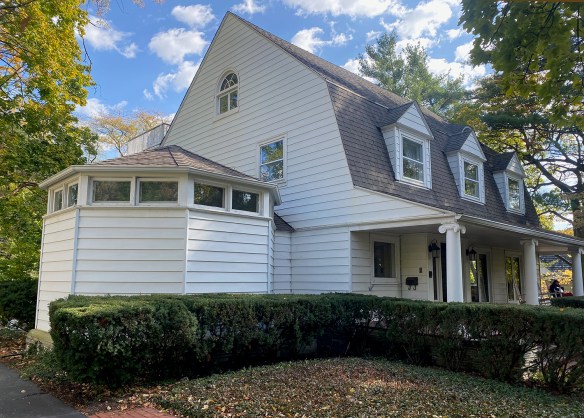
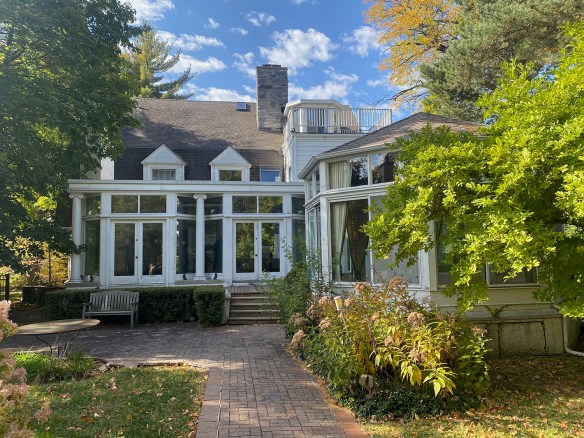
Safina Uberoi, President of the Frank Lloyd Wright Building Conservancy board, and Lukas Ruecker became stewards of Wright’s Tonkens House in Cincinnati in 2015. In 2022 they added Wright’s Bagley House (1894) in Hinsdale, Illinois to their Wright portfolio when they bought – and likely saved – the house which faced demolition, possibly so another “McMansion” could be built. The house has had numerous owners and alterations but its bones are important as one of Wright’s first designs after he left Adler & Sullivan the year before.

Safina Lukas with Jeff Jeannette Goldstone.jpegLukas Ruecker, right, and Safina Uberoi with Jeff and Jeannette, Goldstone, the  previous owners of the Bagley House – photo courtesy of Safina Uberoi

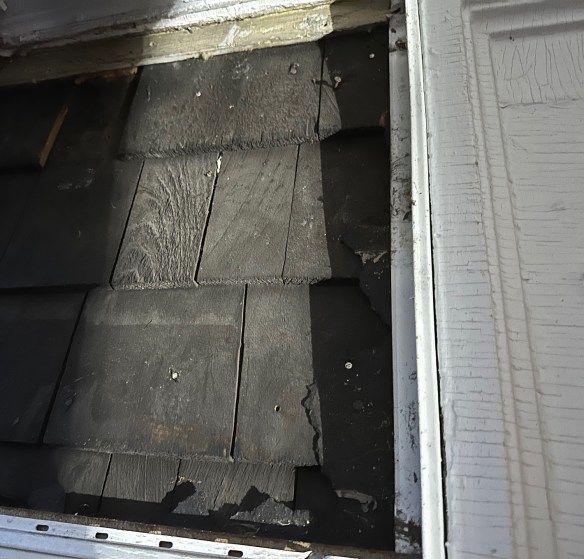
Uberoi and Ruecker are working with restoration architect Douglas Gilbert to restore the Bagley House. The most visible change, as visitors approach the house, will be that the white aluminum siding will be taken off and stained shingle siding – some of it original – will once again envelop the house. The aluminum siding is thought to date to the 1940s or 1950s.

Bagley House 005.jpg

IMG_5566.jpgSome of the original siding is under the aluminum siding.

IMG_5563.jpegBefore the aluminum siding was put onCourtesy Hinsdale Historical Society

The 1980s addition on the back of the house will be taken down, replaced by a new addition designed by architects George Suyama and Jay Deguchi. They are very familiar with Wright’s work; Suyama is a former Building Conservancy board member. Uberoi describes the new addition, “…which provides additional living space at the rear of the plot while touching the Bagley House respectfully at only one point and making no changes to the original building.”

Bagley House 007.jpgThe addition to the rear of the house will be taken off.

Jay Deguchi, George Suyama, Safina Uberoi at Bagely House.jpegSafina Uberoi with Jay Deguchi and George Suyama – Photo courtesy of Safina Uberoi

Gilbert elaborates on the overall program, “The plan is to restore the exterior to the original design by Wright, so the Bagley era.  For the interior, only the main floor living spaces will be restored to the original design, with back-of-house spaces altered to accommodate modern needs and the connections with the new wing. The second floor will be reworked for modern living.  The 1980s addition on the back goes away and the original rear porch rebuilt.  That porch will look out over a courtyard/terrace of the new wing.  The nice thing about the new wing design is that the two will barely touch each other and will instead have more of a dialogue with each other (as opposed to just shooting straight off the back like most additions do).”

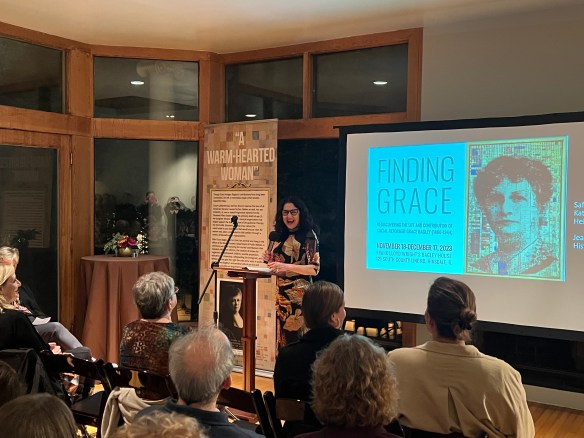
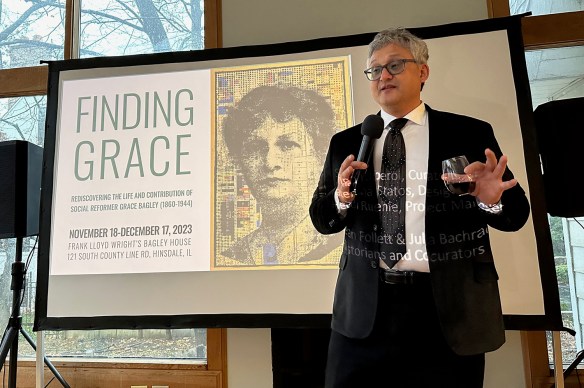
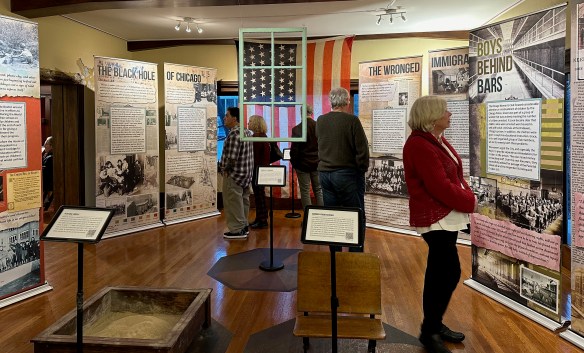
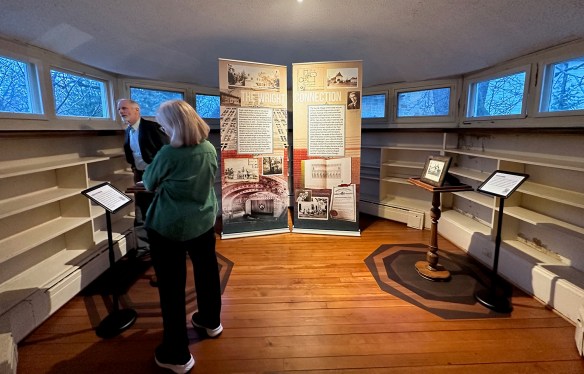
Thanks to the rescue of the house, the distinguished career of Wright’s client, social reformer and suffragette Grace Bagley (1860-1944), is getting fresh attention. Both the house and Bagley’s career were highlighted at an event hosted by the Building Conservancy in December. Uberoi and Ruecker commissioned architectural historians Julia Bachrach and Jean Follett to research Bagley’s work on behalf of economically disadvantaged people in Chicago as part of the process of having the house declared an architectural landmark in Hinsdale. Their research was displayed on richly illustrated story panels for “Finding Grace,” a public exhibit in the house late last year. Bagley helped many Italian immigrant families – some living in a tenement in the Levee District her husband, Frederick, owned. She also helped ensure that juvenile offenders would no longer be imprisoned with adults criminals and volunteered at Jane Addams’s Hull House in Chicago.

IMG_5546.jpegThe “Finding Grace” exhibit at the Bagley House

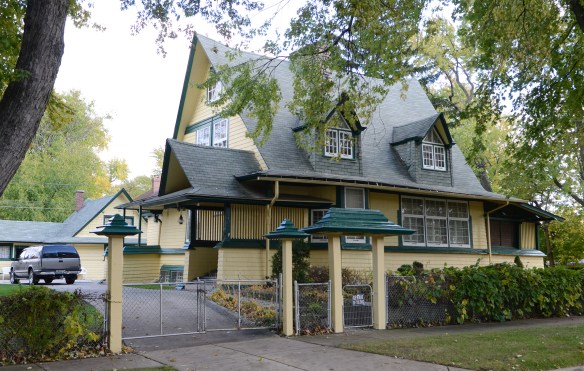
The unanticipated consequences of Uberoi and Ruecker’s purchase of the house include another yet another discovery about Wright’s work through Bachrach and Follett’s research. Like the Bagley House, Wright’s Stephen A. Foster cottage in the West Pullman neighborhood on Chicago’s far south side (1900) was designed as a summer cottage for the client. The surprise that Bachrach and Follett discovered was that Mrs. Bagley and Mrs. Foster were sisters.

Foster House 001.jpgThe Stephen Foster Cottage

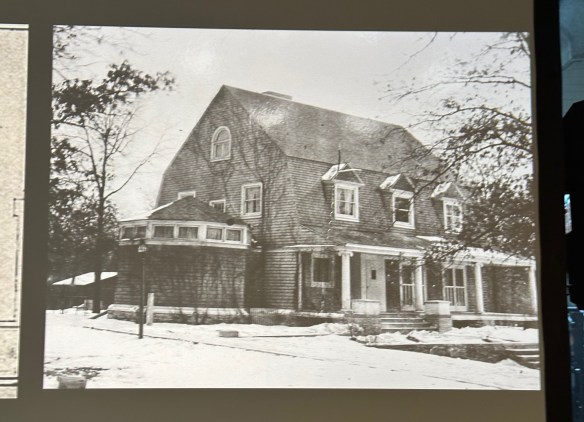
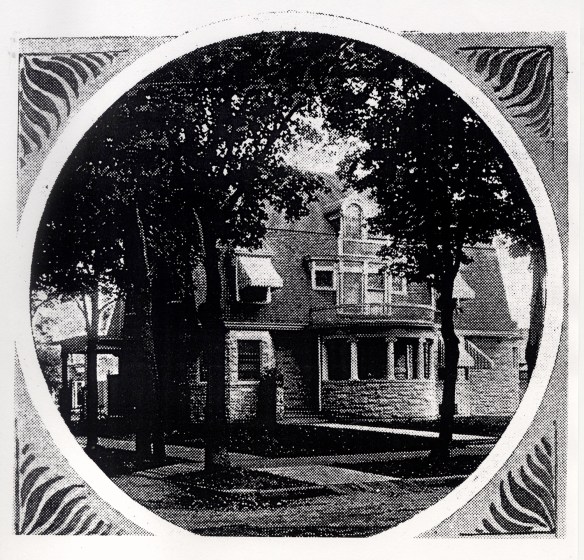
There is some similarity in the Bagley House design to Cecil Corwin’s Henry Mitchell House in Racine (also 1894) which Wright is thought to have helped Corwin design. [I have a special interest in the Mitchell House because I live in Racine and have researched some of its history]. Both houses are included in Tim Samuelson’s “Wright Before the Lloyd” exhibit at the Racine Heritage Museum which runs through the end of 2024. Both are Dutch Colonial.

Mitchell House 1895.jpgThe Mitchell House in 1895 – Courtesy Racine Heritage Museum

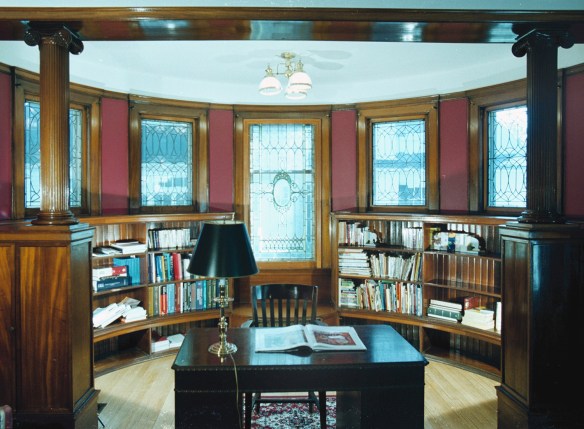
Both have a library at either end of the house. Mitchell’s is semi-circular, the octagonal one in Bagley brings to mind the octagonal office space in Wright’s Home and Studio.

Mitchell House 2001 002.JPGThe Mitchell House library

IMG_5552.jpgThe Bagley House library

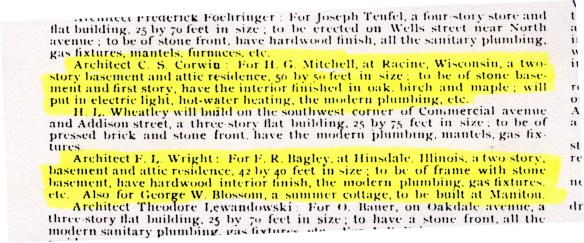
The two commissions are listed just a few lines apart in the March 1894 Journal of the Inland Architect.

Mitchell Inland.jpg

I am an avid bicyclist. There is a maxim in the cycling community that if X equals the number of bicycles one owns, then the ideal number of bicycles to own is X + 1. Perhaps the same maxim is appropriate in the World of Frank Lloyd Wright for Safina Uberoi and Lukas Ruecker!

Finding Grace Exhibit and Travel Schedule:

https://sites.google.com/view/finding-grace?fbclid=IwAR0AIEau6Qlixvytn5s-ZIY93L1HGtFoJAkL1COFXEiH6Eq4Jr07KDjVl68

Architectural Digest story about Bagley and Foster house connections:

https://www.architecturaldigest.com/story/two-early-frank-lloyd-wright-homes-have-a-surprising-link-that-was-just-discovered

Julia Bachrach on the Bagley House:

https://www.jbachrach.com/blog/2022/9/29/the-bagley-house-one-of-frank-lloyd-wrights-earliest-independent-commissions

Frank Lloyd Wright Building Conservancy:

www.savewright.org

Frank Lloyd Wright Building Conservancy on Bagley House, Grace Bagley, 2024 exhibit information:

https://savewright.org/celebrating-preservation-at-the-bagley-house/

Racine Heritage Museum “Wright Before the Lloyd” Exhibit:

https://wrightinracine.wordpress.com/2023/05/04/wright-before-the-lloyd/

Mitchell House: Corwin / Wright’s Coda?

https://wrightinracine.wordpress.com/2021/07/08/mitchell-house-corwin-wrights-coda/

Scroll down for previous posts on this website

Waking Up My Wright Eye

© Mark Hertzberg (2023)

My Wright eye has been dormant for a long time. It finally woke up today, as I finish my 13th Road Scholar Frank Lloyd Wright Wisconsin tour as their step-on guide and “expert lecturer.” I generally look for photos other than just literal pictures of Wright’s work.

I join the tours when they get to Racine from Chicago on Wednesday, and continue with them in Milwaukee, Madison, and Spring Green through Saturday morning. It is always a challenge to find fresh photos at places I have visited so many times, especially when each stop is always at the same time of day. This time I took no photos Wednesday or Thursday. It took spectacular fall colors today – Friday – when we got to the Unitarian Meeting House in Madison to bring my camera back to life.

LR Unitarian Meeting House 10.20.23 016.jpg

LR Unitarian Meeting House 10.20.23 012.jpg

LR Unitarian Meeting House 10.20.23 027.jpg

LR Unitarian Meeting House 10.20.23 030.jpg

LR Unitarian Meeting House 10.20.23 013.jpg

LR Unitarian Meeting House 10.20.23 011.jpg

LR Unitarian Meeting House 10.20.23 022a.jpg

LR Unitarian Meeting House 10.20.23 005.jpg

Then it was on to Jacobs 1. The bonus for our tour guests, which we did not tell them about in advance, was that there was a good chance that Jim Dennis, steward of the house since the 1980s as well as Bill Martinelli would greet us, and that Jim would welcome them into his home:

IMG_4998.jpeg

IMG_5001.jpeg

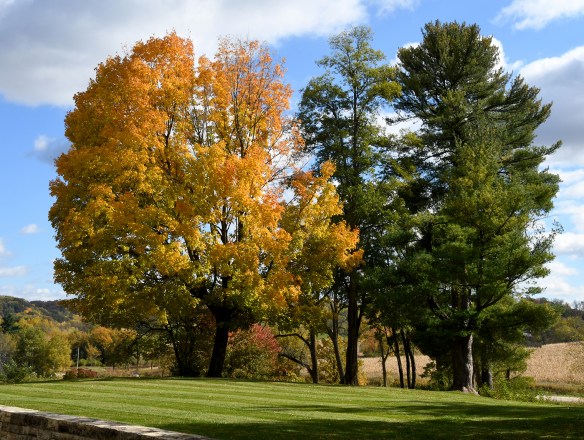
My first picture at the Taliesin estate after lunch was not of a Wright building…it was of the trees in front of Hillside Home School:

LR Hillside 10.20.23.jpg

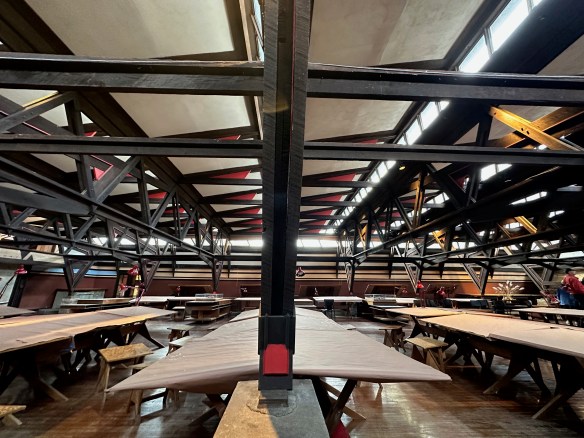
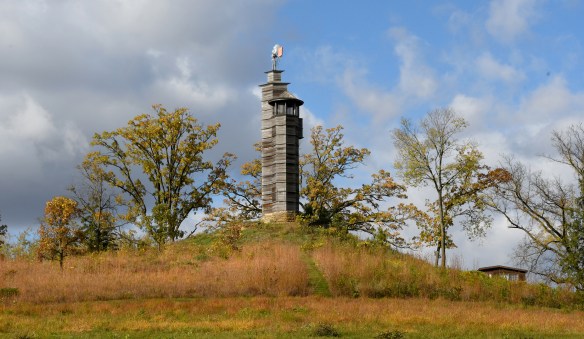
I found new angles for photos of the drafting studio, including the sadly empty drafting room and the Romeo and Juliet windmill:

IMG_5013.jpeg

IMG_5014.jpeg

LR Romeo and Juliet 10.20.23.jpg

And then it was on to the Holy Grail for our guests, Taliesin itself:

LR Taliesin 10.20.23 001.jpg

LR Taliesin 10.20.23 005.jpg

LR Taliesin 10.20.23 011.jpg

LR Taliesin 10.20.23 013.jpg

LR Taliesin 10.20.23 007.jpg

LR Taliesin 10.20.23 014.jpg

LR Taliesin 10.20.23 018.jpg

If you know me well enough you know that I cannot go to Taliesin without a visit to our dear friend Minerva Montooth. Today was no exception:

IMG_5016.jpeg

Links:

The Road Scholar trip:

https://www.roadscholar.org/find-an-adventure/22976/architectural-masterworks-of-frank-lloyd-wright

Unitarian Meeting House:

https://fusmadison.org/welcome/meeting-house/

Taliesin:

https://www.taliesinpreservation.org

Minerva Montooth:

https://wrightinracine.wordpress.com/2021/09/29/the-marvelous-minerva-montooth/

Please continue to scroll down for previous posts.


A Fresh Look at the Imperial Hotel – Part 1

© Mark Hertzberg (2023)

Frank Lloyd Wright is known by many people only for his domestic architecture. But some of his undisputed masterpieces were public buildings. One was the sprawling Imperial Hotel in Tokyo which was 76,865 sq. ft. in an area which measured 156,442 square feet. The hotel, which opened 100 years ago this month, was demolished in 1967-1968, despite an international outcry which included efforts to save it by Olgivanna Wright and Edgar Tafel.

The lobby and entryway were saved and rebuilt at Meiji-mura, a large park with buildings of diverse architecture from the Meiji era (1868 – 1889). It is near Nagoya, several hours from Tokyo by Shinkansen (bullet train), local train, and bus.

LR Imperial Hotel 003a.jpg

The scholars and archivists at Organic Architecture and Design (OA + D), including Kathryn A. Smith, have made two new significant contributions to our understanding and appreciating the breadth and scope of Wright’s Tokyo tour de force. In 1923, concurrent with the opening of the hotel, the management published The Jewel of the Orient, a richly illustrated 32-page brochure about the building and its amenities. The narrative was written anonymously, and takes the reader on a walking tour through its public places and service areas. OA + D has republished the brochure, with an introductory essay by Smith. Only 500 copies were printed, it is a bargain at $20.00:While one can visit the remnants of the grand hotel at Meiji-mura, the OA + D republication of The Jewel of the Orient is a stark reminder of what was lost when the first wrecking ball struck and breached Wright’s hotel. What the Kanto Earthquake on opening day and the bomb couldn’t take, the wrecking ball did.

LR OAD_Jewel of the Orient_cover.jpg

https://store.oadarchives.org/product/jewel-of-the-orient-the-imperial-hotel

On the back cover, the writer describes the hotel as “Neither Of the East Nor Of The West, But Might Fittingly Be Called A Blending Of The Ideals Of The Two Civilizations.” He (presumably) quotes an unnamed “Writer of International Fame” describing the hotel “As A Symphony In Brick And Stone.” It certainly was.

LR Imperial Hotel 014.jpg

LR Imperial Hotel 066.jpg

LR Imperial Hotel 040.jpg

The 1923 black and white photographs are illuminating, particularly the double truck (one photo over two facing full pages) on pp. 14 – 15, an overhead view of the complex. The collection of photographs reinforces the wonder of how one man could design such an intricate and complex masterpiece, especially in the pre-computer age. It has been written that Wright conceived of such landmark buildings as Midway Gardens and Fallingwater long before he “shook them out of his sleeve” and articulated their design on his drafting table. We can only wonder how Wright imagined the Imperial Hotel before drawing it. Because there had to be plans for each hotel ornament, as well as the china and the furniture, and not just plans for the building itself and its ancillary structures, Smith wrote me, she estimates that there may have been between 2,000 and 3,000 drawings made. Only 822 drawings of the hotel survive in the Wright archives at the Avery Library. Consider the volume of drawings, at least one for each element of the hotel:

LR Imperial Hotel 050.jpg


LR Imperial Hotel 023.jpg

LR Imperial Hotel 023.jpg

LR Imperial Hotel 052.jpg

As for the furnishings, the author of the brochure notes “The thing which strikes one most forcibly on entering any of the rooms, be they parts of a suite or otherwise, is the absence of ready to buy wares.” Everything was “especially designed and made for the hotel…conceived by the mind of a master and manufactured with a view to forming integral parts of a completed and harmonized whole…”

LR Imperial Hotel 062.jpg

Film 100 years ago was infinitely less sensitive to light than today’s digital cameras which can take pictures even under dark conditions. The anonymous photographer capably used natural (ambient) light in many interior photos as well as lighting others. There are photos of lesser known aspects of the hotel including the Arcade shops in the basement and the reading room. A post office as well as a branch of the Japan Tourist Bureau were also in the hotel. Hotel staff members took English lessons in the Service School (nine-tenths of the complaints to management over the years in the prior Imperial Hotel had been about guests and staff having difficulty communicating with each other). Look at Wright’s use of indirect lighting in the (reconstructed) lobby:

LR Imperial Hotel 041.jpg

LR Imperial Hotel 032.jpg

LR Imperial Hotel 035.jpg

Smith writes it is “surprising” that the writer of the brochure “not only sensitively describes Wright’s architectural accomplishments, but he also emphasizes the technological progress represented in everything hidden from sight. There are not only descriptions, but  photographs of the mechanical rooms.”

Wright, who many think was loathe to collaborate with anyone, had hired a Chicago company and a mechanical consultant to oversee electrical machinery for the hotel kitchen and service facilities. Meals could be served to 3,000 guests at a time. There are photographs of the “huge electric Blakes-Lee dish washing machine capable of cleaning and drying 5,600 dishes in one hour” and one of the four “large Tahera autonomic (silver) burnishing machines.”

The photographs of the powerhouse, laundry, and ice plant are of particular historic importance because they were destroyed in the Allied bombing of the hotel, May 25, 1945. The Banquet Hall was also destroyed. Although the Allies rebuilt it in 1946, the work was not executed to Wright’s design.

Wright relentlessly spent months “testing and rejecting the texture and color of the brick, just like a Japanese tea master choosing the perfect ceramic cup for his ceremony,” writes Smith. Only appliances were ordered out of a commercial catalogue. The indirect lighting, indeed all aspects of his design, she writes, were “certainly in sympathy with omotenashi, a subtle Japanese concept of hospitality and personal behavior.

The writer of the brochure takes note of the furniture and fixtures in the hotel. “They were conceived by the mind of a master and manufactured with a view to forming integral parts of a completed and harmonized whole,…possessing all the characteristics to be found in a home of refinement and culture.” He observes that the guest rooms are “convenient” to the public areas. “This feature is what has caused many to declare that the Imperial Hotel is not a single structure but the systematic and convenient grouping of a number of structures that go to form a community in themselves.”

I chuckled when I read about the barber and beauty shops in the basement in her essay. I recalled that my parents stayed in the hotel in 1957. They never mentioned Wright to me (I was not quite seven at the time). My mother kept a diary during their trip to Japan. Her only remark about the hotel was that she had her hair done there while my father was in a business meeting.

A curious phrase in the text of the brochure implies the author was writing, at least in large part, for an American audience. While describing “The Ground Floor” in his walking tour of the hotel, he notes, “The prohibition craze has not invaded Japan as yet and the Imperial Hotel has provided a place where friends may meet after the day’s task is done and enjoy one another’s society over an anti-Volsteadian cup (emphasis added).” This references The Volstead Act, the law that created Prohibition in the United States.

It is not surprising to read in Smith’s essay of the “conflict between commercial value versus cultural value” of the hotel, and that the budget eventually quadrupled. The first page of the 1923 text notes “The apparent indifference of the management to the cost of hammered copper, brass, gorgeous upholstering and the like, all bring down the wrath of the dividend seeker on the heads of the director, who approved of the structure, the architect who conceived and designed it and the builders who dared to construct it. To them the new Imperial Hotel is a masterpiece of folly, a source of never ending expense and a case where pride took the bridle in its teeth and ran away with judgement and common sense.” Aisaku Hayashi, the hotel manager who hired Wright, was forced to resign.

The hotel was arguably “The Jewel of the Orient,” as evidenced by the cover photo. The hotel is shining at night with Wright’s artful use of indirect lighting. Smith’s closing remarks address the photo. “The building looked like a glowing beacon and could be seen from miles around. It not only stood for technological progress, but for the architect’s humanistic view of how architecture could express a spiritual dimension. While it stood, it also had great meaning as Wright’s effort to embody omotenashi.”

Every issue of the OA + D Journal of Organic Architecture and Design is devoted to a single topic. The new issue, titled “100 for 100,” is 120-pages edited by Smith. It showcases 100 objects from the hotel’s history. The objects, some of which are being published for the first time, come from the OA + D archives:

OAD_V11N2_Imperial 100_cover.jpg

https://store.oadarchives.org/product/journal-oa-d-v11-n2

It is Smith’s second Journal about the hotel. The previous Imperial Hotel issue, published in December 2018, is well illustrated with construction photos:

OAD_V6N3_ImpHtl_Cover.jpg

https://store.oadarchives.org/product/journal-oa-d-6-3-pre-order

I photographed the rebuilt portions at Meiji Mura in 2018 and enjoyed a drink in the coffee shop above the lobby:

https://wrightinracine.wordpress.com/2018/12/06/imperial-hotel/

https://centrip-japan.com/spot/meijimura.html

Some of the last photographs in my web piece show the unfinished and very raw rear of the rebuilt portion of the hotel, underscoring the inevitable destruction of the greater hotel in 1968. The rear of the building mocks us, making us think that what we saw inside and from the front was a Hollywood set. I wrote above the photos, “But, what about the rear of the structure? I had to look, but it was a bit like peeking behind the Wizard of Oz’s curtain.”

LR Imperial Hotel 021.jpg

LR Imperial Hotel 019.jpg

LR Imperial Hotel 020.jpg

A new Imperial Hotel was built after Wright’s was demolished. The  hotel website asserts that there are plans to rebuild the 1923 main building and “merge” it with the modern hotel. In the meantime, the hotel, in partnership with the Frank Lloyd Wright Foundation, now incorporates “Wright-inspired motifs, patterns and designs into the furnishings of its current buildings.” And, for $10,000 a night you can stay in the Frank Lloyd Wright Suite, “the only one in the world (which) features an Oya stone relief, handmade stained glass and oak furniture staged in the symmetry for which Wright was famous.”

https://www.imperialhotel.co.jp/e/tokyo/special/wright_building/

No, thank you, that’s not for me, not after seeing the real thing in the century old photographs in The Jewel of the Orient.

LR OAD_Jewel of the Orient_cover.jpg

OA + D Home Page:

https://oadarchives.org/

Please scroll down for previous article on the website.

Catching Up on All Things Wright

© Mark Hertzberg (2023)

It seems like more than a month since I last posted, but, a month it is, almost to the day. Today is catch-up day, with a variety of things for you.

First (and most important?!) are my latest photos of our dear friend Minerva Montooth. I had the pleasure of chatting with her June 30 when I was taking another Road Scholar group – my 14th since 2017 – to Taliesin, at the end of their week-long Wright adventure in Illinois and Wisconsin (I am with them for the three days in Wisconsin). I will post a link to this particular Road Scholar trip at the end of this article.

Minerva 6.30.23 004.jpg

Minerva 6.30.23 008.jpg

Minerva 6.30.23 019.jpgMinerva and her friend and assistant Renee

Minerva turned the tables on me with her phone camera:

With Minerva 6.30.23.jpg

Witih Minerav 6.30.23a.jpg

Next, I am a few months late to the party, but I just finished an important book about the Jacobs houses in Madison and Middleton. It is published by OA+D:

https://store.oadarchives.org/product/frank-lloyd-wright-s-jacobs-houses-experiments-in-modern-living-pre-order

Jacobs Houses Book_Cover.jpg

The book was edited by Neil Levine, and starts with an essay by him. Neil’s late wife was Susan Jacobs Lockhart who grew up in the two houses. Hers is one of  six essays in the book (the others are by her sister Elizabeth and brother William, and by Michael Desmond) There are profiles of Herbert and Katherine Jacobs; first-person accounts of growing up in the houses; and compelling perspectives on the history and architectural significance of the two houses. There is also a rich collection of historic photos and of Wright’s drawings. I was particularly taken with the photos of the Madison house under construction, and shortly after, when it stood almost alone in the neighborhood.

Thirdly, Michael Schreiber of This American House, sent me a link to a “Reconsideration of William Cary (sic) Wright,” Wright’s father, by Hope Rogers, William Carey Wright’s great-granddaughter. The architect’s father has been given short-shrift in many accounts, wrongly portrayed as a thoughtless man who abandoned his family. One other recent setting straight of the record was Paul Hendrickson’s 2019 book Plagued by Fire. Here is a link to her telling of his story:

https://thisamericanhouse.com/the-architects-father-a-reconsideration-of-william-cary-wright-the-father-of-frank-lloyd-wright/

And, finally, mentioning Paul Hendrickson is also a way to segue into my last offering for this article. He recently attended a conference at the Embassy Suites by Hilton Rosemont hotel near Chicago’s O’Hare Airport. We were going to meet at the hotel and he emailed me that he was anxious to show me a variety of homages to Wright in the hotel. They are like fish out of water, with no apparent context. After all, the hotel was near the airport, not in Oak Park in River Forest where acknowledging Wright would have been a logical. Regrettably, the manager of the hotel has not had the courtesy to return a number of calls over several weeks, calls in which I had hoped to learn the genesis of the Wright decorations. So, here with no explanation, are some photos from the lobby and one of the ballrooms:

Embassy Suites Wright 002.jpg

Embassy Suites Wright 003.jpg

Embassy Suites Wright 004.jpg

Embassy Suites Wright 005.jpg

Embassy Suites Wright 001.jpg

Embassy Suites Wright 006.jpg

Embassy Suites Wright 007.jpg

Road Scholar Illinois /  Wisconsin: Architectural Masterworks of Frank Lloyd Wright:

https://www.roadscholar.org/find-an-adventure/22976/Architectural-Masterworks-of-Frank-Lloyd-Wright

What’s next? “Only the Shadow knows,” as was said on the long-ago radio program. I rarely know in advance what and when the next posting will be. Stay tuned, and in the meantime, scroll down for previous articles.

Wright Bookshelf June 2023

© Mark Hertzberg (2023)

There are two new books to consider adding to your Frank Lloyd Wright bookshelf: Kristine Hansen’s Frank Lloyd Wright’s Wisconsin: How America’s Most Famous Architect Found Inspiration in His Home State (Globe Pequot Press, 2023) and the catalogue that accompanies the “Wright Before the ‘Lloyd’: Frank Lloyd Wright’s Search for Himself” exhibit at the Racine, Wisconsin, Heritage Museum, published by the museum.

Frank Lloyd Wright's Wisconsin Book Cover Image.jpg

(As a journalist I believe in disclaimers…Hansen worked as a reporting intern at the Racine newspaper in the 1990s when I was Director of Photography there. After she contacted me when she was writing her book, I introduced her to Minerva Montooth and stewards, past and present, of the Hardy House, A.P. Johnson House, Keland House, and Penwern. She quotes me extensively, drawing from my books, and used a number of my photographs.)

IMG_3225.jpgHansen at Boswell Books in Milwaukee on June 9. Her mother, left, beams in the front row.

Hansen described her book as a “guidebook” rather than an “academic” book in an email to me. That is an apt description. She is a travel writer based in Milwaukee and became aware that Wright’s work in his home state is not as well known as, say, Fallingwater, to people across the country who do not live and breathe Frank Lloyd Wright every waking moment. The book is rich in anecdotal descriptions and histories of many of Wright’s commissions in Wisconsin, as well as several Wisconsin buildings by other architects, including by Wright apprentices James Dresser. and John Rattenbury.

IMG_3224.jpg

Her Introduction was born during a traditional Wisconsin Friday night fish fry when someone asked her, “Who was Frank Lloyd Wright?” Then,  “I realized that most people connect Wright with his architectural projects but not necessarily his character and personality.” Fortunately, the book concentrates on his work, rather than rehashing the same-old, same-old about what a difficult man he was. I know several Wright clients who passionately disputed that characterization of Wright, so best to move on from that.

IMG_3228.jpg

Although there is a listing of all of Wright’s Wisconsin commissions, along biographical notes about his life, in the three page “Timeline of Frank Lloyd Wright in Wisconsin” chronology in the front of the book, the text is not inclusive of all of them. “My dream book would have been to include every project Wright designed in Wisconsin. I actually did not want to discriminate. But some people did not get back to me and as they are stewards of private homes I didn’t think it would be fair to have a chapter about a house without interviewing the person who lived in it, especially in contrast to chapters where I interviewed the stewards of other homes,” Hansen wrote me.

I emailed her about the subtitle of the book, writing her that I thought the book shows what came out of his inspiration rather than how he was inspired by his home state.  She replied, “In my talks I am further addressing this question, such as how growing up on so many acres of land likely led to his organic-architecture philosophy. If this were a more academic book, and not a guidebook, I might have included a chapter that answers this question in essay form, pulling together the tenets of each project.”

There are a few errors in the first edition, which sold out quickly. Although Hansen caught them when proofing the book, her editor did not correct them before going to press. She has been assured that they have been corrected for a second printing due out in July.

I come from a visual background, so I look at more than the narrative of a book. How is it presented to the reader? Several aspects of the design and production of the book are disappointing. I wish each chapter included the date of the commission in the heading and, in the case of the non-Wright buildings, the name of the architect, rather than introducing his name lower down, in the narrative. (Hansen breaks with convention by using the date of completion for the buildings rather than the accepted practice of the date of its design.) The book’s designer included some completely and partially blank pages in the book. The “Statewide” chapter about the Wright in Wisconsin organization has four photos which are not captioned. I recognize one as Wright’s Lamp House in Madison, but I have to guess at the names of the buildings and non-Wright architects of the other three from the text. The quality of the photo reproduction varies from excellent to poor. Muddy tones in some of the darker photos would not be hard to correct.

IMG_3233.jpg

Scholarly treatises about Wright’s work abound, and I am aware of at least two more in the pipeline. Hansen’s book is for a different audience. It is a good overview of Wright’s work in Wisconsin for a general audience that is not going to delve into endnotes and debate about his work ad infinitum. A Wright scholar criticized one of my books for being too anecdotal. On the contrary, I replied, I believe that it is important to let Wright’s clients and the stewards of his homes tell how they experience his architecture, how they live and work in his buildings. Hansen’s book accomplishes that through her dogged efforts as a journalist to track down her subjects.

To order: https://www.boswellbooks.com/book/9781493069149

cover.jpg

The “Wright Before the Lloyd” exhibit, which runs through 2024, was curated by Tim Samuelson, the City of Chicago Cultural Historian Emeritus. The exhibit draw on his vast knowledge and extensive collection of Wright and Louis Sullivan artifacts. Samuelson cut his teeth in preservation as a student in the 1960s, helping the late Richard Nickel salvage artifacts from Sullivan building that were being demolished in Chicago.

Samuelson Nordstrom.jpgSamuelson, left, with Eric J. Nordstrom of the bldg.51 archive, at the exhibit opening.

The exhibit focuses on Wright’s early career, when he signed his work “Frank L. Wright.” He worked for Joseph Lyman Silsbee and Adler & (Louis) Sullivan before his dismissal from Adler & Sullivan. It also focuses on Cecil S. Corwin, Wright’s dear friend who he met soon after moving to Chicago form Madison.

LR RHM Corwin Wright 040.jpg

The exhibit catalogue, written by Samuelson, with an Introduction by museum curator Allison Barr, is a summary of many of the text blocks from the exhibit and includes some of the exhibit’s photographs and drawings. It also includes photographs of some of  Wright’s pre-“Lloyd” work and some of Samuelson’s rich collection of artifacts that are on display. The chapter entitled “A Tale of Two Houses” is about Corwin’s H. G. Mitchell House in Racine and Wright’s F. R. Bagley House in Hinsdale, Illinois, both from 1894. The chapter raises the question of how much involvement Wright had in the design of the Mitchell House, with no definitive answer.

RHM Corwin Wright 005.jpgMuseum curator Allison Barr helps set up the exhibit.

This slim book – it is just 23 pages – is a fine overview of the exhibit and Corwin and Wright’s relationship for people who cannot travel to Racine to see the exhibit for themselves. It ends with Wright’s tribute to Corwin in 1958, just a few months before Wright died, “…the best friend, perhaps I’ve ever had.”

To Order:https://www.racineheritagemuseum.org/product/wright-before-the-lloyd-exhibit-catalog/214?cp=true&sa=true&sbp=false&q=false

LR RHM Corwin Wright 027.jpg

Please scroll down to read previous posts…