Rainy Day Post #3 – A Wright Potpourri

Photos (c) Mark Hertzberg (2020)

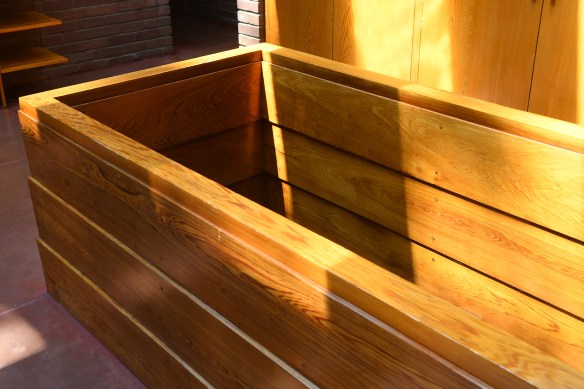
I have promised you one more “rainy day post,” cleaning up pictures that have been waiting on my desktop for the right context to post them in. This is a smattering of photos of Frank Lloyd Wright sites I have visited in one context or another since July 2018. While I shoot literal photos of Wright buildings (“head shots” we called them in the newsroom), I also look for photos of details of Wright’s designs. I am generally not sharing interior photos of private homes. I try to avoid looking at other photographers’ interpretations of Wright buildings before I visit them so that I see the structures through my own eye and lens, rather than possibly copy another photographer’s vision.

The photos are in chronological order, beginning with a wonderful trip to the Detroit area that July two years ago. We were with our good friends Bob and Jeanne Maushammer from Virginia. Jeanne’s exposure to Wright began when she was a teenager, hired to babysit at the Thomas P. Hardy House in Racine for Schuyler and Peterkin Seward, stewards of the house between 1957 – 1963. The Maushammers dutifully chronicle their Wright adventures in a well worn copy of William Allin Storrer’s The Architecture of Frank Lloyd Wright. I will copy and paste Jeanne’s recollections of the Hardy House from my 2006 book about the house at the end of this blog post.

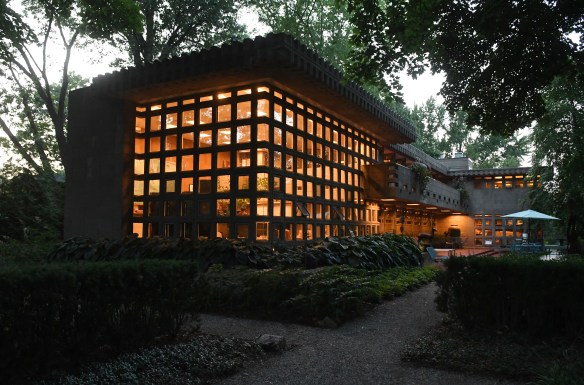
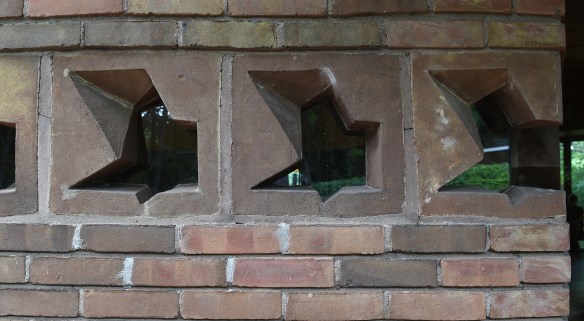
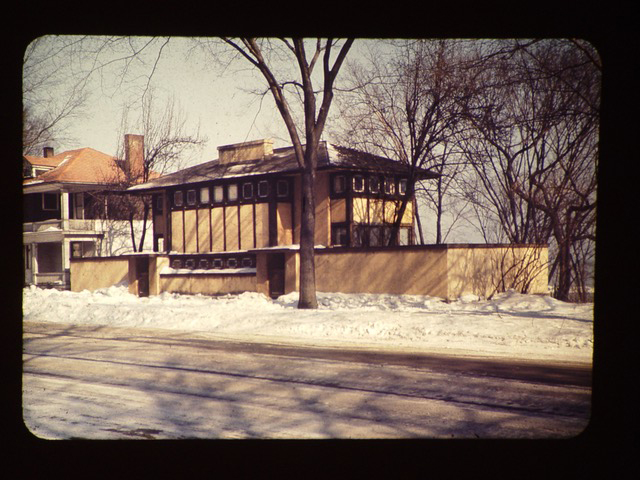
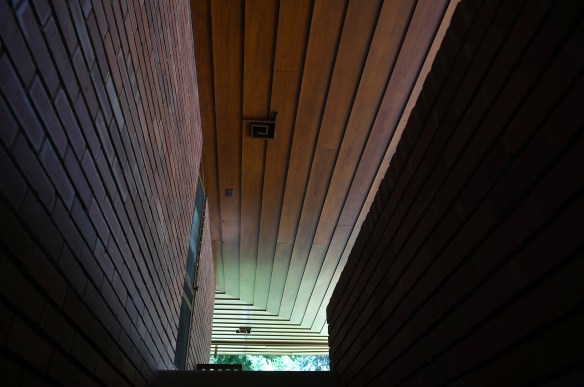
Our first stop was at the Affleck House in Bloomfield Hills, where Dale Gyure graciously gave us a private tour:
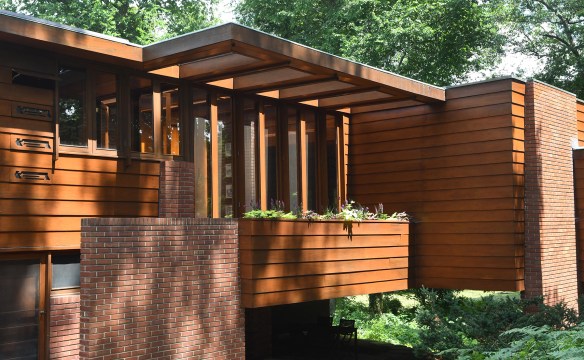
Affleck House 009.jpg

Affleck House 018.jpg

Affleck House 026.jpg

Affleck House 029.jpg

Affleck House 032.jpg

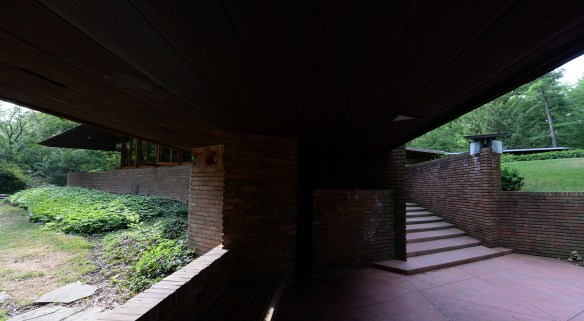
We were fortunate to next get a private tour of the Melvin Smith House. The light was not as subtle as the architecture in the early afternoon:
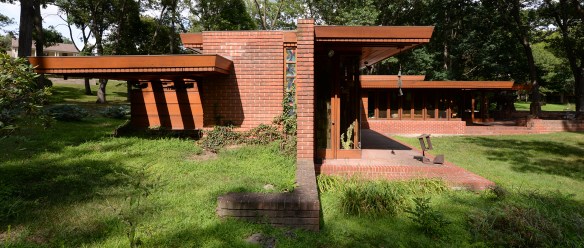
Smith House 014a.jpg

Smith House 020.jpg

Then we were off to the Turkel House, lovingly restored by our good friends Norm Silk and Dale Morgan. Jeanne has wonderful stories of having seen the then-distressed house ca. 2004 right after a questionable tenant had been evicted. We had bid on a dinner at the house, to benefit the Frank Lloyd Wright Building Conservancy. Norm went above and beyond shopping for us in a Middle Eastern market, and we had a lovely meal in the garden. The Maushammers, Cindy (Hertzberg), and Norm:

Turkel House Dinner 010.jpgWe planned to stay only a couple of hours and not overstay our welcome, but we were like family enjoying the house in the living room after dinner until past 11 p.m.! The light was harsh when we arrived at 5 p.m., and I wondered how it would change through the evening:
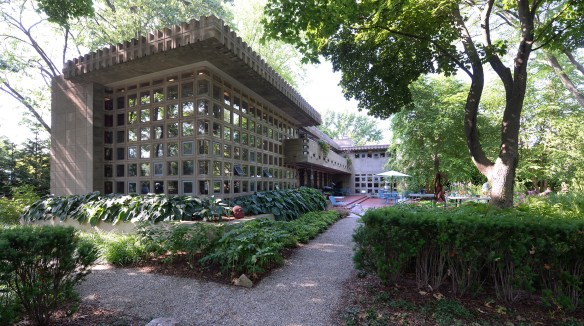
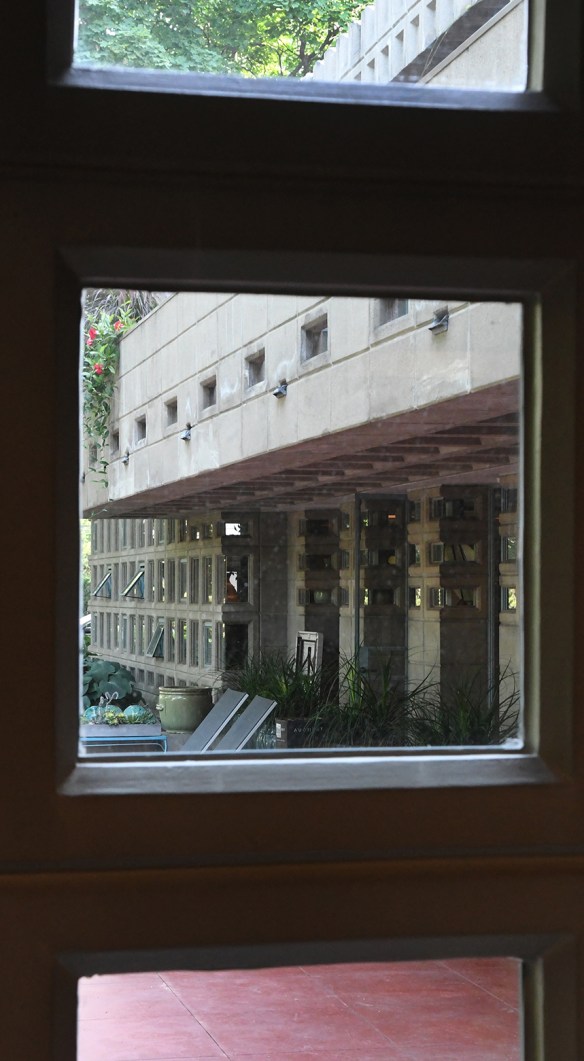
Turkel House 001.jpg

Turkel House 032.jpg

Turkel House 044.jpg

Turkel House 046.jpg

Turkel House 011.jpg

Turkel House 016.jpg

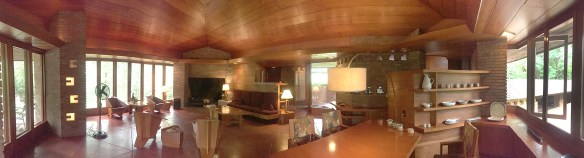
Our next adventure was when Bob and Jeanne treated us to a stay at the Palmer House in Ann Arbor:
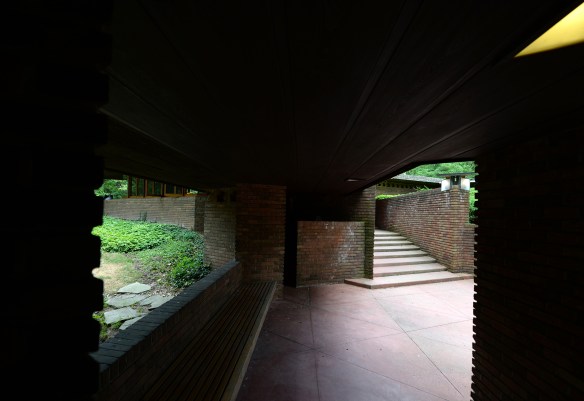
Palmer House 031.jpg

Palmer House 034.jpg

Palmer House 042.jpg

Palmer House 037.jpg

Palmer House 082.jpg

Palmer House 068.jpg

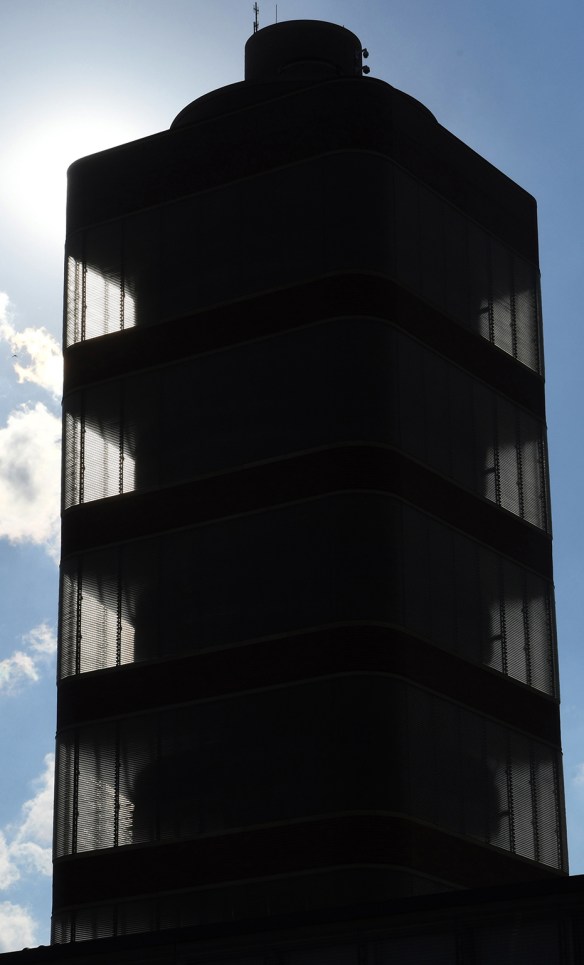
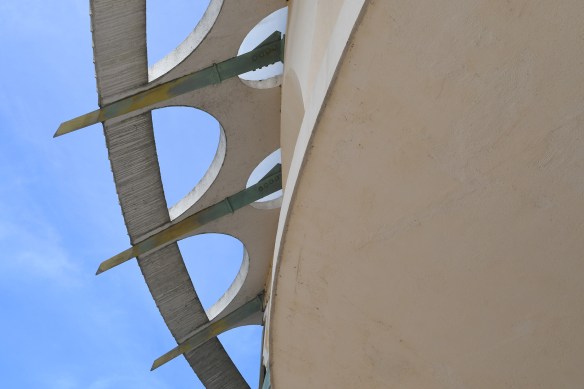
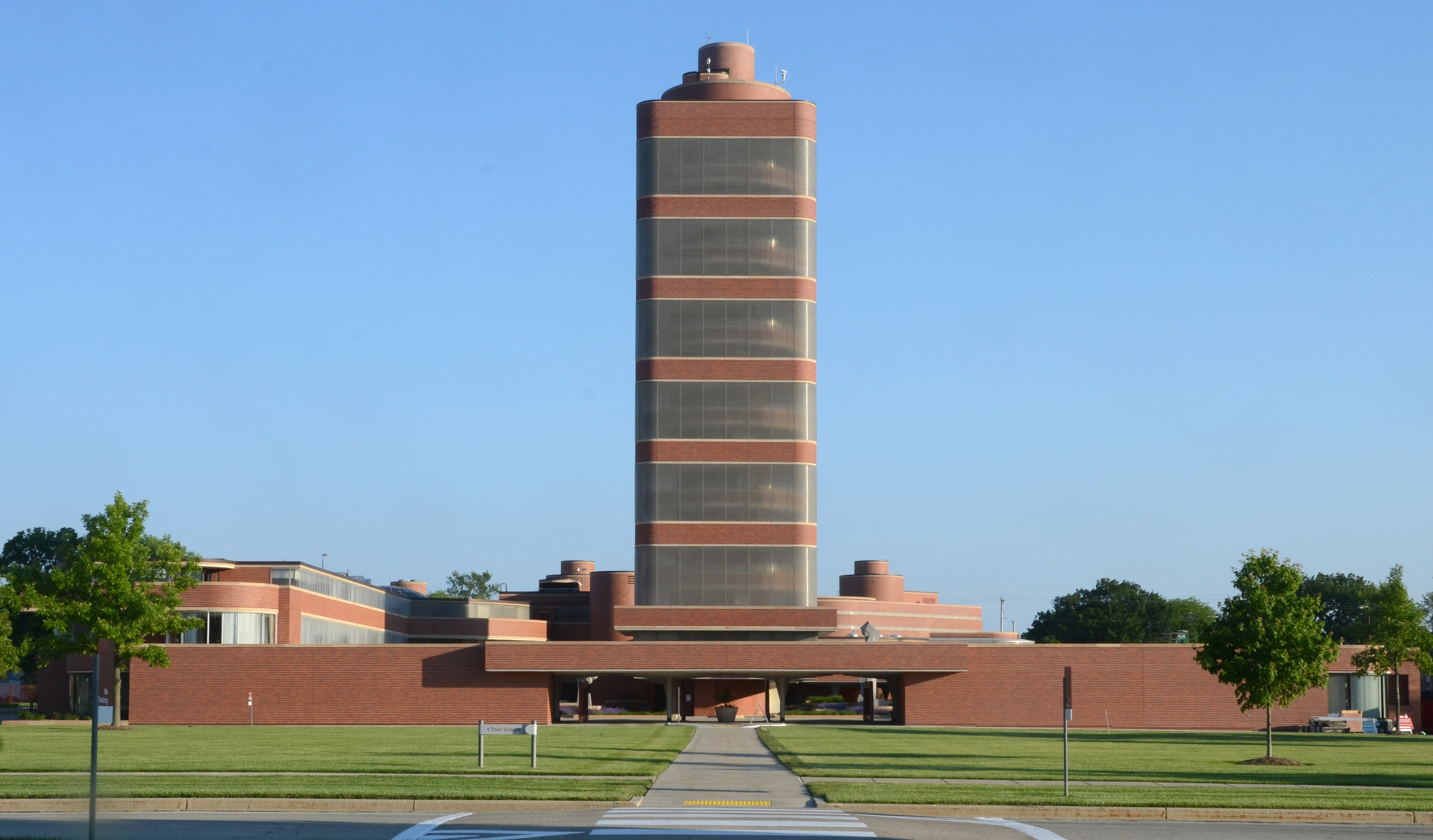
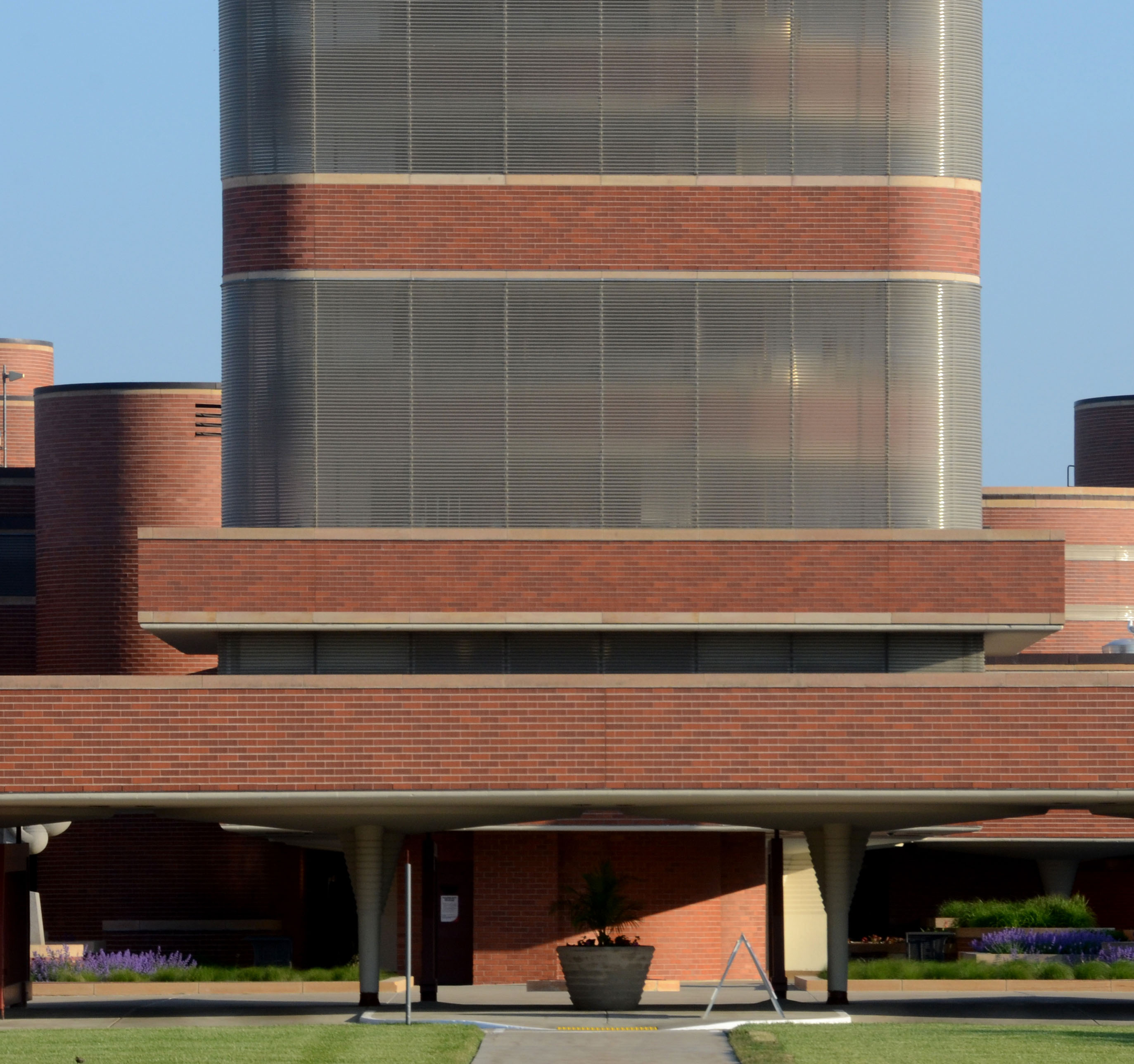
I was then on tour in familiar territory in Wisconsin, helping lead tours for Road Scholar, first in Racine at SC Johnson and at Wingspread. I have visited and photographed these wonderful spaces umpteen times, and always look for a fresh way to see them:
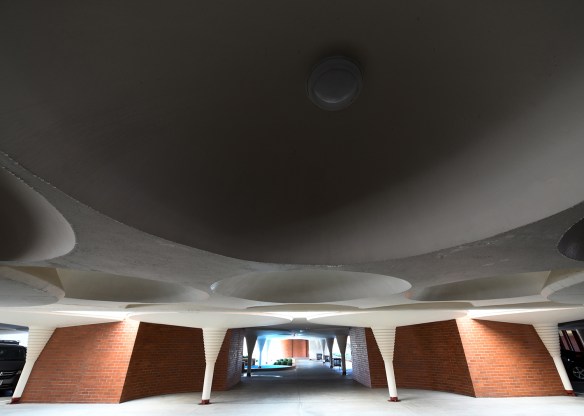
SCJ Carport 2018 003.jpg

SCJ Carport 2018 004.jpg

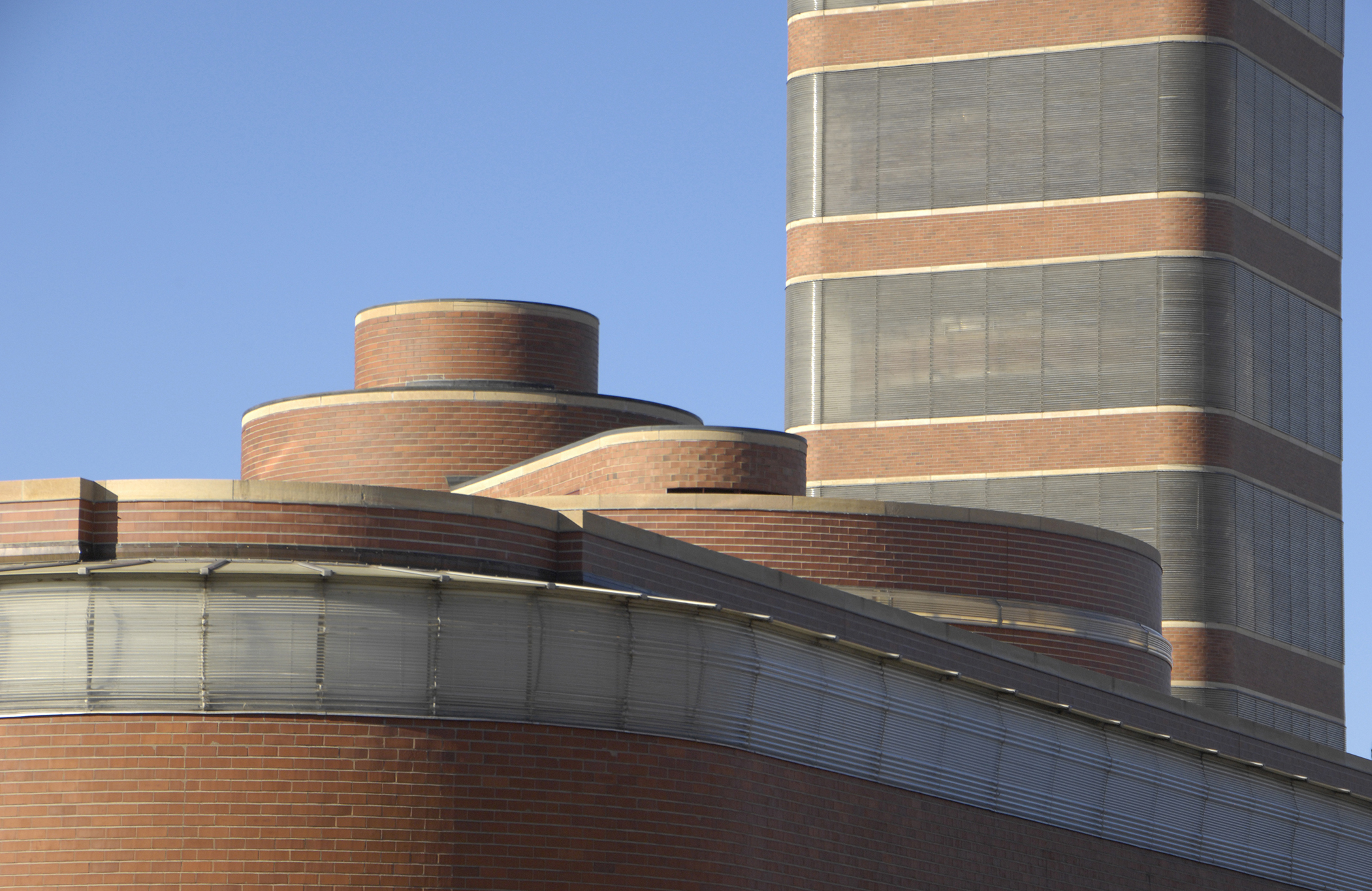
SCJ Research Tower 2018 .jpg

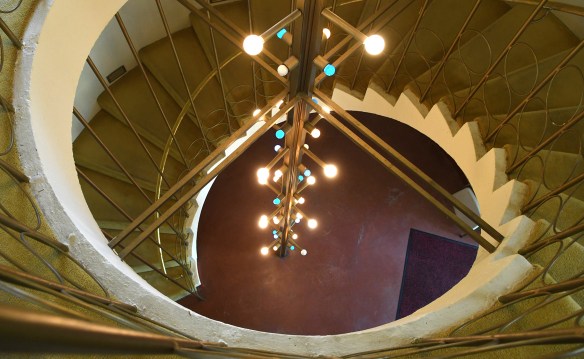
I climbed these stairs at Wingspread countless times before seeing this photo:
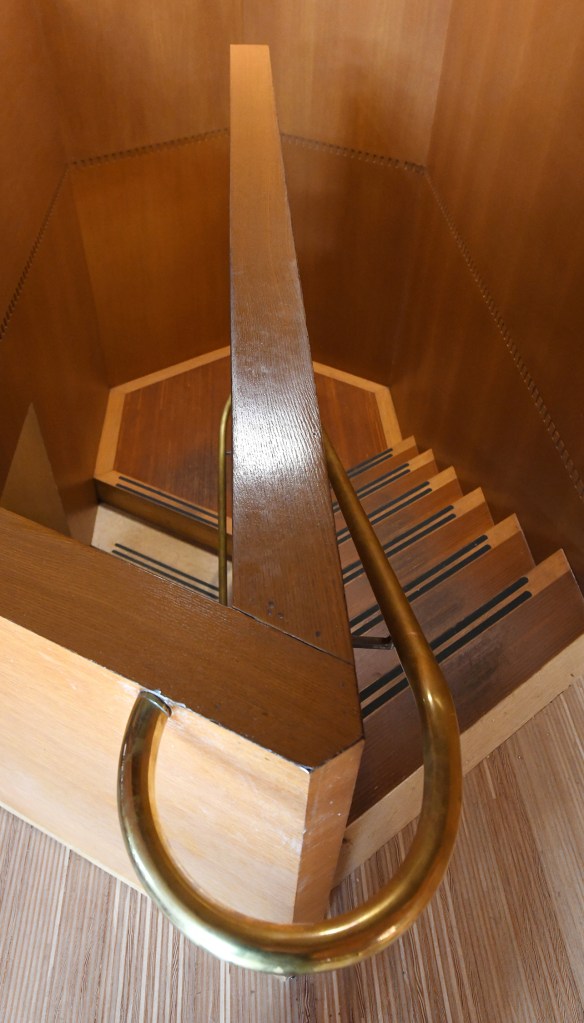
Wingspread Stairs 9.23.19.jpg

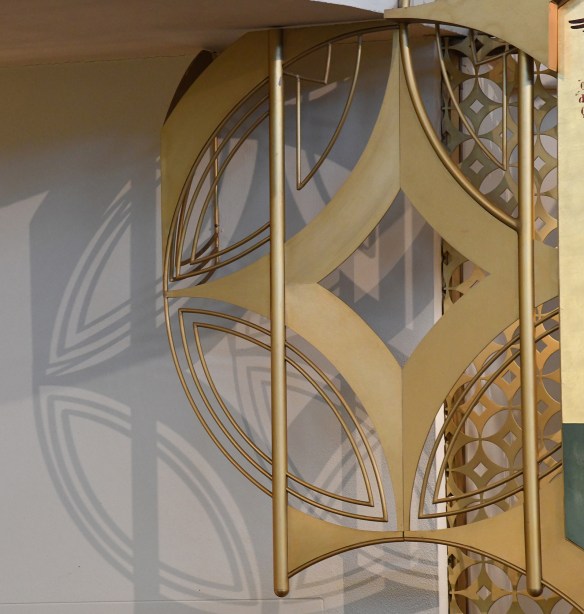
I was then taken, again, by the fixtures at the Annunication Greek Orthodox Church in Wauwatosa (suburban Milwaukee):

AGOC 2018 002.jpg

AGOC 2018 004.jpg

AGOC 2018 007.jpg

AGOC Interior 9.24.19 002.jpg

AGOC Interior 9.24.19 001.jpg

Annunciation GOC002 9.6.18.jpg

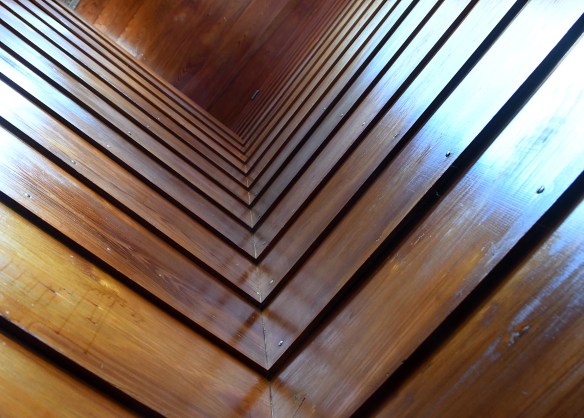
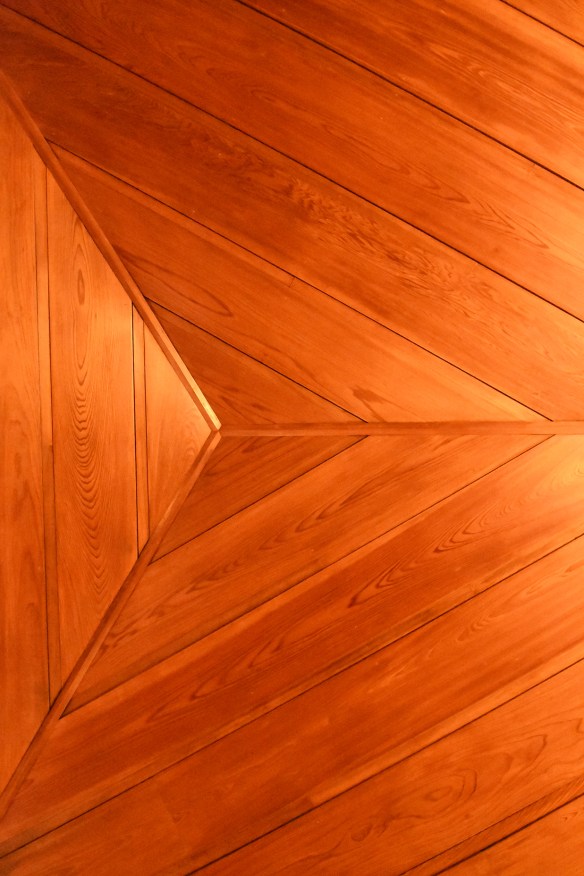
After touring Racine and Milwaukee, we take our Road Scholar guests to Madison and Spring Green. First, a detail of the ceiling of Jacobs 1:
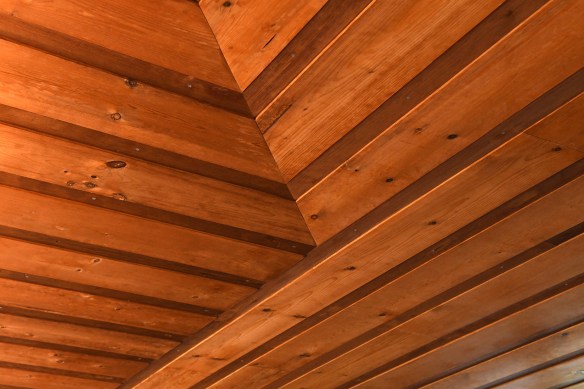
Jacobs 1 9.7.18 009.jpg

Then, a light well in Anthony Puttnam’s interpretation of Monona Terrace:
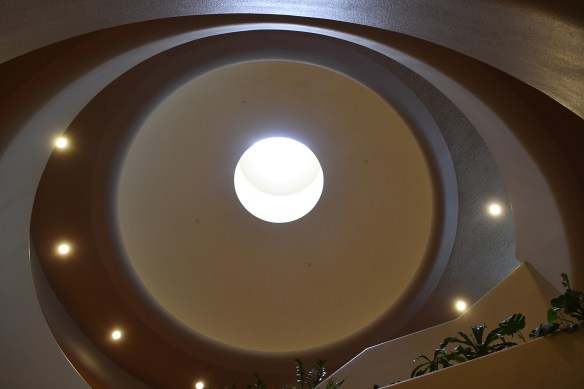
Monona Terrace.jpg

The trip culminates at Taliesin – of course – after seeing the Unitarian Meeting House in Madison and Wyoming Valley School, with lunch at Riverview Terrace. Our introduction to Taliesin is a pause at the dam:

Taliesen Dam 2.jpg

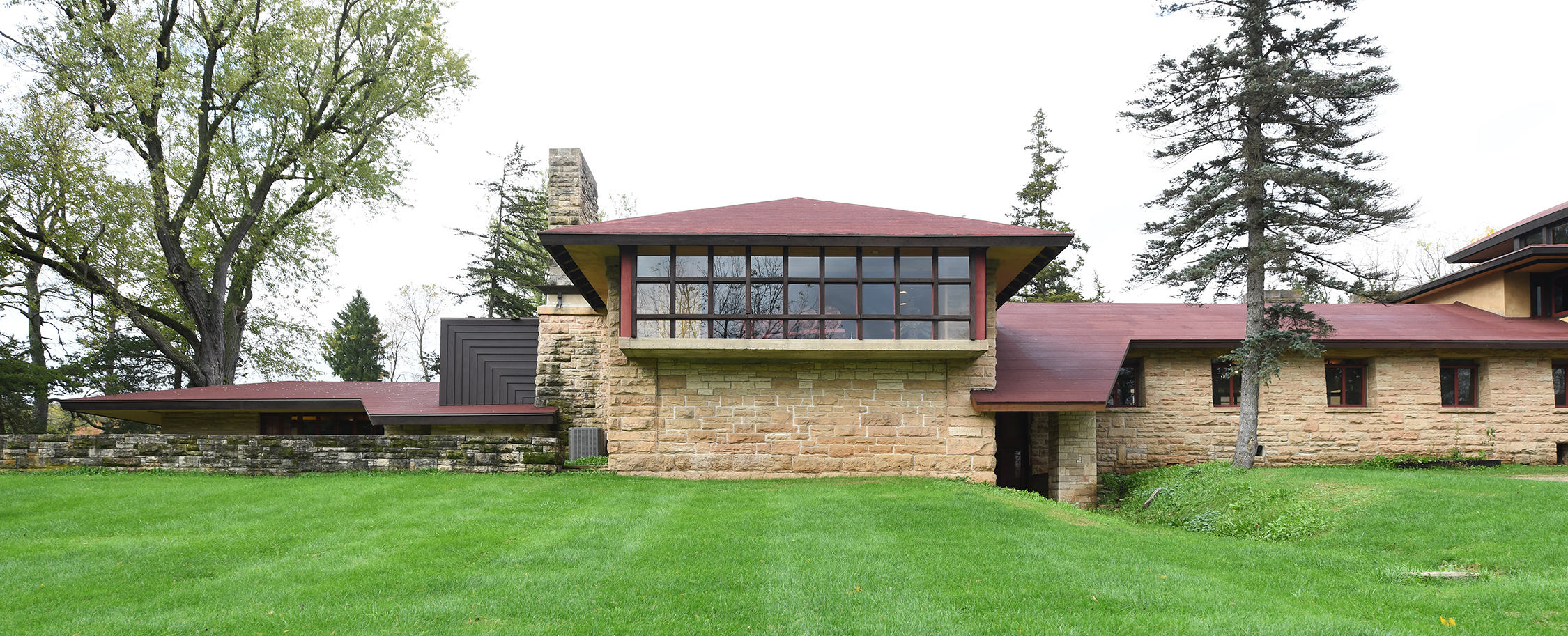
Taliesin.jpg

Taliesin 9.7.19 002.jpg

I finish with Jeanne’s recollection of babysitting at the Hardy House and a “selfie” there:

(From “Frank Lloyd Wright’s Thomas P. Hardy House,” written and photographed by Mark Hertzberg, Pomegranate: 2006):

Jeanne (Weins) Maushammer, who baby-sat for the Sewards, recalls growing up nearby. “The house was well-known to everyone in the neighborhood.  People would go to the 14th Street public beach there and see the house just a short distance away.  It did not look like a private residence.  Visitors from outside the area – even across town – would see two openings that could easily be mistaken for bath house entrances, and try to go in to change their clothes.

“Sometimes when you were driving around with out-of-town folks, they would ask ‘What is that?’  They did not recognize it as a house, because it was so different from the other homes around it, and because it was next to the beach.  Neighbors knew what it really was.  The Johnson Wax complex was down the street from us, so the Hardy House seemed to be appropriate.  My folks often told me of their witnessing the construction of the Administration Building and of seeing Frank Lloyd Wright.  The Johnson buildings were understood and accepted by visitors, but not the ‘beach house.’

“My friends and I used to go down to the beach all the time.  We could not get close enough to the property to get a good look at it.  We always had to look through the trees.  We could not see how it blended into the hill side.  That added to the mystery of it.  From the street, all that people could see was just that box.

“I knew it was a Frank Lloyd Wright house before I first went inside.  What I did not realize was how he proportioned houses to his small frame.  I remember thinking when inside for the first time:  ‘I am 5’4” but wow, these doorways are low.’  It was dark and raining that particular day, so I did not get to appreciate the house’s real beauty.  After I had been there several times and had a chance to explore it, to stand in that living room and on the balcony, and to take in the view, I realized it was incredible.

“My husband has never seen the inside of the house, except in photos, but in our wildest dreams we would like to buy it and come back to Racine.”
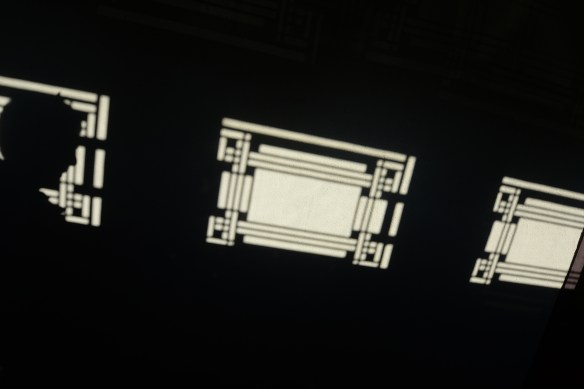
Hardy Selfie 9.23.18.jpg


Rainy Day Post #2 – Guggenheim Dome Evolution

Photos (c) Mark Hertzberg (2020)

Saturday I wrote that it’s like a rainy day, and I am taking time to clean up my desktop and post some things that have been in limbo. There will be a third Rainy Day Frank Lloyd Wright post – the one with what I referred to as a “smattering” of photos from many Wright sites – possibly tomorrow.

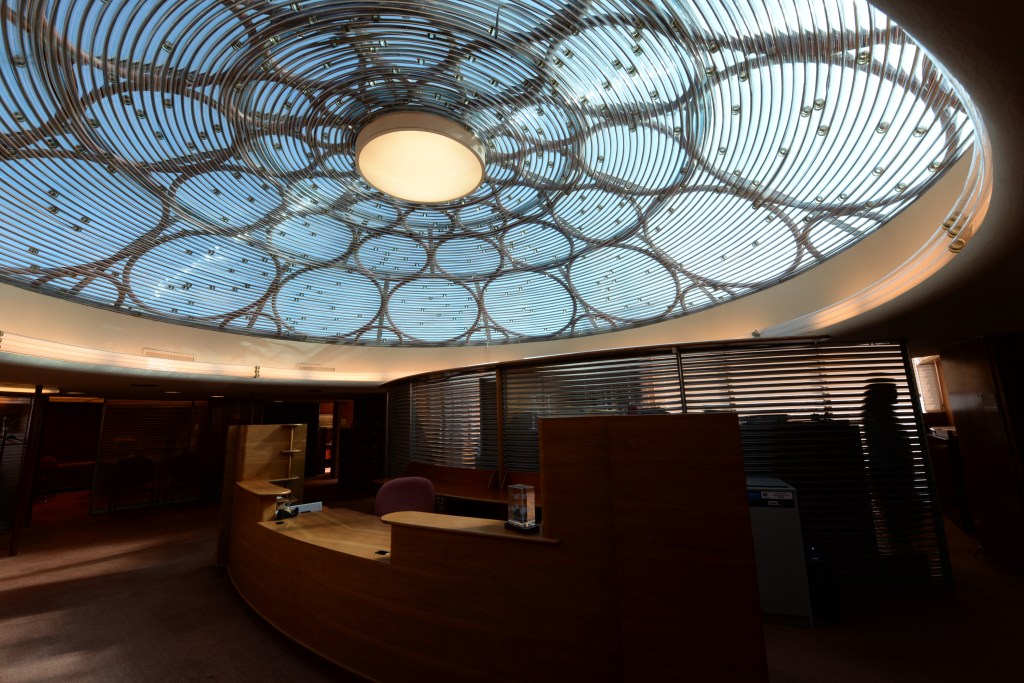
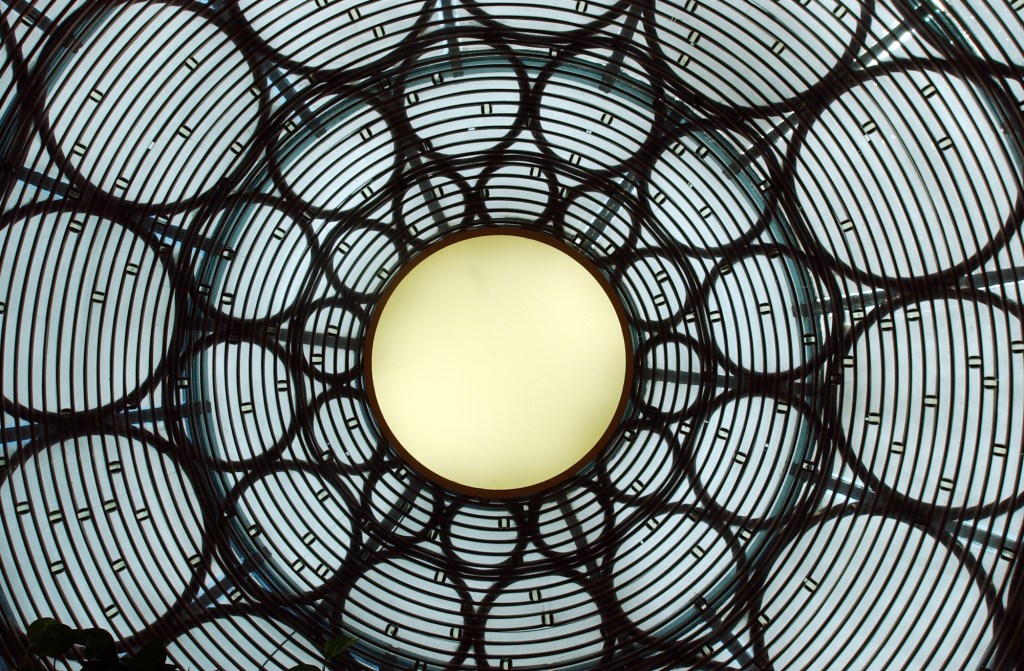
I noted in my 2004 book Wright in Racine that Wright’s initial design for the dome of the Guggenheim Museum in 1943 was identical to the one he later used for the dome built over the advertising department in the SC Johnson Administration Building in Racine. That space was added concurrently with the construction of the SC Johnson Research Tower (designed in 1943/44, constructed 1947-1950). (The space is now home to the company’s Global Affairs and related departments)

The Advertising Department’s dramatic glass dome is now an architectural icon of the company. It embodies the design Wright proposed in 1943 for the Guggenheim Museum.
The dome now has a white cover now to lessen the heat from the sun.

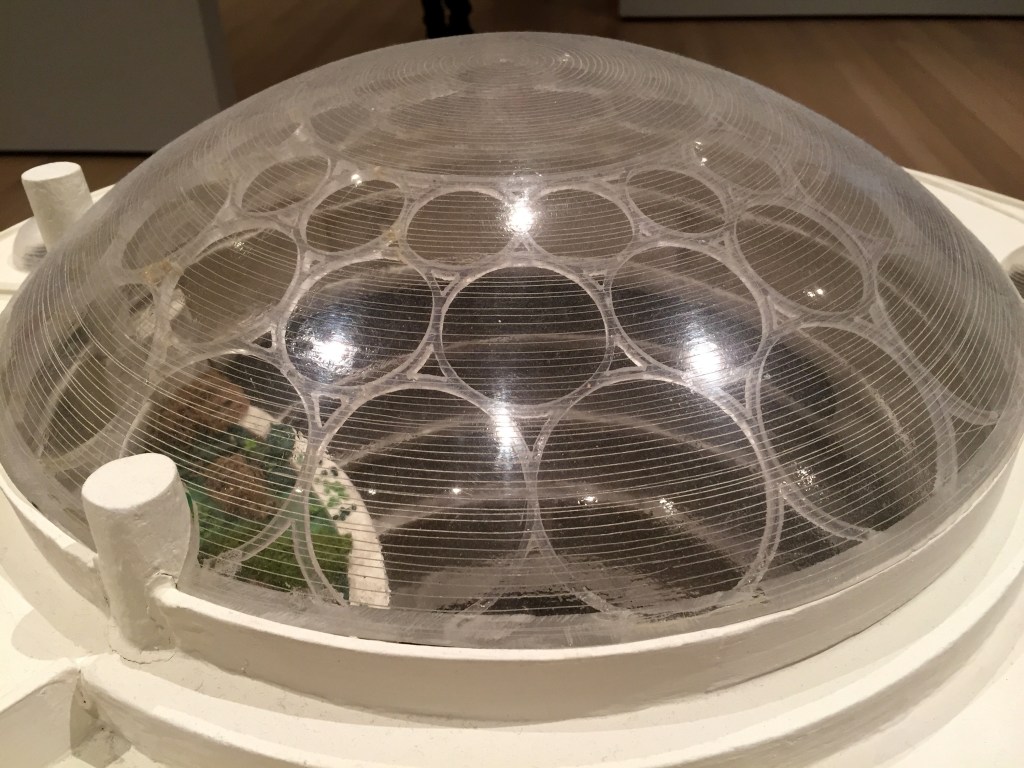
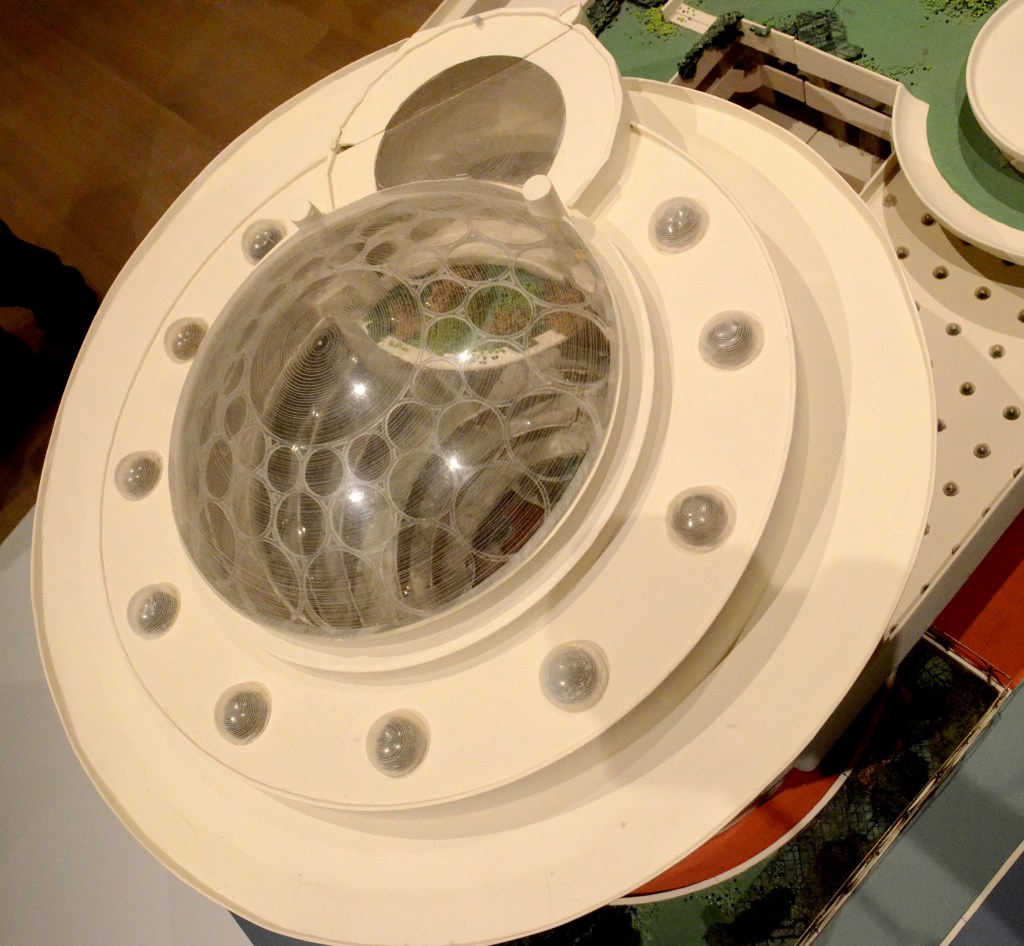
Visitors to the 2017 “Unpacking the Archive” exhibit at the Museum of Modern Art in New York City (MoMA) saw the Johnson version of the dome on the Guggenheim model in the exhibit:

MoMA 2017 Exhibit 073.jpg

This exhibit was labled: “Tension ring study model for Johnson Wax Research Tower, Racine, Wisconsin  1943-50  Steel.” There was no mention of its similarity to the Guggenheim proposal.

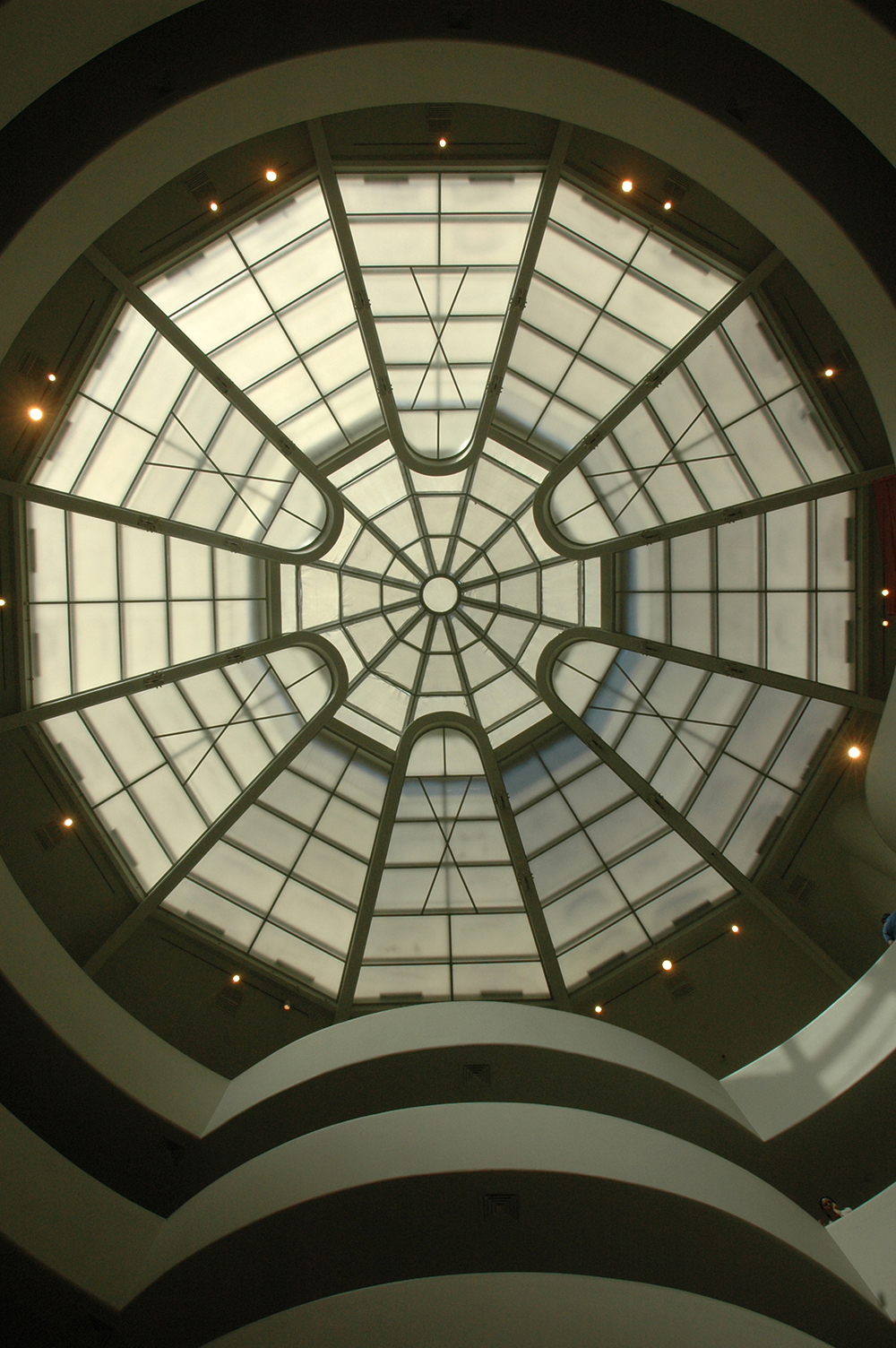
Wright’s final design for the dome has been photographed many times:

Guggenheim Dome 008.jpg

Guggenheim Dome 002.jpg

Rainy Day Post #1: Hardy House Roof

All photos (c) Mark Hertzberg (2020), except as noted

Hardy Tafel photo.jpgEdgar Tafel, photographer, courtesy of John Clouse

It’s 84 degrees and sunny, but let’s pretend it’s raining out because this is a “rainy day projects” catch-up-on-loose-ends kind of day. I had a smattering of Frank Lloyd Wright files that have been sitting on my desktop in a couple of folders for up to two years, waiting for me to decide in what context to post them. Let’s have at it!

This post is about last year’s project to replace the roof on Wright’s Thomas P. Hardy House (1904/05) in Racine. The second Rainy Day Post, in a day or two, will be a smattering (there goes that word again!) of photos from different Wright sites.

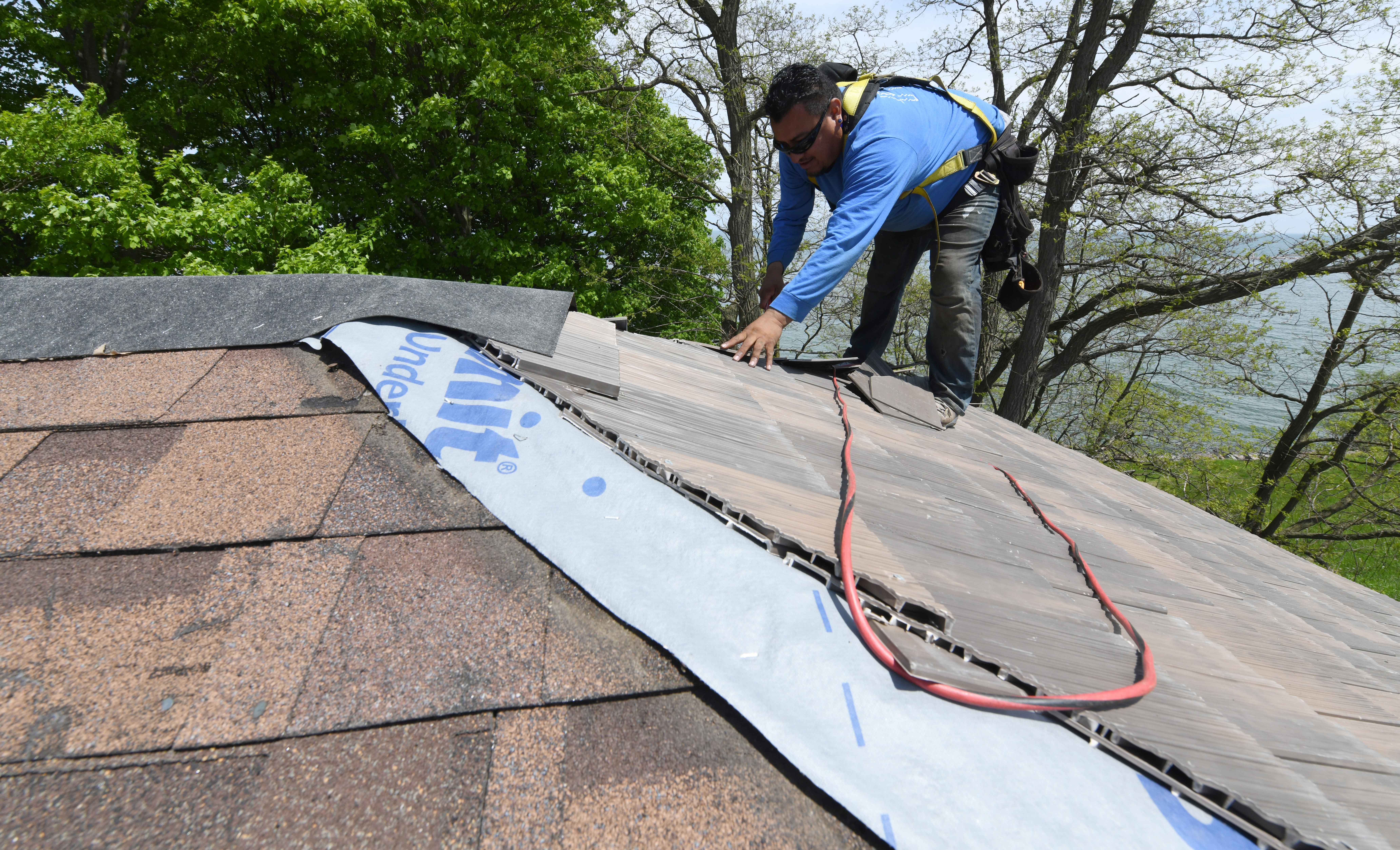
Tom and Joan Szymczak are now the stewards of the Hardy House. Their late brother and brother-in-law Gene Szymczak rescued the house in 2012, but fell ill and died unexpectedly in December 2016. They decided to replace the roof last summer. Our scene setter photograph is an undated one by Edgar Tafel, a photo lent to me by fellow Wright photographer John Clouse.

Our only description of the original roof is in a June 1906 article about the house in House Beautiful magazine: “The roof is shingled, with braided hips, and stained a lighter brown.” However, the author of the article clearly relied on descriptions provided to him by Wright and never saw this house. The article describes details, some on drawings by Marion Mahony, which were never executed.

We start with photos of charred timbers found by the roofers. Racine Fire Department records indicate there was a roof fire in the 1930s, put out with just a single fire extinguisher:

image1.jpegPhoto above courtesy of and (c) Tom Szymczak
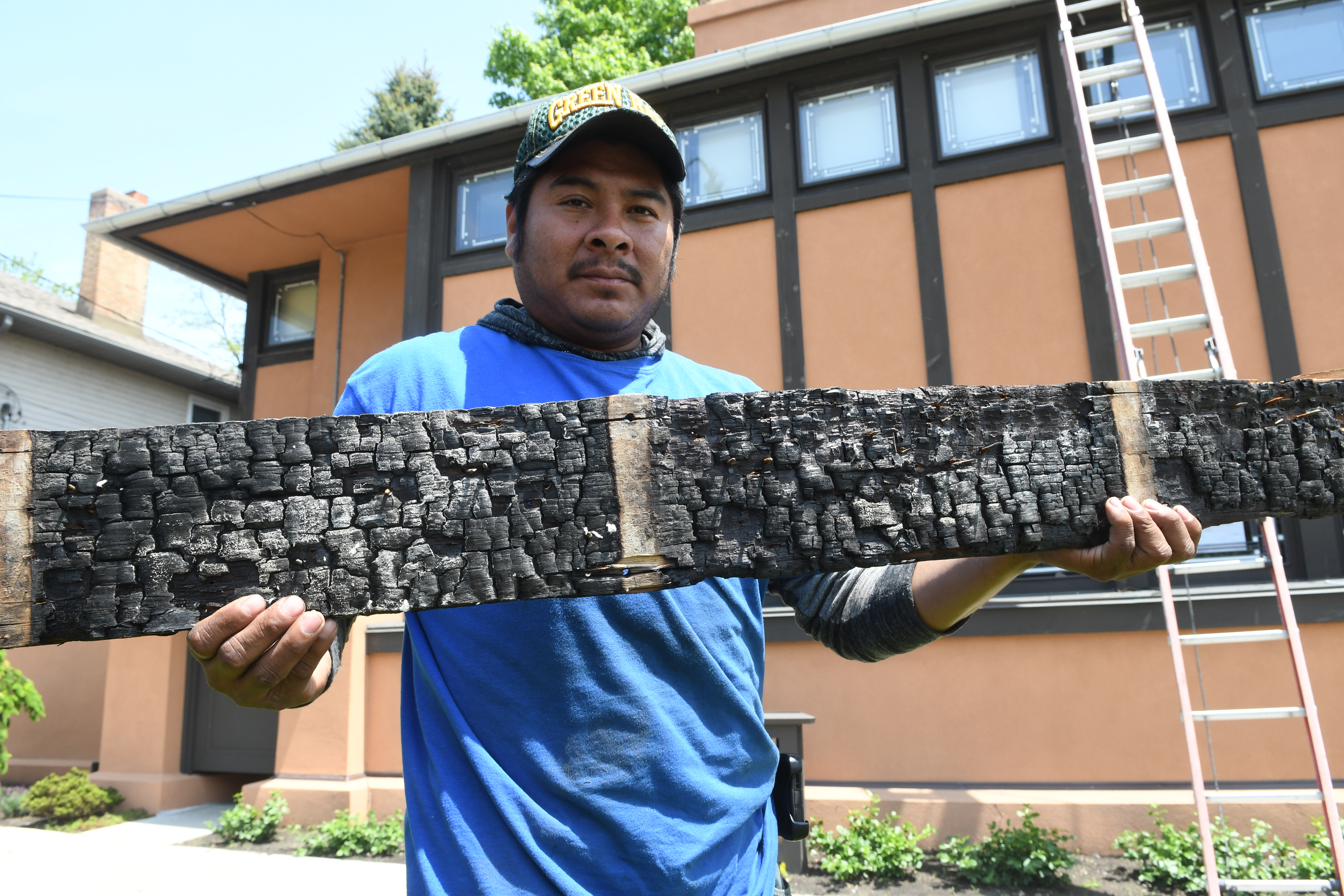
1930s roof fire 004.jpg

New Roof 6.4.19 002.jpg

New Roof 6.4.19 008.jpg

New Roof 6.4.19 001.jpg

The best descritption of the roofing job comes in an article in the May 2020 issue of Roofing Magazine. Note, though, that while they say the fire was in the 1960s, fire department records indicate it was in the 1930s. The article is illustrated with wonderful drone views of the house.

Maybe I was prescient in sitting on my photos of the roofing job from June 6, 2019 because I just knew that Tom was going to send me a link to an article about the work this past week! I would be remiss to not credit John Waters of the Frank Lloyd Wright Building Conservancy for his work with the Szymczaks as they planned the project.

http://www.roofingmagazine.com/tag/thomas-p-hardy-house/

Wright on the Move

(c) Mark Hertzberg 2020

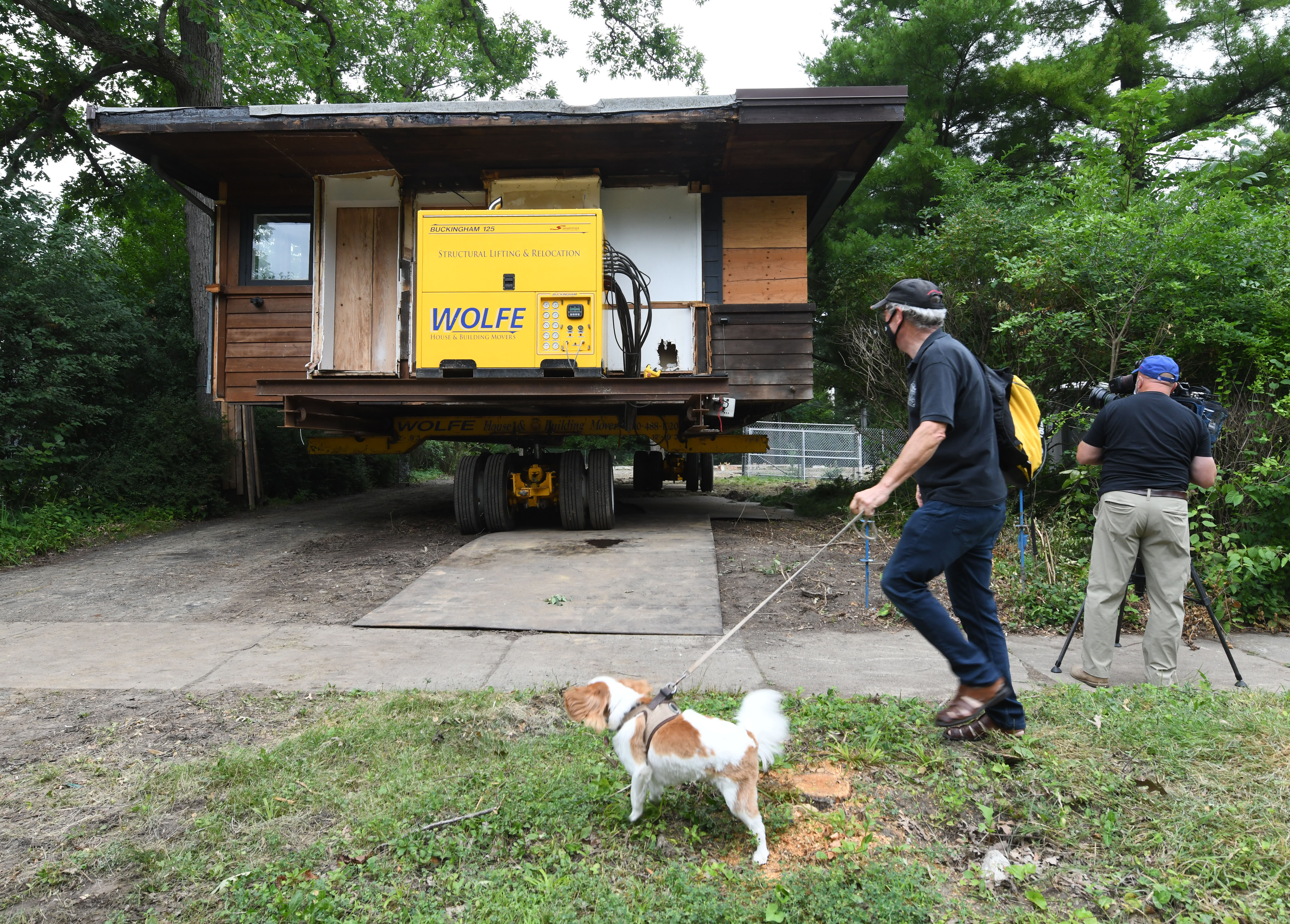
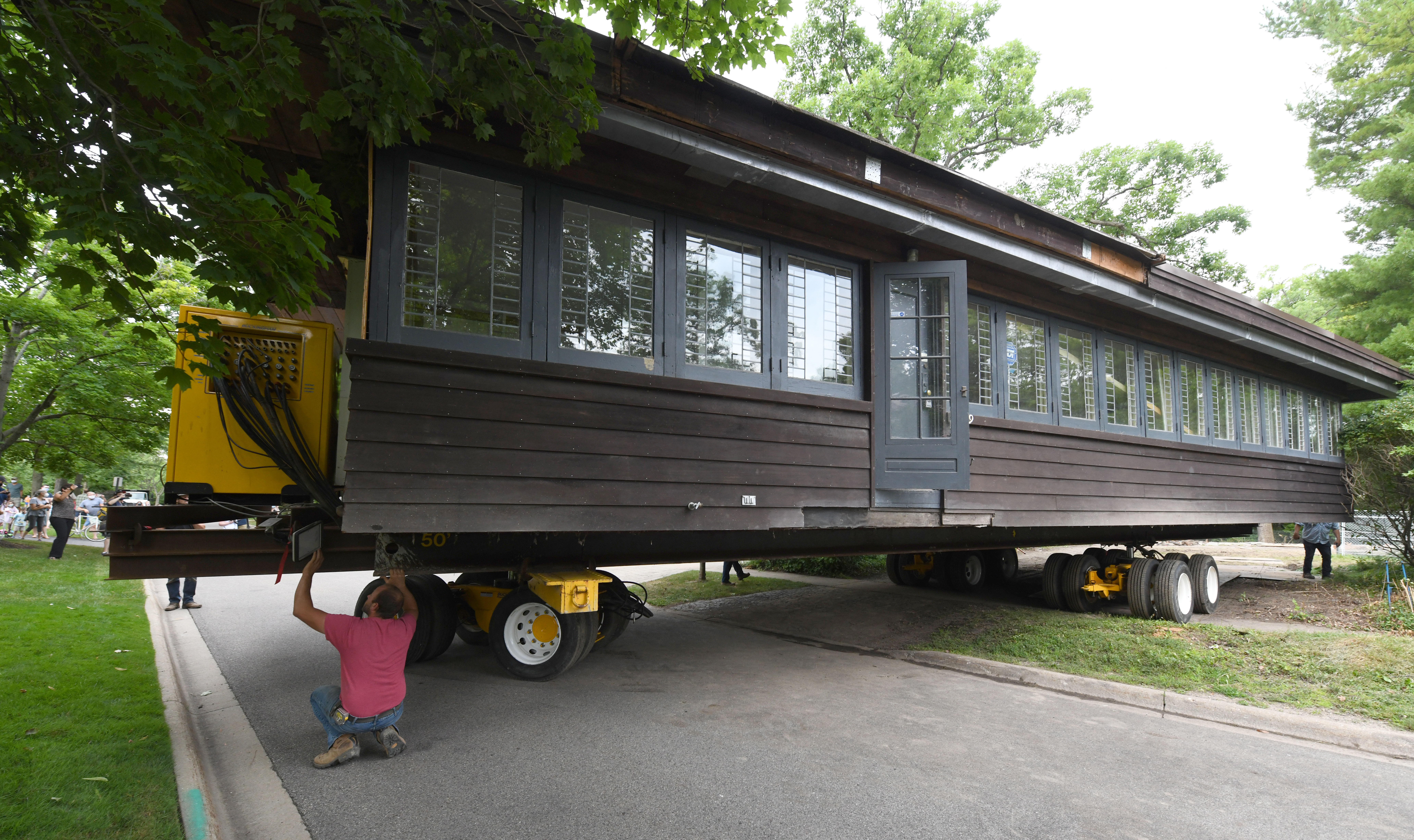
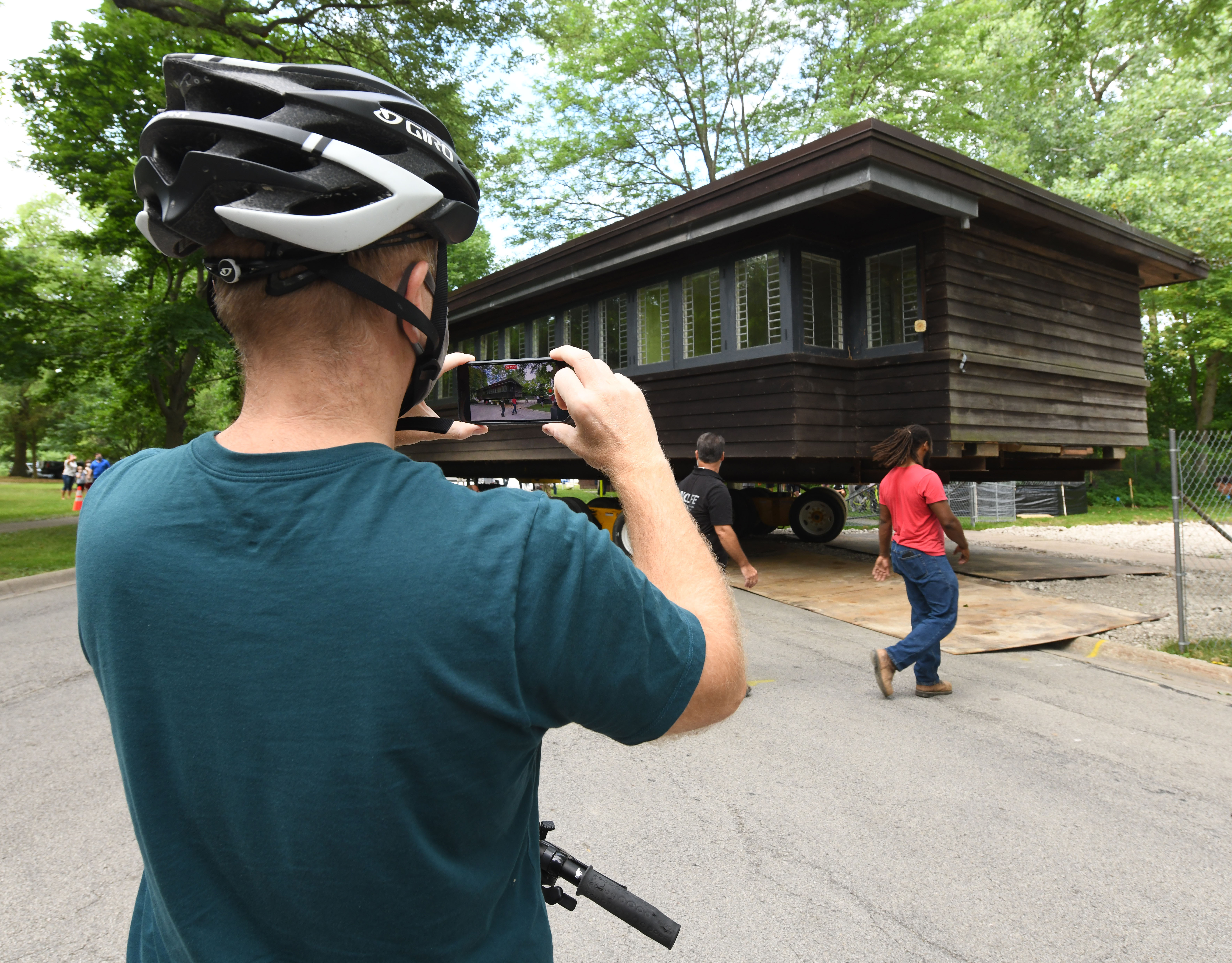
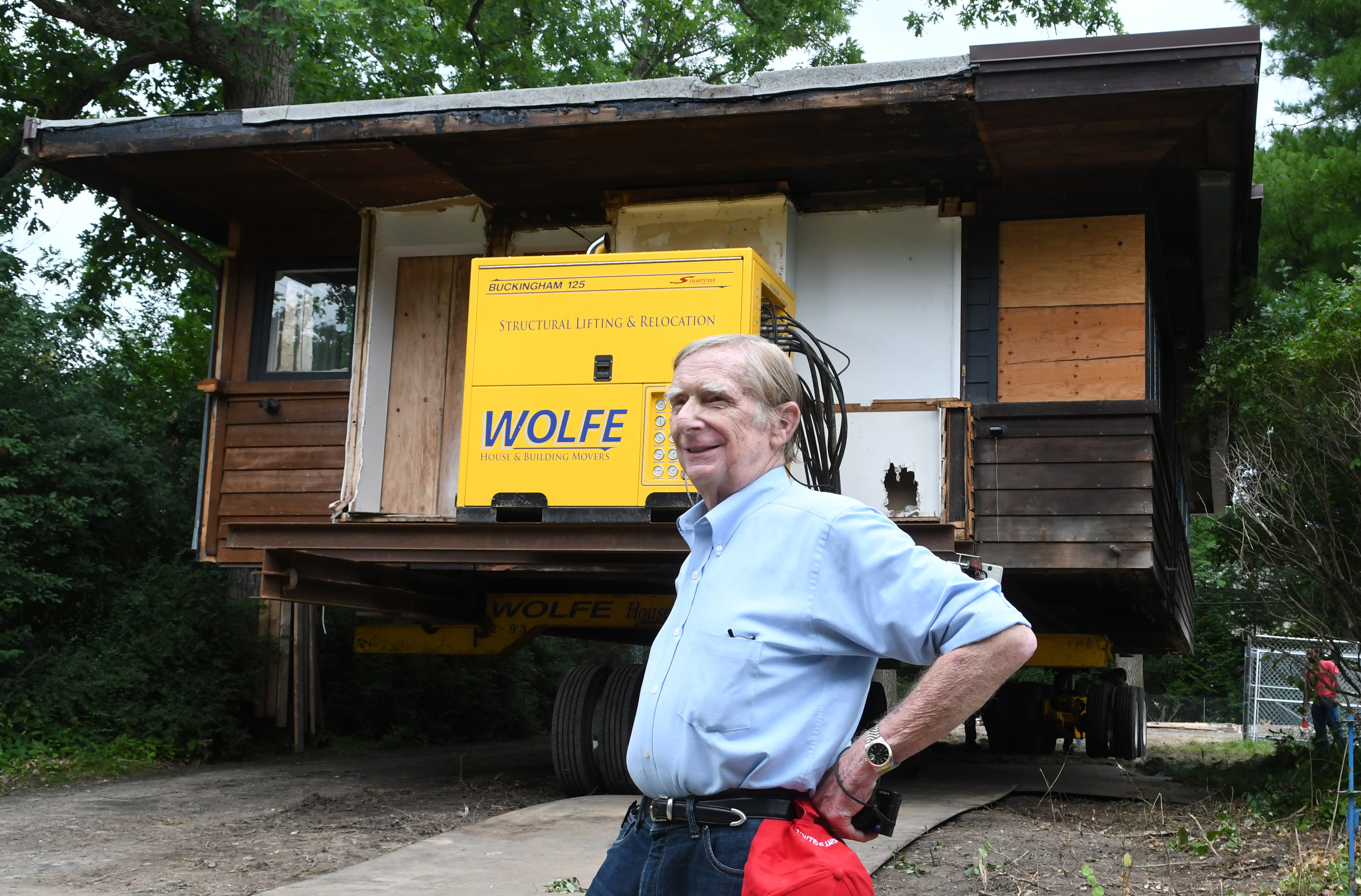
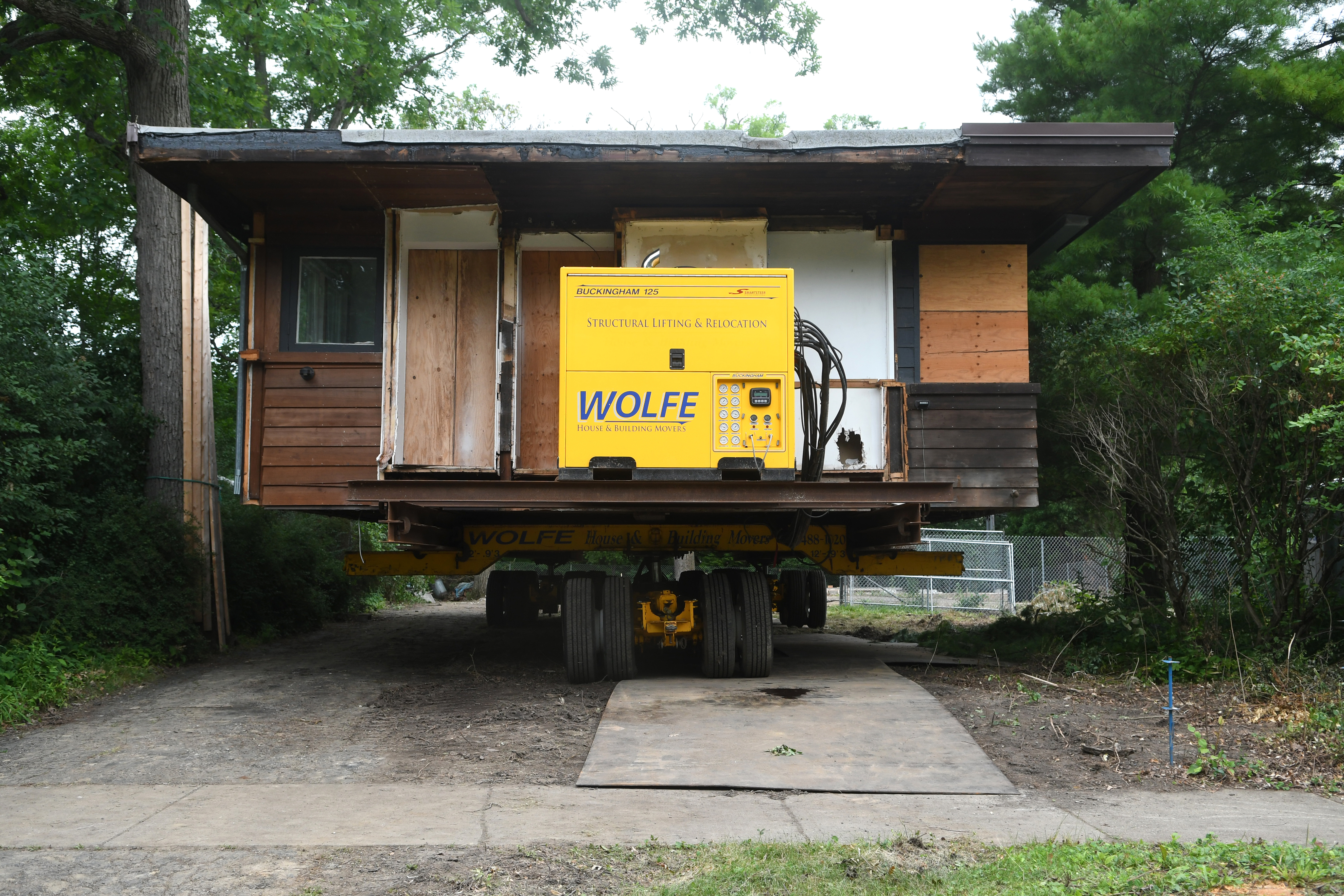
It was moving day in suburban Glencoe, Illinois for Frank Lloyd Wright’s diminutive Sherman Booth Cottage (1913) on Tuesday July 20. The cottage, built for Sherman Booth, Wright’s attorney, while his larger Wright home was under construction, was threatened with demolition by new owners of its lot. The Frank Lloyd Wright Building Conservancy and the Glencoe Historical Society worked together for the Society to acquire the home and move it about a tenth of a mile to a park, where they hope to remodel it and turn it into a museum.

Sherman Booth Cottage Moved 012.jpg

Former Conservancy board president and present board member Tim Quigley walks his dog past the site before the move. He came from Minneapolis to see the action.

Sherman Booth Cottage Moved 022.jpg

Clearances are checked as the house is moved off its lot.

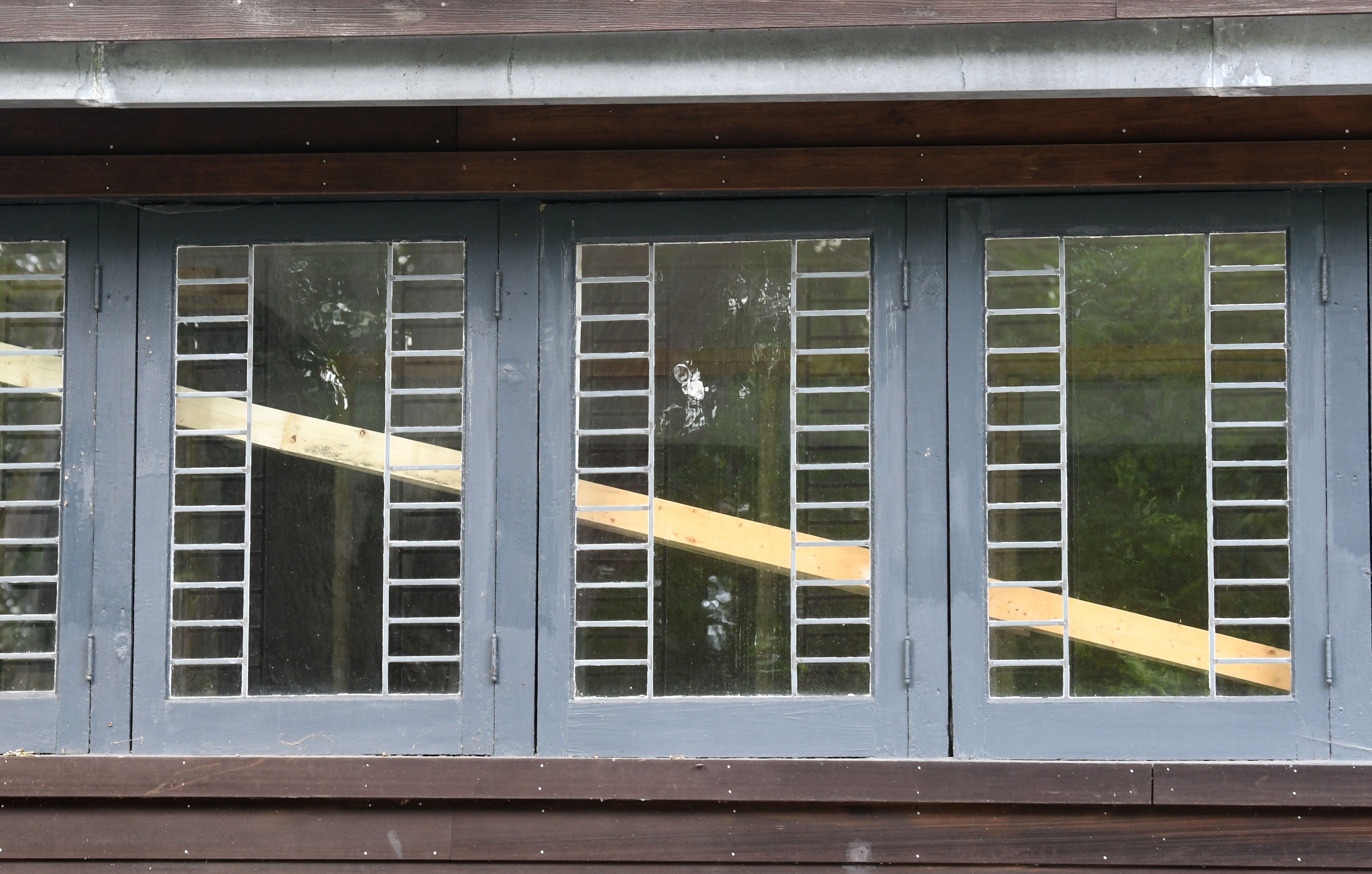
Sherman Booth Cottage Moved 050.jpg

Lumber protects the windows on the front of the house.

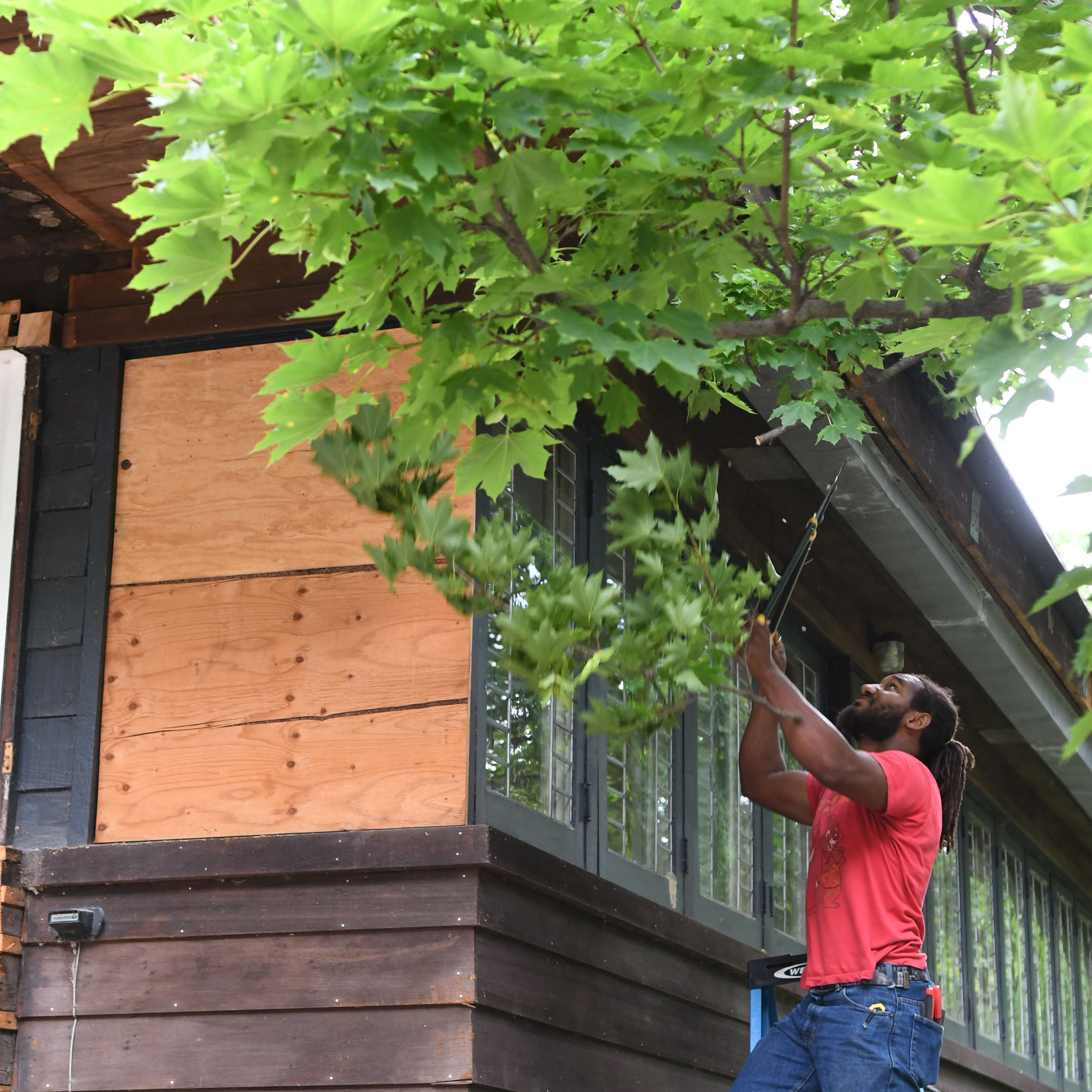
Sherman Booth Cottage Moved 026.jpg

Many limbs had to be trimmed as the house moved down the street.

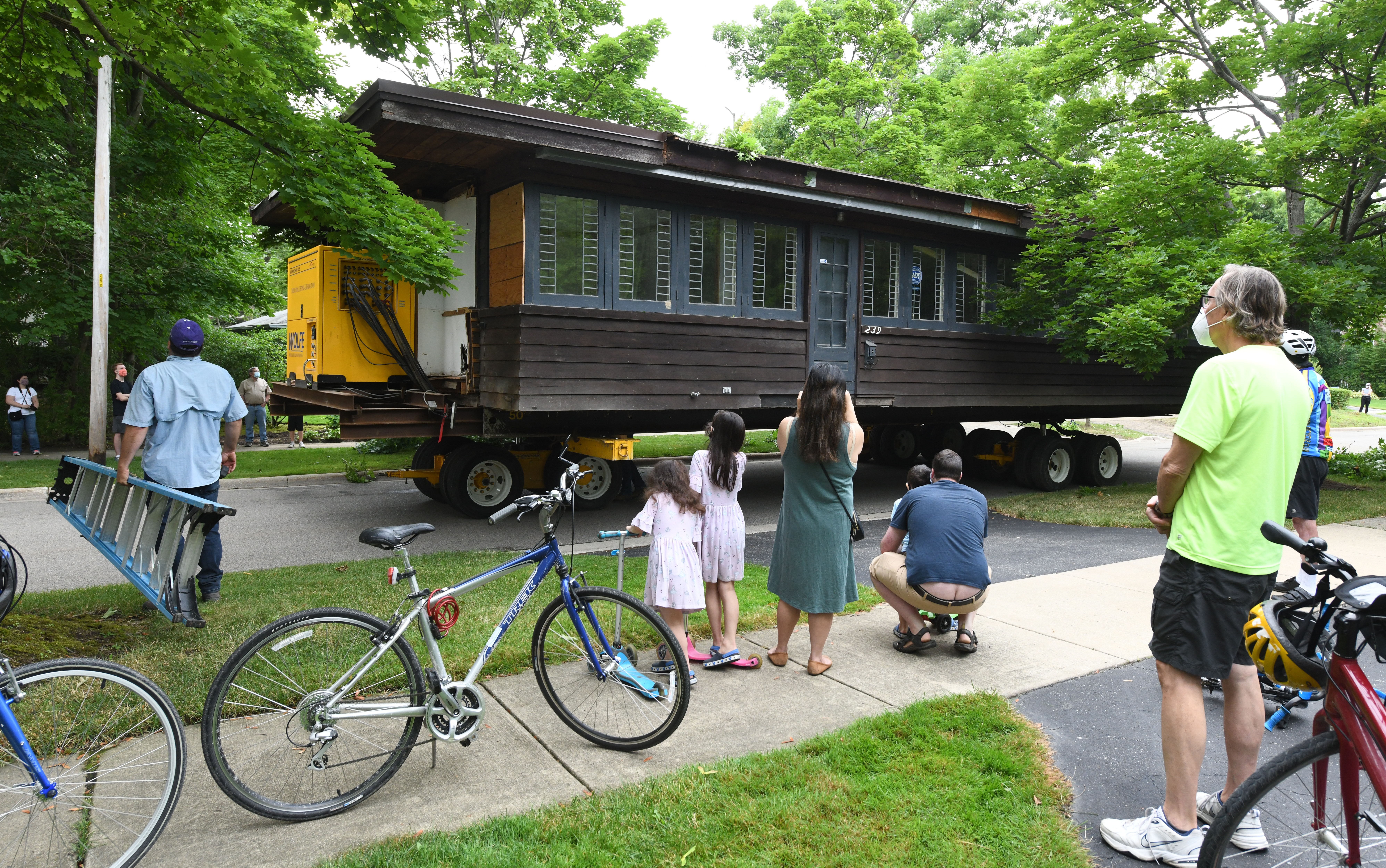
Sherman Booth Cottage Moved 033.jpg

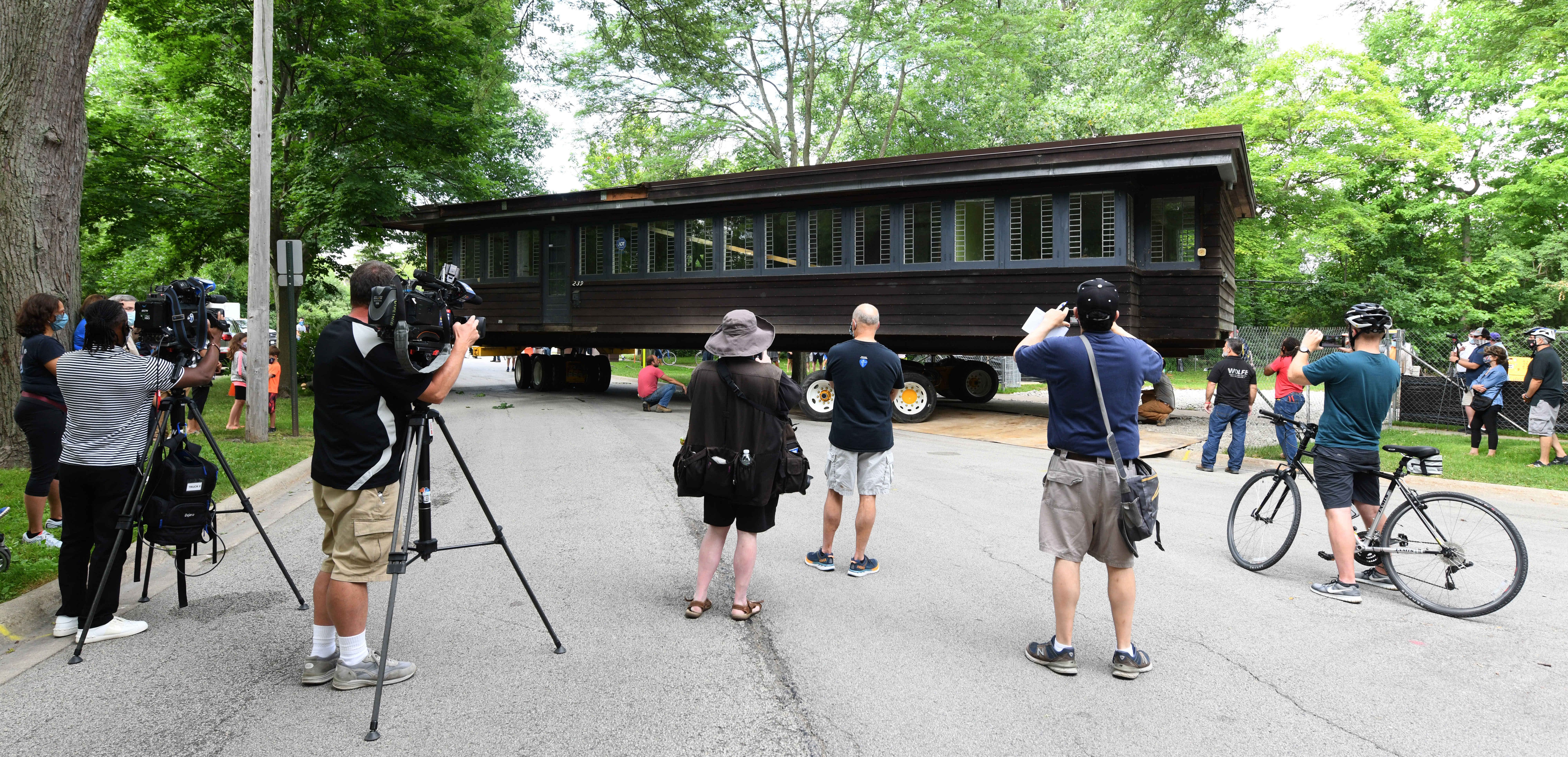
The move was a spectator’s delight.

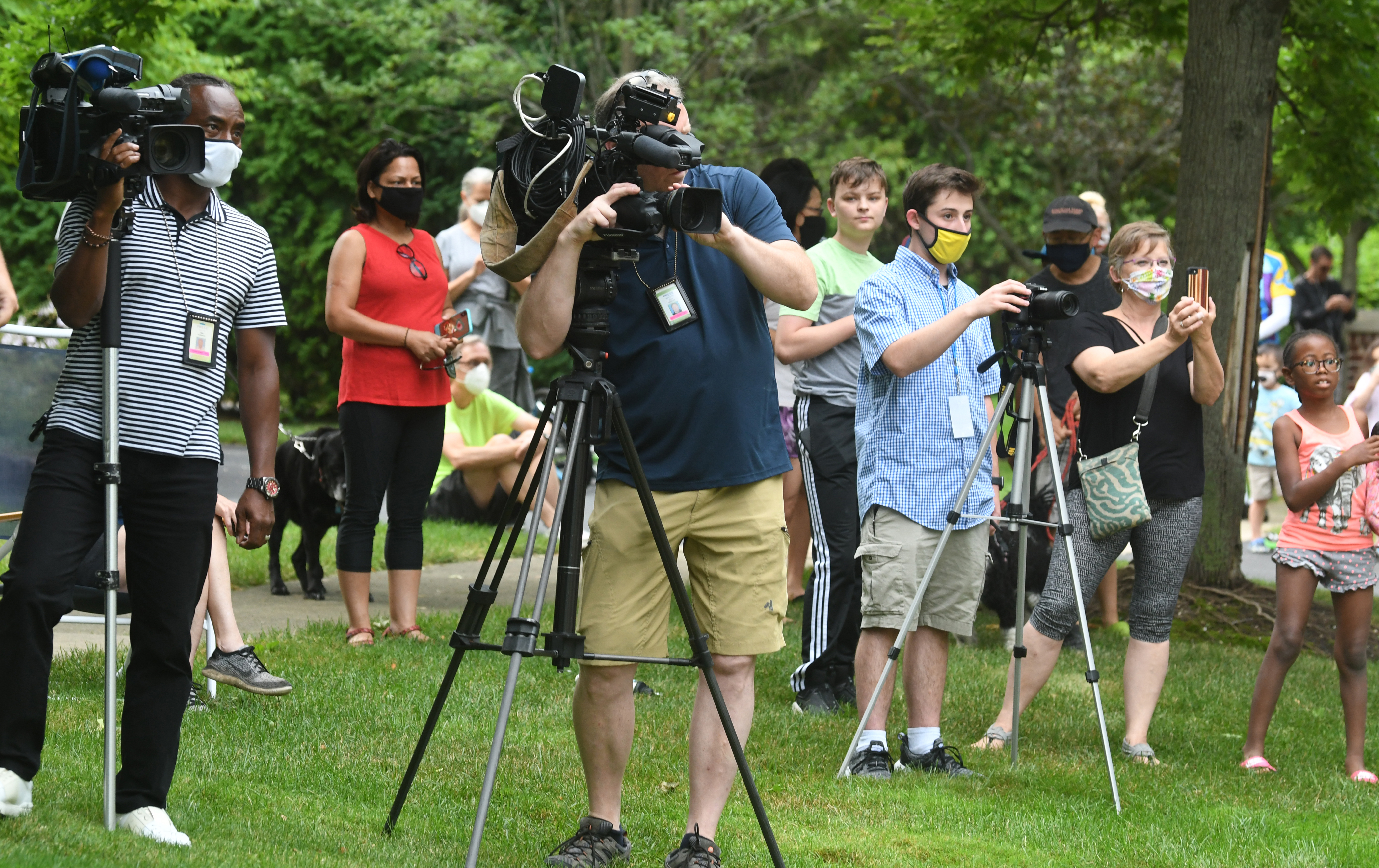
Sherman Booth Cottage Moved 061.jpg

It was also a journalist’s delight.

Sherman Booth Cottage Moved 045.jpg

Sherman Booth Cottage Moved 043.jpg

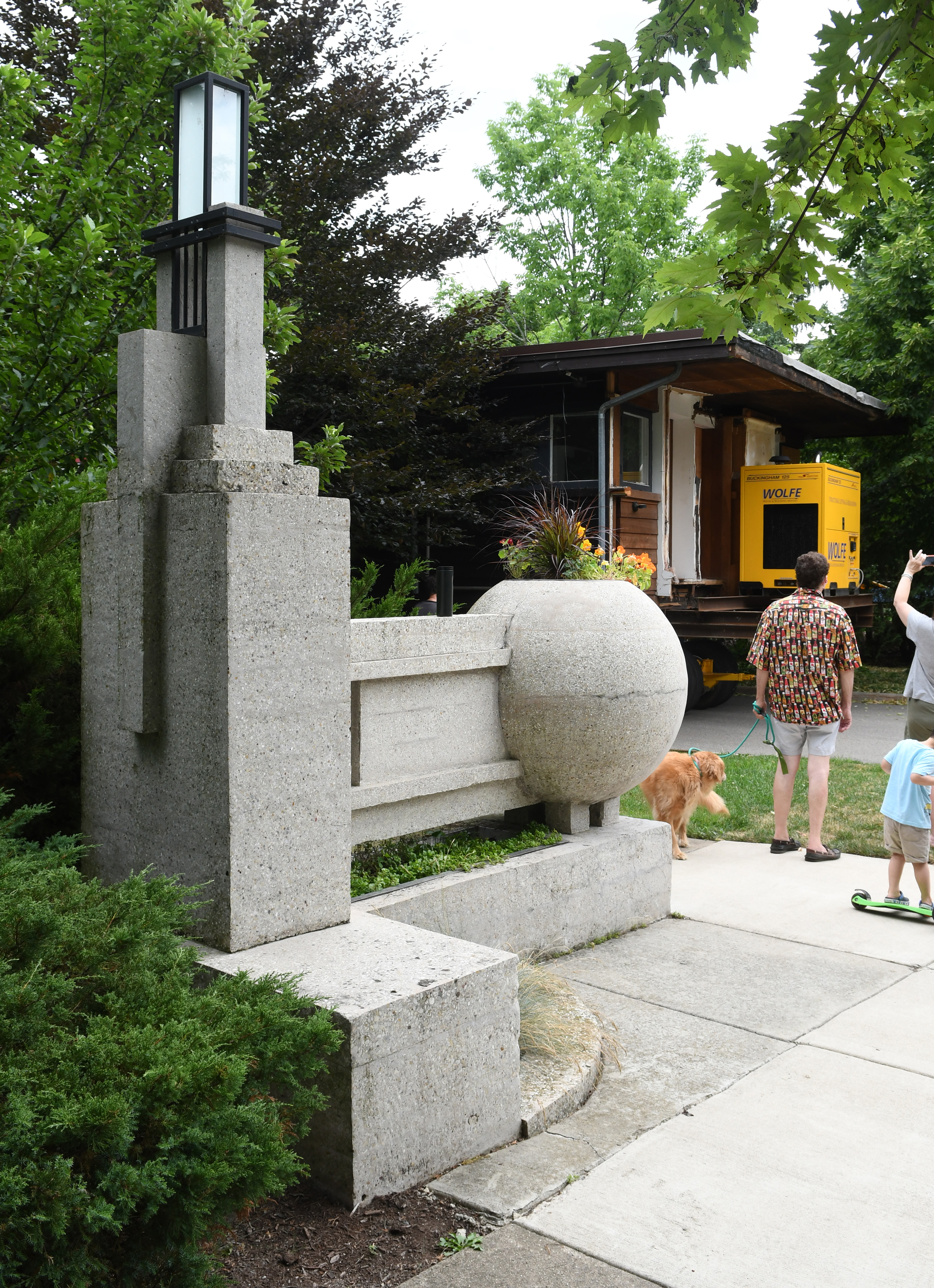
The house moves past the Ravine Bluffs marker.

Sherman Booth Cottage Moved 046.jpg

Sherman Booth Cottage Moved 058.jpg

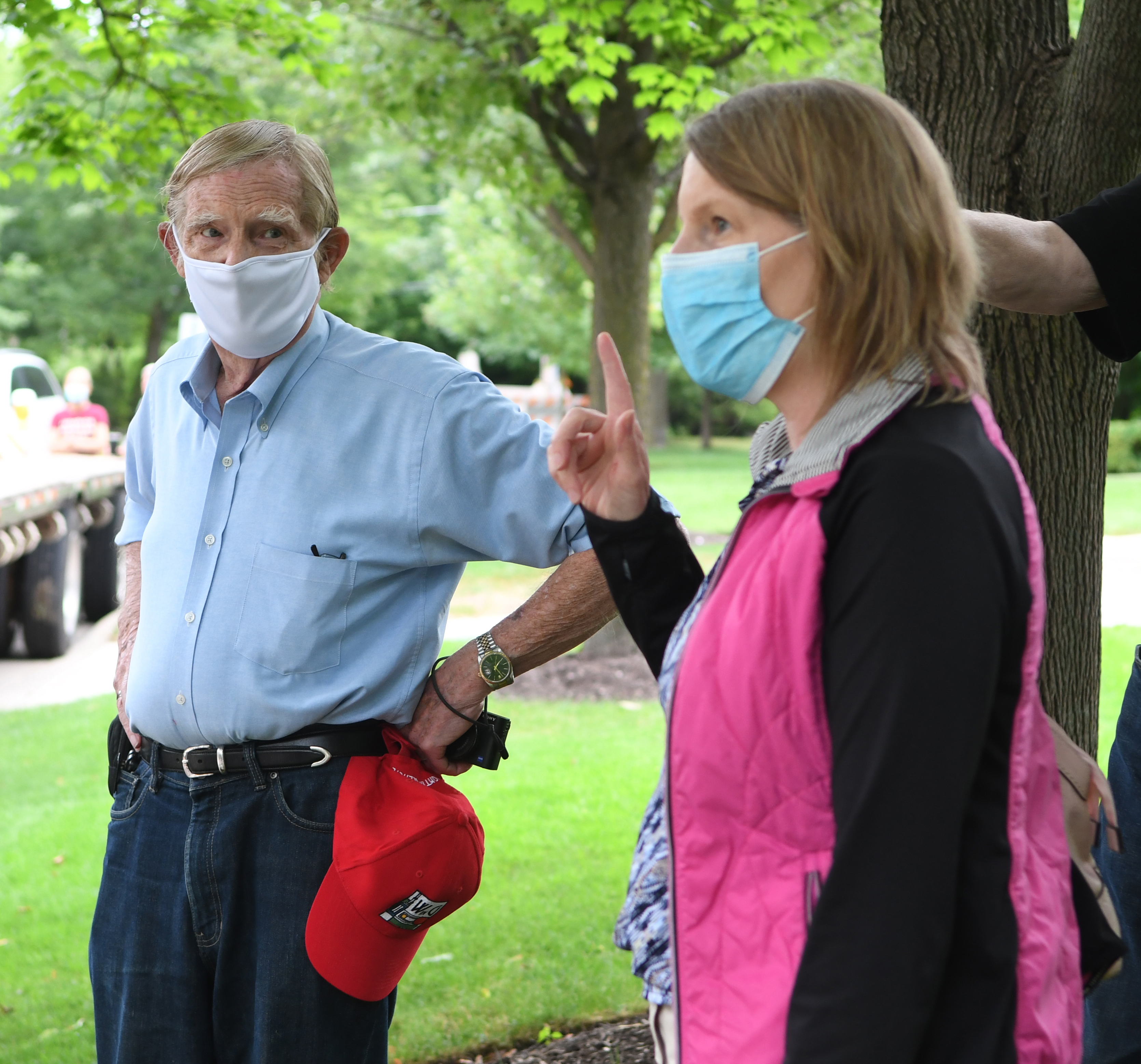
Sherman Booth Cottage Moved 057.jpgWright luminaries included Ron Scherubel, former Executive Director of the Building Conservancy, and Barbara Gordon, current Executive Director, and Wright restoration architect John Eifler.

Sherman Booth Cottage Moved 060.jpgQuigley, left, chats with  Eifler.
Below, views of the foundation of the house:


Sherman Booth Cottage Moved 008.jpg

What is in your basement?

Photos (c) Mark Hertzberg 2020

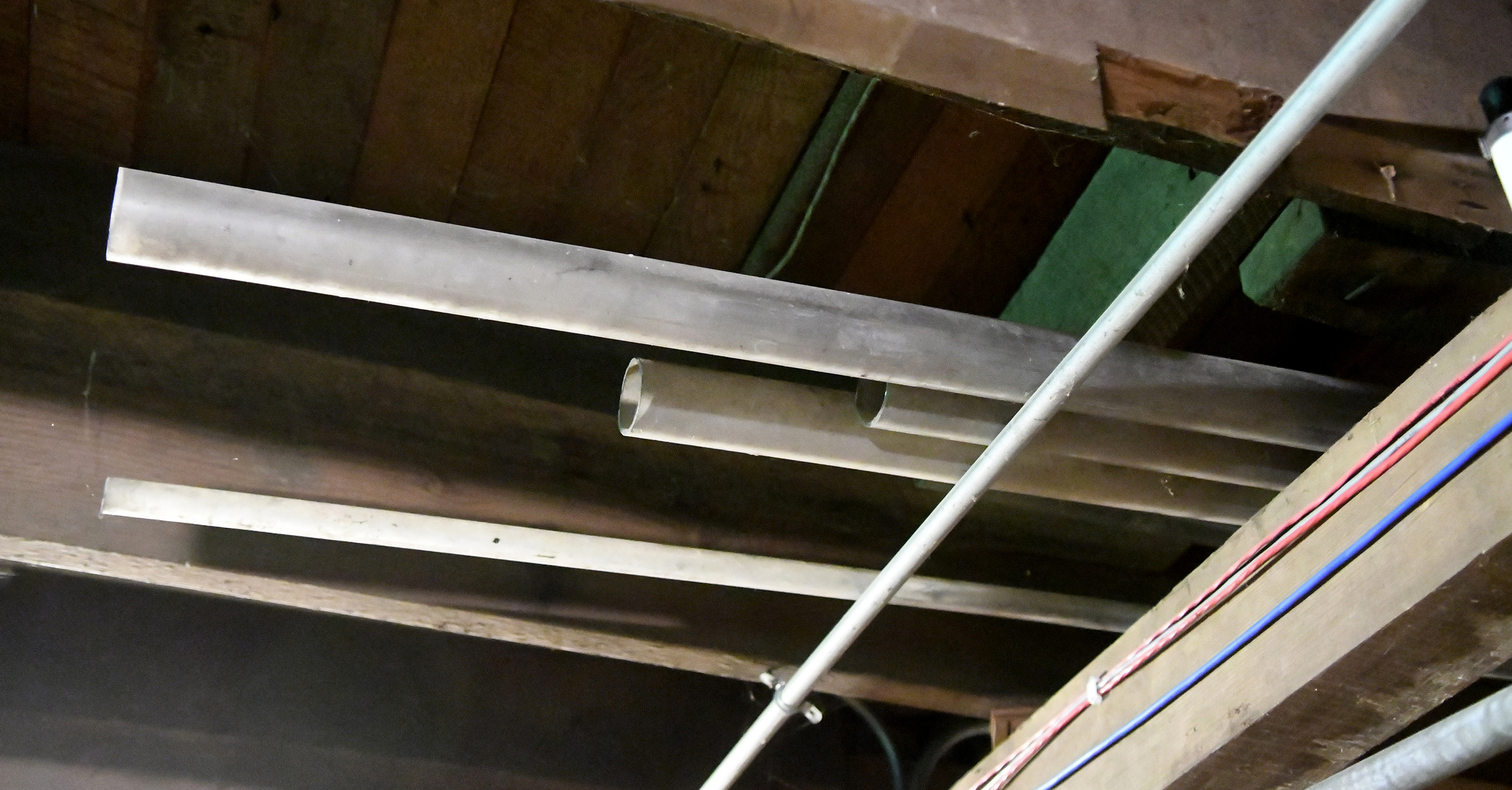
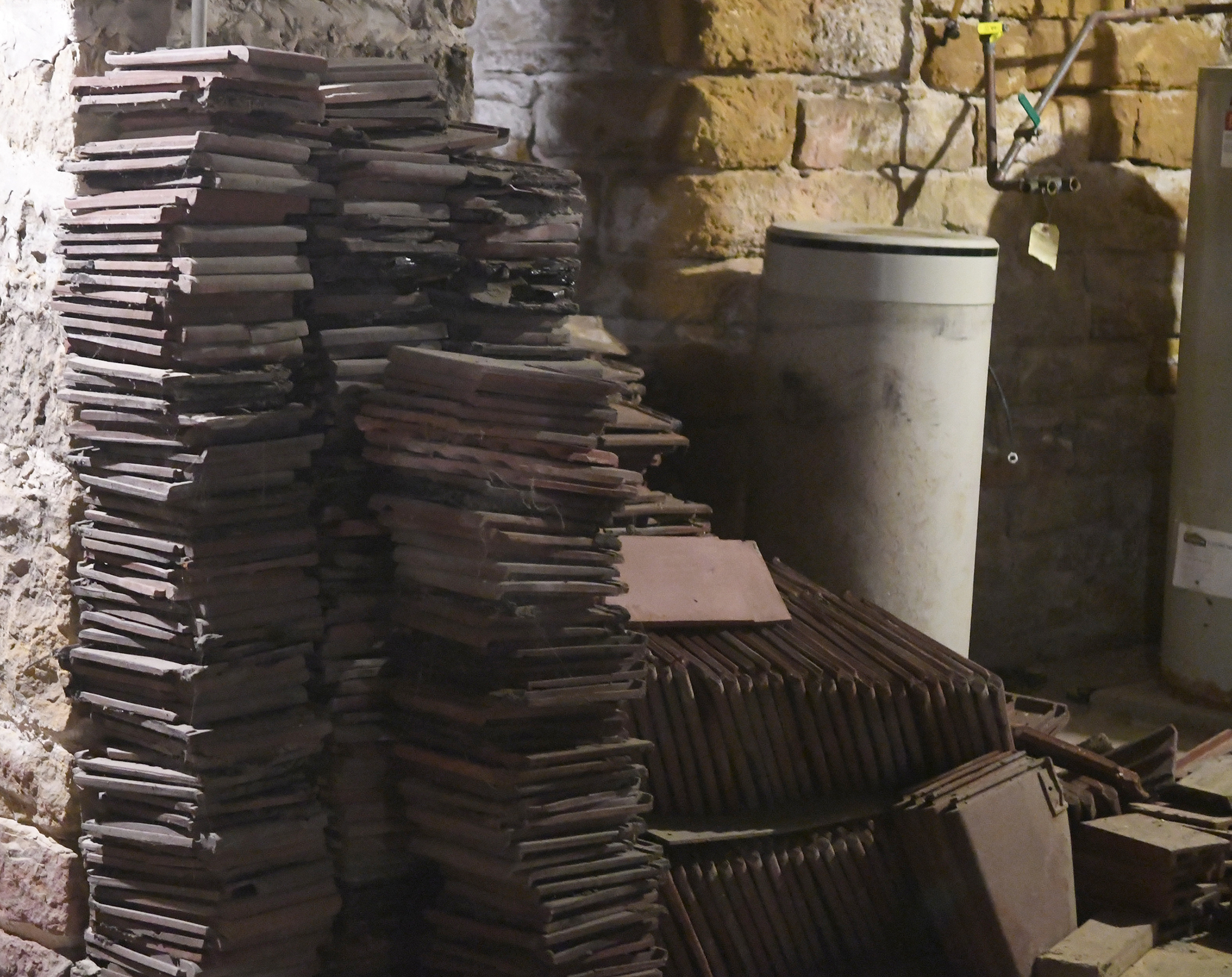
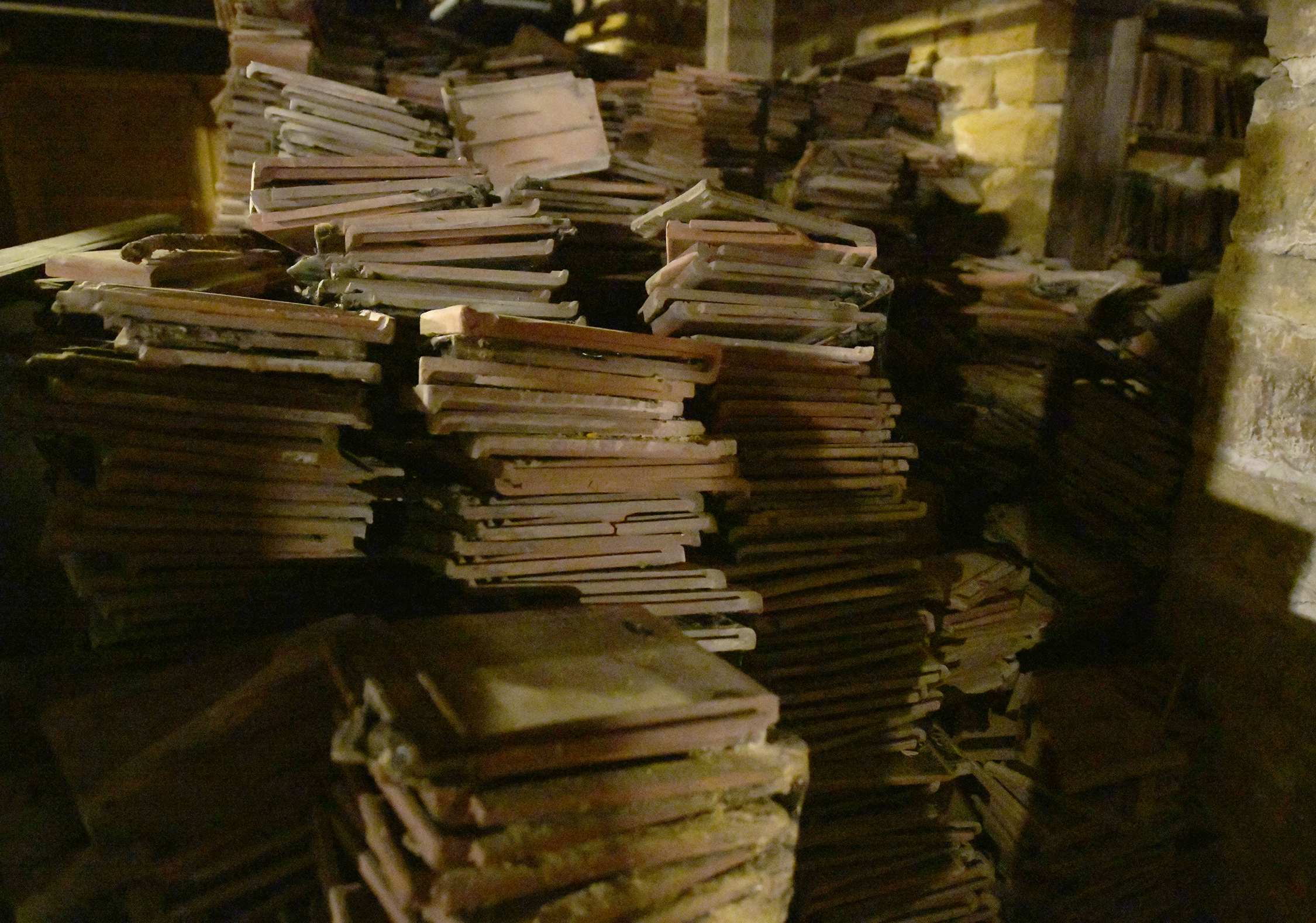
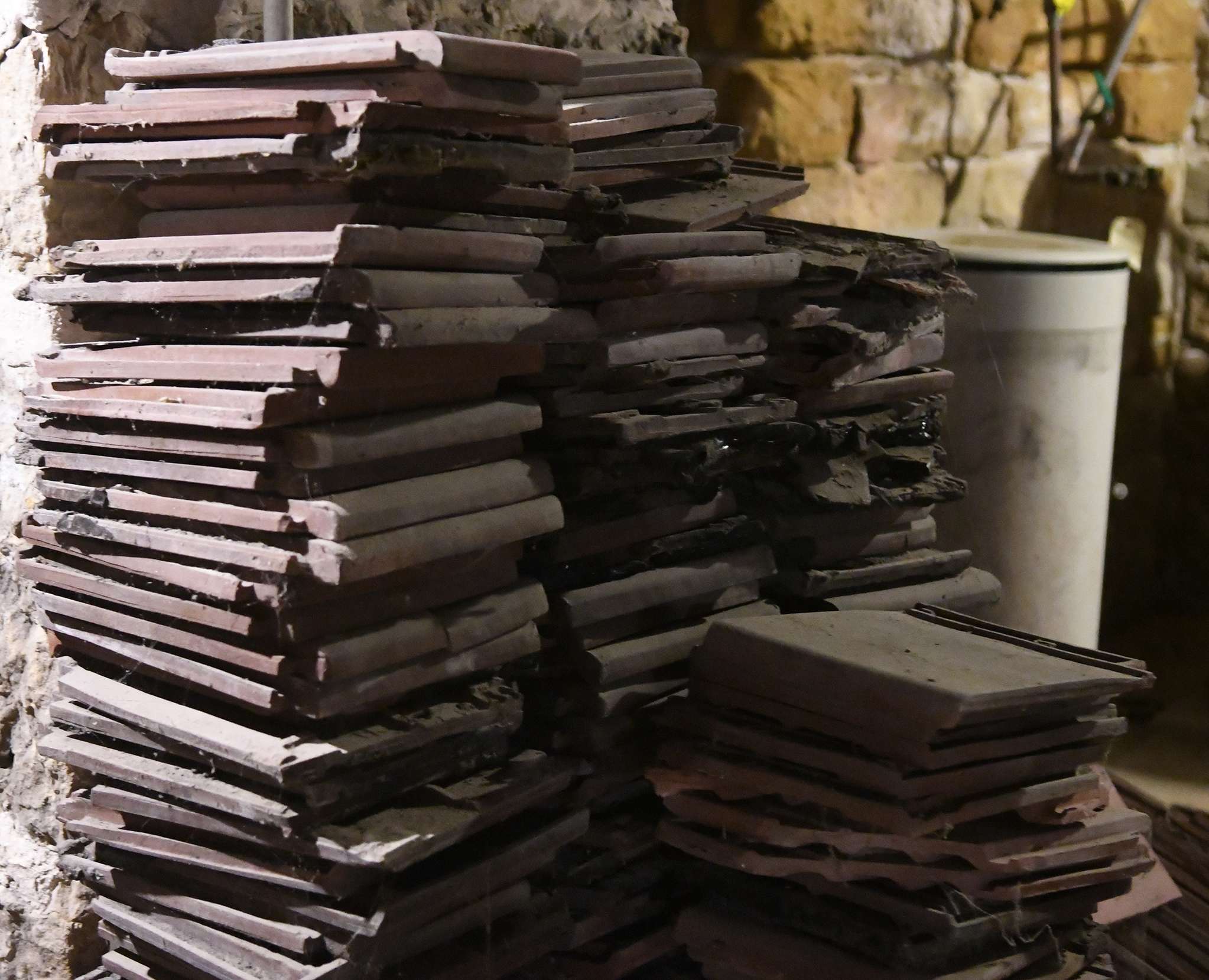
In the case of Frank Lloyd Wright’s Hillside Theatre at Taliesin, there are some Pyrex-glass window tubes and thousands of roof tiles. The window tubes are thought to be related to the SC Johnson Research Tower, designed in 1943/44 and constructed 1947-1950, according to Kyle Dockery, Collections Coordinator for the Frank Lloyd Wright Foundation. The Tower has 17.5 miles of the tube windows (the Administration Building, designed in 1936 has 43 miles of the window tubes).

Hillside Basement Artifacts 002.jpg

Adm Bldg Tower 2010 014.jpg

Dockery says there are between 30,000-50,000 clay roof tiles which were made by Ludowici Roof Tiles for the Theatre.

Hillside Theater 2018 016.jpg“They were removed and replaced with the rolled rubber roofing in 1968 after a stack of extra tiles which had been set aside to repair the roof fell over and damaged a truck. The structure of the roof meant that the tiles needed constant maintenance and replacement so plenty of extras were kept on hand.” 
Hillside Basement Artifacts 004.jpg

Hillside Basement Artifacts 003.jpg

Hillside Basement Artifacts 005.jpg

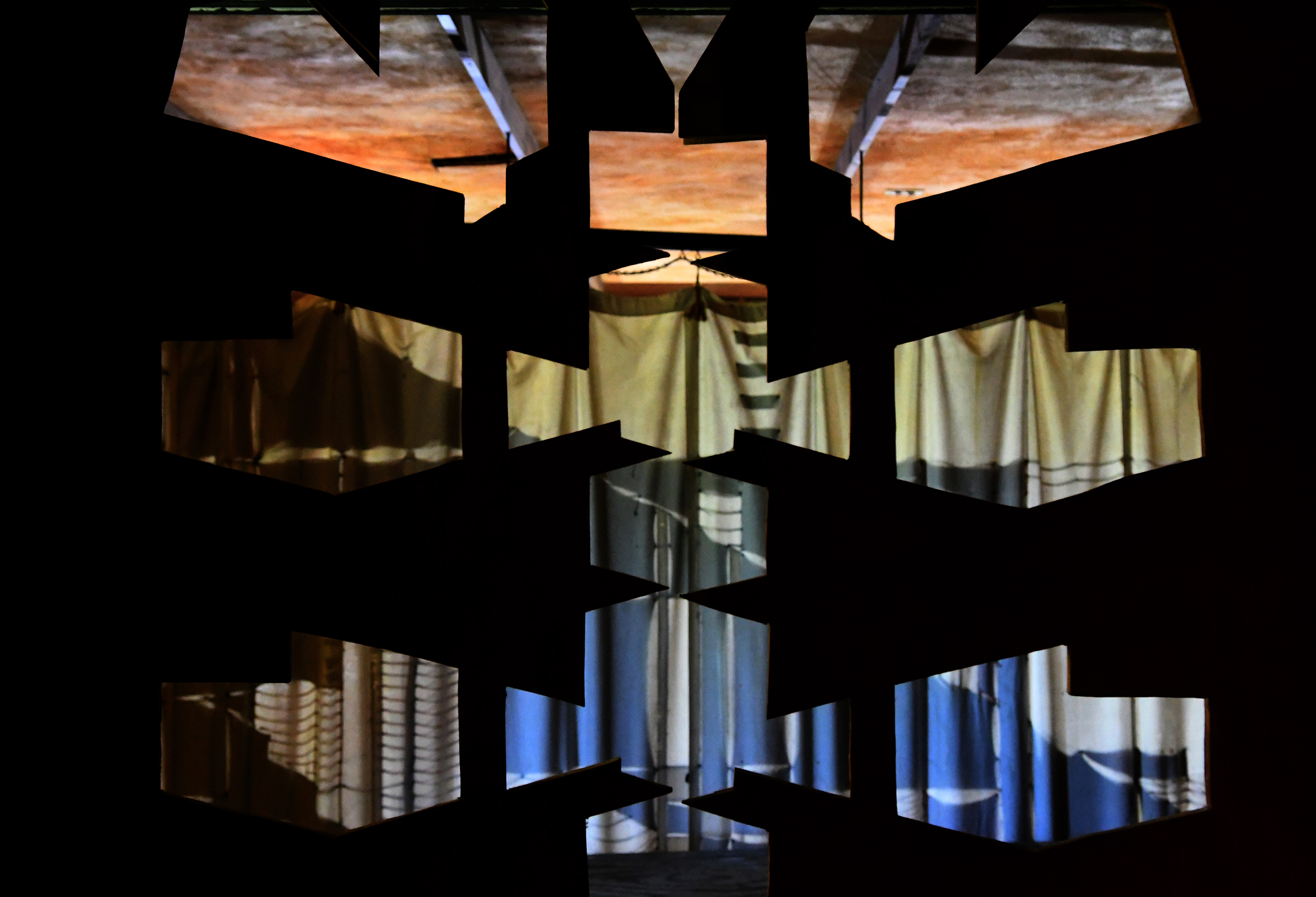
I unexpectedly got to see these generally unseen artifacts in the basement when I was working with Dockery to photograph the newly-restored curtain in the Hillside Theatre in June. A shortcut to the dining room to photograph the curtain from the dining room balcony took us through the basement.

Hillside Theatre Curtain 104.jpg

SC Johnson Buildings

(c) Mark Hertzberg 2020

LR SC Johnson Admin Building Tower 6.16.20 001.jpg

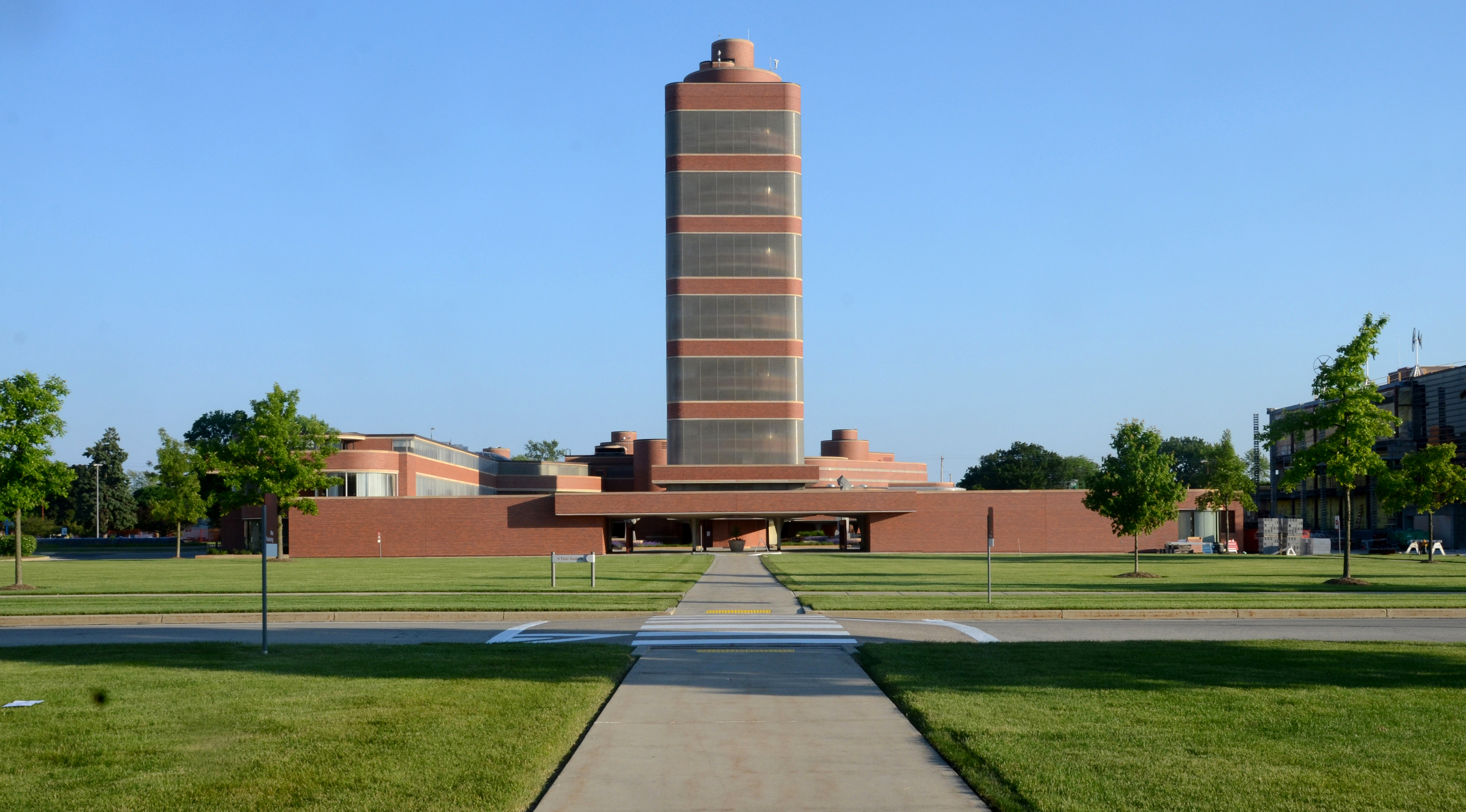
There is something indescribable for me in Frank Lloyd Wright’s designs of the SC Johnson Administration Building (1936) and SC Johnson Research Tower (1943/44) in Racine, Wisconsin. I gaze at them every day during my daily bike ride.

I found the lighting particularly soft and nice the evening of June 16, riding after spending the day photographing the newly restored curtain at Hillside Theatre and the desolate empty drafting room at Hillside (the two previous posts on this website).

LR SC Johnson Admin Building Tower 6.16.20 003.jpg

The pictures were taken through the fence at the Golden Rondelle guest relations center which cannot reopen until the COVID-19 crisis passes. This is the first view that visitors have of the buildings, as they come onto campus at 14th Street. LR SC Johnson Admin Building Tower 6.16.20 005.jpg

SC Johnson Admin Building Tower 6.16.20 004.jpg

I look forward to being able to once again get past the fence and enjoy – and photograph – the wonderful interior spaces again.