
(c) Mark Hertzberg (2020)
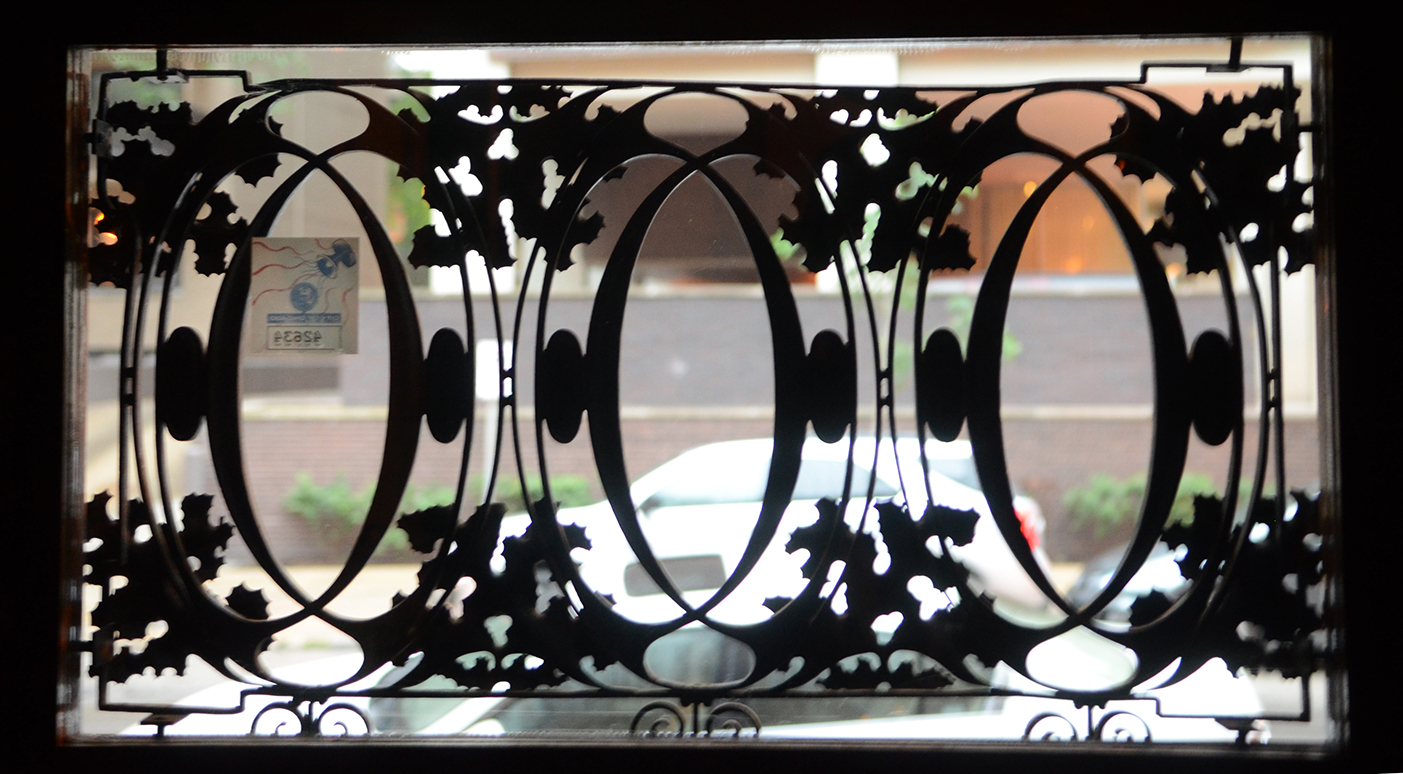
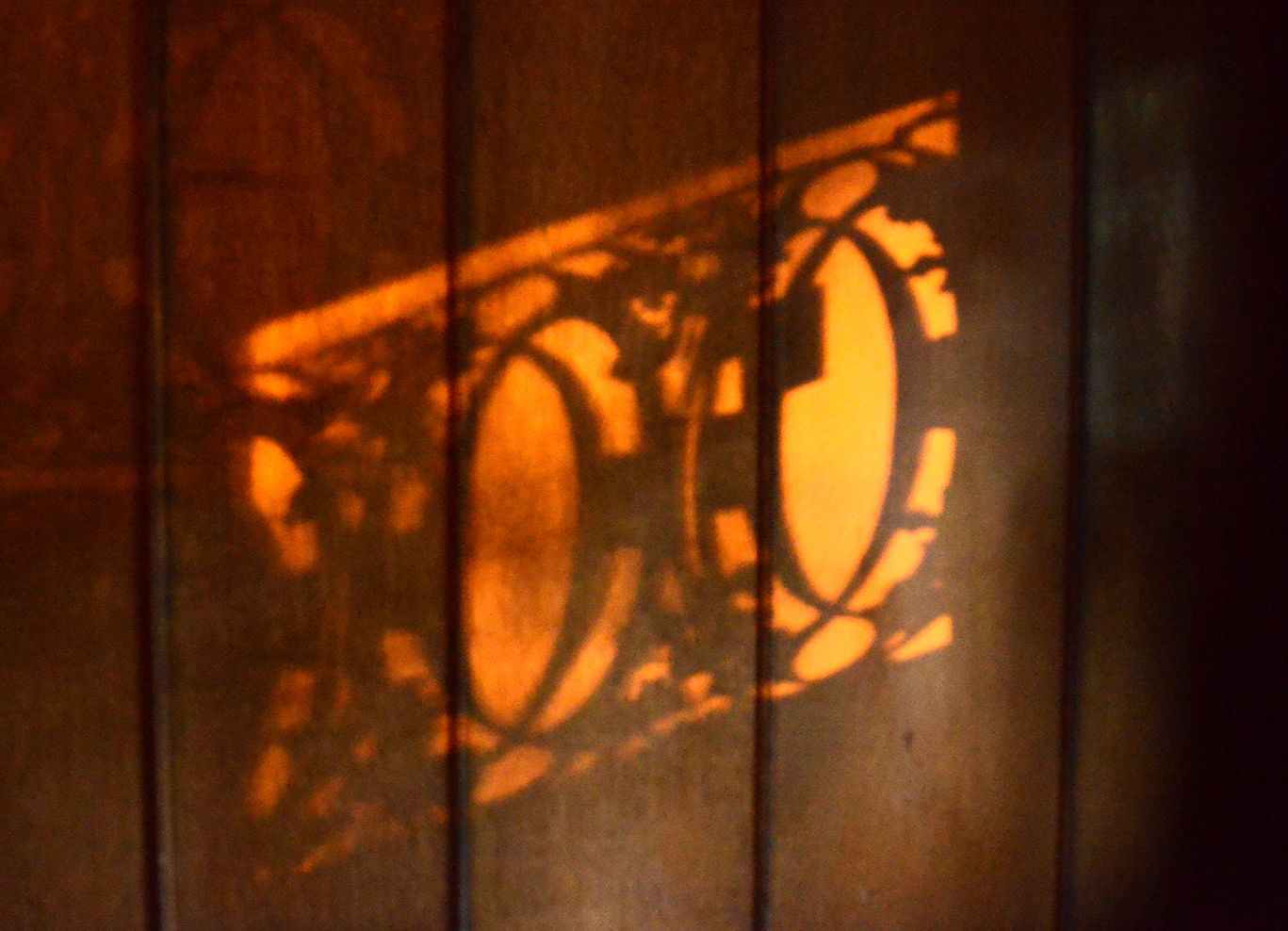
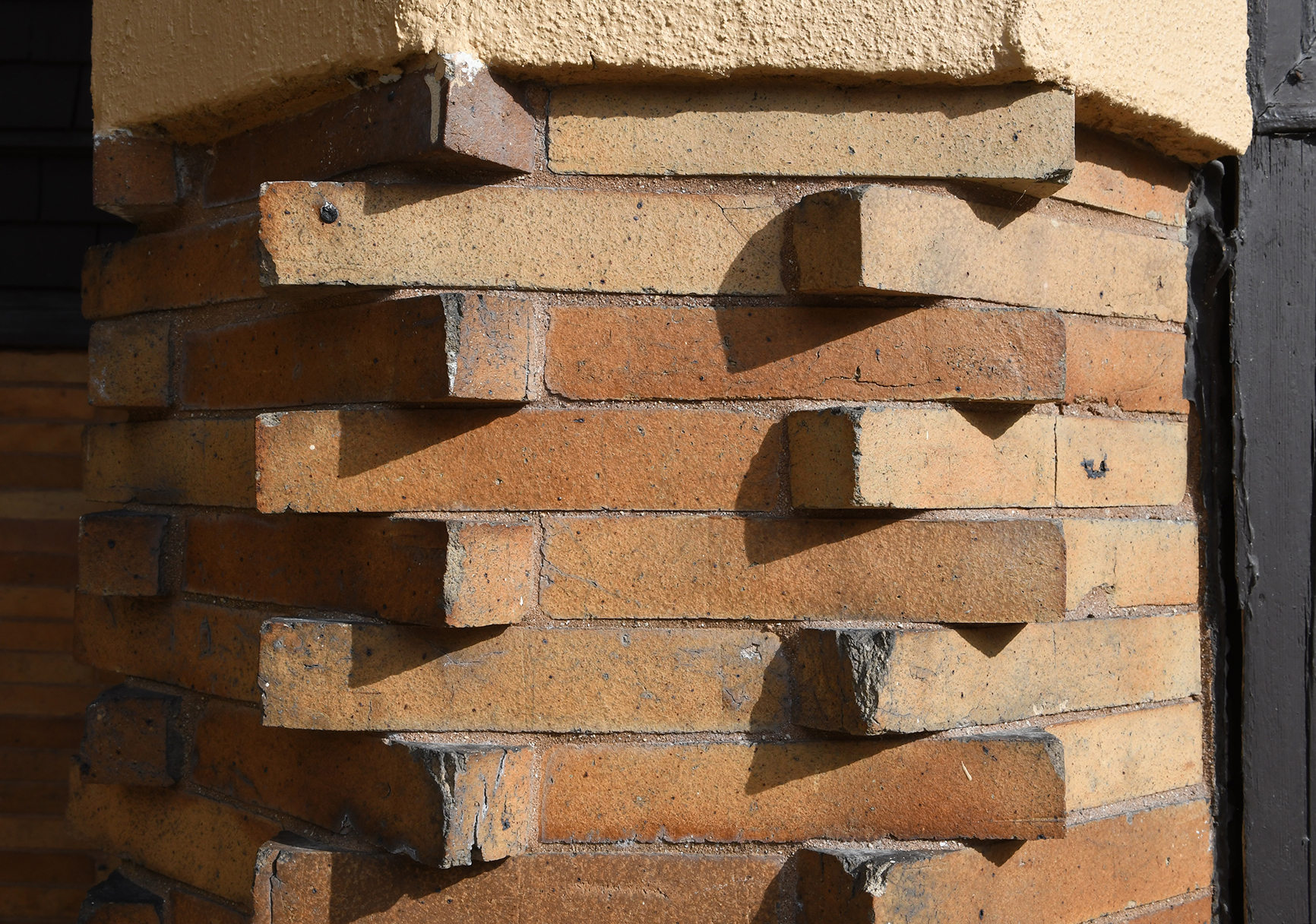
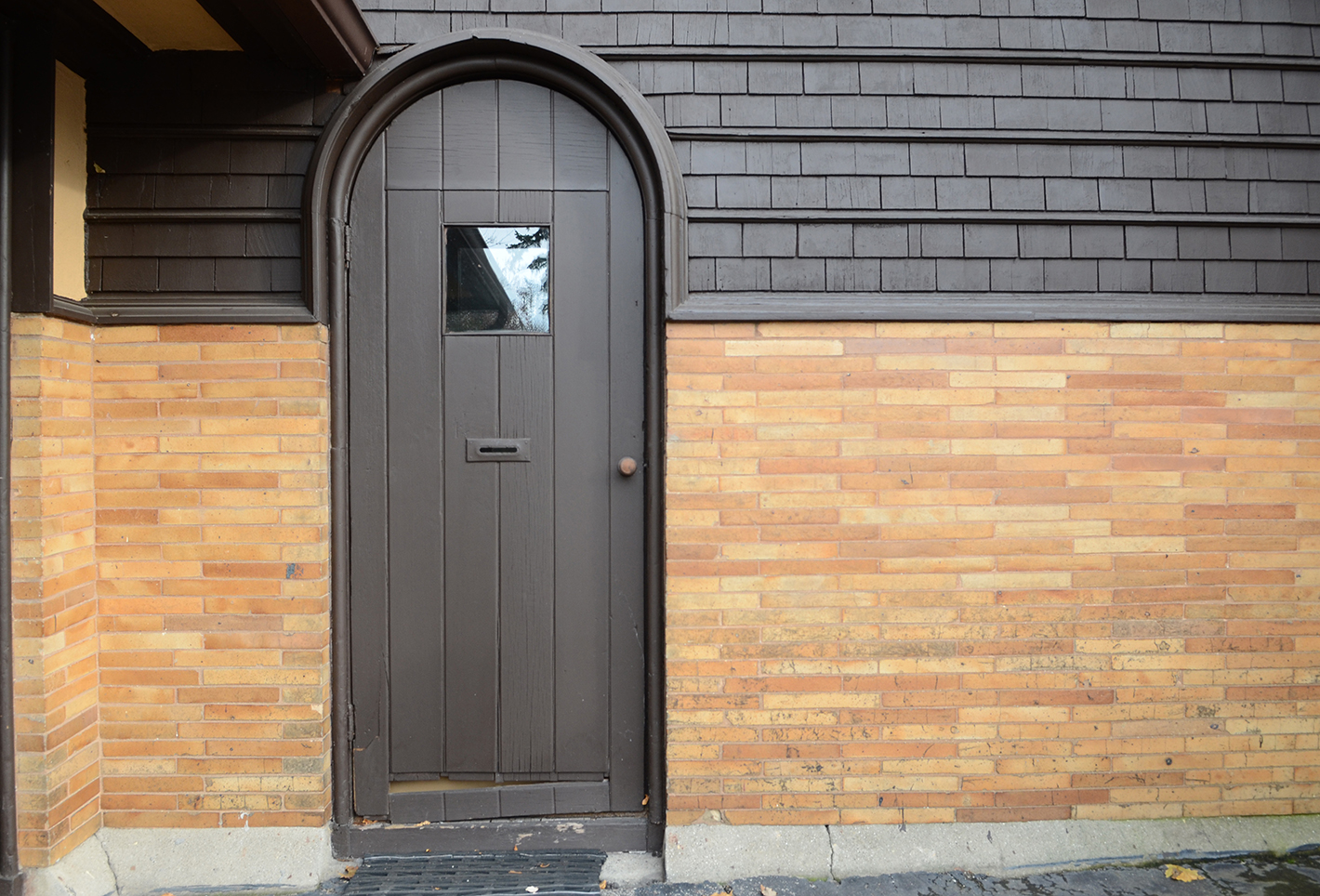
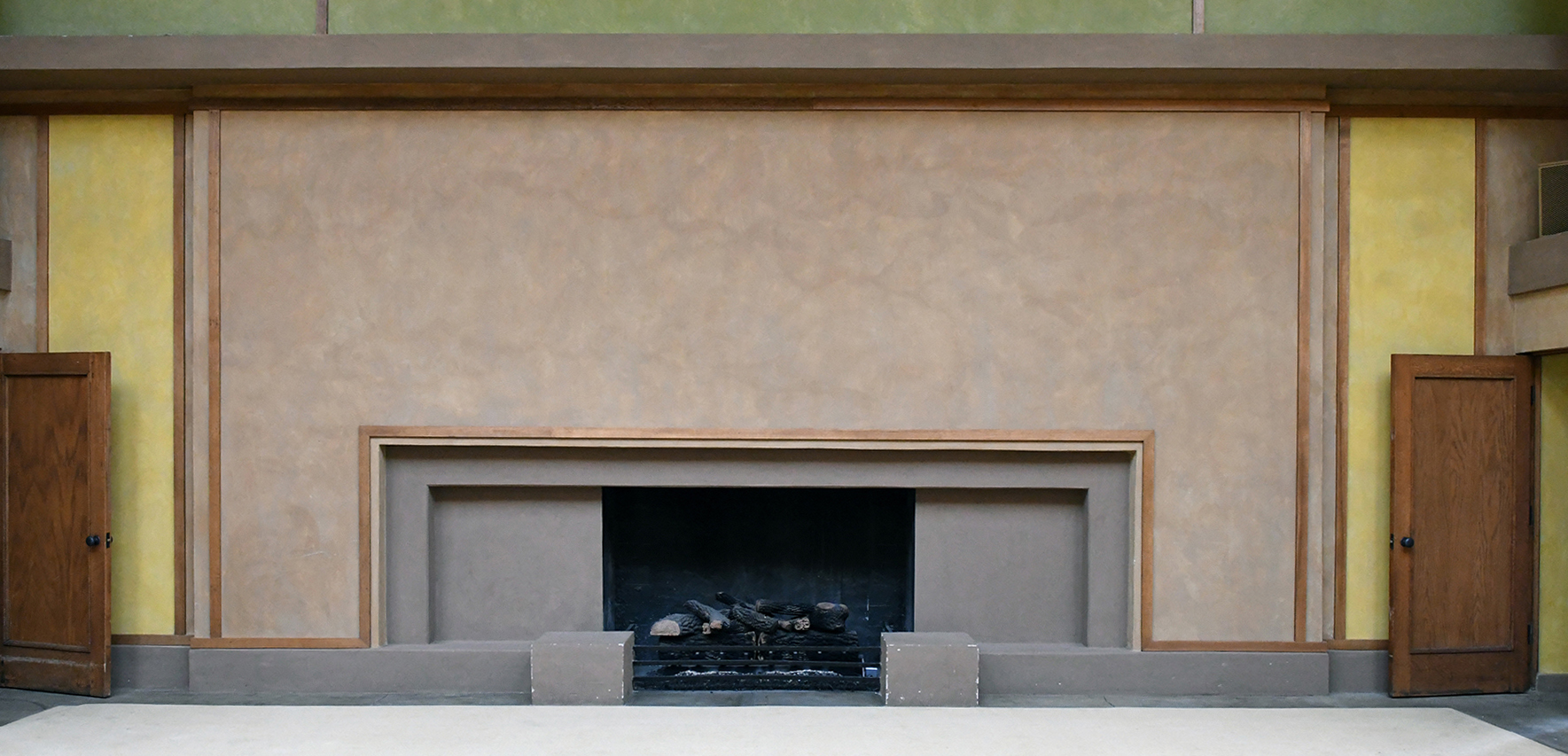
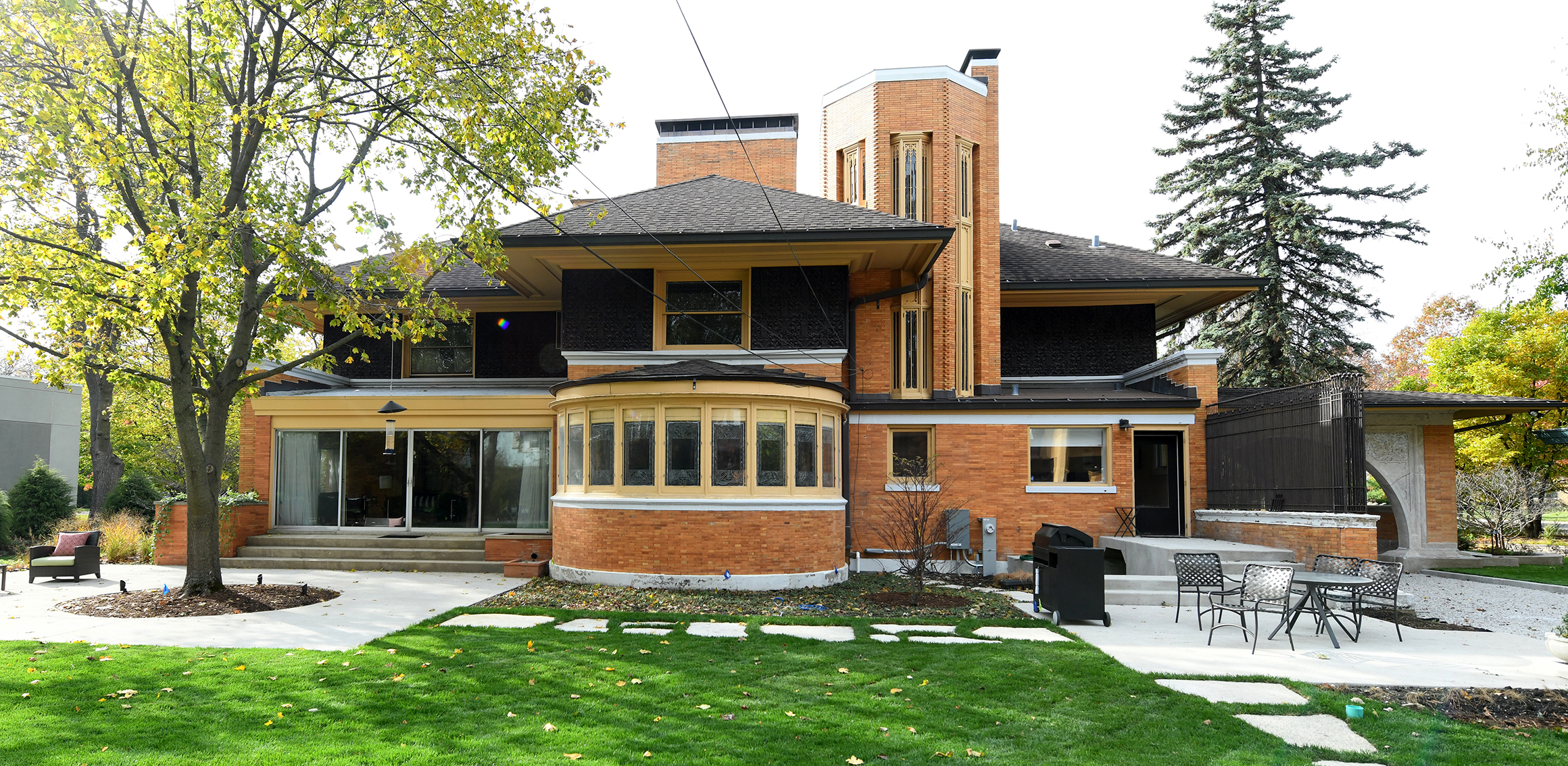
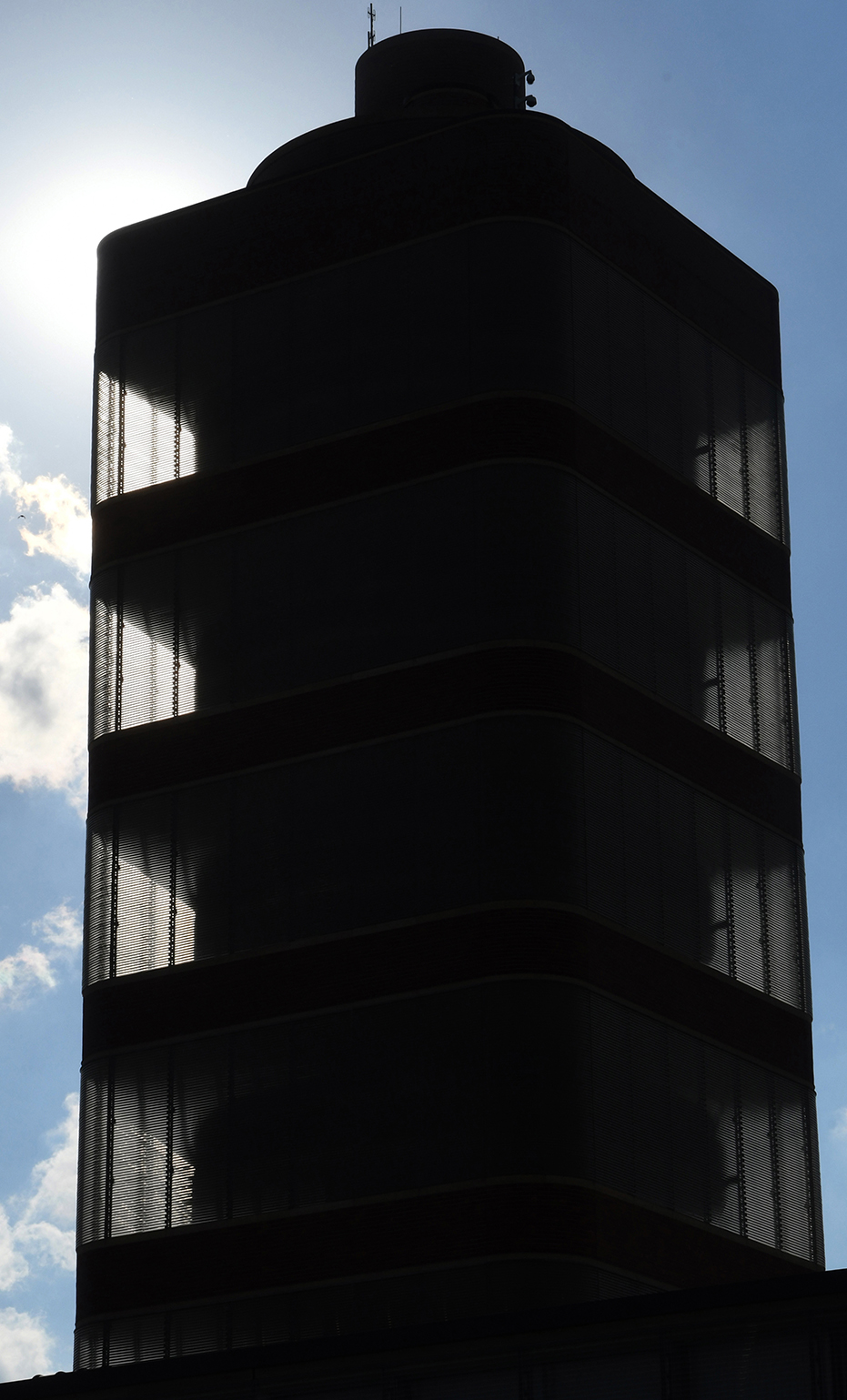
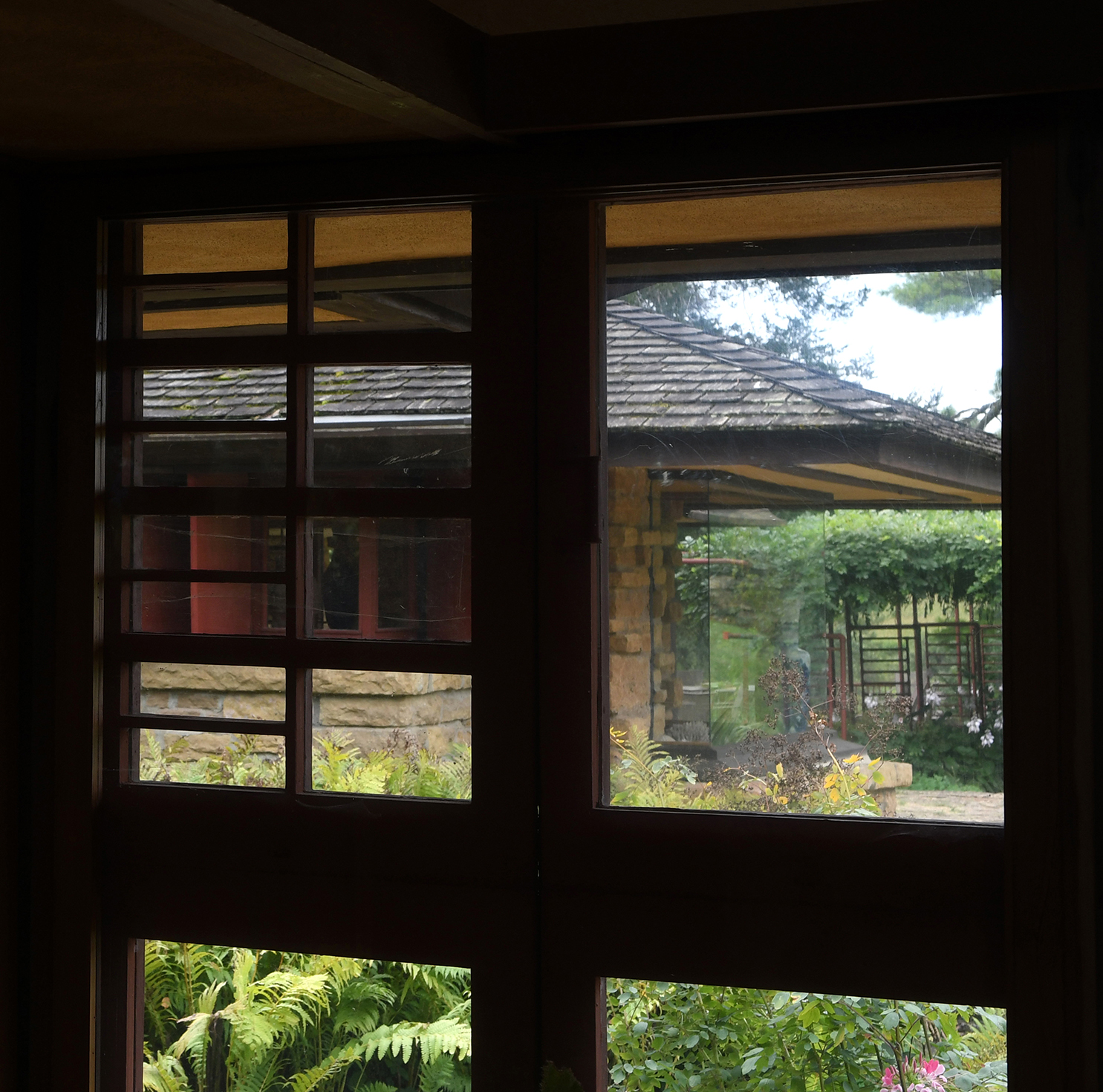
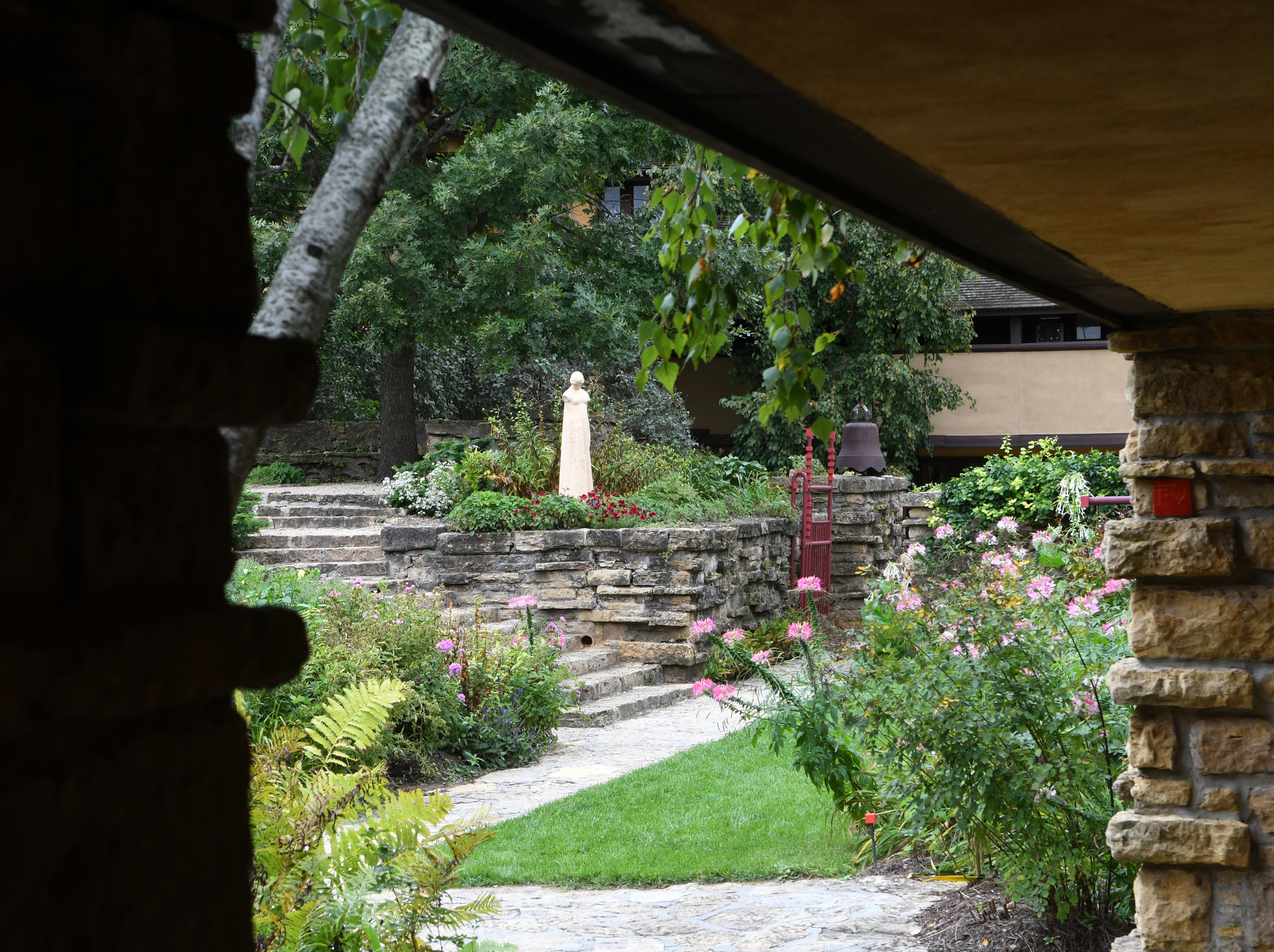
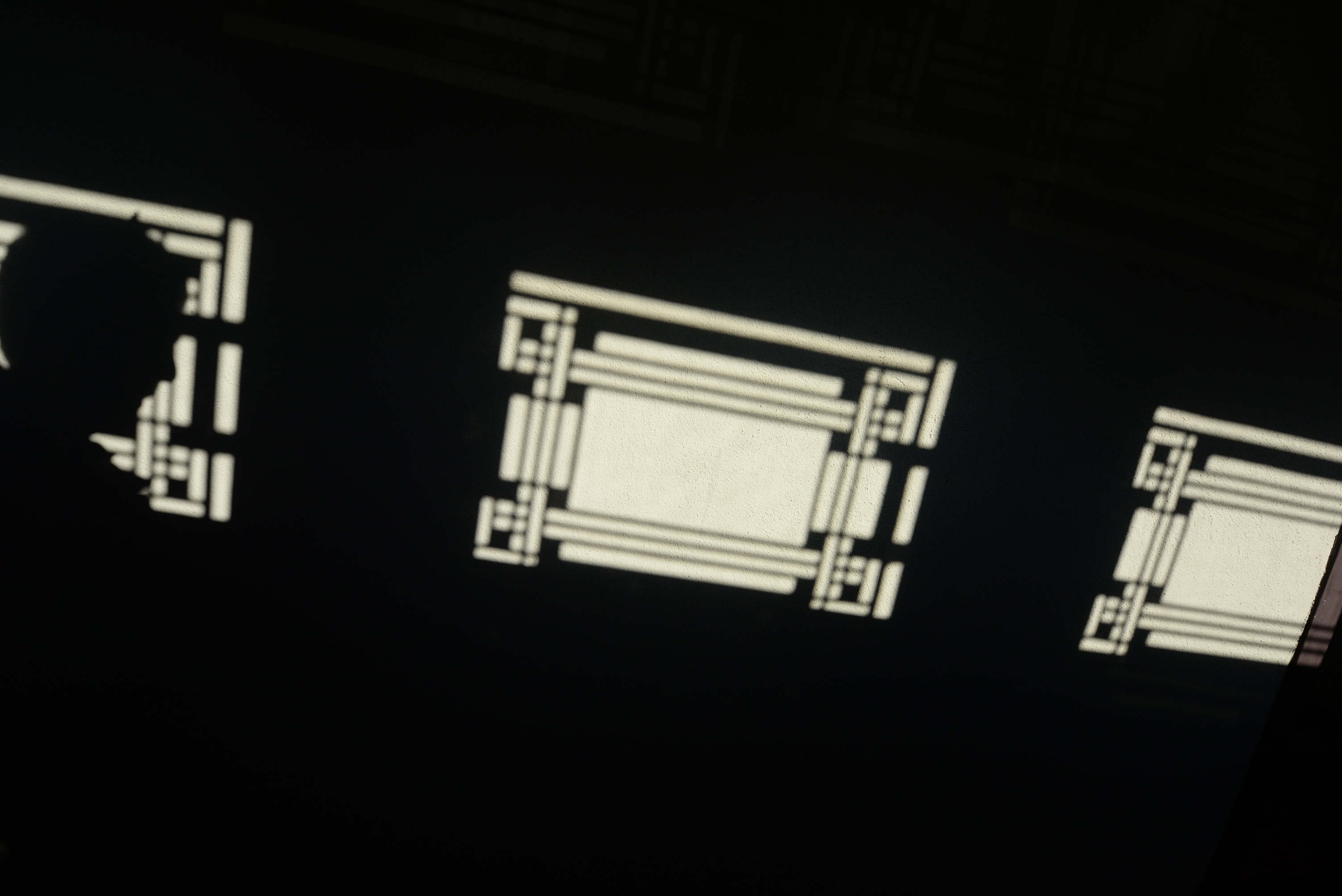
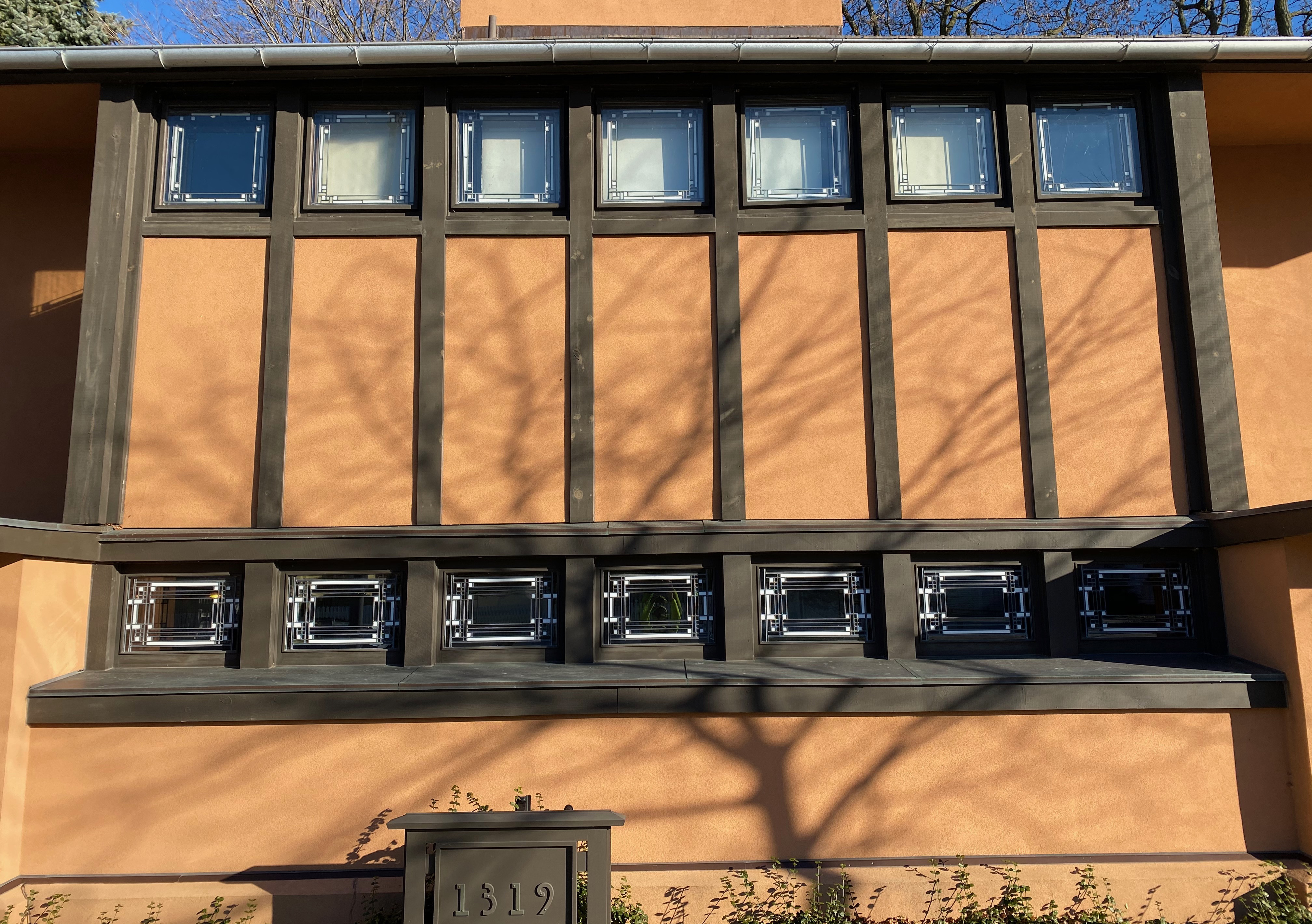 There are long shadows at the Hardy House this week, or so I thought when I rode my bicycle past the house today and reflected on the deaths of two of its stewards. I took these photos in their memory with my phone camera. Eugene “Gene” Szymczak, who rehabilitated the house from 2012 until his sudden death, died December 3, 2016, four years ago this Thursday. Margaret Yoghourtjian died yesterday evening.
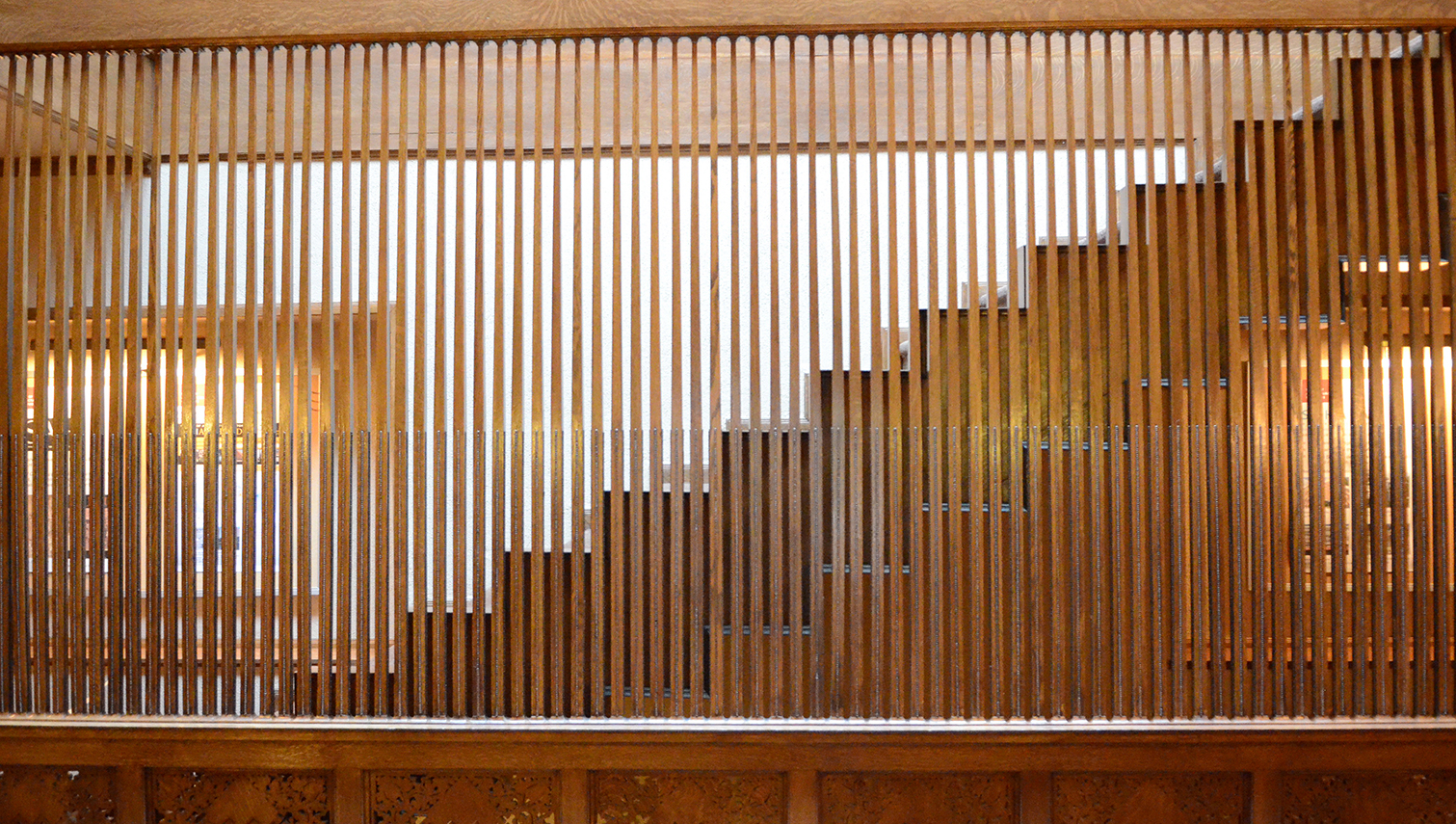
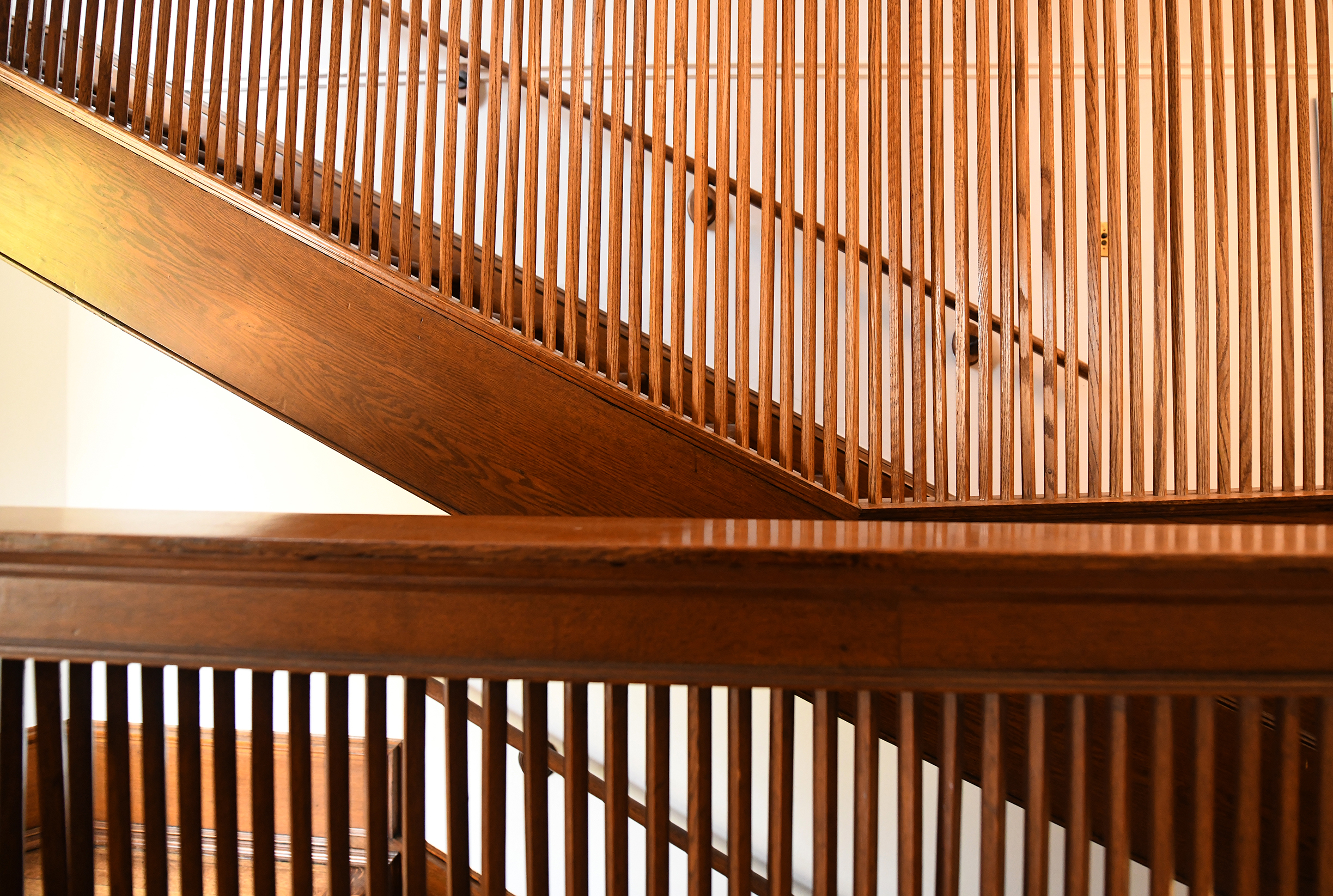
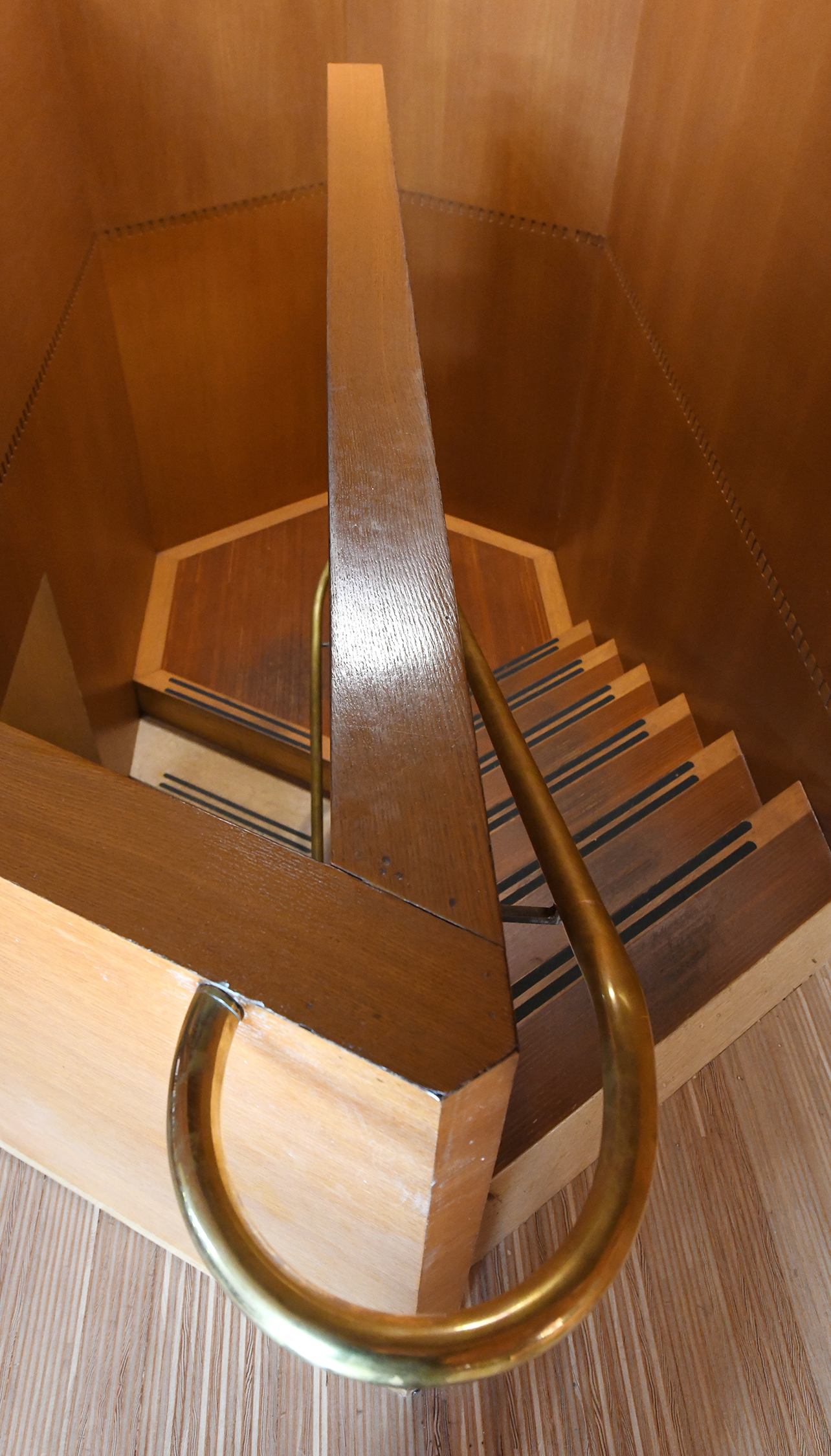
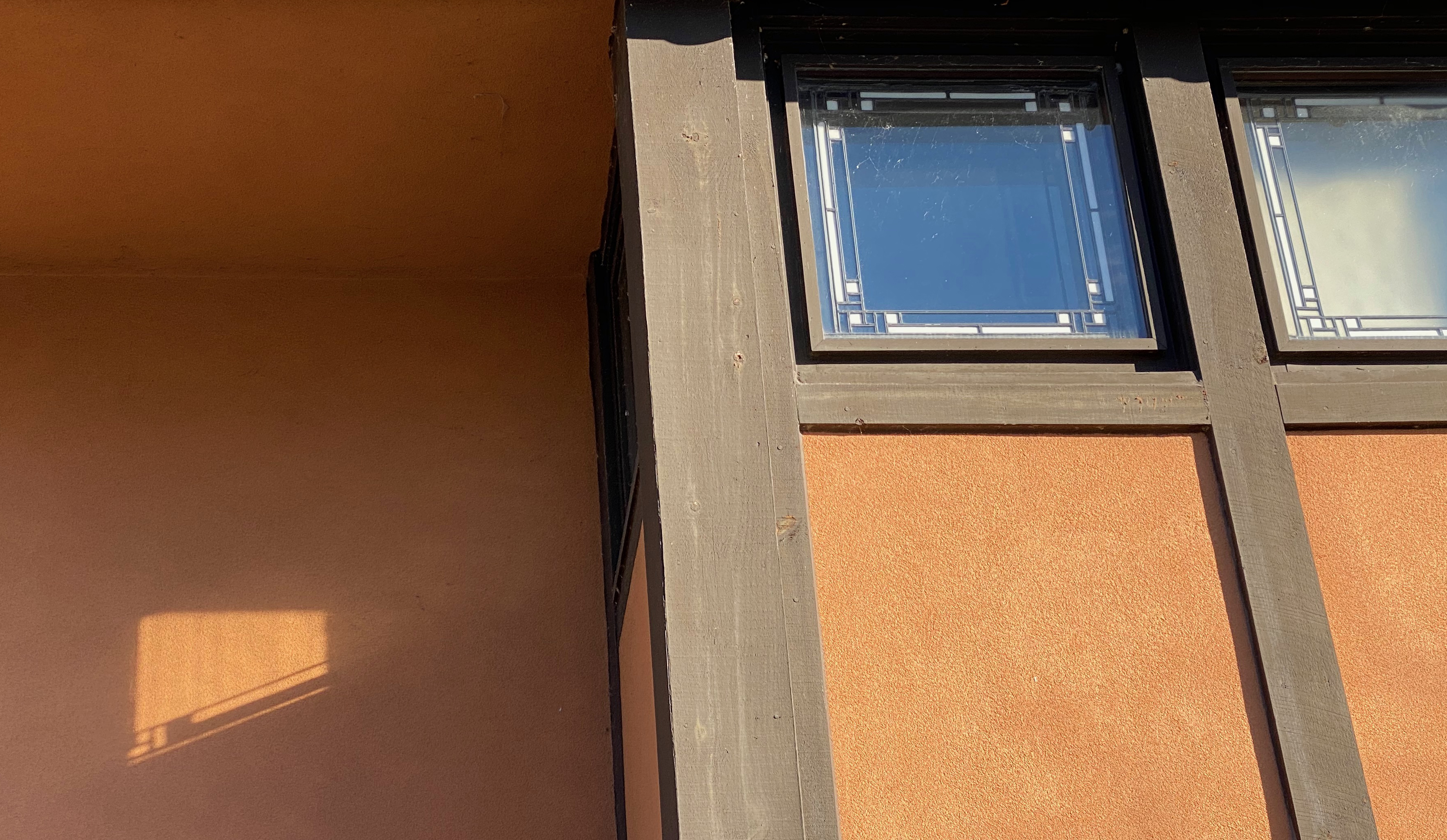 The afternoon sun shines through a window in the second floor north stairwell.
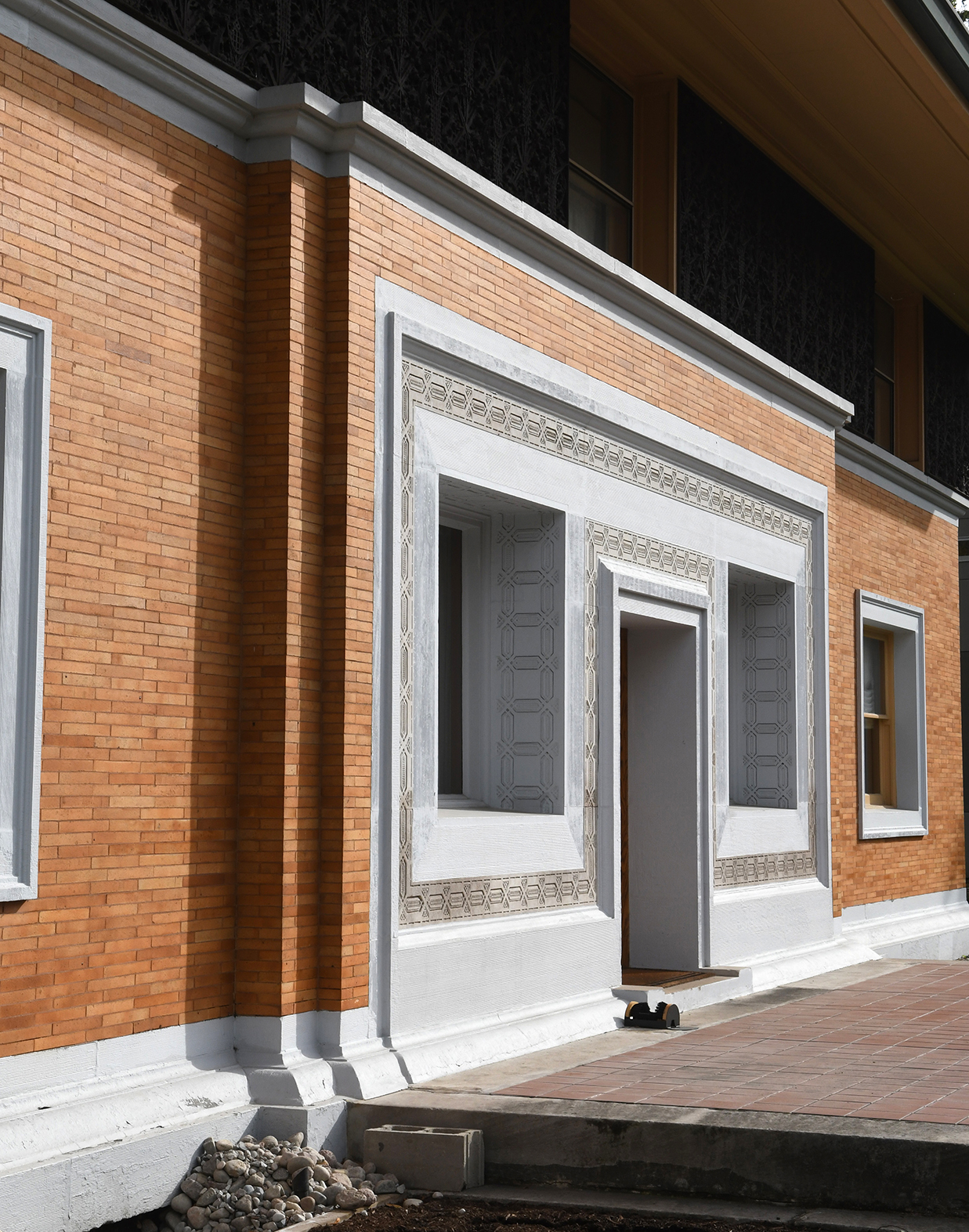
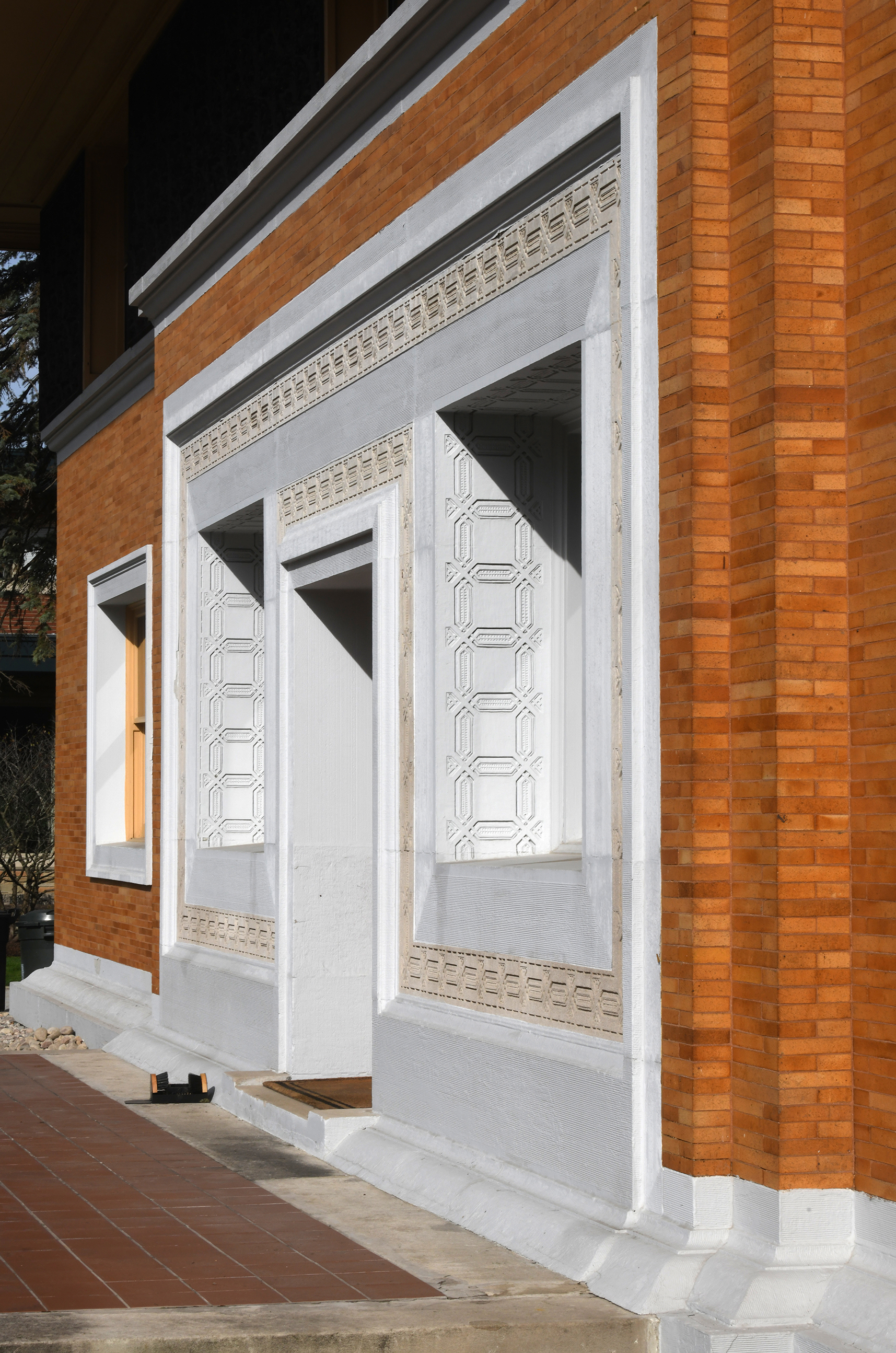
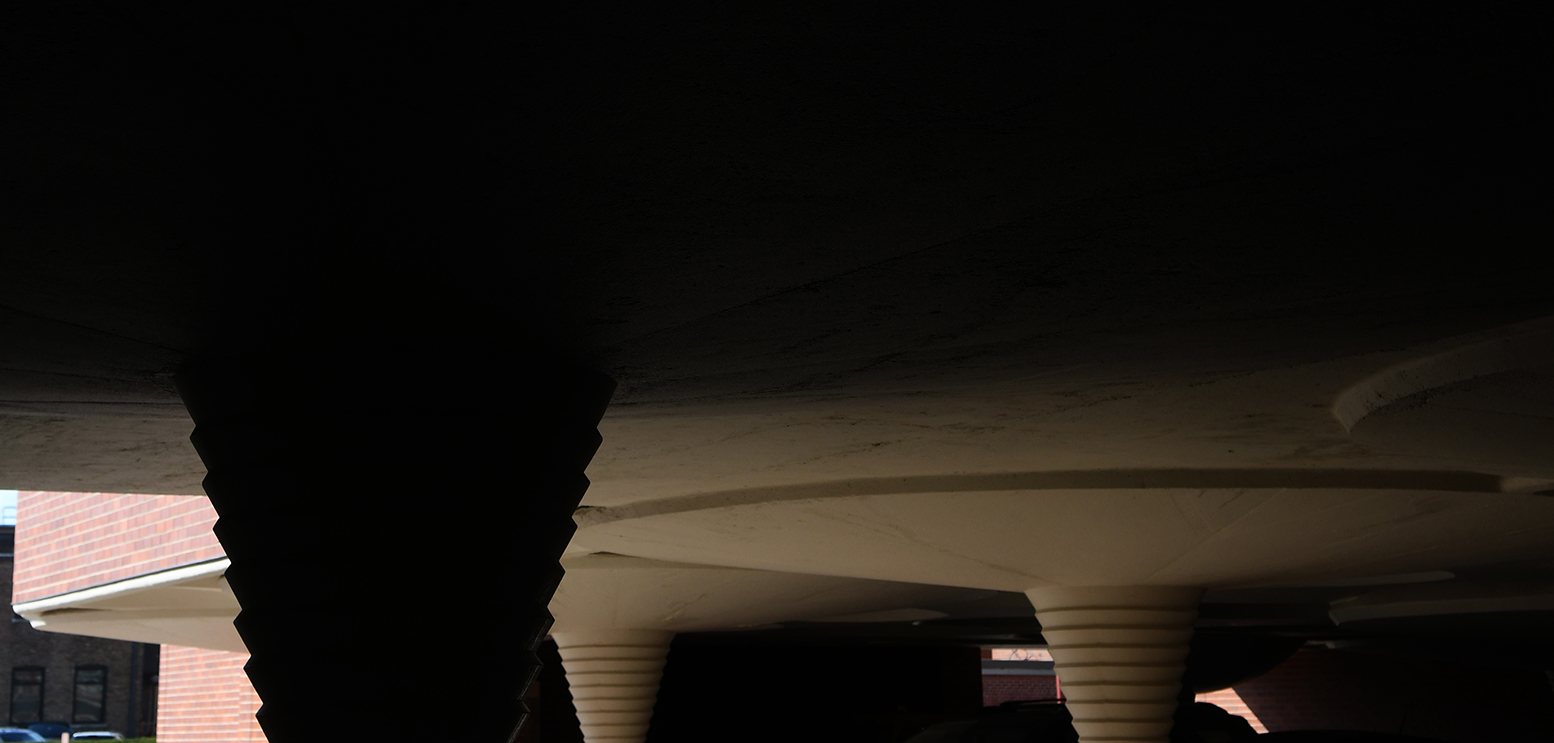
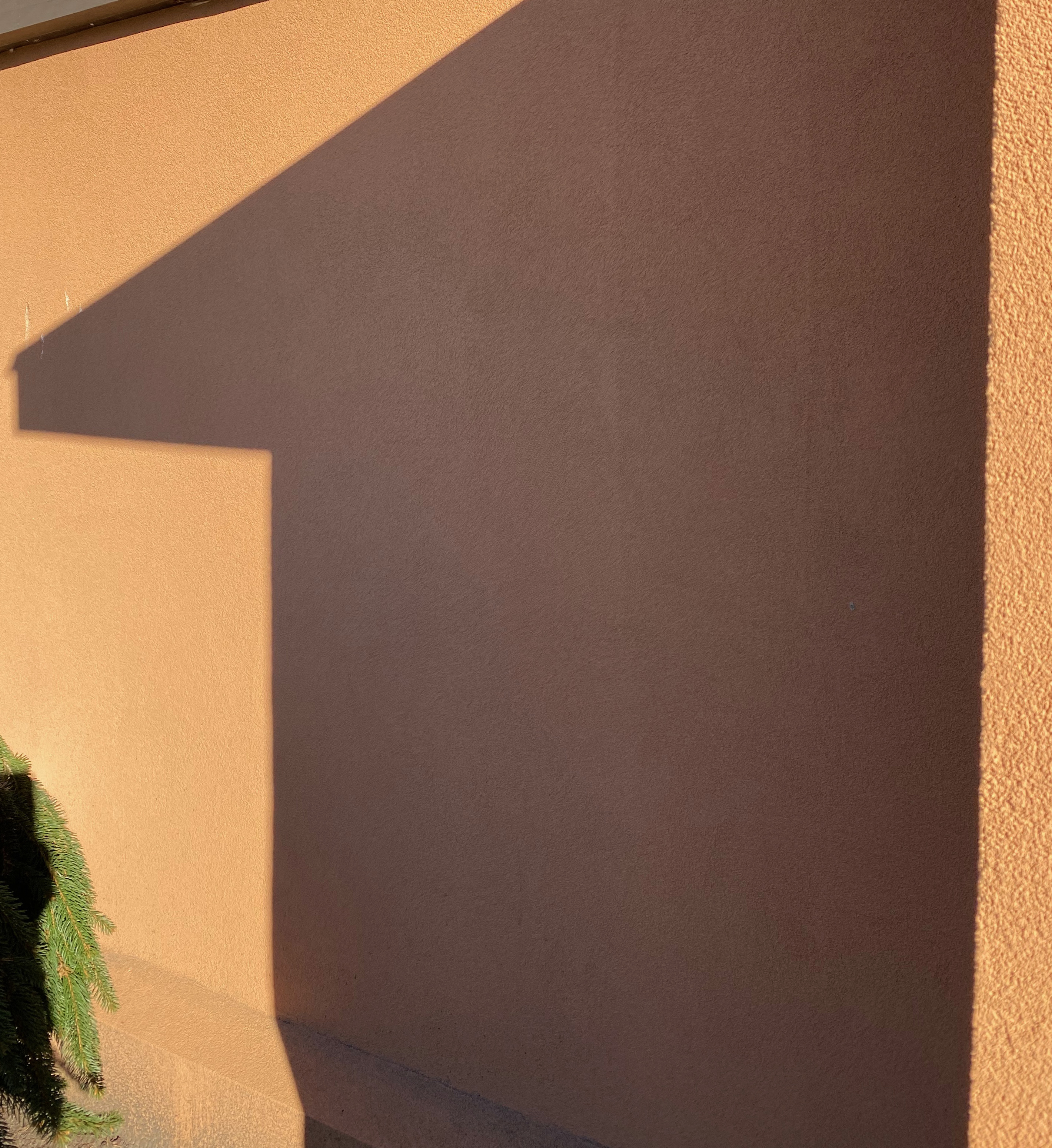 The sun casts a shadow of the cantilever that shelters the north entryway to the house.
I lost a friend last night, and Frank Lloyd Wright’s Hardy House in Racine lost another of its stewards, when Margaret Yoghourtjian – Maggie to her family – died Monday November 30. Margaret, 98, and her late husband Jim, were stewards of the house from 1968 – 2012. Jim, a renowned classical guitarist, was 91 when he died in May 2015.
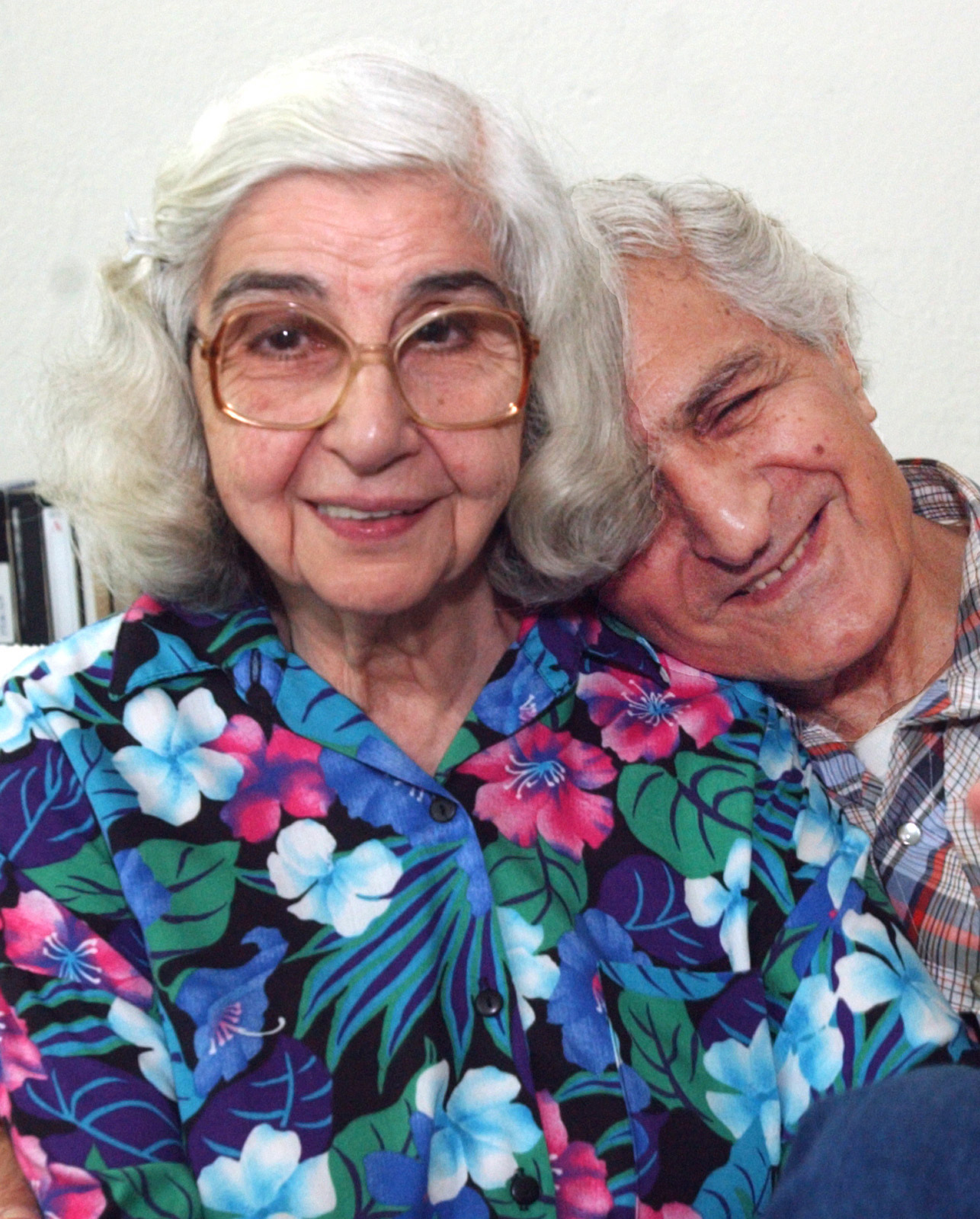 Margaret and Jim in the Hardy House living room, August 2004. Jim wrote his beloved Maggie a poem every year for her birthday. They married in 1950.
It was initially hard for me to get to know Margaret, much less get close to her. She often referred me to as her “nemesis,” but in truth, we had a wonderful relationship. The Yoghourtjians had shared their house with Wright aficionados for many years. Two unpleasant incidents some years after they bought the house caused them to decide that it was their home, and no longer a semi-public site. I confess that not long after moving to Racine in 1978 I saw Jim in front of the house, pulled to the curb, proclaimed that I was interested in Wright’s work, and asked if I could see the house. He declined my request. I was disappointed, but years later I understood his reaction to my brash request. In later years when he was Wrighted-out, Jim told me that when people asked him about the house if they saw him gardening in front, he would tell them that he was only the caretaker, and knew nothing about it. (But if Jim liked you…well, his apple pie was legendary!)
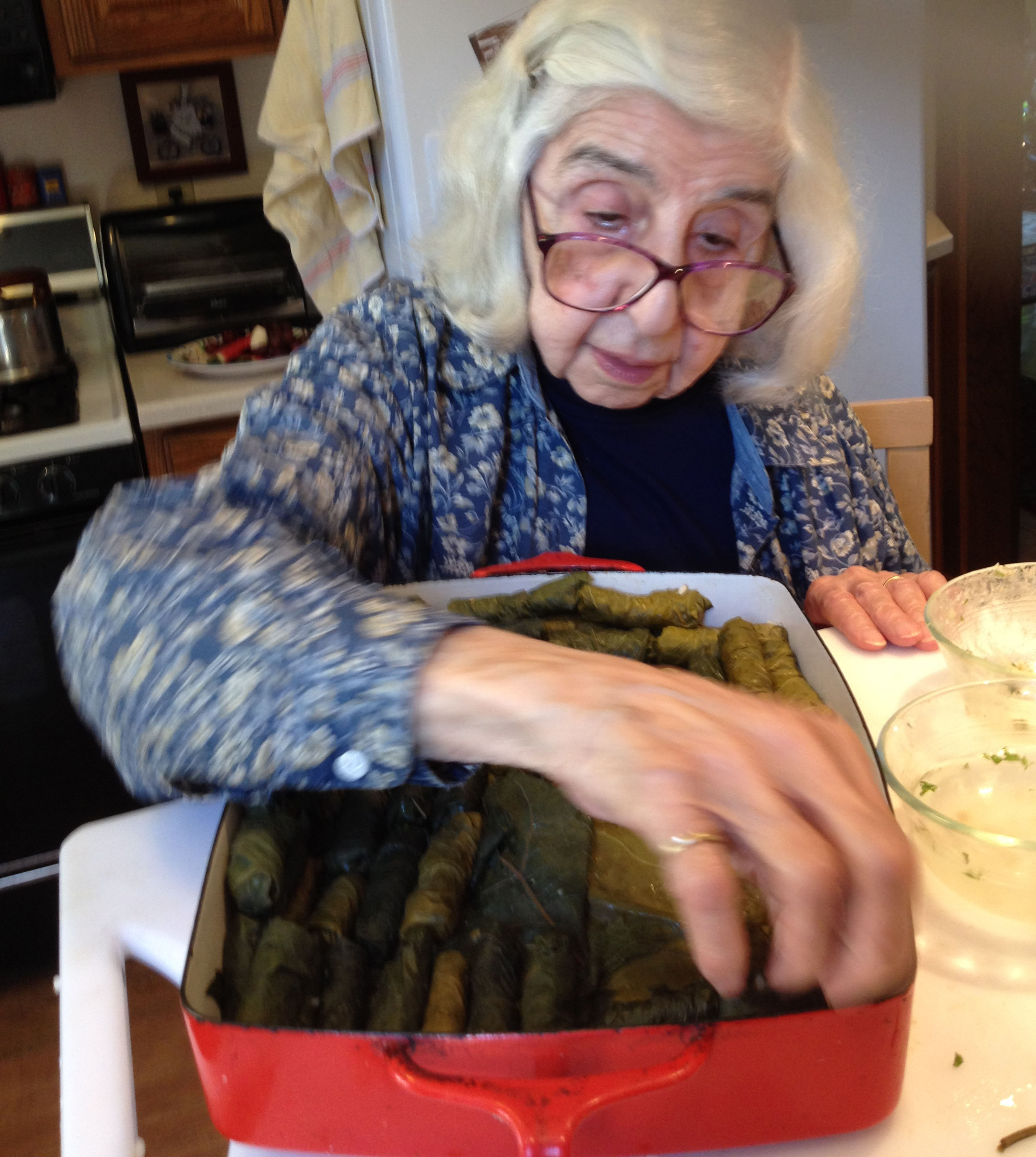 Margaret and Jim were Armenian. Their families suffered through the Armenian genocide. Margaret came to our house in 2014 to make stuffed grape leaves with my wife, Cindy, and with Joan Szymczak, whose brother-in-law Gene had bought the house from the Yoghourtjians in 2012.
I began my serious Wright studies in the early 2000s. I wanted permission to take a picture from the Hardy House living room balcony to show the view of Lake Michigan through the two-story living room windows. I knew that the house was off limits. Period. End of story. Don’t even bother to ask. But I called the house anyway on March 1, 2003. I was astonished when Margaret answered because she preferred to screen calls from the answering machine.
She knew me from my work at the newspaper (she worked there as a proofreader before my tenure there). I promised not to photograph any other part of the house. Margaret said she would consider the request. I was sure that meant “no” and that this was my single chance to talk to her. I stalled, thinking of any possible way to keep her on the phone. I told her that if she called me back during the weekend she would not be able to reach me because I was going home to New York City to help my brother celebrate his birthday, “He will be five-five on 03-03-03.” Her voice brightened. “His birthday is March 3? So is mine!” I sent her flowers. I had an entree into the house.
I learned that Margaret loved chocolate. I asked if she had ever had chocolate-covered marzipan slices from Larsen’s Bakery. She had not. I brought her some. She was smitten by them. I would periodically leave a package of them at the door – which was never answered – and leave a phone message for her to look outside for a special delivery. Would it be wrong of me to say she could sometimes be impish? She called me at work one day and said, “I got the package. I don’t want you doing this anymore. But if you insist, Tuesday is the best day for me!” (She had told me that she would have a bite and freeze the rest for later so the treats would last longer). How can you resist loving someone like that?
I gradually gained Margaret’s trust and got permission to take more photographs on the condition that they not be shown publicly. In June 2003 I gave my “Wright in Racine” presentation at the SC Johnson Golden Rondelle. I invited Margaret but she told me she would not come because she was angry, thinking I had broken my promise about not showing the photos publicly. I scanned the audience, and indeed, she was not there. Then I saw her come in – almost sneak in so I might not see her – and take a seat in the back row seconds before the lights went down. She saw the presentation and saw that I had kept my promise, and I was back in her good graces.
She signed off on the photos of the house that were in the book. Then came the next challenge. Pomegrante Publishing offered me a contract to write and photograph a book about the Hardy House, deadline January 2005. Margaret’s brother, Ardie Kaiserlian had warned her, she said. “If you give him an inch, he’ll try to take a mile.” We laughed about that warning many times, because Ardie was right.
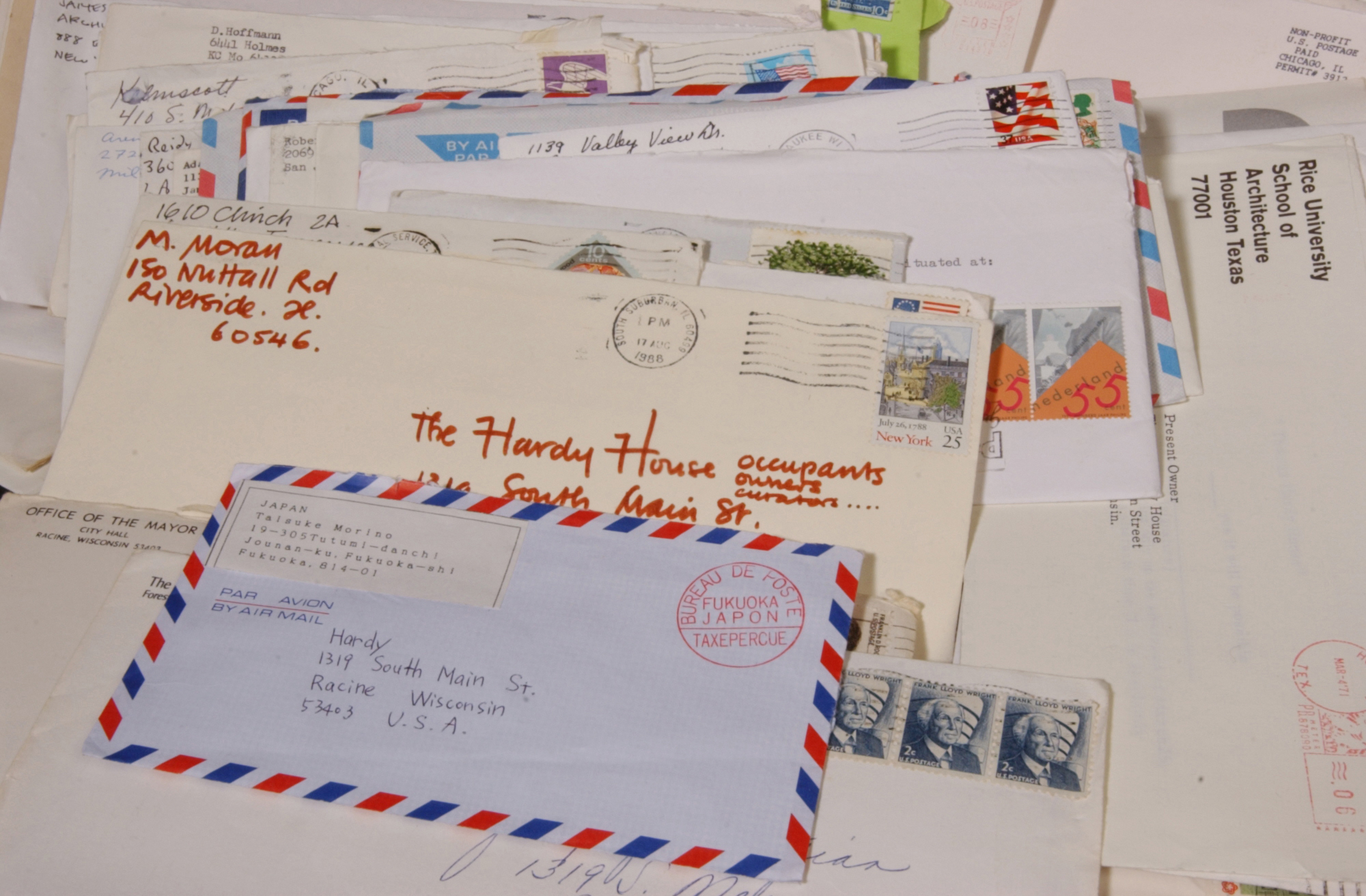
One day Margaret gave me a box and said she had saved every letter written to the house since they bought it in 1968. There were about 180 letters, which I catalogued in a data base. My original concept for my Hardy House book was to write “Dear Frank Lloyd Wright House,” a book about letters to a Wright house. I contacted as many of the correspondents as I could find, to get their permission to use their letters, Most agreed. Pomegrante was less interested in that approach than I was, and so the book took a different turn, but those letters helped me gain context and perspective for the history of the house.
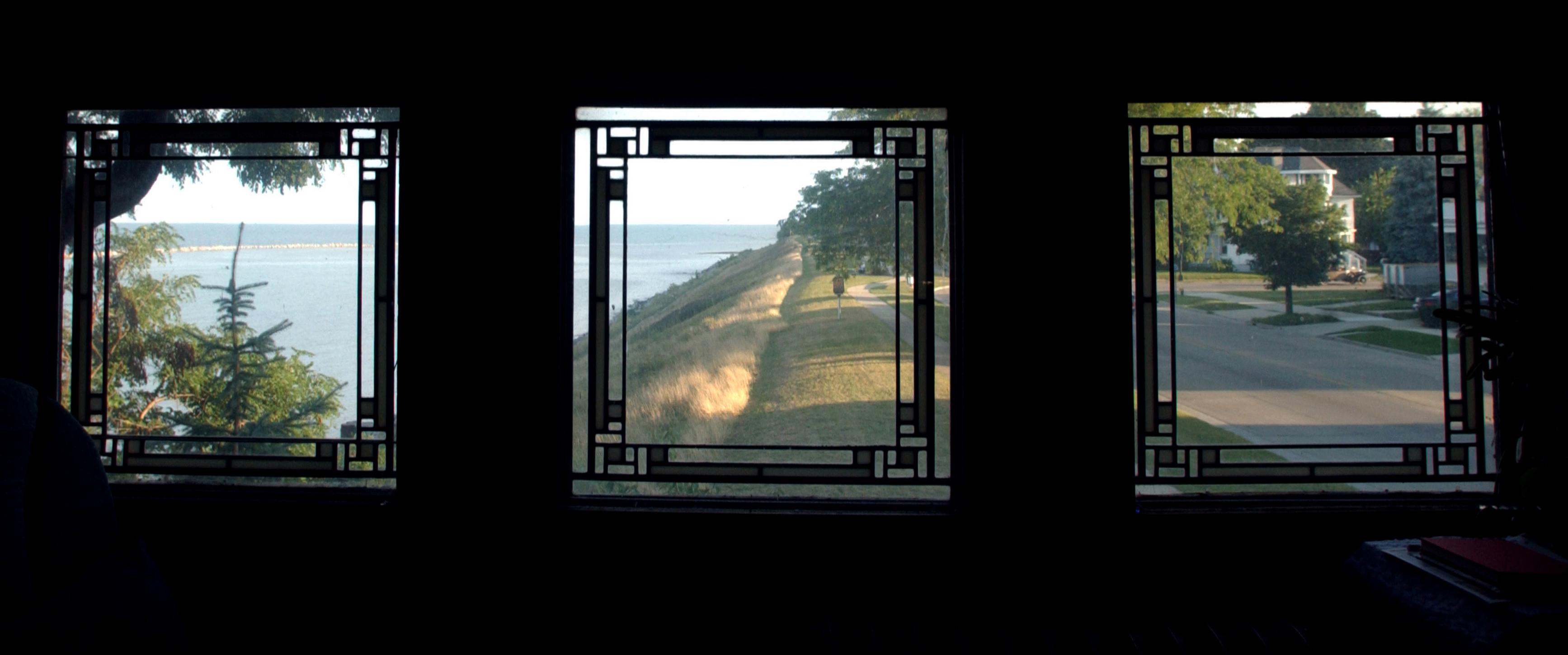
Margaret zealously guarded her privacy. I made sure that she approved the photos I was submitting to Pomegrante. All was well until Katie Burke, the publisher, emailed me that there had to be at least one photo of one of the four bedrooms. I gulped. The bedrooms had been off-limits to my cameras. Katie was clear, no bedroom photo possibly meant no book. I called Margaret and got another “I’ll think about it.” No amount of marzipan would help me this time. I did what Ardie had warned her about, and pushed to go for that extra mile. She reluctantly agreed to the photo session. When I arrived to take the pictures she proudly told me that the afghan on her bed for the photos was one that her mother had made.
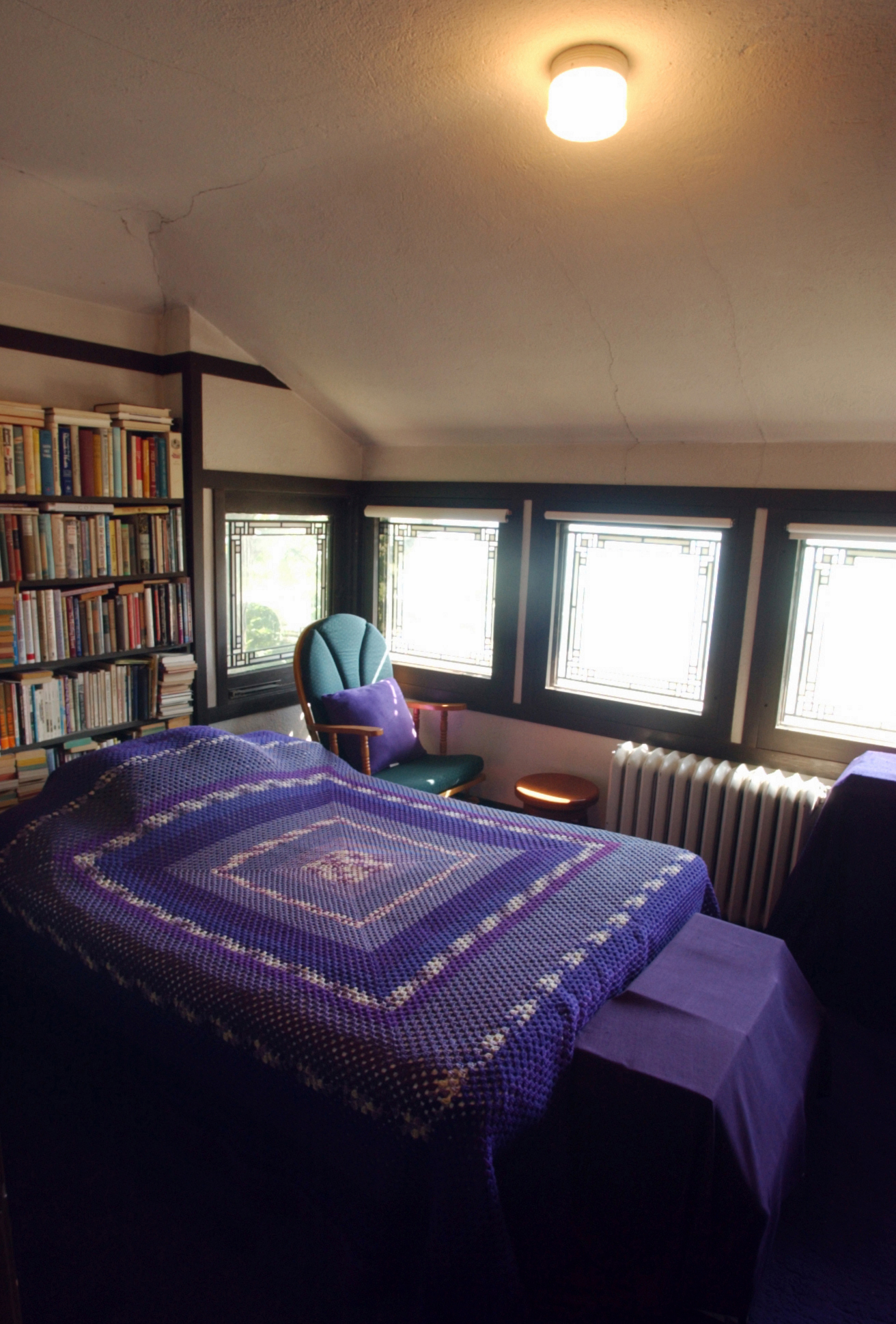
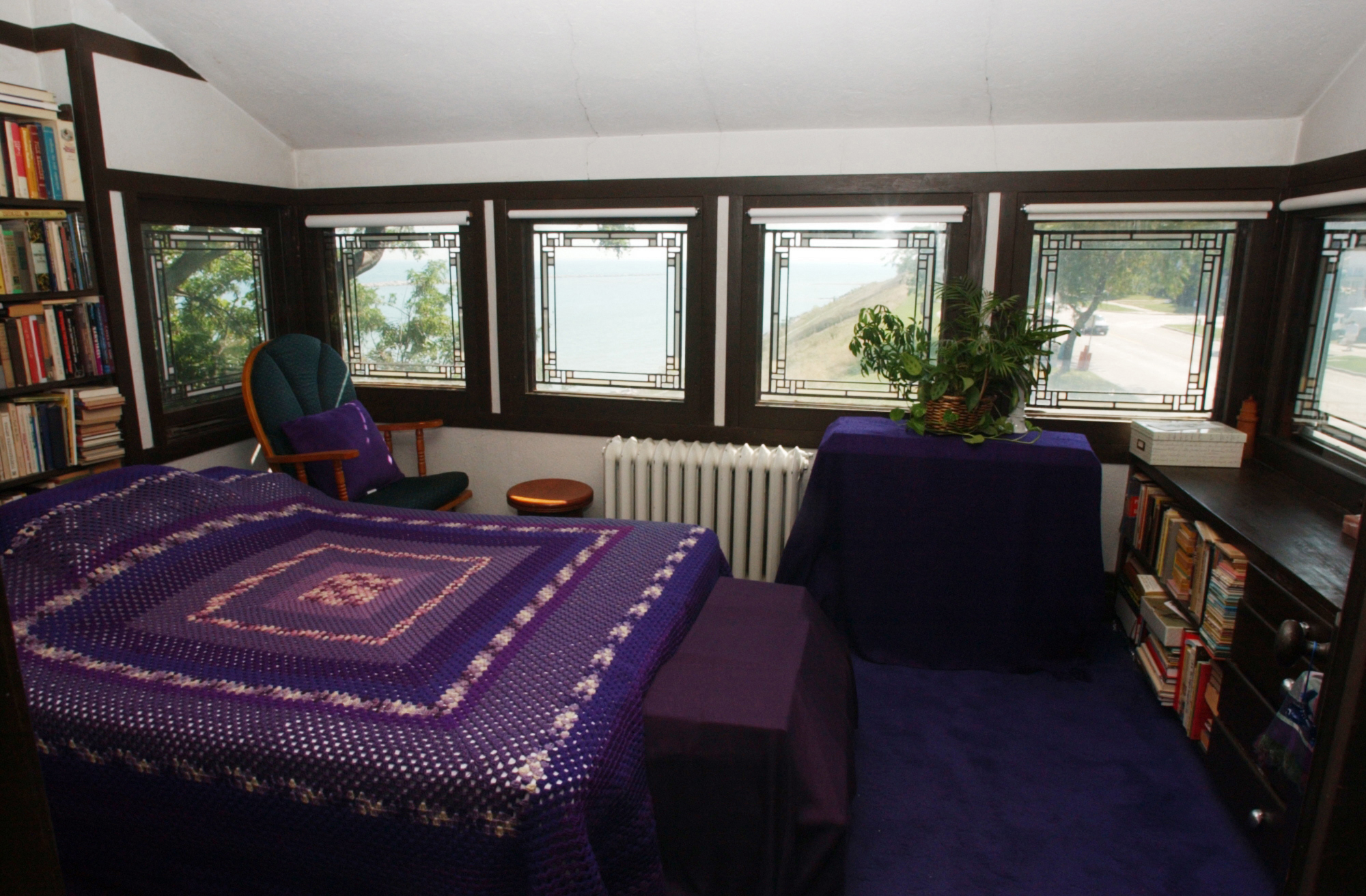
I took these rather pedestrian photos, and then I took one of my favorite photos, the view from her bedroom:
I asked all the stewards of the house, or their descendants, to sign my copy of my Hardy House book. While Margaret had been leery about the book, she told me she was happy I had written it. She wrote: “Nemesises can change into angels. Mark has done that. M.”
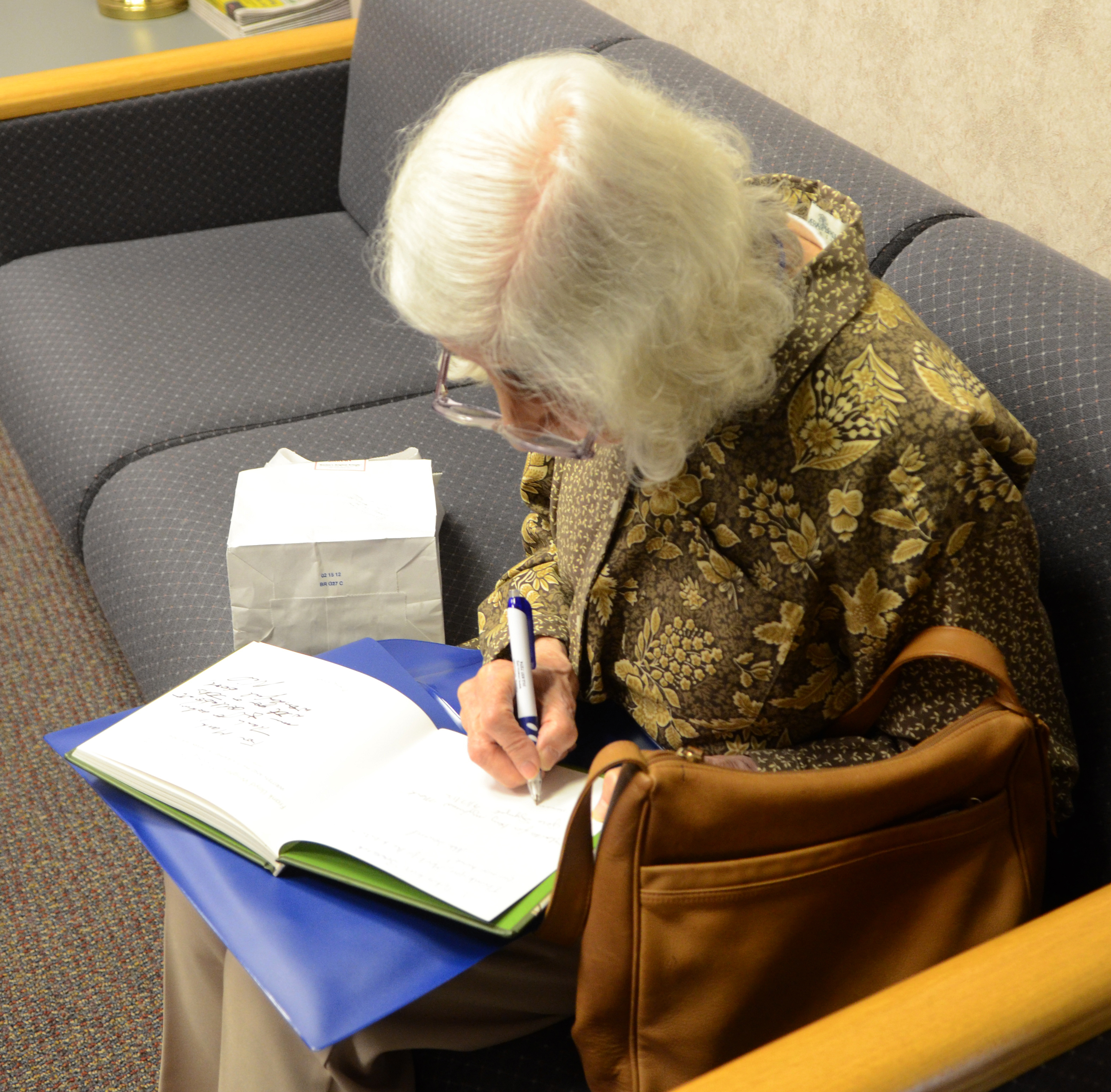
Today Margaret’s niece, Pat Yoghourtjian, told me, “Nemesis? To get a nickname like that is special.” (I had also earlier been honored by Margaret with my own key to the house).
Pat also told me that every Christmas a mysterious plastic ornament appeared on their tree after Jim and Margaret’s visit. Inside was a $20 bill. No one ever saw Margaret pull her Santa trick.
Margaret was Ardie’s older sister. Ardie and his wife, Penny, chuckled today when I told them that Margaret – their Maggie – often told me about taking Ardie on the North Shore interurban train from Racine to Chicago to take him to Cubs baseball games at Wrigley Field.
Joan Szymczak, Gene’s sister-in-law, remembered Margaret fondly as a lover of nice clothes. Margaret and Jim went to Siena, Italy in the 1960s, so Jim could study with Segovia. She brought many new clothes home with her. In 2012, Margaret donated many of her clothes to a vintage clothing shop owned by Ginny Hintz, the mother of Joan’s future son-in-law. Ginny and Joan took Margaret out to lunch and they stopped at the shop on their way home. Ginny told her to pick out anything she wanted and take it with her. “She is going through all the lovely items Ginny had redone, from the 50s, and what does she come up with, but her own coat that she had donated! There was consistency, she had impeccable taste that never went away.”
She also had a smile that never went away. Rest in peace, dear Margaret.
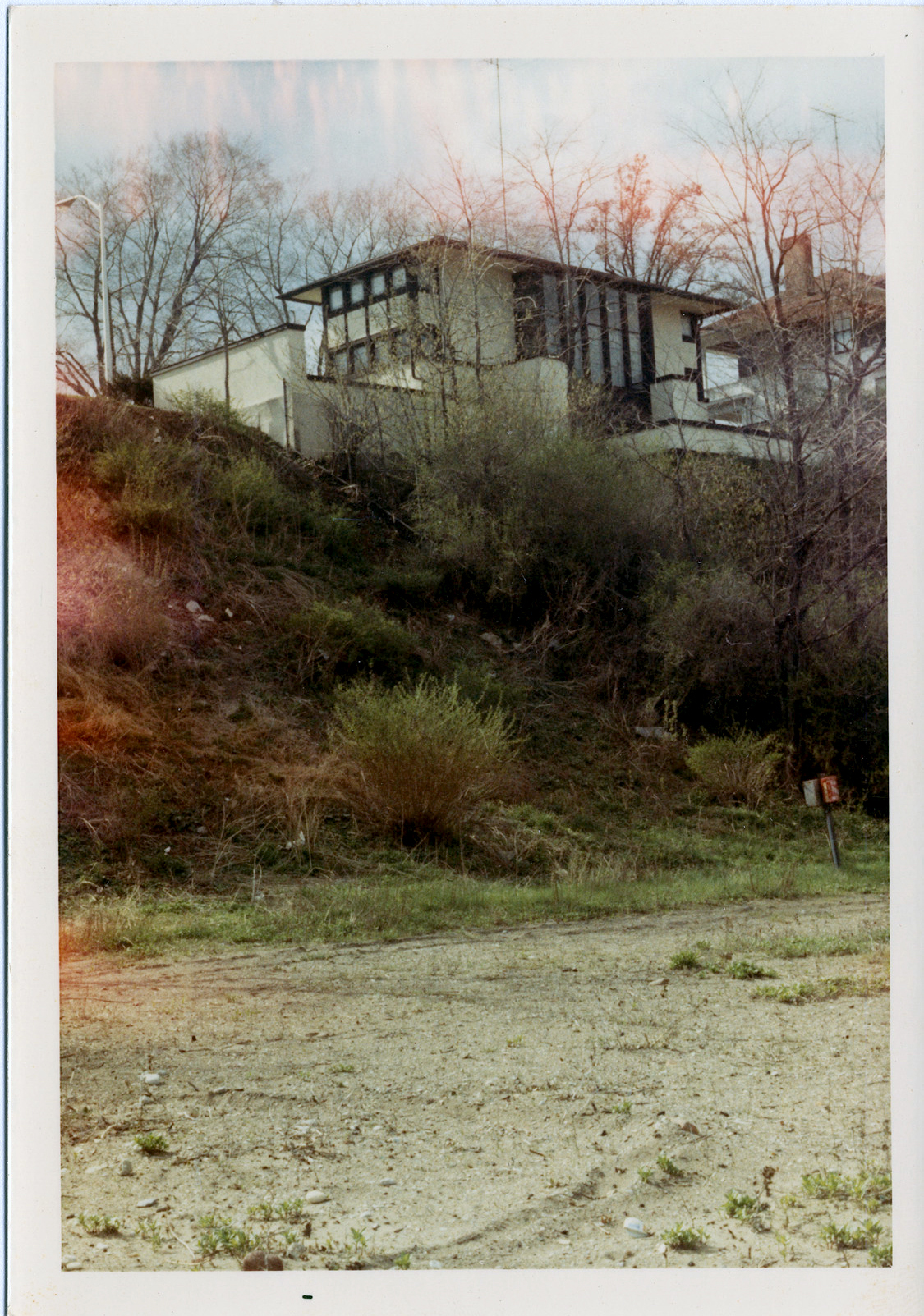
I leave you with two photos that Margaret took of the house in 1968: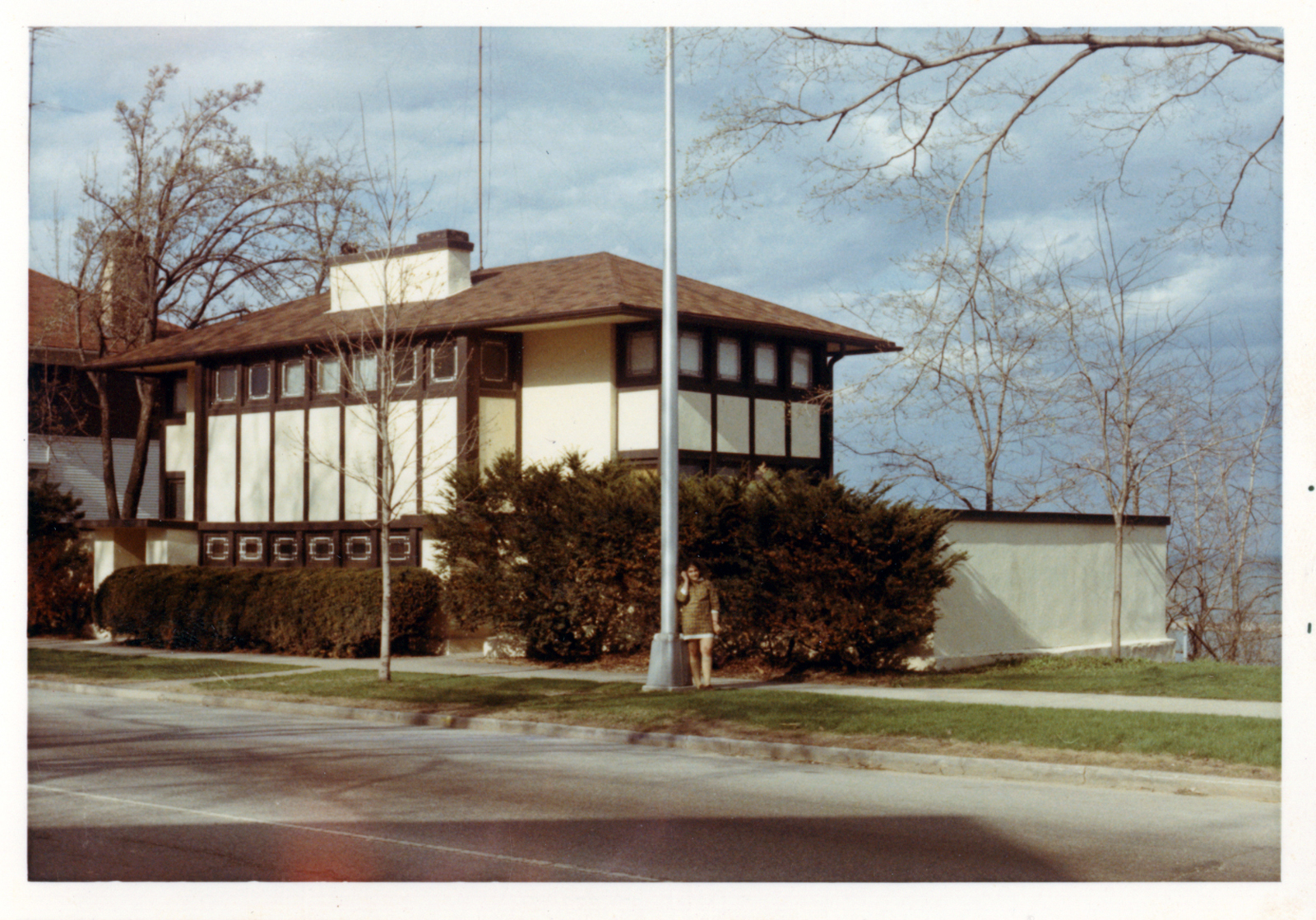
***
Gene Szymczak contacted me in 2012 when he gathered that the house was for sale (I was helping the Yoghourtjians sell the house, and we did not want to put a For Sale sign up in front of the house). While the late John G. Thorpe of the Frank Lloyd Wright Building Conservancy sagely advised me to step aside and let professionals take over, I wanted Gene and the Yoghourtjians to meet at Jim and Margaret’s new apartment. I suggested that Gene bring Margaret some marzipan from Larsen’s. He did. He also brought a copy of a Japanese print that was reminiscent of Marion Mahony’s famous view of the lake elevation of the Hardy House from below. We were having lemonade and cashews in the Yoghourtjian’s living room when Gene turned to them and made an offer for the house. There was no need for professionals. The house had passed from one loving steward to another.
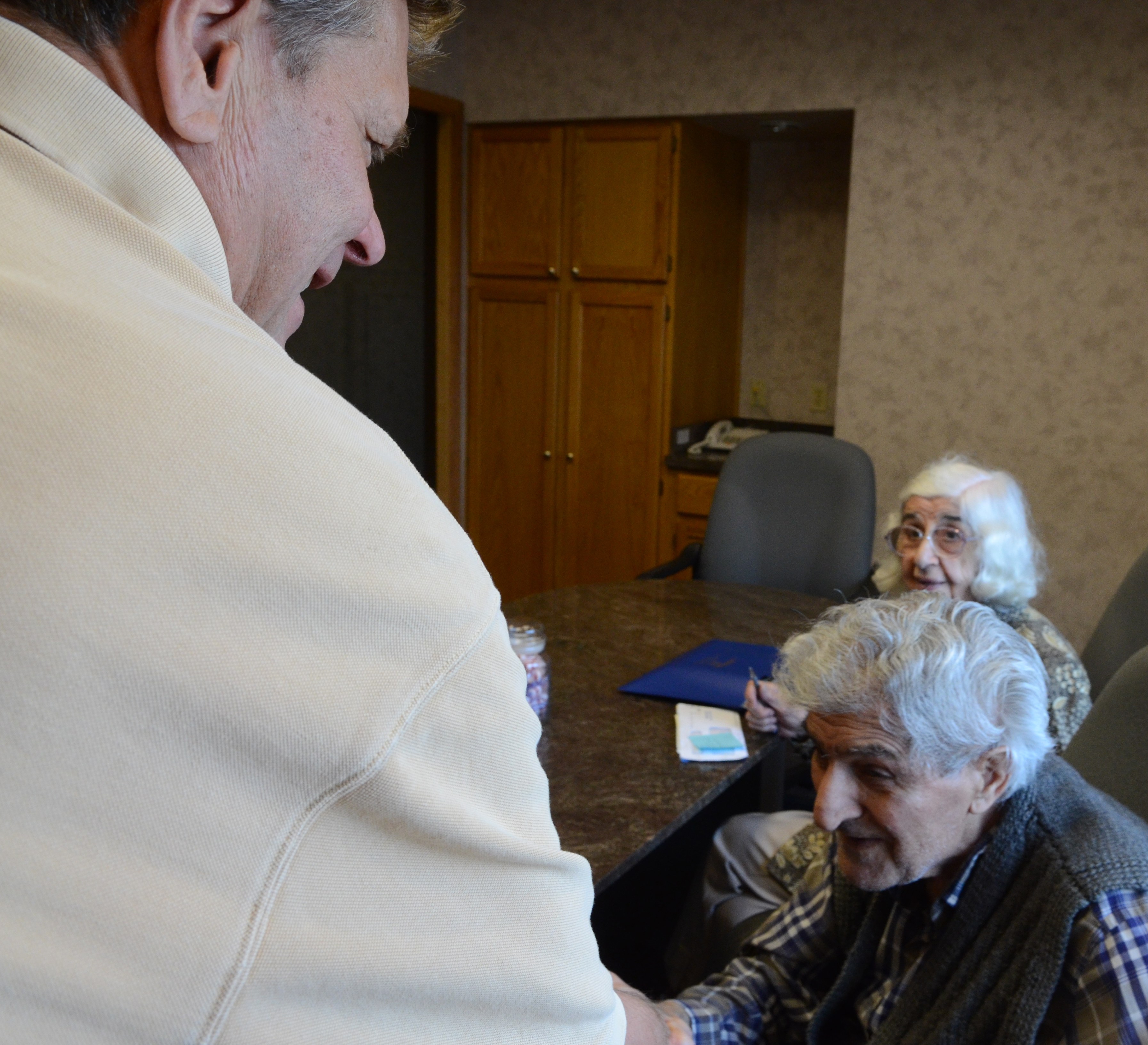

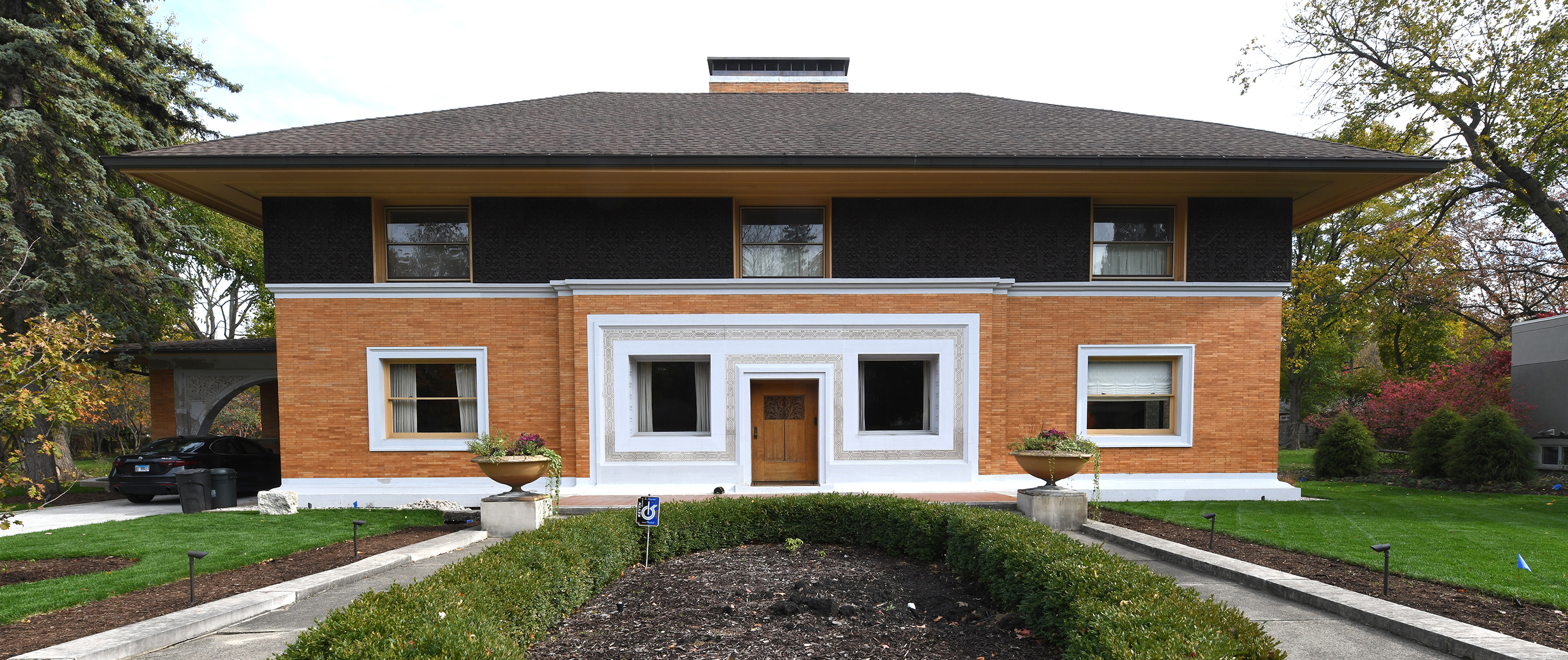
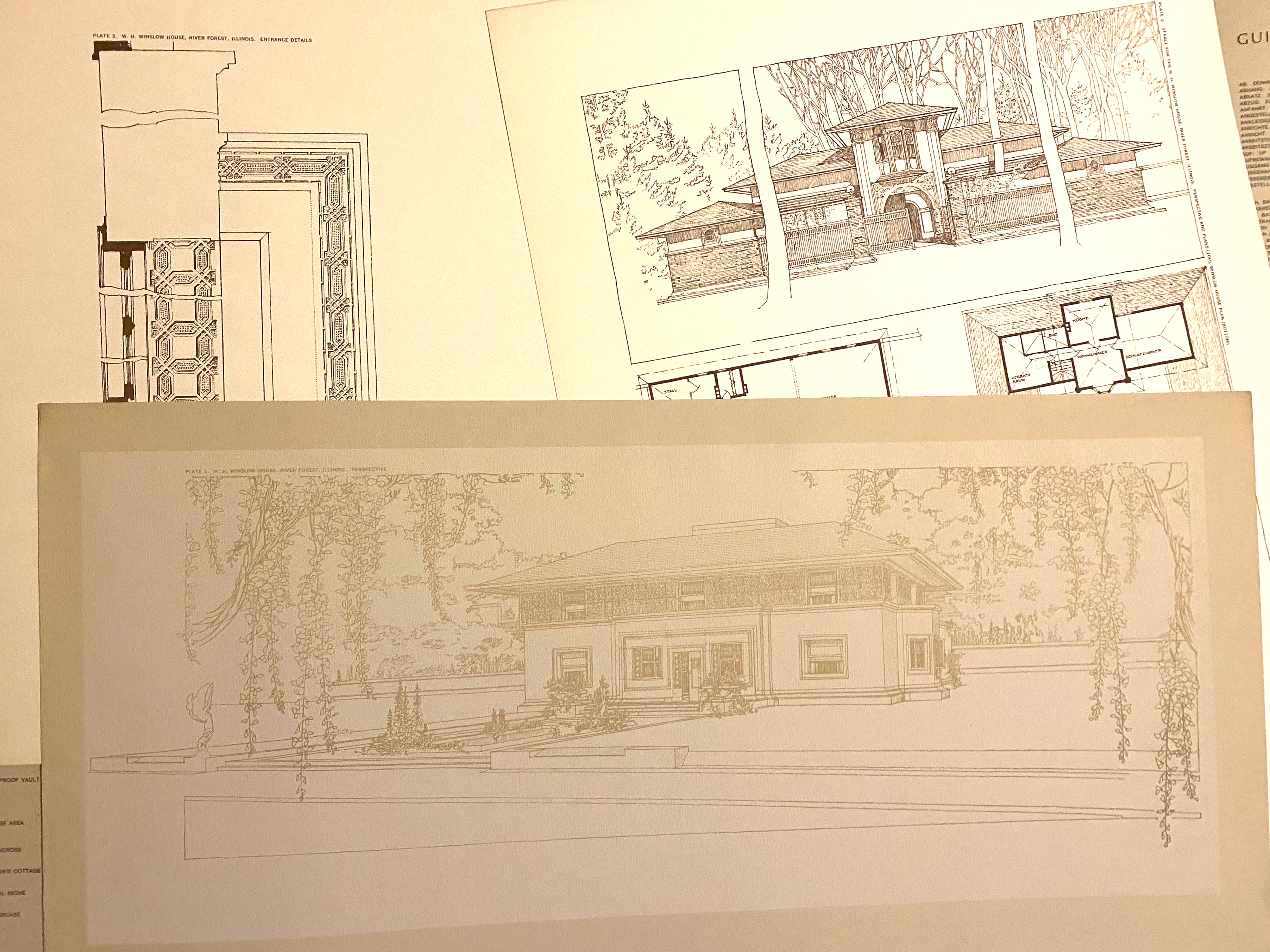
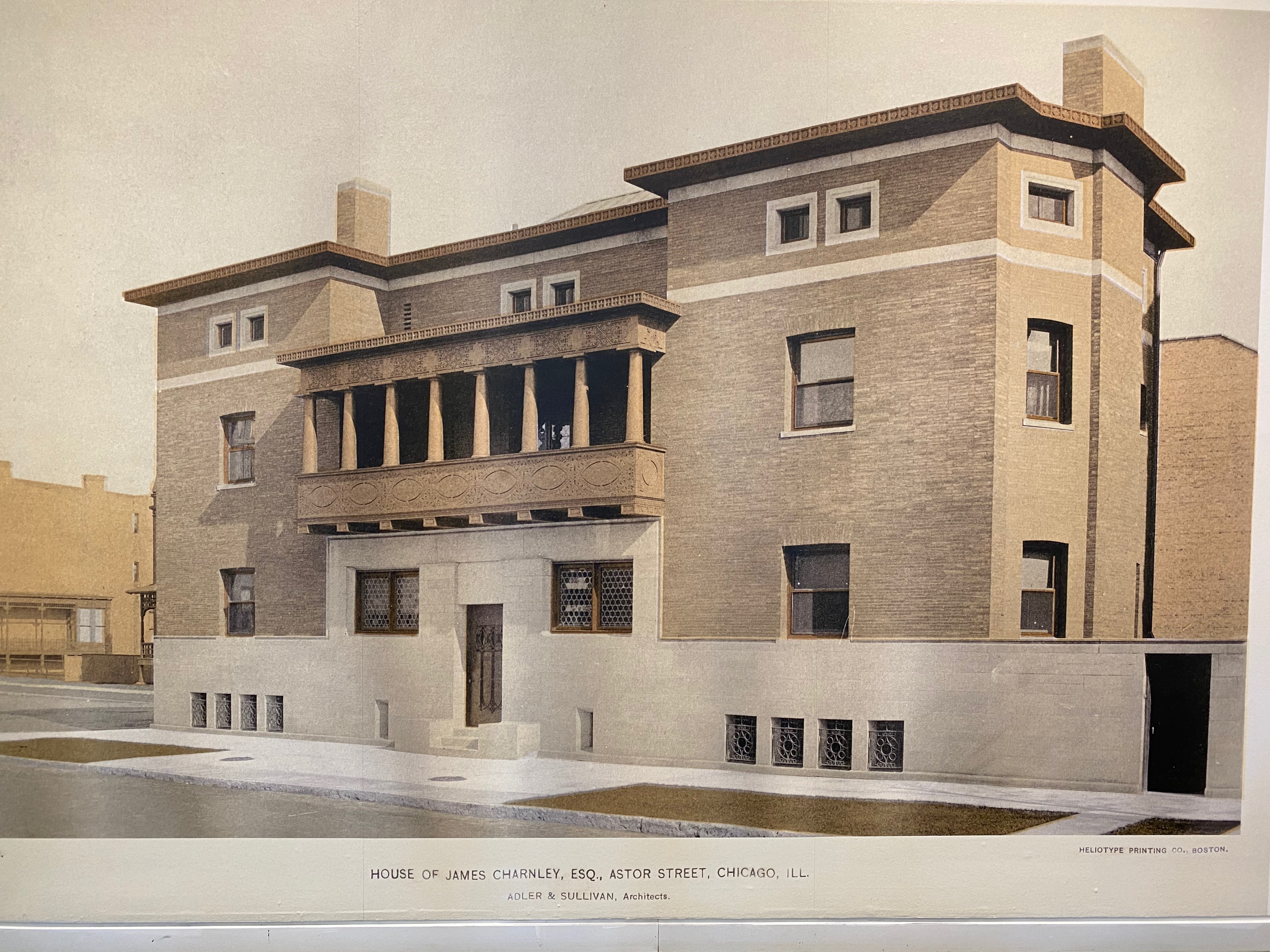
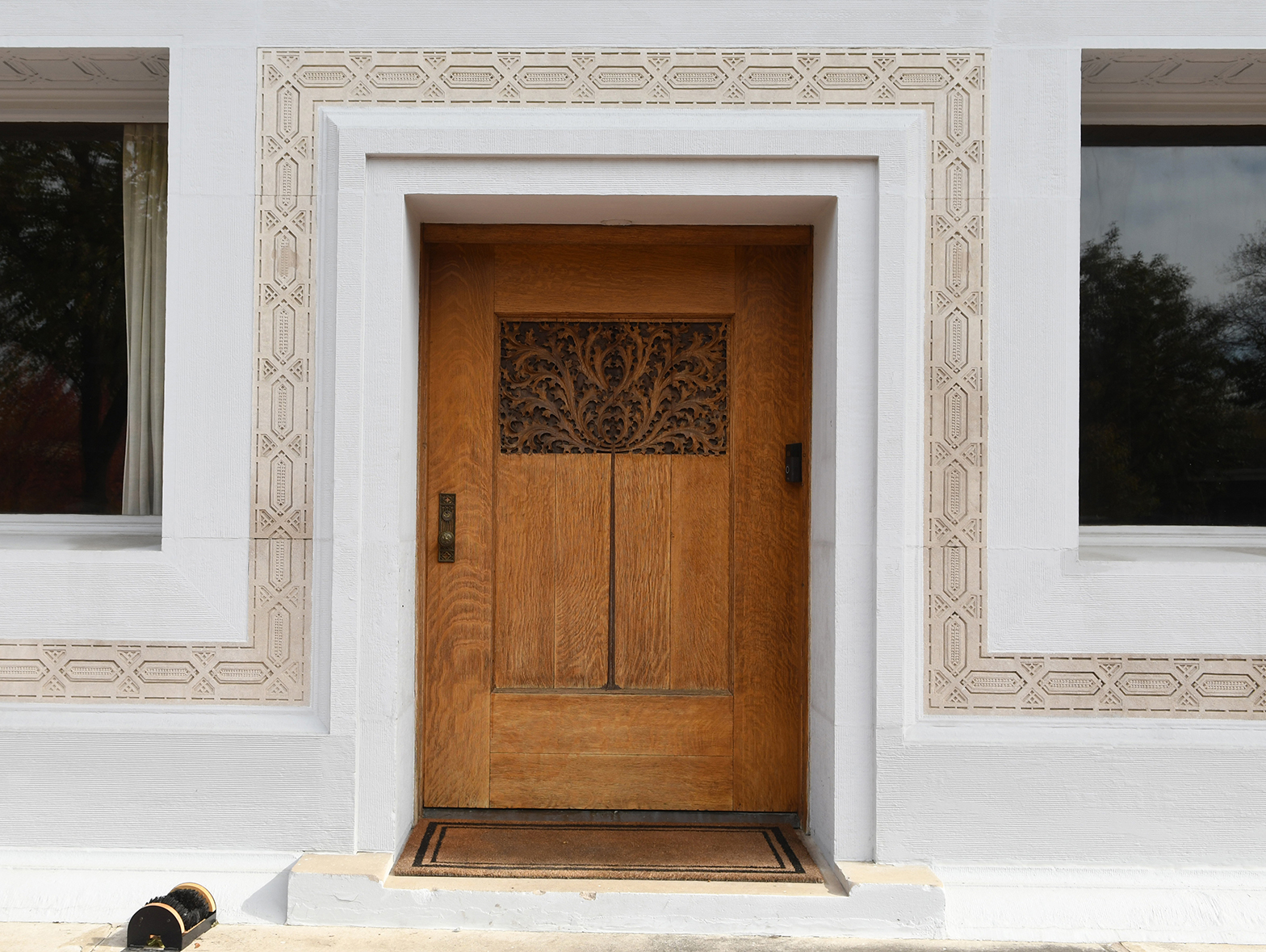

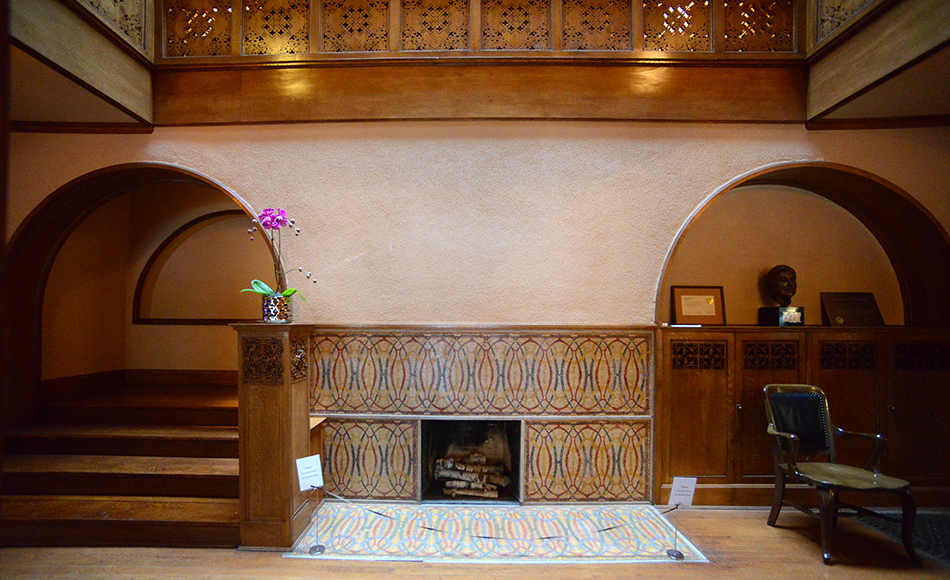
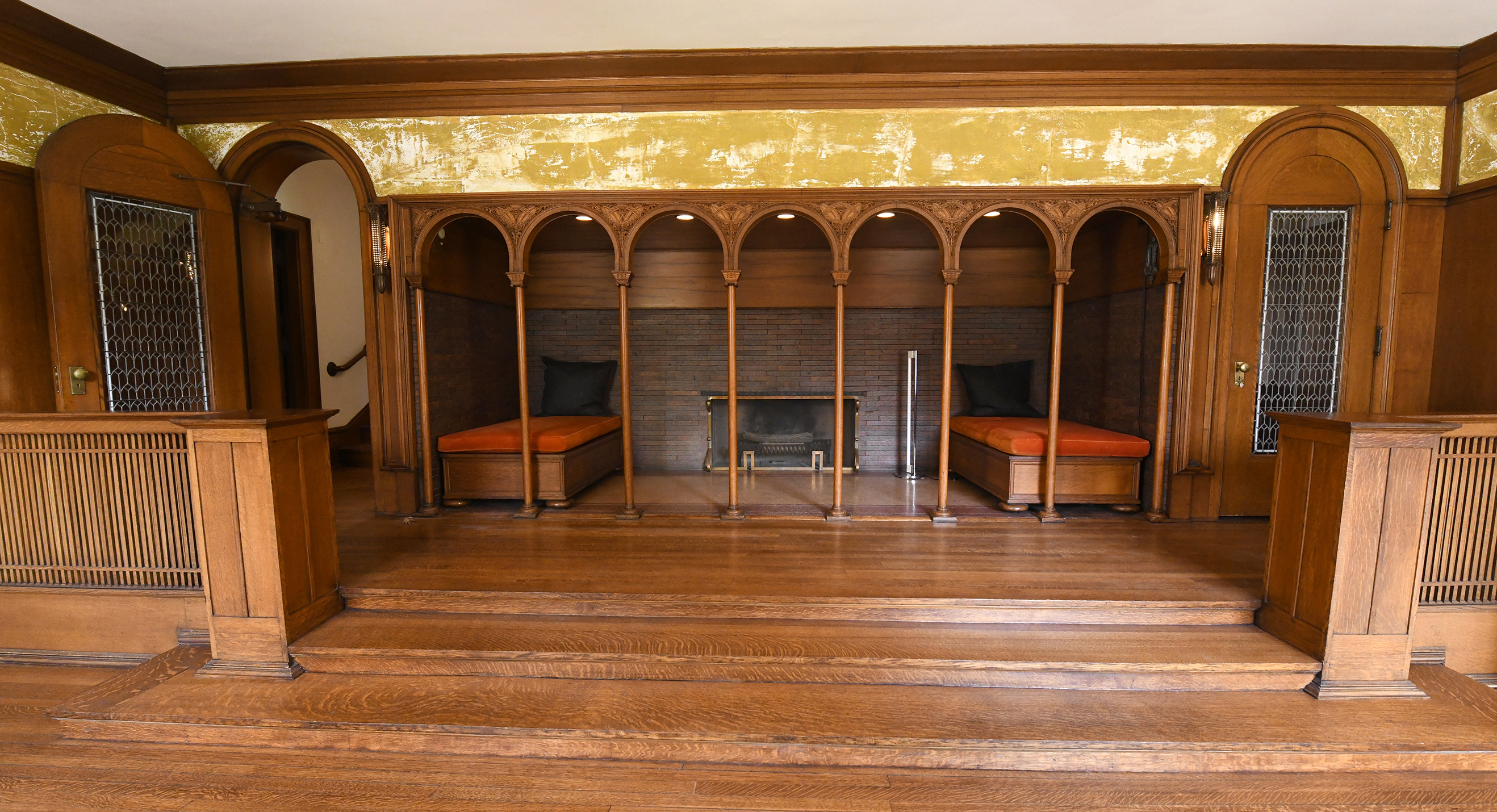
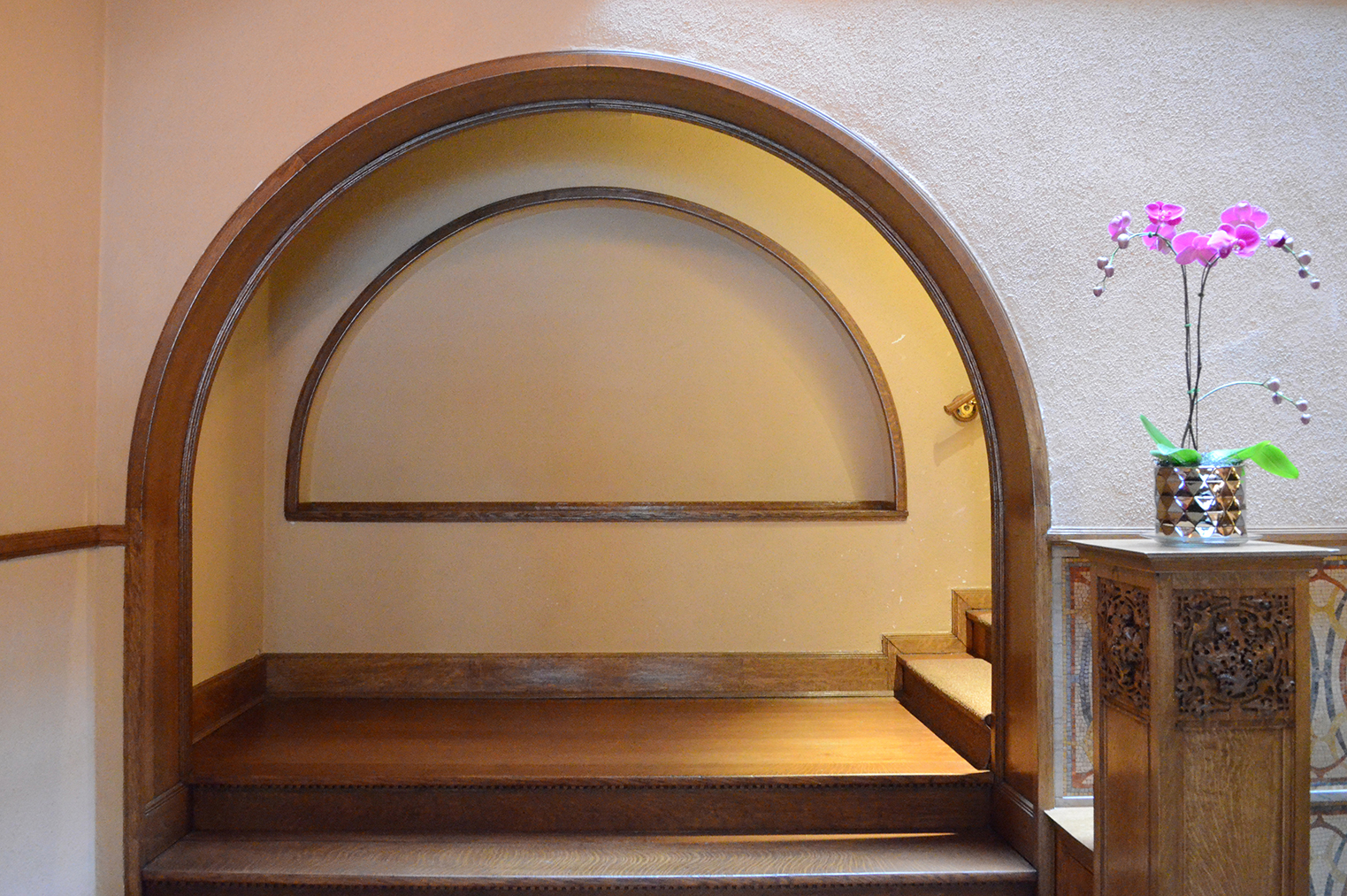
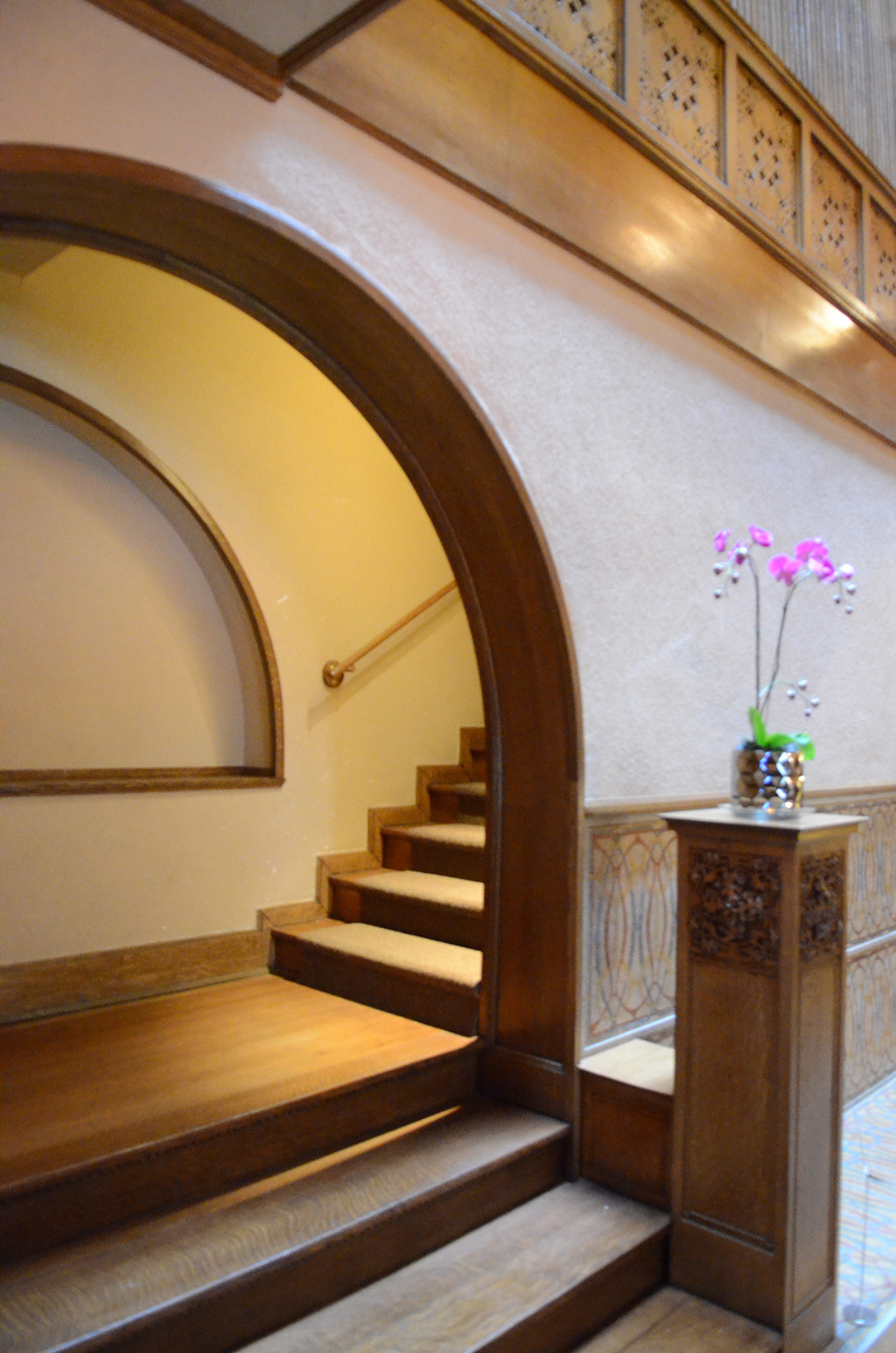
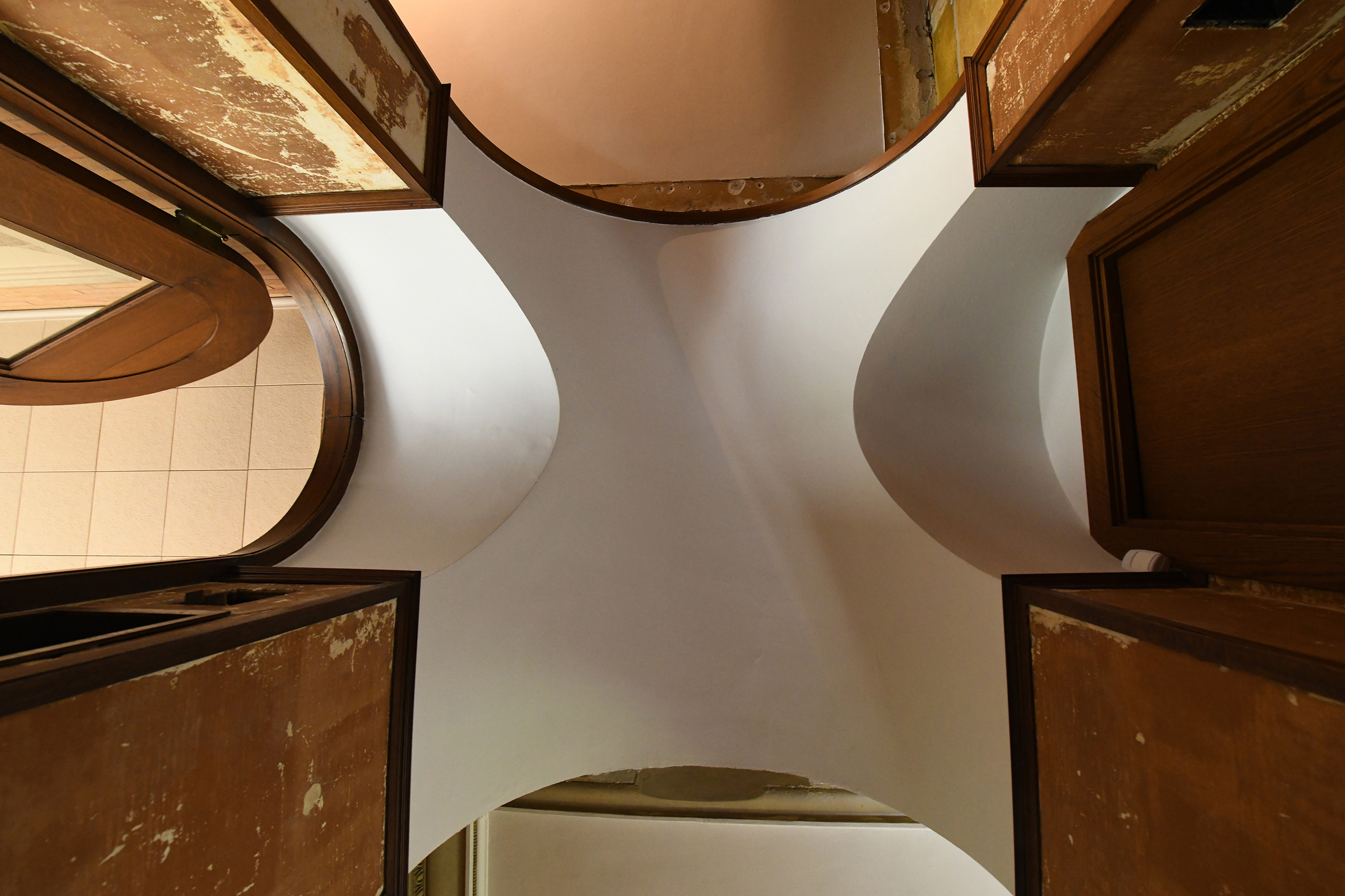
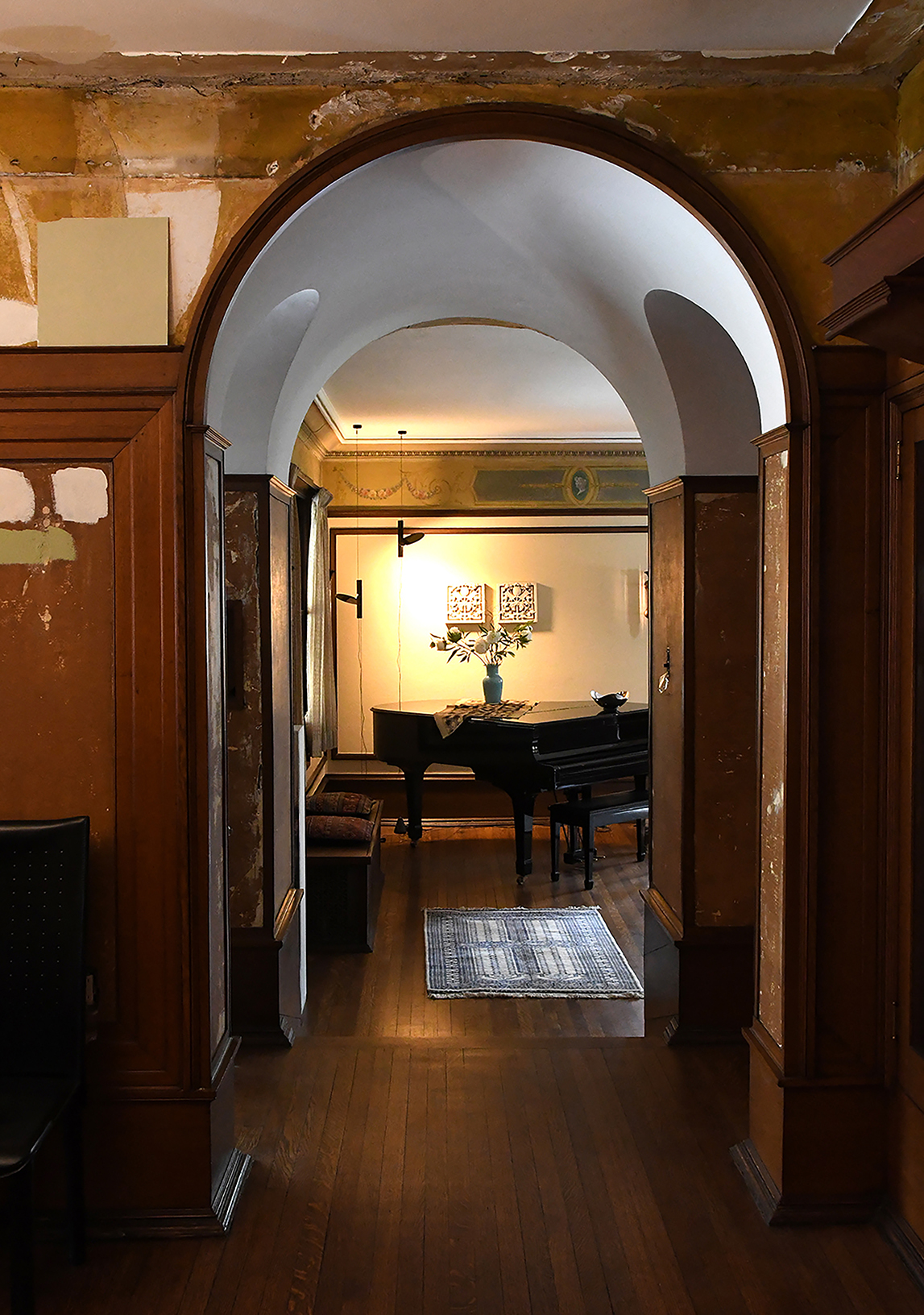
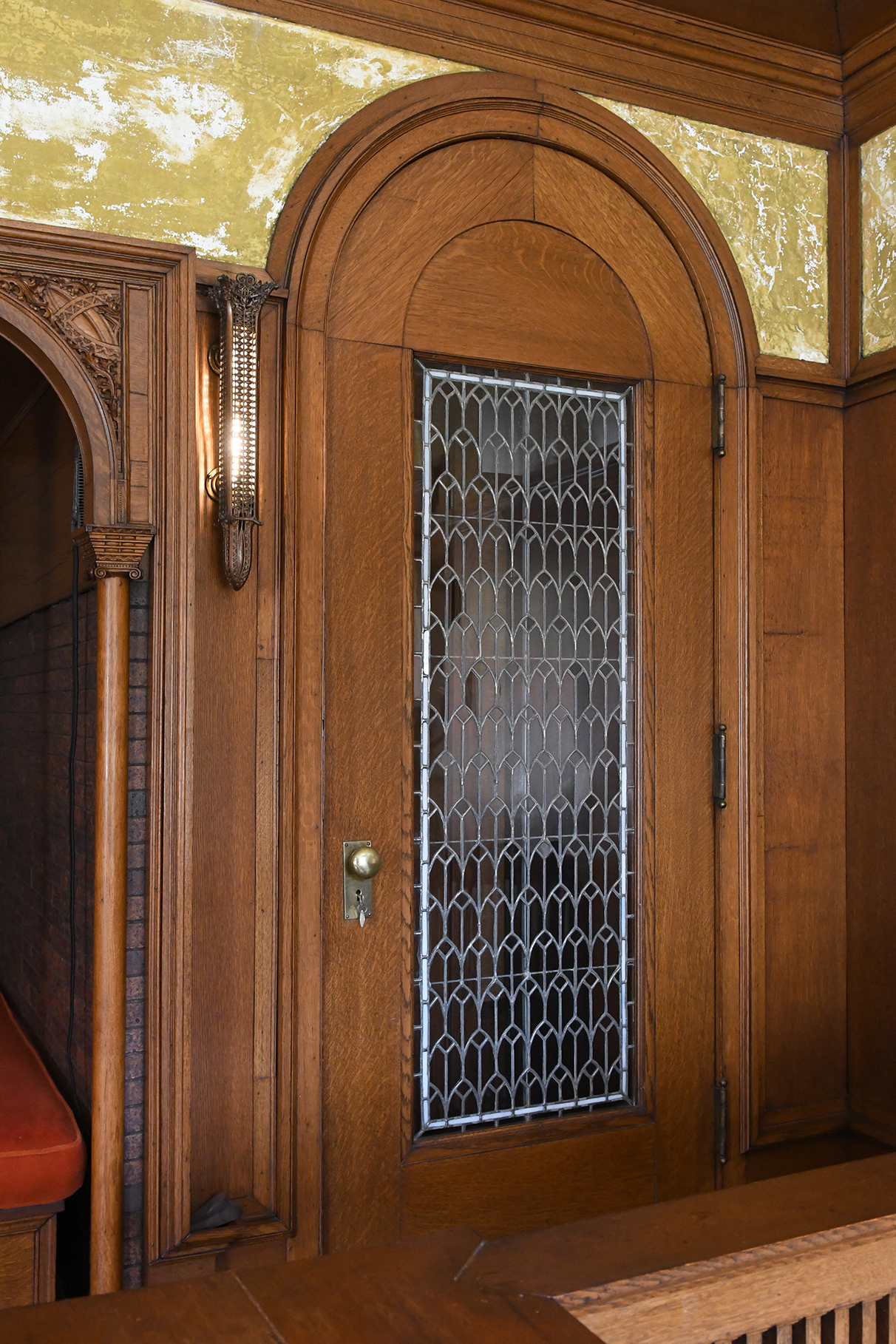
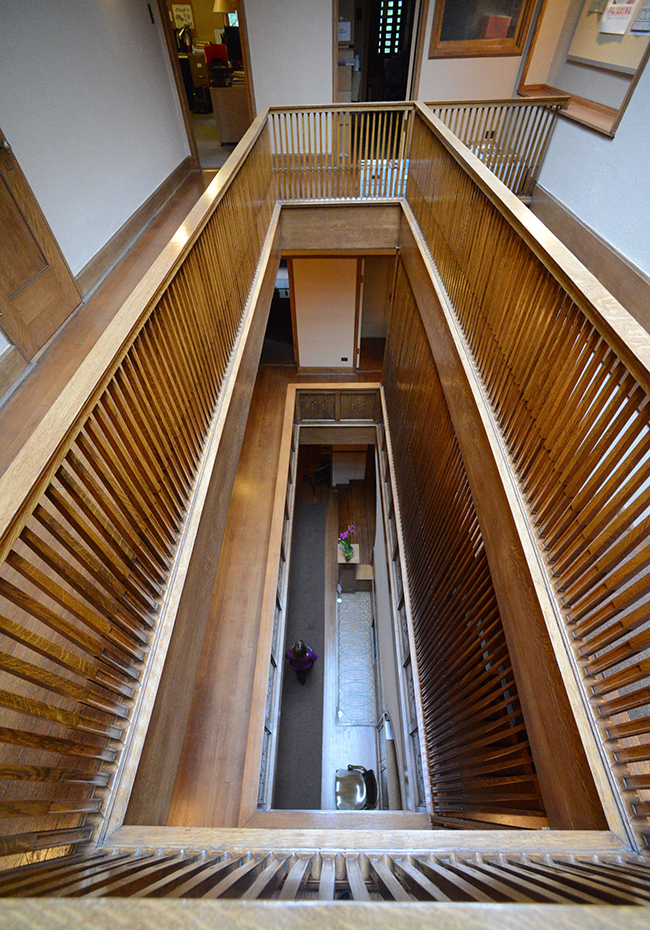
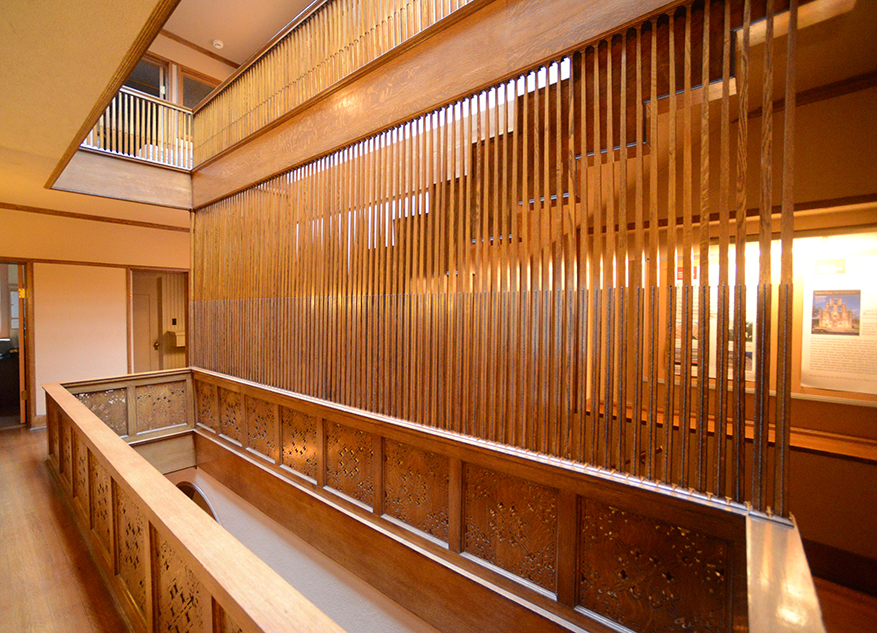

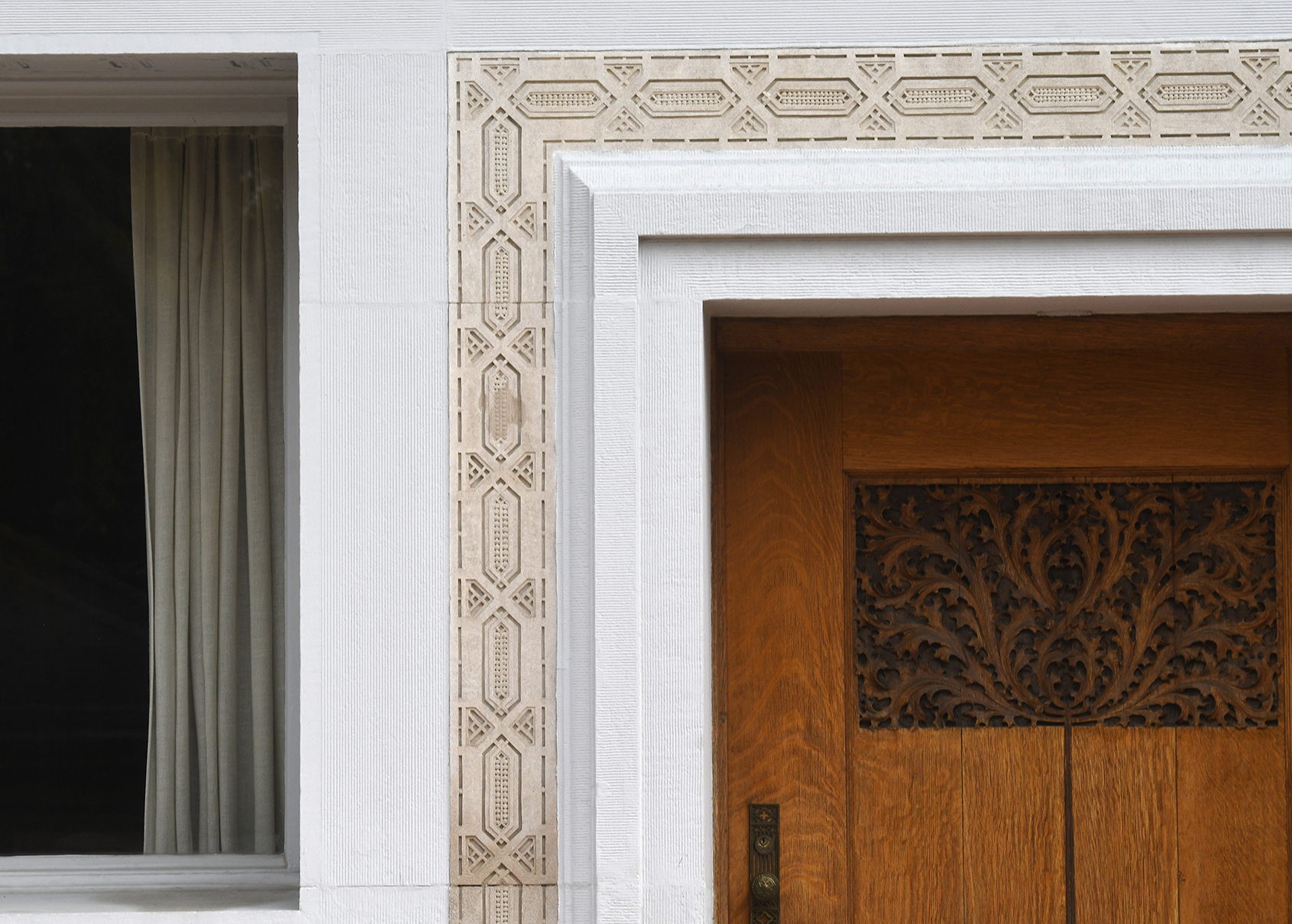
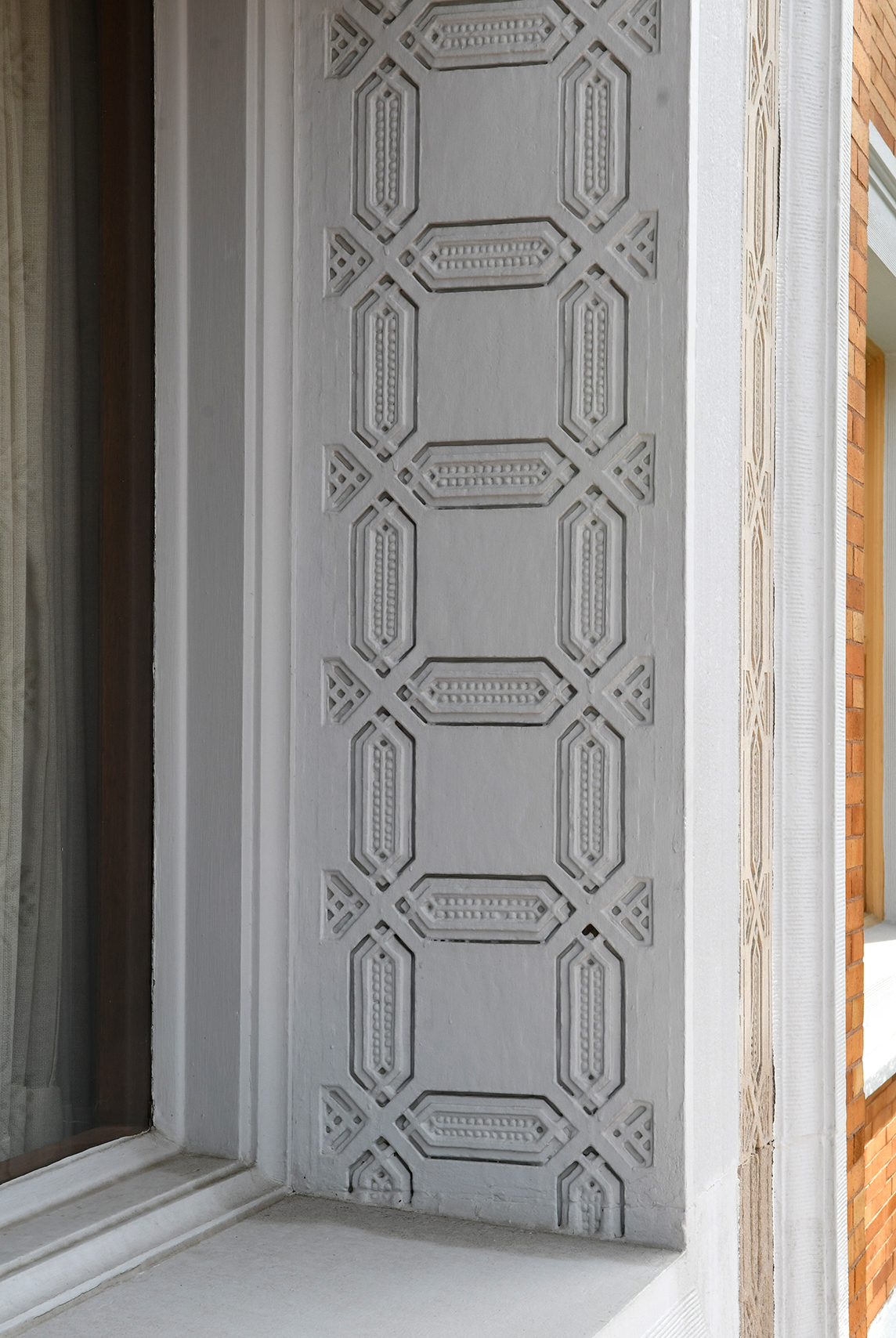
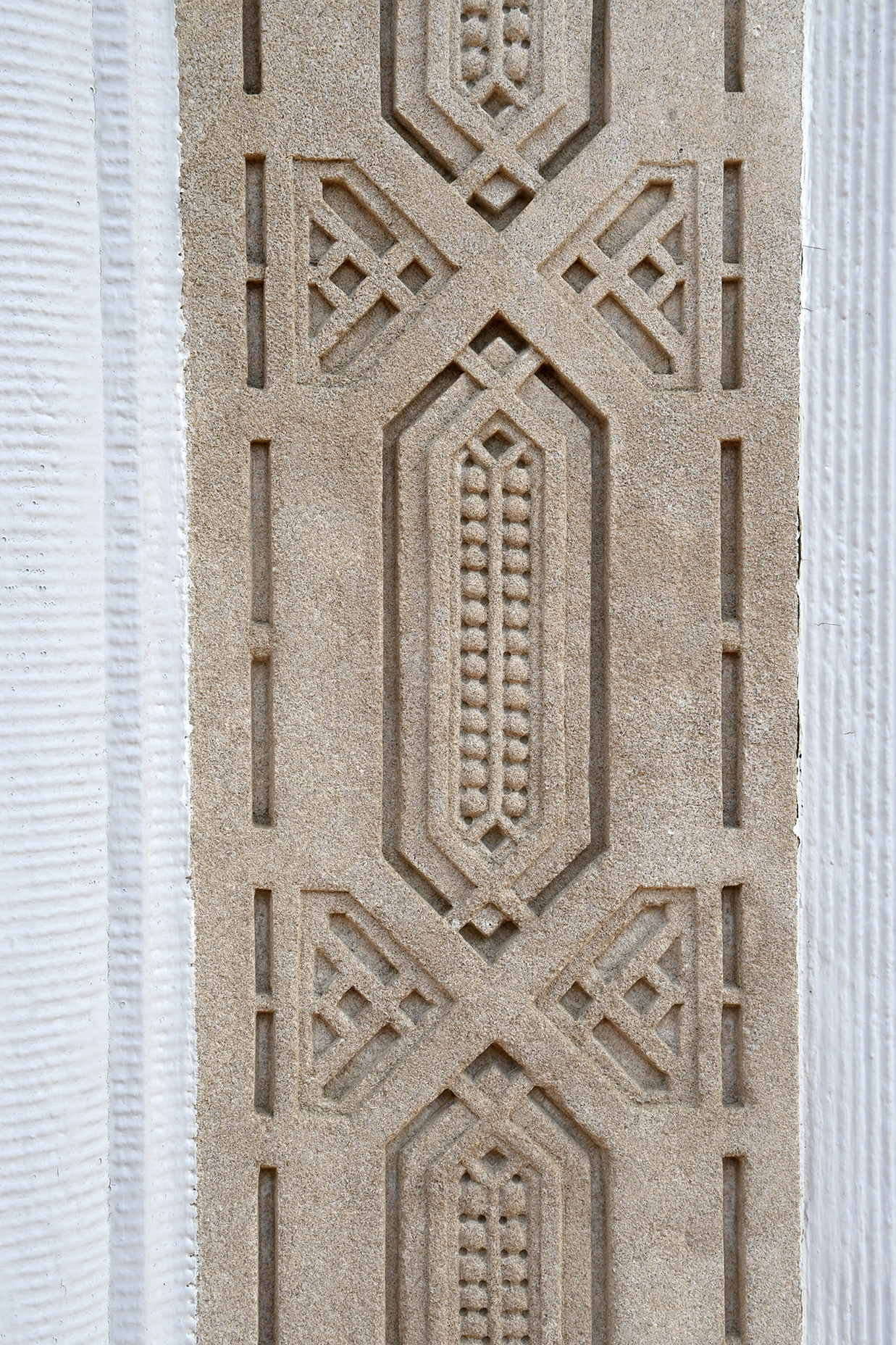

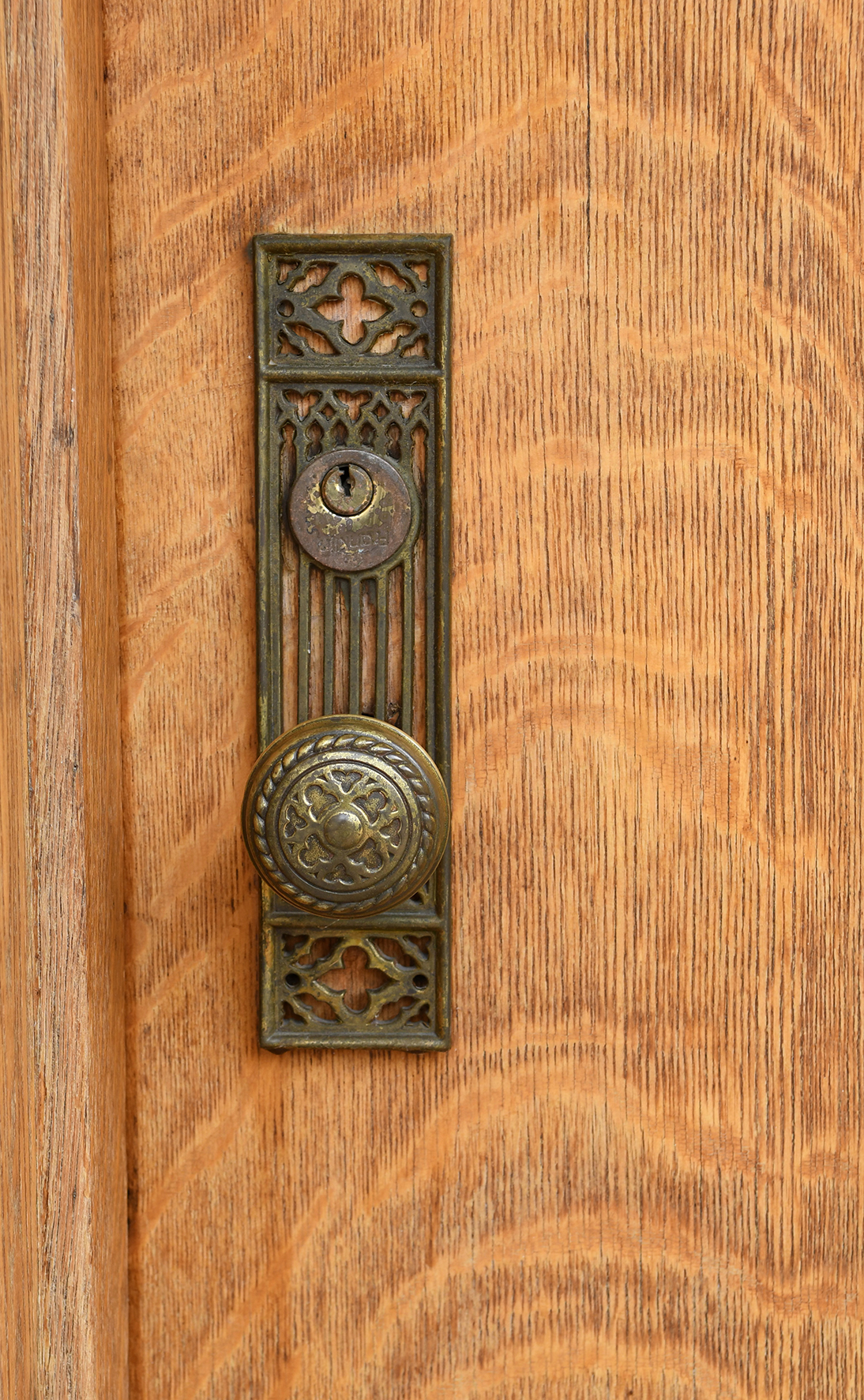
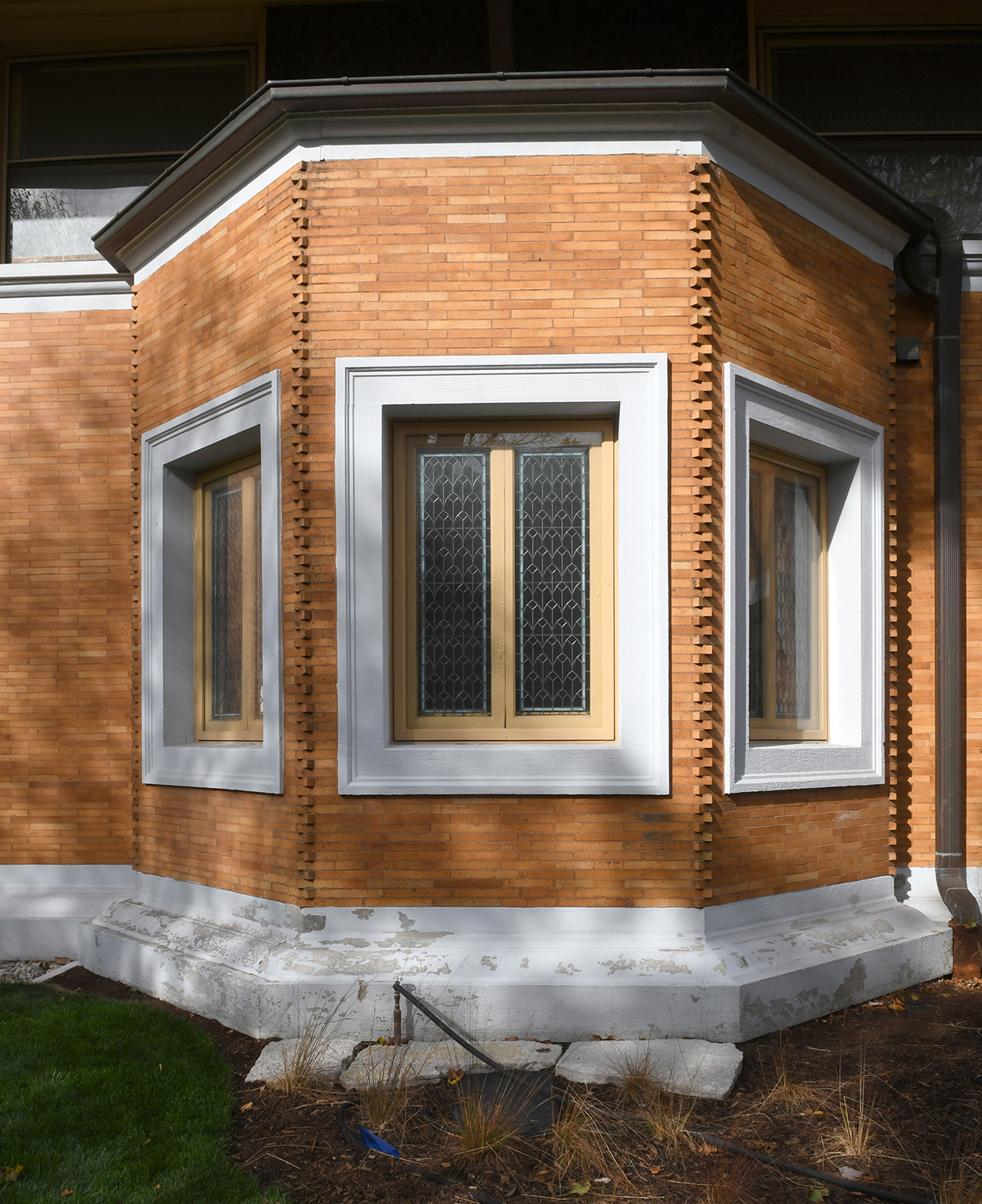
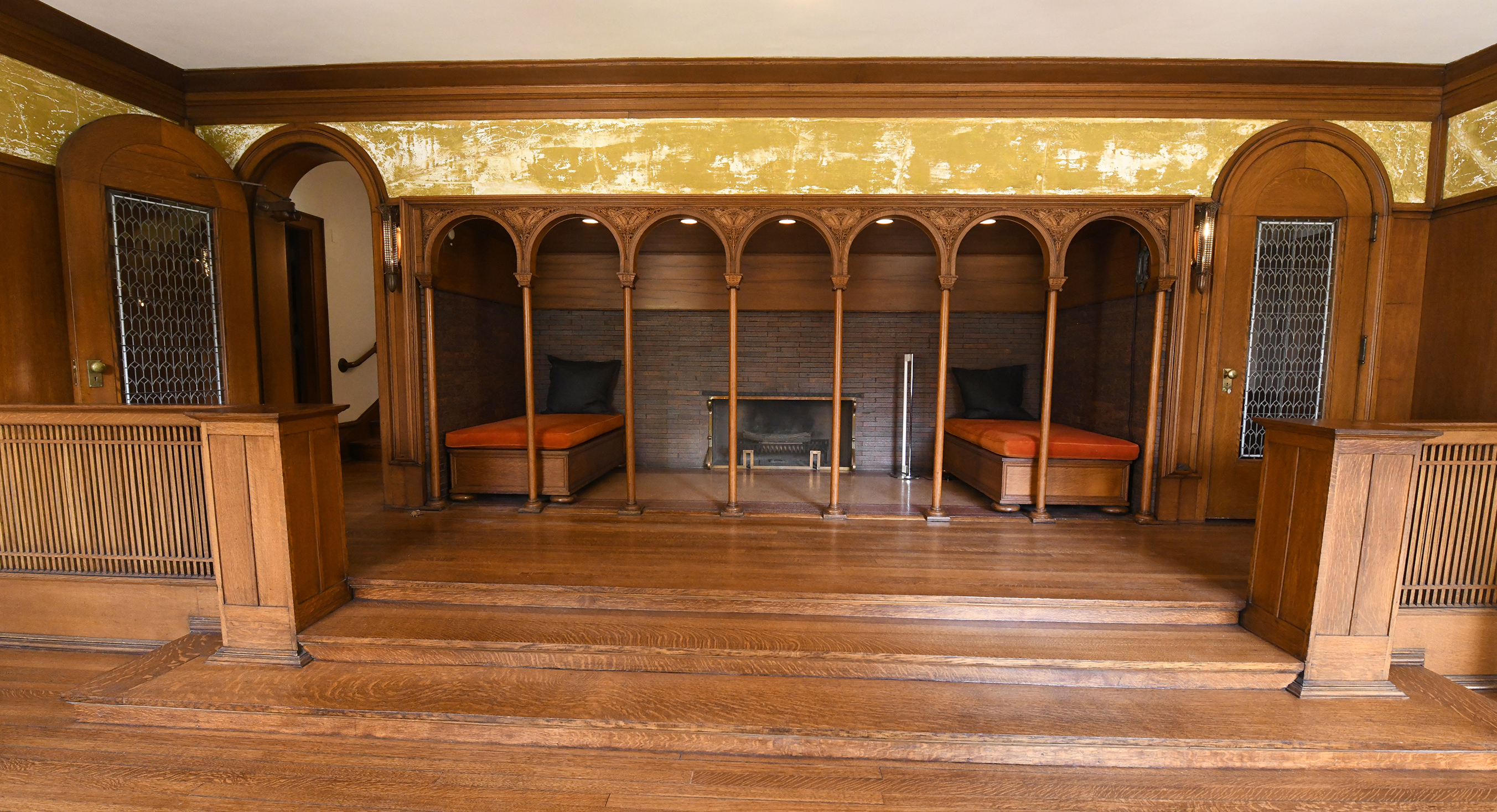

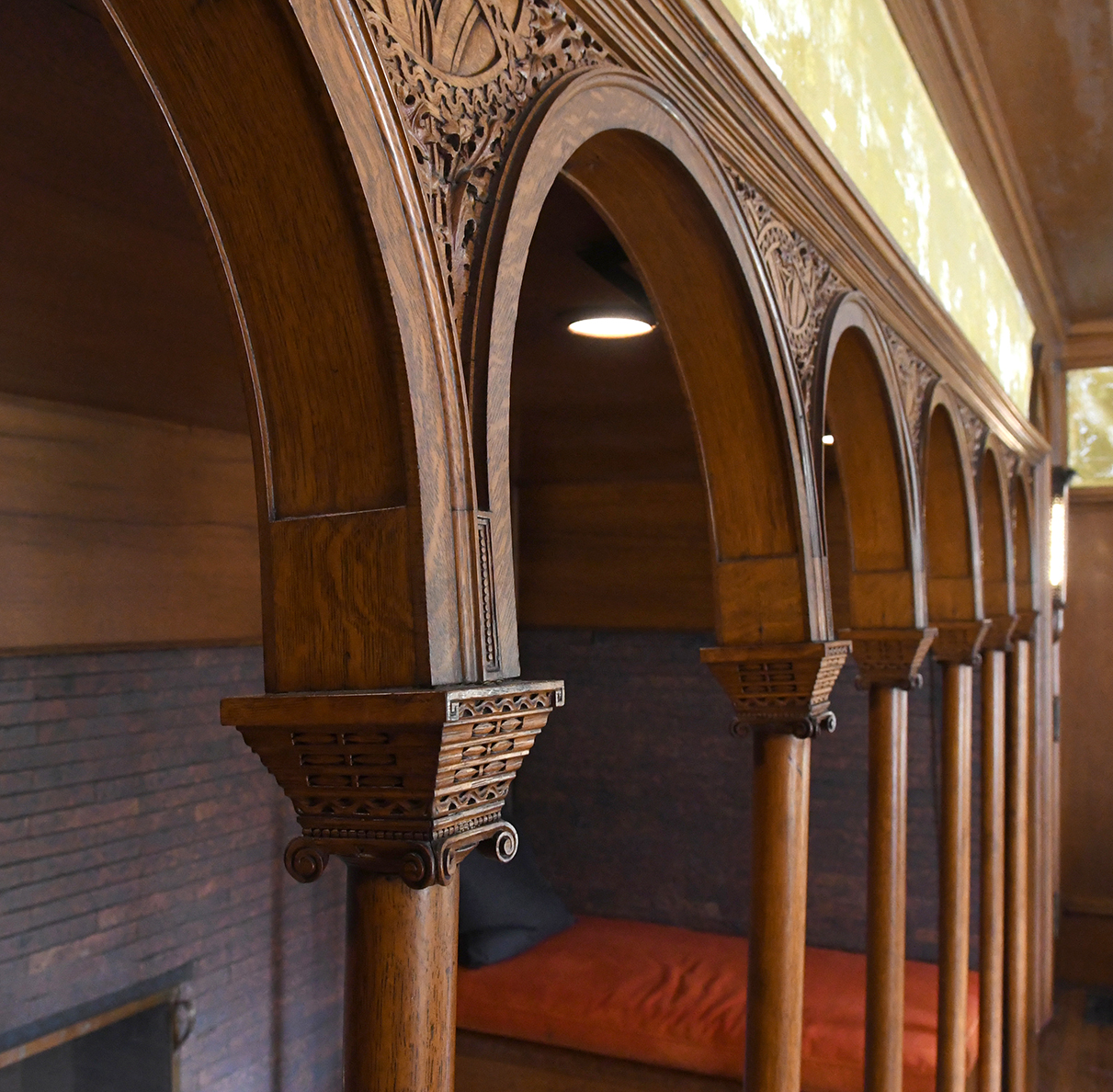
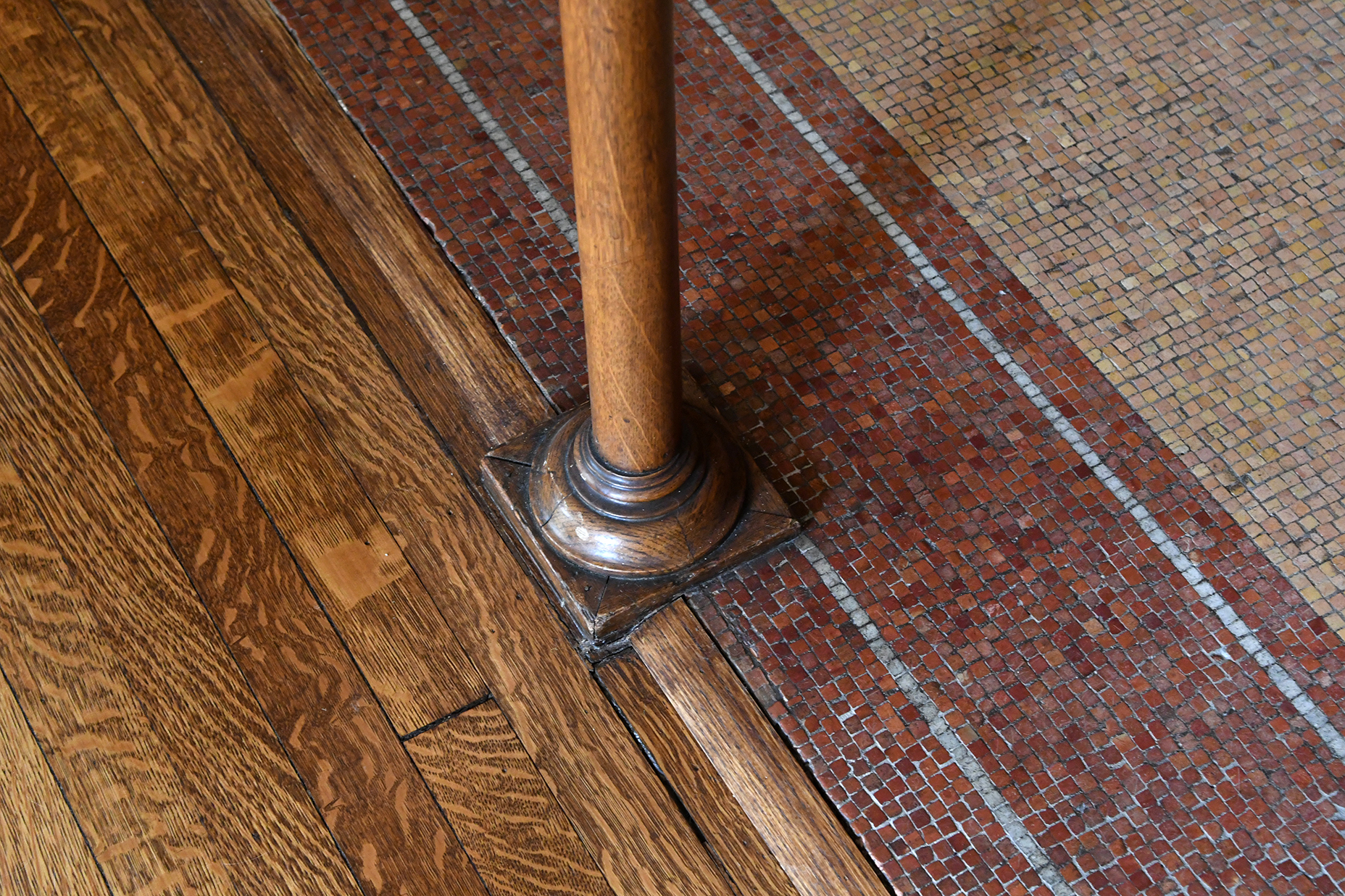 This original thermometer (Winslow was a metal fabricator) still works: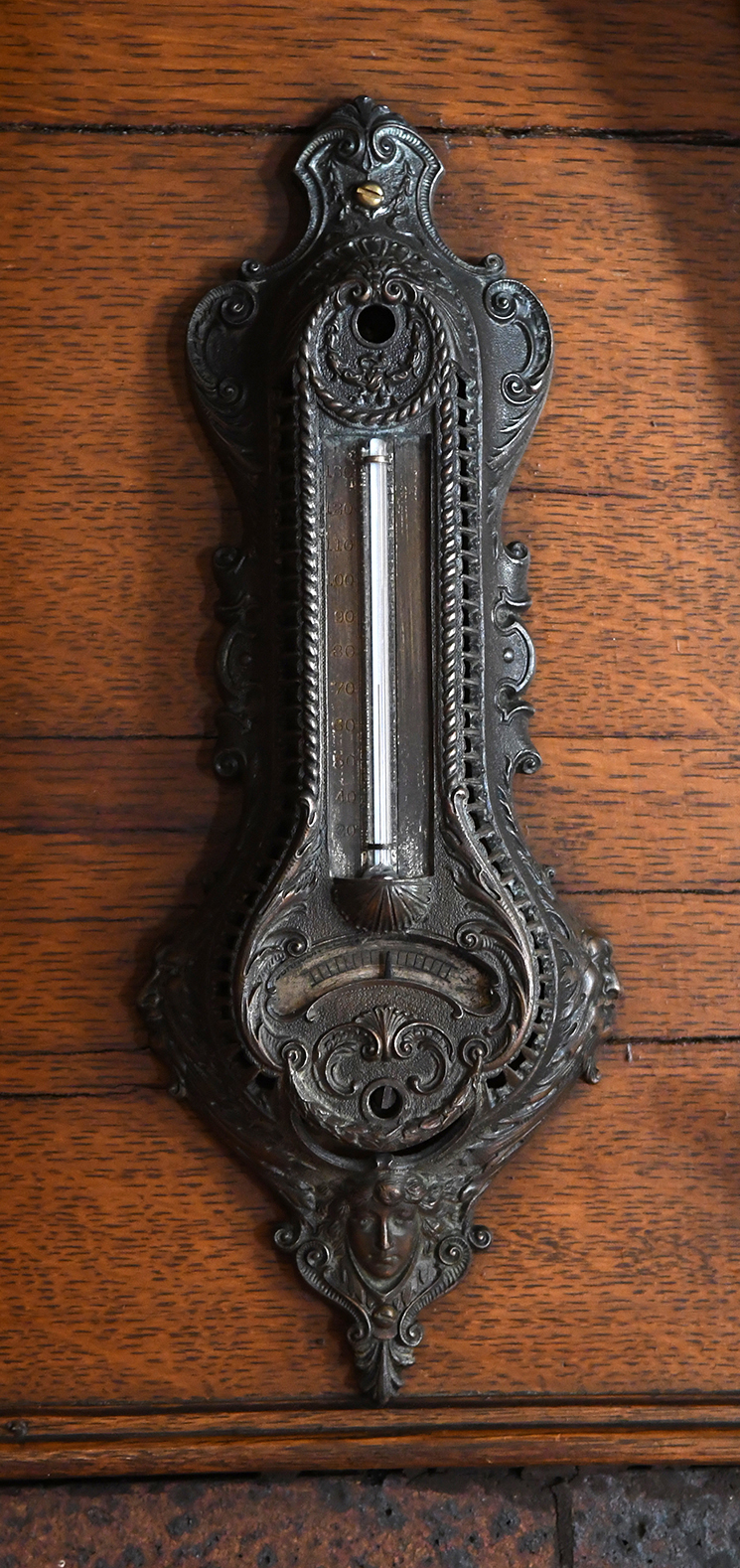


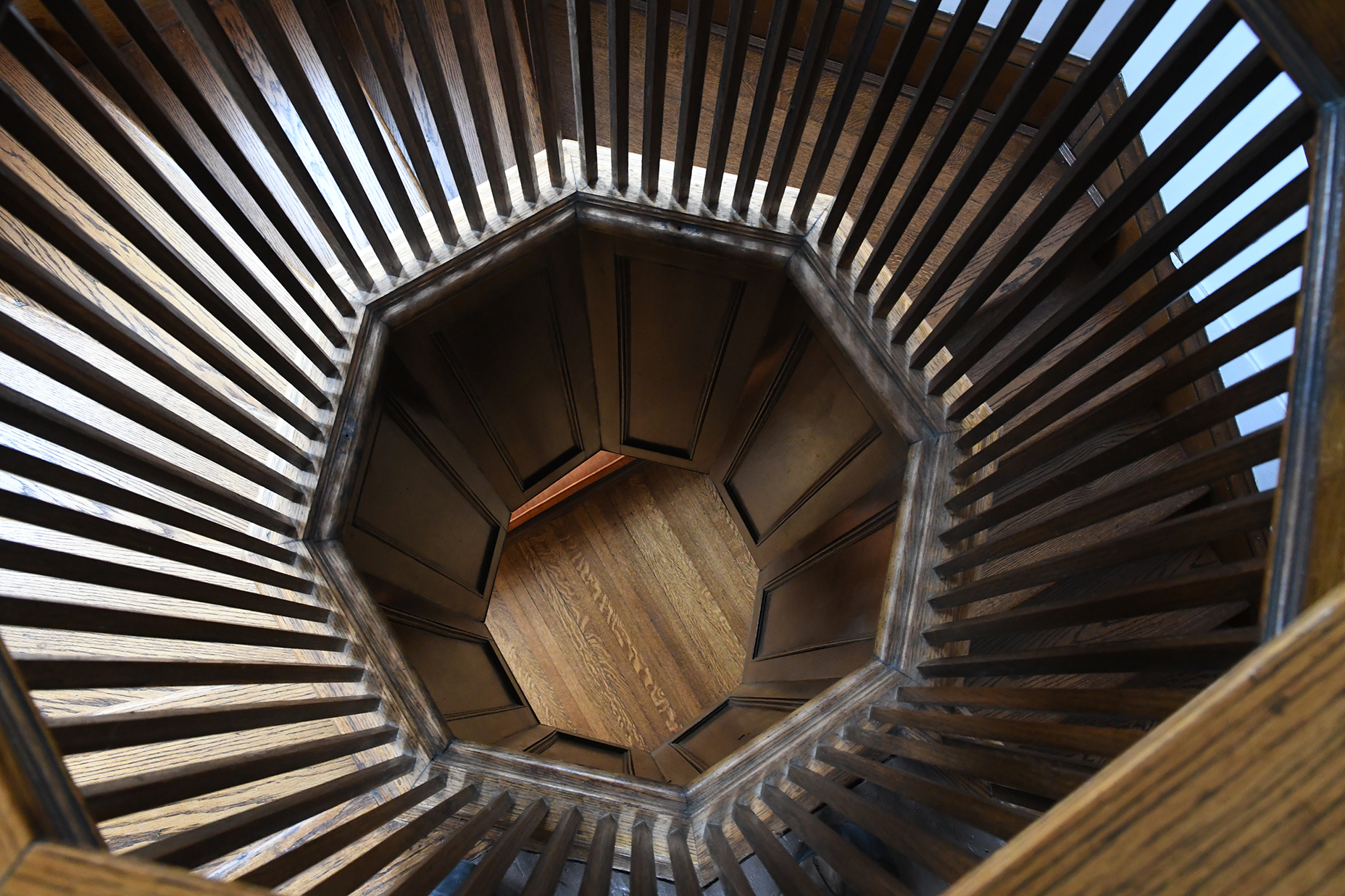

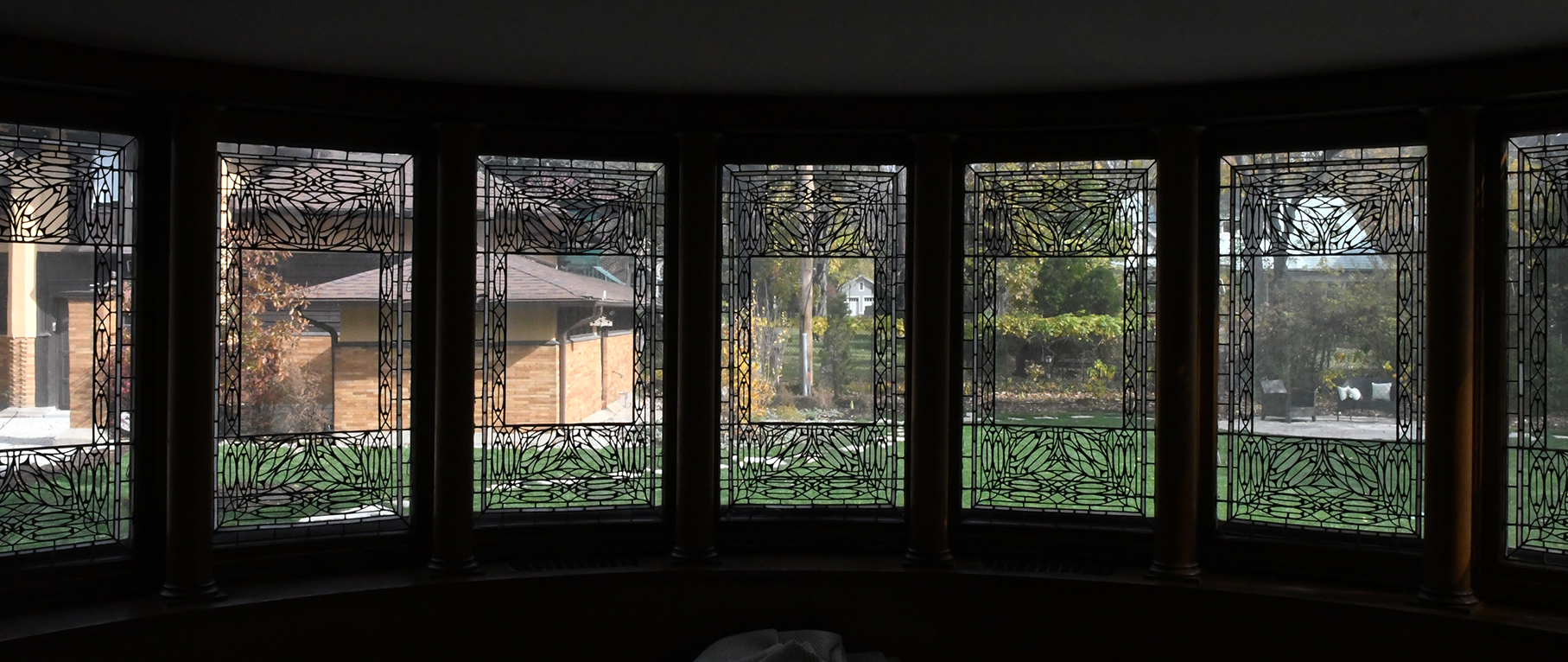

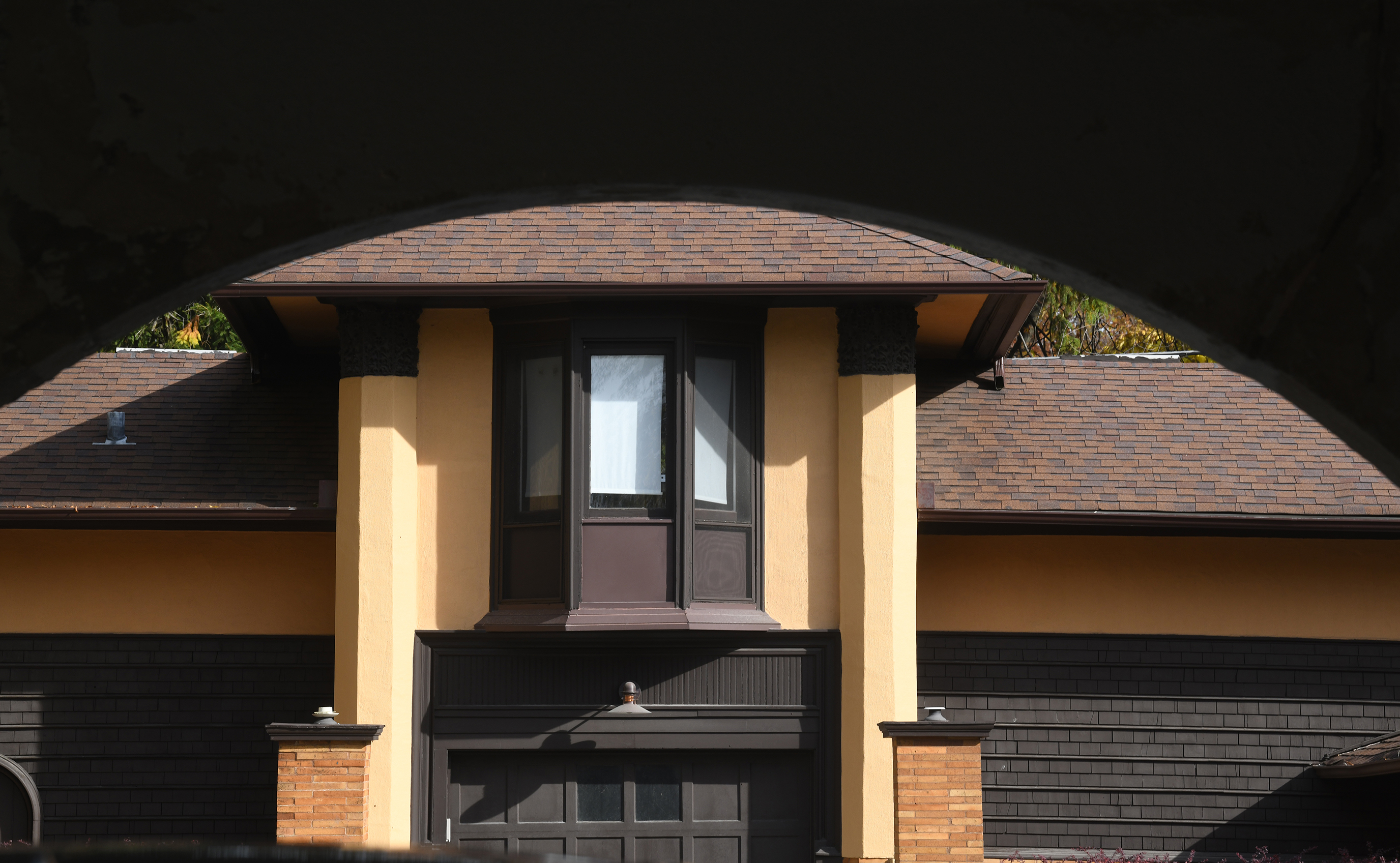
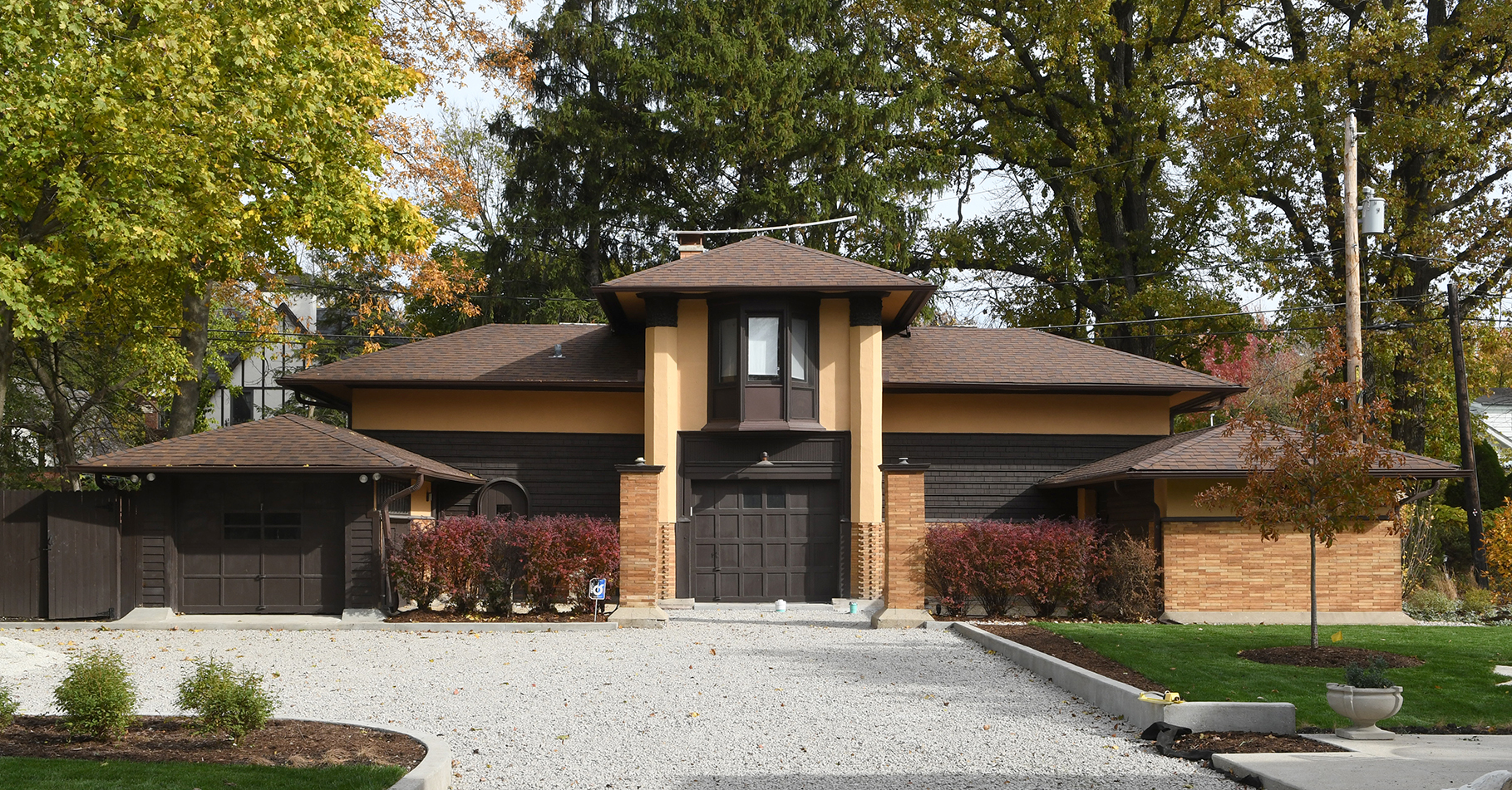


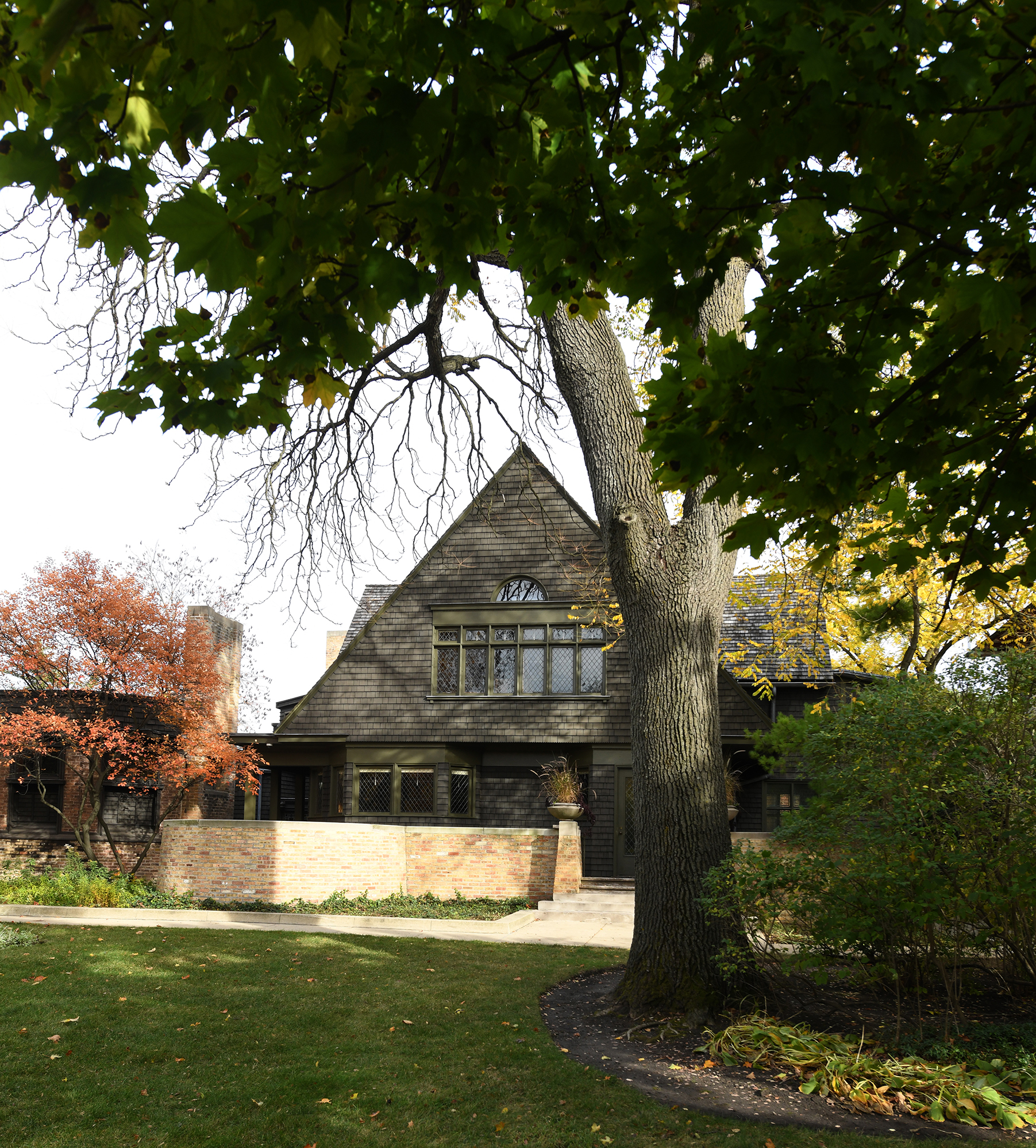
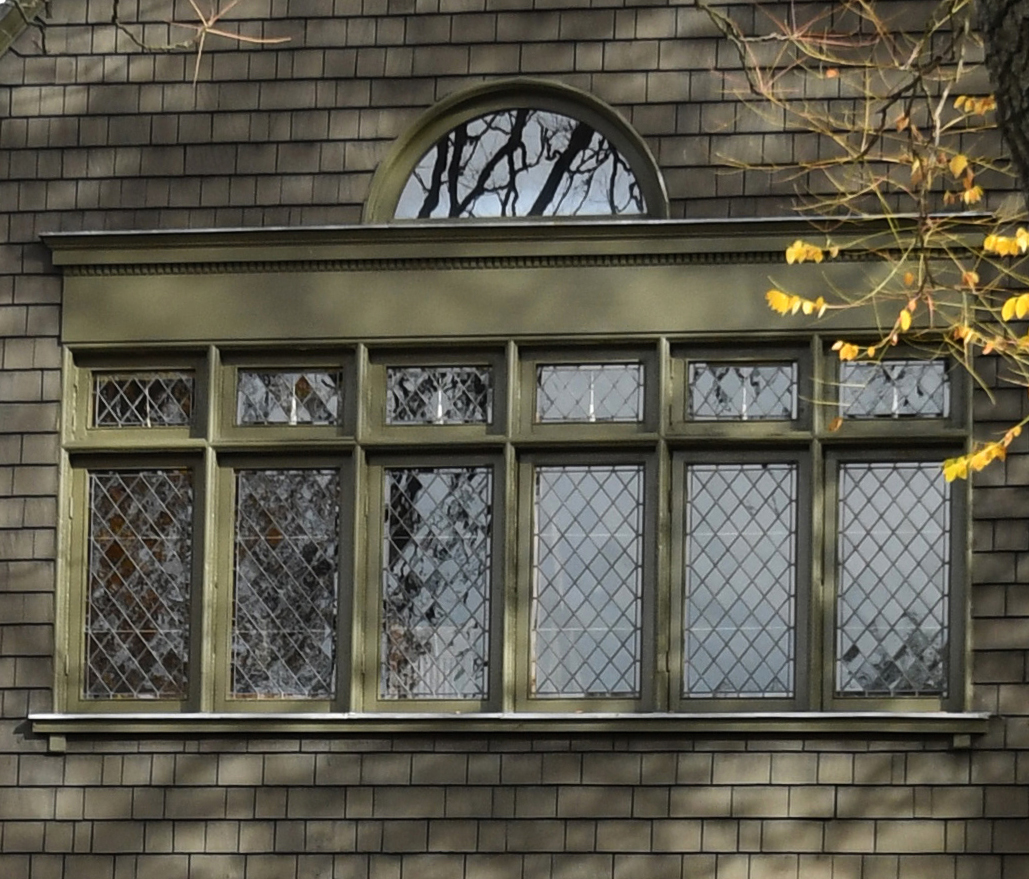
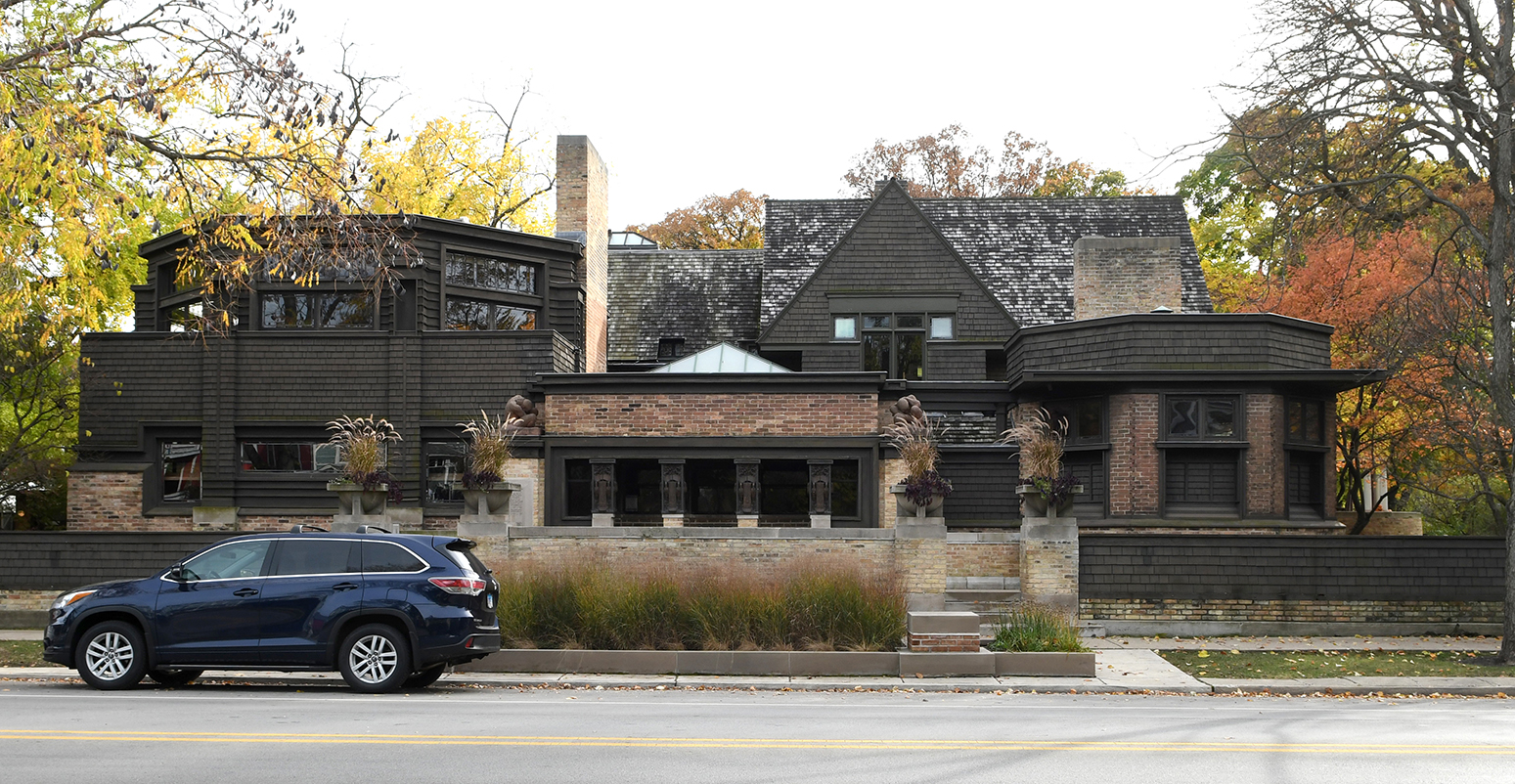 I am never there when there are no cars parked on Chicago, but this was the starting point for the three photos immediately below: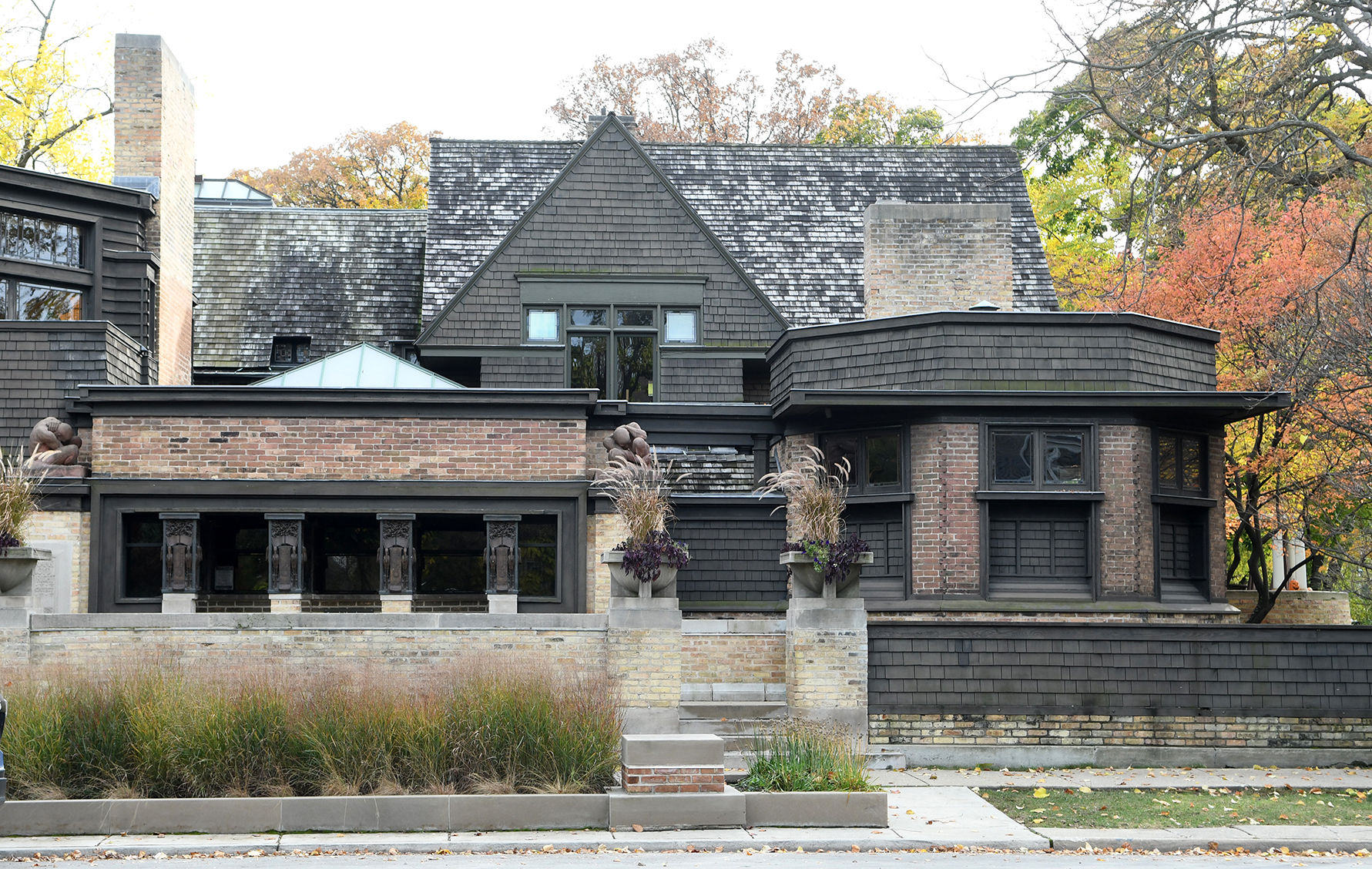








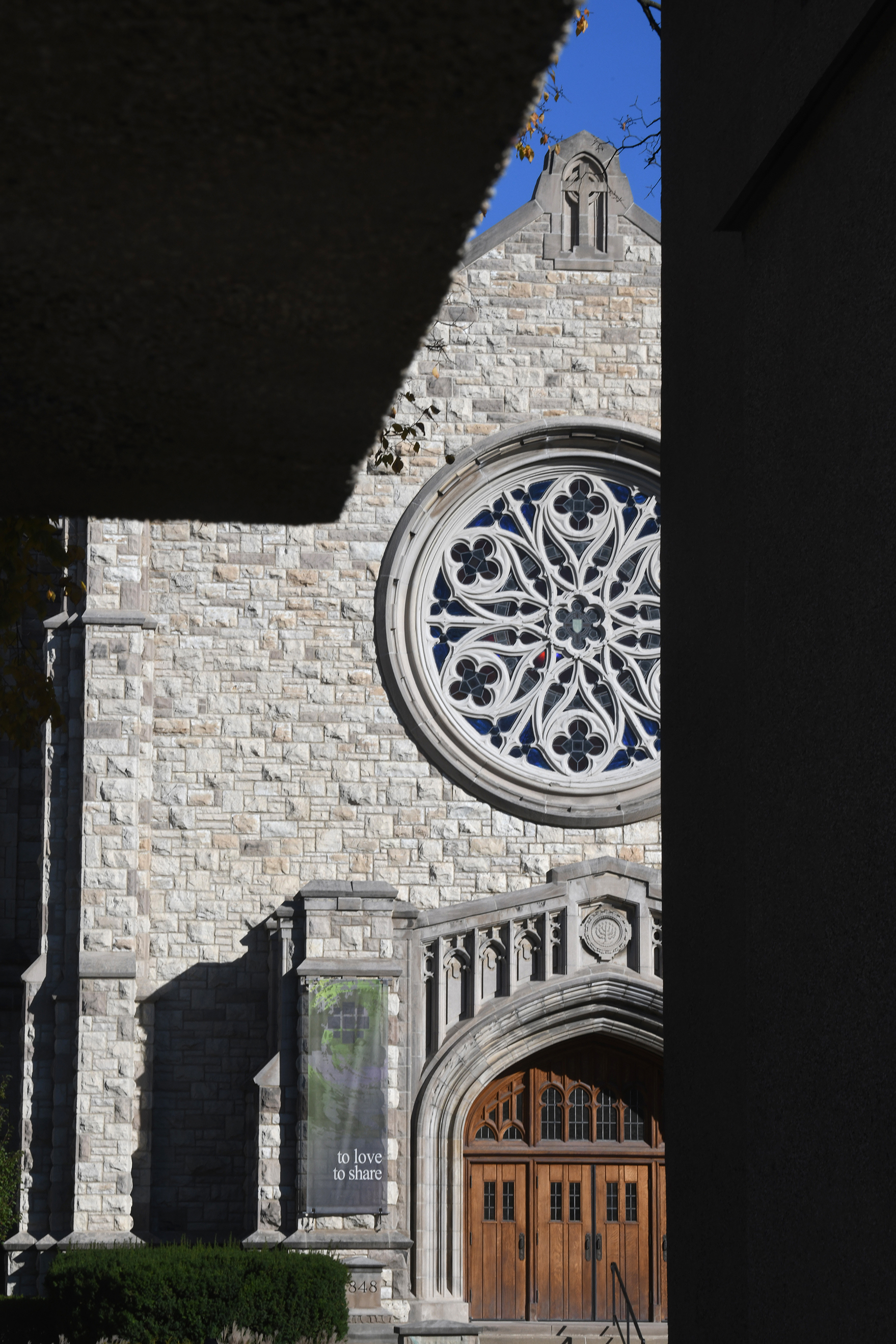 First United, framed by Unity Temple’s concrete walls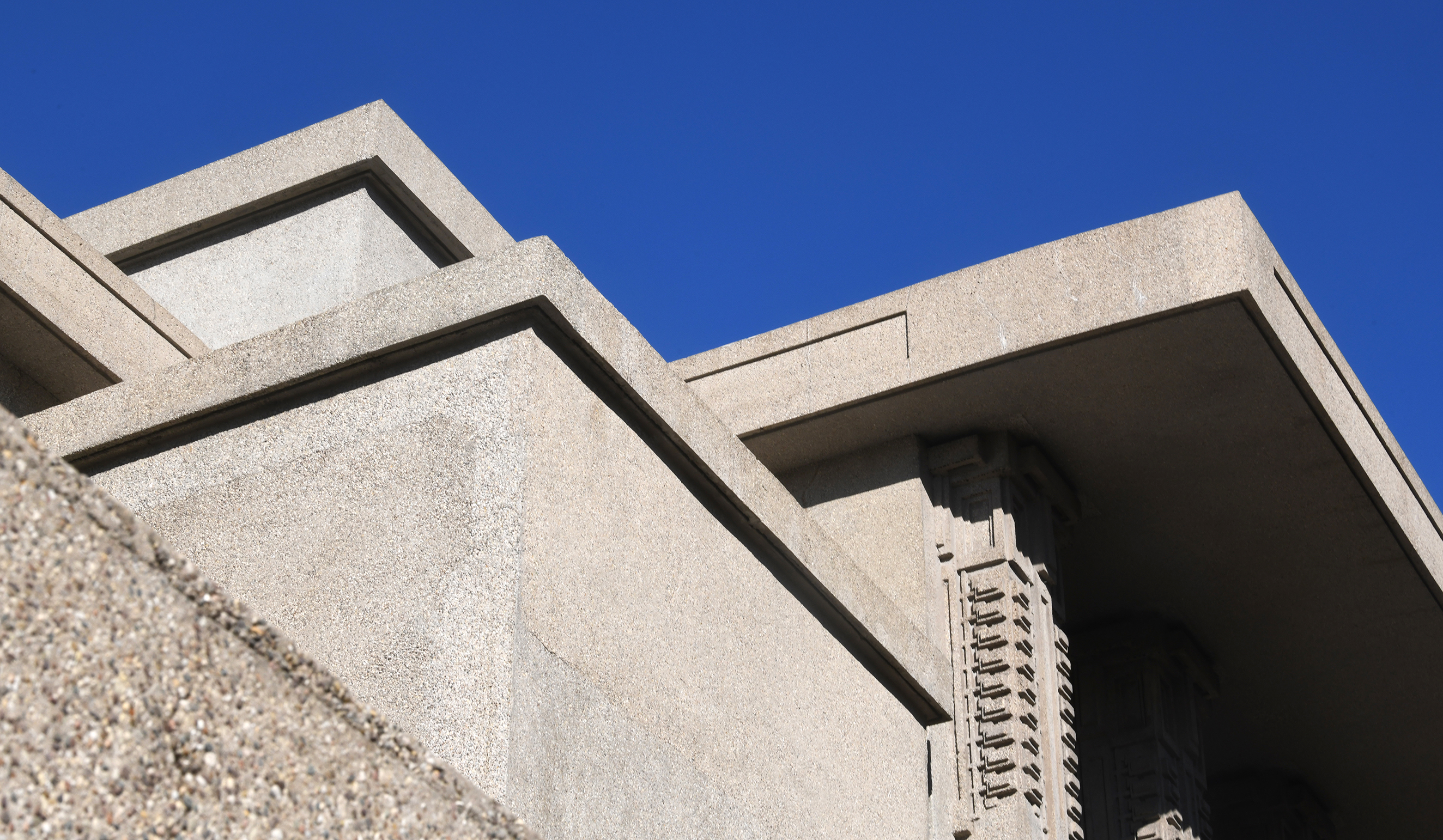
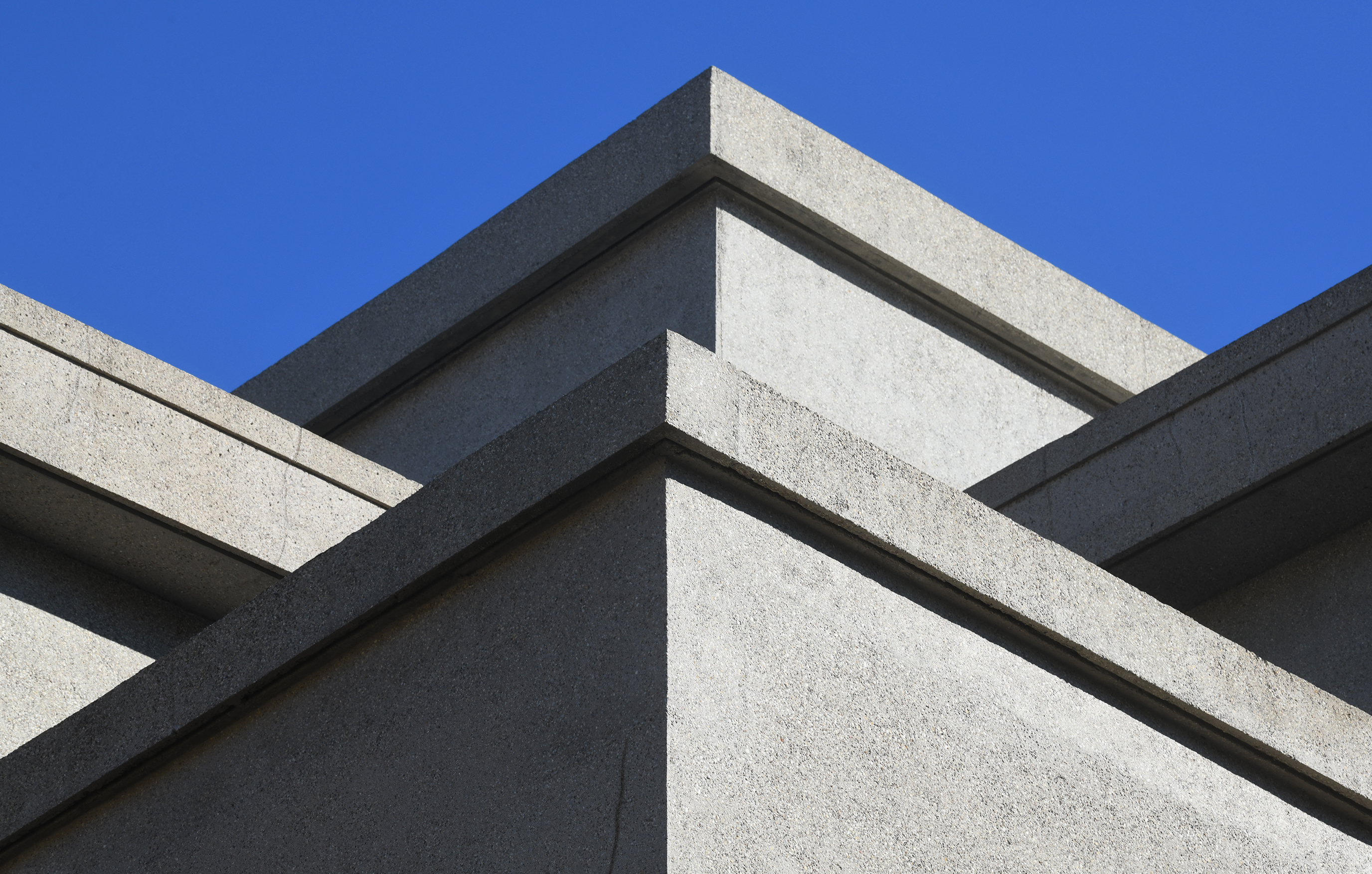

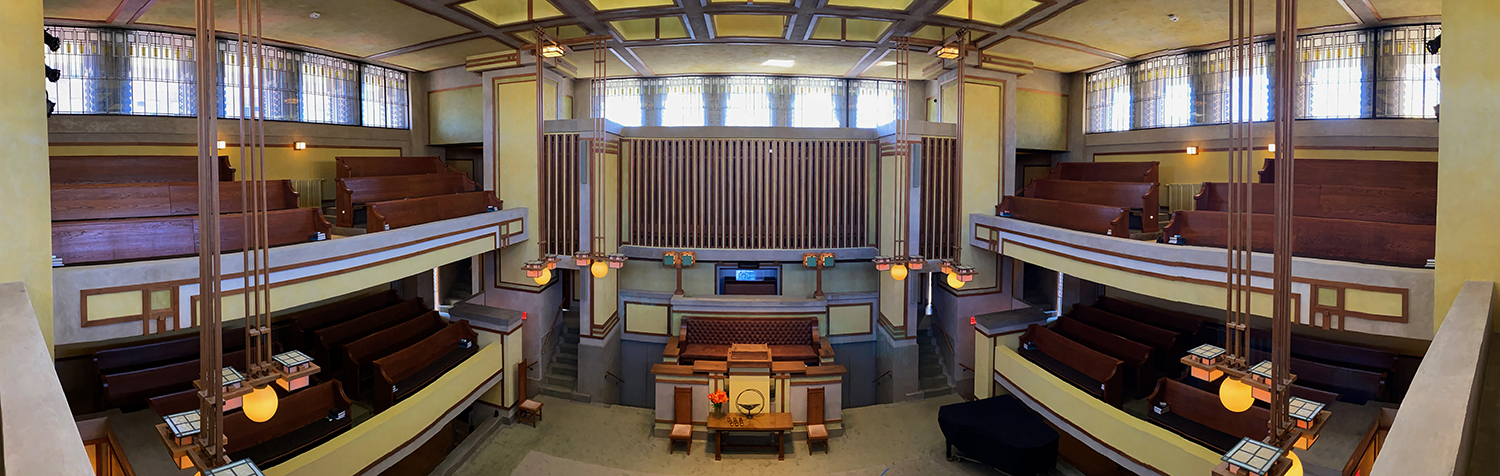
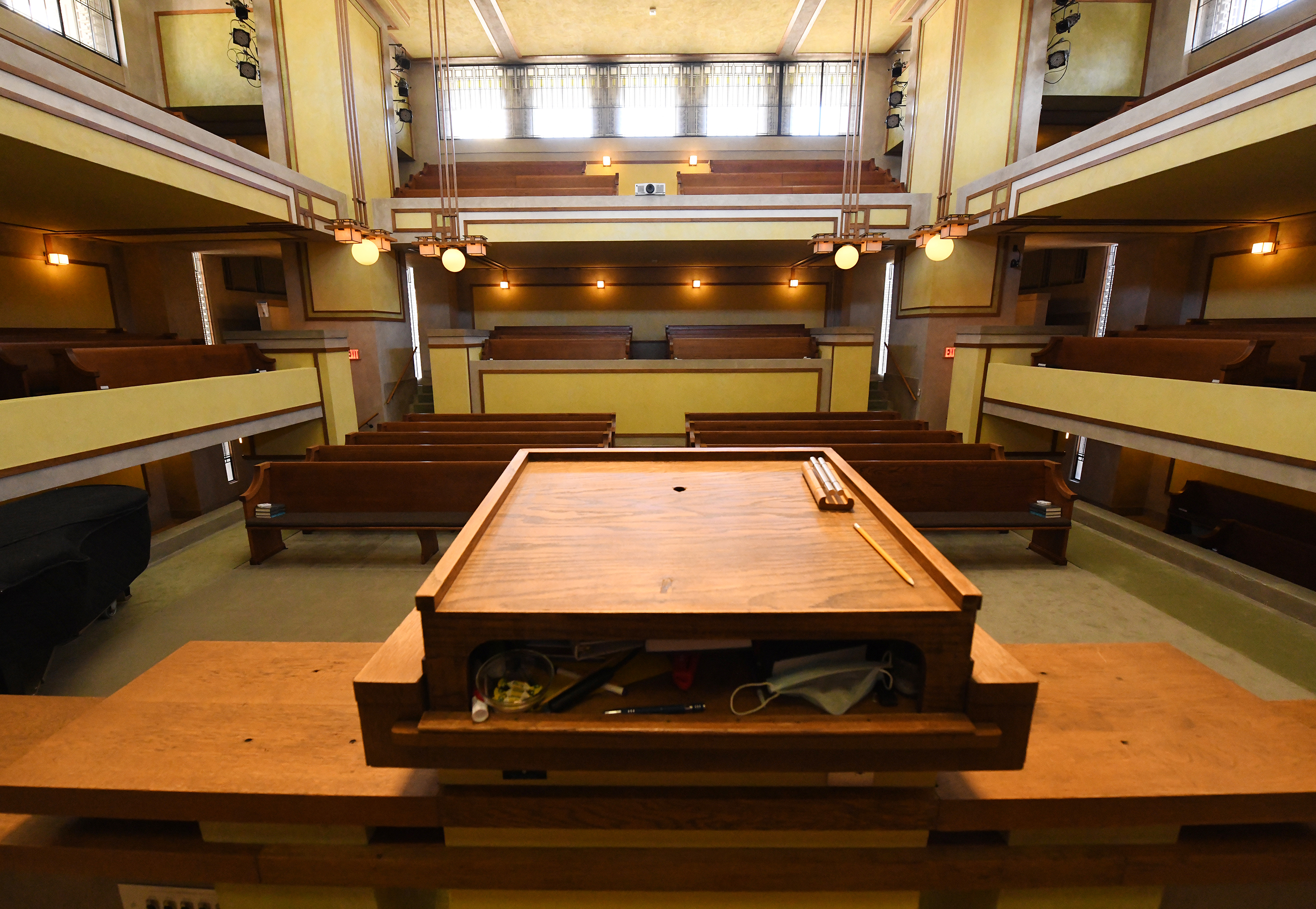
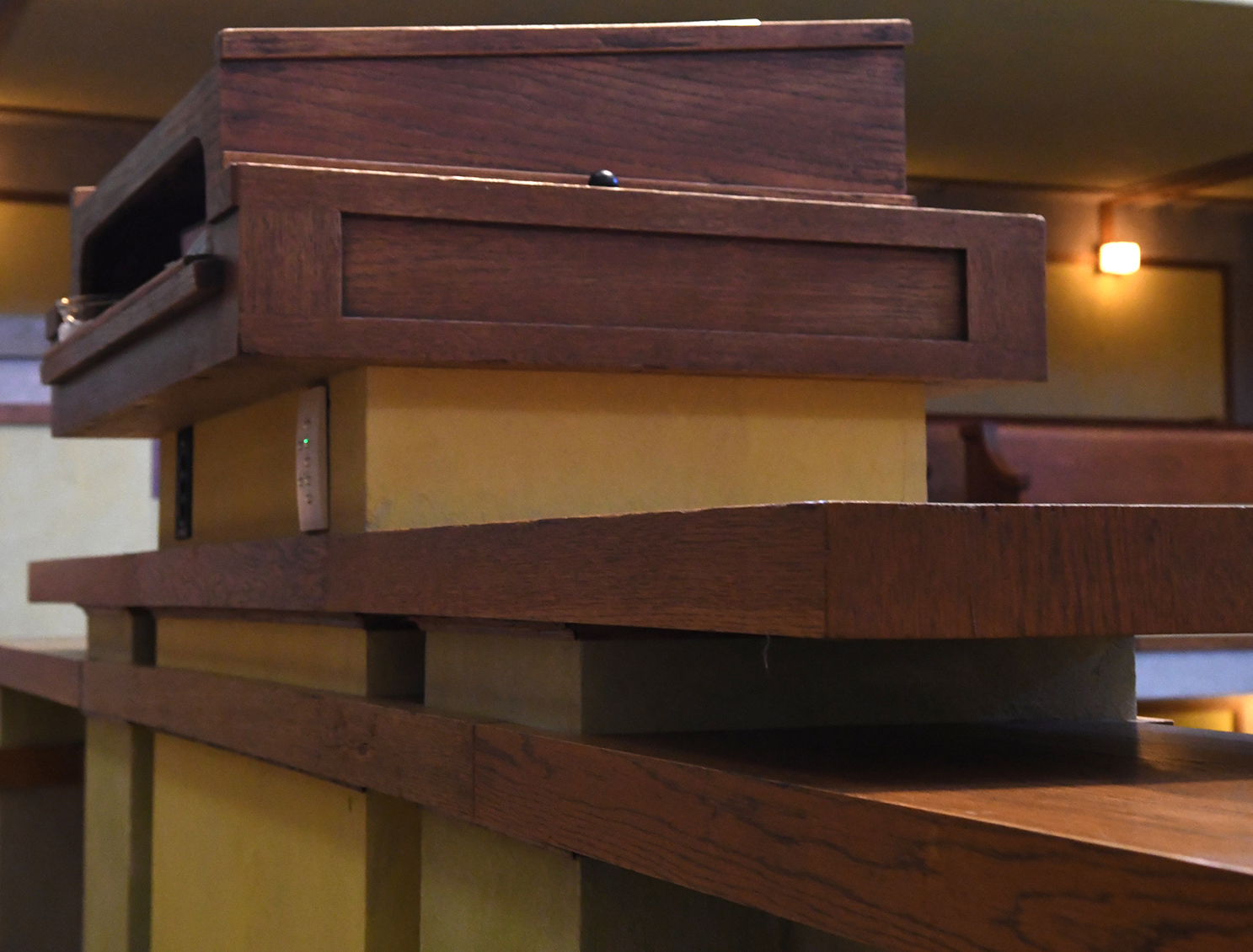
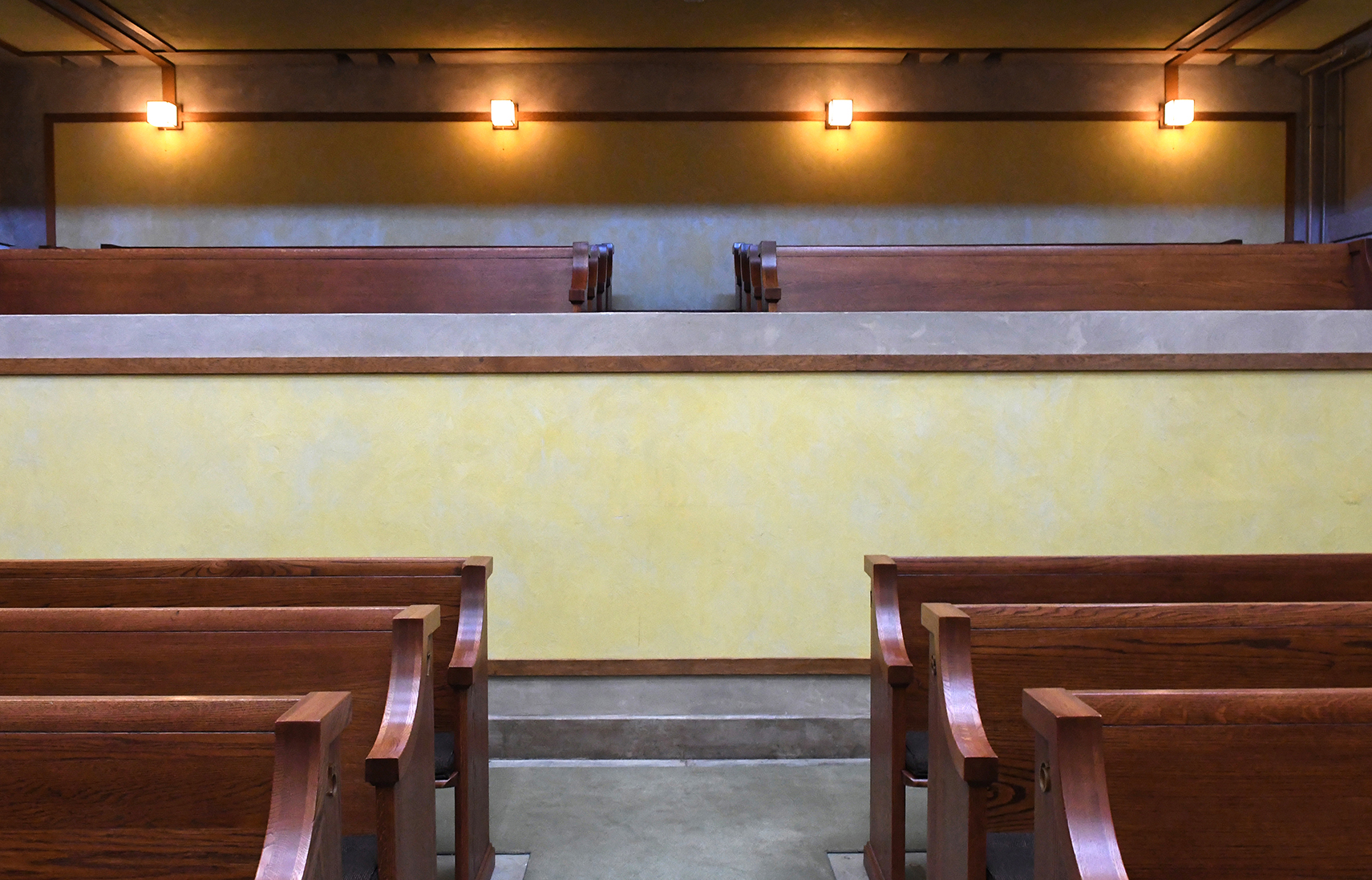
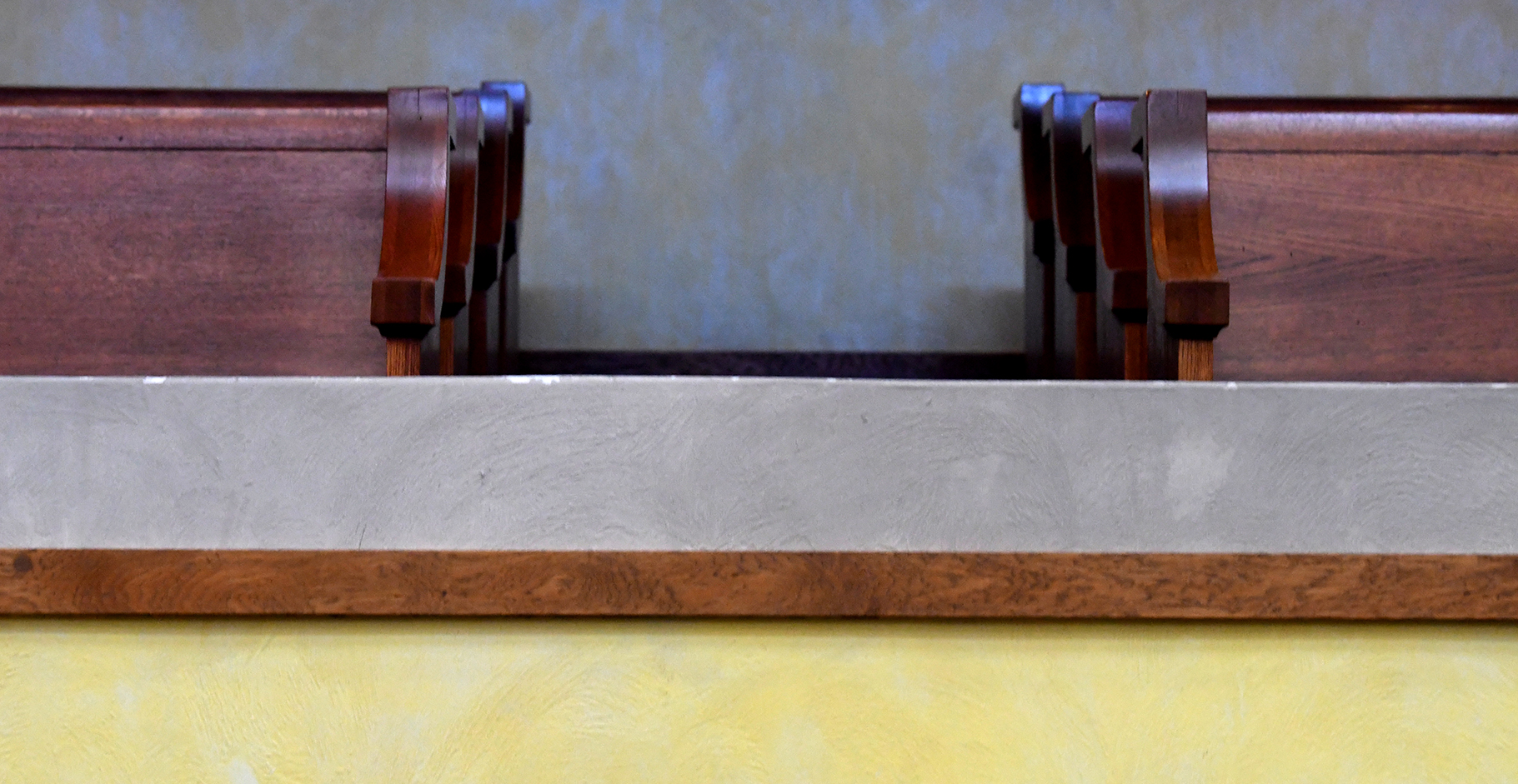













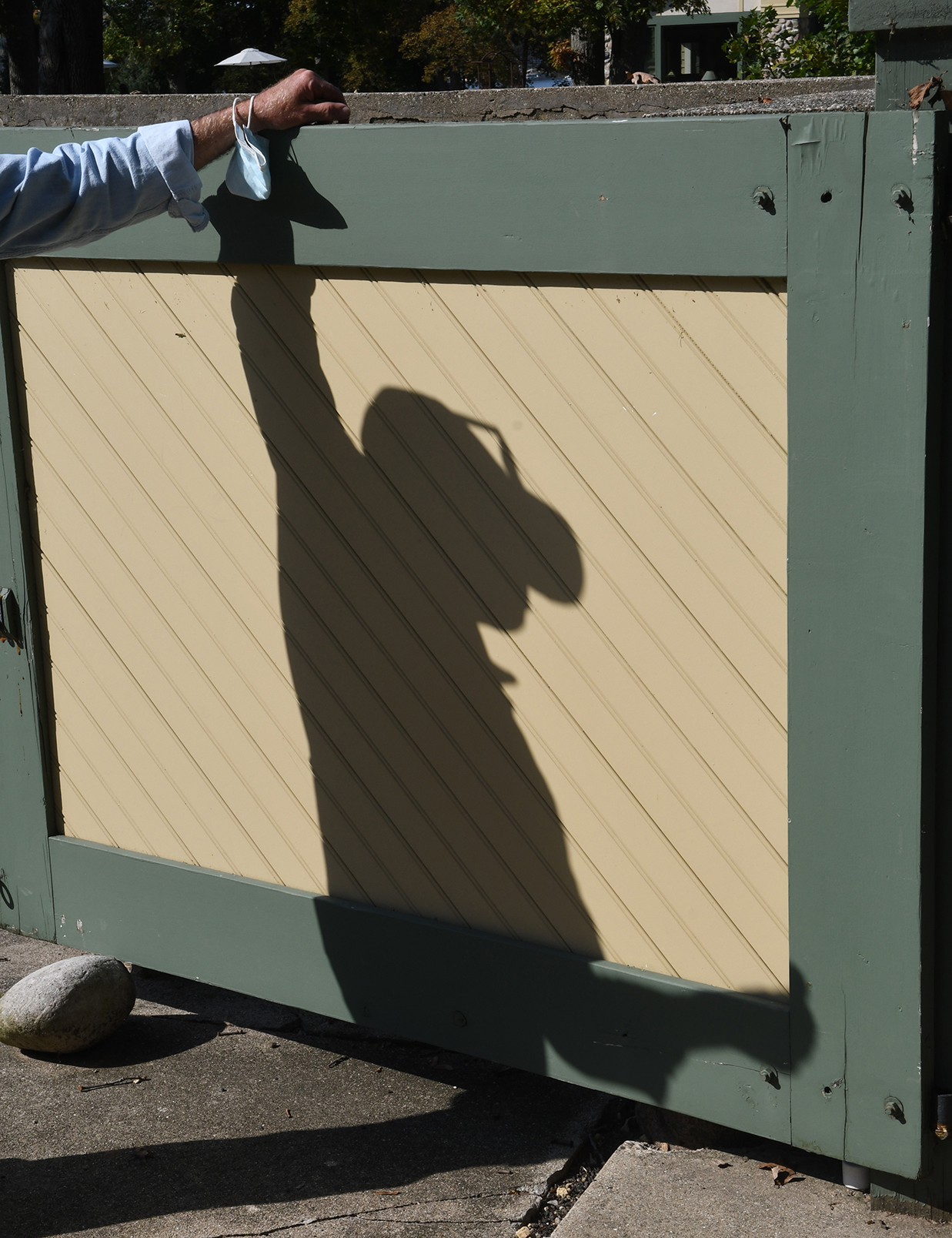
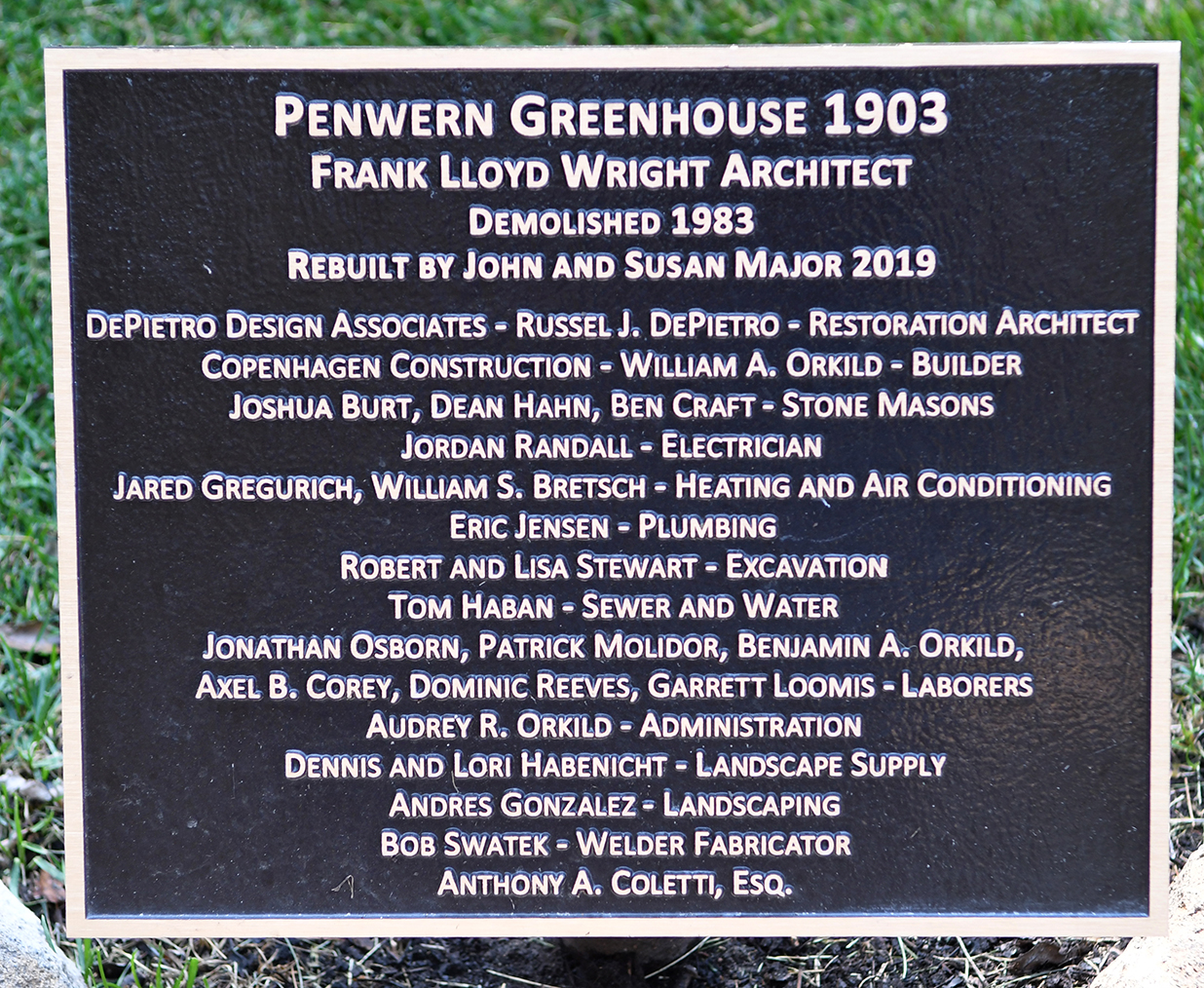
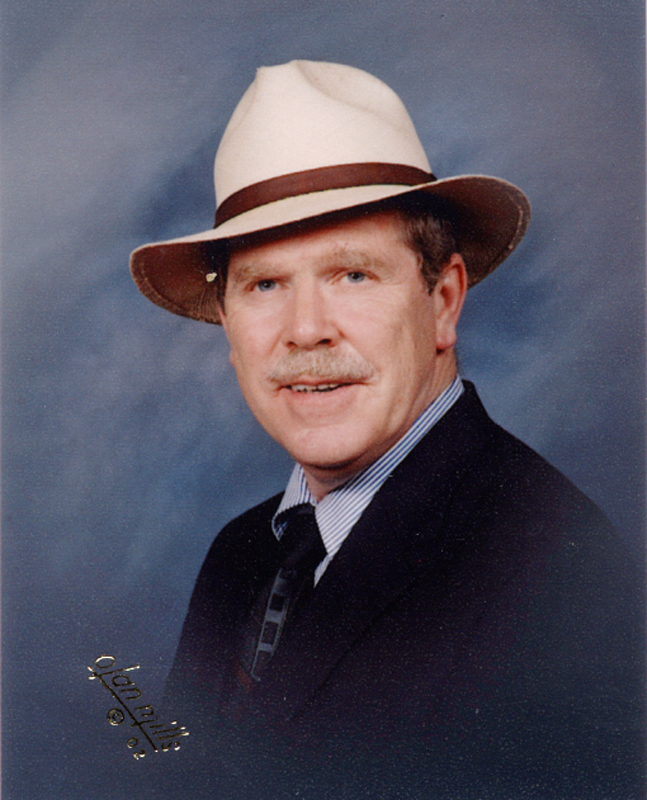 Photo by Olan Mills Studios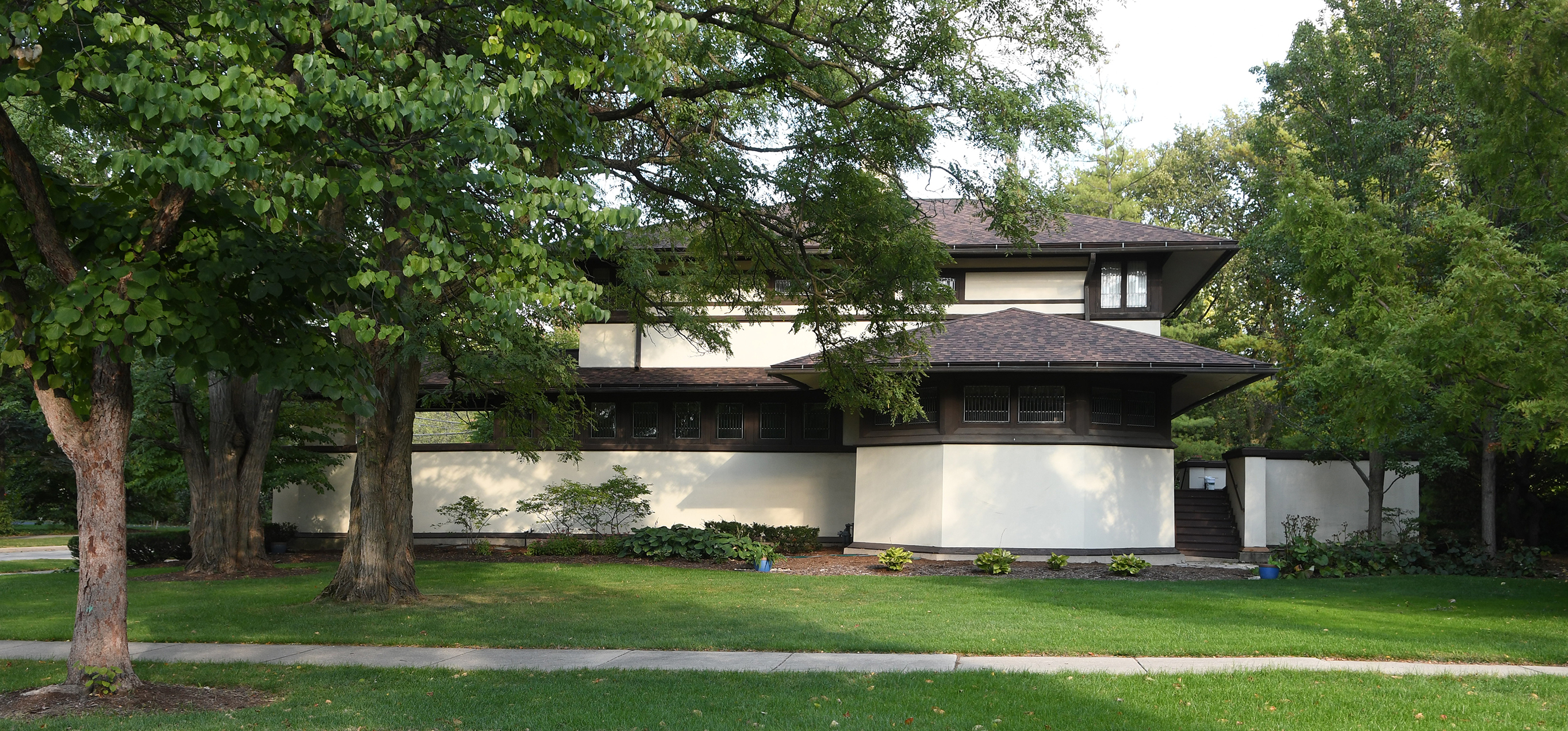





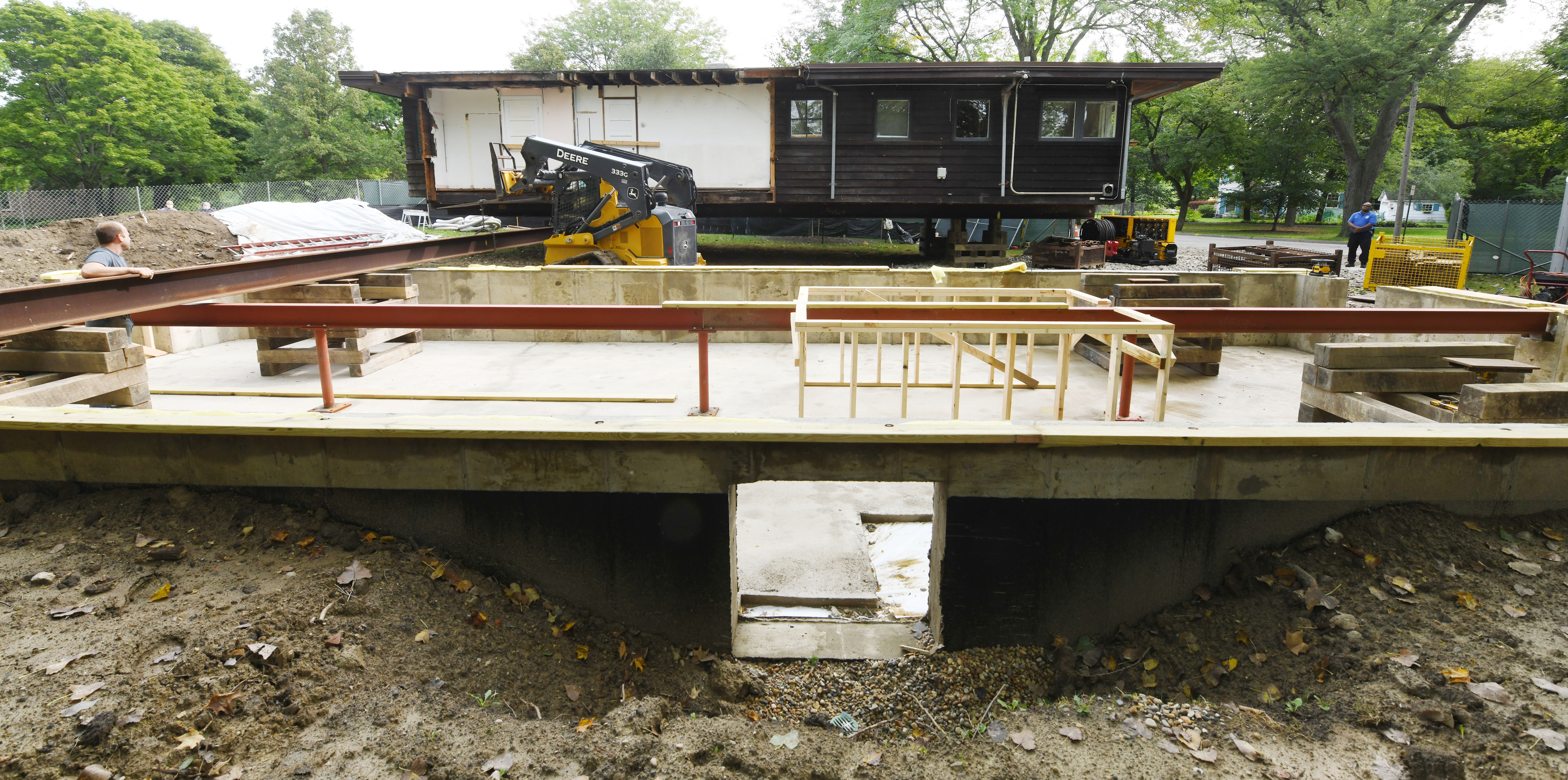
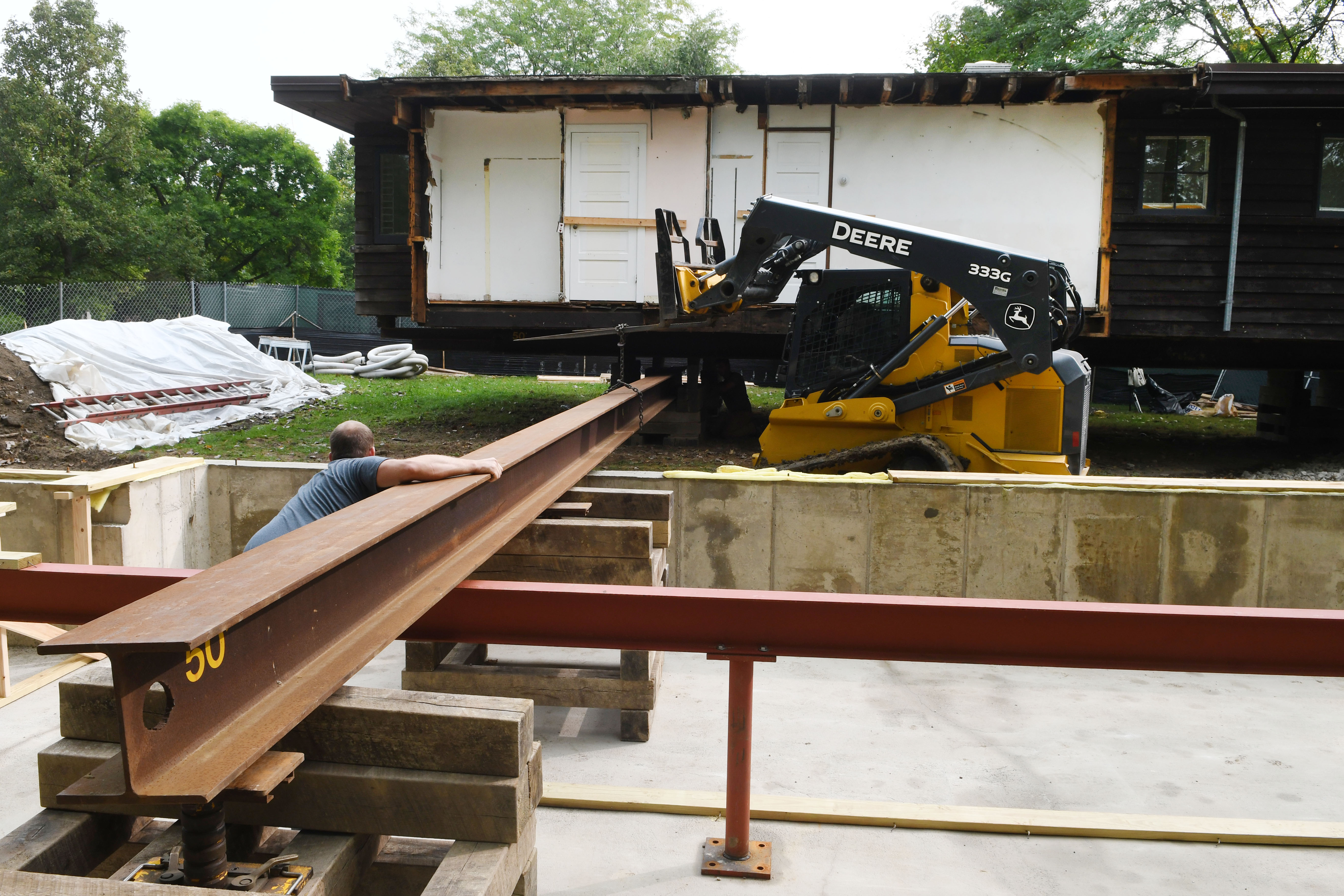
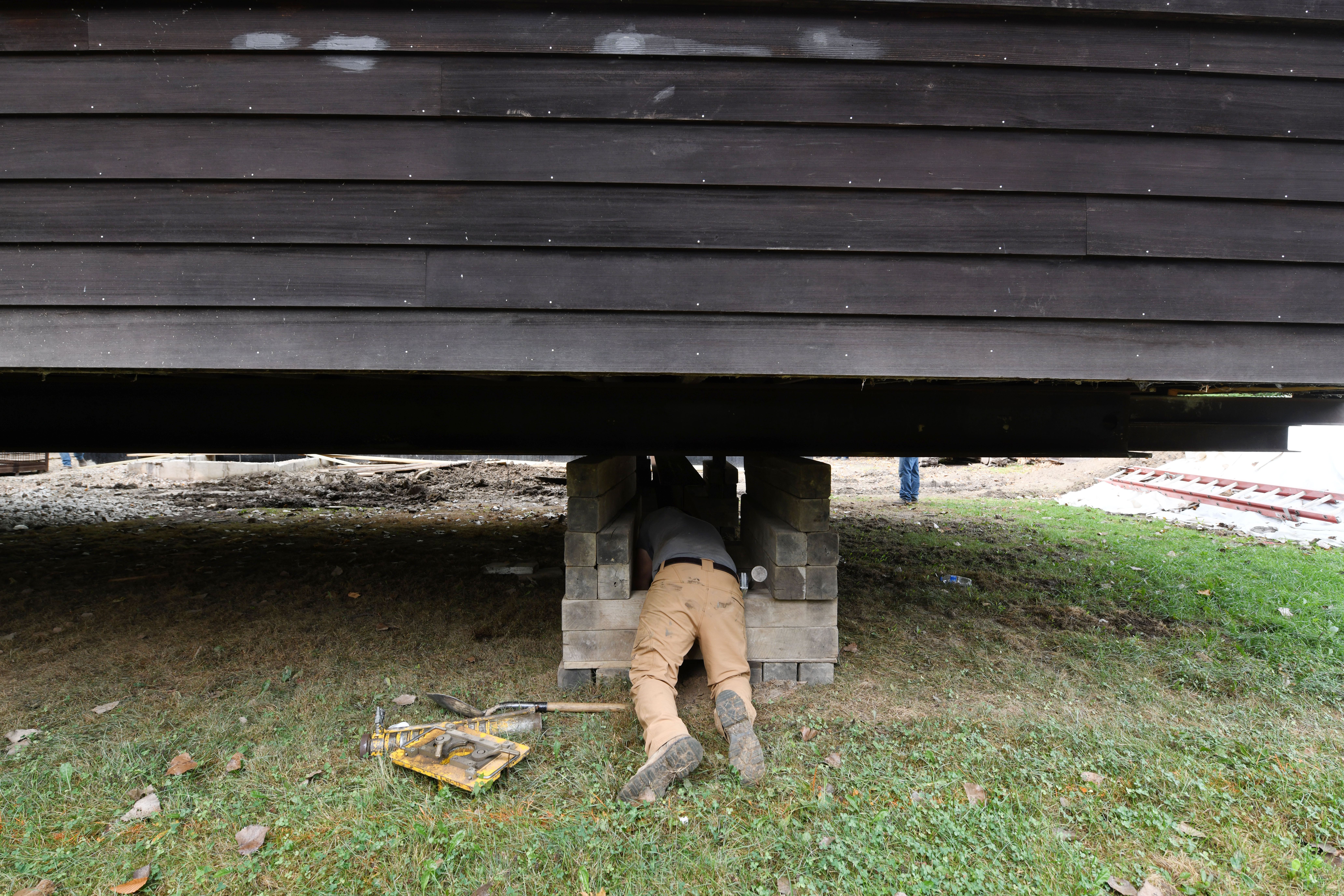
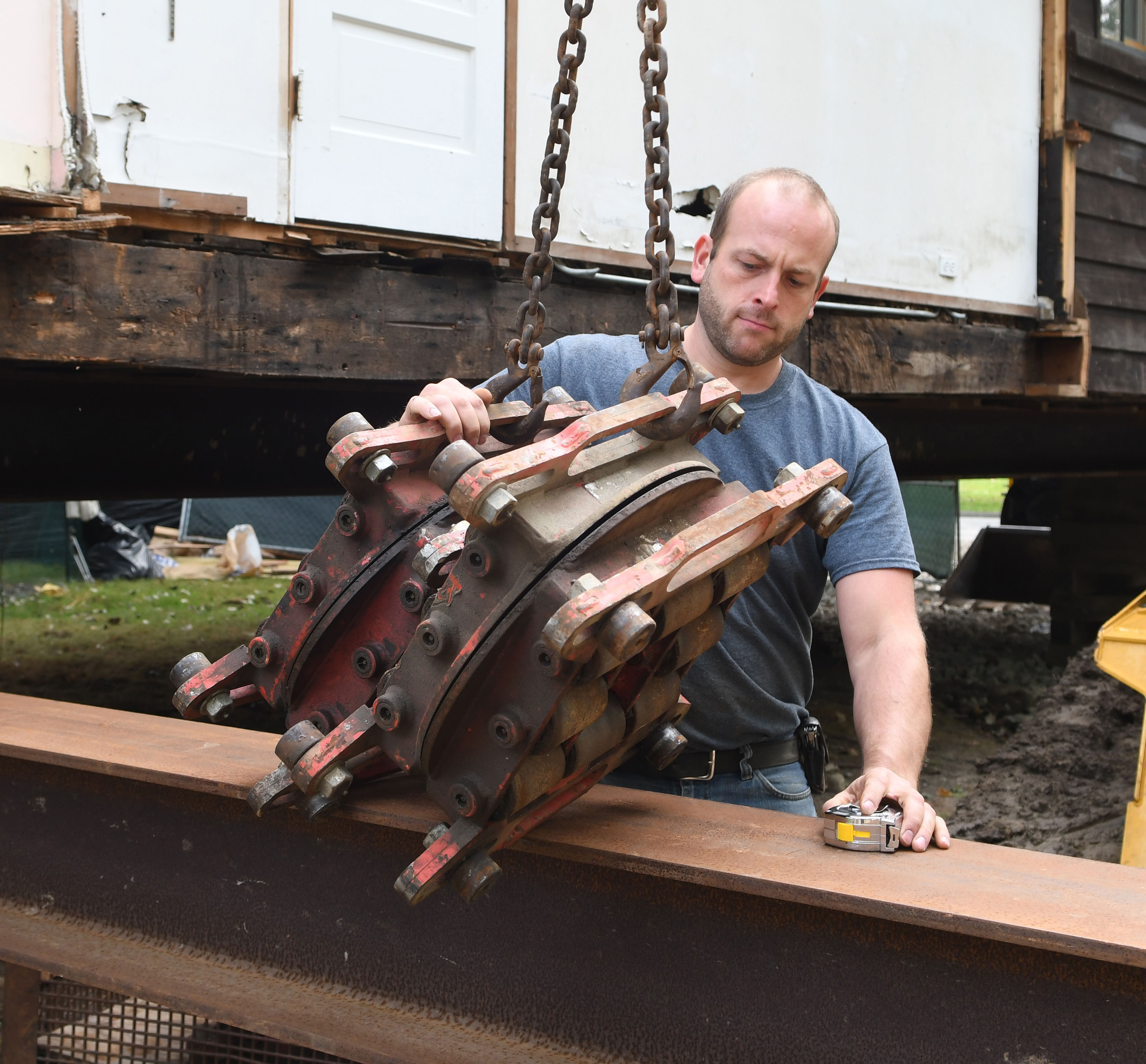 The house was nudged by the forks of a John Deere track loader on these rollers on 50′ long steel girders.
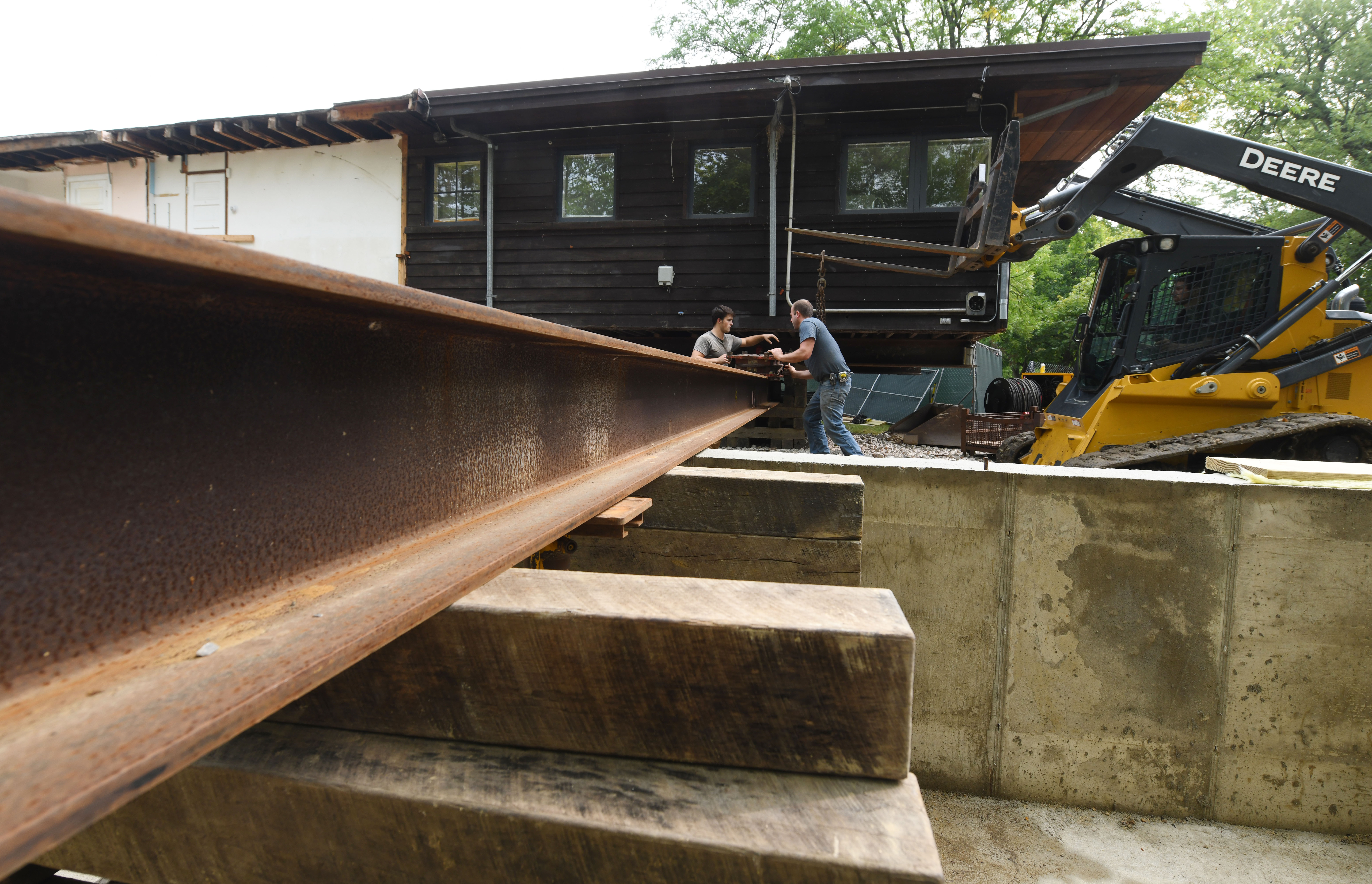

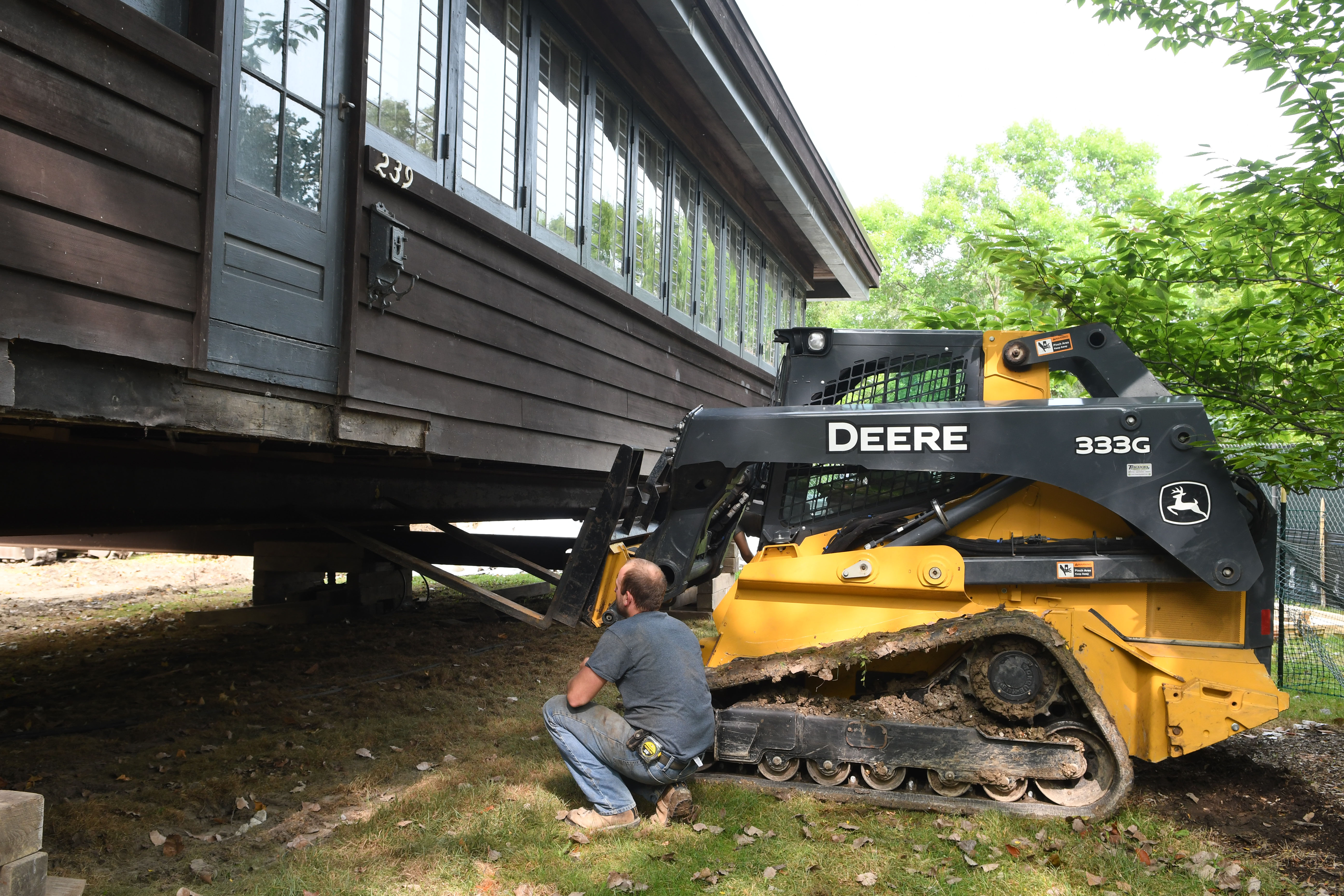
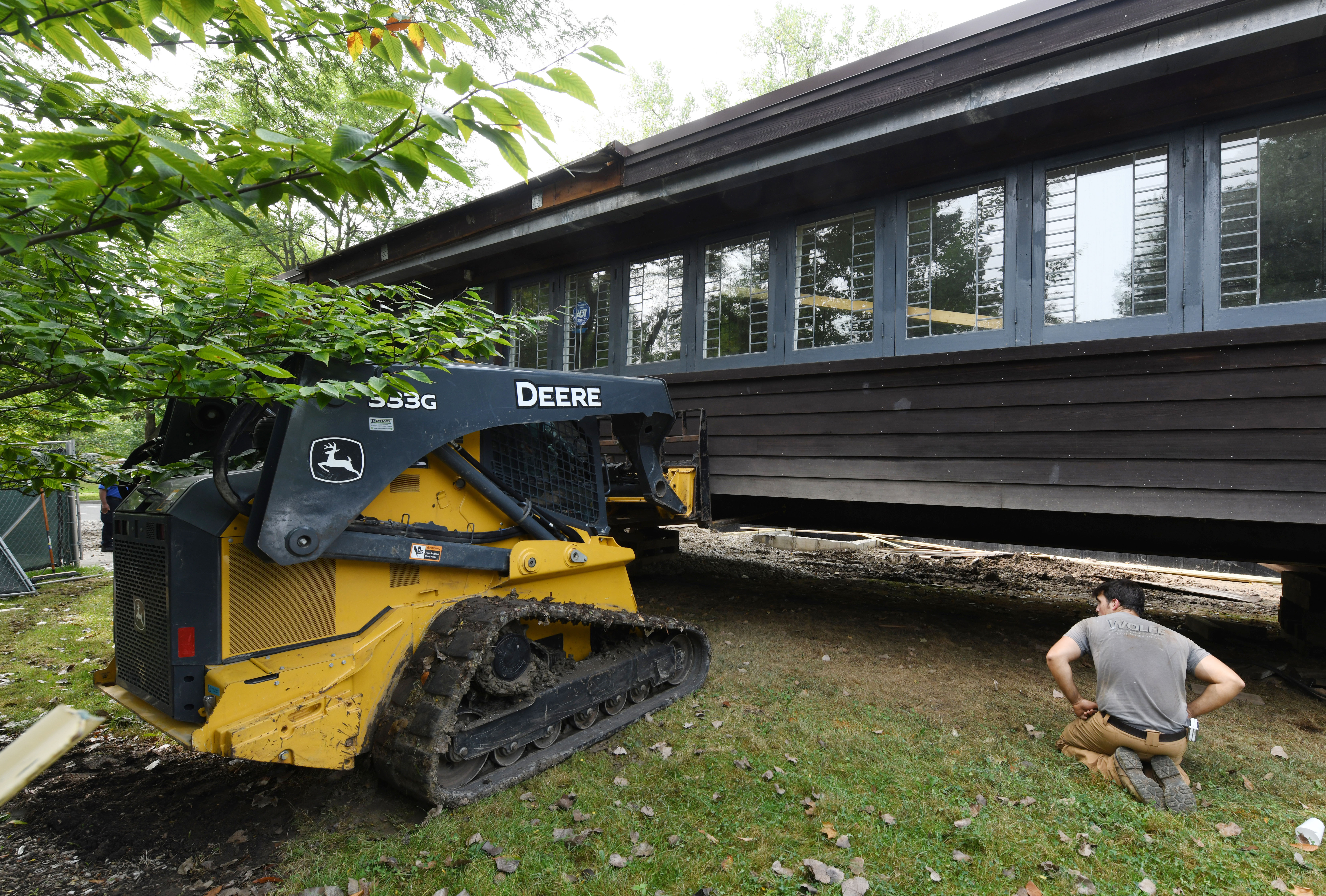

 An overhanging tree limb unexpectedly had to be cut down.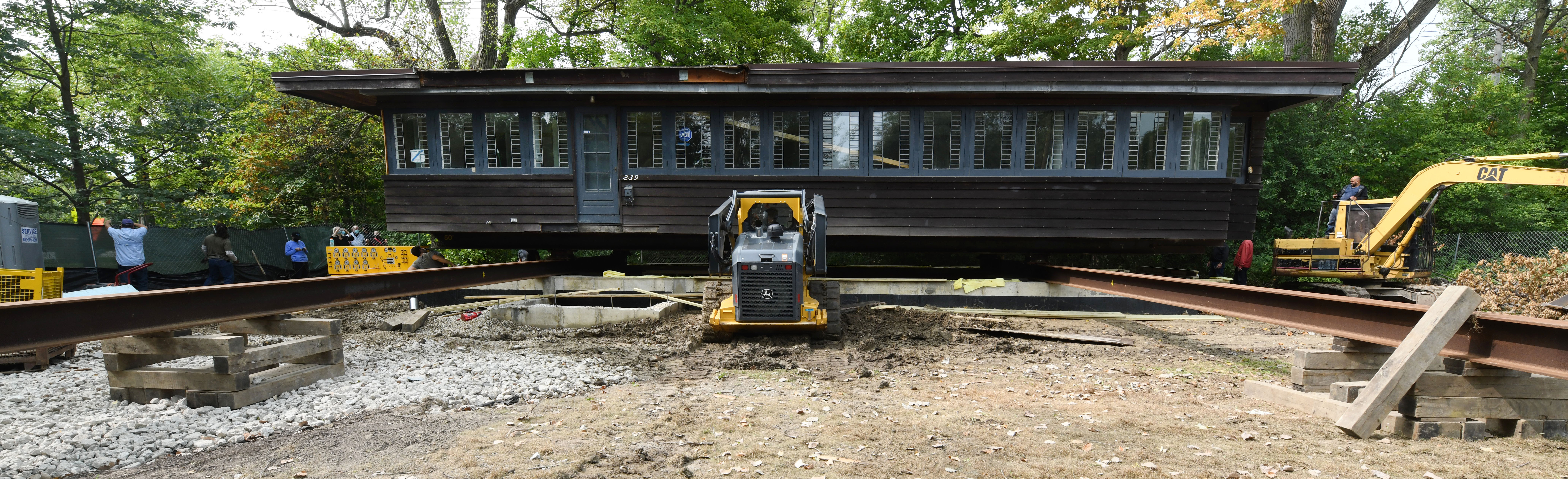
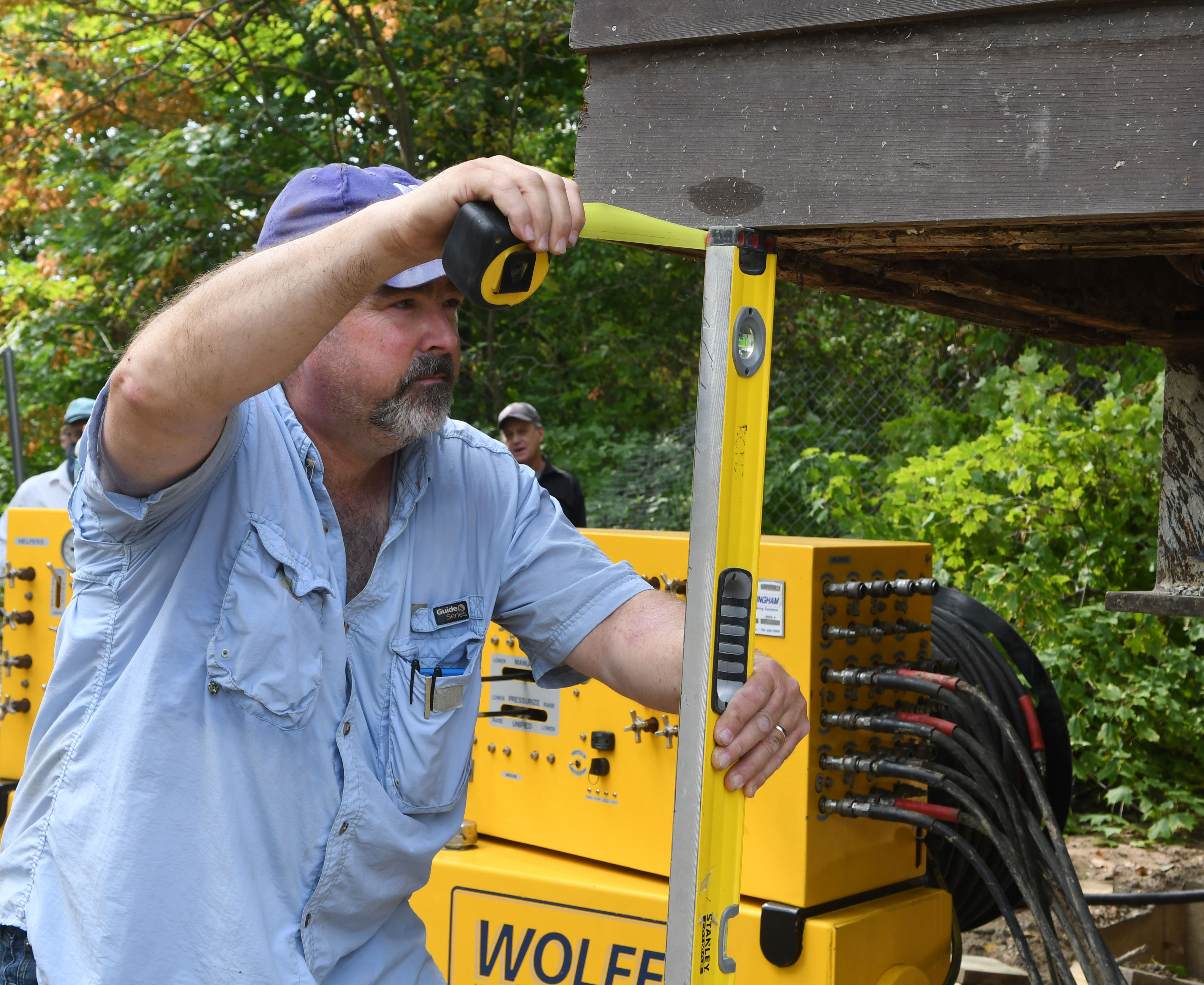 Measurements were taken throughout the morning…then it was time for a lunch break: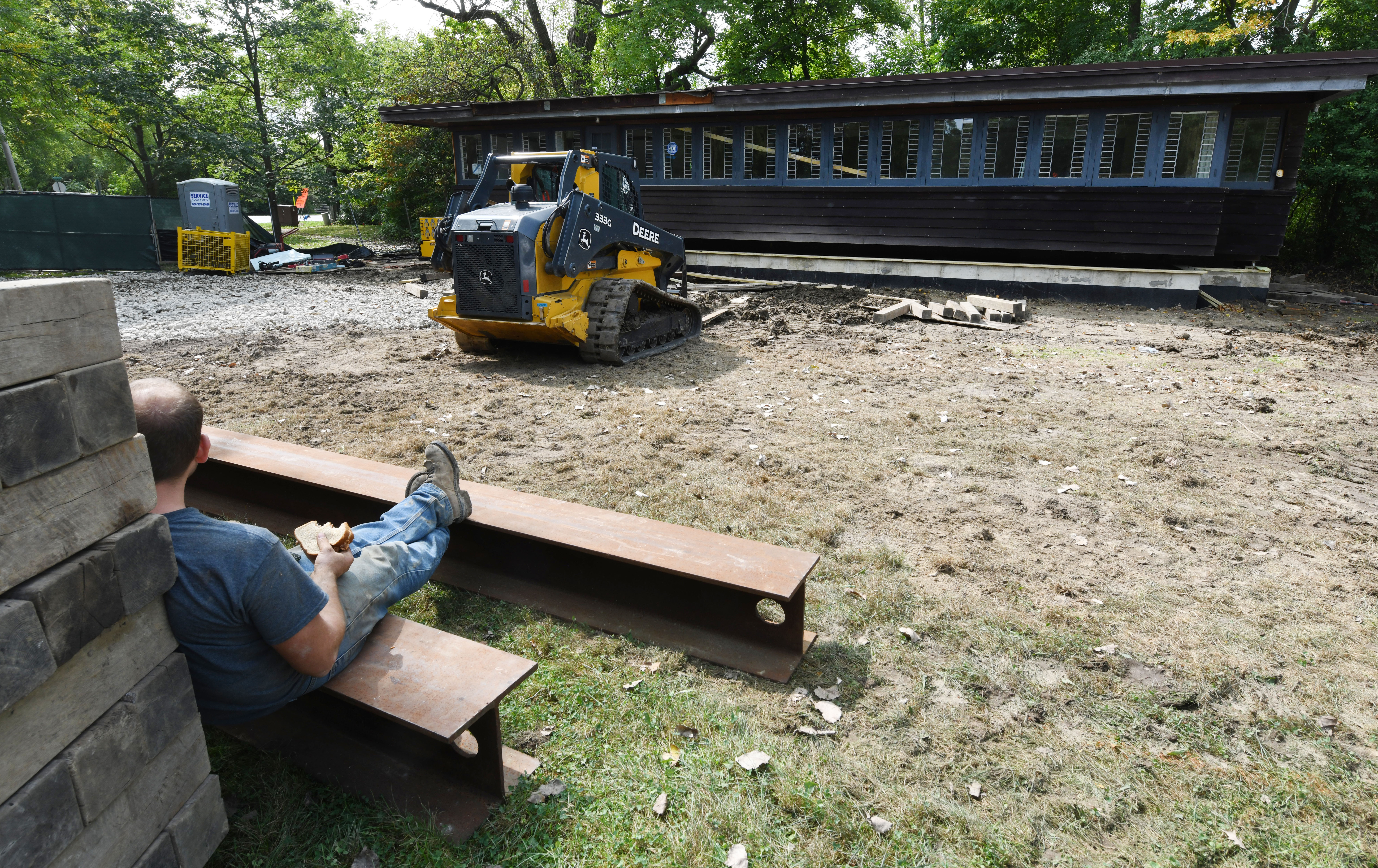

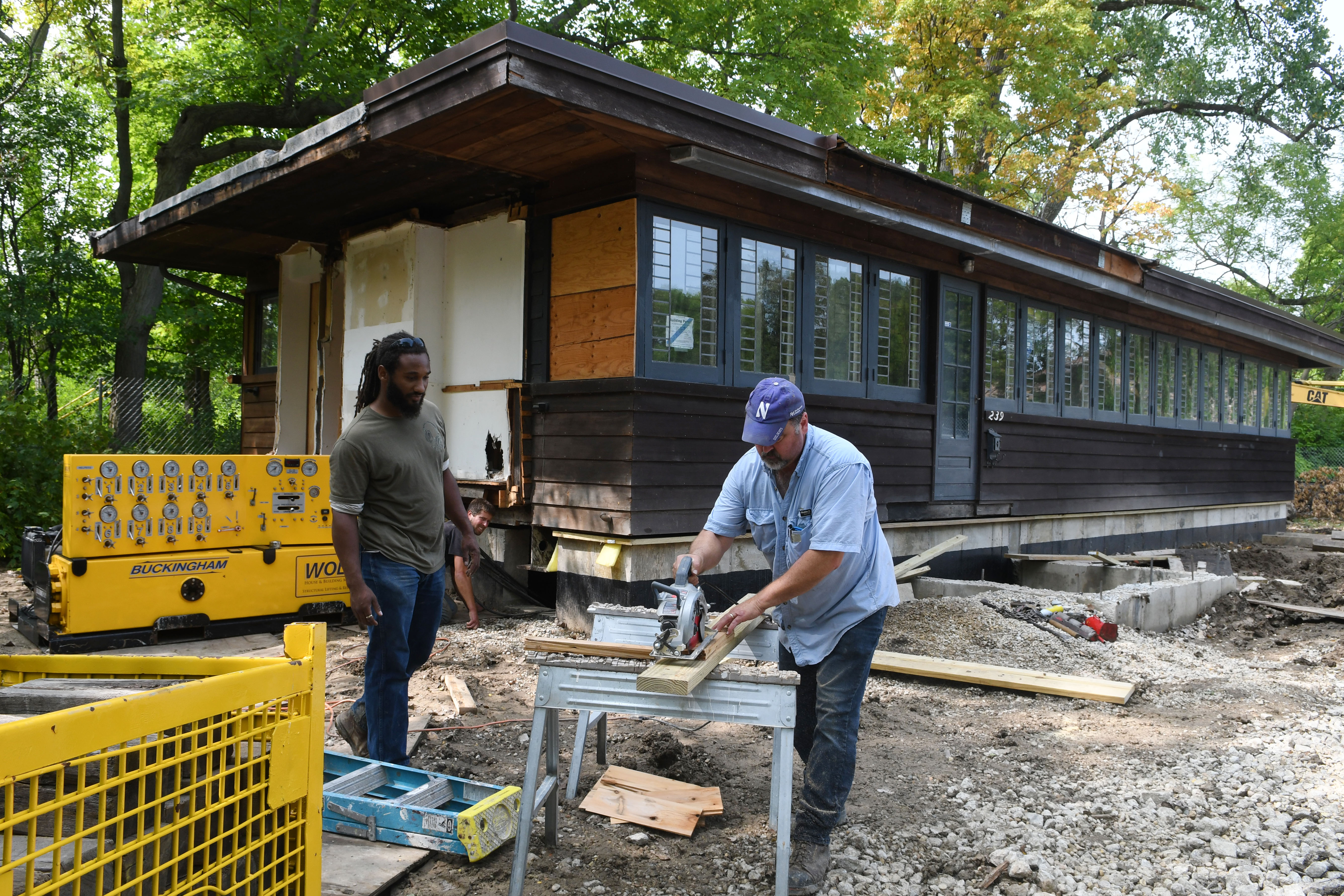 The house is finally in place and finish work is underway.
 Ron Scherubel, former executive director of the Frank Lloyd Wright Building Conservancy, has documented the entire project. He showed me a fire pit designed by Jens Jensen, just outside the fence line:
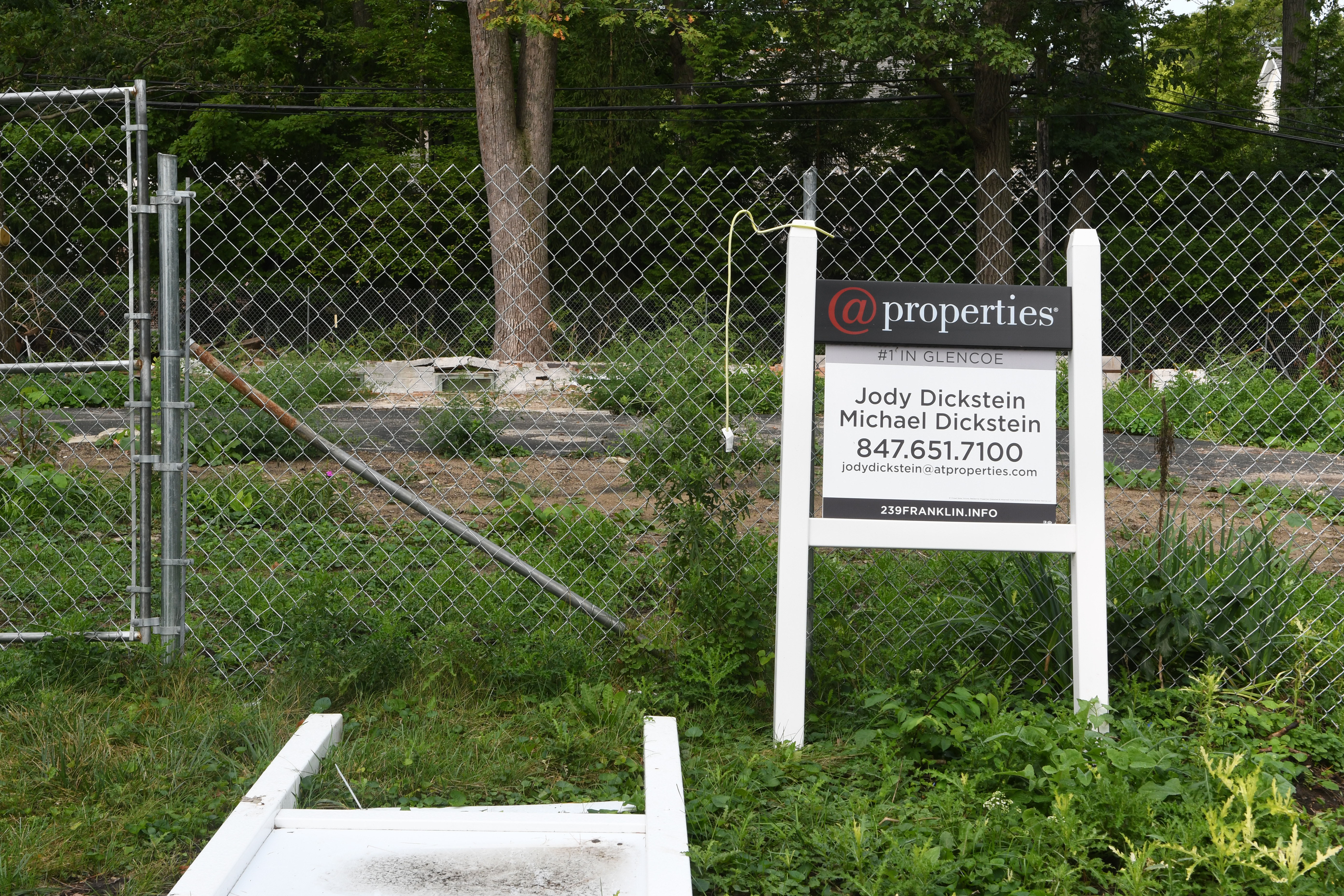

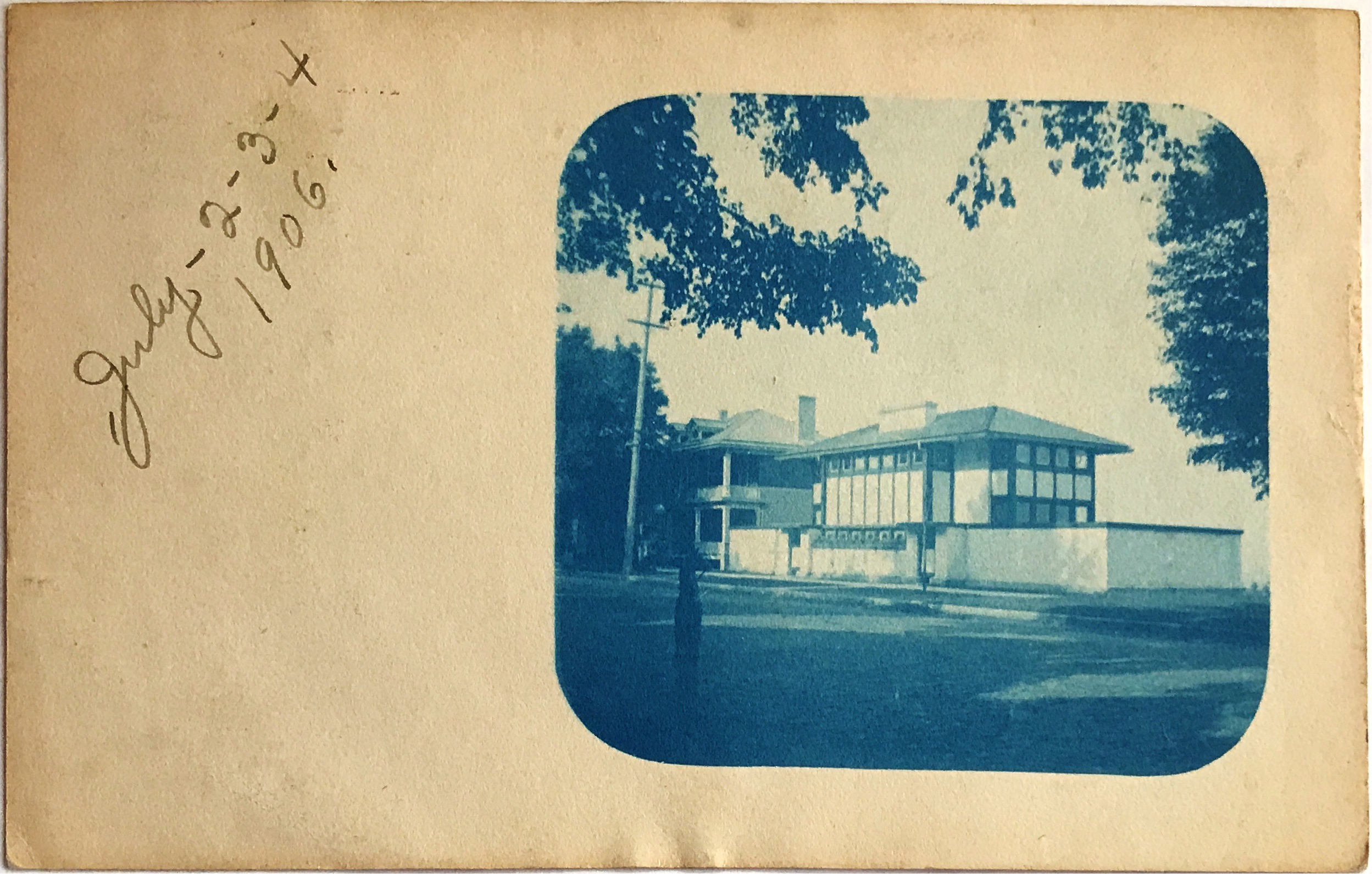 This postcard, from the voluminous Patrick Mahoney Wright archives, shows what the house looked like in July 1906, around the time that Hardy moved in. Regrettably there is no companion photo showing the full expanse of land below the house.
 This photograph, also ca. 1906, shows the lake side of the house, but does not give us an idea of far away the lake was from the property line. Photo
 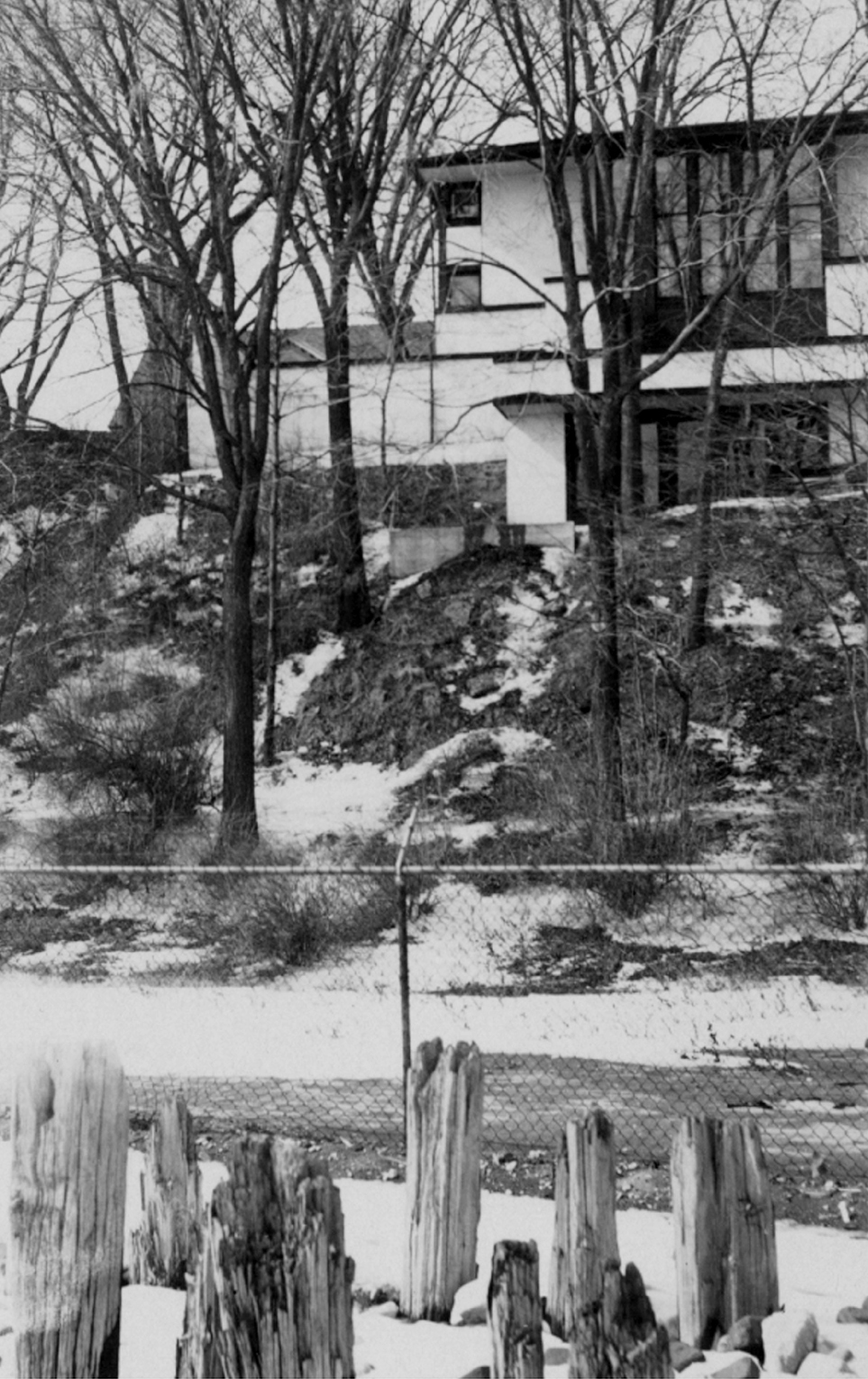 This photo, courtesy of David Archer, who grew up in the house between 1947 – 1957, shows a fence separating the public land from the private land.
 Schuyler and Peterkin Seward, stewards of the house between 1957 – 1963, took a picture beyond the fenceline, showing how much land there was below the house. That land is now under water. Photo courtesy of Abbi Seward.
 The landscape changed dramatically a few years after Jim and Margaret Yoghourtjian bought the house in 1968 and took this photograph.
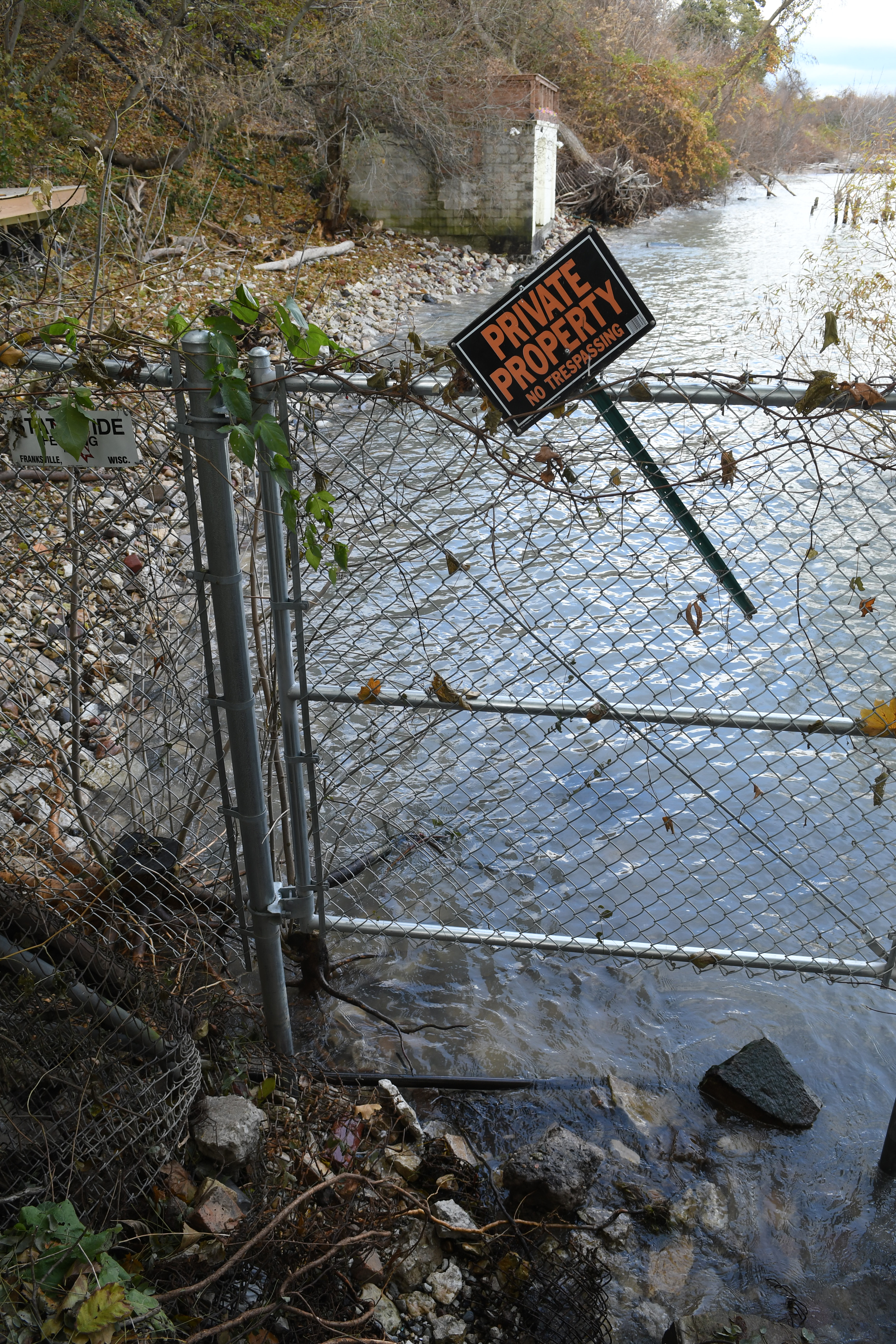 November 4, 2019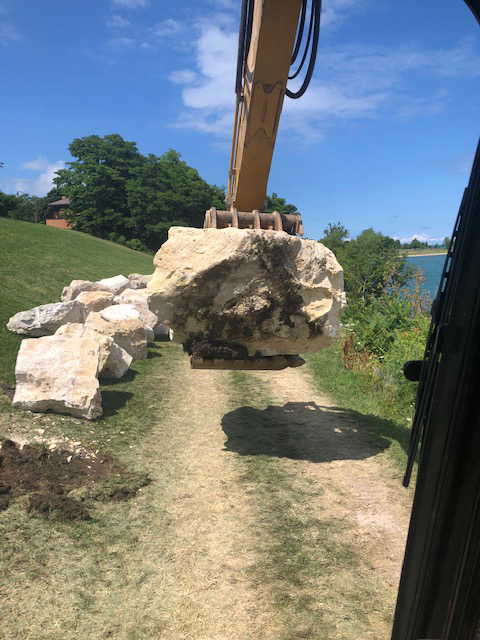
 August 18, 2020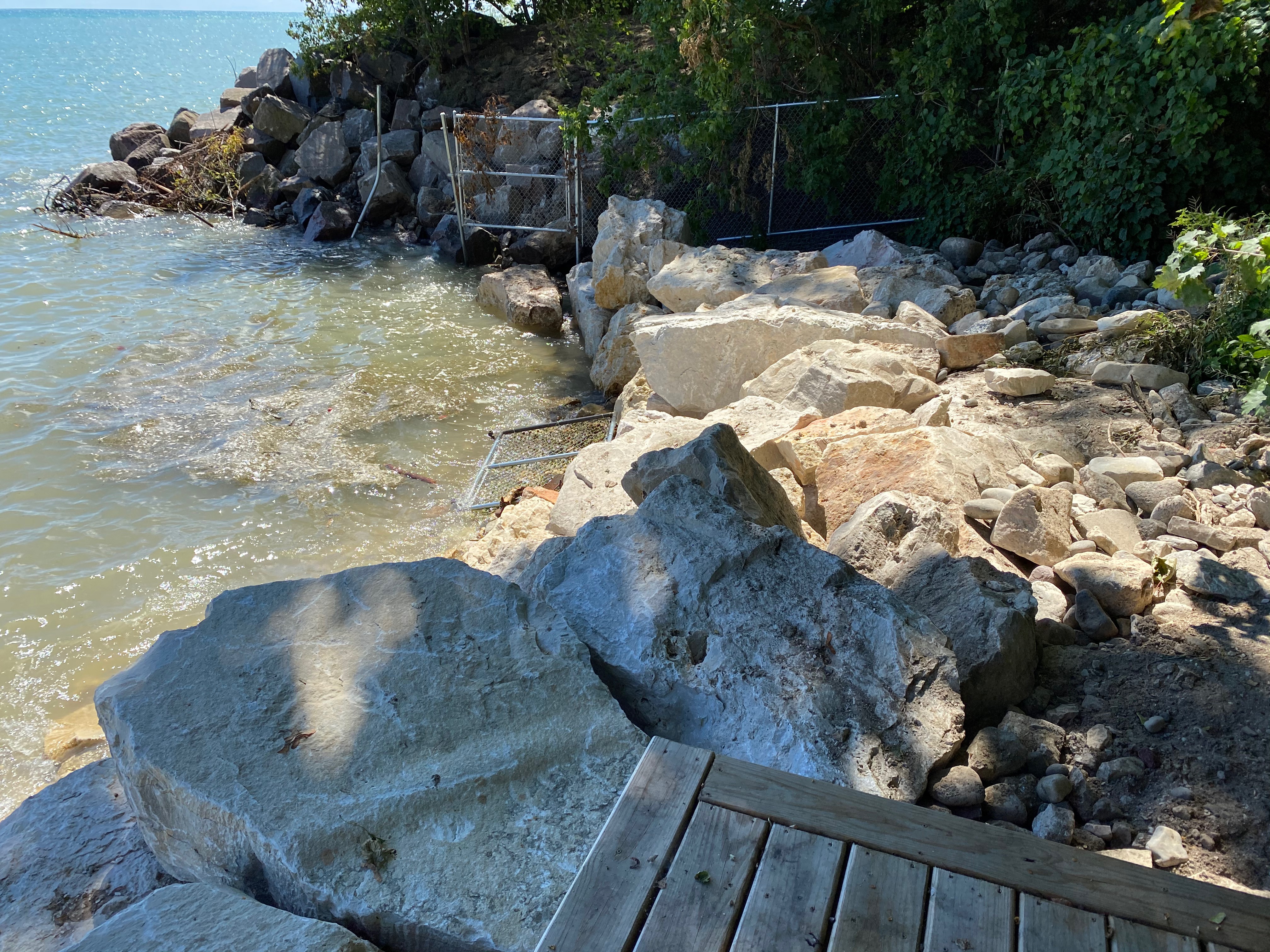
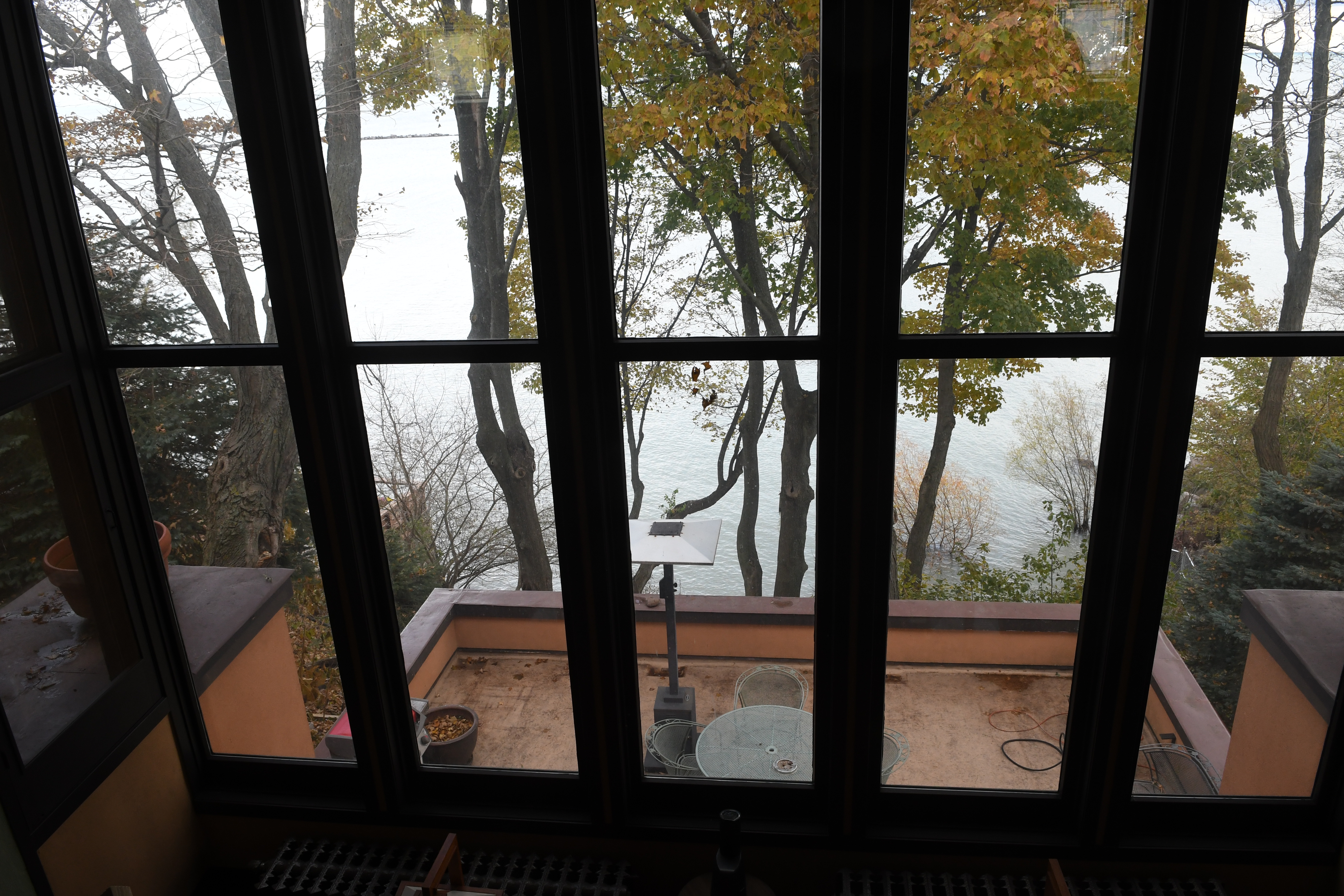
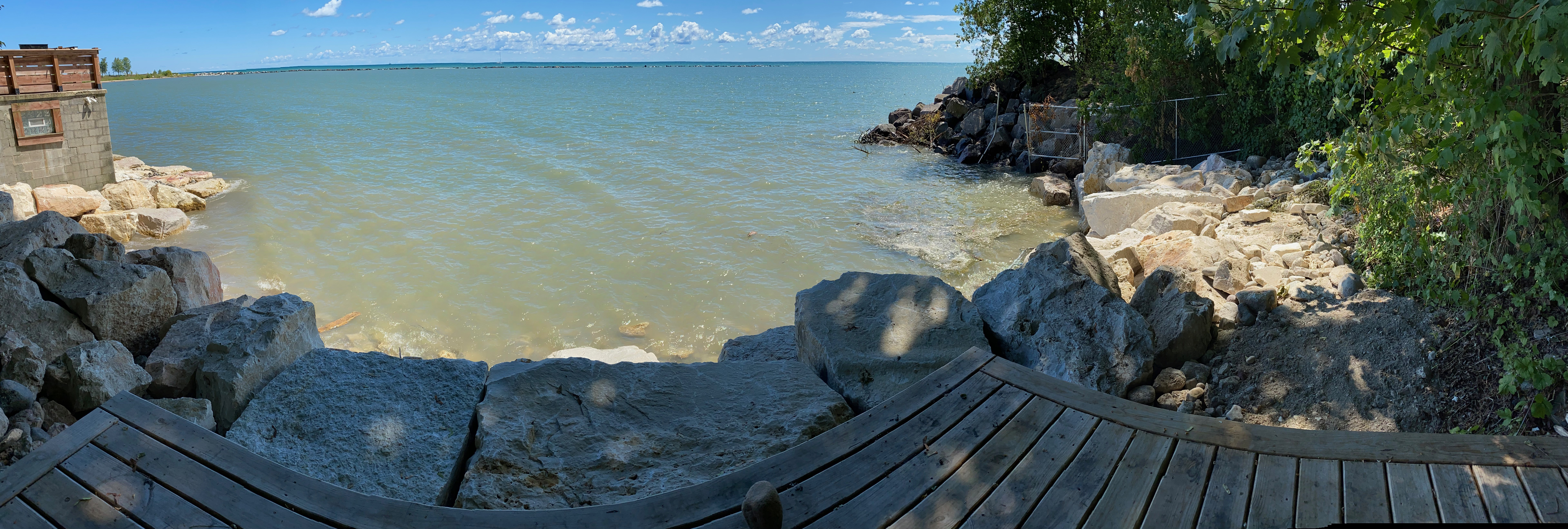
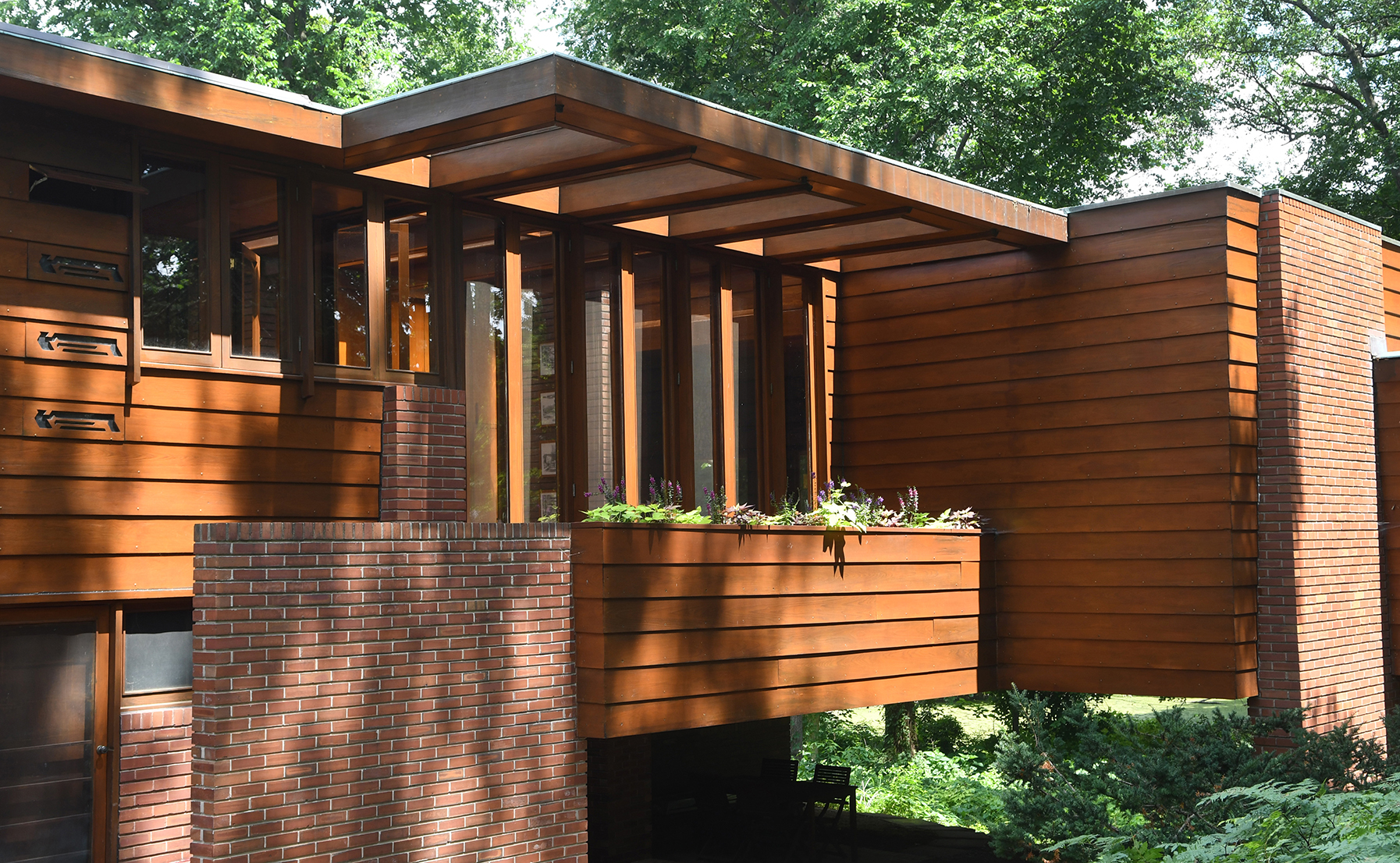
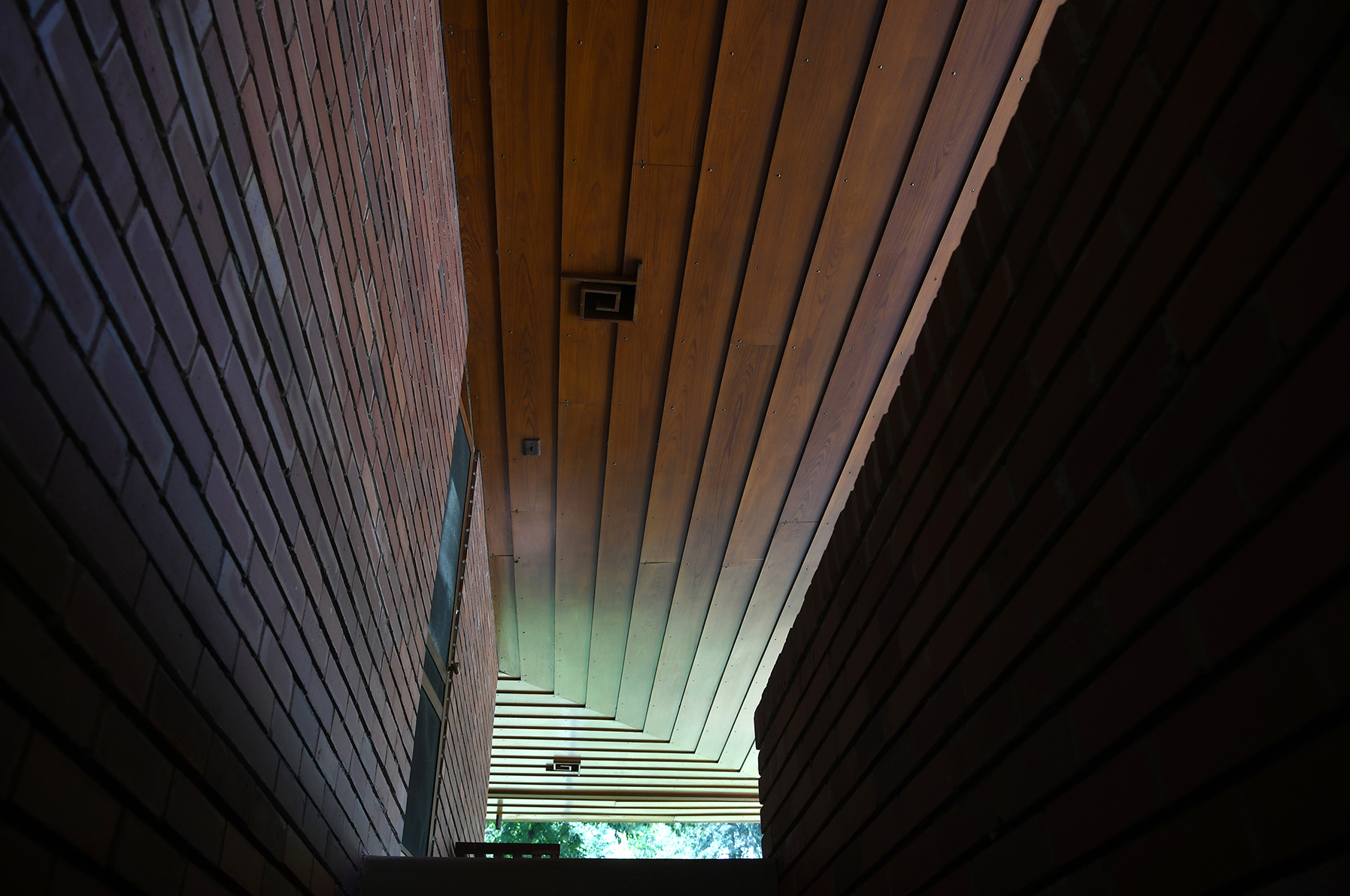
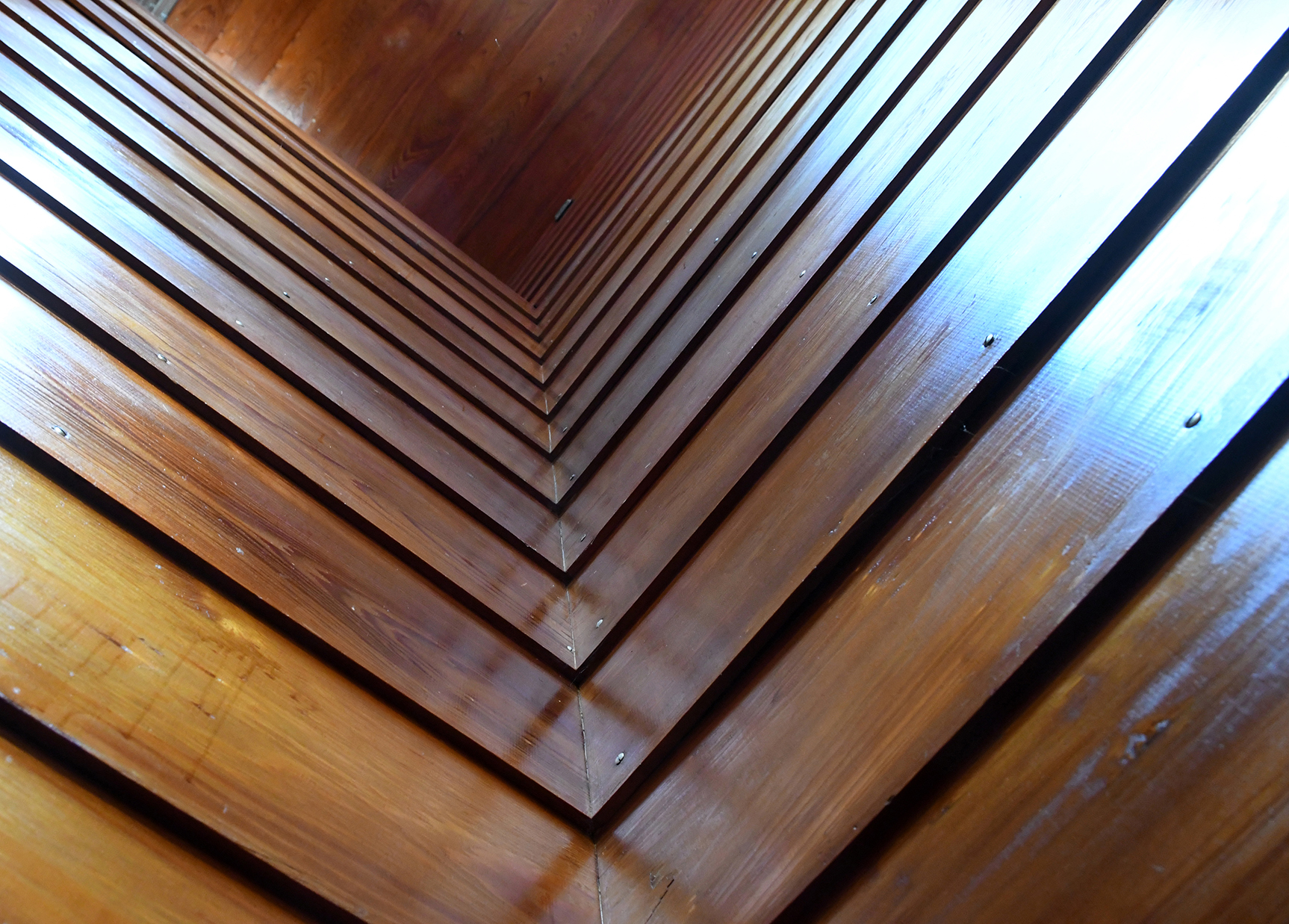
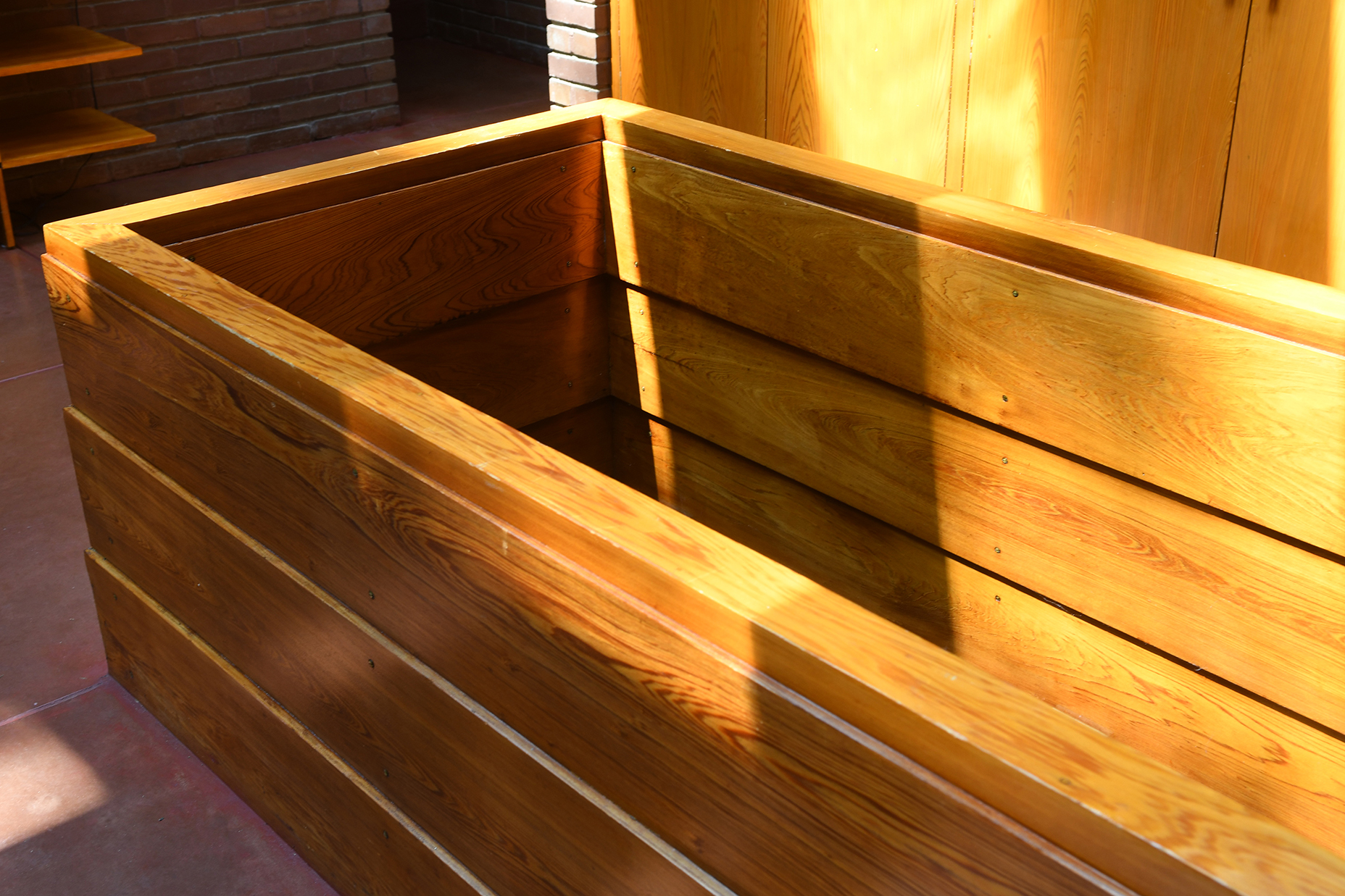

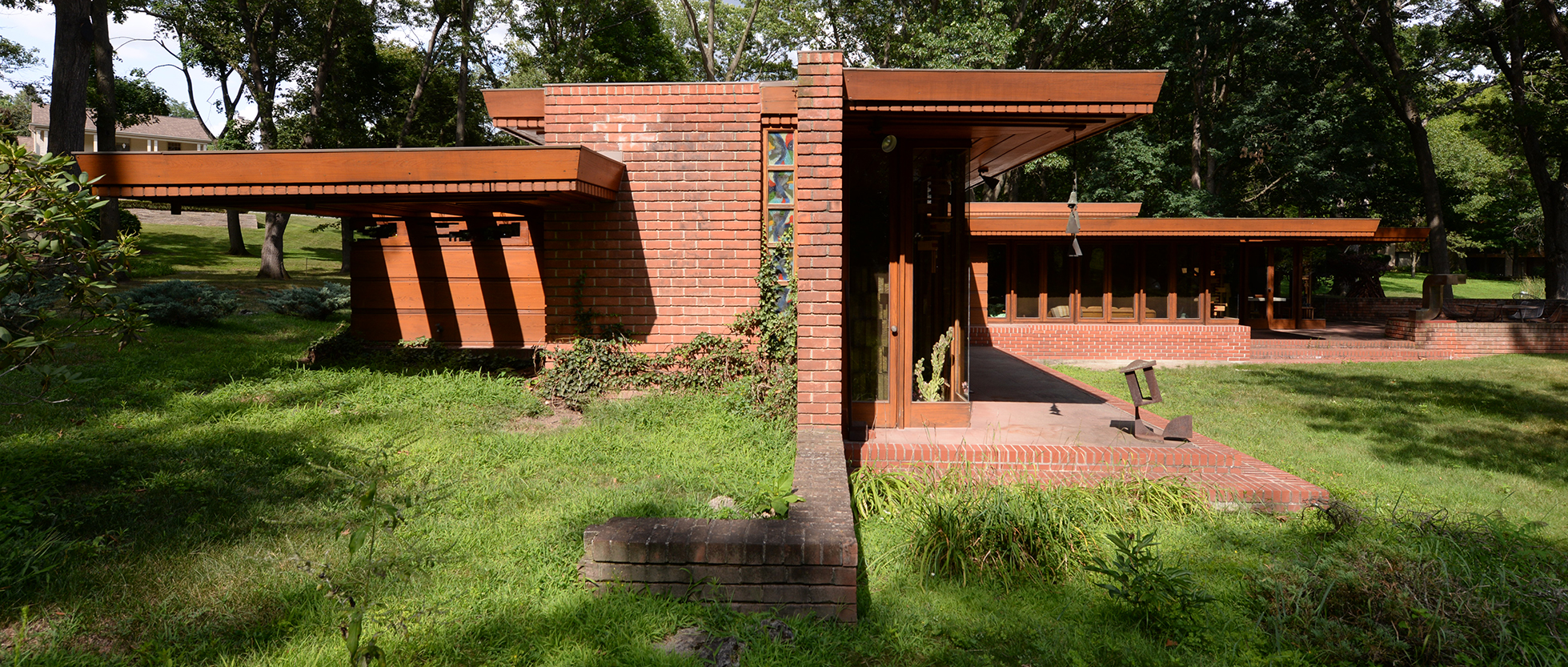

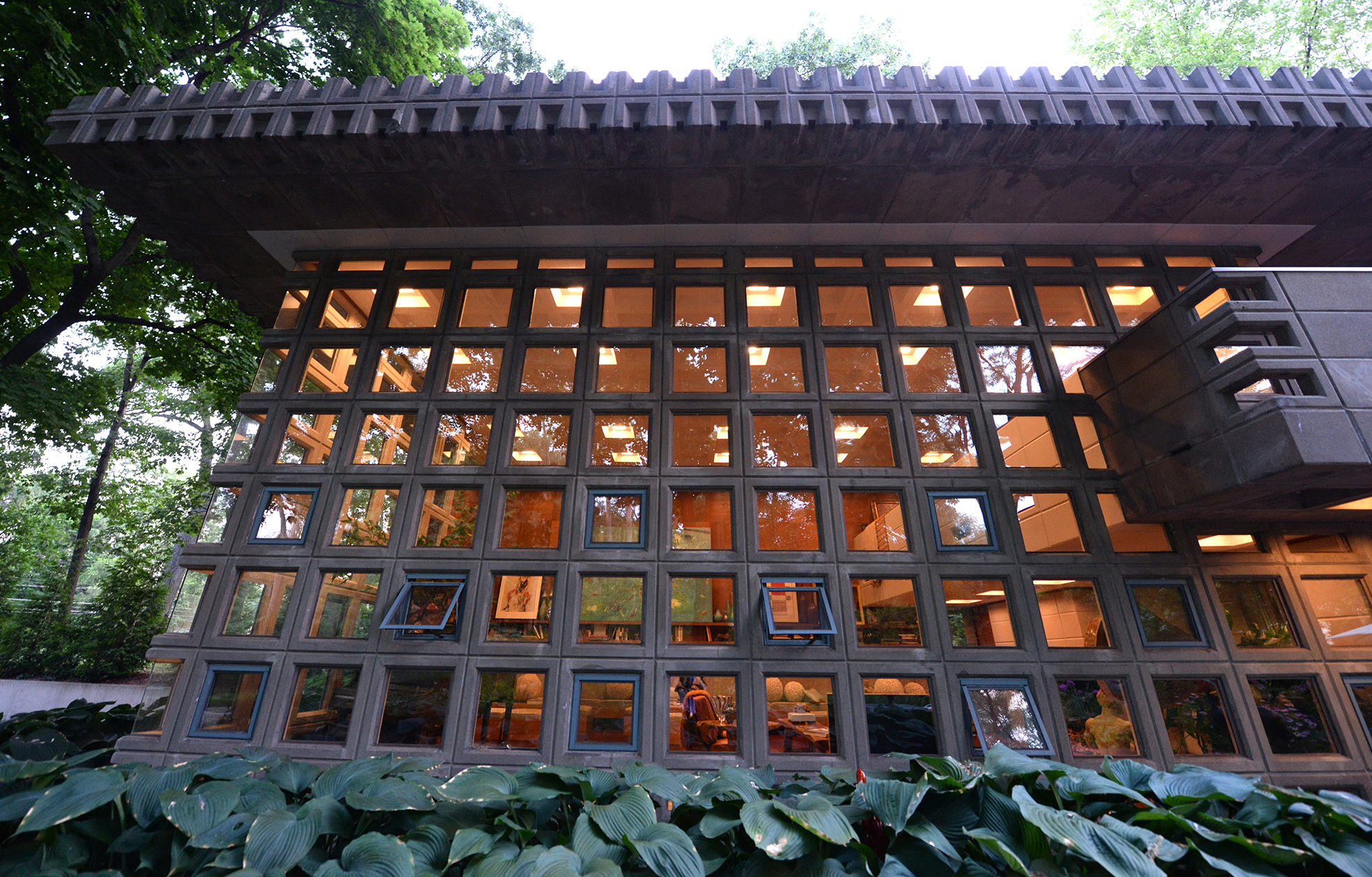
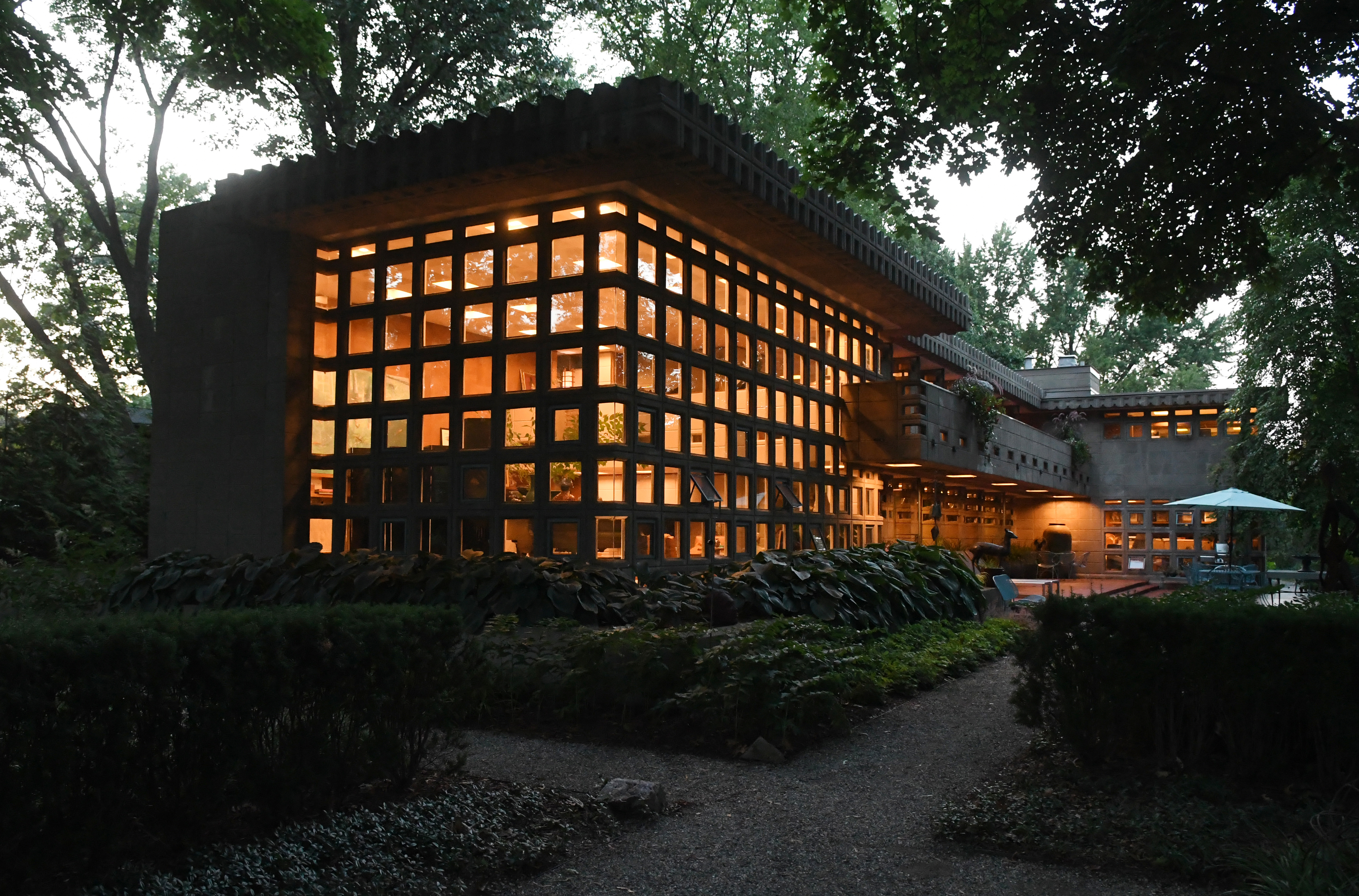
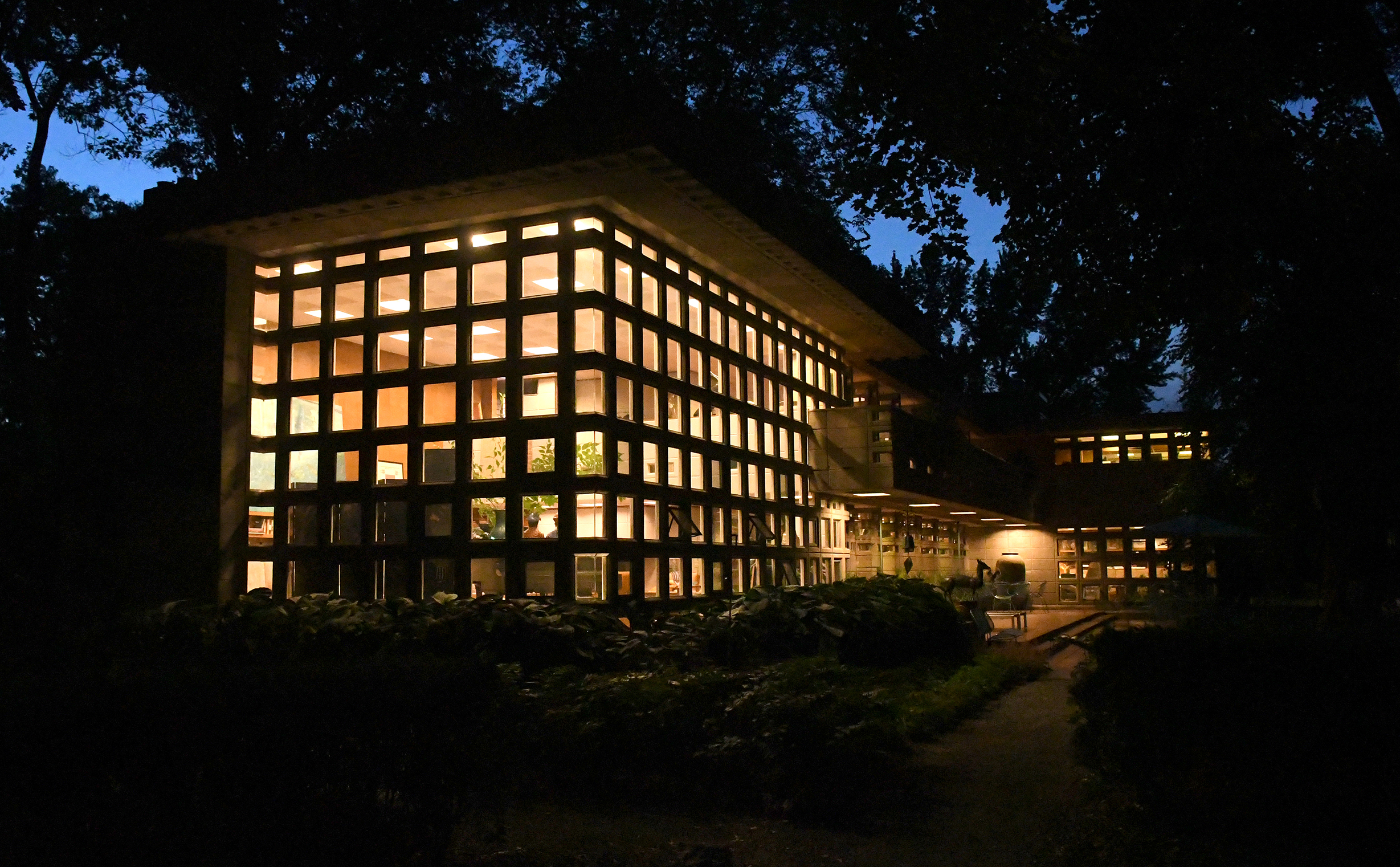
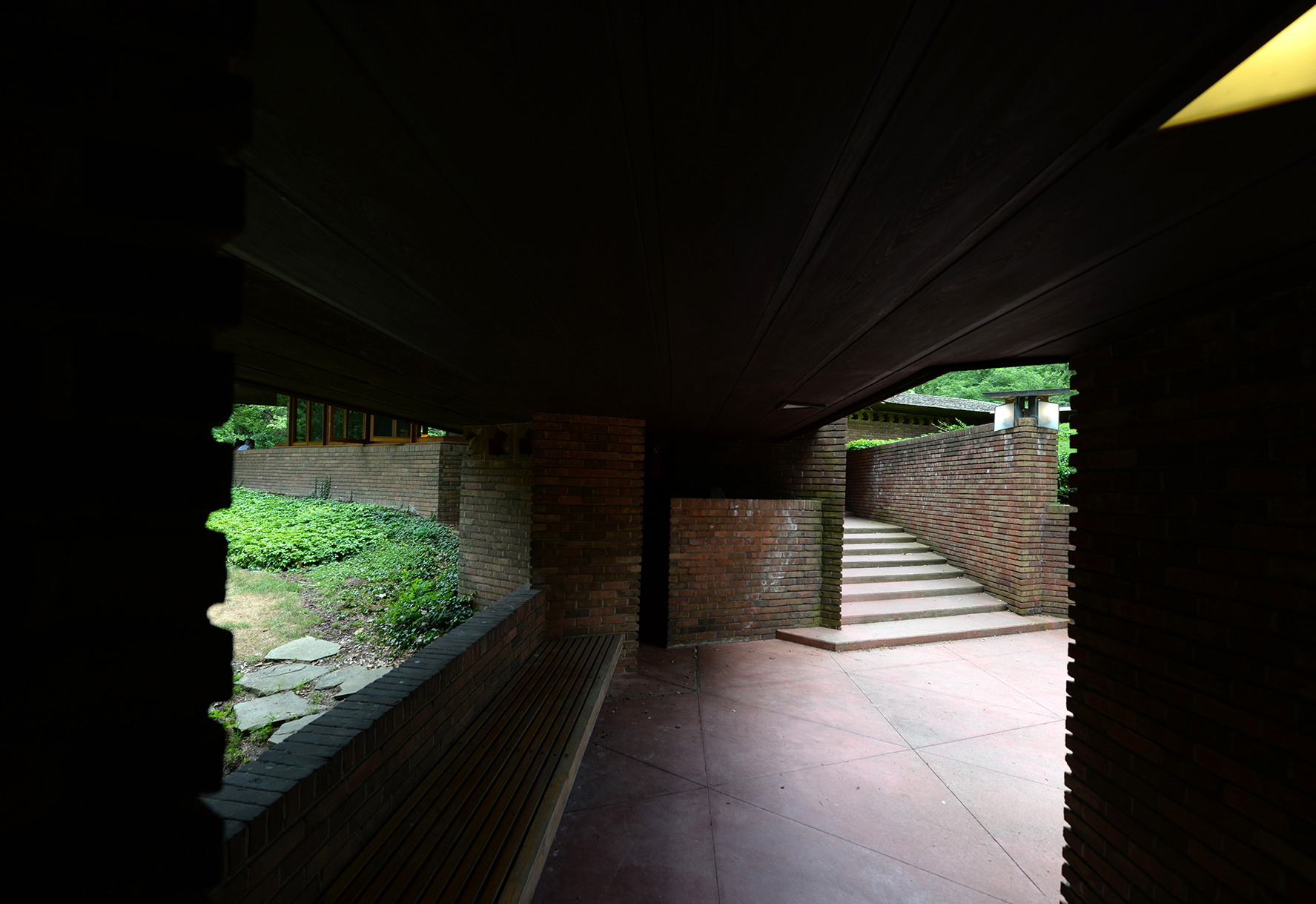
 We planned to stay only a couple of hours and not overstay our welcome, but we were like family enjoying the house in the living room after dinner until past 11 p.m.! The light was harsh when we arrived at 5 p.m., and I wondered how it would change through the evening: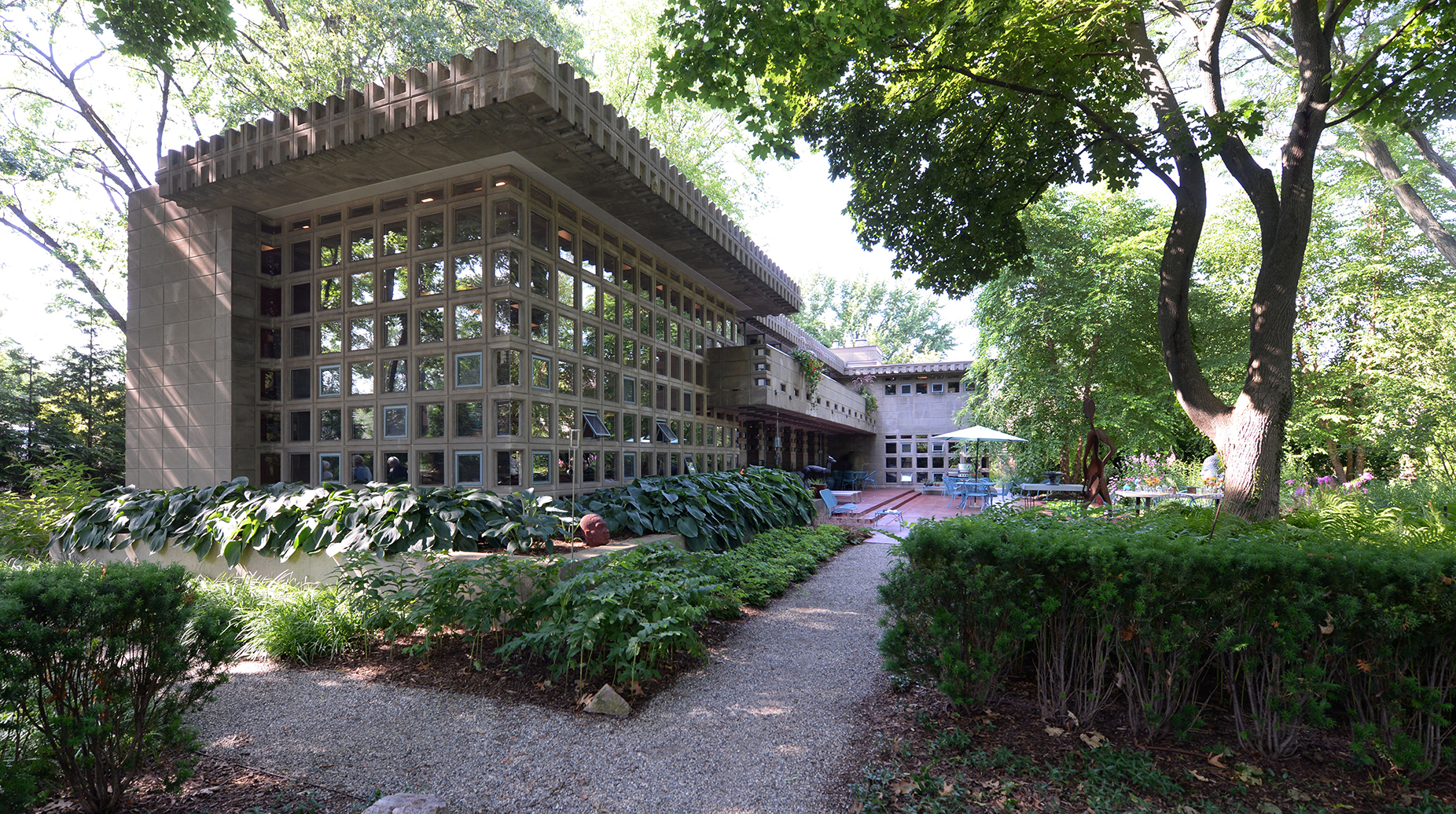
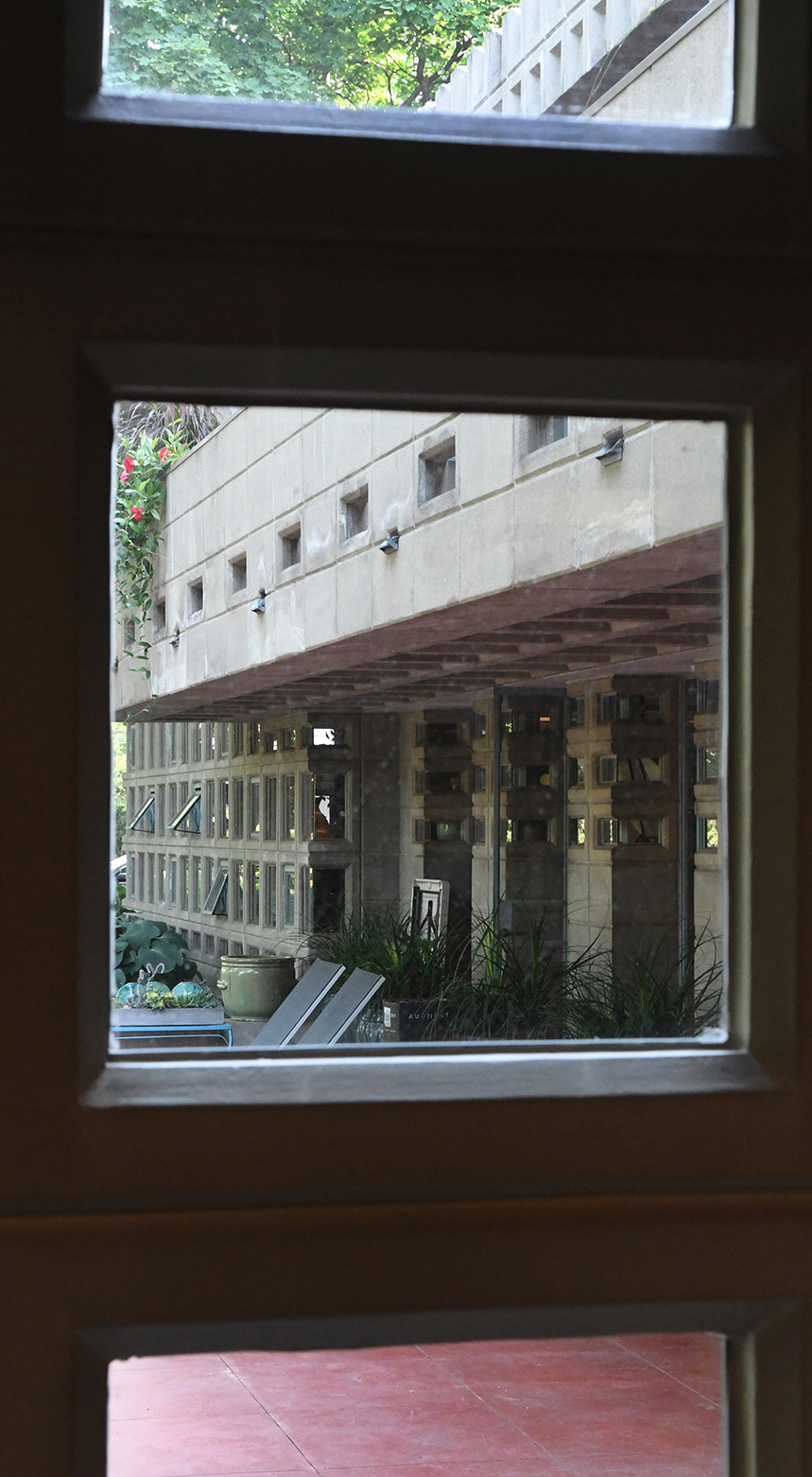
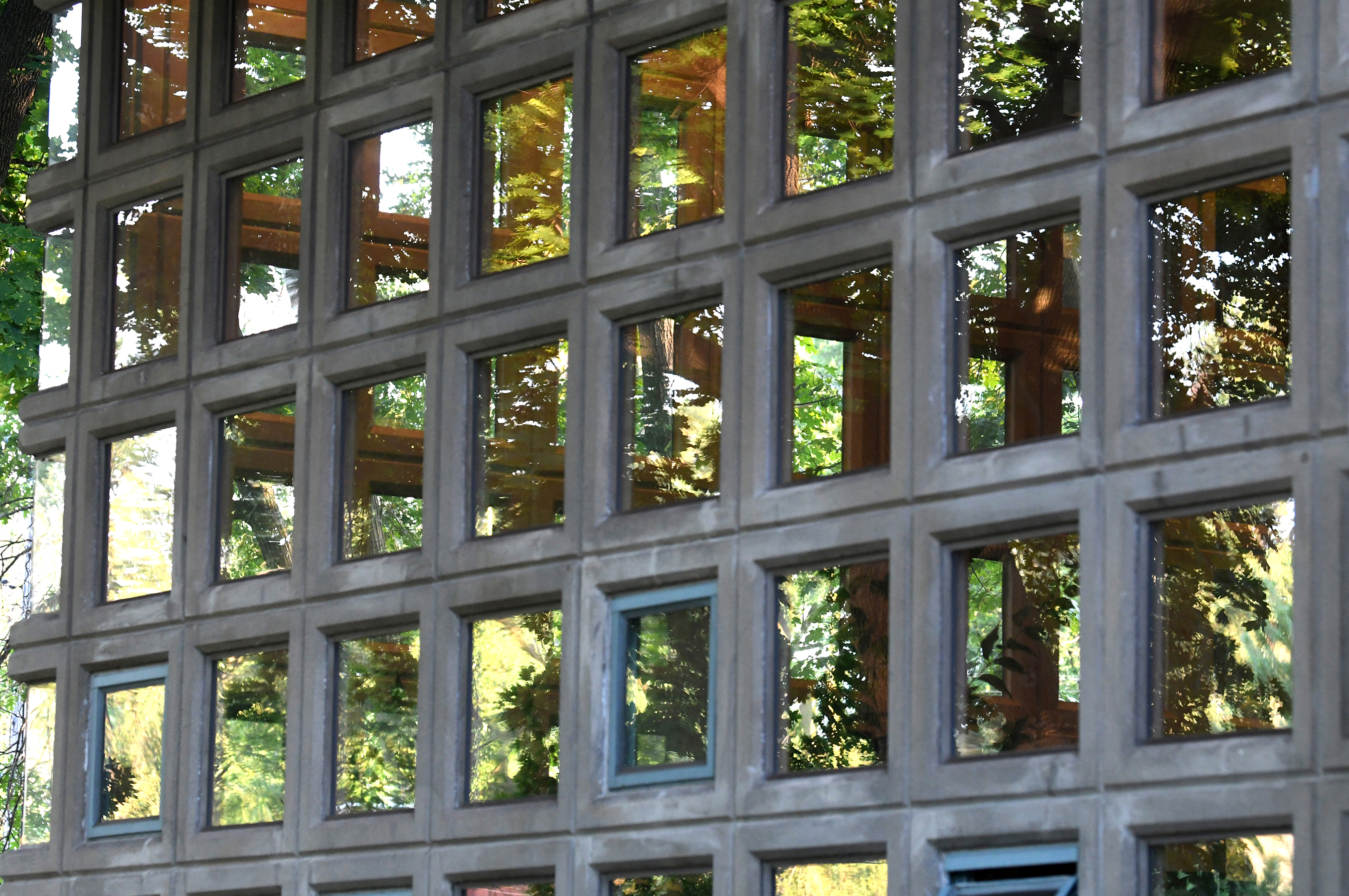





 Wright in Racine