Updates: Tower Tumult; Ann MacGregor

© Mark Hertzberg (2025)

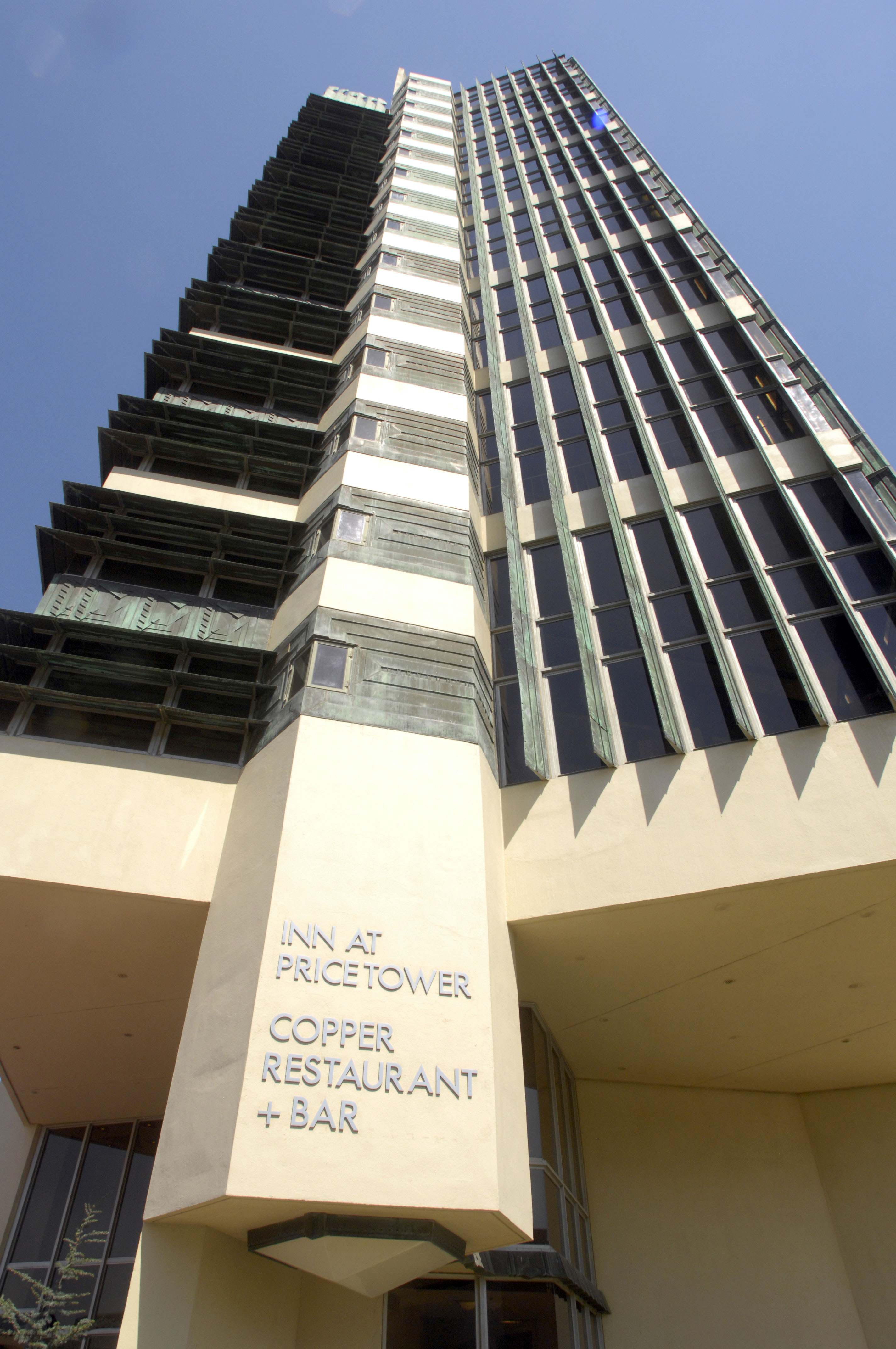
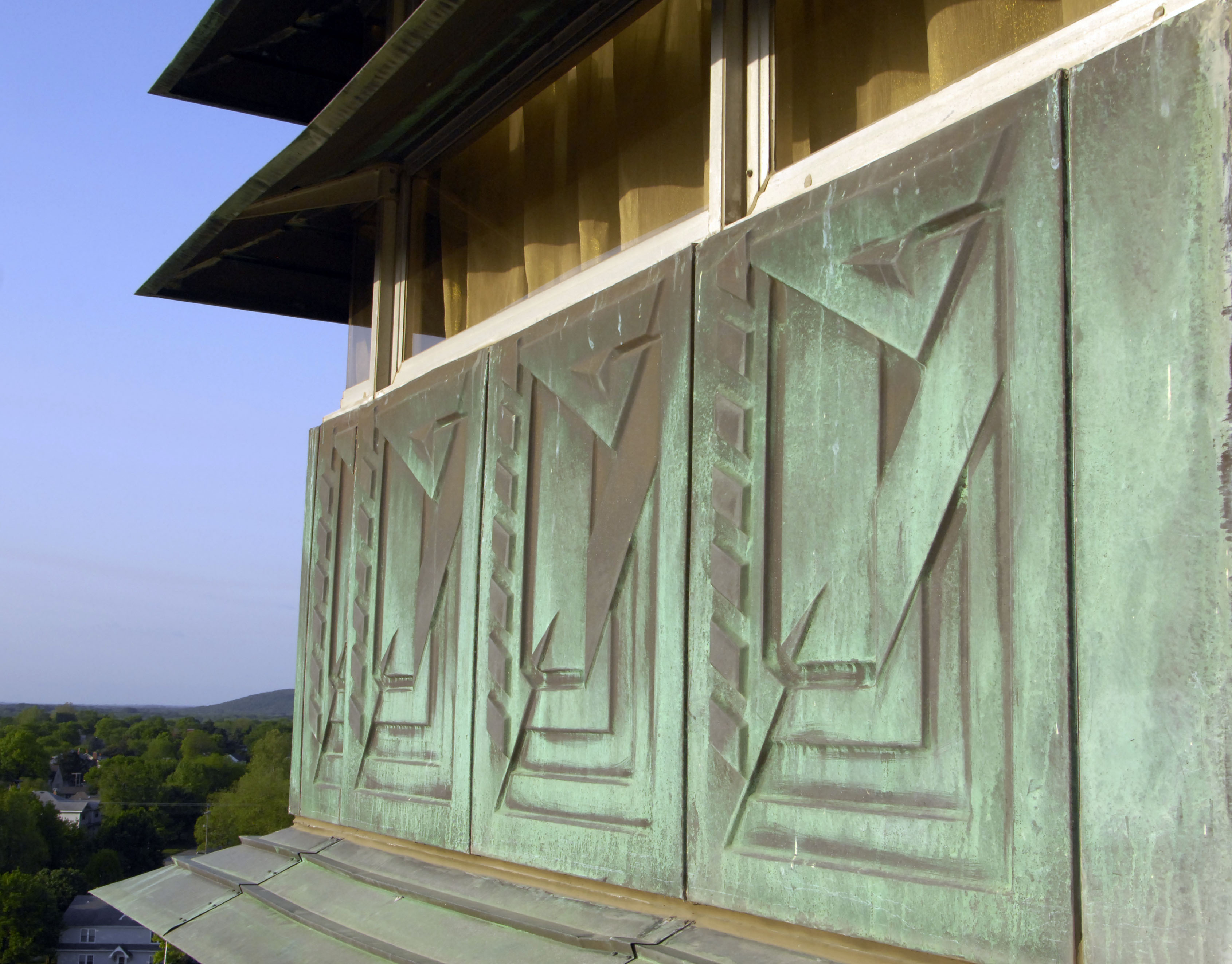
Tower Tumult: On August 14 I posted about the critical situation facing Frank Lloyd Wright’s Price Tower in Bartlesville, Oklahoma (I do not know why the URL mentions the unrelated SC Johnson Research Tower). The post includes a variety of photos of Price Tower:

https://wrightinracine.net/tag/sc-johnson-research-tower/

Oklahoma Frank Lloyd Wright Price Tower 002.jpg

On January 16 a judge ordered that utilities (heat) be restored to the building. On January 21 he ordered the sale to a responsible party from Tulsa that is known for their restoration of an historic hotel there. On January 22 the current owners filed for bankruptcy. They have still not turned the utilities back on, and so this saga drags on. The question of Wright artifacts from the building that were given to an auction house in Dallas, in spite of an easement prohibiting that has not been resolved, either. Among the heroes in this story are the staff and legal counsel of the Frank Lloyd Wright Building Conservancy. Their continuing updates on the story are at:

https://savewright.org/endangered-price-tower-in-bartlesville-oklahoma/

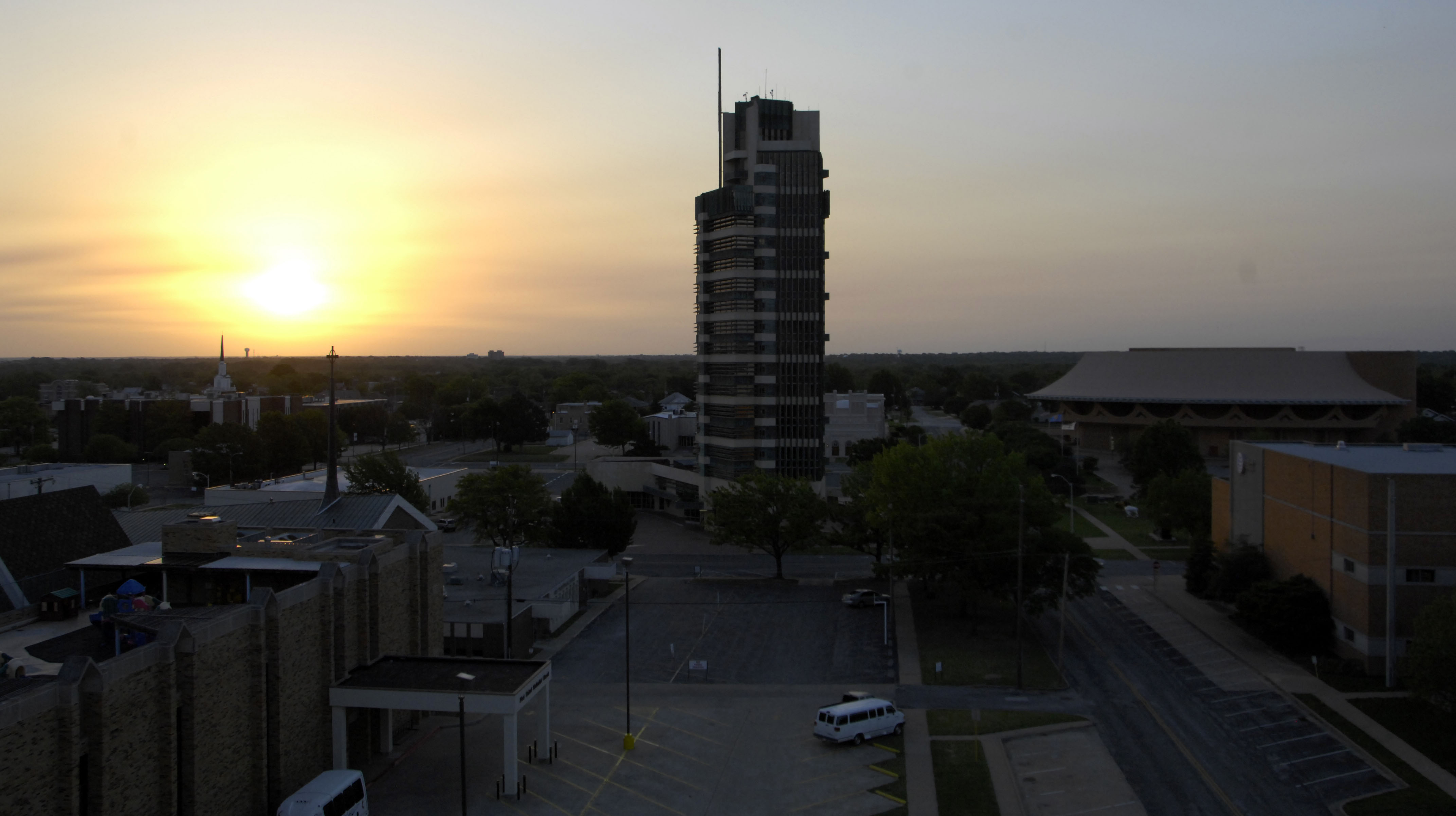
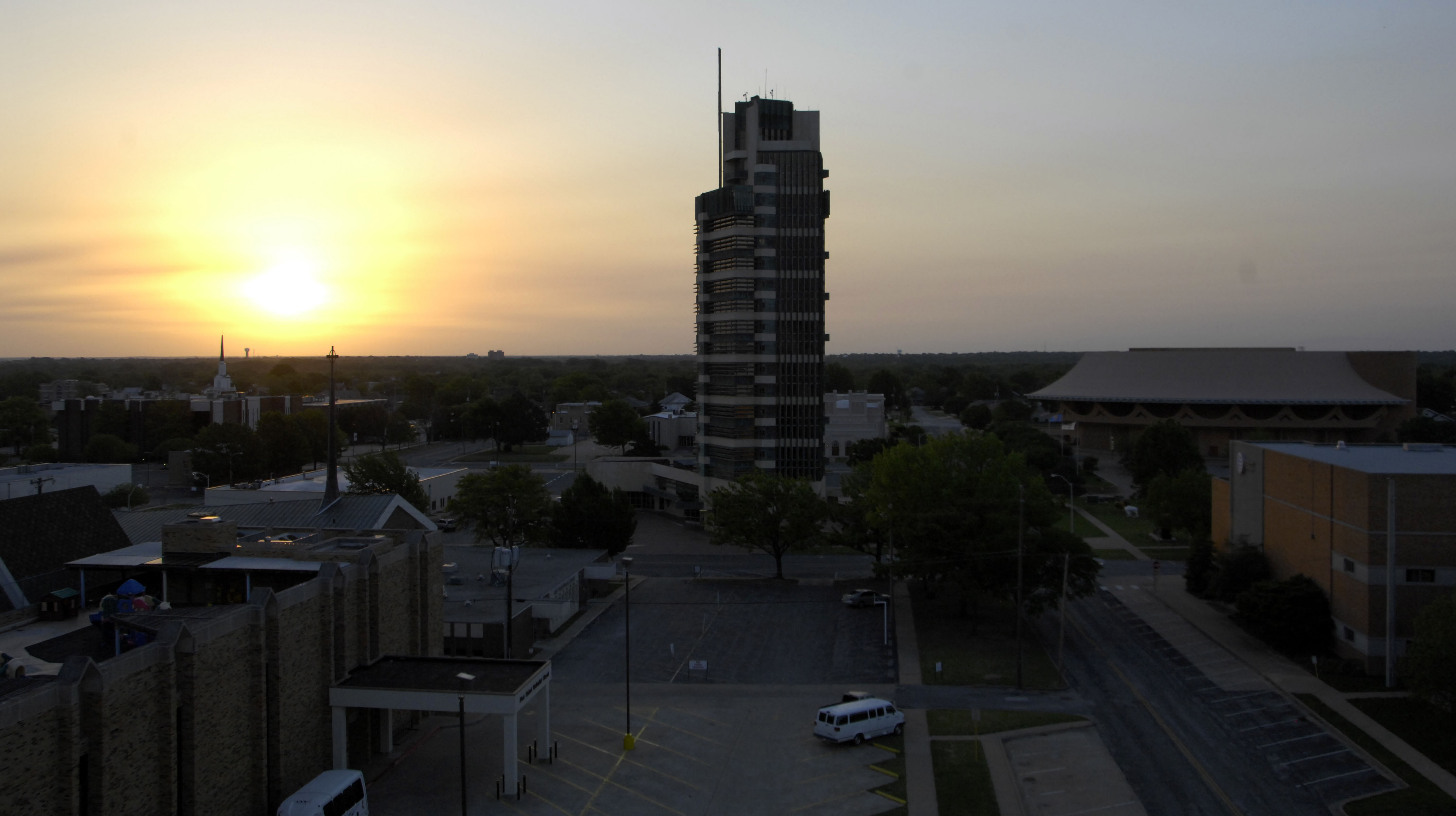
The Building Conservancy is going deep, deep into their funds set aside for legal work as the battle to save the building drags on. Please don’t let the sunset on the building, as I literally did when I took this photograph in 2014. Hint: they would welcome your financial support at:

https://savewright.org/give/

Remembering Ann MacGregor: On November 23 I posted a tribute to the late Ann MacGregor, one of the heroes in Mason City, Iowa’s successful quest to save Wright’s only extant hotel commission, the then-dilapidated Park Inn Hotel and adjoining City National Bank building. The hotel is now a successful boutique hotel:

https://wrightinracine.net/2024/11/23/remembering-ann-macgregor/

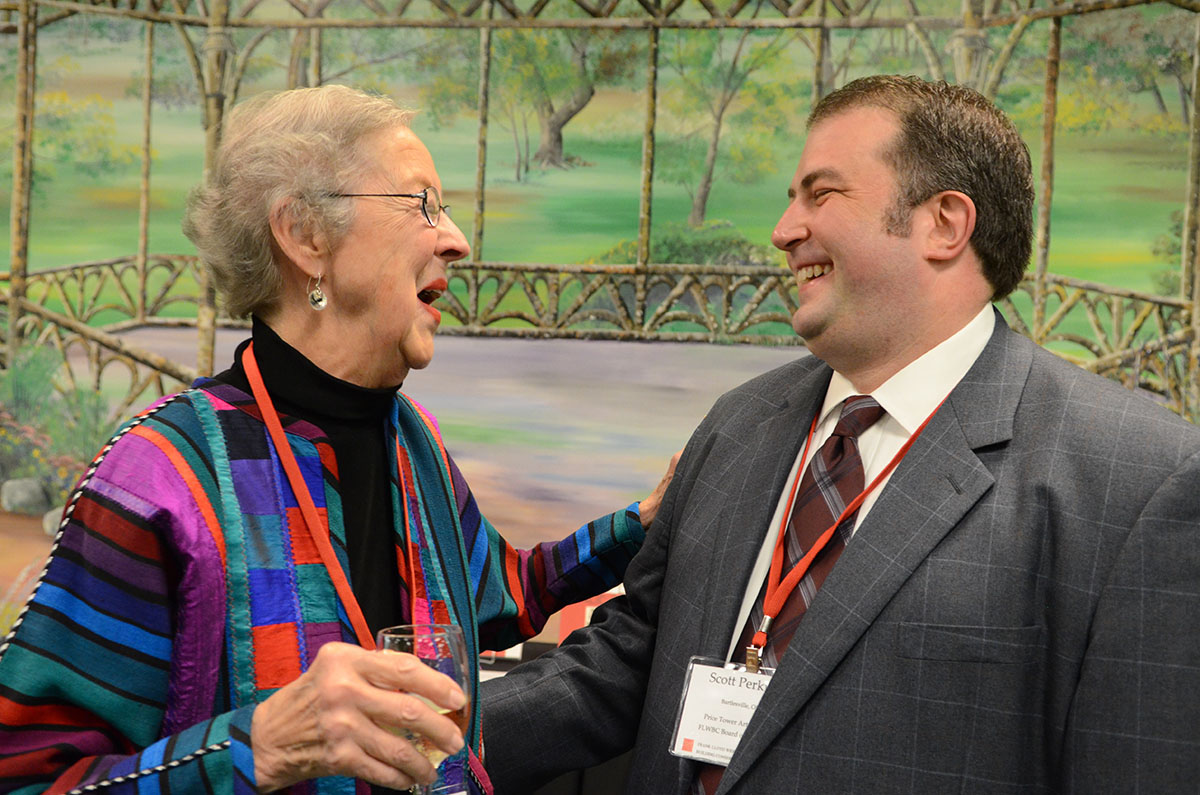
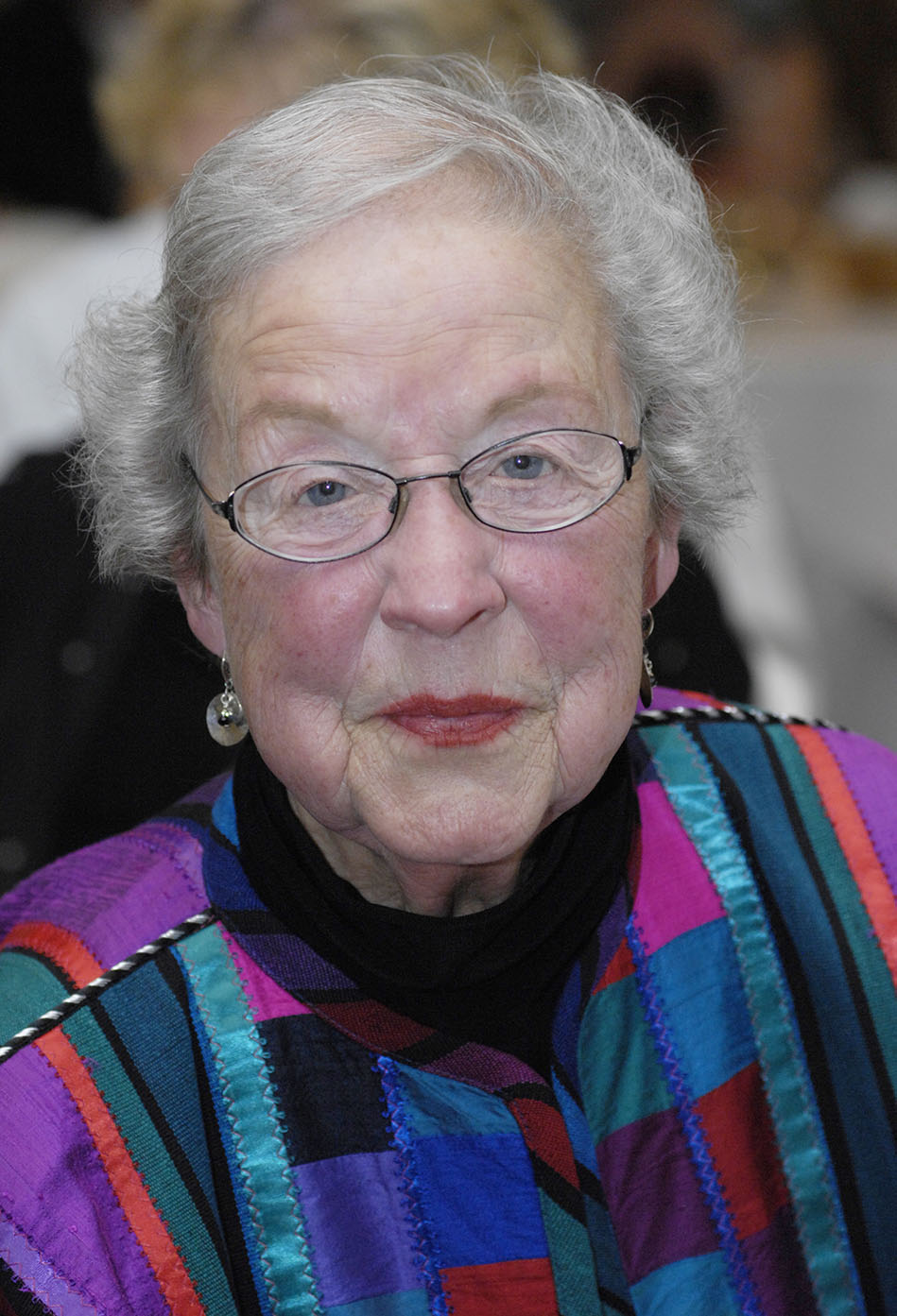
LR Pre-dinner 012.jpgAnn MacGregor with Scott Perkins of the Frank Lloyd Wright Building Conservancy, 2012

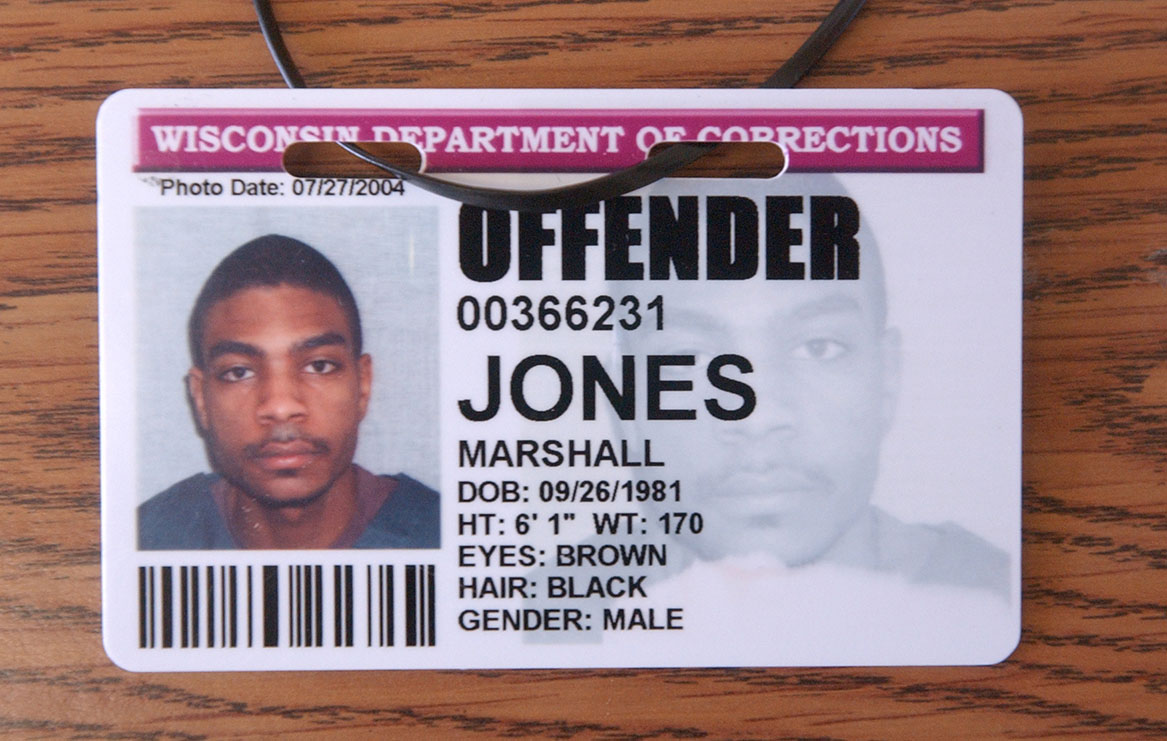
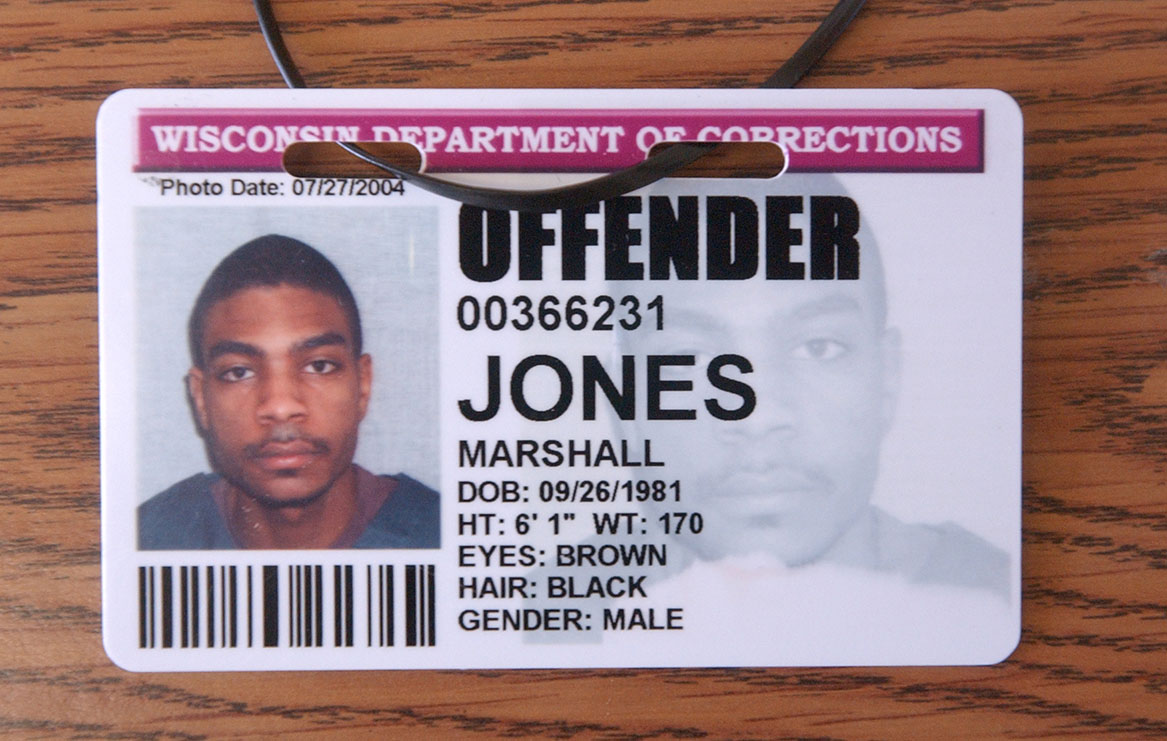
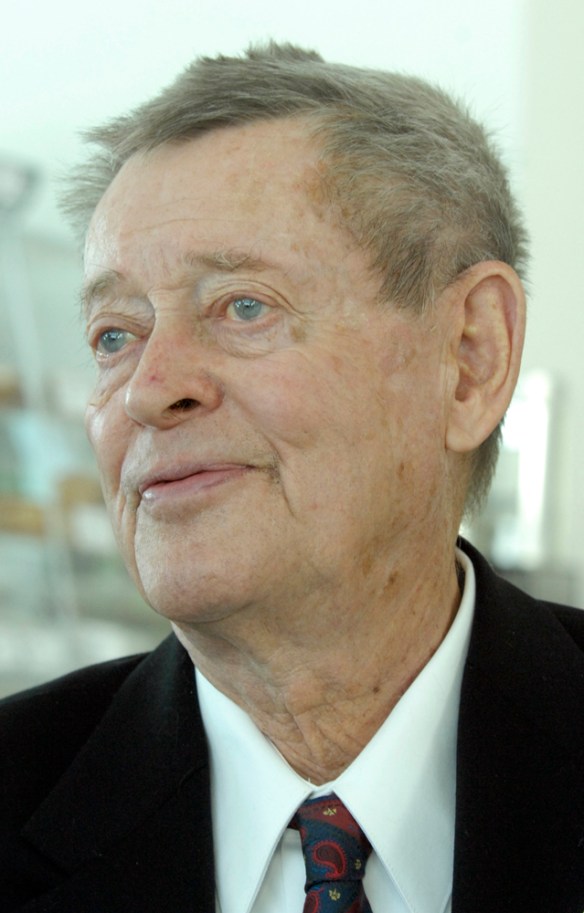
My tribute to Ann mentioned her long-term correspondence with Marshall Jones, a friend of mine, who is serving two consecutive life terms for homicide in Wisconsin. He became interested in Wright after I interviewed him for a project about the criminal justice system.

LR Marshall Jones Waupun 014.jpg

I wrote Marshall to tell him about Ann’s passing, and sent him a copy of my story. He wrote me back last week (mail to the prison system faces interminable delays while it is sent to a place in Maryland that copies incoming letters and then sends the copies to inmates) with his own tribute to Ann:

“I appreciate you for sending me the news of Ann’s passing. A part of me was deeply saddened, but another part of me was greatly appreciative that I had the privilege of being considered her friend, She was so much more than someone that I corresponded with. She was someone who brought unconditional love, unconditional positive regard, she allowed me to peer into her beautiful family, and she gave me priceless guidance. She didn’t see me by my conviction, nor did she allow me to accept my worst decision as the resounding theme for my life. She was ruthless when it came to goals, and when you said that you wanted to accomplish something, she pressed you until it was done. She was amazingly supportive and she encouraged me with gentleness and love. You knew that Ann had your back. We talked about Mr. Wright, religion (we were both Christians), politics, family, and life. Her disposition increased in positivism even in the face of diminishing health. So, I am grateful for her life, and for her presence in my life. I was so blessed by her, and I am better because of her friendship. It was much deeper than correspondence. With Ann and Bruce (Bruce Brooks Pfeiffer also corresponded with Marshall), I was family. I now carry her with me everywhere I go.”

Well, Marshall, my story was more of the nuts and bolts of her life, as we used to say in the newsroom. You captured her essence. Thank you.

Remembering Ann MacGregor

Photos and text © Mark Hertzberg (2024)

Ann MacGregor one of Mason City, Iowa’s heroes in helping save Frank Lloyd Wright’s last surviving hotel, the Park Inn, and the adjacent City National Bank, died peacefully October 2, it was announced today.

LR Wright Spirit Awards 028.jpg

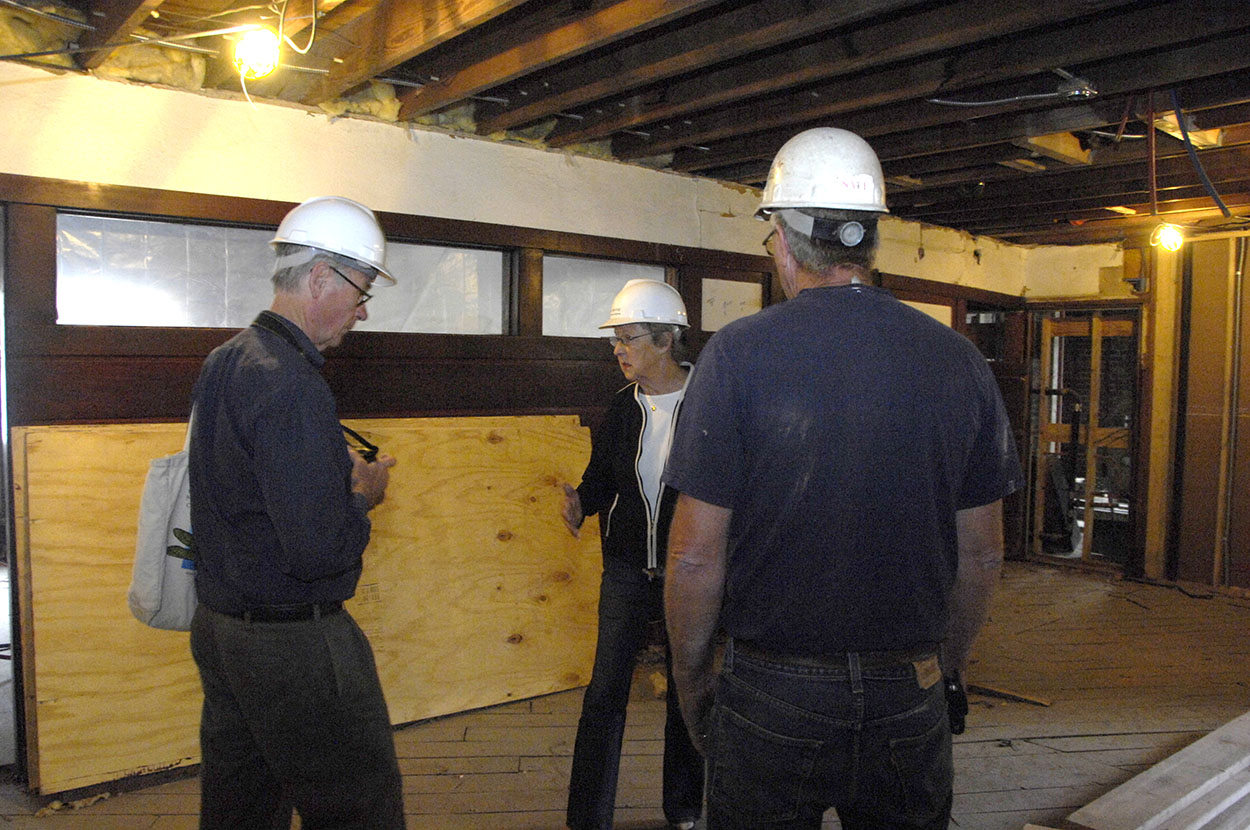
The hotel and bank buildings, which opened in 1910, had deteriorated so badly that the city had put them up for sale on eBay in the late 1990s or early 2000s. Mason City rallied to save the buildings. Ann served as Executive Director of the newly formed Wright on the Park. Today the Historic Park Inn Hotel is a popular boutique hotel for visitors to Mason City, whether or not they are there on a Wright pilgrimage.

Ann was a genial, giving person. Her obituary outlines her life of service, including as a nurse on the medical ship SS HOPE and as a public health nurse for the Migrant Action Program in the late 1960s in Mason City.

https://www.bratleyfamilyfuneralhomes.com/obituary/ann-macgregor

In 2013 she published a book about her six years service around the world on the HOPE, beginning in 1958 [it is no longer in print]:

Screenshot 2024-11-23 at 4.06.54 PM.png

I met Ann in May 2005 when the late Bob (Dr. Robert) McCoy, another one of Mason City’s heroes in saving the hotel and bank building, invited me there to give a talk, and I began photographing the buildings. They were still in a raw state. Ann and I connected in two other ways, one as passionate bicyclists.

The other story tells you quite a bit more about Ann. She began corresponding with Marshall Jones after I told her about his insights into Wright’s work. Jones is serving two consecutive life terms in a Wisconsin prison for a double murder.

LR Marshall Jones Waupun 014.jpg

When I interviewed Jones in 2008 for a project about the criminal justice system he told me how much he enjoys reading “anything I can get.” I sent him my Wright in Racine book. He quickly sent me an incisive review back. We began corresponding, in large part about Wright. How much does Jones understand Wright? In addition to Ann being impressed by his insights, the late Bruce Brooks Pfeiffer corresponded with Jones, as well, after I sent Pfeiffer some of Jones’s letters about Wright’s work. When I sent the late Ron McCrea Jones’s review of his Building Taliesin, McCrea wrote me that Jones picked up on a point that no one else had, and he was going to quote him in a talk at Taliesin West. Ann corresponded with Jones for many years, and Jones often wrote me how much he appreciated her letters and friendship. Now I must write him about Ann’s passing.

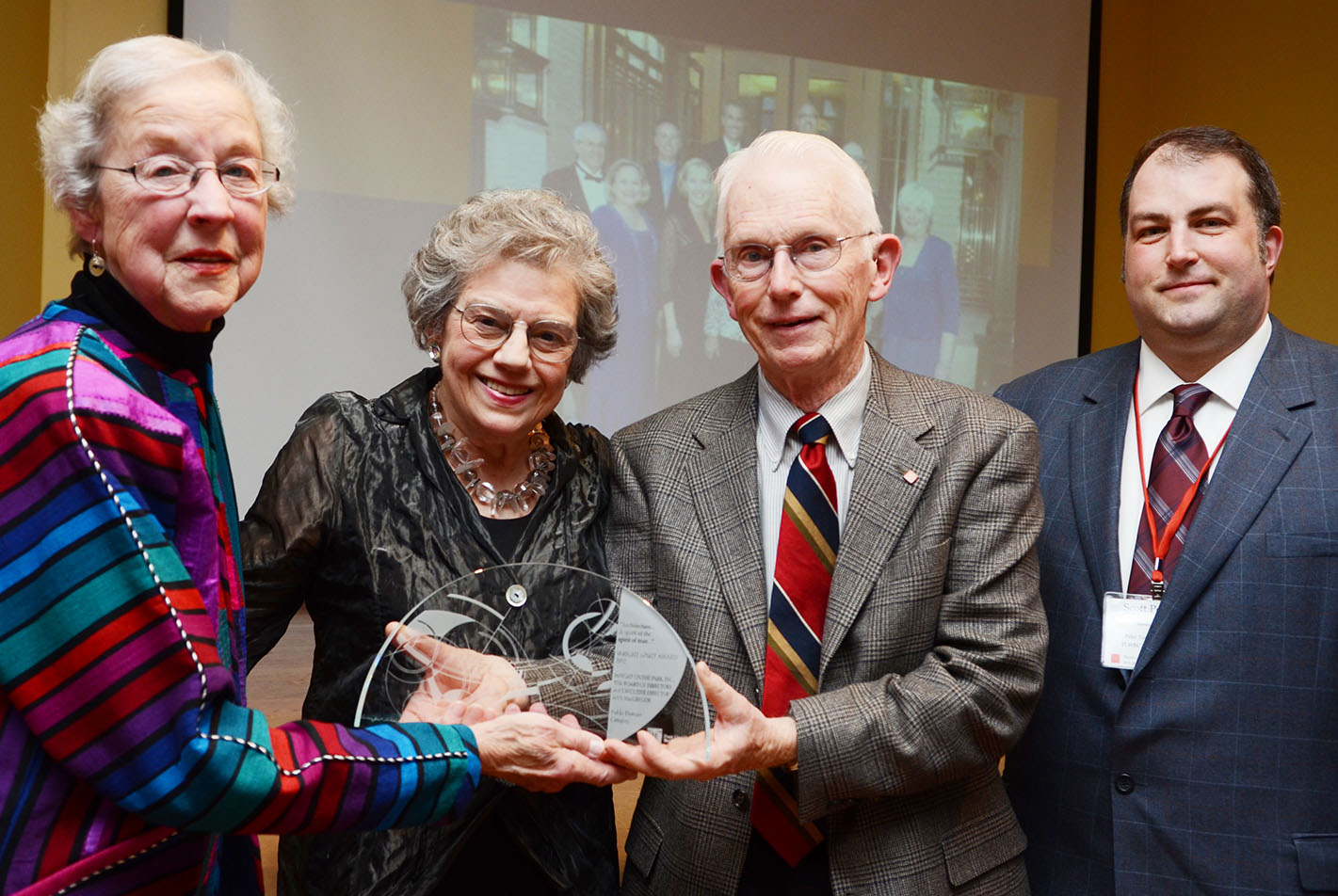
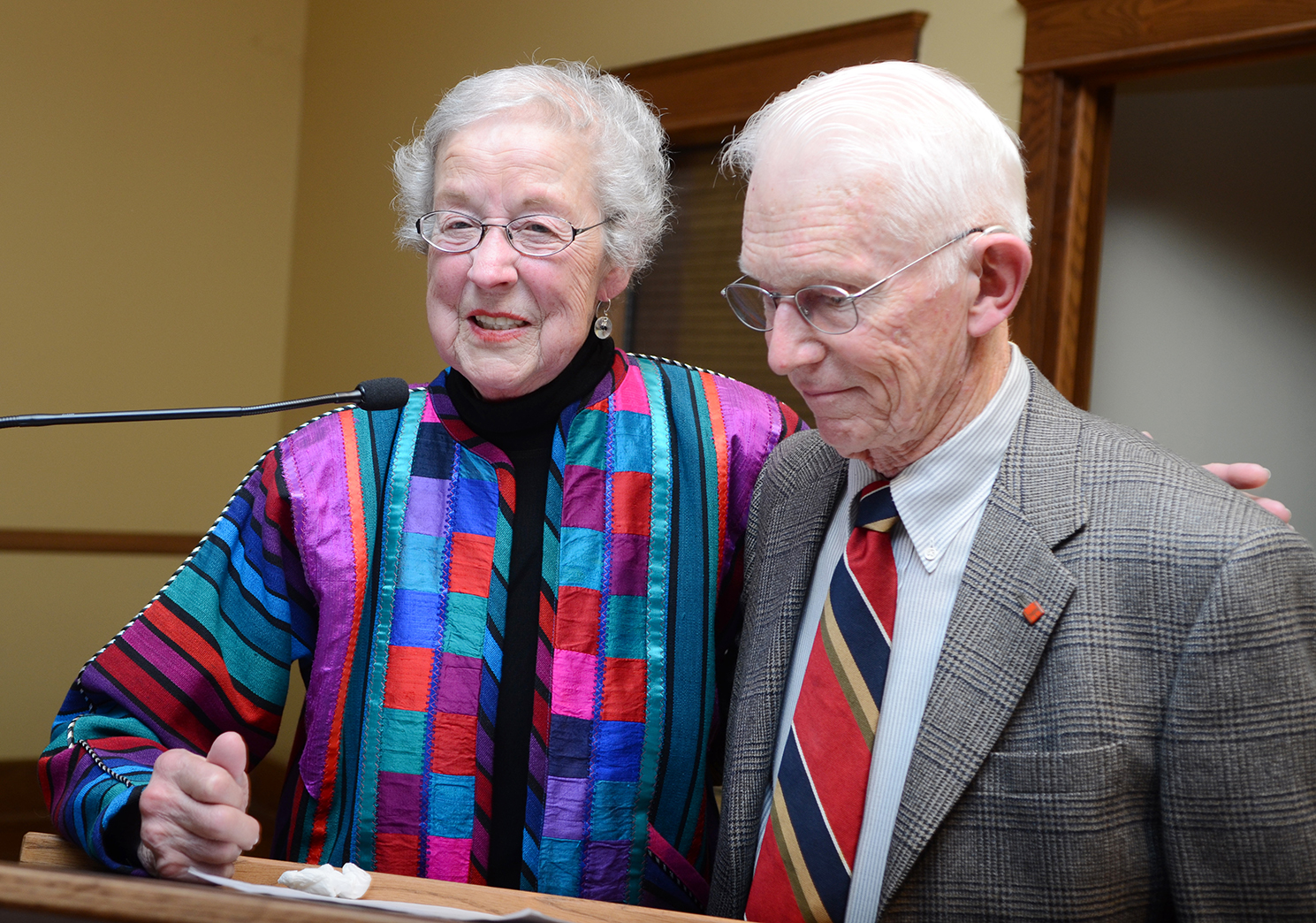
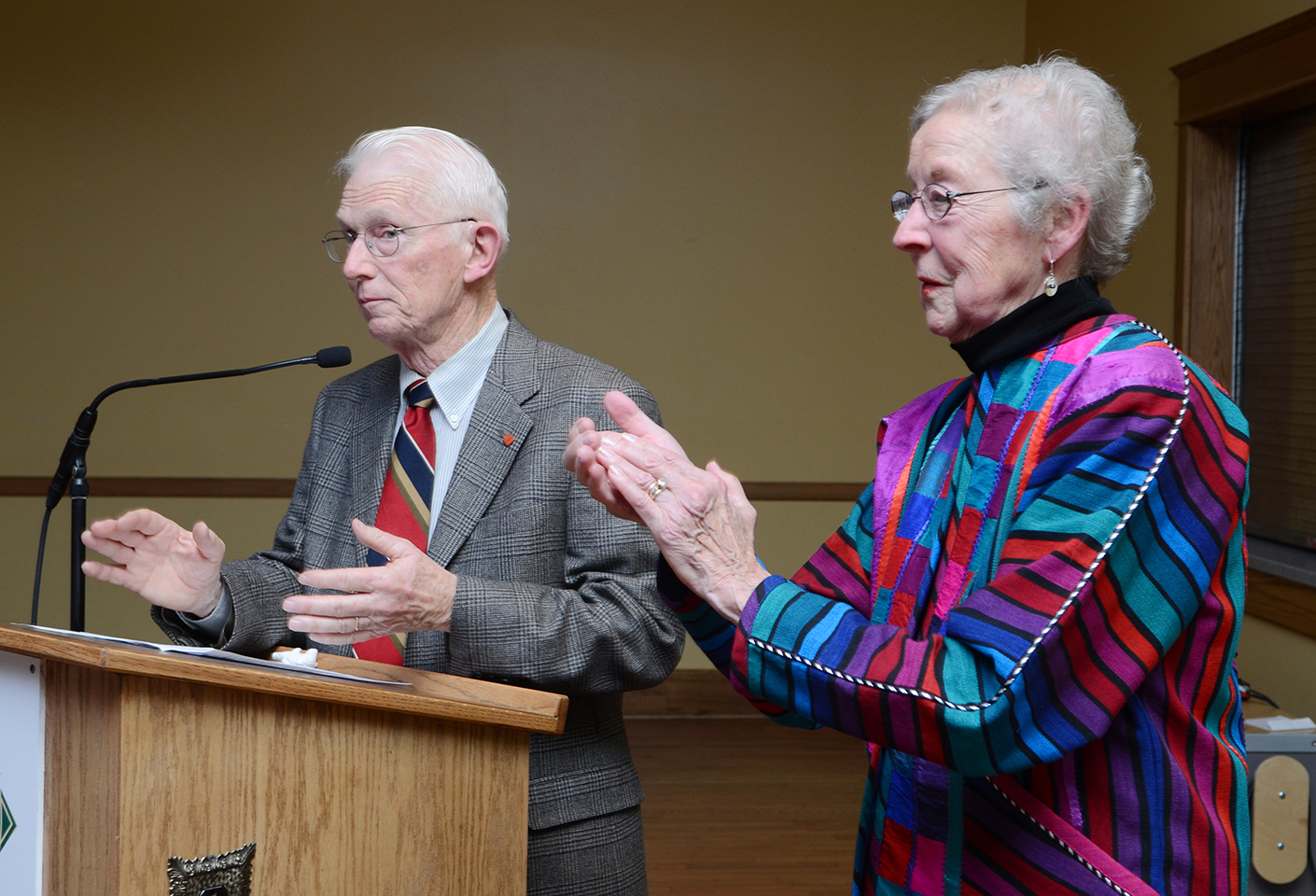
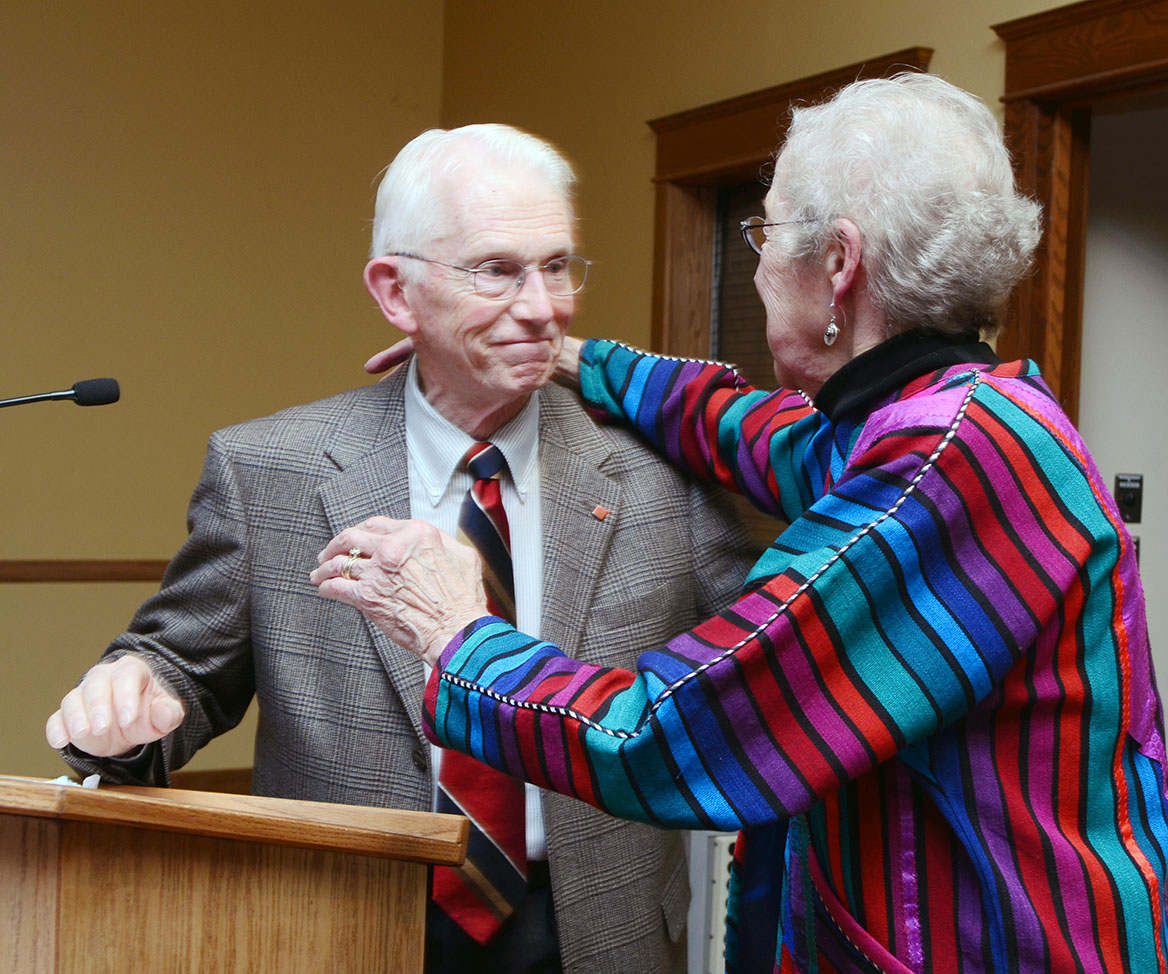
Ann’s memorial service will be Saturday November 30, as noted in the obituary. I will leave you with a photo of Ann in the bank building in 2010, and of Ann and Bob McCoy she and Wright on the Park were honored with the Frank Lloyd Wright Building Conservancy’s prestigious Wright Spirit Award on October 13, 2012, during the group’s annual conference:

LR City Natl. Bank 2010 001.jpg

LR Pre-dinner 012.jpg

LR Wright Spirit Awards 013.jpg

LR Wright Spirit Awards 014.jpg

LR Wright Spirit Awards 019.jpg

LR Wright Spirit Awards 020.jpg

LR Wright Spirit Awards 022.jpg

Thank you, Ann, for your friendship and service.

(My remembrance of Bob McCoy is at:

https://wrightinracine.net/tag/bob-mccoy/

Please scroll down for previous posts on this website.

Tower Tumult in Bartlesville

© Mark Hertzberg (2024)

Oklahoma Frank Lloyd Wright Price Tower 001.JPG

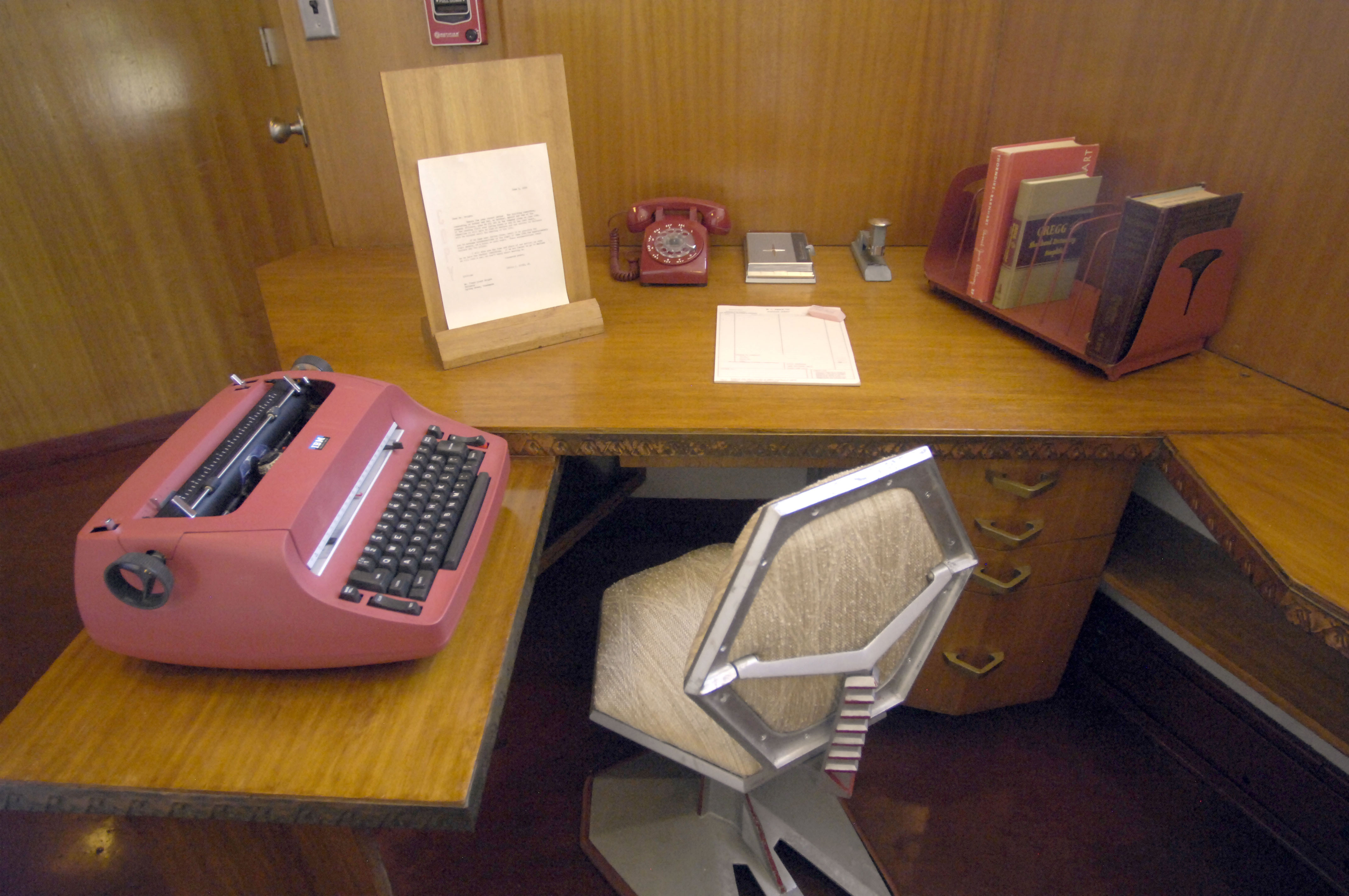
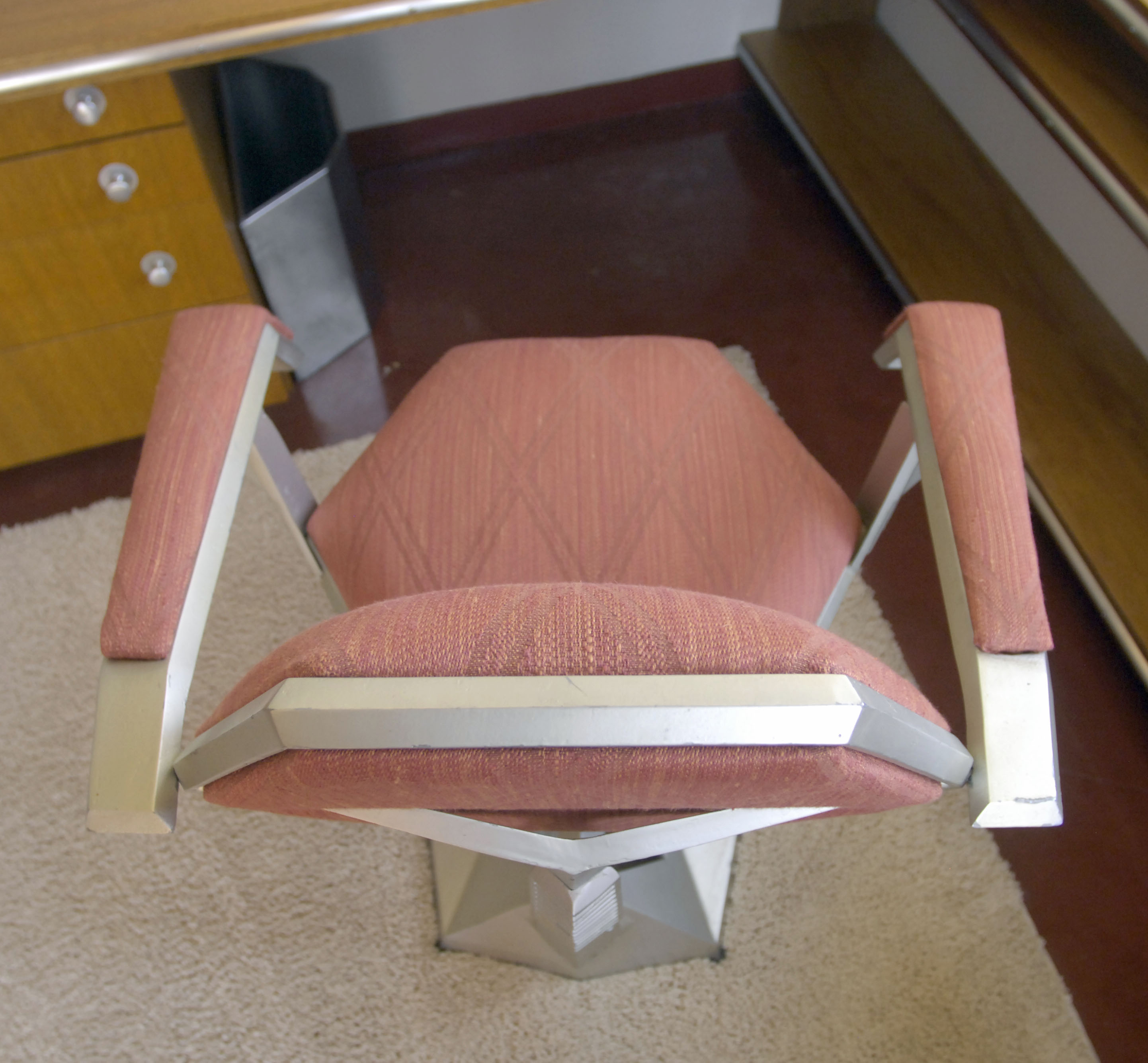
The future of Frank Lloyd Wright’s landmark Price Tower in Bartlesville, Oklahoma is uncertain. The Frank Lloyd Wright Building Conservancy has initiated legal proceedings against Cynthia Blanchard, the owner of the building, over her sale of Wright artifacts from the building, including one of the office chairs Wright designed, to a mid-century design dealer in Dallas. The Building Conservancy has an easement on the property, which, it says, prohibits the sale of any of the artifacts.

Oklahoma Frank Lloyd Wright Price Tower 022.JPG

Oklahoma Frank Lloyd Wright Price Tower 020.JPG

Wright designed the tower in 1952 as a combination office and apartment building, and it opened in 1956. The exterior and two-story pinwheel floor plan are derived from Wright’s unrealized design for the St. Mark’s-in-the-Bowery apartment buildings in New York City (1927-1929).*

Oklahoma Frank Lloyd Wright Price Tower 011.JPG

Oklahoma Frank Lloyd Wright Price Tower 009.JPG

The Inn at Price Tower hotel opened in 2003. Blanchard said in a television interview that it was no longer profitable to operate the hotel and its Copper Bar and Restaurant. She announced the closure August 9. Hotel and restaurant employees were laid off and tenants of the building were given notice to move out within 30 days. She said in an interview that the closure is not necessarily permanent, and that she hopes to find a buyer for the building which, she says, is no longer profitable for her to operate.

The photographs are from our stay at the hotel in April 2011. Scott Perkins, who was the Curator of Collections and Exhibitions and at the Price Tower Arts Center, was our host, graciously allowed me to photograph every nook and cranny of the building (he is now Fallingwater’s senior Director of Preservation and Collections).

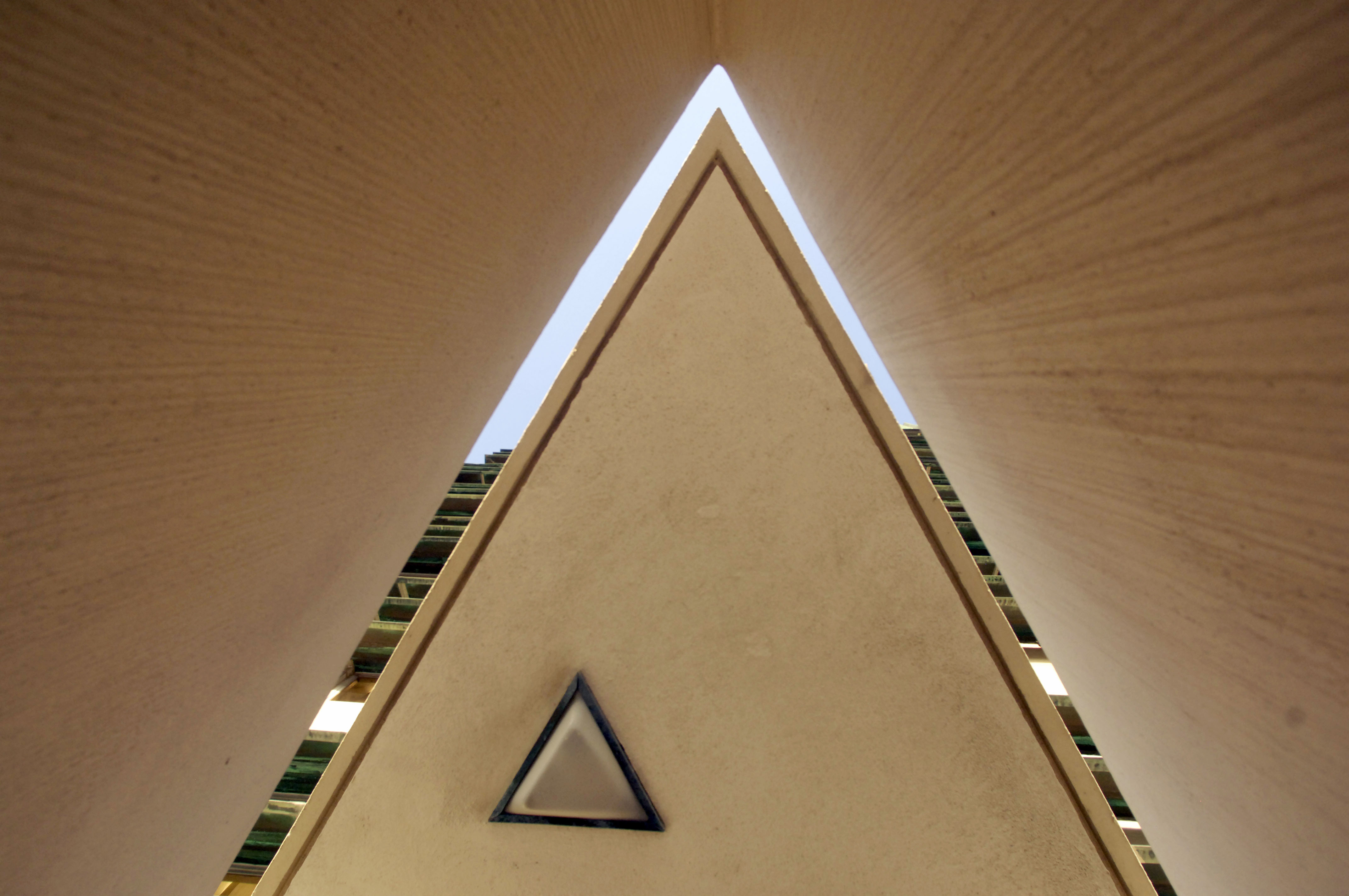
Oklahoma Frank Lloyd Wright Price Tower 014.JPGThis photograph and the one below were taken looking up on the external staircase.

Oklahoma Frank Lloyd Wright Price Tower 013.JPG

Oklahoma Frank Lloyd Wright Price Tower 010.JPGPrice Tower reflected in a nearby building

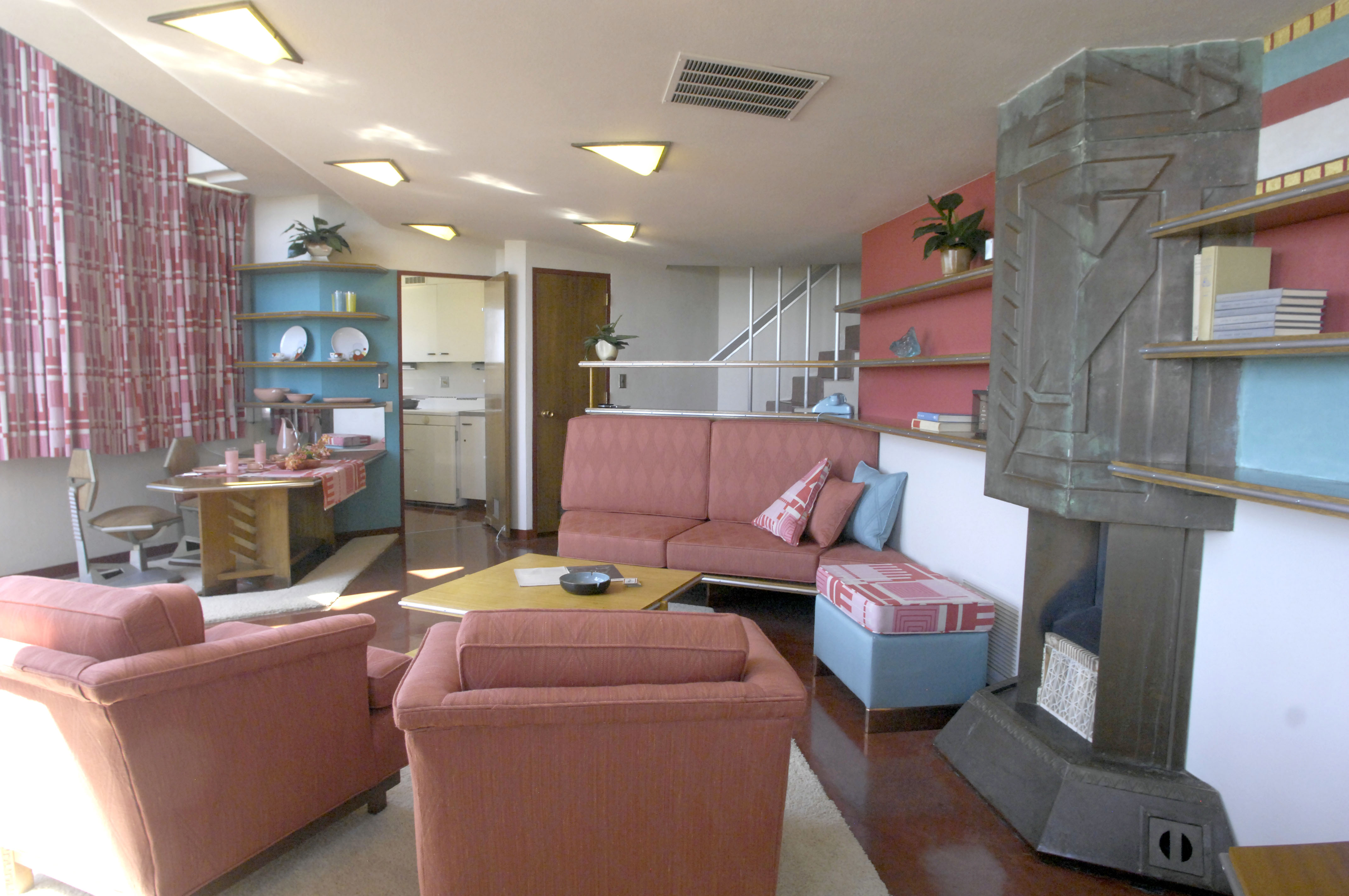
Oklahoma Frank Lloyd Wright Price Tower 019.JPGThe living room of one of the original apartments

Oklahoma Frank Lloyd Wright Price Tower 018.JPGThe sitting room on the lower floor of one of the two-story hotel rooms

One can only hope that my sunset photo of Price Tower was not a harbinger of things to come.

Oklahoma Frank Lloyd Wright Price Tower 002.JPG

Oklahoma Frank Lloyd Wright Price Tower 017.JPG

Oklahoma Frank Lloyd Wright Price Tower 012.JPG

*While Price Tower was designed around Wright’s idea of a taproot tower, the late Bruce Brooks Pfeiffer told me that it is not a taproot tower because it is tied into the foundation of the adjoining two-story office building. He told me that the SC Johnson Research Tower in Racine is Wright’s only realized taproot tower.

Author’s note: Thank you to the Frank Lloyd Wright Building Conservancy for their attention to the tower, and to the Building Conservancy’s John Waters for his editing notes on this article.

Please scroll down for previous posts on this site.

Links:

Frank Lloyd Wright Building Conservancy coverage:

https://savewright.org/endangered-price-tower-in-bartlesville-oklahoma/

Local television coverage:

https://www.newson6.com/story/66b6bcf3e64a7a286feca72e/price-tower-in-bartlesville-closes-due-to-financial-struggles-future-uncertain

A New Look at That Odd New House in Hyde Park

© Mark Hertzberg (2024)

In print, on a phone, on a tablet, on a television screen…it doesn’t matter what the medium, as modern media constantly bombards us with countless images. We are immune to most of them. Just a small handful of still photographs stop us in our tracks. We were reminded of that recently after the attempted assassination of former president Donald Trump. Such are the moments in history that we remember because of a still photograph. Is that the case in the World of Wright?

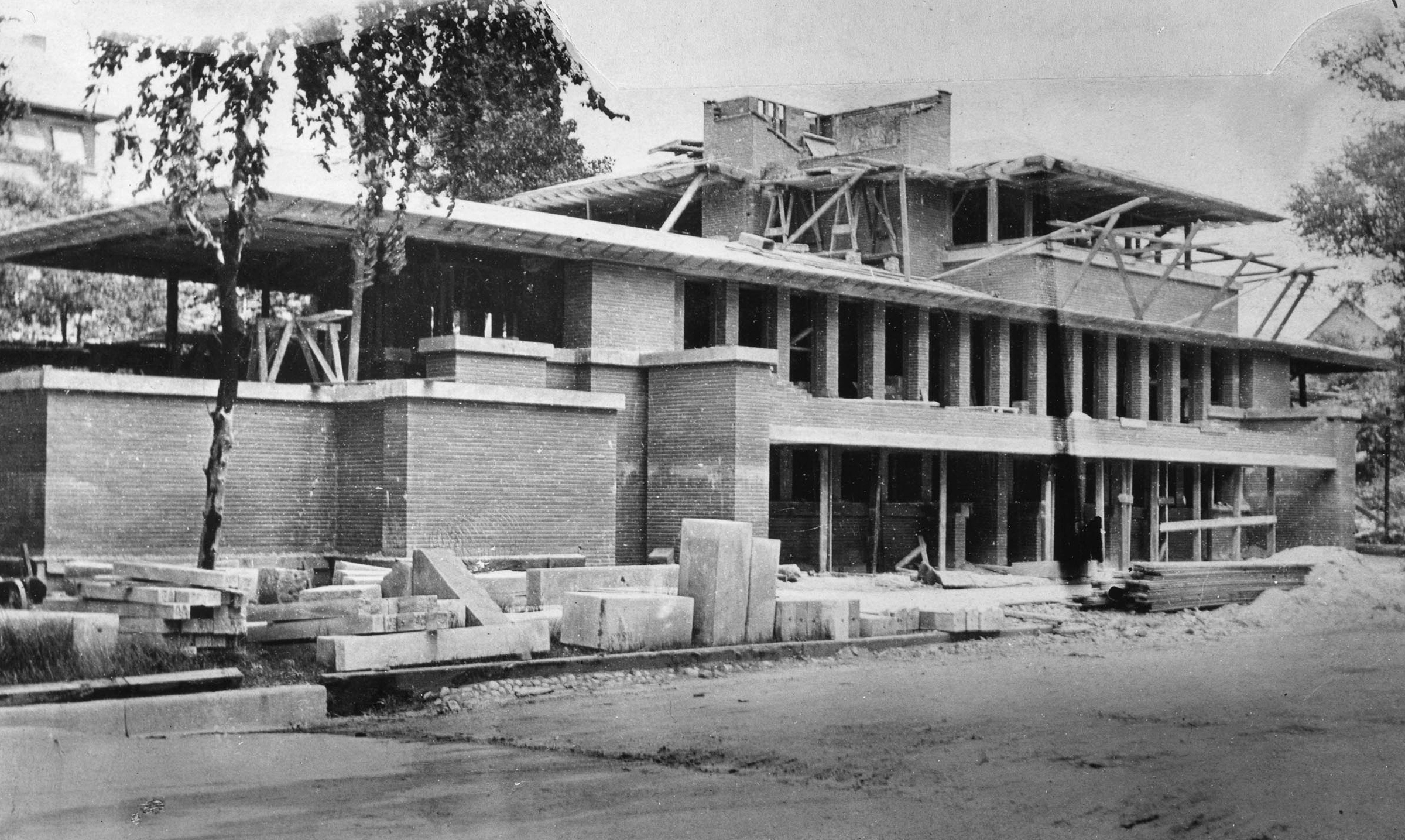
There are umpteen photographs of Frank Lloyd Wright’s completed buildings. What sticks in my mind today, however, is an arresting photograph of Wright’s Frederick C. Robie House. It is not another same-old, same-old photo of the house. Rather, it is one of Wright’s ship-like, Prairie-style house at 58th and Woodlawn in Chicago’s Hyde Park neighborhood under construction in the summer of 1909.

Robie Construction.jpgPhotograph courtesy of Eric M. O’Malley, from his private collection

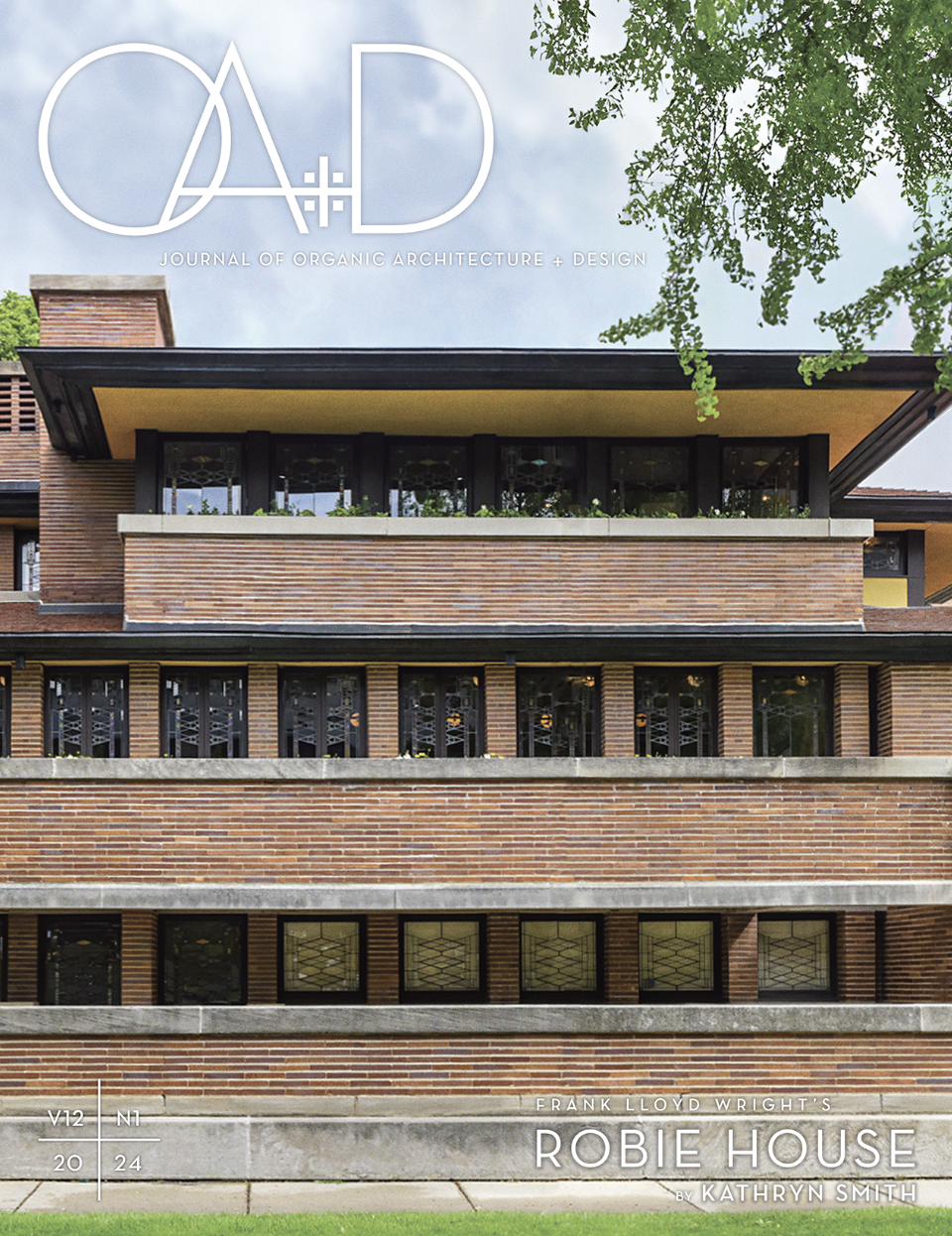
This photograph stopped me in my tracks when I was reading the latest issue of “OA+D,” the Journal of Organic Architecture and Design. Each issue is devoted to a single topic, in this case the Robie House. Wright scholar Kathryn Smith gives readers a definitive account of the history and architectural significance of the house, “Space was no longer static, but dynamic. It was a revolutionary new idea, and one that would profoundly change 20th century architecture in the decades ahead.” Her article is richly illustrated with drawings from the Wasmuth portfolio, and historic and contemporary photographs. There are about 30 construction photos taken between April 1909 and April 1910, mostly by Harrison Bernard Barnard.

I found this one particularly striking. I was mesmerized. It reminded me of something Wright scholar Jonathan Lipman wrote to me when I was writing my book about Wright’s Thomas P. Hardy House, “One can get a sense of its impact in 1906 Racine by imagining if, instead, a swooping, curved titanium house by Frank Gehry were built on the site a century later.” What, indeed, did people in Hyde Park think when they saw this rising in their neighborhood?

With no television to distract them after dinner, did neighbors regularly stroll after supper, making it a point to pass by the odd house rising at 58th and Woodlawn? Were they struck, as I was by this photograph, or did they murmur in disapproval? Although Wright and Mamah Borthwick (Cheney) would not leave for Europe together until the fall of 1909, had word of their affair traveled from Oak Park to Hyde Park? Was this odd house then a confirmation of prejudices people might have had against a man who was upending social mores? Or were they progressive thinkers, perhaps people who taught at the nearby University of Chicago which opened in 1892, who were excited and intrigued by what they were seeing on that corner lot?

The house had been rising for several months when this photograph from Eric M. O’Malley’s private collection was taken in the summer of 1909. The superstructure of the house is almost complete. We have a sense of what the house will look like, but it is still a mystery in many respects. For example, we see only empty spaces where magnificent leaded glass windows will be installed. I think it is that sense of mystery, of the unknown, that excited me.

Robie was built 16 years after the World’s Columbian Exposition in nearby Jackson Park. Only Louis Sullivan’s Transportation Building had broken the fair’s landscape of one Classical Revival-style building after another. Wright’s Heller, Blossom and McArthur houses are nearby , but are not as startling as Robie would have been in 1909. Rockefeller Chapel nearby at the University of Chicago would not be built until 1928, and it would be a traditional Gothic design, reinforcing the startling design of Robie, perched on its corner lot. Startling and groundbreaking, indeed.

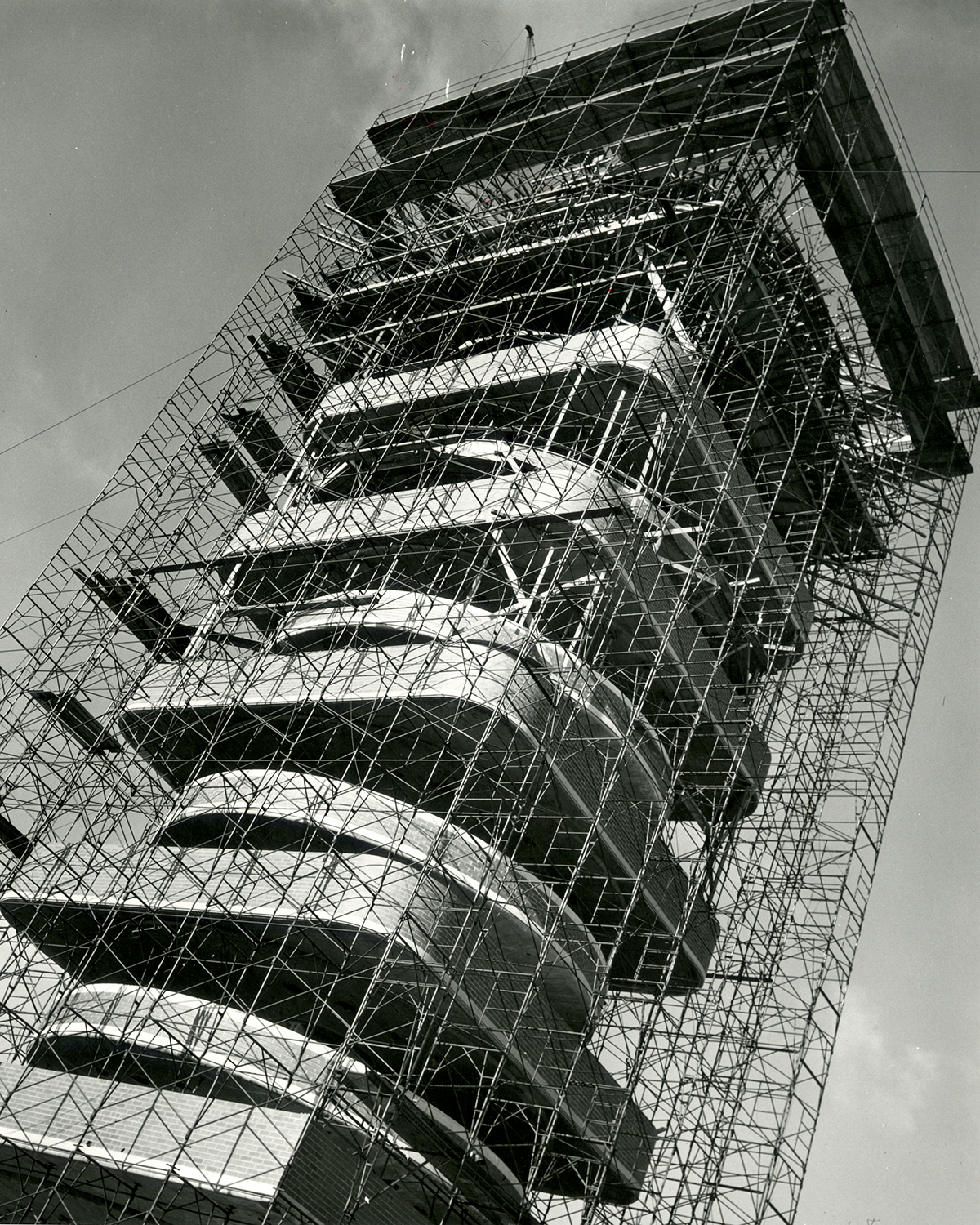
As I thought about this article for a month or more, the photograph of Robie brought to mind one more Wright construction photo. It is of the SC Johnson Research Tower in Racine. The Tower was designed in 1943/44, and built between November 1947 and November 1950. It is Wright’s only realized taproot tower.* This photograph reminded me of a child’s stacking toy when I ran across it in Johnson’s archives when I was writing my book at the Research Tower in 2009. What, then, did people living near 1525 Howe Street in Racine (two miles from my home) think when this began rising above their traditional houses?

LR Constr. toy.jpgPhotograph courtesy of SC Johnson Archives

Dozens of books have been published with photographs of Wright’s finished work. The late Sam Johnson, whose father H.F. Johnson Jr. commissioned the SC Johnson Administration Building, the Research Tower, and Wingspread, among others (unrealized), remarked to me “The world does not need another book about Frank Lloyd Wright.”** Perhaps it needs one comprised soley of photographs of his buildings under construction.

P.S. I think Eric O’Malley was also dazzled by the photograph…it appears twice in the magazine, the first time as a chapter title page.

Footnotes:

*The late Bruce Brooks Pfeiffer, who wrote the Foreword to my book about the Research Tower, told me that although Price Tower looks like a taproot tower, it is not one because it is tied into the foundation of the adjoining two-story office building. He said Racine was Wright’s only realized taproot tower.

**The context for Johnson’s remark was that I was pitching my idea for a book which became my “Wright in Racine” book (Pomegranate: 2004). The rest of his observation was, “…but it does need one about his work in Racine.” I was elated and treated myself to a Dove ice cream bar after leaving our meeting.

Link to OA+D store and Robie issue of the Journal:

Screenshot 2024-07-25 at 6.00.09 AM.png

https://store.oadarchives.org/product/journal-oa-d-v12-n1

Please scroll down for previous articles on this blog


The Marvelous Minerva Montooth

© Mark Hertzberg (2021) except as noted
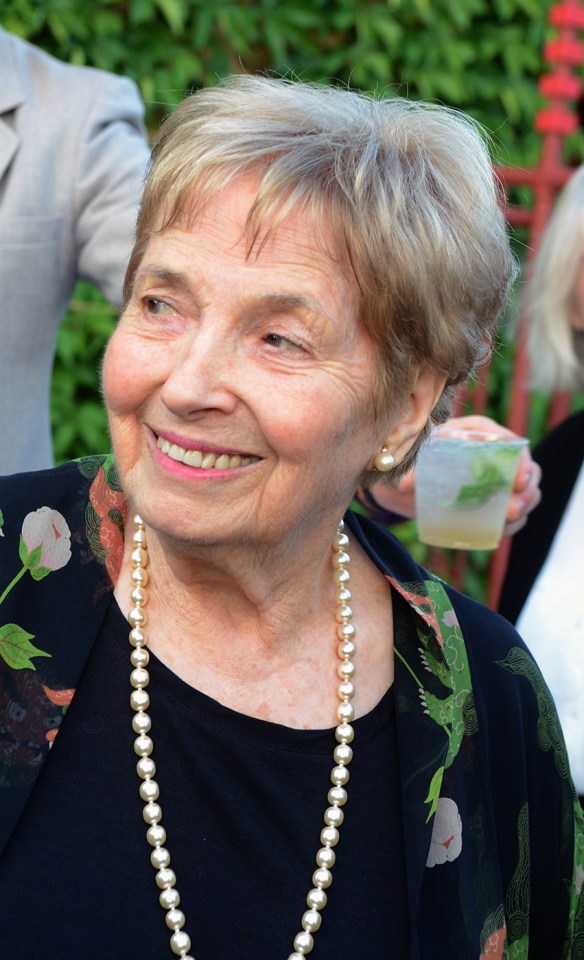
2015 Wright Birthday Taliesin 017.JPGMinerva Montooth at the 2015 Wright birthday celebration at Taliesin.

Frank Lloyd Wright not only upended the world of architecture, he also untied Minerva Jane Houston’s tongue and eventually convinced her to marry a “Greek god.” If you know Minerva, now Minerva Montooth, you would be gobsmacked that she describes herself as having once been “pathologically shy.” Let her explain, “We (she and her twin sister, Sarah) didn’t speak to anyone in grade school, high school, college who was one day older. We’d have a fight when we went to the restaurant for lunch who would speak to the waitress.” Then she met Olgivanna and Frank Lloyd Wright at Taliesin in 1949. They had driven up in their just-delivered diminutive red Crosley Hotshot roadster. Mrs. Wright was at the wheel. “The minute I met them it was like a thunderbolt, I lost my shyness at that moment. If I can talk to Frank Lloyd Wright, I can talk to anybody!” 
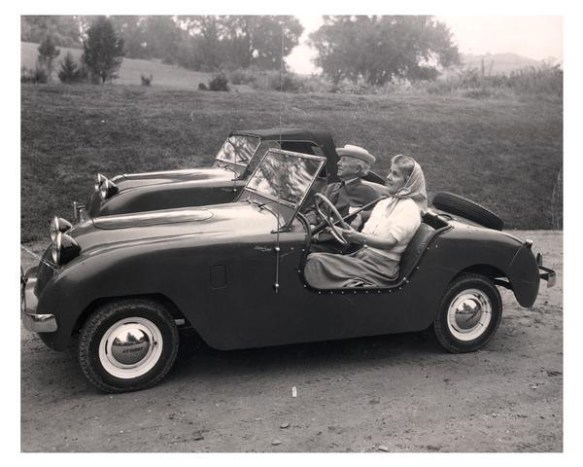
Crosley Hotshot.jpg

The Wrights in their Crosley Hotshot Courtesy of  Wisconsin Historical Society

Not only did Minerva talk to Frank Lloyd Wright, but Wright then invited her and her future husband, Charles Montooth, to dinner with them at the dining table at Taliesin. What was for dinner? Wright had ordered ham and eggs. As students of the Wright know, ham and eggs or not, dinner with the couple was not always just dinner. It would often be followed by entertainment. “Afterwards we watched television, which was pretty new, in the loggia. Helen Hayes. They knew her. Mr. Wright said, ‘She is not made for that screen. She is bigger than that!’”
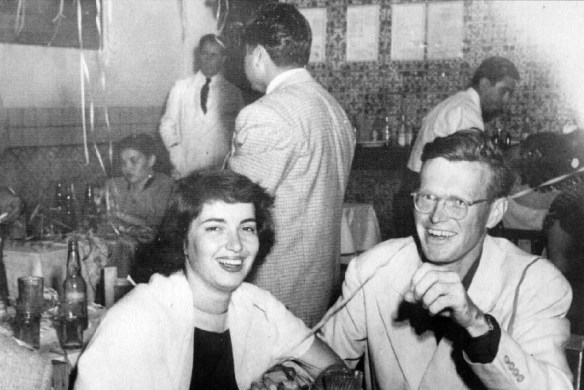
1952 Honeymoon.jpgMinerva and Charles celebrate Mardi Gras on their honeymoon in Mexico. Courtesy of Minerva Montooth

But we have gotten ahead of ourselves. The story of Minerva’s journey to Taliesin is as interesting as her first meeting with the Wrights. Minerva graduated from Northwestern University in 1945 with a degree in English, “everybody’s copout degree.” A native of tiny Rushville, Illinois (population 2,682 in 1950), she moved to New York City to work as a specialized librarian for an advertising agency. Their offices were on 44th Street, overlooking Fifth Avenue. Minerva was hospitalized with pneumonia in 1947, so her sister Sarah, who was dating Charles, invited her to accompany her to “recuperate in the sun” for two weeks at Taliesin West. The Wrights were not there at the time. 

The change in scenery would lead to a change in life. “The beauty of the desert, the ambience of Taliesin West. I had never seen anything like it. It was quite a shock to go from that ambience (midtown Manhattan) to the desert and the fantastic architecture. After I got to Taliesin, I completely forgot about Northwestern!”
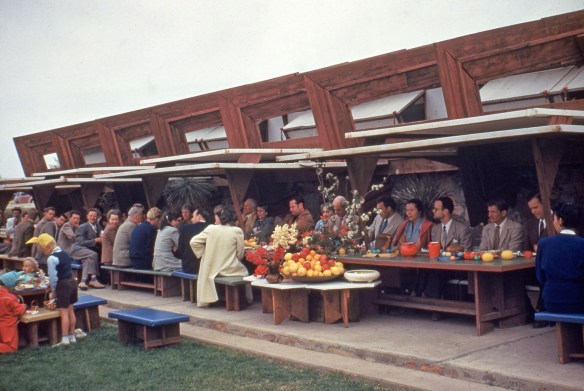
1947 Easter 002.jpgEaster at Taliesin West, 1947. Photographer unknown. Courtesy of The Frank Lloyd Wright Foundation Archives (The Museum of Modern Art | Avery Architectural & Fine Arts Library, Columbia University, New York). All rights reserved.

She knew Charles from childhood (he also grew up in Rushville). Their grandparents and their parents were friends. “I knew him in kindergarten. He was in fourth grade, one of those untouchable Greek gods! That’s my first memory of him.”
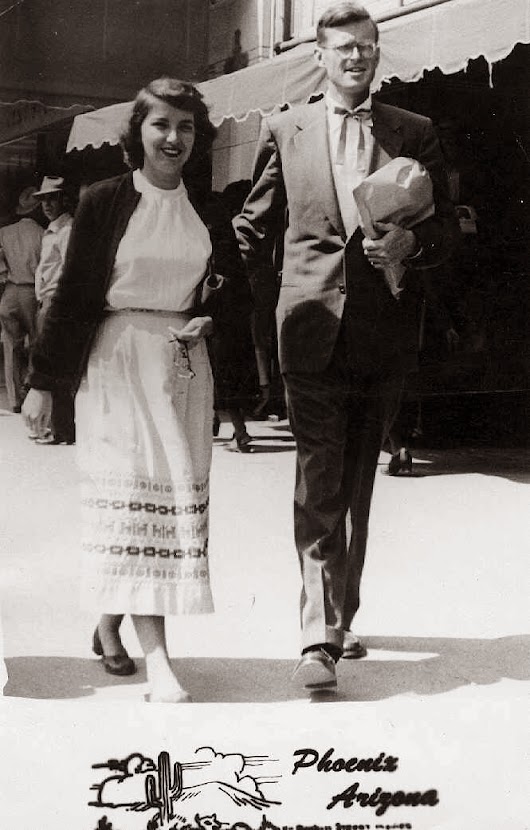
1632336947615blob.jpgMinerva and Charles strolling in Phoenix during State Fair time, shortly after their honeymoon. Courtesy of Minerva Montooth

Charles and Minerva did not start dating until the next year after Sarah fell in love with another man when she enrolled at the University of Chicago to do post-graduate work. “Charles started going with me. I guess I was second choice!” And so began the trips to Arizona to see Charles. By this time Minerva had answered a plea from Rushville to help alleviate a post-war teacher shortage (even though she had no teaching experience or training) and moved home, so she had traditional school vacation periods to see Charles. “He was always inviting me.” Mrs. Wright added her to the roster of Fellows so they would not forget to invite her to social functions, such as the famed “beautiful” Easter celebrations.
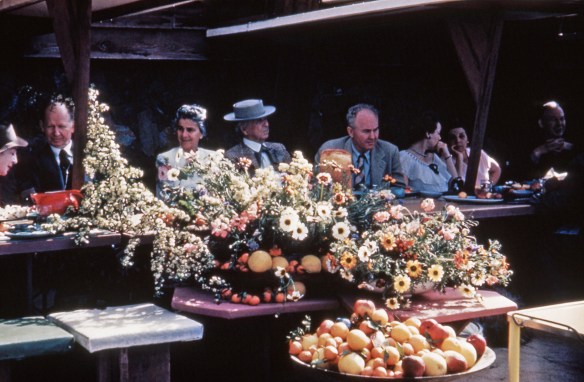
1947 Easter 001.jpgEaster at Taliesin West, 1947. Photo by Lois Davidson. Courtesy of The Frank Lloyd Wright Foundation Archives (The Museum of Modern Art | Avery Architectural & Fine Arts Library, Columbia University, New York). All rights reserved.
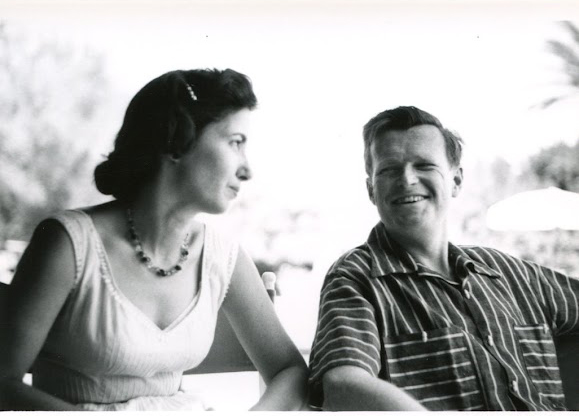
1632336912488blob.jpgThe Montooths at a party hosted by Mrs. Price at the Price House. Courtesy of Minerva Montooth

By Christmas 1951 the Wrights wondered why Minerva kept spurning Charles’s offers of marriage. She had no answer. Then they said, “‘Well, you can always get divorced.’ I was always astounded by that.” But Charles didn’t ask her again for awhile. She was back in Rushville when he finally proposed. Mr. Wright offered to host their wedding. He said it should be in the cabaret or theater at Taliesin West because Charles and she had helped build it. Her parents were “horrified” because “in those days you didn’t have a destination wedding, You were always married in a church.” The setting may have been unusual, but otherwise they had a “pretty conventional” wedding with a Presbyterian minister. The wedding reception was a bit less conventional than it would have been in Rushville. “I sat next to Mr. Wright at the dinner reception and a movie.”

Charles built them a small house in Scottsdale in which they lived for 10 years and raised three children. They were not formally in the Fellowship, but no matter. “We spent every single day going out to Taliesin West. The roads were terrible. We were lucky we had two cars because one was always getting a flat tire. Charles had his office in Scottsdale. I would spend the day at Taliesin West. I just joined in whatever activities were going on. We were in the chorus during chorus rehearsal at 7 a.m. every day. The children….they grew up in the back seat of the Plymouth station wagon. We practically lived at Taliesin.” I asked Minerva what color their car was. Need I have asked? It was red.
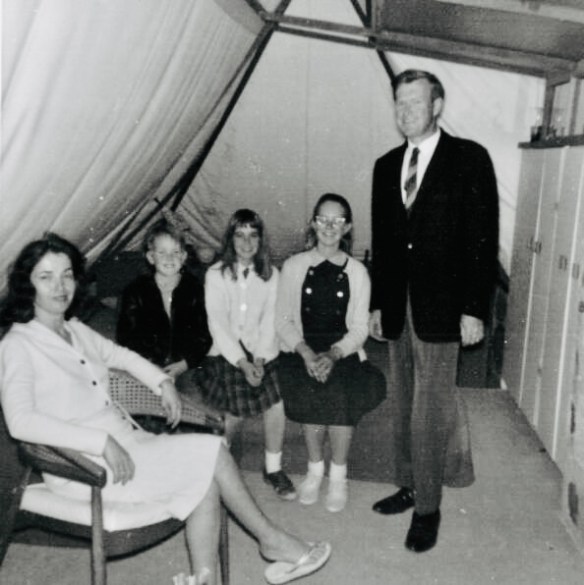
1962 Tent.jpgThe Montooths in the desert tent Charles preferred to an apartment. Courtesy of Minerva Montooth: “Taken in 1962 at Taliesin West by Dorothy Liebes, a famous fabric artist visiting Mrs. Wright.”

The commute came to an end when Charles got restless and wanted to move to Taliesin West in 1962. Mrs. Wright gave them a three bedroom apartment. “Charles hated it. ‘This isn’t desert living. I want a tent.’” And so they moved into a desert tent and Minerva went to work “right away” as an assistant to Mrs. Wright. “Probably for the first I was really responsible for Mrs. Wright’s well being.”
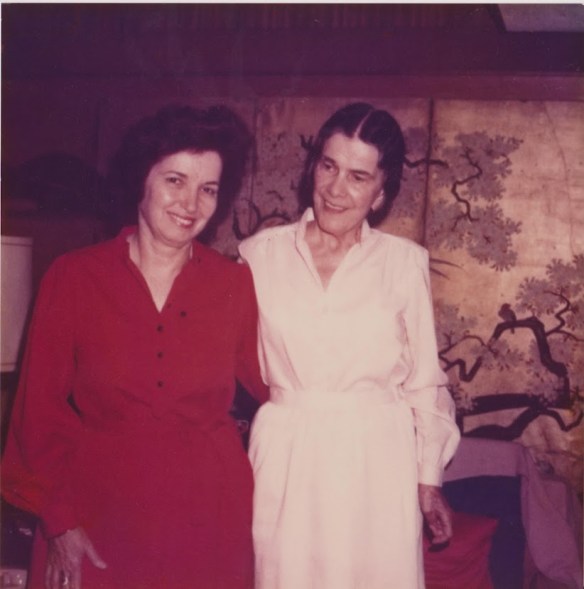
1632405469769blob.jpgMinerva and Mrs. Wright in an undated photograph. Courtesy of Minerva Montooth

Minerva’s feet were not to be planted in the desert sands or Wisconsin hills. Her responsibility for Mrs. Wright’s well being included trips to Japan, South Africa and “so many trips to Europe.” Bruce Brooks Pfeiffer and Tom Casey were along on some of those voyages. Some of the trips were Wright-related, others were leisure.

1632404278196blob.jpgRome, 1972…Bruce Brooks Pfeiffer is seated left foreground; Mrs. Wright left rear, David Dodge, Minerva, and Joseph “Dr. Joe” Rorke. Courtesy of Minerva Montooth.

“The trip to Japan was in response to a request from Wright enthusiasts who sent a ticket hoping she would be able to stop plans to destroy the Imperial Hotel. The trip to South Africa was inspried by an invitation to speak to the University of Durban students who wanted her to speak on the Imperial Hotel. The title of her speech was ‘The Tragedy of Progress.’” (The hotel was demolished in 1968).

Minerva became known as an unofficial photo historian of life at Taliesin. She “loved” photography, “Charles wasn’t interested in photography.” The one photo he took on their honeymoon in Mexico and it was double-exposed. They took their honeymoon in Charles’s pickup truck, planning to travel on a newly completed highway from Texas into Mexico. But the highway was far from finished. “We went through farmers’ fields. One time we went on the railroad tracks! It was pretty primitive.” Many of Minerva’s photographs, including their wedding photos, were lost in the 1980s in one of the floods following “desert downpours” that tore through Taliesin West.

Halfway through our hour-long conversation it was time to ask a touchy question. Many people are of the opinion that the Fellowship was divided into two camps in the 1950s: Mr. Wright’s, with an emphasis on organic architecture, and Mrs. Wright’s, with her devotion to Gurdjieff, the Russian philosopher and mystic. I asked Minerva about such a schism. 
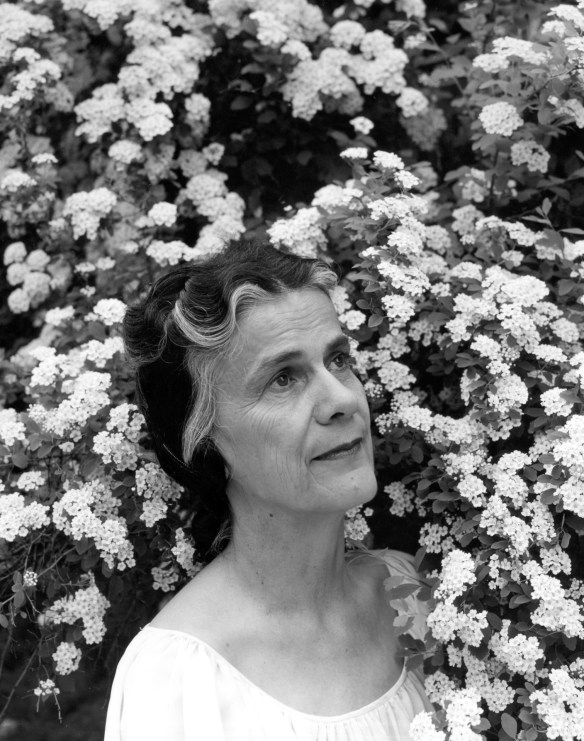
6106.0165.jpgMrs. Wright at Taliesin in an undated photograph. Courtesy of The Frank Lloyd Wright Foundation Archives (The Museum of Modern Art | Avery Architectural & Fine Arts Library, Columbia University, New York). All rights reserved.

She answered quickly. “I never thought of it that way. I always thought of Mr. Wright in the terms of the fable about the blind men and the elephant. Each believed what he had felt. Mrs. Wright was kind and generous, and sweet and charismatic and oh, my gosh, the Fellowship could not have existed without her. I never had any trouble getting along with her. She was very careful of Mr. Wright’s health at restaurants, and she would get a reputation that way!” Was there a schism? “I don’t think it’s true. She worshipped the ground that Frank Lloyd Wright walked on. His main failure in personality was that he was extremely jealous of her activities. He thought it was terrible she had published a book with her name. Did he think she was trying to ride his coattails? He apparently thought she should not have written a book on her own.”

One of Minerva’s regrets is not having gone from their home in Scottsdale to Taliesin for Mr. Wright’s funeral in 1959. She says that Mrs. Wright was “frail, not herself,” before her death in 1985. “I was grateful they got to escape their mortal realm.” 

Controversy followed Mrs. Wright’s death because of her wishes to have Mr. Wright’s remains disinterred from their resting place at Unity Chapel near Taliesin, and brought to Taliesin West to be co-mingled with hers. Some people have passed judgment on Mrs. Wright, assuming she did so out of jealousy about Wright’s relationship with Mamah Borthwick, and their graves being near each other at Unity Chapel. Minerva disputes that assertion, “OH, NO!” She says that Mrs. Wright told Minerva “many times” that the Wrights “were so poorly treated in Wisconsin that he should be in Arizona,” and that was her sole motivation. “Mrs. Wright never mentioned any jealousy about Mamah. She had promised a real headstone for her grave.”
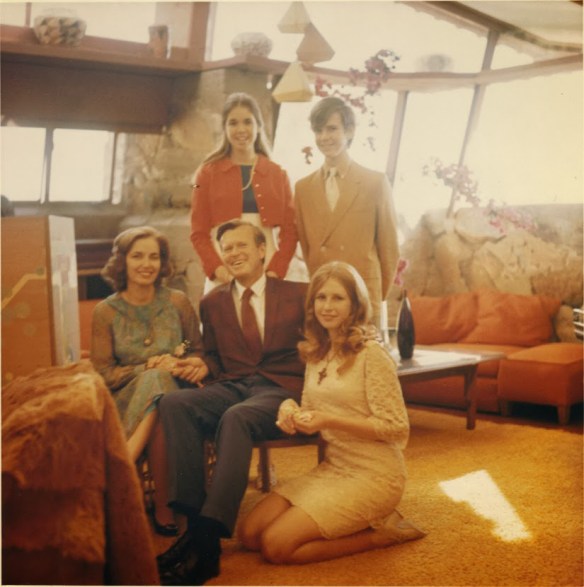
1972 John Hey T West.jpgJohn Hey took this photograph of the Montooths in 1972 at Taliesin West. Courtesy of Minerva Montooth
2005 Prairie School 002.JPG

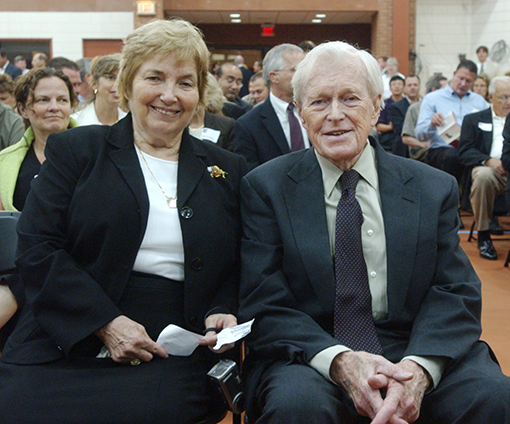
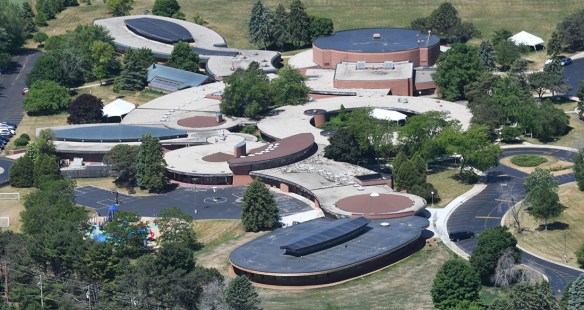
Minerva and Charles at The Prairie School in Wind Point in 2005. The occasion was the dedication of the addition to the Johnson Athletic Center, designed by Charles with Floyd Hamblen. Charles designed the entire campus, except for the building at the bottom of this 2021 aerial photograph, beginning with a semi-circular classroom building in 1965. The semi-circular building, which was finished into a circular one later, is the second building from bottom.
Prairie School Aerial 6.16.21 001.jpg

Hundreds of people have gotten to know Minerva as their gracious host at the annual black tie celebrations of Frank Lloyd Wright’s birthday held at Taliesin until just a few years ago.
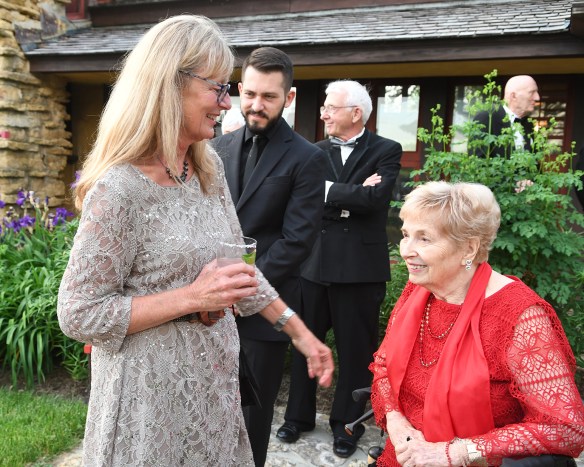
2019 Wright Birthday 003.jpgDixie Legler Guerrero and Minerva at the 2019 birthday celebration.

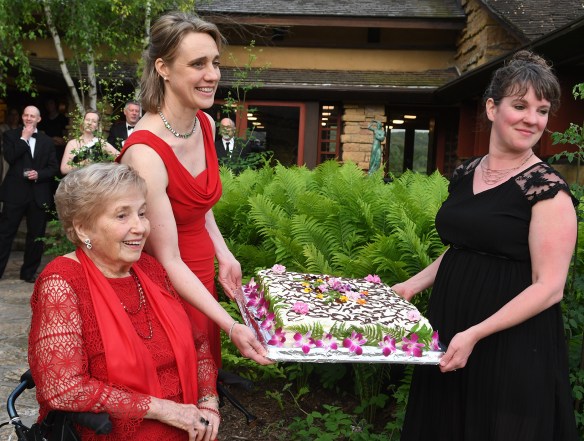
A reception at Taliesin – often also featuring numerous gate-crashing mosquitoes – was followed by dinner at Hillside, served by the students, and then by a musical program in the Hillside theater. Dessert was Mr. Wright’s favorite birthday cake, a delicious one from from Mrs Wright’s recipe for a yellow sponge cake, iced with fresh strawberry sauce and cream, covered with a drizzle of dark chocolate and nuts, decorated with edible flowers. A presentation cake, exhibited to the guests, was surrounded by an abundance of fresh flowers.

Wright 150th Taliesin 052.jpgThe 2017 birthday cake at Hillside.

2019 Wright Birthday 006.jpgThe 2019 birthday cake at Taliesin.

“John Hill, Cornelia (Brierly) and I all went together after they (the Wrights) died. There wasn’t anybody else to do it. It was quite a job.” I was surprised to hear Minerva then tell me, “I’ve never been a planner. Nor is it my nature to be organized. Cornelia was organized.” 

Balderdash, Minerva. You deserve lots of credit for these celebrations, as well as for the invitations to events when students would unveil their box projects in the Hillside drafting room. You have made myriad contributions to life at the two Taliesins, to the Fellowship, to the Wrights’ legacy, and you brought untold numbers of outsiders, like me, into the Taliesin circle. You are richly deserving of your title as a Taliesin “Legacy Fellow.” Thank you for your grace, your hard work, and your friendship!
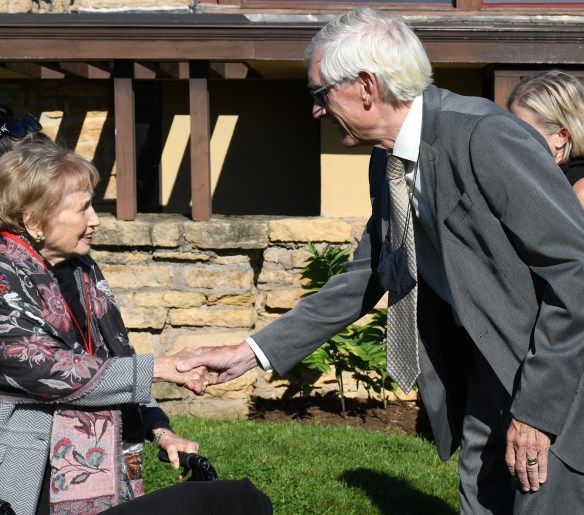
2021 Taliesin UNESCO World Heritage Site 067.JPGWisconsin Gov. Tony Evers meets Minerva at the UNESCO World Heritage Site plaque unveiling at Taliesin September 15, 2021.
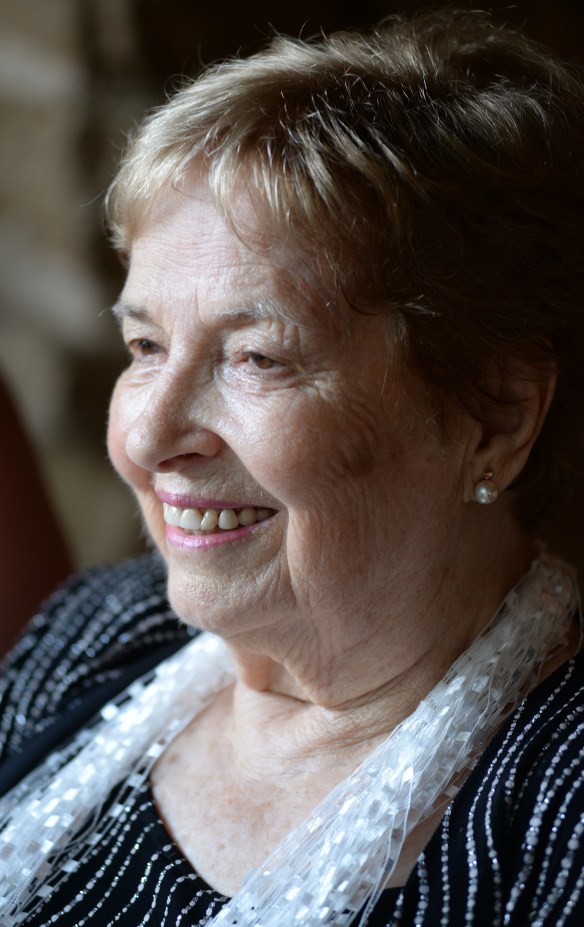
2016 Minerva Montooth 6.11.16 005.JPGMinerva at the 2016 birthday celebration.

2021 Minerva Montooth 8.29.21 002.JPGAugust 29, 2021

I asked Minerva to check this profile for accuracy. She asked me why I wanted to “take space to write about a nobody.” I replied that she is far from “a nobody.” Indeed. Renee LaFleur, Minerva’s assistant interjected that her daughter, Olivia, tells everybody, “MY MOM WORKS FOR MINERVA MONTOOTH!” I also asked Keiran Murphy, historian extraordinaire of Taliesin, to weigh in. She wrote me, “I would say that she embodies the best of the social dynamics of the Taliesin Fellowship. She has this skill at remembering the details about everyone and remembering their particulars. In addition, she’s very good at putting people together at a table in order to engender conversations.”

Case closed, Minerva!

2019 Minerva Montooth Fifi 9.25.19 009.JPGMinerva and Fifi, May 19, 2019

–30–

Bruce Brooks Pfeiffer, 1930 – 2017

Photos (c) Mark Hertzberg, 2018

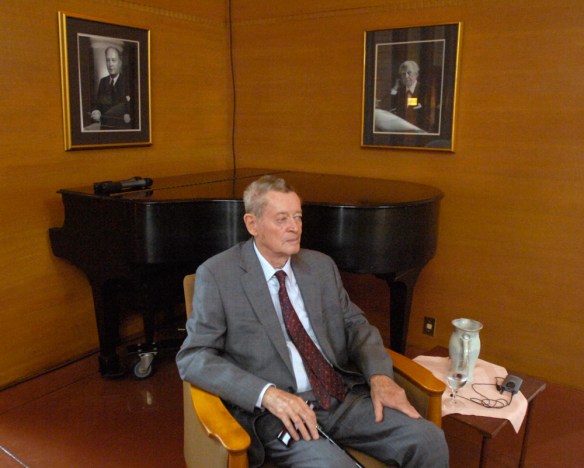
LR MAM Wright Exhibition 099.jpgThere are numerous tributes to Bruce Brooks Pfeiffer who died yesterday in Scottsdale, Arizona. I am grateful to him for his friendship and for the Foreword he wrote for my book about the SC Johnson Research Tower in 2010.
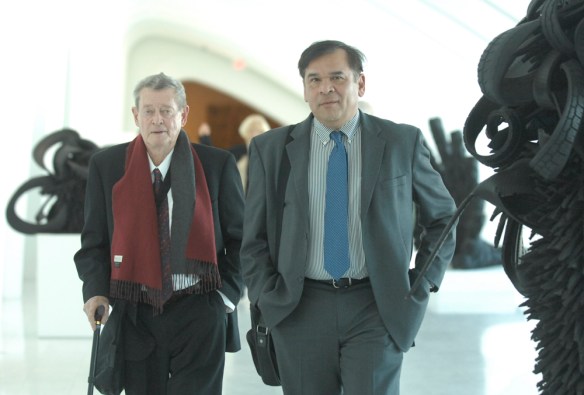
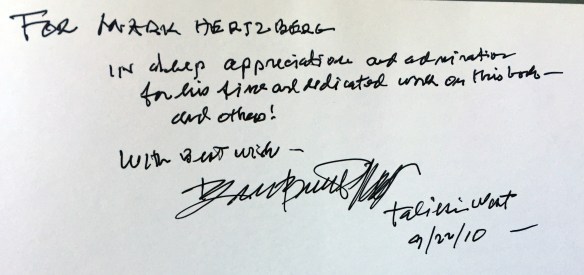
His contributions to the World of Wright are well known. There is another part of Bruce’s story that few people know. In 2008 I befriended Marshall Jones, a young African-American man serving two consecutive life sentences in Wisconsin for a double homicide. I got to know Marshall when I interviewed him for a book about the criminal justice system. Circumstances led to my sending him my first two books about Wright’s work in Racine, a year apart. I was impressed by Marshall’s responses to the books and other Wright books I had people send him. I shared his insights with Bruce…who began corresponding regularly with him, as well. Marshall often mentioned how much he enjoyed hearing from Bruce. He was moved that such a giant would pay attention to him.

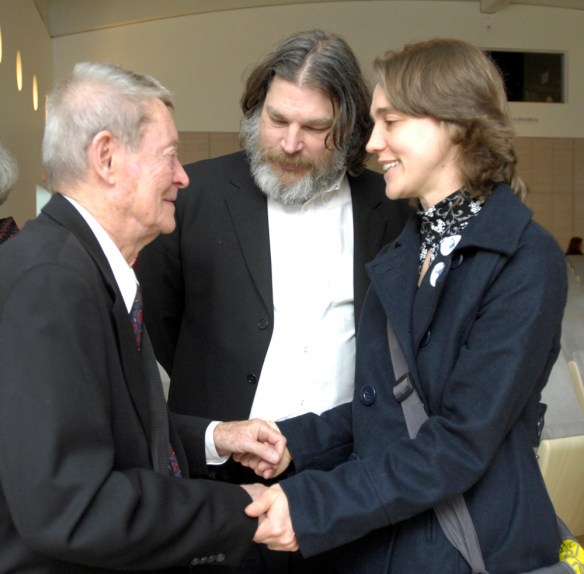
We had corresponded for many years and talked on the phone, but I did not get to meet Bruce and OsKar Munoz until February, 2011, when Bruce spoke at the opening of a Wright exhibition at the Milwaukee Art Museum.

LR MAM Wright Exhibition 048.jpgBruce and OsKar Munoz at the Milwaukee Art Museum.
LR MAM Wright Exhibition 071.jpg

LR MAM Wright Exhibition 093.jpgBruce greets Floyd and Caroline Hamblen.
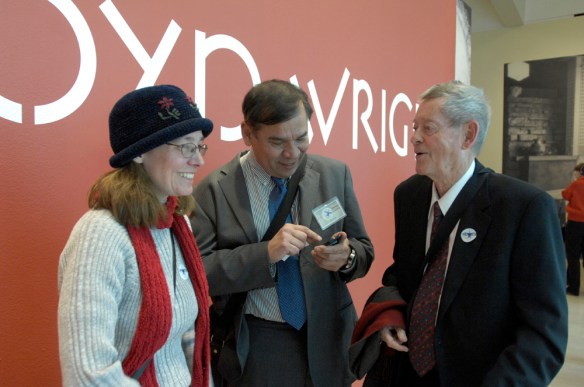
LR MAM Wright Exhibition 110.jpgBruce and Keiran Murphy.

LR MAM Wright Exhibition 081.jpgLR MAM Wright Exhibition 084.jpgLR MAM Wright Exhibition 097.jpg

Bruce and OsKar returned to Wisconsin on April 27, 2011 for a Frank Lloyd Wright Foundation meeting for site owners at the Johnson Foundation. I was astounded to hear that Bruce had never been to Wingpsread before. I was pleased to be able to document his visit that raw April day.LR Wright Fdtn. Wsprd 005.jpg

LR Wright Fdtn. Wsprd 065.jpg

LR Wright Fdtn. Wsprd 096.jpg

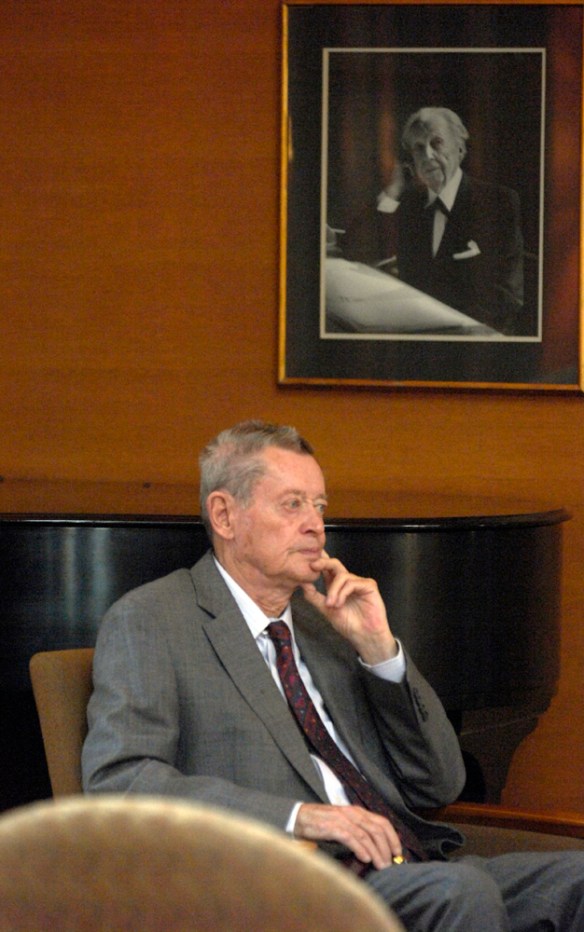
LR Wright Fdtn. Wsprd 026.jpgBruce is flanked by portraits of H.F. Johnson, Jr. and Frank Lloyd Wright before giving his remarks to the conferees.

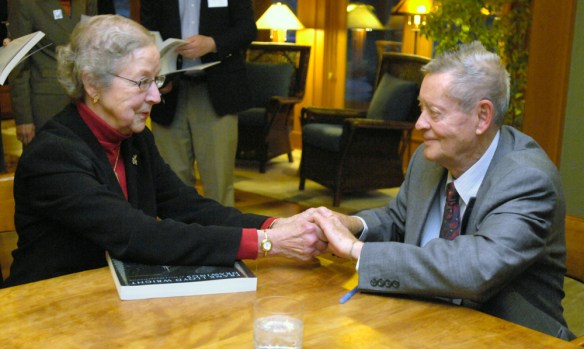
LR Wright Fdtn. Wsprd 037.jpg

LR Wright Fdtn. Wsprd 090.jpg

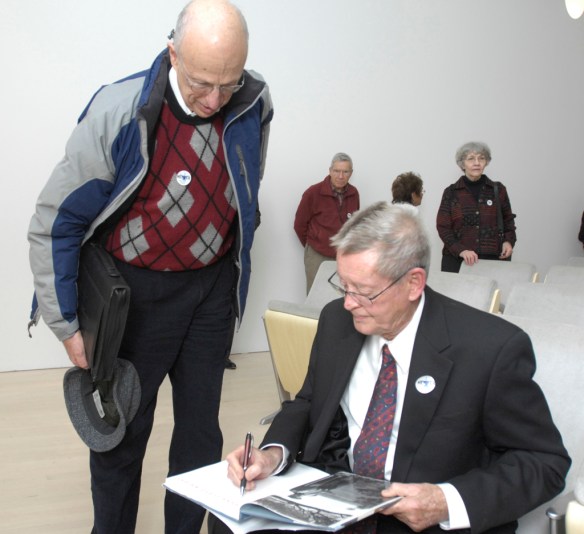
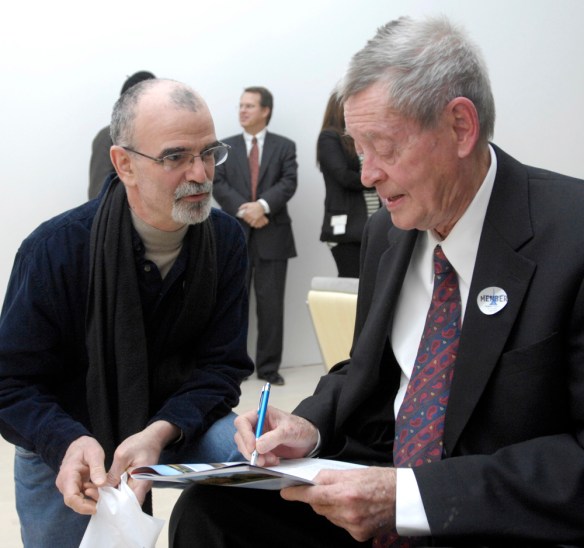
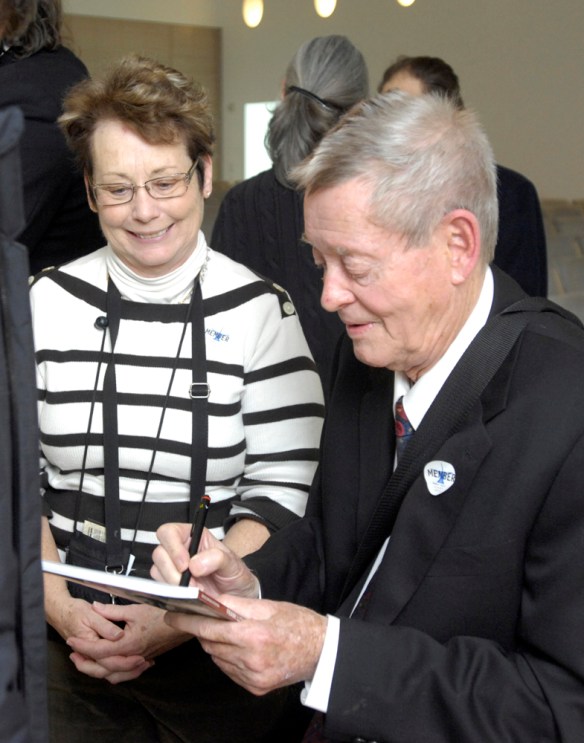
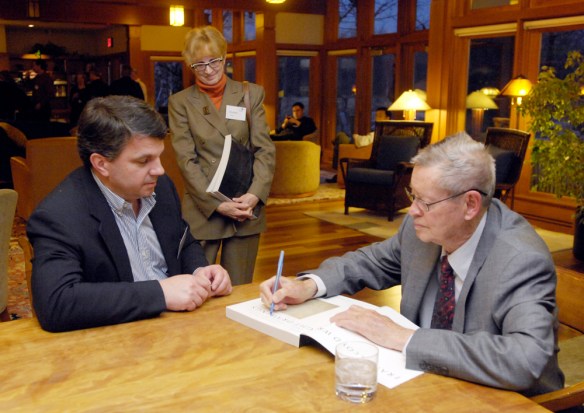
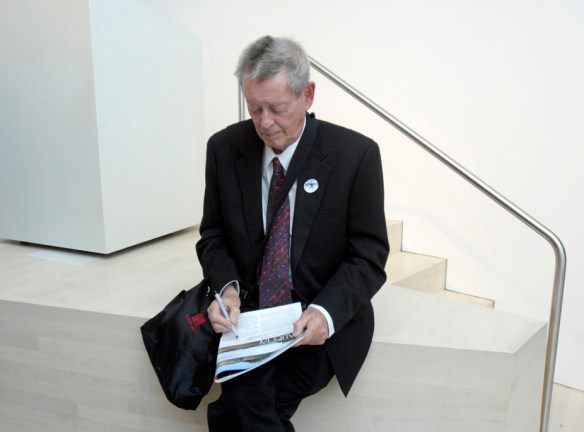
LR Wright Fdtn. Wsprd 079.jpgBruce signs books for Ann MacGregor from Wright on the Park (Mason City, Iowa), above, and Mike Lilek and Denise Hice from Wright in Wisconsin, below.
LR Wright Fdtn. Wsprd 084.jpg

LR Wright Fdtn. Wsprd 103a.jpg

LR MAM Wright Exhibition 088.jpg

LR MAM Wright Exhibition 064.jpg

Bruce Brooks Pfeiffer, 1930 – 2017.

IMG_1914.jpg

Thank you, Bruce.

When was Wright possibly wrong?

(c) Mark Hertzberg 2017

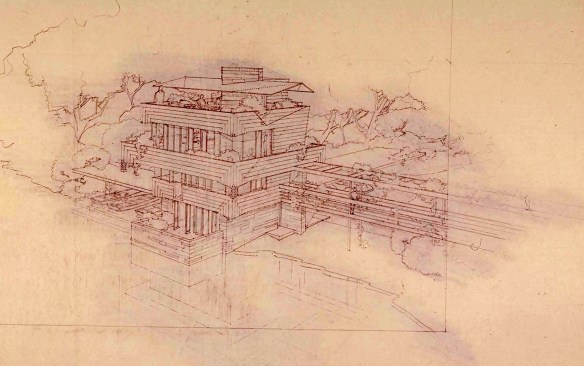
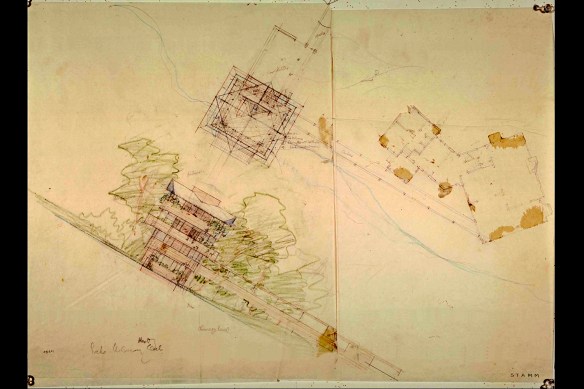
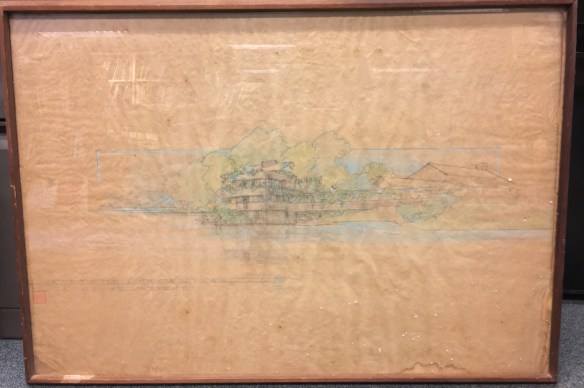
When was Wright possibly wrong? For one, when he possibly made the handwritten notation “Lake Delavan” on one of the drawings for a proposed summer cottage and boathouse for J.D. Stamm in 1945 (Project #4513). And so the project has been listed as being meant for Delavan Lake in both Bruce Brooks Pfeiffer’s “Monograph” of Wright’s work and Volume 3 of “The Complete Works.”

Stamm 4513.jpg

4513_John David Stamm_images.jpg

[Both drawings, above, (c) The Frank Lloyd Wright Foundation Archives (The Museum of Modern Art / Avery Architectural & Fine Arts Libary, Columbia University, New York), and used with permission.]

Sue and John Major, stewards of Wright’s Fred B. Jones estate (“Penwern”) on Delavan Lake commissioned me to write a book about Jones and Penwern in 2013. (The book will be published by the Wisconsin Historical Society Press in the fall of 2018.) I was intrigued by the Stamm project, and excited about it, when I saw it in “The Complete Works,” because I was not aware of such a late project for the lake. The latest documented Wright commission on Delavan Lake was from 1907.

A check of the known Wright correspondence in Anthony Alofsin’s “Index to the Taliesin Correspondence” and with Sally McKay at the Getty Research Center showed only one Stamm letter, an unrelated 1953 note from Stamm to Wright about a movie. Nor was there any record of the Stamms or the project in the Delavan area. Local historians wondered if the project was for Lake Nagawicka, near Delafield, 45 miles and two counties away from Delavan because they had heard of a Stamm marine-related business there.

The hunt was on to find the family. Inquiries to local historical societies and libraries in Delafield were not fruitful. As I often have while working on the book, I turned to Mary Stauffacher, a friend, who is a whiz at navigating ancestry.com. She found John Davies (not David) Stamm’s daughter. Lisa Stamm told me that her father was working on the project for his father, Victor Stamm, not for himself. While she was too young to remember much about the project, she remembered meeting Wright when she was about 3 years old in the late 1940s. And she thought that Lake Nagawicka was, indeed, the likely site of the project because her grandparents, who lived in Milwaukee, would summer on Lake Nagawicka, but she was not certain.

But I could not go on supposition. Lisa passed my questions on to her family, and a few days ago her daughter, Vanessa Parsons, came up with the definitive proof that the project was indeed meant for Lake Nagawicka, rather than Delavan Lake. I was bleary-eyed, nearing the end of an overnight bus trip from Milwaukee to Minneapolis, when I opened her welcome email with close up photos of the block lettering on her copy of the Stamm project. It clearly reads Lake Nagawicka. It took five months of on-and-off digging, but the mystery is solved and the record is set straight, with the generous and patient help of others.

Parsons Stamm1.jpg

Parsons Stamm 2.jpg

[Both photos above courtesy Vanessa Parsons and the Stamm family, and (c) The Frank Lloyd Wright Foundation Archives (The Museum of Modern Art / Avery Architectural & Fine Arts Libary, Columbia University, New York), and used with permission.]

Brian Spencer, AIA, who has extensively researched the Delavan Lake work, who did restoration work on Wright’s Wallis – GoodSmith House on Delavan Lake in 1992-93 and rebuilt the Penwern boathouse which had been destroyed by a 1978 arson fire in 2005 (working from a single sheet of Wright’s drawings), suggests that the mistake by Wright (or whoever made the notation) was understandable: Delavan? Delafield? Unless one is from the area, it would be easy to mix them up knowing that Wright had about a dozen commissions on Delavan Lake.

It is disappointing  to not know more about the commission and why it was not executed, but it is satisfying to know for certain which lake it would have been built on. Some Wright aficionados have asked for the exact location so they can hunt satellite photos, given that the project evidently would have been connected to an existing house. The hunt for that information continues.