Work Begins Anew at Hardy House

Photos and text (c) Mark Hertzberg

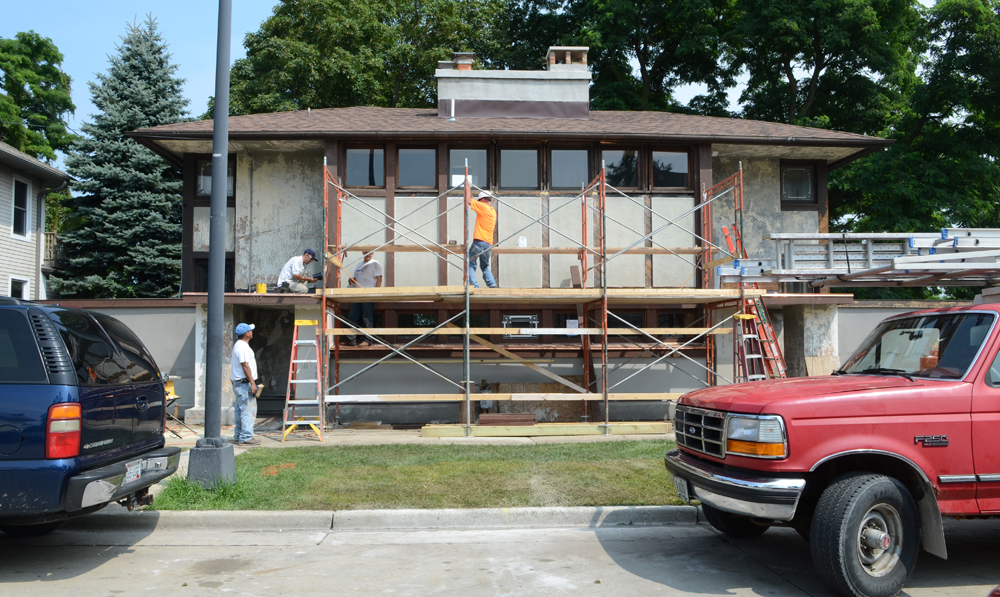
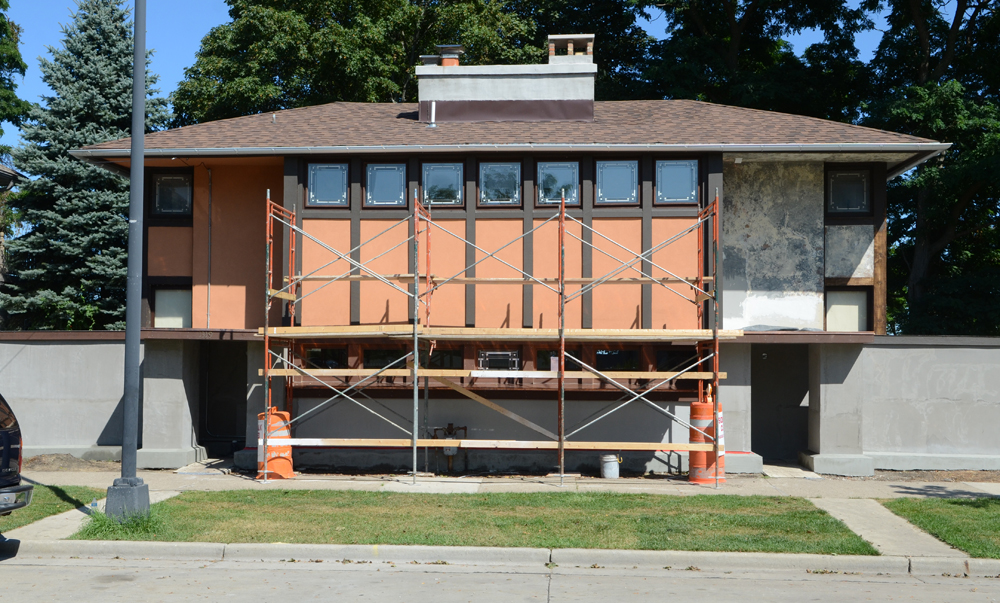
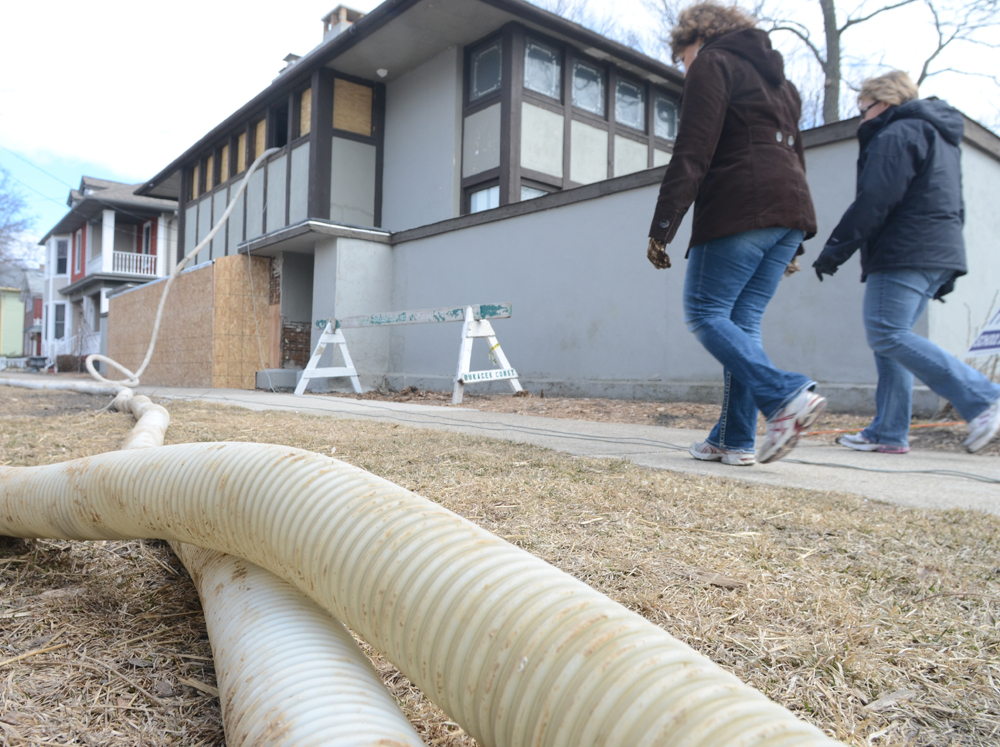
The Hardy House is a construction zone again after a two-year respite.

Lake Side Restoration

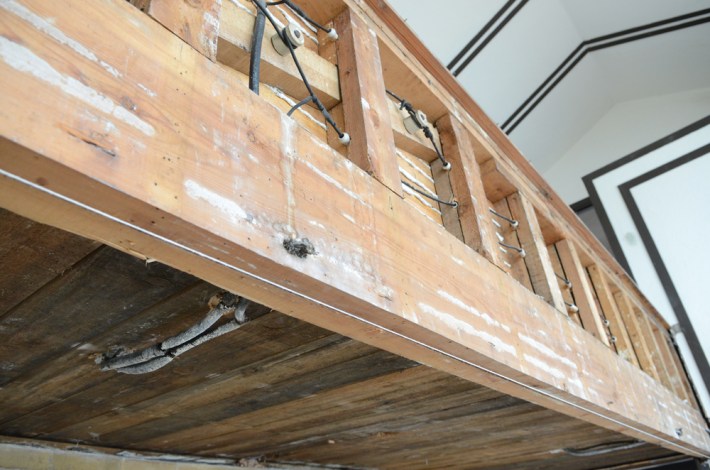
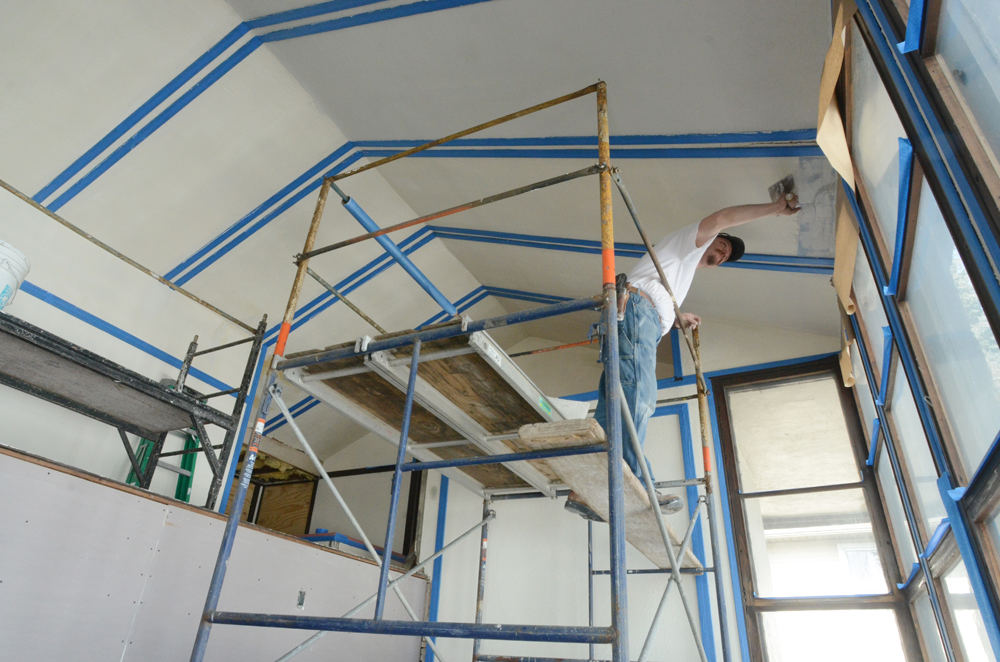
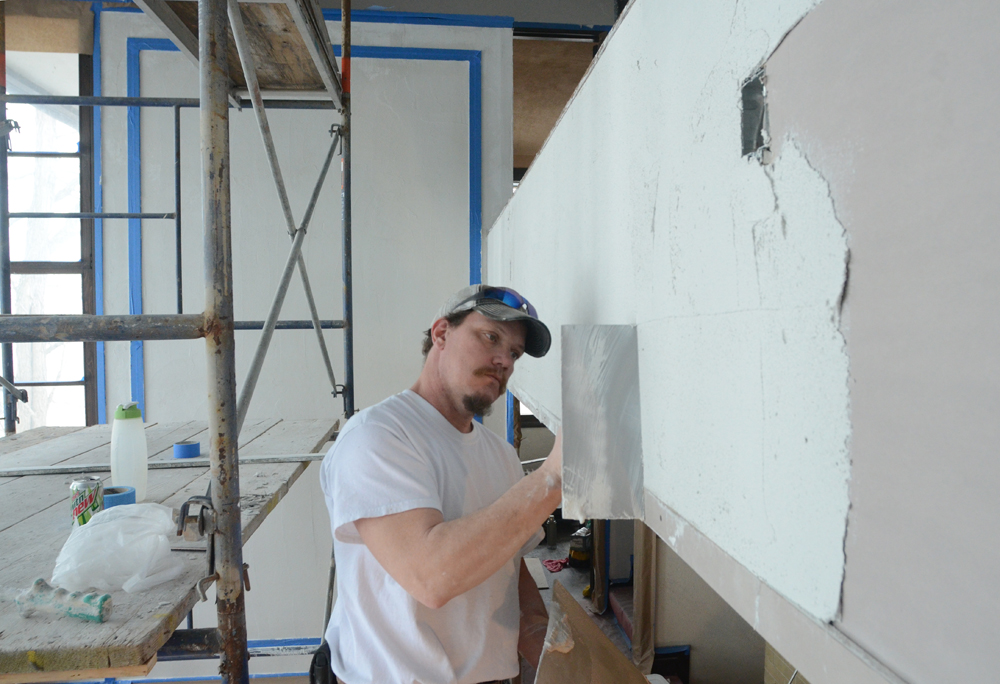
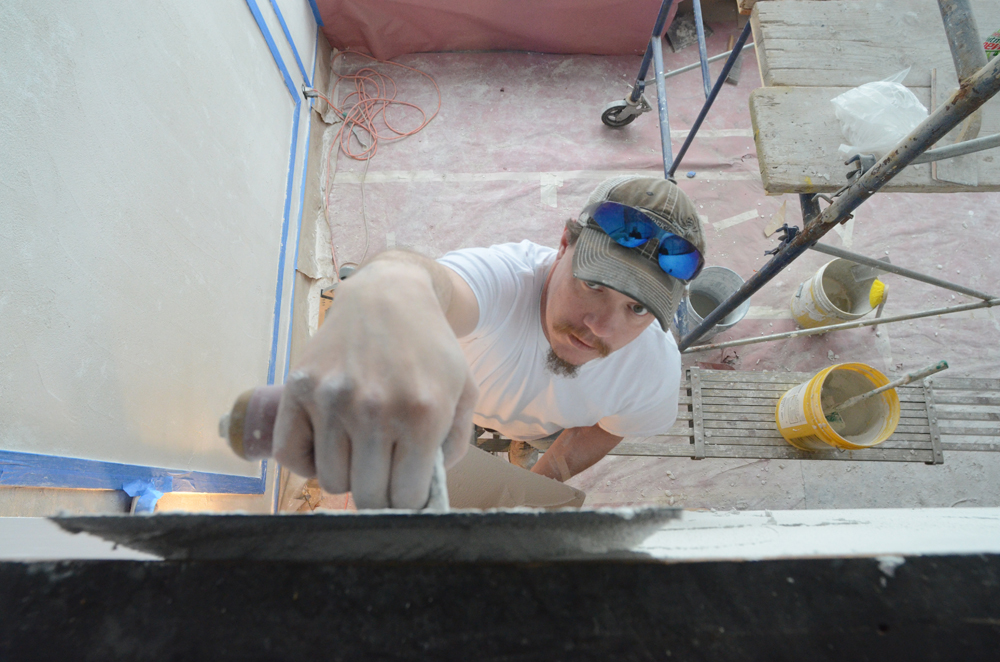
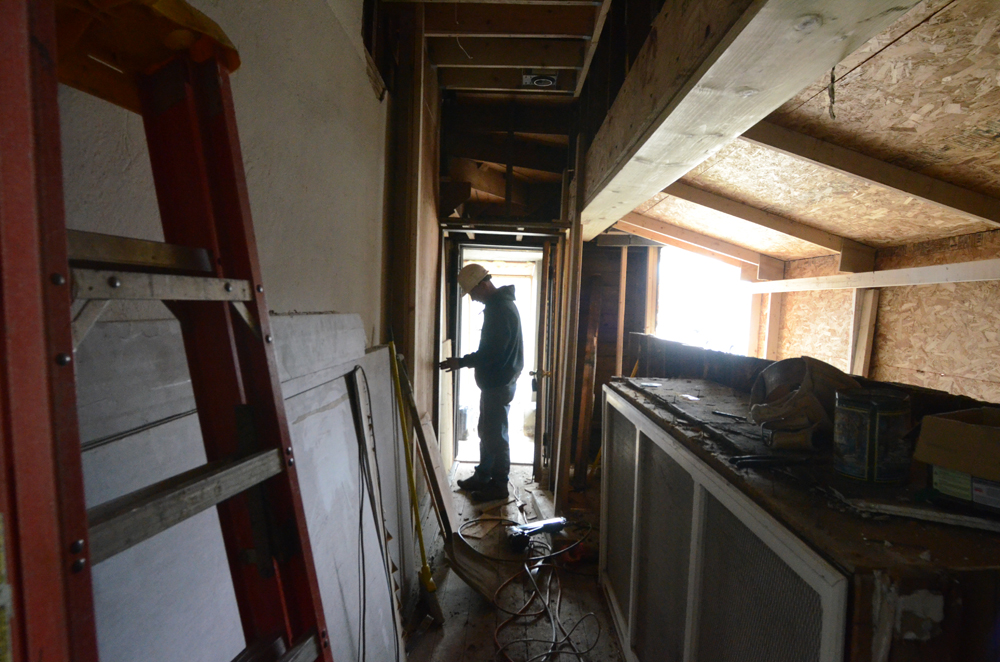
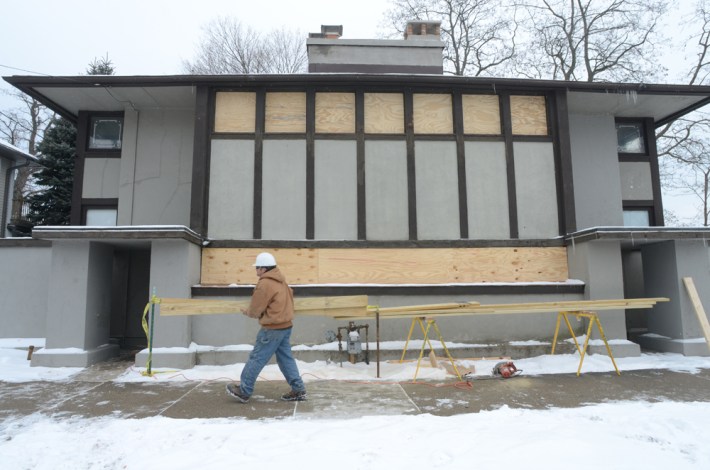
The east side of the house is sheathed in scaffolding, and scaffolding again fills the two-story living room as it did several years ago while plaster was repaired and the house was repainted.

Lake Side Restoration

Lake Side Restoration

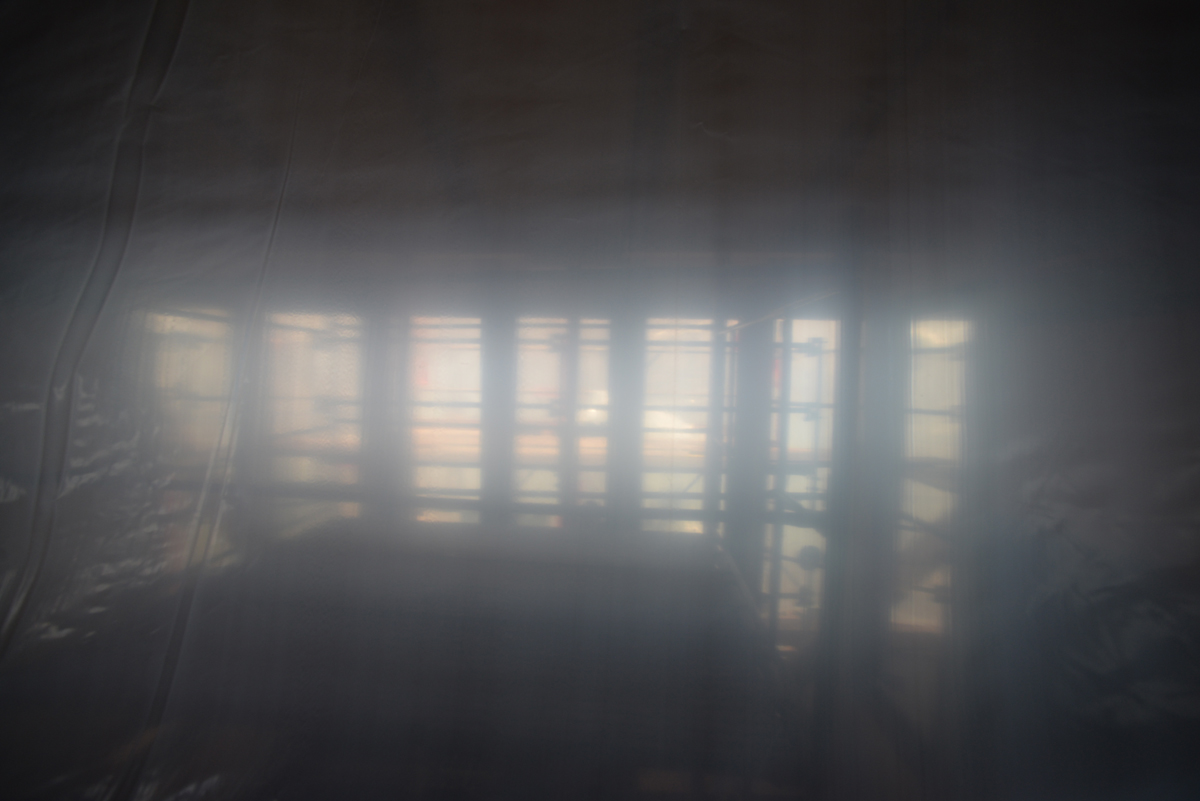
     The living room and the dining room are walled-off in construction workers’ heavy plastic, diminishing the view of Lake Michigan from the living room balcony:

Lake Side Restoration

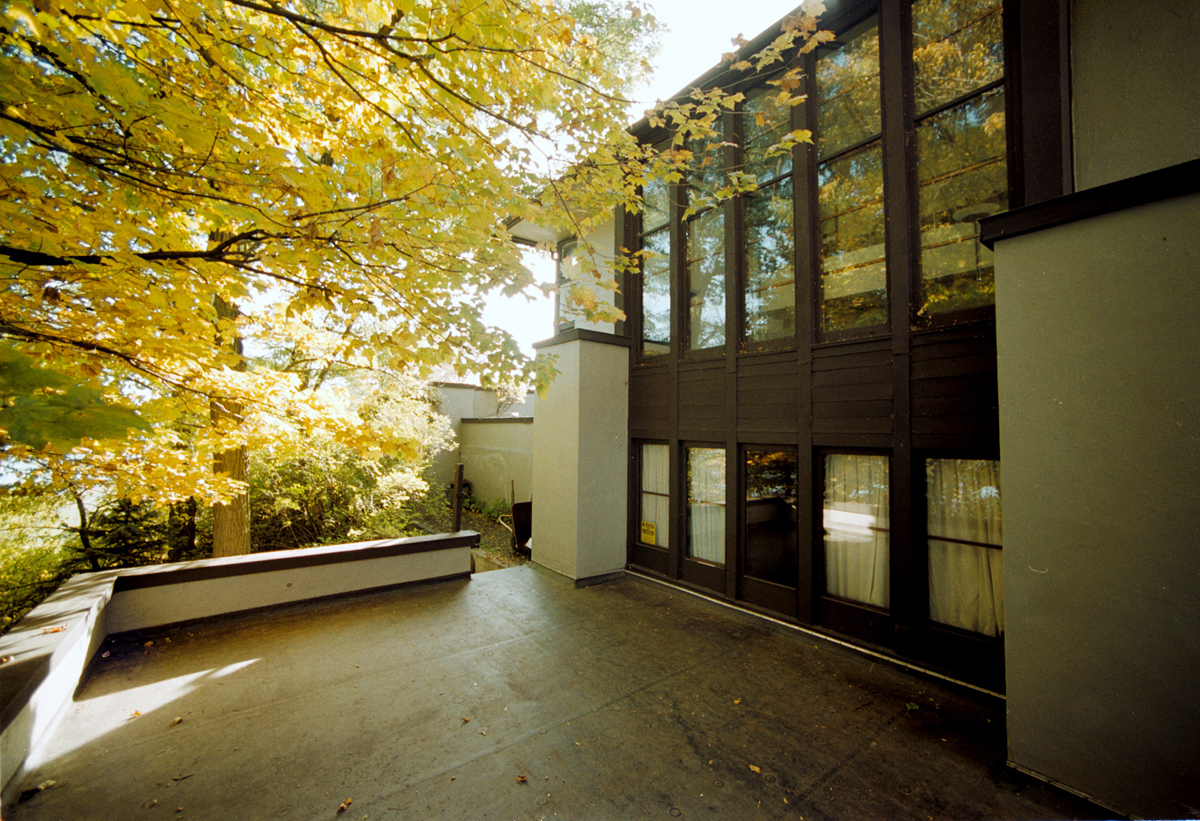
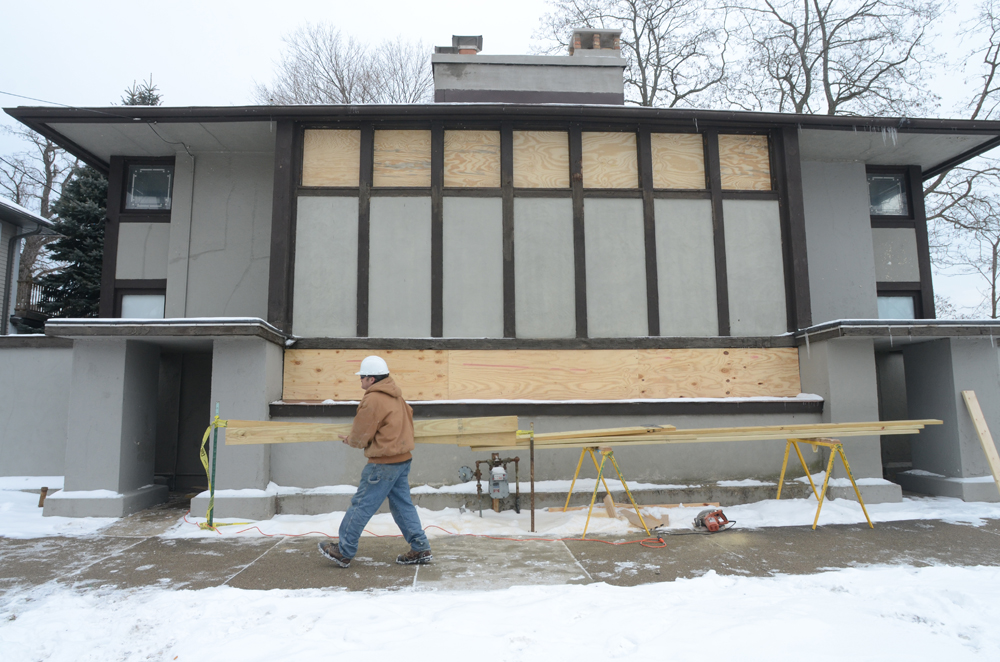
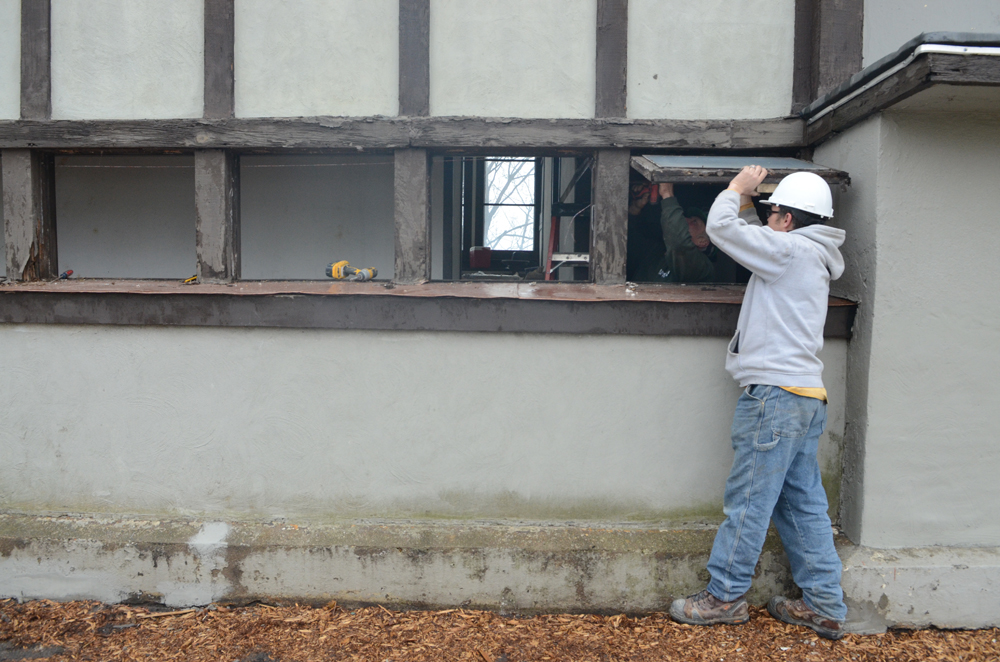
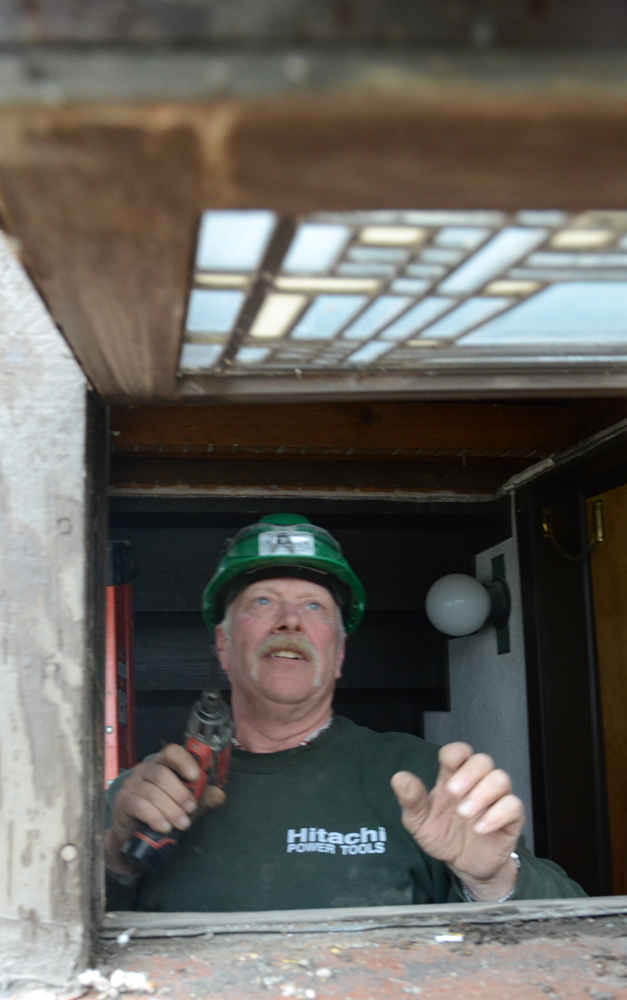
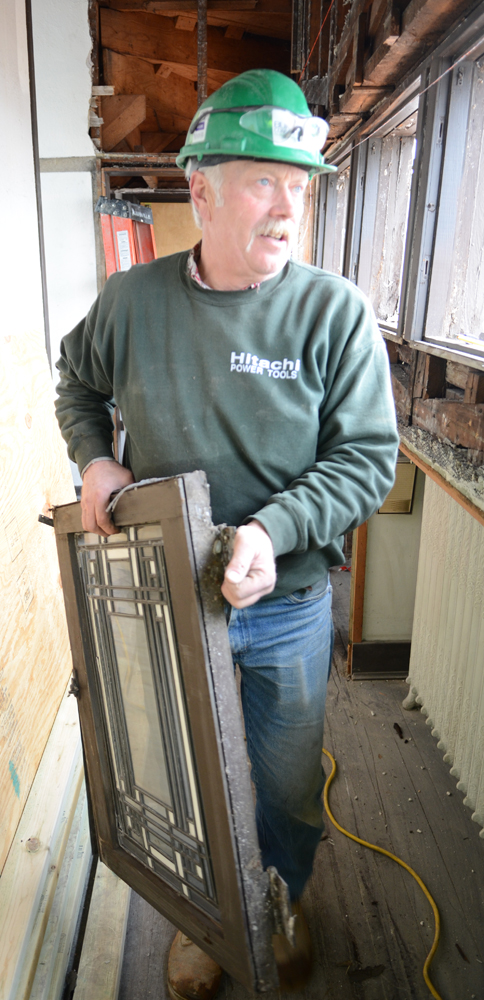
     The living room and dining room windows are being replaced, which may sound routine, but the work also entails rebuilding structural elements of the house above and below the windows. It will not be known how much needs to be rebuilt until workers begin the reconstruction. The center dining room windows lead to the dining room terrace, whose rubber membrane flooring (shown in a 2002 photo, below) needs to be replaced, as well.

LR Terrace, fall, 2

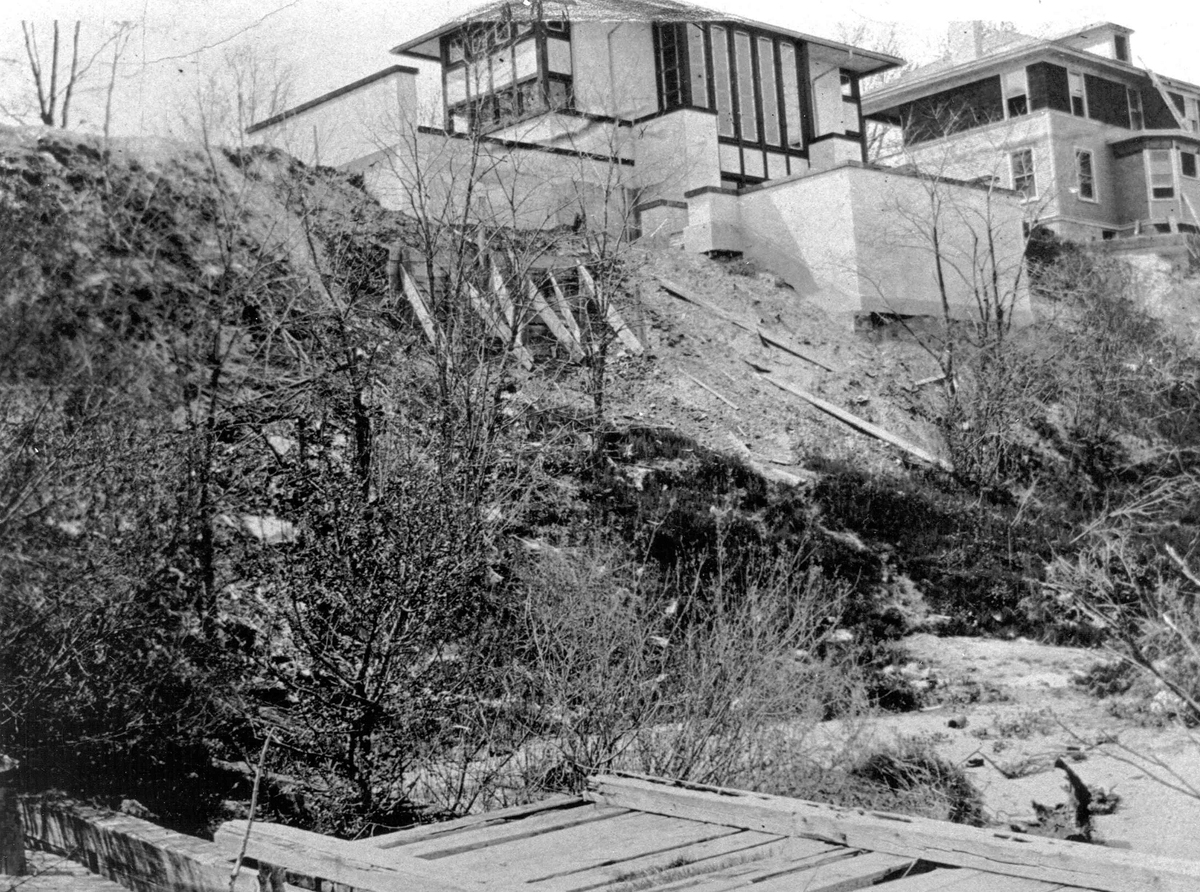
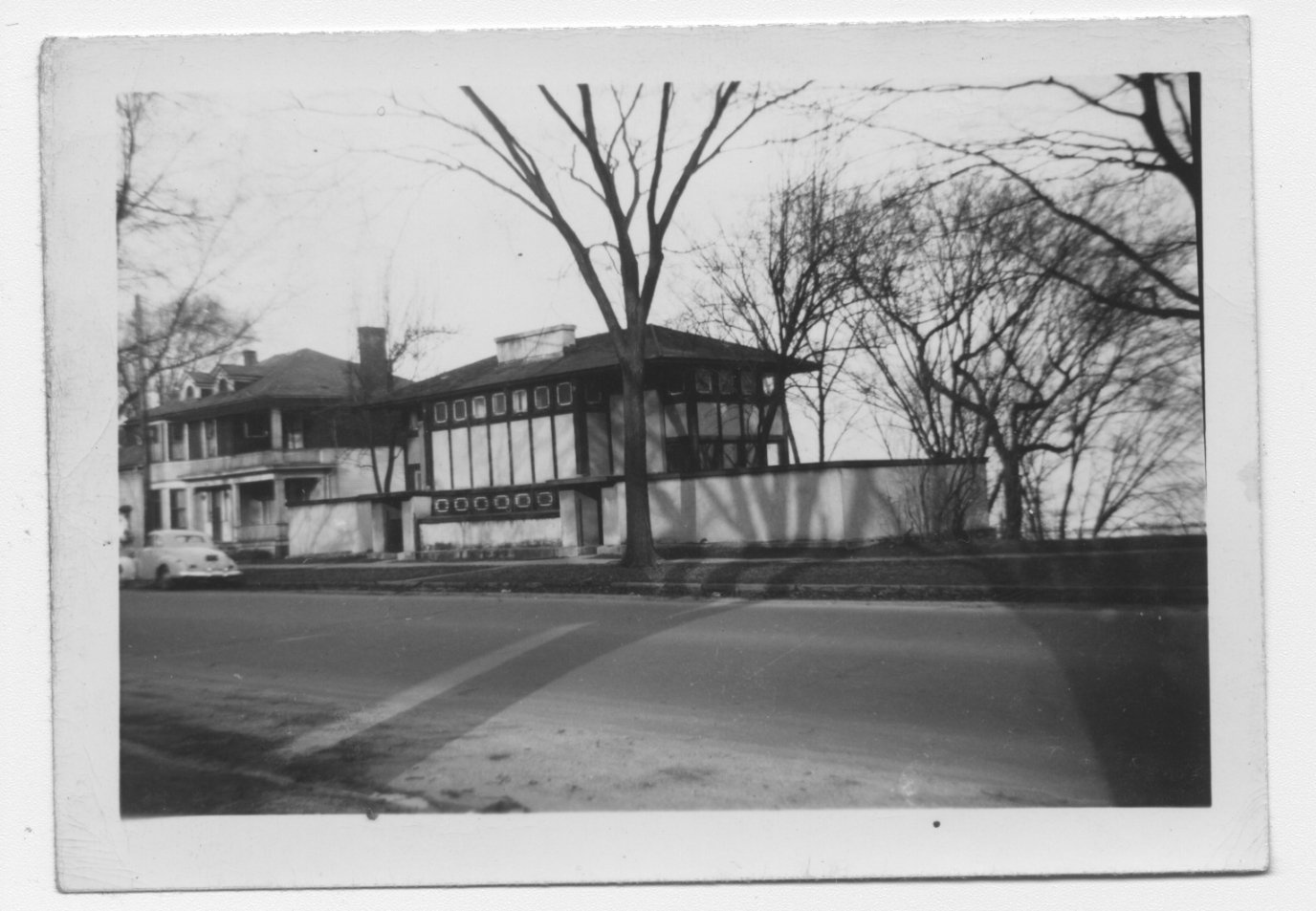
     The four square panels between the living room windows (above the panels) and the dining room windows (below the panels) were originally stucco, as shown in this 1906 photo taken as the house neared completion:

LR Terrace 0506.0004 final

(Photo courtesy of, and (c) Frank Lloyd Wright Foundation)

     It is believed that the stucco had cracked because the dining room windows leaked, and the panels were replaced by wood panels when Wright’s leaded glass living room windows were replaced with plate glass windows in 1947, concurrent with the rebuilding of the dining room terrace to create for a recreation room below.

     The dining room now serves as a construction office for the workers from Bane & Nelson contractors:

Lake Side Restoration

     It is impossible to estimate how long the work will take, but Bane & Nelson has a deadline of finishing in time for tours during the 2015 Frank Lloyd Wright Building Conservancy meeting in Milwaukee and Racine in early October.

New Gates for Hardy House

Words and photos (c) Mark Hertzberg, except historic photos, (c) Anne Sporer Ruetz

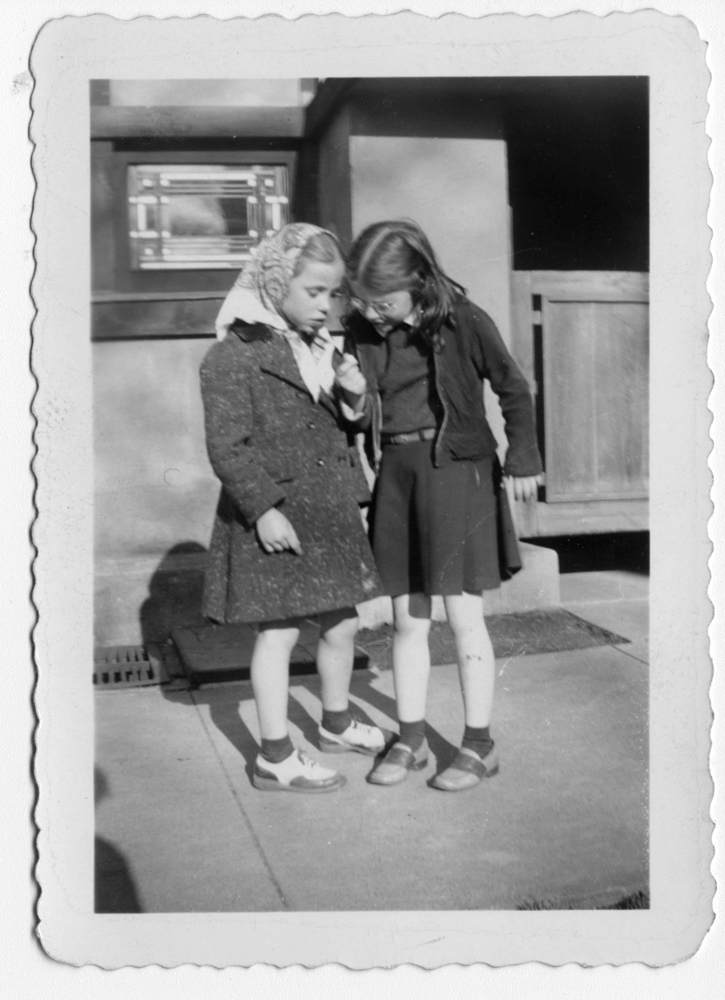
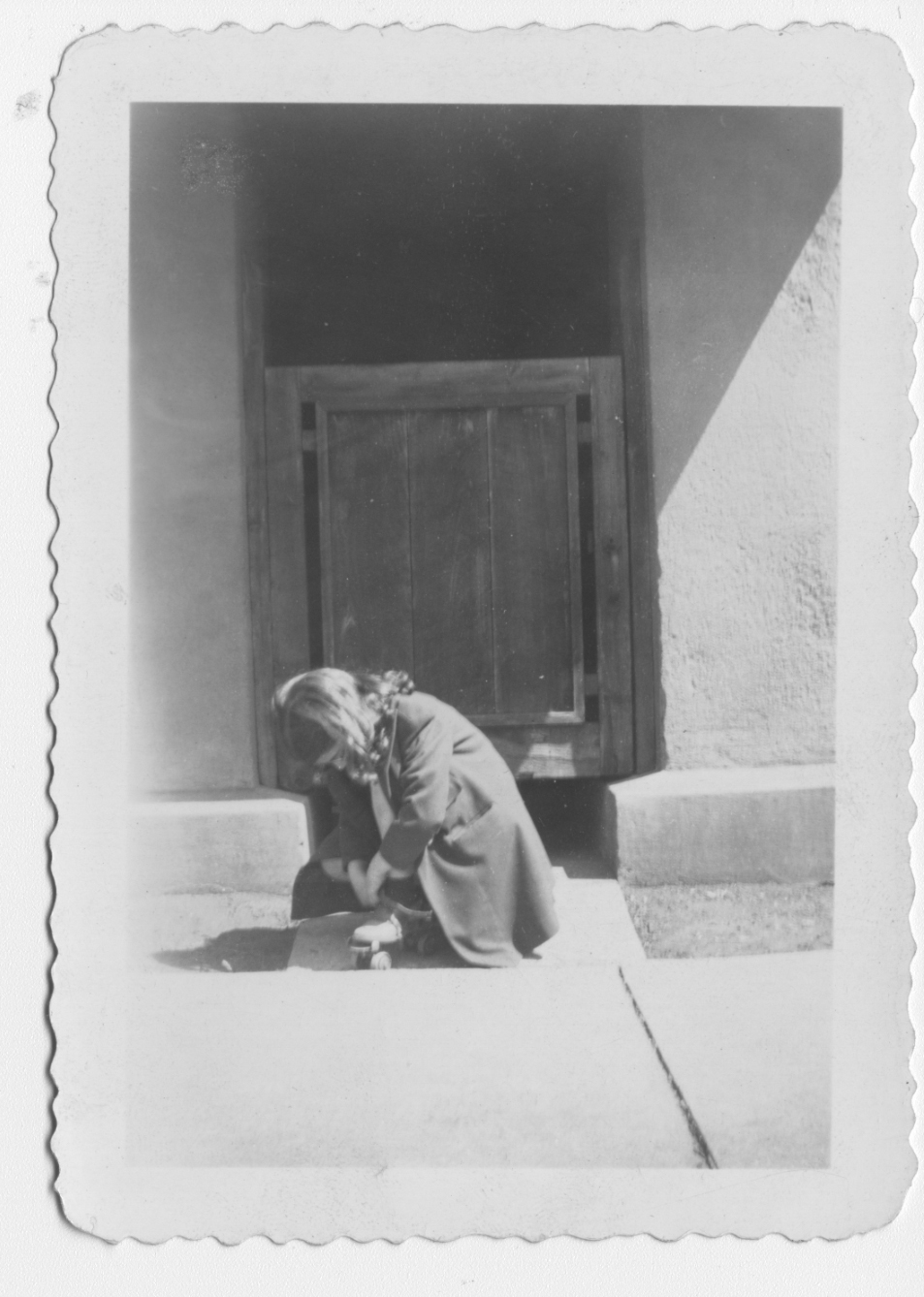
One of the most important finishing touches is coming to the Hardy House. It was built in 1904-06 with two wood gates, which we see in Anne Sporer Ruetz’s snapshots of her friends. Anne grew up in the house; her parents were the second owners (1938-1947) after Hardy lost the house at sheriff’s auction.

Image

Image

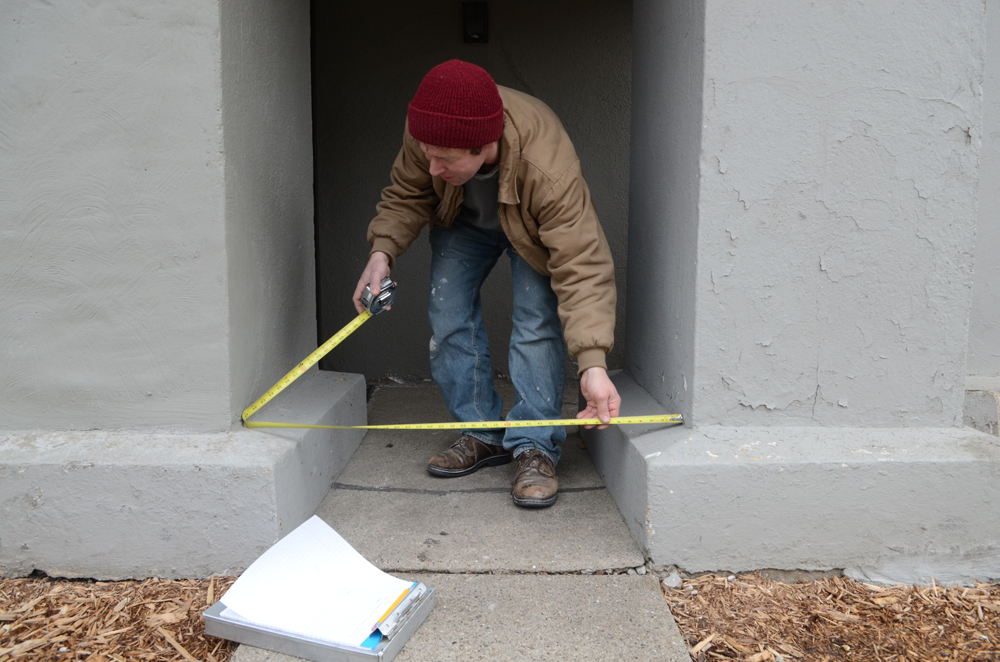
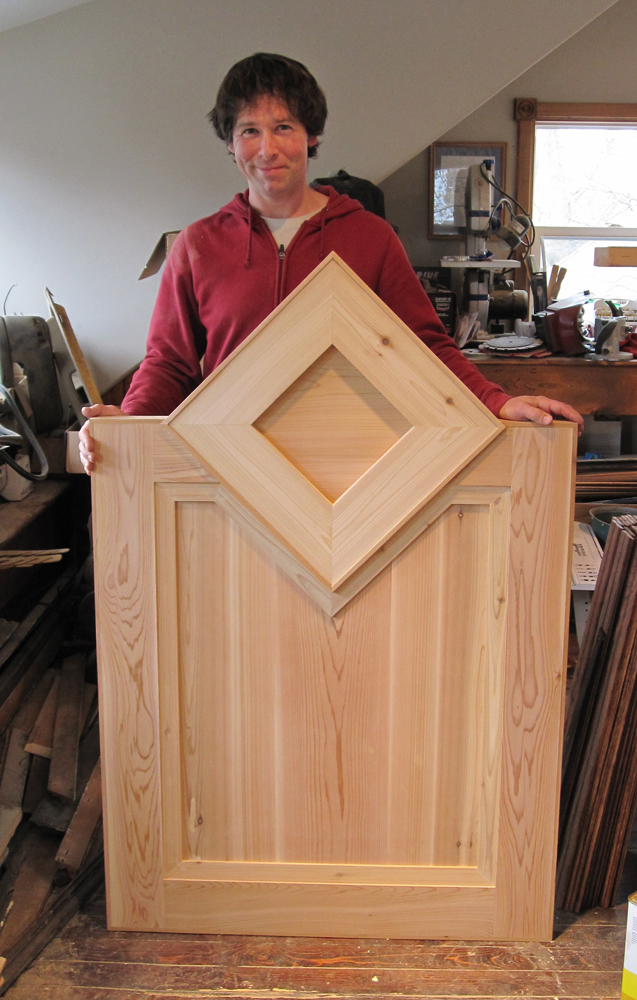
New gates, based on the unrealized design by Wright on one of his drawings, are being built by Chad Nichols, the master carpenter who has done much of the work at the house. Chad measured the openings for the gates in January, 2013:

Image


He first made a model based on the design built for the house, before it was decided to use the unrealized design:

Image

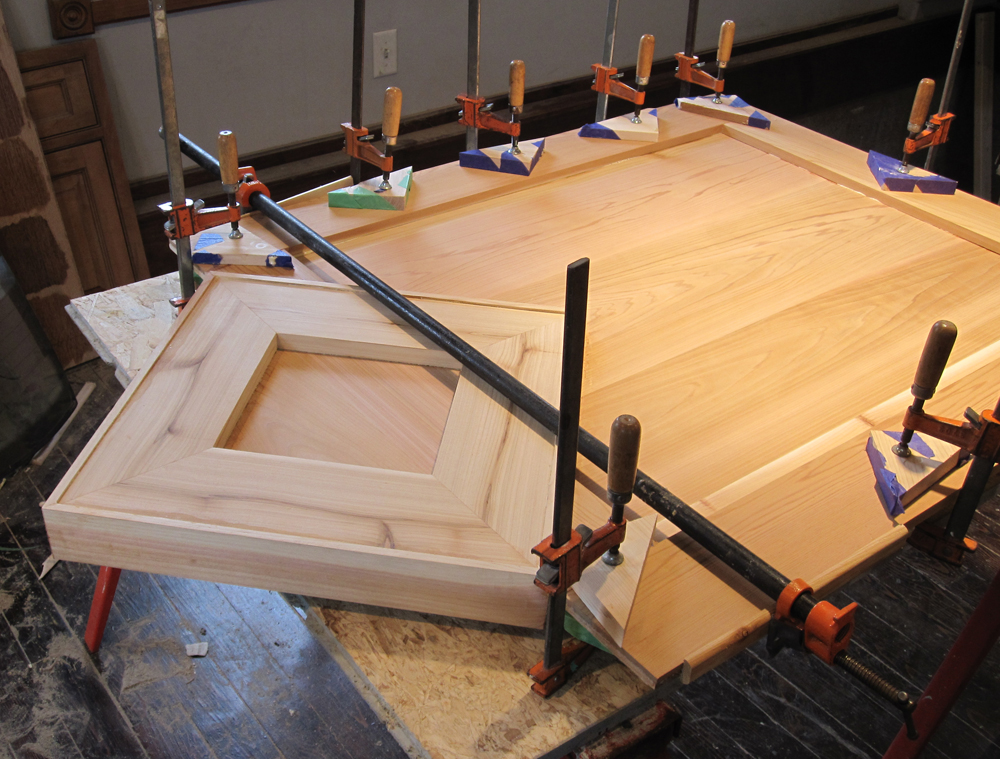
There is nary a spare clamp to be found in his workshop as he now completes the red cedar gates. It was decided to wait until the house rehabilitation was almost completed before making the gates:

Image


The gates will be stained before they are installed, probably next week. Chad proudly invited me to his workshop today to see what they look like:

Image

Hardy House Rehabilitation

Photos and text (c) Mark Hertzberg

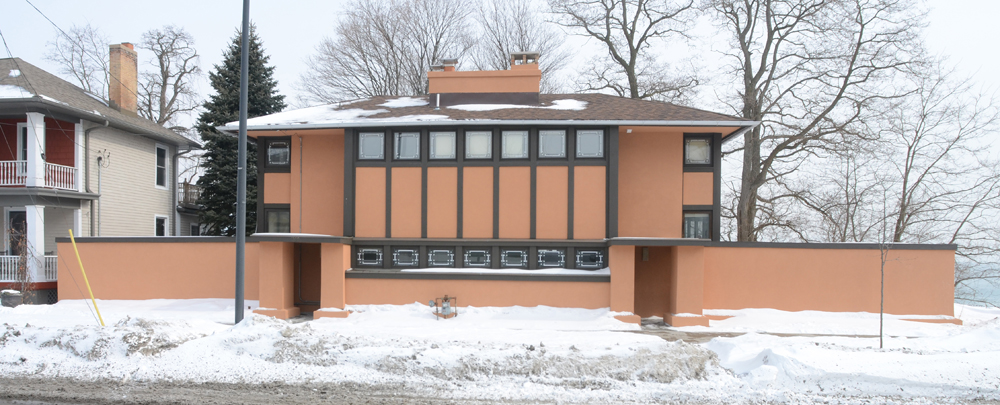
Eugene Szymczak became the seventh steward of Frank Lloyd Wright’s Thomas P. Hardy House in Racine, Wisconsin on September 16, 2012. He undertook a rehabilitation which has literally saved the house. I have posted many photos of the process on this website. Here is your first complete look at the house after the work finished. The photos were shot February 14. Landscaping is not been done yet; that will likely hide the gas meter which is in front of the house. Many people have been startled by Gene’s choice of color: terra cotta. Their anxiety diminishes when they learn that the exterior and interior were restored in what are thought to be the original colors. If you still doubt the choice of exterior color, look at Wright’s Gardener’s Cottage at the Darwin D. Martin House, from the same period.

Image

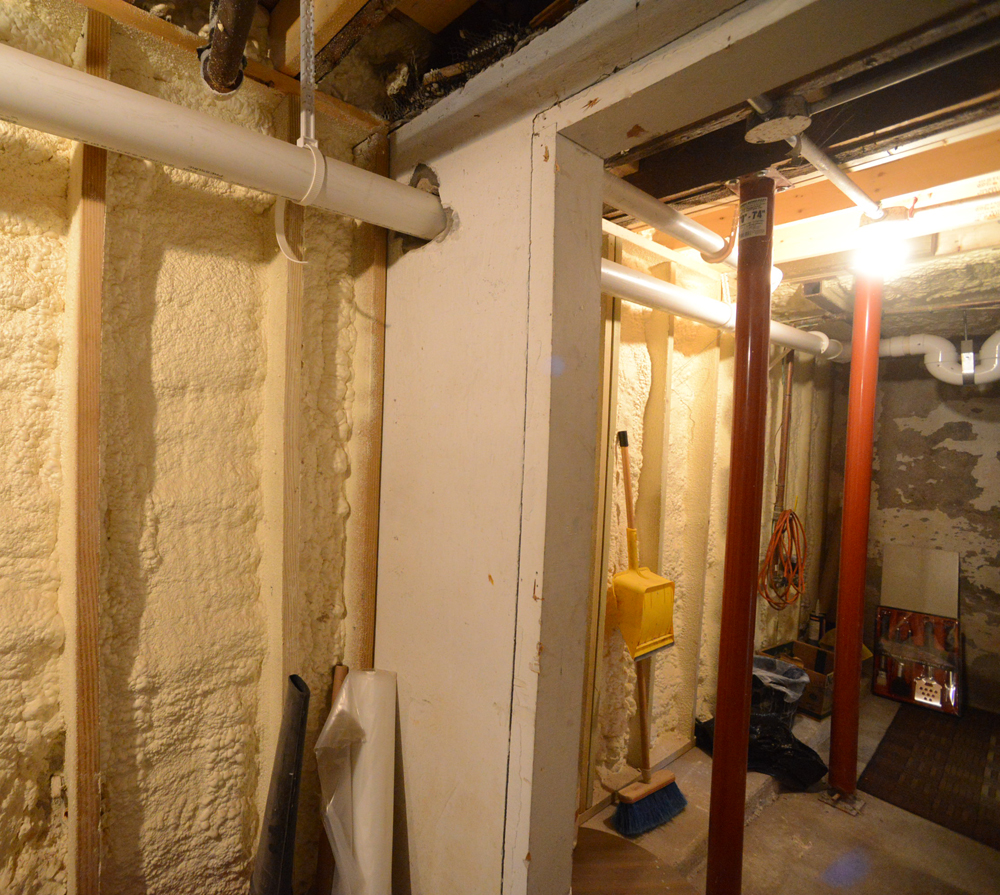
Surprisingly, the biggest challenge to the stability of the structure was the Main Street side rather than the lake side of the house. Daylight was visible in the “heater room” or sub-basement hallway which is below grade, between the two doorways. A concrete slab next to the south (right) door had partially caved in and there was extensive rotting of the wood foundation beams. The house was jacked up, 1/8″ of an inch at a time and four permanent floor-to-ceiling posts were installed. Two of the posts are shown at right, below.

Image

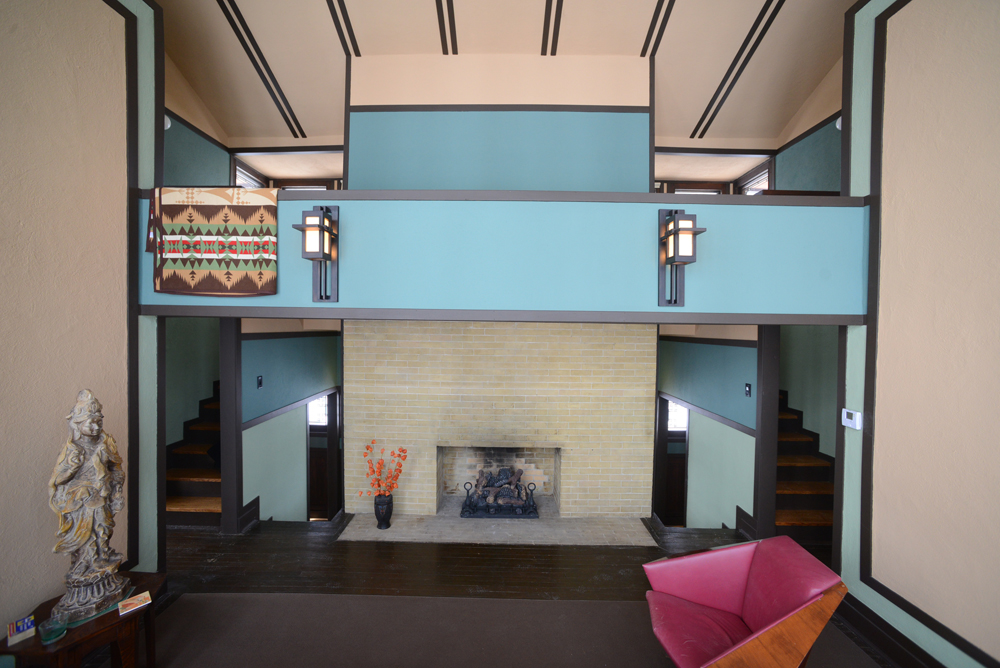
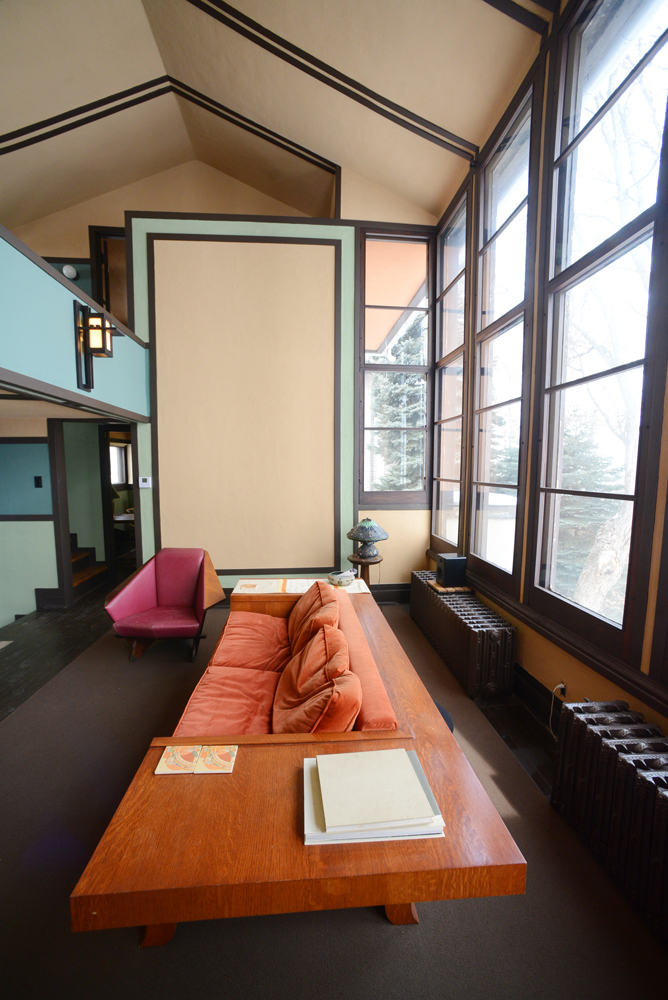
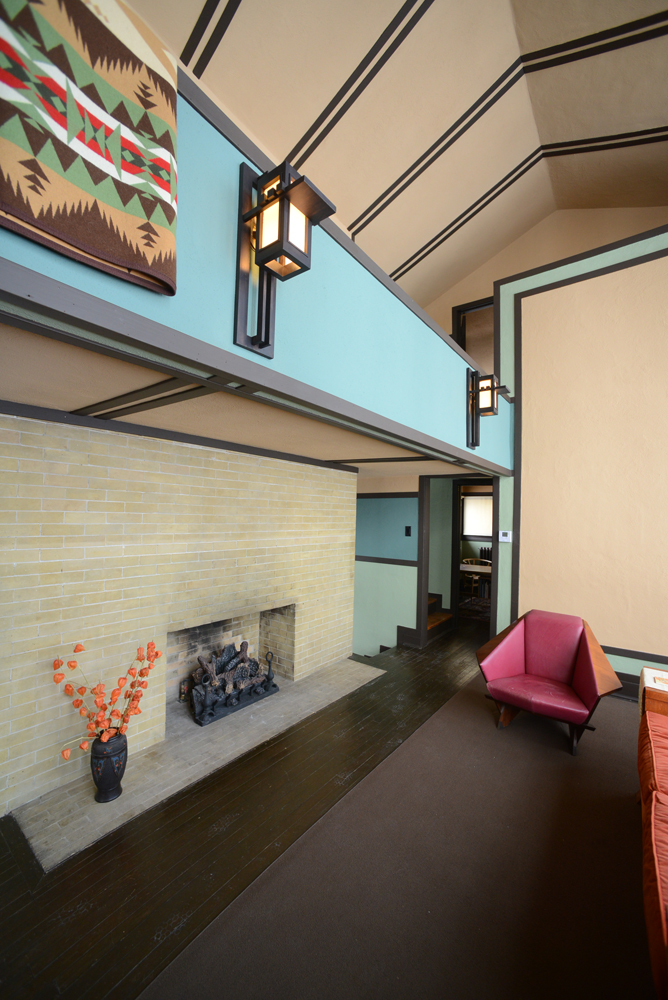
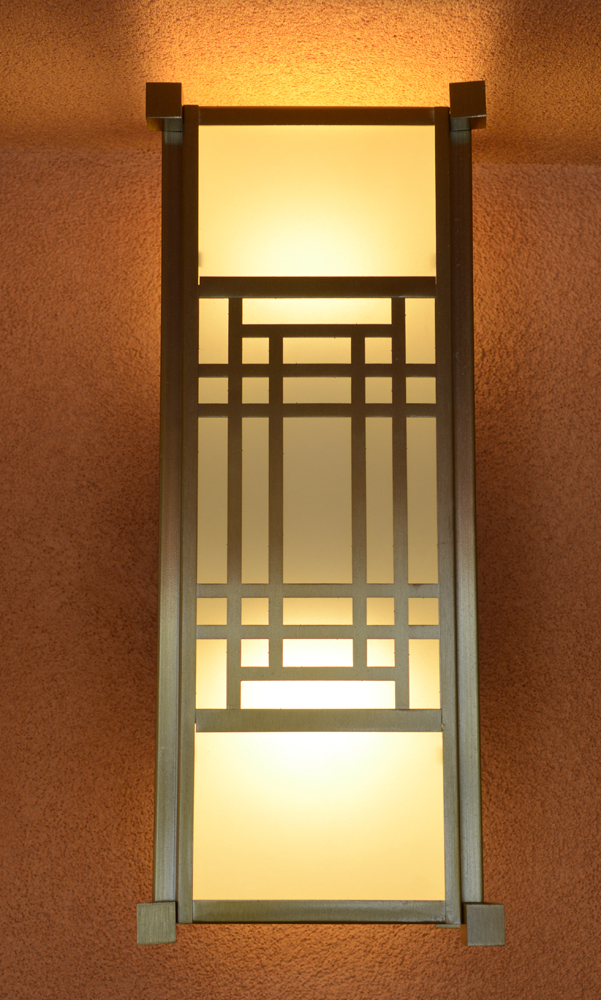
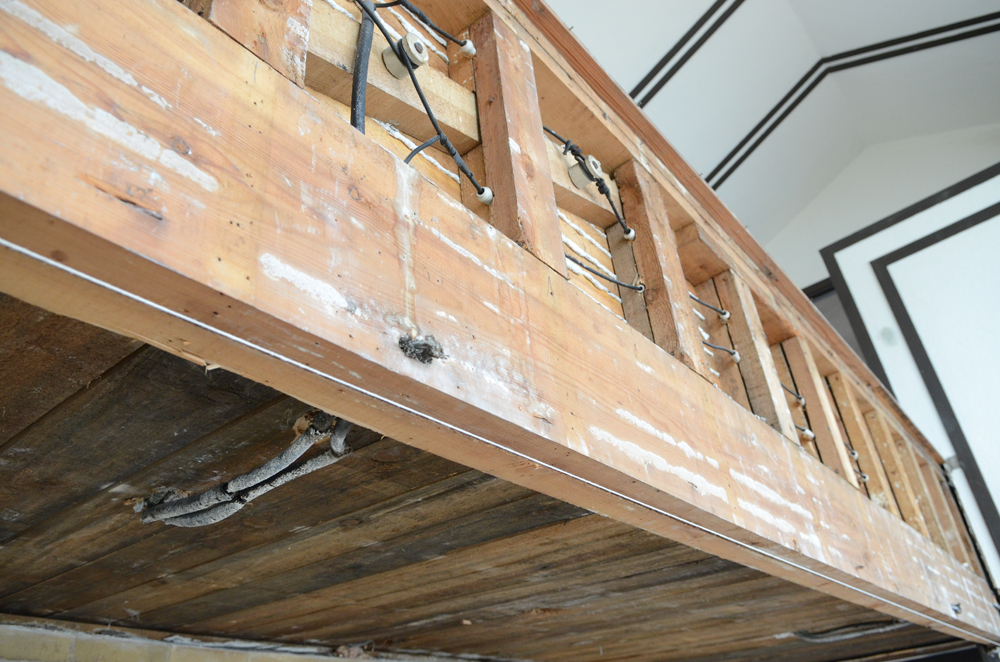
The center of this wonderful house is, of course, the living room. However, as Jonathan Lipman remarked to me, unlike many of Wright’s Prairie-style homes, the fireplace (which is not ornate) is secondary in importance in this living room. One has his or her back to the fireplace when looking out the two-story living room windows at Lake Michigan, below the house. The living room balcony was deflected when Gene moved in. Workers found electric wiring and gas lines for two light fixtures on the face of the balcony when the plaster was removed so it could be repaired. Anne Sporer Ruetz, who grew up in the house after Hardy lost it at sheriff’s auction in 1938, does not remember any lights there. It is possible none were ever installed. Gene had two fixtures made, following the design of lights at the (now-demolished) Little House in Minnesota. Similar wall sconces were made for the dining room.

Image

The dominant vertical space in the middle of the photo below is the back wall of the bedroom closets

Image

Image

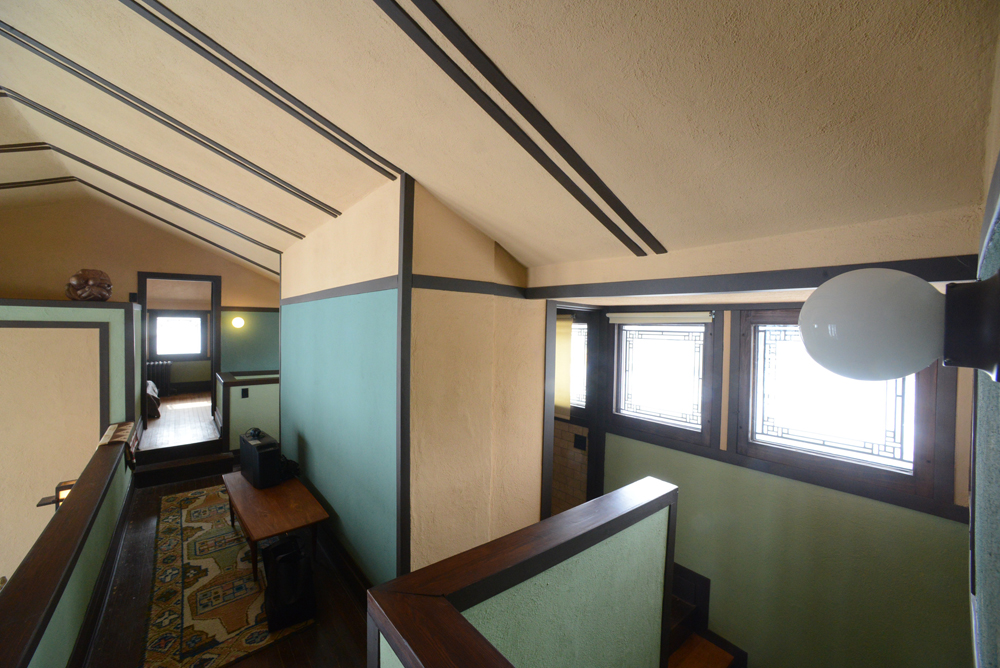
This is the view from the living room balcony:

Image

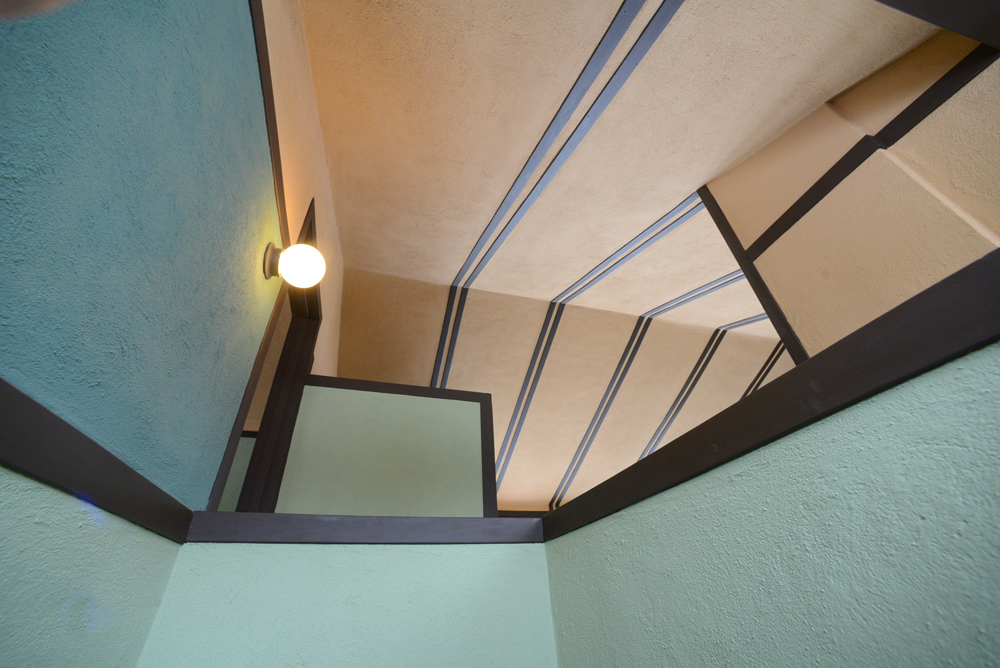
This is a look at the ceiling as one climbs the stairs from the living room to the balcony:

Image

Image

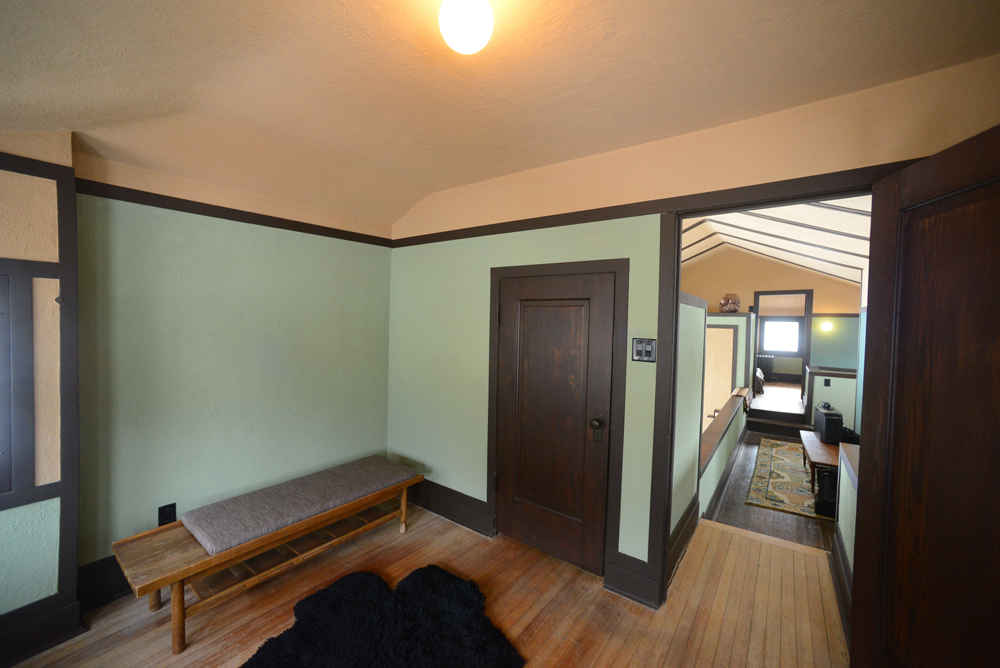
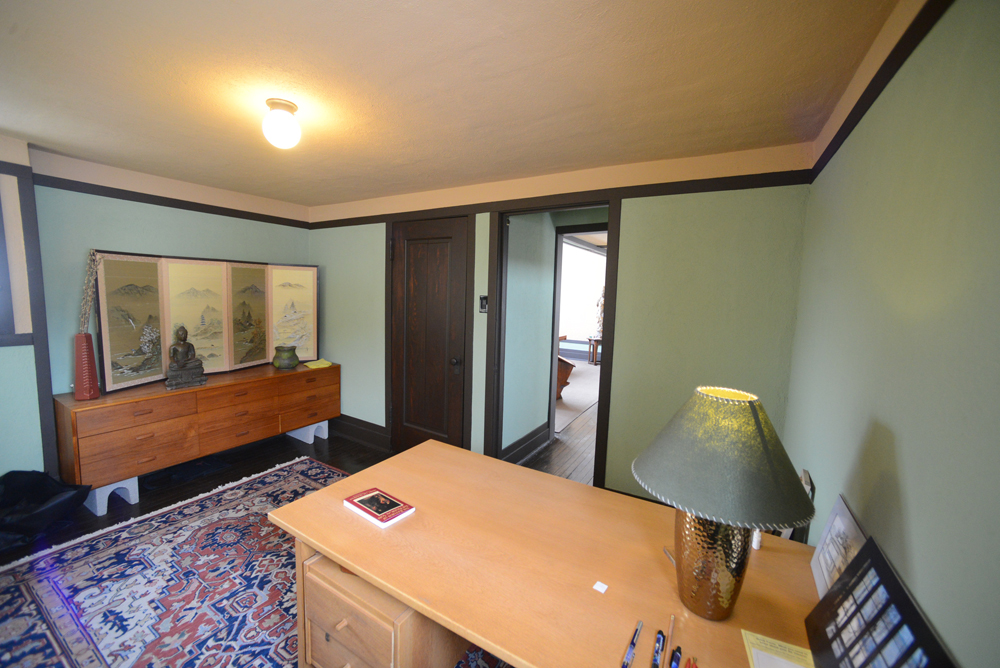
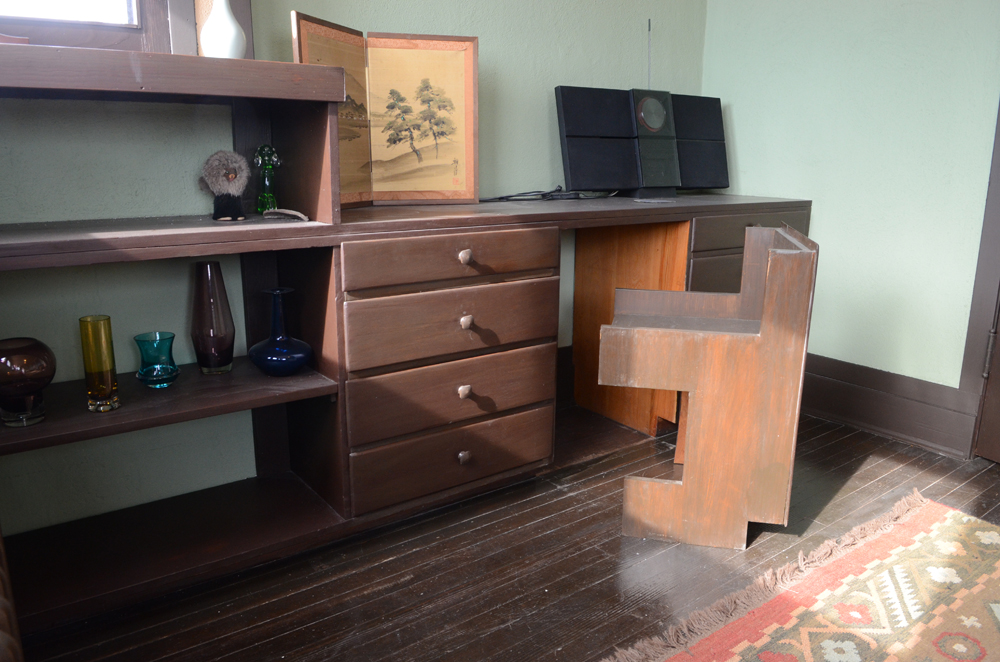
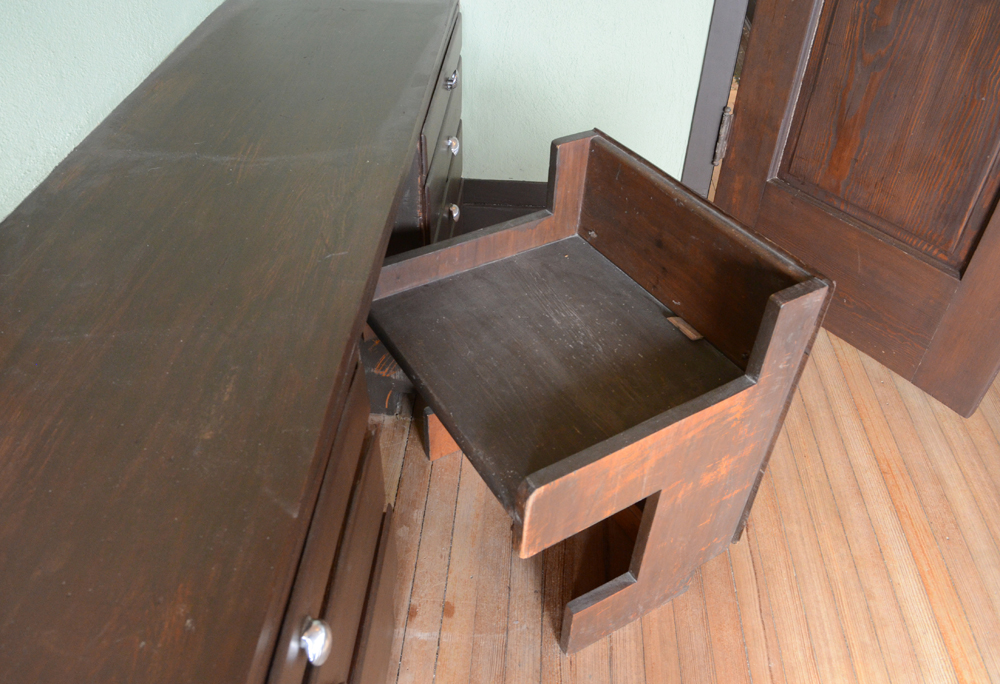
There is a bedroom at each end of the house on the living room and living room balcony levels. The two at the south end of the house have built-ins including these pull-out chairs:

Image

Image

Image

Image

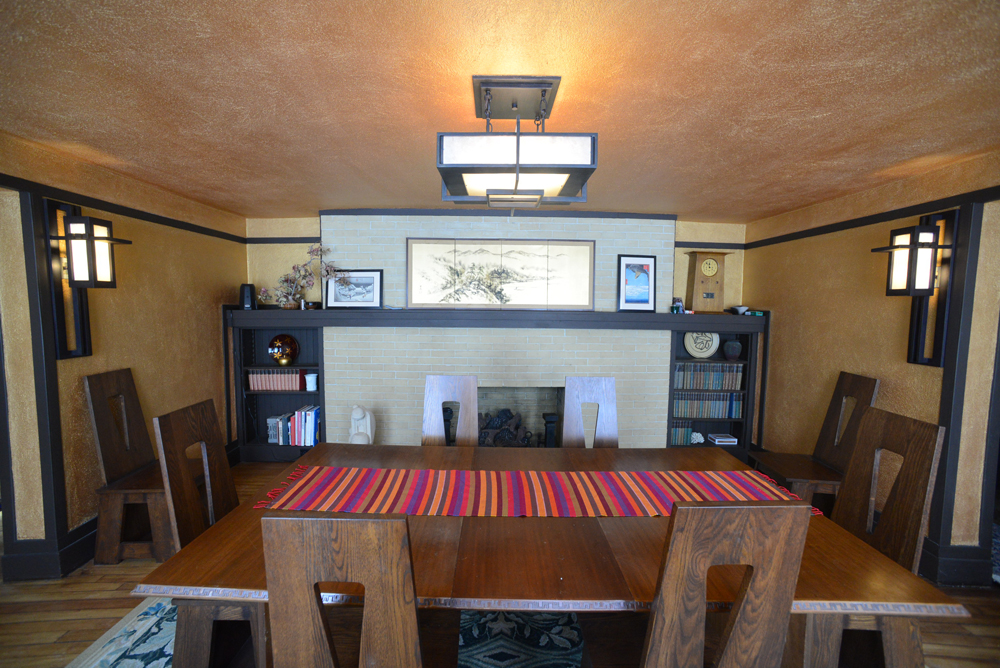
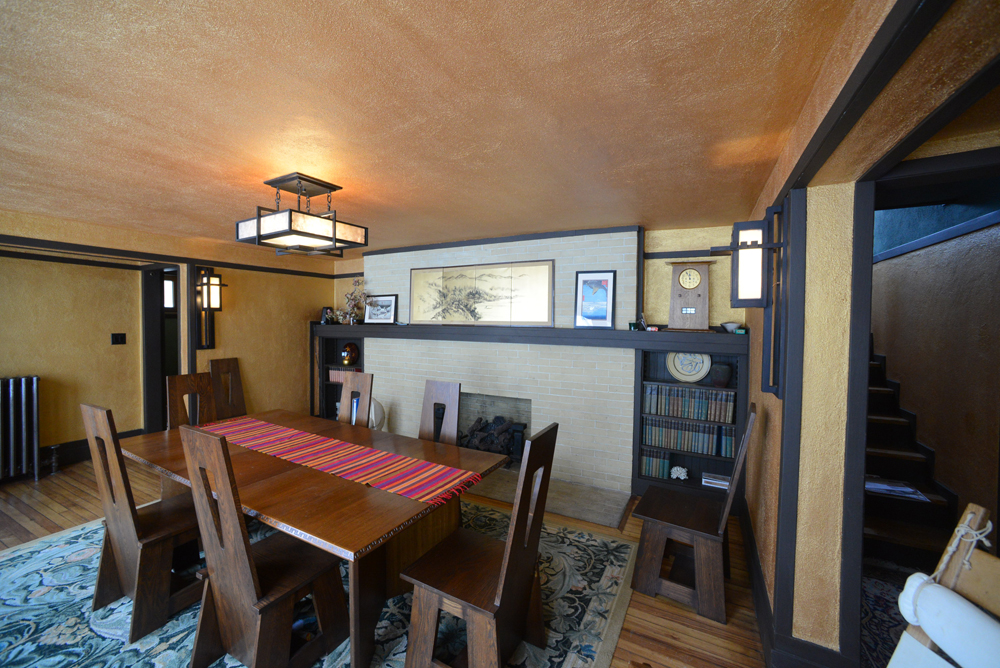
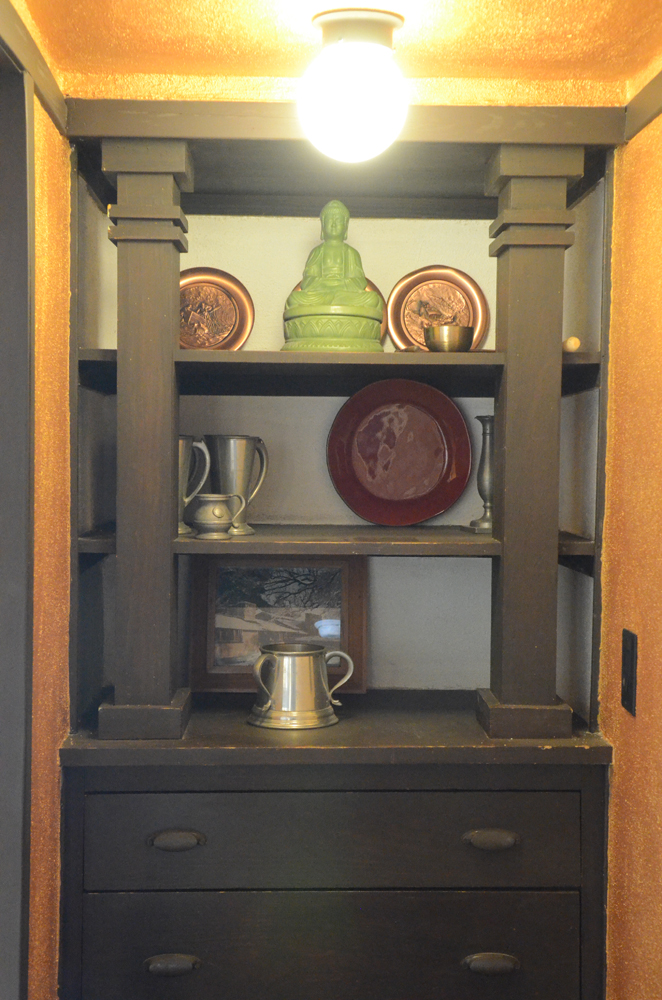
The dining room is one level below the living room. There are built-ins on either side of the fireplace and on either side of the dining room terrace windows and door:

Image

Image

Image

Image

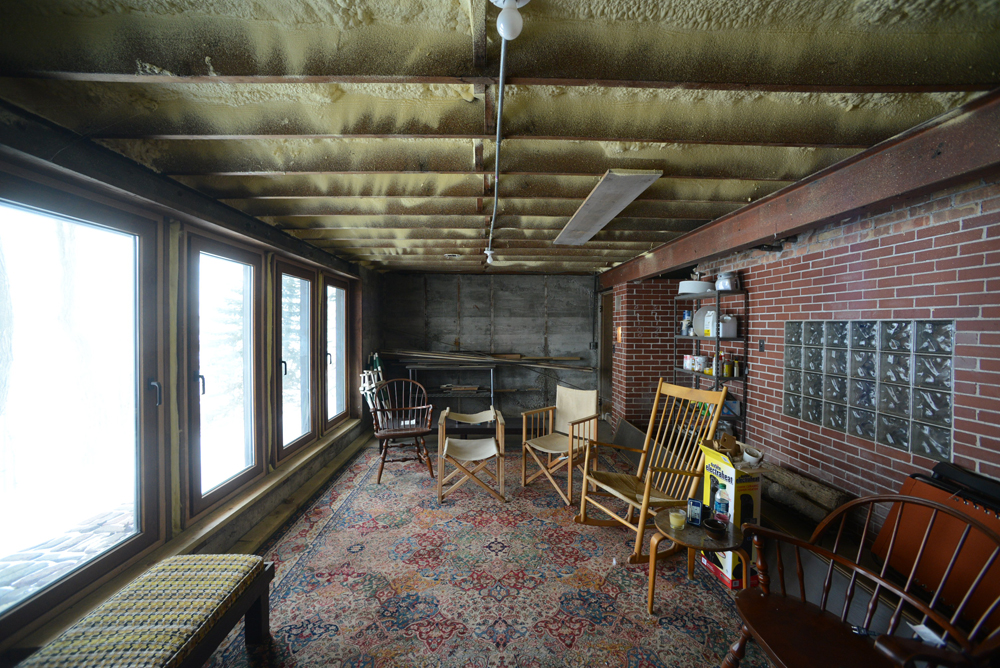
The second owners of the house, the Sporers (1938-1947) had the dining room terrace rebuilt with a recreation room underneath. The room is not finished. The terrace originally ended in a stucco wall. Five floor-to-ceiling windows, with a door in the middle one, became the new terrace wall on the lake bluff, after the remodeling:

Image

The house was constructed with pocket doors. The Archers, the third owners of the house (1947-1957) replaced them with conventional hinged doors because the pocket doors were difficult to use in icy and snowy conditions. Szymczak put in new pocket doors. He chose doors with glass so one can see into the courtyards from the entry hall, and also to let more light into the hallway:

Image

Various design details:

Image

Image

Image

Image

Image

We end your tour with one of the new light sconces Gene had made to guide guests to the doorway, as they come in from Main Street:

Image

Hardy House – New tour, and a look back after a year of restoration

(c) Mark Hertzberg – For The Journal Times

Image

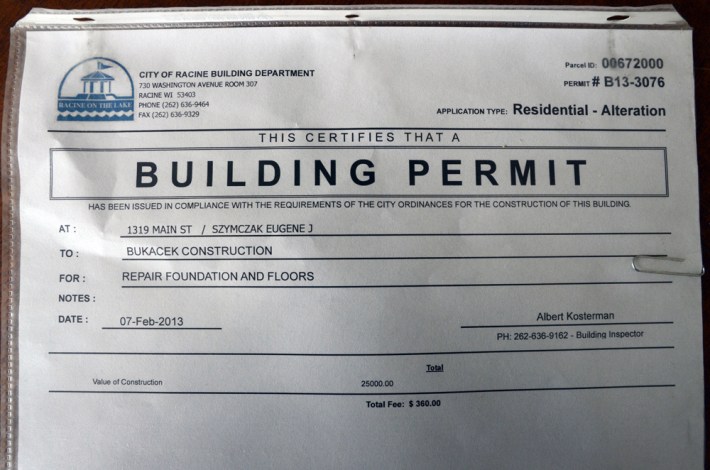
A year is generally not a significant time in the history of a 110-year old house. However, this past year has been perhaps the most important, if not dramatic, year in the history of the Frank Lloyd Wright house at 1319 Main Street. Thomas P. Hardy, a Racine attorney, moved into the house that Wright designed for him, in 1906. Hardy was 73 when he lost his beloved home, first at sheriff’s auction in 1937, and then by order of the Wisconsin Supreme Court in 1938. The house has had six owners since then. The newest steward of the house, Eugene Szymczak, bought it a year ago from Jim and Margaret Yoghourtjian, who owned it since 1968. Szymczak undertook a full restoration of the house. Some of the work, including replacing aging wood and refinishing the house in its original colors inside and out, is relatively routine. Other work required solutions unique to the house. An example was the placement of four floor-to-ceiling columns in the sub-basement to stabilize the Main Street side of the house.

Interest in the house has increased greatly recently, according to the craftsmen working on it, as passersby see the finish color of terra cotta applied. Szymczak reflects on the past year, and says, “I am happy to see that many people enjoy seeing the house come back to its original intent of being part of nature and an inspiration.” The Hardy House will be open for a rare tour during Preservation Racine’s annual fall house tour Sunday September 29. For more information: http://www.preservationracine.org/tour2013.html

Copy and paste to your browser for a link to a photo gallery of the year of restoration:

http://journaltimes.com/photos-hardy-house-restoration/collection_09906d5c-1944-11e3-8732-001a4bcf887a.html#0A

Hardy House finish color revealed

(c) Mark Hertzberg

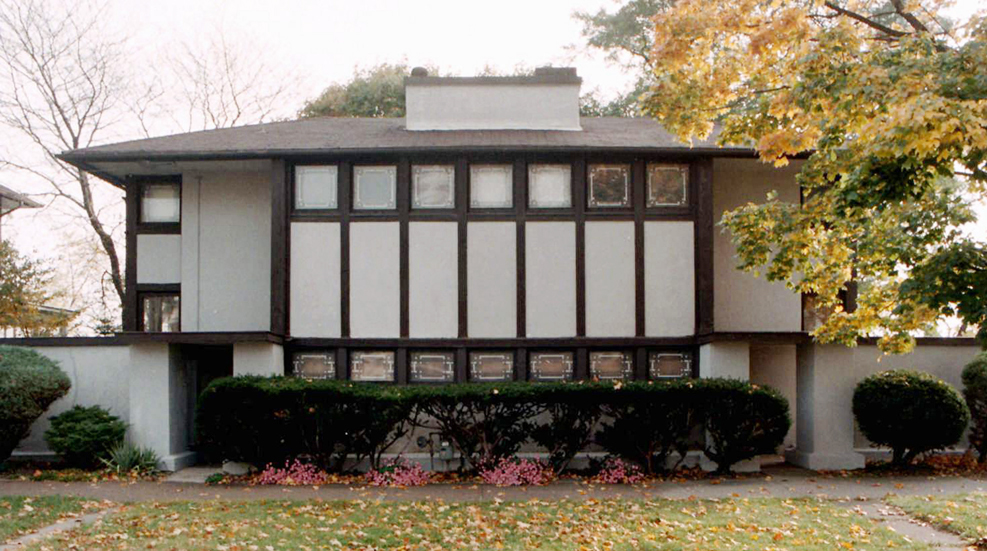
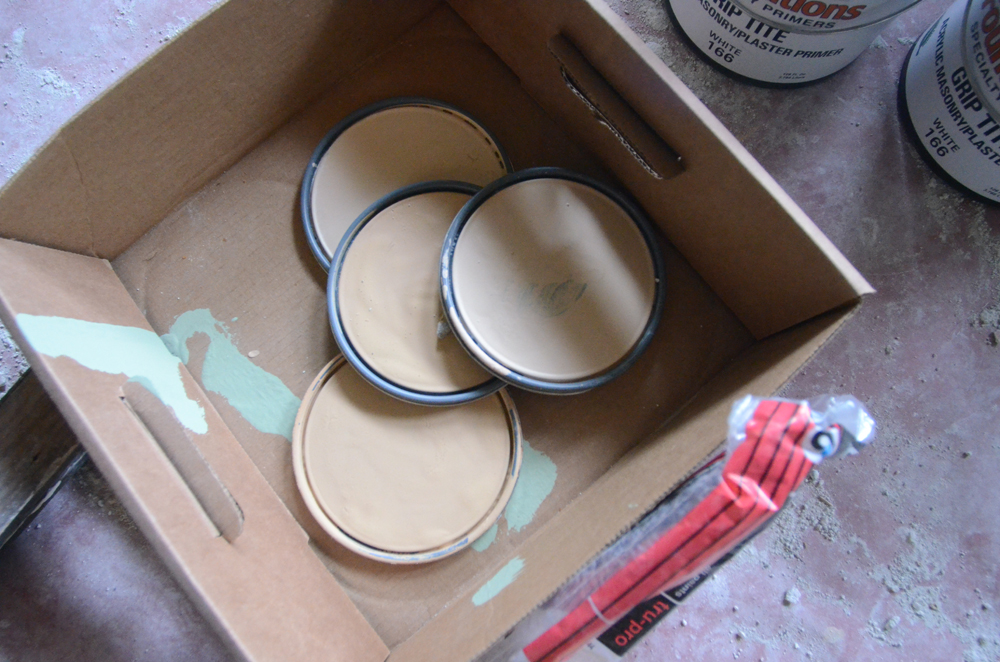
The package is being gift wrapped, if you will, and we now know what color the restored Thomas P. Hardy House will be. The house, which Gene Szymczak bought last September, is being restored. While some aspects of the house have been updated, Gene wanted to find the original color of the house. The stucco was painted gray when Gene bought it, as seen in this photo taken in the mid 1990s:

Image

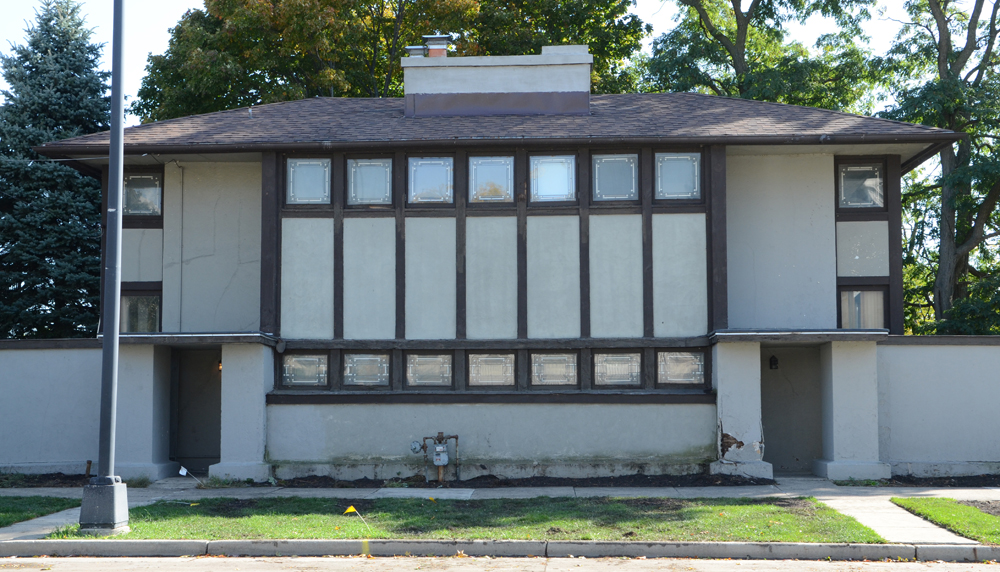
The stucco and wood had weathered and deteriorated since that photo was taken. The next photo shows the house last fall, after the bushes had been removed. The crack in the pillar of the entryway, right, was caused by a worker:

Image

The next picture was taken just 10 days ago:

Image

Next, we see the layers of paint uncovered by painter Dennis Bishop, on the back of the house:

Image

And, the final color…drum roll…terra cotta, like Wright’s Gardener’s Cottage at the Darwin D. Martin House. The color is the final coat of the meticulous stucco repair by Paul Lemke of Top Notch Plastering of Racine, and his nephew, Sean Doyle:

Image

Hardy House: What a difference a week makes!

(c) Mark Hertzberg

      The Hardy House interior looked quite raw and unfinished 10 days ago as final preparations are made for Saturday’s tours of the house – the first in decades. What a difference a week makes! I was astounded when I stopped at the house last Thursday and saw painters Dennis and Daniel Bishop at work. They are bringing the living room back to life, with its original color, and staining the Georgia pine trim. There are less than 20 tickets left for the tours: call Frank Lloyd Wright Wisconsin at 608-287-0339 to make reservations. The interior is not completely finished yet. Exterior work will follow after the interior is finished. This is a wonderful opportunity to see a Wright house rehabilitation in progress.

Image

Image

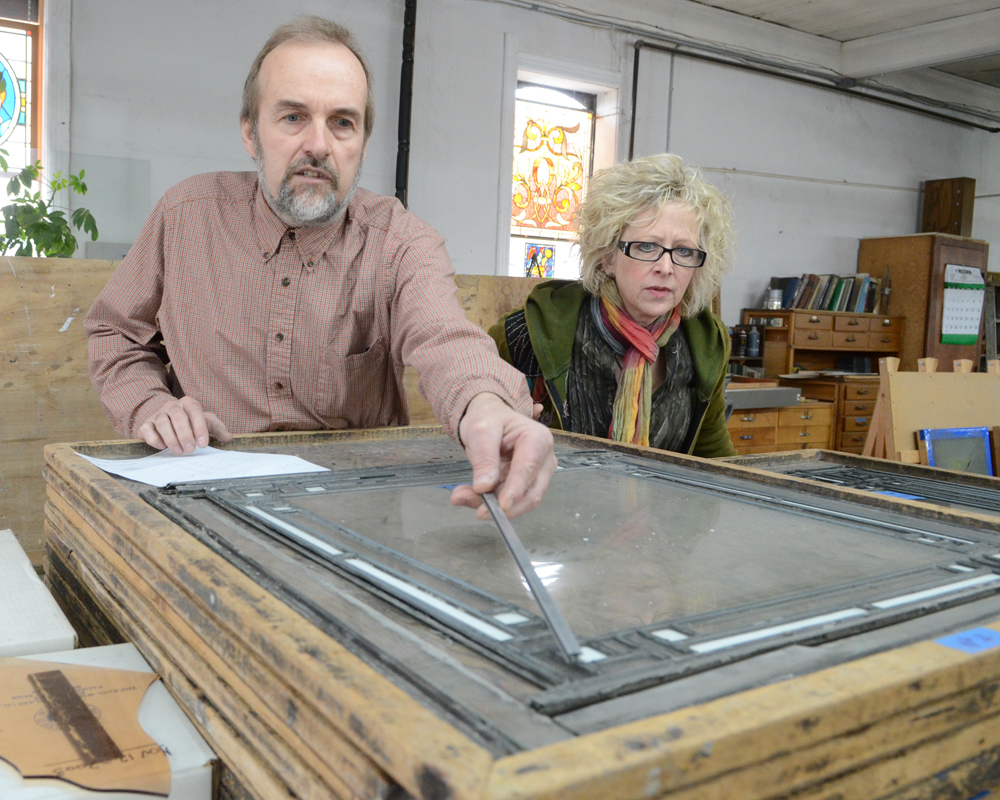
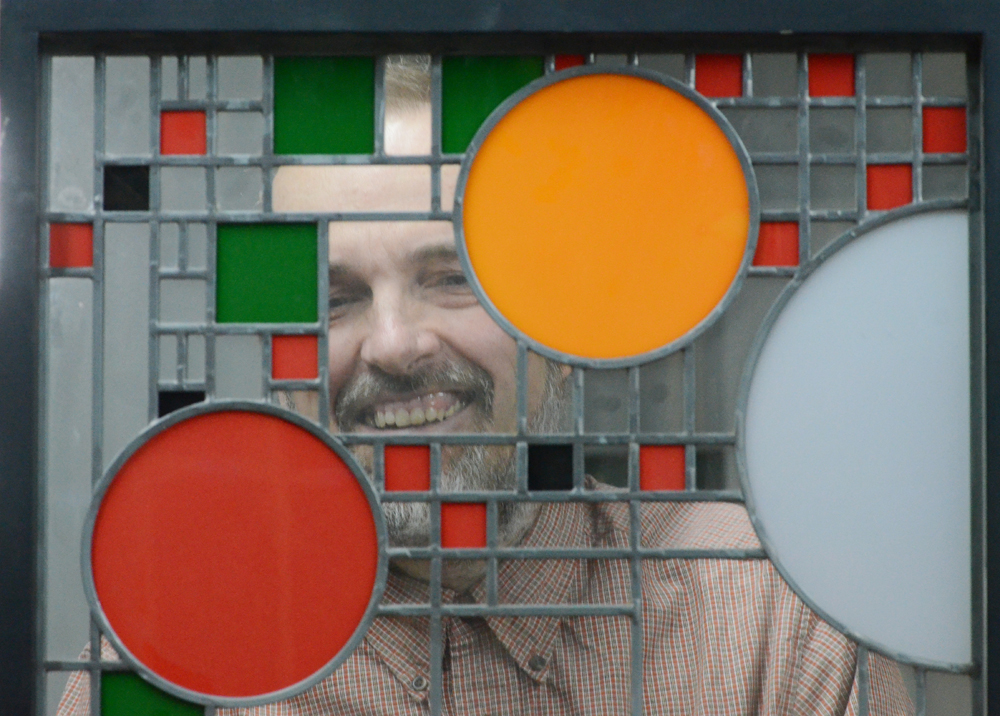
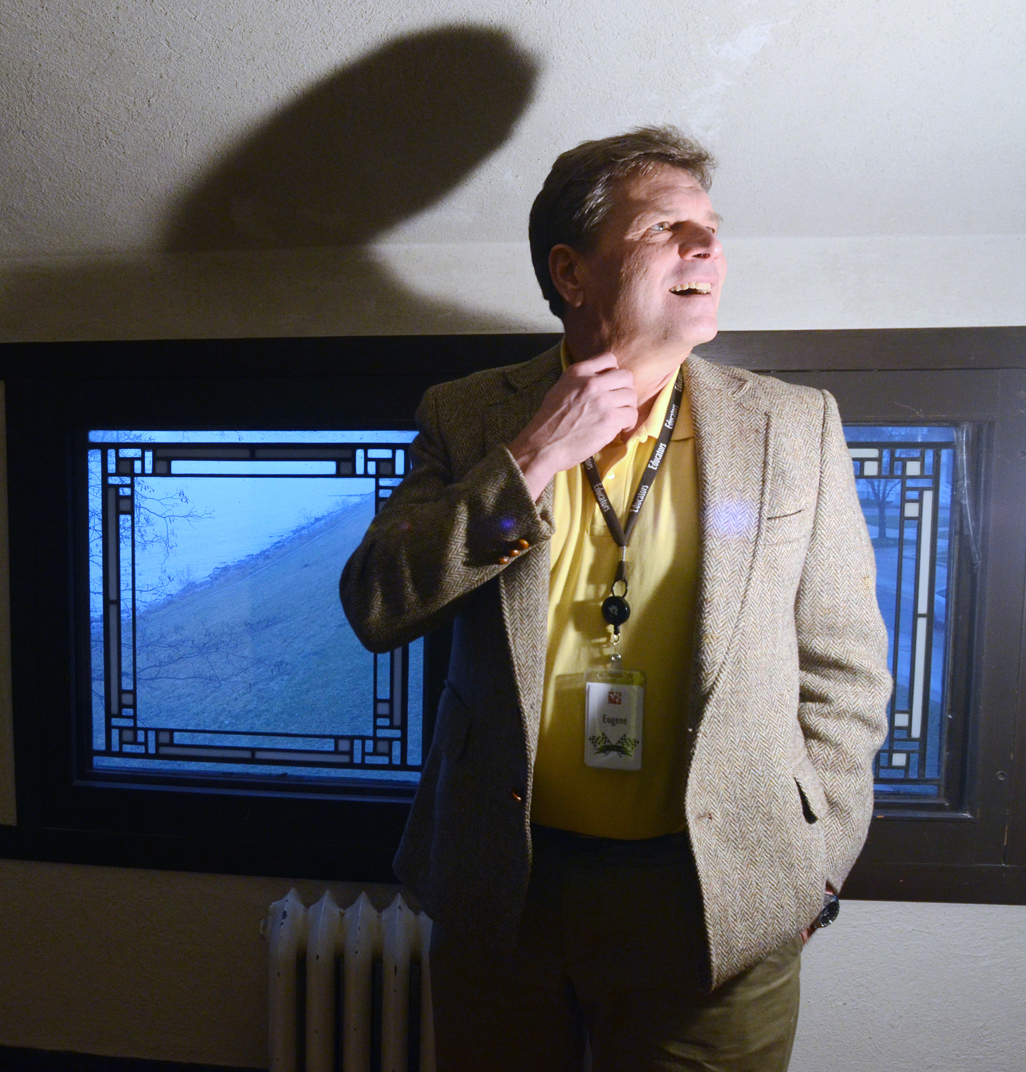
I had just come back from looking at the home’s seven hallway windows with Joan Szymczak (owner Eugene Szymczak’s sister-in-law) at Paul Phelps’ Oakbrook Esser glass art studios in Oconomowoc, Wisconsin. Phelps explained that the windows are too badly damaged from previous repair to restore. The original windows will be saved, but he will build replicas (Szymczak and Phelps are framed in one of his reproduction Robie House windows in the first photo).

Image

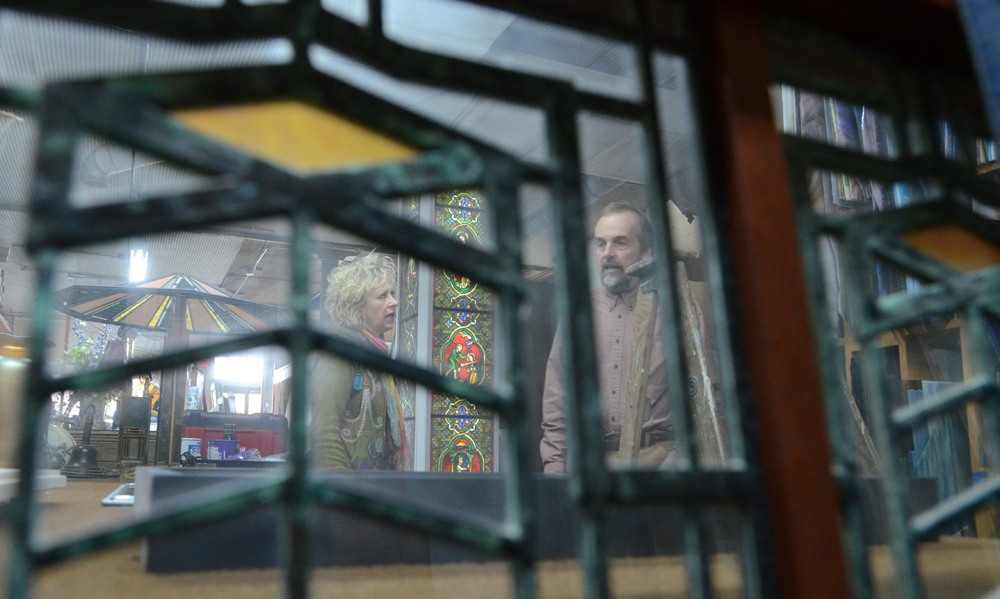
ImageImageI couldn’t resist taking Phelps’ picture through one of his Coonley Playhouse windows:

Image


April 5 update: Hardy House Restoration

Photos and text (c) Mark Hertzberg

Image

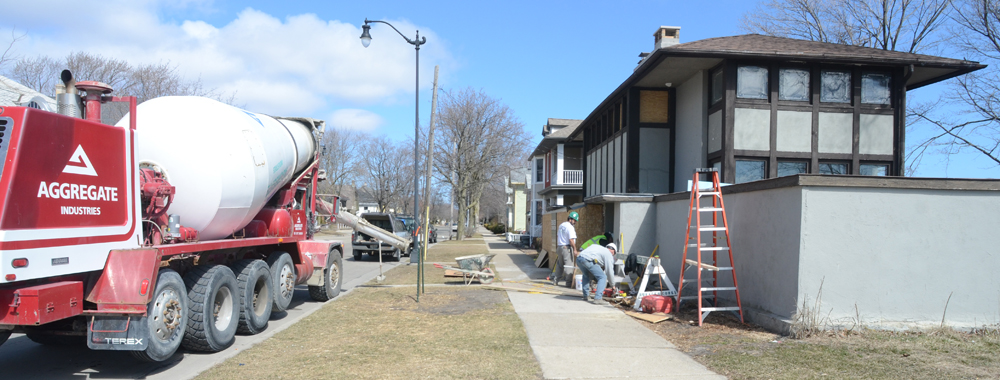
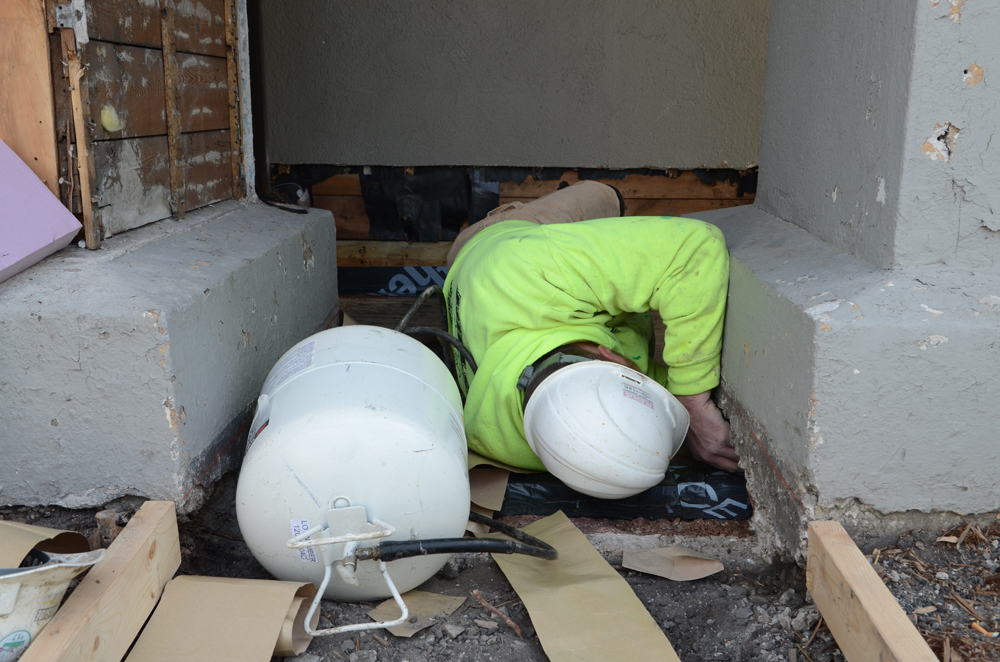
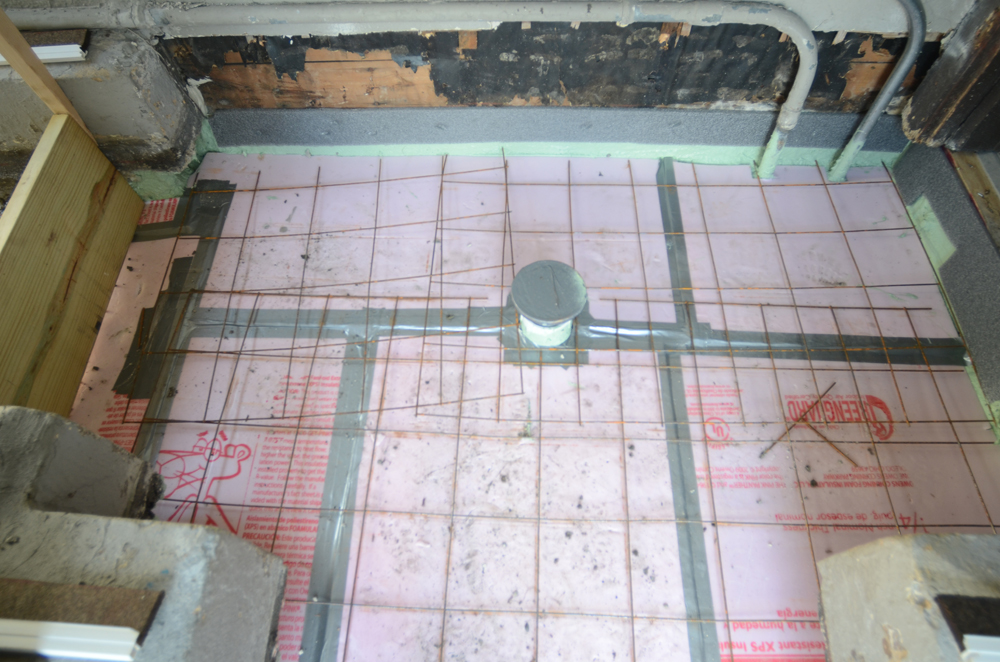
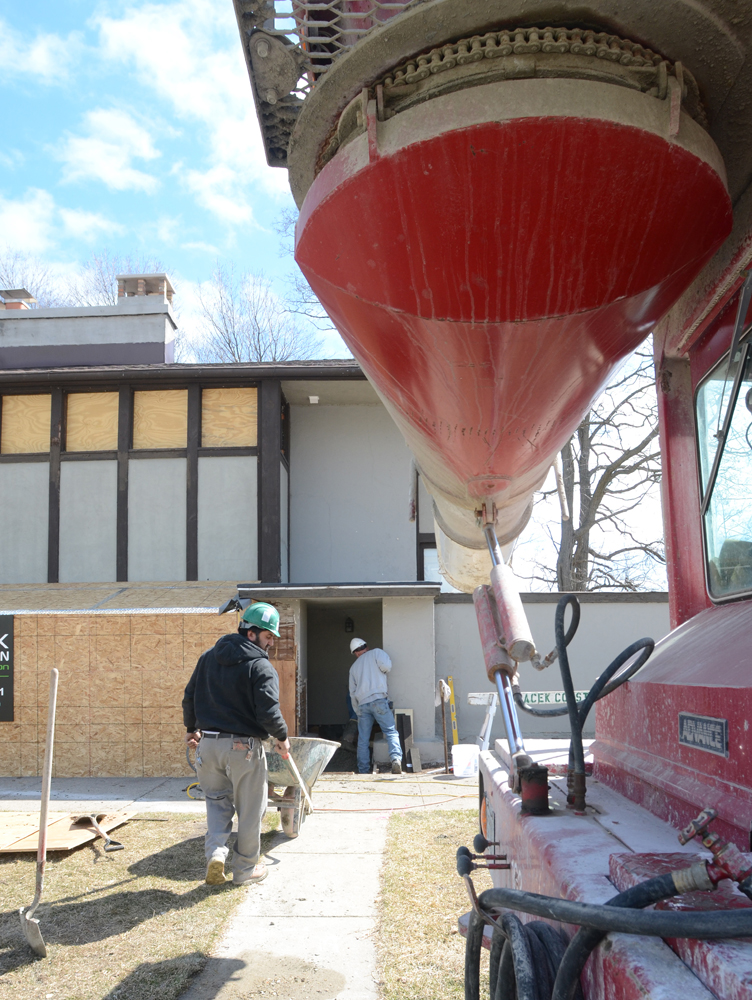
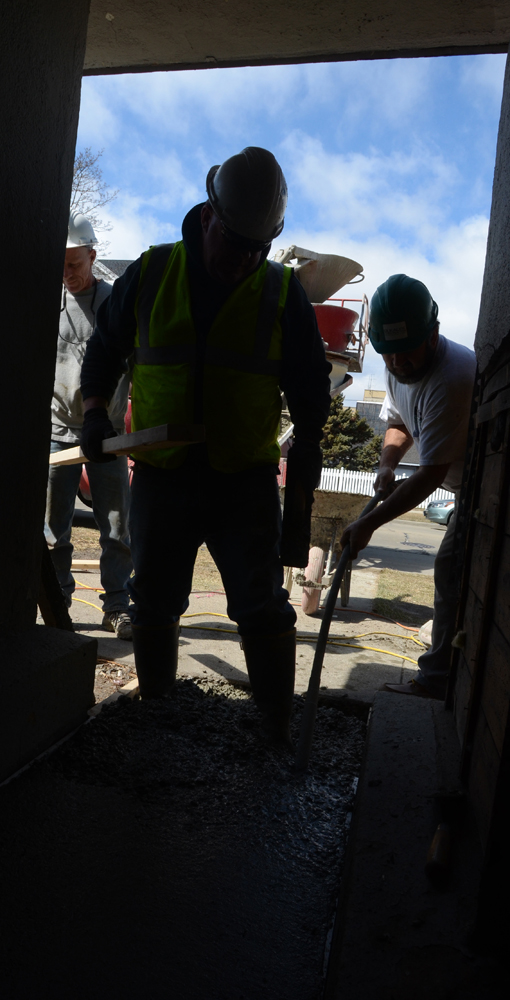
Restoration of the Thomas P. Hardy House continues at a fast pace with 90 visitors expected to tour the house April 27 (see previous post and http://www.wrightinwisconsin.org – reservations still available). Concrete was poured today at the north and south entry ways. The cantilevered concrete slab at the south door had caved in (photos in previous updates show daylight in the view looking up from the basement) so both the south and north entry slabs were replaced today.

Image

Image

Image

Image

Image

Image

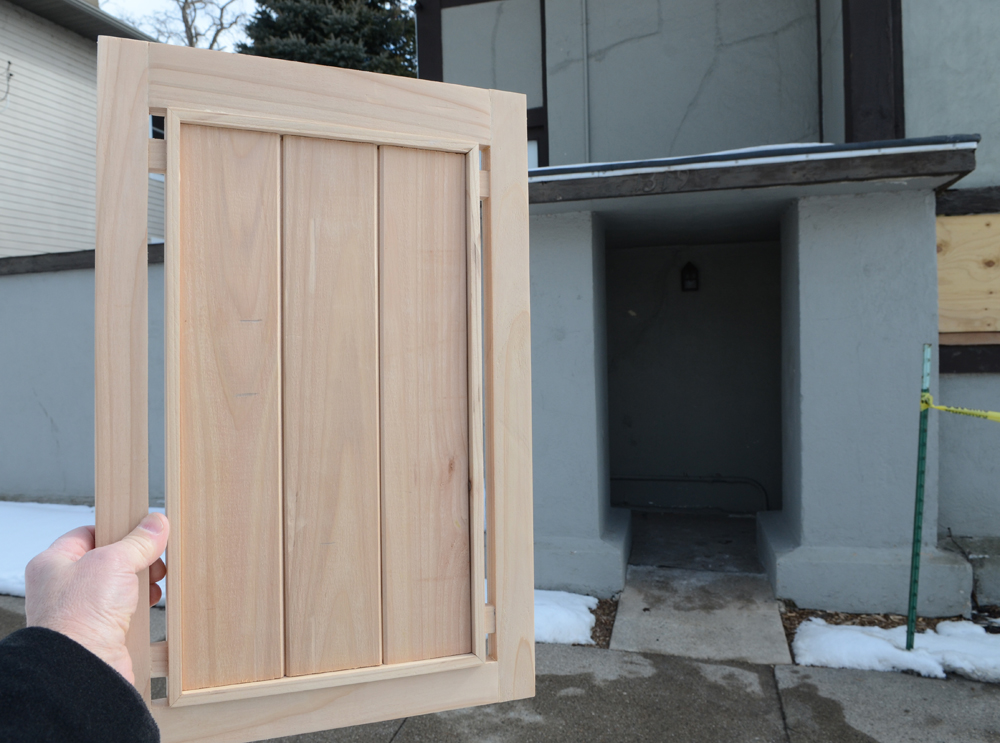
Construction of cedar gates, replicating the ones Mr. Wright put across the north and south entry ways when the house was built in 1906, is expected to begin soon. The original gates were removed by the third owners of the house (1947-1957). This is a model that Chad and Homer Nichols made of the gates they will build:

Image

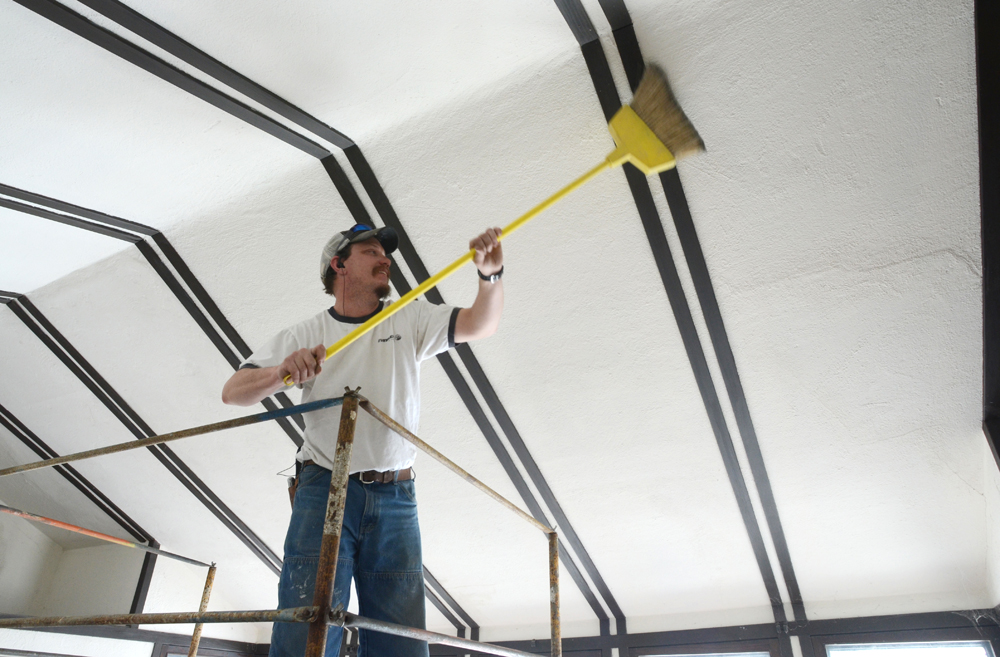
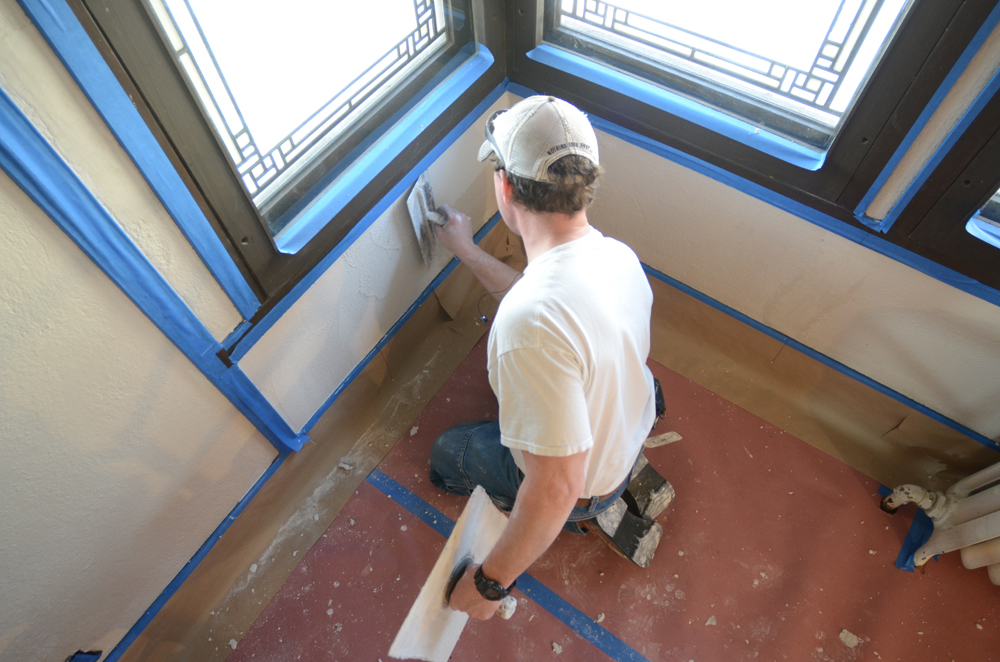
Paul Lemke, the plasterer, had a challenge building the scaffolding to work in the living room. It also took him several days to cover the cedar trim with blue masking tape…after he swept the cobwebs off the ceiling.

Image

Image

Image

Image

Image

Image

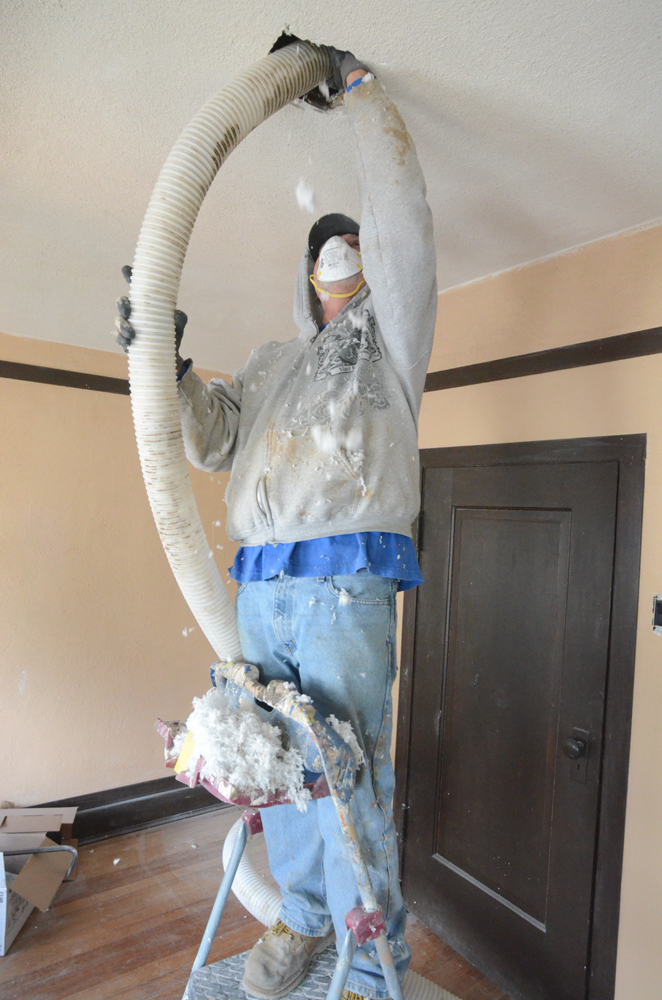
Paul thought he had finished the upstairs bedrooms several months ago…but then the insulation crew arrived a week ago and put holes in the ceilings. Paul will need to redo the ceilings.

Image

Image

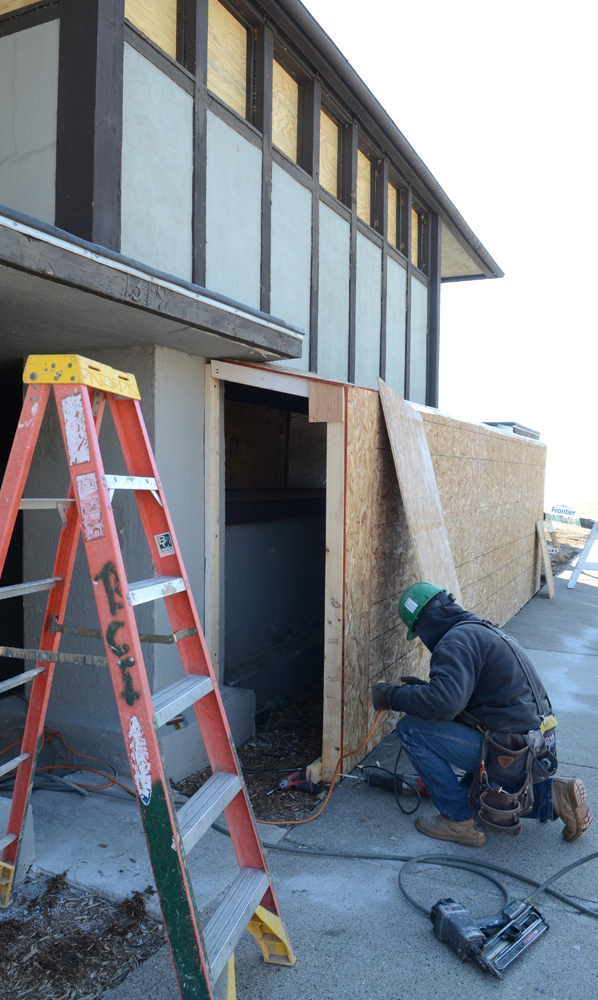
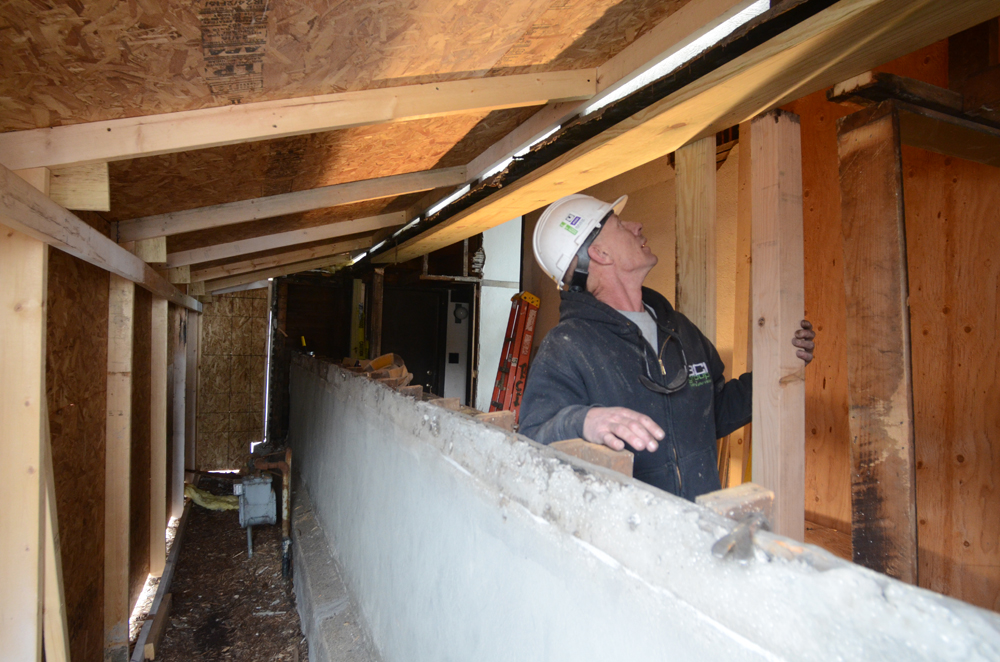
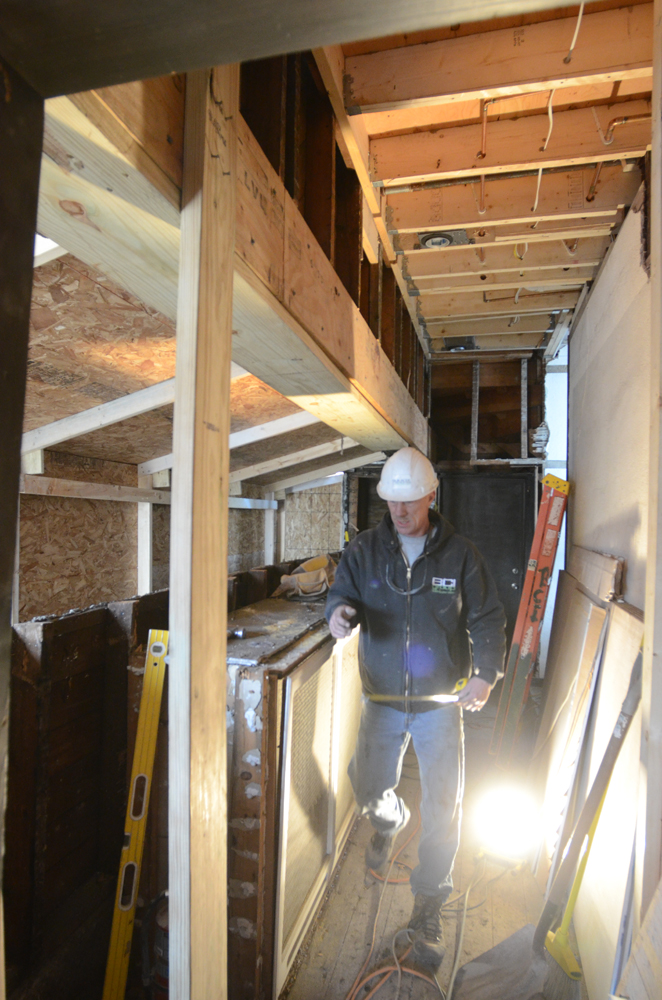
The most dramatic change in the exterior appearance of the house is the plywood shelter built around the entry hallway a few weeks ago. Gordon Hudson and Kevin Grant built the shelter before removing the upper portion of the exterior hallway wall. They will use photos taken of the hallway before restoration began in September to guide them as they rebuild the wall to make sure it will last another 100 years.

Image

Image

Image

Image

We look forward to seeing many of you at the April 27 tour, which benefits Frank Lloyd Wright Wisconsin. Tours are limited to 90 people, by reservation for specific time slots between 9:30 and 2:30 p.m. Reservations are accepted by telephone only, at 608-287-0339. (I am on the board of the organization, and I will be leading the tours.)

Open House at the Hardy House on April 27!!!

The first tours of Frank Lloyd Wright’s Thomas P. Hardy House in decades will be held Saturday April 27. The house, which is perched on a bluff above Lake Michigan in Racine, Wisconsin, has been undergoing significant restoration since Eugene Szymczak bought it in September (photos of the restoration are in two previous posts, below).

The tours benefit Frank Lloyd Wright Wisconsin (www.wrightinwisconsin.org), thanks to Szymczak’s generous offer to open his house to the organization for this fund-raiser (Note: I am a board member of the group). The cost is $100 for members, $140 for non-member guests. I will lead the tours, which last a half hour. I am the author and photographer of Frank Lloyd Wright’s Hardy House (Pomegranate, 2006). The Racine Art Museum will be selling copies of the book and my Wright in Racine at the event.

Tours are for specific time slots between 9:30 and 2:30 p.m. Reservations are accepted by telephone only, at 608-287-0339. If you want to add to your Frank Lloyd Wright Racine experience, consider also making a reservation to see Wright’s SC Johnson Administration Building five blocks away, and visit the permanent Wright exhibition in Fortaleza Hall on the SC Johnson campus: http://www.scjohnson.com/en/company/visiting.aspx

Ruetz Hardy photos

Sub basement</p>
<p>10/19/2012</p>
<p>Contact:  Erin Mirabella

(c) Mark Hertzberg with photo above by Anne Sporer Ruetz (1940s)

Hardy House update

Photos and text (c) Mark Hertzberg

Step inside Frank Lloyd Wright’s Thomas P. Hardy House in Racine with me to get an overview of the restoration project, since our last visit to the house in November…
Image

Image

Gene Szymczak become the seventh steward of the house in September. He is tackling the restoration from the inside first. Some work is the fun arguably cosmetic stuff, other work is the serious task of addressing some structural issues. Let’s look at the fun stuff first.

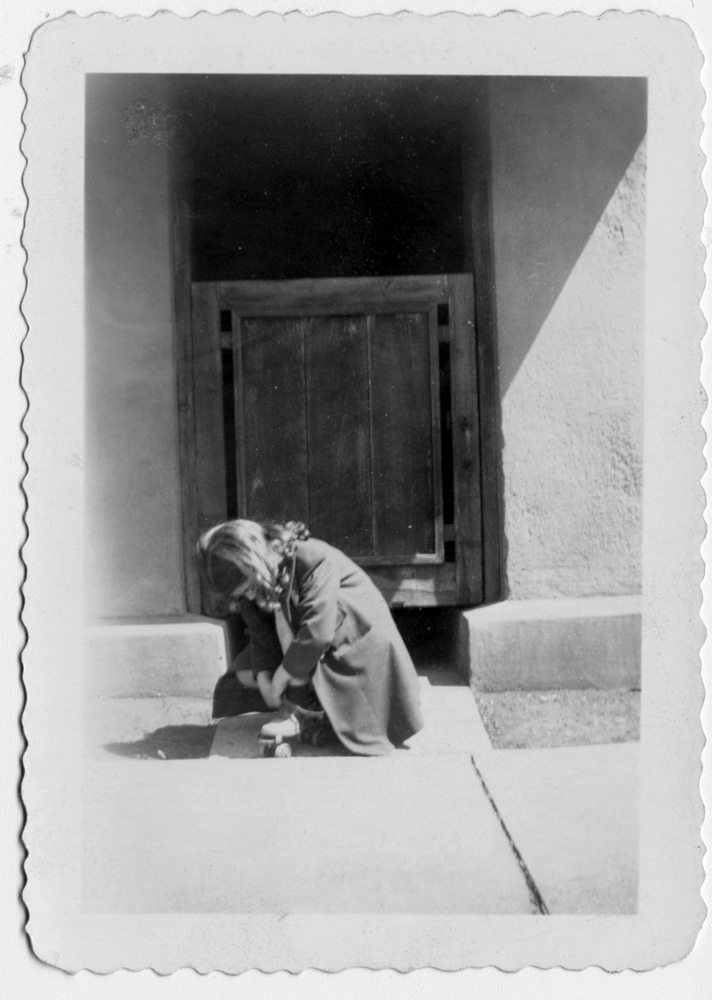
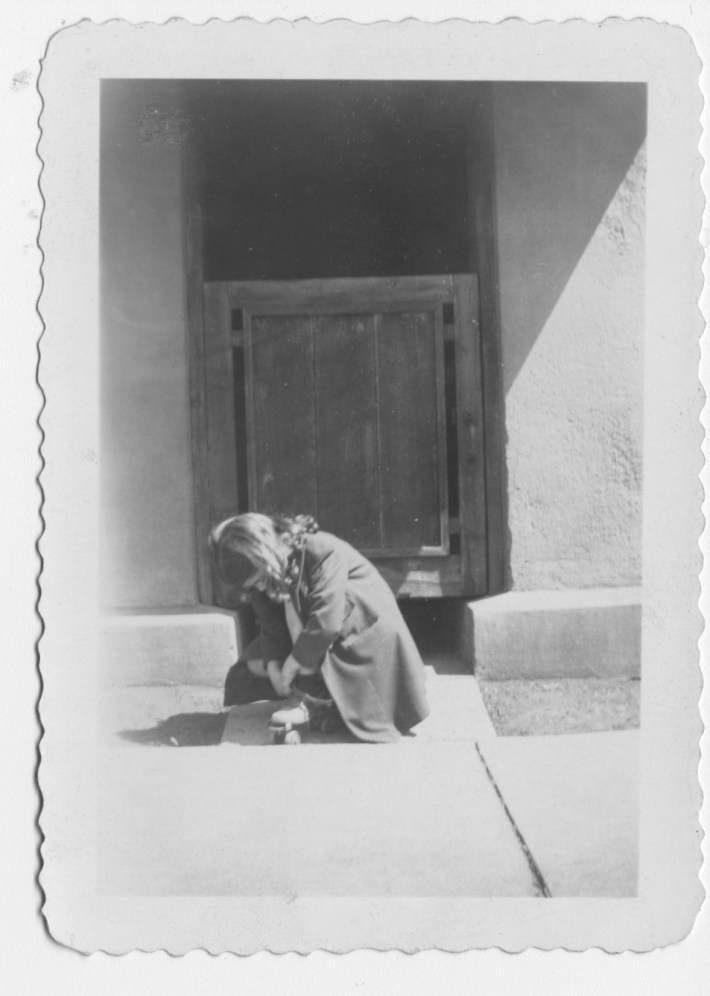
The house originally had two pocket (sliding doors), on either side of the entry hall. The entry ways to the doors had wood gates across them. The third owners of the house (1947-1957) took out the pocket doors because they would ice up. We do not know who removed the gates. Anne Sporer Ruetz, whose parents bought the house in 1938, took this picture of her friend Mary Hill putting on her roller skates in front of one of the gates:
Image

Chad Nichols, a local master carpenter, has measured the entry ways and will use Anne’s photos to help him recreate the gates for Gene.

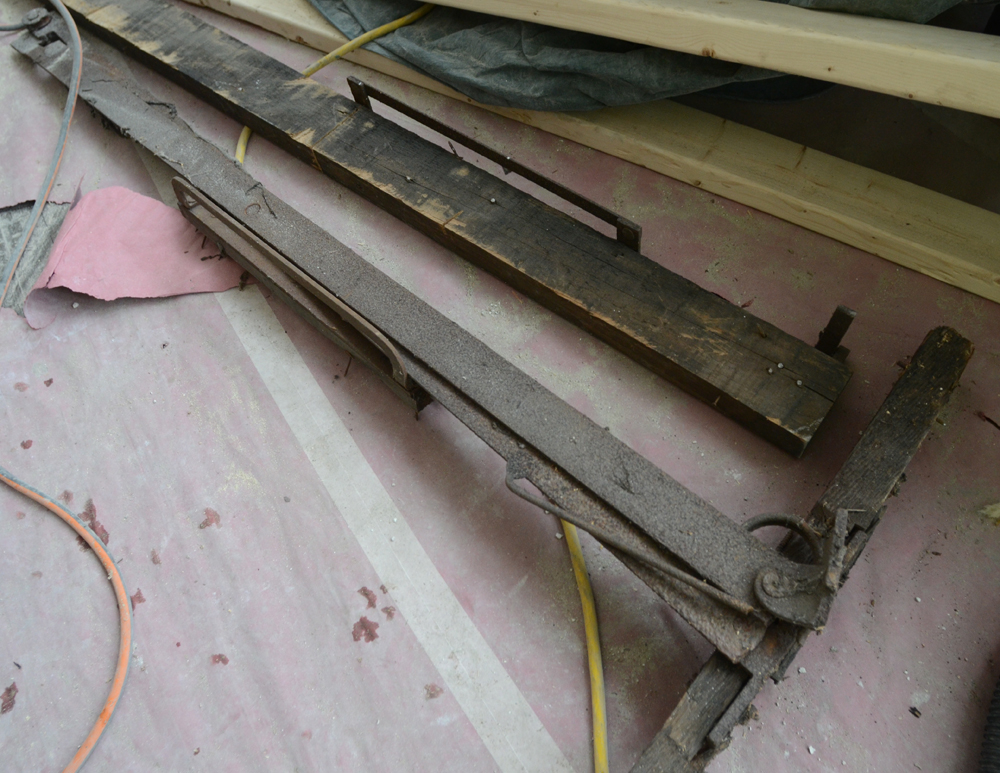
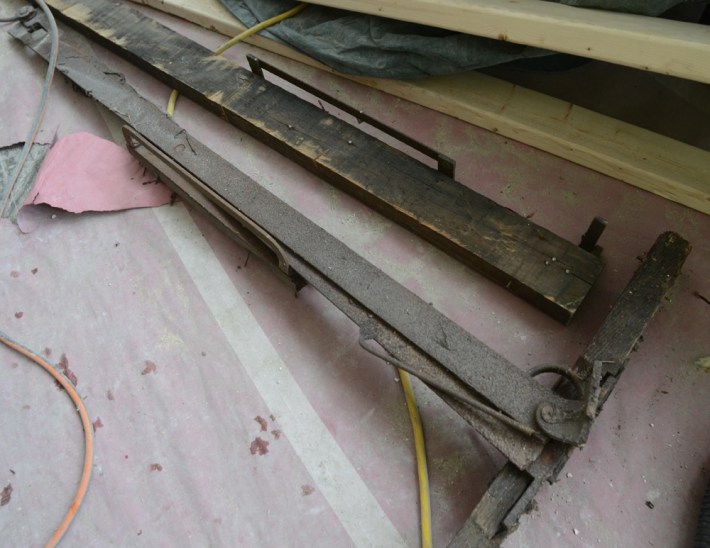
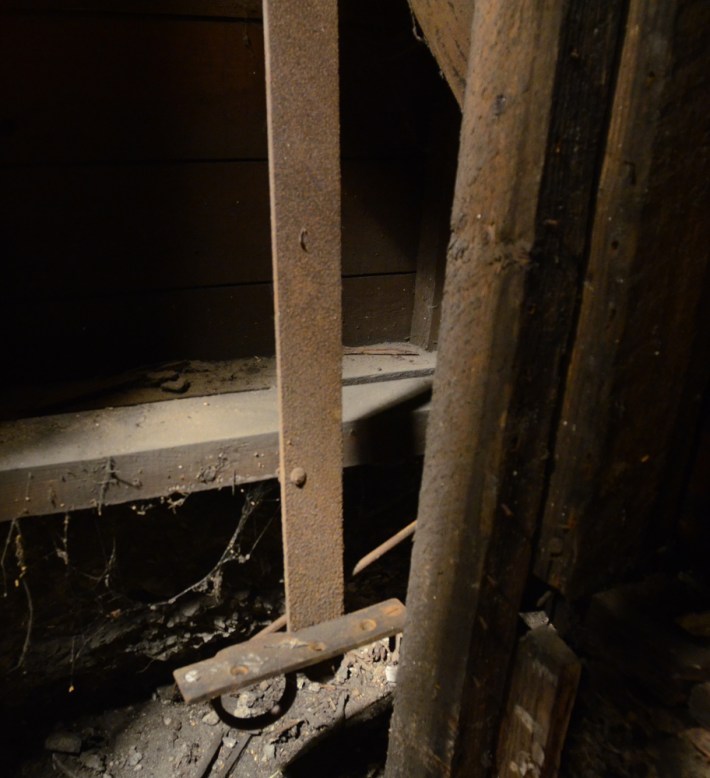
ImageThe pocket doors will be trickier, but the original mechanisms were found two weeks ago. The hardware for the north door is now on the living room floor, the hardware for the south door is still mostly in concrete in the doorway (although it is hanging down):
ImageImage

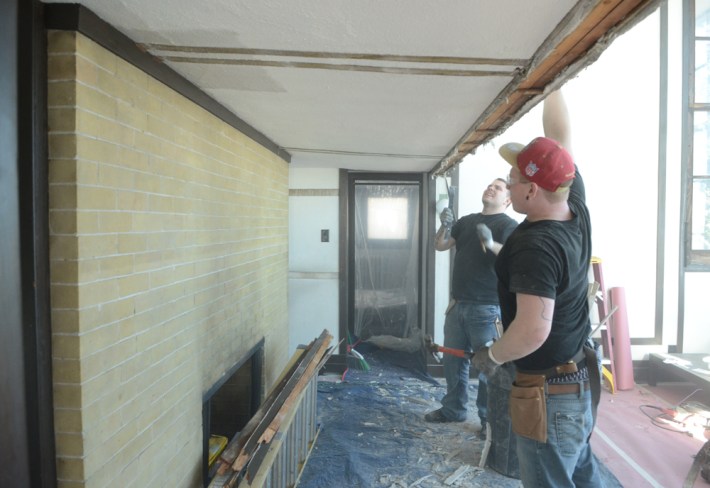
The living room balcony was deflected. The plaster face was removed so the balcony could be leveled. Electric wiring found on the face of the balcony tells us that there may once have been two light fixtures on it. Anne Sporer Ruetz and Mary Hill, who often played in the house, have good memories for details, but they do not recall the lights. We surmise that Mr. Hardy removed them at some point, or else while they were wired, they were never installed.

Wil and Eddie Sunderland remove trim from the balcony:
Image

Image

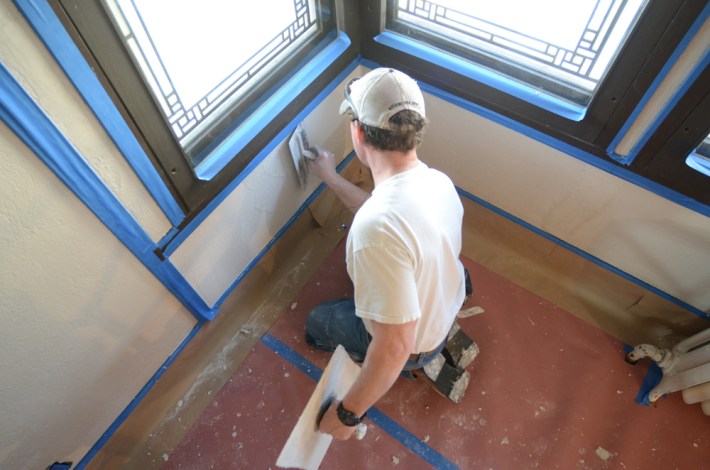
Paul Lemke does magnificent plaster work. He has been working in the bedrooms. He will replaster the balcony, front hallway, and the two-story living room.
Image

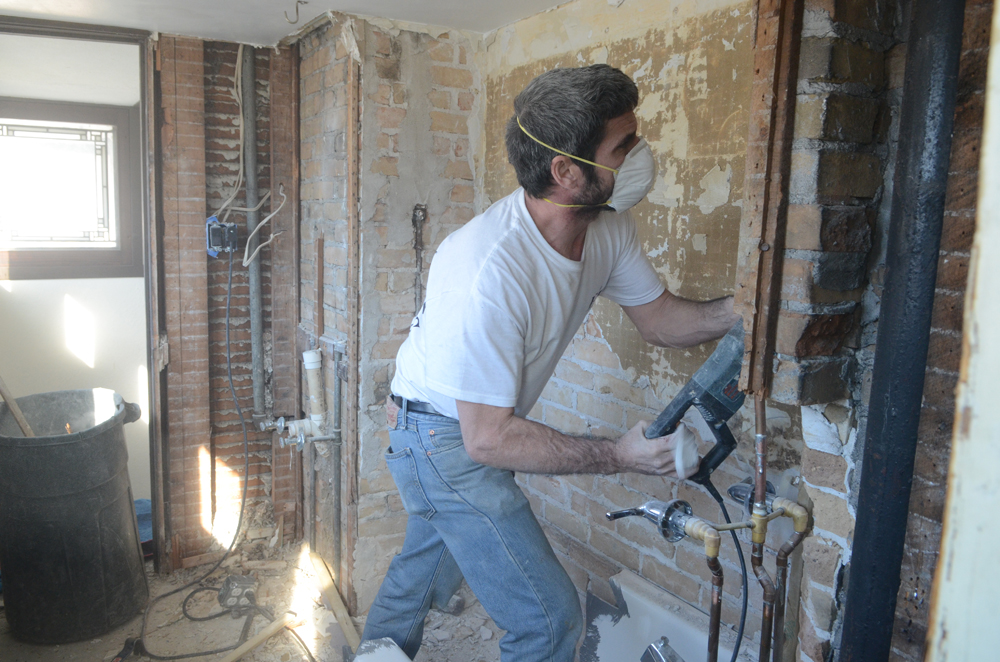
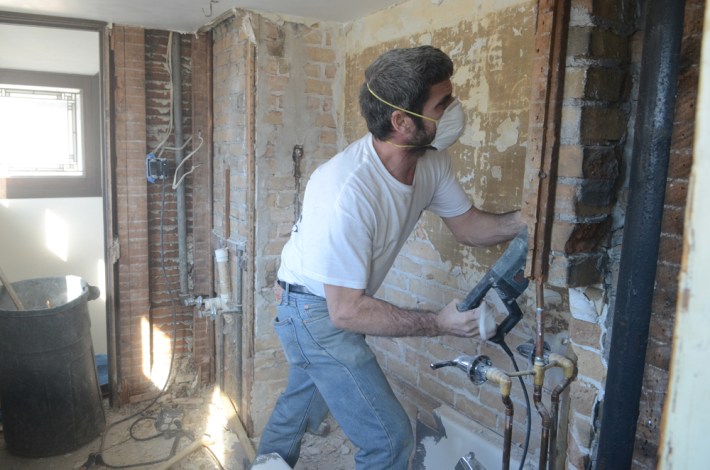
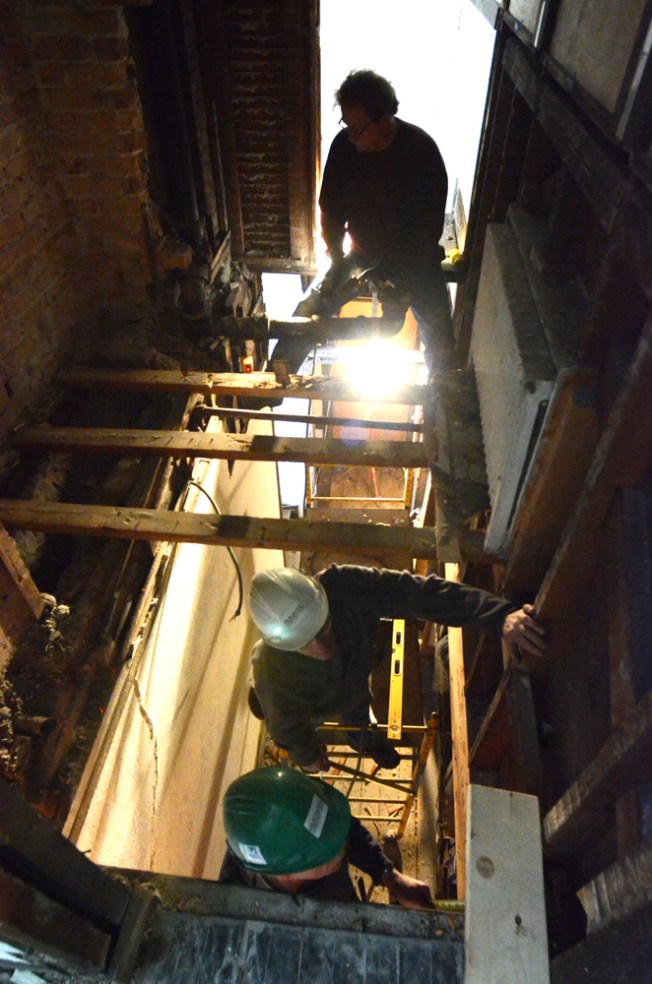
The bathroom originally had doors at both the south and north ends. The south door was walled over when the bathroom was remodeled in the late 1940s (the tub had 1949 stamped in the bottom). Gene wants that door replaced so that people can look out Mr. Wright’s leaded glass windows as they exit the bathroom from either end. The bathroom is getting a complete makeover. First we see Ed Sunderland taking it down to brick, then we see plumber Mark Derouin working in the space to remove cast iron pipes as workers Kevin Grant and Gordon Hudson work below him framing for a new bathroom floor, above the entry hallway:
Image

Image

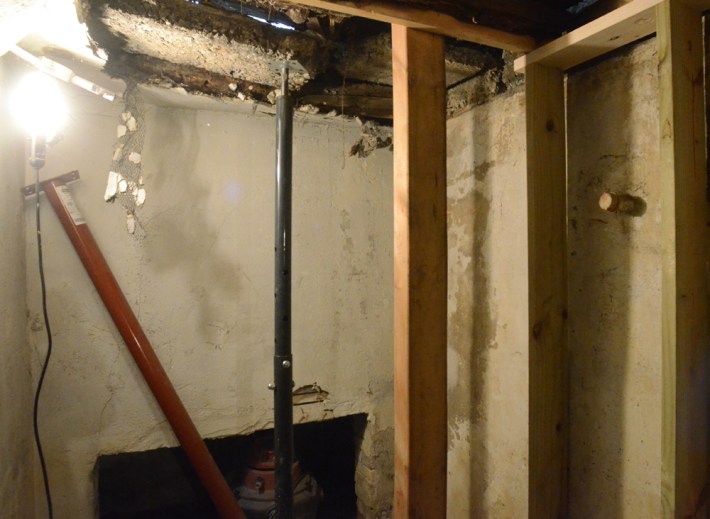
The house has some structural challenges. They are not where they might be expected, on the lake side of the house. There is no evidence of the house being unstable as it sits on the bluff above the lake. Rather, there are problems on the west or Main Street side of the house. Some of the concrete by the entry ways is cantilevered and has no support in the basement. Daylight is visible from the basement as one looks up at the concrete pad by the south door. Some wood in the basement has rotted, further eroding support for other concrete. Four permanent metal posts are being put in the hallway below the kitchen, a space which Mr. Wright called the Heater Room, to help stabilize the west side of the house. The post shown is a temporary one, but this photo illustrates the problem.
Image

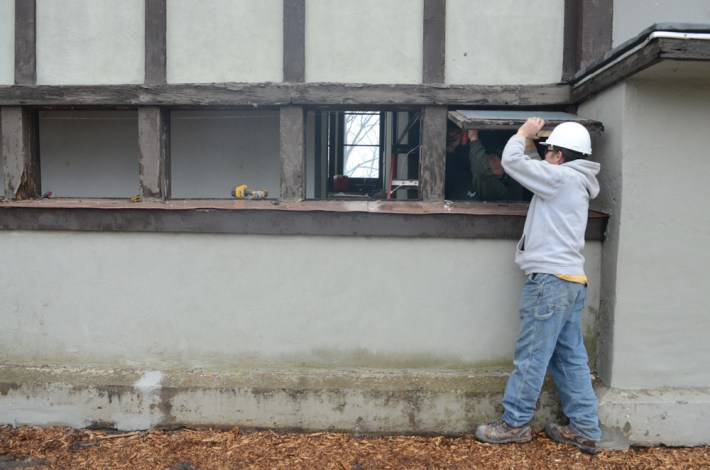
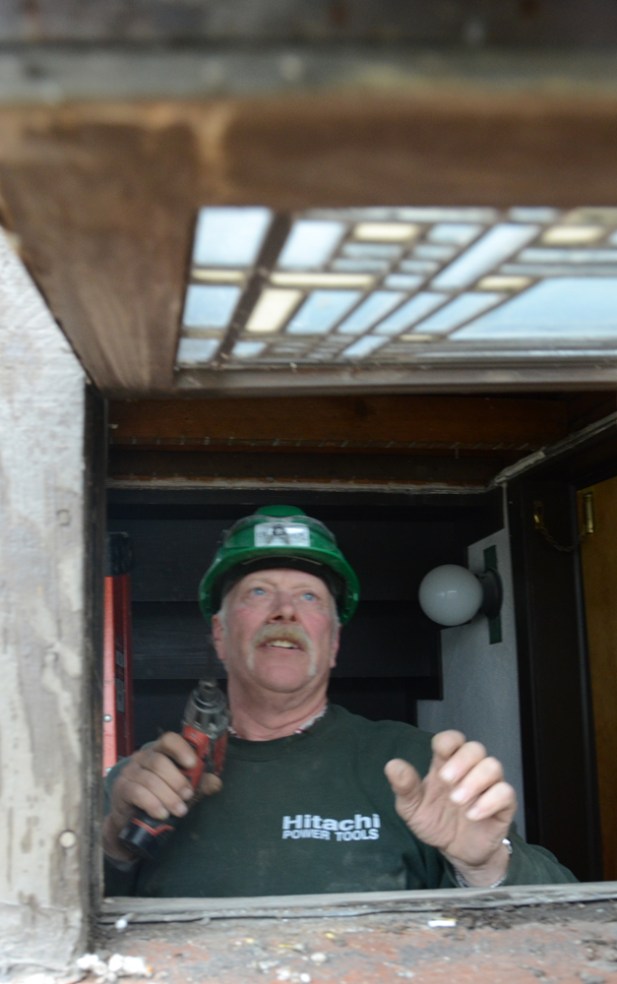
The leaded glass windows on the Main Street elevation of the house were removed by Grant and Paul Harvey to ensure that they did not crack when the jacks in the Heater Room were tightened during the stabilization of the Main Street elevation:
ImageImageImage

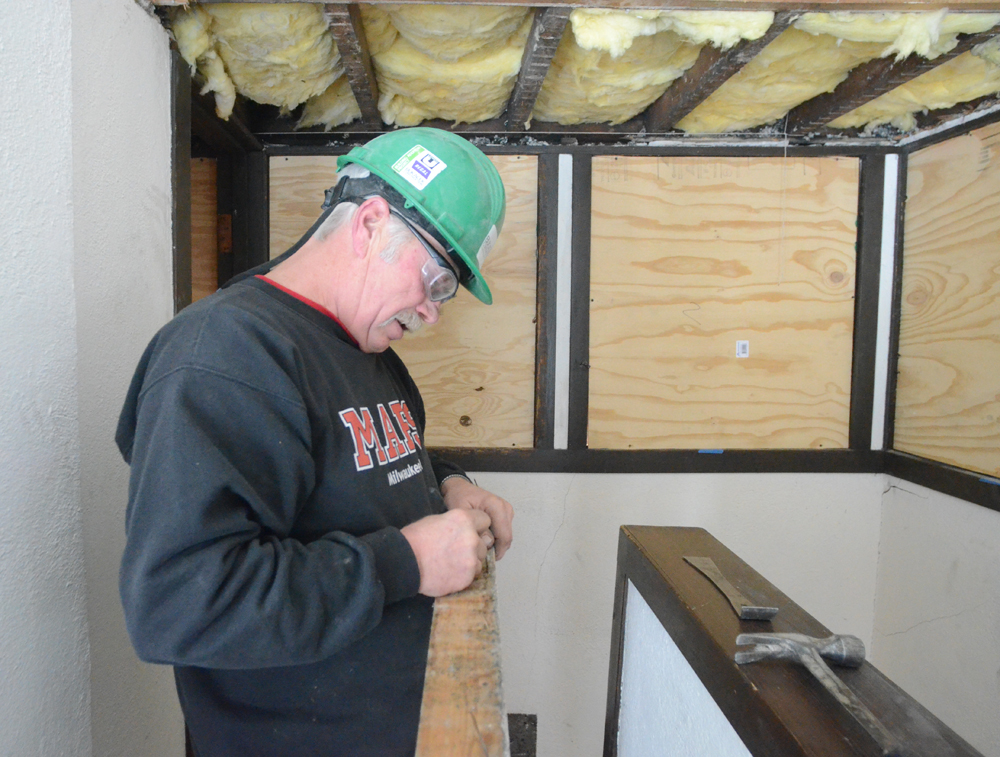
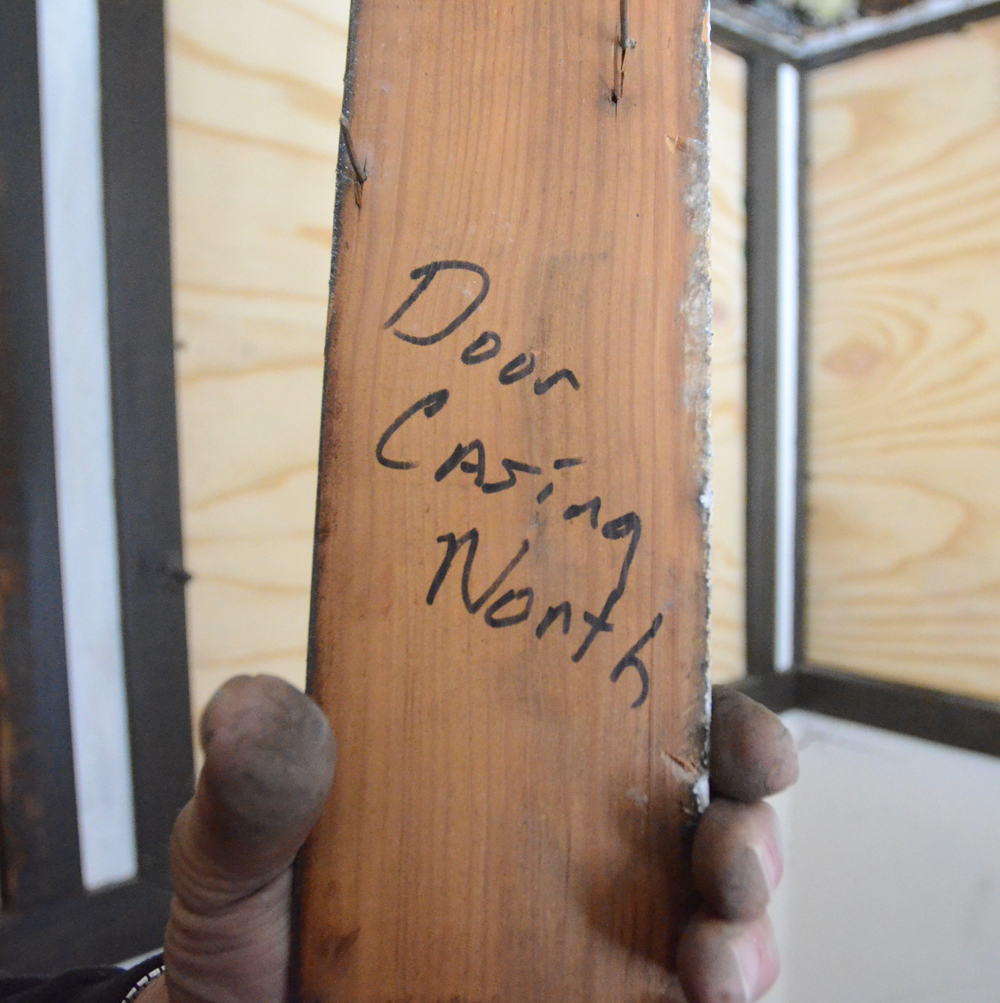
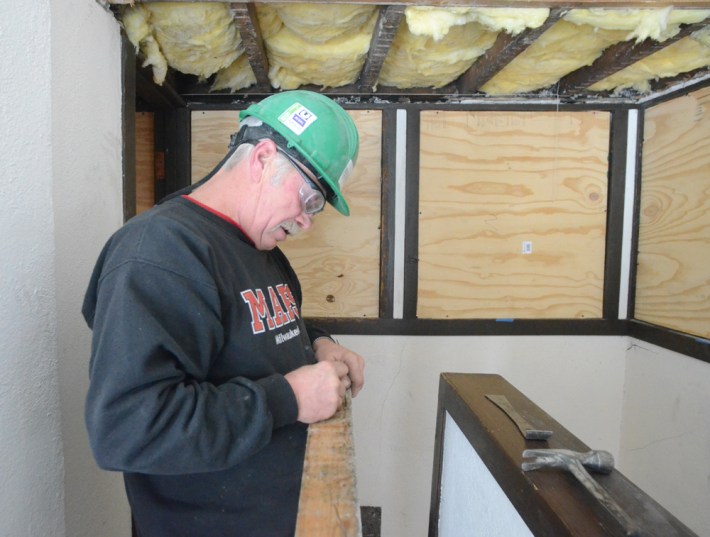
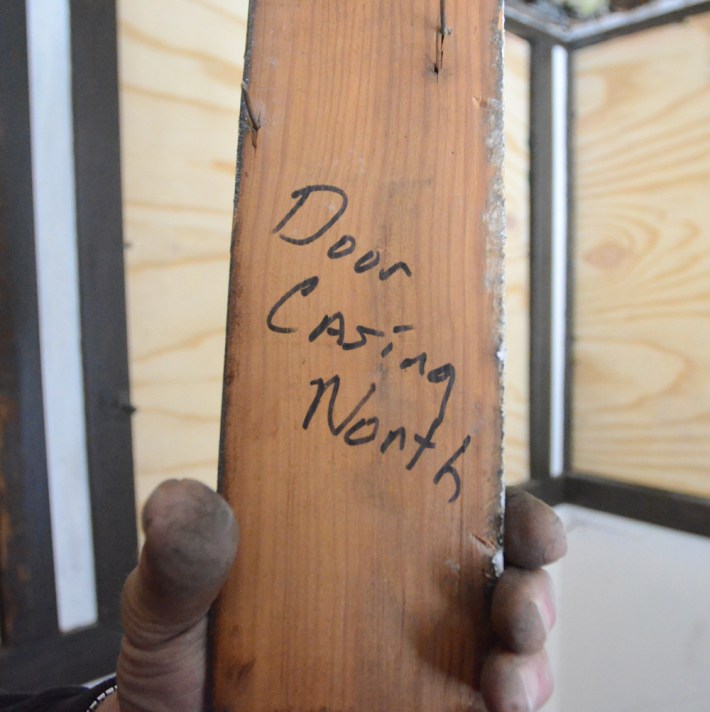
Grant marked pieces of trim as he removed them from the upstairs hallway so they can be replaced properly:
ImageImage

Sometimes there seem to be some steps back that offset the steps forward, other times there is a burst of steps forward. Gene has undertaken a project that is not easy, but the house is in good hands, both in terms of him and the people restoring it. There is no timetable for completion of the work, because that would be realistic. Substantial exterior work, like the stucco and replacing wood trim will wait until after the interior work is finished.

This will be Gene’s home. It is not a public building that must be completed by a certain deadline. Most of the house will be put back together they way Gene bought it, once repairs are completed. The kitchen and bathroom will be more contemporary, to reflect that 1319 Main Street will be his home, not a house museum.
What's Next? Meeting<br /><br /><br /><br />
FOR IMMEDIATE RELEASE</p><br /><br /><br />
<p>10/19/2012</p><br /><br /><br />
<p>Contact:

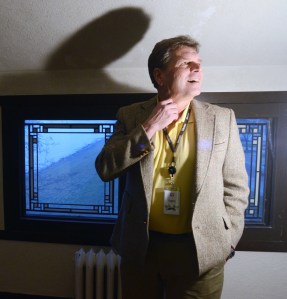
I leave you with this picture of Gene smiling as he gets his first look at Paul Lemke’s plaster work in the south upstairs bedroom in January, before a work meeting to plan the next stages of the restoration.

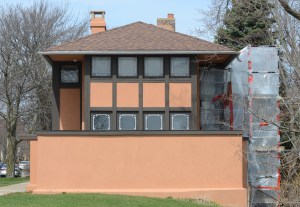
 

Frank Lloyd Wright and the Hardy House: A dance of light and shadows

(c) Mark Hertzberg

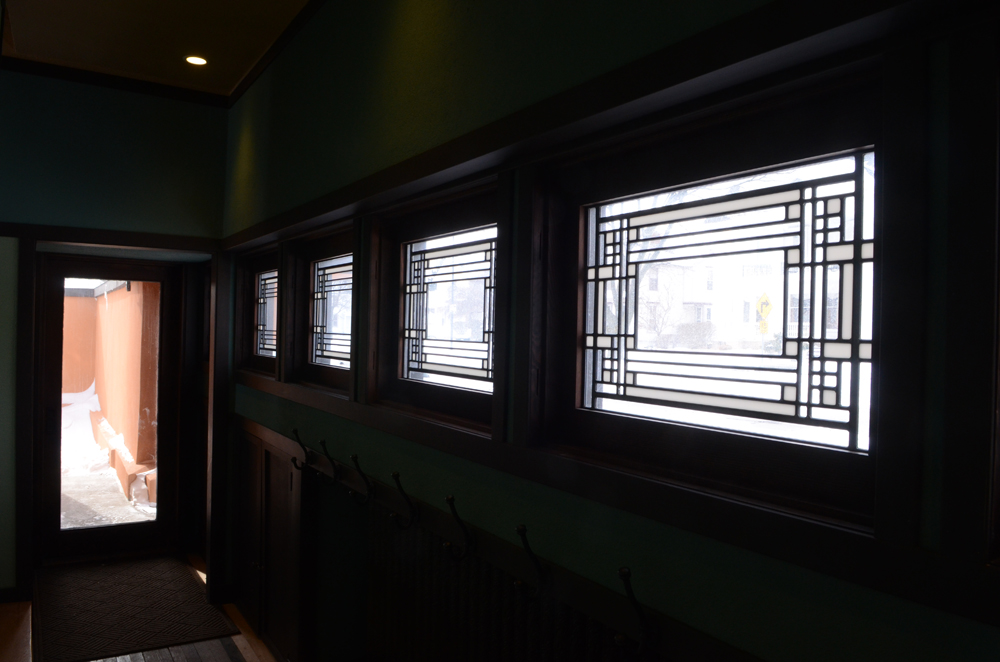
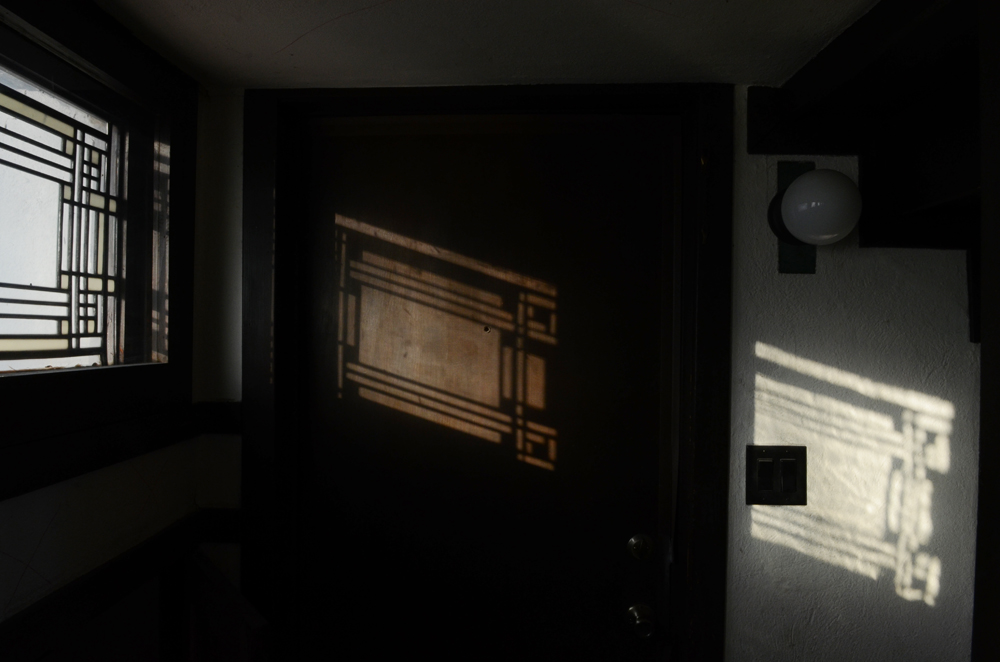
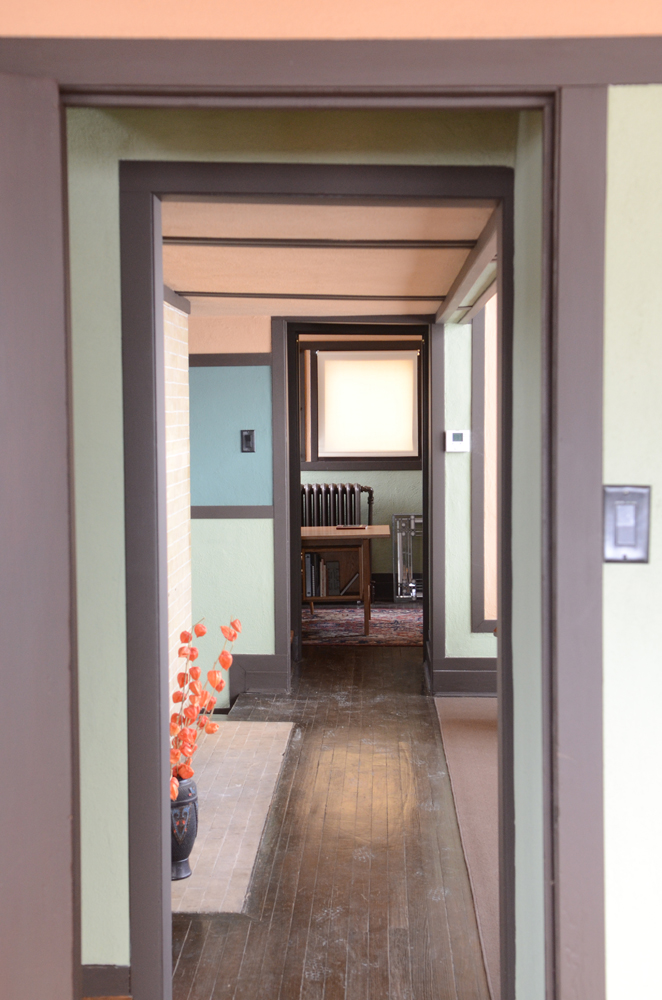
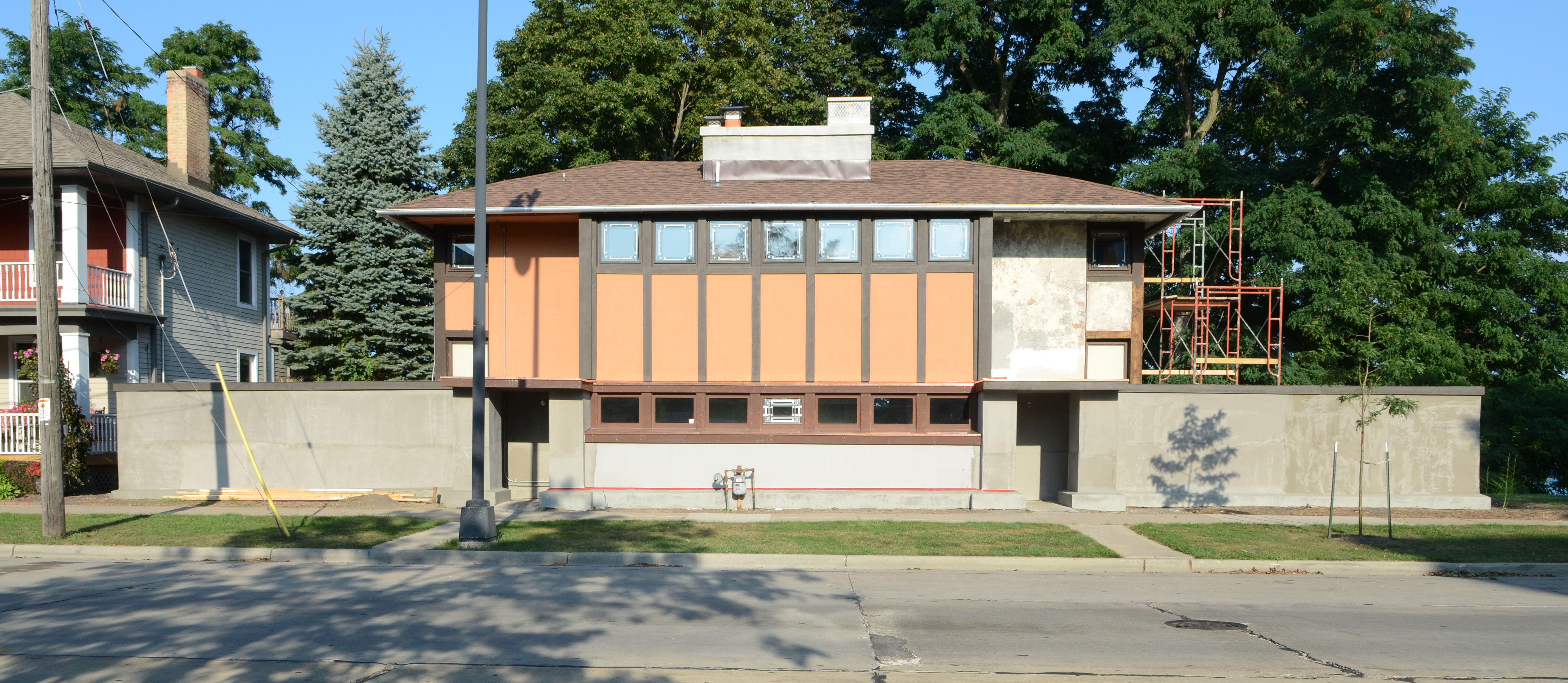
“Photography” means “writing with light.” That is what I saw Frank Lloyd Wright do with the design of the front hall windows at the Thomas P. Hardy House in Racine as the sun came across the Main Street side of the house this afternoon.
Image

There are seven of these windows between the two doors of the house. As Robert McCarter points out in his book Frank Lloyd Wright (Phaidon Press, 1997), the floor plan of the house is articulated in these windows.
Image

ImageThank you to Donna Newgord, who used to work at Wingspread, for the phrase “A (constant) dance of light and shadows,” a phrase she once used to describe Wingspread to me.