Wright Book Beat, Fall 2025

© Mark Hertzberg (2025)

We are previewing four new books about Frank Lloyd Wright and his architecture. Two were recently published. The other two might be on your wish list for next year. (Disclaimer: I have photographs in the Hansen and Rovang books, and am consulting on the Hardy House section of the Lubell / Pielage book)

In alphabetical order, by author:

Ken DahlinFrank Lloyd Wright and the Path to BeautyScreenshot 2025-09-08 at 2.59.54 PM.png
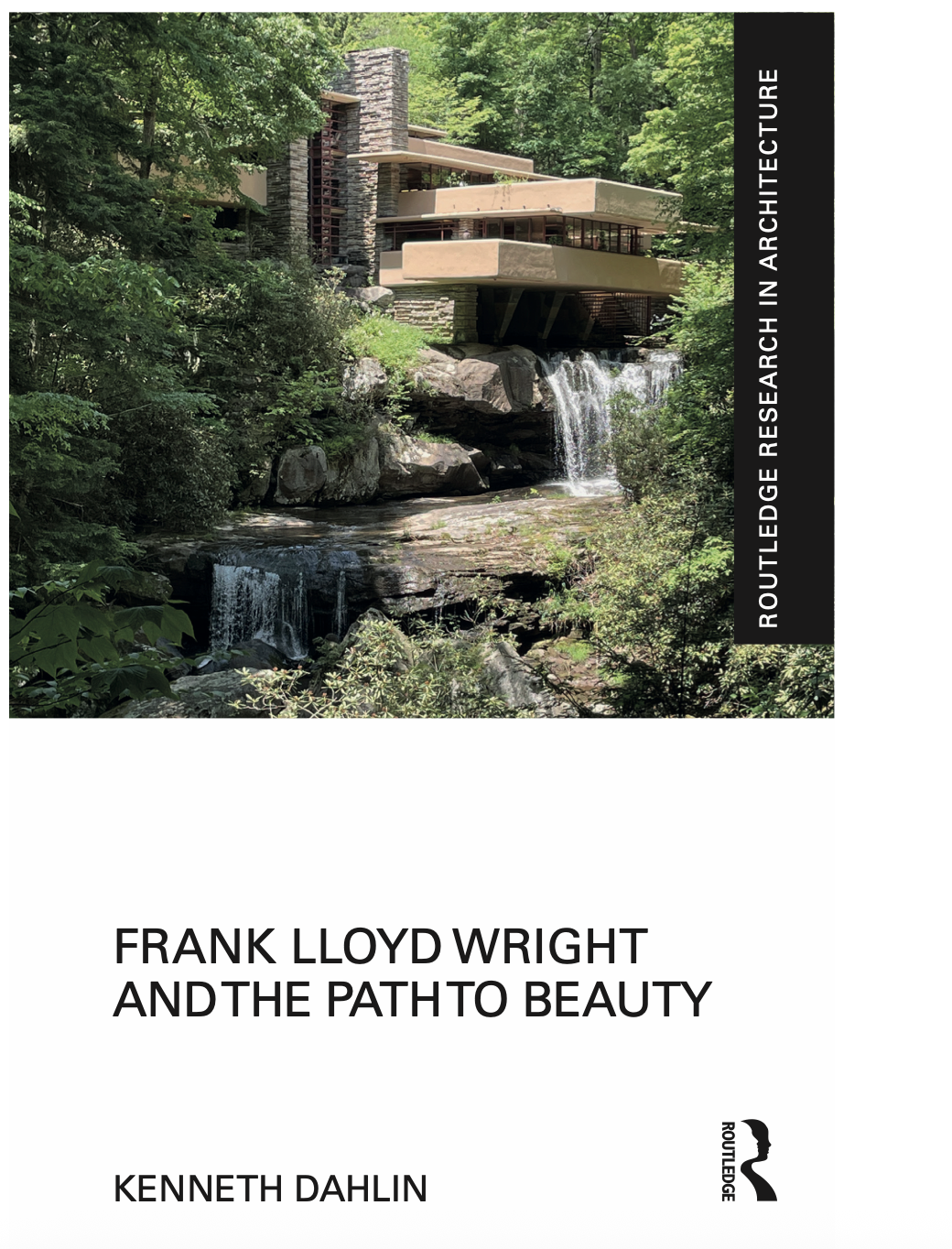
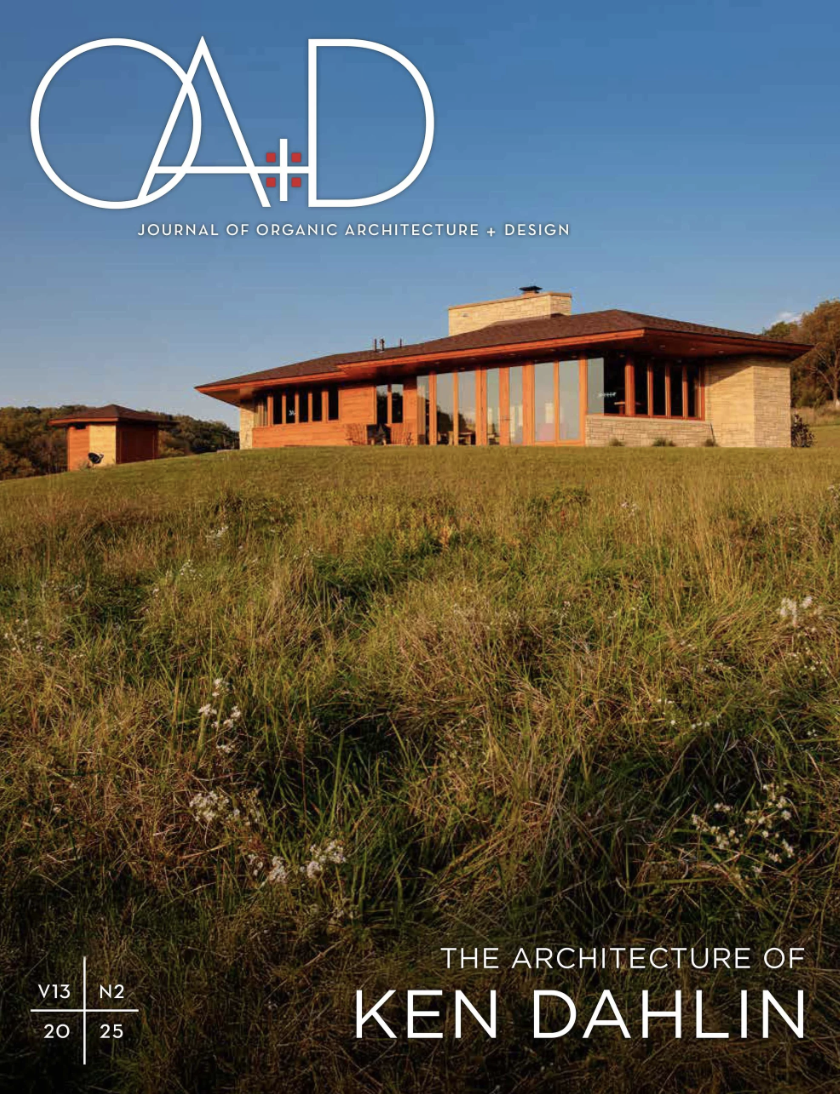
Dahlin, a Racine native, is the award-winning architect who is the founder of Genesis Architecture in Racine. The book is part of the “Routledge Research in Architecture” series. As previewed by Routledge: “This book connects Frank Lloyd Wright’s organic theory with his pursuit of beauty, presenting a path for the recovery of beauty in architecture…”

Dahlin recently spoke at Wright in Wisconsin’s event at Taliesin and signed books at the Frank Lloyd Wright Building Conservancy’s conference in Pittsburgh. His work is the cover feature of the current issue of the Journal of Architecture + Design (see link below).

LR Dahlin BC.jpg

Screenshot 2025-09-10 at 3.01.57 PM.png

Kristine Hansen: Frank Lloyd Wright’s Illinois

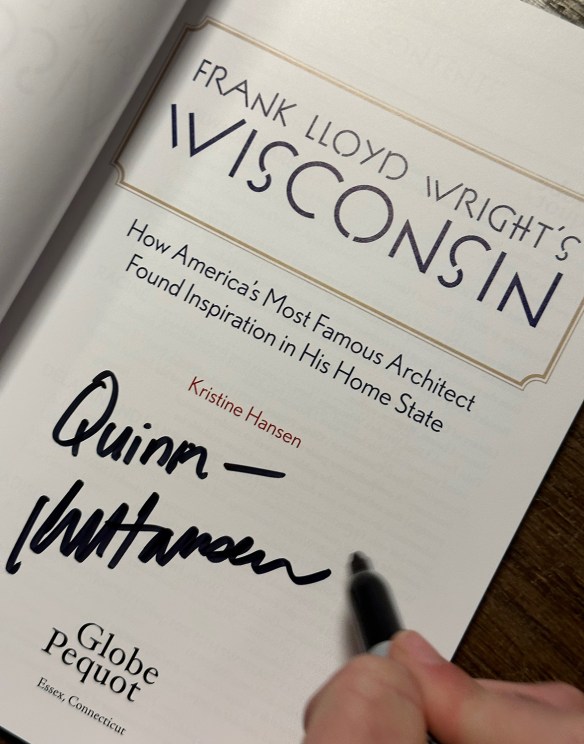
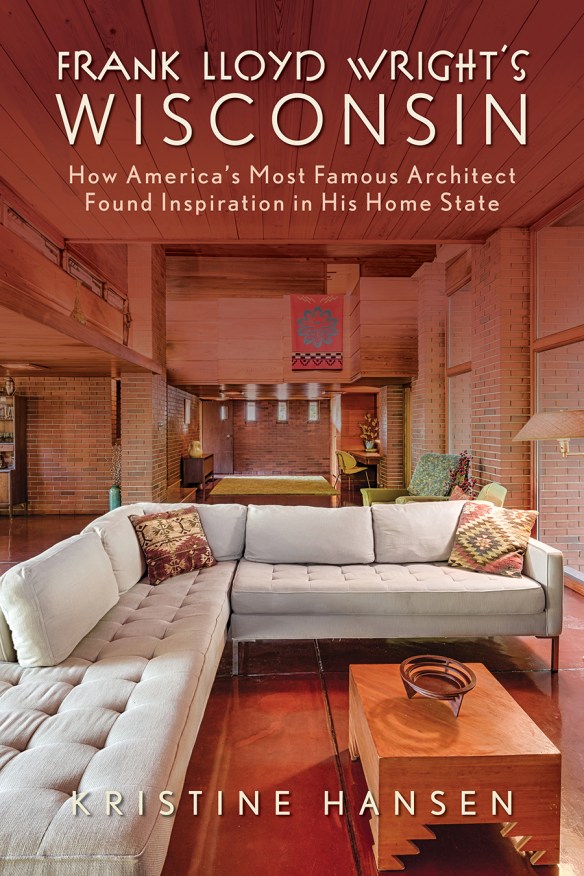
This book will be a sequel to Hansen’s successful 2023 book Frank Lloyd Wright’s WisconsinHow America’s Most Famous Architect Found Inspiration in His Home State which went into three printings.

Screenshot 2025-09-08 at 4.28.00 PM.png

The Illinois book, whose subtitle has not been determined yet, is expected to be published next July or August. Wisconsin is a slim paperback that through photographs and narratives explores Wright’s work in his native state. It is described as “is part travel guide, part fireside chat with stewards of his designs.” Globe Pequot is the publisher of both books.

LR Hansen.jpgHansen at her book talk at Boswell Books in Milwaukee, June 9, 2023.

Sam Lubell and Andrew Pielage: 50 Houses

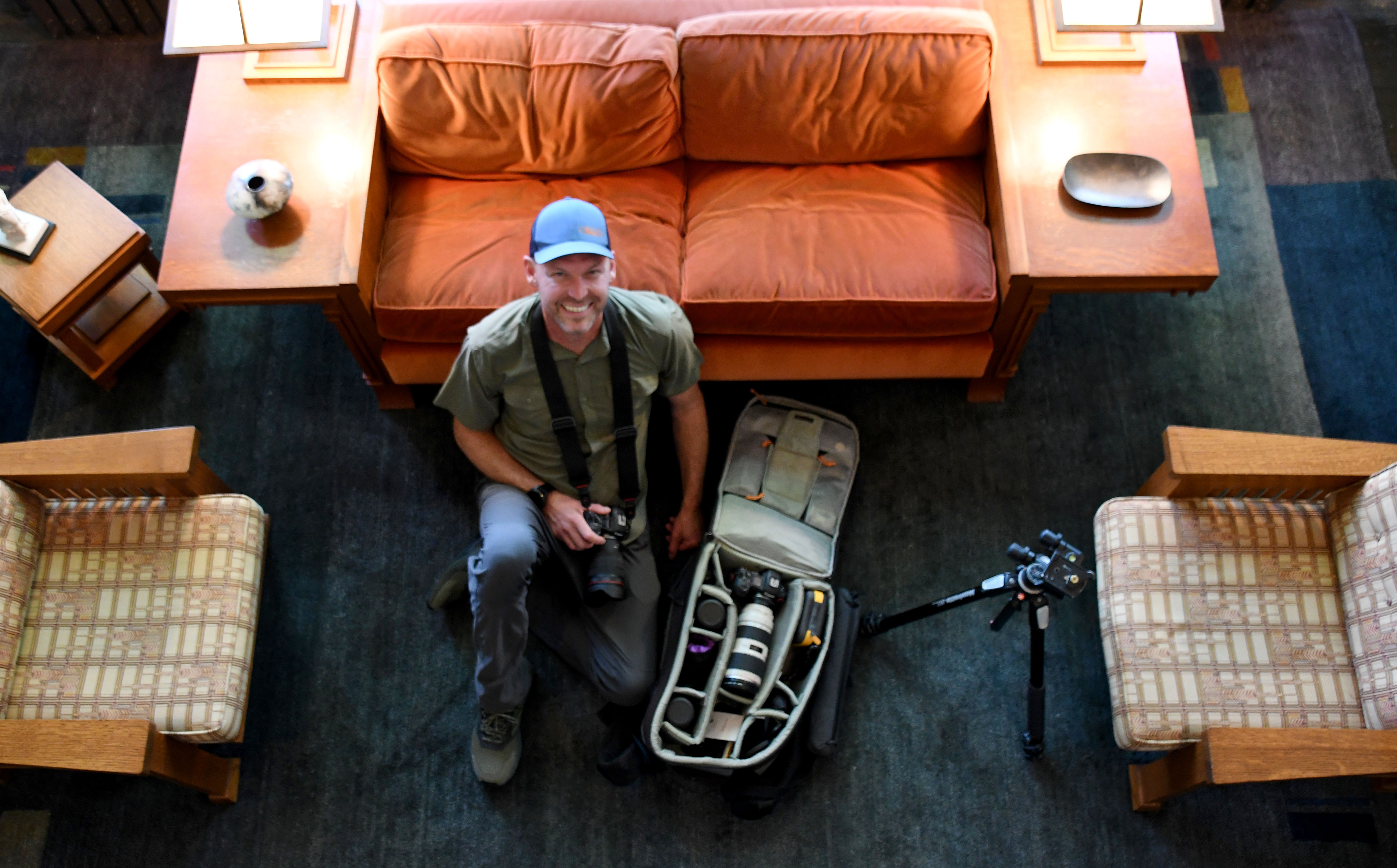
Rizzoli will be publishing this book by architectural writer Sam Lubell and Wright and architectural photographer Andrew Pielage. A press release previews the book as a project that “will delve into the stories of 50 of Frank Lloyd Wright’s most iconic designs…(it) will uncover the rich and distinctive narratives that make each house as remarkable as its design.” The book is more than just another architectural and historic survey of these properties as it “celebrates Wright’s enduring legacy and the human experiences” of the houses. One of the 50 houses is the Thomas P. Hardy House in Racine, which I have long been familiar with. Lubell and I had a long conversation about the house in the living room a month ago. Pielage was given the privilege of staying there overnight so he could photograph it at different times of the day, evening, and night:
Frank Lloyd Wright Photographer 004.JPG

Frank Lloyd Wright Photographer 003.JPG

Sarah Rovang: Through the Long Desert – Georgia O’Keeffe and Frank Lloyd Wright:

LR ThroughtheLongDesert.jpg

Rovang’s book had its genesis eight years ago in a “why not?” moment when she attended a panel discussion in Santa Fe with Stuart Graff, then President and CEO of the Frank Lloyd Wright Foundation, and Cody Hartley, Director of the Georgia O’Keeffe Museum,  about similarities between the two artists. Someone in the audience suggested that there should be a book about them, because they knew each other. After a week of pondering the idea, she emailed Graff and Hartley that she would want to be the author. Rovang will be at the October 23 “Sunsets & Sips” at Taliesin West:

https://franklloydwright.org/sunsets-sips/

I can relate to the “why not?” moment. I am often asked how I started on the path to being commissioned to write and photograph first one book, and ultimately four, about Wright and his work in Southeast Wisconsin. It’s a convoluted tale, that started with a “why not?” moment. Bravo, Sarah, for following through on that moment!

Links:

Dahlin’s book website, with discount coupon (the book lists for $152):

https://www.routledge.com/Frank-Lloyd-Wright-and-the-Path-to-Beauty/Dahlin/p/book/9781032620053?srsltid=AfmBOopoF7ZSGIZC6IbNLkzliB53hBd1nLevv3ShpW0sQQzL4M8G6apy

Genesis Architecture:

https://www.genesisarchitecture.com

OA + D Journal:

https://oadarchives.bigcartel.com/product/journal-oad-v13n2

Routledge Research in Architecture Series:

https://www.routledge.com/Routledge-Research-in-Architecture/book-series/RRARCH

Hansen’s book:

https://www.globepequot.com/9781493069149/frank-lloyd-wrights-wisconsin/

Sam Lubell’s website:

https://www.samlubell.com

Andrew Pielage’s website:

https://www.apizm.com

I urge you to purchase books directly from the publisher or from a local bookseller rather than reflexively ordering from “The Big A.” Even if Amazon will save you money, we need to support our local bookshops.

Please scroll down for earlier articles on this website.
Wright Bookshelf June 2023

© Mark Hertzberg (2023)

There are two new books to consider adding to your Frank Lloyd Wright bookshelf: Kristine Hansen’s Frank Lloyd Wright’s Wisconsin: How America’s Most Famous Architect Found Inspiration in His Home State (Globe Pequot Press, 2023) and the catalogue that accompanies the “Wright Before the ‘Lloyd’: Frank Lloyd Wright’s Search for Himself” exhibit at the Racine, Wisconsin, Heritage Museum, published by the museum.

Frank Lloyd Wright's Wisconsin Book Cover Image.jpg

(As a journalist I believe in disclaimers…Hansen worked as a reporting intern at the Racine newspaper in the 1990s when I was Director of Photography there. After she contacted me when she was writing her book, I introduced her to Minerva Montooth and stewards, past and present, of the Hardy House, A.P. Johnson House, Keland House, and Penwern. She quotes me extensively, drawing from my books, and used a number of my photographs.)

IMG_3225.jpgHansen at Boswell Books in Milwaukee on June 9. Her mother, left, beams in the front row.

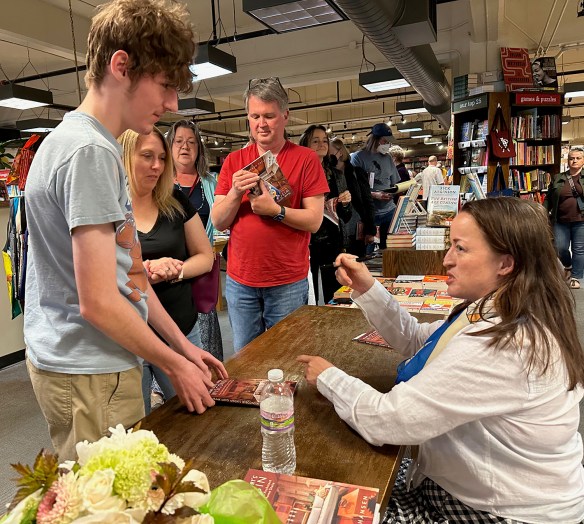
Hansen described her book as a “guidebook” rather than an “academic” book in an email to me. That is an apt description. She is a travel writer based in Milwaukee and became aware that Wright’s work in his home state is not as well known as, say, Fallingwater, to people across the country who do not live and breathe Frank Lloyd Wright every waking moment. The book is rich in anecdotal descriptions and histories of many of Wright’s commissions in Wisconsin, as well as several Wisconsin buildings by other architects, including by Wright apprentices James Dresser. and John Rattenbury.

IMG_3224.jpg

Her Introduction was born during a traditional Wisconsin Friday night fish fry when someone asked her, “Who was Frank Lloyd Wright?” Then,  “I realized that most people connect Wright with his architectural projects but not necessarily his character and personality.” Fortunately, the book concentrates on his work, rather than rehashing the same-old, same-old about what a difficult man he was. I know several Wright clients who passionately disputed that characterization of Wright, so best to move on from that.

IMG_3228.jpg

Although there is a listing of all of Wright’s Wisconsin commissions, along biographical notes about his life, in the three page “Timeline of Frank Lloyd Wright in Wisconsin” chronology in the front of the book, the text is not inclusive of all of them. “My dream book would have been to include every project Wright designed in Wisconsin. I actually did not want to discriminate. But some people did not get back to me and as they are stewards of private homes I didn’t think it would be fair to have a chapter about a house without interviewing the person who lived in it, especially in contrast to chapters where I interviewed the stewards of other homes,” Hansen wrote me.

I emailed her about the subtitle of the book, writing her that I thought the book shows what came out of his inspiration rather than how he was inspired by his home state.  She replied, “In my talks I am further addressing this question, such as how growing up on so many acres of land likely led to his organic-architecture philosophy. If this were a more academic book, and not a guidebook, I might have included a chapter that answers this question in essay form, pulling together the tenets of each project.”

There are a few errors in the first edition, which sold out quickly. Although Hansen caught them when proofing the book, her editor did not correct them before going to press. She has been assured that they have been corrected for a second printing due out in July.

I come from a visual background, so I look at more than the narrative of a book. How is it presented to the reader? Several aspects of the design and production of the book are disappointing. I wish each chapter included the date of the commission in the heading and, in the case of the non-Wright buildings, the name of the architect, rather than introducing his name lower down, in the narrative. (Hansen breaks with convention by using the date of completion for the buildings rather than the accepted practice of the date of its design.) The book’s designer included some completely and partially blank pages in the book. The “Statewide” chapter about the Wright in Wisconsin organization has four photos which are not captioned. I recognize one as Wright’s Lamp House in Madison, but I have to guess at the names of the buildings and non-Wright architects of the other three from the text. The quality of the photo reproduction varies from excellent to poor. Muddy tones in some of the darker photos would not be hard to correct.

IMG_3233.jpg

Scholarly treatises about Wright’s work abound, and I am aware of at least two more in the pipeline. Hansen’s book is for a different audience. It is a good overview of Wright’s work in Wisconsin for a general audience that is not going to delve into endnotes and debate about his work ad infinitum. A Wright scholar criticized one of my books for being too anecdotal. On the contrary, I replied, I believe that it is important to let Wright’s clients and the stewards of his homes tell how they experience his architecture, how they live and work in his buildings. Hansen’s book accomplishes that through her dogged efforts as a journalist to track down her subjects.

To order: https://www.boswellbooks.com/book/9781493069149

cover.jpg

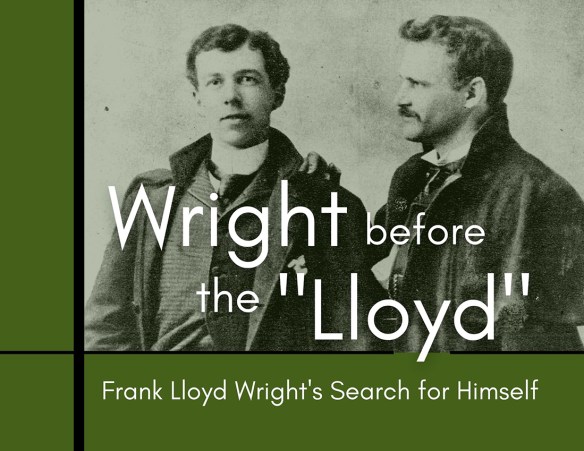
The “Wright Before the Lloyd” exhibit, which runs through 2024, was curated by Tim Samuelson, the City of Chicago Cultural Historian Emeritus. The exhibit draw on his vast knowledge and extensive collection of Wright and Louis Sullivan artifacts. Samuelson cut his teeth in preservation as a student in the 1960s, helping the late Richard Nickel salvage artifacts from Sullivan building that were being demolished in Chicago.

Samuelson Nordstrom.jpgSamuelson, left, with Eric J. Nordstrom of the bldg.51 archive, at the exhibit opening.
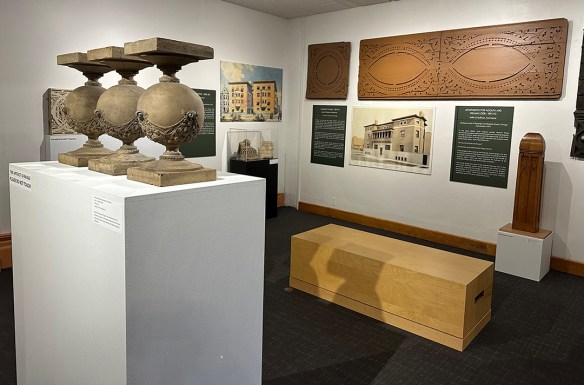
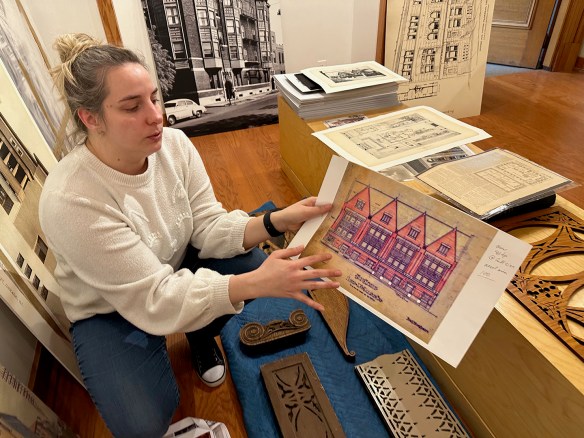
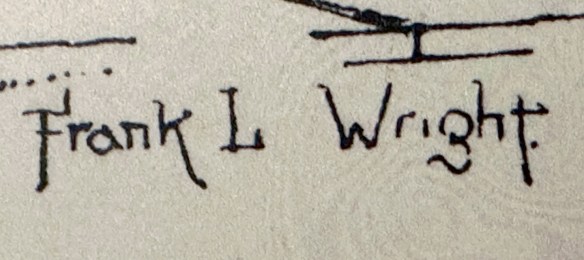
The exhibit focuses on Wright’s early career, when he signed his work “Frank L. Wright.” He worked for Joseph Lyman Silsbee and Adler & (Louis) Sullivan before his dismissal from Adler & Sullivan. It also focuses on Cecil S. Corwin, Wright’s dear friend who he met soon after moving to Chicago form Madison.

LR RHM Corwin Wright 040.jpg

The exhibit catalogue, written by Samuelson, with an Introduction by museum curator Allison Barr, is a summary of many of the text blocks from the exhibit and includes some of the exhibit’s photographs and drawings. It also includes photographs of some of  Wright’s pre-“Lloyd” work and some of Samuelson’s rich collection of artifacts that are on display. The chapter entitled “A Tale of Two Houses” is about Corwin’s H. G. Mitchell House in Racine and Wright’s F. R. Bagley House in Hinsdale, Illinois, both from 1894. The chapter raises the question of how much involvement Wright had in the design of the Mitchell House, with no definitive answer.

RHM Corwin Wright 005.jpgMuseum curator Allison Barr helps set up the exhibit.
This slim book – it is just 23 pages – is a fine overview of the exhibit and Corwin and Wright’s relationship for people who cannot travel to Racine to see the exhibit for themselves. It ends with Wright’s tribute to Corwin in 1958, just a few months before Wright died, “…the best friend, perhaps I’ve ever had.”

To Order:https://www.racineheritagemuseum.org/product/wright-before-the-lloyd-exhibit-catalog/214?cp=true&sa=true&sbp=false&q=false

LR RHM Corwin Wright 027.jpg

Please scroll down to read previous posts…