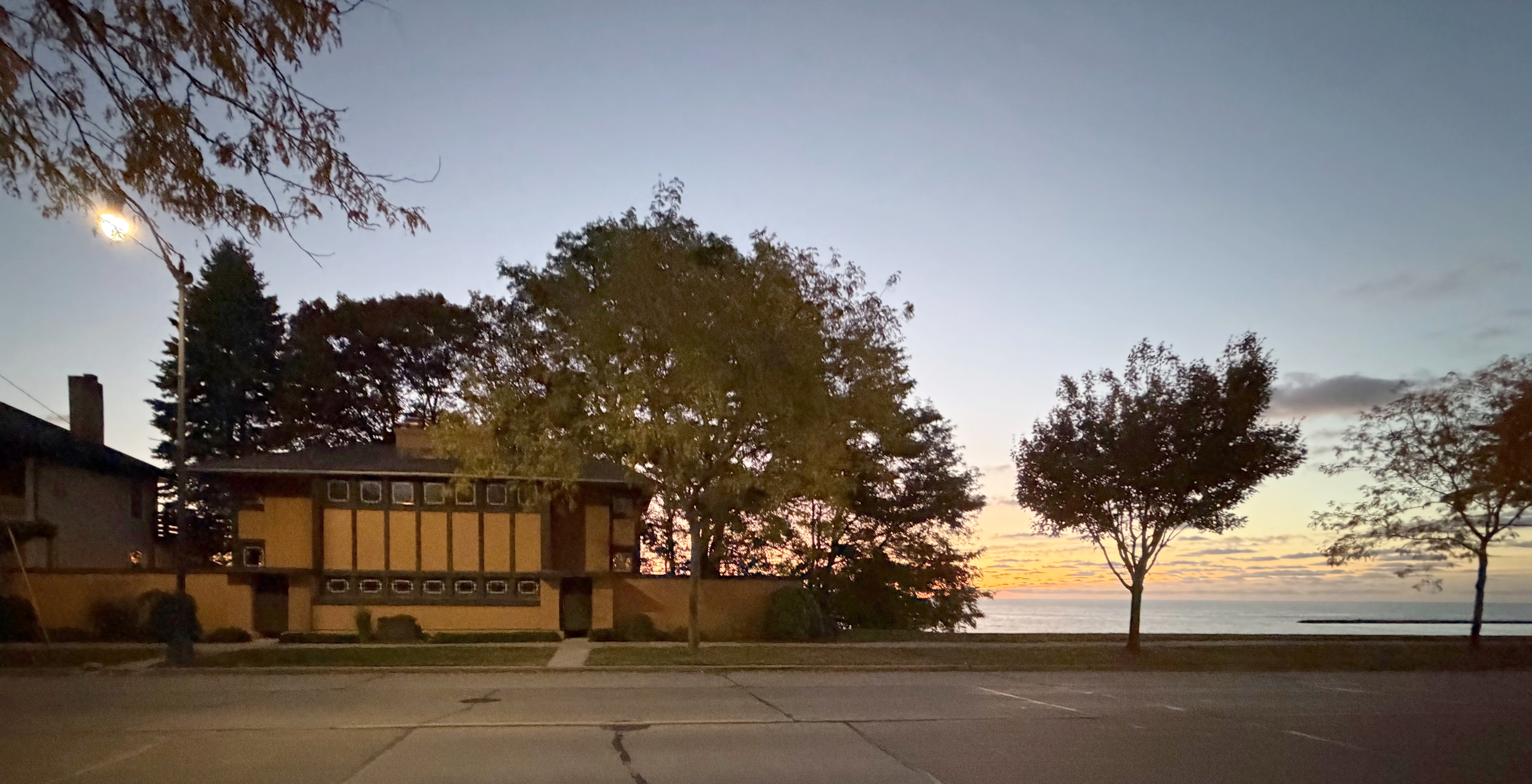
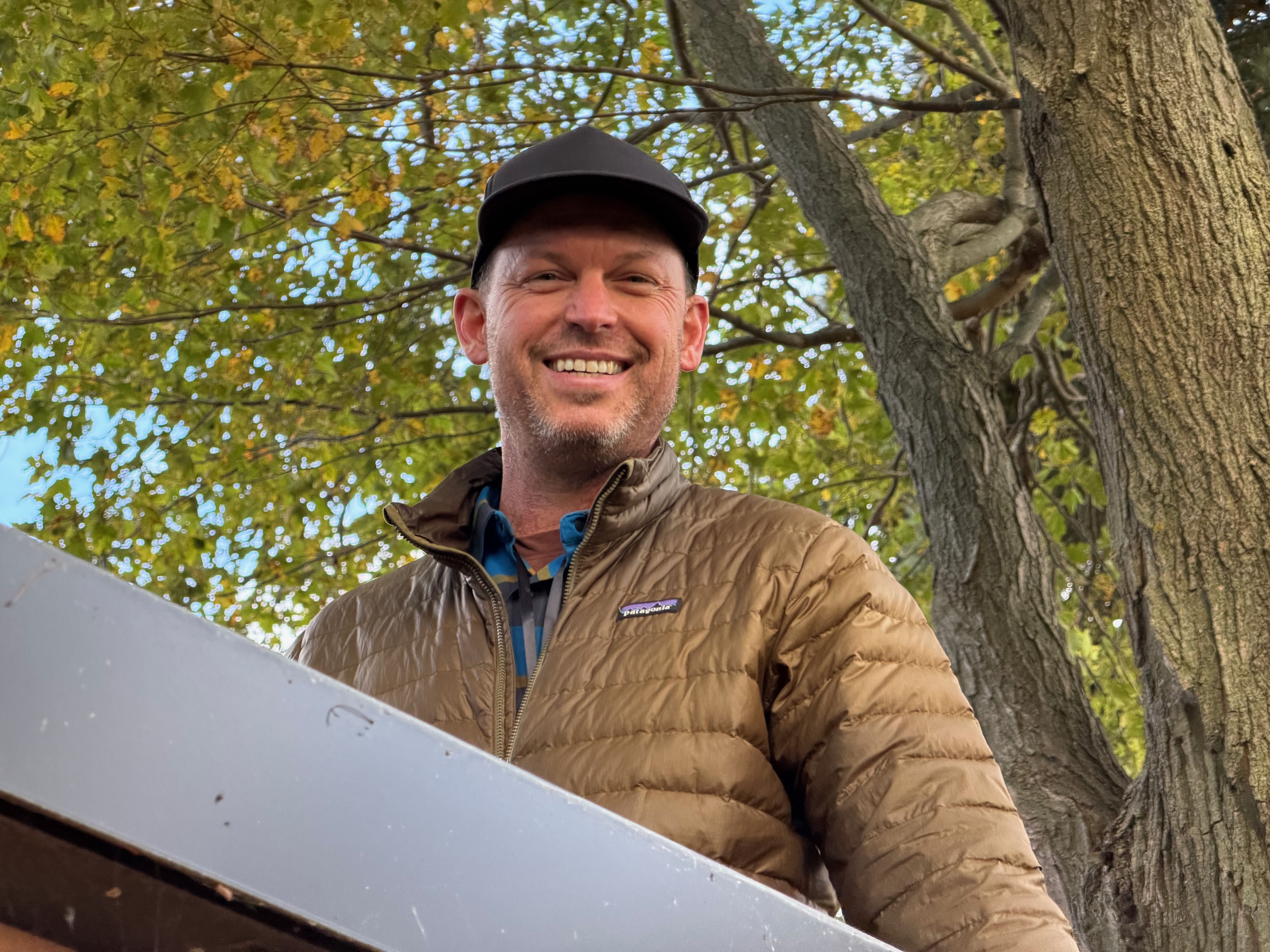
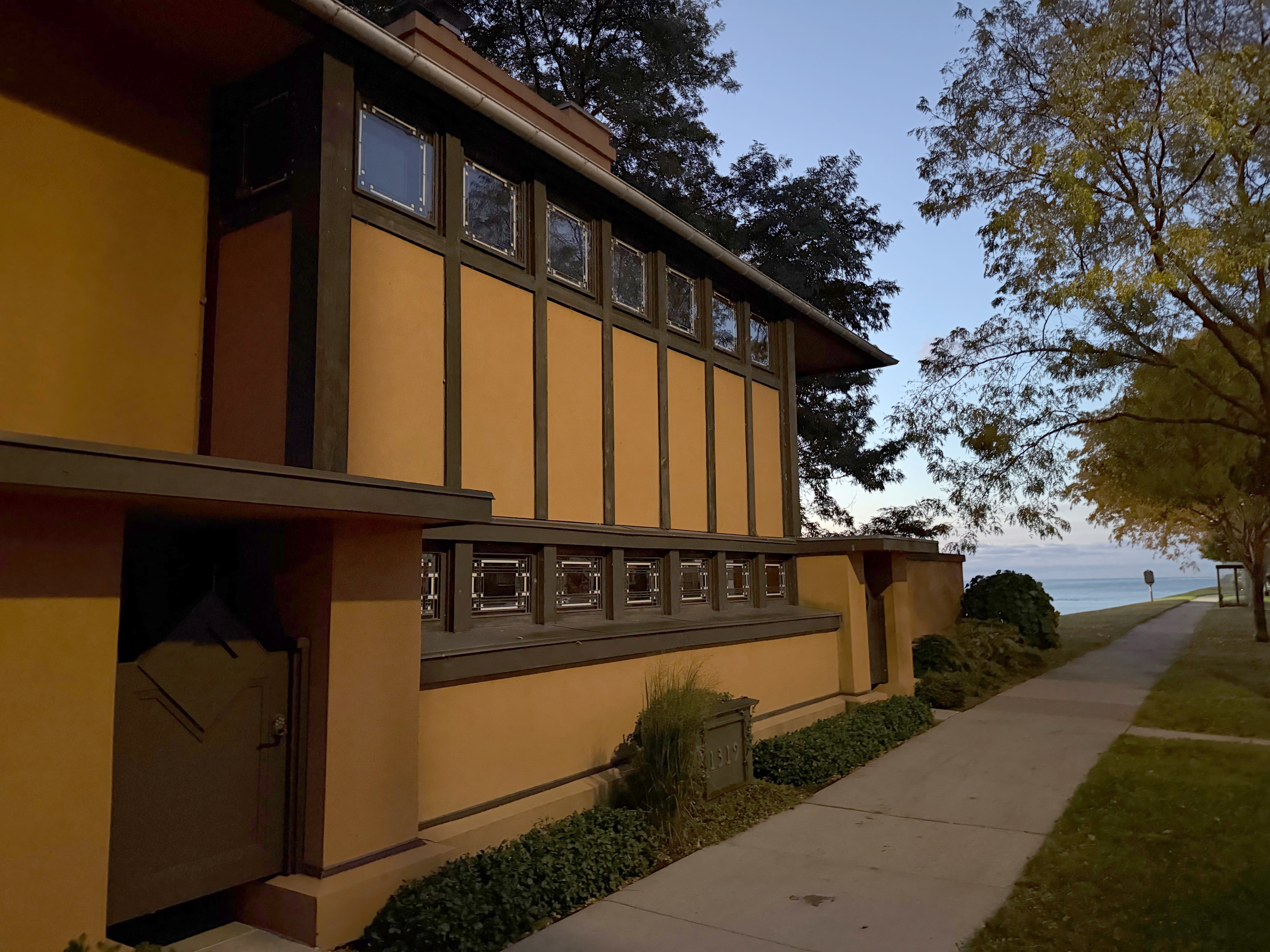
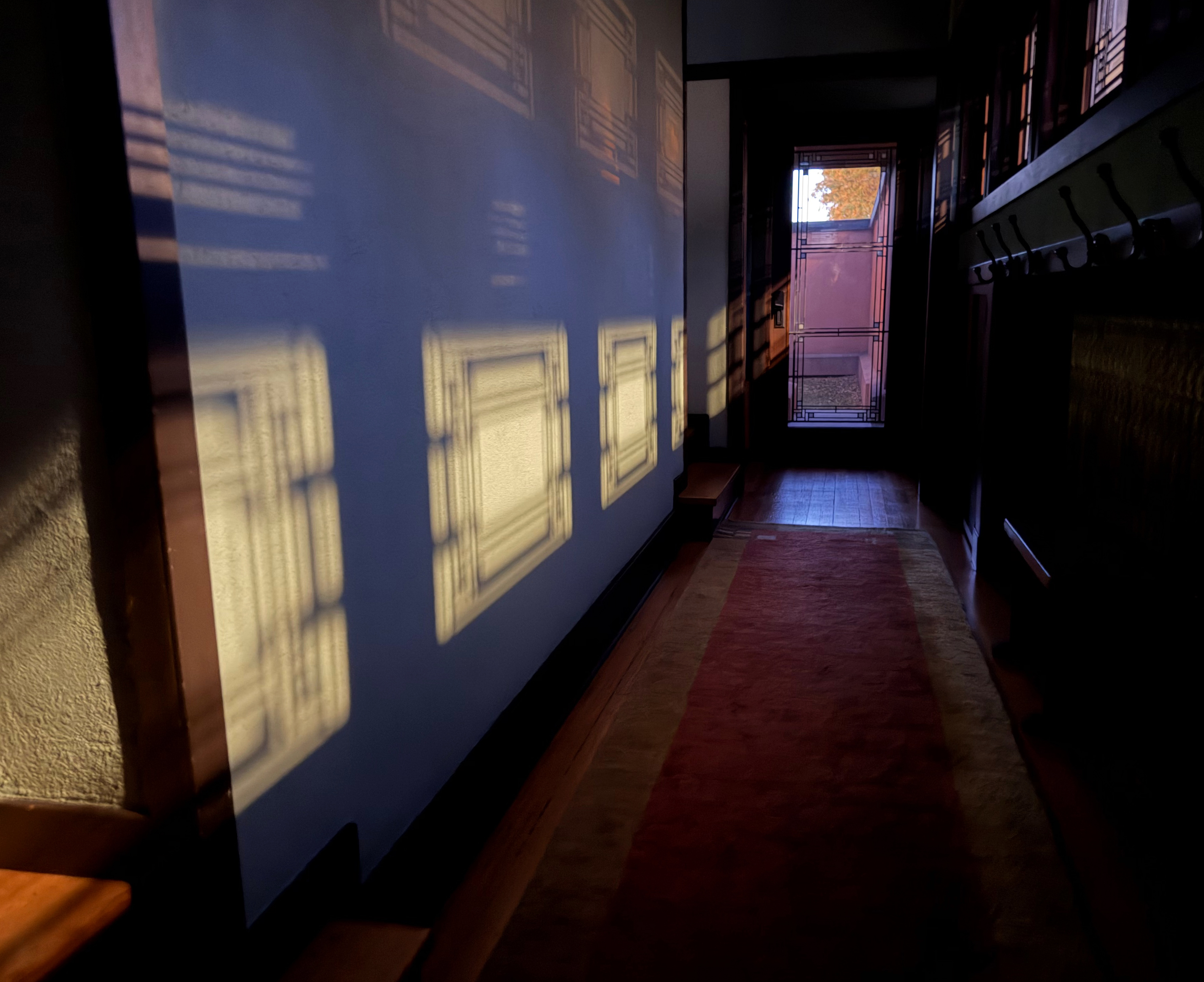
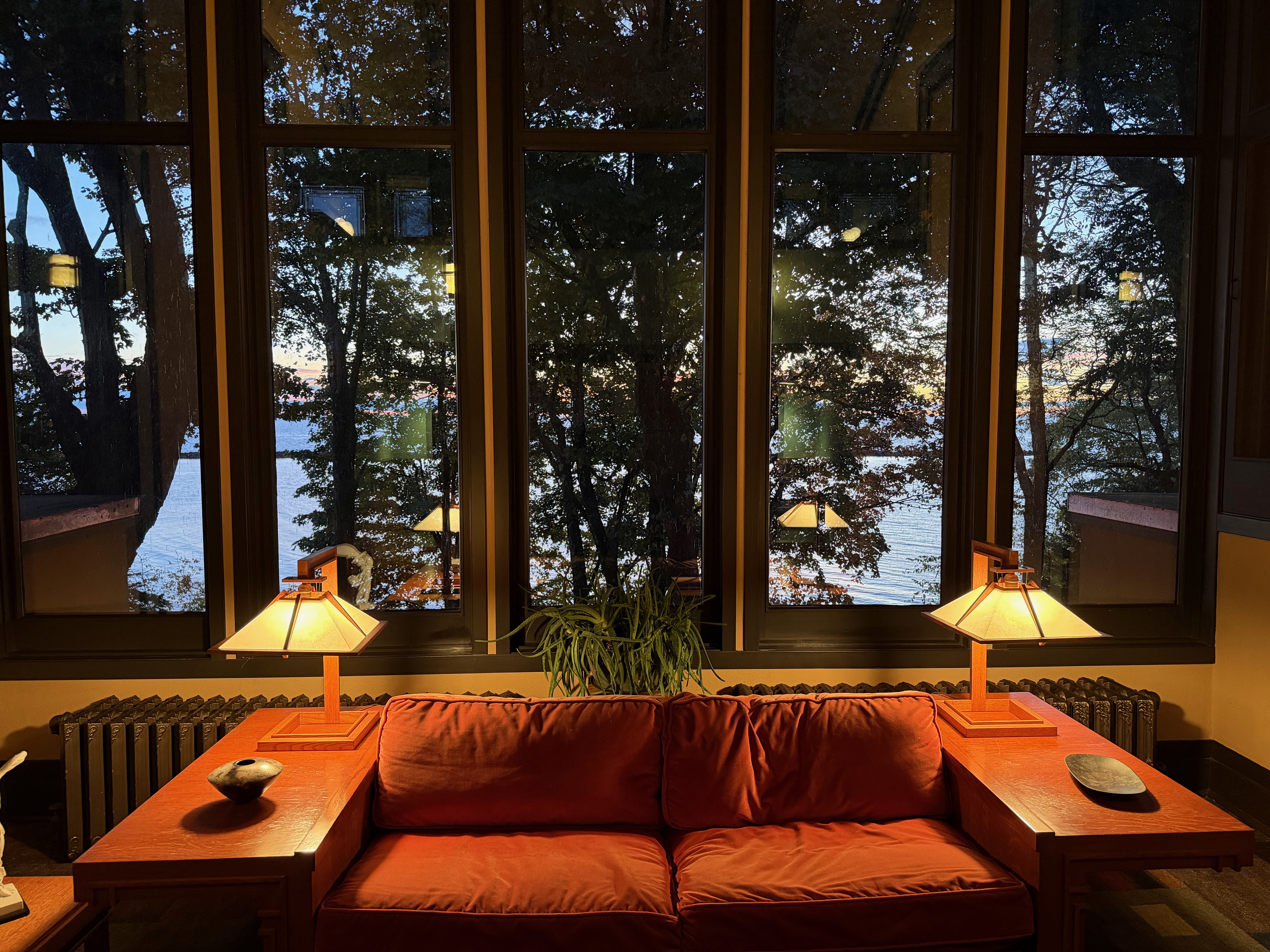
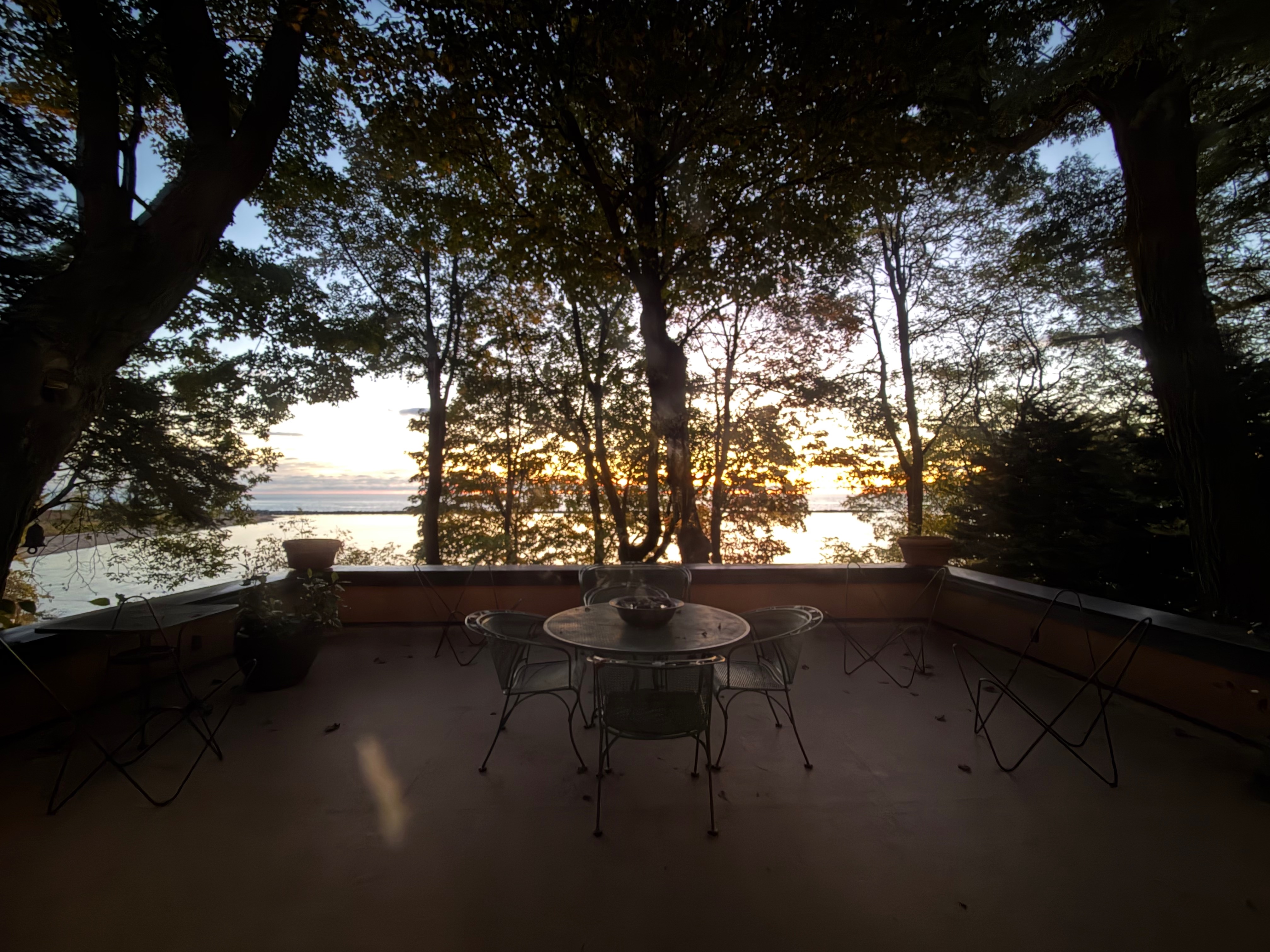
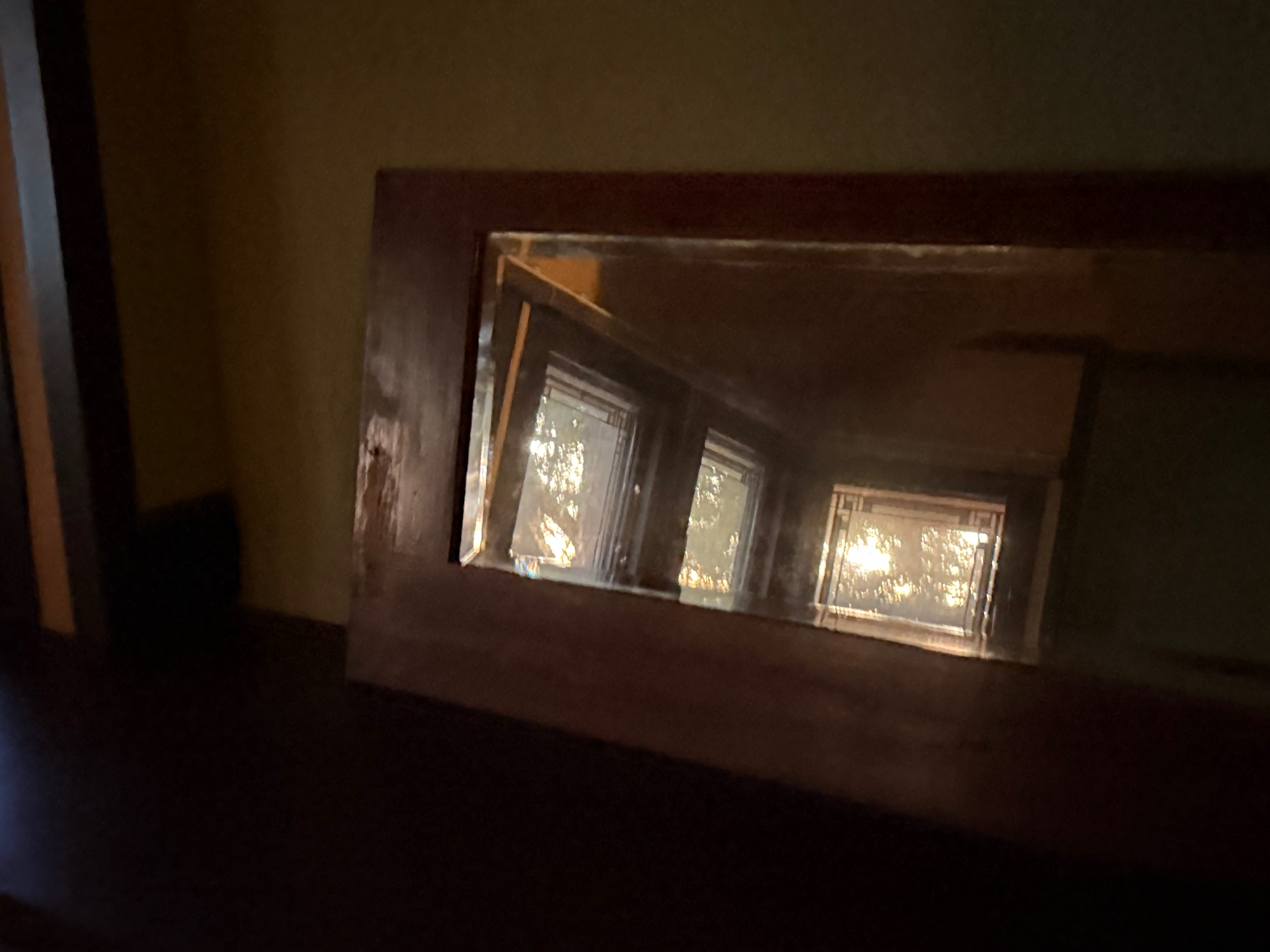
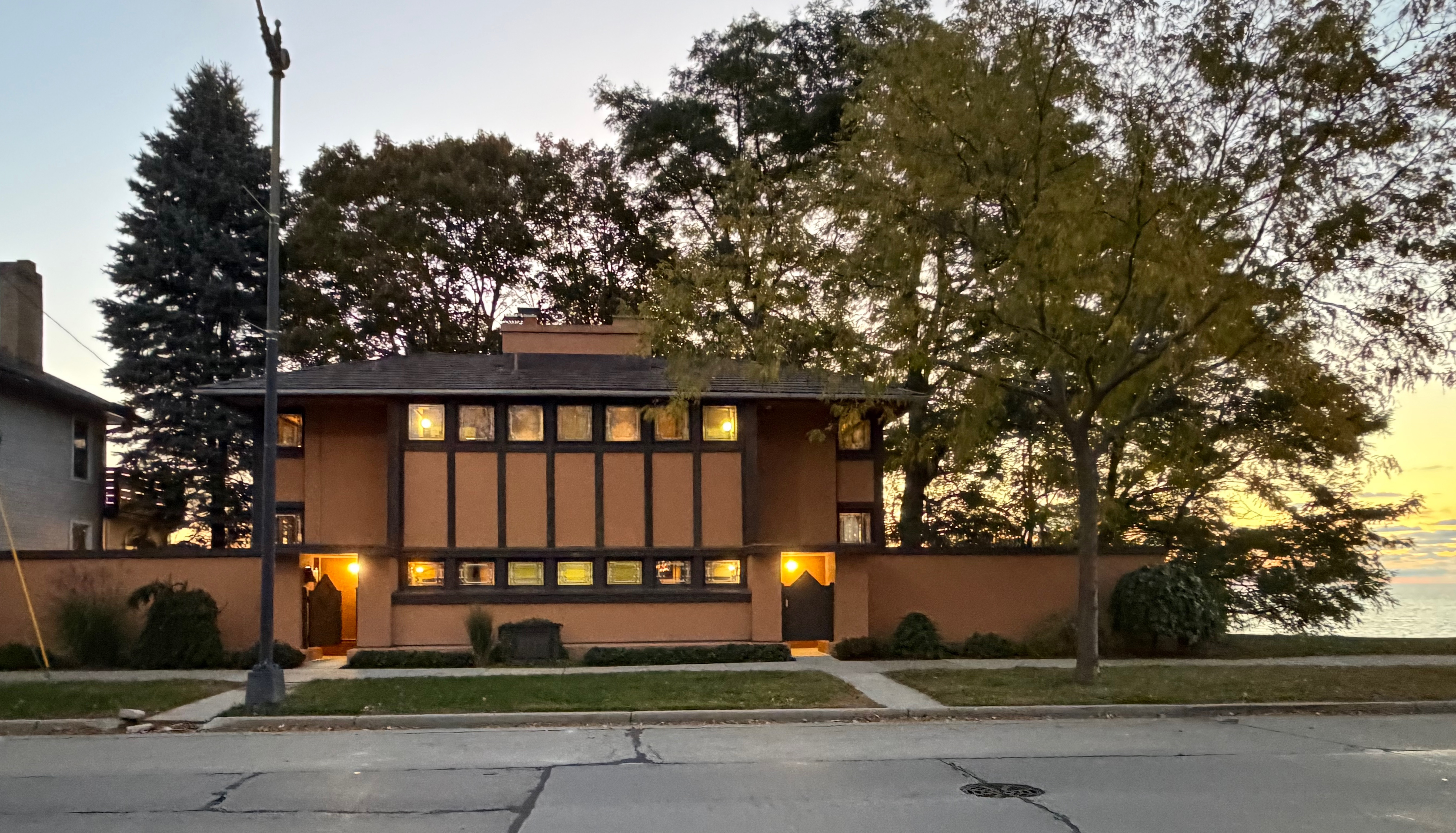
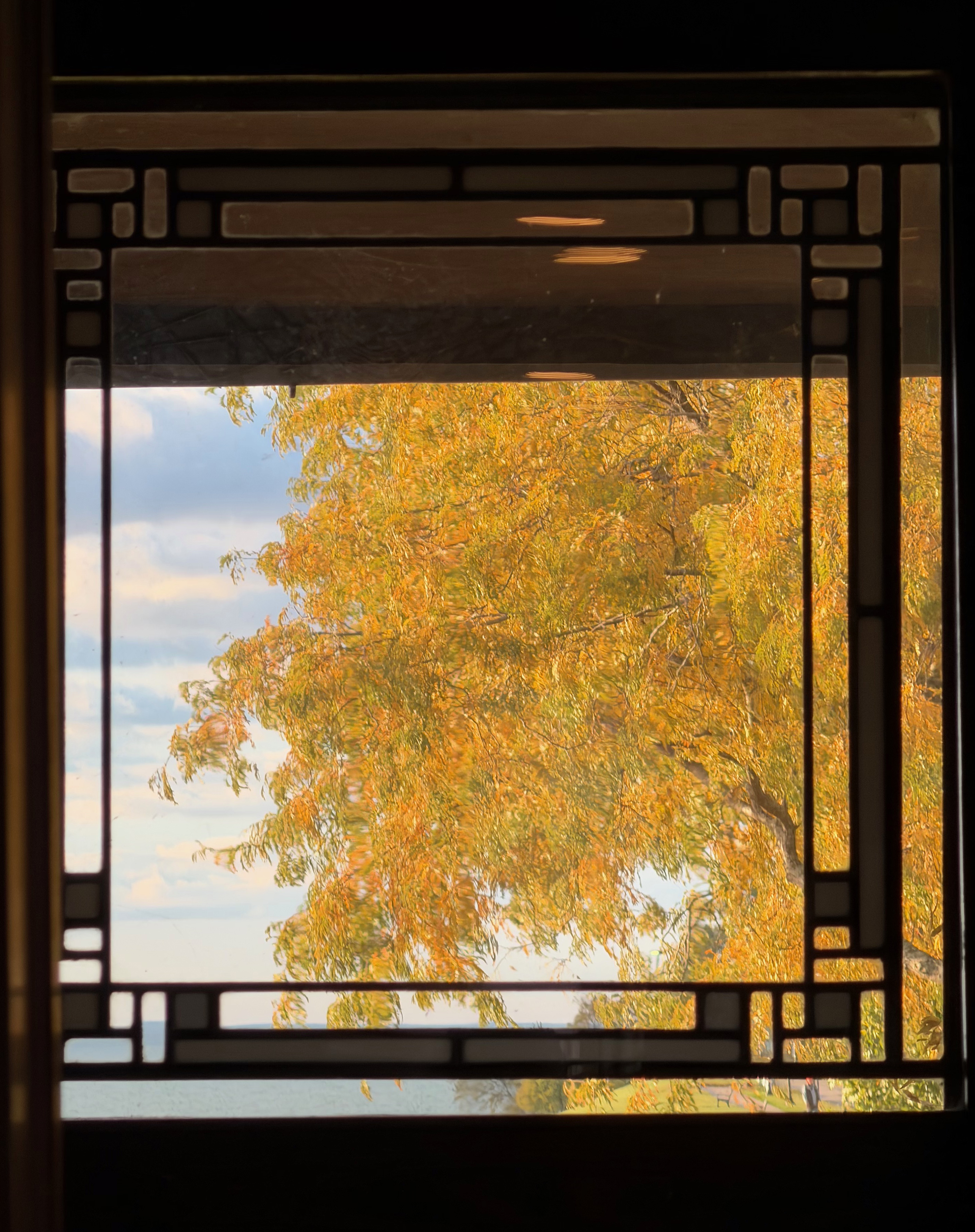
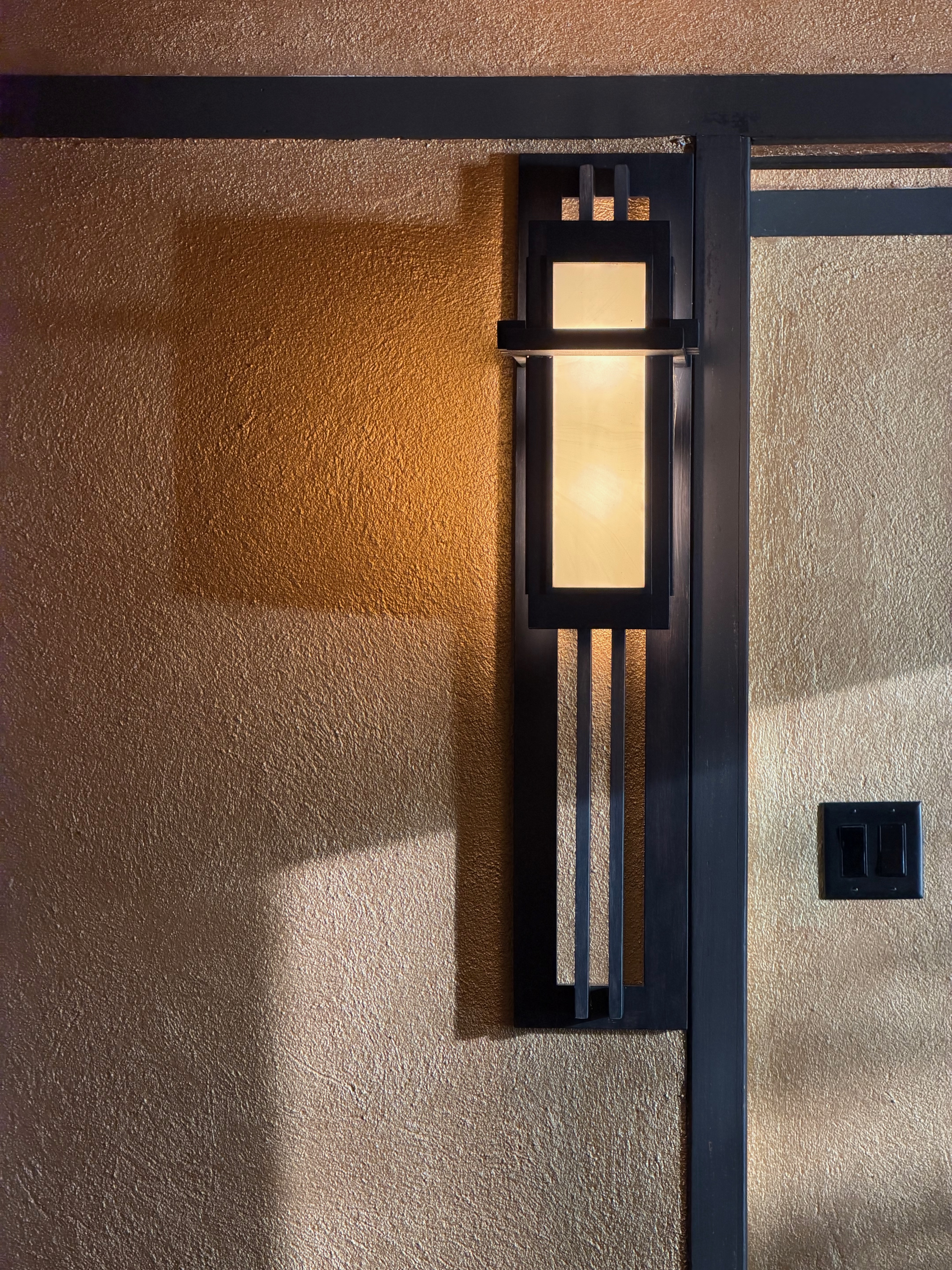
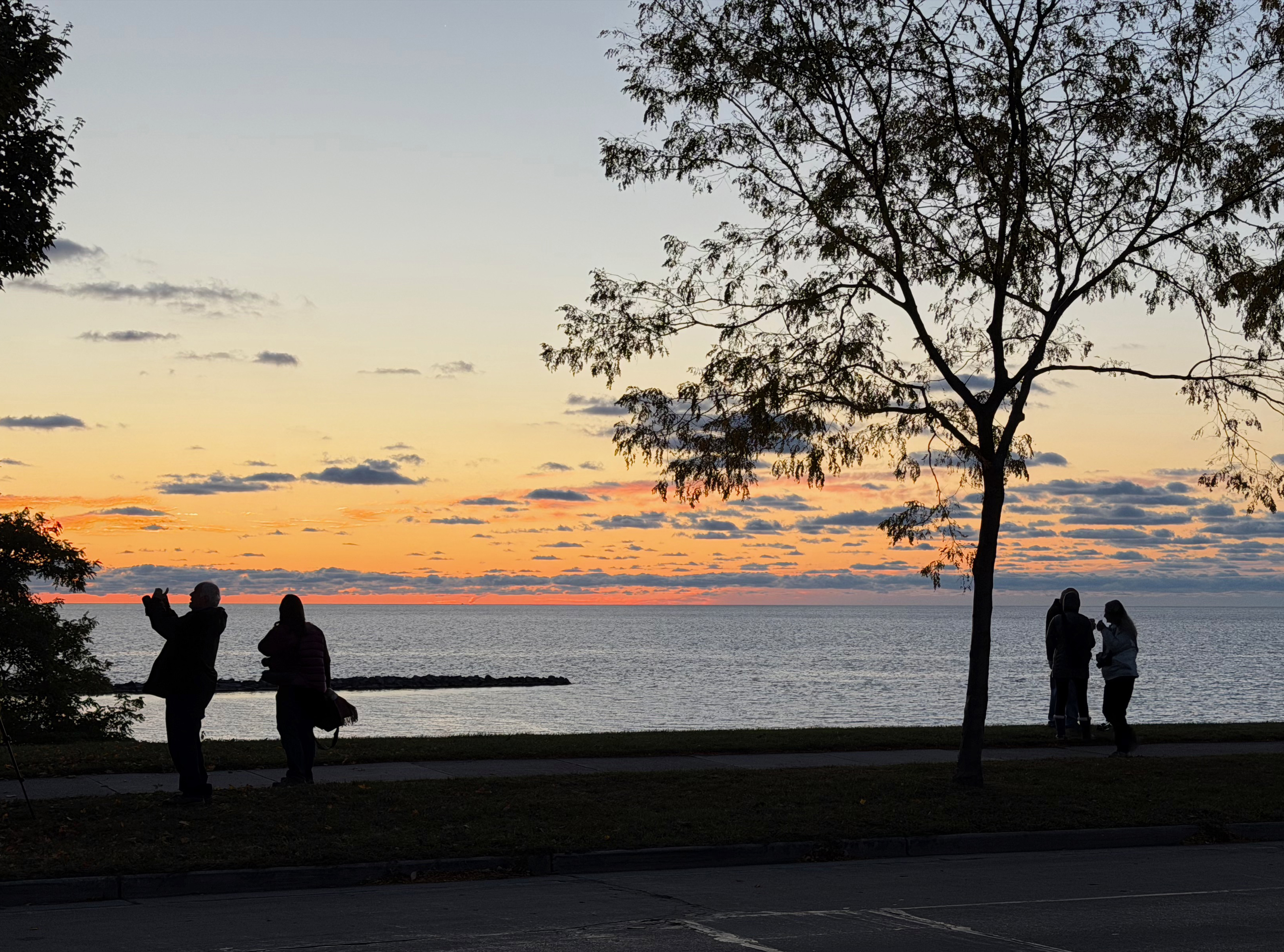
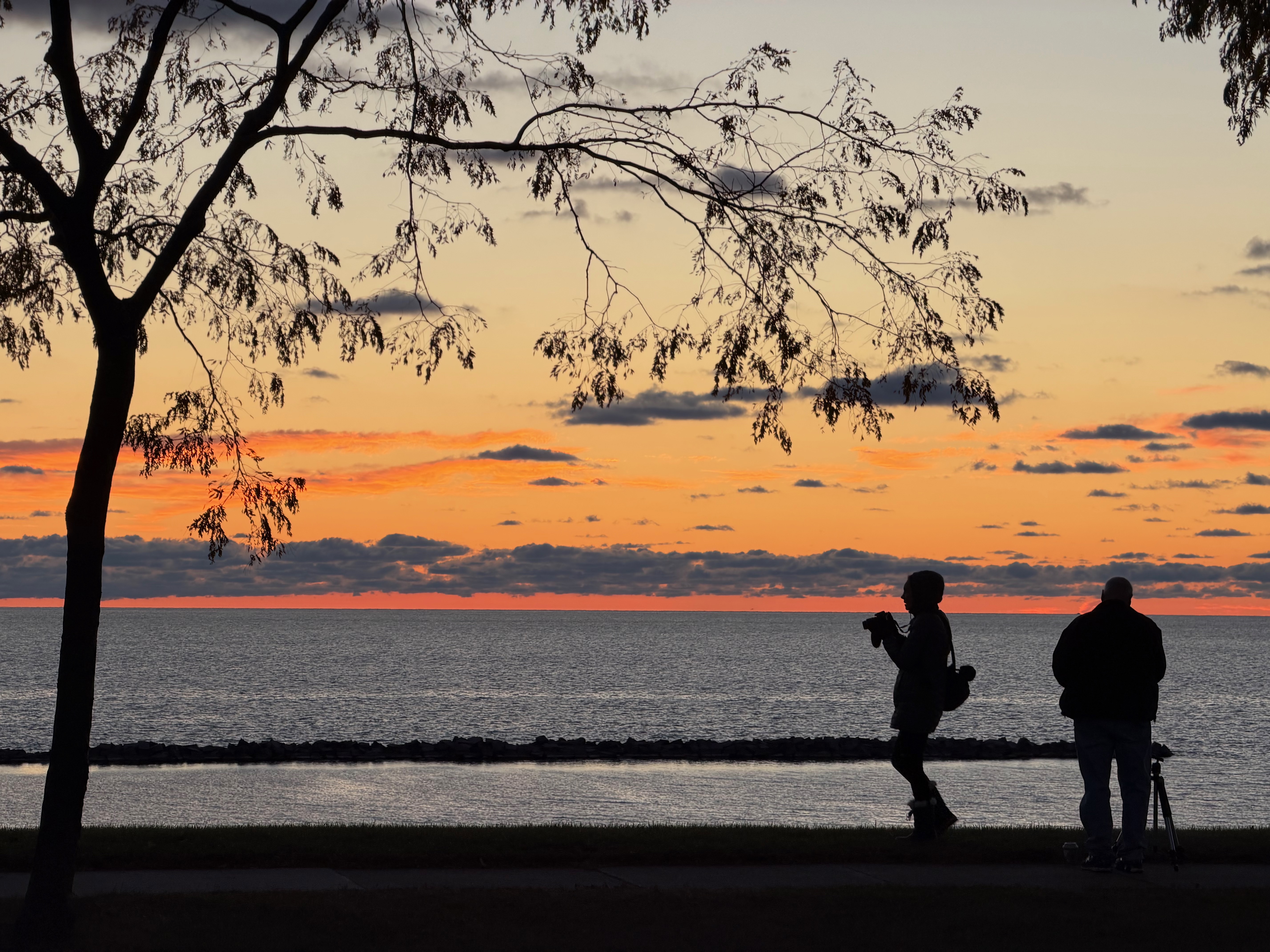
Hardy at Sunrise / Photo Workshop

© Mark Hertzberg (2025)

Hardy Sunrise 10.25.25 161.JPEG

Why in the blazes would I set the alarm for 6 a.m. on a Saturday a week ago? Really, why? We are in the midst of moving (after 47 years!) and sleeping in would have been swell. So, yeah, well, why? To help Andrew Pielage who was conducting one of his photo workshops in Racine.

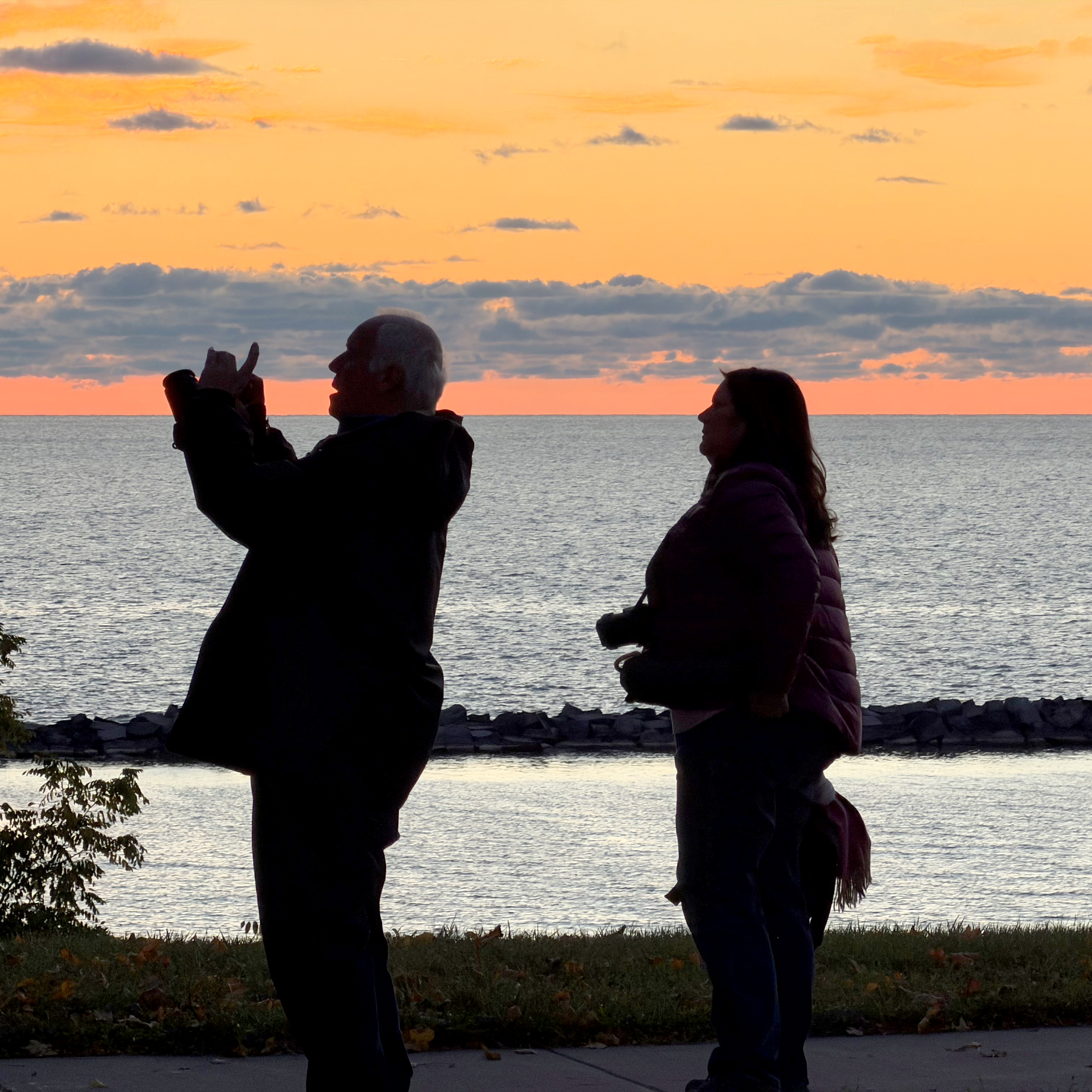
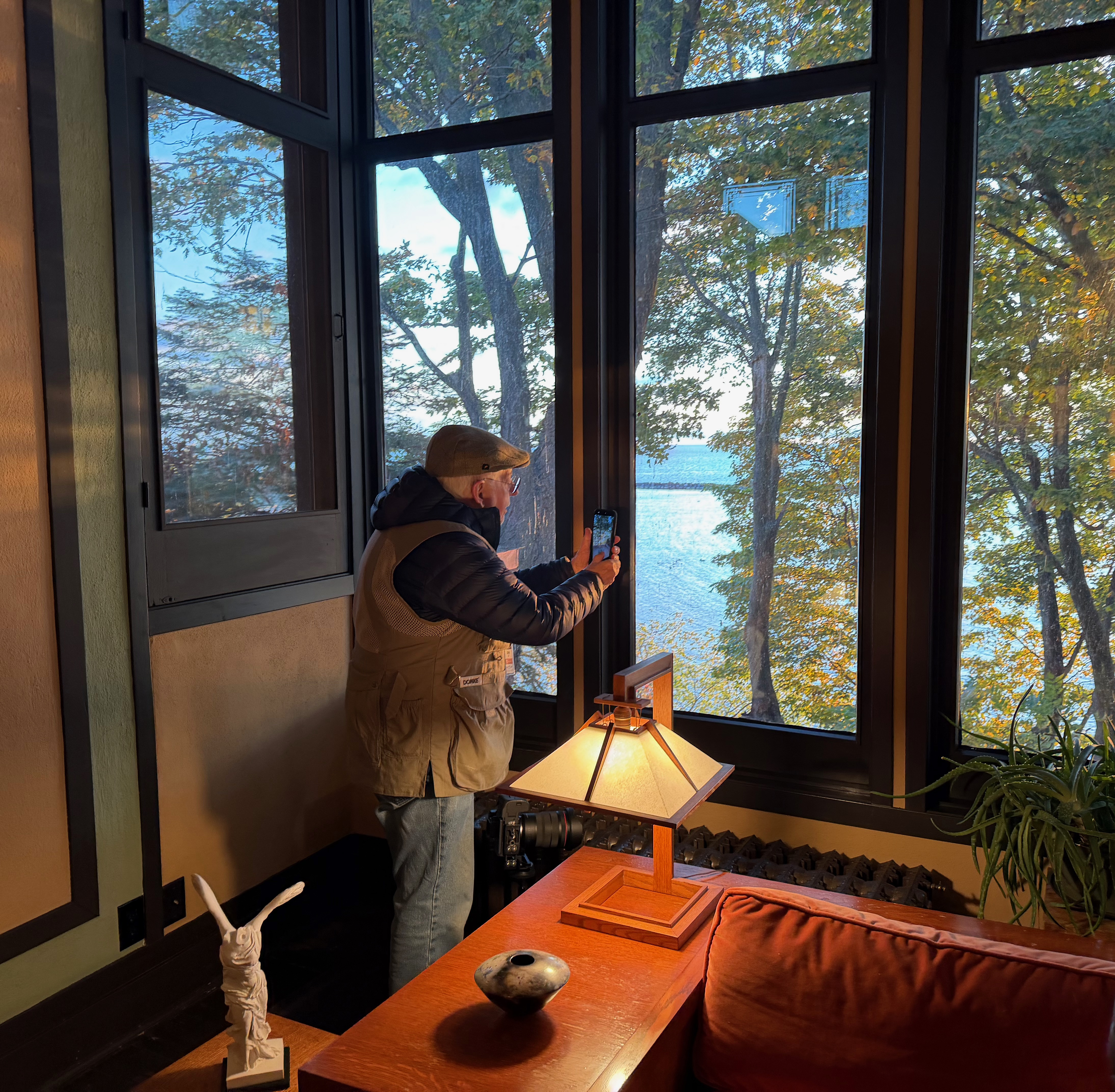
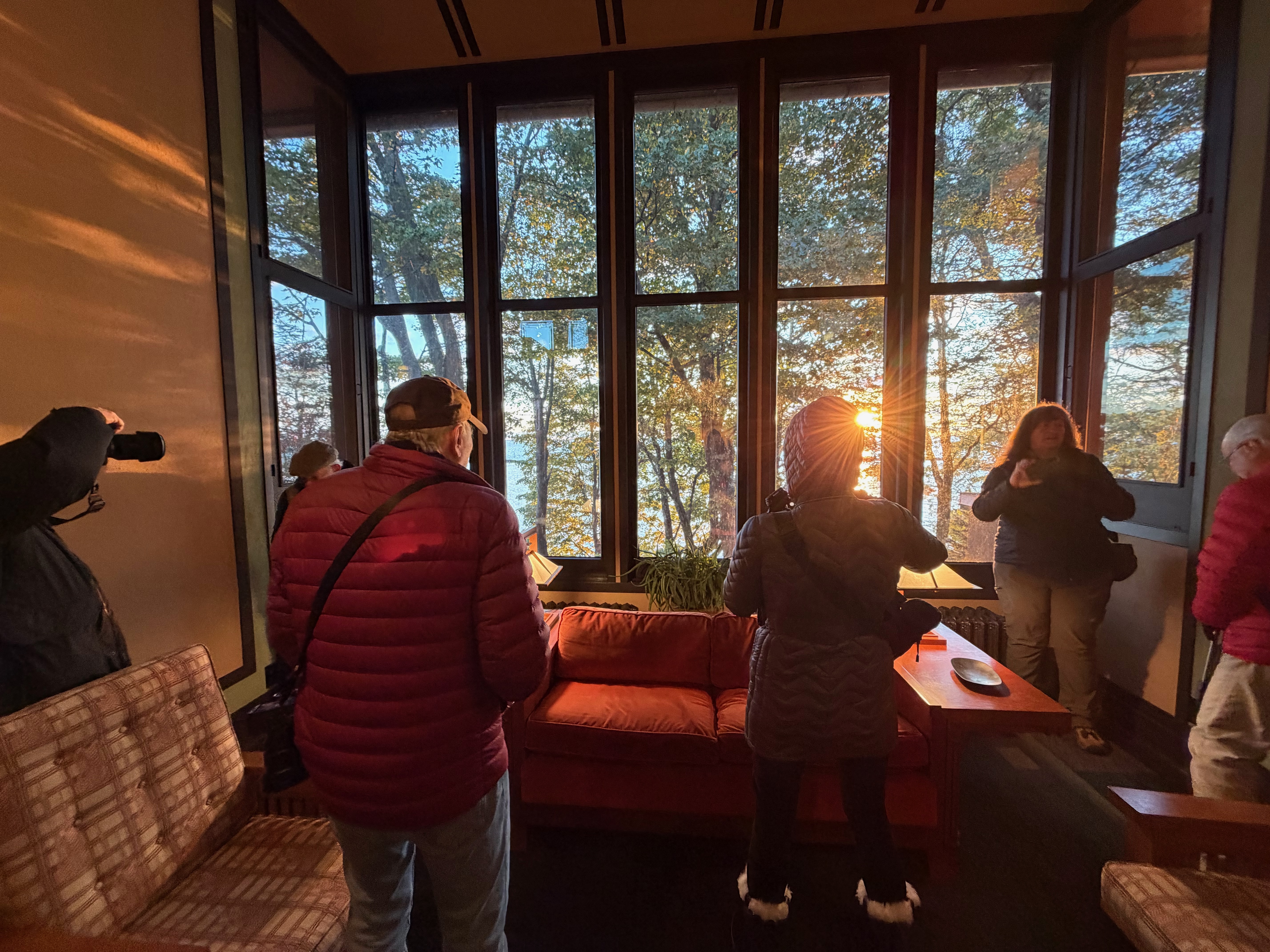
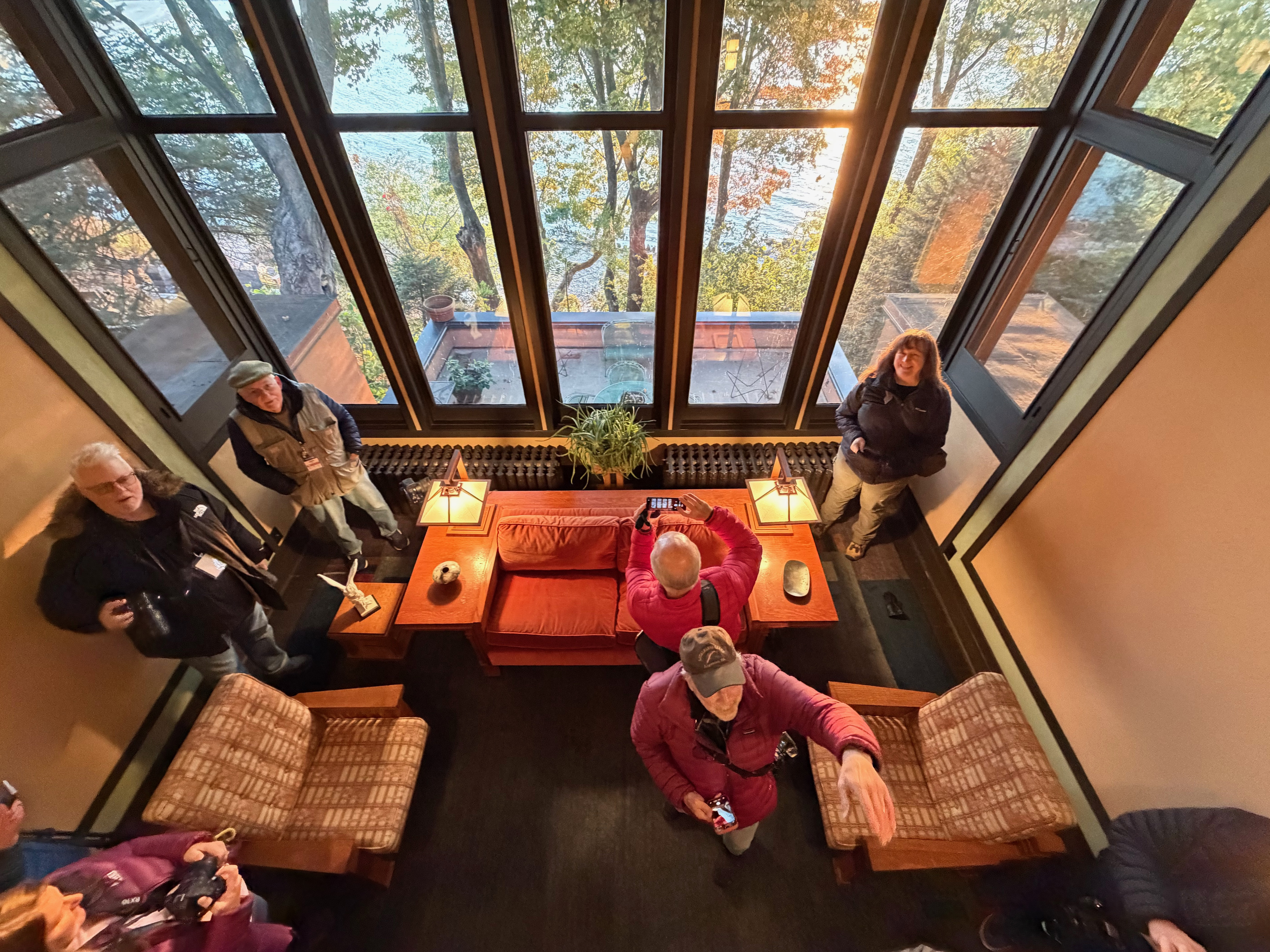
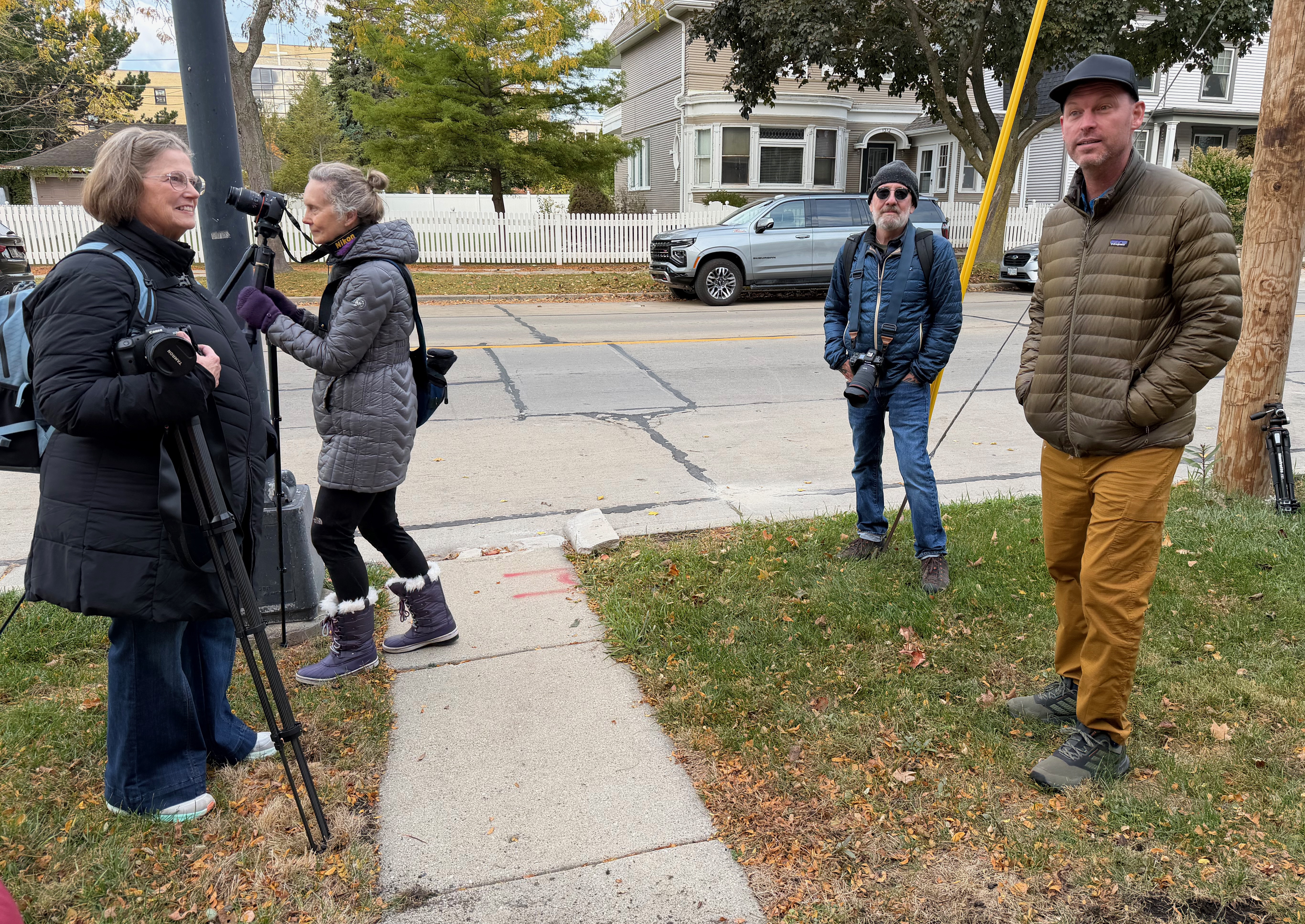
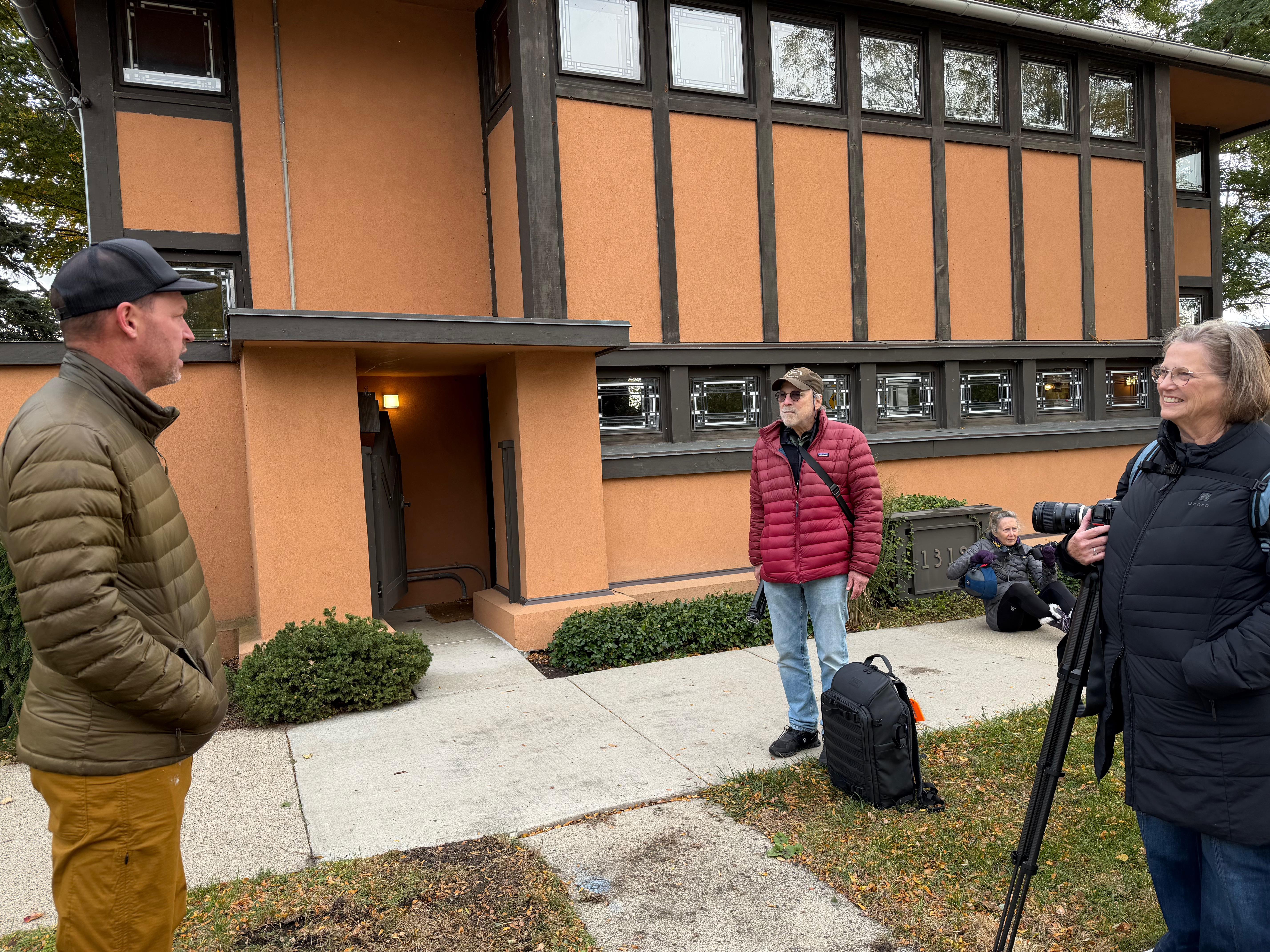
Hardy Pielage 10.25.25 016.JPEG Andrew had 18 photo guests arriving shortly after 7 a.m. to photograph Frank Lloyd Wright’s Thomas P. Hardy house inside and out, top to bottom. Andrew had asked me a year ago to tell the photographers about Hardy and about the house. Tom Szymczak, the steward of the house, had two kringle and a pot of hot coffee waiting. I got there at 6:48 a.m. Before I could get the goodies out and turn on the lights, I had to take my own photos of the house at sunrise. So, first my photos, and then my photos of the photographers.

Hardy Sunrise 10.25.25 162.JPEG

Hardy Sunrise 10.25.25 164.JPEG

Hardy Sunrise 10.25.25 170.JPEG

Hardy Sunrise 10.25.25 169.JPEG

Hardy Sunrise 10.25.25 177.JPEG

Hardy Sunrise 10.25.25 171.JPEG

Hardy Sunrise 10.25.25 172.JPEG

Hardy Sunrise 10.25.25 175.JPEG

Hardy Sunrise 10.25.25 178.JPEG

Hardy Sunrise 10.25.25 186.JPEG

Hardy Sunrise 10.25.25 188.JPEG

Hardy Sunrise 10.25.25 189.JPEG

People sometimes ask my about what brand of camera is best. My answer is that the photographer’s eye is more important than the nameplate. I use Nikons because I am looked into their lens system. I have long carried a new go-to camera in my pocket…my smartphone. I recently upgraded to the iPhone 17 Pro. My friend Harvey Riekoff asked me what I thought of the camera…all the photos in this post were taken with the phone. It makes me think of cartoonist Aaron Johnson’ What the Duck t-shirt that I was given a few years ago: “Your camera takes great pictures!” To which the duck answered, “Your mouth makes nice compliments!” And, now photos of Andrew’s guests:

Hardy Pielage 10.25.25 004.JPEG


Hardy Pielage 10.25.25 008.JPEG

Hardy Pielage 10.25.25 006.JPEG

Hardy Pielage 10.25.25 009.JPEG

Hardy Pielage 10.25.25 010.JPEG

Hardy Pielage 10.25.25 011.JPEG

Hardy Pielage 10.25.25 012.JPEG

Hardy Pielage 10.25.25 020.JPEG

Hardy Pielage 10.25.25 021.JPEG

Hardy Pielage 10.25.25 022.JPEG

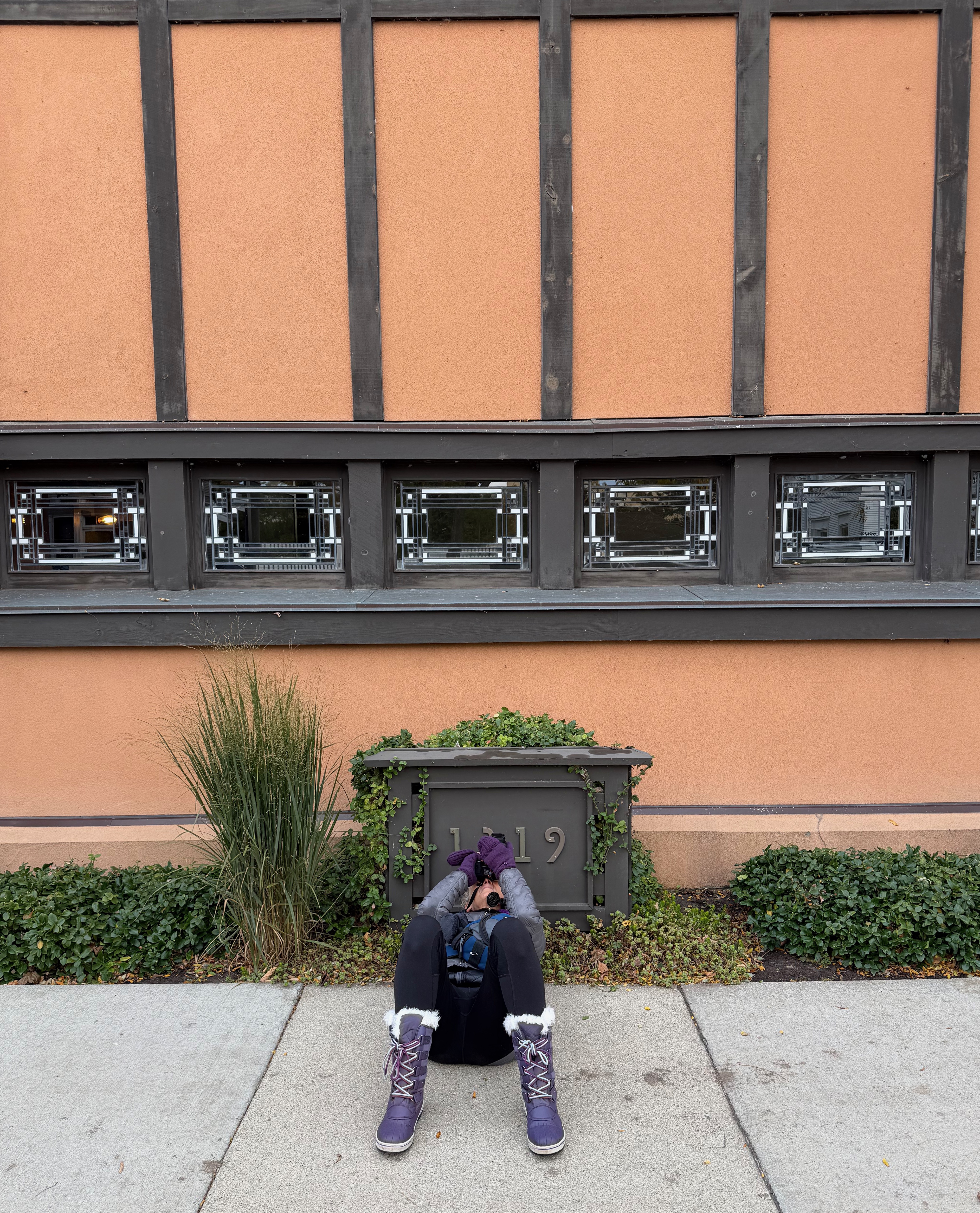
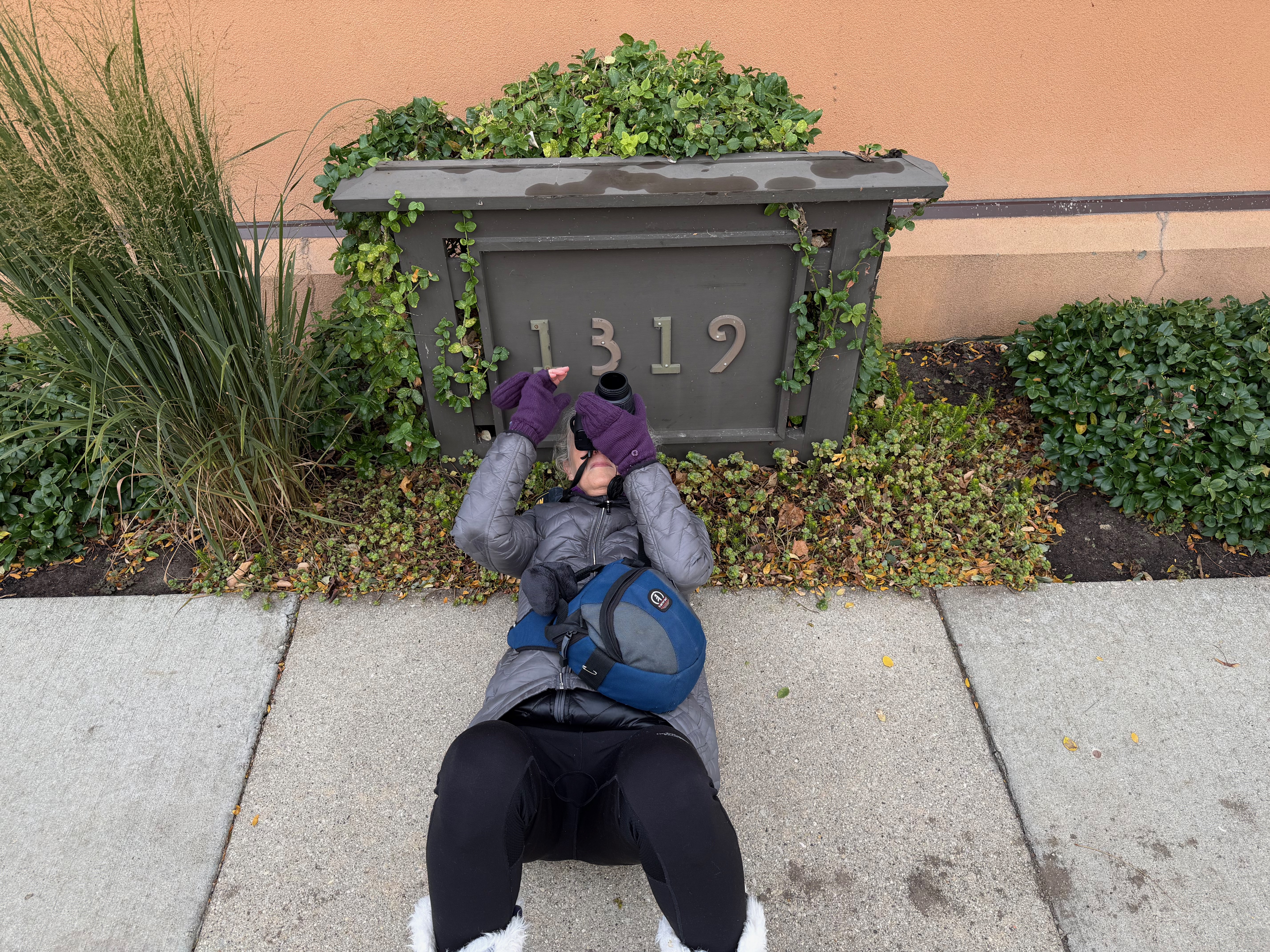
(My wife has a collection of photos of me on my back taking photos in Wright homes and other historic sites…I had to take this photo!)

Hardy Pielage 10.25.25 024.JPEG

Hardy Pielage 10.25.25 025.JPEG

For more information about Andrew Pielage’s Photo Workshops;

https://www.apizm.com/events-calendar

Please scroll down to read previous posts on this website.


Hardy Reflections and Shadow Play 8.5.25

Photos © Mark Hertzberg (2025)

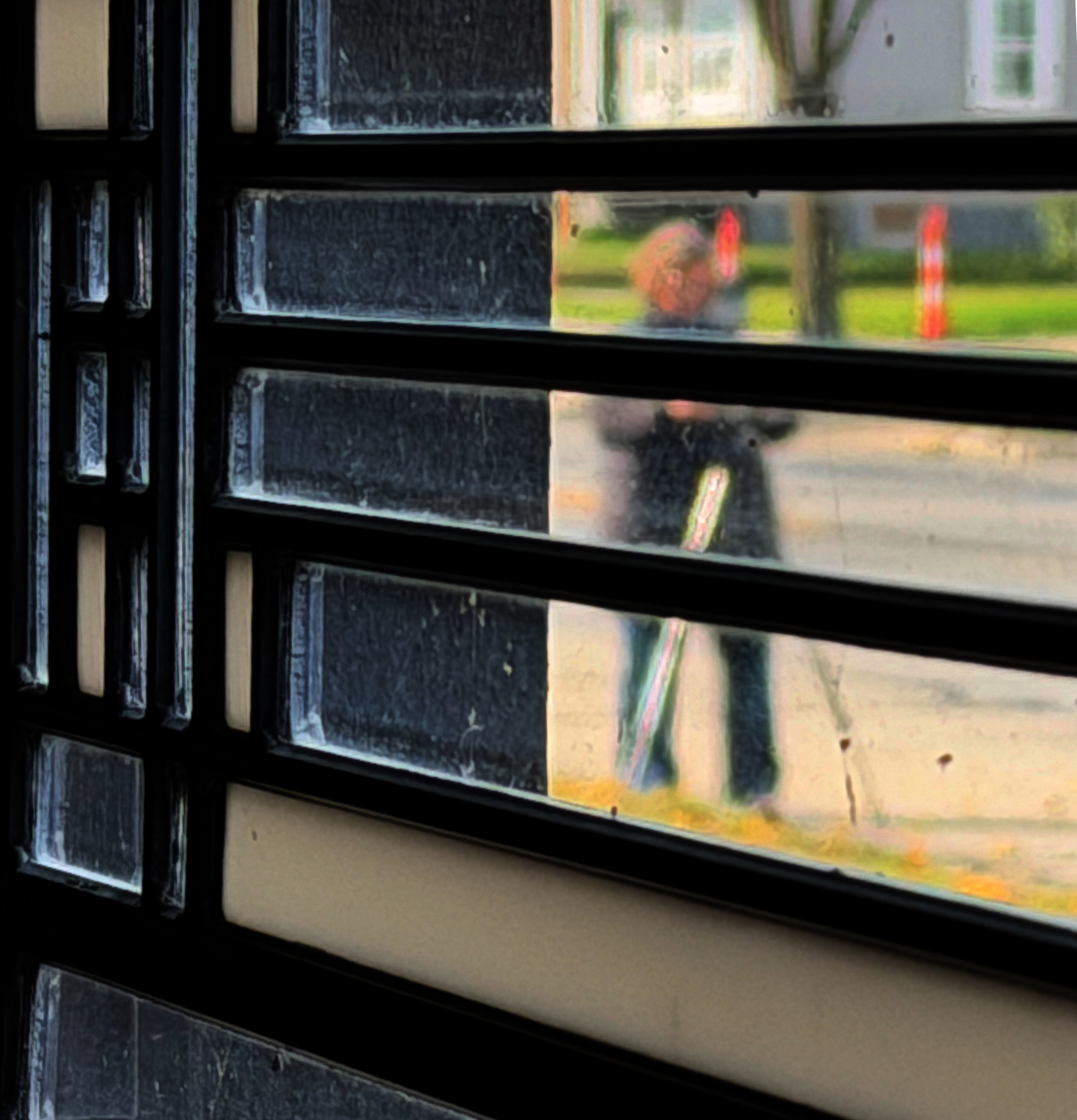
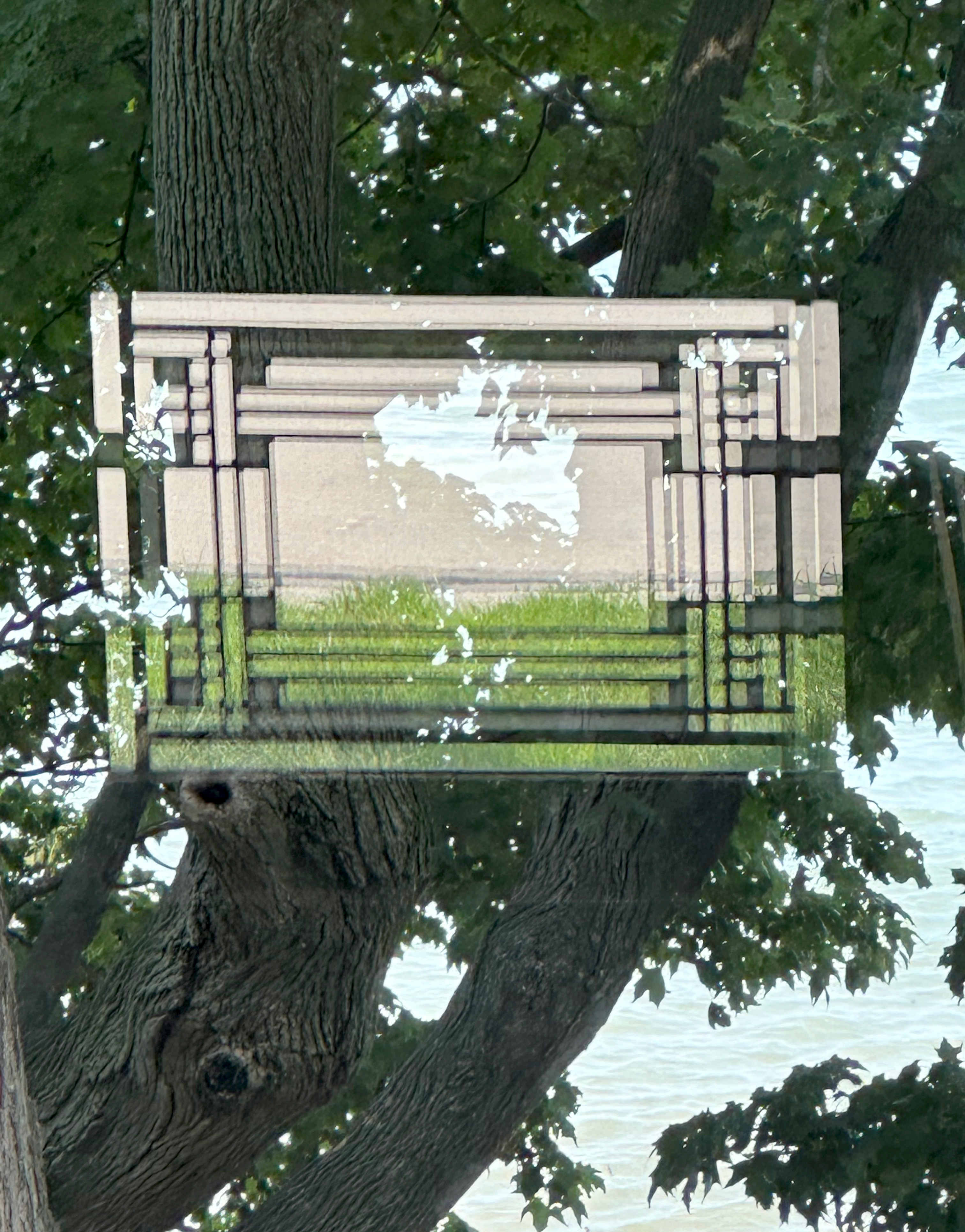
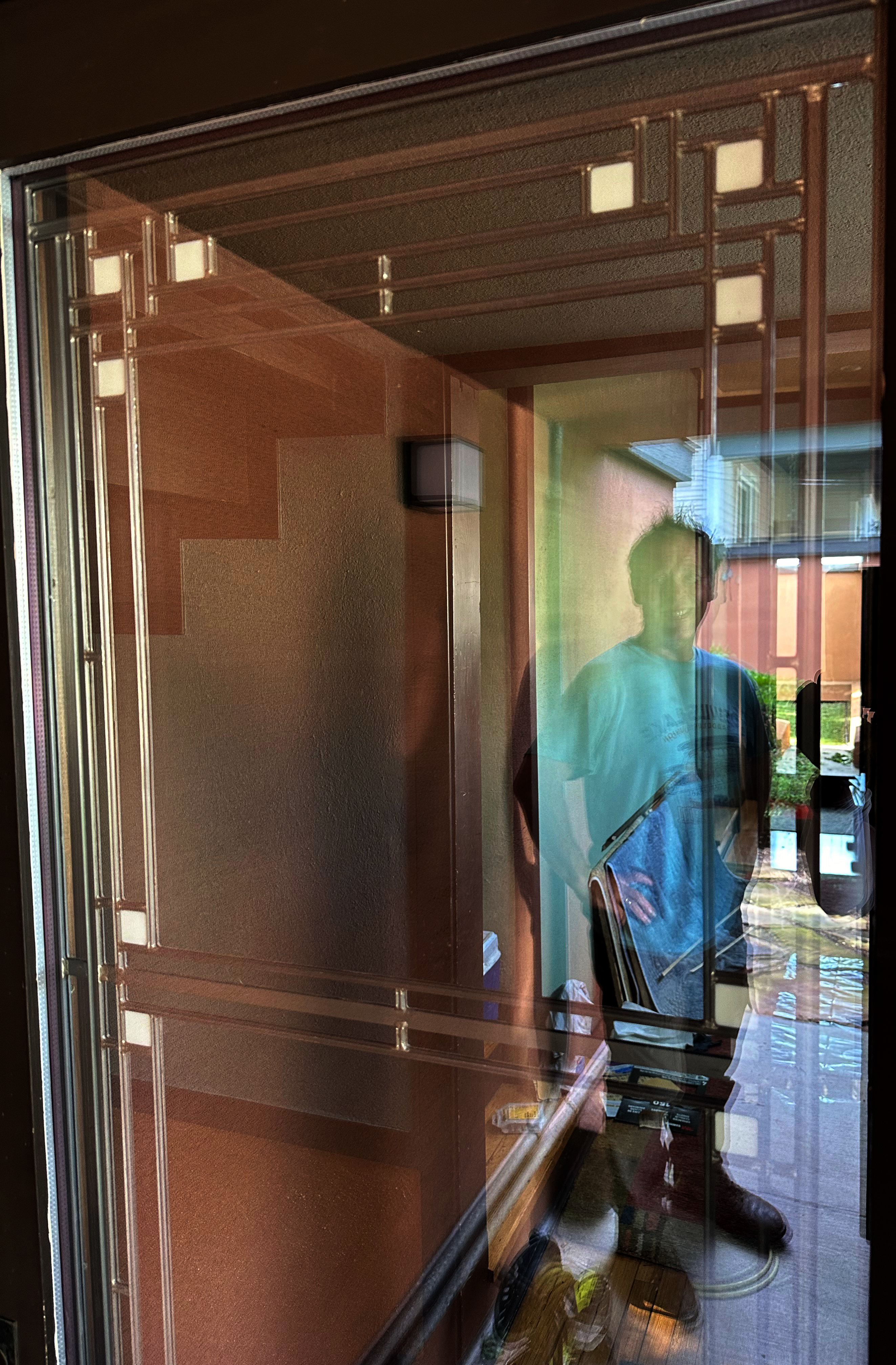
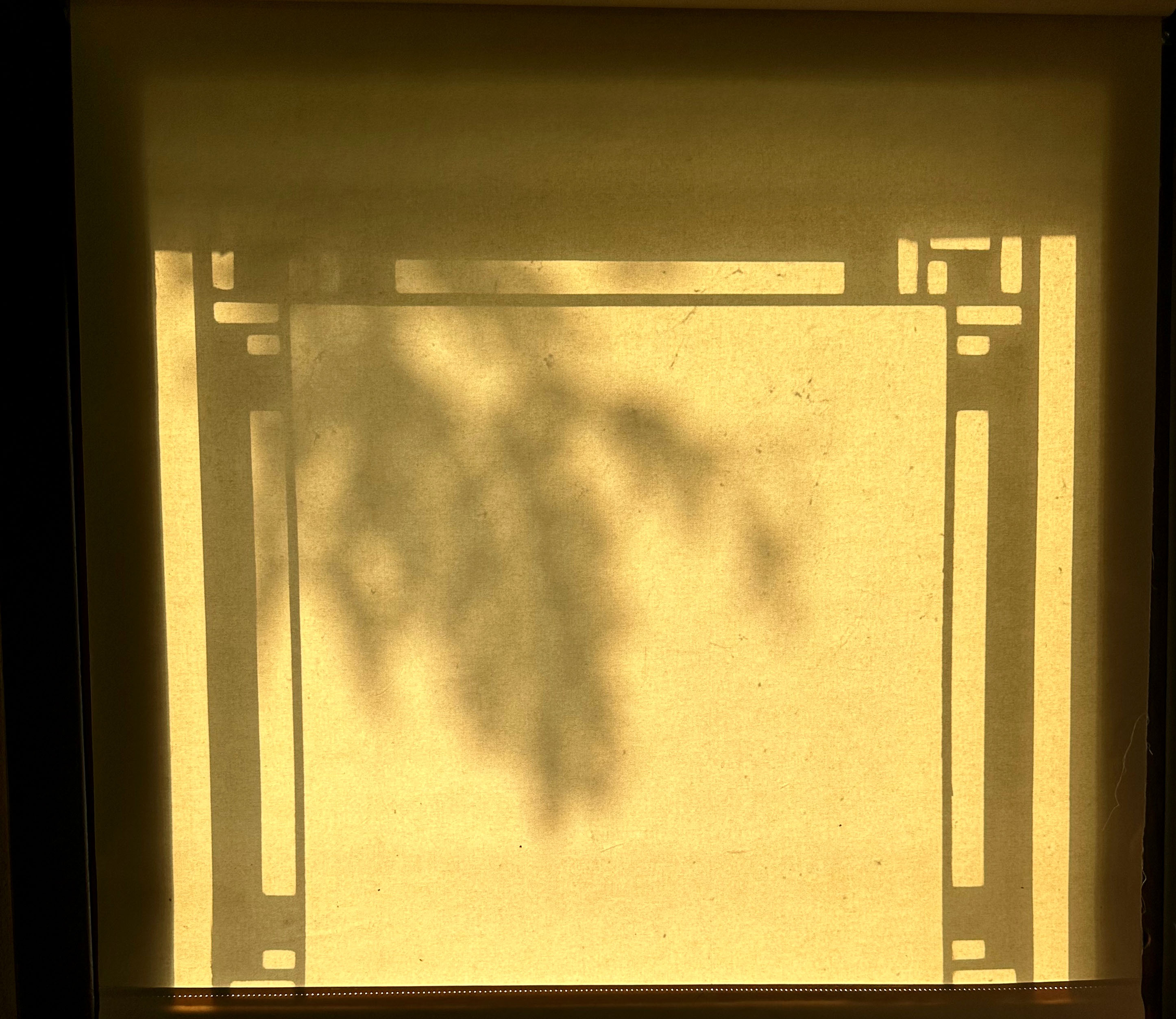
Hardy Shadow Play 8.5.25 001.JPEGOne of the entry way hallway windows is reflected in the two story living room windows that overlook Lake Michigan.

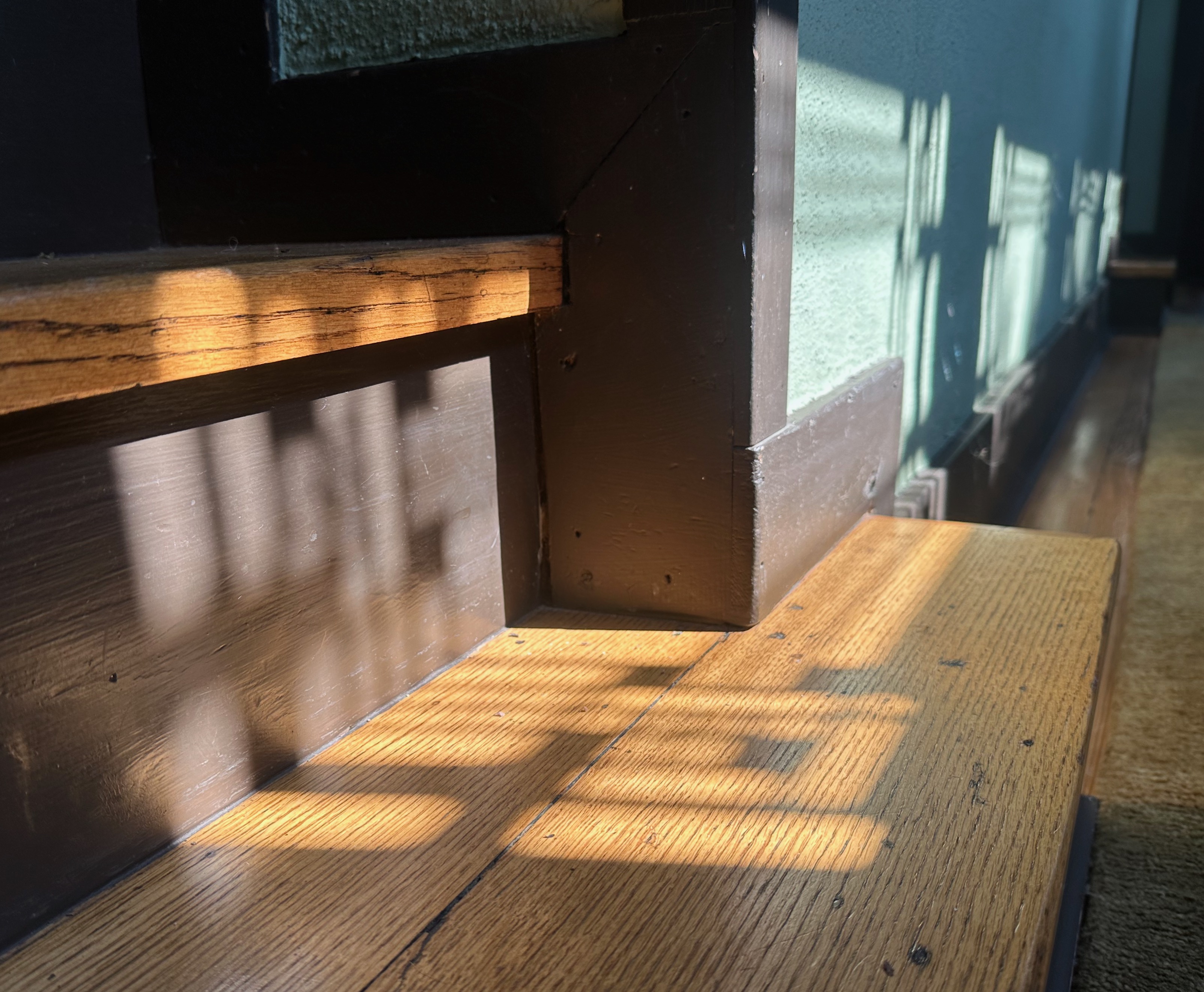
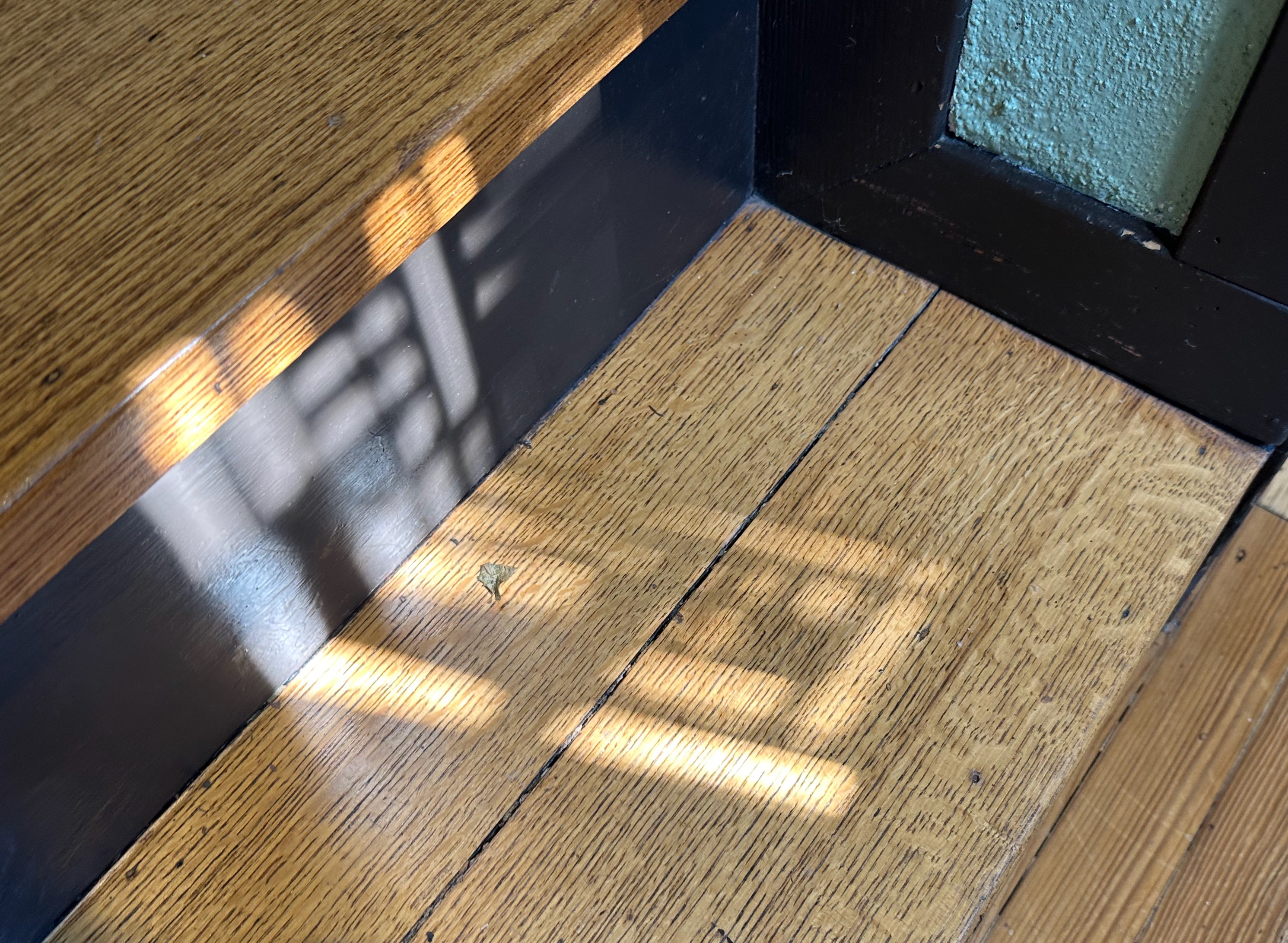
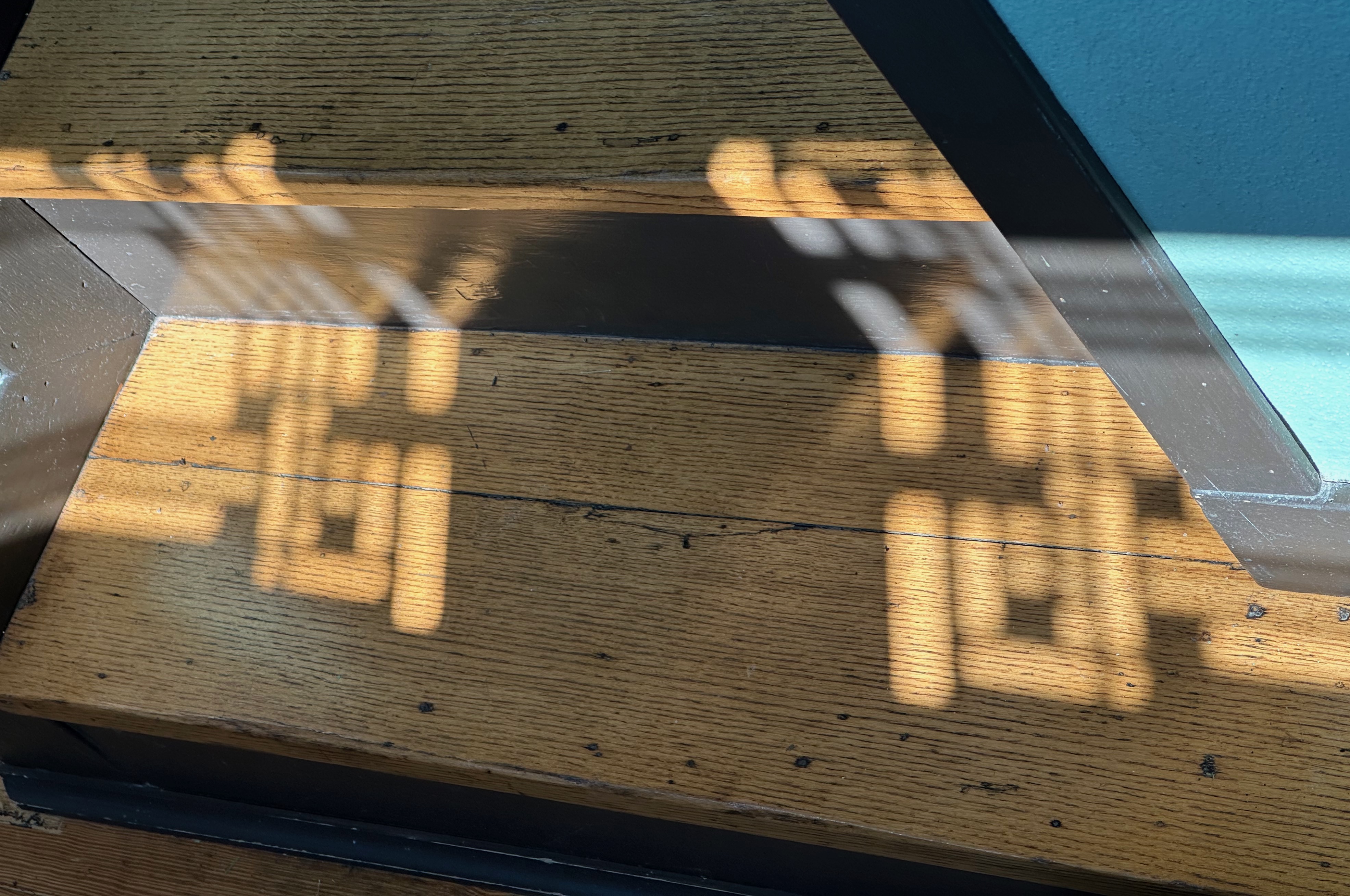
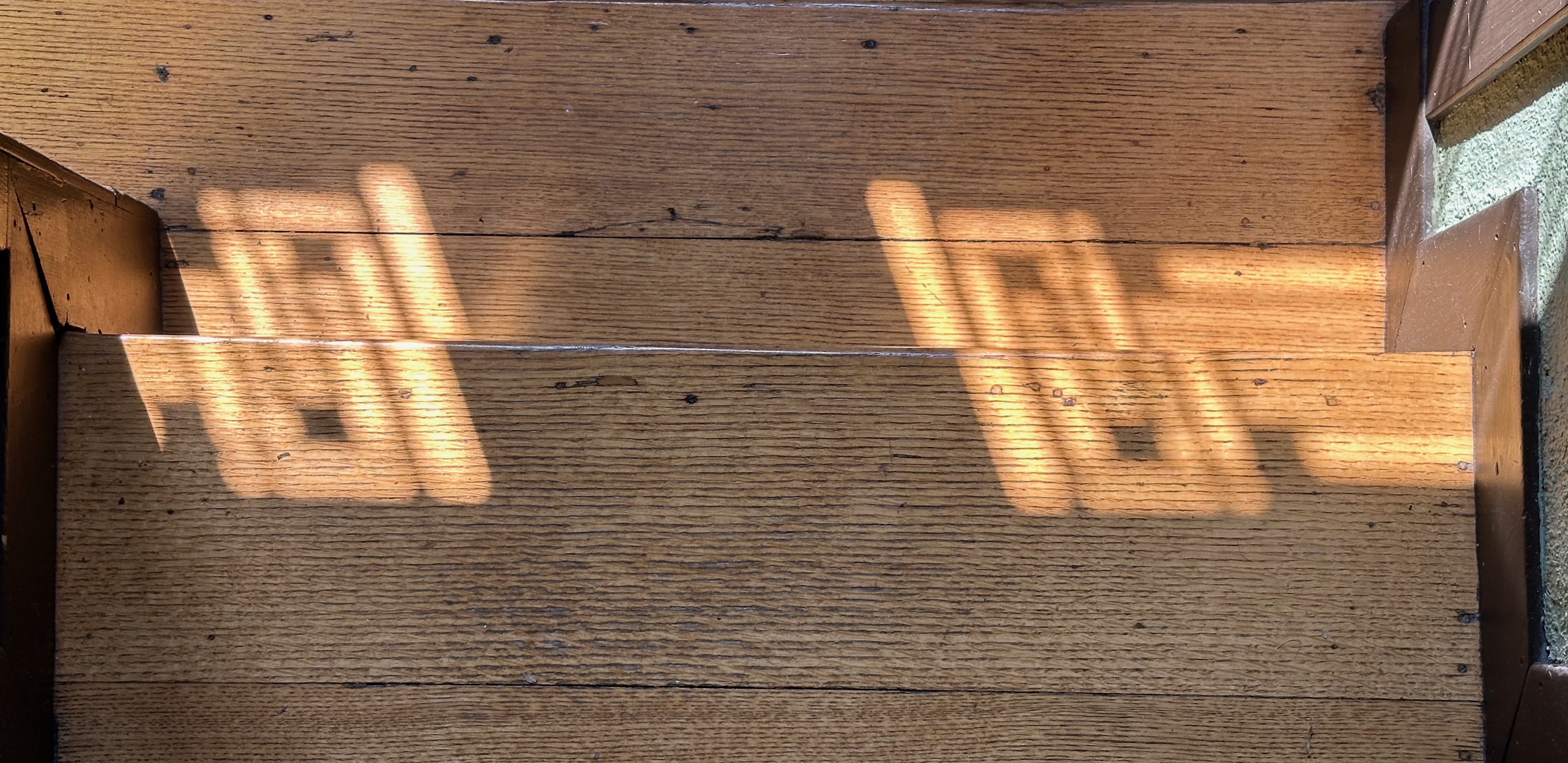
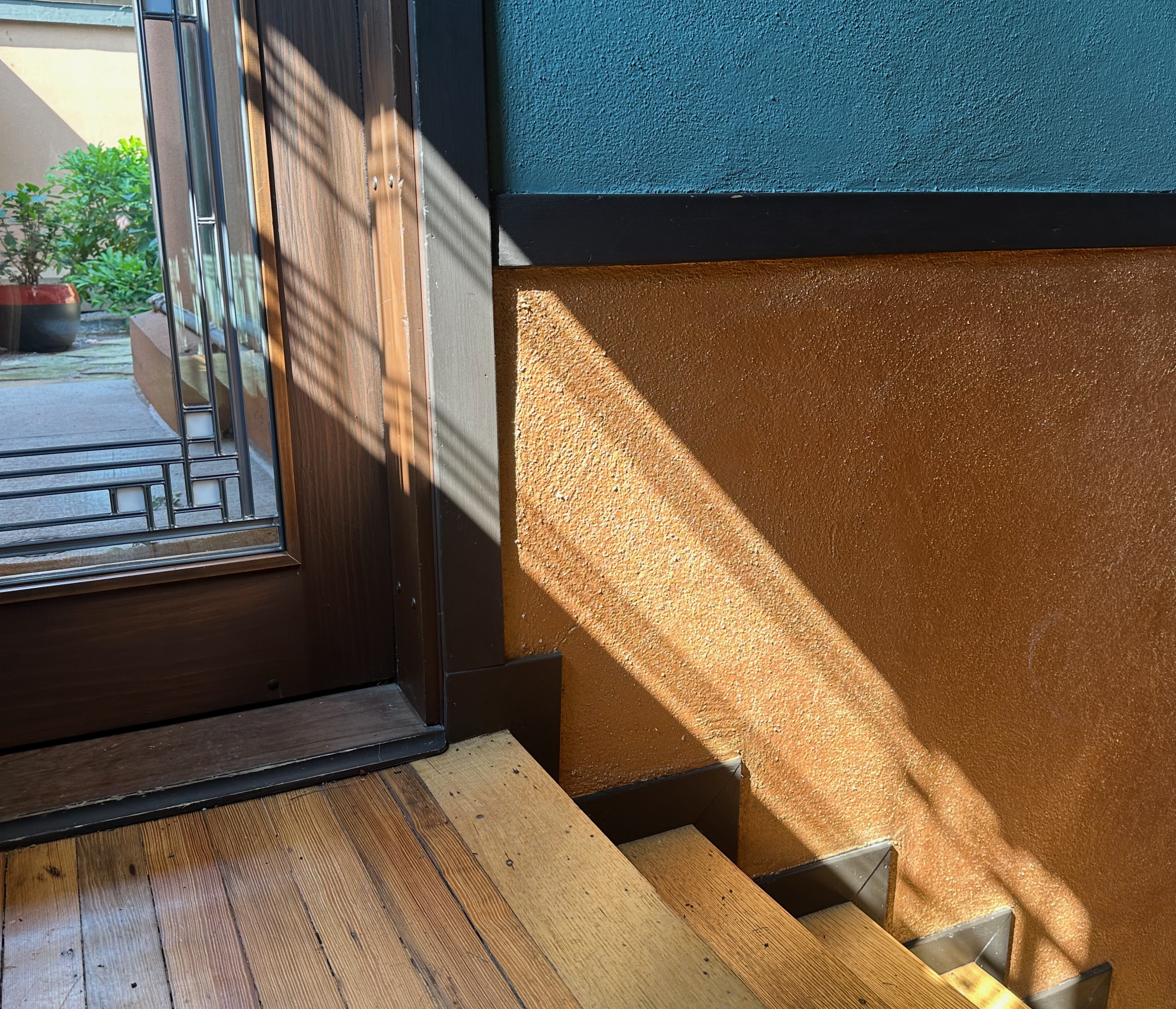
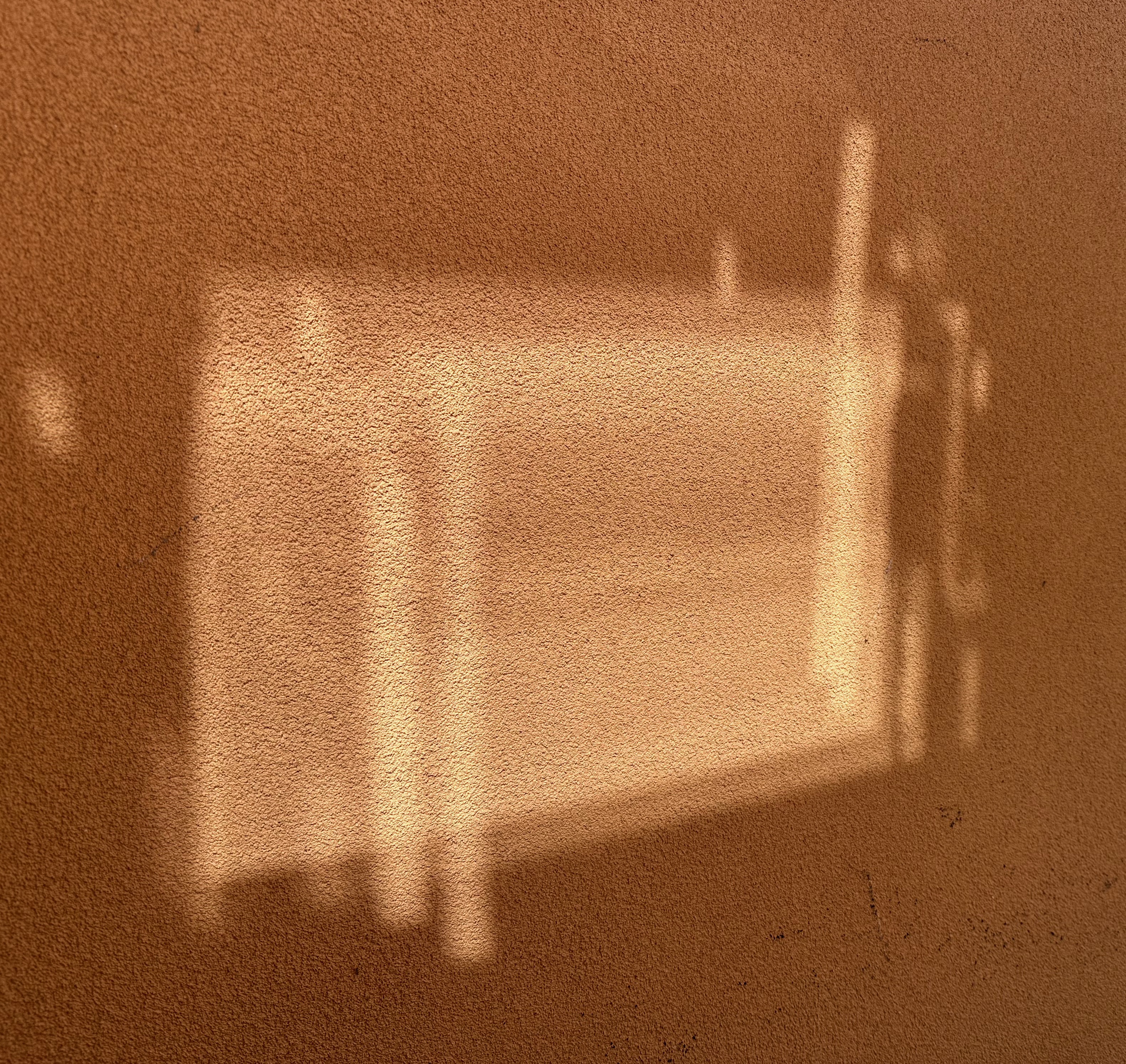
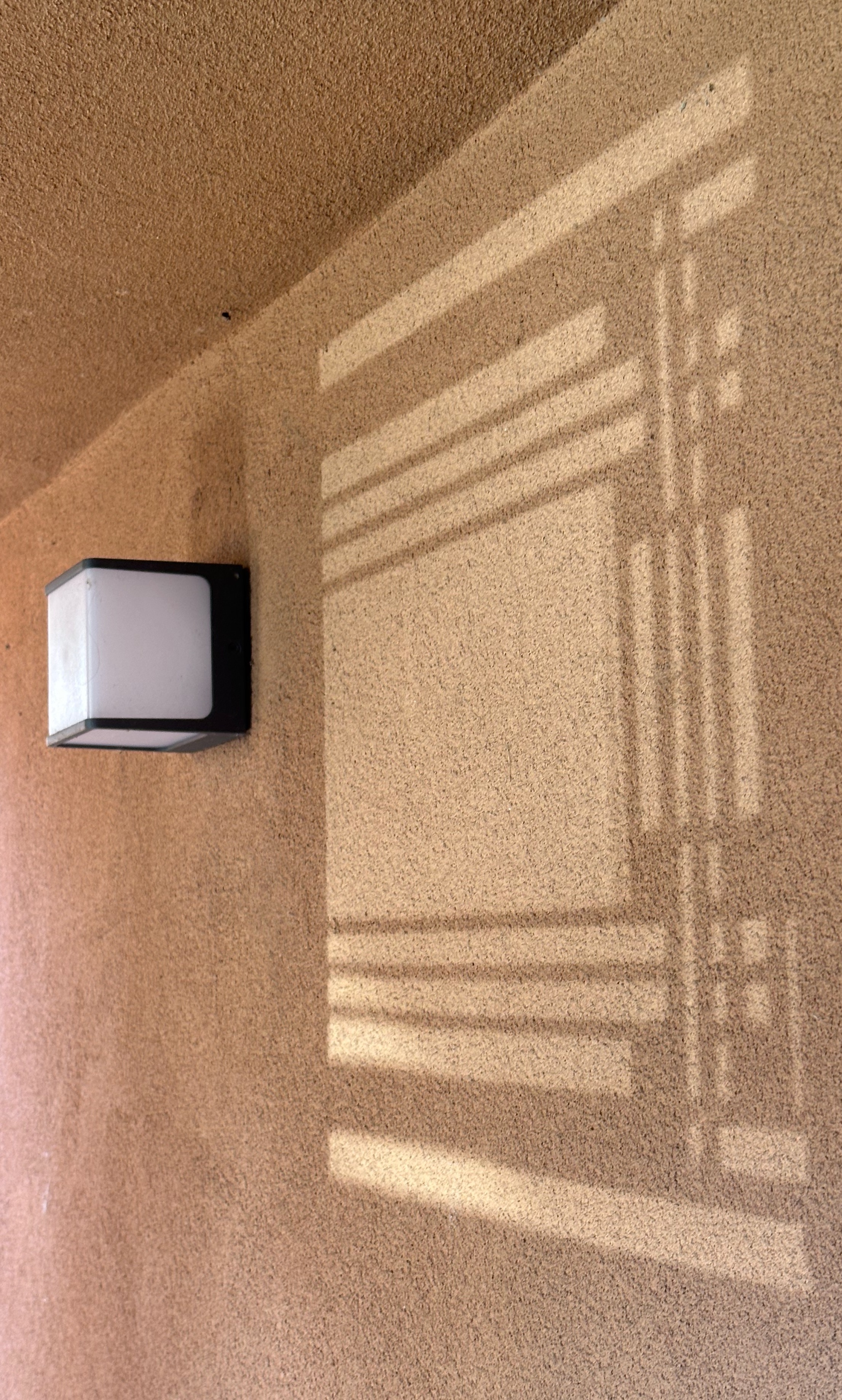
One of the aspects of Frank Lloyd Wright’s Thomas P. Hardy House that continually fascinates me is the shadow play from the seven windows in the entry hallway. I had the opportunity to have fun with the reflections and shadow play again when I met at the house with Sam Lubell yesterday. Lubell and photographer Andrew Pielage are working on a book about 50 Wright homes for Rizzoli (more about that in a future post).

Hardy Shadow Play 8.5.25 003.JPEG

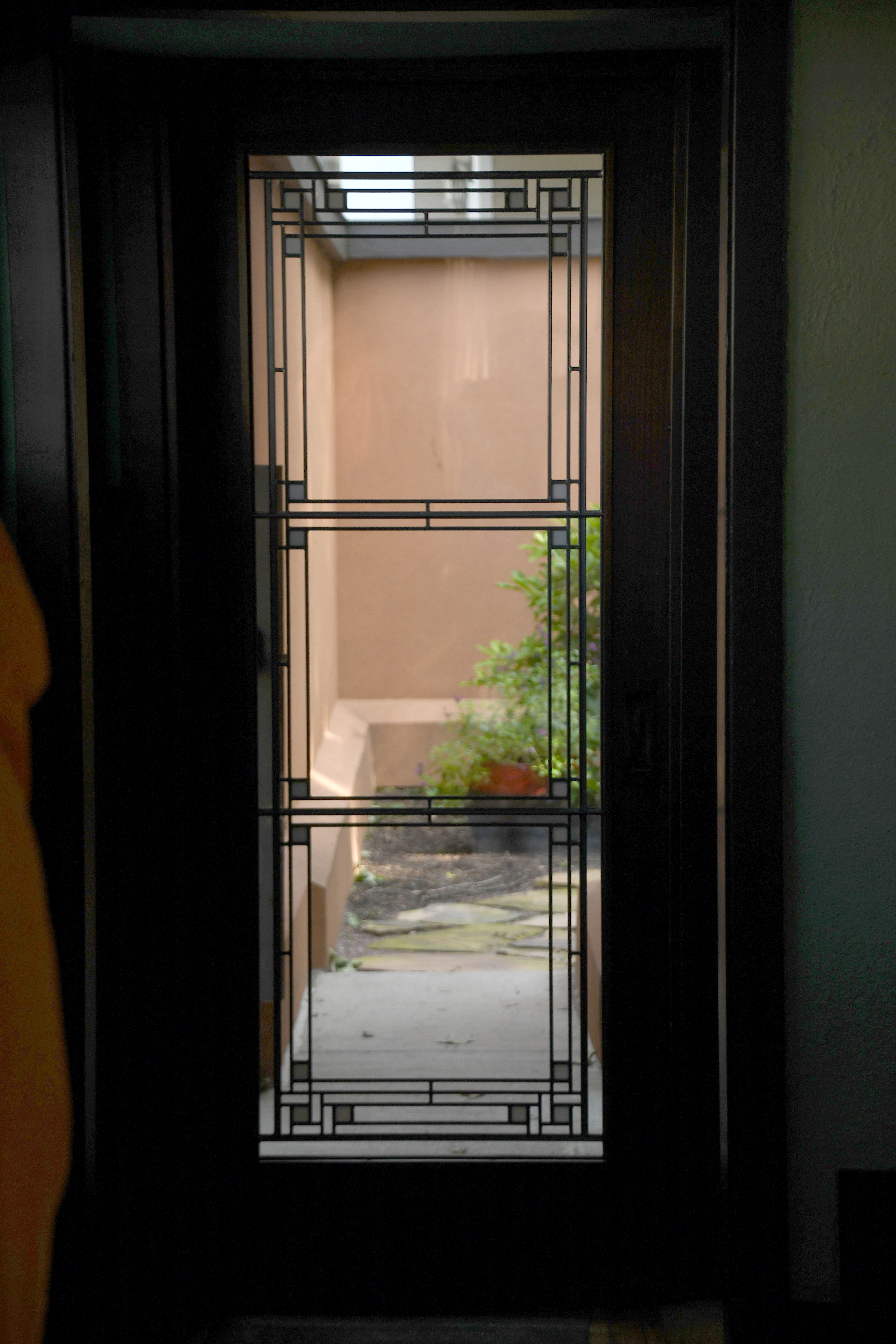
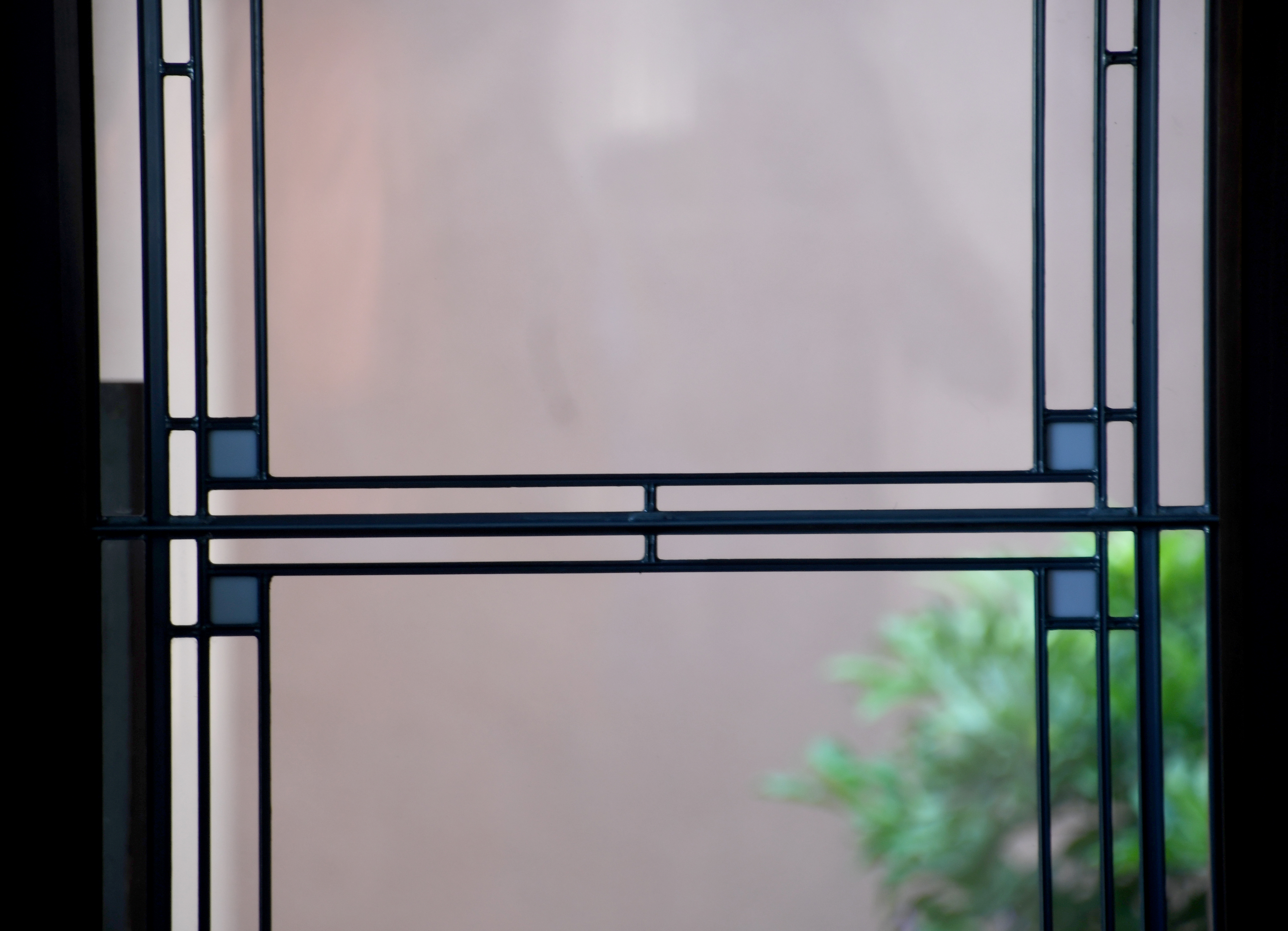
As Robert McCarter has pointed out, the floor plan of the house is delineated in white in the windows: the square in the middle represents the public areas, the two story living room and the dining room one floor below. When I lead tours of the house I remind the guests that the only computer Wright had when he came up with such designs was the one between his ears.

Hardy Shadow Play 8.5.25 004.JPEG

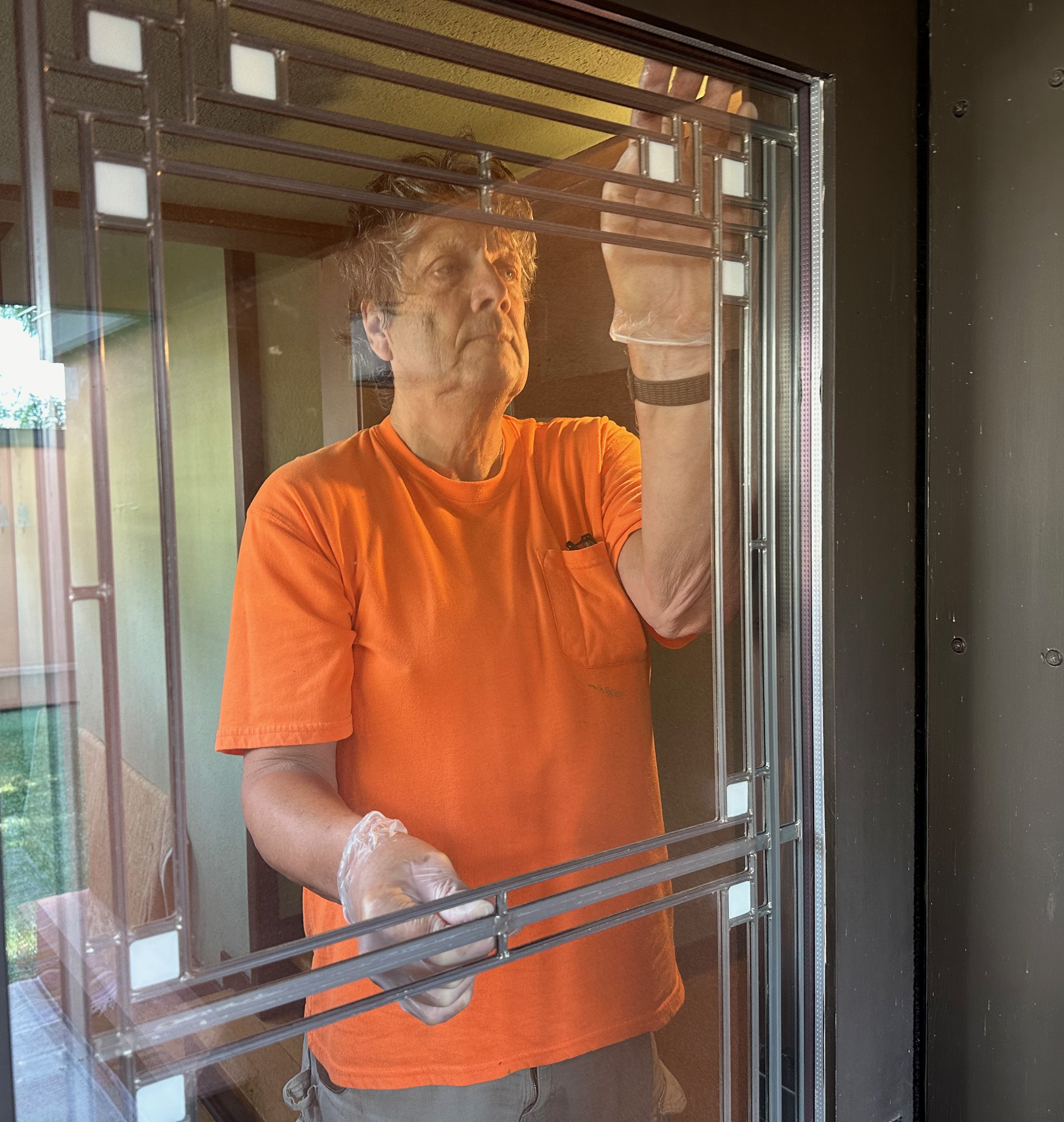
The rectangle that bisects the square represents the bedrooms at either end of the two main floors. We now add to the drama of the seven Wright-designed windows the leaded glass inserts in the two sliding entry doors (one north, one south). They replicate the design of Wright’s living room windows, which were taken out by the second stewards of the house (1938 – 1947) because they leaked. They were replaced by clear windows.

Hardy Shadow Play 8.5.25 006.JPEG

Hardy Shadow Play 8.5.25 007.JPEG

Hardy Shadow Play 8.5.25 008.JPEG

Hardy Shadow Play 8.5.25 009.JPEG

Hardy Shadow Play 8.5.25 010.JPEG

Hardy Shadow Play 8.5.25 011.JPEG

These quick happy snaps were taken with my phone camera…elapsed time, except for the top photo, seven minutes. Every time I turned I saw another photo. Thank you Gene and Tom and Joan Szymczak, for rehabilitating the house for us to enjoy!

Scroll down for previous posts on this website

Hardy House Views: 1904 – 2025

© Mark Hertzberg (2025)

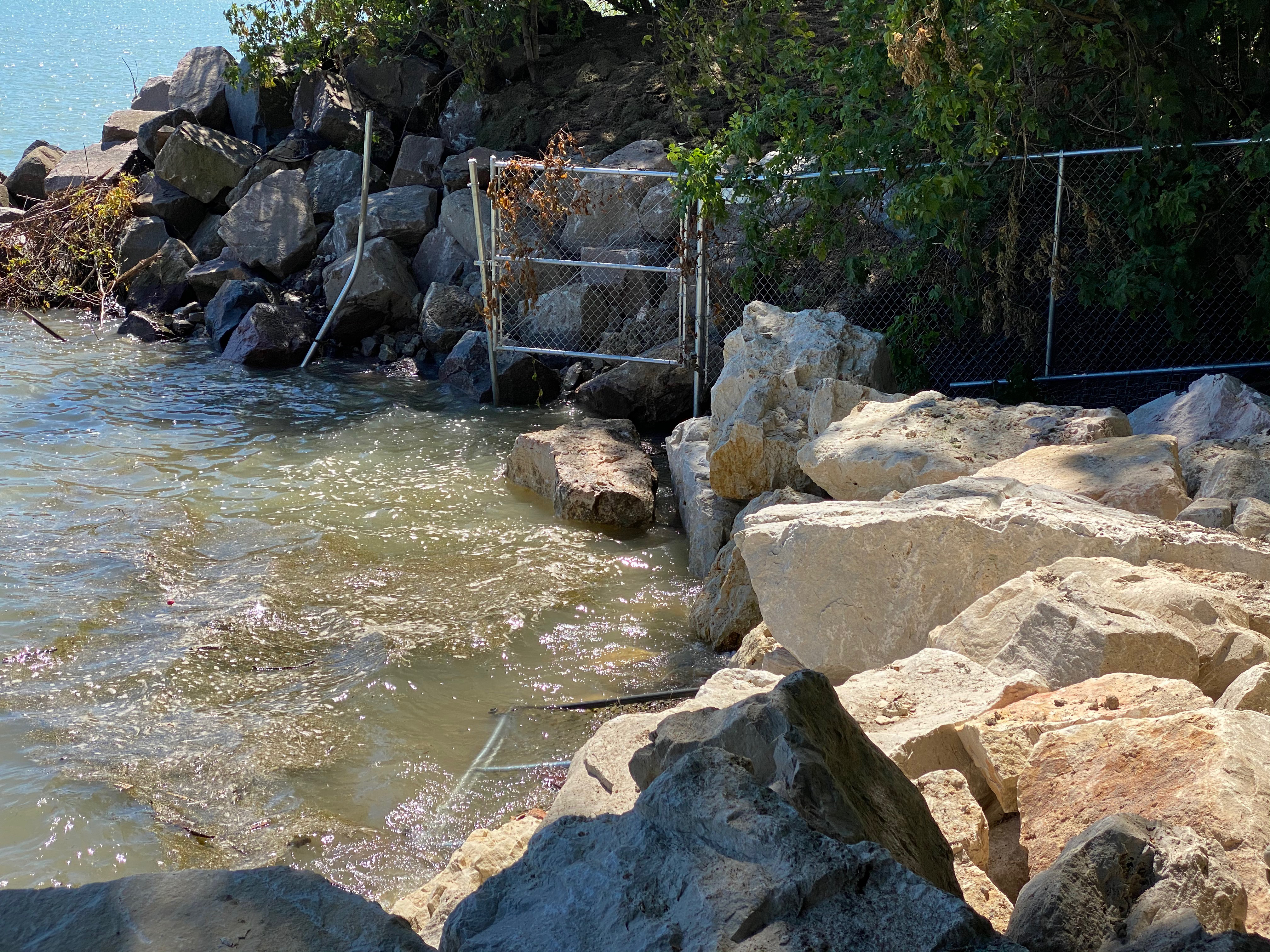
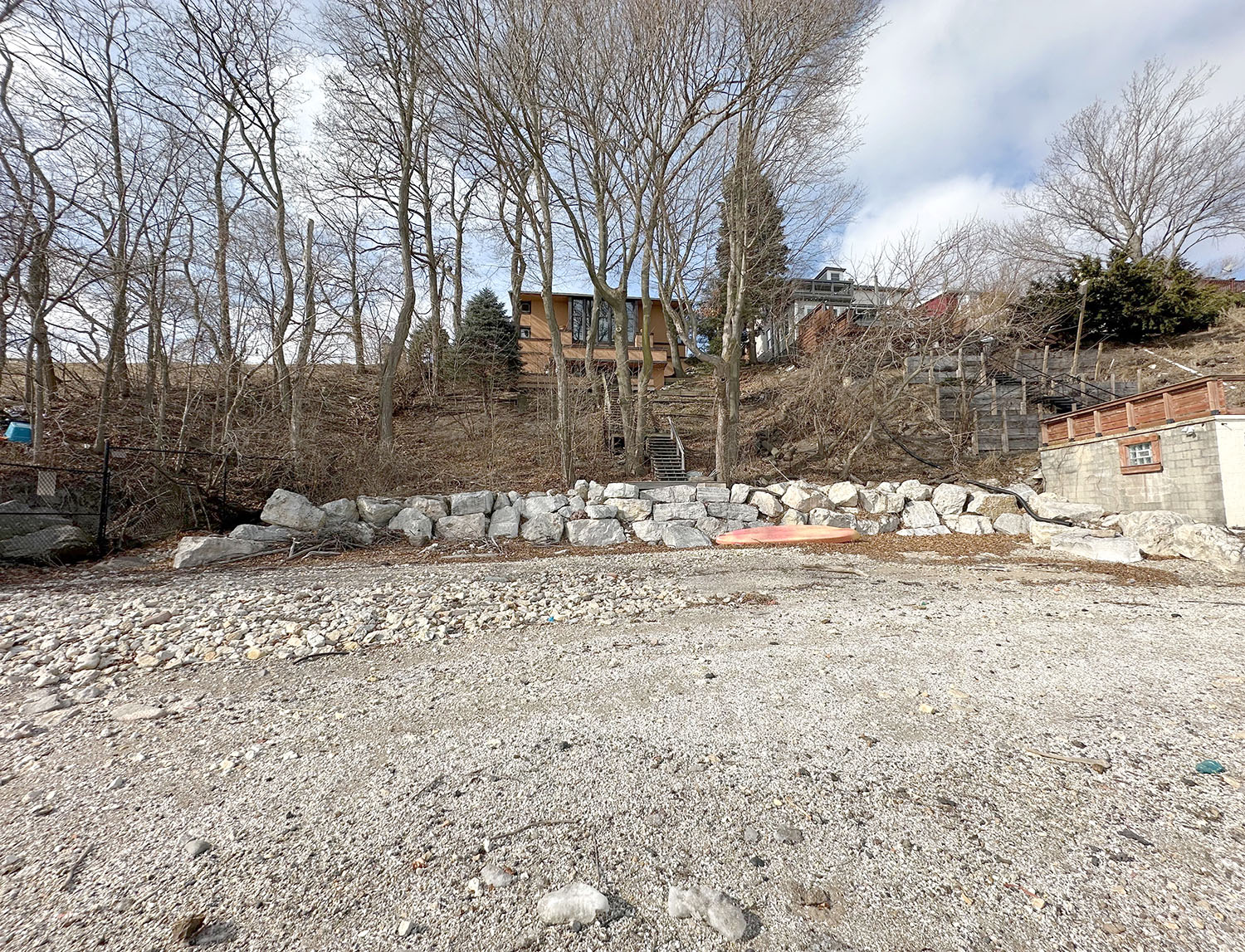
Today I had the rare (and arguably unfortunate) opportunity to photograph Frank Lloyd Wright’s Thomas P. Hardy House in Racine, Wisconsin from the lake, without getting wet. Climate change is playing havoc with Lake Michigan (as it is with the world). In 2020, the water level was so high that the stewards of the house, and neighbors, had massive hunks of stone brought in to protect their property:

IMG_5706.jpg

Today, well, I was able to walk out onto what had been part of the lake:

LR Hardy Below 2.9.25 008a.jpg

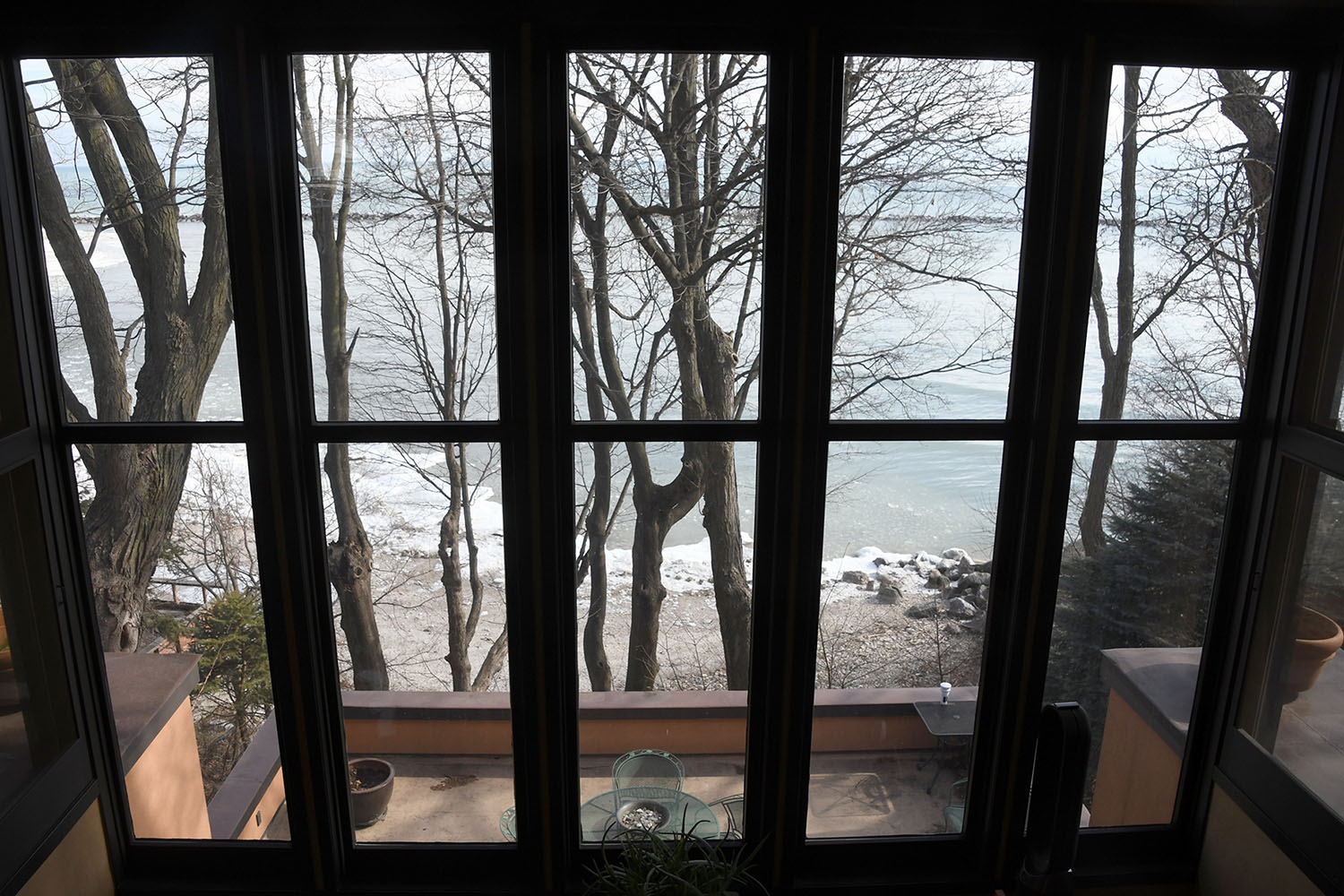
The photograph below, taken through the two story living room windows, shows how much the water has receded:

LR Hardy Below 2.9.25 029.jpg

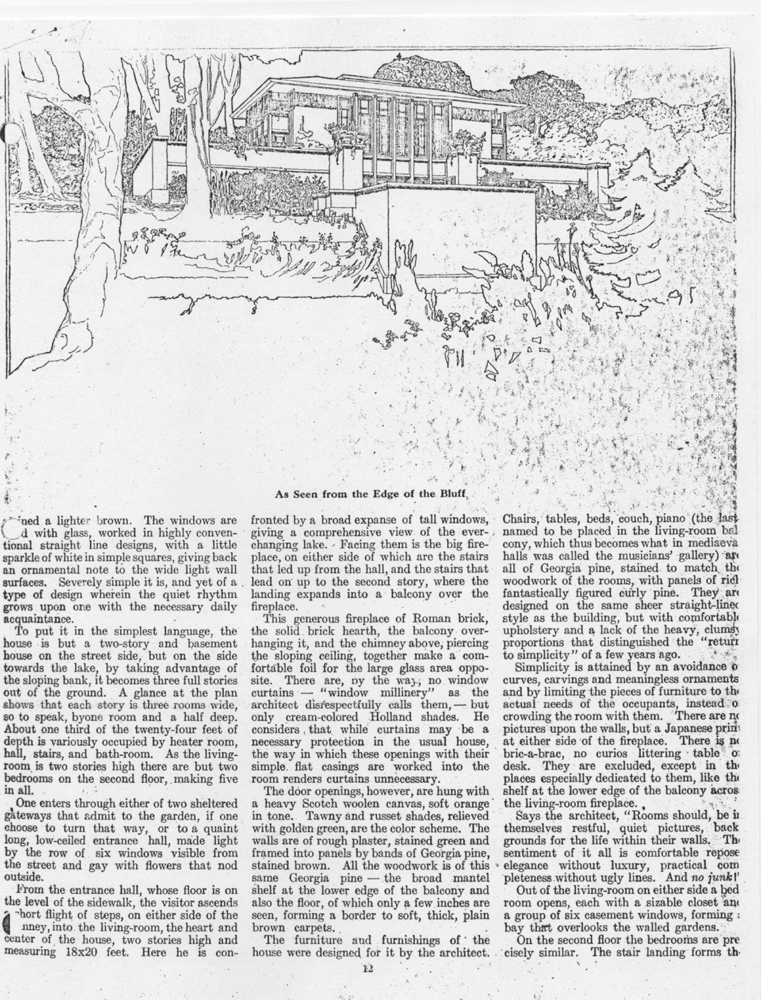
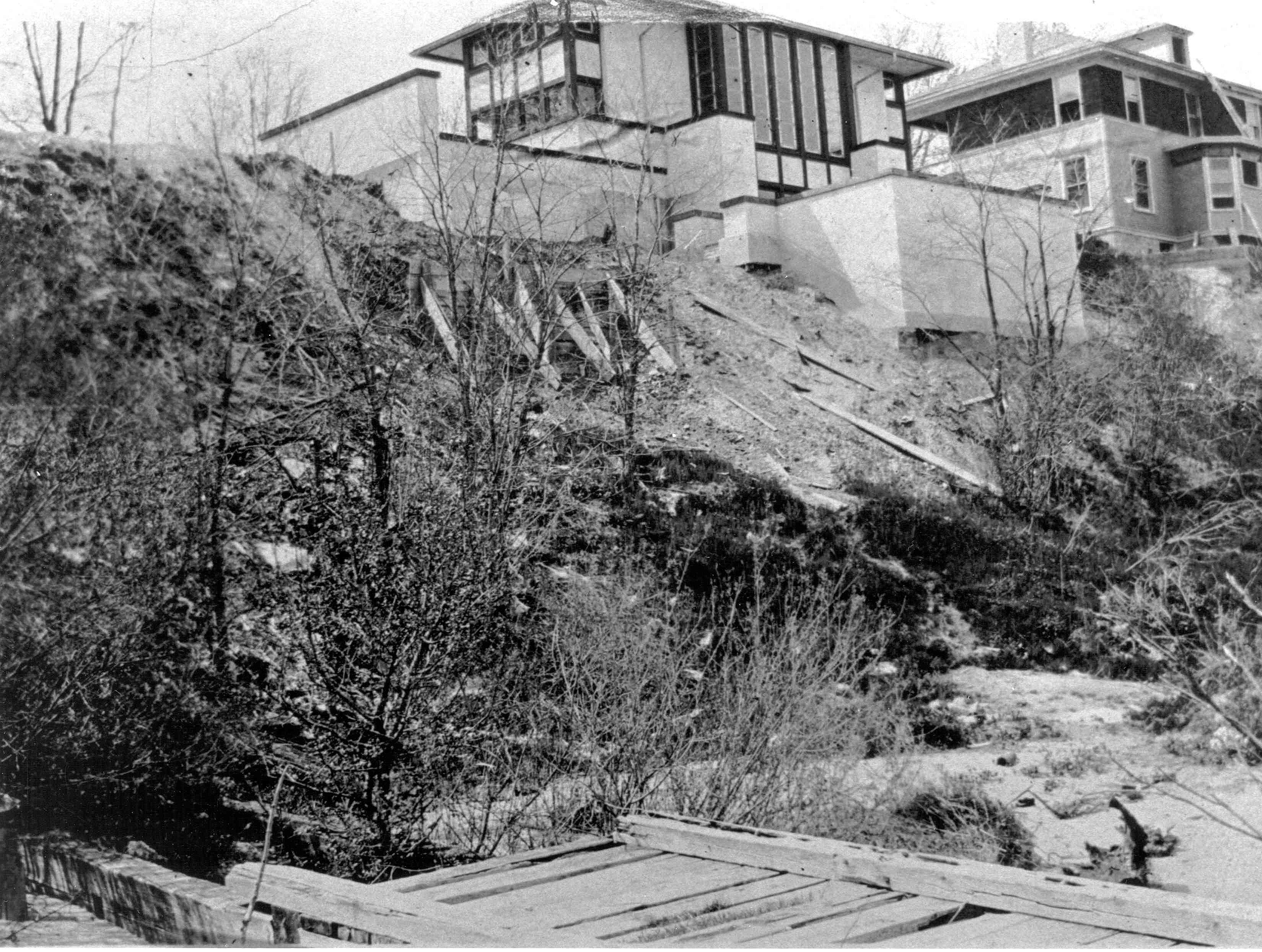
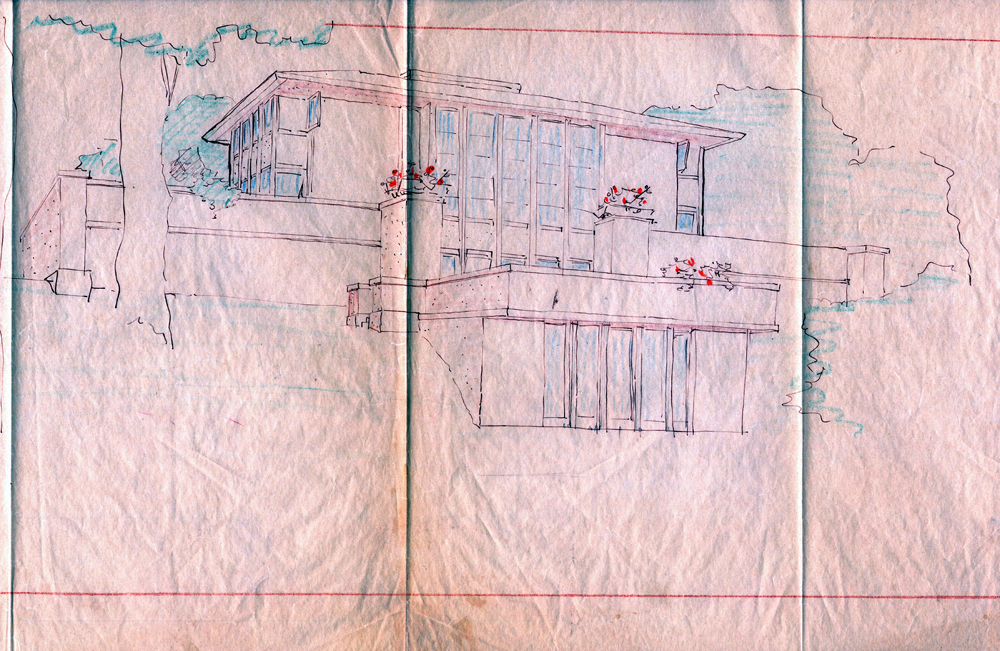
Taking my photographs today gave me the idea to show this view of the house through the years, in historic drawings and photos. First, we have Marion Mahony’s drawing, reproduced in House Beautiful magazine’s 1906 story about the house:

House Beautiful 2.jpg© 2025 Frank Lloyd Wright Foundation, Scottsdale, AZ. The Frank Lloyd Wright Foundation Archives (The Museum of Modern Art | Avery Architectural & Fine Arts Library, Columbia University, New York)

Then we have the earliest known photograph of the house, taken in 1906, as it neared completion:

Terrace 0506.004 raw.jpg

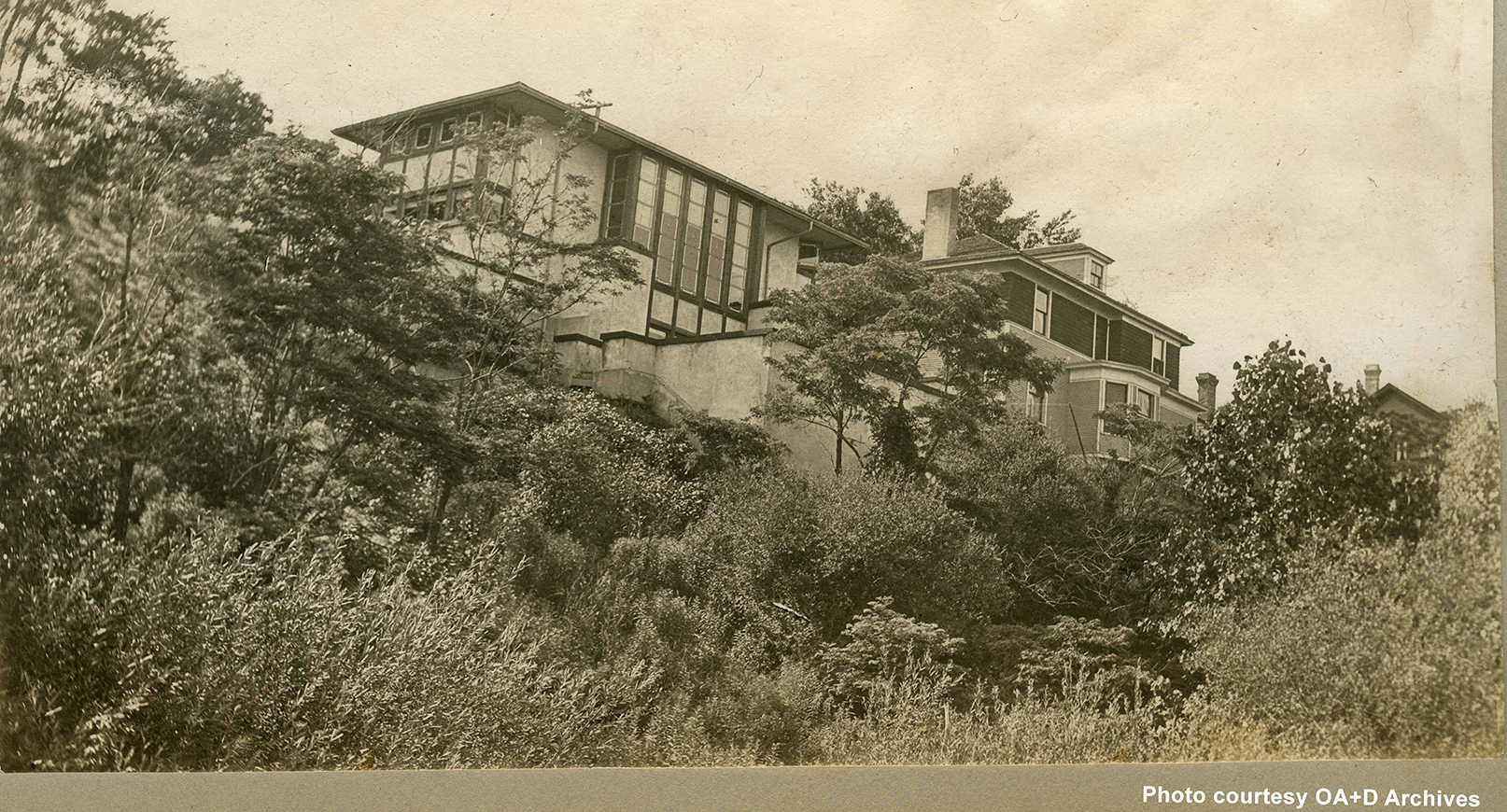
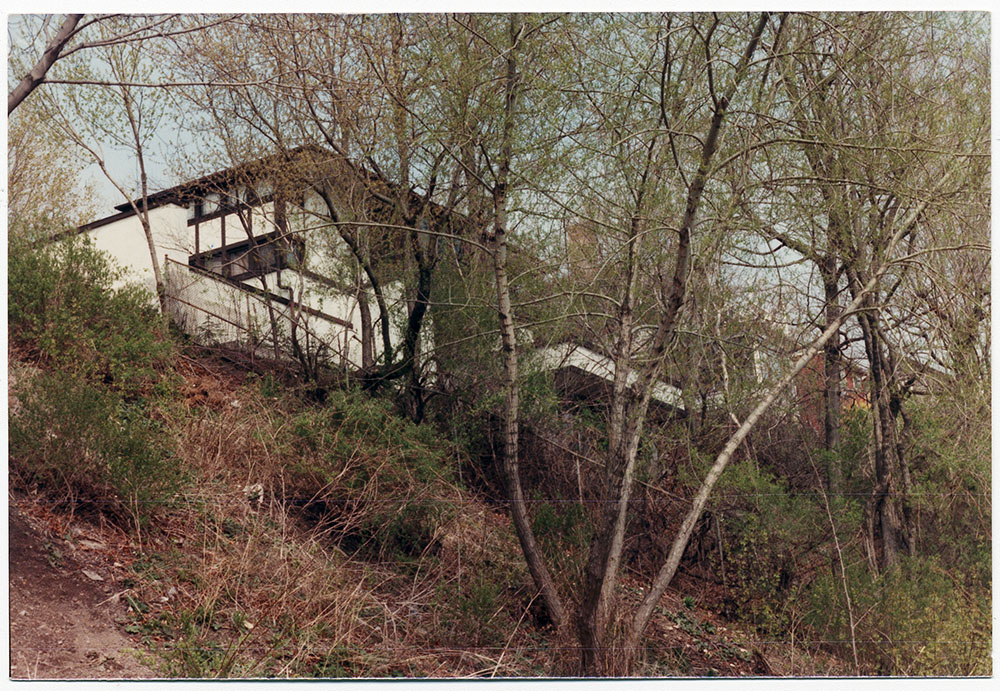
A 1908 photograph from the OA + D archives, shows significant growth of trees on the hill:

LR 1908 Hardy HIll.jpg

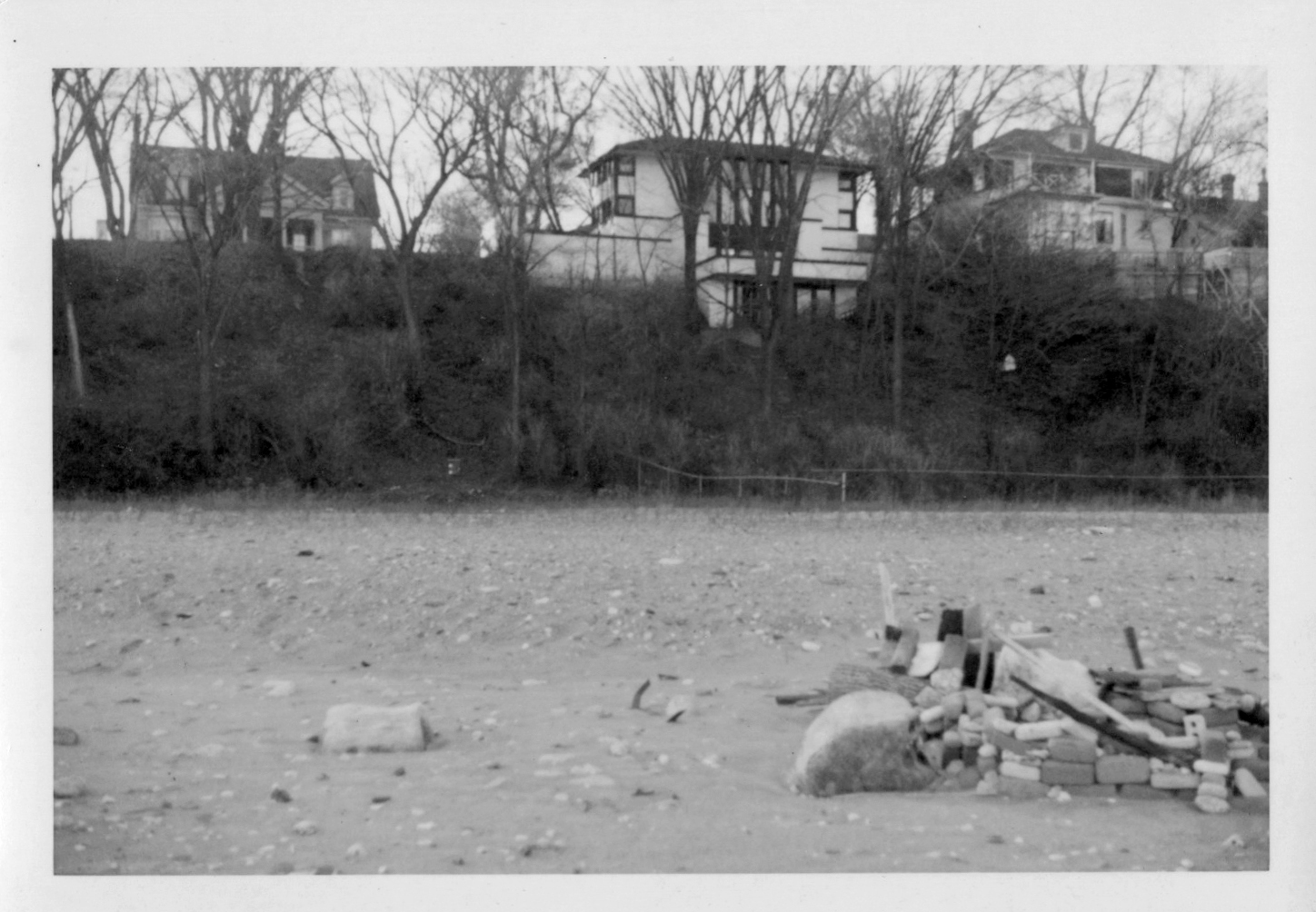
The dining room terrace, which ended in a stucco wall, was demolished after World War II at the behest of the Sporers, second stewards of the house. There was a public beach, the 14th Street Beach, just south of the house (to the left of it in these drawings and photographs, until the 1970s. The Sporers asked Wright to give them a recreation room under the dining room terrace. Edgar Tafel sketched plans on Mahony’s drawing before leaving the Taliesin Fellowship in 1941. The work was not done until after the war. Full-length windows, including a door, opened to the outside:

Terrace sketch PPT.jpg© 2025 Frank Lloyd Wright Foundation, Scottsdale, AZ. The Frank Lloyd Wright Foundation Archives (The Museum of Modern Art | Avery Architectural & Fine Arts Library, Columbia University, New York), from Jim and Margaret Yoghourtjian’s collection

Next, is from David Archer’s collection. He grew up in the house between 1947 – 1957:

Archer Terrace 14.jpg

Schuyler and Peterkin Seward were stewards of the house from 1957 – 1963:

Seward Beach.jpg

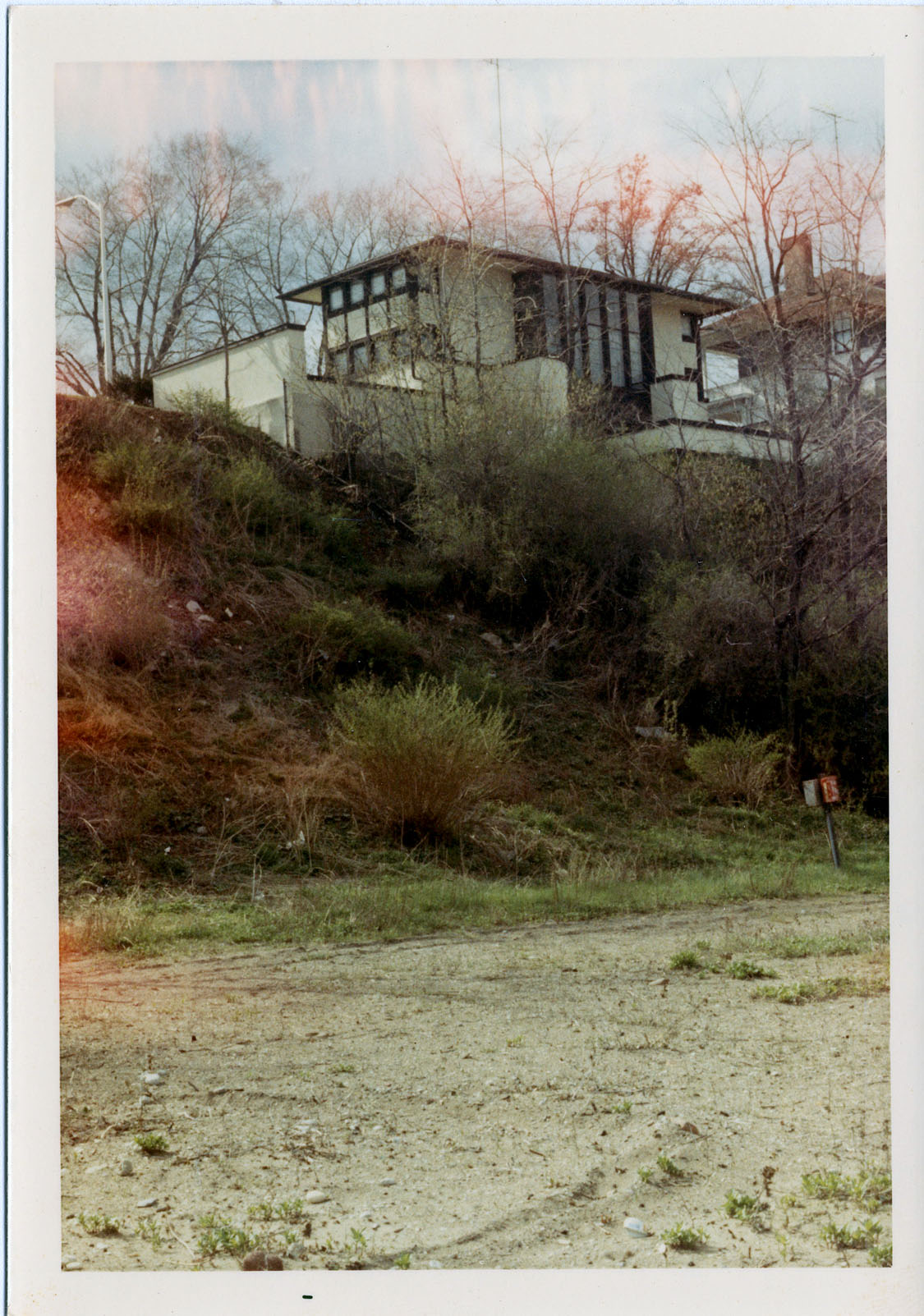
Jim and Margaret Yoghourtjian were the final stewards (1968 – 2012) before the late Gene Szymczak who bought, and rehabilitated the house in 2012. Margaret took these photos:

LR Below hill horiz 2.jpg

LR Below hill main.jpg

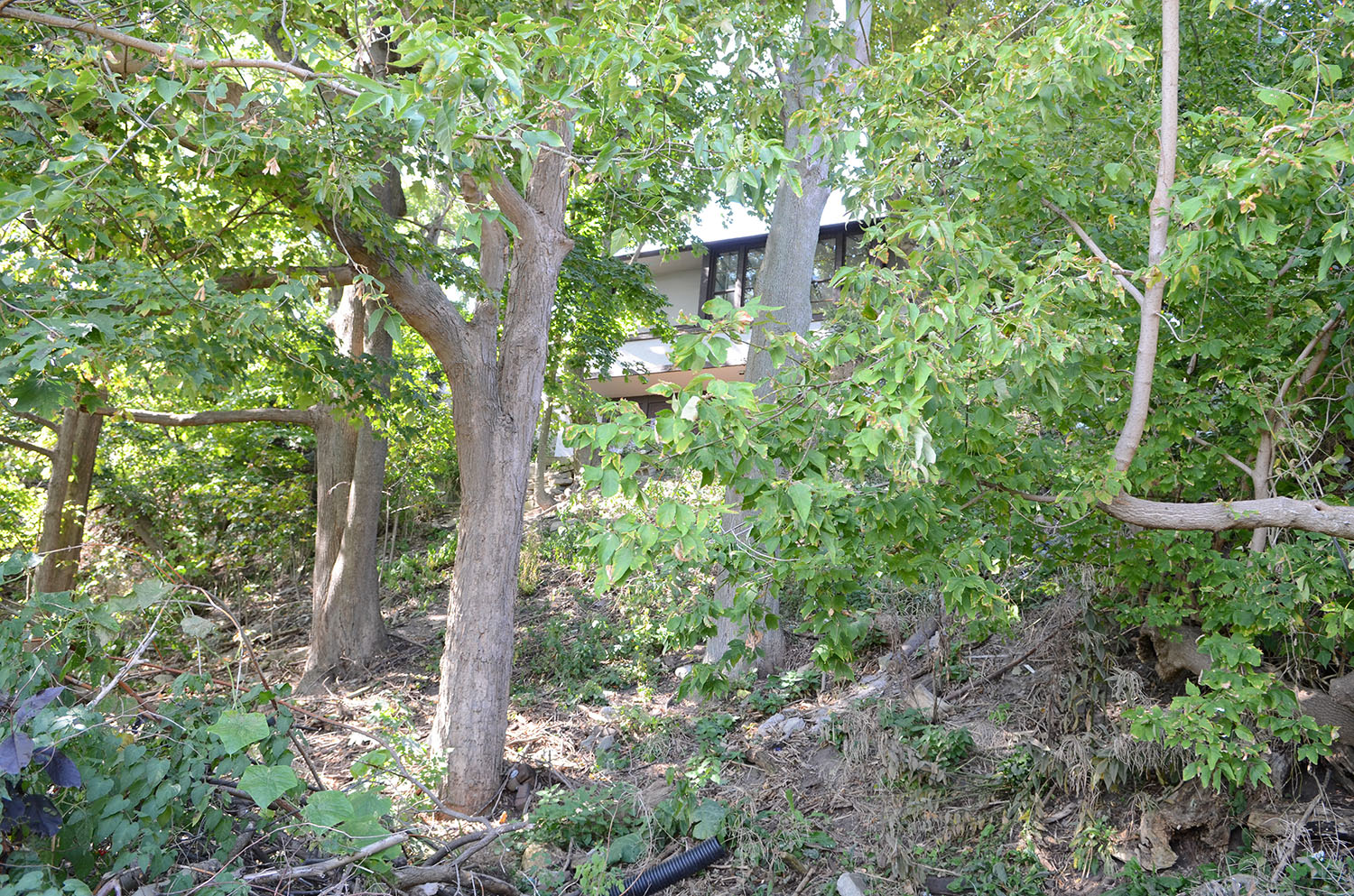
The beach was lost in the 1970s when the City of Racine closed off a breakwater across from the house. Jim Yoghourtjian told me that they lost about 125 feet of property when the lake filled in below the house. While the Yoghourtjians used to share the house with interested parties, as they sensed people were taking them for granted and not respecting that they lived in a private home, rather than a public site, they let the landscape grow wild, to shield them from boaters on the lake and people walking the lakeshore:

LR Landscape Before 001.jpg

LR Landscape Before 004.jpg

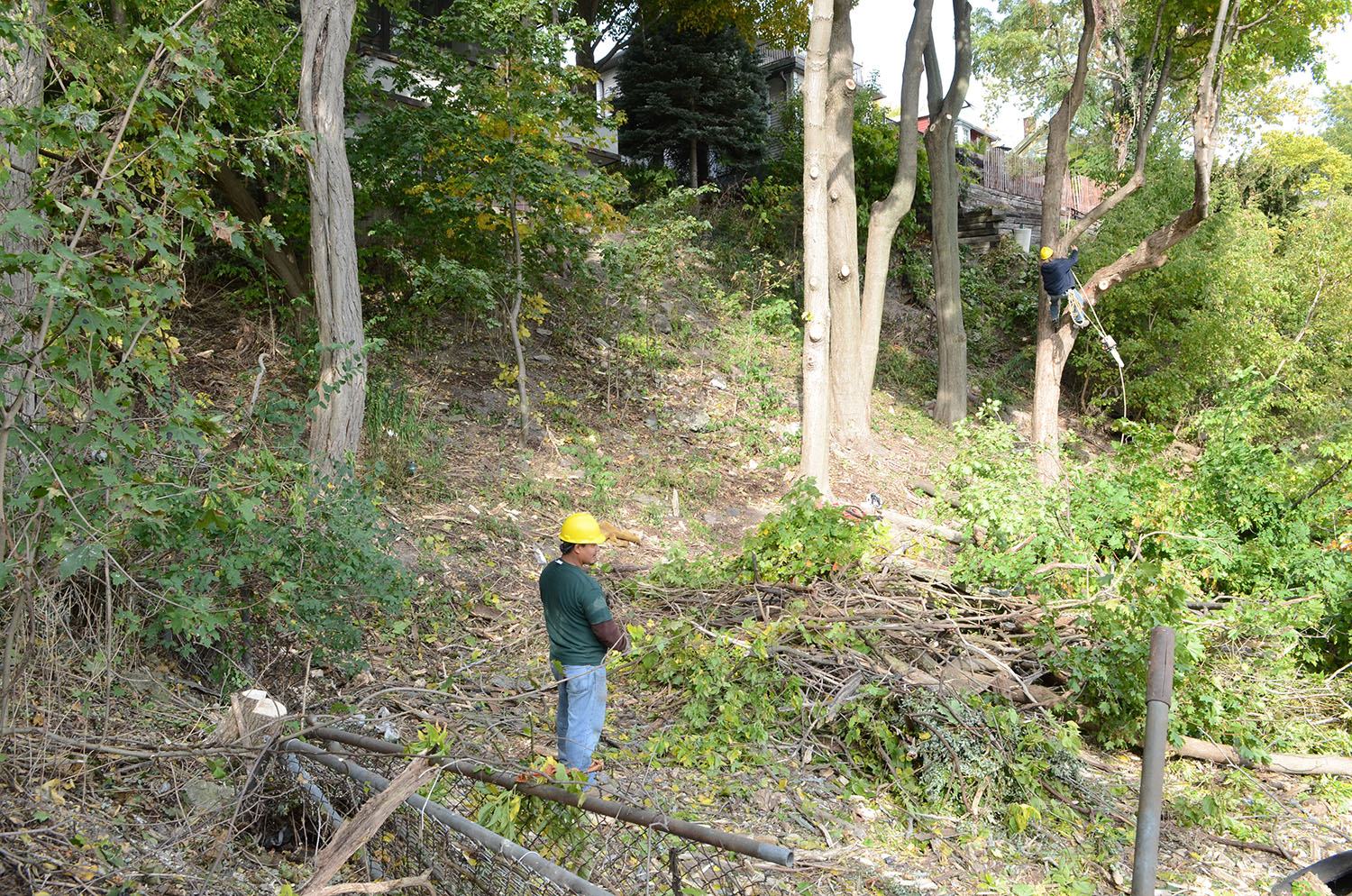
A week after buying the house, Szymczak had the hill cleared:

LR Tree cutting 010.jpg

LR Tree cutting 047.jpg

And that, brings us to today:

LR Hardy Below 2.9.25 024.jpg

LR Hardy Below 2.9.25 011.jpg

There is no telling what the lake will do next.


The Coda to Hardy House Rehabilitation

© Mark Hertzberg (2024)

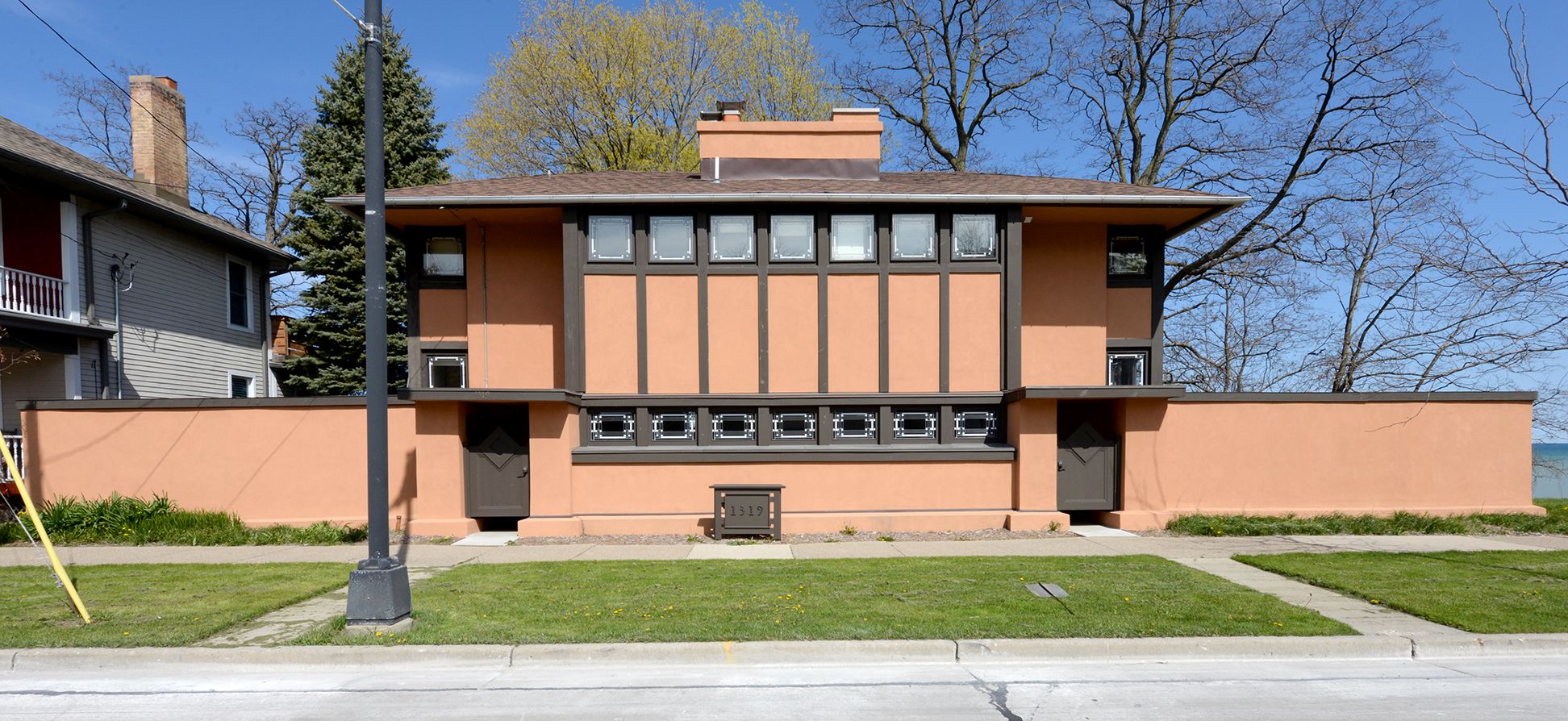
Hardy Exteriors Post-Restoration 079.jpg

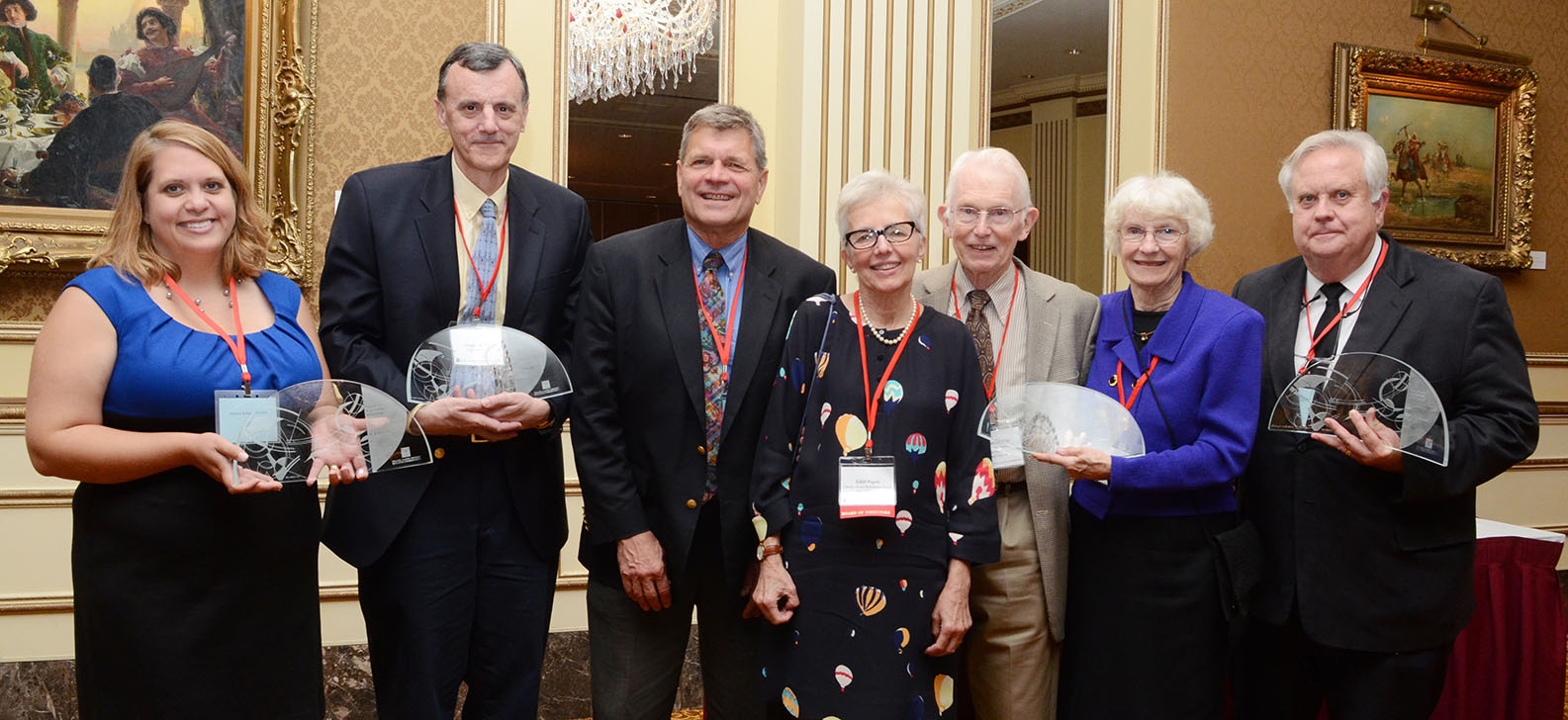
When the late Eugene (Gene) Szymczak considered buying Frank Lloyd Wright’s Thomas P. Hardy House in Racine, Wisconsin in 2012 he told me, “I don’t have children. This is something [save the house] I could do for Racine.” Indeed he did. He undertook a heroic rehabilitation and stabilization of the house.* Gene, left of center in the photo below, was awarded the prestigious Wright Spirit Award by the Frank Lloyd Wright Building Conservancy  for his work on the house in 2015. He died unexpectedly a year later after an illness.

BC 2015 WSA All 003.jpg

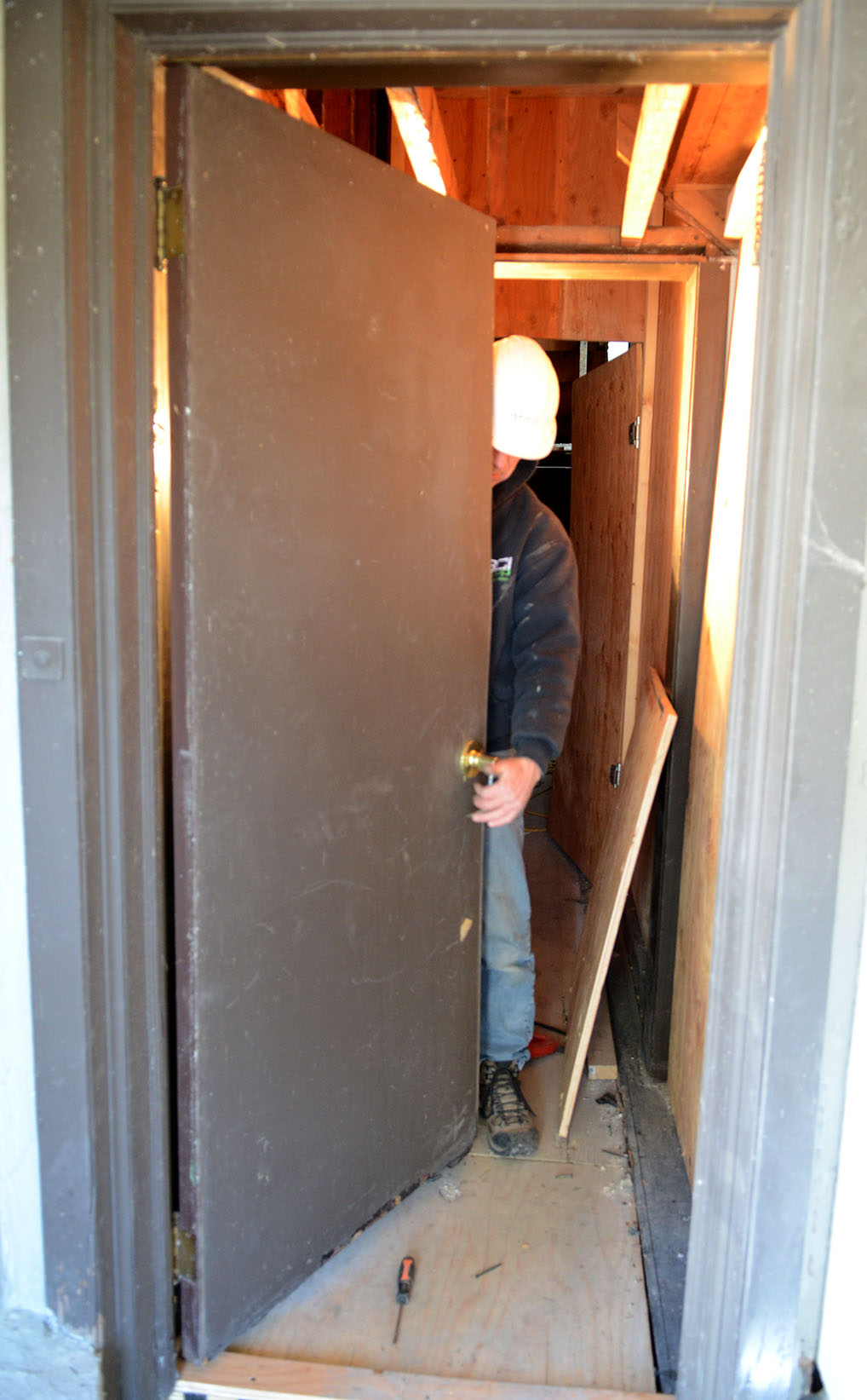
The house stayed in the family after Gene’s death. Tom Szymczak is one of Gene’s brothers. Tom recently completed a project which, he told me, was the last thing Gene wanted to accomplish at the house. The house was built with two pocket doors. They were replaced by conventional, hinged plain wood doors by the third stewards of the house, David and Mary Archer, between 1947 and 1957:

South door 003.jpg

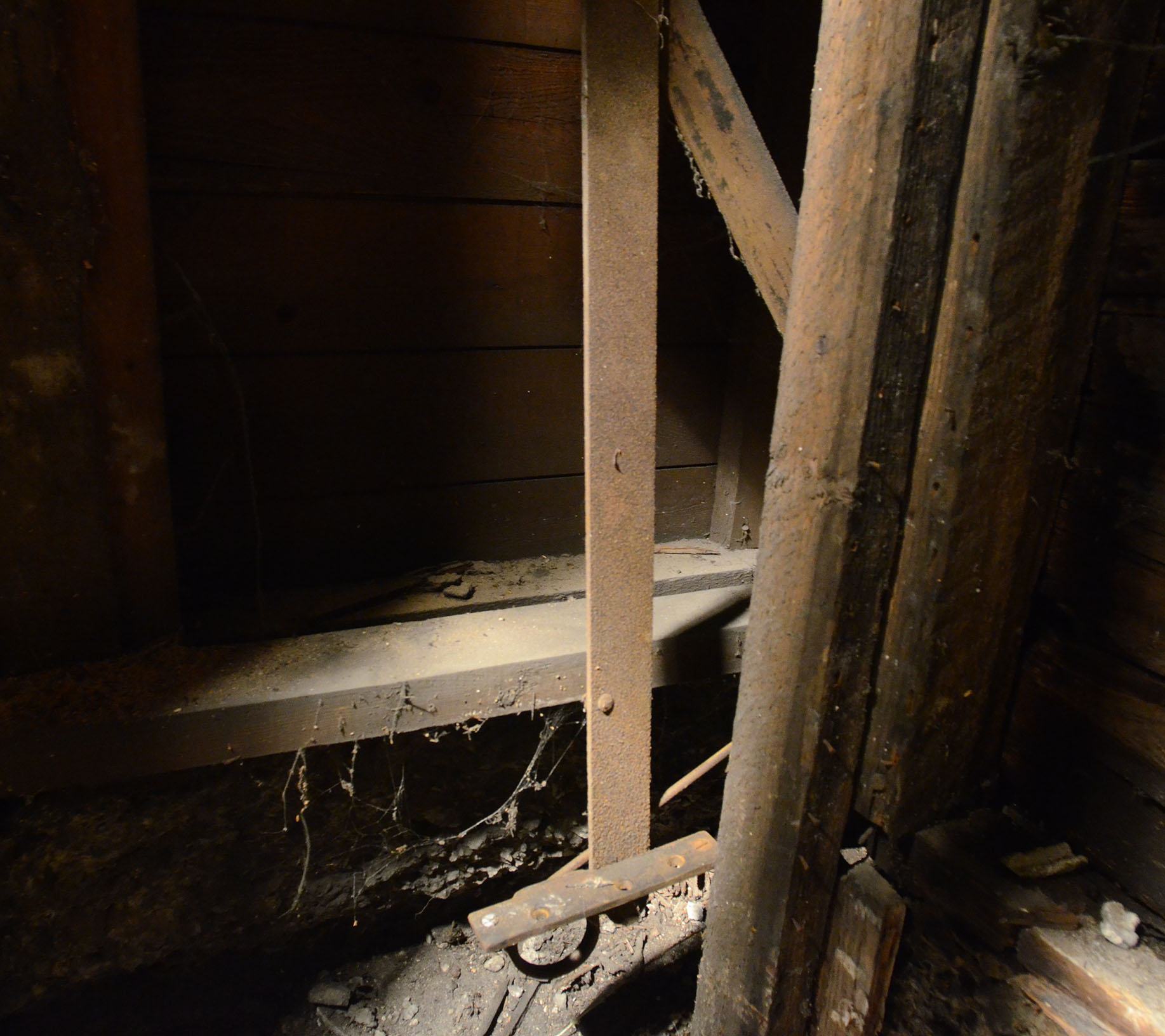
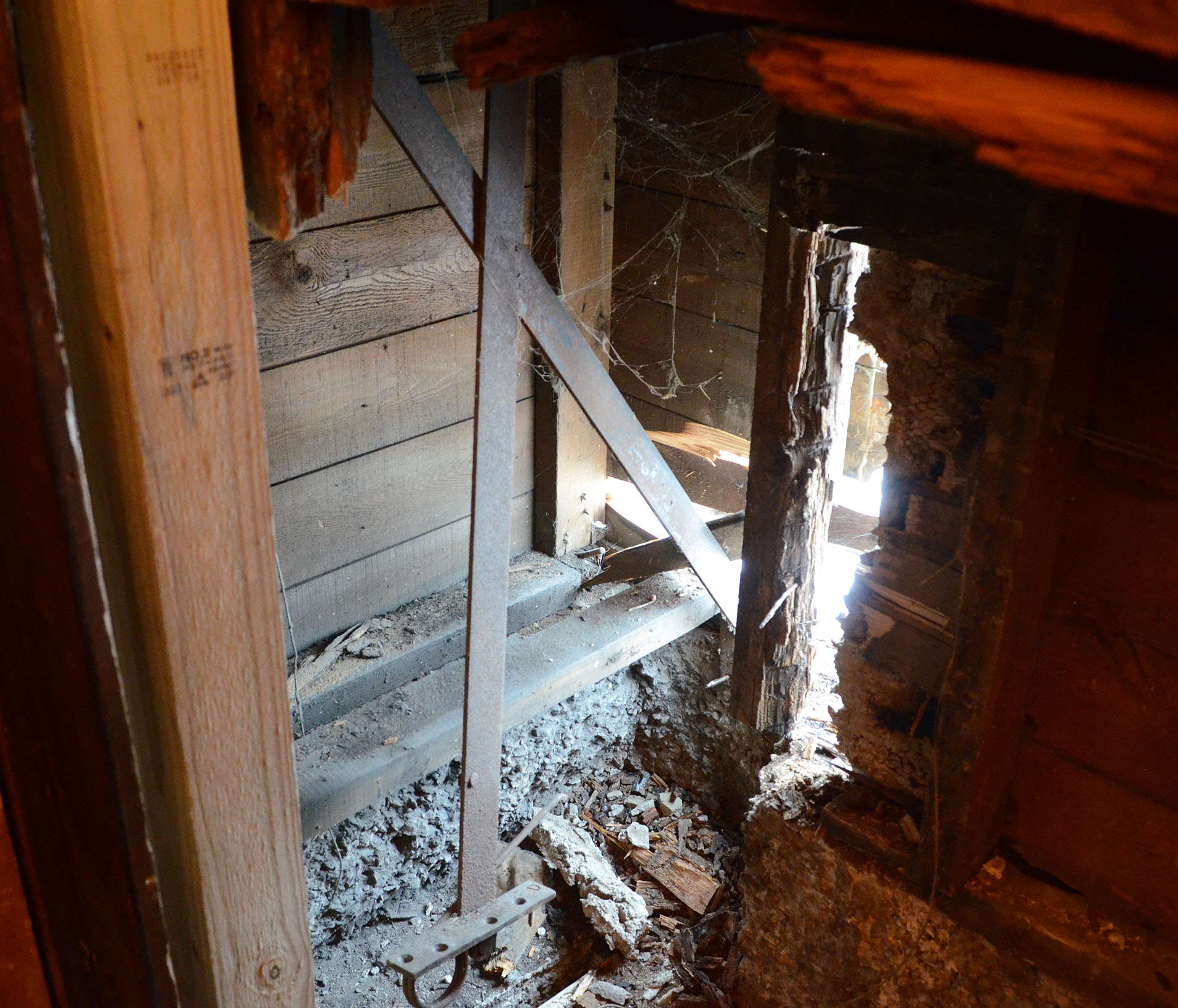
Gene decided to put pocket doors back in the house in 2013. He chose sliding glass patio-style doors so he could look into the two courtyards from the entry hall. The heavy metal arms that opened and closed the pocket doors were left in place, and were found in 2013:

Pocket Doors 010.jpg

Pocket Doors 004.jpg

Pocket Doors 014.jpg

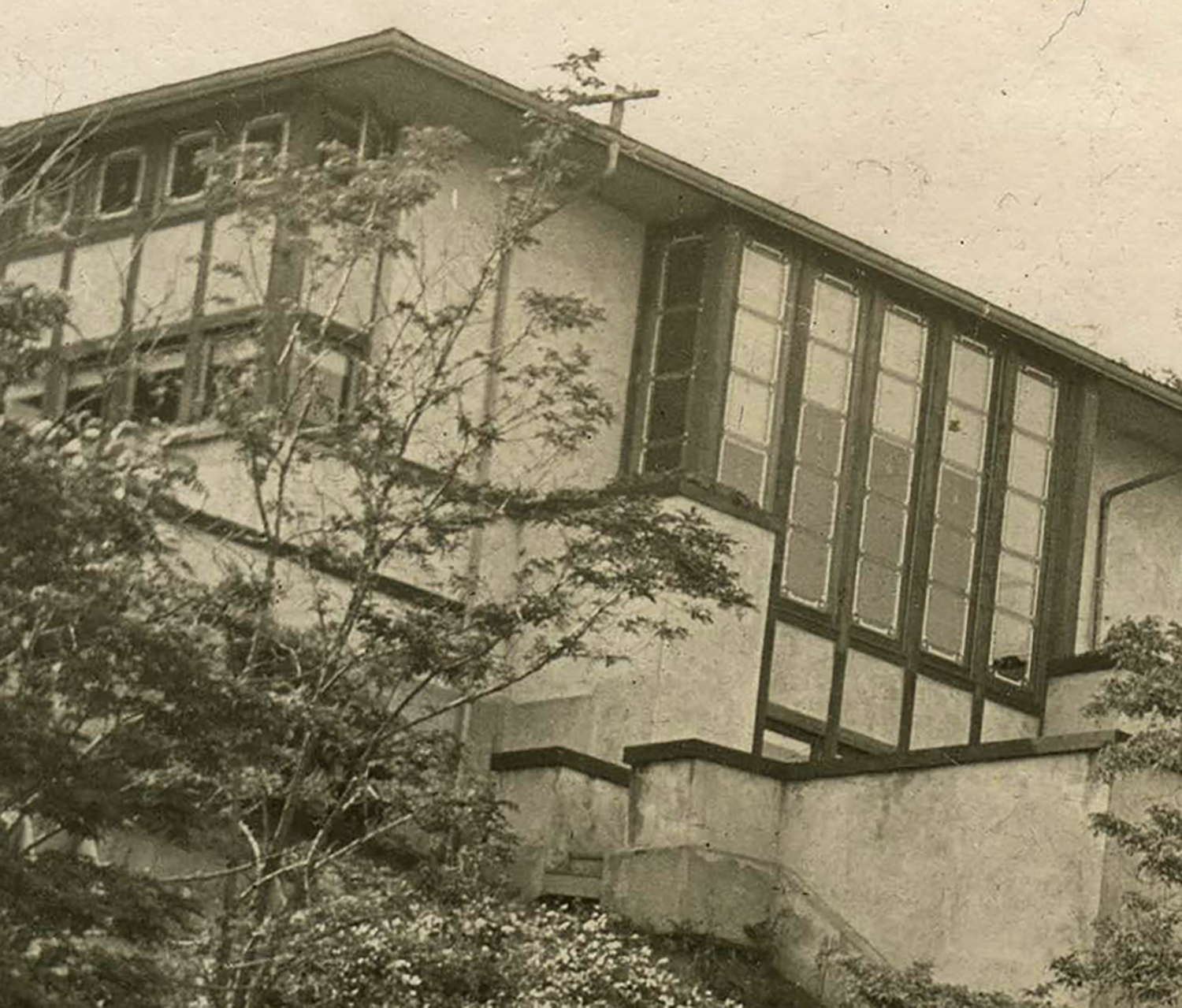
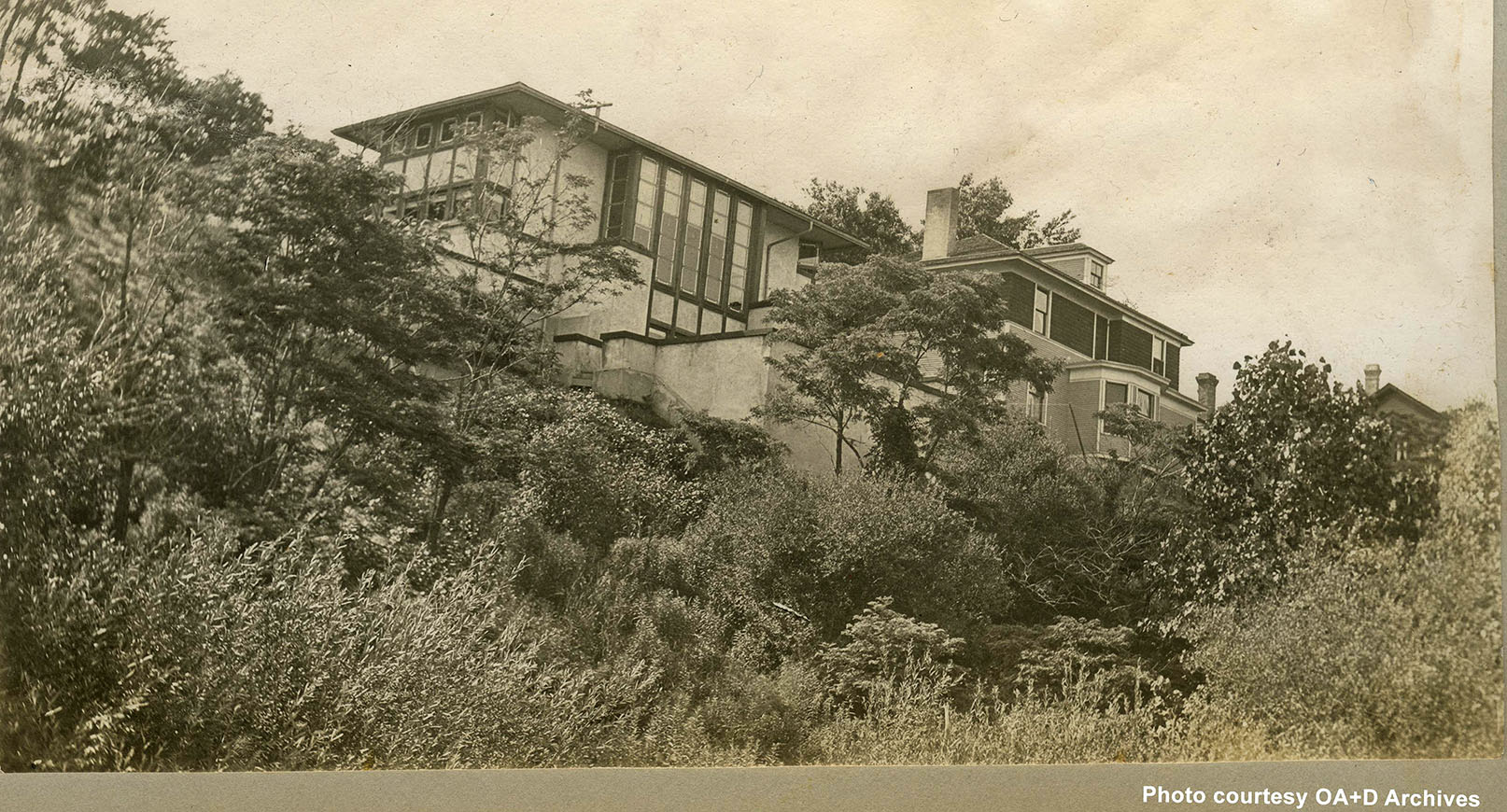
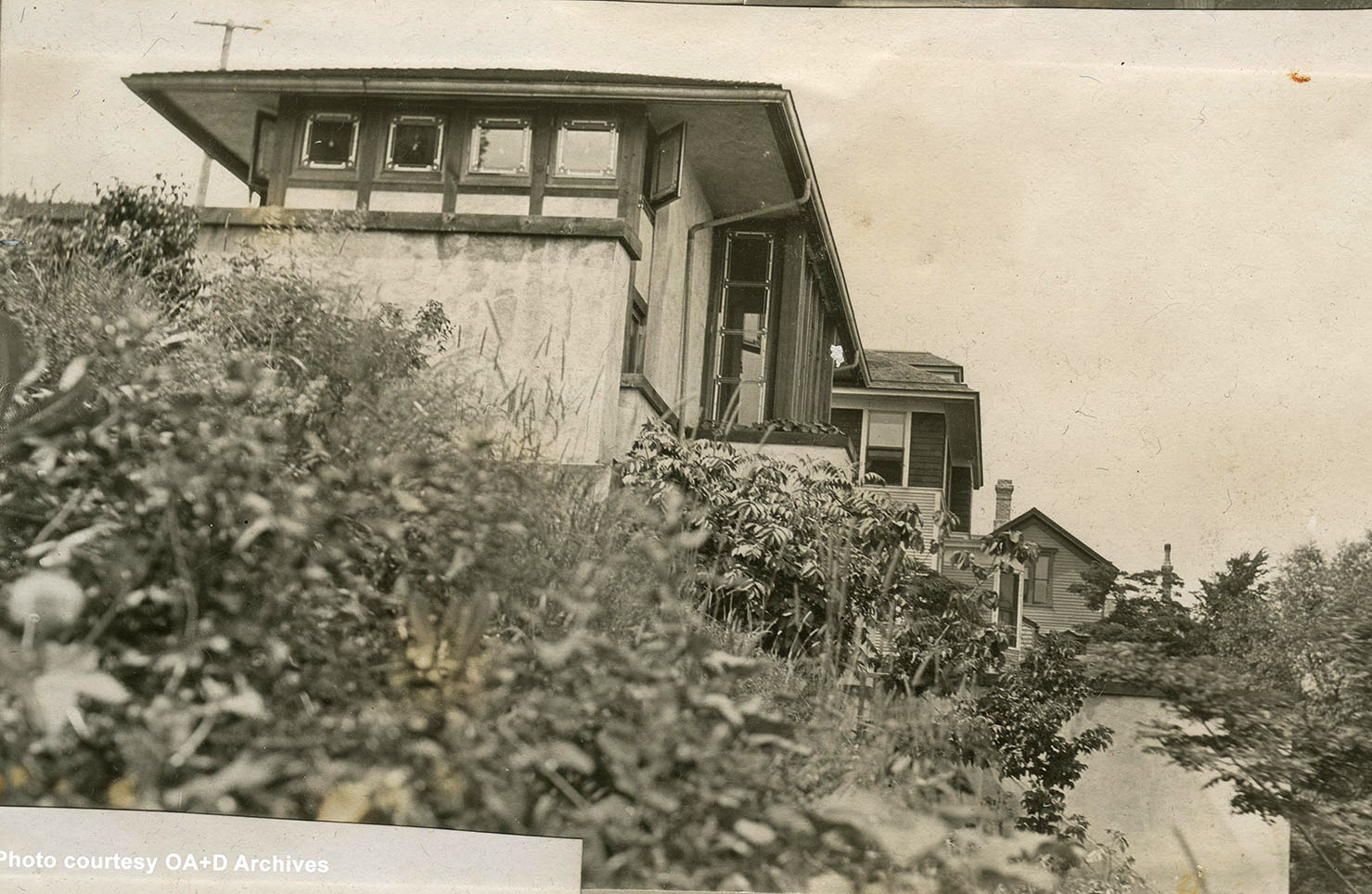
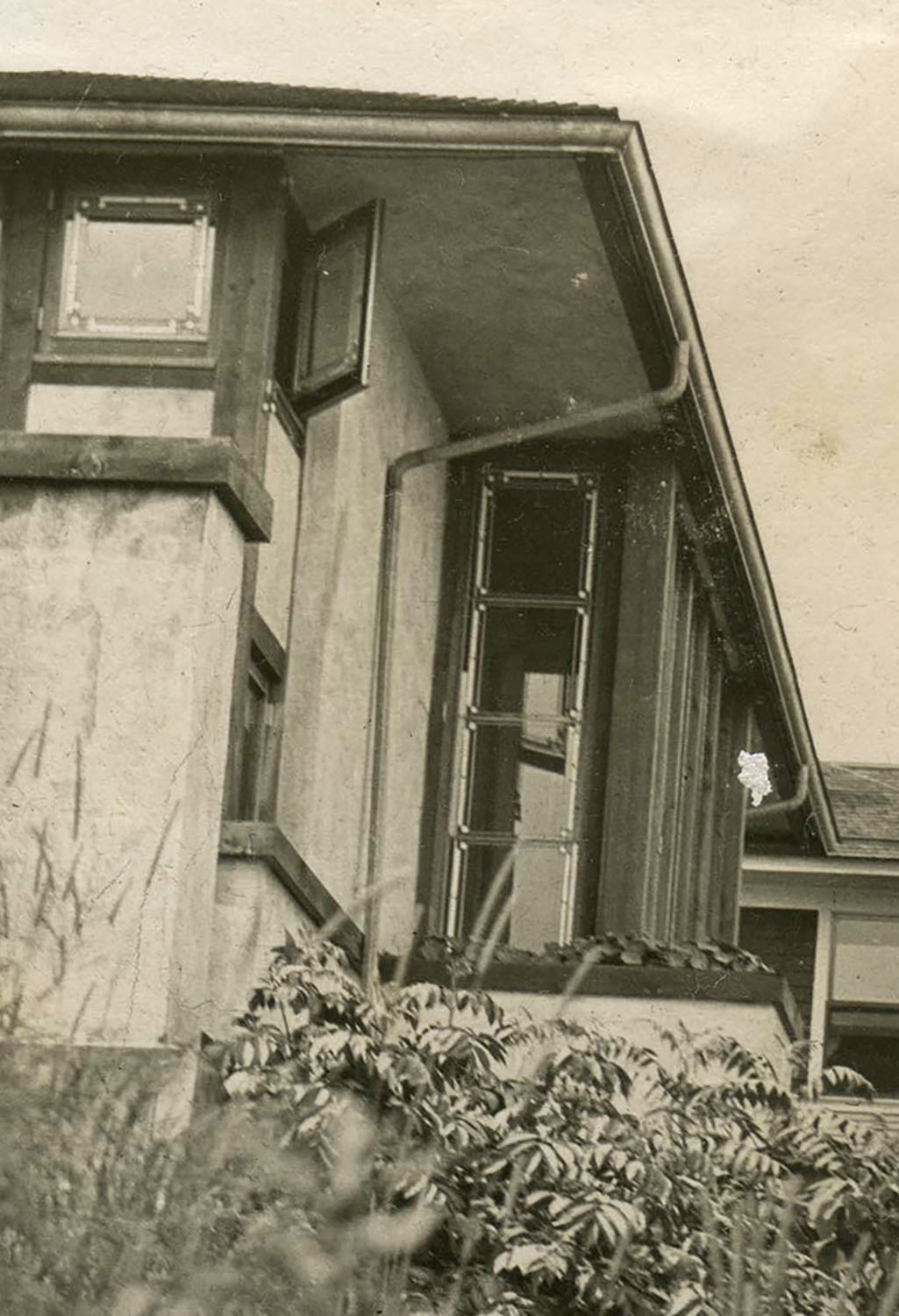
The house was built with leaded glass windows throughout, including in the dramatic two-story living room overlooking Lake Michigan. Anne Ruetz, whose parents were second stewards of the house (1938 – 1947) told me her parents replaced the windows with plain glass ones because the original ones leaked. When Gene put in energy efficient windows he jokingly told me that the next owners of the house could bear the expense of replicating Wright’s window design. Little did he know, of course, that he would be shifting the burden to his brother. 1908 photographs, which are used courtesy of the OA + D Archives, show the original leaded glass living room windows:

LR 1908 Hardy HIll Crop.jpg

LR 1908 Hardy HIll.jpg

LR 1908 Hardy Side.jpg

LR 1908 Hardy Side Crop.jpg

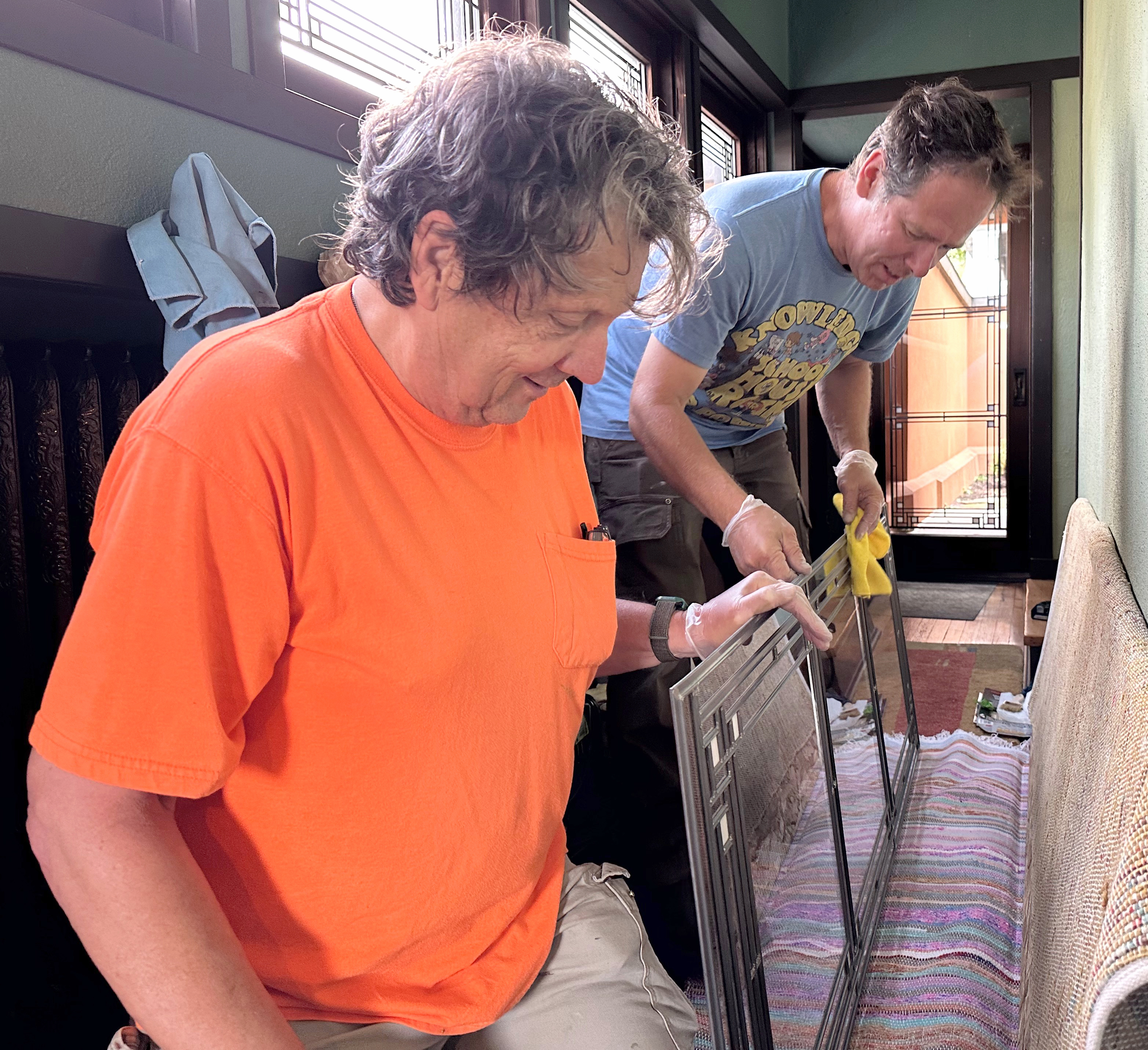
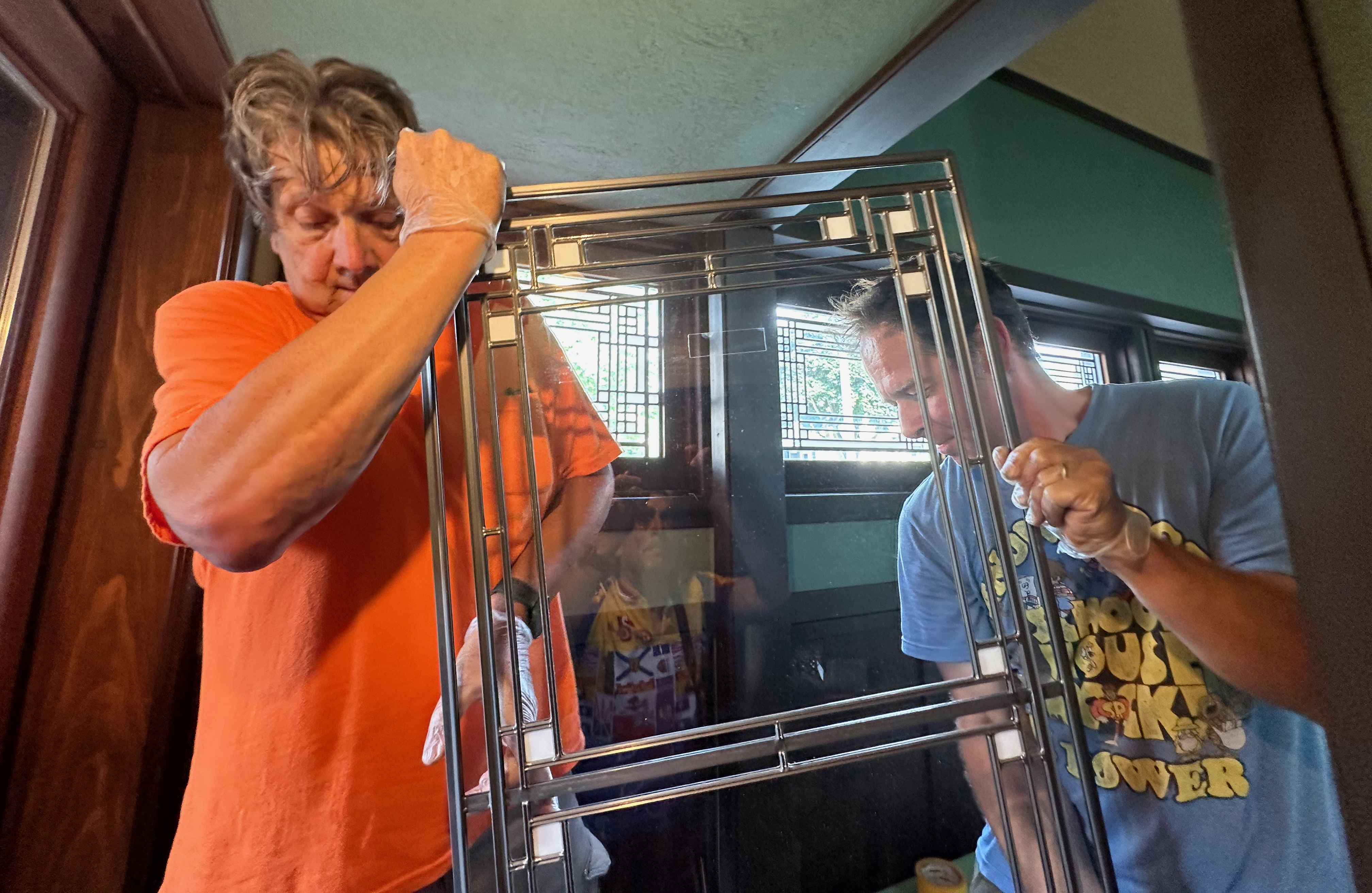
Instead of replicating the design in the living room, Gene intended to have the design fashioned for the pocket doors. The work was completed earlier this month, with window inserts made by Oakbrook Esser of Oconomowoc, Wisconsin. The installation photos show Tom Szymczak, left, and master craftsman Chad Nichols:

IMG_8036.jpeg

IMG_8039.jpeg

IMG_8030.jpeg

DSC_0043.JPG

DSC_0035.JPG

IMG_8025.jpeg

IMG_8041.jpeg

DSC_0017.JPG

DSC_0021.JPG

Thank you, Gene, for your gift to our community and to the World of Wright!

BC 2015 WSA Szymczak.jpg

The first people outside of family and friends to see the new windows will be 17 members of a Road Scholar Wright tour next Wednesday. They will be followed by several hundred people attending Wright in Wisconsin’s “Wright and Like” tour Saturday September 7.

*The term “rehabilitation” is appropriate, rather than “restoration,” because there were some changes to the house. “Restoration” would infer house museum status, accurate to either the day Hardy moved into the house (1906) or left it (in 1938) after losing it at sheriff’s auction because of monies owed on the house.

Links:

Frank Lloyd Wright Building Conservancy:

www.savewright.org

Wright and Like Tour:

https://wrightinwisconsin.org/wright-and-2024

Road Scholar Architectural Masterworks of Frank Lloyd Wright Tour (run 4 or 5 a year)

https://www.roadscholar.org/find-an-adventure/22976/Architectural-Masterworks-of-Frank-Lloyd-Wright

Please scroll down to read previous posts

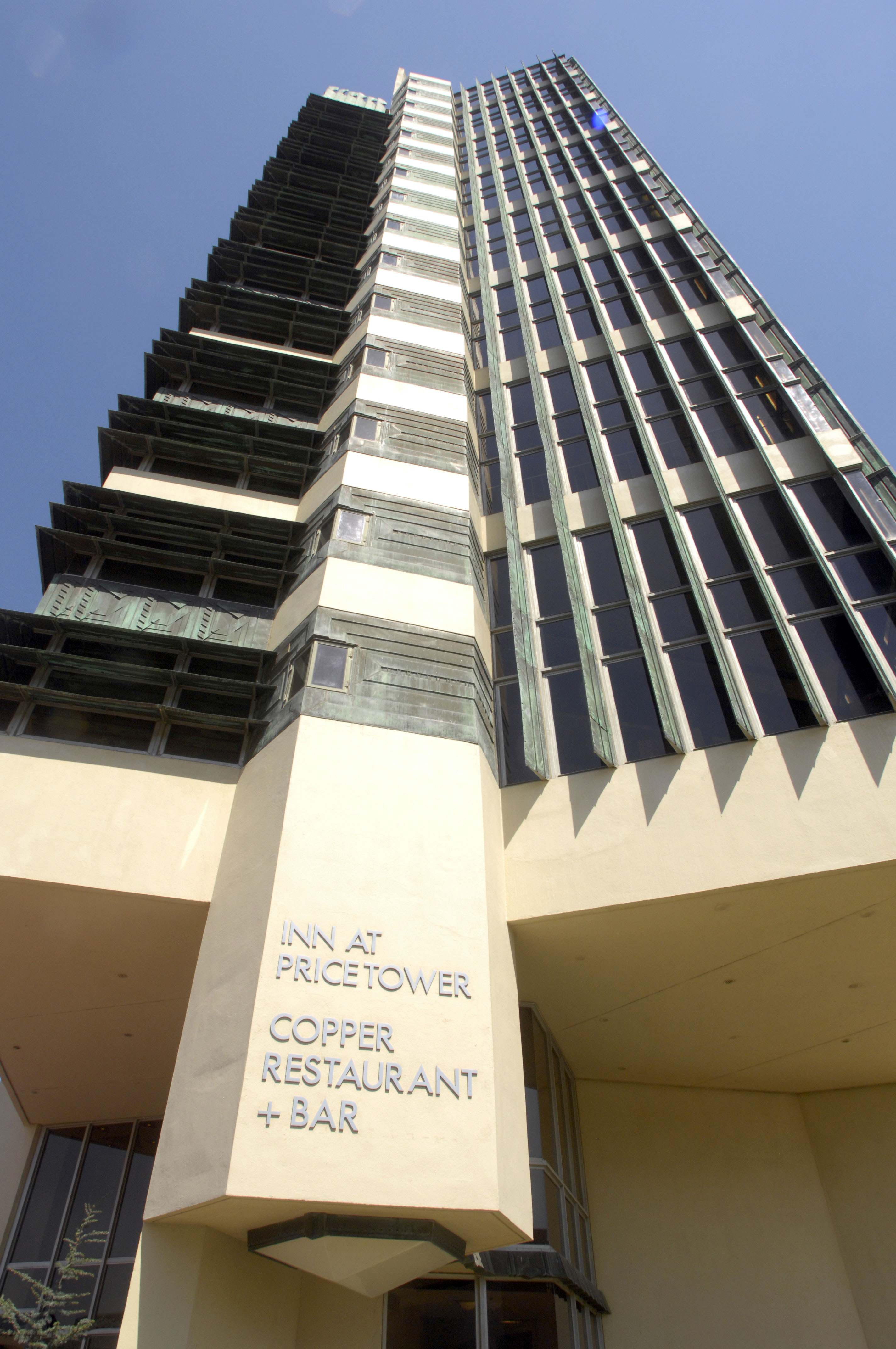
Tower Tumult in Bartlesville

© Mark Hertzberg (2024)

Oklahoma Frank Lloyd Wright Price Tower 001.JPG

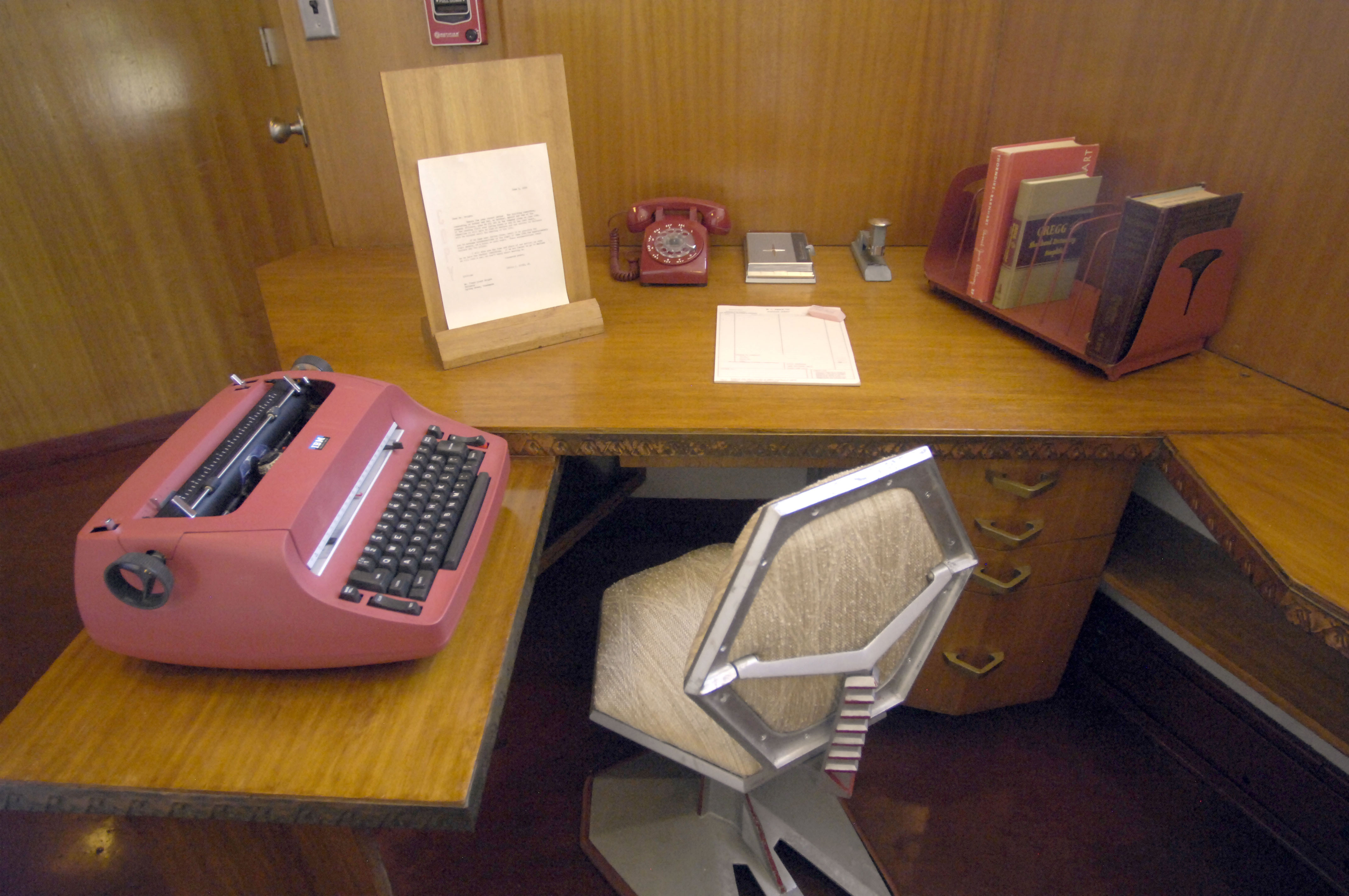
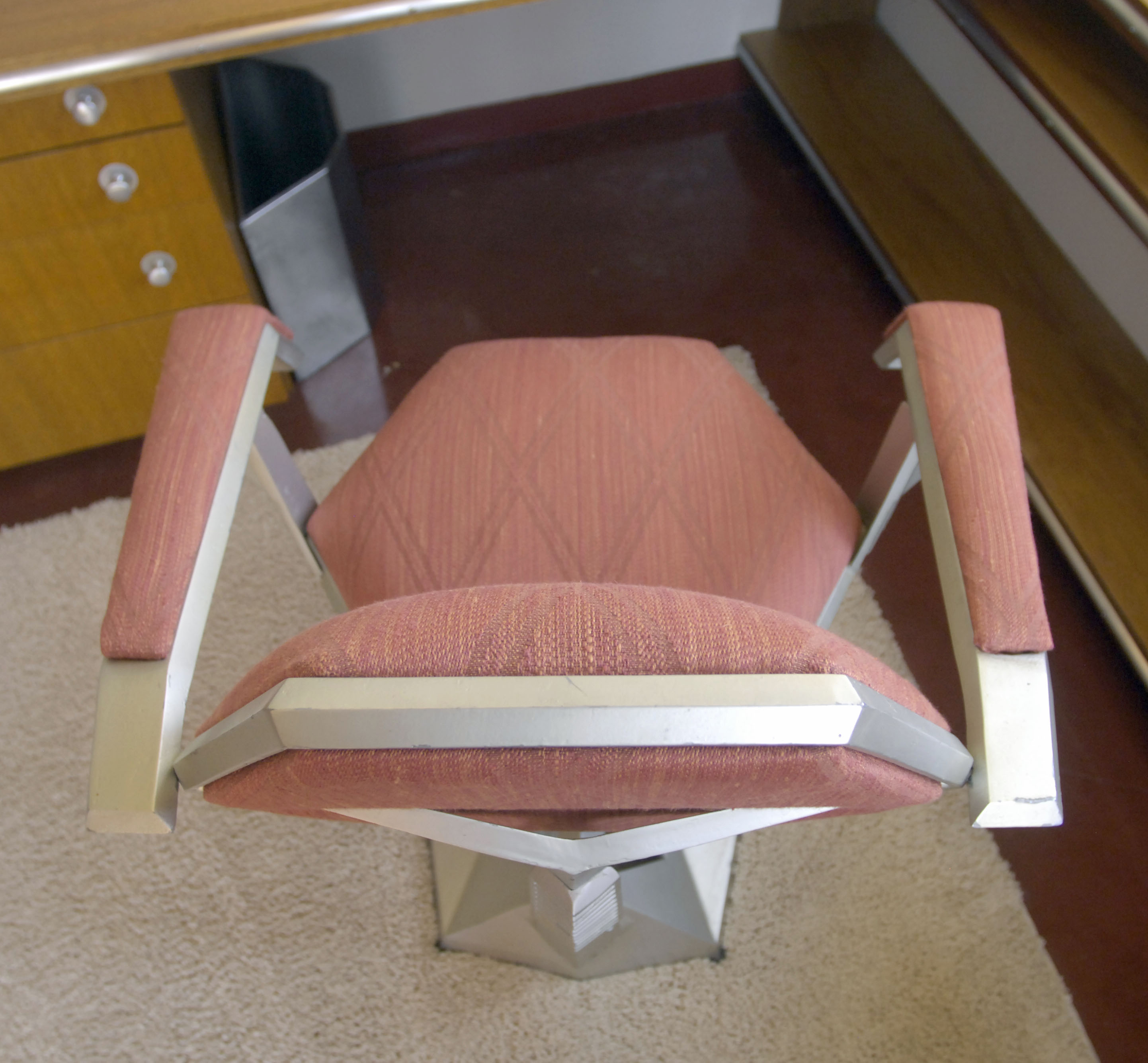
The future of Frank Lloyd Wright’s landmark Price Tower in Bartlesville, Oklahoma is uncertain. The Frank Lloyd Wright Building Conservancy has initiated legal proceedings against Cynthia Blanchard, the owner of the building, over her sale of Wright artifacts from the building, including one of the office chairs Wright designed, to a mid-century design dealer in Dallas. The Building Conservancy has an easement on the property, which, it says, prohibits the sale of any of the artifacts.

Oklahoma Frank Lloyd Wright Price Tower 022.JPG

Oklahoma Frank Lloyd Wright Price Tower 020.JPG

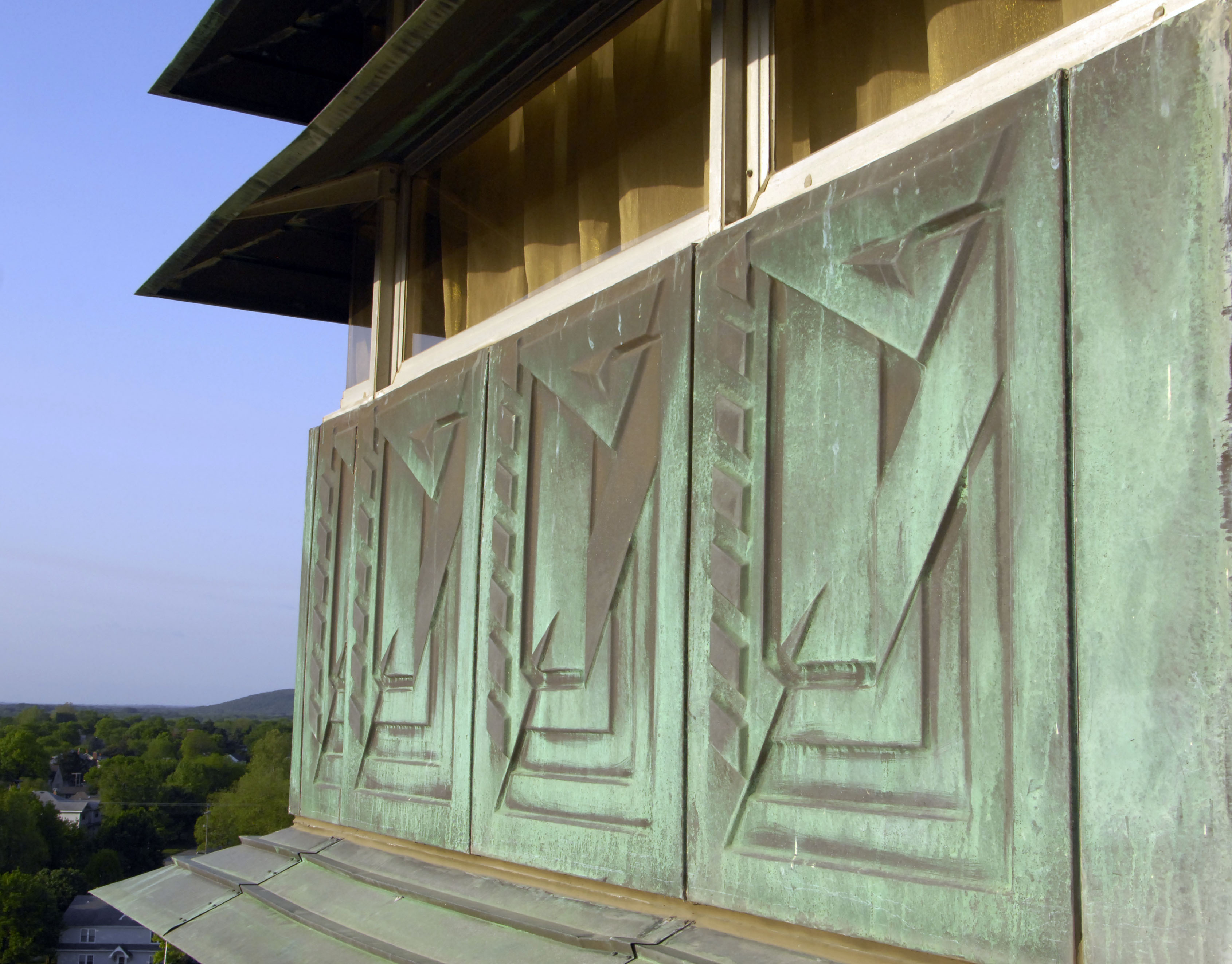
Wright designed the tower in 1952 as a combination office and apartment building, and it opened in 1956. The exterior and two-story pinwheel floor plan are derived from Wright’s unrealized design for the St. Mark’s-in-the-Bowery apartment buildings in New York City (1927-1929).*

Oklahoma Frank Lloyd Wright Price Tower 011.JPG

Oklahoma Frank Lloyd Wright Price Tower 009.JPG

The Inn at Price Tower hotel opened in 2003. Blanchard said in a television interview that it was no longer profitable to operate the hotel and its Copper Bar and Restaurant. She announced the closure August 9. Hotel and restaurant employees were laid off and tenants of the building were given notice to move out within 30 days. She said in an interview that the closure is not necessarily permanent, and that she hopes to find a buyer for the building which, she says, is no longer profitable for her to operate.

The photographs are from our stay at the hotel in April 2011. Scott Perkins, who was the Curator of Collections and Exhibitions and at the Price Tower Arts Center, was our host, graciously allowed me to photograph every nook and cranny of the building (he is now Fallingwater’s senior Director of Preservation and Collections).

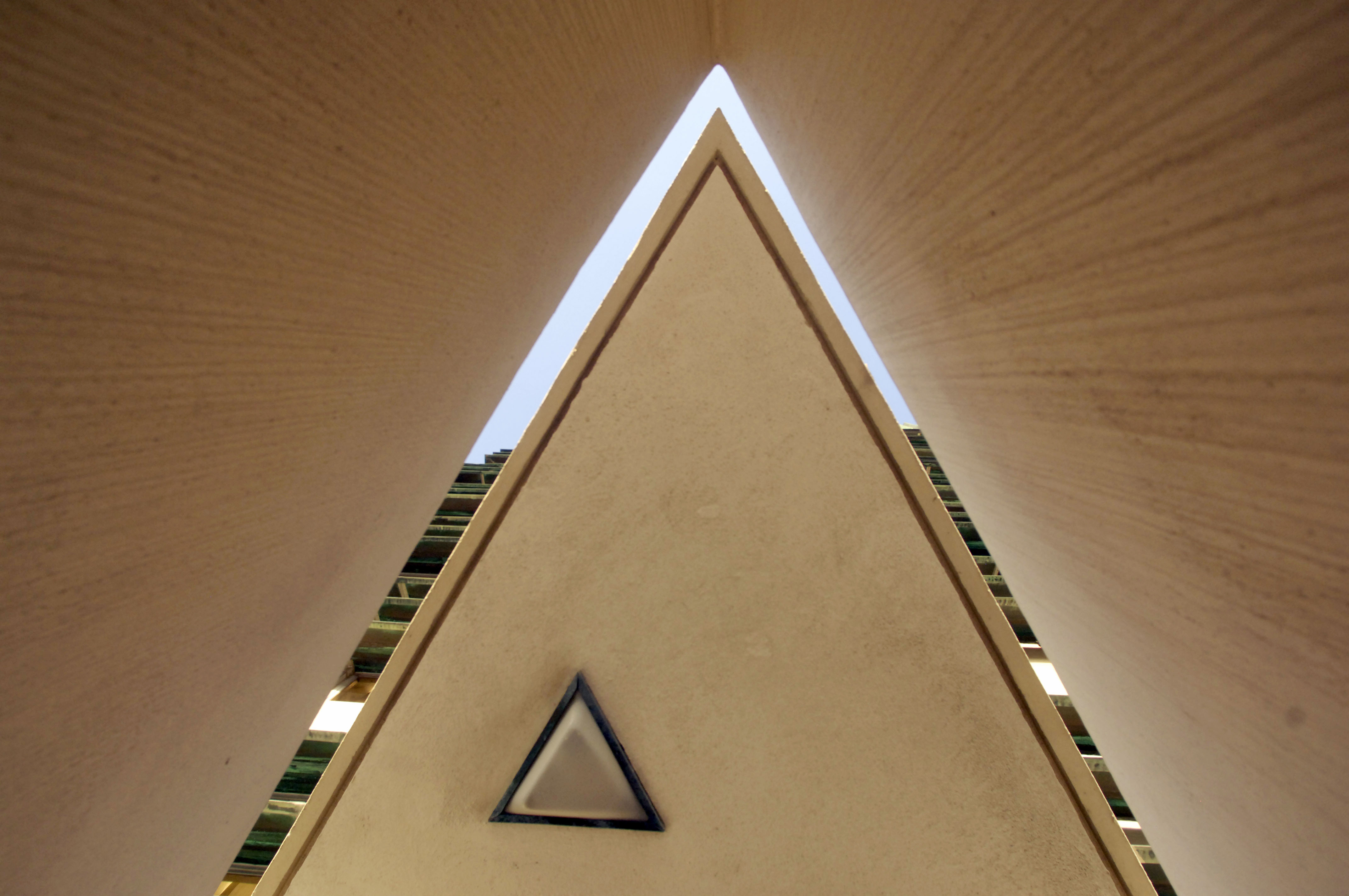
Oklahoma Frank Lloyd Wright Price Tower 014.JPGThis photograph and the one below were taken looking up on the external staircase.

Oklahoma Frank Lloyd Wright Price Tower 013.JPG

Oklahoma Frank Lloyd Wright Price Tower 010.JPGPrice Tower reflected in a nearby building

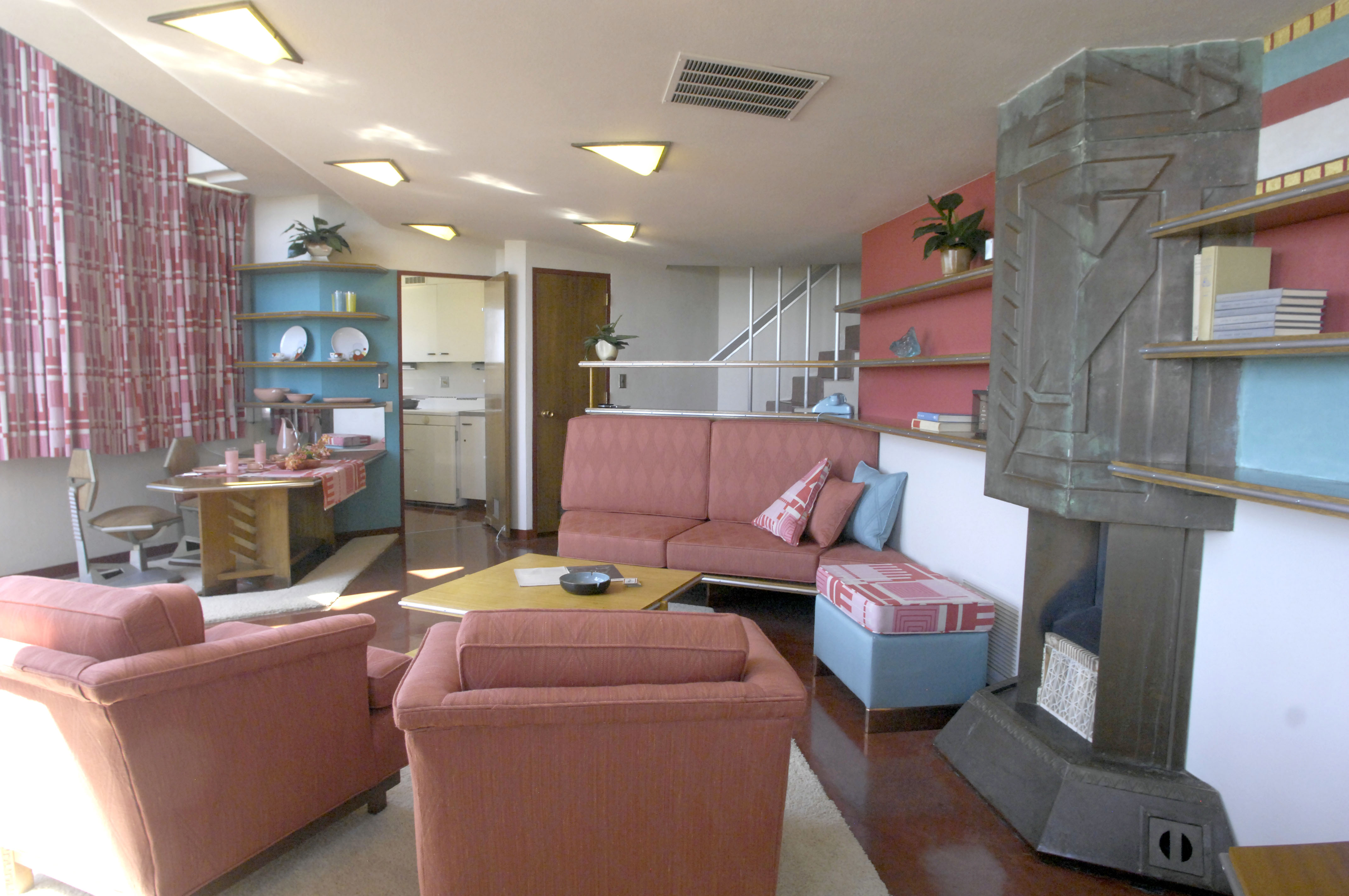
Oklahoma Frank Lloyd Wright Price Tower 019.JPGThe living room of one of the original apartments

Oklahoma Frank Lloyd Wright Price Tower 018.JPGThe sitting room on the lower floor of one of the two-story hotel rooms

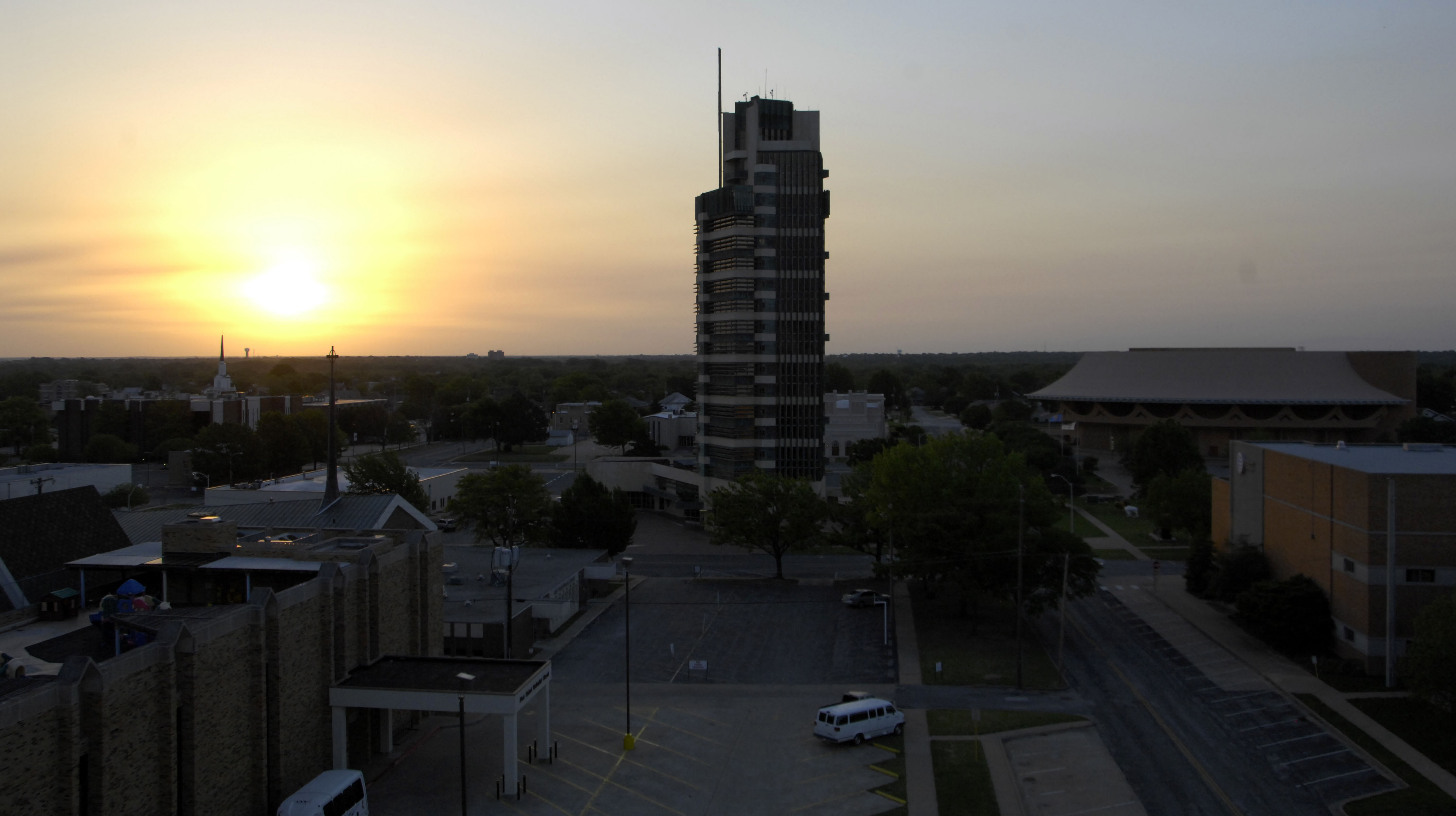
One can only hope that my sunset photo of Price Tower was not a harbinger of things to come.

Oklahoma Frank Lloyd Wright Price Tower 002.JPG

Oklahoma Frank Lloyd Wright Price Tower 017.JPG

Oklahoma Frank Lloyd Wright Price Tower 012.JPG

*While Price Tower was designed around Wright’s idea of a taproot tower, the late Bruce Brooks Pfeiffer told me that it is not a taproot tower because it is tied into the foundation of the adjoining two-story office building. He told me that the SC Johnson Research Tower in Racine is Wright’s only realized taproot tower.

Author’s note: Thank you to the Frank Lloyd Wright Building Conservancy for their attention to the tower, and to the Building Conservancy’s John Waters for his editing notes on this article.

Please scroll down for previous posts on this site.

Links:

Frank Lloyd Wright Building Conservancy coverage:

https://savewright.org/endangered-price-tower-in-bartlesville-oklahoma/

Local television coverage:

https://www.newson6.com/story/66b6bcf3e64a7a286feca72e/price-tower-in-bartlesville-closes-due-to-financial-struggles-future-uncertain

Windows on Main Street

© Mark Hertzberg (2024)

I have written before that I always challenge myself to see something new even on my umpteenth visit to a given Frank Lloyd Wright – designed building. I was blasé today as I took my friend Robert Hartmann on a tour of the Thomas P. Hardy House on Main Street in Racine, Wisconsin, as he prepared for Wright in Wisconsin’s forthcoming “Wright and Like” tour scheduled for September 7. Hartmann expects between 300 – 500 guests and wanted to figure out the best way for guests to wind through the compact house, and how many docents he would need.

The light was less than spectacular and there was nothing new to see. I had biked to the house so my only camera was my smartphone. I think phone cameras sometimes oversaturate colors, but that camera was all I had when I unexpectedly saw this in the second floor windows above the south stairs:

Wright Windows 001.jpg

Wright Windows 002.jpg

So much for being blasé!

Here is a link for more information about the tour:

https://wrightinwisconsin.org/wright-and-2024

I served on Wright in Wisconsin’s board for 14 years. They are the only statewide Wright group, originally founded in cooperation with the state Department of Tourism to promote Wright tourism in Wisconsin.

Please scroll down for previous articles or blog posts.

My Wright Eye – May 2024

Photos © Mark Hertzberg (2024)

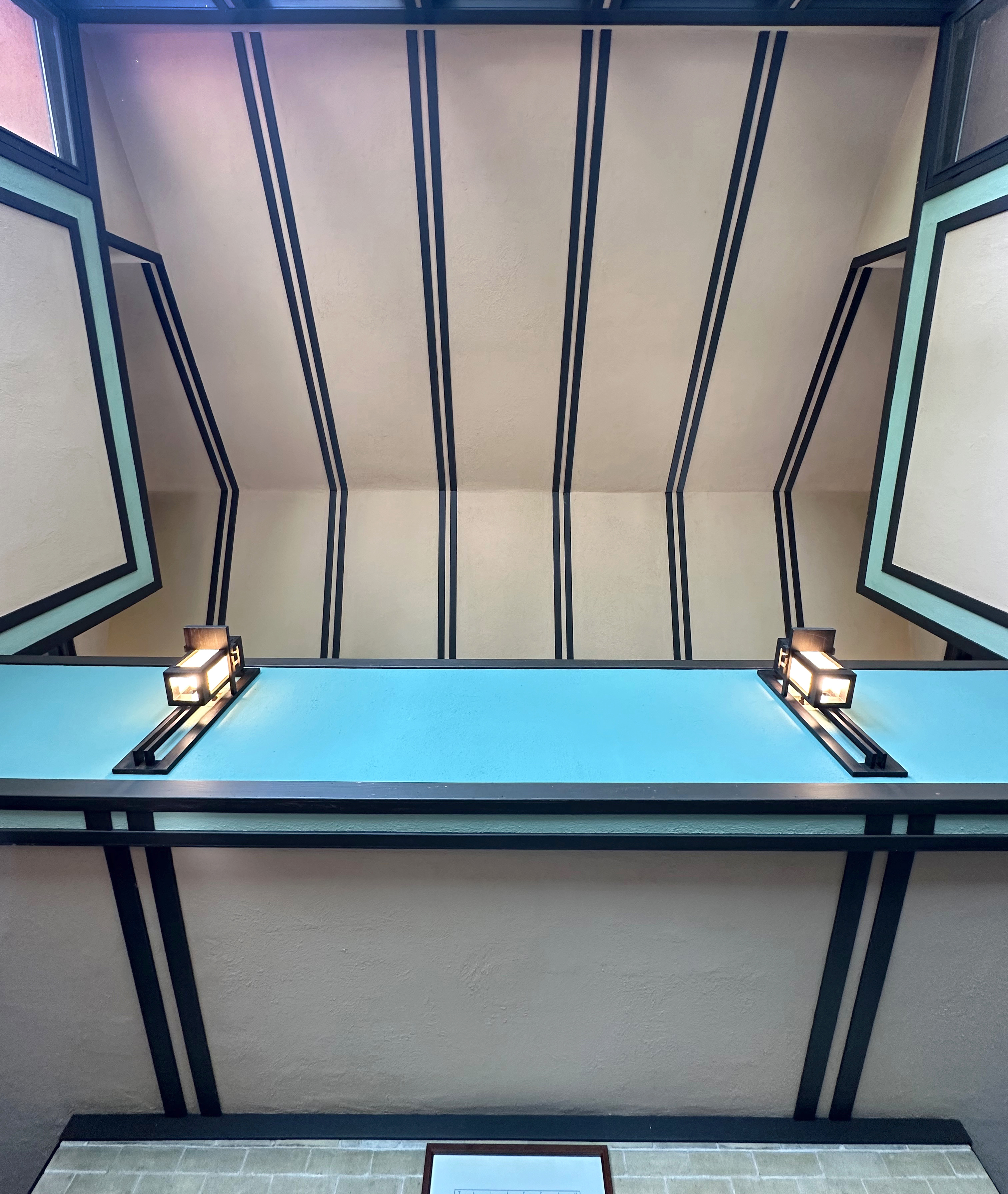
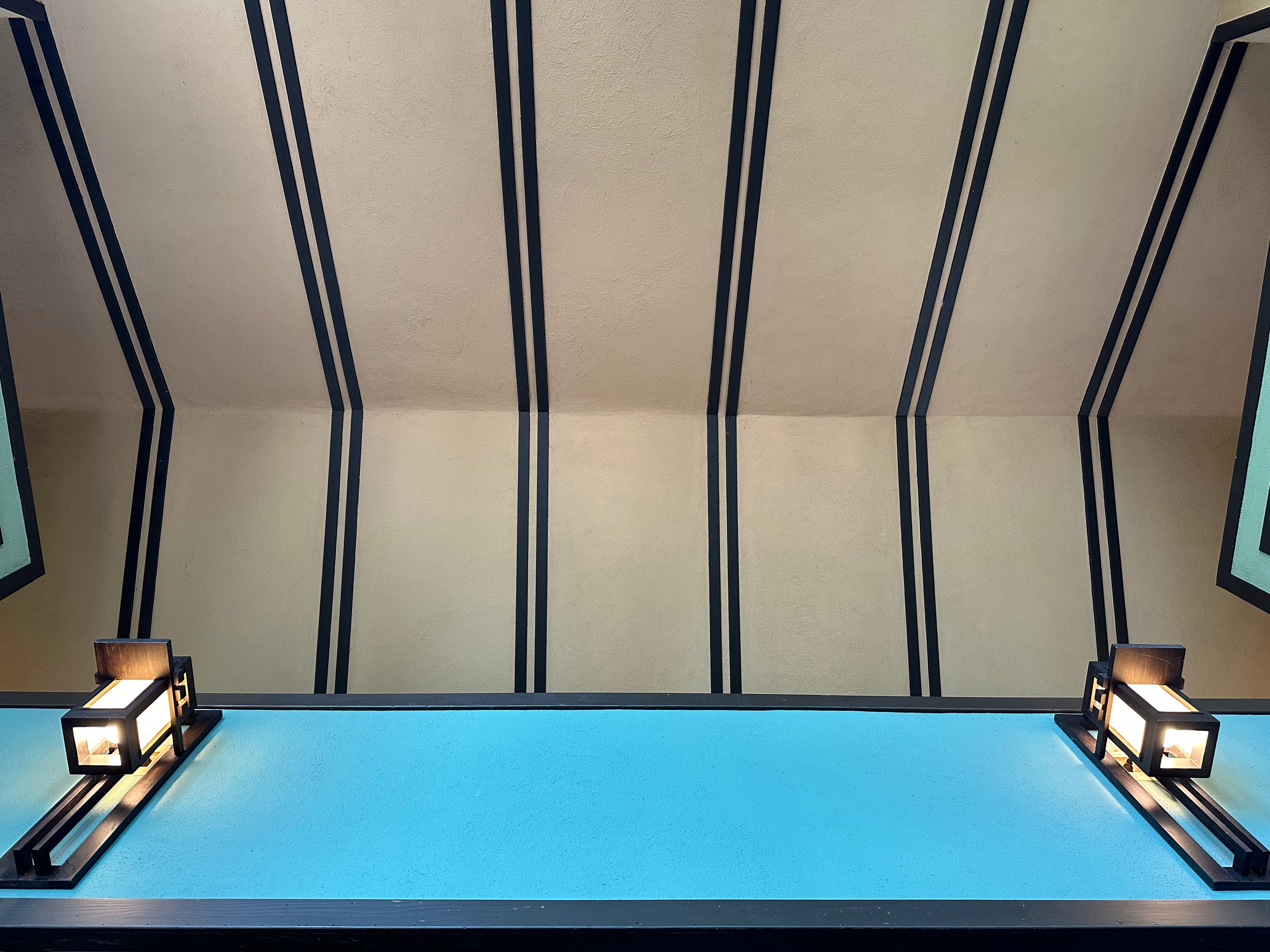
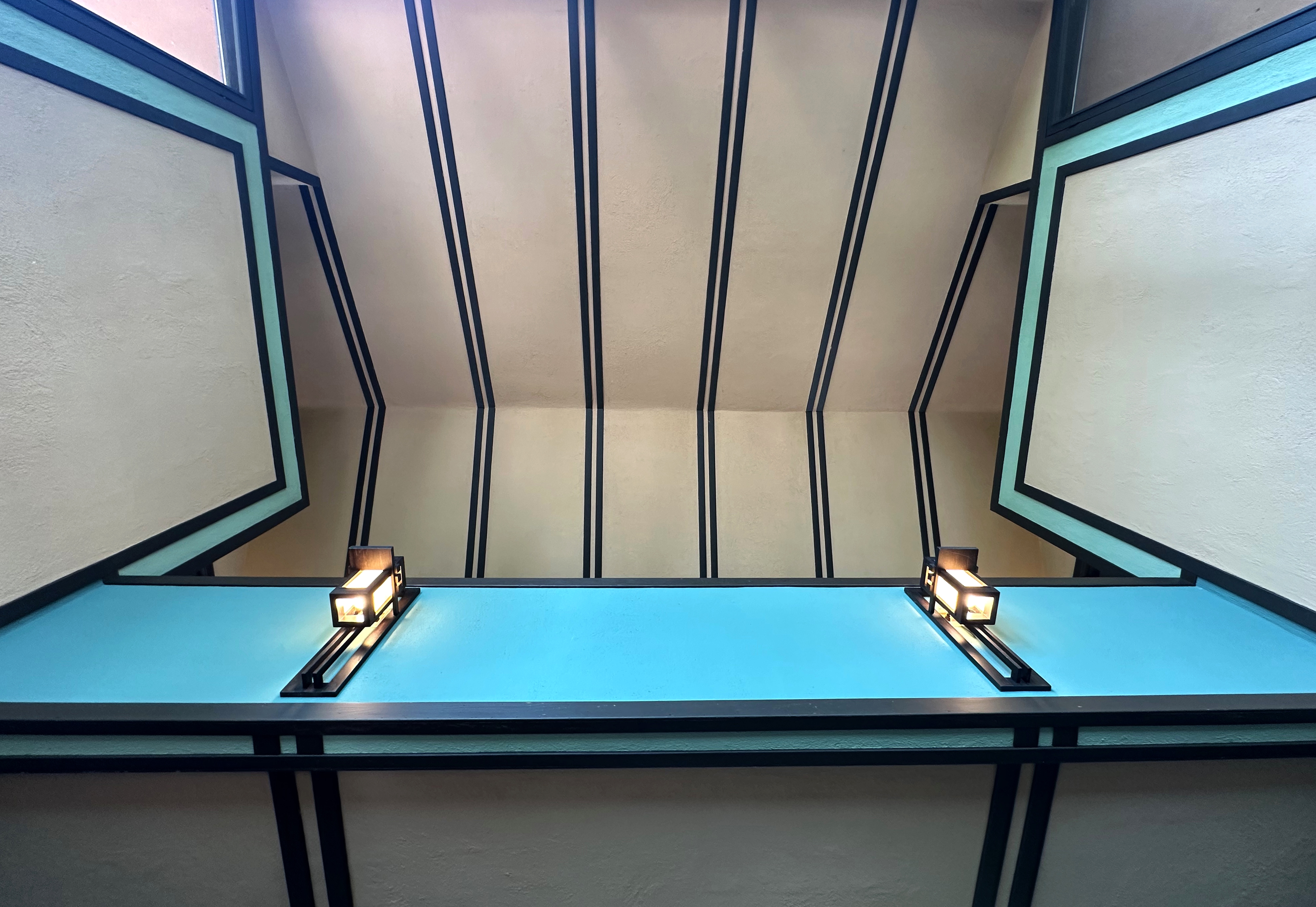
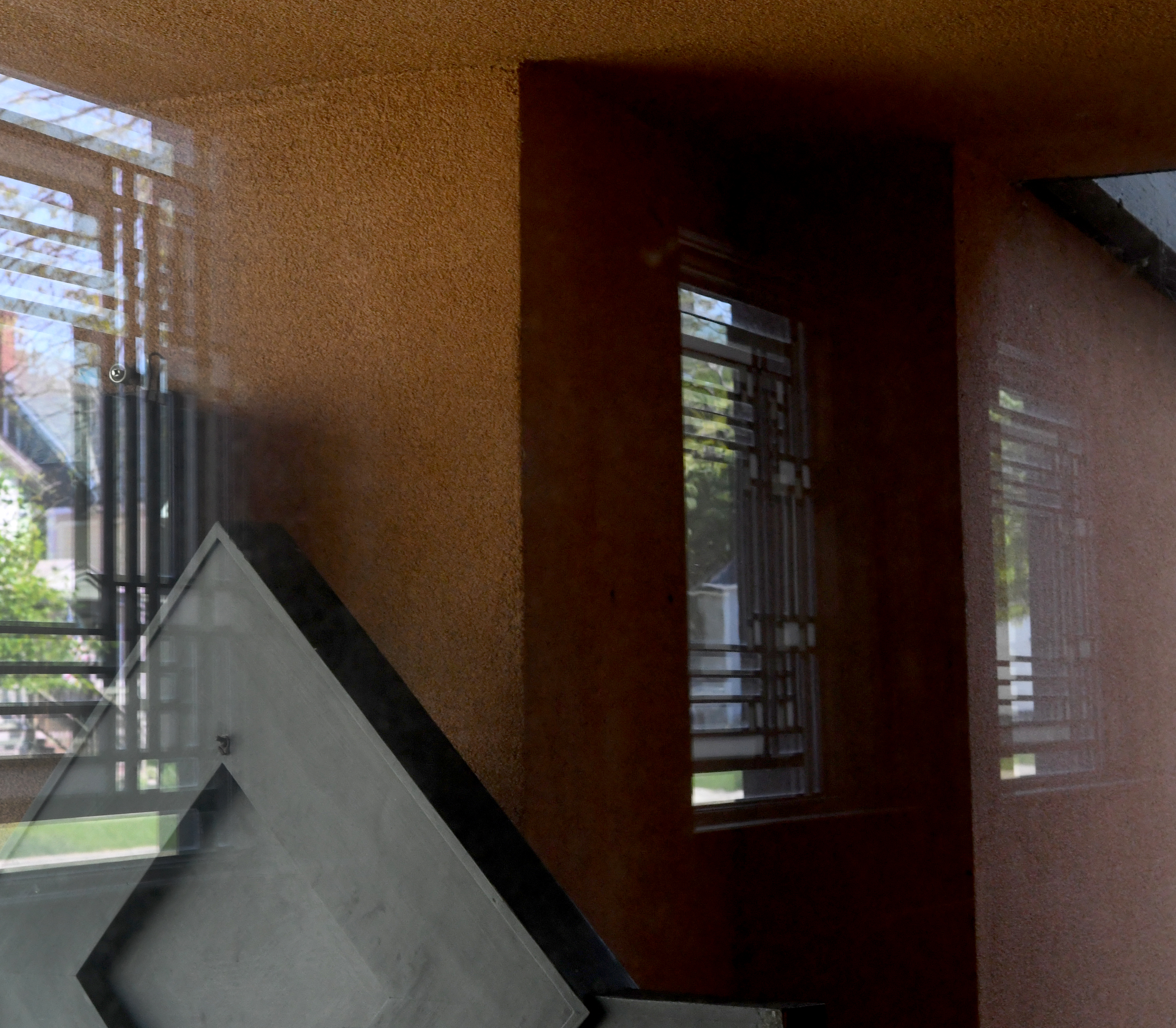
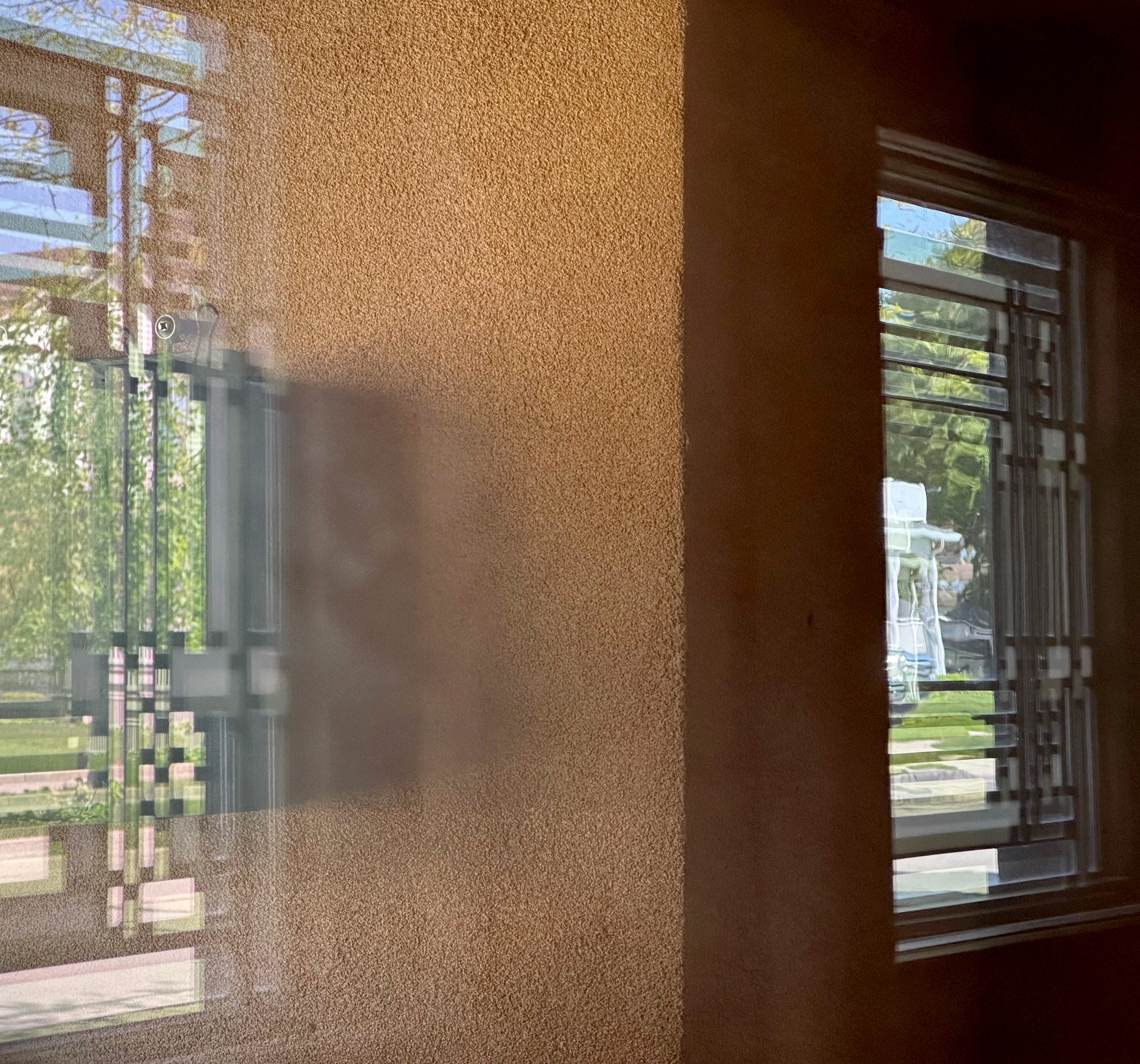
I had a half hour wait before meeting 22 guests coming from coast-to-coast to Frank Lloyd Wright’s Thomas P. Hardy House on their weeklong Road Scholar tour (I am with the group as a Road Scholar guide for three days on these tours, as they travel through Racine, Milwaukee, Madison, and Spring Green). I have been in the house countless times, including leading 14 of these tours. While I try to see something new on every visit to a familiar Wright design, I did not think there was anything new to see in the house.  I had already played Wordle and my other daily games phone games. I had already looked at my emails. I plopped down in a chair in the living room and looked up. I looked up some more and then I knew what I had to do…I had to lie down on the floor and start taking pictures of the ceiling.

IMG_7080.jpeg

IMG_7079.jpeg

IMG_7076.jpeg

Then I walked over to the stairs and looked up at the second floor:

IMG_7087.jpeg

When I then went outside to greet the bus, I saw reflections of Wright’s leaded glass front hallway windows and their reflected images in a new way:

DSC_5985a.jpg

IMG_7083.jpeg

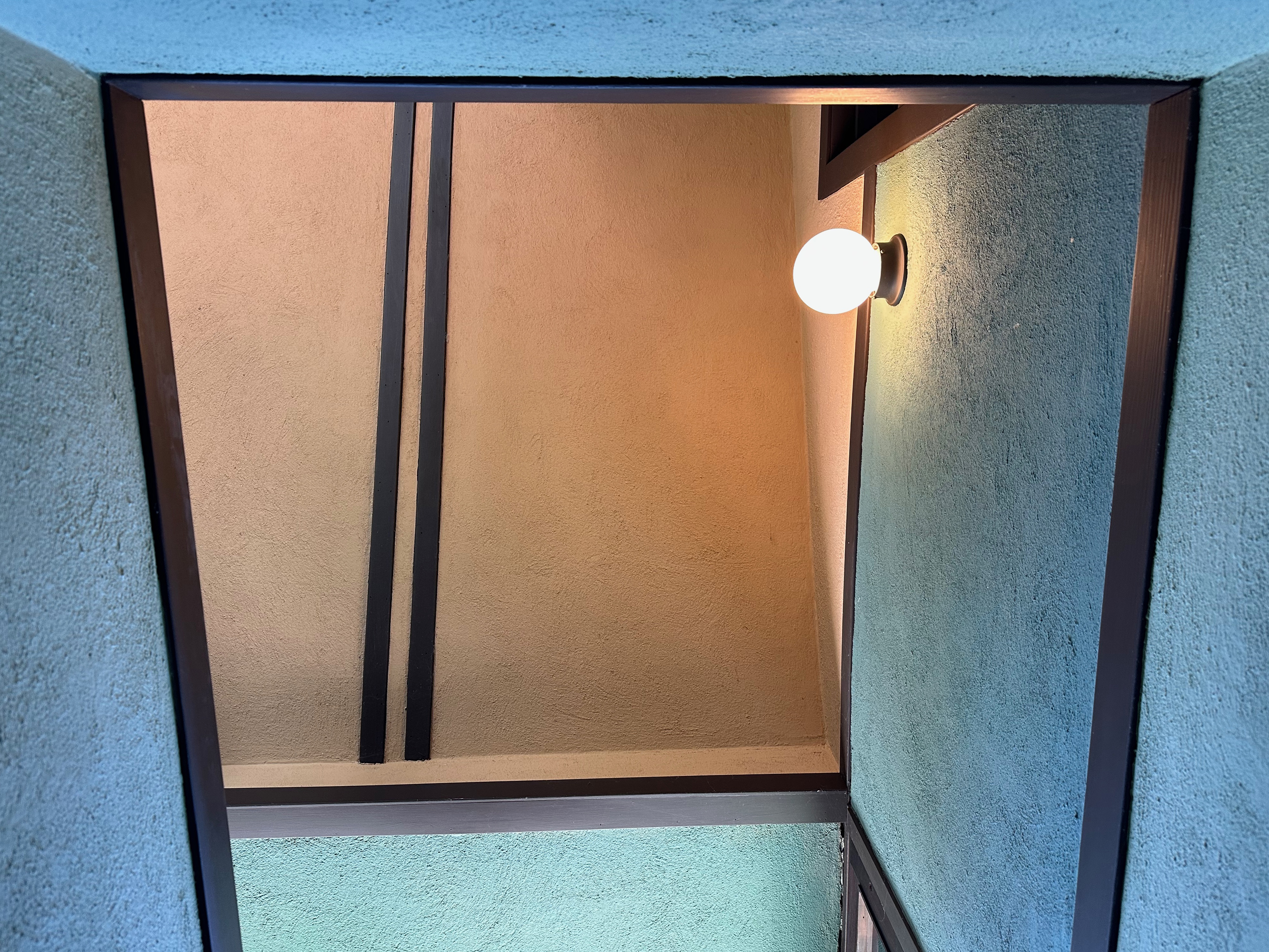
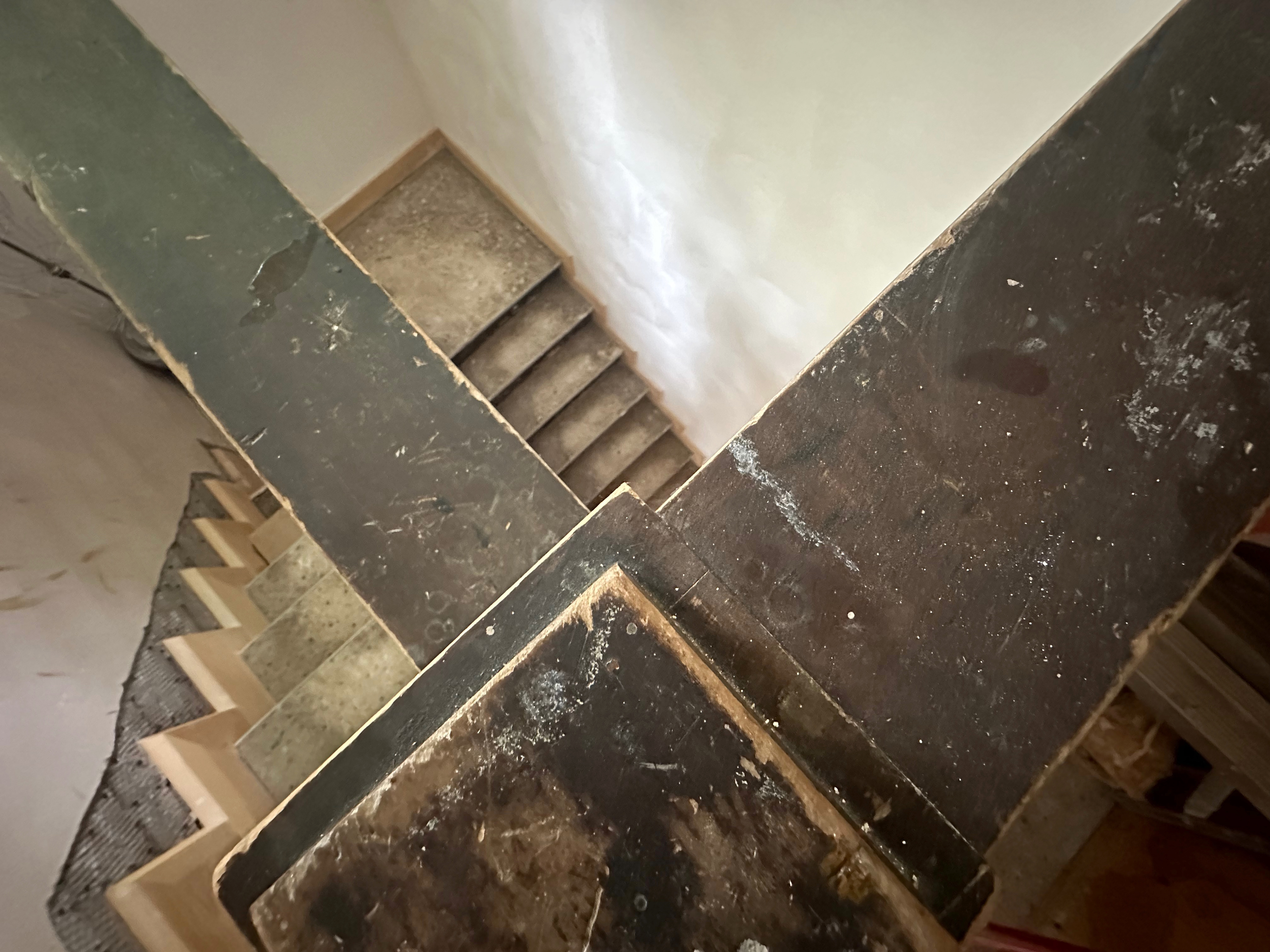
Today, as our guests toured Wright’s American System-Built duplex at 2132/34 W. Burnham Street in Milwaukee, I looked down instead of up. The duplex is being restored with help from a Save Americas Treasures grant. These are the back stairs:

IMG_7103.jpeg

On-line links:

Road Scholar’s “Architectural Masterworks of Frank Lloyd Wright tour:

https://www.roadscholar.org/find-an-adventure/22976/Architectural-Masterworks-of-Frank-Lloyd-Wright

Frank Lloyd Wright’s Burnham Block:

http://wrightinmilwaukee.com

Please continue to scroll down to view and read previous posts

“Furniture Done Wright” Now on Exhibit

© Mark Hertzberg (2024)

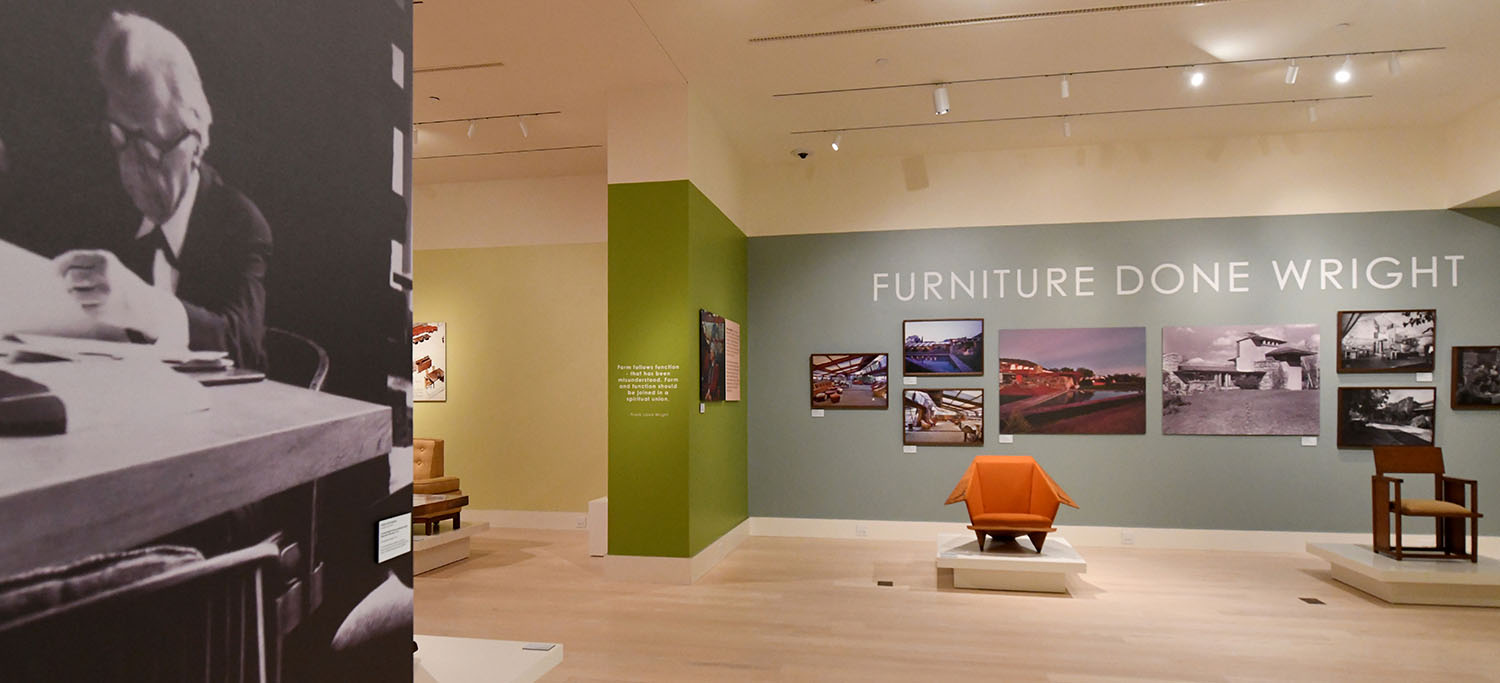
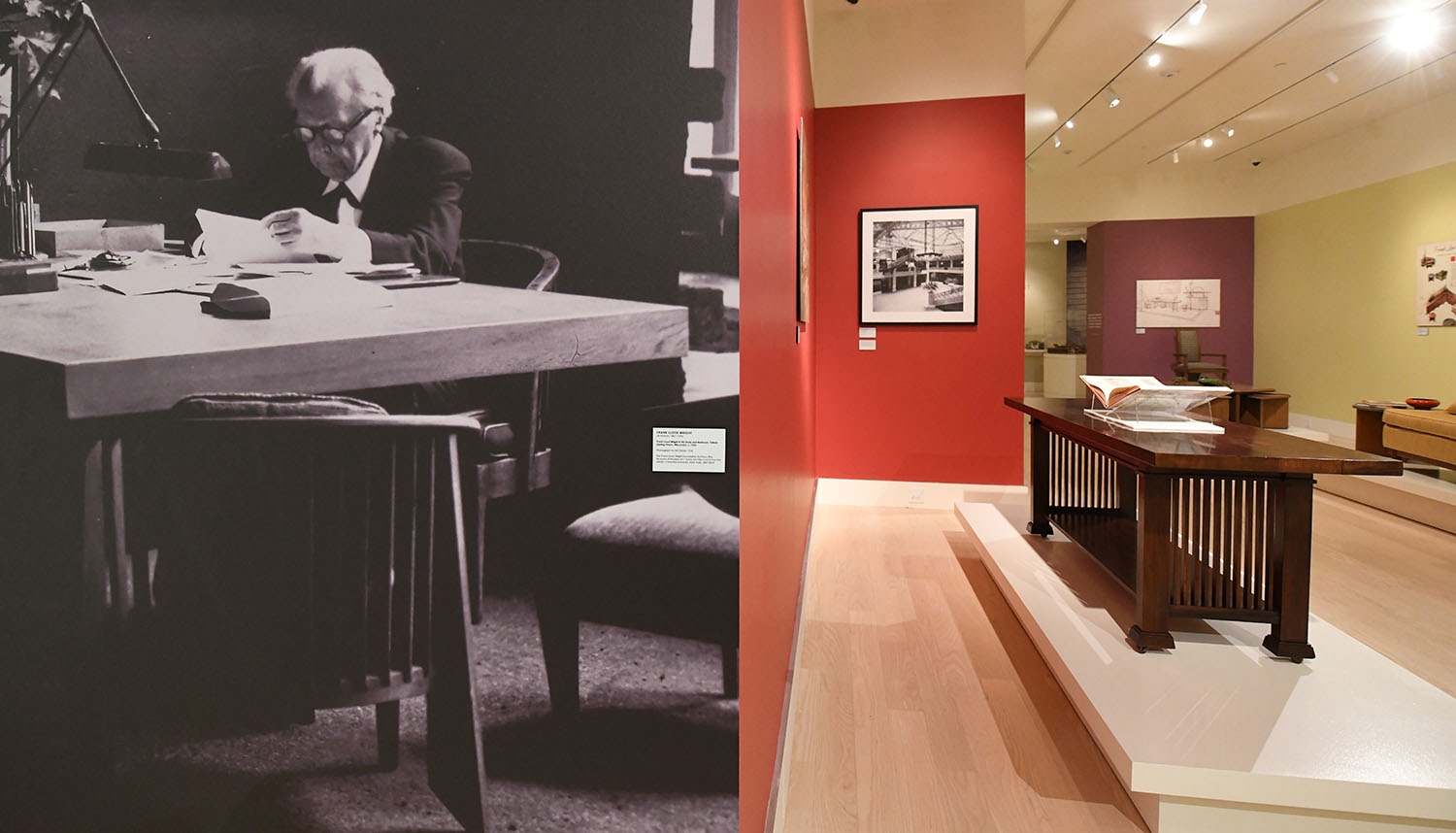
LR SCJ Wright Furniture 003.jpg

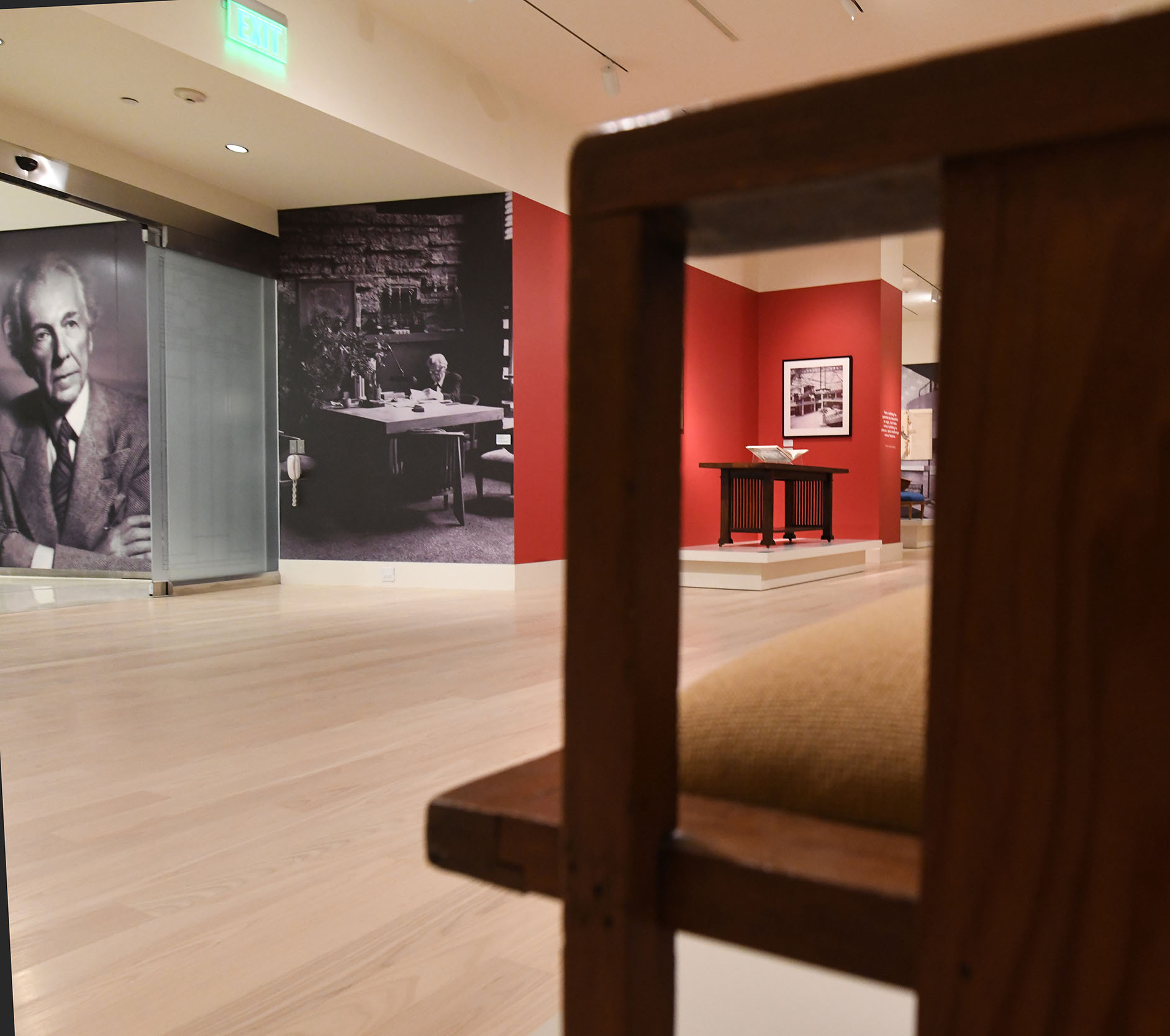
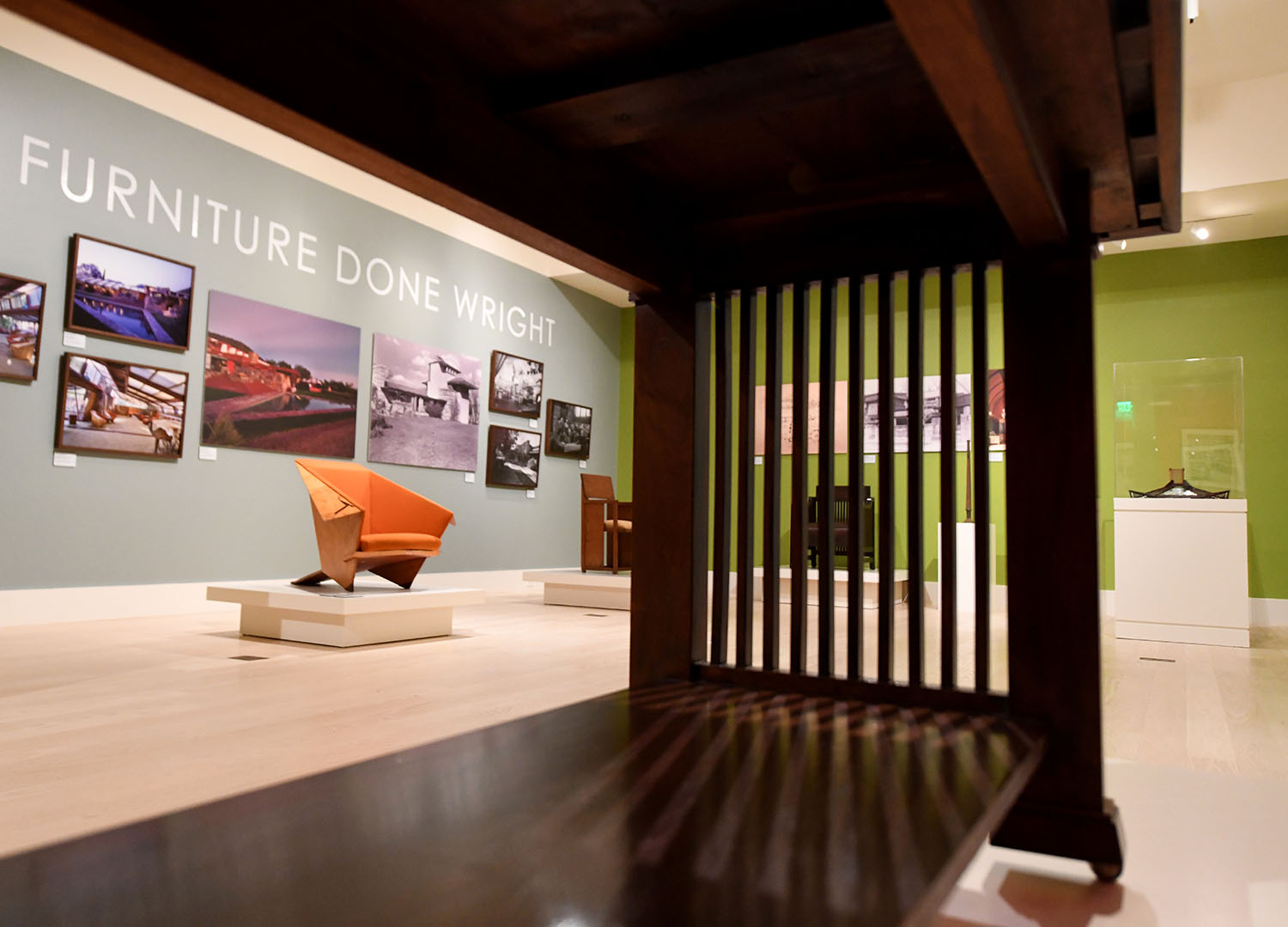
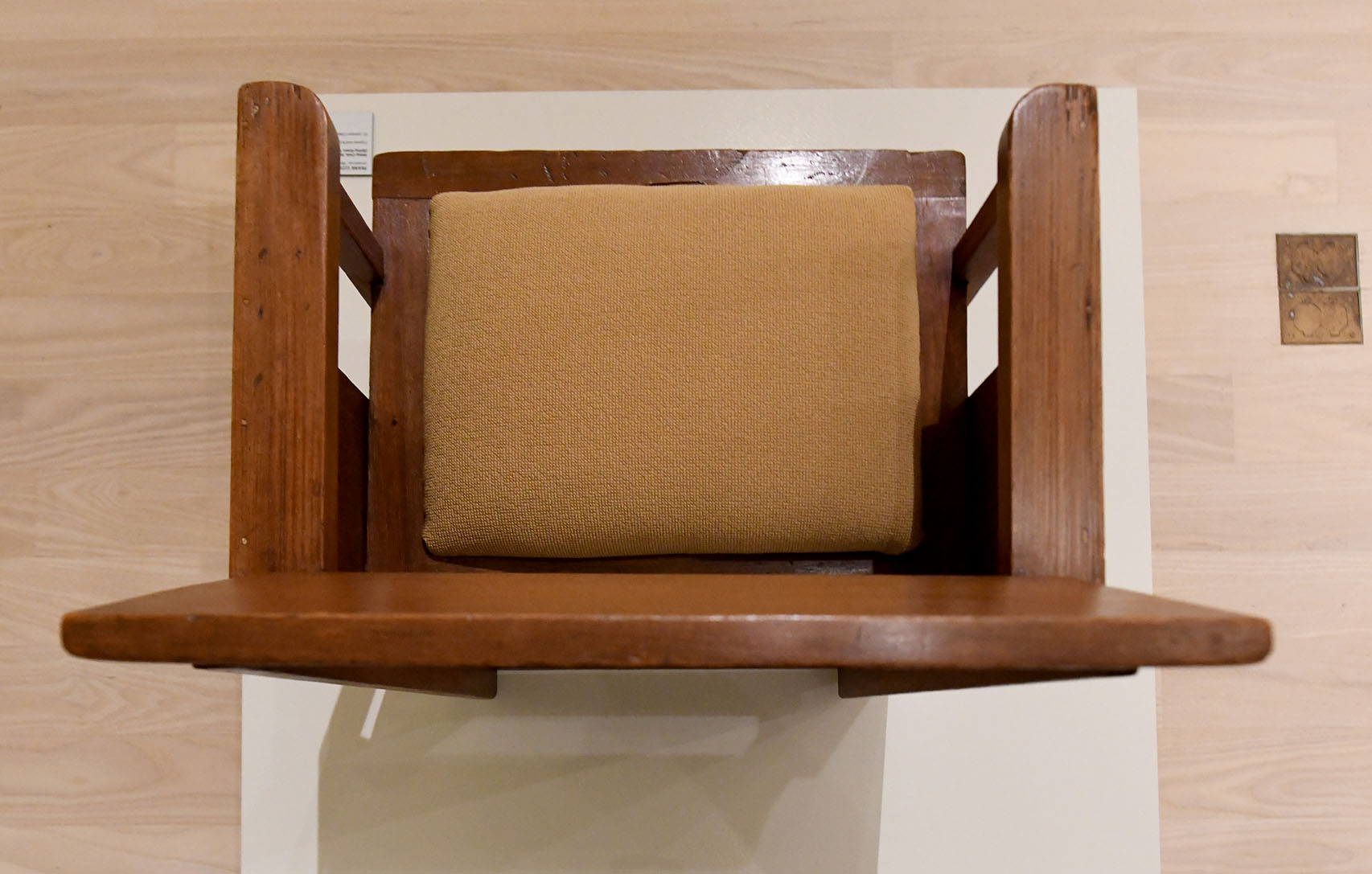
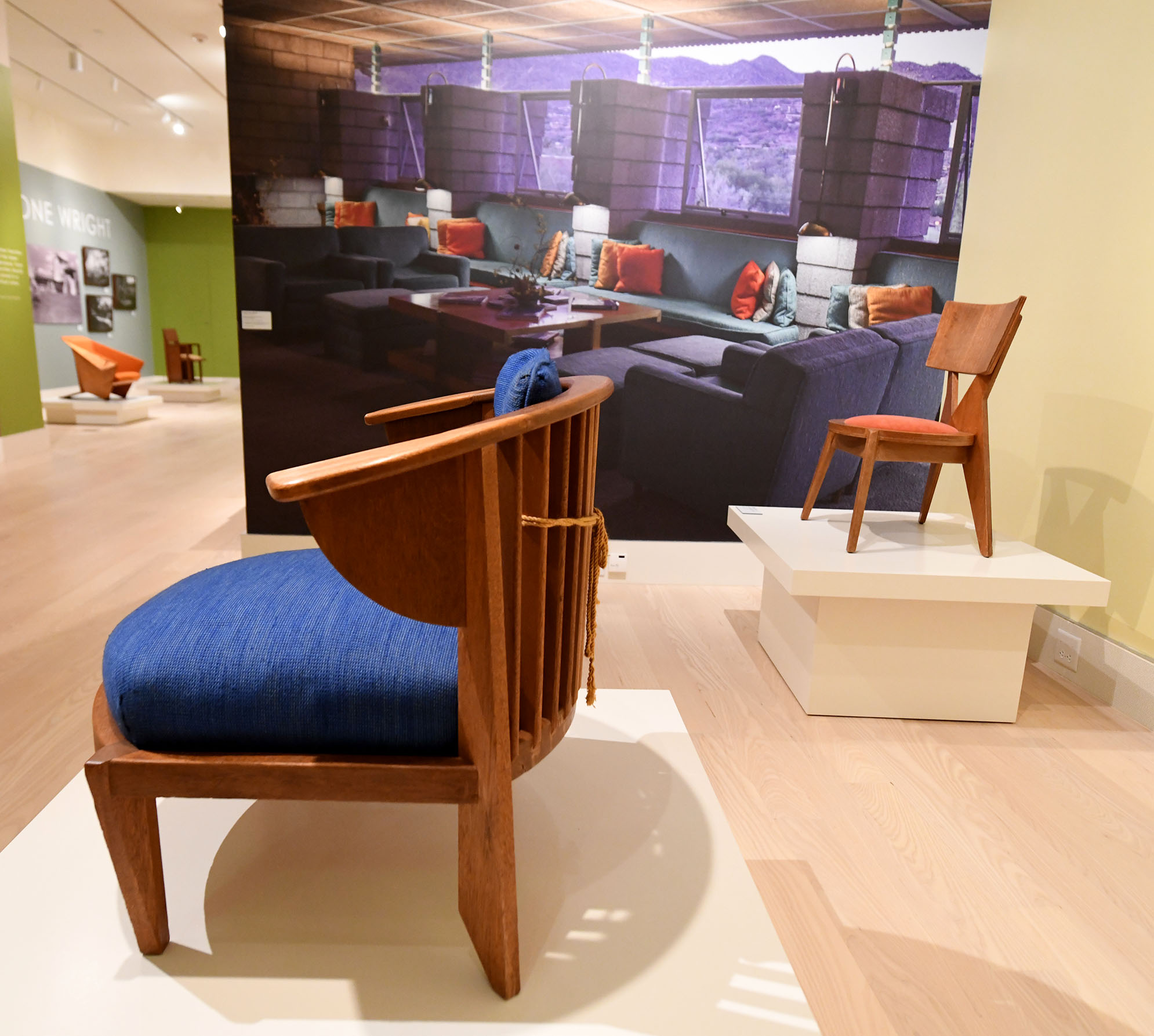
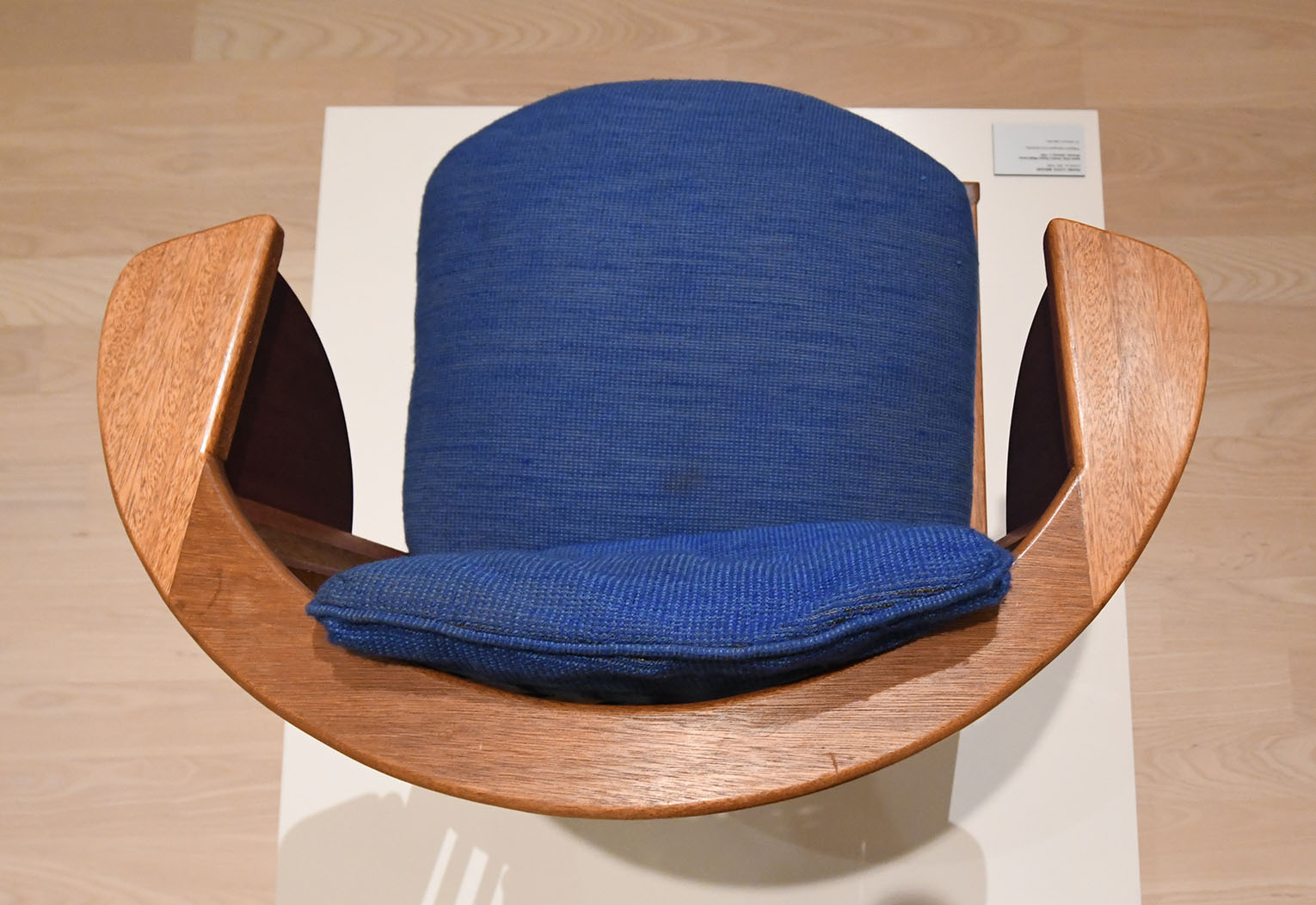
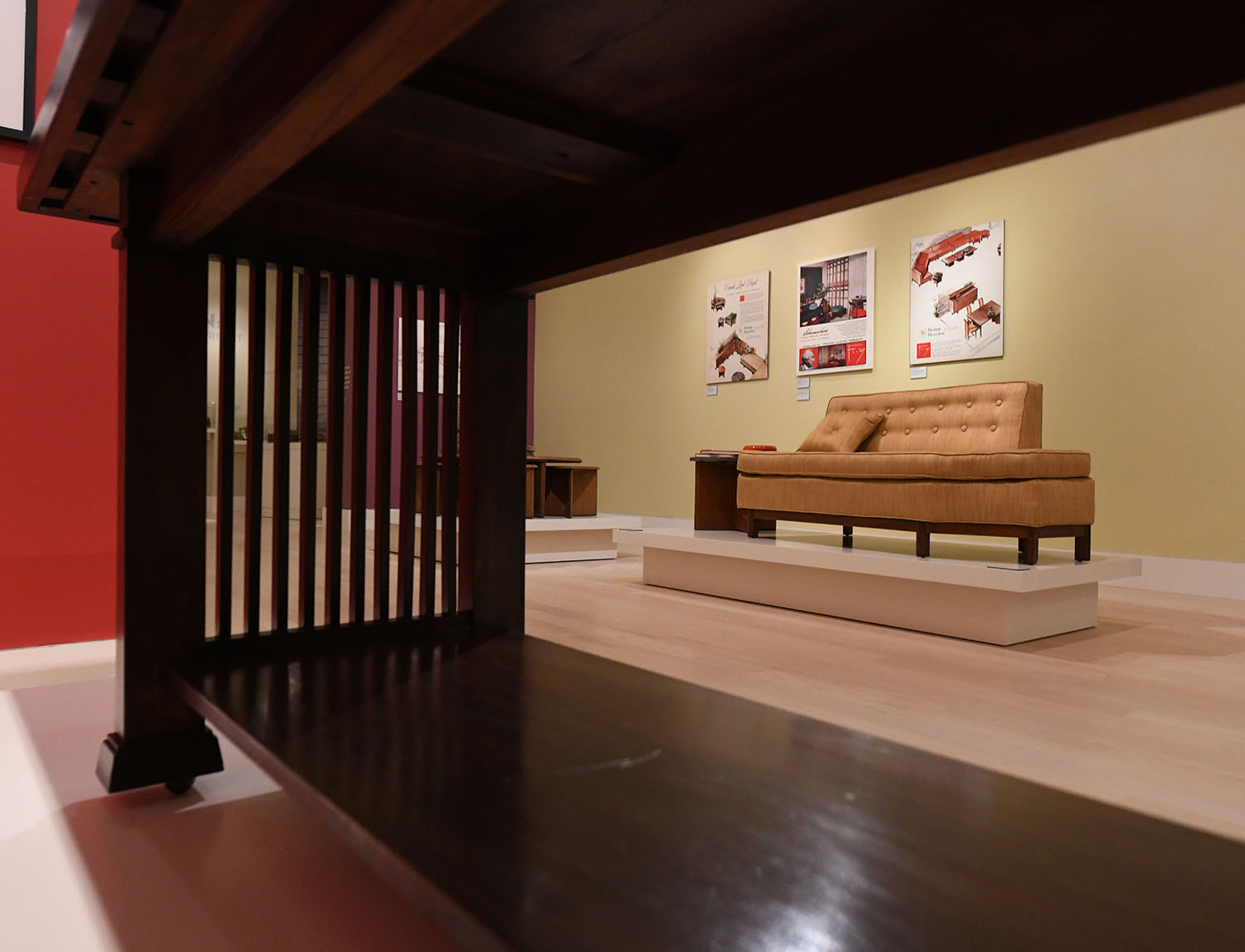
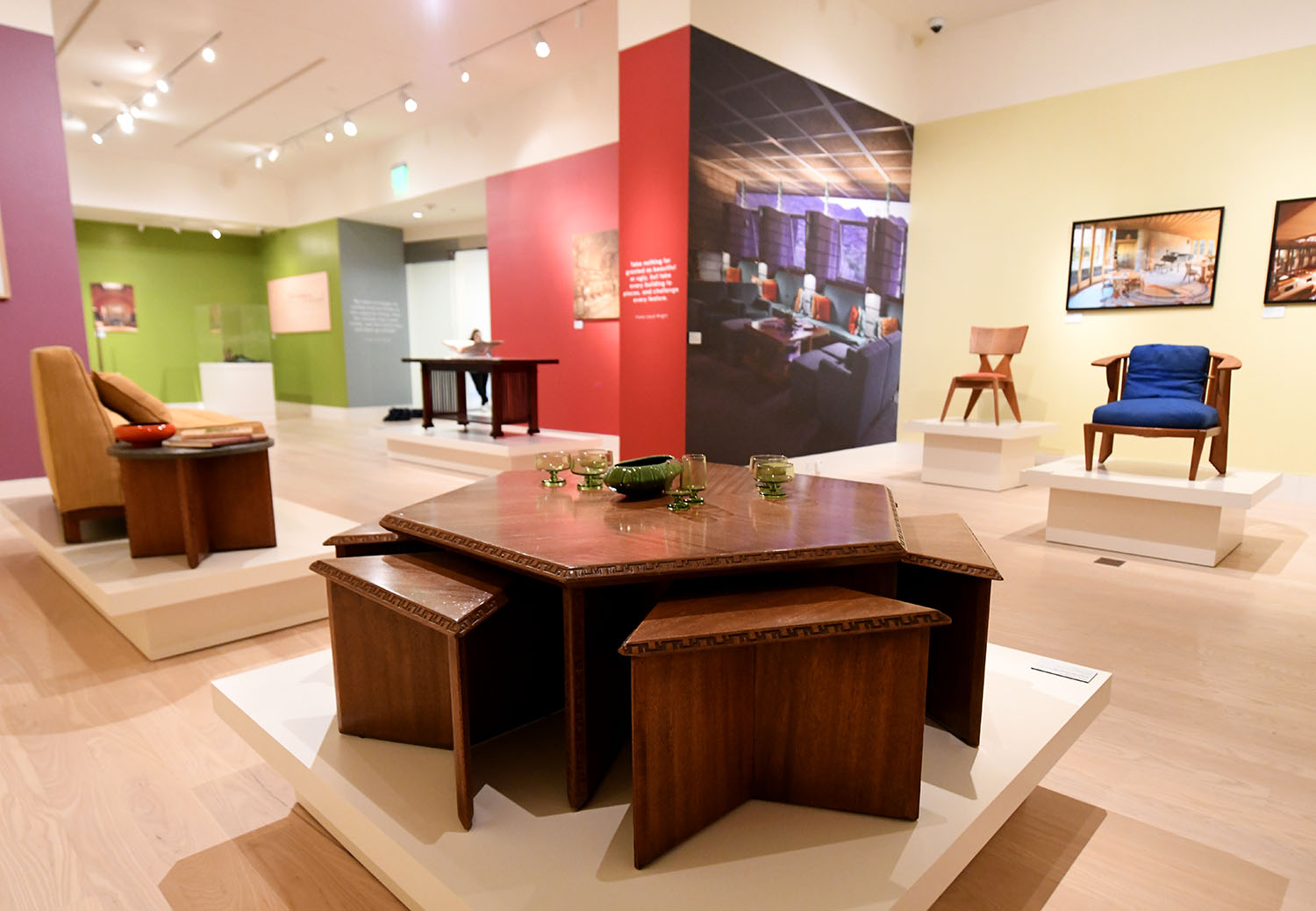
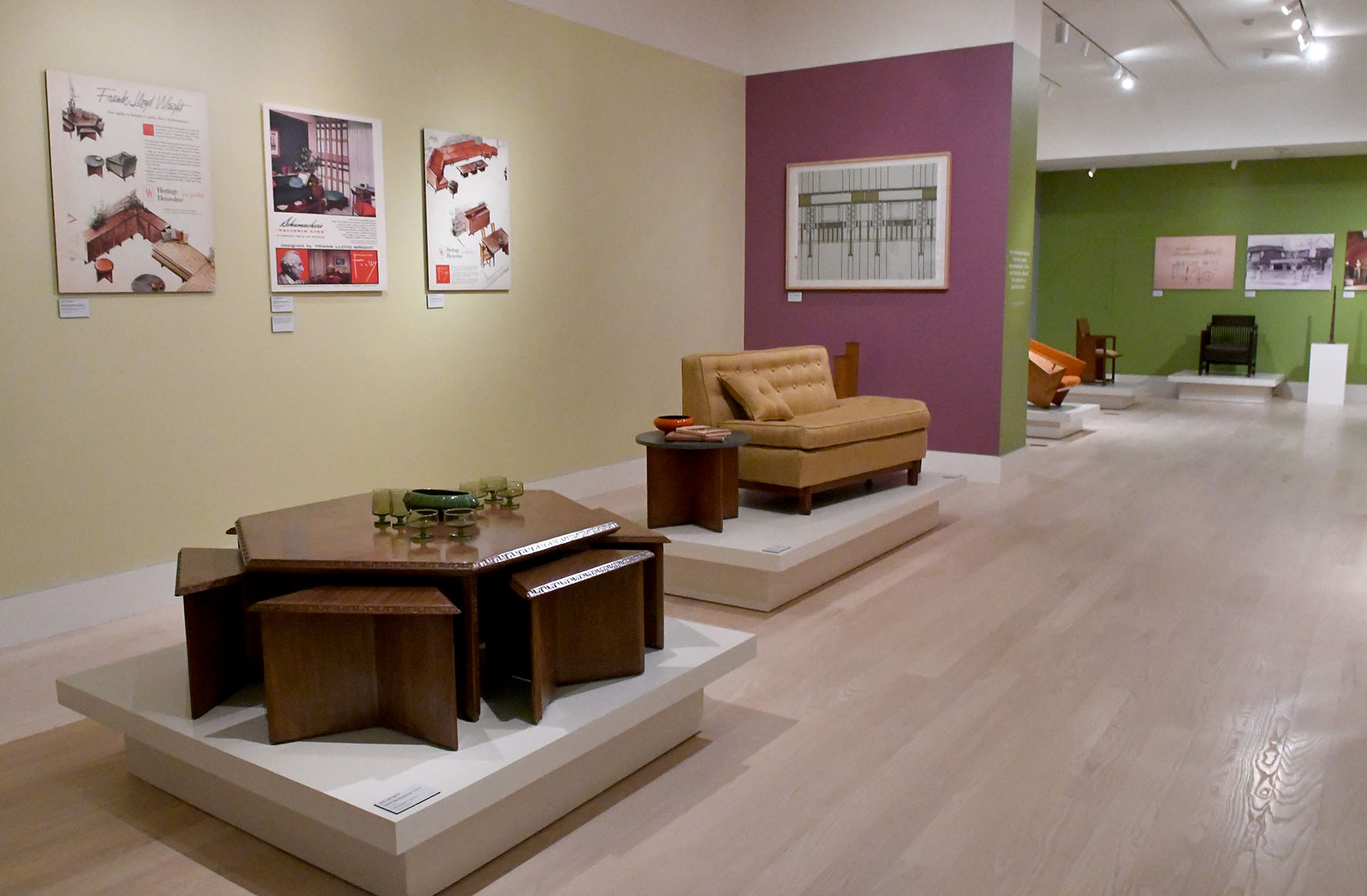
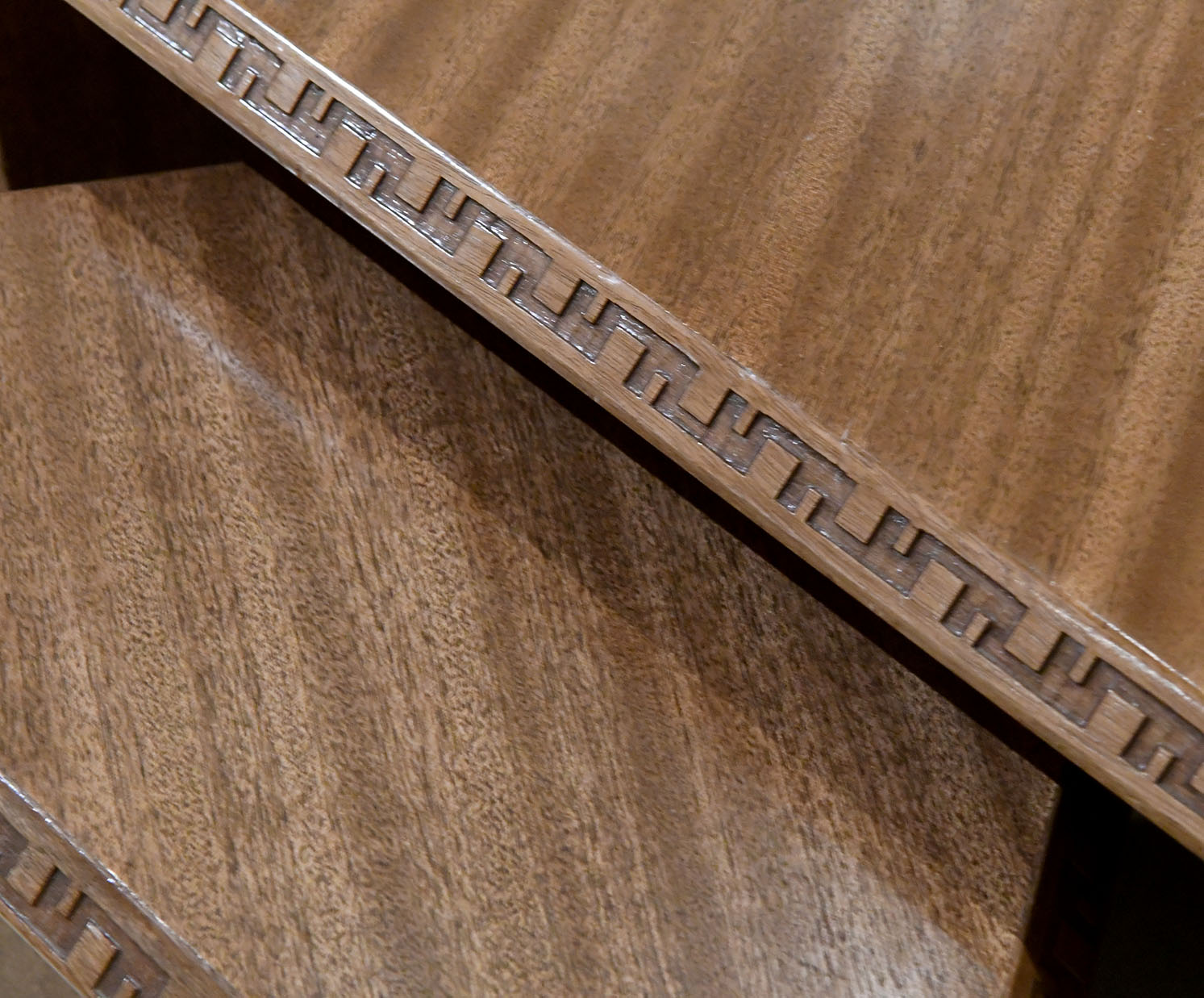
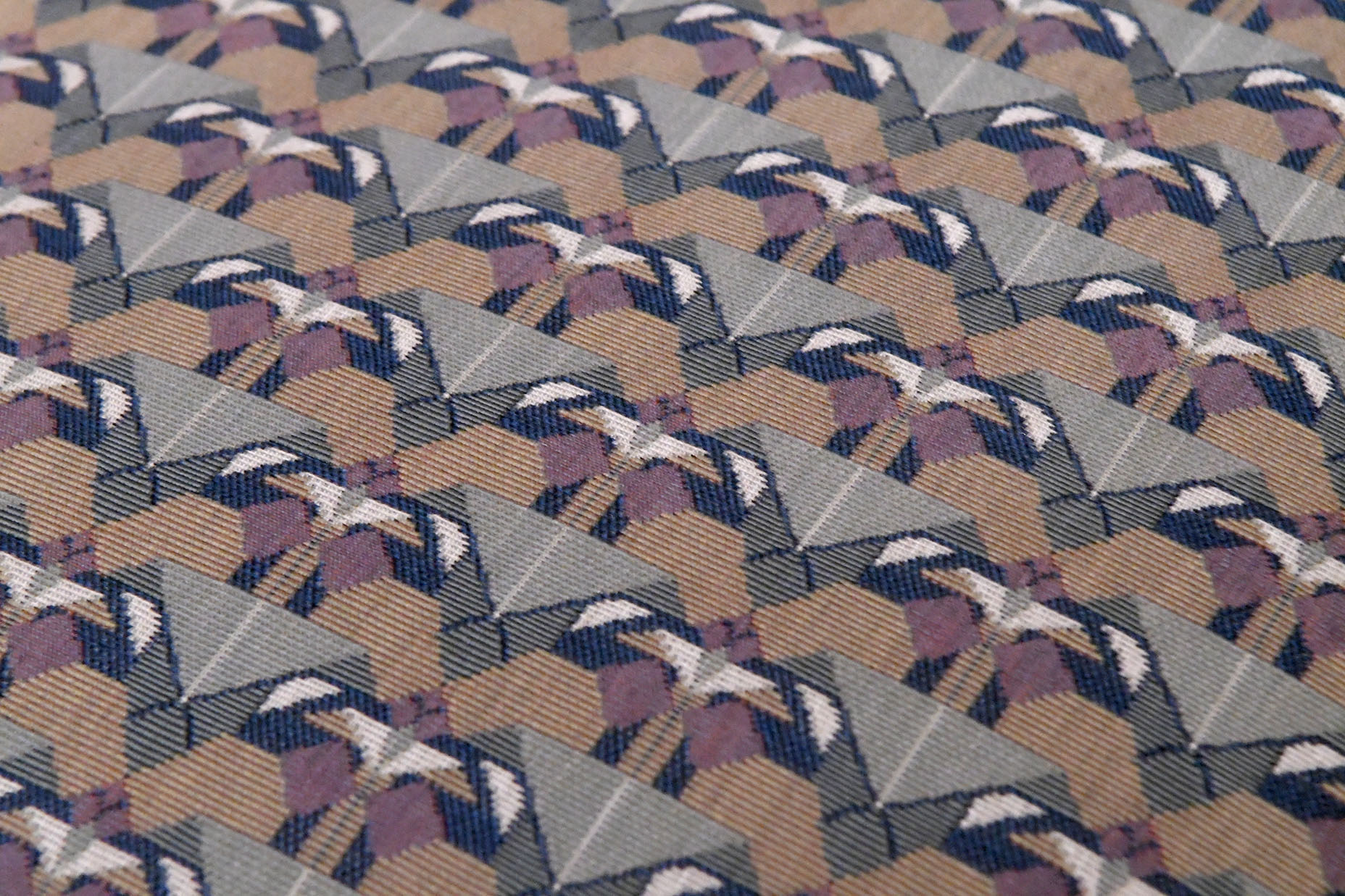
Hiring Frank Lloyd Wright to design a building meant more than just a bricks and mortar job. The entire space – interior as well as exterior – had to be cohesive. His organic designs often included furniture and lighting fixtures he proposed for his clients. Examples of his interior designs are now on display in “Furniture Done Wright” in SC Johnson’s Wright Gallery: At Home with Frank Lloyd Wright in Fortaleza Hall on the company’s campus in Racine, Wisconsin.

LR SCJ Wright Furniture 004.jpg

LR SCJ Wright Furniture 007.jpgA dining chair from Taliesin (c. 1925) frames a view of the library table for the Edward C. Waller House Remodeling (1899).

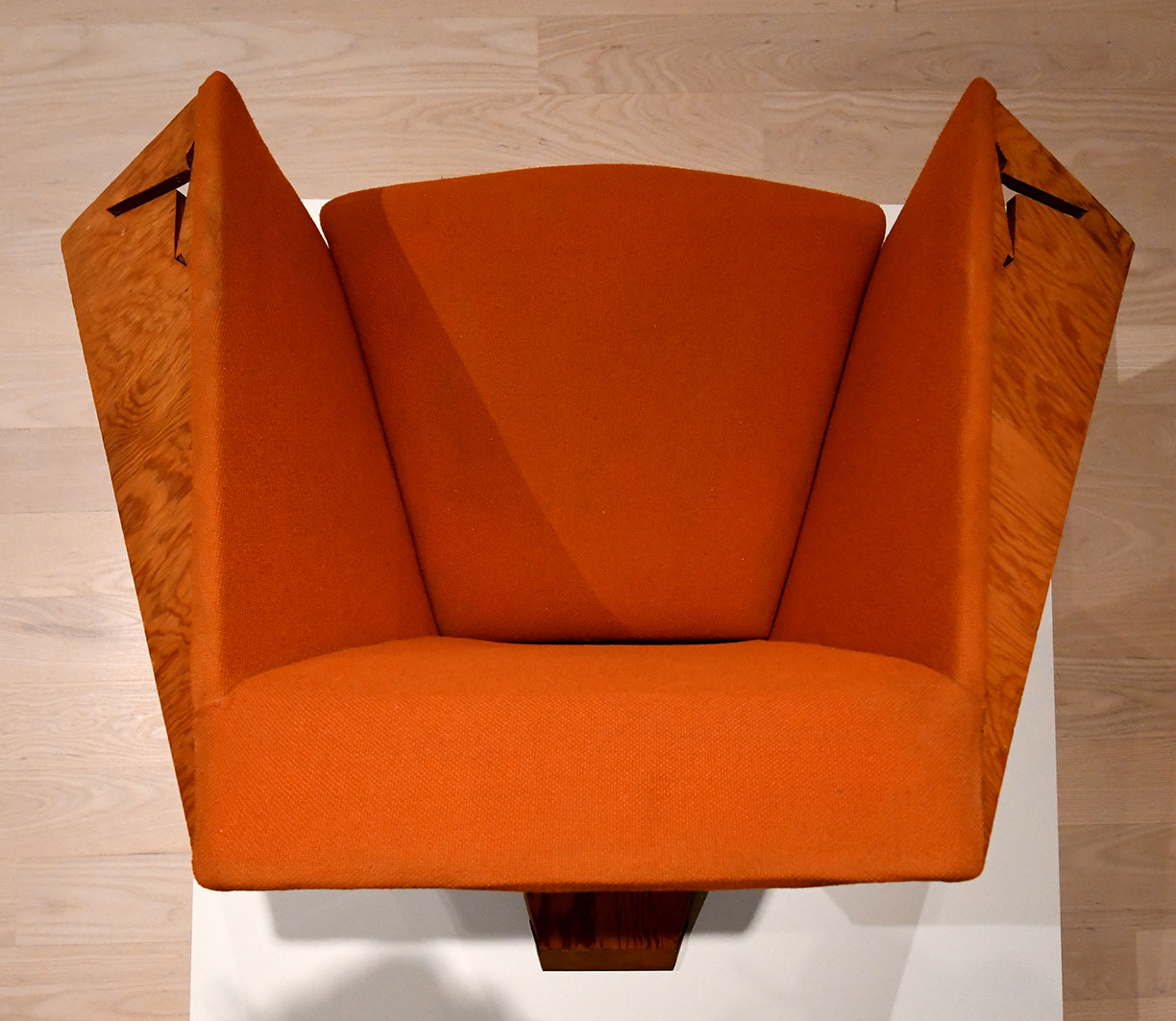
LR SCJ Wright Furniture 016.jpgThe library table, in turn, frames the Taliesin chair and an “origami chair” from Taliesin West (1946).

LR SCJ Wright Furniture 010.jpg


LR SCJ Wright Furniture 012.jpg

Chairs from the David and Gladys Wright House (1950):

LR SCJ Wright Furniture 024.jpg

LR SCJ Wright Furniture 020.jpg

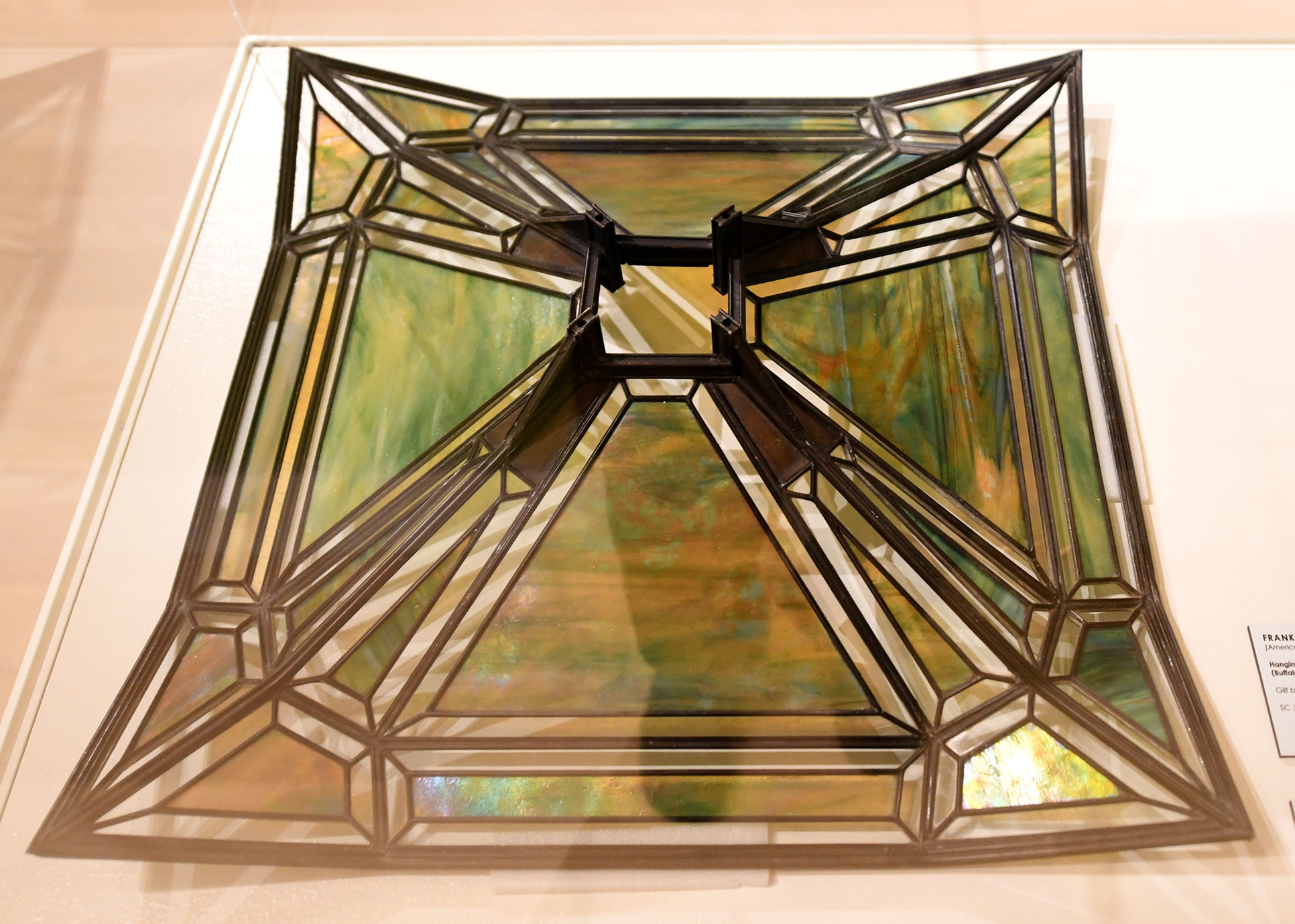
LR SCJ Wright Furniture 031.jpgHanging lamp, William R. Heath House (c. 1905) – the lines are distorted by the camera angle.

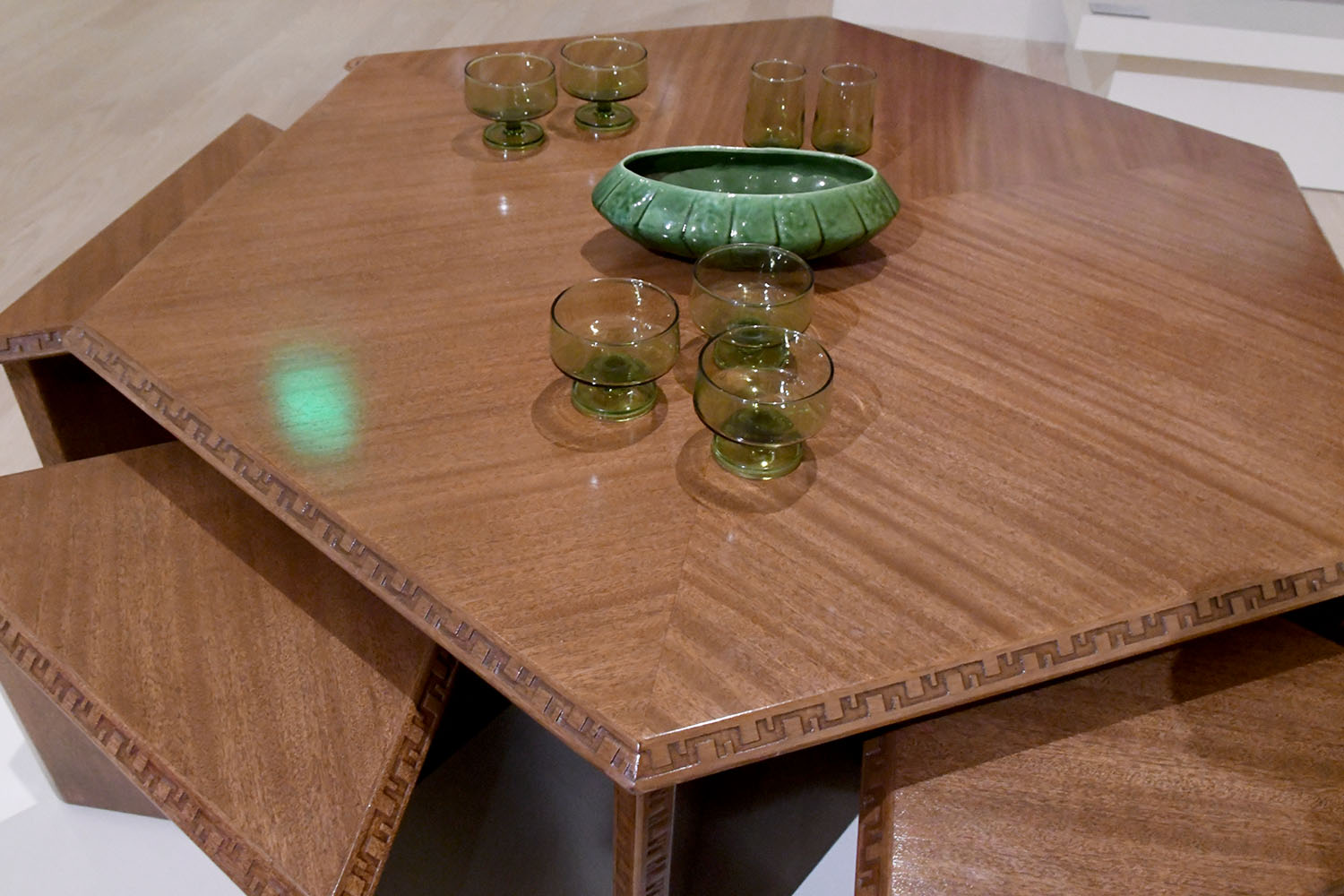
While many of the pieces were designed specifically for his clients, he also designed the “Taliesin Collection” for the Heritage-Henredon company in 1955. A number of those pieces are included in the exhibit:

LR SCJ Wright Furniture 015.jpg

LR SCJ Wright Furniture 018.jpg

LR SCJ Wright Furniture 047.jpg

LR SCJ Wright Furniture 043.jpg

LR SCJ Wright Furniture 039.jpg

LR SCJ Wright Furniture 057.jpg

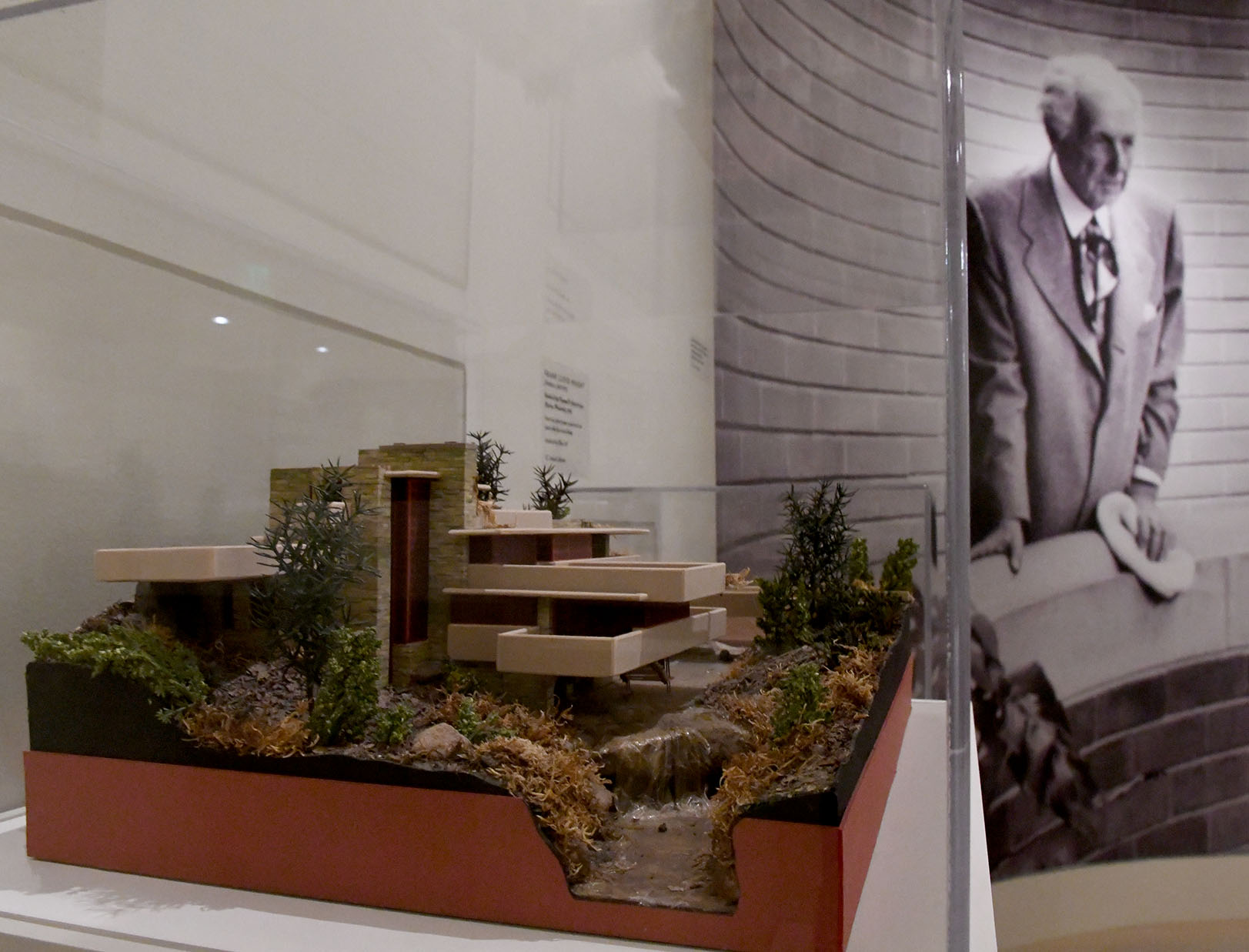
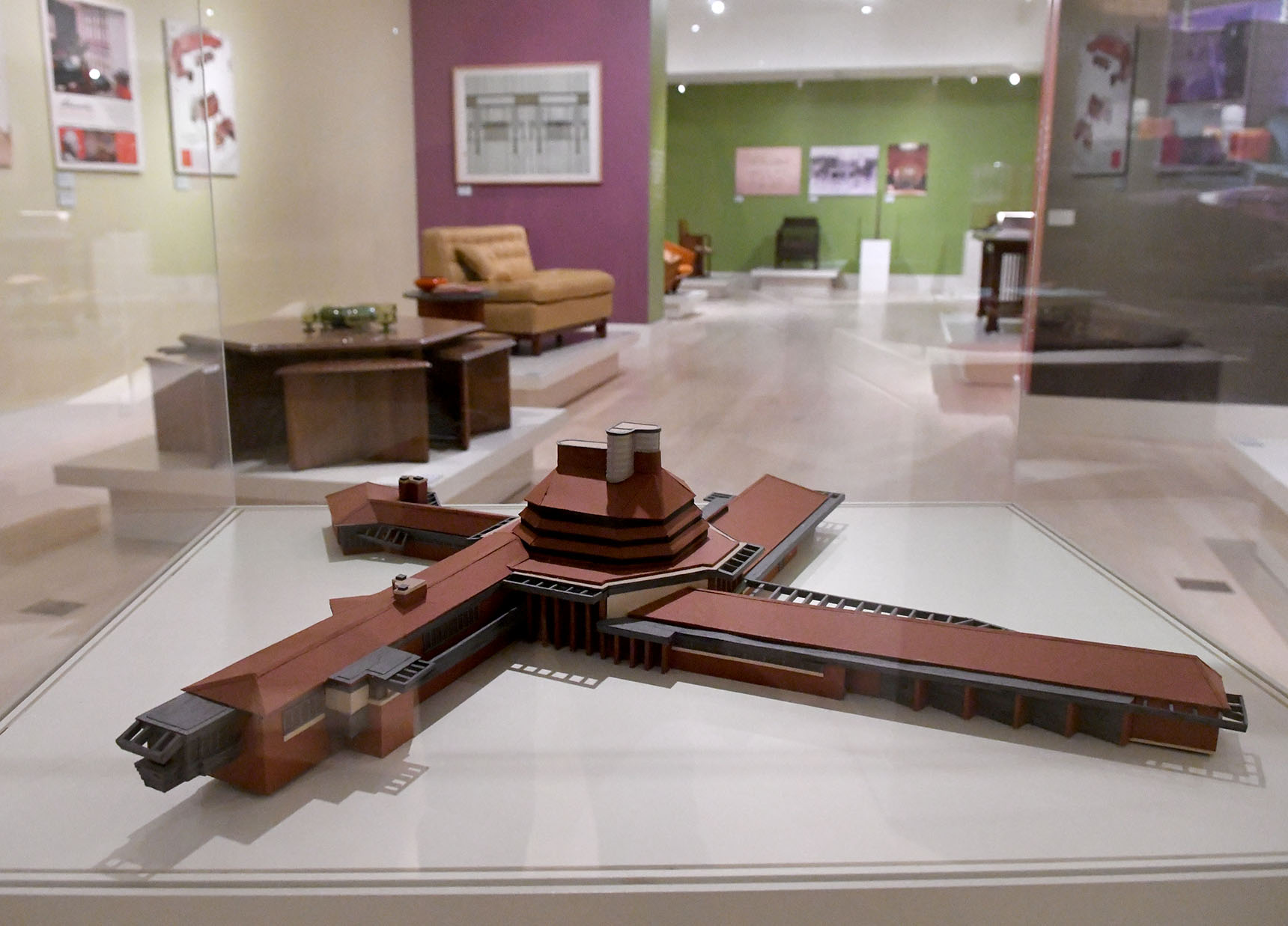
In 2017 SC Johnson acquired a collection of two dozen models of Wright-designed homes by retired architectural draftsman Ron Olsen from Janesville, Wisconsin. The pieces remain on exhibit in the Wright gallery as “Model Citizen: Ron Olsen and Frank Lloyd Wright.”

LR SCJ Wright Furniture 053.jpg

LR SCJ Wright Furniture 055.jpg

The furniture exhibit is on view until spring 2026.

To schedule a visit to the exhibit:

www.scjohnson.com/visit

Ron Olsen’s models, my story from 2017:

https://wrightinracine.wordpress.com/tag/ron-olsen/

Please scroll down in www.wrightinracine.com to read previous articles on the website.

Wright Bookshelf June 2023

© Mark Hertzberg (2023)

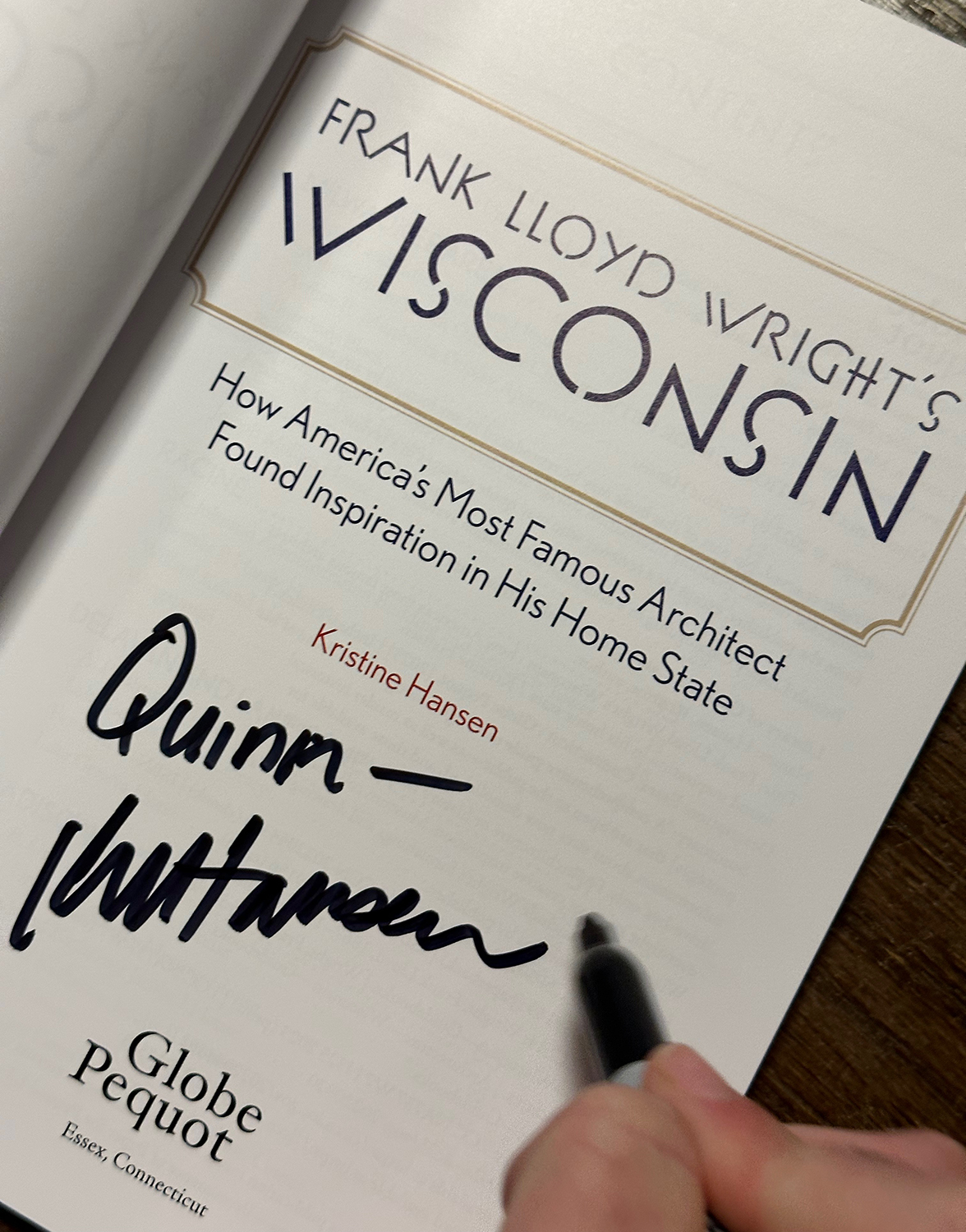
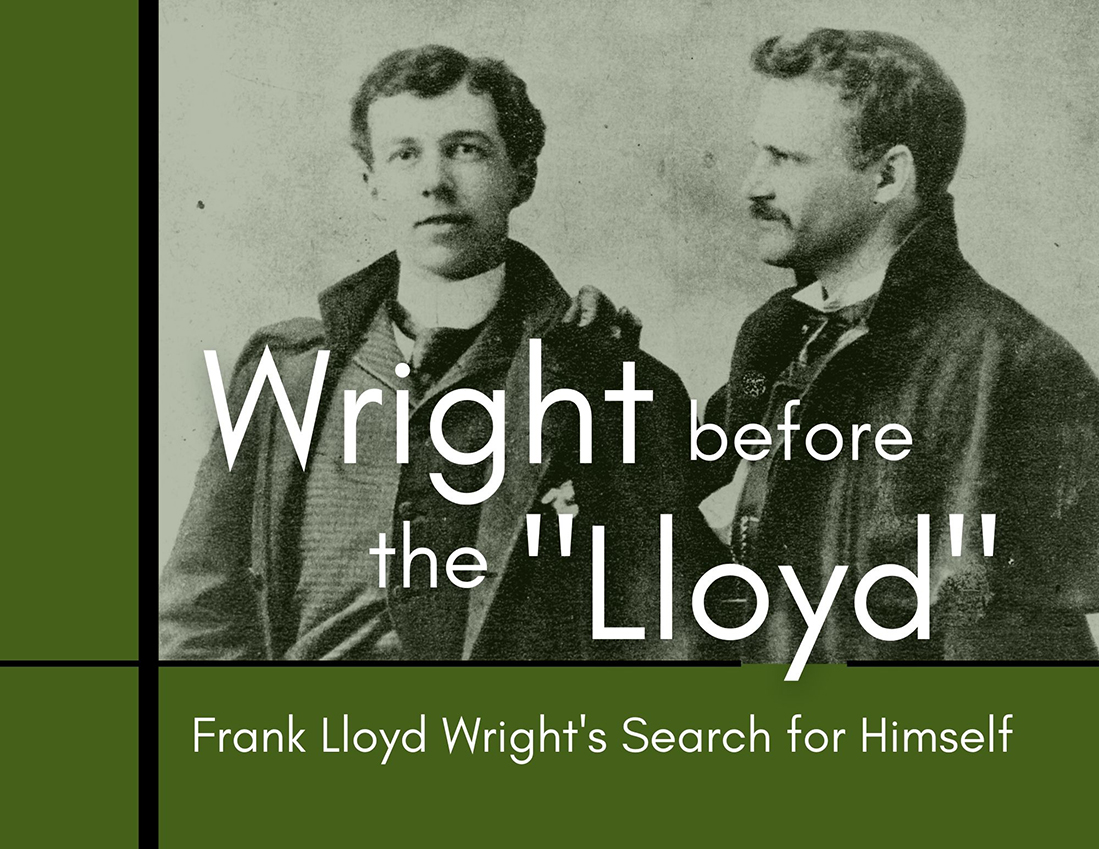
There are two new books to consider adding to your Frank Lloyd Wright bookshelf: Kristine Hansen’s Frank Lloyd Wright’s Wisconsin: How America’s Most Famous Architect Found Inspiration in His Home State (Globe Pequot Press, 2023) and the catalogue that accompanies the “Wright Before the ‘Lloyd’: Frank Lloyd Wright’s Search for Himself” exhibit at the Racine, Wisconsin, Heritage Museum, published by the museum.
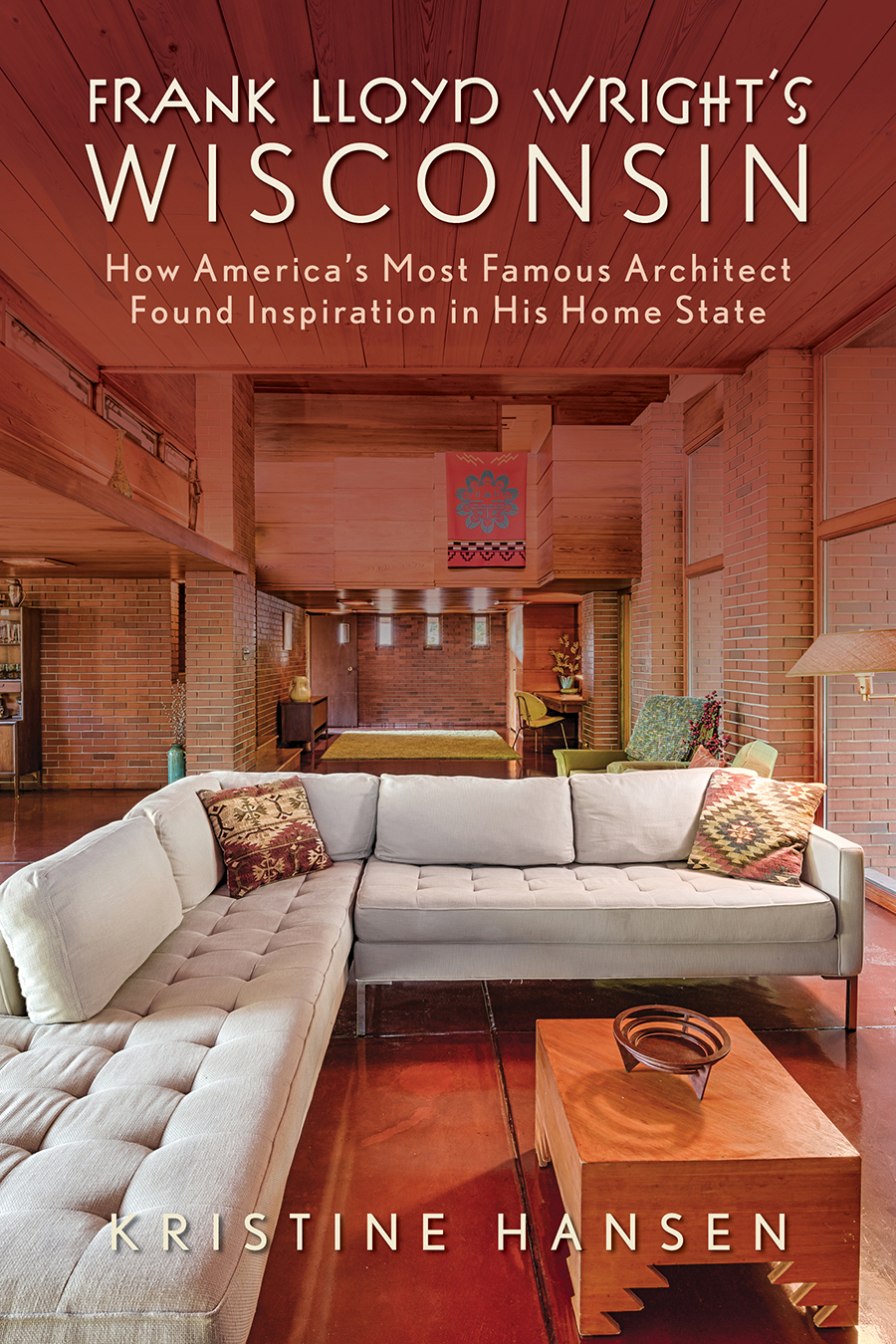
Frank Lloyd Wright's Wisconsin Book Cover Image.jpg

(As a journalist I believe in disclaimers…Hansen worked as a reporting intern at the Racine newspaper in the 1990s when I was Director of Photography there. After she contacted me when she was writing her book, I introduced her to Minerva Montooth and stewards, past and present, of the Hardy House, A.P. Johnson House, Keland House, and Penwern. She quotes me extensively, drawing from my books, and used a number of my photographs.)
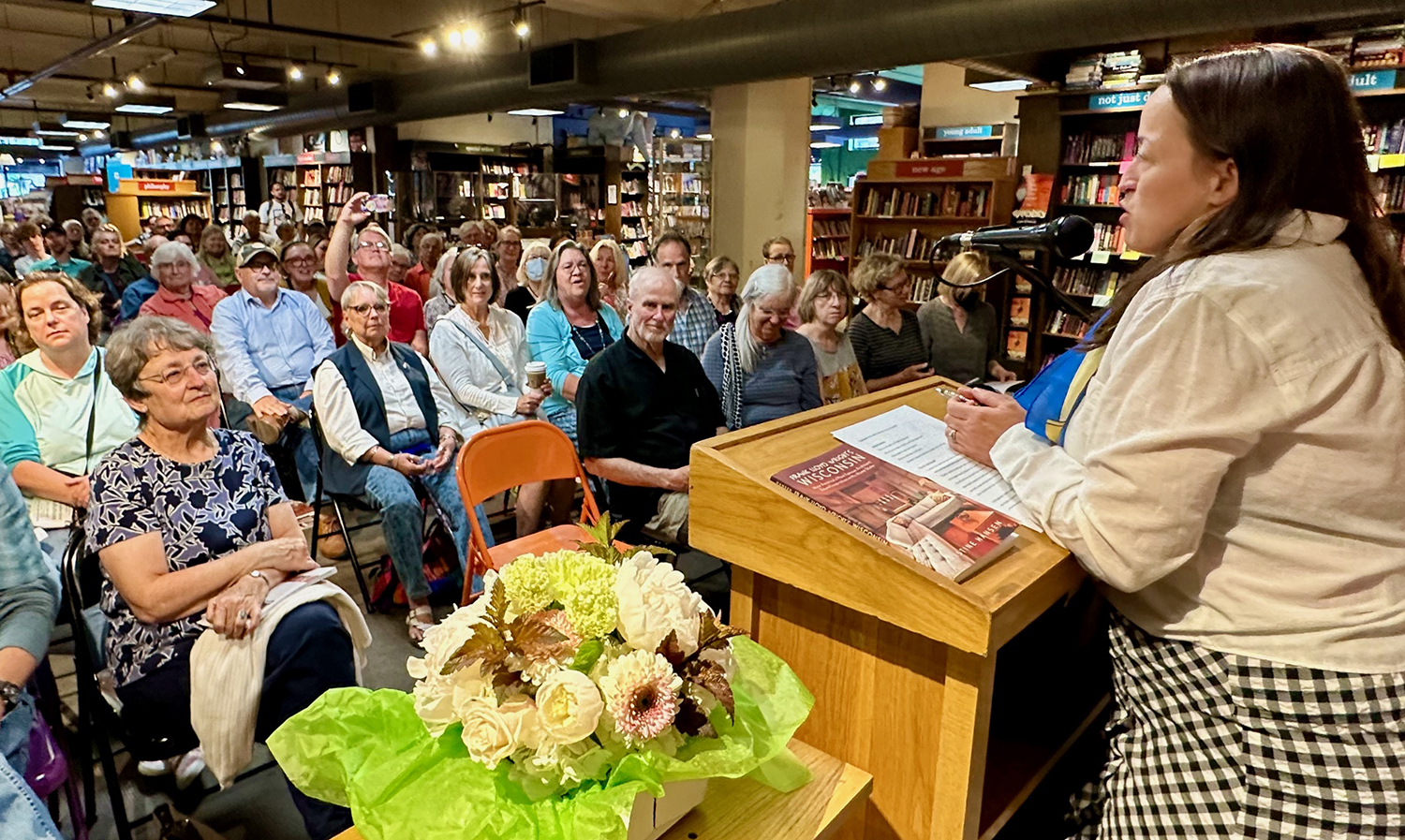
IMG_3225.jpgHansen at Boswell Books in Milwaukee on June 9. Her mother, left, beams in the front row.

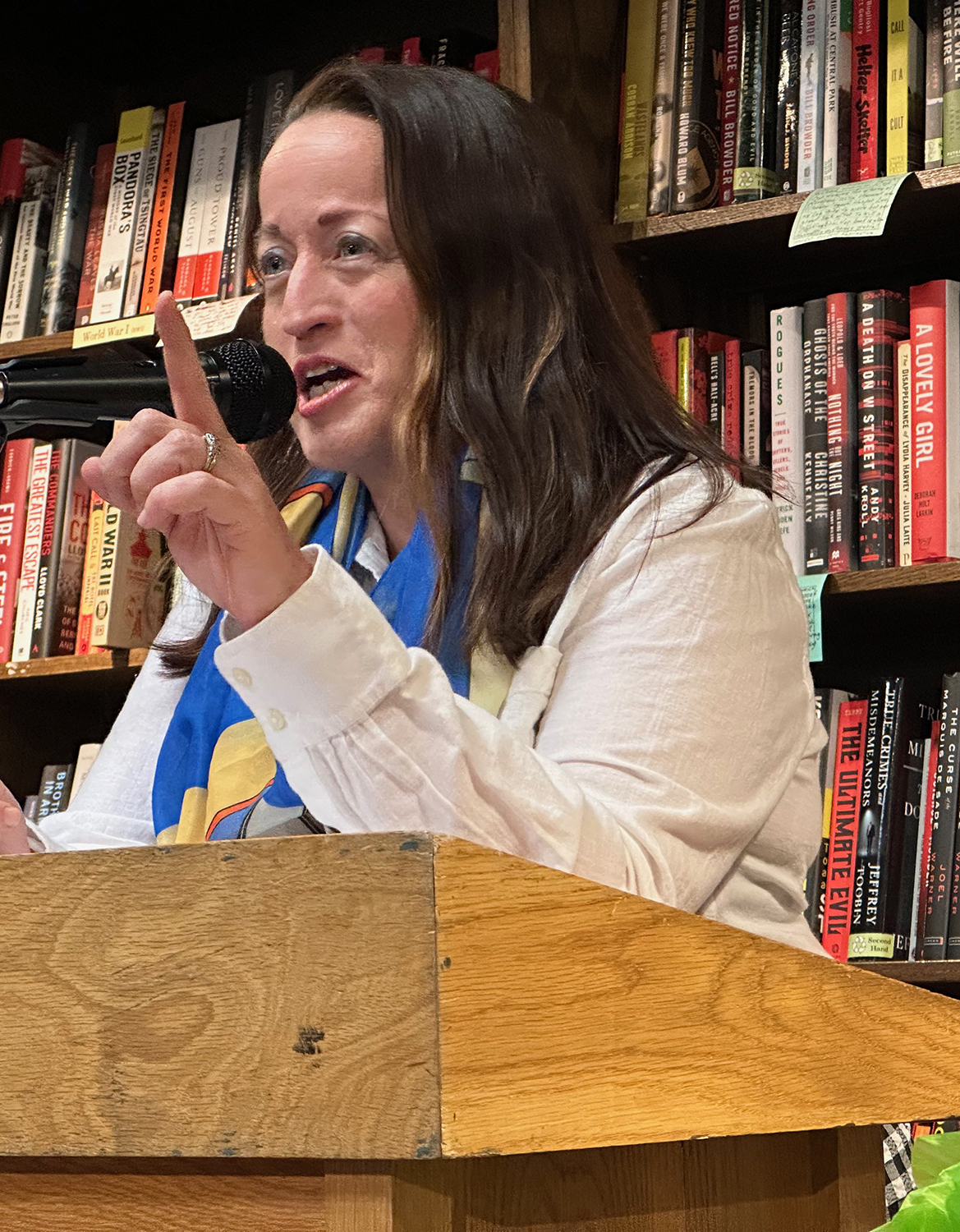
Hansen described her book as a “guidebook” rather than an “academic” book in an email to me. That is an apt description. She is a travel writer based in Milwaukee and became aware that Wright’s work in his home state is not as well known as, say, Fallingwater, to people across the country who do not live and breathe Frank Lloyd Wright every waking moment. The book is rich in anecdotal descriptions and histories of many of Wright’s commissions in Wisconsin, as well as several Wisconsin buildings by other architects, including by Wright apprentices James Dresser. and John Rattenbury.
IMG_3224.jpg

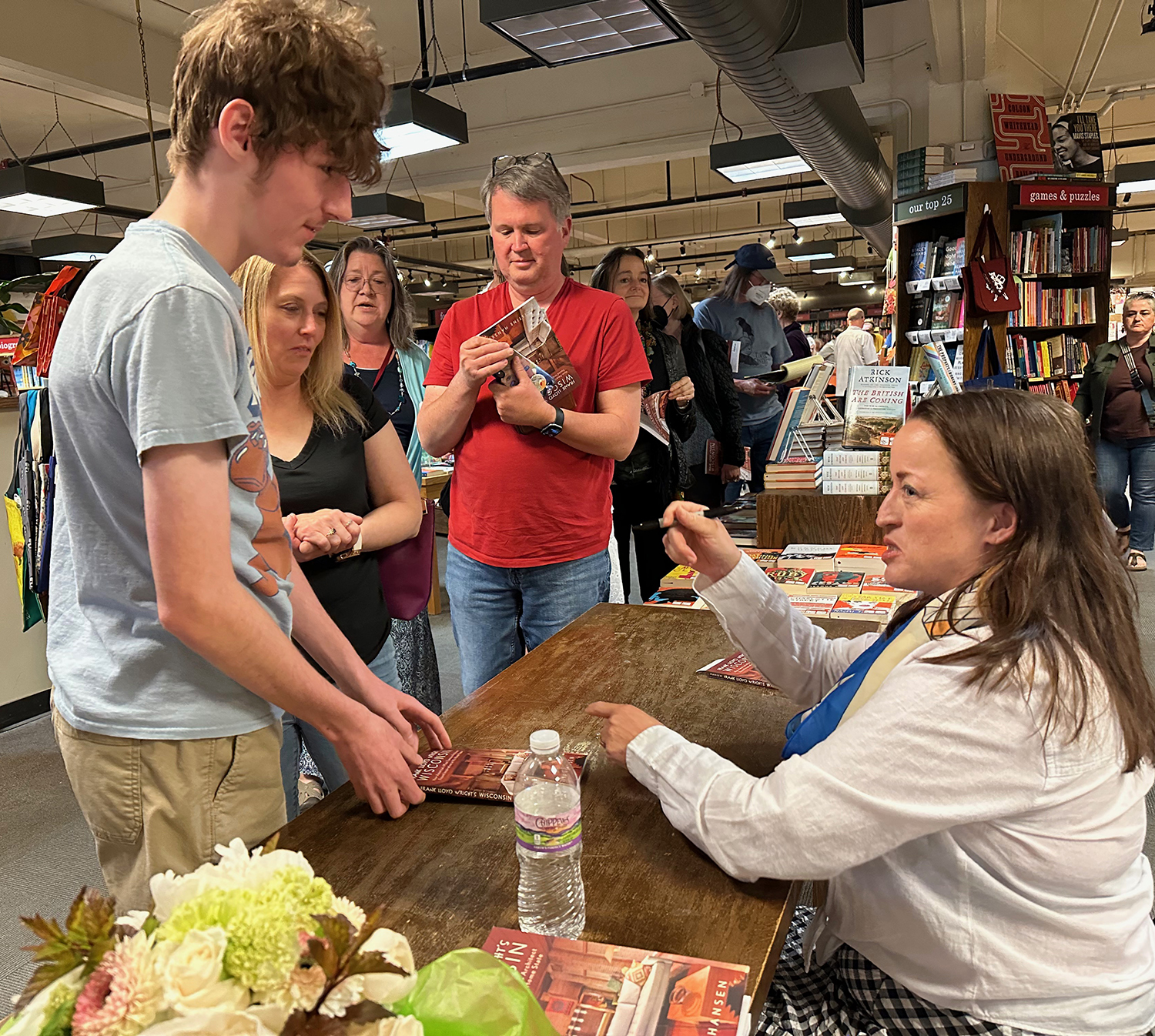
Her Introduction was born during a traditional Wisconsin Friday night fish fry when someone asked her, “Who was Frank Lloyd Wright?” Then,  “I realized that most people connect Wright with his architectural projects but not necessarily his character and personality.” Fortunately, the book concentrates on his work, rather than rehashing the same-old, same-old about what a difficult man he was. I know several Wright clients who passionately disputed that characterization of Wright, so best to move on from that.
IMG_3228.jpg

Although there is a listing of all of Wright’s Wisconsin commissions, along biographical notes about his life, in the three page “Timeline of Frank Lloyd Wright in Wisconsin” chronology in the front of the book, the text is not inclusive of all of them. “My dream book would have been to include every project Wright designed in Wisconsin. I actually did not want to discriminate. But some people did not get back to me and as they are stewards of private homes I didn’t think it would be fair to have a chapter about a house without interviewing the person who lived in it, especially in contrast to chapters where I interviewed the stewards of other homes,” Hansen wrote me.

I emailed her about the subtitle of the book, writing her that I thought the book shows what came out of his inspiration rather than how he was inspired by his home state.  She replied, “In my talks I am further addressing this question, such as how growing up on so many acres of land likely led to his organic-architecture philosophy. If this were a more academic book, and not a guidebook, I might have included a chapter that answers this question in essay form, pulling together the tenets of each project.”

There are a few errors in the first edition, which sold out quickly. Although Hansen caught them when proofing the book, her editor did not correct them before going to press. She has been assured that they have been corrected for a second printing due out in July.

I come from a visual background, so I look at more than the narrative of a book. How is it presented to the reader? Several aspects of the design and production of the book are disappointing. I wish each chapter included the date of the commission in the heading and, in the case of the non-Wright buildings, the name of the architect, rather than introducing his name lower down, in the narrative. (Hansen breaks with convention by using the date of completion for the buildings rather than the accepted practice of the date of its design.) The book’s designer included some completely and partially blank pages in the book. The “Statewide” chapter about the Wright in Wisconsin organization has four photos which are not captioned. I recognize one as Wright’s Lamp House in Madison, but I have to guess at the names of the buildings and non-Wright architects of the other three from the text. The quality of the photo reproduction varies from excellent to poor. Muddy tones in some of the darker photos would not be hard to correct.
IMG_3233.jpg

Scholarly treatises about Wright’s work abound, and I am aware of at least two more in the pipeline. Hansen’s book is for a different audience. It is a good overview of Wright’s work in Wisconsin for a general audience that is not going to delve into endnotes and debate about his work ad infinitum. A Wright scholar criticized one of my books for being too anecdotal. On the contrary, I replied, I believe that it is important to let Wright’s clients and the stewards of his homes tell how they experience his architecture, how they live and work in his buildings. Hansen’s book accomplishes that through her dogged efforts as a journalist to track down her subjects.

To order: https://www.boswellbooks.com/book/9781493069149
cover.jpg

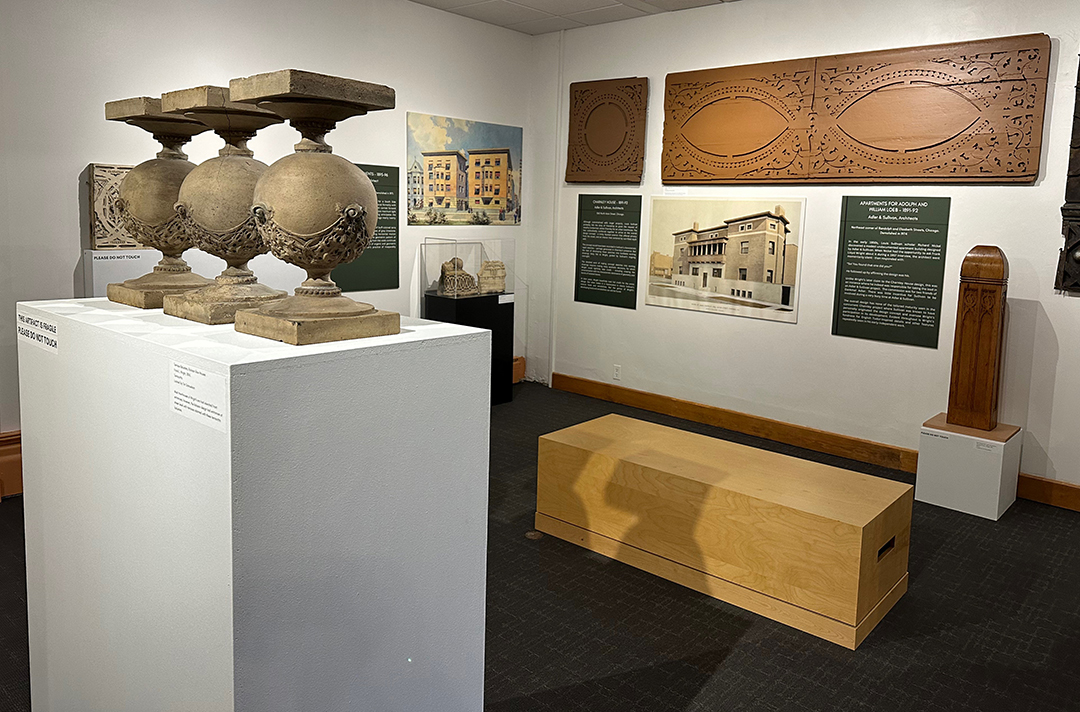
The “Wright Before the Lloyd” exhibit, which runs through 2024, was curated by Tim Samuelson, the City of Chicago Cultural Historian Emeritus. The exhibit draw on his vast knowledge and extensive collection of Wright and Louis Sullivan artifacts. Samuelson cut his teeth in preservation as a student in the 1960s, helping the late Richard Nickel salvage artifacts from Sullivan building that were being demolished in Chicago.
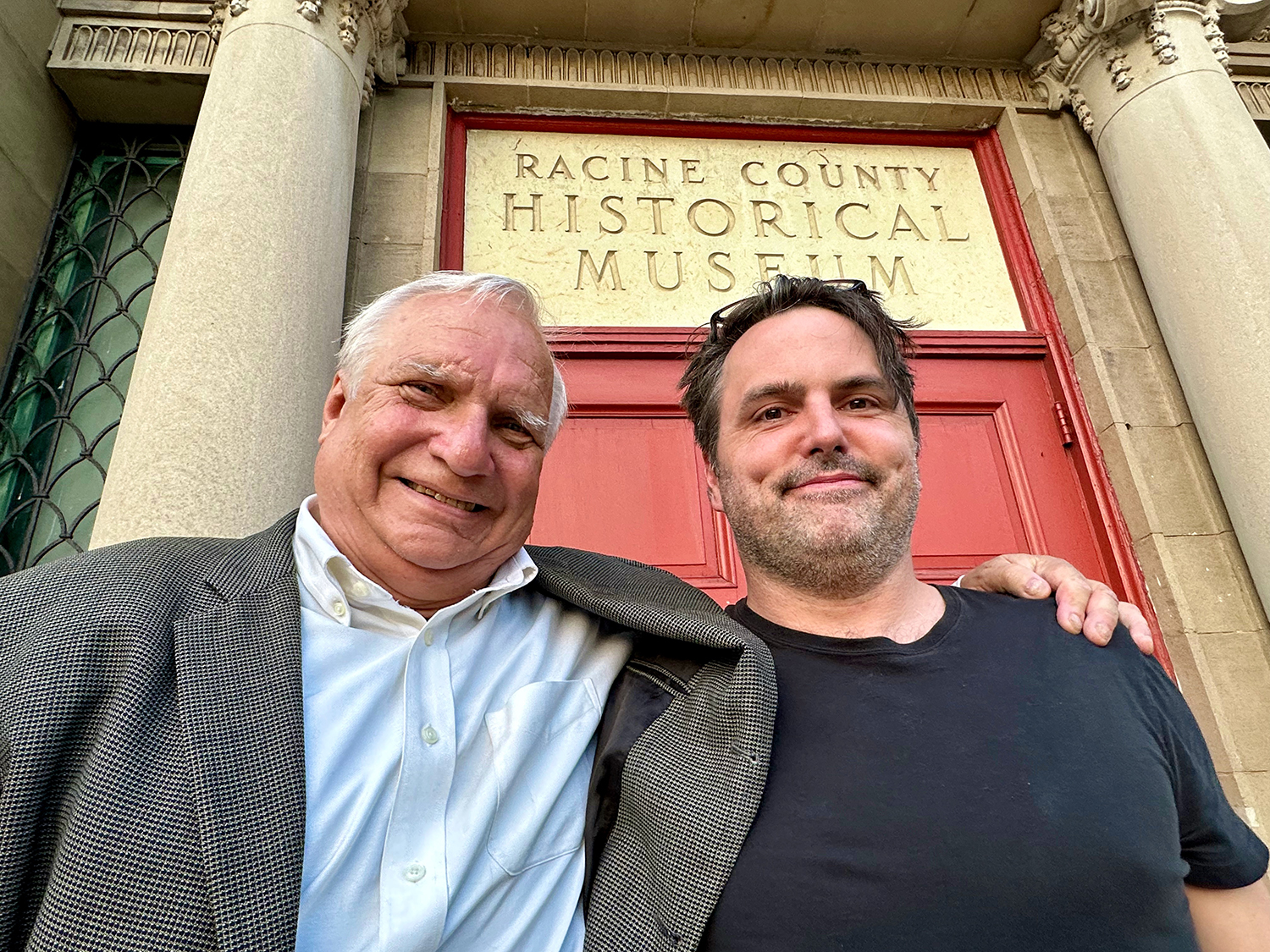
Samuelson Nordstrom.jpgSamuelson, left, with Eric J. Nordstrom of the bldg.51 archive, at the exhibit opening.

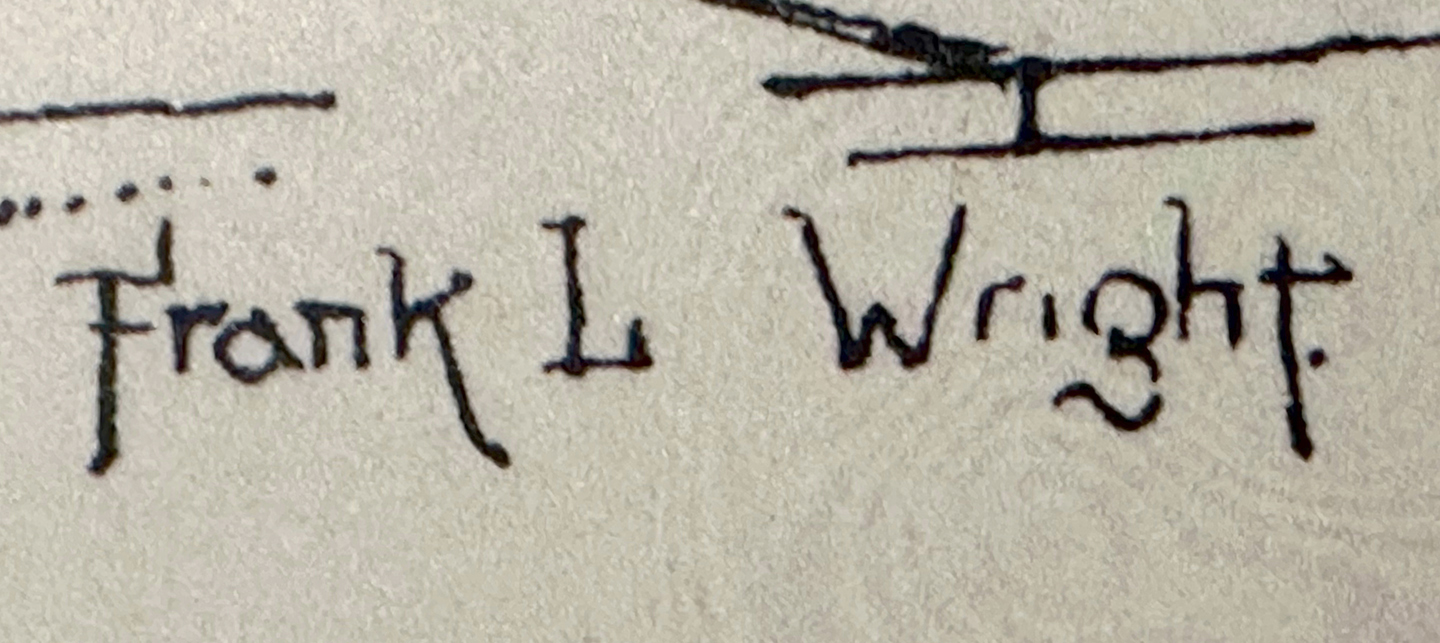
The exhibit focuses on Wright’s early career, when he signed his work “Frank L. Wright.” He worked for Joseph Lyman Silsbee and Adler & (Louis) Sullivan before his dismissal from Adler & Sullivan. It also focuses on Cecil S. Corwin, Wright’s dear friend who he met soon after moving to Chicago form Madison.
LR RHM Corwin Wright 040.jpg

The exhibit catalogue, written by Samuelson, with an Introduction by museum curator Allison Barr, is a summary of many of the text blocks from the exhibit and includes some of the exhibit’s photographs and drawings. It also includes photographs of some of  Wright’s pre-“Lloyd” work and some of Samuelson’s rich collection of artifacts that are on display. The chapter entitled “A Tale of Two Houses” is about Corwin’s H. G. Mitchell House in Racine and Wright’s F. R. Bagley House in Hinsdale, Illinois, both from 1894. The chapter raises the question of how much involvement Wright had in the design of the Mitchell House, with no definitive answer.
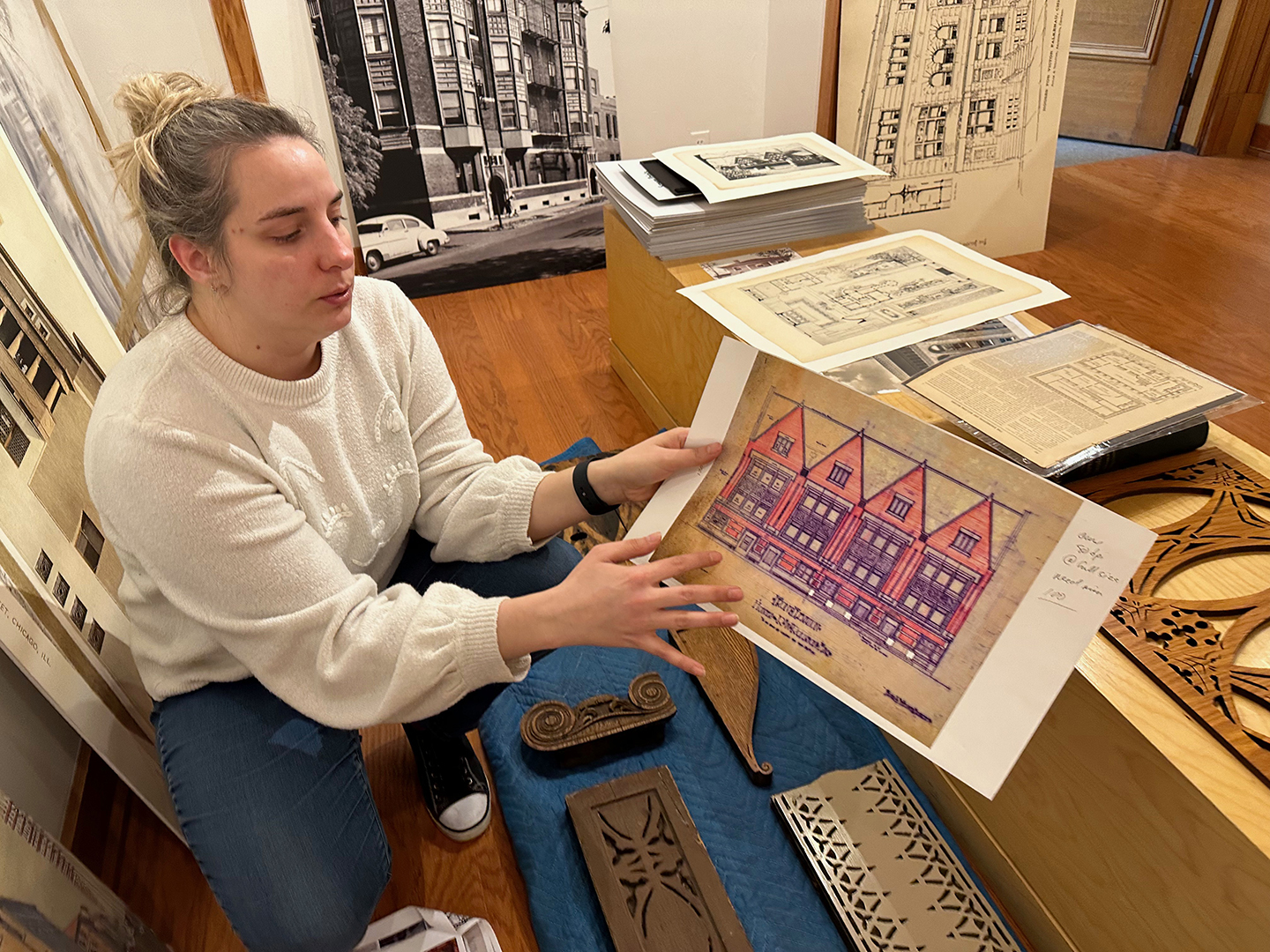
RHM Corwin Wright 005.jpgMuseum curator Allison Barr helps set up the exhibit.

This slim book – it is just 23 pages – is a fine overview of the exhibit and Corwin and Wright’s relationship for people who cannot travel to Racine to see the exhibit for themselves. It ends with Wright’s tribute to Corwin in 1958, just a few months before Wright died, “…the best friend, perhaps I’ve ever had.”

To Order:https://www.racineheritagemuseum.org/product/wright-before-the-lloyd-exhibit-catalog/214?cp=true&sa=true&sbp=false&q=false
LR RHM Corwin Wright 027.jpg

Please scroll down to read previous posts…

“Wright Before the Lloyd”

© Mark Hertzberg, Tim Samuelson, and Racine Heritage Museum (2023). Images of individual artifacts cannot be reproduced without permission.

LR RHM Corwin Wright 027.jpg

A few weeks ago I teased you with this photo of a U-Haul truck, and told you that a bunch of “stuff” was being delivered to the Racine, Wisconsin, Heritage Museum for a major exhibit about Frank Lloyd Wright and Cecil Corwin. Museum executive director Christopher Paulson and curator Allison Barr worked tirelessly with Tim Samuelson for over a year to bring it to life.

LR RHM Corwin Wright 010.jpg

Now it is time to pull the curtain back on the exhibit which opened May 4, and runs through 2024.

LR RHM Corwin Wright 041.jpgRacine designer Robert Hartmann originally designed the exhibit space with  a sense of “compression and release” in 2011.

“Wright before the ‘Lloyd,’” highlights the young Frank L. Wright and his friend Cecil Sherman Corwin, the forgotten architect and mentor who did much to shape him into the architect we know as Frank Lloyd Wright.   

LR RHM Corwin Wright 028.jpg

Wright wasn’t always Frank Lloyd Wright. In his youthful years of architectural practice at the end of the 19th Century, he was very different from the brash, self-confident public celebrity who several decades later gave Racine its landmark S.C. Johnson & Son campus. Born Frank Lincoln Wright, the young architect signed his works prosaically as “Frank L. Wright.”

He had arrived in Chicago in 1886 as an inexperienced and self-doubting nineteen-year-old aspiring architect. He was warmly welcomed into employment with the office of architect Joseph Lyman Silsbee by Corwin, the firm’s chief draftsman. Both Corwin and Wright were sons of  much-traveled ministers. Corwin’s father, the Rev. Eli Corwin, was the popular pastor of Racine’s First Presbyterian Church from 1880 – 1888.

RHM Corwin Wright 038A.JPEG

RHM Corwin Wright 039.JPEG

Corwin and Wright quickly discovered they had much in common, including similar passions for architecture, culture and music. They became inseparable friends. They shared ideas in their practice of architecture for 10 years. For many years, they shared a small office in downtown Chicago. Each had projects and clients of their own, but critiques and comments were freely shared. In later years, Wright often recalled his appreciation for the guidance, confidences and camaraderie Corwin provided in guiding his personal life, and shaping the professional identity that later gave him fame. In An Autobiography (1932) Wright wrote that he had found “a kindred spirit” when he met Corwin.

RHM Corwin Wright 040.JPEG

The exhibit is curated by Tim Samuelson, the City of Chicago’s Cultural Historian Emeritus.

RHM Iannelli Planning Meeting 003.jpgTim Samuelson, left, David Jameson, and Eric O’Malley of O A + D at a planning meeting for the Racine Heritage Museum’s exhibition about the Racine-related work of Alfonso Iannelli in 2018,

It is comprised of his extensive collection of early Wright architectural salvage, drawings and images, The exhibit, on the museum’s main floor center and north galleries, runs through December 30, 2024.

RHM Corwin Wright 009.JPEG

LR RHM Corwin Wright 007.jpg

LR RHM Corwin Wright 013.jpg

LR RHM Corwin Wright 033.jpgHartmann, left, and O’Malley preview the exhibit April 30.

Sponsors of the exhibit are the Arch W. Shaw Foundation, Racine Community Foundation, WE Energies Foundation and the Racine Arts Council.

The museum is located at 701 Main Street in Racine. Museum hours are: Tuesday-Friday 10am-5pm, Saturday 10am-3pm, Sunday Noon-4pm.  Admission is free. The museum, built as a Carnegie Library in 1904, is a historically preserved building and is not ADA accessible. For more information call the museum at 262-636-3296 or visit their website, www.racineheritagemuseum.org

“Wright in Racine” was allowed to document the installation of the exhibit:

LR RHM Corwin Wright 026.jpgRHM Corwin Wright 005.jpgMuseum curator Allison Barr was instrumental in putting the exhibit together.

LR RHM Corwin Wright 007.jpg

LR RHM Corwin Wright 011.jpg

LR RHM Corwin Wright 012.jpg

LR RHM Corwin Wright 017.jpg

LR RHM Corwin Wright 019.jpg

LR RHM Corwin Wright 021.jpg

LR RHM Corwin Wright 040.jpg

LR RHM Corwin Wright 027.jpg

Please scroll down to see previous posts on this blog or website…