Updates: Tower Tumult; Ann MacGregor

© Mark Hertzberg (2025)

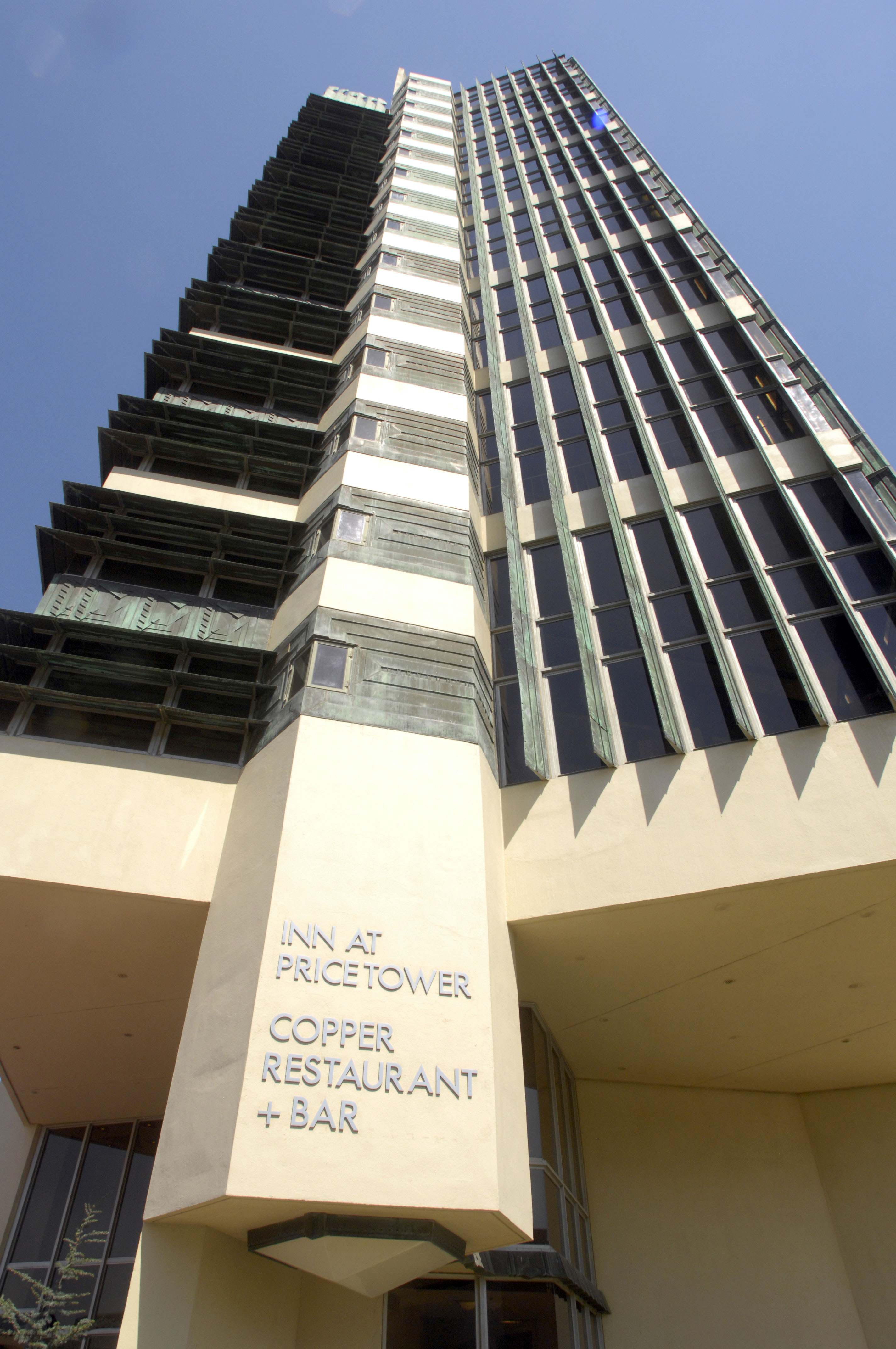
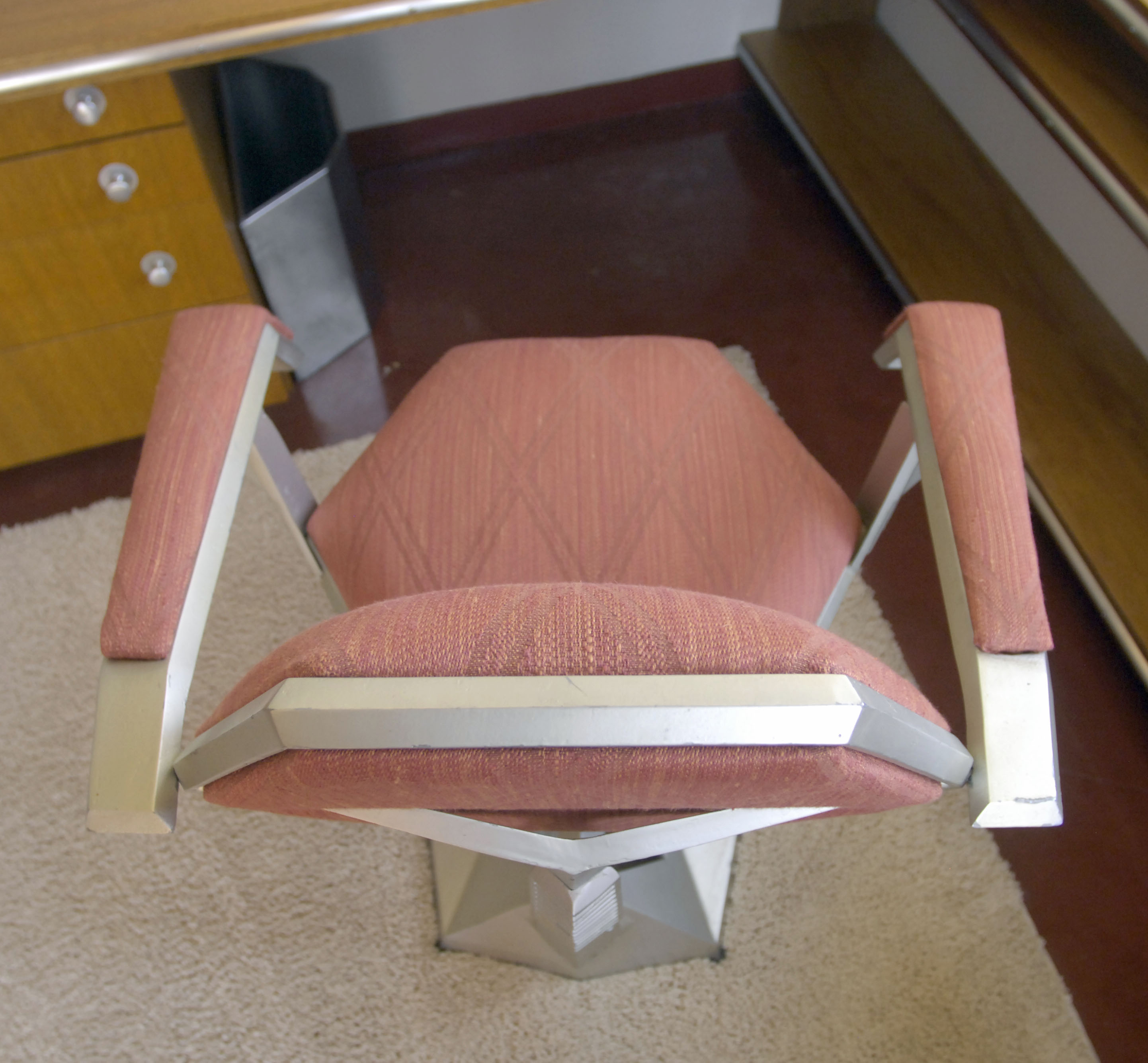
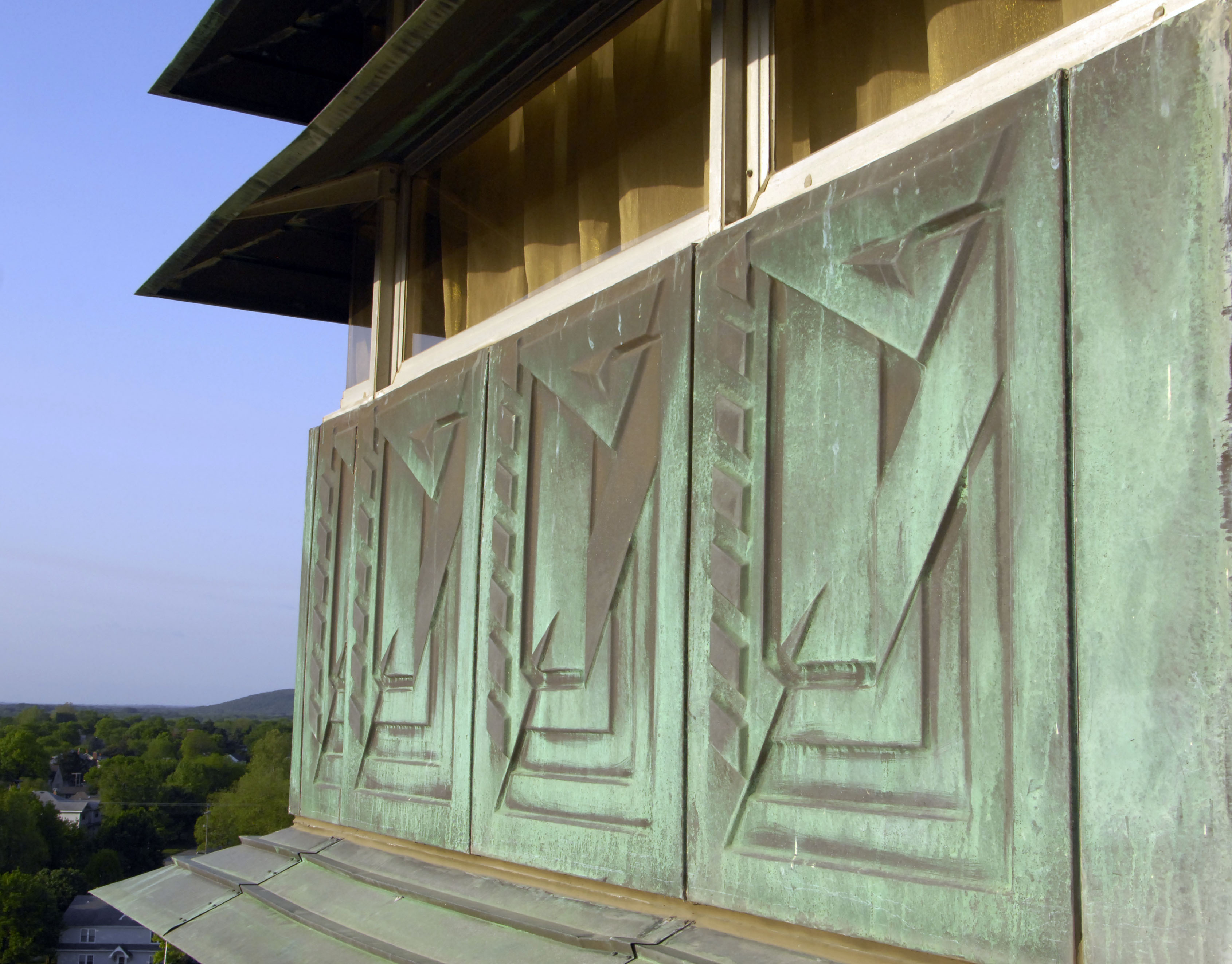
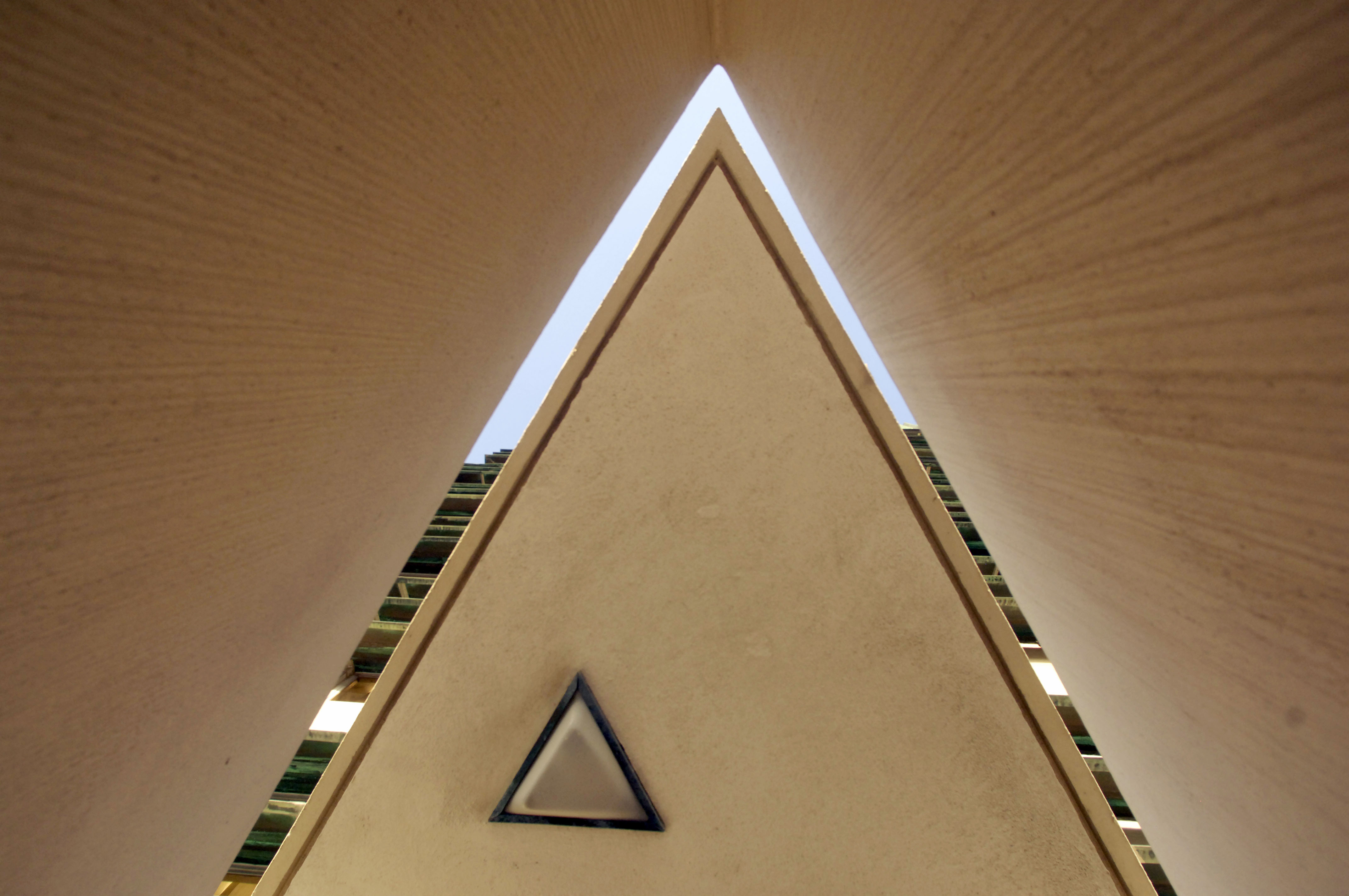
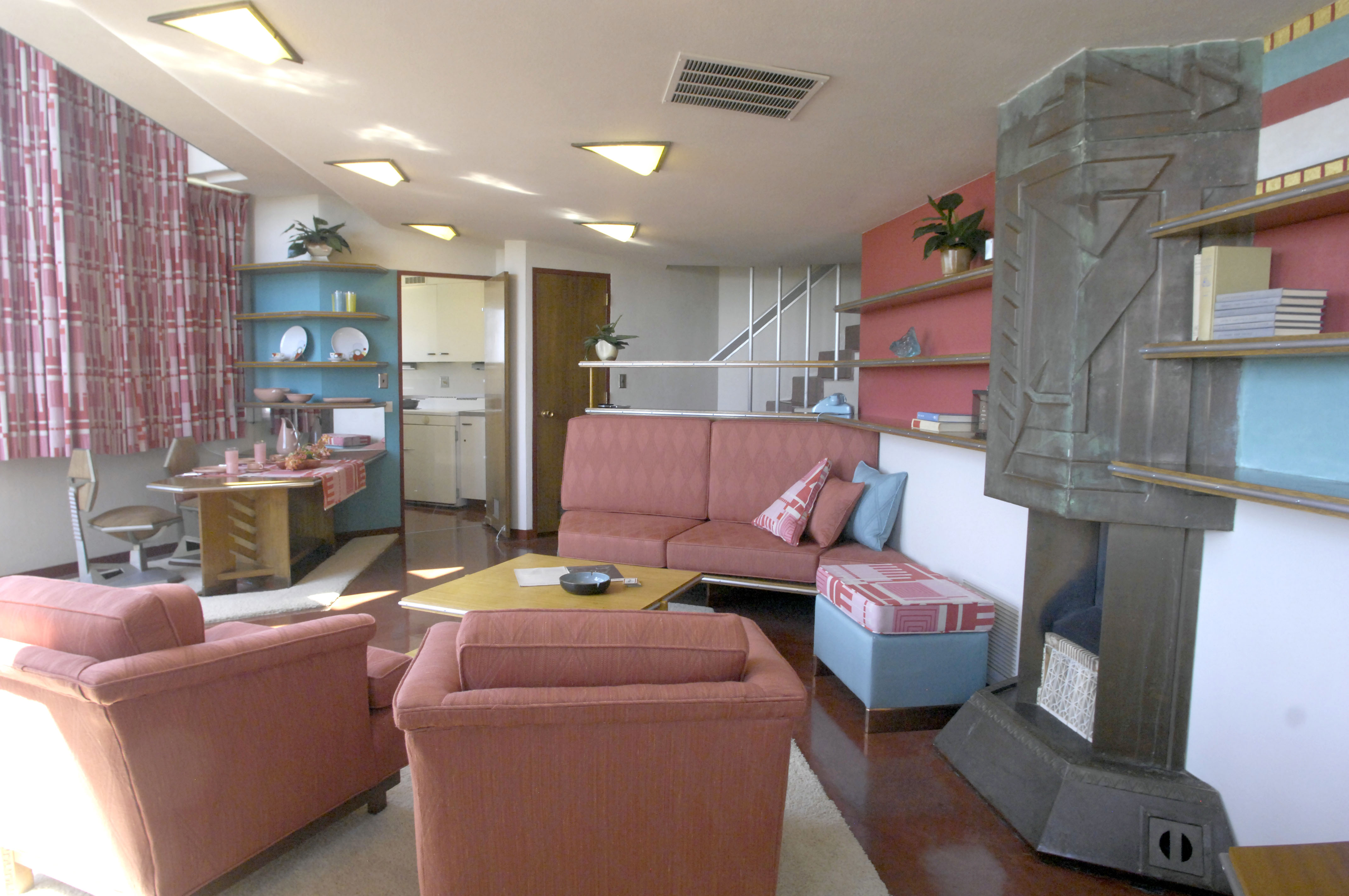
Tower Tumult: On August 14 I posted about the critical situation facing Frank Lloyd Wright’s Price Tower in Bartlesville, Oklahoma (I do not know why the URL mentions the unrelated SC Johnson Research Tower). The post includes a variety of photos of Price Tower:

https://wrightinracine.net/tag/sc-johnson-research-tower/

Oklahoma Frank Lloyd Wright Price Tower 002.jpg

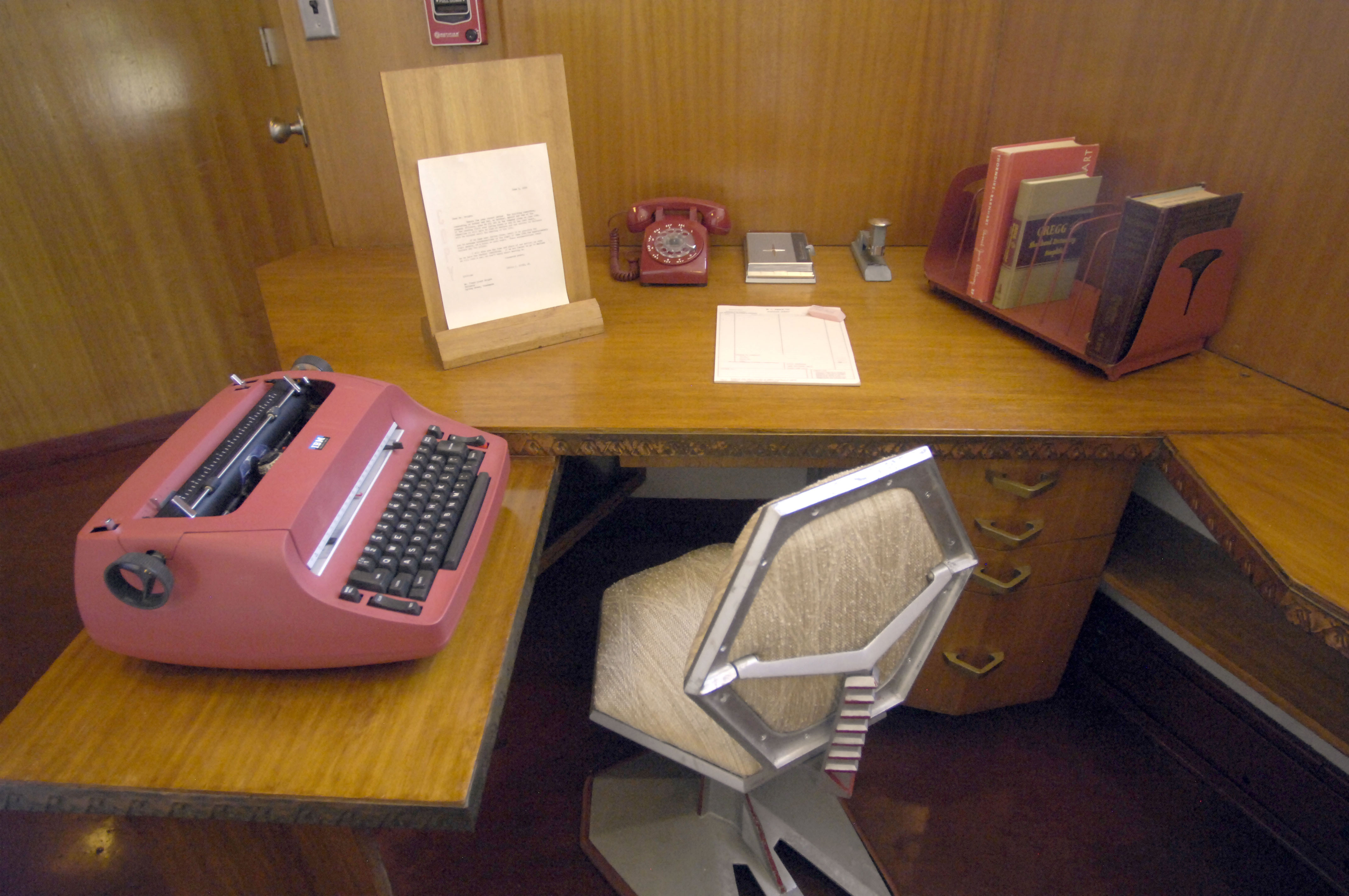
On January 16 a judge ordered that utilities (heat) be restored to the building. On January 21 he ordered the sale to a responsible party from Tulsa that is known for their restoration of an historic hotel there. On January 22 the current owners filed for bankruptcy. They have still not turned the utilities back on, and so this saga drags on. The question of Wright artifacts from the building that were given to an auction house in Dallas, in spite of an easement prohibiting that has not been resolved, either. Among the heroes in this story are the staff and legal counsel of the Frank Lloyd Wright Building Conservancy. Their continuing updates on the story are at:

https://savewright.org/endangered-price-tower-in-bartlesville-oklahoma/

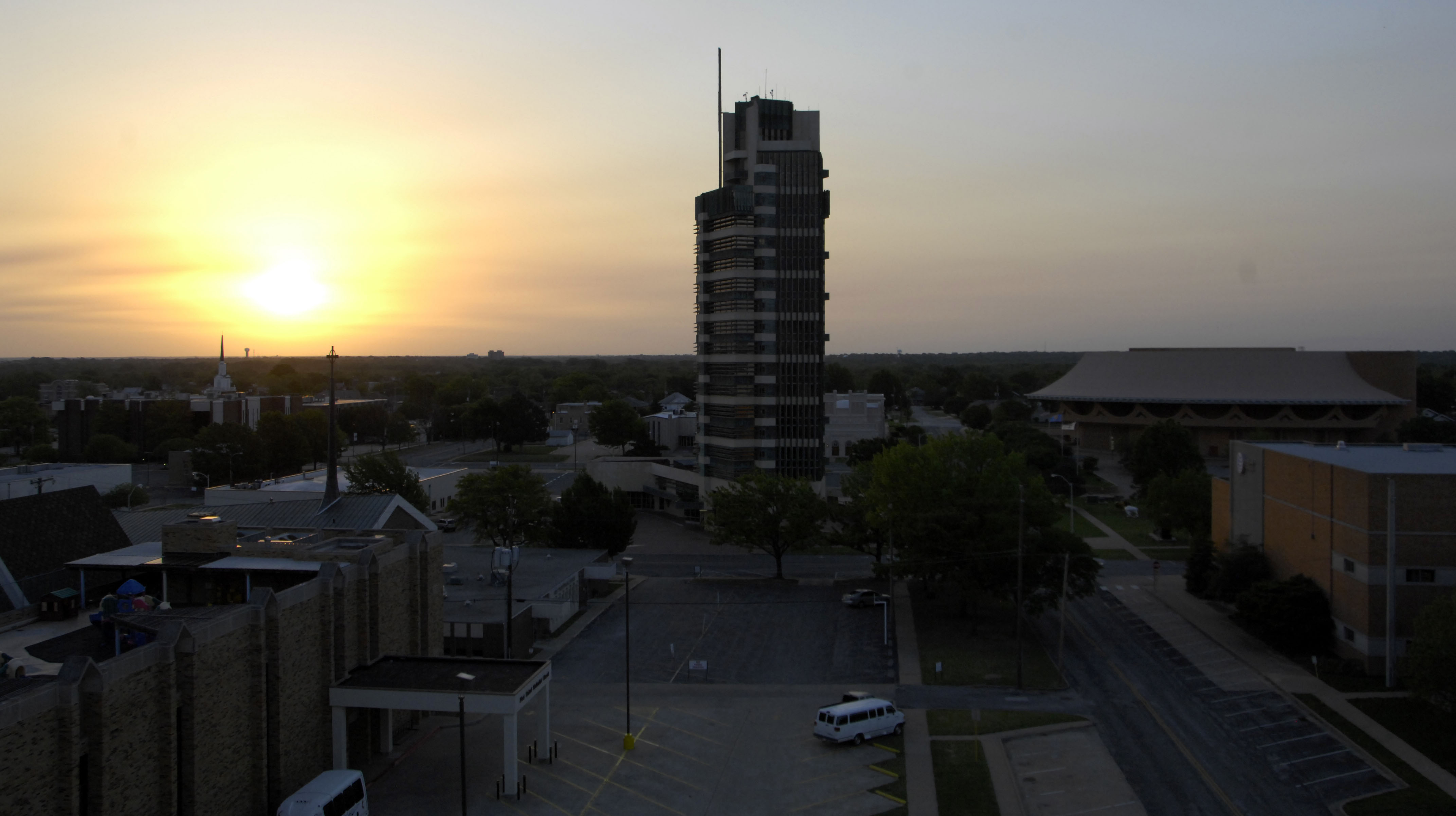
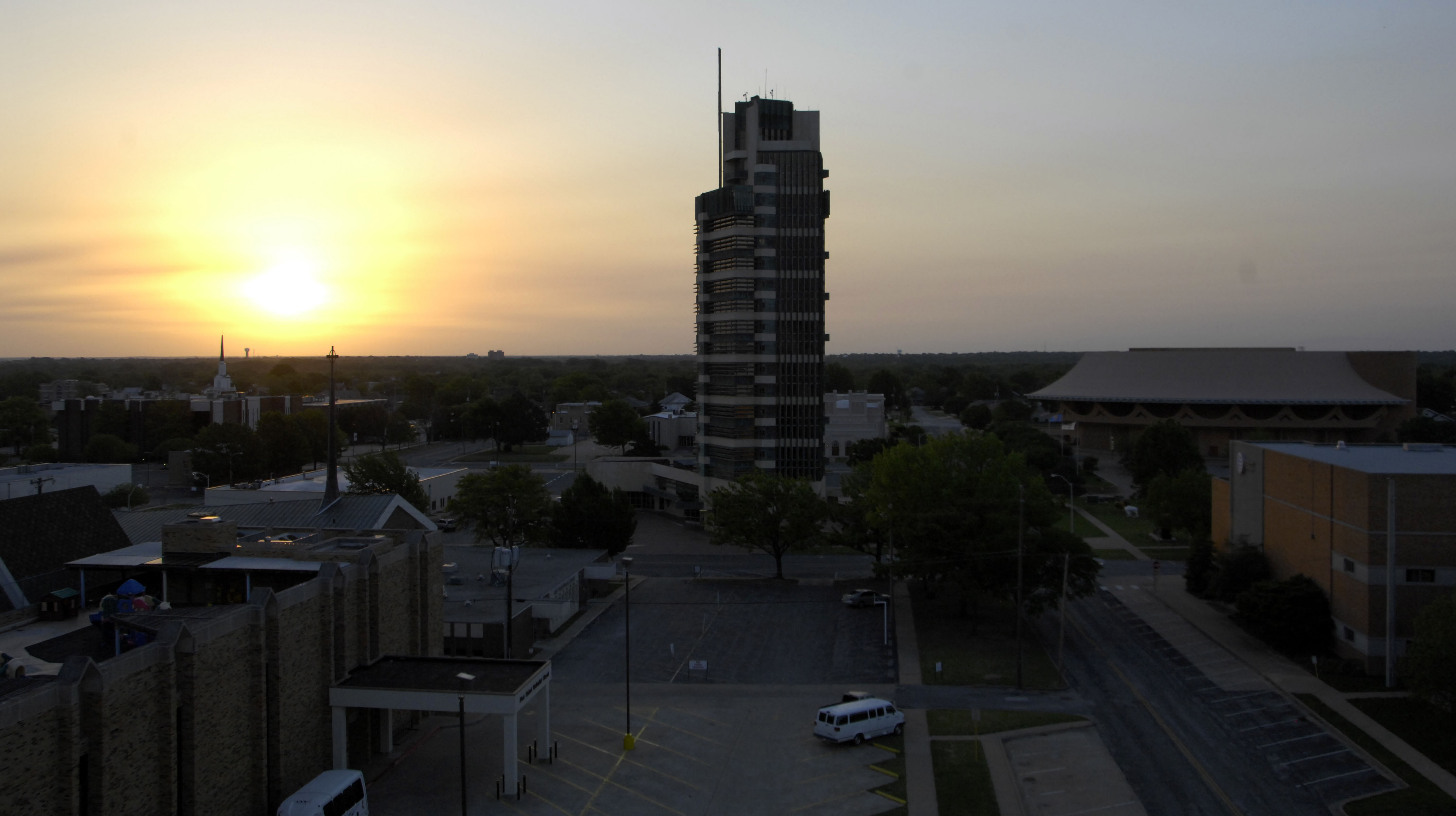
The Building Conservancy is going deep, deep into their funds set aside for legal work as the battle to save the building drags on. Please don’t let the sunset on the building, as I literally did when I took this photograph in 2014. Hint: they would welcome your financial support at:

https://savewright.org/give/

Remembering Ann MacGregor: On November 23 I posted a tribute to the late Ann MacGregor, one of the heroes in Mason City, Iowa’s successful quest to save Wright’s only extant hotel commission, the then-dilapidated Park Inn Hotel and adjoining City National Bank building. The hotel is now a successful boutique hotel:

https://wrightinracine.net/2024/11/23/remembering-ann-macgregor/

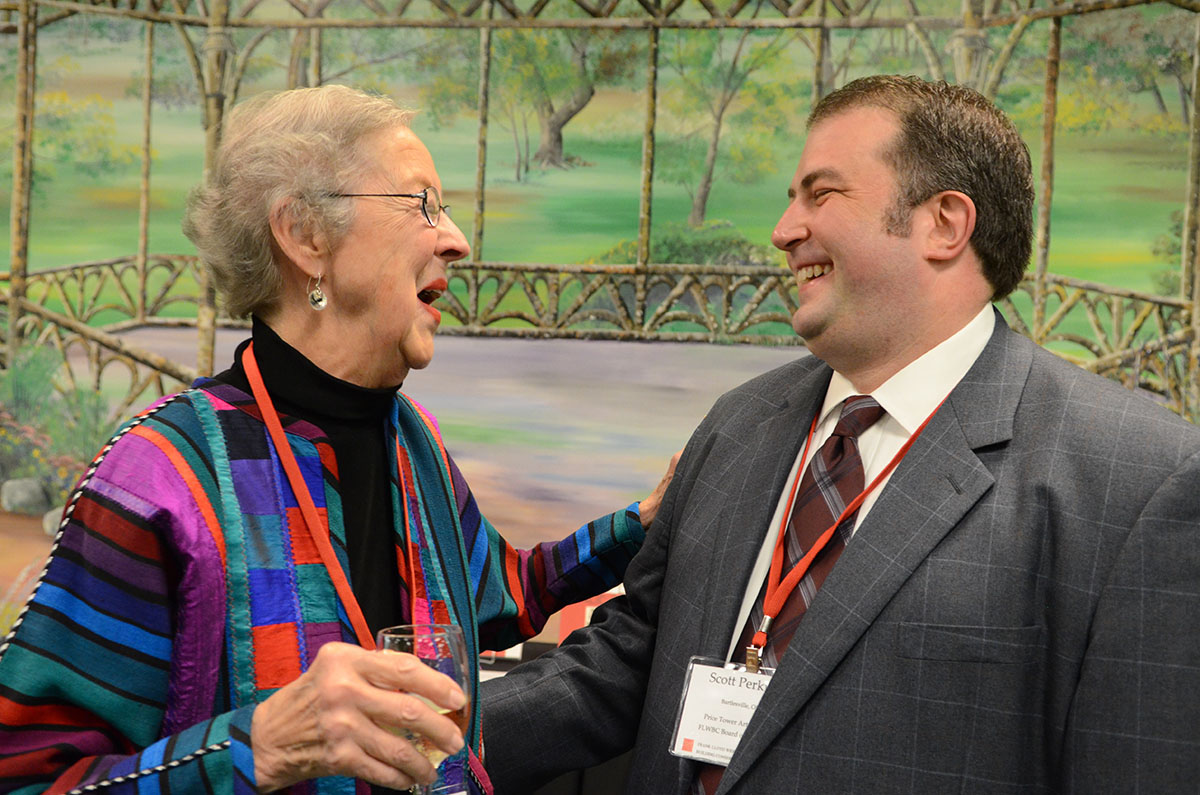
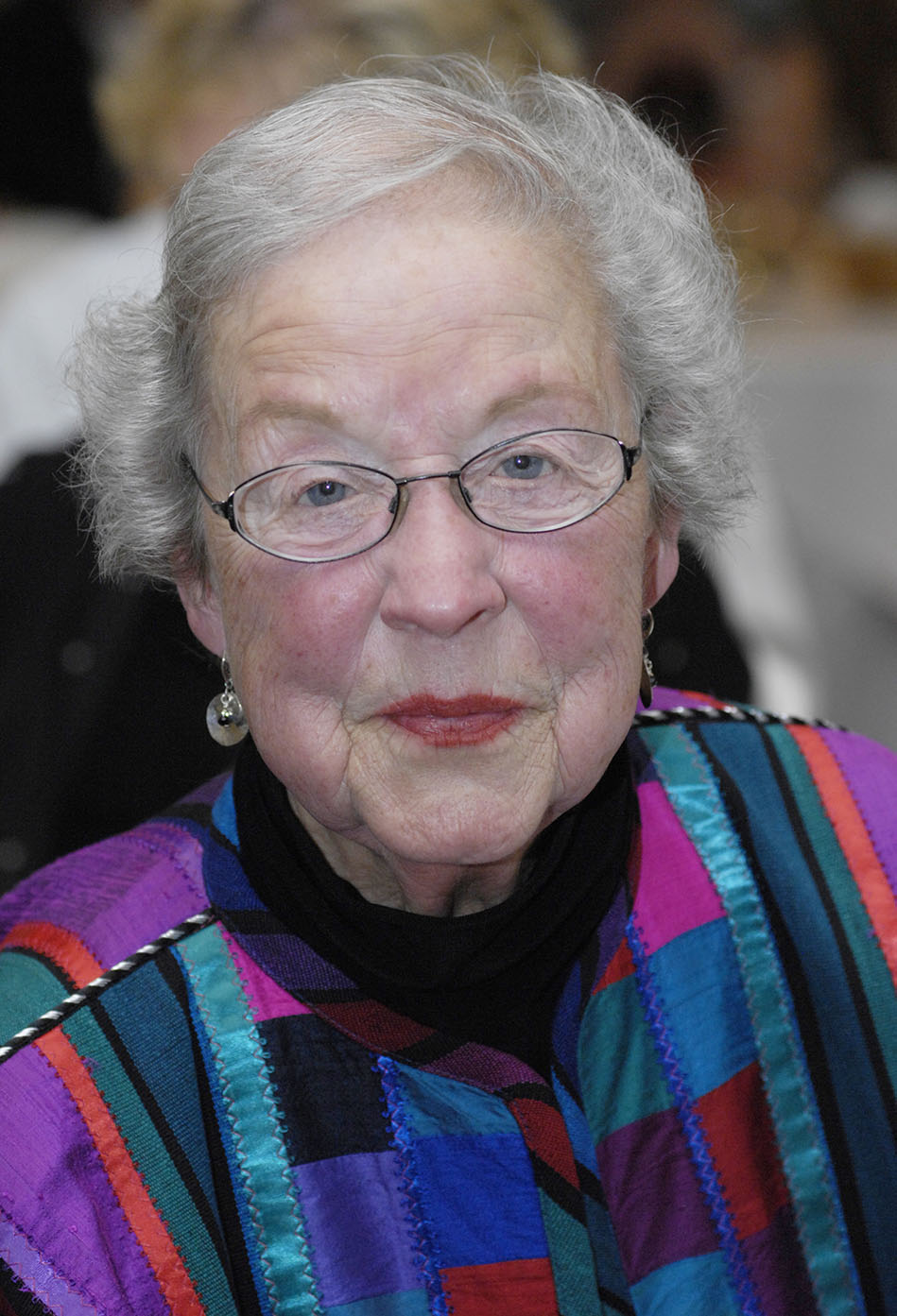
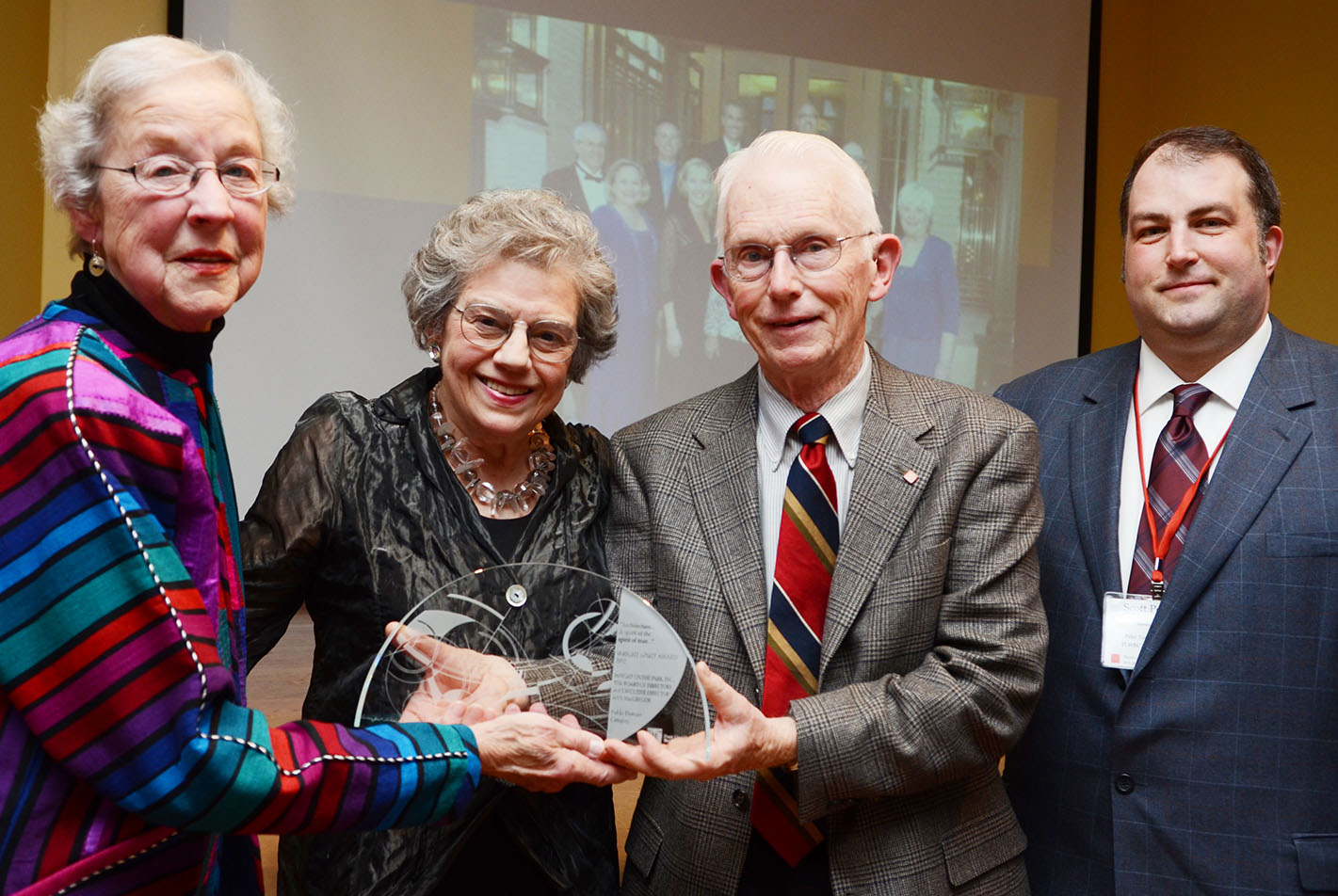
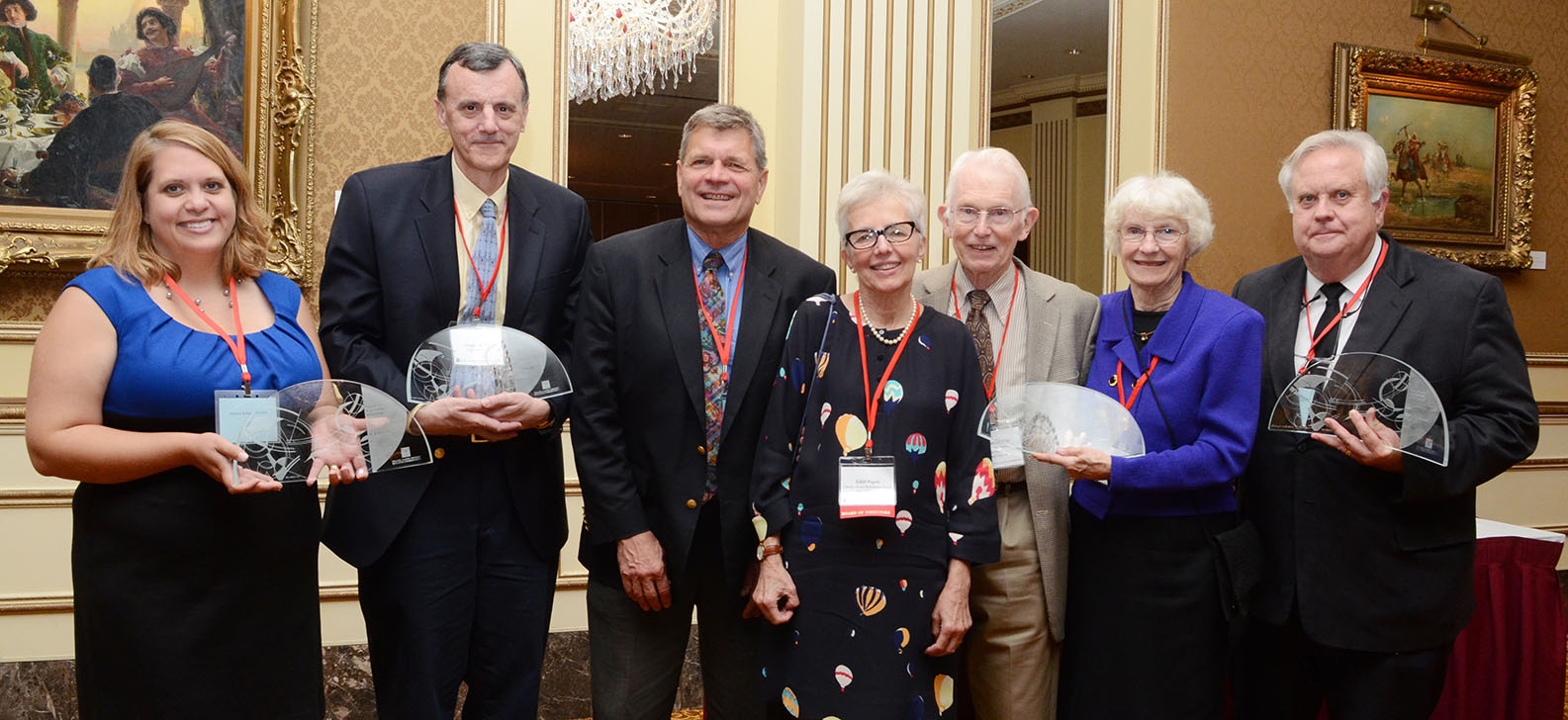
LR Pre-dinner 012.jpgAnn MacGregor with Scott Perkins of the Frank Lloyd Wright Building Conservancy, 2012

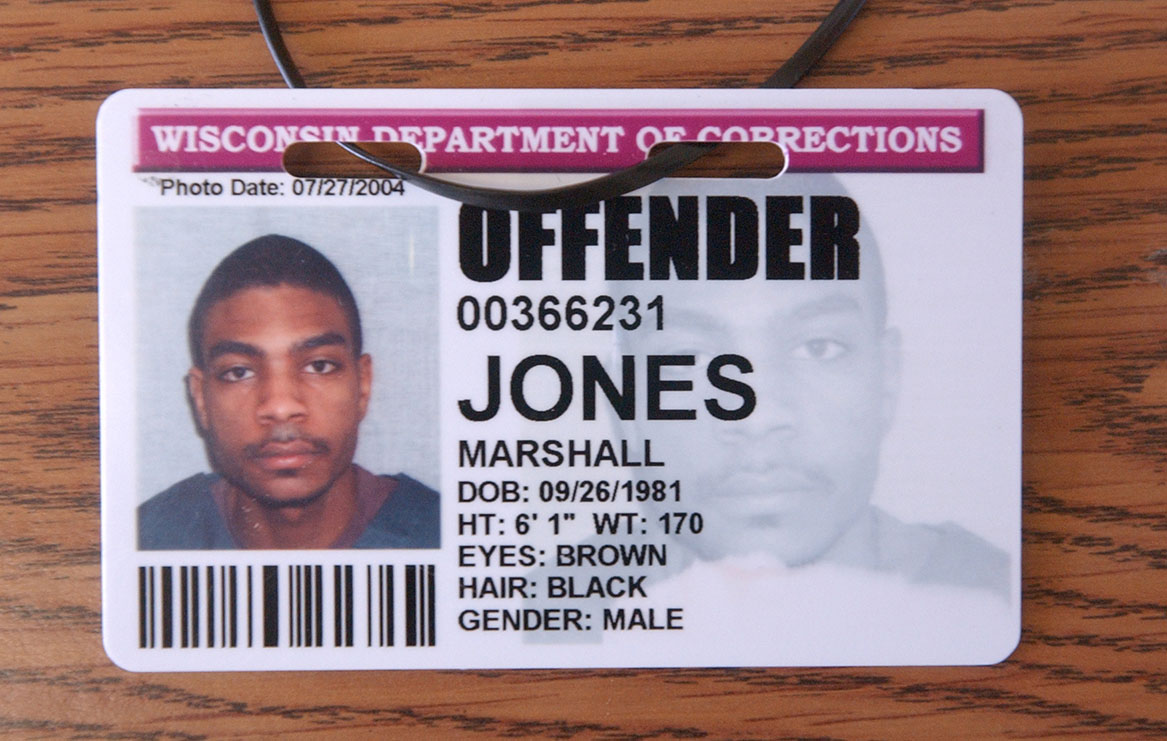
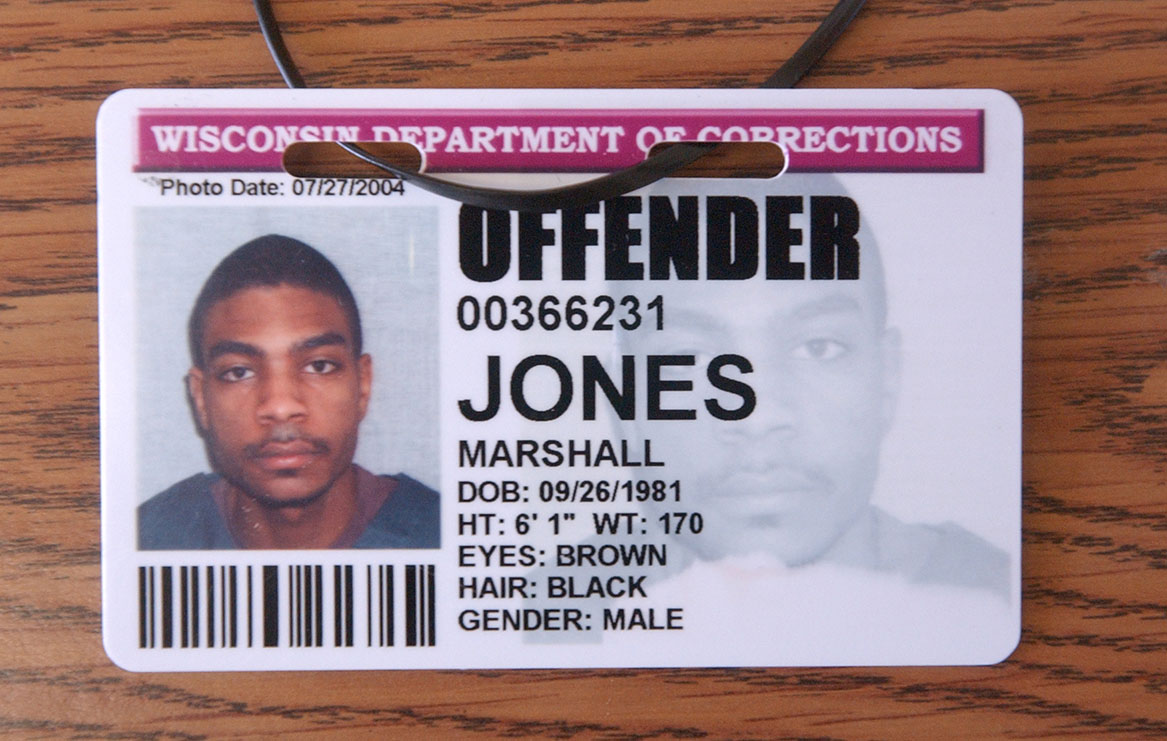
My tribute to Ann mentioned her long-term correspondence with Marshall Jones, a friend of mine, who is serving two consecutive life terms for homicide in Wisconsin. He became interested in Wright after I interviewed him for a project about the criminal justice system.

LR Marshall Jones Waupun 014.jpg

I wrote Marshall to tell him about Ann’s passing, and sent him a copy of my story. He wrote me back last week (mail to the prison system faces interminable delays while it is sent to a place in Maryland that copies incoming letters and then sends the copies to inmates) with his own tribute to Ann:

“I appreciate you for sending me the news of Ann’s passing. A part of me was deeply saddened, but another part of me was greatly appreciative that I had the privilege of being considered her friend, She was so much more than someone that I corresponded with. She was someone who brought unconditional love, unconditional positive regard, she allowed me to peer into her beautiful family, and she gave me priceless guidance. She didn’t see me by my conviction, nor did she allow me to accept my worst decision as the resounding theme for my life. She was ruthless when it came to goals, and when you said that you wanted to accomplish something, she pressed you until it was done. She was amazingly supportive and she encouraged me with gentleness and love. You knew that Ann had your back. We talked about Mr. Wright, religion (we were both Christians), politics, family, and life. Her disposition increased in positivism even in the face of diminishing health. So, I am grateful for her life, and for her presence in my life. I was so blessed by her, and I am better because of her friendship. It was much deeper than correspondence. With Ann and Bruce (Bruce Brooks Pfeiffer also corresponded with Marshall), I was family. I now carry her with me everywhere I go.”

Well, Marshall, my story was more of the nuts and bolts of her life, as we used to say in the newsroom. You captured her essence. Thank you.

Greek Church Roof Resplendent Again

© Mark Hertzberg (2024)

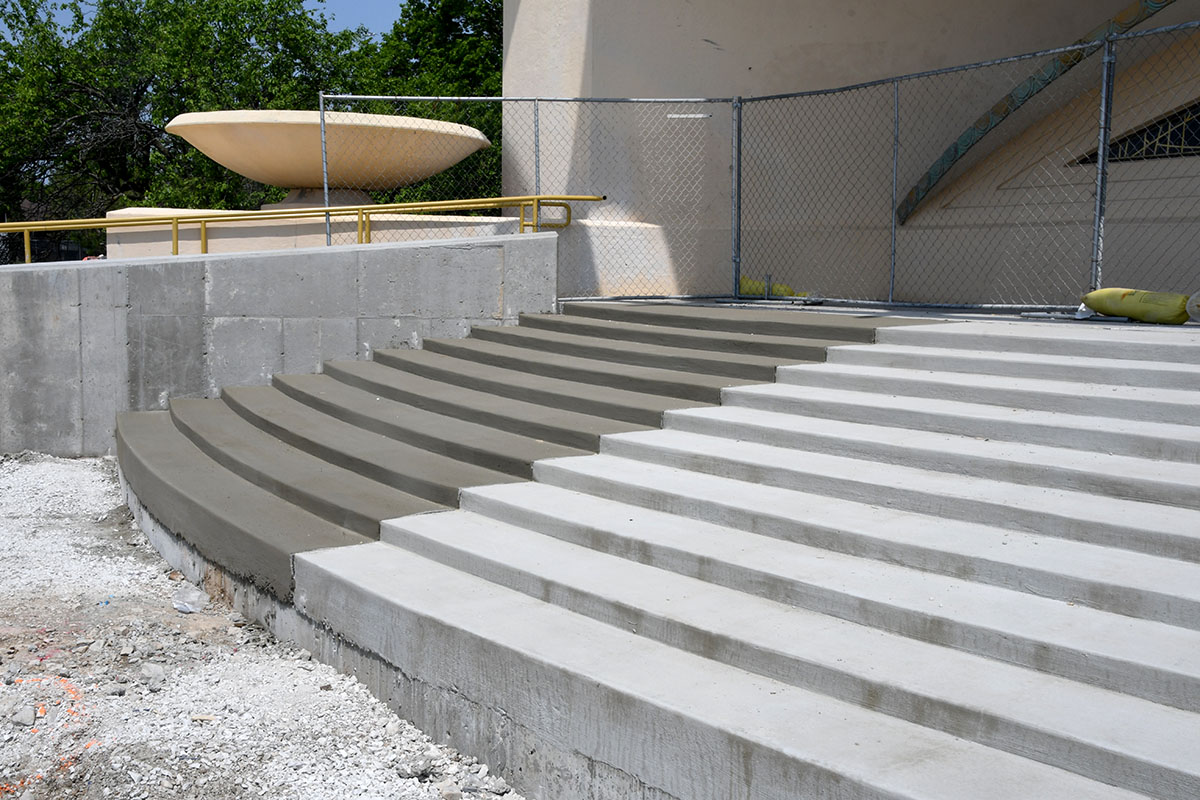
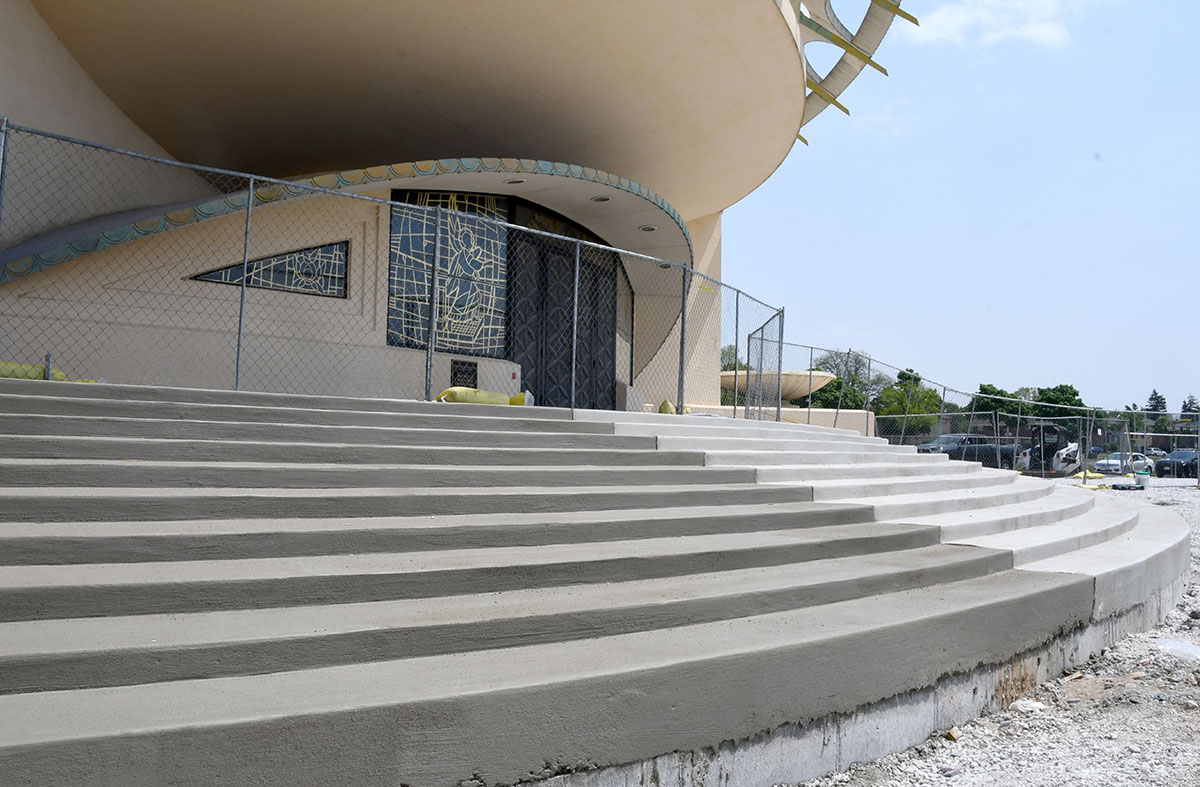
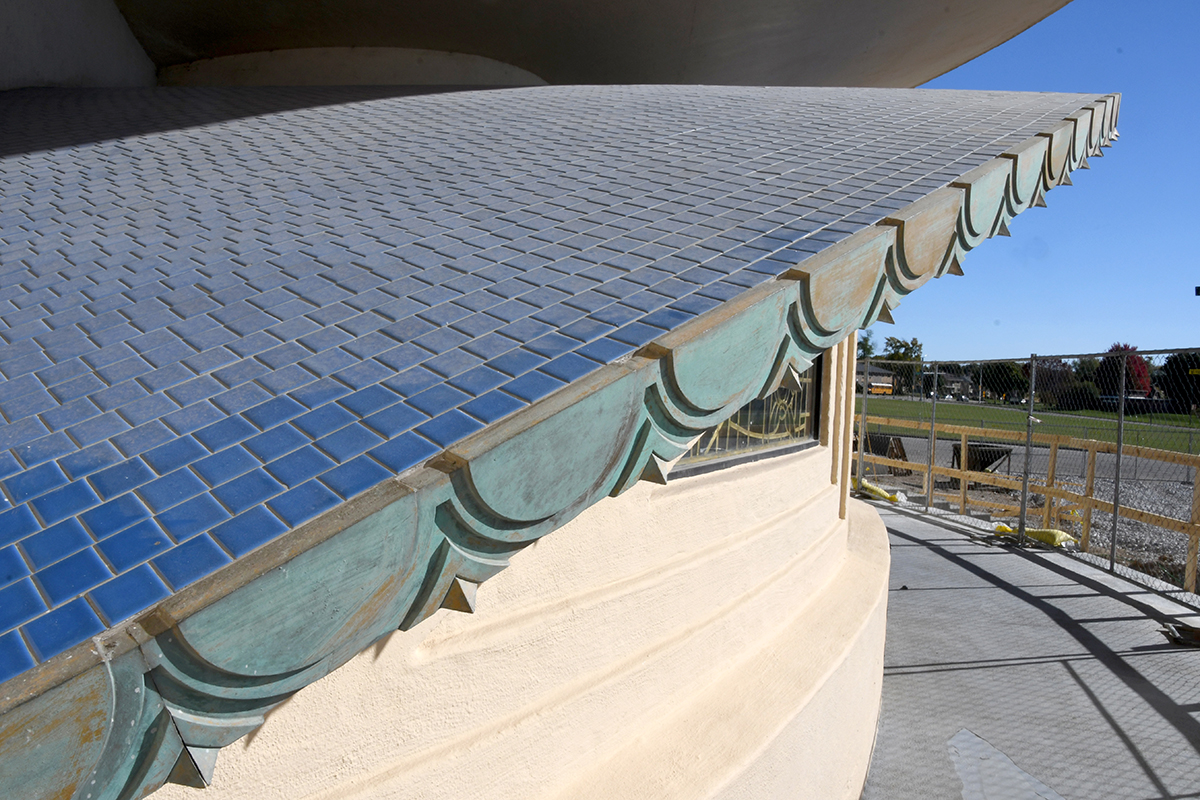
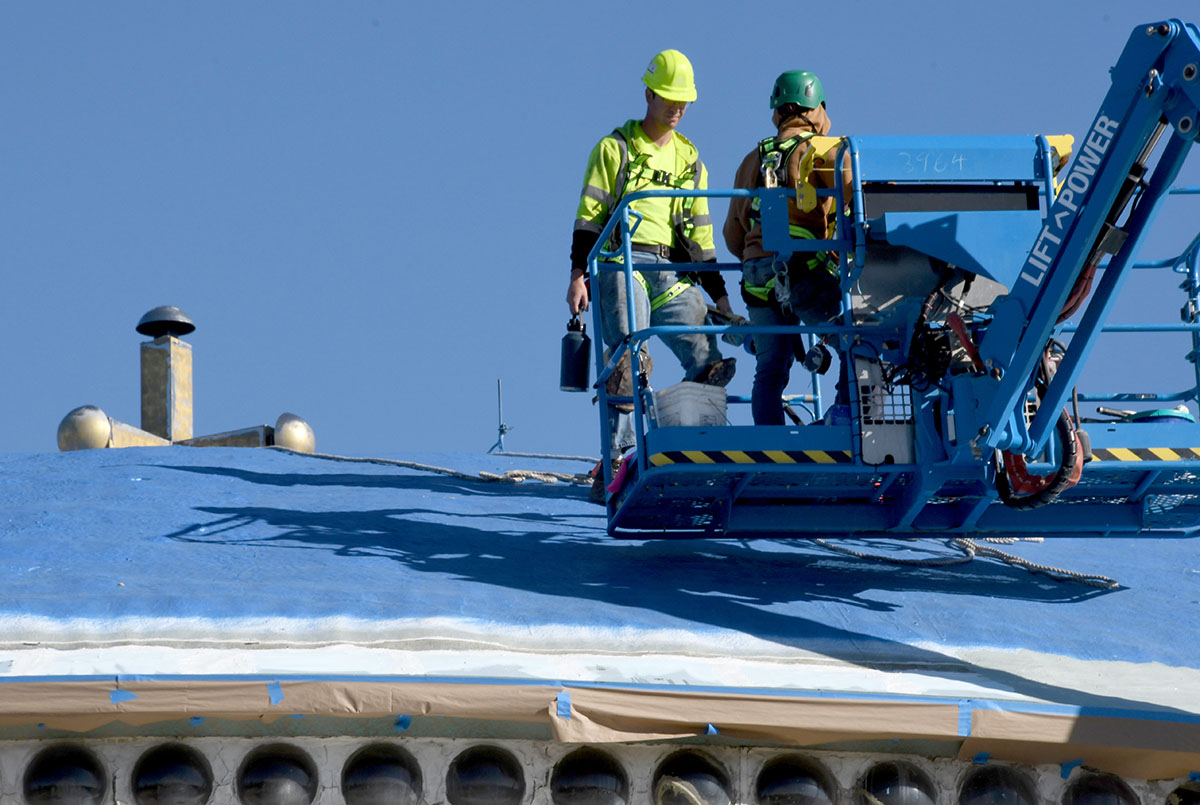
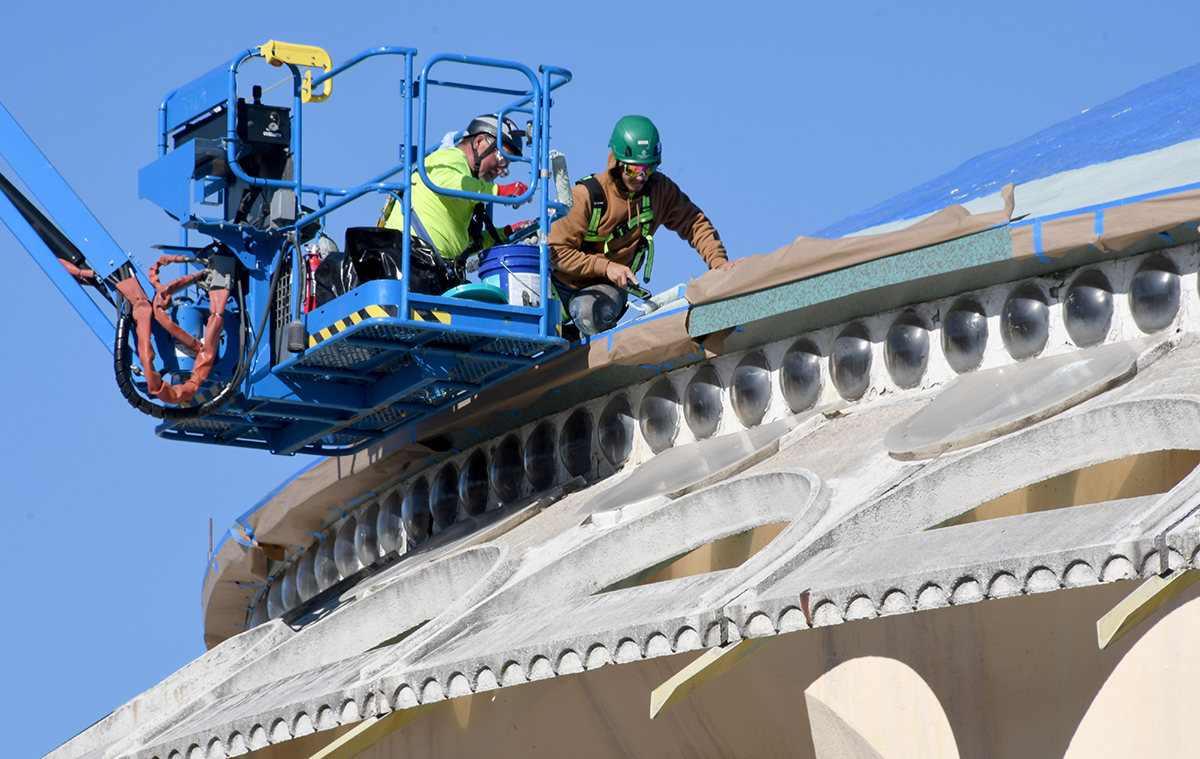
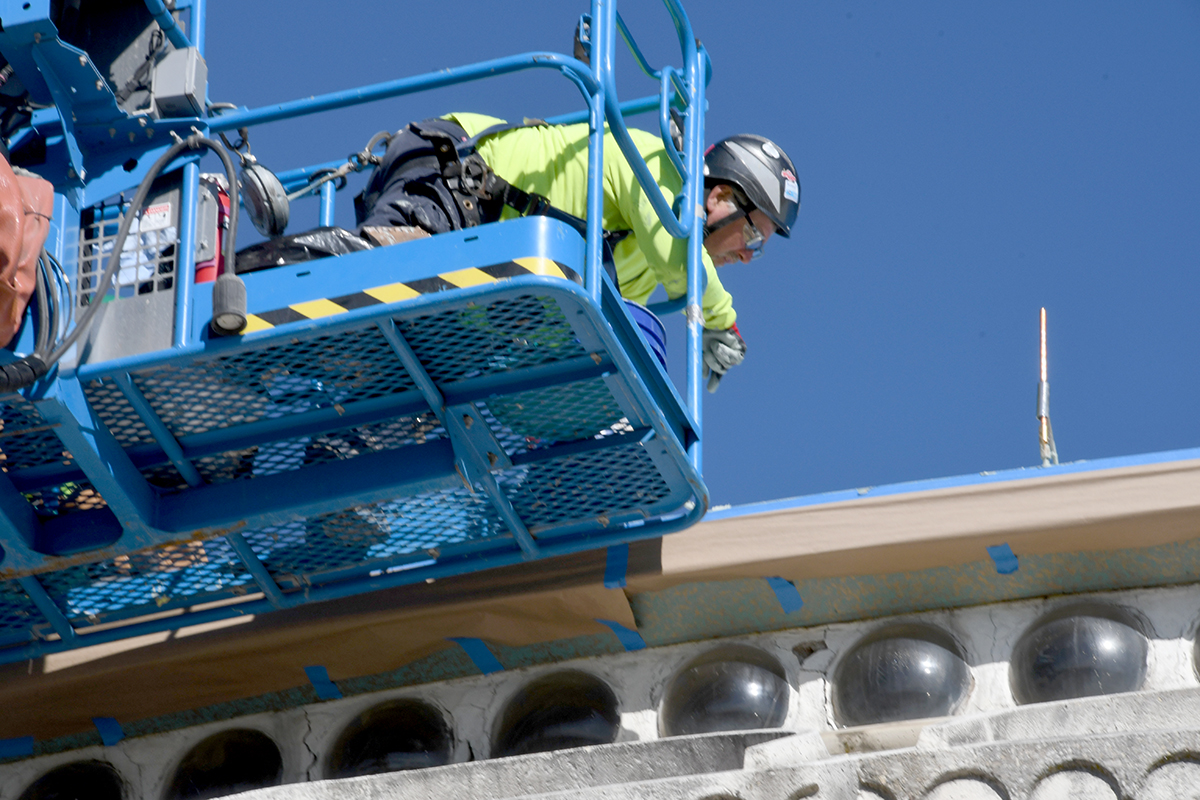
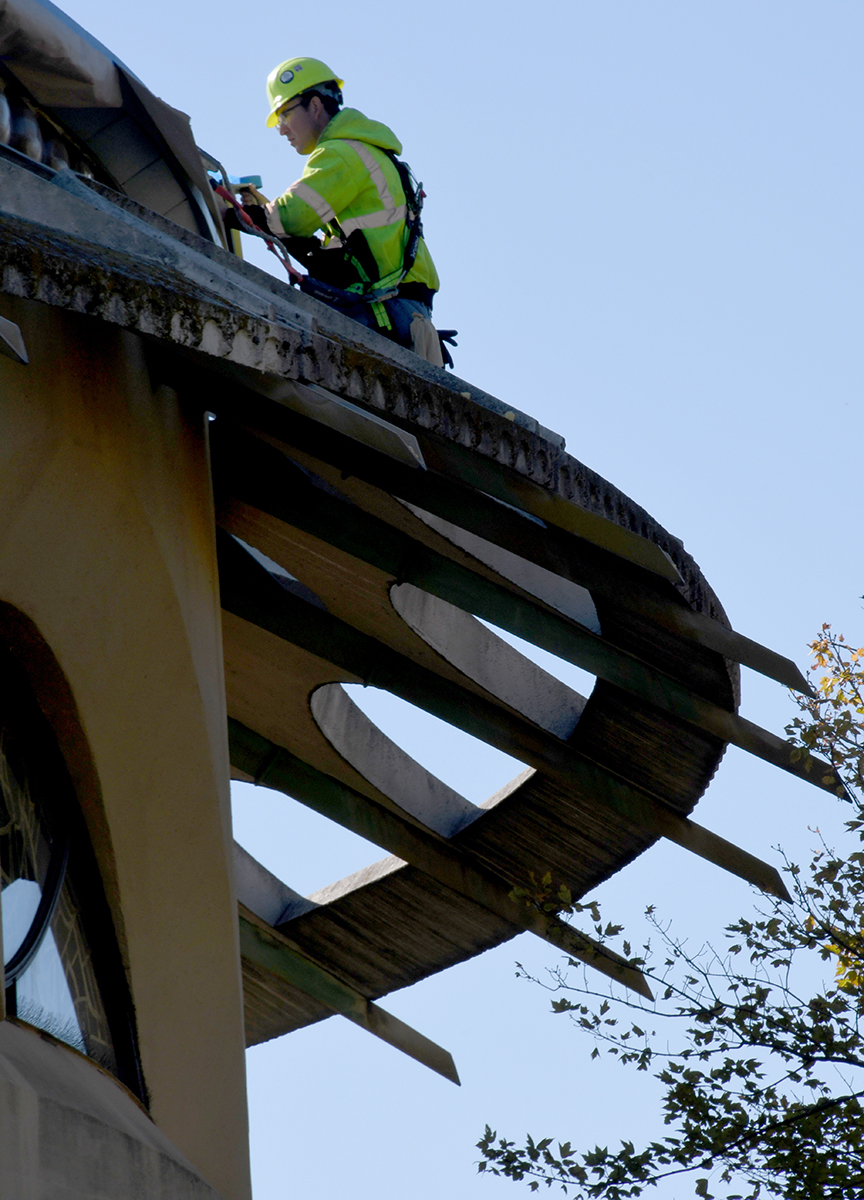
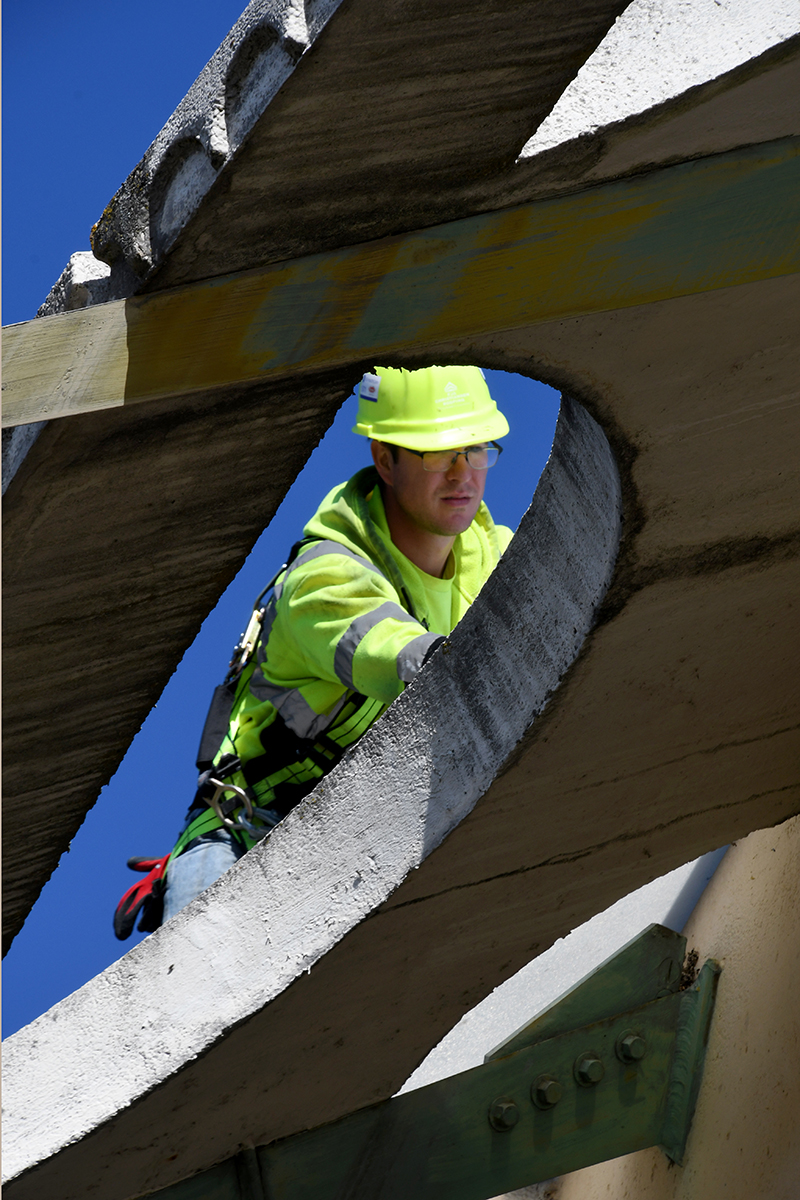
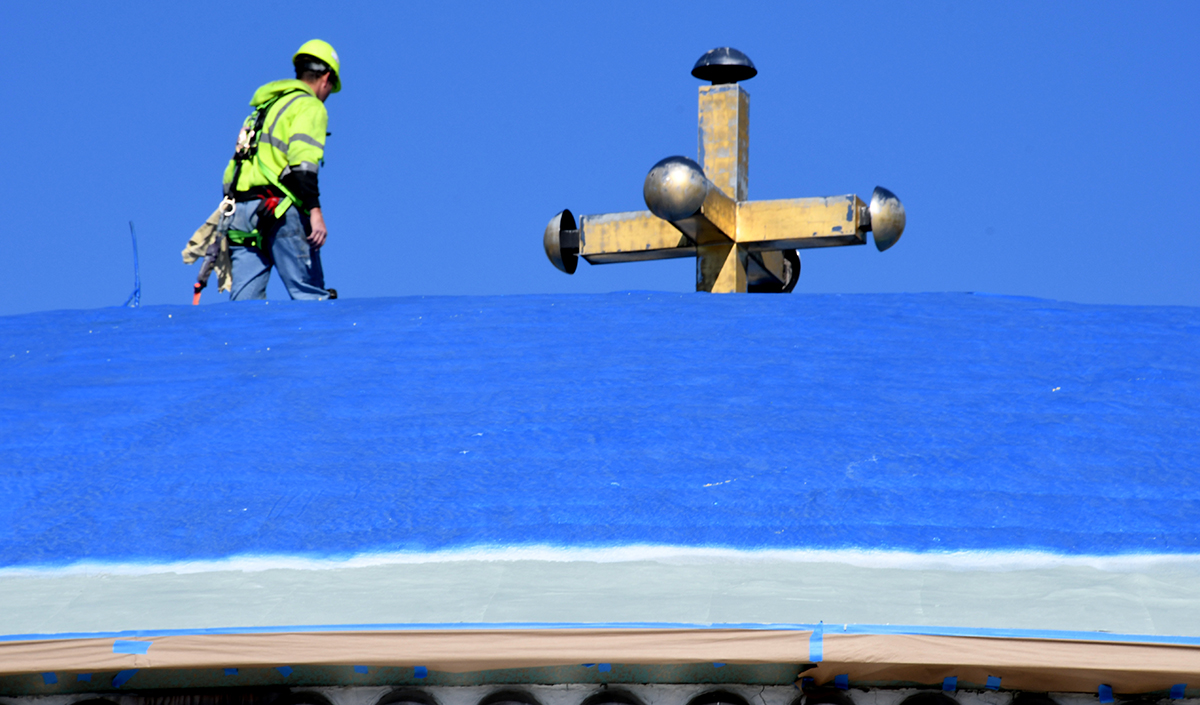
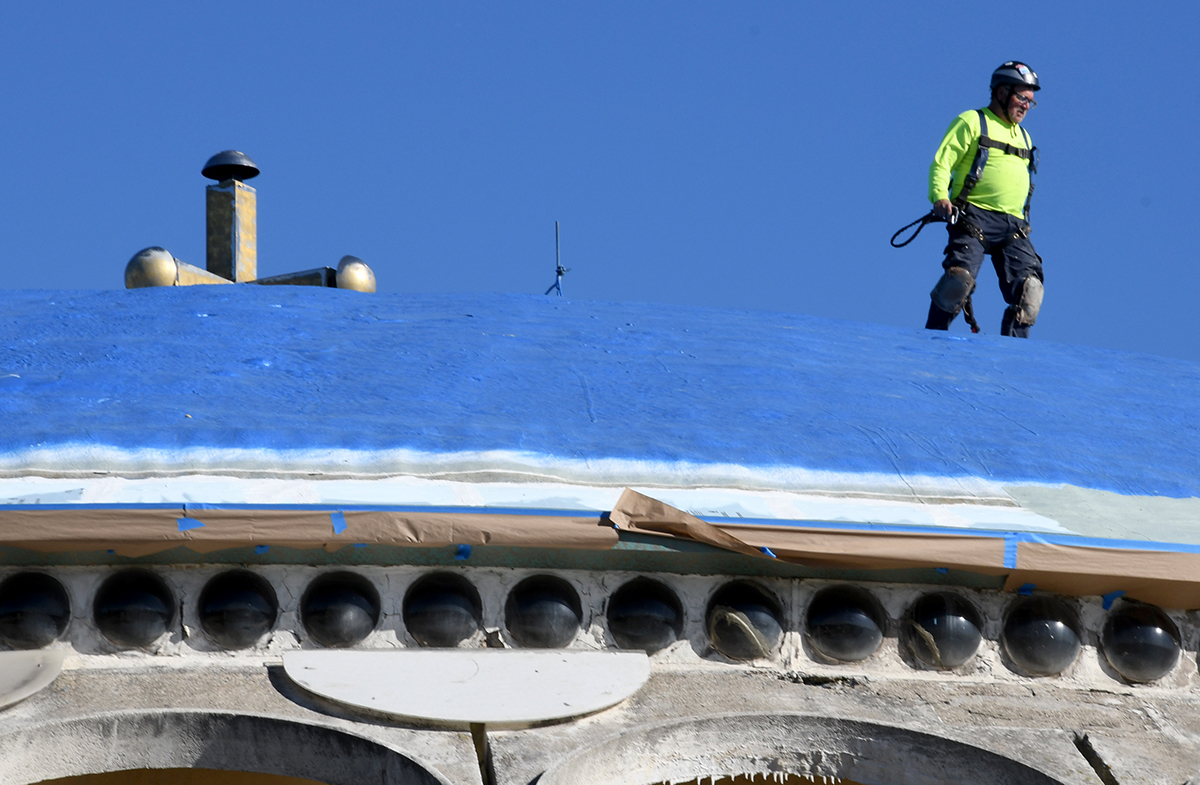
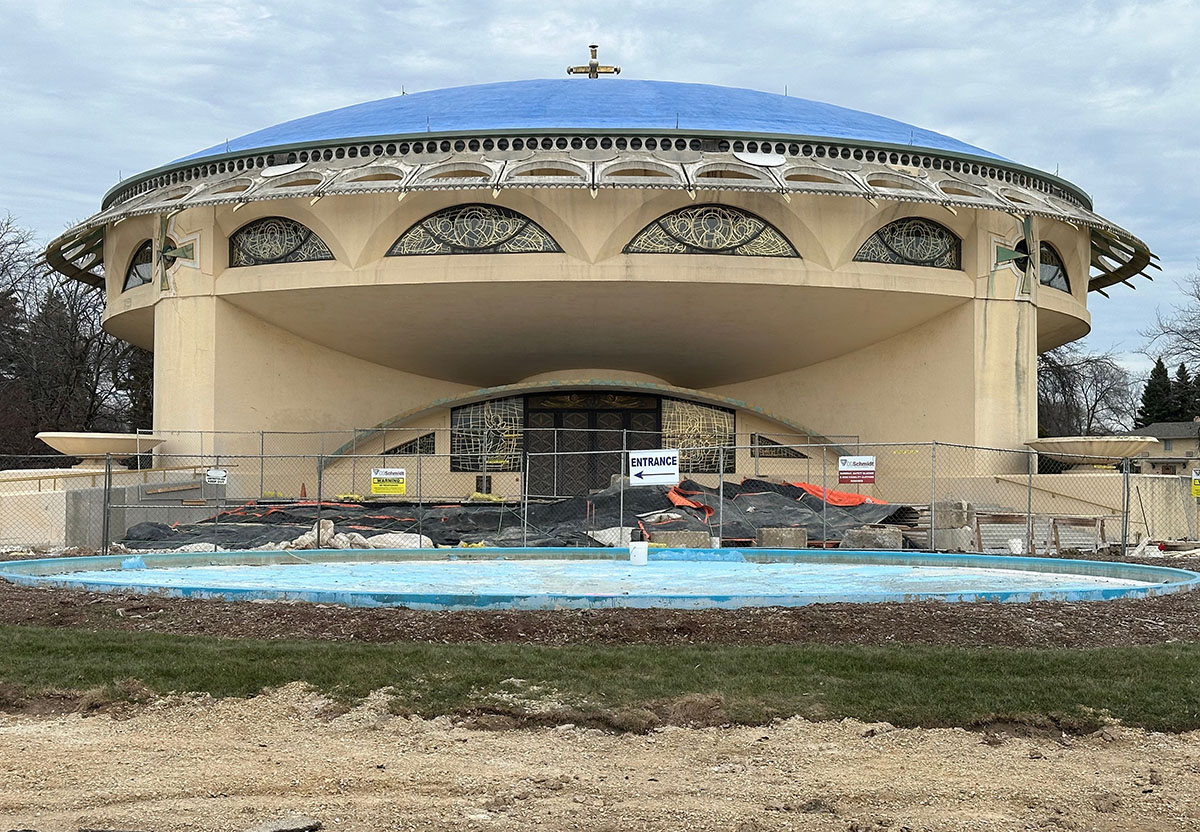
The brilliant blue dome roof of Frank Lloyd Wright’s Annunciation Greek Orthodox Church in Wauwatosa, Wisconsin shines again. First, let us dismiss the old saw or canard about Wright’s roofs. Yes, many have leaked, but so have the roofs of countless buildings that Frank Lloyd Wright did not design. The church, which Wright designed in 1956, and which was completed in 1961, two years after he died, is in the midst of a major repair project. The roof has been repaired (no, it had not been leaking, but it had been deteriorating) and the front steps and entry way are being rebuilt. The front steps are integral to the foundation of the building.

AGOC Roof 10.17.24 001.JPG

LR AGOC Roof 10.17.24 004.jpg

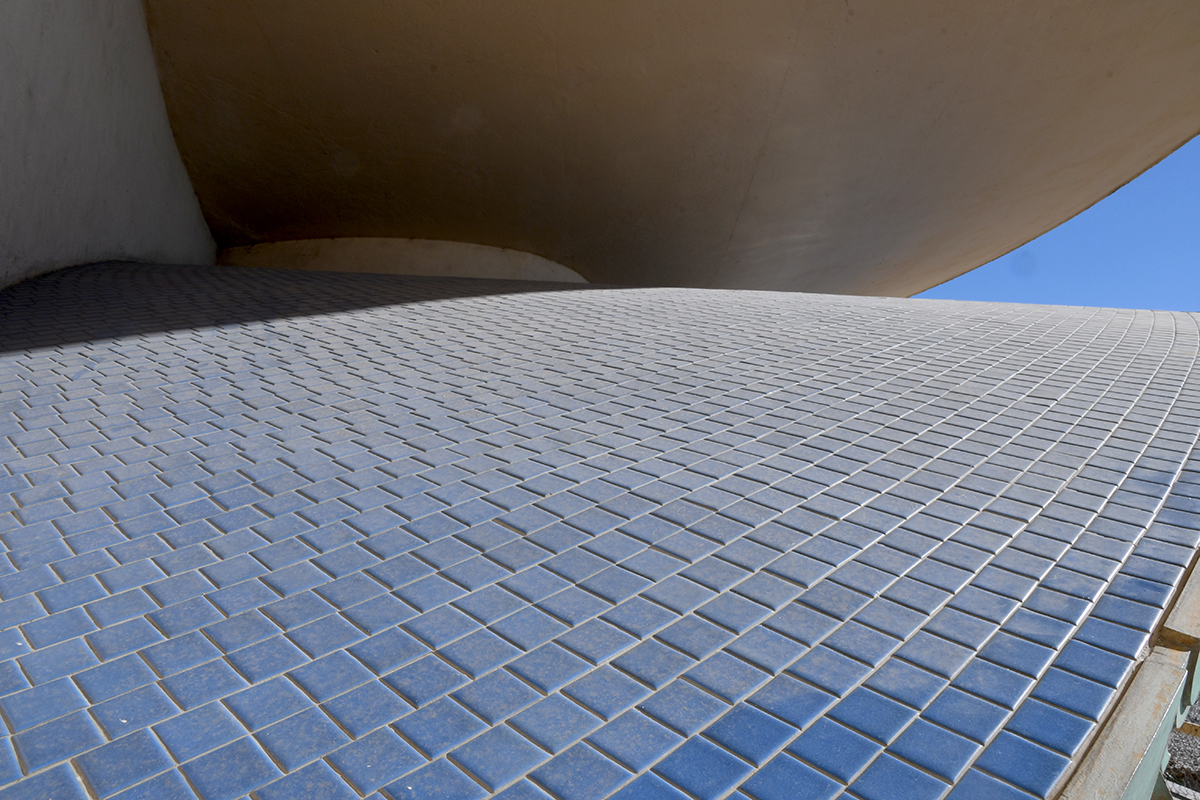
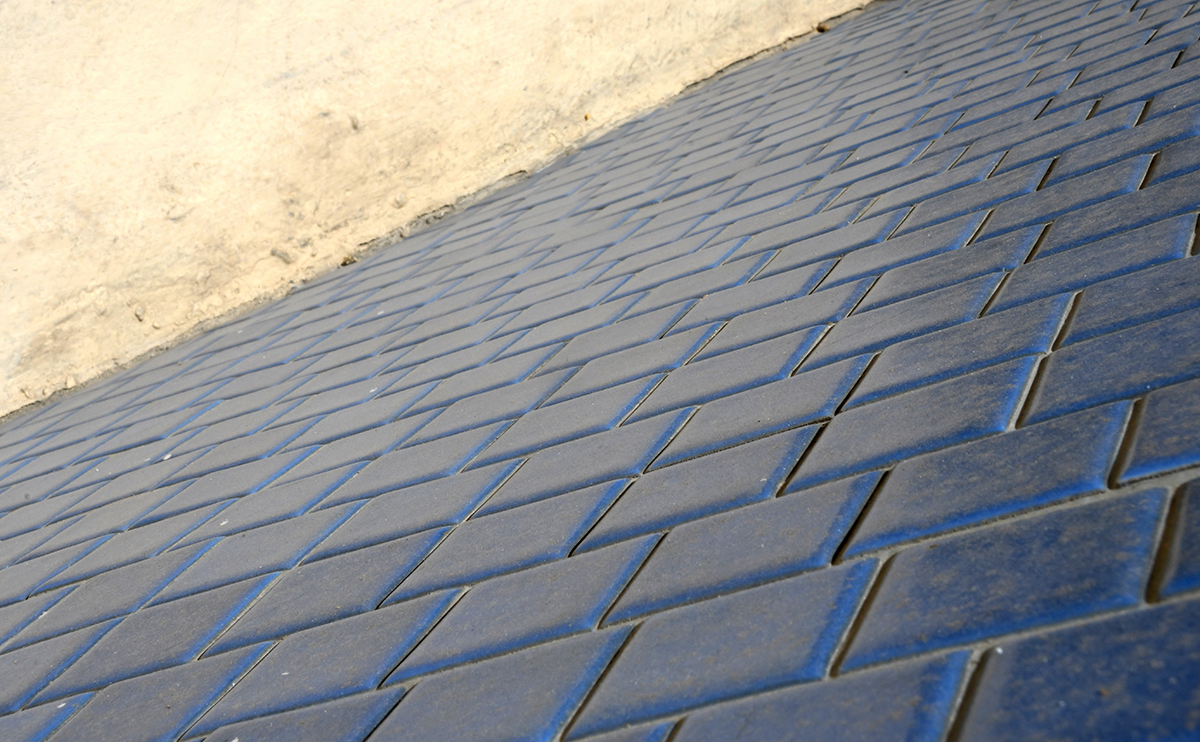
The roof was originally covered in thousands of blue tiles. The tiles started popping off in the extremes of Wisconsin’s weather. and the roof was covered in a blue polyurethane coating. Today, the only remaining tiles are on the arched canopy above the front doors:

LR AGOC Roof 10.17.24 008.jpg

LR AGOC Roof 10.17.24 009.jpg

LR AGOC Roof 10.17.24 010.jpg

I photographed the roof work in mid-October:

LR AGOC Roof 10.17.24 035.jpg

LR AGOC Roof 10.17.24 014.jpg

LR AGOC Roof 10.17.24 020.jpg

LR AGOC Roof 10.17.24 017.jpg

LR AGOC Roof 10.17.24 025.jpg

LR AGOC Roof 10.17.24 028.jpg

LR AGOC Roof 10.17.24 032.jpg

LR AGOC Roof 10.17.24 036.jpg

The church on Saturday December 7:

LR AGOC Exterior 12.7.24 008.jpg

The general contractor for the repair work is CG Schmidt, the roofing contractor was F.J.A. Christensen Roofing Company.

While many people think of the church solely as an architectural landmark, it is, of course, primarily a church. In May 2013 I was given the privilege of photographing Good Friday services there. This is a link to those photos:

https://wrightinracine.net/2013/05/04/good-friday-at-annunciation-greek-orthodox-church/

I had been given free rein to photograph the interior of the church a few weeks earlier:

https://wrightinracine.net/2013/04/12/annunciation-greek-orthodox-church-2/ of the

Annunciation Greek Orthodox Church website:

https://www.annunciationwi.org =

John Gurda’s book is the definitive history of the church:

https://www.goodreads.com/book/show/21443265-new-world-odyssey

Please scroll down for previous stories on this website

Remembering Ann MacGregor

Photos and text © Mark Hertzberg (2024)

Ann MacGregor one of Mason City, Iowa’s heroes in helping save Frank Lloyd Wright’s last surviving hotel, the Park Inn, and the adjacent City National Bank, died peacefully October 2, it was announced today.

LR Wright Spirit Awards 028.jpg

The hotel and bank buildings, which opened in 1910, had deteriorated so badly that the city had put them up for sale on eBay in the late 1990s or early 2000s. Mason City rallied to save the buildings. Ann served as Executive Director of the newly formed Wright on the Park. Today the Historic Park Inn Hotel is a popular boutique hotel for visitors to Mason City, whether or not they are there on a Wright pilgrimage.

Ann was a genial, giving person. Her obituary outlines her life of service, including as a nurse on the medical ship SS HOPE and as a public health nurse for the Migrant Action Program in the late 1960s in Mason City.

https://www.bratleyfamilyfuneralhomes.com/obituary/ann-macgregor

In 2013 she published a book about her six years service around the world on the HOPE, beginning in 1958 [it is no longer in print]:

Screenshot 2024-11-23 at 4.06.54 PM.png

I met Ann in May 2005 when the late Bob (Dr. Robert) McCoy, another one of Mason City’s heroes in saving the hotel and bank building, invited me there to give a talk, and I began photographing the buildings. They were still in a raw state. Ann and I connected in two other ways, one as passionate bicyclists.

The other story tells you quite a bit more about Ann. She began corresponding with Marshall Jones after I told her about his insights into Wright’s work. Jones is serving two consecutive life terms in a Wisconsin prison for a double murder.

LR Marshall Jones Waupun 014.jpg

When I interviewed Jones in 2008 for a project about the criminal justice system he told me how much he enjoys reading “anything I can get.” I sent him my Wright in Racine book. He quickly sent me an incisive review back. We began corresponding, in large part about Wright. How much does Jones understand Wright? In addition to Ann being impressed by his insights, the late Bruce Brooks Pfeiffer corresponded with Jones, as well, after I sent Pfeiffer some of Jones’s letters about Wright’s work. When I sent the late Ron McCrea Jones’s review of his Building Taliesin, McCrea wrote me that Jones picked up on a point that no one else had, and he was going to quote him in a talk at Taliesin West. Ann corresponded with Jones for many years, and Jones often wrote me how much he appreciated her letters and friendship. Now I must write him about Ann’s passing.

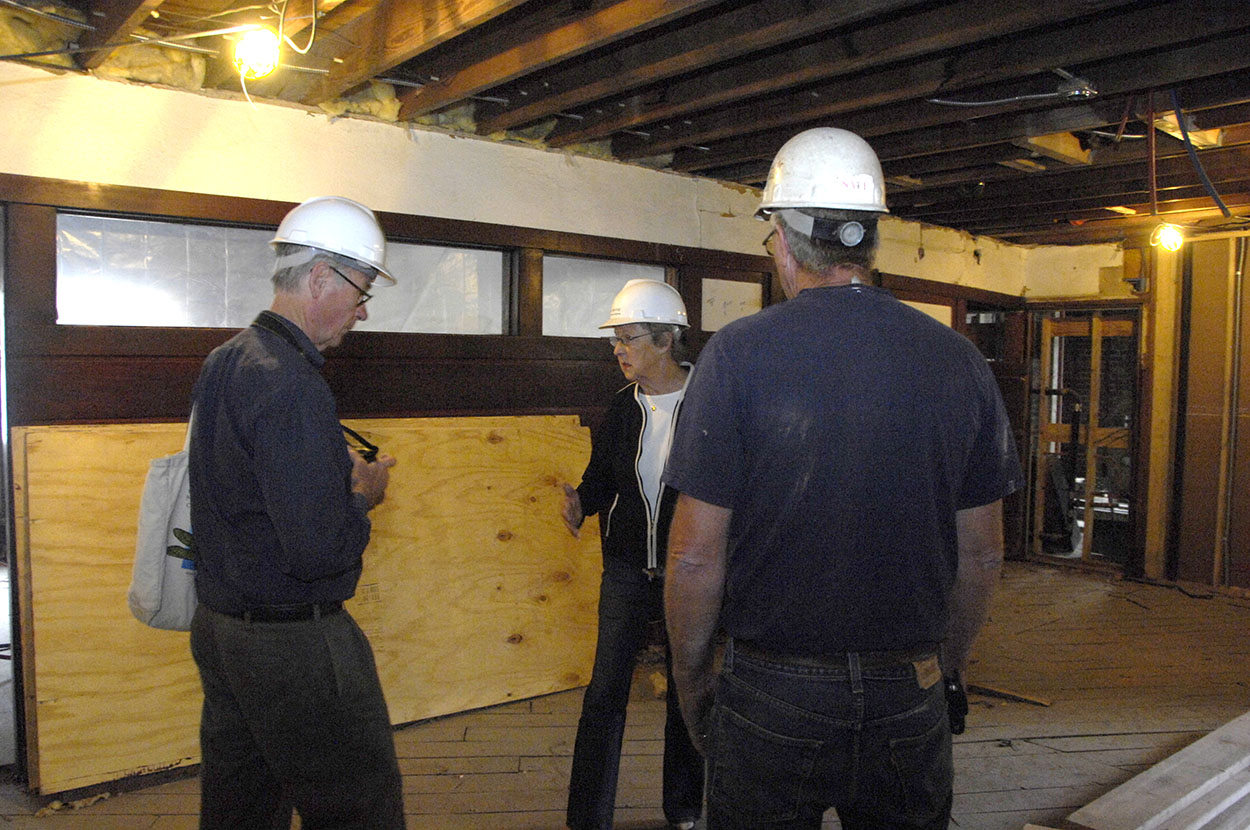
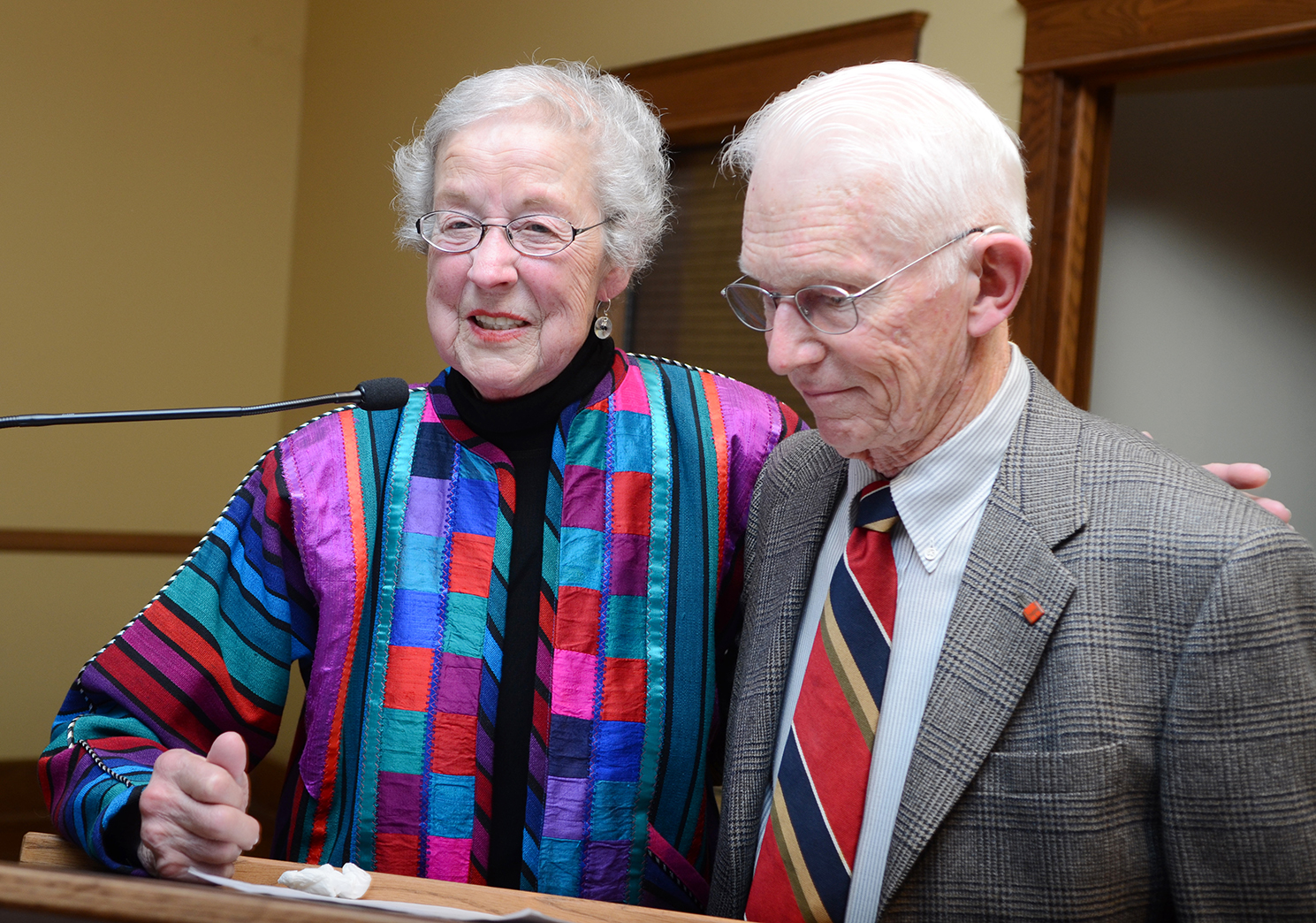
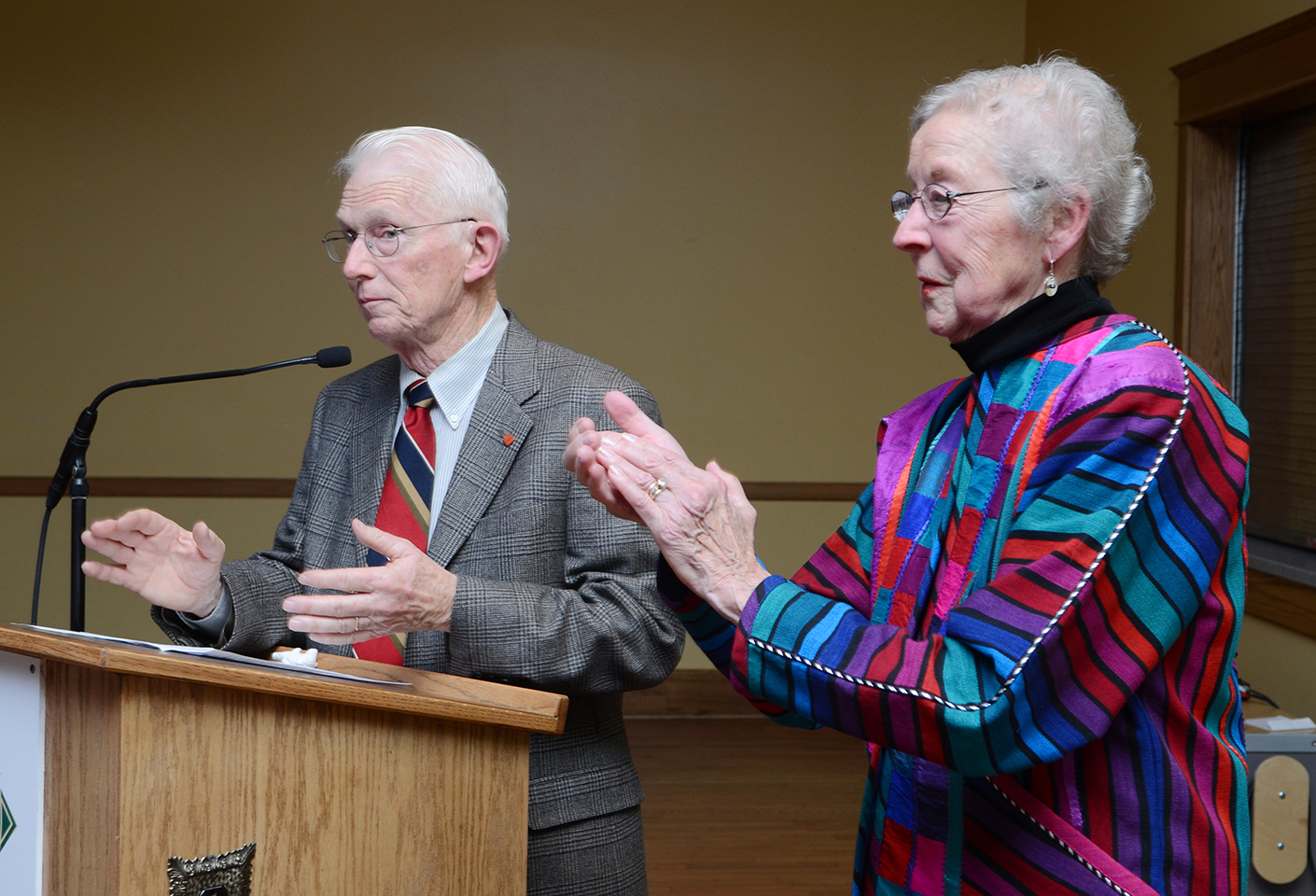
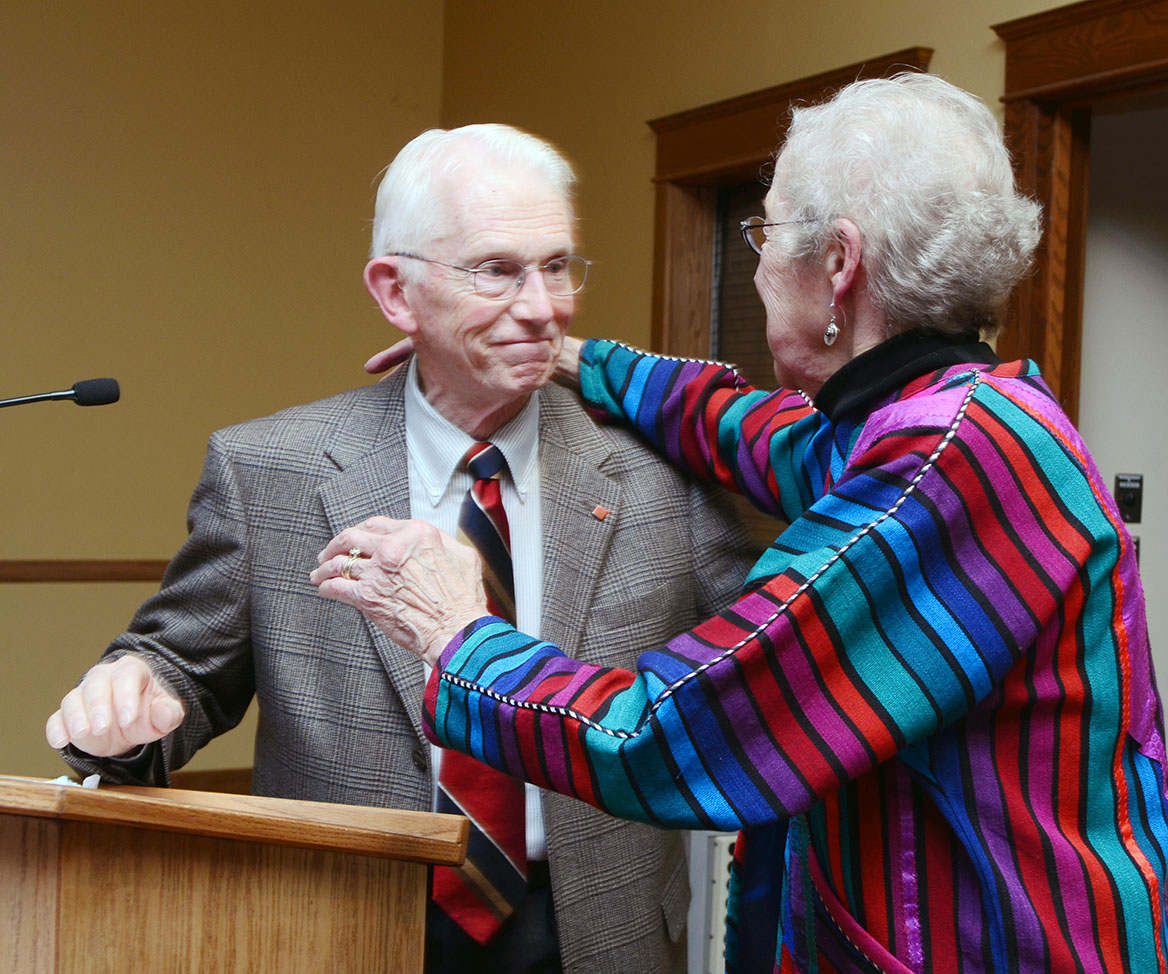
Ann’s memorial service will be Saturday November 30, as noted in the obituary. I will leave you with a photo of Ann in the bank building in 2010, and of Ann and Bob McCoy she and Wright on the Park were honored with the Frank Lloyd Wright Building Conservancy’s prestigious Wright Spirit Award on October 13, 2012, during the group’s annual conference:

LR City Natl. Bank 2010 001.jpg

LR Pre-dinner 012.jpg

LR Wright Spirit Awards 013.jpg

LR Wright Spirit Awards 014.jpg

LR Wright Spirit Awards 019.jpg

LR Wright Spirit Awards 020.jpg

LR Wright Spirit Awards 022.jpg

Thank you, Ann, for your friendship and service.

(My remembrance of Bob McCoy is at:

https://wrightinracine.net/tag/bob-mccoy/

Please scroll down for previous posts on this website.

“Photographing Wright” in Chicago

Text and photos © Mark Hertzberg (2024)

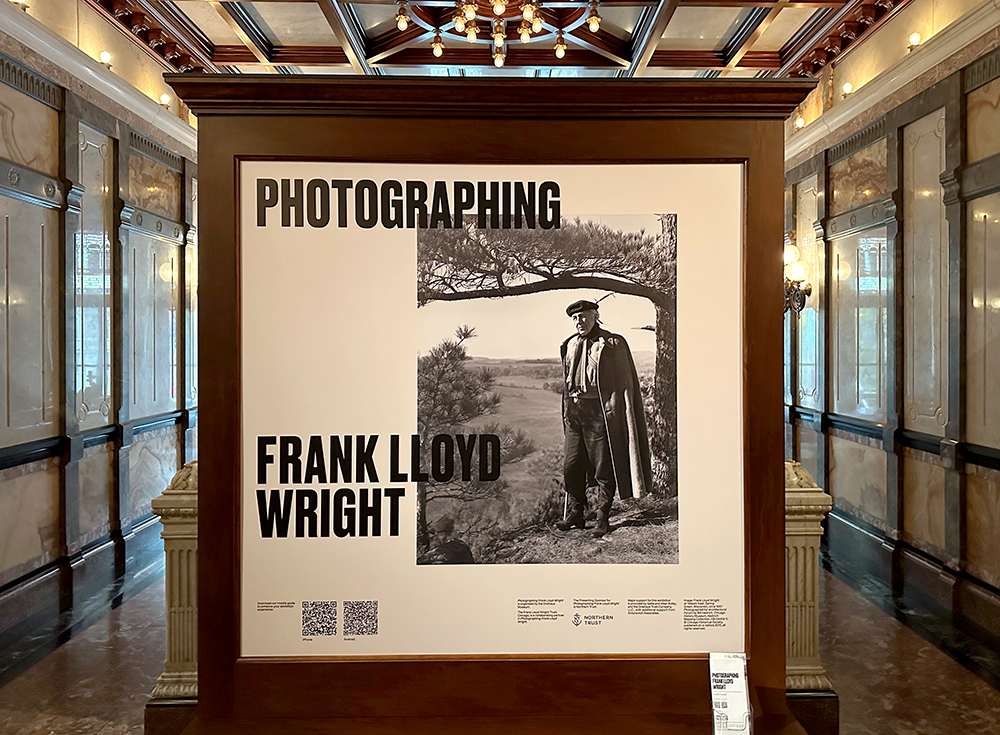
LR IMG_9027.jpg

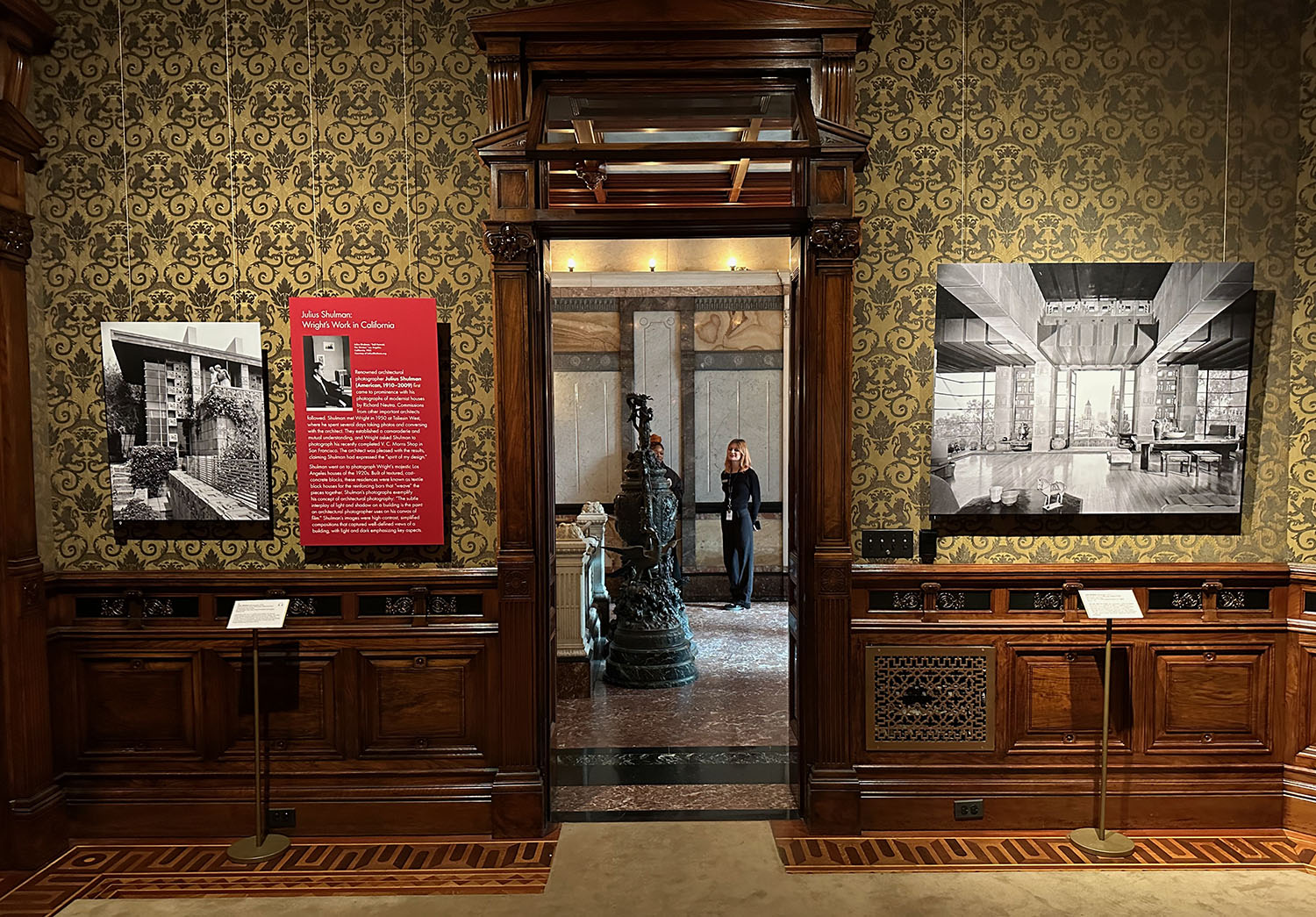
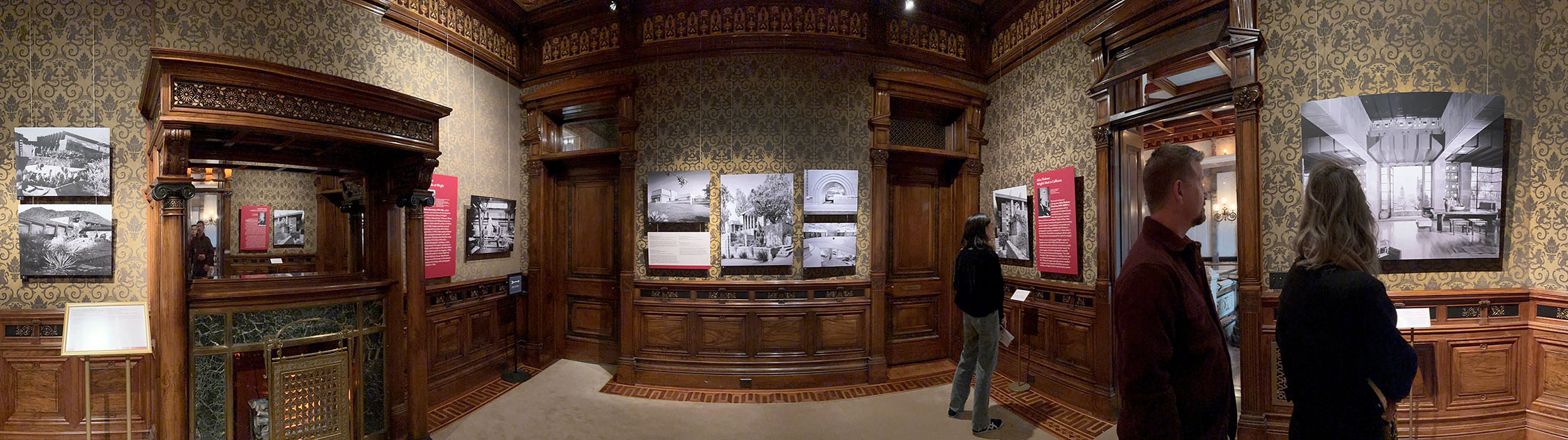
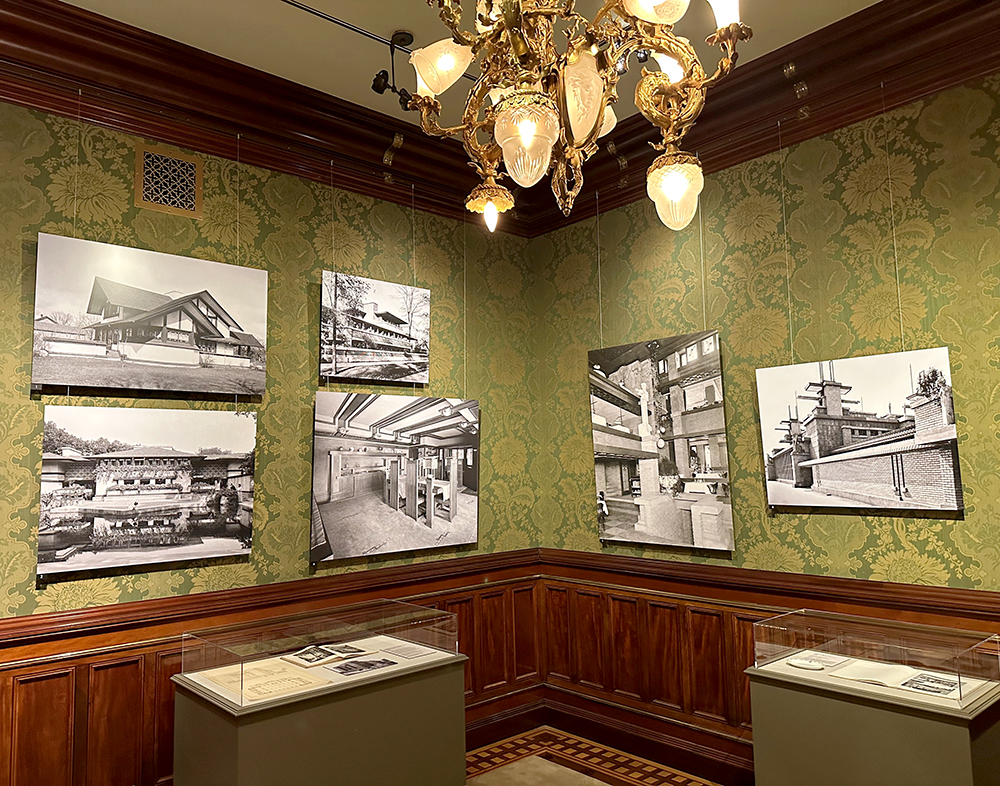
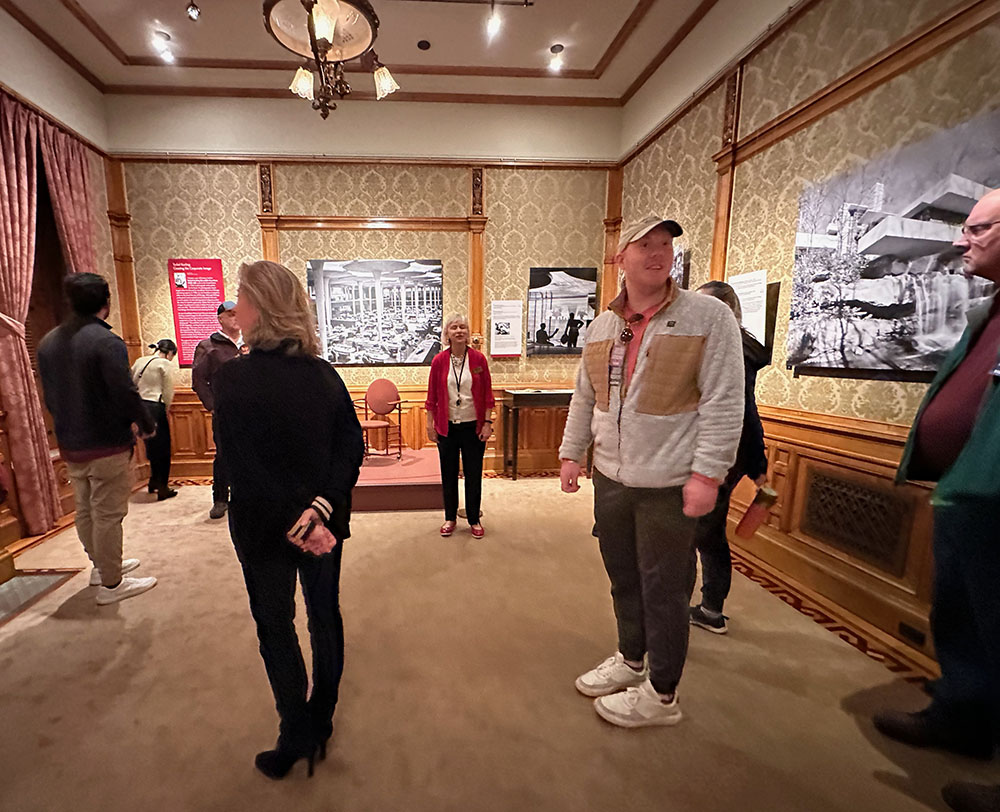
A new exhibit related to Frank Lloyd Wright opened two weeks ago at the Driehaus Museum in Chicago. The museum is in the former Gilded Age Nickerson Mansion (1883) on Chicago’s Near North Side, at 50 East Erie Street.

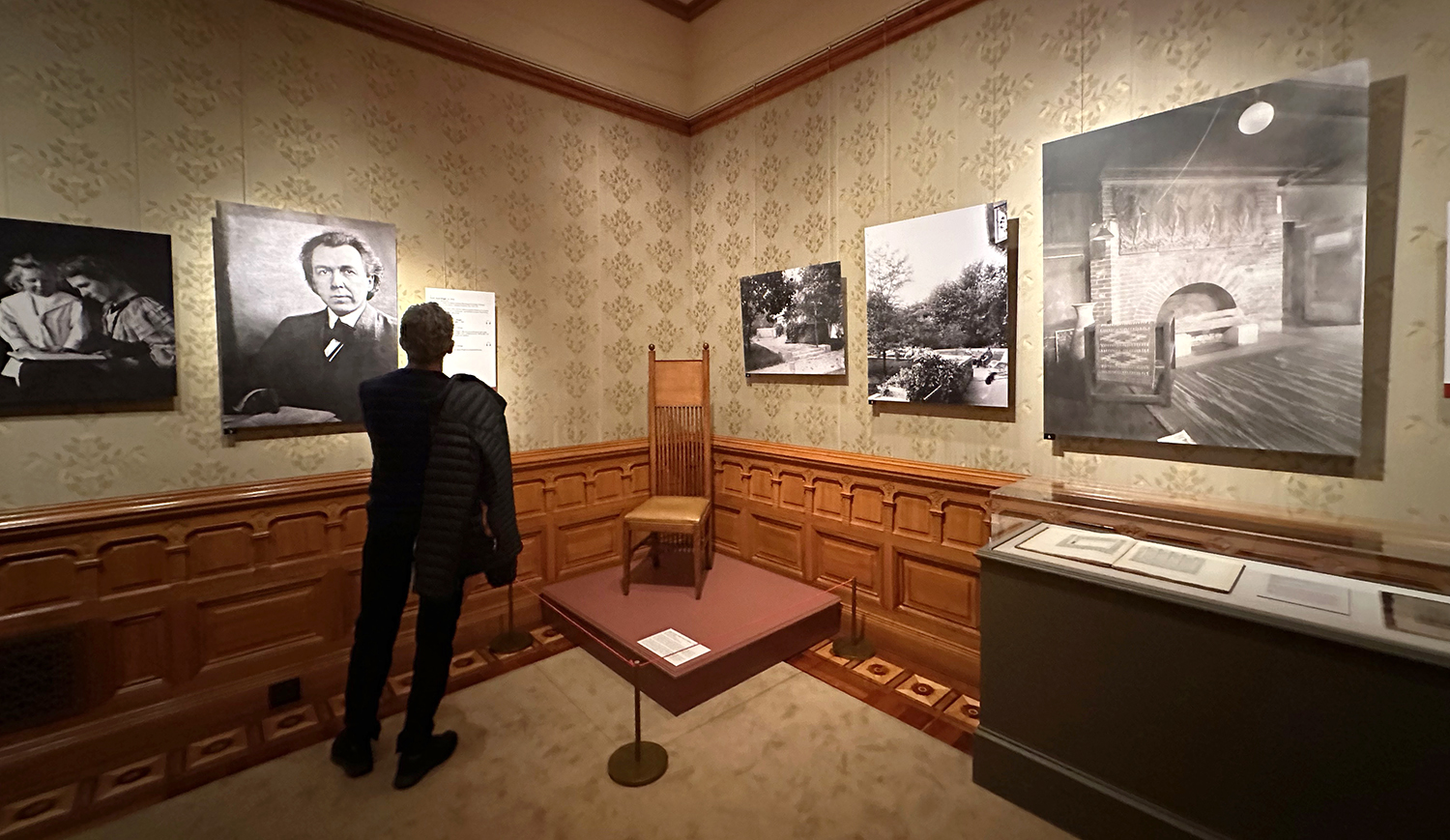
LR IMG_9023.jpg“Photographing Frank Lloyd Wright” is not just another exhibit of Wright’s designs and the stories behind them. Although the Frank Lloyd Wright Home and Studio Foundation published “Frank Lloyd Wright’s Fifty Views of Japan” in 1996, it may not be well known that Wright was an avid photographer early in his career. He had a darkroom at his Home and Studio.

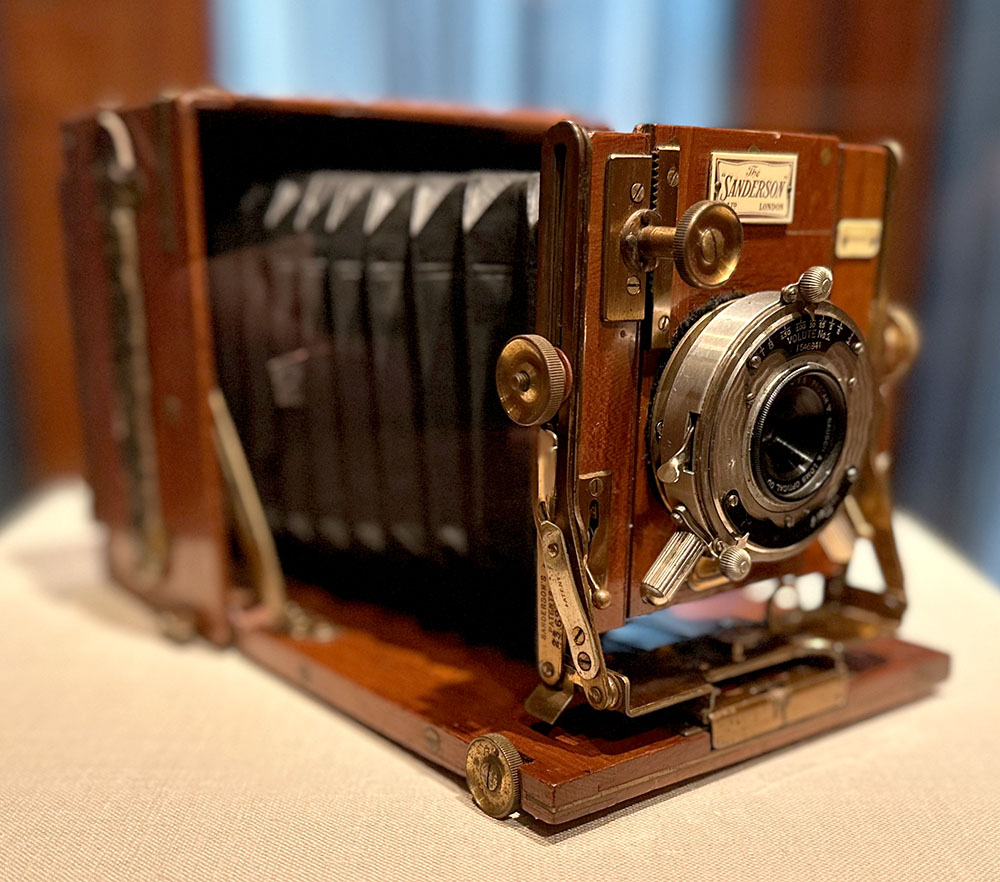
The exhibit features some of his photography, including self portraits, photographs of Hillside Home School, photos of the Home and Studio, and some of the photographs he took in Japan in 1905. There is even one he took of his first wife, Catherine Tobin Wright, reading to one of their sons. The balance of the exhibit on the museum’s second and third floors shows how a variety of noted photographers of his work interpreted his buildings. The photographers featured are Henry Fuermann & Sons,  Hedrich-Blessing, Pedro Guerrero, Torkel Korling, Julius Shulman, Ezra Stoller, and Edmund Teske. Fuermann’s 4×5 camera is shown above.

ILR MG_9024.jpg

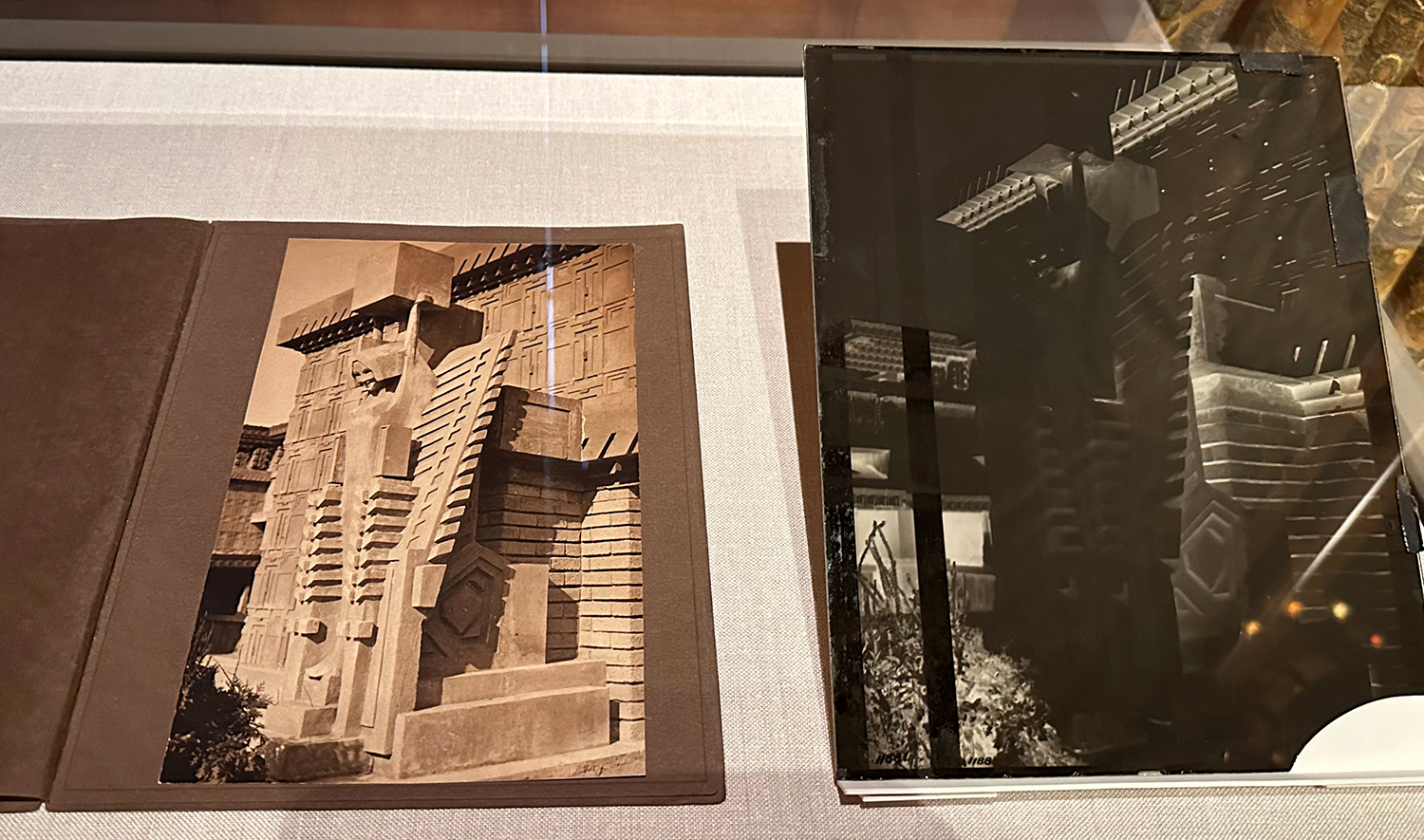
Put out of your mind the ease of taking pictures today, and take another look at Fuermann’s camera. It used single sheets of film which had to be taken out of the camera after each photograph was taken (unlike my cameras which can take 10 frames a second). Each photograph would be carefully composed. There was no “chimping” (the term photojournalists use to describe their colleagues who quickly look at the screen on the back of the camera to see if they got the image they wanted), each sheet of film had to be developed in the darkroom. The image was reversed on a negative. Photographers get adept at “reading” negatives, but only after making a print did the photographer know for certain if the exposure was correct, and the composition perfect.

LR IMG_9025.jpgThe print and negative of a Fuermann photo of Midway Gardens

The timeline of the photographs covers Wright’s career, from photos of students at the first Hillside Home School for his aunts, through to the Guggenheim Museum. A number of the exhibit pieces are from Eric O’Malley’s extraordinary collection, and are shown courtesy of the OA+D (Organic Architecture and Design) archives.

LR MG_9030.jpg

LR IMG_9034.jpg

LR IMG_9022.jpg

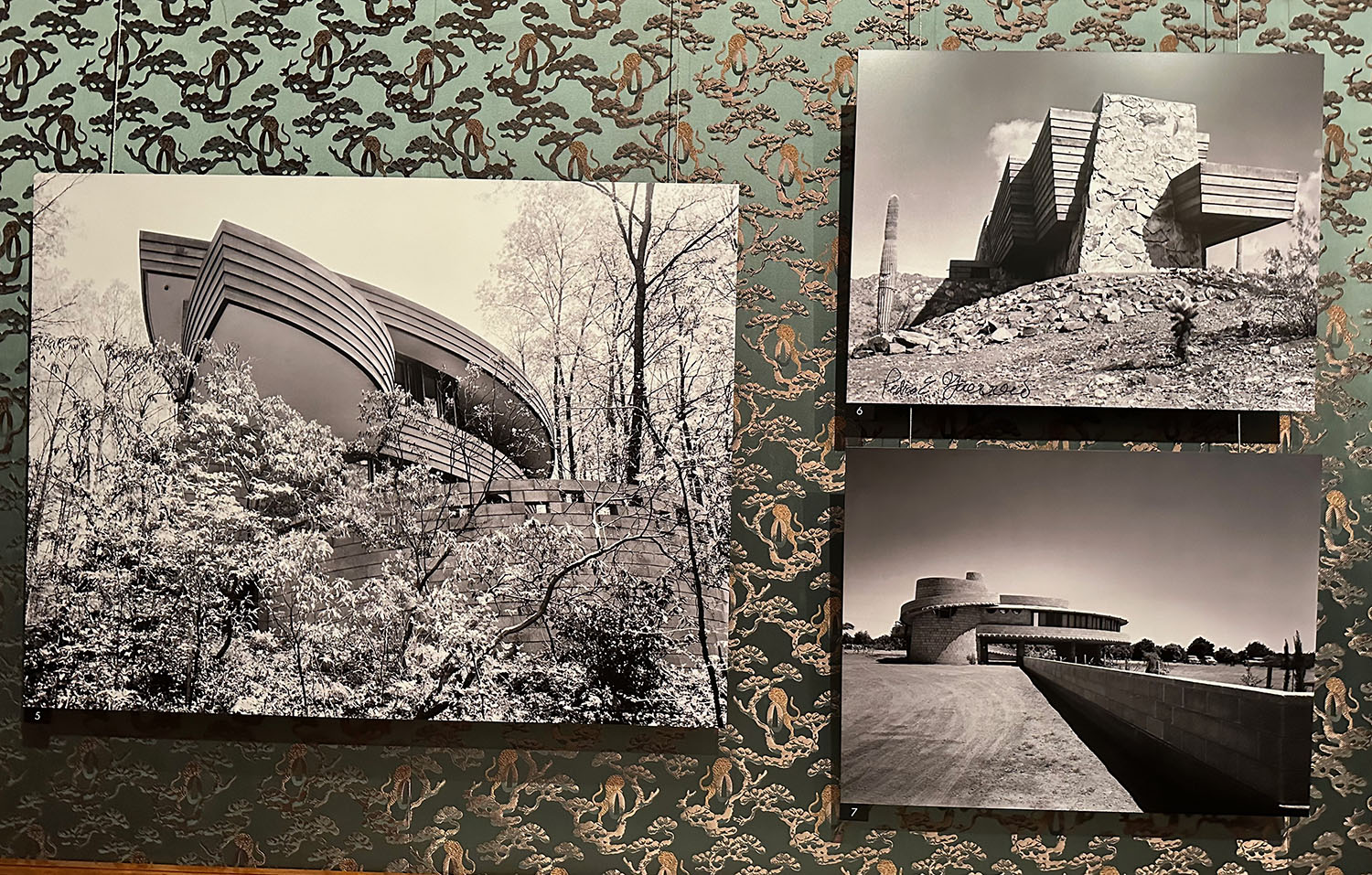
When people ask me what attracts me to Wright’s work I reply that it is the breadth of it, so one of my favorite parts of the exhibit was in the section devoted to Pedro Guerrero’s work. On the left in the photo below we see the Robert Llewellyn House (1953) in Bethesda, Maryland, and upper right is the Rose Pauson House (1940) near Phoenix. Look at these two photographs taken from the same vantage point (below the house, looking up) and look at how the same photographer recorded the same architect’s different interpretations of a client’s needs a decade apart (the third photo is Guerrero’s photo of the David and Gladys Wright House near Phoenix, 1950). Wright’s vocabulary has changed dramatically, to respond to the program on his drawing board.

LR IMG_9036.jpg

The only negative aspect of the exhibit is that I was surprised to find four significant errors in the text panels accompanying the photographs, this two weeks after it opened. The staff responded graciously when I mentioned the errors, and I expect that they will be corrected.

The exhibit runs through January 5, 2025. While any visit to the Driehaus is worthwhile, this one makes it even more so. Two years ago the museum had a wonderful exhibit dedicated to Richard Nickel and Louis Sullivan. The late Richard H. Driehaus, who restored the Nickerson Mansion, is well known to readers of the National Trust for Historic Preservation magazine, Preservation. Admission is free to visitors who have North American Museum Reciprocity passes.

LR IMG_9020.jpg

Links:

Driehaus Museum:

https://driehausmuseum.org/exhibition/photographing-frank-lloyd-wright

OA+D:

https://oadarchives.org

Frank Lloyd Wright Trust:

https://flwright.org

Frank Lloyd Wright Foundation:

https://franklloydwright.org

National Trust for Historic Preservation:

https://savingplaces.org

Please scroll down for earlier posts on this site

My Wright Eye – September 6, 2024

© Mark Hertzberg (2024)

I have just finished helping lead my 17th Road Scholar Frank Lloyd Wright tour. The number is important because it speaks to my challenge to try to find something different to photograph each time I visit a familiar Wright commission. I look for something other than a literal building photo. Here is what I found this week at some of the buildings. They are shown in the order in which we visited the Wisconsin buildings in this Illinois / Wisconsin tour (a link to the itinerary is at the end of the post):

Looking up at the adjoining eaves of two Burnham Block duplexes, Milwaukee:

Burnham Duplexes 9.5.24 001.jpg

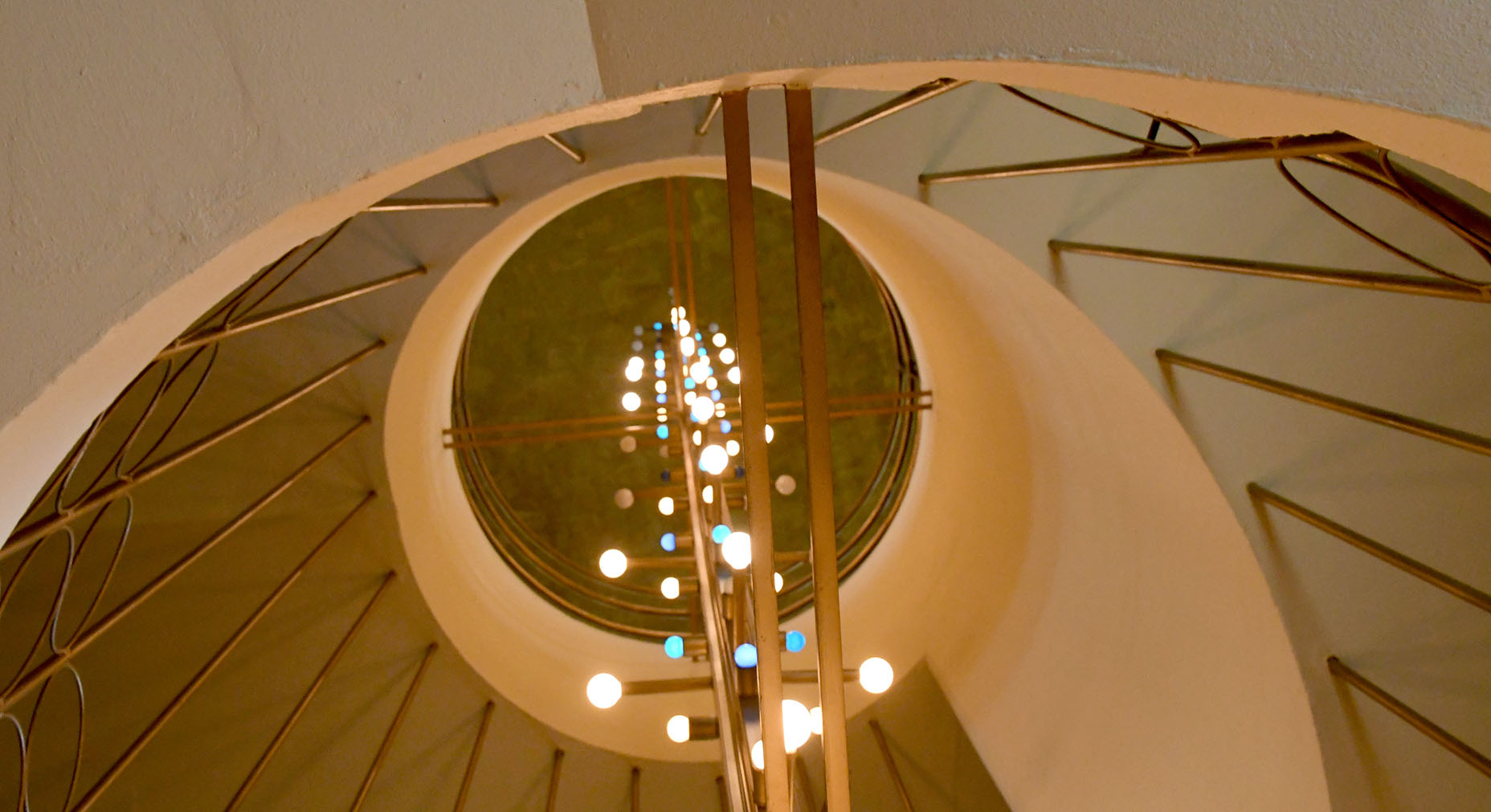
Looking up stairway from the basement, Annunciation Greek Orthodox Church

Annunication Greek Orthodox Church 9.5.24 001.jpg

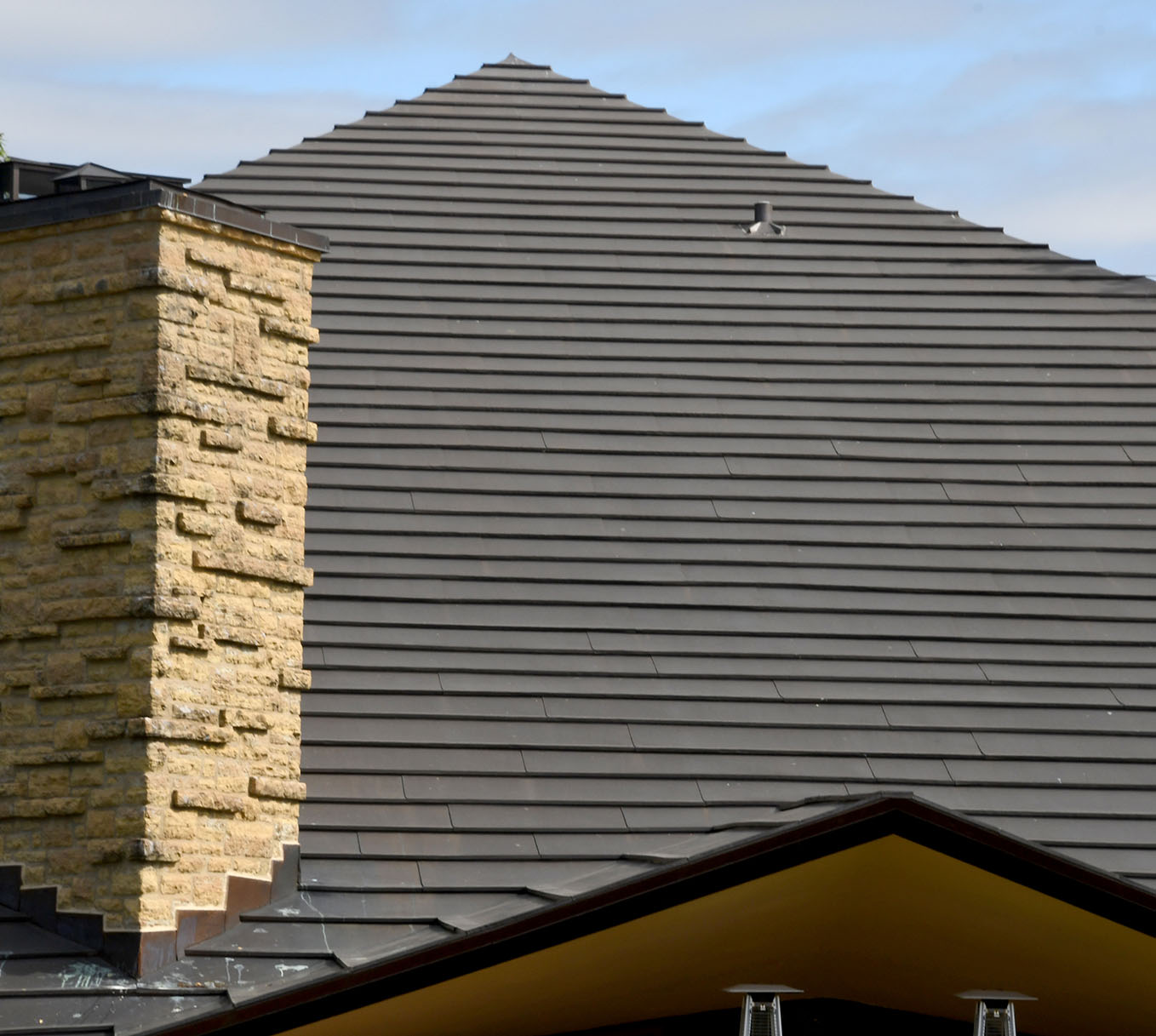
The roof of the Unitarian Meeting House, Madison, from across the parking lot:

003.jpg

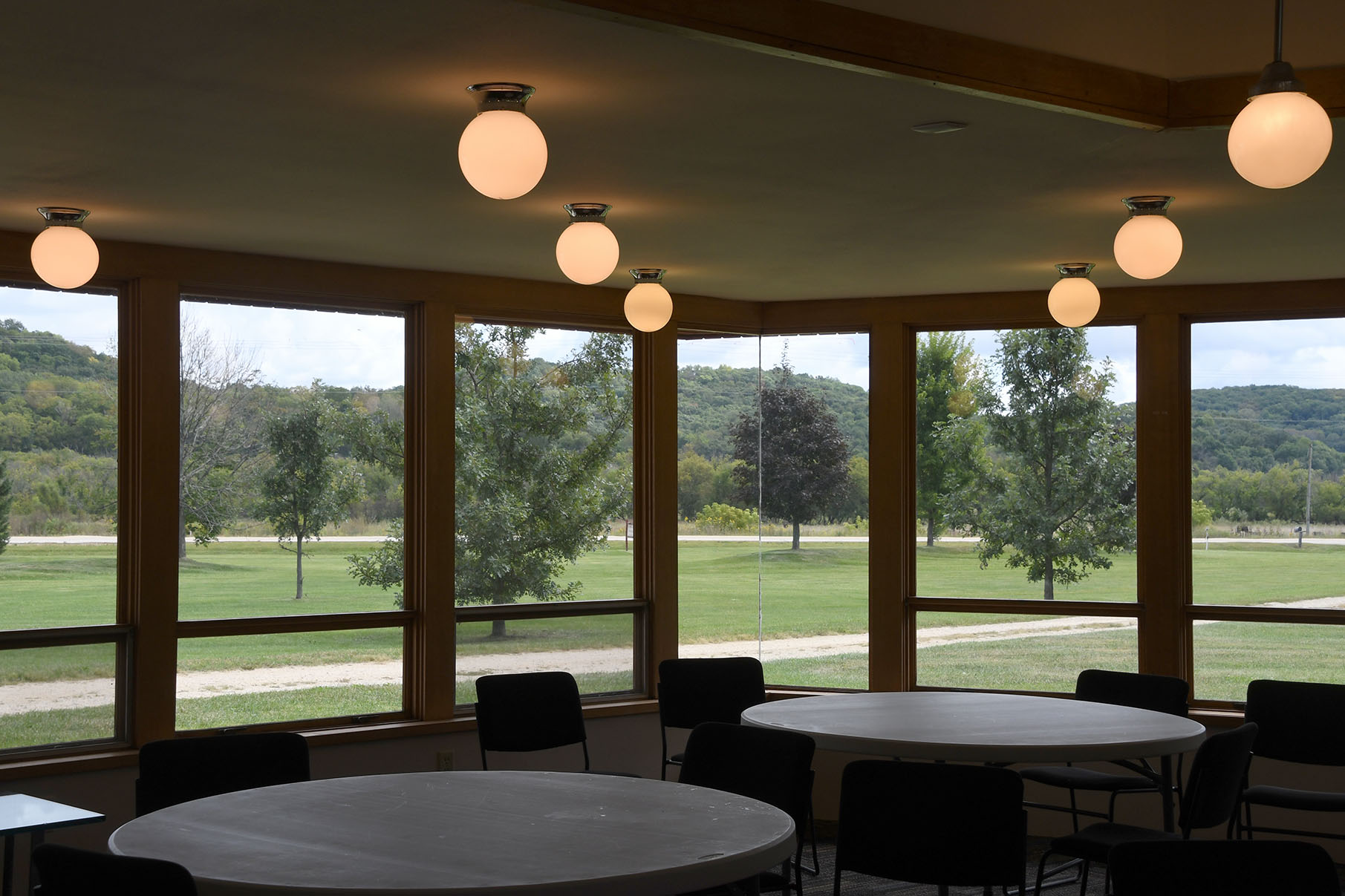
Wyoming Valley School, Spring Green:

Wyoming Valley School 9.6.24 001.jpg

Reflections of east classroom windows in the west classroom window:

Wyoming Valley School 9.6.24 005.jpg

Wyoming Valley School 9.6.24 006.jpg

Wyoming Valley School 9.6.24 008.jpgThe reflections were visible only when I was seated at a desk, and disappeared when I stood

Assembly Hall, Wyoming Valley School:

IMG_8258.jpg

IMG_8260.jpg

Entrance Hall, Wyoming Valley School:

IMG_8262.jpg

IMG_8263.jpg

Private dining room, Riverview Terrace Restaurant

Riverview Terrace Restaurant 9.6.24 003.jpg

Drafting Room at Hillside:

Hillside Drafting Room 9.6.24 010.jpg

Hillside Drafting Room 9.6.24 003.jpg

Hillside Drafting Room 9.6.24 013.jpg

Hillside Drafting Room 9.6.24 016.jpg

Hillside Drafting Room 9.6.24 017.jpg

Hillside Drafting Room 9.6.24 019.jpg

Outside the drafting room:

Hillside.jpg

Romeo and Juliet Windmill, as the weather changed:

Romeo and Juliet 9.6.24 001.jpg

Romeo and Juliet 9.6.24 003.jpg

Road Scholar Wright Tour:

https://www.roadscholar.org/find-an-adventure/22976/Architectural-Masterworks-of-Frank-Lloyd-Wright

Please scroll down to read previous articles on this website.

The Coda to Hardy House Rehabilitation

© Mark Hertzberg (2024)

Hardy Exteriors Post-Restoration 079.jpg

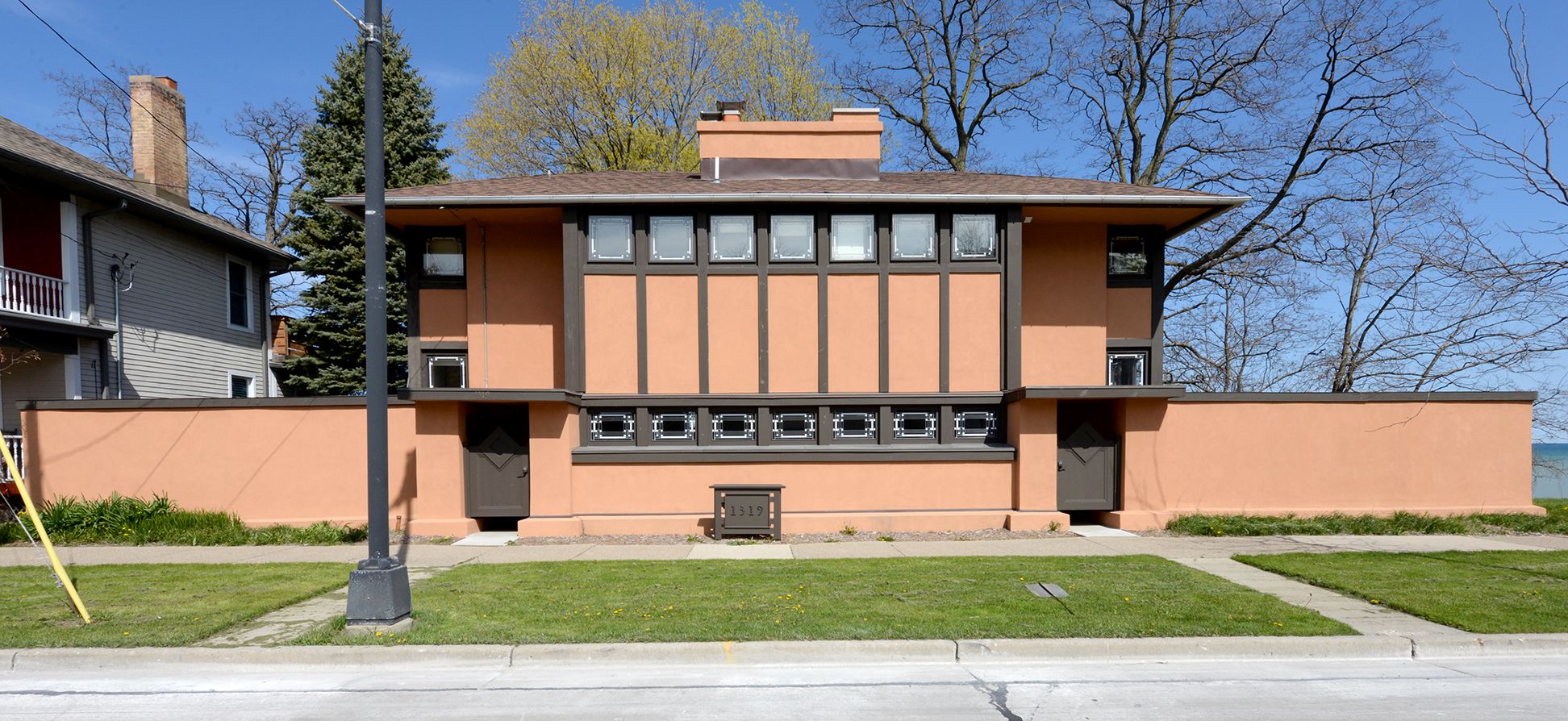
When the late Eugene (Gene) Szymczak considered buying Frank Lloyd Wright’s Thomas P. Hardy House in Racine, Wisconsin in 2012 he told me, “I don’t have children. This is something [save the house] I could do for Racine.” Indeed he did. He undertook a heroic rehabilitation and stabilization of the house.* Gene, left of center in the photo below, was awarded the prestigious Wright Spirit Award by the Frank Lloyd Wright Building Conservancy  for his work on the house in 2015. He died unexpectedly a year later after an illness.

BC 2015 WSA All 003.jpg

The house stayed in the family after Gene’s death. Tom Szymczak is one of Gene’s brothers. Tom recently completed a project which, he told me, was the last thing Gene wanted to accomplish at the house. The house was built with two pocket doors. They were replaced by conventional, hinged plain wood doors by the third stewards of the house, David and Mary Archer, between 1947 and 1957:

South door 003.jpg

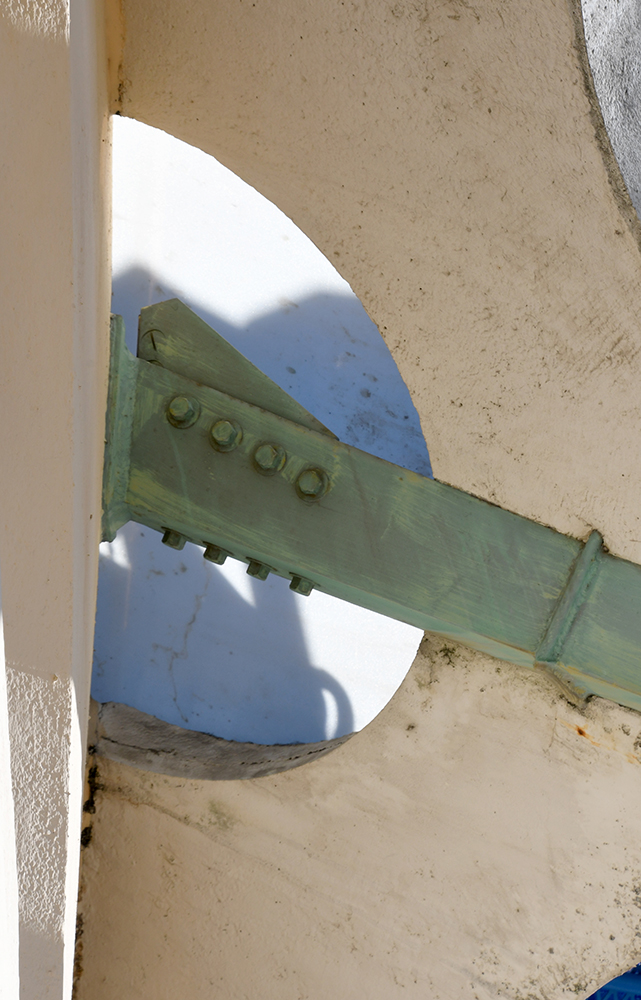
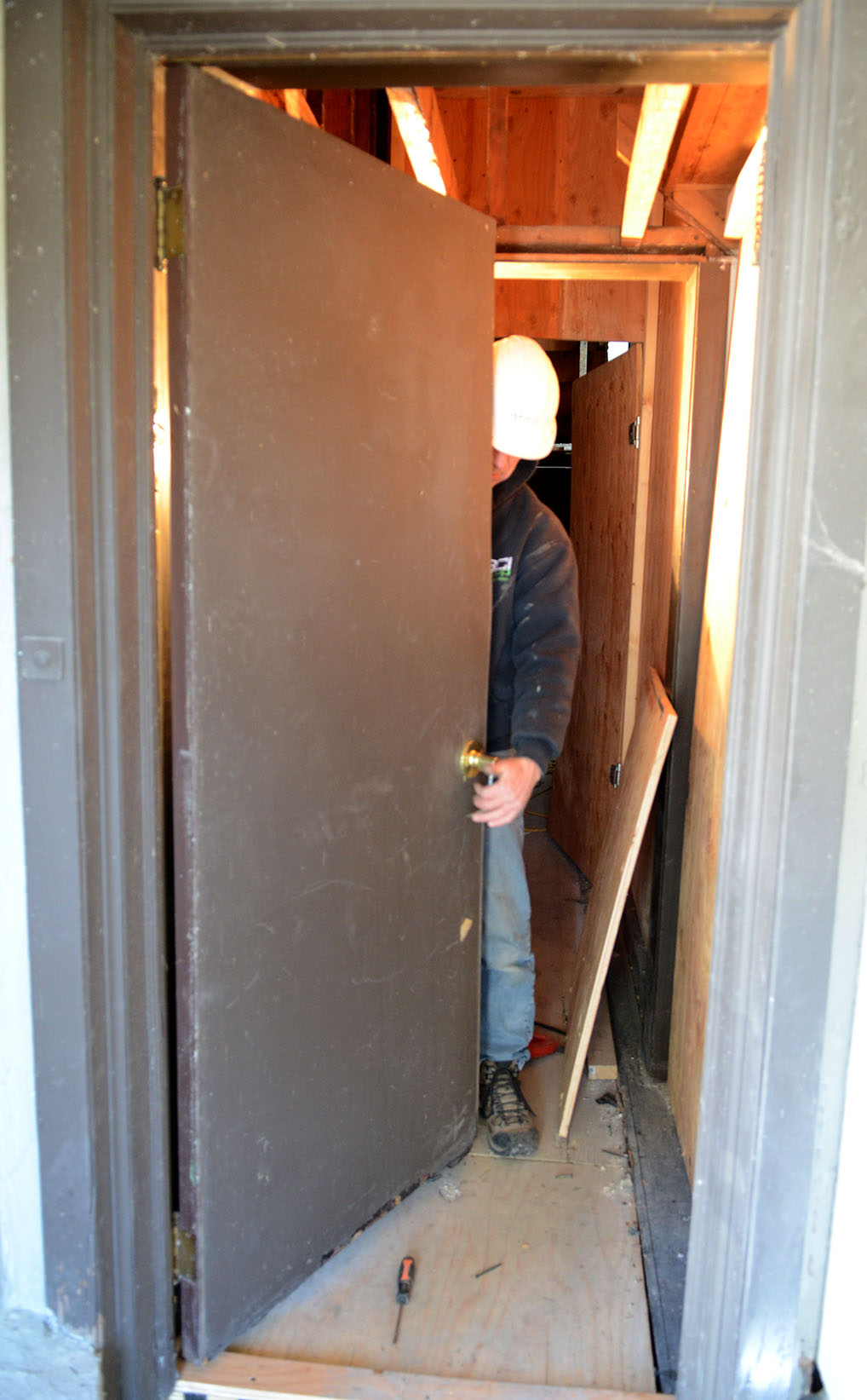
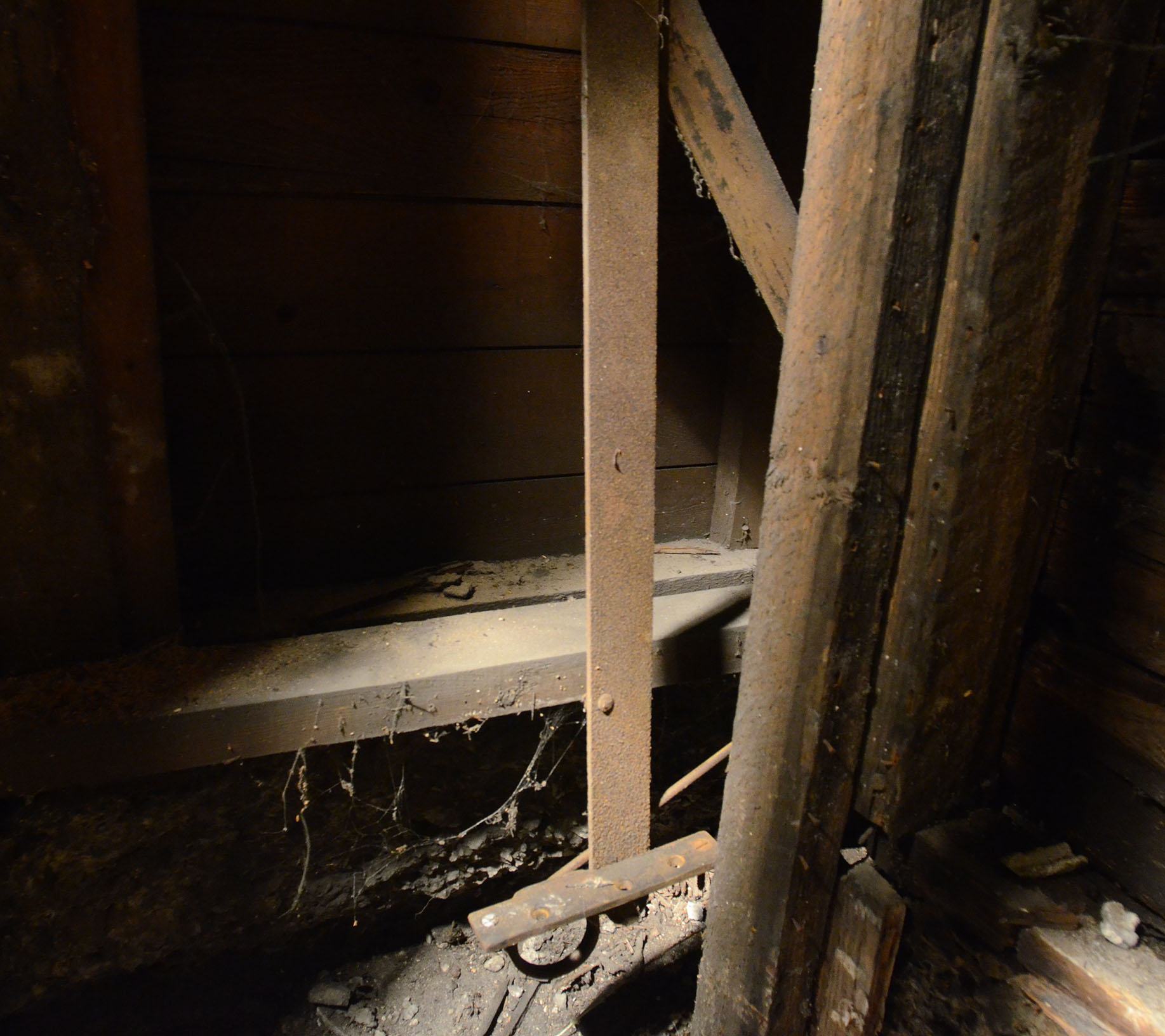
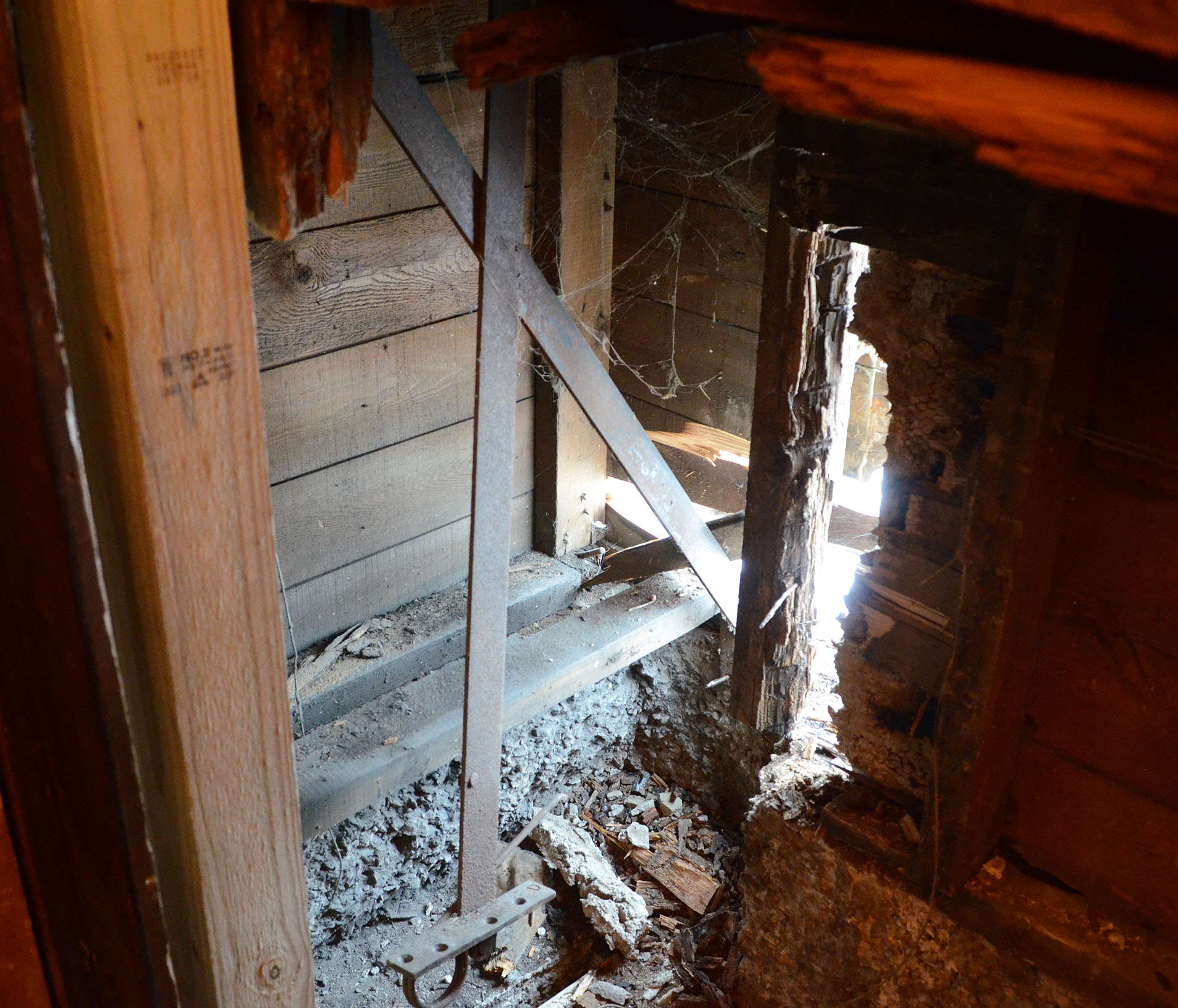
Gene decided to put pocket doors back in the house in 2013. He chose sliding glass patio-style doors so he could look into the two courtyards from the entry hall. The heavy metal arms that opened and closed the pocket doors were left in place, and were found in 2013:

Pocket Doors 010.jpg

Pocket Doors 004.jpg

Pocket Doors 014.jpg

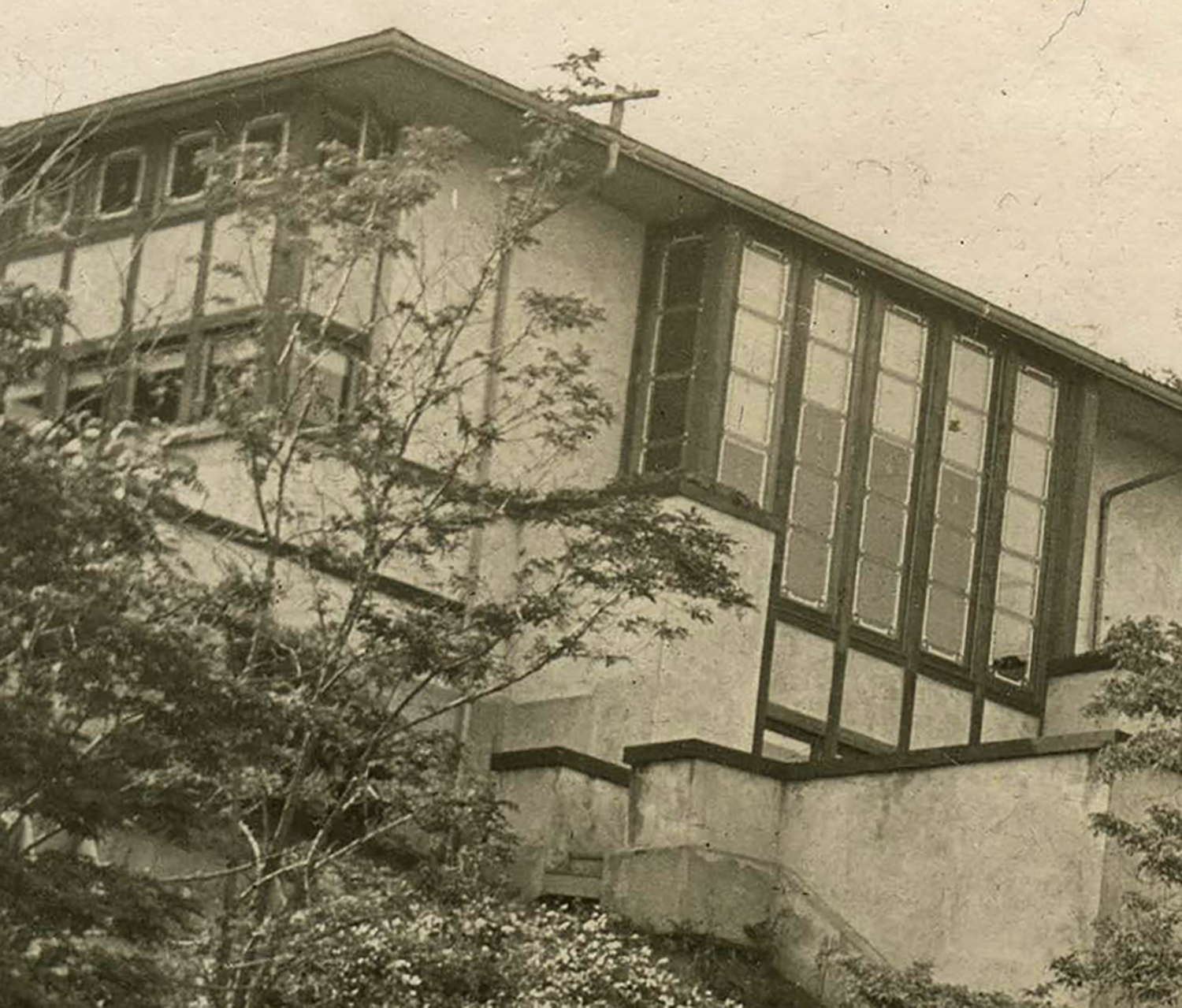
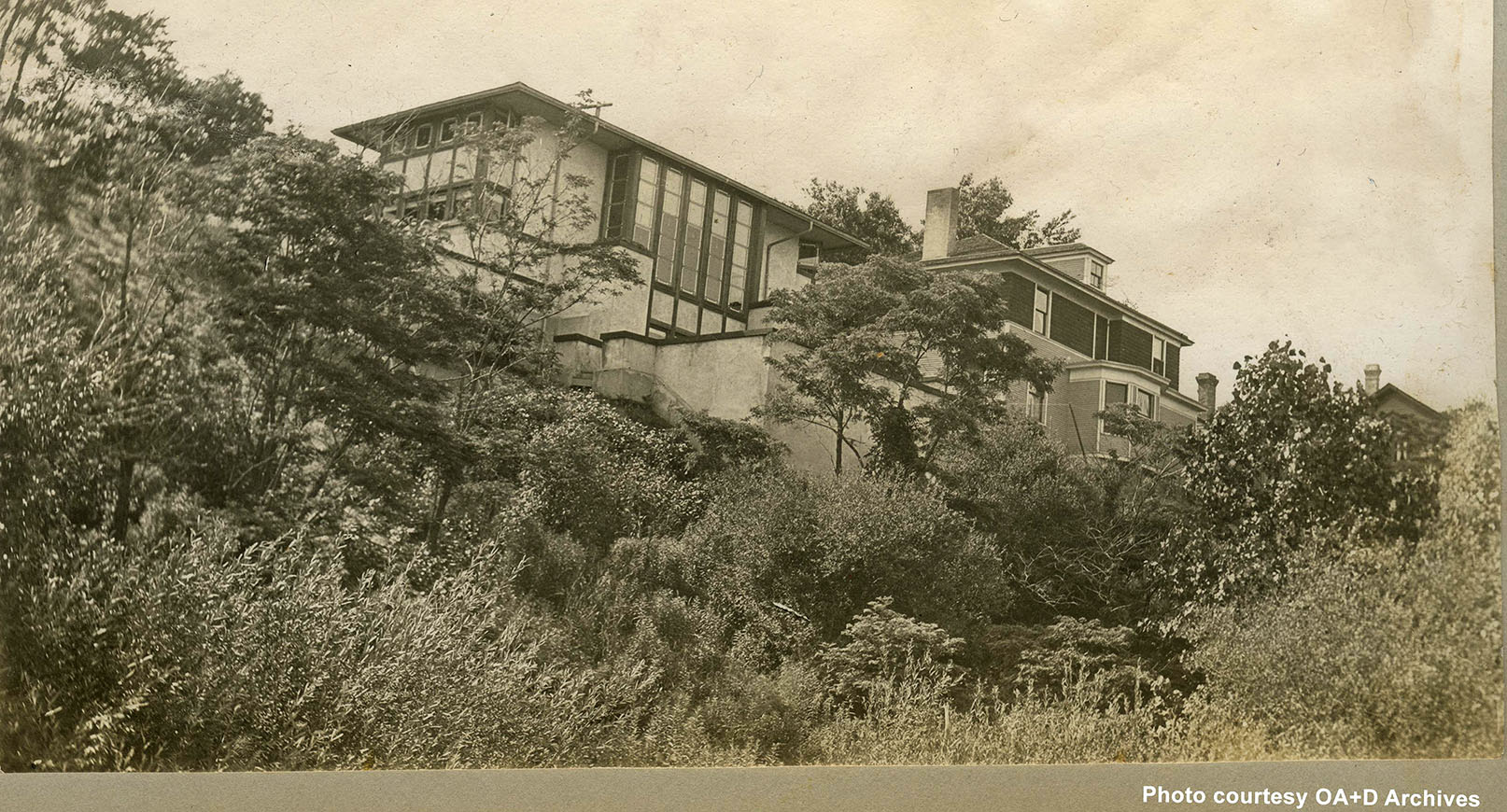
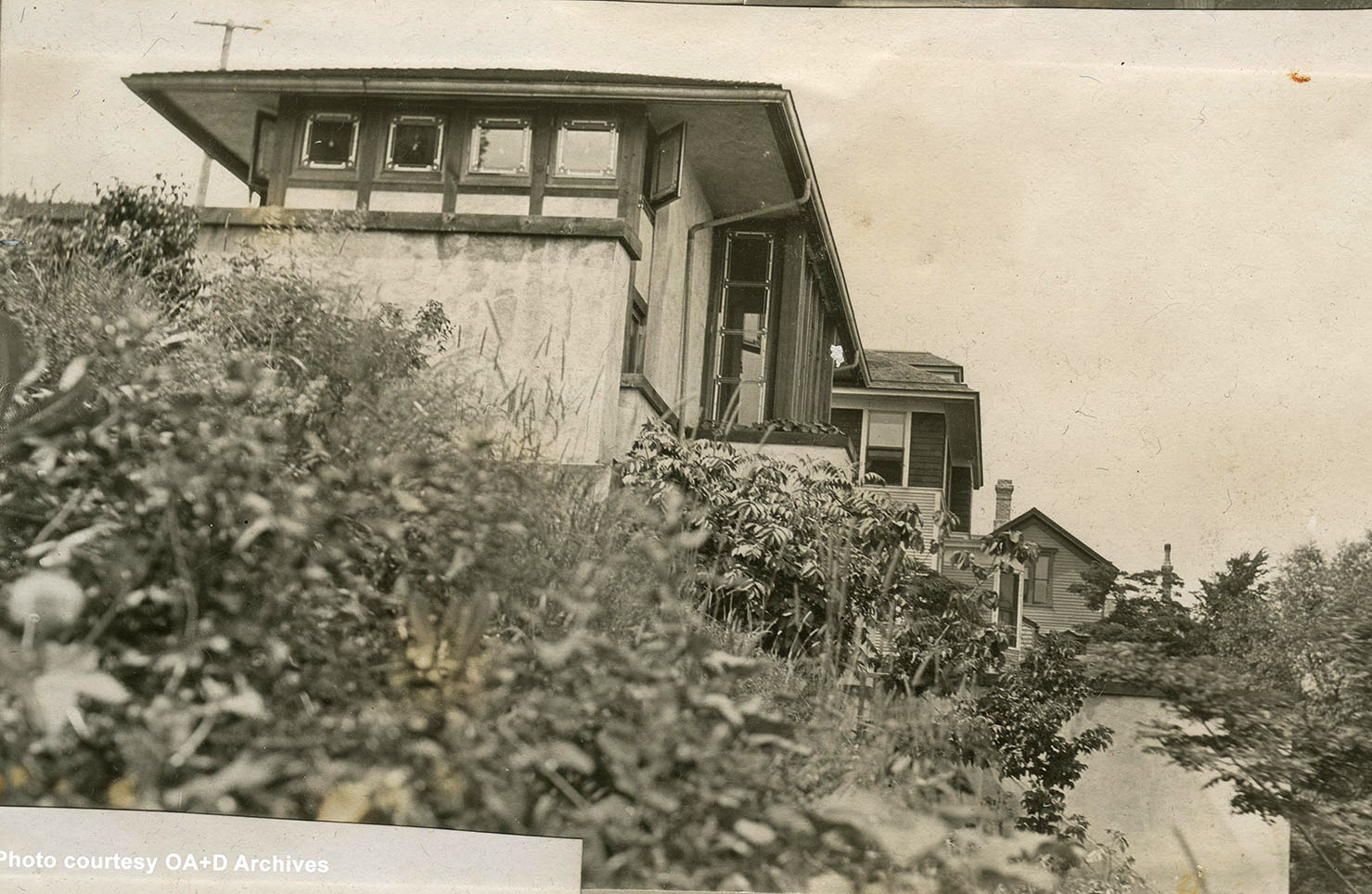
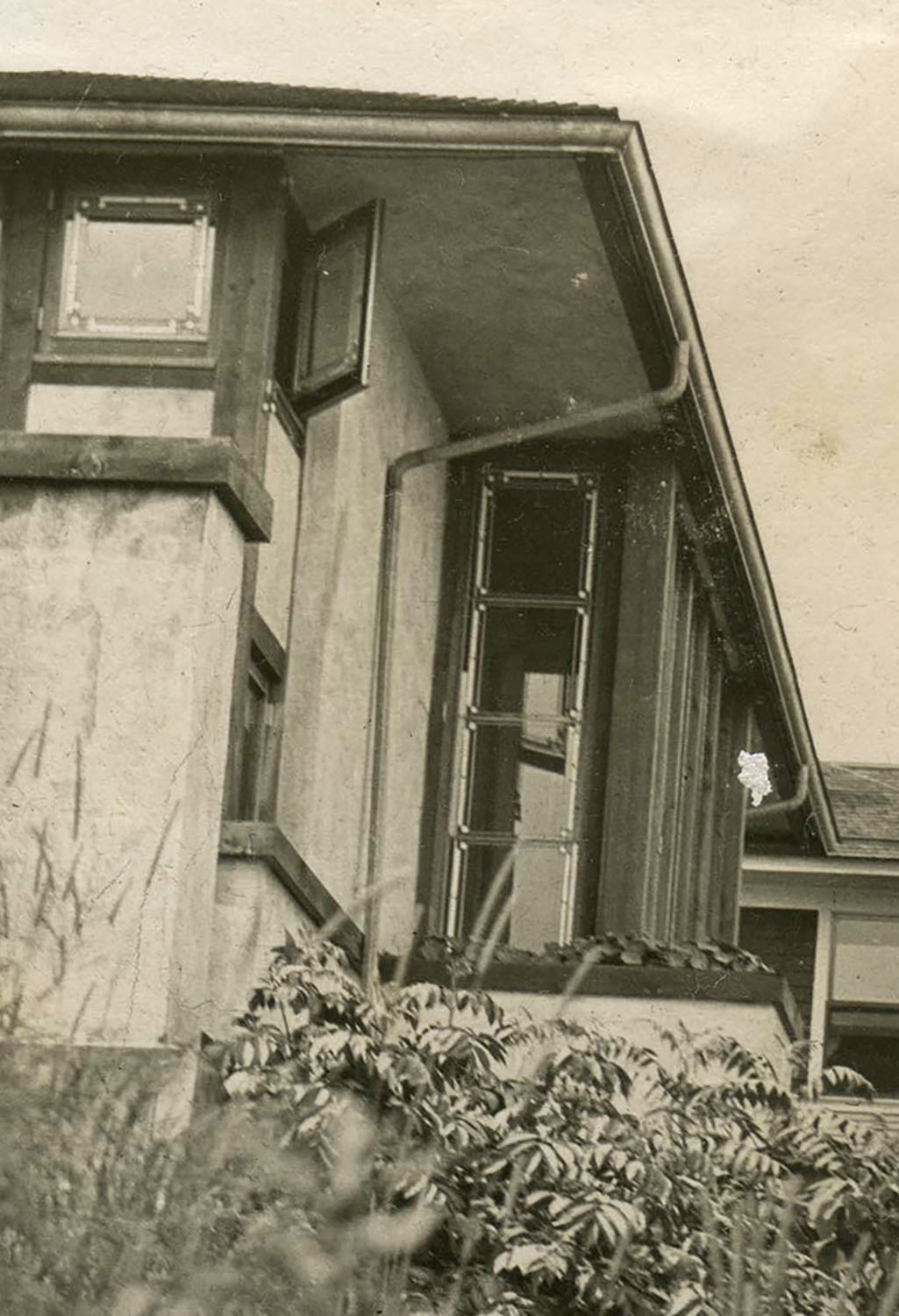
The house was built with leaded glass windows throughout, including in the dramatic two-story living room overlooking Lake Michigan. Anne Ruetz, whose parents were second stewards of the house (1938 – 1947) told me her parents replaced the windows with plain glass ones because the original ones leaked. When Gene put in energy efficient windows he jokingly told me that the next owners of the house could bear the expense of replicating Wright’s window design. Little did he know, of course, that he would be shifting the burden to his brother. 1908 photographs, which are used courtesy of the OA + D Archives, show the original leaded glass living room windows:

LR 1908 Hardy HIll Crop.jpg

LR 1908 Hardy HIll.jpg

LR 1908 Hardy Side.jpg

LR 1908 Hardy Side Crop.jpg

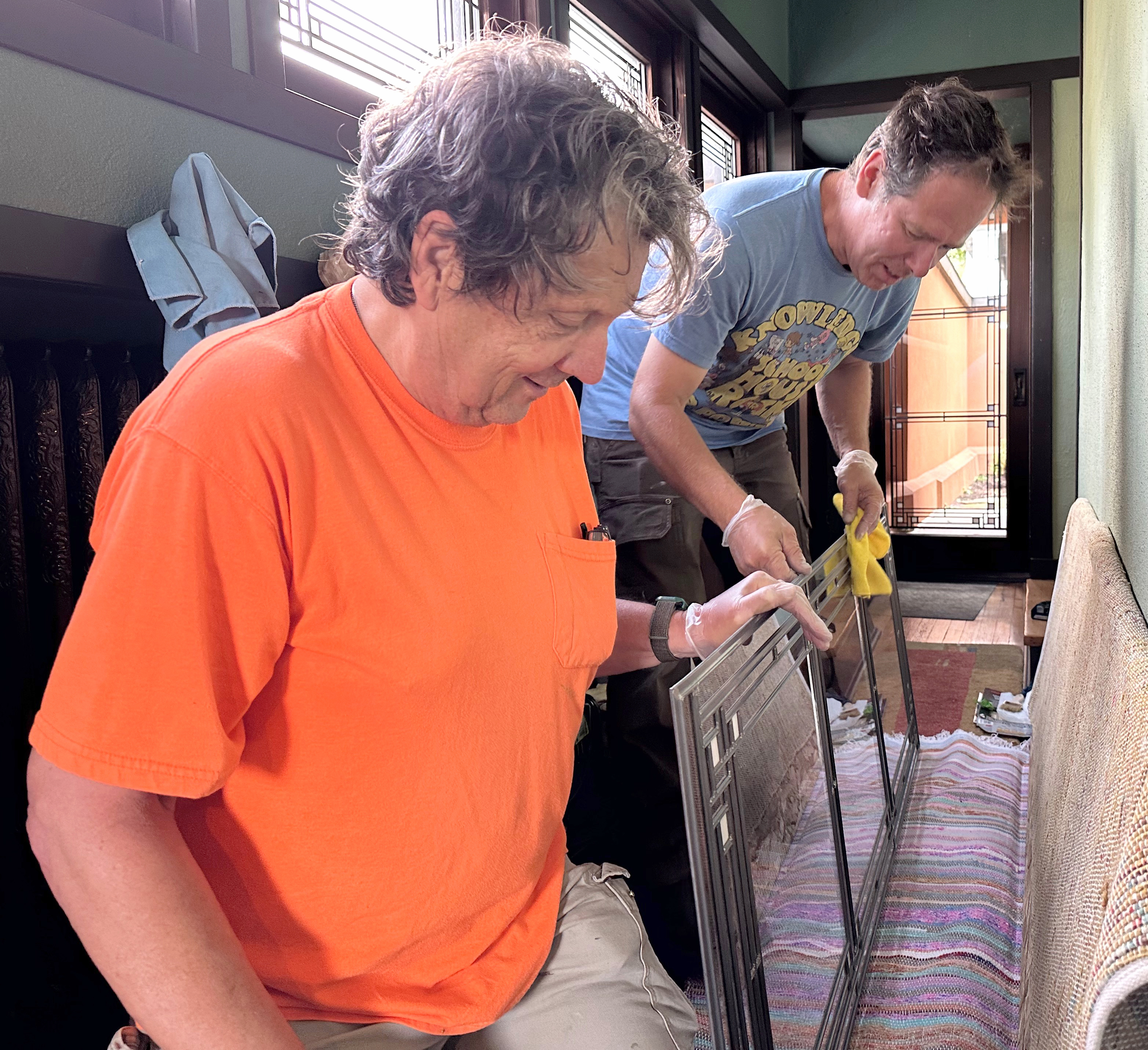
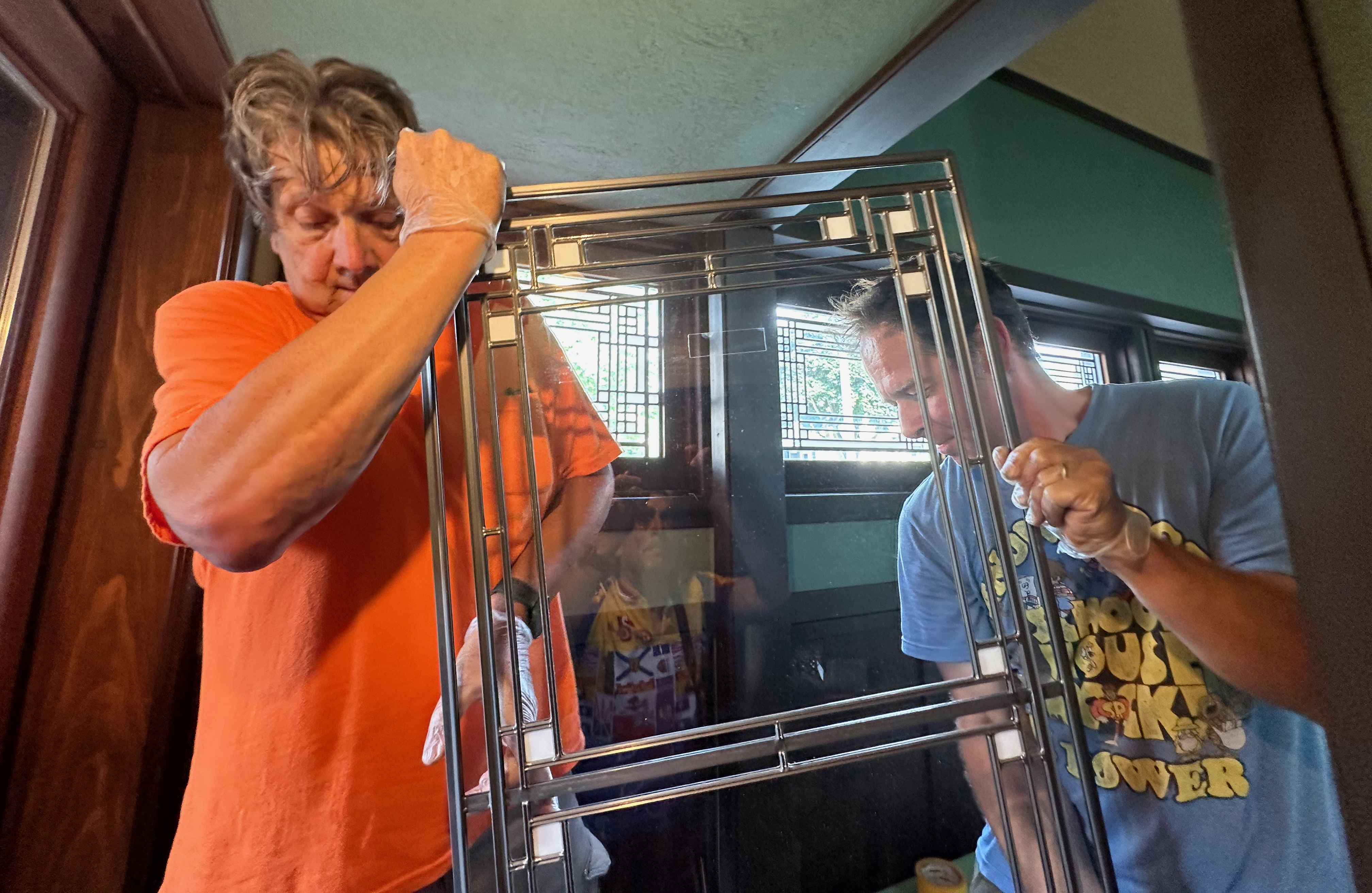
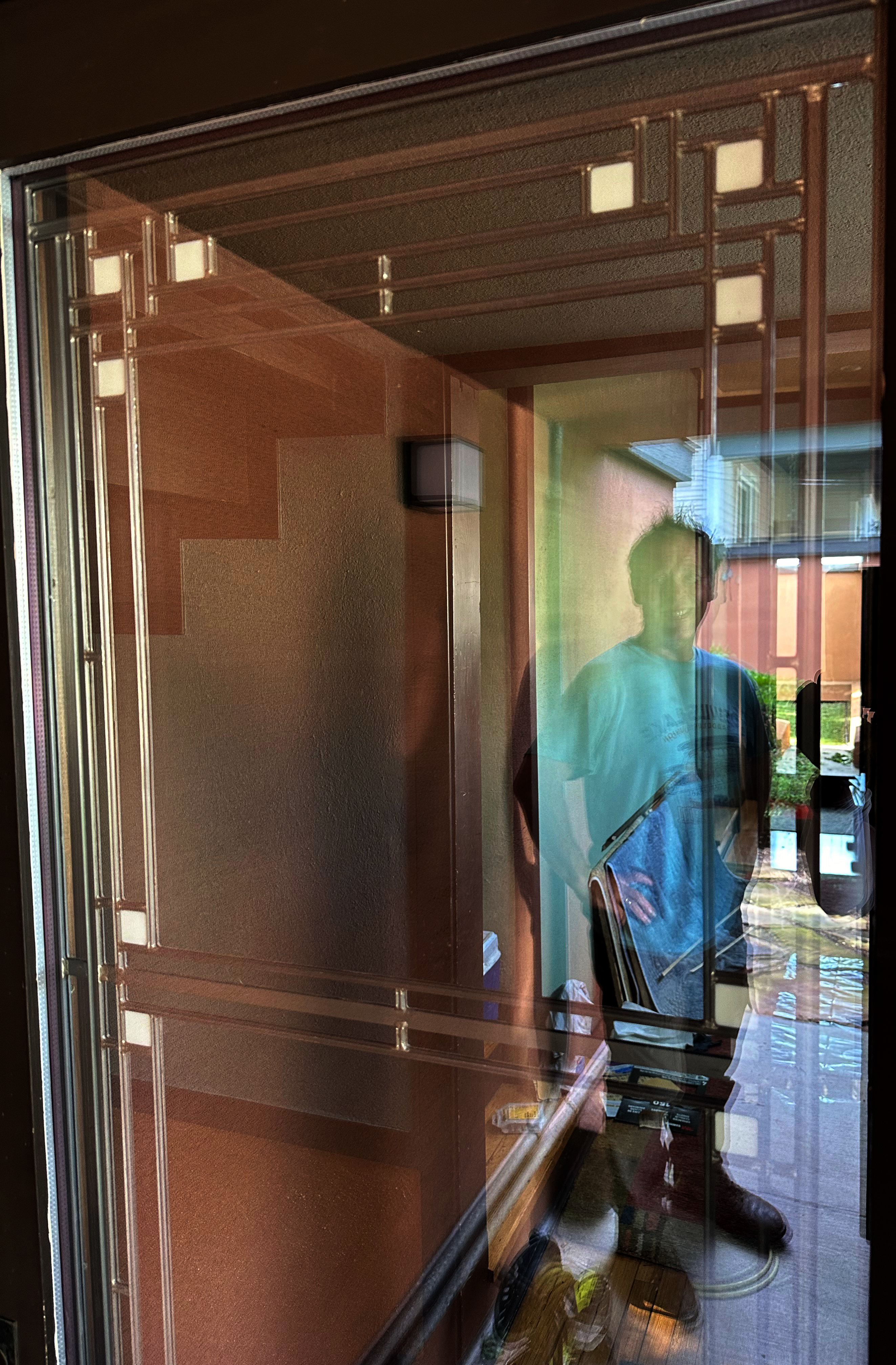
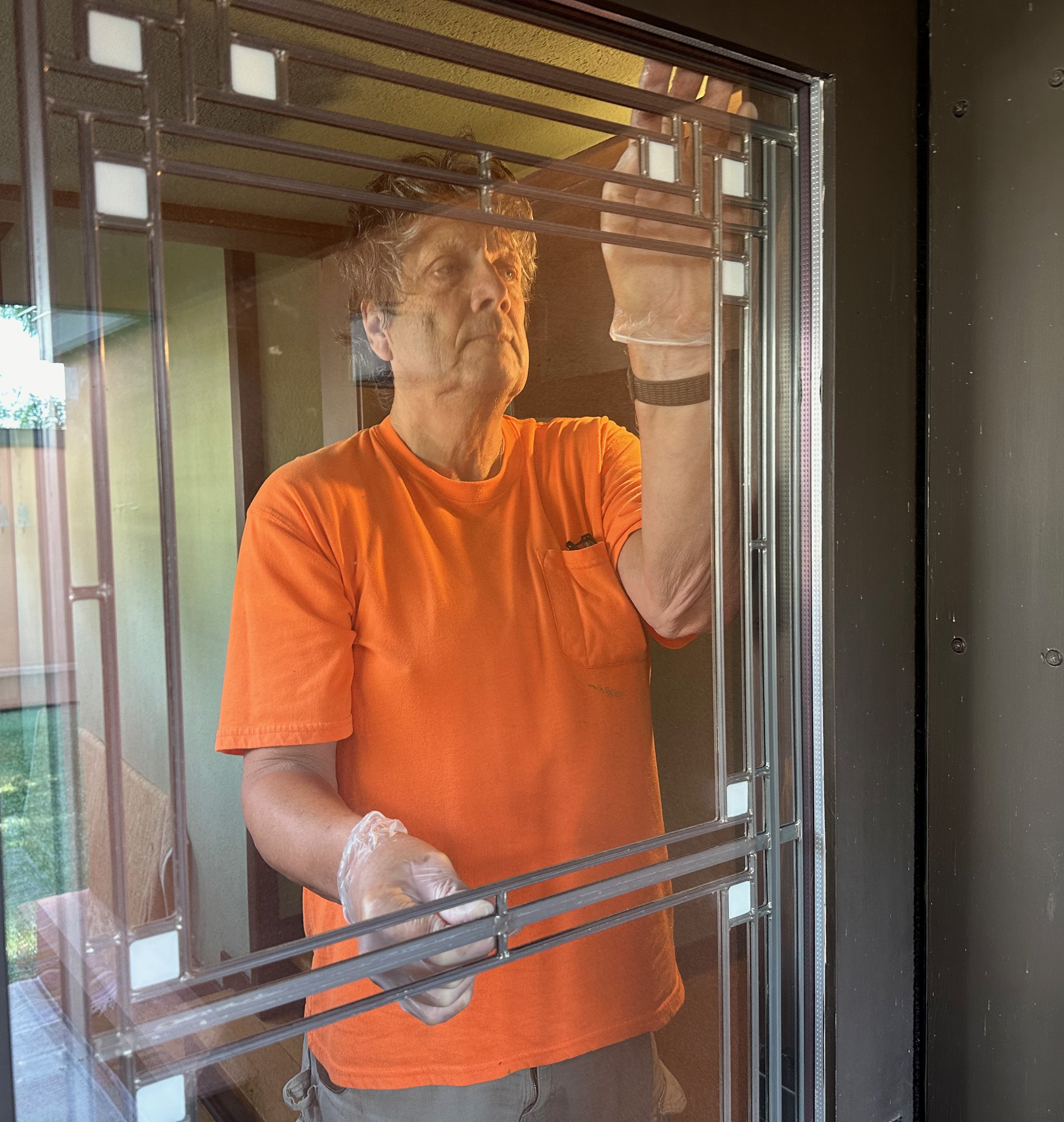
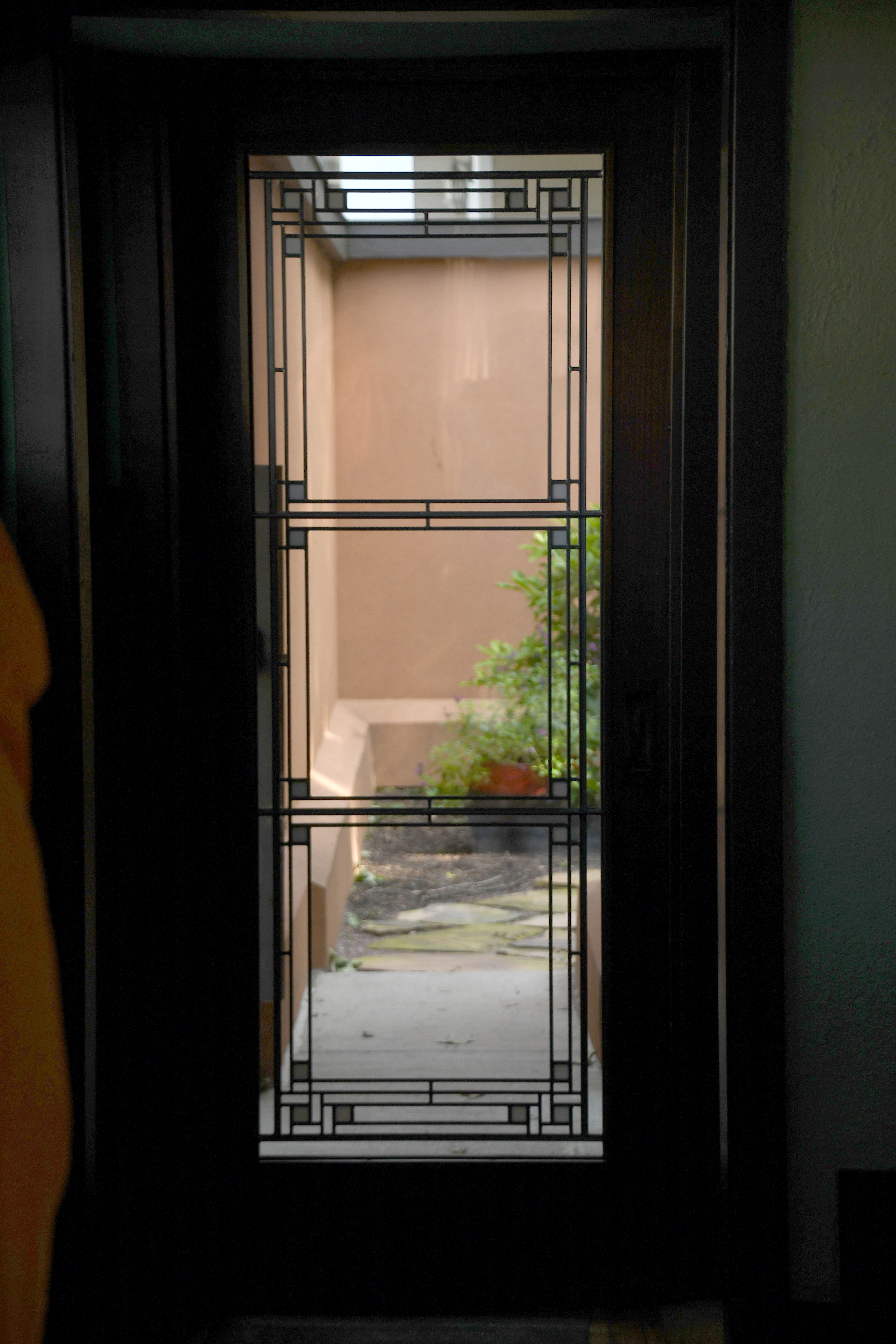
Instead of replicating the design in the living room, Gene intended to have the design fashioned for the pocket doors. The work was completed earlier this month, with window inserts made by Oakbrook Esser of Oconomowoc, Wisconsin. The installation photos show Tom Szymczak, left, and master craftsman Chad Nichols:

IMG_8036.jpeg

IMG_8039.jpeg

IMG_8030.jpeg

DSC_0043.JPG

DSC_0035.JPG

IMG_8025.jpeg

IMG_8041.jpeg

DSC_0017.JPG

DSC_0021.JPG

Thank you, Gene, for your gift to our community and to the World of Wright!

BC 2015 WSA Szymczak.jpg

The first people outside of family and friends to see the new windows will be 17 members of a Road Scholar Wright tour next Wednesday. They will be followed by several hundred people attending Wright in Wisconsin’s “Wright and Like” tour Saturday September 7.

*The term “rehabilitation” is appropriate, rather than “restoration,” because there were some changes to the house. “Restoration” would infer house museum status, accurate to either the day Hardy moved into the house (1906) or left it (in 1938) after losing it at sheriff’s auction because of monies owed on the house.

Links:

Frank Lloyd Wright Building Conservancy:

www.savewright.org

Wright and Like Tour:

https://wrightinwisconsin.org/wright-and-2024

Road Scholar Architectural Masterworks of Frank Lloyd Wright Tour (run 4 or 5 a year)

https://www.roadscholar.org/find-an-adventure/22976/Architectural-Masterworks-of-Frank-Lloyd-Wright

Please scroll down to read previous posts

Tower Tumult in Bartlesville

© Mark Hertzberg (2024)

Oklahoma Frank Lloyd Wright Price Tower 001.JPG

The future of Frank Lloyd Wright’s landmark Price Tower in Bartlesville, Oklahoma is uncertain. The Frank Lloyd Wright Building Conservancy has initiated legal proceedings against Cynthia Blanchard, the owner of the building, over her sale of Wright artifacts from the building, including one of the office chairs Wright designed, to a mid-century design dealer in Dallas. The Building Conservancy has an easement on the property, which, it says, prohibits the sale of any of the artifacts.

Oklahoma Frank Lloyd Wright Price Tower 022.JPG

Oklahoma Frank Lloyd Wright Price Tower 020.JPG

Wright designed the tower in 1952 as a combination office and apartment building, and it opened in 1956. The exterior and two-story pinwheel floor plan are derived from Wright’s unrealized design for the St. Mark’s-in-the-Bowery apartment buildings in New York City (1927-1929).*

Oklahoma Frank Lloyd Wright Price Tower 011.JPG

Oklahoma Frank Lloyd Wright Price Tower 009.JPG

The Inn at Price Tower hotel opened in 2003. Blanchard said in a television interview that it was no longer profitable to operate the hotel and its Copper Bar and Restaurant. She announced the closure August 9. Hotel and restaurant employees were laid off and tenants of the building were given notice to move out within 30 days. She said in an interview that the closure is not necessarily permanent, and that she hopes to find a buyer for the building which, she says, is no longer profitable for her to operate.

The photographs are from our stay at the hotel in April 2011. Scott Perkins, who was the Curator of Collections and Exhibitions and at the Price Tower Arts Center, was our host, graciously allowed me to photograph every nook and cranny of the building (he is now Fallingwater’s senior Director of Preservation and Collections).

Oklahoma Frank Lloyd Wright Price Tower 014.JPGThis photograph and the one below were taken looking up on the external staircase.

Oklahoma Frank Lloyd Wright Price Tower 013.JPG

Oklahoma Frank Lloyd Wright Price Tower 010.JPGPrice Tower reflected in a nearby building

Oklahoma Frank Lloyd Wright Price Tower 019.JPGThe living room of one of the original apartments

Oklahoma Frank Lloyd Wright Price Tower 018.JPGThe sitting room on the lower floor of one of the two-story hotel rooms

One can only hope that my sunset photo of Price Tower was not a harbinger of things to come.

Oklahoma Frank Lloyd Wright Price Tower 002.JPG

Oklahoma Frank Lloyd Wright Price Tower 017.JPG

Oklahoma Frank Lloyd Wright Price Tower 012.JPG

*While Price Tower was designed around Wright’s idea of a taproot tower, the late Bruce Brooks Pfeiffer told me that it is not a taproot tower because it is tied into the foundation of the adjoining two-story office building. He told me that the SC Johnson Research Tower in Racine is Wright’s only realized taproot tower.

Author’s note: Thank you to the Frank Lloyd Wright Building Conservancy for their attention to the tower, and to the Building Conservancy’s John Waters for his editing notes on this article.

Please scroll down for previous posts on this site.

Links:

Frank Lloyd Wright Building Conservancy coverage:

https://savewright.org/endangered-price-tower-in-bartlesville-oklahoma/

Local television coverage:

https://www.newson6.com/story/66b6bcf3e64a7a286feca72e/price-tower-in-bartlesville-closes-due-to-financial-struggles-future-uncertain

A New Look at That Odd New House in Hyde Park

© Mark Hertzberg (2024)

In print, on a phone, on a tablet, on a television screen…it doesn’t matter what the medium, as modern media constantly bombards us with countless images. We are immune to most of them. Just a small handful of still photographs stop us in our tracks. We were reminded of that recently after the attempted assassination of former president Donald Trump. Such are the moments in history that we remember because of a still photograph. Is that the case in the World of Wright?

There are umpteen photographs of Frank Lloyd Wright’s completed buildings. What sticks in my mind today, however, is an arresting photograph of Wright’s Frederick C. Robie House. It is not another same-old, same-old photo of the house. Rather, it is one of Wright’s ship-like, Prairie-style house at 58th and Woodlawn in Chicago’s Hyde Park neighborhood under construction in the summer of 1909.
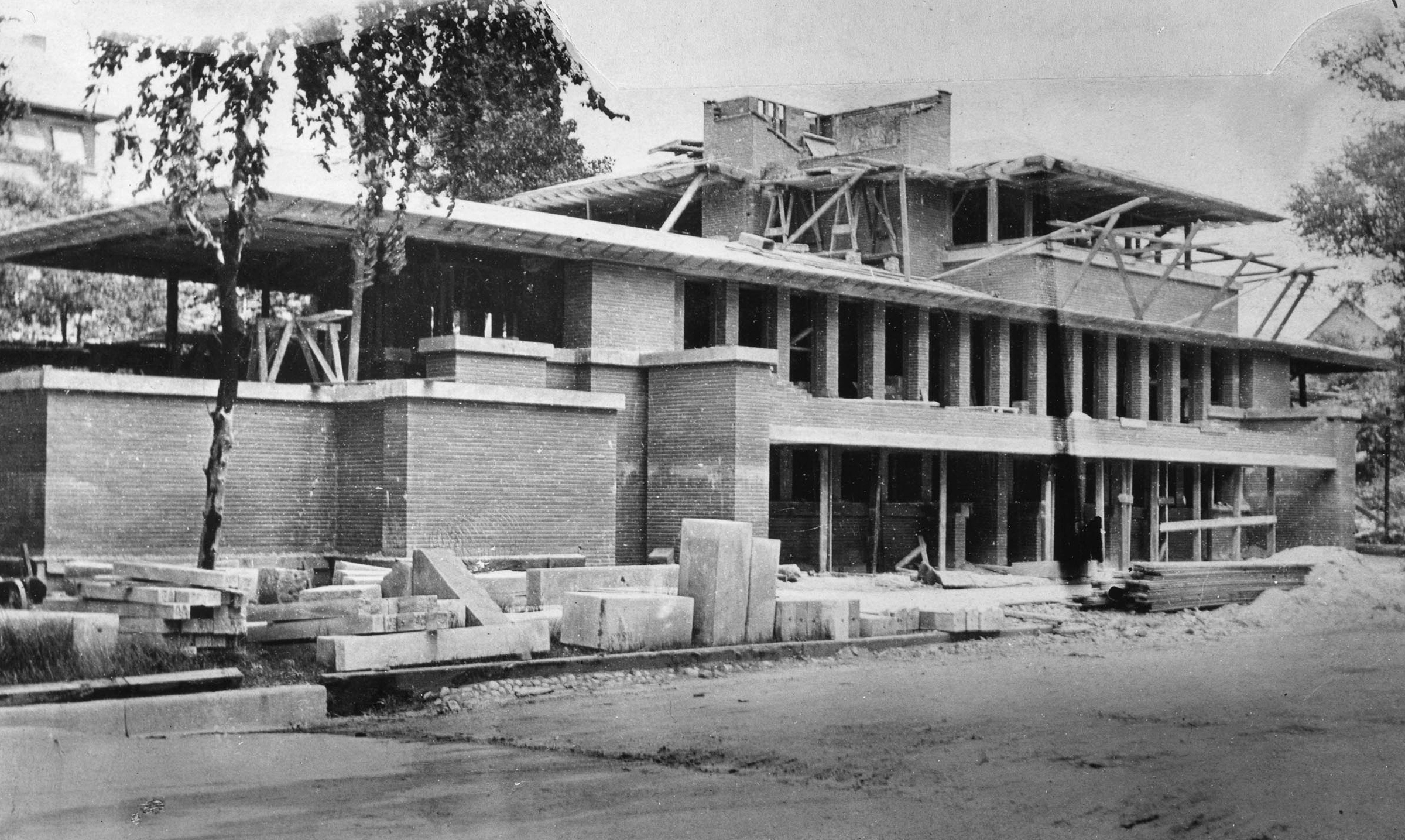
Robie Construction.jpgPhotograph courtesy of Eric M. O’Malley, from his private collection

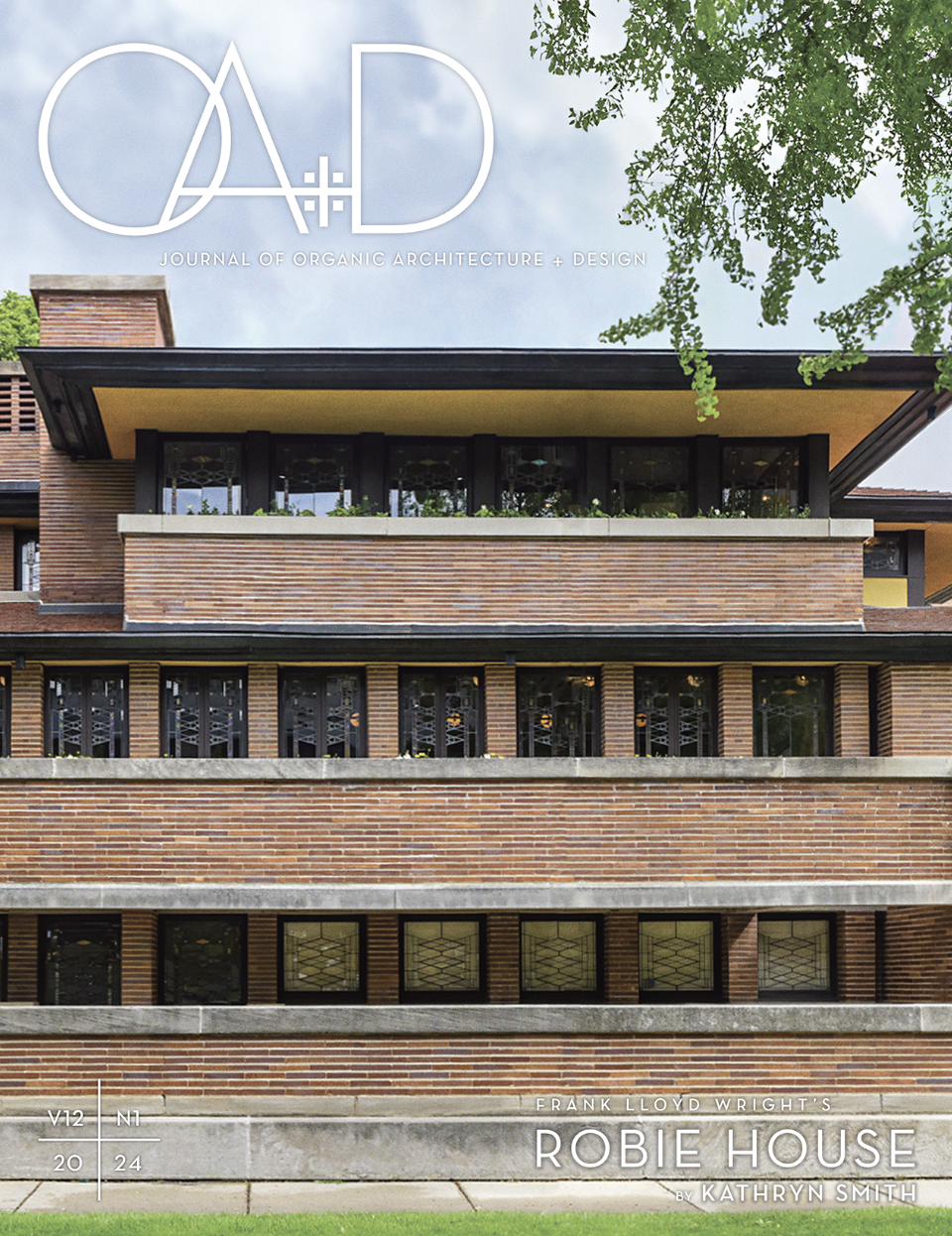
This photograph stopped me in my tracks when I was reading the latest issue of “OA+D,” the Journal of Organic Architecture and Design. Each issue is devoted to a single topic, in this case the Robie House. Wright scholar Kathryn Smith gives readers a definitive account of the history and architectural significance of the house, “Space was no longer static, but dynamic. It was a revolutionary new idea, and one that would profoundly change 20th century architecture in the decades ahead.” Her article is richly illustrated with drawings from the Wasmuth portfolio, and historic and contemporary photographs. There are about 30 construction photos taken between April 1909 and April 1910, mostly by Harrison Bernard Barnard.

I found this one particularly striking. I was mesmerized. It reminded me of something Wright scholar Jonathan Lipman wrote to me when I was writing my book about Wright’s Thomas P. Hardy House, “One can get a sense of its impact in 1906 Racine by imagining if, instead, a swooping, curved titanium house by Frank Gehry were built on the site a century later.” What, indeed, did people in Hyde Park think when they saw this rising in their neighborhood?

With no television to distract them after dinner, did neighbors regularly stroll after supper, making it a point to pass by the odd house rising at 58th and Woodlawn? Were they struck, as I was by this photograph, or did they murmur in disapproval? Although Wright and Mamah Borthwick (Cheney) would not leave for Europe together until the fall of 1909, had word of their affair traveled from Oak Park to Hyde Park? Was this odd house then a confirmation of prejudices people might have had against a man who was upending social mores? Or were they progressive thinkers, perhaps people who taught at the nearby University of Chicago which opened in 1892, who were excited and intrigued by what they were seeing on that corner lot?

The house had been rising for several months when this photograph from Eric M. O’Malley’s private collection was taken in the summer of 1909. The superstructure of the house is almost complete. We have a sense of what the house will look like, but it is still a mystery in many respects. For example, we see only empty spaces where magnificent leaded glass windows will be installed. I think it is that sense of mystery, of the unknown, that excited me.

Robie was built 16 years after the World’s Columbian Exposition in nearby Jackson Park. Only Louis Sullivan’s Transportation Building had broken the fair’s landscape of one Classical Revival-style building after another. Wright’s Heller, Blossom and McArthur houses are nearby , but are not as startling as Robie would have been in 1909. Rockefeller Chapel nearby at the University of Chicago would not be built until 1928, and it would be a traditional Gothic design, reinforcing the startling design of Robie, perched on its corner lot. Startling and groundbreaking, indeed.

As I thought about this article for a month or more, the photograph of Robie brought to mind one more Wright construction photo. It is of the SC Johnson Research Tower in Racine. The Tower was designed in 1943/44, and built between November 1947 and November 1950. It is Wright’s only realized taproot tower.* This photograph reminded me of a child’s stacking toy when I ran across it in Johnson’s archives when I was writing my book at the Research Tower in 2009. What, then, did people living near 1525 Howe Street in Racine (two miles from my home) think when this began rising above their traditional houses?
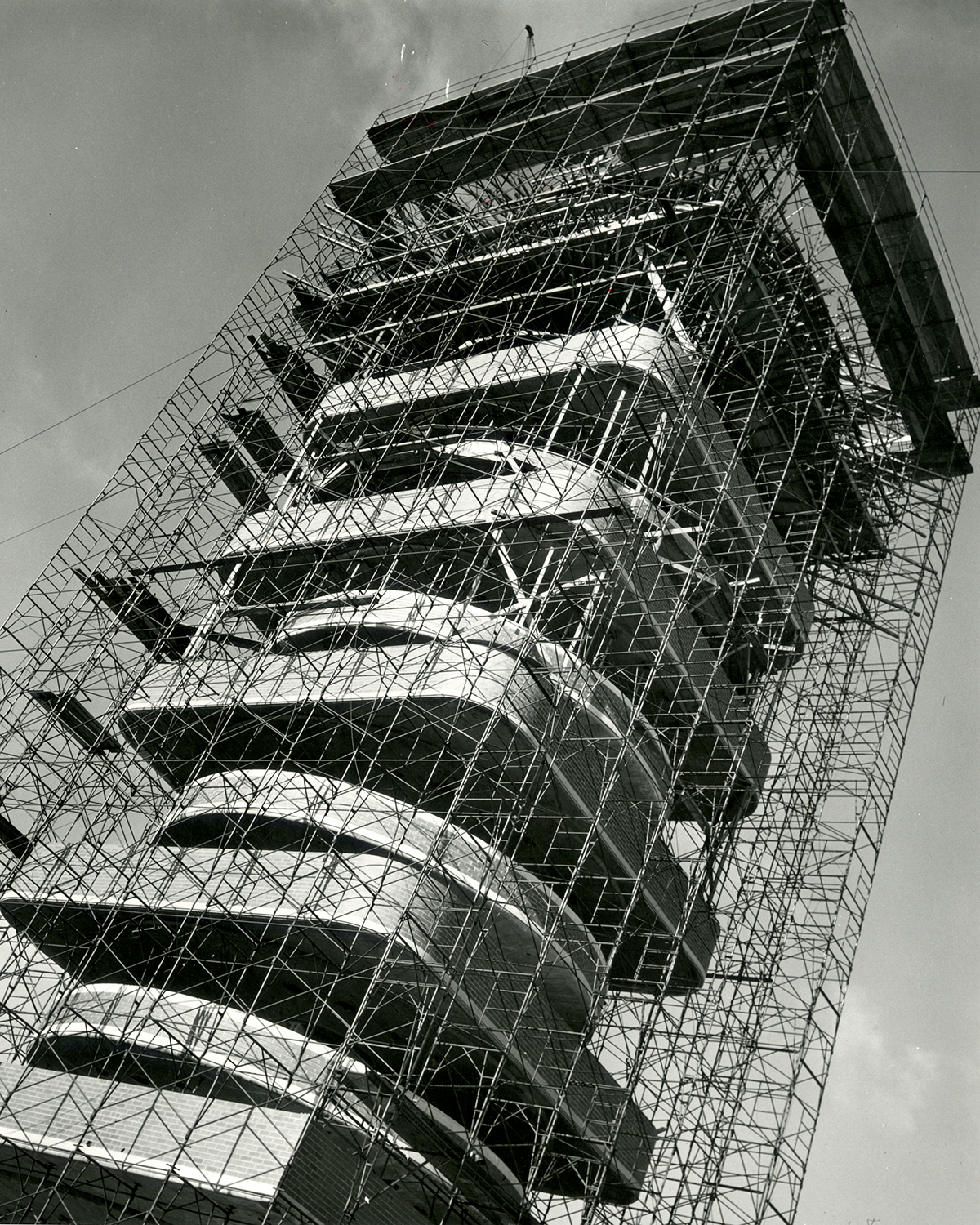
LR Constr. toy.jpgPhotograph courtesy of SC Johnson Archives

Dozens of books have been published with photographs of Wright’s finished work. The late Sam Johnson, whose father H.F. Johnson Jr. commissioned the SC Johnson Administration Building, the Research Tower, and Wingspread, among others (unrealized), remarked to me “The world does not need another book about Frank Lloyd Wright.”** Perhaps it needs one comprised soley of photographs of his buildings under construction.

P.S. I think Eric O’Malley was also dazzled by the photograph…it appears twice in the magazine, the first time as a chapter title page.

Footnotes:

*The late Bruce Brooks Pfeiffer, who wrote the Foreword to my book about the Research Tower, told me that although Price Tower looks like a taproot tower, it is not one because it is tied into the foundation of the adjoining two-story office building. He said Racine was Wright’s only realized taproot tower.

**The context for Johnson’s remark was that I was pitching my idea for a book which became my “Wright in Racine” book (Pomegranate: 2004). The rest of his observation was, “…but it does need one about his work in Racine.” I was elated and treated myself to a Dove ice cream bar after leaving our meeting.

Link to OA+D store and Robie issue of the Journal:
Screenshot 2024-07-25 at 6.00.09 AM.png

https://store.oadarchives.org/product/journal-oa-d-v12-n1

Please scroll down for previous articles on this blog
 

Windows on Main Street

© Mark Hertzberg (2024)

I have written before that I always challenge myself to see something new even on my umpteenth visit to a given Frank Lloyd Wright – designed building. I was blasé today as I took my friend Robert Hartmann on a tour of the Thomas P. Hardy House on Main Street in Racine, Wisconsin, as he prepared for Wright in Wisconsin’s forthcoming “Wright and Like” tour scheduled for September 7. Hartmann expects between 300 – 500 guests and wanted to figure out the best way for guests to wind through the compact house, and how many docents he would need.

The light was less than spectacular and there was nothing new to see. I had biked to the house so my only camera was my smartphone. I think phone cameras sometimes oversaturate colors, but that camera was all I had when I unexpectedly saw this in the second floor windows above the south stairs:

Wright Windows 001.jpg

Wright Windows 002.jpg

So much for being blasé!

Here is a link for more information about the tour:

https://wrightinwisconsin.org/wright-and-2024

I served on Wright in Wisconsin’s board for 14 years. They are the only statewide Wright group, originally founded in cooperation with the state Department of Tourism to promote Wright tourism in Wisconsin.

Please scroll down for previous articles or blog posts.

Wright’s Birthday: Wright in the Abstract

Photos © Mark Hertzberg (2024)

LR Frank Lloyd Wright in Racine.jpgSC Johnson Administration Building, Racine (1936)

It is June 8, Frank Lloyd Wright’s 157th birthday. Social media sites devoted to Wright are abuzz every year with birthday tributes. Sometimes I have something to post on “the day,” but not always. (June 8, 1968 or 6.8.68, my high school graduation day, is more significant to me personally, but that’s another story). I had nothing in mind to post this year until I took my customary morning bike ride and passed his Thomas P. Hardy House and the SC Johnson Administration Building and Research Tower which are on my bike route in Racine. I thought back to the fall of 2022 when my alma mater, Lake Forest (Illinois) College, honored me with a 50th anniversary Homecoming dual photo exhibit. One gallery was devoted to my career as a photojournalist, the other to my Wright-related photography. As I pedaled down Main Street this morning I decided to share the latter with you. The thesis of the exhibit was to present “Wright in the Abstract,” rather than only in record shots or head-on photos of his work. My challenge was to cull a few dozen photos of several thousand. The photos are in chronological order, based on the year of the commission, not the year of completion.

Romeo and Juliet Windmill, Spring Green (originally 1896, rebuilt 1938 and 1992):

LR Romeo and Juliet 1.23.22 006.jpg

Thomas P. Hardy House, Racine (1904-1905):

LR 1319 Gene + 10 007.jpg

Meyer May House, Grand Rapids (1908):

LR Meyer May House 054.jpg

LR Meyer May House 105.jpg

Hollyhock House, Los Angeles (1917):

LR Hollyhock House 10.3.19 019.jpg

Taliesin III, Spring Green (1925):

LR Taliesin 1.23.22 026.jpg

LR Taliesin 1.23.22 029.jpg

LR Taliesin 1.23.22 073.jpg

LR Taliesin.jpg

LR Taliesin 5.15.19 001.jpg

LR Taliesin 6.8.19 025.jpg

Tour guests in Wright’s bedroom at Taliesin III:

LR Taliesin Tour.jpg

Hillside Drafting Room, Spring Green (1932):

LR Hillside Drafting Room 5.20.22 017.jpg

SC Johnson Administration Building (1936) and Research Tower (1943-1944):

LR Adm Bldg Tower 2010 016.jpg

LR SCJ Admin. Building 2015 028.jpg

LR Adm. Bldg. Furniture  Jun 2012 027a.jpg

LR Glass Dome 2017 002.jpg

LR Glass Dome Sept4.07 014.jpg

Herbert F. Johnson Jr. Home (Wingspread), Wind Point (1937):

LR Clerestory Sun 013.jpg

LR Wingspread Aerial 6.16.21 011.jpg

Florida Southern College, Lakeland (Beginning in 1938):

LR Esplanades 067.jpg

LR Esplanades 094.jpg

LR Esplanades 086.jpg

SC Johnson Research Tower, Racine (1943-44):

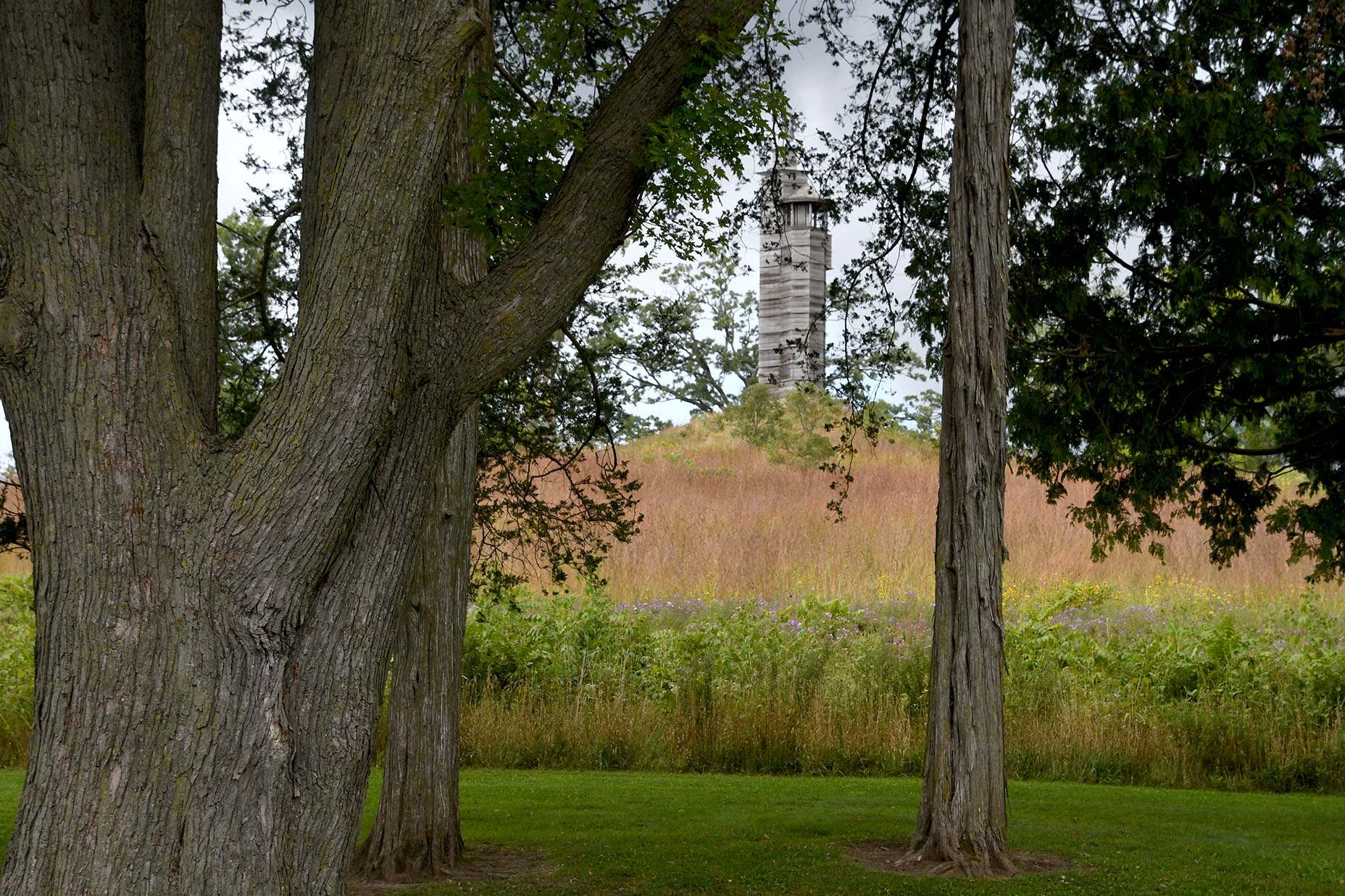
LR Tower framed 009.jpg

LR Tower Fall Sun.jpg

LR SC Johnson Admin Building Tower 6.16.20 003.jpg

Solomon R. Guggenheim Museum, New York (1943):

LR Guggenheim Museum 2017 025.jpg

Price Tower, Bartlesville (1952):

LR Price Tower a Sunrise 005.jpg

LR Price Tower Reflection 005.jpg

LR Price Tower Misc. Details 062.jpg

Annunciation Greek Orthodox Church, Wauwatosa (1956):

LR AGOC 6.16.22 048.jpg

LR AGOC 6.16.22 060.jpg

LR AGOC Interiors 9.17.19 011.jpg

Lindholm Service Station, Cloquet, Minnesota (1957):

LR Lindholm Service Station 6.7.21 020.jpg

Marin County, California, Civic Center (1957):

LR Marin County 2015 007.jpg

LR Marin County 2015 055.jpg

I will close with a photo I took just a few weeks ago when I was given the opportunity to preview the newly-restored Hillside Theater (1952), which is being inaugurated this evening, literally just as I am putting this piece together:

LR Frank Lloyd Wright Hillside Theater Restoration 028.jpg

People have often asked me what attracts me to Wright’s work. As a photographer, I have a visual attraction to his work. That grew in part out of my newspaper photo assignments at the SC Johnson Administration Building. But beyond that, as I began to study his work, I was struck by the evolution of his designs from the 1890s until his death in 1959. Happy birthday, Frank Lloyd Wright, and thank you for your contributions to helping us reimagine the spaces in which we live, work, and worship.

Please scroll down in http://www.wrightinracine.com for previous posts