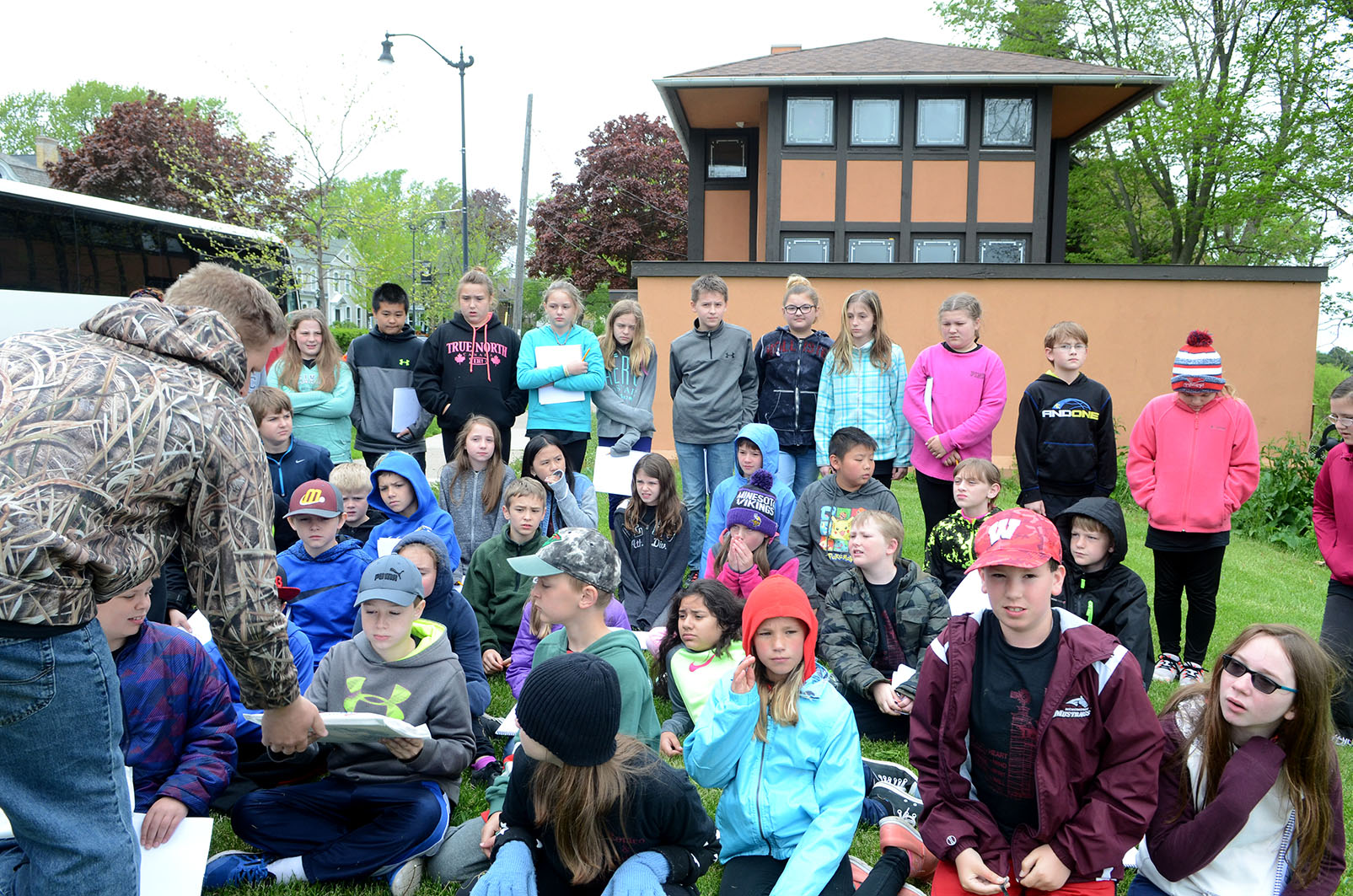
Remembering Barbara Elsner

Photos © Mark Hertzberg

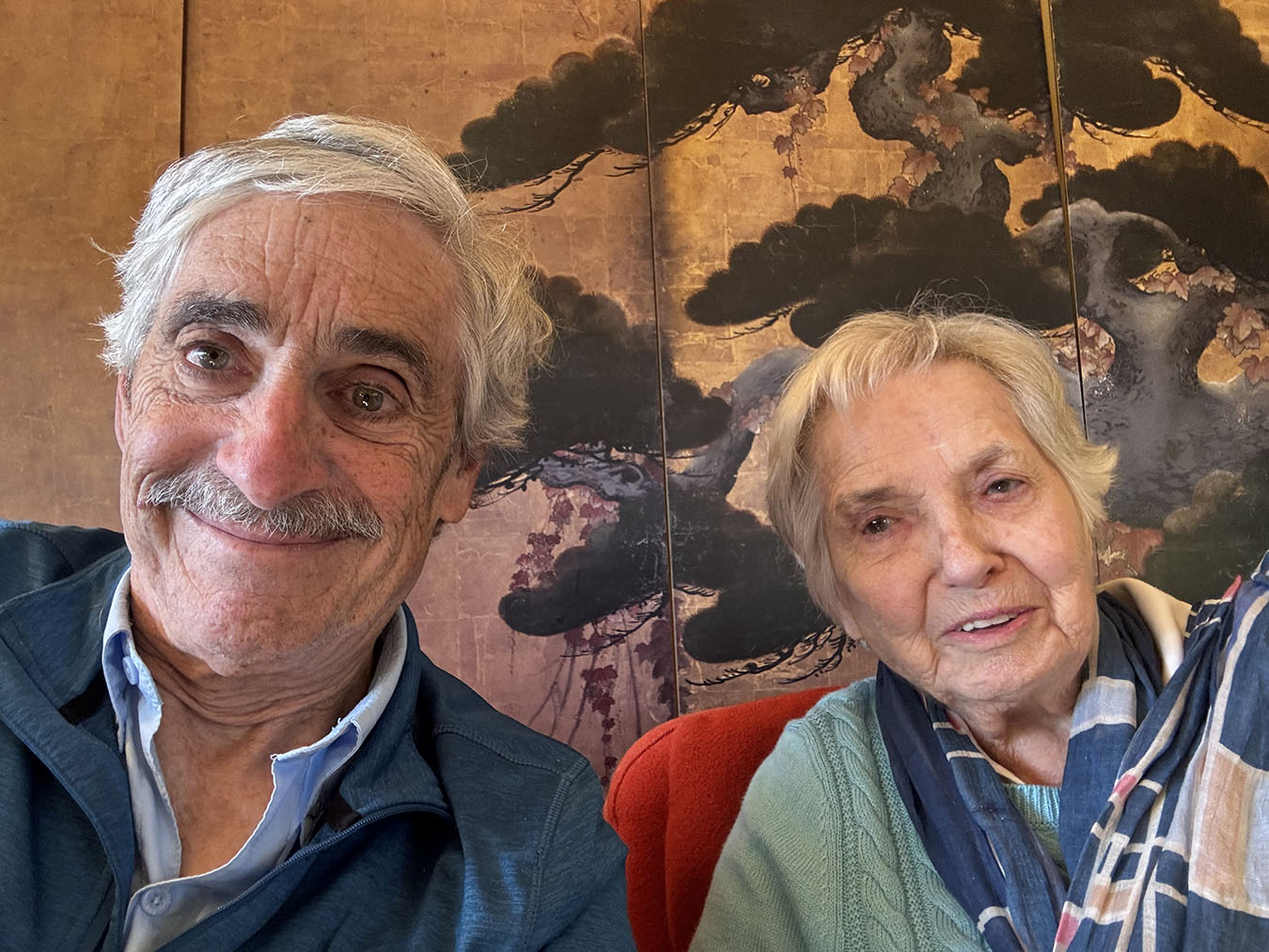
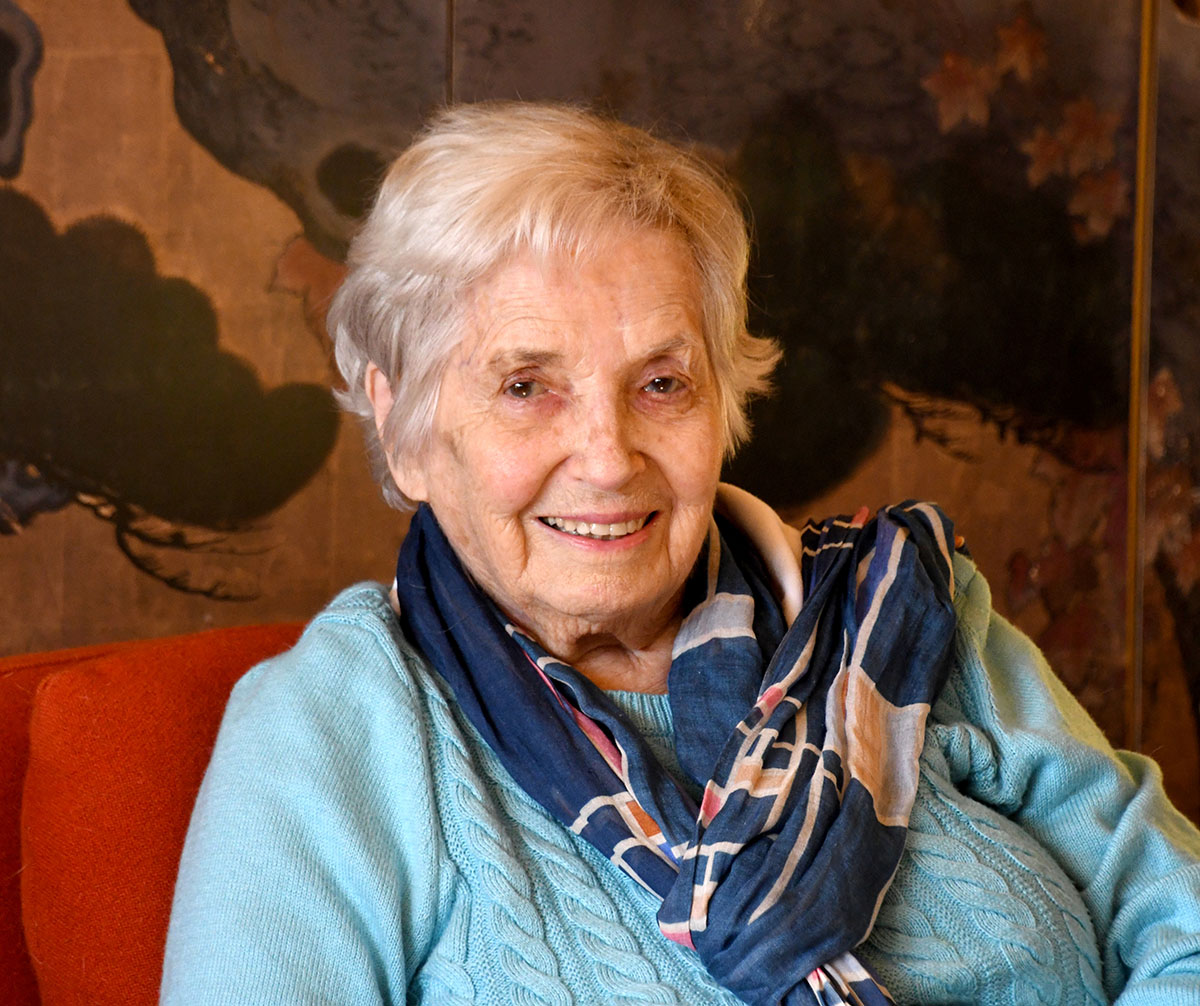
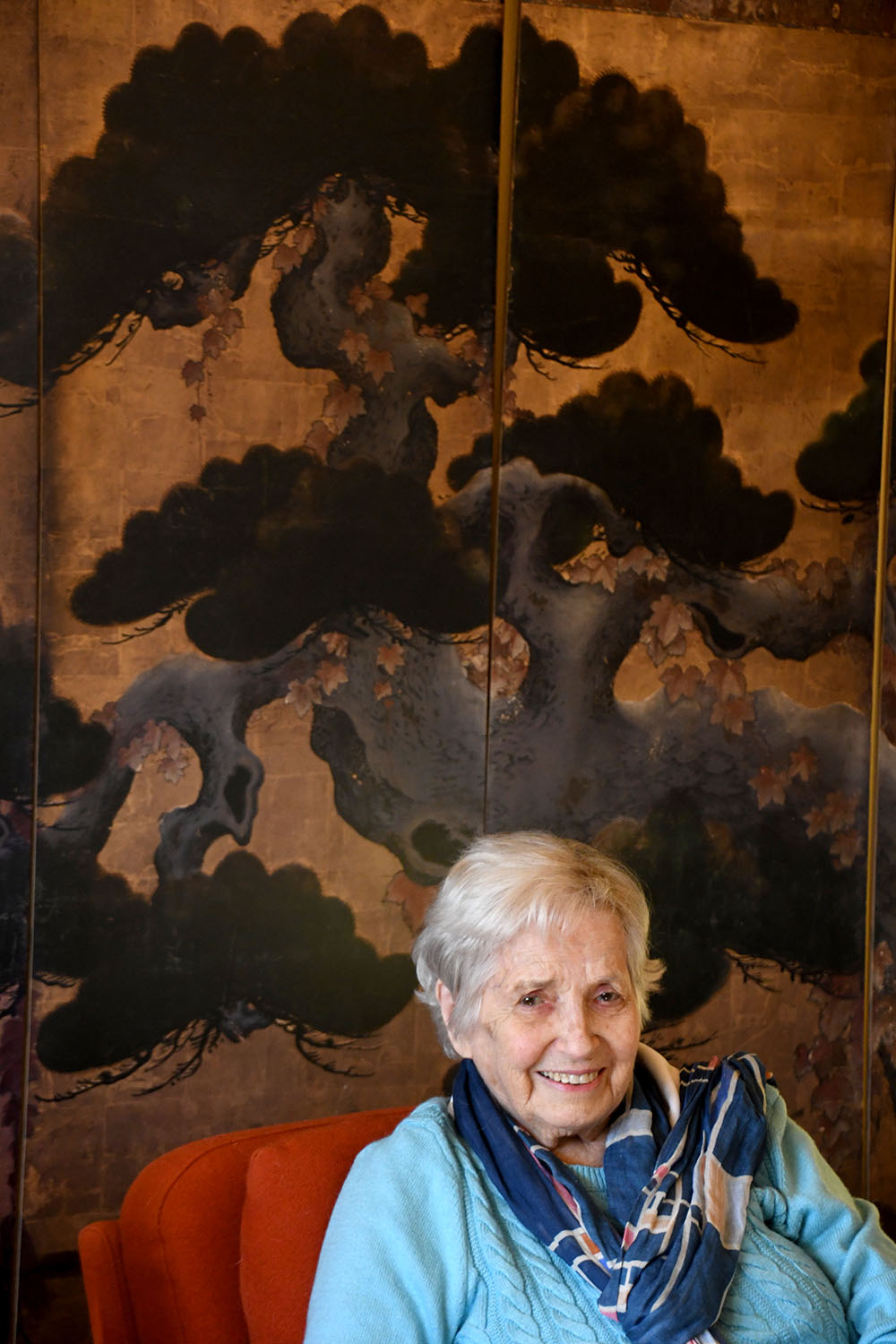
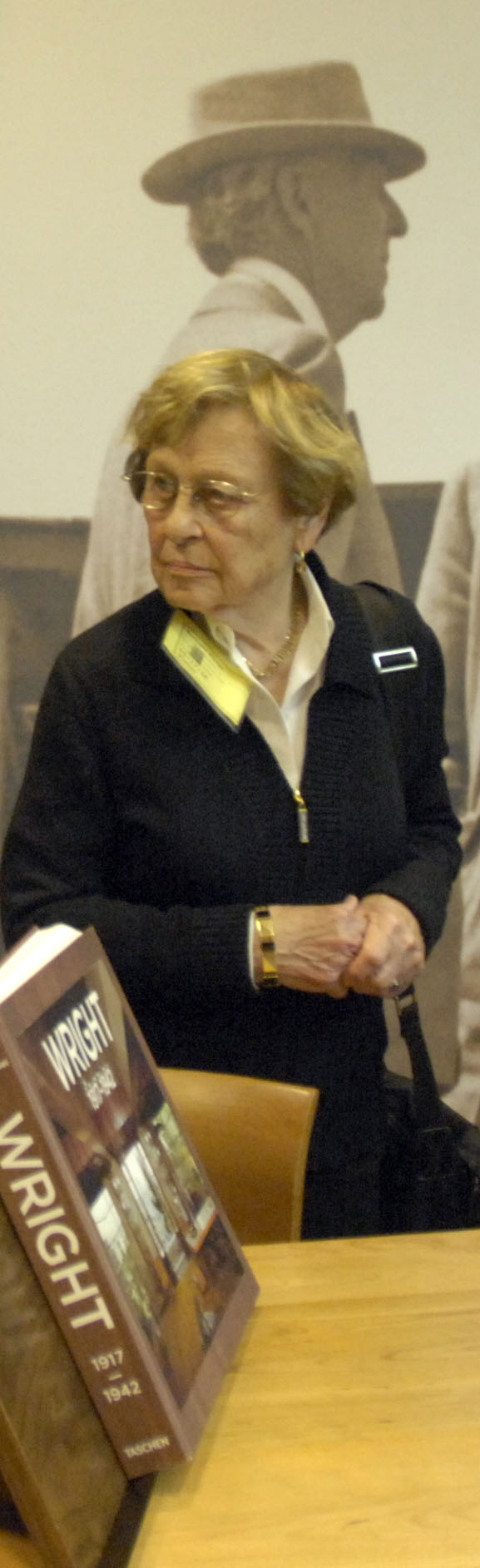
Barbara Elsner, a tour de force in the preservation of Frank Lloyd Wright’s architecture in Wisconsin – particularly in Milwaukee – died August 25. She was 99.

LR BC 2015 Elsner .jpgBarbara Elsner – 2015: At the Frank Lloyd Wright Building Conservancy annual conference in Milwaukee, her hometown 

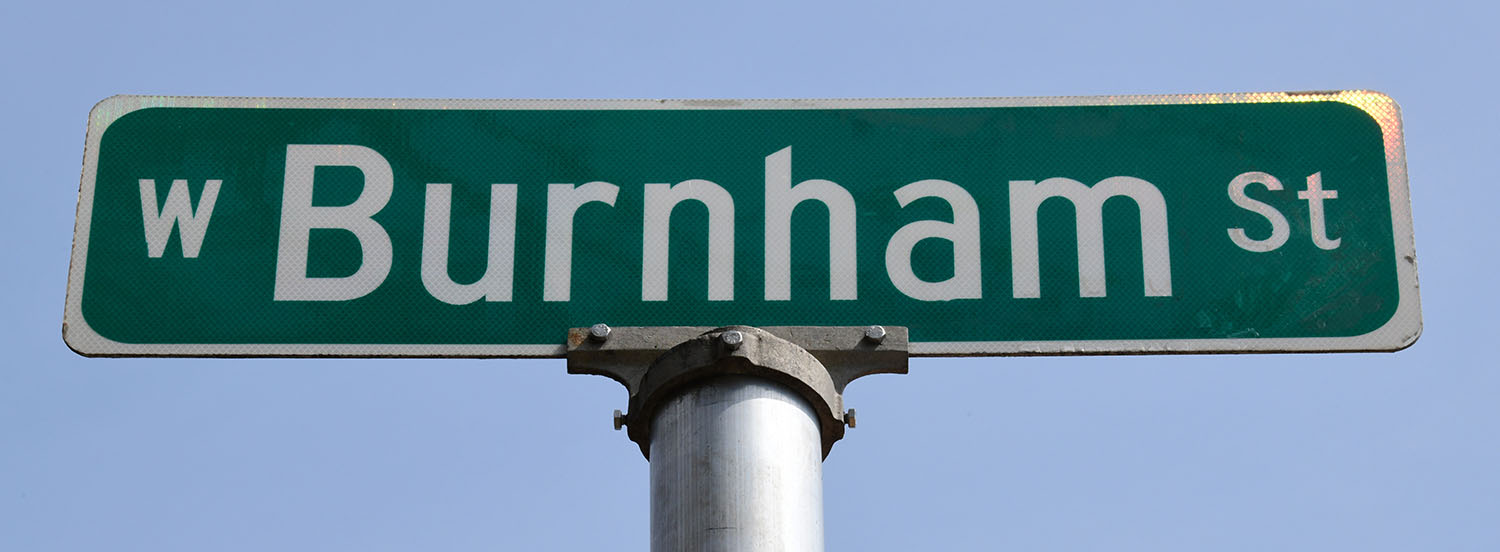
I got to know Elsner when I served on the board of the  Frank Lloyd Wright’s Wisconsin Tourism Heritage Program (“Wright in Wisconsin”) from 2004 – 2020. She was a founding member of the organization. Our board was in discussions about whether or not to purchase Wright’s American System-Built Model B1 at 2714 W. Burnham Street in Milwaukee as early as a strategic planning session at Wingspread in 2002. Some of the board discussions were heated. Were we only about promoting Wright tourism (a founding principle) or should we become property owners as a means of furthering our mission of promoting Wright’s architecture in our state? Elsner was a strong advocate of expanding the mission to include “bricks and mortar.”

LR Burnham WiW Board 4.16.05.jpgMike Lilek, left, and Barbara Elsner, third from right, at a Wright in Wisconsin board meeting at the newly-purchased Model B1, April 2005. Lilek would oversee our stewardship of the Burnham Block properties.

We bought the house and restored it, with support from the Barbara Meyer Elsner Foundation and a Save Americas Treasures grant. There were 28 major gifts in all. We gradually added more of the AS-B properties to our portfolio, not always without dissension. In August 2017, we reorganized into two organizations: Frank Lloyd Wright’s Burnham Block (focused on the Burnham Block) and Wright In Wisconsin (focused on the longstanding mission to promote Wright tourism). Mike Lilek, who had shepherded our work on the Burnham properties became president of the new organization. He was Elsner’s son-in-law. The Burnham Block now owns five of the six homes (three of the four duplexes and both single family homes; the fourth duplex remains in private hands and operates as an overnight rental property).

I leave it to Lilek to tell you about Elsner’s extraordinary legacy. Below is the email he sent out, announcing her passing:

Dear Fellow Board Members and Friends,

It is with sadness that I share the news of the passing of Barbara Meyer Elsner, an esteemed member of our Advisory Board and a long-time member of our Board of Directors. She passed away peacefully on Monday, August 25th, 2025, surrounded by family. She was 99 years old.

Barbara leaves behind a towering legacy of dedication, leadership, and service to Frank Lloyd Wright’s Burnham Block and its predecessor, Frank Lloyd Wright Wisconsin.

She was a founding member of Frank Lloyd Wright Wisconsin and served as president.

She was a founding member and past Member of the Board of Directors of the Frank Lloyd Wright Building Conservancy, based in Chicago, IL.

She served on the Wisconsin Governor’s Commission on the preservation of Frank Lloyd Wright’s Taliesin. She has generously donated her time and financial support to various Wright projects, including the restoration of the Romeo and Juliet Windmill at Taliesin and the Seth Peterson Cottage on Mirror Lake.

She was a strong advocate for acquiring and restoring the Burnham Block homes. She partnered with Kathleen Brady to lead the primary fundraising effort for the restoration of Models B1 and D4. Her Barbara Meyer Elsner Foundation also provided the Burnham Block with significant financial support, including a major contribution toward the current restoration of the Model C3. Even after retiring from active board service, she continued to be a valued advisor and supporter of our mission. She was a long-serving member of our Interiors Committee.

She also played a major role in the preservation and restoration of the Pabst Mansion, serving as president of the mansion’s Board of Directors and as Executive Director for two years.

Barbara has led many grassroots efforts.  Notable among them was the effort to protect the North Point Historic District from planned institutional expansion. She is also a founding member of the Water Tower Landmark Trust and a board member of Preserve Our Parks. She played a role in organizing the Penfield Children’s Center. She was a founding member of the American Heritage Society of the Milwaukee Art Museum. She helped bring ballet to Milwaukee.

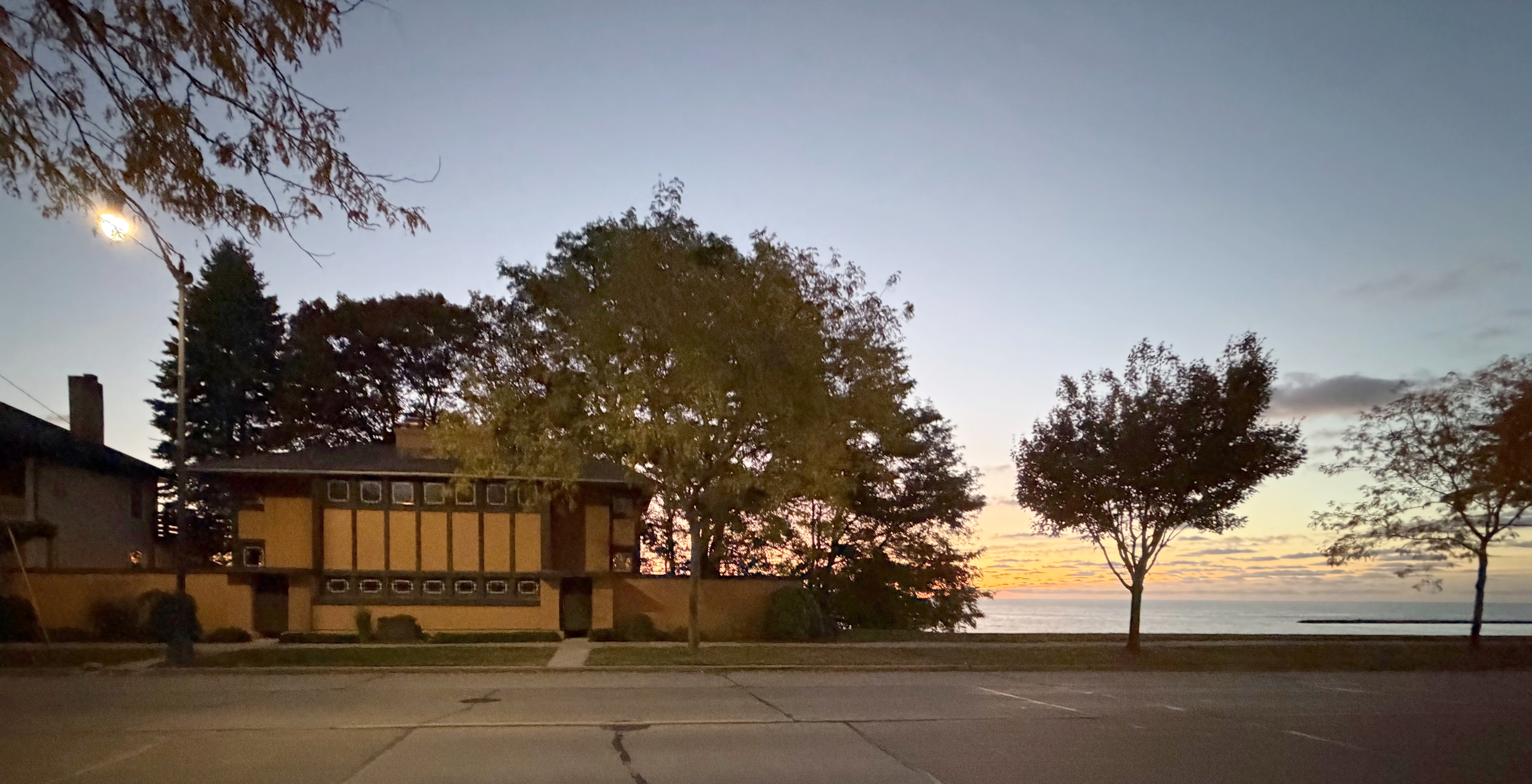
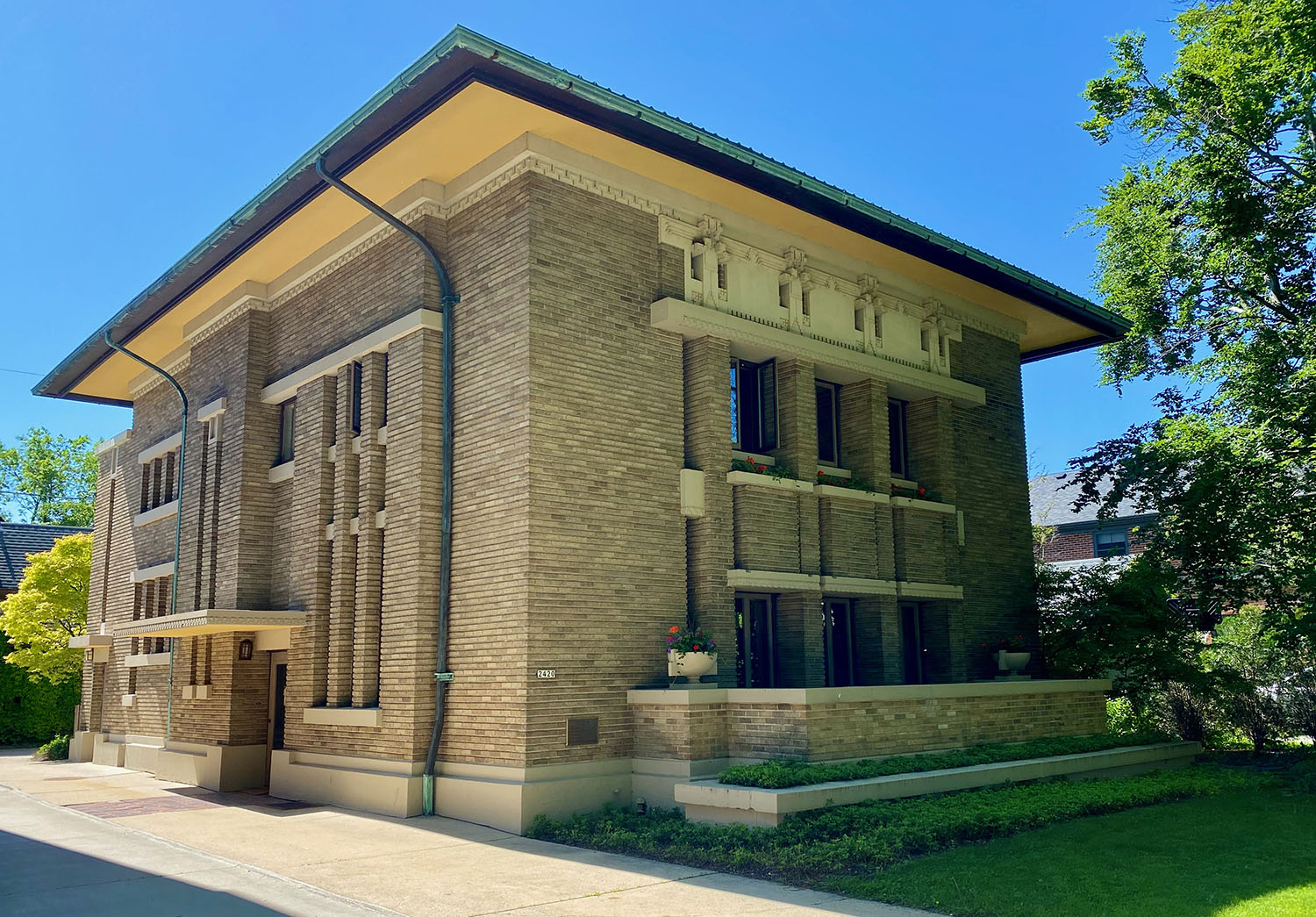
Robert and Barbara Elsner purchased the Bogk House in 1955.  Under Barbara’s care and guidance, the home was meticulously maintained. Barbara generously opened the Bogk House to visiting architectural scholars and students from around the world. Spanish architect Santiago Calatrava noted that the Bogk House was one of his two “must-see” buildings in Milwaukee.

LR Bogk 2022.jpgThe Bogk House

Barbara has played a major role in raising the awareness of Frank Lloyd Wright on the Burnham Block, in Wisconsin, and far beyond.  Her generosity, extraordinary spirit, and tireless energy have been a benefit to all of us. Barbara will be deeply missed.

She made a huge impact on the world we live in. A celebration of life will be held in the coming weeks; details will follow.

Sincerely,
Michael P. Lilek, President Frank Lloyd Wright’s Burnham Block

LR Elsner SCJ 2010.jpg

Elsner in the Wright research library at SC Johnson

LR Burnham 2022 001.jpg

Links:

YouTube interview with Barbara Elsner, and history of the Bogk House:

https://www.youtube.com/watch?v=IZjJAi-c23I

Frank Lloyd Wright’s Burnham Block:

https://savewright.org

Wright in Wisconsin:

https://wrightinwisconsin.org

Frank Lloyd Wright Building Conservancy:

https://savewright.org

Please scroll down for previous articles on this website

Hardy Reflections and Shadow Play 8.5.25

Photos © Mark Hertzberg (2025)
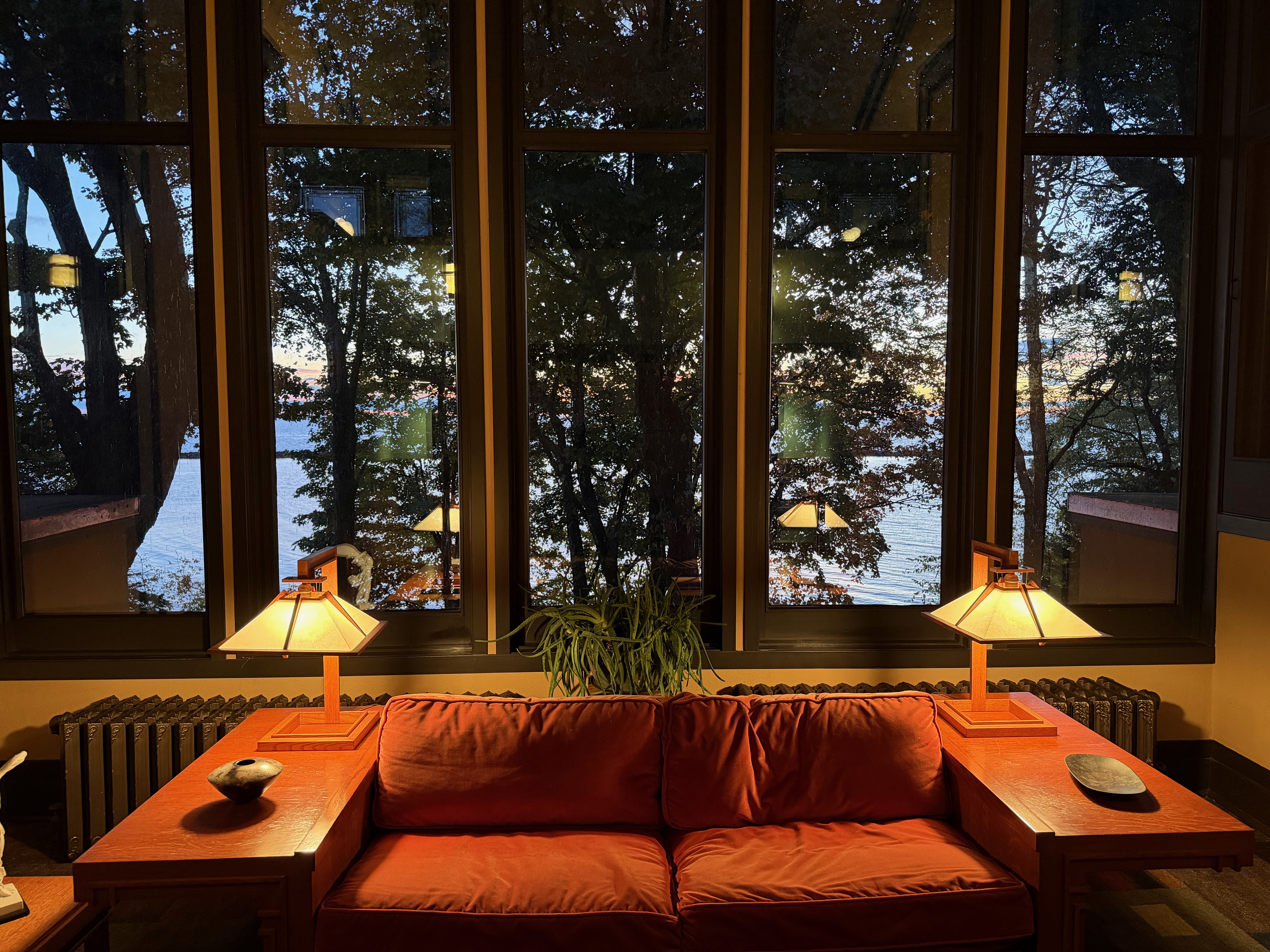
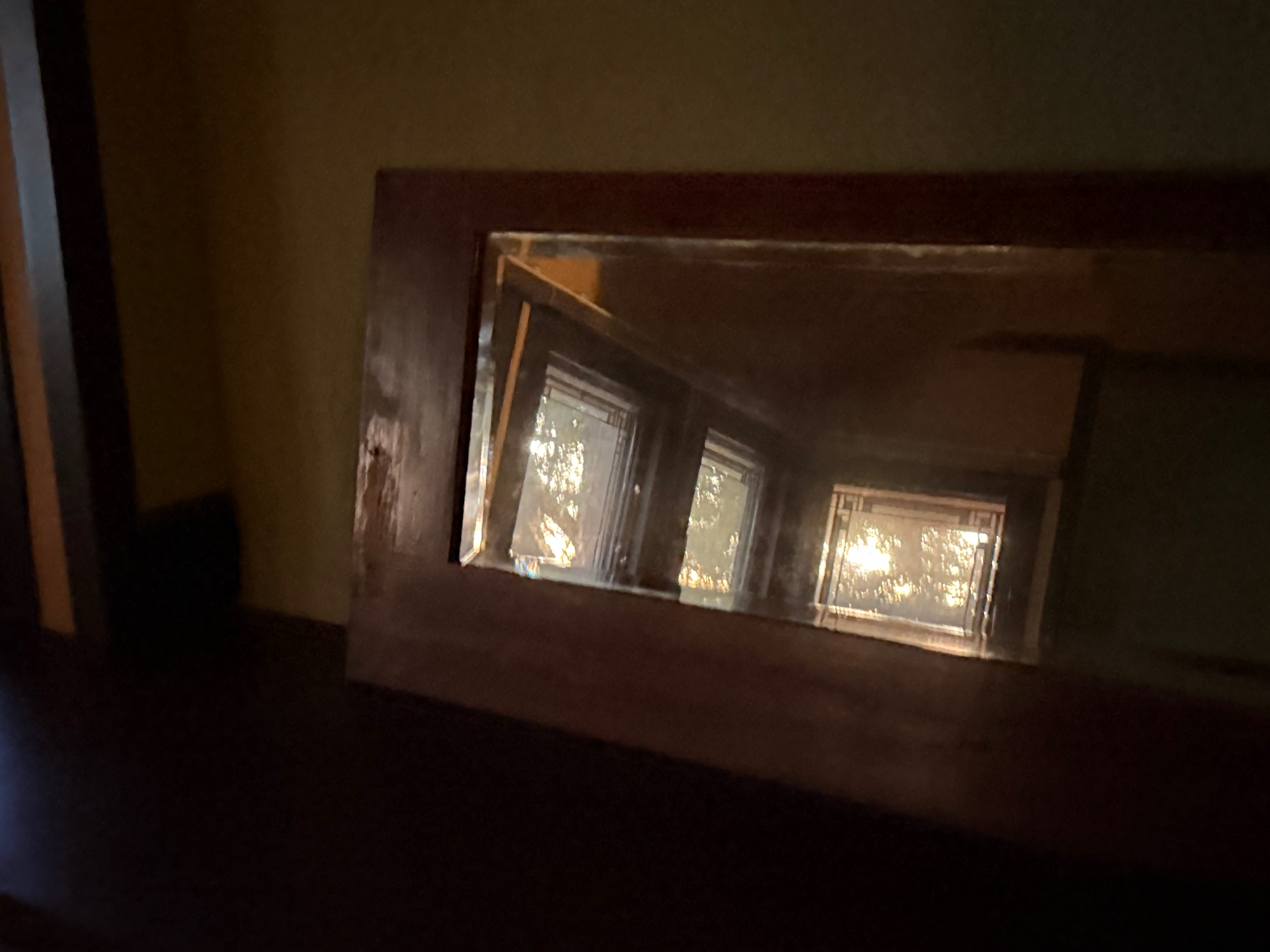
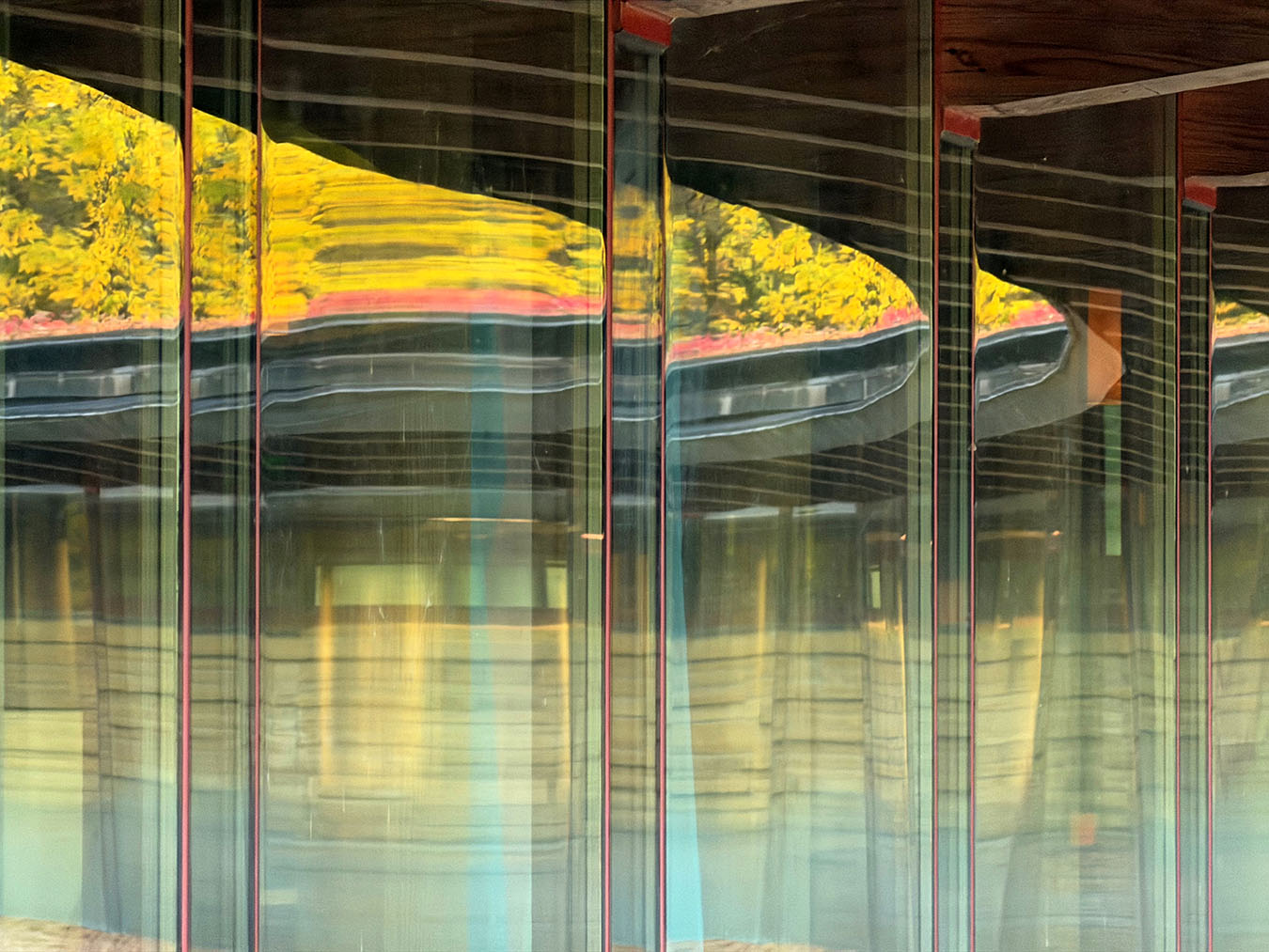
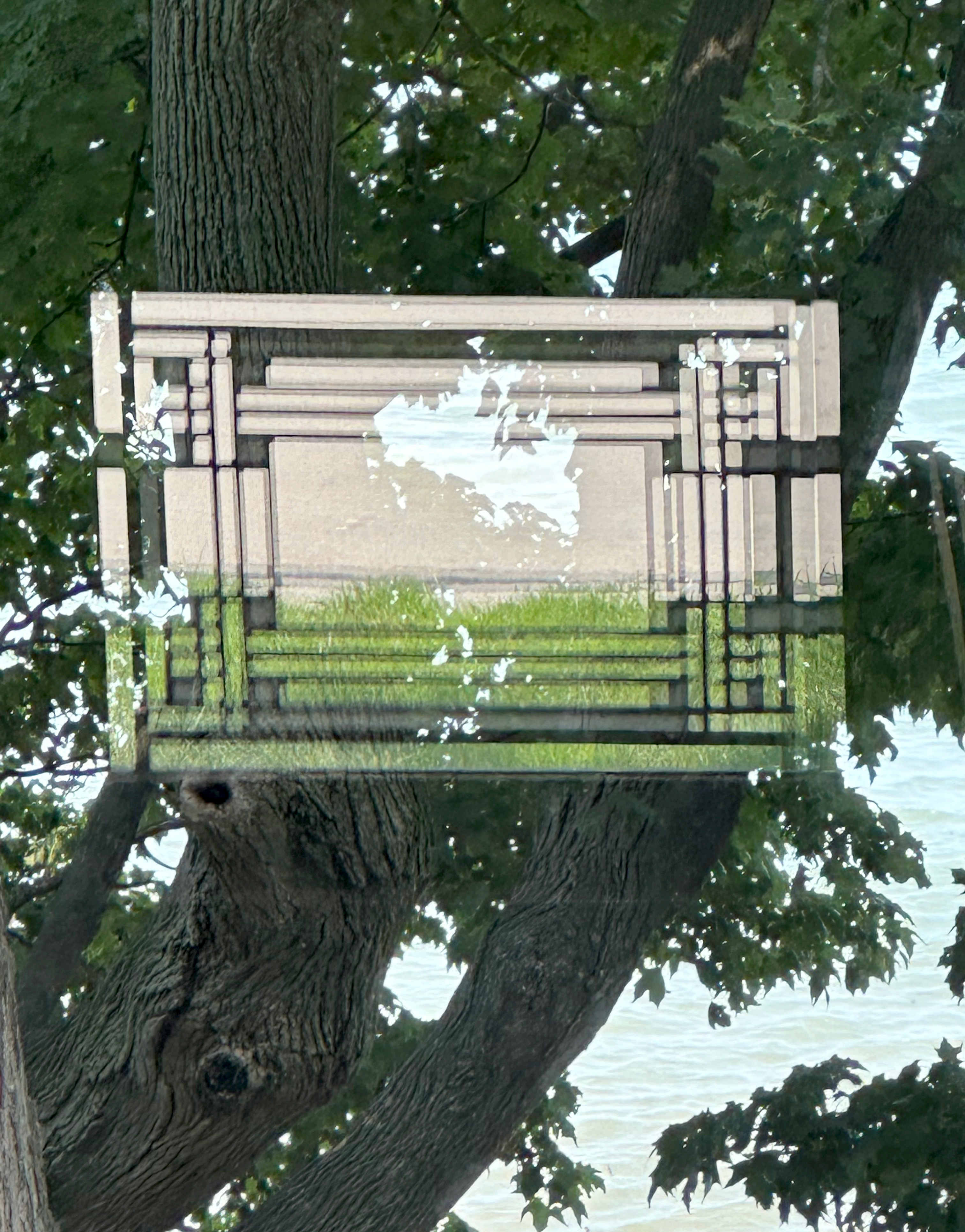
Hardy Shadow Play 8.5.25 001.JPEGOne of the entry way hallway windows is reflected in the two story living room windows that overlook Lake Michigan.

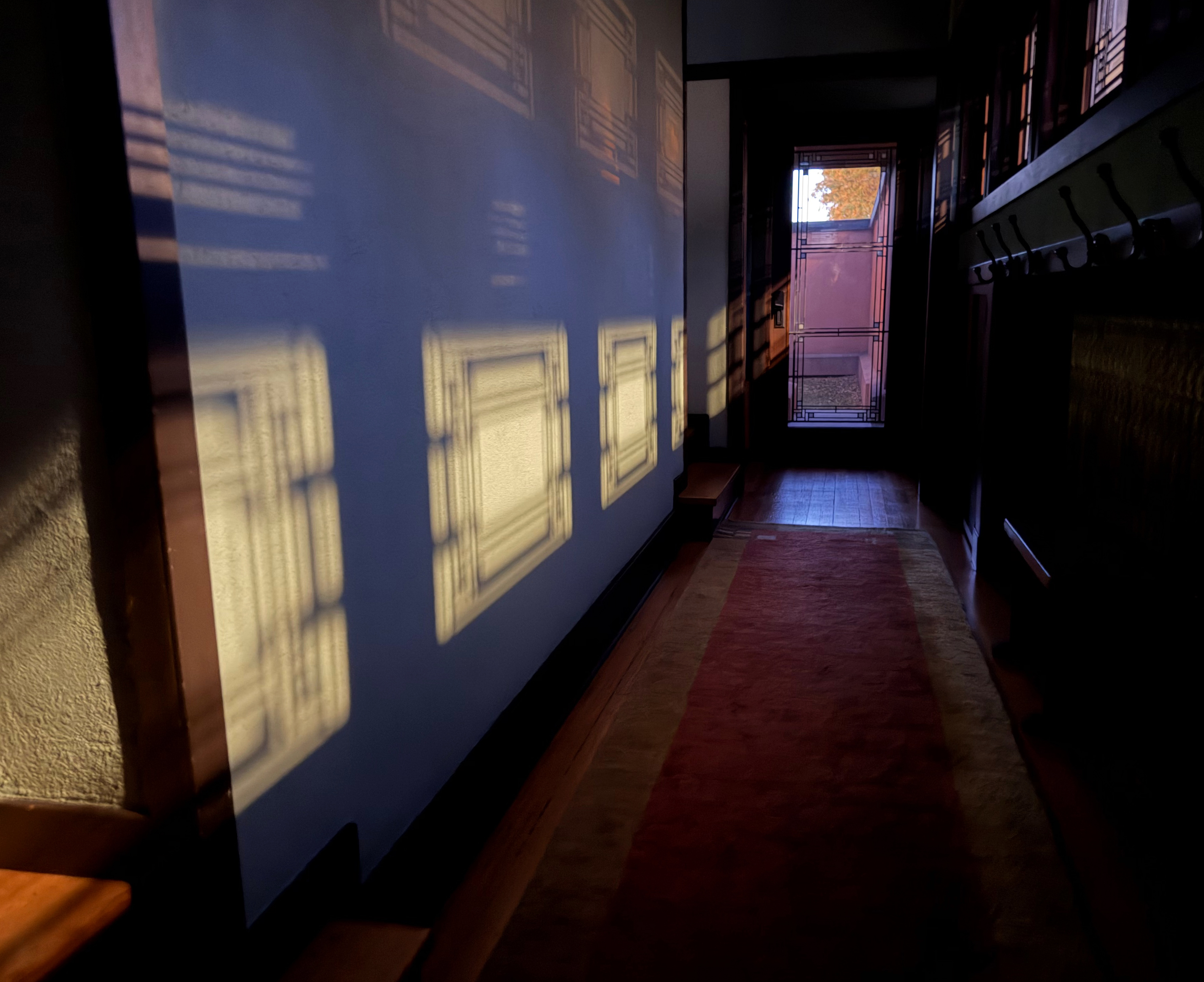
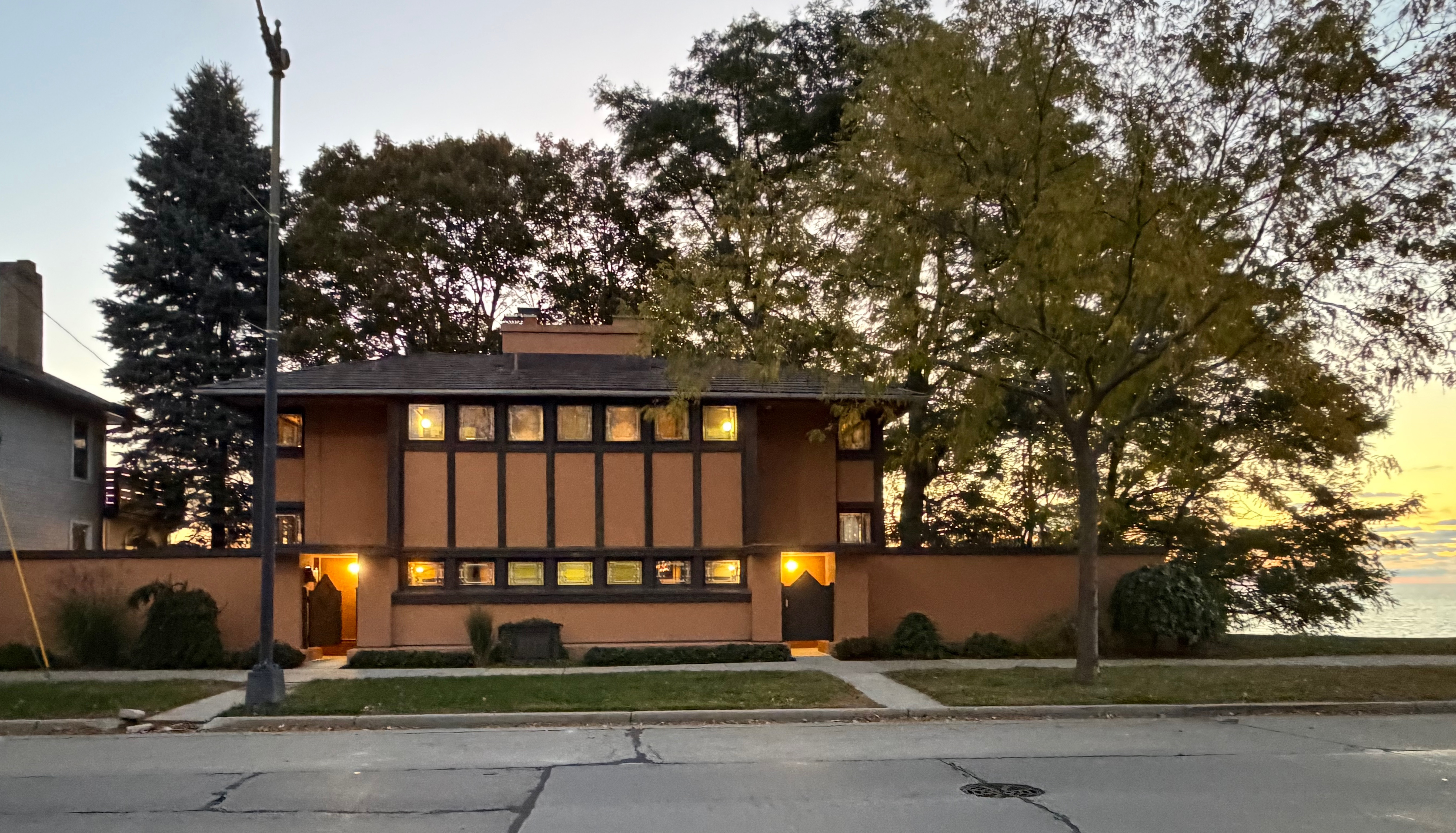
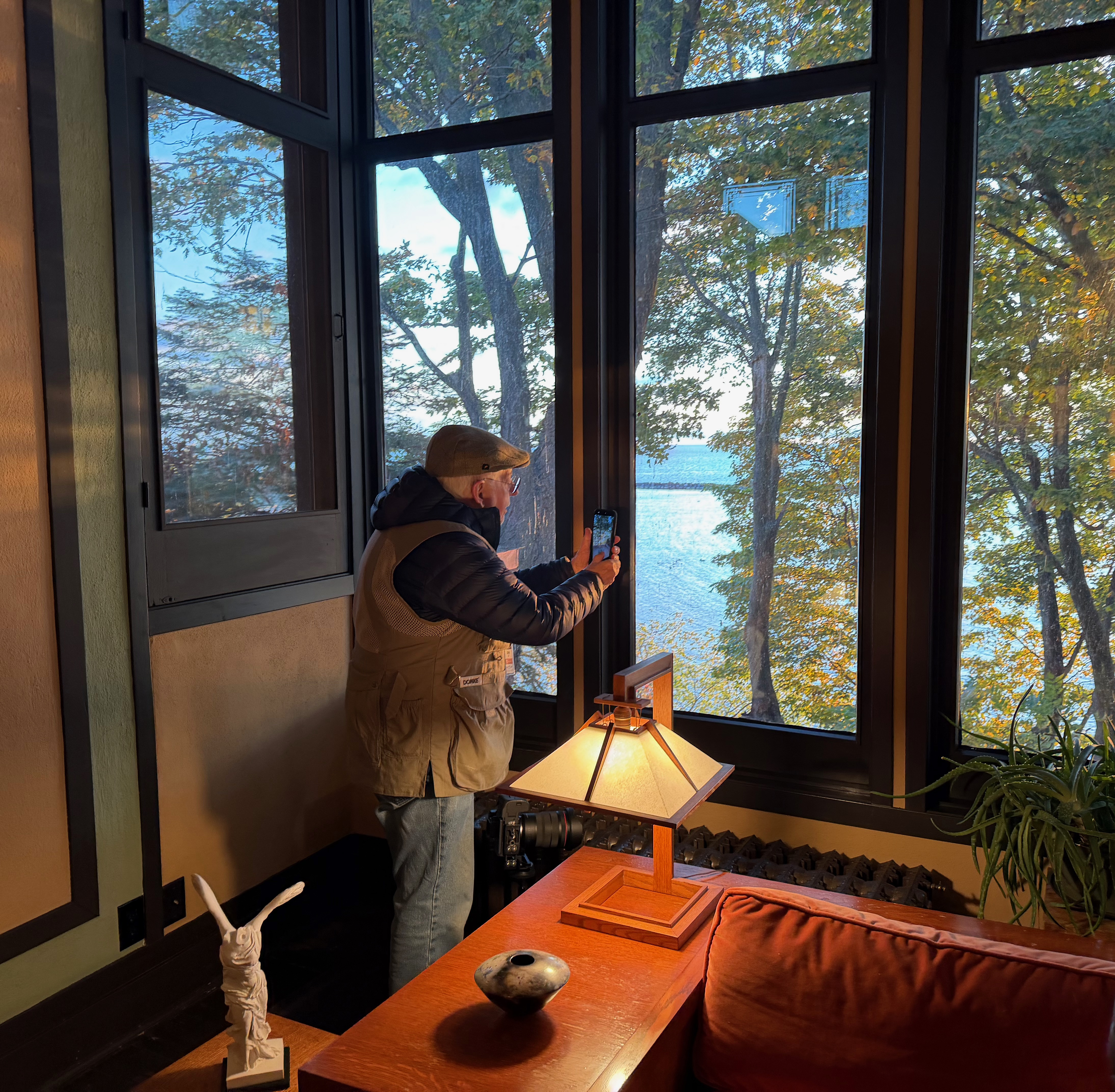
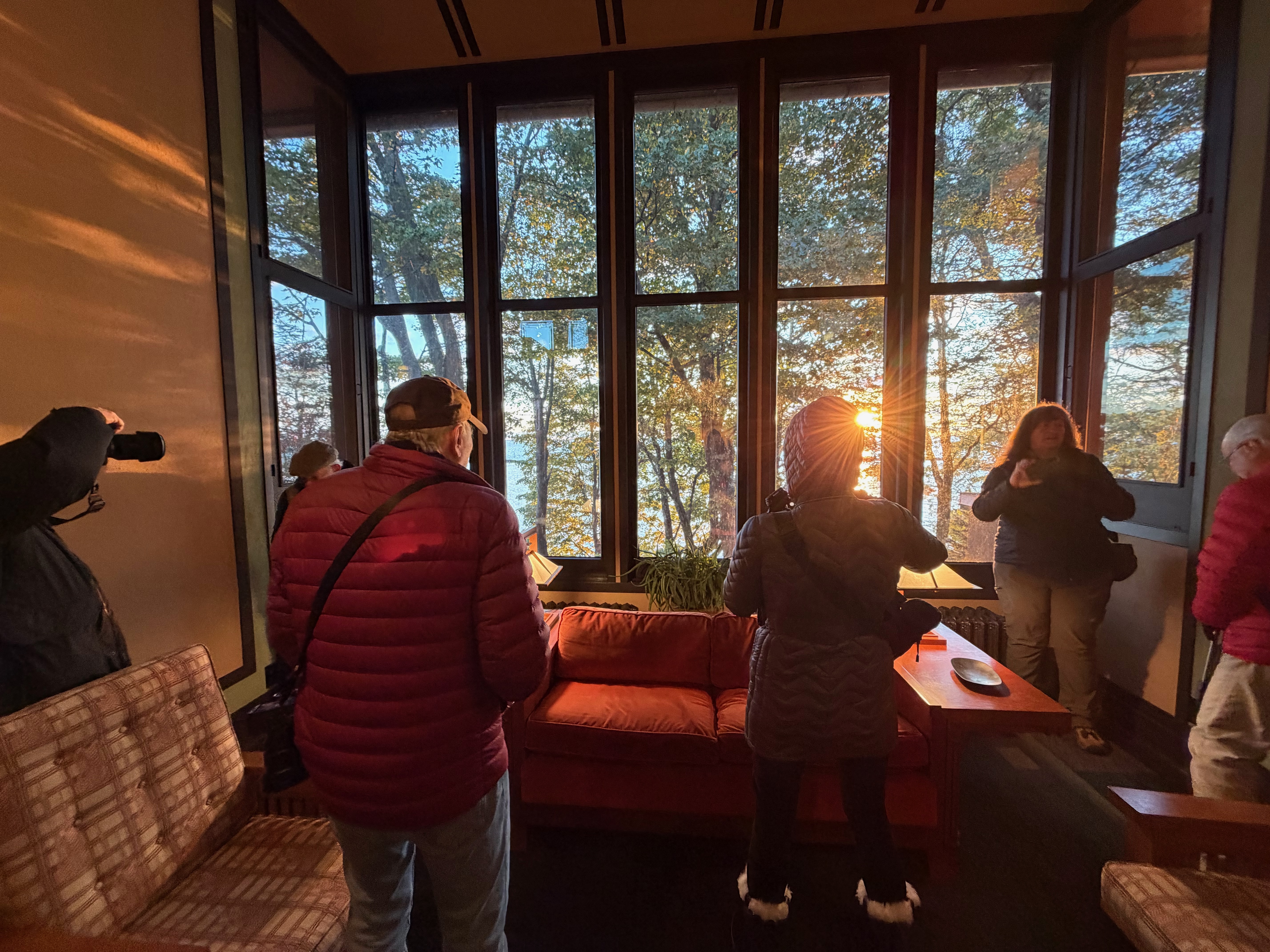
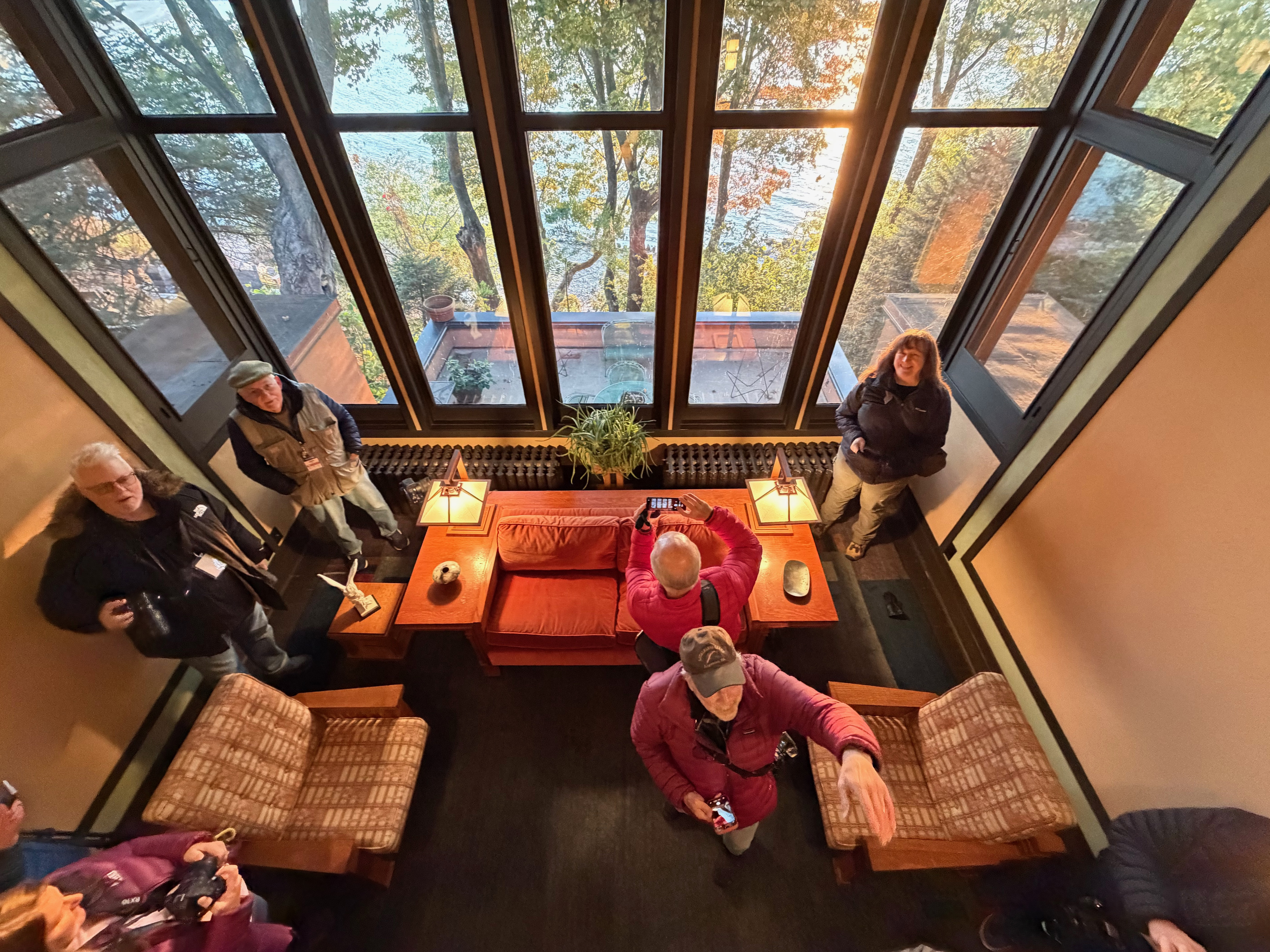
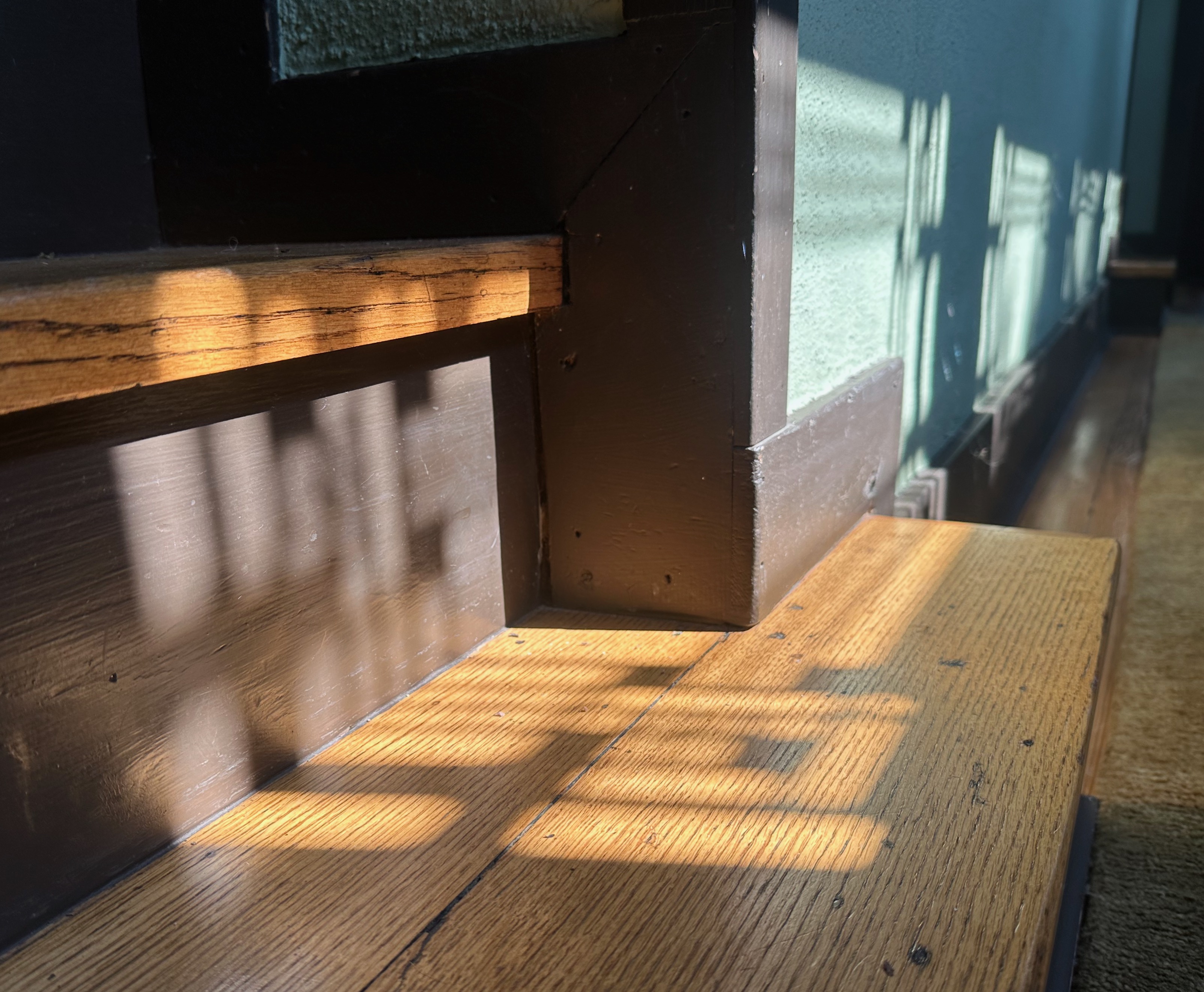
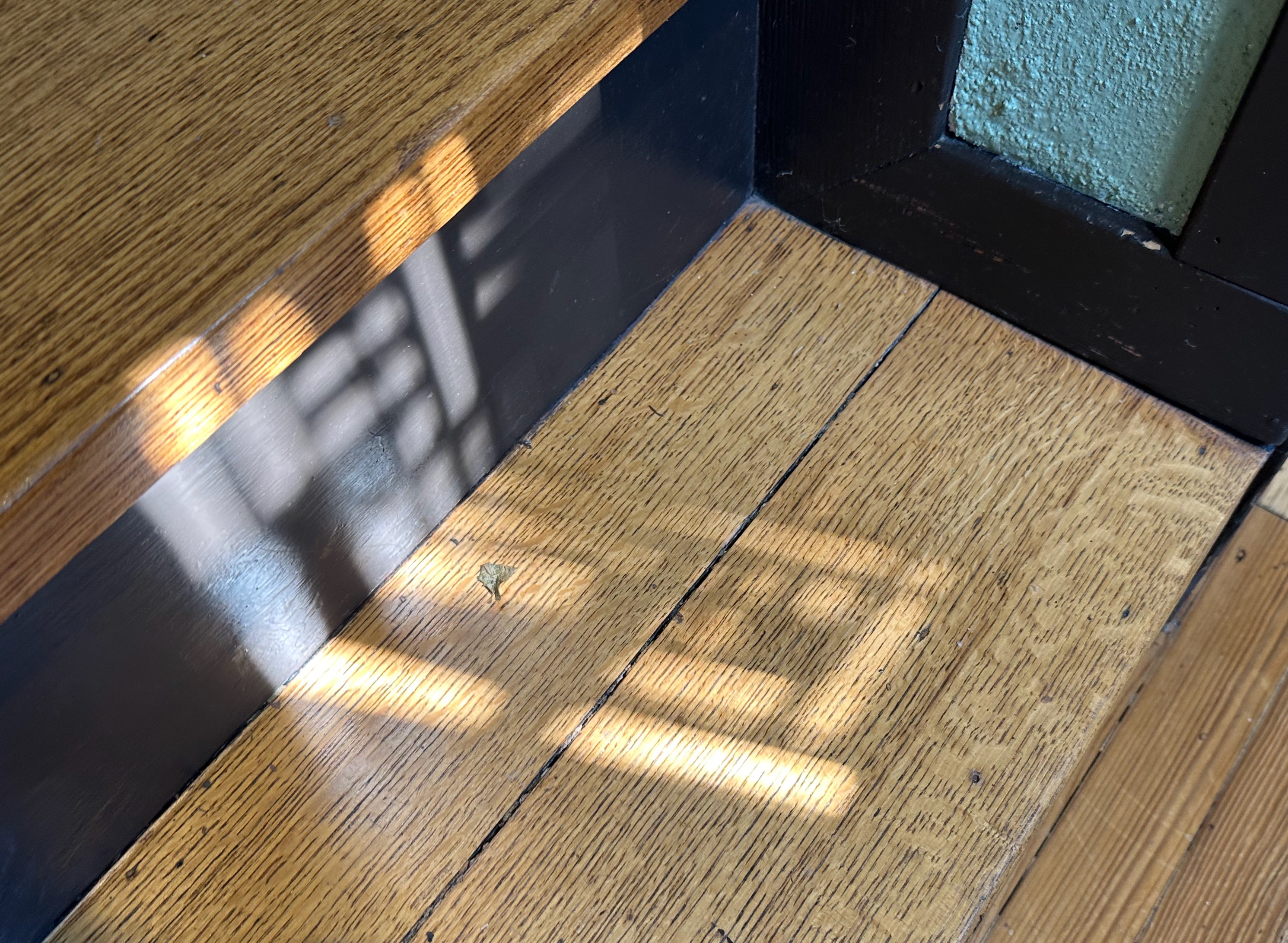
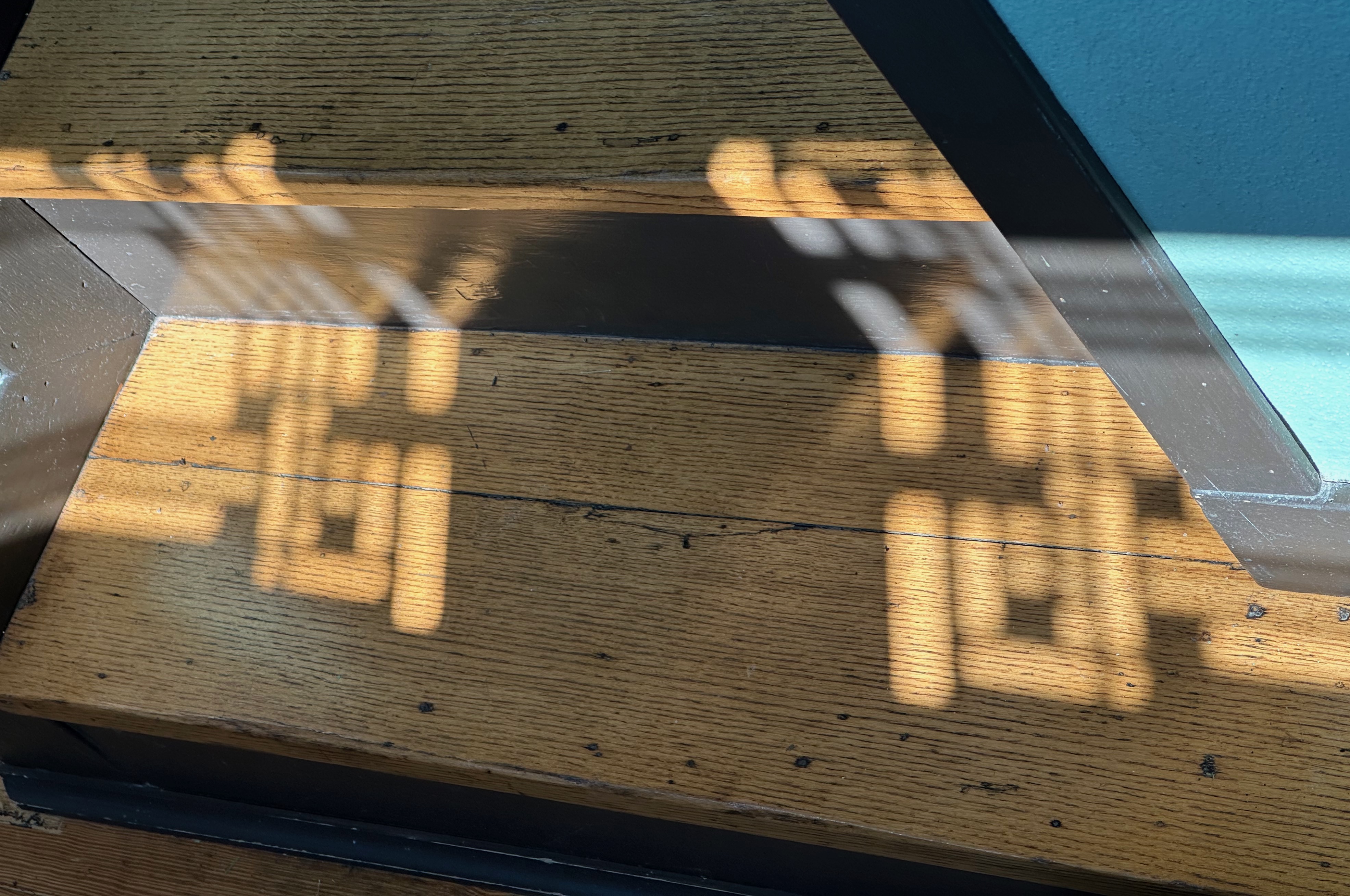
One of the aspects of Frank Lloyd Wright’s Thomas P. Hardy House that continually fascinates me is the shadow play from the seven windows in the entry hallway. I had the opportunity to have fun with the reflections and shadow play again when I met at the house with Sam Lubell yesterday. Lubell and photographer Andrew Pielage are working on a book about 50 Wright homes for Rizzoli (more about that in a future post).

Hardy Shadow Play 8.5.25 003.JPEG

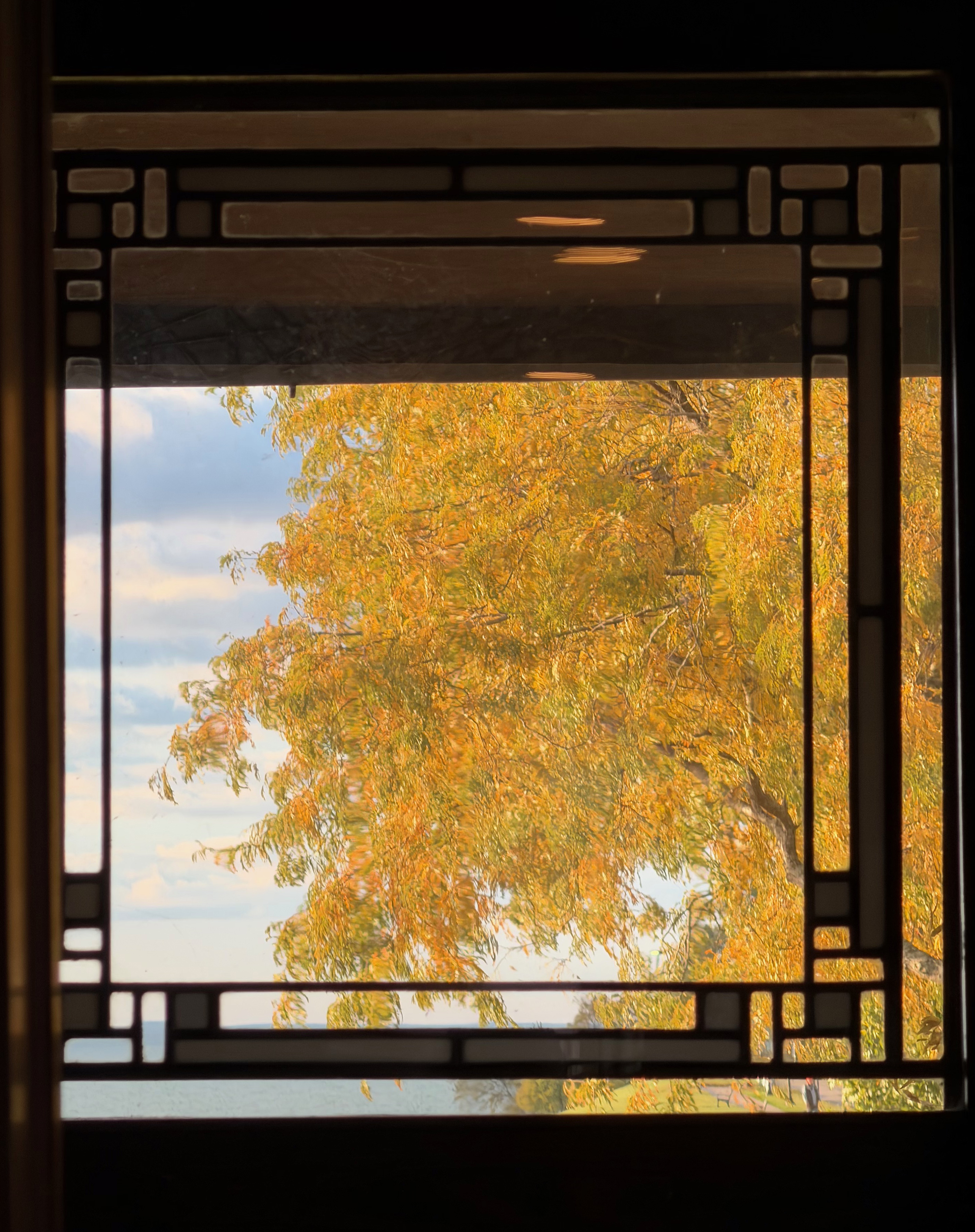
As Robert McCarter has pointed out, the floor plan of the house is delineated in white in the windows: the square in the middle represents the public areas, the two story living room and the dining room one floor below. When I lead tours of the house I remind the guests that the only computer Wright had when he came up with such designs was the one between his ears.

Hardy Shadow Play 8.5.25 004.JPEG

The rectangle that bisects the square represents the bedrooms at either end of the two main floors. We now add to the drama of the seven Wright-designed windows the leaded glass inserts in the two sliding entry doors (one north, one south). They replicate the design of Wright’s living room windows, which were taken out by the second stewards of the house (1938 – 1947) because they leaked. They were replaced by clear windows.

Hardy Shadow Play 8.5.25 006.JPEG

Hardy Shadow Play 8.5.25 007.JPEG

Hardy Shadow Play 8.5.25 008.JPEG

Hardy Shadow Play 8.5.25 009.JPEG

Hardy Shadow Play 8.5.25 010.JPEG

Hardy Shadow Play 8.5.25 011.JPEG

These quick happy snaps were taken with my phone camera…elapsed time, except for the top photo, seven minutes. Every time I turned I saw another photo. Thank you Gene and Tom and Joan Szymczak, for rehabilitating the house for us to enjoy!

Scroll down for previous posts on this website

Wright and Sullivan in Banff

© Mark Hertzberg (2025)

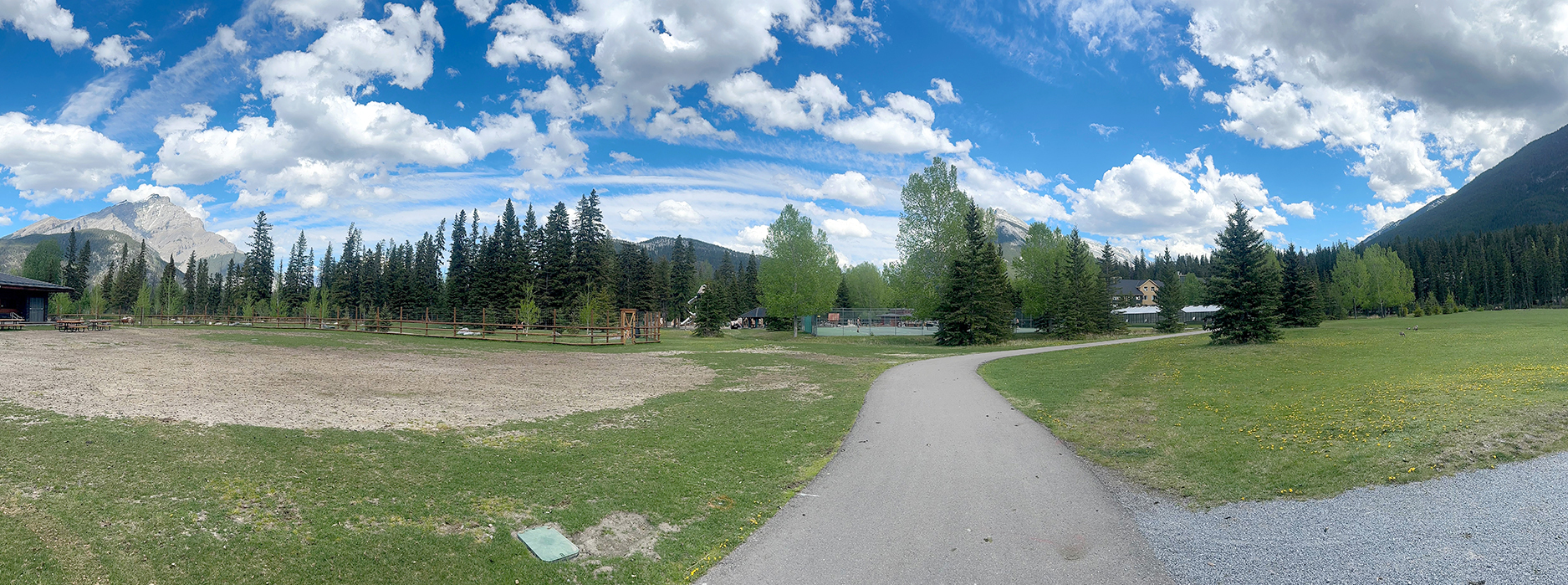
Today Panoramic.jpgThere once was a Frank Lloyd Wright – designed building here, in the midst of the splendor of the Canadian Rockies, in Banff, Alberta.

Banff, Alberta does not immediately come to mind when people think of communities with buildings designed by Frank Lloyd Wright. They are more likely to think of Bear Run, Buffalo, Los Angeles, New York, Racine, and, of course, Spring Green. However, Wright’s work crossed national boundaries, with commissions in Egypt, India, Iraq, Italy, Japan, and Mexico, as well as in Canada. Few of the international commissions were realized, but two in Canada were.

Similarly, when the name “Sullivan” comes to mind in discussions of Wright, people immediately think of Louis Sullivan, Wright’s ‘Leiber Meister.” But it was a different architect named Sullivan, Canadian architect Francis S. Sullivan, who also became part of Wright’s history, beginning in 1911. 

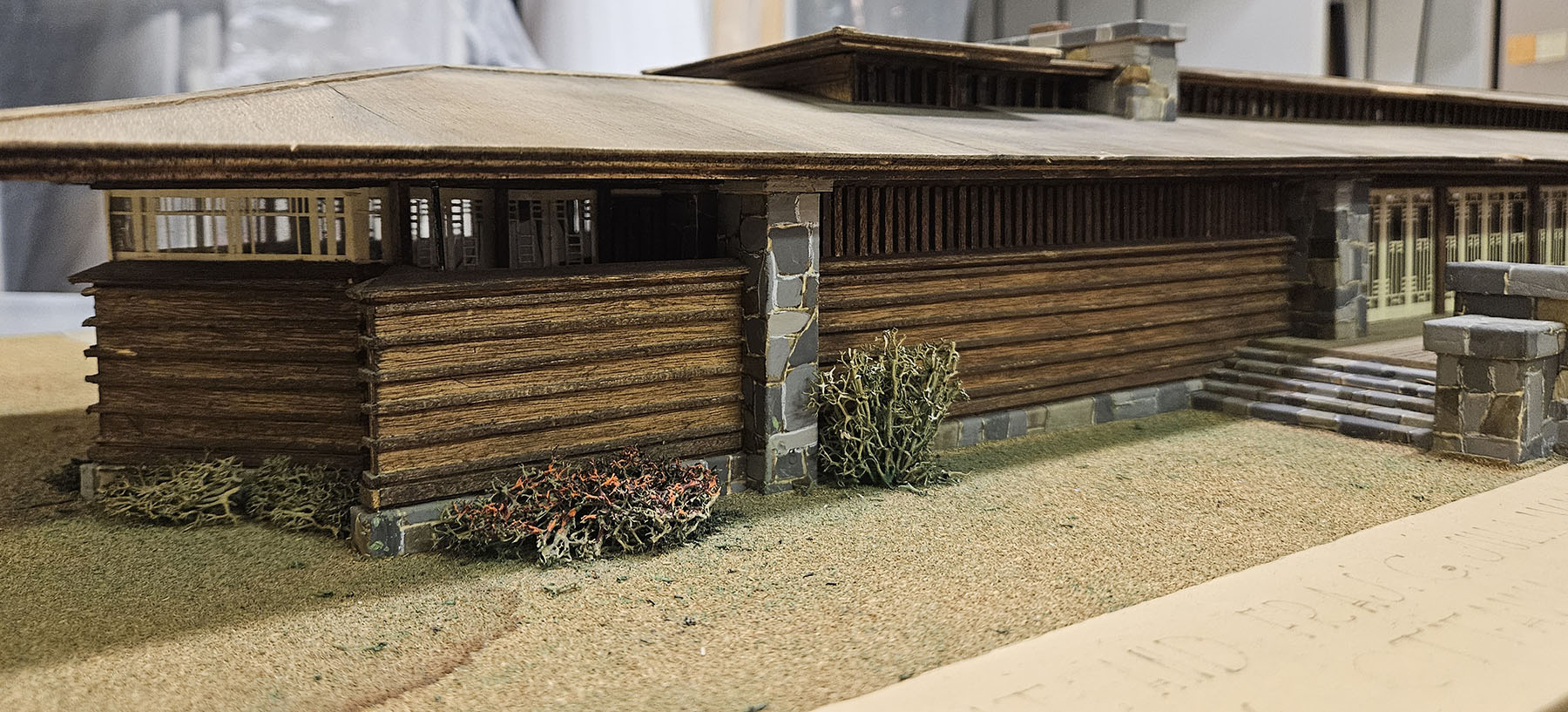
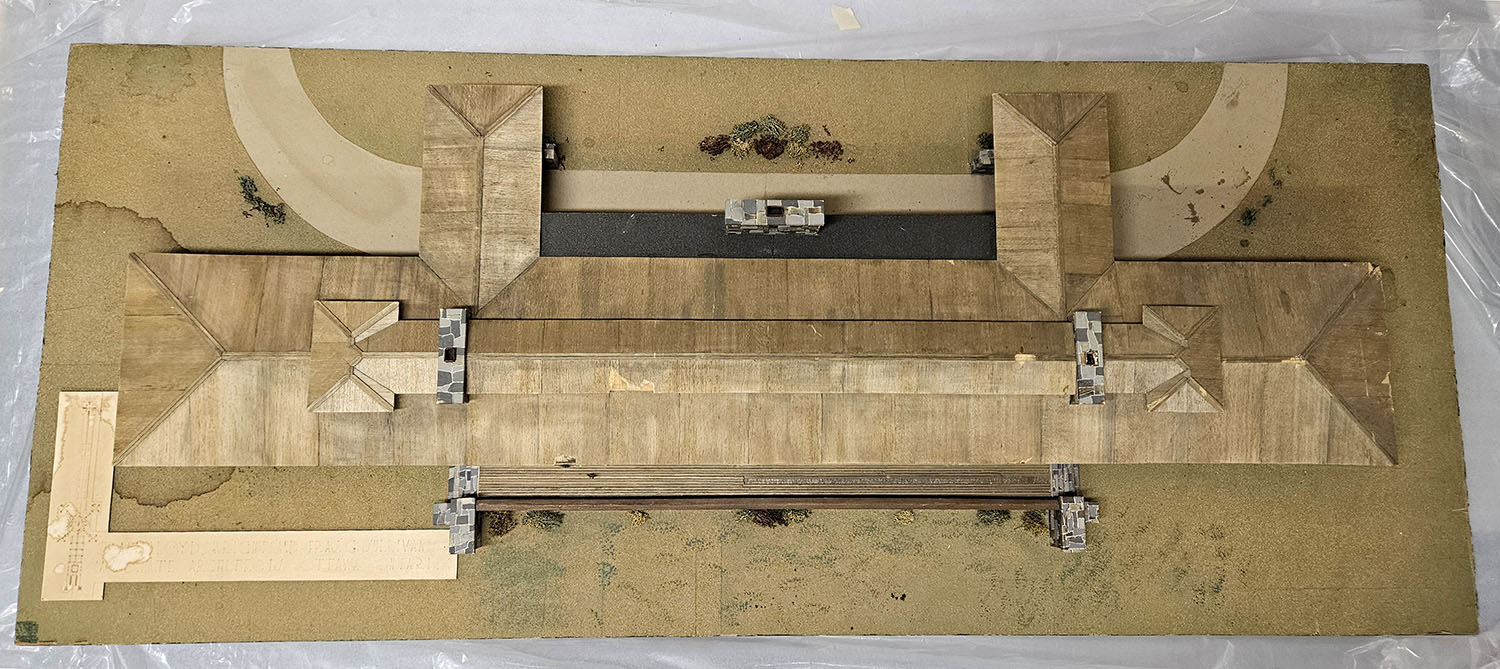
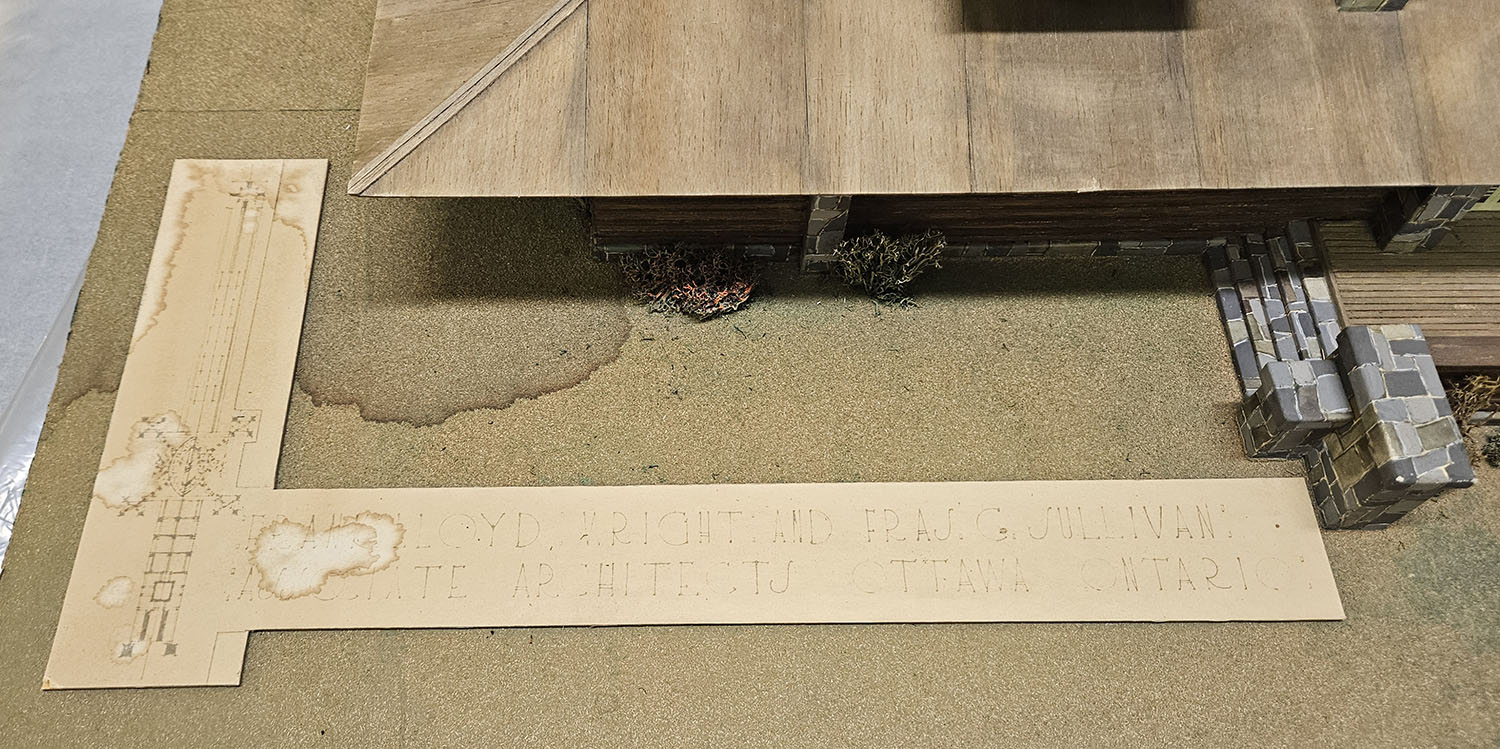
There were four Wright – Sullivan collaborations. The only one built was the Banff National Park Pavilion, about 70 miles west of Calgary. Designed in 1911, it was completed in 1913, and demolished in 1938. The legend on a model of it in the Whyte Museum of the Canadian Rockies archives in Banff credits the building to “Frank Lloyd Wright and Francis C. Sullivan Associates Architects Ottawa Ontario.”
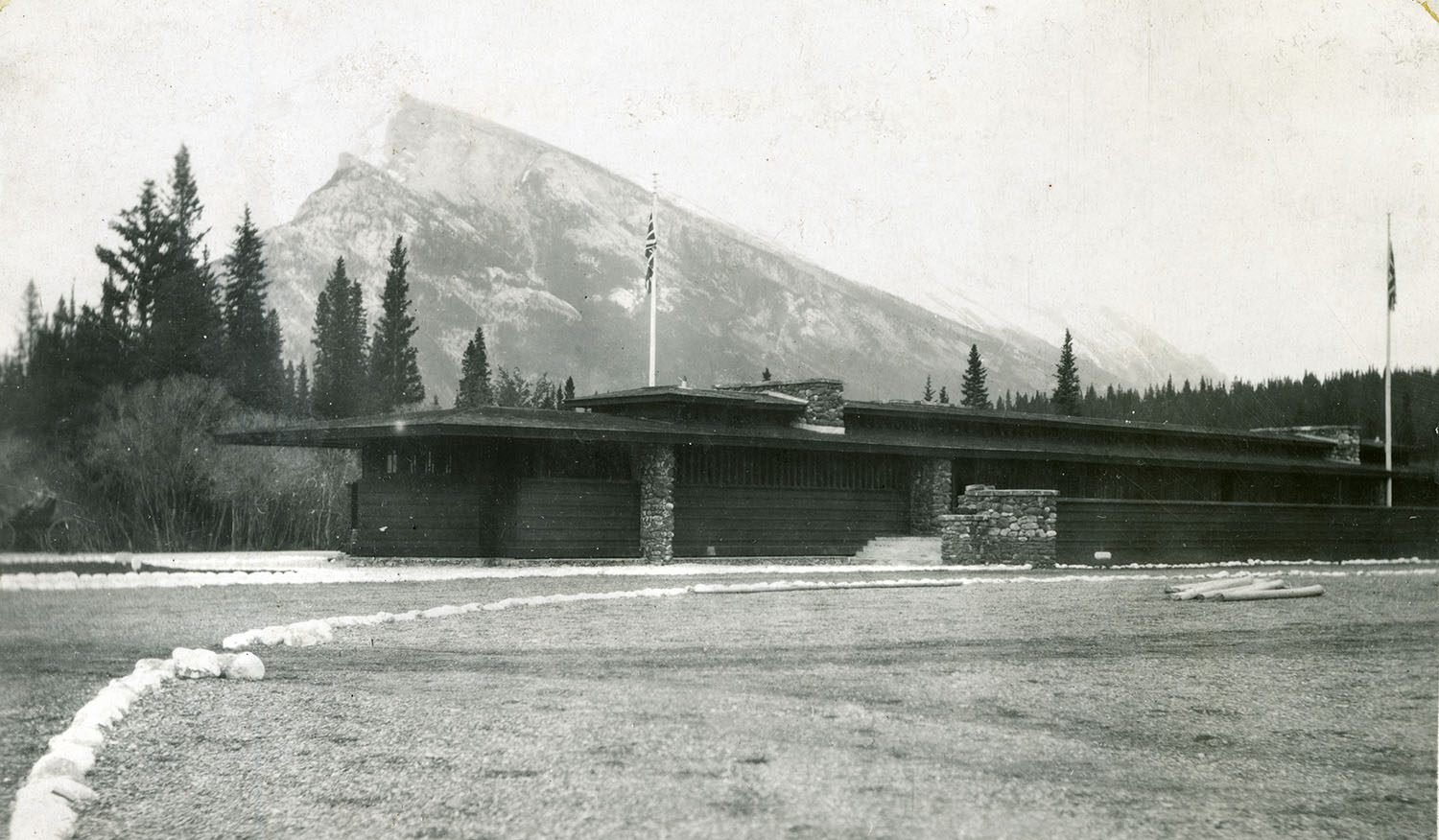
Whyte Museum exterior.jpgFrank Lloyd Wright Pavilion West Face – Image #V683/VI/A/PG-336 – The Whyte Archives & Special Collections

FLW Banff UCal 1.jpgFrom the University of Calgary Digital Collection

Their three unrealized projects were a railroad station for Banff (1913), the Pembroke Carnegie Public Library in Pembroke, Ottawa, Ontario (1913), and, according to Wright scholar Douglas Steiner, a “Ladies Kiosk” in Ottawa (1914). Wright’s other realized commission in Canada was the E.H. Pitkin Residence on Sapper Island, Desbarats, Ontario (1900).

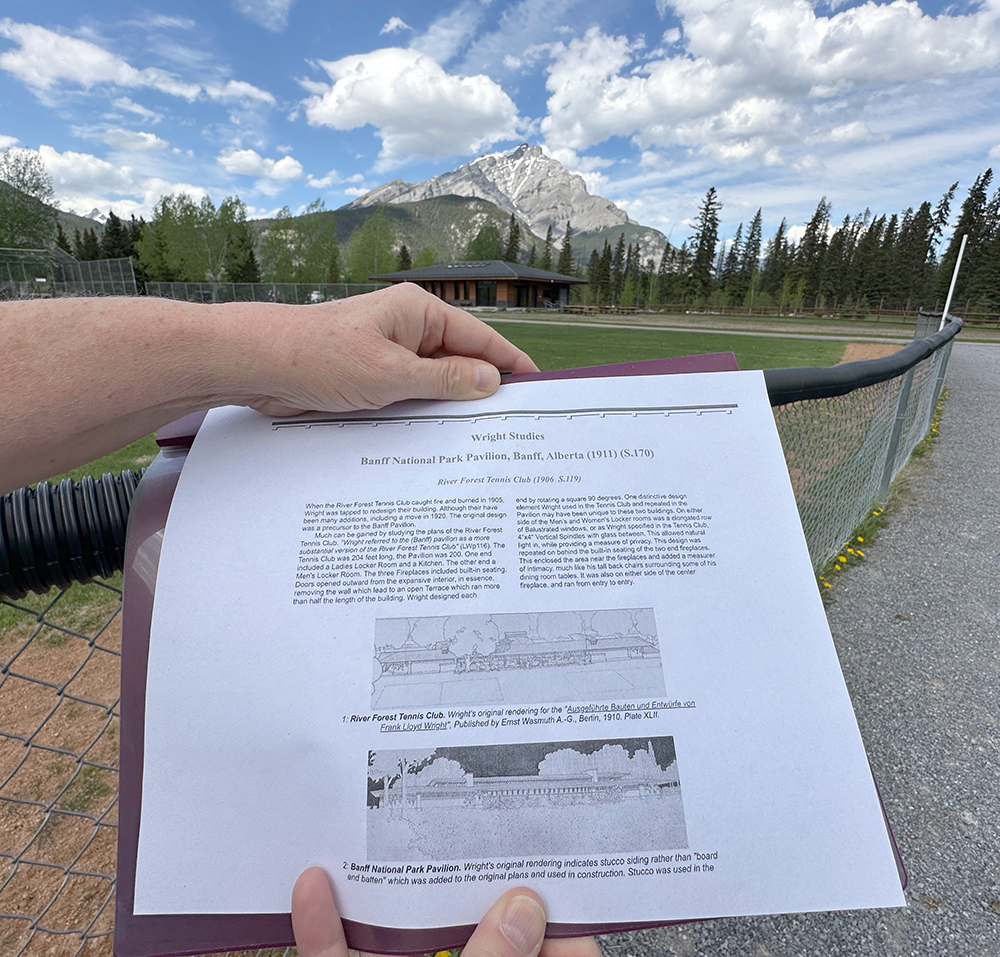
Steiner documented the history of the Pavilion, and related structures in 2010 on his http://www.steinerag[Steiner Agency].com website. Much of the information below was gleaned from his article:

http://www.steinerag.com/flw/Artifact Pages/PhRtS170.htm#Site
Steiner Banff.jpg

Wright was usually fastidious in his oversight of where his designs would be built. Either he was not, in this instance, or else it is possible that his client, the Canadian Department of Public Works, had the final say.

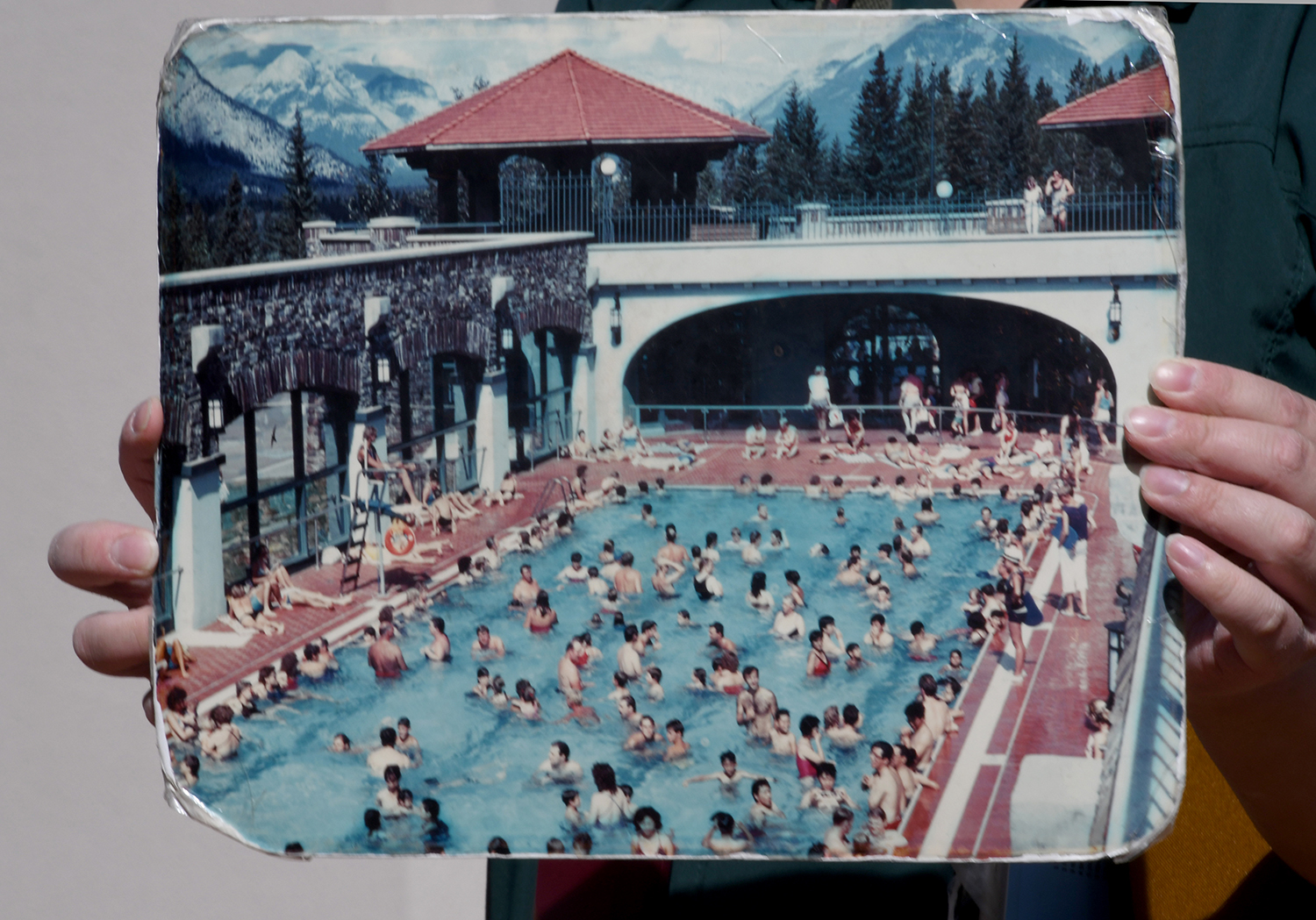
Banff National Park was Canada’s first national park. The town became a tourist destination in 1883 after three men working on the transcontinental railroad discovered hot sulphur springs. The springs, pools, and their outbuildings are now a tourist destination known as the Cave and Basin, although there is no more bathing at the site.
Canada Banff Cave and Basin 006.jpg

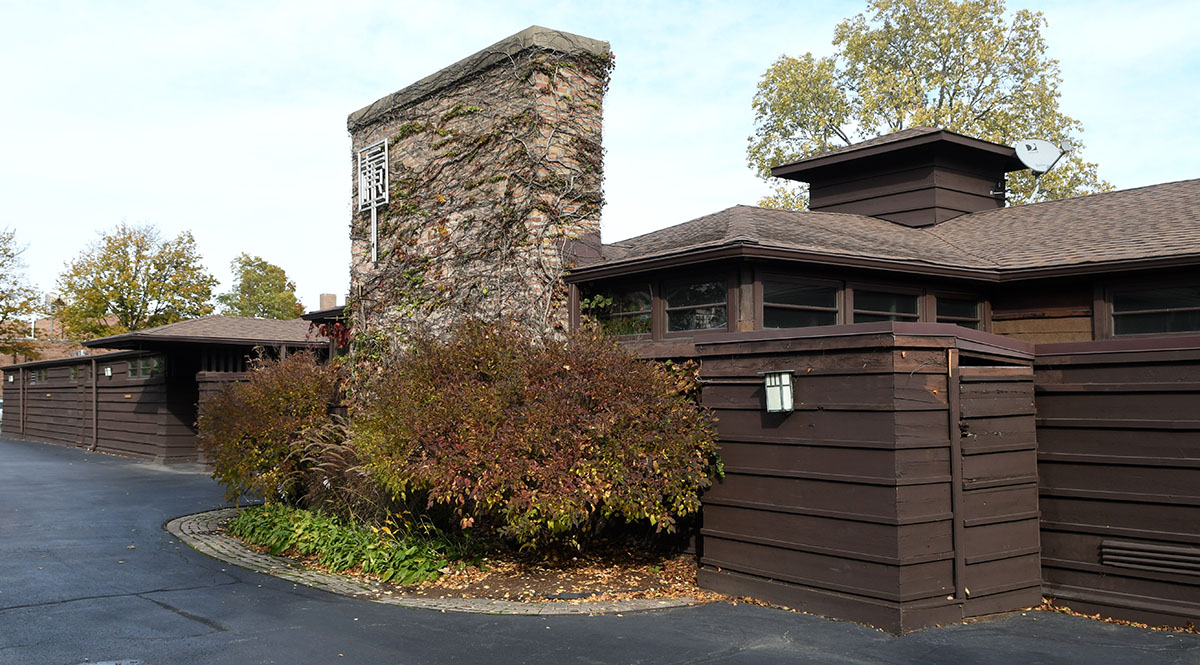
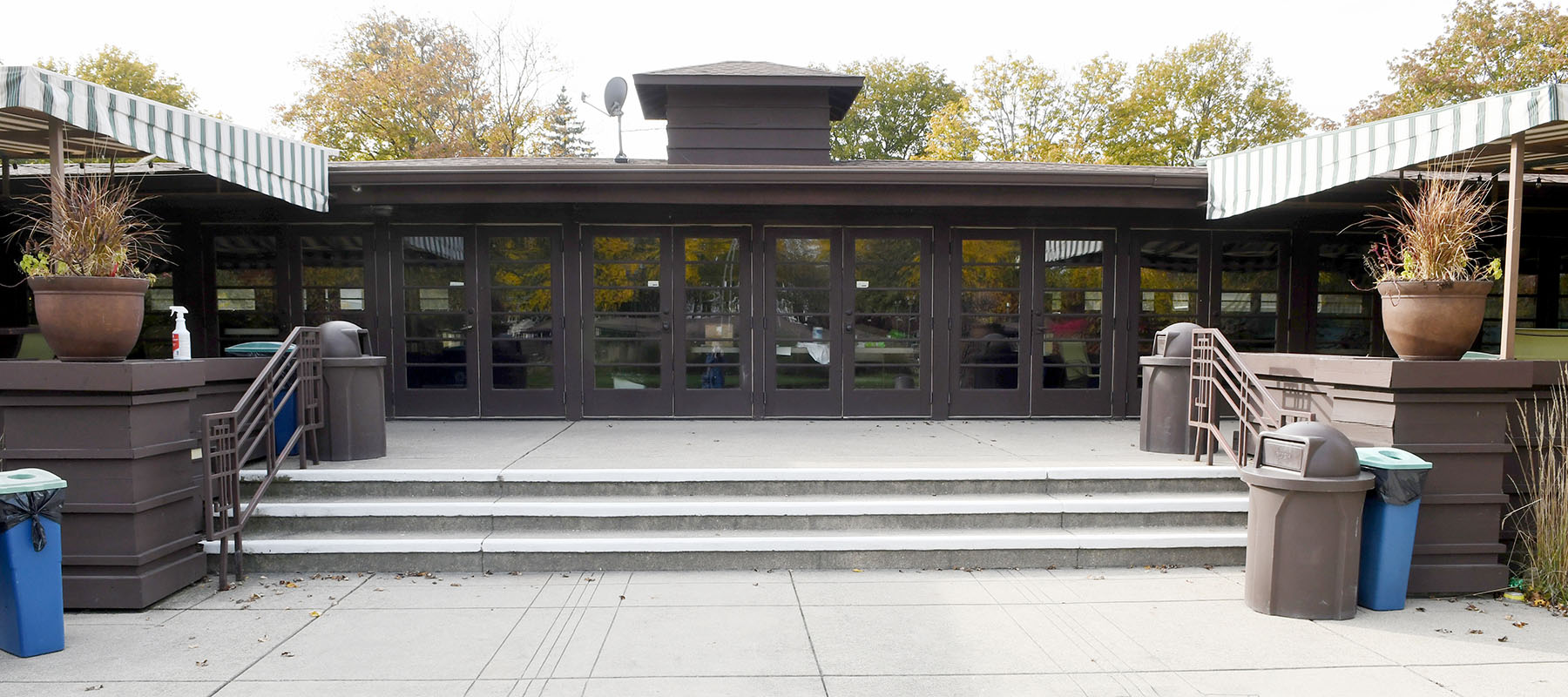
The Pavilion was sited in what are called the Recreation Grounds, near the Bow River, south of downtown Banff. It was controversial from the start. The consensus among residents seemed to be that the Pavilion should be suited to year-round use and reflect their interest in sports such as curling and ice hockey. The government and Wright thought otherwise. The Wright / Sullivan design was best suited for use in warm weather. The exterior and floor plan were similar to Wright’s River Forest (Illinois) Tennis Club (1906), below:
River Forest Tennis Club 10.28.20 008.jpg

River Forest Tennis Club 10.28.20 022.jpgThe River Forest Tennis Club in 2020

According to the Banff Crag and Canyon newspaper, “The structure will be of rustic frame, one story in height, with cement and rubble foundation. The outside dimension will be 50 x 200 feet. The interior will contain a general assembly or lounging room 50 x 100 feet, with a ladies’ sitting room 25 x 50 feet at one end and a sitting room for gentlemen, 25 x 50, at the other end. Dressing rooms, lockers, etc., and provided for also three cobblestone fireplaces. Inside had three fireplaces, a men’s smoking room, a women’s lounge, and a common area between them.”
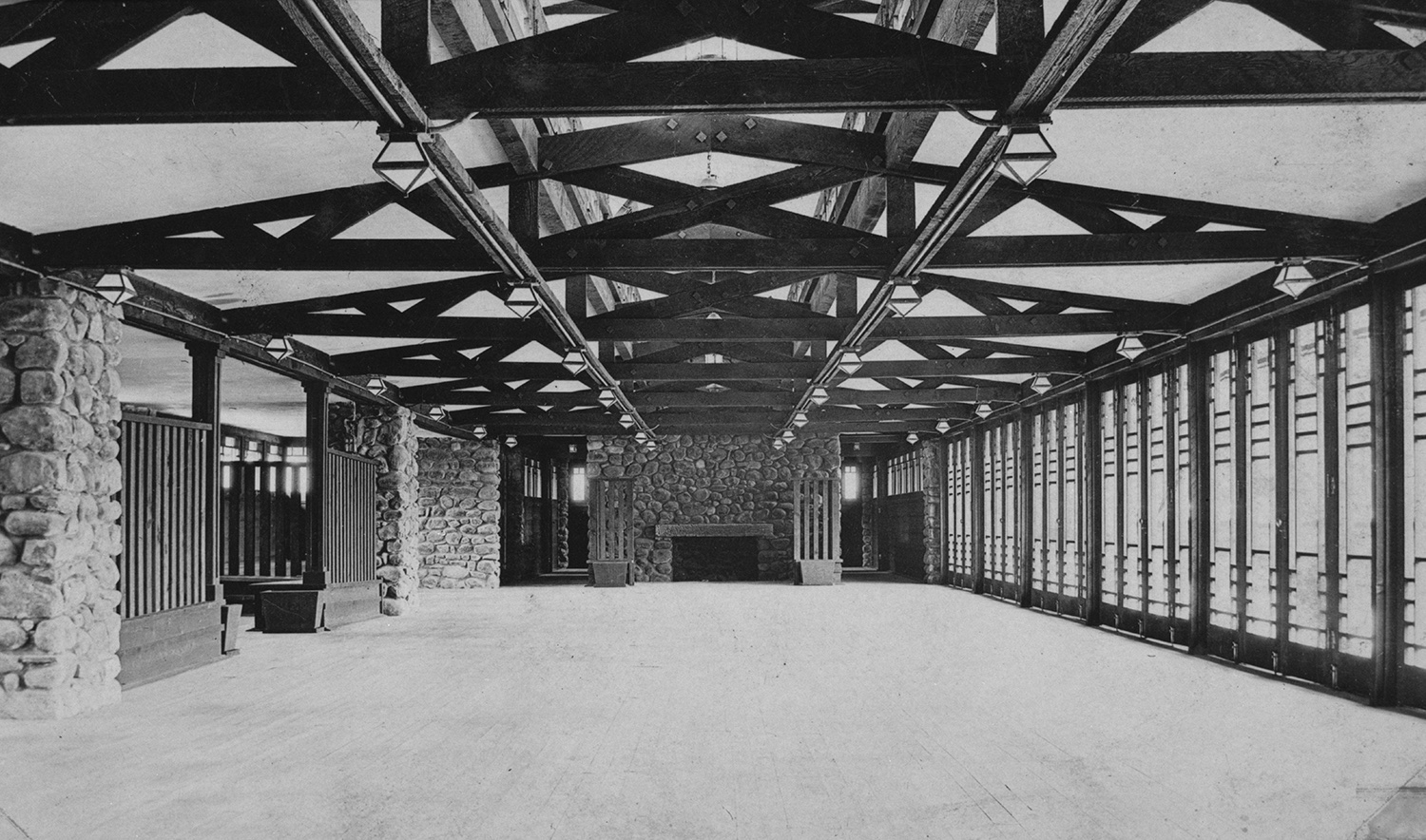
Whyte Banff Interior.jpgFrank Lloyd Wright Pavilion Interior Image # V683/441/na66/1471The Whyte Archives & Special Collections

The Pavilion served as Quarter Master’s Stores during World War I. If the design was problematic, at least for the residents, the site of the Pavilion near the Bow River was more problematic, ultimately fatally so for the structure. The river could get very angry. It did so particularly in 1920 and 1933 when it flooded around the Pavilion, doing irreparable damage to it, and ultimately dooming it. The newspaper wrote of the 1920 flood, “The grounds in front of the recreation building were under water last week, and it was possible for a man, if so inclined. to wade out to the building, sit on the steps and fish.”
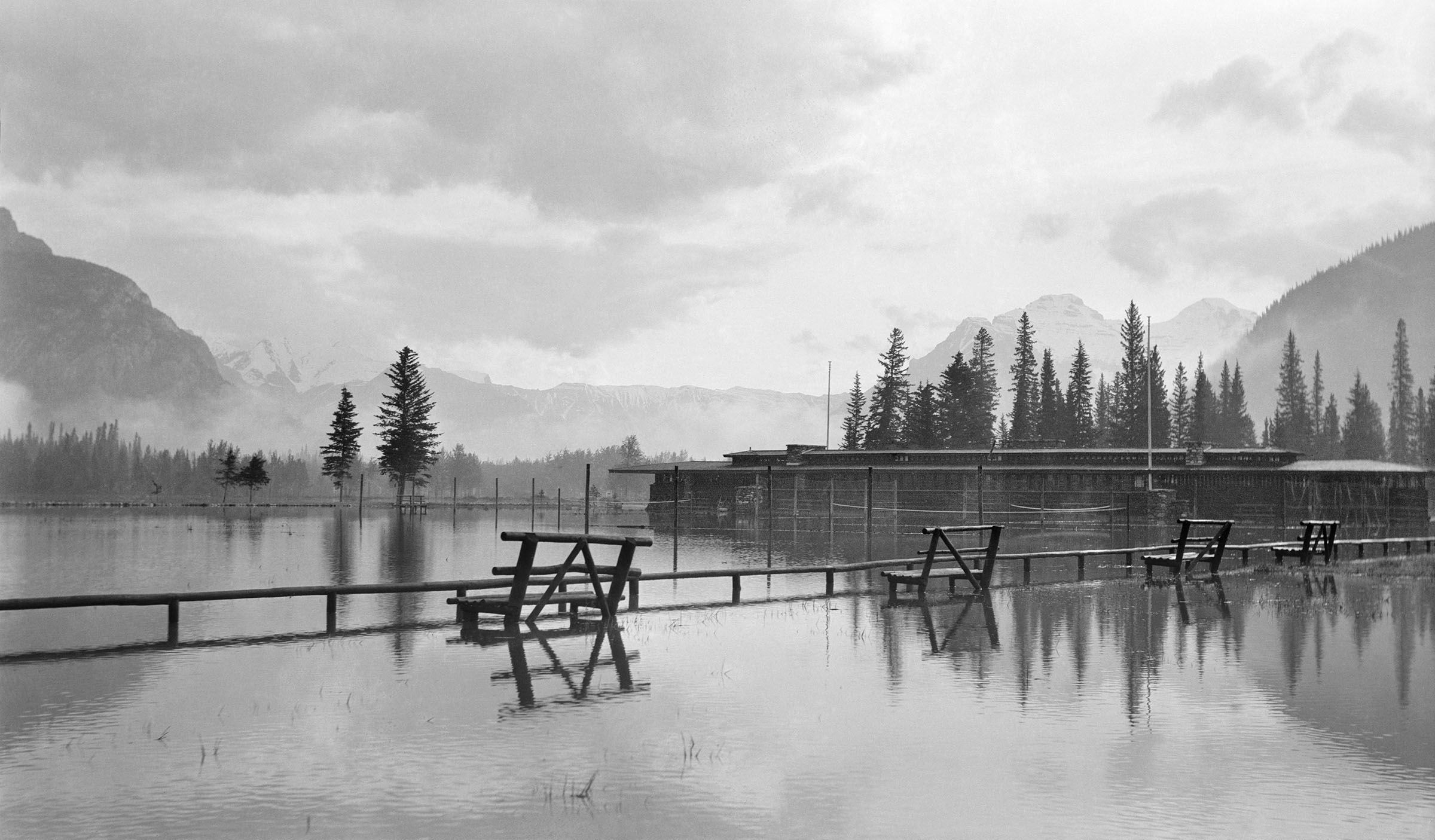
Banff FLW UCal2.jpgFrom the University of Calgary Digital Collection

The wrecking ball finally came in 1938, just a quarter century after it opened. A 2016 proposal by Michael Minor, an American, to raise money for the Pavilion to be reconstructed did not materialize.

My wife and I were visiting Banff this spring and were anxious to find the Pavilion’s site. That was a challenge because there is no historic marker. We took hints from Steiner’s article. Patricia Thomson, our Canadian Rockies tour guide, graciously took time on a free afternoon to help us wander the area near the Bow River Bridge, Cave Avenue, and Sundance Road, near the Recreation Grounds. She had already gotten some leads from her brother, who works for the provincial parks department. Most significantly, he directed us to Steiner’s article.
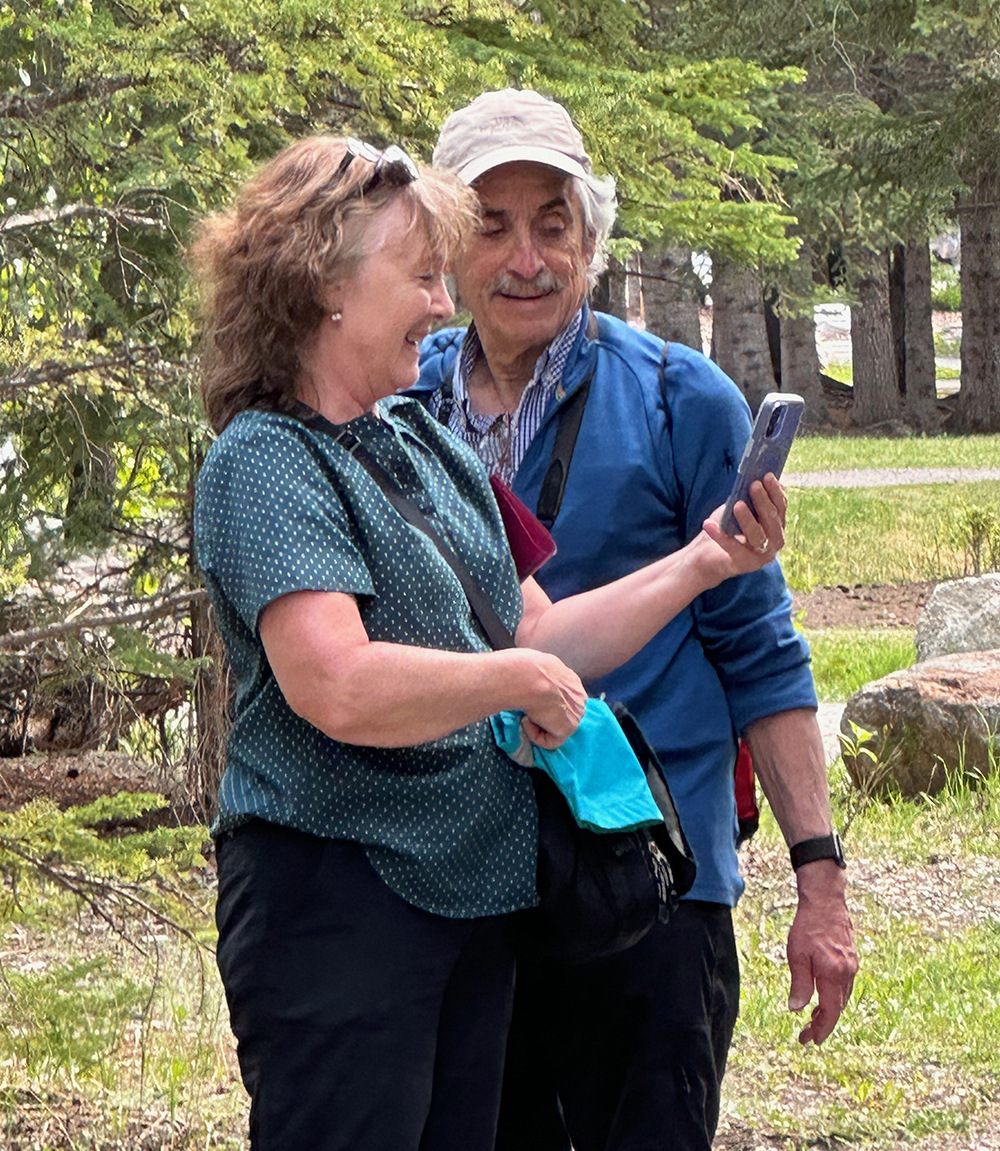
Patricia and MSH.jpgPatricia Thomson helps us locate the site of the Pavilion. Photo by Cindy Hertzberg

Reconstruction of the building in an area that has new recreation amenities is not likely to happen, but Banff’s Heritage Committee, which considered Minor’s reconstruction proposal, had discussed the idea of a “Landmarks and Legends” marker at the site before the Pandemic. We are past the Pandemic. Now is the time to reconsider the idea of signage.

Until such signage were to come to fruition, the only tangible evidence of the Banff National Park Pavilion in Banff is a model in the basement archives of the Whyte Museum of the Canadian Rockies.
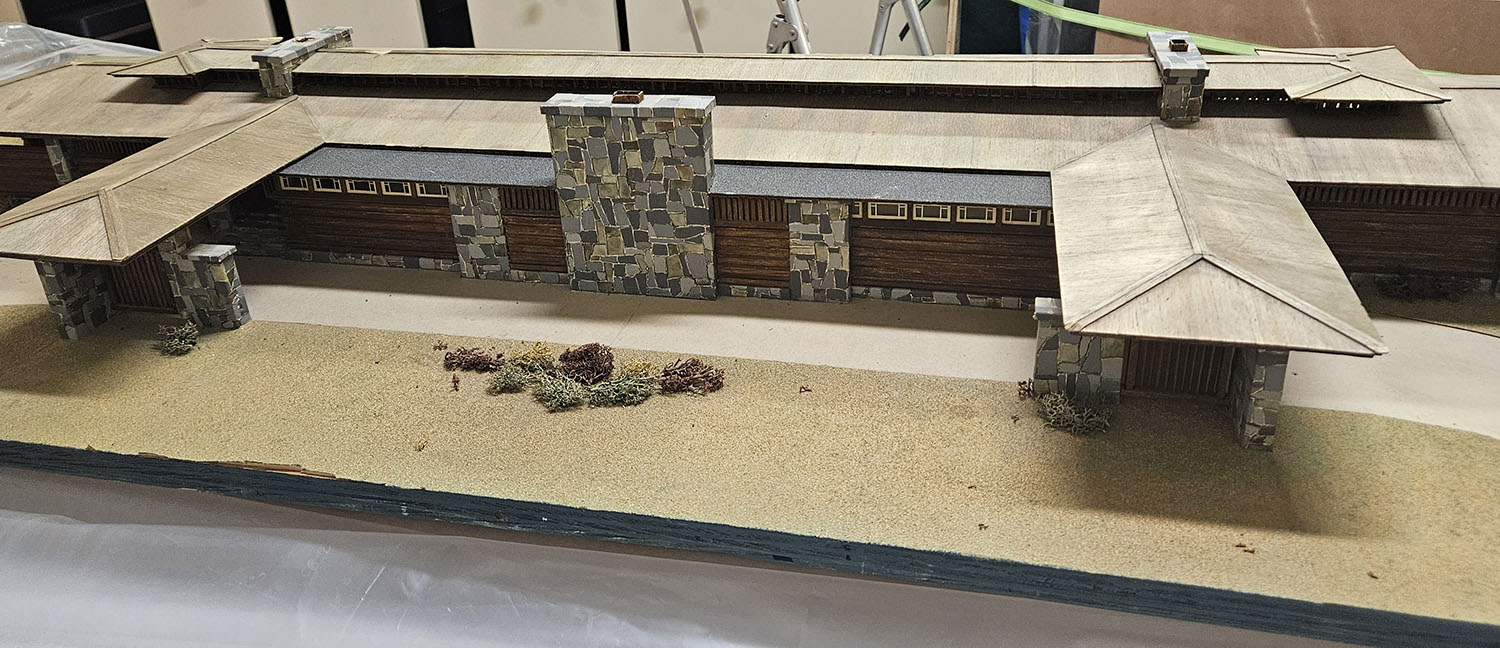
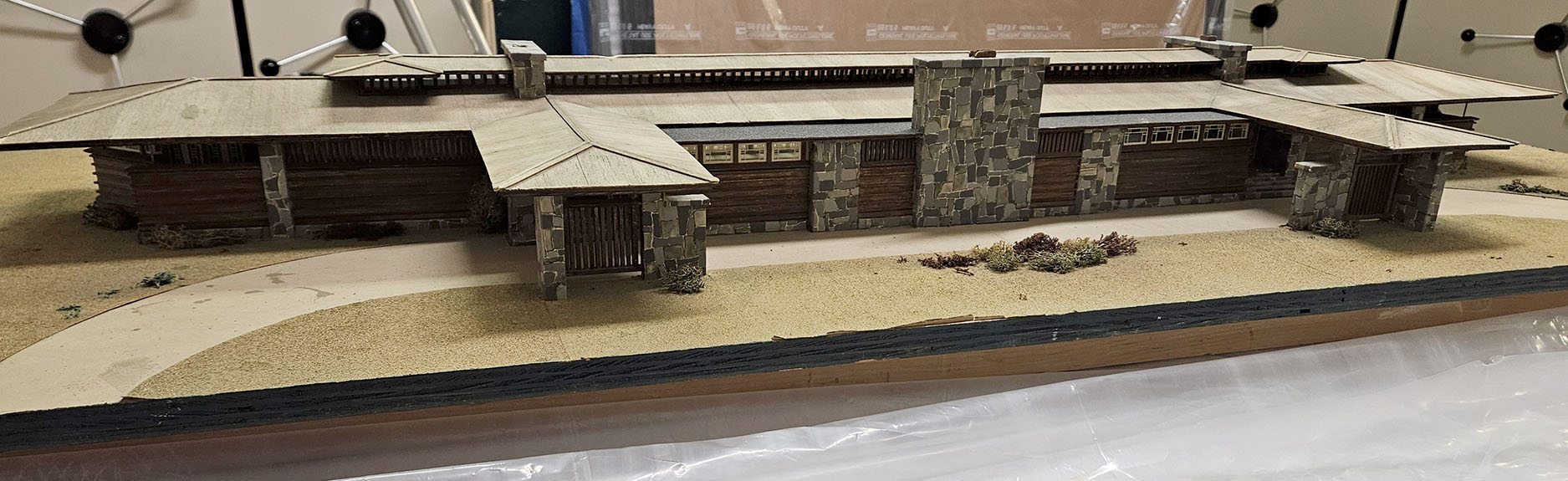
20250609_141013.jpg

20250609_141038.jpg

20250609_141156.jpg

20250609_140930.jpg

20250609_140944.jpg

20250609_140954.jpgImages courtesy of The Whyte

Postscript: According to “In Wright’s Shadow” (published by the Frank Lloyd Wright Home and Studio Foundation in 1998), Sullivan worked in Wright’s Oak Park studio in 1907 and 1908 before returning to Canada. He worked with Wright in Arizona in 1916 on drawings for the Imperial Hotel. He did not accept Wright’s offer for him to work with him in Japan on the hotel. Sullivan died of throat cancer in 1929, living as a guest of Wright’s at Ocatilla, his Arizona desert camp.

Thank you to Randolph C. Henning and Keiran Murphy for their assistance with this piece.

Please scroll down for previous articles on this Wright blog.

Wisconsin World of Wright – June 2025

Photos © Mark Hertzberg (2025)

This is a quick update on some developments in the World of Frank Lloyd Wright in Wisconsin, from another Road Scholar tour I helped lead this week:

Annunciation Greek Orthodox Church – Wauwatosa

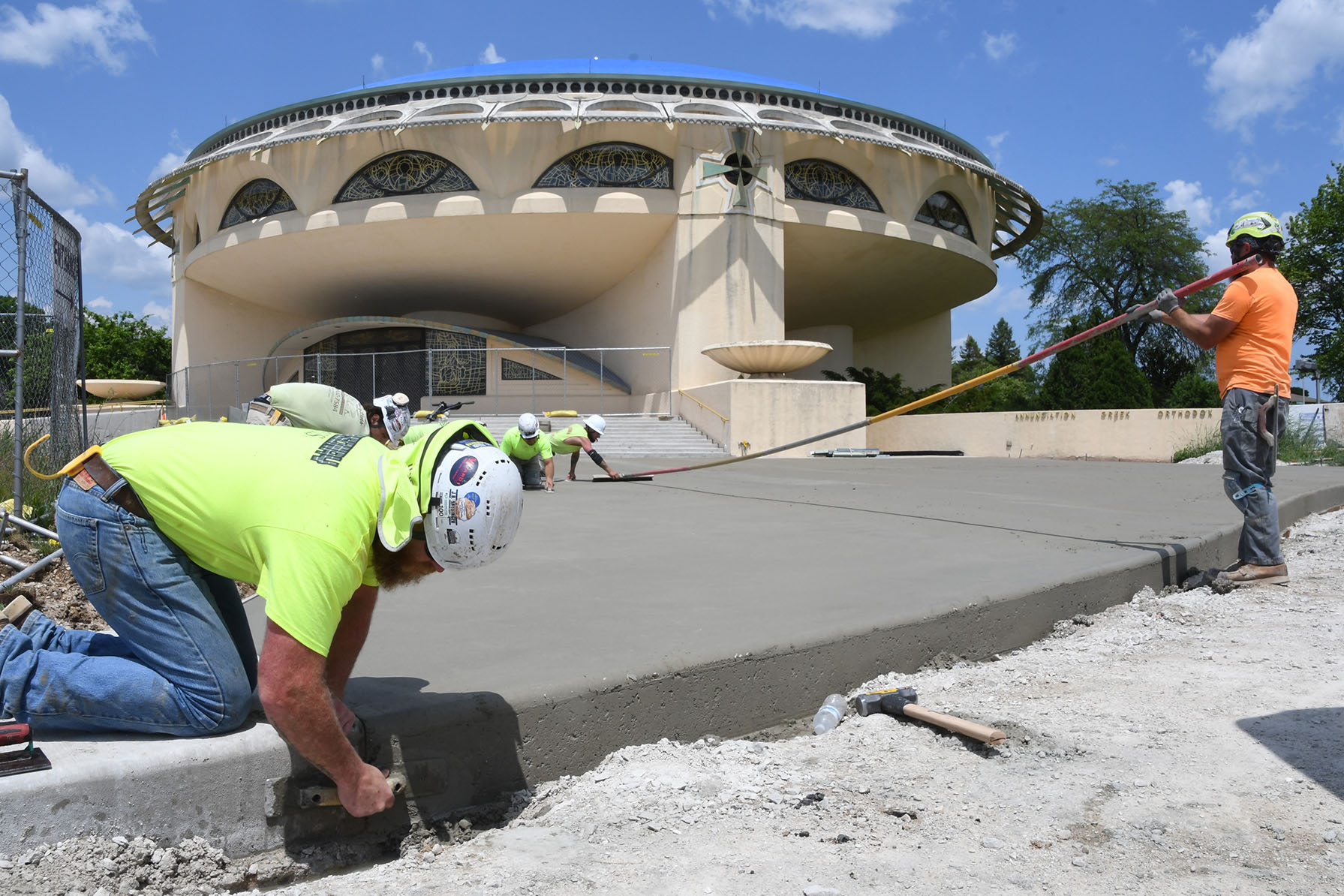
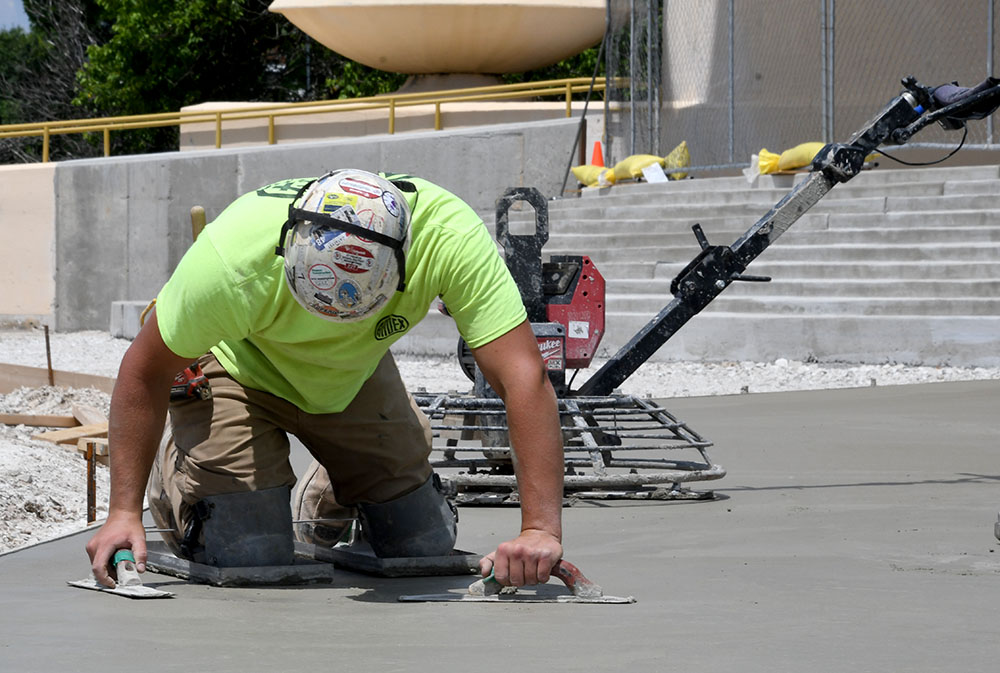
LR AGOC 6.19.25 012.jpgWorkers smooth out newly poured concrete at the entrance to the church Thursday June 19. This is part of Phase 2 of work at the church.

LR AGOC 6.19.25 009.jpg

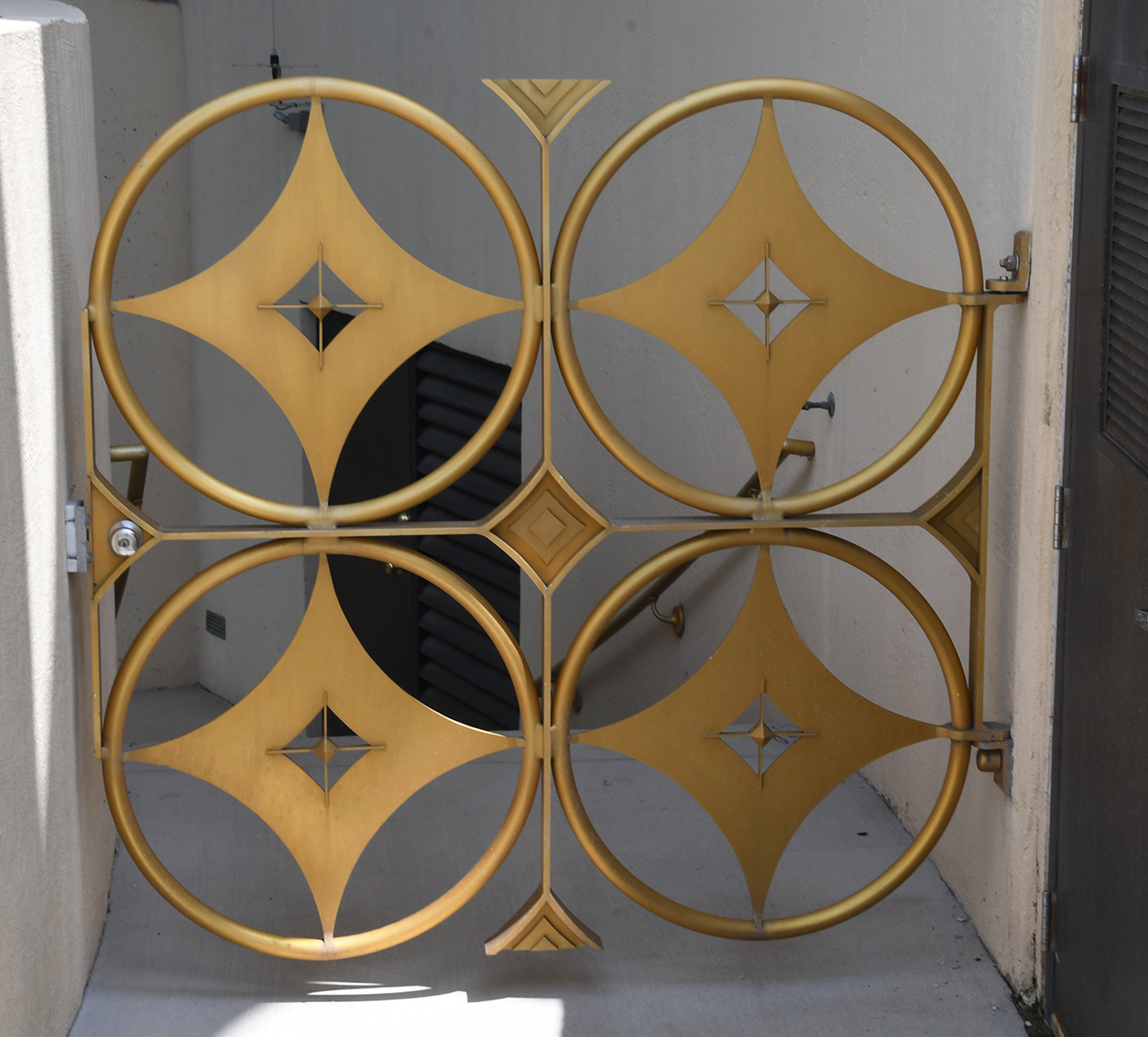
Phase 1 saw repairs to the roof last year and work on the gate to the garden level.

LR AGOC 6.19.25 016.jpgPhase 3 will see new carpeting, and cushions for the pews next year, as well as the pews being refinished. Photos of the roof work are at:https://wrightinracine.net/2024/12/10/greek-church-roof-resplendent-again/

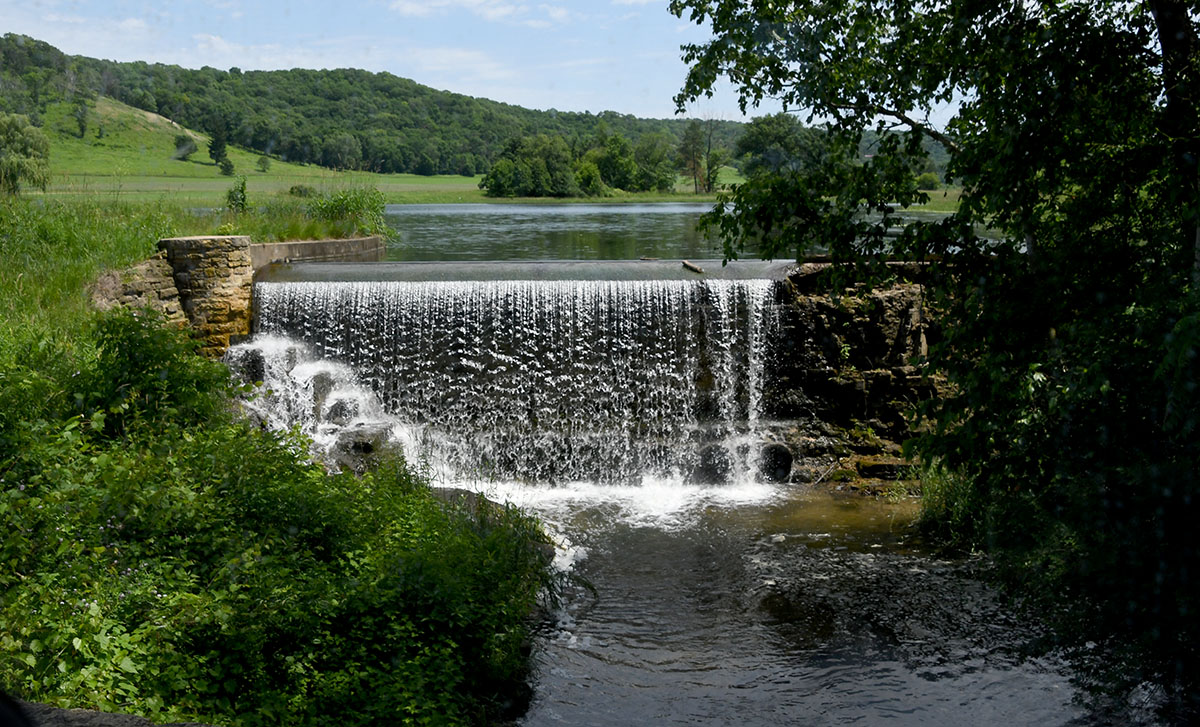
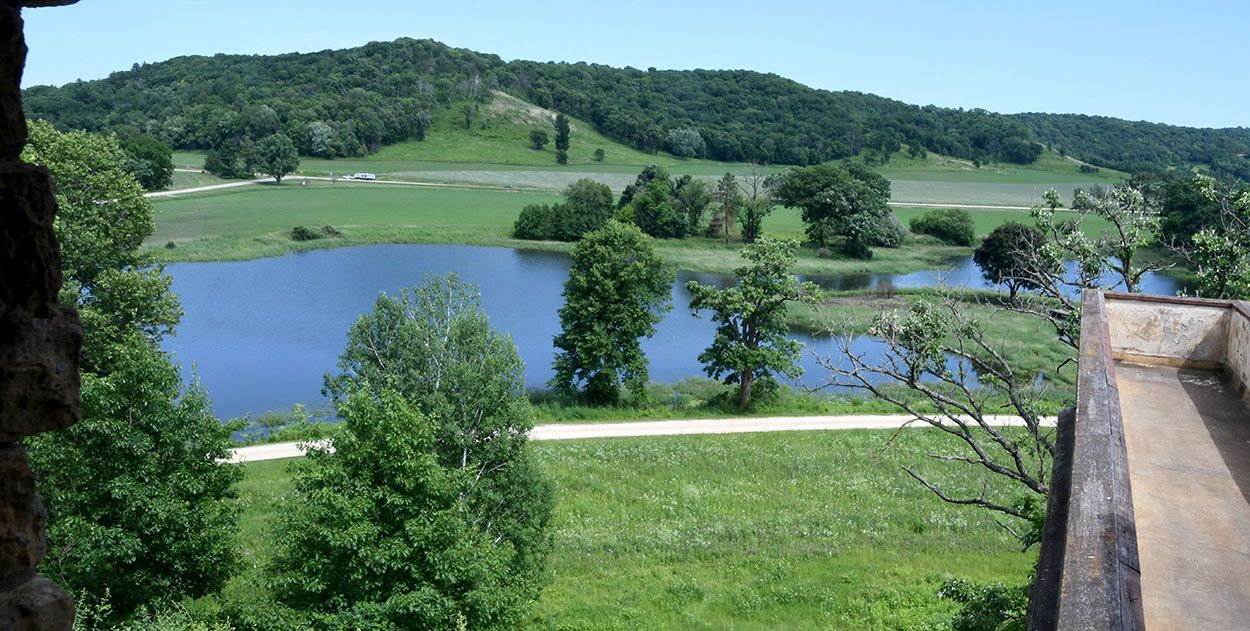
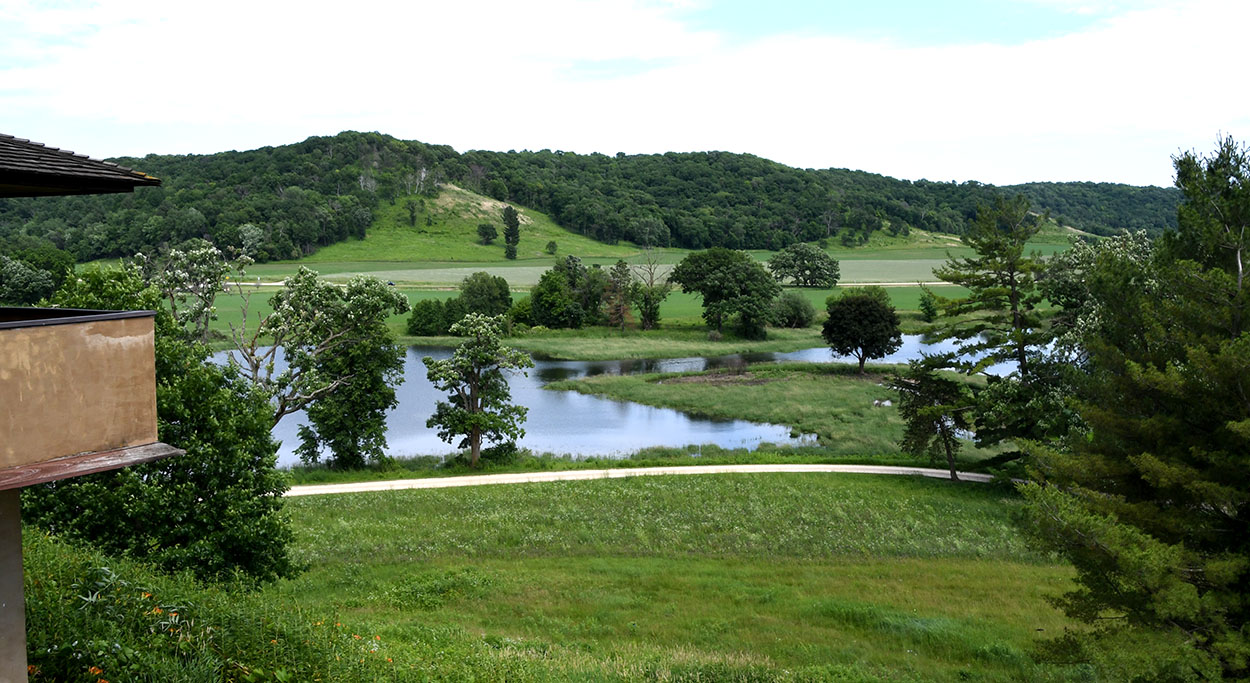
Taliesin: The pond, which Wright is said to have referred to as Lake Taliesin, is filled again, after an absence of several years, and waters flows over the dam by the original entrance to the estate:

LR Taliesin Pond 6.20.25 001.jpg

LR Taliesin Pond 6.20.25 002.jpgLR Taliesin Pond 6.20.25 004.jpg

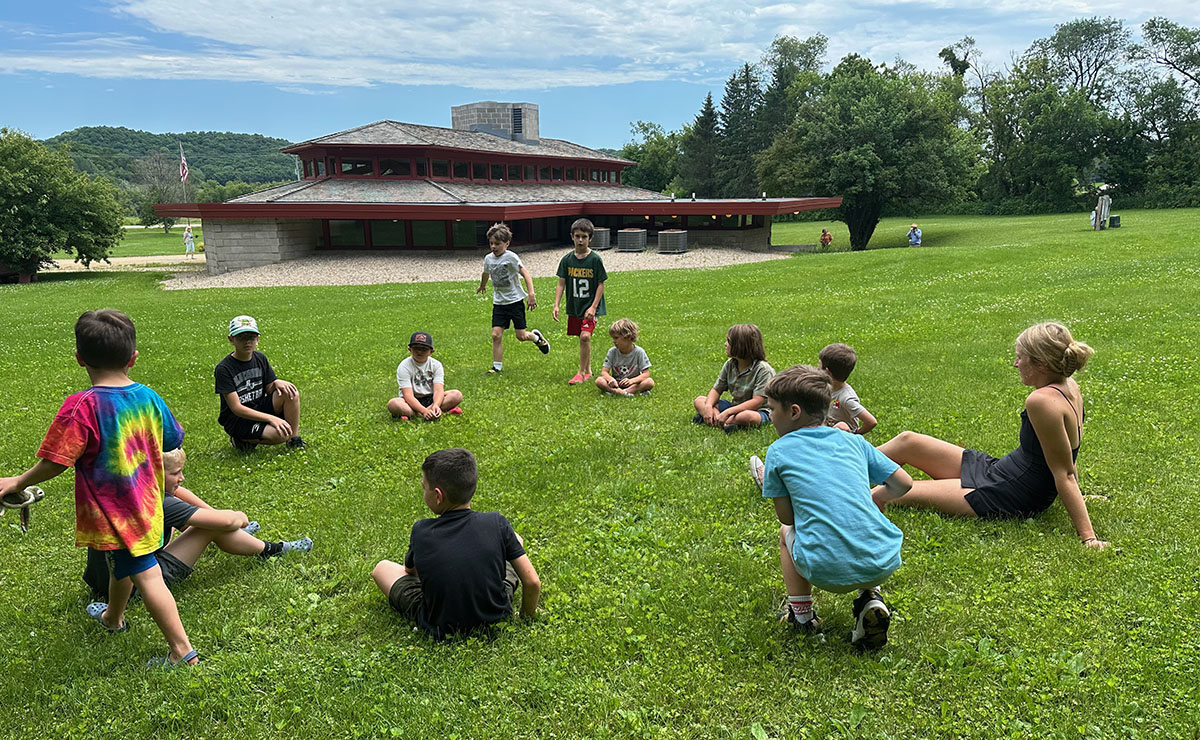
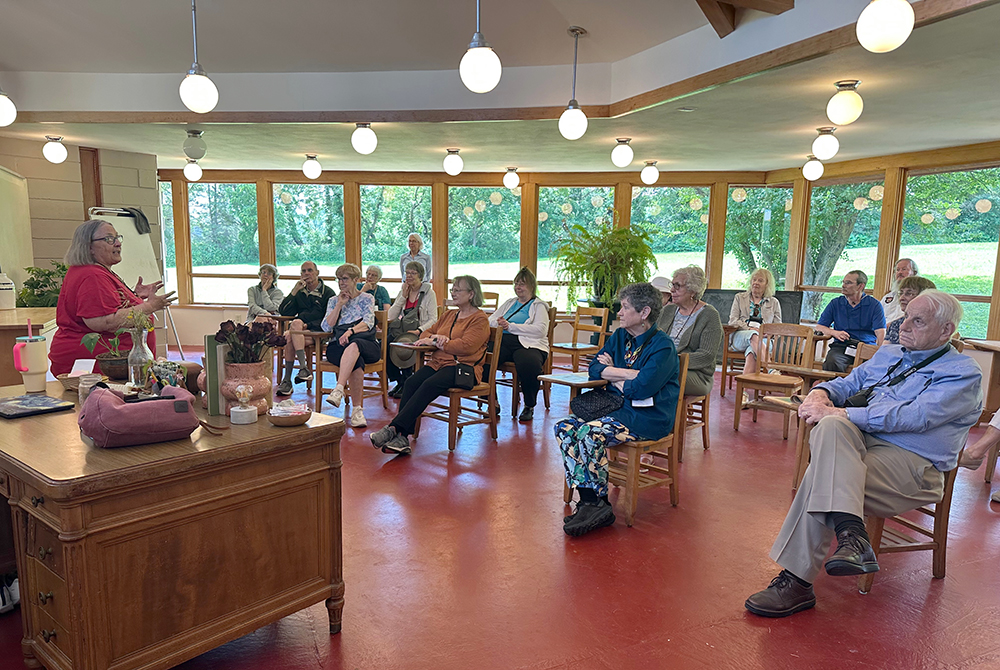
Wyoming Valley School: The school opened in early 1958 and closed in 1990. Today it was filled with the sound of children again, children participating in the Wyoming Valley Experience, a six-week long summer art camp. The adults shown in one of the two classrooms are guests from the Road Scholar tour:

LR Wyoming Valley School 6.20.25 010.jpg

LR Wyoming Valley School 6.20.25 002.jpg

LR Wyoming Valley School 6.20.25 004.jpg

LR Wyoming Valley School 6.20.25 007.jpg

Wyoming Valley School 6.20.25 006.jpg

LR Wyoming Valley School 6.20.25 003.jpg

LR Wyoming Valley School 6.20.25 011.jpg

LR Wyoming Valley School 6.20.25 012.jpg

Earlier in the day the Road Scholar guests were unexpectedly invited into a Wright home which is not normally open to tours (which is why I am not identifying it). One of the guests told me he was thrilled to see a house that is being lived in, as opposed to another house museum. Indeed, and that is why it was also so heartening to see children in the school.

Please scroll down for previous posts

Links to Wyoming Valley School; Taliesin Preservation, and Road Scholar’s weeklong tour in Chicago, Oak Park, Racine, Milwaukee, Madison, ad Spring Green:

https://www.wyomingvalleyschool.org

https://www.taliesinpreservation.org

https://www.roadscholar.org/find-an-adventure/22976/Architectural-Masterworks-of-Frank-Lloyd-Wright


Happy Birthday, Roland! (And more Wright news)

© Mark Hertzberg (2025)

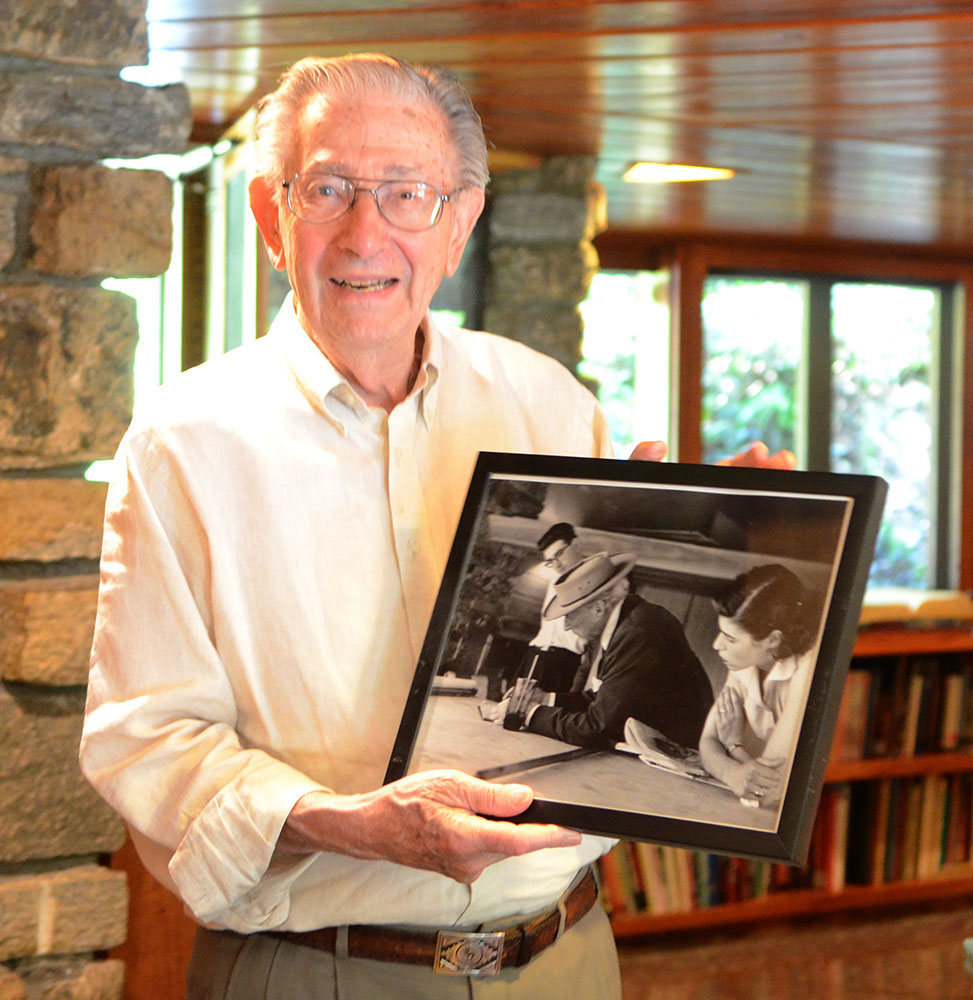
Today’s joy in the World of Wright is to wish Roland Reisley a happy 101st birthday! He and I were walking into Monona Terrace during the 2018 Frank Lloyd Wright Building Conservancy conference in Madison when we passed this photograph and he exclaimed, “This is a photo of me working with Mr. Wright (and with David Henken, as Usonia was taking shape)!” He let me photograph him with the Pedro Guerrero photo:

LR Roland and Mr. Wright.jpg

This is a link to the tribute I posted a year ago to mark his 100th birthday:

https://wrightinracine.net/2024/05/19/happy-100th-roland-reisley-day/

Annunciation Greek Orthodox Church:

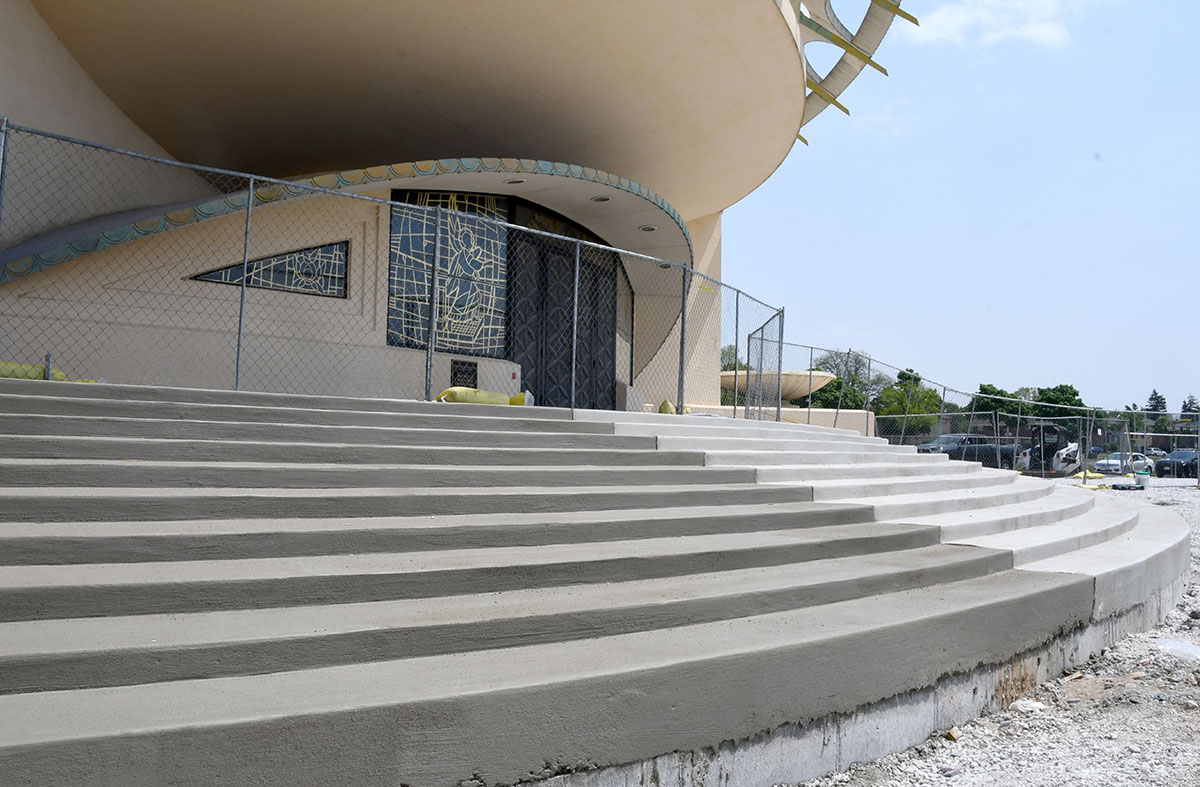
LR AGOC Steps 5.15.25 001.jpg

Work continues at the church in Wauwatosa, outside Milwaukee. Last fall I posted photos of the work on the roof:

https://wrightinracine.net/tag/annunciation-greek-orthodox-church/

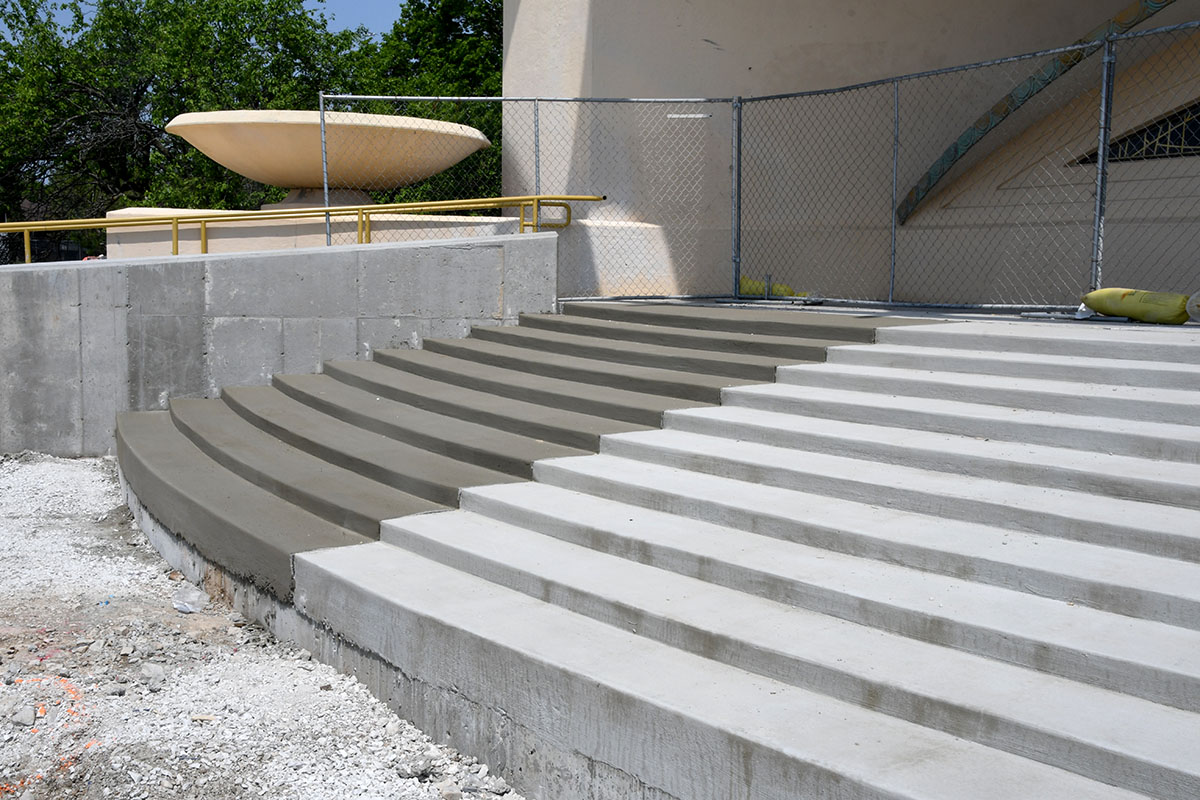
When I visited last week, leading a Road Scholar tour, work had just finished pouring new concrete for the front steps. When outside work is finished, attention will shift inside, under the dome, as the carpet and pew cushions are replaced, and the pews are refinished.

LR AGOC Steps 5.15.25 002.jpg

LR AGOC Steps 5.15.25 005.jpg

Taliesin News:

Taliesin Preservation (TPI) is advertising that they are hiring seasonal workers, with signs below Riverview Terrace, the Frank Lloyd Wright Visitors Center:

LR TPI Hiring 002.jpg

LR TPI Hiring.JPG

This is the link to follow if you are interested:

https://www.taliesinpreservation.org/careers/

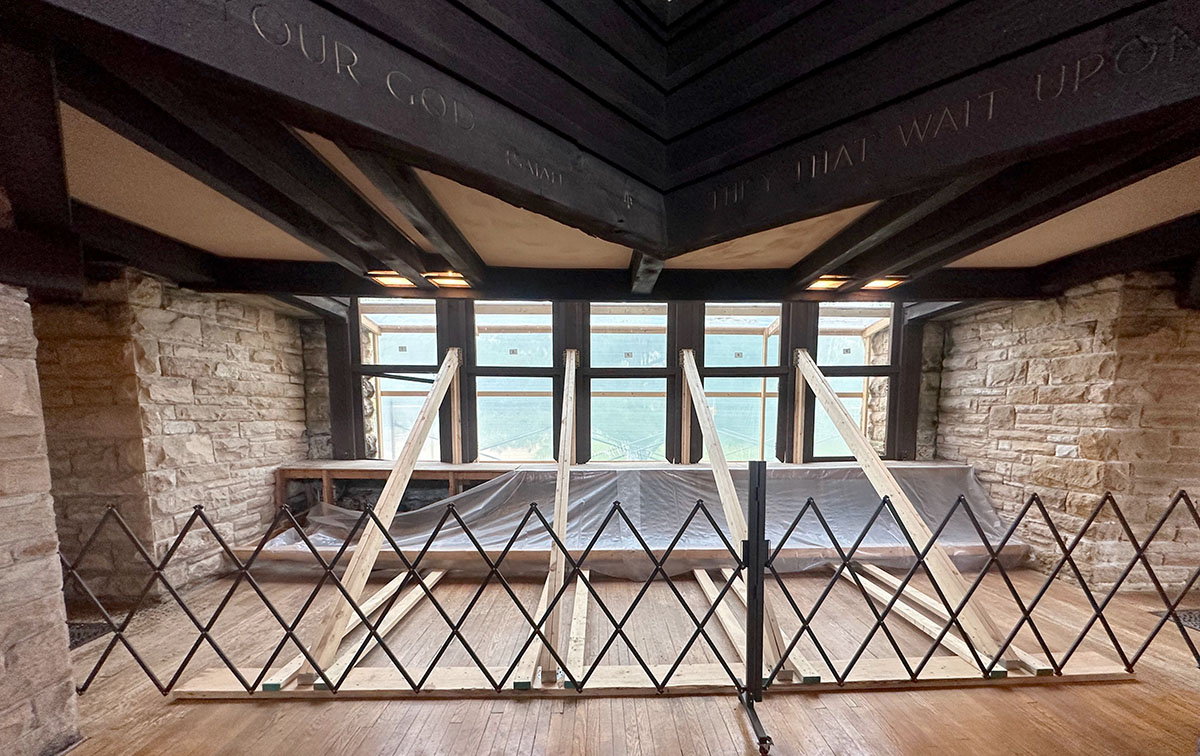
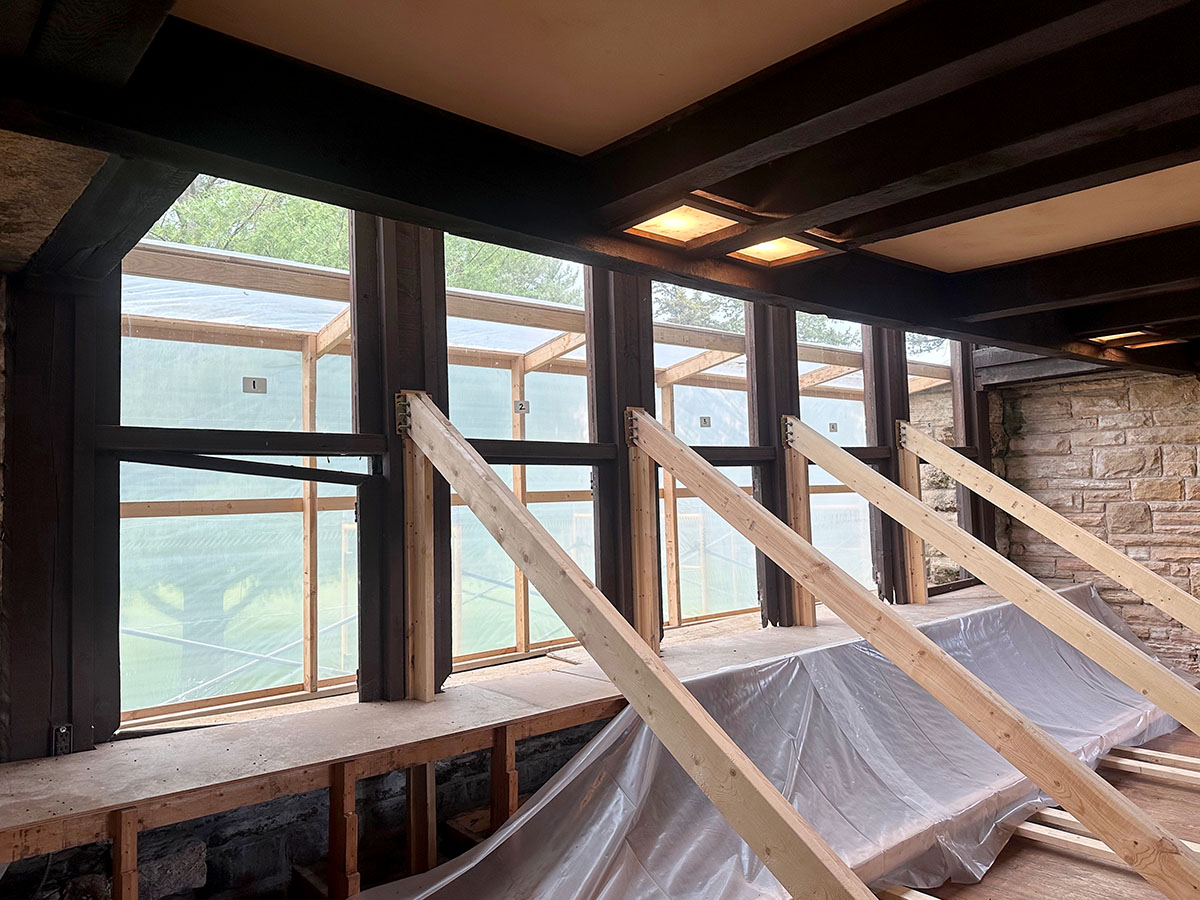
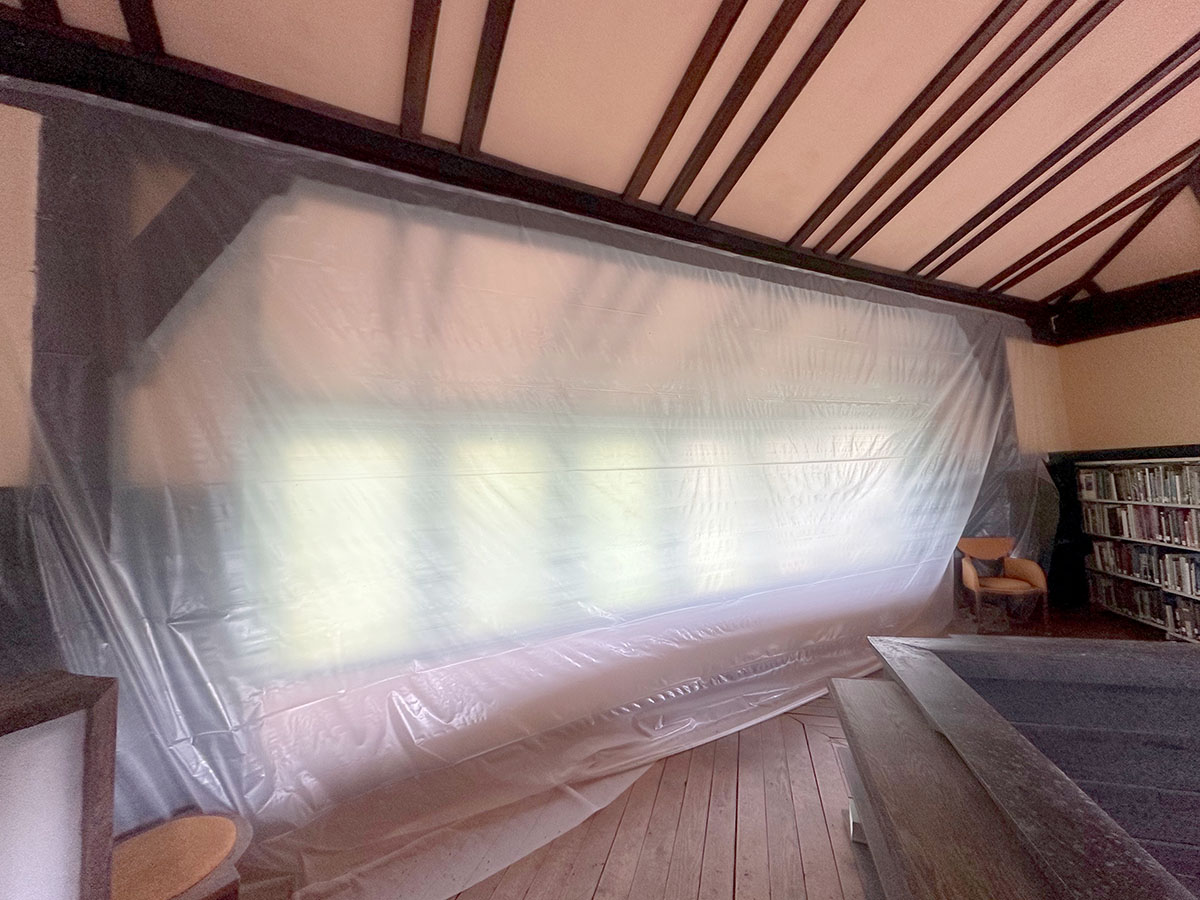
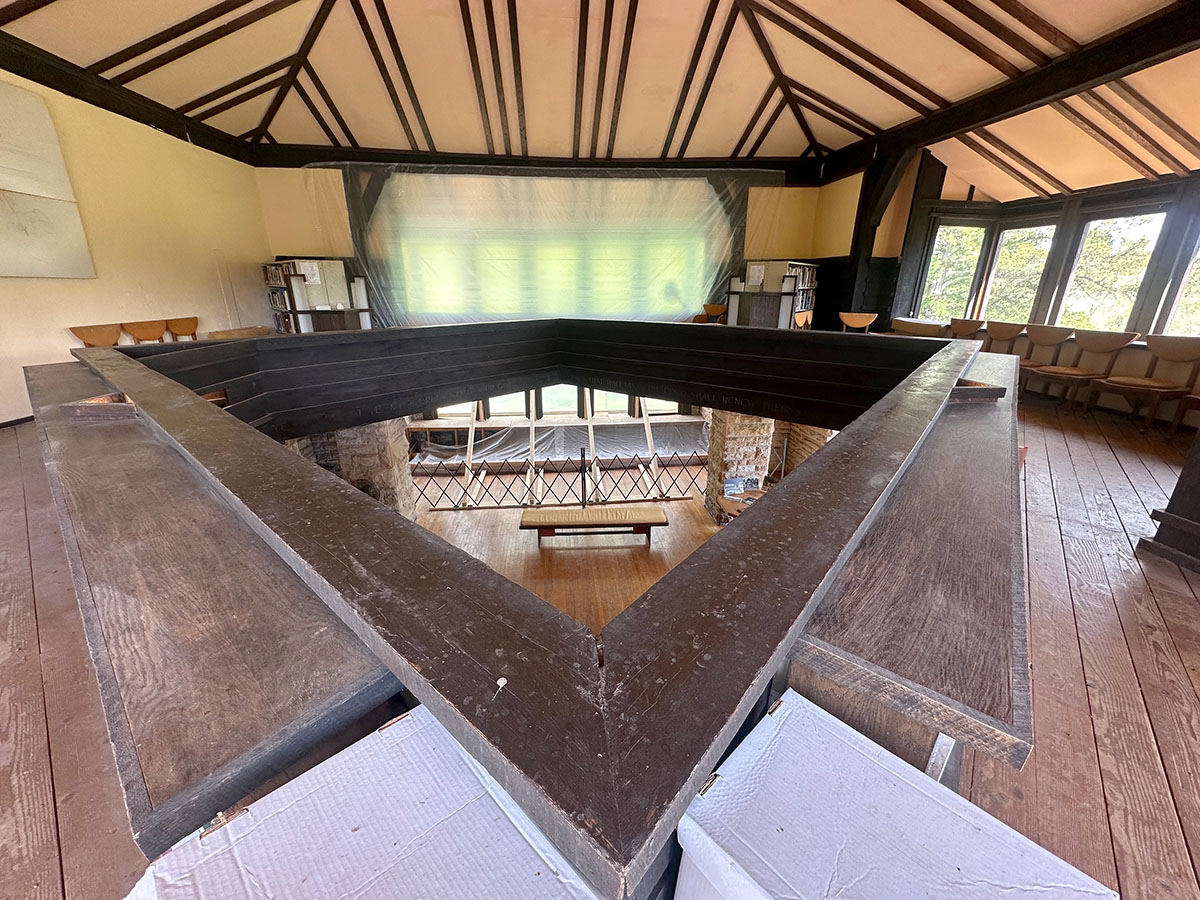
The most dramatic work on campus is evidenced by the scaffolding and plastic covering at the Assembly Hall at Hillside Home School because of water incursion. Repairs will be ongoing.

LR Hillside Assembly Hall Work 004.JPG

LR Hillside031 Assembly Hall Work 004.jpg

LR Hillside Assembly Hall Work 006.jpg

LR Hillside Assembly Hall Work 010.jpg

LR Hillside Assembly Hall Work 018.jpg

LR Hillside Assembly Hall Work 023.jpg

LR Hillside Assembly Hall Work 028.jpg

LR Hillside Assembly Hall Work 034.jpg

TPI has launched a new “Frank Lloyd Wright in Madison” experience in partnership with Destination Madison and the Frank Lloyd Wright Foundation. Details are at:

https://www.visitmadison.com/wright-in-madison/

My wife and I will be traveling to Banff National Park in Alberta later this spring. Wright’s 1911 Banff National Park Pavilion was demolished ca. 1938, but we have connected with someone who will show us where it stood. I will post after our trip. Here are two links for more information about the ill-fated Pavilion:

https://www.banff.ca/487/Frank-Lloyd-Wright-Pavilion

https://en.wikipedia.org/wiki/Banff_National_Park_Pavilion

Please scroll down for earlier articles on this website.

Spring 2025 Update from World of Wright

© Mark Hertzberg

There is good news on several fronts in the World of Wright.

Tower Tumult:

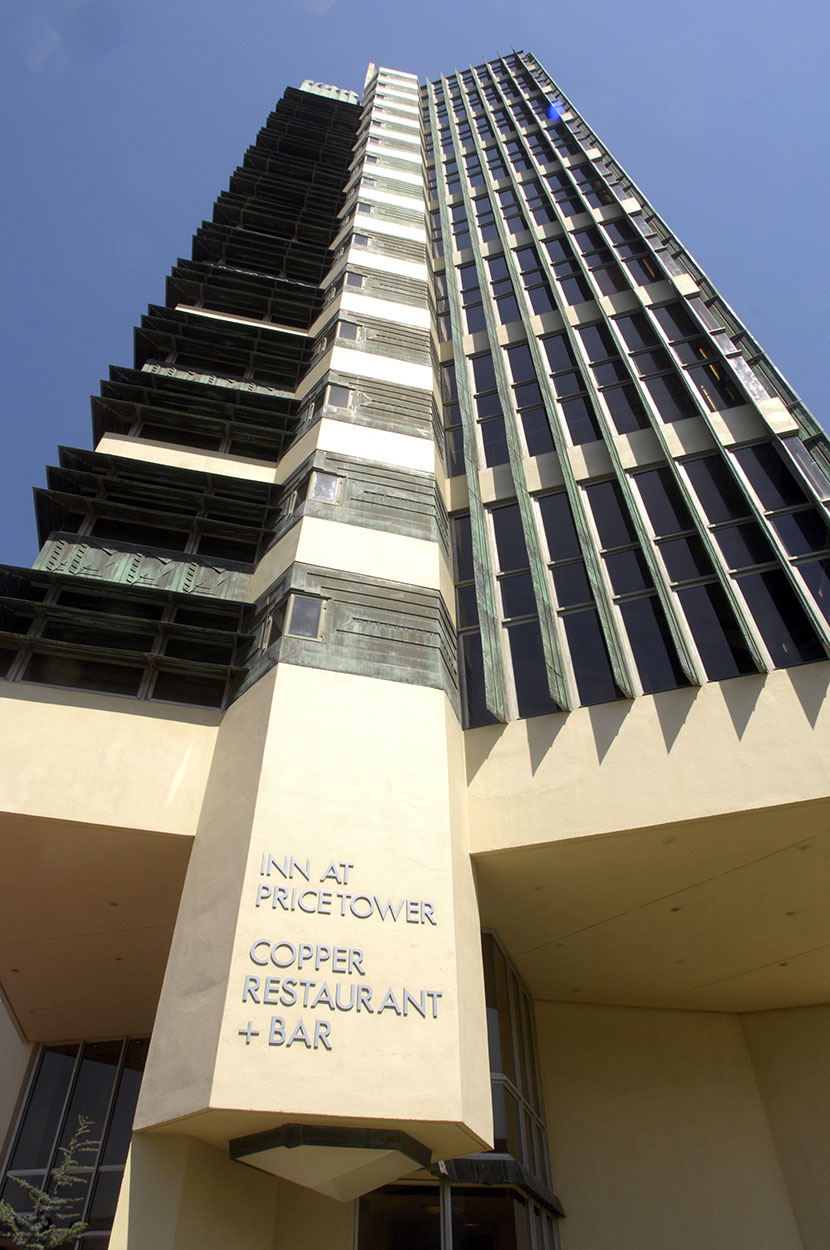
LR Price Tower Misc. Details 044.jpg

In August I posted a piece about the Frank Lloyd Wright’s endangered Price Tower in Bartlesville, Oklahoma. The post includes a variety of interior photos of the structure, then having been repurposed as a boutique hotel:

https://wrightinracine.net/2024/08/14/tower-tumult-in-bartlesville/

I updated the story in February:

https://wrightinracine.net/2025/02/02/updates-tower-tumult-ann-macgregor/

The final chapter in the saga is expected Tuesday May 6 when McFarlin Building LLC will buy the building for $1.4 million. The Frank Lloyd Wright Building Conservancy, which has been active in the effort to save the Tower, has posted a link to a story in the Bartlesville Examiner-Enterprise:

https://www.examiner-enterprise.com/story/news/2025/04/30/price-tower-sale-mcfarlin-bankruptcy-court-bartlesville-oklahoma-frank-lloyd-wright/83355374007/?fbclid=IwY2xjawKDYctleHRuA2FlbQIxMQBicmlkETF5SXYxQTJUbUs2bXVPTUJ0AR6GiTbGbWZPvmyxahd3gS6kwMvkk3-bzbe3aYil2SBtBy6SeA6j9Va5_9YvIg_aem_JbuMevvBarWSblZ-bdSs8Q

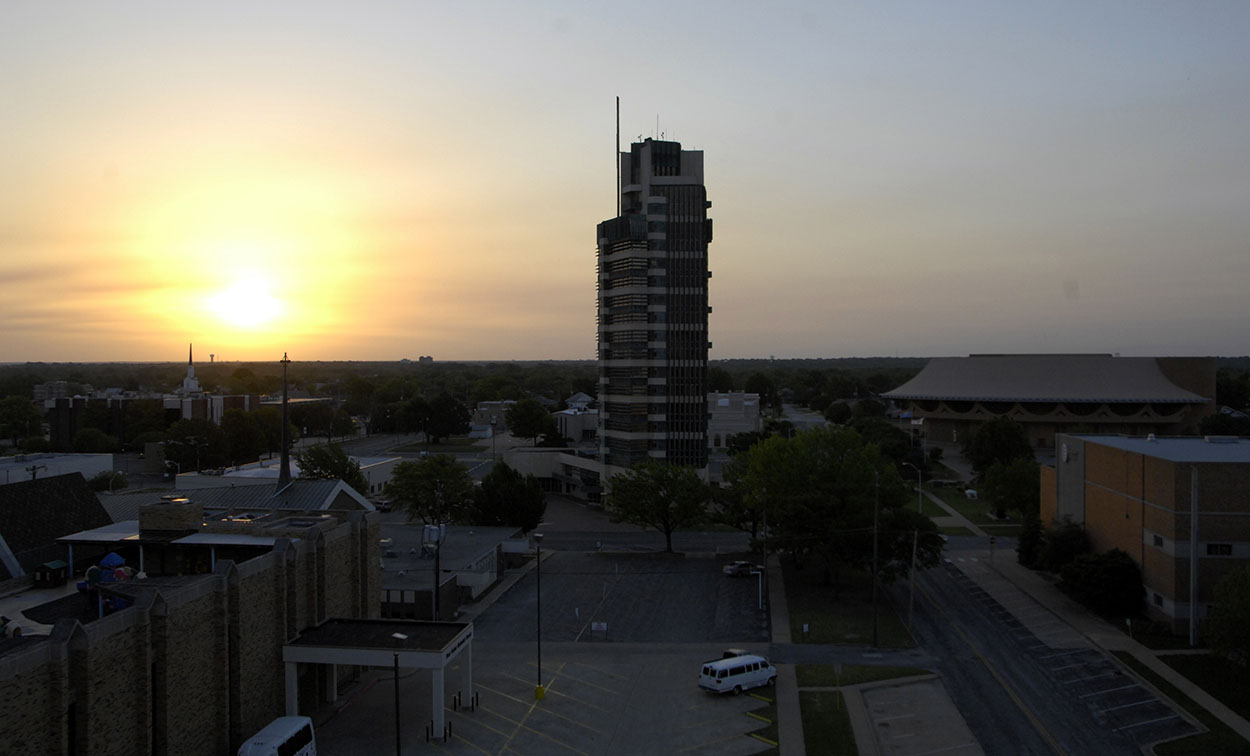
LR Price Tower a Sunrise 001.jpgThe sun rises behind Price Tower at 5:42 a.m., April 30, 2011. 

Wright in Wisconsin

Screenshot 2025-05-03 at 4.13.04 PM.pngWright in Wisconsin logo and typography © Robert Hartmann

Wright in Wisconsin is the nation’s only statewide organization devoted to Wright’s architecture. It was founded in the 1990s in concert with the Wisconsin Department of Tourism. The annual “Wright and Like” tour encompasses the work of organic architects, in addition to Wright’s work.

I was proud to serve on the board from 2004 until 2020, including eight years as newsletter editor. The board’s accomplishments in those years included purchasing some of the American System-Built properties in Frank Lloyd Wright’s Burnham Block in Milwaukee, beginning in 2004, and working with the Department of Tourism and state highway department to establish the Frank Lloyd Wright Trail of public Wright sites in 2017.

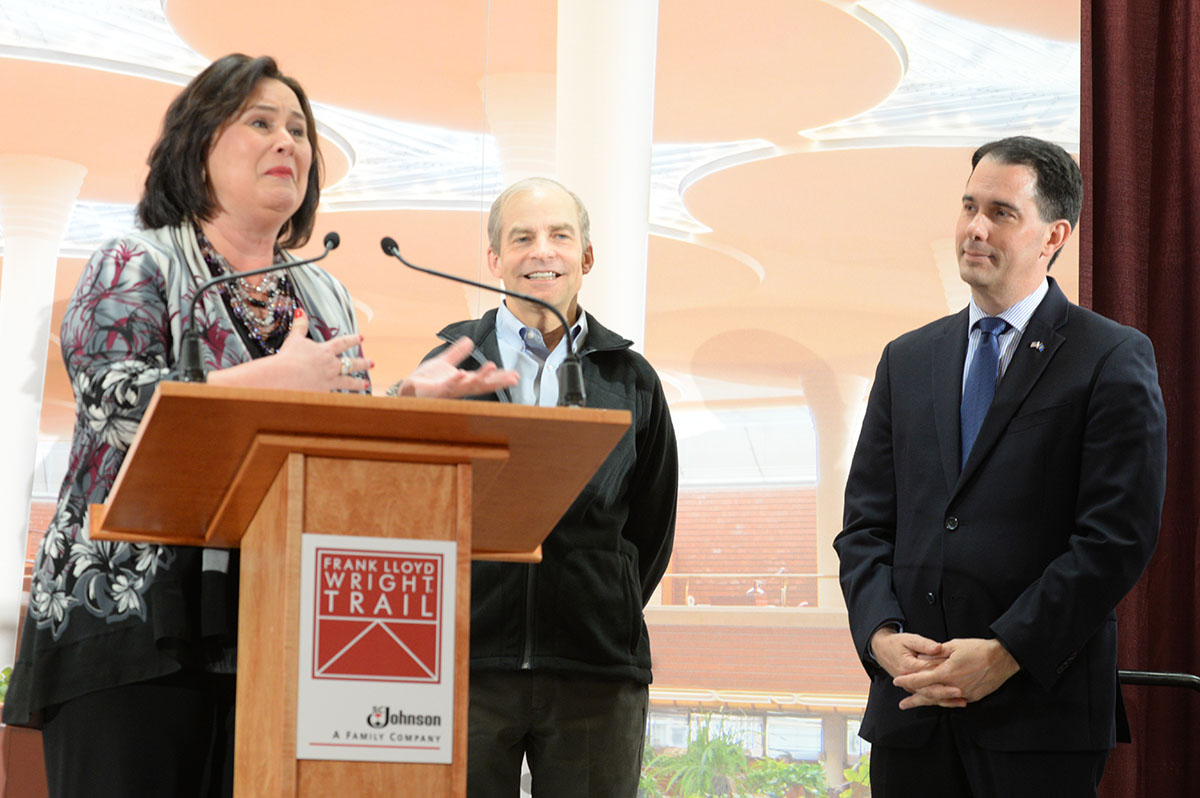
LR FLW Trail Dedication 031.jpgH. Fisk Johnson, Chairman and CEO of SC Johnson, Wisconsin Gov. Scott Walker, and Stephanie Klett, Secretary of the Wisconsin Department of Transportation formally dedicate the state’s Frank Lloyd Wright Trail in a ceremony in the Great Workroom of the Frank Lloyd Wright-designed SC Johnson Administration Building in Racine, Wisconsin, Wednesday May 10, 2017. / Mark Hertzberg for SC Johnson

I resigned from the board and as newsletter editor when negative board dynamics made it impossible for me to continue in either role. I am pleased that there is an energetic new board in place, and I have happily rejoined the revitalized group as a member.

Much credit goes to George Hall who did yeoman’s service navigating the board problems as President, Past President, and Interim President. The organization would have been relegated to the dust heap if not for his work.

John Macy is the new board president. Other members are organic architect Ken Dahlin (Genesis Architects), Henry St Maurice (steward of Wright’s E. Clarke and Julie Arnold House with his wife, Mary Arnold, daughter of Wright’s clients), Trish Dulka, and Anne Hasse. Bill Swan continues as office manager and Jill Hartmann is the accountant. Dulka and Hasse are the newest board members. Dulka will be producing the newsletter, a member benefit that has been absent for several years.
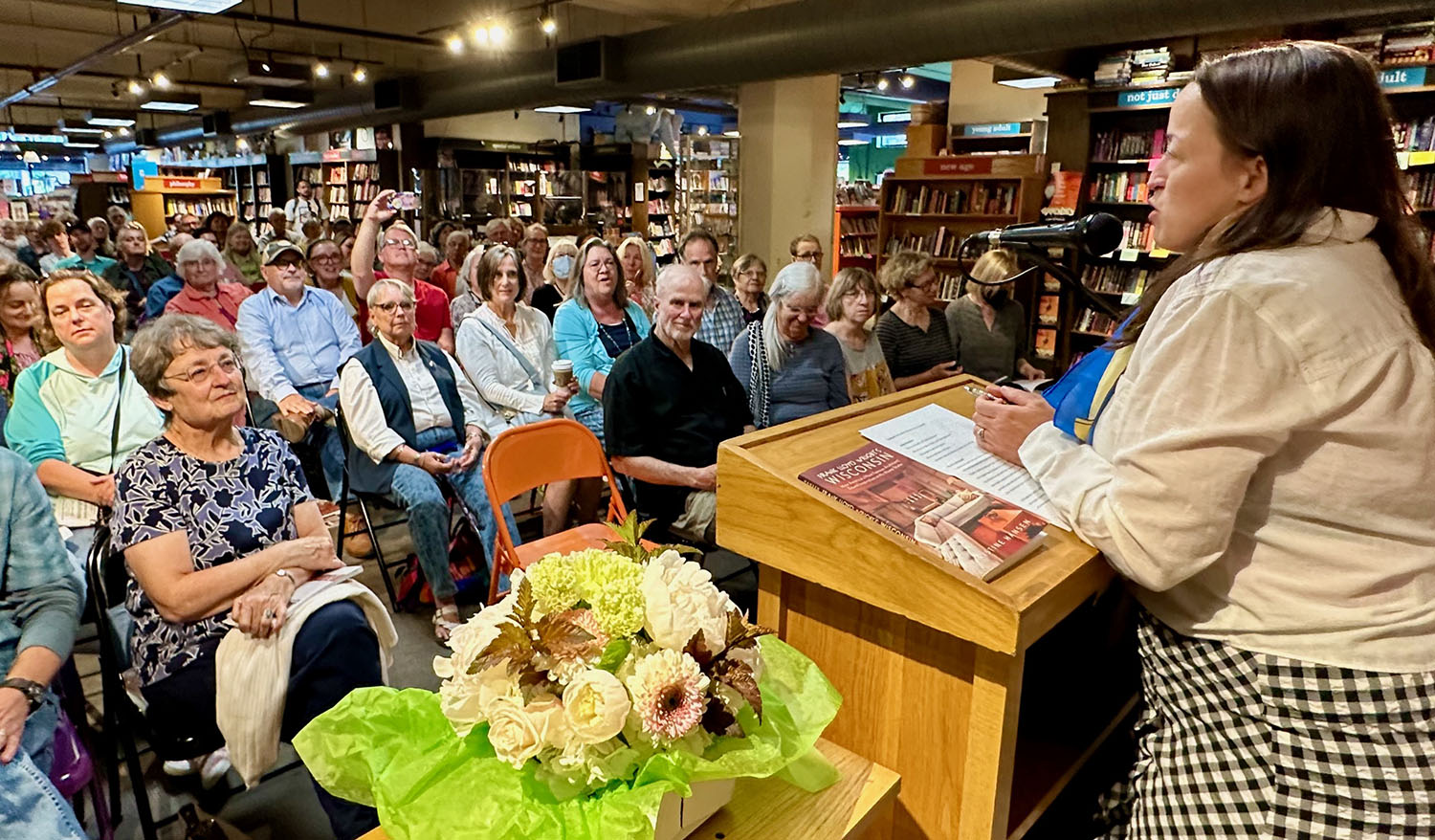
I am particularly pleased that Hasse has joined the board. She is an educator at Wakanda Elementary School in Menominee, Wisconsin, in the far western part of the state. That breaks up the usual geographical cast of characters all from southeastern Wisconsin. I met her many years ago during my daily bicycle ride in Racine, a ride which takes me past Wright’s Thomas P. Hardy House. I wondered why there was a tour bus in front of the house.LR Wakanda 2017 015.jpg

Hasse began her teaching career in Racine. Hasse and Sally Johnson teach a unit to their fifth graders about “Breaking the Box” and pre-pandemic did a two-day road trip with their students to Wright commissions in Madison and Racine. We became friends. I introduced her to the late Gene Szymczak, who became steward of the Hardy House in 2012 and rehabilitated it, and he invited the students to tour the inside of his home:

LR Wakanda 2017 011.jpg

Hasse and Johnson were honored with a prestigious Wright Spirit Award from the Frank Lloyd Wright Building Conservancy at the annual conference in 2014, held at the Biltmore Hotel in Phoenix:

Wakanda WSA 002.jpgHasse, center, and Johnson accept the award from Scott Perkins
Annunciation Greek Orthodox Church

In December I posted photographs of the work being done at Wright’s Annunciation Greek Orthodox Church in Wauwatosa, outside Milwaukee:

https://wrightinracine.net/2024/12/10/greek-church-roof-resplendent-again/

LR AGOC Roof 10.17.24 004.jpg

Maria Pandazi has sent me an update about their work: “About $2.3 Million in projects – and more to come. We were awarded a Save America’s Treasures grant last year and will soon begin another phase of restoration.  My friend Norm and I did a little presentation about the projects online for the Building Conservancy”

https://savewright.org/event/preservation-talk-annunciation-greek-orthodox-church/

Pandazi has the closest ties possible to the church: her uncle, the late Christ Seraphim, a Milwaukee County judge, was instrumental in securing the design commission for Wright. I worked with her on the board of Wright in Wisconsin when she served as president. I look forward to seeing the latest restoration work when I have the first of four visits there in two weeks, when I help lead the first of four week-long Wright tours for Road Scholar for 2025.

Roland Reisley Grant Program

Roland Reisley 2017 017.jpgRoland Reisley with a picture of he and his late wire, Ronnie, working with Wright on the design of their home in Usonia, Pleasantville, New York, in 2017.
Roland Reisley, the last living Wright client, has endowed a grant program with the Frank Lloyd Wright Building Conservancy. “Calling educators, artists, researchers, and all people with creative ideas: you have just 15 more days to apply for our inaugural Roland Reisley Grant! This award supports efforts to examine the intangible power of Wright’s architecture on mood, feelings and inspiration. Successful applicants will produce work or research examining or interpreting what it means to have a deeply personal experience in Wright-designed spaces. The deadline to apply is May 15:

https://savewright.org/roland-reisley-grant-pilot-program/?fbclid=IwY2xjawKDcXtleHRuA2FlbQIxMQBicmlkETF5SXYxQTJUbUs2bXVPTUJ0AR690kSDdX_2rf9xu4LOacNus2SeS0iTfhjYdVchZkYX-ZANqG0cWOednz-z0g_aem_AOYOB-Yf_t-S-jYSMJBXNg

Minerva Montooth:

I had the pleasure of lunch with Minerva in April:

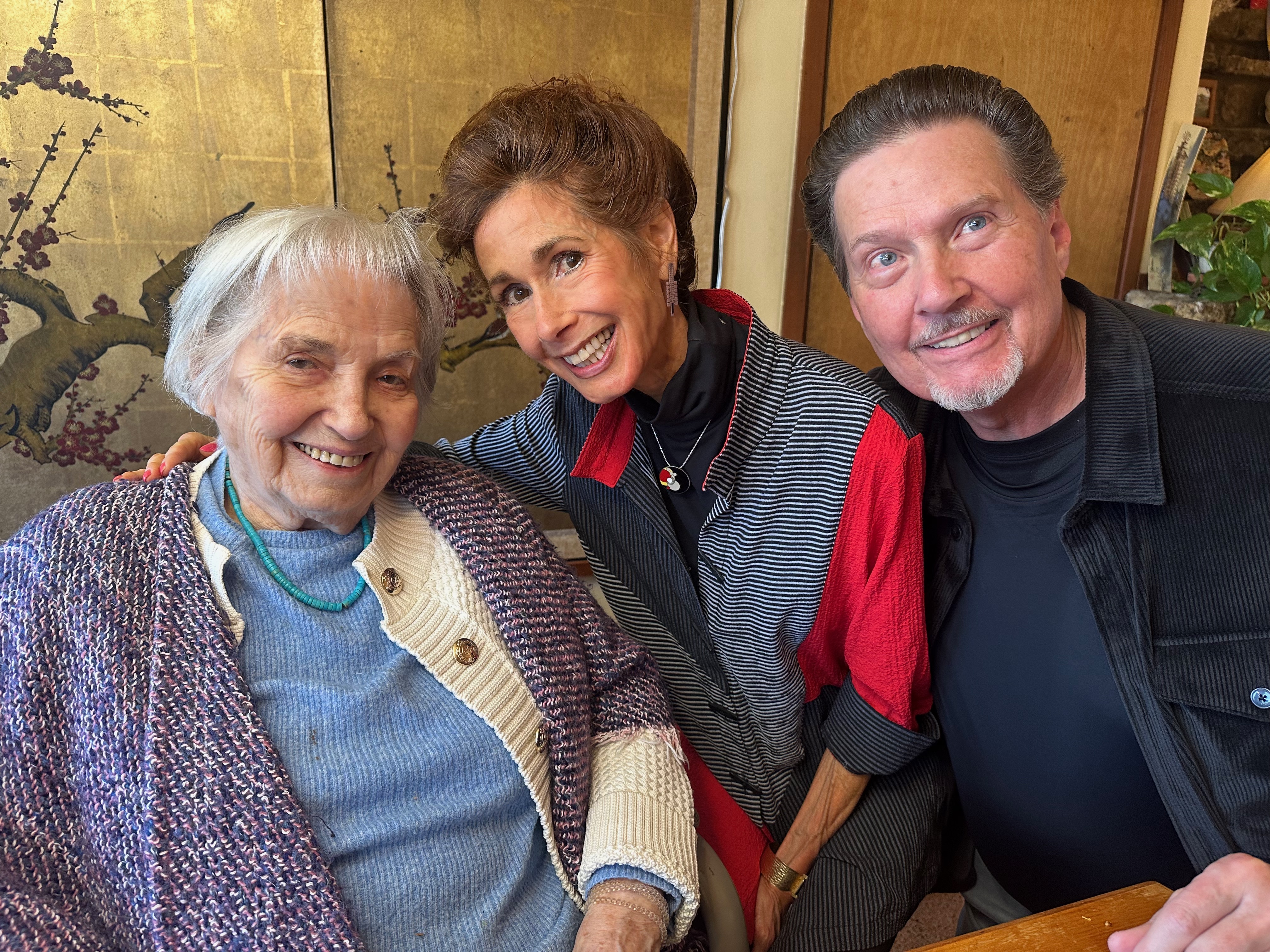
IMG_0809.jpegThe other luncheon guests were Kathy Virnig and her friend Stephen Gochenaur, a docent at Taliesin.

Other links:

Frank Lloyd Wright Building Conservancy:

savewright.org

Wright in Wisconsin:

wrightinwisconsin.org

Frank Lloyd Wright’s Burnham Block:

wrightinmilwaukee.org

Genesis Architecture:

genesisarchitecture.com

Illinois / Wisconsin Frank Lloyd Wright tour with Road Scholar:

https://www.roadscholar.org/find-an-adventure/22976/Architectural-Masterworks-of-Frank-Lloyd-Wright

Please scroll down for previous posts on this website…thank you

Hardy House Views: 1904 – 2025

© Mark Hertzberg (2025)

Today I had the rare (and arguably unfortunate) opportunity to photograph Frank Lloyd Wright’s Thomas P. Hardy House in Racine, Wisconsin from the lake, without getting wet. Climate change is playing havoc with Lake Michigan (as it is with the world). In 2020, the water level was so high that the stewards of the house, and neighbors, had massive hunks of stone brought in to protect their property:

IMG_5706.jpg

Today, well, I was able to walk out onto what had been part of the lake:

LR Hardy Below 2.9.25 008a.jpg

The photograph below, taken through the two story living room windows, shows how much the water has receded:

LR Hardy Below 2.9.25 029.jpg

Taking my photographs today gave me the idea to show this view of the house through the years, in historic drawings and photos. First, we have Marion Mahony’s drawing, reproduced in House Beautiful magazine’s 1906 story about the house:

House Beautiful 2.jpg© 2025 Frank Lloyd Wright Foundation, Scottsdale, AZ. The Frank Lloyd Wright Foundation Archives (The Museum of Modern Art | Avery Architectural & Fine Arts Library, Columbia University, New York)

Then we have the earliest known photograph of the house, taken in 1906, as it neared completion:

Terrace 0506.004 raw.jpg

A 1908 photograph from the OA + D archives, shows significant growth of trees on the hill:

LR 1908 Hardy HIll.jpg

The dining room terrace, which ended in a stucco wall, was demolished after World War II at the behest of the Sporers, second stewards of the house. There was a public beach, the 14th Street Beach, just south of the house (to the left of it in these drawings and photographs, until the 1970s. The Sporers asked Wright to give them a recreation room under the dining room terrace. Edgar Tafel sketched plans on Mahony’s drawing before leaving the Taliesin Fellowship in 1941. The work was not done until after the war. Full-length windows, including a door, opened to the outside:

Terrace sketch PPT.jpg© 2025 Frank Lloyd Wright Foundation, Scottsdale, AZ. The Frank Lloyd Wright Foundation Archives (The Museum of Modern Art | Avery Architectural & Fine Arts Library, Columbia University, New York), from Jim and Margaret Yoghourtjian’s collection

Next, is from David Archer’s collection. He grew up in the house between 1947 – 1957:

Archer Terrace 14.jpg

Schuyler and Peterkin Seward were stewards of the house from 1957 – 1963:

Seward Beach.jpg

Jim and Margaret Yoghourtjian were the final stewards (1968 – 2012) before the late Gene Szymczak who bought, and rehabilitated the house in 2012. Margaret took these photos:

LR Below hill horiz 2.jpg

LR Below hill main.jpg

The beach was lost in the 1970s when the City of Racine closed off a breakwater across from the house. Jim Yoghourtjian told me that they lost about 125 feet of property when the lake filled in below the house. While the Yoghourtjians used to share the house with interested parties, as they sensed people were taking them for granted and not respecting that they lived in a private home, rather than a public site, they let the landscape grow wild, to shield them from boaters on the lake and people walking the lakeshore:

LR Landscape Before 001.jpg

LR Landscape Before 004.jpg

A week after buying the house, Szymczak had the hill cleared:

LR Tree cutting 010.jpg

LR Tree cutting 047.jpg

And that, brings us to today:

LR Hardy Below 2.9.25 024.jpg

LR Hardy Below 2.9.25 011.jpg

There is no telling what the lake will do next.


Updates: Tower Tumult; Ann MacGregor

© Mark Hertzberg (2025)

Tower Tumult: On August 14 I posted about the critical situation facing Frank Lloyd Wright’s Price Tower in Bartlesville, Oklahoma (I do not know why the URL mentions the unrelated SC Johnson Research Tower). The post includes a variety of photos of Price Tower:

https://wrightinracine.net/tag/sc-johnson-research-tower/

Oklahoma Frank Lloyd Wright Price Tower 002.jpg

On January 16 a judge ordered that utilities (heat) be restored to the building. On January 21 he ordered the sale to a responsible party from Tulsa that is known for their restoration of an historic hotel there. On January 22 the current owners filed for bankruptcy. They have still not turned the utilities back on, and so this saga drags on. The question of Wright artifacts from the building that were given to an auction house in Dallas, in spite of an easement prohibiting that has not been resolved, either. Among the heroes in this story are the staff and legal counsel of the Frank Lloyd Wright Building Conservancy. Their continuing updates on the story are at:

https://savewright.org/endangered-price-tower-in-bartlesville-oklahoma/

The Building Conservancy is going deep, deep into their funds set aside for legal work as the battle to save the building drags on. Please don’t let the sunset on the building, as I literally did when I took this photograph in 2014. Hint: they would welcome your financial support at:

https://savewright.org/give/

Remembering Ann MacGregor: On November 23 I posted a tribute to the late Ann MacGregor, one of the heroes in Mason City, Iowa’s successful quest to save Wright’s only extant hotel commission, the then-dilapidated Park Inn Hotel and adjoining City National Bank building. The hotel is now a successful boutique hotel:

https://wrightinracine.net/2024/11/23/remembering-ann-macgregor/

LR Pre-dinner 012.jpgAnn MacGregor with Scott Perkins of the Frank Lloyd Wright Building Conservancy, 2012

My tribute to Ann mentioned her long-term correspondence with Marshall Jones, a friend of mine, who is serving two consecutive life terms for homicide in Wisconsin. He became interested in Wright after I interviewed him for a project about the criminal justice system.

LR Marshall Jones Waupun 014.jpg

I wrote Marshall to tell him about Ann’s passing, and sent him a copy of my story. He wrote me back last week (mail to the prison system faces interminable delays while it is sent to a place in Maryland that copies incoming letters and then sends the copies to inmates) with his own tribute to Ann:

“I appreciate you for sending me the news of Ann’s passing. A part of me was deeply saddened, but another part of me was greatly appreciative that I had the privilege of being considered her friend, She was so much more than someone that I corresponded with. She was someone who brought unconditional love, unconditional positive regard, she allowed me to peer into her beautiful family, and she gave me priceless guidance. She didn’t see me by my conviction, nor did she allow me to accept my worst decision as the resounding theme for my life. She was ruthless when it came to goals, and when you said that you wanted to accomplish something, she pressed you until it was done. She was amazingly supportive and she encouraged me with gentleness and love. You knew that Ann had your back. We talked about Mr. Wright, religion (we were both Christians), politics, family, and life. Her disposition increased in positivism even in the face of diminishing health. So, I am grateful for her life, and for her presence in my life. I was so blessed by her, and I am better because of her friendship. It was much deeper than correspondence. With Ann and Bruce (Bruce Brooks Pfeiffer also corresponded with Marshall), I was family. I now carry her with me everywhere I go.”

Well, Marshall, my story was more of the nuts and bolts of her life, as we used to say in the newsroom. You captured her essence. Thank you.

Greek Church Roof Resplendent Again

© Mark Hertzberg (2024)

The brilliant blue dome roof of Frank Lloyd Wright’s Annunciation Greek Orthodox Church in Wauwatosa, Wisconsin shines again. First, let us dismiss the old saw or canard about Wright’s roofs. Yes, many have leaked, but so have the roofs of countless buildings that Frank Lloyd Wright did not design. The church, which Wright designed in 1956, and which was completed in 1961, two years after he died, is in the midst of a major repair project. The roof has been repaired (no, it had not been leaking, but it had been deteriorating) and the front steps and entry way are being rebuilt. The front steps are integral to the foundation of the building.

AGOC Roof 10.17.24 001.JPG

LR AGOC Roof 10.17.24 004.jpg

The roof was originally covered in thousands of blue tiles. The tiles started popping off in the extremes of Wisconsin’s weather. and the roof was covered in a blue polyurethane coating. Today, the only remaining tiles are on the arched canopy above the front doors:

LR AGOC Roof 10.17.24 008.jpg

LR AGOC Roof 10.17.24 009.jpg

LR AGOC Roof 10.17.24 010.jpg

I photographed the roof work in mid-October:

LR AGOC Roof 10.17.24 035.jpg

LR AGOC Roof 10.17.24 014.jpg

LR AGOC Roof 10.17.24 020.jpg

LR AGOC Roof 10.17.24 017.jpg

LR AGOC Roof 10.17.24 025.jpg

LR AGOC Roof 10.17.24 028.jpg

LR AGOC Roof 10.17.24 032.jpg

LR AGOC Roof 10.17.24 036.jpg

The church on Saturday December 7:

LR AGOC Exterior 12.7.24 008.jpg

The general contractor for the repair work is CG Schmidt, the roofing contractor was F.J.A. Christensen Roofing Company.

While many people think of the church solely as an architectural landmark, it is, of course, primarily a church. In May 2013 I was given the privilege of photographing Good Friday services there. This is a link to those photos:

https://wrightinracine.net/2013/05/04/good-friday-at-annunciation-greek-orthodox-church/

I had been given free rein to photograph the interior of the church a few weeks earlier:

https://wrightinracine.net/2013/04/12/annunciation-greek-orthodox-church-2/ of the

Annunciation Greek Orthodox Church website:

https://www.annunciationwi.org =

John Gurda’s book is the definitive history of the church:

https://www.goodreads.com/book/show/21443265-new-world-odyssey

Please scroll down for previous stories on this website

Remembering Ann MacGregor

Photos and text © Mark Hertzberg (2024)

Ann MacGregor one of Mason City, Iowa’s heroes in helping save Frank Lloyd Wright’s last surviving hotel, the Park Inn, and the adjacent City National Bank, died peacefully October 2, it was announced today.

LR Wright Spirit Awards 028.jpg

The hotel and bank buildings, which opened in 1910, had deteriorated so badly that the city had put them up for sale on eBay in the late 1990s or early 2000s. Mason City rallied to save the buildings. Ann served as Executive Director of the newly formed Wright on the Park. Today the Historic Park Inn Hotel is a popular boutique hotel for visitors to Mason City, whether or not they are there on a Wright pilgrimage.

Ann was a genial, giving person. Her obituary outlines her life of service, including as a nurse on the medical ship SS HOPE and as a public health nurse for the Migrant Action Program in the late 1960s in Mason City.

https://www.bratleyfamilyfuneralhomes.com/obituary/ann-macgregor

In 2013 she published a book about her six years service around the world on the HOPE, beginning in 1958 [it is no longer in print]:

Screenshot 2024-11-23 at 4.06.54 PM.png

I met Ann in May 2005 when the late Bob (Dr. Robert) McCoy, another one of Mason City’s heroes in saving the hotel and bank building, invited me there to give a talk, and I began photographing the buildings. They were still in a raw state. Ann and I connected in two other ways, one as passionate bicyclists.

The other story tells you quite a bit more about Ann. She began corresponding with Marshall Jones after I told her about his insights into Wright’s work. Jones is serving two consecutive life terms in a Wisconsin prison for a double murder.

LR Marshall Jones Waupun 014.jpg

When I interviewed Jones in 2008 for a project about the criminal justice system he told me how much he enjoys reading “anything I can get.” I sent him my Wright in Racine book. He quickly sent me an incisive review back. We began corresponding, in large part about Wright. How much does Jones understand Wright? In addition to Ann being impressed by his insights, the late Bruce Brooks Pfeiffer corresponded with Jones, as well, after I sent Pfeiffer some of Jones’s letters about Wright’s work. When I sent the late Ron McCrea Jones’s review of his Building Taliesin, McCrea wrote me that Jones picked up on a point that no one else had, and he was going to quote him in a talk at Taliesin West. Ann corresponded with Jones for many years, and Jones often wrote me how much he appreciated her letters and friendship. Now I must write him about Ann’s passing.

Ann’s memorial service will be Saturday November 30, as noted in the obituary. I will leave you with a photo of Ann in the bank building in 2010, and of Ann and Bob McCoy she and Wright on the Park were honored with the Frank Lloyd Wright Building Conservancy’s prestigious Wright Spirit Award on October 13, 2012, during the group’s annual conference:

LR City Natl. Bank 2010 001.jpg

LR Pre-dinner 012.jpg

LR Wright Spirit Awards 013.jpg

LR Wright Spirit Awards 014.jpg

LR Wright Spirit Awards 019.jpg

LR Wright Spirit Awards 020.jpg

LR Wright Spirit Awards 022.jpg

Thank you, Ann, for your friendship and service.

(My remembrance of Bob McCoy is at:

https://wrightinracine.net/tag/bob-mccoy/

Please scroll down for previous posts on this website.