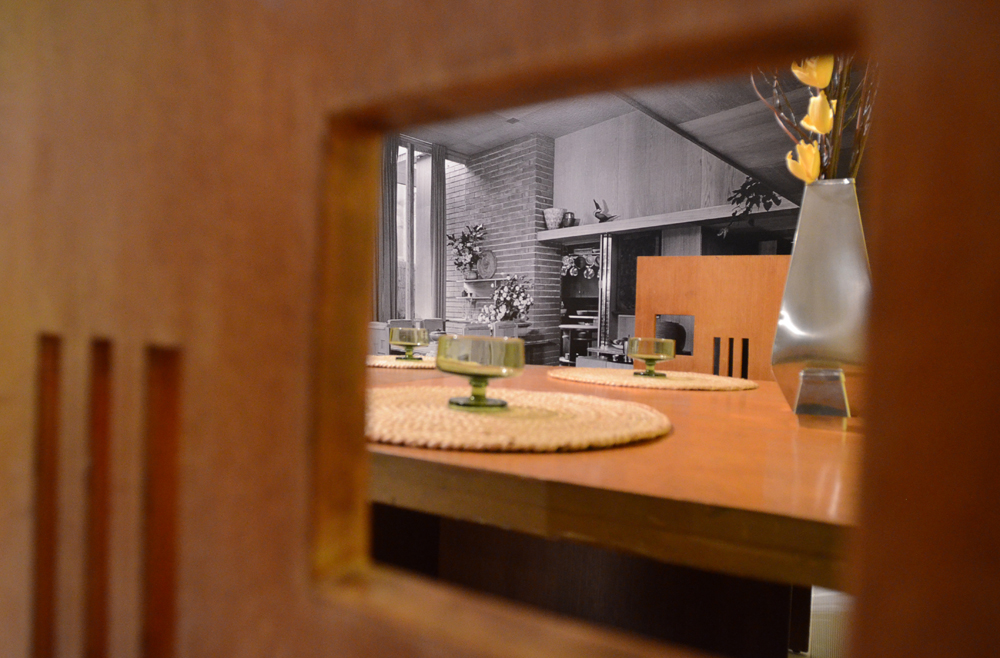
SCJ Tower to open for tours!

Photos and text by Mark Hertzberg; photos for SC Johnson and used with permission.

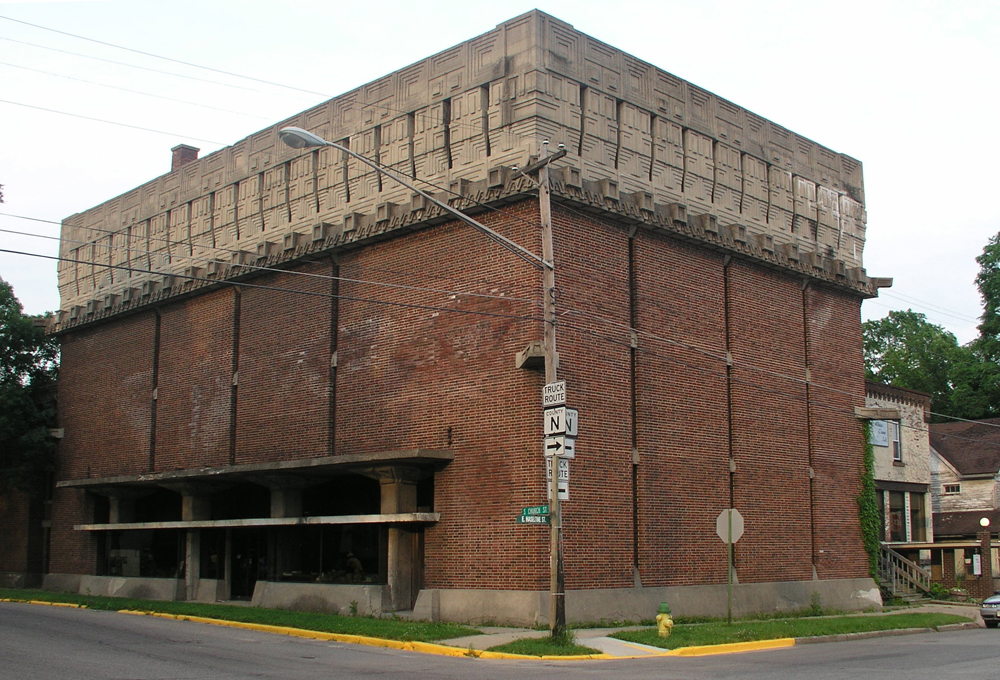
            For many years there have been two inaccessible Frank Lloyd Wright buildings in Racine. No longer. The Hardy House (1904/05) was open for its first tours in decades a week ago. Next year, the SC Johnson Research Tower (1943/44) will be partially open for tours.
Image

Image

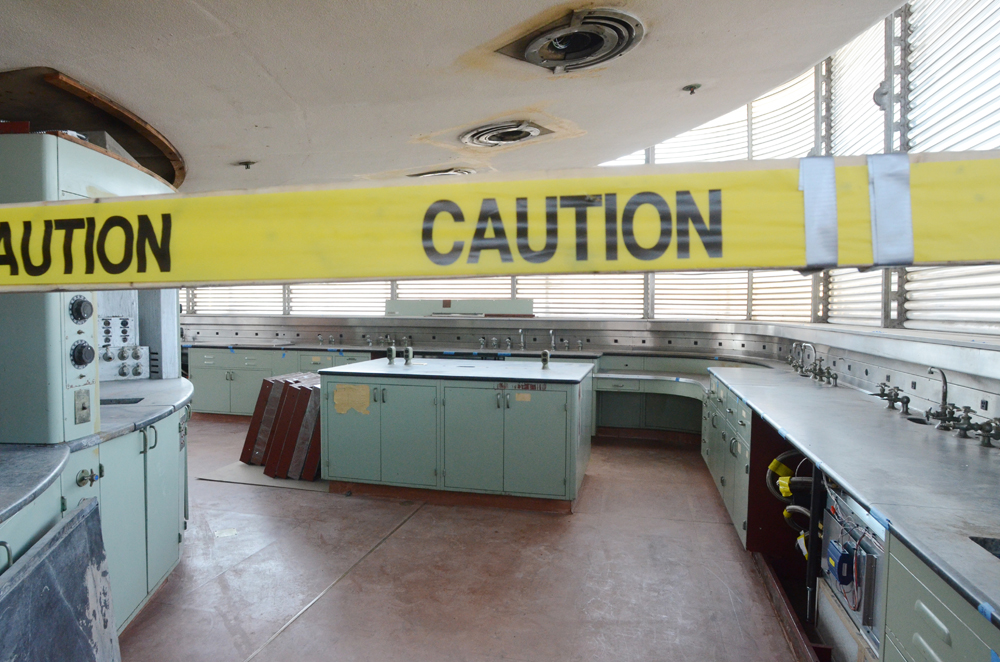
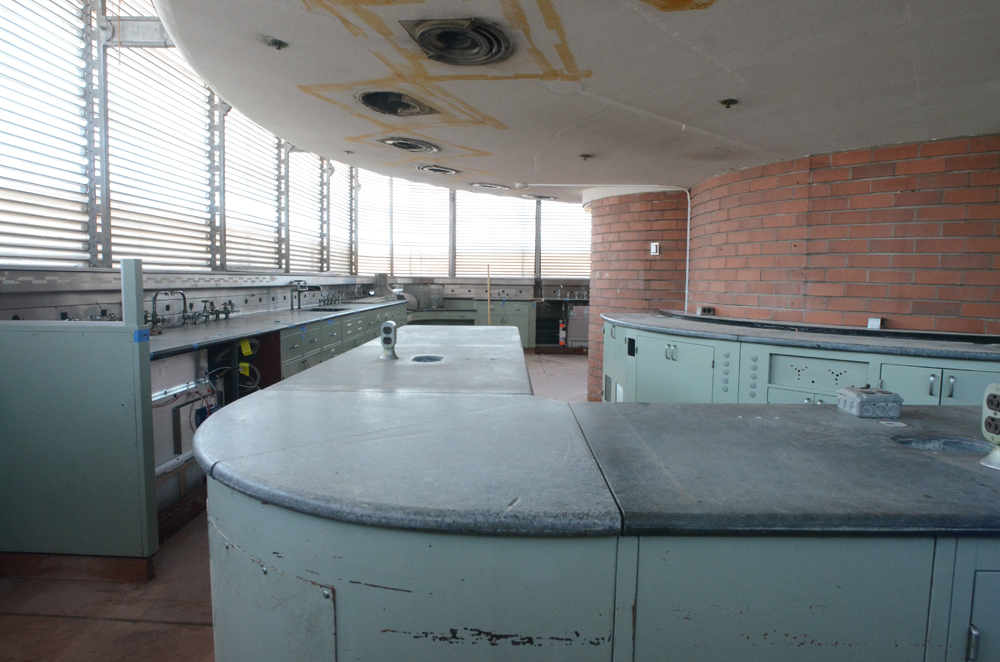
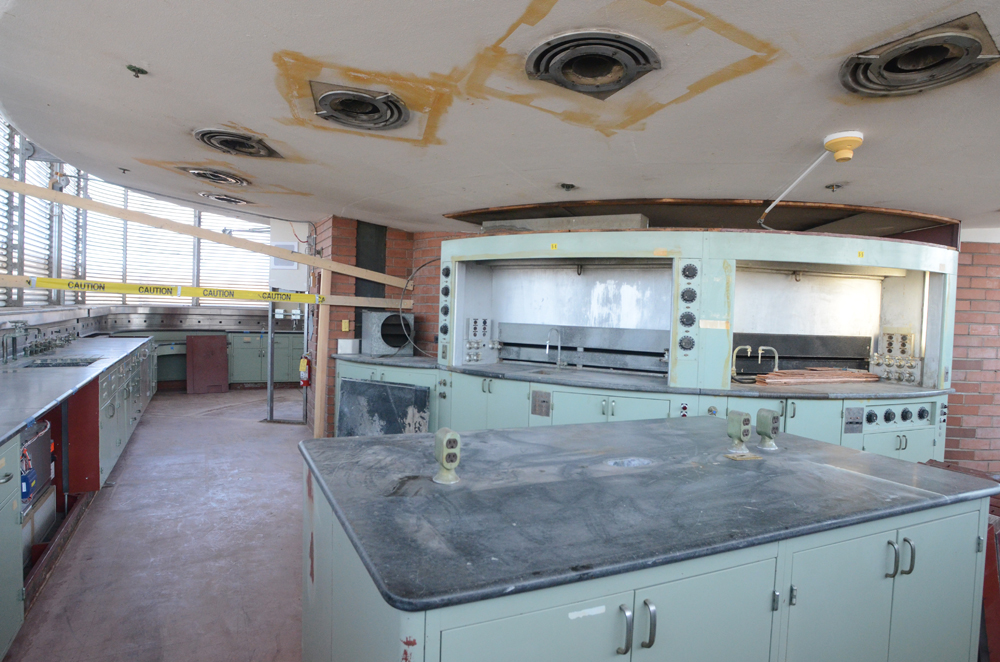
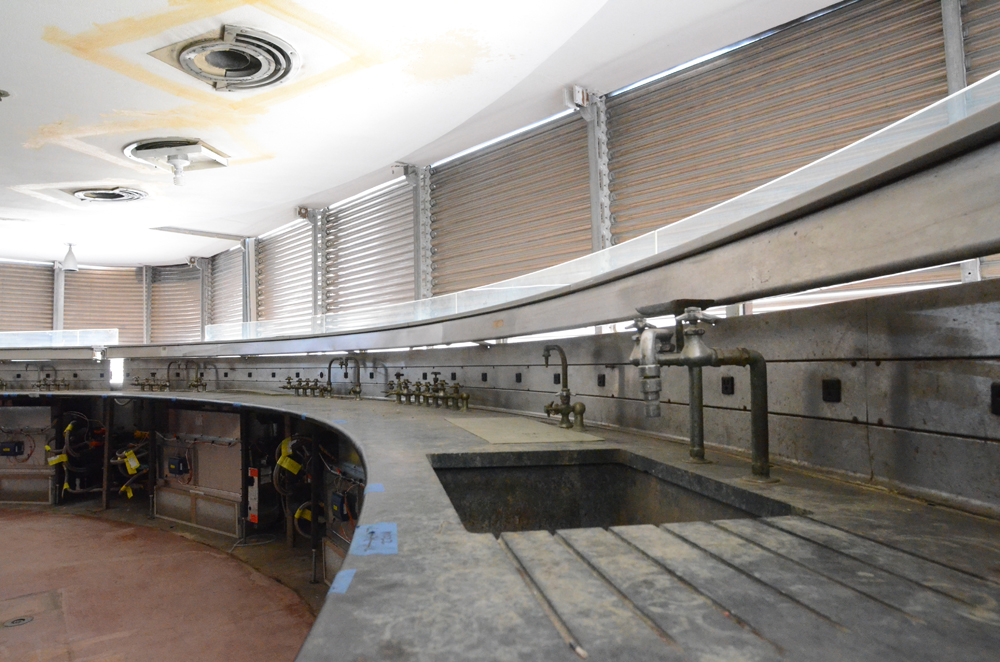
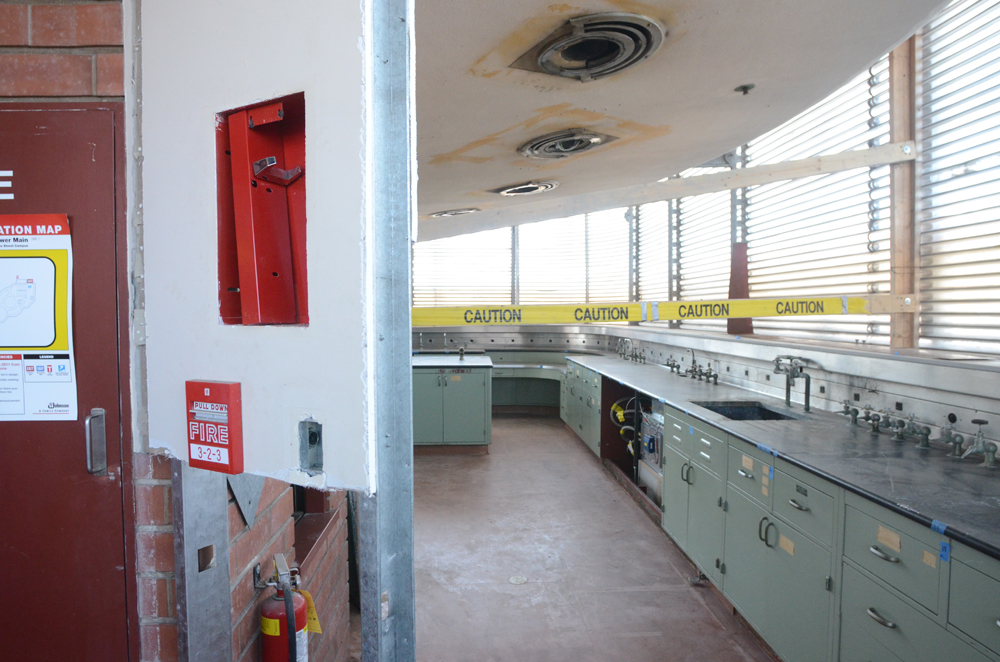
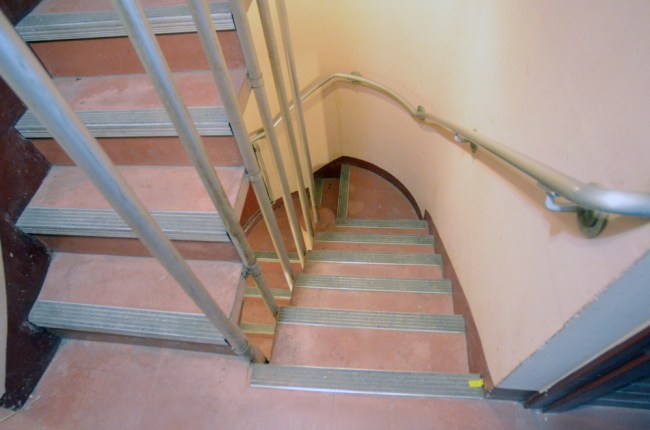
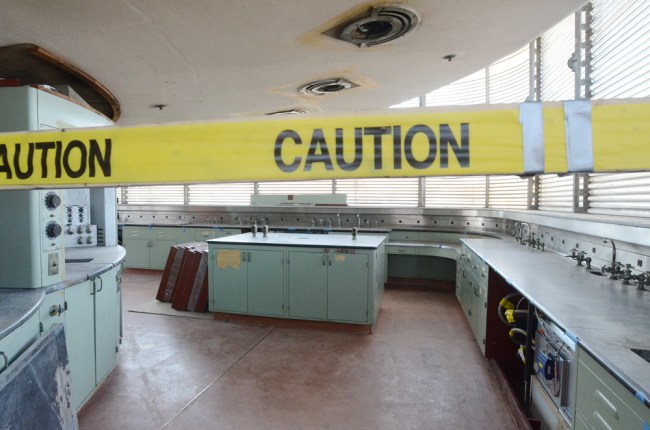
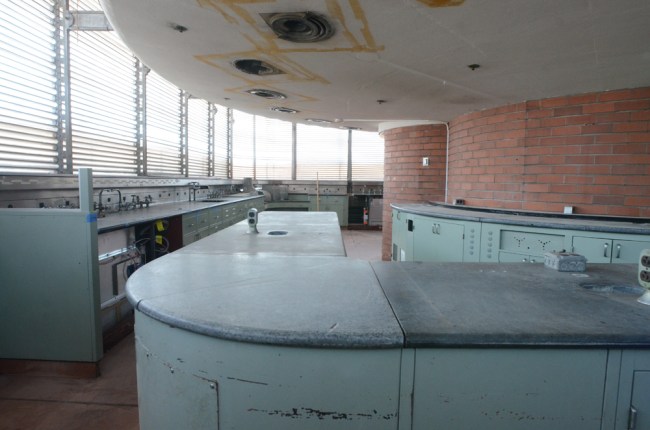
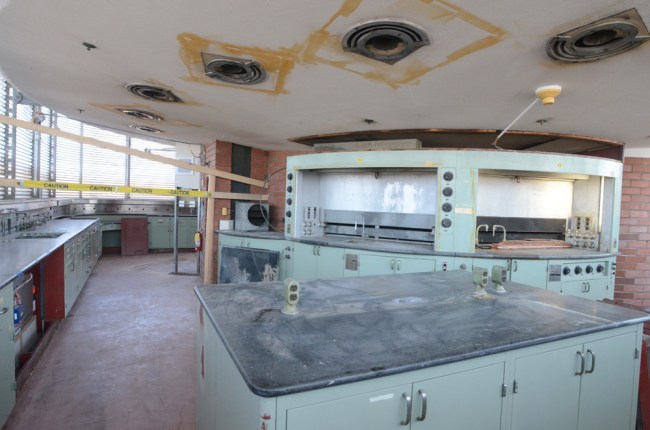
            The treat at the Tower, for fans of Wright’s architecture, will be two and three floors up a narrow staircase.The 30-inch stairs wrap around the core of the building, Wright’s companion to his SC Johnson Administration Building (1936).  Two laboratory floors, 3 Main and 3 Mezz (mezzanine) are being restored for visitors. Those two floors were a pilot lab, the intermediate step between the analytical research laboratory and the manufacturing assembly line, when the Tower was open.
Image

Image

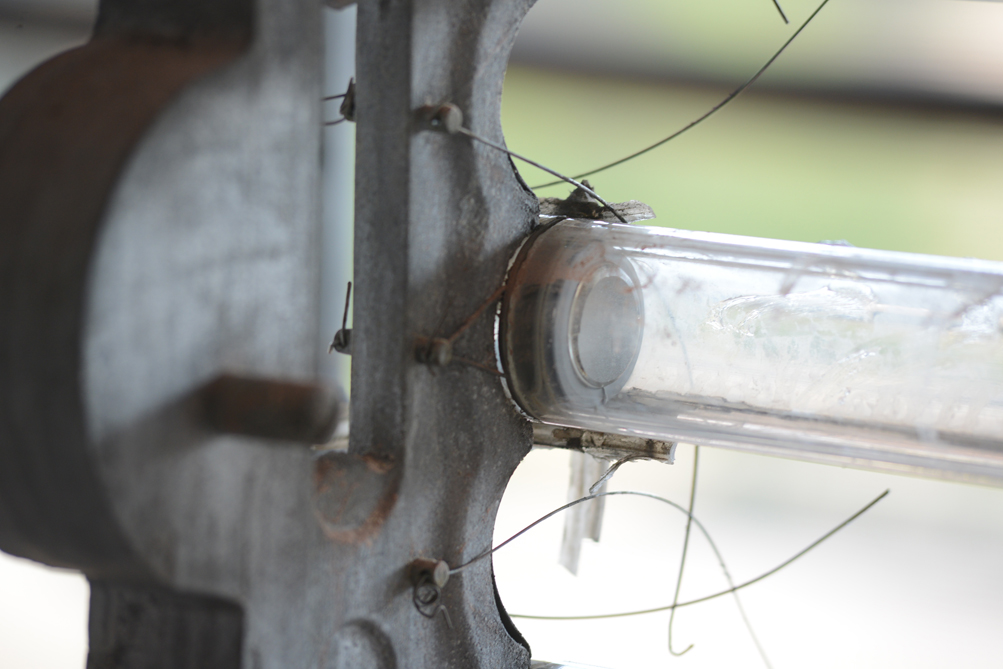
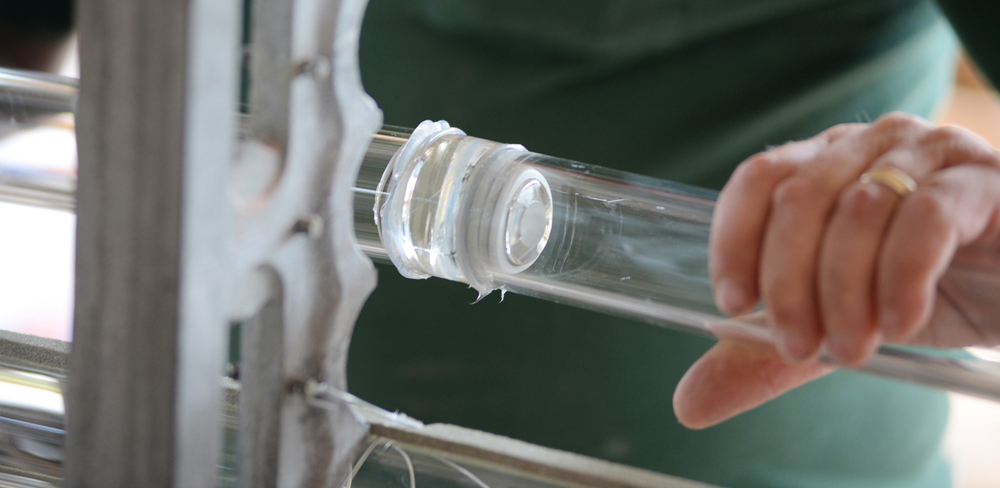
         Wright designed the 15-story tower in pairs of floors above the second floor: there are square floors where one sees brick bands on the tower (termed main floors), alternating with round floors (the mezzanine floors) where one sees the Pyrex-glass tube windows between the bands of Cherokee red bricks.
Image


     The landmark Tower, which was built after World War II, opened in November, 1950. It closed in 1981, when the bulk of Johnson’s research and development was moved into the nearby Louis Laboratories, the former St. Mary’s Hospital building. The Tower closed for two reasons. It could not be expanded to meet the company’s growing research needs. The “carport labs” opened in the courtyard carport in 1957, the first indication that the Tower space was not adequate.
Image

Image


Image


     In addition, there had long been concerns about the building’s safety. While Wright had proposed having two staircases and two elevators, he was overruled, and there is just one of each. The stairs were built a foot narrower than code, thanks to a building code variance. The round elevator is only six feet in diameter. Wright scoffed at the suggestion of fire because, he said, the building was constructed of brick, concrete, and glass. However, no combustible experiments were ever conducted in the Tower.

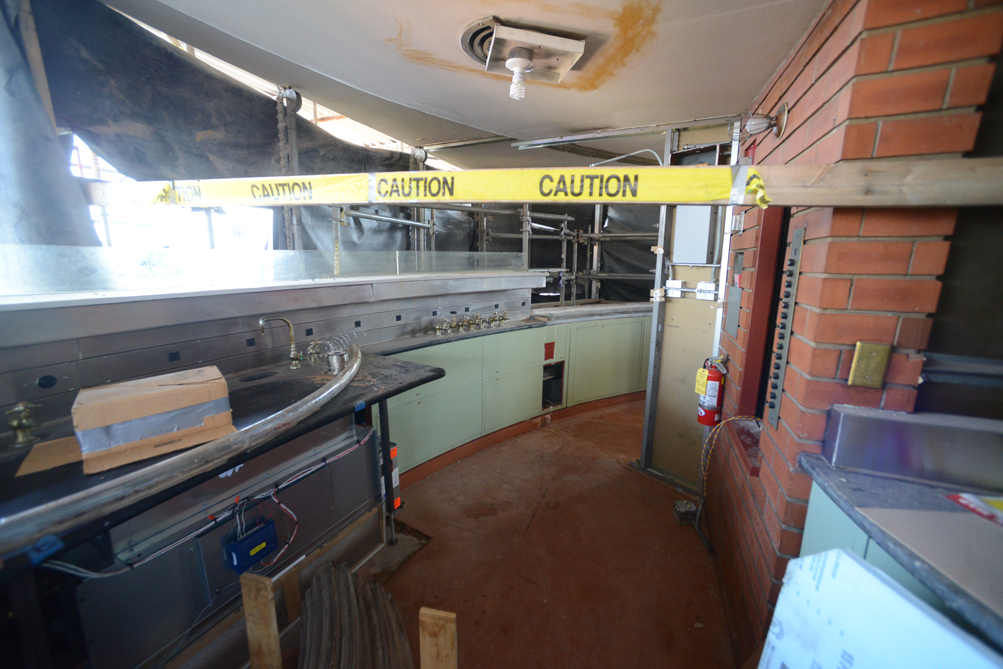
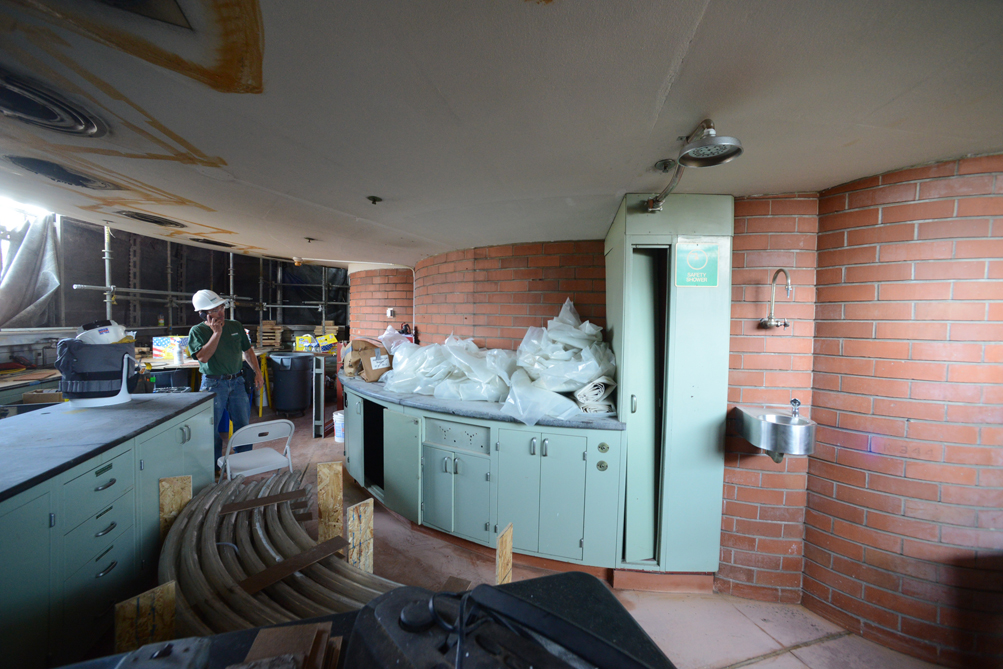
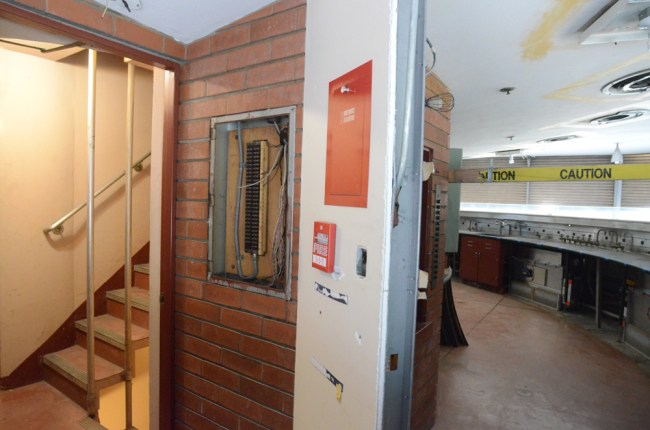
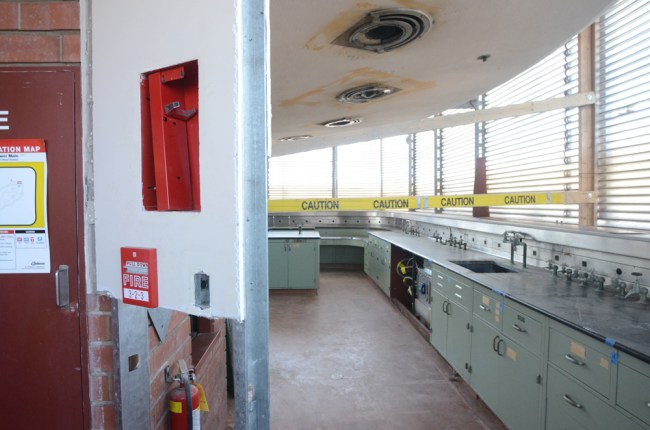
     Firewalls were constructed on each laboratory floor in the early 1970s, after the state expressed concern about the building’s safety. The firewalls marred Wright’s open floor plan, which allowed for uninterrupted circulation or passage around the core on each floor, says Wright scholar Jonathan Lipman, author of Frank Lloyd Wright and the Johnson Wax Buildings. The firewalls on 3 Main and 3 Mezz, left in both photos below, are being removed during the restoration. The dumbwaiters (second photo) will also be restored.
Image

Image

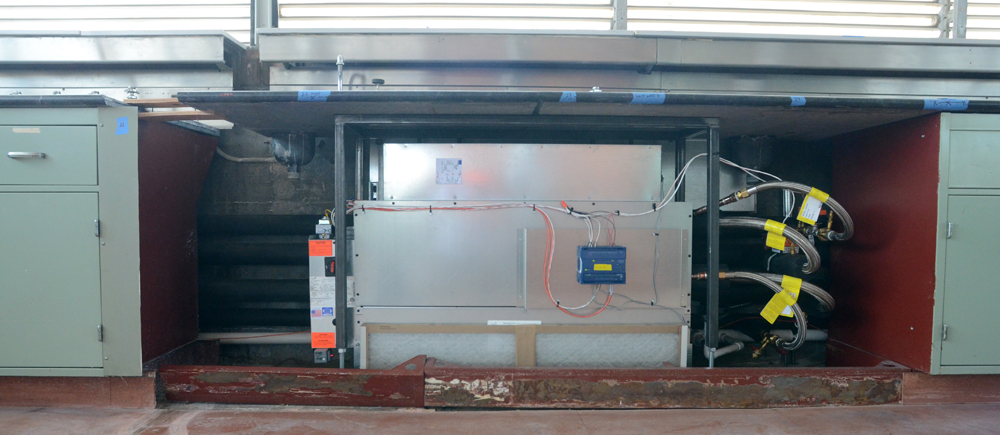
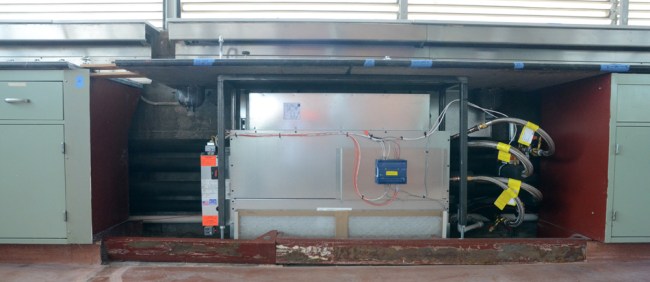
     Chemists complained that it could be very warm or very cold in the Tower. Heating and air conditioning systems are being installed on the two restored floors for the comfort of visitors They are being hidden under the soapstone laboratory counters.
Image

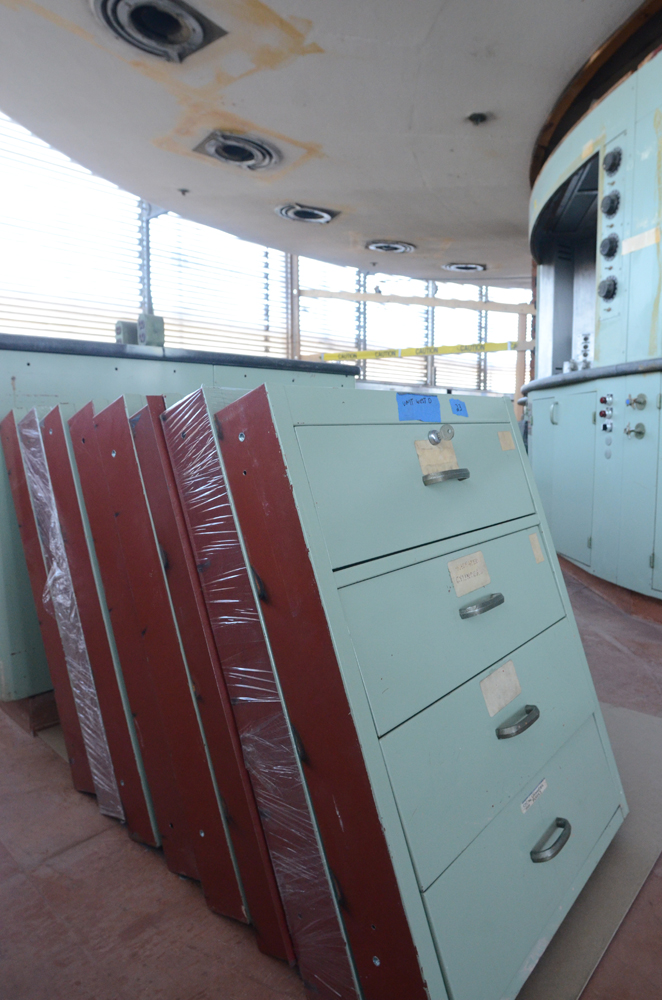
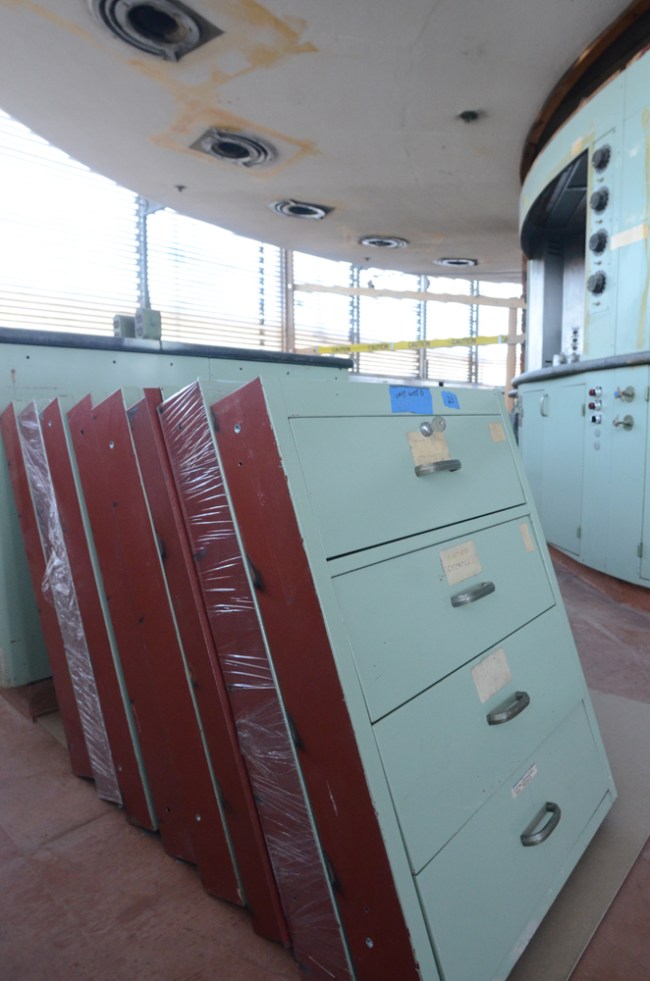
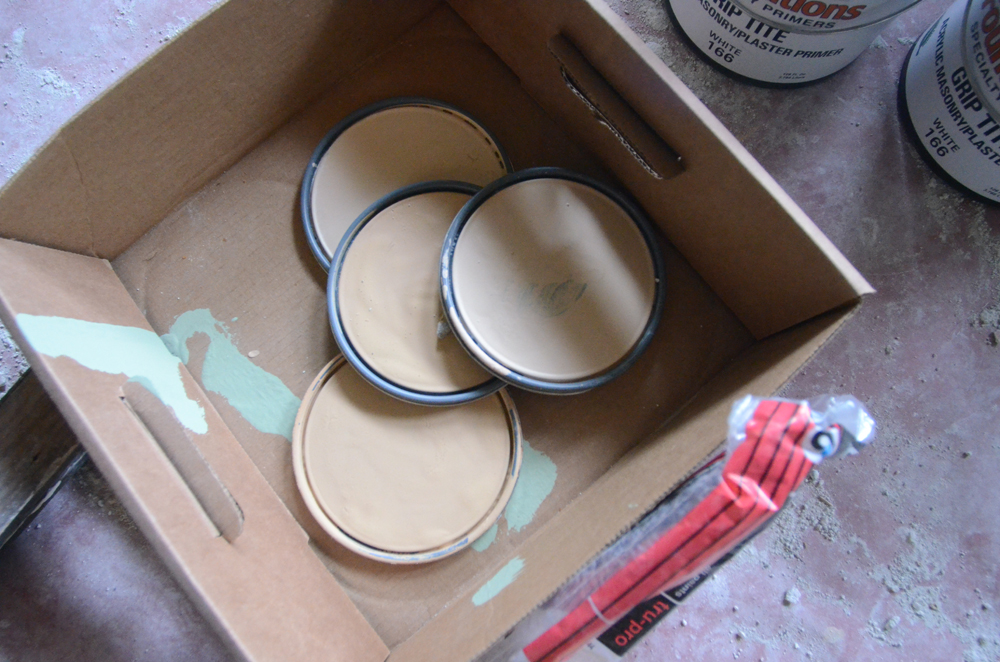
       The face of the cabinets were originally Wright’s favorite color, Cherokee red, but were painted mint green at some point. They will be painted red again.
Image

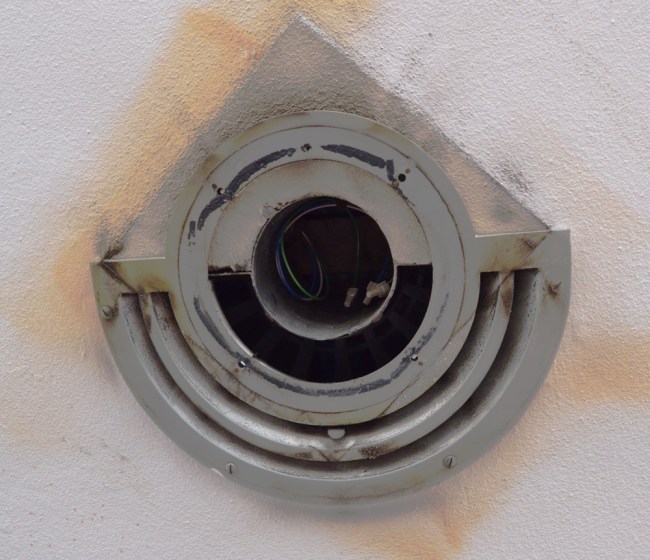
            Although the Tower has been closed for longer than it was open, it has remained lit at night, as a symbol of the company’s commitment to creativity. In recent years the soft lighting has come from a multitude of three-foot fluorescent lights placed on the lab counters, and facing up. Those lights have been removed, and the Tower’s original lighting will be replicated. The new lights will be in the restored ceiling light fixtures:
Image

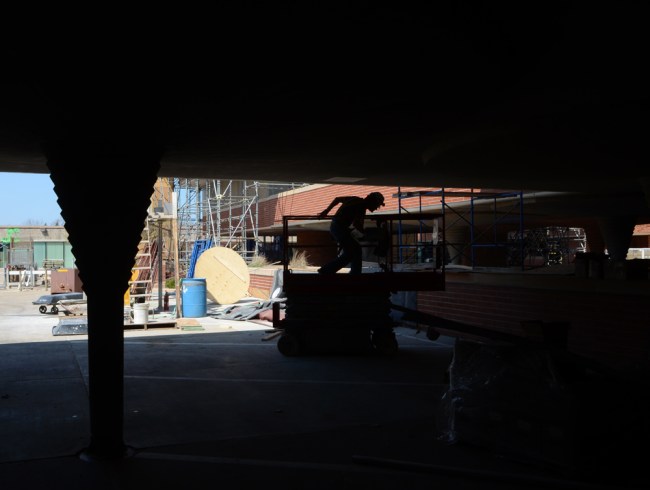
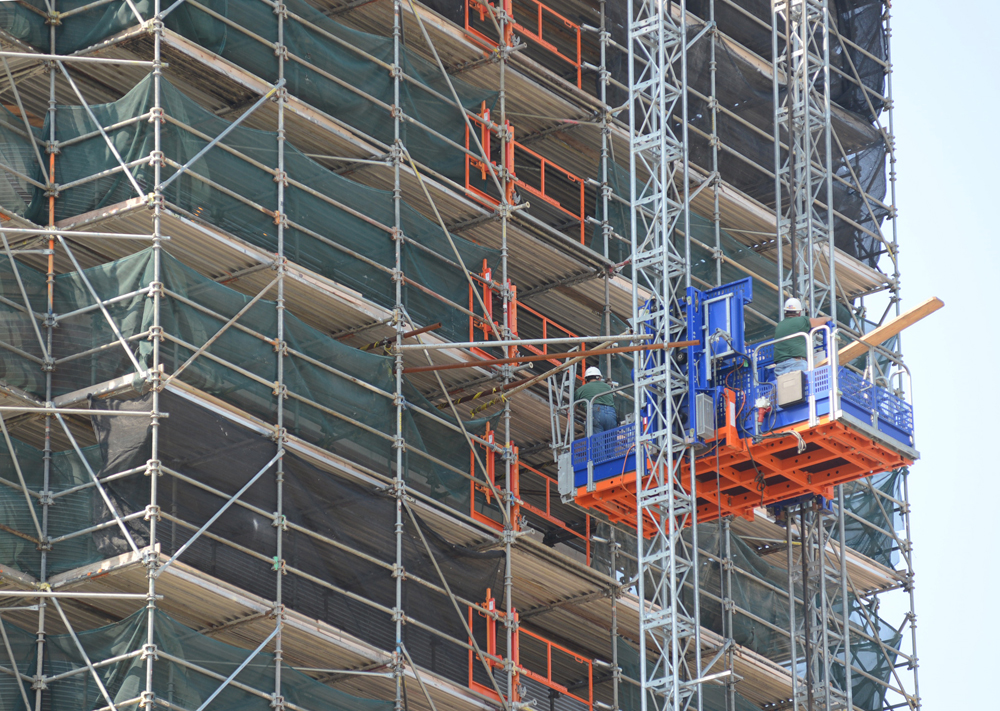
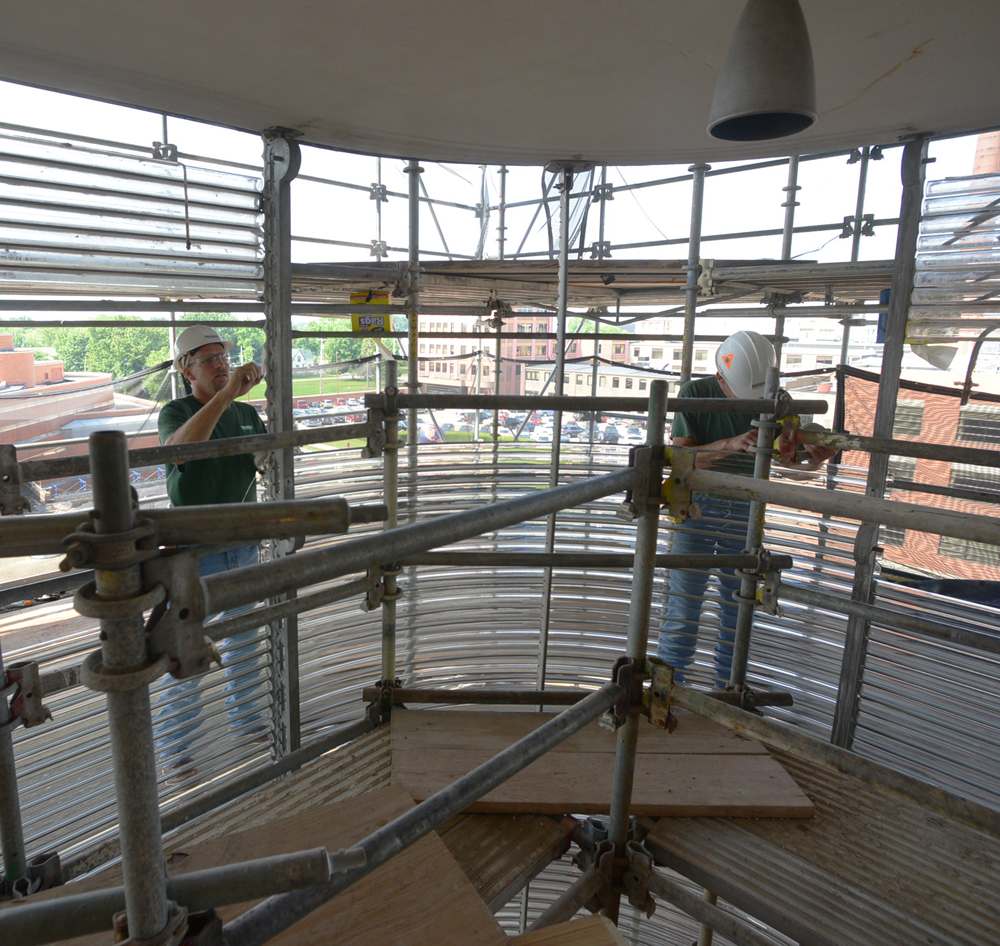
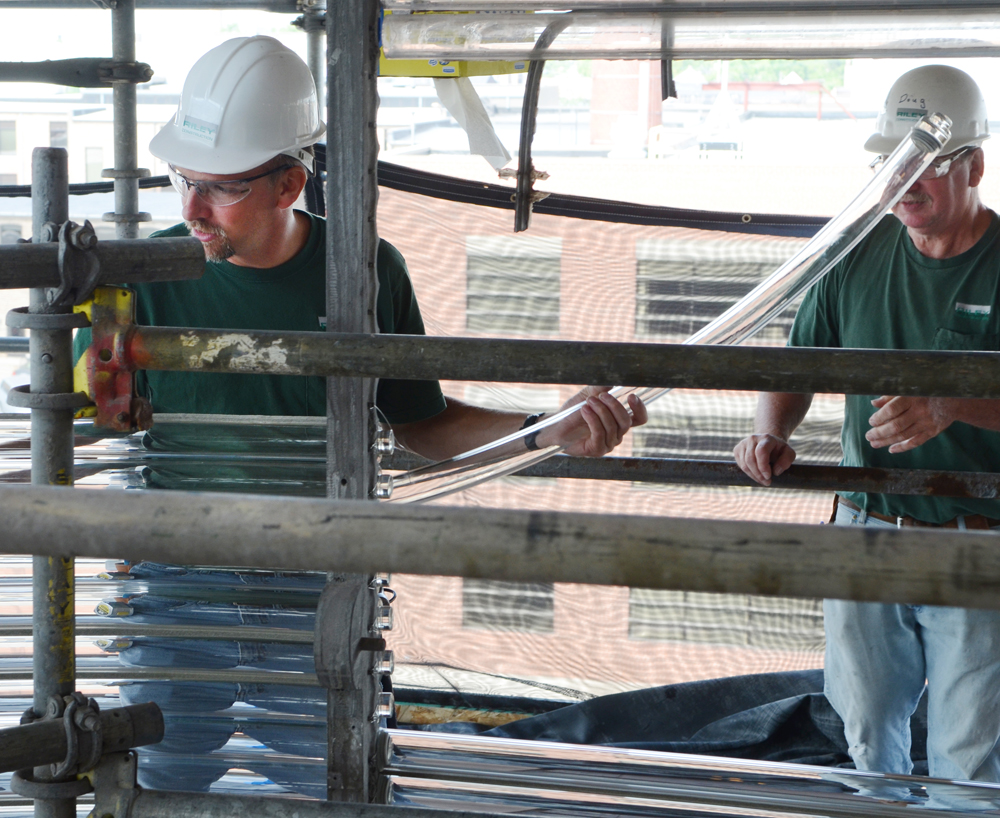
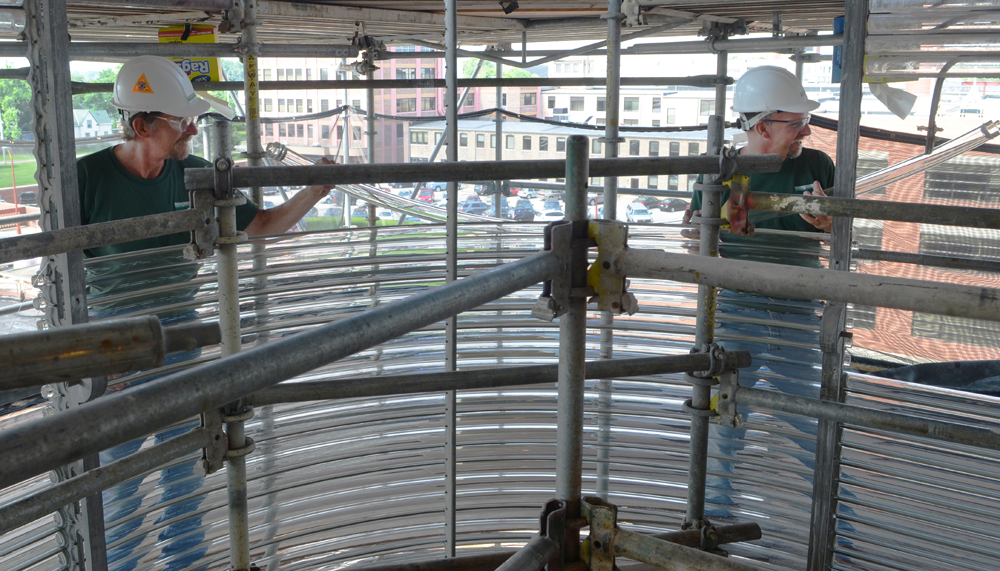
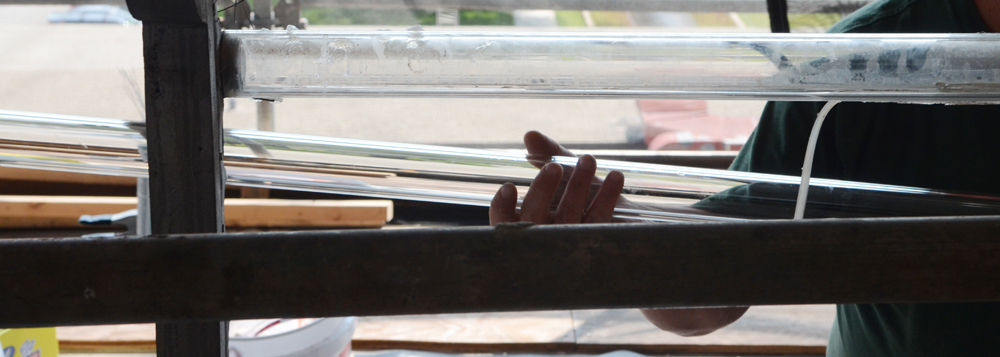
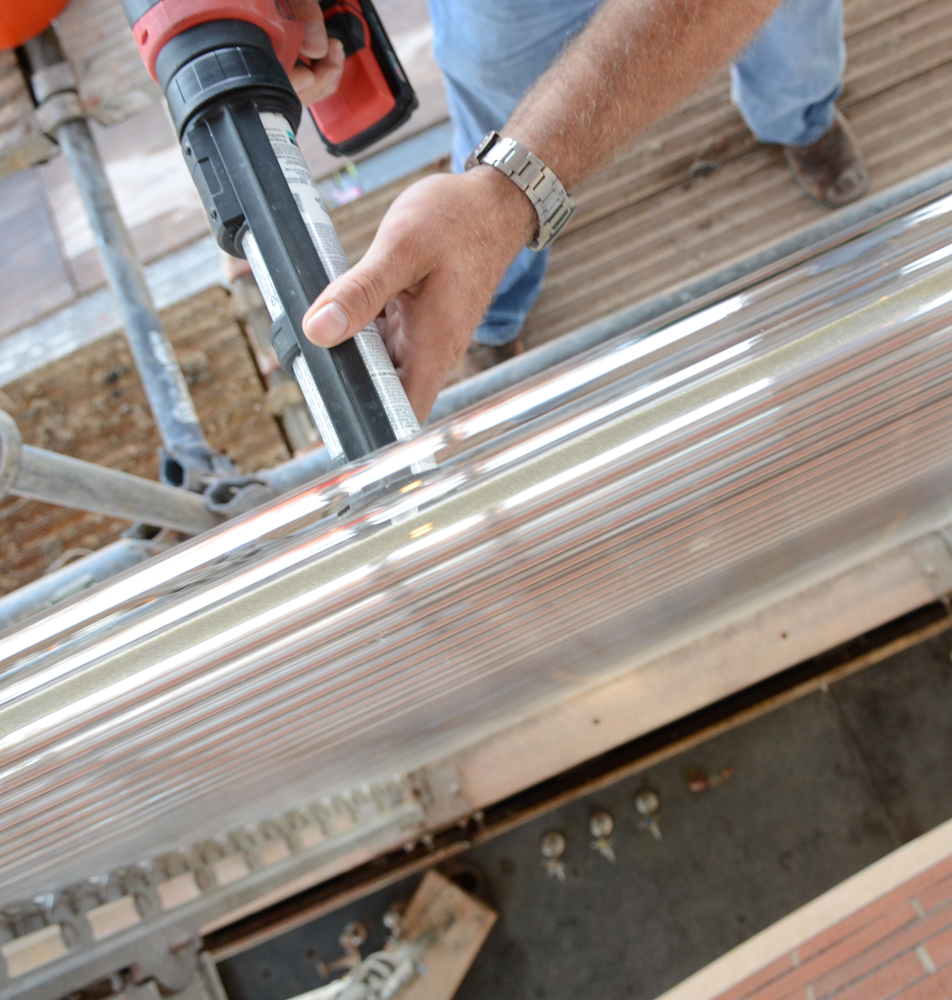
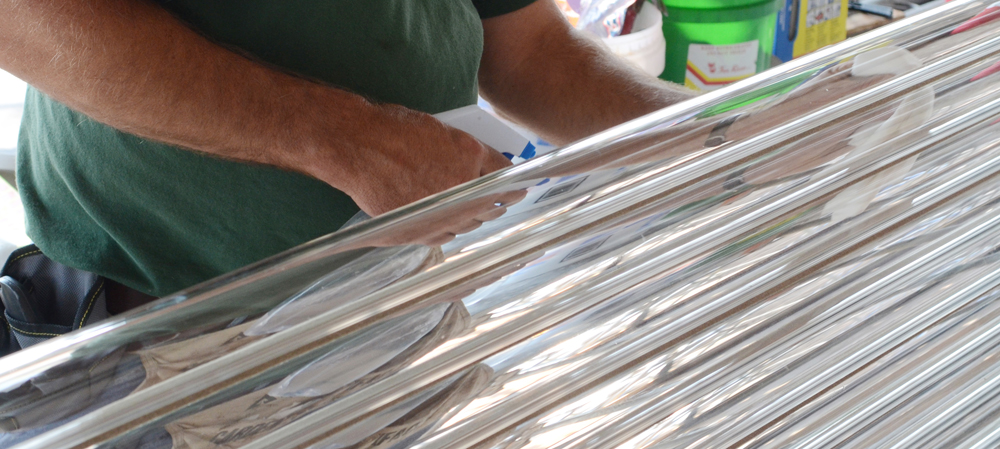
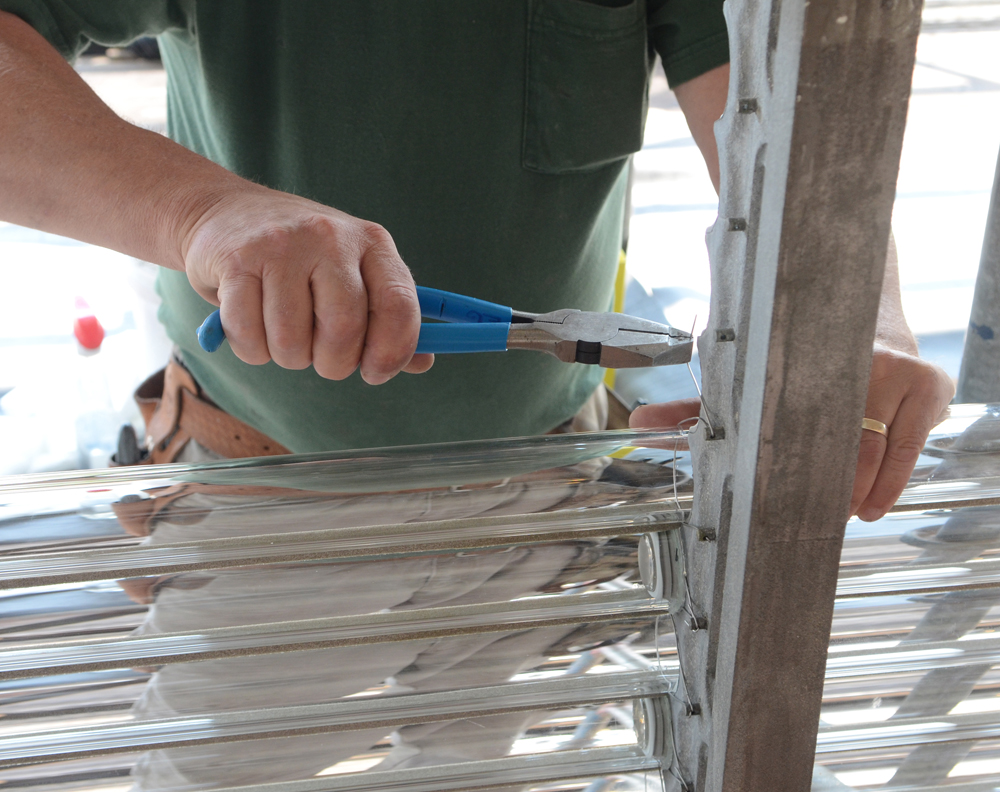
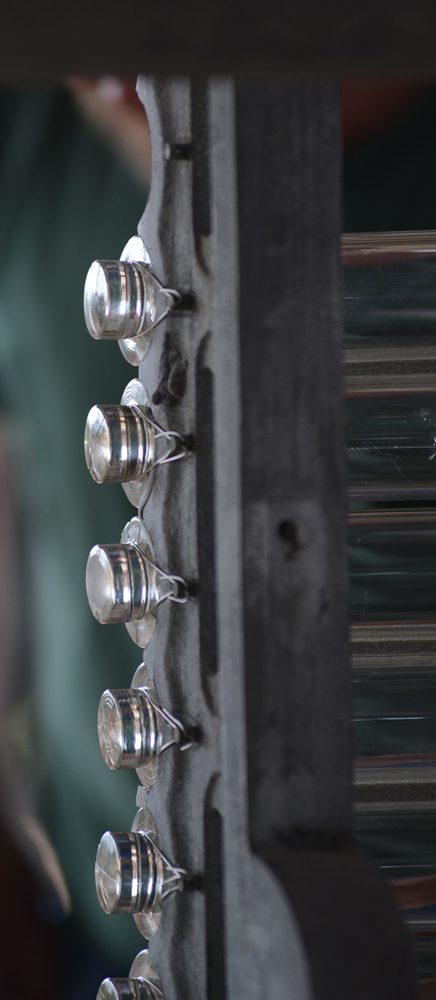
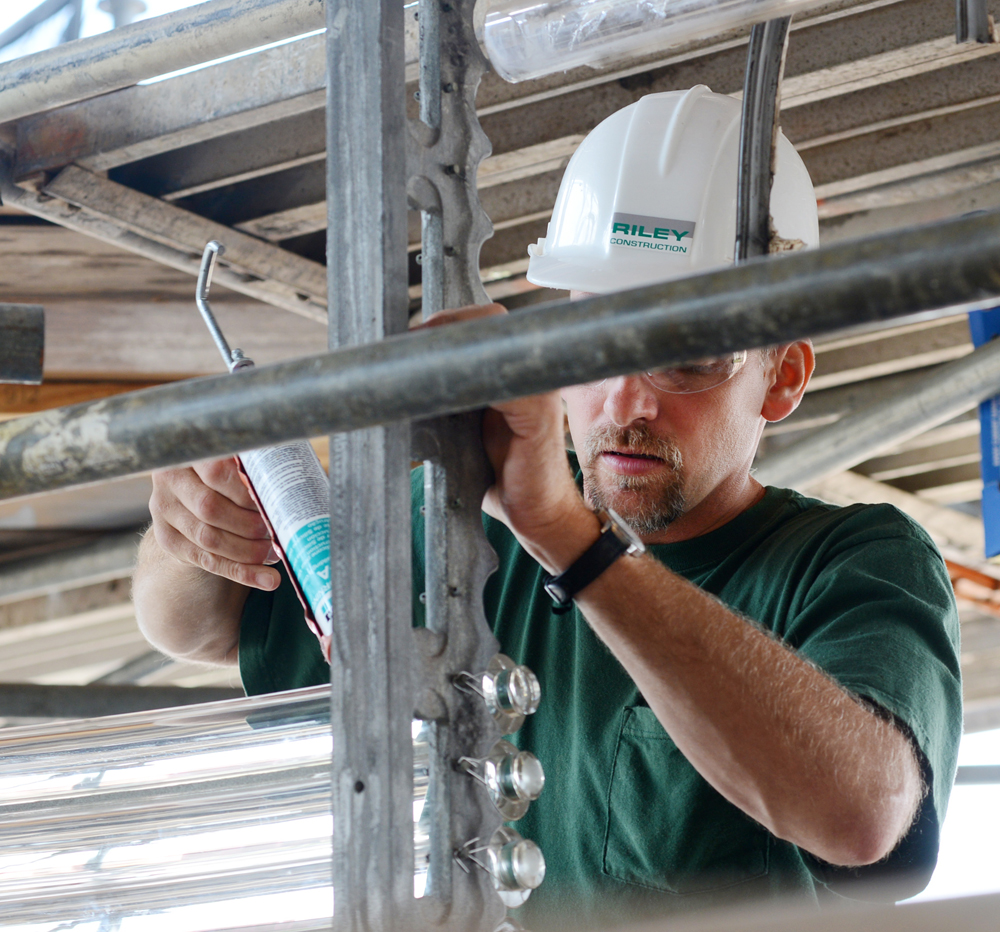
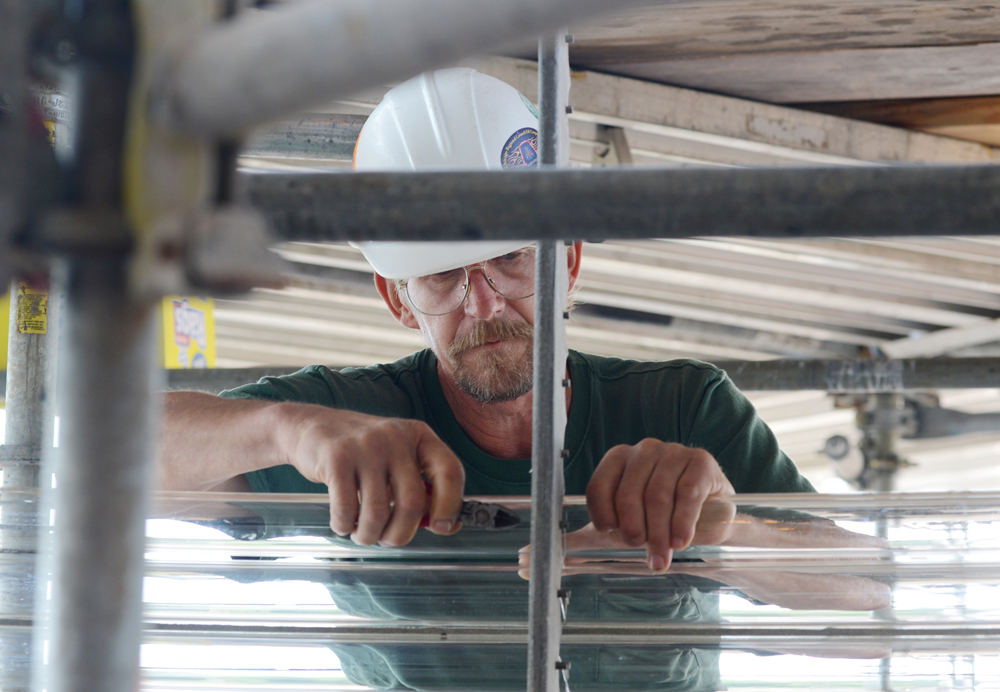
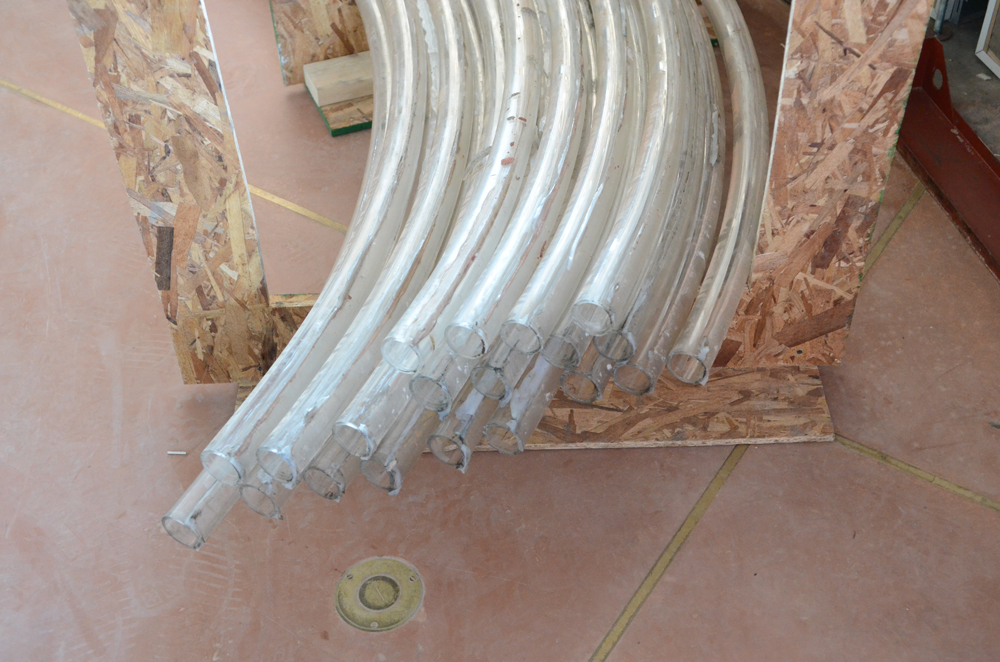
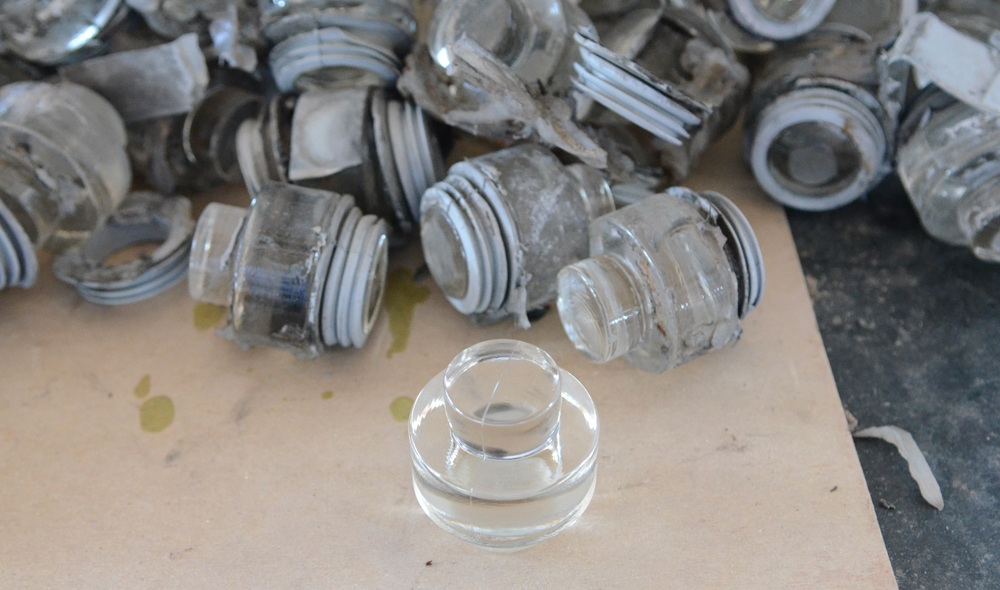
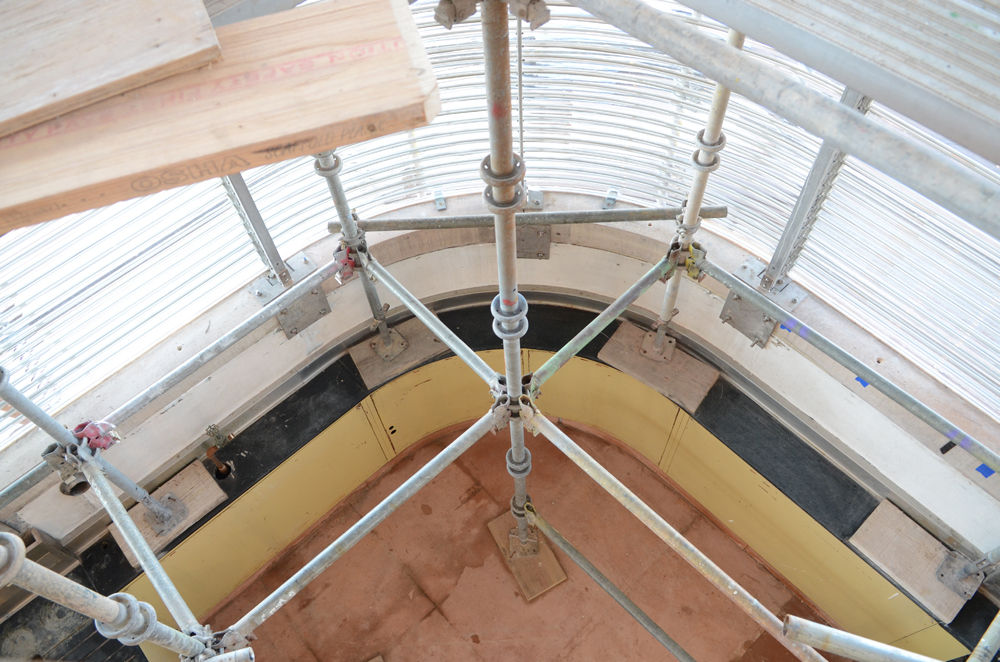
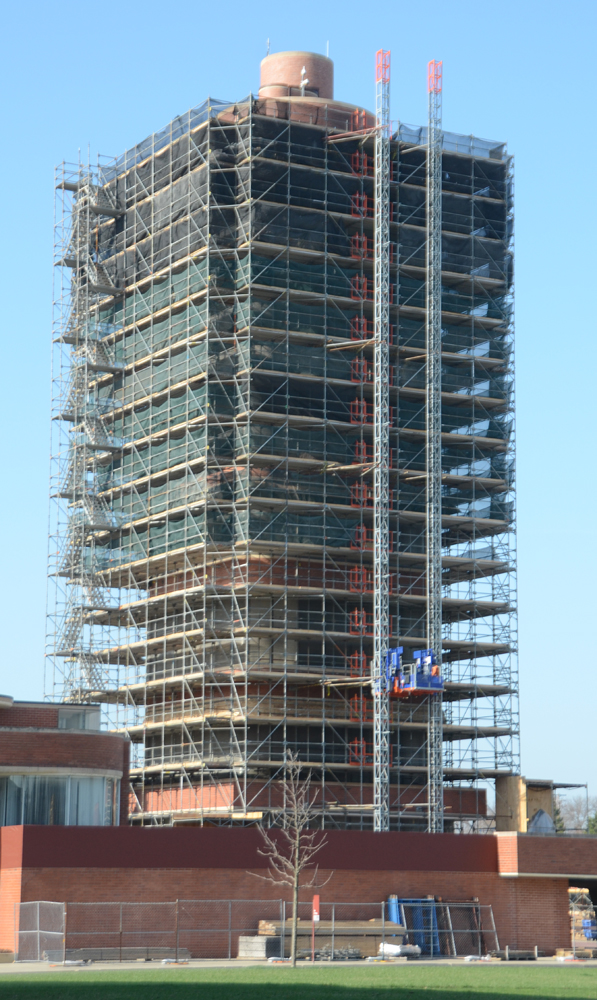
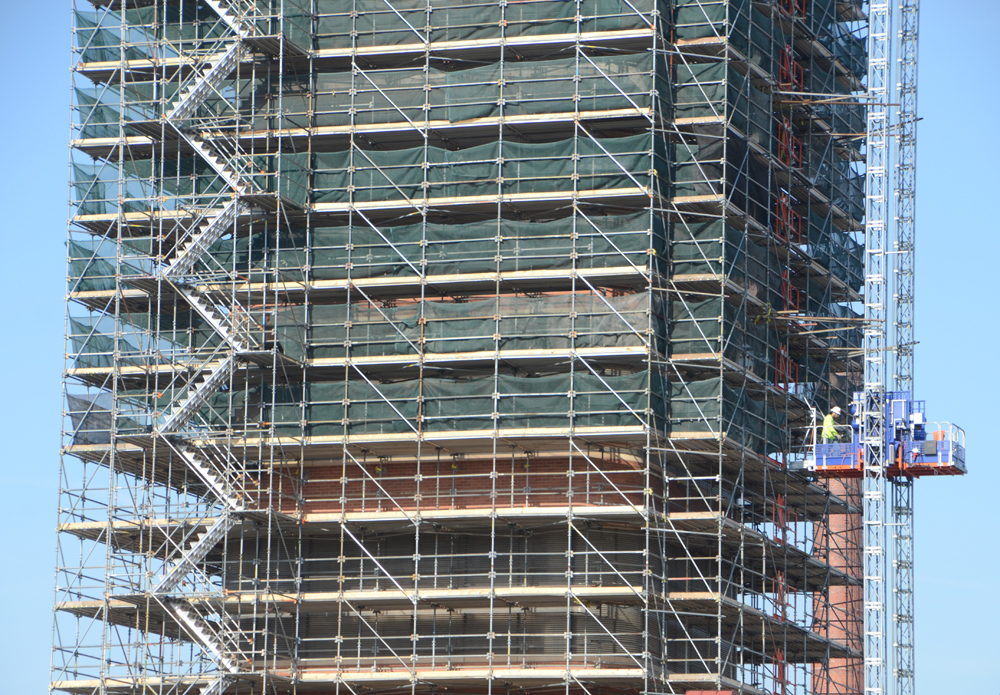
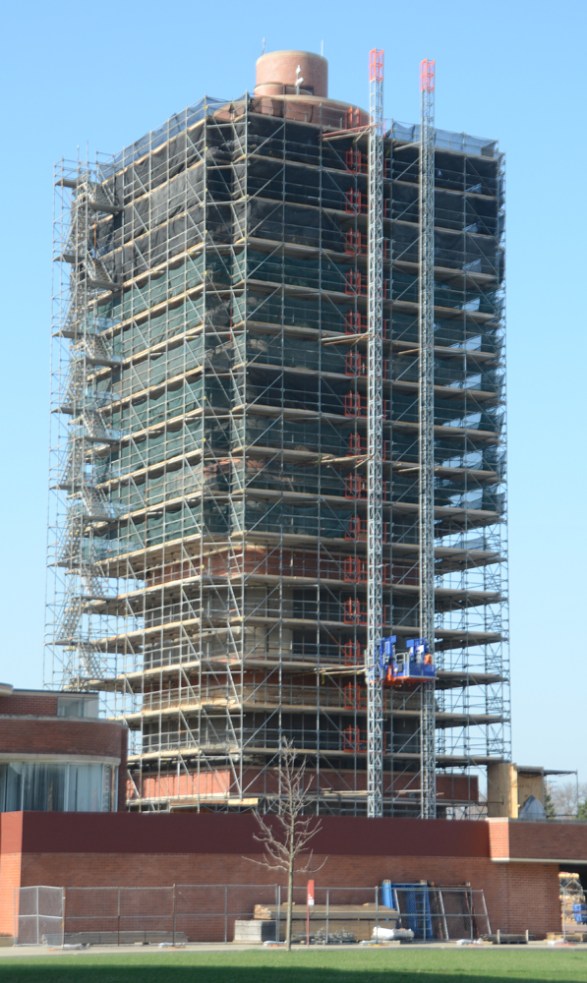
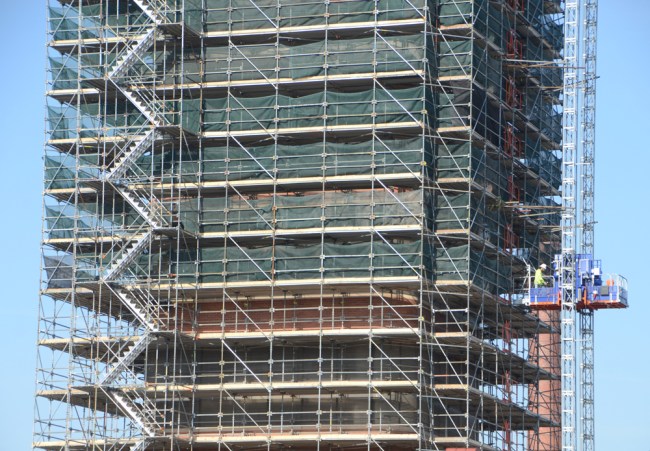
     The Tower is enveloped in scaffolding, as workers tuck point the brickwork and clean the 17.5 miles of glass tube windows in preparation for reopening the building. Windows tubes will be replaced, as necessary. 

Image

Image

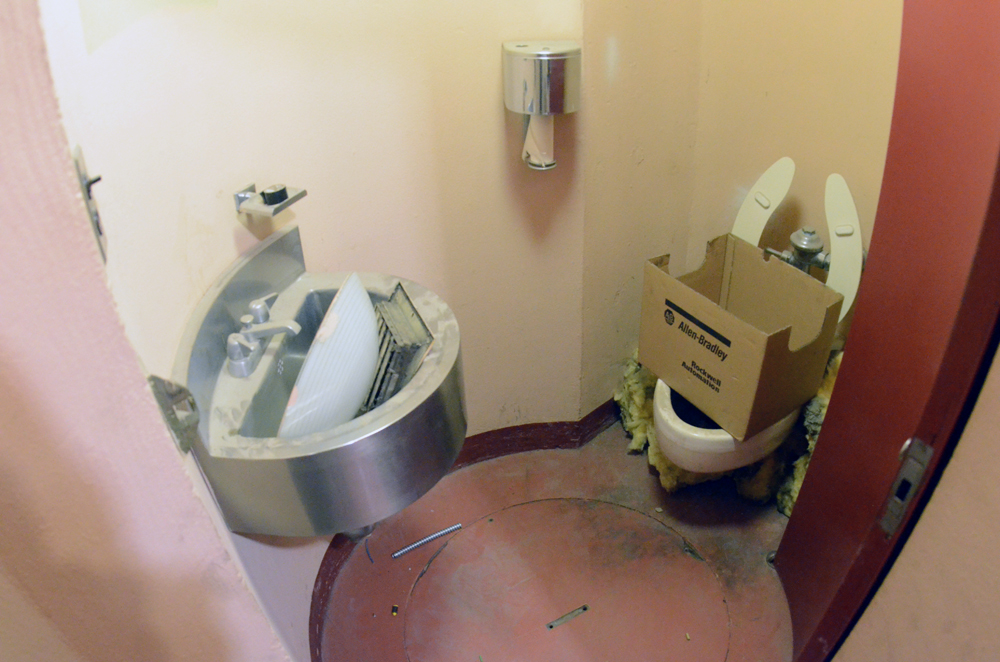
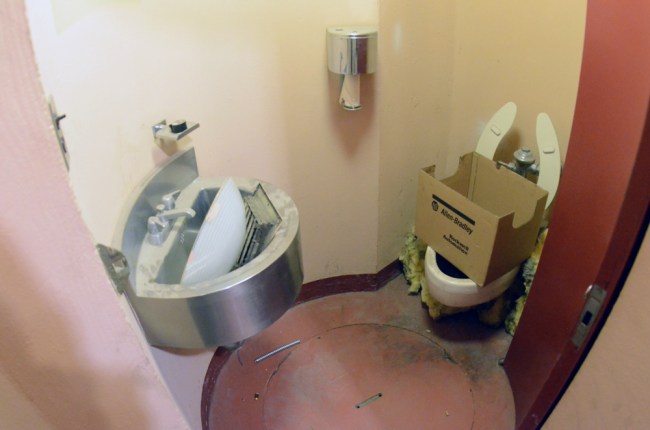
     Even the tiny triangular bathrooms on the core on 3 Main and 3 Mezz will be restored, and open to view by visitors. Their design includes sliding Cherokee red doors.
Image


 The building is Wright’s only executed taproot tower, says Bruce Brooks Pfeiffer. He points out that Price Tower in Bartlesville, Oklahoma, often thought to be a taproot tower, is tied into the foundation of an adjoining building. 

     The late Sam Johnson, chairman emeritus of the company, reflected on its legacy in a conversation we had in 2001. He said that the company’s four most successful products were “hatched up in the Tower.” He continued, “In many ways it was a functioning failure, but it was a spiritual success.”
Image

          The history of the Tower, including how it was designed, interviews with chemists who worked in it, and historic and contemporary photographs of it, are in my book, Frank Lloyd Wright’s SC Johnson Research Tower (Pomegranate, 2010).
     

Good Friday at Annunciation Greek Orthodox Church

Photos and text (c) Mark Hertzberg

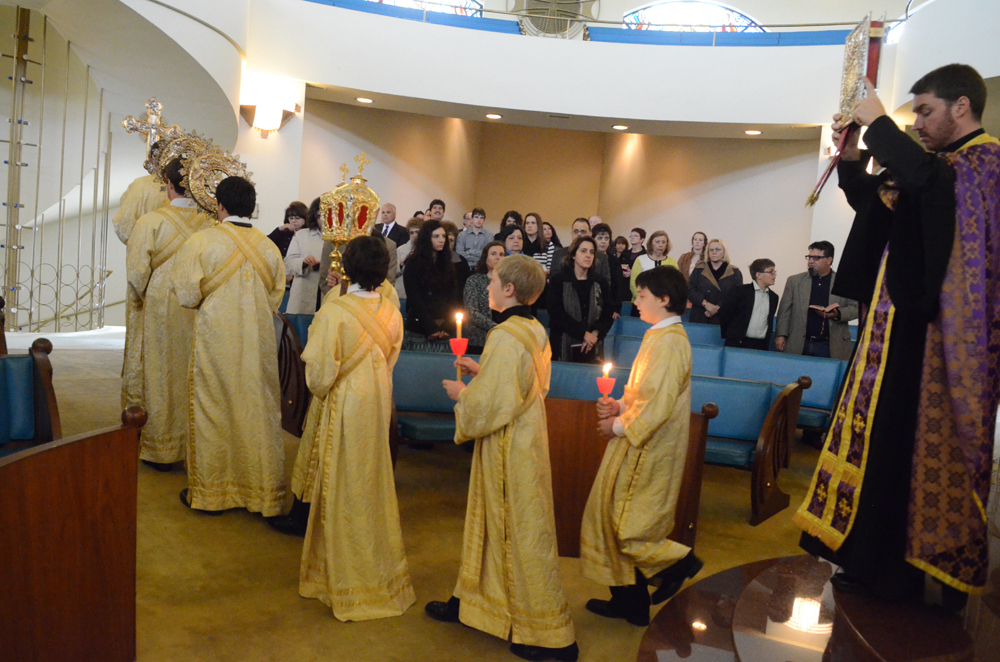
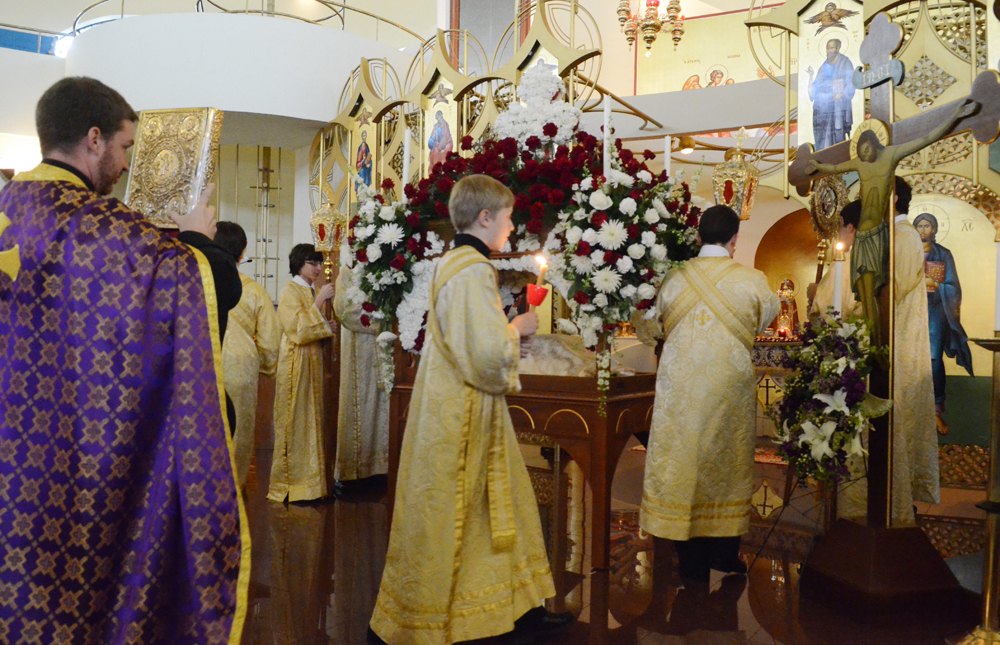
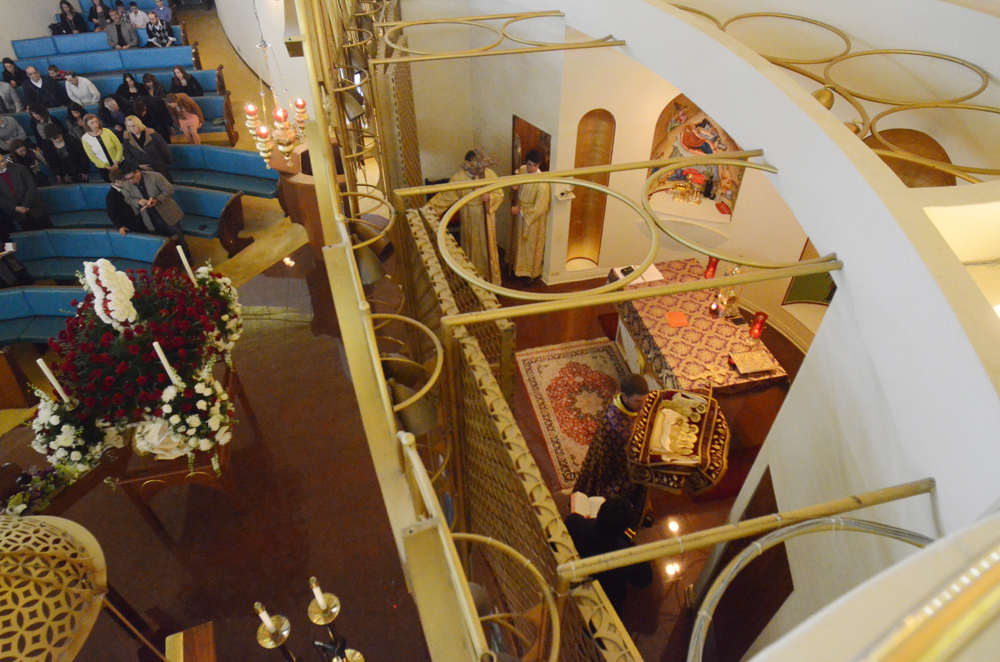
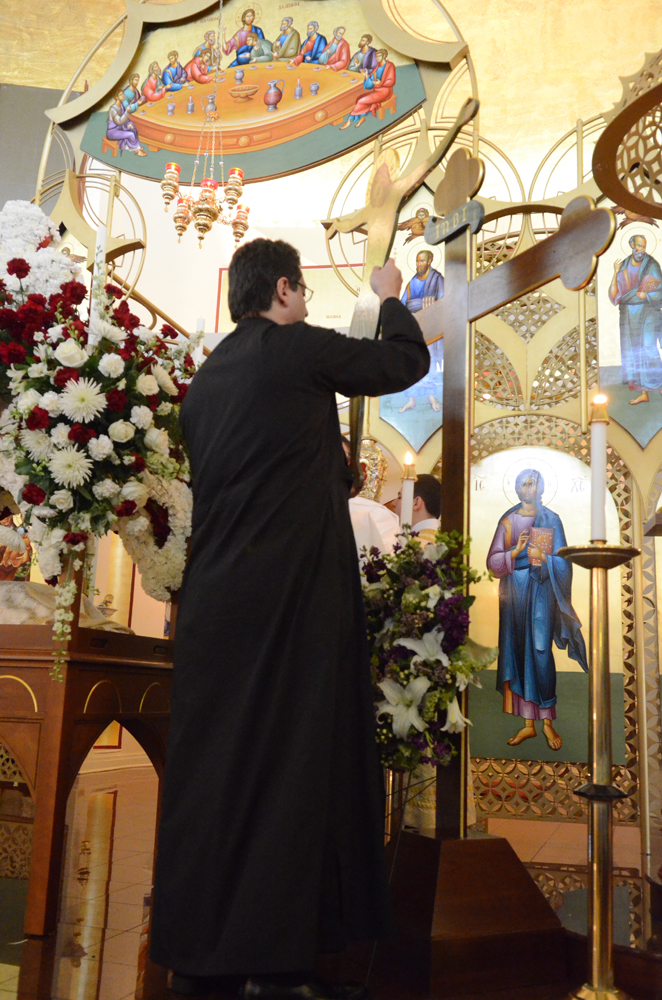
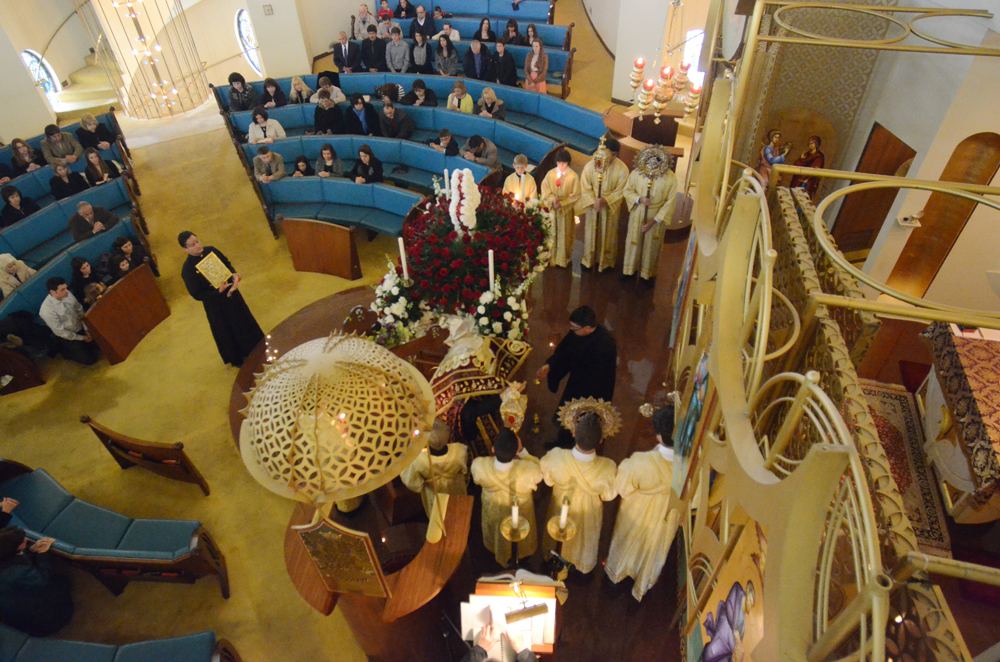
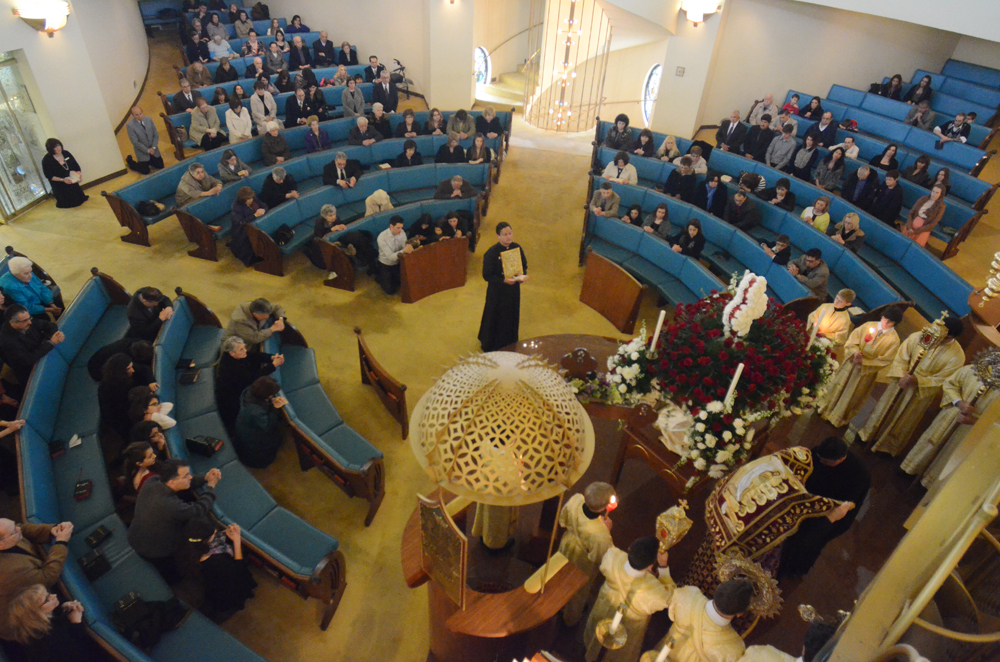
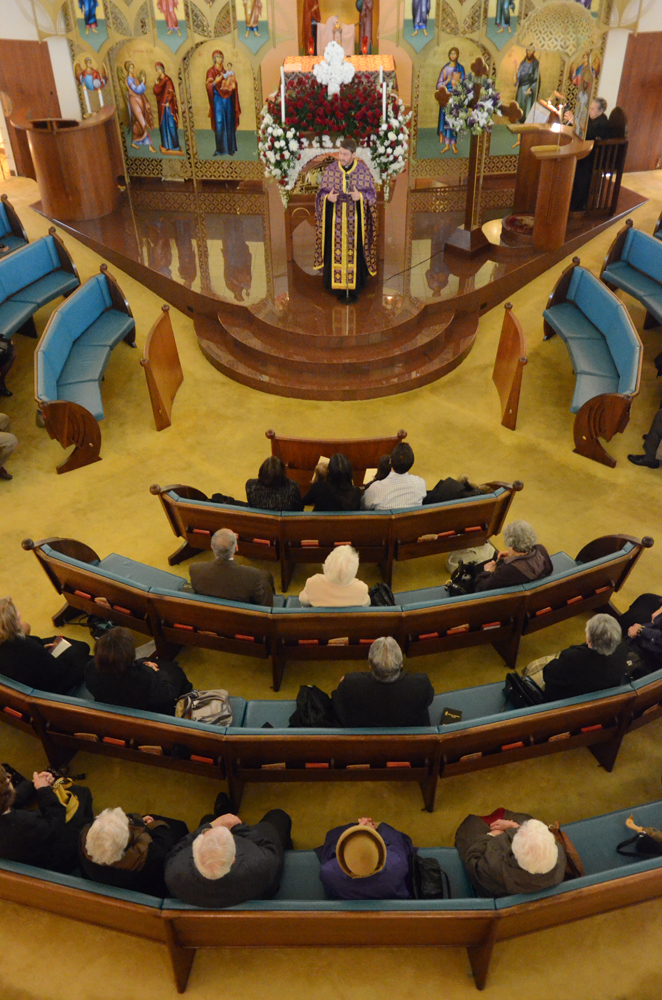
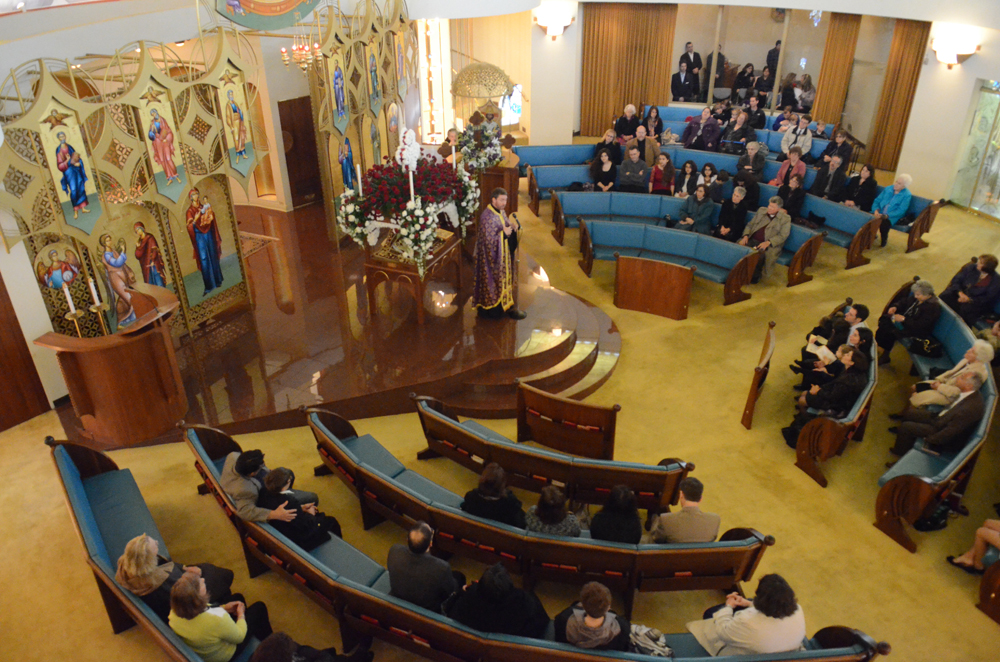
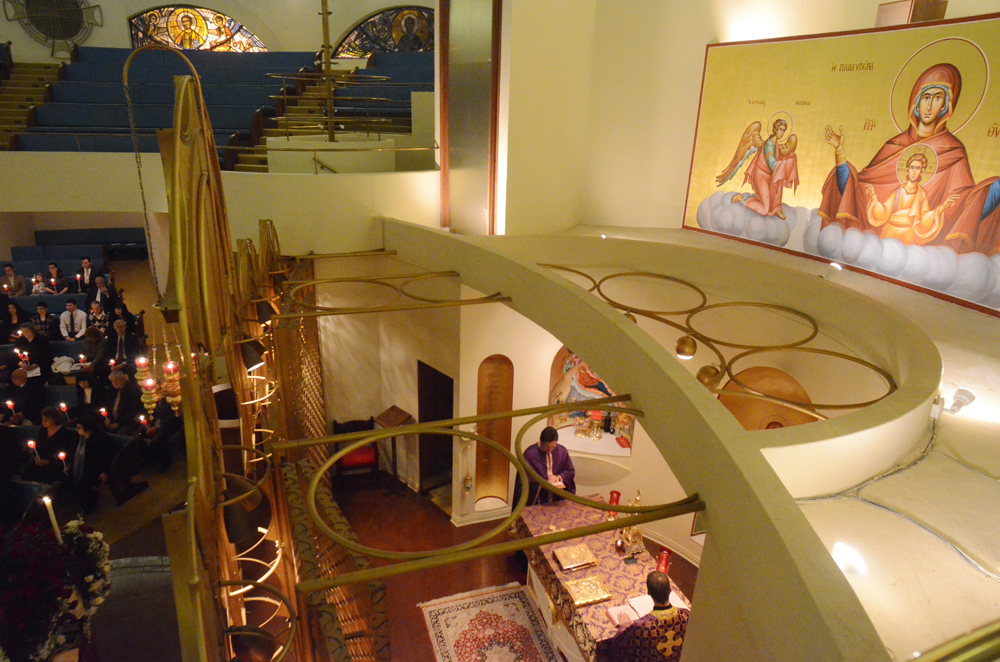
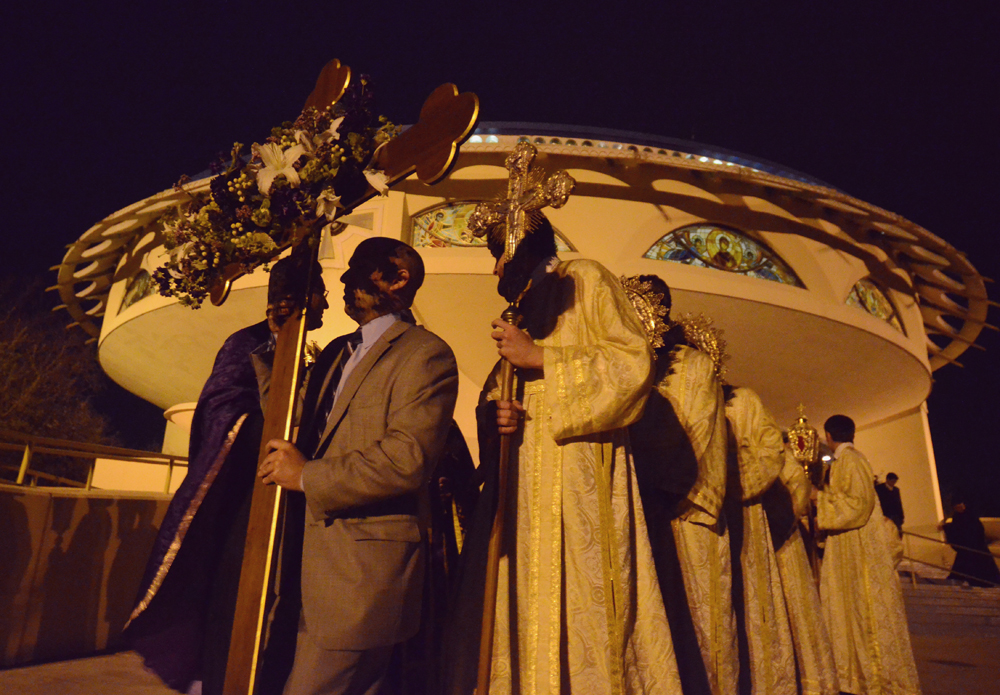
       I had the privilege of being invited by Father Angelo Artemas to photograph vespers and evening services yesterday, Good Friday in the Greek Orthodox Church, at Frank Lloyd Wright’s Annunciation Greek Orthodox Church near Milwaukee.

Image

Image

Image

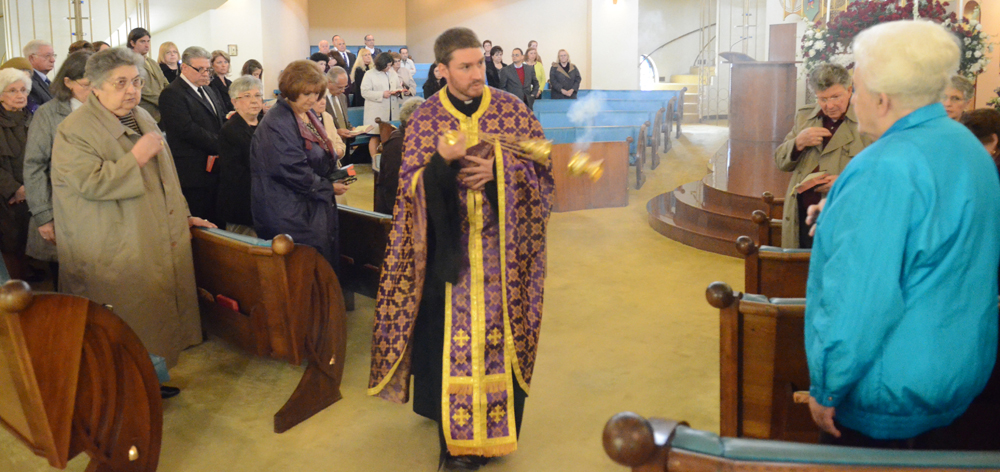
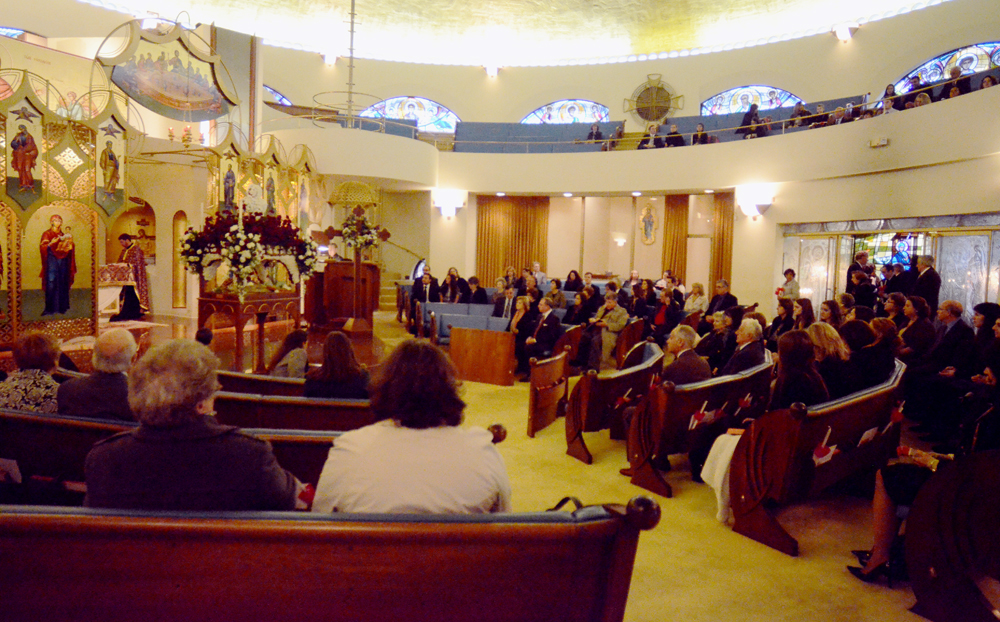
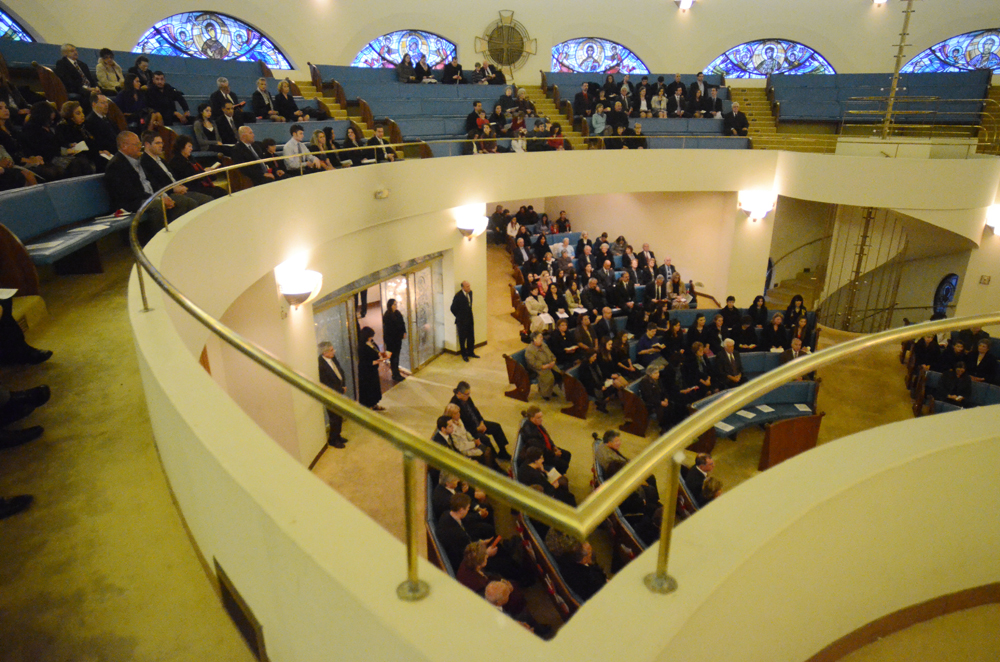
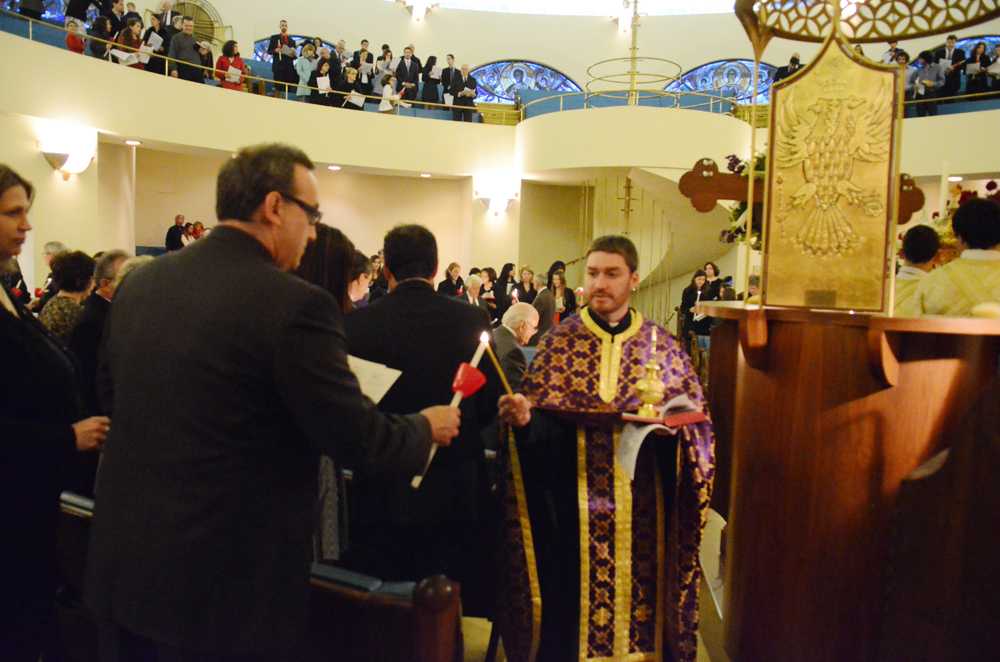
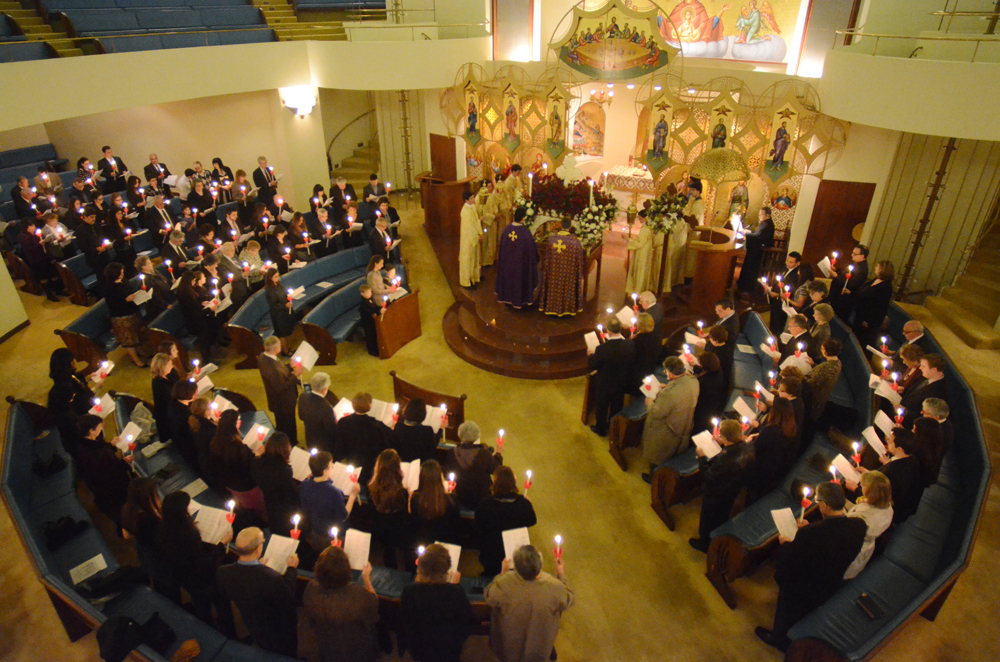
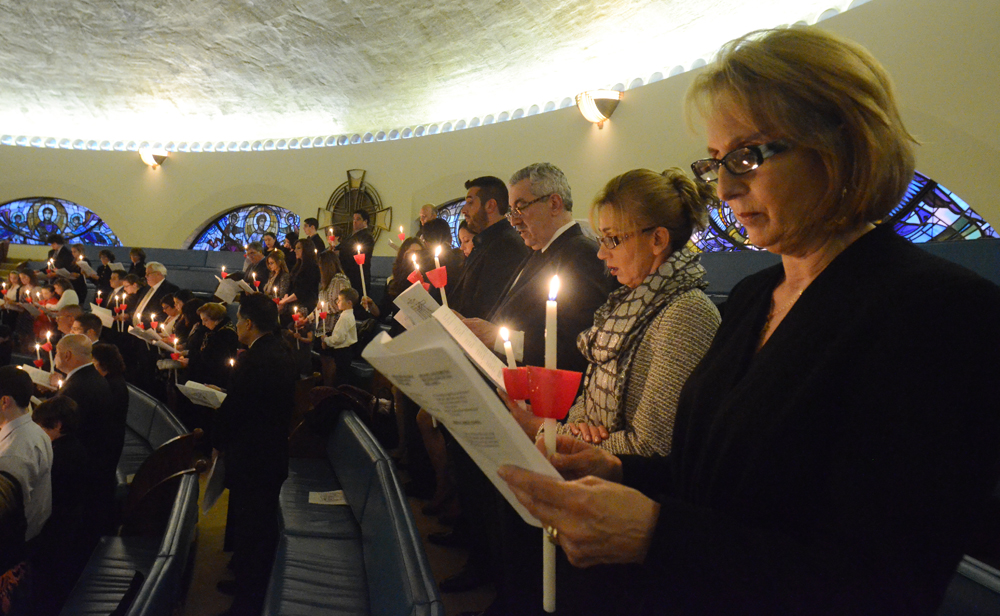
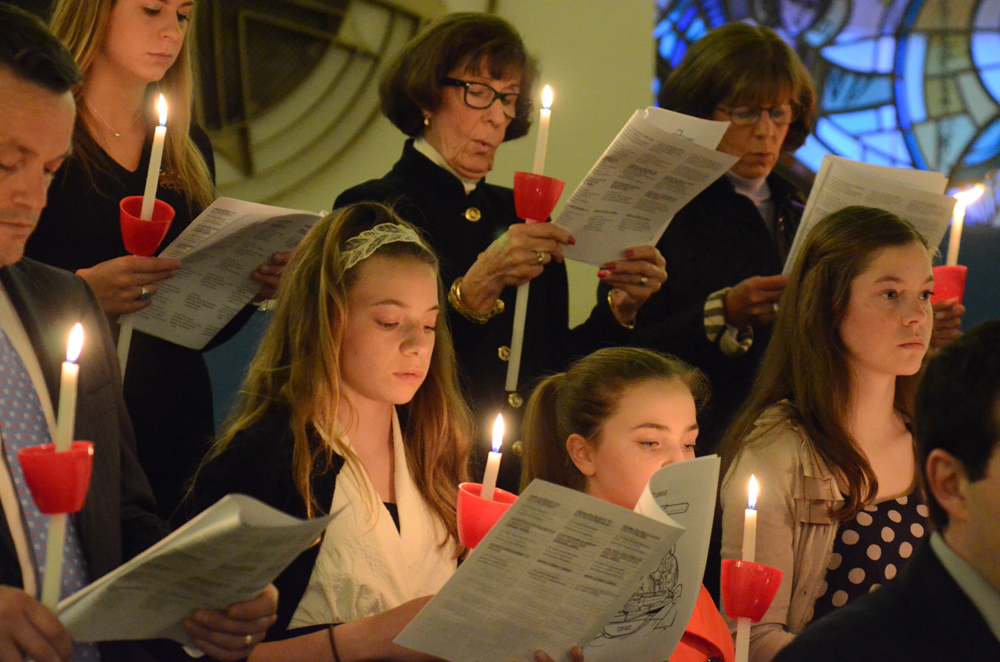
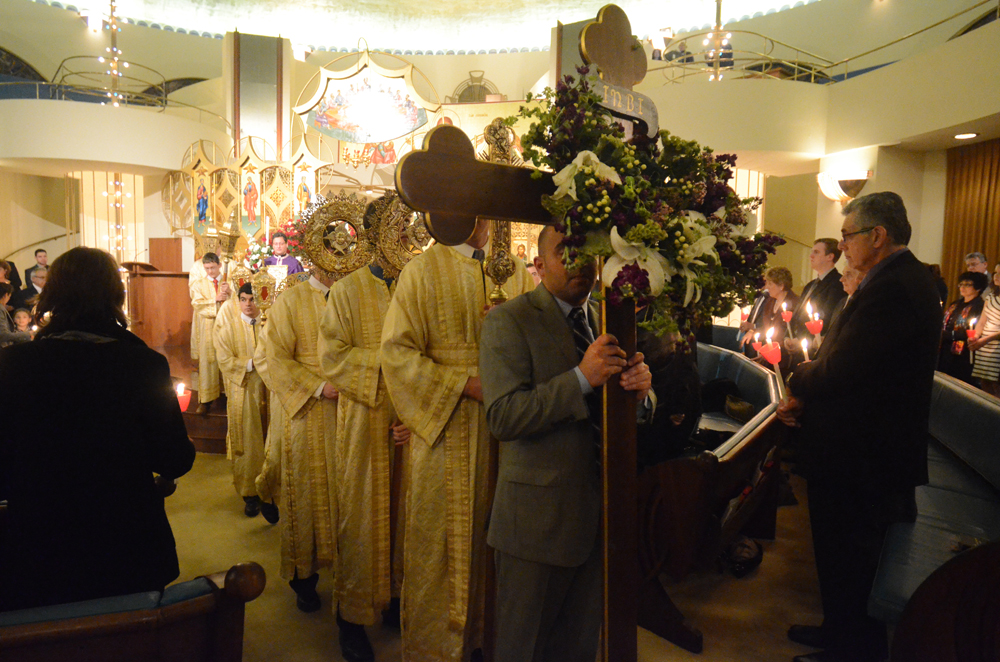
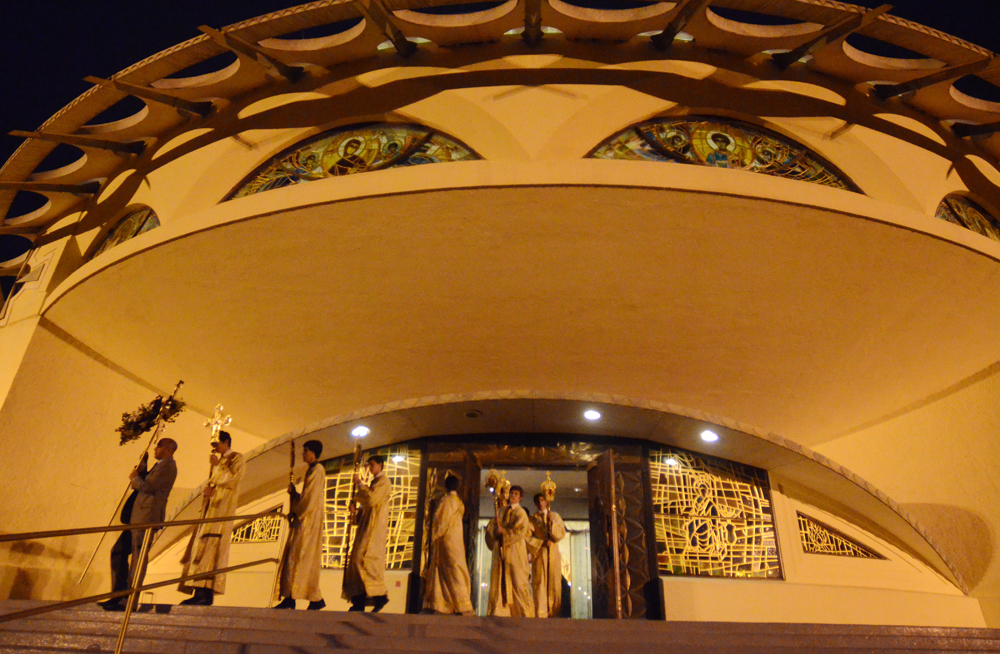
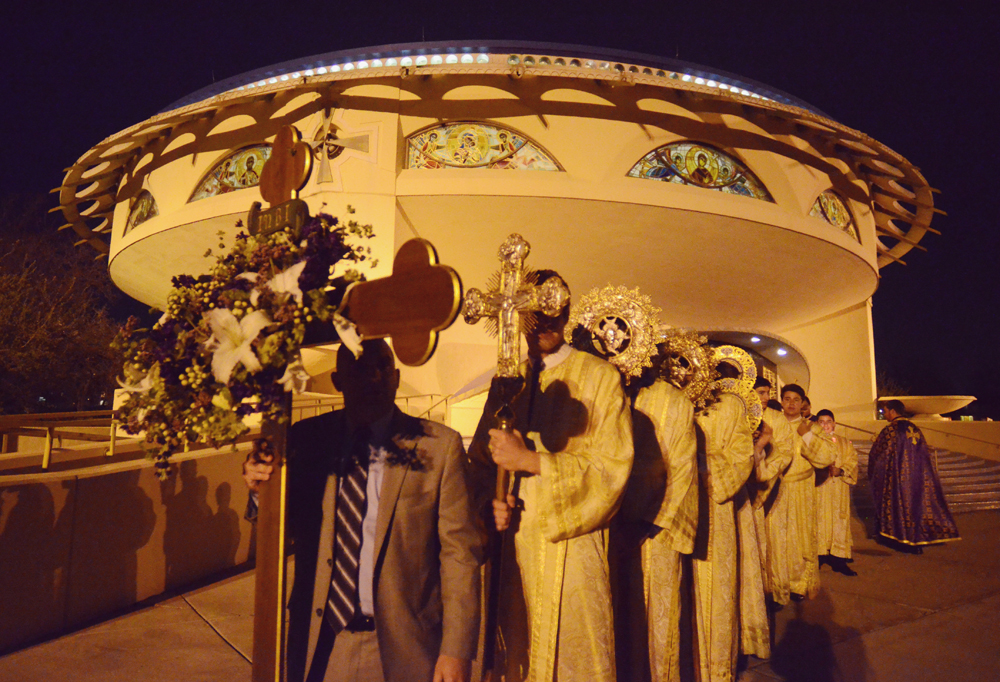
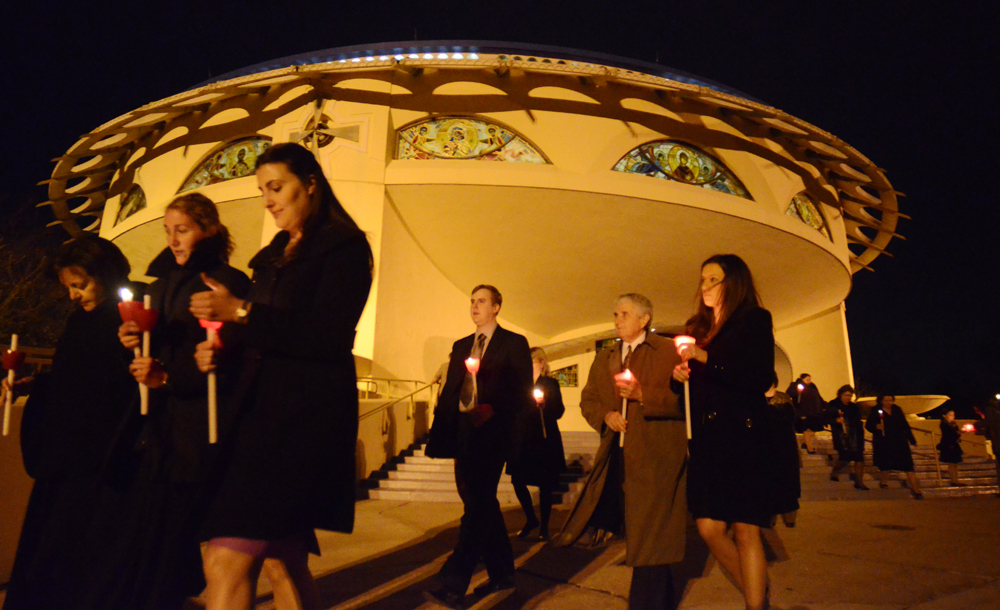
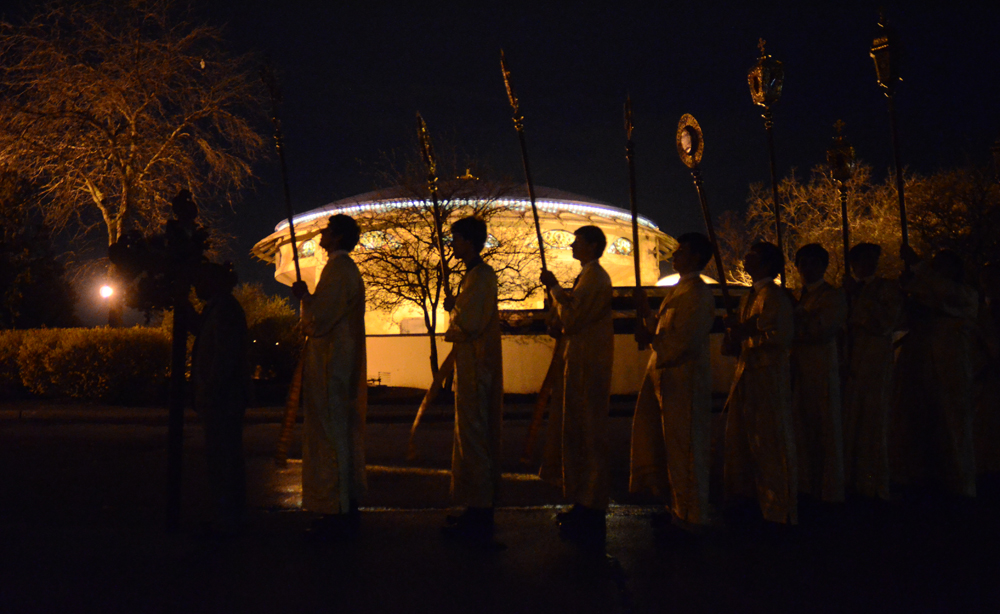
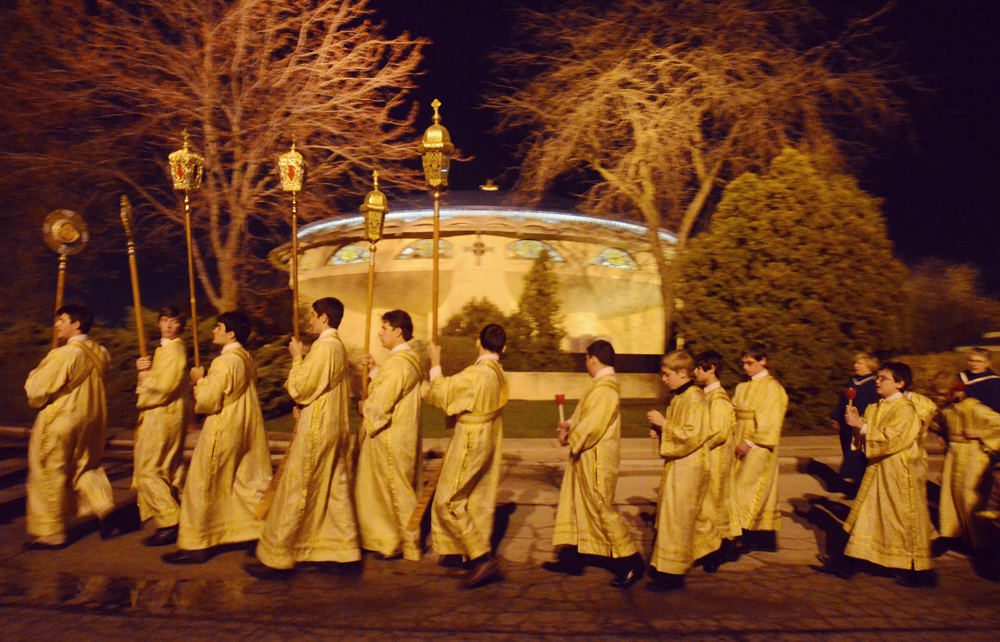
        I came there as an architectural photographer, but photographed as a photojournalist, to show how the building works for its intended purpose, as an ecclesiastical building. I was allowed to shoot from wherever I wanted to go during the services, and was warmly welcomed by the congregation. The photos that follow show the service and rich traditions of the church, as well as the building. They are in order: first, the afternoon vespers service, and then the candlelit evening service, which included a procession around the outside of the church.

Image

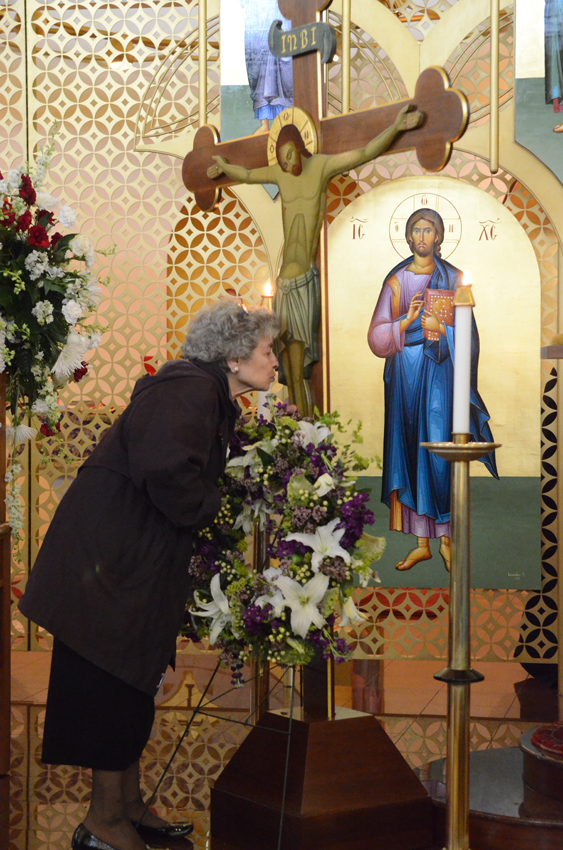
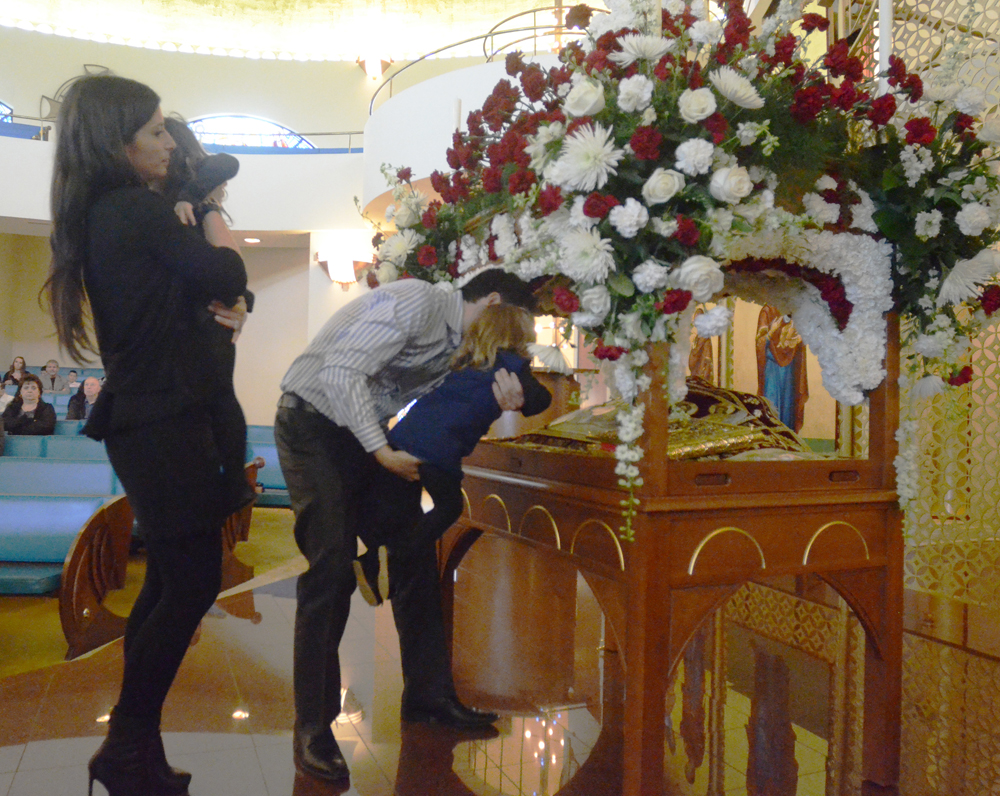
Congregants kissed the icon of Jesus Christ before vespers

Image

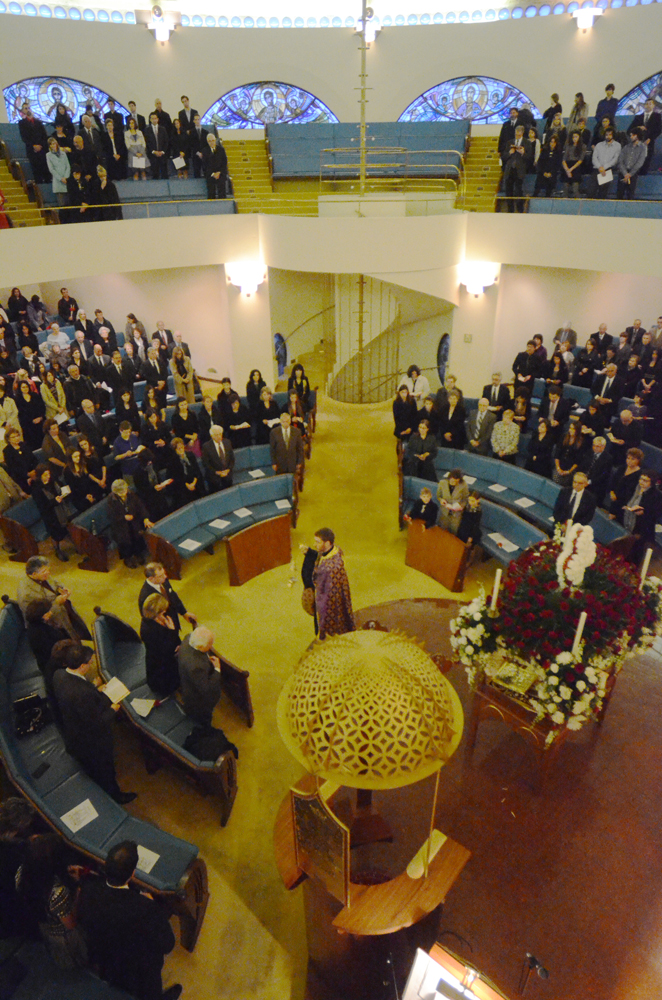
Father David Hostetler holds the Gospel aloft during a procession around the sanctuary

Image

Image

Much of the liturgy is conducted by the priests behind the screen in front of the sanctuary. This is because the priests lead the congregation in prayer, rather than praying to them. As shown in a previous posting of interior photos of the church (https://wrightinracine.wordpress.com/2013/04/12/annunciation-greek-orthodox-church-2/)

Eugene Masselink’s icons were replaced by icons that are said to better reflect church doctrine. That is why there are no plans to put Masselink’s icons back in the sanctuary. Masselink’s icons are shown in the previous article.

Image

Father Angelo Artemas takes the icon of Christ down from the cross

Image

The shrouded icon (right) is then carried around the church

Image

Image

Image

Image

ImageAt the end of the service congregants, including children, express their reverence as they kiss the Gospel, the cross, and art work of the crucifixion of Christ which are displayed in a flower-decorated symbolic representation of the empty tomb of Christ. The empty tomb is part of the procession outside the church during the evening service, below:

Image


Image

Image

Image

Image

Image


Father David Hostetler lights congregants’ candles

Image

Image

Image


Image

Image

The procession forms to go outside

Image

Image

Image

Image

Image

ImageImage

Image

Father Angelo Artemas gives congregants flowers from the symbolic empty tomb, as they kiss his hand at the end of the evening service.


Hardy House: What a difference a week makes!

(c) Mark Hertzberg

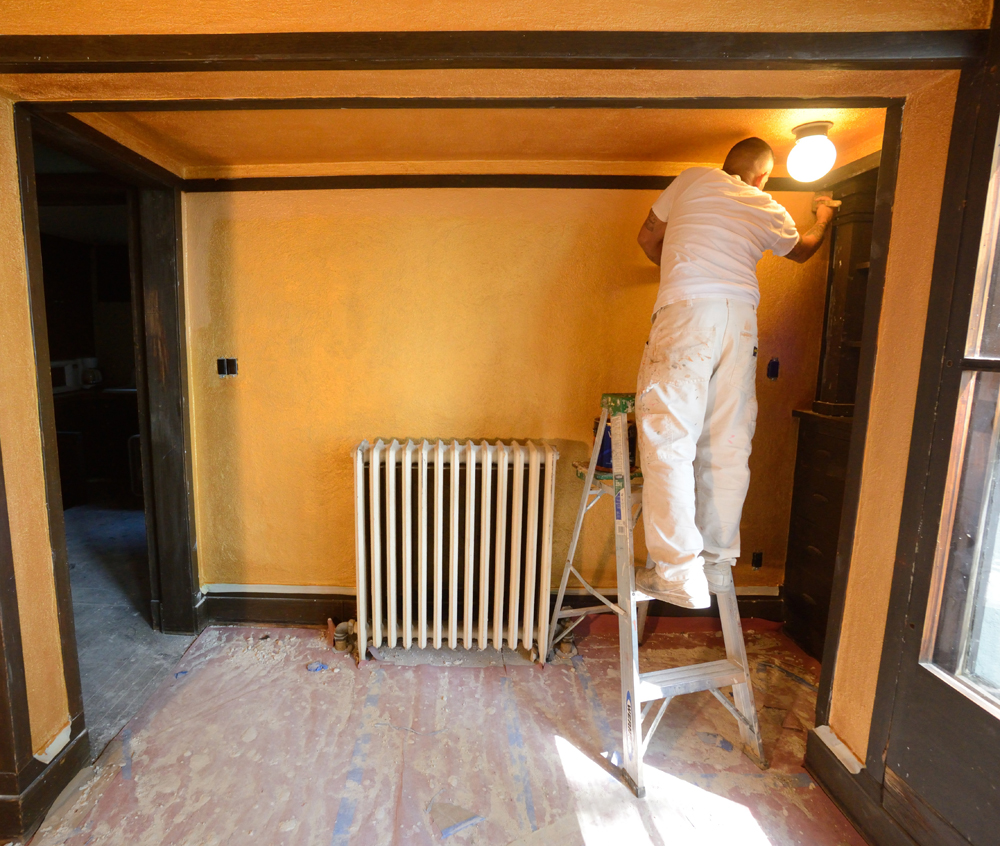
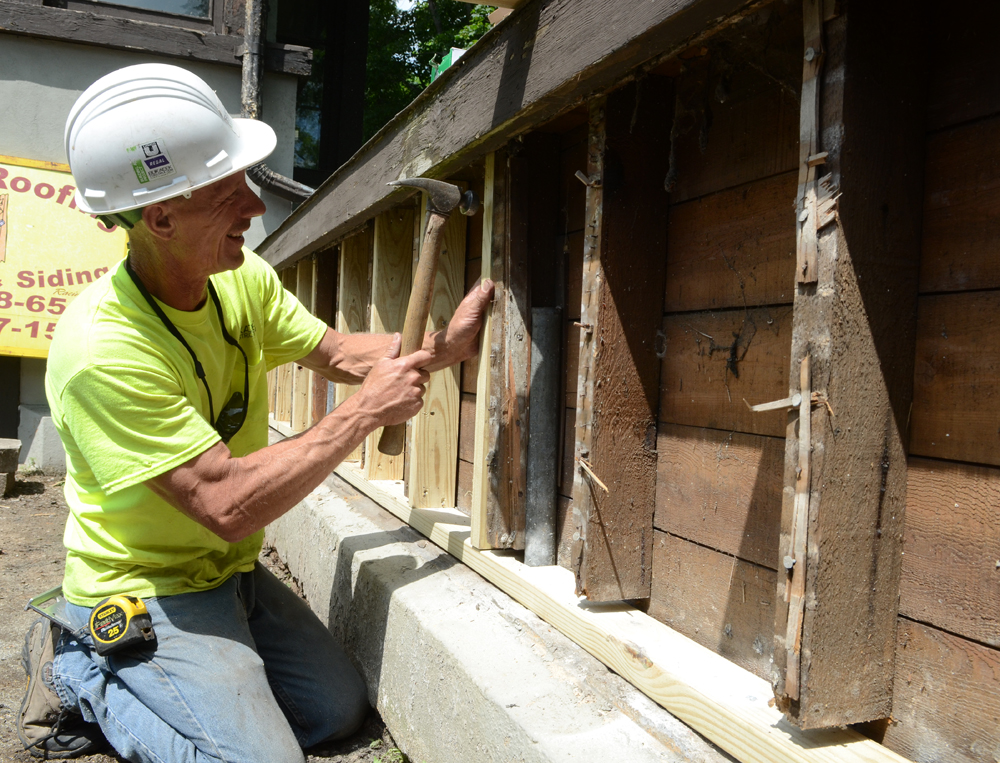
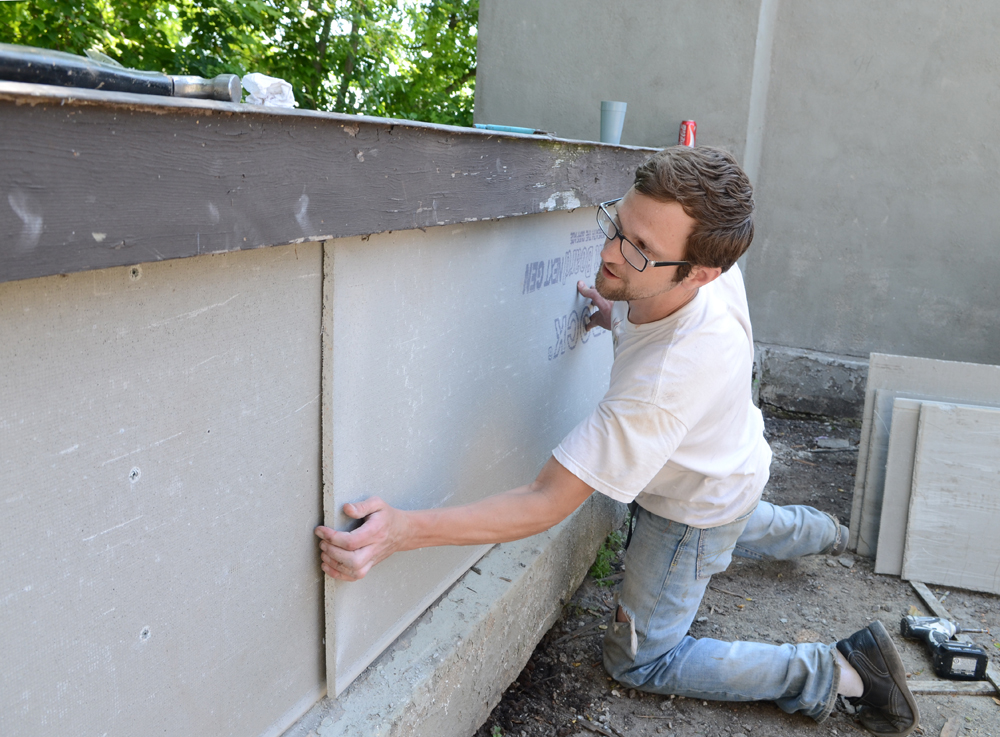
      The Hardy House interior looked quite raw and unfinished 10 days ago as final preparations are made for Saturday’s tours of the house – the first in decades. What a difference a week makes! I was astounded when I stopped at the house last Thursday and saw painters Dennis and Daniel Bishop at work. They are bringing the living room back to life, with its original color, and staining the Georgia pine trim. There are less than 20 tickets left for the tours: call Frank Lloyd Wright Wisconsin at 608-287-0339 to make reservations. The interior is not completely finished yet. Exterior work will follow after the interior is finished. This is a wonderful opportunity to see a Wright house rehabilitation in progress.

Image

Image

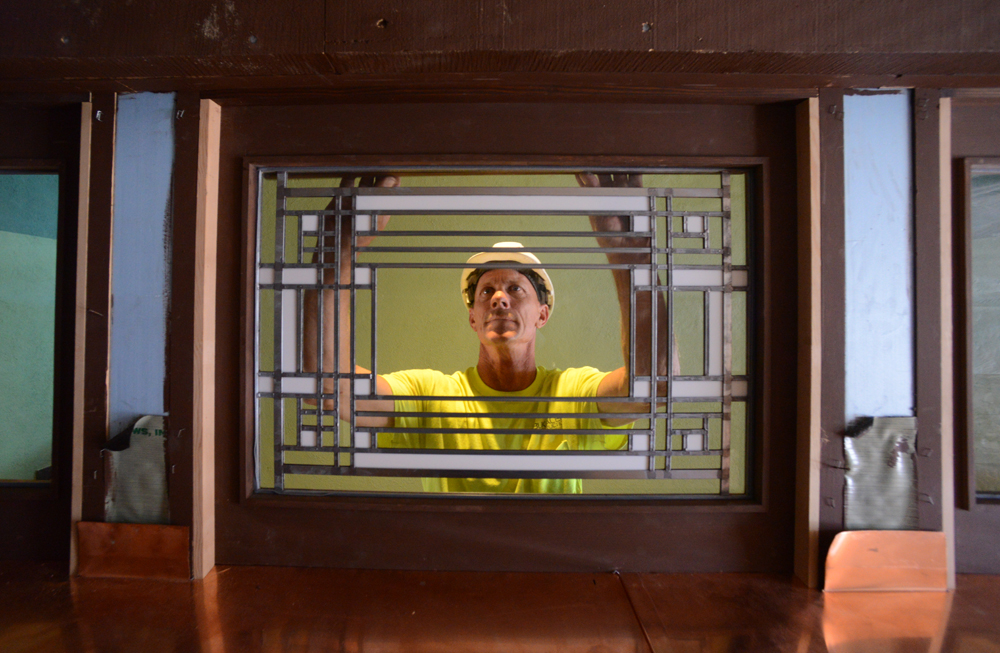
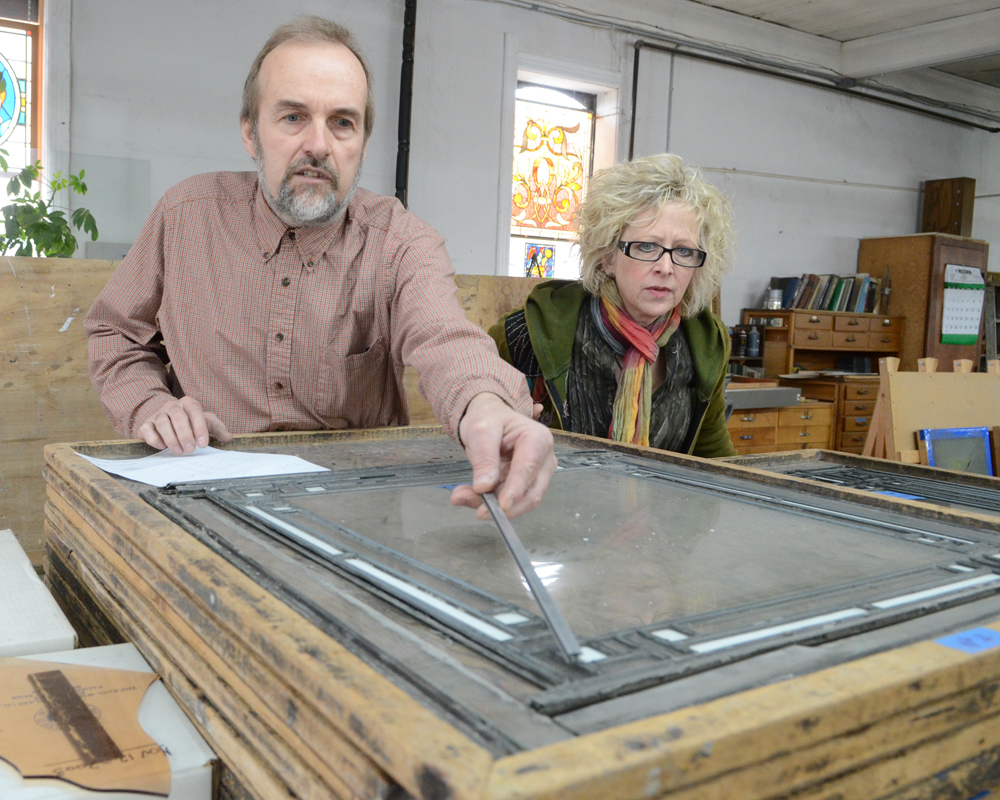
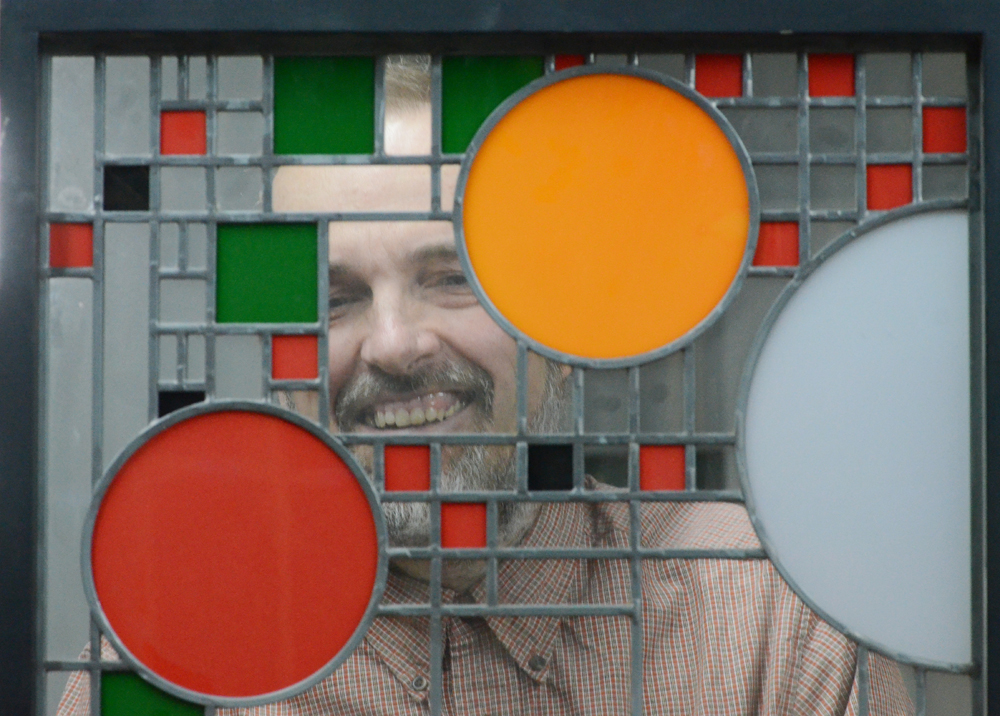
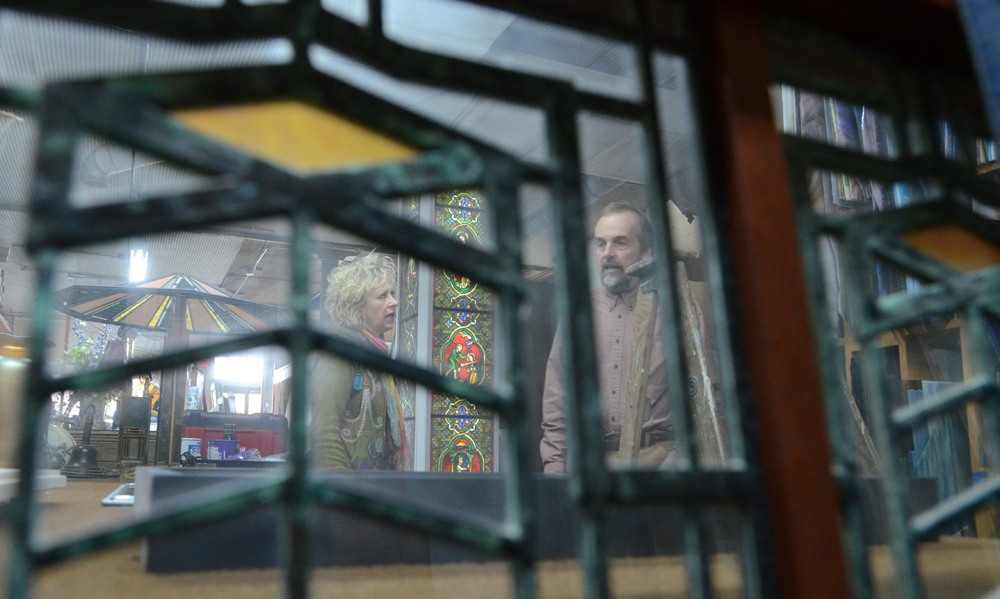
I had just come back from looking at the home’s seven hallway windows with Joan Szymczak (owner Eugene Szymczak’s sister-in-law) at Paul Phelps’ Oakbrook Esser glass art studios in Oconomowoc, Wisconsin. Phelps explained that the windows are too badly damaged from previous repair to restore. The original windows will be saved, but he will build replicas (Szymczak and Phelps are framed in one of his reproduction Robie House windows in the first photo).

Image

ImageImageI couldn’t resist taking Phelps’ picture through one of his Coonley Playhouse windows:

Image


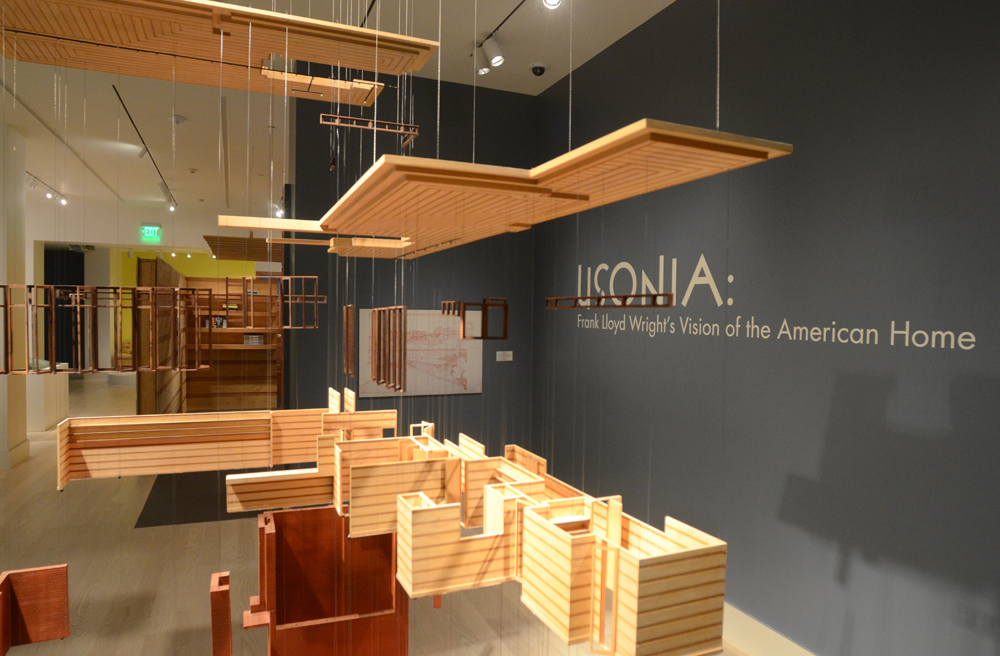
New SCJ Wright Exhibition: “Usonia”

Photos by Mark Hertzberg for SC Johnson, and used with permission

Image

     There are two well-known aspects to the SC Johnson company in Racine, Wisconsin: manufacturer of household products and stewards of the company’s Wright-designed Administration Building (1936) and Research Tower (1943/44). The company celebrates Wright’s influence on the American home in “At Home with Frank Lloyd Wright,” the permanent Wright exhibition in Fortaleza Hall (designed by Lord Norman Foster and Partners; opened in 2010) on the company campus.
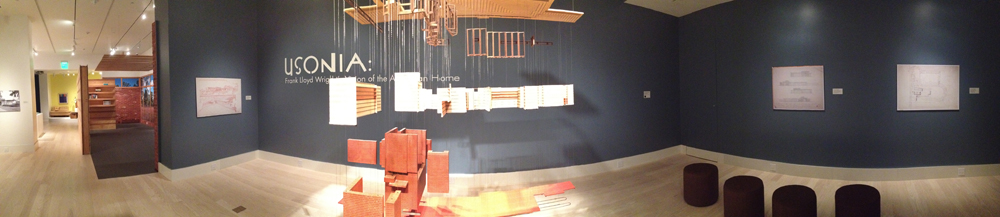
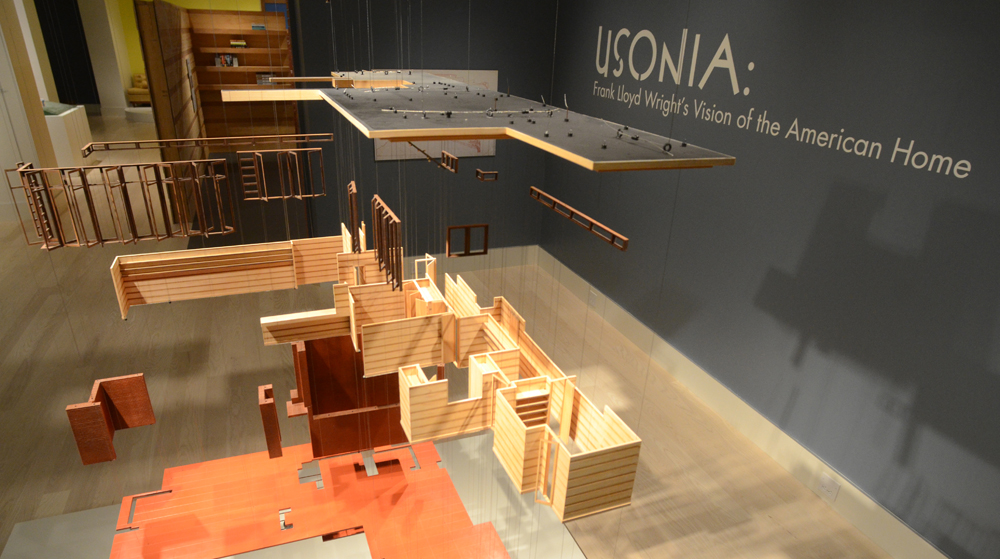
      The first phase of the exhibition opened in June. It focused on Wright’s Prairie-style homes. The second iteration of the exhibition, “Usonia,” opens to the public May 3. It is being installed this week.

Image

While many people think that Wright designed homes only for wealthy clients, he was very interested in designing affordable housing. His Usonian homes were designed so that the client could help build them.

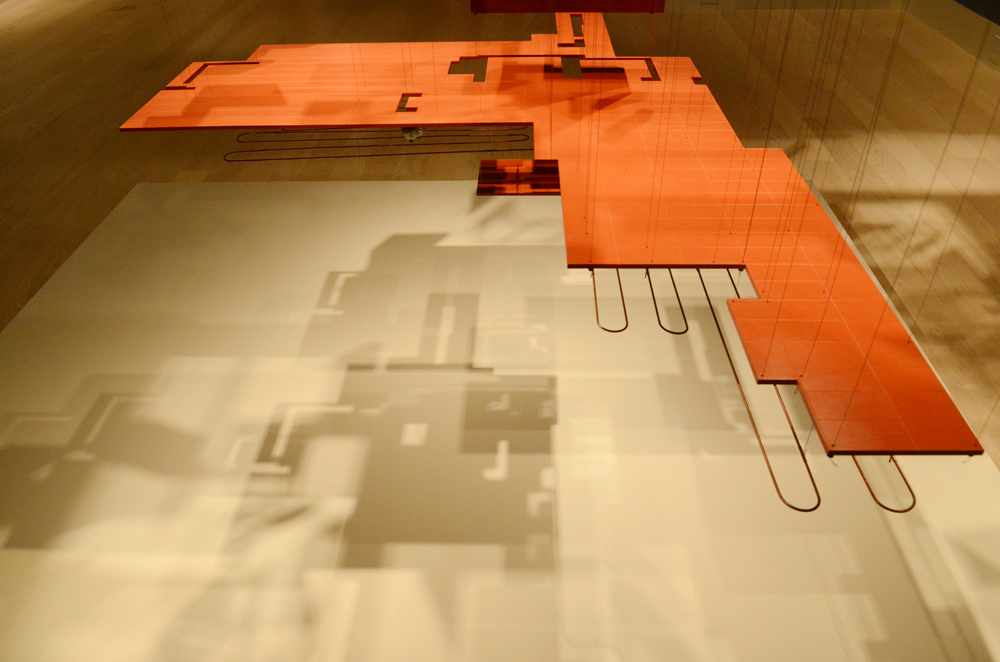
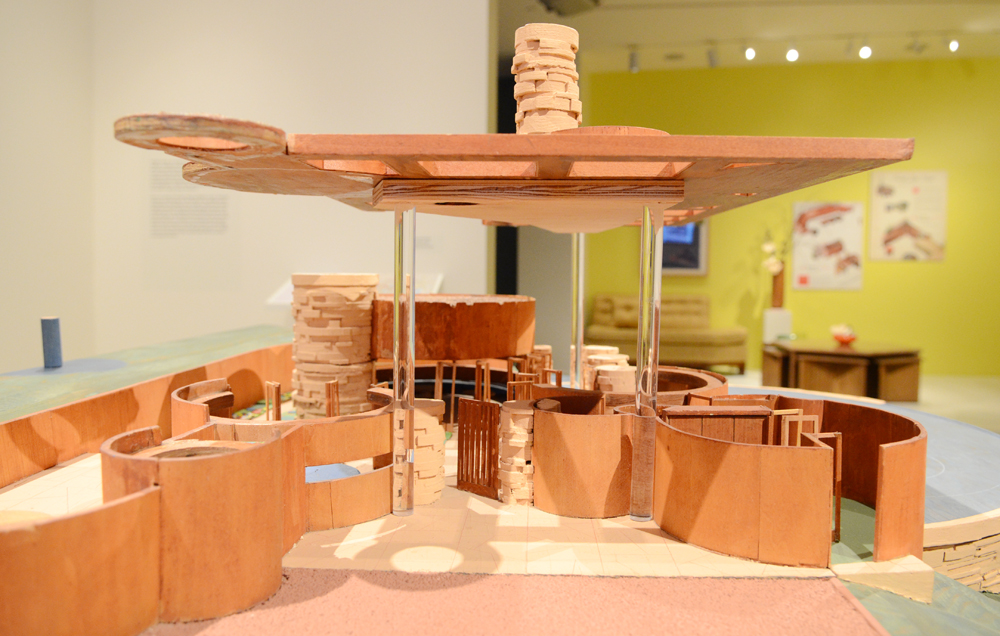
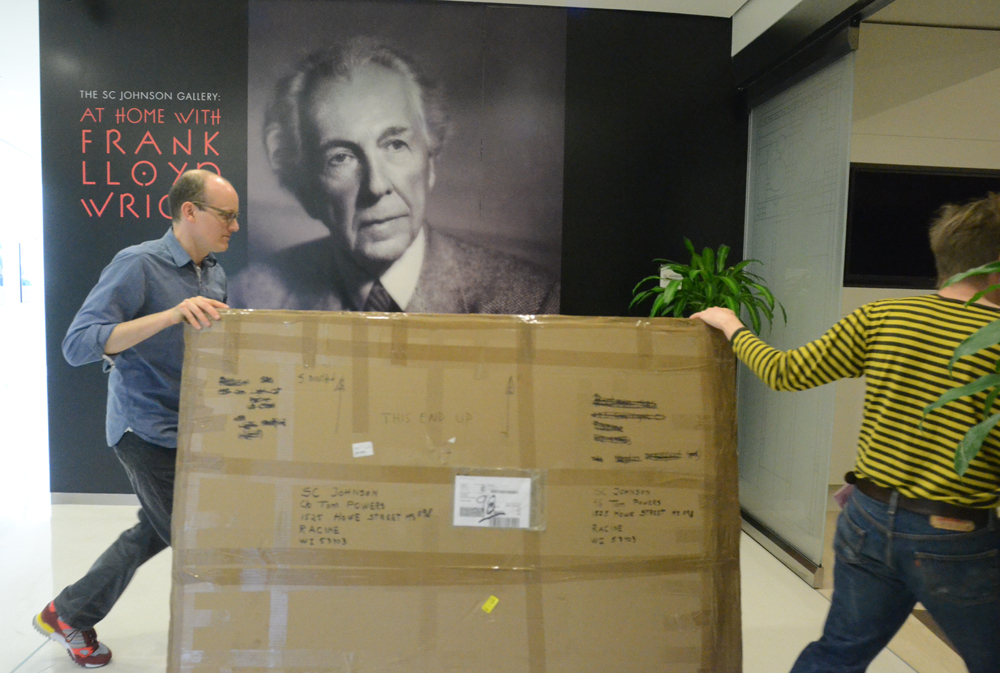
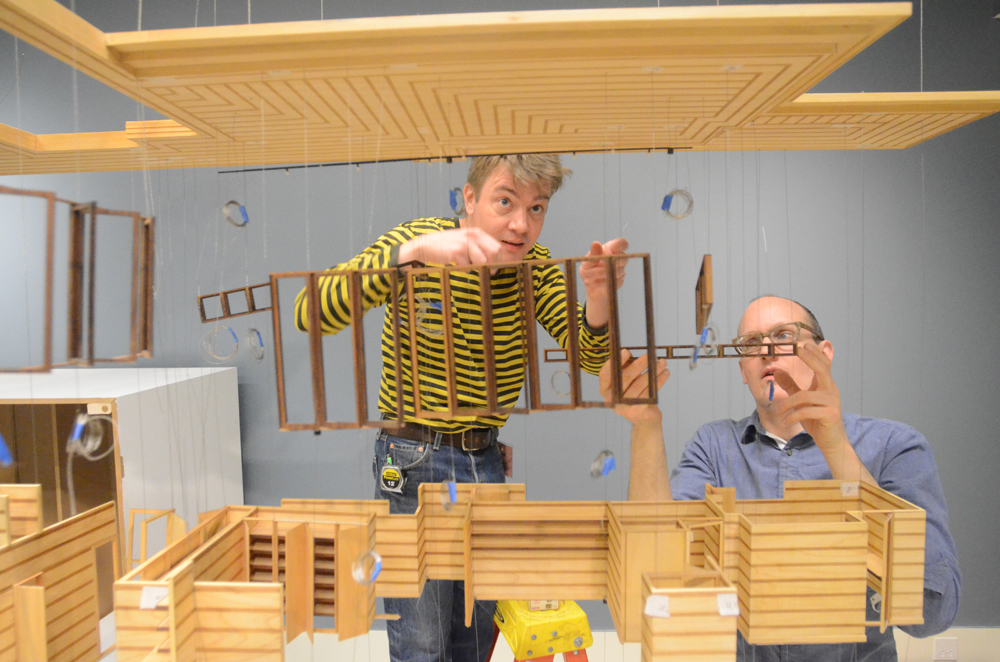
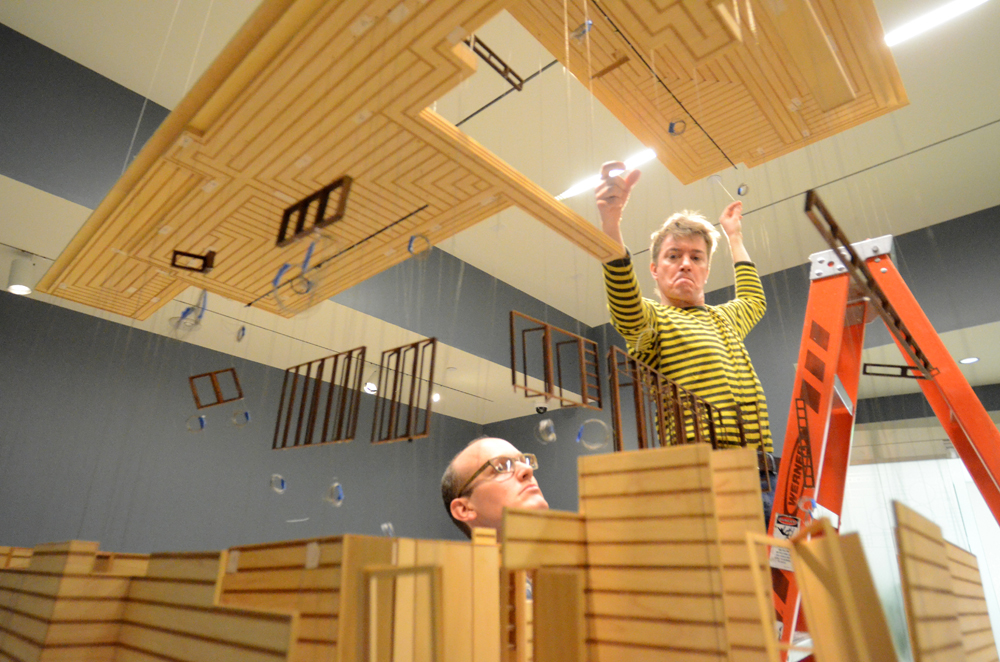
      The exhibition includes an “exploded” model of Jacobs 1 (1936), the Madison house widely considered to be Wright’s first Usonian home,  which the home owners helped build. The model, which is on loan from the Milwaukee Art Museum, was assembled Monday by workers who looked as if they were carefully positioning marionettes:

ImageImage

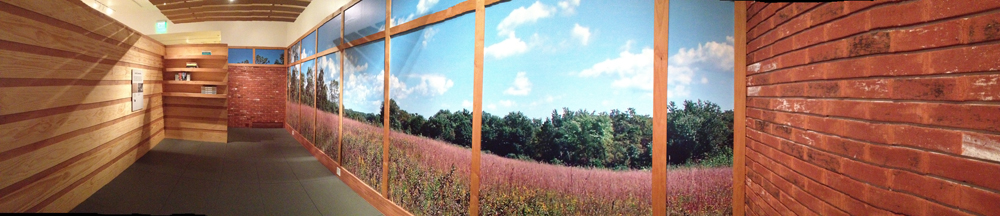
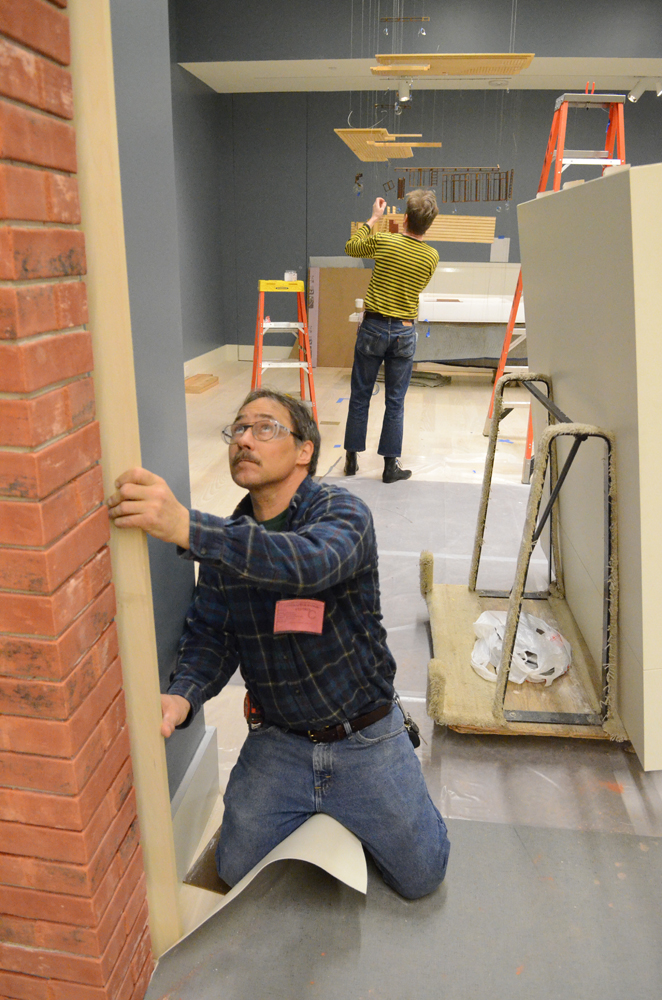
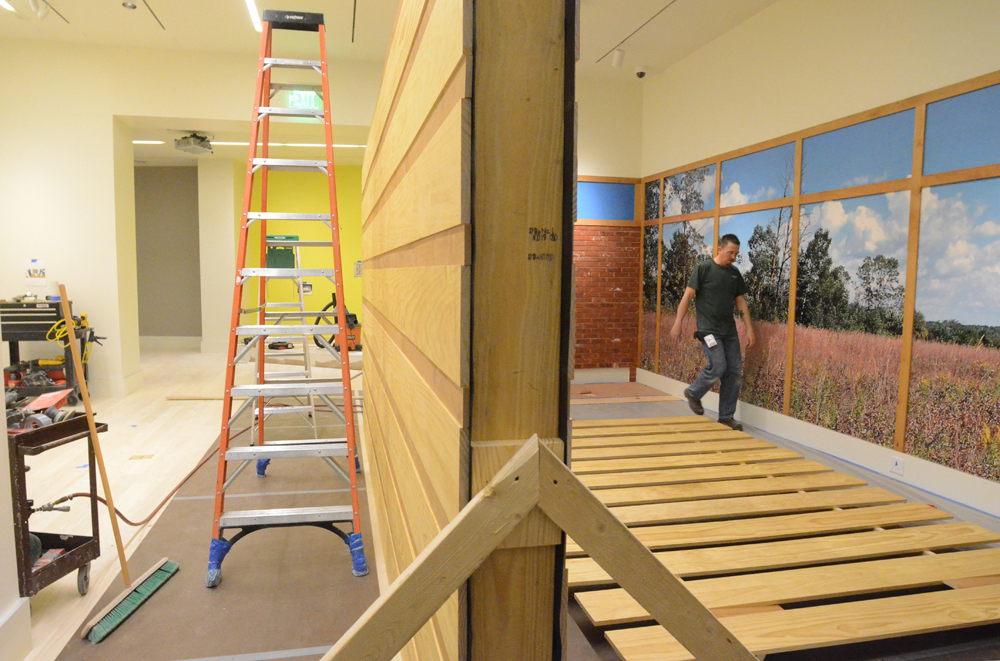
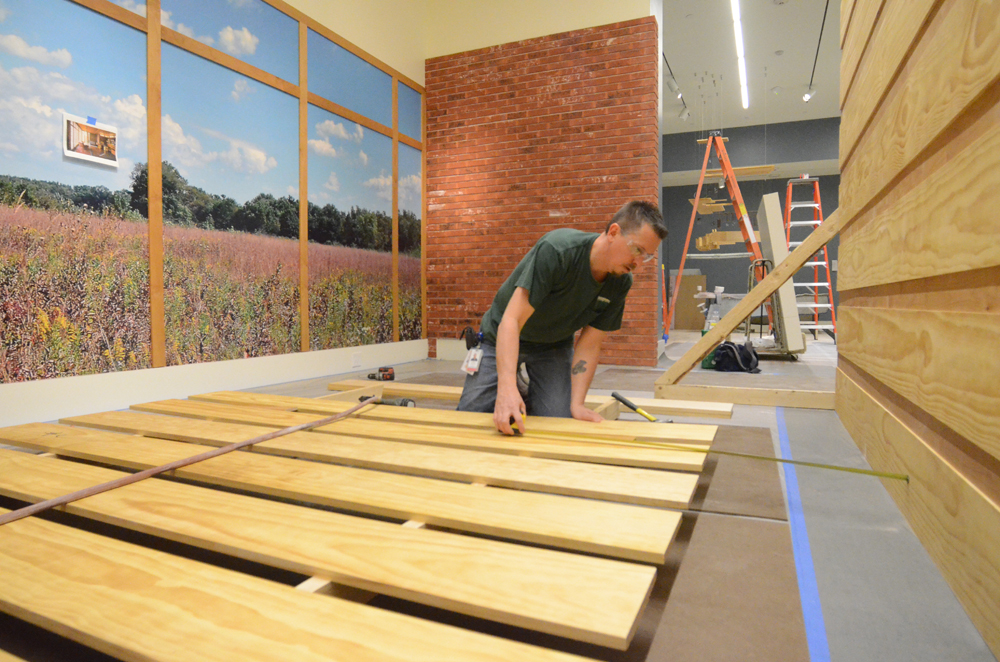
      The exhibition also includes a masonry wall, in Wright’s signature Cherokee red brick, a board and batten panel built like the outside of Jacobs 1 (and other Usonian homes), and a photo mural that shows the view one might see from the living room of a Usonian home. These photographs were taken Monday. Installation continues until the exhibition opens:

Image

Image

Image

Image

Annunciation Greek Orthodox Church

Text and Photos (c) Mark Hertzberg

I recently had the privilege of being invited by Father Angelo Artemas to photograph the interior of Frank Lloyd Wright’s Annunciation Greek Orthodox Church in Wauwatosa, Wisconsin, a suburb of Milwaukee.

Image

ImageImage

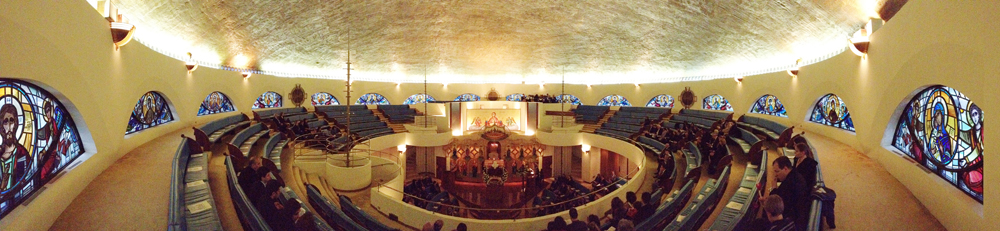
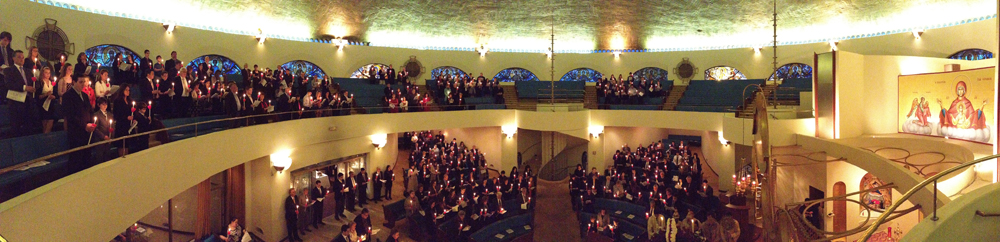
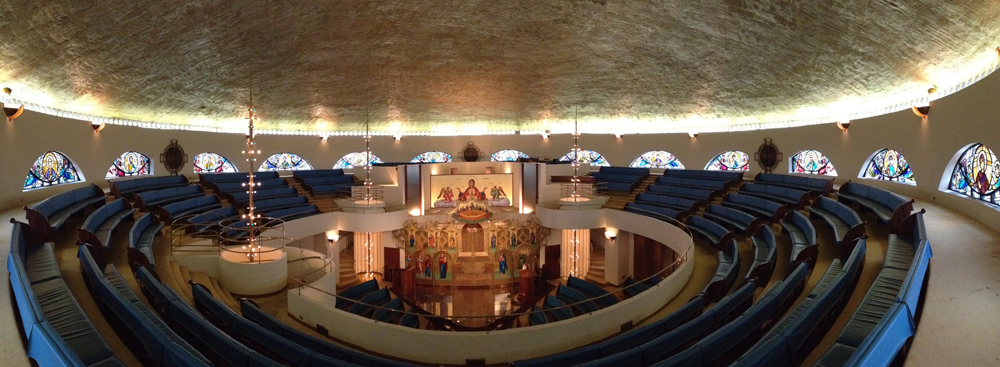
Interestingly, with all the thousands of dollars in camera bodies and lenses I carry, the two thin horizontals were shot with my iPhone 4S using the Panorama camera function.

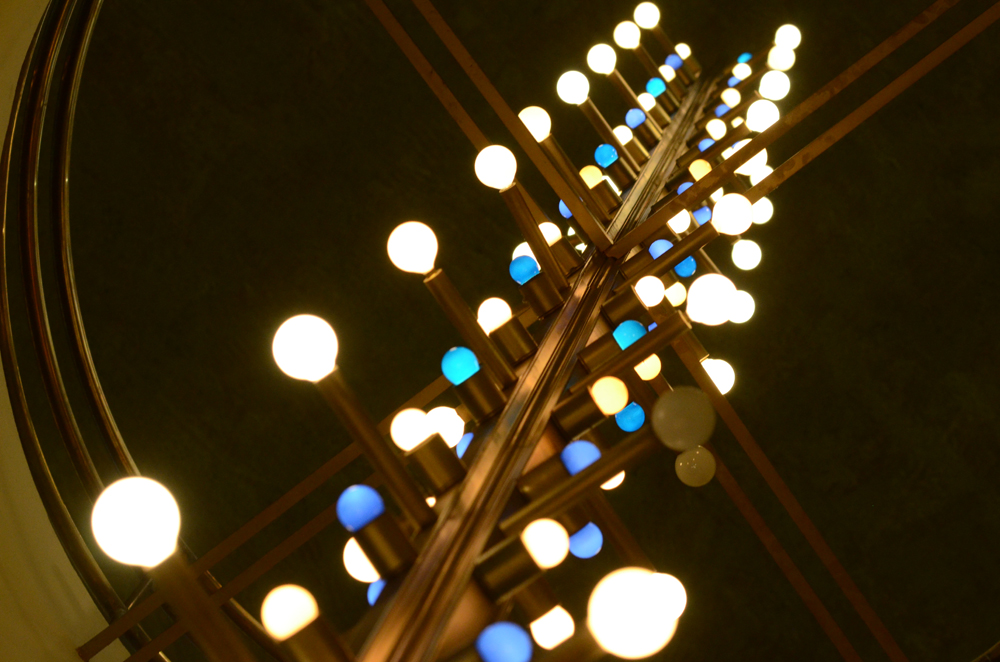
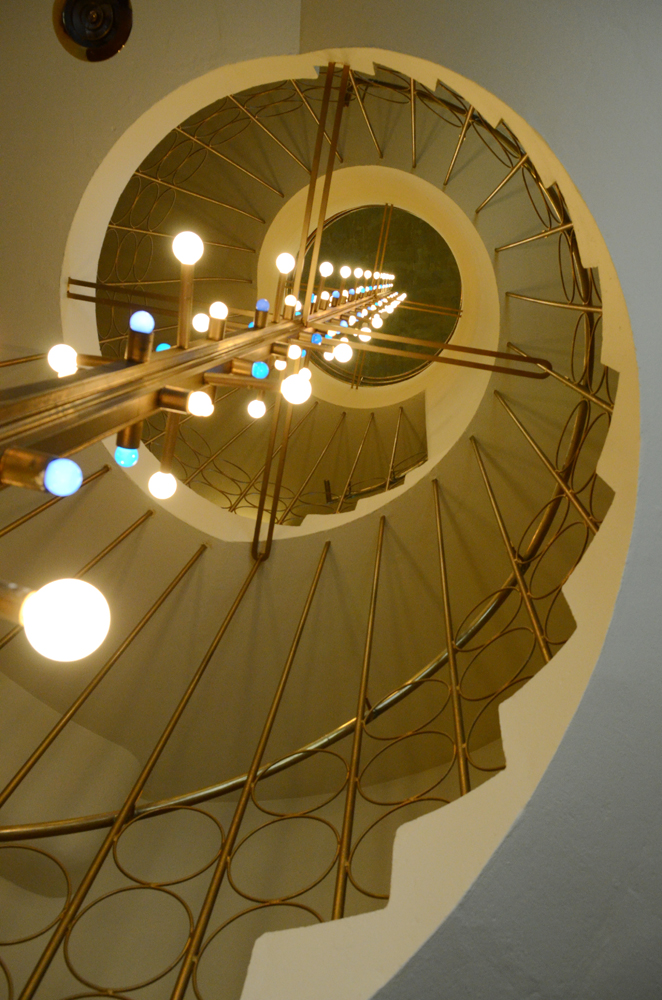
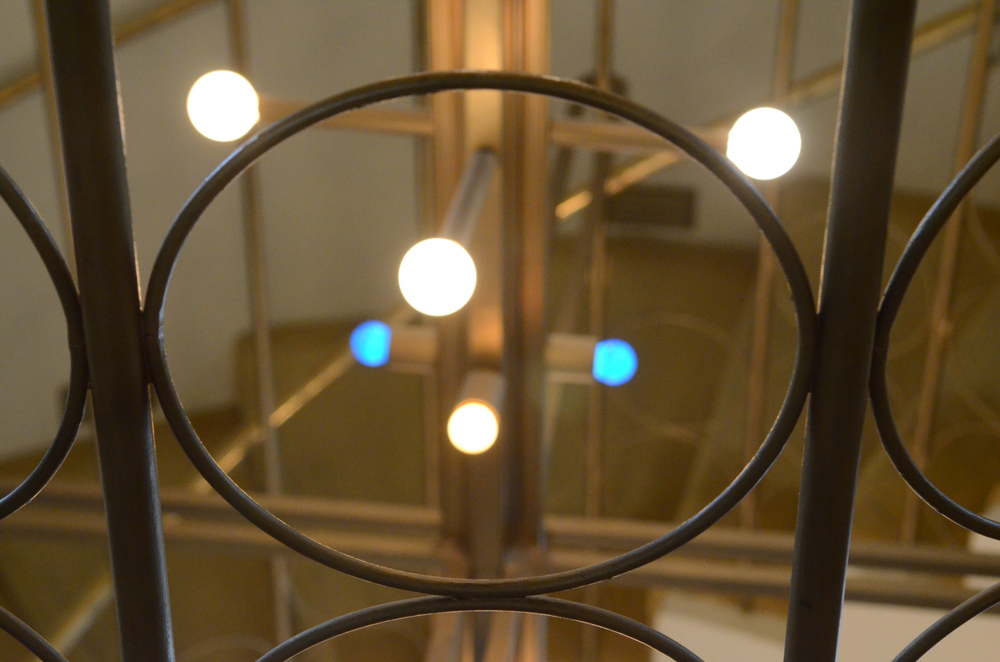
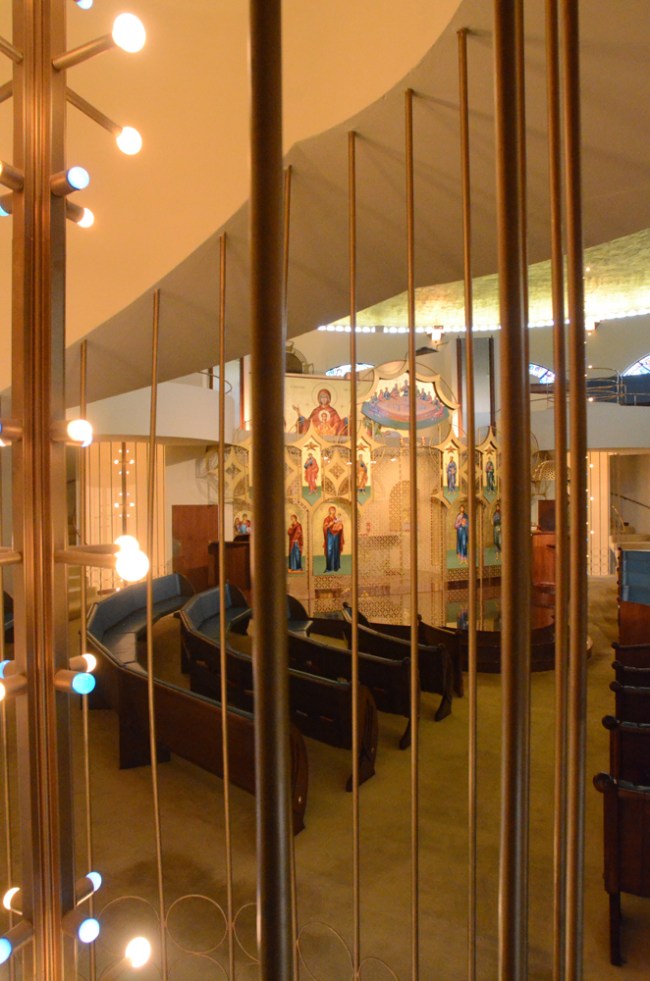
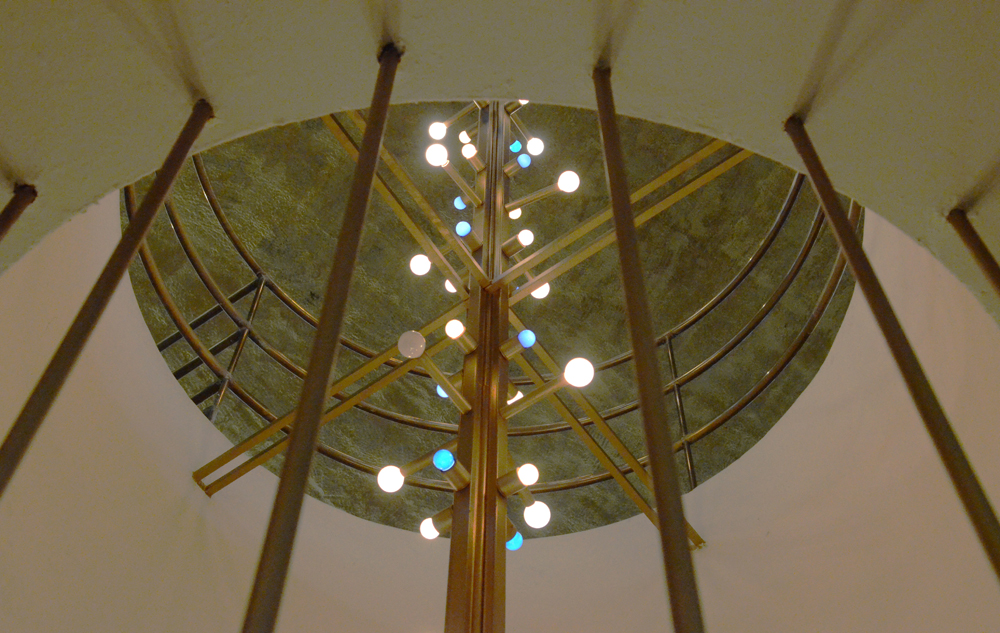
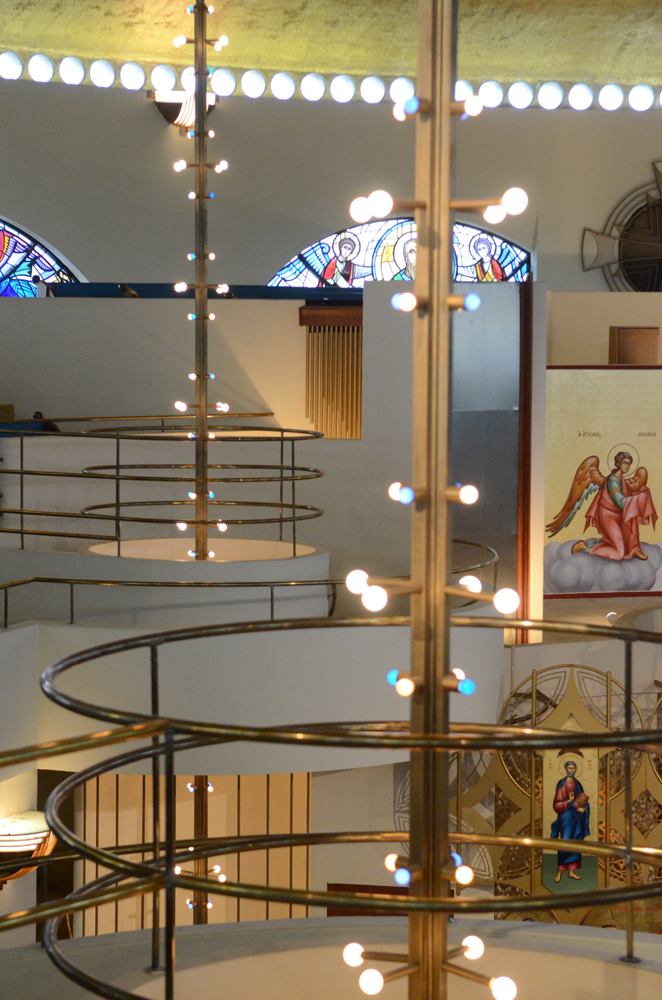
I have many “record shots” of the sanctuary, but the photos I am posting are photos of details in the church. One of the most important design features in the sanctuary are the three light poles in the stairwells. The three light poles represent the Holy Trinity. The white lights represent the stars, the blue lights the Virgin Mary.

Image

ImageImageImageImage

Image

Image

Cindy, my wife and extra set of eyes, noticed a resemblance between the sculptured ends of the pews and the statue of Nakoma at the SC Johnson Research Tower in Racine. Maria Pandazi, a member of the congregation and past president of Frank Lloyd Wright Wisconsin (www.wrightinwisconsin.org) explained to me that, “The sculptured ends of the pews are intended to represent the Christian symbol of the fish pointed downward (the ball being the tail).”

Image

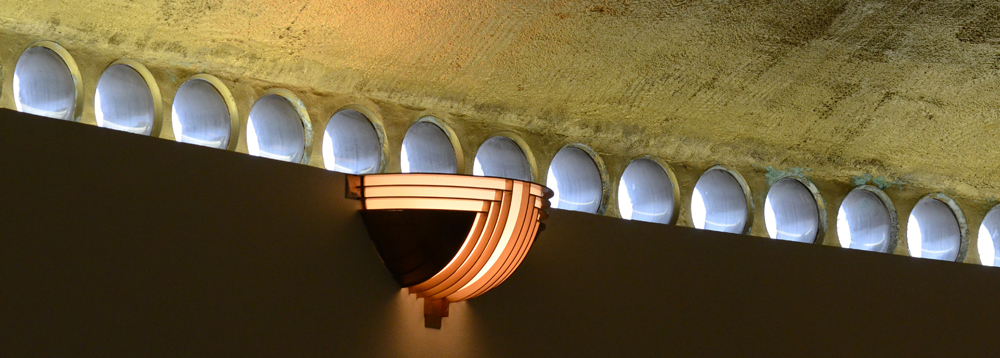
Natural light is supplemented by light fixtures below the dome:

Image

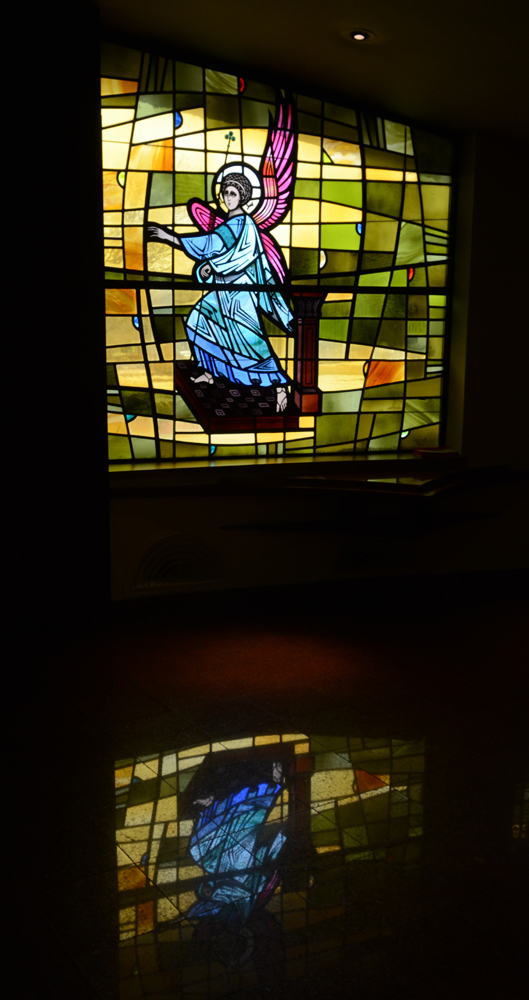
Wright’s windows were integral parts of his designs. There are art glass windows on either side of the front door. The first photo shows one of the windows and its reflection on the floor of the entry way.

Image

The second photo shows one of the windows viewed through the glass wall added at the entrance to the sanctuary after Wright’s death. He did not design those windows.

Image

Another significant change in the church was the removal of the icons which Eugene Masselink designed for the altar. The original icons are now displayed in the basement of the church:

Image

Image

Image

Image

Image

The next photos are exterior photos shot last summer…

Image

Image

Image

Image

Image

April 5 update: Hardy House Restoration

Photos and text (c) Mark Hertzberg

Image

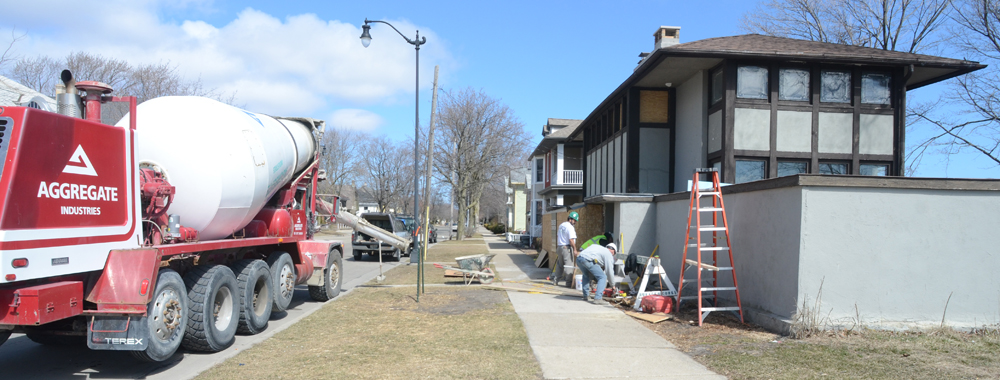
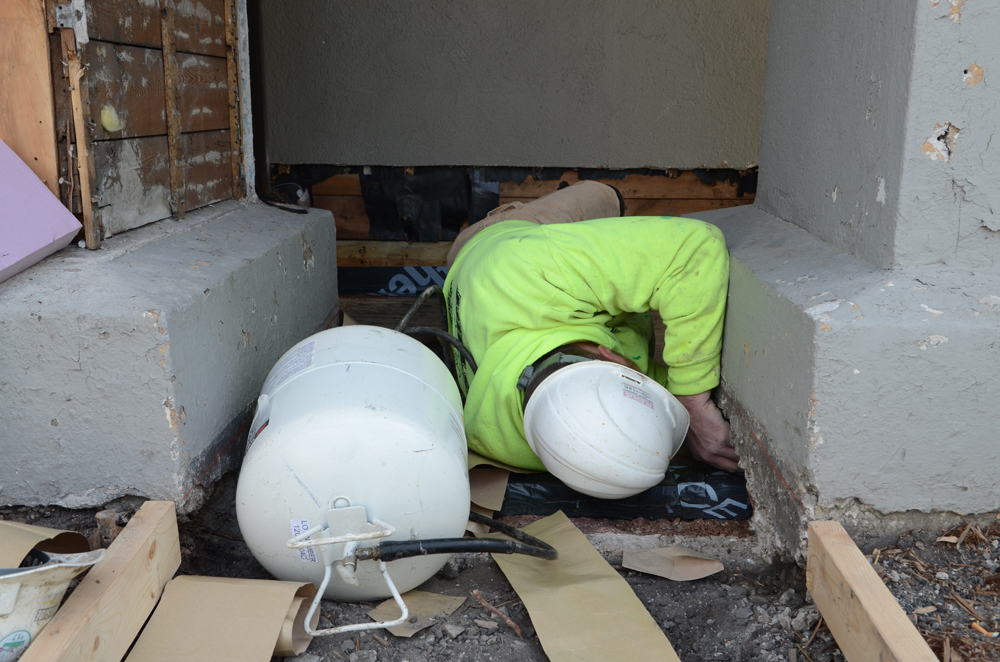
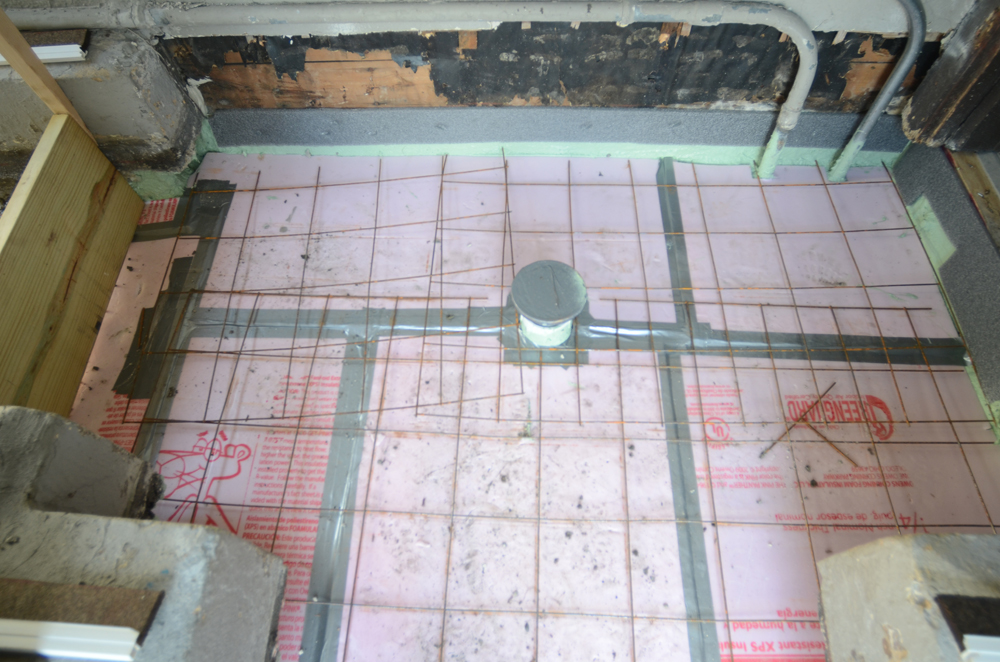
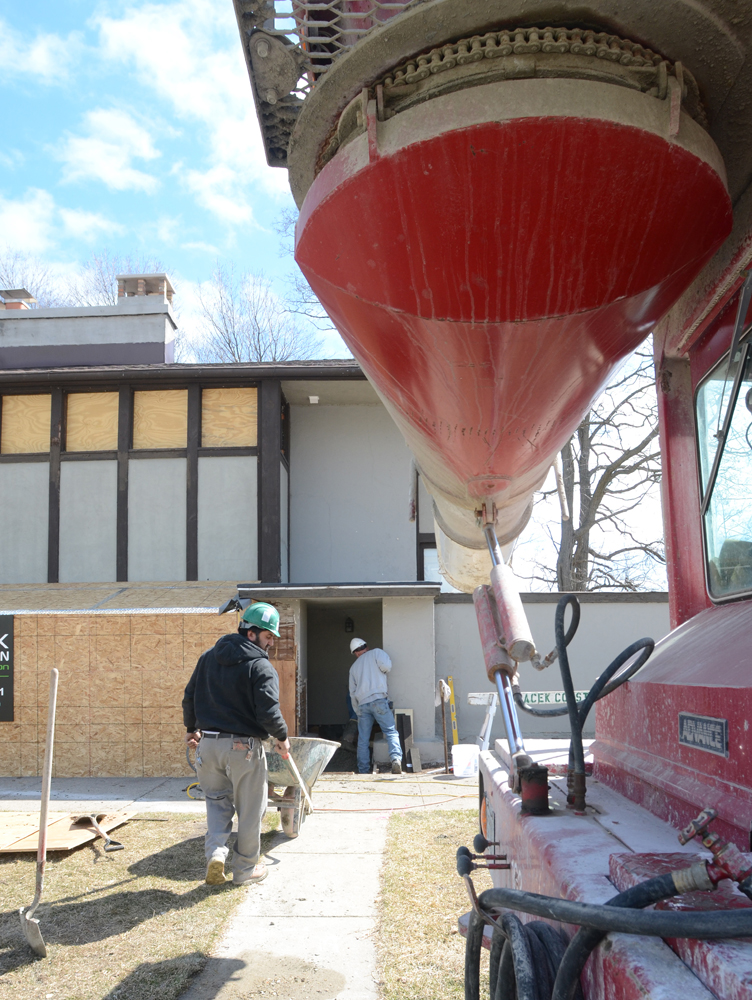
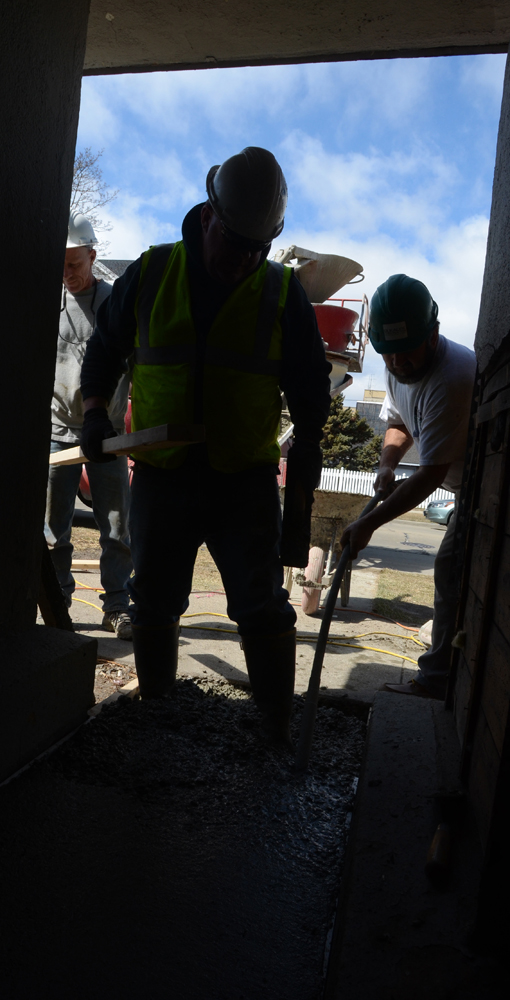
Restoration of the Thomas P. Hardy House continues at a fast pace with 90 visitors expected to tour the house April 27 (see previous post and http://www.wrightinwisconsin.org – reservations still available). Concrete was poured today at the north and south entry ways. The cantilevered concrete slab at the south door had caved in (photos in previous updates show daylight in the view looking up from the basement) so both the south and north entry slabs were replaced today.
Image

Image

Image

Image

Image

Image

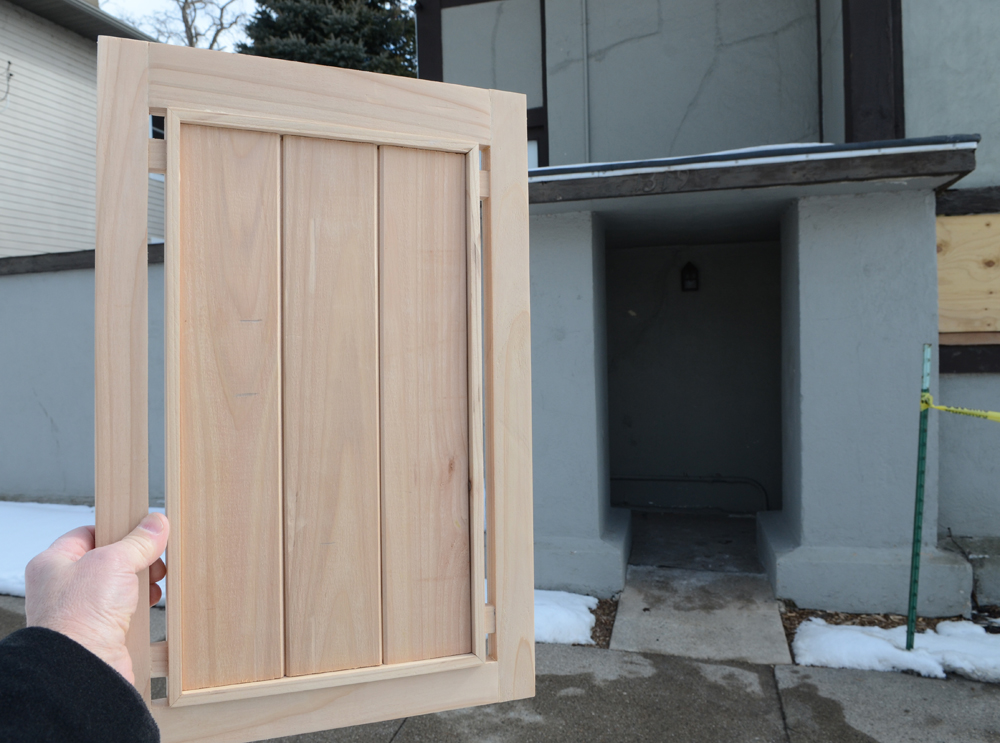
Construction of cedar gates, replicating the ones Mr. Wright put across the north and south entry ways when the house was built in 1906, is expected to begin soon. The original gates were removed by the third owners of the house (1947-1957). This is a model that Chad and Homer Nichols made of the gates they will build:

Image

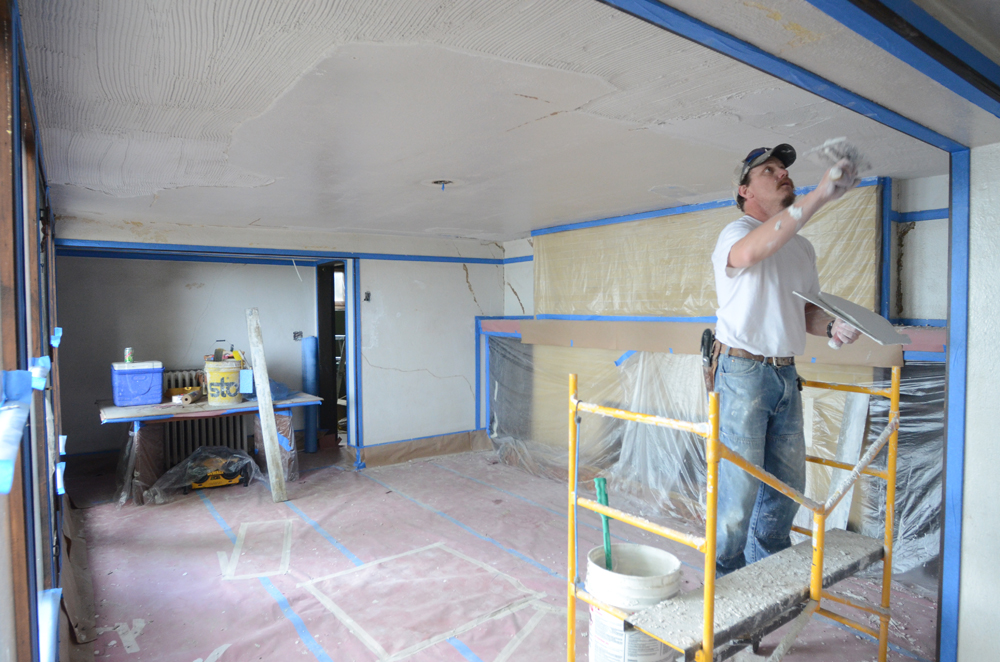
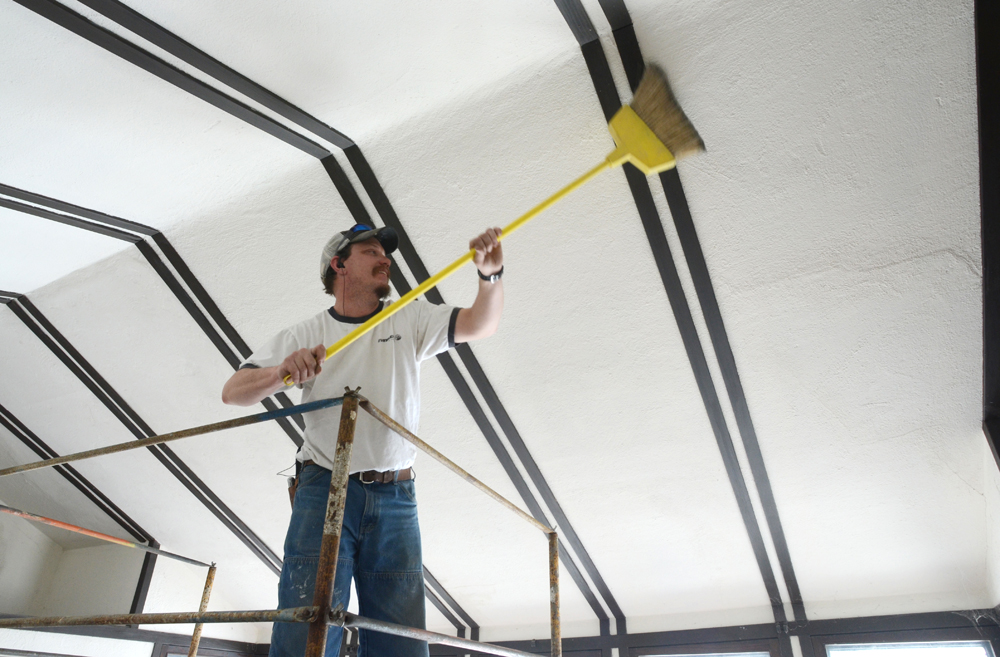
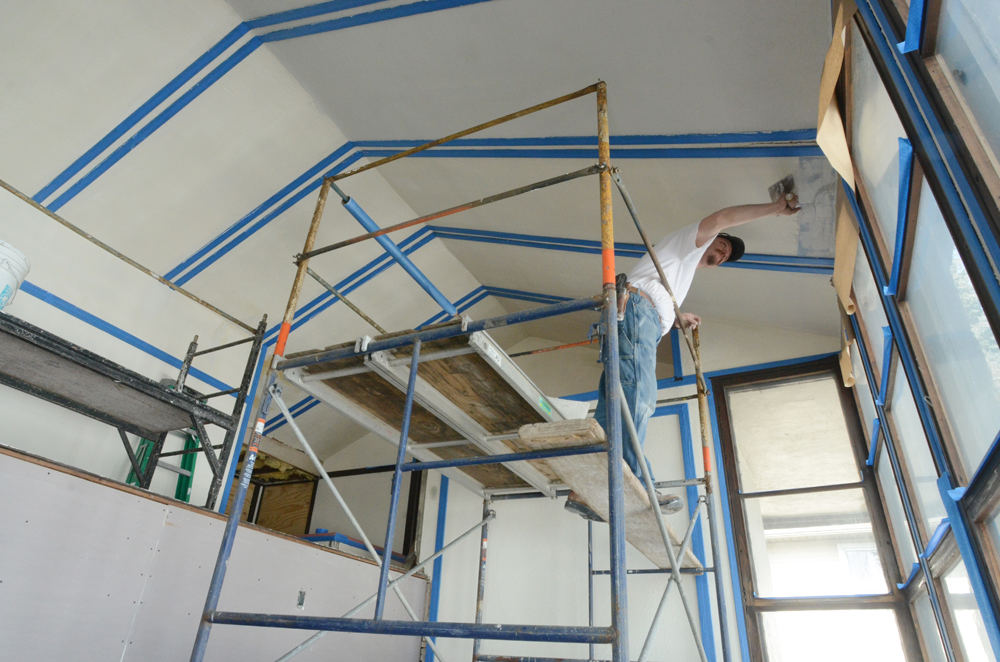
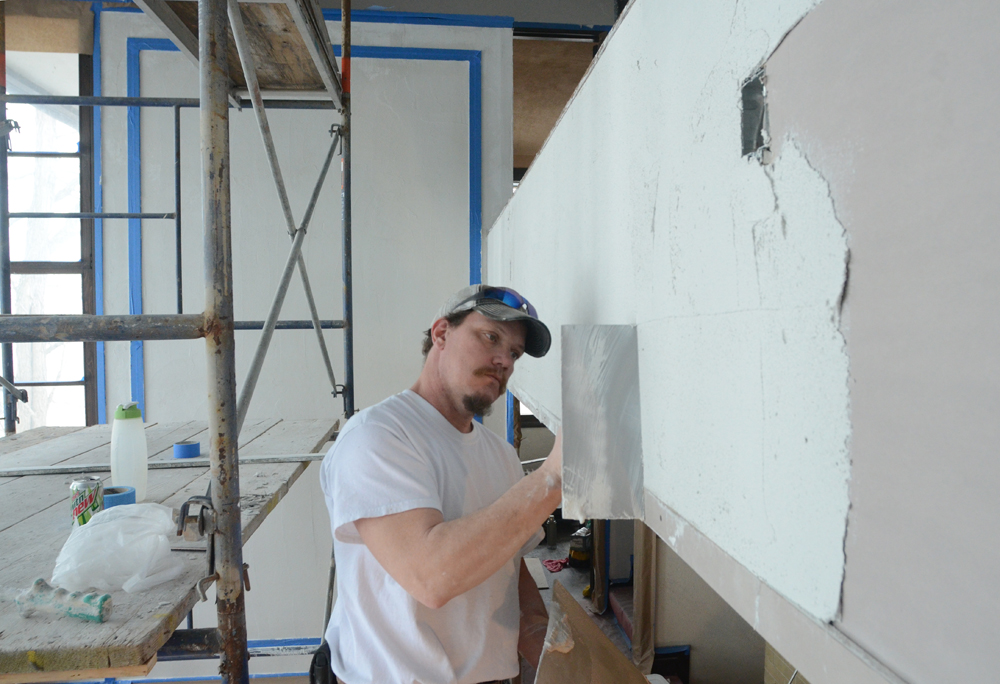
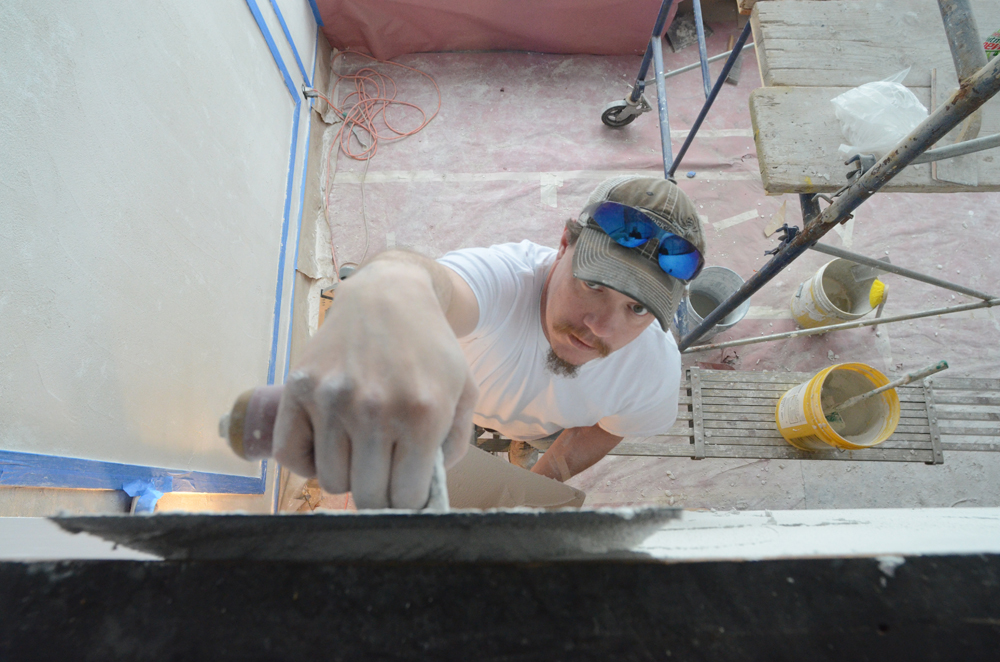
Paul Lemke, the plasterer, had a challenge building the scaffolding to work in the living room. It also took him several days to cover the cedar trim with blue masking tape…after he swept the cobwebs off the ceiling.

Image

Image

Image

Image

Image

Image

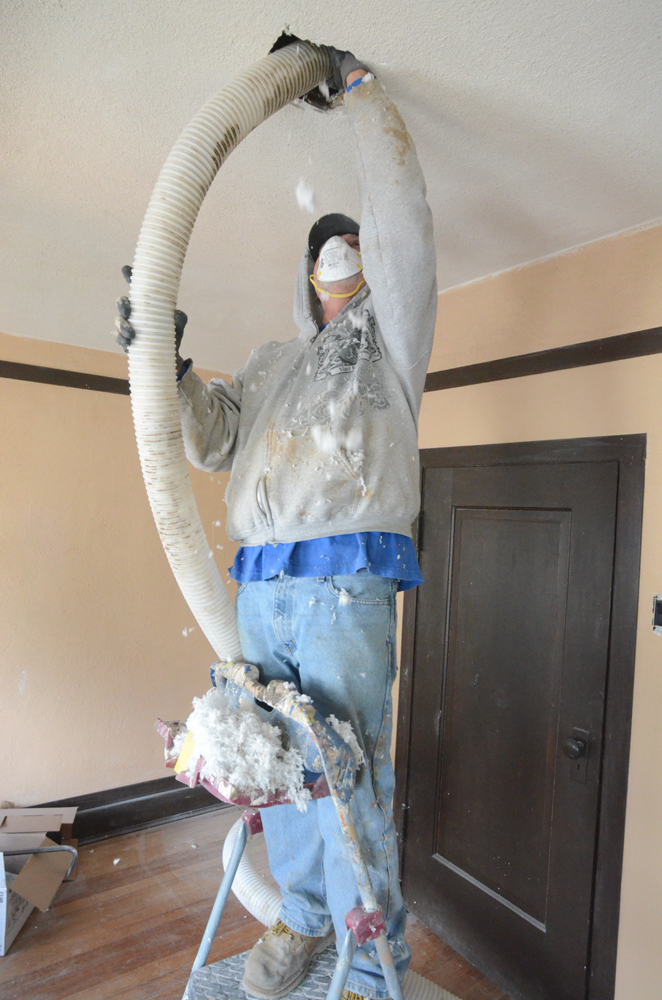
Paul thought he had finished the upstairs bedrooms several months ago…but then the insulation crew arrived a week ago and put holes in the ceilings. Paul will need to redo the ceilings.

Image

Image

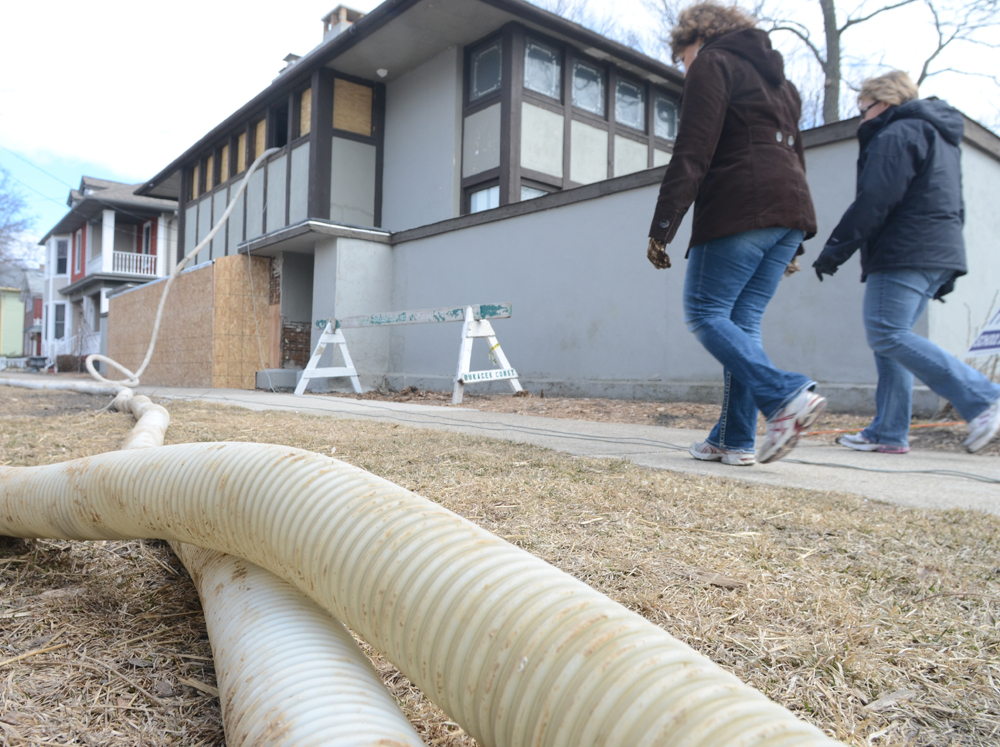
The most dramatic change in the exterior appearance of the house is the plywood shelter built around the entry hallway a few weeks ago. Gordon Hudson and Kevin Grant built the shelter before removing the upper portion of the exterior hallway wall. They will use photos taken of the hallway before restoration began in September to guide them as they rebuild the wall to make sure it will last another 100 years.

Image

Image

Image

Image

We look forward to seeing many of you at the April 27 tour, which benefits Frank Lloyd Wright Wisconsin. Tours are limited to 90 people, by reservation for specific time slots between 9:30 and 2:30 p.m. Reservations are accepted by telephone only, at 608-287-0339. (I am on the board of the organization, and I will be leading the tours.)

New Wright exhibition coming to SCJ

(c) Mark Hertzberg

The Frank Lloyd Wright At Home exhibition in Fortaleza Hall on the SC Johnson campus in Racine is expected to reopen the first weekend in May. The first year’s exhibit, about his Prairie-style work, was dismantled a few weeks ago. It had opened last June. The second phase of the exhibition is about his Usonian homes. It will be up for about 10 months until the changeover for a still-to-be determined third  phase of the exhibition.

The photos below are of workers from the joint curators, SC Johnson and the Milwaukee Art Museum, and from Merchants Moving and Storage in Racine, taking down the Prairie-style artifacts. Many of the artifacts are on loan to SCJ under a unique 99-year loan from the Frank Lloyd Wright Foundation. I expect to preview the Usonian exhibition for you in a few weeks.

Image

ImageImageImageImageImage

Hardy Tour: Two additional notes

Reservations are limited to 90 people.

The photo credit for the historic photo was lopped off due to an electronic glitch. The photo was taken by Anne Sporer Ruetz, whose parents were the second owners of the house. She was five when they moved there in 1938, and photographed the house until they sold it in 1947.

Open House at the Hardy House on April 27!!!

The first tours of Frank Lloyd Wright’s Thomas P. Hardy House in decades will be held Saturday April 27. The house, which is perched on a bluff above Lake Michigan in Racine, Wisconsin, has been undergoing significant restoration since Eugene Szymczak bought it in September (photos of the restoration are in two previous posts, below).

The tours benefit Frank Lloyd Wright Wisconsin (www.wrightinwisconsin.org), thanks to Szymczak’s generous offer to open his house to the organization for this fund-raiser (Note: I am a board member of the group). The cost is $100 for members, $140 for non-member guests. I will lead the tours, which last a half hour. I am the author and photographer of Frank Lloyd Wright’s Hardy House (Pomegranate, 2006). The Racine Art Museum will be selling copies of the book and my Wright in Racine at the event.

Tours are for specific time slots between 9:30 and 2:30 p.m. Reservations are accepted by telephone only, at 608-287-0339. If you want to add to your Frank Lloyd Wright Racine experience, consider also making a reservation to see Wright’s SC Johnson Administration Building five blocks away, and visit the permanent Wright exhibition in Fortaleza Hall on the SC Johnson campus: http://www.scjohnson.com/en/company/visiting.aspx

Ruetz Hardy photos

Sub basement</p>
<p>10/19/2012</p>
<p>Contact:  Erin Mirabella

(c) Mark Hertzberg with photo above by Anne Sporer Ruetz (1940s)

Hardy House update

Photos and text (c) Mark Hertzberg

Step inside Frank Lloyd Wright’s Thomas P. Hardy House in Racine with me to get an overview of the restoration project, since our last visit to the house in November…

Image

Image

Gene Szymczak become the seventh steward of the house in September. He is tackling the restoration from the inside first. Some work is the fun arguably cosmetic stuff, other work is the serious task of addressing some structural issues. Let’s look at the fun stuff first.

The house originally had two pocket (sliding doors), on either side of the entry hall. The entry ways to the doors had wood gates across them. The third owners of the house (1947-1957) took out the pocket doors because they would ice up. We do not know who removed the gates. Anne Sporer Ruetz, whose parents bought the house in 1938, took this picture of her friend Mary Hill putting on her roller skates in front of one of the gates:

Image

Chad Nichols, a local master carpenter, has measured the entry ways and will use Anne’s photos to help him recreate the gates for Gene.

ImageThe pocket doors will be trickier, but the original mechanisms were found two weeks ago. The hardware for the north door is now on the living room floor, the hardware for the south door is still mostly in concrete in the doorway (although it is hanging down):

ImageImage

The living room balcony was deflected. The plaster face was removed so the balcony could be leveled. Electric wiring found on the face of the balcony tells us that there may once have been two light fixtures on it. Anne Sporer Ruetz and Mary Hill, who often played in the house, have good memories for details, but they do not recall the lights. We surmise that Mr. Hardy removed them at some point, or else while they were wired, they were never installed.

Wil and Eddie Sunderland remove trim from the balcony:

Image

Image

Paul Lemke does magnificent plaster work. He has been working in the bedrooms. He will replaster the balcony, front hallway, and the two-story living room.

Image

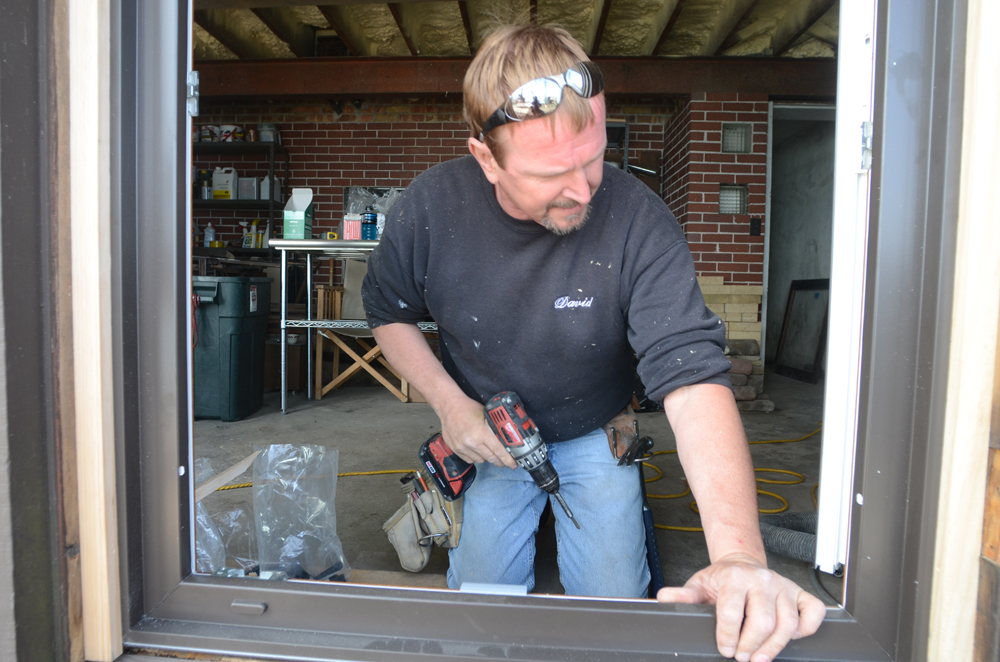
The bathroom originally had doors at both the south and north ends. The south door was walled over when the bathroom was remodeled in the late 1940s (the tub had 1949 stamped in the bottom). Gene wants that door replaced so that people can look out Mr. Wright’s leaded glass windows as they exit the bathroom from either end. The bathroom is getting a complete makeover. First we see Ed Sunderland taking it down to brick, then we see plumber Mark Derouin working in the space to remove cast iron pipes as workers Kevin Grant and Gordon Hudson work below him framing for a new bathroom floor, above the entry hallway:

Image

Image

The house has some structural challenges. They are not where they might be expected, on the lake side of the house. There is no evidence of the house being unstable as it sits on the bluff above the lake. Rather, there are problems on the west or Main Street side of the house. Some of the concrete by the entry ways is cantilevered and has no support in the basement. Daylight is visible from the basement as one looks up at the concrete pad by the south door. Some wood in the basement has rotted, further eroding support for other concrete. Four permanent metal posts are being put in the hallway below the kitchen, a space which Mr. Wright called the Heater Room, to help stabilize the west side of the house. The post shown is a temporary one, but this photo illustrates the problem.

Image

The leaded glass windows on the Main Street elevation of the house were removed by Grant and Paul Harvey to ensure that they did not crack when the jacks in the Heater Room were tightened during the stabilization of the Main Street elevation:

ImageImageImage

Grant marked pieces of trim as he removed them from the upstairs hallway so they can be replaced properly:

ImageImage

Sometimes there seem to be some steps back that offset the steps forward, other times there is a burst of steps forward. Gene has undertaken a project that is not easy, but the house is in good hands, both in terms of him and the people restoring it. There is no timetable for completion of the work, because that would be realistic. Substantial exterior work, like the stucco and replacing wood trim will wait until after the interior work is finished.

This will be Gene’s home. It is not a public building that must be completed by a certain deadline. Most of the house will be put back together they way Gene bought it, once repairs are completed. The kitchen and bathroom will be more contemporary, to reflect that 1319 Main Street will be his home, not a house museum.

What's Next? Meeting<br /><br /><br /><br />
FOR IMMEDIATE RELEASE</p><br /><br /><br />
<p>10/19/2012</p><br /><br /><br />
<p>Contact:

I leave you with this picture of Gene smiling as he gets his first look at Paul Lemke’s plaster work in the south upstairs bedroom in January, before a work meeting to plan the next stages of the restoration.