Kentuck Knob-The Wright House “near Fallingwater”

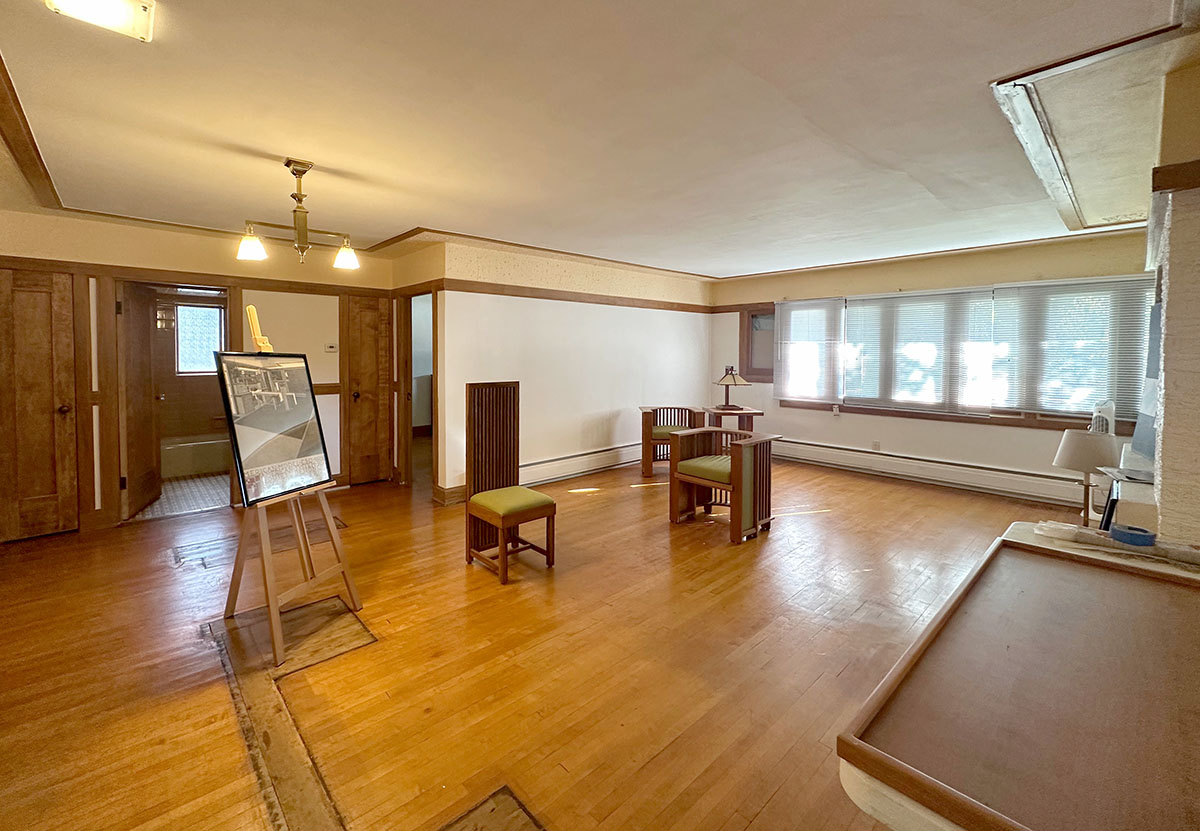
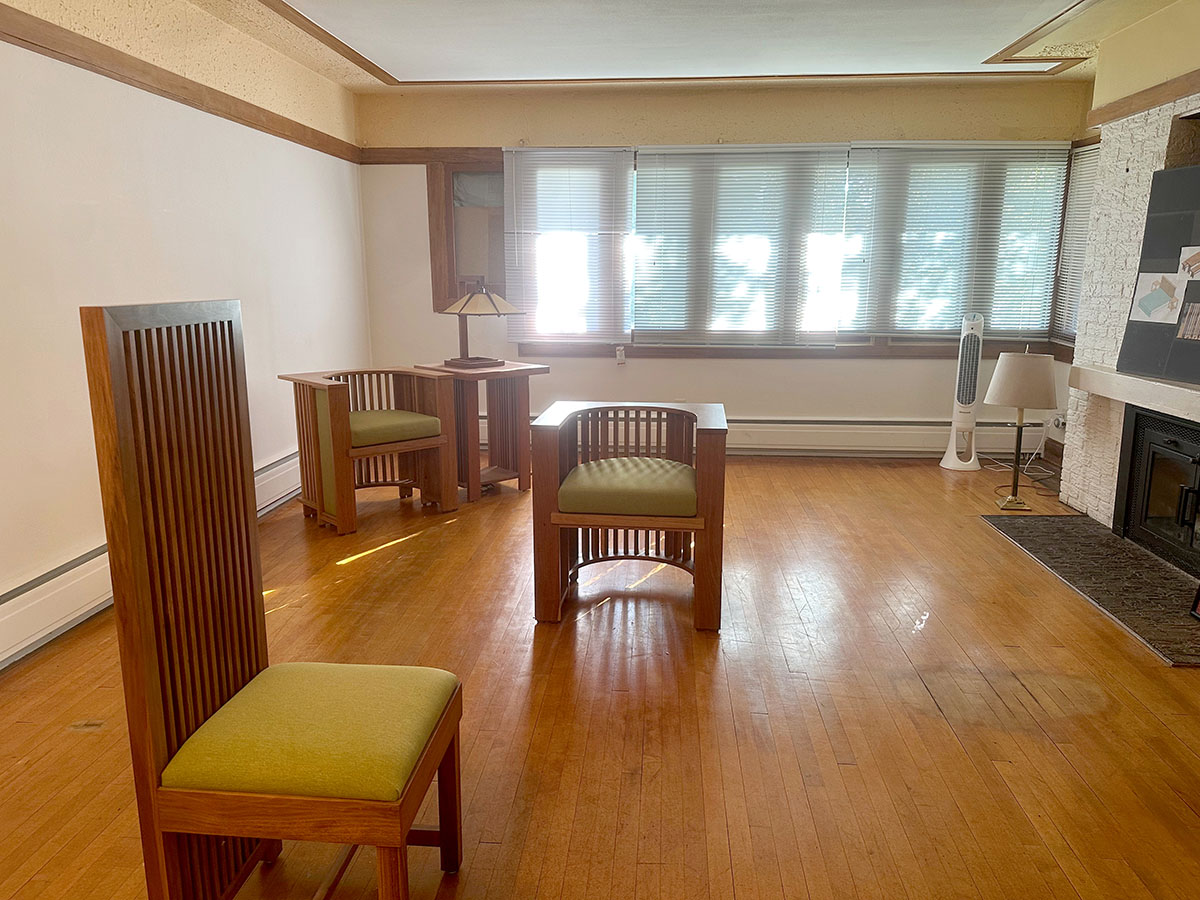
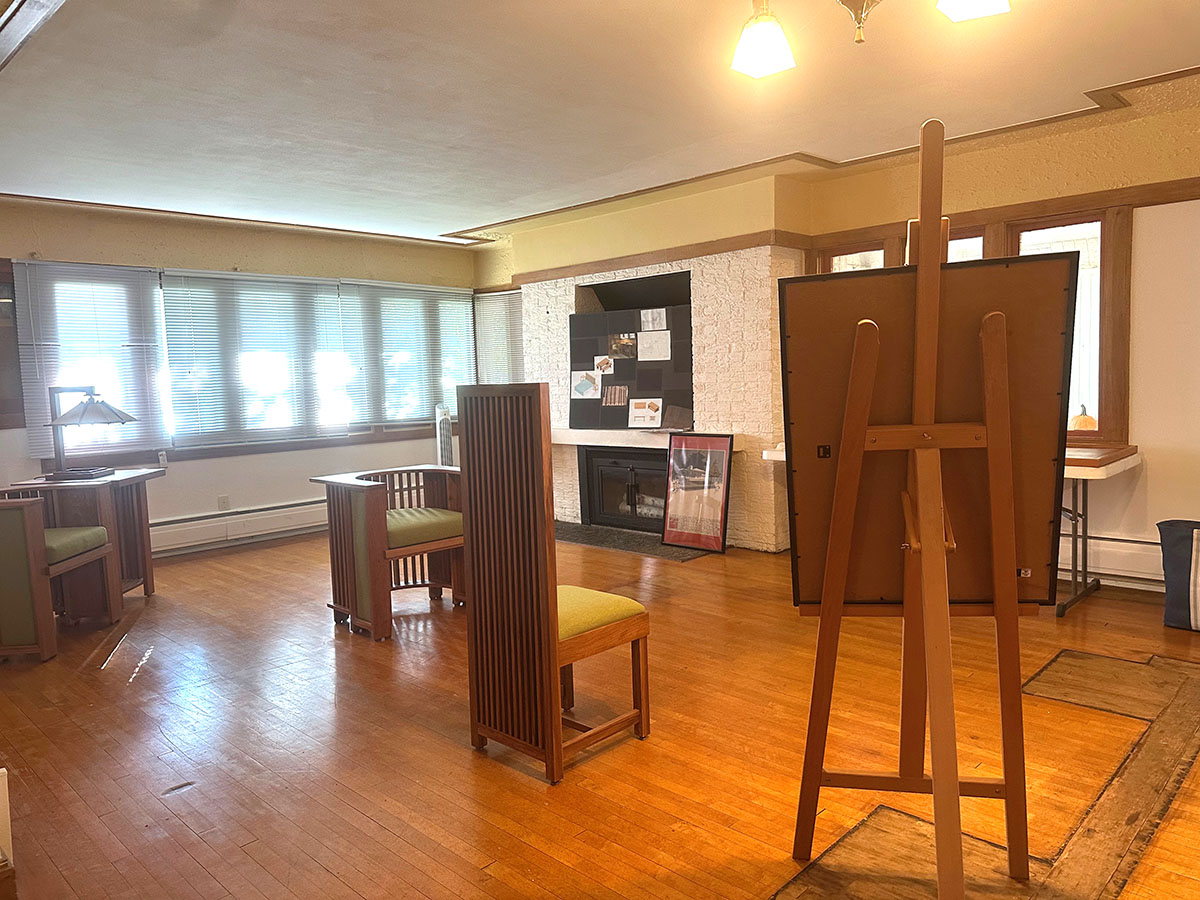
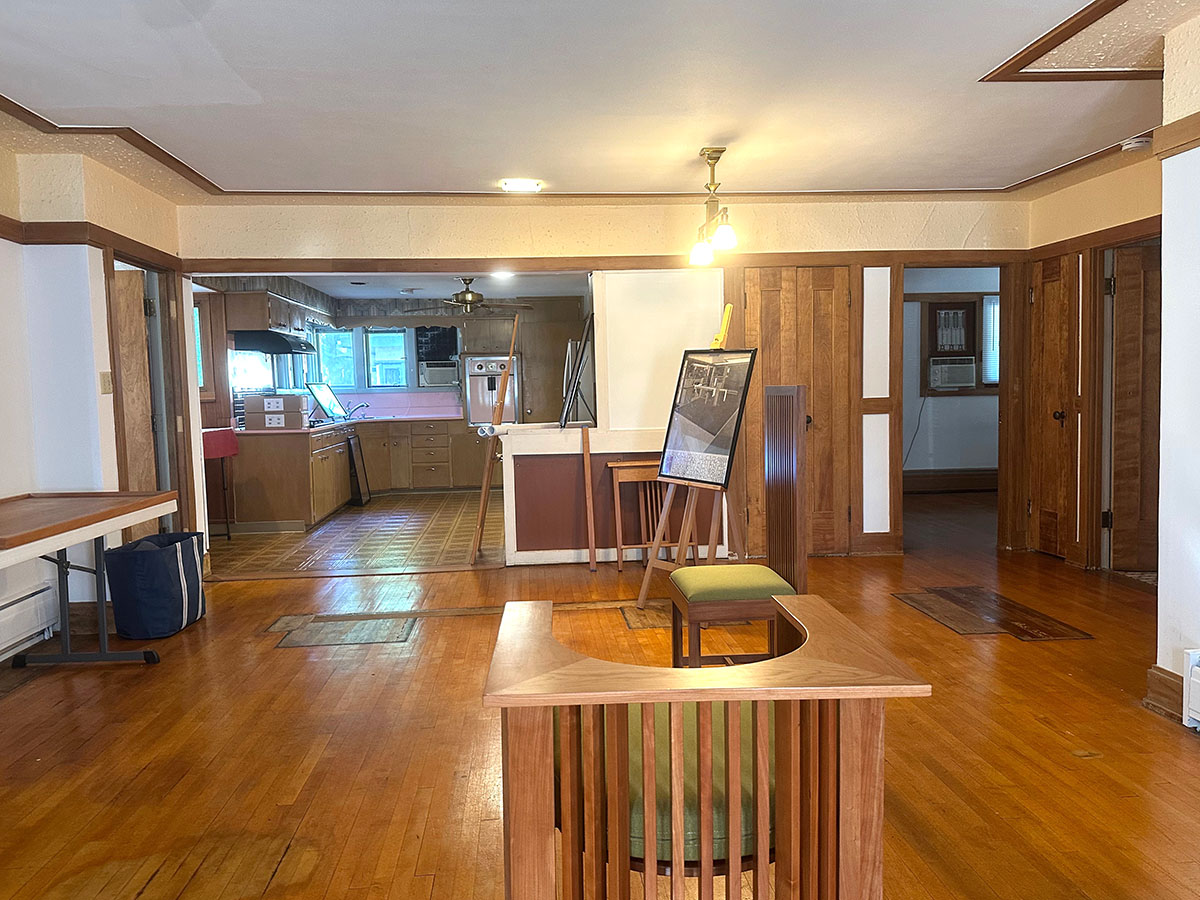
© Mark Hertzberg (2025)

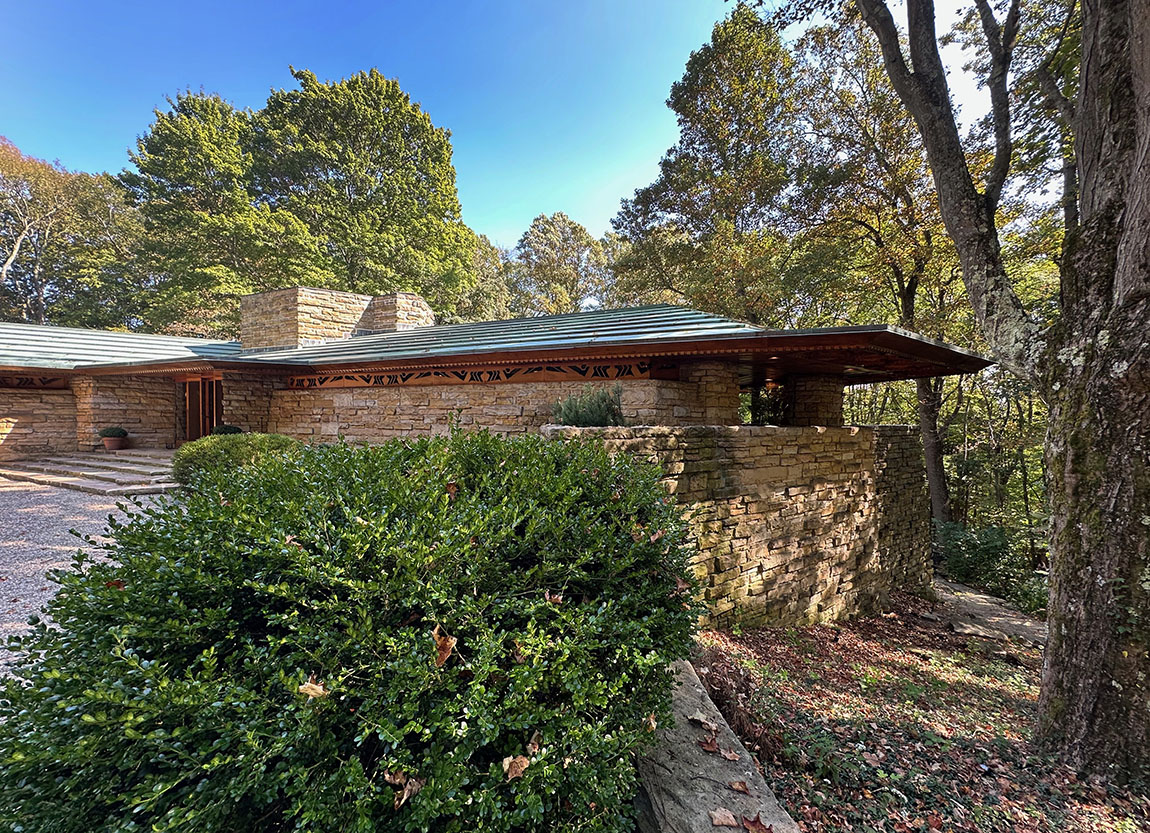
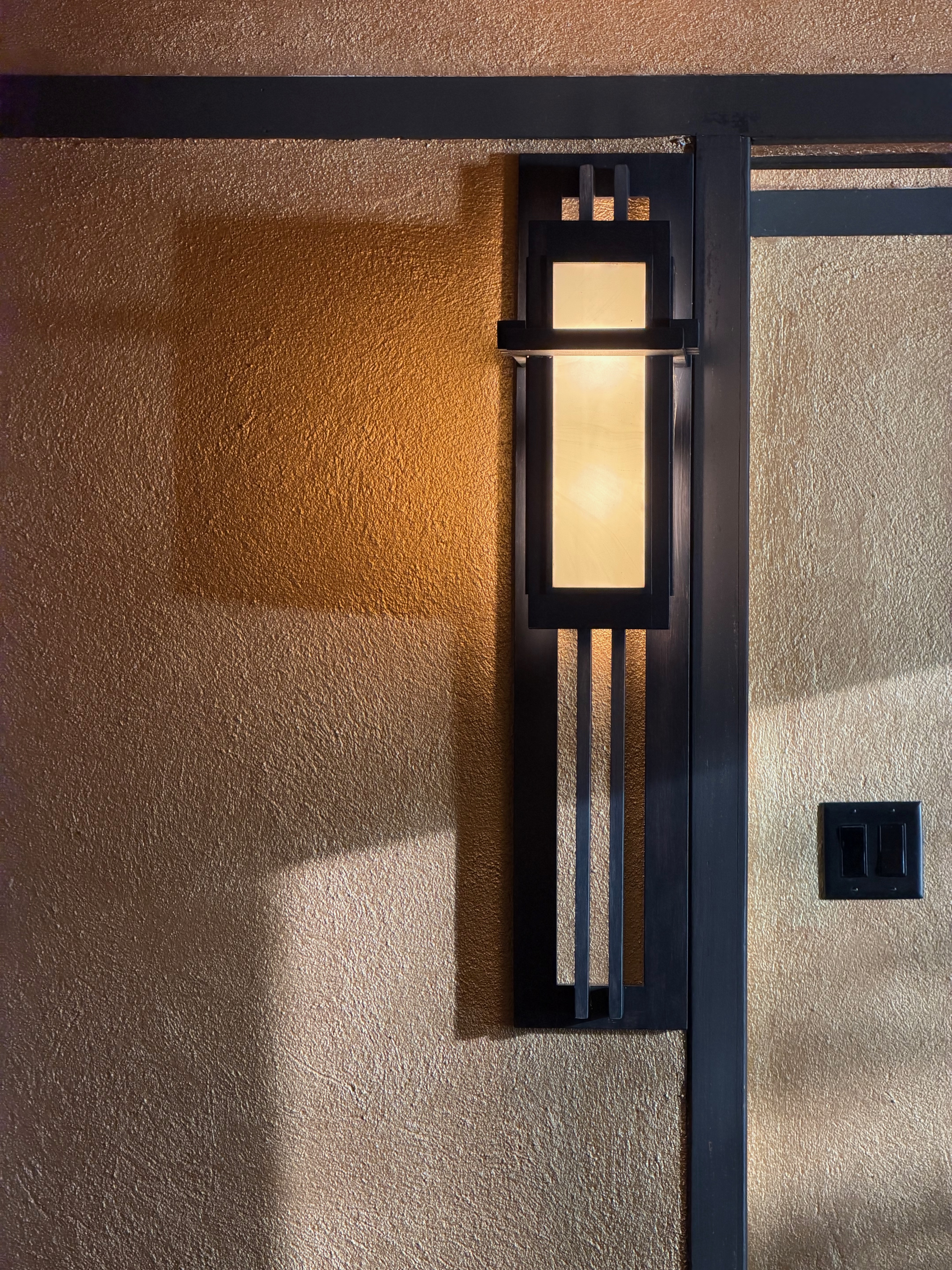
LR Kentuck Knob 9.18.25 001.jpg

This essay begins with a confession. In 1999 Cindy and I went to Fallingwater. I was interested in Frank Lloyd Wright’s work, but I had not done any research about it. I had photographed his work in Racine, Wisconsin, where we live, and I had, of course, heard about Fallingwater. So, why not a road trip there? We saw a brochure for something called “Kentuck Knob” but didn’t pay any attention to it. Neither our docent or ticket – seller at Fallingwater asked if we knew that there is another house by Wright in the neighborhood. And so it was until our next visit to Fallingwater in March 2010 that we knew I blew it in 1999 by not picking up that Kentuck Knob brochure from one of those ubiquitous racks with myriad travel brochures that I tend to just walk past at highway rest stops and in hotel lobbies.

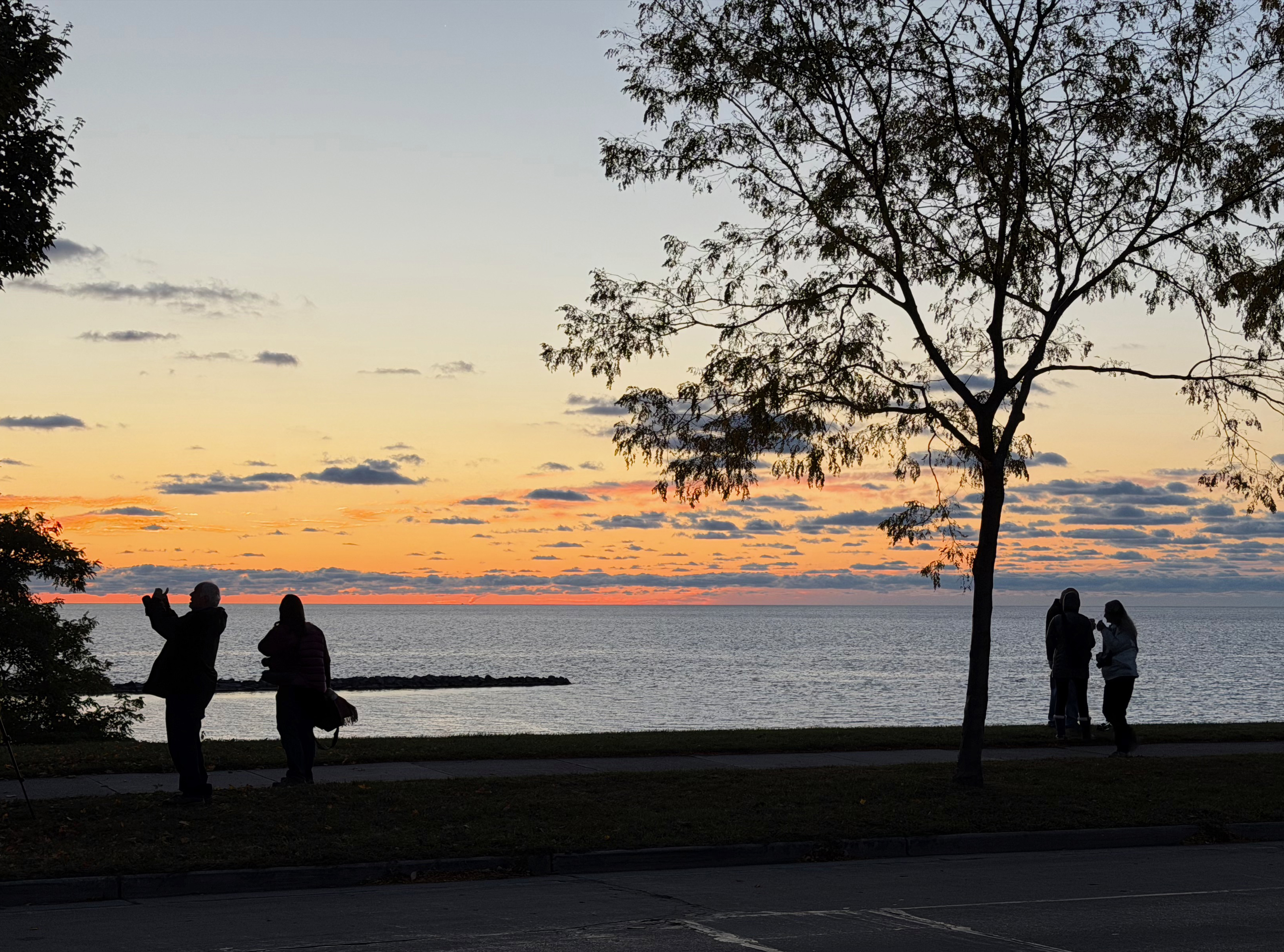
LR Kentuck Knob 9.18.25 006.jpg

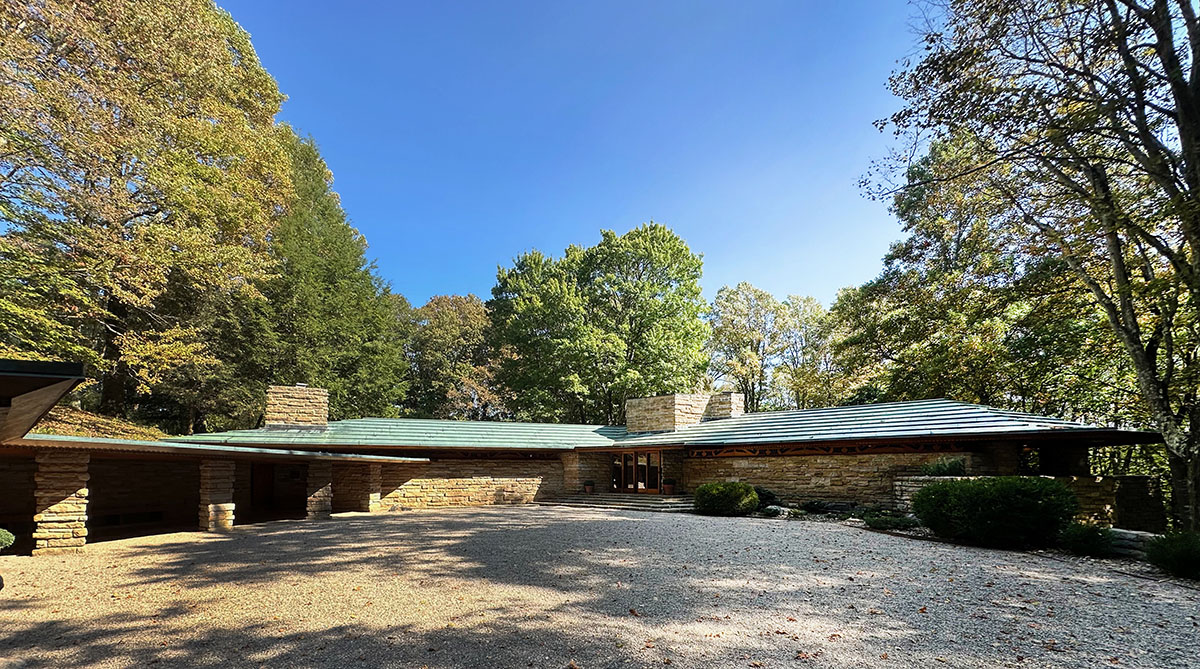
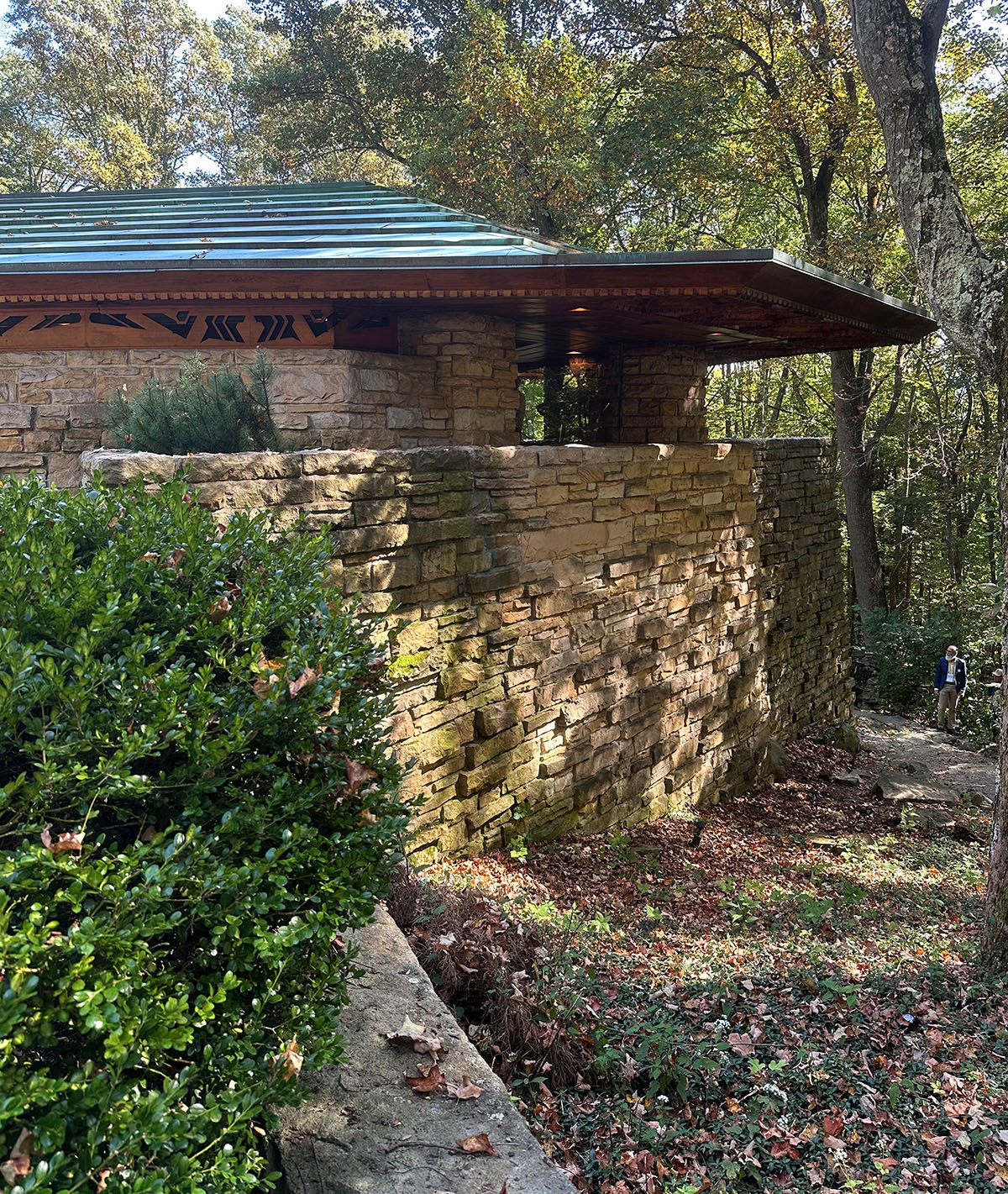
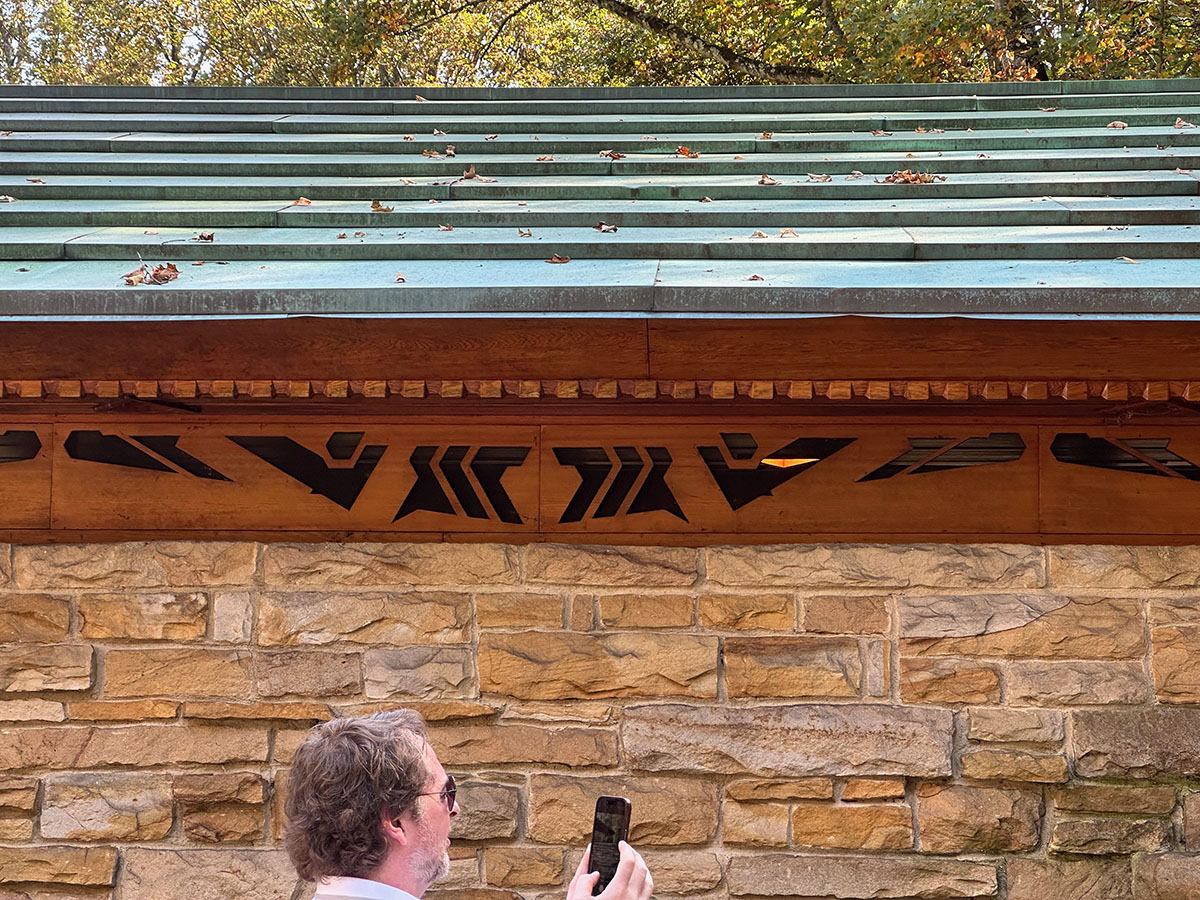
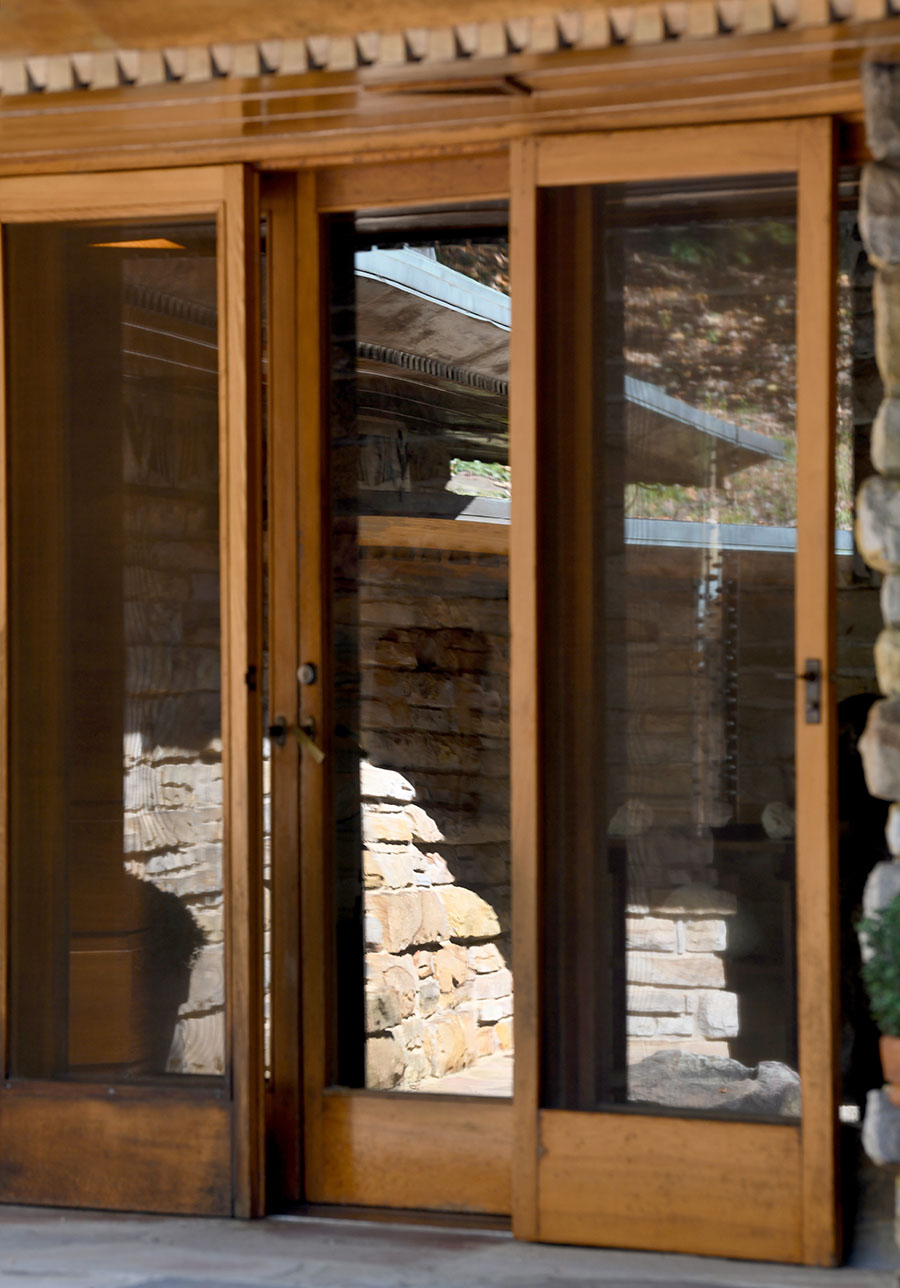
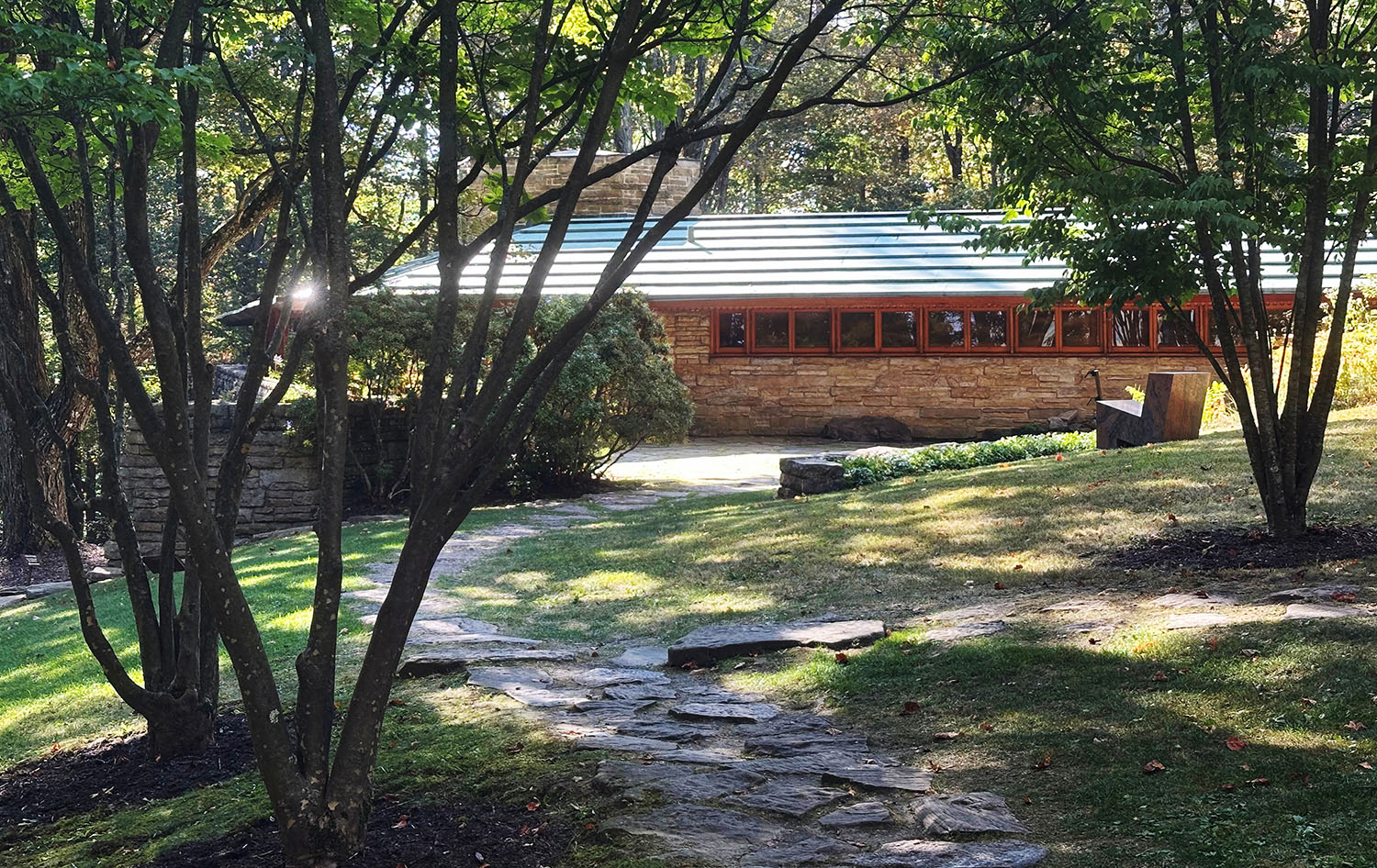
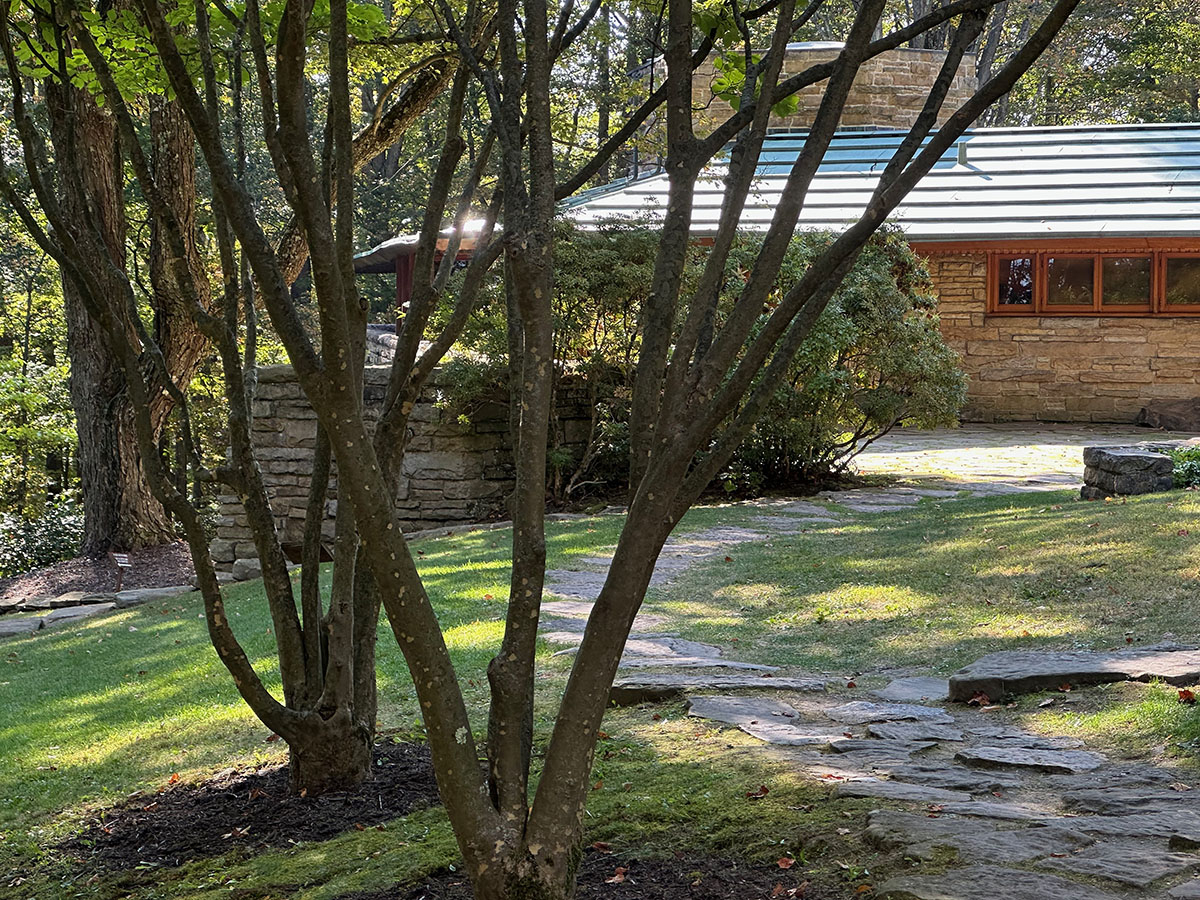
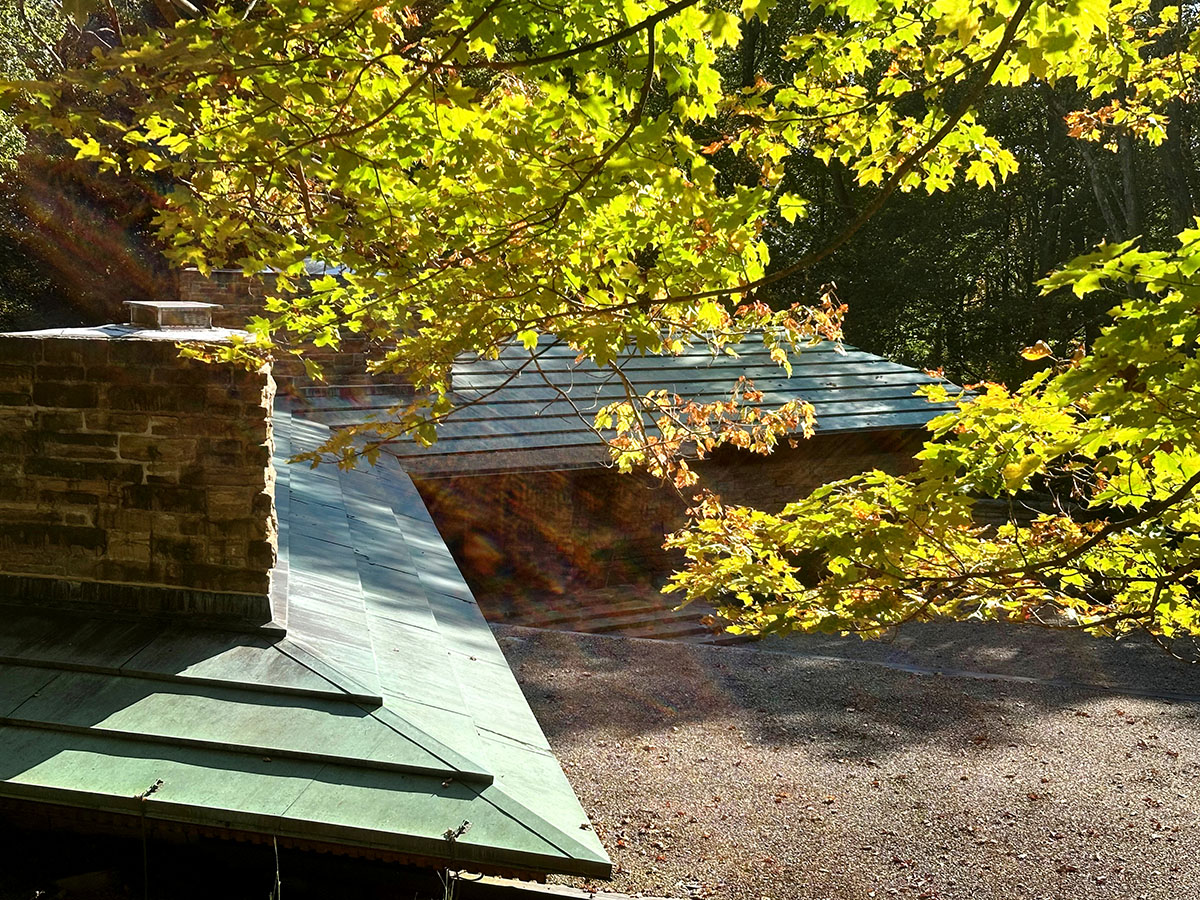
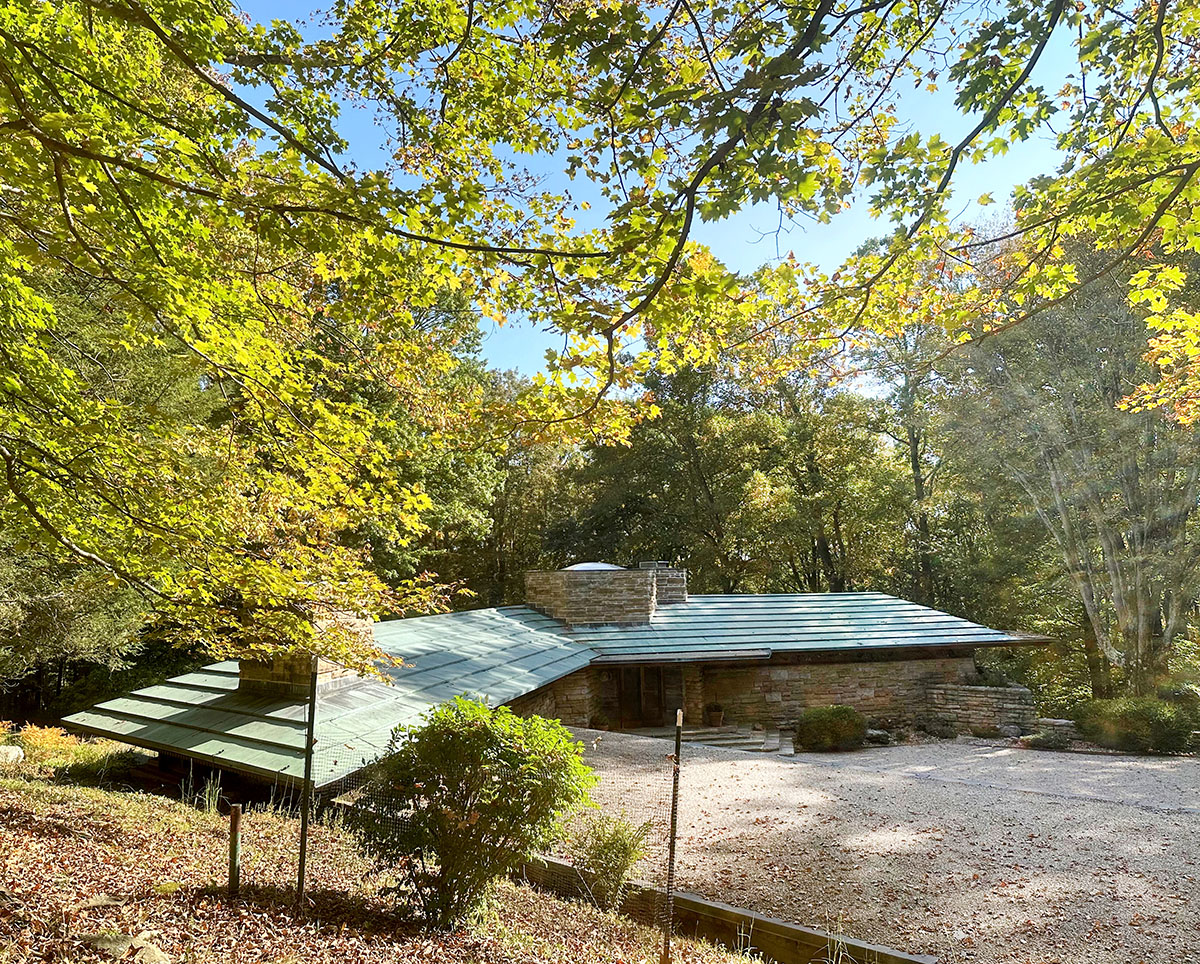
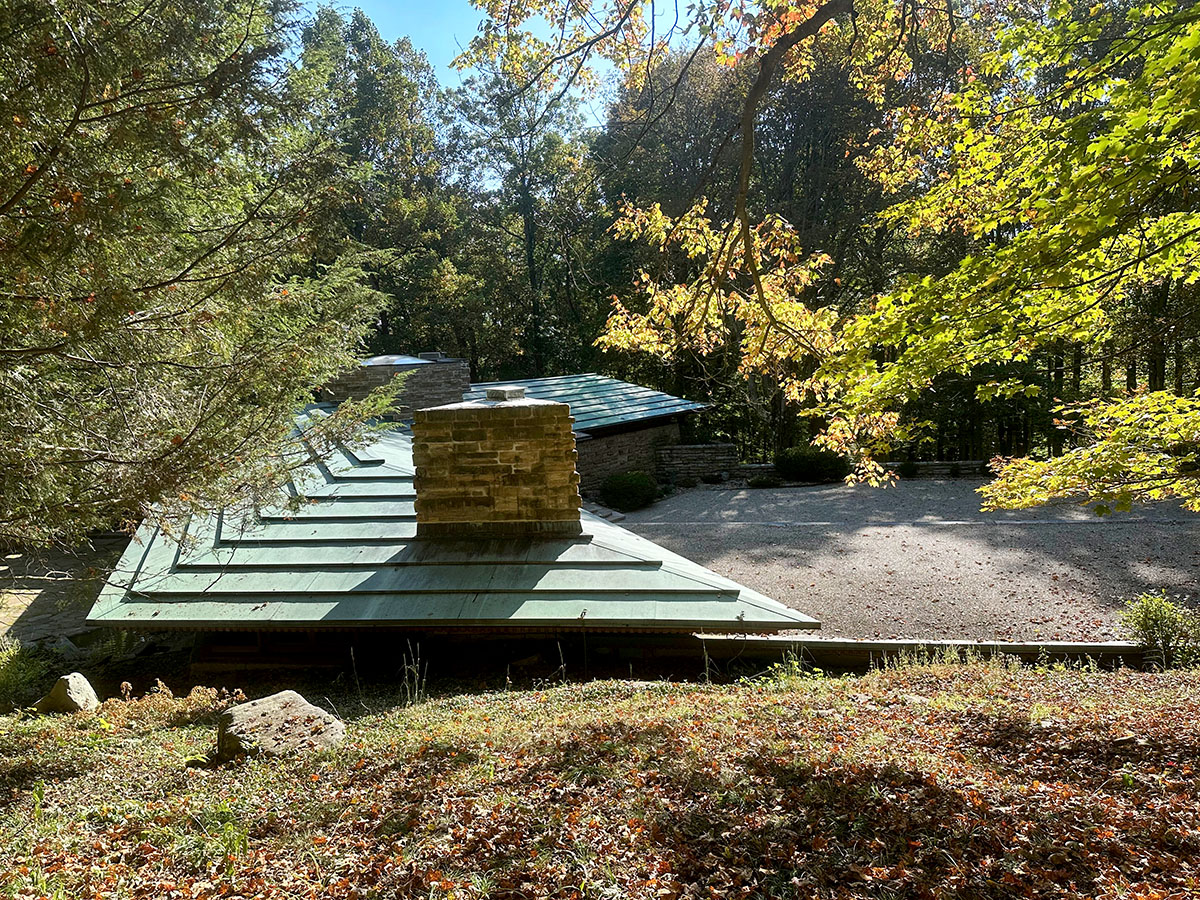
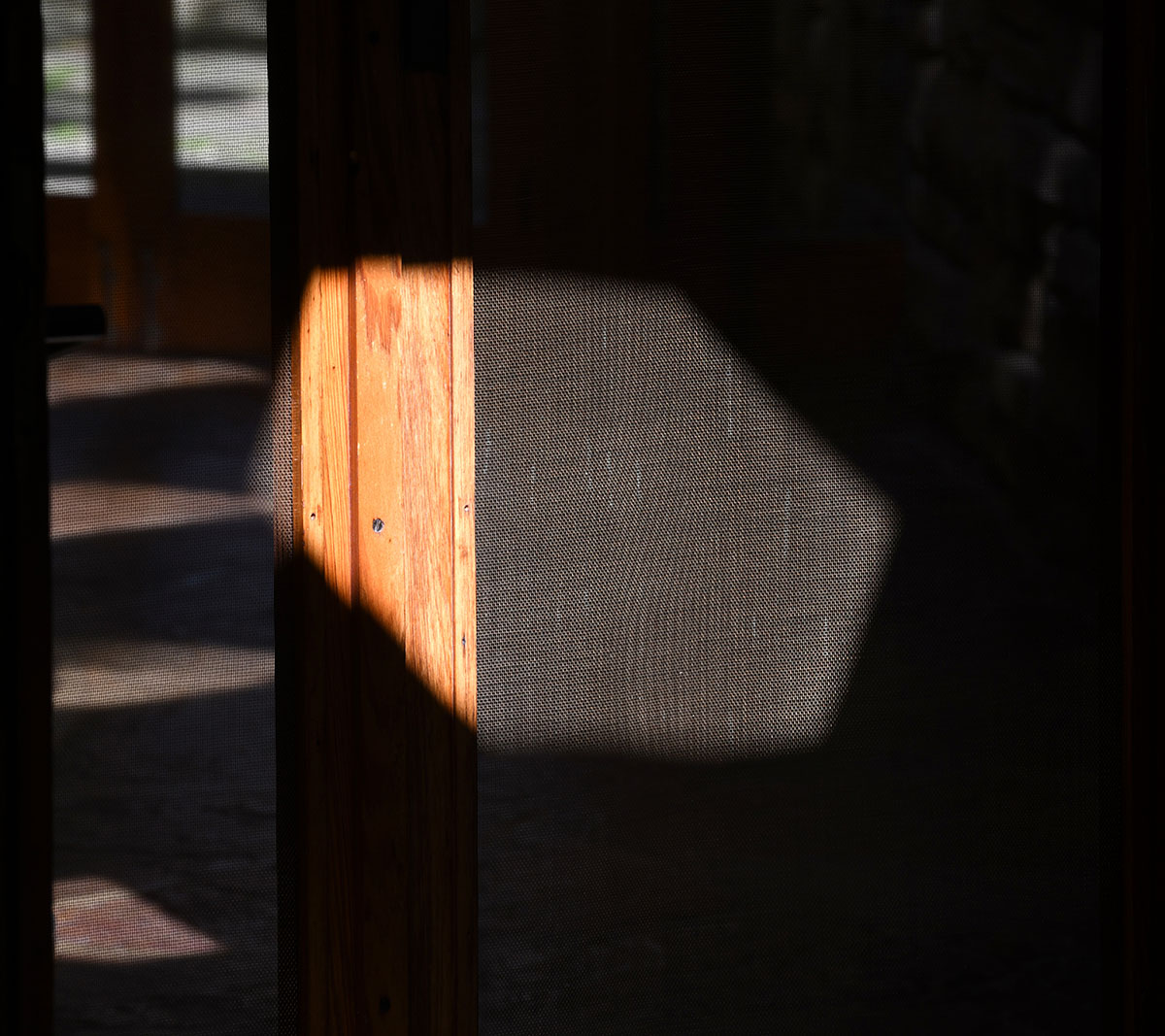
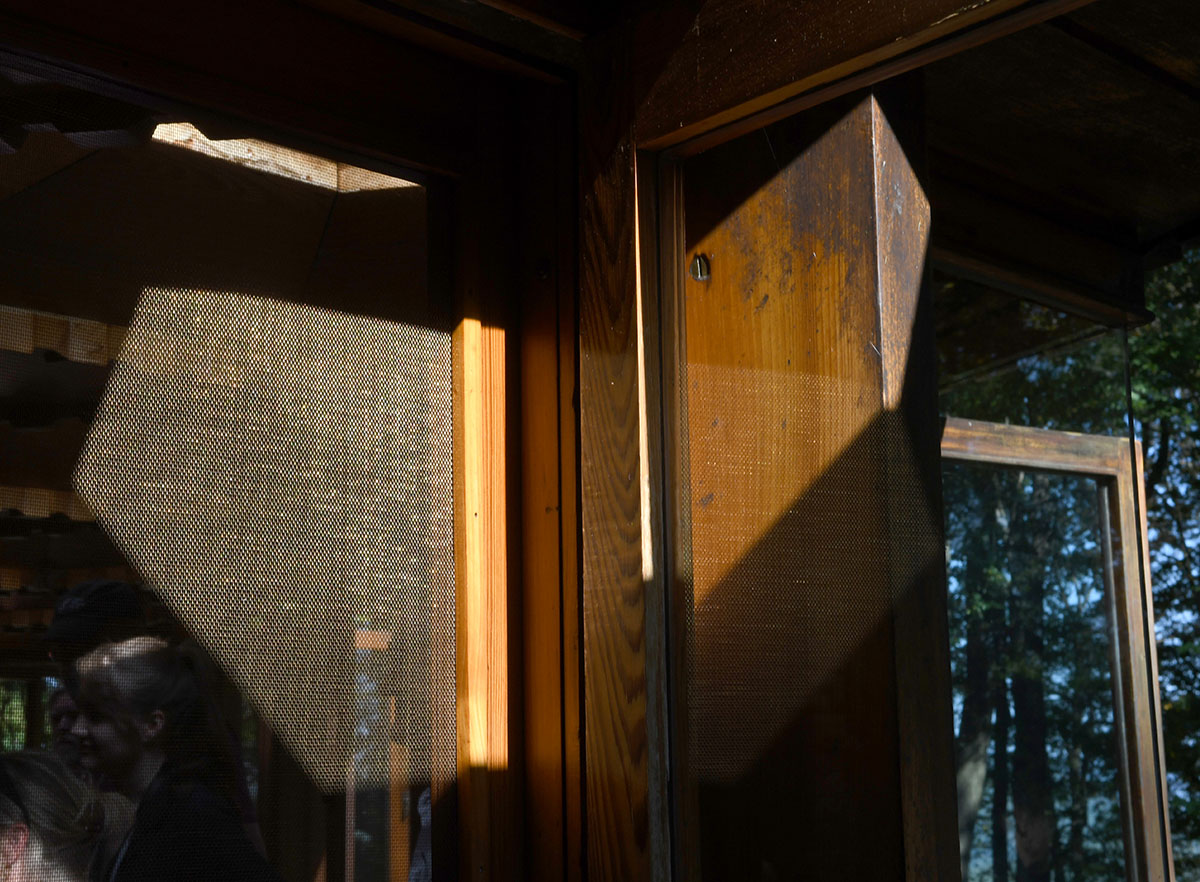
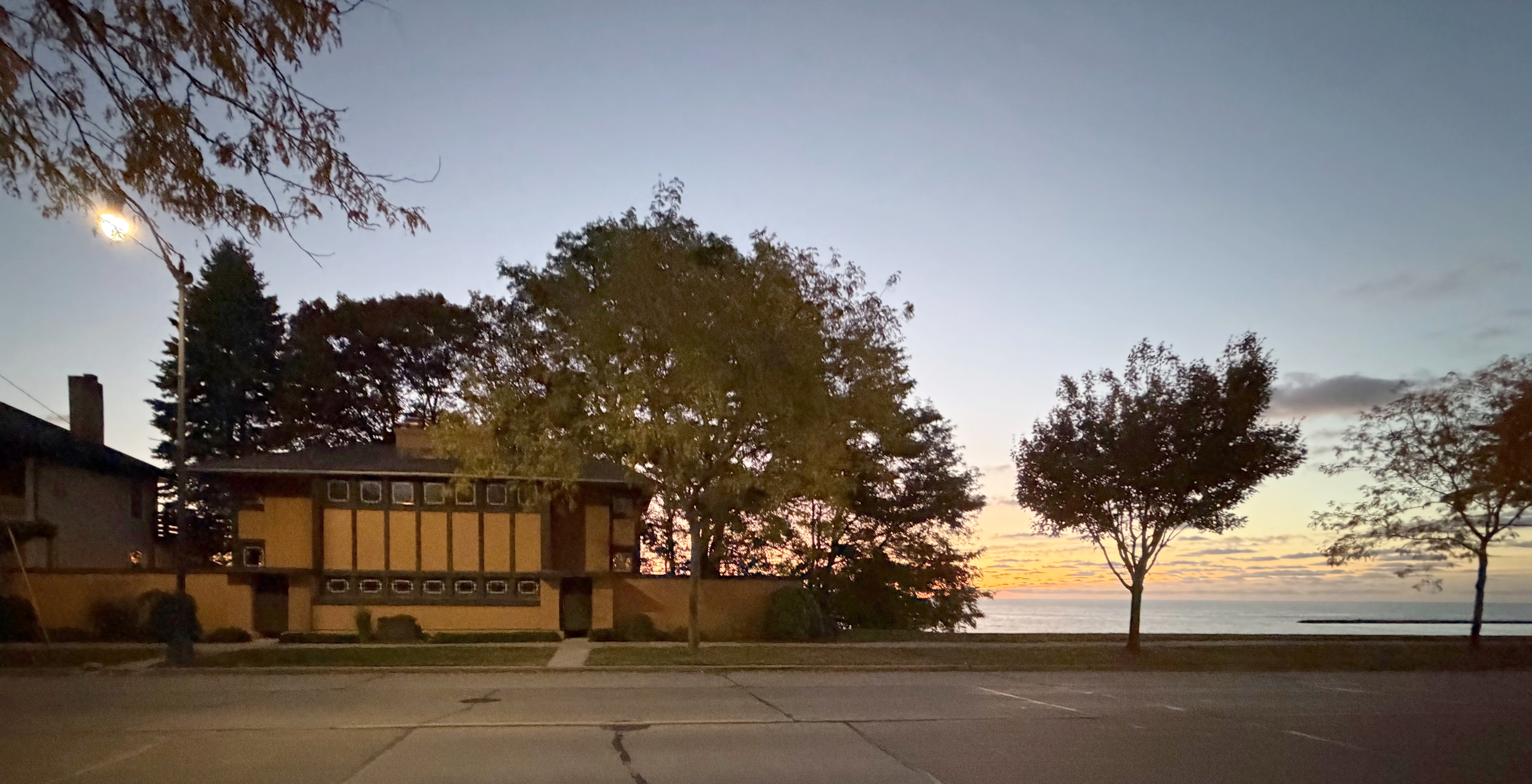
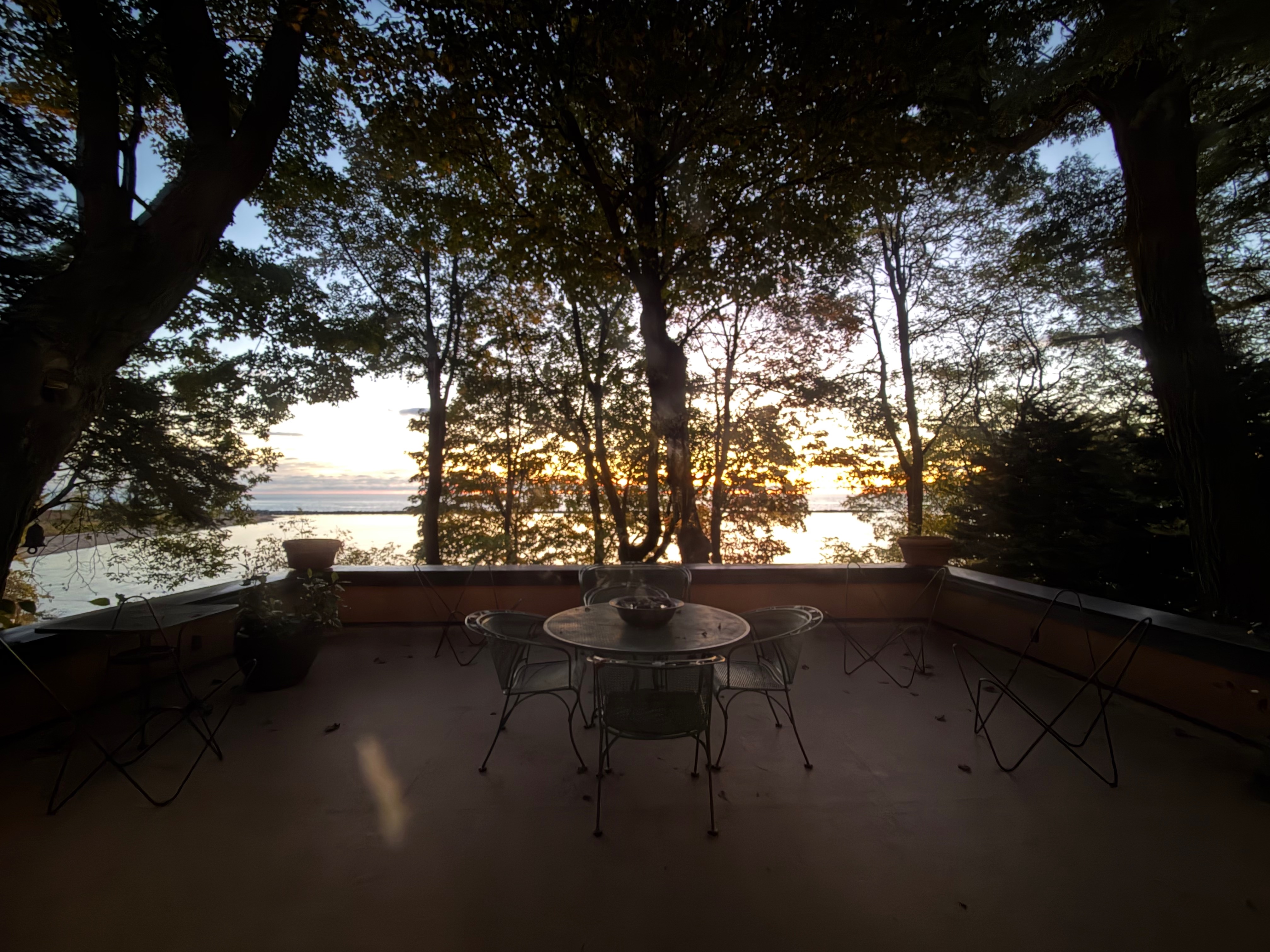
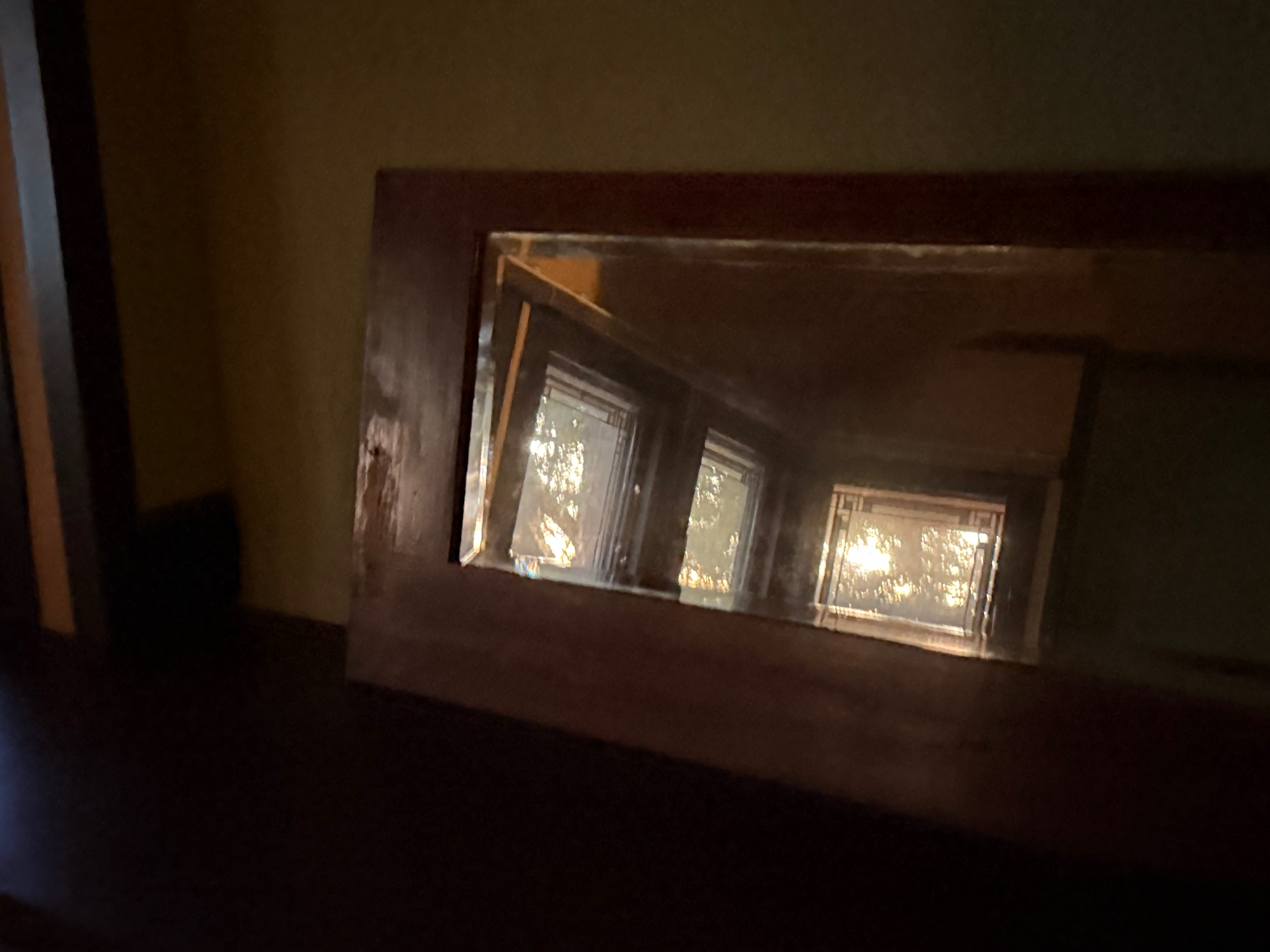
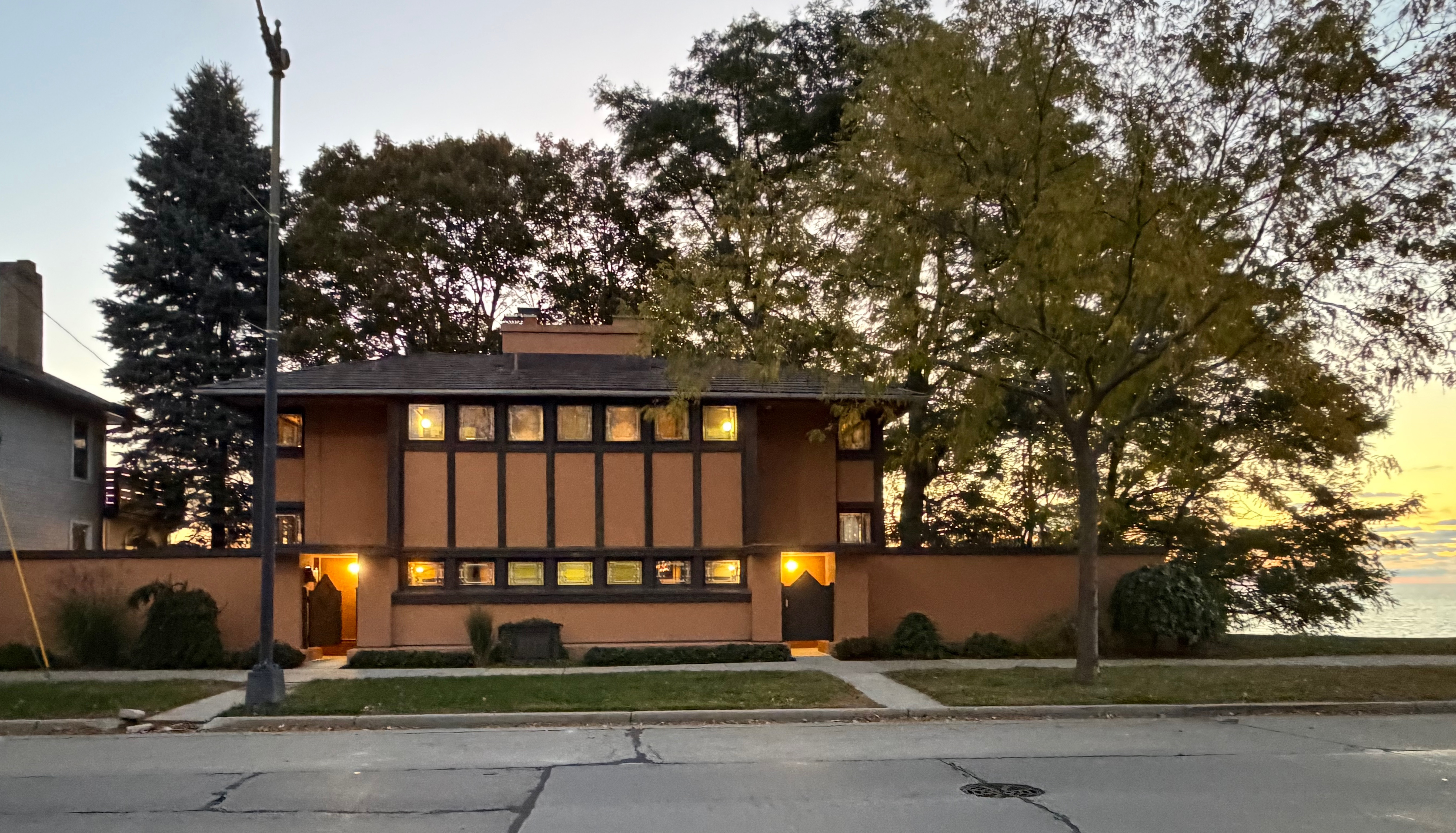
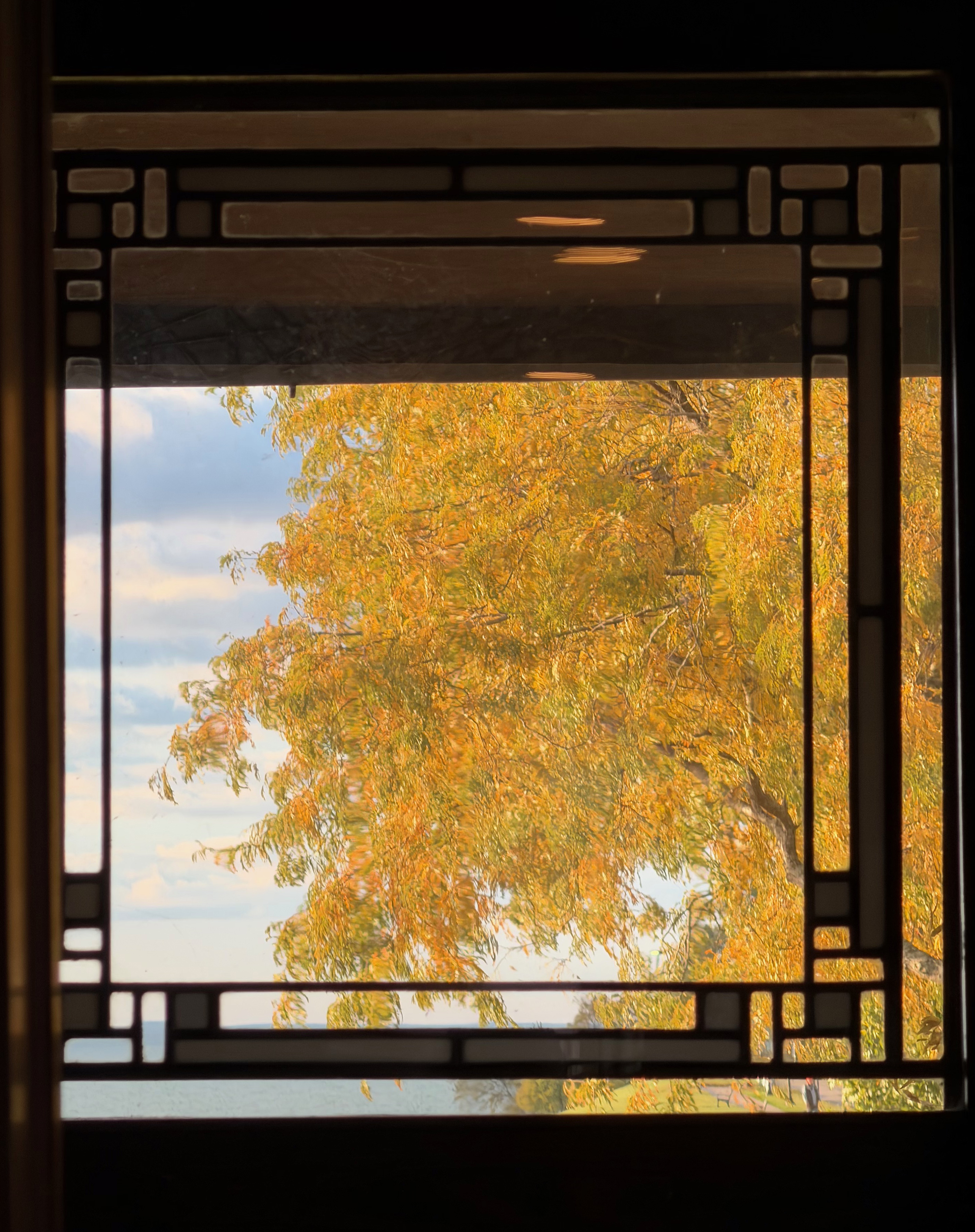
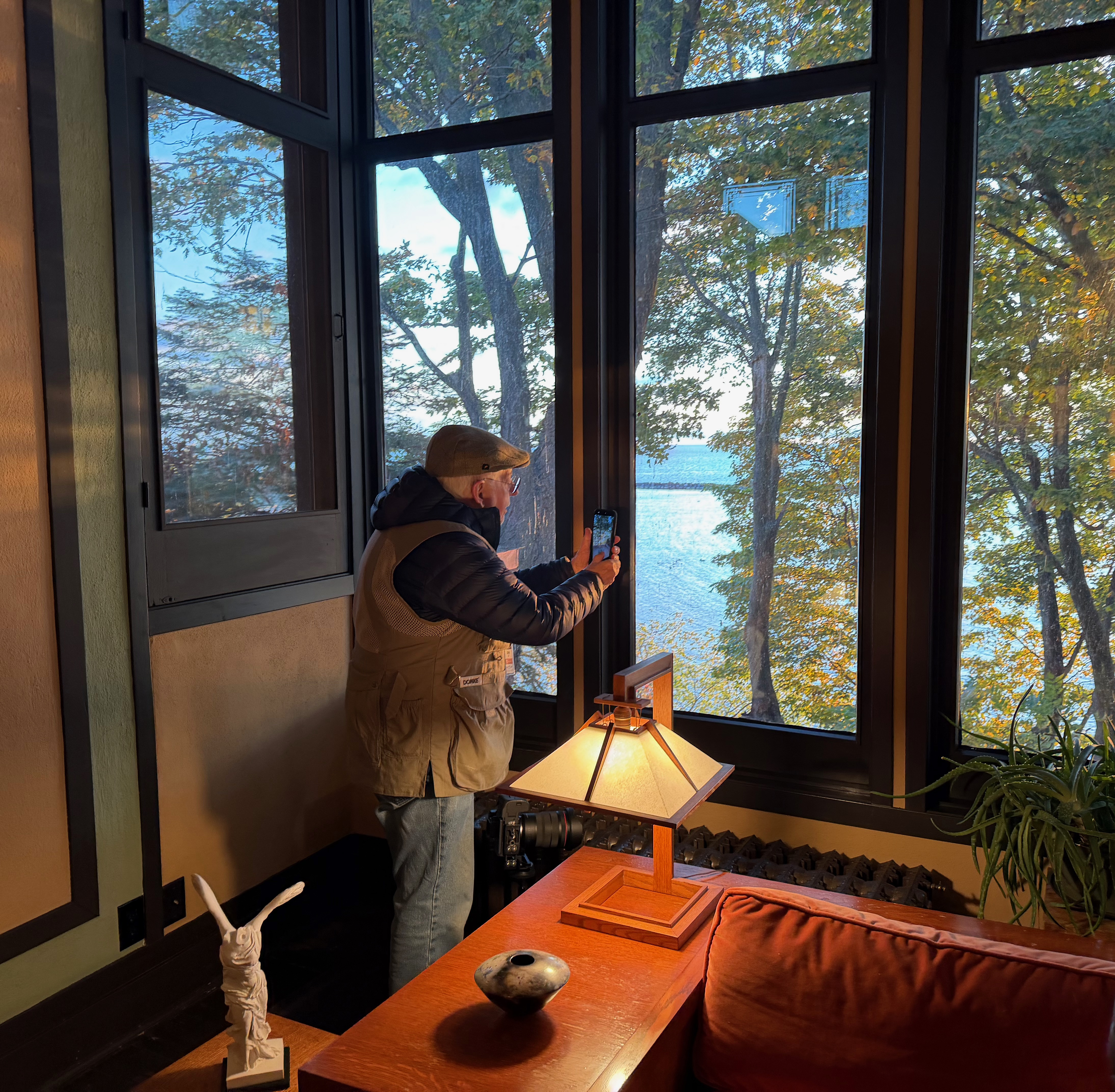
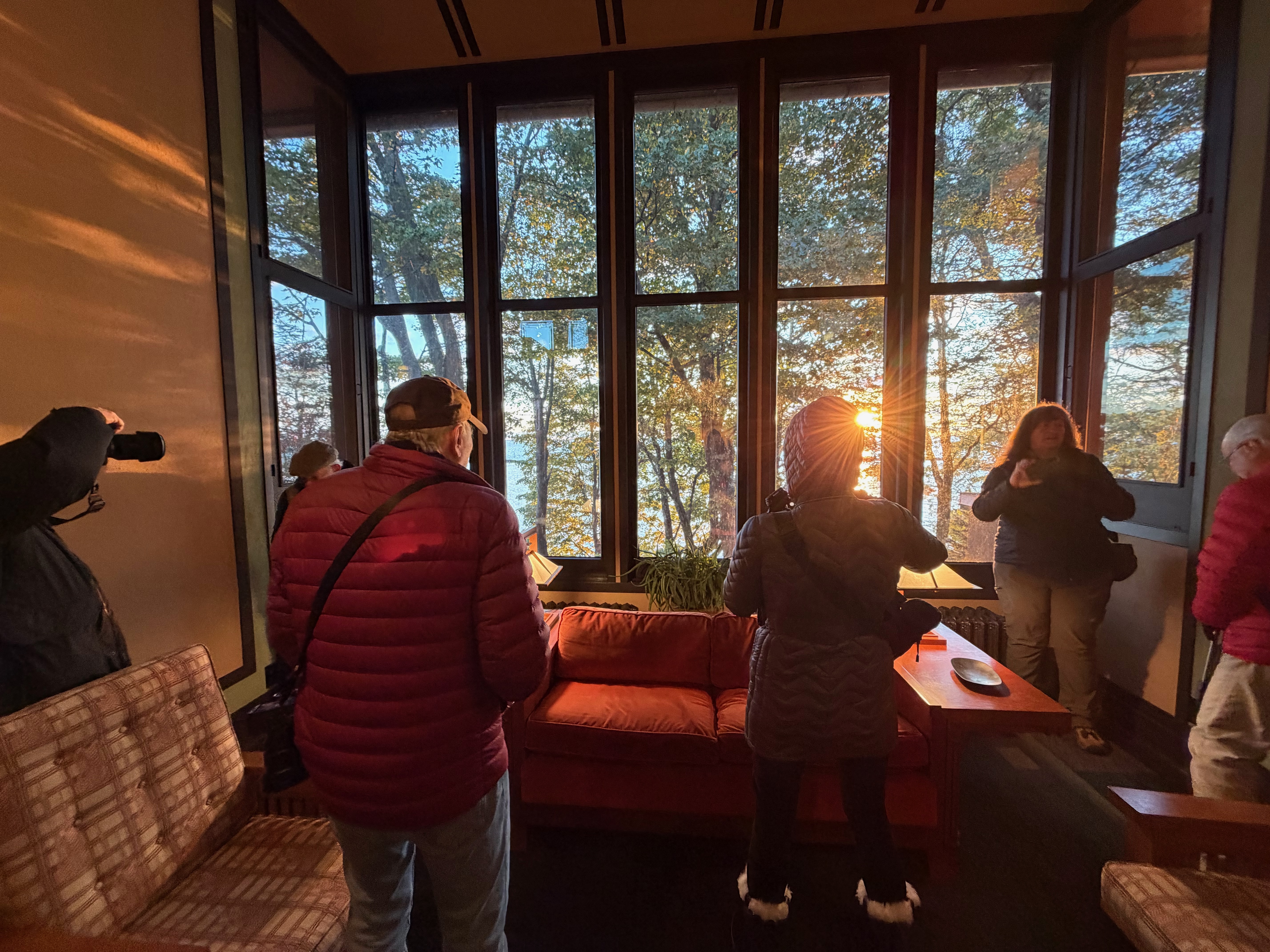
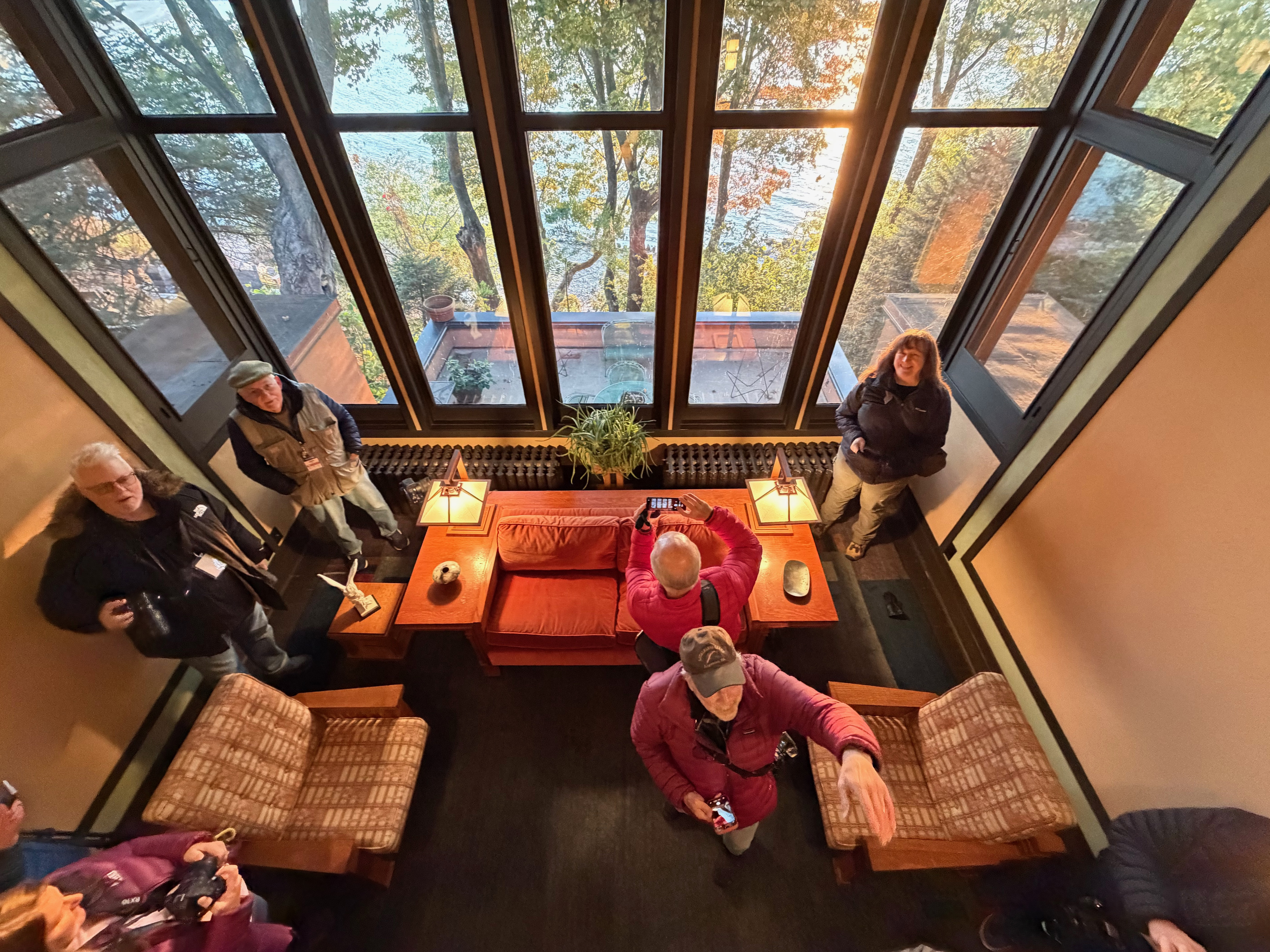
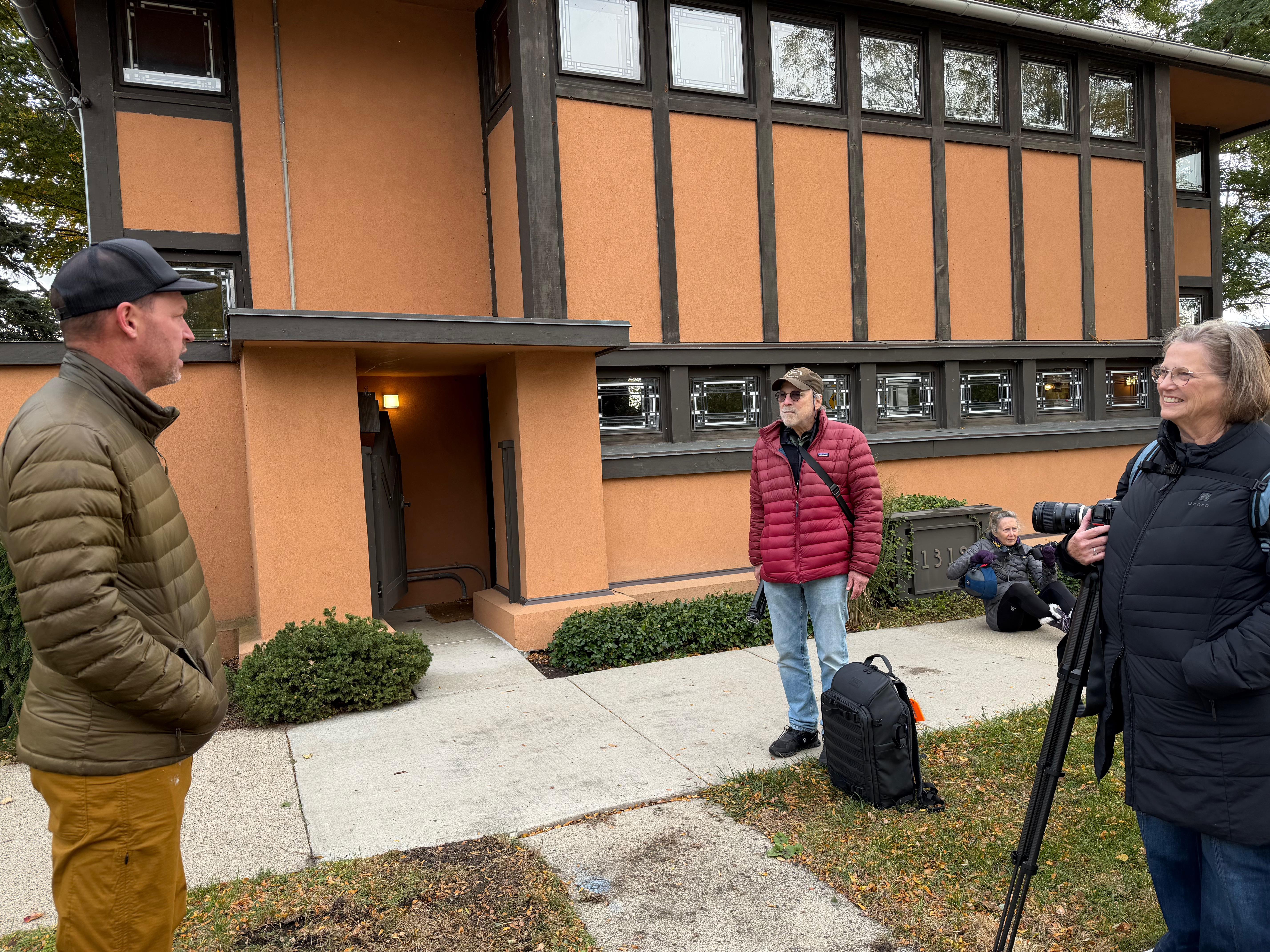
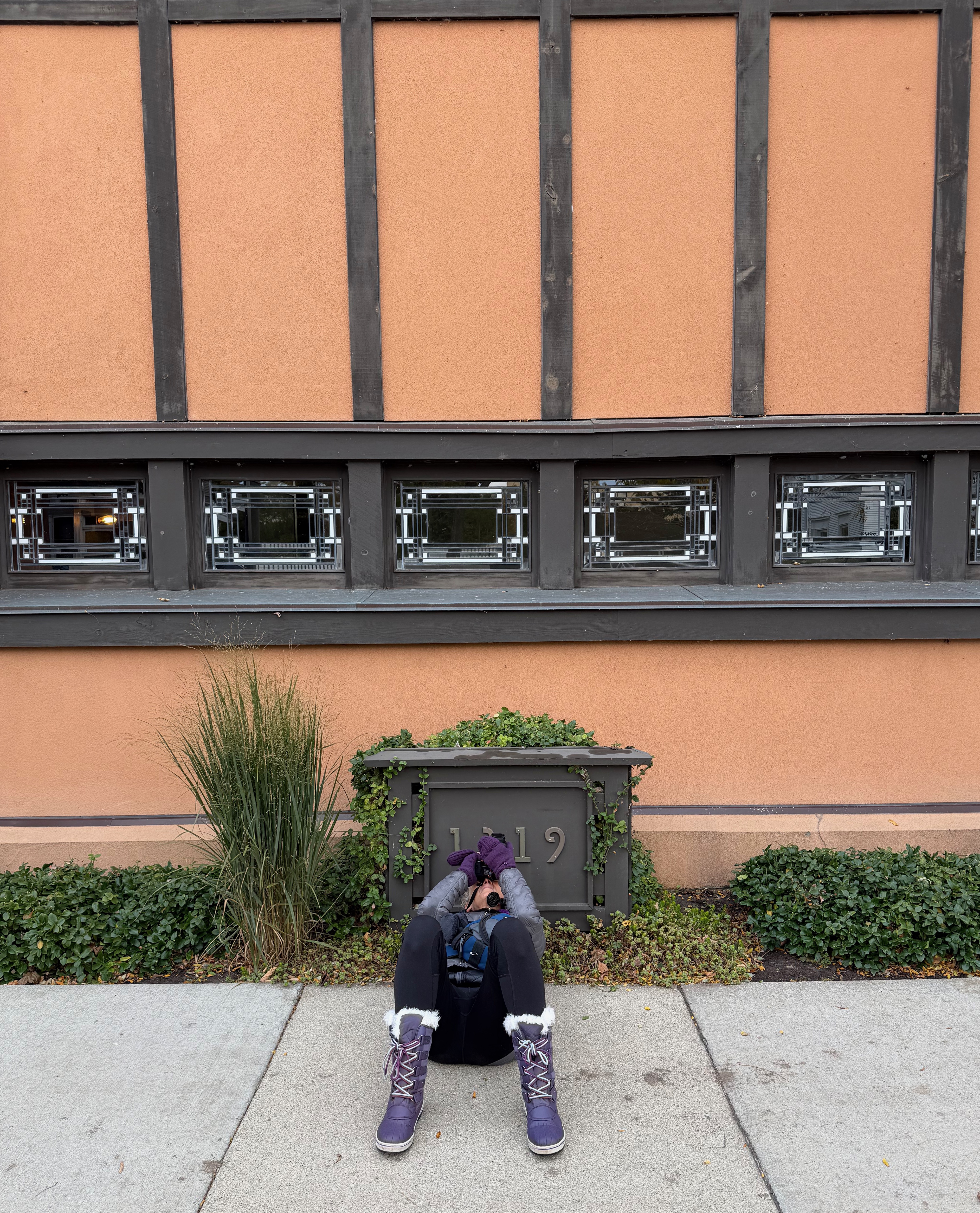
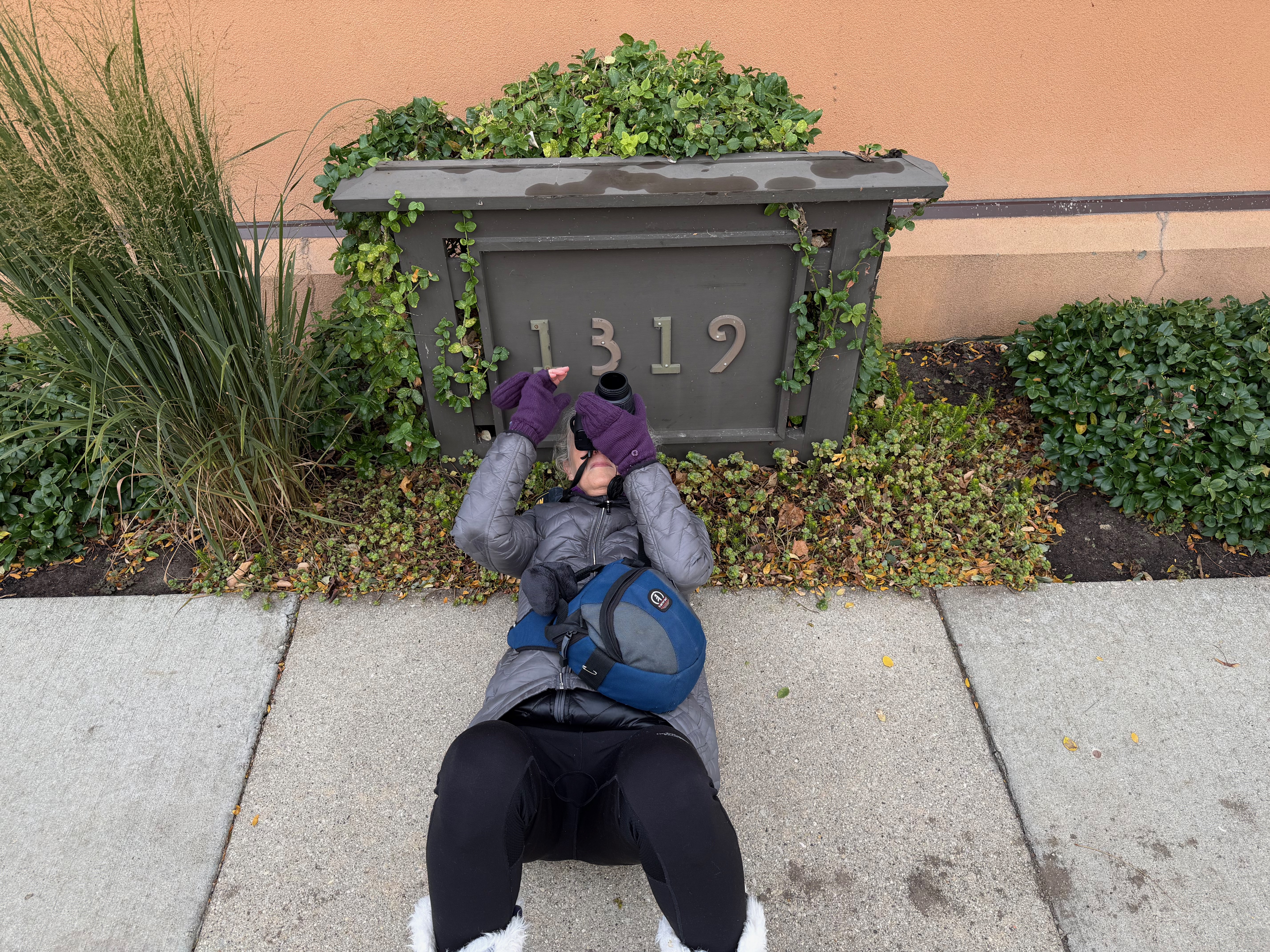
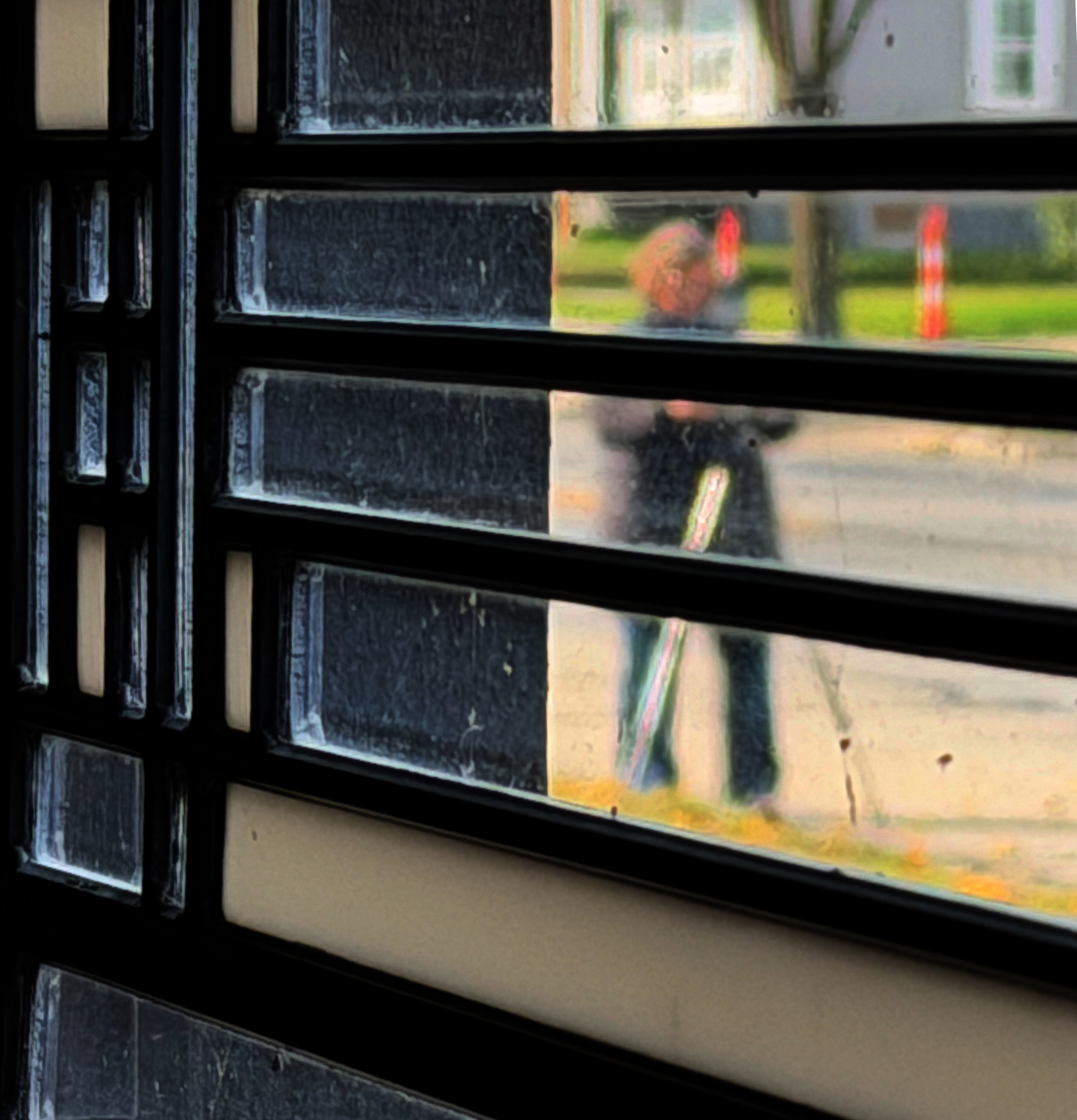
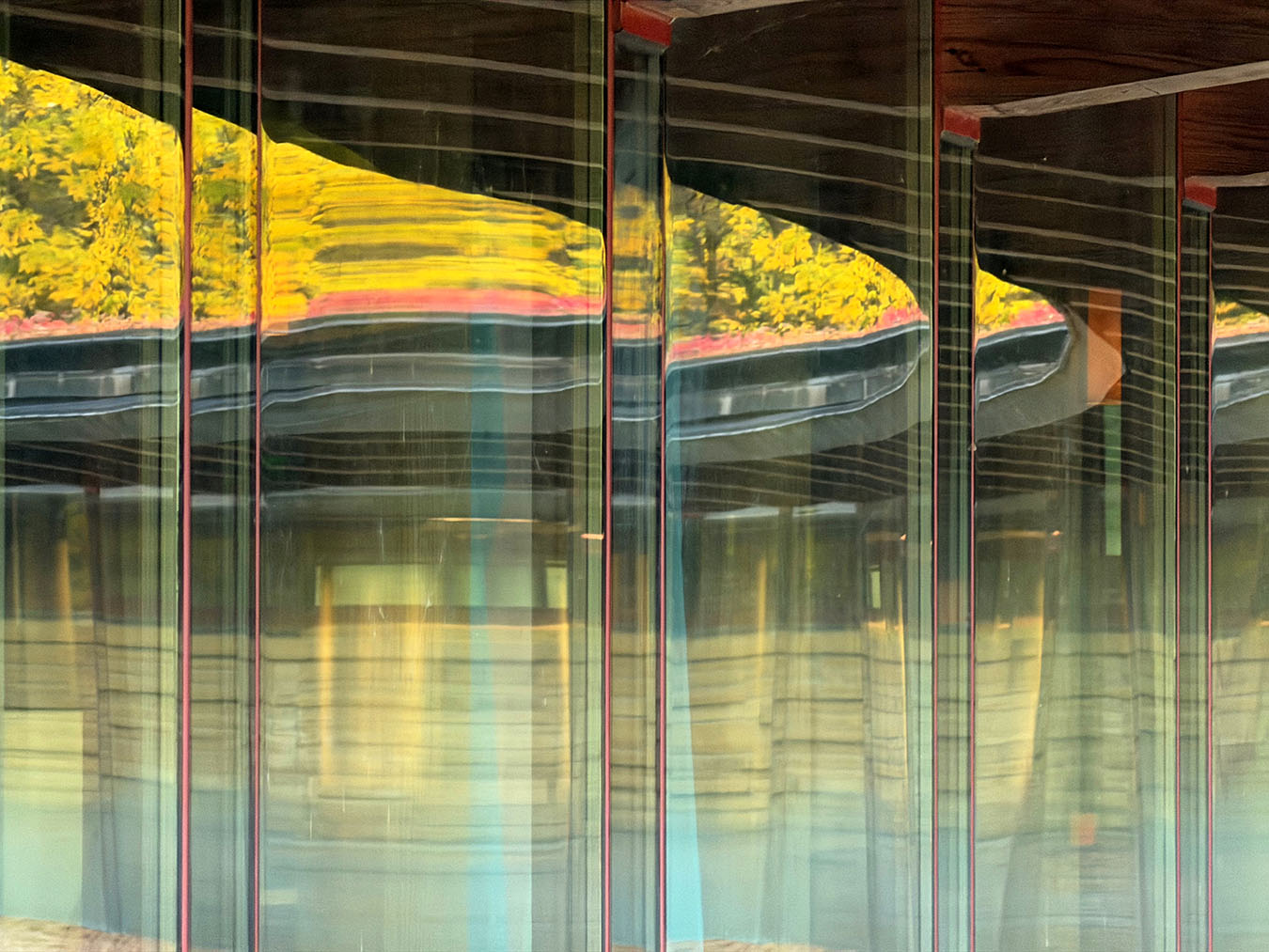
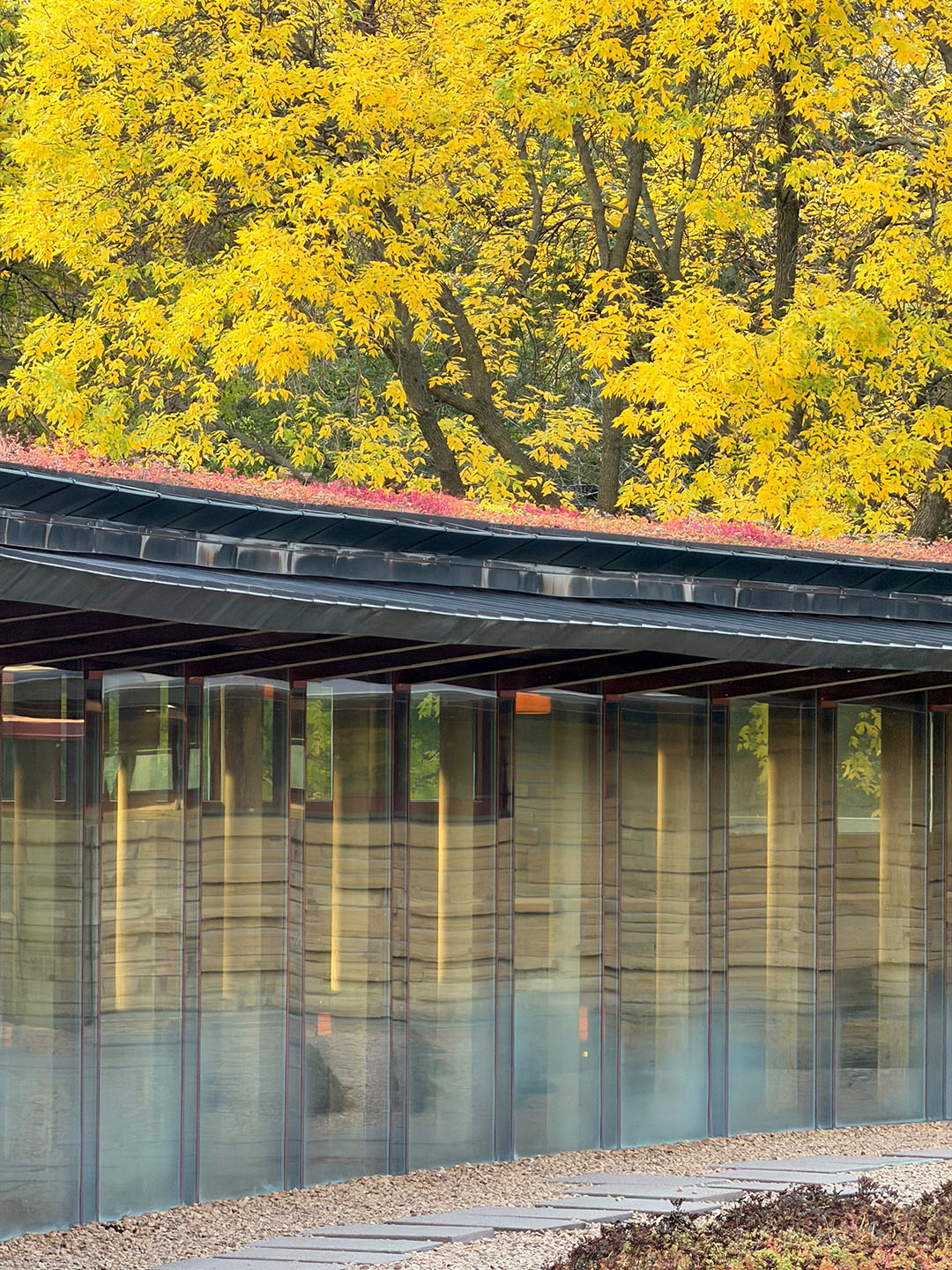
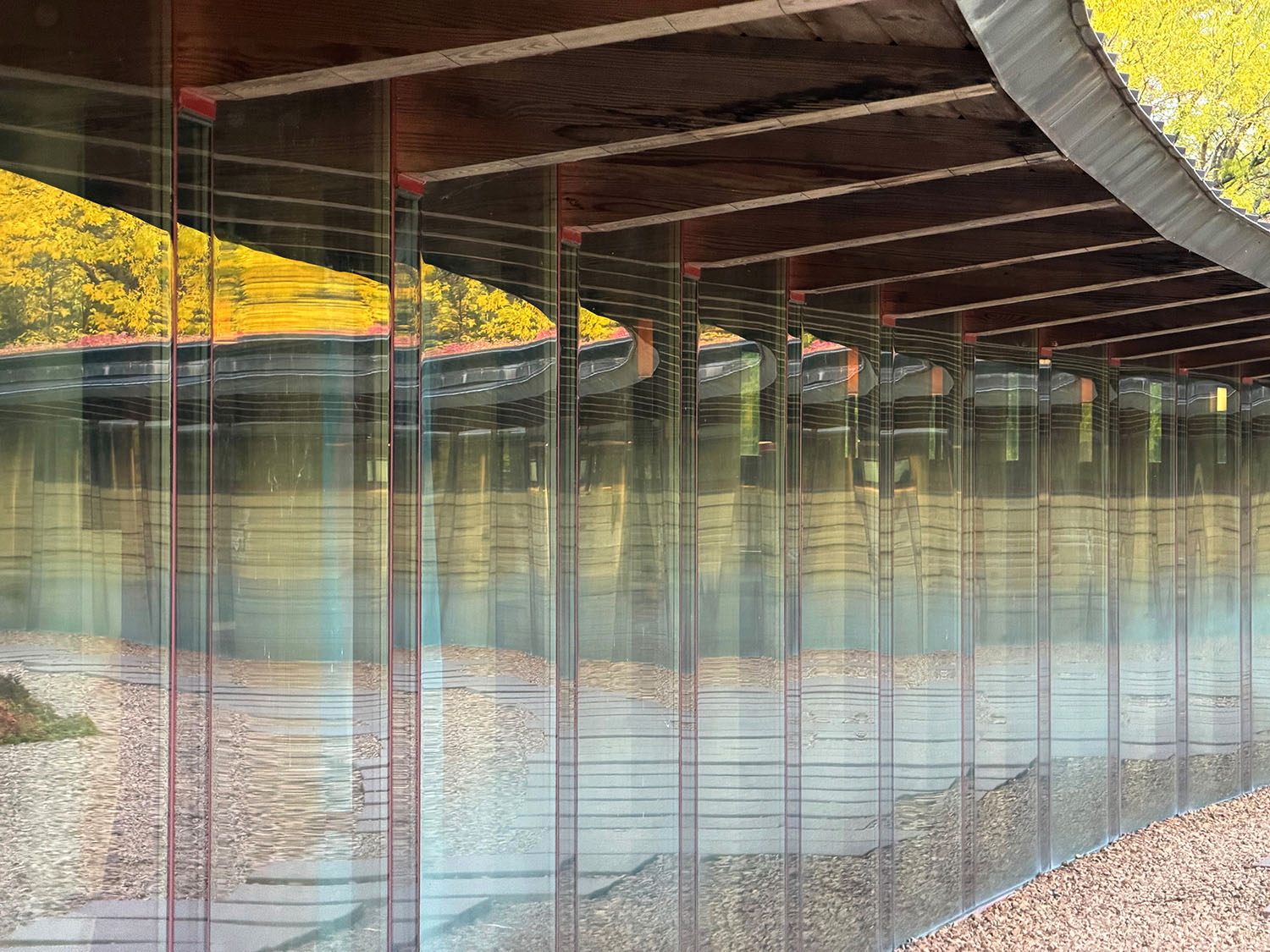
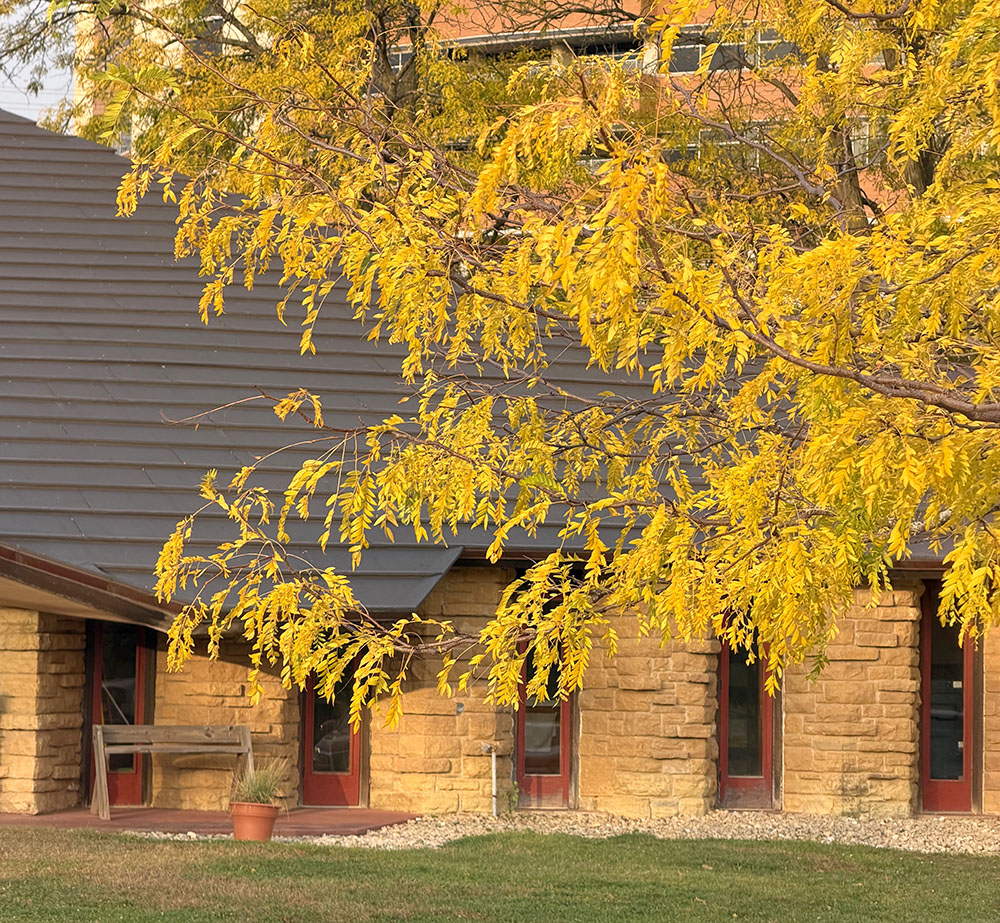
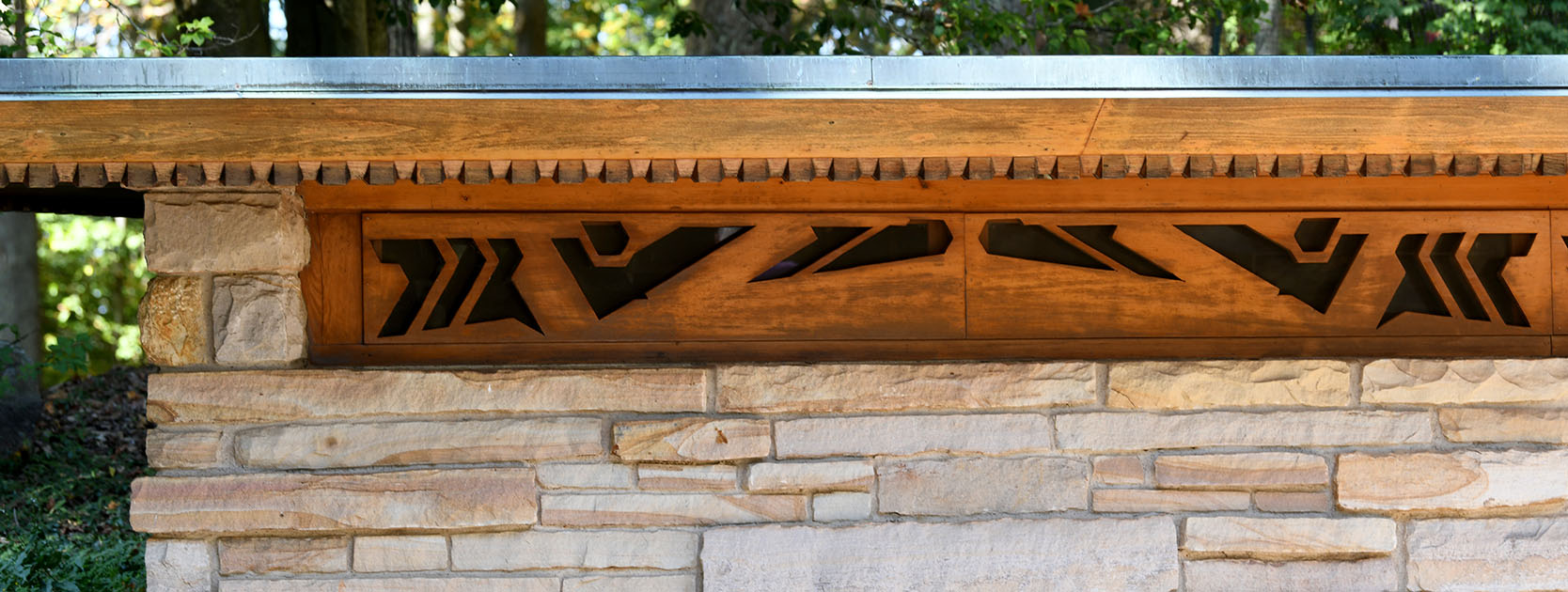
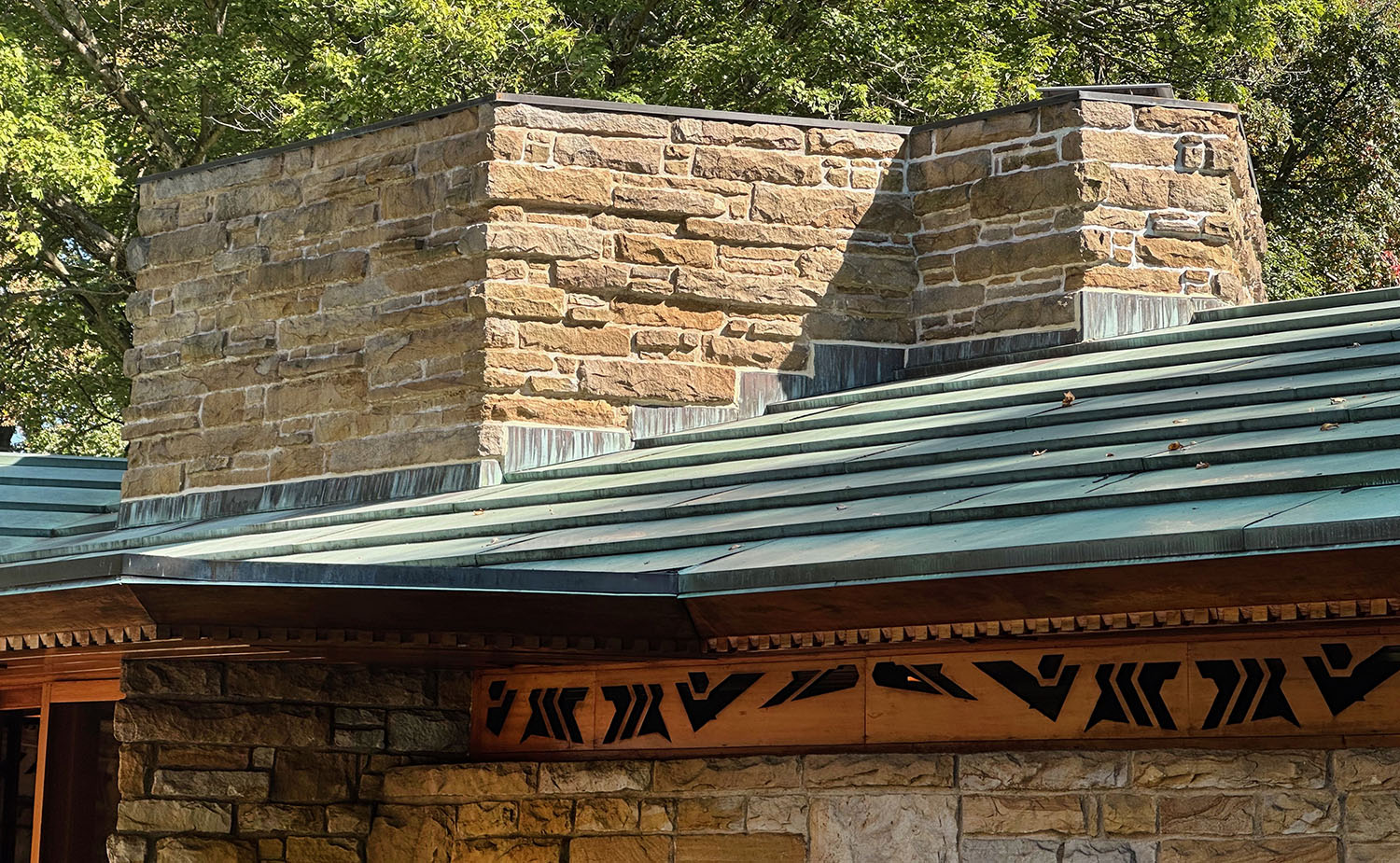
I had the pleasure of an in-depth tour of Kentuck Knob this fall during the Frank Lloyd Wright Building Conservancy’s annual conference which was based in Pittsburgh. It is a special place. Here, then, is my photographic interpretation of what is formally known as Wright’s Isaac Newton and Bernardine Hagan House. The photos start with literal photos of the exterior (interior photos were not permitted), the fun stuff comes further down the page.

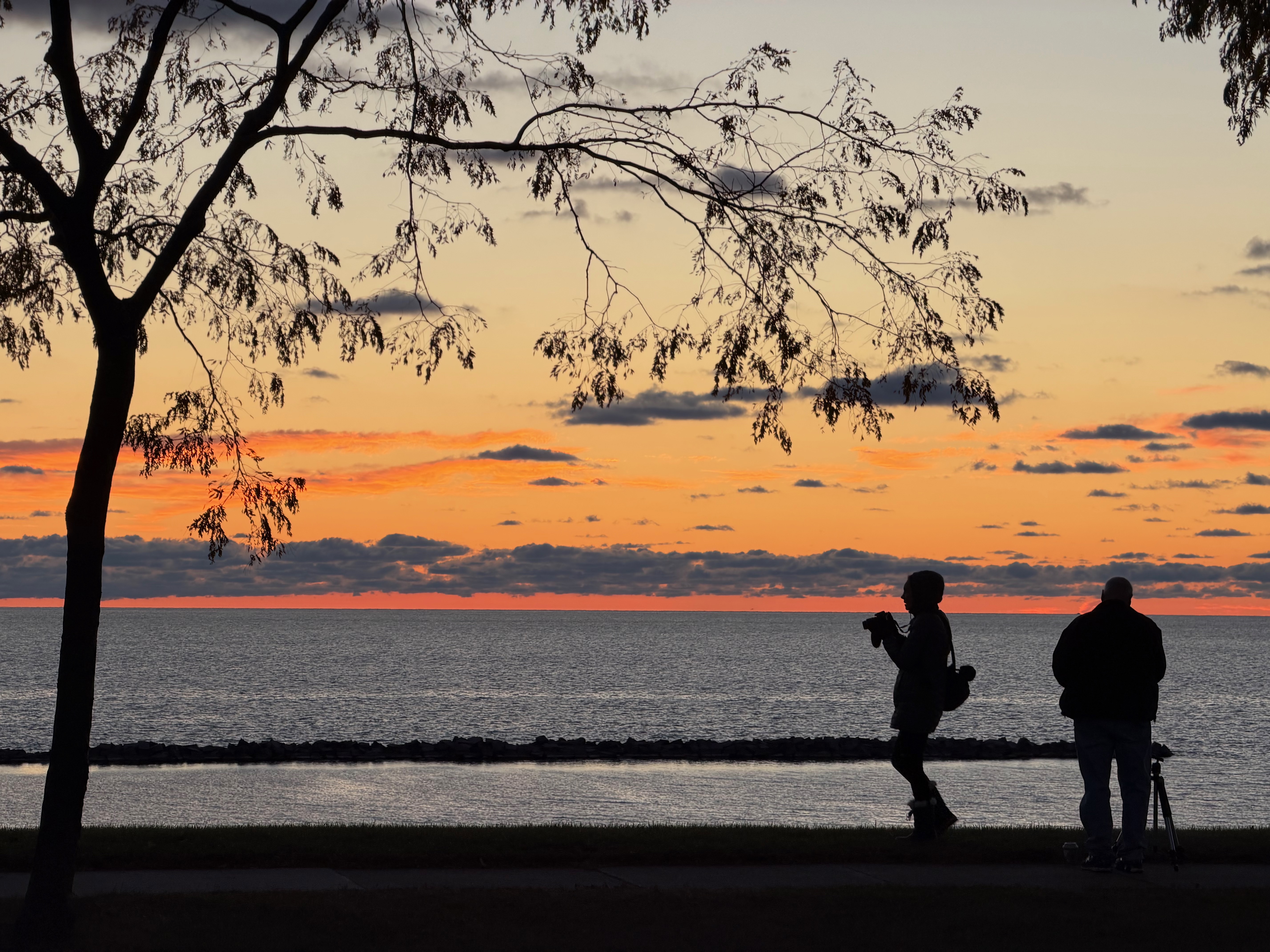
LR Kentuck Knob 9.18.25 003.jpg

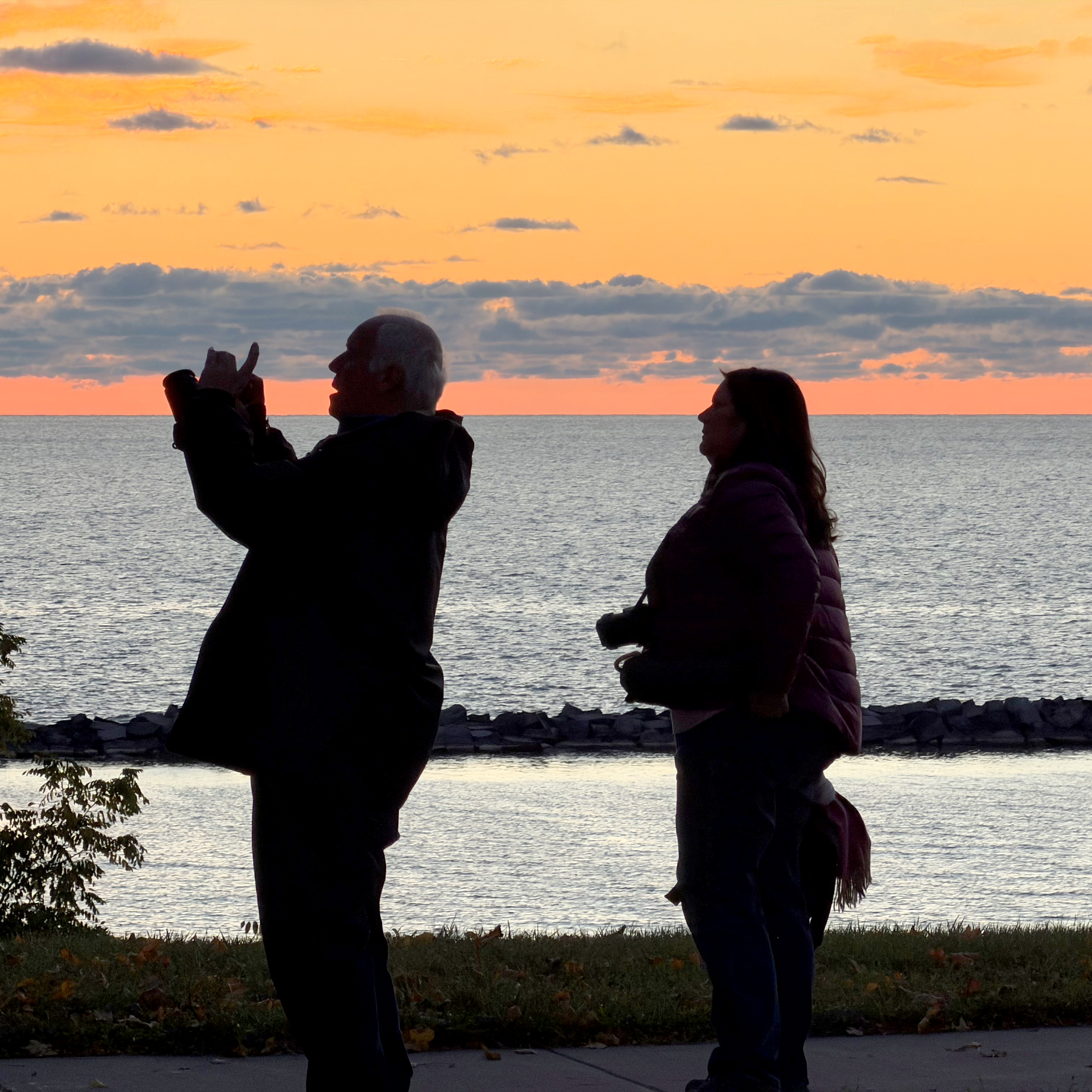
LR Kentuck Knob 9.18.25 007.jpgKen Dahlin of Genesis Architecture photographs the house.
LR Kentuck Knob 9.18.25 008.jpg

LR Kentuck Knob 9.18.25 011.jpg

LR Kentuck Knob 9.18.25 010.jpg

LR Kentuck Knob 9.18.25 013.jpg

LR Kentuck Knob 9.18.25 014.jpg

LR Kentuck Knob 9.18.25 031.jpg

LR Kentuck Knob 9.18.25 034.jpg

LR Kentuck Knob 9.18.25 029.jpg

LR Kentuck Knob 9.18.25 036.jpg

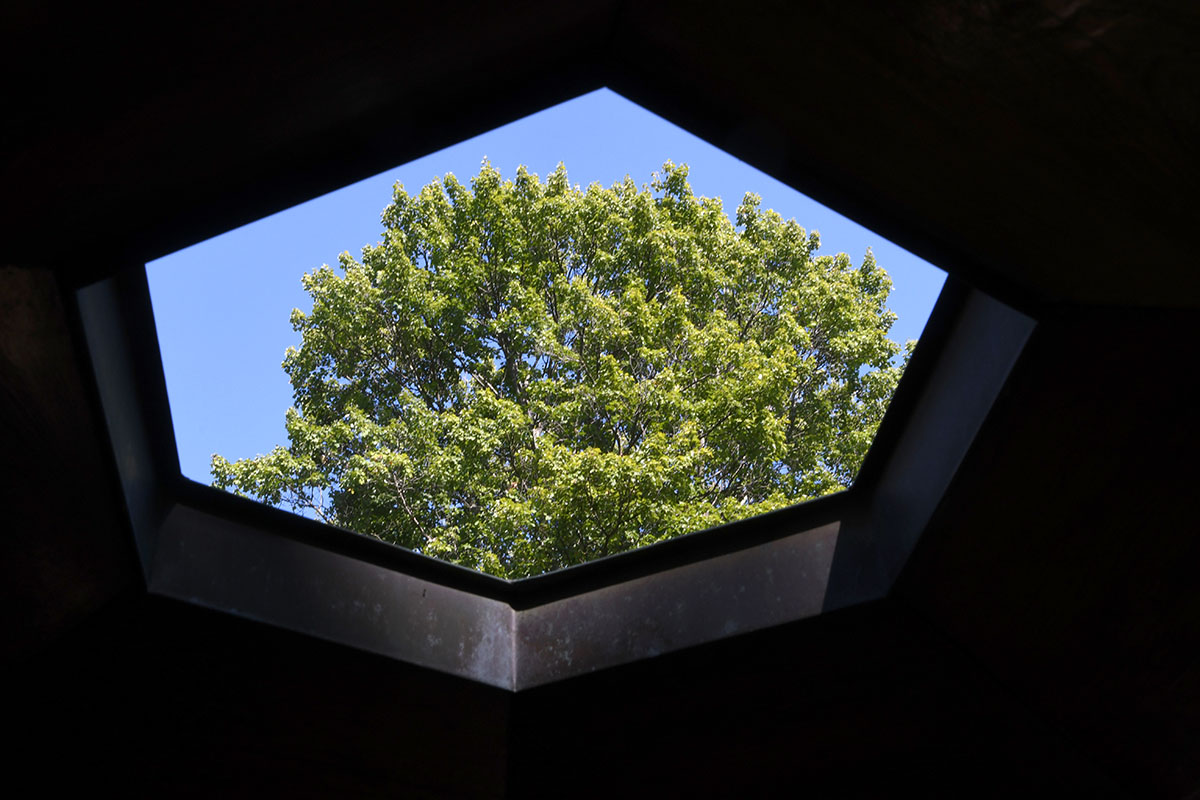
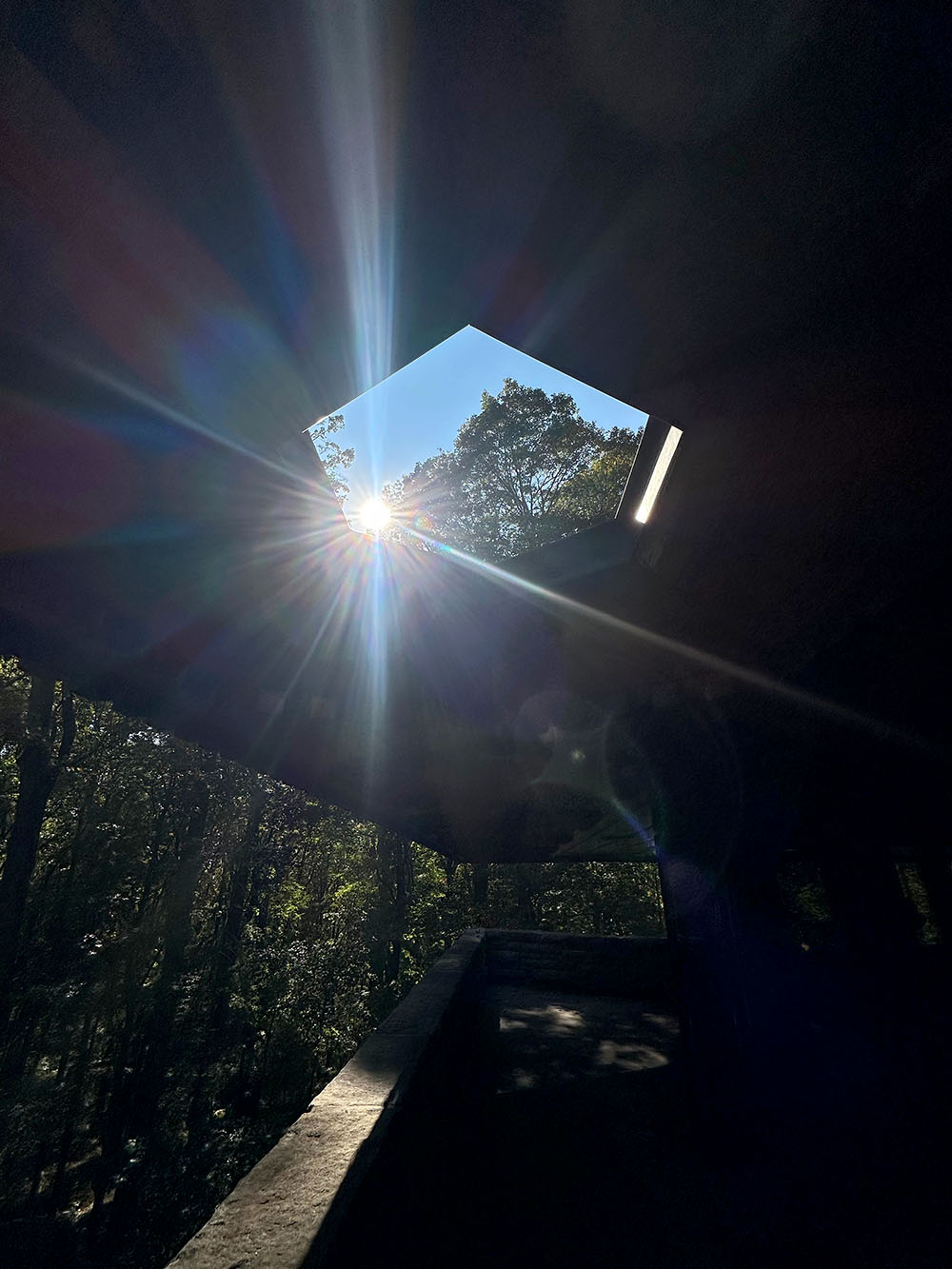
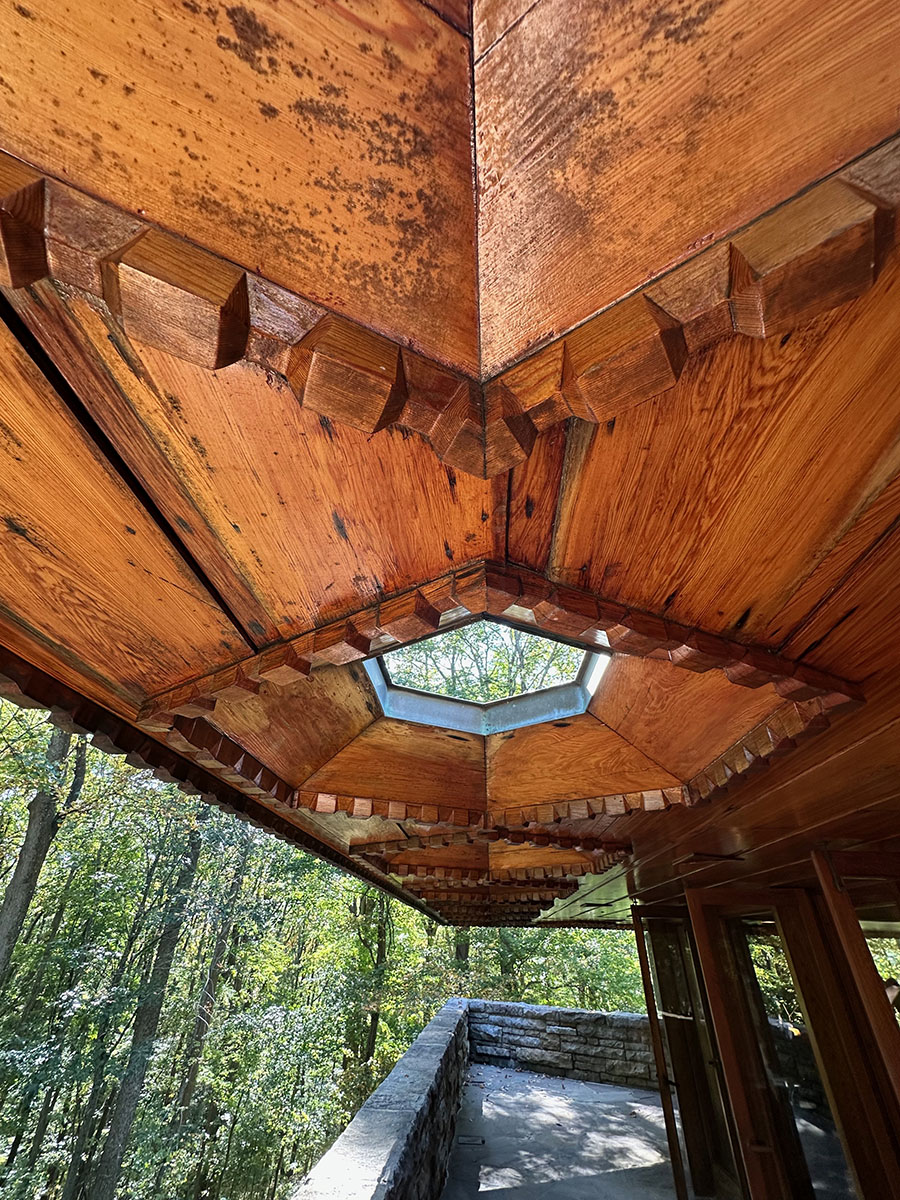
I wondered what I could do with the hexagons in the terrace roof:

LR Kentuck Knob 9.18.25 027.jpg

LR Kentuck Knob 9.18.25 019.jpg

LR Kentuck Knob 9.18.25 017.jpg

LR Kentuck Knob 9.18.25 021.jpg

LR Kentuck Knob 9.18.25 026.jpg

LR Kentuck Knob 9.18.25 025.jpg

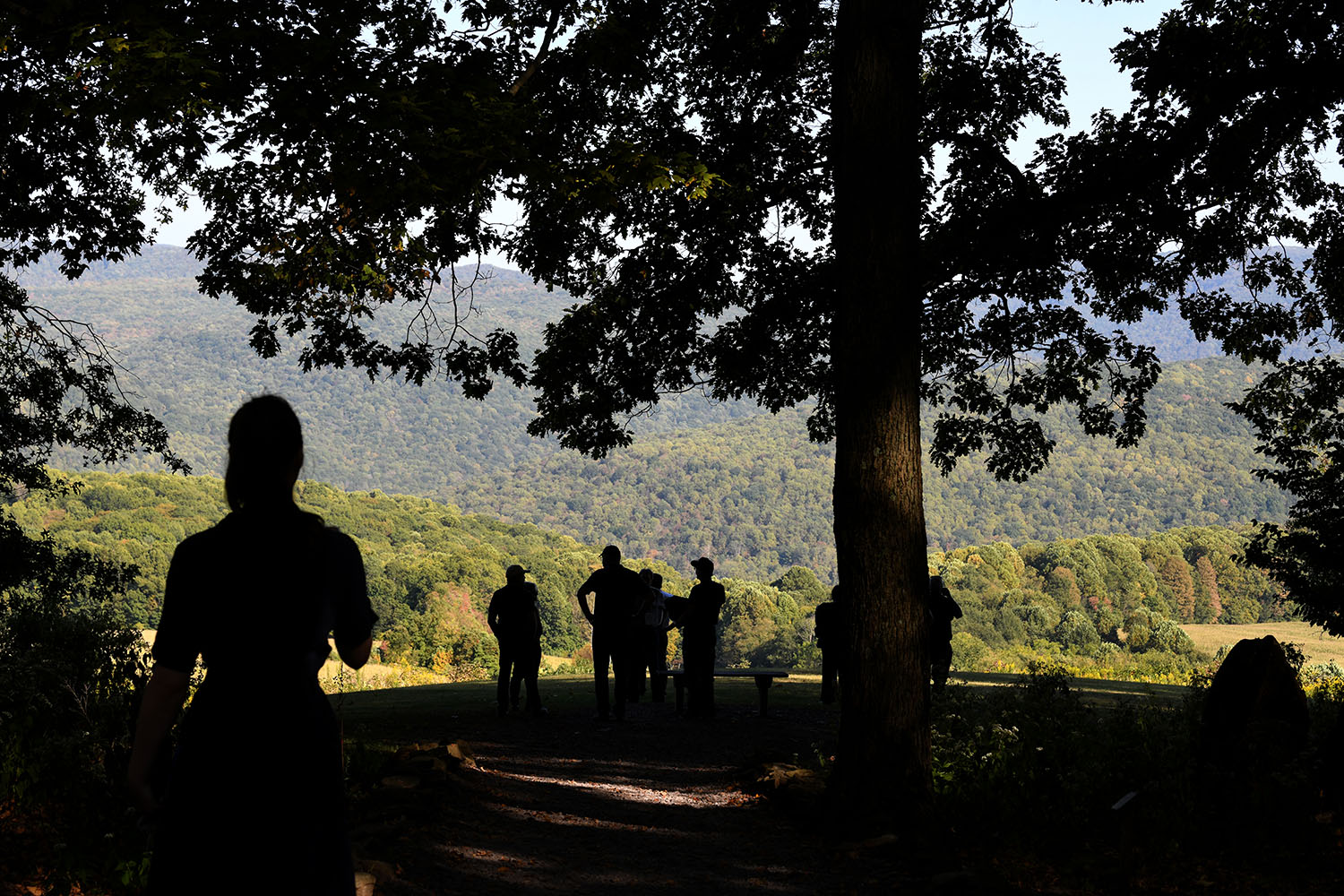
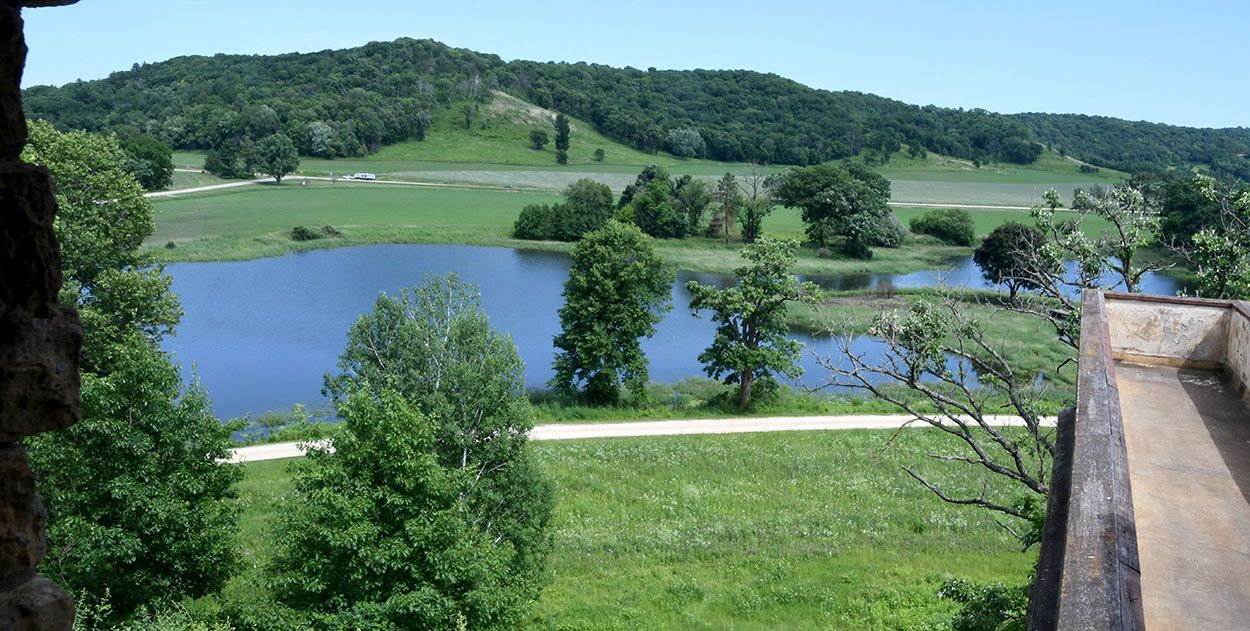
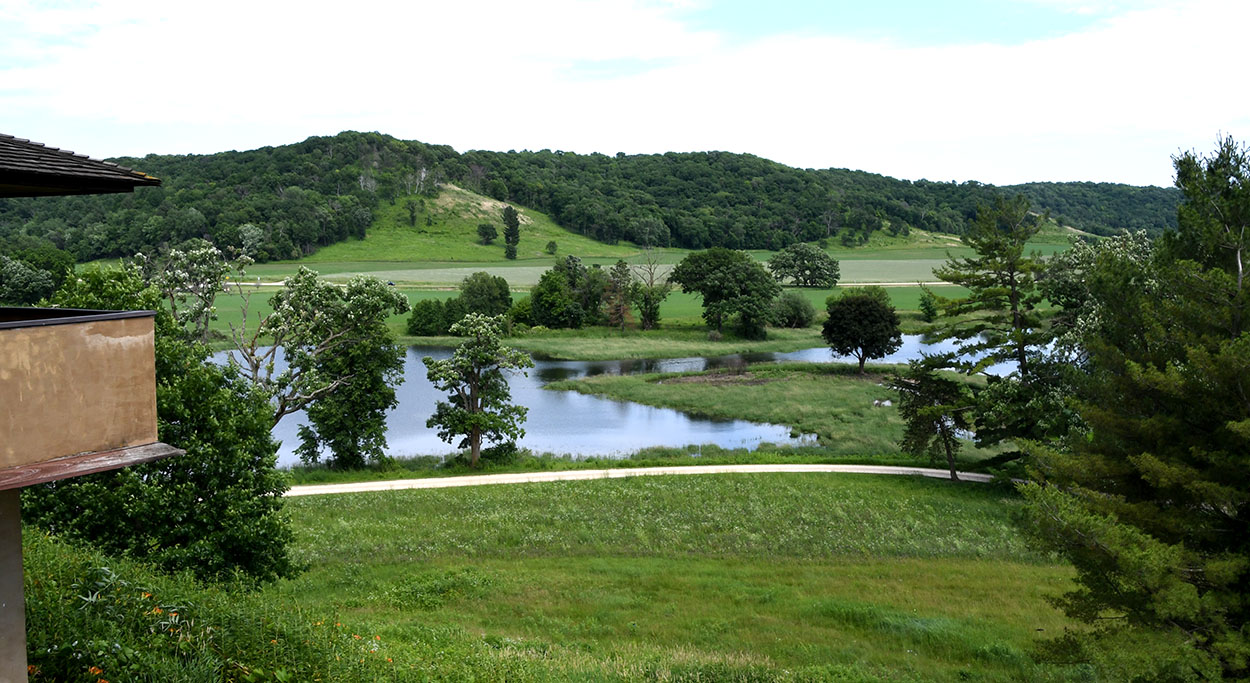
After the tour we wandered through the knob to gaze at the Laurel Highlands:

LR Kentuck Knob 9.18.25 037.jpg

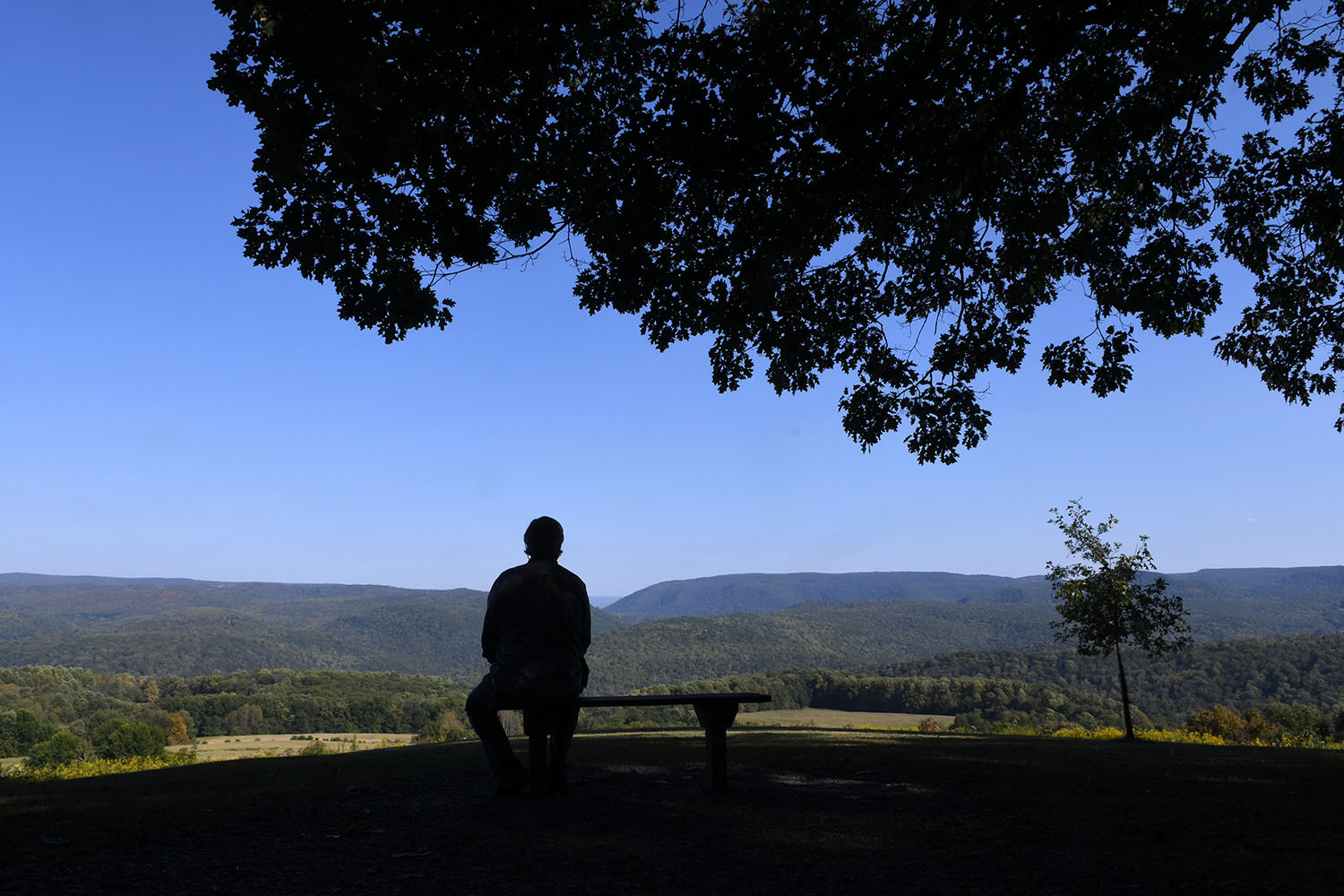
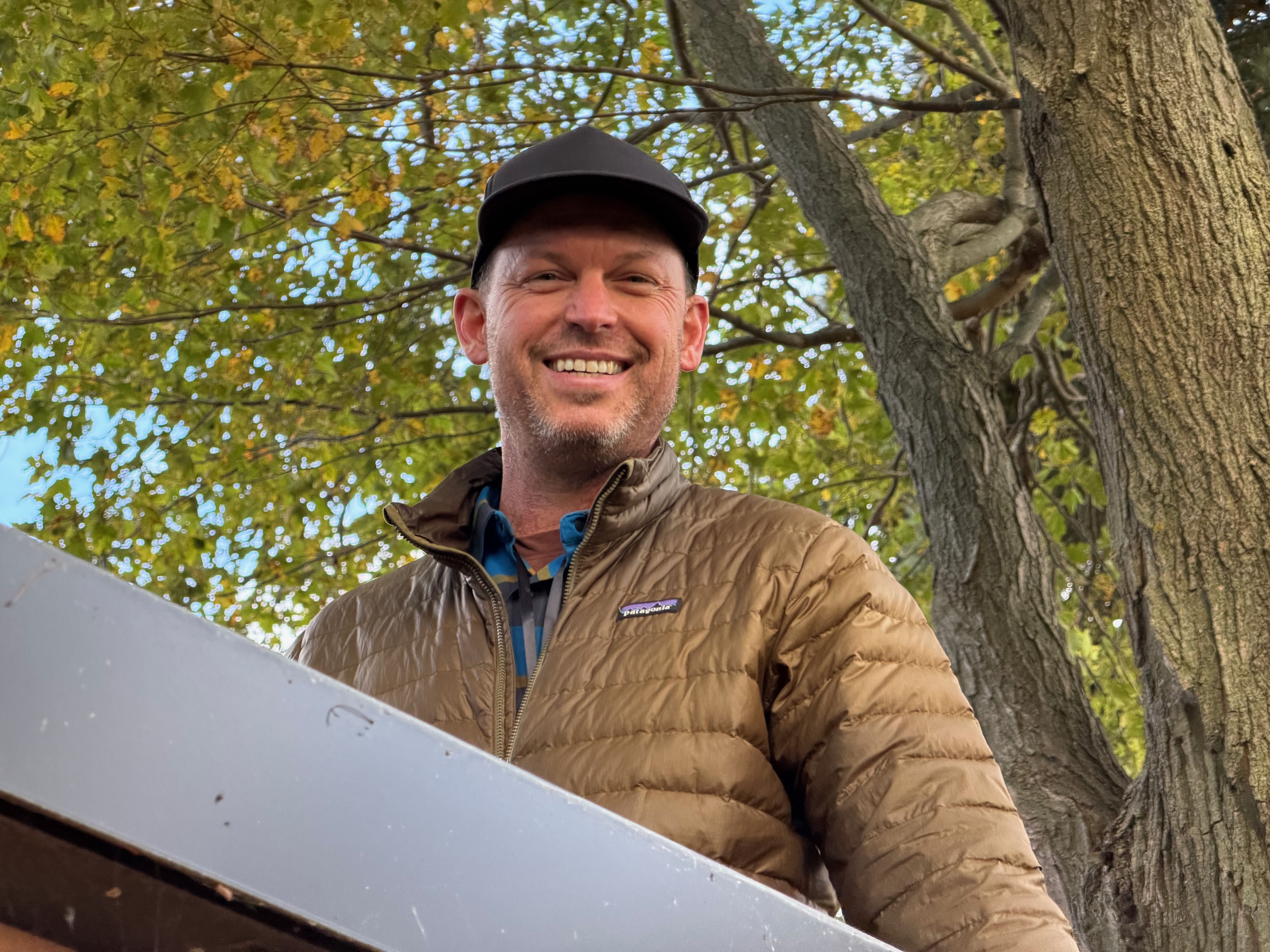
Michael Desmond, one of my dear friends lingered on a bench, not knowing that I was taking his picture:

LR Kentuck Knob 9.18.25 038.jpg

Regrets in life: Not having been able to take a class of his at Louisiana State University. I have tried to make up for it in conversations as we are usually bus seat mates during  Building Conservancy conferences. I think this portrait embodies what must have attracted the Hagans to ask Frank Lloyd Wright to build them a house on Kentuck Knob.

As for the name I had blown off in 1999, it is thought that David Askins, an eighteenth century settler, named this knob in Pennsylvania’s Laurel Highlands “Kentuck” in honor of Kentucky which he had considered moving to.

Postscript:

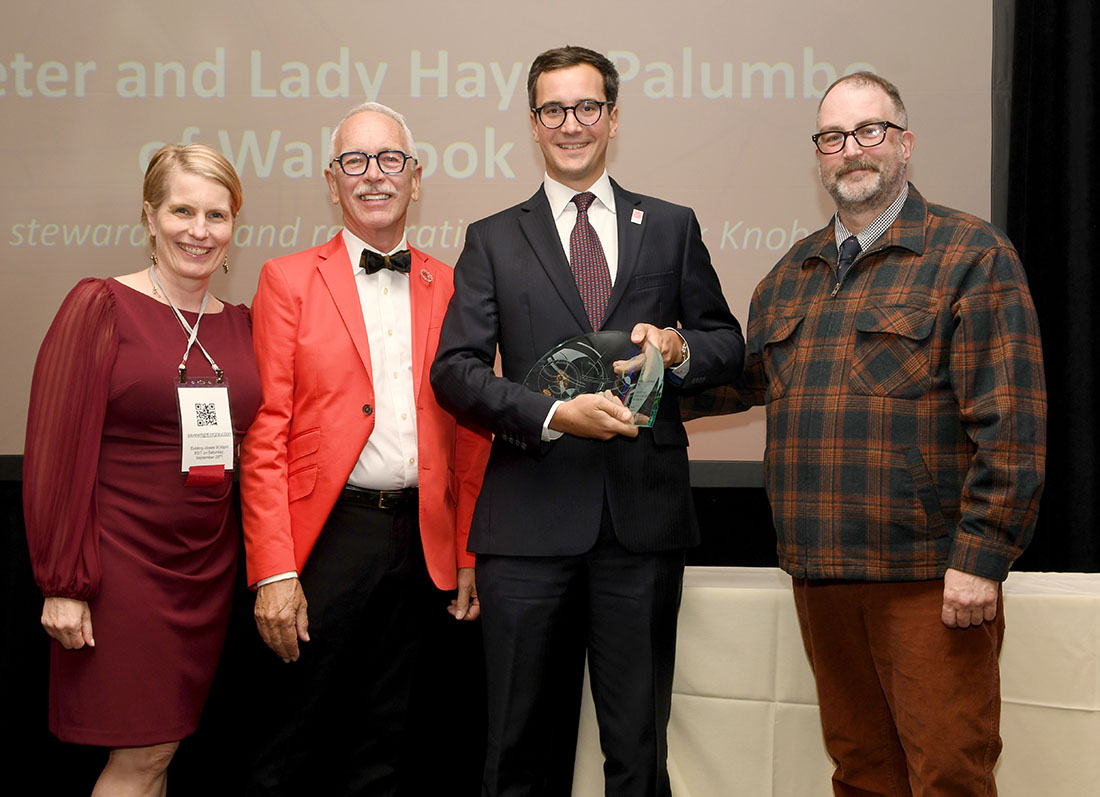
Lord Peter Palumbo became the second steward of Kentuck Knob in 1985 and opened it to the public in 1997. A link to a summary of his distinguished background in architecture and the arts – including once having been steward of Mies van der Rohe’s Farnsworth House – is below. His son Philip Palumbo accepted the Building Conservancy’s prestigious Wright Spirit Award given to Lord and Lady Palumbo at the Pittsburgh conference. Philip is director of Kentuck Knob.

LR 2025 WSA & Auction 017.jpgBarbara Gordon, Jeffrey Herr, and Scott Perkins present the Wright Spirit Award to Philip Palumbo, on behalf of his parents.

LR 2025 WSA & Auction 019.jpg

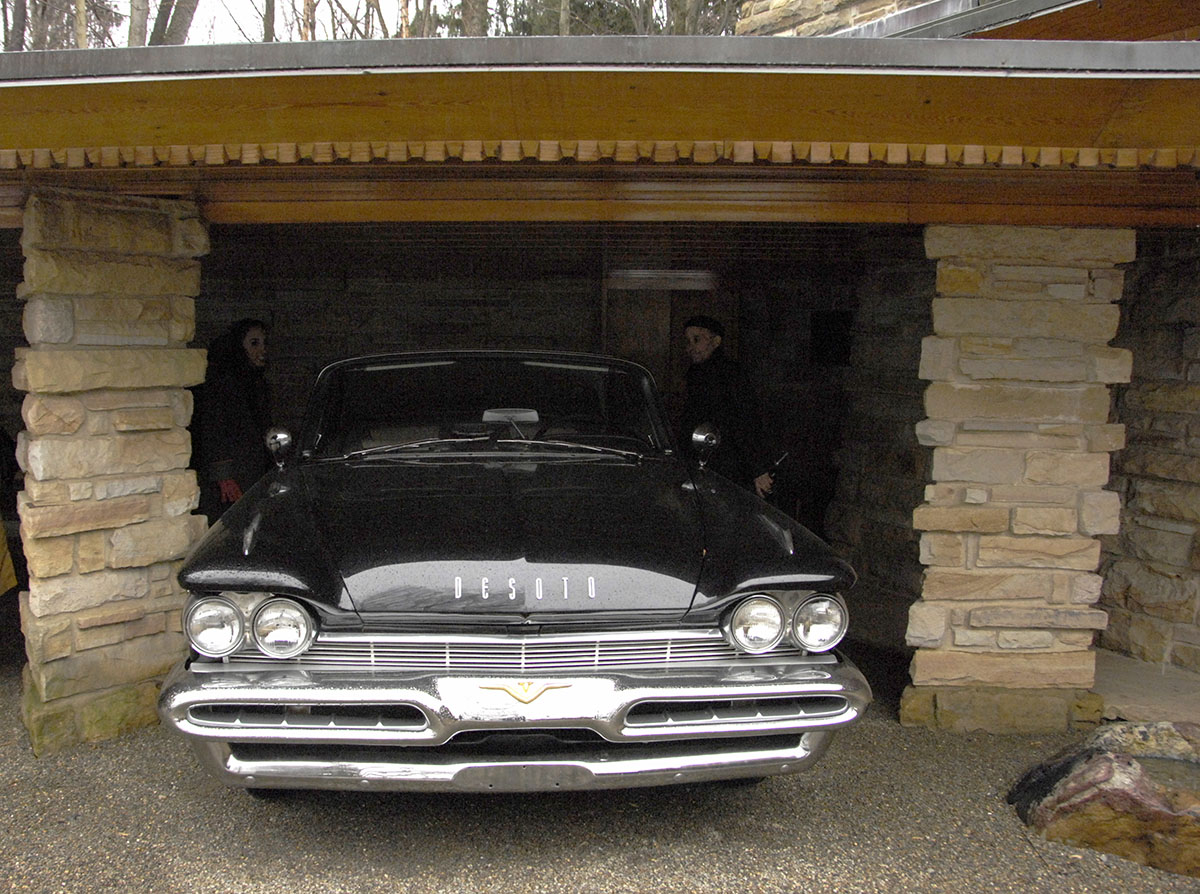
I am a bit of a mid-century car enthusiast so I was interested to read in the Pittsburgh Post-Gazette article linked to below that the Palumbos are considering having a transportation museum on the grounds of Kentuck Knob. Therefore I will close with a photo I took of Lord Palumbo’s 1959 DeSoto in the carport in  2010. Wright was a lover of fine automobiles…the DeSoto’s liberal use of chrome, as was the trend in the 1950s, may have been over the top for Wright:

LR Kentuck Knob 009.jpg

Links:

Kentuck Knob:

https://franklloydwright.org/site/kentuck-knob/

Lord Peter Palumbo:

http://lordpeterpalumbo.com/biography.html

Pittsburgh Post-Gazette tour of Kentuck Knob with Philip Palumbo:

https://www.post-gazette.com/life/goodness/2025/10/09/palumbo-kentuck-knob-pittsburgh-frank-lloyd-wright/stories/202510060072

Frank Lloyd Wright Building Conservancy:

https://savewright.org

Ken Dahlin and Genesis Architecture:

https://www.genesisarchitecture.com

Please scroll down for earlier articles on this website.

Progress on the Burnham Block

© Mark Hertzberg (2025)

Bit by bit, parcel by parcel, the American System-Built homes in the 2700 block of W. Burnham Street in Milwaukee are coming together for their parent organization, Frank Lloyd Wright’s Burnham Block. Burnham Block is steward of five of the six structures: the two single family homes, and three of the four duplexes.

On November 3 the City of Milwaukee’s Historic Preservation Committee unanimously approved plans for restoration of the Model C3 at 1835 N. Layton (at the corner with Burnham Street), and demolition of a shed that was built on the property in 1977. Burnham had already received its third (!) Save America’s Treasures (SAT) grant from the National Park Service in the amount of $407,000 for the work. A matching amount has to be raised from donors for the entire amount to be released.

LR 2714, Duplexes 2017 .jpgThis photograph shows one of the two single family homes (the Model B1) and the four duplexes. The Model C3 single family home, below, sits to the right of the B1.
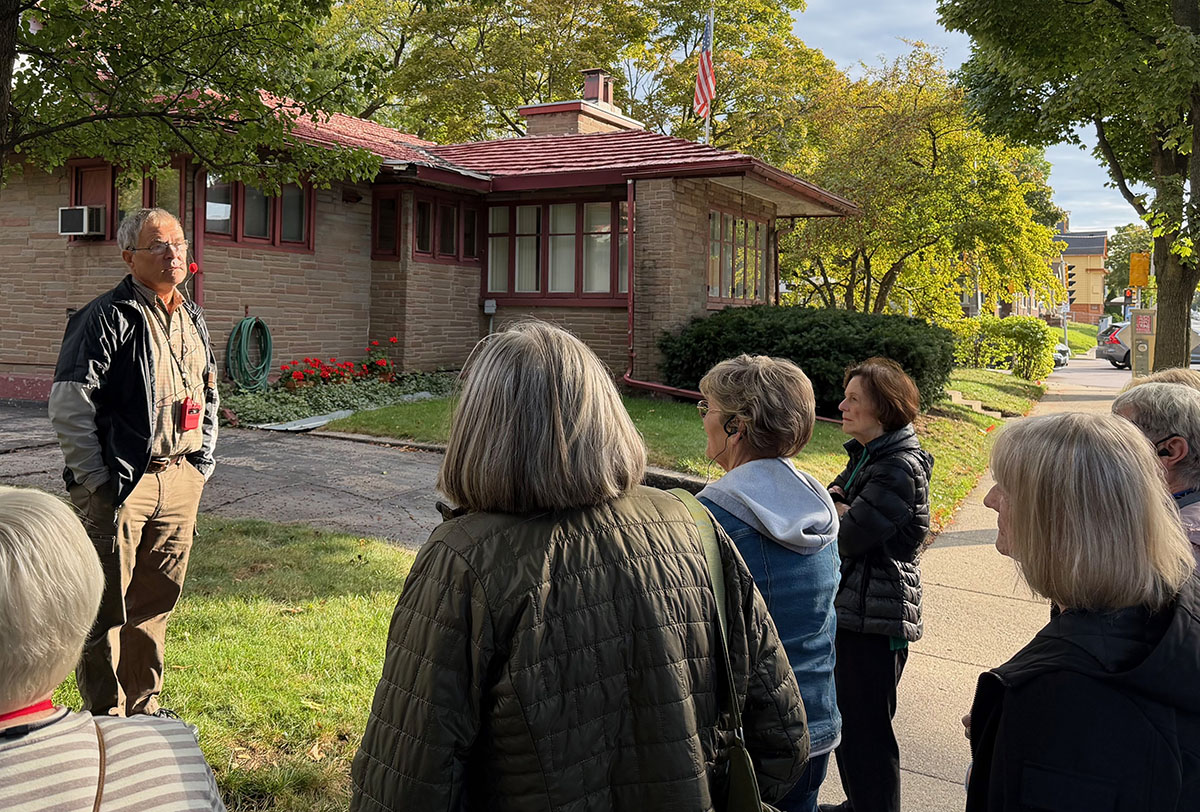
LR 1835 N. Layton 10.16.25 002.jpgDocent Bill Schumacher leads a tour of the Burnham Block, including the C3
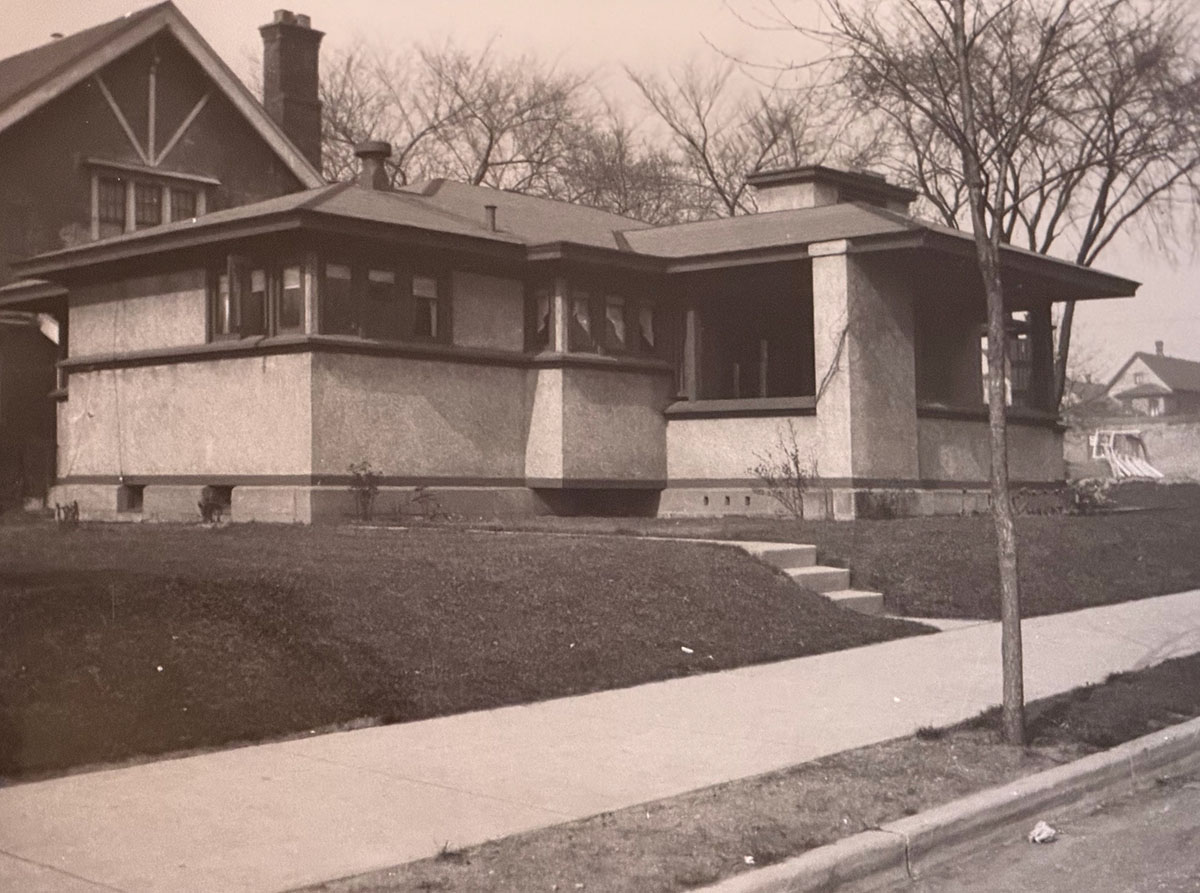
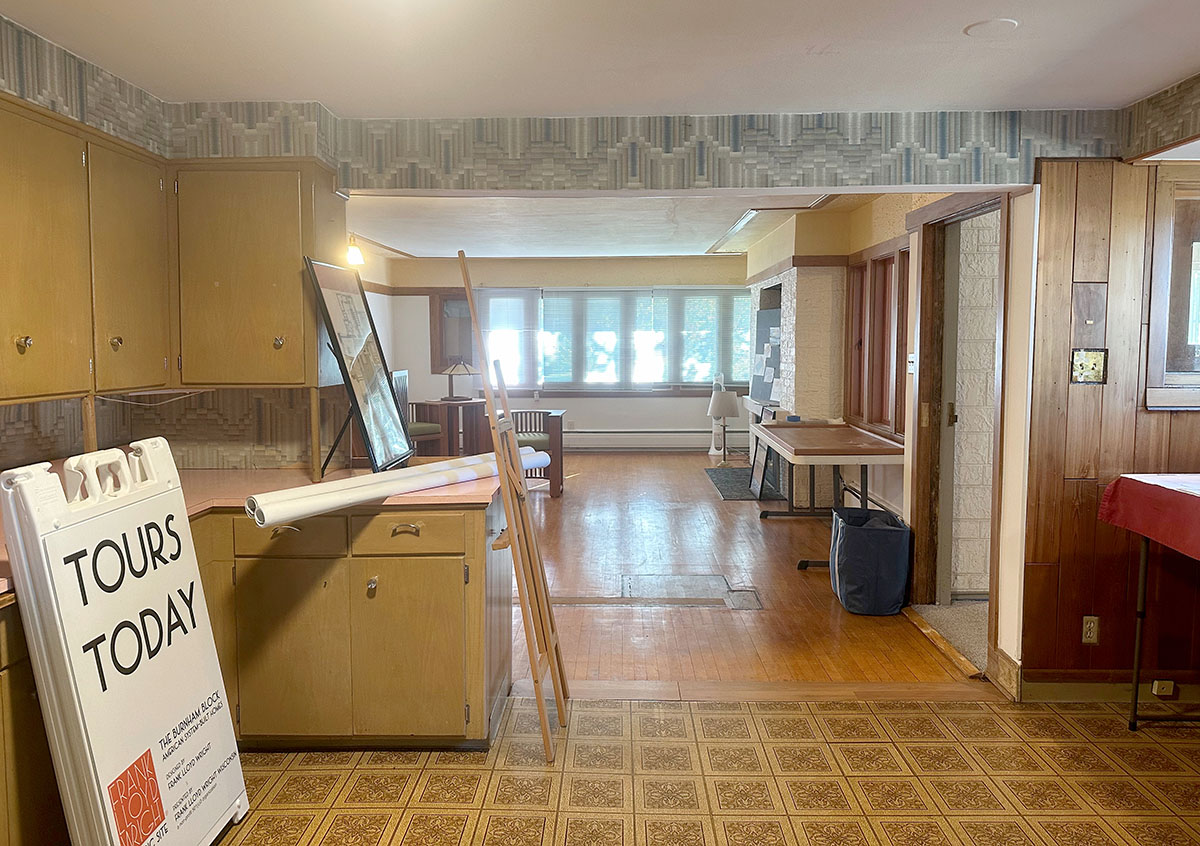
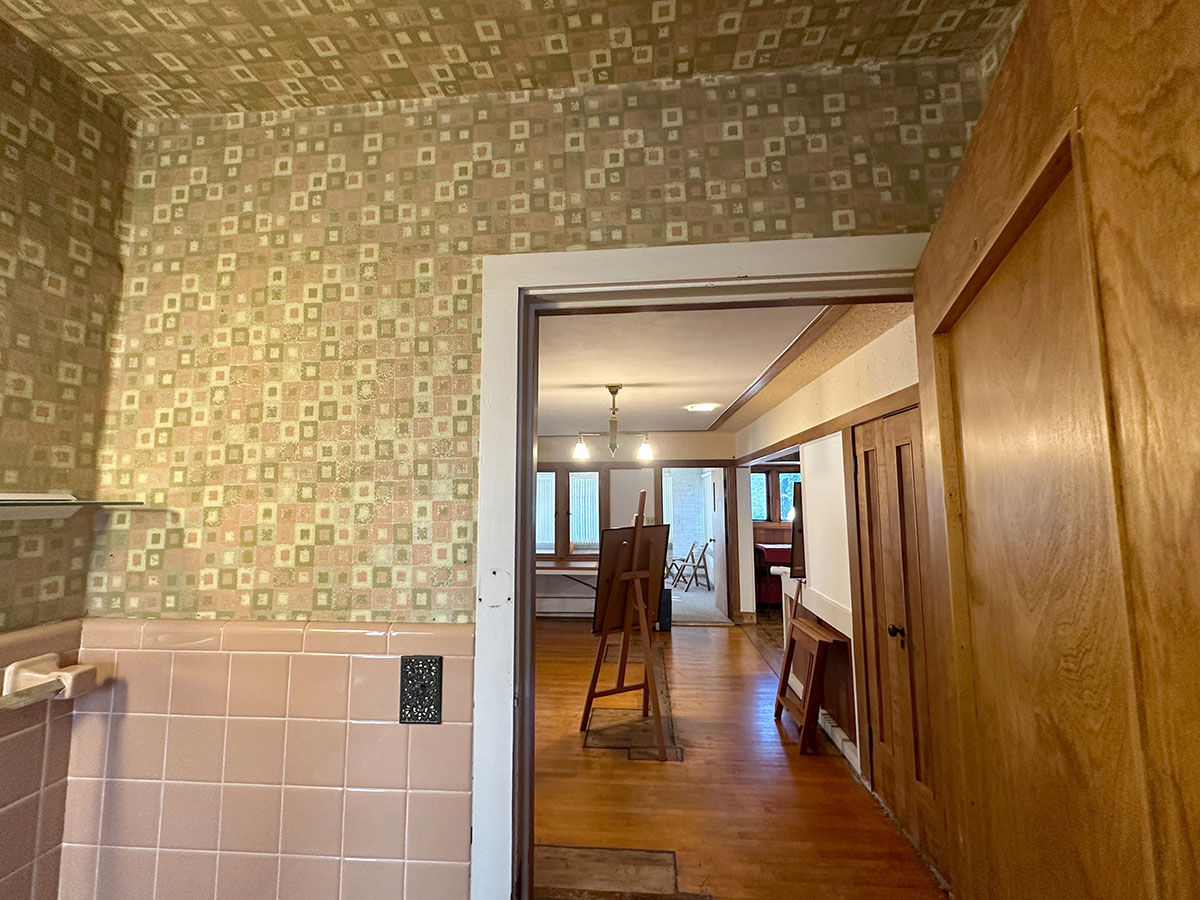
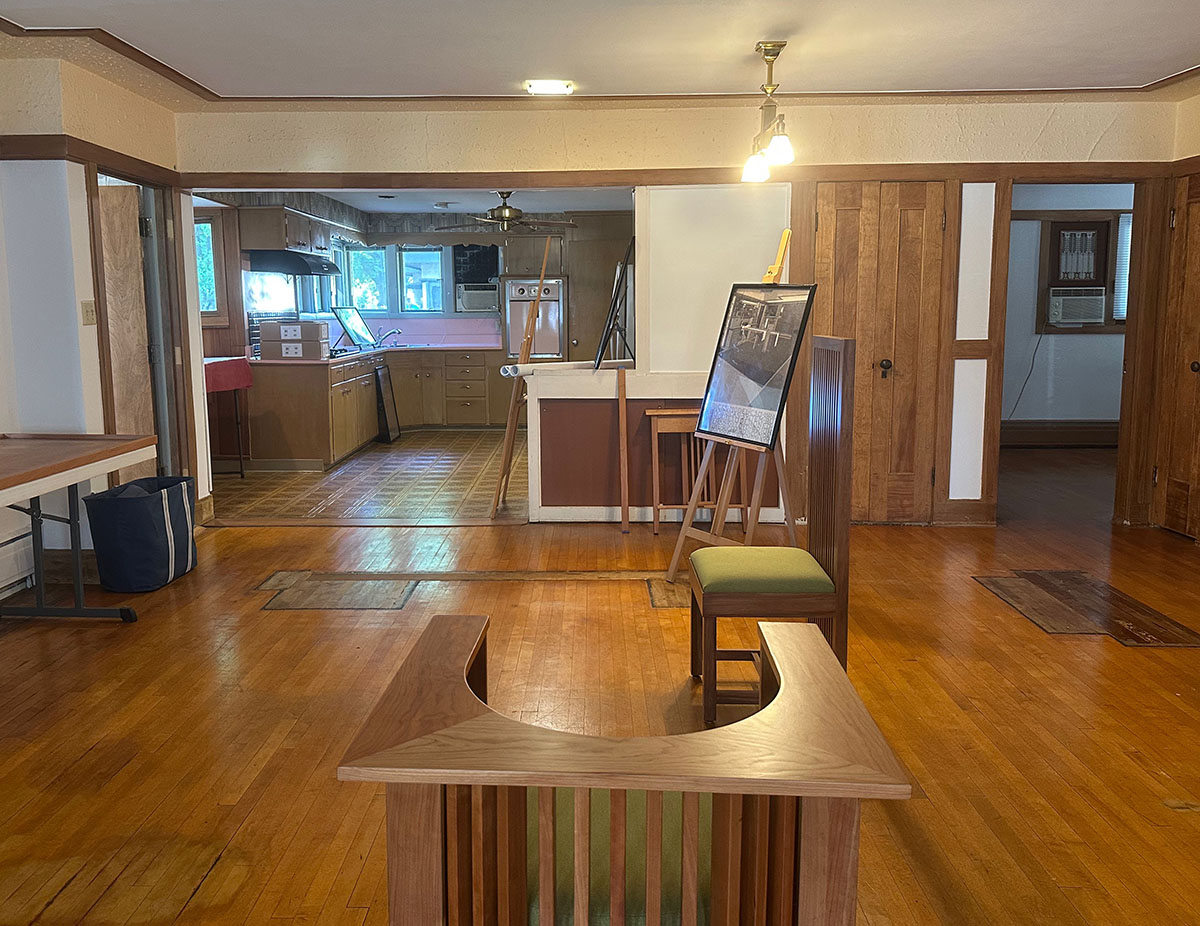
The C3 is sometimes referred to as the “Pizza Hut” house because of the mansard roof which came from two Pizza Hut restaurants in the 1970s. Its stucco was covered with a “Perma-Stone” veneer in 1958, and the open porch was enclosed.

LR 1835 N. Layton 10.16.25 001.jpg

The Burnham Block adventure started in 2005 with the purchase of the Model B1 at 2714  W. Burnham by the Frank Lloyd Wright in Wisconsin Tourism Heritage organization. A Save America’s Treasures grant and 28 major gifts including support from the Barbara Meyer Elsner Foundation enabled its restoration as a house museum.

LR Burnham WiW Board 4.16.05.jpgWright in Wisconsin board members discuss their purchase of the B1 in April 2005. Mike Lilek, the driving force behind the Burnham projects, is left. Barbara Meyer Elsner is third from right.
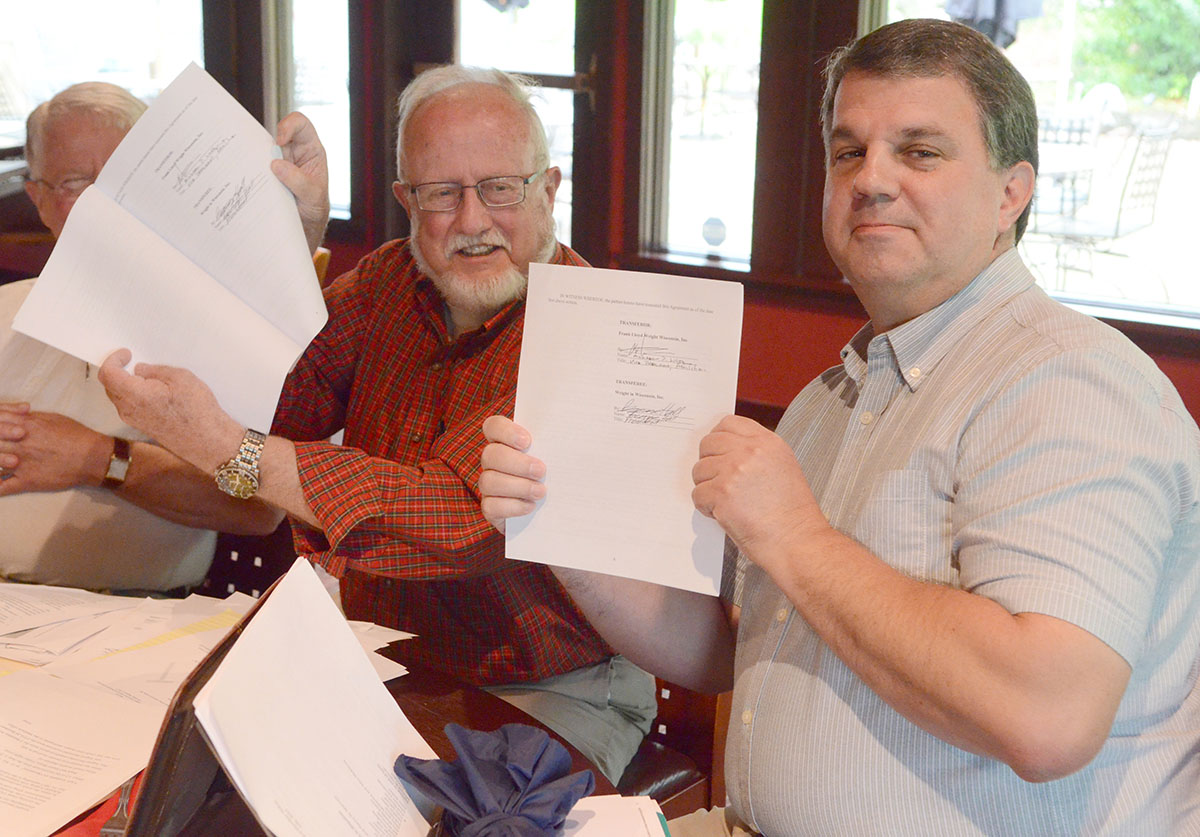
There were many difficult discussions at board meetings about what it would mean for the organization to become a steward of a Wright property rather than only fulfilling its founding mission of promoting Wright tourism and awareness and education about Wright’s work in Wisconsin. Then came the purchase of the Two Family Flat C duplex at the end of the block. And then came the purchases of two more of the duplexes (one of which is the world’s only aluminum sided Frank Lloyd Wright structure…the siding was added in 1968). The fourth duplex is independently owned. It was converted into a single family home in the 1980s and is available for overnight rentals through Vrbo.

Lilek reflects on the discussions at board meetings, “The board meetings became increasingly focused on the Burnham Block, to the detriment of the organization. Then-president George Hall likened it to ‘Your teenager growing up and needing their own space.'”

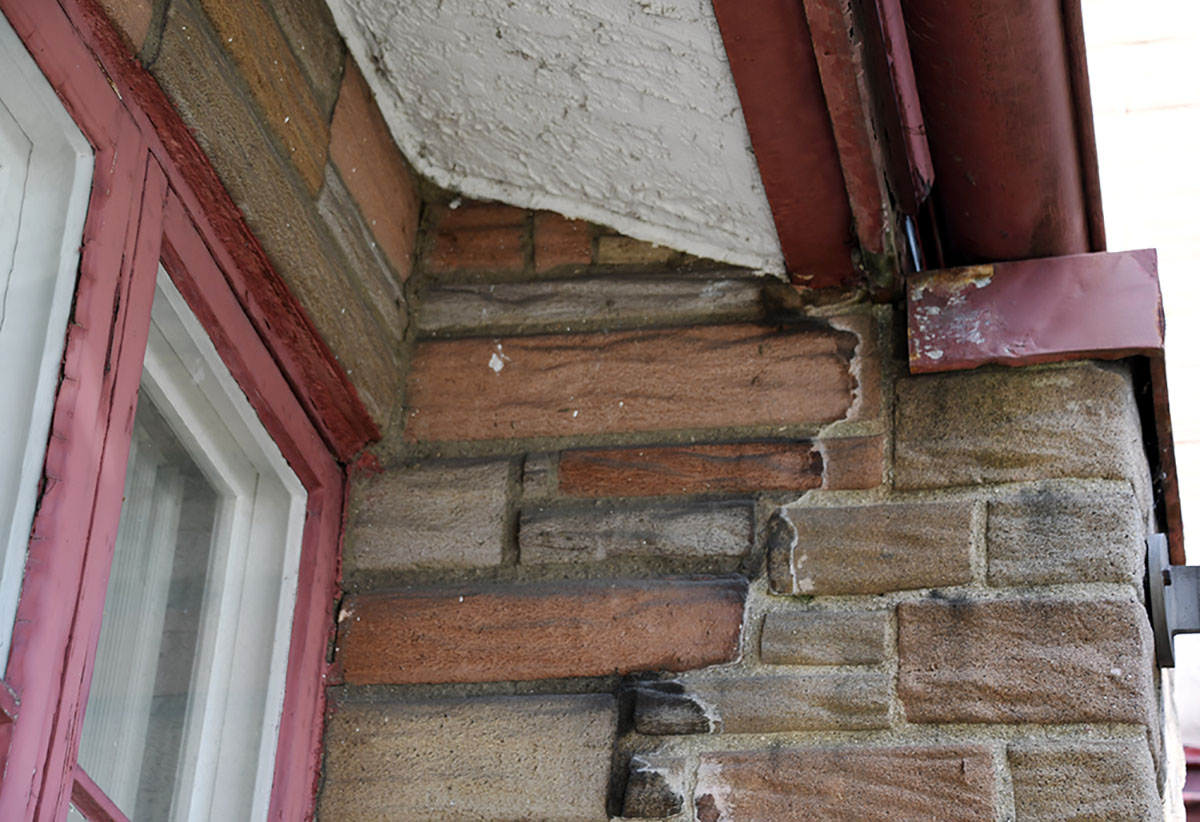
He recalls, “In 2017 Frank Lloyd Wright Wisconsin was reorganized to better support two distinguished missions. Out of the reorganization came Wright in Wisconsin, Inc. to carry forward the original focus on Frank Lloyd Wright tourism and Frank Lloyd Wright’s Burnham Block to focus exclusively on on the Burnham Block historic site in Milwaukee.”

LR WiW Reorganization 005.jpg

LR WiW Reorganization 006.jpgGeorge Hall, left, and Mike Lilek sign the reorganization papers August 3, 2017.
Below are period advertisements of the 1835 N. Layton house and photographs of what the house looks like today:
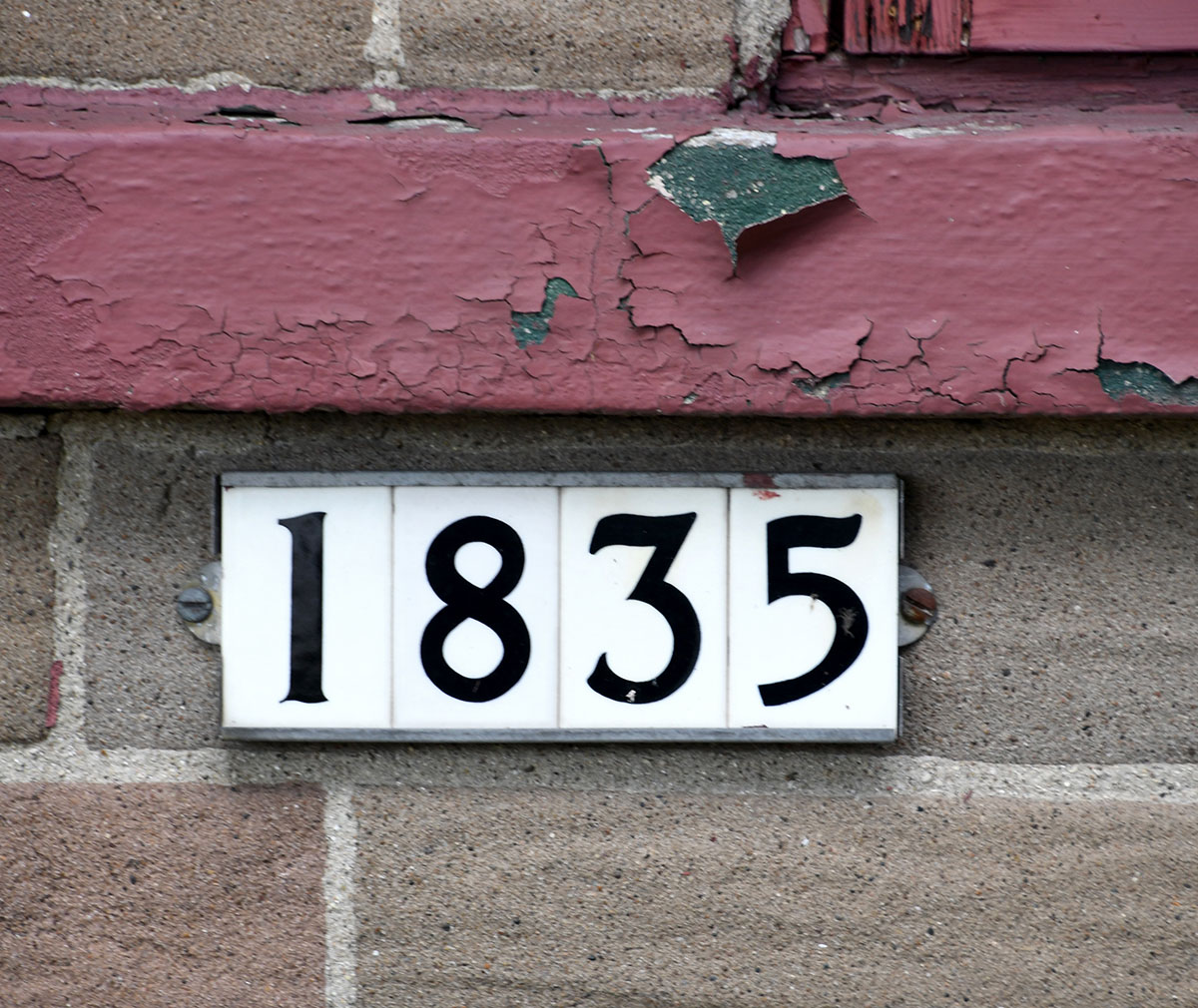
LR 1835 N. Layton 9.25.25 004.jpg

LR 1835 N. Layton 9.25.25 010.jpg

LR 1835 N. Layton 9.25.25 011.jpg

LR 1835 N. Layton 9.25.25 012.jpg

LR 1835 N. Layton 9.25.25 022.jpg

LR IMG_2743.jpg

LR 1835 N. Layton 10.16.25 003.jpg

LR 1835 N. Layton 9.25.25 013.jpg

LR 1835 N. Layton 9.25.25 017.jpg

LR 1835 N. Layton 9.25.25 018.jpg

LR 1835 N. Layton 9.25.25 019.jpg

LR 1835 N. Layton 9.25.25 019A.jpg

LR 1835 N. Layton 9.25.25 015.jpg

LR 1835 N. Layton 9.25.25 016.jpg

LR 1835 N. Layton 9.25.25 020.jpg

LR 1835 N. Layton 9.25.25 021.jpg

The next three photos show where some of the original furnishings – seen in the drawing above – were originally placed. It is not known when they were removed, or where they ended up.

LR 1835 N. Layton 9.25.25 024.jpg

LR 1835 N. Layton 9.25.25 025.jpg

LR 1835 N. Layton 9.25.25 027.jpg

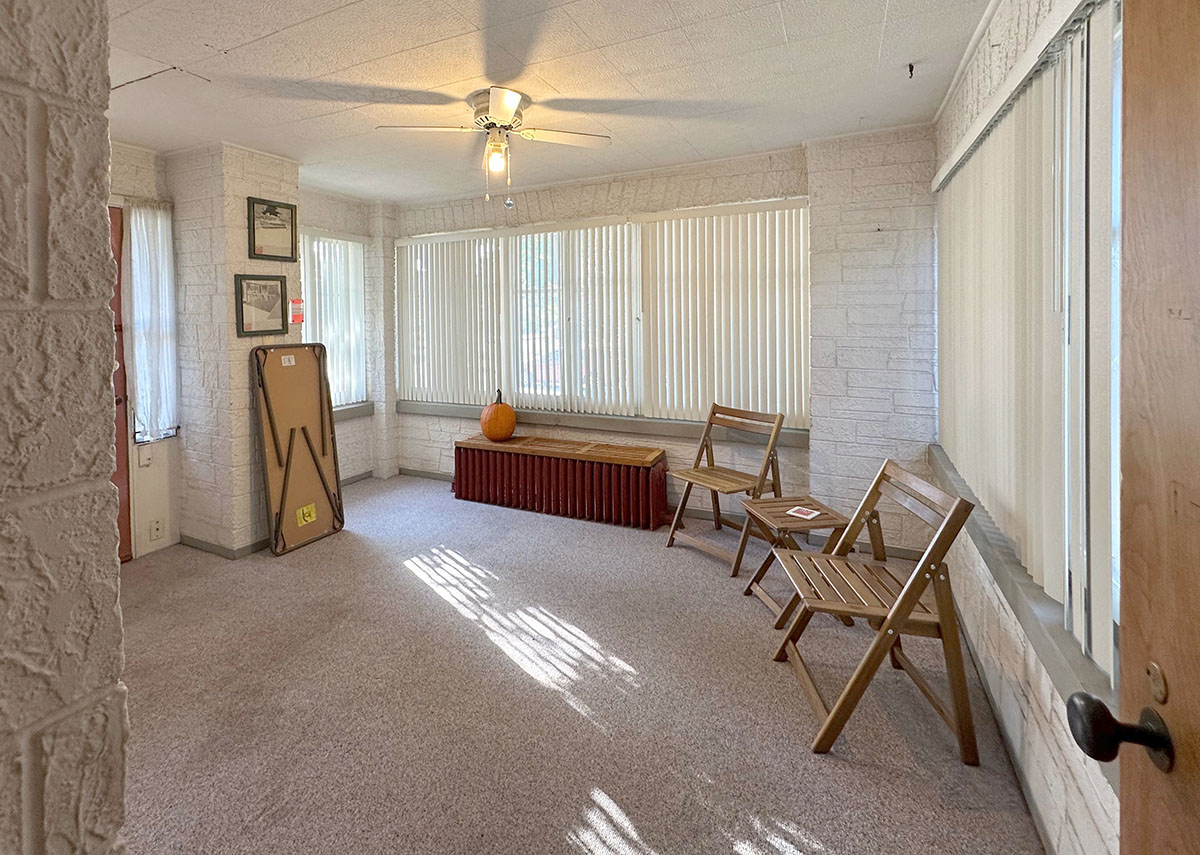
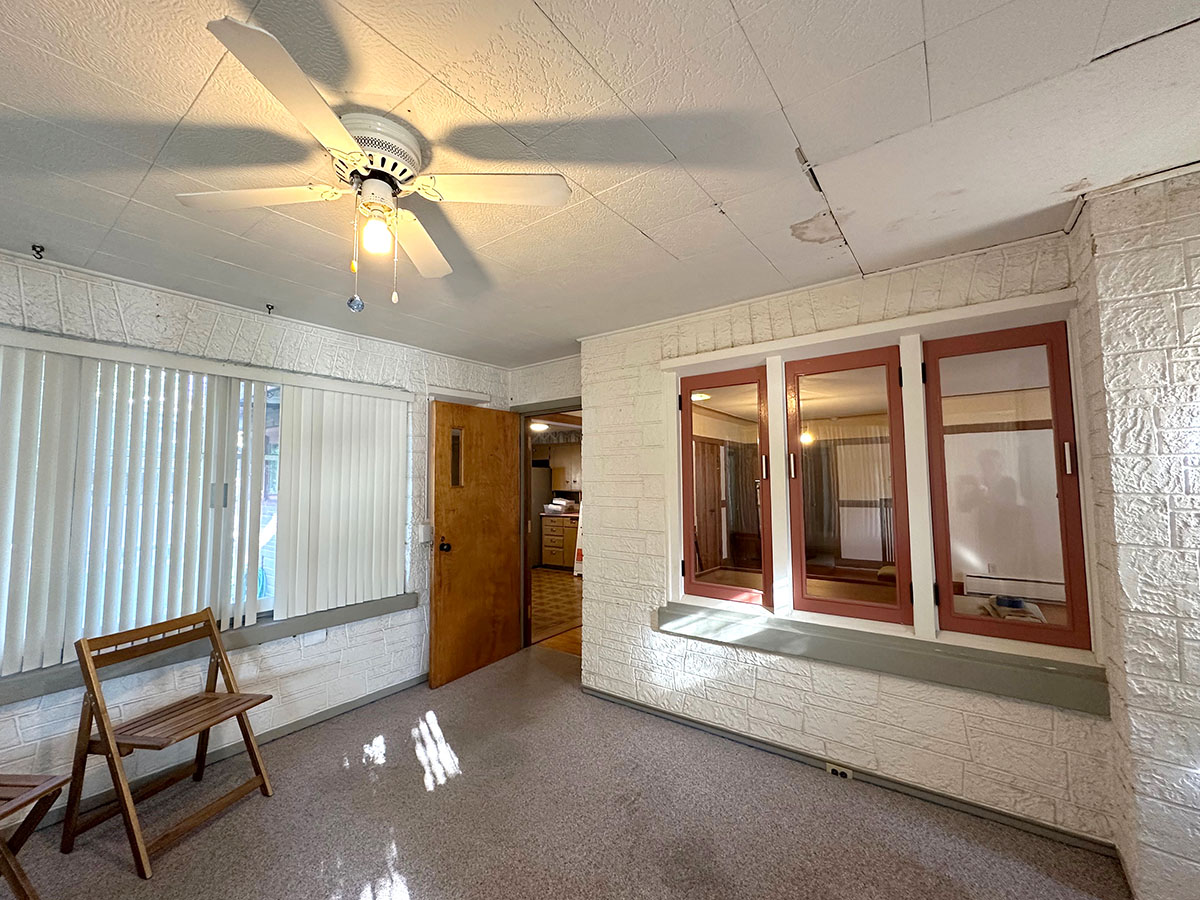
The original open porch was enclosed, possibly when then exterior veneer was added:

LR 1835 N. Layton 9.25.25 028.jpg

LR 1835 N. Layton 9.25.25 029.jpg

LR 1835 N. Layton 9.25.25 030.jpg

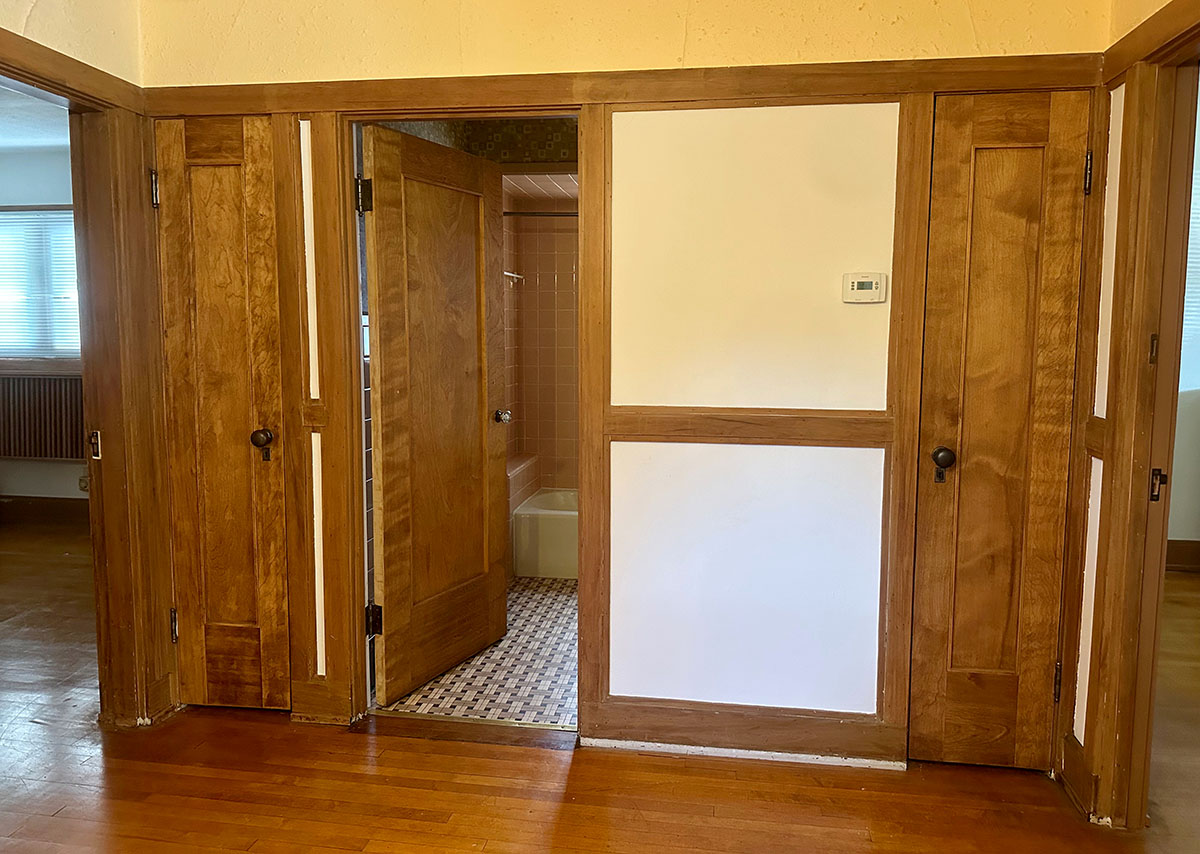
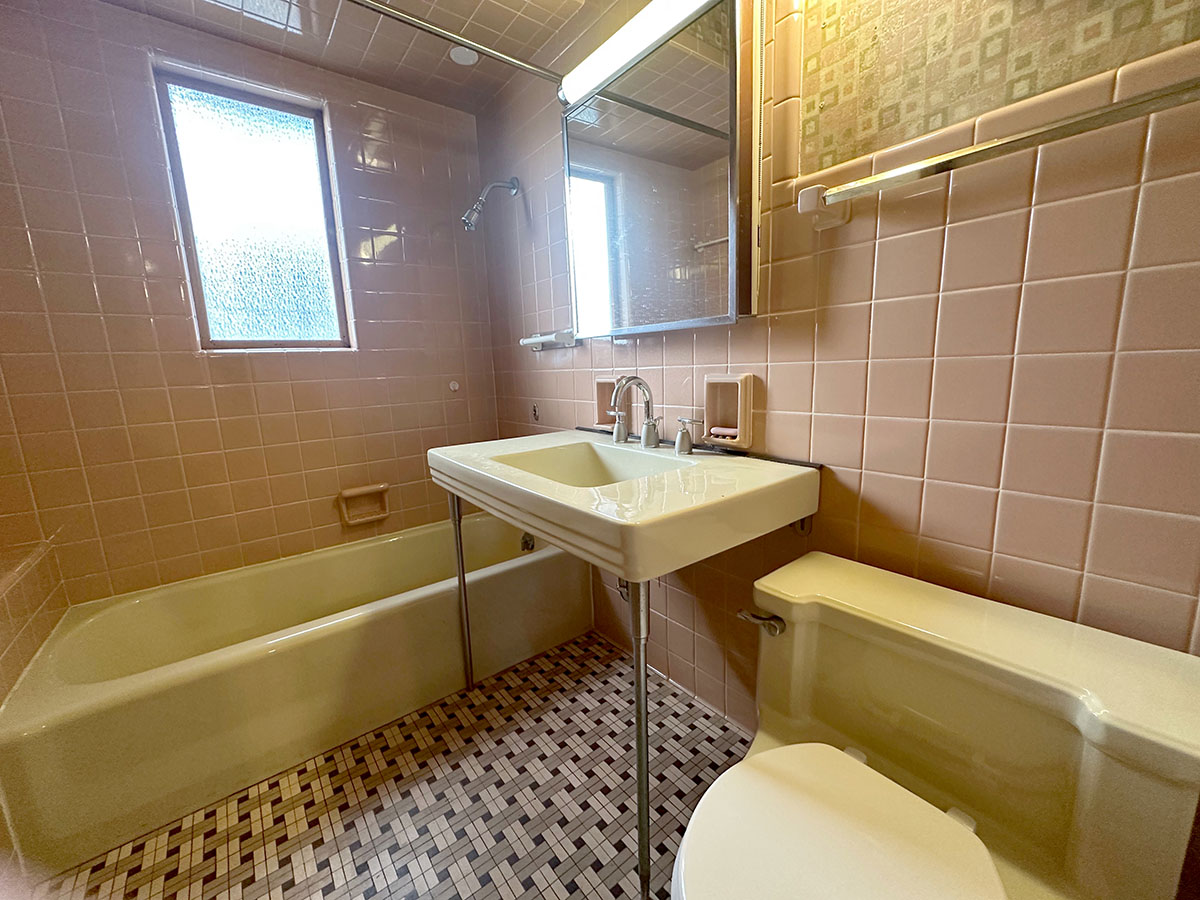
Bedroom and bathroom photos:

LR 1835 N. Layton 9.25.25 031.jpg

LR 1835 N. Layton 9.25.25 033.jpg

LR 1835 N. Layton 9.25.25 034.jpg

LR 1835 N. Layton 9.25.25 035.jpg

LR 1835 N. Layton 9.25.25 036.jpg

LR 1835 N. Layton 9.25.25 037.jpg

LR 1835 N. Layton 9.25.25 044.jpg

LR 1835 N. Layton 9.25.25 042.jpg

LR 1835 N. Layton 9.25.25 043.jpg

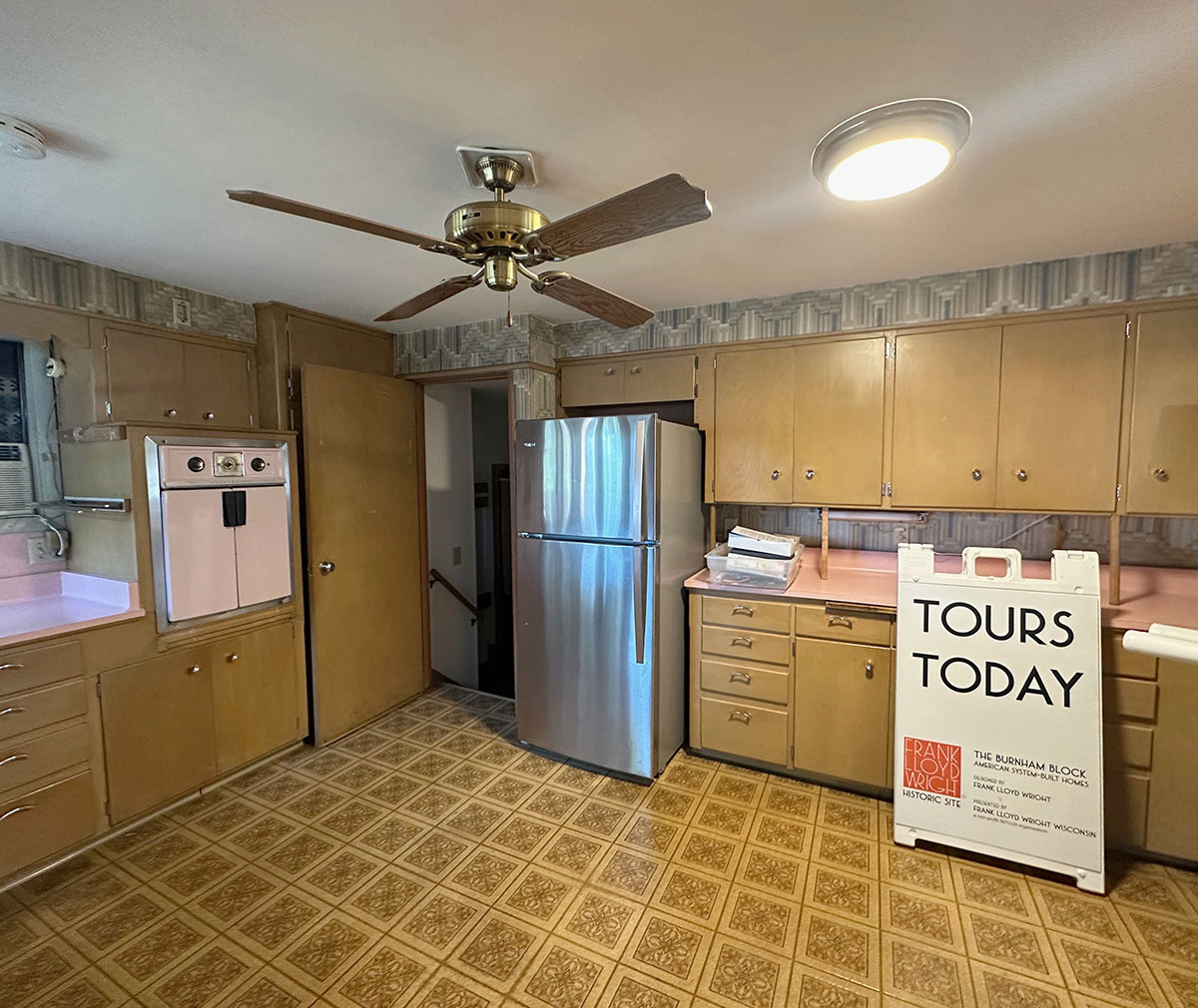
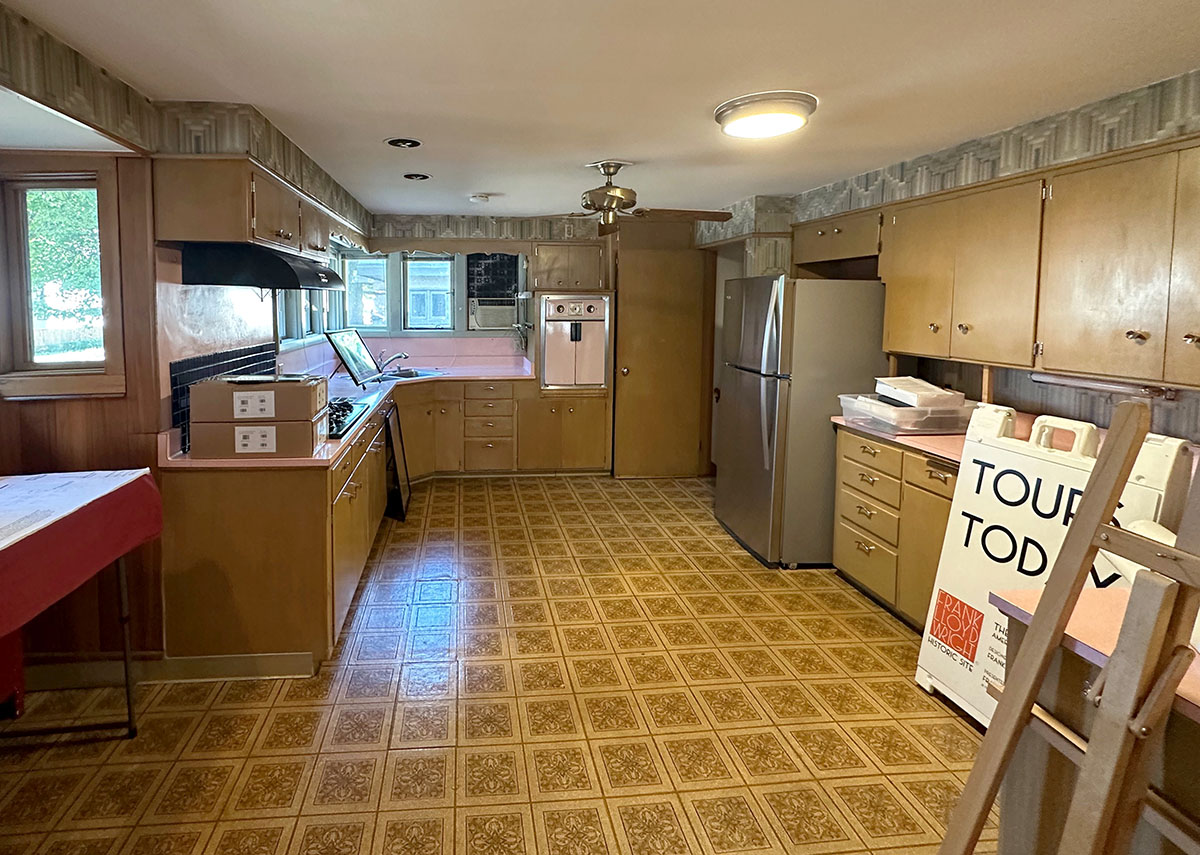
The kitchen:

LR 1835 N. Layton 9.25.25 038.jpg


LR 1835 N. Layton 9.25.25 039B.jpg

LR 1835 N. Layton 9.25.25 039A.jpg

LR 1835 N. Layton 9.25.25 040.jpg

LR 1835 N. Layton 9.25.25 041.jpg

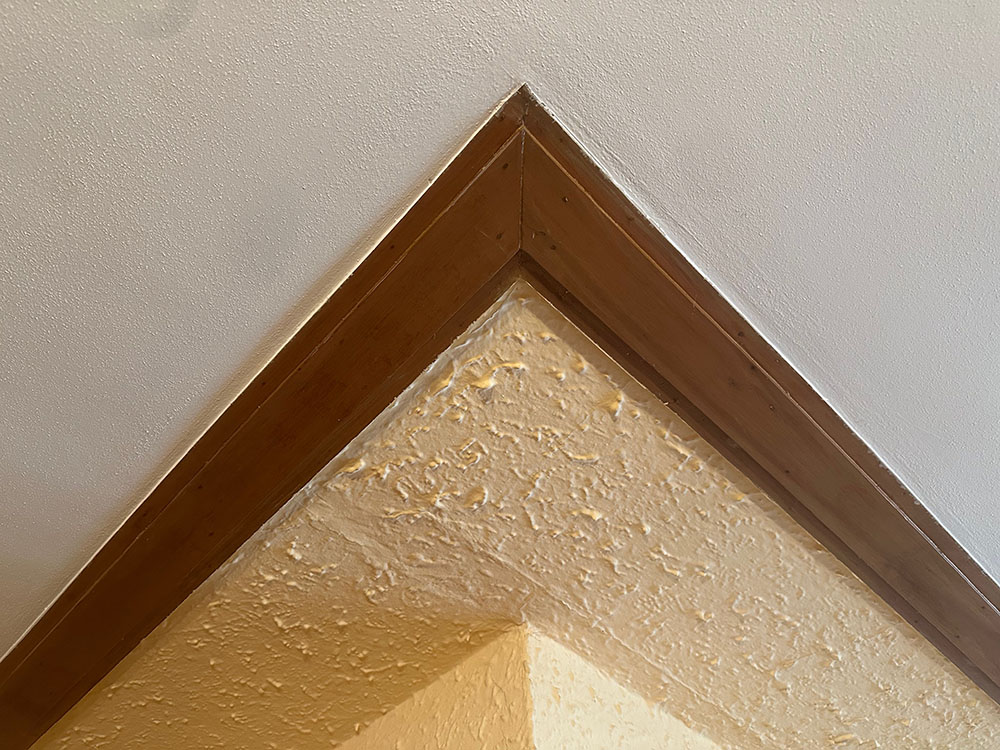
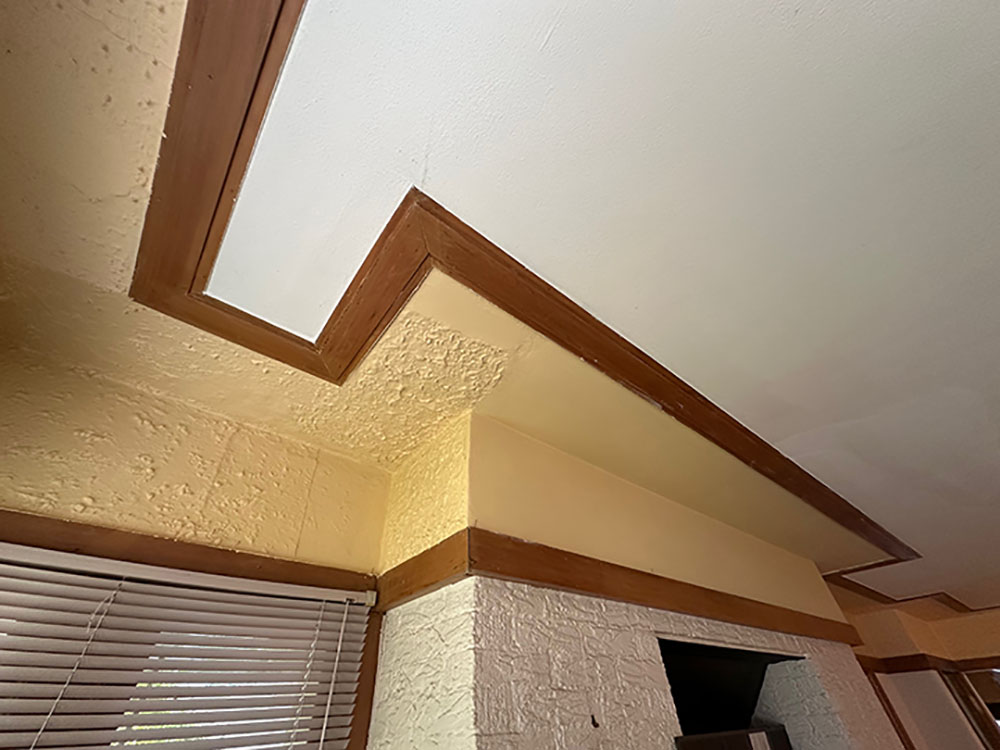
The ceiling trim:

LR 1835 N. Layton 9.25.25 045.jpg

LR 1835 N. Layton 9.25.25 047.jpg

LR 1835 N. Layton 9.25.25 048.jpg

The Burnham Block is working with Ramlow / Stein Architecture and Interiors on the restoration. The National Park Service and the Wisconsin State Historic Preservation Officer have already signed off on the restoration project. Now that the city has given its approval, contractors are being interviewed, and it is hoped that work will begin “soon,” according to Lilek. Contributions are welcome to match the SAT grant.

LR 1835 N. Layton 9.25.25 005.jpg

Links:

Frank Lloyd Wright’s Burnham Block:

http://wrightinmilwaukee.org

Ramlow / Stein:

https://www.ramlowstein.com

Wright in Wisconsin:

https://wrightinwisconsin.org

Vrbo rental link:

https://www.vrbo.com/434063

Please scroll down for previous articles on this website.


Hardy at Sunrise / Photo Workshop

© Mark Hertzberg (2025)

Hardy Sunrise 10.25.25 161.JPEG

Why in the blazes would I set the alarm for 6 a.m. on a Saturday a week ago? Really, why? We are in the midst of moving (after 47 years!) and sleeping in would have been swell. So, yeah, well, why? To help Andrew Pielage who was conducting one of his photo workshops in Racine.

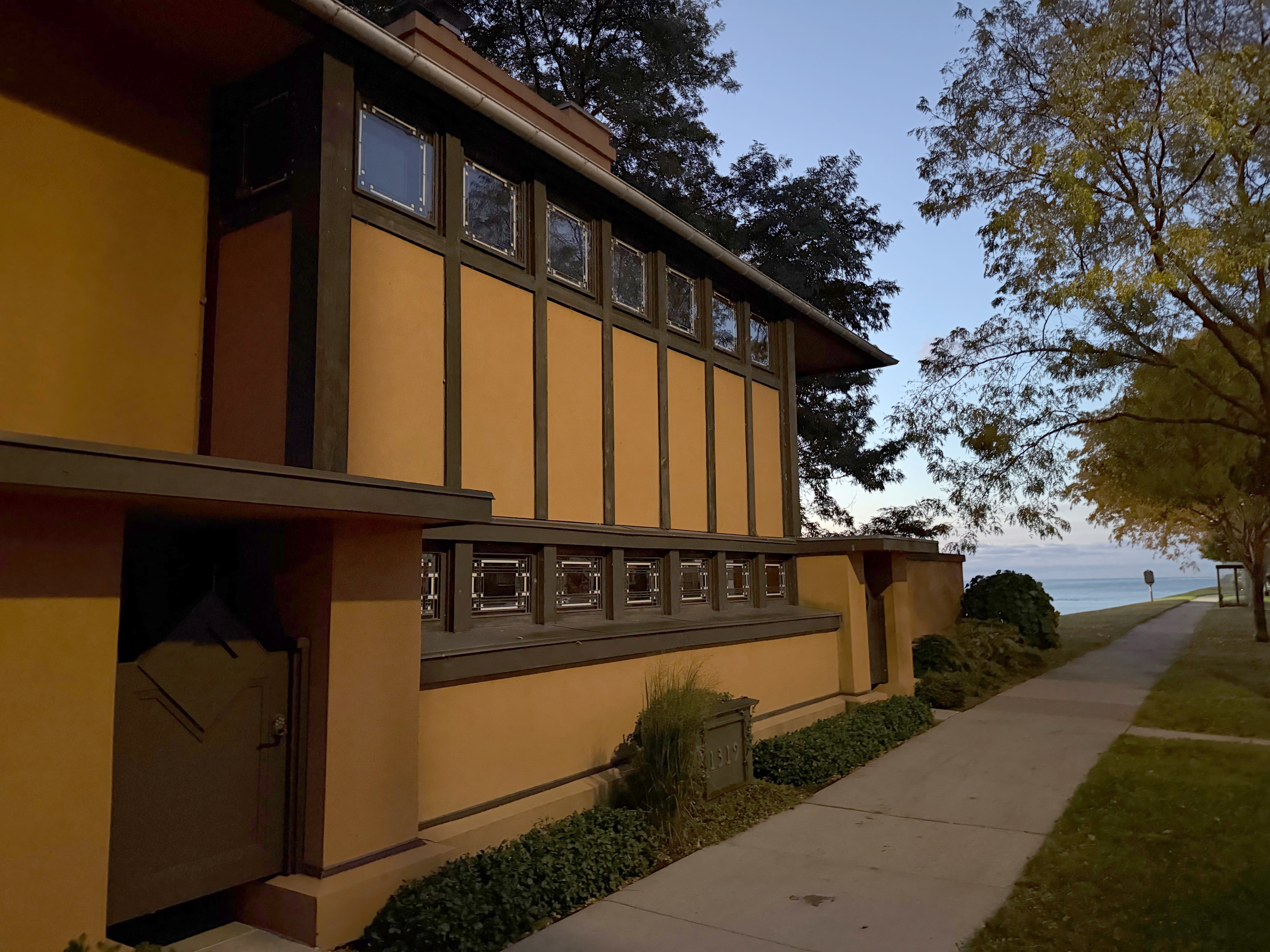
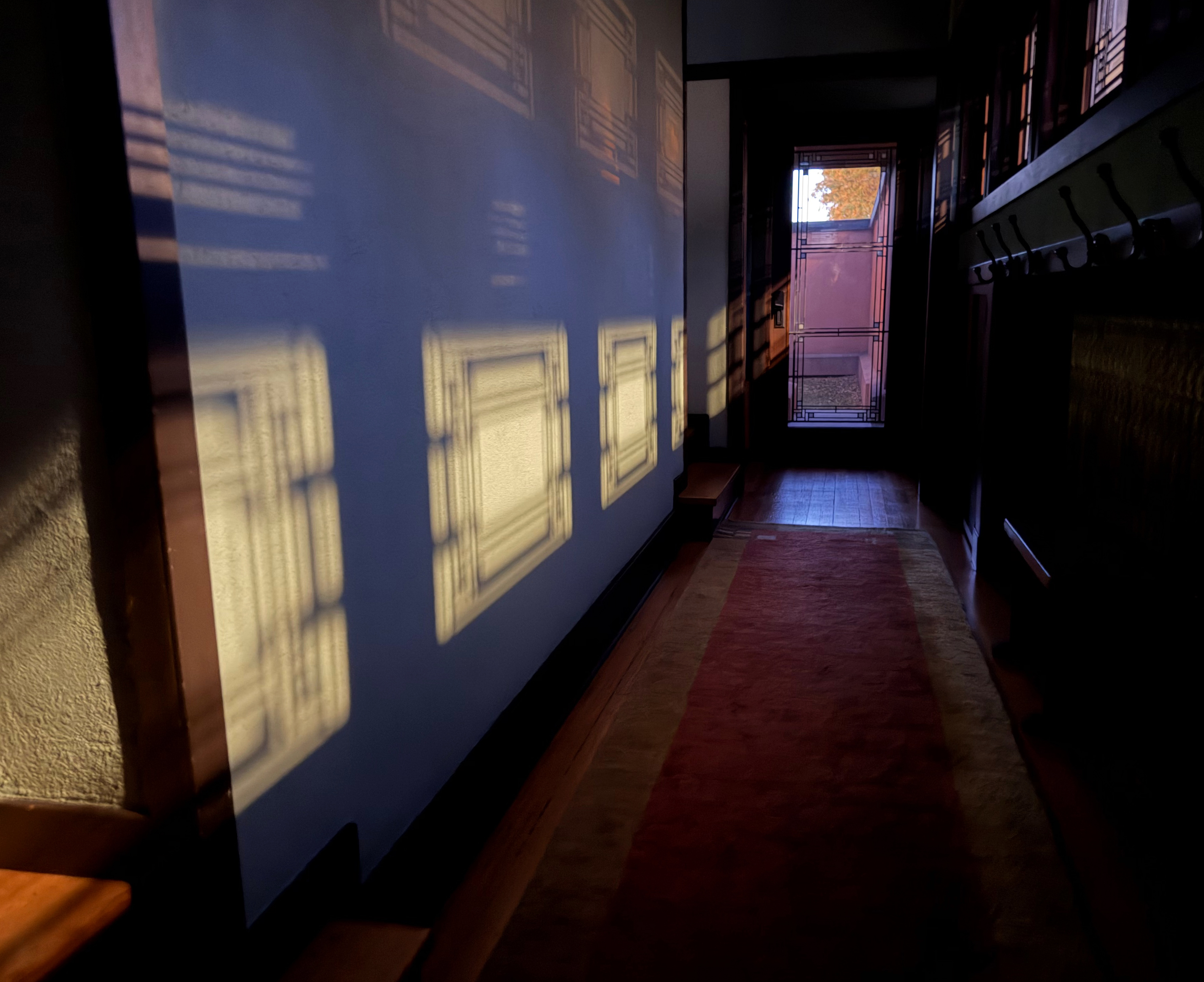
Hardy Pielage 10.25.25 016.JPEG Andrew had 18 photo guests arriving shortly after 7 a.m. to photograph Frank Lloyd Wright’s Thomas P. Hardy house inside and out, top to bottom. Andrew had asked me a year ago to tell the photographers about Hardy and about the house. Tom Szymczak, the steward of the house, had two kringle and a pot of hot coffee waiting. I got there at 6:48 a.m. Before I could get the goodies out and turn on the lights, I had to take my own photos of the house at sunrise. So, first my photos, and then my photos of the photographers.
Hardy Sunrise 10.25.25 162.JPEG

Hardy Sunrise 10.25.25 164.JPEG

Hardy Sunrise 10.25.25 170.JPEG

Hardy Sunrise 10.25.25 169.JPEG

Hardy Sunrise 10.25.25 177.JPEG

Hardy Sunrise 10.25.25 171.JPEG

Hardy Sunrise 10.25.25 172.JPEG

Hardy Sunrise 10.25.25 175.JPEG

Hardy Sunrise 10.25.25 178.JPEG

Hardy Sunrise 10.25.25 186.JPEG

Hardy Sunrise 10.25.25 188.JPEG

Hardy Sunrise 10.25.25 189.JPEG

People sometimes ask my about what brand of camera is best. My answer is that the photographer’s eye is more important than the nameplate. I use Nikons because I am looked into their lens system. I have long carried a new go-to camera in my pocket…my smartphone. I recently upgraded to the iPhone 17 Pro. My friend Harvey Riekoff asked me what I thought of the camera…all the photos in this post were taken with the phone. It makes me think of cartoonist Aaron Johnson’ What the Duck t-shirt that I was given a few years ago: “Your camera takes great pictures!” To which the duck answered, “Your mouth makes nice compliments!” And, now photos of Andrew’s guests:

Hardy Pielage 10.25.25 004.JPEG


Hardy Pielage 10.25.25 008.JPEG

Hardy Pielage 10.25.25 006.JPEG

Hardy Pielage 10.25.25 009.JPEG

Hardy Pielage 10.25.25 010.JPEG

Hardy Pielage 10.25.25 011.JPEG

Hardy Pielage 10.25.25 012.JPEG

Hardy Pielage 10.25.25 020.JPEG

Hardy Pielage 10.25.25 021.JPEG

Hardy Pielage 10.25.25 022.JPEG

(My wife has a collection of photos of me on my back taking photos in Wright homes and other historic sites…I had to take this photo!)

Hardy Pielage 10.25.25 024.JPEG

Hardy Pielage 10.25.25 025.JPEG

For more information about Andrew Pielage’s Photo Workshops;

https://www.apizm.com/events-calendar

Please scroll down to read previous posts on this website.


Golden Light at Unitarian Meeting House

© Mark Hertzberg (2025)

LR Unitarian Meeting House 10.16.25 002.jpg

It was an overcast, uninspiring day to photograph Frank Lloyd Wright’s Unitarian Meeting House in Madison, Wisconsin. I was helping lead my 26th Wright tour for guests from Road Scholar, and had decided to leave my “real” camera on the bus. After all, what would I see different on my umpteenth visit on a gray day? Given the dank sky, I took only my phone with me. The light changed dramatically at 5:06 p.m. when the sun unexpectedly broke through the clouds. I started photographing the original church building while the guests were looking at the 2008 Atrium addition designed by Kubala Washatko Architects, Inc. One of them called me over to show me the reflection of the church in the windows of the Atrium. Bingo! Thank you, Ned, for calling me over to tell me that the pattern of the windows made you think of the Pyrex-glass tubing you had seen yesterday at SC Johnson in Racine!

LR Unitarian Meeting House 10.16.25 006.jpg

LR Unitarian Meeting House 10.16.25 008.jpg

LR Unitarian Meeting House 10.16.25 007.jpg

LR Unitarian Meeting House 10.16.25 005.jpg

LR Unitarian Meeting House 10.16.25 004.jpg

Links:

Unitarian Meeting House

https://www.unitarianmeetinghouse.org

Road Scholar Illinois / Wisconsin weeklong tour…come join us, we have five dates scheduled for 2026:

https://www.roadscholar.org/find-an-adventure/22976/Architectural-Masterworks-of-Frank-Lloyd-Wright

Please scroll down for earlier articles on this website.

Wright Book Beat, Fall 2025

© Mark Hertzberg (2025)

We are previewing four new books about Frank Lloyd Wright and his architecture. Two were recently published. The other two might be on your wish list for next year. (Disclaimer: I have photographs in the Hansen and Rovang books, and am consulting on the Hardy House section of the Lubell / Pielage book)

In alphabetical order, by author:

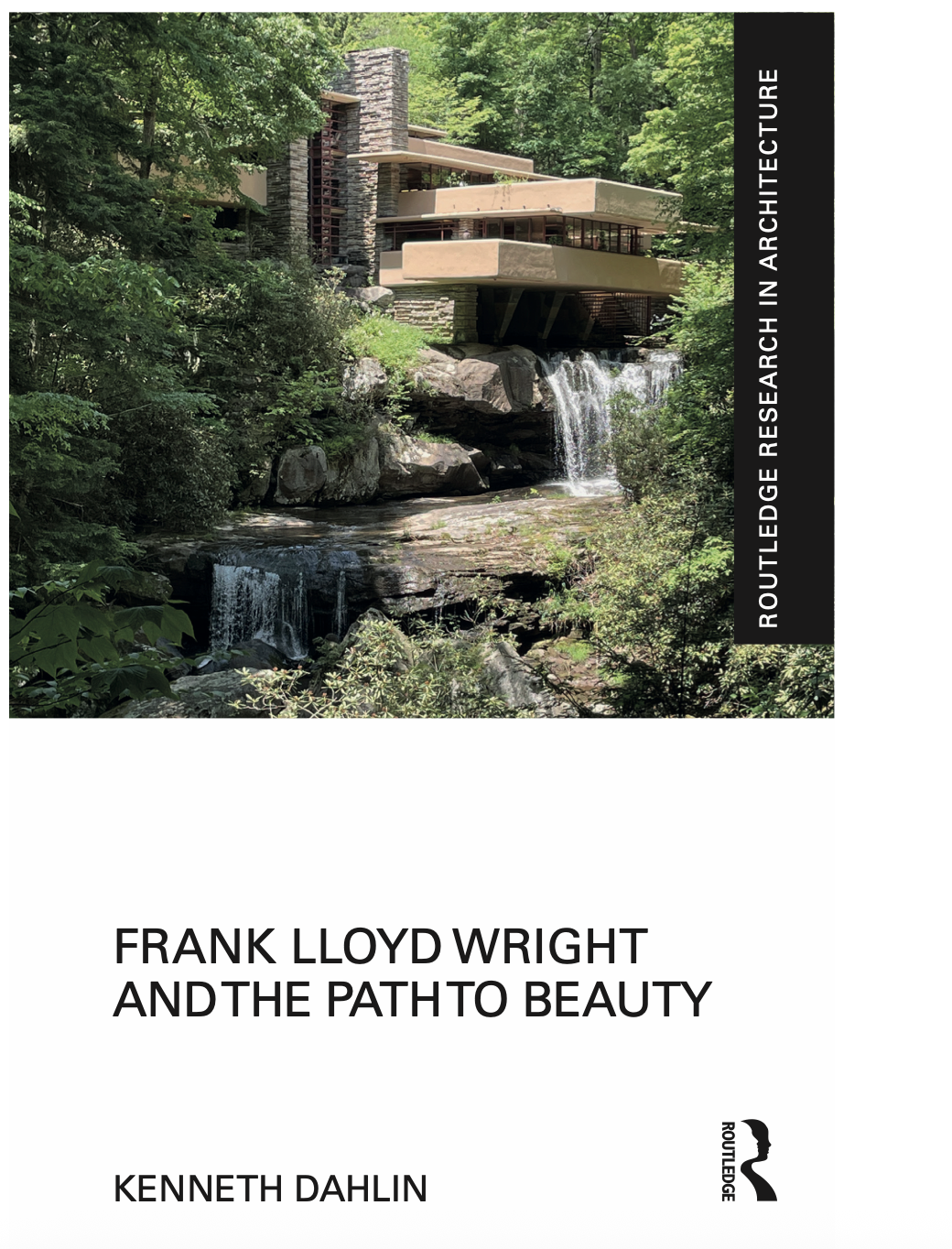
Ken DahlinFrank Lloyd Wright and the Path to BeautyScreenshot 2025-09-08 at 2.59.54 PM.png

Dahlin, a Racine native, is the award-winning architect who is the founder of Genesis Architecture in Racine. The book is part of the “Routledge Research in Architecture” series. As previewed by Routledge: “This book connects Frank Lloyd Wright’s organic theory with his pursuit of beauty, presenting a path for the recovery of beauty in architecture…”

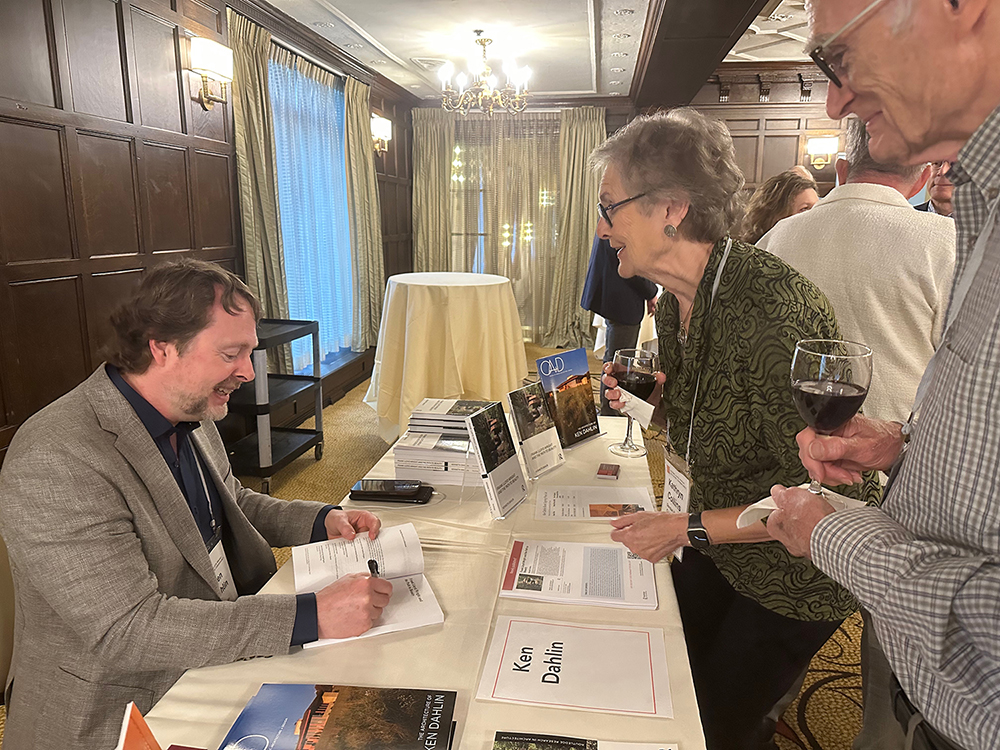
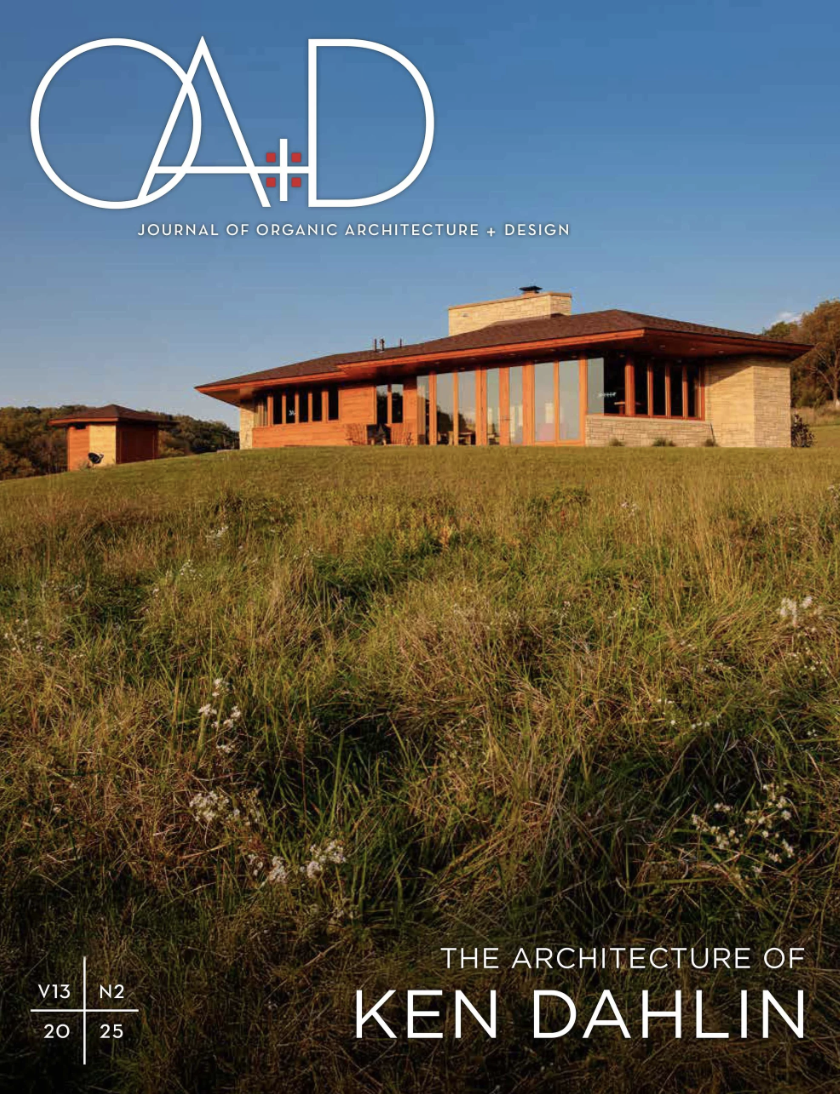
Dahlin recently spoke at Wright in Wisconsin’s event at Taliesin and signed books at the Frank Lloyd Wright Building Conservancy’s conference in Pittsburgh. His work is the cover feature of the current issue of the Journal of Architecture + Design (see link below).

LR Dahlin BC.jpg

Screenshot 2025-09-10 at 3.01.57 PM.png

Kristine Hansen: Frank Lloyd Wright’s Illinois

This book will be a sequel to Hansen’s successful 2023 book Frank Lloyd Wright’s WisconsinHow America’s Most Famous Architect Found Inspiration in His Home State which went into three printings.

Screenshot 2025-09-08 at 4.28.00 PM.png

The Illinois book, whose subtitle has not been determined yet, is expected to be published next July or August. Wisconsin is a slim paperback that through photographs and narratives explores Wright’s work in his native state. It is described as “is part travel guide, part fireside chat with stewards of his designs.” Globe Pequot is the publisher of both books.

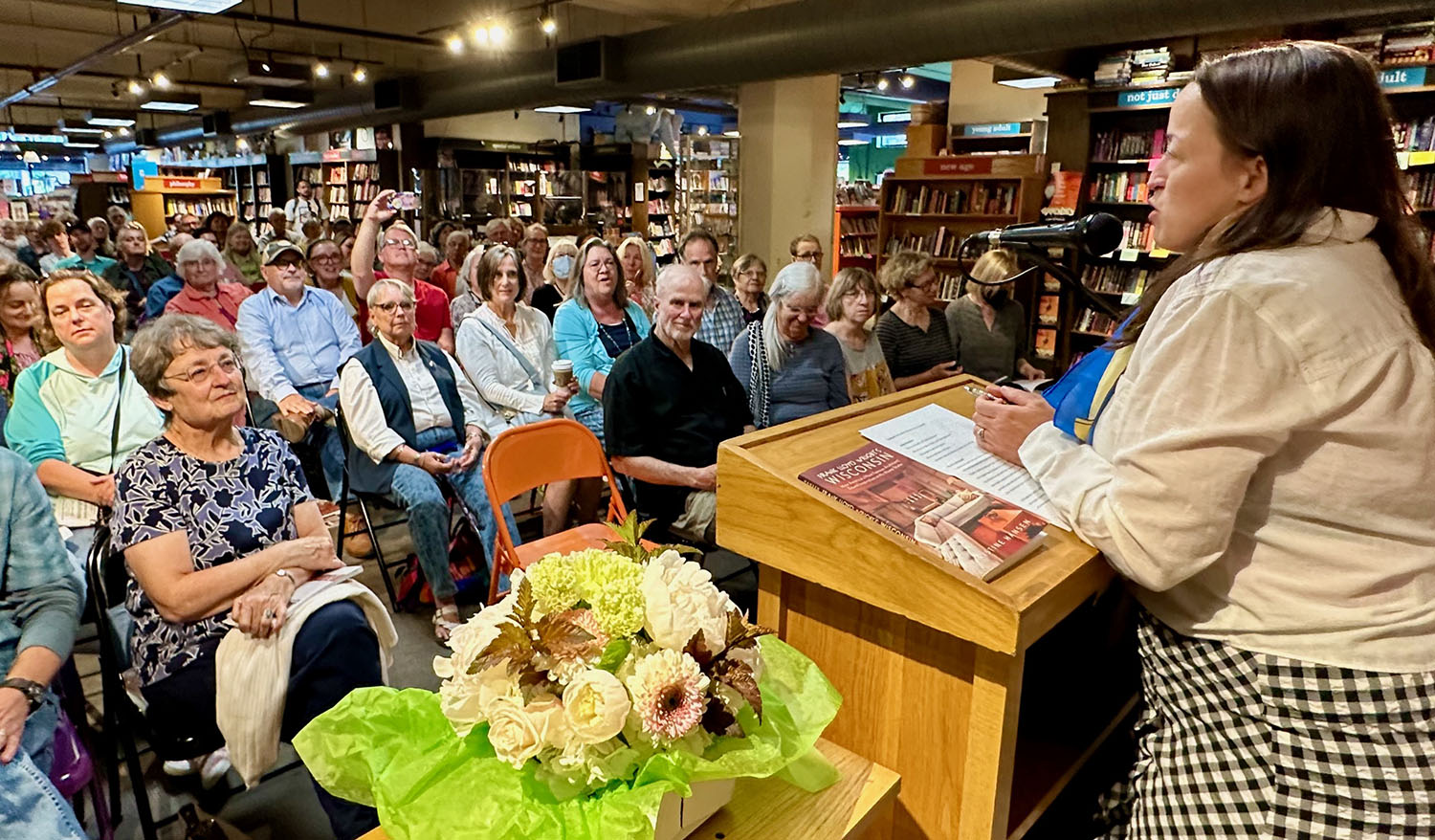
LR Hansen.jpgHansen at her book talk at Boswell Books in Milwaukee, June 9, 2023.
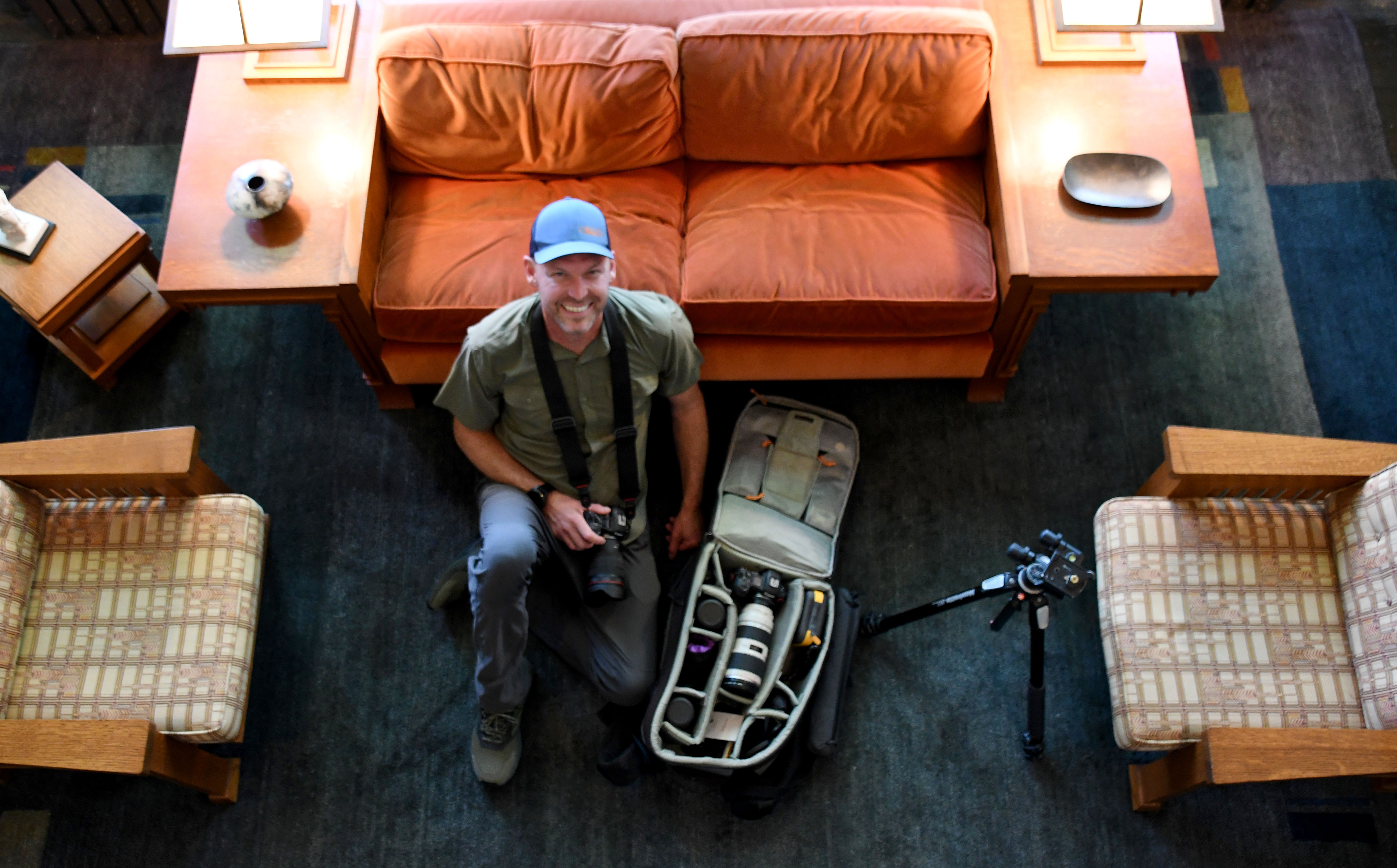
Sam Lubell and Andrew Pielage: 50 Houses

Rizzoli will be publishing this book by architectural writer Sam Lubell and Wright and architectural photographer Andrew Pielage. A press release previews the book as a project that “will delve into the stories of 50 of Frank Lloyd Wright’s most iconic designs…(it) will uncover the rich and distinctive narratives that make each house as remarkable as its design.” The book is more than just another architectural and historic survey of these properties as it “celebrates Wright’s enduring legacy and the human experiences” of the houses. One of the 50 houses is the Thomas P. Hardy House in Racine, which I have long been familiar with. Lubell and I had a long conversation about the house in the living room a month ago. Pielage was given the privilege of staying there overnight so he could photograph it at different times of the day, evening, and night:

Frank Lloyd Wright Photographer 004.JPG

Frank Lloyd Wright Photographer 003.JPG

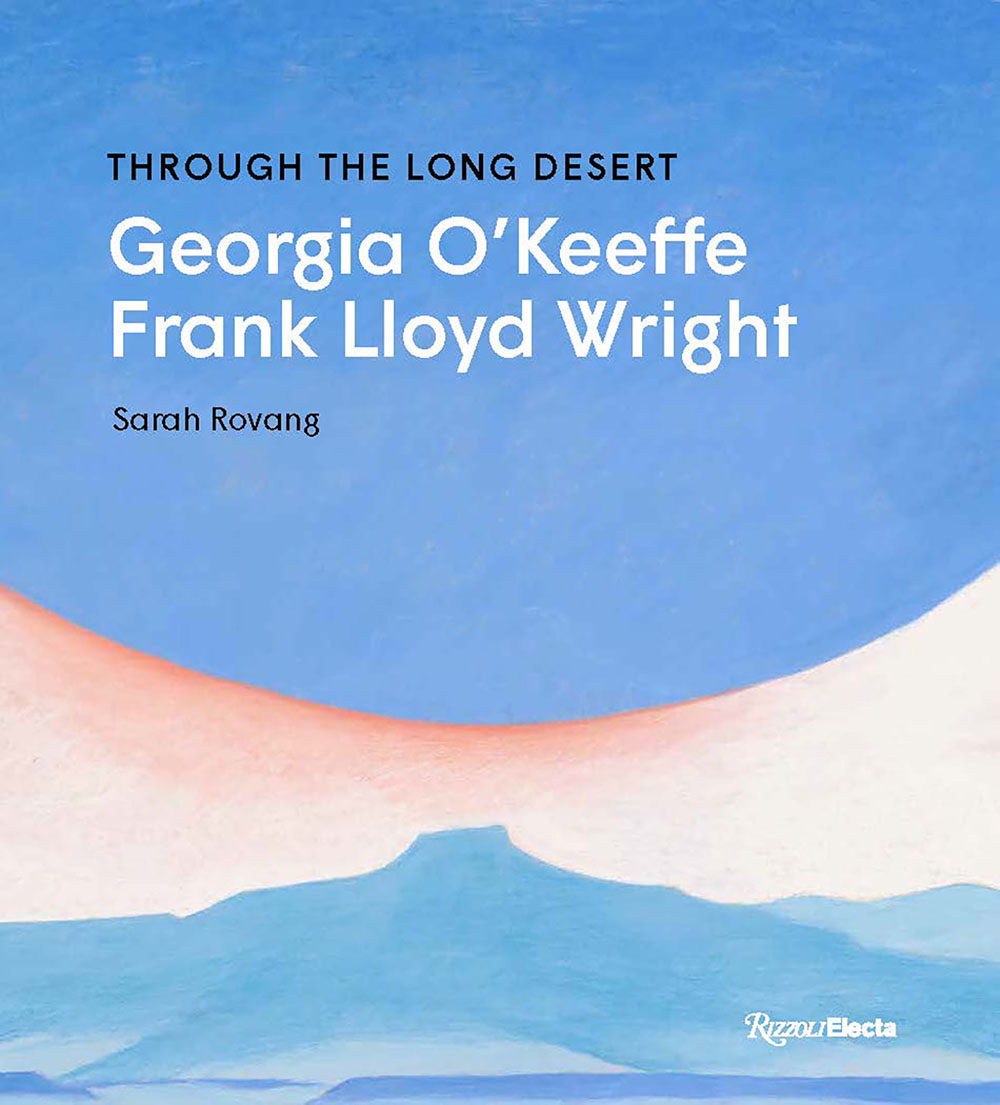
Sarah Rovang: Through the Long Desert – Georgia O’Keeffe and Frank Lloyd Wright:

LR ThroughtheLongDesert.jpg

Rovang’s book had its genesis eight years ago in a “why not?” moment when she attended a panel discussion in Santa Fe with Stuart Graff, then President and CEO of the Frank Lloyd Wright Foundation, and Cody Hartley, Director of the Georgia O’Keeffe Museum,  about similarities between the two artists. Someone in the audience suggested that there should be a book about them, because they knew each other. After a week of pondering the idea, she emailed Graff and Hartley that she would want to be the author. Rovang will be at the October 23 “Sunsets & Sips” at Taliesin West:

https://franklloydwright.org/sunsets-sips/

I can relate to the “why not?” moment. I am often asked how I started on the path to being commissioned to write and photograph first one book, and ultimately four, about Wright and his work in Southeast Wisconsin. It’s a convoluted tale, that started with a “why not?” moment. Bravo, Sarah, for following through on that moment!

Links:

Dahlin’s book website, with discount coupon (the book lists for $152):

https://www.routledge.com/Frank-Lloyd-Wright-and-the-Path-to-Beauty/Dahlin/p/book/9781032620053?srsltid=AfmBOopoF7ZSGIZC6IbNLkzliB53hBd1nLevv3ShpW0sQQzL4M8G6apy

Genesis Architecture:

https://www.genesisarchitecture.com

OA + D Journal:

https://oadarchives.bigcartel.com/product/journal-oad-v13n2

Routledge Research in Architecture Series:

https://www.routledge.com/Routledge-Research-in-Architecture/book-series/RRARCH

Hansen’s book:

https://www.globepequot.com/9781493069149/frank-lloyd-wrights-wisconsin/

Sam Lubell’s website:

https://www.samlubell.com

Andrew Pielage’s website:

https://www.apizm.com

I urge you to purchase books directly from the publisher or from a local bookseller rather than reflexively ordering from “The Big A.” Even if Amazon will save you money, we need to support our local bookshops.

Please scroll down for earlier articles on this website.

Hardy Reflections and Shadow Play 8.5.25

Photos © Mark Hertzberg (2025)

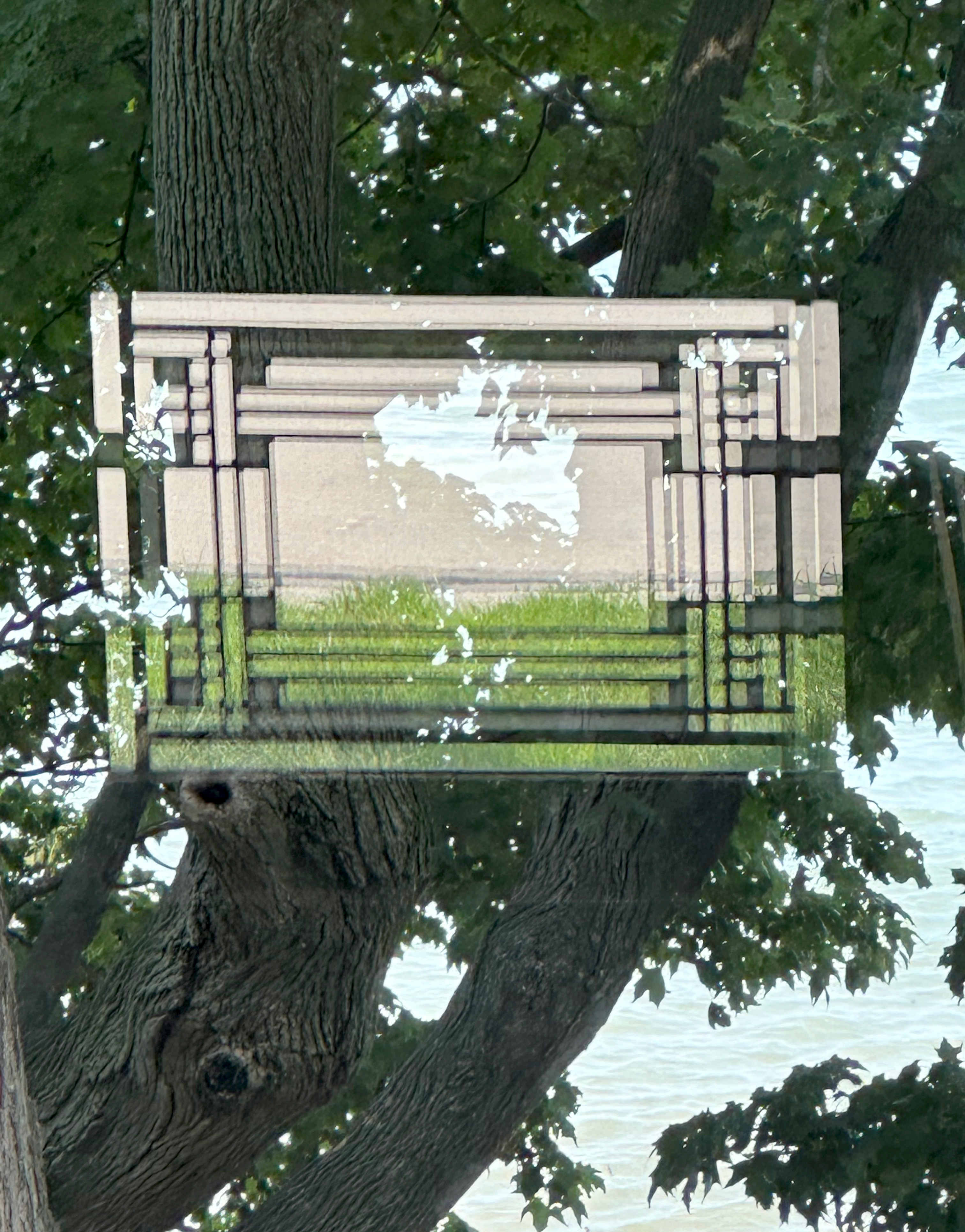
Hardy Shadow Play 8.5.25 001.JPEGOne of the entry way hallway windows is reflected in the two story living room windows that overlook Lake Michigan.
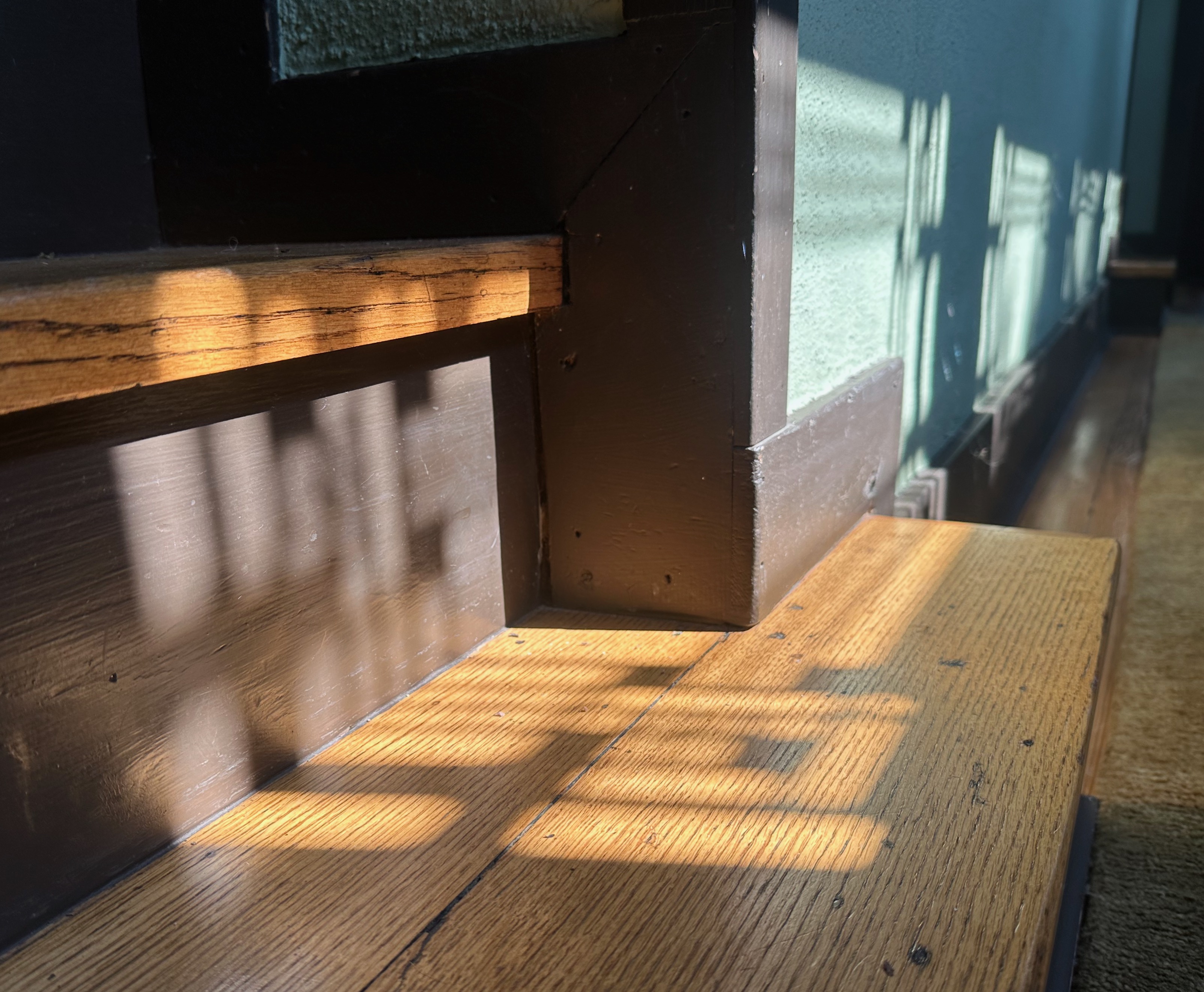
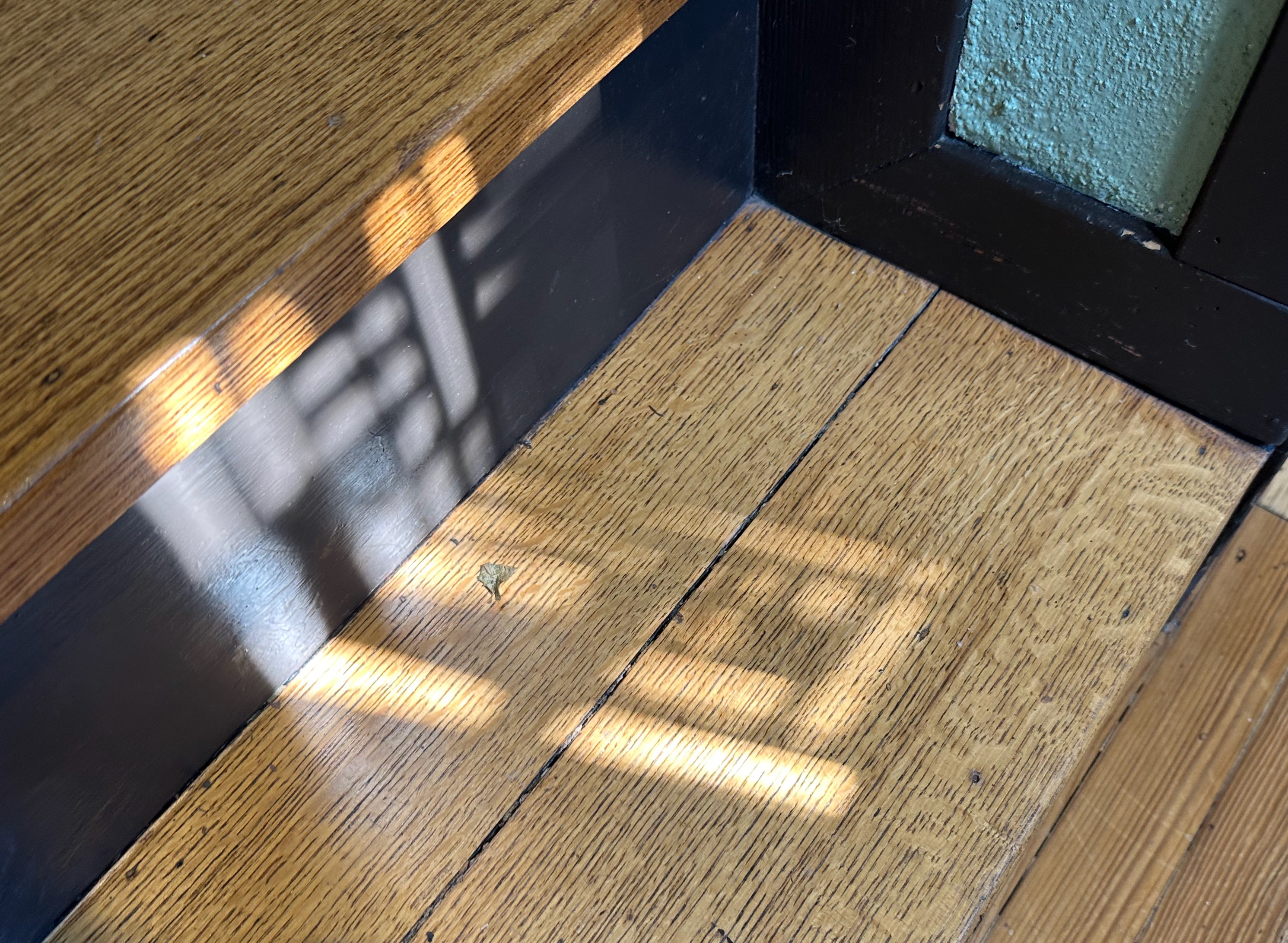
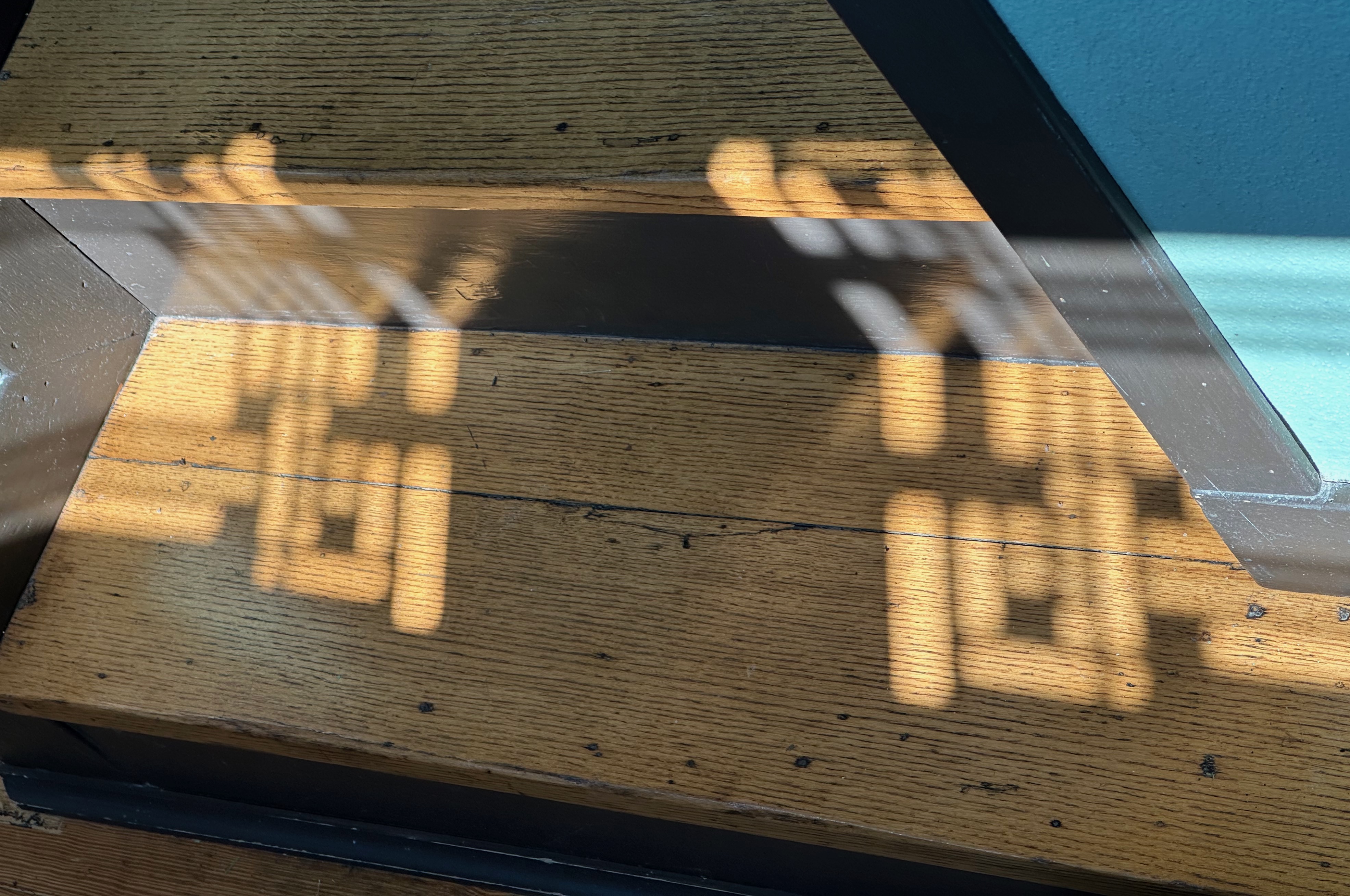
One of the aspects of Frank Lloyd Wright’s Thomas P. Hardy House that continually fascinates me is the shadow play from the seven windows in the entry hallway. I had the opportunity to have fun with the reflections and shadow play again when I met at the house with Sam Lubell yesterday. Lubell and photographer Andrew Pielage are working on a book about 50 Wright homes for Rizzoli (more about that in a future post).

Hardy Shadow Play 8.5.25 003.JPEG

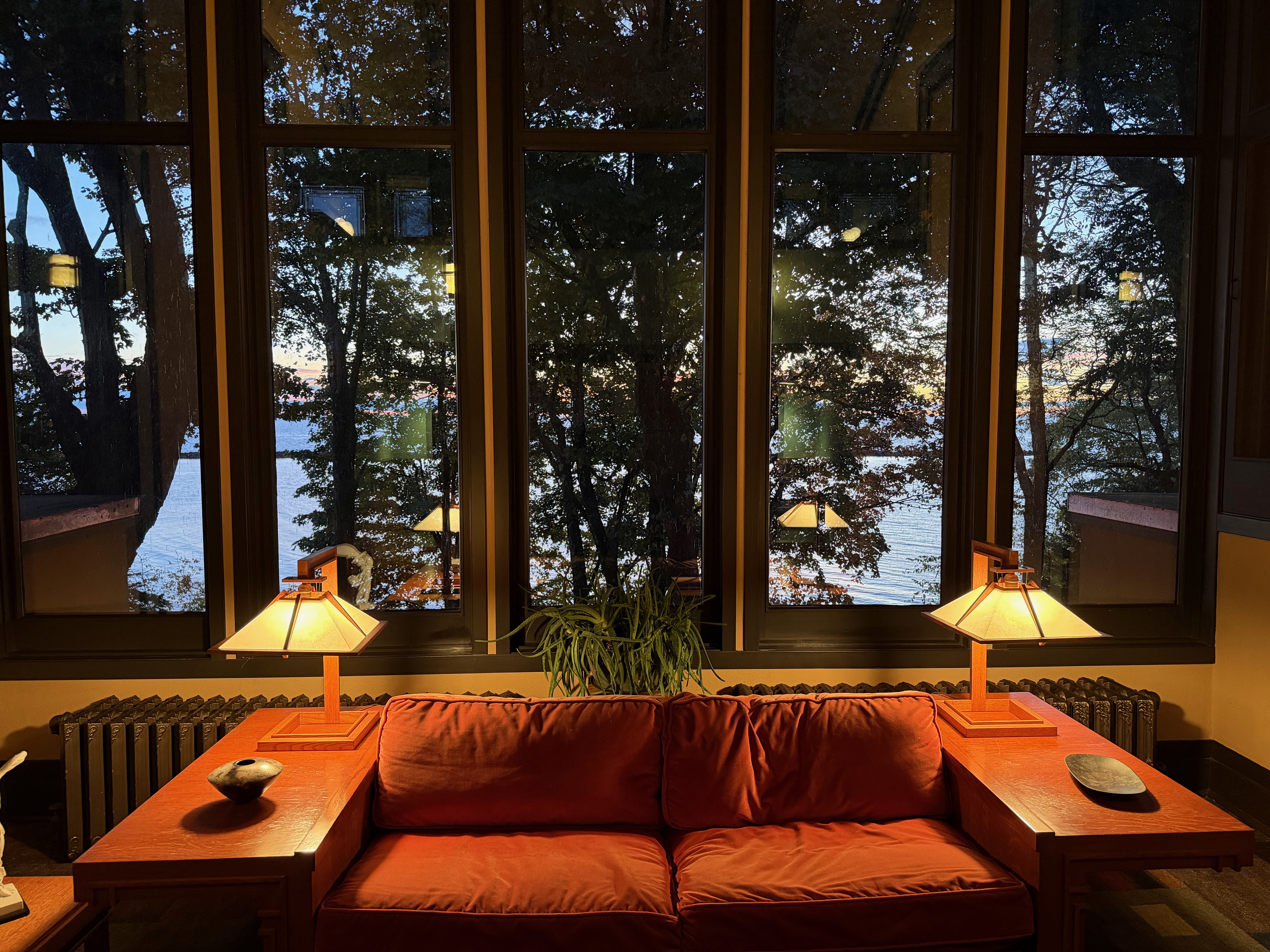
As Robert McCarter has pointed out, the floor plan of the house is delineated in white in the windows: the square in the middle represents the public areas, the two story living room and the dining room one floor below. When I lead tours of the house I remind the guests that the only computer Wright had when he came up with such designs was the one between his ears.

Hardy Shadow Play 8.5.25 004.JPEG

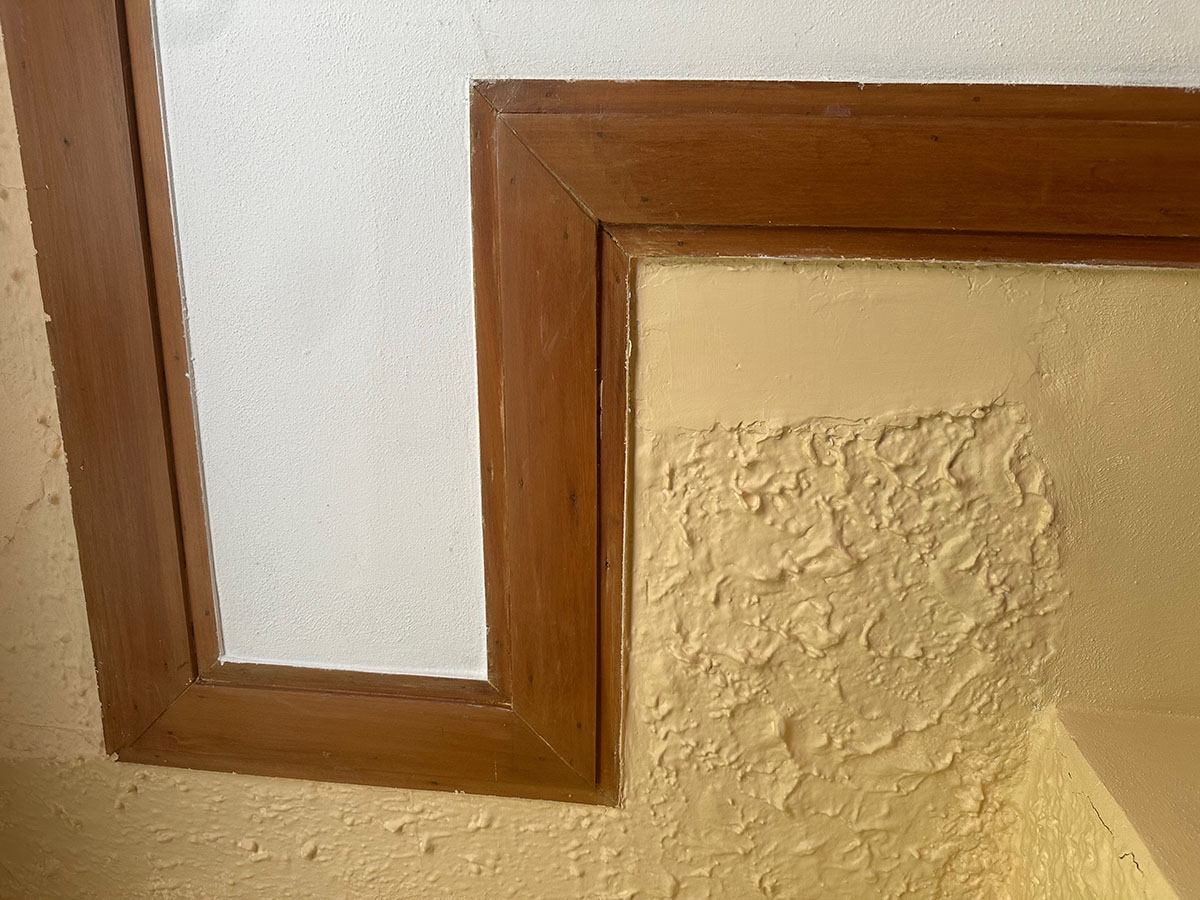
The rectangle that bisects the square represents the bedrooms at either end of the two main floors. We now add to the drama of the seven Wright-designed windows the leaded glass inserts in the two sliding entry doors (one north, one south). They replicate the design of Wright’s living room windows, which were taken out by the second stewards of the house (1938 – 1947) because they leaked. They were replaced by clear windows.

Hardy Shadow Play 8.5.25 006.JPEG

Hardy Shadow Play 8.5.25 007.JPEG

Hardy Shadow Play 8.5.25 008.JPEG

Hardy Shadow Play 8.5.25 009.JPEG

Hardy Shadow Play 8.5.25 010.JPEG

Hardy Shadow Play 8.5.25 011.JPEG

These quick happy snaps were taken with my phone camera…elapsed time, except for the top photo, seven minutes. Every time I turned I saw another photo. Thank you Gene and Tom and Joan Szymczak, for rehabilitating the house for us to enjoy!

Scroll down for previous posts on this website

Wright and Sullivan in Banff

© Mark Hertzberg (2025)

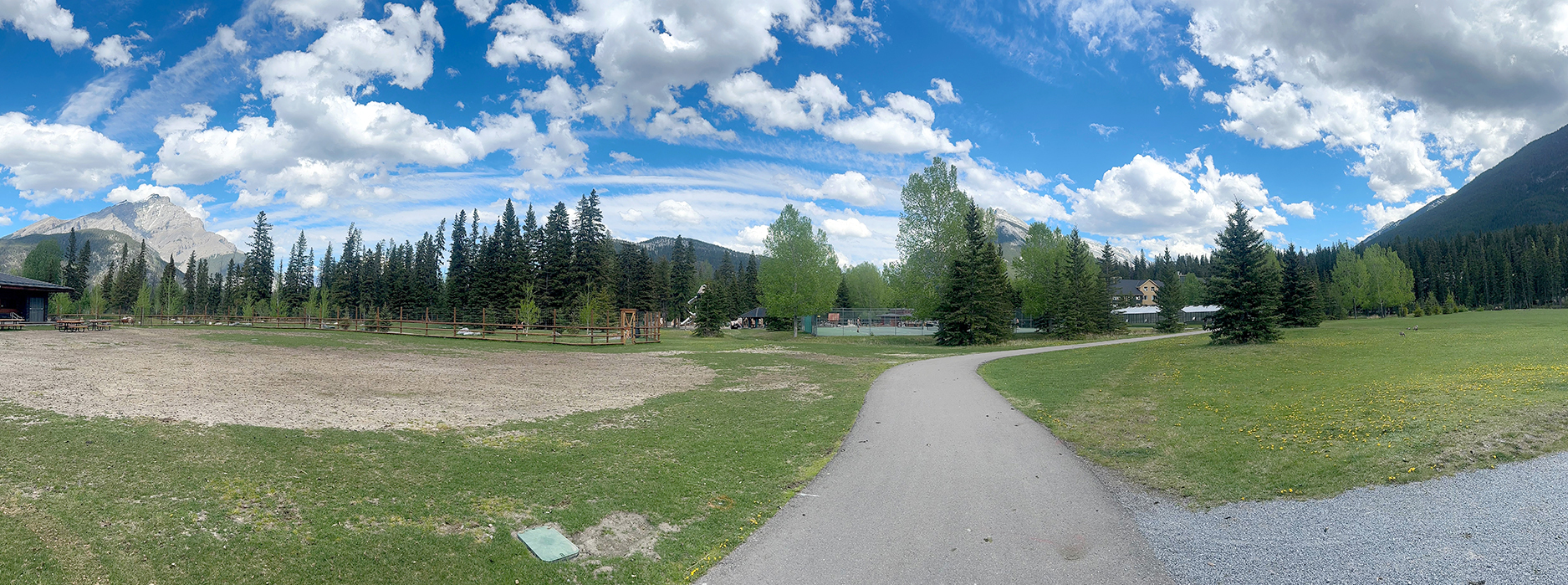
Today Panoramic.jpgThere once was a Frank Lloyd Wright – designed building here, in the midst of the splendor of the Canadian Rockies, in Banff, Alberta.
Banff, Alberta does not immediately come to mind when people think of communities with buildings designed by Frank Lloyd Wright. They are more likely to think of Bear Run, Buffalo, Los Angeles, New York, Racine, and, of course, Spring Green. However, Wright’s work crossed national boundaries, with commissions in Egypt, India, Iraq, Italy, Japan, and Mexico, as well as in Canada. Few of the international commissions were realized, but two in Canada were.

Similarly, when the name “Sullivan” comes to mind in discussions of Wright, people immediately think of Louis Sullivan, Wright’s ‘Leiber Meister.” But it was a different architect named Sullivan, Canadian architect Francis S. Sullivan, who also became part of Wright’s history, beginning in 1911. 

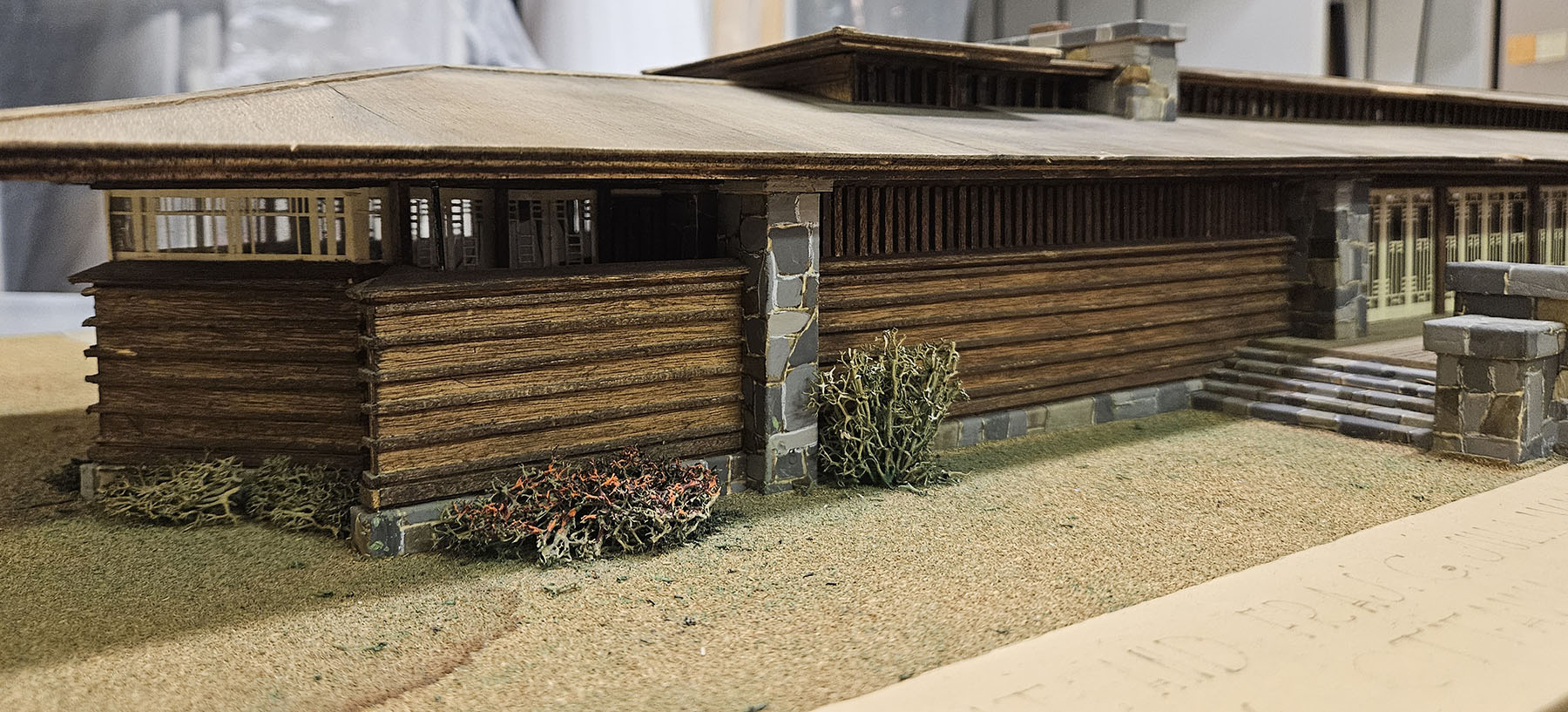
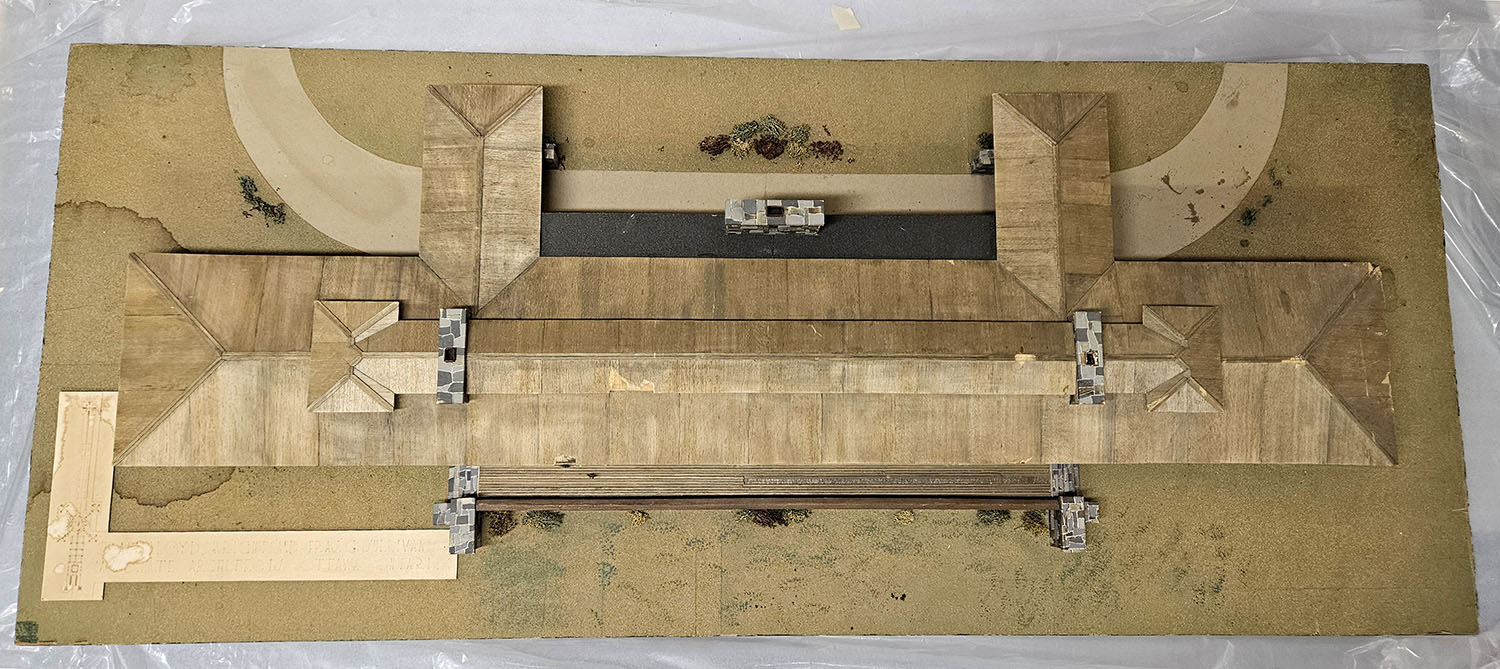
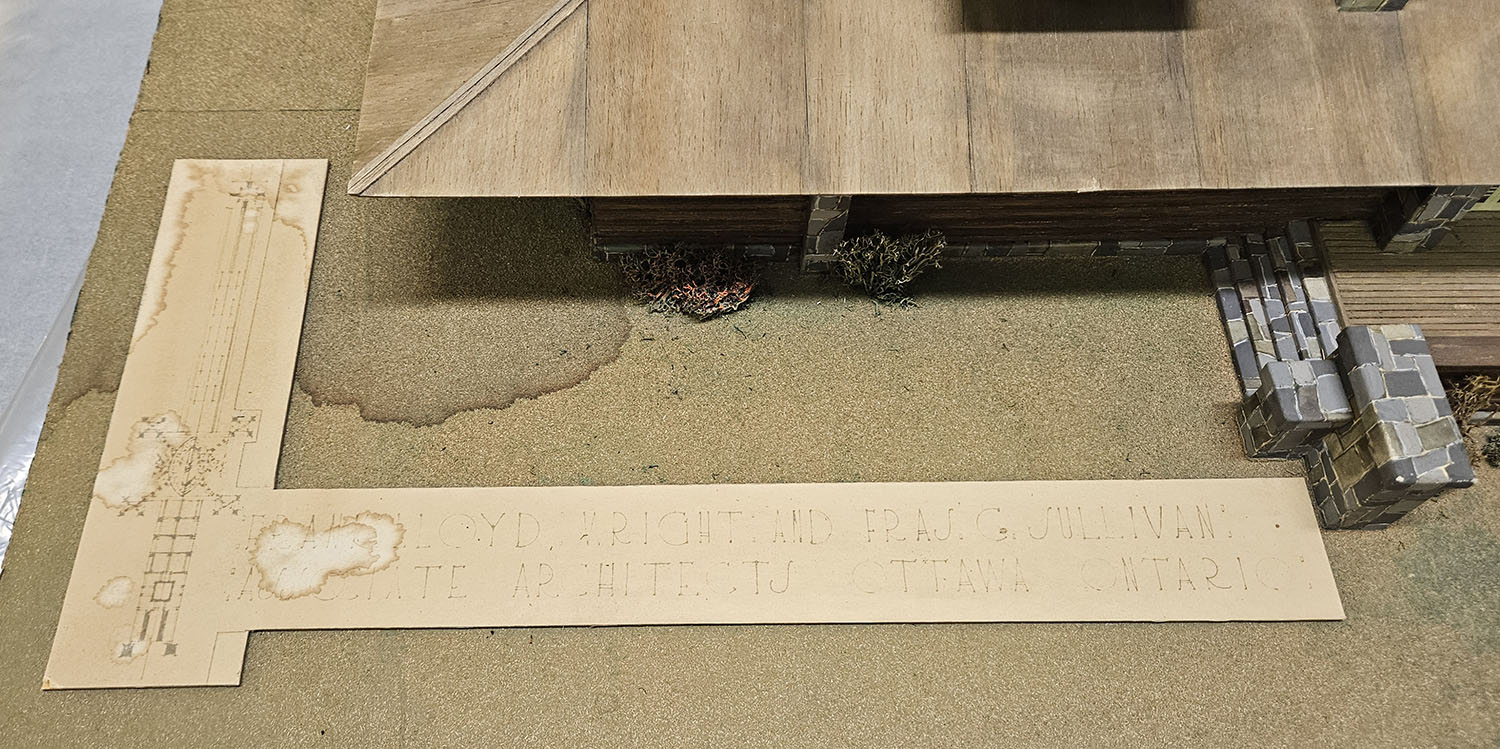
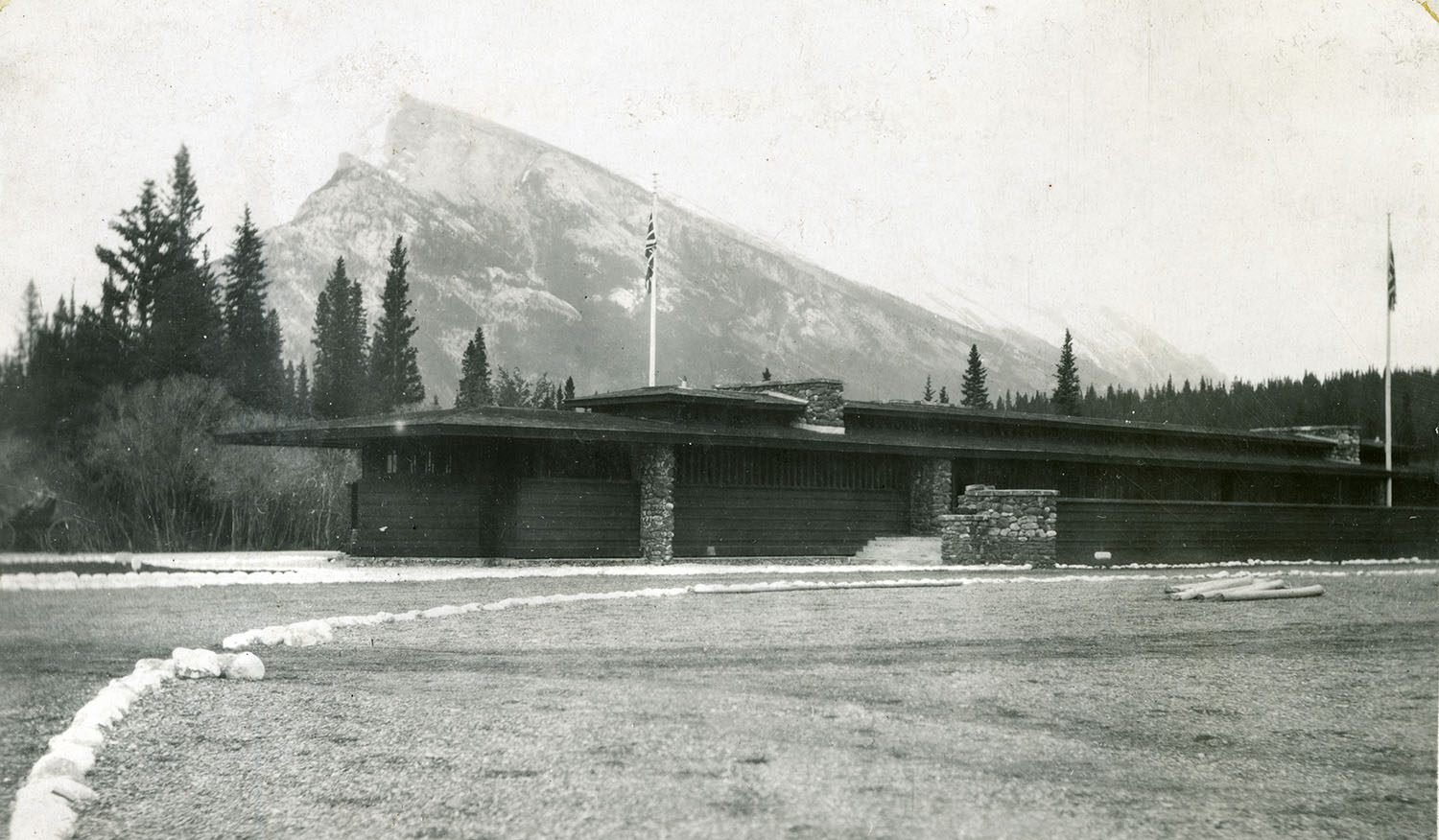
There were four Wright – Sullivan collaborations. The only one built was the Banff National Park Pavilion, about 70 miles west of Calgary. Designed in 1911, it was completed in 1913, and demolished in 1938. The legend on a model of it in the Whyte Museum of the Canadian Rockies archives in Banff credits the building to “Frank Lloyd Wright and Francis C. Sullivan Associates Architects Ottawa Ontario.”

Whyte Museum exterior.jpgFrank Lloyd Wright Pavilion West Face – Image #V683/VI/A/PG-336 – The Whyte Archives & Special Collections

FLW Banff UCal 1.jpgFrom the University of Calgary Digital Collection
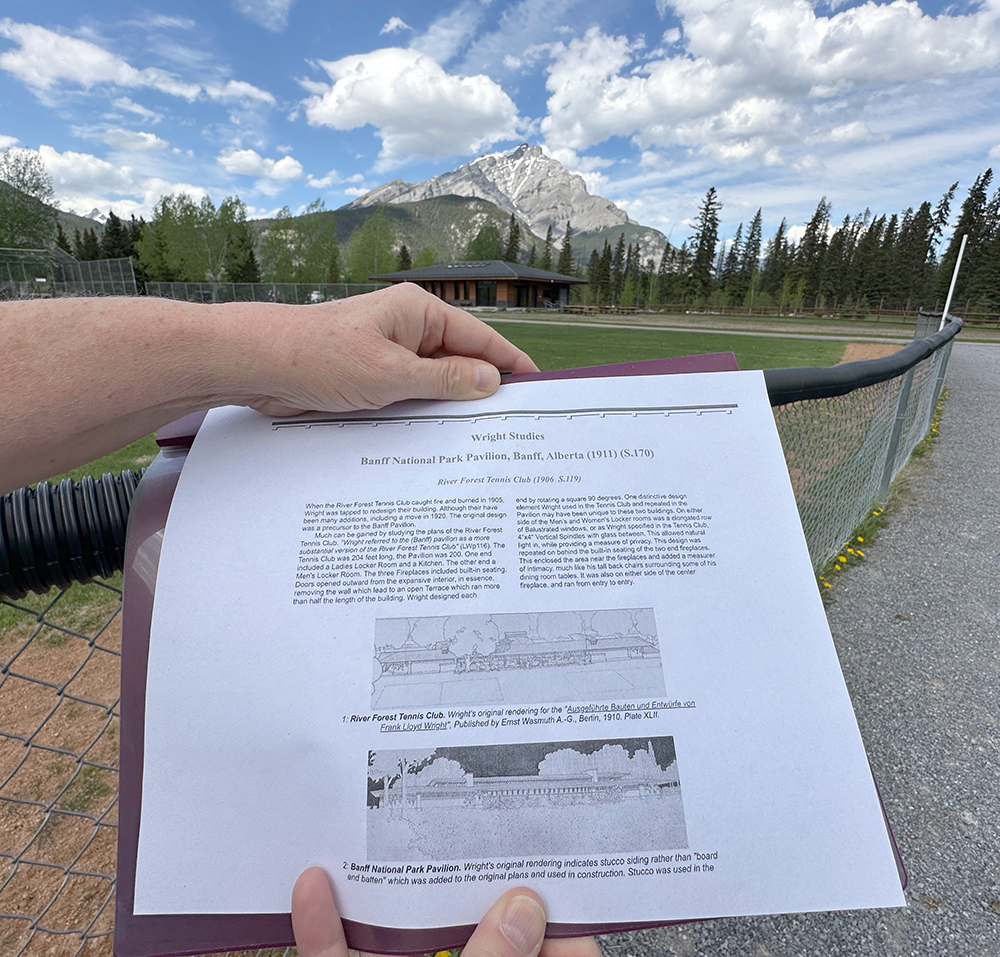
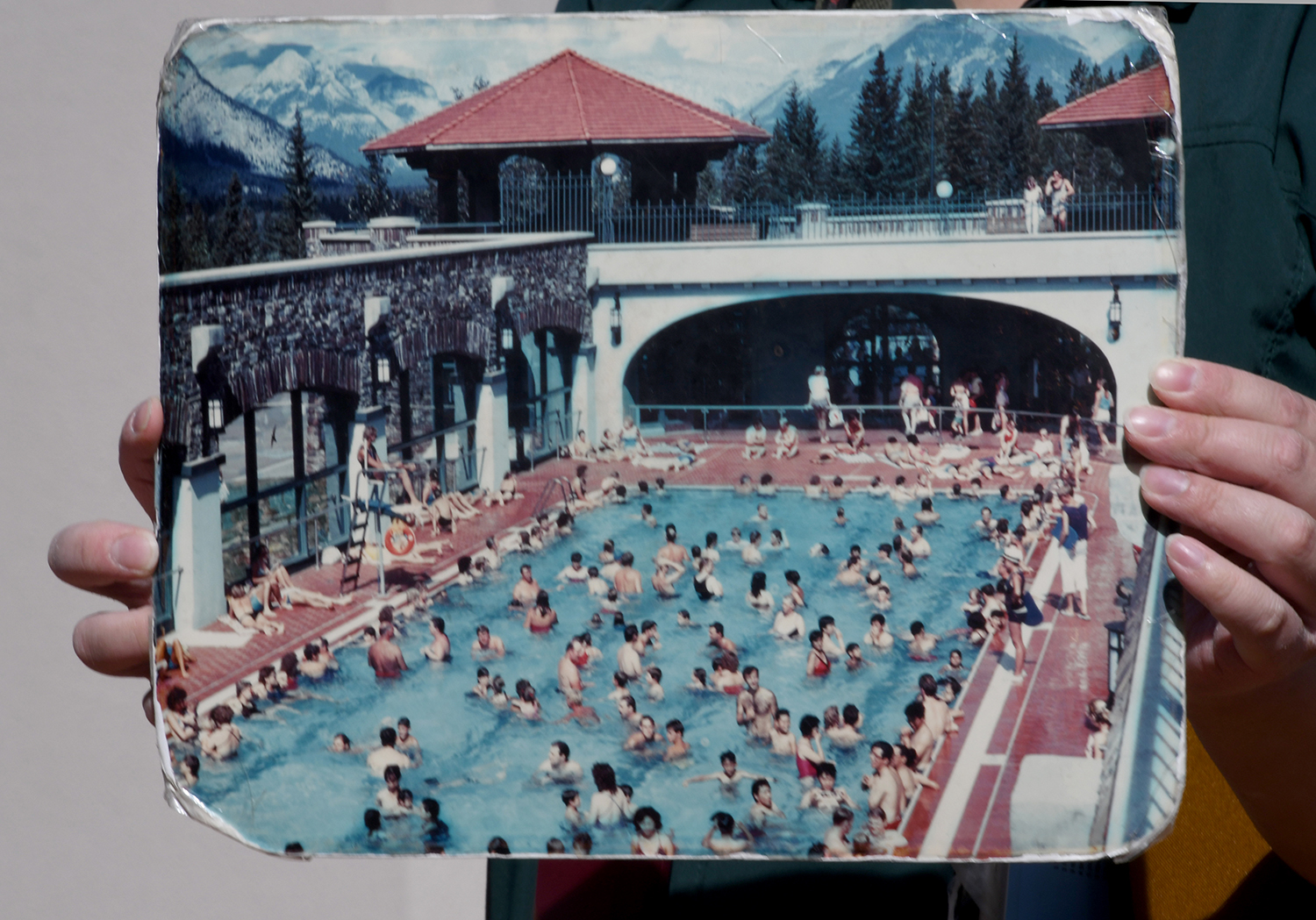
Their three unrealized projects were a railroad station for Banff (1913), the Pembroke Carnegie Public Library in Pembroke, Ottawa, Ontario (1913), and, according to Wright scholar Douglas Steiner, a “Ladies Kiosk” in Ottawa (1914). Wright’s other realized commission in Canada was the E.H. Pitkin Residence on Sapper Island, Desbarats, Ontario (1900).

Steiner documented the history of the Pavilion, and related structures in 2010 on his http://www.steinerag[Steiner Agency].com website. Much of the information below was gleaned from his article:

http://www.steinerag.com/flw/Artifact Pages/PhRtS170.htm#Site

Steiner Banff.jpg

Wright was usually fastidious in his oversight of where his designs would be built. Either he was not, in this instance, or else it is possible that his client, the Canadian Department of Public Works, had the final say.

Banff National Park was Canada’s first national park. The town became a tourist destination in 1883 after three men working on the transcontinental railroad discovered hot sulphur springs. The springs, pools, and their outbuildings are now a tourist destination known as the Cave and Basin, although there is no more bathing at the site.

Canada Banff Cave and Basin 006.jpg

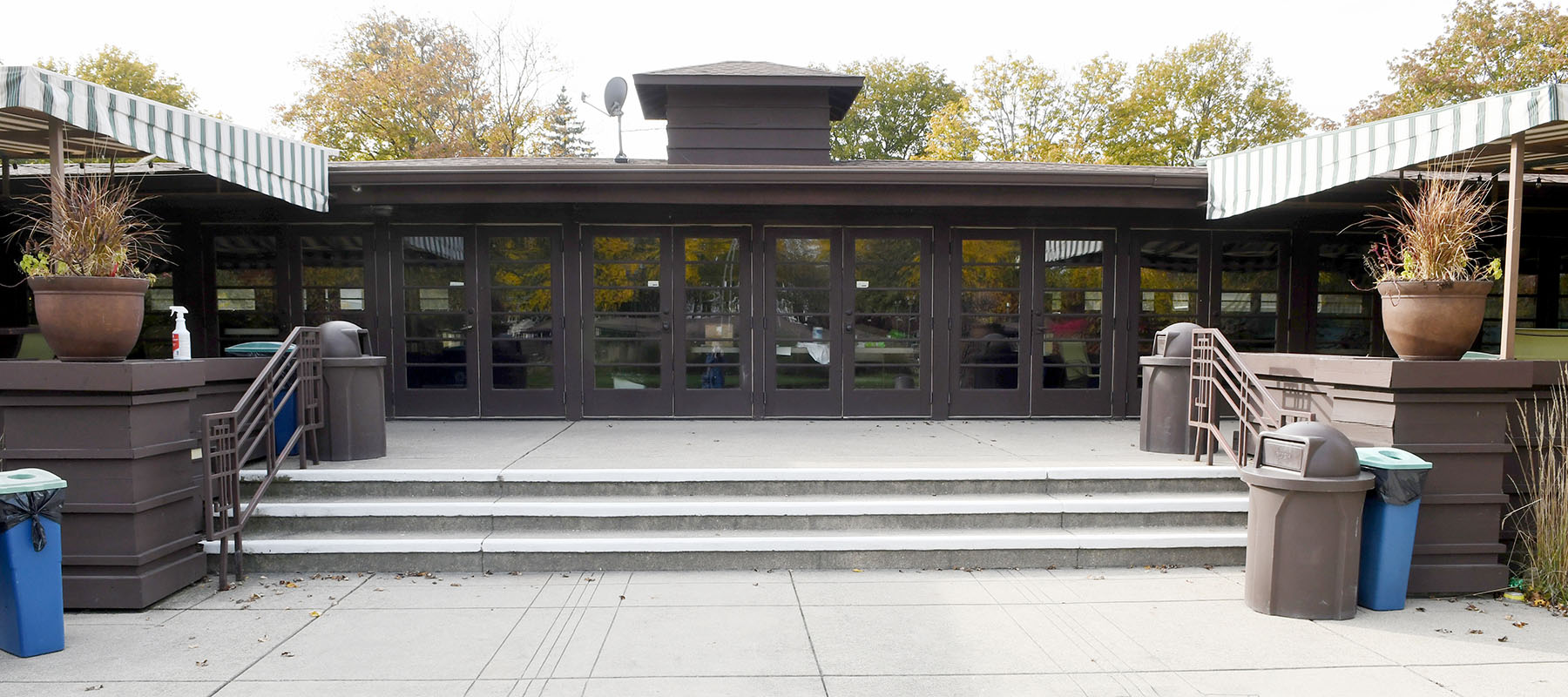
The Pavilion was sited in what are called the Recreation Grounds, near the Bow River, south of downtown Banff. It was controversial from the start. The consensus among residents seemed to be that the Pavilion should be suited to year-round use and reflect their interest in sports such as curling and ice hockey. The government and Wright thought otherwise. The Wright / Sullivan design was best suited for use in warm weather. The exterior and floor plan were similar to Wright’s River Forest (Illinois) Tennis Club (1906), below:

River Forest Tennis Club 10.28.20 008.jpg

River Forest Tennis Club 10.28.20 022.jpgThe River Forest Tennis Club in 2020

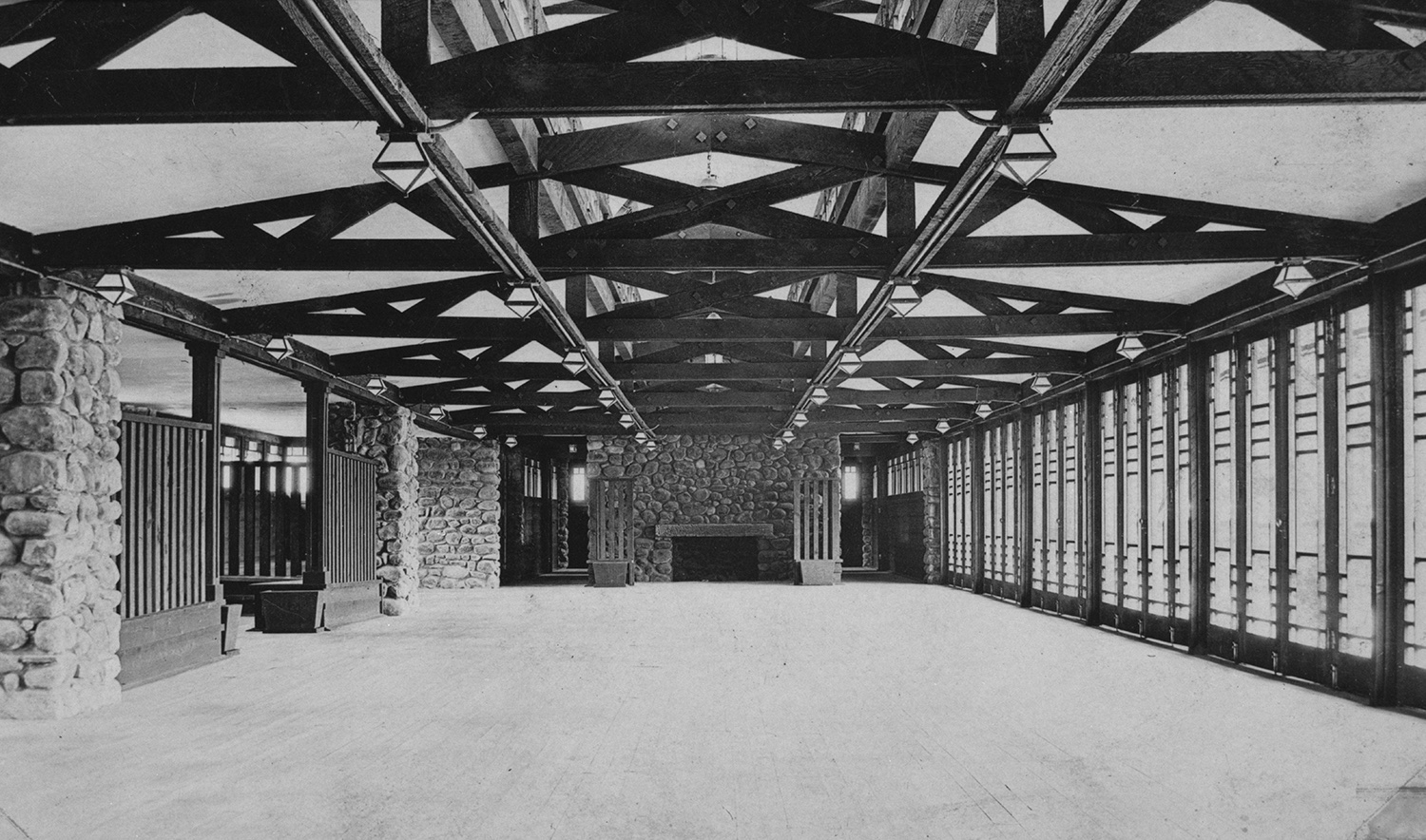
According to the Banff Crag and Canyon newspaper, “The structure will be of rustic frame, one story in height, with cement and rubble foundation. The outside dimension will be 50 x 200 feet. The interior will contain a general assembly or lounging room 50 x 100 feet, with a ladies’ sitting room 25 x 50 feet at one end and a sitting room for gentlemen, 25 x 50, at the other end. Dressing rooms, lockers, etc., and provided for also three cobblestone fireplaces. Inside had three fireplaces, a men’s smoking room, a women’s lounge, and a common area between them.”

Whyte Banff Interior.jpgFrank Lloyd Wright Pavilion Interior Image # V683/441/na66/1471The Whyte Archives & Special Collections

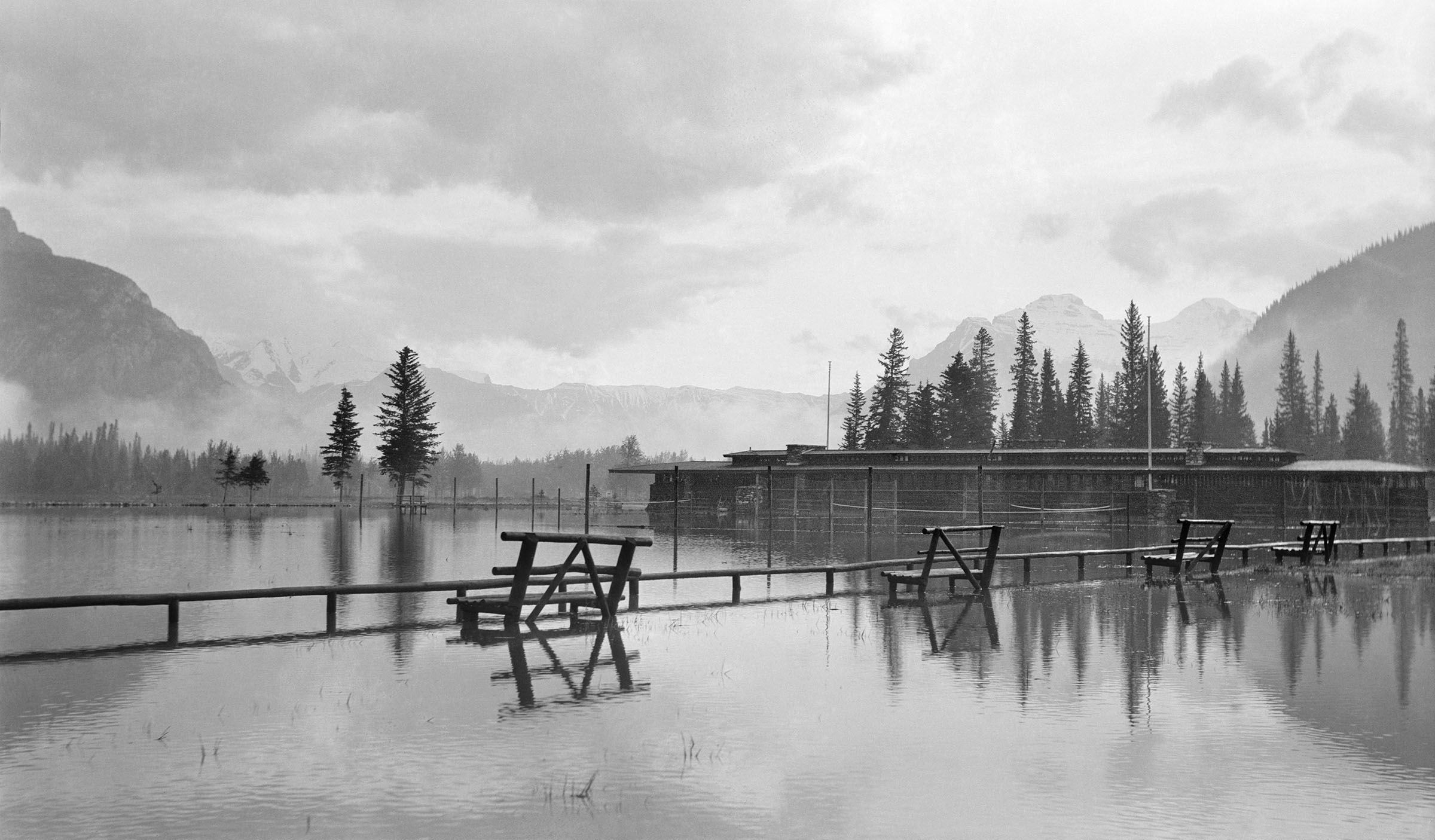
The Pavilion served as Quarter Master’s Stores during World War I. If the design was problematic, at least for the residents, the site of the Pavilion near the Bow River was more problematic, ultimately fatally so for the structure. The river could get very angry. It did so particularly in 1920 and 1933 when it flooded around the Pavilion, doing irreparable damage to it, and ultimately dooming it. The newspaper wrote of the 1920 flood, “The grounds in front of the recreation building were under water last week, and it was possible for a man, if so inclined. to wade out to the building, sit on the steps and fish.”

Banff FLW UCal2.jpgFrom the University of Calgary Digital Collection
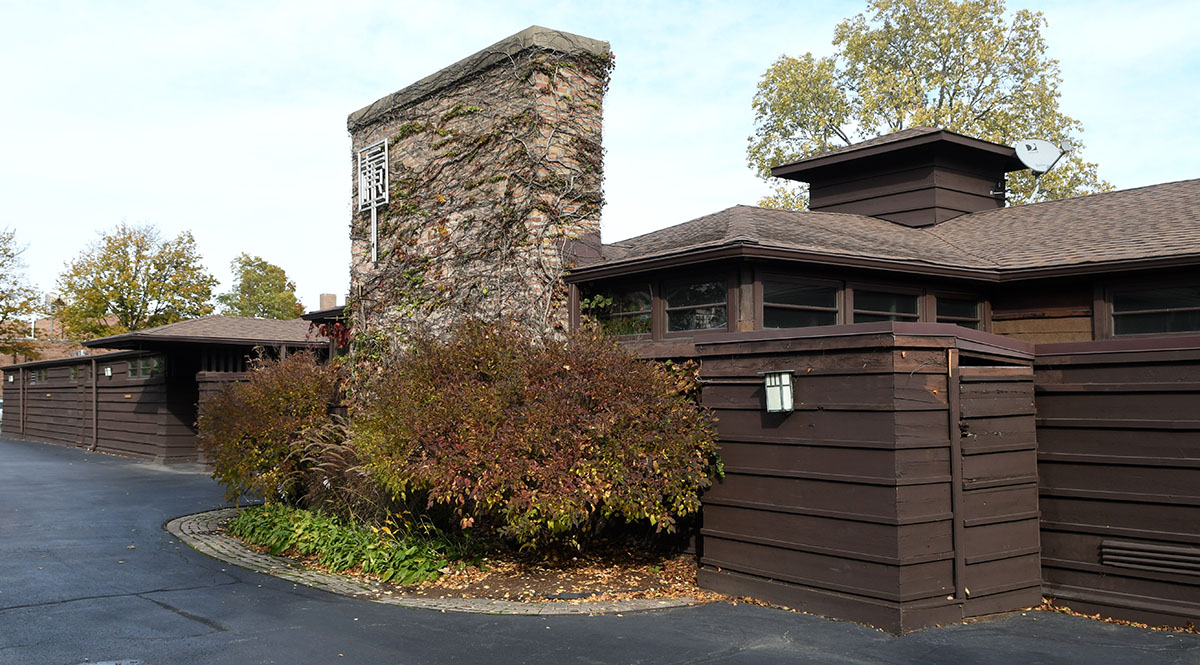
The wrecking ball finally came in 1938, just a quarter century after it opened. A 2016 proposal by Michael Minor, an American, to raise money for the Pavilion to be reconstructed did not materialize.

My wife and I were visiting Banff this spring and were anxious to find the Pavilion’s site. That was a challenge because there is no historic marker. We took hints from Steiner’s article. Patricia Thomson, our Canadian Rockies tour guide, graciously took time on a free afternoon to help us wander the area near the Bow River Bridge, Cave Avenue, and Sundance Road, near the Recreation Grounds. She had already gotten some leads from her brother, who works for the provincial parks department. Most significantly, he directed us to Steiner’s article.

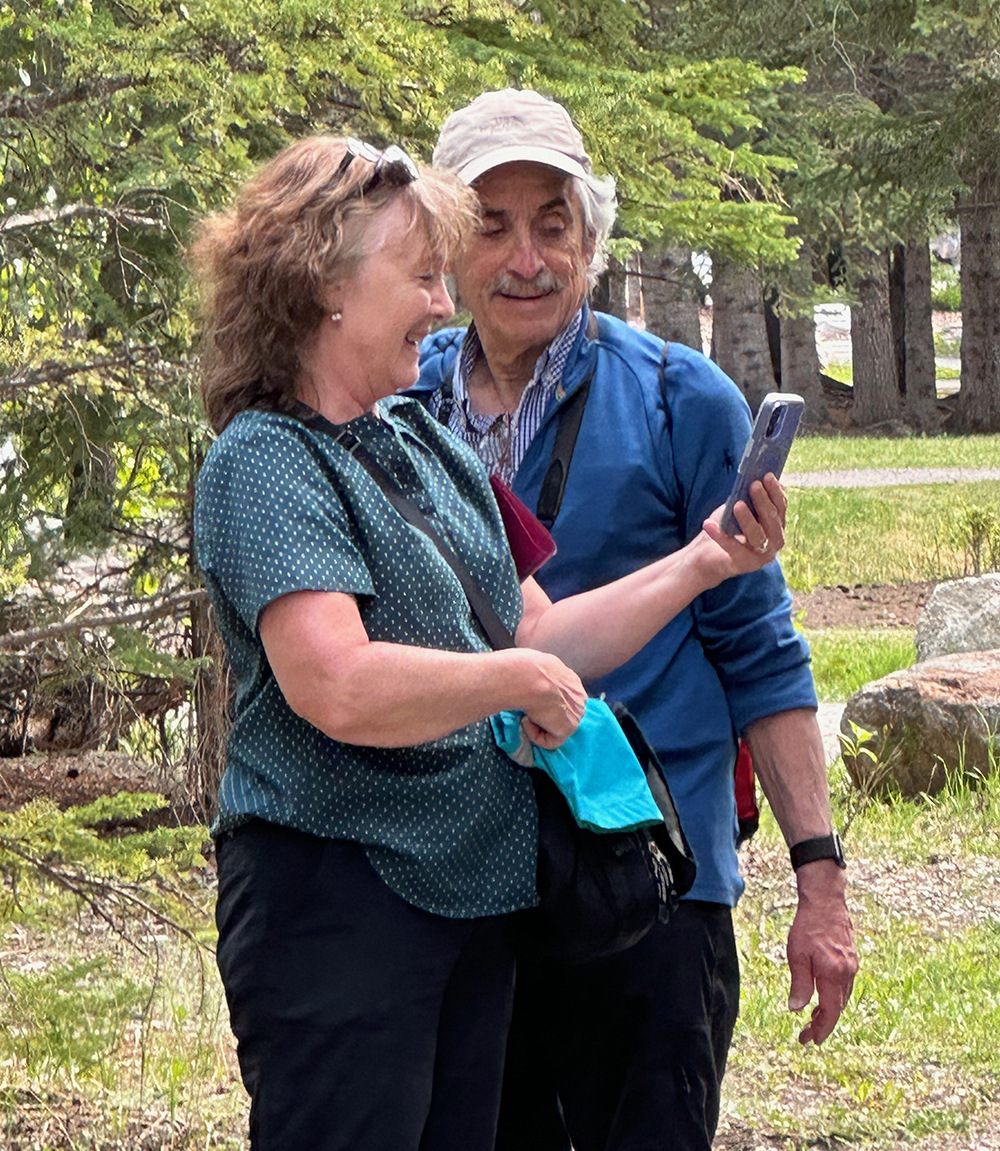
Patricia and MSH.jpgPatricia Thomson helps us locate the site of the Pavilion. Photo by Cindy Hertzberg
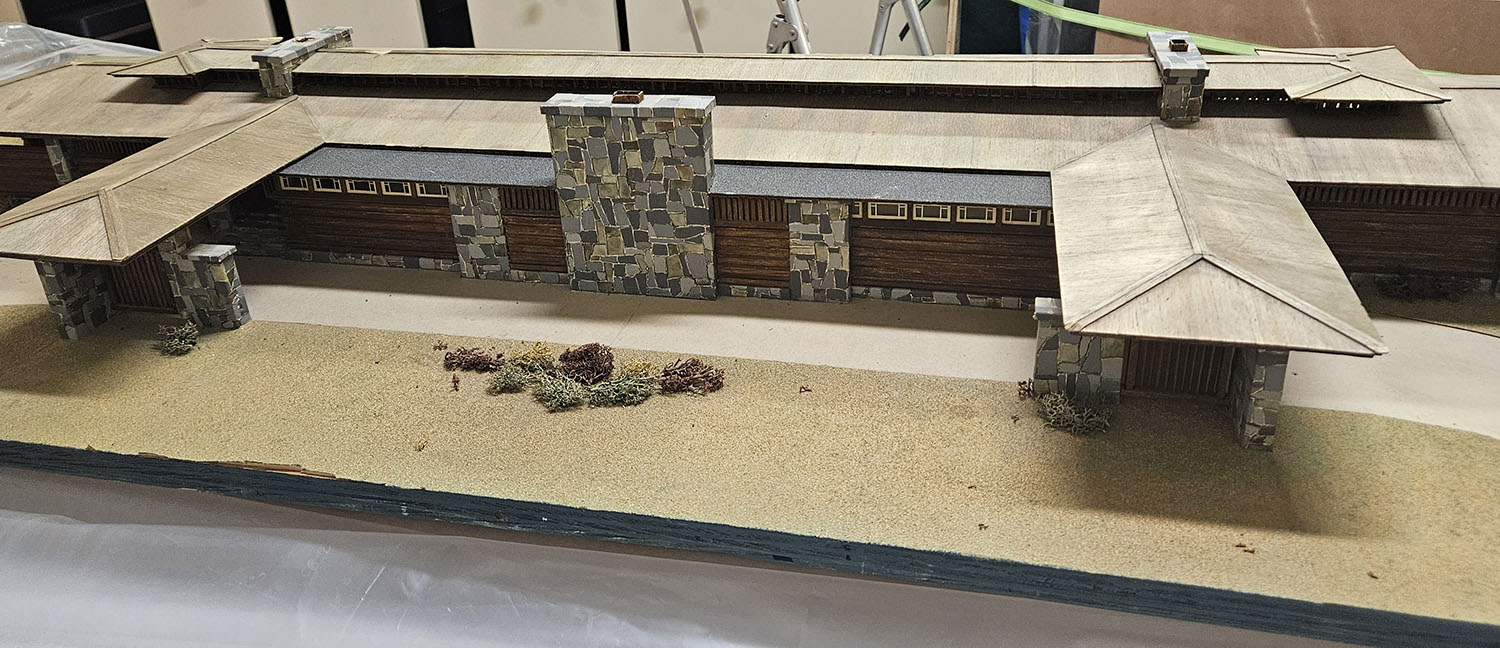
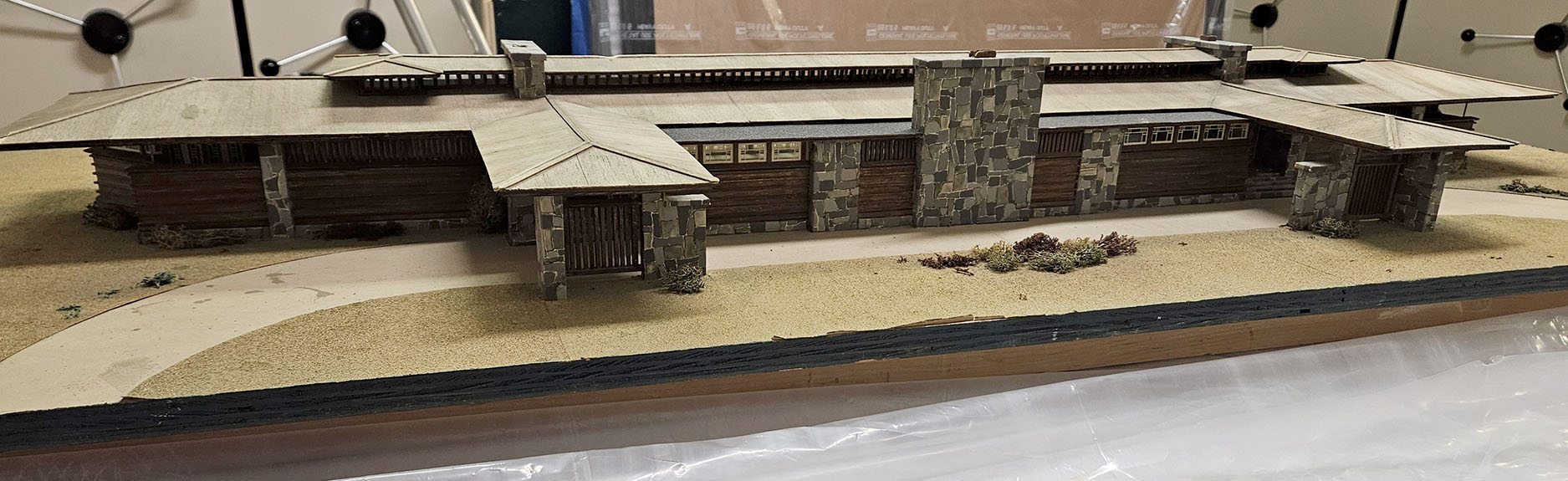
Reconstruction of the building in an area that has new recreation amenities is not likely to happen, but Banff’s Heritage Committee, which considered Minor’s reconstruction proposal, had discussed the idea of a “Landmarks and Legends” marker at the site before the Pandemic. We are past the Pandemic. Now is the time to reconsider the idea of signage.

Until such signage were to come to fruition, the only tangible evidence of the Banff National Park Pavilion in Banff is a model in the basement archives of the Whyte Museum of the Canadian Rockies.

20250609_141013.jpg

20250609_141038.jpg

20250609_141156.jpg

20250609_140930.jpg

20250609_140944.jpg

20250609_140954.jpgImages courtesy of The Whyte

Postscript: According to “In Wright’s Shadow” (published by the Frank Lloyd Wright Home and Studio Foundation in 1998), Sullivan worked in Wright’s Oak Park studio in 1907 and 1908 before returning to Canada. He worked with Wright in Arizona in 1916 on drawings for the Imperial Hotel. He did not accept Wright’s offer for him to work with him in Japan on the hotel. Sullivan died of throat cancer in 1929, living as a guest of Wright’s at Ocatilla, his Arizona desert camp.

Thank you to Randolph C. Henning and Keiran Murphy for their assistance with this piece.

Please scroll down for previous articles on this Wright blog.

Wisconsin World of Wright – June 2025

Photos © Mark Hertzberg (2025)

This is a quick update on some developments in the World of Frank Lloyd Wright in Wisconsin, from another Road Scholar tour I helped lead this week:

Annunciation Greek Orthodox Church – Wauwatosa

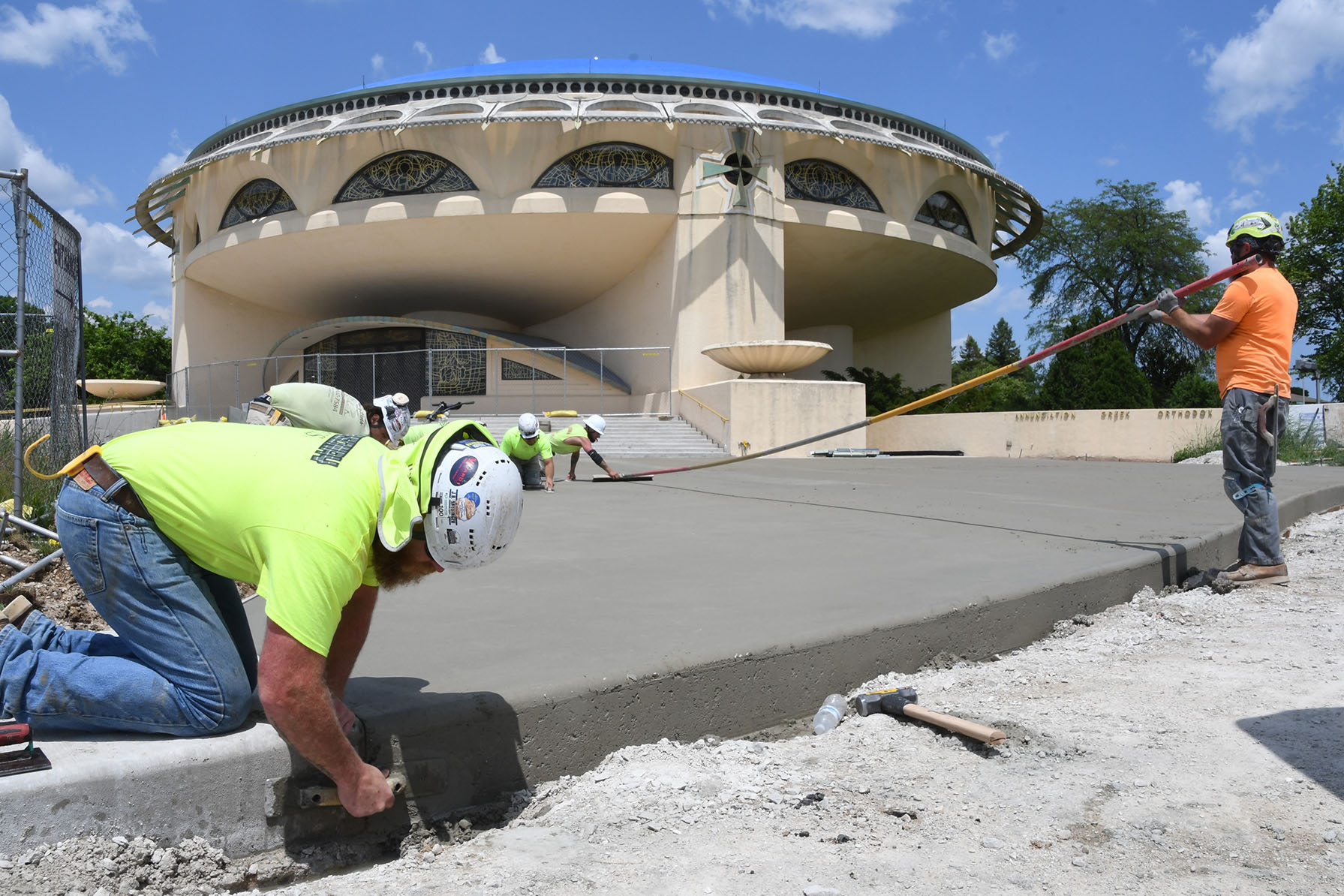
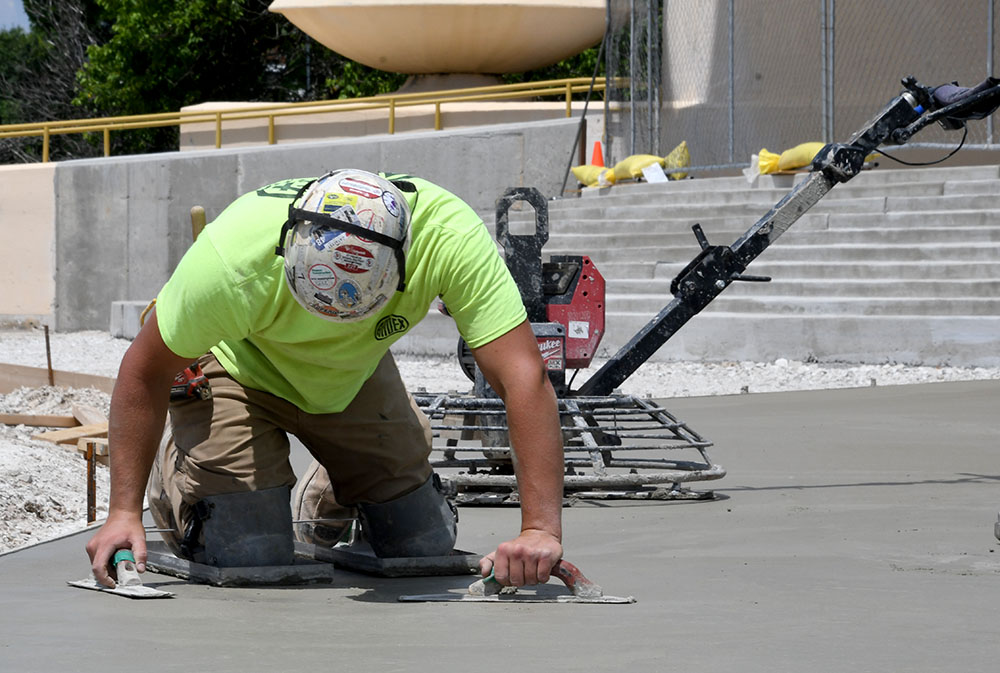
LR AGOC 6.19.25 012.jpgWorkers smooth out newly poured concrete at the entrance to the church Thursday June 19. This is part of Phase 2 of work at the church.
LR AGOC 6.19.25 009.jpg

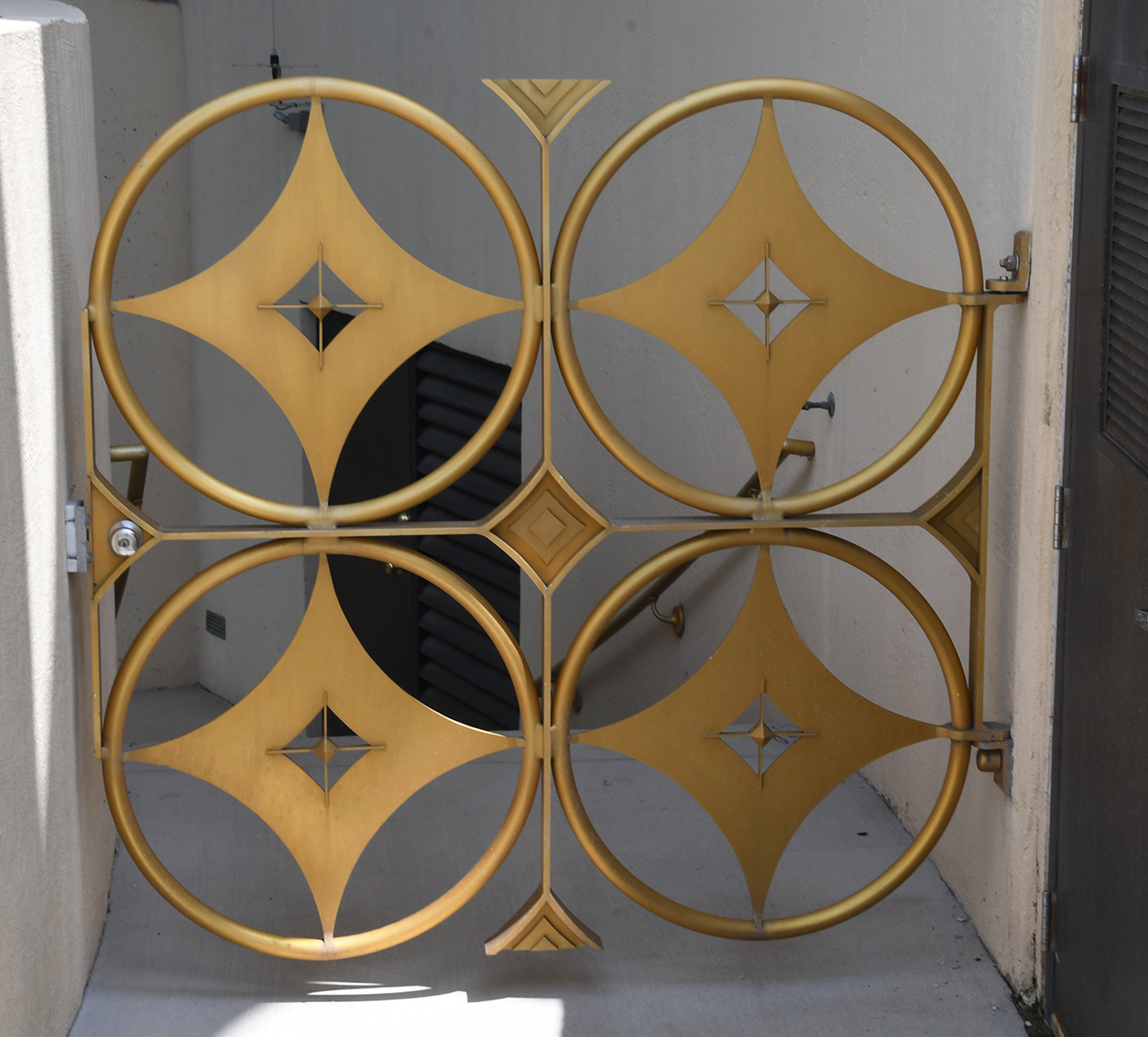
Phase 1 saw repairs to the roof last year and work on the gate to the garden level.

LR AGOC 6.19.25 016.jpgPhase 3 will see new carpeting, and cushions for the pews next year, as well as the pews being refinished. Photos of the roof work are at:https://wrightinracine.net/2024/12/10/greek-church-roof-resplendent-again/

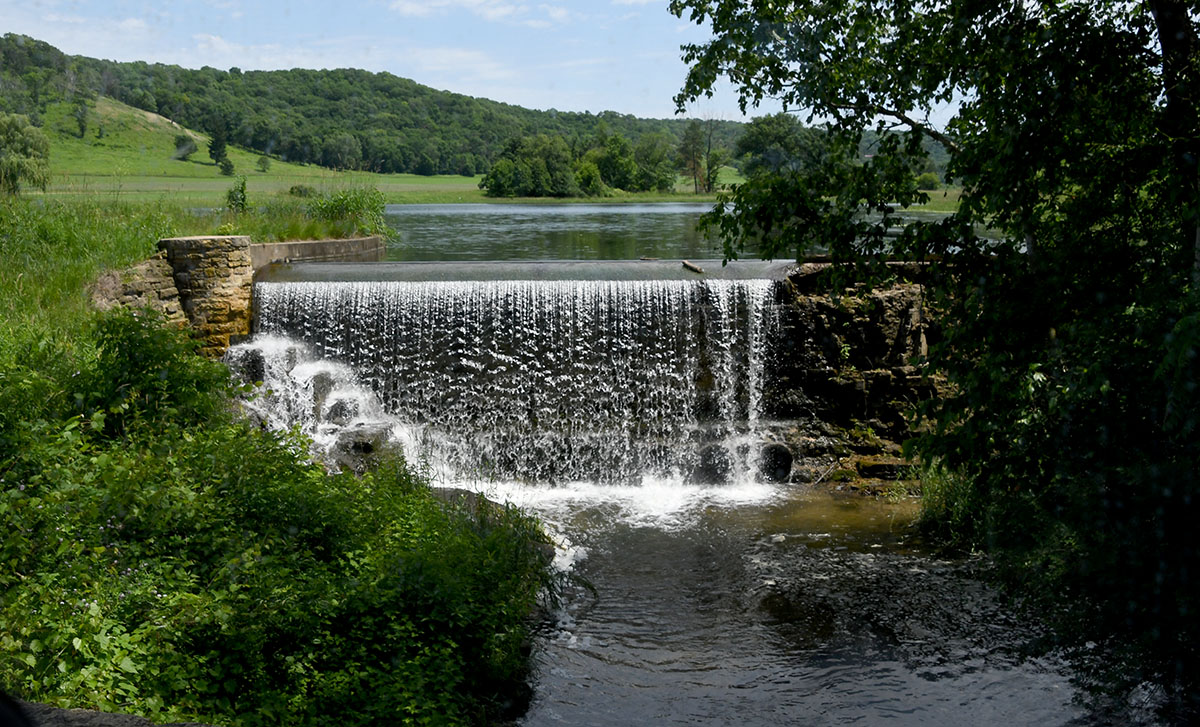
Taliesin: The pond, which Wright is said to have referred to as Lake Taliesin, is filled again, after an absence of several years, and waters flows over the dam by the original entrance to the estate:

LR Taliesin Pond 6.20.25 001.jpg

LR Taliesin Pond 6.20.25 002.jpgLR Taliesin Pond 6.20.25 004.jpg

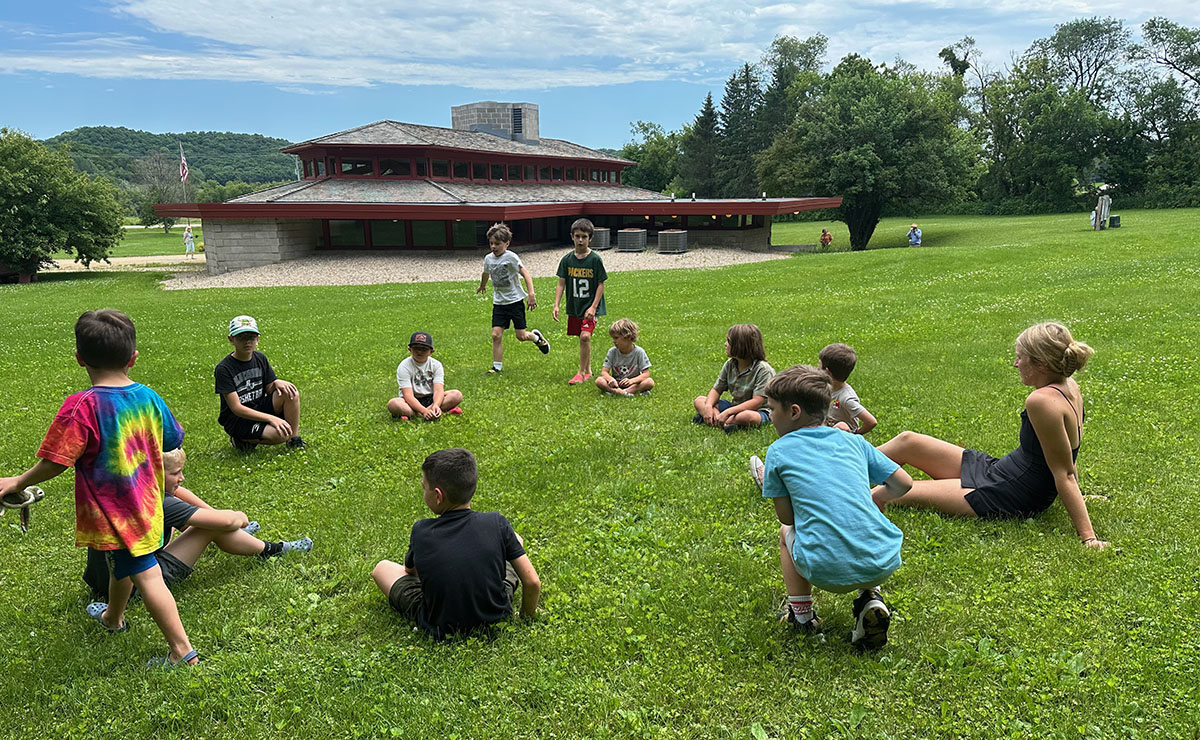
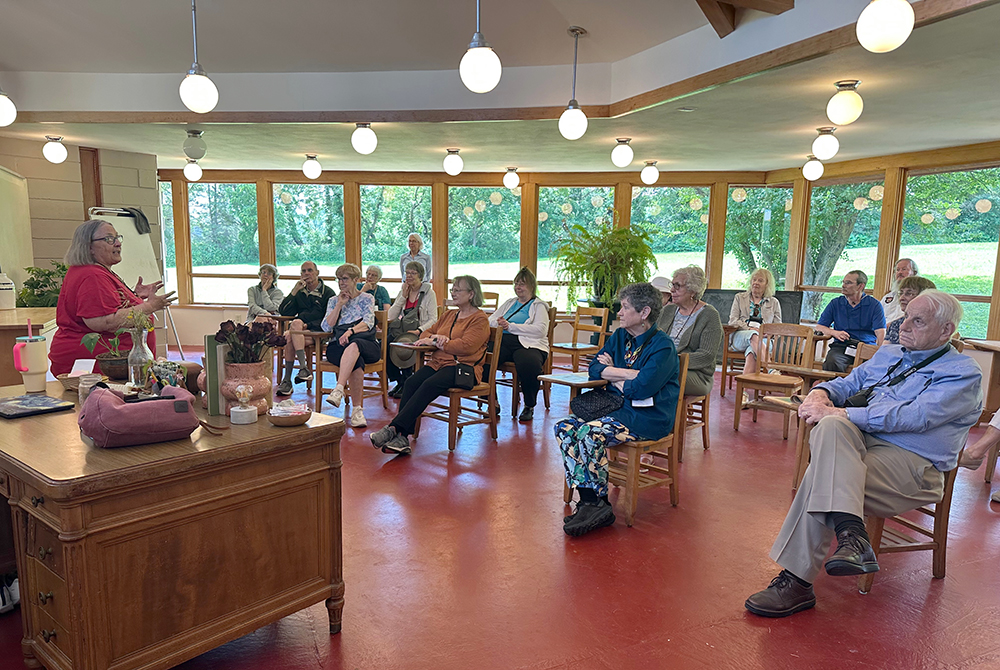
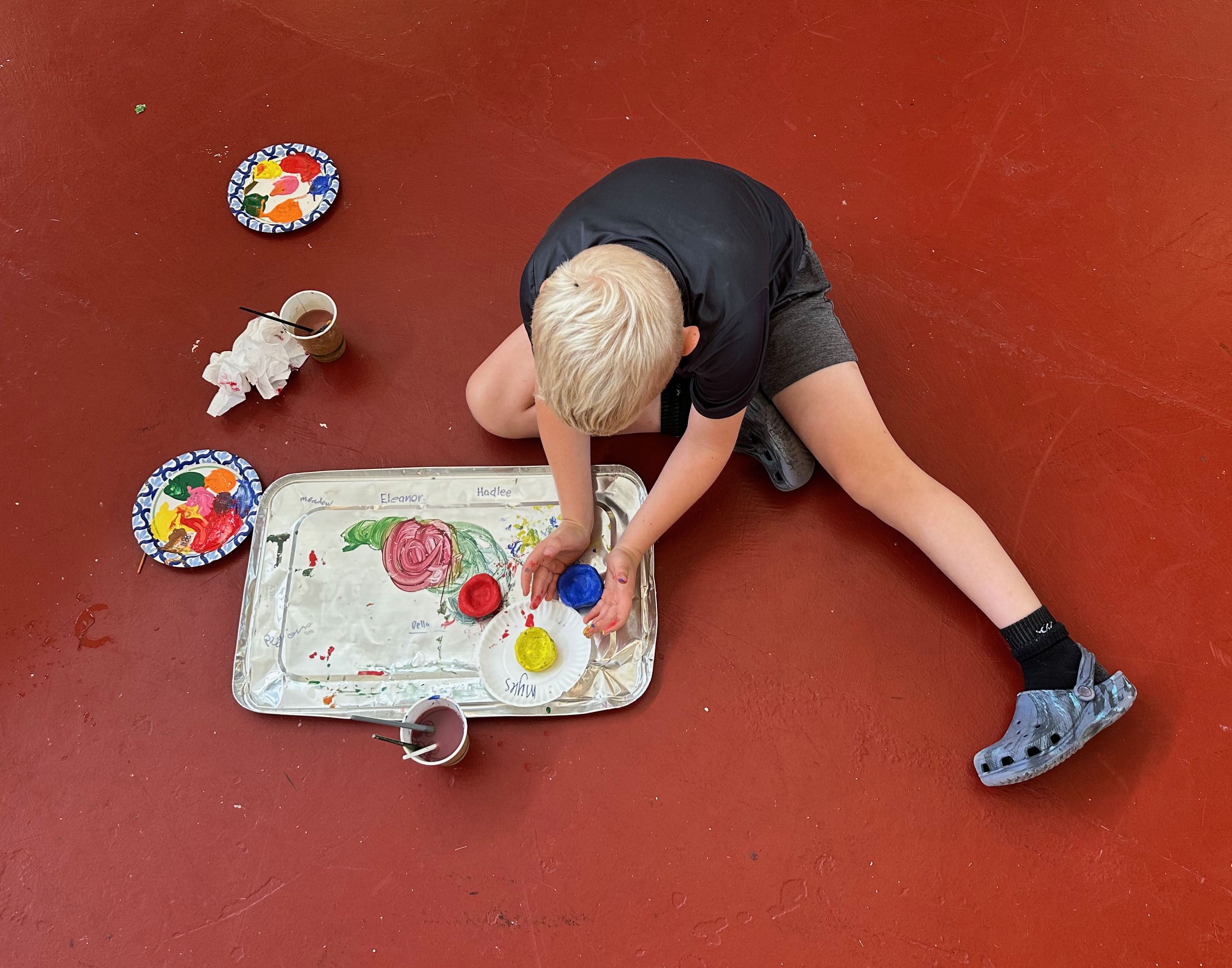
Wyoming Valley School: The school opened in early 1958 and closed in 1990. Today it was filled with the sound of children again, children participating in the Wyoming Valley Experience, a six-week long summer art camp. The adults shown in one of the two classrooms are guests from the Road Scholar tour:

LR Wyoming Valley School 6.20.25 010.jpg

LR Wyoming Valley School 6.20.25 002.jpg

LR Wyoming Valley School 6.20.25 004.jpg

LR Wyoming Valley School 6.20.25 007.jpg

Wyoming Valley School 6.20.25 006.jpg

LR Wyoming Valley School 6.20.25 003.jpg

LR Wyoming Valley School 6.20.25 011.jpg

LR Wyoming Valley School 6.20.25 012.jpg

Earlier in the day the Road Scholar guests were unexpectedly invited into a Wright home which is not normally open to tours (which is why I am not identifying it). One of the guests told me he was thrilled to see a house that is being lived in, as opposed to another house museum. Indeed, and that is why it was also so heartening to see children in the school.

Please scroll down for previous posts

Links to Wyoming Valley School; Taliesin Preservation, and Road Scholar’s weeklong tour in Chicago, Oak Park, Racine, Milwaukee, Madison, ad Spring Green:

https://www.wyomingvalleyschool.org

https://www.taliesinpreservation.org

https://www.roadscholar.org/find-an-adventure/22976/Architectural-Masterworks-of-Frank-Lloyd-Wright


Happy Birthday, Roland! (And more Wright news)

© Mark Hertzberg (2025)

Today’s joy in the World of Wright is to wish Roland Reisley a happy 101st birthday! He and I were walking into Monona Terrace during the 2018 Frank Lloyd Wright Building Conservancy conference in Madison when we passed this photograph and he exclaimed, “This is a photo of me working with Mr. Wright (and with David Henken, as Usonia was taking shape)!” He let me photograph him with the Pedro Guerrero photo:

LR Roland and Mr. Wright.jpg

This is a link to the tribute I posted a year ago to mark his 100th birthday:

https://wrightinracine.net/2024/05/19/happy-100th-roland-reisley-day/

Annunciation Greek Orthodox Church:

LR AGOC Steps 5.15.25 001.jpg

Work continues at the church in Wauwatosa, outside Milwaukee. Last fall I posted photos of the work on the roof:

https://wrightinracine.net/tag/annunciation-greek-orthodox-church/

When I visited last week, leading a Road Scholar tour, work had just finished pouring new concrete for the front steps. When outside work is finished, attention will shift inside, under the dome, as the carpet and pew cushions are replaced, and the pews are refinished.

LR AGOC Steps 5.15.25 002.jpg

LR AGOC Steps 5.15.25 005.jpg

Taliesin News:

Taliesin Preservation (TPI) is advertising that they are hiring seasonal workers, with signs below Riverview Terrace, the Frank Lloyd Wright Visitors Center:

LR TPI Hiring 002.jpg

LR TPI Hiring.JPG

This is the link to follow if you are interested:

https://www.taliesinpreservation.org/careers/

The most dramatic work on campus is evidenced by the scaffolding and plastic covering at the Assembly Hall at Hillside Home School because of water incursion. Repairs will be ongoing.

LR Hillside Assembly Hall Work 004.JPG

LR Hillside031 Assembly Hall Work 004.jpg

LR Hillside Assembly Hall Work 006.jpg

LR Hillside Assembly Hall Work 010.jpg

LR Hillside Assembly Hall Work 018.jpg

LR Hillside Assembly Hall Work 023.jpg

LR Hillside Assembly Hall Work 028.jpg

LR Hillside Assembly Hall Work 034.jpg

TPI has launched a new “Frank Lloyd Wright in Madison” experience in partnership with Destination Madison and the Frank Lloyd Wright Foundation. Details are at:

https://www.visitmadison.com/wright-in-madison/

My wife and I will be traveling to Banff National Park in Alberta later this spring. Wright’s 1911 Banff National Park Pavilion was demolished ca. 1938, but we have connected with someone who will show us where it stood. I will post after our trip. Here are two links for more information about the ill-fated Pavilion:

https://www.banff.ca/487/Frank-Lloyd-Wright-Pavilion

https://en.wikipedia.org/wiki/Banff_National_Park_Pavilion

Please scroll down for earlier articles on this website.

Hardy House Views: 1904 – 2025

© Mark Hertzberg (2025)

Today I had the rare (and arguably unfortunate) opportunity to photograph Frank Lloyd Wright’s Thomas P. Hardy House in Racine, Wisconsin from the lake, without getting wet. Climate change is playing havoc with Lake Michigan (as it is with the world). In 2020, the water level was so high that the stewards of the house, and neighbors, had massive hunks of stone brought in to protect their property:

IMG_5706.jpg

Today, well, I was able to walk out onto what had been part of the lake:

LR Hardy Below 2.9.25 008a.jpg

The photograph below, taken through the two story living room windows, shows how much the water has receded:

LR Hardy Below 2.9.25 029.jpg

Taking my photographs today gave me the idea to show this view of the house through the years, in historic drawings and photos. First, we have Marion Mahony’s drawing, reproduced in House Beautiful magazine’s 1906 story about the house:

House Beautiful 2.jpg© 2025 Frank Lloyd Wright Foundation, Scottsdale, AZ. The Frank Lloyd Wright Foundation Archives (The Museum of Modern Art | Avery Architectural & Fine Arts Library, Columbia University, New York)

Then we have the earliest known photograph of the house, taken in 1906, as it neared completion:

Terrace 0506.004 raw.jpg

A 1908 photograph from the OA + D archives, shows significant growth of trees on the hill:

LR 1908 Hardy HIll.jpg

The dining room terrace, which ended in a stucco wall, was demolished after World War II at the behest of the Sporers, second stewards of the house. There was a public beach, the 14th Street Beach, just south of the house (to the left of it in these drawings and photographs, until the 1970s. The Sporers asked Wright to give them a recreation room under the dining room terrace. Edgar Tafel sketched plans on Mahony’s drawing before leaving the Taliesin Fellowship in 1941. The work was not done until after the war. Full-length windows, including a door, opened to the outside:

Terrace sketch PPT.jpg© 2025 Frank Lloyd Wright Foundation, Scottsdale, AZ. The Frank Lloyd Wright Foundation Archives (The Museum of Modern Art | Avery Architectural & Fine Arts Library, Columbia University, New York), from Jim and Margaret Yoghourtjian’s collection

Next, is from David Archer’s collection. He grew up in the house between 1947 – 1957:

Archer Terrace 14.jpg

Schuyler and Peterkin Seward were stewards of the house from 1957 – 1963:

Seward Beach.jpg

Jim and Margaret Yoghourtjian were the final stewards (1968 – 2012) before the late Gene Szymczak who bought, and rehabilitated the house in 2012. Margaret took these photos:

LR Below hill horiz 2.jpg

LR Below hill main.jpg

The beach was lost in the 1970s when the City of Racine closed off a breakwater across from the house. Jim Yoghourtjian told me that they lost about 125 feet of property when the lake filled in below the house. While the Yoghourtjians used to share the house with interested parties, as they sensed people were taking them for granted and not respecting that they lived in a private home, rather than a public site, they let the landscape grow wild, to shield them from boaters on the lake and people walking the lakeshore:

LR Landscape Before 001.jpg

LR Landscape Before 004.jpg

A week after buying the house, Szymczak had the hill cleared:

LR Tree cutting 010.jpg

LR Tree cutting 047.jpg

And that, brings us to today:

LR Hardy Below 2.9.25 024.jpg

LR Hardy Below 2.9.25 011.jpg

There is no telling what the lake will do next.